The post The Pulse – 10/22/26: The case for crossing the divide appeared first on Bioneers.
]]>This is an issue of the Bioneers Pulse, an email newsletter filled with insights into the people, projects, and organizations creating lasting change in the world. Subscribe to receive the newsletter straight to your inbox.
Democracy Is a Verb
Less than two weeks before the midterms, the rules and protections that shape who gets to vote, and whose vote counts, are under strain.
In April, the Supreme Court issued a 6-3 decision in Louisiana v. Callais, sharply weakening the Voting Rights Act’s protections against maps that dilute the voting power of communities of color. Within days, Republican-led legislatures in Alabama and Tennessee started special redistricting sessions. In a Votebeat survey of 37 election experts, a majority expected federal agents to attempt to disrupt voting or the counting of ballots. And cybersecurity researchers warn that the biggest threats may target voters rather than ballots, through phishing, impersonation, and AI-driven misinformation meant to erode trust in the process.
But democracy has never been something that’s simply handed to us. It’s built by people who show up. In this newsletter, sociologist Manuel Pastor makes the case for a broad, durable coalition anchored in shared values, and former Maine state senator Chloe Maxmin shares what it takes to earn trust down rural dirt roads where no candidate had ever knocked. We look to Haudenosaunee traditions of governance for other models of democracy, and share ways you can help protect the vote this November.
Stories, Voices, and Perspectives
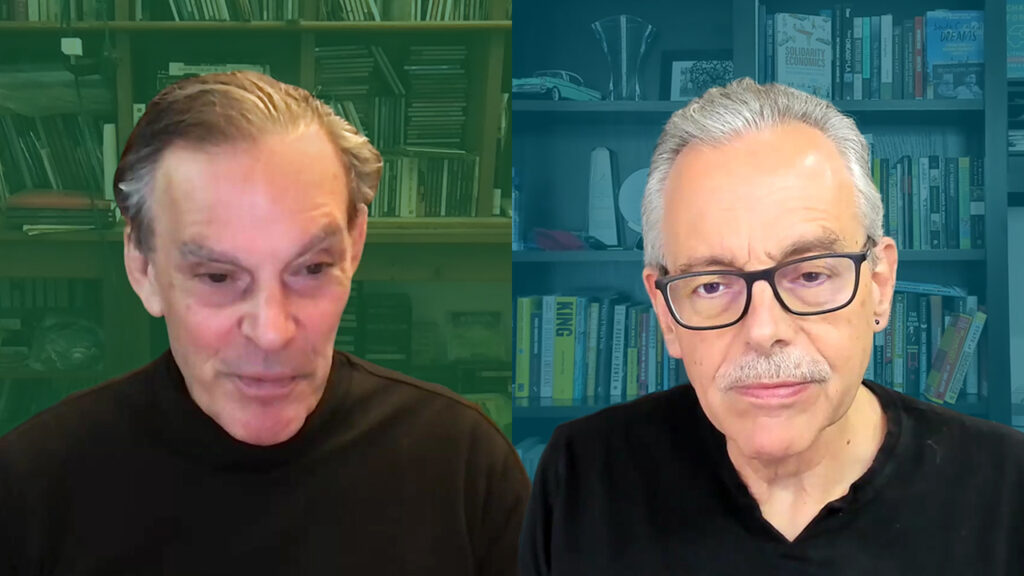
Highest Common Ground: A Conversation with Manuel Pastor
A broad coalition doesn’t have to settle for the mushy middle. USC scholar Manuel Pastor argues for a multiracial, multi-class “durable supermajority” anchored by progressive principles, built on shared values of opportunity, dignity, and community. Ahead of the midterms, he talks immigration, climate as an affordability issue, and how to prepare to rebuild after this era.
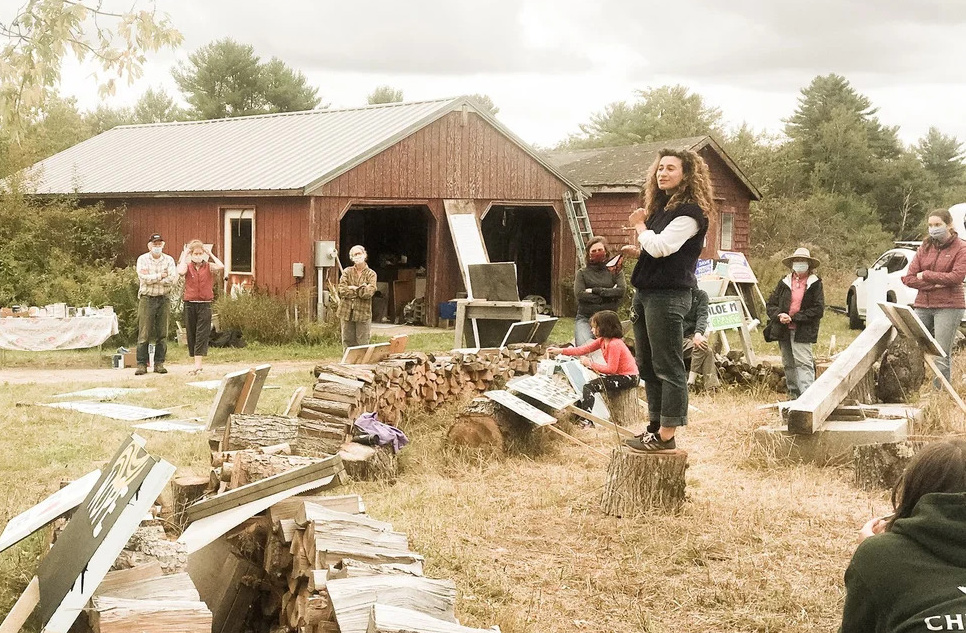
Showing Up for Rural America: A Conversation with Chloe Maxmin
You can’t represent people you’ve never talked to. Chloe Maxmin learned that knocking on doors in rural Maine, where she won two state races in conservative districts by reaching out to Republicans and independents that many campaigns had never contacted. Now co-founder of Dirtroad Organizing, she talks about rural disenfranchisement, the power of local office, and why year-round, face-to-face organizing is what holds democracy together.
Further Reading from Our Community
- A Country in Search of Repair: Niketa Brar of the Democracy & Belonging Forum asks what’s really broken about American democracy, and what it would take to build one rooted in repair.
- Native Americans Build Strategies to Overcome Voter Suppression: Barn Raising Media reports on how Native communities are preparing to protect their vote this November.
- End Times Fascism: Naomi Klein and Astra Taylor on the apocalyptic worldview driving today’s far right, and what it will take to counter it.
- How to Combat Fear in the November Midterms: Practical guidance from Waging Nonviolence for staying grounded and engaged heading into Election Day.
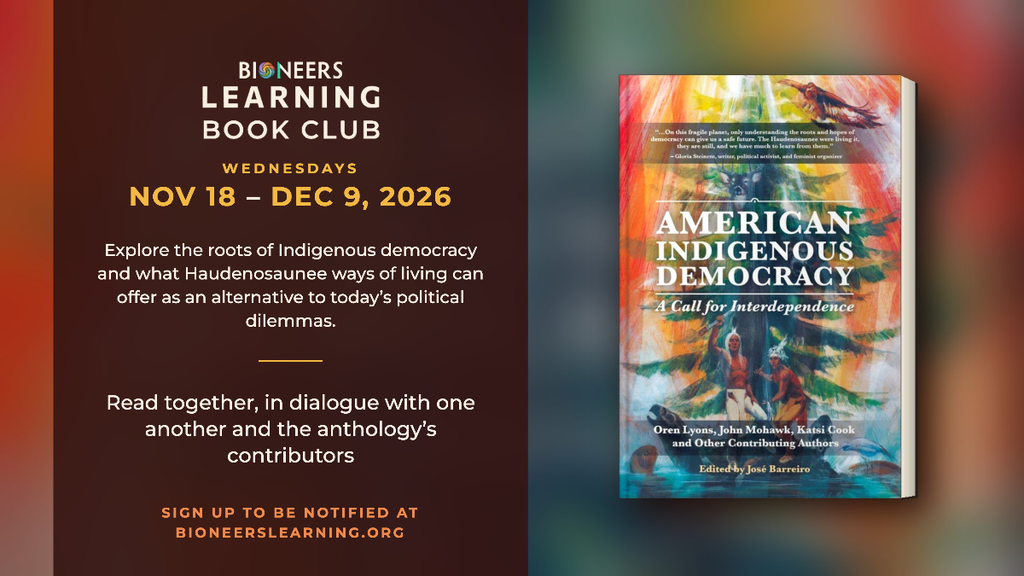
Book Club: American Indigenous Democracy: A Call for Interdependence
What can Haudenosaunee traditions of governance teach us about the democracy we’re fighting for now? Join Bioneers Learning on Wednesdays, Nov. 18–Dec. 9, to read this anthology featuring Oren Lyons, the late John Mohawk, Katsi Cook, and others, with a foreword by Baratunde Thurston. Participants will talk with one another and hear directly from contributors about Indigenous ways of living as an alternative to today’s political dilemmas. Registration opens soon; sign up now for an early bird invite.
What You Can Do
- Know who to call if something goes wrong at the polls. Election Protection runs a free voter hotline in all 50 states: 866-OUR-VOTE. Save it and share it before November 3, or sign up to volunteer in person or from home.
- Make sure you and the people you care about are ready to vote. Fair Elections Center keeps an up-to-date 2026 Election Survival Guide and tools to check your registration status. If you’ve ever considered becoming a poll worker, their Work Elections Project can help you get started.
- Back the officials who run our elections. Local election officials are on the front lines this year, facing threats from federal investigations to the possibility of immigration agents at polling sites. Public Rights Project offers them free legal support. If you know a county clerk or local official, send this their way, or support the work directly.
“Equity is fundamentally about opportunity, dignity, and community. People want to have the ability to work hard and get ahead. They want to be deeply respected for who they are and what they do, and to exist in community. When you appeal to those broad values, you build coalitions that are more lasting.”
— Manuel Pastor
The post The Pulse – 10/22/26: The case for crossing the divide appeared first on Bioneers.
]]>The post Showing Up for Rural America: A Conversation with Chloe Maxmin appeared first on Bioneers.
]]>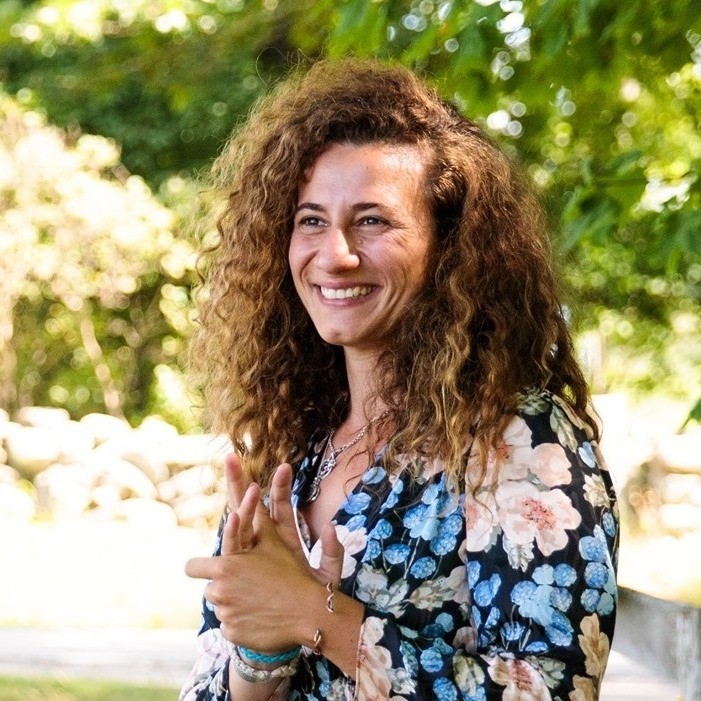
In this conversation, edited and updated, Bioneers Producer Stephanie Welch speaks with Chloe Maxmin. Hailing from rural Maine, Chloe is the Co-Founder of Dirtroad Organizing alongside her best friend, Canyon Woodward. She also runs Begin Again Farm with her partner, Bill Pluecker, growing organic vegetables for her community. Chloe received an honors degree from Harvard College, where she co-founded Divest Harvard. Chloe served in the Maine House of Representatives in 2018 and the Maine State Senate in 2020. She was the youngest woman ever to serve in the Maine Senate and is the co-author (with Canyon) of Dirt Road Revival. (Note: Dirtroad Organizing is a non-partisan organization that focuses on values, not Party. Chloe’s political work does not affect Dirtroad’s non-partisan commitment.)
STEPHANIE: In this political climate, where we’re being told how polarized we are as a country, but there are many issues that a majority of people in the U.S. agree on, such as the need for universal healthcare, a living wage, having clean air, water, and food. Considering your work finding common ground, is it frustrating to hear all the time the refrain, especially in the media, that we can’t come together? How are you feeling about that aspect of our current political climate?
CHLOE: I mean, we are polarized. It’s something I experience in my community, and people who come through our organization, Dirtroad Organizing, are experiencing it, too. The ability to simply have a conversation across party lines is very, very difficult right now, and it takes a lot of intention and thought to make that happen.
But at the same time, I think that the power of finding common ground still exists. We have to carve out the space to make that happen. We’re told a lot of stories that make it hard for people to hear the other side. This has made it both much more difficult to have space for another point of view, and it has also stoked horrible racism, xenophobia, and violence in our country that has made these bridge-building conversations unsafe for many people. At Dirtroad Organizing, our work is about trying to find the space where you can find that moment to reach beyond.
There’s definitely a lot of prejudice and judgment on the left about rural voters that voted for Trump, and that’s a theme that rural voters feel. I feel it as a progressive living in a rural area–a kind of remote disdain from the left about folks in my community. People in my community are good people, and they’re disenfranchised and don’t feel represented, and can’t make ends meet. But in so many spaces that I’m in on the left, it feels like I have to make the case that they should talk to people who voted for Trump.
Of course, some people who voted for Trump are far right extremists that I don’t have space for. But most folks are just trying to find the best way towards a good life for themselves and their families. I hear many folks saying, you know, just trust Trump, it’s all going to work out, he’s going to keep his word. And then I hear other people saying, “I regret voting for him.” I think time will tell, and we’ll see how it shakes out in our elections.
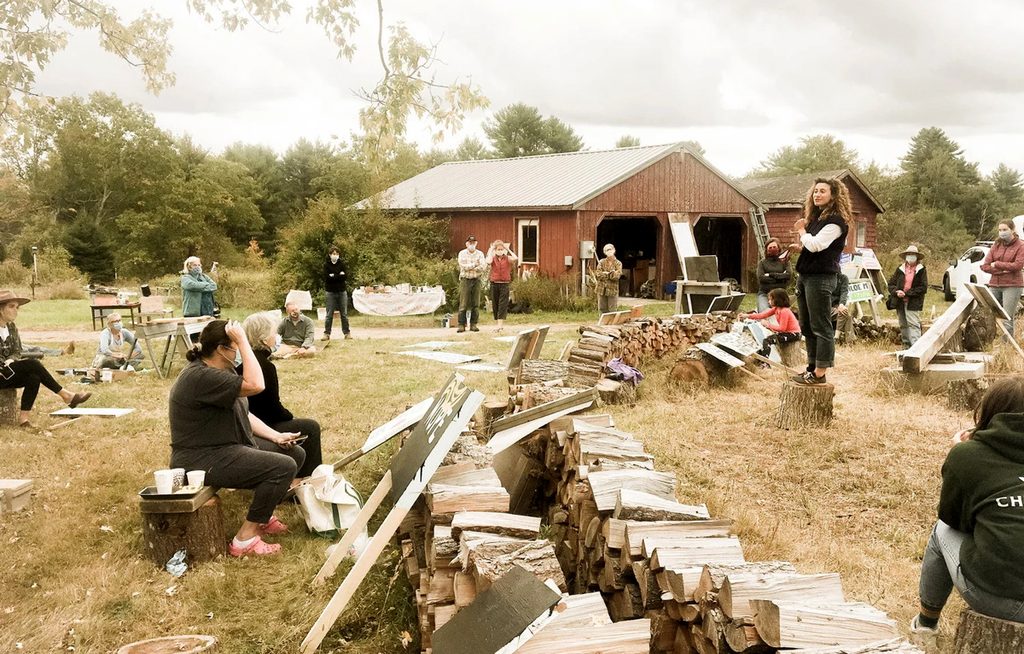
STEPHANIE: I was in Iowa and interviewed small farmers and others who were sick of agribusiness and were organizing locally to advocate for busting up monopolies that are killing their communities. I sat with one farmer who showed me his childhood photo album saying: This used to be a vibrant community, we had dances every Saturday night, farmers could earn a living and pass on the farm to their children. And now everything here is boarded up and the town is dead. These are farmers who got arrested in 2008 protesting the Obama Administration for turning its back on homeowners. The rally I went to included immigrant workers dealing with unfair treatment by the meat packing industry, and local labor unions. One farmer, who happened to be a woman, told me we have got to reinvest in rural America, or this country is doomed. But I don’t see a focus on rural communities as a strong part of the current progressive agenda, do you?
CHLOE: Yeah, I agree. I don’t think it’s represented well at all on the left. It’s a huge challenge. I think it’s one that rural folks feel quite acutely that the left doesn’t quite have the policy solutions that many rural communities need. The issues may be the same, but the approaches that you need in a rural community just look different. It’s complicated.
There’s an amazing book, The Politics of Resentment, focused on rural Wisconsin and how rural folks perceive a lack of support, especially on the policy level, from urban Democratic policymakers. There are many incredible books on this topic that can speak to it better than I can. But it’s a very pervasive feeling among rural folks that they don’t feel represented. The left doesn’t show up in rural communities, especially when they’re campaigning, and so we’ve seen just a systemic disenfranchisement of rural communities’ voices on the left as we’re making this policy. So it’s a circular problem.
You can’t make policy for impacted communities unless you have those impacted communities at the table, and if we’re not actively organizing and investing in what are now conservative rural spaces, then we’re never going to understand that experience and what we need to be integrating into our laws. This is true for all communities that have not historically been central to Democratic law-making.
STEPHANIE: I find that there are still many people who don’t realize that millions who voted for Obama twice voted for Trump the first time, and they’re still wedded to this idea that there are these stagnant voting blocs. Over and over again, when voters are asked what they care about most, they say the same thing: the economy and the cost of living. And when the Democrats don’t deliver to voters and make material differences in people’s lives, they lose. Is that what you’re finding with voters that you talk to in rural areas? Is that an issue for them?
CHLOE: Yeah, based on my own experience and what I hear from the folks that we work with, I don’t think rural folks see their issues reflected in policymaking. And the challenges they face in their lives have gotten worse and worse. There are now many incredible organizations working to address this, and I do think that the tides are turning for the better thanks to this amazing work.
Rural voters are privileged in our American democracy just the way that our Electoral College is set up, the way that our Congress is set up. So rural voices have an outsized influence on our policy at the national and at the state level. So if we’re talking about building durable progressive power that truly does advocate for the rights of everyone, we can’t get there unless we’re actively organizing in rural places.
On the left, I think there’s frustration amongst policymakers that they’re losing ground, and there’s certainly frustration amongst the folks in rural communities. They don’t see themselves reflected in what’s happening with the people that they elect. It definitely feels like a huge mess. So from that perspective, it’s like people needed something different. The politics as usual was not working for rural folks, and, mostly for worse, people saw that reflected in Trump and his campaign. So that’s how I see the reality that we’re living with, people are just desperate to be heard and represented and have their needs met.
I think back to 2018 when I first ran, and talking to so many folks who had voted for Bernie in the 2016 primary and then voted for Trump, and trying to understand what that thread was. I think part of it is that folks felt an authenticity in Bernie, and they felt some form of authenticity in Trump, and that translated. But I think the sense of populism was also a common theme, that they felt like Bernie was trying to advocate for everyone in working class folks, and then they also saw that represented in Trump, and they didn’t see that represented in the Democratic establishment.
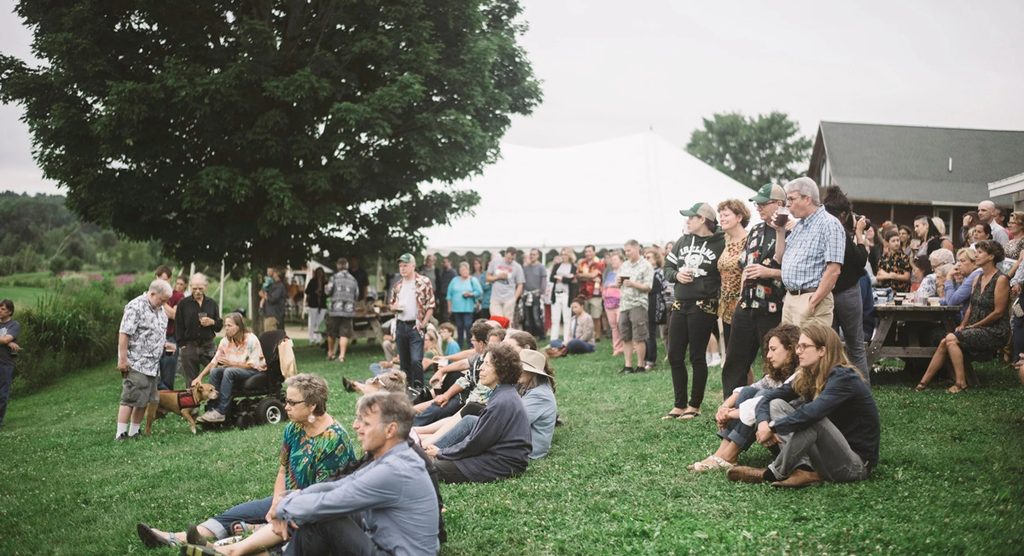
STEPHANIE: Let’s talk about your work in rural communities in your neck of the woods. How did you get involved in politics?
CHLOE: I’ve always loved my hometown. And growing up, I knew I didn’t share the same politics with everyone that was part of the village that was raising me, but they were all good people, and we shared our core values.
When I was in high school in 2009, there was no partisan lean amongst rural voters. But then I went off to college, and I met Canyon Woodward, who managed both of my campaigns. Canyon also grew up in a rural red town. And while we were in college, something really interesting was happening in rural America. By 2016, by the time we had graduated, just seven years later, rural voters were swinging to the right by over 16 points. So when we went home after graduation, it really felt like a different world, and that is obviously manifested in 2016 when Trump was elected. My hometown State House district and my hometown State Senate district voted for Trump, and what that policy represented to me felt really at odds with the good-hearted community around me.
So in 2018, I decided to run for State House in my hometown, which had a plus 16 Republican advantage, and Canyon came up to manage the campaign. The work was really just about trying to understand what was happening in rural America and why things went so far one direction so quickly. We ran a campaign that was really based in grassroots organizing and relationship building, and we won. Then in 2020, we ran for the state Senate against the highest ranking Republican in the state, and we won again using the same philosophy of just reaching across differences and building really strong, broad, intentional movements. I served four years in the legislature, and this experience taught us so much about what it means to organize in rural America.
A core part of our campaign was trying to get away from how things had been done, because that obviously wasn’t working well in our districts or in other districts like ours across the country. I don’t think anything we did was that radical, just minor changes to make our campaigns more representative of the communities we were organizing in. I was very lucky that Canyon had the skillset to create our canvassing universe. It’s basically the list of folks that you go and talk to when you, unfortunately, just don’t have the time to knock on every door. We really focused on talking to Republicans and independents because it’s a conservative district.
So many of those conversations were purely about bridging divides and trying to find common ground. It was so shocking how, on a daily basis, we would talk to people who had never been contacted by a Democratic candidate or campaign in their entire voting history. And many people said no candidate had ever come to their door, regardless of political affiliation. It was every day. I mean, it was so wild. I still hear this pattern echoed today with the leaders that come through Dirtroad Organizing, all these years later. They hear the same thing in their rural communities as they are out organizing.
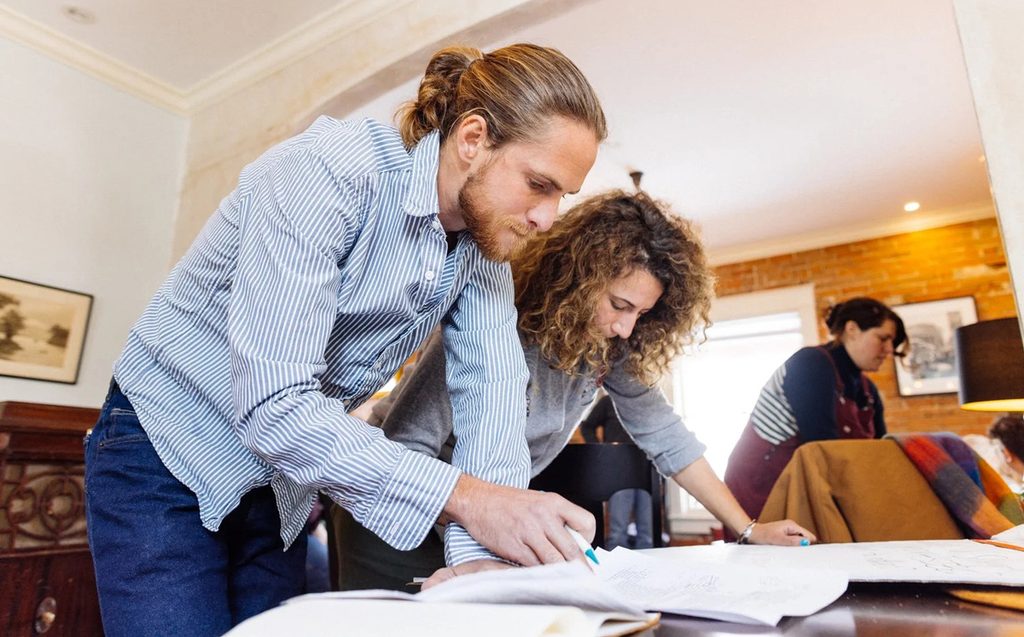
In my mind, it’s like, okay, if this person hasn’t been contacted before, maybe there’s a reason why. You know, maybe they’re too conservative to consider voting for someone like me, but that was not the case at all. These were incredible people with incredible stories who truly just wanted to be heard and represented, and we, as the left, had never shown up to hear their stories. Their stories shaped me; stories that I didn’t see reflected in the left and how we think about policy. So it was just very important to me to talk to folks.
I remember one door in particular. It was a trailer in the middle of the woods, down a very long dirt road. I canvassed by myself, which is not safe or accessible for everyone, but it’s what worked for me, and I could see that a guy lived there, and all the curtains on this trailer were drawn. And, you know, my heart was going a little bit. But I went up and knocked on his door, and we ended up having this really lovely discussion. And he said, “You are the first person to ever come and knock on my door, and people judge what my house looks like, and I can just see them drive away.” And that was so touching to me.
I felt that judgment too when I drove up to the door. But that’s a lesson, you know, not everything is as it seems. And he ended up voting for me. And he kept my palm card on his fridge. It was one of those life-changing moments that challenges how you perceive the world.
STEPHANIE: Were you finding common concerns among the people you talked to?
CHLOE: This was now many years ago, but I was surprised that the biggest thing that I heard was that people just didn’t feel represented. It was like everything had failed folks so much that it wasn’t one particular issue anymore, but just the system in general was failing people. And everyone has very specific examples in their lives of how politics has failed them. It was a sacred priority for me to actually represent my community once I was elected. I didn’t want to go hear stories and then go sponsor bills that weren’t reflective of the issues that I heard, or take votes that weren’t reflective of my community. So that felt very important to me.
I think everything has gotten more and more polarized since then. But my own experience to this day is that this sense of not feeling represented has gotten stronger and stronger and stronger, and everything that we’re experiencing right now is a consequence of people just feeling deeply unrepresented and not seeing the very personal challenges that they have in their lives addressed by the people that they elect.
STEPHANIE: When you were being presented with bills to vote on, or introducing your own legislation, what was your experience working with people who voted for you and those who didn’t vote for you who were still in your district?
CHLOE: It was fascinating, and taught me so much about myself and my community, and the Democratic Party in general. There were times when I didn’t vote with my party because I was representing my community, and there were times when I voted with my party, and maybe it didn’t match up with my community. It’s so hard. I always thought when I was elected it’d be very easy to tell where my community landed on an issue, but, people reach out when they’re fired up about one issue, and it’s very hard to tell what the other side thinks if they’re not as fired up. I knocked on so many doors, so I felt like I had a really good sense of where my community was, but that kind of real-time feedback was tough.
Policymaking is very nuanced. An issue can be black and white, but the bill that the issue is held in can be very complicated. And so there can be one line in a bill that could have huge consequences, but it takes time and energy to communicate that to your constituents. I always viewed it as my job as an elected official – I’m getting paid to do this work, I’m getting paid to go to Augusta and read all of the bills – so I always tried to take the time to explain to people why I voted one way or another. But it’s almost never black and white.
As a constituent before I was elected, I always looked at policymaking and it seemed really black and white to me. And as an elected official, you realize there’s just always more to consider than what it seems. Of course, there are some issues where I do think it’s black and white, but I think in most cases that it’s more complicated.
STEPHANIE: It seems if you’ve built trust, to a certain extent, a lot of people would say, okay, I trust you; I know you’re going to compromise. Were you getting any pushback, including from the Democratic Party in general when you weren’t voting for the bills they were putting forward? Did you feel a lot of pressure?
CHLOE: Most elected officials have felt pressure at one point or another in their service. But, yeah, there’s pressure. There’s pressure, for sure. I think some of that is understandable, and some of it I don’t love. But, you know, that’s part of the experience of being elected, is being able to navigate that and kind of understanding why you’re there.
I was there to represent my community, and that’s what I focused on. As a Democrat representing a conservative community, the way that I navigate the situation is going to be very different from how a Democrat representing a more liberal community is going to navigate it. And since we have more Democrats representing liberal communities than conservative communities, I think it’s just a different dynamic. And that’s okay.
STEPHANIE: Have you thought about being part of another party outside of the Democrats and Republicans?
CHLOE: I’m a bit of a cynic. I think we’re kind of stuck with the two-party system, and I believe in reforming the Democratic Party from the inside out, that’s just my own personal theory of change. But we need all of the theories of change to move forward in this work. There’s so much work going on right now to support pro-democracy Republicans and conservatives that are running for office. I think that’s so important. A lot of Republicans don’t represent some of the social extremism that we’re seeing reflected right now in the larger Republican Party.
I think it’s also important for Independents to run for office. One of my bills was to support independents voting in primaries in Maine to kind of even out the partisanship that we see in party primaries. I really like rank choice voting, which we also are lucky to have in Maine, because that allows Independents to have a fair shot when they’re running for office.
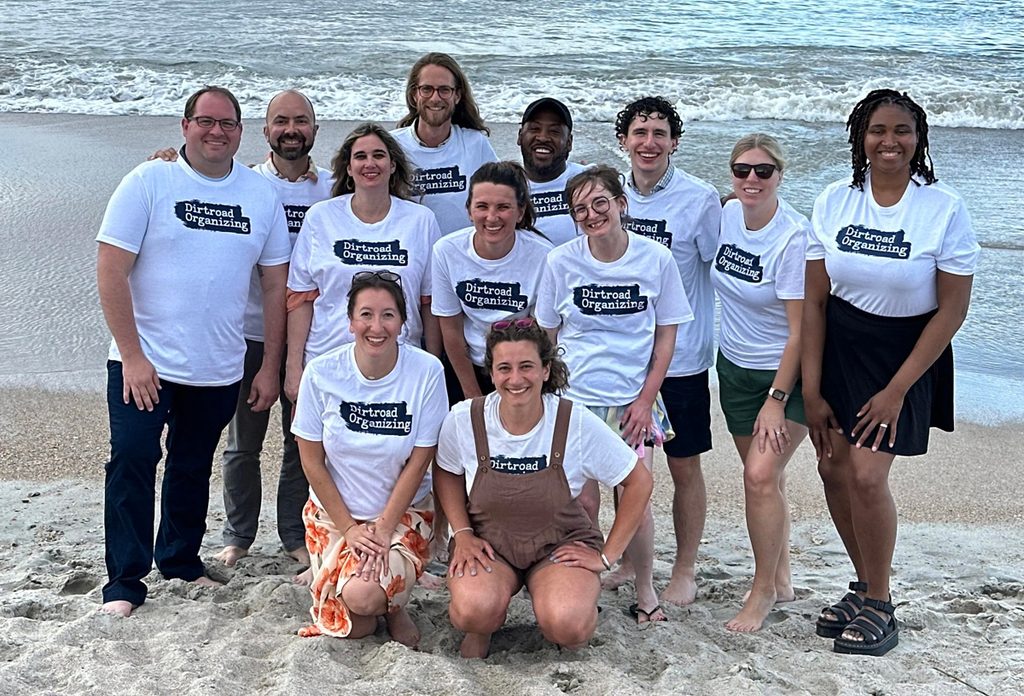
Dirtroad Organizing supports candidates, organizers, and staffers in rural areas across the country. To date, we have over 200 alumni from 39 states. These rural leaders are bringing so much love and empathy and care to the people they live with, and they’re paving a better way forward for all of us. We’re a non-partisan organization, and for me, it’s more about the values that you’re running to represent rather than the party that you’re from. As I chose to run, I wanted to run as a Democrat because I feel like the values of the Democratic Party are supposed to serve rural places well, they’re supposed to serve my community well. But they’re just not. So trying to kind of do some of that translation work, that was the task that I wanted to take on. But it’s not for everybody, and not every community wants that as well.
STEPHANIE: Right, and they abandoned the working class by design. Senator Chuck Schumer said their strategy was to appeal to suburbia and that for every working class Democrat voter they lost, they would get two Centrist Republicans. I don’t think that worked out for them, but it’s no surprise that low-wage workers feel they have no one representing them. The Democratic Party is very low in opinion polls, so maybe it’s a great time to be reforming it.
CHLOE: Yeah, I mean, I think it’s going to be a multi-decade task, probably. We’ve lost folks pretty quickly and have not been super successful at making the case that the Democrats do advocate for working class folks, as you just said. Again, I think this narrative is starting to shift now, which is really exciting to see.
The work of rural organizing is very complicated, and there is so much to unpack in what it means. Rural organizing as a white woman in my Maine hometown is very different from what it looks like in the South. But at the core, I really believe in the power of showing up and having really intentional and authentic face-to-face conversations. I feel like that’s the only way to break down some of the silos and judgments that each party has about each other. In my experience, and what we hear from our folks through Dirtroad Organizing, is when you knock on a door, the first question is: Are you a Democrat or a Republican? And you know, I would always blurt out very quickly, “I’m a Democrat but I’m a good Democrat.” But oftentimes the door gets shut in your face before you can even have a conversation.
So I think that the best way for Democrats to make the case that they do care about working class folks and rural working class folks is that you have to show up at people’s doors, and you have to prove it. You have to show it. And then you have to get elected and you have to actually work on the policies that benefit those rural working class folks in a way that resonates with them, with the messaging and the stories that rural folks will listen to, because it’s a different language in rural America.
Rural America deserves that nuance and attention. We’ve got to show up, and we have to kind of be able to hold that door open long enough to have that conversation, and plant that seed that maybe it’s not such a bad idea to vote for this person. I think that’s very important to do that consistently, not just in every October of an election year, but really showing up and organizing in communities. That’s so important. There are so many rural heroes who are doing this work, day in and day out, year after year–and those folks to me are the ones who are holding our democracy together.
I think it’s also important to have different voices and different representation in office that reflect the reality of rural communities. We also know you don’t get paid to run for office, and in many state legislatures, you don’t get paid a living wage at all to serve. In New Hampshire, you make $100 a year. In New Mexico, you make nothing. When I was in the Maine statehouse, I think it was like $14,000 in our first year, and $10,000 the second year. Most folks who do get elected at the state or local level don’t make enough to survive. So there’s a reason why our politics are skewed to older, retired folks or independently wealthy people, because that’s who it’s accessible to.
There are so many movements right now to rethink how to make politics more accessible, to have campaign finance laws, or to allow folks to pay for childcare if they’re a parent while they’re campaigning to have a living wage while you’re serving. There’s so many pieces to it. Also, if you get elected and you don’t look like the majority of the body that you’re going into, then that’s a very difficult and isolating experience, as well, and you are more likely to get targeted. And that’s very scary. There’s a lot of risk involved as well if you don’t reflect kind of the majority of what our politics look like. So I think that’s a huge part of it.
We also believe, at Dirtroad, that running for local office can still make such a huge difference. So much of our political conversation is at the statewide or national level, and that feels very hard to influence. You know, you’re one vote out of millions if you’re at the state level. At the national level you’re one vote out of hundreds of millions. So it just feels like no matter what you do or who you call, that it doesn’t really have an impact. And I certainly feel that, even though I’m very involved in politics.
But at the state legislative level, at the local level, those bodies have a huge influence over what our communities look like, over the policies that we’re living in every single day. But they’ve been very overlooked, especially by the left. The right has done an incredible job of organizing at the local level, and we’ve seen that, especially at the school board level with all the effort to ban books and really use school boards to influence what our education system looks like.
When you run at the local level, you can win by like five or ten votes. In Maine, we have state legislative races where people win by one vote. So you can see that every vote does make a difference, and it is important that you’re engaged and that you show up. And as the candidate, or as someone in the campaign, every vote truly does matter. It matters how many people we talk to. It matters that we’re reaching beyond the choir, because that’s how we make sure that we’re electing folks that are more representative of the communities.
STEPHANIE: Is it pretty consistent that candidates who have a solid ground game, who are actually talking to people and have support to knock on doors and have the conversations, win?
CHLOE: Not always. We try and encourage folks to look at their campaigning as social movement building, that it’s not about a vehicle that gets one person from being a citizen to an elected official, it’s hopefully part of the journey, and an opportunity to organize in your community and talk to people. You have an excuse to go knock on doors, to make phone calls, to write postcards, to reach out in ways that you just don’t have the social license to at other times of the year. So I think that’s such a big part of it, is that ground game.
Of course, that doesn’t always work, and I think especially in some conservative districts where it’s a steep hill to climb, you know? So we work with people who build incredible ground games, and it doesn’t quite get them to the finish line, but at the same time, winning isn’t always winning. They’ve been building movements, building volunteer infrastructures, creating a dialogue in their community where that dialogue wasn’t there before, and it looked very different than it was before they ran. So thinking about it that way is important.
STEPHANIE: A movement definitely emerged with the Bernie campaigns. There was momentum and excitement, and a lot of organizing. They relied on small donations, which inspired a lot of people. And then he just handed everything over to the Democrats, including my email, which really makes me mad because I cannot get off their lists. But, you know, the air was really let out of that tire, so to speak.
CHLOE: Yeah, I think that’s a theme for the Democrats, just universally, that we build movements and then we can’t quite sustain them. And I think there are examples of movements that have done amazing jobs at sustaining very large movements over many cycles, and I think that’s pretty cool. But oftentimes, we do that organizing and then we’re burned out, we’re tired, we’re exhausted, we’re bummed, and it’s very hard to keep that organizing going. It’s like this boom or bust cycle of electioneering that has also impacted communities because they see people coming to their doors and all of this energy being invested for this year, and then it’s gone. It doesn’t make anyone feel good if you just kind of flit in when someone needs you. You want to be shown that it’s important that you’re there all the time.
There are so many organizations that are doing year-round organizing across the country in every single state and at the national level, focused on doing this ground work in a way that bridges cycles, and that isn’t just tied to one candidate and one election. I feel like that’s such an important model as well. I mean it’s hard work. And we work with so many folks who put themselves on the line. They put their lives on hold. They don’t get to see their families and their friends and their loved ones because they’re campaigning. And they build these really beautiful movements, and then, you know, organizing in conservative districts, you don’t win, and that’s so hard.
So part of our work – and we’re in these coalitions – is to support those people who did that incredible movement-building work, to support them if they want to run again, to support the movements that they built if they don’t want to run again. But just trying to think of it all more holistically and what it takes to organize in rural spaces. But as we started this conversation with the level of polarization and othering right now is at a very scary and dangerous level. And so to us, it makes it even more important to be able to do this work of bridging differences in rural America.
STEPHANIE: Yeah, I do feel there’s a kind of hopelessness. But I also feel that these experiences of making connections is key to despair. My cousin, who sadly passed away recently, was a trucker who worked all the time and dealt with a lot of stress and frustration. We grew up in Kentucky. And we went back and forth online politically, disagreeing on this and that, and after a while he said, “You know, Cous, I think you might have a point. I think a lot of what I’m putting out there is just a bunch of BS, and I don’t really mean it.” He was just caught up in the drama and didn’t have time to do a lot of research. We found a lot of things we agreed on. So I hope people become more open to having conversations with others who they might even perceive to be extreme. And just dig a little bit. You know?
CHLOE: Yeah, definitely, definitely. I feel so inspired by the stories that we hear from the folks we work with, how they’re still finding common ground. You know, I hear over and over again, and it’s something that we talk about in our trainings as well – How do we want to show up in communities? How can we show up in ways that are authentic, that resonate, no matter what political party people are from? How can we really run on values that show that we’re all connected and are all facing so many of the same struggles? We might be facing them in different ways, and some of us are experiencing some struggles more acutely than others, but we are all in the same boat.
In 2024, Dirtroad Organizing had 37 folks on the ballot all across rural America, and over 50 percent either won their seats or outperformed past cycles, and even in districts where Trump made huge gains, these folks were outperforming when they were running at the local level. We had one guy, David Arends, who ran in a very conservative district in northern Montana. He made his ballot competitive for the first time in over a decade, and he outperformed that district by nine points because he just literally went and talked to everybody. This year, we have over 70 Dirtroad alumni on the ballot. These folks are incredible leaders who deeply care about their communities and are out there, right now, organizing for a better future for all of us. Again, we’re a non-partisan organization. Many of our candidates gain ground because they run authentic grassroots values-based campaigns that are really focused on representing their community. So that, to me, that’s a sign that that’s where it’s at. That’s where our hope is.
But running for office, working on campaigns, rural organizing in general is tough work. It’s tough work. And it can be really lonely and isolating, even though I think it’s the most important thing that we can be doing right now. So everything that we do is about trying to bring more resources and attention to the stories of what this organizing actually looks like. Dirtroad Organizing actually just launched a story telling program to uplift the incredible work of our alumni. It’s called HomeGrown, and you can find us on Substack.
- Dirtroad Organizing website
- Homegrown Substack by Dirtroad Organizing
- 2020 Bioneers Online Keynote from Chloe as State Senator
The post Showing Up for Rural America: A Conversation with Chloe Maxmin appeared first on Bioneers.
]]>The post Building a Durable Super Majority for Economic and Political Democracy appeared first on Bioneers.
]]>Bioneers’ senior producer J.P. Harpignies spoke to Manuel Pastor this past September 14th. This is an edited version of the transcript of that conversation.
JP HARPIGNIES: Manuel, thank you so much for doing this. We really appreciate it. We were trying to think about what we could possibly add to the conversation before the midterm elections in this incredibly challenging political period, and as we were perusing our extensive networks of brilliant allies and friends, you were the first name that popped up since no one has done as much research and deep thinking as you have over the decades about social movement strategies, and you combine the passion of an activist with the rigor of a scholar, so we were eager to hear your thoughts about current realities.
My first question for you is this: We are obviously in an intensively regressive, reactionary period, both here and in many parts of the world, and much of the progress that we have accomplished over decades, if not centuries, on human rights issues and on the environment are being rolled back in a way that’s frankly shocking, even to the most cynical among us. And this is an oversimplification, but there are two over-arching tendencies that I perceive in our milieus at the moment politically. One tendency says that the historical imperative in this moment is to build as broad an anti-authoritarian movement as possible, similar to what Péter Magyar did in Hungary recently to get rid of Orbán. They say we’re in a sort of early 1930s moment, and so nothing’s more important than to build a coalition that goes from the sane center-right all the way to the far left.
Other people say that progressives should actually push for far more radical perspectives because there’s an opening now due to the sort of intense populist reactivity that seems so widespread in populations around the world. So where do you stand on those? Do you think that’s a false dichotomy – the large coalition vs pushing for more radical policies? Or do you have some miraculous third way that you could offer us?
MANUEL PASTOR: I often say that Americans seem to have difficulty holding two ideas in their heads at the same time. I think the way that we reconcile this is that we do want to build a broad front, but we want to make sure that it doesn’t become a mushy middle, so it needs to have progressive anchors that give it principles, that give it fighting spirit, that give it strategy to be able to move ahead.
I have been thinking about these things. I have a book coming out next year called How We Rise: Building a Durable Super Majority for the Future We Deserve that argues that what we need is a multi-racial, multi-class, multi-sector, durable super majority for economic and political democracy. Let me spell that out and then come back to your question.
Multi-racial is obvious, that’s who we’re becoming in America, but that’s also been the Achilles’ heel of progressive movements, because the deployment of race and racism has been used to divide us. Multi-class, because while we often romanticize the working class – and I come from that milieu, not just as a person but in terms of my own politics – middle-class and professional people need to be part of this movement. And also, with artificial intelligence, there’s a new precarious proletariat made up of professionals who are about to find that they’re about as replaceable as others have been in the past. Multi-sector, because we need to get the scientists who are upset about climate science being ignored, the faith leaders who are shocked by the disposability of humanity built into the anti-immigrant movement, and many others. Durable, because we’re at a moment in which we need to form a coalition that is as strong as the New Deal coalition, which persisted for decades, was; and the Civil Rights coalition, which was eventually weakened but was broad and strong for a long time.
Too often we on the left have thought that if I we could get 50% plus one of the voters, that would be enough to take us over the top, but if you want durable change, you need 60 percent or two-thirds. You need a social majority, in part because some people are going to bail on such issues as trans rights because they don’t understand that’s an issue about fundamental dignity.
Economic and political democracy, because there’s a great political scientist, Joan C. Williams, who co-authored a book called Outclassed, and she just did a poll. She asked people to take 30 issues and rank them in terms of order of importance. College-educated, left-leaning folks ranked saving democracy as number two, but it was number 19 for working class people, because democracy has not been delivering on the economy, on material goods, so saving a system that doesn’t deliver is not really all that appealing for them, so we need to have both economic and political democracy, in tandem. In order to get there, we need as broad a front as possible, but it needs to have progressive anchors that are continually pushing so that it’s not a meaningless broad front, but one that builds on what we have in common and continually pushes us to action.
So, I do think it’s a false dichotomy, and I think that what we need to seek is not the lowest common denominator but the highest common ground. What is it that we don’t quite agree on that we need to push ourselves to agree on rather than just the easy things?
JP: Just as a follow-up to that, isn’t it a little bit tricky? Because precisely, some of these issues that have proven divisive or that the right has used to peel away support for progressive economic policies are third-rails that are really difficult to get working class people or especially white working-class people to come on board with. How do you finesse that? If you’re going to push for the highest octave on all of these fronts, how do you avoid many people peeling away because they don’t support this or that particular position?
We’ve had those kinds of cleavages for a long time. For example, there are many people in the African-American community who are more conservative and religious on social issues while being very progressive on economic issues.
MANUEL: That’s also true in the Latino community, as we saw during the last Trump election. I think that first, finessing shouldn’t mean trying to fool people, and it shouldn’t mean thinking that they are deluded and voting against their interests, so what is wrong with them? I think it’s a little bit more trying to understand how to talk about things.
Right after this election of Trump, I got persuaded to present some research we’ve worked on in Orange County, a place that has long been purple but that is not known for Bay Area-like progressive leanings. It was an equity profile on racial justice issues, and the people who were sponsoring it, the grant-makers’ group there, were very concerned about alienating people, about how local people were going to react, etc. I started the event by saying that equity is fundamentally about opportunity, dignity, and community.
People want to have the ability to work hard and get ahead. They want to be deeply respected for who they are and what they do, and they want to be able to exist in community. That describes the aspirations of racial minorities. It describes the aspirations of rural people who sometimes feel that they are not awarded dignity or respect. It describes trans people who want the opportunity to live their lives, who want to have their choices accepted with dignity and want to be part of a bigger community. I think when you appeal to those broad values instead of trying to say it’s really just all about the economy, I think you build coalitions that are more lasting.
Similarly, after the raids here in Los Angeles (which are still ongoing, just a bit quieter) in that intense period last summer, I was asked to provide data to immigrant rights activists, and to speak to philanthropy and social justice groups, but I also took the opportunity to forge an alliance with some business groups that realized that the raids were deeply unsettling for economic stability. Most dramatically, I accepted an invitation to speak to the L.A. Rotary Club. Now, interestingly, one person resigned as a result of my appearance, but a lot of others realized, oh my gosh, this is interesting that about a fifth of L.A. County residents are either undocumented themselves or part of a mixed status family; and, wow, I hadn’t realized that about nearly three-quarters of undocumented Angelinos have been in the country for more than a decade; I didn’t realize that more than a third of our frontline construction workers are unauthorized, and I know that we’re not coming back from the fires without them. I think it’s important to take that opportunity to try to find what we do have in common and treat people with respect.
We’re not going to pull over everyone to our point of view, but we should not be applying litmus tests around language and perspectives. We should be trying to figure out if you can be in with us on opportunity, dignity, and community.
JP: Let’s talk a little bit more about immigration, because obviously that’s one of your domains of expertise, a subject you’ve worked on for a lifetime. It’s really a fundamental issue of our times because it’s been driving so much of the rise of hard right parties throughout the world. We’ve had the rise of the AfD in Germany, the Front National in France, Nigel Farage’s party in the UK, the xenophobic “March and March” campaign in South Africa, the anti-Rohingya forces in Myanmar, and of course the Republicans here, so it’s not just a U.S. problem. It’s been this sort of giant third rail. Even the Spanish government has been under heavy pressure because of what happened recently in Ceuta.
My question is this: Is the left making, to some degree, a similar error to what occurred when there was enormous right-wing backlash over the law-and-order issue going back into the ‘70s, and the more recent iteration of that with the whole Defund the Police brouhaha. It seems that the issue of immigration has been very successfully used to tap into the rage of the white working class in the U.S. and Europe, and beyond those regions not just white people since, as I mentioned, we find it all over the world in such places as South Africa, India, and Myanmar, to mention only a few.
A lot of this is a very old playbook of demonizing “the other” by authoritarian forces and by capital, and it’s also obviously blowback from centuries of imperialism and capitalism, but clearly this issue is giving the extreme right a lot of fuel. Has the left failed to find a viable, effective strategy to counter that? Is there a politically realistic effective way to push for humane immigration policies that could be supported by majorities, that don’t create openings for the far right? I realize that if you had an easy answer, you’d be extremely rich and famous; this is a problem from hell, but still, if there’s anyone who can help us see the light on this, I think it’s you, Manuel.
MANUEL: I’ve definitely thought a lot about this. I think you’re right that what the right and capital and these tech titans who are trying to steer us to a new authoritarian order have effectively done is persuade people to blame their situation on those by their side rather than on those above them, who are the ones actually helping cause the situation, so the question is: How do you inoculate against that? I don’t think you can do it by ignoring it, by ignoring the need to talk about xenophobia and racism and challenge people’s conceptions and attitudes, nor by ignoring the fact that sometimes lots of immigration can cause real strains on a society.
I think one of the things that happened during ‘22 and ‘23, when in the post COVID era there was a very big backlog of people coming across the border, it really looked disorderly. The Biden administration tried to make it a little bit more orderly, but roughly two-and-a-half to three million unauthorized immigrants often received fairly quick asylum and crossed the border into the United States. Even undocumented immigrants who’d been here for a long time were asking: “Who are these new people and why are they immediately getting help when I’ve been here for 20 years and nobody helped me?” I think sometimes the left has a sort of honesty problem. We’re sort of willing to call out the other side for the ways in which they run away from the facts—the fact that immigrants contribute a lot to our society, the fact that people do make progress over time, the fact that immigrants actually unionize at a higher rate than the native born and are great allies for the labor movement, etc. We’re willing to call out the right for stuff they say that’s untrue, but we’re sometimes reluctant to admit that, for example, a lot of people crossed the border in a very short period. How can we make that process more orderly? How can we make it so that there are resources for communities to be able to more successfully integrate newcomers? I think that could help.
We just finished a report called “The Wealth of Welcome.” It’s kind of a play on both the idea of the warmth of welcome and the wealth of nations that argues for comprehensive immigration reform that would create paths to citizenship for the vast bulk of those who are currently here who are unauthorized and would regularize labor flows to bring people in, and then would take the hundreds of billions of dollars that have been devoted to ICE and instead repurpose them to communities so that they could speed up the integration of immigrants and make sure that we have investments in community building. That sort of three-part program – regularize who’s here, create orderly flows for the future, and divert money away from enforcement into integration – that’s the kind of thing we ought to be arguing for.
JP: Another issue that people affiliated with Bioneers really care about is obviously the environment and ecosystem health, and another really difficult political situation at the moment is that as we’re seeing climate change bear down in a way that even the most pessimistic prognostications didn’t predict 20 years ago or so. We in the environmental movement had always thought that when people would be directly affected by fires and floods and hurricanes, then they would come around, so it’s been disconcerting to see a world in which the evidence is off the charts with wildfires everywhere and hundred-year floods happening every three or four years in many places. What would it take to awaken people? Do you have any thoughts on that? Even with the L.A. fires, fires in boreal forests that had been extremely rare happening yearly on immense scales, and what just happened in Nepal, it doesn’t seem to register for voters here, even in this election. When people ask voters how they rank the environment, it comes up something like 20th. Do you have any insight on what could possibly turn this around?
MANUEL: You’re asking me all the easy questions today, JP.
JP: Yeah, can you please solve all the problems of the world in 20 minutes, Manuel?
MANUEL: How do we turn around authoritarianism? Can we make immigration work? And how do we solve climate change? After I answer these, I think I will run for president….
It is disconcerting. I do think that one of the things that’s going on is that the environmental disparities portion of this still plays a role, so that people who are more privileged and have more power and should be doing something about this are often feeling that it isn’t happening to them…unless they were unlucky enough to live in the Palisades….
It has been striking that from something that actually was discussed three or four years ago, it’s gotten much worse, but it’s hardly being discussed in the body politic. Instead, it’s all about affordability, which by the way plays a role, because one of the ways to become affordable is to move away from fossil fuels, to move away from the high insurance costs that come from these disasters, to move away from the expensive fiscal spending that’s going to need to take place as we try to repair from all of this climate damage. I mean, I do think we can think about addressing climate change as a long-term affordability issue in ways that definitely make sense.

I’m optimistic by nature. I think people who are into Bioneers are often also optimistic by nature. They come to the conferences and/or listen to the podcasts hoping to find tools they can take away to help change the world. I think we can fight this moment of authoritarianism. I’m convinced that we can build a broad front that has a progressive anchor. I’m convinced that we can weaken the power of fossil fuel and the tech titans; that we can shift to speaking about our economy vs the economy. I am optimistic that we can challenge the disease of personal racism, which is inflicted upon us by structures that want to allocate privilege and obscure the truth of who really holds power.
But I also think it behooves us to be realistic about the world we are likely to inherit after this Trump era is over (and I hope it will be). It’s a world that will be in ashes. There will be immigrant lives and families that have been shattered. There will be a planet a little bit warmer and a lot riskier. There will be artificial intelligence that has not been held back. There will be a shift of income away from workers to those on top. We will have an even bigger government debt and fiscal deficit, constraining what it is that government can deliver even in a moment when it absolutely needs to deliver.
We need to be sober as we think about the next world we’re trying to build, but hopeful as we remember earlier examples, such as what got built after the Civil War, that too brief attempt at Reconstruction that emerged in the ashes of a South that had burned down, or, in many ways, had burned itself down by its attachment to white supremacy; or of the New Deal that started in the Great Depression and provided some degree of stability, not for everyone – many people of color were written out of the details of the New Deal – but in which government was willing to intervene and created an era in which wages rose at the bottom, middle and top, in which Social Security got expanded, and in which we finally got to Medicare and Medicaid, not for all, but somewhere in that direction. That all emerged out of a Great Depression in which a quarter of the people lost their jobs, in which fascism was a real possibility here and a real reality in Europe, in which a world war got waged about our future.
So, I ask those who are watching or listening or reading to have hope, to dig deep for the strength that we need in this moment to come together, to build that big tent and continually push it further and further left, but also understand that the world we’ll be inheriting will be one that will be in ashes, and we will need to be thinking about not just the world we want but how it is we actually rebuild.
JP: Thank you so much, Manuel. Words of wisdom. We really appreciate it. Just what we needed to hear.
MANUEL: Thank you, JP. Thank you, Bioneers.
The post Building a Durable Super Majority for Economic and Political Democracy appeared first on Bioneers.
]]>The post Women at the Center: A Call to Interdependence appeared first on Bioneers.
]]>Moderated by Beverly Cook (Akwesasne Mohawk – Wolf Clan), with contributing authors Katsi Cook (Akwesasne Mohawk – Wolf Clan); Michelle Schenandoah (Oneida); Louise Herne (Kaniekehaka, Mohawk); and editor Jose Barreiro (Taíno) – introduction by Baratunde Thurston.
The post Women at the Center: A Call to Interdependence appeared first on Bioneers.
]]>The post The Pulse – 9/25/26: Immigration Enforcement Has Tripled. Communities Are Fighting Back. appeared first on Bioneers.
]]>The protections that have allowed hundreds of thousands of people fleeing natural and sociopolitical catastrophes to build lives in the U.S. are being stripped away.
Immigration enforcement spending has more than tripled since 2003, and Congress has now committed roughly $240 billion to ICE and the Border Patrol. Temporary Protected Status — once a lifeline for hundreds of thousands fleeing disaster and political violence — is being dismantled: refugees from Honduras, Venezuela, Syria, Yemen, South Sudan, and Haiti have all lost protections since a Supreme Court ruling this summer.
But many coworkers, congregations, and neighbors are showing up for each other. States across the country have passed laws banning ICE face-coverings and requiring agents to show visible identification. Communities are organizing to block new detention facilities before they open. In this issue, we highlight some of the organizers, researchers, and neighbors turning that refusal into action.
Neighbors and Allies: Solidarity in a Time of Distress
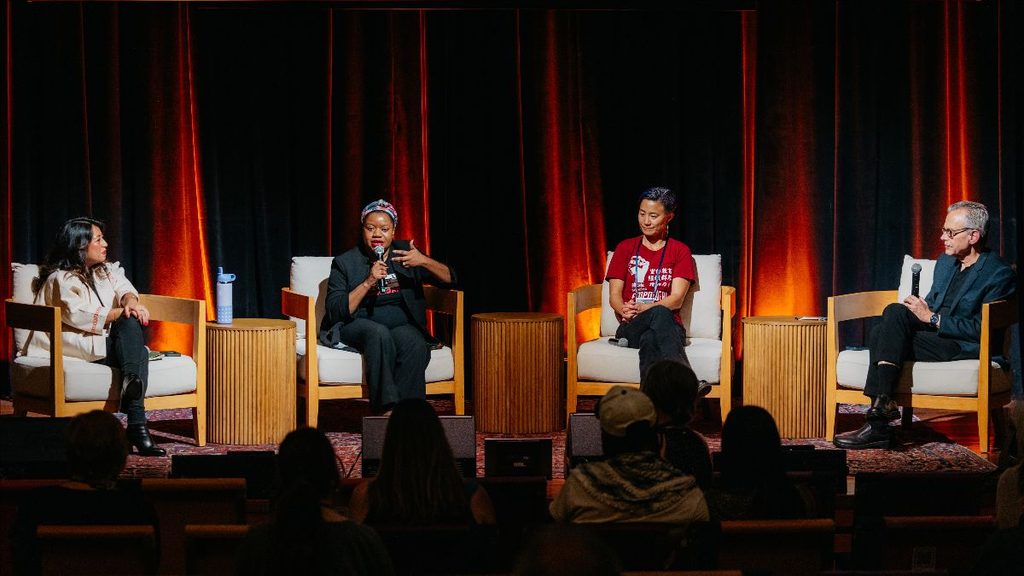
This is a time of escalating fear for immigrant communities. They are being demonized and are under assault, as large-scale, heavy-handed enforcement has been unleashed on them, and our noblest traditions of welcome and inclusion are being discarded. And yet, despite these deliberate attempts to isolate and separate us, immigrants and non-immigrants alike have often been stepping up together to protect rights, build alliances, and fight for a better future for all of us. In this conversation, leading activists talk about what these movements of resistance and solidarity mean for broader efforts to protect democracy. With: Cristina Jiménez Moreta, formerly of United We Dream; Guerline Jozef of the Haitian Bridge Alliance; Shaw San Liu of the Chinese Progressive Association; and Manuel Pastor of USC’s Equity Research Institute.
Stories, Voices, and Perspectives
The Wealth of Welcome: What Communities Across America Are Already Teaching Us (USC Equity Research Institute)
In a new brief, sociologist Manuel Pastor and researcher Thai V. Le trace how immigration enforcement spending has more than tripled since 2003 — from $9.2 billion to $29.2 billion in 2024 — with Congress committing another $240 billion combined through the 2025 One Big Beautiful Bill Act and the 2026 Secure America Act. Their findings challenge the narratives used to justify this buildup, offering a clear-eyed, evidence-based case for an approach rooted in welcome rather than enforcement.
From Fear to Power: A Conversation with Cristina Jiménez Moreta
Silence doesn’t protect us — community does. That’s the hard-won lesson Cristina Jiménez Moreta carries from a childhood spent hiding an undocumented status, through becoming a founding member of United We Dream and helping win DACA in 2012. In this conversation, she talks about fear, strategy, and what it takes to build a movement that outlasts any one administration.
Louisiana Residents Are Resisting Plans to Build an ICE Jail on Contaminated Site (Truthout)
In central Louisiana, ICE is moving to open a 528-bed detention facility for immigrant women, infants, and children on the site of a former Air Force base with groundwater contaminated by toxic “forever chemicals.” Mothers, pastors, veterans, and civil rights attorneys have banded together to fight it, packing board meetings and organizing in the streets. Among them: Daniel Nakamura, whose parents were both interned in WWII concentration camps as U.S. citizens, who now drives two hours each way to stand against what he calls the same trickery happening again.
What You Can Do
- Support the organizations leading this fight. United We Dream, Haitian Bridge Alliance, and the Chinese Progressive Association — all represented by the leaders featured in this issue — are on the front lines of immigrant rights work nationwide. Consider making a donation or following their campaigns to know when and how to show up.
- Join the fight against detention expansion, wherever you are. The Louisiana jail featured in this issue isn’t an isolated case — it’s part of a nationwide wave of new ICE facilities. Detention Watch Network’s Communities Not Cages campaign coordinates opposition to detention expansion across the country and can connect you to organizing happening near you, even if that’s not Louisiana. Sign their petition and sign up for updates.
- Solidarity Guide for Defending Immigrant Communities. Check out this guide from the National Immigration Law Center.
The post The Pulse – 9/25/26: Immigration Enforcement Has Tripled. Communities Are Fighting Back. appeared first on Bioneers.
]]>The post LFF #31: Radical Collaboration and Collective Power: Women’s Climate Leadership appeared first on Bioneers.
]]>
This is Volume #31 of the Leading from the Feminine newsletter, a vibrant resource in the flourishing world of leading from the heart, hands and spirit.
Subscribe to receive the newsletter straight to your inbox.
Radical Collaboration and Collective Power: Women’s Climate Leadership
Earlier this month, the UN Environment Programme’s Limiting Overshoot report acknowledged what is becoming increasingly clear: global temperatures are likely to cross the 1.5°C threshold within the next few years. How high temperatures rise, how long they remain elevated, and how quickly we can bring them back down depends on the choices we make now.
The report gives scientific language to what we’re already witnessing in our own local landscapes and ecosystems. In the high desert stretches of Northern New Mexico, where winter was once steeped in white, snow accumulates in only the slightest of dusting. Warming temperatures cause flowers to bloom weeks ahead of historical schedules, leading to increased food shortages, starvation, and failed breeding for many pollinators, such as hummingbirds.
As journalist Aarohi Sheth writes: “Climate touches everything and everyone.” Large and small.
Climate fatigue is real. It’s easy to feel desensitized, disengaged, and powerless as we navigate information overload and overlapping stressors from the macro to the micro. Like the hummingbird, an animal with the largest heart-to-body ratio of any species in the world, some days it seems like we’re the ones walking around with oversized hearts. So how do we stay rooted, focused, and engaged?
The good news: we can lean into the joyous responsibility to act from where we already are and what is imminently possible. As Dilafruz Khonikboyeva, Executive Director of Home Planet Fund, puts it: “I focus on the day-to-day, like what can I do today; what can I do now; what can I do sitting in relationship.” These daily practices can be seen across the globe as women-led movements steer collaborative, culturally-informed actions on the ground from within local communities. That spirit, despite the fatigue, was visible throughout NYC’s recent Climate Week, which brought over 100,000 people together across more than 1,000 events, from global policy and finance to grassroots and community-led action.
In this issue of Leading From The Feminine, we’re listening to women who are building climate solutions through relationship — to land, water, community, culture, and one another — from the wetlands of Bolivia to the grasslands of Tanzania and the glacial watersheds of Central Asia. These are just a handful of the many women-led organizations on the frontlines of climate work, showing up not only during Climate Week, but for the other 357 days of the year.

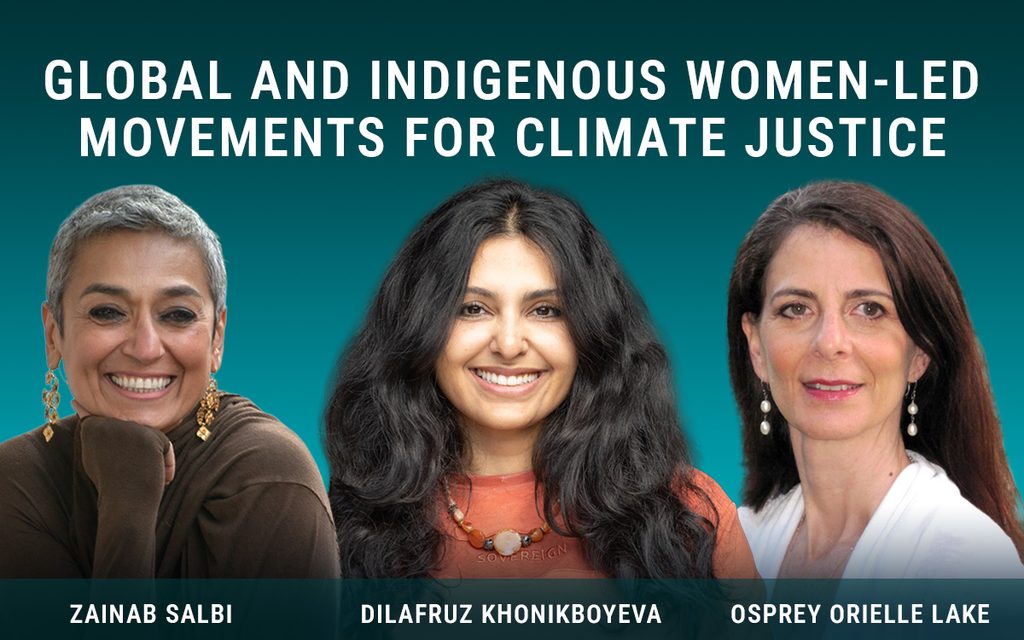
Although they receive less than 1% of climate funding, women-led climate justice grassroots projects are generating cascading benefits, from greater gender and economic equity and less gender violence to improved biodiversity and ecosystems’ health. Simultaneously, the centrality to many Indigenous peoples’ cultures of traditional relationships to place and to honoring all of life as sacred are a tremendous resource in strengthening efforts to protect and renew biodiversity and water resources.
We invite you to listen to this excerpt of a panel conversation from the Bioneers 2026 Conference, which explores what these two vastly under-resourced constituencies have to offer in the quest to co-create regenerative landscapes and futures. With Dilafruz Khonikboyeva, Executive Director of Home Planet Fund; Osprey Orielle Lake, founder and Executive Director of Women’s Earth and Climate Action Network (WECAN); and Zainab Salbi, co-founder of Daughters for Earth.
Daughters for the Earth is a fund and global movement supporting women-led solutions to restore nature. Listen to their special four-part podcast series, The Hidden Economics of Remarkable Women.
Home Planet Fund supports Indigenous People working on the frontlines of the climate and biodiversity crisis around the world. Read their 2025 Impact Report and learn how you can support their work.
Women’s Earth and Climate Action Network is a solutions-based climate justice organization established to engage and unite women worldwide in policy advocacy, on-the-ground projects, trainings, and movement building for social and ecological justice. Join their Women For Forests campaign and make a public comment by October 6th to save the Tongass Rainforest of Alaska.

Featured Media
Listen: Eriel Tchekwie Deranger featured on For the Wild podcast
Host Ayana Young in conversation with Eriel Tchekwie Deranger (Athabasca Chippewan First Nation), President of Indigenous Climate Action, about the ongoing Indigenous Tar Sands Campaign and more.
Read: Collective Power: The struggle for protection for land and environmental defenders
The investigative organization Global Witness reports that in 2025, at least 124 people were murdered defending lands and waters from destruction. Serious threats, intimidation, and smear campaigns also continue, according to the ALLIED network of human rights monitors.
Watch: The Climate Emergency Mixtape
Sollisai Sistahs, Tamil Nadu’s first all-women rap crew, use hip-hop as a voice for resistance, identity and change. Their music celebrates culture, sisterhood and community while challenging social norms.

The post LFF #31: Radical Collaboration and Collective Power: Women’s Climate Leadership appeared first on Bioneers.
]]>The post Nature-Based Solutions: Hope With an Action Plan appeared first on Bioneers.
]]>This is an episode of Nature’s Genius, a Bioneers podcast series exploring how the sentient symphony of life holds the solutions we need to balance human civilization with living systems. Visit the series page to learn more.
Featuring
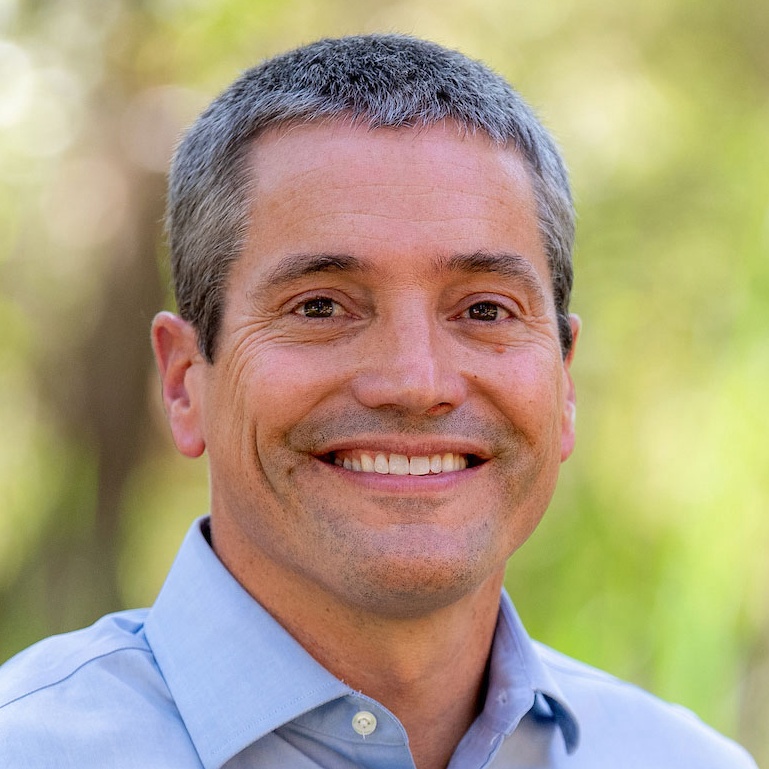
Wade Crowfoot, California’s Natural Resources Secretary since 2019, leads efforts to conserve California’s environment and natural resources, overseeing an agency charged with stewarding the state’s forests, natural lands, rivers, water supplies, coasts, wildlife and biodiversity, as well as helping oversee its world-leading clean energy transition.
Credits
- Executive Producer: Kenny Ausubel
- Written by: Kenny Ausubel and Cathy Edwards
- Senior Producer and Station Relations: Stephanie Welch
- Associate Producer and Program Engineer: Emily Harris
- Host and Consulting Producer: Neil Harvey
- Production Assistance: Mika Anami
- Graphic Design: Megan Howe
- Interview conducted by Teo Grossman and recorded at KPFA studios by Mike Kohn and Rod Akil
Resources
Wade Crowfoot – California’s Leadership in Nature-Based Solutions: Building Climate Resilience Through Ecosystem Restoration | Bioneers 2025 Keynote
Pathways to 30×30 Progress Report
Global Safety Net App – launched by One Earth and the Nature Data Lab in collaboration with an int’l group of scientists and conservation organizations
Subscribe to the Bioneers: Revolution from The Heart of Nature podcast







Transcript
Neil Harvey (Host): As the climate emergency deconstructs human civilization faster than a lobbyist can buy a politician, societies are being forced to find real solutions.
Until fairly recently, virtually all the solutions applied to address climate change have focused on scaling technology, such as renewable energy, which would lower our reliance on burning fossil fuels. Although these approaches are crucial, by themselves they’re insufficient. We’ve also got to achieve significant carbon drawdown because the amount of CO2 in the atmosphere is already in the red zone, exceeding viable planetary boundaries.
This technology-centric approach also ignores the clear data that the large-scale human destruction of ecosystems over the past 12,000 years, including by agriculture, has released massive amounts of atmospheric CO2. Some estimates range as high as one third to half. Human activity has disrupted the innate capacity of Earth’s natural systems to create a stable, healthy climate and atmosphere.
The solution hiding in plain sight is to restore the capacity of Earth’s natural systems to heal themselves and sequester the carbon back where it belongs. It’s the intricate web of biological diversity that creates the very conditions conducive to life that all life depends upon, including us wayward humans.
Nature knows how to do everything we need to do, but without mining the past or mortgaging the future. Enter nature-based solutions.
As Secretary of the California Natural Resources Agency, Wade Crowfoot is responsible for identifying nature-based solutions and putting them into State policy. He spoke at a Bioneers conference.
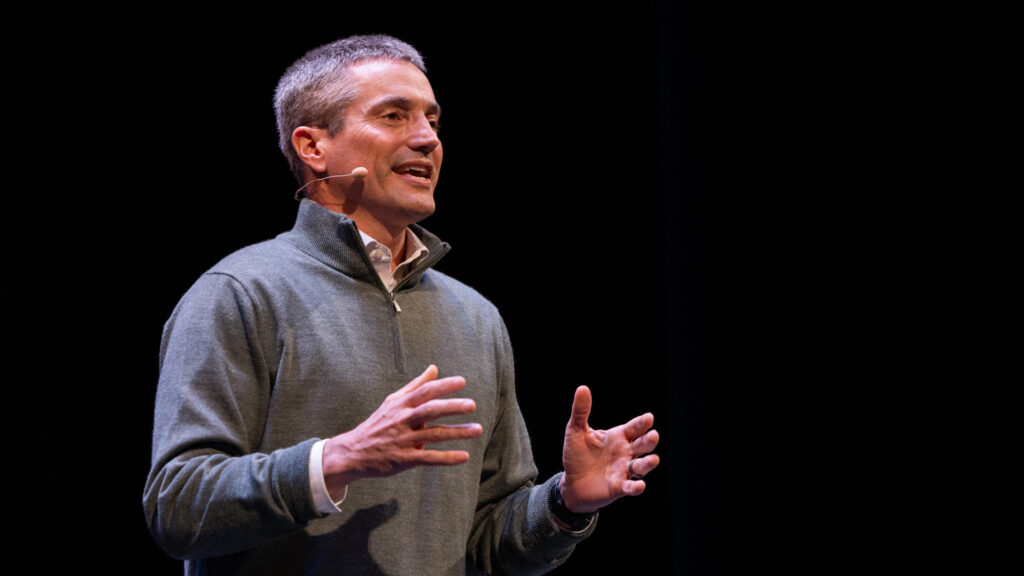
Wade Crowfoot (WC): California is one of the world’s biodiversity hotspots – scientists say one of 36 hotspots in the world. We have more endemic species in California than almost any place on Earth—40 percent of our plant species in California only grow in California.
But we also rely on our nature and our natural systems. Our natural systems are what keeps us together and alive. We talk about ecosystems and sometimes we think ‘eco’ means environment, that’s just fish and wildlife. ‘Eco’ is the Greek translation of home. These are our home systems. So those watersheds that we’re working to protect are providing our water, and when those watersheds burn up in catastrophic wildlife like they have over the past decade, that is a huge threat to our life as humans in California. So, yes, we’re protecting nature for biodiversity; yes, we’re protecting nature for non-human life; but we’re also protecting nature for ourselves.
And that’s really been the Aha moment in the last decade, where across the world, scientists have told us that, yes, attacking climate change is about solar energy and electric vehicles, and building efficiency, but it’s also about protecting and restoring nature.
I want to tell you something encouraging, and I think it’s important to have encouragement at this time—I call it hope with an action plan—and the fact is nature is finding its way centrally into the work of governments, not only in California, across the United States and across the world. And big things are happening.
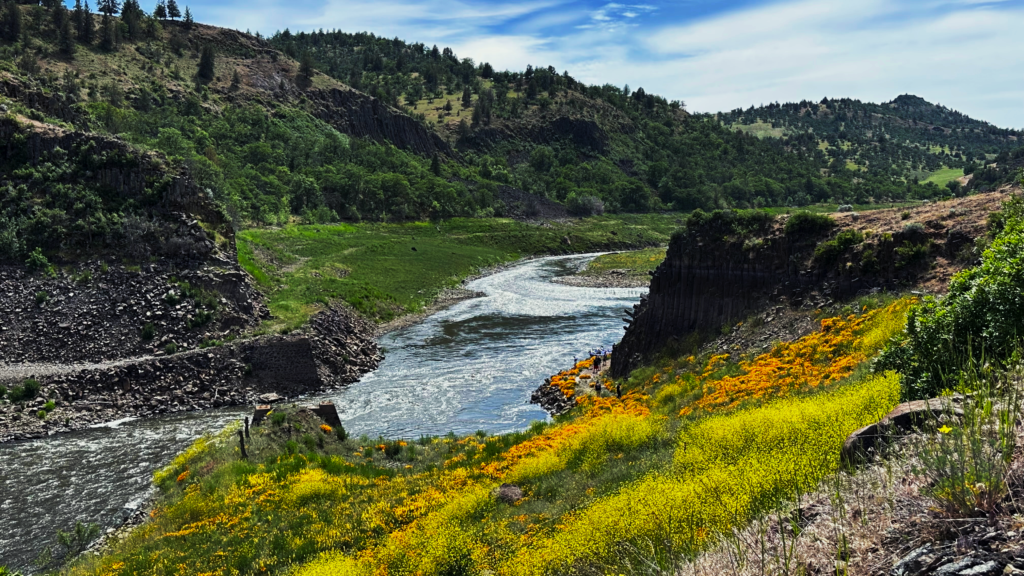
So let me skip to the big things because I think it’s really exciting to share with you that after a decadal movement by tribal leaders in California, the largest river restoration project in American history in the Klamath River Basin. [APPLAUSE] Four dams, four defunct dams have been removed that’s restoring over 400 miles of salmon habitat, critically important. [APPLAUSE] Critically important to the survival of salmon and the survival of the Yurok and the Karuk people, salmon people. And I can tell you that institutions like the agency that I lead, for decades, told tribal leaders that it would never happen, it could never happen.
But here’s the most remarkable thing. Those dams came down in the fall, and biologists said it’s going to take a handful of years to understand if salmon are actually going to recolonize this watershed, that are actually going to come back in. Do you know how long it took? Ten days. Ten days. [CHEERS] 6,000 salmon were monitored ten days later getting through that first dam, and it was ten weeks later that the first salmon were identified far up into Oregon in that top headwaters of the restored habitat. Nature is resilient if we give it half a chance.
Go 400 miles to the south to Los Angeles on what we think is the world’s largest land-based wildlife crossing—the Wallis Annenberg Crossing—connecting two critical habitats for—areas of habitat for the endangered Southern California mountain lion. That’s a wildlife crossing that’s crossing ten lanes of traffic and a two-land frontage road. Many people—most people said it could never get done—it was too big, it was too audacious, it was too complicated, could never happen.
The fact is, great things are happening across California and our country. The California condor is back. I was up with a Yurok biologist releasing California condor into their native habitat in far Northern California. The gray wolves are back in California, and have made their way into the Southern Sierra. And, yes, the beavers are back. [APPLAUSE]
Host: By giving nature a chance to heal itself, these successes profoundly enrich these landscapes.
The term ‘nature-based solution’ first arose in the 1980s among visionary ecologists and biologists, but only gained official global recognition in 2022. What started as an outlier has become a legitimate and increasing priority for effective climate action.
But what exactly constitutes a nature-based solution, and what do the approaches look like in practice? The basic question to ask is: “how would nature do it?”
WC: So when we talk about nature-based solutions, a whole lot of people that don’t do this work really have a hard time understanding what we mean, so I often say, look, this is helping nature help us. When nature thrives, people thrive. And nature needs us and we need nature.
At the end of the day, in order to survive and thrive, we need clean and abundant water, we need clean air, we need safety from these environmental extremes like wildfire, and actually restoring the health of nature helps us with this.
So take, for example, on flooding. We are experiencing California increasing wet—water extremes. So the dry periods are getting drier – the droughts; wet periods are getting more intense, and frankly dangerous. And what we’ve realized over time is that one of the best solutions to protect communities from flooding are letting the rivers roam as they used to during certain times of the year. We have these seasonal floodplains across our country that we’ve essentially cut off. We’ve channelized our rivers and we’ve protected communities by creating higher and higher walls or levees around those rivers. And, in fact, by letting the rivers roam out of their river channel at certain times of the year in a safe and well-planned way is remarkable for reducing downstream flood risk.

Where I live in Sacramento, California is one of the most flood prone cities in the United States, where the confluence of two rivers. And it is these floodplains that’s actually protecting us upriver. And we’re working to expand those.
And what’s really incredible is those floodplains not only protect us from flooding, they are incredible habitat for salmon and other fish that, frankly, have lost a lot of that habitat over time. There are places that seasonal waterfowl and migratory birds are using. They’re even recharging our groundwater basins which are the savings account for water supply. So that’s just one great example where it’s a nature-based solution.
So let’s talk about another extreme – heat. So we’ve experienced worsening heat waves in California. Some people talk about the fact that Los Angeles, over the coming decades, will begin to experience a climate more like Phoenix, Arizona. And when you think about a huge place like Los Angeles, it’s covered in concrete. We know that we can reduce the surface temperatures during these really hot periods through a really simple solution, which is trees. Right? Trees and green spaces reduce the surface temperature and provide shade.
So we’ve invested more than ever in helping generate or create more street trees in neighborhoods that don’t have them, greening schoolyards so that kids, when they’re outside, can be under shaded trees, or if they’re playing, they’re playing on grass or a soft surface. We know from science that the difference between neighborhood temperatures in Los Angeles on a very hot day is more than ten degrees between those places that have a lot of trees and a lot of green space versus those places in concrete. That’s a nature-based solution.
It’s exciting when you talk to people about examples. Everybody loves the idea of greening a schoolyard. People love the idea of letting rivers roam into seasonal floodplains where it’s safe and possible. Folks love the idea of taking your organic compost and turning it into healthy soil that’s growing vegetables that you can buy in your local grocery store. These are all ideas that are not hard. They don’t involve complicated technologies. They do involve paradigm shifts, though, and they do involve thinking differently. So from my perspective, nature based solutions are all about helping nature, restoring natural processes to benefit people.
Host: In truth, many nature-based solutions are found in ancient Indigenous traditional ecological knowledge systems. What’s old is new again.
One striking example is indigenous use of fire.
WC: Across the West, we face remarkably challenging conditions with catastrophic wildfire. Right? Hotter, drier conditions. What’s amazing is, while we need to continue to improve our response and firefighters and technology, that’s all important, but the biggest solution is right in front of our nose in California, and that is reconnecting with traditional practices from our Indigenous communities.
California Native American tribes for thousands of years were practicing fire, prescribed fire, safe, low-level fire to reduce the density of our forests and reduce the risk of catastrophic wildfire. They were even managing water temperatures by creating smoke in the summer to keep water cold for salmon and other migrating fish.
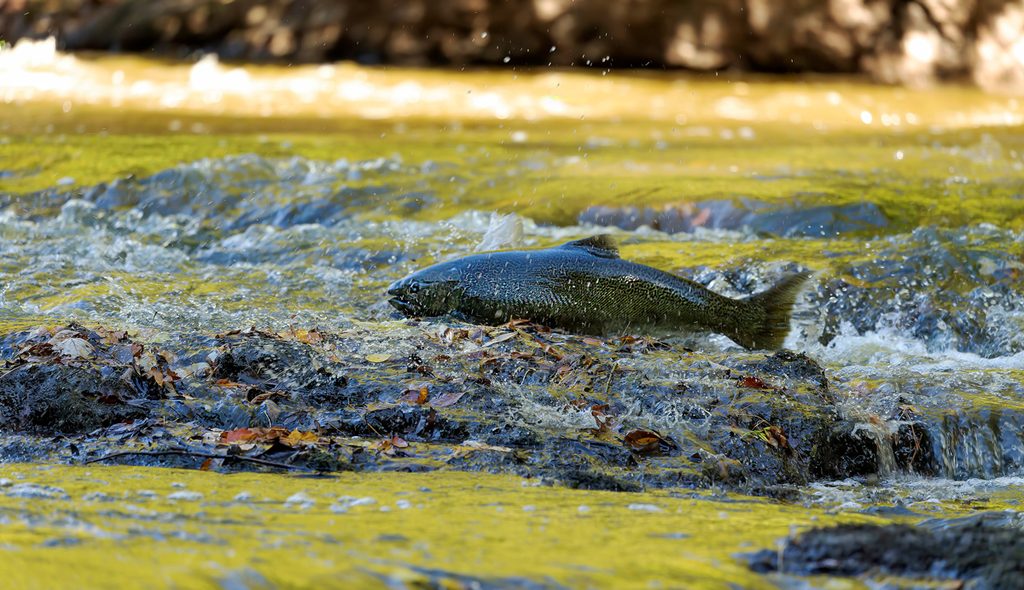
What’s remarkable is for over a century, the agency that I lead outlawed this practice and was literally arresting, and in some cases, charging felonies to tribal members that were putting good fire back on the ground. And fast forward, now we’re working to scale up this practice across the state, and it’s one of our primary strategies to reduce catastrophic wildfire risk. And we’re partnering and learning from those tribal communities that have been practicing this—you know, good fire.
So to me, these nature-based solutions are all around us. We just have to get out of this box we’ve created ourselves to recognize them.
Host: Ancient Indigenous and traditional ecological knowledge and the leadership of First Peoples have become foundational elements of California’s nature-based solutions policy. What had long been violent historical conflicts are starting to transform into respectful partnerships.
WC: The Karuk Tribe in the Klamath Basin has been among the most powerful teachers for me and my team. So this is a tribe that is a salmon tribe, and they have lived in this far northern region of California, along with the Yurok people and others for—since time immemorial. And they have been practicing good fire for thousands of years. They really led a movement over the last decade to push the state to recognize the critical importance of this work, and then not only to, you know, legitimize the practice under the law, but then actually to drive or to advance their tribal sovereignty, their ability to actually burn.
It’s been fascinating to get up there and actually get on those lands and learn from the practitioners. The thing that blows me away is – with nature-based solutions – is, in so many cases, it’s sort of back to the future. It’s these Indigenous practices.
So we’re really excited. From our perspective in California, you know, to protect our residents, to actually achieve our what we think are world-leading targets to achieve carbon neutrality or net zero carbon in 20 years, we have to restore the health of our lands and waters, and it starts by learning from the original stewards of the land.
Host: We’ll hear more from Wade Crowfoot when we return.
I’m Neil Harvey. You’re listening to the Bioneers: Revolution from the Heart of Nature.
If you’d like to learn more about the extraordinary intelligence of life inherent in fungi, plants, and animals, subscribe to our Earthlings newsletter. In each issue, we delve into captivating stories and research that promise to reshape your perception of our fellow Earthlings – and point toward a profound shift in how we all inhabit this planet together. You can subscribe at bioneers.org/earthlings.
Host: In 2016, the revered Harvard biologist E.O. Wilson published his landmark book, “Half-Earth: Our Planet’s Fight for Life.” In it, he advocated for the formal legal protection of the biodiversity and ecosystem health of fully half of Earth’s lands and waters.
The clarion call was a recognition that human existence depends entirely on the health and viability of our ecosystems.
Since that time, a global movement has arisen. Called “30 by 30,” it’s a first step toward Half Earth to protect and restore 30% of Earth’s lands and waters by 2030.
Progress is difficult to measure, but most assessments warn that collective efforts are nowhere near reaching the 2030 goal. According to Protected Planet and the One Earth Global Safety Net, only around 17-18 % of terrestrial land is being formally protected, and only 9-10% of marine habitats – not much progress since E.O. Wilson called for saving half of the Earth a decade before. Conserving the ocean is especially challenging because most of it isn’t owned by anyone, so getting agreements on paper has proven difficult.
The good news is that the state of California is farther ahead. It adopted the 30×30 approach as state law and developed some of the strongest possible standards for adopting nature-based solutions. By 2026, California had conserved 27% of lands and nearly 22% of coastal waters. That means three and a half million acres of counted conserved lands have been added since the initiative began in 2022, more than half way to the state’s conservation goal. Of course, there’s much more to be done.
WC: California has a road map to achieve carbon neutrality. So that’s slashing our pollution. But we realize that in an economy like California, fourth largest in the world, we’re never going to completely eliminate pollution. There’s some really tough industries to reduce emissions. So in order to reach that net zero or carbon neutrality, we need to sequester. We need to remove and store carbon at much larger levels than we have.
It starts with these nature-based solutions. We all learned in fifth grade that plants absorb carbon dioxide and release oxygen. And when our lands are healthy, our soils are healthy, our trees and forests are healthy, they sequester more carbon than they release. Our landscapes in the West and in California are unhealthy.
And so now for the first time we’re quantifying the amount of emissions that come off our lands, and we’ve set a specific target to reduce the emissions of those lands, ultimately making the lands a carbon sink.
So things like healthy soils. We have so much organic waste that it’s actually not a form of waste, it’s actually an asset. That’s organic content. If we can actually vastly expand organic content into the soils, create healthier soils across a meaningful swath of California ag lands, this means significant carbon sequestration. And oh, by the way, remarkable water retention, more efficiency of our water usage in a state that’s experiencing greater droughts.
So those nature-based solution targets that are holding us accountable to really drive land use practices, changing and improving the health of our landscapes, again, so we can achieve carbon neutrality, but also achieve all these other benefits.
Host: Conserving and restoring nature are effective ways to heal societal and environmental harms – and they’re also also intensely popular. Wade Crowfoot finds that nature-based solutions have unusually broad public support that can transcend even extreme polarization of partisan politics.
WC: People love the outdoors and people love nature. Our state park system, the largest in the country, is beloved by rural people, urban people, north, south, Republicans, Democrats. Our public lands are revered by folks across the ideological spectrum.
So when you talk about these common sense improvements that provide benefits by using nature, or building the health of nature, I really do think it breaks through some of the ideological differences, or even the partisan differences. And at the end of the day, the great thing about, you know, this set of actions we call nature-based solutions, is, yes, it’s about combating climate change, but we don’t have to talk about that if—for somebody who doesn’t recognize that science, right? The great thing about these solutions is they’re multi-beneficial. So we can talk about them in different ways that really resonate with a range of people.
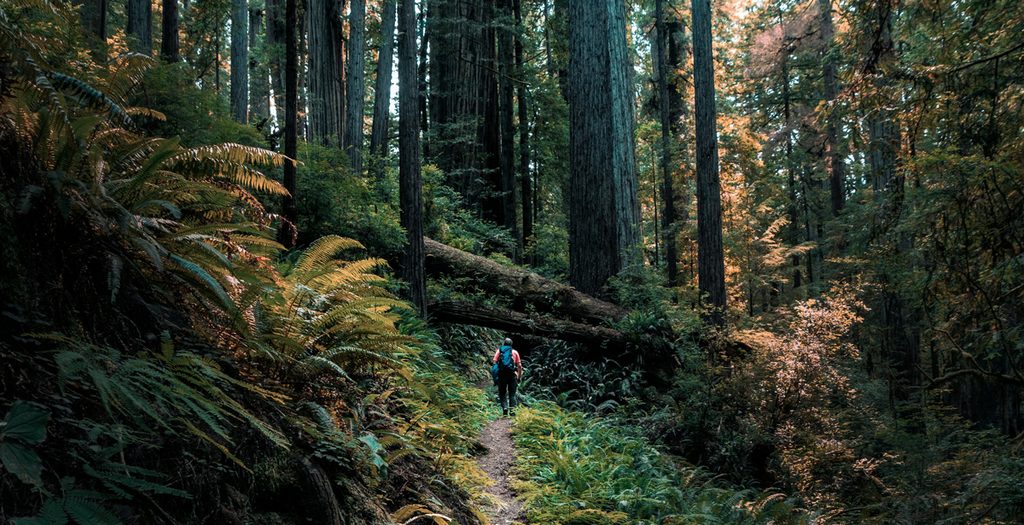
Host: California helped create the Mediterranean Climate Action Partnership in 15 regions that have similar climates, across five continents.
These states and provinces aren’t waiting for their federal governments to mobilize. Instead they’re collaborating directly to share knowledge and solutions that can migrate around the world.
Wade Crowfoot notes that advancing and scaling these nature-based solutions should also include restoring justice with First Peoples.
WC: Three months after he took office, Governor Newsom invited California tribal leaders to the future site of the Native American Heritage Center, this new tribal gathering place in Sacramento, and did something that no California governor had ever done. He offered an unconditional apology for state government’s treatment of tribes. And he read—[APPLAUSE] And he read from the inaugural address of California’s first governor, where that governor put a financial bounty on the head of Native women and children, a state sanctioned policy of genocide. And it was easily the most meaningful and impactful day in my career.
But we talked about, with the tribal leaders, that if that’s all that happened, it was importantly symbolic, but it was ultimately counter-productive because we needed to actually create a new future. So we’ve been holding ourselves accountable over the last five years to create that new future.
What does that future look like? It looks like ancestral land return, land back. [APPLAUSE] It looks like co-stewardship, co-management of our lands, and it looks like restoring traditional ecological practices that we now desperately need in California. [APPLAUSE]
We allocated $107 million to ancestral land return that have now facilitated 30,000 plus acres of land back to tribes. [APPLAUSE] California State Parks manages 1.6 million acres of land across California, now 57 percent of those lands in state parks are governed by co-management and co-stewardship agreements with Native American tribes. [APPLAUSE] And we are finally getting out of the way of tribes in getting cultural fire back on the landscape, which we desperately need in California. [APPLAUSE]
So this is happening. And this will continue to happen. And I want to tell you that as we pick up the paper or, as we do now, doom scroll in the beginning of the day or the end of the night, just know that progress is being made, and it’s not just being made in California. I had a chance to lead a delegation from California of activists and tribal leaders and local government leaders to Cali, Colombia, in the fall, where we came together with countries from around the world under the United Nations Compact convention on biodiversity, and I can tell you, governments from around the world are doing things that make these—this progress look modest. And we have a network of efforts among progressive governments. And I can tell you this linkage between restoration of the environment and restoration of justice, Indigenous led, it’s found its way, as it should, into these governmental discussions, and it’s actually guiding our path forward. So my message is: In this dark, dangerous hour, don’t despair.
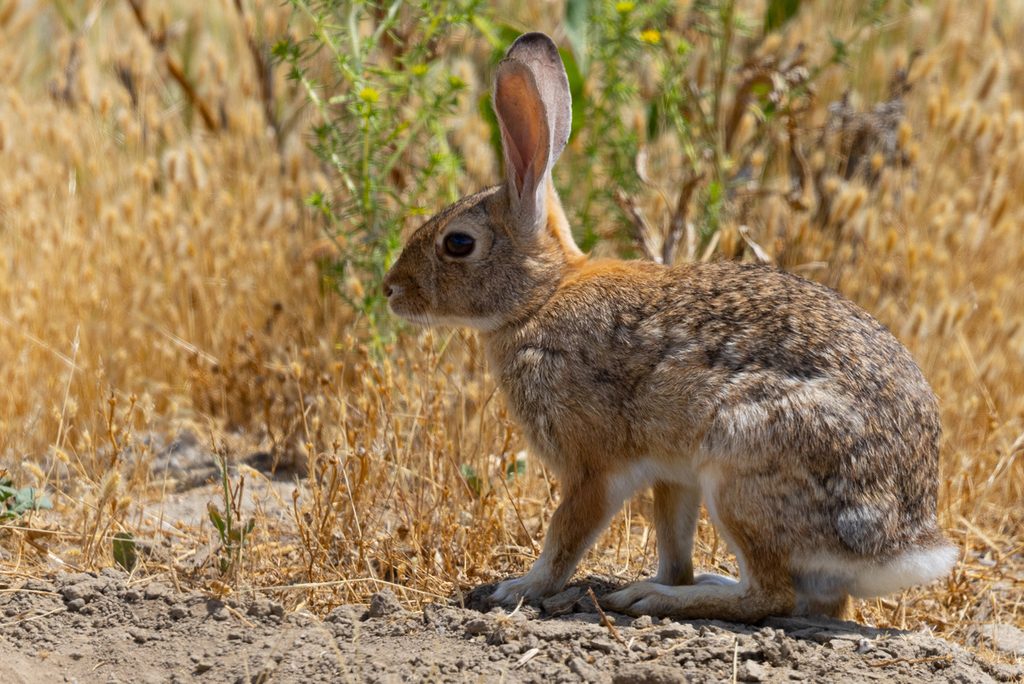
And I want to end with a story, and it’s one of my favorite stories. The San Joaquin riparian brush rabbit is this cute little rabbit that has lived in the Central Valley, the San Joaquin Valley. And as its name suggests, it lives along the rivers. It lives in those riparian zones, woodsy areas along the rivers. And we’ve lost 96 percent of our riparian habitat in the Central Valley, and we thought we lost the San Joaquin riparian brush rabbit until they found a breeding pair taking shelter under an overpass of Highway 99. […] And that breeding pair was brought into what’s called captive breeding, where they help generate more population into the dozens. […]
Well, fast forward, an incredible nonprofit named River Partners, that does these multi-benefit restoration projects, bought an area of land at the confluence of the San Joaquin and the Tuolumne Rivers, and the goal was buy it from agricultural production and re-wild it for this type of habitat, this riparian habitat. And it’s an amazing story, because we caught wind of this effort, and we decided to see if they would help us make it a state park.
And so in the course of that, they were doing biological surveys to prepare for the reintroduction of the brush rabbit, […] And during that biological survey, within that newly repaired riparian zone, only three-and-a-half years old, do you know what they found? Riparian brush rabbits. [LAUGHTER]
Somehow these incredible bunnies have figured out a way to travel ten miles and across the river to find their new home at Dos Rios. So to me, that says never give up hope, always recognize that nature can rebound if we help nature, and this is our moment.
Host: Wade Crowfoot, Nature-Based Solutions: Hope with an Action Plan
The post Nature-Based Solutions: Hope With an Action Plan appeared first on Bioneers.
]]>The post Global Indigenous Women Led Movements For Climate Justice appeared first on Bioneers.
]]>Listen to this excerpt of a conversation exploring what these two vastly under-resourced constituencies have to offer in the quest to co-create regenerative landscapes and futures. With Dilafruz Khonikboyeva, Executive Director of Home Planet Fund; Osprey Orielle Lake, founder and Executive Director of Women’s Earth and Climate Action Network (WECAN); and Zainab Salbi, co-founder of Daughters for Earth.
Transcript (edited)
OSPREY ORIELLE LAKE: We are at a crossroads. I feel like many of us have known this moment was coming. It’s been building, and building, and building, and now we’re at an apex point of a transformational moment for society. Things are getting terribly, terribly worse, but this is also the crack in the system that we also know needed to happen, because we cannot continue to live the way we have been with each other or with our precious planet.
We are seeing the end result of patriarchal institutions, and this is core to the reason we’re in these interlocking crises. We cannot separate out the long history of patriarchy and the violence against women and the violence against the land. Those things are intertwined. When we desecrate the female in any capacity, we can see the end result. Whether you want to look at the economy, and the extractive economy, if you want to look at what is happening with racism, if you want to look at what’s happening with colonization, it is based on these systems of supremacy and othering, and not belonging. And so we’re here to address that, and what are women doing in this space?
There’s something called the Women’s Political Empowerment Index, which is all over the world, country by country, observing and taking studies on how women have agency in their country; if they’re involved in political office, how they’re doing in their economic structures. It just measures women’s agency in many spheres. Not that carbon emission reductions are the most important thing, but interestingly, with just a one unit increase in the Women’s Political Empowerment Index, we see an 11.51 decrease in carbon emissions per country, which is vast. And it’s a really important study because intervening in the climate crisis is not about carbon emission reductions, but it just shows what happens when women have power in their communities. It’s one of the most undervalued, misunderstood pieces of information we need to have right now: when you insert women’s leadership, how radically systems change, talking about these different islands.
A lot of that is being guided by women’s leadership, feminist values, feminist analysis, and I think it’s really important to lift that up. That’s where a lot of the transformation is taking place, because of this relational way of working.
A lot of times we see women in communities doing this leadership that is often not well-funded, under-acknowledged. And people say, well that’s just a small community project. They’re doing food security, they’re growing some trees, and they’re taking care of their community. That’s just one project. How does that save the planet? And it’s completely opposite to how many women’s groups view these things, which is, actually, when you add up all these different projects that are localized – where people are living well and we’re transforming the land, economy, relationships, taking power, building egalitarian spaces – when you add them up, it’s gigantic. And it is in opposition to this corporate ideology where you have to have these huge hierarchical structures where governments and corporations and financial institutions are making tons of money, but not the people on the ground.
So we’re really working to reclaim that narrative, that we don’t need that. We need our own communities to work well, and women on the ground are doing that, and it needs to be seen as a vast solution.
DILAFRUZ KHONIKBOYEVA: Home Planet Fund is an Indigenous fund that is run by an Indigenous woman. The Board and Staff are also Indigenous from the communities in which we work.
When we talk about funding to Indigenous people, what I hear a lot is actually a lot of excitement, to be really honest. Right? Because stats – I know no one cares about them, but I’m going to say them anyway – Indigenous people are 6 percent of the global population. They oversee 80 percent of the biodiversity, at least, of the world, and 50 percent of endangered animals. That’s not by accident.
We work in the Tongass, which is the largest temperate rainforest. It’s in Alaska, in the southeast. We work in the South Pacific on terrestrial and marine land areas. We work in East Africa in the grasslands across Tanzania, Kenya, Uganda. And then we work in Central Asia at the glaciers and the glacial watersheds with regenerative ag.
My favorite thing that I like to do is tell people we work in Afghanistan, because I love seeing the rotation of faces, where it’s horror, and then disbelief, and then interest, and then horror again. Some of the questions I get are: Well, why are these women choosing to stay there? Like if you’re funding Indigenous people, 1) we didn’t know Indigenous people exist in Afghanistan. Plot twist: 80 percent of Indigenous people are in Asia. But 2) there’s this fundamental misunderstanding that as Indigenous people, for example, I’m Pamiri, which means we name ourselves for the mountains where we come from. My core identity is innately tied to the lands and waters I come from. It took everything, and a lot of coaxing, to have us leave that land. It took many years of civil war. It took so much, and I want to relate that to how, for people to leave their land is like cutting off one of your limbs, is what we say in my language. Right?
So, for example, in Afghanistan, people are like, well, women’s work didn’t work in Afghanistan for lots of reasons. Right? My personal theory is that we were imposing a very globalized Western view of what feminism or women’s leadership looked like, and we wanted to see a photo and like a copy/paste of that in that context. What I’m seeing now is women who hold very traditional and non-traditional roles who are able to lead because of traditional spaces they have, and build out economic freedoms and voice and physical freedoms for themselves in their context, on their land, while feeding their families. So when we give people the resources and the space to do things in their way, they’re able to build out the growth that they want and not make it echo a femininity that we only see as one “hegemonous”, global way.
The other example I’ll really quickly give is in Kenya. There’s a wonderful woman named Rosemary. She and this local village of Maasai women convinced their husbands and the male elders to give them a plot of land. In a Maasai culture, their whole wealth is in the cattle, but goats are women’s work, so men don’t touch goats, and any money you make from it goes to women. And it’s actually such a brilliant way to utilize the culture to make money. So these women got this plot of land. They did a lot of biodiversity on it. They have turned it into an eco-hostel for people, and they take care of their goats on it. And because the land and the goats are owned by the women, the men have to be invited to the land to come. And so they found their own ways of subverting their culture and giving themselves power, and really renegotiating within their context. Right?
One of the most amazing things is there was one elder who was responsible for the female genital mutilation, which is a big problem in Maasai communities. Rosemary worked with her over many years, and she was teaching beading, right, as a way for women to make money separate from their husbands. And one of the most beautiful stories she told me, “I love this land. I love what I’ve done here, but the hands that used to hurt our daughters have now put down the knife and picked up the beads.” And so through her own way, in a way that I don’t believe outsiders could have done, she stopped female genital mutilation in these villages on this land. That is what localized women’s leadership means. It doesn’t mean us imposing, it means that we allow them to take the necessary steps. Sometimes it’s zig-zaggy, sometimes it’s straight out, but if we let them decide what their version of femininity and indigeneity looks like, it is durable, it is healing, and it is the pluralism that this world needs.
ZAINAB SALBI: Indeed, everyone celebrates Indigenous leaderships and women’s leadership. Women are getting 0.2 percent of all philanthropic funding that is going to climate, and Indigenous people are getting 1 percent or less than 1 percent. So show me the money, to quote Jerry Maguire, if I remember correctly. Show me the money. I’m done talking and celebrating, we are still in women’s month. I always tell people, ‘Please don’t celebrate us. We are done with the celebration. Show me the money.’ You know?
Because I have to take advantage of a room full of amazing people, we are in Code Red right now, as it relates to women, and Indigenous people, and anybody who’s interested in climate. In Code Red, 5 governments cut their money out of international aid. The UN says 95 percent of women’s organizations are going to close within the year. We are dealing with women’s organizations on the ground who are closing. Violence against women has increased in rates I have not seen in my lifetime. And believe me, I worked in conflicts for 35 years. It’s so tremendous, I never thought women leaders in the environmental movement would be threatened for their life, but they are threatened, and they’re going through violence I have not seen before.
As someone from different parts of the world, I get news all the time that this person got killed, this person got killed, it’s too much. So we can bitch and moan about how bad it is, but this is the time of action.
And here’s the thing: Before our actions, when we are here, it’s always show me the money, which is real because we really need to make sure that we hold their back. They are doing the real work. They are bringing systems change. We are too, and they are equally important, if not more important, because they are creating change in relationship with something fundamental that, I think with all our work and all our consciousness, is really hard to do in cities, which is the different relationship with nature. And as good as we are, you live in the city, you lost that connection. They’re bringing about an existential, spiritual change, in my opinion, and that is the relationship with nature, these communities. Right?
How do we all shift even in our communications from transactional relationships even within each other to regenerative relationships where every person in here really has a contribution, because they are doing all the work despite their circumstances, not because of it. They need every support possible. Yes, the money makes a difference, but so are the voices, and so is their reiteration of what they are contributing.
Like we also have to shift and be advocates of that shift within our own systems, the systems that we are living in. Because they need us to show up, and because this is Code Red in our history, in my opinion. That means it’s the most exciting time to be alive. Because every drop matters, every action matters, every word matters in this moment. And what a privilege that we are the liminal leaders that are holding this space in between, what a privilege that we are the edgewalkers that are taking the risk, and are okay with the risk, because the only way we can get out of this moment is to take risk, and to experiment, and to look at what are the new systems. And to create new systems, you actually have to trust them, and trust the context that they are in.
Let’s trust what’s possible, because the possible is there and it’s proven, actually. We just have to shift our own attitude in more trusting and more money and more actions on our end as well.
OSPREY ORIELLE LAKE: The assault right now is increasing, because as we are seeing polarization and the wealthy elite are consolidating their power – white supremacist leadership, just call it out – the attack becomes more severe, which means we all need to collect together much better than we ever have. We really need to be together and be in our networks, and work together, because it’s a very, very tenuous time.
I just came back last week from the UN Commission on the Status of Women. I go to those conferences all the time. I’ve never seen it be that severe, the threats to funding, the increase in the violence, the consideration that the UN is even running out of funds, which is one of the few multilateral spaces that we have, what will happen to women’s rights. I mean, this is such a critical moment. Like this is our moment. If you are on the sidelines, it’s time to get off the sideline and be in your community and work with people.
We really need to protect the Indigenous women land defenders because they’re on the frontlines, literally putting their bodies on the line, protecting the last of the biodiversity, the last of the forests, the last of the waters. I can’t stress enough the difference between us being in the city, and supporting those activities, and people who are literally waking up in the morning because their water’s being destroyed or their forest is going to be cut down.
And so, there are some really strong policies that are now being enacted and possible, especially in Latin America around the Escazú Agreement, and different things that are being pushed by grassroots movements to protect women land defenders. It’s one of the most critical things we could be doing because that relationship between the violence against the land and the women, and what’s left of nature are all intertwined.
ZAINAB SALBI: We recently issued a report, a random study of women leaders, and the only common denominator is they are women led and they are nature-centric, basically. And what we saw is the way they’re going about their leadership is actually addressing the livelihood of the community, the local economics of the communities, all of these things that I mentioned earlier, but there’s all these unintended consequences which are very exciting, including women and girls saying: I want to be like that as well; I want to be a defender of the forest, or I want to protect the dolphins, or I want to protect the pangolins; or, oh, there’s money and there’s live concession? What we’re finding out is what we’re calling the ripple effects of women’s leadership, and this is just by the fact that they are controlling the decisions and the money, and the money management of it. All these other consequences that are happening from it.
DILAFRUZ KHONIKBOYEVA: I’m going to say something that is going to—I’m going to get eye rolls, and you’re going to think I’m really naive. I think that any two people, despite where they are in their politics, in their views, even in war on opposing sides can find the middle. And I’m going to say I’m not naive, because I lived through a civil war as a child. I have spent too much of my time in academics around civil war. I have worked in that context, and there’s a theory around it, it’s called rational actor theory, and it’s that as war or anything is happening to you and around you, you still have to sleep, you still have to eat, you still have to think about your practical decisions.
So I have found in my personal life, to be honest, when I can’t take the news or even what’s happening in my own community, frankly, I focus on the day to day, like what can I do today; what can I do now; what can I do sitting in relationship with amazing organizations and people around me.
I think at the core of Home Planet Fund, that’s kind of what was built in innately; I don’t need you to have my politics. I don’t need you to know what my politics are. I don’t need you to believe in indigeneity even, frankly, as a term because my own people sometimes don’t even self-label as “indigenous”, because they’re like: What is that? We know who we are. We don’t know what that weird random term is. Right? I just need you to fundamentally believe 1) we have an impact on the Earth, and 2) we should make a positive impact on the Earth. If you can meet me there, I believe we can foster a good relationship. And I believe together, we can foster good change.
So instead of thinking about the academics or the larger scale, I’m honestly so tired. I’m so tired and I have seen so much good work happen where people don’t label and don’t self-identify, they just sit there in community and do good work.
These are not small, little, tiny, fringe, cutesy projects that women and Indigenous people are doing, because, again, it’s cutesy or it’s small or it’s naive. We’ve been around for nearly four years. We work in one percent of the Earth’s lands and waters – one percent. That is not because I do that, that is because there are Indigenous people who are working in community. It doesn’t matter how they identify politically, socially, economically. They are doing it because that’s what right relationship and healing and spirituality looks like to them. And they were doing it, frankly, before we resourced them. Right? But when we resourced them, it went faster year after year. It grew. It went deeper.
And so I don’t know that we need large-scale, homogeneous breakdowns or buildups, I actually just want us to sit in community and do good things, and sit in right relationship. I feel like that’s all my heart desires, and that’s all I’m seeing these days. And it’s so beautiful to be in that space.
ZAINAB SALBI: I think we need radical collaboration, and we need to unlearn some of the systems that enable us to even succeed, and perhaps learn new pathways. The women’s movement has always operated from a psychology of scarcity, because we always did get the breadcrumbs, and that breadcrumbs have just gotten even less. Right? And if I may dare, in that politics of scarcity, we loved each other as sisters, but we also competed with each other and feared for the money. If you haven’t figured that out, I’m very practical, like, you know? And we right now require this radical collaboration of even assessing the structures and the systems that we are in, and perhaps not defending the structures and the systems that we are in, but making sure that the ones that we exist to support not only survive, but thrive.
In other words, sometimes we get in our way, because I have to defend Daughters for Earth, and she has to defend her fund, and she has to defend her organization. And we care about our brand and our legitimacy and all of these things, and then we lose the very thing that we were actually created for, which is there, the unseen, in front of us here today. So it really requires us to also shatter the system from within our own system. Right? And requires us to ask hard questions, uncomfortable questions. Not only how do we make our work more efficient, not only how do we cut our costs, not only how do we radically collaborate so we ensure we’ve got their back. So that’s one thing that is going on in me.
I so believe in it, and we’ve talked that talk, but we didn’t walk it all the time. If I am to be extremely honest. Right? And we were not rewarded for collaboration either, for those who are familiar with the NGO sector, not always it was rewarded. Right? But now, it’s “F the system”, because the system is not working, so we have to be radical in our collaboration, and in our having honest conversations and honest discussions and practical ones, because we are in Code Red, one.
The second thing is, I have that longing in me for community and for belonging, and this time is also questioning all of that. You know? Especially—I will say everyone in my life is questioning that, how small we are, how relevant we are, this is bigger than all of us, da, da, da…all of that. You know? And it has different ways on us, it depends on our identities. Right?
So what’s for me is most important in terms of how that goes is really, it’s a sense of belonging. And when I die or when any of you die, we should have given it our all. And that’s the future I want. We’re not going to know what’s the future, but we’ve got to show up in every single fucking way right now. Really. You know, we may succeed or we may not. Hopefully, Inshallah, we will succeed. But the only way we know is if we give it our all.
So I have a tattoo on my back. It’s the hummingbird. Right? And because the hummingbird is the symbol for Daughters for Earth, and I said, ‘This is how much I believe, and so I’m going to tattoo it.’ So I have no choice but to do it. Really. You know? And it’s the hummingbird. It’s based on the fable of Wangarĩ Maathai, who was a Nobel laureate, and who tells the story, it’s an African fable, of a forest fire and all the animals panicked and escaped except for the tiny hummingbird, who rushed to the local river, took a drop of water and rushed to the fire, and dropped it on top of the fire, and kept on going back and forth, back and forth, back and forth. And all the other animals criticized the hummingbird. “You’re so small. Your beak is so small. Your drop of water is so small.” And she looked at them and said, “But I’m doing everything possible to turn off the fire. Why don’t you join me?” And with that, she inspired other other animals, and they turned off the fire.
Now here’s the thing: This is not Wangarĩ — the hummingbird is a very special bird. It has the biggest heart-to-body ratio of any other species in the world – big heart. It has different spiritual meanings. The Basque region believes it’s a messenger between heaven and here. So when you see a hummingbird, make a wish, it will take it to the heavens. And it flies in all directions, sideways and backward as well. And it flies for 12 hours straight! I honestly did not believe this fact. But it does fly 12 hours across the ocean. So never doubt your drop of water. Right? Oh, and it kills. If you fuck with a hummingbird, it kills you. Really! So do not underestimate the power of us, and every drop that we are putting in.
So I don’t know where the future lay, but I want to embody the hummingbird in all of its characteristics. Right? Because that’s the only choice we each have.
The post Global Indigenous Women Led Movements For Climate Justice appeared first on Bioneers.
]]>The post Neighbors and Allies: Solidarity in a Time of Distress appeared first on Bioneers.
]]>Recorded by Jason Maze and Rebecca Ewing at Maze Productions.

The post Neighbors and Allies: Solidarity in a Time of Distress appeared first on Bioneers.
]]>The post In Memoriam: Remembering and honoring a few recently deceased friends and allies appeared first on Bioneers.
]]>Gloria Steinem and Carl Anthony both spoke at Bioneers; Peter Buckley was an invaluable friend and very longtime behind-the-scenes supporter and ally; and while Wendell Berry never spoke at the conference, his worldview has had an enormous influence on us and on so many of the people whose work we have highlighted over the decades.

Gloria Steinem (1934—2026) was one of the greatest activists for the full equality of women. We won’t recapitulate the details of her life, which are being recounted far and wide across the media landscape at the moment, but there are a few aspects of her persona that bear emphasizing because her legacy doesn’t just lie in her considerable achievements but in the leadership-style she modeled for all of us.
Truly remarkably for a major public figure, she listened to criticism and took it to heart when it rang true, so she was extraordinarily adept at making allies out of some pointed critics, and while resolute and unwavering on core ethical positions, she never made enemies unnecessarily. She was also very good at working cooperatively and nurturing others’ leadership abilities, not at all possessed by the need to dominate those she worked with. Exceptionally poised, centered, unflappable (and funny!), she didn’t get thrown off balance even during very challenging moments. She was lucid and realistic about political situations, but even when the movement faced painful defeats, she kept her eyes on the long game: the idea of abandoning the struggle was unimaginable to her. The fight for women’s rights has been waged for centuries, and though we have far to go, during her lifetime enormous gains were made, thanks in no small part to her immense contributions.
- Watch a talk Gloria gave at the Bioneers Conference in 2011
- NPR: Gloria Steinem, trailblazing journalist and activist, dies at 92
Note: Sadly, another world-renowned, extremely influential and important feminist leader and thinker, a longtime close associate of Gloria Steinem’s, Robin Morgan, author of the classic, Sisterhood is Powerful among countless other accomplishments also just passed away.

Carl Anthony (1939—2026), a towering figure in the Environmental Justice Movement, may have done more than anyone to drive home the inextricable link between the exploitation of the poor and people of color and the degradation of our ecosystems.
The only African-American student when he entered Architecture School at Columbia, he became a professor of Architecture at UC Berkeley’s College of Environmental Design and later co-founded the firm, Anthony, Fleming & Assoc., in Oakland. Appointed to the Board of Earth Island Institute by its founder, David Brower, Carl co-founded (with Karl Linn) the Urban Habitat Program, a groundbreaking initiative to cultivate multicultural leadership in environmental justice movements, and, with Luke Cole, he produced Race, Poverty and the Environment, a highly influential quarterly magazine.
Later a Fellow at Harvard’s John F. Kennedy School of Government, he went on in the early 2000s to shape national conversations on the environment and equity as Director of the Ford Foundation’s Sustainable Metropolitan Communities Initiative in New York. When he returned to California, he co-founded Breakthrough Communities, Oakland, a project that built on the many strategies and environmentally equitable programs he had funded during his time at the Ford Foundation.
Carl served on numerous boards and commissions, including the Berkeley Planning Commission, the Presidio Council, the San Francisco Planning and Research Commission, the Gamaliel Foundation, the EPA’s National Environmental Justice Advisory Council and the President’s Council on Sustainable Development.
Carl Anthony was a visionary leader, a great scholar, activist, educator, and mentor to many of us, and we strongly recommend his 2017 book, The Earth, The City, and the Hidden Narrative of Race, in which he shares a lot about his personal trajectory as well as his wisdom.
And for more about him:
- Urban Habitat: Rest in Power, Carl Anthony
- Forever Missed: Stories, Tributes, and More
- Oaklandside: Remembering Carl Anthony, architect who brought racial equity analysis to environmental movement
- Urban Habitat: Earth Day and Carl Anthony’s Legacy

Peter Buckley (1947—2026) was a genuine visionary who had an enormous impact on many organizations and people but whose relentless energy went into creating vital, lasting projects and institutions that would contribute to the common good with no interest in attracting attention to himself. An attorney and then a highly successful entrepreneur, he became an extremely effective philanthropist in several domains, from education to activism to land conservation to green building, and he founded or co-founded some truly groundbreaking initiatives and institutions.
Among his many achievements, Peter envisioned and tirelessly led the building of the one-of-a-kind David Brower Center and served as its President from its opening until his passing. The building itself pushed all the limits of cutting-edge green design, way beyond the highest levels of LEED certification, but its even greater accomplishment was how it became a truly uniquely dynamic hub for dozens of cutting-edge, extremely influential environmental and social justice organizations working under the same roof, as well as a nexus of progressive cultural life in the San Francisco Bay Area and nationally.
In 1995, he co-founded (with Zenobia Barlow and Fritjof Capra) the Center for Ecoliteracy which has had a huge impact on food and nutrition in schools in California and nationally. He also co-founded Greenwood School, a K-8 school with an environmental emphasis, in Mill Valley, California.
Peter was also an important leader in land conservation in the U.S. and internationally and in regenerative farming initiatives, serving on the board of Doug and Kristine Tompkins’ Conservation Land Trust that created mind-bogglingly immense national parks in Chile (Including Corcovado National Park), backing the work of The Land Institute, and co-founding with his wife Mimi a remarkably biodiverse agricultural enterprise, Front Porch Farm.
Peter was a dear friend to many of us in the Bioneers community, and we are deeply indebted to him for having generated so many long-lasting resources that will help sustain us and many generations to come in our quests to achieve a far greener and fairer world.

Wendell Berry (1934—2026)
It is hard to find someone who was more beloved by broad swaths of eco conscious and progressive folks across the U.S., most of them modern, cyber-literate urban dwellers, and therein lies a paradox because Wendell Berry was probably the most exalted voice for genuine “old-fashioned” rural values of the last couple of centuries.
A celebrated, award-winning poet, essayist, novelist, activist and teacher who wrote some 50 books and had taught English at NYU and then at the University of Kentucky, Berry was certainly a sophisticated intellectual, but in his own eyes he was above all someone who farmed a Kentucky hillside for 50+ years in the county where his family had lived for eight generations (according to some accounts, his great, great-grandfather bought 500 acres of land there after serving in the army in the War of 1812).
He used mules instead of tractors for plowing, railed against the destructiveness of industrial agriculture and was a tireless conservationist and advocate for local, rural communities and for commitment to one’s land. In the 1970s and the early 1980s he edited and wrote for Rodale Press, specifically for its publications Organic Gardening and Farming and The New Farm.
He was also a deeply principled activist, who over the years protested the Vietnam War, Nuclear Power, Climate Change, and, closer to home, mountaintop removal by coal corporations, and was even, reluctantly, arrested once or twice.
What made Wendell Berry such an exalted and loved figure, besides, of course, the brilliant authenticity of his writing, was his absolute integrity and honesty, his unshakeable ethical compass, something that resonates in an America shaped by narratives such as Gary Cooper’s character in High Noon and that is at times associated with “small-town” values espoused by conservatives, but that those on the right very rarely live up to. This genuine 8th-generation Kentuckian turned out to be a far better exemplar of the highest octave of traditional, land-based values than any conservative while being on the right side of so many of the battles for the soul of our civilization. There has never been anyone quite like Wendell Berry. He will be sorely missed, but his wisdom and elegant poems and prose will resonate for many generations.
For more information:
- The Berry Center was established in 2011 to put “Wendell Berry’s writings to work by advocating for farmers, land-conserving communities and healthy regional economies.”
- Kentucky Lantern: Kentucky writer, farmer and advocate Wendell Berry dies at 92
- NPR: Beloved writer and environmentalist Wendell Berry has died at age 92
- Bill McKibben | The Crucial Years: Two Men
- Wendell Berry | E. F. Schumacher Lecture: People, Land, and Community
For a list of Berry’s books:
The post In Memoriam: Remembering and honoring a few recently deceased friends and allies appeared first on Bioneers.
]]>The post The Nature of Trust: What Biomimicry Can Teach Us About Building Trust appeared first on Bioneers.
]]>The project grew out of conversations with a health equity funder that saw trust as central to the challenges facing healthcare. Once funded in the fall of 2023, the project brought together:
- a team of biologists at Biomimicry 3.8, led by the organization’s co-founder Dayna Baumeister, to study trust patterns across taxa;
- BSI’s team, led by founder and Director Toby Herzlich, to translate those findings for leaders working on social change;
- documentary filmmaker Patsy Northcutt, who followed the project throughout and produced its video library;
- and a cohort of 11 social justice and community leaders across five organizations, who tested the emerging framework and helped ground the biological insights in real-world applications.
The result is the Nature of Trust Framework — eight guiding principles, drawn from biology, organized around three phases of trust: how it’s established, how it grows, and how it’s maintained.
We sat down with BSI Managing Director Gina LaMotte, who served as the Nature of Trust project manager, to discuss how the research came together, what nature reveals about trust that we often miss, and why this work feels more urgent than ever.
Bioneers: Can you tell us about how the research for this project was conducted?
Gina LaMotte, BSI Managing Director: A team of biologists, led by Dayna Baumeister of Biomimicry 3.8, conducted what they call a Bio360 — a deep-dive into the question, “What can nature teach us about trust?” The team reviewed more than 200 species and systems, looking at the more-than-human world. They researched trust between organisms of the same species, as well as relationships across ecosystems, with the intent of finding the deep, recurring patterns across all taxa. It was an incredibly systemic way of looking at trust.
Once those biological patterns had been identified and distilled, the team compared the findings with existing human research on trust. This showed where the patterns aligned with — and differed from — what humans have learned about trust over the last few decades. There’s a section near the end of the Bio360 report that lays out that analysis.
After the Bio360 was complete, we began testing and exploring the material with our cohort. They brought in really important questions and perspectives from their lived experience, such as, “What does this mean in our social context? What is the right language to convey these ideas to our communities? How do we account for the ways that trust is shaped by our history of harm, injustice, and institutional distrust?” There was a lot of valuable dialogue and critique during that co-creation process, which helped us strengthen and make the framework more accessible.
There was a moment in the research when some of the findings seemed fairly obvious and intuitive — like “Of course we need willingness and honesty!” But we realized the real “aha” moments weren’t happening at that level of the eight guiding principles. They are actually in the specific insights that bring life to those principles — the things you’re not always conscious of, but that turn out to be true and highly consequential once you notice them!
Bioneers: Can you walk us through the framework itself?
Gina: The framework is structured like an infinity loop — starting with how trust is established, how it grows, and how it’s maintained. Within that, there are the eight guiding principles: willingness, discovery, familiarity, honesty, cooperation, reliability, feedback loops, and boundaries. As I mentioned, the really valuable part for us is that within each of those eight principles, there are three to four specific insights — and that’s where things get really interesting.
Most people’s instinct, when it comes to trust, is to want to know how to repair it once it’s broken. But one thing we found in the natural world is that when trust breaks down, organisms don’t necessarily repair it directly — they either go their separate ways, or they have to re-establish the conditions that allow trust to develop again. There’s no shortcut back to the level of trust that existed before. You have to return to that foundational question: What makes you willing to build trust with me in the first place? What’s in it for you, and what’s in it for me? Trust takes energy to build and maintain, and it has to be worth the investment.
Bioneers: Can you tell us about some of the findings and examples?
Gina: One of the best entry points is the cleaner wrasse fish. It’s become the “poster fish” of the project, the common thread we use to illustrate all eight guiding principles. Cleaner wrasse are these tiny fish that establish “cleaning stations” in coral reefs. Larger fish — sometimes the very predators that would normally eat them — will stop at a cleaning station as clients. The cleaner wrasse eat dead skin and parasites off of them, getting a meal in return. You’ll see these iconic videos of a tiny fish inside the gaping mouth of some scary-looking predator, cleaning away like a dentist. It’s a mutualistic relationship. That big fish could just close its mouth and eat the little one at any time.
There’s a lot to unpack in that dynamic — what draws the larger fish to the station in the first place, and what makes the interaction work over time? They have repeated interactions and real feedback loops — and the information from each interaction influences what happens in the next one.
Bioneers: Is that trust happening on a community level or an interpersonal one — is the larger fish learning it can trust cleaner fish in general, or just one specific fish?
Gina: In the immediate moment, it’s organism-to-organism. But since many cleaner fish service one larger fish over time, that larger fish is also learning which stations it can reliably return to. If the interaction becomes less reliable, it’ll go somewhere else next time. So there are really both interpersonal and community-level dynamics at play.
Bioneers: Are there examples of distrust that don’t seem to come from any actual bad experience — more like innate distrust?
Gina: Not exactly. In human terms, distrust can be shaped by trauma and historic injustice, and there isn’t a direct analogy for that in the natural world. That’s one of the important limitations of looking to biology for insight: Nature doesn’t capture the full complexity of the human experience of trust.
There is something we learned about familiarity, though. Across the more-than-human world, familiarity and similarity can be important cues for trust. We tend to trust organisms that are more similar to us than ones that are different, in part because it’s metabolically more efficient to do so. We will see some marker of similarity — like our physical features or style, a cultural affinity, a shared hobby — and we make a leap: “If we have this in common, I can trust you more.”
One of the counter-lessons here is that we need to be conscious of this tendency in ourselves and others. When familiarity becomes a proxy for trustworthiness, we can unconsciously extend more trust, credibility, and belonging to people who look, act, or think like us — and less to people who don’t. It takes real effort to find common ground with people who are different from us when our brains are already, unconsciously, a few steps ahead in deciding who to trust. The tendency is natural, but it is also addressable.
Bioneers: Can you give us an example of trust-building within a single species?
Gina: One honeybee example I love is the waggle dance, as an example of cooperation. When forager bees find a good source of pollen or nectar, they return to the hive and perform this elaborate dance to communicate the quality and location of the resource. Other bees will then follow that information, check out the location themselves, and then bring their own information back to the hive. The better the source, the more bees dance about it, and the colony can reach a quorum around where to find the tastiest nectar or pollen!
What’s interesting — from a trust perspective — is that this isn’t just a one-way communication. It’s an ongoing feedback loop engaging the entire colony. They’re constantly taking in new information, testing it, and adjusting their behavior accordingly. It’s a beautiful example of how cooperation and feedback loops work together in a social system.
Bioneers: Boundary-setting is one of the eight guiding principles of trust identified, but it seems like an unusual thing to associate with trust-building — can you speak to that?
Gina: It’s an interesting one, because a lot of people think of boundary-setting as separate from — even at odds with — trust-building. Trust feels associated with openness, generosity, and cooperation, so setting a boundary can feel harsh. But when we look at the natural world, we see that healthy relationships aren’t limitless. They have thresholds. Conflict is inevitable, so what matters is that those thresholds are communicated and that there are consequences when they’re crossed. When have you gone too far, and what happens when you do?
In the natural world, you see this constantly. Animals signaling around their territory, or your dog protecting its food or toys. If animals play too roughly, there’s a correction. These are all signals that reduce uncertainty in the relationship and help make cooperation more sustainable. Our relationships depend on knowing what the limits are — and what happens when those limits are crossed. A lot of us struggle with boundary-setting, especially around trust, because we want to signal harmony, but if we don’t establish boundaries, trust actually erodes.
Bioneers: Why does trust matter so much right now?
Gina: I asked myself the same question when this proposal was first suggested. Why trust? Is it really that important? But the more we dug into it, the more evident it became: Trust is an invisible force in our lives that underpins every relationship we have — yet that we understand surprisingly little about. We’re pretty good at breaking it, but we don’t understand the mechanics of rebuilding it and nourishing it over time.
It’s omnipresent in our lives — with family, partners, colleagues, and institutions such as government, education, technology, and law enforcement — and it has consequences at every level. Trust is foundational to social change and collective action. It underpins all our social interactions, whether we’re conscious of it or not, and determines whether we can accomplish anything that requires collaboration, cooperation, peace, or stability.
We’ve entered a new era in our cultural evolution and our planetary health — one with a lot of uncertainty and disruption, and that’s only going to keep amplifying. The massive challenges we’re facing will require collective action and decentralized leadership. To respond effectively, we’ll need to be able to build trust with one another.
When we turn our attention to the more-than-human world for insights and time-tested strategies, it’s like having access to an entire library of solutions. We are surrounded by 3.8 billion years of research and development. As we grapple with how to redesign our social systems, or even the way we lead our own organizations, we can turn to the more-than-human world for new approaches — models that are adaptive and resilient, rather than mechanistic, industrial, and extractive. That’s exactly the kind of modeling we need as we enter the ecological age.
Bioneers: Given how many potential applications this research has, how are you approaching the dissemination of this information?
Gina: For us, it doesn’t end with theory and inspiration. We’re committed to making it incredibly pragmatic. Our job is to build the bridge between nature’s intelligence and practical human applications so people can actually start to integrate this into their lives. Like any new habit, you strengthen these muscles starting with small, concrete practices. So we’re approaching dissemination as more than simply sharing the framework — we’re creating different entry points for people to explore, reflect on, and apply these ideas in very grounded ways.
We built the Nature of Trust Toolkit, with videos and printable insight cards, as well as more than 40 activities people can download, including case studies, discussion questions, and journal prompts. We also have team activities and games to ground all of this within organizations. The idea is to give people tools they can pick up and use, rather than simply giving them something interesting to read about.
Bioneers: On a personal level, is there a specific application of this work that you’re most excited about?
Gina: We’re living in an era with a lot of signals of distrust at the societal level — distrust in government and media, obviously, but also in the K-12 education system and in climate science, which I’ve been especially close to, having worked in sustainability and environmental education for a long time.
But as we’ve been digging into this in preparation for our September Trust CoLab, I’m finding that the application I care most about is at the organizational level — tuning into my own habits and noticing what I’m doing — or not doing — that contributes to trust-building. BSI is steeped in partnerships. Everything we do involves collaboration with others, so it is genuinely satisfying to see how these lessons play out in such a practical and embodied way. And I’m realizing that this isn’t something you master — it’s a lifelong practice of paying attention.
Watch a video about the Nature of Trust Project:
Go deeper with BSI’s work: Their Intro to BSI session this fall is a good entry point for anyone curious about applying biomimicry to social change.
The post The Nature of Trust: What Biomimicry Can Teach Us About Building Trust appeared first on Bioneers.
]]>The post The Earth Said Remember Me: An Interview with Jason Mark appeared first on Bioneers.
]]>J.P. Harpignies: Jason, you’ve had a long career as a journalist covering a very broad swath of topics related to the environment, from climate and energy to biodiversity to public health, and you’ve had to vet many more such stories by others since you served as one of the nation’s leading “eco editors,” first for some 8 years at the excellent Earth Island Journal and then, for nearly a decade, as editor-in-chief of the Sierra Club’s flagship magazine with, I believe, nearly a million readers. You’ve also traveled extensively to investigate stories, from the Arctic to tracking jaguars in the Sonoran Desert to witnessing the massive devastation of Alberta’s tar sands to covering the aftermath of hurricanes, to mention only a few. How did you get your start and what drew you to eco journalism? Was it a calling from a young age?
Jason Mark: Thanks for this opportunity to talk to the Bioneers community. I appreciate it! I’ve certainly taken an unorthodox path as a journalist. I started my journalism career in the late 1990s at the (dearly departed) San Francisco Bay Guardian, a muckraking weekly dedicated to holding the powerful to account. After a short stint at a community newspaper, I then made a major swerve and spent six years as human rights campaigner at Global Exchange, working on issues like sweatshop abuses and helping to organize protests against the World Trade Organization and the Bush administration’s war in Iraq. Around that time, climate change was starting to get more attention, and I came to sort of an intellectual commitment to environmentalism. I had been a backpacker and wilderness enthusiast since college, but at first those were more aesthetic and recreational pursuits. Over time, I came to believe that environmental justice is going to be the social justice issue of the 21st century.
My passion for environmental sustainability was cemented when I made another swerve—this time, toward organic farming. While living and working on an organic farm in Santa Cruz, California, I started to develop more of an emotional and visceral commitment to the more-than-human world. Eventually, I was able to reignite a journalism career by carving out a beat for myself covering food and agriculture. To be able to combine my passion for protecting the living world with my passion for language and writing has been a real honor and a privilege—one I don’t take for granted.
J.P.: Though you have delved into so many aspects of the environment, and you are an extremely rigorous and precise investigative reporter, one gets the sense that a passionate love of the natural world and especially of wilderness is foundational in your work and in your psyche. Is that an accurate assessment? And if it is, does that passion make you view your role as activism as much as journalism?
Jason: Yeah, that’s very much true. I’m a flesh and blood being with a flesh and blood connection to the rest of the living world and I feel a genuine sense of kinship with other beings—whether that’s coyotes and river otters or Stellar’s jays and Western red cedar. I believe we all have an innate biophilia. And I also believe that such biophilia has to be cultivated and encouraged—if that weren’t the case, then I suppose we’d have fewer people locked in their digital boxes. I try to bring that love of nature to the page.
There’s a classic saying that you should write what you love. So, if you love golf, become a golf writer; if you’re a political junkie, write about politics. Me? I’m in a romantic affair with Mother Nature, so I write about the environment.
Now, I suppose it’s true that such passion could cloud my judgement as a journalist. And when I was in my twenties, I did mostly wear an activist’s hat. But for the better part of 20 years now, I’ve been first and foremost a journalist. Do I have a point of view? Certainly. I also have opinions—one of which is that pure objectivity is a crock. But when it comes to my writing, my north stars are accuracy, thoroughness, honesty, and intellectual fairness. Above all, get the facts right. Everything starts with that.
J.P.: Your earlier book that came out in 2015, Satellites in the High Country: Searching for the Wild in the Age of Man, was really a quest to find and appreciate some of the last pockets of untamed land and creatures in this evermore anthropocentric biosphere, and your brand new book The Earth Said Remember Me: How to Revive Our Memories and Restore the Planet strikes some similar themes, but it also has a very different flavor, in that there’s less pure reportage and more philosophical discourse, especially focused both on the crucial role of memory in human culture and on mobilizing memory as an activist strategy in order to protect and regenerate the natural world. It struck me as a sort of “eco-Proustian” text. Where did this idea about the centrality of memory in the struggle to preserve the web of life come from?
Jason: I think that’s true—while Satellites in the High Country was more boots-on-the-ground, my new book, The Earth Said Remember Me, is more contemplative and meditative, even as it’s anchored in profiles of citizen scientists and grassroots environmental activists.
How did I get the idea for The Earth Said Remember Me? There are two answers. One is cerebral. The other is a bit more West Coast woo-woo. And they are both integral to how this book came to be.
The Earth Said Remember Me is all about the idea of “shifting baseline syndrome.” The term describes the ways in which we keep getting used to ever-degrading environmental conditions—how easily we accommodate and adapt to loss.
First, the cerebral. The Earth Said Remember Me is all about the idea of “shifting baseline syndrome.” The term describes the ways in which we keep getting used to ever-degrading environmental conditions—how easily we accommodate and adapt to loss. It’s a powerful idea, one of those concepts that helps us to see the world. Some years ago, I noticed that various environmental authors, no matter their subject, kept coming back to it. In book after book, shifting baseline syndrome would be given a brief cameo, a two- or three-page detour as the author would unpack the idea and explain how it connects to their specific topic and concern.
There was shifting baseline syndrome in George Monbiot’s Feral, a book about rewilding, as Monbiot bemoaned how “our memories have been wiped as clean as the land.” There it was again in Jon Mooallem’s book, Wild Ones, about humans’ conflicted relationships with wildlife. I spotted shifting baseline syndrome in Melanie Challenger’s On Extinction, and Lydia Millet touched the hacky sack in We Loved It All. Shifting baseline syndrome has become like the Forrest Gump of environmental letters, always there at the edge of the frame.
Someone should write a whole book for a lay audience about this concept, I felt. That person should be me, was my next thought.
Now, the woo-woo. Five years ago, my family and I were coming back from a weekend getaway to the San Juan Islands and on our way home to Bellingham, we passed over what’s called Colony Creek. Just as we went over the bridge, a big bald eagle zoomed above the car. It was January, the season when bald eagles gather in big numbers in the local farm fields, and the sighting wasn’t unusual. But something happened in that moment: a visitation from the muse. Time twisted and warped, and I felt myself pulled into the distant future as I wondered: “What will my daughter know of bald eagles?”

When I was growing up in the 1980s, bald eagles were still listed as endangered and vanishingly rare. Today, they are common; my daughter and I have even spotted them at the county dump. The eagle seemed a perfect example of how baselines can shift, of how our experiences of the natural world are based on our expectations of what is “normal.” It was, more importantly, an example of how sometimes baselines can shift in virtuous directions, of how we can lose sight of abundance just as easily as we can ignore loss. I’ve spent the years since unpacking those ideas.
J.P.: Since it’s so central to your text, could you unpack a bit more about “Shifting Baseline Syndrome,” i.e., the human tendency to adjust to new realities and rather rapidly forget how shocking that reality would have been to us just a little while earlier.
My argument in the book is that this form of environmental amnesia is one of the major reasons why civilization has not responded adequately to the climate crisis and the extinction emergency.
Jason: “Shifting Baseline Syndrome” sounds technical, like something out of the psychiatry’s official handbook of disorders, but it’s a commonplace malady. You’ve experienced shifting baseline syndrome anytime you’ve struggled to remember what summers were like before the nonstop, sizzling heat, in those years before fire season was an annual Armageddon. You’ve been caught in shifting baseline syndrome if you’ve ever tried to tell a younger person what a beloved place was once, like: “There used to be red-winged blackbirds at this pond”—only to be greeted by a look of confusion. None of us are strangers to what I call “the great getting used to.
The concept of shifting baseline syndrome was coined in a one-page essay written in the mid-1990s by a fisheries scientist, Daniel Pauly, who was attempting to describe a collective amnesia he had perceived among fishermen. Pauly noticed that each generation of fishermen looks to the catch at the beginning of their fishing career to establish their sense of normal—without recognizing that their normal, their baseline, would be considered meager by previous generations. Pauly described this as “a gradual accommodation of the creeping disappearance of species.”
My argument in the book is that this form of environmental amnesia is one of the major reasons why civilization has not responded adequately to the climate crisis and the extinction emergency. All of it—the extinctions, the clear cuts, the wounds of the mines, the looming chaos of an atmosphere unraveled—can be traced to the ways in which we trick ourselves into believing it’s not really that bad because today is only a tad worse than yesterday.
It’s not necessarily that we cease to care, but that we slowly cease to notice—and then inevitably fail to remember. Forgetting conspires against even the strongest commitments to defend the planet. So, my book is about how easy it is to forget—and how important it is to remember. Remembering is part of the work of resistance.

J.P.: Another term many of us might not be familiar with that you invoke is an emotional state called “solastalgia.” Can you explain what that word describes and what’s important about it?
Jason: Solastalgia is another one of those terms of art that keeps popping up in environmental literature, another neologism for this bewildering age. The term was coined by an Australian environmental philosopher, Glenn Albrecht, around the turn of this century. It’s a deliberate play on nostalgia: sol for solace and desolation, algia for pain. Albrecht defines it as “the pain or distress caused by the ongoing loss of solace and the sense of desolation connected to the present state of one’s home territory.” In the simplest terms, solastalgia is the homesickness one feels when home no longer feels like home.
I think that solastalgia is such an important idea because it can serve as a counter to the lure of nostalgia, which often colors the past with a rosy patina, and all too often has served as the political reactionary’s sour tonic. When it comes to the important work of ecological memory-making, the great virtue of solastalgia is that—in contrast to nostalgia—it doesn’t crop the past. If it did, then it wouldn’t click. For a place of solace to become a zone of anguish requires a fidelity to the reality of earlier times. Solastalgia also depends on specificity; anchored in intimacy, it counters abstraction. Butterflies and salmon and bald eagles aren’t ideas—they are living, breathing beings, each with a will of their own. We should think of them, and remember them, as such.
J.P.: Your book advocates using observation and note-taking/record-keeping whether in the form of citizen science engagement or just in becoming an “ecological memoirist” as conscious forms of resistance. Could you explain why you think those might be effective strategies?
Citizen scientists are writing the first drafts of natural history, and that’s so important because history is—and always has been—contested terrain.
Jason: A lot of the book is centered on citizen scientists—whether they are counting monarch butterflies or tracking the diminishment of glaciers or working for the recovery of salmon. I am just endlessly inspired by the citizen scientists who bring so much passion and energy to work that is done on a volunteer basis. Community science is great because it’s so democratic—anyone can do it. And it’s often physical and embodied—people are usually doing this work out in the living world, sometimes in remote places. They are engaging with wild nature. Also, it works! Especially in this era of decreased government funding for the sciences, citizen scientists play an essential role in data gathering.
Citizen scientists are writing the first drafts of natural history, and that’s so important because history is—and always has been—contested terrain. There are people working right now to rewrite or erase history, including the history of the landscape. The powers-that-be have always sought to foment forgetting.
Here in the United States, wannabe authoritarians are waging a war on history and memory. Historical plaques at national parks, national monuments, and battlefields are being rewritten to change any narratives that might reflect negatively on the nation’s past. The Smithsonian Institution—that great repository of American history—is facing government officials’ threats to revise the stories it tells. The federal government is removing from official websites certain words that are now considered verboten. Forbidden words include “advocacy,” “oppression,” “Native American,” “climate change,” and even “female.” Also on the list: “historically.” Maybe you can see, then, why memory is a form of rebellion.
J.P.: Given how dire the environmental situation is and the immensely powerful reactionary political forces blocking any attempts to address it, is there a risk that the only thing left for us is a form of solastalgia, or do you still have hope that we can start to turn the tide in the years ahead?
Jason: I understand that things are dire. As I’ve been out talking to folks while on book tour, one of the most common questions I get is about how to deal with climate grief. I try to tell people that while grief is a state, mourning is an action—and any action can be alchemized into something else, including a commitment to defend the earth however you can.
I have plenty of hope. I remain buoyed by optimism, especially when I see all the grassroots, under-the-radar, community-level work to protect, restore, and rewild the planet. I also believe that hope and optimism are, in a way, irrelevant. If you are optimistic, then act to make things even better. If you are pessimistic, act to avoid the worst possible outcomes.
But no matter what, act.
The post The Earth Said Remember Me: An Interview with Jason Mark appeared first on Bioneers.
]]>