Here are the 20 films that stood out for me in 2020. The rules for including a film on the list are that I have to have seen it during 2020. There are some great films released during the year that I wasn’t able to see, but the list if of the best new films I saw in 2020. The other remarkable and different thing is that most of the films on my list are available now online, so unlike previous years, it’s possible to view the majority of them.
What Did Jack Do?
 One of the earliest and strangest films of the year appeared on Netflix from David Lynch with his short What Did Jack Do? A film-noir starring Lynch, a monkey named Jack Cruz, a chicken named Toototabon, and a waitress, it’s an inspired and surreal black & white film that takes a simple concept to absurd and strangely beautiful extremes.
I’m Your Woman
 With a restriction on theatres and a continuing demand for viewing films, TIFF moved their Secret Movie Club online and I took a chance and signed up to see one film a month from December to April. You don’t find out what the film is until you press play and the first film in the series was a pleasant surprise. A reworking of film noir and 70s crime films into something that is a bit more, I’m Your Woman stars Rachel Brosnahan as a woman caught up in a criminal world with a new baby. Julia Hart brilliantly builds the story around her perspective as she is reluctantly drawn into a world she knows nothing about and selectively revealing more of the context as the film progresses. Shot with the look the late 70s and early 80s gritty crime dramas that it draws inspiration from, it’s an entertaining film that does something different that works well while keeping much of the tone of the 70s films with maybe a bit less cynicism and a tiny bit more hope.
Collective
 Collective is a Romanian documentary directed by Alexander Nanau about the aftermath of a fire in a club that led to the Romanian government resigning as corruption and incompetence were revealed. The film moves between journalists investigating the fire and the deaths of survivors in unsanitary hospital conditions, the survivors, families of the victims, and a new Health minister who tries to clean things up. It’s compelling and depressing as layers of corruption, criminal negligence, and a system that seems to have lost all caring years ago. Heartbreaking and infuriating, it’s a remarkable look at an investigation revealing how a system can move far away from the objectives and result in the devaluing of human life.
Last and First Men
 One of the festivals that embraced streaming was Montreal’s Festival du Nouveau Cinema which always has a diverse range of films. I’ve been to a 2 or 3 of the in-person editions over the years, but it’s been decades since I’ve been able to attend. But this year I bought tickets to several films that I loved and one of them was the poetically beautiful Last and First Men. An experimental feature adaptation of a science fiction novel from the 1930s directed by the late Icelandic director and composer Jóhann Jóhannsson. With evocative sound design, mainly black & white film, and narration by Tilda Swinton, it’s a minimalist story that is eerie and strange. A haunting and almost ambient film that uses images, sounds, and words to tell a story about the far future without actors and only using buildings and landscapes. Strange and beautiful.
World of Tomorrow Episode 3: The Absent Destinations of David Prime
 Don Hertzfeldt gives us another instalment of his wonderfully odd and melancholy animated stories built around Emily Prime with The Absent Destination of David Prime. We find out more about one of the supporting characters in the previous two films, and it adds a whole other layer of meaning and sadness to it all. Hertzfeldt continues to evolve his unique animation style with a story that has unexpected emotional beats sprinkled throughout.
Dick Johnson Is Dead
 Kirsten Johnson follows her stunning and essential experimental documentary Cameraperson with the much more personal and goofy Dick Johnson is Dead. Dealing with mortality and loss by staging elaborate scenes of her father dying, it provides an odd framework to tell the story of his life in an entertaining and surprising way. Even though the concept is clearly explained up front, I was constantly shocked and horrified by the sudden (simulated) deaths that occurred. It’s a brilliant way to think about mortality and our lives in a way that is both beautiful, fun, and respectful.
Undine
 Another film I saw as part of the Festival du Nouveau Cinéma was Undine. I wasn’t completely sure what to expect, but I was drawn into Christian Petzold’s retelling of the Undine myth. Teaming up again with the leads of his brilliant 2018 film Transit which took a World War II story, but transposed it with few changes into the present day, he does a similar thing with Undine where the world of the myth is incorporated into the present day. I loved the ambiguity, and it reminded me a bit of his earlier film Yella in the ambiguity and dream-like nature of some elements. It’s a strange and beautiful love story with a dark undercurrent that sets things up early in the film, and they unfold before us in a way that is surprising and inevitable.
No Ordinary Man
 One of my favourite festivals, the FIN: Atlantic International Film Festival moved their programming online, and they had a great range of local, Canadian, and international films including some great documentaries like No Ordinary Man. The experimental documentary co-directed by Chase Joynt and Aisling Chin-Lee tells the story of Billy Tipton, a jazz player and trans man. It’s a lot more than simply a music documentary as contemporary trans artists and writers tell the story while bringing elements of themselves and their experiences to the story. Fascinating and inspiring, it’s a unique and powerful approach to a documentary that makes it a broader and bolder statement about identity and how it is defined for and by people and society.
Family Romance, LLC
 MUBI continues to be a great way to watch films online with a blend of classic and new films that they are releasing on the service. One of the highlights from the past year was Family Romance, LLC. A unique documentary / drama hybrid from Werner Herzog about a Japanese company that provides stand-ins for family members, bosses, or anyone else. With the head of the company playing a variation of himself, Herzog constructed a semi-improvised story out of it and shot it himself guerrilla-style in and around Tokyo with the actors not being interpreted and Herzog judging the scene based on his intuition. There are some beautiful moments, and it’s a thought-provoking exploration of many of Herzog’s ideas about truth and ideas around it.
Bait
 The small filmmaker-oriented Halifax Independent Filmmakers Festival is always a great place to see films and connect with filmmakers. With the challenges of the pandemic they delayed the festival, but were able to have an edition of HIFF that had introductions and discussions with filmmakers and presented great short and feature films including one of the films I’ve been wanting to see for a while, Bait. Shot on hand-processed film by writer / director / editor / cinematographer Mark Jenkin, Bait is a unique portrait of a man in a fishing village as the influence of tourists on the economy is changing things. A tactile and brilliant approach to a kitchen sink drama style story given an almost dream-like quality through the use of the film and post-synced sound which makes it feel older and also timeless. A great example of how embracing constraints can lead to something that becomes even more interesting and cinematic in ways that feel innovative while using techniques from the past.
The Assistant
 Constructed in a cold and distanced style, The Assistant directed by Kitty Green is nevertheless horrifying as we watch a young woman work in an abusive workplace. Set in a film production company office for a Harvey Weinstein-like executive who we never see, it’s a precise documenting of how such an abusive person doesn’t exist in a vacuum and how it takes many people looking away or excusing and enabling the behaviour for it to continue. With the focus on an extraordinary Julia Garner we see her constant struggle to decide whether it is worth putting up with this abuse to have a career in the business and the stress of not knowing what you could do to jeopardize your entire career in a moment.
Let Them All Talk
 Steven Soderbergh is great at taking a premise or framework and then creating something great out of it. With Let Them All Talk he assembles a great cast on the Queen Mary 2 with a story outline from Deborah Eisenberg and shot it himself and allowed the cast to improvise the dialogue. The strength is the cast with Meryl Streep as a temperamental and self-centred author who brings along two friends - a scene-stealing Diane Wiest and Candace Bergen, and her nephew Lucas Hedges and her agent Gemma Chan who secretly joins the crossing to find out more about her upcoming book. It’s fun and has a surprisingly coherent story with a bit of heart at the core of it all. So great to see something like this where great actors and directors are given space and time to try something out.
Beanpole
 One of the other MUBI online releases was the Russian drama Beanpole. An examination of the trauma of surviving the horrors of war and the lasting effects that it has on everything in the lives of the survivors, Beanpole directed by Kantemir Balagov shows us the daily life of Iya, played by Viktoriya Miroshnichenko in a stunning and enigmatic performance. The entire cast is great, and it’s all shot with super-saturated orange and green colours as we watch the damaged people in post-war Leningrad try to find some hope and meaning in their lives in the midst of destruction and loss. It’s a haunting and memorable look at characters in extreme situations seeking connection and meaning in their lives.
Da 5 Bloods
 Spike Lee swings for the fences again with Da 5 Bloods, a story about 5 Vietnam veterans and how they reunite to recover some hidden treasure. The slightly shaky premise is a great opportunity for Lee to do his thing with a great cast as he comments on Vietnam and contemporary America. Without the budget to do de-aging of his actors, he took the bold step of using the present day actors in playing themselves much younger. It introduces a bit of cognitive dissonance that worked for me as it’s their memory of the past that we’re seeing. Filled with great shots, some truly harrowing sequences, and moments of grace it’s a powerful statement from one of the great directors who continues to challenge himself in different ways.
I’m Thinking of Ending Things
 Boldly experimental and opaque, I’m Thinking of Ending Things has Charlie Kaufman adapting a novel that feels very much like a Charlie Kaufman story. With a fragmentary and impressionistic narrative that changes throughout the film, it’s beautifully shot with strong performances from the entire cast but Jessie Buckley and Jesse Plemons are at the core. There is a lot to unpack in the melancholy film which is densely filled with references to literature, art, and cinema. After watching the film I read some interviews and articles which helped everything click into place. Even without the full range of references and the overall narrative conceit of the film, I found it strangely moving and sadly beautiful as I immersed myself in it.
Kajillionaire
 After an absence of nearly a decade in feature film directing, Miranda July returns with Kajillionaire which is the first of her features not starring her. But it is full of her concerns and odd sensibility and with her attention fully behind the camera it is also her most polished and accessible film. Still unsettling at times and with a solid cast anchored by Evan Rachel Wood along with Debra Winger, Gina Rodriguez, and the always reliable Richard Jenkins, it’s a film about a dysfunctional family whose entire existence is built around low-stakes scams. While mostly grounded it reality, there are moments of beauty where the film becomes more expressionistic. With the film deeply centred close to the point of view of Evan Rachel Wood’s character and her deep longing for connection in her very socially awkward way, it took me a while to figure out what was going on and then the precise and beautiful construction of the film became clear to me.
Another Round
 The closing film of the FIN: Atlantic International Film Festival was another great one that featured one of my favourite actors in a Danish film that was entertaining and through-provoking. Thomas Vinterberg directs Mads Mikkelsen again in the dark comedy Another Round to look at the role that alcohol plays in Danish society. Vinterberg is interested in exploring challenging ideas in interesting ways, and he strikes a perfect balance with this film. The idea at the core of the film is that slight intoxication throughout the day can improve the mood of people and make them better at what they do. It’s a premise that allows the director and cast to more deeply examine the relationship the characters have with alcohol and the deeper issues that they have in their lives. Mikkelsen brings a depth and empathy to his character that moves the film from broader comedy to something deeper and more humane all without providing an obvious or easy moral statement.
Never Rarely Sometimes Always
 Shot with restraint and a deliberate withholding of details through exposition as we follow two young women who need to take a road trip to New York from rural Pennsylvania so one of them can get an abortion. We follow them, cinema-verite style on the journey as they meet people and face the challenges on their own. It builds to one of the most devastating scenes from the past year as the main character answers a series of questions about her life and situation only using the four words of the title, Never Rarely Sometimes Always. Incredible in how Director Eliza Hittman and actress Sidney Flanigan can bring so much humanity and delicate detail within a minimalist format. With superb 16mm photography from the talented Hélène Louvart who also shot Hittman’s Beach Rats in a similar, visually stunning style.
Nomadland
 TIFF moved their festival online with screenings of their high-profile films along with Q&As and introductions, and it gave me the opportunity to see one of my most-anticipated films of last year, Nomandland. A brilliant adaptation of the non-fiction book by Jessica Bruder that blends dramatic and documentary elements, Nomadland allows Chloé Zhao to apply a similar approach from her earlier films, The Rider and Songs My Brothers Taught Me, to a story with a broader theme. At the centre of the fictional part of the film is Frances McDormand who embraces a nomadic lifestyle living on the road and picking up work along the way. The bulk of the cast is made up of non-actors playing themselves as they explain their lives and choices to have a rootless existence. The improvisational approach creates something that is moving and grounded and is a respectful portrait of people across the United States who have found a way to live their lives differently.
First Cow
 Kelly Reichardt tells another story of the old West with First Cow in a different way than she did with Meek’s Cutoff. This time it’s a story of friendship and entrepreneurship in difficult circumstances. In an indirect way, it’s also a slow-moving and gentle heist film. With a pair of sensitive and wonderful performances from John Magaro and Orion Lee, it’s about two men who don’t quite fit into the frontier world, but they figure out how to survive in this new frontier. With impeccable and dirt-covered production design and evocation location cinematography from Christopher Blauvet (who shot Reichardt’s previous three films) that captures the raw beauty of the forest. The film is a perfectly structured and gentle portrait of a friendship that flourishes in harsh circumstances.
Bonus Films
As the year goes on I add films to the list for favourite films of the year and then as the year ends I narrow the list down. This year I narrowed it down to 20 films, but here are some great films that didn’t make it into the full list:
The Truth
Japanese director Hirokazu Kore-eda works with Catherine Deneuve, Juliette Binoche, and Ethan Hawke in The Truth, for a lovely family drama in French and English about a famous actress and the chaos her autobiography creates for the family.
Bill and Ted Face the Music
Bill and Ted Face the Music is a surprisingly sweet and funny wrapping up of the Bill & Ted films with the focus shifting as the heroes are older and just a bit wiser.
Still Processing
Sophy Romvari’s remarkable short documentary Still Processing looks at grief and memories in a moving and sadly beautiful way.
Judy Versus Capitalism
Mike Hoolboom’s experimental feature documentary about Canadian activist Judy Rebick, Judy Versus Capitalism, is personal and provides a biography and an immersion in the struggles for the rights of women in Canada.
Atlantis
Atlantis is an enigmatic Ukrainian science fiction film set in a future Ukraine devastated by war as a soldier dealing with PTSD tries to make some sense of his life. One of the most visually stunning films in recent years, it is deliberately-paced and the seemingly disconnected scenes start to coalesce into something remarkable as the film goes on.
Point and Line to Plane
A stylized and beautiful short from Sofia Bohdanowicz, Point and Line to Plane blends dealing with loss with art and history in a moving and understated way.
L.A. Tea Time
L.A. Tea Time is a fun documentary by Sophie Bédard Marcotte where she and her cinematographer set out on a road trip to hopefully meet up with Miranda July for tea. The journey is truly the reward and the self-referential film was filled with strange and lovely moments.
]]>For the first time the festival will be happening online and anyone in the four Atlantic provinces of Canada will be able to see the films. While it’s disappointing to not be able to gather in person, it’s kind of exciting to be able to have a wider audience that is physically and geographically distanced to be able to share the experience. But putting a festival online is not as simple as flipping a switch. A festival ordinarily is a complicated negotiation between the festival, distributors, and filmmakers to determine what can be shown and when. To have films available online involves a different set of considerations and requirements. Luckily, the festival has been able to work those out and the festival will be happening in familiar ways. It’s smaller, but the prices are a bit lower, but the core elements remain.
The 40th edition festival runs from September 17 — 24 with most of the films available for the entire time. The exception is the Gala screenings which happen every day with each Gala only available for a 24-hour period. Filmgoers in Atlantic Canada will be able to buy individual tickets or buy a pass that gives you access to all the films. They also have a “bubble” option for individual tickets and passes for those who will be watching with others and want to support the festival a bit more.
Galas
There is a full set of gala presentations this year that may not have a red carpet or a screening in a theatre, but each day has a new gala that is available starting at 7pm that day for 24 hours. There will be more details coming about introductions and online q&a sessions, but here are the galas of FIN Stream.
Falling
 Actor Viggo Mortensen brings his feature directing debut, Falling, to the festival with a father and son family drama in which he stars along with Lance Henricksen. Mortensen also wrote the script which is about a father in declining health and his son and same-sex partner and their daughter. Family history, memory, and how we relate to each other is explored in what should be a powerful drama kicking off the festival on Thursday, September 17.
Little Orphans
 The second night of the festival has Ruth Lawrence’s Newfoundland drama Little Orphans. Written by and starring Emily Bridger (whose quirky short films have had successful screenings on the festival circuit), it’s the story of a wedding that brings three sisters back together into the dysfunctional family dynamics that they grew up with. Shot by Stephanie Weber-Biron it should be one of the highlights of the gala program and another chance to see the great filmmaking from Atlantic Canada.
Under the Weather
 On Saturday night there is another Atlantic Canadian film with William D. MacGillivray’s Newfoundland-based drama Under the Weather. A forty-five-year-old man with terminal cancer returns home to Newfoundland to be with his sister, his brother-in-law, and his niece. A meditation on mortality and family, it should be a memorable film with moments of humour and grace with a solid cast including Stephen Oates, Ruth Lawrence, writer and poet Des Walsh, and Julia Sarah Stone (one of the costars of one of the previous FIN Atlantic Gala films, Weirdos).
Books of Blood
Horror fans should have a treat with the Sunday night Gala presentation of Books of Blood. Shot in Nova Scotia and based on Clive Barker’s collection of stories of the same name, it’s directed by veteran Star Trek writer / producer Brannon Braga in his feature film directing debut. With a crew filled with talented Nova Scotia craftspersons (including many NSCC Screen Arts grads), it should be a frightening and entertaining presentation that highlights the work that is being done in the province.
The Forbidden Reel
 The Gala for Monday is the NFB documentary The Forbidden Reel, which won the Rogers Audience Choice Award at Hot Docs this year. Directed by Ariel Nasr, it examines the film history of Afghanistan through the state sponsored studio, Afghan Film, which the Taliban tried to destroy the entire archive. Using the films that were hidden and survived, the film gives us a fascinating glimpse into the cinema, culture, and history of Afghanistan through the work they created.
La Bonne Epouse (How to Be a Good Wife)
 The long tradition of showcasing French cinema continues on Tuesday with Martin Provost‘s comedy How to Be a Good Wife which stars Juliette Binoche as teacher at a homemakers’ institute who takes over the institute when her husband dies. Set in 1968 we follow Binoche as she deals with teaching and her new-found freedom in the context of the political upheaval around her.
Reel East Coast Shorts Gala
 The Reel East Coast Shorts Gala takes place on Wednesday night with 8 short films from across the Atlantic Provinces. Highlighting the creativity and talent of the region, in previous incarnations of the festival it has a packed theatre, but this time it will be possible for more people from across the region to see the films in the showcase.
Another Round (Druk)
Everything wraps up with the Closing Night Gala on Thursday, September 24, featuring festival favourites writer / director Thomas Vinterberg and actor Mads Mikkelsen in Another Round. Vinterberg, who often constructs challenging moral and ethical situations for his character turns his camera to the role of alcohol in Danish society. Mikkelsen plays a high school teacher who, along with his colleagues, tries an experiment to maintain a constant level of intoxication to see what effect it has on them. As with his other films it promises to be a combination of genres and tones in a what that should be thought-provoking and entertaining.
It should be another great film festival and it will be a bit more comfortable and accessible to be able to watch from home. I’m looking forward to immersing myself in the festival yet again.
]]>Special Presentations
I Am Greta
 The Swedish documentary I Am Greta tells the story of Greta Thunberg from the beginnings of the school strike to her travels around the world. Director Nathan Grossman was provided with great access, and he allows us to follow the young leader of a worldwide movement as she tries to change the world.
No Ordinary Man
No Ordinary Man is a bold look at the life of Jazz musician Billie Tipton with the story told by trans artists who reimagine the life of a complex person. It should be thought-provoking and entertaining as musical, dramatic and documentary elements are blended by co-directors Aisling Chin-Yee (whose dramatic feature The Rest of Us played at FIN last year) and Chase Joynt.
Features
Bone Cage
 If you’ve watched short films over the past few years at the festival you’ve seen and noticed actor / director Taylor Olson and his award-winning performances. His feature-length writing / directing / and acting debut, Bone Cage, was funded by the Telefilm Talent To Watch program and includes a strong supporting creative team of NSCC Screen Arts grads. The film is an adaptation of the Governor General’s Awarded play by Nova Scotia author Catherine Banks and tells the story of a man working in the pulp industry who rescues injured animals at the end of his work shift. The much-anticipated film should be another strong entry in the emerging body of new films from the region created with small budgets.
Digger
 Some of the most interesting and challenging films of the last few years have been part of the loose sub-genre of the Greek “Weird Wave” blending dark humour and unsettling subject matter to look at contemporary Greek society. The feature debut of Georgis Grigorakis — Digger — is a family tragedy with a battle between father and son that is mirrored by the struggle of humanity with the environment.
Queen of the Andes
 The feature debut of New Brunswick writer / director Jillian Acreman is Queen of the Andes, which is another film funded by Telefilm’s Talent to Watch Program. In her film, Acreman sets the story in the near future where young adults are being recruited for a one-way trip to Mars. Starring Bhreagh MacNeil (whose stunning performance in Ashley McKenzie’s 2016 festival favourite Werewolf earned her several awards) as one of the chosen for the trip who keeps her selection secret from her family as she contemplates her last days on Earth.
The Taste of Pho
 Set in Warsaw, Mariko Bobrik’s The Taste of Pho is about a Vietnamese chef and his ten-year-old daughter in a gentle story of family, food, and culture as we see a father and daughter adapting to life under challenging conditions.
Shorts
 There are many great shorts in the 4 Atlantic Shorts (plus the Atlantic Shorts Gala), the NextGen Program, and the 3 Canada and the World programs with over 70 shorts playing this year. Some Atlantic highlights are the intense and stylistically bold Inceldom from Taylor Olson, Sarah Gignac’s animation Rage Monster, Todd Fraser’s 16 mm Lobster Festival, James MacSwain’s Bedtime, and the late Alex Peeler and Chris DeVanney’s Squeaky Wheels. In the NextGen shorts program there are once again some NSCC Screen Arts grads with Carter Thurber’s animated What if I Choke, and Meg Legere’s Grown Up, as well as Annick Blizzard’s impressive directorial debut in which she also stars — When We Were Young.
 In the Canada and the World programs there is Glenn Matthews tense, unnerving, and dramatic Teething, a short from Greek auteur Yorgos Lanthimos — Nimic — starring Matt Dillon, Ann Marie Flemming animated Old Dog, Ashley Eakin’s Single, and Ben Proudfoot’s The Lost Astronaut to name just a few.
Documentaries
Stray
 Another feature-length debut is Elizabeth Lo’s documentary Stray, which is about the stray dogs of Istanbul. Shot from the perspective of the canines, it’s a portrait of the dogs who live on the streets in the city that outlawed the euthanizing of stray dogs. The film was also shot by director Lo who was the editor as well tells the story of dogs and humans with sensitivity and compassion.
There’s No Place Like This Place, Anyplace
 Lulu Wei’s documentary There’s No Place Like This Place, Anyplace is about the changes to the legendary Toronto city block that housed Honest Ed’s. Looking at the people who were dislocated after the block was sold to a developer, it’s a look at history and change amid an urban housing crisis.
Wintopia
 Director Mira Burt-Wintonick tries to complete her legendary documentary filmmaker father Peter Wintonick’s final film as she pieces together things from what he left behind. Wintopia should be an emotional and entertaining journey through possibilities, history, family, and possible worlds from one of the great and generous giants of Canadian documentary filmmaking.
These are only a few of the films that stand out for me and one of the true pleasures of a film festival are the unexpected discoveries that lie within. So get a pass, take some chances, and watch as much as possible during the week of the festival.
]]> It was a good year for films and I enjoyed a lot of what I saw. We said farewell to the remarkable Agnès Varda and many powerful voices emerged and experienced directors released work that drew on their experience and history. My viewing routine now has at least 50% of films directed by women and in my top 20 list it reflects that with 10 films directed or co-directed by women so that is something I’m definitely going to keep doing. There were great films in theatres, at festivals, and some remarkable films seen for the first time on streaming services.
It’s a good time to love films despite the consolidation of franchises under the umbrella of the Disney empire. I only watched one Marvel film, in January, when I rewatched Black Panther. There were so many great old and newer films with context on The Criterion Channel that there is always something to watch there. On MUBI there is a range of interesting contemporary and older work from around the world. Netflix has some great mainstream and more obscure work ranging from the latest Scorsese to Mati Diop’s remarkable feature debut.
I have my list of my favourite films of the year on Letterboxd and as the weirdness of the awards season goes on, it seems like it would be good to point out some of the great work in the films on that list. So here are some highlights and observations from my favourite films of 2019:
Film
Emotionally the films that I connected with the most crept up on me with Portrait of a Lady on Fire from Céline Sciamma surprising me the most. It’s a gorgeous film and it slowly built until the end of the film with a conclusion that left me breathless. It was similar with Greta Gerwig’s Little Women which also was surprising in how it navigated through the historical drama while adding a more modern approach all while staying within the parameters of a traditional film. In Pain and Glory most of the elements of Almodovar’s other films where there, but it was toned down and also slowly built in emotional power as the moments became more resonant. Parasite is a cleverly and carefully constructed story of class and privilege that mixes tones and genres to keep you destabilized all the way through the film.
Cinematography
 With the development of digital cinematography it can be a challenge to tell if a film originated on celluloid or not. Along with the availability of 4K HDR video at home, it’s a great time for watching films and there was some absolutely stunning cinematography as well.
 Easily the most breathtaking cinematography of the year came from one cinematographer, Claire Mathon, especially with Portrait of a Lady on Fire, and also with Mati Diop’s Atlantics. Her use of light, framing, and camera movement allowed her directors to tell complex stories and to establish locations and characters that became completely immersive and almost overwhelming at times.
 Though I didn’t see it in a theatre, Bi Gan’s Long Day’s Journey Into Night is remarkable in having long takes in a dream-like story that cycles around. With cinematography by David Chizallet, Dong Jinsong, and Yao Hung-I, it boldly reveals a title card about halfway through the film and then features a 70 minute unbroken take which was in 3D in the theatrical release. In Elle-Máija Tailfeathers and Kathleen Hepburn’s The Body Remembers When the World Broke Open, shot by Norm Li, there are many unbroken takes that immerse you in the tense world in the aftermath of domestic abuse.
Screenplay
 There were some intricately-constructed films over the past year who had outstanding screenplays. Greta Gerwig’s Little Women reinvigorated the classic novel with a fragmentary structure that increased the emotional impact of the film and also had a brilliant conclusion that slyly subverted the conventions of the genre while making a commentary on the pressure from major studios as well.
 In Bong Joon-Ho’s Parasite (which is co-wrote with Han Jin-won), the story unfolds carefully which many twists and turns and tonal shifts that create something that takes you an a journey that comments on class and society. In Rian Johnson’s Knives Out the traditional whodunit is reworked to keep you guessing and to solve a mystery that is a whole lot of fun along the way.
 In Corneliu Porumboiu’s The Whistlers we have a film noir reworked through the lens of a Romanian New Wave master with a complicated plot that takes the antihero around the world in search of a woman and money all with a dry sense of humour throughout.
 There were also films about difficult situations and characters that were emotional and gave some great opportunities for their actors. The Body Remembers When the World Broke Open (co-written and co-directed by Elle-Máija Tailfeathers and Kathleen Hepburn) was an immersive and intimate story about two women who connect with each other on the street in the aftermath of domestic abuse. In Heather Young’s Murmur, we follow a woman who tries to piece her life together by taking care of animals after losing her drivers license following an incident of driving under the influence. In Joanna Hogg’s The Souvenir, a filmmaker remembers a challenging relationship as she begins her filmmaking career. Taika Waititi adapted a novel set in World War II Germany with Jojo Rabbit and blends in some humour and manages to pull off a film that moved me as it walked a very fine line in telling the story.
Acting
 There were superb performances in many of the films of the past year with some great ensemble casts. Little Women, Frankie, The Irishman, Marriage Story, Booksmart, Jojo Rabbit, High Life, Knives Out, Parasite, and Portrait of a Lady on Fire had solid ensembles set within great films.
 The performances that really stood out for me were Noémie Merlant as the painter in Portrait of a Lady on Fire. The always-reliable Elisabeth Moss in Her Smell as a burned out rock star. Antonio Banderas as Pedro Almodóvar’s alter ego in Pain and Glory. Isabelle Huppert as an actress organizing her family and friends in Ira Sach’s Frankie.
There were also some great supporting performances too. Laura Dern as the matriarch in Little Women and a divorce lawyer in Marriage Story. Chris Cooper in a small and remarkable supporting role in Little Women. Joe Pesci returning to acting with an understated and surprising performance in The Irishman. Archie Yates stealing every scene in Jojo Rabbit and Sam Rockwell’s delightfully off-kilter supporting part as well.
Letterboxd is essential to keeping track of what I’ve watched and what I want to watch. Last year I was able to write something about every film that I logged and rated every film I logged as well. Using lists it was easy to keep track of the contenders for favourite films of the year as the year went along and then it was a matter of editing the list to keep the films that stood out and stuck with me. In total I watched 494 films and 310 of the films were new to me in 2019(https://letterboxd.com/bitdepth/list/new-to-me-2019/). There were 481 unique films I watched (with 13 diary entries that were multiple viewings of a film during the year).
Directed by Women
Of the 481 unique films, 255 were directed or co-directed by women, which comes out to almost 53%. My striving for a balance of films directed by women is inspired by Marya Gates with her A Year With Women(https://cinema-fanatic.com/2016/01/01/a-year-with-women-what-i-learned-only-watching-films-directed-by-women-in-2015/) and the 52 Films by Women challenge. After meeting that goal of at least one film a week directed by a woman, I thought it would be even better to strive for 52% of the films I watch be directed by women, so I have been able to meet that goal and will continue on with it. The fascinating thing is that I made up my list of favourite films of the year and without trying to balance it by gender, it actually balanced out by gender, so there must be something good happening with balancing out my viewing.
Directors
For directors whose films I watched Agnès Varda once again was at the top of the list with me watching 17 of her films in 2019. Of the top 20 directors of the year for me there were 15 women in the list. Here are the directors that I viewed 6 or more films directed by during 2019:
- Agnès Varda — 17 films
- Shirley Clarke — 10 films
- Lisa Jackson — 9 films
- Athina Rachel Tsangari — 7 films
- Chantal Akerman — 6 films
- Suzan Pitt — 6 films
- Claire Denis — 6 films.
 I’ve also been trying to see films from around the world and looking at the map, I’ve generally done ok by seeing films from around the world, but still need to see more films from Africa. Most of the films I’ve seen have been either from the USA or France. The top seven countries are USA, France, UK, Germany, Sweden, Canada, and Italy.
Services
 How I watched things changed a lot with the launch of The Criterion Channel as that became the primary place where I saw films with 150 films viewed there. The excellent alternative service MUBI was the second most frequently watched service at 87. Film festivals came in third with 54 films with many of the films on my list of best of the year having been programmed by the FIN Atlantic International Film Festival. Coming next were films rented or purchased through iTunes at 53. I watched 35 films on Netflix and saw 21 films in Cineplex theatres.
It was a good year and as the films of the new year start to come out I’ll continue to focus on seeing more films from around the world and films directed by women. I’ll continue to avoid the major franchises and try to fill in gaps in my viewing and move outside of the more traditional canon. There are so many films and different perspectives to explore.
]]> The 39th annual FIN Atlantic International Film Festival was a lot of fun as usual. I saw more films than last year (26 features) and the attendance seemed to be up as well. So encouraging to see full theatres and appreciative audiences come out to challenging and entertaining films from the region and around the world. The statistical breakdown of films was 19 fiction and 7 non-fiction films. 15 of the films were directed or co-directed by women (with 3 of those directed by Agnès Varda).
It was exhausting and exhilarating at times with so many films. I only went to one party, the closing, and did see Willem Dafoe there (but I didn’t see The Lighthouse yet). The programming was solid with the opening and closing galas both featuring Nova Scotia as a location and there were plenty of filmmakers around sharing their films.
 For the first time I went to all of the Extreme! program screenings and enjoyed all three films, the Brazilian Weird Western Bacurau, the disturbing and immersive Monos, and the strangely surreal sendup of toxic masculinity, Deerskin. The introductions by festival Executive Director Wayne Carter were a lot of fun and the audiences were all there for the challenging and diverse films that played late over three nights at the Park Lane cinemas.
Here, in screening order, are 10 films that stood out for me:
Murmur
 Heather Young’s feature-length debut Murmur was the opening Gala of the festival and in the understated drama she expanded on the themes and approach that she developed in her shorts. Controlled and powerful with a cast of non-actors and animals, it’s a portrait of addiction and a person trapped in a cycle with no way out. It’s a tragedy that unfolds slowly in front of our eyes with a heartbreaking central performance and surprising bits of humour sprinkled throughout.
Honeyland
 Honeyland is a truly great documentary is about memorable characters with a metaphorical level that makes you think about what you saw as well as your connection to other people and the world. I thought that the film was going to be a small character profile of a beekeeper, but it is a lot more as we see a woman balancing her traditional life with elements of the modern world. Set in an isolated location it’s a remarkable look at how she lives and survives with her mother and deals with the disruption of a family moving in next door. It’s about people, but also about capitalism and a story told with an intimacy that captures deeply human moments in the lives of the characters.
Portrait of a Lady on Fire
 Definitely the most stunningly beautiful film of the festival with low-light cinematography and perfect framing throughout. The subtlety in the tone of the images is breathtaking. Portrait of a Lady on Fire is a transcendent love story that takes time and slowly builds in power. There is a precise control of light with an attention to detail that is spellbinding. The deliberate pace allowed me to warm slowly to it until I was completely immersed and transfixed by the world created. So much is going on and there is a whole mythical level within the structure of the film that I didn’t notice until later. The echoes and images of the film stay within me and I can’t wait to wade back in to it again.
The Body Remembers When the World Broke Open
 The Body Remembers When the World Broke Open is a remarkable and immersive film where we spend time with two women in the aftermath of an incident of domestic abuse. Shot on 16mm film and with a story told in real-time with naturalistic performances and actual locations. After a couple of scenes establishing the characters and situations, we remain with two women as they connect and talk about their lives, their pasts, and their futures. Incredibly constructed with understated and nuanced performances it’s a film that allows us to see people as they are and listen to them and be with them as they try to figure things out.
Parasite
 As with all of Bong Joon-ho’s films Parasite is a combination of different genres all within a familial structure that shifts and changes. Starting out funny and warm as a quirky comedy but then slowly changing into something much darker. It’s filled with great comedic moments and elaborate set pieces with all of the parts working together smoothly by the time it all emerges as a complex and unpredictable look at family, class, and work.
Jeune Juliette
 Jeune Juliette is a fun coming of age comedy from Quebec that has a great young cast and a stylized approach that works well. Starting off as a broader comedy, but then smoothly moving into a more nuanced drama, it has great moments throughout. It was nice to see a story about a family that was more complex with characters that at first appeared to be flat, but then turn out to have a much more complex reality. There are some dramatic moments, but overall the tone is just right without it going too much into broad comedy.
Varda by Agnès
 A lovely summation of her career by Agnès Varda with clips and insight. Varda by Agnès is built around a series of talks she gave with some clever scenes shot on location, it’s almost a postscript to her earlier The Beaches of Agnès. But as with all of her films, there is a lot going on and it was wonderful to spend time with her in the film as she talked about making films and the process behind how she did what she did. A great starting point for those who have not seen much or any of her work and it will open up a great exploration of the work of one of the truly great filmmakers.
Conviction
 Conviction is a documentary about women in prison and the failure of the systems around them. With great access and an approach that is more positive than most documentaries that deal with a similar subject it’s an important call to action to treat people better. A deeply human and empathetic look at the struggles faced by women and a powerful call for change and support to break the cycles and form a community of support for women. Seeing it with the filmmakers present and many of the subjects of the film afterwards for a q&a made the whole experience even more moving.
Frankie
 An understated drama that takes time to establish the characters and situations with everything strengthening in emotional impact as it goes along. Frankie is the type of thing that Ira Sachs does well with the story this time taking place in a villa in Portugal. With Isabel Huppert at the centre of it all, it’s a wonderful chance to see her act without melodrama or over-the-top violence. Such precise direction and construction and I enjoyed the casual pace and especially the transcendent and brilliant final shot. It’s the type of film that takes time and doesn’t feel the need to explain a lot to you. I love that approach as the film continues to resonate after the credits roll.
The Whistlers
 Brilliant Romanian New Wave film that manages to apply the deadpan and droll style of that movement to a film noir. The Whistlers has a complicated and fragmented structure with the bureaucracy within the world of the police and criminals all with absurd elements. The tone shifts throughout with many humorous and absurd elements, but by the time it all ended it was surprisingly moving and beautiful. A joy from the opening credits when Iggy Pop’s “The Passenger” starts playing. Probably Corneliu Porumboiu’s most accessible film, but it’s still intellectual with so many connections to other films along with commentary on Romanian society.
Friday, September 13

Happy New Year, Colin Burstead
The first film to play in the regular screening schedule which begins Friday is Ben Wheatley’s latest, Happy New Year, Colin Burstead at 1:30pm. The cinematic provocateur has crafted unsettling and surreal worlds filled with violence both psychological and physical with such films as Kill List, the adaptation of High Rise, and A Field In England. He also directed the very dark comedy Sightseers and with his new film it looks as though it’s more in the psychological and comedic realm as a planned party to celebrate the New Year goes awry with the arrival of his extended family.
A Fire in the Cold Season
Newfoundland director Justin Oakey who has had shorts and features play at the festival before (including the fantastic short Flankers) is back with the feature, A Fire in the Cold Season. Set in central Newfoundland, it brings together characters after the discovery of a body on the side of a river. Oakey’s other films have featured evocative location photography and tense, grounded performances from his cast. The crime story unites a fur trapper and an expectant mother who go on the run as they answer for the debts of the dead man.
Saturday, September 14

And the Birds Rained Down
In 2013 Louise Archambault’s wonderful film Gabrielle played at the festival and she returns with an adaptation of a novel from Jocelyne Saucier, And the Birds Rained Down (Il pleuvait des oiseaux) screening Saturday at noon. Three elderly hermits have their lives disrupted when two women arrive, an institutionalized painter in her 80s, and a young photographer who is interviewing survivors of a historic fire that forms the connection between the older characters. Archambault’s naturalistic approach and sensitivity served her well with Gabrielle and should also be on display here.
Britt-Marie Was Here
In 2018 Swedish actress Tuva Novotny released her directorial debut with the film Blind Spot, a stunning and tense single-take drama about family in crisis. Her sophomore feature seems to be a gentler film with the adaptation of the novel Britt-Marie Was Here, which is about a woman who separates from her husband of 20 years and manages the local football team. The film screens at 2:10 pm on September 14.
Arab Blues
At 4pm on September 14 the film Arab Blues is screening. Directed by Manele Labidi from her screenplay which won the 2017 Sopadin prix for best screenplay, it’s about a psychoanalyst who returns home to Tunisia to open a practice. Starring Iranian actress Golshifteh Farahani who starred in the drama Girls of the Sun at last year’s festival. This film should give an interesting look into contemporary Tunisia with some lighter elements and a quirky cast of characters.
The Body Remembers When the World Broke Open
Told with a single take with hidden cuts, The Body Remembers When the World Broke Open, is co-directed by Kathleen Hepburn and Elle-Máijá Tailfeathers. Shot on 16mm film, it is the story of two women and the impact of domestic violence on them. Co-director and co-writer Elle-Máijá Tailfeathers also stars in the film as the pregnant Indigenous woman at the centre of the drama. It plays at 6:40 pm on September 14.
Parasite
Winner of the Palme d’Or at Cannes this year, South Korean director Bong Joon Ho’s latest film Parasite is highly anticipated and plays at 9:20 pm on September 14 (which is also Bong Joon Ho’s birthday). His earlier films Memories of Murder, The Host, Mother, Snowpiercer, and the deeply strange Okja construct oddly compelling stories with poignancy and with precisely-framed and dynamic camera movement. It’s a film that has received rave reviews and should be filled with surprises.
Sunday, September 15

The Specials (Hors normes)
Eric Toledano and Olivier Nakache’s 2011 film The Intouchables told the unlikely friendship of men from different backgrounds brought together and with their new film, The Specials, it is also about friendship and helping others. Starring Vincent Cassel and Reda Kateb as men who work with autistic youth whose nonprofit organizations train youth from underprivileged areas to be caregivers for those refused care by organizations. It promises to be a heartwarming and emotional film that raises important issues in a sensitive way.
Jeune Juliette
A Québécois coming of age story written and directed by Anne Émond, Jeunne Juliette plays at 4pm on September 15. With a young cast and a sense of humour, we follow high-school sophomore Juliette over the last few weeks of school before summer vacation. Émond’s previous film, Nelly from 2016, is based on the life of Nelly Arcan, a sex worker who wrote a memoir and it earned strong reviews, but the subject matter more tragic than this lighter, fictional comedy.
The Cake General
If you’re in the mood for some 80s Swedish quirkiness, at 4:20 pm on September 15 you can see The Cake General co-directed by Filip Hammar and Fredrik Wikingsson. Based on the true story of a man in the town voted “Most Boring” who decides to make the world’s largest sandwich cake to add some excitement and raise the profile of the town.
Body and Bones
A Newfoundland feature debut from Melanie Oates, Body & Bones is playing at 6:40 pm on September 15. The story of an 18-year old woman played by Kelly Van Der Burg who is dealing with grief, her life changes when a local music legend who left home 20 years ago (played by Joel Thomas Hynes) returns and destabilizes her life.
The Twentieth Century
Experimental filmmaker Matthew Rankin’s feature debut, The Twentieth Century is screening at 9:40 pm on September 15. His short films have a visually stunning combination of analogue film techniques to create memorable images with a unique sensibility. In this film it’s the story of Mackenzie King, aspiring young politician in 1899 who we follow through the distorted lens of Rankin’s imagination.
Monday, September 16

Cléo de 5 à 7
Agnès Varda’s 1962 masterpiece Cléo de 5 à 7 plays at 1:30 pm on September 16 as part of the Restored! series this year that is screening four of Varda’s films. With a story told in real time with stunning cinematography and direction, the film moves through different tones and genres as the main character moves through Paris as she awaits the results of a cancer test. Such a treat to be able to see on the big screen and an inspired choice for the Restored! program.
Sometimes, Aways, Never
A British drama starring Bill Nighy and written by Frank Cottrell Boyce, Sometimes, Always, Never screens at 6:50 pm on September 15. Directed by Carl Hunter, it’s the story of a tailor and Scrabble enthusiast who is searching for his son who walked out on a game and never returned. The film also stars Jenny Agutter, Sam Reilly, and Alice Lowe.
Tremors
The Guatemalan film Tremors, directed by Jayro Bustamante plays at 9:40 pm on September 15. A traditional family man and evangelical Christian comes out after he falls in love with another man and it throws his life into turmoil. His family and church decide to “cure” him, making his life miserable as he suppresses his desires to keep his family.
Bacurau
The Brazilian weird western Bacurau screens at 10 pm on September 15 as part of the Extreme series. It mixes exploitation genres while mixing in political commentary. It should be a strange and entertaining film if that is the sort of thing that you are into. It also features performances from the legendary Brazilian actress Sonia Braga and oddball gem Udo Kier (who was wonderful to talk to at a film festival party a few years ago).
Tuesday, September 17

Le Bonheur
The Restored! program continues on September 17 at 1:30 pm with Agnès Varda’s colourful, beautifully shot, and darkly understated satire of early 60s romance films made by men, Le Bonheur (Happiness). It’s an ironic story of a happily married man who falls in love with another woman and starts an affair. Brilliantly constructed and perfectly executed it’s a film that is provocative and it won the Silver Bear at the 1965 Berlin film festival.
Float Like a Butterfly
At 7pm on September 17 the crowd pleasing Irish drama Float Like a Butterfly is playing. Directed by Carmel Winters, it’s about a young woman who is part of the Irish Traveller community who wants to box and make her father and her idol Muhammad Ali proud.
Monos
Your Extreme choice for September 17 is the Columbian drama Monos. It’s been compared to Lord of the Flies and Apocalypse Now and the tense and violent drama is about a group of child guerrilla soldiers who descend into madness in the Columbian mountains. With stunning cinematography by Jasper Wolf and a score from Mica Levi, director Alejandro Landes has an evocative and memorable story of war, youth, and the breakdown of society.
Wednesday, September 18

Mur Murs
The third of four films in the Restored series of films directed by Agnès Varda is her documentary Mur Murs on September 18 at 1:30 pm. Released originally in 1980 it is a colourful and entertaining look at the murals around Los Angeles and the people behind and within them.
Dolce Fine Giornata
At 4:10 pm on September 18 a Polish film set in Italy, Dolce Fine Giornata is screening. Directed by Jacek Borcuch, it is a political drama focussed on a Jewish Polish writer living in Italy who refuses to succumb to the anti-immigrant sentiment after a bombing and makes a statement in accepting an award that is critical of the emerging fascism in Europe. She is unprepared for the fallout from her comments on both her public and private life.
Frankie
Ira Sachs crafts delicate and beautiful films with complex characters and emotions as he did in Love is Strange and Little Men. His latest film, Frankie, is playing at 7:10 pm on September 18 as part of the festival. Starring Isabelle Huppert, Brendan Gleeson, Marisa Tomei, and Greg Kinnear, the ensemble drama is about a family in a resort town on vacation as feels and cracks in their relationships emerge in the late summer.
Deerskin
The entry in the Extreme! screening program on September 18 at 10 pm is the latest film from weirdo French director Quentin Dupieux whose earlier films Rubber and Wrong were surreal and distinctive films with an odd sense of humour. Deerskin stars Jean Dujardin as a man obsessed with getting a certain deerskin jacket that he thinks will solve all of the problems with his life and allow him to reinvent himself.
Thursday, September 19

Vagabond
On the final day of the festival, September 19, things begin with the final film in the Restored series with Agnès Varda’s intricate and moving drama Vagabond. Starring Sandrine Bonnaire in a role that earned her the French César award for Best Actress in a film that won both the Golden Lion and FIPRESCI Prize at the 1985 Venice Film Festival. It’s the story of a young woman who is on the road and homeless by choice with the story told by those who met her along the way. A fictional film shot on location with documentary elements, it’s formally daring and boldly shot in a non-linear style to tell the complicated story of the last days of a young woman’s life.
Before You Know It
The dramedy Before You Know It, directed, co-written, and co-starring Hannah Pearl Utt, is screening at 4 pm on September 19. The story of two sisters living in New York in the 90s working in the theatre community with their father (played by Mandy Patinkin) who is struggling for recognition. An unexpected tragedy forces them to make some discoveries about who they really are.
The Whistlers
The neo-noir Romanian New Wave film The Whistlers from director Corneliu Porumboiu is playing September 19 at 6:30 pm. In his earlier films Police, Adjective; 12:08 East of Bucharest; and The Treasure he carefully crafted deadpan critiques of Romanian society. His latest film is about a heist and moves Bucharest to the Canary Islands in another film that should be similarly understatedly funny.
Antigone
Sophie Deraspe created the beautifully-photographed and enigmatic Québecois film Les Loups in 2015 and her latest film Antigone plays at 6:50 pm on September 19. Inspired by the play by Sophocles, it’s about a woman who was a model citizen who rejects the laws of men and helps her brother escape from prison.
A Brother’s Love
The first feature from Monia Chokri plays at 9:20 pm on September 19. Her delightful short An Extraordinary Person told the strange story of a woman making some important realizations about her life. A Brother’s Love is about a 35-year old woman who fails to secure a faculty position in a Philosophy department and needs to move in with her older brother. Their symbiotic relationship strains as her brother falls in love with someone.
Blood Quantum
The very final film screening at the festival is Jeff Barnaby’s followup to Rhymes for Young Ghouls and his new film is called Blood Quantum and it plays at 10pm on September 19. A zombie film set on an isolated Mi’kmaq reserve, this film from Québec looks like a treat for genre fans.
]]>The Galas are the high profile screenings and they usually feature some of the filmmakers and actors from the films in the introductions and q&a sessions after the films. This year continues the tradition of many Galas with local connections with dramas and documentaries giving audiences here in Atlantic Canada the chance to see their films on the big screen.
Opening Gala — Murmur
 The opening Gala on Thursday, September 12, has the feature debut of Heather Young’s film Murmur. The local drama is produced by Martha Cooley and funded through Telefilm Canada’s Talent to Watch Program supporting emerging talent in feature film production. The highly-anticipated film builds on the work that Young has done with her award-winning short films that take a similar docufiction approach to tell stories about people and their relationships to animals and each other. Her impressive short film Fishwas made over four years and seamlessly blends fictional and documentary elements to tell a story in a naturalistic way. Murmur is the story of a woman in her 60s who is performing community service in an animal shelter due to a drunk driving charge. With a cast of largely non-actors it promises to be a powerful story of addition and how we relate to each other and the animals who are also part of our lives.
Friday Galas
Assholes: A Theory
On Friday the first of the documentary galas is John Walker’s Assholes: A Theory, growing out of the book of the same name by Aaron James. In our present world it seems timely to have a film on this topic and with a range of entertaining interviews, we should get an interesting perspective and insight on the people who are a pain and take up a disproportionate amount of our attention.
Portrait of a Lady on Fire
 The evening gala on Friday features Céline Sciamma’s French film, Portrait of a Lady on Fire, which won Best Screenplay and the Queer Palme at Cannes this year. Sciamma’s two previous films, Tomboy, and Girlhood were sensitive, minimalist, and naturalistic portrayals of identity through characters who were seeking to define themselves in their own terms. With her latest film, it’s a historical drama set at the end of the 18th century that tells the story of a young painter who is commissioned to paint a portrait of a another woman to assist her in receiving marriage proposals.
Saturday Galas
The Song of Names
 A story spanning decades that begins in World War II as young boy loses his new refugee violin prodigy brother just before his debut concert. The Song of Names is directed by Quebecois director François Girard whose films The Red Violin, Thirty Two Short Films About Glenn Gould, and Boychoir all combined music, talent, history, and challenges, it features performances from Tim Roth, Clive Owen, and Eddie Izzard. It screens at 6:30pm on Saturday, September 14th.
There’s Something in the Water
Co-directed by Ellen Page and Ian Daniel, There’s Something in the Water is a documentary that grows out of the book of the same name written by Dr. Ingrid Waldron. Looking at environmental racism in Nova Scotia and how Indigenous and Black communities are fighting back against the putting of corporate profits by governments ahead of the well being of vulnerable communities.
Sunday Galas
Guest of Honour
Canadian director Atom Egoyan wrote and directed Guest of Honour, which is playing on September 15 at 6:30pm. Starring David Thewlis, Laysla De Oliveira, Rossif Sutherland, and Luke Wilson, it’s about a wrongly imprisoned woman who wishes to stay imprisoned because of other, earlier crimes, and the complicated relationship that she has with her father. It’s all wrapped up with memory, guilt, secrets, and mystery, which are all things firmly within Egoyan’s wheelhouse.
La Belle Époque
 The Gala Sunday, September 15 at 9:30pm is the second feature from French actor turned writer / director Nicolas Bedos. La Belle Époque stars Daniel Auteuil, Guillaume Canet, Denis Podalydes, and Fanny Ardant. The story of a man given the chance to go back 40 years to when he met the love of his life through a company that recreates moments with historical reenactments and theatrical tricks. A blend of comedy, drama, and romance, it should be a pleasant diversion for fans of French cinema.
Monday Galas
Conviction
On Monday, September 16 the documentary Gala at 6:30 is Conviction, co-directed by Nance Akerman, Ariella Pahlke, and Teresa MacInnes and the trio of experienced directors are taking a challenging look at the criminalization and incarceration of the most vulnerable in society. The filmmakers engage with woman who are in prison to look for ways that they could have avoided imprisonment. It’s a passionate argument for creating supportive and healing communities instead of further punishing them.
Sorry We Missed You
 Ken Loach‘s followup to his award-winning I Am Daniel Blake is Sorry We Missed You, with a Gala screening on September 16 at 9:30pm. Set in the contemporary work world and the challenges faced by a family trying to get by. It happens in Newcastle as the gig economy arrives with opportunities and changes for the parents and two children. Loach’s distinctive naturalistic approach this time is shot by expert cinematographer Robbie Ryan who shot Loach’s other festival favourites I Am Daniel Blake and The Angel’s Share as well as Andrea Arnold’s American Honey and Yorgos Lanthimos’ The Favourite.
Tuesday Galas
By the Grace of God
 On Tuesday, September 17 François Ozon’s By the Grace of God (Grâce à Dieu) screens at 6:30pm. Winner of the Grand Jury Prize this year in Berlin, writer / director Ozon tells a story of three men abused by a priest who decide to break their silence about what happened when they find out that the priest is still working with children. Based on true stories and with Ozon’s careful and deliberate approach, it should be a powerful drama about abuse, power, and justice.
Judy
At 9:30pm on Tuesday, the Gala is the musical biopic Judy, telling the story of Judy Garland with Renée Zellweger as the legendary entertainer. Set in 1968 as Garland prepares for a show in London it shows the strain she is under after a lifetime of performing and personal challenges.
Wednesday Galas
Reel East Coast Shorts Gala
 On Wednesday night at 6:30pm the focus is on the best short films from the Atlantic provinces with the Reel East Coast Shorts Gala. The lineup this year features great documentary, drama and comedy from a diverse range of filmmakers with Newfoundland represented by Deanne Foley and Anna Wheeler; Jillian Acreman from New Brunswick; Jenna MacMillan and Millefiore Clarkes from Prince Edward Island; and Nova Scotia represented by Adam DeViller, Bretten Hannam, Charles Wahl, and Sandi Rankaduwa. With the filmmakers present along with many of the crew members and casts, it’s a wonderful celebration of the talent in the region.
Willie
I was lucky to be part of the crew that told the story of hockey player Willie O’Ree in Errol Williams’ 1998 short film Echoes in the Rink: The Willie O’Ree Story which played at the Atlantic Film Festival. After the release of our documentary Willie was hired by the NHL to become their Diversity Ambassador and now the Gala at 9:30pm on Wednesday night is Willie, a feature length documentary directed by Laurence Mathieu-Leger about the legendary hockey pioneer and how he has inspired generations of other players.
Closing Gala — The Lighthouse
 The closing Gala film is often a film with a lot of awards buzz and many of the previous selections have gone on to win many awards. This year is no exception and with The Lighthouse as the Gala on Thursday, September 19, we’ll get a chance to see the Nova Scotia filmed black and white psychological horror film on a big local screen. Starring Willem Dafoe and Robert Pattinson, it’s the sophomore feature from Robert Eggers whose hauntingly atmospheric The Witch exemplified the potential of the blending of art house and horror. The Lighthouse has the same core creative team as The Witch, with Cinematographer Jarin Blaschke, Production Designer Craig Lathrop, Composer Mark Korven, and Editor Louise Ford. The film premiered at Cannes earlier this year and winner of the FIPRESCI Prize, Director’s Fortnight. Shot on 35mm black and white film on location around Yarmouth and Cape Forchu with a full-scale lighthouse built for the production and studio shooting in Halifax, it’s one of the films I’ve been looking forward to since it was first announced.
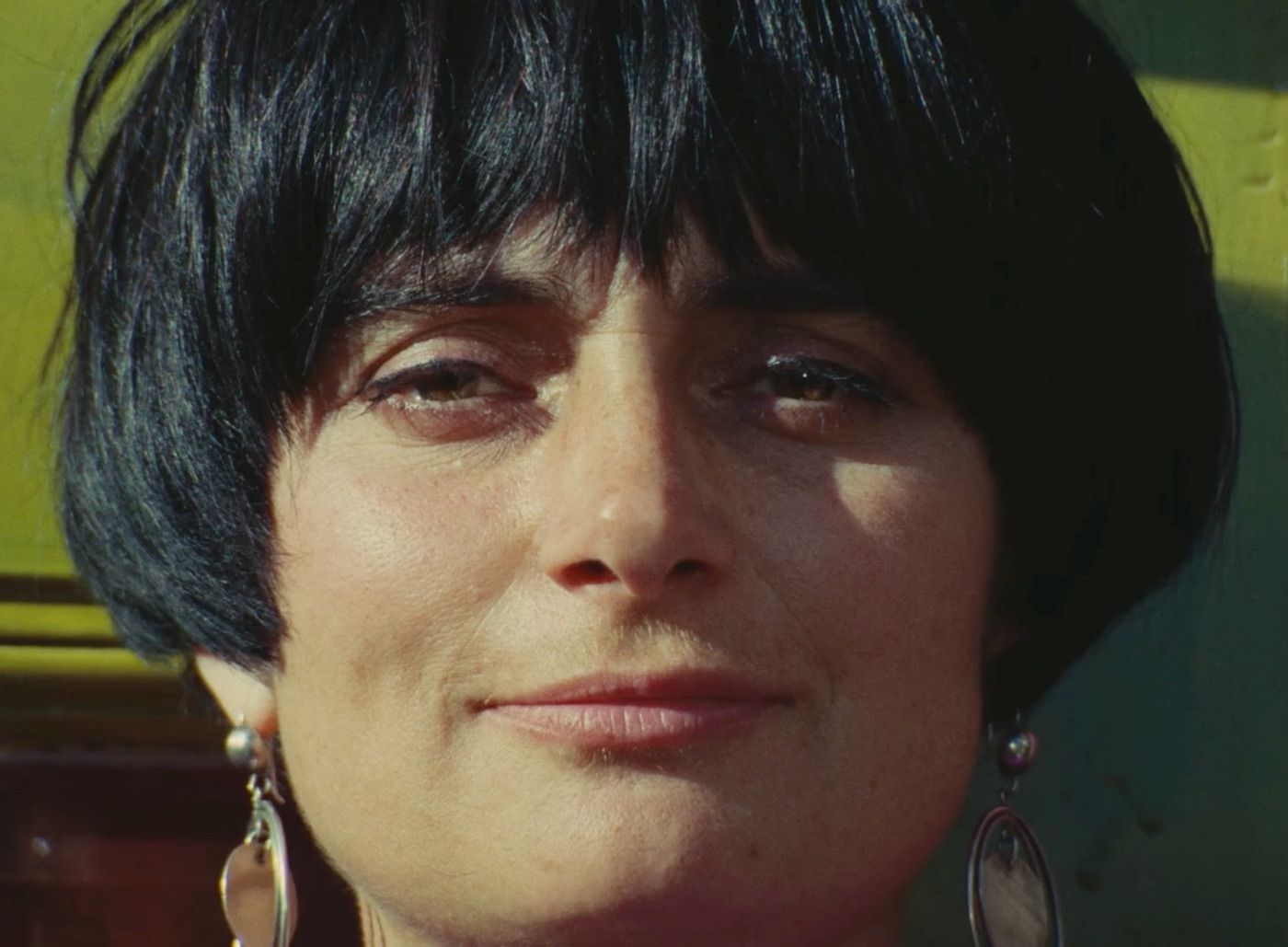 The first film by Agnès Varda that I saw was probably The Gleaners and I which is a good introduction to her style as she heartily embraced the newer and cheaper video technology to make films in a more personal way. When I saw Cléo From 5 to 7 it was surprising that I hadn’t heard more about it before. Then as I sought out and watched her other films I realized that she is one of the greatest filmmakers that we’ve ever had, pushing boundaries and working away for decades with a strong and distinctive voice. There is a trust and warmth that more explicitly came out as she was in front of the camera in her later films, but it was always there.
In looking through the statistics I’ve watched more films directed by Agnès Varda than any other director and every single one is enjoyable. With a career spanning seven decades she continued to explore, refine, and share how she worked. There are always fascinating people and places and cinematic techniques to learn from every time. With a deep curiosity and empathy Varda explored the world and the people around her. She paid attention to where people were, what they were doing, and what was going on around them and inside them.
With infallible instincts and a true genius for editing and framing, she truly was able to use cinema to help us understand each other more. With Varda’s cinema everything connects within her films and between them. As you watch more and more you will recognized people and places reappearing. Sometimes she points these connections out and sometimes she does not. The films are rewarding and the more you watch and rewatch the connections strengthen. It’s like living somewhere or with a friend who you find out more about as you share experiences and stories. Here are some cinematic highlights from some of the films she made.
La Pointe-Courte
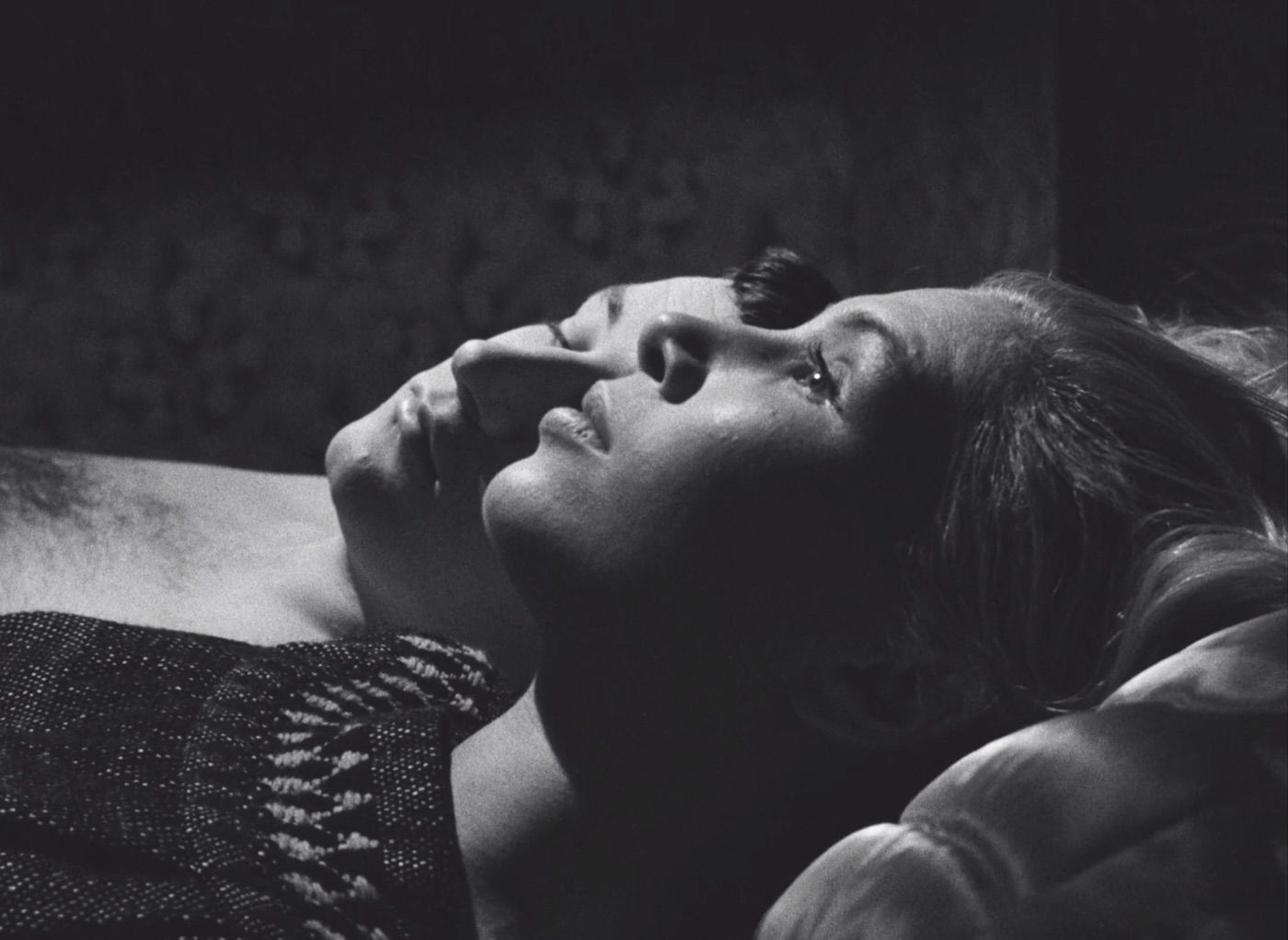 An impressive feature debut filled with long and elaborately-constructed shots. The daily life of a French fishing village forms the backdrop for a couple who are breaking up. Much more of the film draws on the real inhabitants of the village along with many cats. It’s a blend of documentary and fiction that has all the later elements of her films and kicks off the whole French New Wave with some bold stylistic choices.
Diary of a Pregnant Woman
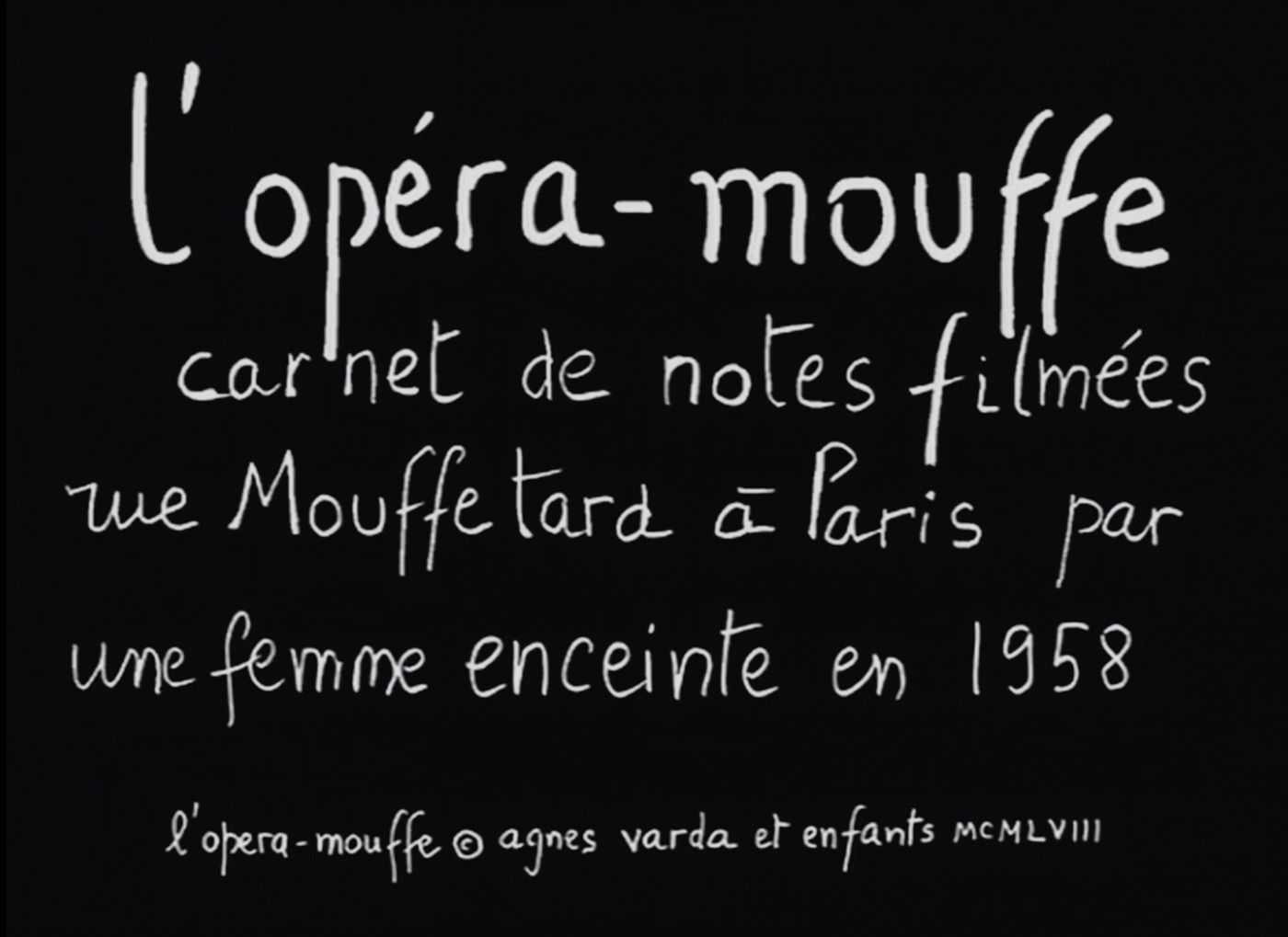 Made while Varda was pregnant with her daughter Rosalie, the short documentary / drama hybrid established her impressionistic style where the film connects things visually, sonically, and thematically. A reflection on a street and the people there, it deals with things both small and big in an innovative and experimental way that seems almost effortless. While documenting a street, it also playfully weaves in the relationship of a couple and a pregnant woman in a frank and delightful way. Still amazing and surprising in how far ahead of her time Varda always was.
Cléo From 5 to 7
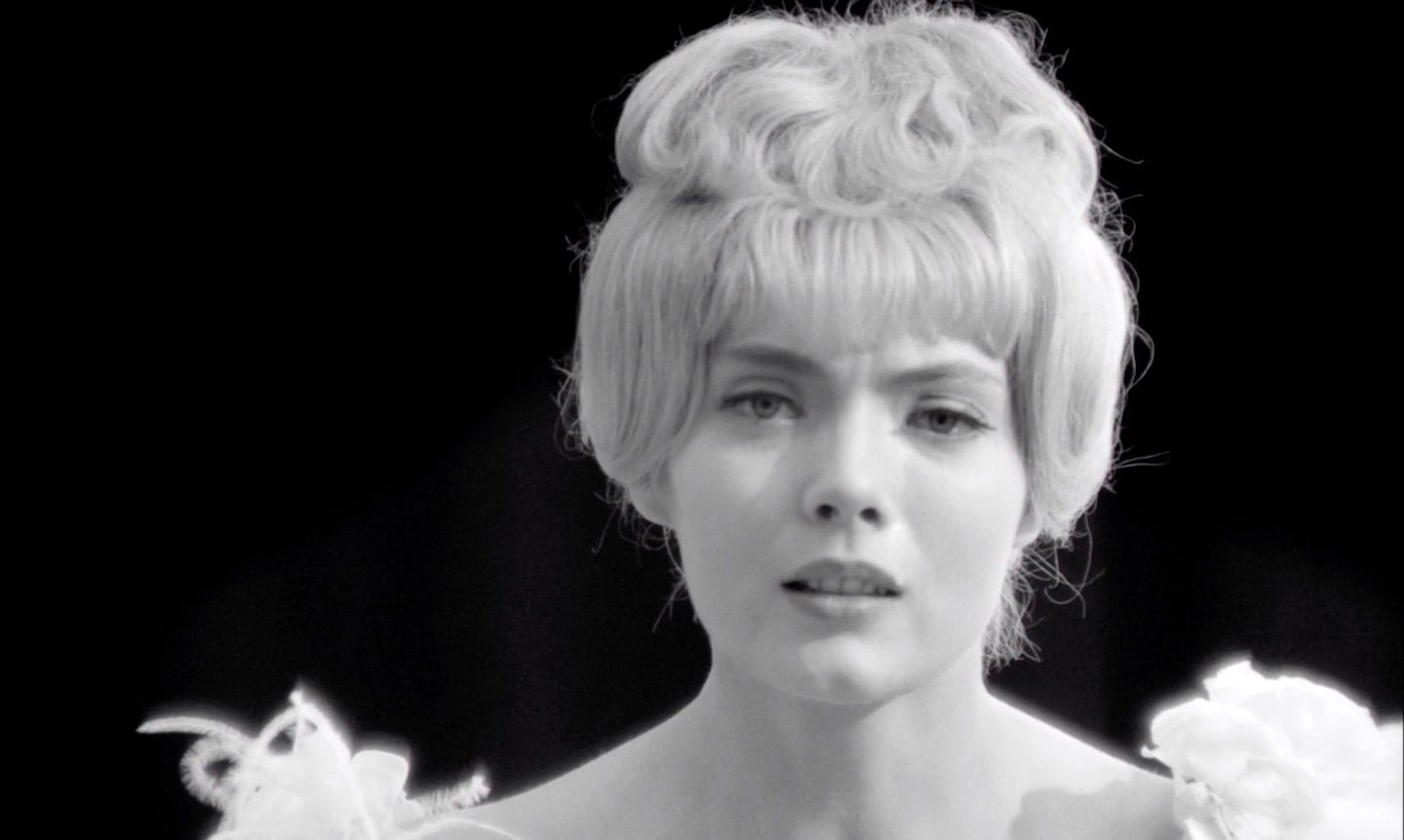 A stunning achievement from the first frame to the last with so much going on. At a simple level it follows a woman for two hours as she waits for the result of a cancer test. We follow in real time as the film changes location and tone with just about every possible combination of shot and style thrown in. It is the cinematic equal of Joyce’s Ulysses in how each section uses a different style to tell the next part of the story. It also manages to shift tone from light to dark within seconds or go from music to silence equally fast. As always, there are cats and mirrors and windows and real people and actors. It’s mind boggling how it fits together and works incredibly well. There is not another film like this and if it was the only film that Agnès Varda made we’d still be talking about it now, but this masterpiece is from the seventh year of a 70 year career.
Salut Les Cubains
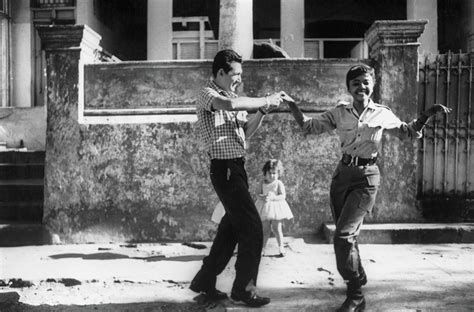 Constructed out of thousands of still images from a trip to Cuba, her 1963 film Salut Les Cubains is a playful history of the Cuban revolution and a snapshot of Cuban society. There is so much crammed into the short, but it never feels rushed. It’s a testament to her skill in drawing a story and connections out of disparate elements and weaving them into a way that makes it seem logical and comfortable.
Le Bonheur
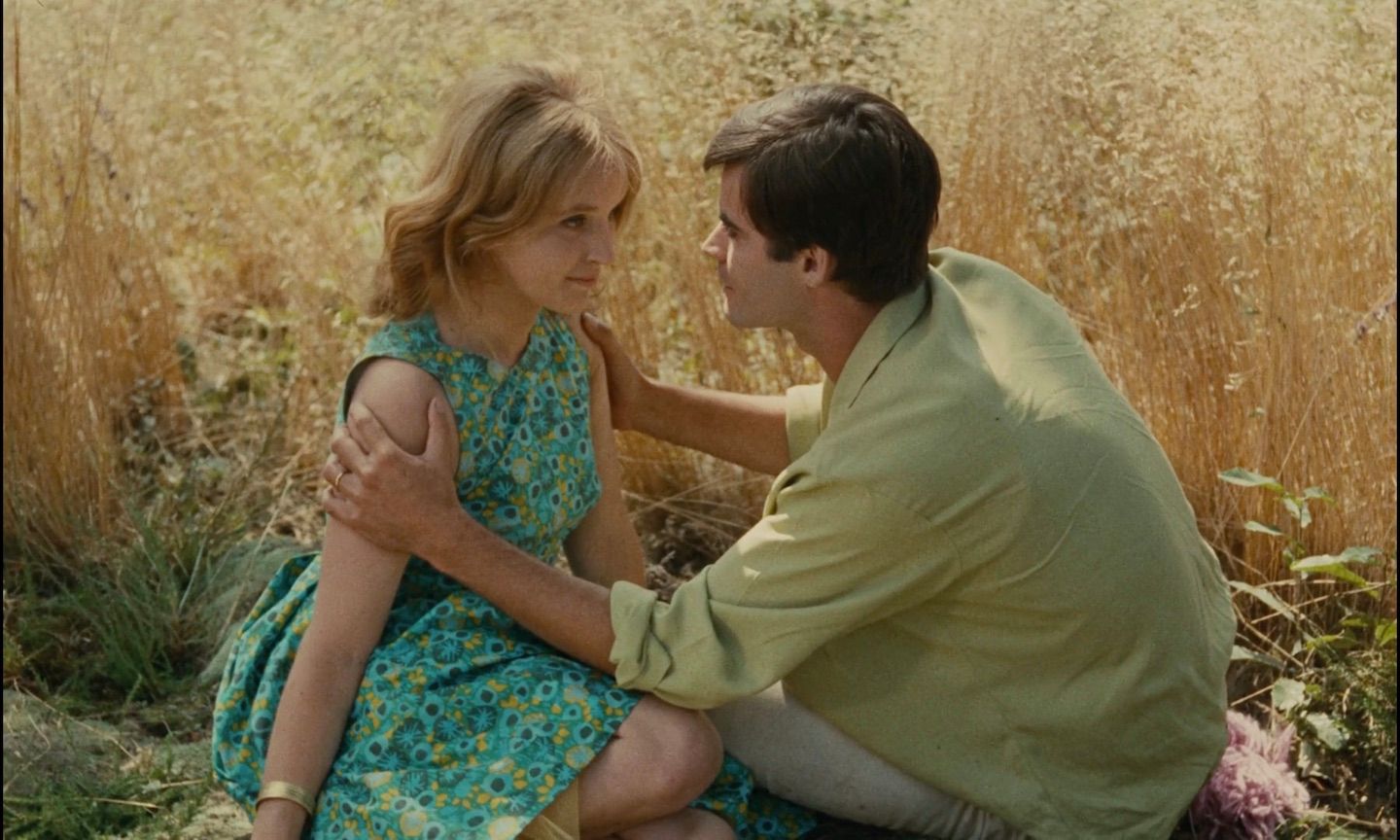 A colourful love story on the surface, but in reality it’s a brilliant satire of patriarchy. It depicts the wonderful life of a man married with children who falls in love with a younger woman who is a postal worker and then leaves his wife. The man is completely oblivious to the feelings of the women around him as it is all going on. Told with a subtlety and cognitive dissonance that shows skill and restraint, it’s one of the most sophisticated and biting critiques of films centred around the male gaze.
Uncle Yanco
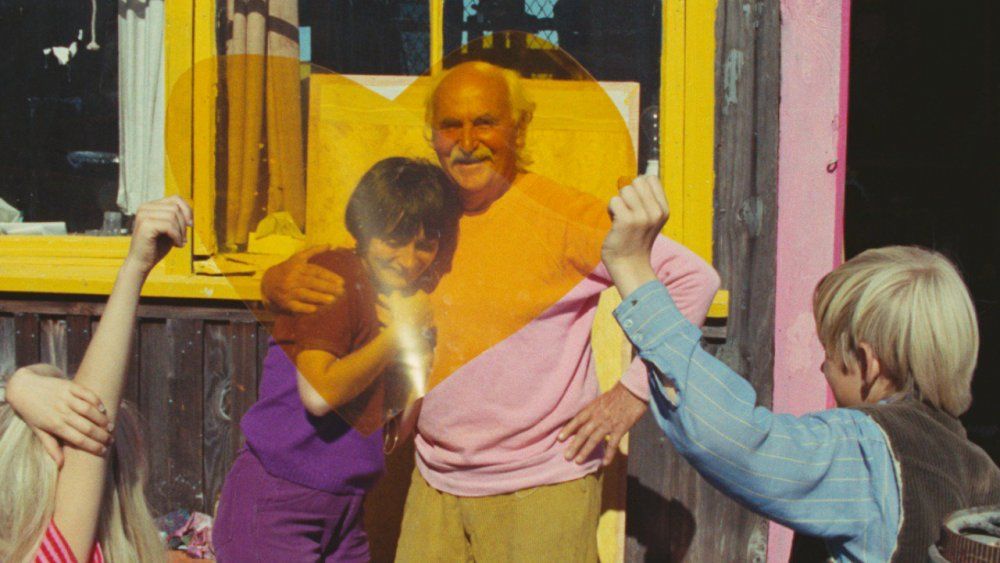 Varda and Jacques Demy moved to California for Demy to work on his Hollywood film Model Shop and Varda developed some fascinating films that were very much of the time and blended documentary and fiction. With Uncle Yanco she created a playful short portrait of a relative of hers who lived in a community made up of houseboats. It’s colourful and fun with Varda and the crew showing up all through the film.
Black Panthers
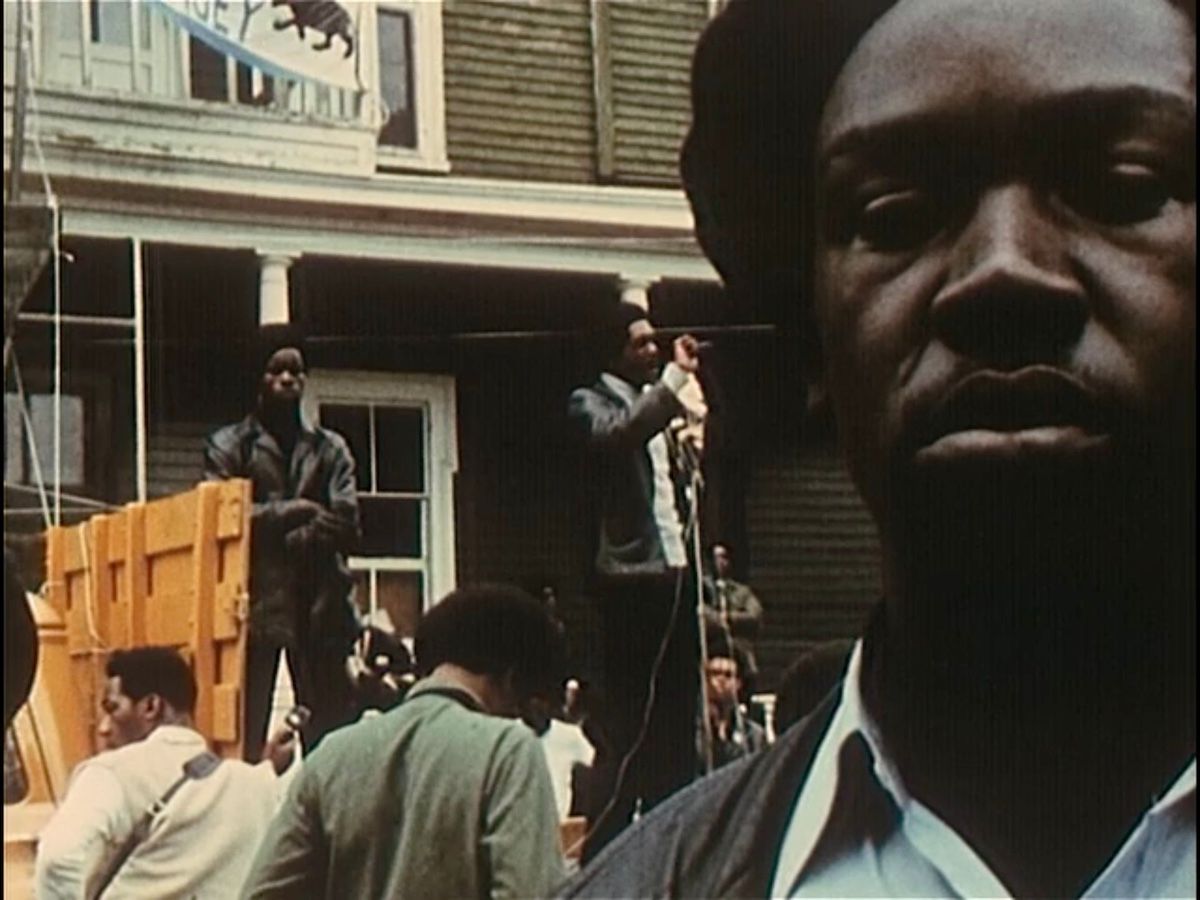 While in California Varda got to know the Black Panthers and created a timely documentary built around a rally to free Huey Newton in 1968. Through the members of the party she provides context for the struggle and the events of the time. It’s a compact and comprehensive history lesson that holds up incredibly well.
Lions Love
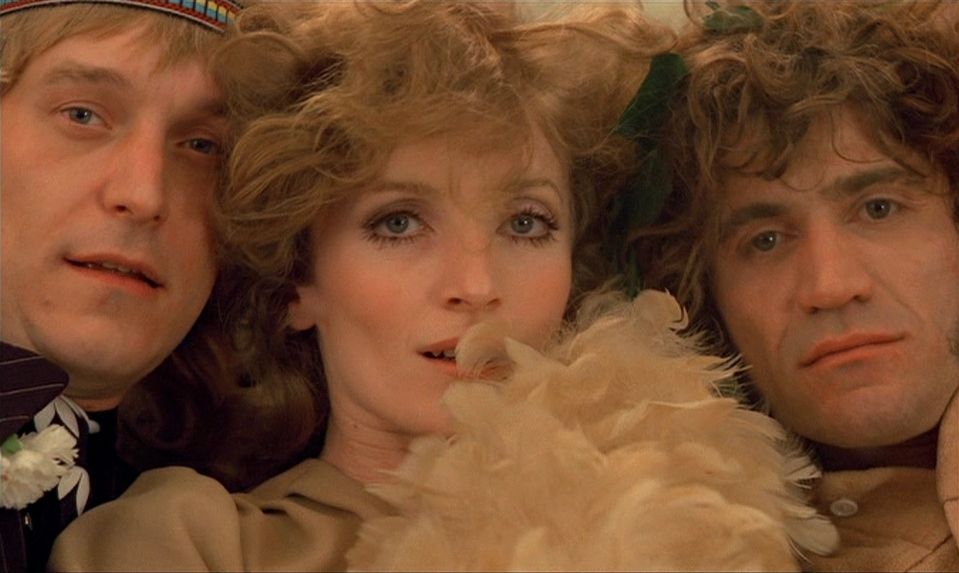 A feature film done with a studio and Varda’s first film in English. It’s a bit of a rambling shaggy dog story about three counterculture celebrities hanging out in their house in California. But as it progresses, the outside world starts to intrude and it starts to get surprisingly profound and meta. There are some great scenes with director Shirley Clarke playing a version of herself and a stunning sequence where she gets into an argument with Varda about her performance, so Varda puts on her costume and does the part of the scene. It’s a strange and unique late 60s film that is worth sticking with.
Daguerréotypes
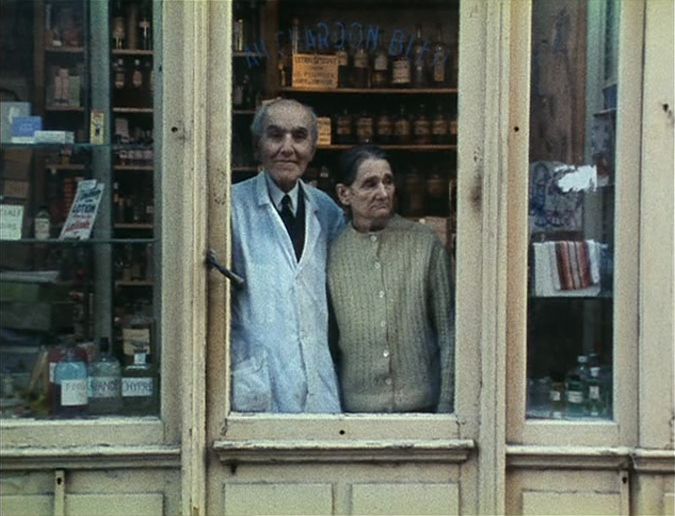 A feature-length documentary where Varda explores the street where she lived for most of her life. She visits many of the people there and links it all together with a magic show. Filled with lovely details and connections as people tell their stories and how it is all done with humour and empathy. In her neighbourhood of fascinating characters she shows how everything worked together by including moments that are specific, but also recognizable and universal. It exemplifies the approach that she seemed to take with all her documentaries in approaching people with openness and generosity.
One Sings, the Other Doesn’t
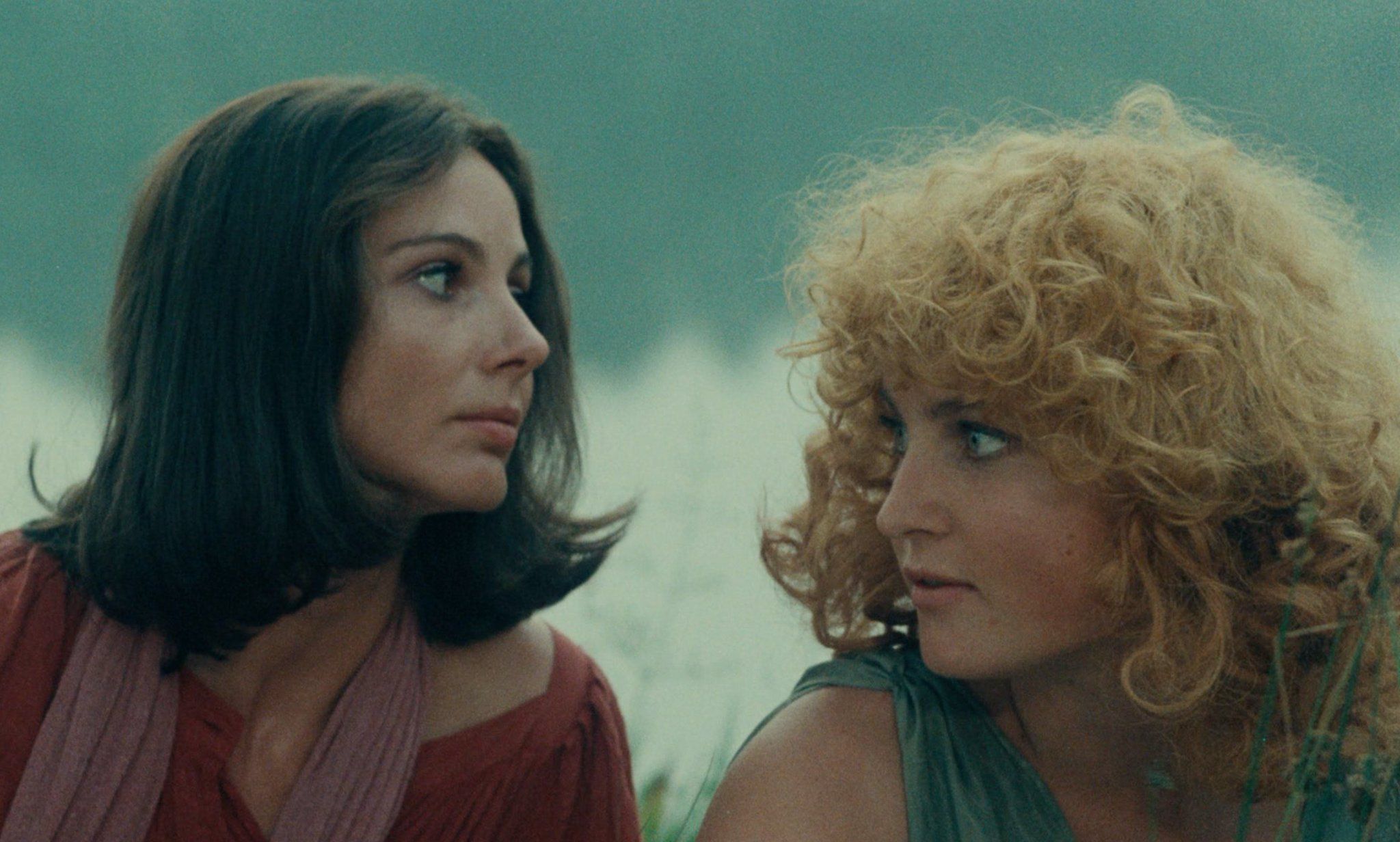 A 1970s story of the friendship between two women which provides a brilliant way to explore what the role of women is and was in the 60s and 70s. Bold in approach both in style and subject matter, it is fun and profound. Spanning two decades in the lives of the characters we see how their lives change as they define themselves, live their lives, and build careers. Dealing with the abortion debate in France as well as other rights for women, it’s passionate and sensitive. Skillfully weaving together drama and musical numbers, it’s a unique film that still feels relevant and vital.
Mur Murs
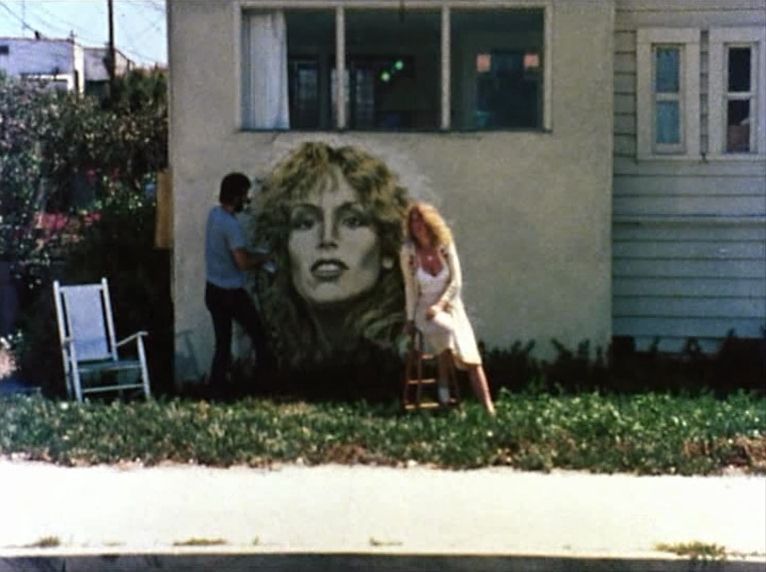 While in California, Varda was curious about the murals that she saw on buildings and that starts a journey where she meets some fascinating people. She gets the story of the murals, the artists, and the history embedded within the walls and the people within them and around them. It also provides somewhat of a preview of her later collaboration with JR in Faces, Places where she combined large outdoor art with small, personal stories. It exemplifies her ability to empathize and get people to drop their guard and share their stories with her. Some great insight into art, humanity, people, and Los Angeles.
Documenteur
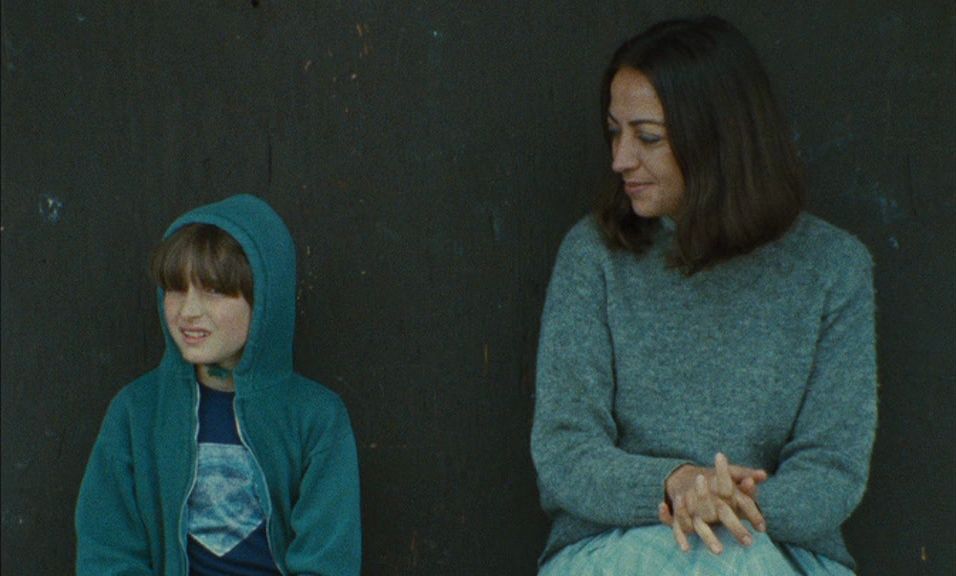 Blending drama and documentary, Documenteur tells the story of a newly-single woman in Los Angeles trying to figure out where to live and what to do with her life. Starring one of the editors of Varda’s previous film, Mur Murs, and Varda’s son Mathieu, it’s shot in a documentary style around Los Angeles. It’s a film that is impressionistic as we see a woman and her son building a new life in America. In some ways the structure and method of the film anticipates some of the approaches of the best of the mumblecore movement that would follow decades later.
Vagabond
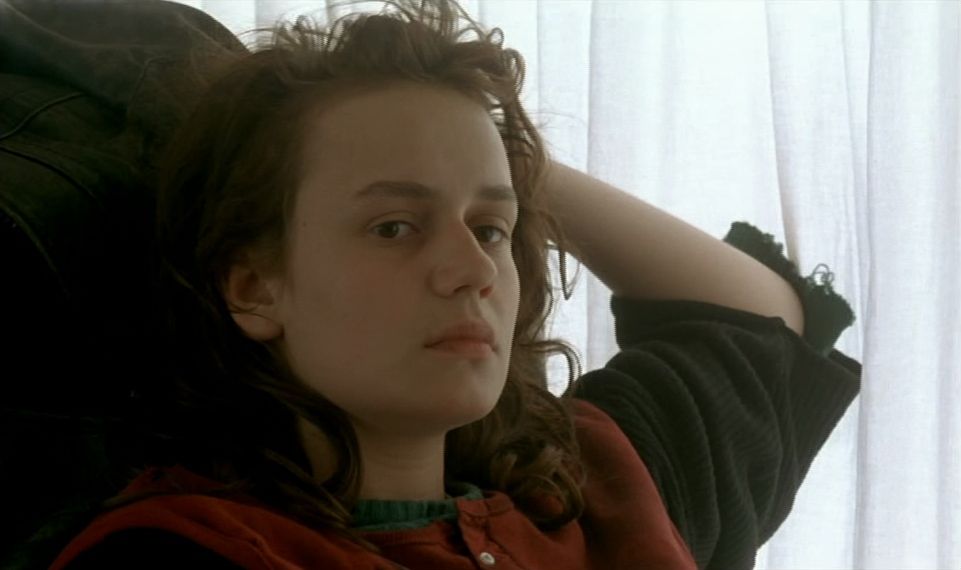 A drama about the last days of a young woman hitchhiking and living on the road. Constructed like a documentary and shot on location it’s uses an elaborate editing scheme and a non-linear structure to tell the story. Throughout the film some characters will address the camera or just look at it which adds to the unique blend of documentary and dramatic techniques. Stunningly shot with a series of tracking shots and with a memorable central performance from Sandrine Bonnaire, it’s a masterful character study of youth and alienation. We see how one person can affect the lives of others and a series of narrative threads connect in unexpected ways. Brilliantly mixing actors and non actors on locations, it’s a remarkable achievement in filmmaking filled with empathy, stunning compositions, and unforgettable characters.
Kung-Fu Master!
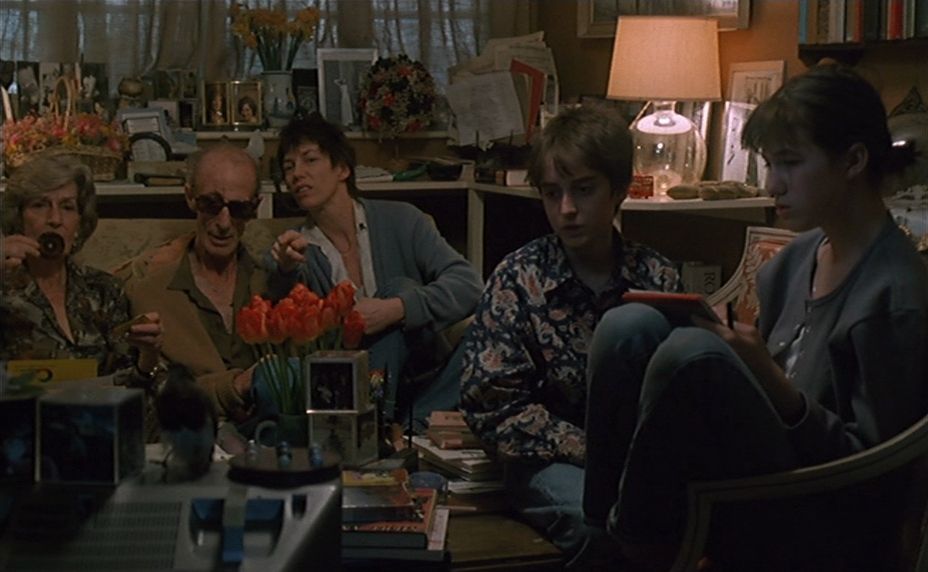 An odd, but surprisingly gentle film starring Jane Birkin as a woman who falls in love with a 14 year old boy. It’s an icky premise, but Varda manages to create an empathetic portrait that is complex with her own son Mathieu playing the boy and a young Charlotte Gainsbourg and Lou Doillon playing the daughters of their actual mother Jane Birkin. It also features Birkin’s actual mother and father playing Birkin’s parents too. Infused with 80s some video games and with the AIDS crisis hanging over everything, it’s about the characters, family, connections, boundaries, and the loss of innocence.
Jane B. by Agnès V.
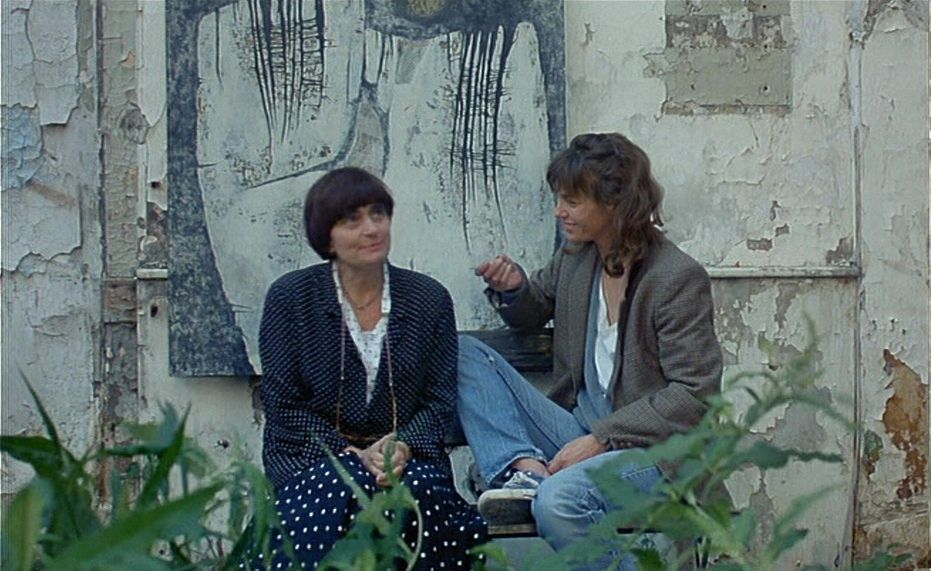 Made around the same time as Kung-Fu Master!, this portrait of Jane Birkin is playful and self-reflexive with Varda in dialogue the Birkin about how they are making the film. Filled with some elaborate scenes for Birkin to perform in, it’s a casual biography that gives both women the chance to flex their muscles and create memorable images and moments. In many ways it’s the beginning the phase of Varda’s career where she became more of a character and shared more of her own history along with the stories of others. It’s elaborate and complex and it all seems effortless, but it’s carefully constructed with deep levels of connection and insight throughout.
Jacquot de Nantes
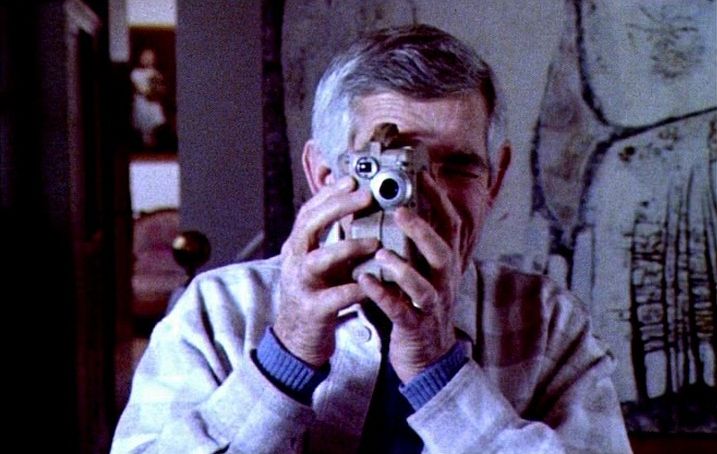 A loving, playful, creative, and moving documentary about the life of Jacques Demy, partner of Agnès Varda, and accomplished director. Made in the last year of Demy’s life as he was dying due to complications from AIDS, it skillfully blends clips, recreations, and footage of Demy into a comprehensive look at the development of a filmmaker and how the themes and visual motifs came from his life growing up. Using some of the same techniques from Jane B. by Agnes V., but taking it all to a deeper and more interconnected level, it’s one of the most cinematic portraits possible of a creative artist in how it extends, deepens, and contextualizes his work. I gained a whole new appreciation and love of Demy and his films after watching the documentary which made his films resonate much more with me.
One Hundred and One Nights
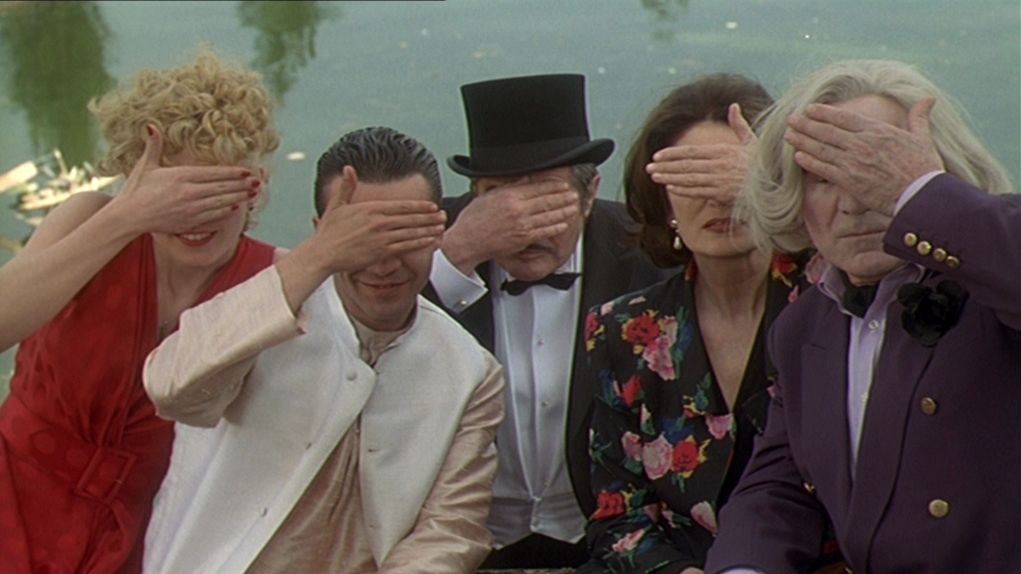 Varda assembled a huge number of film stars in the playful One Hundred and One Nights which has a loose narrative framework telling the history of cinema. Starring Michel Piccoli as Simon Cinema, it brings a string of celebrities (including Catherine Deneuve, Alain Delon, Jeanne Moreau, Robert De Niro, Harrison Ford, and Hanna Schygulla) to visit him as well as a student film crew who cast him in a film about cinema. A pleasant diversion that highlights some of influences of Varda over the years.
The World of Jacques Demy
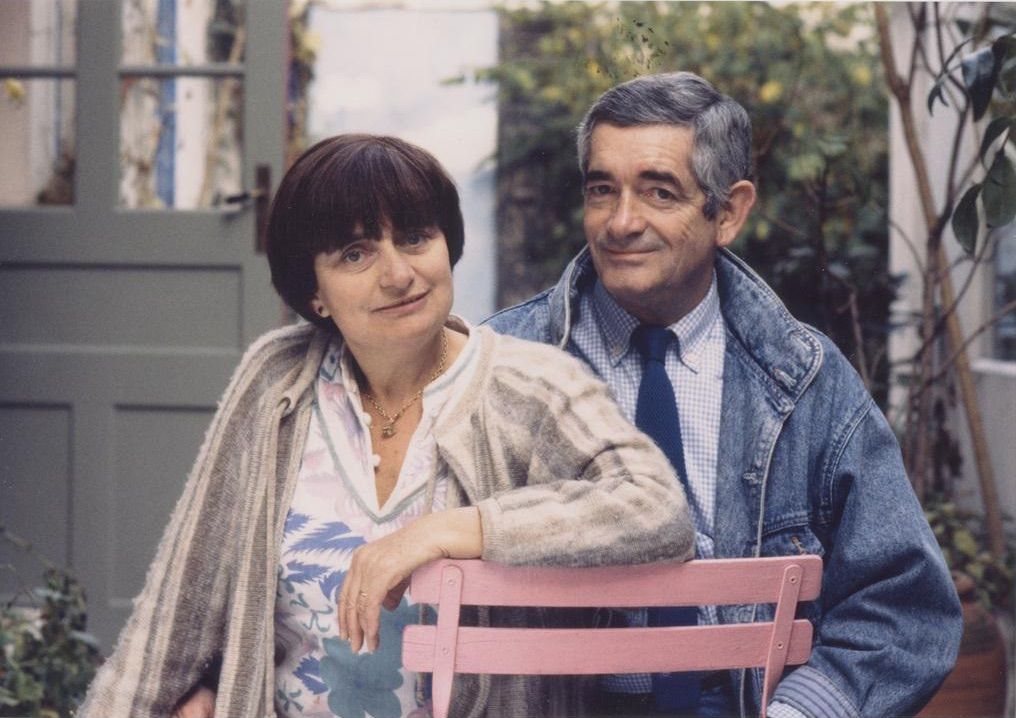 A more comprehensive overview of Demy’s work, but still with the same light touch. Moving around in time, it provides a history of Demy through the worlds that he created in his films. Some fascinating details such as how Harrison Ford was to be in an earlier Demy film, but the studio didn’t want him. Demy and Varda remained friends with Ford over the years which shows some of the personal connections that provided Varda with incredible access to people around the world. A great companion film to Jacquot de Nantes and a good way to figure out which Demy films to see as well as providing insight into the creative process and working in the film business.
The Gleaners and I
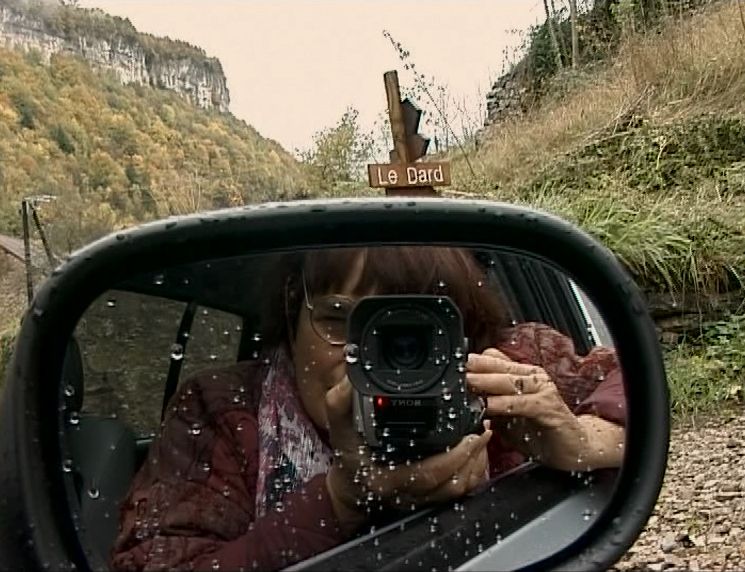 As technology changed and the DV revolution began to transform independent filmmaking, Agnès Varda picked up one of the cameras and started shooting. The cheap and portable equipment allowed her to work faster and fewer people and it resulted in her remarkable documentary The Gleaners and I. The central concept is that of the people who harvest discarded produce from fields. On a metaphorical level it’s a stunning look at how people exist in French society and how we relate to each other. At first the style seems meandering and almost random, but the connections keep happening, creating a deep and rich look at life in France in places and with people who are not usually featured in films. While the technology is new and exciting, the editing and organizational principles go back to Varda’s Diary of a Pregnant Woman from over 40 years earlier.
The Beaches of Agnès
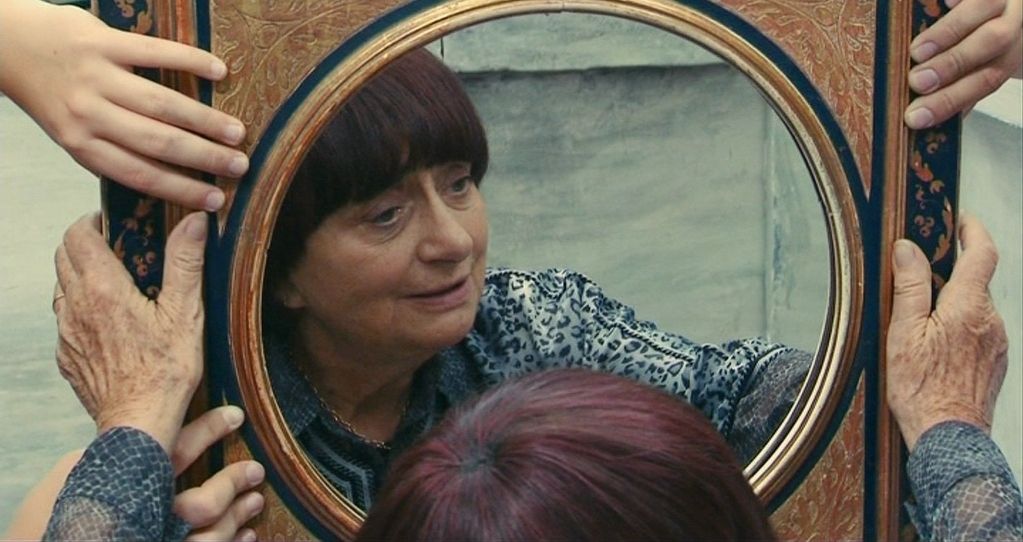 With The Beaches of Agnes she took a look at herself in a similar way to what she did with Jacquot de Nantes. Combining clips and elaborately staged scenes, it’s a joyful autobiography that filled with lovely moments and details as she reflects on her life. When I saw it I felt a bit melancholy as it felt like a final film or the last statement that she wanted to make. Using the metaphor of beaches and mirrors she manages again to make it all seem effortless as things connect and we move through time, emotions, and locations.
Faces Places
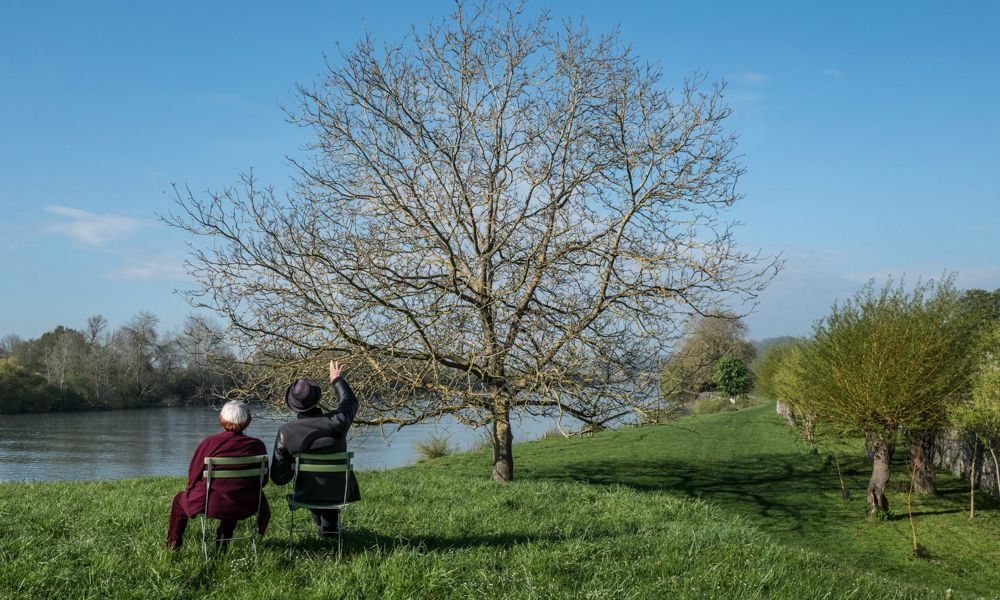 The only co-directed film in Varda’s career is Faces Places where she teams with up artist and filmmaker JR. They travel through rural France and set up huge photographic murals of ordinary people in the places they visit. Varda draws their stories out of them and makes all sorts of connections with them, JR, and her own work and history. In some ways it’s similar to much of her work and especially The Gleaners & I as it looks at people with a radical empathy that Varda infuses every frame with. It’s a lovely story of friendship, aging, and art that is profound and beautiful. As her penultimate film, it’s incredible as it is still complex with so much going on with never a false note.
With the loss of Agnès Varda we say goodbye to one of the great modern filmmakers who used the medium in a personal and humane way to illuminate the human condition and to let us see the world from a different perspective.
]]> Keeping things can be good to help you remember your thinking, where you were, what you did, and to get a sense of history. Sharing things online lets you connect with other people as you contribute to various communities. But as communities change and sites change or go away, many things disappear. Earlier this year I moved my blog to the Blot blogging system as it’s a simple and somewhat future-friendly system based around text files and Markdown. I moved things over from Squarespace, but in the process I realized that much of my blog over the past 17 years had things that were missing with links and images.
When things like that happen the first thing to do is check is the essential resource of the Wayback Machine at The Internet Archive as there almost always is a stored version of what was on the web. But when I started looking I found that I lot of the site wasn’t completely archived and many of the images were not there. The assumption was that everything was regularly archived, but it was not. Most of the text is there, but a lot of the links and images were no longer working.
With the first iteration of my site based on Blosxom, all of the files are text based along with images. The fascinating thing is that for that version I could just use the whole set of archived folders with Blot and it would work. But I had a lot of stuff missing from the site which brought back memories of what happened when 43 Things went away along with other sites. Part of the challenge in the modern world of social media is trusting what you write and post to outside sites. When a site goes down it can emphasize how ephemeral some things are. It’s essential to have a copy of your stuff.
That’s why you need to have a site and domain of your own to store things. If you have things hosted by someone else, is it possible to export your content? If it isn’t, there is a real possibility that it all could go away or be challenging to find. Now when I am writing and posting something I create it locally first and then copy and paste it. That way I have a text archive of it. Now I’m writing notes and shorter form things in Bear and longer stuff in Ulysses. That gives me an archive of all my writing from the posts on the sites.
When I sign up for a service I always check to see if it is possible to export things. If you can’t you are taking a huge risk as everything could disappear without notice. But even without exporting, you should have some sort of system to keep everything that you create. With my main blog (where this blog post is), it is using Blot to create the site. Blot constructs the site out of a series of files and folders hosted on Dropbox. That means that I have a backup of the entire site on Dropbox as well as hosted locally on my computer. I like the simplicity of the system (as the files are text files and the images are image files) and if I decide to move to a different system I still have the writing and images ready to go.
The final thing that I need to do and get better at doing it regularly is to make a backup. To consciously go to sites I use and export my data. The other thing to do is to go to the Internet Archive and the Wayback Machine and archive pages and check out the archived versions to make sure that they work. Sometimes they don’t. To be sure that a site of yours (or someone else’s) will work in the future you can go to the Save page in the Wayback Machine and archive the page (as well as saving it in your own archive). That can be a big help and it makes the Internet Archive a bit better too.
]]>
Having a blog is a great way to share things and to remember things. The longer you have one and the more that you write the more that you’ve preserved. As you go back through it you can see how your memories diverge from what happened and how your thinking has changed. With my writing I seem to have a finite amount that gets spread out through whatever online communities that I am part of. Whenever I update the site or switch hosts, it’s a great chance to look through the old posts and see how things have changed.
After a few years with Squarespace, I’ve moved my blog over to Blot. I was happy with Squarespace, but it was starting to feel like overkill and I wanted to get back to something simpler. So now the system that powers this blog is similar to what I started blogging with 16 years ago, Blosxom. Back in the old days the configuration and setting up a blog was a lot more complicated. You needed to install software and make sure that everything was properly connected. The beauty of Rael Dornfest’s Blosxom was that it was a single Perl script that you edited to configure things. Then you just would save text files in a designated folder and the site was built by the one script that would run. Links and images were added with HTML and you’d control how it all looked using a CSS file.
After a few years with Blosxom I moved over to the Ruby-based system Typo which involved more setup and configuration. Then I wanted things to be simpler without as much configuration so it was into Wordpress I went, and finally into Squarespace so I wouldn’t have to worry about hosting and configuration. The goal was to keep focussed on the writing and not to spend a lot of time configuring and setting things up. I also liked how Squarespace served up the site in mobile-friendly ways.
But as I started doing more stuff on Micro.blog I realized how things weren’t as simple as I thought. The writing process would usually start with getting things going on 750 Words as I did my daily writing. Then I would continue to write and edit in Ulysses. After the editing and proofreading with Marked, I would go through to add the links and then chose an image or images to go with the post and prepare the images in Acorn. I’d work in Markdown and then copy the Markdown and paste that into the web-based editor that Squarespace. To add the images I would edit the post on the Squarespace and upload and insert the images one by one.
I kept seeing Blot mentioned on Micro.blog as a host and I checked it out and instantly thought of Blosxom and when I started simply. But now instead of writing in HTML, I could use Markdown. Even better I could use Ulysses to write the posts and have them appear and I could also upload the images and see them inline as I edit. Blot displays things beautifully and it’s simple and easy to use, so I exported things out from Squarespace and then ran a script which converted the posts into text files and folders. It almost worked, but for some reason many of the images didn’t come in. This could be due to something on the Squarespace end with not allowing images to be downloaded by the script. But I was able to work around it by importing the exported file into Wordpress.com which pulled in all the images. Then I exported that out and ran the Blot Wordpress import script which brought all the images in.
When I checked there were still some images not showing up, but when I checked I realized that they hadn’t been showing up for perhaps a decade or more. The first version of my blog used relative URLs for images, and maybe around the first Wordpress version of the site I didn’t notice that the older posts were missing images! The fascinating thing is that I could just use the old folders and files from the Blosxom version of my site for everything to show up. But I decided to stick with the folder structure from the Blot script for consistency. I did have to fix up some of the older files for images to show up, and generally most of it is working. But I have to figure out what to do about older and broken links which probably should go to the Wayback Machine version of the sites.
In looking through old posts there is a lot more writing, but it was in the world before Twitter and Facebook and other online communities. As those communities emerged there is less writing on the blog and that same energy is more dispersed. Now most of my writing about films is on Letterboxd, so I only writer longer blog posts here and mostly about film festivals or year in review posts. But that’s ok as it’s more like a magazine than quick updates. For the quick and medium-sized updates they’ll be on my Micro.blog site along with a bunch of photos.
One of the good things that I am realizing is that it’s much better when you have more control over what you write and publish online. Over a decade and a half of my writing is here all preserved through moving through many different blogging systems. It’s an interesting snapshot into my writing and thinking and the online world that is constantly evolving. It’s good to have a home for your things that remains.
]]>