The post Colonial Cisnationalism: Notes on Empire and Gender in the UK’s Migration Policy first appeared on Engenderings.
]]>Anti-immigration rhetoric is a notoriously reliable fixture of British politics, with Conservative politicians regularly turning to border controls to appeal to right-wing voters. In recent years, however, two flagship policies have allowed the UK government to dominate the debate in ways that warrant close inspection. Introduced by the Home Secretary, Priti Patel, in April 2022, the Rwanda Plan proposes to deport asylum seekers that have entered the UK ‘illegally’ to Rwanda, requiring them to claim asylum there instead. The plan was taken up by Rishi Sunak when he became Prime Minister in October 2022. Patel’s successors in the Home Office, Suella Braverman and James Cleverly, have worked to bring the plan to fruition in the face of legal challenges from the European Court of Human Rights and the Supreme Court of the UK. The second policy that I wish to discuss, the use of a giant barge called Bibby Stockholm as a detention centre for asylum seekers who have entered ‘legally’ and are waiting to have their claims processed, was announced by the Home Office in April 2023, with the first migrants being moved onto the vessel in August of that year. Often denounced as cruel and inhumane, these two policies have been hugely controversial among liberal commentators, religious leaders, and non-governmental organisations (NGOs).
In this article, I would like to add to these objections by examining the coloniality of these two policies, including the ways in which they are gendered. I believe this focus is helpful in situating the policies within the context of the ‘culture wars’ that increasingly shape the tenor of political discourse in the UK. Culture wars, according to a recent study by King’s College London, are much more than disagreements over public policy: they are powerfully divisive disputes that represent ‘irreconcilable worldviews,’ often becoming emblematic of long-waged ideological battles. Regarding the Black Lives Matter movement, for instance, the study found that supporters and opponents of BLM had very different perceptions of racialised inequality in the UK, and held negative views about those on the other side of the debate.[1] In considering the colonial and gendered dimensions of the Bibby Stockholm policy and the Rwanda Plan, my aim is to show that these policies are not just about immigration—they also participate in broader, high-profile disputes over how the UK should reckon with its imperial past, as well as the extent to which the state should recognise and protect trans lives. In short, I read the two policies as political narratives that work to define the position of the Conservative Party within several interconnected issues.[2] Taking inspiration from Jasbir Puar’s concept homonationalism, which names the racializing and Islamophobic aspects of certain LGBT rights practices, I use the term colonial cisnationalism to describe the conjuncture of closed borders rhetoric, anti-trans cisnormativity, and empire nostalgia within the Conservative position. In what follows, I explain how the Bibby Stockholm policy and the Rwanda Plan produce narratives of colonial cisnationalism, political messages addressed to potential migrants and British voters which reveal xenophobia, transphobia, and coloniality to be deeply entwined.
Before turning to these examples, let me briefly locate myself in the field of power relations at hand. I am not an asylum seeker, refugee, or migrant, and nor am I an employee of the Home Office, meaning that I do not have first-hand knowledge of the UK’s asylum and immigration system. Writing from the privileged position of someone who has never had to leave their home country to escape persecution or precarity, it is not my intention to represent experiences of displacement or ‘give voice to’ subjects of migration. Furthermore, as a white, English, middle-class citizen of the UK, I have been and continue to be a beneficiary of historic and ongoing colonial and neocolonial projects of theft, exploitation, enslavement, and domination, some of which I discuss below. Undoubtedly, then, part of what motivates me to study contemporary formations of coloniality is an uncomfortable awareness of the violence of the structures that sustain me. But my complicity is double-edged: being transgender, nonbinary, and queer, I am also marginalised by those same structures, specifically in relation to the norms that regulate gender and sexuality. In what follows, I reconstellate the coloniality of anti-immigration policy with the coloniality of anti-trans rhetoric, writing from within the nexus of these power relations, not from a position of critical distance.

Bibby Stockholm in Portland Port to house asylum seekers, August 2023 (detail). Photo by Andrew Bone. Licensed under CC BY 2.0.
Migrants in the Hold
The use of the Bibby Stockholm barge as a detention centre was presented as a way to deter potential migrants while also saving money on accommodation. Immediately prior to the announcement of the policy, Robert Jenrick, the Immigration Minister, told the House of Commons of his intention to reduce the standard of accommodation for asylum seekers to the minimum required by law, providing for their ‘essential living needs and nothing more.’ Hundreds of charities, faith groups, and other NGOs have voiced opposition to the policy, with many highlighting its colonial overtones. In an open letter to Bibby Marine (the company that owns the barge), organisations including the Refugee Council, Asylum Matters, and Refugee Action provided evidence of the direct historical association between the vessel and the transatlantic slave trade. The founder of Bibby Line Group Limited (Bibby Marine’s parent company) was John Bibby, the co-owner of three slaving ships that transported abducted Africans in the early 1800s. While the occupants of the Bibby Stockholm are not, of course, enslaved, they are reduced to human cargo in order to unmistakeably differentiate them from the British citizenry, and from British citizenship itself. In achieving this dispossession of rights and personhood aboard a floating prison that evokes the darkest chapter of the Bibby lineage, the government condemns these asylum seekers to what Christina Sharpe, in her 2016 book In the Wake, calls ‘the hold’—the place or condition of dehumanising incarceration that is produced in the afterlife of slavery.
In keeping with these colonial dimensions, the Bibby Stockholm is a strongly gendered space. After acknowledging that the barge could not provide suitable accommodation for women, the government proceeded to use it to detain ‘single men’ only, thereby segregating migrants according to a binary notion of gender that ignores the complexities of lived experiences. Binary segregation disregards the anxiety that may be caused to any transgender, nonbinary, and/or intersex people who are unlucky enough to find themselves onboard the Bibby Stockholm, where everyone is assumed to be a cisgender man. This is further evidence of what I have described elsewhere, in relation to the official nonrecognition of nonbinary genders, as the cisnormativity of the government’s stance: successive Conservative administrations continue to treat cisgender identity as the norm, stigmatising, invalidating, or simply ignoring a swathe of trans and nonbinary lives.
In October 2023, the London-based charity Rainbow Migration, which supports LGBTQI+ people through the UK immigration system, reported the ‘extremely concerning’ news that some of the asylum seekers it works with had been informed that they would be moved to the Bibby Stockholm soon, noting that immigration detention is especially dangerous for queer people and gender minorities. Rainbow Migration also criticised the Home Office for requiring asylum seekers to ‘prove’ their sexuality and/or gender in accordance with Western notions of identity that cannot encompass the diversity of claimants’ experiences. In its efforts to create an inhospitable environment as a deterrent, the Home Office has produced an immigration system that exposes vulnerable people to homophobic and transphobic abuse, while subjecting them to Eurocentric assessment criteria that incorrectly assume the universality of Western norms. The Bibby Stockholm represents the apogee of this hostile environment: as if to expose the links between the violent aspects of the immigration system as vividly as possible, the cisnormative segregation of the biopolitical space of ‘the hold’ evokes Britain’s role in the imposition of European concepts of sex-gender onto colonised populations. The Bibby Stockholm is, in short, a site where contemporary formations of the coloniality of gender are connected to their archive, making explicit the ties between the history of the transatlantic slave trade and ongoing attempts to reduce gender to static binary categories.
On the Use of Rwanda as a Deterrent
The Rwanda Plan makes a complementary but distinct contribution to the government’s migration narrative. Promising that the scheme will reduce the number of people reaching British shores in small boats, the government intends to remove migrants who have: a) arrived since 1 January 2022; b) undertaken a ‘dangerous’ journey; c) travelled through another country in which they could have claimed asylum. Once in Rwanda, deportees will not be authorised to return to the UK. As critics have observed, for the UK to forcibly deport migrants to a country with which they have no prior association would be to resume the involuntary displacements of the British Empire. From the horrors of the Middle Passage, to the ‘transportation’ of criminalised groups to the settler state of Australia, practices of relocation were central to the Empire’s apparatus of domination. The UK government’s use of Rwanda as a deterrent is also telling of its colonial mindset. Reducing the East African state to an undesirable location, implying that it is the last place anyone would choose to seek asylum, the Home Office instrumentalises Rwanda, disrespectfully brandishing the memory of the Genocide of 1994 as a spectre to scare away would-be migrants. It is also notable that we are never informed precisely where in Rwanda—which city or province—the deportees will be taken to, suggesting that, in the discourse deployed by the government, ‘Rwanda’ doesn’t signify a country or sovereign nation-state so much as an offshore detention centre and former warzone. This attitude is captured by John Stuart Mill (quoted in Said 1994: 59):
These [outlying possessions of ours] are hardly to be looked upon as countries, … but more properly as outlying agricultural or manufacturing estates belonging to a larger community. Our West Indian colonies, for example, cannot be regarded as countries with a productive capital of their own … [but are rather] the place where England finds it convenient to carry on the production of sugar, coffee and a few other tropical commodities.
By establishing a narrative in which Rwanda is discussed as if it were a colony, the government fuels the empire nostalgia that it believes will convert into votes.[3]
Unlike the Bibby Stockholm policy, the Rwanda Plan is not explicitly gendered. This does not mean, however, that the Rwanda Plan addresses gender in a neutral way. It is important to consider the Plan’s indirect connotations because, as María Lugones reminds us, “work that ignores the imbrication of the coloniality of power and the colonial/modern gender system also affirms this global system of power” (Lugones 2007: 188). In recent decades, Rwanda has been celebrated for the diversity of its parliament: 61% of seats are currently held by women, the highest proportion in the world. Despite this, Rwandan women face severe economic inequality, high rates of gendered violence, and patriarchal social practices that make women dependent on men. Queer people also suffer discrimination: although homosexuality is not technically illegal, Rwanda is not a safe place to be gay, and trans people are in danger as well. These circumstances are the legacy of German and Belgian religious-colonial prerogatives that diminished the status of Rwandan women, while stigmatising, pathologizing, and criminalising traditional practices that could be understood today—anachronistically, of course—as homosexual, bisexual, and/or transgender (Epprecht 2008).[4] This violent history constitutes the symbolic substrate from which the UK government’s use of Rwanda as a political signifier emerges.
The Official Opposition
Although the policies that I have briefly considered here belong to the Conservative Party’s messaging campaign, the approach taken by Labour, the official opposition party (which is currently projected to win the general election that must be held by January 2025), is not substantively different. In August 2023, Stephen Kinnock, the Shadow Immigration Minister, announced that Labour will continue to hold asylum seekers on the Bibby Stockholm if the party forms the next government. Although he described this as a temporary measure, Kinnock also confirmed that Labour does not wish to use hotels either, allowing for the possibility of another form of detention. Regarding Rwanda, the Labour leader, Keir Starmer, has promised to cancel the deportation scheme if he becomes Prime Minister. But the policy itself is hardly anathema to Labour: in 2004, Starmer’s predecessor, Tony Blair, attempted to establish an asylum camp in Tanzania, a country that was a colony of the UK for much of the twentieth century. And given Labour’s ongoing failure to stand up for transgender rights, it seems likely that the cisnormative practices of the Home Office are set to continue.
Conclusion
The Bibby Stockholm scheme and the Rwanda Plan belong to a messaging operation directed at two groups: potential migrants and the UK electorate. To deter the former, many of whom are fleeing persecution, the government terrorizes them with the threat of re-traumatisation, detention within ‘the hold,’ and/or removal to a country that may be unsafe for them and could be thousands of miles away from their communities and support networks. If the cruelty of this narrative is shamelessly conspicuous, then its utilisation of the violent history of European empire is just as brazen. It is the undisguised coloniality of the narrative which is addressed to British voters, exploiting the anxiety and misery caused by Conservative projects like Brexit and austerity, and offering the illusion of an administration that could make Britain ‘great’ again. The gendered components of the discourse also address migrants and voters simultaneously. Aiming to create a hostile environment that will deter LGBTQIA+ migrants, the government brandishes the threat of binary segregation onboard the Bibby Stockholm and deportation to Rwanda, a country that European empires have rendered inhospitable to queer subjects. All of which speaks to British voters as well, confirming the government’s transphobic stance in the culture wars being waged across the UK and beyond. As I have argued elsewhere, in response to the colonial cisnationalism of Hungary’s president Viktor Orbán, the securitization of national borders often goes hand in hand with the policing of the border that is understood to separate men and women.
If the interpretation that I have sketched here is correct, then it suggests that an effective counter to the government’s migration narrative should attend to its own polyvalence. Critics cannot expect to be able to focus on just one of the vectors of power currently operative: the critique of Home Office coloniality must also attend to Home Office cisnormativity, for example. As the policies regarding Rwanda and the Bibby Stockholm demonstrate, these gendered and racialised vectors of power are deeply enmeshed. Public anxieties regarding national identity and gender identity are indexed in the perceived crisis at the border, and attempts to disaggregate them into separate battles risk leaving part of the story unspoken and available for weaponization.
Christopher Griffin works across political theory, decolonial studies, literary studies, and philosophy to examine narratives of subjectivity and rights, particularly those that produce constitutive exclusions. Their work has appeared in Derrida Today, South Atlantic Review, and Interfere: Journal for Critical Thought and Radical Politics.
[1] 77% of BLM supporters correctly identified the wage gap of 9% between Black and white employees in 2018, while only 39% of BLM opponents believed the statistic to be true. 69% of BLM opponents described BLM supporters to be “closed-minded,” while 78% of BLM supporters characterised BLM opponents in the same way. 55% of BLM supporters said they would find it difficult to be friends with someone who opposed the movement. See pp. 79-85 of the study.
[2] Because the government is unlikely to achieve its ostensible objectives of deterring migrants and reducing costs—as commentators have shown regarding both the Rwanda Plan and the Bibby Stockholm scheme—it’s necessary to read the policies as rhetorical interventions designed to produce the other political effects that I describe here.
[3] Collyer and Shahani point out that it’s unusual for the government to publish an agreement of the kind that it has negotiated with Rwanda. “Communication of this nature suggests that the government realises that the value of the MOU [Memorandum of Understanding] is to be found in the publicity that it generates amongst the UK voting public rather than the impact on reducing the backlog of outstanding asylum decisions”: https://www.mdpi.com/2076-0760/12/8/451
[4] This is not, of course, to deny that power was already gendered prior to colonisation. While the introduction of European patriarchal norms reduced the standing of Rwandan women, research indicates that women living in rural areas during the Nyiginya Kingdom (the era that colonisation brought to an end) were often doubly burdened with domestic work and hard agricultural labour. For a detailed historical overview of women in Rwanda, including how colonisation “irrevocably changed Rwandan women’s lives,” see this article by Sarah E. Watkins, Erin Jessee and Emma Brunton.
The post Colonial Cisnationalism: Notes on Empire and Gender in the UK’s Migration Policy first appeared on Engenderings.
]]>The post Post-Disaster Rebuilding through a Feminist Lens first appeared on Engenderings.
]]>Disasters resulting from natural hazards wreak a multitude of havoc. Impacts of disasters are often differential across groups owing to pre-existing social and economic inequalities. Impacts of disasters have often been looked at through a heteronormative and western-colonial lens. The discourse on rebuilding after humanitarian crises such as disasters has paid lesser attention to its gendered impacts and feminist concerns that arise in how the aftermath of natural disasters manifests.
Natural hazards such as earthquakes and cyclones can become “disasters” as their effects interplay with underlying social, political, economic, cultural, religious contexts and other structures that are relational in nature (Dominey-Howes, 2018). The “environment” itself can be conceptualized as a social construction, in that the risks and opportunities that the environment presents are associated with the demands that different social systems put on nature, as well as how nature impacts these systems (Cannon,1994).
The social constructivist framework makes space for subjective and diverse conceptualizations of how hazards become disasters, of vulnerability to disasters, and the importance of involving multiple affected groups in decision-making processes (Burningham & Cooper, 1999; Jones, 2002). However, the over-emphasis on technocratic solutions and symptomatic rebuilding in the aftermath of disasters leave certain blind spots. For example, technocratic solutions often disregard cultural losses, often framed as subjective and non-real, such as loss of knowledge and values of subsistence-based practices, connection to land and nonhuman species, sense of place and social cohesion that affect indigenous communities (Afolabi, 2023).
The current framing of disasters and their impacts reproduces unequal dynamics of power. The locus of control of humanitarian action is Western nations, which are typically the “providers” of aid. The construction of vulnerability in the context of disasters is also essentially embedded in the dominant western colonial knowledge system and reflects its values and principles (Bankoff, 2001). This includes the othering of vulnerable populations, located in the non-Western world, and considered as “weak, passive, and pathetic” (Hewitt (1997) cited by Bankoff (2001)).
Impacts of disasters are often heavily gendered. Pre-existing gender and socio-economic inequalities can be exacerbated by disasters (Behrman & Weitzman, 2016). Current discourses on gender inequality in post-disaster rebuilding position it within a heteronormative and western-colonial framework where conceptions of gender are limited to the gender binary and the survivor constructed as a passive, “feminized” entity.
With the afore-mentioned theoretical grounding, in this piece I argue that (i) humanitarian action in post-disaster setting take a masculinist approach wherein “feminine” needs are accorded lesser importance, and (ii) post-disaster relief measures are embedded in a western colonial framework that constructs the recipient of relief and aid as “feminized” and “passive”. The latter presents the need and the opportunity to apply a feminist lens to post-disaster relief and rebuilding efforts. Such an approach, I contend, seeks to dismantle unequal power dynamics that are reproduced in humanitarian spaces and use approaches of inclusivity and decolonization in understanding the impacts of disasters, and rethinking post-disaster relief and rebuilding efforts.
Gendered Effects of Disasters
Responses to disasters often do not take a gendered approach even though their impacts are usually gendered. Adverse gendered effects such as those related to sexual and reproductive health and rights that include unwanted pregnancies, sexually transmitted infections, lack of menstrual hygiene, pregnancy complications and maternal mortality can ensue not only from destroyed healthcare infrastructure, but also from shifting of institutional medical priorities away from reproductive health and towards emergency relief (Behrman & Weitzman, 2016).
Humanitarian crises require a broad conception of security that encompasses physical, social, economic, and sexual security (Smith 2019). This requires a focus on “gender inclusivity” rather than gender equality alone (Dolan, 2014; Myrttinen, 2017; Myrttinen, 2023). Feminists have long criticized the “instrumental” use of women during crises by simply making them the recipients of aid on behalf of their families and putting the “burden of care” on them (Smith, 2019; Hellman, 2021). This “feminization of responsibility” puts the onus on women to pull their communities out of crises, usually through unpaid care work (Hickel, 2014; Smith, 2019; Hellman, 2021). Such inclusion, is as problematic as the exclusion of women from crises responses (Bradshaw (2014) cited by Hellman (2021))
For example, and by virtue of their traditional “caregiver” roles, refugee women are positioned in humanitarian spaces as useful allies on the one hand, while simultaneously being constructed as victims of oppression perpetrated by refugee men who are represented as “backward”, “barbaric” and “patriarchal” (Olivius 2016). In essence, inclusion of women in humanitarian policy and practice capitalizes the subordinate status of the “feminine” while also constructing crises-stricken men in non-western countries to be in need of education and reform in a westernized sense (Olivius, 2016).
However, “gendered” effects of disasters are not synonymous with the differential impacts of disasters on (cis and heterosexual) men and women. When spaces of post-disaster rebuilding become a site for the reproduction of patriarchal gender norms, it extends to the exclusion of those at the margins, most notably the LGBTQIA+ community. For example, gender affirming hormonal medication may not be accessible either due to unavailability of providers or undervaluing of such medication; in case of large scale displacements, refugee-hosting countries could have laws that criminalize homosexual unions, access to hygiene products and gender-neutral bathrooms could be limited or entirely unavailable, and LGBTQIA+ folks might be more vulnerable to violence, especially sexual violence. Much of the empirical evidence on gendered effects of disasters focuses on the subordinate status of females rather than the subordinate status of the “feminine” (Dolan, 2014), thus ignoring the vulnerabilities of those who do not conform to heteronormative structures of gender and sexuality.

Photo credit: Pok Rie via Pexels
The “Tyranny of the Urgent”
Feminist conceptions of the politics of crises point to the view that ‘urgency’ undermines an integration of gender concerns. In post-crises situations, national unity, neoliberal economic reform and military peacekeeping operations tend to take precedence over “distracting” feminist concerns (Watson & Mason, 2015). During the initial efforts to provide food, water, and shelter in the aftermath of a crisis, “feminine” concerns often get underplayed and neglected (Claeys, 2010). This phenomenon is called the “tyranny of the urgent” and has come to stand for disregard of longer-term structural issues in favour of hour-by-hour demands in the event of a crisis (Watson & Mason, 2015; Davies & Bennet, 2016). Furthermore, efforts towards gender equality continue to operate within the gender binary, and do not offer enough support to persons who are sexually or gender non-conforming (Dolan, 2014).
Urgency is sometimes manufactured around certain issues while some others are left for later in view of their apparent ordinariness in the face of what appears to be more urgent (Watson & Mason, 2015). This can be applied to disaster planning and preparedness wherein the focus is on emergency aid targeted towards immediate food and shelter rather than mitigating pre-existing structural issues such as gender-based inequalities (Fordham, 2013). By paraphrasing Berlant’s work (2007), Watson & Mason (2007) refer to this phenomenon as “slow death” in which “makeshift” responses undermine an ability to address structural inequalities.
The Interplay of “Masculinities” and “Femininities” in Post-Disaster Relief and Rebuilding Measures
Post-disaster measures are intended to alleviate the impacts of disasters with the objective of returning to normalcy (Fordham, 2013). These are typically top-down command-and-control measures focused on response to crises, and are centralized and hierarchical. Such an approach is embedded in a dominant masculine culture.
Often the first line of response in humanitarian crises including post-disaster situations, is the deployment of security forces (Smith, 2019). The security sector is characterized by the dominance of hypermasculinity, wherein physical strength and aggressiveness are paramount (Ni Aolain, 2010; Smith, 2019) with most crises responders being men. At the same time, there is a “feminization” of survivors whose position is rendered powerless in the face of crises, and dependent on security forces for necessities (Smith, 2019). Deploying security forces in times of humanitarian crises also leads to an increase in gender-based violence (Tripp et al., 2013; Smith, 2019). The danger of perpetration of violence, both sexual and other forms, by masculinized institutions looms large for both normative men and women.
When governance of post-disaster situations involves masculinized institutions, it leads to the reproduction of patriarchal gender norms in spaces of decision-making and implementation (Smith, 2019). Gender justice goals of humanitarian aid usually look at gender differences as individual differences between (cis and heterosexual) men and women (Olivius, 2016). For instance, Olivius (2016) discusses this in context of refugee men and women wherein refugee men are represented as “primitive” and “emasculated troublemakers”, thus seeking to empower women at the cost of victimizing men. Refugee men are framed as the “agents of inequality”, thus pathologizing refugee men’s masculinities as barbaric and in need of modernization and reform. Refugees are, therefore, constructed as “feminized” and “passive” recipients of aid in humanitarian policy and practice (Olivius, 2016). This highlights the interplay between “masculinities” and “femininities” rather than men and women, and the subordination of the “feminine” and the “feminized” in post-disaster situations.
Inclusive and Decolonial Approaches to Post-Disaster Rebuilding
The above discussion begs the question – has a feminist lens been applied to post-disaster relief and rebuilding measures and if not, then why is it important to do so? A first step towards answering this is to acknowledge that at its core, a feminist approach takes cognizance of unequal power dynamics and the necessity to dismantle it.
Epistemic decolonization, as opposed to physical decolonization has not been achieved yet, especially in the space of humanitarianism (Fujita, 2020). In a sense, colonization in this context is the apparent superiority of the ontology and epistemology of Western nations vis-à-vis the non-Western world (Fujita, 2020). Humanitarian aid, including post-disaster rebuilding is still a largely state-centric, formal endeavour located within the heteronormative and western-colonial consciousness (Sulley & Richy, 2023; Bankoff, 2001). The sense of otherness that exists in the cultural discourse of development and vulnerability that frames typically non-Western regions of the world as “disease-ridden, poverty-stricken and disaster-prone”, with Western preventive systems as the panacea (Bankoff, 2001), continues to dominate humanitarian spaces. This presents the need to rethink such practice using gender inclusive and decolonial approaches.
An inclusive approach to post-disaster rebuilding advocates for moving beyond the gender binary when considering gendered effects of disasters and incorporating the unique needs of people across the gender spectrum during post-disaster relief and rebuilding efforts. On the other hand, a decolonial approach seeks to dismantle the power dynamics between the provider of aid (typically the ‘colonizer’ West) and the receiver aid (typically, ‘colonized’ non-Western countries). It seeks to shift the locus of control to those affected, and strives for a bottom-up, community-driven, and participatory approach to post-disaster rebuilding.
A decolonial approach also accords importance to the cultural shifts brought about by disasters. This is especially true for indigenous communities for whom disasters could lead to the destruction of their cultural identity (Afolabi, 2023). For indigenous people, their affective connections to their ecological space and their knowledge of subsistence-practices are part of their culture and their way of life, which is threatened and destroyed during disasters (Afolabi, 2023). Qualifying such destruction as ‘cultural change’ and disregarding indigenous ways of living, such as their affective connections to their land and to non-human companions and to the ecological space they dwell in (Afolabi, 2023), is embedded in the Western colonial mentality, and reinforces the call for the adoption of inclusive and decolonial practices in disaster relief.
Conclusion
Discourses on climate change and looming environmental crises, led arguably by the West has tended to put the burden of proof of environmental action on the non-Western world, while simultaneously large multi-million-dollar corporations continue to exploit natural and human resources in poorer countries with impunity, exacerbating climate concerns. Several regions in the Global South have been wrecked by environmental crises, for example, heatwaves across major regions in South Asia and the threat of such regions becoming unliveable in the near future, and devastating floods, to name just a few.
The Intergovernmental Panel on Climate Change (IPCC) in a 2022 report used the term “colonialism”, leading to mainstream acknowledgement of the intimate association between climate crisis and colonial histories. The ‘developing world’ has for long been the dumping ground of hazardous waste, and years of colonial exploitation has altered sustainable practices rooted in native ecosystems. The onus of climate action ought not to be placed either on the individual or on the part of the world that is framed as the other in the international order. In the age of anthropogenic climate crisis, if the debate is about reduction in the luxuries of the rich versus compromising the basic necessities of the poor (Garvey, 2008), then rethinking our approach to tackling environmental crises becomes imperative. While climate action has to do with aspects such as reducing our carbon footprint, it also has to do with how social systems have been designed. Looking at social systems through a feminist lens that centres “power” and where it resides could reveal the ways in which the non-Western countries with a colonial past (and present) are disproportionately ridden with poverty and affected by disasters and extreme weather events as a consequence of colonial exploitation. While Western nations can continue to pollute, the consequences will be borne by the non-Western world, unless the framework for climate action is one of inclusivity and decolonisation.
The author would like to thank Prof. Benjamin William Cashore for his inspiring classes where the idea for this article was conceived and for helpful discussions and comments on an initial draft of this piece.
 Kaushambi Bagchi is a Doctoral Candidate in Public Policy at the Lee Kuan Yew School of Public Policy, National University of Singapore. Her research focuses on sexual and reproductive health and rights (SRHR) and the explanatory roles of intrahousehold bargaining power and socio-cultural norms in understanding SRHR outcomes in South Asia.
The post Post-Disaster Rebuilding through a Feminist Lens first appeared on Engenderings.
]]>The post Kurdish Women in the UK Diaspora: Adversities & Challenges first appeared on Engenderings.
]]>What does it mean to be in a “diaspora”? The term refers to a people who are dispersed, but often they are merely re-conglomerated, forming an insular “placenta” that incubates their new lives abroad, while still retaining aspects of the homeland they left. Diasporic homes can thus become a battleground, particularly for women, where house walls can be akin to a reconstituted national border; not in a new country, but in a tiny version of their old one. As a diasporic scholar with a deep interest in women’s equality, I have been particularly intrigued by the intersections between equality and the effects of cultural identity on our diasporic experiences.
As a Marie Curie Postdoctoral Fellow in the field of Gender Studies and Cultural Analysis at Middlesex University in the UK, I examine gender-based violence and aspects surrounding women’s empowerment. My larger research project is primarily focused on women in the Kurdistan Region of Iraq (KRI) and more broadly in the Middle East, where I am investigating the ‘patriarchal trifecta’ (as I have termed it) in the region: forced marriages, FGM, and honour killings. In this article, however, I narrow my focus to exploring how women in the European diaspora, and particularly in the UK, deal with these same challenges when it comes to their gender equality.
How have these Kurdish women come to be in the diaspora? What cultural impediments have followed them into the West? In answering these questions, I hope to illuminate why, for many Kurdish women in the diaspora, changing geographies does not guarantee a fresh start. In fact, many of the structural and societal impediments merely follow them like a shadow, accompanying them as they attempt to establish new lives abroad. In these instances, we see that “diaspora” is less about the land one stands on, and more about the ideas they are surrounded by and where those originated from.
Exodus & Origins
Any discussion on the Kurdish diaspora, especially in Europe, first requires an examination of how that diaspora came to be in the first place. The origins of this diaspora include, to begin with, the oppression of Kurdish identity within Turkey, Iran, Iraq, and Syria – all countries occupying Kurdish territory and ensuring Kurdish statelessness – which has led men Kurds to leave or become refugees. Some recent Kurdish diasporic waves include Kurds from Iraq fleeing Saddam Hussein’s Al Anfal genocide in the late 1980s, as well as Kurds from Turkey fleeing the Turkish military’s campaign throughout the 1990s, where around 4,000 Kurdish villages were razed to the ground. While many of those Kurds ultimately relocated to western Turkey (in particular Istanbul), a sizable number of them also headed for Germany, home to the largest Kurdish diaspora in the world. The decision of many Kurds to relocate to Germany in the 1990s, however, was really the result of pre-existing German social policies, where Berlin cynically sought to incentivize the arrival of a cheaper labor pool from Turkey.
The European Kurdish diaspora has entailed a several sizeable migrations: first, out of northwest Iran, Eastern Kurdistan, following Iran’s Islamic Revolution in 1979; second, as a wave of Kurds who fled the United States’ 1991 and 2003 wars against Iraq; and, more recently, Kurds escaping the wave of ISIS terror which struck the Yazidis around Sinjar in 2014.
The latest wave of Kurdish refugees to join the European diaspora has featured youths from the KRI arriving in Europe to search for a better life, as they believe that the economy back home is stagnating and lacks opportunities for them to succeed unless they have the right personal connections to curry government favors. A further set of Kurdish refugees fleeing Rojava (northern Syria) and the Syrian civil war, as well as the rise of ISIS and numerous Turkish invasions and drone attacks for the past nine years, has also emerged. As a result, there are now over two million Kurds in the European diaspora, most of whom reside in Germany but also with significant populations in Sweden, France, the Netherlands, Switzerland, Belgium, and the UK.
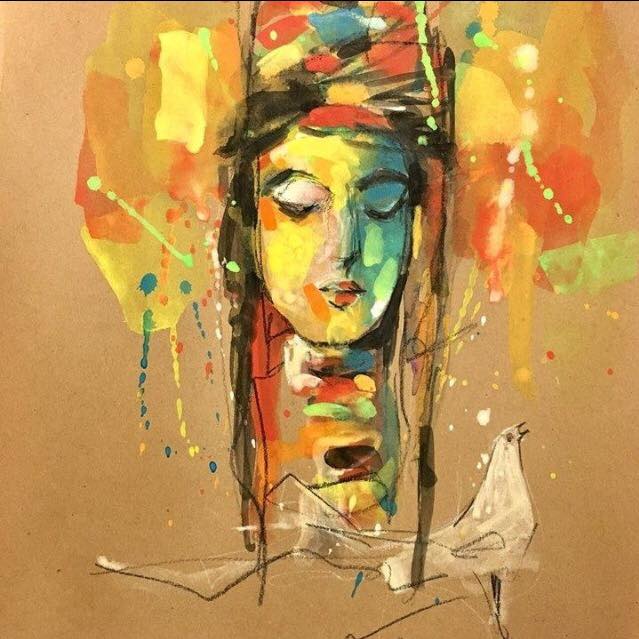
Photography by Lukman Ahmad, used with artist’s permission
UK Kurdish Diaspora
In the UK, and London in particular, the Kurdish diaspora has developed a professional class element, which itself has given rise to a range of complicated variables. Into this mix has stepped the age-old desire to preserve one’s identity and homeland amidst a foreign environment. Where this becomes even more complicated, however, is when Kurdish migrants decide which elements of their cultural tradition are worth preserving, and which elements are outdated and oppressive patriarchal relics of a time before women had self-agency.
This struggle plays itself out daily in the Kurdish diaspora in the UK, as Kurdish families gaining economic flexibilities then wrestle with questions such as: what does it mean to be Kurd? How are parents to handle their children growing up in such a relatively open environment compared to the culturally conservative one they are accustomed to back in Kurdistan? There are basic issues regarding how young people—in particular, women—dress in public, but also spill over into the way they pursue romantic relationships. And while Kurdish men typically have much greater freedom to discover themselves and find their way, young Kurdish women can be the targets of a range of communal policing, which puts added pressures onto the families to preserve their quote-on-quote good name or reputation.
This concern for a family’s standing amongst the wider Kurdish community often leads to arranged or forced marriages, as parents seek out socially acceptable partners for their children. In my research, I found that often times it is mothers and aunts who are the enforcers of patriarchal norms on their daughters, demonstrating the degree to which they are driven to be accomplices in a social construction which also limits their own freedom.
Occasionally, you also have the tragic element connected to forced or arranged marriages, which is so-called honour killings, which in truth have nothing to do with actual honour, and more to do with misogynistic policing of women’s bodies, life choices, and sexual agency. But because some Kurdish men perceive a sexually active daughter or sister, or one who disobeys their father or brother’s dictates as disobedient to the point of deserving death, honor killings are an issue that, although rare, unfortunately still exists in the Kurdish UK diaspora.
The most famous case of a honor killing was the 2006 Murder of Banaz Mahmod, a Kurdish woman from the KRI, who suffered under the ‘patriarchal trifecta’ of FGM, arranged marriages, and honor killing that my research explores. Banaz had undergone FGM herself, then was arranged-married to an older man when she was sixteen; she then fled his abuse and was threatened by her male family members that she would be killed if she did not return to him. When they discovered that she had entered into a new relationship without their permission, her father, uncle, and three cousins all murdered her and buried her in a garden.
The lead up to Banaz’s murder is instructive about the ways in which the UK system failed her as well as other diasporic migrants like her. Banaz had repeatedly requested protection from the police, telling them that her father was determined to kill her. However, at the time, UK police were reluctant to interfere in the “family matters” of outsiders or get involved in what could be perceived as a cultural difference issue. But this impulse not to “interfere” is destructive and harmful to all women facing such threats, as really the UK state is their only dependable ally when they are facing communal threats and literally fearing their family may murder them.
In this way, we see the ways that honour killings are perpetuated and continued based on the legal, social, and cultural conditions in which they thrive. Sometimes the cautionary impulses by police or the legal system can even come from a place of good intentions, where UK institutions want to be respectful of religious differences and perhaps not be seen as interfering or discriminating against Islamic traditions in particular. However, this can also lead to a dangerous dynamic where their “respect” for another culture places the actual women of that culture at dangerous risks.
Which opens up an important debate for all of the Kurdish diaspora, but in particular in the UK: where do one’s cultural traditions end and where does gender subjugation begin? In the cases of honour killings and FGM it seems fairly obvious – but is perhaps less obvious in more quotidian cases, such as the control fathers exert over their daughters or wives. Or, perhaps, in the ways Kurdish women are at times constantly surveilled and policed by male relatives or other members of their community. There are many restrictive ways that women are overly monitored not only by their family, but any person from the community that knows their father or brothers and may report back to them on their behaviors, which supposedly bring shame to their entire bloodline. In this case, perceived shame can have deadly and grave consequences.
Inequality Masquerading as Culture
My research thus far has shown that a cultural battle is taking place among diasporic Kurds in the UK, with many wanting to embrace elements of their new British home, but still fiercely clinging to some cultural traditions which they have convinced themselves are integral to their Kurdishness. When you then consider that Kurds have had many elements of their culture banned by occupying states, it is natural to see why a Kurdish person may defiantly want to hold on to something that they now feel they are free to express in the diaspora away from such occupying states.
However, it is not just a coincidence that often times the “traditions” that many traditionalist Kurds feel so obligated to preserve, also just happen to be the ones which restrict the liberties of Kurdish women. It is convenient that some of the traditions which place unfair burdens on men regarding familial duties can be discarded, while the one’s policing the behavior and bodies of women all of the sudden become sacred.
In this way, you see that this trifecta of FGM, forced marriages, and honor killings all symbiotically work in unison. First, they physically alter women under the misguided perception that they would be overly lustful without such alterations. Second, they enforce strict control over women by handing them off to an appropriate policing force and suitable male who will carry on the control they previously wielded. And third, if the women break free of these constraints, the option of an honour killing is there, to eradicate the disobedient women and act as a message to any of the others that may have the idea of similarly breaking free. Not unlike the way they used to execute slaves after a slave revolt, honour killings also serve a powerful communal function my research has shown, where they are used to intimidate and act as cautionary tale to all the other women on the risks of defiance.
As a Kurdish woman from the KRI who grew up in the European diaspora, this is obviously both a professional and personal matter to me, as I believe that all of the women facing these attacks on their equality deserve similar opportunities that I have had. Now, my own journey was far from easy, as the West has its own set of structural impediments and hurdles, but I still recognize the difference between having a tough road that can break you and not being allowed on the road at all. In this way, I am constantly wrestling with the idea of how much of my research is supposed to inform, but also help transform the unjust realities that I am observing.
But what it is clear to me thus far, is that although Kurdish women have made large gains in their respective freedoms at home and in the diaspora, unfortunately some of that residue of the patriarchal past is still present. While Kurds are particularly rebellious when it comes to defending their cultural identity against an outside force—as seen in the YPJ (Women’s Protection Units) helping defeat ISIS and the recent “Jin, Jiyan, Azadi” (Women, Life, Freedom) protests throughout Iran, they often times fail to see the tyrant that is sitting right in their own living room, in the role of their father, uncle, or brother. Or we must sadly admit, even in the role of mothers-in-law or aunts, who can act as collaborating accomplices of a patriarchal order which limits their own horizons. For true women’s liberation, however, you need freedom in the homeland but also inside the home.
 Dr. Shilan Fuad Hussain is currently a Marie Curie Postdoctoral Fellow in the field of Gender Studies and Cultural Analysis, and a Senior Consultant for gender-related issues in society. She was previously a Visiting Fellow at the Washington Kurdish Institute (U.S.) and a Doctoral Fellow at the Geneva Centre for Security Policy (Switzerland). She is an interdisciplinary academic and works on a variety of topics, among them: cultural representation, production, and practices; gender-based violence; state policies enhancing female equality; FGM and arranged/forced marriages; the social impacts of masculinity; and multi-identity and culture in the diaspora. Her current work sits at the intersection of sociology and cultural analysis, and its symbiotic relevance to modern society.
The post Kurdish Women in the UK Diaspora: Adversities & Challenges first appeared on Engenderings.
]]>The post A love-letter to my Bookcase first appeared on Engenderings.
]]>About a year ago, on February 14th 2023, I read out this letter at a UCU Four Fights strike teach-out. The industrial action for fair pay, sustainable workloads, gender, race and disability equality, and eradicating casualisation ended in September after a months-long marking and assessment boycott. All these struggles remain relevant in the face of persistent economy-wide erosion of wages, as well as multiple inequalities in the higher education sector stemming from workforce casualisation, precarity among early career scholars, representation and ethnicity pay gaps rooted in institutional racism, barriers faced by academics with disabilities, and gendered career progression owing to differences in teaching and teaching-related responsibilities. Ironically, or perhaps inevitably, publishing the letter framed by these struggles and emphasising the need for more time for reading and other worthwhile pursuits, did not meet the cut-off date in time for Valentine’s.
***
I am not sure if I have ever written a love-letter. How to start? How to address you? To call you My Love, My Darling, My One and Only does not have the right ring to it. My Valentine, or better yet, My Funny Valentine? It worked for Paul McCartney[1] and Chet Baker[2], will it work for you? Most apt (of course!) would be A Case of You, since you literally are My Bookcase, and metaphorically, like for the poetess Joni Mitchell[3] ‘you’re in my blood like holy wine’ expressing the emotion of love, but not love-lost.
And so, I’m writing to you with longing for the treasures you hold. For time shared, memories created, friendships forged, and for that which is yet to come. Remember when we first met? In that place called childhood? Nursery rhymes, fairy tales, poems, adventure stories… all moulding a bond so exclusive and intense that I ignored my siblings’ calls to join them in games, pleading, distracting, fighting, then ending in tears. Can such strength of feeling and connection last forever?
You say love must be nurtured. Like the times when I would not put a novel down until no words were left, racing through the pages towards ‘The End’ and regretting getting there as soon as I did. What happens next? What can possibly come after connecting with the prescient poetic dissections of past, present and future penned by Margaret Atwood? What follows the tapestry of love entanglements on the streets of Alexandria woven by Lawrence Durrell? How would that showpiece on writing, political, emotional and everyday life of Doris Lessing resonate today? Or the profound in its craft and feeling chronicles of slavery and its aftermath composed by Toni Morrison. And John Steinbeck’s heart wrenching explorations of injustice and the lives of migrant agricultural workers, all controversial for their sharp critique of capitalism, racism, sexism and all other kinds of inequalities.
So, as I said, what can possibly follow this? There is laundry, and getting groceries, and dusting, and yes, getting back to my PhD… It seemed, back then, that only housework can compete with the pleasure of reading. But no amount of dust-bunnies or piles of laundry can free time for guilt-free reading. Leisure time, housework time, care time (for self and others), and of course time for politics in our turbulent present with its tendencies to divide and atomise – all that time has shrunk. Do I pack a book for a train journey that is just for me? Shouldn’t I bring that stack of articles I set aside to update the reading list instead? The paper I agreed to review? The PhD chapter that needs feedback? That new university policy draft requiring input. The reference letter for the student from three years back? Even when I decide to switch off and pack a novel on holiday, there is the unfinished conference paper that will be given right after the break (can I get-away with slides only?). The MSc dissertation extension requests need to be approved (it is the new August). And the dissertations submitted on time, which should be marked before induction week.
How about work books? Those by the giants on whose shoulders we are meant to stand. Or new books by colleagues, in my field and others. Are these now out of time-bounds too?

Photo Credit: Part of the author’s own bookshelf
This brings me to that annoying thing, The Inbox, a pesky little thing, accordion like, infinitely elastic – stretches as soon as you attempt to shrink it. I totally fell for the myth of shrinking The Inbox. Tried shrinking in the morning, shrinking in the evening, shrinking in the afternoon. Nothing works! Approaching Inbox-shrinking like training for a half-marathon – systematically gaining strength, speed and endurance… all to no effect. In the end, I checked the label, a legalese/techy small print: Shrink proof. Made of non-shrinkable technology. No matter what and how much you try, The Inbox cannot be shrunk.
This is not a ‘me’ problem. One example is the long hours and work intensification common to many workplaces, including academia, where being an academic is not a 9–5 job. Accordingly, structural change in higher education, brought about by the sector’s marketisation, the commodification of learning and the growth of managerialism, induced performance measurement, surveillance and bureaucratic control, diminished opportunities for exercising academic freedom and autonomy, and spurred quantification of academic output. In this context, levels of psychological distress among UK academics are reported to be above other professionals, with only 38% coping with their job demands, making it difficult to fulfil both working and non-work roles. Research conducted in the Nordic countries, resonating with patterns in the UK, points to the phenomenon of work-work balance, wherein higher education workers confront conflicting simultaneous demands of their jobs, as they are split across different tasks, multiple projects, functional roles.
The second example is the amount of pro-bono work, not just the invisible labour done within and for the institution, but labour for society more widely. A 2017 analysis of UK academics’ public engagement and knowledge exchange has shown that UK university staff delivered over 40 million hours of such work, equivalent to 24,493 full time jobs. The economic value of these activities was estimated at £3.2 billion per year (compare collaborative research, consultancy, continuing professional development contracts held by the UK universities at £4.2billion). Anyone working in the higher education sector can relate to feeling ‘encouraged’ to provide such public service and knowledge exchange to society, which amounts to an enormous and economically significant volume.
Any decline in collegiality must be interpreted in the long working hours, mounting pressures, and demonstrable ‘relevance to society’ context. A few years ago, I agreed to referee a best paper competition in an interdisciplinary field. I spent a week reading, ranking, then discussing the submissions, the finalists and the winners. I read a lot, I learned a lot, I was intellectually pushed. This being one of the best intrinsic rewards of the job – I loved it. The following year, I and my counter-referee were asked to do this again, since we have done such an excellent job (of course we did!). We both declined the invitation.
——
My Funny Valentine, you say ‘don’t bring work into this’. But that is another fantasy. I know you’ll agree, just look at the contents of your shelves! Can there be any clear separation between ‘work’ and ‘non-work’? I am talking about time as much as about content. The literary themes of poverty, precarity, dispossession, capitalism, revolution and justice are all about life-work. Even the self-indulgent series with two octogenarian detectives roaming the streets (and pubs) of London to solve ‘peculiar’ crimes are about the state and the state of things. My ‘work’ sources too are about the stuff ‘life’ is made of. So many treasures – Angela Davies, Nancy Fraser, Maria Mies, Anne Phillips, Iris Marion Young, and then Antonio Gramsci, Karl Marx, Amartya Sen… the list goes on.
This Letter of Longing is also a Letter of Affirmation and Celebration, my top 10, top 50… top 1,000 reads? Where to start? With a revolution, of course, on a daily basis, and so a quote from Rosa Luxembourg ‘The world-historical advance of the proletariat to its victory is a process (…), the masses of the people themselves, against all ruling classes, are expressing their will. But this will can only be realised outside of and beyond the present society. On the other hand, this will can only develop in the daily struggle with the established order, thus, only within its framework.’ Drawing attention to the fight for minimum demands, the overturning of power, and the limits of reform. Crucially, the feminist academic who longs to read more (fiction and non-fiction) chimes in with Susan Ferguson to ‘collectively insist on putting need over profit by demanding that the resources for social reproduction be expanded – who attempt, that is, to take life back from capital (…) [M]anaged to a large degree by the state, the fight against capital must also engage the state – through attempts to assert the priorities of life over capital whether in paid or unpaid sites (… ) [P]rioritising building bridges between multiple fronts, figuring out ways for workplace strikes to incorporate anti-oppression politics and for anti-oppression strikes to incorporate workplace-based demands (…) [E]ngender social bonds to counter the alienation and isolation of capitalist subjectivity inherent in the very act of organising with others to improve control over the conditions of work and life.’
The collective insistence necessarily joins all the struggles together – casualisation is as much of a concern to a mid-career academic as a gender and ethnicity representation gap to her precariously employed or early career (not necessarily the same) colleague. This necessity for the ‘control over the conditions of work and life’ is what keeps solidarity and the love of reading going. Our ‘At Last’ moment, so beautifully rendered by Etta James[4], will not arrive without solidarity and struggle.
 Dr Ania Plomien is Associate Professor at the Department of Gender Studies, London School of Economics & Political Science. Her research concerns social reproduction theory and analysis of the paid and unpaid work nexus, employment, care, and labour migration in the context of the European Union, the United Kingdom, Poland and Ukraine.
[1] Paul McCartney (2012) ‘My Valentine’, Kisses on the Bottom, Hear Music.
[2] Chet Baker (1954) ‘My Funny Valentine’, Chet Baker Sings, Pacific Jazz Records.
[3] Joni Mitchell (1971) ‘A Case of You’, Blue, Reprise Records.
[4] Etta James (1960) ‘At Last’, At Last, Argo Records.
The post A love-letter to my Bookcase first appeared on Engenderings.
]]>The post Redefining menstrual equity in prisons: Why menstrual equity demands prison abolition first appeared on Engenderings.
]]>As the menstrual equity movement has diffused across the United States, public policy efforts have been directed towards period product provision in women’s carceral facilities. The menstrual equity movement is concerned with the structures and systems that create, facilitate, exacerbate non-dignifying menstrual health experiences, such as period poverty. This attention has been in response to reports of women in prison having to go without these basic necessities regularly in prisons across the U.S. (Toon, 2019; Bozelko, 2015). While 25 states and the federal government have passed some form of legislation aimed at making menstrual products more available, all present policies are inadequate at addressing menstrual health needs and lead to adverse effects for those that are incarcerated. Many of these laws only ensure access to pads and no other types of menstrual products, do not ensure these products are easily accessible in the housing unit, and do not ensure free, reliable access for all.
We believe, as menstrual health scholars and abolitionists, that the structure of the US carceral system is inherently anti-menstrual equity and creates an environment in which it is impossible to have a dignifying menstrual cycle experience. These policies, aimed at addressing the material needs that were highlighted through reports of injustices within facilities (such as reports of sexual violence in exchange for a pad or a tampon) were meant to fix what we believe to be a much more complex issue of menstrual injustice – an injustice that we argue cannot be fixed within the confines of the prison industrial complex. We will argue for prison abolition as a needed tenet within the menstrual equity space by exploring inadequacies in existing policies as well as by highlighting the inability of rigid structures within the carceral system to account for nuanced menstrual experiences. Further, we will identify how violence is enacted through the prison system in the form of menstrual discrimination. Thus, menstrual inequities become enshrined within the prison system as a means to control, shame, and discriminate.
Product Provision and Prison Policies
On the most proximal level, product provision as defined through state policies does not fully address supply demands. The period products provided in US facilities are supplied through chosen prison vendors. Such pads and tampons are of poor quality, uncomfortable, and have yielded reports of infection and toxic shock from the American Civil Liberties Union (2019) Moreover, allotted supplies of period products do not account for the (often unpredictable) variance in flow and volume of menses blood per menstruator and per period as well as the significant variance in product absorption. Texas only ensures up to 10 free menstrual products a day and the majority of laws use general terms like ‘as needed’, such as in Arizona, Louisiana, Missouri, etc. Ambiguity in policies often results in an individual’s supply of and access to products being up to the discretion of the warden or even individual prison employees. Individuals are forced to substitute or bleed on themselves, sometimes in white uniforms. The inflated prices for period products in prison commissaries make them inaccessible. A majority of policies indicate that individuals are given limited monthly allotments of period products and do not have free access throughout the month, whenever desired. This is the case wherever these products are not kept in the housing unit, such as in New Jersey. The unpredictability, multidimensionality, and multiplicity of menstruation demands more than physical products, but at minimum, material that can be accessed wherever and whenever.
Present procedures for obtainment, such as asking a guard for products, perpetuate shaming and give rise to issues of safety, often resulting in psychological and sexual violence. Moreover, individuals cannot ensure that they can regularly obtain the products they need to feel dignified while on their period, given the aforementioned limit on the number of products. Failure to account for the processes through which individuals in facilities obtain products fails to account for the internalized shame and perceived gender discrimination that arise in making menstruation a forcefully public matter but individual’s responsibility. The stigma against menstruation makes it a matter of public shaming when someone fails to keep their flow hidden and private, every menstruator’s personal responsibility.
There is no room within the prison system to anticipate and prepare for future needs: stockpiling basic supplies such as ibuprofen, pads, tampons, and underwear is not allowed. The inability to stockpile is a clear conflict with the unpredictability of menstrual times and flows. It is impossible to create a bill with enough nuance to account for individual menstrual health needs. Such an attempt would defy the inherent complexities of menstruation in both the corporeal and embodied perspectives.
Prison Philosophies and PsychoSocial Dimensions of Menstrual Wellbeing
Even if such issues are addressed through product provision, the very structuring of prisons is in direct opposition to menstrual health: the policies and procedures that underpin the way of life in US prisons are fundamentally opposed to reproductive justice and make it impossible for individuals to menstruate how they wish to. Specifically, individuals’ health needs are subjugated to showering schedules, unpredictable laundry schedules, long wait-times for ibuprofen and pain management tools, etc. For example, Alaska only requires access to showering and bathing facilities three times a week, meaning those who have bled on themselves may spend days in their own menses. This can result in psychological distress, vaginal infections, and other adverse social consequences. Menstrual health is multidimensional and needs associated with pain, hormonal changes, etc. must be observed as well.
The health needs of individuals are forced to adhere to prison schedules, which is inherently impossible. An intangible aspect of health is bodily sovereignty. That is, even if material needs are met, health cannot be achieved if an individual is rejected the right to care for and exist in their body as they wish. The inadequacies of existing policies highlights the focus of the menstrual movement as a whole, that is often oversimplified to a matter of material provision and access to period products. The material focus seeks to drive cessation or a control of menses blood and rejects opportunities to support the right to dignifying menstruation. Such inadequacies also speak to the lack of nuance that many policy makers possess concerning women’s[1] health needs. Even when people who menstruate are engaged in the design of policies, the average period is inscribed into law as the norm. As prisons are built for male bodies (i.e., with no attention to reproductive needs or perinatal care needs) and lack proper disposal facilities for used menstrual products, regular access to private spaces to change products, and menstrual health across the life course and throughout the cycle are not accounted for. The lack of nuance is evident by the lack of consideration to variance in flow, product preference, and symptoms across the menstrual cycle. The inadequacies also reveal the general ignorance towards menstrual well being and dignity inside and outside of the prison system: menstrual wellbeing and dignity are achieved through a variety of rituals and lifestyles and experienced differently across cultures, stages in life, and even period to period. Menarche and menopause within prisons have not been addressed with any existing policies; needs beyond the menstruation phase remain unacknowledged (e.g., exercise during follicular phase); menstrual conditions like endometriosis and PCOS are unaddressed. In recognizing the necessity to meet needs across the life course and throughout the cycle, it is even more apparent that individuals are revoked the right to menstruate with dignity while incarcerated.
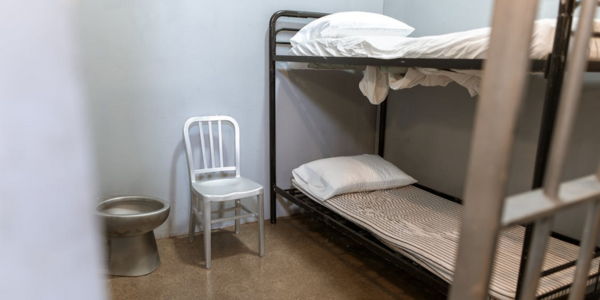
Photo credit: RDNE Stock project via Pexels
Menstrual Discrimination and Prison Violence
The gendered dimension of prisons is a particular injustice when it comes to menstruation. As jurisdictions discuss housing people based on their lived gender identity, there has been no effort to ensure access to menstrual products in men’s prisons, erasing trans, non-binary, and intersex menstruators from the conversation entirely. Many incarcerated menstruators are forced to ask male guards for the basic goods needed to feel dignified while on their period. As such, the needs of women are subjugated to men and parallel the financial and psychological abuse that is commonly rejected outside of prisons, but excused within. The taboo is forced into public scrutiny in squat-and-cough procedures, routine strip-searches, and the staining of uniforms.
Intersectional Analysis of Menstruating Within Prisons
Our present analysis would be inept if it did not consider how experiences of menstruating within prisons remain inequitable. That is, the structures, policies, and procedures of the US prison system leverage class, race, disability status, age, and nationality as a means to further enact control and menstrual discrimination. As mentioned prior, individuals who are transgender likely experience heightened violence as well as the psychological dimensions of period poverty. Depending on the state, trans individuals may be housed in a prison that does not distribute menstrual products at all. Access to period products in prisons is also variable by class: those with less money (and less external social support) are unable to purchase items for sale in the commissary. Further, guards are likely to be harder on women of color and more likely to deny them access to menstrual products or punish them for menstruating: in women’s prisons, Black women get some of the harshest punishments. Nationality is also a strong predictor of discrimination within prisons. Across the lifecourse, menstrual experiences vary. Women who are approaching menopause (i.e., experiencing perimenopause) can have less regular, more extreme periods. Unreliable access to products and the inability to stock supplies likely lead to unanticipated accidents; thus, heightened anxiety.
A Way Forward: No Menstrual Equity Without Prison Abolition
The question remains: if the prison system is inherently anti-menstrual health in its genesis, policies, and tension with (menstrual) health rights, what can we, as members of the menstrual equity movement, practically aim for, if not abolition through the release of those who do not need to be incarcerated for public safety?
However, given the possible scale of the harm being done to thousands of people that are incarcerated, there are some policy changes within prisons which could alleviate the problems faced by menstruators and be seen as short-term, concurrent goals with abolition. Ultimately, menstrual health must be committed to on a state and federal policy level, with attention to needs at menarche to post-menopause, or else menstrual health will remain subjugated to the anonymous power of capital and the prison industrial complex as evidenced through the policies and procedures of facilities within the carceral system.
The best possible solution for period product access within the prison context is a free, central dispensary located in the housing unit with toilet paper and a variety of menstrual products – (pads, tampons, and other commonly used products for managing menstrual flow) – in a variety of sizes and absorption levels. This dispensary should be constantly kept stocked by prison staff. Incarcerated menstruators must be able to take as much as they need, carry as many as they like on their person, and keep as many as they wish in their personal cells. When certain facilities have tried this, they have found no hoarding issues once incarcerated menstruators trusted the supply would not disappear (American Bar Association, 2019.) Further, given the obvious ties to dignity, shame, and even the ability to focus, menstruation must be considered in all women’s prison programs and access to products seen as a basic requirement for participation. Since the free products offered by correctional facilities are frequently too low-quality to meet absorbency needs and preferences, there should be a provision that menstrual products have a method for independent quality testing. Incarcerated menstruators must have free access to the basic necessities, such as soap, shampoo and conditioner, and a shower and change of clothing whenever they soil themselves, wherever they are. Pain medication must be made available to menstruators for free in small amounts, and prison uniforms should not be white.
Rules should be examined and adjusted for conflicts with menstruation, and prison staff must not be allowed, under any circumstances, to deny menstrual products or to discipline or shame someone for menstruating. Routine strip-searches done without specific safety concerns should be abolished.
Ultimately, none of the aforementioned policy changes will ‘fix’ problems faced by incarcerated menstruators, since they are still trapped in a system that was not built for them and does not take their needs seriously, but it would have a significant impact and at least create a baseline level of menstrual provision and policy in spaces of confinement. While menstruation has generally been ignored within the carceral system, research reveals it has a large impact on the health and well-being of incarcerated menstruators. Facilities and programs which claim to support women can no longer avoid the topic. Menstrual health is a matter of human rights and the lack of attention to people who are menstruating while incarcerated is an injustice and human rights violation.
We argue that every menstrual equity activist must be an abolitionist. The prison system is functionally opposed to bodily sovereignty and thus, health cannot be achieved, even if material (e.g., pads and tampons) is obtained. Abolition is both an event as it is a framework, one that strives for dignity for each and every person. The menstrual equity movement aligns with the abolitionist movement in the belief that structures must change so that individuals are better cared for. Period poverty is addressed through structural change and communal core, core tenants of the abolitionist framework. Considering biopsychosocial definitions of period poverty, embarrassment, stigma, shame, and violence are drivers of period poverty. Likewise, they (e.g., stigma, shame, embarrassment) underlie the philosophy of punishment that is the platform for the US carceral system or is a product of such (e.g., stigma, shame, violence, etc.). Thus, individuals opposed to period poverty must, too, be abolitionists.
 Regan Moss, BS is an MPH student at Columbia University, studying Population and Family Health with a focus in Public Health Research Methods. Her work focused on social and structural determinants of health (disparities) (SDOH), particularly around reproductive, menstrual, and maternal (mental) health, as well as the promotion of health equity in obstetric and gynecological practice. She focuses on maternal-child health, mental health, and reproductive health among female sex workers (FSW), individuals in rural communities/maternity care deserts, and within the carceral system (e.g., prisons, jails, probation, detention).
 Miriam Vishniac (she/her/hers) is the founder of the Prison Flow Project, the first compendium of official rules around the provision of menstrual products in U.S. prisons. Her doctoral dissertation, The New Correctional Afterthought: Menstruation and Incarceration in the U.S.A. (submitted in 2024 at the University of Edinburgh), focuses on access to menstrual products and menstrual discrimination in U.S. prisons. She received her B.A. in Biochemistry from Oberlin College in 2010 and her Master of Public Policy with a concentration in Civil Rights from George Washington University in 2018, and uses her multidisciplinary background to find new approaches and perspectives on problems involving gender inequality, racial injustice, and menstrual activism.
[1] We recognize that not all menstruators are cisgender woman; however this is a feminized issue and present evidence informs how cis women are impacted.
The post Redefining menstrual equity in prisons: Why menstrual equity demands prison abolition first appeared on Engenderings.
]]>The post Does access equal control for women with regards to land rights? Evidence from Punjab (Pakistan) first appeared on Engenderings.
]]>Protecting women’s land rights is a necessity for ensuring women’s empowerment (Agarwal, 2003). Land is a critical source of revenue through which women can secure subsistence and collateral. Therefore, enforcing and introducing legal reforms to protect women’s land rights, is a positive step that policymakers can take to empower women. However, these reforms come with many limitations. Although such reforms increase formal access to land for women on paper, they do not address the question of who has decision-making power over the land. In addition, such reforms may not account for other factors that might exacerbate oppression such as race, class, and caste. For these reasons, such reforms need to be re-structured to have the greatest impact on women. This blog uses administrative data and qualitative fieldwork with women landowners in Punjab (Pakistan) to demonstrate that even in cases when women have legal titles over the land, patriarchal social norms limit women’s ability to utilize their land rights effectively.
What is the difference between access and control for women?
Understanding the difference between “access to” and “control of” a resource is particularly important because those who legally own the land may not be the ones who are benefitting from that resource. In this article, I understand access to land as “legally and socially recognized and enforced by an external legitimized authority, be it a village-level institution or some higher-level judicial or executive body of the state” (Agarwal, 1994), and define control over land as “opportunity or agency of choice” as described by (Kabeer, 1999).
Most household surveys indicate that women gain access over land when the legal title is transferred into their name. My fieldwork suggests that women also consider themselves to have access over land if the rent from the land, or the revenue obtained from the sale of crops, is allocated to them even if the legal title of the land parcel is not in their name. On the other hand, control is limited to the power of selling a land parcel without the permission of other members of the household. My fieldwork indicates that all aspects of decision-making, including having decision making power over when and whom to sell the land to, at what price to sell the land, and what to grow on the land are all considered areas of empowerment for women. It may also involve control over how the land and/or the revenue generated from the land is utilized. While “access to” land may be documented through legal titles, “control over” land refers to the ability of women to reap the benefits of a specific resource both in the current time and in future expectations, transfers and claims (Kabeer, 1999). However, in order to challenge patriarchal gender norms, which lead to the marginalization of women from the decision making process, it is not enough to ensure the implementation of existing land right laws.
While control over land parcels is less tangible and more difficult to measure, it is critical that we understand the dynamics that underpin women’s control over land as it is a more accurate measure of women’s position under current land rights.
One particular problem with the national agricultural census is that it reduces the question of access and control over land to a simple “yes-no” binary at the household level. However, measuring access over land as a binary variable does not account for who within the household owns the land or how they acquired it, making it difficult to determine if women are the primary decision makers (Deere, Grown & Doss, 2007). Measuring the concept of control is even more complicated because day-to-day management of land parcels comes under the purview of men. Even if women own the land and take decisions regarding the management of the land parcel, most of the decision-making takes place within the household. In some households that I interviewed, I found that even when women did not formally own the land parcel, they were able to take operational decisions related to the land parcel, as well as the revenue generated from the land parcel. In doing so, these women increased their overall empowerment.
These measurement dilemmas make it difficult to develop a nuanced understanding of power dynamics pertaining to access and control over land. This complicates the bid to improve women’s access and control over land, particularly since the relevant data is not available. Measuring women’s access and control over land requires a better understanding, identification, and mapping of factors through which access can be gained, maintained, and controlled. Therefore, access and control over resources as concepts should be viewed as a spectrum of possibilities than a simply dichotomous outcome.

Photo Credit: Author’s own of village visits in Punjab (Pakistan)
Background on women’s land ownership in Punjab (Pakistan)
Women’s legal rights over land are well-defined in Pakistani legislation. In fact, a majority of women in Pakistan do own land. This blog focuses on land ownership in Punjab, one of the provinces of Pakistan. This province was selected because agriculture is the main source of income for most households and because the provincial government has introduced many reforms specifically targeting women’s ownership of land. In 2012, the government of Punjab introduced enforcement mechanisms to ensure that women had access over their land as part of their inheritance rights when their father or husband passed away. To fortify this process, the state entrusted land officials to ensure the transfer of women’s legal share of land into their name in the event of the death of the head of household. However, despite this intervention from the government, high geographical variation remains across the province with respect to women’s ownership of land (Punjab Land Regulatory Authority, 2015). Figures 1 and 2 (below) show the percentage of women landowners and the percentage of total land owned by women across the province of Punjab.

Figure 1: Percentage of women landowners by district in Punjab (Source: Punjab Land Regulatory Authority 2015)

Figure 2: Percentage of land owned by women by district in Punjab (Source: Punjab Land Regulatory Authority 2015)
Less than 40% of the landowners in any part of the province are women but this falls to less than 30% in most districts (Figure 1). Most women landowners are concentrated in the northern part of the province. The amount of land owned by women is also on average low (Figure 2). The highest percentage of land owned in any district of Punjab is 35%. Women are more likely to own bigger tracts of land in the central and southern parts of the province. The data on women’s land ownership indicates that variations exist in women’s land outcomes across the province of Punjab despite the enforcement of legal reforms. This may arise due to variations in land parcel sizes across the province of Punjab or the fact that land ownership may be concentrated within a few households. It is also important to determine whether there are differences in access and control over land in reality for women landowners.
In order to verify that differences exist in women’s land outcomes, I conducted qualitative interviews with 12 landed households across the province. The households were not picked from a random sample. Each household is classified as a large, landed estate (150+ acres) by the Agriculture Census of Pakistan. In this way, variation in women’s land ownership is not muddled by the size of the household’s land holdings. A snowballing technique was used to approach these households since most households would not agree to be interviewed without someone vouching for me. The women selected from each household were 25-40 years in age and married. This choice in interviewees was necessary as it would have been difficult to obtain permission to interview underage women. Furthermore, married women could also compare land ownership patterns within their natal as well as marital households. This age cohort was specifically selected since they would have information about the household’s previous, present, and future dealings with women’s land outcomes. Most of the women interviewed were not employed outside of their household’s own economic interests.

Photo Credit: Author’s own of village visits in Punjab (Pakistan)
Findings from the field
Women respondents reported that access and control are not as binary in nature as household surveys suggest. Women who have the land legally transferred in their name may be unable to benefit from the revenue of the land. Even women who have control over the revenue from the land, may not be able to sell the land without permission from a male member of the household. Some women didn’t have the land transferred in their name but are paid the revenue obtained from the land.
Given the prevalence of traditional gender norms coupled with the patriarchal nature of agricultural markets, most women from landed families remain dependent on male members of the household for support in mobility and dealing with administrative land issues. However, due to the strong entrenchment of patriarchal norms, most women would be satisfied with gaining control over their land. However, in order to truly empower women, we must work towards ensuring women’s access and control over land. Holding formal titles over land can only help women to a certain extent in gaining empowerment if they cannot exercise control over the revenue generated from the use or the sale of the land. In some situations women had to split some percentage of the revenue generated from their land parcel with another male member of the household (such as a brother or husband). The household bargaining model assumes that if women’s fallback options increase through better land access reforms, women’s threat utility will increase. However, this does not seem to be the case.
Despite the promulgation of gender friendly land reforms in Punjab, women from landed households remain dependent on their household to honor said rights over land. This situation is largely due to the fact that there is a need for the support of other male members of the household. In fact, my fieldwork suggests that, within landed households, the dependency on a single source of revenue (namely cultivation), coupled with the prevailing social order of different groups, creates interlinked relationships between households and kinship groups. Furthermore, women from landed households feel that there are existing gender biases within formal institutions which would prevent them from obtaining their rights. Such fears, coupled with increased social sanctions and shaming of women who do pursue land dispute cases, lead to hesitation on the part of most women in pursuing access over their land.
In fact, winning access over land through a land dispute case still does not ensure that women gain control over their land rights. In some cases, land disputes may only result in a transfer of control from one male relative (for example, her brother) to another male relative (her husband or son). All these different obstacles cause women to settle for “control” rather than “access” to their land rights. This is particularly true as this arrangement has the greatest chances of maximizing the benefit accrued to them. This is especially true for women in Punjab, where male relatives are likely to control the resource and benefit from the income in practice, even if the formal access and ownership of the land is bestowed to a woman.
Conclusion
Policymakers, economic theory scholars, and researchers need to center women’s empowerment when pursuing land right reforms. Although providing formal titles to women should lead to higher empowerment, if women do not control the operations and revenue from the land parcel, they may not benefit in the long run. Women who managed to control the land parcel without formal access seem to benefit more than women who gain only formal titles over land. Furthermore, underlying relationships and norms which impact both women’s access and control over land should be measured empirically to improve existing gender norms surrounding land rights. In this way, women can receive the maximum benefit from gender-friendly reforms.
 Dr. Hana Zahir is a Visiting Assistant Professor at the Department of Economics, Lahore University of Management Sciences (LUMS), and the Uma Lele Fellow for 2023. She completed her PhD from SOAS. Her research interests lie in gender dynamics, household bargaining, and agricultural economics.
The post Does access equal control for women with regards to land rights? Evidence from Punjab (Pakistan) first appeared on Engenderings.
]]>The post Navigating a labyrinth: Experiential realities of exploring how universities approach gender at the structural level first appeared on Engenderings.
]]>I would like to describe the disparate experiential realities and structural impediments related to gender and disciplinary boundaries that future scholars will continue to encounter in the process of applying for a Ph.D., and specifically how this relates to those interested to work on gender issues and feminist knowledge production within sociology degrees in Pakistan.
Disciplinary boundaries necessarily imply methodological restrictions that limit our ability to access other forms of meaning-making or unpacking certain terms. Sociologists in Pakistan have not actively engaged with feminist scholarship, local or even Western, and remain reluctant to deconstruct the androcentrism of many academic disciplines.
Feminist researchers and scholars have called for an examination of androcentric bias within the social sciences. In the Pakistani context, institutional resistance and structural barriers impede the operationalization of feminist knowledge production.
In my research proposal, which I submitted as part of my Ph.D. proposal defense, I argued that feminist knowledge production in meaning-making that relies on feminist principles is not encouraged. The department responded by saying that the Ph.D. proposal should be sociologically oriented, and not a form of feminist research. Indeed, most scholars’ work is criticized for not being ‘sociological’ enough, and feminist research principles are not regarded as sufficient evidence for ‘knowledge production’. During a meeting with the department, I was informed that the criteria that define genuine knowledge production are established by local higher education commission-recognized journals. From this viewpoint, knowledge is restricted to sociology and does not include feminist research principles. The criteria for operationalizing the knowledge production are defined by what is published under the recognized journals of HEC (Higher Education Commission) in Pakistan and abroad. This means that work done by academics who publish with international publishing houses and have written book chapters at national or international levels is considered legitimate knowledge in view of our indicators of academic success. However, this limits the scope to a few international journals.
For me, it was a struggle to get enrolled in the Ph.D. Sociology program in 2018. It is only due to my MPhil degree in Sociology that I was able to enroll in a program, and less about my research proposal. If that had not been there, most universities in Pakistan and overseas would not have admitted me to their Ph.D. sociology programs if that hadn’t been the case.
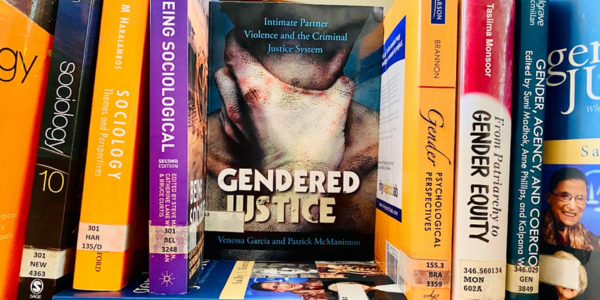
Photo credit: Ghulam Mustafa, used with permission
In my case, the proposal review committee of the department suggested that discourse or content analysis of HEC-recognized published articles is the best way to assess what sort of gender knowledge is produced in the gender studies departments in Pakistan. Furthermore, I was advised by the committee to use the term ‘gender knowledge’ instead of ‘feminist knowledge’. They argued that because of the diverse interpretations of what constitutes feminist knowledge in Pakistan, it would be challenging to operationalize and contextualize my research. The committee’s advice indicates that feminist knowledge built based on feminist research principles is not regarded as valid or objective. Lastly, research produced under a sociology degree is evaluated by a sociologist, not a feminist scholar.
Moreover, when I proposed using participant observation as a technique to observe gender studies classrooms to see what kind of feminist knowledge production is in classrooms, I was informed that co-production in class is not recognized. I was informed that only tangible discourses can be used as part of the methodology and that observations cannot be included in sociological research because participant observation is an anthropological technique rather than a sociological one. In addition, academics in Pakistan are mostly invested in traditional research methods and usually are either unwilling or unable to recognize the importance of multi-disciplinary methods in the social sciences.
This reality is further compounded in the examination of newer disciplines such as decoloniality. Acknowledgment of the importance of decoloniality is mere tokenism in the Pakistani context. Pakistani academia and international academia are chiefly interested in making universities money-making enterprises. Linda Smith (1999) on “decolonial methods” and Njoki Nathani Wane & Kimberly L. Tood (2018) on “decolonial pedagogy” interrogate the notion of decolonizing pedagogy in educational institutions. Their book addresses the question of how to decolonize systemic structures, institutions, and educational systems that emerged out of colonial rationalities. It highlights the need to restore colonial wounds and regenerate knowledge that falls outside of the colonial model. It provides an excellent analysis of how people have resisted despite the disruption. In most of Pakistan, prominent sociologists Millan and Kanter rightly criticize the androcentric bias by noting how sociology relies on certain “field-defining models” that prevent the inquiry into new questions (Moss, 1975). Due to these arbitrary disciplinary boundaries among social sciences, one cannot opt for any course offered at another social sciences department when enrolled in the Ph.D. in Sociology. Decolonization, according to Joseph, is a lengthy process including the bureaucratic, cultural, psychological, and linguistic trick out of the colonial power (Joseph, 2017) and from my experience, I agree.
In our universities and many global universities, academic structures are shaped by the internationalization of education and recent cuts in funding from the governments. We still have a colonial legacy and we did not revise the criteria for academic innovation, creativity, and promotion. The colonial logic in the context of Pakistan is instead devaluing the local ways of expression, thinking, and writing. It is more concerned with the output of academic research. For this reason, feminist knowledge for projects related to auto-ethnographies, translation work, documentaries, and poetry writing might not interest the bureaucratic structures of the universities and funding bodies. The research tools are provided by them due to colonial influence on our education system and we are still looking for the validation of our academic work through colonial tools.
In addition, scholars such as Ngugi Wa Thiong’o, Chinua Achebe, Albert Memmi, Wole Soyinka, Ashis Nandy, Aimé Césaire, Linda Tuhiwai Smith, just to name a few have contributed outstanding analyses of the devastation of cultural traditions, education, and any form of social fabric through the colonial machinery. Many of them went one step further and offered recommendations on how to decolonize from the colonial master. Some were vocal about the importance of Indigenous languages, while Smith (1999) talked of research as a dirty word and how the colonizers used it to justify their colonial agenda through research. Similarly, Memmi (1965) put emphasis on the relationship between the colonizer and the colonized. Manan (2020) also argued that by imposing a colonial language, colonial research methods impede the capacity of indigenous languages to represent reality. He claims that the languages of the colonized lack “technical” or “scientific” vocabulary. This disagreement, brought about by colonial knowledge, removes the awareness of the pre-colonial (Asif, 2020). I often realize that language keeps me at the periphery, even whilst being at the core of Pakistani academia, due to the sociological vs. Feminist disciplinary divide in Pakistani academic scholarship.
So, it can be concluded that the undoing of the traditional academic perspectives within social sciences, particularly in sociology, is linked to the colonization of research methods, curricula, and teaching pedagogies. Furthermore, gender knowledge production within academic environments is hampered by colonial hierarchies of the discipline and creates a divide between the traditional social sciences and feminist knowledge production.
 Rabbia Aslam is currently working as a lecturer at the Centre of Excellence in Gender Studies at the Quaid-i-Azam University, Islamabad, Pakistan, with which she has been associated for more than ten years. She is a PhD in Sociology at Quaid-i-Azam University, Islamabad, and has been a visiting fellow at the Institute of Social Studies, Netherlands. With an academic background in sociology and gender, her research and teaching areas include violence, sociology of knowledge, sociology of gender, bifurcation in the education system, and postcolonial and decolonial thinking in Pakistan.
The post Navigating a labyrinth: Experiential realities of exploring how universities approach gender at the structural level first appeared on Engenderings.
]]>The post The Many Partitions: Retrieving the Erased Experiences of Women first appeared on Engenderings.
]]>Content Warning: The following article contains sensitive content related to the Partition and engages with topics of violence, sexual assault, trauma, suicide, and death. The content may trigger emotional distress. Reader discretion is advised.
I am also of humankind
I am the sign of that injury,
The symbol of that accident,
Which, in the clash of changing times,
Inevitably hit my mother’s forehead
.
.
.
Who can guess
How difficult it is
To nurse barbarity in one’s belly
To consume the body and burn the bones?
I am the fruit of that season
When the berries of Independence came into blossom.
– Amrita Pritam[1]
At the stroke of midnight on 15th August 1947, as the world slept, India awoke to life and freedom. However, this freedom came with huge losses- loss of land, loss of ties, loss of hope and loss of humanity. The political and social developments of the past years led to Partition of British India into two nations- India and Pakistan. The era of Partition was tumultuous, it seemed like no one was sure where India ended and Pakistan started, no one was sure how their citizenship would be determined and that led to a burst of unprecedented violence. Hindus, Muslims and Sikhs turned upon one another and left 15 million displaced and 1 million dead.
As family, community, and national identities were redefined, one group was affected differently and arguably more violently than others- the othered women. Scholars including Ritu Menon, Kamla Bhasin, Urvashi Butalia, Paola Buchetta and Veena Das have looked at Partition through a gendered lens to explore how women’s bodies were treated as something that can be possessed and violated to dishonor the “other” community. “Othered” women were subject to stripping; parading naked; mutilating and disfiguring; tattooing or branding the breasts and genitalia with triumphant slogans; amputating breasts; knifing open the womb; raping and killing foetuses.[2]
How were women supposed to react to their situation? Was there a ‘right reaction’? The Indian and Pakistani Governments at that time and Nationalists from both countries certainly thought so and prescribed the feeling of loss, disgust, betrayal and longing for home to women without taking what they wanted into account.[3] States were determined to “rescue” their “sisters” without taking into account the women’s wishes and agency. Even women who protested were forcibly brought back to their natal families.

Photo by Jan Canty via Unsplash
However, when Partition is viewed through the trope of ‘the citizen’ and individual accounts are analyzed, it is clear that the experience of Partition was varied. These experiences were expressed in literary and dramatic narratives. Looking at narratives portrayed in various accounts via the prism of gender illuminates the bending of gendered experience into many different shades. Through the use of three fictional works, we seek to analyze the varied unorthodox experience of Partition.
Sadat Hassan Manto, a Pakistani writer, evokes the sight of life as it passes him by. In his novel Thanda Gosht (Cold Meat) when Ishar Singh fails to be aroused by his spouse Kulwant she suspects infidelity and stabs him with his dagger. In his last moments, Ishar confesses how he wrecked a Muslim family during the riots and abducts a girl, with the intention of raping her. However, upon penetrating the girl, he discovers that she is dead. The reader is left to assume that he in fact raped her cold flesh. Thanda Gosht transfers the victim’s shame onto the offender. The rape had rendered Ishar impotent, undermining the notion of rape as a display of masculine power.
By reducing Ishar Singh to nothing more than a lifeless piece of flesh, the writer creates an analogy between the lifelessness of the protagonist and the lifelessness of the corpse he attempted to rape. Kalwant’s reaction demonstrates the disintegration of a patriarchal social system as a woman asserts and exercises her sexual agency, seizing control from her husband on account of adultery. One can argue that Kulwant’s reaction was in many ways due to the violence around her, which would have allowed her violence to be overseen and that she would not have stabbed him in normal circumstances. The Partition led to a breakdown of social relations which created a space for her to express her feelings and take a stance for herself rather than ignoring the suspected adultery of her husband. While conservatives associate feminine wrath with gendered madness, Manto’s use of female rage in a gender biased climate reaffirms women’s defiance against male authority. Kalwant’s feelings are channelized by means of her rage, and underneath this anger lay a plethora of questions challenging all the chains of patriarchy which were placed around her.
Many women accepted their new situation, even finding happiness and love with their ‘abductors’. Indian Novelist Amrita Pritam’s novel Pinjar narrates the story of a young Hindu woman named Pooro who is kidnapped by a Muslim man Rashid during the 1947 riots to avenge an age-old land dispute between their family. Pooro’s sexual assault by Rashid is accompanied by her family’s rejection of her and the following societal ostracism. The only tool for women to survive their loss of “purity” was to reconcile with their converted identity. The story recounts Pooro-turned-Hamida’s gradual journey of acceptance, culminating in “love” for her captor. Rashid’s assistance in locating a missing Hindu woman during the riots was an essential factor in her metamorphosis. Touched by his act of redemption Pooro chose to continue with her new life despite having been offered the hand of her ex-fiance Ramchand.
Pinjar explores the challenges faced by women during the Partition without vilifying or honoring any side. This was critical in 1950 when India’s widespread political rhetoric defined female bodies by presenting all abducted women as legendary Sitas, the mythical Hindu Goddess who was kidnapped but managed to stay pure. At the peak of communal polarization the invocation of the Hindu goddess surreptitiously framed all captured women as Hindu, seeking security against Muslim abductors who were framed as the demon Ravana, the kidnapper of Sita. Such discourses on protectionist ideology aimed to reinstate Hindu patriarchal control over female sexuality and at the same time demonising the Muslim community. In the madness of dominant Hindutva ideologies threads of gendered and communitarian bigotry got enmeshed to intensify the already prevalent violence and disruption. Loss of life and livelihood boosted antagonism between Hindus and Muslim, and made the very people who were “one” into enemies. The violent history of both sides though have a touch of redeeming aesthetic: a sign of reclamation and oneness in recognising resilient moments in the understanding of human misery, which in turn ignites empathy for the persecuted.[4]
Kirti Jain’s 2001 play, Aur Kitne Tukde, dramatizes the journey of four female bodies as they dared to tread the path of men belonging to opposing communities. Harnam Kaur, one of the characters, is based on Urvashi Butalia’s oral narrative of a Thoa Khalsa survivor. In Thoa Kalsa, more than ninety Sikh women committed mass suicide by diving into a well in March 1947 in order to avert sexual misconduct.
According to Kriti Jain, Harnam Kaur was actually relieved that her effort had failed and she was still alive. The story challenges popular conceptions of martyrdom, which hold that all women choose to become martyrs by acting in accordance with their “own free will.” The women who committed mass suicide had to make the terrible choice between torture, ignominy, ostracism, and death. In attempting to kill herself, then, Jain suggests, Harnam Kaur was surrendering to community and masculinist pressure and subduing her own will to live. Jain emphasizes how critical it is to pay attention to these subtle resistance signals that subvert hegemonic narratives surrounding the gendered martyr. Despite Harnam Kaur’s weak protests, her voice was quickly appropriated into wider masculinist tales of martyrdom and sacrifice, even though she had no desire to die.
Partition was one of the darkest periods in the Indian subcontinent’s history, however, it cannot be measured in terms of black and white. It was grayer for some, albeit black for most. It is vital to pull out individual orthodox experiences enmeshed in broader and generalised narrations of Partition. Through the fictional pieces discussed above reality was taken to its extreme levels, enabling us to see how Partition meant something else for every person. In Thanda Gosht, two women symbolically subject Ishar Singh to physical, psychological, emotional, and sexual trauma as a parallel to everything women were subjected to in the war between the religions. On the other hand, Pinjar shows how women came in terms with their new found identities and even made good lives for themselves through love. Aur Kitne Tukde points to how women’s voices were subdued by patriarchal notions, but they still found space. There are various other narratives apart from the three mentioned above which show the unusual experience of Partition, and it is important to recognise these differences. A scrapbook of experiences, a mess of blurry and distinct images, is the only true picture of Partition.
 Aarushi Anand is a graduate in History honours from Miranda House, University of Delhi. She is currently pursuing LLB from Faculty of Law, University of Delhi. Her passion for storytelling fuels her writings, which majorly focus on history, gender, legal and social issues. Aside from her academic pursuits, Aarushi enjoys spending her free time sketching the world around her.
 Parthika Sharma is a graduate in History honours from Miranda House, University of Delhi. Her interest lies in Mughal History, Art Restoration and Linguistics. In addition to her academic pursuits, Parthika enjoys spending her free time painting, clicking photographs, and engaging in impromptu choreography.
References
Mehta, Rini Bhattacharya, and Debali Mookerjea-Leonard, eds. The Indian Partition in literature and films: History, politics, and aesthetics. Routledge, 2014.
Malhotra, Aanchal. Remnants of a separation: A history of the Partition through material memory. New Delhi, India: HarperCollins India, 2017.
Bhalla, Alok. “The Politics of Translation: Manto’s Partition Stories and Khalid Hasan’s English Version.” Social Scientist (2001): 19-38.
Jalal, Ayesha. The pity of Partition: Manto’s life, times, and work across the India-Pakistan divide. Princeton University Press, 2013.
Kaul, Suvir. “Remembering Partition: Violence, nationalism and history in India.” Journal of Colonialism and Colonial History 3, no. 3 (2002).
Daiya, Kavita. Violent belongings: Partition, gender, and national culture in postcolonial India. Temple University Press, 2011.
Menon, Ritu, and Kamla Bhasin. Borders & boundaries: women in India’s Partition. Rutgers University Press, 1998.
Butalia, Urvashi. “Community, state and gender: On women’s agency during Partition.” Economic and political weekly (1993): WS12-WS24.
Menon, Ritu, and Kamla Bhasin. “Recovery, rupture, resistance: Indian state and abduction of women during Partition.” Economic and political weekly (1993): WS2-WS11.
Bacchetta, Paola. “Reinterrogating Partition violence: Voices of women/children/Dalits in India’s Partition.” (2000): 567-585.
[1]Singh, Attar. “Modernity and Contemporary Punjabi Poetry.” Indian Literature 11.3 (1968)
[2] Ritu Menon and Kamla Bhasin, Borders & boundaries: women in India’s Partition, Rutgers University Press, 1998, p.43
[3] Butalia, Urvashi. “Community, state and gender: On women’s agency during Partition.” Economic and political weekly (1993): WS12-WS24.
[4] Rumi, Raza, Reclaiming Humanity: Women in Manto’s Short Stories, Social Scientist 40, no. 11/12 (2012), p. 85
The post The Many Partitions: Retrieving the Erased Experiences of Women first appeared on Engenderings.
]]>The post Anti-gender ideology and neo-liberal state grammar in Brazil first appeared on Engenderings.
]]>This contribution is based on the presentation given at the 11-12 April 2023 workshop on Mapping and resisting the gender phantasm in Latin America: Geographies of ‘anti-gender’ movements’, part of the AHRC-LSE project on Transnational ‘Anti-Gender’ Movements and Resistance: Narratives and Interventions. One of the speakers made her presentation available in a blog format in both English and Spanish, and one speaker in English and Portuguese. We are sharing them here as a collaborative effort between Engenderings and Sexuality Policy Watch.
***
How does one think about the translation of anti-gender politics when it moves from the societal realm into state policy? I will address this question by looking at the Brazilian experience between 2019 and 2022 when anti-gender ideology was systematically embedded into state grammar and public policy.
A bit of background: in 2019, the ultra-right former Army Captain and long-time Congressman Jair Bolsonaro became the President of Brazil. Campaigns against gender within educational contexts led by Bolsonaro erupted around 2013; and five years later, they had transmuted into anti-gender cyclones that directly impacted the 2018 electoral process. In his inauguration speech, Bolsonaro announced a state combat on “gender ideology”. Although this declaration of “war on gender” was viewed by most mainstream analysts as mere rhetoric, it signaled a systematic penetration of anti-gender ideology into the grammar of the state. Anti-gender ideology thus became a mode of governmentality, the main features of which I will describe below.
Firstly, the contours of the political assemblage that, for some years, had been inciting fears in relation to the threats of “gender ideology” became much more apparent within this context. Before 2019, the connections across ultra-Catholic formations, “traditionalists”, evangelical fundamentalists, “homeschoolers”, ultra-neoliberal voices, and other actors propagating anti-gender discourse, seemed dispersed and even contradictory. But after anti-gender tenets entered the domain of statecraft, the consistency of their political and policy-related goals against “gender”, as well as their connections to each other, became much more apparent.
Regardless of their ideological differences and even power disputes, after entering statecraft, various actors gathered under the anti-gender umbrella cohesively around all efforts aimed at the “abolition of gender”, distorting its meanings in public policy amongst other strategies. Having control over federal structures and resources has also allowed these forces to recruit and engage many others in these policy initiatives aimed at vilifying “gender” while concomitantly infusing into the state machinery policy templates designed to protect the “family” or “family rights”.
The conversion of anti-gender ideology into state policy was achieved through its capillary translation via multiple channels of the federal state machinery.[1] Between 2019 and 2022, the phantasm of “gender ideology” and its various proxies – such as the strengthening of family ties or child protection – intensively circulated through federal channels that reach out to state and municipal educational and social services structures. This institutionalized propagation legitimized anti-gender discourses and related tropes, such as the incitement of moral and/or political panics concerning pedophilia or Communism (as the other face of “gender”). This diffusion has mainly reached local-level public servants engaged in social protection policies, but this dispersion also affected sectors of the general population directly served by these policies.
Finally, the propagation of anti-gender tropes was one key component of the longer-term ultra-right project of eroding democracy from within. Quantitative data is not yet available to show if officials or the general public exposed to this ideological “domestication” have or have not become more averse to gender and sexuality-related rights or to democratic values. But one could hypothesize that these mobilizations were paving the way for a potential second mandate for Bolsonaro – as seen in other cases such as Hungary – in order to consolidate an already anti-democratic grip.
Cohesion, capillarity, and temporality are therefore key features to better grasp the contours of anti-gender ideology penetrating existing rationales of governmentality. Furthermore, institutionalization also required basic instruments of governance, as for example, bureaucratic agents and structures able to re-design and implement anti-gender infra-legal norms adopted between 2019 and 2002, such as decrees, protocols and ordinances, as well as to manage key institutional processes such as financing. The latter resulted in the recruitment and commitment of technical personnel able to translate anti-gender ideological frames into concrete policy measures.
In the next section, I examine how these various elements intertwined in the operations conducted by the Ministry of Women, Family and Human Rights (MMFDH). The Bolsonaro government created this ministerial body through a reshuffling of the previously existing ministerial body for Human Rights, Women´s Policies and Racial Equality. This combined Ministry was established in 2015 by the Dilma Rousseff administration and later renamed as the Ministry of Human Rights by the subsequent Temer administration. Under Bolsonaro, the name was once again changed to, not unexpectedly, include the word “Family”. In a move that was no less significant, the term “women” was retained, and “gender” was openly repudiated suggesting that the ultra-right government continued to promote women’s rights only on its own terms[2].
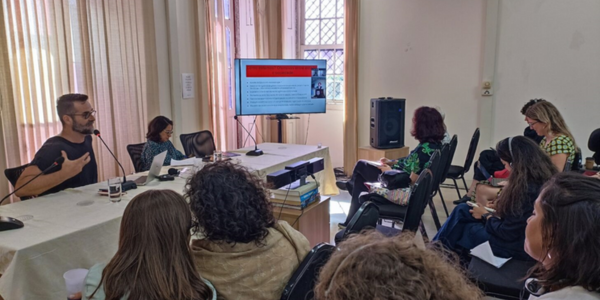
Photo credit: Nana Soares, reproduced with permission
The Ministry of Women, Family, and Human Rights: The hub of anti-gender diffusion
As said, the translation of anti-gender ideology to the state’s grammar and public policies required bureaucratic structures and personnel aligned with this ideological tenet. Consequently, in the case of the MMFDH, high-level positions were strategically occupied by ultra-conservative religious figures.
Damares Alves, the chosen Minister, was/is an evangelical fundamentalist pastor who brought to the Ministry other people belonging to this religious camp. However, many high-level ministerial posts were occupied by ultra- Catholics, such as Angela Gandra, the National Secretary of the Family, as well as right-wing militaries and figures linked to the so-called traditionalist stream led by Olavo de Carvalho.[3] Further, a few actors connected to neo-fascist formations were initially contracted for relatively high-level positions, but were dismissed in 2020 when their links with these formations were openly disclosed.[4]
Having this general snapshot of who embodied the ministerial machinery as the backdrop, in the following subsections I will examine three iconic cases of anti-gender governmentality.
How the Dial 100 Hotline was converted into a “gender policing tool”.
The Dial 100 Hotline was initially established in 2003 by the first Lula administration[5] to receive reports of human rights violations. Subsequently, it became a crucial public policy instrument because it allowed for the systematic compiling and processing of data on these violations. However, the system was entirely disfigured under Damares Alves as the head of the MMFDH.
A first step in that direction was a full revision of the category of human rights violations, which both sanitized and distorted the previously established parameters. These modifications were transposed to a Taxonomy Handbook made public in 2020 in which the terms gender, homophobia and transphobia were entirely absent. In contrast, “gender ideology” was included to define a “new” human rights violation. This phantasmic category was created to be applied to those situations in which “gender ideology” was allegedly imposed on children and adolescents.
To invent this novilingua[6] typification of human rights violations, MMFDH appealed to and distorted Law 13431, approved in 2017 as a protocol to guide judicial procedures involving minors, which defined and legitimized the first Brazilian legal frame to address institutional forms of violence. The Taxonomy Handbook used this legal frame to justify why “gender ideology” is supposedly harmful, and that definition was be used to target primary and secondary school teachers who teach gender and sexuality courses. It could have also been applied to healthcare professionals working in facilities that provide care to trans children and adolescents. In late 2021, the press reported two cases of secondary teachers who were formally inquired by the civil police after having been accused at the Dial 100 Hotline as “propagators of gender ideology”. Other cases may have escaped the radar of the press and civil society organizations monitoring how the Bolsonaro’s anti-gender policies were violating human rights.
As the COVID vaccines finally began to be applied in early 2021, the Ministry, aligned with the overall negationist position of the government, also openly called citizens to resort to the Dial 100 Hotline to denounce “compulsory vaccination”. In January 2022, a lawsuit was tabled at the Supreme Court by civil society organizations, arguing that both these uses of Dial 100 Hotline constituted ideological persecution and infringed constitutional principles. In response, MMFDH simply removed the contents referring to “gender ideology” of the Taxonomy Handbook, while keeping the document online.
The anti-gender MMFDH policy frame was abolished by the Lula government, elected in October 2022. However no systematic assessment has yet been made of the detrimental effects of the disfiguration of the Dial 100 hotline on teachers and healthcare professionals. And, not surprisingly, as soon as the 2023 legislature began, a Federal MP aligned with Bolsonaro announced the creation of a civil society platform to monitor and complain about “gender and political indoctrination in schools”.[7]
Familism as a social technology of social control
As in various other countries where anti-gender politicians hold power, such as Hungary, Poland, Russia or Guatemala, the attack on gender leads to a familist policy frame.[8] The same happened in Brazil when MMFDH designed such a policy under the guidance of National Secretary of the Family, Angela Gandra. The policy frame combined multiple components to be established in a sequence. The first to be settled was the National Observatory of the Family, mimicking policy structures in other countries. One of its aims was to openly induce conservative academic knowledge production about “the family”.
Subsequently, an overarching family policy frame was put in place. The first document produced was the Strengthening Family Program (SFP),[9] aimed at promoting a privatized conception of the “family”. The program was based on technologies designed to re-mold perceptive schemes, communication models and behavioral patterns to supposedly sediment positive intrafamily relations, protect the family against external threats, and promote “family happiness”.

Photo credit: Sandy Millar
The familist frame is guided by the firm belief in “authentic selves” and the strength of individual will, and its primary intervention is to facilitate communication within the family. This paradigm fuels neo-liberal subjectivity and effaces the social political environment surrounding the “family” and the connections that extrapolate its boundaries. Structural social inequalities, hierarchies, and power differentials internal to families are discarded as “barriers to happiness” which cannot be solved by low-cost behavioral interventions. The question arises as to whether such a policy would adequately respond to the needs and demands of the large majority of Brazilian families that, between 2020 and 2022, were painfully coping with the COVID-19 pandemic and its drastic epidemiological and economic effects.[10]
The other key piece of the MMFDH family policy was The Family at the School program, which was built upon an old pre-existing federal scheme of cash transfer to local educational systems, to which new guidelines for family participation in school activities were added. Its most problematic aspect was that it authorized and induced parents to surveil teaching materials and school libraries, opening the door for blatant censorship of curricula and pedagogical materials within the public school system. As in the case of the Dial 100 hotline, these policy frames implied semantic shifts aimed at consolidating ultra-conservative family ideologies, which contaminated the pre-existing policy grammar of “strengthening internal family links” with anti-gender contents.
Lastly, the MMFDH issued a Family Policy Decree to install the family policy frame across the country at all administrative levels. The decree established several policy interventions in the public policy environment that impinged the visions analyzed above on various training programs, linking these contents to policies oriented toward reducing poverty. Through the multiple channels, discourses on the threats of “gender ideology” spread widely throughout the state machinery.
These strategies must also be placed against the backdrop of the ultra-neoliberal economy policy frames adopted by the Bolsonaro administration. As noted by Cooper (2019), neo-liberal austerity has given functions of care and social protection back to families, arguing that the state should not invest in these because they are to be seen as “private investments on human capital”. The neoliberal vision of care and social protection is that families are better placed to respond to these needs because such a shift allows for the deflating of the social protection costs of the state as made explicit by the National Secretary of Family in an interview to Folha de São Paulo in late 2021.
The epistemic layer of anti-gender policies
The MMFDH has also induced and funded conservative knowledge production on family structures and relations. This goal was announced and appraised by Minister Damares Alves in a public conversation with Bia Kicis, an ultra-right woman MP in the following terms:
Our plan is to leave a legacy for academia on strengthening the family and public policies for the family (…) We will revolutionize academia; this will be a significant change. Our PhDs will no longer be trained in gay saunas or other sexual orgies. They will be trained in public policies for the families”.
At a time when drastic cuts were experienced in funding for academic research in partnership with CAPES – the main federal agency for academic regulation and research investment – the MMFDH launched a special program to support studies on the “family”. Although the volume of financial resources granted to the program was meager, the initiative inevitably attracted much attention in such hard times. The program has mostly fulfilled the function of spreading ideological codes related to the centrality and relevance of the “natural family model” amongst junior researchers. Furthermore, it allowed for couching the then dominant anti-gender and pro “family” frame within a credible scientific aura.
To conclude
The systematic infusion and multifaceted diffusion of anti-gender ideology through state grammar and state machinery, witnessed in Brazil between 2019 and 2022 correspond to a peculiar type of anti-gender politics. This new formation unfolded from a longstanding political agitation that has incited fear and hatred of “gender ideology” at least since 2013. But when transmuted into statecraft, the contours and objectives of anti-gender politics became much more transparent, and the scale of its impact was drastically amplified. In the brief context-setting I offered in this article, a few of the features of this process of “statization” are to be underlined.
The first aspect to be noted is the ideological cohesion of the various and somewhat contradictory actors engaged in this kind of anti-gender statecraft. Secondly, the imaginary, semantic and affective traits of anti-gender social mobilizing, which had prevailed before 2019, were rapidly translated into public policies through solid processes encompassing bureaucratic expertise, financing and training of public functionaries at multiple levels. What was seen in Brazil also confirms what various authors have underlined: familist policy ideologies have a doubled function. They are deployed to both deflect the impacts of inequality, precariousness and the erosion of public-funded social protection, and to facilitate the implementation of drastic measures of state financial austerity.
It is not excessive to say that, between 2019 and 2022, a sort of institutional alchemy has been at play in Brazil that converted the phantasms of gender into very material state policies. If between 2013 and 2019 the main feature of the political agitation against “gender ideology” was the incitement of fears of multiple orders; when transported to the grammar of the state, anti-gender politics was predominantly associated with a rationale of state tutelage that should not be detached from the desire of those in power to infuse and gradually consolidate political docility in the face of the dominant logics of autocratic governance of social and private life. In these ways, the anti-gender politics of the Bolsonaro era are a striking case of anti-gender state-led politics that should be looked at more closely and deeply than what has been possible in these few pages.
 Marco Aurelio Máximo Prado (he/him) holds a PhD in Social Psychology from PUC/SP and a postdoc from the Fulbright Foundation at the University of Massachusetts/Amherst in the Chair of Brazilian Studies. He is also a Professor of the Graduate Program in Psychology at the Federal University of Minas Gerais, where he coordinates the Center for Human Rights and LGBT+ Citizenship.
[1] Corrêa, S. & Prado, M. (2023, in print). Familist Ideology in Anti-gender Attacks in Education: Transnational Conservative Connections. Revista Educacao & Sociedade, Volume 45.
[2] The story behind the MMFDH is long. The first presidential Secretary for Human Rights was established in 1995, during the Cardoso Administration. In the first mandate of Lula (2003-2008), it assumed a ministerial status and was named the National Secretariat for Human Rights. In 2015, a ministerial reformation implemented by Dilma Rousseff merged it with the Secretaries for Women´s Policies and Racial Equality in the new Ministry of Women, Racial Equality, and Human Rights. After Rousseff’s impeachment, this new structure was renamed the Ministry of Human Rights. In 2019, under Bolsonaro, its name was changed to the Ministry of Women, Family and Human Rights and the new function of coordinating a national family policy was added to its mandate.
[3] Olavo de Carvalho, who died in early 2022, was a traditionalist or perennialist intellectual whose ideological stances were similar to the cosmovision deployed by Steve Bannon and Alexander Dugin. He was a main figure behind the Brazilian ultra-right turn of the 2010s and became a guru of the Bolsonaro family. His profile is analyzed in the book The War for Eternity authored by Benjamin Teitelbaum.
[4] One of these functionaries was Sara Fernanda Giromini, also known as Sara Winter, who began her political career as a “feminist” in 2011.
[5] It was initially created as a dial to denounce the exploitation of children and young people in 1997 by non-governmental organizations. Later on, in 2003, the Federal Government incorporated it as a public policy of complaints of vulnerable people linked to the national human rights watch.
[6] Novilingua is the term used by George Orwell to name the systematic semantic falsification used by the totalitarian regime in 1984, his famous dystopic novel.
[7] Federal Deputy Gustavo Gayer became a well-known figure in his state in 2020. Known as a Bolsonaro activist, he has appeared on radio and television programs constantly attacking the work of teachers, who he accuses of using the school environment to “indoctrinate” students. He is a member of a language course in Goiânia. Confronting education professionals has become his main agenda; promoting harassment of teachers and campaigns to monitor the content taught in schools are also part of his anti-gender campaign in education.
[8] A familistic logic is the defence of a single heterosexual and patriarchal family model either in a moral or even social dimension. The familistic notion reinforces the idea of a natural family model instead of a plurality of family formations in social history. In addition, the logic of familism defends the family as a privatist unity with the responsibility to invest in its members and provide care and protection rather than welfare policies organized by the state.
[9] The Programa Famílias Fortes (PFF-BR 10-14) was an adaptation to the Brazilian reality of the Strengthening Families Programme (SFP-UK), reworked in the United Kingdom by Oxford Brookes University after its creation in the United States in 1982 as a behavioral engineering instrument of the R. Reagan era. “It is a methodology of seven weekly meetings for families with children between the ages of 10 and 14 that aims to promote the well-being of family members, strengthening the processes of protection and building family resilience and reducing the risks related to problematic behaviors” (MMFDH, 2022).
[10] For a full account of the pandemic context see the Brazilian chapter of the e-book Anti-gender politics in the pandemic context in Latin America.
The post Anti-gender ideology and neo-liberal state grammar in Brazil first appeared on Engenderings.
]]>The post What does the French ban on wearing abayas tell us about the control of Muslim women’s bodies? first appeared on Engenderings.
]]>France, home to Jewish and Muslim communities, has become a hostile place to be Muslim or Jewish. France is a former colonial power that has significant ongoing racial and religious tensions. For European Jews and Muslims, anti-Semitism and Islamophobia have the bitter taste of repetition. This was evidenced in 2004 when the government forbade students to wear Jewish kippas and banned Muslim headscarves in schools. More recently, in September, the minister of Education in France announced that pupils will be banned from wearing abayas -loose-fitting robes worn by some Muslim women- in French state-run schools. Education minister Gabriel Attal said, “When you walk into a classroom, you should not be able to identify the pupils’ religion just by looking at them”. The French government, with its secular principles, believes that the role of education is to dissolve religious identity in a shared commitment to the rights and responsibilities of French citizenship.
As a Muslim, I find myself struggling with this new ban. I see the secular regime as an affective discourse deployed as a technique to govern Muslim minorities. I strongly support affirmative action for historically disadvantaged groups. I am Belgium-Turkish, I’m fair-skinned and have a Flemish last name. In other words, I can easily “pass” as white and am unlikely to personally suffer any Islamophobia. Nevertheless, my mother, who migrated to Belgium at a young age did suffer from Islamophobia as a young teenager. I also have relatives who chose to stop wearing a headscarf due to restrictions prohibiting certain public sector employees from displaying religious symbols in Belgium.
However, the increasing visibility of Islam in the public space has touched the nerves of the liberal-secular regime in France. Islam has been represented as instantly different from the secular: affective, irrational and unjust. In other words, as a religion that is perceived as threatening to the nation’s secular unity. Islam has often been considered as a ‘totalising religion’, which clashes with the modern secular France. However, it is important to question this framing of Islam.
For that reason, I find it crucial to pause on the “secular”. There are several misconceptions about the contemporary meaning of secularism. Secularism is often understood as a simple separation between the church (religion) and state. This implies an underlying notion of an autonomous free, universal and equal subject, which is premised on the idea that religious difference has to be kept (or can be kept) in the private sphere. This particular political model of the sovereign state has largely been present as a moral basis for an equal and tolerant society. Taken together, secularism equates to a political arrangement, where the nation-state is neutral without ideological preference. However, this understanding of secularism is problematic: because it shies away from the understanding of the secular as a historical process with varied outcomes across different nation-states in Europe. In line with this, Salih a key scholar in the critical study of secularism and gender, rightly remarks that the secular becomes more an ideological projection of history than an actual process of separation between the religious and the mundane.
Furthermore, the distinction between the secular and the social sphere is, in fact, arbitrary and premised on a particular political culture. To formulate it more concretely, secularism is not in itself neutral. Secularism is inflected by the liberal Christian culture and the imagination of a nation that is profoundly Christian. From this perspective, the secular sphere is affected by an eclipsing Christian logic. In this piece, I argue that the secular is an aspect of contemporary political practices that seeks to overrule religion by defining a differentiation between religion and the social. Talal Asad remarks how this distinction is arbitrary: “The point I would stress is not merely that religion and the secular interpenetrate, but that (a) both are historically constituted, (b) this happens through accidental processes bringing together a variety of concepts, practices, and sensibilities, and (c) in modern society the law is crucially involved in defining and defending the distinctiveness of social spaces—especially the legitimate space for religion” (p.209). The point here, however, is that the secular is a tool for the hegemonic project of modernity. Asad refutes the commonly presented idea that secular is universal, instead arguing that the binary distinction between ‘the faith’ and ‘the social’ is a product of a distinct epistemological realm (a particular understanding of the faith and the social) and a form of governmentality which is premised on a particular moral economy. It cultivates a particular kind of moral subject. Put differently, the secular does not promote a universal subject but is, in fact, dealing with a particular kind of moral subject premised on an arbitrary separation between the secular and the social. Asad critiques the notion of a “universal subject,” arguing that its arbitrary separation relies on an emotional construct, specifically an “affective imaginary of pain and suffering.” He contends that this emotional narrative underpins the concept, emphasizing shared hardship as a unifying force, revealing a constructed rather than objective basis for universality.
We need to ask ourselves, what kinds of sufferings are problematized (such as religious pain) and what other kinds of pains are normalized (such as pain for civilizational purposes) in this Western secular affective discourse. This imaginary of secular logic portrays Islam as a domain of irrationality, a mismatch with European values, and a challenge to secularism, which needs to be liberated and civilized; even though this process of humanizing will cause the Muslim woman’s pain. The image of the helpless Muslim woman or student in need of liberation is one of the driving forces of these policies that try to control what Muslim women wear. The control of Muslim women is not new and was crucial to the French colonial project in Algeria, where Muslim women were forced to unveil. The French political authorities have transferred their colonial obsession with controlling colonial subjects onto the Muslim women within their own nation-state. For Muslim girls, this dominant experience starts in the classroom.

Photograph by Aubrey Odom on Unsplash. Taken on Harvard University Campus.
Muslim women: a gendered subject
In what follows, I take a closer look at the framing of Islam as a misogynistic religion that oppresses women in the French context. I will shed light on the nature of secularism as an affective discourse that constructs narratives aimed at assimilating Muslim women into European secular and liberal values. Islam is essentialised as an oppressive religion that clashes with a modern liberal society and therefore ‘should’ be suppressed. The secular is represented in opposition to Islam, as a promoter of women’s liberation and equal rights. Muslim women’s bodies today are public spaces over which different agendas of modernity, secularism, liberalism and religiosity are inscribed. In line with this, laicite (which is the French idea of secularism) is a remarkable illustration of where the secular has a clear instrumental function to justify the political agenda. The French secular model is clearly not the driving force for pursuing separation between religion and state but aims to control religion and religious practices. In other words, through law, the secular facilitates an assimilationist agenda for Muslim subjectivities, namely: producing Muslims who follow the secular order and may practice their belief. Perhaps this can only be a French Islam and not just an Islam in France. This means that in the name of individual freedom the French secular model can decide which forms of religious practices are acceptable and which are not.
The recent controversy over the ban on abayas in French schools shows how Muslims are undergoing a process of secularization and dislocation of their religion. It is important to note that the abaya is the ideal target, having been viewed as a religious symbol and a symptom of gender oppression. This affective narrative is used to express the aversion to this religious practice. Wearing an abaya became a metaphor for ‘oppressed Muslim woman’, where the civilized secular seems to consider itself as the antidote that is needed to liberate the suppressed women from their backward religion. Such reasoning feeds the affective Islamophobic narratives and justifies the control of Islamic bodies in public space by assimilating them into the secular values of liberty and equality. In continuity with the colonial narratives, the language of gender oppression seems to operate as a conditional language that determines Islam and Muslims’ acceptability in public space. The liberal secular discourse produces two forms of Muslim citizens, which cultivate the Western emotional regimes, one that is secular, emancipated from the orthodox Islamic belief, assimilable, has individual autonomy and is loyal to the nation-state. The other is considered fundamentalist, posing a challenge to the nation that needs to ‘wake up’ to secular values and rationalism.
The right to be indifferent
This piece has indicated that the secular, as an affective discourse, is deployed as a technique to govern Muslim minorities and moderate differences perceived as a threat to the dominant liberal-secular norms and values. However, a number of Muslim subjects in Europe have embraced being citizens and claim their right to practice Islam in private as well as in public spheres. We could clearly see from the gendered secular regimes that when religiosity claims recognition in the public sphere, it becomes marginalized and needs to be constrained in defense of nation-states, which are constructed as universal secular entities. Engaging with Fernando’s politics of recognition, recognizing Muslim differences reproduces the majority/minority power structure which keeps the hegemonic secular-liberal regime intact. Nevertheless, non-normative subjects reject being marked by terms (religious, racial, ethnic) that indicate their bodily difference and refuse the framing that Muslims are asking for recognition of their difference, but instead are calling for indifference to their Muslimness. Rather than being cast as hypervisible they are instead claiming the right to exist a visible but unremarkable in the eyes of the state. As Fernando points out, being indifferent to the state, reimagining the state as a heterogeneous entity where non-dominant ways of life might exist without being classified as essential difference, is a way to achieve freedom of this secular dominant regime. Taken together, in this opinion piece I demonstrate how secularism is an affective discourse, where Muslim women’s bodies today in France are public spaces over which different agendas of secularism are inscribed.
 Elif Lootens is a PhD researcher in sociology from Ghent University, was last year a visiting researcher at the LSE sociology department, and holds an MA in Migration and Diaspora studies from SOAS University of London. Her main research interests are diasporic literature, migration, borders, in particular the reproduction of colonial legacies and white ignorance in the academy.
The post What does the French ban on wearing abayas tell us about the control of Muslim women’s bodies? first appeared on Engenderings.
]]>