It is not just consumables that headline the list. There are electronics that form a major part of the re-export trade to neighbouring countries, the DRC in particular. This year, petroleum has dominated our import-dependent status (which we have covered in some depth on this blog). These last two weeks, since the shilling slid down, fell and nearly broke its hip, dollar demand for petroleum products, especially by UNOC, has been fingered as the main culprit as to why the shilling is ambling along the economic highway like a drunkard. Uganda is of course also dependent for its growth on imported capital.
This is actually the main reason for the wobbly conveyance of the suffering shilling referred to above.
But as we pointed out as far back as mid-September, a combination of our “way of life” including heavy spending during the Christmas holiday season, the overall rise in prices of goods, now made worse by the shabby condition of the shilling and high transportation costs, will inflict some pain. Now with the onset of erratic rains around the country, the El Niño effect will cause some damage to food stores, a red line in the political fortress, at a time when households, especially in the cities, already facing higher costs of bread and cereals and having spent their savings cushioning their families, must now contend with shortages of locally produced food.
Enter the potato or potatoe.
This vegetable, made infamous during the Irish famine, one of the truly sad episodes in the history of laissez-faire or free market capitalism, has been cast as a dramatis persona of the austere times we are dealing with by none other than the principal economic technocrat of the Ministry of Finance, Secretary to the Treasury Ramathan Ggoobi.
Why, he asked during a radio talk show on 93.3 KFM, where I was once a producer, are Ugandans eating spaghetti “at a time when inflation is rising and forex is high”? “In Uganda we don’t produce spaghetti. We have our potatoes from Kabale, cassava, matooke.”
Fine.
But the price of these food items is also rising and obviously affecting those who eat them the most rather than someone looking to eat pesto pasta this weekend. Diesel costs 42.5 per cent more, and in the case of the potato, the 400-kilometre journey from Kigezi (plus distribution from market to home) is pushing prices up.
In the last national household survey, for example, food took nearly half of what the average Ugandan family spent, and close to 60 per cent in rural areas. Then add the fact that nine in ten working Ugandans are in informal jobs, without a fixed wage or a pay rise to look forward to, and a typical salaried worker earns about UGX 200,000 a month. Others exist in what Evelyn Anite (MP) referred to as ‘paid unemployment’, where their earnings do not cover their basic needs at all.
In September alone, the price of matooke rose 16 per cent while fresh cassava cost 29 per cent more than a year earlier. Besides this, many rural families sell part of their harvest when everyone else is selling, therefore at a low price, and buy food later in the year when prices are high. A World Bank study found that more than half of rural households, and almost all urban ones, buy more of their staple food than they sell. Higher food prices therefore are a loss to them.
Needless to add, as some farmers have told me, input costs such as fertiliser, seeds and animal feed as well as veterinary drugs are rising (these cost a fifth more in shillings because of the shilling’s fall, even at present world prices). All of them have to be transported more expensively by road to the farm. What this means is that inputs purchased at the present high rates will have to be priced in when the new crop season is ready for harvesting.
In short, local food is not protected from the dollar.

That comment by Ramathan Ggoobi was unfortunate, though I join the head of the Treasury in supporting the policy of import substitution, especially where it matters most: petroleum. As one of the architects and promoters of the Parish Development Model, Uganda’s flagship rural agricultural credit accelerator, he should have seen that the fall of the shilling is a disaster. A falling currency acts like a tax that affects everyone.
PDM has lent upwards of UGX 4.3 trillion to approximately 3.6 million people. These loans, of UGX 1 million per recipient at 6 per cent a year, mostly go to buy pigs, poultry and coffee. But the government itself now borrows at between 16 and 18.5 per cent or higher (much of it domestically and in shillings whose value has fallen by about 17.5 per cent since June). Clearly, the 6 per cent is now a larger subsidy than planned, and repayments, when or if they come, will reflect the corrosion of the shilling in this period, while new lending will likely be affected by the Treasury’s austerity programme (Ggoobi has said government will cut UGX 3 trillion in spending).
But hey, as a consultant I have been paid in foreign currency, and, let us be honest, people who already hold or earn dollars, including those receiving money from relatives abroad, and wealthy savers lending to the government through bonds at the current high rates, are doing well. So are coffee farmers paid in this period.
They are the narrow group that fits the argument President Museveni has often made that a weaker shilling helps exporters (and therefore that an export-driven economy is the key to economic prosperity). In September 2008, with world food prices soaring, he told the UN General Assembly that “farmers in Uganda are reaping high” and that the “so-called food crisis” was good for Equatorial Africa. In 2022 he told Ugandans to eat millet and cassava instead of bread (the bread association has just today announced a price increase of UGX 800). But the principle covers a very narrow (if growing) minority.
The World Bank later estimated that the 2008 price rises pushed about 700,000 more Ugandans into poverty, because most households buy more food than they sell. At the end of that decade, global inflation and high food prices caused the largest political shocks in recent African history, with the fall of governments in Tunisia, Egypt and Libya. Uganda too was touched by protests and high crime. In today’s turbulent world, the energy shock is stoking the fire and global inflation is on a steady rise.
In September, when I forecast that Uganda should brace for six difficult months of high fuel prices and heavy rain, I did not anticipate the fall of the shilling. It was not a factor. The pain from petroleum is now worse than I had forecast. Petrol averaged about UGX 7,000 a litre in October, and world oil prices on 23 October were at their highest since mid-2022. In June a dollar cost about UGX 3,710. This week it has been trading around UGX 4,500. It was slightly lower at the time of writing (29 October), after the Bank of Uganda’s bond auction the previous day, but on the model I use it does not look as though the shilling will strengthen to below UGX 4,000 in the next two quarters.
Uganda imports all of its petrol and diesel. The biggest import substitution argument is for a domestic refinery.
]]>We have written many times this year about vulnerability of being import dependent especially on fuel and there is reason now to be concerned about what the new status of the shilling means for the average family. Many of us are feeling the heat.
At the beginning of this month the shilling fell to a record low of about UGX 3,970 to the US dollar. Within days it had gone through UGX 4,000, with banks now quoting around UGX 4,020. It is possible on the street to get cheaper dollars, but this now depends on one’s network and access. Consider that in March the shilling was priced at UGX 3600 on average. It means it costs now 11% more in shillings for every dollar. This is a full-on melee on the shilling.
Let us illustrate it this way.
If you are an investor planning on spending say USD 1 million on machinery; at UGX 3600, the cost would be 3.6 billion shillings. At the current rate of UGX 4000, you need UGX 4 billion. It is a significant chunk of change and has many implications for individuals, companies and businesses. As of the writing of this article, Ms Proscovia Nabanja, the head of the National Oil Company told Members of Parliament that imported fuel will be repriced because of the higher costs abroad but also because oil marketing companies need more shillings to buy dollars to pay for the already costlier fuel (in the last piece we looked at the crude oil prices and argued we would be better off with our own refinery. It is a fact, but we must add that the prices of refined products which we import has also gone up). Higher prices applies to all imported economic goods especially machinery, vehicles, chemicals such as fertilizer, industrial equipment and essential medicines. The new costs will in turn be passed on to consumers and customers.
The new status of the shilling is well, new.
Until recently there were many headlines about how the Uganda shilling was one of the best performing ones on the continent. But things change and sometimes that change is fast and furious. In the present case, at least theoretically, Ugandan demand for foreign currency is at an all-time high as it rumps up economic activity to put the country at a pace of a 10-fold growth. This is in addition to normal demand for an import heavy economy which is also servicing a large and growing external debt. In good times steady foreign investment, robust exports, high remittances from diaspora etc would referee the shillings and balance demand versus supply.
This in fact was the story of 2025. Major inflows allowed the Central Bank to accumulate significant foreign reserves (at 6.1 billion dollars currently).
But these are times when white cockerels must be slaughtered and their blood spattered around to ward off curses because every day comes with new challenges. Friends in the hospitality business (tourism, hotels and travel) now just dread checking their phones because God forbid Kenya announces, as it did, an Ebola case with Uganda catching strays amidst one of the longest travel restrictions to significant countries in recent memory.
The United States issued a Level 4 “Do Not Travel” advisory and barred entry to most foreign nationals who had recently been in Uganda. That ban was renewed in September to run until 11 October. I run into a former ranking member of cabinet and businessman who said he was unable to travel to the United Nations General Assembly last month for official engagements and could neither travel to the Gulf for business meetings ( I won’t write here who he blames) but Canada has suspended visas and permits for Ugandan residents until the end of November while the United Arab Emirates stopped issuing visas to Ugandans in June and announced lifting of the suspension only at the end of September though travel has not resumed.
Now Uganda earned about $1.86 billion from tourism in 2025, and the advisories were made just before the June to August gorilla-trekking season. Many operators reported cancellations within days, KLM suspended its Entebbe flights and international conferences moved elsewhere. For context air travel via services like Aerolink during this season sometimes earns more than the national airline. Between an estimated 100,000 and 160,000 Ugandans work in the UAE, sending home millions of US dollars a year but recruitment for new jobs there stalled for almost four months. In practice many of these residents spend more when they return on their vacations to visit family and friends and check on their investments. This has not been possible for months. The Ebola situation has also meant Uganda imposing a border closure with DRC, a key trade corridor of approximately US$ 1 billion a year, further constraining the economy.
As we can see global wars, politics and competition have narrowed the filters for shocks at home because some of the pressure has now compounded. Amidst the energy shock we have discussed here before (there is also the high yield US treasury bond that is drawing international capital away), Uganda has to compete for dwindling foreign capital in a volatile global marketplace when demand for the dollar has gone up significantly especially by oil marketing companies and manufacturers.

(above Soft Ground Wrestling)
The public debate on the state of the shilling is also shaping (Ugandan style) the psychology of the present tense economic situation. Players will try and game the future by buying and keeping dollars today if they think the shilling will be worse off next week. When big enough bets of this kind are placed it will push demand further and worsen the exchange rate of the shilling for everyone.I suspect this is what is happening this week.
It is particularly depressing to think of borrowers who have dollar denominated loans that are due in this period. I had a call with a central banker about this situation which I think amongst others requires that Bank of Uganda responds, if only to reassure markets. He said the Bank was actively reviewing the situation and had the capacity to intervene using several tools at its disposal (selling dollars, raising interest rates or increasing the cash reserve requirement for Banks so as to reduce the supply of the shilling etc) but my main argument is that calming the storm also requires a clear explanation of the situation. Already fingers are pointing here and there (online today I tried to explain that the Sovereignty Act did not directly affect the present situation even if no doubt it is one of the many compounding factors limiting inflows in some sectors).
Worse things can happen if this storm is not a simple adjustment driven by temporary events but something sustained. Foreign bond investors who hold significant stake in government securities could reduce their position if their investment is eroded by a further loss of the value of the shilling and there are already early signs. An optimist such as I retreats to the lessons learned and hopes that sensible actions follow this recent turbulence (one is that exporters earning in dollars should now show the rest why this is a good thing especially in coffee as well as those earning in foreign exchange from domestic economic activity).
Uganda is also close to the point where one of its largest drains on foreign exchange (heavy investment in the oil sector) should become a major source of it. Commercial oil production will bring dollars in, and the heavy import bill for building the sector should begin to fall. The IMF expects the start of production to bring a lasting improvement in Uganda’s fiscal and external balances ( positive news coming in this regard as I may revise the oil readiness and production timeline published here by bringing it forward after speaking to oil executives).
However (sigh) the handling of some policy such as the Sovereignty Bill (now law), Uganda’s Ebola response, certain aspects of geopolitics that interfere with remittances, investment and cross border flows leave a lot to be desired. Further still, like bad signs, this currency depreciation, the travel restrictions, dry and unpredictable weather and general tomfoolery in the administration of public affairs do not portend well for a country navigating a political transition as well as building on a vision of major economic transformation.
Fewer government officials these days speak of the 10-fold growth which ultimately requires significant foreign capital even more than is earned from domestic production. How challenges are met is not just a sign of resilience but of “capacity”; that quality for which all sovereignty is judged. Uganda will still enter the coming months with strong growth, stronger reserves than a few years ago and the prospect of significant oil earnings.
But who knows what the headlines should bring tomorrow?
]]>
Commenting in Kenya, where he is visiting for the groundbreaking of the industrial site in Lamu, he also went bare-knuckled on the execution dilemmas of large-scale projects on the continent. In particular he is reported to have said that the refinery in Hoima will not be physically a reality by the time he is ready at Lamu. On the difficulty of executing projects Dangote should know.
If you have not, you should watch his wonderful interview with Nicolai Tangen (the pod is “In Good Company” and Tangen is the head of the Norwegian Sovereign Wealth (pensions) Investment fund). In there he speaks of the poisonous arm wrestling with Nigerian politicians and bureaucrats he had to undergo. He also details his frustrations with the gruel and stickiness of political decision-making and overall vision of leaders. It is worth watching because apart from grit and experience, Aliko Dangote may be an Afro-optimist.
One of my takeaways from the show was that Aliko Dangote bet big and, eventually won. I am not fazed about his comments on the Hoima refinery because sincerely we all share, in Uganda, his concerns about the speed of execution. But predicting that there shall be little physical progress at Hoima when Lamu is finished is bullish, feisty and unnecessary.
There is no need for all of that.
I understand the gallery may love it (watching some of the social media around his visit he is certainly bristling and in full sales mode about the certainty of pulling off the “near impossible” in Kenya especially with the scale and speed of his company). But being in this combative mode is uncalled for, neither is the implied narrative here that governments do worse than private enterprises and so forth.
Aliko Dangote’s other comment that African governments should be careful with snake-oil selling investors that fail execute is true. It is true across the continent including at his current addresses and a fact of governance around the world where public institutions must build capacity to superintend over private enterprise.
I guess in advertising his work methods, he is saying how and why he is different. While we have a lot to learn from his experience for sure, he should also situate his own vision more imaginatively on what we can achieve together.
Back to Uganda. Let us take the worst possible scenario; that no refinery in Hoima is ever built.
Dangote should know that this would be quite painful for Uganda which has been navigating a winding path over a long period to achieve the goal of a domestic refinery and not because it is in competition with Kenya. In principle Uganda seeks a local refinery as an economically sound investment and a strategic necessity and shall continue on this path. This goal is complex enough and is sometimes in friction with the politics and intent of multiple interests embedded in the petrochemical ecosystem and markets, and there is evidence over the years how it has slowed down project execution, but it is what it is.
I was speaking with some Kenyan friends at the start of this year on how the Gulf conflicts has exposed us all. Now that it’s clearer the extent of East Africa’s fragility, no project or success of a project should be held up as a success for one alone.
Our region remains heavily dependent on imported finished petroleum products, roughly 80 percent from the Persian Gulf. The EAC has been one of the most affected regions in the world from the disruptions imported from that part of the world with higher prices, longer wait times for delivery from new sources as our geography means longer sea voyages, delayed cargos and premium insurance. Imported fuel products also means economically paying for access to an external franchise of refineries, shipping capacity and as geopolitics has now demonstrated – political stability elsewhere where we often have no leverage or control.
The mood on the continent is to build resilience by bringing these franchises home so that we are less vulnerable and not knocked about when say wars that we did not start nor are a part of, affect our own economic and social stability. So, refineries in East Africa whether in Hoima, Tanga or Lamu help refocus our development by shielding us, like a roof during the rain, from the ruinous shower of geopolitical and other international shocks.
They should in the long run make governments more capable of delivering on social goods and companies better placed to expand within this market.
Strategically Hoima for Uganda goes further because it is an inland refinery that would rely on Ugandan crude. It means it is much safer, amongst the current and future options, from a maritime crisis resulting from far flung events (obviously not from those inland). Most importantly just like Lamu and Tanga, Hoima will also contribute to the options available to the wider region if and when we face challenges of the sort we are dealing with today.
It is not, nor should it be seen as a prestige project competing for attention with Lamu or Kenya generally. In the end Uganda’s oil fields will be useful to Lamu, a nearer source of feedstock and, when operational, we hope Lamu too shall deliver more affordable oil products to Uganda as well.
Uganda is already an investor in Kenya’s energy sector and other opportunities might arise that are worth embracing.
Therefore, from where I stand, when taken together all the East African energy projects currently underway have the potential to insulate the region from external shocks. Given today’s dynamics the picture would be better even if just a proportion are completed. We could go from total import dependence to substantial energy security. I am particularly excited to include affordable domestic cooking gas when Tanzania’s fields come online.
As our options expand (and we are not straight jacketed as we are today) it should be the dawn of something bigger or more akin to Aliko Dangote’s personal vision for Africa.
So, sir, we are not in competition here ( but we are happy to learn).
Karibu.
]]>
This is mostly fact. I have been modeling a forecast series as part of continuous work in the oil and gas sector. It is mostly housekeeping at this point meant to anticipate some movements in the sector which is quite busy this season.
So what I can share is this. There is a 60 per cent chance of petrol prices passing Ush7,000 a litre at major Kampala outlets before the end of March next year and a 70 per cent chance diesel does the same. Petrol has averaged UGX 6,529 in August and diesel UGx 6,647. It looks like the needle will move slightly forward with petrol at UGX 6,750 to UGX 7,100 and diesel at UGX 6,950 to UGX 7,350 by the Christmas and New Year.
Much of this is modeled on the uptick in the international oil prices and the factors driving their volatility. Brent settled at $105.68 on September 14 having traded at $71.57 as recently as July 1. It seems likely that this base crude price will average at $98 to $108 a barrel in the final quarter of 2026 and $88 to $100 in the first quarter of 2027. Some analysis suggests that the volatility in the Gulf may further deteriorate with a 55 per cent probability of another disruptive attack on Gulf export or processing infrastructure before the end of March next year.
Well of course it could reverse but the news this year shows a pattern not of a return to the pre-February days (my gosh) but rather a hurtling towards new dangers without an international settlement effort to calm things down. In fact quite the opposite.
I was in Kikuube a few weeks ago for the unveiling of Pearl Sweet and also followed its introduction at the Asian oil conference (APPEC in Singapore)
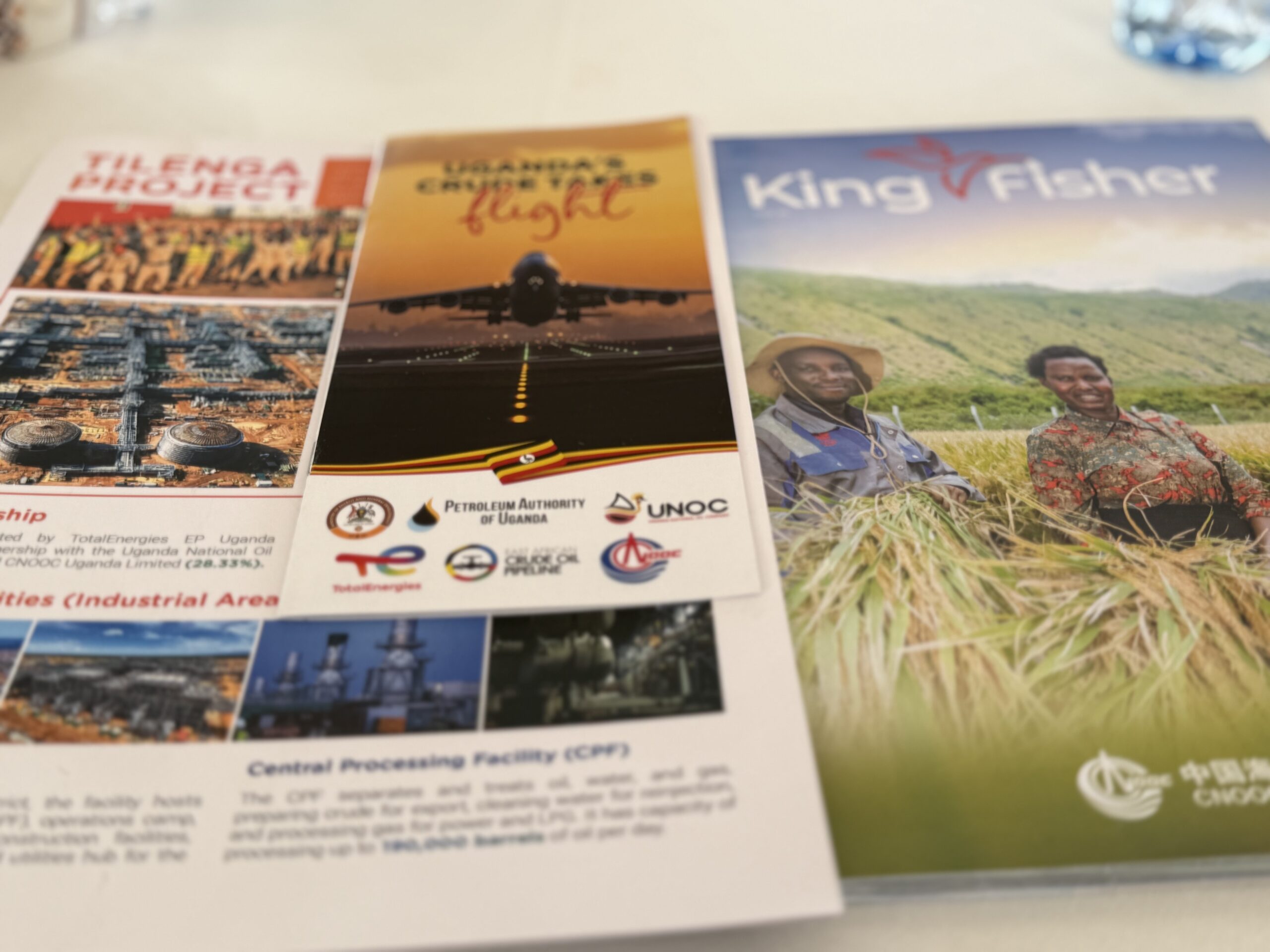
My sense now is that Uganda’s first commercial oil will be in the second or third quarter of 2027. This is based on the way the Lake Albert oil project has been built to function not anything else. Kingfisher (nearly all complete and ready to supply oil to the pipeline) and Tilenga have separate processing plants and feeder lines. However, at Kabaale their crude shall be metered and commingled into Pearl Sweet before entering EACOP. This is the best commercial proposition according to engineers and policy folks.
Kingfisher crude is particularly waxy. Its reported wax content is 31.2 per cent and its pour point 42-45°C. Tilenga which supplies the larger volume and a less waxy component of the blend is needed for the alchemy to become Pearl Sweet. Together the fields are expected to produce about 230,000 barrels a day at plateau which is literally the number on the Pearl Sweet prospectus. Tilenga and Kingfisher are needed to supply the export blend and EACOP has to be commissioned, filled and heated for the volumes to travel the 1,443km to Tanga. Currently I understand that there is some hydrotesting (running water through the pipeline) to test its functionality but before commercial supplies- the oil testing will be done, and it looks more likely in the second or third quarter.
TIGHTENING OUR BELTS
UNOC, the single import model, that has been incredibly stable throughout this period, depends on forward cargoes. This simply means that the current fuel price is calibrated on petroleum prices of 3-months ago. This is what protected consumers during the first stage of the oil price rises earlier this year. UNOC already had stock purchased when the war in Iran commenced. However even if the Gulf conflict eases this November, I expect Ugandan pump prices to remain close to their peak in March because orders will have been made on the current elevated oil prices.
The import model has meant Uganda kept itself supplied. This is good and there is probably a 75 per cent probability of avoiding a national fuel stockout through March despite the severe conditions on primary sources like the Gulf. Diversification, likely what UNOC and its partner Vitol have pivoted too is however expensive. When Gulf product is constrained, cargoes can be bought from West Africa, Europe and the US Gulf. Those journeys are however longer and pricier, particularly while Suez and Bab al-Mandab remain disrupted, but they provide alternatives.
Here Uganda is looking ahead to future stability. President Museveni today (September 17th) commissioned new storage facilities (UNOC is developing a 320mn-litre Kampala Storage Terminal at Namwabula in Mpigi. Jinja is being expanded from 30mn to 40mn litres and UNOC is in the final stages of acquiring a 110mn-litre terminal at Mombasa. Namwabula is ultimately intended to receive refined products from Hoima through a 211km pipeline). Expanded storage will in the future give some headroom to deal with both supply and cost when disruptions happen. I am not being pessimistic but a return to pre-Iran war stability shall not happen within the window where Uganda is a commercial oil producer. The other issue I have been banging on for years, a domestic refinery, is the only real solution to insulate Uganda from the risks of disruption we are seeing around the world today.
Every UGX 1,000 added to the average price of a litre of petroleum represents roughly UGX 240 bn a month across national demand. Against early-2026 prices, the additional expenditure is already around UGX 400 bn a month. That means by December-January it will be around UGX 500bn.
This extra cost is means households still have less to spend elsewhere like in school fees and health care emergencies. Businesses too will absorb the cost in margins, postpone investment or increase prices. A refinery at home makes a big difference even if compared to the export value of Pearl Sweet when it starts earning. Uganda imports nearly 2.96 bn litres of petroleum products a year, around 18.6 mn barrels. At that volume, every $10 a barrel of refining, freight, insurance and logistics cost that could economically be avoided through domestic refining (worth close to UGX 700bn a year. At $20 it approaches Ush1.4tn).
Anyways, so much ink has been spilt on the benefits of a local refinery. Countries like Senegal with a small domestic refining capacity are a live example of what it means when a crisis like that in the Gulf completes upsets the usual. A refinery in Hoima has its own considerable capital and operating costs but the long-term benefits are obvious. In some instances, in ways that are peculiar to Uganda.
Consider that our situation (with high prices) now has to contend with a disruptive severe weather season. The official September-to-December outlook expects El Nino to intensify with Buliisa, Hoima and Kikuube are among the districts forecast to receive above-normal rainfall, particularly in late October and November extending into January. Rain may not disrupt final preparations to the oil projects, but they have caused inconveniences in the past.
Around the country food supply will be the main concern with excessive rain causing waterlogging in fields, destroying crops, increasing the likelihood of disease and spoiled produce that cannot be dried. Our roads and bridges are also exposed just like the last El Nino a factor that overlaps almost exactly with the forecast peak in diesel. Farmers may lose part of their harvest and then pay more to take what remains to market. Construction experiences the same pressure when earthworks stop, access roads deteriorate and cement, steel and machinery cost more to deliver.
I checked with the Ministry of Water and Environment about the wider hydrology (Eng. Dominic Mucunguzi kindly shared some papers on the hydrology of Lake Victoria, thank you). It shows for example that historically Lake Victoria (Nalubaale) is sensitive to direct rainfall ( this is its main source of water) while some of the effects of disruption from the wider catchment arrives with a lag of one to two years. In short even if El Nino ends when it does, some of the disruption will linger around for longer. I learnt that the 1997 El Nino was followed by a major Lake Victoria level pulse in 1998-99. During the 2019-20 wet episode Lake Victoria rose by about 1.4 metres. Large stretches of the shoreline are flat, so a relatively small vertical rise can spread water across a much larger area.
Flooding preparedness will cost billions more of scarce funds.
Energy, fuel and utilities inflation was already 14.3 per cent in August. It looks like headline inflation has a 70 per cent probability of exceeding the Bank of Uganda’s 5 per cent target by the end of March and a 55 per cent probability of at least one increase in the Central Bank Rate. If food output weakens and transport is disrupted while diesel costs around Ush7,000, the inflation problem becomes considerably wider.
Meanwhile the best-case long-term scenario with a refinery is still further away and unlikely to be resolved before oil starts shipping. Perhaps it is best to end with how these impacts on the national economic vision of a US$ 500 billion economy by 2040. These setbacks hurt any progress toward. Even with significant earnings from oil, growth is largely from industry, agriculture, services and trade.
All consume energy.
( we will return soon on the subject of the sad death of King Oyo Nyimba)
]]>
As it happened, I was in Hoima when the news of his passing came. So I visited the tomb of his relative, the most famous of the Babiito leaders, Omukama Cwa Kabalega. It was my second visit to his resting place. I remember feeling quite at home the last time I was there. The grave is covered with many ordinary items of the kind found in homesteads in the north and north-west of the country. During that last visit, which took me on to Buliisa, I understood why.
Hundreds of years of contact between people along the western rift valley, along the Albert Nile into West Nile, Lango and Acholi, and further into Sudan, have left their mark on this land. If one is aware, it can be witnessed in the way of life there. Languages and customs have melded the way they do after years and generations, but more should be said, especially in the wake of the young King’s passing, of what we have in common and how it is rooted in history.
So in this mourning period I turned once again to the priest Crazzolara, whose books on the language, heritage and customs of this wide area have been a comfort to me. Joseph Pasquale Crazzolara died in 1976, just two years before I was born, but he spent much of his pastoral energy and incredible mind on the oral history of the area.
So while I know the relationship between Tooro as a contemporary kingdom and the ancestors of Oyo Nyimba, the Lwoo Babiito, I returned to his volumes, and to others, to root my grief, and that of many of my friends, in the threads that bind us, beyond the social media coverage of his death from cancer.
One of the issues, speaking of social media, was how a King is chosen. Well, it turns out that upon the death of a King, in the shared customs of this corridor, the successor is more made than chosen. The adjacent Lwoo ( I use Crazzalora’s spellings and language) and surrounding communities offer hints about this. Political authority is both practical and spiritual, with a Rwoot or Opi as ruler and a keer or Ojoo as spiritual linebacker. These were the key institutions of the old order.
In the Lwoo area, the Abila is the ancestral shrine through which a ruling line remains connected to its dead. In the old custom, ideally a Rwoot will indicate his choice of successor before he dies. Death invites crisis, and so the culture is primed to avoid it if possible. A royal death in particular creates a dangerous interval in which the body of the dead king, the ambitions of his sons, the authority of clan chiefs, the wishes of the people and the judgement of the ancestors all have to be brought into the same order.
This is why, amongst our people, burial and succession are a single, continuous event, not consecutive events as in the modern tradition. If a Rwoot, to use the example of the Lwoo, has several sons, he might ask one of his wives to prepare kwon, a stiff millet porridge, in a small plaited basket, the kind you will find placed next to Omukama Kabalega in his resting place.
Into the kwon the Rwoot places a bead while naming the son he prefers. He hopes, it is believed, that his choice has the blessing of the ancestors and the people. If his favored son finds the bead while eating, it is a good omen. If, on the other hand, he does not find the bead, it could be that this choice is his father’s and not the people’s: a sign that others should lead, because the ancestral spirits are weighing in on the future of the clan and the people, and on whom they want as custodian of the Abila, the shrine which links the past to the present.
This is how tradition treats the choice of the Rwoot or King. It is a proposal, never an appointment. There are times when the death is unexpected. If this happens, tradition dictates that it is kept secret. The reason is that, again, there cannot be a rupture in the thread of leadership, in order to avoid chaos and deflect bad luck from the community. If a Rwoot dies this way, the ladipo, the senior court officer, a kind of “prime minister” in modern parlance, together with the wives of the deceased Rwoot, sends secret messages to the various chiefs and clan heads. The chiefs, or Jegos as they are known, meet in council. Since succession is not based on primogeniture as an automatic right, this council discusses which of the sons possesses the right character and qualities to win the sympathy and respect of the people and become a just and wise ruler. Each chief states his preference until agreement is reached.
If there is a common choice, that prince is summoned and asked to put a special bead in the mouth of his dead father. The corpse remains in the hut for two days; thereafter the royal drum is beaten, and the community is finally told that its Rwoot is dead. In the old days a bull and a ram were tied in the courtyard. The council places a spear in the hands of the chosen son, and he wounds the animals for his father’s burial.
However, the Lwoo and their cousins in the north and north-west, as I have said in the past, are republican in nature. In short, even the funeral of a dead Rwoot can open up a contest. The council may have chosen and the announcement been made, but a rival prince may appear. If this happens and many chiefs cross over to him, others, such as the wives of the deceased Rwoot and other leaders, are required to follow and make their choice.
At this stage, if one side is visibly stronger, the minority is expected to join it. Sometimes a fight ensues to settle the disagreement, and it is not unusual for mock battles to be staged, with spears and songs, to indicate assent. Once the choice is obvious, the Jegos, the chiefs and elders, use the funeral to obtain public affirmation of the rightful heir.
They ask, “Who do you want to take the place of the Rwoot?” Once the elders have affirmed the candidate, the prince is seized and placed on his father’s stool. The royal drum is beaten vigorously. Beads are tied around his neck, wrists and ankles, rings are fixed on him, he is dressed in ceremonial hides, and a royal spear is put in his hand. Before the people, the elders speak to the prince about his duties and what his office means to them. He is, for example, to bring rain in season, protect the harvest, be generous with food and refrain from consuming the property of his subjects. He is also warned that if he is harsh and unfair, the ancestors will withdraw their favor and the service of the keer (the spiritual leader), and a new leader will be found.
The next day he sits by the shrine, and the elders continue to instruct him; he hears from the various chiefs and leaders about how to govern and what to expect.
I guess the lesson from this past speaks for itself. This is of course a very old code, present in many shared forms amongst the Nile societies. Tooro is much younger, springing forth from Bunyoro in the nineteenth century, its royal house tied to the Babiito dynastic order it shares with Bunyoro.
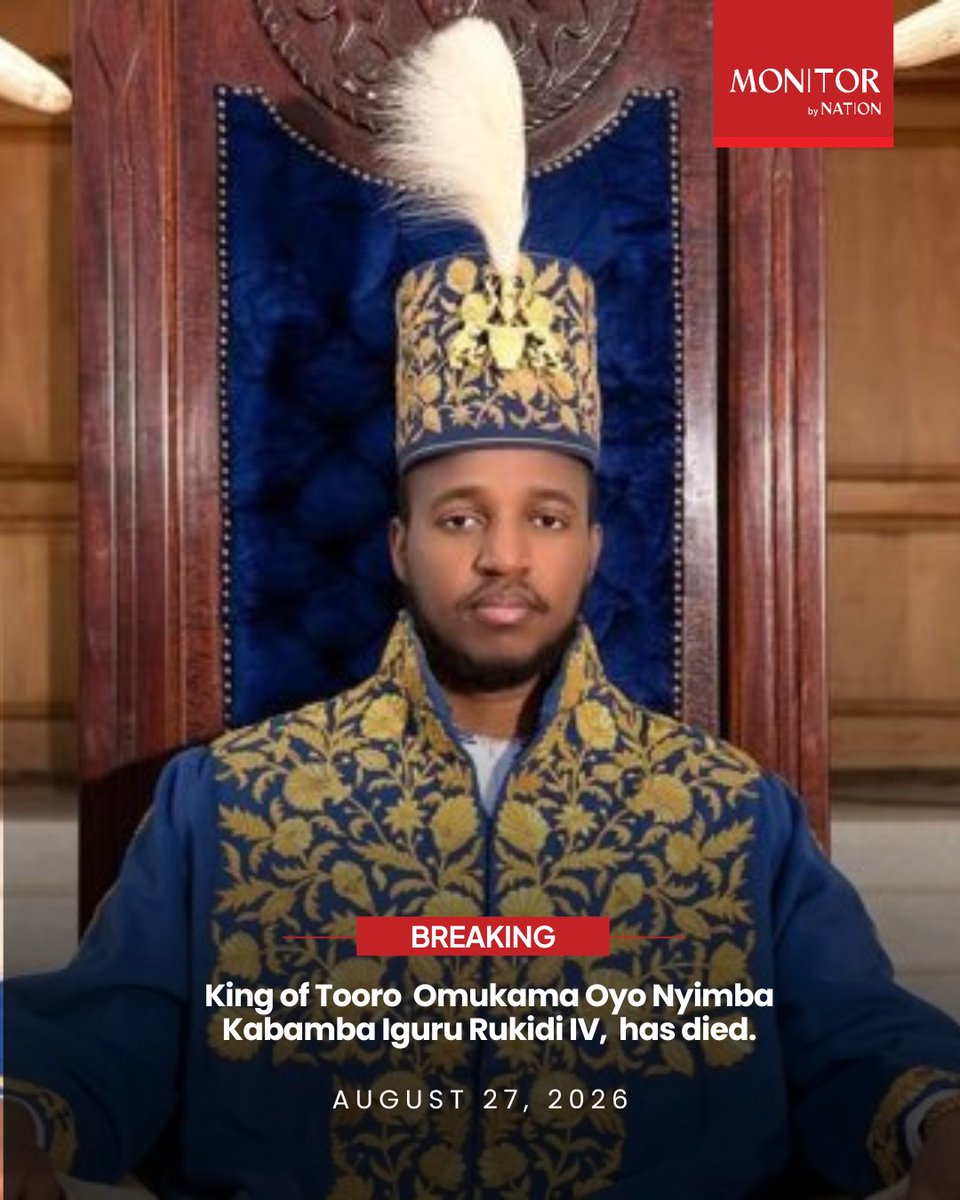
King Oyo’s death has been a very public one. In many ways the people are witnesses, and they have been asked to be united, calm and prayerful as the Babiito clan identifies the next Omukama and announces him this weekend.
Perhaps the syncretism woven into these Nile societies is less present today (his coronation in 1995 enacted some of it), but it is reassuring that the elders say tradition will be followed. One of the lessons of Crazzolara’s study of the communities in this area is that the relationships overlap heavily over time. It is a big historical corridor that runs down the Nile from what is now South Sudan through Nimule and the northern Uganda borderlands, west and south-west across Acholi, Ma’adi and Alur country, then towards Lake Albert, where the histories of the northern societies begin to overlap with Bunyoro. Adjacent to Bunyoro, and in special relationship with it, are what we learnt in school as the interlacustrine kingdoms.
It teaches that what is shared is a two-way street, and that the medley of societies and the alchemy of culture are rich and must be reckoned with. Young Oyo Nyimba, now a symbol of national unity, may claim this as his legacy. As he is laid to rest and succeeded, I hope his people establish a civic center to honor what we share and can pass on to the next generation.
]]>Equally powerful were advertisers who paid the bills. In the marriage of MTN and Next Media other forms of power can be seen that reflect the new information age and its unique architecture. The cultural assets belong to Next Media. It is the entity that has content supremacy through journalists, presenters, production habits, audience memory, radio frequencies, sporting and entertainment relationships. The acquisition of Capital Radio and pairing of different radio and television brands with different audiences is something its technology partner MTN Uganda cannot do.
However, MTN does not need this capacity to exercise dominance over the relationship they are building. It commands the relationship with the subscriber on the network regardless. That means authenticating the user, determining and attractiveness the ease of streaming as an experience through preferential data pricing, and a payment system that sits beside it which is now used for many other services. One is likely to pay subscribe and watch because the ecosystem of digital payments and their culture (we pay for water, electricity etc. on the same packet) makes this germane.
In the first six months of 2026 MTN reported 2.6 billion mobile-money transactions worth UGX 113.3 trillion and about UGX 1.45 trillion in mobile-money trust balances that is UGX 113.3 trillion is transaction traffic, a circuitry that is how the economy works as I have written before in “The Algorithm and the citizen”. Bank of Uganda recognised this issue years ago when mobile money was still treated awkwardly as a service offered by companies whose primary licences came from UCC. I made a visit to the Bank around 2008 to speak about why National Payments system must respond to these new realities (big thanks to Joyce Okello).
But the bank is slow and current events will be chased when they have well bolted the barn.
A senior Bank official observed in 2021 that mobile money had grown to the point of becoming a source of systemic risk, one reason the National Payment Systems Act separated payments activity from ordinary telecommunications regulation. Well, a service does not have to be a monopoly to become systemic. It merely has to become difficult enough to lose. Once its failure can interrupt households, traders and other institutions far beyond the company’s own offices, the important question is what happens when it fails.
Observed through such regulatory rose lenses, there can be seen a parity in something like the MTN/TV arrangement between Next Media and the telecom when there is really none. Both MTN and Next media can find new partners if the relationship does not work but the stronger party in the relationship remains the one who is most difficult to replace. How quickly, for example, could Next Media reproduce the combination of MTN’s network reach, subscriber authentication, data pricing, promotion and MoMo integration elsewhere? Interdependence is not equal dependence.
In fact, while both UCC and Bank of Uganda oversee important licenses related to the capacity of technology provided by service companies like MTN to scale to utility level, they don’t combined account for all the nodes in a system which also includes companies which build networks, operating systems, app stores, cloud services and have international links. The reality we are witnessing over ecosystem regulation is that it is less an empire with a single emperor than a series of gates. Influence over the right gate may matter more than ownership of the whole territory.
Consider the good journalism argument which is traditionally paired with editorial independence.
The old way would be to say if I get the owner, I can ensure censorship and capture the newsroom. Angry advertisers and corrupt politicians know this very well. In the MTN/TV partnership we could have a perfect setting for an editorially free newsroom(s). Over time, the architecture will skew commercially if it is successful with projections suggesting an important share of the digital audience shall arrive through the distribution partner who also determines how promotional placement affects what is discovered, which content is cheaper or easier to watch because of commercial arrangements, herds payments through another company and the better information about the audience sits partly outside the newsroom.
Under these conditions an editor still chooses the story, but other entities may shape the conditions under which that story reaches which audience.
Digital gateways always present a challenge that a media company can remain legally independent but its audience, revenues, payments, data or visibility increasingly run through systems it does not control.
What happens when the ecosystem is in conflict with the newsroom? Indeed, what challenges are possible when the story that must be told concerns the telecom partner, payment partner, event sponsor, technology supplier or government client whose relationship is profitable somewhere else in the group? Also as mentioned in part one, Next Media, as something more than a media company would like to sell conversion. To prove conversion, it has to connect exposure with behaviour. More precisely exposure must be connected to purchase or action, the more valuable the system becomes.
Well, MTNTV sits in that rarefied and unusual place because the viewer can be authenticated by telephone number, watches through a network and can pay through a wallet. There is a real power here to mine data to reveal trends relevant to the commercial interest that sits outside Next Media. While it poses some regulatory problems regarding personal data (Uganda’s data protection rules already require higher-risk processing to be assessed and impose duties on data controllers) a seamless customer experience can hide a complicated chain of legal responsibility.
A menu of political programmes, churches, campaign material, sports, children’s content or financial advice can support all kinds of inferences, some harmless and some sensitive. Once viewing becomes attached to an authenticated device the old separation between an anonymous television audience and an identifiable customer narrow. It becomes a form of public power and for traditional media, already was.
Events like the selective switching off of certain public internet access or mobile services during high temperature political seasons sit on one ecosystem now. Within the same ecosystem are regular economic activities such as banking, transport, government services and so forth.
If communications, payments, identity, media and data have converged substantially, what does this mean for the actors outside the MTN/TV arrangement?
If a media company depends commercially on a network which itself operates under state licence, where does one form of pressure end and another begin?
Can an integrated platform, in theory, favor its own content through pricing or placement, making a competing service more difficult to use or move information generated in one business into another?
What shall regulators prioritize? Is this a media problem, a competition problem, consumer protection or data protection? All at once?
Where an ecosystem introduces less visible dependencies, how is regulation to respond to say, foreign influence, a subject of a major piece of legislation in Uganda? It seems that consequences (effects) are a more reliable way to think about both regulation and progress in this new technology and information age. A country that can coordinate a regulatory foresight (across several sectors) on effects that impact the whole ecosystem is better off than another where every regulator accounts for its own goals. The key question would be, what happens when the system fails or is challenged? How many people lose access to money, information or customers? Can businesses reasonably switch to another route? Does the service hold data capable of producing sensitive inferences? Can strength in one market change the terms of another?
Such is the new age.
]]>
After a few inquiries, I was convinced this had been a hacking event. Uganda’s cybersecurity architecture like others in the region is vulnerable but stable. The folks responsible to vital assets overwatch had certainly flagged the MTN network failure as fitting their threat assessment matrix.
Officially, the company reported that a power disruption at one of the company’s data centers affected all voice calls, mobile data and MoMo services for several hours. Indeed, MTN later ruled out a cybersecurity incident adding that customer data remained secure and mobile money balances were safe. It restored services and life has since moved on. Uganda, which is implementing second generation reforms of its electricity sector, has seen no less than two national blackouts, and the government has gone on to shakeup the new state-owned and operated distribution company. However, even then, for sensitive servers a complete failure is a severe occurrence. It means built in fail safes such as back-up generators and back-up servers along the line, all collapsed. For critical functions, servers are set-up to hand off to other servers during crisis events.
Regardless the event highlights the challenges of an integrated financial system that has been recharged with technology today.
Several aspects of this were present in the MTN network failure. For the person trying to make a call it was a telecommunications outage. For the trader waiting for a payment, or the uber driver expecting mobile money or the family trying to send cash, it was something closer to a financial shutdown. Internet based businesses lost access to their customers that is because apps that authenticate by SMS or depend on mobile data became were now unreliable. Some bank customers also reported difficulties on digital channels during the same period, although the causes of every affected service were not necessarily the same.
Thus, a single technical failure had cascaded into several areas for a company that holds essentially a communications license.
I was thinking about this when the Uganda Communications Commission welcomed the new television service a month later, on 7 August. I am a huge fan of streaming services and Afromobile, Next Media’s product sits on top of the pile locally.

Above ( The Long Form Podcast on AfroMobile) also featured Sarah Shortie a Tiktok sensation.
But if the same outage happened after MTNTV had become important to a large audience, what would we call it then? A telecommunications outage, a payments outage and, for some viewers, a partial media blackout? I have been arguing for many years that telecommunication companies need to occupy a new category precisely because they do not present a single line of service but rather that they are now part of a utility scale infrastructure that is essential to many. Their services on the mobile phone connect the economy via several nodes and for regulators, an ecosystem approach is now unavoidable because that is what it is.
When fragility appears UCC has responsibility for telecommunications, data communications and broadcasting but Bank of Uganda enters where payments are affected. Meanwhile a data breach would bring the data regulator into the picture while a cyber incident would involve another set of institutions and issues.
The July failure, MTN said, was neither a cyber incident nor a loss of customer funds, so not all these powers were triggered. Still, one failure sat across several jurisdictions. Uganda is one of the outliers when it comes to Mobile Money integration the last twenty years has innovated via market and state intervention a mobile phone revolution. The handheld mobile phone is now the primary media, a newspaper and television set, a bank branch and betting shop, taxi stage, a marketplace for goods and services and, for many people, the first place where the country presents itself each morning.
The evolution has been so successful that are inadvertently unaware that all these functions sit on top of the same infrastructure. As with the MTN outage we live within this convergence at and only rediscover fragmentation when there is a failure.
The Next Media Service (NBS/MTNTV) coupling is an interesting juncture for reflection for regulators and customers alike. MTN, the telco does not make the programmes. AfroMobile Media Limited, part of the Next Media stable, supplies and aggregates content while MTN describes itself as the technology facilitator and application developer. A subscriber, to the service they jointly offer will sign in with a mobile number and a one-time password, watch over their preferred content on the MTN network, uses data and, where premium content is bought, pay for it via MoMo.
The architecture behind the screen is several other things which are connected to how the same customer lives and works. My first question when the service appeared was whether MTN might, in time, become Uganda’s biggest media company. It is in the enviable position of doing a deal for content access when it already possesses a large audience relationship because of its customer base. By June 2026 MTN Uganda reported 25.4 million mobile customers, 12.6 million active data users and 14.8 million active fintech users. In the first half of the year, it reported UGX 1.888 trillion in revenue. Meanwhile UCC, looking at the wider market at the end of 2025, counted 47.1 million active mobile subscriptions, 36.3 million active mobile-money accounts and 18.5 million internet subscriptions. Even controlling for the two SIM card per subscriber it is a formidable foundation. Traditional media where I have worked must convince advertisers that they have a relationship with audiences. This need not apply to MTN or Airtel if they enter the attention economy. Telcos arrive with the audience, their phone numbers, the network on which they communicate, the data they consume, and a payment system used for everyday services.
They also have an important financial ace up their sleeves. A broadcaster normally needs advertising, sponsorship or subscription income to justify content. A telecom can spin yarn around the same content. Popular content consumes data, encourages use of the wallet, can reduce customer churn and makes the larger bundle of services more useful. It also demonstrates customer behavior in ways that no other business can understand but for the telecom (more of this soon). In short market power that is built in one business aid into another.
Kin Kariisa the head of Next Media put all of this in perspective in an interview on Next Media’s acquisition of Capital Radio. He highlighted his company’s approach as an ecosystem approach bringing multiple audiences into one integrated service from television and radio, digital publishing, streaming, creators and influencers, events, ticketing, production, marketing and technology. His ambition he says is to reach 30 million Ugandans every day across television, radio and digital by June 2027. The gist of all of this, in commercial and strategic terms is “conversion” because within the ecosystem it will be clearer how the audience chooses to spend. Did they buy, subscribe, register, attend, download, pay, change brands or perhaps change their mind? In the old advertising business much of this was guesswork, expensive guesswork in fact. Digital systems promise to close the distance between attention and action. If that is the play Next is going for, we can also ask if Next Media, strictly speaking, still only a media company?
Meta (Facebook/Instagram) is called a technology company because it owns technology, a media company because much of what the world reads and watches passes through it, an advertising company because advertising pays the bills and a communications company because billions of private conversations sit on its services. All these descriptions are true, of course and each separately is inadequate. This is the attention economy landscape.
It appears to be similar now for Next Media and MTN TV.
Karisa’s media enterprise has journalists, presenters, studios and brands, makes news and entertainment and now has more radio in the stable after the Capital acquisition. However, by his own formulation media influence can help generate money from other services and those services can in turn pay for good journalism, a truly 21st century pivot for an industry where the old advertising model is under pressure. The alignment with MTN implements a symmetry where MTN can use money made around connectivity, data and payments to support content which is useful to the wider customer relationship. Next can use money made around streaming, events, ticketing, technology and other services to support journalism which may not pay for itself.
Both companies are surpassing the normal categories for which regulators and planners are set-up, and it is most interesting.
]]>As Okot’P’bitek dramatised in Song of Lawino however, the dalliance with foreign gods, of capitalism and other progressive foreign ideas is a double-edged sword. It can be presented as an assault on the real society which still sits pretty in its bucolic moorings in villages upcountry. Politics does this well often relying on the implied innocence of the village for votes and understanding about what effort ruling parties are making to upgrade water, immunise children, extend education and roads – the sort of things that are modern and can be found in the city.
This certainly appears to be show board of the “Expose the Corrupt” campaign which has continued to generate images of poorly built bridges, cattle shed schools and big bellied local players mobbed, shamed and thrown into legal pits for abuse of office. It is a politically effective cleansing of the well-intended efforts of the central government to improve the village but for the bad actors and outright criminals now being excoriated and exorcised publicly.
The geography of Balaam’s politics is important for another reason. The failures of the decentralised state can be attached to identifiable officials, projects and budgets and sun lighted.The challenge is the large urban districts like Greater Kampala, Wakiso, Mukono and Entebbe where the campaign is yet to be felt.
As I have pointed out the difference between the village and the town persists. While political geography makes the village the well-pool of NRM’s popular mandate; economic and administrative power is concentrated in the cities. It is here that jobs, firms, capital, consumption and economic aspiration reside and where the promise of national progress is presented.
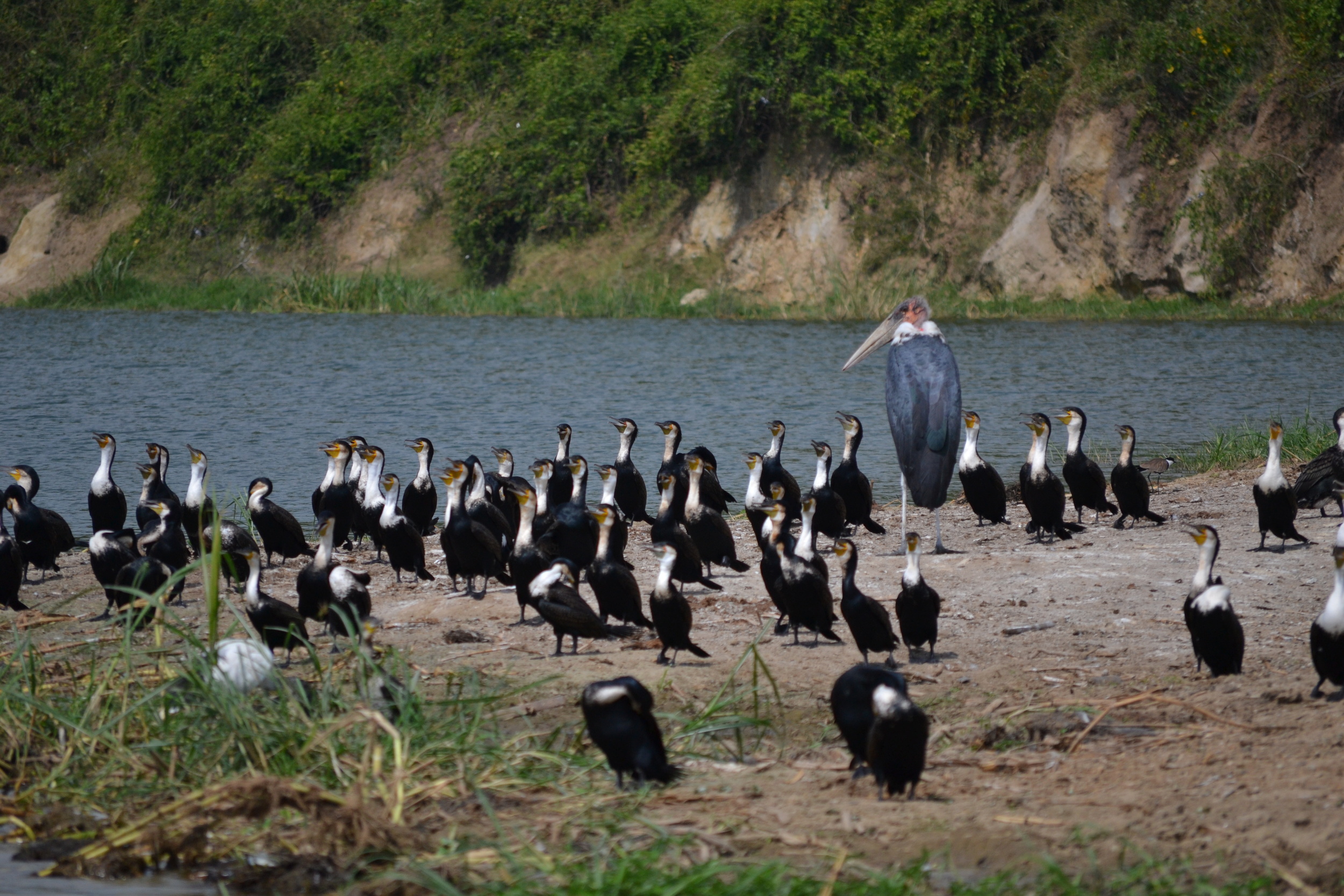
According to the World Bank, for example, the Greater Kampala Metropolitan Area contains about 14 per cent of Uganda’s population, 46 per cent of formal-sector workers and 70 per cent of manufacturing firms with five or more employees. It also produces nearly half of national GDP. In fact, the Bank says Uganda’s ambition to reach “upper-middle-income” status will pivot on whether Greater Kampala becomes more productive, resilient and liveable. What this means, just to repeat it, is that the national standard of what government is capable of doing can only be demonstrated at scale in the metropolitan arena. It is no mistake that Kampala’s road are a national discussion and the flooding of its streets and homes a point for national shame.
What will be Balaam’s effect here?
What is also important to note is that while the rural-urban divide is as described, in Kampala, the failure of the party and the governments over time to pursue progress is evident from the concentration of wealth and opportunity beside some of largest most deprived communities. Rural poverty is bad yes, but urban poverty is deadly. In Kampala for example, City authorities estimate that nearly 60 percent of residents leave in informal settlements. Here clean water is scarce, sewage flows openly, and crime is increasingly high. Put another way, the majority of the residents in the main metropolis, the very ones who are also the main source of labor supply, anchor food distribution i.e buy much of the rural food surplus, are the backbone of the small business economy also suffer the biggest effects of administrative failure.
Not surprisingly they also tend to vote the opposition.
So, I am keen to see who is shamed and sent to jail here. There are many areas where the Expose the Corrupt campaign can extend the progress seen thus far. Crime for example (from police reports over time) show a national decline but a rise in the city. Expert opinion is that crime, such as the killing of the national football captain by a juvenile offender recently, is an economic problem. A 2025 Youth Crime Report produced by Uganda Youth Development Link with the United Nations Office on Drugs and Crime found that between 75 and 80 per cent of incarcerated people are aged 18 to 35 and identified poverty, weak employment prospects, drug abuse and family breakdown among the conditions feeding youth offending.
But being the city, Kampala also reflects other inequalities worthy of political attention. Insecurity is not experienced equally. Those with money can buy layers of protection from the disorder around them. Thus, gated compounds, CCTV, private guards and, at the top of the income scale, armed escorts and executive protection defines the most successful in the national story of progress. This privatisation of progress in the city is an aspect of the rural-urban divide because villages are considered places where security is socialised and commonly held and it shows.
The private security economy is massive and growing mostly in urban areas. The industry estimates about 100,000 guards across 426 firms. At the police pass-out in June 2026, Inspector General of Police Abas Byakagaba put the total strength of the Uganda Police Force at 58,369 personnel (the prison service has approximately 15,00 personnel). In short, the private-security workforce is at least 1.7 times the size of the entire police force and about 6.8 times the size of the Prisons Service or 37 percent larger than police and prison combined. The idea of security as a public good is administratively difficult to achieve and thus must exist (like in the rural area) as something of a social good that politics must of necessity manufacture.
In these pro-opposition strongholds – this is the challenge.
There are many iterations of the corruption issue that squat in the squalid mess of Kampala’s 72 slums and produce disasters every day. The Kitezi landfill collapse is one of them. But to move on Kampala and the greater Metropolis is not isolated anymore. As a norm setting arena for government progress, its failures are not hidden from the countryside. We should then talk (in part three) about the technological highway of mobile phones, tiktok accounts, WhatsApp etc that radiate some of the toxic spill of the cost of corruption to the countryside dominated by the young and eager and what it means in preserving the idea of national progress free from waste.
]]>The election in January that returned President Museveni for a seventh term with 71.65 per cent of the vote, according to the Electoral Commission, seems almost ten years ago. It stands that such a major statistical victory should have gotten the party that claimed it in a confident mood. But observers note it has mostly been one form of anxiety after another.
This tension may be down to many things, but the pundits put most of the inertia on “succession” issues. Some of it is refracted from the just concluded ballot, like the rejection of the result by Robert Kyagulani (the NUP leader now in the United States as a refugee), and the dramatic rendition and jailing of opposition leading man Dr. Kizza Besigye who remains in prison and critically ill. His collapse in court before the TV cameras was a real shock image but definitive of the moment. Much of the older opposition is either fragmented, diminished or outside the immediate contest for power.
Many are choosing exile.
In these conditions it is not surprising that the post-election political argument has shifted from who governs Uganda to how the NRM governs. Or what to expect in the next couple of years. It is that state of national purgatory within which folks are looking backwards and forwards depending on their faith in the establishment and their own experience of its long stay at the helm of Ugandan public affairs. Hon. Balaam is bombarding this unsterile interregnum in the national political mood with daily news reports from town halls, rallies and consultations with ordinary people that often lead to the arrests, interdictions or investigation of local government officials, some of them elected. The torrent of videos, news stories and social media posts is causing some nervous excitement.
Is this a moment of political reckoning? Will the Movement use its victory to govern mercilessly and go to war against corruption and the corrupt? There continues to be handwringing about this point because not many other senior government leaders have followed the chorus, but something is definitely happening.
Perhaps the darkening clouds above are not a sign of an annoying drizzle? Maybe this time around they portend a heavy rainstorm, the “duuluvio” the Ma’adi colloquialism for a violent, tree uprooting, homestead cleansing rainfall.
We will see. The ground is still mostly dry.
Balaam and the new ballot
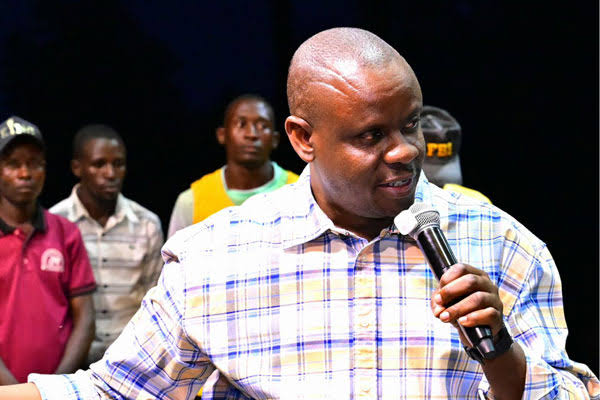
Officially Hon Balaam’s mission is part of the broad program , licenced by the NRM government under a directive of President Yoweri Museveni to rid Uganda of corruption or at least to stop it from haemorrhaging scarce public resources. Thus far Balaam and his fellow cabinet colleague, the serpentine, voluble and volatile Hon Justine Nameere MP (State Minister for Local Government) have moved through Bugisu, Greater Masaka and Ankole, turning inspections into public barazas at which citizens bring complaints directly to the ministers.
In Namisindwa, Balaam ordered the arrest of an assistant town clerk over an alleged Shs 28 million discrepancy in a land purchase. In Mbale, the tour chanced on allegations ranging from ghost workers and inflated school enrolment to a Shs73 million public toilet reportedly built without a functioning pit beneath it. A shit show really (no pun intended) whose stink is drifting steadily around the country sending many local government officials quaking, with the ones with bigger stomachs and waistlines ,wondering when a Bolshevik style denunciation will land them in a police station.
The remit is broad.
In Mitooma, officials have been interdicted while investigations proceed into complaints involving health, education, engineering and administration. By August 10, at least 26 local government officials across Isingiro, Buhweju, Mitooma and Mbarara City were facing interdiction or investigation after the Ankole leg of the campaign. This is important because Ankole is the President’s homeland and Balaam was making a point that no one is untouchable perhaps. West Nile is coming up.
Balaam’s roadshow has departed from the usual inspection meetings of government often carried out in officialese and dry correspondences. In the past these inspections have been the meal ticket for central government potentates to shake the corruption tree and pickup winnings in between budget audits. Not for Balaam. His eminence has flipped this script. His meetings have the boisterousness, theatre, immediacy and voltage of a political campaign.
In some dramatic social media videos, NRM yellow colours are seen everywhere but so too are flags and t-shirts with the image of MK. Balaam of course is not a typical NRM politician. Despite being a minister in an NRM government. His political home is the Patriotic League of Uganda or PLU, led by General Muhoozi Kainerugaba, the Chief of Defence Forces. He refers to the General as MK or Dear Leader or Supreme Leader depending on the occasion. He is also a very gifted grassroots communicator perhaps one of the most “on message” practitioners of the times. The Minister is famous for his orange t-shirt which appeared for a while like the only clothes he had save for their intended effect that he was identifiable everywhere he went.
Now he turns his Winnie the Pooh charm on in more standard dress fare of a minister in business casual plaid shirts, microphone in hand, but towed closely behind by police officers and military escort. While PLU says it is not a political party and claims that it did not field candidates against the NRM in the 2026 election, politically, however, it has built a national structure, appointed cadres and developed its own language of patriotism, discipline and accountability . Neither has the organization made it a secret that they believe Gen Muhoozi represents Uganda’s next political generation. Balaam himself is a senior PLU figure and PLU has publicly backed his anti-corruption drive.
The kinetic energy of this tour is therefore interesting on several counts and one can see where I am going with this.
Firstly, it is addressing the central promise of the post-election period ( Kisanja No sleep is about government efficiency and the fight against corruption) which has emerged as the most visible government attempt to right the wrongs of the last decades in this term of office. Corruption is rightly blamed for the poor state of social services and the political and moral corrosion of the NRM’s mission even if others say it is the reason that the NRM has managed to keep the country and the peace. Balaam’s tour which has the hallmarks of a political campaign on this very key aspect of the political contradiction of the ruling party stands out. Corruption is a form of government, would argue his colleague and fellow influencer Andrew Mwenda ( he has a book on the subject)
Secondly and thirdly (because they are related), Balaam is relitigating the just concluded election. The general election offered voters a chance to punish elected officials. These polls traditionally have a heavy attrition rate for incumbents. However, voters are also disempowered by the flood of money and violence that disfigure the final outcome. The difference with Balaam’s second election is that at his rallies voters get a “new chance”to punish not just elected officials but their “partners in crime”, the local cabal of administrators charged with implementing government programs such as agricultural credit, road works, bridges and so forth. The implication of this is that voters can return to a political process where their grievances are aired in public forum , not a secret ballot, and hold officials directly accountable. It has gravitas but it remains to be seen how deep this process will cut. Certain government offices charged with oversight are likely to be directly affected especially the Resident District Commissioners (RDCs) who are charged with monitoring government programs at the district and are the state authority (not government) on these matters. Then there is the question of disgraced local leaders who are bleeding political capital and perhaps waiting in the wings ( in the next general election) shall be members of Balaam’s PLU ( maybe).
This last point is relevant politically. Local government structures hibernate NRM’s political power between elections and often provide the talent that goes into politics at the LC level ( up to LC5). In short, they are the foundation of NRM’s political power. Now that they are being challenged and pressured by the PLU in this way, what does it mean? They are after all the foundational base of a system of accommodation, patronage and compromise that has helped the NRM keep together an extraordinarily broad political coalition and, with it, the country and the peace.
Lastly whom shall the grateful grassroots supporters credit, the NRM or PLU? or is this what the political alliance between the two will look like?
Until next time
]]>
Since we last wrote too, one proselytiser of the Africa energy poverty argument, that Africa should not be ham stringed in exploiting her energy resources including oil, Canon Ruth Nankabirwa Ssentamu (Dr) will be stepping down from her pulpit as Minister of Energy and Mineral Development of Uganda.
She is being replaced by a scientist, a veterinarian Dr Monica Musenero.
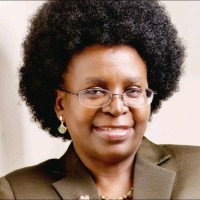
Until recently Dr. Musenero has been leading a quiet revolution in technology at the Ministry of Science and Technology whose most public product are elegant full electric buses (just three for now) on the dirty, and often polluted streets of Kampala. These green air conditioned locally assembled beasts can be seen slithering like aliens amongst a sea of boda bodas (motorcycle taxis) which swarm the streets squeezing out other road users, dominating pavements, walkways and pretty much any navigable route. The tug of war between dirt fuel boda bodas and the green electric alien-buses is well articulated in Uganda’s development plans which stipulate that a great industrial effort will eventually produce enough of these buses to rescue the average passenger from the two-wheel peril of the boda boda ( especially the dirty fuel variety) but in the meantime also supports a growing number of (wait-for-it); electric motorbikes.
Uganda is an energy agnostic.
There is no commitment to clean energy in the moral sense that it can save the planet. There is a practical approach to energy. The country relies on clean energy because that is produced by its rivers. There is neither a cult following for fossil fuels as a mecca or development paradise in the way that African countries are often described as scrambling for the spoils of the promise of oil and ending up with broken societies in what is often called the oil curse.
The middle-ground that Uganda seems focused on is programmatic – based on its 5-year plans though these have been dosed with an ambitious plan to grow the economy by 10-fold, a mildly religious ambition given its record of project implementation. Thus, when the new Finance Minister read the national budget this week, often preceded by prayers about God and Country, I expected to read a bit about energy and electricity and its plans to fuel the drive to the numerical paradise of a US$500 billion-dollar economy.
There were some psalms but no great calling in that speech (see for yourself). Well, you see Uganda’s electricity problem is usually described as a surplus. Right now, it produces well above what it can consume mostly because access (or distribution) is weak. In short consumption reflects access not demand.
The budget speech did not mention even once the Uganda Electricity Distribution Company. It should have. One of the principles that Dr. Musenero is known is the domestication of industrial and technological capacity as mentioned above in relation to electric buses produced by Kiira EV in Jinja (Kiira or Kiyiira is the local name of the River Nile which begins its journey in Uganda). In short, the direction of travel as per policy which the new energy Minister will implement will be based on local production or re-production of green technologies including EVs.
The excess electricity production, as indicated in the Budget Speech, will be committed to long term industrialisation. Here are some thoughts on this (mine).
If Uganda has hundreds of megawatts of energy capacity now (which is not yet serving industries and businesses including future manufactures of EVs presently), what the natural alternative use for this “excess electricity” amidst a fuel crisis? UEDCL which inherited the national distribution system (and added yet unresolved debt has had a fair first year (UGX1.71tn in revenue, 236,000 new connections). It also took on a US$50 million ABSA facility to bang on with the upgrade of its network. This network however is not serving the fill demand quota, and access remains below 20% despite the installed capacity.
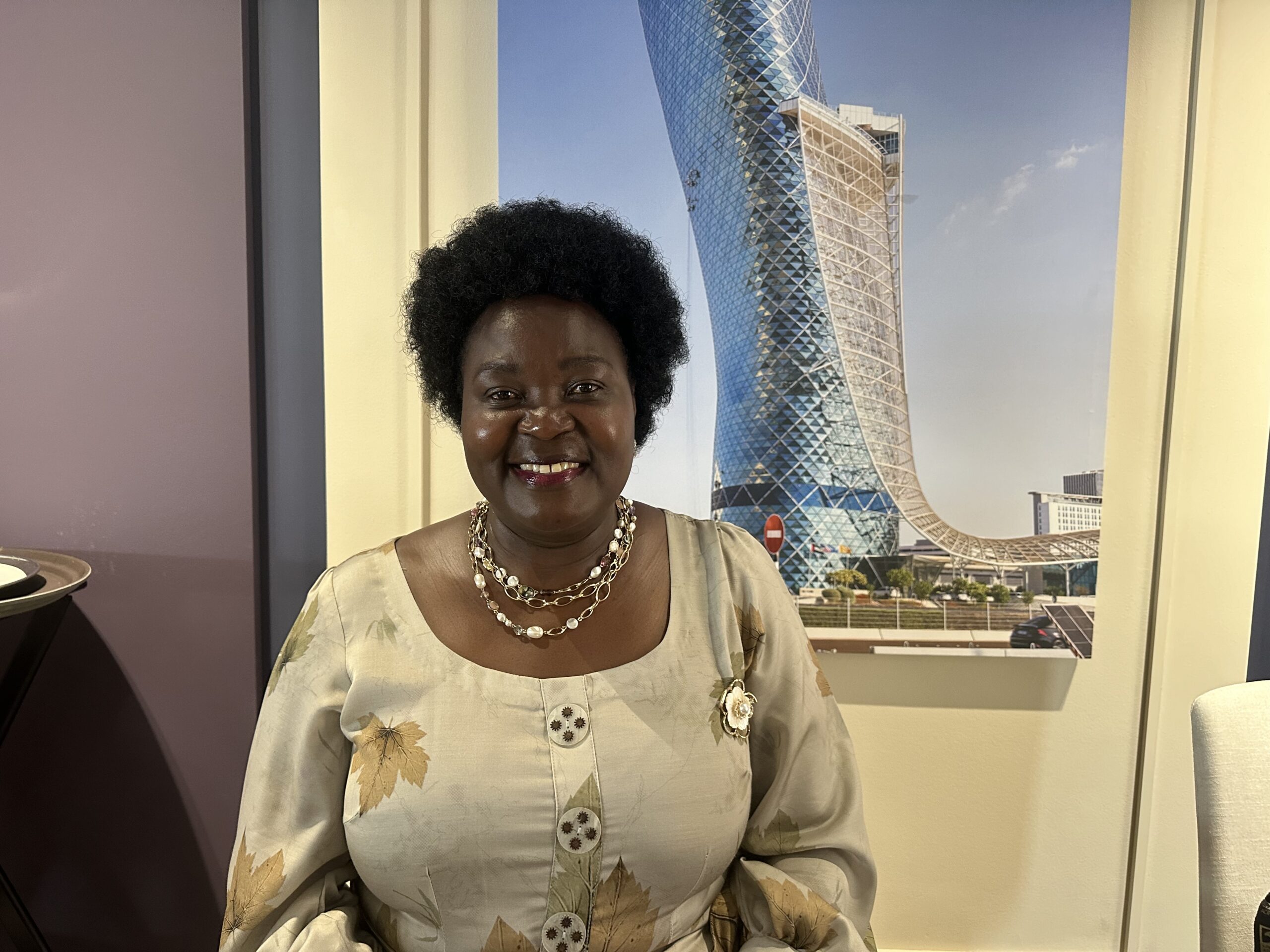
(above Outgoing Energy Minister Ruth Nankabirwa at ADIPEC in 2024)
It is like having a full store of grain but selling a few hundred kilos at the mill. The extra grain could be well used for making a different but saleable product. If it were not for the focus on home-grown production UEDCL could be selling this extra electricity to electric vehicles and motorcycles. This would at the present require an intermediate policy to lower the barriers to their entry at port, work with EV producers for appropriate models and begin the journey towards ending the used car market in Uganda.
Uganda’s Energy Transition Plan (Ministry of Energy) aims for universal electricity access by 2030, which means adding hundreds of thousands of household connections every year. It also expects electricity consumption to grow faster than any other energy source, rising from today’s very low per-capita base to a level by mid-century more consistent with industrialization. What this means is that in the not-too-distant future, if access improves, if industrial parks use power at scale, if electric cooking grows, if irrigation and cold chains expand and if transport electrification moves beyond pilots, Uganda’s apparent cushion could narrow pretty quickly.
That would be good news for the power sector. It would mean the country’s generation investments are finally being absorbed. But it would also mean UEDCL cannot treat the current surplus as permanent. But that day is not this year or next year or the one after.
Therefore, conceivably UEDCL can get into a new business spending some of its money on a wider coverage of charging stations with government encouraging private players who are building more fuel stations than schools to follow suit. The market for electricity is already perking up with electric bodas now preferred by boda boda riders . They are turning to these because they are cheaper in the long run ( makes sense given the fuel squeeze) and easier to service.
A vast market for new electricity customers thus awaits UEDCL in this segment. Uganda’s mobility transition I must say has not begun with private cars, as it has in Europe or North America. It is taking shape with public and commercial transport. There is a document, the Uganda E-Mobility Outlook 2025 which suggests that in sub-Saharan Africa the transition to electric motors is being led by paratransit, which carries much of the daily commuter burden. This is true. Uganda’s own transport system is now built around boda bodas for short and medium trips, with taxis carrying passengers along urban and peri-urban routes.
A petrol boda boda consuming several litres of fuel a day faces a daily bill many times higher than the electricity cost of an equivalent electric motorcycle. At scale, each electric boda boda becomes a small but repeatable electricity customer. So, one hundred thousand motorcycles, for arguments sake, shall create a serious commercial load. Fast forward a million electric bodas could reshape UEDCL transport revenue base.
I have of course been on this side of the argument suggesting in the past government put a hard stop deadline for importing combustion engine motorcycles. But given what we have said about energy security in the context of global geopolitics, it is conceivable that a new market for EVs can constitute part of this fortification.
But there are positive signs. Uganda’s E-Mobility Outlook reports cumulative investment of more than $175mn in the EV ecosystem between 2018 and 2025. It says production capacity rose to around 79,000 EVs a year, more than 20,000 EVs were produced in 2025, and the battery-swapping network grew to more than 540 stations, reaching about 80 per cent national coverage. That’s progress, even if by baby steps given the volume of the boda boda industry. This is in part because the National E-Mobility Strategy is designed for Uganda to become a net source of e-mobility tools and solutions, rather than a passive consumer. Its targets are local EV manufacturing, battery manufacturing, public transport electrification, charging infrastructure, skills, uptake and standards etc.
Well of course Uganda should not replace dependence on imported petrol with dependence on imported electric vehicles, imported batteries and imported software. We should capture value in assembly, battery packs, power electronics, charging systems, servicing, recycling, fleet software and grid management. But the strategy’s goals are long term (500,000 units of local EV production capacity a year by 2030, up to 65 per cent local content and a domestic battery value chain producing more than 1GWh annually by 2040)
Industrialization takes time and in the meantime the fuel squeeze as well as the extra electricity capacity require a practical medium-term goal to support a market for imported EVs ( new cars) and expand the electric boda momentum with greater manufacturing and supporting infrastructure. This is really the opportunity that UEDCL needs to review.
Car owners will be feeling the pinch this year and more than a few I know are thinking EVs because of the annual savings it could mean at the end of year. During the budget reading last week, the government raised excise duty on petrol and diesel by UGX200 a litre, the single largest new tax measure in the package. Well, for a boda boda burning 3.6 litres a day, that adds about UGX720 a day, or roughly UGX216,000 a year, before any further oil-price movement which could still happen.
Excise duty on motorcycles at first registration has also gone up from UGX200,000 to UGX500,000, with a new UGX30,000 stamp duty on registration and transfer. The budget speech did not make an obvious carve-out for electric motorcycles. In short government is taxing the fuel problem and raising the entry cost of one of the fastest electric solutions in the same fiscal package, a position reflecting its revenue first approach.
A purely local-production route protects Uganda’s industrial ambition, but risks slowing adoption especially when the government is focused on revenue as seen above. On the other hand, an import-led route could scale faster, especially through cheaper Chinese EVs but risks creating another dependency. The answer lies in a bridge that acknowledges the price challenges of fuel as of today and also takes advantage of the unused electricity capacity.
The latter leads to revenue for UEDCL and the treasury too.
So, lets import where necessary, assemble where possible, localise where credible and reserve public support for firms that build Ugandan capability. Imports that receive tax incentives should be tied to local assembly, technician training, approved battery and charging standards, safety data, recycling obligations and eventual local content.
This template exists already UNION and Spiro had deployed more than 13,000 electric motorcycles by the end of 2025, while the associated swap network grew from 104 to more than 320 stations. SafeBoda, Zembo, GOGO, Glovo and others are also building fleet, platform and charging relationships. The E-Bus Xpress is encouraging. It has reported carrying more than 297,000 passengers over 445,000km in 2025 using seven Kayoola electric buses. Kiira’s plant has reported installed capacity of 2,500 buses a year (Uganda’s strategy targets at least 15,000 electric buses for mass transit by 2040) another set of low hanging customers for electricity.
In conclusion UEDCL could therefore organise its next investment cycle around the highest-value loads: bus depots, boda boda stages, market centres, logistics parks, universities, airports, industrial parks and intercity corridors. These are the places where transport demand, commercial activity and grid reinforcement overlap. With time-of-use tariffs that make off-peak charging cheaper, regulated battery-swap standards so riders are not trapped in incompatible networks, solar-hybrid and battery-buffered stations in weak-grid areas, public-private charging hubs where UEDCL keeps a stake in the meter and the data, and concessional finance tied directly to distribution upgrades for transport corridors, a business is waiting.
That’s the pitch.
]]>