With plug-in hybrid power and F Sport trim, can the priciest version of the most popular premium midsize SUV impress across six months and 10,000 kilometres?
I bid farewell to Chief, my circa-$92K Lexus RX 350h Luxury large hybrid SUV long-term loaner, around two years ago. And here we are, at the start of 2026, saying hello to the newest steed in the Chasing Cars long-term garage, the NX 450h+ F Sport midsize family hauler.
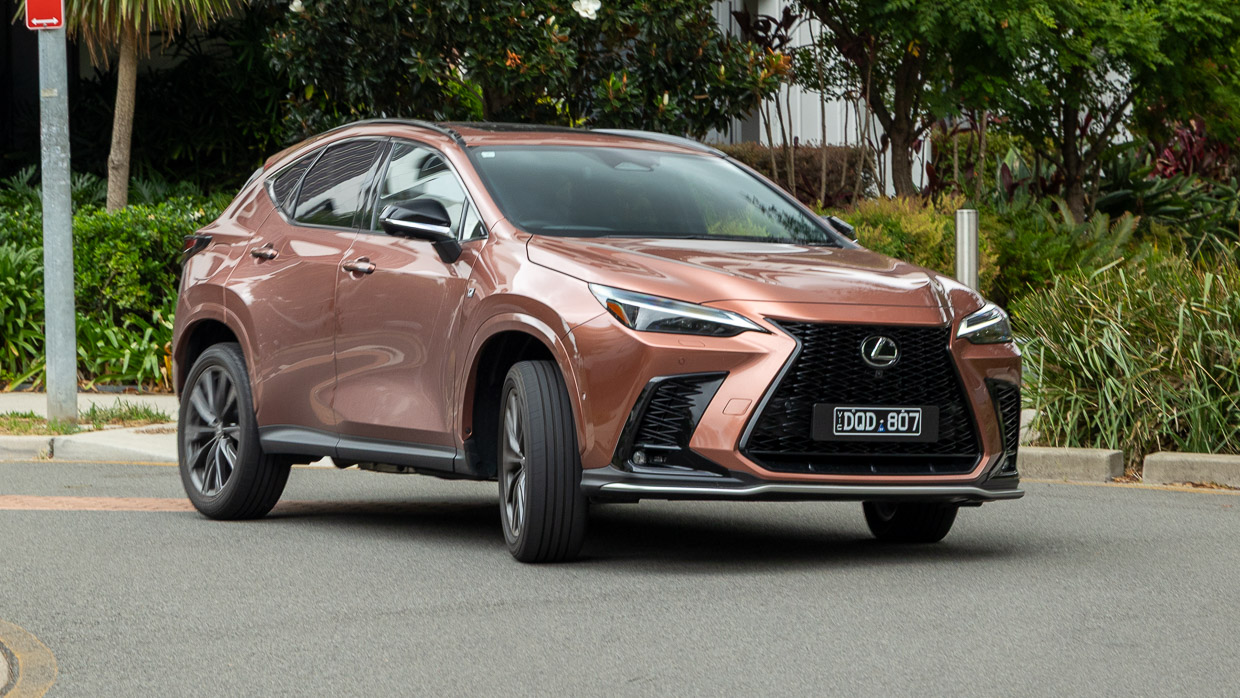
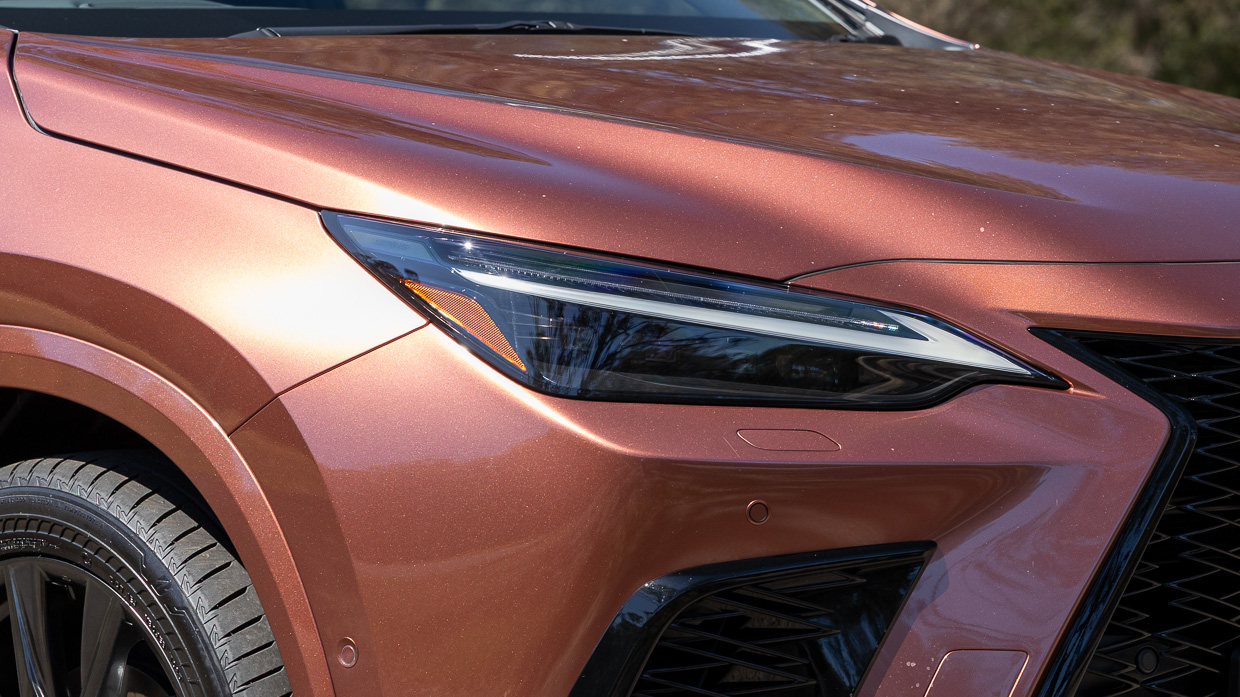
The first double-take was price. Here was a smaller, older-generation (from 2022 onward) SUV – a dead ringer for the larger RX in many respects, inside and out – and it’s priced from $96,000. Yep, four grand more outright, for a smaller Lexus SUV model (if now, in 2026, $97,200 before on-roads and goodies).
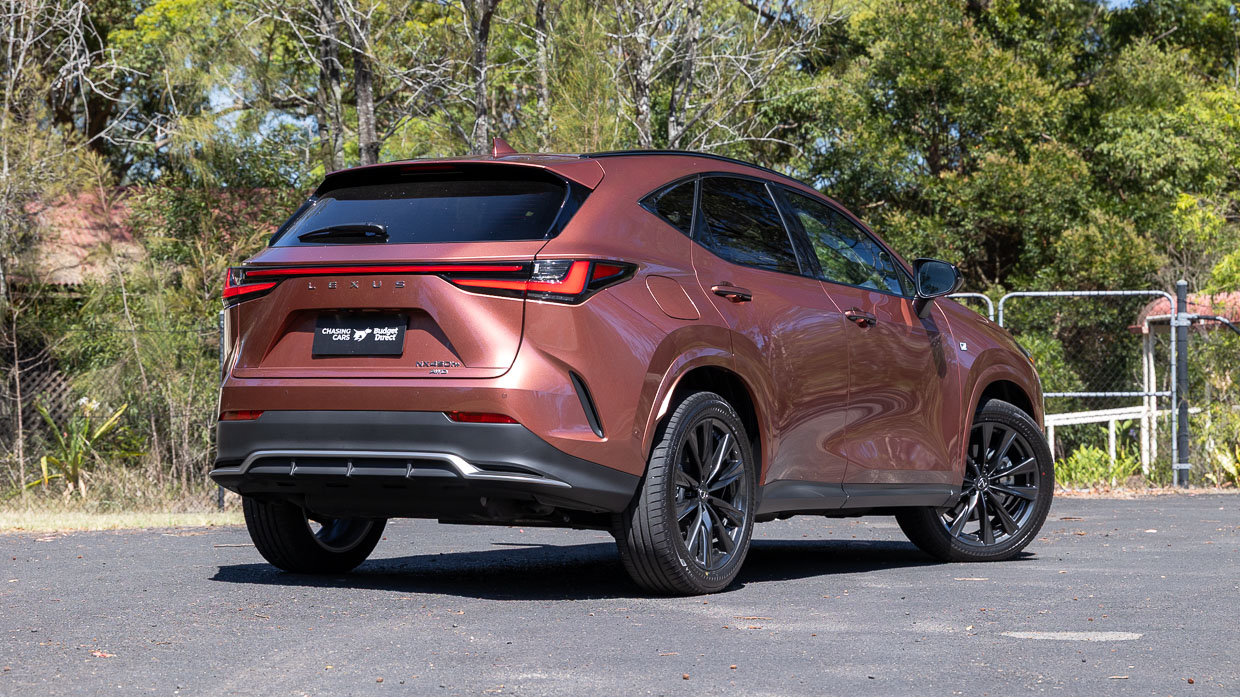
The question of value for money marks the kick-off of six months and a target of 10,000 kilometres of custodianship. And I suspect it will remain ever-present until the day, sometime around mid-2026, a final verdict is handed down and its key is handed back to Lexus Australia, as its various virtues are stacked up and measured against what’s around $107K on road.
That’s big coin, even among the Audi Q5s, BMW X3s, Mercedes-Benz GLCs and some 31 other nameplates consider premium ($60K-plus) midsize SUVs on the local market that the NX wishes to swoon buyers away from.
How’d that go for Lexus in 2025? Handsomely, indeed. The NX (6024 units) was its segment’s biggest seller last year, comfortably supplanting Mazda CX-60 (5410) and BMW X3 (4909) into second and third place respectively. The NX is certainly a popular rig amongst Aussies.
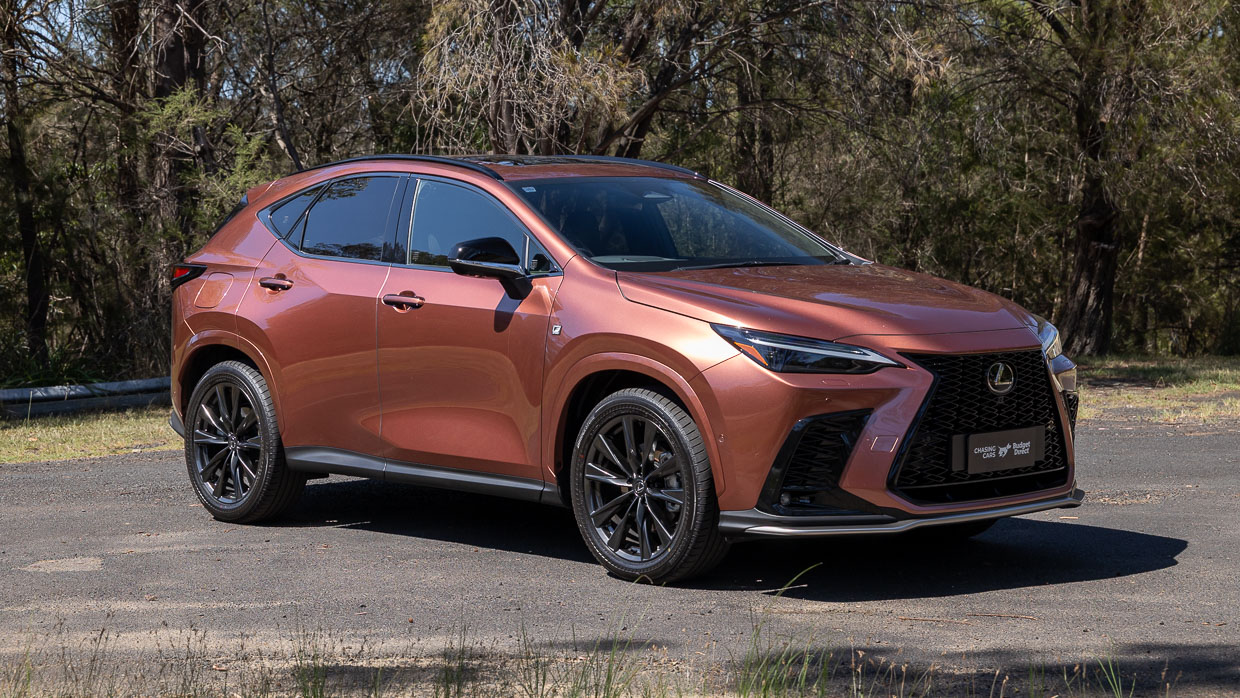
Regardless, most gravitate to less, ahem, fiscally adventurous variants than our new 450h+ F Sport, a plug-in hybrid version sat right at the 16-variant-strong lineup’s summit.
With the lowly 250 grades now discontinued, the NX range kicks off with the 350h Luxury ($71,700 list), a front-driven petrol-electric hybrid. Nicer Sport Luxury and F Sport trims can be had with the same powertrain ($79,200).
Adding AWD to the self-charging hybrid commands extra outlays of between $4800 (Luxury) and $5800 (Sport Luxury and F Sport). Turbo petrol all-wheel drive? It’s exclusively a racier F Sport grade ($79,450).
Want more? Feature-adding Enhancement Pack 1 and Pack 2 bundles are available throughout the range, priced between $3000-$6000.
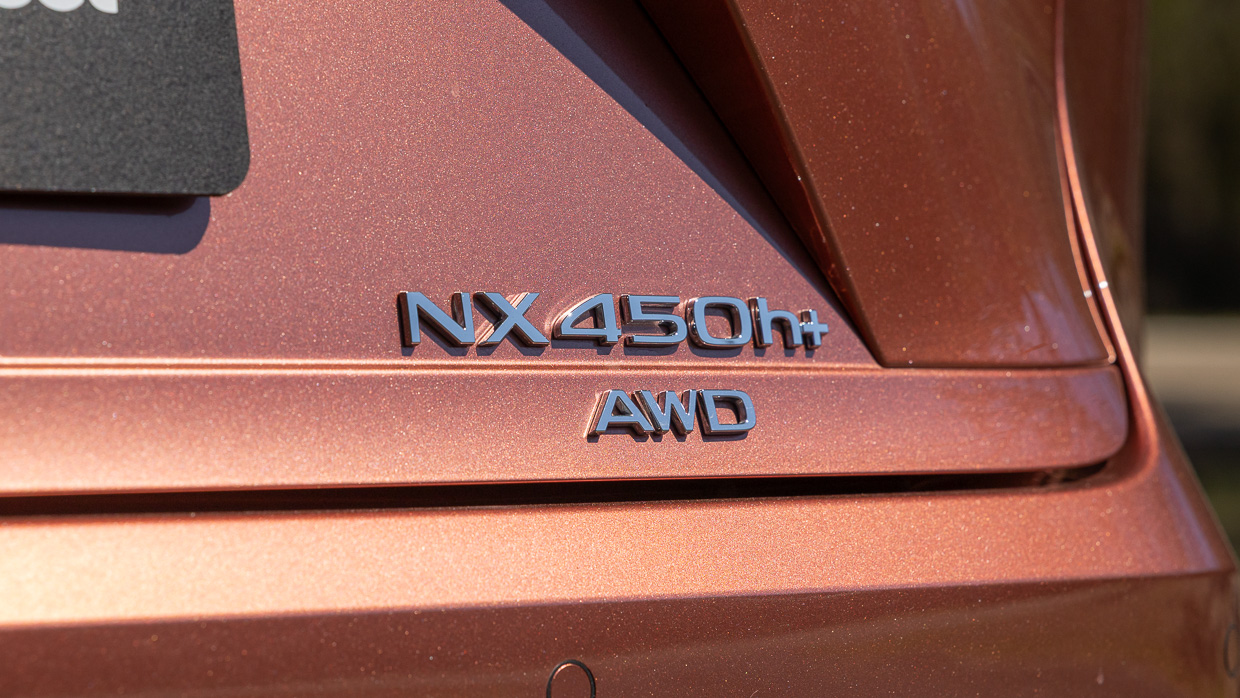
A latecomer (November 2025) to the range was 450h+ Luxury ($84,500) at the entry point to the plug-in hybrid AWD powertrain (plus Enhancement Pack 1 as standard) leaving an $11,500 stretch up to our as-tested ultimate grade, the 450+ F Sport ($96,000) that adds Enhancement Pack 2 as standard plus, one imagines, the kitchen sink.
Navigate this long-term Lexus NX 450h+ review
- Month 1: All you can eat
- Month 2: Mysterious fuel consumption
- Month 3: ‘Kaizen’ enough?
- Month 4: Insider job
- Month 5: Damn roos!
- Month 6: The final verdict
Month 6: The final verdict
Maybe I’m just not a plugged-in guy…
- Kilometres this month: 11,509km (500km)
- Fuel economy this month: 5.5L/100km
- Running costs this month: $112.60
Long-term six-month loans can pan out a number of ways, if usually one of two very likely outcomes: the vehicle reveals itself to form a vastly different impression between its arrival and departure; or it simply firms up first impressions stronger with extended seat time.
The NX is most certainly the latter. Our long-termer, Copper as it’s nicknamed, comes from fine premium stock, a medium SUV model that still impresses with relevancy despite entering its midlife cycle. But, boy, its priciest 450h+ F Sport flagship iteration is not the spec for me.
As my first plugged-in live-in experience, it’s not dissuaded me totally from the PHEV format. It’s just that your reviewer is inclined to conclude that Lexus’s take really underperforms for what is an overpriced premium outlay. Where to start…?
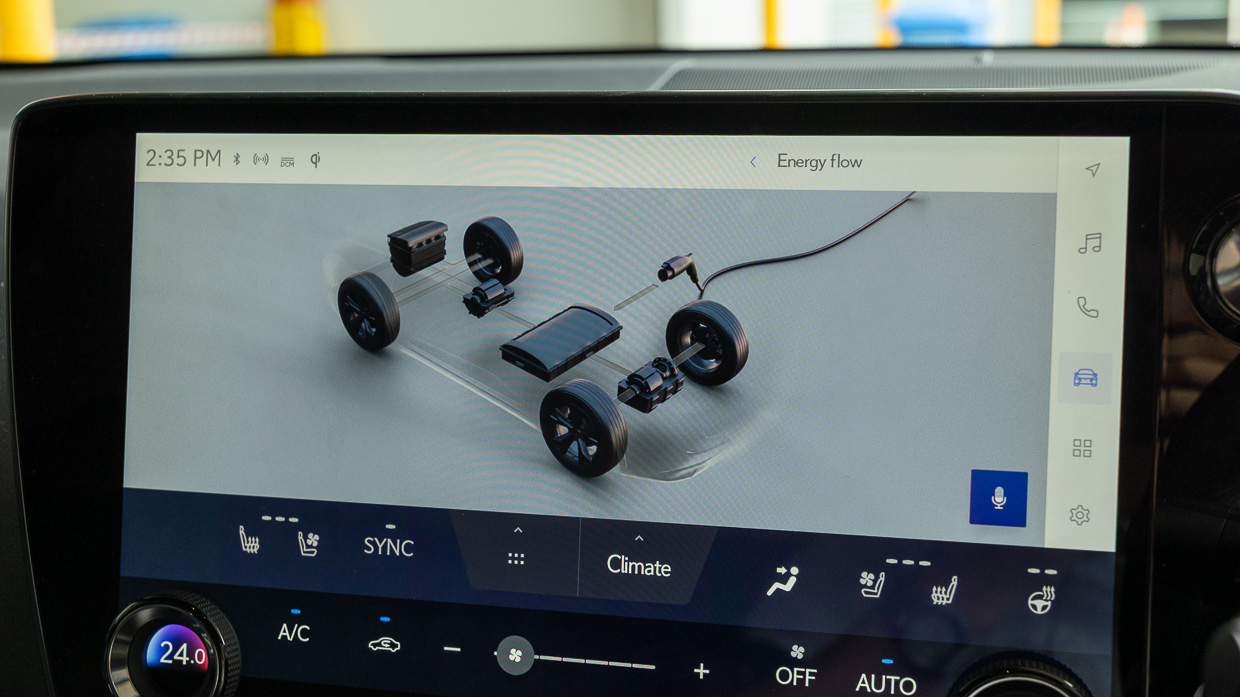
While the high-voltage gubbins deliver reasonable standalone electric drive ‘performance’, its circa-87K of EV drive is too slim in 2026. The AC-only charging format, with no option to DC quick-charge EV-only range, really inhibits the potential flexibility one buys into with the PHEV experience.
And it’s no more frugal than the self-charging hybrid on a dead battery, an option that’s vastly more affordable to buy into in the NX range. And when you’re stumping up extra for PHEV in a luxury marque, you ought to expect a significant ‘hybrid’ performance boost, layered with added sportiness.
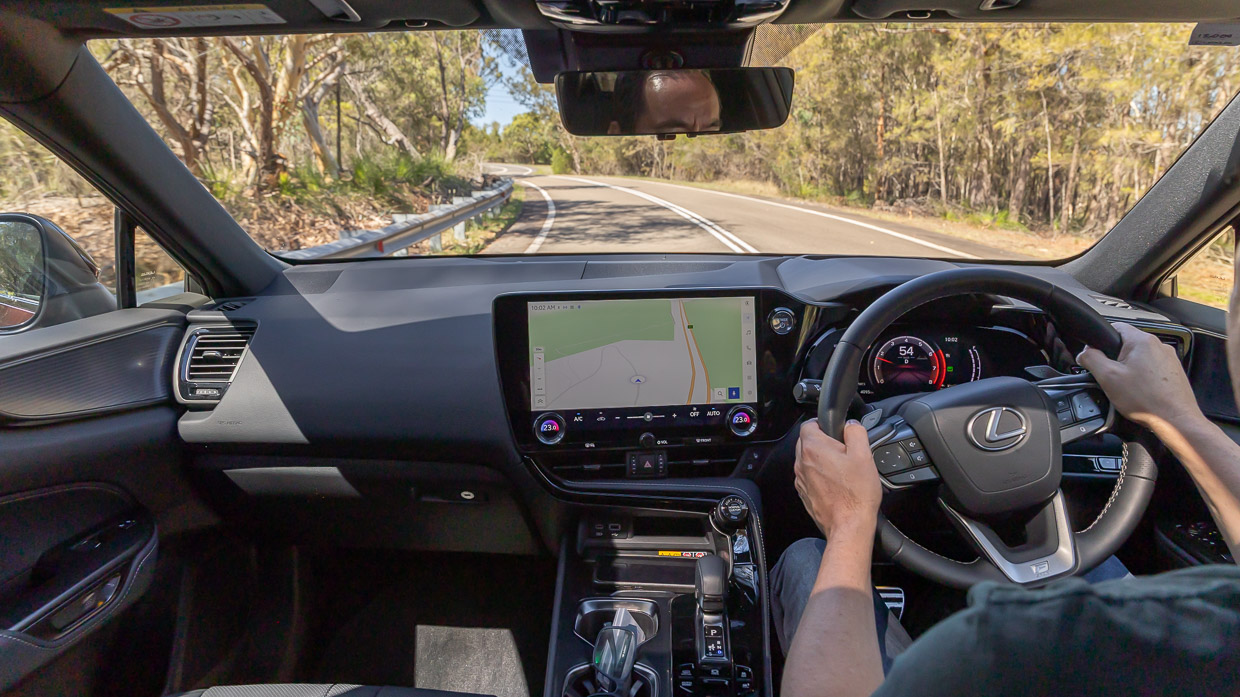
But it’s not. And the naturally aspirated Atkinson cycle petrol four – demanding 95RON no less – in conjunction with a CVT is simply too pedestrian, now in 2026, for another proper luxury medium SUV well into six figures on road. Turbos, real gearboxes, proper performance boosts, long EV range…is where the PHEV action is at, on today’s premium landscape.
Average consumption across six months? It was calculated as 5.44L per hundred as tested, the caveat being that, in discovering being a plug-in owner simply doesn’t suit my personal lifestyle, I rarely plugged it in. I’d probably have been better off with the cheaper, self-charging hybrid option (5.0L/100km claimed).
As covered off ad nauseum in Month 2, results vary dramatically depending on usage and – like all ADR-based PHEV consumption claims – the 1.3L/100km figure attached to this Lexus is only possible with very specific parameters. That is: fully recharging every 100km of driving, no more or less frequently.
As is always the case with PHEVs: only buy into it if you’re willing to plug in regularly to reap the efficiency and drivability benefits.
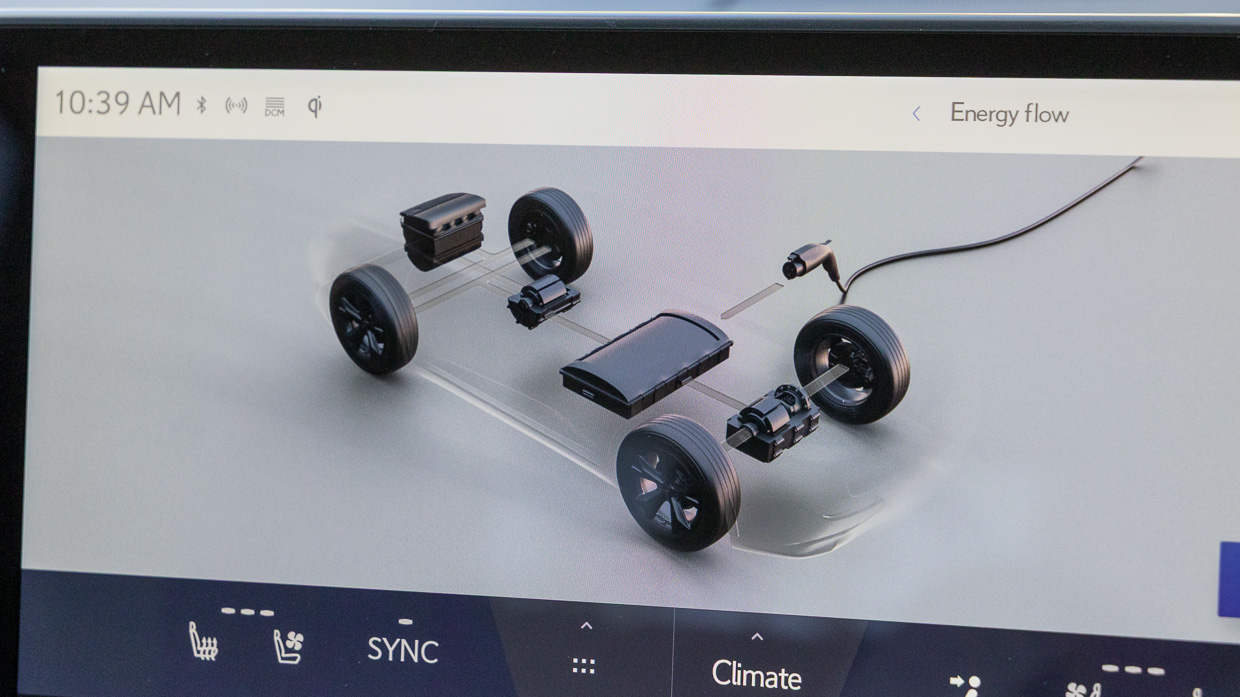
Then there’s character. The NX’s PHEV powertrain sounds, feels and behaves like a plug-in system you’d expect in a Toyota RAV4 wanting for half the price. And, technically, when you view the two SUVs’ powertrain specs side by side, lo and behold…
The rest of the NX package, bar a few strange missteps, is quite commendable, with so many more variant options – most of them – that make more sense or impress more in the balance of quality versus outlay.
It’s easy to see why the NX remains one of the strongest premium mid-sized SUV sellers, and continues to be an easy recommendation…in virtually any trim other than its not-nearly-so-F-Sporty enough, plugged-in, tree-topping guise.
Month 5: Damn roos!
Lexus safety shines brightly on a gloomy long-weekend road trip
- Kilometres this month: 11,009km (2898km)
- Fuel economy this month: 5.2L/100km
- Running costs this month: $291.20
According to cursory research, predators for the eastern grey kangaroo include dingoes, crocs and the copper-coloured Lexus. While I’m skeptical about the first two, for reasons of size and location, I can confirm the latter via first-person experience.
So why, then, is eastern grey roo completely camouflaged against the landscape of the Hume region, in rural northern Victoria, where one never sees crocs or dingoes…but might find a bright metallic Lexus, travelling at 100km/h, along a narrow single-carriage piece of hot-mix? Wouldn’t a bright pink coat serve this marsupial better?
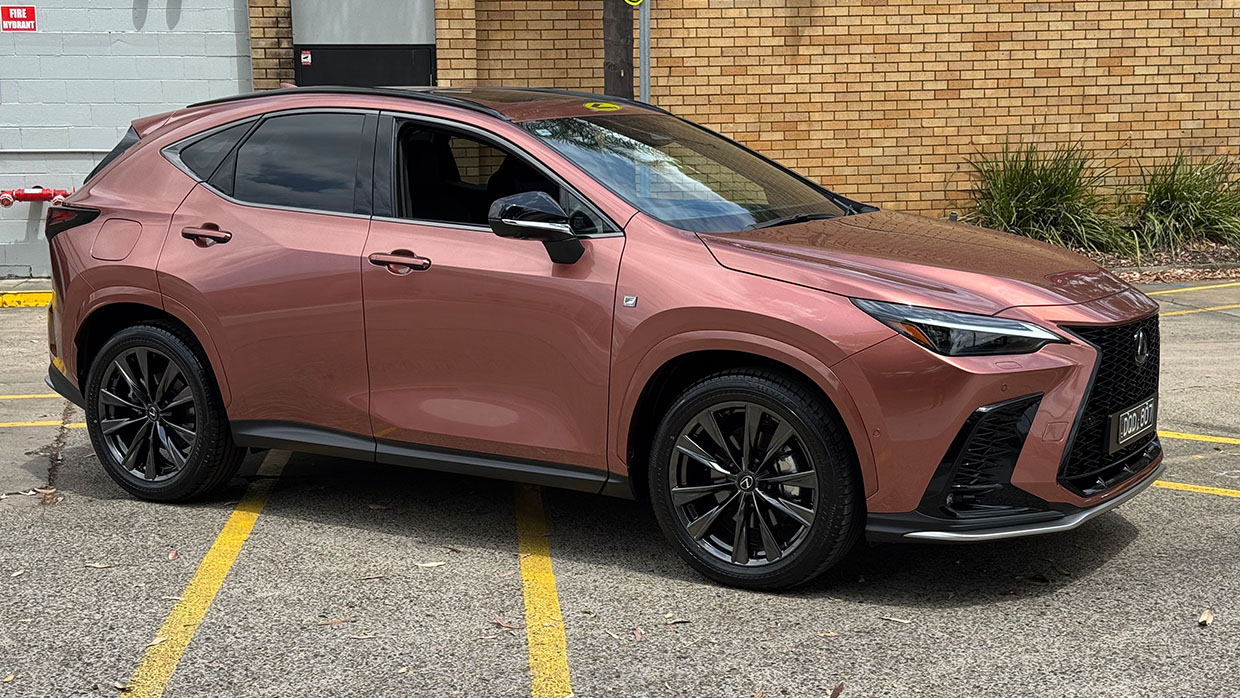
Instead, the indigenous hopper seems utterly prepped by evolution to be an apex predator bar the fact that a) they’re herbivores and b) they jump towards their fast-moving metal hunter when they’re suddenly startled.
So it proved, along regional Seymour-Tooborac Road, skirting the perimeter of the Puckapunyal military site. It’s a narrow, slithering road I’ve driven a hundred times and, as the trickiest stretch of my semi-regular 850km Sydney to Vic Gold Fields return jaunt, it demands utmost concentration at the best of times.
But in the misty low light of a cold six-degree-ambient winter’s dawn, I didn’t need ‘Surprise Skip’ to suddenly attempt to headbutt the Lexus NX’s bluff grille, out of nowhere and seemingly on purpose.
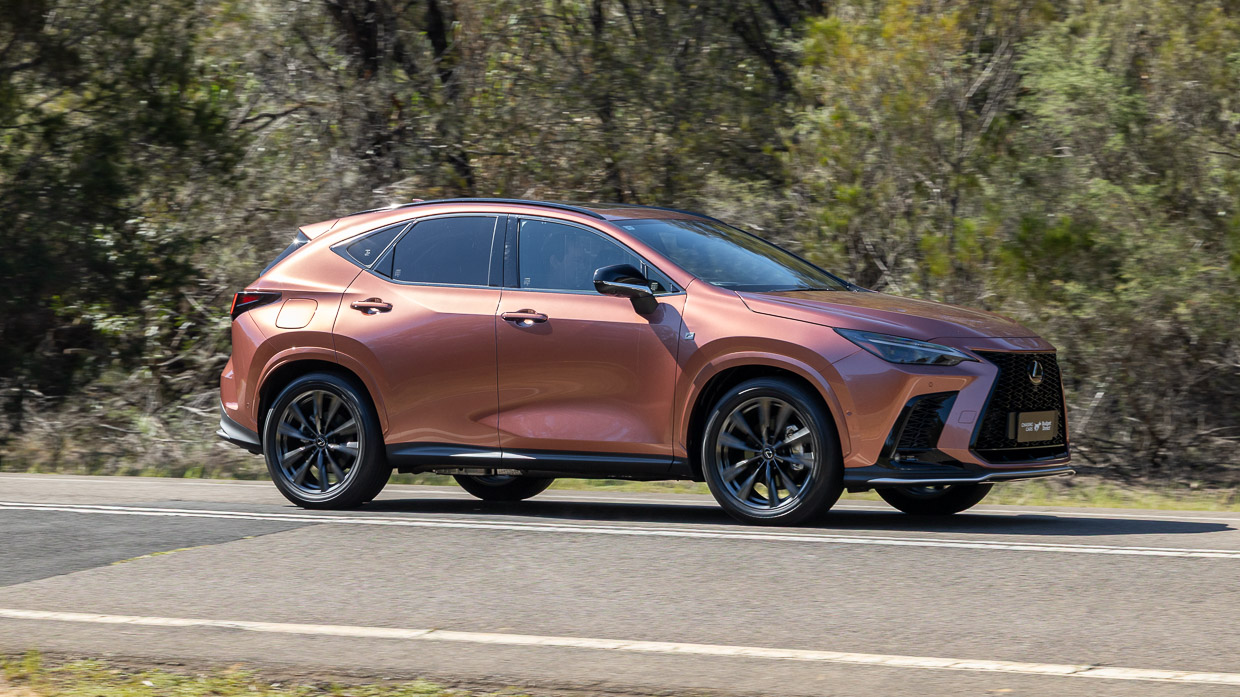
These are classic Aussie roo conditions, and with the buzz of a triple-shot flat white on board I’d been scouring the peripheral landscape regardless. But grey Skip shot out of the grey landscape from the right onto the cold, dew-y hot-mix about 20 metres or so ahead of the two tonnes of Lexus nudging triple figures. So evasive action it was…
The immediate instinct was to not nail the roo square, but miss it by millimetres, while not letting the passenger-side tyres still on the black stuff venture on the green and brown stuff. I jump on the brakes, hard, thread the needle, and hope the Japanese SUV pulls up with enough sealed road underfoot.
Thankfully, Skip bound softly enough into the fast-decelerating NX – call it 60km/h and slowing – just enough to knock him off balance, the only potential damage to his dignity. And with the utterly superb precision of the Lexus steering under full ABS braking, it stopped exactly where it was pointed, skirting the broken left-side verge of the road.
This is exactly and precisely why one might invest in a trusted brand who’s invested in calibrating safety systems correctly. This is exactly why we car reviewers bang on about chassis driving – and steering – engagement so much.
Good active safety, as so handsomely demonstrated by the NX, is about enhancing driver control. Bad active safety is about relinquishing control from the driver due to mistrust or poor calibration. Had this situation arrived in any number of today’s less-capable (if equally fanciful) offerings, the Lexus, Skip and I would’ve arrived at a far more dangerous outcome.
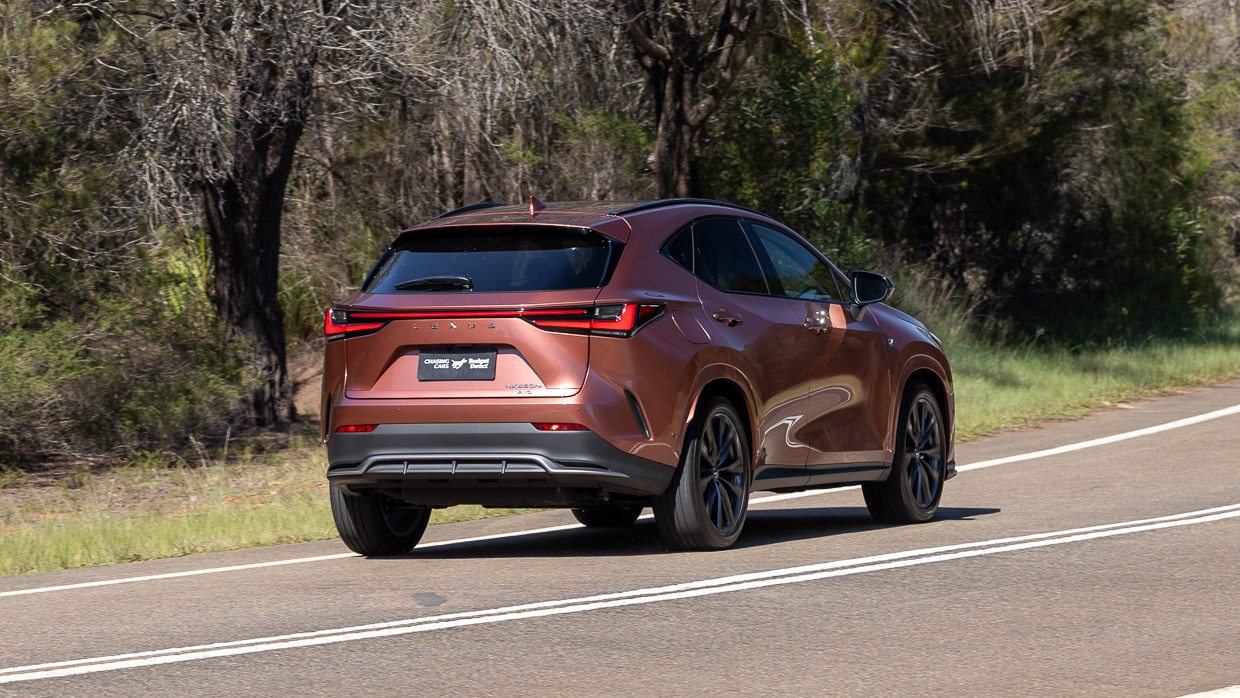
I’ve not been completely complimentary about the plug-in NX long-term experience at times. But on this 2000km interstate weekend round trip, I discovered a newfound fondness for the SUV during the rest of the jaunt back to Sydney which, at the tail end of a holiday long weekend, would take almost another 11 hours in the saddle due to traffic.
It really is, all things said, a great thing to spend serious time in at the helm, even if the helm’s chunky bolsters could be more relaxed on the ribcage. We sometimes forget that the simple requirement of making it home in one piece is luxury enough.
Month 4: Insider job
Lexus puts the sport into luxury, and we’re not quite sure about that…
- Kilometres this month: 8111km (1984km)
- Fuel economy this month: 5.2L/100km
- Running costs this month: $203.60
As a model of 2022 vintage, the NX has been treated to numerous interior assessments at Chasing Cars over the prevailing years, mostly positive, usually in strokes as broad as the review narrative allows.
However, some areas that seem inconsequential in week-long review loans perhaps deserve a deeper nitpicking dive in long-term assessments such as this. So let’s get out the needles, shall we?
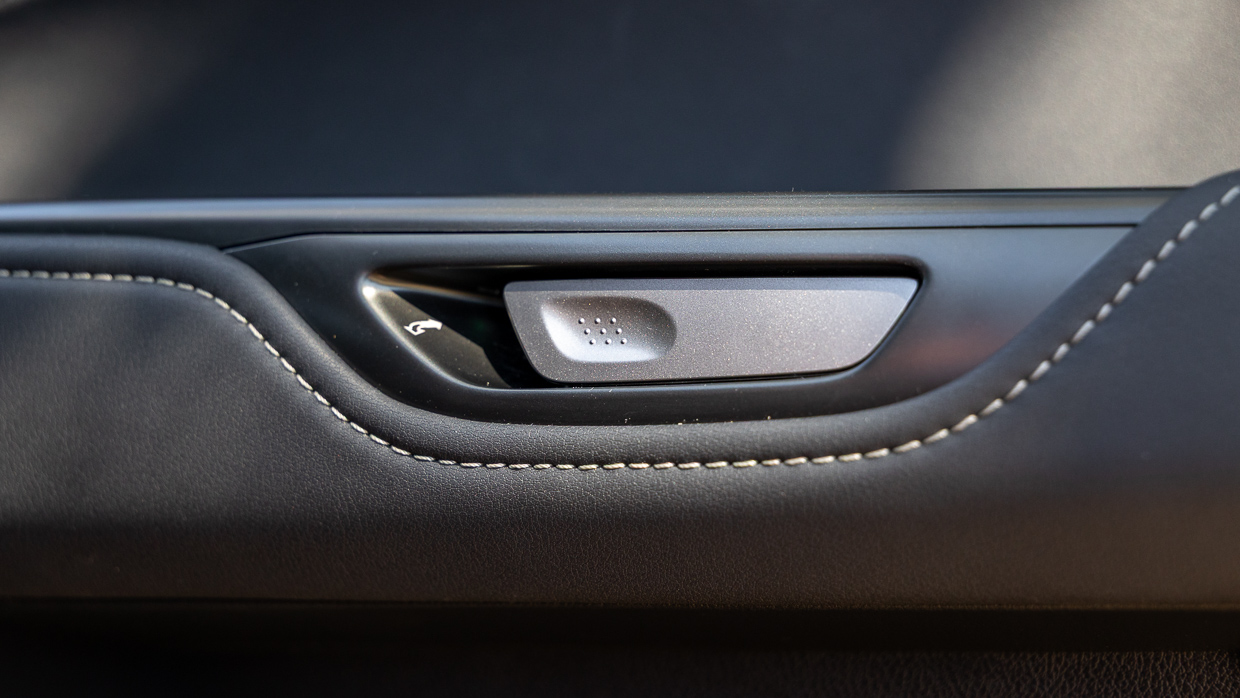
The electric door handles outside are pretty cool, but the interior units are testing at times. It’s not because pushing the lever actuators with your thumbs is rocket surgery, it’s that explaining to every new passenger how to use them to exit the vehicle gets very stale after the umpteenth time.
But the one bugbear that seems to grate with increasing intensity over time is the laggy start-up procedure. After a cold start and after you’ve hit the start button, the media screen remains blank for a good pause before you’re presented with a pointless animation, a greeting screen, and another pause while it reboots CarPlay. Call it 12 to 15 seconds or so.
If you want to do anything such as adjust climate control or boot up a podcast on Spotify, you’re just going to have to wait. Perhaps the intent from Lexus designers was to present some sort of premium showcase. Instead, its tech comes across as being clunky, underpowered and slow.
Then there’s shutdown, which is quick enough, but – much like my old RX long-termer and more Toyotas than you poke a stick at – what’s with all the stupid beeping business when you just want to lock the car and walk away, or simply open the tailgate.
Like the RX, the NX will beep nine times when you lock it – sometimes – that’s clearly some code to alert you to something it wants you to know but isn’t at liberty to explain what and why.
According to Google, it’s possibly (though unconfirmed) some warning to the driver to check that you haven’t left your kids in the back seat. A nice sentiment, but if you’re the kind of parent that tends to leave young offspring about the place because you forget they exist, perhaps you shouldn’t leave the house with kids to begin with… Not really a Lexus problem, is it?
Also according to Google, you can switch the beeping off via digging through layers of media screen submenus. According to your reviewer’s personal research, Google is full of crap. With our NX, we managed to quieten the beeping, but only by a couple of decibels at best.
The Lexus (and Toyota) obsession with beeping when you’ve unlocked/locked the vehicle, or opened the tailgate, is simply safety overreach to the detriment of one’s sanity. And there’s no further proof than the fact almost every other carmaker is rational enough not to fit such annoyances.
The main issue is apartment living and how much incessant beeping will irk your neighbours. It grates during normal times of day, but can infuriate those in earshot when the Lexus (or Toyota) owning neighbour leaves home early or arrives home late. Please, get rid of this stuff.
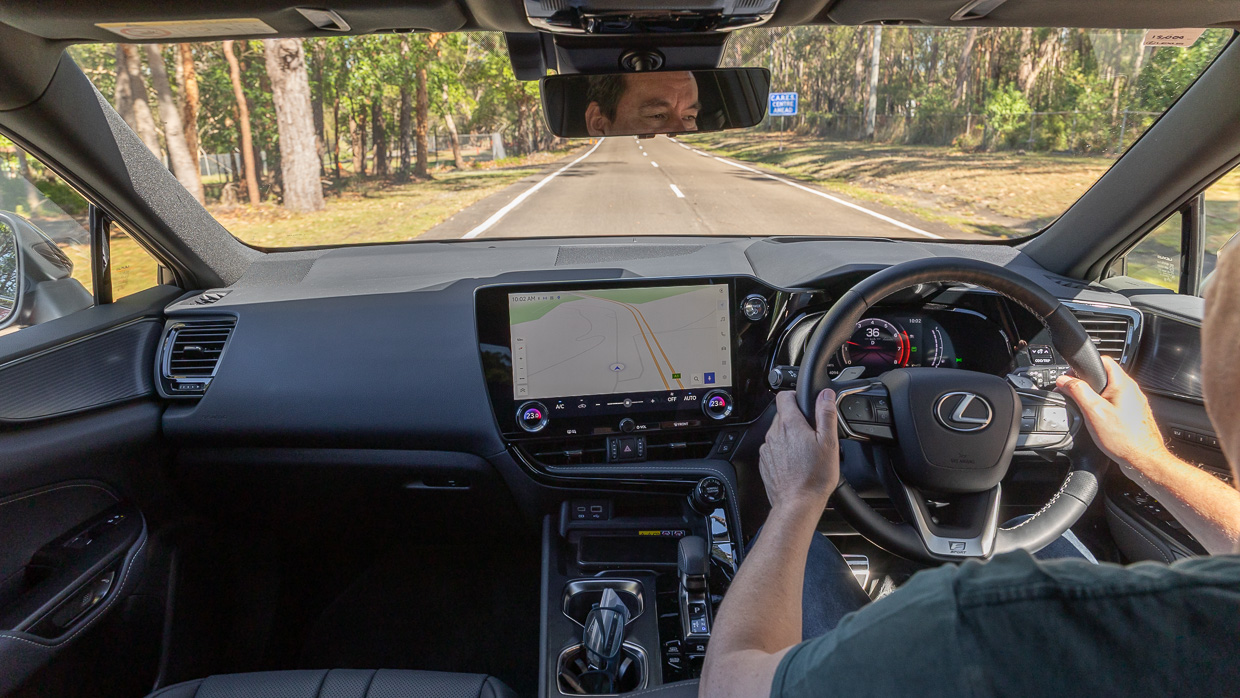
What’s the shame is that the Lexus, in between getting the thing mobile and getting out at journey’s end, is overwhelmingly peachy. Build, material choice, vibe…we’ve covered all of these pluses numerous times in the past.
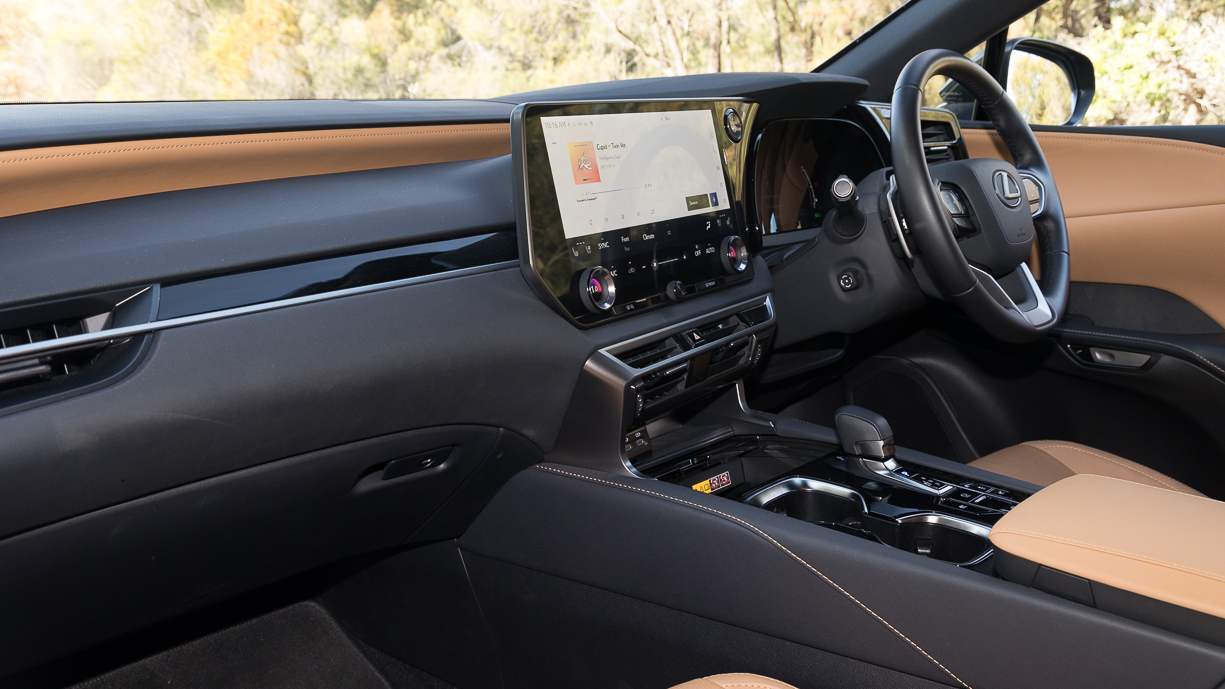
Some of the design choices deserve special mention. For instance, the countersunk digital driver’s screen is, for yours truly, a vastly more pleasing format than the in vogue flat panel multiscreen array that will, inevitably, become passe once we’ve moved on from the current era of car design. It feels…classic, somehow.
I still love the inspired coloured climate control dials, the retractable inductive charging pad so you can genuinely tether two phones at once, the snickity by-wire transmission selector and the nifty double-hinged centre console lid. Properly premium stuff.
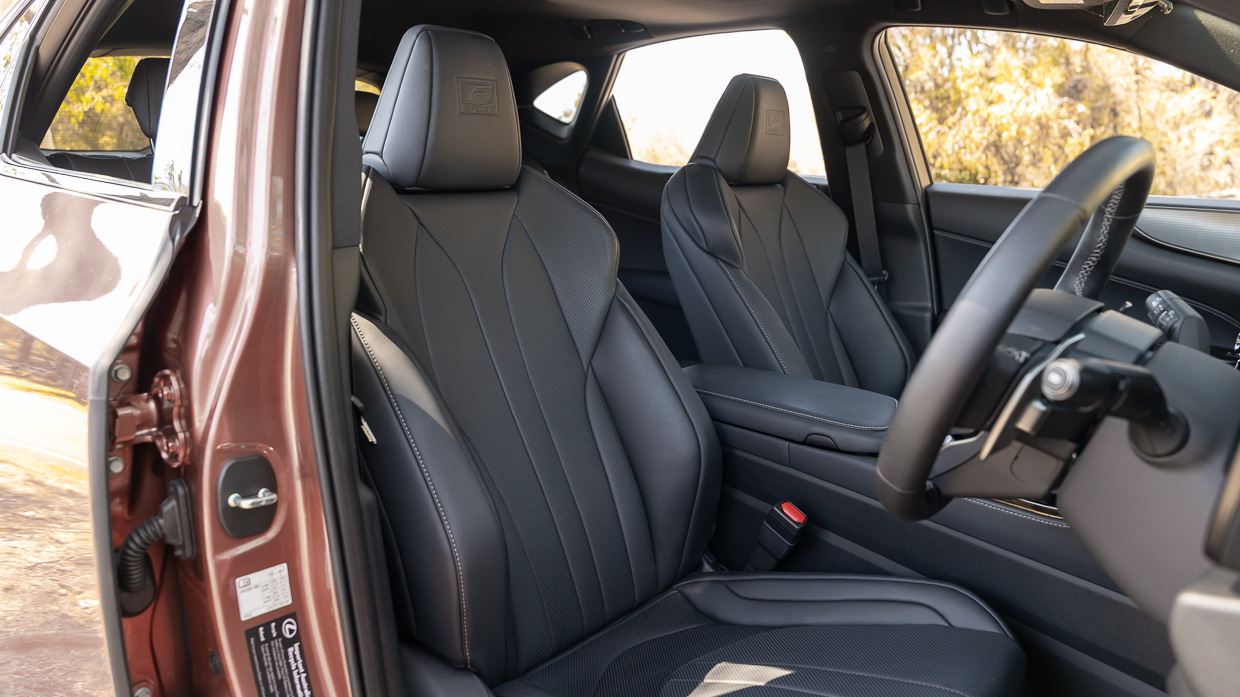
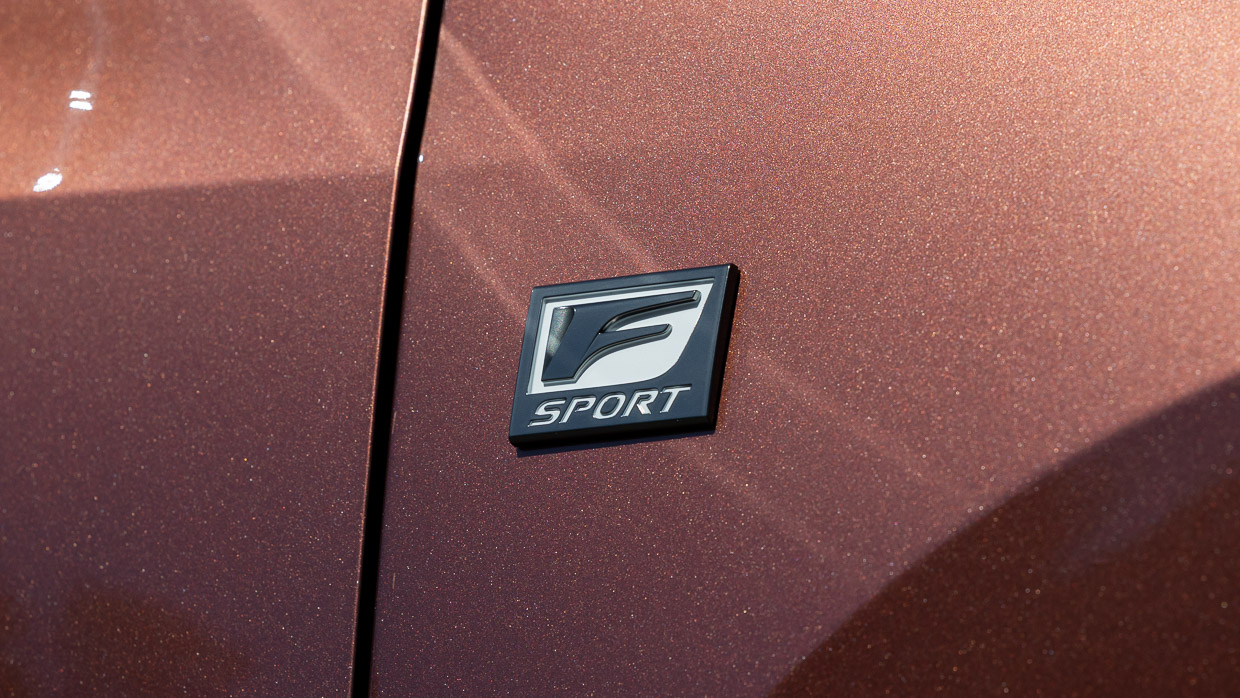
Where it falls down is how the F Sport accoutrement lands comfortably atop what’s fundamentally a luxury landscape. Looks good, feels in places quite unnecessary.
Case in point are the front seats. Their chunky bolsters might be right at home in the BMW M2 or Volkswagen Golf R, but feel out of place in a medium premium SUV that, frankly, puts out little in the way of actual performance mojo outside of big wheels and styling tweaks.
Worse still, and unlike some premium German brands’ sport seat designs, you can’y electronically or pneumatically adjust the tightness or looseness of the side bolster angle. In effect, they weld you into the seat too much – depending on occupants’ body types, they can be quite uncomfortable during long trips.
More F Sport misses are the touchpads on the otherwise beaut F Sport wheel, which activate menuing in the head-up display. In theory, these are handy given that you can adjust all manner of vehicle systems without adverting your gaze from the road ahead.
However, the reality is that they’re so touch sensitive that you’re constantly brushing them with your thumbs, which causes the head-up display to constantly rotate through menuing displays during normal driving. You can turn it off, but the beg the question of: what then is the point?
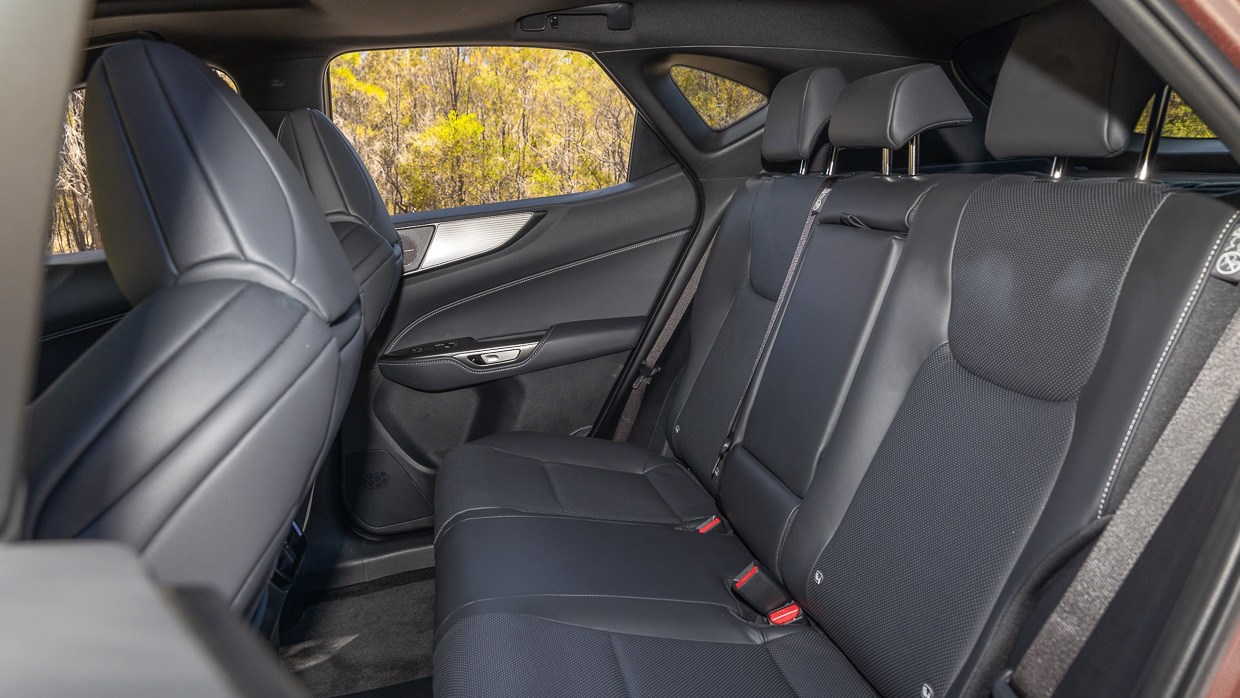
But if there’s one thing that irks about the NX, it’s that the mid-sizer feels all the part like the large-segment RX with about a foot of wheelbase chopped out of it. All of the spatial compromise is, on evidence, centred on rear-passenger legroom.
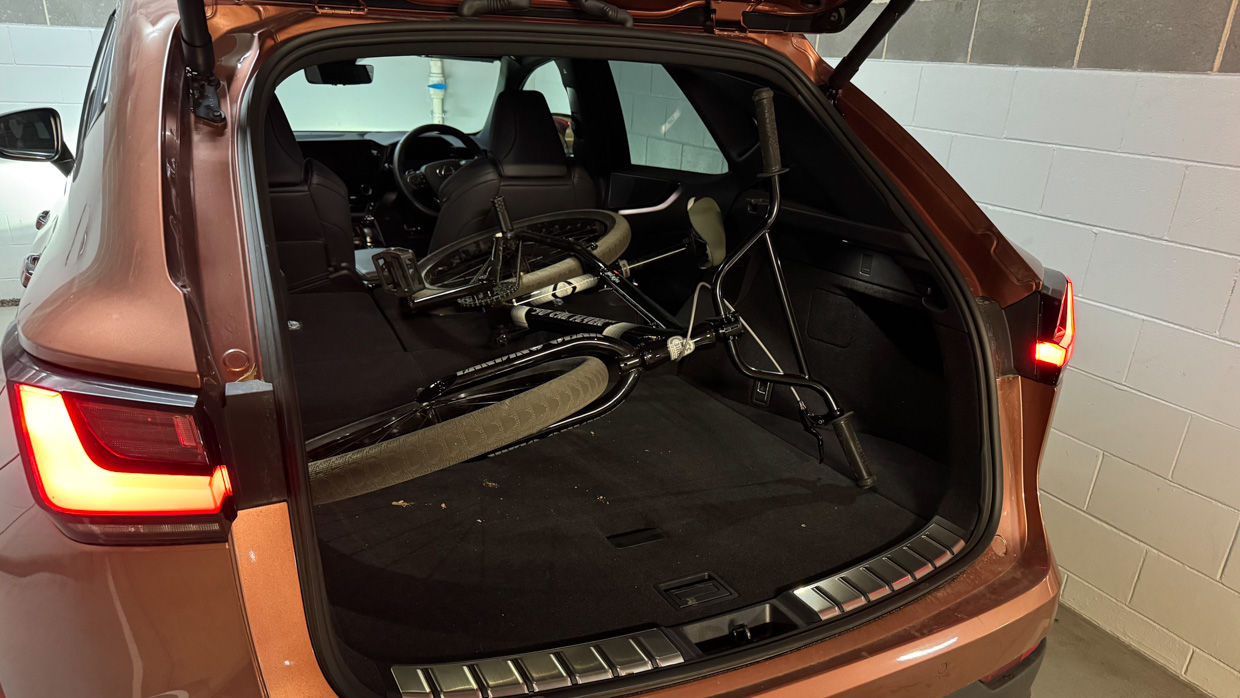
Rear room isn’t bad, but it’s not great. It’s about average for a medium-segment family hauler. But the added wheelbase in the sister RX makes for a vastly more comfortable all-adult experience…and offers enough combined load through to cart around adult-oriented pushbikes without having to remove any bicycle wheels.
Overall, the NX cabin is good, but not great. There’s plenty of room for improvement in the NX 450h+ F Sport package, and sadly for it, many of those improvements arrive in cheaper NX variants or RXs that want for similar coin.
Month 3: ‘Kaizen’ enough?
Lexus’s staying power, its rightful place in the pantheon of luxury motoring, and why this NX mightn’t be its shiniest example
- Kilometres this month: 5400km (1900kms travelled)
- Fuel economy this month: 5.8L/100km
- Running costs this month: $109
Our third month of the plugged-in NX experience was accompanied by two unwavering factors: a busy office life left time for little else bar daily commuting; and the niggling question around the flagship’s value for money remains ever-present with this six-month faux-ownership experience.
Chief, my old Luxury-spec RX 350h AWD long termer, sold everyone in the Chasing Cars crew about the merits of the premium Lexus spin, circa-2024. How it supplanted, and continues to supplant, so many rival Euros on core quality and luxury while undercutting them on price and, in areas, flash, just seemed to sit right.
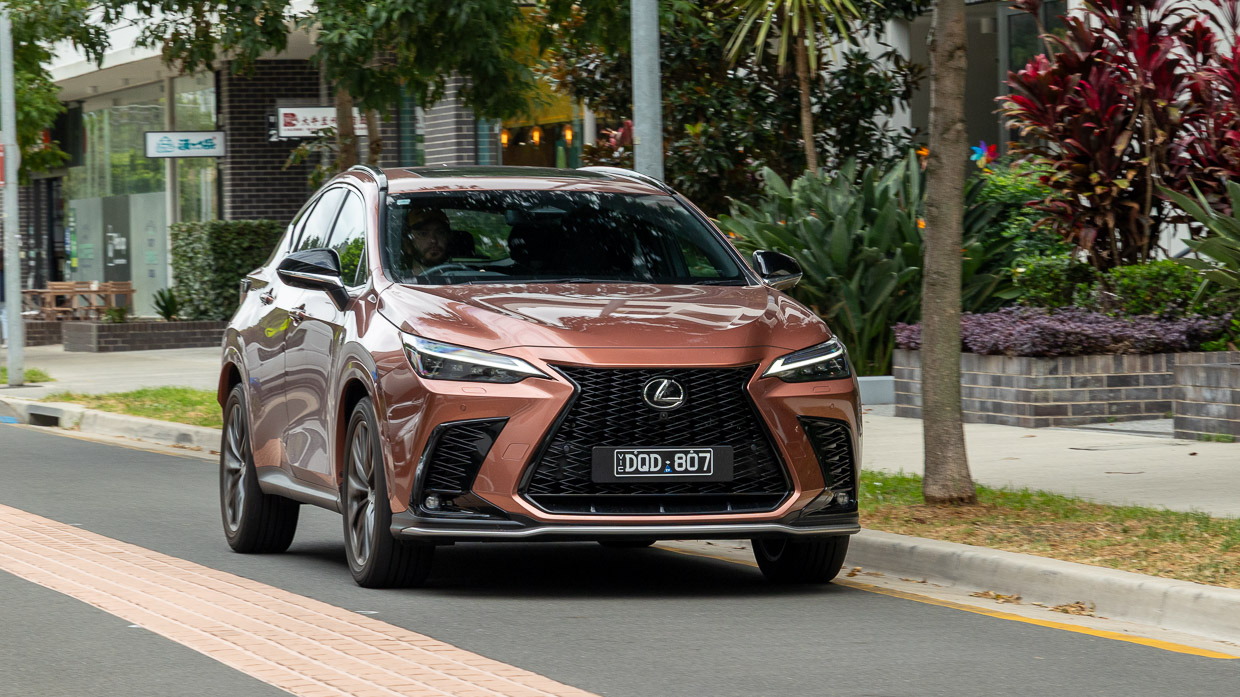
The NX, in fancy-pants plug-in 450h+ F Sport guise, remains less convincing, three months into the long-term loan and viewed through a 2026 lens. It’s a niggling, nagging feeling, and I’m compelled to riff and spin my musings on digital paper to air my thoughts.
As the only time I’ve ever had two long-term, faux-ownership loans from the same brand – let alone both SUVs with broad-stretching similarities – I feel like a Lexus return customer. And halfway through our journey, I’m not nearly convinced I’ve faux-traded up.
But why? Especially given that the NX is certainly crafted as well as the RX, and both are equals in solidity, fit, finish, material execution, refinement…the list goes on with all of those oh-so Lexus traits the brand has managed to maintain – no, elevate – in an existence we often forget is a short 37 years.
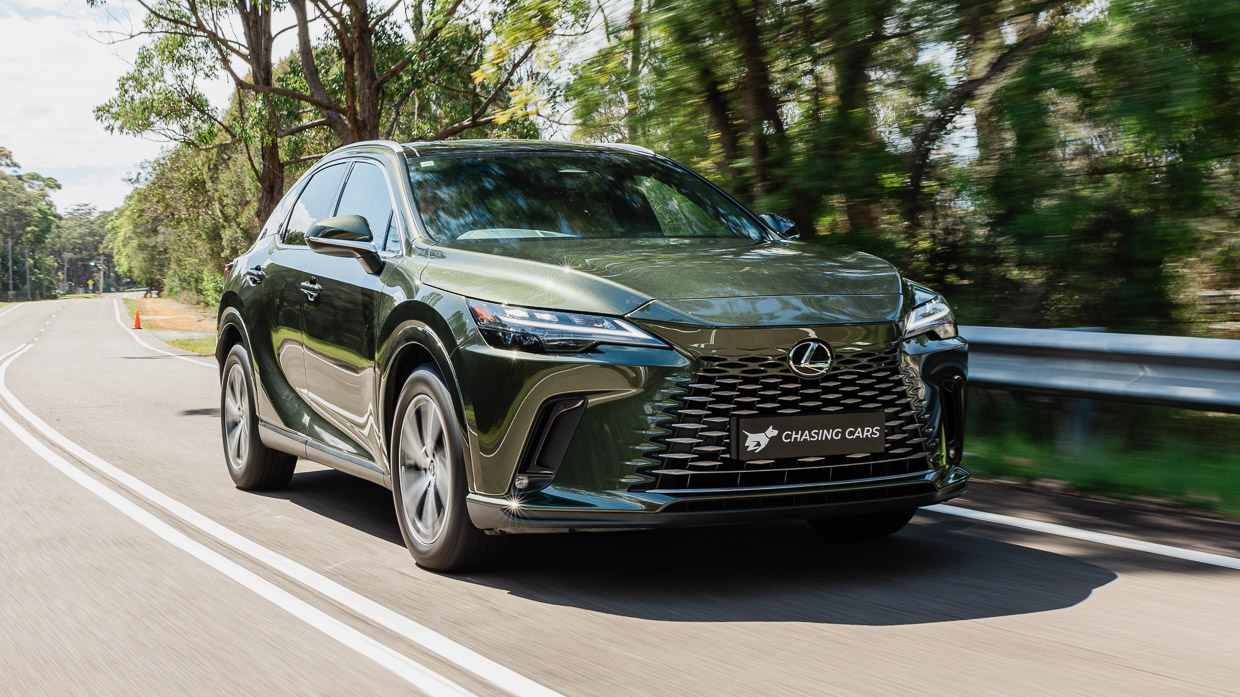
Pictured: ‘Chief’, Curt’s former Lexus RX 350h long-termer
Not to whiz in its pockets, but Lexus really has managed to pull off the remarkable. Its overseer Toyota targeted Germany in the early 1980s and its luxury arm bolted out of the gates with the LS400 in 1989, capturing American hearts and wallets and, in a way, dragging Australia into its tow of momentum.
And with a fire that never lit nearly as brightly in Europe. Hot take: as fundamentally a German facsimile predominantly targeting American buyers, a Lexus was still achingly Japanese in vibe, regardless of how much or how little its maker marketed the fact.
In essence, early-gen ‘Lexii’ blended Toyota’s QC and dependability with Mercedes-Benz-like premiumness couture and, depending on the model and grade, landed somewhere in between, both on prestige and price.
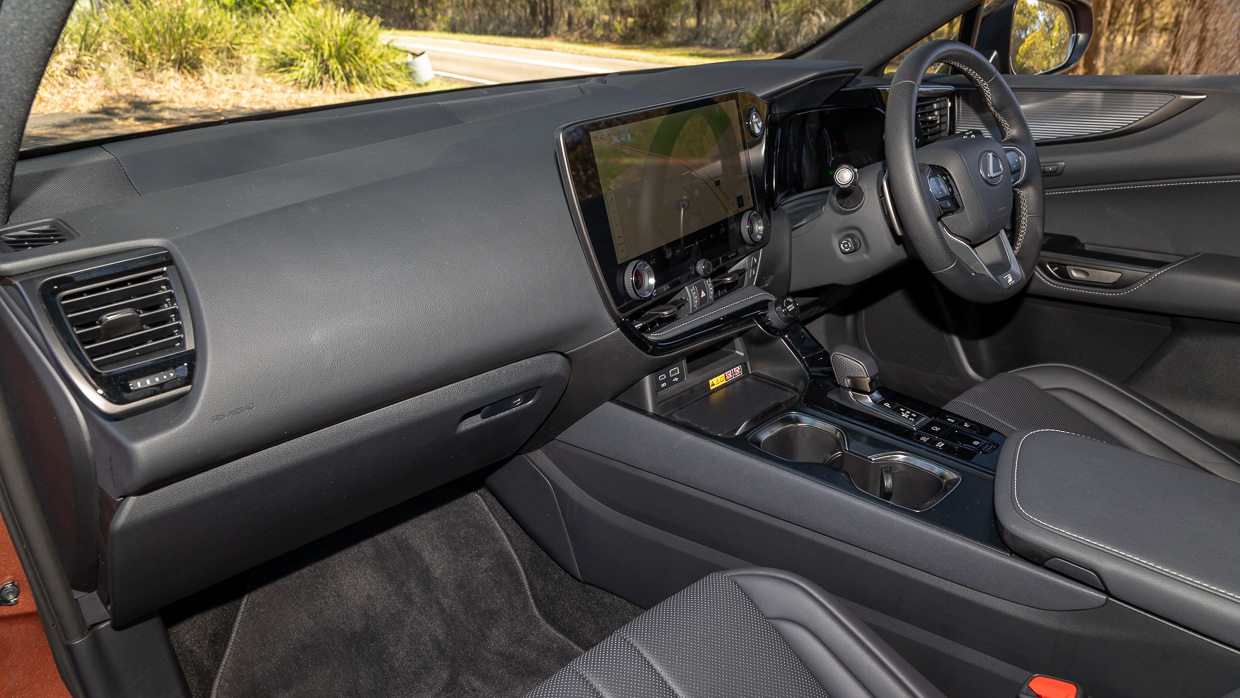
Pictured: Lexus NX (top), and Lexus RX (bottom)
Sure, the Lexus stable was and remains a broad church – for its LBX and ES models so conspicuous in their Toyota commonality, there’s a LS limousine or LFA supercar as counterpoint bookends.
But when you bury down to Lexus brand mantra of combining Omotenshi (‘selfless service to guests’) with Takumi (‘master craftsmanship’) in the spirit of Kaizen (‘quest for improvement’), it’s really the middle-of-the-stable RX large SUVs – and in lower to middling grades – that nail it best.
What niggles and nags about the NX 450+ F Sport is that it does what RX does, if with less usable cabin space and less design flair, while piling on frills, complexity and expense at its bottom line. And at times it’s a particular combination that feels to drift too far from the Lexus magic formula that remained fairly consistent for four decades, very much to the brand’s strength.
Times like Month Three put in service as a daily driver, for instance.
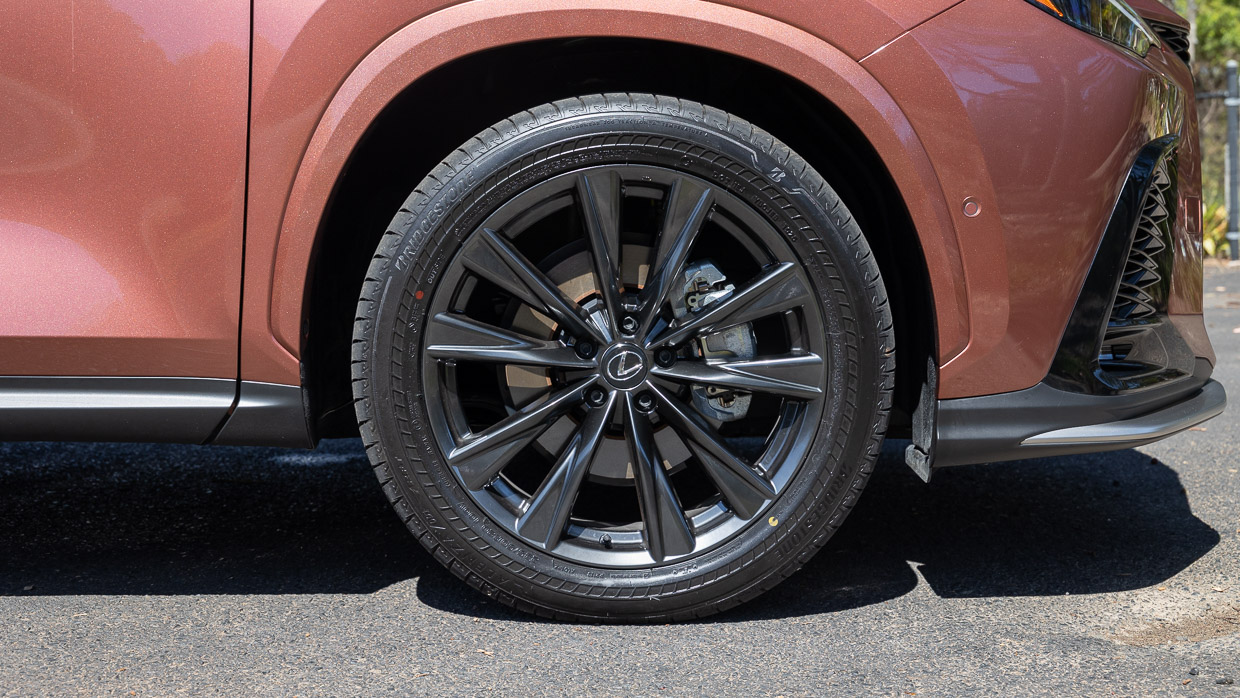
Tool back and forth from the office, the F Sport seats miss the mark for relaxed comfort. The low-profile wheels and suspension fizz in an un-luxurious way, and the rubber drums up too much noise and soil the serenity around Sydney’s underground motorway system.
Then there’s the whole plug-in business. With no recharging option with apartment living, the convenience of simply riding its pretty handy circa-six-litre consumption as a self-charging hybrid proves vastly more convenience, and not terribly cost detrimental, than chasing public charging stations for electrons. At least when the rest of (real) life gets busy.
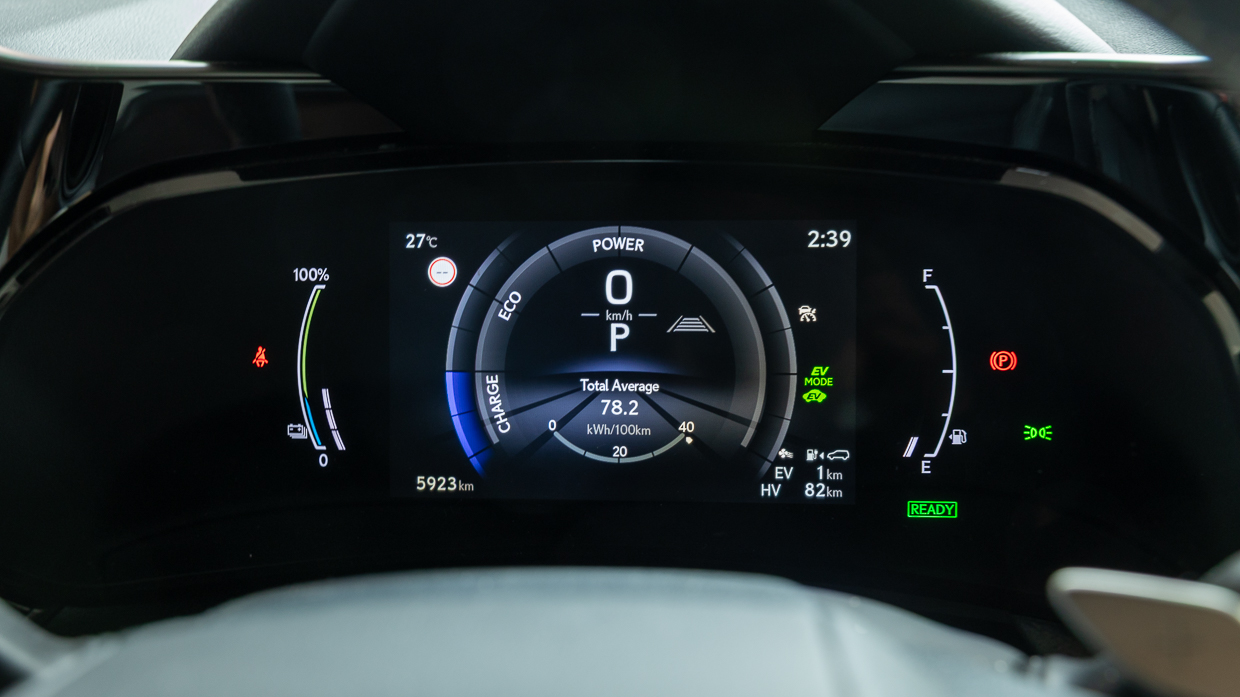
One tankful of 95RON at around $110 – a handful of minutes to replenish the SUV in a hectic month – was a bargain to pay given time saved from not having to plug it in nine or more times to cover the 727km mileage on electrons alone…even without factoring in recharging outlay.
Maybe some road tripping, grand touring, or perhaps corner carving will reveal more virtues from this medium-sized SUV in the coming months. Because midway through our NX experience, our example is beginning to feel somewhat bloated, be it in spec or in price.
Month 2: Mysterious fuel consumption
Negotiating the nightmare of calculating bona-fide PHEV efficiency
- Kilometres this month: 6127km (727kms travelled)
- Fuel economy this month: 5.5L/100km
- Running costs this month: $210
What’s the real efficiency of the Lexus NX plug-in hybrid? Or any PHEV? It depends…
I’ve always been dubious of plug-in fuel economy claims. And not wholly because testing is performed in a laboratory to Australian Design Rules standards (ADR81/02) by the government (rather than the vehicle importer).
It’s because its ethos carried over from ICE fuel efficiency testing (where it works) to a petrol-electric dual-power-source format (where it doesn’t under any reasonably sound logic).
The turbo-petrol NX 350: its 8.4L/100km combined claim is easy to assess by simply refilling what was once a brimmed fuel tank after (duh) 100km of travel.
The self-charging NX 350h hybrid and its 5.0L/100km claim? Same process, similar accuracy in the results, where results may vary ‘a bit’ due to inconsistencies in driving style, powertrain behaviour, orientation of the moon, etcetera…
…but you get an indicative ballpark figure of what fuel consumption to expect.
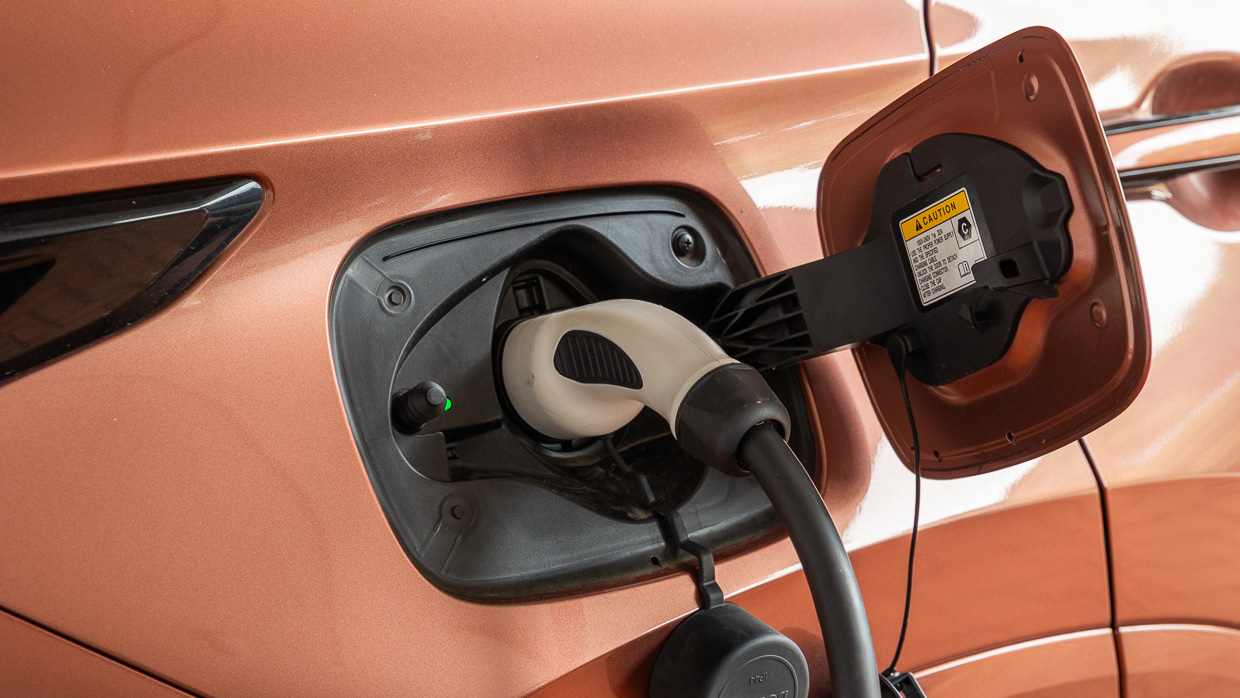
PHEV? You brim the tank, top-up the battery, drive 100kms, measure fuel usage, hey presto, right? Well, no. And not for any simple single reason.
Our NX 450h+ has a 1.3L/100km combined fuel claim. So that’s 87-ish kilometres of pure electric, a remaining 13km on petrol power…there’s your figure. Except it’s a fantasy figure unless you’re prepared to stop the car, refill <and> recharge the battery, every single 100 kilometres of travel. It’s a fallacy.
Now, in 2026, some PHEVs offer over 100kms of pure EV driving. Using dimwitted convention, fuel consumption would therefore be zero-per-hundred. Which is certainly not the reality once the vehicle travels significantly further…
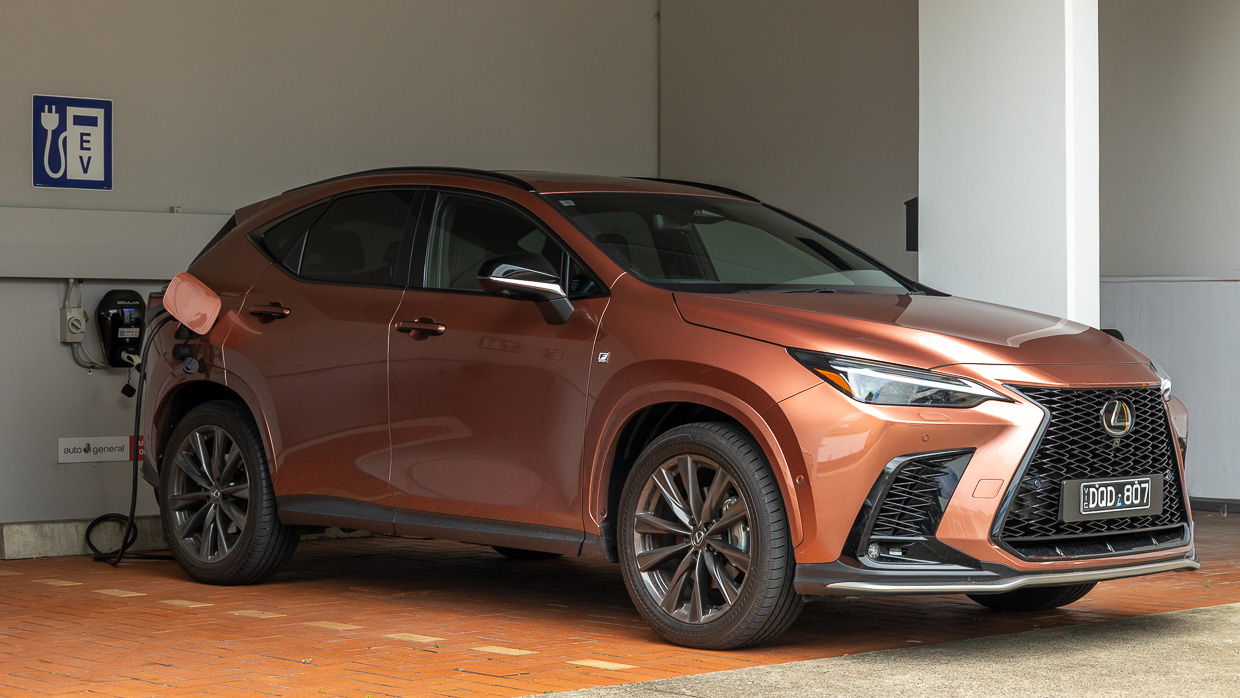
Come Month 2 of our Lexus loan, the first port of call was to assess fuel consumption on a dead battery. After the first 87km-ish, battery depleted (for the moment), the NX 450h+ jumps up to around 6.0L/100km. And there it sits until, soon enough, reciprocal self-charging trickles electrons into the 18.1kWh lithium-ion battery and it drops closer to 5.0L/100km…
Of course, results will vary – and wildly – depending on owner usage. Plug your PHEV into the home and work wallbox religiously everyday, you might rarely ever use internal combustion: 0.0L/100km. Never plug in and you’re at 6.0L. Individuals’ reality will be somewhere between.
Still, a litres-per-hundred figure provides indicative relativity on running costs – fuel and electricity – against ICE or self-charging alternatives. So, logically, a genuine figure demands similar science, right?
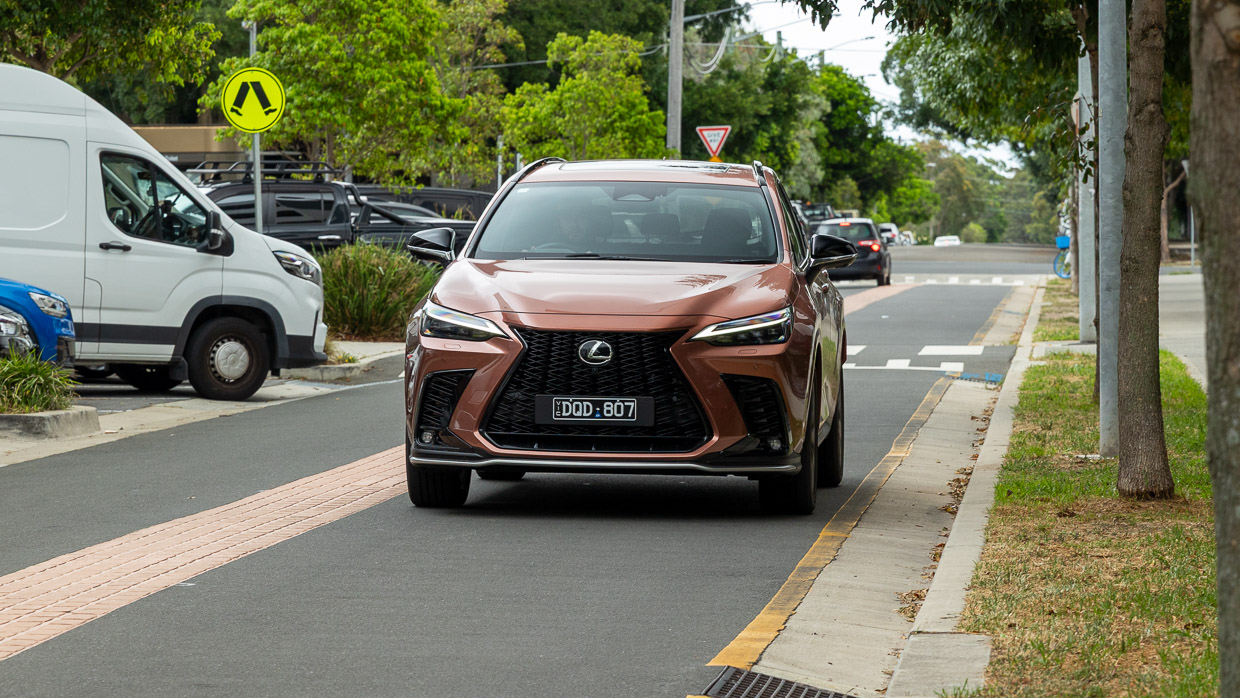
Fully charged and tank brimmed, we drove the Lexus until a) the battery depleted on its own accord after about 87kms and b) the 55-litre tank ran dry, about 920 kilometres (at 6.0L per) further along the exercise. So…1000km using 55 litres. Or 5.5L/100km on average. In the real world.
Simple, right? Well, no. Results will vary whether that’s a thousand kays of peak-hour driving, or you’re road tripping on the cruise control between Sydney and Melbourne. On that, Lexus (that is, government ADRs) doesn’t supply figures for urban or extra urban consumption like there is for ICE and self-charging hybrids…
Perhaps because it’s complicated. One of these complications is drive mode choice: Eco, Normal, Sport S or feistiest Sport S+ affects the petrol-electric output balance and, therefore, petrol and electric consumption. But there’s more to it than that…
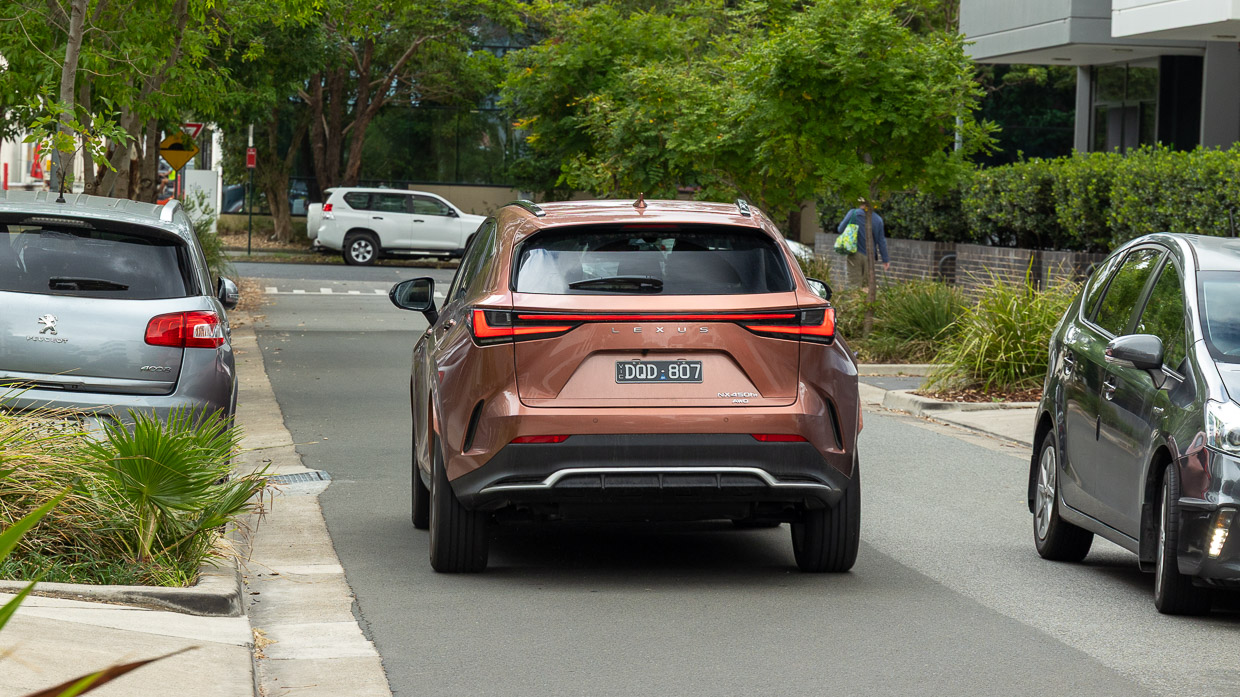
The PHEV has four other operational modes: EV Mode is wholly electric drive, even at full throttle; Auto EV/HV for mostly electric with a petrol boost under heavy throttle; HV mode which is essentially self-regulated hybrid shuffling and; Battery Charging mode, which favours ICE to replenish the battery, on balance.
In truth, our Lexus spends all of its time pinned to HV self-regulation, in Normal drive mode, and plugged into a wall when it’s practicable to do so. And you know what? It works perfectly fine and is pretty damn good on balance, without any other complication…
Month 1: All you can eat
Last-minute copper swap saves us from an uncomfortable doppleganger
- Kilometres this month: Odometer start 3514 – this month 504km
- Fuel economy this month: 5.9L/100km
- Running costs this month: $81.33
What is it?
When handed the key to the fanciest 450h+ F Sport spec of the biggest-selling premium midsize SUV in Australia for a six-month custodianship, there’s little one might complain about. For full disclosure – and usual practice for Toyota/Lexus local arms – Lexus Australia is also stumping up for fuel and electron outlay. Nice.
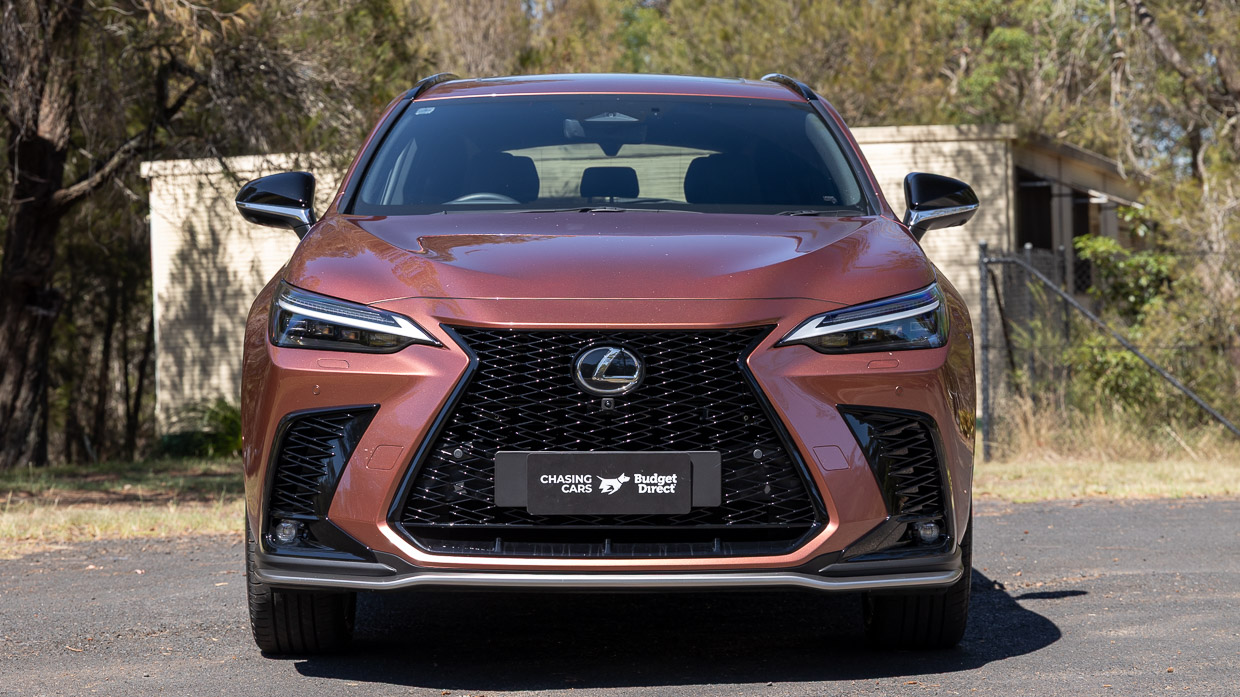
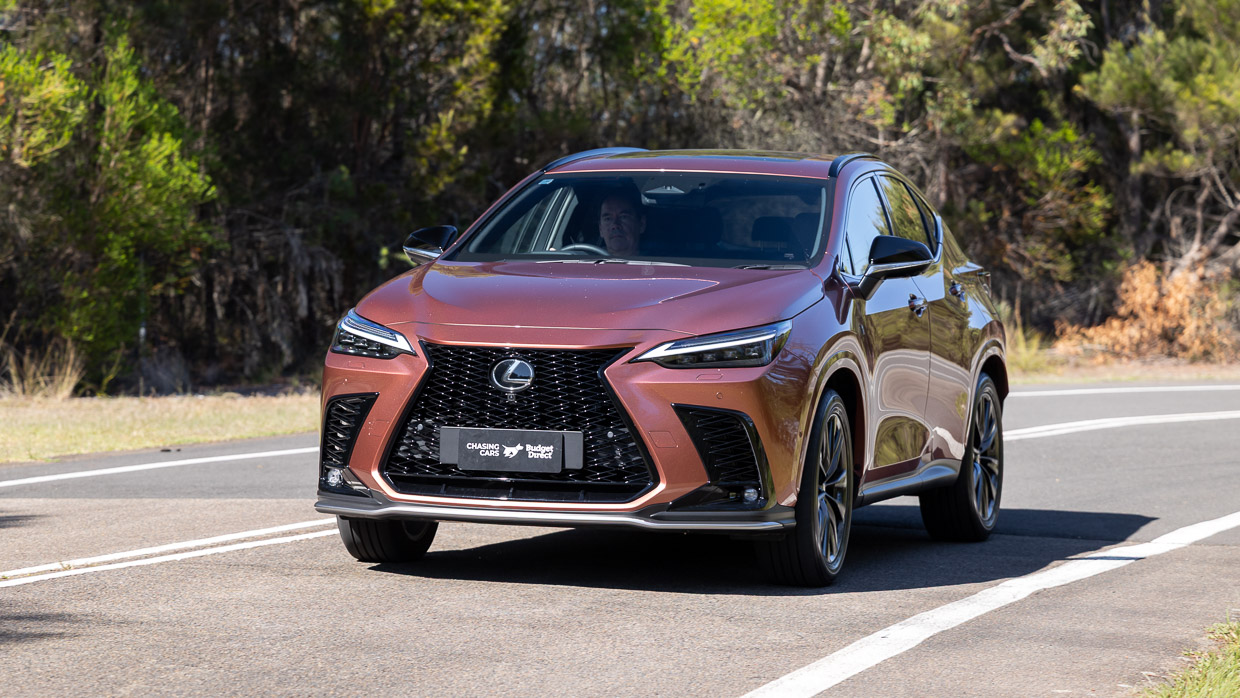
But the concern was colour. “Khaki Metal” said the e-mail, which is the same colour as my last Lexus long-termer, the RX 350h Luxury nicknamed ‘Chief’ from a couple of years back. A great rig, that. Solid and comfy. I was a big fan. But given the large-segment RX and midsize NX look so damn similar to one another, some might think they’re twins of sorts.
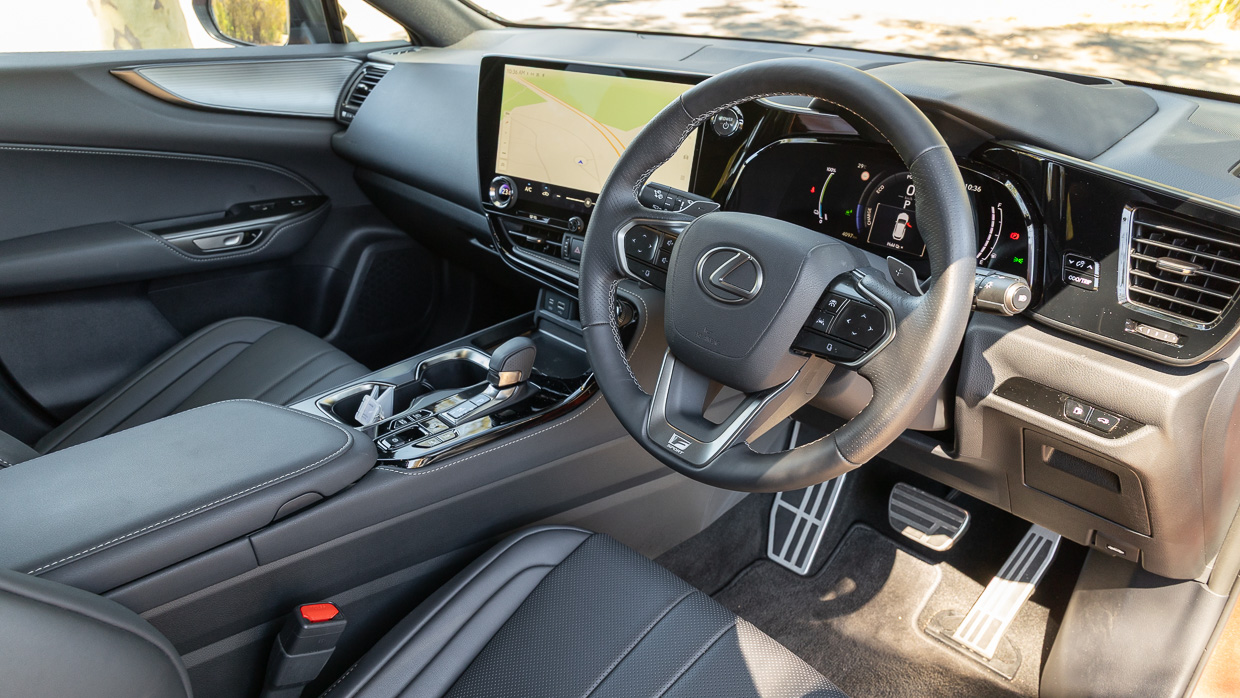
“Sorry,” read a subsequent Lexus Oz email. “We’ve had to change the booking to a Sonic Copper example…” Phew!
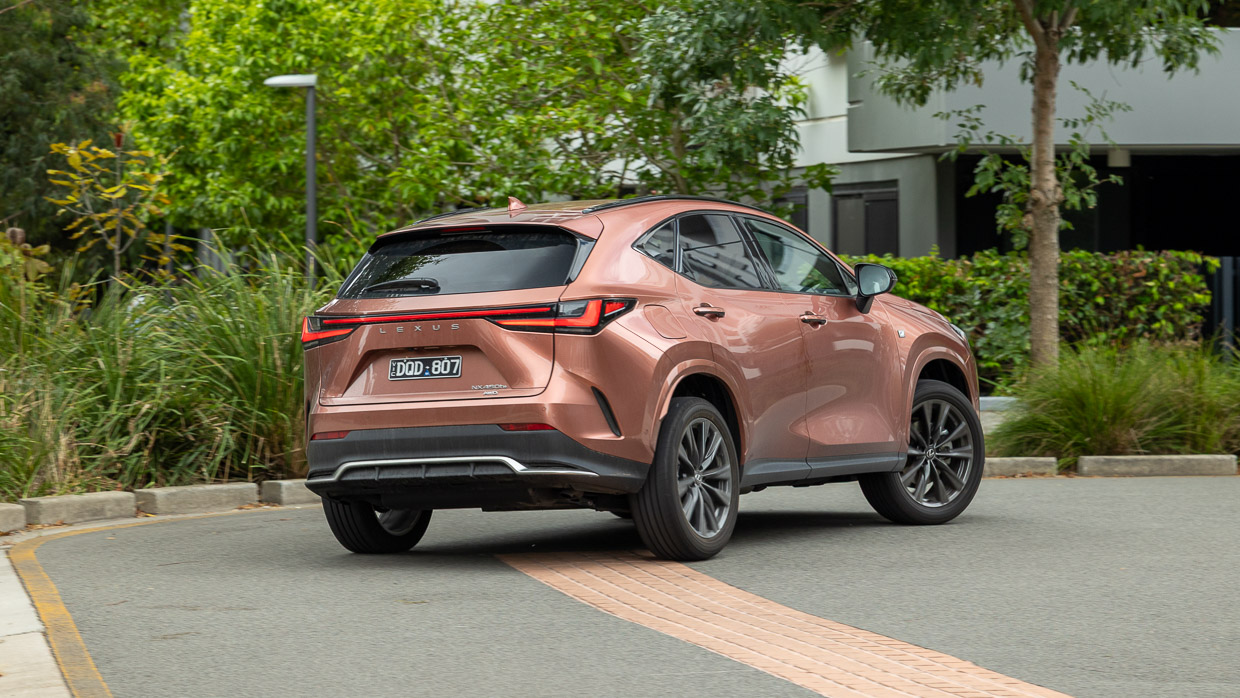
Given their similar designs, I’d mistakenly thought the NX was simply the larger RX with 16 centimetres sliced from its wheelbase. There’s more to it. Overall length is 230mm shorter (4890mm vs 4660mm), the front and rear treatments are distinctive to each model, and the NX doesn’t have the RX’s curvaceous rear hunches or teardrop rear glasshouse signature.
They’re quite different inside, too. Lots of commonality in the display hardware, switchgear and design ethos, yes, but the theme is quite different once you bury down into it…which we’ll do in an upcoming update.
How much is it?
The topic of similarities nagged at me given the underpinning notion that ‘my’ new midsize Lexus SUV was, at $96,000 before on roads and options. Our Sonic Copper (adds $1750) example costs $107,088 on road in NSW. Yikes!
What’s the spec of our car?
Here’s the oversimplified breakdown of the full-blown 450h+ F Sport specification and features.
As a baseline, the cheapest (hybrid 350h FWD, $79,200 list) F Sport variants fits:
- 20-inch alloys
- F Sport exterior styling
- Three-projector bi-beam LED headlights
- 14-inch media touchscreen
- F Sport 10-way driver, eight-way passenger electric seats
- Leather accented trim, seat heating and ventilation
- Wireless Apple CarPlay and Android Auto
- Eco/Normal/Sport/Sport+ drive mode selection
- 10-speaker ‘premium’ sound
- 360-degree camera and front and rear parking sensors
- Dual-zone climate control
- Handsfree power tailgate with kick sensor
That version fits a 2.5L natural aspirated-based self-charging hybrid totaling 179kW in either front or all-wheel drive (for a $5800 upcharge) though, typical for Toyota/Lexus, there are no peak combined torque claims for either.
The ‘premium’ powertrain of our long termer is the plug-in hybrid 450h+, available only in all-wheel-drive guise. This PHEV’s naturally aspirated 2.5L petrol four (136kW/227Nm) is in a lower state of tune than the self-charging 350h unit (140kW/239Nm).
And, interestingly, the electric motors – 134kW/270Nm front and 40kW/121Nm rear – have the same outputs across both hybrid formats.
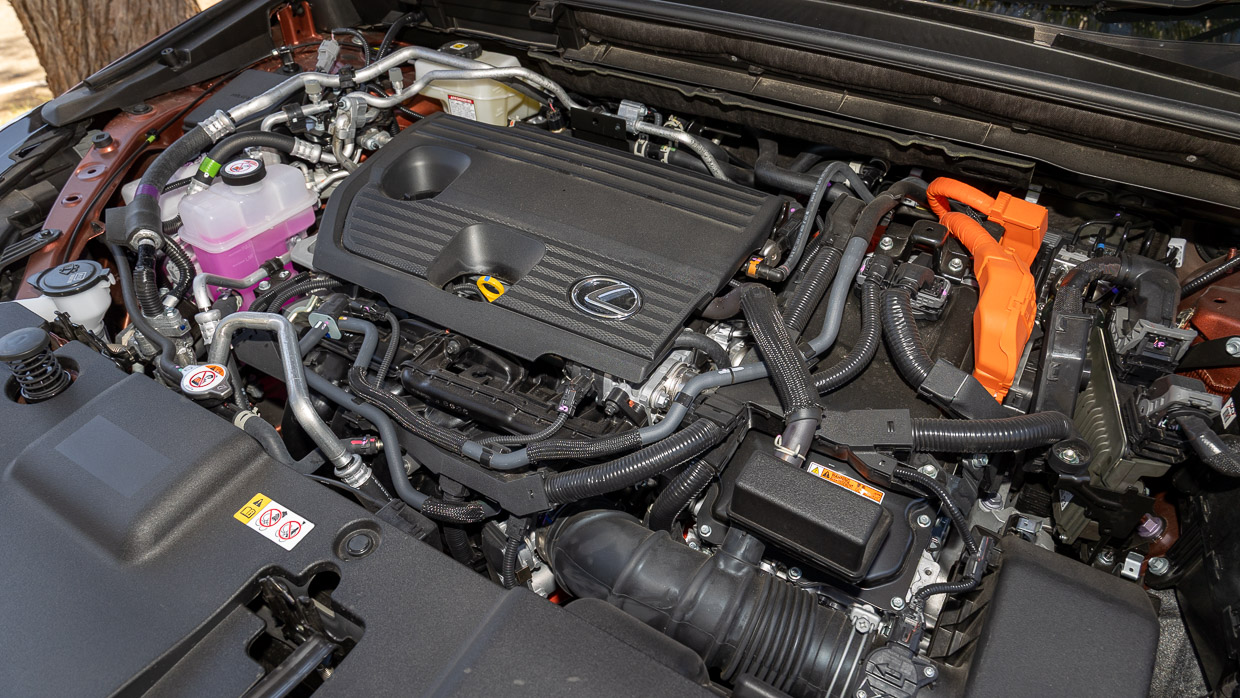
But the 450h+ PHEV is positioned as the ‘alpha’ powertrain, with peak combined power at 227kW against the 350h’s 179kW. Lexus claims a 0-400m time of 6.3 seconds for the plug-in NXs.
The PHEV has the best ‘efficiency’ claim, too. With its large 18.1kWh lithium ion battery and 87km peak electric only driving range claim, the 450h+ variants are advertised at a scant 1.3L/100km, far more miserly than the self-charging hybrids’ 5.0L/100km (FWD or AWD) let alone the far thirstier 8.4L/100km claim of the 2.4L turbo petrol versions.
As a self-proclaimed skeptic of claimed versus real-world PHEV fuel economy stats, we’ll deep dive in a future report once we have a couple of thousand scientific kilometres under our plug-in’s shiny 20-inch wheels and crunched the numbers.
However, to dissect the wealth of features on our priciest 450h+ F Sport guise, it’s worth checking out what the cheaper ($84,500 list) 450h+ Luxury gets given the $11,500-pricier F Sport shares an identical powertrain with identical performance and efficiency claims.
The 450h+ Luxury essentially fits much of the above-mentioned 350 F Sport except:
- 18-inch wheels
- Sunroof
- Comfort seats with four-way passenger electric adjustment, four-way driver’s lumbar
- Single-colour mood lighting
- Rear outboard seat heating
- Steering wheel eating
- Dual-zone climate with humidity sensor
The 450h+ F Sport, for its $11K-ish upcharge, adds or replaces:
- 20-inch wheels
- Auto-levelling LED headlights
- Adaptive variable suspension with performance dampers
- Intelligent parking assist
- F Sport interior
- Head-up display
- Smart key card
- Digital rearview mirror
- Mulit-colour mood lighting
- Privacy glass
The whole Enhancement Pack 1 and 2 thing adds another layer of feature complexity and, formally, the flagship 450h+ F Sport gets the ‘2’ pack as standard. But not all of it. Not offered is the 17-speaker Mark Levinson sound sound auto system as standard on Luxury Sport grades, nor can you get the panoramic glass roof offered elsewhere in the line-up even as a cost option.
How long is it sticking around for?
The 450h+ F Sport lobbed into the Chasing Cars garage at the beginning of December 2025 and will head home, all going to plan, around mid-2026.
It arrived with 3514km on the odometer and was sidelined for two weeks over the Christmas and New Year period at the office in trade for a stint in a Jeep Wrangler Rubicon and, thus, we only went through three-quarters of a tank of fuel (and a single full battery charge): hence the lean $81.33 monthly running cost if sobering six-litre fuel consumption (against its glowing 1.3L claim).
Again, we’re going to have a very close look at that combined efficiency claim in the coming months…given there’s a $11,000 premium for our long termer over the ($85,000 list) 350h AWD F Sport self-charging hybrid that ought to return, again, somewhat similar (5.0L/100km claimed) fuel consumption.
What are we going to do with it?
Easy. Mostly urban testing around Sydney, plus at least a couple of long interstate trips where we’ll not only assess its grand touring suitability but be able to get a fair read on proper average consumption on a single trip where both the battery and fuel tank are run as dry as we dare.
We’ll also check out its family friendliness, its performance and dynamic capabilities give the F Sport schtick, delve into safety and, as a key component of any long term testing, shake out the gremlins and discover if the pricey Lexus presents anything in the way of real deal-breakers to the ownership experience.
And, as always, we’ll try to get a read on if our spec is the sweet spot of its range, or whether you’re better off spending your hard-earned somewhere further down the ladder. Or, perhaps, might it be smarter to plonk the folding stuff down elsewhere, like maybe on a larger RX stablemate in a grade costing similar outlay…?
Related articles
Lexus NX 2027: midsize luxury SUV now hybrid only as update takes fight to BMW X3 and Mercedes-Benz GLC
Lexus NX 2024 wait times: hybrid improving fast but PHEV orders still paused
Lexus set for record sales year as electrified deliveries boom
Chinese EV manufacturer Xpeng has detailed its “AI SUV coupe”, the L03, for Australia ahead of an expected launch in the fourth quarter of the year.
The headline news is a range-extender model, a very popular technology in China that’s been largely absent from Australia. The engine in the L03’s PowerX model is solely a generator, and never drives the wheels.
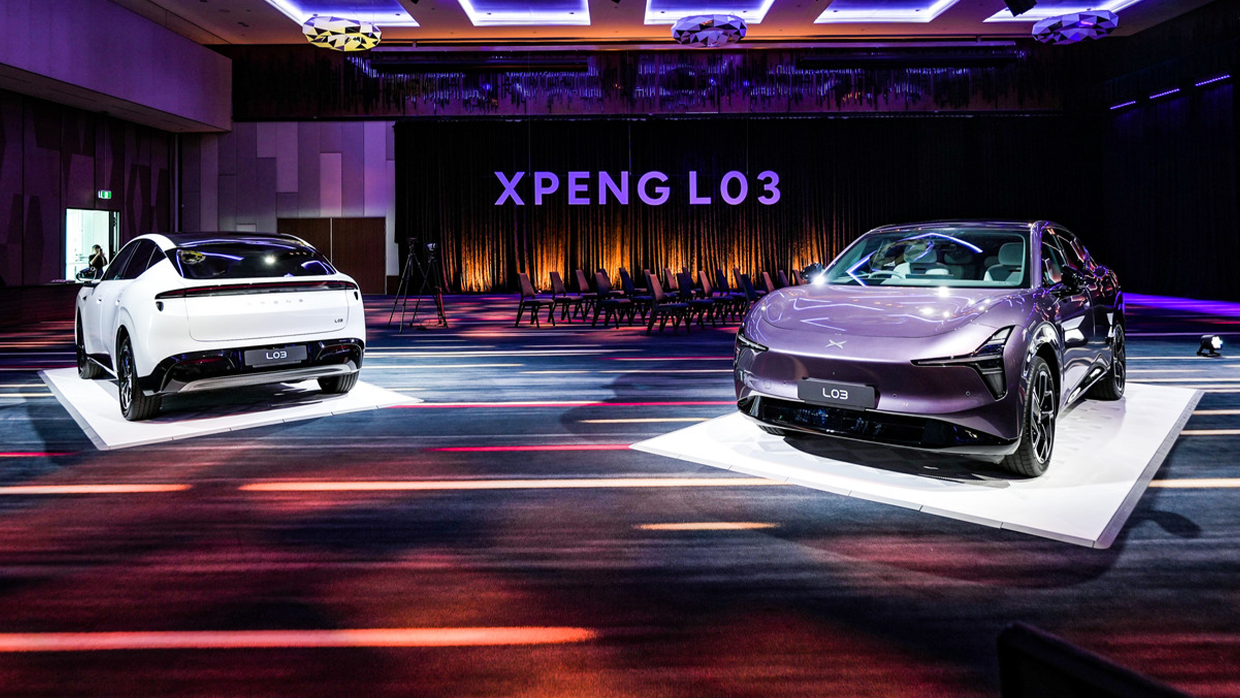
The L03 starts at $41,900 before on-road costs for either the RWD Standard Range or the PowerX Long Range.
This is exactly $90 cheaper than all three of its closest rivals. The Geely EX5 and the BYD Atto 3, which Xpeng Australia name-checked as competitors, are both $41,990 before on-roads. The closest thing to the L03 in shape and size, the petrol-only Renault Arkana, is also $41,990 before on-roads.
There are two variants above the RWD Standard Range and the PowerX: the RWD Long Range ($46,900 before on-roads) and the AWD Performance Ultra ($53,900 before on-roads)
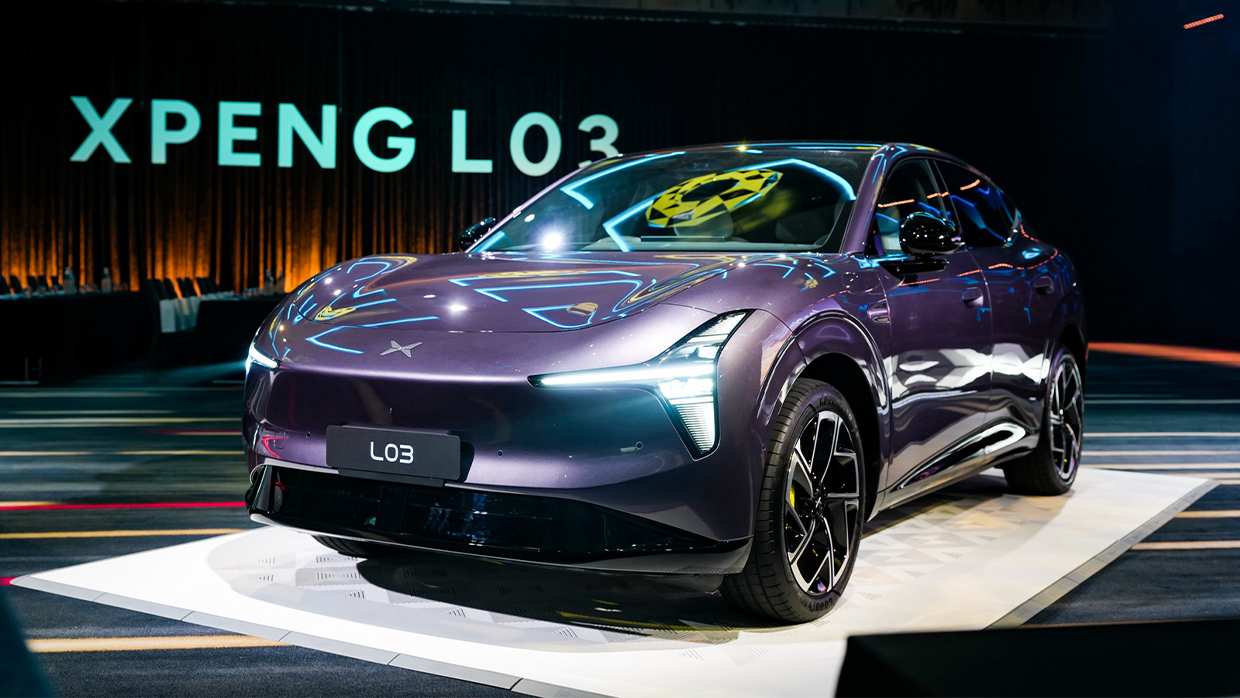
Xpeng Australia has yet to publish Australian specifications in detail. Chasing Cars understands the L03 uses a 400-volt platform, not the costlier 800V architecture in other Australian-market Xpengs, though its claimed 149kW DC charging peak remains serviceable.
In Europe, Car News China reports the RWD Standard Range has a 58.3kWh lithium-iron-phosphate battery good for 445km of range (WLTP), driving a 180kW motor.
The Long Range’s 71.2kWh battery extends this to 520km (WLTP), while the AWD Performance mates the bigger battery with dual motors for a combined 285kW, but reduced range of 440km (WLTP).
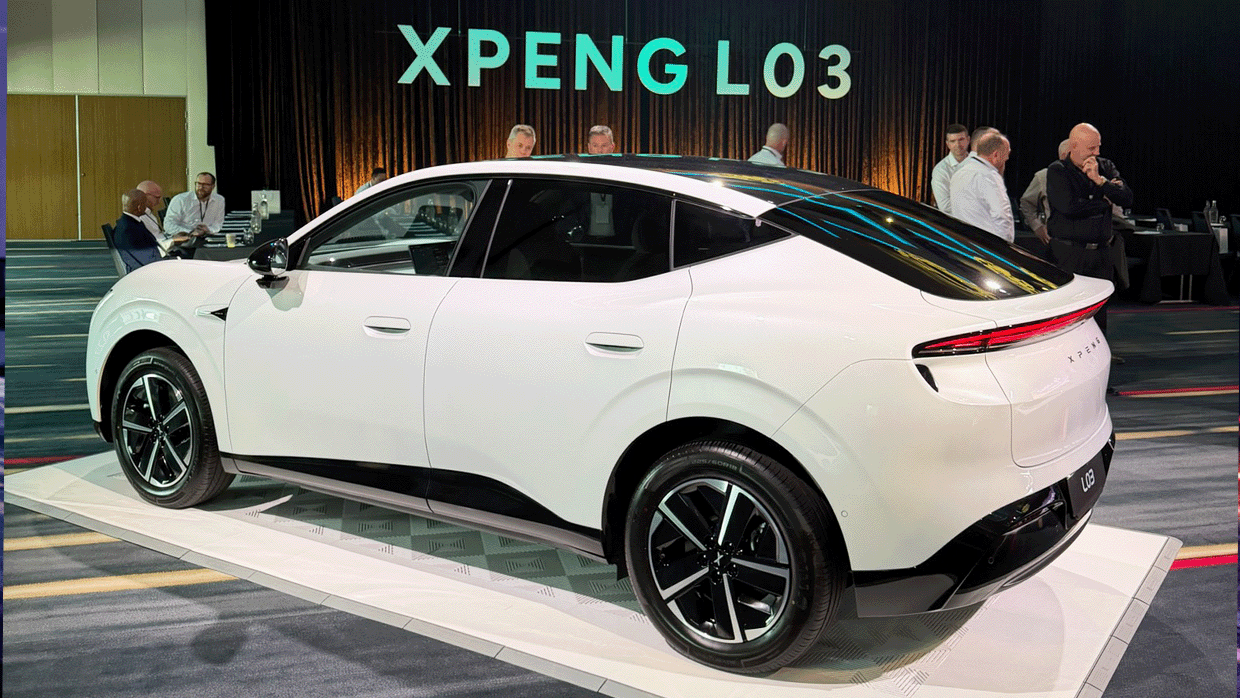
The PowerX pairs a 37.3kWh battery with a 63kW petrol engine that can charge the battery if it runs low. Xpeng calls it the Kunpeng Super Electric System.
As is customary with Chinese brands, technology is plentiful. The L03 includes Xpeng’s Xpilot driver assistance tech, encompassing adaptive cruise control, lane centring, traffic sign recognition and “intelligent parking assistance”. Front and rear crossing-traffic alerts and 360-degree cameras are also standard.
Inside, the voice control is designed to respond to normal speech rather than exacting commands. Also thrown in is ambient lighting with 256 (!) colours, heated and ventilated front seats, and a glass roof.
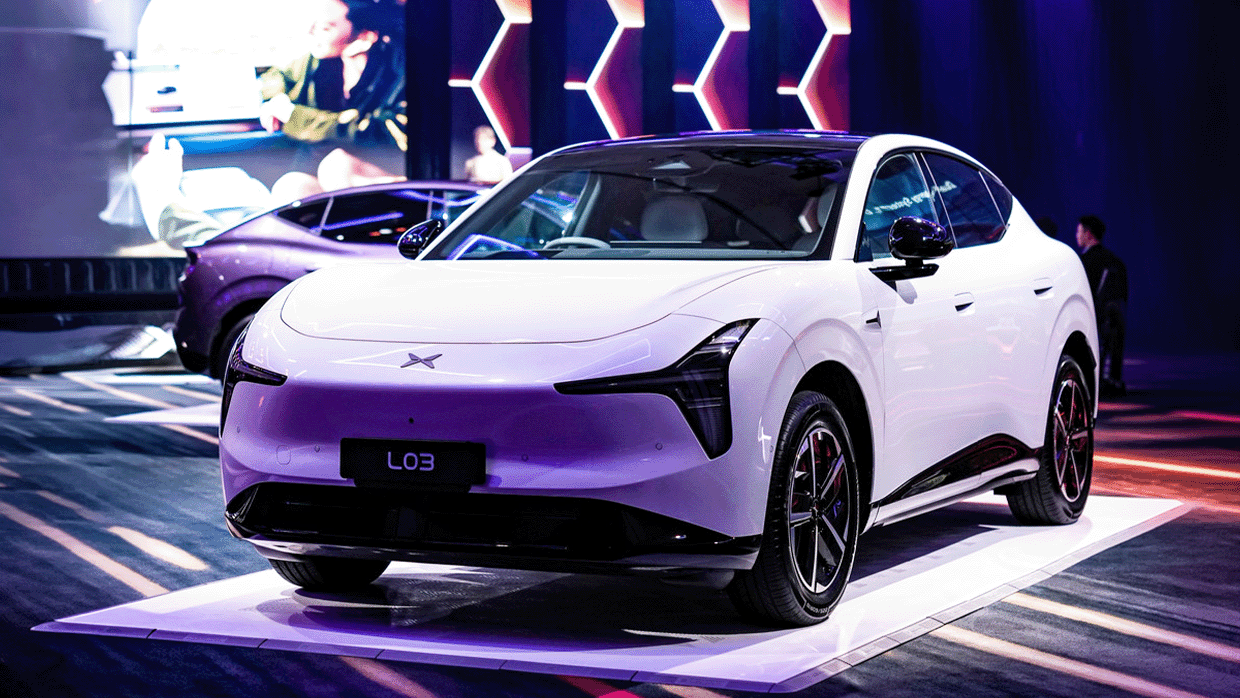
Xpeng Australia opens pre-orders for the L03 from today – Thursday, 24 September. Exact delivery timing and further specs are TBA, but Australian arrivals are expected in the fourth quarter of 2026.
2027 Xpeng L03: prices in Australia
All prices listed are before on-road costs.
- RWD Standard Range: $41,900
- PowerX Long Range: $41,900
- RWD Long Range: $46,900
- AWD Performance Ultra: $53,900
Related articles
Xpeng P7 2027 review: international first drive
Xpeng Australia upcoming models: updated G6, L03, GX and more
Xpeng GX 2027 confirmed for Australia as self-driving flagship challenger to Range Rover and Audi Q7
Fresh off announcing Australia’s cheapest EV, BYD has announced the nation’s cheapest plug-in hybrid.
BYD’s Atto 2 small SUV, currently electric-only, is being joined by a plug-in hybrid version, the DM-i. Undercutting the electric version, which starts at $31,990 before on-roads, the DM-i is just $24,990 in base Essential trim and $29,990 for the better-equipped Premium.
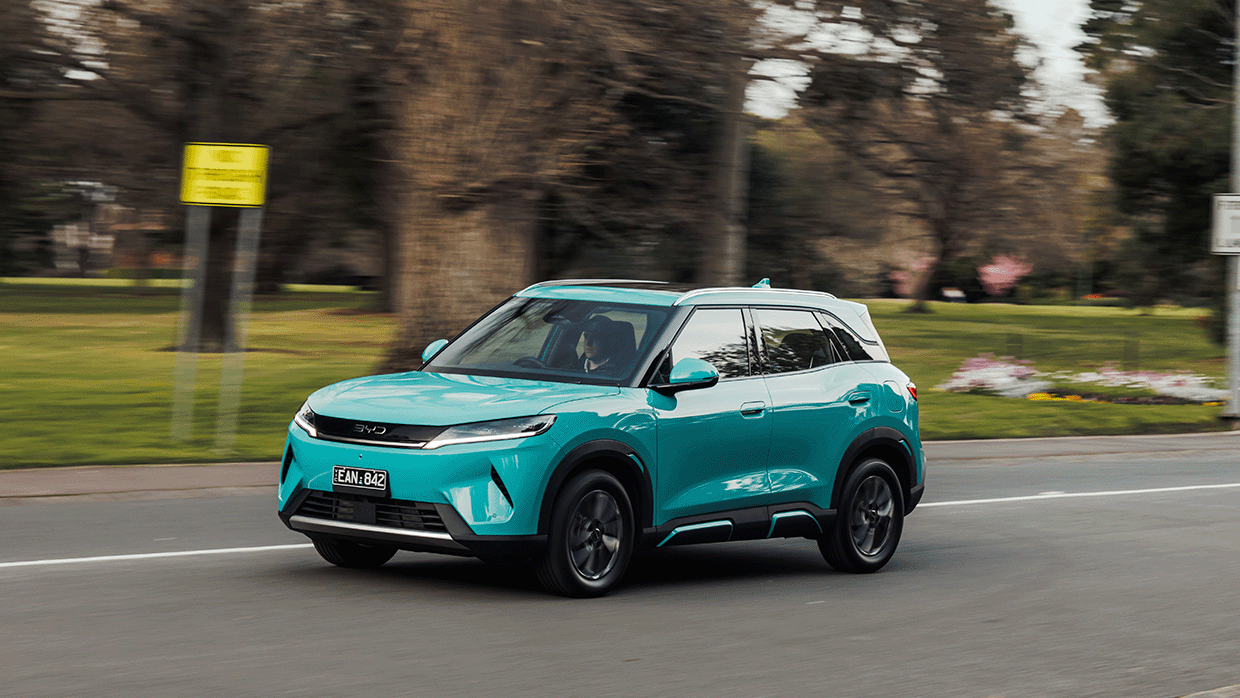
That’s $9000 less than Australia’s next-cheapest plug-in hybrid, BYD’s own Sealion 5 mid-size SUV ($33,990 before on-roads). It’s level with a budget-car icon, the Suzuki Swift, which is also $24,990 before on-roads in base-model, 5-speed manual form.
The DM-i is distinguishable from the regular Atto 2 by its front bumper, which now needs a grille for its combustion engine.
Both Atto 2 DM-i variants combine a 72kW 1.5L petrol engine with an electric motor to drive the front wheels.
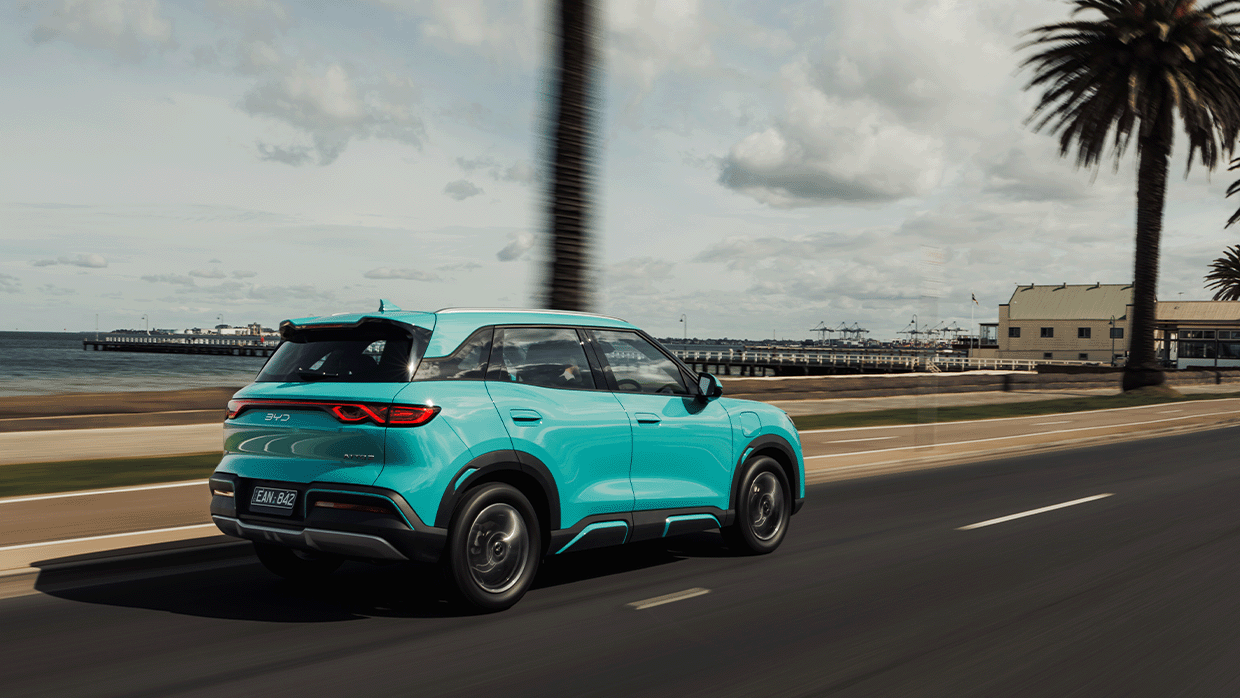
The $24,990 Essential grade has a 7.85kWh lithium-iron-phosphate battery delivering 39km of electric range (WLTP), with petrol-plus-electric combined power of 122kW. So long as the battery is kept above 25 percent charged, BYD claims fuel consumption of 1.8L/100km.
The $29,990 Premium scores an 18.03kWh LFP battery, with benefits across the board: 90km electric range (WLTP), combined power of 156kW and consumption of 0.7L/100km.
Combined torque is 300Nm for both. The Atto 2 DM-i can take up to 3.3kW AC charging; a full charge from 15 percent takes 2 hours and 42 minutes for the Essential, and 6 hours and 6 minutes for the Premium.
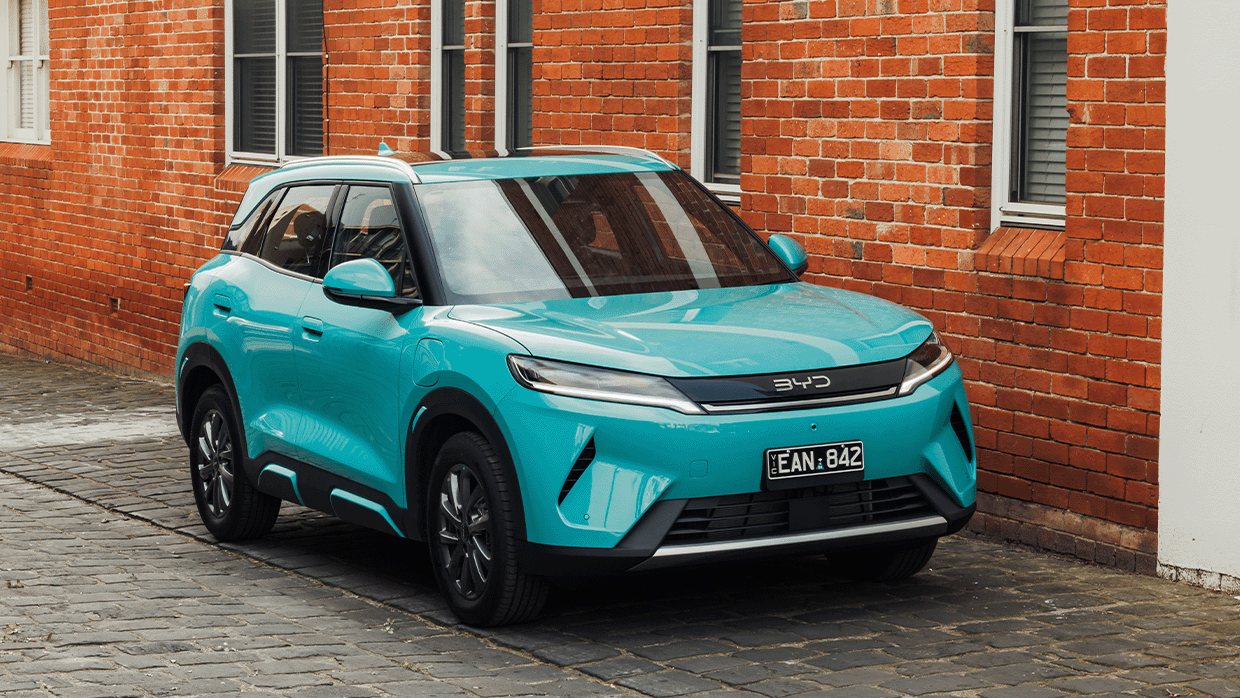
Like many hybrids, the Atto 2 DM-i drives in three ways – electric-only at low speeds, series-hybrid (engine on, but generating power rather than driving the wheels) at higher speeds, and parallel-hybrid (engine and electric motor driving the wheels together) for highway cruising.
Inside, both the Essential and Premium have wireless Apple CarPlay and Android Auto, with the Premium adding a larger touchscreen, heated front seats, an electrically adjustable driver’s seat, ambient lights, a glass roof and a wireless charger.
Boot space measures 425L, or 1335L with the back seats folded.
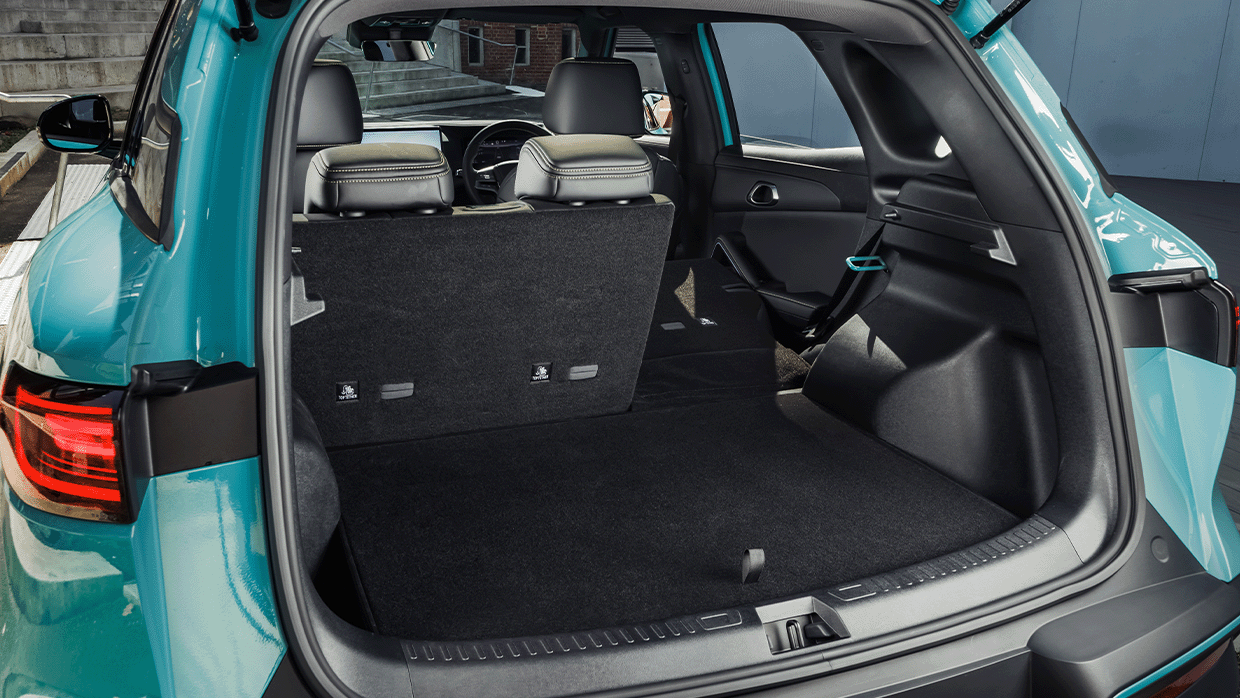
The Premium also provides front parking sensors, roof rails and – rarely for the price – 3kW vehicle-to-load charging, meaning whitegoods like coffee machines or even barbeques can be powered from the car.
BYD estimates Atto 2 DM-i deliveries will start in October.
2026 BYD Atto 2: prices in Australia
All prices listed are before on-road costs.
- Dynamic (electric): $31,990
- Premium (electric): $35,990
- DM-i Essential: $24,990
- DM-i Premium: $29,990
Related articles
BYD Atto 2 plug-in hybrid firms for Australian release with 1020km total range, circa-$30K entry price
BYD Atto 2 2026 review
BYD Atto 2 priced! Australia’s most affordable electric SUV costs thousands less than Leapmotor B10, Chery E5
Another fully electric hot hatch joins the fray – with a host of retro design cues to satisfy the soul
It’s been over 40 years since the 205 GTI changed how we see Peugeot forever. It’s a high the French company has pursued ever since, but no new model launch has referenced that effervescent old hot hatch quite as much as this one.
When they’ve trying to sell a fully electric car to a bunch of enthusiasts, can you blame them? The 205’s entire design mood board has been flung at this E-208 GTI.
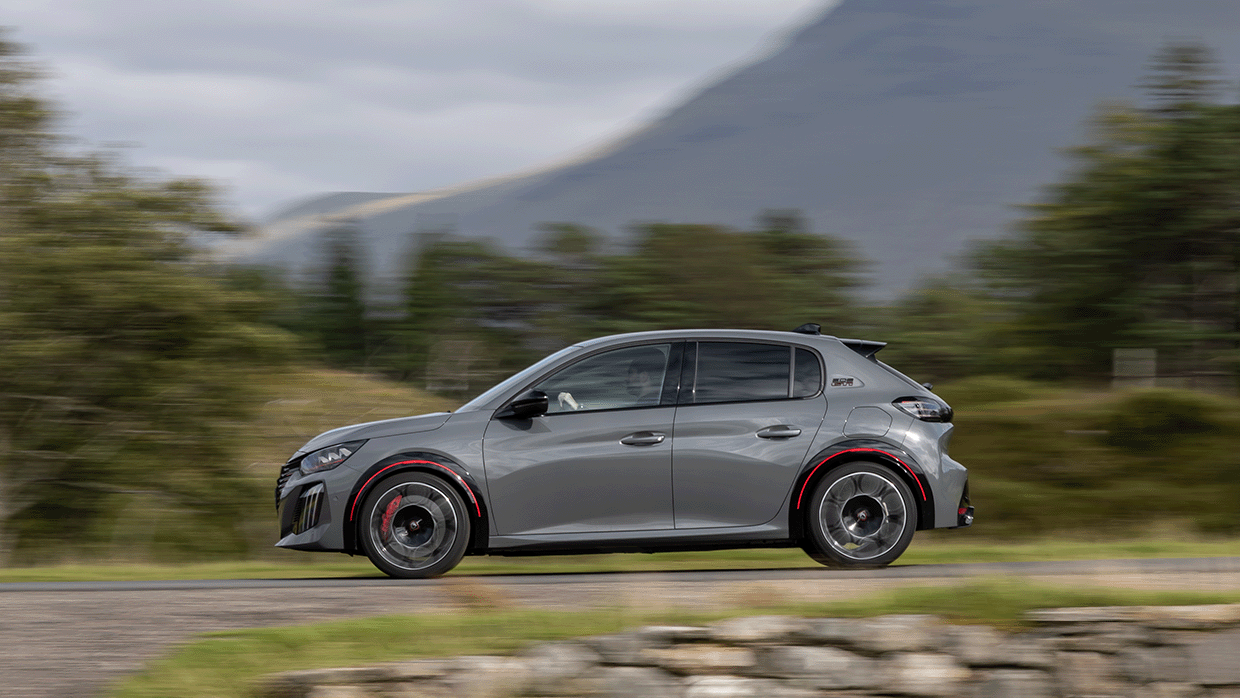
This retro formula is emulated across multiple reborn electric hatches, including the Renault 5 and its original, and more recently, Honda has drawn from the City Turbo II to create the Super One, due to go on sale in Australia this year.
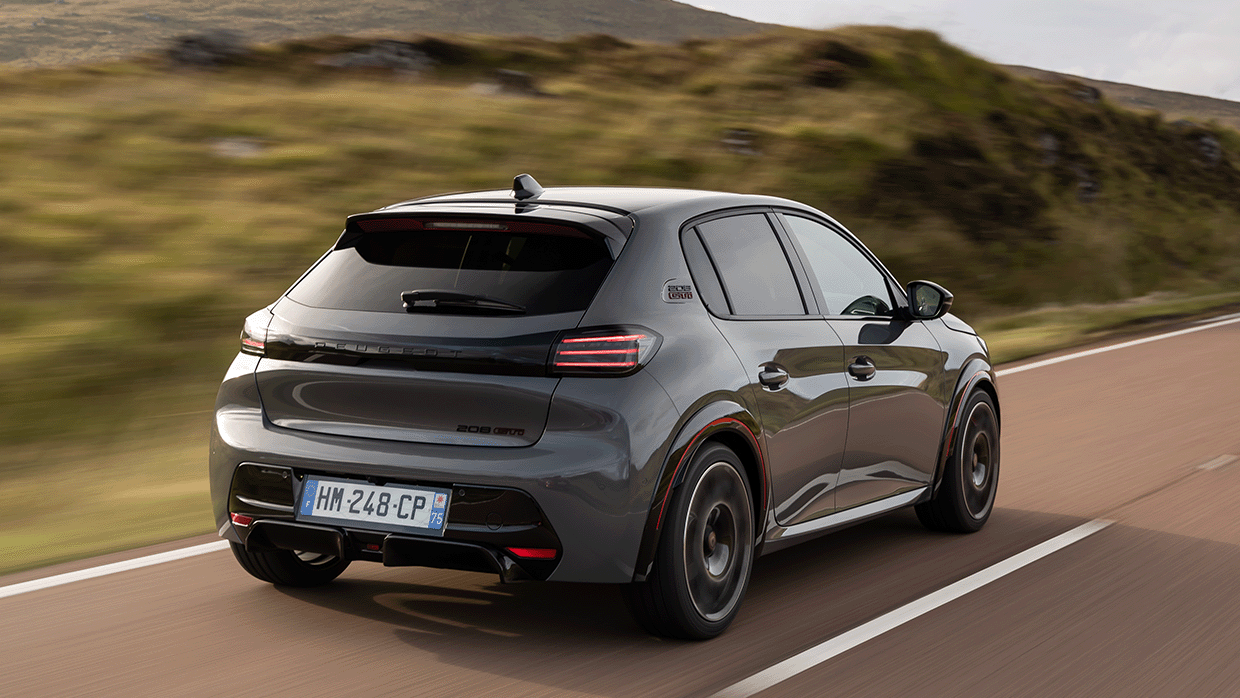
The exterior makeover of the Pug demonstrates some cheesy but ultimately charming nods to the ’80s icon. There’s the same C-pillar GTI badging, replete with a retro font. Red strakes across its grille, through its headlamp units and over its wheelarch extensions. Its 18-inch rims have perforated holes to mimic old 205 alloy designs.
Swing the door open and you’ll find punchy red carpets, mats and seatbelts and some natty patterned fabric on the seats. There’s a new row of performance dials within the central touchscreen and a synthesised motor sound to accompany your acceleration – a warbly electronic note rather than a misguided imitation of an internal combustion engine.
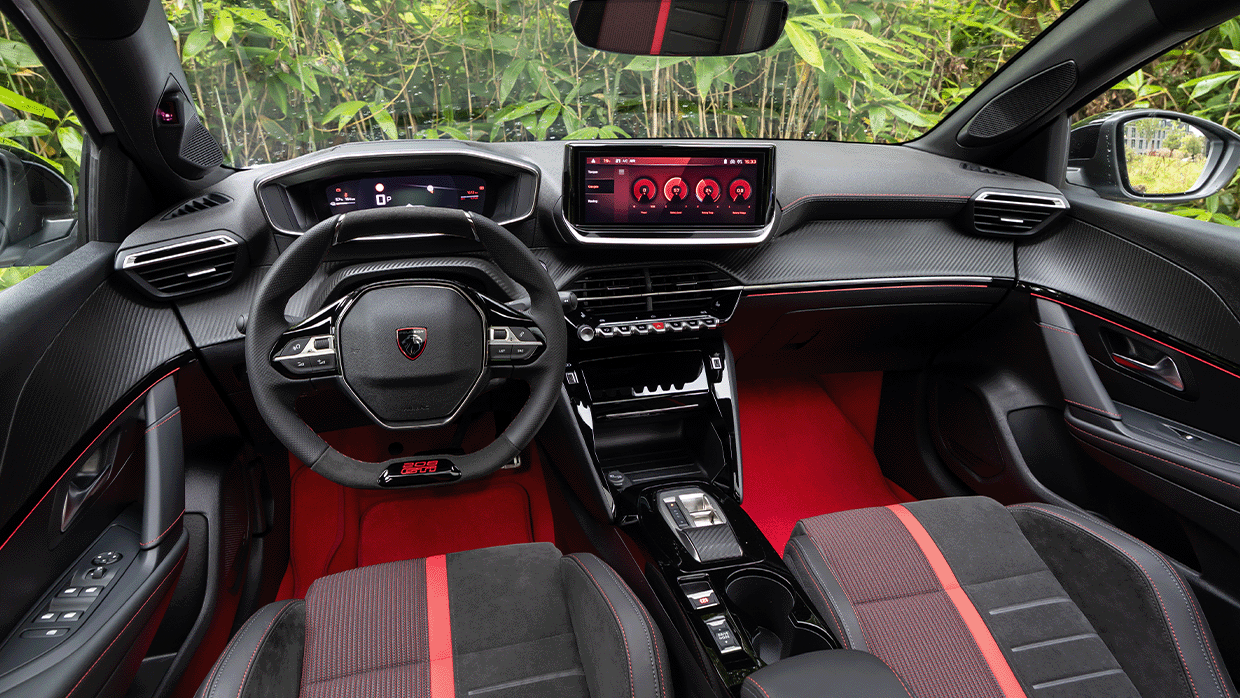
It’s a nice place to sit, the interior neatly mixing premium fabrics with pragmatic plastics to keep the price competitive. Peugeot’s love-or-loathe i-Cockpit is present and correct; those under six foot are likely to find it an easy place to get comfy, the view of its digital speedo over the top of its uncommonly dinky steering wheel.
The seats are fab, neatly fitting the GTI aesthetic while hugging you tight in corners. They’re perched surprisingly low for a front-driven supermini, too.
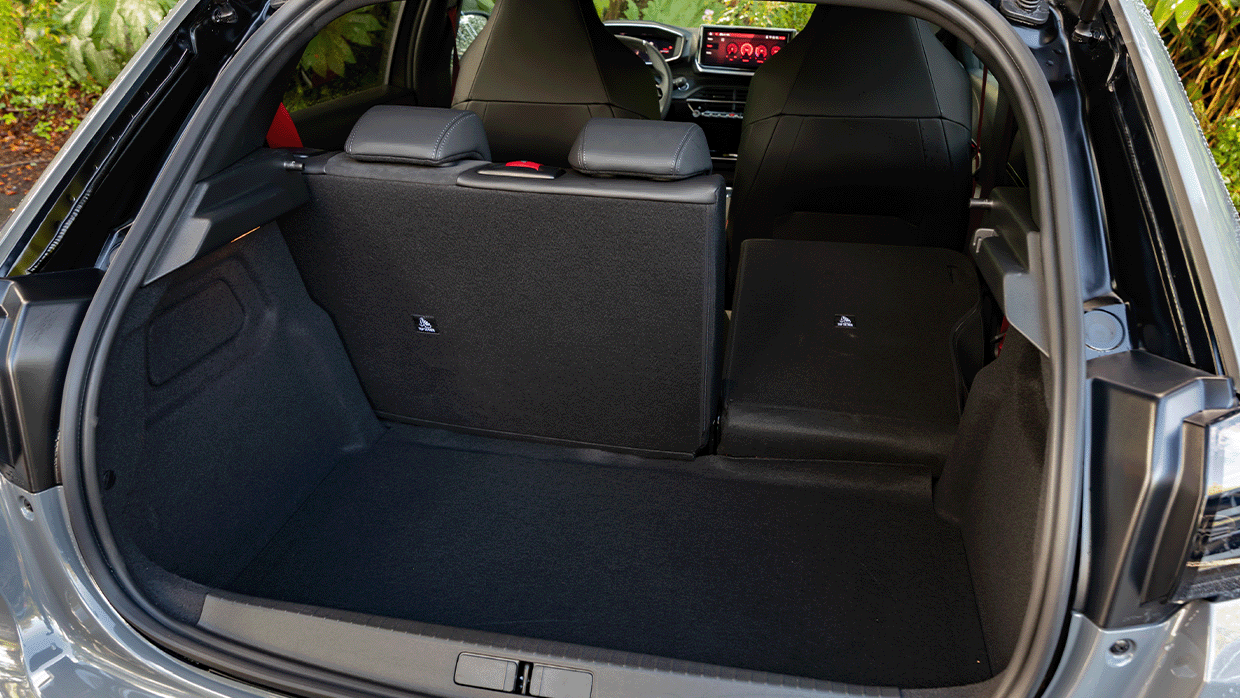
The climate controls are tucked too deeply within the central display and the drive mode switch is fiddly, but there’s decent space in the rear and a reasonable, 309-litre boot. The best hot-hatches always had a practical edge…
Beneath the skin is where it shouts loudest, however. Peugeot claims there’s know-how from the chiselled 9X8 racecar of its World Endurance Championship programme in here – specifically around its battery cooling, for greater stamina when driven quickly – yet the GTI’s on-paper changes all tally with those of the Opel Corsa GSE.
Plenty of its Stellantis cousins combine this 207kW/345Nm front-axle motor and 54kWh battery (51kWh useable). Yet with a bit less weight to carry, this is a genuinely rapid car, claiming 0-100km/h in 5.5 seconds (albeit a limited 180km/h top speed).
It also claims 352km of range on its standard Michelin Pilot Sport 4 S tyres or 375km if you go for an optional Hankook Ventus S1 Evo 3 (and likely enjoy a bit less grip with it).
Max DC charging is 100kW, allowing you to replenish from 20 to 80 per cent in around half an hour. Efficiency is quoted at 15.9 to 17.1kWh per 100km.
A host of chassis tweaks help mitigate its near doubling of the base E-208’s power. The ride height drops 25mm, the tracks are wider, there’s a new anti-roll bar at the rear, and a Torsen mechanical limited-slip differential operates at the driven front axle. Stiffer spring rates are offset by hydraulic bump stops to better balance precision and comfort.
Its Alcon brakes are enormous 355mm items up front and the regen system decouples in the GTI’s Sport mode, for more natural pedal response in rapid driving. Sport also opens up a more lenient stability control mode to better dig into the hooligan heritage of the original Peugeot 205 GTI.
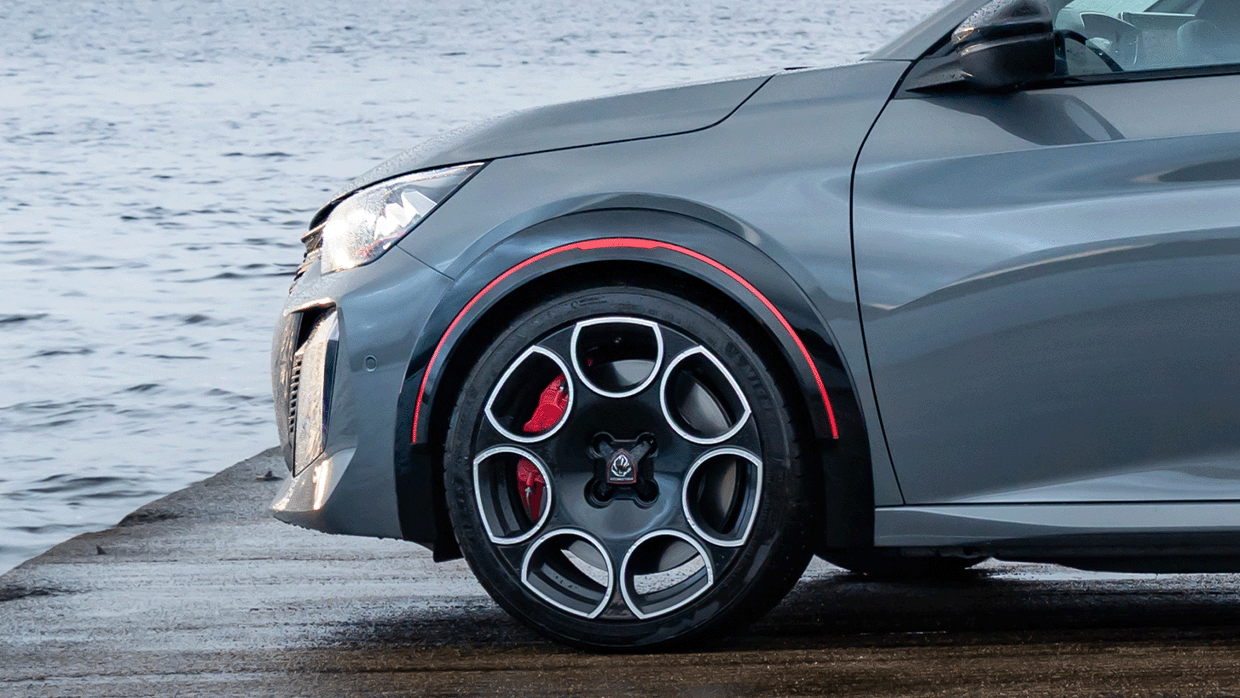
In reality, it’s a nicer car kept in Normal. The steering is cleaner and you get maximum power on full throttle regardless of your mode. And boy, is it rapid. That 0-100km/h time feels genuine yet there’s a generous linearity to its throttle response, freeing the GTI of the novelty, whipcrack acceleration of bolshier performance EVs.
You quickly build a confident, rapid flow in here, high grip levels allowing you to tip it eagerly into bends before the Torsen diff tenaciously gnaws you out the other side.
The ride is pretty taut through town, to the potential detriment of its everyday useability, though the GTI breathes better with speed. There’s fun to be had even if it inevitably stops short of the outright playfulness of the car it’s trying to cosplay.
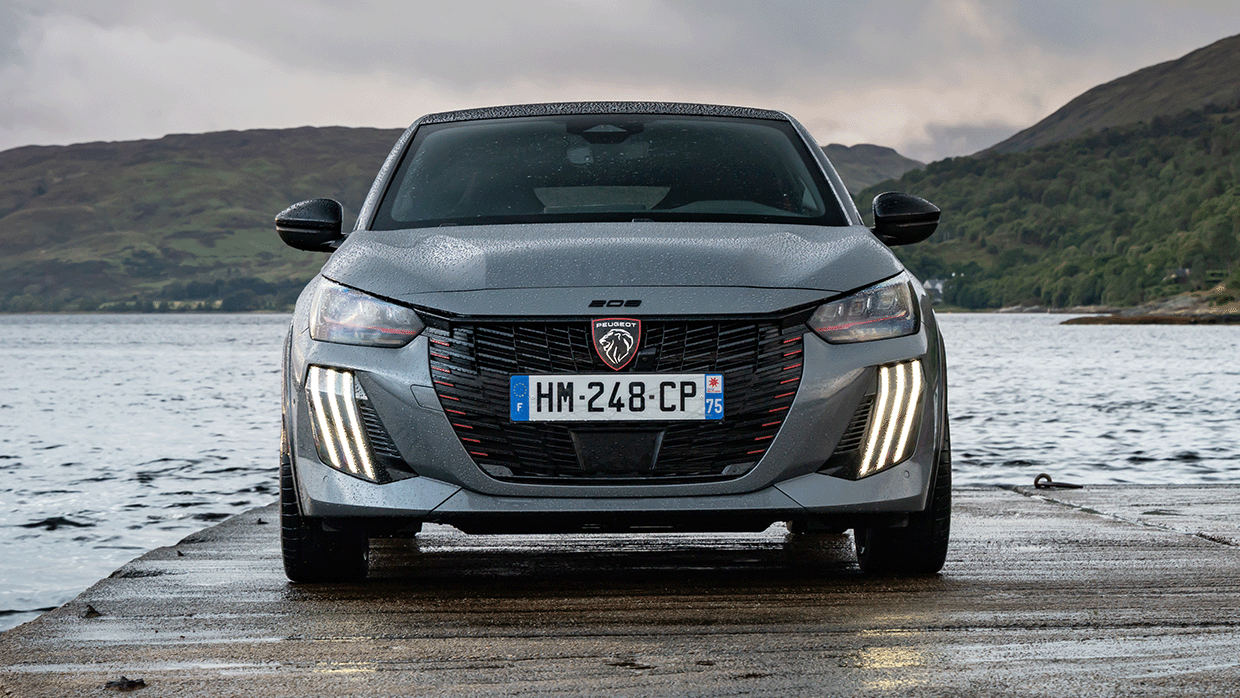
The looser ESP shackles would need a circuit to fully explore and the system can’t be disabled entirely. This is a more mature proposition than an old 205.
We scored an efficiency of 23kWh/100km in reasonably spirited driving, for a real-world 160-200km of range while occasionally indulging the GTI’s dynamics on a decent road. Experience of its Corsa GSE cousin on a circuit suggests this would be a great track car, too, however unlikely owners are to endure the logistics involved in that.
We’ve tested it on the gorgeous roads of the Scottish highlands, where prices start at £33,495 with a government incentive – or a whisker under $65,000.
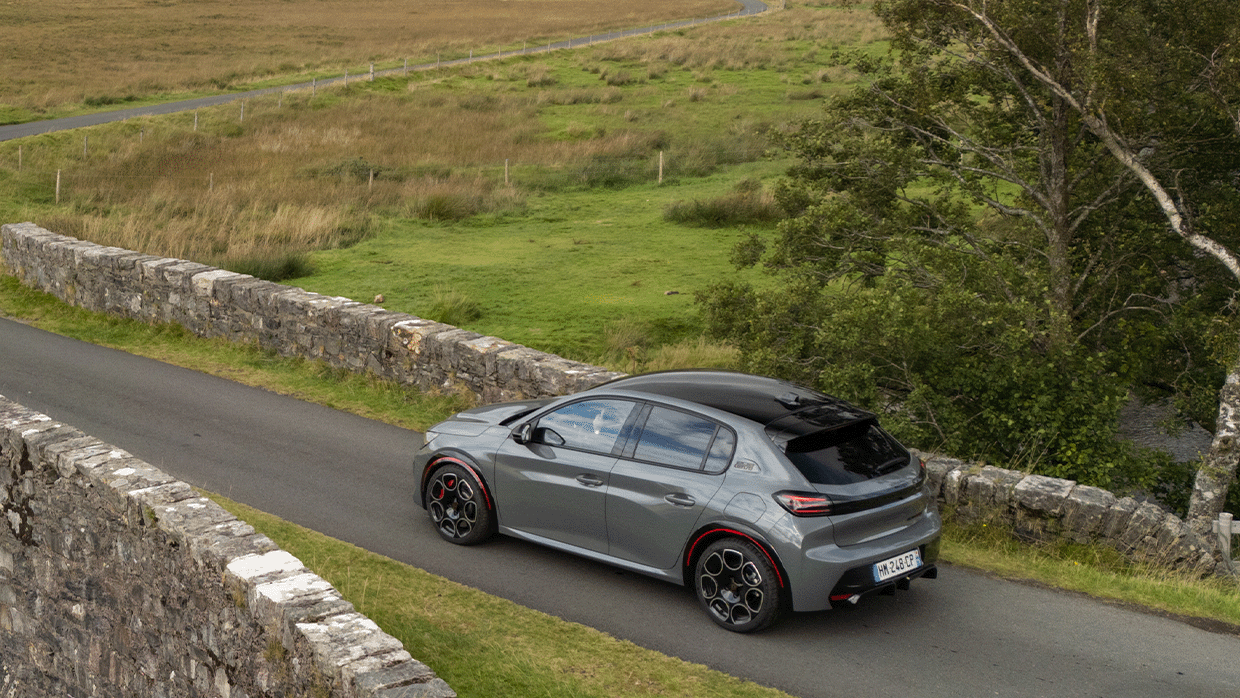
It never punches much harder than the sum of its parts, but there’s enough dynamic intrigue to cash the cheques of its appealing design makeover and it sits comfortably amid the increasingly competitive electric hot hatch sector.
Time to lobby for some imports now, though Stellantis Australia needs to first commit to selling Peugeot in Australia after the previous distributor Inchcape dropped the French brand earlier this year.
Related articles
Car news, 26 March ’25: Toyota vs Lexus in-house 4WD battle, Peugeot revives sacred GTi nameplate, and more
Car news, 18th February ’25: Nissan confirms 2025 Micra EV global release, Volkswagen confirms ID.2 X small SUV, and more
Peugeot E-208 2024: electric hatch with 400km of range confirmed for Australia
McLaren has refreshed its corporate look as it prepares to upend its line-up and end years of commercial headwinds.
Flush with £500 million from Abu Dhabi’s sovereign wealth fund, the British supercar maker, famous for its Formula 1 team, will diversify its line-up beyond mid-engined, rear-wheel-drive supercars. That template has been followed by every McLaren but one: the Mercedes-McLaren SLR, built from 2003 to 2010.
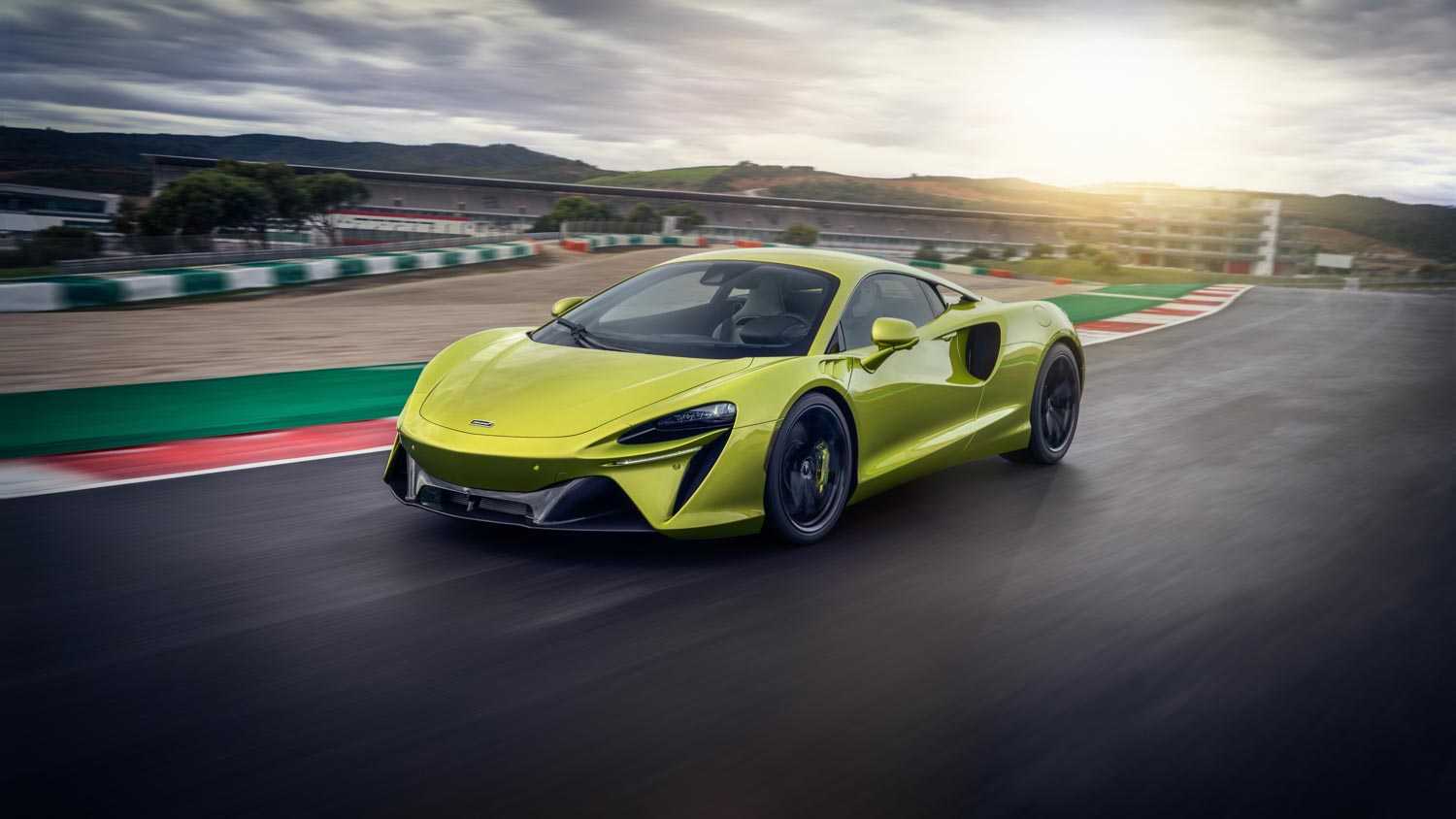
McLaren will be the latest luxury sports car brand to follow Porsche’s lead, and will build an SUV by 2030.
Set to be a front-engined hybrid, likely with all-wheel drive, the new platform mooted by McLaren could underpin other models beyond the confirmed SUV, such as a four-seat coupé rivalling the Aston Martin DB12.
McLaren is seriously considering constructing the SUV and its offshoots around a carbon-fibre tub, like existing McLarens. Outside of supercars, this is a somewhat radical move, but it could enable a wide range of bodystyles.
This approach has precedent. McLaren has vast experience in coupe and convertible construction where the cars’ rigidity comes from their tubs, so little to no reinforcement is needed to compensate for the missing roof in drop-top versions.
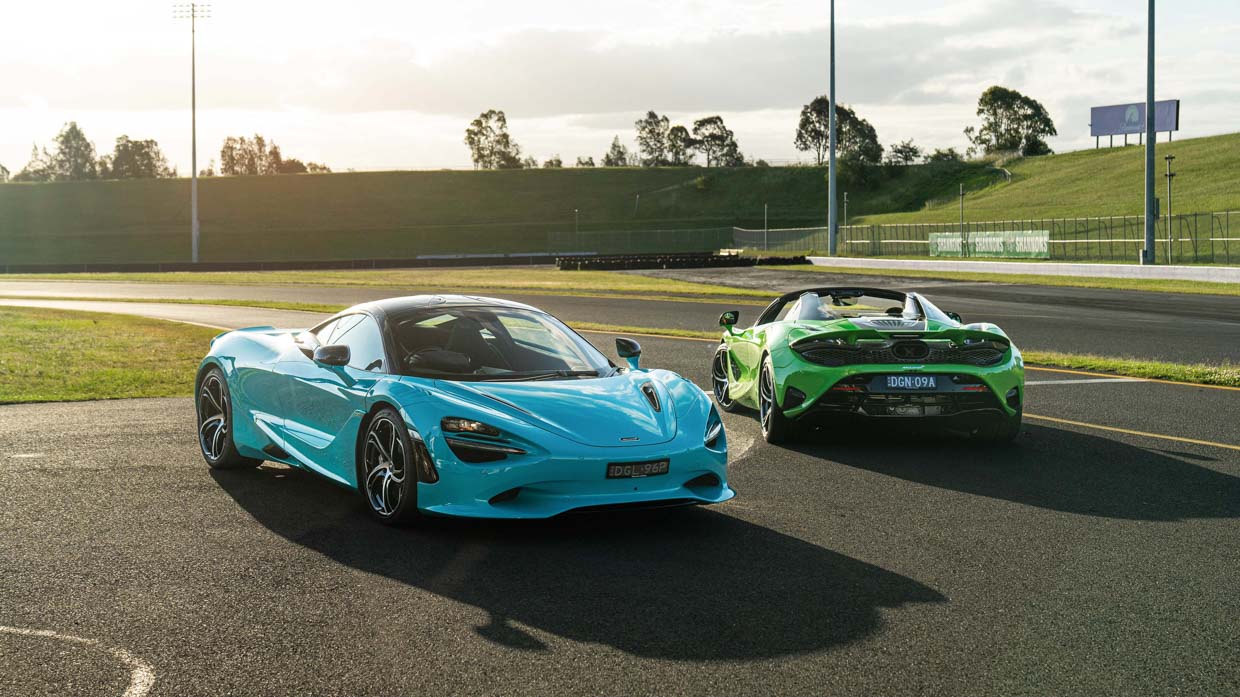
Engine development and production will come in-house. McLaren’s engines are currently built and co-developed by Ricardo, and the twin-turbo V8 in the 750S and GTS stems from a 1990s Nissan engine.
Off the table for now is an electric car, due to low demand in McLaren’s rarefied market segment.
McLaren plans three model ‘lanes’: its trademark mid-engined supercars, front-engined cars like the SUV, and the Ultimate Series halo models like the W1.
The half-a-billion pounds will also contribute to a second factory, complementing the existing plant in Surrey, England. The Guardian reports Yorkshire, which already hosts McLaren’s carbon-fibre production facility, is the preferred location.
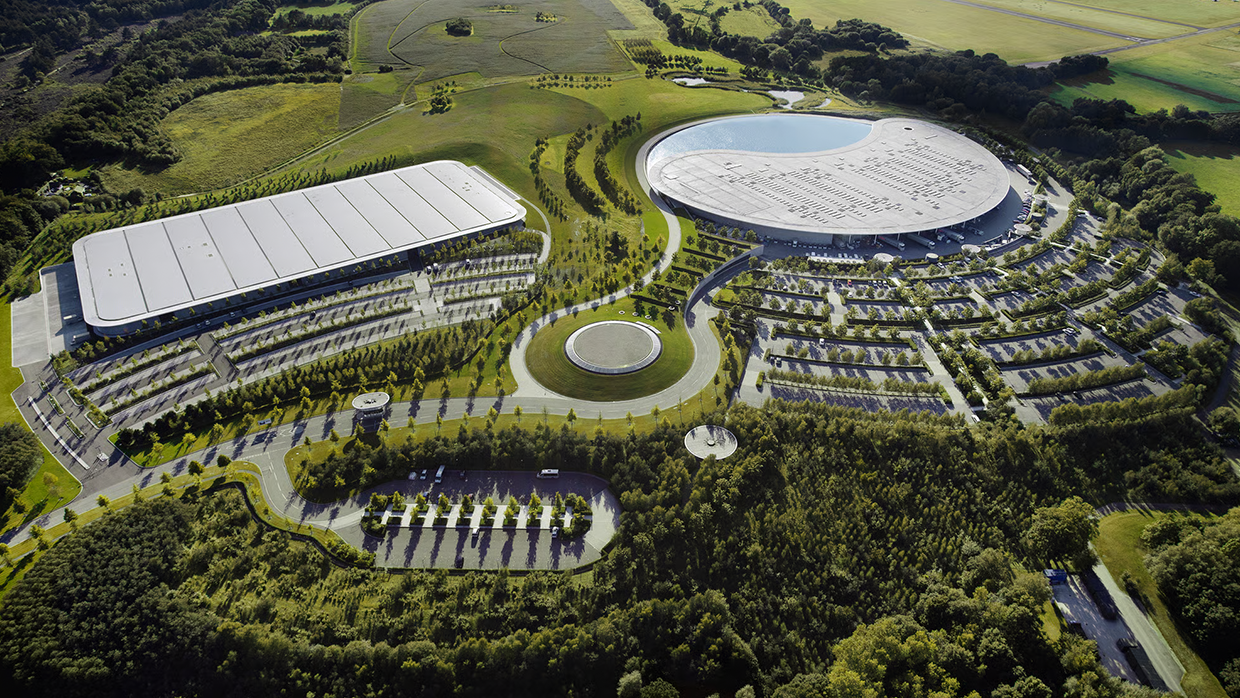
McLaren are tenants, not owners, of the Surrey plant, having sold it in 2021 to urgently raise funds.
Given Land Rover’s debilitating cyberattack, Jaguar’s intensely controversial new direction and Aston Martin’s own financial troubles, this is rare good news for the British car industry. McLaren’s plan was welcomed by the British prime minister himself, Andy Burnham.
It’s been suggested the expanding McLaren could absorb staff Jaguar and Land Rover are presently making redundant.
Every current McLaren under a cloud
McLaren’s new direction means its current line-up has an expiry date.
The first to go is reportedly the GTS. The unorthodox grand tourer debuted in 2019 to rival the Aston Martin DB11, Bentley Continental and BMW 8 Series, and will follow the Beemer out of production in 2027. The GTS shares its mid-engine layout and carbon-fibre tub with other McLarens, but could return using the SUV’s front-engined layout.
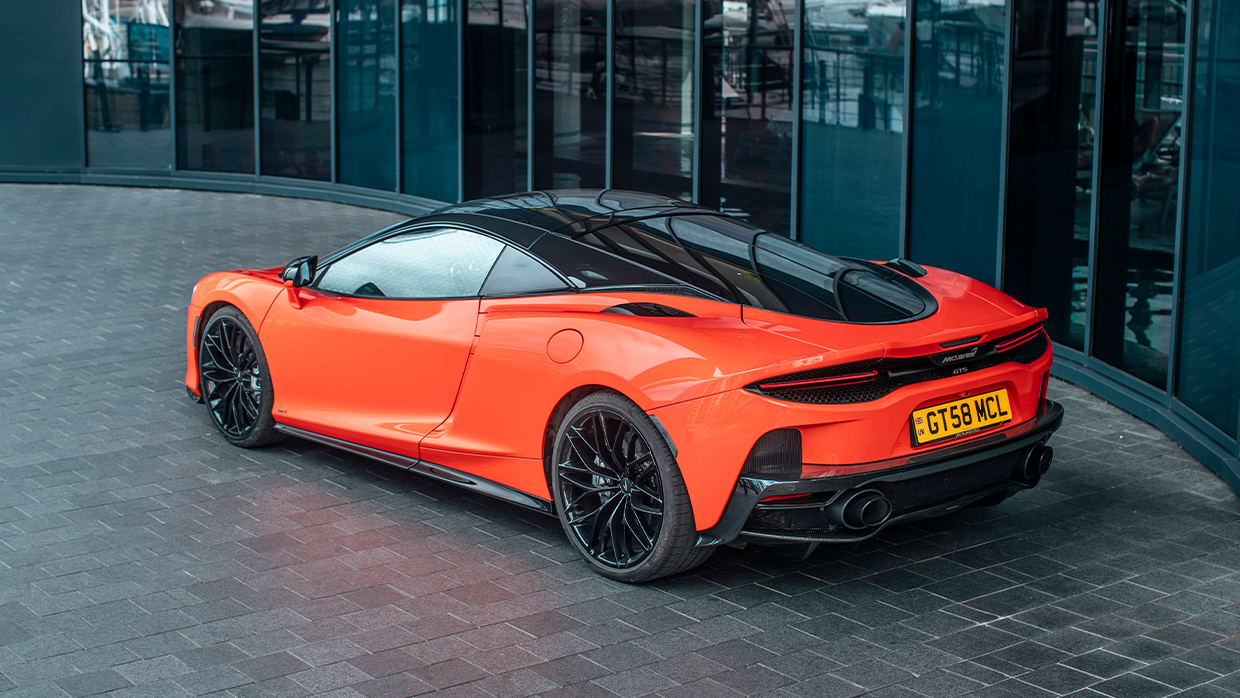
The Artura will depart in 2028. The V6 hybrid supercar’s gruelling initial launch – reportedly, several broke down in the hands of journalists during test drives – has weighed on sales, even though the Artura’s problems are generally considered resolved. McLaren’s senior supercar, the V8 750S, dates back to 2017 and is due for replacement.
An upcoming mid-engined supercar, codenamed P34, will reportedly keep the Artura’s twin-turbo V6 and hybrid system. The P34 will replace either the Artura, the 750S, or both.
Not All Black
A rejigged visual identity accompanies McLaren’s future plans.
The new wordmark – which will not replace the Speedmark logo or Speedy Kiwi icon – mimics the sign above the McLaren family’s petrol station in its native Auckland, New Zealand.

Bright orange won’t be displaced as the company colour, but darker, blander colours will join it as a “signifier of premiumness and luxury”. There’s also a new font, McLaren Sans.
The Speedy Kiwi himself, Bruce McLaren (1937-1970), will get the hagiographic treatment accorded to Enzo Ferrari. McLaren executive David Woodhouse stated to Autocar that “there’s been a period of not recognising our founder, not showing him, and we wanted to come back to this great foundation of what we’re about.”

Related articles
Car news, 14 November ’24: 2025 marks “no more open-ended” customer orders for popular Toyota models, and we compare Prado old versus new, and more
McLaren 750S 2025 track review
Car news, 8 Oct ’24: Toyota and Subaru join forces for next EV for 2026, Mercedes-AMG V8 could live on in new CLE 63 S, and more
Extraordinary figures from GWM suggests buyers won’t have to compromise on performance to achieve remarkable fuel economy, but are either realised in reality?
A month and a half on since we first drove GWM’s well-worn Cannon Alpha ute and Tank 500 4×4 SUV prototypes showcasing the new 3.0-litre turbo-diesel engine, the brand has presented its finished product for review.
The focus of this review is the Cannon Alpha, which we had a chance to sample on the official launch in Victoria and then back on our home turf to assess if it meets its class-leading claims in a segment that’s no stranger to upsets from Chinese rivals.
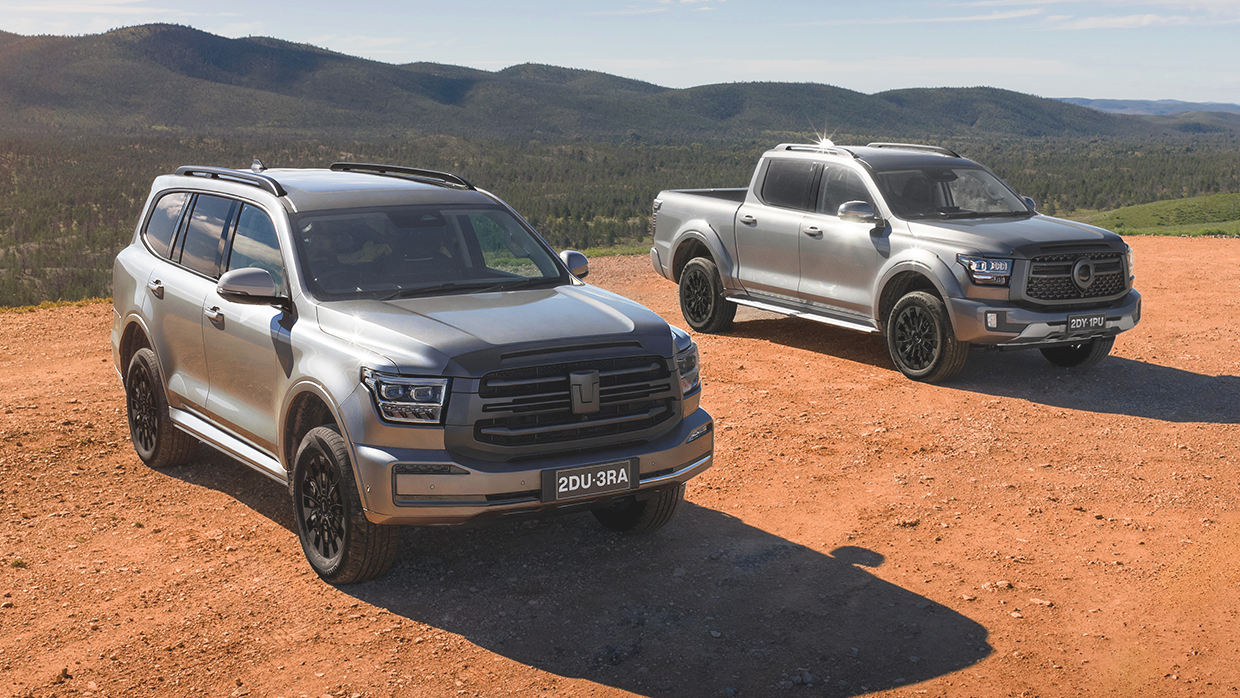
Replacing the 135kW/480Nm 2.4L turbo-diesel four-cylinder in the same way the plug-in hybrid has replaced its plugless petrol predecessor, the new 170kW/620Nm 3.0L turbo-diesel adds capability across the board.
Just two grades are offered at launch, with the Lux priced from $58,990 driveaway while the Vanta is $63,990 driveaway, making the base model $1000 more than the outgoing, top-spec 2.4L turbo-diesel.
Curiously, the new diesel starts $1500 dearer than the Lux PHEV; a vehicle not without its problems but one that promises the flexibility of 115km (NEDC) of EV range for daily commutes, now at a time when diesel is again around the three dollar per litre mark.
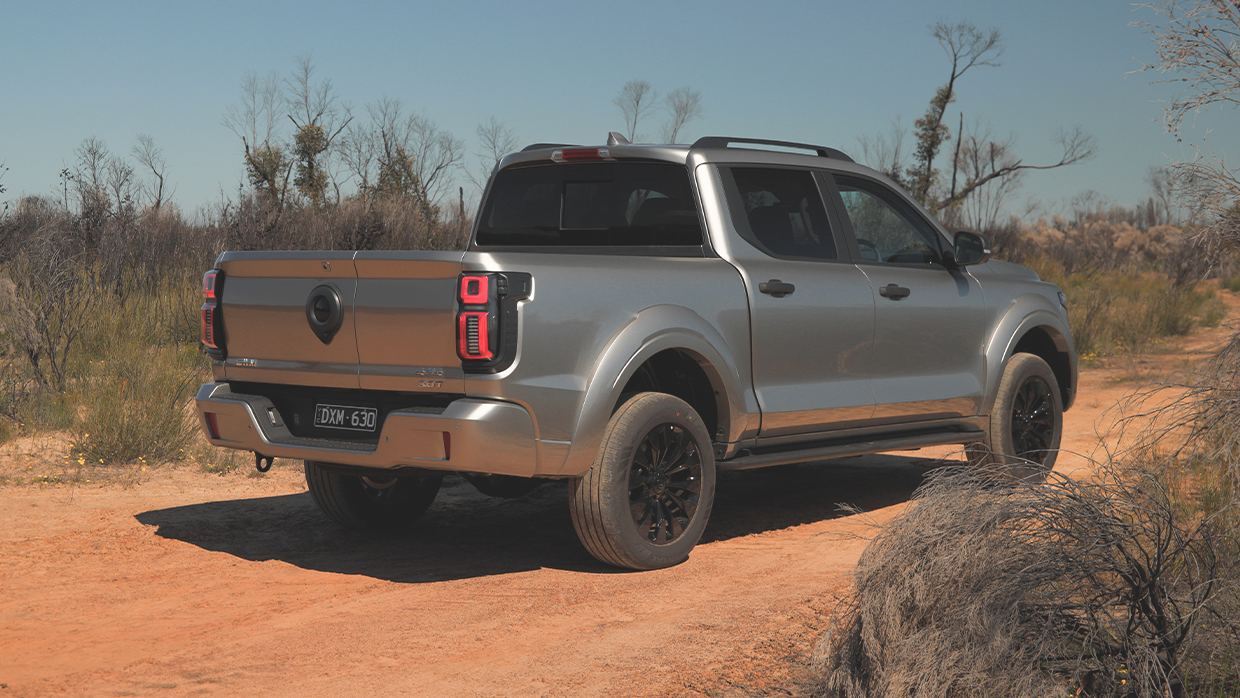
But whichever way you go, the Cannon Alpha is well-equipped.
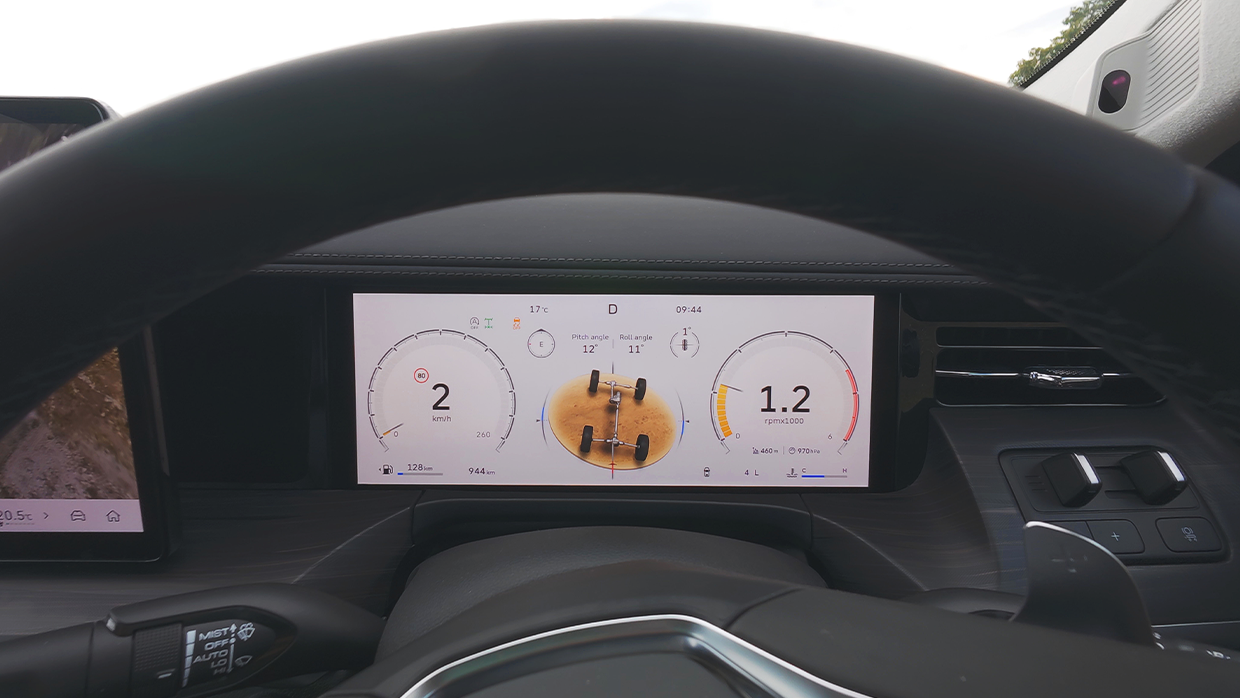
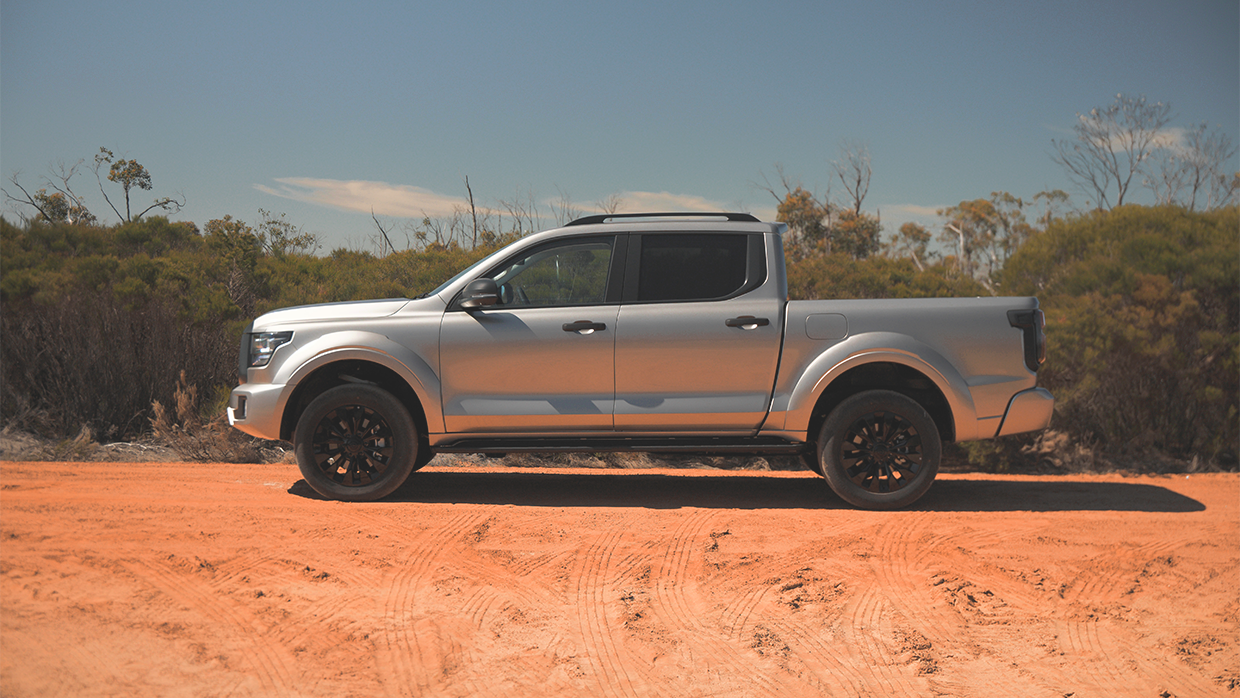
The diesel Lux is dressed in 18-inch alloy wheels, roof rails, side steps, LED headlights / tail-lights, power folding mirrors, rear privacy glass and a traditional tailgate.
Inside, you’ll find highlights including a 14.6-inch touchscreen, a 12.3-inch digital driver cluster, synthetic leather seats, power windows, a six-speaker stereo and power-adjustable front seats.
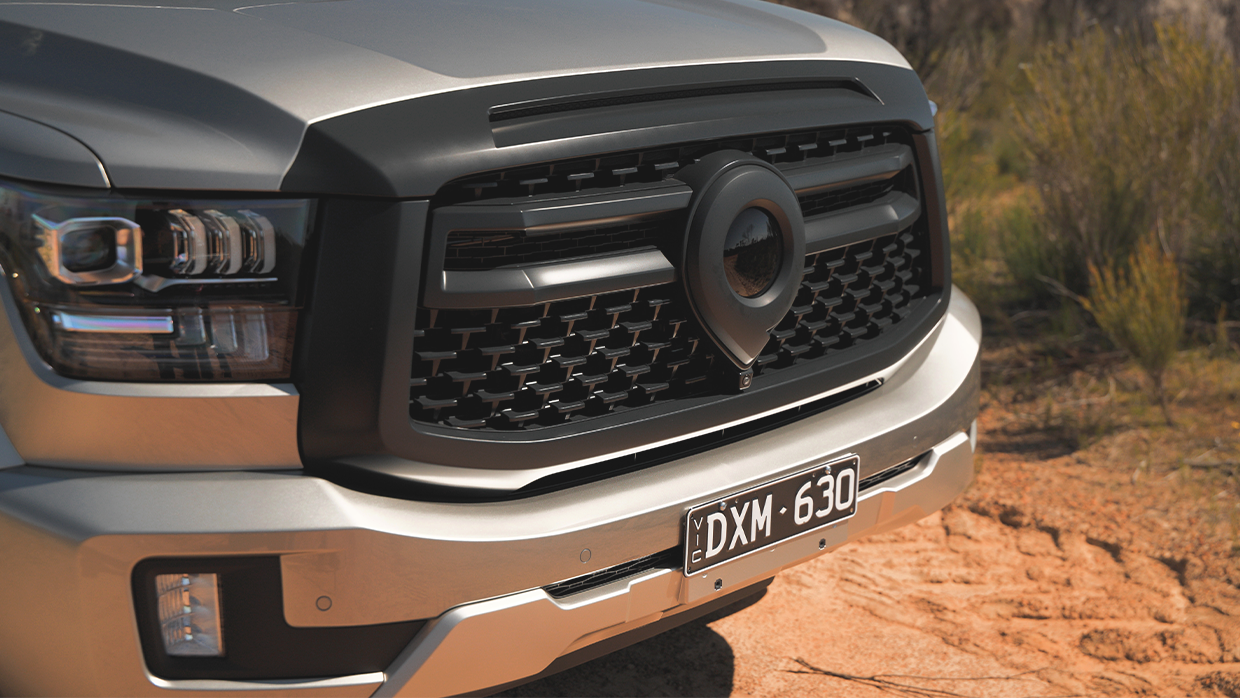
Fork out an extra $5K for the Vanta and GWM applies a black pack to all the exterior trim work, adds 19-inch alloy wheels, a 60/40 split tailgate, along with heated and cooled massaging seats, a 10-speaker stereo, heads-up display, 50-watt wireless phone charger and much more.
It’s a lot of kit for the coin and fairs well when you compare it against a fairly entry-level Ford Ranger Black Edition 3.0L V6 ($60,000 in NSW) or Isuzu D-Max SX 3.0L I4 ($59,220 d/a), but how does the rest of the package hold up?
How does the Cannon Alpha 3.0L diesel drive?
Since we last got behind the wheel of the 3.0L-equipped prototype, GWM’s engineers have continued tinkering with the Cannon Alpha and tell us that incremental improvements will continue going forward.
It’s a good attitude from a car manufacturer listening to its buyers, and it’s contributed to a setup that far surpasses the 2.4L model in ways that go beyond raw power and torque, but it’s a good place to start.
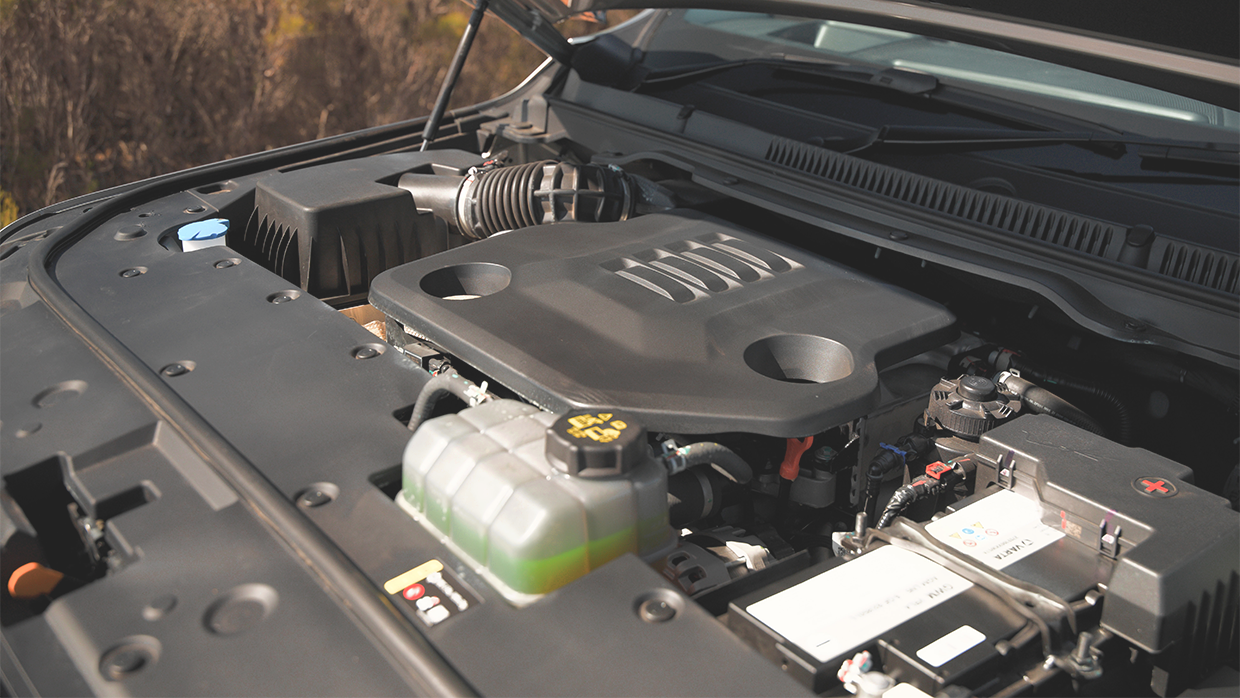
Not only are the outputs 35kW/140Nm up on the 2.4L ‘four, but the 620Nm is held from 1400-2400 rpm. The 170kW peak doesn’t quite reach the Ford Ranger V6’s 184kW mark, but it’s 600Nm does have a shorter, and later, rpm band of 1750-2250.
A proper twin-test is required to pick a winner, but given your reviewer owns a ute equipped with Ford’s V6, I can confidently say the Blue Oval unit feels like the quicker and more tractable motor.
Perhaps it’s the one-less gear in the nine-speed ZF transmission, but more likely it’s down to a decision made in the early stages to prioritise fuel consumption. The result is a claim of 7.3L/100km that’s leagues better than the Ford (8.4L/100km), and most other rivals.
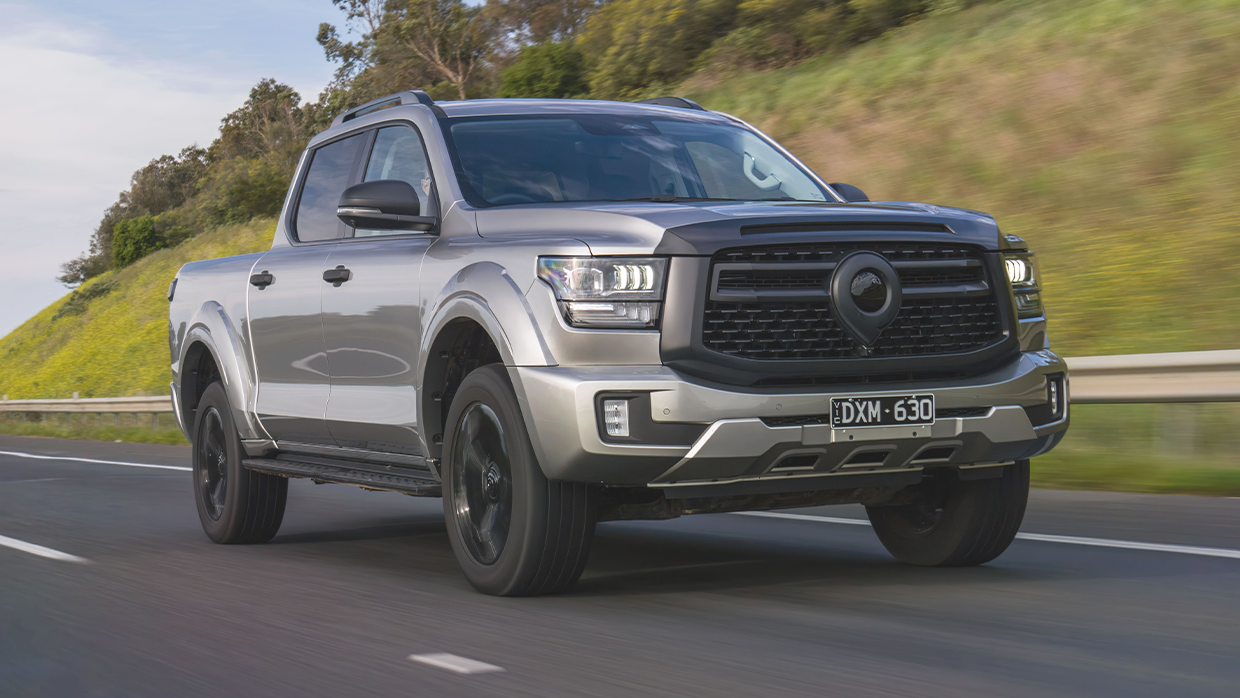
Similar to the prototype, we found the conservative tune of the Cannon Alpha is too hesitant to kick down gears when climbing hills to grab more torque. You can switch to Sport mode for greater response, but this spikes the revs notably and doesn’t fix the problem entirely.
Around town, it’s more attentive to driver demands, and we found ourselves settling into the flow of the drivetrain pairing. Accessing this flow-state does require an immediate switching off of the start-stop system each time you get in the car, as it’s comically slow to restart the engine in traffic.
Thankfully, GWM has placed a physical button on the centre console to turn it off, along with another for activating the 360-degree camera system, which you’ll need when parking this near-5.5m long ute.
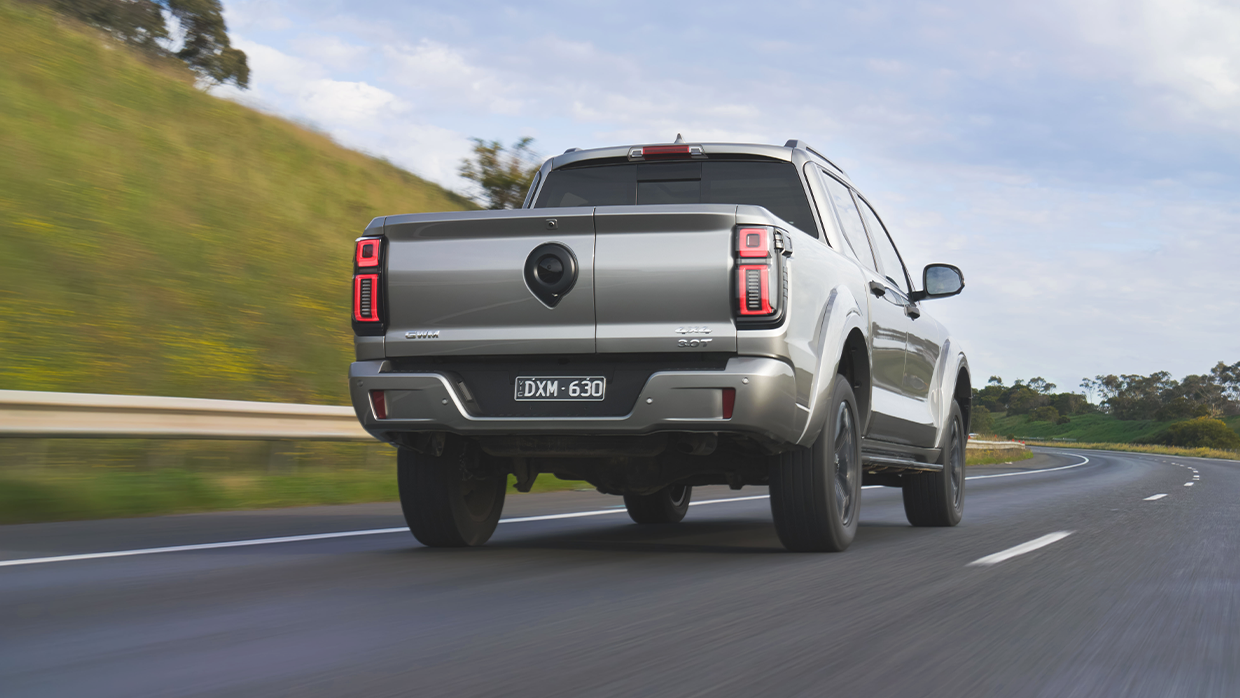
In addition to the new engine, GWM has also applied its AT-1 tuning program which goes beyond steering and suspension tuning to look at troublesome areas for the brand’s cars, such as the calibration of the software and safety systems.
While previous testing by Chasing Cars found the plug-in hybrid Cannon Alpha, with it’s coil-spring suspension, offered a soft ride over harsh surfaces but lacked body control in the bends, the diesel is the complete opposite.
GWM has made the wise decision to increase the payload from 760kg to 945kg in the diesel to make the 3.5-tonne towing capacity more realistic, but the stiff ride from the leaf-sprung rear end makes for an uncomfortable ride, at least when unladen.
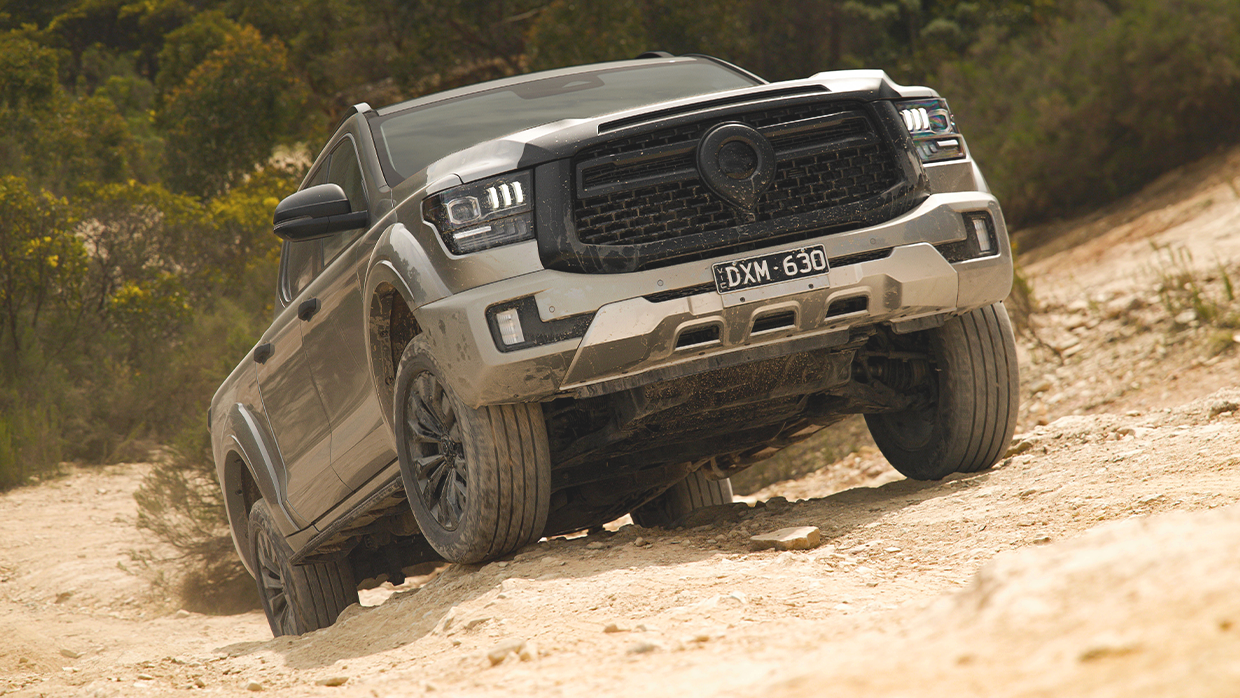
Throw it into a bend at highway speeds and the Alpha feels more composed than previous GWM’s but that faith is dampened by its limited ability to absorb but hits from unexpected pot holes and the like.
We haven’t yet towed with the new 3.0L diesel but perhaps it would make more sense in this application, with strong torque on offer, a newly integrated brake controller and dedicated tow mode, the Cannon Alpha shows promising signs in this area.
The AT-1 tuning program has also seen tweaks made to the safety assistance systems and the result is a welcome one.
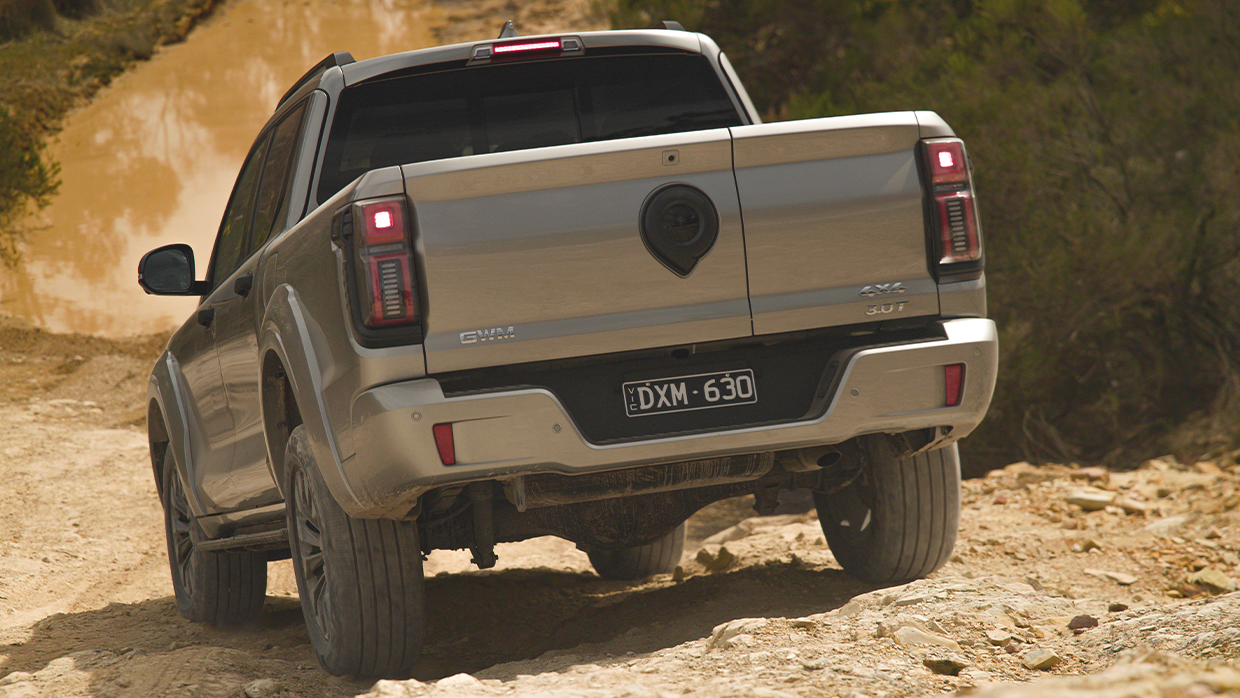
By and large, GWM is heading in the right direction here, though we did still find the driver monitoring system – primarily with driver fatigue – was too sensitive, and the ‘emergency’ lane keep assistance function was far too intrusive and cumbersome to turn off via multiple touches of the touchscreen, each and every time you start the car.
How is the Cannon Alpha 3.0L diesel’s interior?
The Cannon Alpha is a big vehicle but it also uses its space well, resulting in a far larger and more practical cabin than many of its mainstream rivals, but also observed by the likes of the Foton Tunland and BYD Shark 6.
It’s ironic that it took a nation where the average man measures 50-60mm shorter than ours, to show Aussies have tolerated tiny ute cabins for far too long. Don’t believe me? Go hop into a Toyota Hilux, and then a Cannon Alpha, and you’ll see the marked difference.
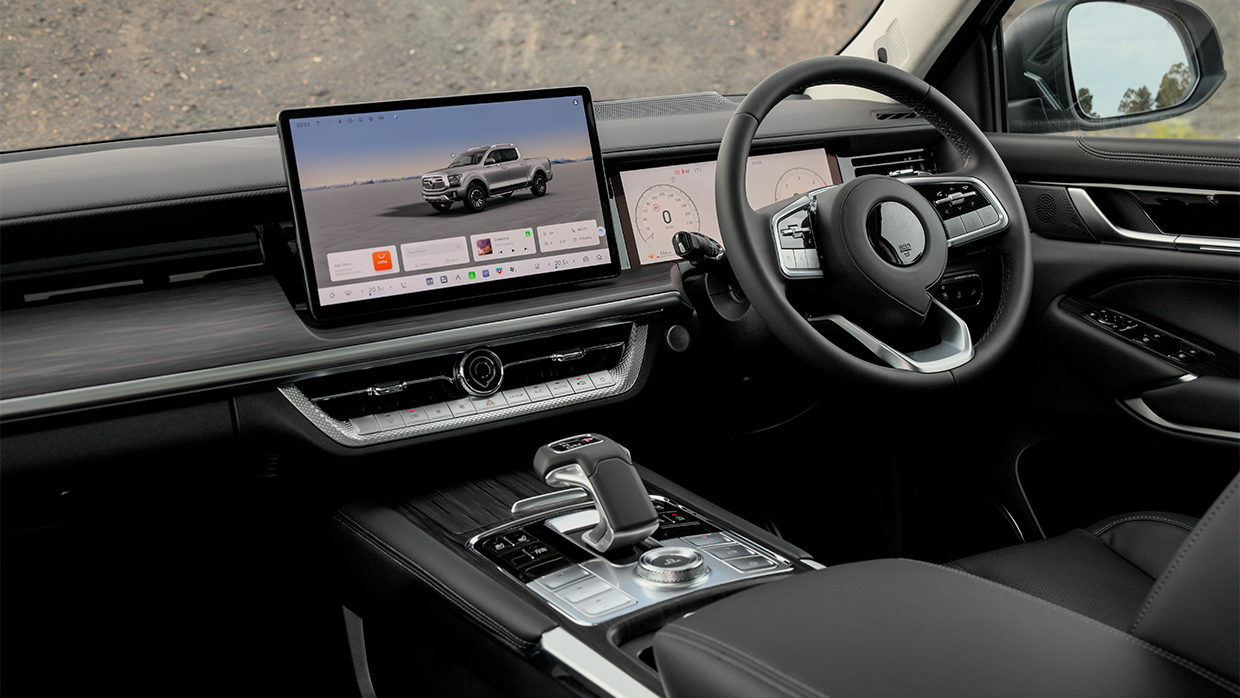
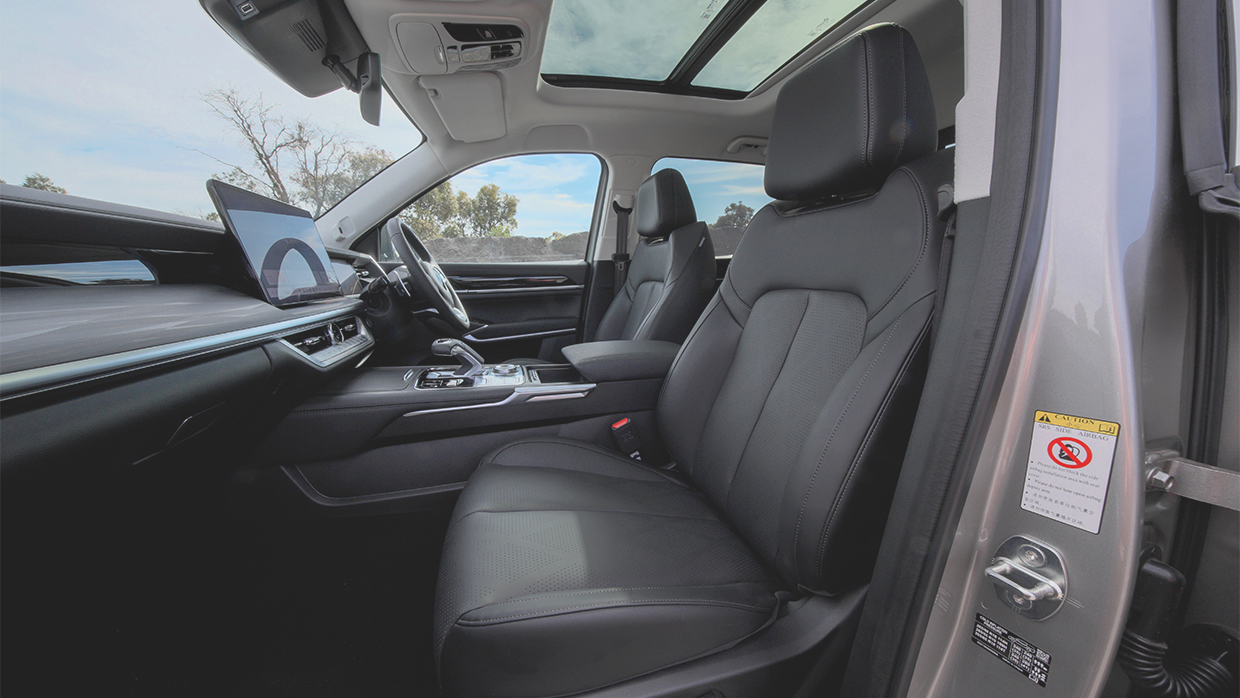
At 182cm tall the front row has plenty of room to stretch out, even if the seats themselves lack some of the inbuilt back support to ease fatigue on longer journeys.
There’s also a good amount of storage space under the shifter, centre armrest and glove box that goes beyond many mainstream rivals but to say its build quality and material choice is on the same level as something like a Ford Ranger, would be going too far.
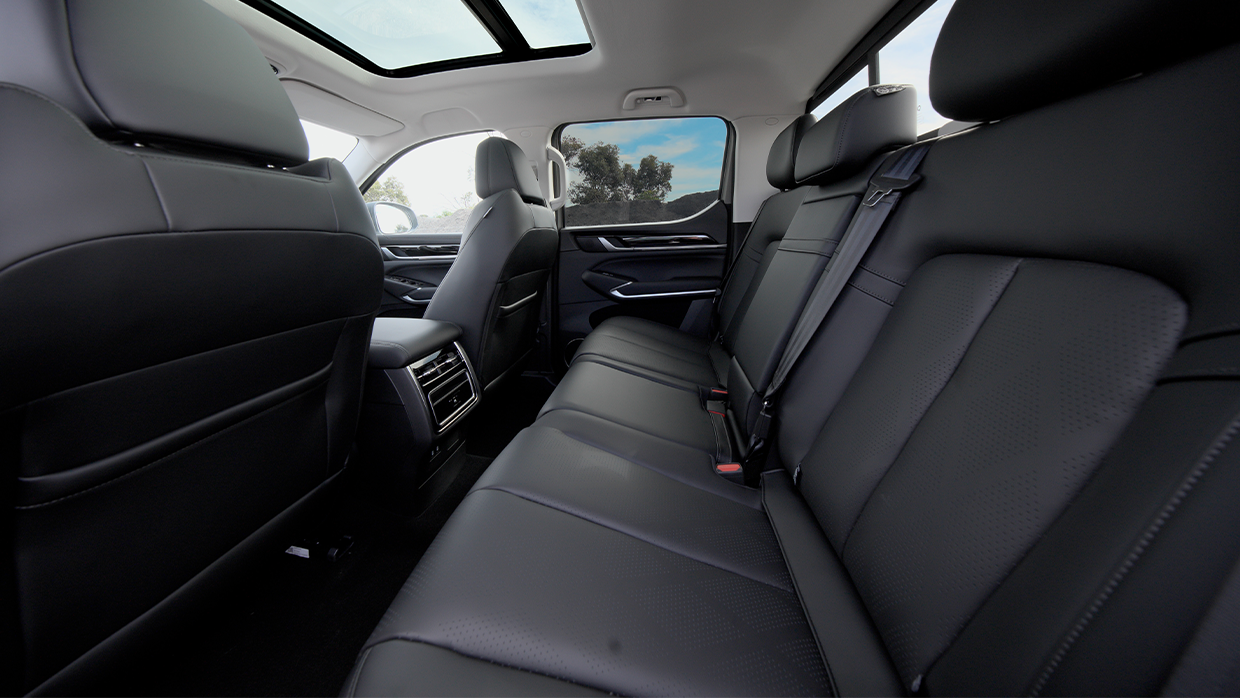
Row two is equally spacious, with plenty of room to sit directly behind my own driving position. The high floor does leave your knees feeling unsupported but the 60/40 split rear seats make up for it with a reclining function that could make it far easier for kids and adults alike to take a nap on long trips.
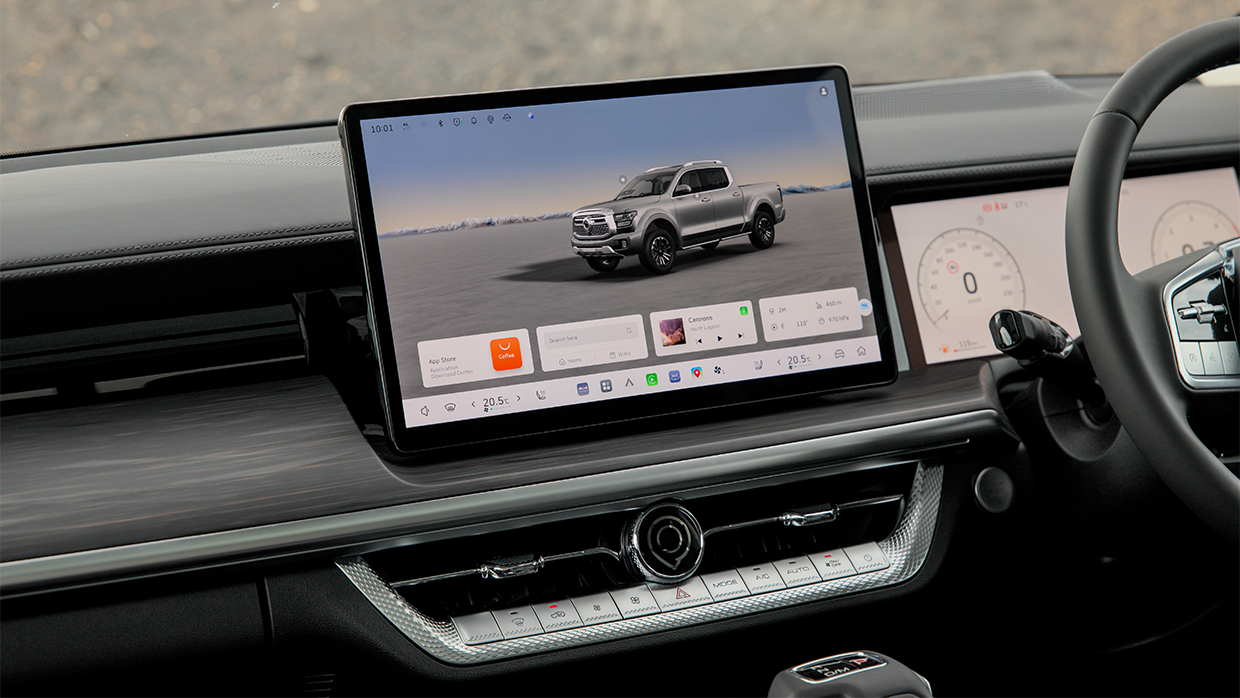
Back up front, a 14.6-inch multimedia screen serves as the command centre. Now running GWM’s latest ‘Coffee OS’ the tech feels faster and more mature than previous versions.
It works with an accompanying 12.3-inch digital display in front of the driver, with the pair featuring a helpful series of graphics and specialised screens for off-roading and towing, which GWM staff have clearly poured a lot of love into.
The step up to the Vanta grade feels worthwhile given the addition of an upgraded 10-speaker stereo (albeit one that didn’t blow us away), heads-up display, heated/cooled front seats, a wireless phone charger and more.
It’s notable, however, that it misses out on features available on the equivalent Tank 500 Vanta, including power steering column adjustment, a heated steering wheel, interior colour options and fancy Nappa leather trim (in multiple colours) instead of normal black leather.
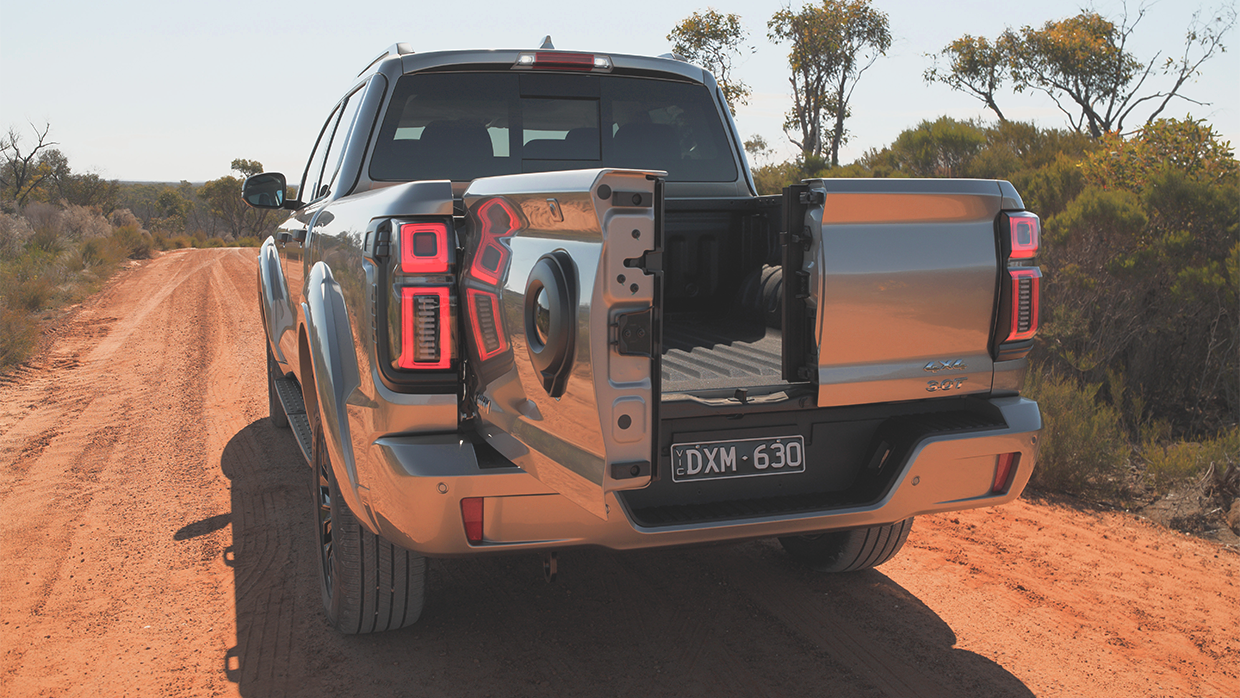
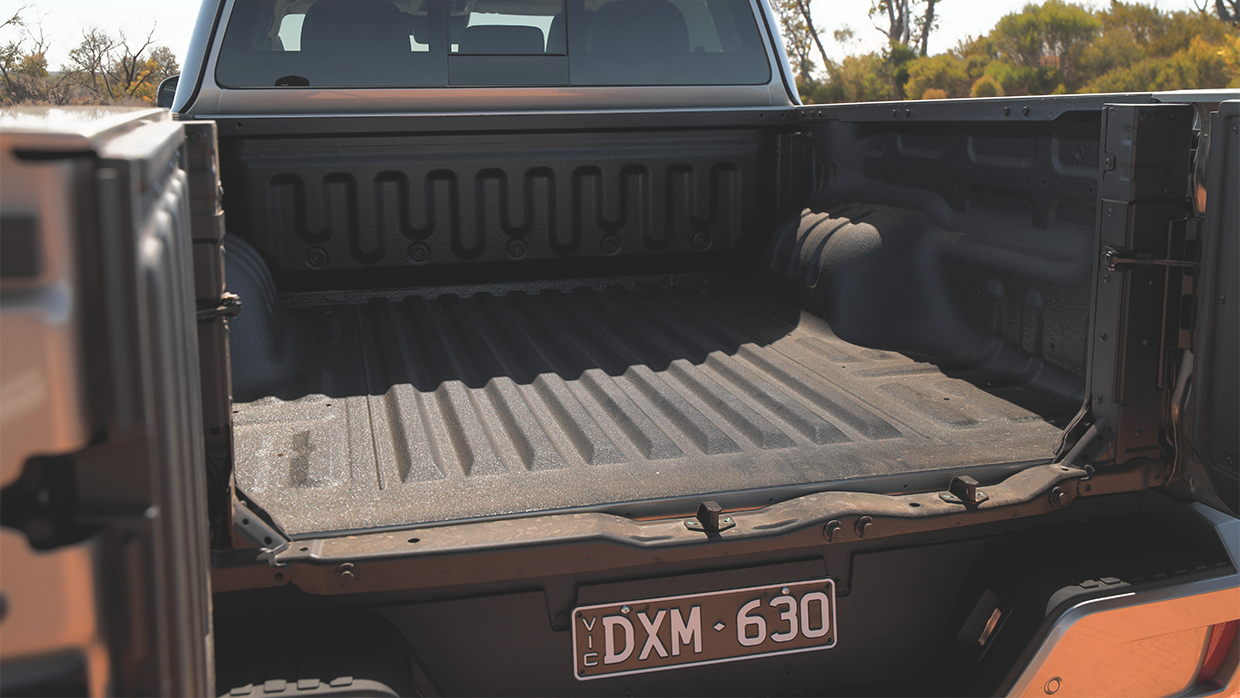
While it doesn’t have the sheer battery power behind it that the PHEV does, the diesel still features a 250V, 10A household-style plug in the tray. It loses marks for having just four tiedown points, but the 60/40 split tailgate on the Vanta is brilliant for reaching into the back of the tray.
What are the Cannon Alpha 3.0L diesel’s ownership costs?
An average fuel consumption of 7.3L/100km is quoted for the Cannon Alpha 3.0TD, which is a significant improvement over the 2.4TD’s 8.9L claim.
We did see as low as 7.1L/100km when driving on the highway but once we threw in urban driving and low-range off-roading, that figure spiked to 8.7L/100km, which is still impressive for a ute this large. Notably, the Cannon Alpha does not require AdBlue.
A 78L fuel tank is fitted to the Cannon Alpha, with the engineers unable to squeeze in the supplementary fuel tank available on the Tank 500 diesel, which boosts capacity to a whopping 131L – and nearly doubles the potential driving range.
GWM offers a seven-year, unlimited-kilometre warranty with servicing intervals of every 12 months or 15,000km, offering more flexibility than the likes of Toyota. Servicing over five years/75,000km will cost $2700.
Budget Direct told us the median annual premium purchased for the first time between 1/8/25 and 1/8/26 to comprehensively insure a new GWM Cannon Alpha was $1707. Individual circumstances and policy terms may vary.
Of course, everybody’s situation is different, and the premium will vary according to make and model, and other things insurers take into account, such as your postcode, driving history, who drives the car, where you garage the car and more.
Please quote for yourself. Subject to meeting underwriting criteria. Insurance issued by Auto & General Insurance Company Limited. See PDS & TMD at budgetdirect.com.au.
The honest verdict
With over 86 percent of buyers opting for a diesel-powered ute last year, the choice to double down with a newly developed motor strikes us as incredibly wise.
Some elements of the engine tuning, a downgrade to part-time 4×4 and mixed performance from the suspension means it doesn’t meet the threshold for GWM’s ‘class leading’ claims but the improvement over the underpowered 2.4TD is significant.
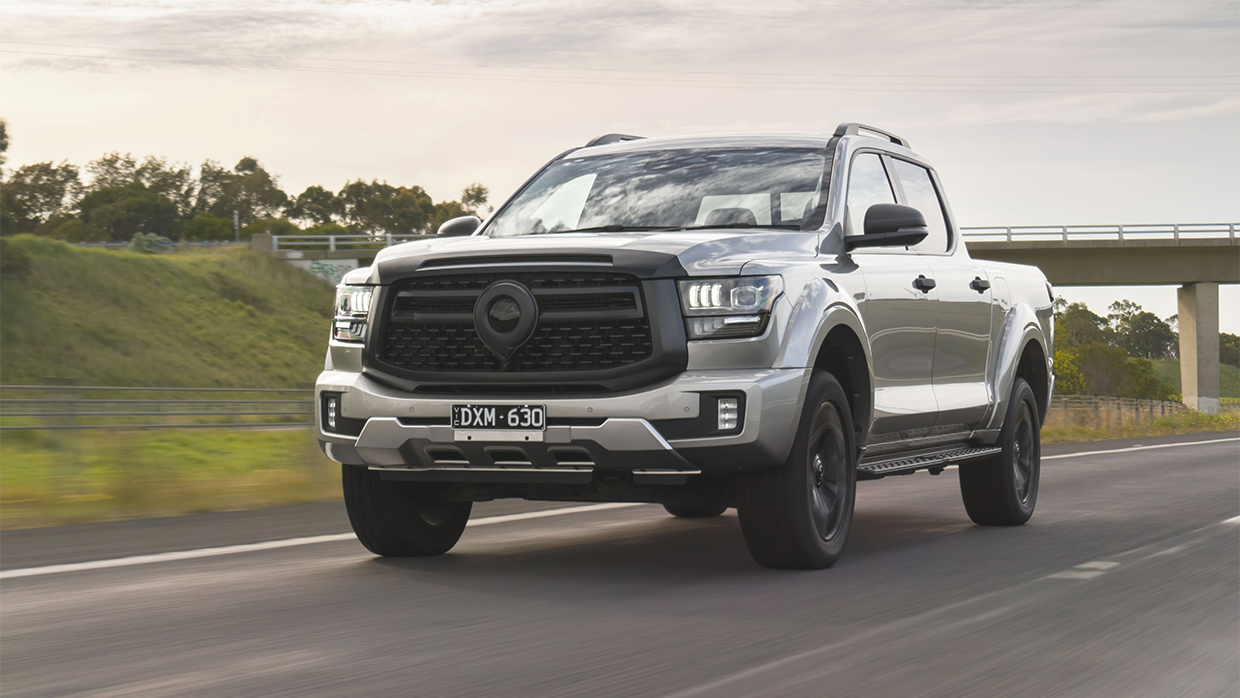
It’s a shame GWM has begrudged the Cannon Alpha some of the Tank 500 diesel’s luxury features and supplementary fuel tank, as it makes the former feel like somewhat of an also-ran, and the latter more of a stand out among its competitors.
Off-road ability, cabin space and value for money continue as key strengths of the Cannon Alpha and now it can add frugal fuel consumption and a more appealing diesel powertrain to the list.
Related articles
GWM Cannon Alpha 3.0L diesel 2026 review: pre-production drive
New 3.0L diesel, hybrids and EVs: GWM confirms nine new models before 2027, including all-new Haval H7 and Haval Jolion Max
Diesel plug-in hybrid ute confirmed! Chery dual-cab here in late 2026
Thousands of BYD Shark 6 models have been recalled to stop their spare wheels from potentially falling off.
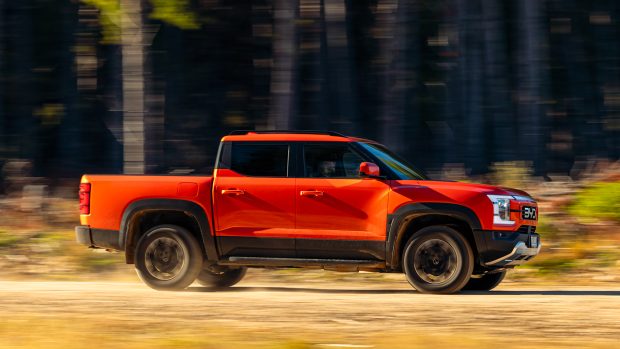
Issued yesterday by the federal Department of Transportation, the recall is for all variants of Shark 6 built between its Australian launch in 2024 to now.
Affecting 32,009 cars, the recall impacts the great majority of BYD Shark 6s sold in Australia to date.
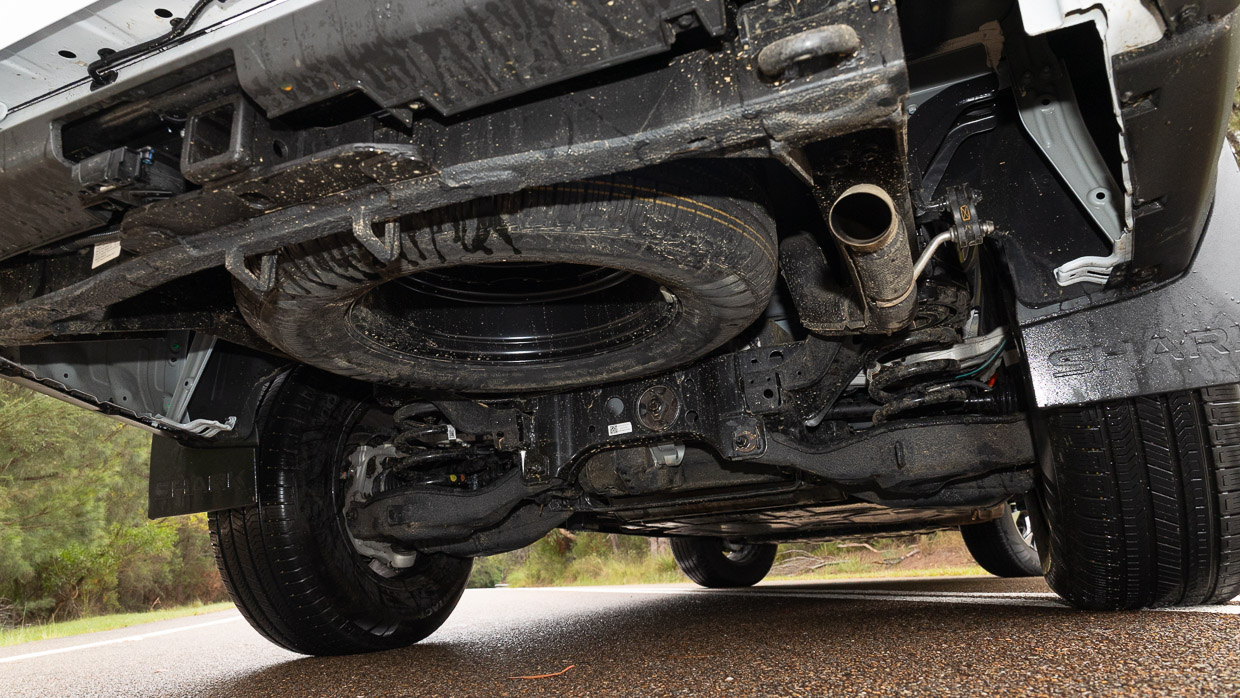
The Shark 6’s spare wheel is mounted, in a typical ute fashion, under the tray with a lifter assembly. According to the government notice, the assembly has a manufacturing defect that puts excessive strain on the spare wheel’s support cable, increasing the odds of it snapping if the spare wheel is positioned incorrectly or not tightly enough.
If this cable snaps, the spare wheel will likely fall out. Both BYD itself and the formal government notice state this exposes other motorists to injury or even death.
All affected Shark 6 owners must contact BYD and/or their local BYD dealership, if they’ve not been contacted already, to arrange a repair free of charge. In the meantime, owners are asked to consult the owners’ manual and take the spare wheel out of the ute.
Though BYD estimates the fix itself takes half an hour, the company cautions customers that since mechanics can only work so fast, it may not be an in-and-out job as customers wait their turn.
If clarify whether your Shark is affected, consult the official government website or BYD’s own website for information specific to your ute.
]]>An update to Volvo’s longstanding XC60 and XC90 SUVs has introduced plug-in hybrid variants with incredible electric-only range.
Due in Australia in the second quarter of next year, the T8 variant of Volvo’s large, seven-seat XC90 can now travel 164km (WLTP) on the battery alone. The mid-size XC60, in slightly less powerful T6 trim, claims a remarkable 200km (WLTP) of electric-only range.
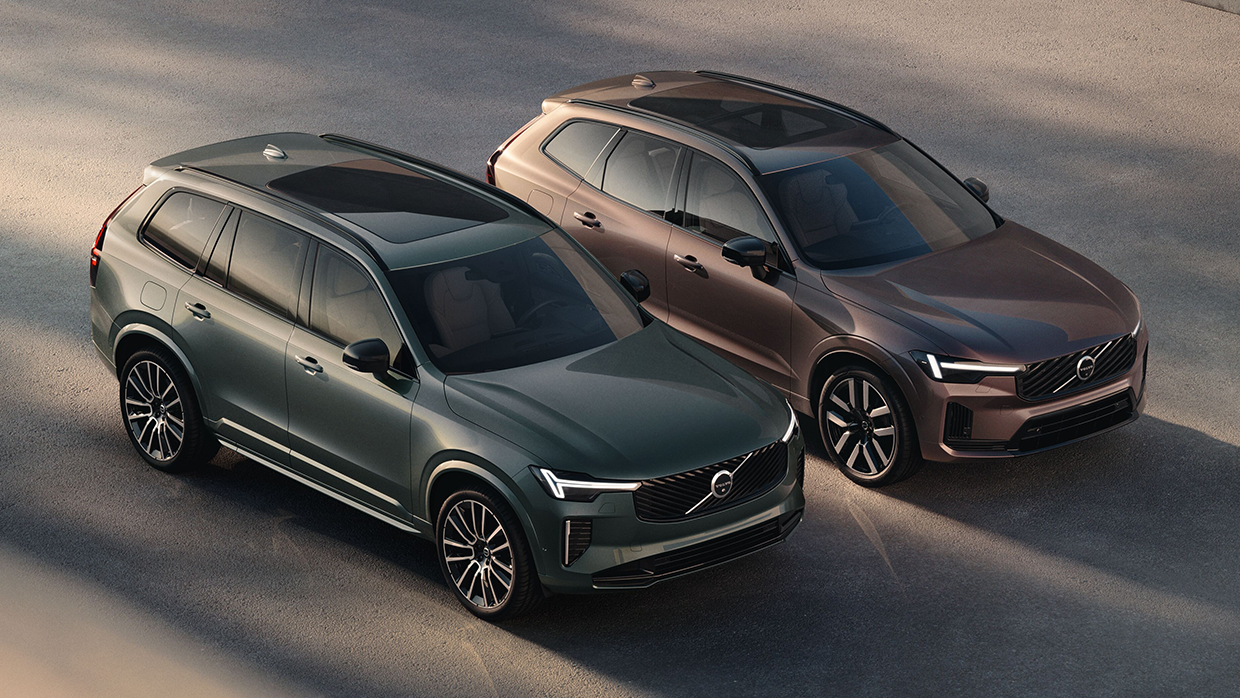
This is more than double the electric range of both models in their current form.
The two cars owe their vast electric range to a “larger-capacity, floor-integrated” battery. Volvo claims the electric motor is more powerful.
Though Australian pricing and specs won’t emerge until closer to launch, Volvo Australia confirms the XC60 and XC90 will stay available as either a plug-in hybrid or a ‘mild hybrid’ (a petrol engine with light electric support).
XC60
The XC60 gains a thorough update along with the headline PHEV news. A new grille, front bumper, bonnet, front wings and wheels mimic the look of newer Volvos, as well as the updated XC40 and EX40. New headlights retain the ‘Thor’s hammer’ look that’s a trait of Volvo and sister brand Polestar.
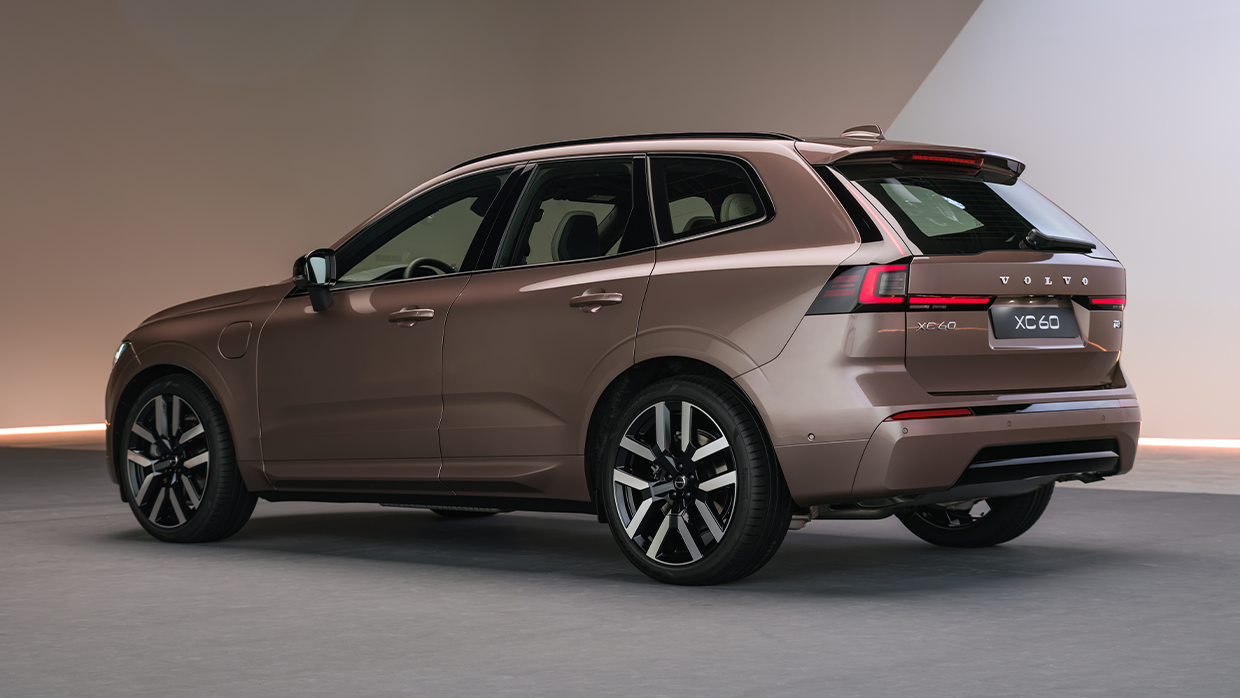
The tailgate, brake lights and rear bumper are changed, again to match Volvo’s other models.
On the inside, Volvo’s latest infotainment system filters down to the XC60. Google’s AI program, Gemini, is integrated, theoretically making many functions accessible by normal speech, including asking for suggested destinations.
It’s uncertain whether Australia will get the 200km XC60 – that’s the T6 model, which combines a turbocharged two-litre four-cylinder driving the front wheels, an electric motor driving the rear wheels and a 38kWh (usable) lithium-ion battery. Combined output is 262kW, with fuel consumption of just 1L/100km.
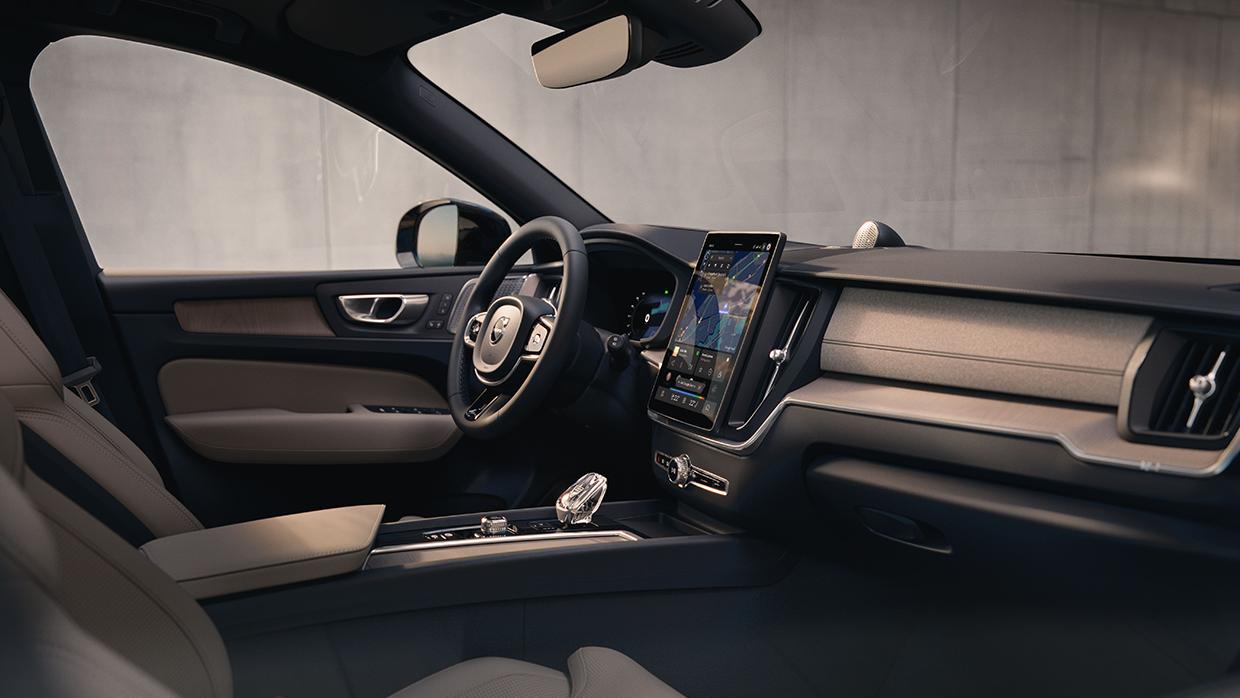
Australia’s only current PHEV is the T8. In 2027’s updated form, its more powerful petrol engine raises combined output to 339kW but reduces consumption to 1.1L/100km and electric range to 189km.
XC90
The XC90 already has the XC40 and XC60’s styling updates, so changes made this time are minor besides the powertrain. The interior tech upgrades for the XC60 are mirrored in the XC90, such as the addition of Google Gemini.
The above-mentioned 339kW T8 powertrain is the only PHEV powertrain fitted to the XC90. With more car to push, electric range drops from the XC60 T8’s 189km to 164km.
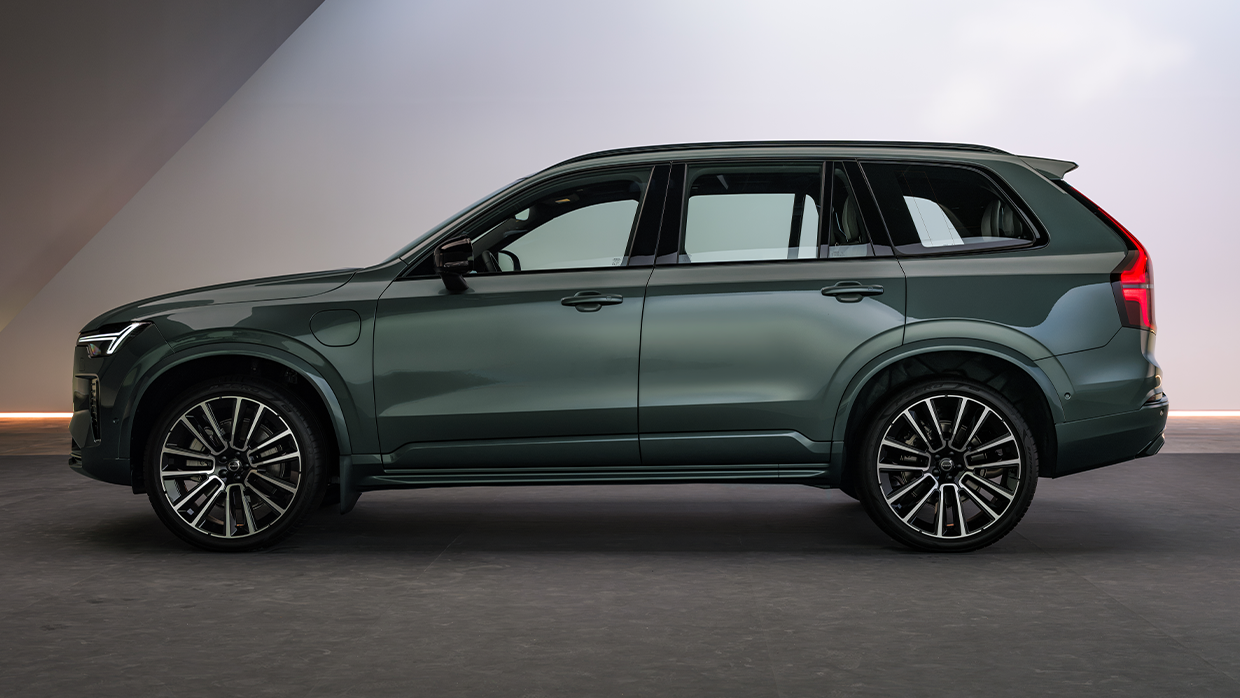
Currently, the XC60 T8 starts at $92,683 before on-roads, and the XC90 T8 starts from $114,222 before on-roads. Don’t take either price as gospel – it’s possible Volvo Australia will revise them closer to launch next year.
Related articles
Swedish best-seller updated: 2026 Volvo XC60 facelift revealed to rival Audi Q5, BMW X3 and Mercedes-Benz GLC ahead of anticipated EX60 launch
Seatbelt safety breakthrough: Volvo’s new software updateable belts to debut on EX60 electric SUV
Car news, 26 May ’25: Volvo XC90 gets a mid-life facelift and larger pricetag, Mazda’s rival to the Tesla Model 3 could soon be on sale
Kia’s second Platform Beyond Vehicle (PBV) electric van has broken cover. The PV5 now has a bigger stablemate, the PV7.
Due in Australia by the end of 2027, Kia’s large van will go on sale with local tuning from the brand’s ride and handling team and far more space than the PV5.
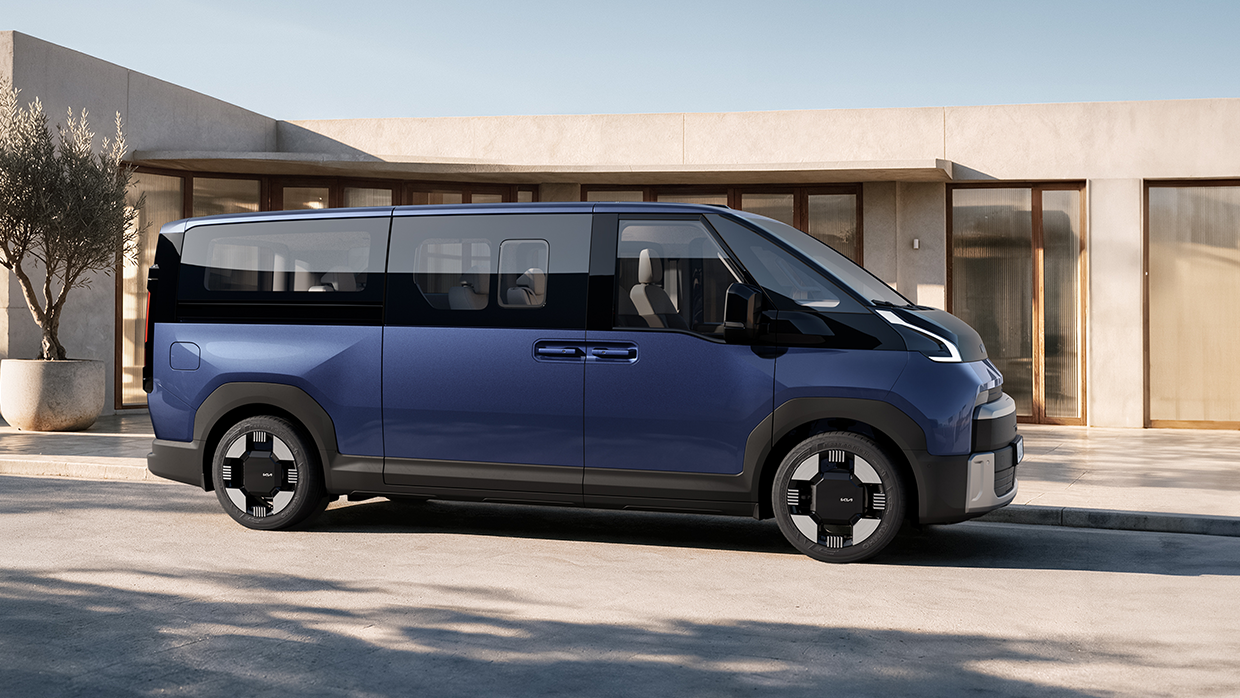
It won’t be alone in the electric van space, with the Renault Master E-Tech ($77,990 before on-roads), Ford E-Transit ($89,990 before on-roads) and Mercedes-Benz E-Sprinter ($104,864 before on-roads) fighting it. If the well-priced PV5 is any guide, expect the Kia PV7 to be closer to the Renault than the Mercedes.
Like the PV5, the PV7 is front-wheel drive for now, though all-wheel drive is planned for the future. “Up to” 200kW and 420Nm is produced by the motor, powered by an NCM (nickel, cobalt, manganese) battery of either 71.5kWh or 96.2kWh.
An 800V electrical system is standard. The PV7 can accept up to 350kW DC charging, theoretically enabling a 10-to-80-percent charge in 25 minutes.
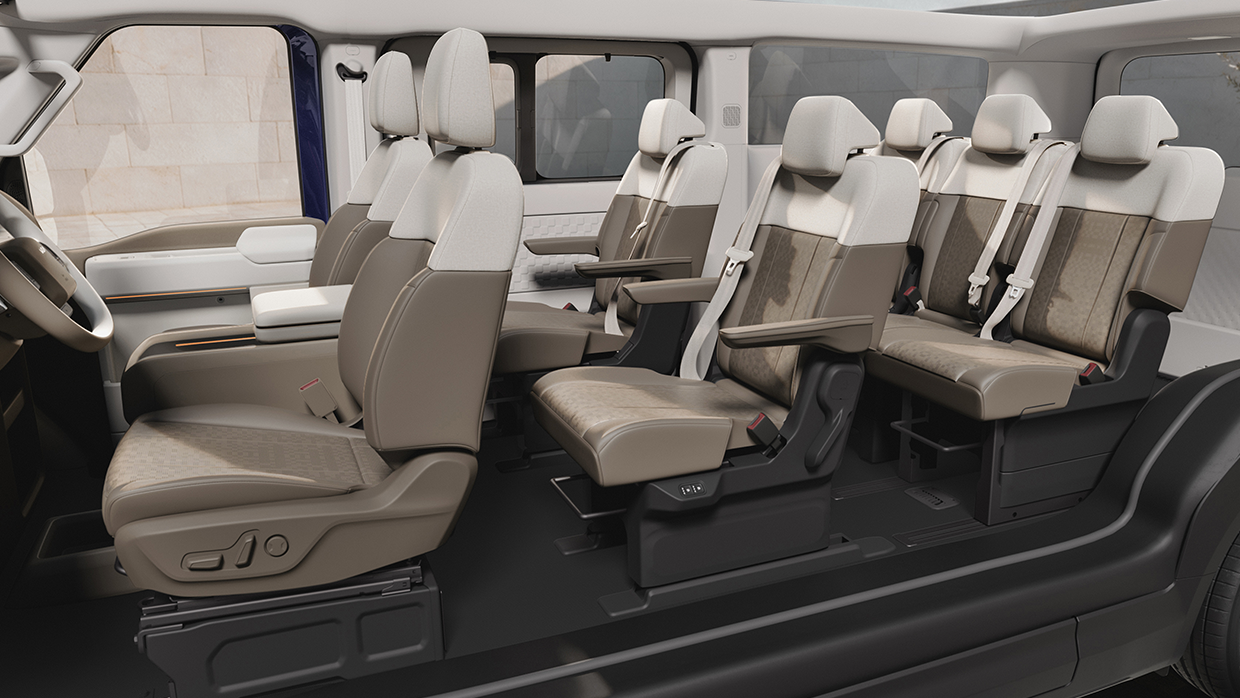
Behind the motor is where things get interesting. The PV7 shares the PV5’s so-called E-GMP.S platform and Flexible Body System. In plain English, Kia’s electric vans are modular to enable the same basic van to wear many hats.
An in-house conversion centre in Korea lets Kia fulfil many specialist requests, but even the off-the-shelf options are plentiful. Six forms of PV7 are coming – a nine-seat Passenger version in Compact and Long bodies, a Cargo model in Compact, Long and High Roof bodies, and a cab chassis.
The PV7s displayed so far are the Long body, which is 5350mm long, 1995mm wide and 1990mm wide. That’s notably shorter than the smallest Master and Sprinter, but the Renault and Benz aren’t purpose-built EVs and therefore have front overhangs where the engine was.
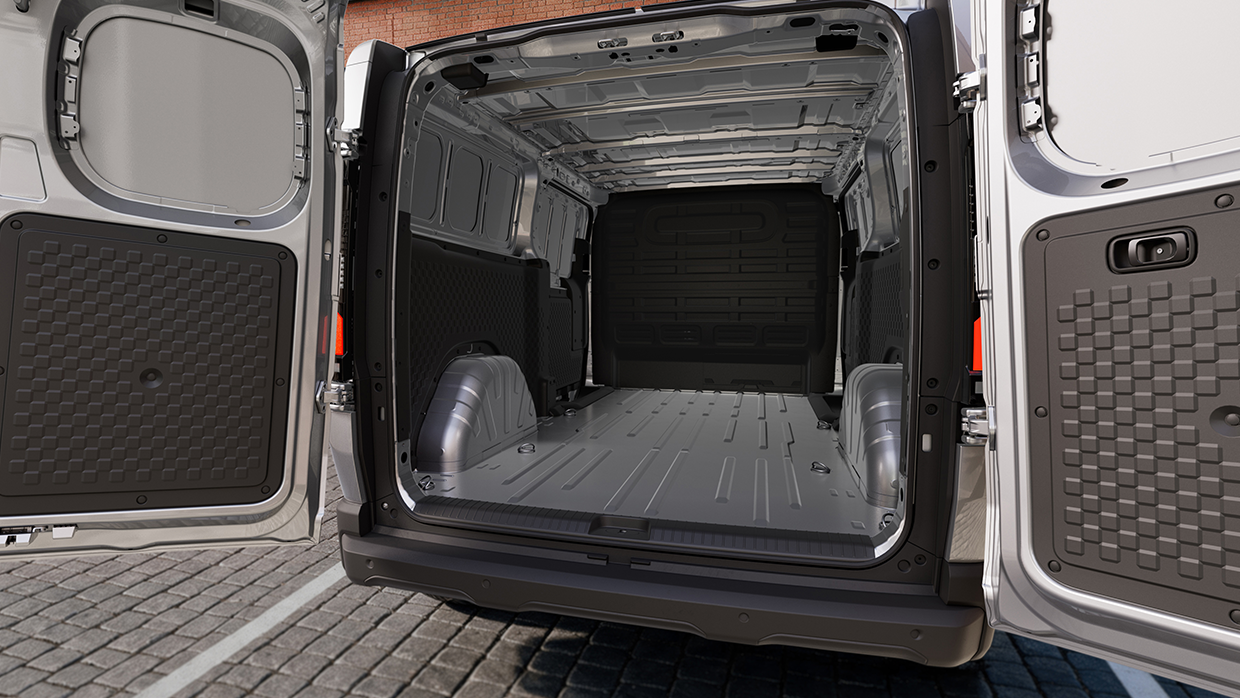
The Cargo model can be had with up to eight cubic metres of space, but only two or three seats. In the latter, the middle seat becomes a tray when folded.
The driver is treated to Pleos, Hyundai and Kia’s clean-sheet infotainment system. The Korean giants have an AI program of their own named Gleo, enabling “natural-language control” of vehicle functions, navigation and messaging.
Hardware’s received as much attention as software. Entry steps and a grab handle on the A-pillar make constantly getting in and out less wearying. Physical buttons remain plentiful for the aircon, safety systems and media.
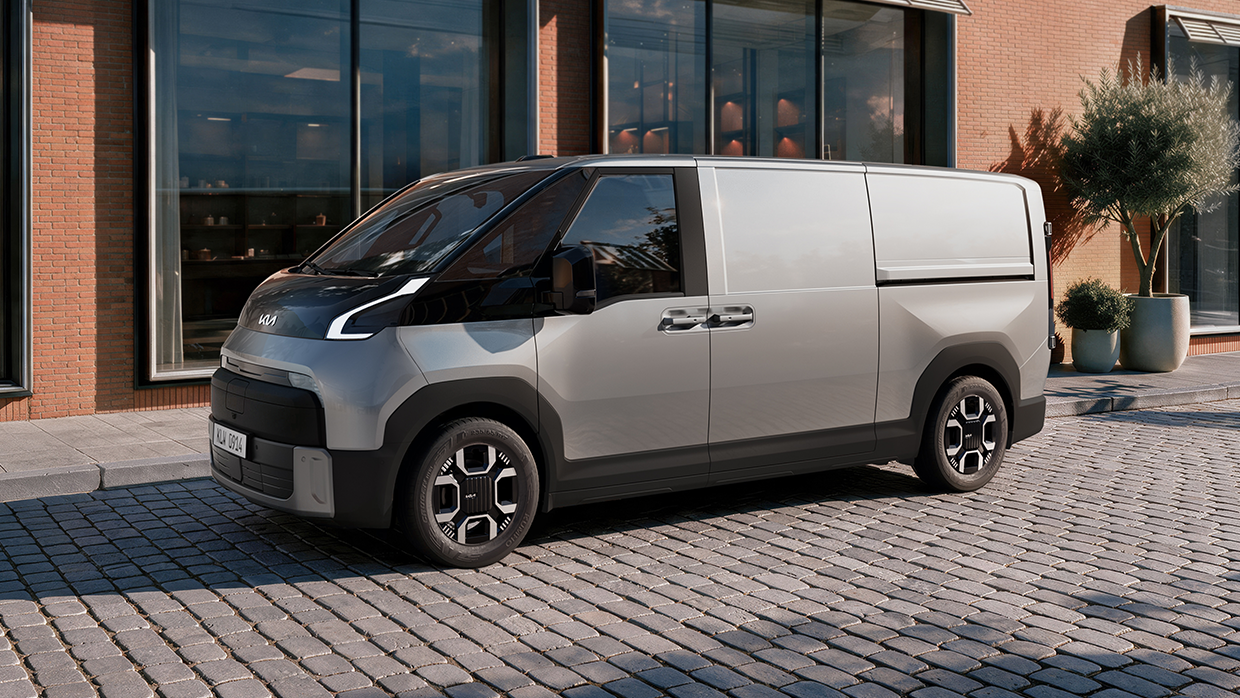
Kia’s introducing its own fleet management and maintenance software, the Kia Business Solutions Portal. The company hopes to increase efficiency by, among other things, giving businesses advance warning of faults.
Related articles
Kia Tasman long-term review
Kia Stonic S 2026 review
7-Seater SUV Buyer’s Guide for Australian Families: How to choose your perfect versatile vehicle
Porsche goes nuclear with 850kW/1500Nm large SUV that’ll out drag supercars then tow 3500kg. But is it all too much?
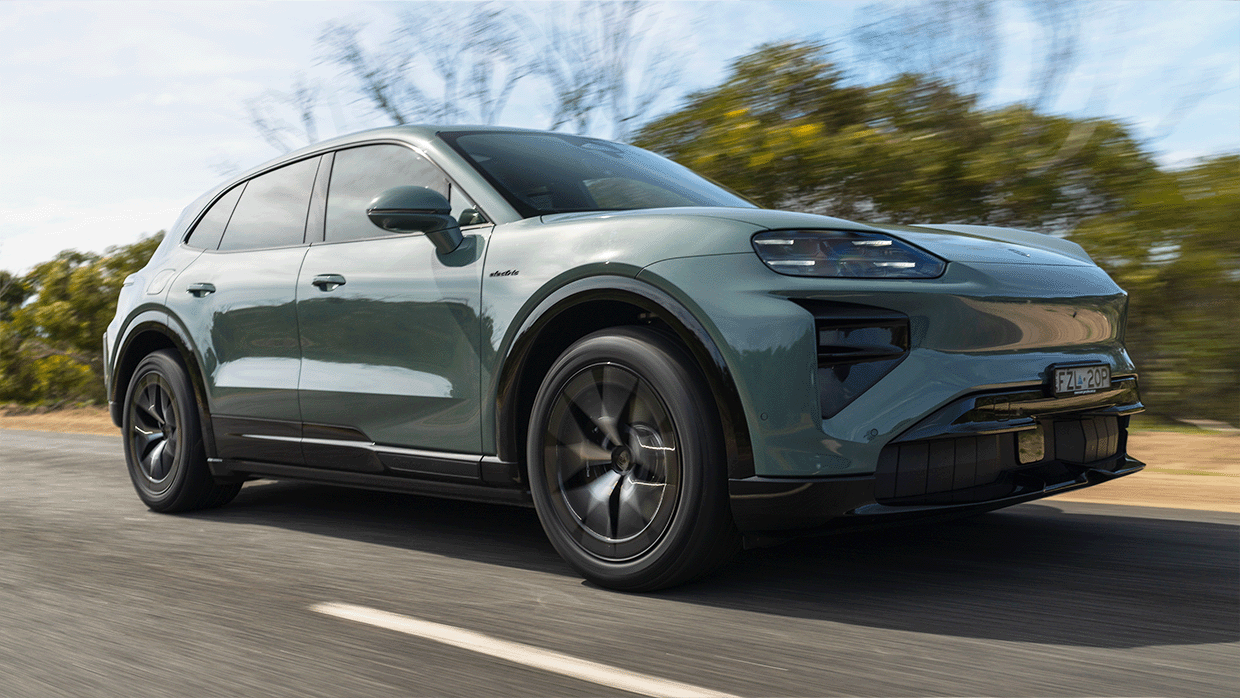
Gawd it’s excessive. Everything about it. Porsche’s all-electric Cayenne Turbo could’ve arrived with a level of restraint, but that’s not really the ‘Porsche Turbo way’, is it? Go the full Hail Mary. Deliver the numbers that simply don’t make sense.
I’ve engaged launch control. Brake and accelerator to the floor, I come off the left pedal and surge is immediate, crushing and utterly surreal. I go dizzy as blood shifts from the front to the rear of my brain, and it feels like the bulk of my innards have shifted to the back of my rib cage.
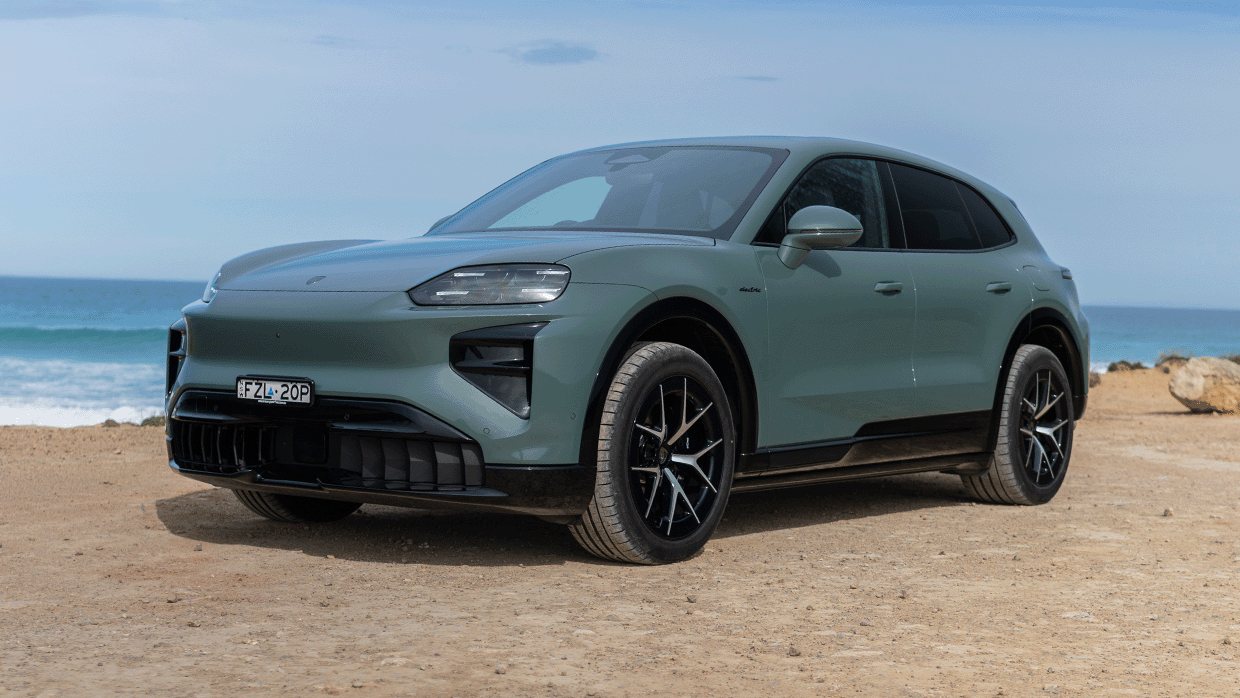
At 2.5 seconds to 100km/h, this (for now) ultimate Cayenne Electric is Porsche’s most powerful and joint-quickest accelerating production car ever, along with the new 911 Turbo S.
For a company steeped in high performance, weight-stripped two-door specials, the fact the title is now held by a 2645kg large SUV EV that can tow 3500kg and offer solid off-road skills is as bonkers as its on-paper numbers.
A twin electric motor setup offers up to 850kW and 1500Nm with Launch Control; 200km/h is seen in 7.4 seconds, battery is a mega and weighty 108kWh (usable) unit, and we’re promised, if you find an ultra-fast charger, it’ll go from 10 to 80 per cent full in a coffee break-like 16 minutes with its 390kW DC charging ability.
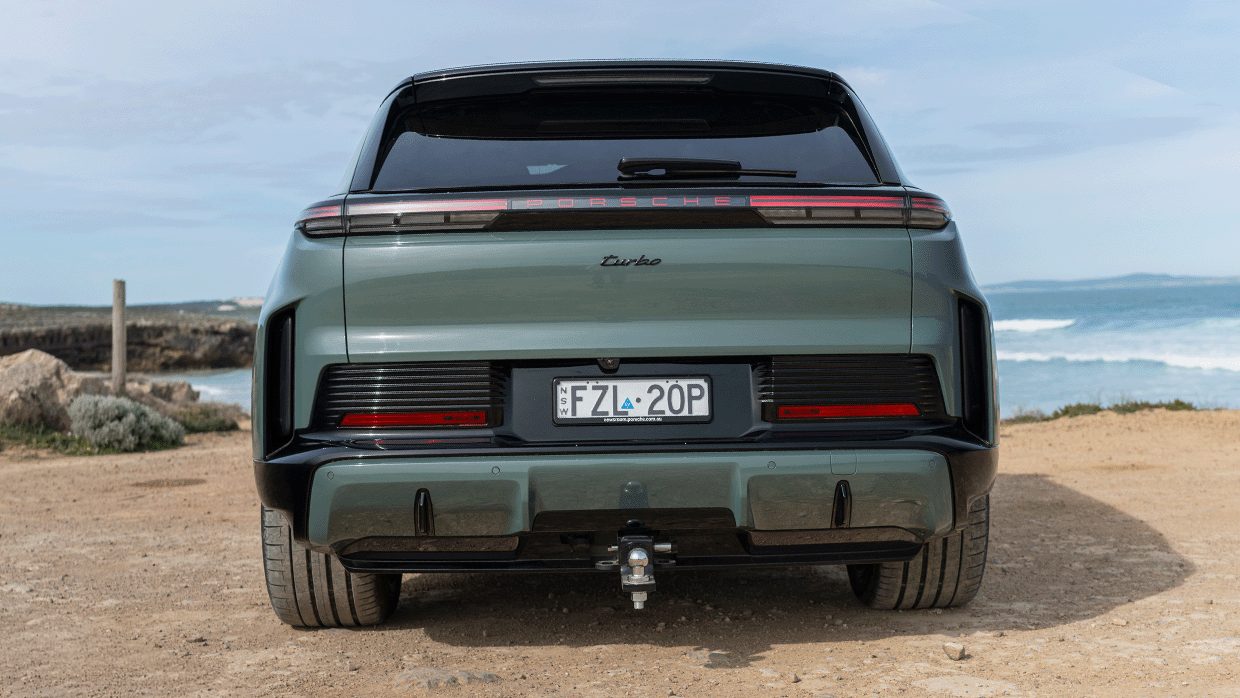
Do you need such performance from a large SUV? Of course not. Porsche may suggest Cayenne Turbo Electric owners will hit the track (and 420mm/370mm brake rotors will help), but let’s not kid ourselves. It’s no GT3 RS, and as with 911 Turbo S buyers, owning one is often just about the flex of having the one with the most brag-worthy numbers.
Cayenne (base) and Cayenne S Electrics are also offered, and frankly are more than spritely enough. Hitting 4.8s and 3.8s to 100km/h respectively, these have 542km and 571km EV range, while our flagship Turbo manages 537km. Prices are from $167,800 the base, $193,100 the S and then a mighty leap to our $259,900 Turbo, all before on-roads.
Coupe body style versions of each add another few grand.
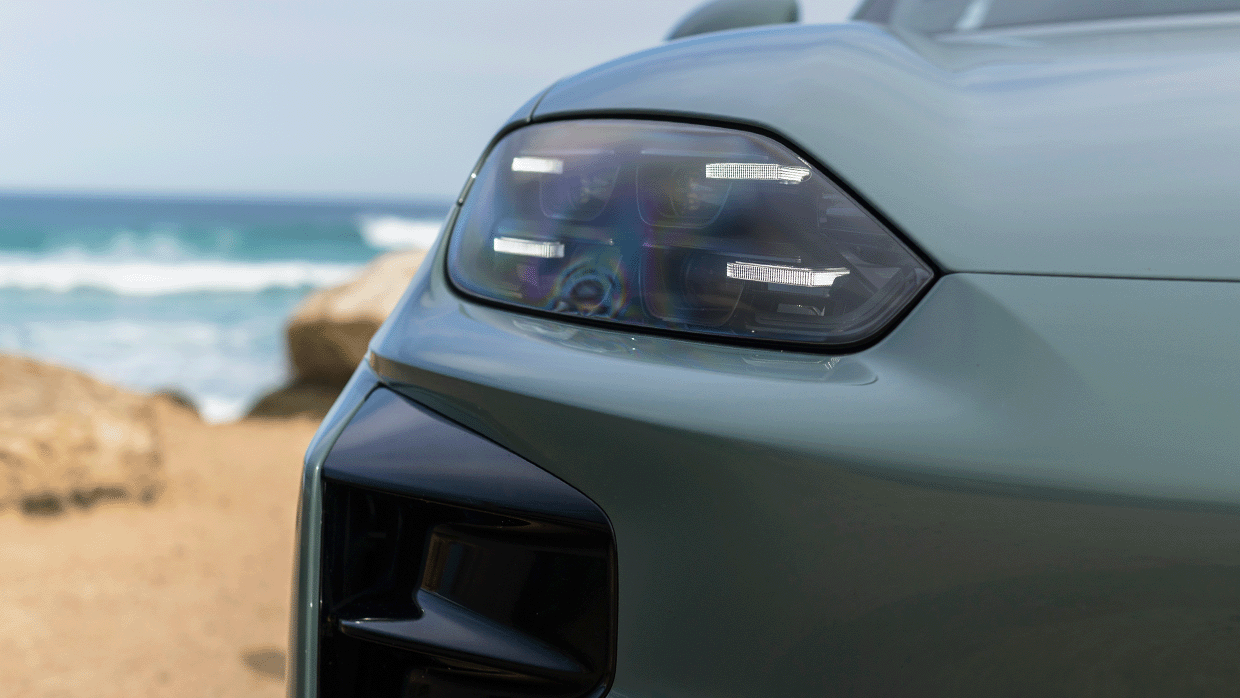
You’ll no doubt be aware of the muddle Porsche has got itself into in ditching petrol for EV-only offerings – Exhibit A: the Macan – so the current combustion Cayennes will continue alongside these new electrics. By 2029, we believe, all-new petrol/plug-ins Cayennes will arrive.
How does the Cayenne Turbo Electric drive?
But back to the new EV. I won’t bury the headline: Porsche has created a superb large SUV here. Performance is otherworldly, but it’s backed by impressive ride comfort and quiet, then the handling clout as best can be expected of something so hefty. It’s simply an extremely special car to be in and to pilot.
Adaptive air suspension with Porsche Active Suspension Management comes as standard, and all our test Turbos had additional (madly expensive at $17,480) Active Ride, which uses the SUV’s 800-volt electrical system to “actively push or pull on each individual wheel, to completely eliminate body roll, pitch and dive.”
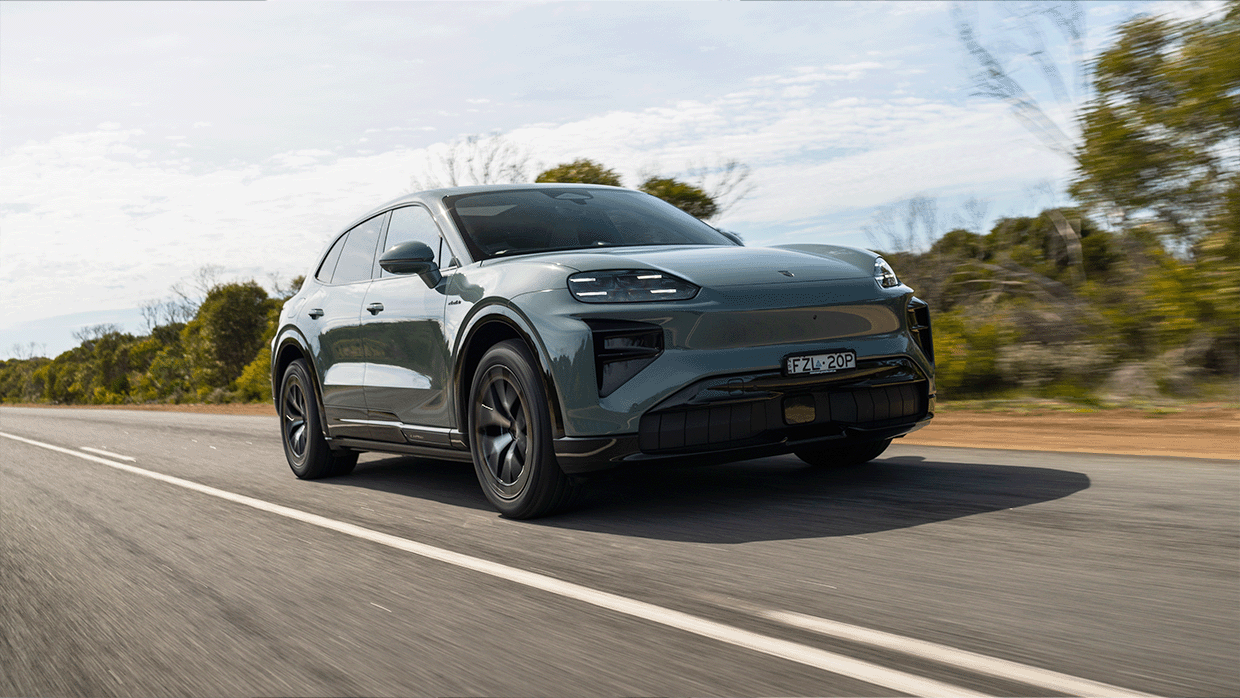
Suggesting it “completely eliminates” such things feels a bit far-fetched, but on twisty, tight Adelaide Hills roads I was struggling to find anything other that mystifyingly flat handling, allied with excellent steering feel and bitingly-strong brakes.
But this was at legal road speeds; I’ll jealously leave it to others to find out its corner-scything behaviour and body control around the Nürburgring.
I can tell you that if you put this Turbo EV into Sport Plus mode for road driving, the throttle response is so immediate and the acceleration so pinning that you can get into a lot of trouble very quickly indeed.
It never stops being impressive, but seriously, for daily road use, it’s just way too much. Leave it in Comfort and sling the simulated exhaust note to max and it’s the best blend.
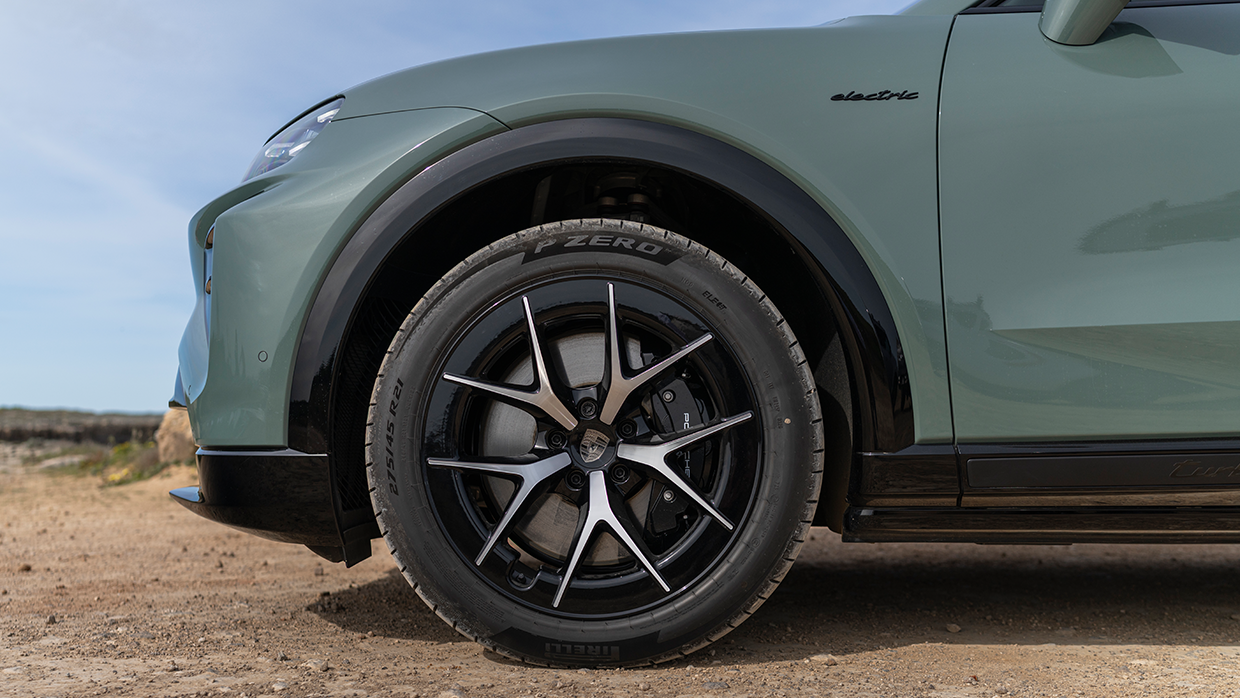
Speaking of noise, you can have it in whisper quiet mode (although there’s a bit of rumble from the 22-inch Michelins), but toggle the menu and you can select the Sport Plus sound. There’s a lush rumble to it, feeling so genuinely V8 you soon forget it’s a manufactured sound. The noise intensifies if you press the “push to pass” button (really), giving you 10sec of even more boost.
The wheels somehow grab traction, it’s a raucous note, but good grief three figures comes up in licence-losing speed.
In town or on highway the ride is expectedly settled, and in Comfort mode things can be kept smooth on a gentle throttle. If you like your Porsches comfortable and rich in luxe, the Cayenne Turbo has you covered here too.
Exterior design? Subjective, of course, but to my eyes the EV’s front end is too soft, stubby and almost fish-like with its lack of proper front grille.
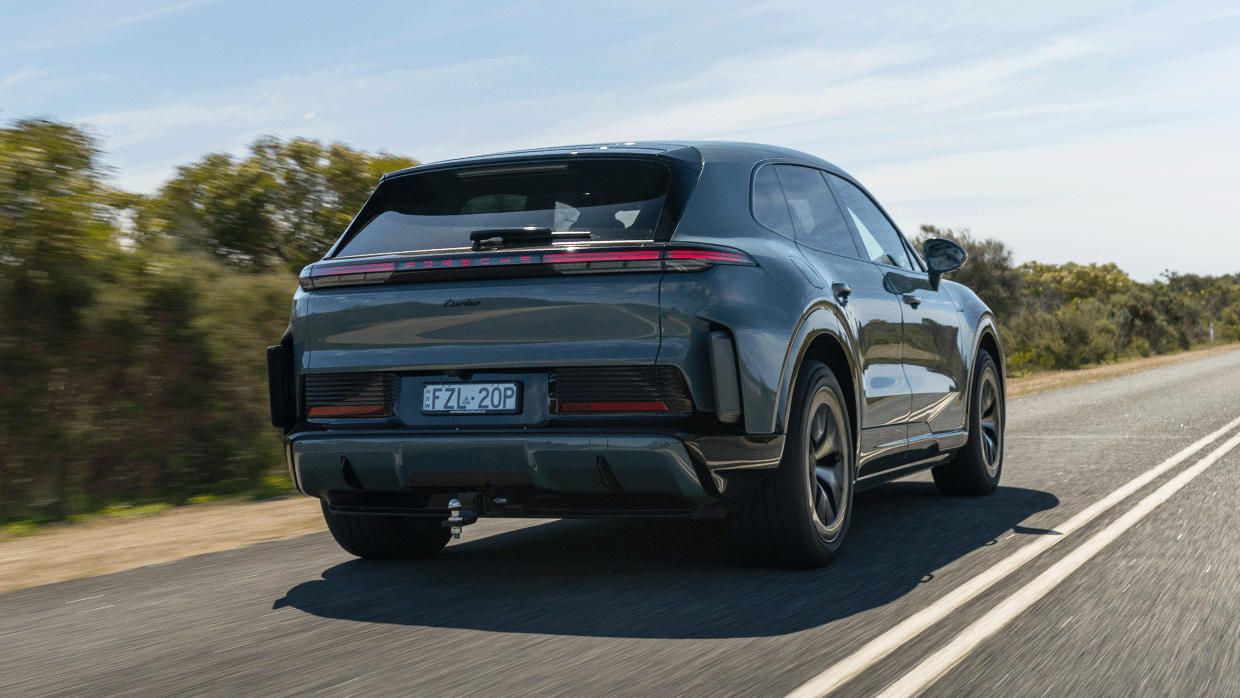
The wagon-back version, however, looks superb and muscular in profile on its lowest suspension setting, while the Coupe’s rear end looks decidedly sporty. Overall not as pretty as the Macan EV, but kudos to Porsche for making its largest offering not appear too cumbersome.
What is the Cayenne Turbo Electric’s interior and tech like?
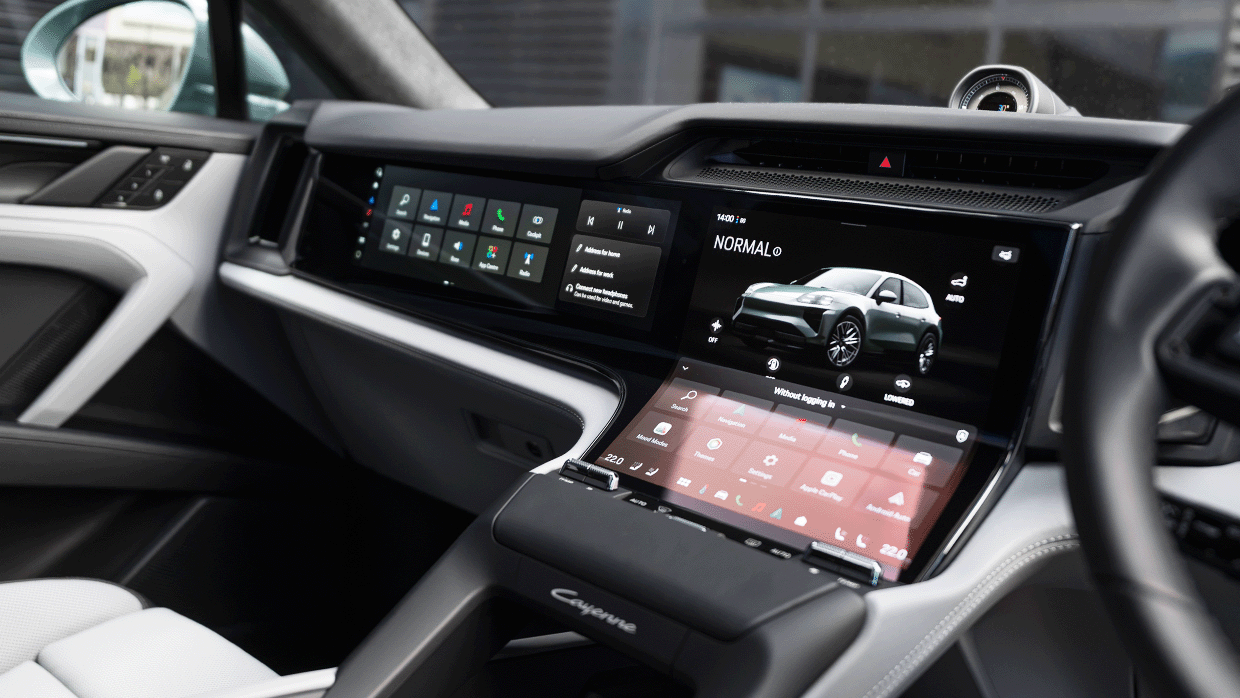
The cabin’s a standout. Centrepiece is a 14.2-inch curved touchscreen, which is just about easy enough to use thanks to a padded hand rest. Smartly, knurled metal toggles sit at the screen’s base to quickly operate temperature and fan speed.
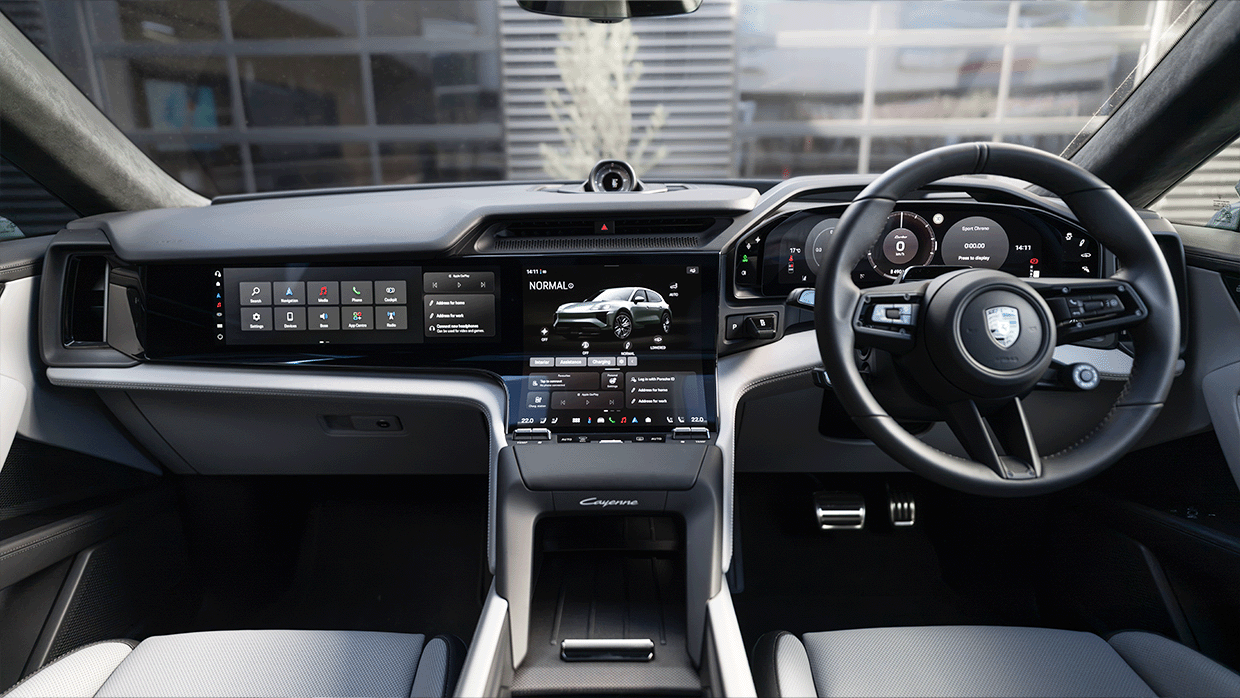
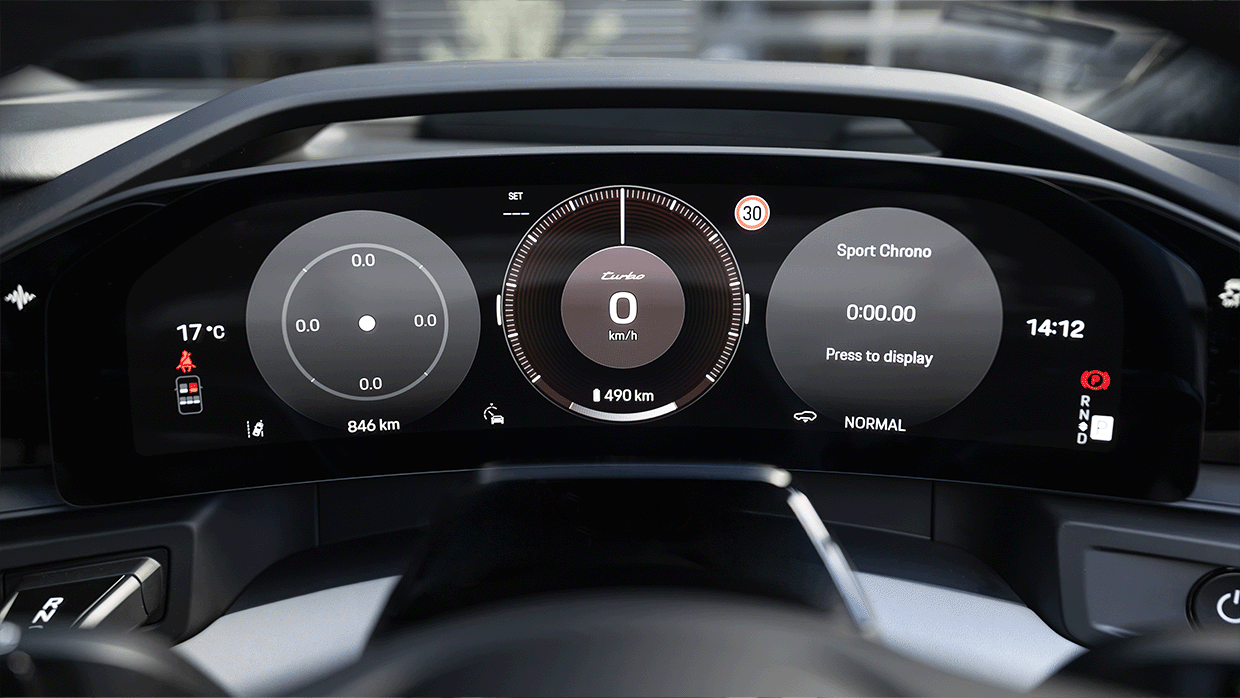
There’s a digital driver display too, and although this combo takes some learning, customisation is excellent, the user experience and graphics delightful and cameras as crystal as you’d expect for this money.
Rich leather seats have all levels of adjustability, heating and cooling (no massage, stingily), while the steering wheel could be mistaken for a 911’s. Subtly stitched, small in the hands, chunky in the right places, and with minimal, clicky controls. A drive mode selector dial by your right thumb remains one of Porsche’s finest design innovations of recent times.
Interior presentation, build quality and style all overflow, although I will pick on the overly-thin plastickiness of the centre console’s sliding cover. Old-school “Turbo” font on the centre armrest, however, harking back to Porsche 930 days, stole my heart.
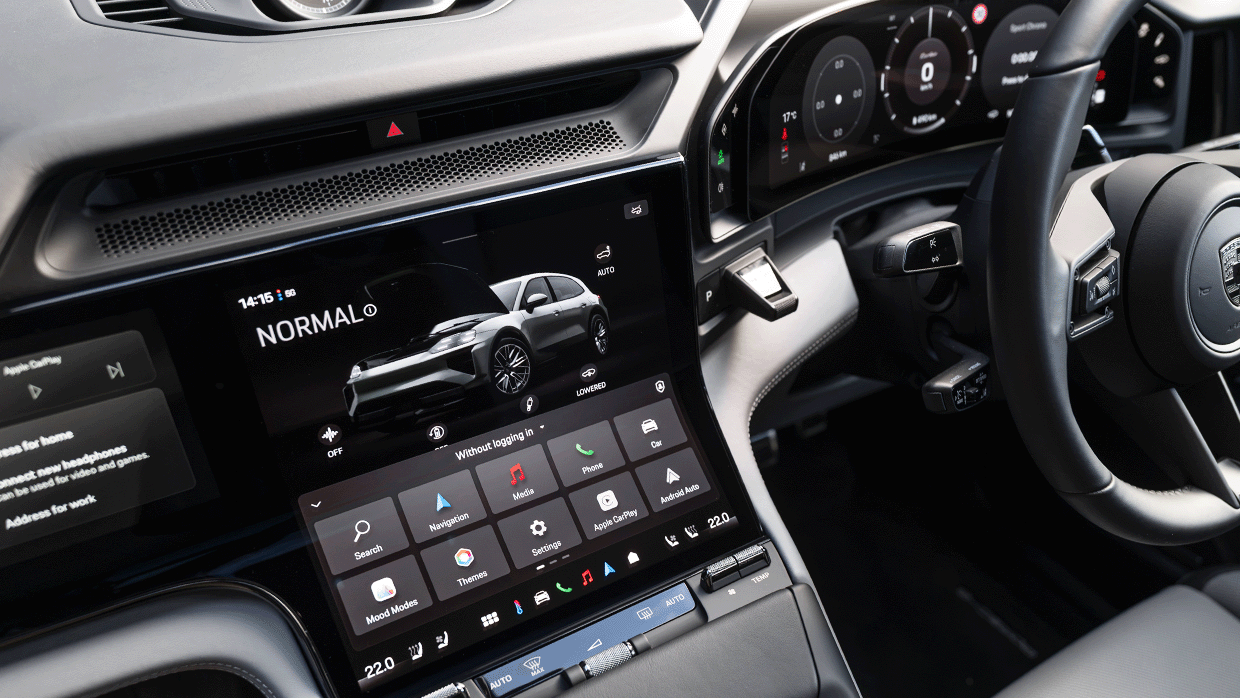
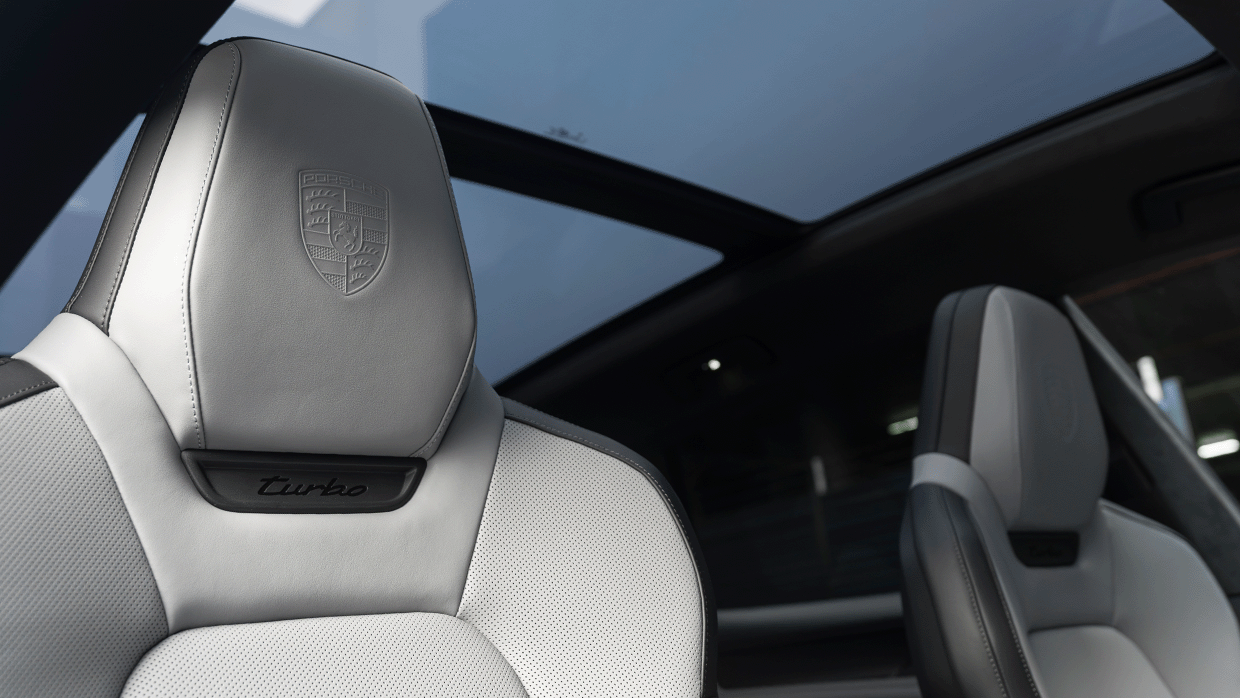
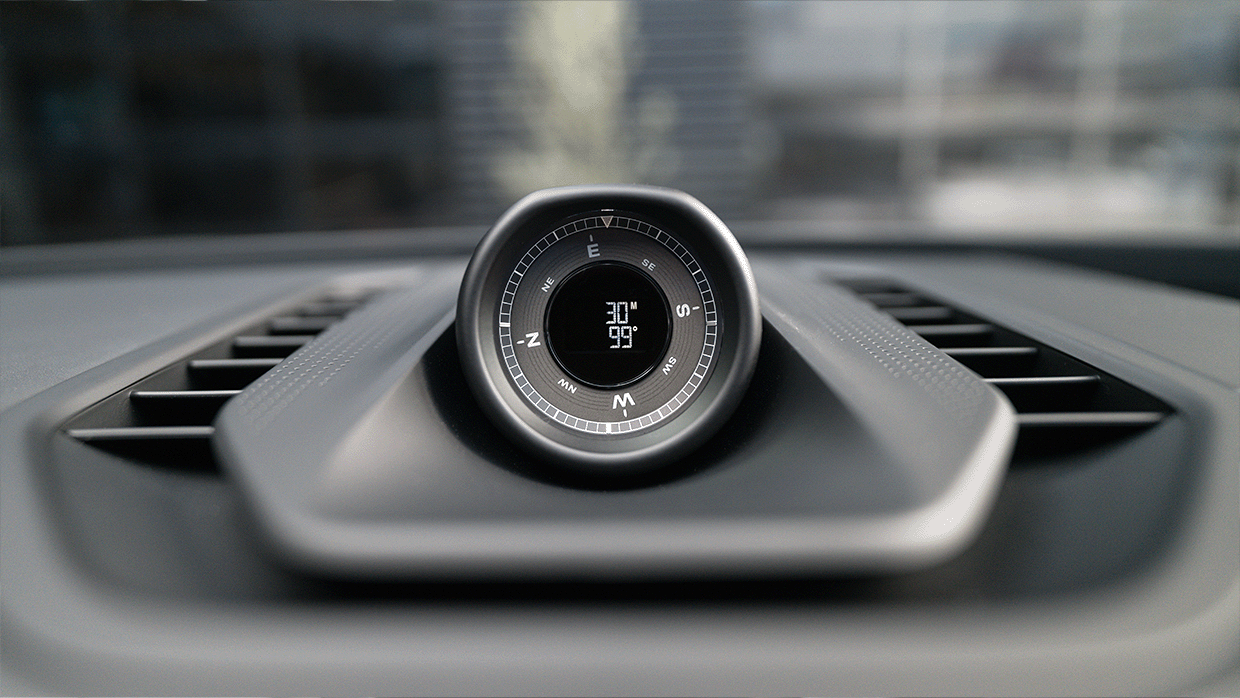
Other touches of class include a fixed panoramic roof, four-zone climate control, carbon interior trim, Bose surround sound, and the most wonderful ($1750 option) grab handles I’ve ever felt – padded and coated in Race-Tex suede. And in the Turbo, these will be in regular use.
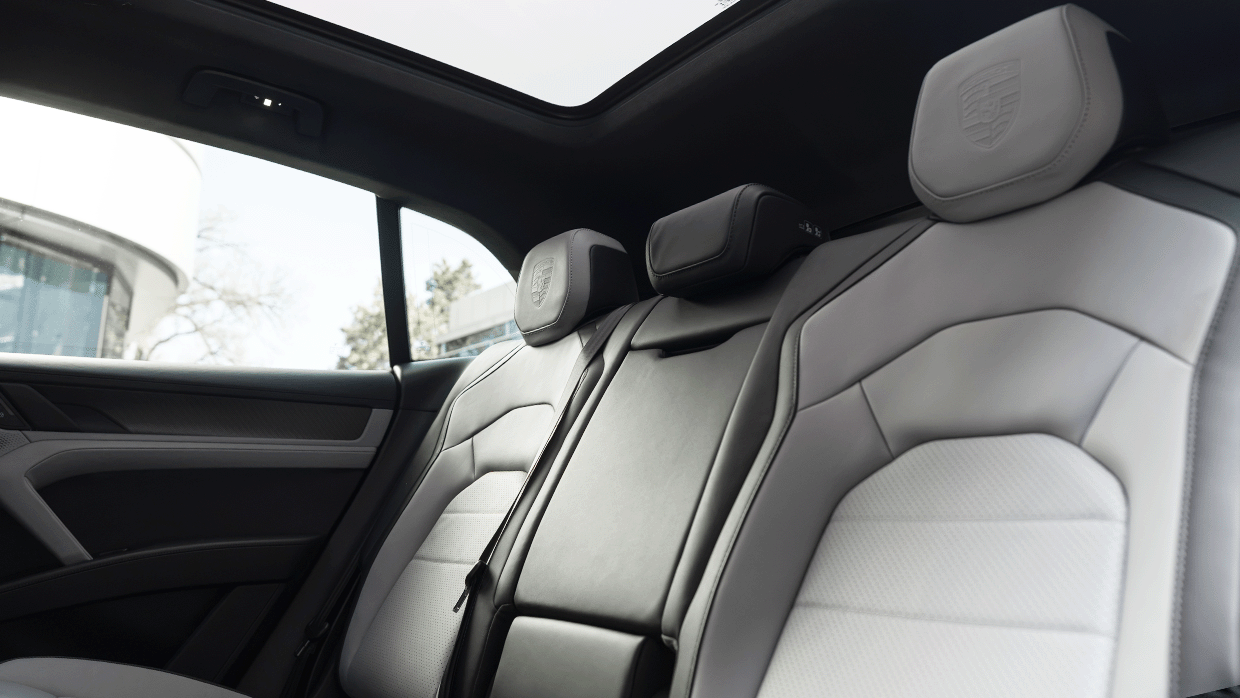
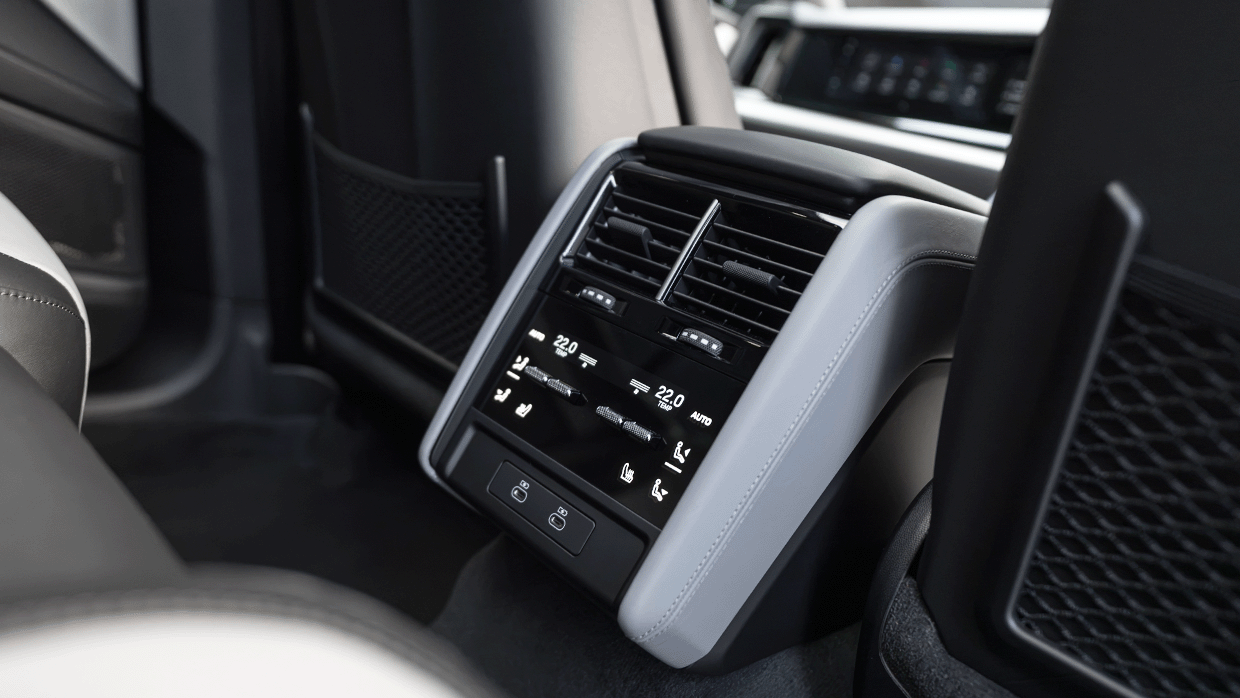
Rear seat space is good for headroom (even in the Coupe), and leg room’s fine, although you’re presented with hard plastic seat backs ahead. There are electric window blinds (I can see kids breaking these), seat comfort and touchpoints are excellent, although the rear seat base doesn’t slide.
The boot’s also not the biggest: 747L in the wagon, just 500L for the Coupe, although both benefit from a 90L frunk, ideal for charge cables. Alas, no spare wheel, which could prove problematic if you plan adventuring.
Although we didn’t have the opportunity, reports are this Cayenne EV is an accomplished off-roader, and with that 3.5-tonne towing ability, it’s intriguing to imagine what some well-heeled Cayenne Turbo EV owners will get up to.
Picking from the options list will be their first task. And it’s here some things get laughable.
Plucking out a few, try $9630 for Burmester 3D audio, $5020 for augmented reality head-up display, $4970 leather inner door sill guards, $750 illuminated seat belt buckles, $7250 orange cabin stitching, $21,240 ceramic brakes, $3570 rear axle steering and a $4010 off-road package.
When paying over a quarter-mil, you’d be forgiven for expecting some of the above to be chucked in. But go easy on the options, and considering the performance here, this Turbo can be seen as a bargain hypercar in practical five-seat large SUV form.
If picking, the 537km range doesn’t push the Cayenne into the “luxury of rarely charging” set such as BMW and Mercedes-Benz are now offering, but our 21.6kWh use on test (with some rapid launches) shows Porsche’s range promise to be about trustworthy.
The honest verdict
This electric Cayenne Turbo is an overall triumph, no question. The ultimate iteration of a luxurious, brilliant-to-drive EV with the expected Porsche masterclass of performance, ride quality and cabin specialness.
If you have the funds and must own the King, the Turbo is all yours. But “lesser” Cayenne EVs have all the performance and class most mortals require, and appear the smarter pick.
Gloss over that, and there are no wrong choices here. Unless, of course, you fancy waiting for the new petrol V8 ones…
Related articles
Porsche Cayenne Electric 2026 review
Huge 850kW behemoth debuts: Porsche Cayenne Electric is coming to Australia with eye-watering $260,000 price
Car news, 26 July ’24: Porsche to keep ICE Cayenne lineup alive past 2030, Chevrolet debuts its twin-turbo Corvette ZR1, and more