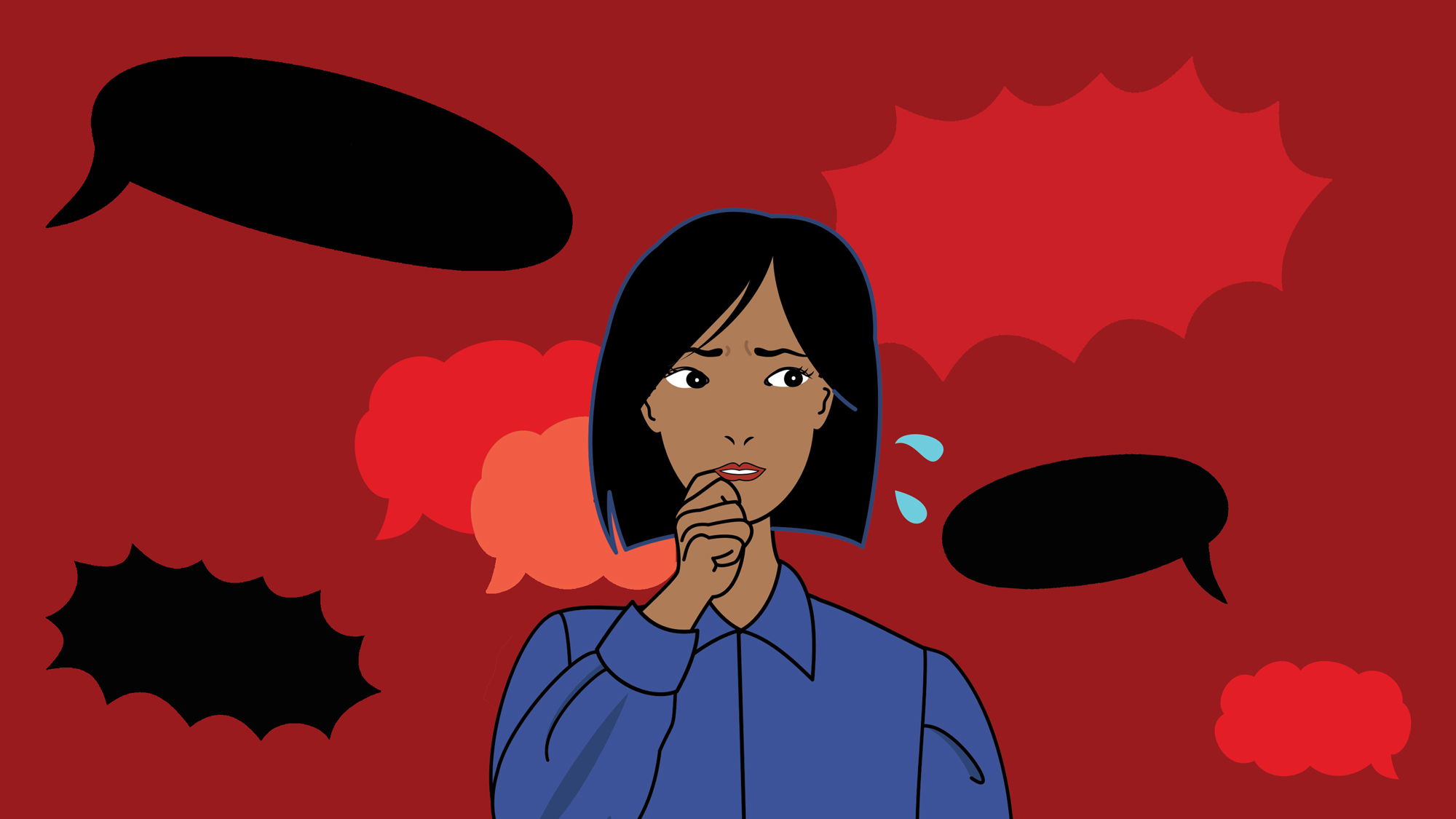
Share this playlist of talks selected by Monica Lewinsky in honor of National Bullying Prevention Month.
October is National Bullying Prevention Month in the US, and chances are you know someone who’s been bullied — or you’ve been bullied yourself.
Here, I’ve curated a list of TED and TEDx Talks that I feel unpack different aspects of the problems, solutions and experiences we’re facing in our modern world of bullying – both on and offline.
I hope you’ll not only watch these talks, but also consider ways you might help to move the conversation on these issues forward.
As you do, be an upstander: Show support to a target of bullying behavior or online harassment; report a bullying situation; or intervene on behalf of someone if it feels safe for you.
Together, we can hopefully make it harder for bullies to thrive.
Shane Koyczan: To This Day … for the bullied and beautiful
Shane Koyczan’s spoken-word poem speaks to young people suffering from bullying in such a profoundly moving, empathic way that lifts the spirit and validates our humanity. He says, “If you can’t see anything beautiful about yourself, get a better mirror, look a little closer.”
Andrew Solomon: How the worst moments in our lives make us who we are
Rather than a search for meaning in the adversity in our lives, we need to forge meaning and build identity. “Forging meaning is about changing yourself,” says Andrew Solomon. “Building identity is about changing the world.” And in a sentence that speaks especially to me, he says, “When we’re ashamed, we can’t tell our stories, and stories are the foundation of identity.”
Nancy Lublin: How data from a crisis text line is saving lives
Sometimes it’s not enough to try to help. Sometimes you need to be so creative, so savvy, so plain smart that you realize to reach today’s young people you need to use their megaphone – texting. Nancy Lublin had that vision. She says of her Crisis Text Line, “If you text us, ‘I want to die,’ or ‘I want to kill myself,’ the algorithm reads that, you’re code orange, and you become number one in the queue. So we can handle severity, not chronological.”
Jon Ronson: When online shaming goes too far
Jon Ronson paints such a vivid, unforgettable portrait of how a human being’s entire existence can be brutally and cruelly destroyed in an instant by an Internet mob. He uses humor and intelligence to call us out on our public shaming – and it works.
Ashley Judd: How online abuse of women has spiraled out of control
Courageous actress Ashley Judd stands on the TED stage and repeats the filthy, vile slurs flung at her by anonymous hordes on Twitter. The audience is silent – shocked and disheartened. There is an important difference, she says, between free speech and hate speech. And our legislators need to write and pass laws that reflect that.
Safwat Saleem: Why I keep speaking up, even when people mock my accent
Safwat Saleem grew up embarrassed about his accent and his stuttering. With great insights and an infectious sense of humor, he deconstructs what it means to be different from the norm and how he challenges the “preexisting notion of normal with my work and with my voice.”
Trisha Prabhu: Rethink before you type | TEDxTeen
Teenager Trisha Prabhu argues that it’s time to challenge people engaging in bullying behavior and find a way to make them stop. She applied science and tech to the problem and created a tool called Rethink, an automatic message that appears before an offensive post is sent and asks the sender if they really want to hurt or humiliate the recipient. (A startling 93.4% backed down.)
[youtube=https://www.youtube.com/watch?v=YkzwHuf6C2U&w=560&h=315]
Charlie Cooper: How little people can make a big difference | TEDxJCUCairns
Nine-year-old Charlie wore glasses, struggled with school and had no friends. Then he came up with an ingenious idea: the Buddy Bench. Other children could approach any child sitting alone on the buddy bench and invite him to play, or go for a walk or share a laugh. Charlie Cooper will steal your heart.
[youtube=https://www.youtube.com/watch?v=V7Z-Hq-xvxM&w=560&h=315]
Tina Meier: What Kids Have to Say About Bullying and How to End It | TEDxBend
Tina’s thirteen-year-old daughter, Megan, was the victim of a cruel cyberbullying hoax — and tragically, she committed suicide. Tina thinks about Megan every moment of every day. And while nothing will bring her daughter back, she hopes that she can help other parents. “Put down your cell phones,” she says. “Really listen.”
[youtube=https://www.youtube.com/watch?v=9HsuuRt_OdY&w=560&h=315]
Sally Kohn: Don’t like clickbait? Don’t click
I originally had a quote from this great talk in my own TED Talk but, sadly, had to cut for time. Understanding how our clicking behavior contributes to a culture of humiliation that feeds bullying is key. As Sally Kohn explains, “Everything we blog, everything we Tweet, and everything we click is a public act of making media. We are the new editors.”
Megan Phelps-Roper: I grew up in the Westboro Baptist Church. Here’s why I left
Megan Phelps-Roper shares a personal and powerful story of what can happen when we open ourselves to listening to ideological viewpoints different from our own.
Brené Brown: Listening to shame
Brené Brown has arguably done more to open the dialogues around shame than any other thinker today – and she does it brilliantly. In this TED Talk, she argues that vulnerability is not weakness. Brené’s talks have personally helped me immensely.
Thandie Newton: Embracing otherness, embracing myself
Thandie Newton speaks eloquently to anyone who has ever felt like “The Other.” She draws a vivid picture of how being different shaped her sense of identity. And she describes the path she took to accepting her otherness and ultimately blossoming.
No one really wants to talk about the weather. Inspired by TED Talks, here are some questions to start a better conversation in any situation.
“So, what’s your favorite word?”
[ted id=161]
Who to ask: The chatty person who’s sharing an outlet with you at the coffee shop
The basic idea: Dictionaries don’t compile themselves — linguistic sleuths called lexicographers do — and in order to keep the modern dictionary accurate and dynamic, they need be open to new words and formats. They also need your help.
Fun facts you’ll learn: How lexicography is like archaeology; why there’s no such thing as a “bad” word; and the definition of “erinaceous” (hint: it involves hedgehogs). Scoot to 3:58 for that.
“If you could choose a sixth sense, what would it be?”
[ted id=2215]
When to ask: Around the dinner table, just before dessert
The basic idea: Human perception is limited to information our five senses are able to receive and process. But combining technology with biology, scientists are finding new ways to enhance our current senses — and even add new ones.
Fun facts you’ll learn: How scientists are using “peripheral devices” inspired by snakes, moles and fish to give humans new senses; the inner workings of a vest that lets people hear through touch. (Yes, you read that right. See it in action at the 11:45 mark.)
“Do you think you can tell when someone is telling you a lie?”
[ted id=2178]
When to ask: At a late-night get-together
The basic idea: From inkblot tests to learning styles to the details of Milgram’s famous experiment, there are a number of famous psychology tidbits we think we know — but are actually wrong about.
Fun facts you’ll learn: Contrary to popular belief, men are not from Mars and women are not from Venus. Also — sorry to break it to you — listening to Mozart won’t make you smarter.
“Tell me about a time when you made an assumption — and were proven wrong.”
[ted id=652]
Who to ask: Your seatmate on a plane or long train trip
The basic idea: It’s easy to hold a narrow vision of a person or a whole culture. But everyone has a collection of layered, overlapping stories — no one is a single, simple meme.
Fun facts you’ll learn: Why the media’s focus on a “single story” about a place prevents true understanding; and what we can do to change — and broaden — the narrative.
“Are you optimistic about the world, or pessimistic — and what makes you feel that way?”
[ted id=2090]
When to ask: Among old friends
The basic idea: Thanks to sensationalist news media, many people think the world is heading in the wrong direction. But reality doesn’t always align with our pessimistic perceptions. By changing the way we see information, we can rise above ignorance.
Fun facts you’ll learn: The many surprising pieces of evidence that show the world is getting better (and why chimps seem to have a better handle on this than we do). For a heartening stat on global vaccine rates that the media got wrong, click to 7:05.
“Do you think you are smarter than your parents?”
[ted id=1828]
When to ask: At a family reunion picnic
The basic idea: Cognitive history shows that each generation scores higher on IQ tests than the one before. As the world around us has changed, so has our ability to process it and understand increasingly complex concepts.
Fun facts you’ll learn: The staggering difference in average IQ scores between generations; the “mental artillery” we have today that our grandparents didn’t; and the areas in which we still fall short. (Hint: flipping through a history textbook might be a good idea.)
“Did you ever wonder why humans cook our food, and other animals don’t?”
[ted id=1879]
When to ask: While cooking with friends
The basic idea: For all the progress we’ve made in neuroscience, some basic questions about the human brain’s size and function have remained unanswered — until now.
Fun facts you’ll learn: The key difference between a human brain and a rat brain; the skill our ancestors developed that changed everything; and what neuroscientists achieved by making “brain soup.”
“If you had to choose between a roof over your head and your right to vote, which would you choose?”
[ted id=1842]
Who to ask: Someone from a different background whom you want to understand a bit better
The basic idea: China’s rise to economic power is indisputable, and while Western leaders tend to fixate on clashing ideals, some emerging economies view China’s model as the one to emulate.
Fun facts you’ll learn: The political and economic values propelling China forward; why the West’s focus on liberty and democracy isn’t always applicable to reality; and what the could be championing instead.
“Ever notice how our dogs behave when they’re in packs?”
[ted id=1916]
When to ask: At the dog park
The basic idea: The behavior of individual animals may seem simple and straightforward, but when these animals interact in groups, surprisingly complex patterns emerge.
Fun facts you’ll learn: How to create an example of complexity theory with Scottish terrier puppies.

Ah, wanderlust. Mild symptoms include obsessive airfare tracking and uncontrollable daydreaming about tropical beaches during conference calls. Severe cases can cause reasonable people to cash out their 401(k) to buy a camper van and hit the open road.
These 9 TED Talks are guaranteed to ignite your need for travel. As a precautionary measure, we’ve included detailed warnings about the possible side effects of each video, but have your passport handy before you press play. Just in case.
.
[ted id=2251]
Elora Hardy: Magical houses, made of bamboo
This video may lead to: Moving to Bali to build a gorgeous, curvaceous, sustainable six-story bamboo mansion in the jungle.
How to prepare for your trip: Use bamboo skewers to construct an elaborate play structure for your cat.
Postcard quote: “The floor that you walk on, can it affect the way that you walk? Can it change the footprint that you’ll ultimately leave on the world?”
.
[ted id=2255]
Chris Burkard: The joy of surfing in ice cold water
This video may lead to: Packing a wetsuit and surfboard for a beach weekend in … Iceland.
How to prepare for your trip: Take a really cold bath. Outside. During a snowstorm.
Postcard quote: “In life, there are no shortcuts to joy.”
.
[ted id=215]
David Macaulay: An illustrated journey through Rome
This video may lead to: Boarding a plane for Italy with nothing but a sketchbook and a pencil.
How to prepare for your trip: Make detailed architectural sketches of the Olive Garden while sitting in the parking lot, waiting for your to-go order of manicotti.
Postcard quote: “Rome is a city full of surprises. We’re talking about narrow little winding streets that suddenly open into vast, sun-drenched piazzas. That amazing juxtaposition of old and new.”
.
[ted id=1442]
Karen Bass, Unseen footage, untamed nature
This video may lead to: Stargazing from the highest peak in the Altiplano.
How to prepare for your trip: Take daily walks up the steepest hill in your neighborhood.
Postcard quote: “People often ask me, ‘Where’s your favorite place on the planet?’ and the truth is, I just don’t have one. There are so many wonderful places.”
.
[ted id=1789]
Pico Iyer: Where is home?
This video may lead to: Putting your house on the market.
How to prepare for your trip: Duolingo.
Postcard quote: “For more and more of us, home has really less to do with a piece of soil than, you could say, with a piece of soul.”
.
[ted id=1631]
Ben Saunders: Why bother leaving the house?
This video may lead to: Chartering a helicopter to drop you off in Siberia for a brisk ten-week stroll across Antarctica.
How to prepare for your trip: Walk to work. Walk to the grocery store. Walk to Maine. Walk back.
Postcard quote: “To try, to experience, to engage, to endeavor — rather than to watch and to wonder — that’s where the real meat of life is to be found.”
.
[ted id=948]
Rachel Sussman: The world’s oldest living things
This video may lead to: Flying to South Africa to sit under a 2,000-year-old Baobab tree and ponder.
How to prepare for your trip: Try to determine the age of things around you, from the trees on your block to the leftover meatloaf in the back of the fridge.
Postcard quote: “The oldest living things in the world are a record and celebration of our past, a call to action in the present and a barometer of our future.”
.
[ted id=2131]
Vincent Moon: Hidden music rituals around the world
This video may lead to: Cashing out your retirement fund to tour the world in search of live music.
How to prepare for your trip: Open Spotify, search on “world music,” and play all of it.
Postcard quote: “I wanted to go somewhere else. I felt the need to travel and to discover some other music, to explore the world.”
.
[ted id=2009]
Kitra Cahana, A glimpse of life on the road
This video may lead to: Renouncing traditional society, selling everything you own that won’t fit in a knapsack, and hopping a freight train bound for anywhere.
How to prepare for your trip: Attempt to barter for your next vanilla latte.
Postcard quote: “This is a different kind of American dream.”
All these people have transitioned into their true gender. And all of them made the decision to share their stories in a TED or TEDx talk. What these seven stories show: There is no one “right” way to live a life. And no one should have to spend a life hiding who they are.
Below, seven talks on living life expressing your true gender:
.
“I thought I should be a girl, but everybody treated me as a boy. So I concluded I must be wrong.”
For years, Alice Miller worked hard to be “just a normal guy,” doing everything she could to squelch her feelings that she actually ought to be a girl. But those feelings never went away. After twenty years in the CIA, two marriages, two kids, and in the middle of a distinguished academic career, Alice transitioned to live full-time as a woman. In a moving talk from TEDxStanford, she explains why.
.
“I want to do my best to help others live their truth without shame and terror.”
[ted id=1961]
Geena Rocero kept her assigned sex a secret from her model colleagues — and even her agent — for years, “not because I thought what I am is wrong,” she says, “but because of how the world treats those of us who wish to break free.” In a poignant talk from TED2014, she shares her battle to live as her true self — for all of those who feel like they don’t fit in the body they have.
.
“For me, gender always seemed like a big insider joke that everybody else but me seemed to get.”
Since childhood, Valentijn De Hingh struggled with fitting into a simply defined gender box. It wasn’t until she threw away the idea of the traditional gender binary that she started to feel comfortable with herself. At TEDxAmsterdam she shares how she was finally able to live beyond the limits of traditional gender.
.
“I found my resting place in the fluidity of gender. When I found self-acceptance, the rest of my world aligned with me.”
Fox Fisher is a filmmaker who documents the vitality and diversity of the trans community. At TEDxBrighton, he reveals how he came to the decision to medically transition from female-bodied to male-bodied, and how that kickstarted a mission to help tell the unique stories of gender-variant people. It’s a narrative, he says, made up of so much more than surgery stories and hyped-up caricatures.
.
“Do I come across ‘guy’ enough to use the men’s bathroom, or do I feel threatened enough by the men in this place that I would take the risk of being yelled at in the women’s?”
Living as a sex other than the one you were assigned at birth has huge implications on how you function in society, says Yee Won Chong at TEDxRainier, whether that’s choosing a bathroom to use or trying to get a government ID. In his talk, he shares his experience living as a transgender person, and shares advice on how everyone can be allies to the transgender community.
.
“I felt my soul was always female, but I was afraid people would laugh at me if I expressed it. So I always kept it bottled up and just showed my male side.”
[ted id=2258]
Martine Rothblatt is the founder of Sirius XM satellite radio. And she also identifies as transgender — she was Martin as a child. In an interview onstage at TED2015, Rothblatt discusses her work, her home life and her relationships, all which have been bolstered by her decision to live a life of gender fluidity.
.
“The greatest compliment I get from anyone is that they want me to meet their friends. They want to invite me in. And that is how you should treat a transgendered person.”
[ted id=1793]
Kate Stone’s talk from TED2013 isn’t at all about gender — it’s about her work using conductive inks to print circuit boards on posters and album covers. To Stone, her gender is the least interesting thing about her. But as she tells the TED Blog, she felt compelled to speak out after a shocking freak accident (she was attacked by an animal) landed her in the UK tabloids — where headline-hungry journalists focused on her gender. Once recovered, she realized she suddenly had a platform to speak out and help end the stigma. Because inviting people in isn’t just how you should treat a transgendered person. “That’s how you should treat anybody,” she says. “With respect.”
Do you have a story you’d like to add to this list? Share a link in the comments.
]]>Andrew Solomon: Depression, the secret we share
If you haven’t seen this talk yet, you’re excused, as it was just published last week. But if you don’t watch it in the next 30 seconds, you have some thinking to do, young man/lady. Writer Andrew Solomon, who also gave the beautiful talk “Love, no matter what,” exposes the deep, dark recesses of his mind from the years of his depression. His voice wraps you in a dark, heavy verbal blanket flecked with gold. His quotes and stories and jokes weave together effortlessly, in such a way that even the most cynical of viewers will find themselves giving Solomon a standing ovation in front of their laptop. It’s hard to believe that he actually talks like that in real life, but we’re told he does.
Solomon somehow makes thirty minutes on depression the best part of your day. So: Why the eff didn’t you watch this talk (yet)?
Parul Sehgal: An ode to envy
The wonderful and eloquent Parul Sehgal had me at “Proust and sexual jealousy.” Literary critic Sehgal argues that the best lab for jealousy is the novel, evoking our favorite neurotic boy, Marcel, and his masochistic hero-in-love, Swann. Sehgal’s self-deprecating wit makes the topic of jealousy surprisingly delightful. As she says, wanting to possess someone is not so unlike a quest for knowledge, and jealousy is not so unlike telling a story. “Jealousy,” she says, “makes us all amateur novelists.”
Parul Sehgal admits that at age 8 she changed her classmate’s grade in her teacher’s grade book. So: Why the eff didn’t you watch this talk?
Ken Jennings: Watson, Jeopardy and me, the obsolete know-it-all
This talk requires a little bit of American pop culture trivia, but its message is universal: Even if you are the world champion of factoid collection, you will still someday be beaten by a supercomputer. Ken Jennings, who holds the record for the longest streak on the American game show Jeopardy!, gives a hilarious talk on what it was like to lose to IBM supercomputer Watson in 2011. This talk somehow turned me into a follower of the Cult of Ken, about nine years too late and despite not having watched Jeopardy! growing up.
This talk made me get a Twitter account just to follow Ken Jennings. So: Why the eff didn’t you watch it?
Charmian Gooch: Meet global corruption’s hidden players
Global Witness co-founder Charmian Gooch is kicking ass and taking names. She begins her talk on global corruption by drawing you in with portraits of the outrageously wealthy, decadent and gluttonous. Gooch drops fact after appalling fact about how “far-away” countries are being robbed by the powerful and corrupt and how the international banking system enables them — and makes us all complicit. You’ll hang on her every word, for fear that she’ll implicate someone you know and you’ll miss it.
Charmian Gooch is a badass who doesn’t tolerate corruption at any level, no matter who is involved. So: Why the eff didn’t you watch this talk?
Stuart Firestein: The pursuit of ignorance
I know that I know nothing. I also know that I like to collect wise white-haired grandfather figures, and Stuart Firestein is an excellent addition. His talk on how science is basically just farting around in the dark is funny and philosophical and calls for “high-quality ignorance.” A great talk on how science is less an acquisition of a finite number of known facts and more a journey of questions, ignorance and unknowing.
This talk is about “high-quality ignorance.” So: Why the eff didn’t you watch it?
Iwan Baan: Ingenious homes in unexpected places
I first heard about the Zabbaleen — the trash-collecting Coptic community in Cairo that recycles 80 percent of what they find by allowing their pigs to forage through collected heaps — in 2009, during the swine flu scare, from a good friend studying in Cairo. She told me that the city had ordered that these pigs to be killed, meaning that the city would lose its extremely efficient recycling system, one of the best in the world. Now, I get to see the literally trashy world of the Zabbaleen through the eyes of Dutch photographer Iwan Baan. In a fascinating talk, he shows how disadvantaged communities — like that of the Zabbaleen — can become places of remarkable innovation and expressions of personal aesthetic. I also learned an important lesson from Baan: Every community needs a barber, be it a 45-story abandoned tower in Caracas Venezuela, or a floating village in Nigeria.
This talk has people living underground and cows living inside apartments. So: Why the eff didn’t you watch it?
John McWhorter: Txtng is killing language. JK!!!
Linguist John McWhorter argues that texting is not a scourge, but a “linguistic miracle.” Breaking down the grammar of a typical text message, McWhorter argues that it’s more accurate to think of texting as “fingered speech,” more like a spoken language than a written one. He points out that across cultures, people are able to speak slangy, grammatically loose spoken sentences while still maintaining the ability to write in grammatically and syntactically accurate language. So, no worries, our kids aren’t going to live in a linguistic circus in 20 years.
John McWhorter makes linguistics fun and texting un-horrible. So: Why the eff didn’t you watch this talk?
Janette Sadik-Khan: New York’s streets? Not so mean any more
In an ode to my great city of New York, Transportation Commissioner Janette Sadik-Khan shows off three major projects the city created to cut down on congestion, decrease traffic injuries, and boost retail. The talk was given in September, four months after New York’s first bike-sharing program launched, and it was a great first look into the success of the program. I’ve always thought New York was a bit backward compared to cities like Paris and Amsterdam, which are incredibly bike-friendly. But the success of Citi Bike and the rest of Sadik-Khan’s programs in transforming the city’s streets is a testament to the true adaptability of New Yorkers – and the fact that, in this city, the tide of change always wins out over the nostalgic curmudgeons.
Janette Sadik-Khan transformed Times Square by shutting down car traffic for five blocks and putting out lawn chairs. So: Why the eff didn’t you watch this talk?
Jeff Speck: The walkable city
My biggest gripe about growing up in the suburbs was that until I was 17 it was impossible to go anywhere without a licensed driver. My town was so intent on teenage oppression that it never occurred to the government that sidewalks might be desirable. My hometown could learn a thing or two from city planner Jeff Speck, who has an earth-shattering idea that is going to save everyone: walking. He gives an anti-urban-sprawl talk that argues that walking will solve the economic, health and environmental problems rampant in the U.S. Sing it, brother.
Walking: It’s simple, and it solves everything. So: Why the eff didn’t you watch this talk?
Dambisa Moyo: Is China the new idol for emerging economies?
Economist Dambisa Moyo makes an interesting argument: In emerging markets, the American Dream has a new sparring partner: the Chinese Dream. Capitalism and democratic representation is no longer the only model for success, argues Moyo. She presents a compelling new narrative to the Rise of China: What’s really worrisome for Western democracies is that they’re losing credibility with emerging markets.
Dambisa Moyo offers a new perspective to the standard narrative of the Rise of China. So: Why the eff didn’t you watch this talk?
James Flynn: Why our IQ levels are higher than our grandparents’
There has been a massive increase in IQs in the past century. Why? Well, James Flynn — the father of the “Flynn Effect” and another great addition to my Grandfather Collection — argues that it’s not because we’re all geniuses and our ancestors were mentally deficient, but because over time we’ve become better at thinking in the abstract and imagining hypotheticals, which is what IQ tests test for. According to Flynn, our ancestors were more mentally rigid, and could only think about what was directly and tangibly in front of them. Were my ancestors unable to imagine beyond the concrete world? I’d like to think so, but I suppose the relevant question is: Were they able to imagine what life and thinking would be like for me?
James Flynn has a capital E effect named after him and an excellent beard. So: Why the eff didn’t you watch this talk?
Like these talks? I certainly hope so. See the talks I wish you’d watched in 2012 »
]]>
UPDATED: To see all these talks at one click, check out our updated Playlist: The 20 Most Popular Talks of All Time.
As 2013 draws to a close, TED is deeply humbled to have posted 1600+ talks, each representing an idea worth spreading. So which ideas have had the most widespread impact? Below, a look at the 20 most-watched talks as of December 2013. These viewership numbers include all the platforms we track: TED.com, YouTube, iTunes, embed and download, Hulu and more.
Some fascinating things to notice on this list, if you’d like to compare and contrast it to the most popular talks in 2012, and to the list we shared back in 2011: Amy Cuddy, Susan Cain, David Blaine and Pamela Meyer are all newcomers to the list, with Cuddy’s talk storming to spot #5 thanks to you sharing it. Meanwhile, Brene Brown’s talk has doubled in its number of views since 2012, with Simon Sinek and Mary Roach’s talks coming close to that line. And finally, Ken Robinson’s classic talk? Well, it has been played nearly 9 million times since last year alone.
But what really makes this list so incredible is the fact that it spans so many areas of interest, from education to happiness, statistics to creativity, tech demos to illusions. We love that this list revels in the wonders of the human brain, as well as in the incredible creatures of the deep sea, and far beyond.
- Sir Ken Robinson says schools kill creativity (2006): 23,510,221 views
- Jill Bolte Taylor‘s stroke of insight (2008): 14,343,197
- Simon Sinek on how great leaders inspire action (2010): 14,228,854
- Brene Brown talks about the power of vulnerability (2010): 12,703,623
- Amy Cuddy on how your body language shapes who you are (2012): 12,682,694
- Pranav Mistry on the thrilling potential of SixthSense (2009): 12,068,105
- Tony Robbins asks why we do what we do (2006): 10,425,014
- David Gallo‘s underwater astonishments (2007): 10,266,221
- Mary Roach on 10 things you didn’t know about orgasm (2009): 9,435,954
- Daniel Pink on the surprising science of motivation (2009): 9.176,053
- Pattie Maes and Pranav Mistry demo SixthSense (2009): 8, 363,339
- Dan Gilbert asks: Why are we happy? (2004): 7,788,151
- Hans Rosling shows the best stats you’ve ever seen (2006): 7,685,726
- Elizabeth Gilbert on nurturing your creative genius (2009): 7,593,076
- Steve Jobs on how to live before you die (2005): 7,223,258
- Susan Cain shares the power of introverts (2012): 6,807,240
- Keith Barry does brain magic (2004): 6,371,778
- David Blaine reveals how he held his breath for 17 minutes (2010): 6,359,084
- Pamela Meyer on how to spot a liar (2010): 6,256,589
- Arthur Benjamin does mathemagic (2005): 4,951,918
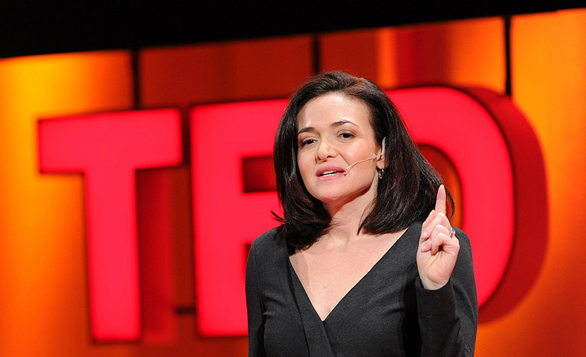
Sheryl Sandberg gave a classic talk at TEDWomen 2010, which became the basis for her book, Lean In.
A dream analysis app creator. A fearless swimmer. The CEO of Campbell’s Soup. A spacesuit designer. These are the kinds of speakers who will take the stage when TEDWomen 2013 kicks off at San Francisco’s SFJAZZ Center tomorrow. With three sessions centered around the theme “Invented Here,” the event will be a global look at what drives local innovation, with 220 TEDxWomen events in 58 countries tuning in for a webcast.
To get you in the spirit, watch this selection of great talks given at TEDWomen and TEDxWomen events in past years.
 Angela Patton: A father-daughter dance ... in prison
Angela Patton: A father-daughter dance … in prison
Angela Patton: A father-daughter dance ... in prison
Angela Patton: A father-daughter dance … in prison“Are you crazy? Who is going to allow a bunch of little girls, dressed up, inside a jail?” This was the initial response Angela Patton got when she shared her idea to host a father-daughter dance inside a prison. Luckily, she found a sheriff just crazy enough to allow it. She tells the story in this talk from TEDxWomen 2012. (Read about Patton’s second father-daughter dance.) |
 Sheryl Sandberg: Why we have too few women leaders
Sheryl Sandberg: Why we have too few women leaders
Sheryl Sandberg: Why we have too few women leadersIn this personal, funny talk from TEDWomen 2010, Sheryl Sandberg recalls being perplexed at a business meeting when no one knew where the women’s bathroom was. Her point: There are far too few women in the c-suite. Here, she speaks to women who want to be there, offering advice that would eventually form the backbone of her book Lean In. |
 Sue Austin: Deep sea diving ... in a wheelchair
Sue Austin: Deep-sea diving … in a wheelchair
Sue Austin: Deep sea diving ... in a wheelchair
Sue Austin: Deep-sea diving … in a wheelchairSue Austin’s life changed for the better when she got a power wheelchair 17 years ago. So it was confusing for her that others looked at her as if she had lost something terrible. In this talk from TEDxWomen 2012, Austin shares how she uses her chair to create whimsical art — and has even created an underwater wheelchair that allows her to dance through coral reefs. (See a gallery of images of Austin’s art.) |
 Noel Bairey Merz: The single biggest health threat women face
Noel Bairey Merz: The single biggest health threat women face
Noel Bairey Merz: The single biggest health threat women faceThe number of heart disease deaths for men has gone down in recent decades, while the number of heart disease deaths for women has gone up. That’s because so much cardiovascular research is focused on men. In this no-holds-barred talk from TEDxWomen 2011, C. Noel Bairey Merz — the director of the Women’s Heart Center at the Cedars-Sinai Heart Institute — shares why this needs to change, stat. |
 Courtney E. Martin: This isn't her mother's feminism
Courtney E. Martin: This isn’t her mother’s feminism
Courtney E. Martin: This isn't her mother's feminism
Courtney E. Martin: This isn’t her mother’s feminismCourtney E. Martin learned a lot about feminism from her mother, of course. But in this talk from TEDWomen 2010, she shares how she also learned quite a bit from her father. Here, she works through the many paradoxes her generation must reconcile in their attempt to define feminism for themselves. |
 Janine di Giovanni: What I saw in the war
Janine di Giovanni: What I saw in the war
Janine di Giovanni: What I saw in the warWar correspondent Janine di Giovanni has seen it again and again — war breaks out, catching people completely off guard. In this talk from TEDxWomen 2012, she draws our attention to the ways war can also bring out incredible compassion and heroism, and why telling these stories is so important that she leaves her son behind to do it. |
 Jane Fonda: Life's third act
Jane Fonda: Life’s third act
Jane Fonda: Life's third act
Jane Fonda: Life’s third actThe longevity revolution? Yes, says Jane Fonda. Her generation is living, on average, 30 years longer than their parents did. So how to make those extra decades vital, productive, full-of-life ones? At TEDxWomen 2011, Fonda shares what she’s learned so far. |
 Heather Knight: Silicon-based comedy
Heather Knight: Silicon-based comedy
Heather Knight: Silicon-based comedyHeather Knight works at the intersection of robotics, entertainment and art. At TEDWomen 2010, she introduces us to Data, a mini robot who has a database full of jokes. Watch as he feels his way through a set, on the fly. |
 iO Tillett Wright: Fifty shades of gay
iO Tillett Wright: Fifty shades of gay
iO Tillett Wright: Fifty shades of gayMost people don’t consider themselves simply gay or straight. When photographer iO Tillett Wright asked people to assign a number to their sexuality, she found that most people occupied the gray area between the two poles. In this talk from TEDxWomen 2012, she shares a few of her images of 2,000 people on the LGBTQ spectrum to underline the point that having just two boxes is very limited. |
 Tony Porter: A call to men
Tony Porter: A call to men
Tony Porter: A call to menNot every TEDWomen talk is given by a woman. In this bold talk from TEDWomen 2010, activist Tony Porter shares the notions of manhood that he grew up with and how these ideas — that men must be superior and unwaveringly strong — were actually deeply hurtful. In this talk, Porter urges the members of his gender to push themselves out of the “man box.” |
 Madeleine Albright: On being a woman and a diplomat
Madeleine Albright: On being a woman and a diplomat
Madeleine Albright: On being a woman and a diplomatThis Q&A from TEDWomen 2010 begins with, of all things, a funny anecdote about pins and Saddam Hussein. From there, the first female Secretary of State shares why she thinks so-called “women’s issues” are far from “soft issues” and deserve to be deeply examined when it comes to foreign policy. |
Stay tuned to the TED Blog for coverage of TEDWomen 2013. Or follow along via Twitter @TEDWomen.
]]>This post is partially inspired by this Reddit user, who asked for great talks to get him/her over the desire to procrastinate. But we say: what’s the fun in that? Though do check out the thread for ideas, as some good talks are suggested.
 Andrew Fitzgerald: Adventures in Twitter fiction
Andrew Fitzgerald: Adventures in Twitter fiction
Andrew Fitzgerald: Adventures in Twitter fictionSocial media wormholes: incredible for procrastination. So enjoy this talk all about how people are using Twitter as a space for creative storytelling. Bonus: go read the feeds he suggests. |
 Anna Mracek Dietrich: A plane you can drive
Anna Mracek Dietrich: A plane you can drive
Anna Mracek Dietrich: A plane you can driveBecause, you just need to know what this means, right? |
 Alexa Meade: Your body is my canvas
Alexa Meade: Your body is my canvas
Alexa Meade: Your body is my canvas“If I want to paint your portrait, I’m painting it on you, physically on you. That means you are probably going to end up with an ear full of paint.” |
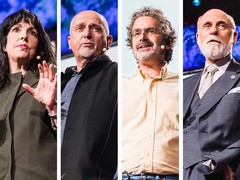 Diana Reiss, Peter Gabriel, Neil Gershenfeld and Vint Cerf: The interspecies internet? An idea in progress
The interspecies Internet? An idea in progress
Diana Reiss, Peter Gabriel, Neil Gershenfeld and Vint Cerf: The interspecies internet? An idea in progress
The interspecies Internet? An idea in progressThe internet is perhaps the best tool for procrastination, ever. Could it also be the same … for animals? Watch this talk about how apes, dolphins and elephants might someday join us online. |
 Dan Dennett: Cute, sexy, sweet, funny
Dan Dennett: Cute, sexy, sweet, funny
Dan Dennett: Cute, sexy, sweet, funnyThere is a evolutionary reason why we find things cute, sexy, sweet and even funny. But the logic doesn’t go in the direction you think. Watch the talk to understand. |
 Marcus Byrne: The dance of the dung beetle
Marcus Byrne: The dance of dung beetle
Marcus Byrne: The dance of the dung beetle
Marcus Byrne: The dance of dung beetleThis talk will give you fun facts to pull out over holiday meals to shock your most uptight relatives. “Pass the cranberry sauce. Did you know that dung beetles roll animal dung over hundreds of miles?” |
 Fabian Oefner: Psychedelic science
Fabian Oefner: Psychedelic science
Fabian Oefner: Psychedelic scienceFabian Oefner creates stunning pop images from scientific phenomenon, like soundwaves and centrifugal force. Plus, see what happens when he sets whiskey on fire. |
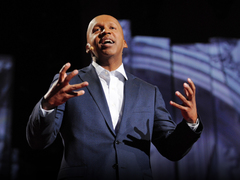 Bryan Stevenson: We need to talk about an injustice
Bryan Stevenson: We need to talk about an injustice
Bryan Stevenson: We need to talk about an injusticeFor some people, the perfect procrastination material is light. For others, it is more serious—so you feel justified in taking time away from important tasks. For this specific subsect, we recommend this highly powerful talk. See also: Aaron Huey’s “America’s native prisoners of war.” |
 Rives: Reinventing the encyclopedia game
Rives: The Encyclopedia Game
Rives: Reinventing the encyclopedia game
Rives: The Encyclopedia GameMiss the printed version of the Encyclopaedia Britannica? Then you’ll want to play Rives’ encyclopedia game. Chimborazo! |
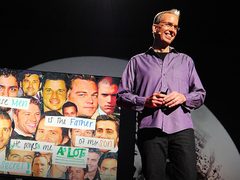 Frank Warren: Half a million secrets
Frank Warren: Half a million secrets
Frank Warren: Half a million secretsIn 2012, the website PostSecret.com crossed the line of having half a million secrets. In this talk, hear some of the juiciest and most moving. |
 Shea Hembrey: How I became 100 artists
Shea Hembrey: How I became 100 artists
Shea Hembrey: How I became 100 artistsA look at how one man created a 100-person biennial. |
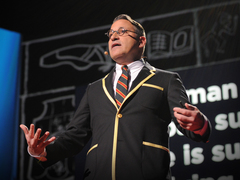 Chip Kidd: Designing books is no laughing matter. OK, it is.
Chip Kidd: Designing books is no laughing matter. OK it is.
Chip Kidd: Designing books is no laughing matter. OK, it is.
Chip Kidd: Designing books is no laughing matter. OK it is.As you put off reading the book you need to read, we recommend this talk about book covers. |
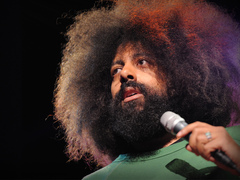 Reggie Watts: Beats that defy boxes
Reggie Watts: Beats that defy boxes
Reggie Watts: Beats that defy boxesThis performance is just mesmerizing. Take some time to be disoriented in the most entertaining way, in Reggie Watts’ signature style. |
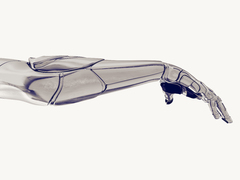 Miguel Nicolelis: A monkey that controls a robot with its thoughts. No, really.
Miguel Nicolelis: A monkey that controls a robot with its thoughts. No, really
Miguel Nicolelis: A monkey that controls a robot with its thoughts. No, really.
Miguel Nicolelis: A monkey that controls a robot with its thoughts. No, reallyEnough said. |
 Charlie Todd: The shared experience of absurdity
Charlie Todd: The shared experience of absurdity
Charlie Todd: The shared experience of absurdityThe founder of Improv Anywhere launches experiences — like the No Pants Subway Ride — that are just so funny and disruptive, you need to watch. |
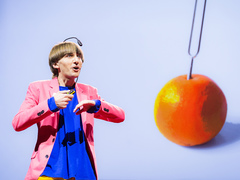 Neil Harbisson: I listen to color
Neil Harbisson: I listen to color
Neil Harbisson: I listen to colorThis talk is great for imagining what it’s like for a grocery store aisle to feel like a dance club, thanks to the brightly colored packaging. |
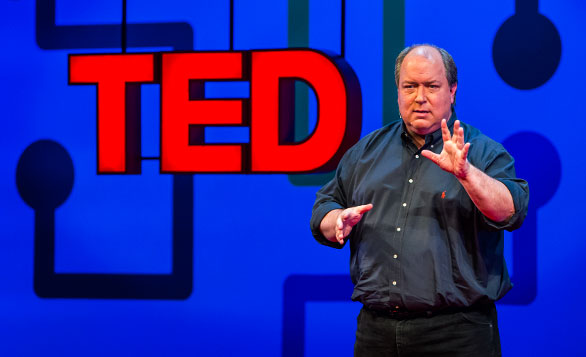
Peter Doolittle introduces us to working memory at TED University at TEDGlobal 2013. Photo: Bret Hartman
Experiences we have all had: walking into a room with a tremendous sense of purpose, only to realize that you have completely forgotten what the purpose was. Talking to someone in a restaurant and losing the thread of your conversation because you’re distracted by the juicier one at the table next door. Slowing down as you walk because you’re thinking about how to phrase a text message.
 Peter Doolittle: How your "working memory" makes sense of the world
In today’s talk, educational psychologist Peter Doolittle shares how each of these phenomena is related to working memory, that thing which allows us to store and process our immediate experiences and mix them with long-term memories.
Peter Doolittle: How your "working memory" makes sense of the world
In today’s talk, educational psychologist Peter Doolittle shares how each of these phenomena is related to working memory, that thing which allows us to store and process our immediate experiences and mix them with long-term memories.
“Life comes at us, and it comes at us very quickly,” says Doolittle. “What we need to do is take the amorphous flow of experience and somehow extract meaning from it with a working memory that is about the size of a pea.”
Watch Doolittle’s talk for some helpful strategies for improving your working memory’s ability to hold on to information. And here, a few more TED Talks related to memory. Just make sure to actually store what’s said in them, m’kay?
 Joshua Foer: Feats of memory anyone can do
Joshua Foer: Feats of memory anyone can do
Joshua Foer: Feats of memory anyone can doJournalist Joshua Foer never thought he had a particularly good memory. So how did he win the U.S. Memory Championship? By working hard to master a centuries-old technique for remembering long lists: building a “memory palace” full of striking images, located sequentially in a space you know very well. |
 Steve Ramirez and Xu Liu: A mouse. A laser beam. A manipulated memory.
Steve Ramirez and Xu Liu: A mouse. A laser beam. A manipulated memory
Steve Ramirez and Xu Liu: A mouse. A laser beam. A manipulated memory.
Steve Ramirez and Xu Liu: A mouse. A laser beam. A manipulated memoryIn their lab at MIT, Steve Ramirez and Xu Liu planted a memory of fear in a mouse’s brain. Why, you ask, would they do this? In this unexpectedly hilarious talk at TEDxBoston, they share the big idea behind their work: that it may actually be possible to edit our memories. (Read the TED Blog post: 9 classic movies about memory manipulation, and how they inspire real neuroscience.) |
 Gabriel Barcia-Colombo: Capturing memories in video art
Gabriel Barcia-Colombo: Capturing memories in video art
Gabriel Barcia-Colombo: Capturing memories in video artTED Fellow Gabriel Barcia-Colombo loves to collect things. In this short and fun talk from the TED Fellows pre-conference, he shows how he is collecting memories by creating video sculptures of his friends in jars. The point: to preserve his memories of these people for all time. |
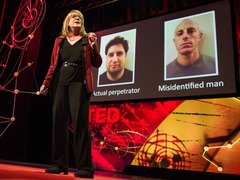 Elizabeth Loftus: How reliable is your memory?
Elizabeth Loftus: The fiction of memory
Elizabeth Loftus: How reliable is your memory?
Elizabeth Loftus: The fiction of memoryYou remember things exactly as they happened, right? Not necessarily. In this talk from TEDGlobal 2013, Elizabeth Loftus shares a body of work that shows how memories are susceptible to suggestion. This quote says it all: “Many people believe memory works like a recording device … This just isn’t true. Our memories are constructive. They’re reconstructive. Memory works a bit more like a Wikipedia page.” (Read more on Loftus’ work.) |
 Jeff Hawkins: How brain science will change computing
Jeff Hawkins: How brain science will change computing
Jeff Hawkins: How brain science will change computingJeff Hawkins, the creator of the Palm and the Treo, is taking unusual inspiration for new technology: the human brain. In this classic talk from TED2003, Hawkins shares what he’s learned from studying brains. Mainly, that they are complex memory storage systems that are highly adept at sorting and predicting what will happen next. |
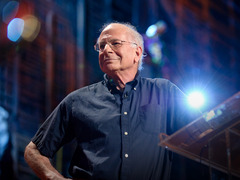 Daniel Kahneman: The riddle of experience vs. memory
Daniel Kahneman: The riddle of experience vs. memory
Daniel Kahneman: The riddle of experience vs. memoryWhat is happiness? Behavorial economist Daniel Kahneman shares how this is a complicated question, because we perceive things in two ways: as the “experiencing self” and as the “remembering self.” The experiencing self makes assessments in the moment, but the remembering self creates a coherent story in retrospect about them. Kahneman shares how powerful the remembering self is, helping us make decisions going forward and, ultimately, determining how satisfied we are with our lives. |
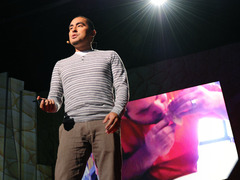 Cesar Kuriyama: One second every day
Cesar Kuriyama: One second every day
Cesar Kuriyama: One second every dayCesar Kuriyama has a cool idea for anyone who is concerned about remembering the little wonderful moments of their life. In this talk from TED2012, he introduces us to an app called One Second Every Day that allows you to record moments and stitch them together into a continuous video. Kuriyama plans to do this for the rest of his life, to make sure memories don’t just slip away. |
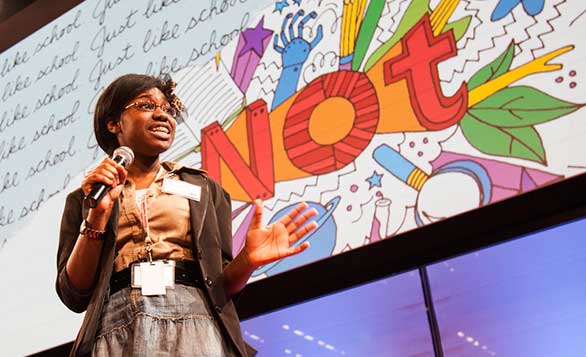
A student from the audience introduces a speaker at TEDYouth 2012, themed “Just like school … not.” Photo: Ryan Lash
What conference, besides TEDYouth, could bring together an elephant communication expert, the head of research at Pixar, a professional storm chaser, and a 16-year-old DJ? TEDYouth 2013, “The Spark,” happens tomorrow, November 16, at 11am CST in New Orleans, Louisiana. And you can watch along via the live webcast, which will be available in English, Spanish and Arabic. To get you ready for this fast-paced, mind-blowing conference, here’s a playlist of some of the best talks from TEDYouths past.
Adam Savage: How simple ideas lead to scientific discoveries
Adam Savage is the host of Mythbusters, and the king of making scientific analysis fun. In this talk from TEDYouth 2011 — which happens to be half animated — he shows how simple methodologies led to two of the most exciting scientific discoveries of all time: Eratosthenes’ calculation of the Earth’s circumference and Hippolyte Fizeau’s measurement of the speed of light.
Greg Gage: The cockroach beatbox
At TEDYouth 2011, Greg Gage dissected a cockroach on stage. In this talk, amped up with animation, we get a deeper look at how their brains work as he manipulates the electrical impulses between the leg and brain. Because roach brains are so much like ours, if we understand how they work, we can understand how we work.
Carvens Lissaint: “Put the Financial Aid in the Bag”
Education should be more affordable. In this spoken-word gem from TEDYouth 2011, performance artist Carvens Lissaint imagines what would be said during a robbery for scholarships and Pell Grants.
Katherine Kuchenbecher: The technology of touch
At TEDYouth 2012, Katherine Kuchenbecher shares why she is working hard to make haptic feedback a part of everyday technology. What is “haptic”? Anything related to the sense of touch. Imagine being able to touch a fabric as you shop online, or your dentist being able to “feel” a cavity from a scan.
[ted id=1371]
Kevin Allocca: Why videos go viral
Kevin Allocca watches YouTube videos professionally (he is the site’s trends manager). At TED2011, he shares the magic behind what makes videos go viral, narrowing it down to four factors.
Maurice Ashley: Working backward to solve a problem
Maurice Ashley is a chess grandmaster. And in this talk from TEDYouth 2012, he shares one method he uses to improve his game — using retrograde analysis to work backward from the endgame he desires. He shares why this is useful in chess … and life.
Tom Chi: Rapid prototyping Google Glass
It didn’t take years, or even months, to prototype Google Glass. It was done in a single day. In this talk from TEDYouth 2012, Tom Chi — who was on this prototyping team — shares how they did it using binder clips and clay.
Robert Full: Curiosity, discovery and gecko feet
How do geckos stick to walls and trees? It has to do with their hairy toes. At TEDYouth 2011, Robert Full tells the story of how a sophomore in college solved this mystery by creating a beautifully simple way to measure the force of a single gecko hair.
William Gurstelle: A call to invention
Speakers, made of a used yogurt cup? In this talk from TEDYouth 2012, tinkerer William Gurstelle shows you how to make them.
David Fasanya and Gabriel Barralag: “Beach Bodies”
In another truly amazing spoken-word moment, this time from TEDYouth 2012, David Fasanya and Gabriel Barralag bring down the house. This reflection on self-image begins, “I don’t know about you, but I’m trying to get this beach body…”
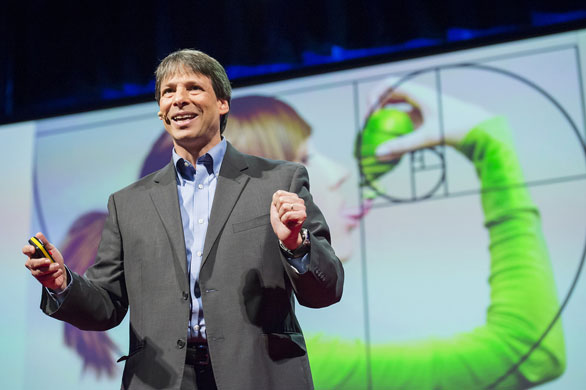
The swirl behind Arthur Benjamin shows the pattern of Fibonacci numbers. Photo: James Duncan Davidson
Arthur Benjamin is perhaps the world’s leading mathemagician and, in today’s talk, he aims to show the creativity, beauty and wonder that is as much a part of math as logic.
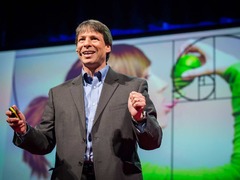 Arthur Benjamin: The magic of Fibonacci numbers
Stepping onto the TEDGlobal 2013 stage, Benjamin takes us on a spirited tour of the Fibonacci numbers, where the patterns to be found go far beyond simply adding two consecutive numbers to get the next. Math is the science of patterns, says Benjamin, and isn’t it incredible that as we note the arithmetical significance of this sequence, that we can also see it in action all around us?
Arthur Benjamin: The magic of Fibonacci numbers
Stepping onto the TEDGlobal 2013 stage, Benjamin takes us on a spirited tour of the Fibonacci numbers, where the patterns to be found go far beyond simply adding two consecutive numbers to get the next. Math is the science of patterns, says Benjamin, and isn’t it incredible that as we note the arithmetical significance of this sequence, that we can also see it in action all around us?
“Fibonacci numbers appear in nature surprisingly often,” says Benjamin. “The number of petals on a flower is typically a Fibonacci number. Or the number of spirals on a sunflower or a pineapple.”
Benjamin’s talk reminds us of several other TED classics. Human beings have a proclivity for patterns, and this collection of talks sheds light on how, and why, we lock into patterns and use them in countless facets of life.
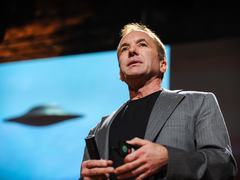 Michael Shermer: The pattern behind self-deception
Michael Shermer: The pattern behind self-deception
Michael Shermer: The pattern behind self-deceptionThe brain is wired to see patterns and this is not just the case in humans. Birds in a box, with two holes to peck, will continue the pattern of action that resulted in the delivery of a food reward, even if the food is really dispensed randomly. This is just one of the ways Michael Shermer, the director of the Skeptics Society, cleverly gives us insight into our innate “patternicity.” Often, the tendency to follow patterns can lead us to offbeat, incorrect or out-of-this-world conclusions. |
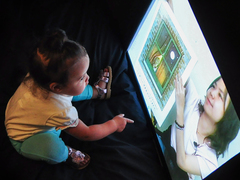 Patricia Kuhl: The linguistic genius of babies
Patricia Kuhl: The linguistic genius of babies
Patricia Kuhl: The linguistic genius of babiesOur innate nature of pattern-recognizing is even evident in a baby’s ability to learn language. By “taking statistics” and finding trends in the words constantly spoken to and around them, young children identify and absorb the cultural characteristics of their native language. In this talk, Patricia Kuhl describes this fascinating — and critical — period of language acquisition. |
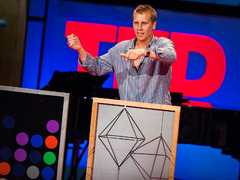 Beau Lotto: Optical illusions show how we see
Beau Lotto: Optical Illusions show how we see
Beau Lotto: Optical illusions show how we see
Beau Lotto: Optical Illusions show how we seePatterns are essential in our brains’ ability to make sense of the infinite possibilities of the stimuli in our surroundings. We use guidance from neighboring clues and our own memories of past experience to fill in the blank that is the perception of the present. Beau Lotto, exposes the assumptions that the brain makes based on such patterns through the trickery of optical illusion. |
 Jean-Baptiste Michel: The mathematics of history
Jean Baptiste: The mathematics of history
Jean-Baptiste Michel: The mathematics of history
Jean Baptiste: The mathematics of historyPatterns expose consistencies throughout human history that teach us about the past and allow us to anticipate the future. Did you know there is a mathematic equation that links the language of the King of England in the 9th century to Jay-Z? Jean-Baptiste Michel has found this equation and sees great potential in finding more intriguing trends in our time of digitized data. |
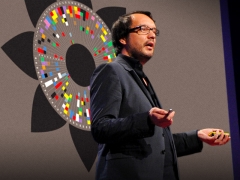 David McCandless: The beauty of data visualization
David McCandless: The beauty of data visualization
David McCandless: The beauty of data visualizationData journalist David McCandless turns complicated data sets — worldwide military spending versus worldwide charity giving, media panic over disease and disaster — into a landscape that you can explore with your eyes. Why? To make the invisible patterns of our world highly visible. |
 Ron Eglash: The fractals at the heart of African designs
Ron Eglash: The fractals at the heart of African designs
Ron Eglash: The fractals at the heart of African designsEthno-mathematician Ron Eglash noticed a fascinating pattern as he began to study at African villages in many different parts of the continent — that they were built on fractal geometry, with smaller structures resembling the larger structures. These fractal patterns are also visible in African art and architecture — even in popular board games and divination practices. |
And a bonus TEDx talk:
Laurie Frick: Seeing the hidden language in art
Identifying patterns help humans to find clarity in seemingly useless information. Laurie Frick, an engineer turned artist, collects and simplifies millions of data points of human tracking into visuals that expose trends amidst seeming background noise. Beginning with measuring her own minute-to-minute sleep patterns, in this talk from TEDxAustin, she describes a form of art that celebrates the surveillance and reveals the structure that makes the human condition more accessible.
Bad days are the worst. But these TED Talks are very likely to cheer you up. Enjoy.
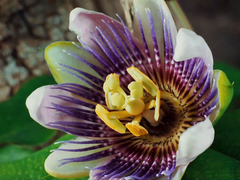 Louie Schwartzberg: Nature. Beauty. Gratitude.
Louie Schwartzberg: Nature. Beauty. Gratitude
Louie Schwartzberg: Nature. Beauty. Gratitude.
Louie Schwartzberg: Nature. Beauty. GratitudeWhat better to do on a meh day than to stop and smell the flowers? Photographer Louie Schwartzberg’s talk lets you do that very quickly, as he gives them to you in timelapse form. This talk meditates on the beautiful dance of nature, with words from Benedictine monk David Steindl-Rast, soothing flute music and the insights of an adorable kid. |
 Kathryn Schulz: On being wrong
Kathryn Schulz: On being wrong
Kathryn Schulz: On being wrongPerhaps it’s maybe, kind of, sort of possible that something you did contributed to your bad day. Kathryn Shulz’s talk will make you feel very comfortable with the idea of being wrong, because fallibility is just part of being human. Bonus: the opening anecdote will make you laugh. |
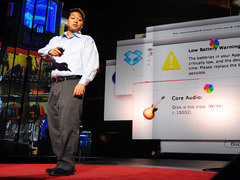 Improv Everywhere: A TED speaker's worst nightmare
Improv Everywhere: A TED speaker’s worst nightmare
Improv Everywhere: A TED speaker's worst nightmare
Improv Everywhere: A TED speaker’s worst nightmareAt the beginning of this talk, a speaker gets hung up on a technical malfunction with his slide deck. And then … things get really interesting as the Mac “spinning beachball” turns into an incredible dance. |
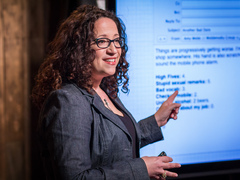 Amy Webb: How I hacked online dating
Amy Webb: How I hacked online dating
Amy Webb: How I hacked online datingMaybe it’s that slippery thing called “love” that’s got you down. If that’s the case, this talk from Amy Webb is the answer. After a string of disastrous dating incidents, she decided to write her own algorithm for love and reverse-engineer online dating. The result: well, it’s really good. And her conclusion: the problem wasn’t that she was being too picky, it was that she wasn’t being picky enough. |
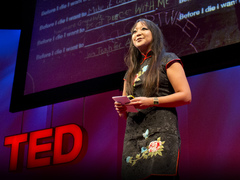 Candy Chang: Before I die I want to ...
Candy Chang: Before I die I want to…
Candy Chang: Before I die I want to ...
Candy Chang: Before I die I want to…This talk will get you motivated to do that thing you really want to do. Candy Chang has asked people around the world to (anonymously) finish the sentence: “Before I die, I want to _________.” Their answers are revealing, inspiring and often very amusing. |
 Andrew Bird: A one-man orchestra of the imagination
Andrew Bird: A one-man orchestra of the imagination
Andrew Bird: A one-man orchestra of the imaginationWhat, people, is more uplifting than a glockenspiel? Here, musician Andrew loops that wonderful instrument with his signature whistles and violin work, to a beautiful end. |
 Phil Hansen: Embrace the shake
Phil Hansen: Embrace the shake
Phil Hansen: Embrace the shakeWhen artist Phil Hansen developed a debilitating hand tremor, he thought his career was done. And then a doctor suggested: “Embrace the shake.” In this talk, he shares how a physical limitation drove him on to incredible creativity. Think: portraits in matches, painting with karate chops and tattooed bananas. |
 E.O. Wilson: Advice to a young scientist
E.O. Wilson: Advice to young scientists
E.O. Wilson: Advice to a young scientist
E.O. Wilson: Advice to young scientists“The world needs you: badly.” That’s what legendary biologist and TED Prize winner E.O. Wilson has to say to young scientists in this talk. Here, he reminds us that wonder and creativity are at the center of science — and, well, life — and that every mind involved helps contribute to what we know. |
| John Legend: “True Colors” Here, the piano man gives a heart-melting rendition of the Cyndi Lauper classic. Seriously, it’s the next most touching thing to those athlete documentaries that air during the Olympics. |
 Ed Gavagan: A story about knots and surgeons
Ed Gavagan: A story about knots and surgeons
Ed Gavagan: A story about knots and surgeonsThis talk is about taking a moment to be thankful for something we rarely think about — the incredible skill of surgeons. In a very moving story, Ed Gavagan shares how this skill helped him recover after being stabbed — and how it gives him a continued appreciation for life. |
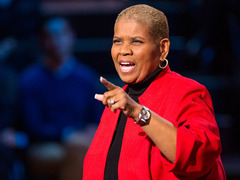 Rita Pierson: Every kid needs a champion
Rita Pierson: Every kid needs a champion
Rita Pierson: Every kid needs a championWork can be draining, yes. But this talk from Rita Pierson will have you up on your feet and ready to take on any challenge. A long time educator working in some of the most challenging classrooms in the country, Pierson has found a foolproof way to get through to any student: by actually taking the time to form a relationship with them. |
 Dan Gilbert: The surprising science of happiness
Dan Gilbert: The surprising science of happiness
Dan Gilbert: The surprising science of happinessPsychologist Dan Gilbert has spent decades studying what makes us happy — and it isn’t what we think. This talk gives insight into why lottery winners and paraplegics report themselves as being equally happy a year after the moment that changed their life. Because of our incredible “psychological immune system,” which helps us synthesize happiness when things go wrong. It’s certainly something to tap into on a bad day. |
 Sleepy Man Banjo Boys: Bluegrass virtuosity from ... New Jersey?
Sleepy Man Banjo Boys: Bluegrass virtuosity from … New Jersey?
Sleepy Man Banjo Boys: Bluegrass virtuosity from ... New Jersey?
Sleepy Man Banjo Boys: Bluegrass virtuosity from … New Jersey?And your final cheer-up talk: Kids! Playing bluegrass! Really well! |
Now get back out there, tiger …
]]>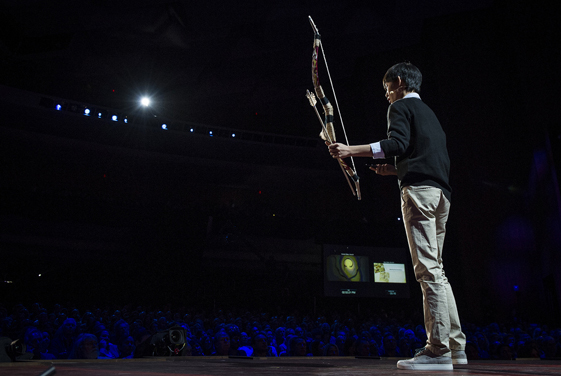
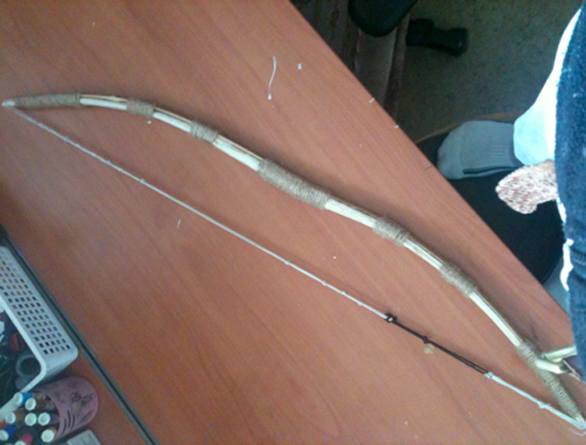
Dong Woo Jang shares why he makes handmade bows—as a way to relieve stress and connect to his heritage. Photo: James Duncan Davidson
In South Korea’s “pressure-cooker” educational environment, 15-year-old Dong Woo Jang began to feel his caveman instincts kicking in: He needed to survive. And like his ancestors, he decided to arm up –- with a bow and arrow.
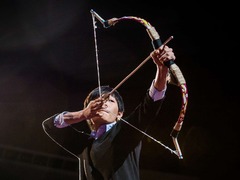 Dong Woo Jang: The art of bow-making
As he shares in today’s talk, proudly holding up one of his handmade bows, he says, “Through bow making I came in contact with part of my heritage. Learning the information that has accumulated over time and reading the message left by my ancestors was better than any consolation, therapy or any advice any living adult could give me.”
Dong Woo Jang: The art of bow-making
As he shares in today’s talk, proudly holding up one of his handmade bows, he says, “Through bow making I came in contact with part of my heritage. Learning the information that has accumulated over time and reading the message left by my ancestors was better than any consolation, therapy or any advice any living adult could give me.”
Learning and perfecting a craft such as bowmaking is no easy task. Jang attests to staying up many a night to saw, trim and polish wood. He experimented and researched endlessly, and almost set his apartment complex on fire.
Below, 7 more TED speakers who speak to the joys (and tribulations) of creating something purely by hand:
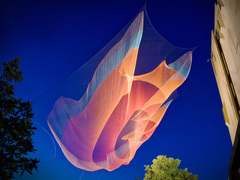 Janet Echelman: Taking imagination seriously
The speaker: Janet Echelman What she makes: Art from fishing nets and lace Janet Echelman was walking along the beach one day when she came across voluminous piles of fishing nets. A longtime artist, she had assumed that sculptures needed to be hard and heavy — but these nets shifted her thinking. She worked with the fishers to learn how the nets were made, and later studied with Lithuanian lace makers. These artisans have had a big impact on her work. |
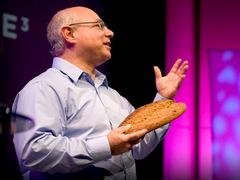 Peter Reinhart: The art and craft of bread
The speaker: Peter Reinhart What he makes: Bread Baking master Peter Reinhart charts the making of a loaf of bread, from dough to oven to plate. It’s all about mastering the details: “Personality and character’s being developed in this dough under the watchful gaze of the baker. And the baker’s choices all along the way determine the outcome of the product. A subtle change in temperature — a subtle change in time — it’s a balancing act between time, temperature and ingredients.” |
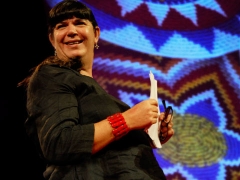 Marisa Fick-Jordan: The wonder of Zulu wire art
The speaker: Marisa Fick-Jordan What she makes: Products woven from telephone wire In Africa, women have been weaving wire for centuries. But the modern era has streamlined the form, providing a perfect ready-made material — telephone wire. Marisa Fick Jordan shares how she worked with a village of traditional Zulu wire weavers to create modern products, marrying an artistic eye and a technical craft to create a business. |
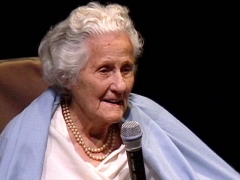 Eva Zeisel: The playful search for beauty
The speaker: Eva Zeisel What she makes: Ceramics Before Eva Zeisel could become a ceramics master, she had to be an apprentice and learn all aspects of making pottery by hand, like preparing the clay taken from the Hungarian hillsides. She prefers to be called a “maker of things,” rather than a designer. She says, “The word ‘playful’ is a necessary aspect of our work because, actually, one of our problems is that we have to make, produce, lovely things throughout all of life, and this for me is now 75 years.” |
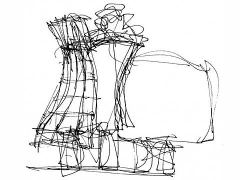 Frank Gehry: My days as a young rebel
The speaker: Frank Gehry What he makes: Furniture made of paper, buildings inspired by fish Before he was a famous architect, Frank Gehry created paper furniture and cardboard flooring for Bloomingdales in the 1960s. In this talk, he tells the story of his evolution, and how most of the architectural work we now know him for is based on the form of the fish. “I got mad at postmodernism and said that fish were 500 million years earlier than man and, if you’re going to go back, we might as well go back to the beginning.” |
 Thomas Thwaites: How I built a toaster -- from scratch
The speaker: Thomas Thwaites What he made: A toaster, by hand Thomas Thwaites wanted to build an electric toaster from scratch. And in doing so, he found a daunting task awaiting him: 400 different pieces made out of over a hundred unique materials. Some skills he had to learn to make this vision a reality: mining, metallurgy and plastic-making. |
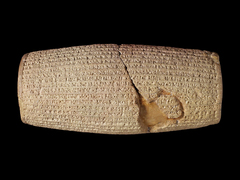 Neil MacGregor: 2600 years of history in one object
The speaker: Neil MacGregor What he makes: Museum exhibits of hand-crafted objects Why are the craft and construction of things important? Perhaps Neil MacGregor, director of the British Museum, explains it best in his talk, “2,600 years of history in one object.” He says, “The things we make have one supreme quality — they live longer than us. We perish, they survive; we have one life, they have many lives, and in each life they can mean different things. Which means that, while we all have one biography, they have many.” |
Below, see Dong Woo Jang’s tips and diagrams for making the perfect bow.
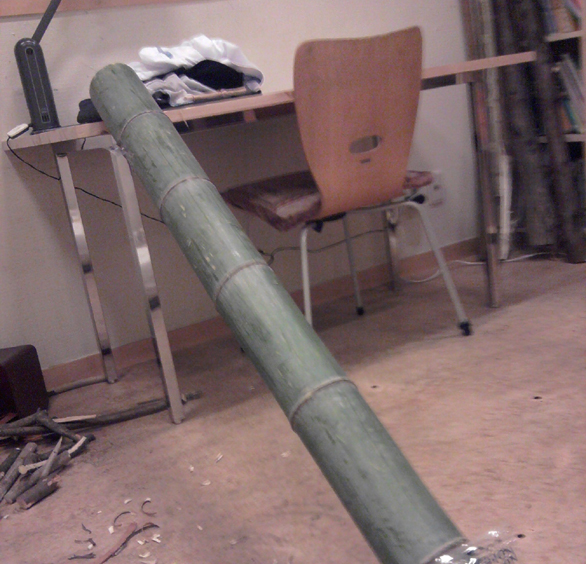
“The perfect bow begins with a piece of wood. I have spent the most time working with bamboo wood.”
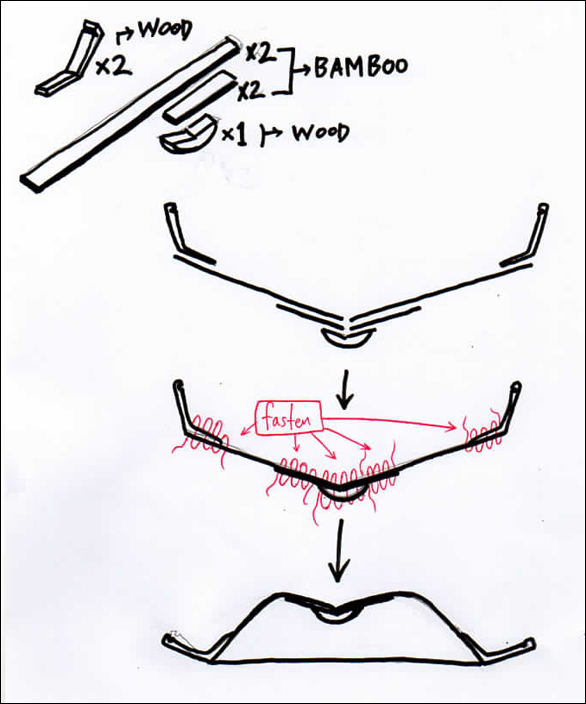
“I make five separate pieces of bamboo wood of different length, width and thickness, which will be fastened with nylon string. I try to avoid using glue unless it is totally necessary. “
“I string the bow with inelastic string. Then, using the arrow, draw the string gradually to ease the bow up. I increase the tension each day for weeks in order to make the wood fibers flexible. If the wood does not give in easily, I glue layers of other materials — such as bamboo, artificial sinew or nylon fiber — onto the outer part of the bow. I usually buy artificial sinew from leather shops.”
“When not in use, bow string needs to be unfastened. Otherwise the tension of the bow will decrease and the bow will remain rigid and loose flexibility.”
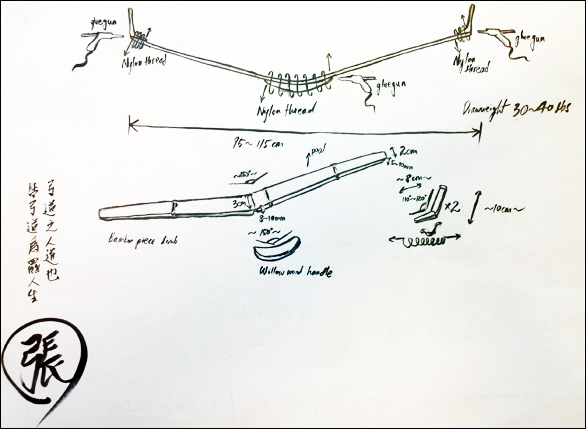
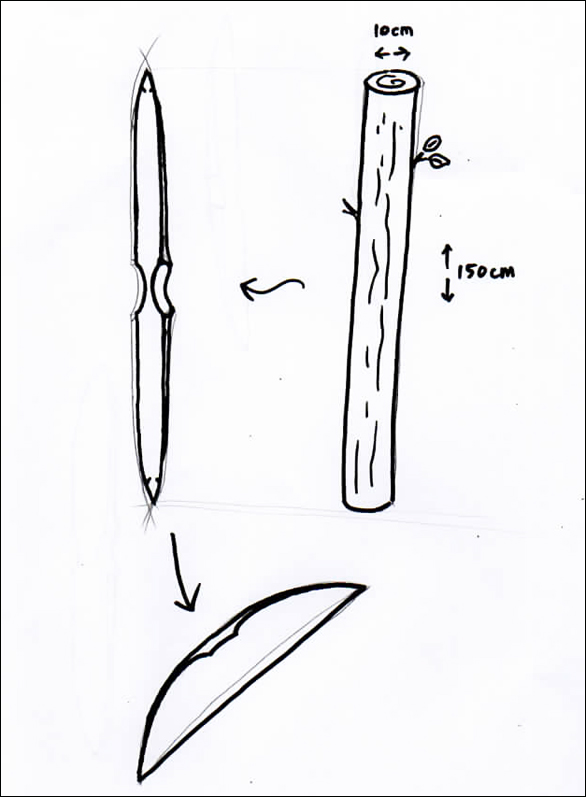
“For other types of hard wood — such as yew or mulberry — I take a long piece of log of about 150 cm and cut it with axe or sickle to resemble the shape of the bow.”
For the past week, Amy Webb has been inspiring people to calculate their own algorithm for love. Her laugh-out-loud TED Talk, about reverse engineering her online dating profile and, essentially, data-ing her way into her perfect relationship has gotten a lot of attention, including on The Frisky and Pop Sugar. As Webb’s talk continues to take off online, here is what to watch next if her talk intrigued you and left you wanting more.
 Helen Fisher: The brain in love
Helen Fisher: The brain on love Love: it makes the world go ‘round, and has been found in 170 societies. But why? In this talk, Helen Fisher shares how she and her team put new couples, longterm couples and those who’ve just been dumped in MRIs, and what they’ve learned about our need for love based on this brain activity. |
 Kevin Slavin: How algorithms shape our world
Kevin Slavin: How algorithms shape our world Algorithms are, basically, the mathematic programs computers use to make decisions. They guide our Netflix recommendations, book prices, the stock market, architecture optimization, and so much more. And yet, algorithms interfere and lock into each other in loops, creating bizarre behaviors. Slavin asks: Could entrenching these systems in our lives, even in the earth, have implications we don’t yet realize? |
 Esther Perel: The secret to desire in a long-term relationship
Esther Perel: The secret to desire in a long-term relationship Deeper intimacy leads to better sex, or so the story goes. But Esther Perel wonders if this is actually true. In her TED Talk, given in our office just like Webb’s, Perel looks at the problem of sustaining desire in a long-term relationship and how it relates to two needs often at odds: our need for security and our need for adventure. So what is the answer to this riddle? Well, you’ll have to watch. |
|
David McCandless: The beauty of data visualization
David McCandless: the beauty of data visualization The name of Amy Webb’s book is Data, A Love Story. So we bet she would adore David McCandless’ talk about his work as a “data detective.” McCandless gives new understanding to statistics and other assorted data by rendering it visible in charts and graphs — which also happen to be beautiful works of art. Bonus: get to know much more on the thriving field of data visualization with these talks from data artists. |
 Jenna McCarthy: What you don't know about marriage
Jenna McCarthy: What you don’t know about marriage Marriage. Why would anyone permanently tie themselves to another human being who likely snores, won’t do their dishes, and will gain an estimated 50 pounds over the course of their lifetime? In this humorous talk, writer Jenna McCarthy looks at the data surrounding marriage and realizes … wait, maybe that’s not so bad after all. I mean, the health benefits alone… |
Bonus: Christian Rubber’s TED-Ed lesson “The math of online dating,” in which he shares how exactly OKCupid, of which he is a founder, predicts whether a pair should go out on a date.
And to add a bonus on that bonus: here are 7 things we learned from Christian Rudder about online dating. An example: that the length of the message doesn’t matter.
]]>
Gary Slutkin speaks at TEDMED about his unusual approach to the epidemic of violence.
As a physician and epidemiologist, Gary Slutkin didn’t think he had much to contribute to the conversation about gun violence in America.
 Gary Slutkin: Let's treat violence like a contagious disease
But then he began to realize something — that outbreaks of violence follow the same patterns as outbreaks of tuberculosis, cholera and AIDS, all of which he’d worked on reversing during a decade in Somalia, Uganda and other parts of Africa. What predicts violence? Slutkin realized that it is in fact like a contagious disease because the biggest indicator is a preceding incidence of violence.
Gary Slutkin: Let's treat violence like a contagious disease
But then he began to realize something — that outbreaks of violence follow the same patterns as outbreaks of tuberculosis, cholera and AIDS, all of which he’d worked on reversing during a decade in Somalia, Uganda and other parts of Africa. What predicts violence? Slutkin realized that it is in fact like a contagious disease because the biggest indicator is a preceding incidence of violence.
In today’s talk, Slutkin described how he and his team applied the science and public health strategies of epidemics to violence, with some amazing results in neighborhoods of Chicago. It’s a compelling story, and one that encourages us each to bring our own unique lens to problems outside our usual orbit.
Slutkin’s talk reminds us of several other TED Talks, which shed new light on epidemics. Here, some highlights.
 Sonia Shah: 3 reasons we still haven’t gotten rid of malaria
Sonia Shah: 3 reasons we still haven’t gotten rid of malaria Malaria doesn’t just occur in the poorest parts of the world; malaria creates poverty. And while people in non-malarious countries load up on preventative medication before traveling to locations where malaria is an issue, those who actually live there encounter it so often that they don’t worry too much about it. “A child in Malawi, for example, she might have 12 episodes of malaria before the age of 2,” says Shah in this talk from TEDGlobal 2013, which is full of observations on why malaria has been so hard to eradicate, even though we’ve had a cure since the 1600s. Bonus: read the TED Blog’s Q+A with Shah about eradicating “the malarious way of life.” |
 Nicholas Christakis: How social networks predict epidemics
Nicholas Christakis: How social networks predict epidemics Want to predict the next big epidemic? Map real-life social networks, like friendships and workplace relationships. In this talk from TED@Cannes, Nicholas Christakis shows how monitoring the friends of unconnected people can give incredible insight into the spread of disease, and yield early warning of epidemics. |
 Steven Johnson: How the "ghost map" helped end a killer disease
Steven Johnson: How the “ghost map” helped end a killer disease Steven Johnson shares a historical story in this talk from TEDSalon 2006, taking us back to London in 1854 during the age of cholera. He tells the story of an incredible doctor who wasn’t convinced that the disease was transmitted by air, but had a hunch it was being passed via water. Here’s how he changed the thinking of the time. |
 Shereen El-Feki: HIV -- how to fight an epidemic of bad laws
Shereen El-Feki: HIV — how to fight an epidemic of bad laws In about 50 counties, having an HIV is considered akin to a crime — people can be incarcerated or deported simply for having the disease. In this talk from the TEDxSummit, she wonders if the HIV epidemic led to an epidemic of bad laws, and shows that banishing the infected is not the answer. |
 Laurie Garrett: Lessons from the 1918 flu
Laurie Garrett: Lessons from the 1918 flu In 2007, amid intense fear over the spread of avian flu, people started stockpiling masks and Tamiflu. In this talk, given at TED that year, disease prevention expert Laurie Garrett explains why this is not the best approach and why it’s about having prepared communities, rather than prepared individuals. How does she know this? For that, she looks to the flu epidemic of 1918. |
 Gregory Petsko: The coming neurological epidemic
Gregory Petsko: The coming neurological epidemic Some epidemics start rapidly; others take decades. As Gregory Petsko explains at TED2008, this will be the case for Alzheimer’s disease as the population over the age of 80 balloons. This means that it’s time to do more research, now. A bold call for the government to start funding research into connections — like the fact that those with neurological disorders have very low incidence of cancer. |
This post originally ran in September of 2013. It was updated on October 10, 2013, with a new and relevant talk.
]]> They might not be old enough to rent a car solo or to order a glass of wine, but they certainly have what it takes to deliver a fascinating talk on a bold idea. In this playlist, we highlight incredible TED speakers under the age of 20.
From Taylor Wilson, 17, and his nuclear fusion reactor to Richard Turere, 13, and his invention to ward off lions to Tavi Gevinson, 17, and her media empire — we dare you to watch these talks and then complain about “kids today.”
Watch the playlist: TED Under 20 »
TED playlists are collections of talks around a topic, built to illuminate ideas in context. New playlists are added to the section regularly. We hope you enjoy this installment.
]]>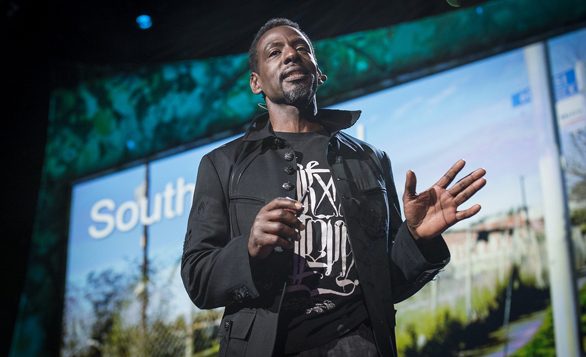
Ron Finley is just one TED speaker with an idea for improving the health of his city. Photo: James Duncan Davidson
Cities, traditionally, have not been the healthiest of places. The spread of diseases, sanitation issues, pollution — these things accelerate with large masses of people living in close quarters. But is that the way it needs to be? Could the cities of the future also be places where all people get top-notch healthcare, and where people collectively help each other live healthfully?
At TEDCity2.0, a one-day conference being held in New York City on September 20, two dozen plus speakers will take the stage to share bold ideas on the future of cities. They will speak on topics ranging from health to housing, art to education, safety to transportation, with the talks focused around the theme “Dream me. Build me. Make me real.”
To get you excited for TEDCity2.0, and the TEDxCity2.0 events that will surround it, watch these great talks on improving health in urban areas.
 Rebecca Onie: What if our health care system kept us healthy?
Rebecca Onie: What if our healthcare system kept us healthy? A child with an ear infection may get a prescription for antibiotics, but the real problem is usually an overcrowded apartment and a lack of food at home. This was a hard lesson that Rebecca Onie learned while working at the pediatrics unit of Boston Medical Center. At TEDMED 2012, she shares how this experience inspired her to start Health Leads, a program that can prescribe heat in winter or extermination for infestations, and connect patients with the resources they need to improve issues underlying health. |
 Bill Davenhall: Your health depends on where you live
Bill Davenhall: Your health depends on where you live Bill Davenhall is a pioneer of “geo-medicine.” At TEDMED 2009, he shows that even the most avid of travelers spends the grand majority of their time at home and at work — repeated exposure to specific locations that come with their own specific health risks. This talk is a call for doctors to look carefully at geo-data — local heart attack rates and toxic materials maps — to determine how to best treat patients. |
 Ron Finley: A guerrilla gardener in South Central LA
Ron Finley: A guerrilla gardener in South Central LA Ron Finley lives in a portion of Los Angeles that’s “home of the drive-thru and the drive-by.” Surprisingly, Finley is most concerned with the former. At TED2013, he describes how the lack of good food in South Central is affecting health, and reveals why he decided to plant a public vegetable garden on the side of a road. A look at how “gangsta” gardeners could improve the health of their entire community. |
|
Steven Johnson: How the "ghost map" helped end a killer disease
Steven Johnson: How the “ghost map” helped end a killer disease Author Steven Johnson takes us back to the cholera outbreak of 1854 in London, then the largest city in the world, in this talk from TEDSalon 2006. While most people at the time believed the disease was airborne, a particularly astute doctor by the name of John Snow set out to prove that the disease was actually carried by water. In this talk, Johnson tells the story of the “ghost map,” which proved this hypothesis and led to a slew of reforms that saved lives. |
 Eric Dishman: Health care should be a team sport
Eric Dishman: Health care should be a team sport Most doctors work in silos, examining patients and performing tests on their own, without consulting doctors of other specialties who might provide a deeper understanding of what is happening with a patient. At TED@Intel, Eric Dishman makes the case that it should in fact take a city — a patient working with a collaborative team of doctors — to come up with the best treatment. |
 Noah Wilson-Rich: Every city needs healthy honey bees
Noah Wilson-Rich: Every city needs healthy honey bees Honey bees are essential for pollinating fruits and vegetables — and yet all around the world, these bee populations are mysteriously disappearing because of colony collapse disorder. In this talk from TEDxBoston 2012, Noah Wilson-Rich suggests that urban bee-keeping may be the answer. A look at how bees can flourish in cities, saving both the species while allowing for urban farming. |
 Ernest Madu: World-class health care
Ernest Madu: World-class health care In Kingston, Jamaica, Ernest Madu founded the Heart Institute of the Caribbean. It’s an institution that, thanks to tech-savvy solutions and good design, provides incredible cardiovascular healthcare in the developing world, where heart health is generally left up to fate. At TEDGlobal 2007, Madu describes how cities can improve their population’s well-being in a ripple effect by providing healthcare. |
 Vikram Patel: Mental health for all by involving all
Vikram Patel: Mental health for all by involving all 450 million people across the globe suffer from mental illness — it’s a health issue at play in every major city. In wealthy nations, about half of people who need it receive care for mental illness — but in the developing world, about 90 percent of cases go untreated because of a startling lack of psychiatrists. At TEDGlobal 2012, Vikram Patel shares a radical idea to get help for those who need it — train whoever is available in local communities to provide mental health interventions. |
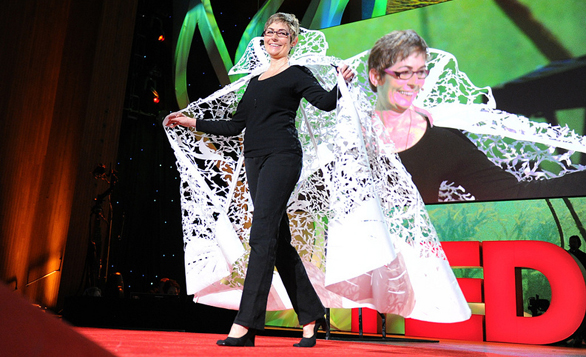
Beatrice Coron shows off an incredible cape, made out of cut paper, at TED2011. Photo: James Duncan Davidson
Architect Shigeru Ban uses paper tubes to build temporary, ecologically sustainable structures.
 Shigeru Ban: Emergency shelters made from paper
These geometrically complex structures can be big and impressive — like a concave complex built for Expo 2000 in Germany — or small and functional, like the half-pipe office Ban built for himself atop the Pompadou Center in Paris. No matter their size or shape, these majestic structures make an impact. And in today’s talk, Ban suggests that architecture should focus on things that help society; whether that means building emergency shelters for people in need or creating buildings that can be recycled, leaving behind nothing at all.
Shigeru Ban: Emergency shelters made from paper
These geometrically complex structures can be big and impressive — like a concave complex built for Expo 2000 in Germany — or small and functional, like the half-pipe office Ban built for himself atop the Pompadou Center in Paris. No matter their size or shape, these majestic structures make an impact. And in today’s talk, Ban suggests that architecture should focus on things that help society; whether that means building emergency shelters for people in need or creating buildings that can be recycled, leaving behind nothing at all.
Ban may be one of the few major architects in the world making buildings out of paper, but when it comes to transforming paper into something new and revolutionary, he is in good company. Below, talks from TED speakers using paper innovation for art, technology and social change.
 Kate Stone: DJ decks made of ... paper
Kate Stone: DJ decks made of paper A fan of both paper and technology, Kate Stone unites her two passions to make paper interactive. At TED2013, she demonstrates a paper DJ deck printed with conductive ink and incredibly small circuits. |
 Béatrice Coron: Stories cut from paper
Beatrice Coron: Stories cut from paper Paper-cutter Beatrice Coron tells stories through silhouette. In her TED2011 talk, Coron describes how she cuts away excess to reveal the story within the paper. |
 Robert Lang: The math and magic of origami
Robert Lang: The math and magic of origami How can the properties of paper-folding translate to something as intricate as a 100-scaled fish or an expandable telescope? At TED2008, Robert Lang explains how the elaborate detail and simple mathematics of origami can reinvent the way we think about materials. |
 JR: One year of turning the world inside out
JR: One year of turning the world inside out In 2011, JR’s TED Prize wish was to start a worldwide photo revolution. One year later, he returns the TED2012 stage to explain how photography, large sheets of paper and wheatpasting are giving social change a new face. |
And a bonus:
Callie Curry aka Swoon at TEDxBrooklyn
Callie Curry started wheatpasting as a way to take her art out of the classroom and engage with her world. But what began as outdoor art expanded to seagoing rafts, and eventually to homes in post-earthquake Haiti made out of scavenged material. In her TEDxBrooklyn talk, Curry describes the power of repurposing products of destruction into the structures of tomorrow.
Chip Kidd designs book covers. Which makes today a good day to watch his TED Talk. Photo: James Duncan Davidson
The Book. Few things are as universal, as ubiquitous and as transformative. On this Book Lovers Day, we’ve compiled talks that examine all the facets that make books great. Do you judge a book by its cover, like Chip Kidd, or get absorbed into a compelling narrative like Andrew Stanton? Were you taken to new lands by foreign authors like Lisa Bu or exposed to nuances of your own language by a master of vocabulary like lexicographer Erin McKean? No matter what gets you nose-deep in a paperback, all you’ll want to do after watching these talks is curl up in your favorite reading spot and crack open (or at least swipe through) your favorite book.
|
Chip Kidd: Designing books is no laughing matter. OK, it is.
Chip Kidd: Designing books is no laughing matter. OK it is. Ever stopped mid‑aisle to examine an exciting book cover? Chip Kidd has. In his TED2012 talk, Kidd explains how he turned his love of reading and graphic design into a career designing some of the most interesting book covers in bookstores today. |
 Lisa Bu: How books can open your mind
Lisa Bu: How books can open your mind
Lisa Bu: How books can open your mindWhen her childhood dream didn’t come true, Lisa Bu turned to books. In her TED2013 talk, Lisa Bu relishes the books that helped her find new happiness. |
 Parul Sehgal: An ode to envy
Parul Sehgal: An ode to envy
Parul Sehgal: An ode to envyEnvy. It’s an emotion you feel so poignantly because your mind knows exactly which details to include to really twist the knife. A look at envy in literature — and what we can learn from it. |
 Raghava KK: Shake up your story
Raghava KK: Shake Up Your Story
Raghava KK: Shake up your story
Raghava KK: Shake Up Your StoryArtist Raghava KK debuts his new ebook at TEDGlobal 2011: an interactive, interchangeable children’s story. |
 Andrew Stanton: The clues to a great story
Andrew Stanton: The clues to a great story
Andrew Stanton: The clues to a great storyWhile he isn’t talking about books alone, screenwriter Andrew Stanton celebrates the art of storytelling and walks us through what makes a great story at TED2012. |
 Mike Matas: A next-generation digital book
Mike Matas: A next-generation book
Mike Matas: A next-generation digital book
Mike Matas: A next-generation bookMike Matas debuts the first wholly interactive book for adults at TED2011. |
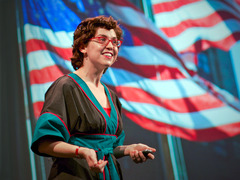 Erin McKean: The joy of lexicography
Erin McKean: The joy of lexicography
Erin McKean: The joy of lexicographyWhen was the last time you looked up a word in a big paper dictionary? Erin McKean knows it probably wasn’t recently. In her TED2007 talk, McKean laments the loss and explains why the dictionary must evolve or die. |
And a bonus:
Every book within walking distance of every home: Arthur Attwell at TEDxCapeTown
Bibliophiles tend to take books for granted but, as Arthur Attwell points out, in many places books are not just a treasure, but an inaccessible luxury. In his TEDxCapeTown talk, Attwell introduces Paperight, a website working with copy shops and publishers to make access to books as common as reading itself.
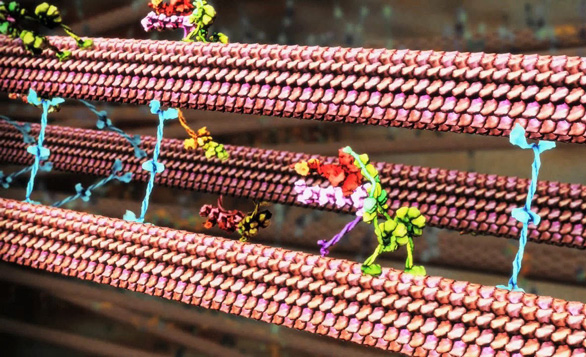
One of Drew Berry’s incredible, scientifically-accurate animations of what’s happening in our cells.
Art so often seeks to capture the beauty of the natural world — from cave drawings of animals, to paintings of landscapes, to sculptures of the human form in marble, bronze or wood. But in this playlist, find artists and designers who take this to the next level, making art based on the laws of nature and the invisible workings of biology itself.
 Tom Shannon, John Hockenberry: The painter and the pendulum
Tom Shannon: The painter and the pendulum
Tom Shannon, John Hockenberry: The painter and the pendulum
Tom Shannon: The painter and the pendulum
In this interview, John Hockenberry questions artist Tom Shannon about his metallic sculptures that levitate, and about how his scientific inspiration has evolved over time. Shannon says that his art starts with the need to solve a question — a process similar to scientific exploration. In the privacy of Shannon’s studio, we see work that challenges the idea that objects can’t defy gravity, as well as a sculpture that simply exemplifies the complex relationship between earth and sun. But perhaps his most inventive meditation on biological occurrences is Shannon’s painting pendulum. Says Shannon, “As humans, ultimately being part of the universe, we’re kind of the spokespeople or the observer part of the constituency of the universe. And to interface with it, with a device that lets these forces that are everywhere act and show what they can do, giving them pigment and paint — just like an artist it’s a good ally.”
See also: Just as Shannon found an unusual way to paint, Phil Hansen is an artist who had to find new methods when he developed permanent nerve damage in his forearm. After a pivotal “embrace the shake” revelation, Phil began creating art focused on transforming limitations from frustration into inspiration. Watch his powerful talk »
 Drew Berry: Animations of unseeable biology
Drew Berry: Animations of unseeable biology
Drew Berry: Animations of unseeable biology
Ever wondered what a molecule looks like? Well, your naked eye won’t help answer that question. “Molecules are smaller than the wavelength of light, so we have no way to directly observe them,” says biomedical animator Drew Berry, who was awarded a MacArthur Fellowship in 2010. By immersing himself in the world of cutting edge scientific research, Berry has made molecular and cellular biology accessible for the masses. In this talk from TEDxSydney, he uses intricately rendered animations to traverse the DNA highway into the depths of cells. This ambitious blend of art and science is matched by his determination to educate the public, in a beautifully engaging way, about important scientific discoveries.
See also: Speaking of unseeable biology, artist Heather Dewey-Hagborg collects DNA “evidence” — found on cigarette butts and strands of hair — and uses it to create a sculpture of what a person may look like. Her project took off from one basic question: How much can be learned about a person from a stray hair? Watch this TED original about Dewey-Hagborg’s work »
 Doris Kim Sung: Metal that breathes
Doris Kim Sung: Metal that breathes
Doris Kim Sung: Metal that breathes
Before houses had air conditioning, they used tiny windows and thick walls to combat extreme weather and regulate temperature. Before cars had air conditioning, they overheated and thus signaled to us the overuse of energy. Fast forward to today, where impossibly cold stores have become the norm. How do we make our buildings work better? At TEDxUSC, biology student turned architect Doris Kim Sung shares how she studied the human body to learn how skin regulates body temperature and, from that research, developed the smart material known as “thermo-bimetals.” She reveals how panels of this material can be used to create responsive ‘building skins’ that help our buildings breathe beautifully and efficiently.
See also: It seems like a big jump from studying the body to producing architectural innovations, but great minds think alike. Members of the Mediated Matter Group at MIT Media Lab have also developed a building based on skin, called Silk Pavilion. Using a robot to build the external framework, 6,500 silkworms then got to work enmeshing the exterior in their lovely, naturally-occurring materials. Read more at Fast Company »
 Margaret Wertheim: The beautiful math of coral
Margaret Wertheim: The beautiful math of coral
Margaret Wertheim: The beautiful math of coral
In 2005, Margaret Wertheim and her sister, Christine, asked the internet and art institutions alike to join an interdisciplinary project that combined math, marine biology, environmental activism and feminine handicraft. With thousands helping, they set out to crochet the largest coral reef in the world to raise awareness of the impact global warming has on this massive, living ecosystem. In this talk from TED2009, Wertheim explains that the mathematical study of hyperbolic structures (aka, things frilly and curly) discovered in the 19th century couldn’t be depicted until Dr. Daina Taimina began to knit in 1997 and eventually crocheted a coral reef. Wertheim suggests that tangible understanding is equally as important as theory. “What we want to propose, is that the highest levels of abstraction, things like mathematics, computing, logic, etc. — all of this can be engaged with, not just through purely cerebral algebraic symbolic methods, but by literally, physically playing with ideas,” says Wertheim.
See also: Photographer Barry Rosenthal is another artist transforming traditional methods of portraying biological species. Instead of recreating botanical drawings of flora and fauna from real flowers, Rosenthal uses trash found in the streets of Brooklyn and New Jersey to create taxonomies of our littered sidewalks and gardens. Though these photographs may seem like collections of junk, the subtle environmental message is also quite alarming. See more at his website »
 JoAnn Kuchera-Morin: Stunning data visualization in the AlloSphere
JoAnn Kuchera-Morin: Stunning data visualization in the allosphere
JoAnn Kuchera-Morin: Stunning data visualization in the AlloSphere
JoAnn Kuchera-Morin: Stunning data visualization in the allosphere
If you can imagine being inside a computer that looks like an omnitheater, you can partially imagine the mysterious, three-story metal arena known as the Allosphere. This echo-free chamber, connected to a very large computer, was created as an interdisciplinary center for artists, scientists and engineers to work together. While scientists explore complex algorithms and test new hypotheses, engineers build computers large enough to dynamically store data and artists create visuals and sounds to help holistically understand such sensitive information. Watch this demo from TED2009, as JoAnn Kuchera-Morin takes you through five research projects going on at the Allosphere — including quantifying beauty through monitoring the brain and working with quantum mathematicians to visualize and hear quantum information flow.
See also: Tomas Saraceno — an Argentinian artist — has created ‘In Orbit,’ an installation that rises about 65 feet above a piazza in Germany. It allows patrons to look, climb and feel like they’re floating in space, walking along a spider web or traversing the inside of a soap bubble. Read more at Design Boom »
 Lucy McRae: How can technology transform the human body?
Lucy McRae: How technology can transform the human body
Lucy McRae: How can technology transform the human body?
Lucy McRae: How technology can transform the human body
Lucy McRae is a self-proclaimed ‘body architect.’ How does one get that title? She has a background in ballet, architecture and fashion, with an added interest in transforming the human body. While working for Philips Electronics, McRae worked on projects that resembled sci-fi realities, but working on prototypes wasn’t enough. She began to ask questions about communication and sexual attraction — like “Would it be possible to create swallowable pills that allow you to perspire perfume to attract partners?” Watch this talk from TED2012 to see her provocative, visionary work exploring the limitless future of biology and technology.
See also: Speaking of perspiring perfume, another hybrid team of designers and scientists is exploring synthetic biology to detect toxins and bacteria using colored biomarkers. The EChromi team is engineering bacteria to secrete colors that indicate whether the water is safe or if the food is good to eat, and this work won them the 2009 International Genetically Engineered Machine Competition (iGEM). Read more at their website »
]]>