Founded in 1960, the Annecy International Animated Film Festival was originally held every two years before becoming an annual event in 1997. Over the decades, it has grown into one...
The post The NFB at Annecy: 70 Years and Counting appeared first on NFB Blog.
]]>

NFB productions and co-productions have long been a fixture at Annecy. Since 1960, more than 300 of them have featured in the lineup, earning more than 60 awards, with 25 selections and four awards since 2020 alone. Remarkably, no edition of the festival has been held without at least one film produced or co-produced by the NFB.
Here’s a look back at some of the high points of the NFB’s seven-decade presence at Annecy.
Top award winners
The Short Film Cristal—known as the Annecy Cristal from 2003 to 2012 and, previously, the Grand Prix for Best Short Film—is the festival’s highest distinction. Nine NFB films to date have received this honour.
In 2020, the Cristal went to Theodore Ushev for The Physics of Sorrow (2019), a moving portrait of a Bulgarian immigrant caught between childhood memories of his homeland and his adult life in Canada. A meditation on rootlessness and melancholy, the film also received the FIPRESCI Prize (Fédération internationale de la presse cinématographique). Ushev, an Annecy regular, is no stranger to recognition at the festival: His Blind Vaysha (2016) won both the Jury Award and the Junior Jury Award that year, while Gloria Victoria (2012) received the FIPRESCI Prize at the festival’s 37th edition.
oehttps://www.nfb.ca/film/physics-of-sorrow/
Memory gaps
In 2016, Franck Dion won the Cristal for The Head Vanishes (2016), following Chris Landreth’s win for Subconscious Password (2013) three years earlier. Their films may be radically different in style and tone, but both address the same theme: memory. Dion’s work focuses on the fading recollections of an elderly woman living with dementia, while Landreth’s protagonist struggles with an awkward lapse. If the momentary blank in Subconscious Password is the pretext for a playful romp through the unconscious, the ebbing memories of Jacqueline, heroine of The Head Vanishes, form the basis of a tender and poetic meditation on irreversible loss.
oehttps://www.nfb.ca/film/subconscious_password/
Women’s cinema
Women filmmakers also occupy an important place in Annecy’s history. Four have received the festival’s highest distinction: Regina Pessoa for Tragic Story with Happy Ending (2005), a tale about difference and self-affirmation; Wendy Tilby and Amanda Forbis for When the Day Breaks (1999), which follows Ruby, a young pig in search of reassurance after witnessing a tragedy; and Caroline Leaf for Two Sisters (1991), where the arrival of a stranger upends the orderly routine of a pair of siblings.
oehttps://www.nfb.ca/film/when_the_day_breaks/
Pessoa would return to Annecy over a decade later with Uncle Thomas: Accounting for the Days (2019), which won both the Jury Award and the Best Original Music Award. When the Day Breaks went on to receive some 40 awards internationally, including the Short Film Palme d’Or at Cannes, while Two Sisters collected a further nine awards in Canada and abroad.
oehttps://www.nfb.ca/film/two_sisters/
Artists from abroad
The NFB’s animation studios have welcomed a number of international filmmakers over the years. These include Ishu Patel, originally from India, and Co Hoedeman, born in the Netherlands. Patel won the Grand Prix for Afterlife (1978), an experimental work on death and dying. Hoedeman received the same distinction for The Sand Castle (1977), a children’s film about a small sand figure who, helped by his friends, builds a castle to protect himself from the wind.
oehttps://www.nfb.ca/film/afterlife/
Afterlife was a major critical success, receiving close to a dozen awards internationally. The Sand Castle, in turn, won over 20 awards, including the Oscar for Best Animated Short.
A prolific period
The 2010s were a particularly successful decade for NFB productions and co-productions, with 34 selections and 15 awards. The 1990s and 2000s were equally strong, with 45 selections and 20 awards. These years saw many remarkable works by talented animators.
Notable titles include Runaway (2009) by Cordell Barker (Special Jury Prize); Louise (2003) by Anita Lebeau (Canal J Jury Junior Award for Short Films); Ryan (2004) by Chris Landreth (Special Jury Prize), which also won the Oscar for Best Animated Short; The Boy Who Saw the Iceberg (2000) by Paul Driessen (Special Jury Prize and FIPRESCI Prize); The Hat (1999) by Michèle Cournoyer (FIPRESCI Special Mention); Bob’s Birthday (1993) by Alison Snowden and David Fine (Short Film Award), also an Oscar winner for Best Animated Short; and Ex-Child (1994) by Jacques Drouin (UNICEF Award for a Short Film).
oehttps://www.nfb.ca/film/the_hat/
The early years
Though the festival only had five editions in the 1980s (when it was still held biannually), NFB productions and co-productions received 20 selections and three awards, including the Special Jury Prize for Beginnings (1980) by Clorinda Warny, Suzanne Gervais and Lina Gagnon.
oehttps://www.nfb.ca/film/beginnings_premiers_jours/
The 1970s had been even more productive, with 32 selections and eight awards over that decade’s five editions. Noteworthy titles include This Is Your Museum Speaking (1979) by Lynn Smith (Second Special Jury Award); The Metamorphosis of Mr. Samsa (1977) by Caroline Leaf (International Critics’ Award); Evolution (1971) by Michael Mills (Children’s Film Award), also an Oscar nominee for Best Animated Short; and Synchromy (1971) by Norman McLaren (Jury Distinction).
oehttps://www.nfb.ca/film/evolution_en/
Lastly, the 1960s saw 12 NFB selections and one award: the Special Jury Prize for Alphabet (1966) by Eliot Noyes, Jr.
oehttps://www.nfb.ca/film/alphabet/
I encourage you to view or revisit the short films featured in this article.
To discover more award-winning films, visit our dedicated festival channel by clicking here.
The post The NFB at Annecy: 70 Years and Counting appeared first on NFB Blog.
]]>These few words alone could summarize the five films Cordell Barker made at the NFB. Five characters who aren’t always the protagonists, but who invariably act as disruptive factors, setting...
The post A Cat, a Strange Visitor, a Cow, a Frog and a Little Girl: The World of Cordell Barker appeared first on NFB Blog.
]]> A cat
The Cat Came Back (1988) tells the story of old Mr. Johnson, who one day opens the door to find a tiny yellow cat in a pretty basket on his stoop. Little does he suspect how his life is about to change. At first, he’s completely taken with the adorable kitty. But the charm soon wears off when the cat breaks his favourite rattle, and he promptly decides it can’t stay. The cat, however, has other ideas. Despite the old man’s increasingly desperate efforts to rid himself of his furry problem, it just keeps coming back—hence the film’s title. This gives us our first example of a character whose role is to set the plot in motion.
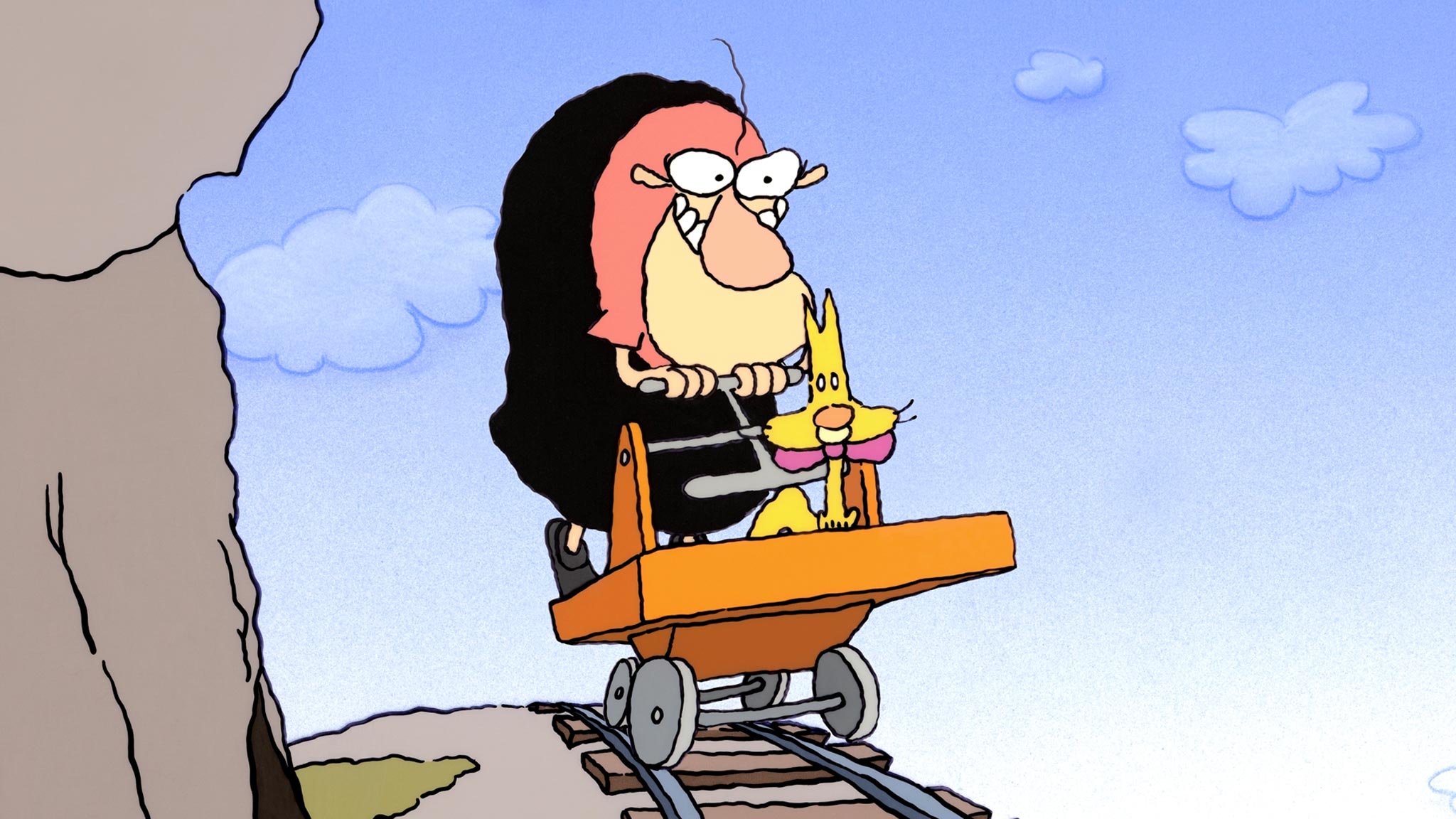
Inspired by a folk tune whose catchy refrain you’re sure to find yourself humming after the film, Barker’s first animated short was a huge hit with audiences and critics alike. It picked up more than 15 awards in Canada and abroad, including an Oscar nomination, and quickly became a classic in our collection. Not bad for a self-taught filmmaker who was convinced his film was terrible and that he’d soon be heading back to construction work! The film effectively launched Barker’s career as an animator. A Winnipeg native, he got his start at Kenn Perkins Animation before joining the animation unit at the NFB’s Winnipeg Studio in 1982.
oehttps://www.nfb.ca/film/the-cat-came-back/
The Cat Came Back helped Barker discover his signature style—simple drawings that allowed him to focus on rhythm, pacing and comic timing—and underscored the central role of music and humour in his work. Just as importantly, it let him develop his own distinct genre: hilarious, seemingly child-friendly stories with a darker undercurrent that appeals to adults. These qualities would all become the hallmarks of his later work. Finally, it’s worth noting that the film bears the unmistakable stamp of the Winnipeg studio’s animation style at the time, with its frumpy, rubbery everyman and his hyperbolic features: protruding teeth, bulging eyes and a guttural, piercing voice.
A strange visitor
Strange Invaders (2001) invites us into the world of Roger and Doris, a loving couple leading a quiet life in their cozy home. One night, they’re abruptly awakened by a strange visitor: a toddler. Could this be the answer to their prayers? That question is soon put to the test as their visitor takes over the house, wreaking havoc and destroying everything in its path.
oehttps://www.nfb.ca/film/strange_invaders/
In his second film, Barker employs the same dramatic device as in his first, swapping out a tenacious cat for a disruptive infant. We find the same pared-down animation style and familiar backdrops—indeed, the couple’s house is strongly reminiscent of Mr. Johnson’s in The Cat Came Back. His characters may be a tad more recognizably human this time around, but they still retain Barker’s trademark exaggerated features.
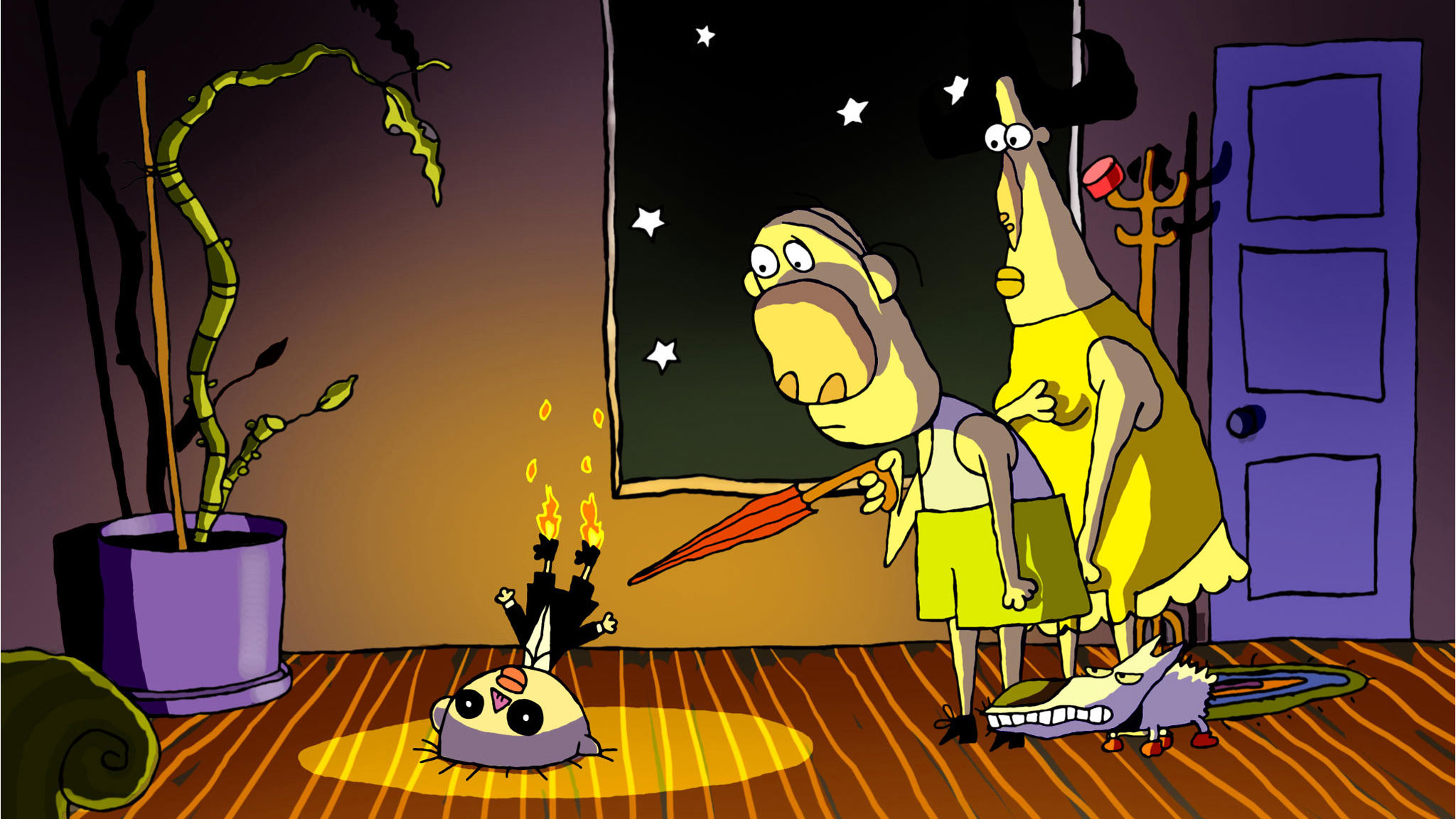
It’s a comedy, but decidedly one for adults. Barker’s message is clear: the arrival of a child in a couple’s life is not unlike an alien invasion—and kids have a knack for turning things upside down. You may have spotted the frame that flashes by for a split second during the rapid-fire photo montage. The hidden message reads: “Cordell’s kids are evil. Dillon, Joshua + Jackson. Don’t pause this film.”

Just like its predecessor, Strange Invaders was a great success with audiences and critics alike, earning an Oscar nomination and picking up more than 15 awards along the way.
A cow
As a cow ambles along a railway track, a passenger train barrels down the very same line at full speed. When the train inevitably collides with the animal, the impact throws its braking systems into disarray. Packed with revelers oblivious to what’s happening around them, the train picks up speed and is soon careening out of control. How is this all going to end? Such is the premise of Runaway (2009), Barker’s third animated short. It’s unquestionably a metaphor for humanity’s carelessness in the face of looming danger—a humanity marked by class divisions, conflict and injustice, hurtling headlong toward catastrophe.
oehttps://www.nfb.ca/film/runaway/
Just as in his first two films, a single character—in this case, the cow—acts as the disruptive element. Indeed, the collision with the animal is what causes the engine to malfunction. But the cow also functions as a point of contrast: its ambling pace set against the train’s speed highlights the fact that both the locomotive and its passengers are rushing toward disaster.
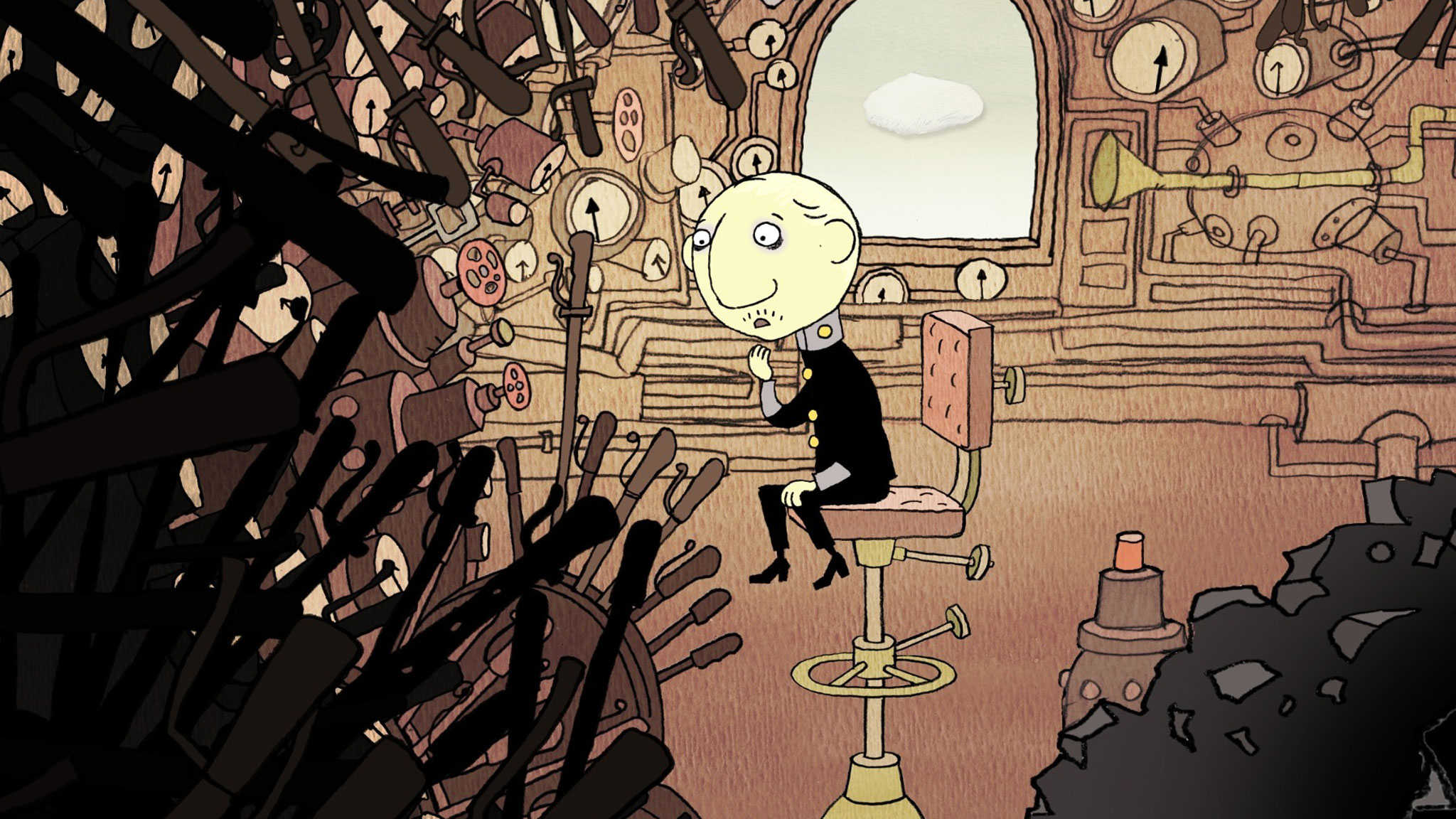
The subject may be serious, but Barker, as you might expect, handles it with humour and whimsy. The music by Ben Charest—composer of the soundtrack for the animated feature The Triplets of Belleville (2003), which was nominated for the Best Original Song Oscar—leans into the absurdity, establishing the film’s comic tone while dictating its pacing and tonal shifts. Barker’s animation, this time somewhat less cartoony, blends with the soundtrack seamlessly.
Runaway received some 15 international awards, including the Petit Rail d’Or for Best Short Film in the Directors’ Fortnight section of the 2009 Cannes Film Festival.
A frog
With If I Was God… (2015), Barker embarks on something more personal: a true story, if the opening credits are to be believed (Barker himself narrates the film’s original English version). In any case, we meet 12-year-old Cordell in his classroom, lost in a daydream. He tells us he feels “sort of godlike.” Feeling the first stirrings of adulthood, he senses that he’ll soon be able to do whatever he wants—a thought that fills him with a heady sense of power. He doesn’t yet know what he’ll become, only that it will be something impressive. Tasked with dissecting a frog, he suddenly realizes he holds the power of life and death over the creature. He can bring it back to life at will—something only God can do. Could he be God? If he was, he could rid the world of evil and get everything he wanted.
oehttps://www.nfb.ca/film/if_i_was_god/
In this darkly funny coming-of-age story, it’s the frog who serves as the unlikely catalyst. After all, isn’t it the frog’s dissection and subsequent reanimation that sends young Cordell’s imagination racing?
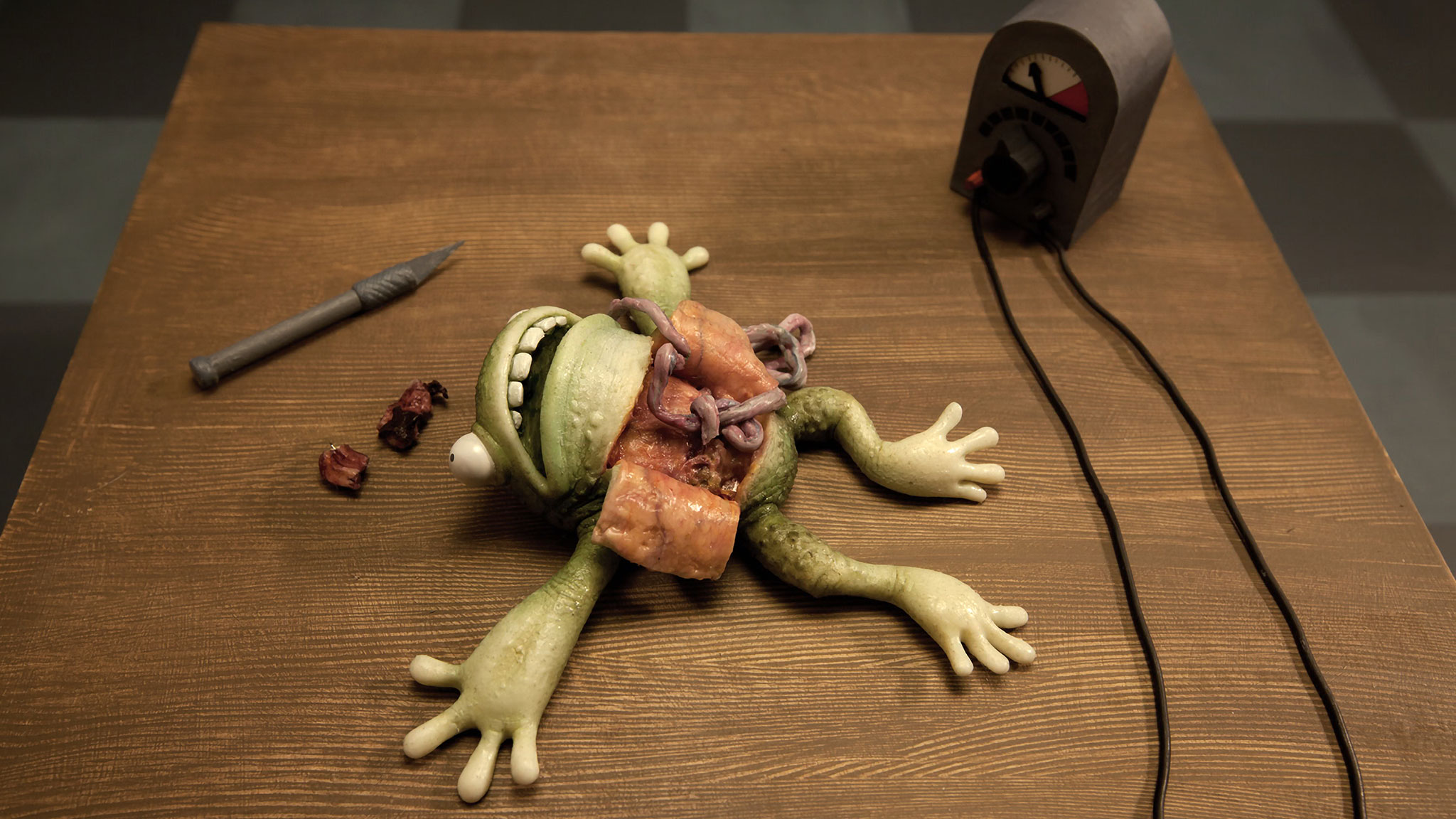
Barker’s fourth film has all the markings of his previous work: anarchic humour, impeccable comic timing, music in a key role and a story that appeals to both kids and adults. This time, however, he uses a new technique: stop-motion puppet animation, which he combines with 2D animation. Animators Sylvie Trouvé and Dale Hayward handle the puppets, while Barker draws the 2D sequences.
If I Was God… won multiple awards, including the 2017 Gémeaux for Best Animation.
A little girl
In the opening sequence of Good Luck to You All (2025), Barker’s latest release, a little girl plays with her toys. A small robot suddenly walks up to her. She grabs it, tears off its head and replaces it with her doll’s, plays with it for a while, then tosses it aside. The robot gets up, leaves the house, and sets off to explore the outside world. There, it begins to grow, eventually becoming a giant. It’s not long before it poses a threat to everything around it. Meanwhile, a fragmented voiceover of scientific and philosophical reflections on the ramifications of AI plays in the background. Has the little girl unwittingly created an intelligent machine endowed with consciousness, capable of destroying us? This fanciful tale, both amusing and unsettling, offers a reflection on AI, our latest technological “toy.”
oehttps://www.nfb.ca/film/good-luck-to-you-all/
This time, it’s neither a cat, nor a strange visitor, nor a cow, nor a frog, but a little girl who sets the chain of events in motion by replacing the robot’s head. However, like the cow in Runaway, she also serves as a point of contrast, her childlike perspective set against the more articulated views of the scientists and philosophers. This may well reflect the viewer’s own position, caught between the two.
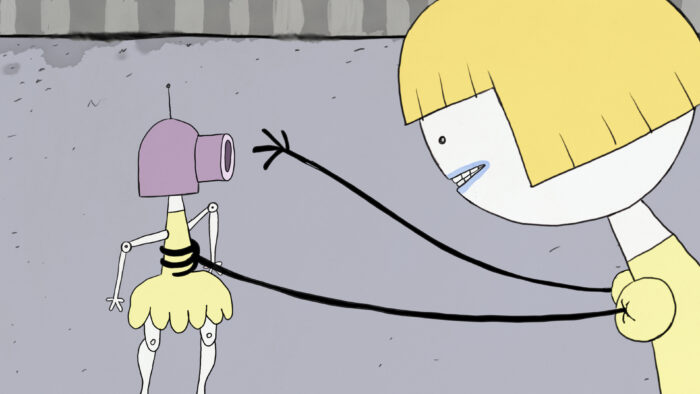
Good Luck to You All marks a turning point in Barker’s work. Though he reverts to hand-drawn animation and his characteristic offbeat humour, he also incorporates documentary elements for the first time. Music, too, plays a less prominent role. More importantly, Barker raises difficult questions about how we will use AI in the future —questions we are unable to answer. The film suggests a future that’s both uncertain and unsettling. Indeed, isn’t its title drawn from a radio address given by Queen Elizabeth II (then Princess Elizabeth) in 1940, at the outset of the most devastating war in history? In the end, Barker seems to be wishing us all luck in a world governed by AI.
I invite you all to check out the film, newly available on our website. And if you haven’t already, you can catch his other four films on our channel, The Cordell Barker Collection.
A short message from our Marketing team
Our dreams are about to come true! Cordell is currently wrapping up work on a Christmas-themed animated piece for the whole family: a 30-minute tale about a main character who’s straight from the South Pole. ANTA CLAUS is slated for release in December 2026. Stay tuned!
The post A Cat, a Strange Visitor, a Cow, a Frog and a Little Girl: The World of Cordell Barker appeared first on NFB Blog.
]]>The post For Students 11–15 | Using King’s Court to Drive Social-Emotional Learning Through Student Voice appeared first on NFB Blog.
]]>
oehttps://www.nfb.ca/film/kings-court-edu/
At a glance:
Ages: 11–15
Time:
Film runtime: 20 min
Activity time: Varied. Select activities relevant to the classroom (up to ~5 class periods, or 5–6 hours if all completed).
Resource format: A lesson pack comprising an interactive digital resource including an education cut of the film, accompanied by a modifiable, printable student workbook as a Google document, and an educator guide.
School Subjects:
Language, Social Studies, Physical Education and Health, Geography
Topics:
Inspiration, friendships, coping with setbacks, learning from mistakes, mindfulness, empathy
In the busy daily flow of our classrooms, it can be challenging to carve out time to meaningfully address real-life issues that matter to our students. While topics like goal-setting and social-emotional learning come up, there is still a noticeable lack of quality resources that reflect middle-grade students’ identity and interests and feel relevant for a Canadian context. NFB Education has addressed all these concerns and more with their new lesson pack for the documentary King’s Court, which follows two friends from Toronto’s St. James Town as they play basketball and navigate identity and friendship within their community. Not only has the NFB produced a compelling Canadian documentary that my students enjoyed watching, it has created a dynamic, modifiable, classroom-ready interactive lesson pack. This resource features special additional footage of Marley, one of the film’s youthful protagonists, who draws students in to learning about tough subjects, like how to cope with setbacks, and offers them the chance to reflect on their own lives through a multitude of engaging activities that have them consider how their own identity and passions show up in their goals.
Customizing the Lesson Pack for Your Classroom
What I really love about this resource is the customization offered to us as teachers, both in terms of content and format. In terms of the content, you can show only the education cut of the documentary and cherry pick which lessons you want to use, and in terms of format, students can either follow along individually on their devices or work through all the “plays” as a class, using either a digital or printed version of the accompanying student workbook.
Every lesson is presented as a basketball play, which connects to the compelling storytelling of the documentary itself and provides a new level of engagement for students. In the interactive playbook, each prompt is prefaced with a short clip from the documentary to refresh students’ memories. This allows students to pull information from the documentary without having to sort through what they may or may not remember from an earlier viewing.
Laurie Townshend, the filmmaker-educator who created the lesson pack, provides enough ideas in the digital playbook to get you started, with ample opportunities to expand on each play and create a more in-depth unit of study. The accompanying student workbook matches each play in an accessible and ready-to-print Google Slides format. These are all great activities to use as a springboard for a variety of other assignments—maybe the Free Write is the first one you do as a class, and it becomes a weekly routine! This impressive lesson pack also includes an educator guide, which provides useful connections to other films, as well as an overview of what assessment could look like.
Using the King’s Court Lesson Pack in the Classroom
In our Grade 7 team, we screened the documentary, had a discussion around the main ideas proposed in the interactive playbook, and let students sit with the subject matter. Even though my school is located in Toronto, where the documentary is based, many students were not familiar with the neighbourhood referenced in the film, which sparked meaningful discussions about diversity within our city. It was refreshing to have a resource that grounds learning experiences in real, local contexts, while encouraging students to listen, question, and broaden their understanding of the varied identities and experiences that exist around them.
Next, students had a choice of which creative activity to tackle. The identity silhouette quickly became a favourite. Through brainstorming and careful word choice, students reflected on how they see themselves and how they want to be seen by others. Then, they followed a series of clearly defined steps to create a visual representation of their identity, using the silhouette of their own photo. The final product was not only visually striking but also provided meaningful representations of student voice and identity, which was a powerful visual in the classroom. This activity supports key concepts in our province’s Language curriculum, with students generating and organizing ideas, making intentional language choices, and communicating their thinking for a specific purpose and audience in a substantial way.
The entire unit ended up lasting a few weeks, and we chose activities that we knew our students would enjoy and were directly related to our Language curriculum. While some of the resources were fantastic for online use (for example, the instructions for the identity silhouette), we also found that printing parts of the playbook for students was valuable when we wanted written work with minimal technology (for example, the Free Write). In our school, we focused extensively on student identity and belonging, and I found this resource provided a multitude of ways for students to express themselves, while giving teachers substantial assessment opportunities.
Looking ahead, I would intentionally use this resource at the beginning of a term to help build connections and better understand my students. It creates space for students to reflect on their identities and share their goals in a way that feels authentic and engaging. In our circumstances, it aligned perfectly with our Language curriculum, from creating media texts to writing in a variety of forms. It would also be valuable for Health and Physical Education teachers undertaking any discussions around mental health, well–being, and healthy relationships. Additionally, it opens the door to in-depth discussions around being a good sport, resilience, and navigating challenges. The film itself offers significant cross-curricular connections to Geography, specifically the analysis of urban life and infrastructure, and the diverse experiences that exist within a single city.
Using a resource like the King’s Court Lesson Pack reminds me how important it is to take the time to address our students’ well–being alongside the development of critical–thinking skills. The resource makes it easy to start the conversation, whether it be for a single lesson or a longer unit, and the variety of quality activities centres student voice and identity in a way that helps students create end products they can truly be proud of.
I’m looking forward to using this lesson pack again in the coming school year!
Check out the Lesson Pack here!
Melissa Johnston is a middle school educator in the Toronto District School Board. With over 16 years of experience, she integrates digital media and documentary film into her teaching to foster critical thinking, amplify student voice, and encourage students to question the world around them.
Discover more Educational blog posts | Watch educational films on NFB Education | Watch educational playlists on NFB Education | Subscribe to the NFB Education Newsletter
The post For Students 11–15 | Using King’s Court to Drive Social-Emotional Learning Through Student Voice appeared first on NFB Blog.
]]>The post Storytelling Through Memory: Exploring Maybe Elephants through the NFB’s Quick Start Guide appeared first on NFB Blog.
]]> At a glance:
Ages: 12–15
Time: 45–60 minutes
Resource format: A three-page modifiable, printable Google document that includes a student worksheet, answer key, discussion questions, and a project idea.
School Subjects:
Family Studies, Health/Personal Development, English Language Arts, Social Studies
Topics:
Personal growth, mental health, well-being, happiness, independence, adolescence, memory
As a high school Communications Technology teacher, I’m always looking for interesting ways to present storytelling to students. Storytelling is the backbone of a successful film, animation, or photography project. Torill Kove’s Maybe Elephants is a great foundation for supporting students as they craft personal narratives. The newly released NFB Quick Start Guide for this animated short is a simple yet effective resource for teachers that maps a way through the film’s key plot elements.
Using the Quick Start Guide in Class
Reviewing the film and the guide with students can easily be done in a single period, setting students up to develop their own stories through simple storymaps, animation thumbnails, or storyboards in subsequent classes. As Maybe Elephants takes viewers through a specific period in Kove’s life, it’s an interesting case study in how the world has changed and how visual metaphors can be used to communicate ideas. Teachers looking for content to support subject areas such as English, Social Studies, and, potentially, Healthy Living (there is a mental well-being component woven throughout the film) would benefit from sharing this film with students.
Maybe Elephants: A Dive into Memory
Maybe Elephants begins with beautiful, fleeting images of Kove as a young girl, bringing us into her childhood. As the lines of her memory dance on the screen, she comments that she had a “happy childhood,” remarking how memories are “flickering images” that only she, as the holder of the memories, can see. This sets the stage for viewers, allowing us to remove our critical hats for a moment, understanding that what is about to unfold is a single perspective of a potentially much deeper narrative. As we are brought from Norway to Nairobi and back, we see how life’s little moments shape the characters’ memories differently. They are all building stories from these experiences, living through the same moments, but taking from them personal anecdotes that affect who they will become. Kove’s story encourages students to start from a point of personal reflection, moving towards an understanding of how our memories shape the stories we tell. The film demonstrates that effective storytelling doesn’t need high drama or intense conflict, but rather recognition of how the small moments in our histories can shape the stories we tell about ourselves.
Using the Quick Start Guide to Spark Language Learning
Whether exploring Maybe Elephants through a Communications Technology course or another subject discipline, starting the storytelling process by identifying a story’s beginning, middle, and end can help students map out its arc. This can also be a great strategy for supporting Multilingual Language Learners who are building their English proficiency. Teachers can get a good sense of a student’s understanding of a story through a quick conversation or through the use of a graphic organizer that guides them in identifying the key plot elements. The Quick Start Guide further supports students in identifying the important moments of Kove’s memories through the During Film questions, while the After Viewing questions support conversations with students regarding visual metaphors and the impact that imagery can have on the storytelling process. These storytelling strategies (building a story arc; creating visual metaphors) are important for students to understand when developing their own story outlines.
Examining the Use of Imagery
The way Kove weaves her memories into the timeline of the film can also help students understand how to capture audiences through the strategic placement of imagery. The “flickering” lines of the outro cycle are also used for the intro, bringing viewers back to the starting point of the story in order to emphasize the changes the characters have gone through. As students craft their own narratives, it’s important for them to think about how the order of each moment of their story on the timeline will influence the engagement of the viewer and what they will remember in the end. For example, the metaphor of the dark cloud revealing itself at different moments in Kove’s story effectively communicates the impact that her mom’s well-being had on the family and helps us to understand how she was processing these moments in her childhood. Well-timed visual references such as these are important concepts for students to understand when digging into the more complex ideas of their stories or when determining the overall impact the story will have on the audience.
Backwards Storyboarding
An extension activity that I’ve used in my class to help identify these key moments on a story’s timeline is the process of backwards storyboarding. Backwards storyboarding starts with a completed film, asking students to sketch (these can be very rough sketches) the key moments or scene changes of a film onto a storyboard template. Students are then required to identify the shots, angles, and actions affiliated with the scene to complete the storyboard. This activity not only helps to reinforce an understanding of camera angles and shots, it further reinforces an understanding that the order of images does matter and should be a very intentional process.
As the Quick Start Guide concludes, it presents an interesting launchpad for extending conversations to include the larger, more complex concepts explored in the film, such as: What is the importance of our memories even if they might not be accurate? This question is a strong prompt for a reflective paragraph asking students to connect the film to the world they might find themselves in. While it’s true, now more than ever, that we need to work with students to critique and challenge the integrity of the information and content they consume (especially online), we also need to make space for storytellers to recount personal moments as they remember them, knowing that the strength of a story hinges more on its overall impact than the historical accuracy of each moment.
Check out the Quick Start Guide here!
Jon Lewis has been in education for over 20 years, working in both Elementary and Secondary panels in various capacities. He’s held regional roles within the education system and worked as a curriculum coordinator for digital engagement, as well as a photographer and videographer for a community of emerging local artists. His passions are photography, film, and animation, which have led him to his most recent role as a high school Communications Technology teacher.
Pour lire cet article en français, cliquez ici.
Discover more Educational blog posts | Watch educational films on NFB Education | Watch educational playlists on NFB Education | Subscribe to the NFB Education Newsletter
The post Storytelling Through Memory: Exploring Maybe Elephants through the NFB’s Quick Start Guide appeared first on NFB Blog.
]]>Montreal-based director Beverly Shaffer is one of Canada’s most talented filmmakers. She’s best known for her Academy Award-winning film, I’ll Find a Way (1977), about a nine-year-old girl with spina...
The post Beverly Shaffer: Smashing Stereotypes, One Film at a Time appeared first on NFB Blog.
]]>
The NFB has just uploaded the sequel to this groundbreaking documentary, Just a Wedding (1999), but I want to start this post with some well-deserved praise for I’ll Find a Way—the first Oscar-winning NFB film directed by a woman.
oehttps://www.nfb.ca/film/ill_find_a_way/
I love everything about I’ll Find a Way—the storytelling, the playful meta-cinematic touches and the fact that it came out of Studio D. But what really hits is how the film quietly smashes so many stereotypes about people with disabilities that I didn’t even realize I had in my head. That might actually be one of the defining features of Beverly Shaffer’s work: she’s brilliant at dismantling stereotypes and making you rethink what you thought you knew. For instance, I Want to Be an Engineer (1983), another Shaffer film that was recently added to NFB.ca, introduces us to three women engineers—part of a growing wave of women stepping into so-called “non-traditional” careers. It’s lively, inspiring and a great reminder that breaking barriers (and dispelling outdated expectations) can be pretty powerful.
oehttps://www.nfb.ca/film/i-want-to-be-an-engineer/
A retrospective look at Shaffer’s work makes one thing clear: women are at the centre of her films. Time and again, she chooses female protagonists and gives them the space to tell powerful, complex stories. Take her award-winning doc To a Safer Place (1987), which follows Shirley Turcotte, a 30-year-old woman who has managed to build a rich, meaningful life despite her traumatic childhood; or To My Birthmother… (2002), a moving video diary in which Marie Klaassen travels across places and memories in search of the woman who gave her life.
oehttps://www.nfb.ca/film/to-my-birthmother/
Then there’s Shaffer’s short-film The Way It Is (1982), which focuses on Helen Murray, a 12-year-old girl navigating life after her parents’ divorce. With its meta-cinematic moments in which the director and crew appear on camera, breaking the fourth wall, it offers viewers something deeper and headier than simple entertainment. In each of these films, Shaffer follows the same approach: telling real stories by real women while offering perspectives that challenge what we think we know.
oehttps://www.nfb.ca/film/way-it-is-the/
During her 33 years at the NFB (1975–2008), Shaffer racked up more than 35 international awards—basically a trophy shelf that spans the globe. Her last NFB film, Mr. Mergler’s Gift (2004), tells the story of Xin Ben, a nine-year-old piano prodigy who studies with Daniel Mergler, a beloved teacher nearing the end of his career. The film was even shortlisted for an Academy Award in 2005, a prestigious nod that brought Shaffer’s career back full circle, in a sense, to her earlier Oscar honour for I’ll Find a Way, capping an incredible run of filmmaking that has inspired audiences around the world.
oehttps://www.nfb.ca/film/mr_merglers_gift/
Why This Matters for You
It’s all about Canadian culture! The NFB just added Beverly Shaffer’s Just a Wedding (1999) to NFB.ca, featuring Nadia—the same gutsy, hilarious star from I’ll Find a Way. This film celebrates the serious business of love and commitment… but with a light, playful touch. If there were a follow-up Oscar for “most charming wedding vibes,” this one would have taken it home!
oehttps://www.nfb.ca/film/just-a-wedding/
Got a favourite Shaffer film? DM us your thoughts on Facebook, Instagram or LinkedIn. Boom—you’re supporting local art without even leaving your couch.
Interested in more? Check out Beverly Shaffer’s film page on NFB.ca to explore her entire body of work; or dive into a channel devoted to the NFB’s Studio D, the groundbreaking space that was run by women, producing stories that were told by women, where Shaffer played a key role.
The post Beverly Shaffer: Smashing Stereotypes, One Film at a Time appeared first on NFB Blog.
]]>Though Inuit filmmakers created what could be considered Indigenous-run NFB studios in Nunavut in the 1970s, the first official Indigenous-led production studio at the National Film Board of Canada was...
The post Studio One: A Look Back at the First Indigenous NFB Studio appeared first on NFB Blog.
]]> Although documents in the NFB’s archives mention providing support for research, development, production, distribution and workshops for hundreds of Indigenous films and filmmakers—including Willie Dunn, Shelley Niro and Zacharias Kunuk—as well as support for films about Indigenous rap and endangered Indigenous languages, only six films produced or co-produced by Studio One have been identified to date.
Gregory Coyes
To begin, I invite you to watch No Turning Back (1996), by Gregory Coyes, a visceral account of the aftermath of the Oka Crisis that brought Indigenous rights into sharp focus.
oehttps://www.nfb.ca/film/no_turning_back/
Carol Geddes
Indigenous filmmakers had been directing powerful, award-winning films at the NFB since the late 1960s—The Ballad of Crowfoot (1968), Natsik Hunting (1975), Foster Child (1987), among others—but the meetings, screenings and discussions that took place in Alberta during the Aboriginal Film & Video Makers Symposium in the spring of 1990 were what fostered a new chapter in Indigenous filmmaking, leading to the formation of Studio One, based at the NFB’s Northwest Studio in Edmonton and supported by executive producer Graydon McCrea.
Studio 1—subsequently changed to Studio One—officially opened in September 1991,[i] and iconic Tlingit director Carol Geddes was appointed as its head. Her Studio One doc Picturing a People: George Johnston, Tlingit Photographer (1997)[ii] explores the life and work of the eponymous artist. Shown at dozens of festivals, this award-winning film remains an important and influential work in Indigenous cinema.
oehttps://www.nfb.ca/film/picturing_a_people_george_johnston/
Studio One Goals
The studio outlined the following goals for its productions:[iii]
- To counter non-representation of aboriginal people in mainstream media.
- To counter misrepresentation of aboriginal people in mainstream media.
- To address the invasion of aboriginal culture by non-aboriginal people.
- To redress the lack of meaningful cultural education for aboriginal people.
- To address the issue of appropriation of cultural images by non-aboriginal producers.
- To provide and assist with the professional development of aboriginal people in the film and video industry.
- To provide an environment compatible with the unique cultural aspirations of Canada’s aboriginal people. To do this, the Studio is committed to provide an atmosphere sympathetic to special cultural ways in which to work, i.e., use of elders for consultations, consensus models for decision making, etc.
- To provide equal access for each group of Canada’s aboriginal people.
- To provide opportunities for the expression of contemporary themes in film and video production.
Loretta Todd
Faithfully fulfilling all the above objectives, Loretta Todd’s Forgotten Warriors (1997) tells the story of thousands of Indigenous Canadians who enlisted and fought alongside their fellow citizens in World War II, even though they were not required to serve. “Ironically, while they fought for the freedom of others, they were being denied equality in their own country and returned home to find their land seized.”[iv]
oehttps://www.nfb.ca/film/forgotten_warriors/
Barb Cranmer – Doug Cuthand
In May 1996, the Aboriginal Filmmaking Program officially replaced the studio, and some of its films languished in the NFB’s vaults in the ensuing decades—until now. With these two documentaries below by ‘Namgis director Barb Cranmer recently uploaded to NFB.ca, most of the known Studio One productions are now available to the public.[v]
Laxwesa Wa – Strength of the River (1995) dives into the rich fishing traditions of the Sto:lo, Heiltsuk and ‘Namgis peoples of Canada’s West Coast, showing how fishing is more than food—it’s a source of spiritual, cultural and economic strength.
oehttps://www.nfb.ca/film/laxwesa_wa_strength_of_the_river/
Qatuwas – People Gathering Together (1997) takes viewers on an epic journey with crews from 30 First Nations, paddling hundreds of kilometres along ancient waterways to honour the ocean-going canoe, the power of tradition and the revival of Northwest Coast Indigenous culture.
oehttps://www.nfb.ca/film/qatuwas-people-gathering-together/
More to Discover
If you enjoyed this introduction to Studio One, pick one of the films above and tell us what you loved most—or just share any thoughts you may have with us on Facebook, Instagram or LinkedIn.
Craving more? Stay tuned for upcoming blog posts, including one on the Aboriginal Filmmaking Program, or check out the NFB’s Indigenous Cinema channel to explore a rich collection of Indigenous-made films.
[i] NFB Newsletter, S-1992, p.1. NFB Archives.
[ii] This film was released after the shut down of the Studio, in 1997, because it had received their funding before the studio shut down.
[iii] NFB Newsletter, S-1992, p.4. NFB Archives.
[iv] Excerpt from NFB film synopsis of Loretta Todd’s Forgotten Warriors (1997).
[v] The only film still missing is Doug Cuthand’s The Gift of the Grandfathers (1997), which showcases horsemanship as a vibrant part of Western First Nations culture.
The post Studio One: A Look Back at the First Indigenous NFB Studio appeared first on NFB Blog.
]]>Since 1972, the annual Annie Awards, created by the Los Angeles branch of the International Animated Film Association (ASIFA-Hollywood), have recognized excellence in animation. The Annies include a number of...
The post The NFB and the Annie Awards: A History of Excellence Going Back 50 Years appeared first on NFB Blog.
]]> oehttps://www.nfb.ca/film/the-girl-who-cried-pearls/
One of the prizes given out by ASIFA-Hollywood every year is the Winsor McCay Award for career contributions to the art of animation. In 1975, this prestigious honour was given to filmmaker Norman McLaren, alongside none other than Walt Disney.
The 53rd Annie Awards, recognizing films released in 2025, take place on February 21, 2026. So, the nomination for Lavis and Szczerbowski’s short film marks 50 years (1975–2025) of NFB artists and craftspeople having a presence at the awards.
This blog post looks back at some of the Annie highlights from those 50 years.
The great Norman McLaren
As mentioned in the introduction, Norman McLaren won the Winsor McCay Award in 1975. By then, McLaren was already an accomplished and renowned artist, whose influence extended far beyond Canada. Most of the 60-odd films he’d made at that point were produced by the NFB, and they’d won more than 200 awards around the world. A true animation genius, avant-garde creator and pioneer in electronic music and 3D animation, McLaren is undoubtedly one of the most important figures in the history of film animation.
oehttps://www.nfb.ca/film/opening_speech_mclaren/
From the NFB to the Beatles
In 1993, the Winsor McCay Award went to filmmaker George Dunning. He is best known for Yellow Submarine (1968), which he made in the United Kingdom with the Beatles. But few people know that he was born in Toronto and began his animation career at the NFB. Soon after completing his studies at the Ontario College of Art & Design, he was recruited by Norman McLaren to work at the NFB’s new Animation Studio in Ottawa. There, he learned the basics of animation, and between 1943 and 1950 he directed 10 films, mostly using paper cutouts. One of these films was Cadet Rousselle (1946), which won numerous awards at festivals in the United States and Italy. Dunning’s last NFB film, Family Tree (1950), was co-directed with Evelyn Lambart, who would win the Winsor McCay Award in 2022.
oehttps://www.nfb.ca/film/family-tree/
From Harvard to the NFB
In 2016, that award went to Caroline Leaf—the first female NFB filmmaker to win it. Born in Seattle, she studied architecture and visual arts at Harvard University’s Radcliffe College. During the final year of her studies, she was introduced to animation through a course taught by filmmaker and producer Derek Lamb, who would go on to work at the NFB. Leaf made a handful of films in the United States before moving to Montreal in 1972 to work at the NFB’s Animation Studio. She remained there until 1991 and directed nine films, including the Oscar-nominated The Street (1976) and Two Sisters (1990), for which she used the unusual animation technique of etching directly onto 70mm film stock. During her remarkable career, she experimented with multiple animation techniques and was a trailblazer in several of them, including sand animation and painting on glass.
oehttps://www.nfb.ca/film/two_sisters/
An animation duo
The following year, Wendy Tilby and Amanda Forbis were Winsor McCay winners. The pair—who met at Vancouver’s Emily Carr College of Art and Design, where they were studying film, video and animation—have worked as a team since 1990. Their first film, When the Day Breaks (1999), was nominated for an Oscar and won more than 30 international awards, including the Palme d’or for short film at Cannes. Their next two films were also critically acclaimed and won numerous awards. Wild Life (2011) received a dozen Canadian and international awards, and The Flying Sailor (2022) won more than 20, including best animated short at Sundance. Both films also received Oscar nominations. Wendy Tilby and Amanda Forbis have created a magnificent, warm and inspiring body of work with a unique visual style, winning the hearts and capturing the imaginations of audiences around the world.
oehttps://www.nfb.ca/film/wild_life/
An accomplished producer
In 2023, the Winsor McCay Award went to producer Marcy Page. Originally from California, she immigrated to Canada and joined the NFB in 1990—first as a director and associate producer and later as a producer. In that role, she always made a point of seeking out eclectic and unconventional projects that stretched the boundaries of animation. During a fruitful career spanning 24 years, she produced dozens of films by both emerging and experienced directors that, over time, earned more than 350 international awards for the NFB. That impressive track record includes six Oscar nominations, for Torill Kove’s My Grandmother Ironed the King’s Shirts (1999) and Me and My Moulton (2014); Chris Lavis and Maciek Szczerbowski’s Madame Tutli-Putli (2007); Amanda Forbis and Wendy Tilby’s Wild Life (2011); Chris Landreth’s Ryan (2004); and Kove’s The Danish Poet (2006). The latter two films would both go on to win Academy Awards.
oehttps://www.nfb.ca/film/madame_tutli_putli_en/
Other NFB filmmakers who’ve won the Winsor McCay Award are Evelyn Lambart (2022) and Charlotte Reiniger (2023), as well as composer, sound editor and sound designer Normand Roger (2024), along with director and producer Eunice Macaulay (2024).
The films
And what about individual NFB productions and co-productions? Over the last two decades, they’ve received no fewer than 14 Annie Award nominations in the Best Short Subject category. Of these 14 films, seven have also been Oscar-nominated: Ryan (2004) by Chris Landreth, Sunday (2011) by Patrick Doyon, Wild Life (2011) by Wendy Tilby and Amanda Forbis, Me and My Moulton (2014) by Torill Kove, Blind Vaysha (2016) by Theodore Ushev, The Flying Sailor (2022; another Tilby and Forbis film) and The Girl Who Cried Pearls (2025) by Chris Lavis and Maciek Szczerbowski.
oehttps://www.nfb.ca/film/sunday/
Director Regina Pessoa is the only NFB filmmaker to have won a Best Short Subject Annie. Her film Kali the Little Vampire was nominated in 2012, and she won for Uncle Thomas: Accounting for the Days (2018).
oehttps://www.nfb.ca/film/uncle-thomas-accounting-for-the-days/
Four directors who’ve made several NFB-produced films have also been nominated over the years: Patrick Bouchard for Bydlo (2012), Theodore Ushev for Gloria Victoria (2013), Cordell Barker for If I Was God… (2015) and Claude Cloutier for Carface (2015).
oehttps://www.nfb.ca/film/carface/
And, last but not least, the excellent short Hedgehog’s Home (2017), by Eva Cvijanovic—her second film for the NFB, made after directing several films in the private sector.
oehttps://www.nfb.ca/film/hedgehogs_home/
I invite you to watch (or rewatch) all the films mentioned in this post.
Long live the Annie Awards!
Long live the NFB!
The post The NFB and the Annie Awards: A History of Excellence Going Back 50 Years appeared first on NFB Blog.
]]>The post Higher Learning | Stolen Time appeared first on NFB Blog.
]]>
oehttps://www.nfb.ca/film/stolen-time/
“I would rather die from exhaustion than agree to send her to a home,” exclaimed my patient, Betty’s daughter, herself 70 years old and battling her own health issues. Ninety-nine-year-old Betty was under the loving care of her two devoted daughters and son-in-law, who were facing the heart-wrenching decision of whether she should be admitted to a nursing home for round-the-clock care. But the mere thought of such a move sent shivers down their spines.
Stories like those highlighted in Helene Klodawsky’s feature-length documentary Stolen Time—accounts of isolation, abuse and neglect—loomed large. With each passing day, Betty’s condition worsened, and the decision was ultimately made to admit her to hospice for her final days.
“The way we treat the most vulnerable seniors in our society is really a mark of how we are doing as a country,” asserts researcher Jackie Brown, who is interviewed in Stolen Time as she discusses some of the systemic negligence taking place in the corporate for-profit nursing-home industry. Based on this statement, Canadians have a very long way to go before we can say that we practise the equality, respect and consideration that we proclaim as core values in our Canadian Charter of Rights and Freedoms.
An urgent and timely film
At a time of historic levels of care-worker burnout, rapid turnover of care-home staff, and high levels of absenteeism, Stolen Time is an urgent and timely film with rich potential for dialogue in faculties of law, public health, medicine and social work. By rising above the typical blame game and focusing on systemic issues, this film urges those working at a policy level to reflect, advocate and push for systemic transformation. Beyond that, Stolen Time invites everyone to shift fundamental attitudes towards the elderly and their role in society.
Having worked as a physician in family medicine and palliative care for over 20 years, often in care homes, I was less shocked than most to learn of the conditions of long-term care homes during the first wave of the pandemic, when 80 percent of all COVID-19 deaths in Canada occurred in these homes. What did shock those of us in the medical community was the level of systematic neglect, abuse and poor regulation that was exposed in the subsequent national inquiries. As health-care providers at the frontlines, it’s not that we haven’t witnessed instances of poor care, medical mishaps or even neglect, nor do we dismiss them, but the weighty responsibilities of our jobs confine us to firefighting the most urgent issues. This leaves those of us on the frontlines acutely aware of our inability to enact significant change at the macro level. No doubt these frustrating dynamics lead to feelings of shame, guilt and complicity in a problem that is far larger than any of us as individual care providers.
Stolen Time transcends the oft-trod narrative of blaming individuals in health care and asks critical questions of the broader system. This is a necessary film not only for those of us currently working in the field, but also for those newly entering their professions. I have often witnessed the enthusiasm of newly qualified nurses and care workers be stripped away as they encounter these challenging environments. The fundamental flaws in the for-profit system need to be addressed to reimagine and build a society and health-care system where everyone has access to quality care.
Initiating discussions
Students can identify the key actors at all levels, from the grassroots and civil society all the way up to government, funding agencies and regulatory bodies. They can also analyze the impact of various policies and activist movements. Professors in a variety of faculties can initiate discussions around questions such as, What systemic transformations are required that would lead to the kind of health-care system that is deeply supportive of all families, individuals and our aging population?
Stolen Time follows Melissa Miller, a lawyer who has made it her life’s mission to redress the injustice experienced by so many. The film shows how difficult it is to bring accountability to the large corporate institutions that run many of the care homes in Canada. Despite harrowing evidence of maltreatment, the legal teams and families find themselves struggling to bring about justice for their loved ones, having to navigate complex red tape and technicalities. Miller recognizes that only large class-action lawsuits or mass torts will be able to expose the systemic issues at the heart of the matter. This includes ethical considerations relating to the enormous profits made by these institutions, the financial conflicts of interest with shareholders and public pension funds, and the lack of effective regulatory oversight.
Lack of proper accountability doesn’t just risk the integrity of care-home industries, but also exposes local and provincial administrations to potential misuse of power. It’s clear that funding models need to be restructured, not only to ensure adequate resources for addressing staffing and care quality across the system, but also to critically reassess the for-profit care models. These models, which we saw clearly during the pandemic, correlate with diminished staffing, compromised care quality and higher rates of illness and death. As determined as Miller is, she herself recognizes what a formidable struggle it is to bring about meaningful change, and that often even the legal system itself has its hands tied and suffers from systemic constraints. Law students can also discuss the challenges of Miller’s work and the possibilities for systemic change in their own field. Those of us who are well established in our fields keep striving to help the younger generation remain optimistic and resilient as they seek to create justice, ensure ethical practices and improve the well-being of those they serve.
A cultural shift
Central to this complex challenge is a cultural shift. Part of this involves reconceiving the role of the elderly in our society. As Rai Reece, an advocate in this film, says, “I don’t know if we see long-term care facilities as being a seminal part of our environments. They are places that we send old people to die.” Her comments echo the prevailing notion that an individual’s worth is often tied to their productivity and financial contributions. By recognizing the elderly as integral to community life and acknowledging their important contributions through their wealth of knowledge, experience and wisdom, we can foster reciprocal relationships that benefit society.
Another cultural shift the film highlights is a candid reassessment of the value we give to care work. Despite our vocal support for care workers to have fair compensation and a supportive, safe and healthy work environment, the persistent issues of gender inequality and the gender pay gap continue to cast a shadow over the true worth of care work, a labour predominantly shouldered by women. In addition to this, anti-racism advocate Rai Reece points out how “race is always in the room,” and that a significant proportion of women working in long-term care homes come from non-white backgrounds and contend with being treated as “second-class workers.” While public-awareness and education campaigns about the realities facing long-term care in Canada are cultivating a greater degree of respect, empathy and solidarity, these initiatives need to be extended to address the underlying issues of gender inequality and racial disparities across the sector.
Stolen Time certainly doesn’t succumb to despair. Through interviews with families, care workers and advocates, Klodawsky shows us the resilience of the human spirit to stand up for justice and speak out against oppression. This comes through in the courage of families advocating for their loved ones and standing up to large institutions, the dedication, care and sacrifice of exhausted care workers day after day, and the determination and zeal of Melissa Miller to bring justice to her clients.
The film reminded me of Betty, who, surrounded by her family and in the compassionate embrace of hospice staff, defied expectations by celebrating her 100th birthday eight months later, right there in hospice. Through discussion and teamwork, she then transitioned to a long-term care facility, where she continues to inspire everyone with her generous spirit, delightful humour and genuine love for all her caregivers. Her story is a testament not only to her own indomitable spirit and the steadfast advocacy of her daughters, but also to the compassionate, patient-centred care which is integral to the palliative-care approach. By placing the patient and family at the heart of every decision, the care provided by the hospice staff is a model for all of us to emulate, prioritizing dignity, compassion and meaningful support in health care.
Stolen Time serves as a powerful catalyst for change, demanding a collective response to overhaul Canada’s long-term care system. Legislation is a step, but a societal shift is imperative to ensure lasting transformation. As we confront the uncomfortable truths revealed in this documentary, we are moved to act, knowing that a compassionate society is accountable for the care of its most vulnerable members, and that we can all play a role in bringing about this change.
Until then, I’m looking forward to celebrating Betty’s 102nd birthday this April.
Pour lire cet article en français, cliquez ici.
Dr. Shamim Taherzadeh specializes in family medicine and palliative care, endeavouring to support patients in their journeys at the end of life. He pursued his medical education in South Africa, gaining experience working in Ireland, England and Iceland before settling in Canada with his family. Now based in Ottawa, he cherishes daily walks along the Rideau Canal, doing his best to keep pace with his wife’s energetic strides.
Discover more Educational blog posts | Watch educational films on NFB Education | Watch educational playlists on NFB Education | Subscribe to the NFB Education Newsletter
The post Higher Learning | Stolen Time appeared first on NFB Blog.
]]>At every Oscars ceremony, when the presenter speaks this legendary short phrase, everything comes to a stop. Silence reigns as we wait for the envelope to be opened. The anticipation...
The post And the Oscar Goes to… appeared first on NFB Blog.
]]> NFB productions and co-productions have already taken home 11 of the coveted statuettes and received 79 nominations, most recently for Chris Lavis and Maciek Szczerbowski’s The Girl Who Cried Pearls (2025) in the Best Animated Short Film category. To mark its 50th anniversary in 1989, the NFB was also awarded an honorary Oscar for all-round excellence in cinema.
oehttps://www.nfb.ca/film/the-girl-who-cried-pearls/
While we wait to find out if Lavis and Szczerbowski will win a 13th Oscar for the NFB, let’s take a look at our organization’s Academy Award-winning films.
On February 25, 2007, Abigail Breslin, the young star of the film Little Miss Sunshine, and Jaden Smith, the daughter of actors Will Smith and Jada Pinkett Smith, were both on stage to give out the Oscar for Best Animated Short Film. The winner was The Danish Poet (2006).
The film was directed by Norwegian-born Torill Kove—her second directed at the NFB, and both were nominated for Oscars. By the time of the ceremony, The Danish Poet had already garnered more than 20 international awards. Narrated by actor Liv Ullmann, it charmed viewers with its subtle humour, melancholic tone and poetic approach.
oehttps://www.nfb.ca/film/danish_poet-edu/
Two years earlier, filmmaker Chris Landreth received the same award, handed to him by American actor Laura Linney, for his film Ryan (2004). In his acceptance speech, he dedicated the Oscar to filmmaker Ryan Larkin, whose name graced the title of the film, and made sure to highlight the visionary work of NFB producer Marcy Page.
In Ryan, Landreth talks about Larkin’s life and work. We hear the voices of Larkin, a legendary animator, and of people who knew him well, through 3D-animated figures. The images are breathtaking. It’s a masterful film that won some five dozen awards around the world—the most for an animated short in the NFB’s history.
oehttps://www.nfb.ca/film/ryan/
In 1995, at the 67th Academy Awards ceremony, none other than Bugs Bunny and Daffy Duck handed out the Oscar for Best Animated Short. This time, the statuette went to Bob’s Birthday (1993), directed by Alison Snowden and David Fine.
This film was so successful that it wound up having an animated TV series based on it. Bob’s Birthday led to the series Bob and Margaret, with the same two characters from the NFB short as the leads. It aired on the BBC and Channel 4 in the UK, on Comedy Central and Showtime in the United States, and on Global in Canada. The series ran for four 13-episode seasons.
oehttps://www.nfb.ca/film/bobs_birthday/
On March 29, 1989, at the 61st Academy Awards and on the occasion of the NFB’s 50th anniversary, Donald Sutherland and his son Kiefer presented the NFB with an honorary Oscar in recognition of its “overall excellence in cinema” and commitment to artistic, creative and technological excellence. Marcel Masse, federal minister of communications (under which the NFB fell at the time), accepted the award, accompanied by filmmakers Colin Low and Anne Claire Poirier.
The NFB’s Oscar winners have not all been animated shorts, though. On April 9, 1984, filmmaker Cynthia Scott won the Best Documentary (Short Subject) Oscar for Flamenco at 5:15 (1983). She stepped onto the stage accompanied by producer Adam Symansky, who, in his speech, reminded the audience that the NFB is publicly funded by the people of Canada, and thanked the Academy on behalf of the Film Board’s 25 million investors (the population of Canada at the time).
Produced by the renowned Studio D, one of the world’s first feminist production studios, the film takes us inside a flamenco class at the National Ballet School of Canada, taught by Susana Audeoud and Antonio Robledo. Quite classical in its approach, Scott’s short film powerfully and emotionally conveys the passion of the Spanish instructors and their students.
oehttps://www.nfb.ca/film/flamenco_at_515/
The previous year, the Oscar for best documentary short also went to a Studio D production: Terre Nash’s debut film, If You Love This Planet (1982). Nash had previously worked at Studio D as a researcher, writer and distribution coordinator. The film presents a speech given at a conference by Dr. Helen Caldicott, an Australian physician and anti-nuclear activist, about the catastrophic consequences of a nuclear war for the Earth and its population. The film was a huge hit, airing on CBC and garnering a lot of reaction from audiences, including from people who’d never truly grasped the disastrous effects of nuclear war. It was screened in theatres and non-commercial venues across Canada, distributed in 20 countries and provoked the same passionate response internationally as it had at home.
oehttps://www.nfb.ca/film/if_you_love_this_planet/
From 1977 to 1979, the NFB owned the Best Animated Short Film category, winning the prestigious statuette back-to-back-to-back for The Sand Castle (1977), by Co Hoedeman; Special Delivery (1978), by John Weldon and Eunice Macaulay; and Every Child (1979) by Eugene Fedorenko.
oehttps://www.nfb.ca/film/sand_castle/
On April 3, 1978, during the 50th Oscar ceremony, Mickey Mouse (who was also turning 50) took the stage of the Dorothy Chandler Pavilion, accompanied by actor/singer/songwriter Paul Williams and a very young Jodie Foster, to read out the names of the nominees, and presented the award to filmmaker Co Hoedeman.
That same year—as you will have already noted if you watched the above clip in its entirety—filmmaker Beverly Shaffer won the Best Short Film (Live Action) award for I’ll Find a Way (1977). Produced by Studio D, the film tells the story of nine-year-old Nadia, who has spina bifida.
oehttps://www.nfb.ca/film/ill_find_a_way/
In 1953, the 25th Oscars ceremony took place simultaneously in Hollywood, at the RKO Pantages Theatre, and in New York, at the NBC International Theatre, with the event being broadcast for the first time. Norman McLaren’s Neighbours won the Oscar for best short documentary, despite being an animated film. This quirk is explained by the fact that, at the time, the animated short category was dominated by films made using cel animation. The members of the Academy were flummoxed by McLaren’s pixillation technique, which consisted of stop-motion animating images of real people and objects, an approach that was little-known in the 1950s.
oehttps://www.nfb.ca/film/neighbours_voisins/
During the Second World War, the NFB was engaged in a propaganda war against tyranny, totalitarianism and the racism of the Nazi regime. Its films, which promoted democracy and Canadian values, were seen by hundreds of thousands of Canadians, in nearly 800 cinemas across the country. They were also seen by about three million Americans, in about 6,000 theatres across the United States, thanks to a distribution deal between the NFB and United Artists (led at the time by Charlie Chaplin and Mary Pickford). The Academy of Motion Picture Arts and Sciences soon recognized the high quality of these short films, which ran about 15 minutes and were screened ahead of feature presentations. During the 14th Oscars ceremony in 1942, Churchill’s Island (1941), directed by Stuart Legg, won in the new Documentary (short subject) category, which had been introduced that year—making Legg the first Oscar-winning documentary director in film history.
oehttps://www.nfb.ca/film/churchills_island/
The 98th Academy Awards take place on March 15, 2026. While you wait for the ceremony, I invite you to watch our 11 Oscar-winning films. To see all of the NFB’s Oscar-nominated films, click here.
The post And the Oscar Goes to… appeared first on NFB Blog.
]]>Ever wonder what it would take to build the world of a stop-motion horror film entirely from scratch? On the one-year anniversary of the Sundance Film Festival’s screening of Amanda...
The post The Filmmaking Craft Behind “Inkwo for When the Starving Return” appeared first on NFB Blog.
]]> If you’re into dystopian themes, shapeshifting heroes, creepy creatures and mind-blowing stop-motion animation, buckle up and step inside this making-of video, where handcrafted puppets collide with Indigenous teachings to become haunting entities that completely flip your expectations—in the best way possible.
The Story
Inkwo for When the Starving Return follows Dove, a fearless young Indigenous orphan raised by their intimidating aunt. Voiced by Paulina Jewel Alexis, an actress from Alexis Nakota Sioux Nation, Dove is a two-spirit, gender-shifting coming-of-age hero who discovers who they are, levels up their skills and unlocks their true power.
Blazing a trail in Indigenous futurism, Inkwo is heavily dystopian—but ultimately it turns chaos into hope, keeping Indigenous wisdom front and centre. Inspired by Richard Van Camp’s Wheetago War (2024), the film blends terror, beauty and ancestral teachings.
A team of artists carefully built Inkwo over a period of seven years, carrying both its beauty and the weight of its urgent themes. Tackling big issues like greed, environmental destruction and sexual identity, the story reconnects us to the power of Indigenous perspectives.
The film was directed by visionary filmmaker Amanda Strong, who previously collaborated with the NFB on the Naked Island series, for which she made Hipster Headdress (2017), a sharp, unapologetic call-out of Indigenous cultural appropriation, with a message that lands loud and clear.
oehttps://www.nfb.ca/film/naked_island_hipster_headdress/
Some of the Creators Behind the Film
The film’s director, Amanda Strong is a powerhouse Michif/Métis filmmaker and the creative force behind Spotted Fawn Productions. She’s known worldwide for her stop-motion hits Biidaaban (2018) and Four Faces of the Moon (2016), and her work has scored major wins and nominations, including a Golden Sheaf Award, a Canadian Screen Award nomination and even an Emmy nom. With nine films, a signature “hybrid documentary” style and a mission to uplift Indigenous voices, Strong is shaping the future of animation—one frame at a time.
The legendary writer behind the film’s story, Richard Van Camp, is a Tłı̨chǫ Dene storyteller and recipient of the Order of the Northwest Territories. Based in Edmonton, he’s published over 30 books and graphic novels, including the hit Moccasin Square Gardens (2019) and the Spirit of Denendeh series (2015). His breakout novel, The Lesser Blessed (2012), even became a feature film. He’s won major awards like the Georges Bugnet Award for Fiction and the R. Ross Annett Award for his iconic children’s book Little You (2013).
Tantoo Cardinal, who voices the wise aunty character, is a celebrated Cree-Métis actress with a decades-long career and roles in iconic films like Dances with Wolves (1990), Legends of the Fall (1994) and Smoke Signals (1998), as well as Netflix’s Longmire (2012), which garnered her a Genie Award nomination for best actress. Cardinal has earned a Gemini Award, the Earle Grey Award and membership in the Order of Canada, among other accolades. She’s also been inducted into Canada’s Walk of Fame. Through her fearless roles and activism, Cardinal has inspired a new generation of Indigenous artists and storytellers. To honour this incredible Indigenous actress, the NFB produced an eponymous film about her when she became a recipient of the Governor General’s Performing Arts Award in 2020.
oehttps://www.nfb.ca/film/tantoo-cardinal/
The Film’s Reception
Inkwo has been selected to screen at 80 festivals around the world, including TIFF and Ottawa, and has racked up more than 20 awards to date. The film received production support from the Sundance Film Institute (through the Indigenous Screen Office), was chosen to be part of Sundance’s Indigenous Film Tour and earned an official selection at the 2025 Sundance Film Festival!
Here’s how Amanda Strong described the journey of making the film: “The process ignited the project’s path of dreaming and trusting the unknown journey ahead. To do this in a way that honours the complexities and nuances of a story requires time. The label ‘short film’ tends to shrink the extensive scope of the work undertaken at every step. Inkwo for When the Starving Return was woven together carefully and collaboratively, pulling into it important backstories and context from Richard’s bigger world. Its title offered both the beauty and burden to carry and represent.”
oehttps://www.nfb.ca/film/inkwo-for-when-the-starving-return/
Loved it? Tell us what hit you hardest or share any other thoughts with us on Facebook, Instagram or LinkedIn. Want more? Visit NFB.ca
The post The Filmmaking Craft Behind “Inkwo for When the Starving Return” appeared first on NFB Blog.
]]>The NFB released 50+ standout Canadian films this year, but Chris Lavis and Maciek Szczerbowski’s stop-motion short The Girl Who Cried Pearls (2025) is one you absolutely shouldn’t miss! Streaming...
The post Chris Lavis and Maciek Szczerbowski: 20+ Years of Animated Magic at the NFB appeared first on NFB Blog.
]]> Streaming free on NFB.ca, the film zips us back to early-1900s Montreal, shaking up how we watch cinema with bold formal and narrative moves, such as its partial use of lip-synced dialogue. In the film, characters talk—meaning, they move their mouths in perfect synch with their dialogue—but only during scenes in the film’s frame tale, set in the present; in the flashbacks and ellipses, their lips fall silent, leaving us guessing as the narrator guides the story and speaks their lines for them. This on-and-off lip movement mirrors the story’s theme of trust and mistrust. Lies, schemes and betrayals constantly mess with what we think we know, making viewers switch between buying into the characters’ world and spotting the clever tricks behind it. By the end, the film drives home the idea that belief is never simple: it’s always conditional, performative and subjective.
oehttps://www.nfb.ca/film/the-girl-who-cried-pearls/
Lavis and Szczerbowski met as students in Montreal, founded Clyde Henry Productions in Toronto and later moved the studio back to Montreal. Their storytelling breaks away from the usual “hero’s journey” and instead plays with how we see and experience film—as seen in The Girl Who Cried Pearls above (whose art director, it’s worth highlighting, was photographer and multidisciplinary artist Brigitte Henry). Of course, Lavis and Szczerbowski were also the team behind the Oscar-nominated modern classic Madame Tutli-Putli (2007)… and we dug up its behind-the-scenes video recently—check out my previous blog post where I break it all down. If you somehow haven’t seen the film yet (unlikely, but hey!), you can watch it below:
oehttps://www.nfb.ca/film/madame_tutli_putli_en/
After Madame Tutli-Putli’s immense success, Lavis and Szczerbowski created the ambitious short Higglety Pigglety Pop! or There Must Be More to Life (2010), made with the NFB and Warner Home Video. Beyond featuring the world-renowned Meryl Streep as the lead voice, alongside Forest Whitaker and Spike Jonze, one of the film’s most striking elements is its clever, theatre-like self-awareness. It follows a dog chasing new experiences and hoping to join the World Mother Goose Theatre. But as the story unfolds, audiences realize the dog’s journey isn’t just toward the theatre—it’s happening inside it, making the whole film playfully self-reflexive.
oehttps://www.nfb.ca/film/higglety_pigglety_pop/
In 2017, the duo dove into another two projects, for Naked Island, the NFB-produced animated 13-episode series that mixes animation and a snappy ad aesthetic to deliver sharp, witty and satirical takes on everything from global warming to politics to our tech addiction—the whole messy underbelly of modern life.
oehttps://www.nfb.ca/film/naked_island_we_eat_shit/
The series brought together some of Canada’s brightest animation stars to create films under one minute in length. Lavis and Szczerbowski’s entries are black-and-white, silent-film-style treats loaded with realistic puppet faces (and yes, featuring uncomfortable gazes again!), eerie handmade props and their signature spooky-cute charm. Two filmmakers, twice the wonderfully weird brilliance.
oehttps://www.nfb.ca/film/naked_island_we_drink_too_much/
The Girl Who Cried Pearls, our duo’s latest film, made a huge splash on the festival circuit, earning selections and awards at 31 festivals around the world—including major wins at Annecy, Bucheon, Ottawa, Rome and TIFF, among many others… who knows what other animation magic these filmmakers have up their sleeve for the near future!
The NFB and the Oscars have been in a full-on love story since 1941. In 2024, the NFB/Mikrofilm co-pro Maybe Elephants by Torill Kove made the Oscars short list; and the year before that, it was NFB co-production To Kill a Tiger by Nisha Pahuja, and before that, Amanda Forbis and Wendy Tilby’s The Flying Sailor—both of which went on to be nominated. And the list goes on. This year, the NFB continued its remarkable streak: Lavis and Szczerbowski’s latest is one of the 15 films that have been shortlisted for Best Animated Short!
If you liked this peek inside Lavis and Szczerbowski’s creative toybox, pick one of the above films and tell us what you loved the most or simply share your thoughts with us about their films (on Facebook, Instagram or LinkedIn). Boom—you’re supporting local art without leaving your couch.
Craving more? Watch our Oscar winners and nominees. (No login. No ads. Just art.)
The post Chris Lavis and Maciek Szczerbowski: 20+ Years of Animated Magic at the NFB appeared first on NFB Blog.
]]>When people think of stop-motion animation, they often imagine the creators as meticulous perfectionists who painstakingly adjust every frame, obsessing over the tiniest details. And while the duo behind The...
The post Anarchists of Animation: How the Creators of The Girl Who Cried Pearls Broke Every Rule—and Made Magic appeared first on NFB Blog.
]]>
By allowing room for experimentation and spontaneity, Chris Lavis and Maciek Szczerbowski discovered that mistakes transformed the creative process. In their own words: “Indeterminacy, sometimes called a happy accident, was for us a trusted, invisible collaborator.”
Here are some of the delightful accidents that helped shape the soul of the film.
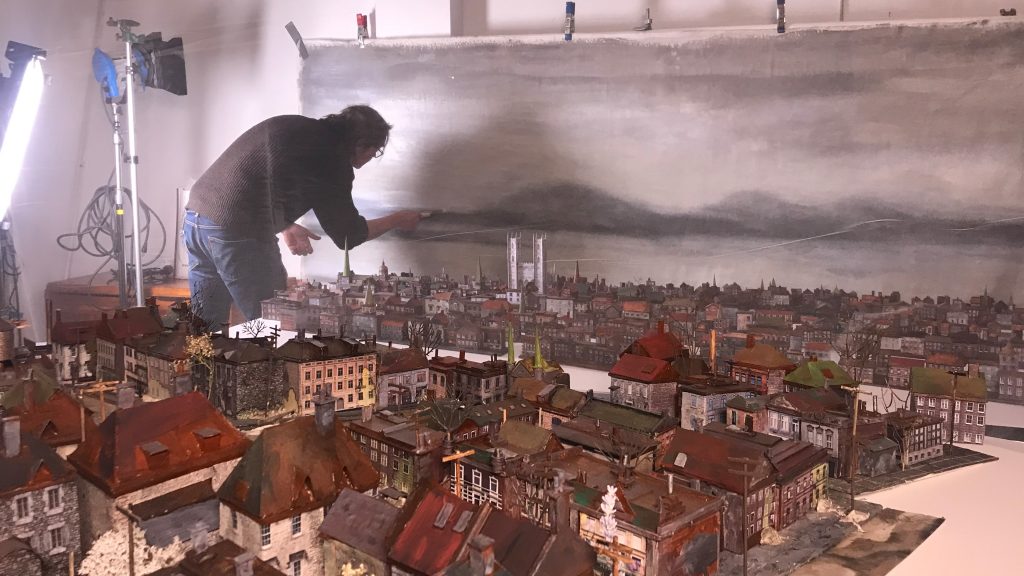
WEATHERED LOOK
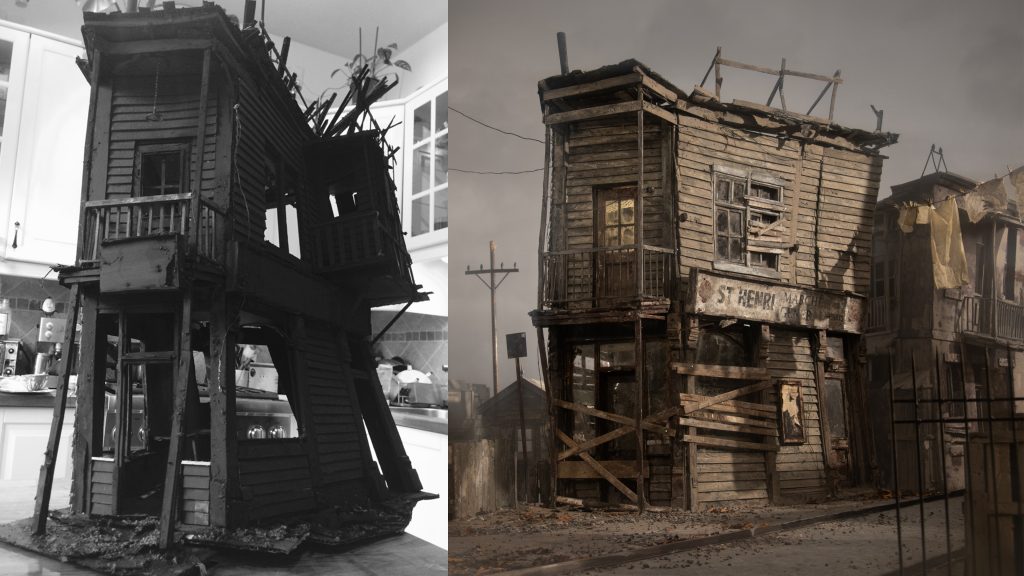
While constructing the set—inspired by Montreal at the beginning of the 20th century—misfortune influenced the look of the run-down house. The filmmakers explained: “The original maquette of the house was left outside our studio to dry. An unexpected rain squall hit and by the time we returned, the prop was warped out of shape. But actually, it looked so much better that way, so we incorporated the warps into the final model.”
RANDOM FINDS AND RECYCLING MINDSETS
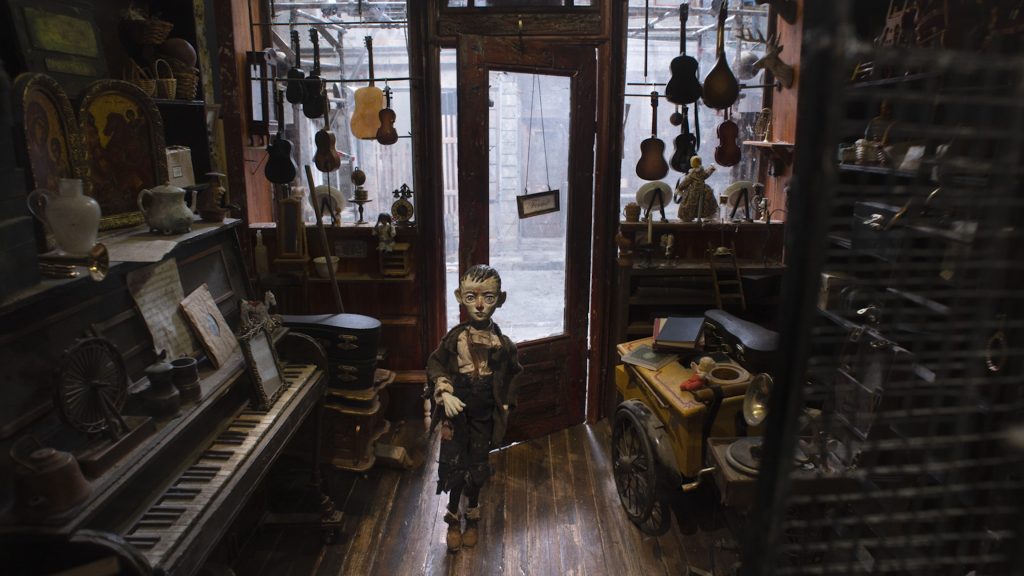
The creators of The Girl Who Cried Pearls adopted a scavenger’s mindset, transforming discarded objects into set materials. Steel bristles shed from street-cleaning trucks became structural supports, while rain-soaked cardboard, rotten wood and empty pill bottles found new life in the miniature world they built. Tiny toys and clocks from a dollhouse were used to fill up a pawn-shop interior, and items from past films were also recycled. Eagle-eyed viewers might spot the record player from Madame Tutli-Putli and the piano from the VR experience Gymnasia. This inventive reuse added texture and authenticity to the set’s visual language.
The filmmakers developed a novel painting technique for the film, using garbage bags to create random, irregular patterns on surfaces. This simple, rapid technique was instrumental for giving the decor an aged, weathered look.

COVID MISCOMMUNICATIONS
During the first few weeks of COVID lockdown, Chris and Maciek were forced to build puppets separately in their homes (one sculpting the heads, the other the bodies); they only met occasionally—“in some back alley, six feet apart”—to check each other’s progress. A scale mix-up led to the heads being much bigger than the bodies. This should have been a disaster, costing weeks of work, but the filmmakers decided to embrace the mistake, and oversized heads became a part of the film’s aesthetic.
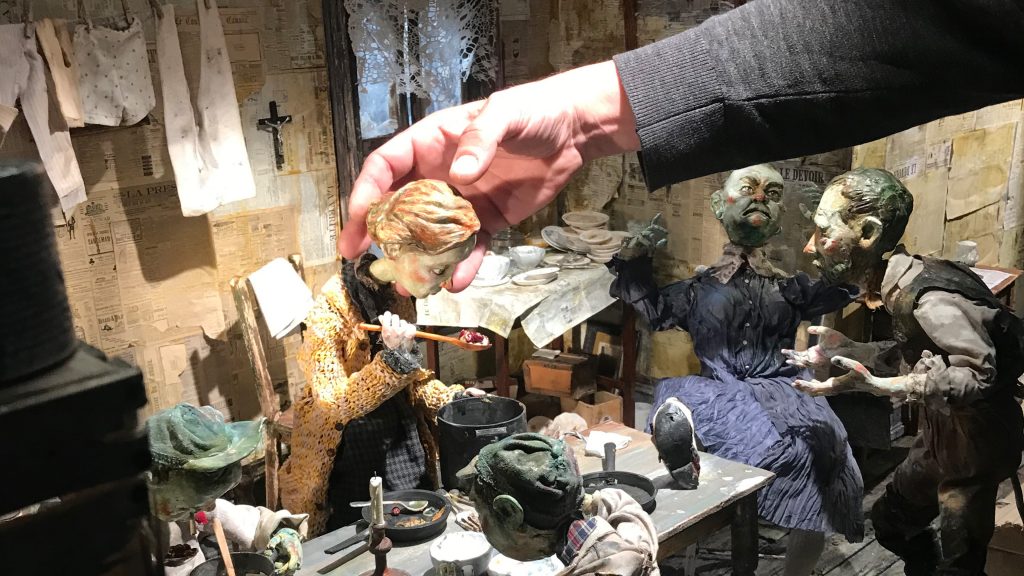
BUDGET LIMITATIONS
For the first time in their career, the filmmakers wrote a story with extensive dialogue and narration. But the film’s budget only allowed for three minutes of mouth animation—for a 16-minute story. There seemed to be no solution, other than re-writing the story or giving up. But then, they remembered that for most of the long history of puppetry, puppets emoted without moving mouths, blinking or expressions of any kind. If a child could give life to a puppet or doll without CG trickery, they thought, why wouldn’t that work in a movie as well?
They decided that CG mouth animations would only be used for scenes set in the present, while for scenes set in the past, the puppets would have fixed expressions: they could only emote through gesture and pantomime. The modern-day puppets would be painted in silicone, while the characters from the past would be painted in oil, evoking wooden church idols or puppet theatre marionettes. The contrast between the two styles, past and present, modern and nostalgic, perfectly suited the themes of the film.
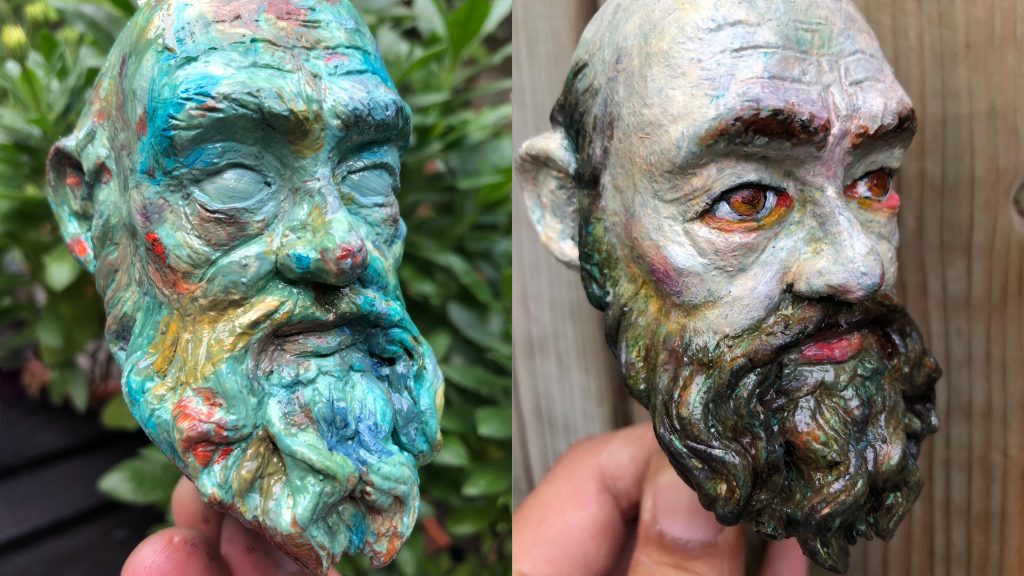
ANIMATION WITHOUT STORYBOARDS
Instead of storyboarding, the creators embraced a more intuitive and organic process. They built rough mock-ups of sets, rehearsed with actors and filmed the entire script from multiple angles. This process allowed them to capture “weird little nuances and real behaviour” and preserve spontaneity in both the performances and the camera work.
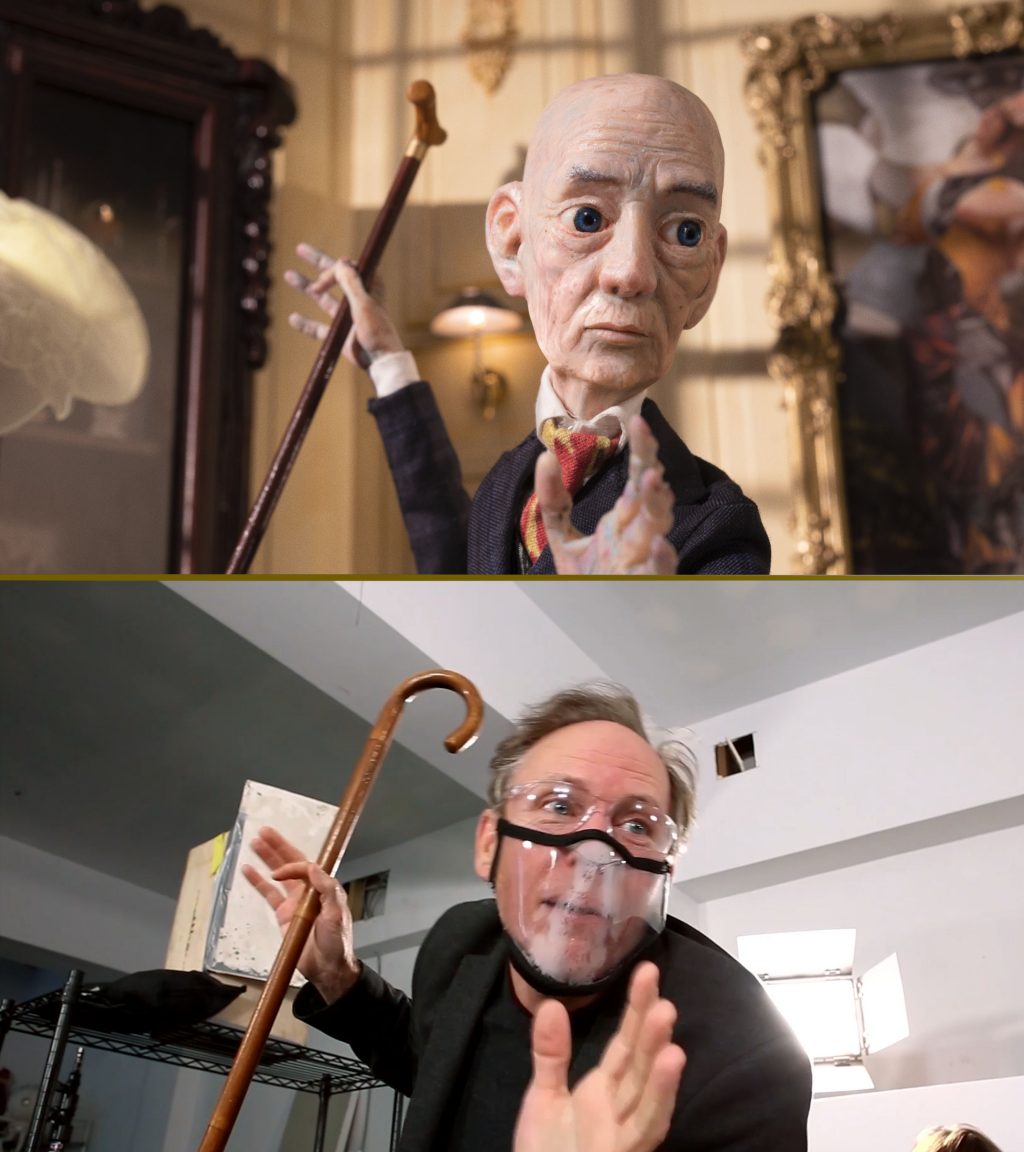
In breaking the rules and embracing mistakes, Lavis and Szczerbowski transformed accidents into opportunities. The stunning result reminds us that, in life as in art, the most important element of magic is surprise.
Watch the film:
oehttps://www.nfb.ca/film/the-girl-who-cried-pearls/
The post Anarchists of Animation: How the Creators of The Girl Who Cried Pearls Broke Every Rule—and Made Magic appeared first on NFB Blog.
]]>Ever wondered which Canadian films went global and stayed in people’s minds? The NFB is home to tons of films that have travelled the world, but one modern classic that...
The post Wait—There’s a “Madame Tutli-Putli” Making-Of?! appeared first on NFB Blog.
]]> oehttps://www.nfb.ca/film/madame_tutli_putli_en/
Yes, seriously—we tracked down a four-part making-off interview where the directing duo basically deliver a masterclass on how they pulled it off.
What’s wild about Madame Tutli-Putli is that it skips the usual “hero goes on a journey and comes out changed” formula. The protagonist barely changes at all—and that’s probably the duo’s boldest move. As the film unfolds, the character steadily reveals her isolation, fears and dreams—all while barely leaving the same train seat. We start the film by simply looking at her, and by the end of the film, we’re looking into her. The change? It’s in the audience’s perception of the character, not in the character itself!
In the constellation of stop-motion cinema, few films have carved out a space as instantly recognizable—and as deeply unsettling—as Madame Tutli-Putli. Beyond the integration of real human eyes composited onto puppet faces (giving the characters a gaze that feels uncomfortably alive), every single frame shows off the eerie fingerprint of the handmade. Those almost-too-real eyes, the fabric that wrinkles like actual skin, the objects that tremble with fragile tactility—all of it constitutes a technical marvel. Together, these details build a cinematic language that refuses to play by traditional animation rules. Oh, and the soundtrack? Absolutely mind-blowing. You must see the film—and hear it!
In a world dominated by global, hyper-commercial animation—where everything starts to look, sound and feel the same—the National Film Board of Canada is a total outlier. Its unique setup gives daring new filmmakers the freedom to create radically different animated works, like the unforgettable Madame Tutli-Putli. Without the NFB, and its producers, films this bold probably wouldn’t even exist.
Cool Facts
Madame Tutli-Putli has been absolutely everywhere—selected and awarded at over 100 festivals around the world, including the big three of animation: Annecy, Zagreb and Ottawa. It even picked up two awards at Cannes (the Canal+ Grand Prize and the Petit Rail d’Or)… and, of course, snagged an Oscar nomination in 2008. Total legend status!
Why This Matters for You
Lavis and Szczerbowski prove you don’t need a Marvel-sized budget to make stories that stick. Their claustrophobic, shadow-filled stop-motion masterpiece has been watched by millions on our platforms. So stop whatever you’re doing, grab your friends and family, and check it out. Madame Tutli-Putli is a uniquely macabre yet sympathetic short film that will keep you riveted you from start to finish. Best of all? It’s a homegrown, true Canadian classic!
Challenge
Pick one of the above recently unearthed parts of the making-of interview and tell us what you loved the most, or simply share your thoughts (Facebook, Instagram or LinkedIn). Boom—you’re supporting local art without leaving your couch.
Craving more? Visit NFB.ca. (No login. No ads. Just art.)
The post Wait—There’s a “Madame Tutli-Putli” Making-Of?! appeared first on NFB Blog.
]]>Ever felt like mainstream foreign movies don’t tell your story? Vancouver is home to groundbreaking female filmmakers who’ve brought to light Canadian stories that would have otherwise been overlooked. Here...
The post The Canadian Storytellers You Need to Know: Three Vancouver-Based Female Filmmakers appeared first on NFB Blog.
]]> Kathleen Shannon: The Godmother of Feminist Cinema in North America
Why She Matters
Filmmaker Kathleen Shannon didn’t just break the rules—she rewrote them. This Vancouver-born visionary became a global force in cinema. Like other renowned NFB filmmakers such as Alanis Obomsawin and Norman McLaren, she used her camera as a tool for change, inspiring feminist filmmakers and collectives worldwide. Her legacy is a powerful reminder that your Canadian perspective not only matters, it can make change happen.
Must-Watch
Like the Trees (1974): Follows Rose, a Métis woman who, after facing racism and hardship in the city, returns to her Woodland Cree community to rediscover her roots and help others reclaim their community and identity.
oehttps://www.nfb.ca/film/like_the_trees/
Mothers Are People (1974): Profiles Joy, a Black woman, research biologist and widowed mother. She articulates the dilemmas faced by working women, citing workplace discrimination and the critical lack of universal daycare for children.
oehttps://www.nfb.ca/film/mothers-are-people/
Luckily I Need Little Sleep (1974): Profiles Kathy, an immigrant nurse in northern Alberta, who juggles her hospital duties, sewing, housework and taking care of the family farm. The title alludes to the immense workload she manages.
oehttps://www.nfb.ca/film/luckily_i_need_little_sleep/
Cool Fact
Kathleen Shannon built the world’s first government-funded film studio for women, the NFB’s legendary Studio D, ensuring Canadian women could tell their own stories. On the 90th anniversary of her birth, we’re celebrating the door she kicked open for future generations.
In the 1970s, the films in the “working mothers” series (see above) exposed gender inequality in education, childcare and pay. This groundbreaking work sparked the creation of Studio D. Explore more of Shannon’s films here and learn more about her on our website and in this film.
Bettina Matzkuhn: The Animator Who Sewed Her Stories Together
Why She Matters
Imagine telling stories not with a camera, but with a needle and thread. Bettina Matzkuhn does just that, creating stunning embroidered animations you have to see to believe. Her one-of-a-kind films, gems of the NFB collection, weave together ecology and memory, showing that the most powerful Canadian stories are often crafted by hand—stitch by perfect stitch.
Must-Watch
The Hometown (1979): Her NFB debut (made at the age of 23!) won Best First Film at the Ottawa animation festival. Matzkuhn celebrates the simple joys and colourful memories of the place we call home, in this dreamy piece of nostalgia featuring a catchy tune and vibrant hand-stitched tapestries.
oehttps://www.nfb.ca/film/the-hometown/
Distant Islands (1981): Relive the magic of summer sailing through stunning embroidered tapestries. This beautiful film uses colourful threads to stitch together warm, drifting memories of exploring the islands of British Columbia.
oehttps://www.nfb.ca/film/distant_islands/
The Magic Quilt (1985): A magical quilt becomes a portal to adventure! But when the kids argue, the fabric of their world tears. They learn that mending the quilt also means mending their friendships. The film won awards in Los Angeles for its whimsical fabric landscapes.
oehttps://www.nfb.ca/film/magic_quilt/
Cool Fact
Bettina Matzkuhn’s art hangs in galleries worldwide, yet she still works from her BC studio. “Thread is my special effect,” she jokes.
This year marks the 40th anniversary of The Magic Quilt, and for over 50 years, Matzkuhn has transformed threads into breathtaking stories, showing us how powerful an art form textiles can be. Dive into her magical world of stitched narratives and watch her incredible films right here: https://www.nfb.ca/directors/bettina-matzkuhn/
Moira Simpson: The Visionary Filmmaker Behind The Recovery Series
Why She Matters
Moira Simpson’s 40-year career proves film can literally change laws. Her work explores issues such as sexual violence, preventing child abuse and recovering from war—with zero sugarcoating. Her films have empowered communities from Canada to Kosovo.
Must-Watch
Lorri: The Recovery Series (1985): Recently rescued from oblivion from our vaults, this is a landmark of lesbian cinema. As a powerful time capsule of queer resilience, this may be the first NFB film—and possibly the first Canadian film—to portray the life and experiences of a lesbian woman.
oehttps://www.nfb.ca/film/lorri_the_recovery_series/
Ruth: The Recovery Series (1985): Shares a powerful first-person story. When she was 14, drugs offered Ruth an escape from trauma. After 18 years of addiction, she fought for her life, finding hope and healing in community and recovery.
oehttps://www.nfb.ca/film/ruth_the_recovery_series/
Debby and Sharon: The Recovery Series (1985): Two sisters break a family cycle of addiction. They share their powerful journey to sobriety, fuelled by a life-changing reconnection to their Indigenous culture and heritage.
oehttps://www.nfb.ca/film/debby_and_sharon/
Cool Fact
Moira Simpson has taught film from Nairobi to the Arctic. “Camera angles can be as powerful as protest signs,” she says.
By amplifying marginalized voices and testimonies, her body of work attests to the fact that cinema can be a vital tool for social justice—and Canadian stories a force for international change. Her award-winning NFB films demonstrate that making a documentary can be a true act of courage.
Join us in celebrating the 40th anniversary of Moira Simpson’s Recovery Series. These powerful films on addiction and mental health continue to foster vital empathy, solidarity and hope for a new generation. Explore Simpson’s films and discover more about her here.
Why This Matters for You
These filmmakers prove you don’t need a Marvel-sized budget to tell stories that stick. Their work is free to stream (thanks, NFB!), short enough to keep us rivetted to the screen, and, most importantly, all about your Canadian world.
Challenge
Pick one of the above films this week. Watch. DM us with your thoughts (Facebook, Instagram or LinkedIn). Boom—you’re supporting local art without leaving your couch.
Craving more? This NFB channel offers a selection of BC-made films. (No login. No ads. Just art.)
The post The Canadian Storytellers You Need to Know: Three Vancouver-Based Female Filmmakers appeared first on NFB Blog.
]]>In the 1970s, British Columbia’s thriving underground and experimental film scene exploded. Let’s dive into the work of some of these influential artists, whose films marked an important “before and...
The post BC’s Underground Filmmakers and the NFB appeared first on NFB Blog.
]]> To start with, experience David Rimmer’s 2003 hypnotic short, Gathering Storm; like all the titles featured below, it’s being made available online for the first time for this blog post. In this hand-painted, camera-less film, Rimmer fuses the spirit of contemporary world music with disorder and chaos, crafting a beautiful, abstract piece.
oehttps://www.nfb.ca/film/gathering-storm/
David Rimmer: Honouring a Legendary Vancouver Filmmaker
Awarded a 2011 Governor General’s Award for his lifetime achievements in the visual and media arts, filmmaker, photographer and professor David Rimmer (1942–2023) helped kick-start one of the most important film communities in Canada with his classic 1970 experimental shorts Surfacing on the Thames and Variations on a Cellophane Wrapper.
Rimmer was a unifying figure for a generation of filmmakers who would shift the landscape of BC cinema forever. As noted by the Canadian Film Encyclopedia, Rimmer explored the structure of the film medium while simultaneously operating on a metaphorical level.[i] Along with Michael Snow, Rimmer remains Canada’s most internationally acclaimed experimental filmmaker. He started making films in 1967 and completed over 40 titles in the ensuing four decades. In his work, “the spectator is called upon to share in the experiences of exploration… Rimmer shows us the multiplicity of ways of seeing in general.”[ii] The first of the two NFB films Rimmer made, Jack Wise: Language of the Brush (1998), offers a unique encounter between the eponymous visual artist, composer Dennis Burke and Rimmer’s own experimental work, while celebrating Wise’s life and career.
oehttps://www.nfb.ca/film/jack_wise_language_of_the_brush/
Al Razutis: Film Artist, Professor and Cultural Activist
A Vancouver-based professor, historian and experimental filmmaker, Al Razutis was born in Bamberg, Germany, and joined BC’s underground cinema scene in 1967. He’s made more than 50 films, many of which have won international awards (including the Los Angeles Film Critics Award in 1988) and screened at prestigious museums and galleries around the world, including the Louvre in Paris.[iii]
A legend of BC’s underground cinema scene, Razutis is a multidisciplinary artist who helped build the movement by creating radical films. Through his mentorship and fierce belief in collective power, he inspired a generation of DIY filmmakers across BC, sparking film hubs all over the province. Razutis worked at Simon Fraser University in Vancouver as the head of the Film-Video Programme and was instrumental in forming the West Coast film distributor Moving Images Distribution, the Vancouver production co-op Cineworks Independent Filmmakers Society, and a short-lived union of Canadian film artists.[iv]
In 1976, he directed his only film for the NFB, Egypte, which incorporates time-lapse photography and chants in its impressionistic look at the country’s great monuments.
oehttps://www.nfb.ca/film/egypte/
Kirk Tougas, Colin Browne and the Pacific Cinematheque
The member of BC’s underground film scene who went on to collaborate the most with the NFB, Kirk Tougas earned over 36 credits as DOP or cameraman from 1982 to 2017 at the Board. He worked on NFB classics such as Loretta Todd’s Forgotten Warriors (1997), Elizabeth Walker’s Mr. Bear’s Song (1997) and Linda Ohama’s Obachan’s Garden (2001), which together won dozens of awards. Tougas played a crucial role in BC cinema as the founding director of the Pacific Cinematheque in Vancouver (known today simply as the Cinematheque), turning this newly created institution into a key contributor to the vitality of BC filmmaking. This cultural hub of alternative cinema also supported the experiments of local underground directors, fostering relationships among this generation of filmmakers that resulted in future collaborations like Colin Browne’s Father and Son (1992).
oehttps://www.nfb.ca/film/father_son/
Another member of BC’s underground cinema movement, Browne is a writer, filmmaker and professor who’s been nominated for a Genie Award and shortlisted for a Governor General’s Award. His seven-film filmography includes Strathyre (1979), The Image Before Us (1986) and Father and Son, for which Tougas is credited as cinematographer. Selected to screen at seven festivals around the world, this ahead-of-its-time film memoir explores the roles of the son and the father in Western patriarchal culture. The film combines Hi-8 home video, snapshots, archival footage and the moving testimonies of fathers and sons.
Sturla Gunnarsson: A Day Much Like the Others
Oscar-nominated, Emmy Award-winning director Sturla Gunnarsson was born in Iceland and raised in Vancouver. His award-winning graduate film, A Day Much Like the Others (1979)[v], which was made at UBC, earned him a place in Vancouver’s underground film movement and has been screened at a number of venues, including MoMA. Gunnarsson went on to direct four films for the NFB: the Oscar-nominated feature-length docu-fiction After the Axe (1981), which depicts the reality of managers getting fired and the emergence of a new industry that specializes in executive terminations; Emmy Award winner Final Offer (1985, co-directed with Robert Collison), a cinéma vérité classic in which the filmmakers were given freedom to record the historic 1984 contract negotiations between the United Auto Workers and General Motors Corporation; Force of Nature: The David Suzuki Movie (2010), which profiles the life and work of the world-renowned Canadian scientist and activist; and Where Is Here? (1987), a behind-the-scenes look at the making of the 100th-anniversary issue of Saturday Night magazine.
oehttps://www.nfb.ca/film/where-is-here/
The Legacy of BC’s Underground Cinema
BC’s underground cinema scene included many other artists, actors and filmmakers, such as Alex MacKenzie, Chris Gallagher, Gary Lee-Nova, Patricia Gruben, Ron Burnett and Tom Braidwood.[vi] The movement was fundamental to the development of filmmaking in the province. Its members had wide-ranging successes: they earned prestigious awards, became iconic actors (e.g., Tom Braidwood played the role of Melvin Frohike on the American television series The X-Files), founded the local cinematheque and created or led academic programs at universities in Vancouver.
These filmmakers also had a hand in making more than 50 NFB productions—only a portion of their impressive legacy, composed of hundreds of films. They were mentors who helped pave the way for new generations of directors in BC and the NFB; and by experimenting and exploring the medium without any constraints or prescribed outcomes, they produced a unique body of work that’s been widely studied and disseminated across Canada, and that continues to inspire filmmakers worldwide today.
Enjoy this selection of NFB films directed by erstwhile members of BC’s underground film scene, curated and re-released online for this blog post!
Header Image: Gathering Storm (2003) by David Rimmer
[i] https://web.archive.org/web/20121007022222/http://tiff.net/CANADIANFILMENCYCLOPEDIA/content/bios/david-rimmer
[ii] Allan, Blaine. “Handmade, or David Rimmer’s Divine Mannequin.” Revue Canadienne d’Études cinématographiques / Canadian Journal of Film Studies Vol. 2, No. 1 (Spring 1992), pp. 63-80 (18 pages). Published by: University of Toronto Press.
[iii] https://cfe.tiff.net/canadianfilmencyclopedia/content/bios/al-razutis
[iv] ibid.
[v] https://cfe.tiff.net/canadianfilmencyclopedia/content/bios/sturla-gunnarsson
[vi] Martin, Richard. dir. Backbone: Vancouver Experimental Cinema 1967–1981 (2013).
The post BC’s Underground Filmmakers and the NFB appeared first on NFB Blog.
]]>