The post Post-Workout Skincare: What to Do When You Can’t Shower Straight Away appeared first on AAD Blog.
]]>Welcome to the glamorous gap nobody warns you about.
Sweat, bacteria, and yesterday’s SPF are all hanging out on your skin, and your pores never sent an RSVP. The good news? You don’t need a shower to rescue your face. You need a plan.
Here’s the no-nonsense guide to post-workout skincare for real life.
Why the Wait Matters (and Why You Shouldn’t Panic)
Sweat itself isn’t the villain. It’s mostly water and salt, and it’s how your body keeps cool. Honestly, it’s doing great work.
The trouble starts when it lingers. Salt, oil, dead skin cells, and bacteria can mingle on the surface and clog pores or irritate skin, especially under a cap, a sports bra strap, or a backpack. Hello, breakouts.
So the goal isn’t perfection. It’s damage control. Good post-workout skincare is a pit stop, not a full car wash.
Step 1: Blot, Don’t Wipe
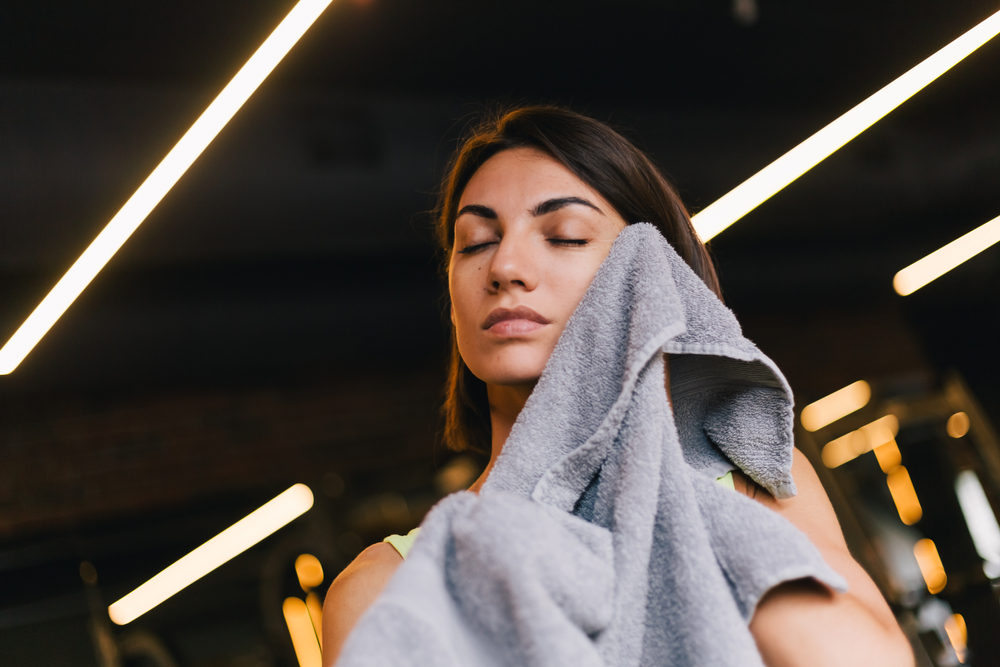
Resist the urge to scrub your face with your gym towel like you’re sanding a deck.
- Use a clean, soft towel or a fresh cotton pad
- Press gently, then lift
- Skip your sleeve (old sweat and laundry residue are not your friends)
Rubbing pushes sweat and grime around and irritates skin that’s already flushed. Blotting lifts it away. Easy win.
Step 2: Cleanse Without a Sink
No faucet? No problem. You’ve got options:
- Micellar water: Soak a cotton pad, swipe, done. Most formulas don’t need rinsing
- Cleansing wipes: Go fragrance-free, because your skin is already stressed
- Gentle cleansing cloths: Gym-bag friendly and surprisingly civilized
Work from the center of your face outward. Then give your hairline, neck, and chest the same love, since that’s where sweat likes to pool and set up camp.
One rule of thumb: if it stings, it’s too harsh. Skin is more sensitive right after exercise, so keep things gentle.
Step 3: Rehydrate From the Inside and Out
You just lost water and minerals through sweat, and your skin noticed.
Start with a big glass of water. After a long or especially sweaty session, you might also consider replenishing electrolytes, which help your body regulate fluid balance. Just don’t expect a sports drink to replace moisturizer. Sorry.
Then, work on the outside:
- Spritz a hydrating mist
- Press in a lightweight serum with hyaluronic acid or glycerin
- Seal it with a light moisturizer
Not sure what a good lineup looks like? Formulas from hydration-focused skincare brands tend to pair those humectants with barrier-friendly ingredients, which is exactly what freshly sweaty skin wants.
Step 4: Protect (Yes, Even Now)
Ran outside? Sat next to a giant gym window? SPF is not optional.
Once your skin is clean and dry, apply a broad-spectrum SPF 30 or higher. Gel and fluid formulas feel lightest on warm, post-exercise skin. A stick SPF is a gym bag hero for quick touch-ups, and it won’t leak into your shoes.
Pro tip: sunscreen goes on after cleansing, not instead of it. Layering SPF over sweat is how you get a sticky, pore-clogging situation.
Makeup After a Workout: A Delicate Situation
Heading straight from the gym to the office? It happens, and no one’s judging.
If you’re putting makeup over freshly cleansed skin and it looks patchy, remember that foundation can look dry even when your skin feels moisturized. Give your moisturizer a minute or two to settle before you start.
Then, go light:
- Tinted moisturizer instead of full-coverage foundation
- Cream blush for a natural flush (you’ve earned it)
- Concealer only where you need it
Heavy makeup over just-exercised skin can feel suffocating, and your pores will let you know.
Beyond the Face: Body Care Without a Shower
Your back, chest, and shoulders break out too, and tight leggings and sports bras trap sweat like it’s their job.
- Change out of damp clothes ASAP. This is the biggest win on the list
- Use body wipes or a clean, damp cloth on high-sweat zones
- Apply a light, breathable lotion. Skip the heavy butters until after your real shower
Ten minutes in damp spandex? Fine. Three hours? Your skin will have opinions.
Build a Gym Bag Skincare Kit

The easiest hack is the one you do once and forget about. Pack a small pouch and leave it in your gym bag permanently:
- Travel-size micellar water or fragrance-free wipes
- A mini hydrating mist
- A travel-size moisturizer
- A stick or gel SPF
- A spare hair tie and a small clean towel
- A zip bag for damp clothes (your car will thank you)
If you squeeze sessions into a jammed calendar, say with the kind of workouts for busy people that fit between meetings, this kit pays for itself fast. Restock it monthly, and you’ve basically automated your post-workout skincare.
Mistakes to Skip
We’ve all been there. A few habits to retire:
- Waiting until bedtime to cleanse. The sooner you freshen up, the better
- Over-cleansing. Three wipes in a row is not “extra clean,” it’s irritation
- Touching your face with gym hands. Equipment is a germ buffet
- Harsh exfoliants right after exercise. Skin is already sensitized
- Skipping moisturizer because you’re “already sweaty.” Sweat is not hydration
A Realistic Timeline
Here’s a ballpark, not a rulebook:
- First 10 minutes: Blot, change out of damp clothes, drink water
- Next 10 to 20 minutes: Cleanse with micellar water or wipes
- Right after: Mist, moisturize, and apply SPF
- When you get home: A proper shower and your regular routine
Can’t hit every step? Even doing the first two puts you well ahead of the sweaty-and-hoping crowd.
Quick FAQ
Can I just leave the sweat on until I get home?
Occasionally, sure. Regularly? Skip it. Sweat mixed with oil and bacteria is a pore-clogging recipe, especially if you’re already breakout-prone.
Are face wipes enough?
They’re a solid stopgap. Think of them as a bridge to your real cleanse, not a permanent replacement.
Should I moisturize right away?
Yes. Lighter is better, but skipping moisturizer leaves freshly cleansed skin exposed and thirsty.
Does post-workout skincare change for sensitive or acne-prone skin?
The steps stay the same, but the products shift. Stick to fragrance-free, alcohol-free formulas, patch test anything new, and skip heavy oils on breakout-prone areas. If a product stings, stop using it.
What if I have no supplies at all?
Blot with a clean towel, change out of damp clothes, and drink water. It’s not a full routine, but it still beats leaving sweat to sit.
The Bottom Line
You don’t need a shower to treat your skin well. You need a few smart swaps, a small kit, and about ten minutes of effort.
Blot, cleanse, hydrate, protect. Repeat. Even if you dragged yourself there on zero motivation, you deserve skin that feels as good as you do after that workout. Consistent post-workout skincare beats a perfect routine you never actually do.
Want more skin tips that fit real life? Pop over to the Skin Care section for more, and tell us in the comments what’s in your gym bag. We’re nosy like that.
The post Post-Workout Skincare: What to Do When You Can’t Shower Straight Away appeared first on AAD Blog.
]]>The post Lavelier Skincare Review: Testing a Toner and Serum Duo appeared first on AAD Blog.
]]>So when I added two pieces from Lavelier, a premium brand built around red coral seaweed, I wanted to see if the buzz was earned. I tried the Oceana Pure Balance Toner and the HydroTherm Sauna Serum side by side, and I took notes.
This Lavelier skincare review covers what’s inside each bottle, how they feel, and who might love them. Here’s how it went.
Quick Snapshot: What I Tested
- The toner: Oceana Pure Balance Toner
- The serum: HydroTherm Sauna Serum
- Brand hook: Red coral seaweed, plus sea-inspired formulas
- Bonus: Lavelier says its products aren’t tested on animals
Why Lavelier? The Coral Seaweed Story
Lavelier is a premium skincare brand that puts red coral seaweed at the center of its formulas.
You’ll spot it on ingredient lists as Hydrolyzed Corallina Officinalis. It shows up in both products I tried, which makes them feel like true partners.
Two products, one signature ingredient. Nice.
That shared ingredient makes layering feel intentional, and it’s a big reason this pairing works so well together.
Step One: Oceana Pure Balance Toner
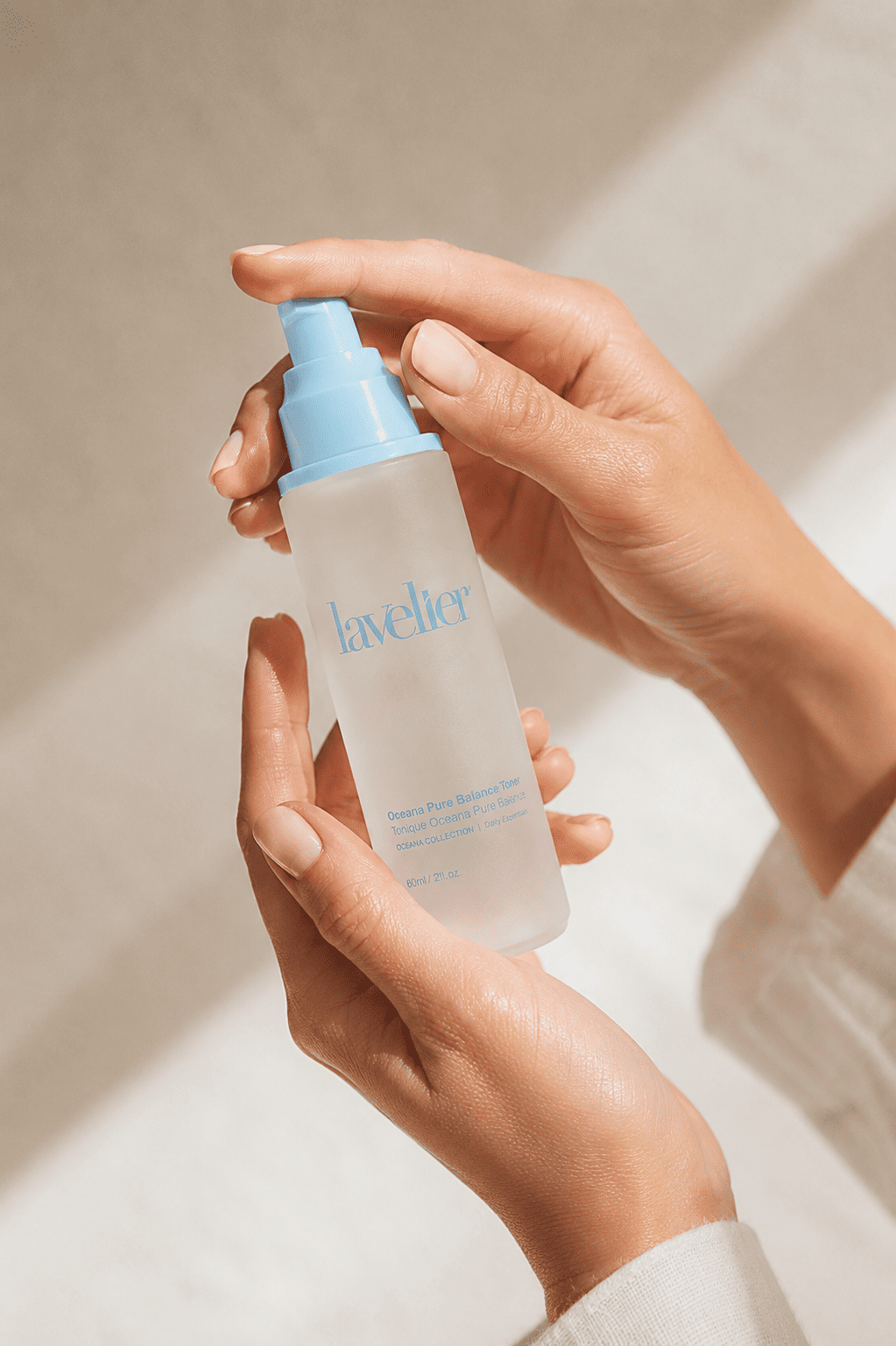
Shop the Oceana Pure Balance Toner here
Toner is the step people skip, and I get it. But this one changed my mind in about three days.
The brand describes it as a delicate, gentle formula that balances the skin’s surface without stripping moisture. On my face, that translated to a fresh, soft, comfortable finish.
No tightness. No tingle. Just a clean, dewy canvas.
Toner Key Ingredients (The Good Stuff)
Here’s what stood out on the label:
- Aloe leaf juice: A hydrating, soothing-feeling base
- Cucumber extract: Feels cooling and refreshing
- Chamomile flower extract: Calming for a complexion that feels a bit fussy
- Sodium PCA: A humectant that helps skin hold onto moisture
- Allantoin: A soft, conditioning ingredient
- Coral seaweed (Hydrolyzed Corallina Officinalis): The brand’s signature
The result is a light, refreshing toner that feels like a spa moment in a bottle.
How I Used the Toner
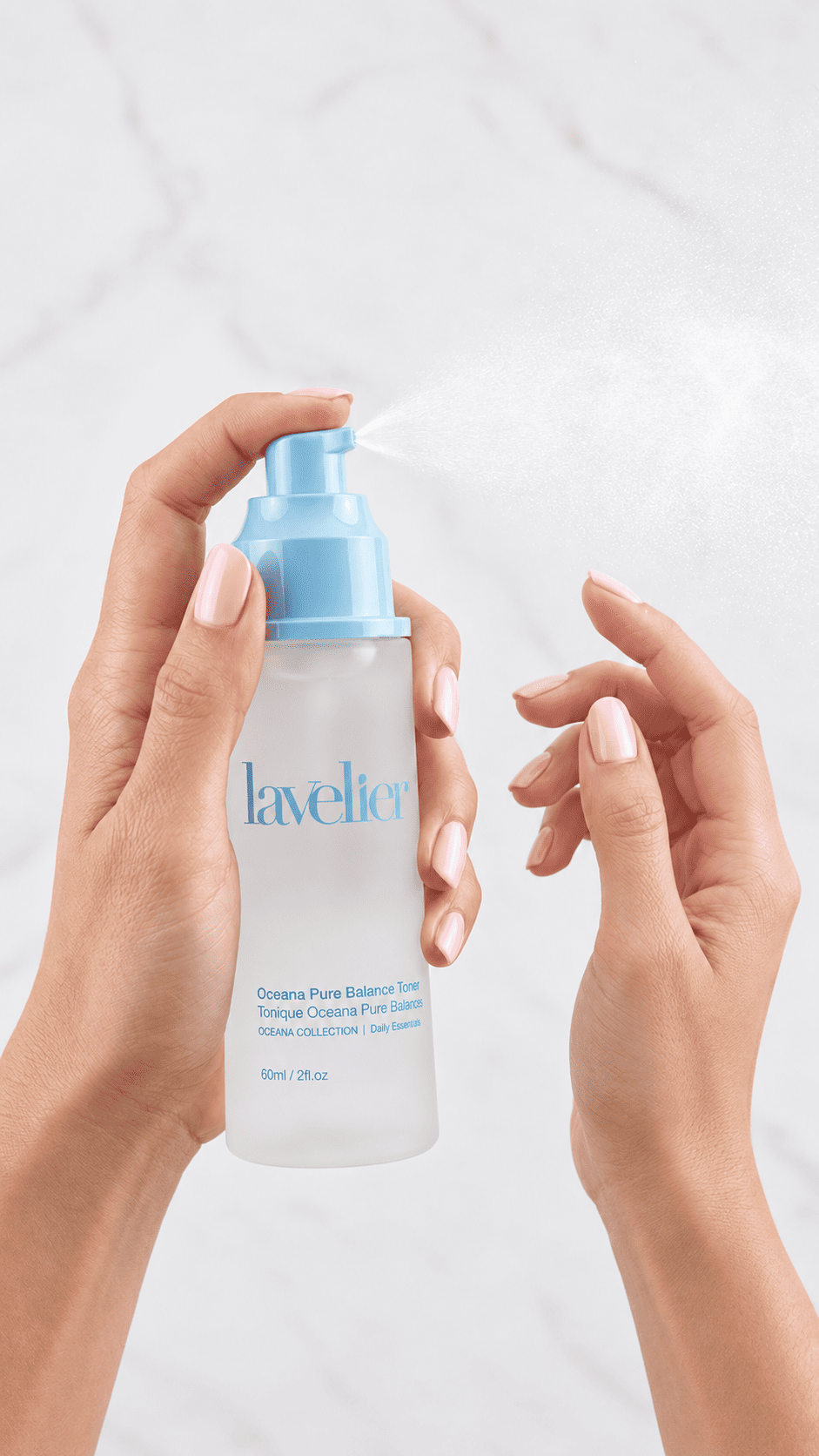
It’s easy, which is exactly what I want at 7 a.m.
- Cleanse your face.
- Spray a few drops on a cotton pad or directly on your face.
- Sweep across your face and neck.
- Follow right away with your moisturizer.
That’s the whole routine, start to finish. It takes about ten seconds and it feels surprisingly luxe.
Step Two: HydroTherm Sauna Serum
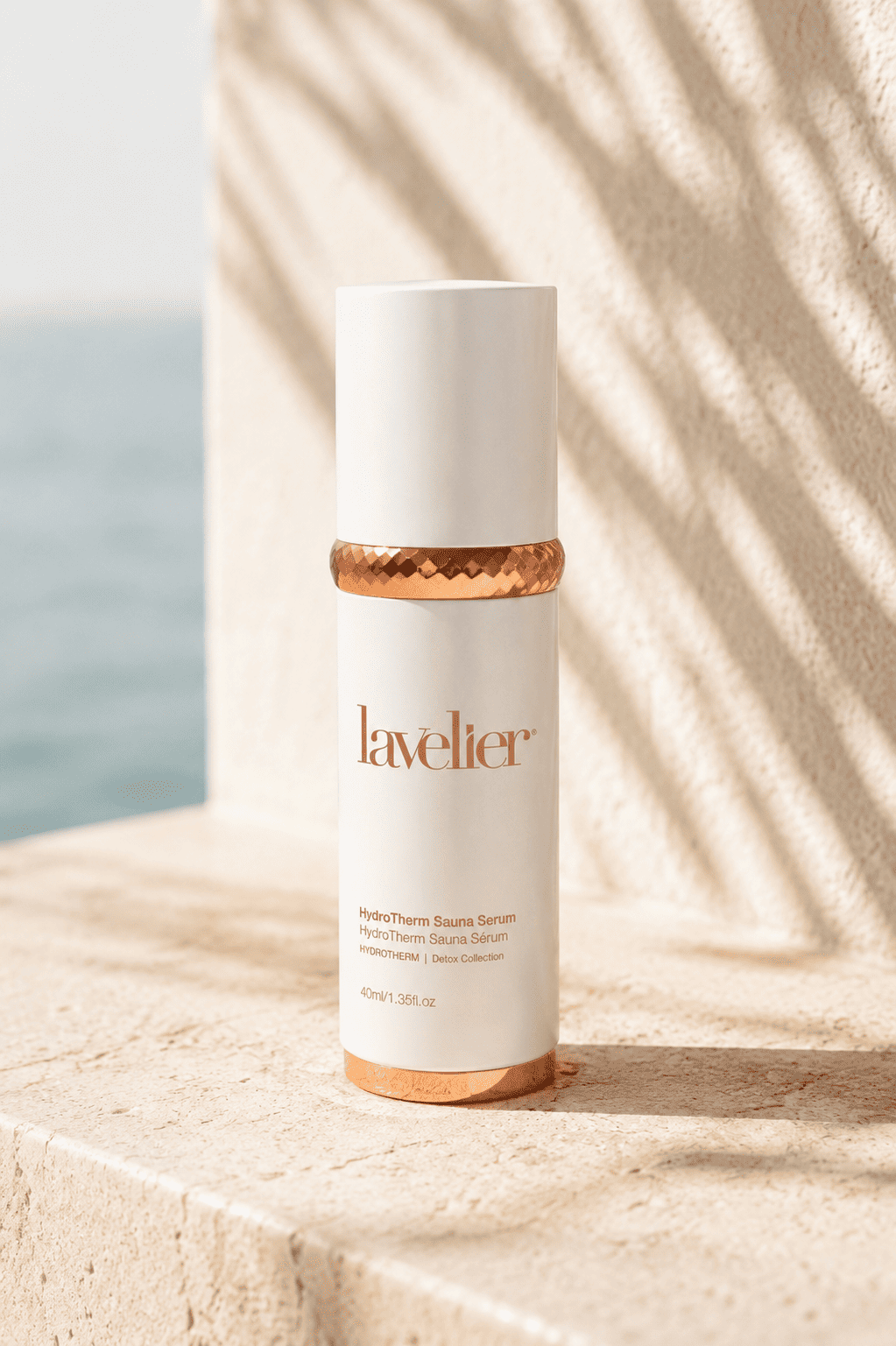
Shop the HydroTherm Sauna Serum here
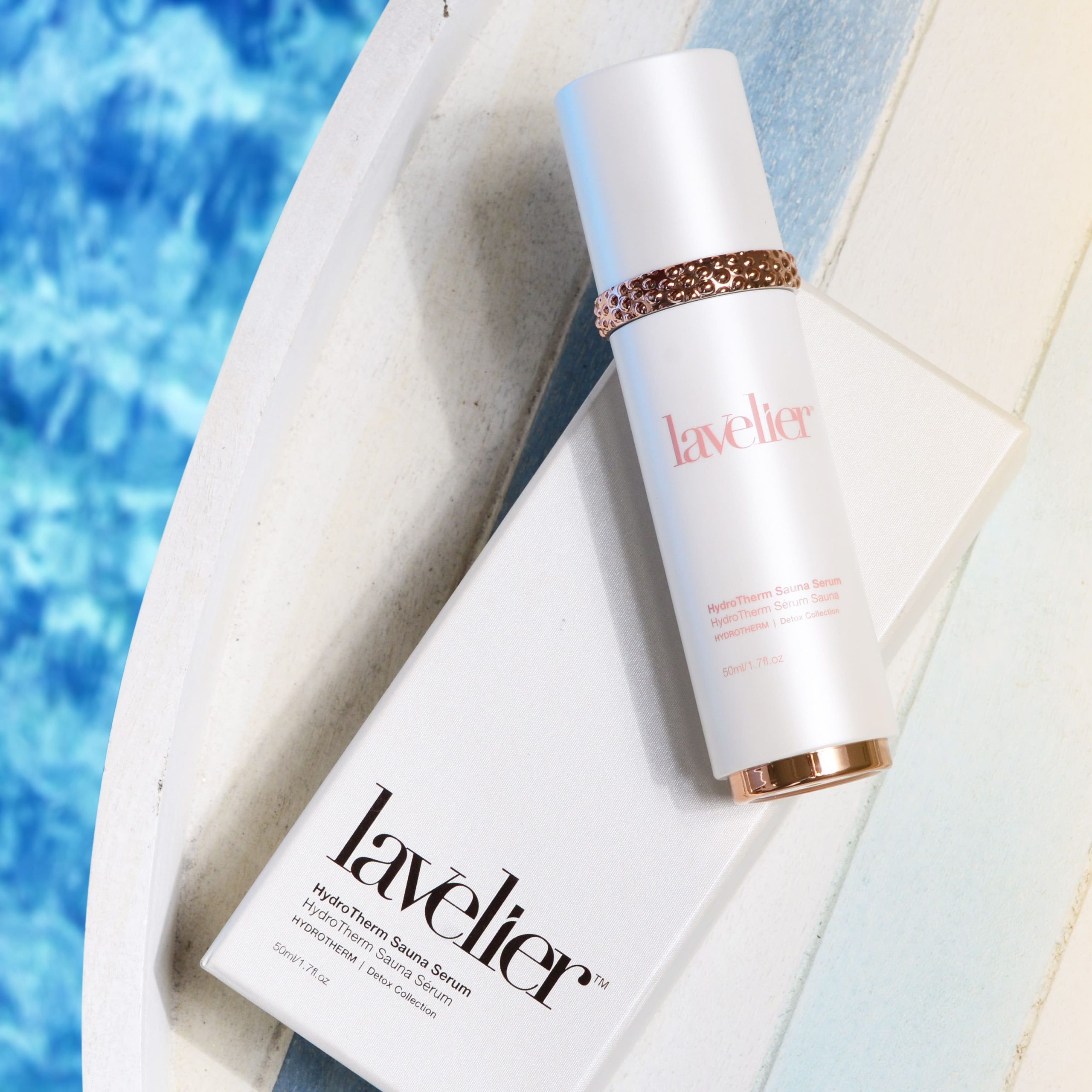
This serum is silky and lightweight, and it glides on without any heaviness. It sinks in quickly, and always leaves my skin feeling beautifully bouncy.
Serum Key Ingredients (Where the Magic Happens)
The current formula lists some seriously lovely ingredients:
- Sodium hyaluronate: A hydration favorite for a plump, dewy look
- Glycerin: A classic humectant for moisture
- Collagen: Supports a smooth, bouncy-looking complexion
- 3-O-Ethyl Ascorbic Acid: A stable vitamin C derivative for a radiant look
- Palmitoyl peptides: Popular in firming-focused formulas
- Coral seaweed extract: Hello again, signature ingredient
- PEG-40 Hydrogenated Castor Oil: Helps create that silky feel
That’s a lot of goodness for one small bottle.
How I Used the Serum
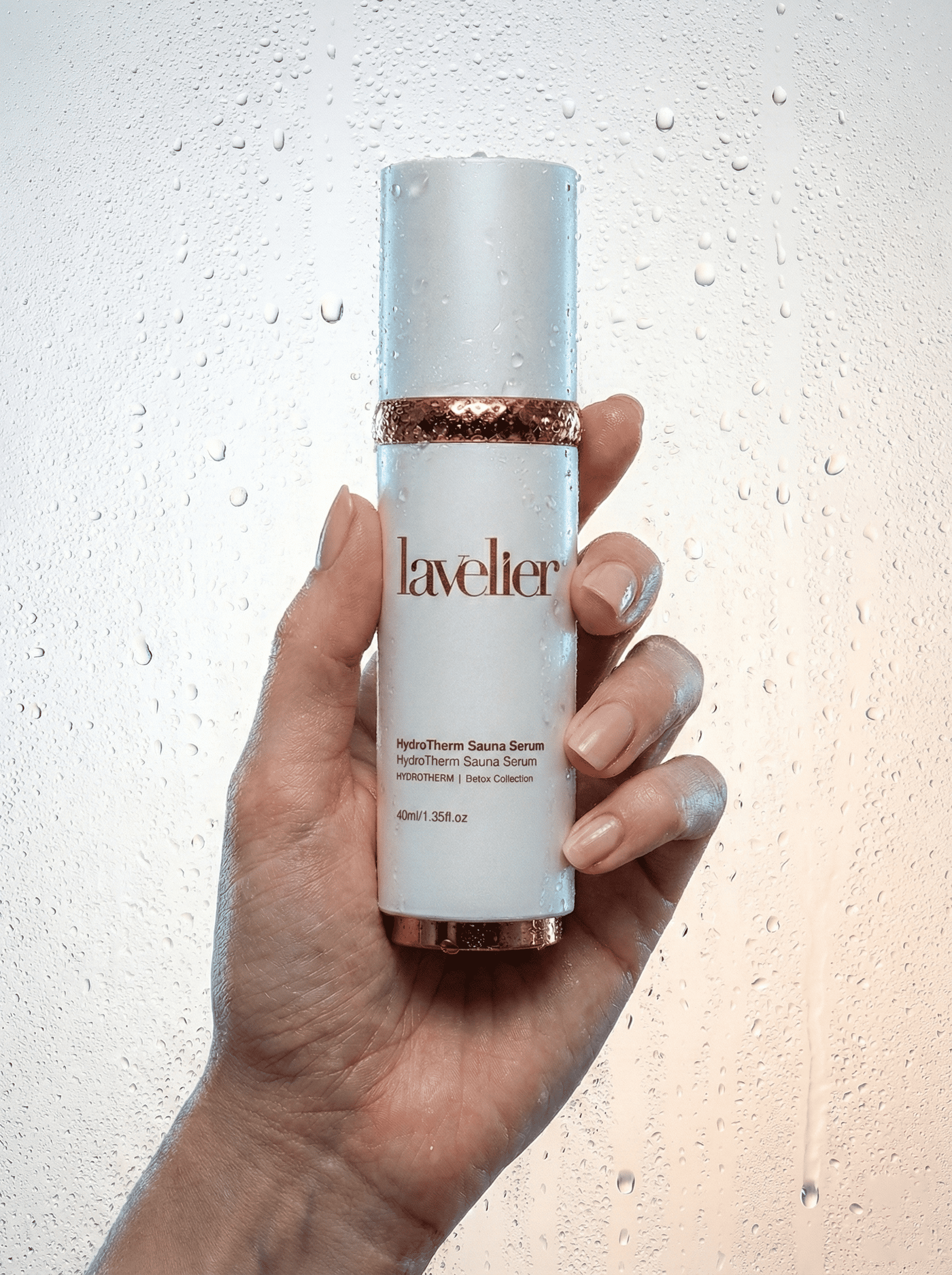
Lavelier recommends daily use on freshly cleansed skin. Massage it into your face and neck, and avoid the eye area.
A little goes a long way, and the warm sensation appears as you massage it in.
Pro tip: If you own the HydroTherm Intense Masque, you can add one or two drops of serum on top and leave it for five to ten minutes before rinsing. It intensifies the heating effect of the mask. I stuck to the serum on its own, and I still loved it.
My Toner and Serum Routine (Copy This)
Here’s the simple flow that worked for me:
- Cleanse: Use your favorite gentle cleanser.
- Tone: Pure Balance Toner on a cotton pad.
- Serum: HydroTherm Sauna Serum, massaged in.
- Moisturize: Seal it in with your usual cream.
Tone first, serum second, every day. The toner preps your skin, and the serum feels even smoother on top of it.
How My Skin Looked and Felt
Let’s talk results.
After a week, my skin looked fresher and more glowy. It felt soft, smooth, and nicely hydrated from morning to evening.
Makeup sat beautifully on top, too. That’s a big win in my book.
Consistency helped, so I used both products every single day. The routine is so pleasant that sticking with it was easy.
Tips to Get the Most From the Duo
- Apply the serum to clean skin so the warmth feels amazing.
- Use a fresh cotton pad each time for a tidy, hygienic routine.
- Massage in slow circles to enjoy the full spa effect.
- Stay consistent, because good routines love repetition.
What I Loved: My Lavelier Skincare Review Highlights
Here’s my honest shortlist of wins:
- The fresh, soft feel: My skin looked glowy and felt comfortable after toning.
- The lightweight textures: Nothing heavy, sticky, or greasy.
- The easy routine: Four steps, no stress.
- The pretty ingredient lists: Aloe, chamomile, hyaluronate, peptides, and more.
- The coral seaweed thread: Both products share a signature ingredient.
Skincare should feel like a treat. This duo does.
Good to Know Before You Buy
A couple of friendly notes:
- It’s a premium brand, so think of it as an investment in your routine.
- Patch test first. That goes for any new product, so try a small area and see how your skin feels.
- Read the label. Check the ingredient list to make sure everything works for you.
Who Will Love This Duo
I’d recommend this pair if you:
- Want a routine that feels like self-care
- Love lightweight, silky textures
- Enjoy sensorial products
- Want a toner that feels refreshing rather than harsh
- Like brands with a clear signature ingredient story
If you’re a “more steps, more glow” person, this duo fits right in. If you’re a minimalist, it’s still only two extra steps.
Final Verdict: My Lavelier Skincare Review Wrap-Up
I went in curious and came out a fan.
The Pure Balance Toner is a soft, refreshing reset. The HydroTherm Sauna Serum is a warm, silky treat that makes your routine feel special.
Together, they turned a basic cleanse-and-moisturize routine into something I actually look forward to.
My rating: five stars, and I’d buy both again.
Quick FAQs
Can I use the toner and serum together?
Absolutely. Tone first on a cotton pad, then follow with the serum. It’s the exact pairing I used every day.
When do I use the HydroTherm Sauna Serum?
Lavelier suggests daily use on freshly cleansed skin. Massage it into your face and neck, and skip the eye area.
Is the toner used with a cotton pad?
That’s the brand’s method: a few drops on a pad, then sweep it over your face and neck. Follow with moisturizer right away.
What makes Lavelier different?
Its signature red coral seaweed, plus a sea-inspired approach to every formula. You’ll find it in both of these products.
Ready to Try Them?
If this Lavelier skincare review has you curious, grab the duo and give your routine an upgrade.
Have you tried Lavelier? Tell me your favorite product in the comments. I’d love to hear what’s on your shelf!
The post Lavelier Skincare Review: Testing a Toner and Serum Duo appeared first on AAD Blog.
]]>The post Why Foundation Can Look Dry, Even on Moisturized Skin appeared first on AAD Blog.
]]>Confusing? Absolutely. Rare? Not even a little. Let’s talk about why foundation looks dry even when your skin technically isn’t — and what’s actually happening under (and on top of) the surface.
“But I Moisturized!” — Why That’s Not the Whole Story If Your Foundation Looks Dry
Here’s the plot twist: moisturized skin and a moisturized-looking finish are not the same thing. Your skin can be perfectly hydrated underneath while the top layer of makeup behaves like it’s never seen water in its life.
That’s because once foundation hits your face, it’s no longer just about your skin — it’s about chemistry, timing, tools, and a dozen tiny variables working against you at once. When foundation looks dry, the cause is almost never “not enough moisturizer.” It’s usually something happening in the layers on top of your skincare.
The Usual Suspects Behind That Dry, Flat Foundation Finish
Let’s line up the culprits, because a few of these are probably guilty right now.
Mattifying primer under a matte foundation. Doubling up on anything oil-absorbing is basically asking your base to look like drywall. If you’re already prone to a flat finish, skip the extra mattifier — your skin needs some slip to hold onto.
Too much powder, too soon. Setting powder is meant to control shine, not evaporate every ounce of glow. Overloading it — especially in areas that don’t actually get oily — is one of the fastest ways to turn a fresh base chalky by lunchtime.
Formula-skin mismatch. Some foundations are built for oily skin control and simply were never designed to sit pretty on drier textures. No amount of prepping will make an oil-absorbing formula feel dewy — it’s working exactly as intended, just not for your skin type.
Skincare that hasn’t fully absorbed. Applying foundation over half-sunk-in moisturizer causes pilling, patchiness, and an uneven, flaky-looking texture — which reads as “dry,” even though moisture is very much present underneath.
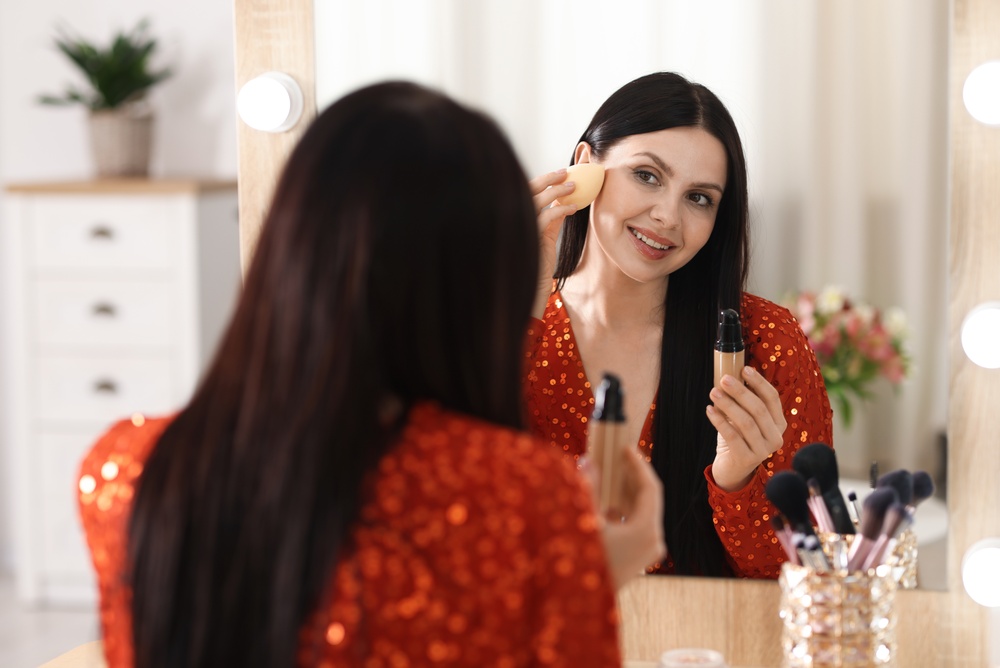
The wrong tool for the job. Dry beauty sponges and stiff brushes can drag pigment across the skin instead of pressing it in, emphasizing texture and creating that dreaded cakey look. A slightly damp sponge, on the other hand, is basically a foundation whisperer.
Environment. Air conditioning, heating, wind, and dry climates pull moisture from everything — including the top layer of your makeup — no matter how good your routine is.
Skincare and Makeup Are Playing Different Games
It helps to think of skincare and makeup as two separate teams with two separate jobs. Skincare hydrates the skin itself. Makeup sits on top and has its own rules about texture, finish, and how it reacts to air, oil, and time.
This is why a face that’s glowing pre-makeup can still end up with foundation looking dry by 2 p.m. — the skin barrier is fine, but the makeup layer has its own separate set of problems. It’s the difference between well-watered soil and a plant that still needs its own care on top.
If you want the skin underneath doing its best possible work before base makeup even enters the chat, it’s worth treating that prep step seriously — even something as simple as boosting circulation with a few minutes of facial massage can change how makeup sits later in the day.
How to Actually Fix It (Without Buying Ten New Products)
- Let skincare fully absorb. Give it a solid few minutes before foundation goes anywhere near your face.
- Skip the double mattifying combo. Choose either a hydrating primer or a mattifying one — not both, unless you’re specifically fighting an oil slick.
- Dampen your tools. A barely-wet sponge distributes product far more evenly than a bone-dry one.
- Set only where needed. T-zone, maybe chin — not your entire face like it’s a Renaissance painting.
- Choose formulas built for your skin type, not just the ones influencers are currently obsessed with.
And if you’re someone who loves picking up tricks from people who do this professionally, a few of the makeup techniques celebrity artists swear by are shockingly simple — and most of them focus on prep, not product overload.
When It’s Not Really About the Foundation At All
Sometimes the real issue isn’t your base at all — it’s the skin barrier quietly waving a white flag underneath. Dehydration doesn’t always look dramatic; sometimes it just shows up as makeup that won’t sit right, no matter how many serums you throw at it. If that sounds familiar, it might be worth looking at hydration from the inside out too, since what you’re drinking can matter as much as what you’re applying.
It’s also worth remembering that most of what you see online is curated within an inch of its life. A lot of the flawless, dewy “no-makeup makeup” you scroll past has more going on behind the scenes than anyone admits — which is exactly why some common beauty myths about effortless skin deserve a reality check.
The Bottom Line
If your foundation looks dry despite a solid skincare routine, the fix usually isn’t “moisturize harder.” It’s about matching formula to skin type, respecting absorption time, using the right tools, and not overdoing the powder. Small routine tweaks — even a quick refresh like a fast pre-makeup glow routine — often make a bigger difference than any single “miracle” product.
Your skin was never the problem. Your base just needed a better game plan.
The post Why Foundation Can Look Dry, Even on Moisturized Skin appeared first on AAD Blog.
]]>The post I Tried Evalectric’s Infrared Hair Tools. Could I Actually Tell the Difference? appeared first on AAD Blog.
]]>The Hair Type Disclaimer (Because It Matters)
Wavy. Frizzy. Prone to turning into a cloud the second it senses moisture in the air. If you have similar hair, you already know that “smooth” and “shiny” aren’t guaranteed — they’re earned, one styling session at a time. So I went in skeptical. I came out converted.
First Up: The Straight Brush Styler Peach Please
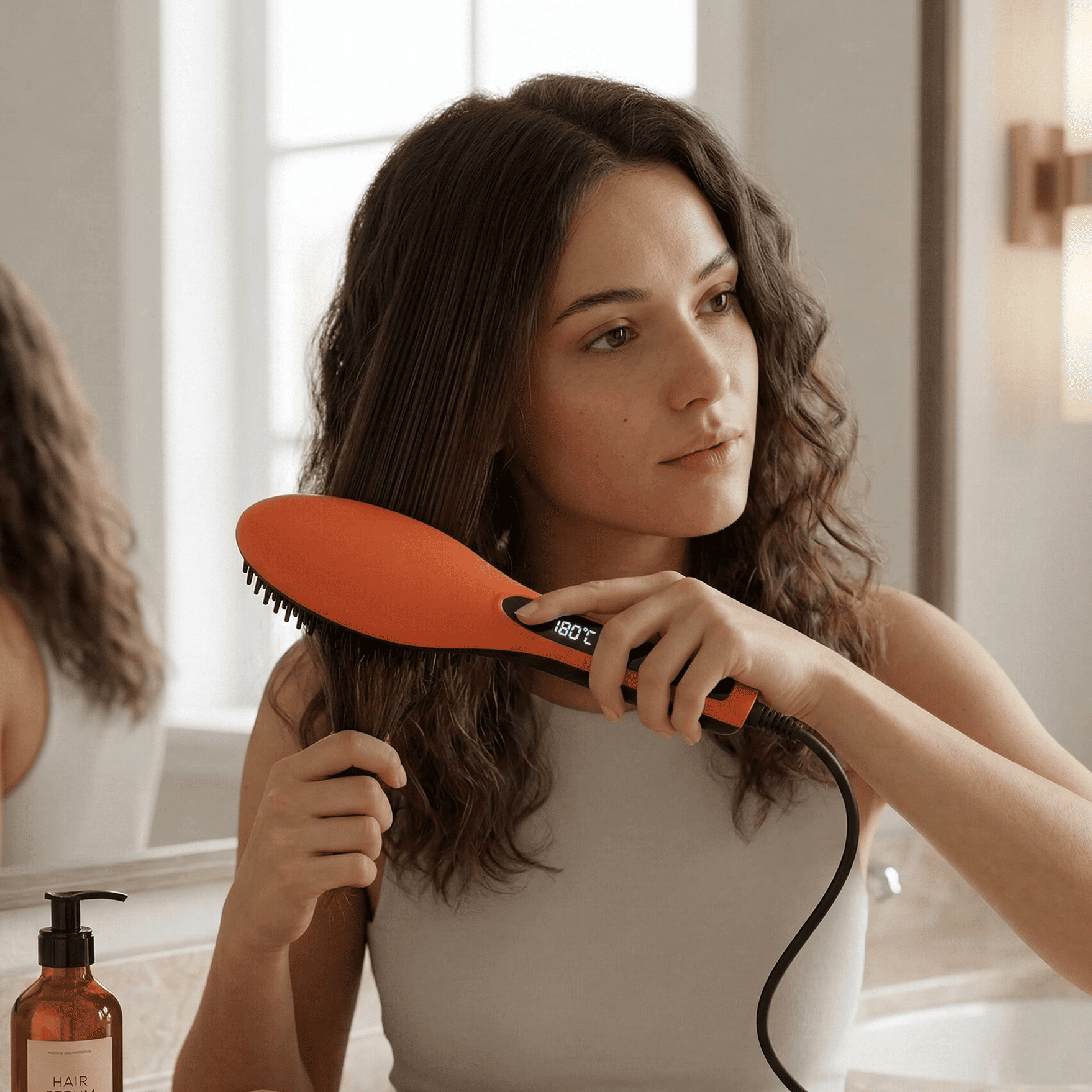
The Straight Brush Styler Peach Please (love the name) is the tool I now reach for on autopilot. It’s as if a brush and a straightener had a very productive baby — ceramic plates built into brush bristles, five adjustable heat settings between 285–430°F, and infrared plus negative ion tech that’s specifically designed to fight the look of frizz and flyaways.
What I noticed:
- Flyaways calmed down in one pass, no sectioning required
- Great for quick “I have four minutes” mornings
- Doesn’t flatten hair into that stiff, over-straightened look
Is it the most powerful tool in the lineup? No — it’s the convenience champion. For everyday smoothing and taming, it’s genuinely hard to beat, and it’s a big reason this trio earns its spot among the better Evalectric reviews you’ll find from actual frequent users, not just unboxing videos.
Then: The Ultra Turbo Styler
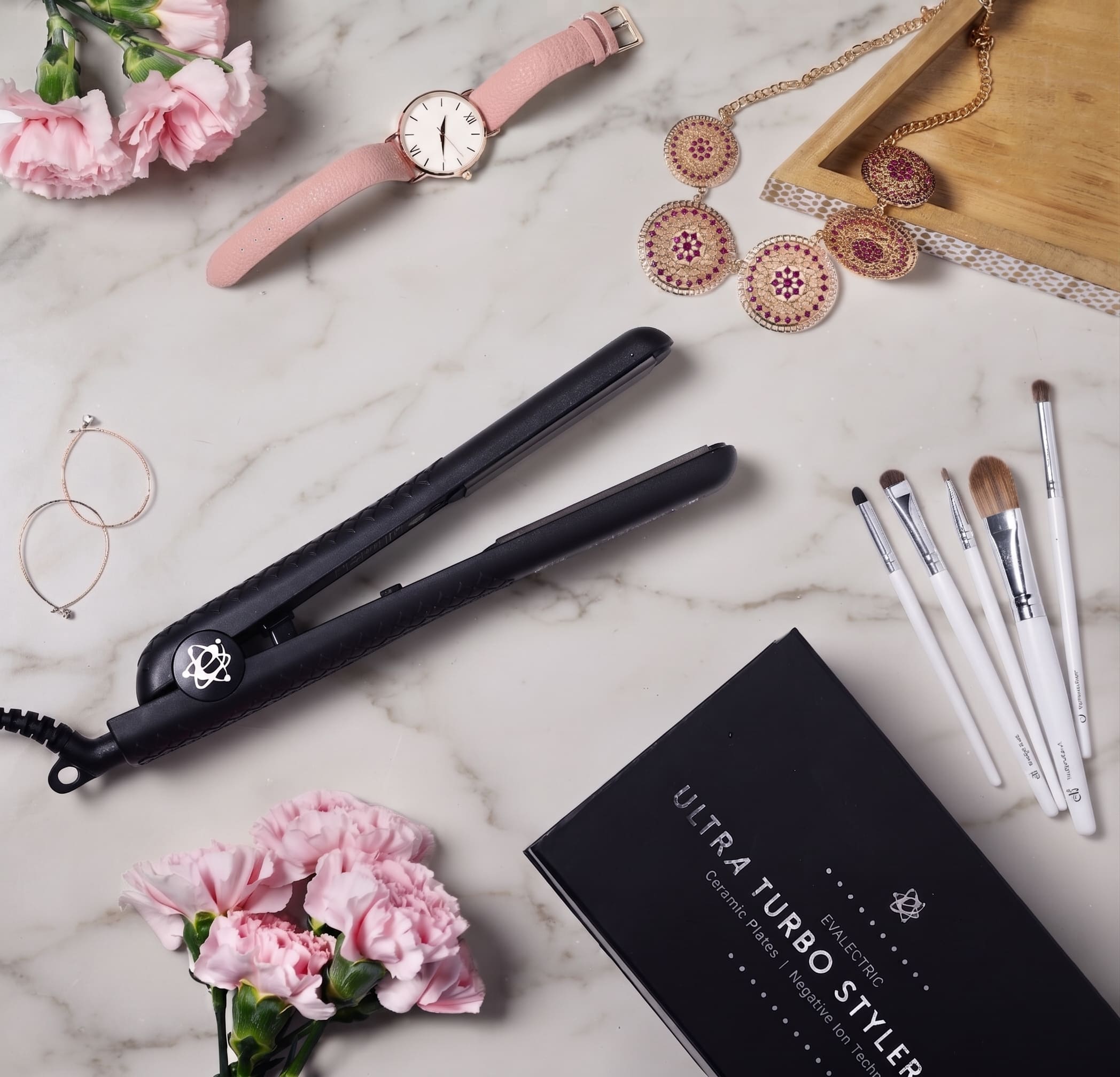
This is where things got serious. The Ultra Turbo Styler has 1.25″ ceramic plates that heat up to a genuinely intense 500°F, floating plate technology (so it adjusts to your hair’s thickness instead of you adjusting to it), negative ion tech paired with far infrared heat, dual voltage for travel, and a protective heat-resistant glove included in the box.
The travel torture test: I brought it on a trip, dropped it — hard — on a hotel bathroom tile floor. I braced for a cracked plate or a dead unit. Instead: not a scratch, not a crack, powered on like nothing happened. That kind of durability isn’t something you can fake with marketing copy. It’s also something that most other Evalectric reviews haven’t mentioned.
Styling results: fast, smooth, and versatile enough to do curls, waves, or pin-straight without switching tools. Multiple passes weren’t needed, which — if you’ve ever over-processed a section trying to “get it right” — you’ll understand is a bigger deal than it sounds.
Finally: The Titanium Pro Peach
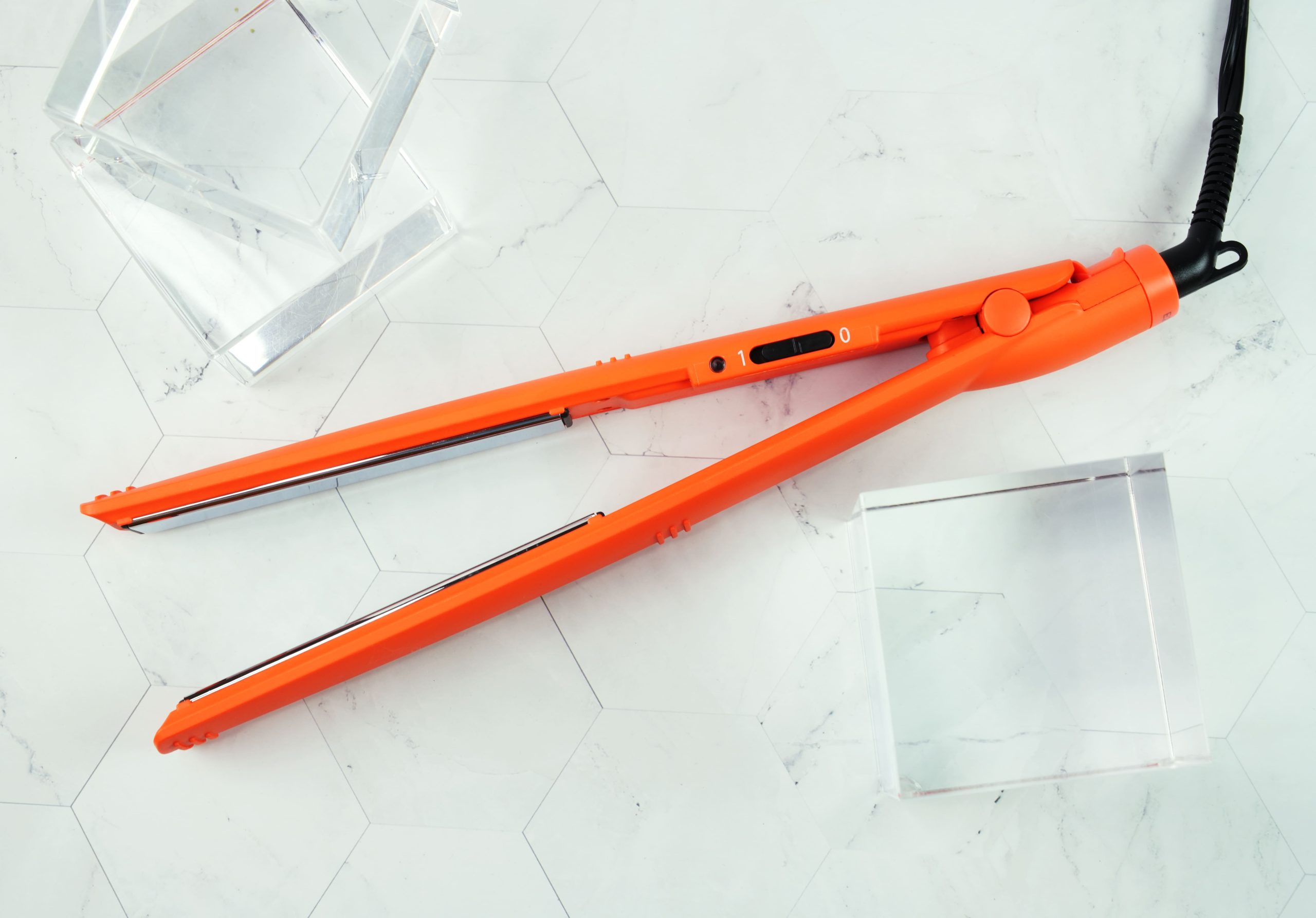
The Titanium Pro Peach (yes, peach is one of my favorite colors. Don’t judge – my dresser looks stunning with these tools decorating it!). Titanium plates instead of ceramic, a 140–450°F range, far infrared heat, floating plates, and negative ion technology again (noticing a pattern — this seems to be Evalectric’s whole philosophy, not just a marketing bullet point on one product).
Titanium plates glide differently than ceramic — a bit slicker, a bit faster through thick or coarse sections. On my waves, it meant fewer passes to get a sleek finish, and my ends looked shinier afterward instead of that dry, “cooked” look I’ve gotten from cheaper irons in the past.
So… Is It Actually the Infrared?
Honest answer: I can’t run a lab test in my bathroom. What I can tell you is that all three tools use Far Infrared Technology, which works differently than standard heat — it’s designed to heat hair more evenly and gently from within the strand rather than just blasting the surface, which in theory means fewer repeated pass-throughs with hot plates.
Whether that’s the whole explanation or just part of it, the result was less frizz, more shine, and hair that felt less fried by the end of the week. I also noticed I wasn’t deep-conditioning as often just to make my hair feel normal again, and my stylist actually commented on how much healthier it looked at my last appointment.
Addressing the Skeptics: Common Evalectric Concerns
Anytime a brand isn’t a household name, people ask reasonable questions. Here’s my take, having now lived with these tools:
- “Isn’t this just a knockoff of bigger brands?” Not from my experience. The build quality, the included accessories (hi, heat glove), and the multi-tier temperature ranges all read as intentional engineering, not a copy-paste job.
- “Are the price tags worth it?” For $250–$350, you’re paying salon-tool territory pricing — which tracks, because the performance felt closer to a salon appliance than a drugstore one.
- “Will it actually survive regular use and travel?” My unintentional drop test says yes. Dual voltage on the Turbo Styler also makes it a genuinely practical travel companion, not just a “works in the US” tool.
- “Do the infrared claims mean anything, or is it just a buzzword?” I can’t make scientific claims here, but my hair looked and felt noticeably better week over week, which is the only metric that matters to me.
The Verdict
Three tools, three very different jobs, zero regrets. The Straight Brush Styler Peach Please is my daily-driver frizz fighter, the Ultra Turbo Styler is the do-anything workhorse I’d recommend to anyone who wants one tool that does it all, and the Titanium Pro Peach is the finishing-touch shine machine. If you’ve been scrolling through Evalectric reviews trying to decide whether the hype is real, consider this my vote: it is. My hair — wavy, frizzy, previously loyal to big-name brands — is a convert, and so am I.
Check out the full Evalectric range here.
The post I Tried Evalectric’s Infrared Hair Tools. Could I Actually Tell the Difference? appeared first on AAD Blog.
]]>The post Do Electrolytes Actually Help Your Skin Stay Hydrated? appeared first on AAD Blog.
]]>Let’s break it down, minus the jargon.
Wait, What Even Are Electrolytes?
Quick refresher: electrolytes are minerals — think sodium, potassium, magnesium, and calcium — that carry an electric charge and help regulate fluid balance in the body. That’s their day job internally.
Their skincare gig is a little different, and honestly a little more interesting.
The Skin-Electrolyte Connection, Explained Without a Lab Coat
Your skin isn’t a sponge that just soaks up whatever you slather on it. It’s a smart, selective barrier that’s constantly negotiating how much water stays in and how much sneaks out.
Electrolytes play a supporting role in that negotiation. On the surface, certain mineral salts can help attract and hold onto water molecules, which is exactly why electrolytes for skin hydration has become such a buzzy little phrase in ingredient decks lately.
They’re not the whole hydration story, though. Think of them as the hype crew, not the headliner…
Electrolytes for Skin Hydration: What the Label is Actually Telling You
If you’ve spotted “electrolyte complex” or “mineral-infused” on a bottle, here’s the translation: the formula likely contains humectant-adjacent minerals designed to complement water-binding ingredients already doing heavy lifting, like hyaluronic acid or glycerin.
Brands love pairing minerals with proven hydrators for a reason — on their own, electrolytes are a supporting cast member. Combined with a real workhorse ingredient, like the sodium hyaluronate found in formulas such as the one in Orogold’s luxe skincare line, the combo starts to look a lot more promising.
Sodium, Potassium, Magnesium: Skincare’s New It-Girls
Each mineral brings something slightly different to the (vanity) table:
- Sodium — helps with water retention at a cellular level
- Potassium — supports the skin’s moisture balance
- Magnesium — often marketed for a calming, “de-puff” cosmetic feel
- Calcium — associated with supporting a smoother-looking surface texture
None of these are miracle workers solo. But layered into a well-rounded routine, they’re a nice bonus round.
Do You Need a Sports Drink Situation for Glowy Skin?
Short answer: no. Please don’t exfoliate with Gatorade.
Drinking water and maintaining a balanced diet supports your body’s overall fluid balance, which can reflect in your skin’s appearance over time. But chugging electrolyte packets isn’t a shortcut to dewy skin any more than eating carrots gives you night vision. Overall wellness habits matter — just don’t expect a sachet to outperform your actual skincare routine.
Topical vs. Internal: Where Electrolytes for Skin Hydration Actually Show Up
There are two very different conversations happening here, and marketing loves to blur them:
- Topical electrolytes — minerals formulated into serums, mists, and creams that work alongside humectants to support surface-level moisture retention
- Internal hydration — your water and mineral intake, which supports your whole body, skin included, but isn’t a substitute for skincare
For visible results, the topical formulas are doing the more direct work. That’s the lane where electrolytes for skin hydration actually earns its keyword real estate.
How to Spot a Legit Electrolyte Formula (vs. Marketing Fluff)
Not every “electrolyte-infused” product is created equal. A few things worth checking:
- Is there an actual humectant (hyaluronic acid, glycerin, panthenol) doing the primary hydration work?
- Are the minerals positioned as a complement, not the sole active?
- Does the formula include occlusives or emollients to help lock everything in?
Formulas built around superfood or fruit-derived hydrators, like the ones featured in Avinichi’s product lineup, tend to layer minerals in as a supporting note rather than the main event — which is exactly the formulation logic you want to see.
Pairing Electrolytes With Your Existing Routine
If you’re mineral-curious, you don’t need to overhaul your shelf. A few easy additions:
- Swap a plain toner for an electrolyte-infused mist post-cleanse
- Look for a moisturizer that layers minerals with barrier-supporting ingredients, similar to what you’ll find in CbGäRDN’s skincare line
- If your skin runs on the drier side, a richer cream — like the ones reviewed in this Vine Vera Pinot Noir collection breakdown — can help seal in whatever hydration you’ve applied
A Quick Cheat Sheet on Electrolytes for Skin Hydration
| Claim | Reality |
|---|---|
| “Electrolytes hydrate skin instantly” | They support hydration, alongside humectants |
| “You need an electrolyte drink for glowy skin” | Balanced hydration helps overall, but it’s not a skincare replacement |
| “All mineral-infused products work the same” | Formulation matters more than the buzzword |
Common Mistakes People Make Chasing “Mineral Glow”
A few habits worth retiring:
- Relying on electrolyte drinks alone while skipping actual moisturizer
- Assuming “infused with minerals” means the product is automatically superior
- Ignoring skin type — richer, mineral-forward formulas may feel heavy on oilier skin
If dryness and flakiness are your actual concern, formulas built specifically around that problem, like those covered in this guide to Celestolite products by skin type, might serve you better than chasing a trend ingredient.
So, Should You Actually Care About This Mineral Hype?
Cautiously, yes. Electrolytes aren’t a gimmick, but they’re also not a solo act. Used the way good formulators intend — as a complement to proven humectants and barrier-supporting ingredients — they can be a genuinely nice addition to a hydration routine. Used as a replacement for the basics? That’s where the hype outruns the results.
Quick FAQ
Do electrolytes hydrate skin the way water does?
Not exactly — topically, they help support moisture retention alongside other hydrating ingredients rather than hydrating on their own.
Can drinking electrolyte drinks improve my skin?
They support your body’s fluid balance overall, but they’re not a substitute for a topical routine.
What should I look for in an electrolyte skincare product?
A humectant like hyaluronic acid or glycerin as the primary hydrator, with minerals layered in as support — similar to formulas found in products like Introstem’s hydration-focused lineup.
Are electrolytes good for all skin types?
Generally yes, though richer mineral formulas may feel heavier on oily or combination skin — patch test and adjust as needed.
The post Do Electrolytes Actually Help Your Skin Stay Hydrated? appeared first on AAD Blog.
]]>The post Celestolite Review: 7 Things That Surprised Me After Testing the Brand appeared first on AAD Blog.
]]>I tested four hero Celestolite products for 12 weeks — eyes, day cream, and a mask that turned my Sunday nights into a whole event. Here’s every surprise, ranked from “huh, didn’t expect that” to “okay, I’m obsessed now.”
1. The Eye Serum Actually Earns Its 4.99-Star Rating
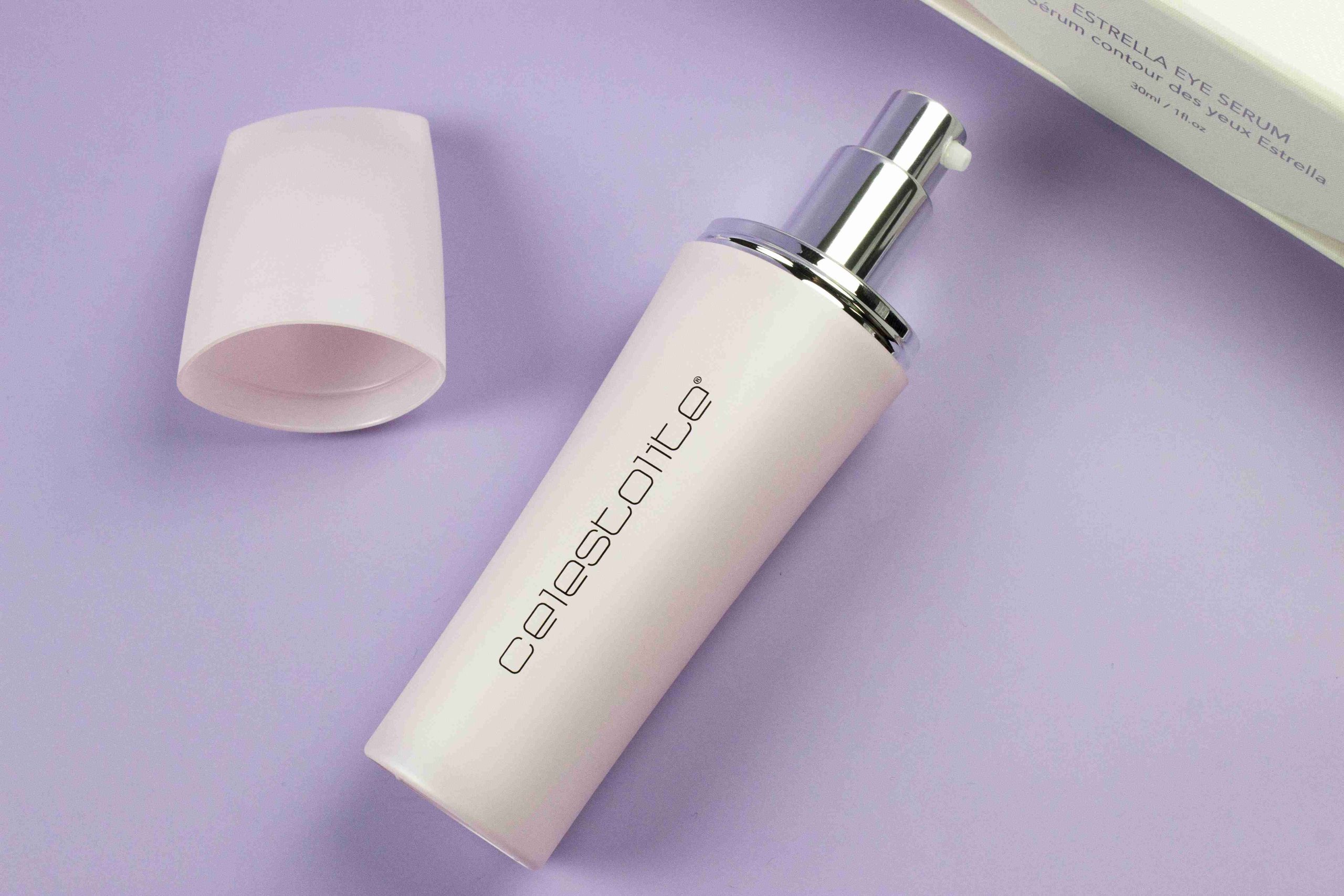
I’m skeptical of any product with a near-perfect score. Then I tried the Estrella Eye Serum.
It’s built around green tea extract and Palmitoyl Tetrapeptide-7, and the texture is the real headline: lightweight, fast-absorbing, zero tacky residue. I use it nightly, and my under-eyes look noticeably brighter and more awake by morning — which, if you’ve ever tried to fake “well-rested” with concealer alone, you know is a small miracle.
Why it works for a lazy routine: one pump, pat around the orbital bone, done. No 10-step commitment required.
2. The Eye Cream and Eye Serum Aren’t Redundant (I Checked)
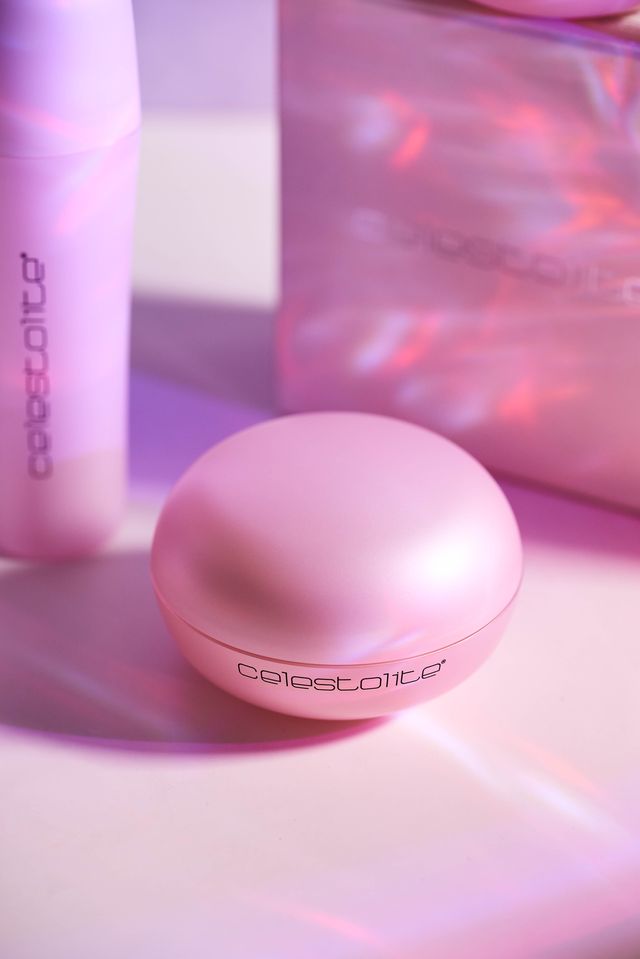
My first assumption: an eye serum and an eye cream in the same routine is overkill. Wrong.
The Estrella Hydrating Eye Cream layers in caffeine alongside that same Palmitoyl Tetrapeptide-7, plus a buttery blend of shea-adjacent oils that the serum doesn’t have. Where the serum is a targeted step, the cream is the hydration-and-comfort step. Think of it as the moisturizer finishing move.
Applied in the morning, it sinks in fast enough that makeup goes on without pilling, and my eye area stays comfortable and soft-looking well into the afternoon. This is the product I’d recommend first in any Celestolite review, honestly, because it’s the easiest win for the “do I even need a separate eye product” skeptics.
3. Meteorite Powder Shows Up in Literally Everything (And I’m Into It)
Every single Celestolite product I tested — serum, both creams, the mask — contains Meteorite Powder as a finishing ingredient. It’s clearly the brand’s signature, its whole cosmic-branding thesis in a jar.
Is it the ingredient doing the heavy lifting? Probably not solo. But paired with the peptides, hyaluronic acid, and botanical extracts around it, the formulas feel considered rather than gimmicky. It’s a nice reminder that a fun brand identity doesn’t have to mean a shallow formula.
4. The Day Cream Doubles as a Primer (Nobody Warned Me)
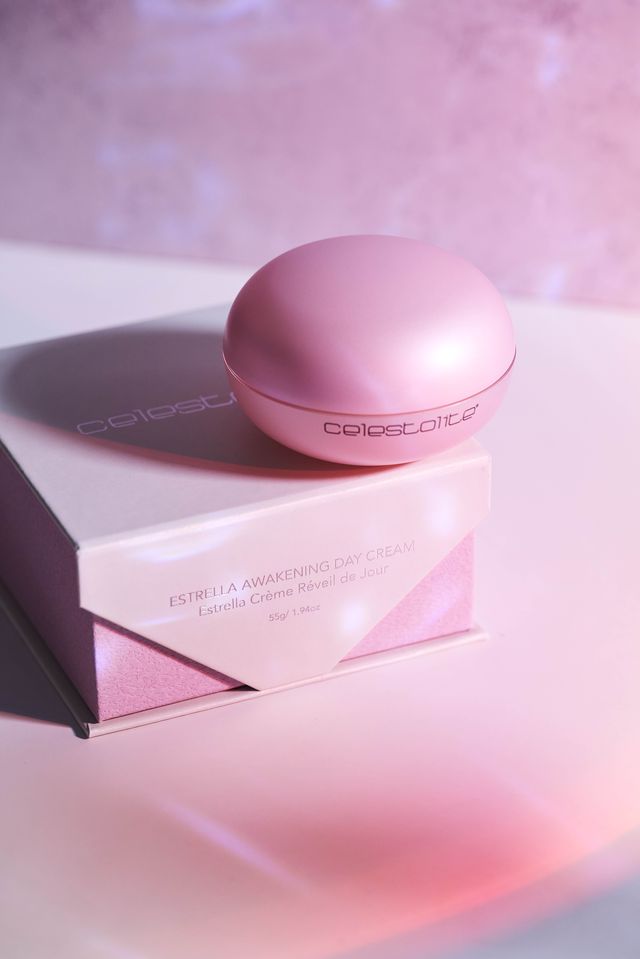
The Estrella Awakening Day Cream is loaded with Meteorite Powder and Sodium Hyaluronate, and the description promises “long-lasting smoothness.” Fine, sure, every day cream says that.
What actually surprised me: it plays remarkably well under sunscreen and makeup. No pilling, no greasy sheen by lunchtime — just a soft, smooth base that made my whole face routine faster. If you’ve ever had a moisturizer fight your foundation, you’ll get why this felt like a genuine upgrade.
5. The Jade Spectra Mask Has a Fruit Extract List Longer Than My Grocery Receipt
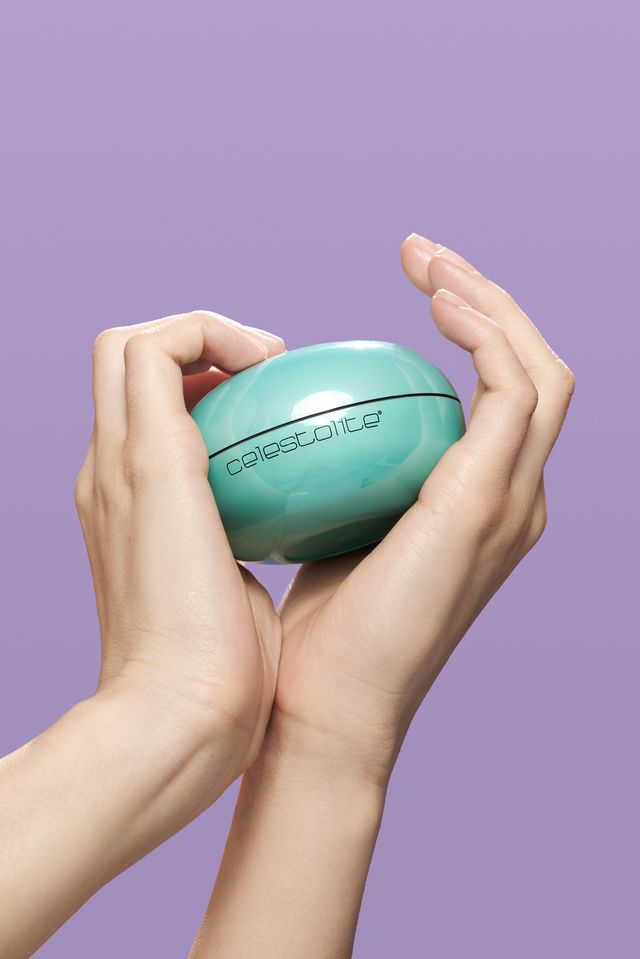
I did not expect a face mask to read like a smoothie menu. The Jade Spectra Mask packs in acai, bilberry, goji, maqui, chokeberry, mangosteen, pomegranate, and noni extracts — alongside Vitamin E, squalane, and (of course) Meteorite Powder.
The application ritual is half the appeal: smooth it on, let it sit for ten minutes, then massage until tiny droplets form on the surface and disappear. It sounds like a spa gimmick until you actually do it. My skin looked visibly brighter and felt noticeably softer afterward. It’s become my once-a-week reset button.
6. These Products Are a Genuine Commitment (Price Talk)
No Celestolite review would be complete without addressing the elephant in the vanity. These products are priced like investment pieces, not drugstore impulse buys. This is a luxury line through and through, and it’s worth budgeting for rather than grabbing on a whim.
My honest take: the textures, the ingredient lists, and the results I saw make the case for treating this as a “special occasion self-care” purchase rather than an everyday drugstore swap. If you’re going to splurge on skincare once this year, this is a defensible place to do it.
7. The Cruelty-Free, Paraben-Free Details Aren’t Just a Footer Badge
Every product page backs up the same promises: paraben-free formulas and cruelty-free testing, with USA-based testing and recyclable packaging called out explicitly. It’s a small thing, but in a category full of vague “clean beauty” claims, having it stated plainly on every single product page builds real trust.
My Final Verdict
If you’d told me a “cosmic-powered” skincare brand would win me over with genuinely thoughtful formulas, I’d have laughed. But after weeks of testing, this Celestolite review ends the same way it started: with a shelf that now has a permanent Celestolite section.
If your skincare shelf could use a little celestial drama (and results to match), this is one splurge that surprised me in every good way.
Browse Celestolite’s full skincare range here.
The post Celestolite Review: 7 Things That Surprised Me After Testing the Brand appeared first on AAD Blog.
]]>The post How to Style One Blazer in Six Different Ways appeared first on AAD Blog.
]]>Why One Blazer Can Do So Much Heavy Lifting
A blazer works like a frame. It structures whatever’s underneath it, which means the “outfit” is really just whatever you pair it with. Swap the shoes, swap the bottoms, swap the accessories, and suddenly you’ve got a completely different vibe walking out the door.
This is basically the golden rule behind building smart wardrobe staples — invest in fewer, better pieces that flex hard, rather than a closet full of one-outfit-wonders. A blazer is the MVP of that strategy. Let’s put it to work.
1. The Boardroom Classic
This is the look you already know: blazer, trousers, blouse, done. But “classic” doesn’t have to mean boring.
- Swap a plain button-down for a silk camisole underneath
- Add a structured tote instead of a basic laptop bag
- Go with pointed-toe flats or a low heel for that quiet-luxury energy
If you’re looking to figure out how to style a blazer in different ways specifically for work, this is your baseline. Everything else on this list is a remix of this exact formula.
2. Blazer + Jeans = Effortless Genius

Ready for the laziest genius move in fashion? Throw your blazer over a plain white tee and your favorite jeans. That’s it. That’s the whole outfit, and it somehow reads more intentional than half the “looks” people spend an hour building.
Denim trends shift constantly, but a great pair of jeans under a blazer never actually goes out of style — check our roundup of celebrity-approved denim trends if you want to update your jean rotation before trying this combo. The blazer instantly elevates the casual base, which is exactly why this pairing shows up on every “how to style a blazer in different ways” list ever written (including, apparently, this one).
3. Date Night, But Make It Sharp
Blazers get typecast as office-only pieces, which is honestly a disservice. Worn open, over a slip dress or a fitted tank with a mini or midi skirt, a blazer becomes borderline seductive in that “I didn’t try very hard” way that actually took real effort.
The trick is contrast: something soft and slightly body-skimming underneath, something structured and sharp on top. Add a bold accessory — a statement earring or a great bag — because good timeless accessories are what separate “cute outfit” from “I need to know where you’re going tonight.”
4. The Athleisure Curveball
Yes, really. Blazer over a matching bike-short set, or over leggings and a fitted crop top, is one of the most Instagram-famous ways to style a blazer right now, and for good reason. It takes something gym-adjacent and makes it look deliberate.
Pair it with clean white sneakers, not your beat-up running shoes, and keep the rest of the outfit minimal. This is the move for airport days, coffee runs, or “I have three meetings and also a Pilates class” kind of days.
5. Layered Over a Turtleneck, for Cold-Weather Polish
When temperatures drop, a blazer doesn’t need to retire — it just needs backup. Layer it over a fine-knit turtleneck for a look that reads professor-on-sabbatical in the best possible way.
This combo pairs beautifully with the pieces in our winter outfit guide, especially wool trousers or a longline skirt with tall boots. If your boot game needs an upgrade before the season kicks in, our list of the best wide-calf boot brands is a good place to start browsing.
6. Nostalgic and Nervy: The Y2K Remix
If you want proof that a blazer can genuinely do anything, try this: pair it with a mini skirt, chunky belt, and a slightly cropped tank underneath, buttoned only at the top. It’s giving early-2000s power dressing, and thanks to the ongoing revival, it doesn’t read costume-y anymore — it reads current.
We go deep on this whole aesthetic in our guide to styling Y2K fashion, but the short version is this: confidence, a little shine, and one great blazer thrown over the top of it all.
A Few Blazer Styling Fit Notes Before You Go
A couple of quick truths make every version on this list work better:
- Shoulders matter most. If the shoulder seam sits right at your shoulder bone, the blazer will look good buttoned or open, dressed up or down.
- Sleeve length is non-negotiable. Aim for the hem hitting right at your wrist bone. Tailors exist for a reason.
- Color dictates versatility. Neutral tones (black, camel, navy, cream) will stretch across more of these looks than a trend color will, and they tend to be more flattering across a range of undertones too — worth a peek at our guide to dressing for your skin undertone if you’re shopping for a new one.
The Real Takeaway
Knowing how to style a blazer in different ways isn’t about owning more clothes — it’s about seeing the same piece six different ways before you even open your closet door. Office, denim, date night, athleisure, cold-weather layers, or full Y2K nostalgia: the blazer adapts, the vibe shifts, and your bank account stays exactly where you left it.
If you’re building out the rest of your closet around this kind of flexible thinking, our guide to mastering fashion fundamentals is a solid next stop. One blazer, six moods, zero excuses.
The post How to Style One Blazer in Six Different Ways appeared first on AAD Blog.
]]>The post Inside Xel Ach: Sacred Ingredients and the Rise of Ritual Skincare appeared first on AAD Blog.
]]>The Brand: More Spa Day, Less Science Fair
Xel Ach builds its entire identity around the idea that skincare should feel like a ritual, not a chore. Think Rhassoul clay from the Atlas Mountains, argan extract, and a “sacred ingredients” ethos borrowed from Mayan beauty traditions. It’s giving ancient apothecary with a luxury price tag — and a Pinterest-perfect aesthetic to match.
Is it a little dramatic? Sure. Does it work? Let’s get into the products…
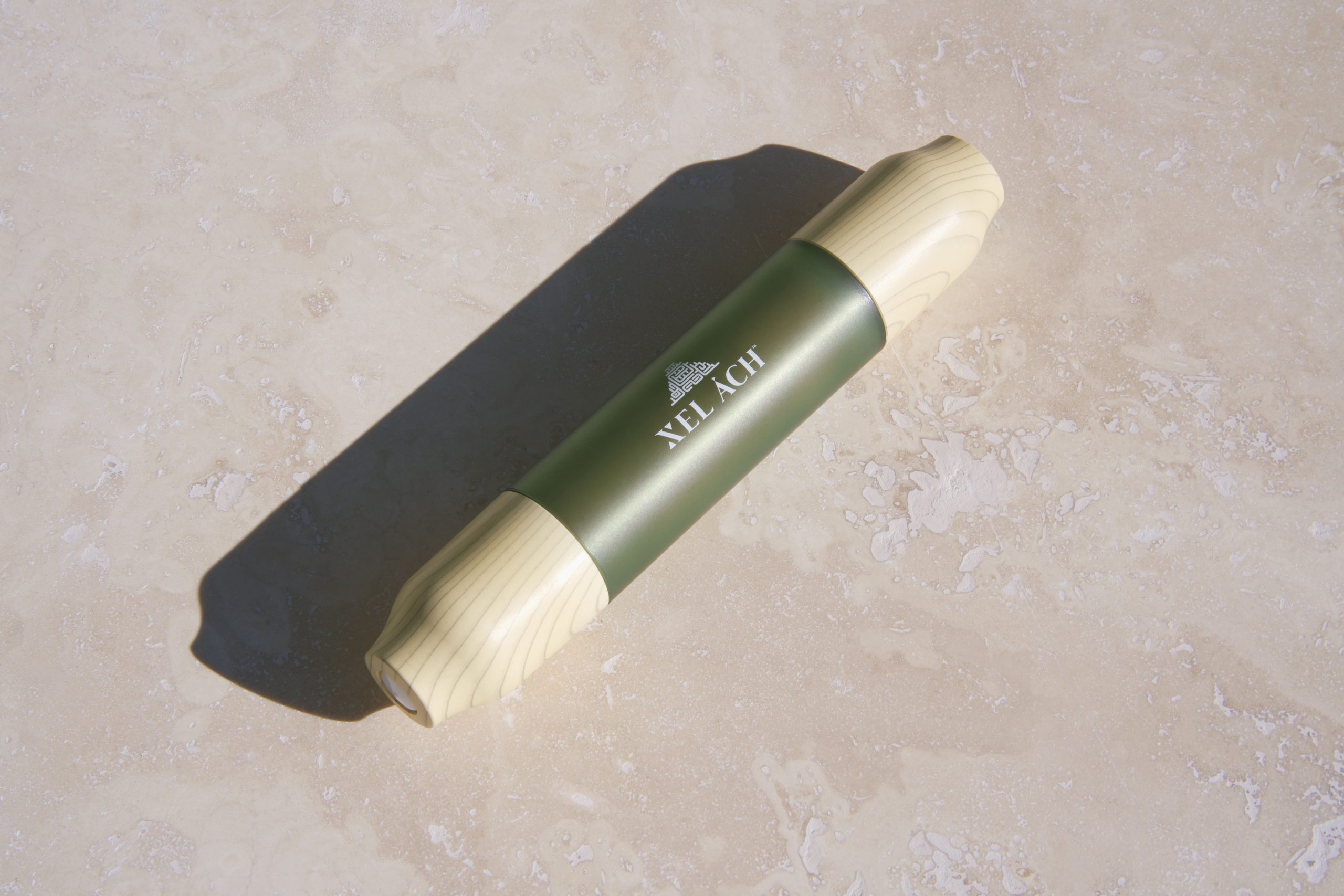
1. Natura Time-Correcting Solution: The Impressive Overachiever
Category: Targeted complexion-smoothing formula
This is the product that made me sit up straight. The Natura Time-Correcting Solution is designed for the areas where expression lines like to throw a party — eyes, smile lines, forehead — and it shows up with a serious guest list:
- Acetyl Hexapeptide-8 — a peptide that’s become a skincare-aisle celebrity for its complexion-smoothing reputation
- Rhassoul Clay — the brand’s signature mineral-rich clay
- Vitamin E — your classic antioxidant security blanket
- Light-reflecting minerals — for that soft-focus, lens-blur finish
Texture-wise, it’s silky without being slick, and it layers under or over makeup without pilling — a genuine miracle in my book. A couple of pumps, patted in around the eyes and forehead, and my skin looks visibly smoother and more “polished,” like I slept eight hours and drank my water for once.
Is it the most luxe step in my routine? Absolutely. Is it worth the splurge for a special-occasion glow? In my Xel Ach skincare review, yes — this is the product I’d grab before a big event.
2. Natura Overnight Veil Mask: Sleep Like a Superfruit Smoothie
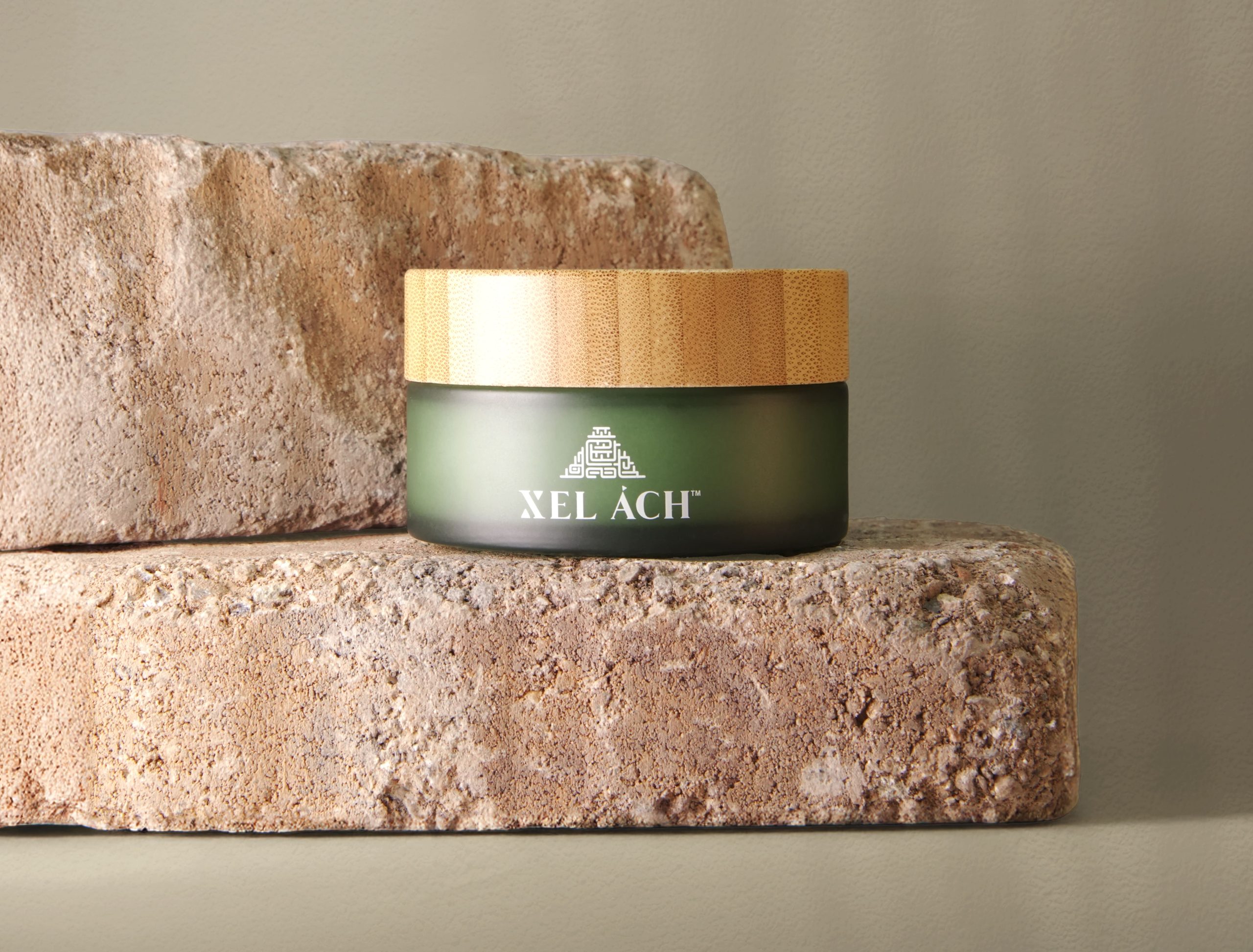
Category: Overnight hydration mask
If the Time-Correcting Solution is the overachiever, the Natura Overnight Veil Mask is the show-off. The ingredient list reads like someone raided every antioxidant aisle on earth: acai berry, goji, maqui, bilberry, pomegranate, mangosteen, noni, and chokeberry all make an appearance, alongside organic lavender, chamomile, and aloe vera for the calm-down factor.
On the hydration front, it brings in real heavy hitters:
- Sodium Hyaluronate for deep, weightless moisture
- Squalane for that skin-identical softness
- Acetyl Hexapeptide-8 (again — clearly the brand’s favorite peptide)
- Retinyl Palmitate (Vitamin A) to round things out overnight
What sold me, beyond the spec sheet, is the sensory experience. It smells like a spa lobby, glides on like silk, and my skin looks noticeably plumper and more luminous by morning. This is the step that turns “I guess I should wash my face” into an actual ritual — and it’s the easiest sell in this entire Xel Ach skincare review.
3. Meso Spa Velvet Body Scrub: The Sleeper Hit
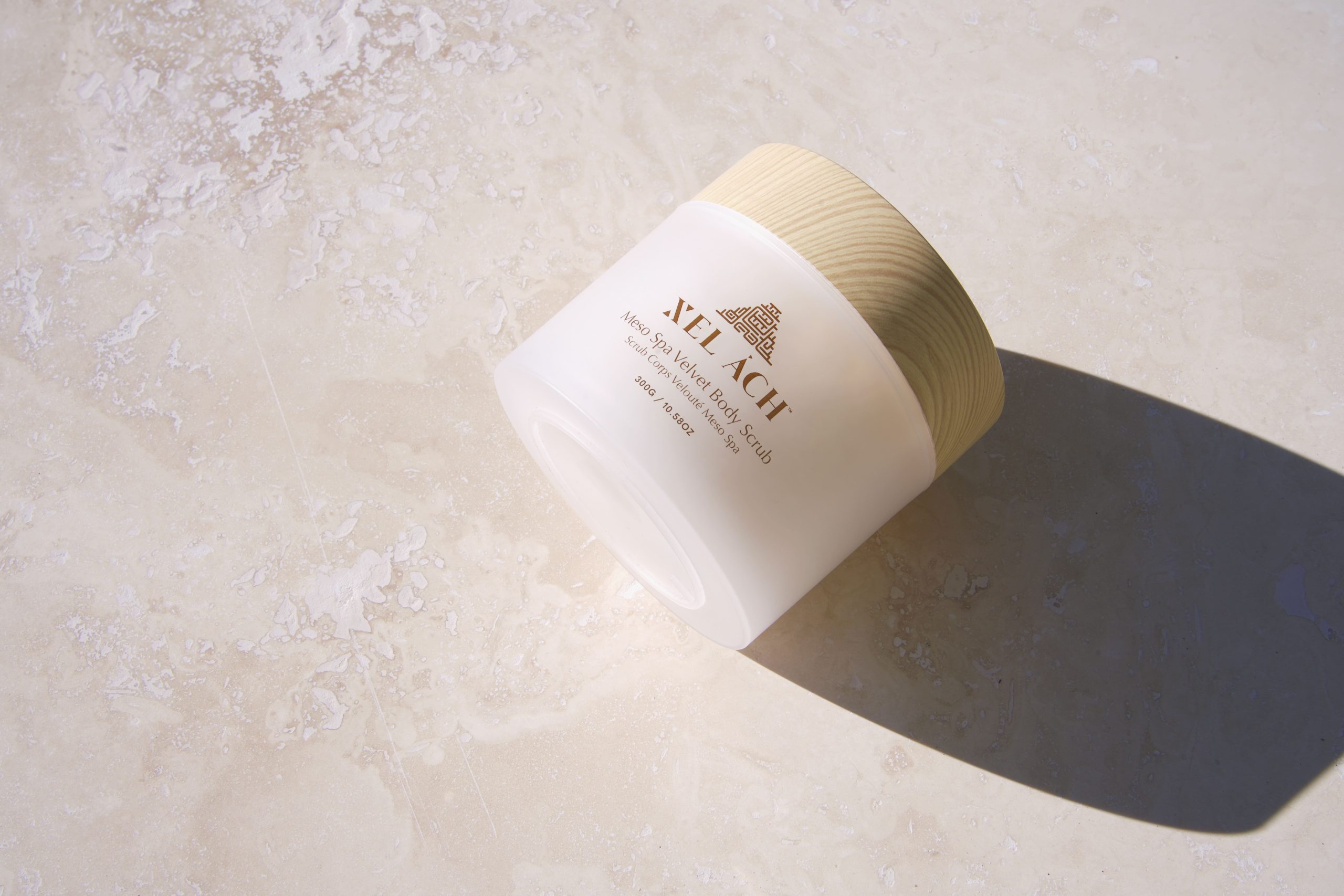
Category: Exfoliating body scrub
Body scrubs rarely get main-character energy, but the Meso Spa Velvet Body Scrub earns it. Built around Rhassoul clay, argan extract, and vitamin E, it’s a buff-and-glow situation: massage onto damp skin in circular motions, rinse, and watch the appearance of dullness disappear down the drain.
The texture sits right in that sweet spot — gritty enough to feel like it’s doing something, gentle enough that my elbows and shins didn’t stage a protest. Post-rinse, skin feels smoother instantly, and lotion soaks in noticeably better afterward (always a sign exfoliation actually worked). At $120, it’s the most accessible entry point into the line, and the one I’d recommend first to a skincare-ritual skeptic.
How I’m Layering Them (My Actual Routine)
Here’s the order that’s been working for me, ritual-style:
- Shower step: Meso Spa Velvet Body Scrub, two to three times a week
- PM face step: Natura Time-Correcting Solution on lines and creases
- Last step before bed: Natura Overnight Veil Mask, sealed in overnight
Scannable, simple, and honestly kind of soothing — which, again, is the whole point of “ritual skincare.”
The Verdict
This Xel Ach skincare review keeps landing in the same place: the brand’s “sacred ingredients” story isn’t just marketing poetry — the formulas back it up with peptides, antioxidant-rich botanicals, and skin-loving minerals that actually perform. The Overnight Veil Mask is the easiest yes, the Time-Correcting Solution is the splurge-worthy showstopper, and the Velvet Body Scrub is the unsung hero that makes the whole routine feel complete.
Is ritual skincare just skincare with better lighting? Maybe. But if the result is skin that looks smoother, brighter, and genuinely cared for, I’m lighting the candle and pressing play on the spa playlist every single time.
Bottom line: if you’ve been curious about the hype, this is your sign to finally read the label — and maybe add a little ritual back into your routine. Check out Xel Ach’s online shop here.
The post Inside Xel Ach: Sacred Ingredients and the Rise of Ritual Skincare appeared first on AAD Blog.
]]>The post Celebrity Beauty Myths: What Actually Happens Behind the Scenes appeared first on AAD Blog.
]]>Celebrity beauty myths are everywhere. They’re remarkably good at making the rest of us feel like we’re failing at something as basic as having a face. The truth? What you see on the red carpet, in magazine spreads, and across social media is the product of a very well-paid, very skilled team — not a glass of lemon water and positive thinking. Let’s pull back the curtain.
Myth #1: “I Just Use Drugstore Products”
This one is a classic. A celebrity with flawless, lit-from-within skin drops a casual mention of their $8 moisturizer in an interview. Suddenly, it sells out within the hour. While some affordable products genuinely deliver results — and we’ve gone deep on what ingredients actually matter in our CbGaRDN ingredients breakdown — the idea that a celeb’s entire routine lives at the drugstore is, let’s say, creatively edited.
In reality, most celebrities have access to bespoke facials, medical-grade treatments, and luxury skincare lines they’re either paid to mention or simply don’t bother disclosing. The $8 balm might be real. The $3,000 monthly skincare regimen sitting next to it? That part gets left out.
Myth #2: Celebrity Skin Is Just… Like That
One of the most persistent celebrity beauty myths is that great celebrity skin is genetic luck with zero maintenance. It isn’t. What you’re seeing on screen and in photos is almost always the result of professional lighting, a full glam team, high-end skincare, strategic filters, and yes — cosmetic dermatology.
Treatments like lasers, chemical peels, injectables, and LED therapy are standard behind-the-scenes tools for many celebrities. When brands like Bionyx market themselves on the premise that platinum and rhodium extracts can deliver professional-level results at home, they’re tapping directly into this aspirational gap — the desire for that polished look without the Hollywood budget. Sometimes the formulas genuinely impress. But it’s worth knowing what you’re actually comparing yourself to.
Myth #3: The “No-Makeup Makeup” Look Takes No Effort

The phrase “no-makeup makeup” is perhaps the most elaborate lie the beauty industry has ever told with a straight face. That effortless, barely-there glow you see celebrities sporting at airport paparazzi shots or “off-duty” appearances? It typically involves a minimum of eight to twelve products applied by a professional, often touched up before the celebrity even steps out of the car.
We’ve actually covered some of the viral celeb makeup hacks that hold up in real life — and even the ones that work usually require more product knowledge and technique than a casual viewer would guess. The difference is that a celebrity’s makeup artist has done this thousands of times. You seeing the finished result and thinking “oh, she just looks naturally pretty” is the whole point.
Myth #4: Celebrity Wellness Routines Are the Real Secret
Ah yes. Cold plunges at 5 a.m. Adaptogens in the morning smoothie. Face yoga. Celery juice. For every celebrity attributing their appearance to some wellness ritual, there’s a team of professionals doing the heavy lifting.
That said — some of these practices are genuinely popular among celebrities for real reasons, not just aesthetics. Face yoga, for example, has a legitimate following among A-listers who credit it with improved facial tone and reduced tension.
But here’s the important distinction: wellness routines are a complement to professional treatments, not a replacement. When a celebrity says face yoga “changed everything,” they likely also have a dermatologist, a facialist, and a nutritionist in the mix. One piece of a very elaborate, very expensive puzzle.
Myth #5: What You See is Real-Time Reality
This one cuts deepest. Even the “candid” behind-the-scenes content — the no-filter stories, the just-woke-up selfies — is curated. Celebrity life, as covered in our behind-the-scenes look at celebrity lives, is far more managed and media-trained than it appears. What reads as spontaneous is usually a calculated piece of brand-building.
Celebrity beauty myths thrive in this space because authenticity is marketed as authenticity. The moment a celebrity posts a “real skin” photo, a PR team has usually approved it, a lighting setup has been considered, and the angle has been chosen. That doesn’t make it bad — but it does make it worth viewing with clear eyes.
Celebrity Beauty Myths: The Takeaway
None of this means you can’t enjoy celebrity beauty content, take inspiration from it, or try the products celebrities actually use. The point is simply this: celebrity beauty myths exist because there’s enormous commercial value in keeping you feeling like you’re one serum away from looking like someone with a full-time glam team.
Once you understand the gap between the marketing story and the behind-the-scenes reality, you can make smarter choices — about the products you buy, the routines you build, and the standards you hold yourself to. The glow-up is real. It just comes with a lot more context than the caption lets on.
Explore more beauty and celebrity content at AAD Blog.
The post Celebrity Beauty Myths: What Actually Happens Behind the Scenes appeared first on AAD Blog.
]]>The post VouPre Review: The Products, the Pitch & My Honest Thoughts appeared first on AAD Blog.
]]>First, a Little Context Before My VouPre Review
VouPre positions itself as a prestige skincare line built around targeted formulations, botanical actives, and a few headline-grabbing ingredients. The brand isn’t trying to be your $12 drugstore moisturizer, and it doesn’t pretend to be. Whether that premium positioning is earned is exactly what I set out to find out.
I tested three products over several weeks: the Advanced Gold Eye Serum, the Age Defense Cream SPF 30, and the Pure Soothing Eye Jelly Masks (Limited Edition). Here’s what happened…
VouPre’s Advanced Gold Eye Serum: Worth the Drama
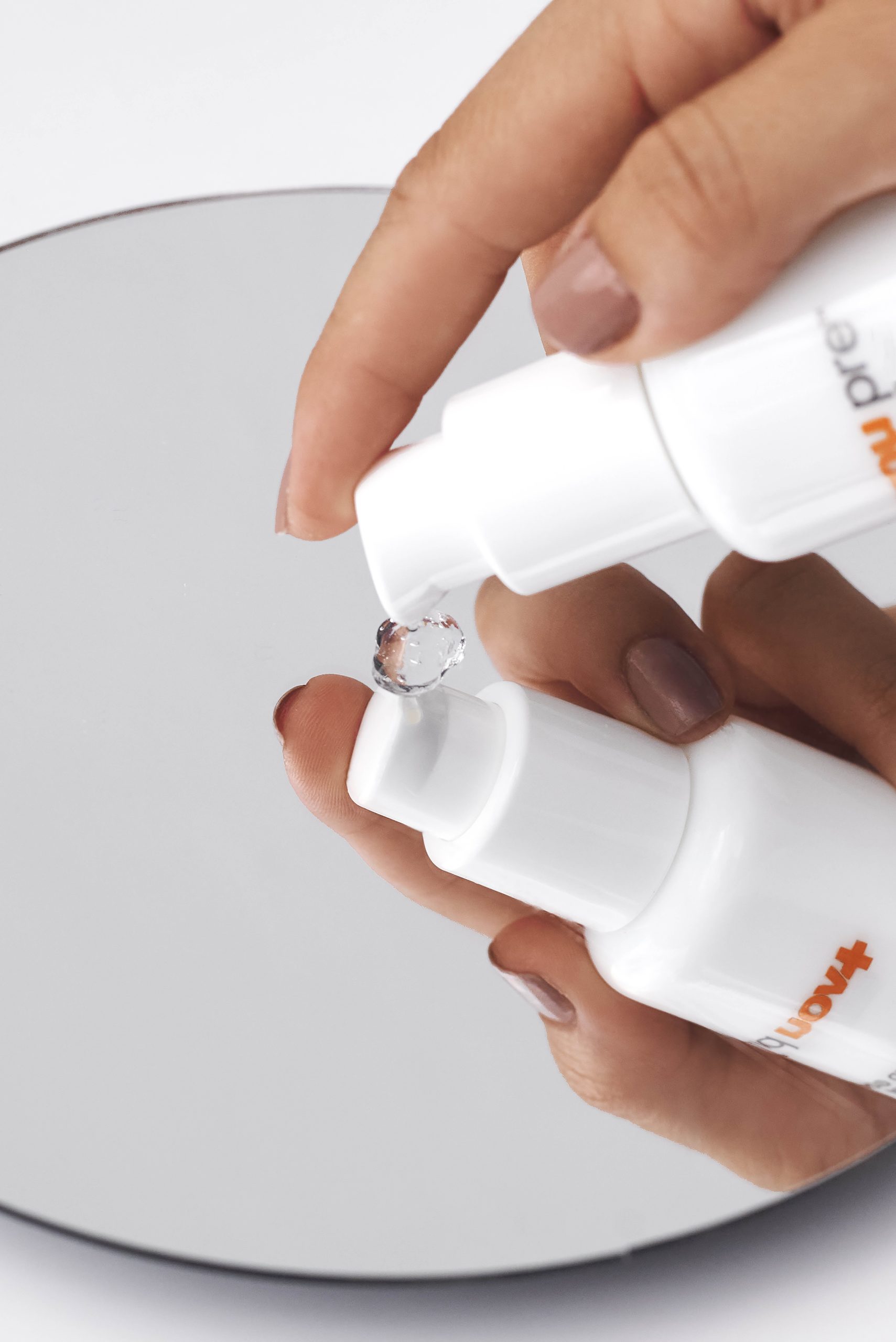
I’ll admit, “gold” as a skincare ingredient sounds like it belongs in an infomercial. But the Advanced Gold Eye Serum earned its keep. The formula packs in palmitoyl tripeptide-1 and palmitoyl tetrapeptide-7 — a peptide duo with a solid reputation for supporting the appearance of firmness and smoothing the look of fine lines. Add sodium hyaluronate for deep hydration, ascorbic acid (vitamin C) for brightening the complexion, and a botanical lineup that includes green tea, ginkgo biloba, grape stem cells, and calendula — and you’ve got more going on than the gold finish implies.
Texture-wise, the serum is silky without being slippery. It absorbs fast, leaves no tackiness, and actually creates a smooth base for concealer — something I wasn’t expecting but absolutely noticed. After a few weeks of consistent use, the skin around my eyes looked less creased in the morning and noticeably more hydrated by afternoon. The dark circle situation improved too, which I’m attributing to the vitamin C and gold’s brightening effect on the complexion.
Is it a miracle product? Nothing is. But as part of a morning routine, it punches above its weight.
Age Defense Cream SPF 30: The Everyday MVP
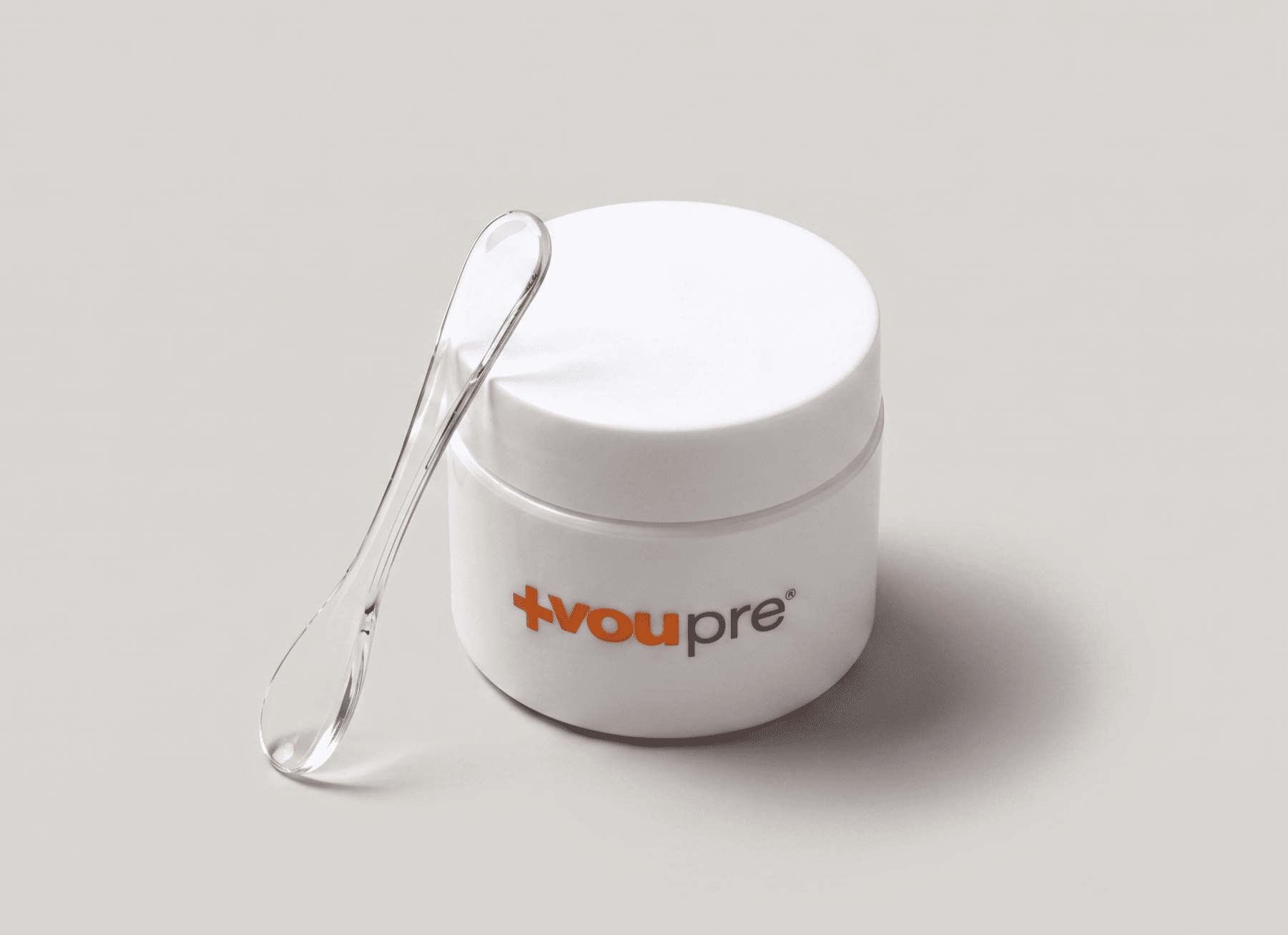
Every dermatologist on the planet will tell you that SPF is non-negotiable. The problem is that most SPF moisturizers feel like a compromise — either too greasy, too chalky, or too bare-bones to count as actual skincare. The VouPre Age Defense Cream SPF 30 doesn’t make you choose.
It delivers broad-spectrum SPF 30 protection, covering UVA and UVB bases effectively. What sets it apart is the supporting cast: retinyl palmitate (vitamin A) and tocopherol (vitamin E) bring antioxidant backup, while aloe vera and green tea extract keep things feeling calm and hydrated. Sodium PCA, a naturally occurring humectant, pulls moisture into the skin and holds it there.
In practice, this cream wears beautifully under makeup — no white cast, no heavy finish, no midday greasiness. My skin feels moisturized, protected, and genuinely smoother after consistent morning use. It’s the kind of product that quietly earns its spot in the routine rather than demanding attention. A good SPF moisturizer shouldn’t be exciting; it should just work. This one does.
Pure Soothing Eye Jelly Masks (Limited Edition): Your New Sunday Ritual
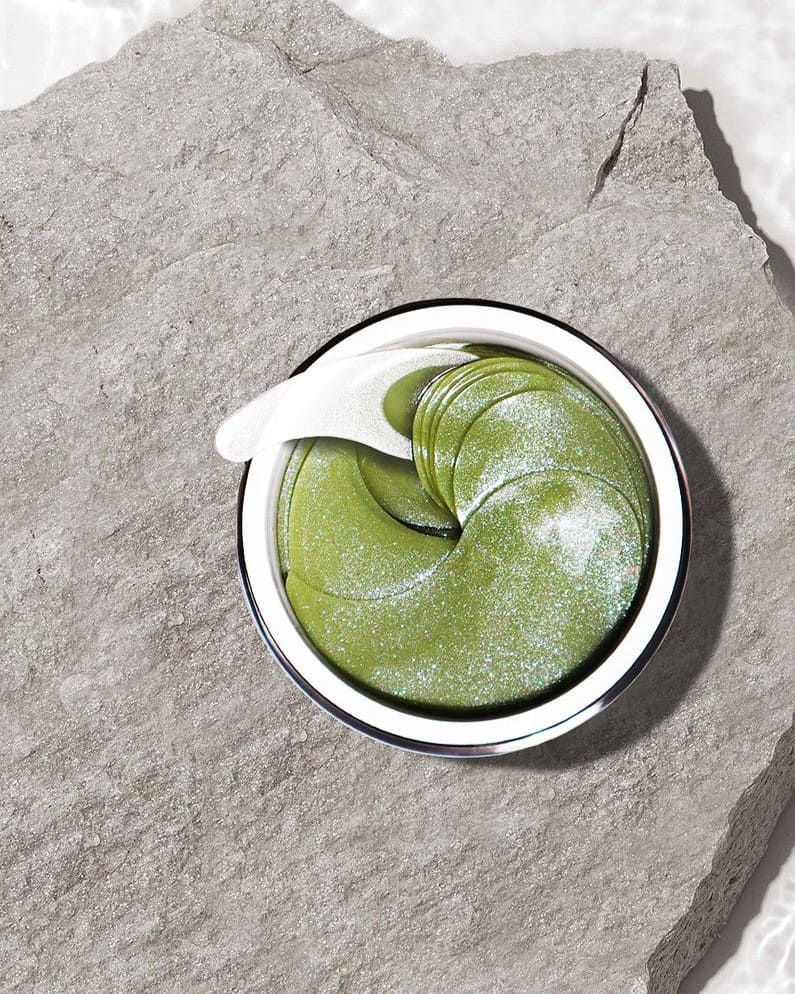
These gel patches are the indulgent treat of the trio — and honestly, one of the more legitimately effective eye masks I’ve tried. The Pure Soothing Eye Jelly Masks are built around sodium hyaluronate and aloe vera for deep moisture, with botanical additions like chrysanthemum extract, chamomile extract, algae extract, and ivy extract lending antioxidant properties. The cooling gel texture provides an immediate sensation of relief the moment you apply them, which — after a long week staring at screens — feels borderline therapeutic.
The instructions suggest 10 to 15 minutes, and I’d recommend leaning closer to the full 15. Pat the remaining serum in afterward; don’t rinse it off. Within a single use, my under-eyes looked less puffy and more awake. With regular weekly use, the cumulative hydration effect is real — the skin under my eyes feels plumper, and the kind of crepey dryness that accumulates there tends to ease up considerably.
The 30-pair jar is also generously sized, so you’re not burning through them at an uncomfortable rate. This makes the limited-edition status feel more like a reason to stock up than a reason to panic.
Final Verdict
This VouPre review comes with an honest conclusion: yes, with appropriate expectations. These aren’t cheap products, and they’re formulated for people who take their skincare seriously. They’re not miracle workers, but they don’t need to be. They’re well-constructed, thoughtfully formulated products that provide visible results with consistent use.
What I appreciated most was that the ingredient lists back up the claims. There’s no filler-heavy formula dressed up with one token active. The peptides are there, the botanicals are genuinely functional, the SPF is real, and the hydration is measurable. This VouPre review kept me honest throughout the testing process, and the products kept surprising me.
If you’re building a more intentional skincare routine and looking for products that bridge luxury feel with legitimate function, VouPre is worth a serious look. My personal order of priority would be: start with the Age Defense Cream SPF 30 as your daily foundation, layer in the Advanced Gold Eye Serum morning and night, and treat yourself to the Eye Jelly Masks once or twice a week.
That’s a routine your skin will notice — and probably thank you for.
Have questions about any of these products or want a deeper dive into a specific ingredient? Drop a comment below.
The post VouPre Review: The Products, the Pitch & My Honest Thoughts appeared first on AAD Blog.
]]>