The post Sen. Kavanagh publishes book on state legislatures for ASU first appeared on Arizona Capitol Times.
]]>Key Points:
-
Sen. John Kavanagh recently published a book about state legislatures
-
Book was written for lawmakers, lobbyists, reporters and others interested in the Arizona Legislature
-
Lawmaker will use the book to teach college course at Arizona State University
Sen. John Kavanagh has drawn upon his legislative experience and academic background to write a textbook-style guide to the state Legislature.
“State Legislatures: An Owner’s Manual” covers the history and structure of state legislatures, how bills are drafted and laws are made, legislative ethics rules, the importance of supporting a position with logic and facts, and several other topics.
The Fountain Hills Republican, who has a Ph.D. in criminal justice from Rutgers University and was also a police officer with the Port Authority of New York and New Jersey Police Department, has taught criminal justice courses for 25 years at Arizona State University and Scottsdale Community College.
He has served in the state Legislature for almost 20 years.
Kavanagh decided to write the book after he was approved to teach a course on state legislatures at ASU. He realized while preparing for the course that there was no introductory textbook on the topic and decided to make one himself.
“I would say this is not a typical dry textbook presentation,” he said. “It’s written like I’m giving lectures. So it’s very smooth flowing, easy reading. I have a lot of … comical sides or just real world observations.”
Kavanagh connected with former Democratic legislator Steve Farley, who he hired to illustrate the book’s cover.
Farley, who’s been an artist for nearly 30 years, has designed murals in Tucson and also has had his work displayed at the Senate.
The two lawmakers developed a relationship from the years they served in the Legislature, despite working on different sides of the aisle.
“I served during a time which seems very far away now, but Democrats and Republicans got along,” said Farley, who served in the House for six years before moving to the Senate for another six years. “So we worked together on a lot of things, and with the stuff we didn’t agree on, we fought.”
There wasn’t much disagreement during this process, as Kavanagh admired Farley’s graphic design work and even recruited him to design a cover for his wife’s book.
It took Kavanagh a year and a half to finish the book, which was released a couple of weeks ago on Amazon, he said.
“I would begin researching one thing and, as you’re researching that, some other issue comes up that you then say ‘I have to cover,’” he said. “So it kind of takes you all over the place.”
Although Kavanagh is a veteran legislator, he was still surprised by some of the information he uncovered from his research.
For example, he originally thought general writing rules and using plain language applied to crafting laws.
“Laws have to be very precise and technically written, and there are also rules of construction, of where you place commas and ‘ands,’ and a lot of court rulings on the way different words are interpreted in relation to other words,” he said.
Because of the level of research conducted, a book that was destined to be about 200 pages grew to nearly 400 pages.
The chapters are broken down to cover different topics, including people who inhabit the legislature, such as lawmakers, lobbyists and reporters, external threats to legislative authority, and logical fallacies encountered during legislative debates.
It also includes a touch of humor.
“Supporters call state legislatures the “laboratories of democracy,” but detractors disparagingly refer to them as “meth labs,” Kavanagh wrote in the book’s introduction. “In reality, legislatures can be perceived as either, depending on the political views of the person passing judgment and the ideological slant of the legislature being judged.”
The post Sen. Kavanagh publishes book on state legislatures for ASU first appeared on Arizona Capitol Times.
]]>The post State universities comply with Trump order banning DEI programs, policies first appeared on Arizona Capitol Times.
]]>Key Points:
-
Arizona universities ditch DEI programs after pressure from Feds
-
Top GOP officials in AZ also sent a warning to universities to comply
-
Student, faculty and campus worker groups protesting change
Arizona’s public universities have faced increased pressure in recent months to comply with mandates from President Donald Trump’s administration and state Republican lawmakers to end Diversity, Equity and Inclusion (DEI) initiatives at each university.
Trump issued an executive order in January targeting DEI programs at colleges, universities and government agencies that receive federal funding. To support those efforts, state Republican lawmakers introduced various bills intended to end DEI practices at those institutions.
Sen. David Farnsworth, R-Mesa, introduced Senate Bill 1694, which would have withheld state funding from colleges and universities offering courses that promoted DEI. Another measure, House Bill 2868, sponsored by Rep. Michael Way, R-Queen Creek, would’ve prohibited universities and community colleges from establishing DEI offices.
Gov. Katie Hobbs vetoed both measures.
Despite the vetoes, the universities still faced scrutiny from state lawmakers who urged the institutions to comply with the federal directives.
Senate President Warren Petersen sent a letter to the universities in February, requesting that each institution review its DEI policies, make any necessary changes, and publicly release a plan outlining how each university was complying with the mandates.
The letter stated that it was in the best interest of each university to comply with the order to avoid the risk of any “unwanted regulatory attention.”
Petersen then met with representatives of the U.S. Department of Education in April to discuss how the state’s three public universities were complying with the federal government’s mandate.
At the time, Petersen said he was encouraged by actions taken by the University of Arizona, but wasn’t satisfied with the response from Arizona State University and Northern Arizona University.
Petersen held the same sentiment during a recent interview, praising the UofA for its efforts.
“UofA, of the three, were really the only ones that I had felt like … made good faith efforts,” Petersen said.
On April 9, Petersen posted a letter on his X account from University of Arizona President Suresh Garimella, who shared an update describing how the university was complying with Trump’s executive order.
According to the letter, the university removed diversity and inclusion language from its Land Acknowledgement, which appeared on all of its websites, and took down the website for its Office of Diversity and Inclusion. The university also removed its diversity and inclusion statement, which was previously included on each job posting.
In addition, administrative units and staff at the university initiated the process of discontinuing “preferential treatment” activities within those units, and college deans were directed to implement changes to activities impacted by Trump’s executive order.
In May, the university announced that it was integrating its cultural resource centers that served students from diverse backgrounds into a Student Culture and Engagement Hub.
That decision drew backlash from the Coalition to Protect Students and Workers, as well as other campus groups, which protested against the consolidation of the centers and other anti-DEI measures enacted by the university.
ASU and the Board of Regents, which serves as the governing board for the state’s public universities, have also taken steps to comply with the federal mandate.
ASU officials didn’t provide specifics, but a university spokesman said the university “is complying with all executive orders as they are issued and as they are considered by the courts.”
The spokesman said in a statement that the university was already complying with a provision passed by voters in 2010 that banned affirmative action. The university also abides by its charter, which states that ASU is “a comprehensive public research university, measured not by whom it excludes, but by whom it includes and how they succeed.”
The Board of Regents approved policy updates last month that remove outdated references to revoked federal requirements and provide clearer descriptions of the board’s continued compliance with laws prohibiting discrimination, according to a board spokesman.
Northern Arizona University didn’t respond to a request for comment.
While the universities have faced increased scrutiny from federal and state officials, the institutions have also received criticism from students, faculty and staff who say ending DEI programs will hurt students from marginalized backgrounds.
“This is affecting the specific targeted resources that these people could benefit from,” said Alberto Plantillas, central regional director for the Arizona Students’ Association, and a graduate student at ASU. “I think that’s one of the worst parts of this, and UofA is just copying what ASU has been doing for the last five, six years.”
Plantillas has spoken out against the DEI changes at the Board of Regents meetings and testified against SB1694 at a Senate Education Committee hearing in February.
Plantillas compared UofA’s recent actions to ASU, which he says has been targeting student clubs, removing inclusive spaces and not communicating with student groups. The changes are part of a larger shift that has created a more hostile environment for marginalized students, international students and students who are lacking permanent legal status, he said.
“The conservative policies on campus are starting to align more closely with the federal government’s policies. And, to me, it really seems like they’re kind of caving in to a lot of these things so they’re not targeted in the future,” he said. “And I think that’s just a very bad position for universities to be at.”
The post State universities comply with Trump order banning DEI programs, policies first appeared on Arizona Capitol Times.
]]>The post Sarah Porter: The future of Arizona’s water policy first appeared on Arizona Capitol Times.
]]>Sarah Porter’s fondest memories of growing up in Phoenix include spending time with her family camping, hiking, and fishing.
So when Porter saw an opportunity to transition from her career as a lawyer working in complex commercial litigation to serving with the National Audubon Society, she stepped into a role that reconnected her with one of her passions.
Her work with the Audubon Society ultimately led to her current position as director of the Kyl Center for Water Policy at Arizona State University’s Morrison Institute for Public Policy, where she has served in this capacity since 2015.
Porter sat down with the Arizona Capitol Times to discuss her career trajectory, the state’s groundwater usage and other prominent water issues.
How did you end up in your current position as director of the Kyl Center for Water Policy?
As I was doing my demanding legal practice at a big law firm in Phoenix, I became involved with the newly formed state office of the National Audubon Society, which was working to build a nature center in south Phoenix, the Nina Mason Pulliam Rio Salado Audubon Center. That project really attracted me, because I love the idea of getting more families and children to have opportunities, connections with the amazing Sonoran Desert and the amazing places of Arizona. And I saw that project as creating a gateway, especially for families that didn’t necessarily have the money to have access to nature experiences.
With Audubon, I became the deputy director to help lead that project. I was part of a team that helped make that project happen. Then I went on to become the state director, and from that position, I realized that, in the West — and especially the Intermountain West — the one thing that we could do to help protect places for birds and other wildlife, and also to protect the beautiful places that people just love so much … was to focus on rivers and wetlands … because that is the critical habitat for western wildlife. They all depend on rivers and wetlands. That is also so important to humans and what we do. That’s really where the tension is.
So, I helped gather Audubon in the Intermountain West — from Wyoming, Colorado, New Mexico, Arizona — to look at what could we do collectively to help people understand the trade offs and the values of protecting riparian and wetland habitats in the Intermountain West, and particularly thinking about birds and other animals that migrate.
You can protect one space somewhere way up north, but if you’re not protecting all of the spaces all along a migratory path, you’re not really helping those animals. So we were looking at, how can we just get people to understand the need to protect … this chain of important places for wildlife? That got me into western water policy. I kind of went back to my law roots. Water law is complicated in the West, and that’s because we’ve had … around 150 years to develop it. And nothing could be more important. So we’ve developed a rather complex, arcane and wonderful water law system.
When the Kyl Center was being formed by Morrison Institute … they had a group of about maybe 30 or 40 stakeholders giving advice on forming the Kyl Center and what it would do. And I was one of the environmental NGO representatives in that stakeholder group. So then I started to think, ‘Wow, this is really what I want for my next act’ because water is infinitely fascinating.
What has surprised you the most about working in water policy?
I feel like I’m surprised every day; ‘the most’ is hard. I guess learning that everything that you can do in water policy will have ramifications for other water users in Arizona or in the West because water is scarce. That means that, for the most part, most of the rules and regulations and laws are based on very defensible reasons. If you’re new to it, you can look at it and say, ‘It doesn’t make sense.’ Sometimes, you know a person may not like how water law breaks, how it works. But there are almost always very defensible reasons for a water policy in Arizona and in the West. And that is very much connected with why it gets complicated, because it’s trying to accommodate all these different needs.
In many parts of Arizona, there is virtually no natural groundwater recharge. And I think that is something people don’t appreciate. In much of Arizona, probably well over half of Arizona … the groundwater recharge is so low that it’s almost immaterial, in vast swaths of the state. That’s just a hydrological reality that it took some time for me to come to terms with.
The exception to this is the White Mountains and the Coconino aquifer in the northeast, but in most of the state, less than 2% of the water that falls on the ground in snow or rain makes its way to the aquifer.
This was another year where the state didn’t pass a groundwater management framework for rural areas. How will the lack of a framework affect some of these rural areas?
It’s the status quo, continuing with how it was. In the vulnerability of different areas, there’s a great deal of difference. We have 51 sub basins in the state, which are like misshapen, leaky bathtubs holding groundwater aquifers. And in some of those sub basins, we see a very high rate of depletion. And in some, not so high. Most of the northern half of the state is really not at risk. Let’s say the northern third. It’s in the southern parts of the state where we have more groundwater reliant agriculture — where we see more risk. And the most depleted, or rapidly depleting aquifer, currently is the Gila Bend Basin. Mostly, the economic activity that’s going on there is farming.
So it means that those people who have farms there are going to be grappling with the costs of pumping deeper and deeper. There are other places where there are communities. In La Paz County, there are people with fairly shallow wells who probably can’t afford to dig deeper wells, and they’re finding that their groundwater table is declining. The impacts may be greater for those … there may be more people in that situation in a sub basin that isn’t (in) as much trouble. How to assess impacts is really complicated. So, it just means we have the status quo for now.
There are some interesting developments occurring up in the Prescott area. There is a group … they have an intergovernmental agreement, and they’re working at a more local and, to some extent, voluntary level, to get a grip on groundwater use. And I think we could see more of that in southeastern Arizona and Sulphur Springs. There’s a group that’s (trying) to figure out if there are ways they can work through voluntary agreement to collectively reduce their groundwater consumption.
They kind of differed, but essentially the legislation that has been contemplated … would enable local areas to decide they want groundwater regulation if they met certain conditions. The other version that made its way through the Legislature was limiting the sub basins that actually could have groundwater regulation. The framework wouldn’t be available to every sub basin in the state that met the conditions. I think there’s traction. There is some very good thinking that’s happened in the last few years that maybe a future Legislature can build on.
What do people misunderstand about water in Arizona?
There’s a really important thing that I wish people understood. Cities don’t need much water. I mean, in context of water demand currently, cities in Arizona are responsible for maybe 20% of demand, all of the water that cities deliver, that cities and towns and any water provider. And why this is important is that, if we were looking at a water shortage or a predominantly agricultural economy, we would be looking at very expensive and I would say, arguably, very disruptive solutions. How do we move the water from a large water supply from a river, to where we want to farm? That’s historically what has been done in the U.S. It was the policy of the United States in the 19th and first part of the 20th century, because there was such a priority on settling the U.S. and feeding people.
Now, we’re at a different time. We have different technology. We can grow more with less water. We don’t need to have that as our priority. And so when we’re looking at cities that are at risk of water supply shortages, the solutions for getting more efficient and finding water supplies to make up whatever cuts there are, the solutions are much more manageable and less disruptive than historically. A combination of … making sure that we’re being efficient with water and new water supplies from multiple sources will be sufficient. It’ll be enough water for growth, enough water for lots of economic activity and have a nice place to live.
I wanted to make sure to say that, because it’s easy to feel really, really anxious about what’s going on with water. You hear cuts to the Colorado River and groundwater. But we’ve been working on this for a long time. I would say earnestly working on this for arguably 100 years, (and) certainly since the Groundwater Management Act in 1980. We’re facing challenges, but we also have a lot of solutions out there.
The post Sarah Porter: The future of Arizona’s water policy first appeared on Arizona Capitol Times.
]]>The post A new chapter in college athletics first appeared on Arizona Capitol Times.
]]>
A federal judge has granted final approval of the groundbreaking House v. NCAA Name, Image, Likeness (NIL) settlement, and it will take effect July 1. College athletics will enter a new era in which Division 1 colleges and universities will directly compensate student athletes, subject to a cap of $20.5 million per institution. This settlement also approves nearly $2.8 billion in retroactive NIL back for certain Arizona-based and other state athletes who’ve competed over the past decade.
Arizona’s SB 1615: A local response with national implications
Just weeks before the House v. NCAA settlement received final approval, Arizona took a bold first step by enacting SB1615, a state law designed to expand NIL rights for student-athletes further. Signed by Gov. Katie Hobbs in May 2025, the law marks a significant shift in how NIL is treated at the state level. By enacting SB1615, colleges and universities are enabled to directly facilitate and pay student-athletes for the use of their name, image, and likeness.
Although originating from different processes, legislation versus litigation, Arizona’s SB1615 and the House v. NCAA settlement align closely in creating a complementary framework for NIL reform. SB1615 explicitly empowers Arizona’s public universities to directly compensate student-athletes for the use of their name, image, and likeness, eliminating prior uncertainty over institutional involvement in NIL transactions. However, while Arizona’s law grants institutions broader authority, it does not exempt them from the enforcement structure created by the House settlement.
In fact, Arizona State University and the University of Arizona have no choice but to comply. As members of the Big 12 Conference, a named defendant in the settlement, both institutions are bound by the terms of the settlement.
The power conferences, including the Big 12, are expected to soon launch the College Sports Commission, a new governing body charged with the implementation and enforcement of the settlement terms. The commission will oversee the clearinghouse called NIL Go, developed in partnership with Deloitte and LBi Software. NIL Go will review deals valued at $600 or more and determine whether a deal reflects a fair market value. In Arizona, this is a layer of compliance that cannot be ignored. Future deals lacking approval could lead to athlete ineligibility or institutional fines.
Nevertheless, key discrepancies exist between SB1615 and the NCAA settlement. While Arizona’s law explicitly avoids compensation limits and restricts external oversight by athletic associations, the settlement imposes institutional compensation caps and establishes centralized enforcement through the College Sports Commission. Additionally, differing positions on student-athlete employment status and transparency in NIL deals could create compliance challenges. Institutions in Arizona may thus face complex legal considerations navigating these conflicting standards, potentially necessitating further legislative clarification or judicial resolution.
What the House settlement actually means
The House v. NCAA settlement is far more than a financial resolution. This settlement represents a structural overhaul of NIL and how student-athletes will be compensated going forward. The settlement can be illustrated as a two-part transformation:
Compliance and oversight
The settlement establishes an NCAA-run enforcement body to monitor compliance, handle disputes, and impose sanctions where necessary. Together, the clearinghouse and enforcement mechanisms represent a clear shift away from the NCAA’s previously hands-off, wait-and-see approach to NIL from its inception. This new, regulated, and institutionalized model demands diligence from all parties involved: the schools, collectives, brands, athletes, and agents.
Arizona’s proactive stance amid compliance complexities
Arizona has taken an assertive and athlete-focused approach with SB1615, potentially serving as a blueprint for other states aiming to retain top talent and exercise greater local control over NIL markets. Yet, even as Arizona positions itself proactively, institutions must navigate substantial compliance complexities arising from the differences between state law and the NCAA settlement terms. As other states develop similar laws, these discrepancies could broaden, posing significant challenges to uniform national enforcement. Thus, Arizona’s legislation represents both a pioneering step forward and a reminder of the evolving and intricate legal landscape surrounding NIL compensation.
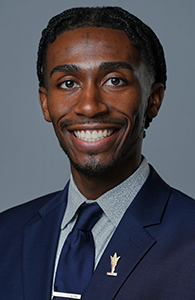
K.J. Russell is an associate attorney in Fennemore’s Business & Finance practice group. He is a registered NIL agent.
David McCarville is a business and finance director at Fennemore. He is an adjunct professor at the Sandra Day O’Connor College of Law at Arizona State University.
The post A new chapter in college athletics first appeared on Arizona Capitol Times.
]]>The post ASU should adopt institutional neutrality first appeared on Arizona Capitol Times.
]]>
For the last several years, protests have rocked campuses across the nation, including our own. These demonstrations have provoked institutions of higher education and their constituents — students, faculty, administrators and alumni — to reckon with what role the university should play in politics. The issue is ripe for debate, especially considering that over 50% of young Americans attend some institution of higher learning and that Arizona State University is one of the world’s largest universities.

Partisans and political actors on every given side of contentious issues vie for the administration’s approval, painting administrators’ refusal to take a firm stance in favor of one camp versus another as an act of moral cowardice. The university as an institution is asked to be on “the right side of history,” issuing statements that alienate a large swath of students at best, and actively discouraging dissenting speech at worst.
While it may seem noble for the university to take sides on any given political issue, we believe it’s in the best interests of students and the university for administrators to stay out of such political disputes. As a board of professors and administrators at the University of Chicago wrote in the landmark Kalven Report on Institutional Neutrality over six decades ago, “The university is the home and sponsor of critics; it is not itself the critic.” Moreover, “(t)he university is . . . a community which cannot take collective action on the issues of the day without endangering the conditions for its existence and effectiveness.”

One function of the university is to provide a space in which students and faculty can engage in robust research and debate about contentious political issues, including those that are deeply controversial. Giving space for dialogue on important issues is not only deeply beneficial to students — so that we can learn how to reason and make arguments convincingly, with an eye to that which is really true — it also defines the very mission of our institutions of higher learning: to uncover truth, and to prepare students for work, life and citizenship. The moment the university itself decides to lay down the hammer, siding with one faction over another, it ceases to maintain the sort of neutrality that its very mission demands.
Unfortunately, ASU and Arizona’s other public universities — the University of Arizona and Northern Arizona University — have not formally committed to institutional neutrality, even though they’ve done a relatively good job over the past couple years sticking to it. ASU should join a growing list of world-class American universities, ranging from Harvard to Columbia, by committing itself in writing to being a sponsor of critics, not the critic itself; teaching her students how to engage in constructive dialogue across difference, not stepping in to settle every inflammatory dispute. Sun Devils pride ourselves in innovation — we shouldn’t be left in the dust while the nation’s leading institutions of higher learning recommit themselves to their core functions.
For these reasons, we’ve joined the Foundation for Individual Rights and Expression (FIRE) to spearhead an effort to encourage the administration to adopt institutional neutrality. But this must be a movement led first and foremost by students and alumni who have a stake in the future of ASU. Join us in encouraging the Arizona Board of Regents to formally commit ASU to institutional neutrality by signing this petition today. It’s one small step in a larger journey to recommit the university to its rightful mission.
Joseph Kavetsky is a senior studying civic and economic thought and leadership.
Sophia Thomason is a junior studying civic and economic thought and leadership.
Joe Pitts is the cofounder and chairman of ASU Alumni for Free Speech. He graduated in 2023.
The post ASU should adopt institutional neutrality first appeared on Arizona Capitol Times.
]]>The post College athletes could soon be paid for their likeness under House bill first appeared on Arizona Capitol Times.
]]>Arizona universities are a step away from taking a huge leap into the future of collegiate athletics: Paying student athletes in hopes of attracting better prospects.
Legislation awaiting a final House vote would expand upon an existing 2021 law which allowed student athletes to earn money from the use of their names, images and likenesses in commercials and other promotions. If approved, Senate Bill 1516 would expand that law to allow universities to provide cash distributions to athletes to promote the schools.
If passed, however, those students wouldn’t be considered employees.
SB1516 was prompted by an anticipated ruling by a federal judge in California to settle litigation filed against the NCAA which had for years blocked any compensation for student athletes.
The door opened a bit when the agency that regulates intercollegiate athletics first allowed students to negotiate deals with businesses, such as promoting a car dealership or appearing in a video game.
SB1516 is designed to let the University of Arizona, Arizona State University, Northern Arizona University and the privately owned nonprofit Grand Canyon University to take advantage of the terms.
And we’re not talking nickels and dimes here: The NCAA settlement would let each school spend up to $20.5 million in what essentially would be salaries for student athletes.
Of note, though, is that the number is fixed for each university, regardless of its size or the number of academic programs. So the U of A, for example, with a full spectrum of sports — including intercollegiate football — would get to spend no more on all student athletes for use of their name, image and likeness than GCU, which doesn’t have a football team, and may emphasize payments to its basketball players.
The legislation, sponsored by Sen. T.J. Shope, R- Coolidge, is designed to limit where the schools can get that cash. Shope included a specific provision barring the use of student fees to pay for such distributions.
But Shope did agree to give the universities a new way to find the money: Raffles.
Mike Haener, a lobbyist for Arizona State University, told lawmakers that could work through a 50-50 raffle, selling chances to those going to games, with participants hoping to win. That could raise some serious bucks.
For example, if 10,000 people at a football game each bought $10 worth of tickets, that’s $100,000. Then whoever has the winning number that game walks away with $50,000, with the balance going to the university to pay the athletes.
Still, that’s a hard way of getting to $20.5 million.
The legislation, however, does not limit this to 50-50 raffles. Schools could raffle off something more valuable — perhaps a car — with each ticket costing much more and the potential for a larger net haul for the university.
At least part of the motivation for the legislation is the fear that other schools in other states are already preparing to use similar legislation to pay their student athletes once the NCAA deal is approved.
Judge Claudia Wilken said she has asked for some final tweaks, but final approval could come within weeks.
Without legislation here, Jason Corriher, a spokesman for University of Arizona athletics, said that Arizona schools could be at a disadvantage.
“Currently, Arizona is behind the ball compared to other states with competitive athletic programs,” he said. “This bill will create the necessary structures to ensure that our universities are able to compete nationally when recruiting students to come to Arizona.”
That’s also the assessment of Rep. Matt Gress, R-Phoenix, who agreed that the original NIL law needs to be updated.
“We have exceptional college athletic programs in Arizona,” Gress said. “We need to ensure that they can recruit the very best athletes and win.”
The legislation is probably not necessary to allow universities here to start paying students directly. Once the federal judge approves the settlement with the NCAA, that should occur automatically.
But Jamie Boggs, vice president of athletics at Grand Canyon University, said it’s important to have all this already on the books in Arizona once the judge issues her final ruling. And that comes back to ensuring that universities here aren’t left behind competitors for students elsewhere.
“If there were going to be states that were already going to put these proposals into place, we definitely didn’t want to be at a disadvantage,” she said. Boggs, anticipating final approval of the deal, said the legislation was crafted so it would take effect immediately on the signature of Gov. Katie Hobbs, putting Arizona “in a good spot.”
It starts with specifically incorporating the direct payment language into state statutes so there’s no question that anything anyone does here in line with the NCAA settlement will run afoul of Arizona law.
But there are provisions in SB1615 that go beyond that agreement. Most notably, the permission for the universities that want to conduct raffles to help pay those student athletes.
Under the current criminal code, certain nonprofit organizations can operate raffles. However, this is legal only if the proceeds — beyond what is paid out to winners — go to a nonprofit organization like the ASU Foundation, which raises money for various university-related causes.
SB1615 strips that away specifically for raffles run for the purpose of compensating student athletes who allow a university to use their name, image or likeness to promote the school or its programs.
Unlike existing laws governing raffles, there would be no cap of $10,000 a year in this legislation.
Not all lawmakers are enthusiastic about putting even more money into the system.
“It’s supposed to be an amateur sport,” complained Rep. Lisa Fink, R-Glendale. She voted against the plan when it came before the House Education Committee last month.
Rep. James Taylor, R-Litchfield Park, acknowledged what Fink was saying.
“I also miss the days when amateur sports were amateur,” Taylor said.
“But those days are gone,” he said while voting for the bill when it was approved by the committee. “The bus has left the bus barn.”
Others in support of the measure had their own take on the legislation.
“Opportunities like these with NIL really allows students to be able to compete and go to places where they’re able to make a living, quite frankly, and support their fellow players and the sport overall,” said Rep. Brian Garcia, D-Tempe. “A lot of these players take it very seriously,” he said while praising “the professionalism that goes into various aspects of whichever collegiate sport that they go into.”
But there’s more to the legislation than clearing the way for Arizona universities to raise money and start directly paying student athletes.
One spells out that athletes who get money directly from a university are not considered employees. Boggs said such a status would complicate relationships between the schools and their students.
And then there are some new regulations that govern not just the direct payments to student athletes but also the deals that they can make with outside interests.
“It puts in place some prohibitions about what kinds of contracts a student athlete cannot go into, making sure they do not go into a contract with a marijuana dispensary or alcohol company,” said Sabrina Vazquez who lobbies for the U of A.
There also are protections against the NCAA from preventing a student athlete from fully participating in an intercollegiate program because that person is earning money for the use of name, image or likeness. And there’s verbiage barring NCAA from preventing universities from providing compensation.
What is not in the legislation is the $20.5 million cap. That’s in the settlement which SB1615 is designed to effectuate.
Of note, there’s even a provision to police that cap, with a note that every deal worth $600 or more would have to be approved by a clearinghouse, a move designed to ensure an NIL arrangement is not being used to exceed the cap.
All of this comes back to the fact that each university gets the same cap on direct payments, regardless of size.
Still, nothing in the NCAA deal limits the amount an individual student athlete can make with direct deals. More importantly, it allows schools to help.
“The bill allows the university to partner with a third-party entity that is dedicated to secure deals beyond the university’s brand, creating more NIL opportunities for students,” said the U of A’s Corriher, something he said is also part of the NCAA deal.
The post College athletes could soon be paid for their likeness under House bill first appeared on Arizona Capitol Times.
]]>The post ASU school with conservative backing touts broad civic education goals first appeared on Arizona Capitol Times.
]]>When former Gov. Doug Ducey and the state Legislature directed Arizona State University to set up an academic department devoted to civic education almost a decade ago, Paul Carrese viewed the move as an unprecedented step toward expanding academic perspectives on campus.
Carrese was a professor at the U.S. Air Force Academy when ASU officials recruited him to become the founding director of the department, which became the School of Civic and Economic Thought and Leadership (SCETL).
Although the program still faces criticism for its alleged conservative bias, prompted by its inception by GOP legislation and initial funding from the Charles G. Koch Foundation of two centers at ASU that merged to form SCETL, Carrese and other faculty and students have credited the school with filling a gap in civic education at the university level while helping to spawn a larger movement of programs teaching similar principles.
“There were centers … at other state universities, private universities, (and) public universities, but there was no separate academic department mandated and funded in this way,” said Carrese, who stepped down as director in 2023 but remains a professor at the school. “So they did an unprecedented thing, and I think the record shows they were right.”
Launched in 2017, the school merged ASU’s Center for the Study of Economic Liberty and its Center for Political Thought and Leadership, with courses emphasizing the country’s political and constitutional history, political philosophies, economic thought, capitalism and free markets.
Class discussions follow the socratic method of teaching where professors ask probing questions to facilitate conversations and challenge ideas. The school also launched its “Civil Discourse” project, a speaker series featuring guests from different sides of the intellectual and political spectrum to discuss a variety of topics ranging from ideological conformity on campus to race, justice and leadership in America.
“We don’t bring in just conservative, intellectually conservative, constitutionalist speakers,” Carrese said. “We bring in a range of speakers, left and right and center. I do think people who would be seen as conservative … have come to campus because we’re around. So that’s bringing some intellectual diversity to campus.”
Some have questioned whether the school has actually promoted intellectual diversity or if it’s only pushing a singular viewpoint.
In 2018, former ASU faculty member Matthew Garcia, who served as director of the university’s School of Historical, Philosophical and Religious Studies, wrote an op-ed published in The Washington Post that criticized the process that led to the creation of the school and developing a program that would serve as an “alternative” to similar departments while maintaining a conservative bias.
Carrese acknowledged that the criticism still exists, although it’s not as intense as it was when the school opened.
“I think there might be some residual presence of the view back from 2016, 2017 that … SCETL is not legitimate. It’s a political project. It’s only for conservative thinking, it’s not for healthy intellectual discourse,” he said.
Carrese pointed to increased bipartisan support from lawmakers throughout the years, crediting Gov. Katie Hobbs, a Democrat, with continuing funding for the school when she took office. The school has also continued to add degree programs and one of its courses, American Institutions, meets ASU’s general studies requirement.
In addition, several universities across the country have launched similar schools in recent years, including the University of Texas at Austin School of Civic Leadership and the University of Florida Hamilton Center for Classical and Civic Education.
“I think that it really addresses one of the greatest needs in our society today,” said SCETL student Hannah Falvey.
Falvey is set to graduate in May with a bachelor’s degree of Civic and Economic Thought and Leadership, and received a certificate in philosophy, politics and economics. She credited SCETL with teaching her to respectfully debate and challenge ideas, which she says is a lost skill in society.
“I think if we don’t learn how to have these conversations again, what’s going to happen is … these questions won’t be asked and the conversations won’t be had,” she said.
The post ASU school with conservative backing touts broad civic education goals first appeared on Arizona Capitol Times.
]]>The post Teacher Academy funding advances, adds private universities first appeared on Arizona Capitol Times.
]]>If the governor wants any more money for a program covering tuition for students who agree to teach in the state, then Republicans say she has to loop in private universities.
Gov. Katie Hobbs’ executive budget proposed a $15 million one-time allocation to the Arizona Teachers Academy. A proposal from Rep. Matt Gress, R-Scottsdale, counters with $10 million to the program, with the caveat that students attending private universities can access tuition assistance, too.
“I’ve seen these budgets come and go, and what is pretty clear to me is that this side of the aisle is in favor of funding the Teachers Academy with the proviso that we make some changes to the academy and expand it to private post-secondary education,” Gress said. “I would just say to my friends on the other side of the aisle that this will be a key factor in getting the governor’s $15 million.”
Christian Slater, spokesperson for Hobbs, declined to comment on whether the governor would entertain adding private universities to the list of ATA recipients.
The Arizona Teachers Academy is a state-funded year-to-year scholarship which requires recipients to commit to teaching in a district or charter school in Arizona for each year they receive funds.
Created in FY2018, ATA has served as a salve for public schools running into difficulties recruiting and retaining educators.
Both Gress and Hobbs pitched another infusion of dollars into student scholarships this session – but whether the inclusion of a private university could come as part and parcel of an appropriation in the final budget remains an open question.
Participants now include the state’s three universities, Pima Community College, Maricopa Community Colleges and Central Arizona College.
House Bill 2018, sponsored by Gress and advanced by the House Education Committee on Jan. 21 and the House Appropriations Committee on Jan. 22, would loop in the state’s private universities, with a requirement the scholarship provided to private school students stays below the average in-state tuition and fees charged by public universities.
The base tuition for GCU students hovers around $16,500, compared to in-state tuition at public universities, which hovered between $11,000 to $12,000 in 2024-25.
At least two private universities, Grand Canyon University and Arizona Christian University, offer teaching courses in the state, though the legislation chiefly targets GCU, with Gress dubbing them the “big dog.”
GCU’s College of Education Dean Meredith Critchfield told lawmakers the school had graduated 600 education students last year and said the university is seeing anywhere from 70% to 90% of students staying in state, with 75% to 90% of students teaching in public schools.
Critchfield said GCU works with students to mitigate costs, with the university receiving just under $400,000 from the Arizona Teacher Student Loan Program, but is looking to further mitigate financial barriers.
The bill comes with a $10 million appropriation in tow.
In the House Education Committee hearing, representatives from the Arizona Board of Regents, Arizona State University, Northern Arizona University, University of Arizona, Maricopa Community Colleges and Pima Community Colleges gave an overview on their respective ATA programs.
ABOR administers the program and reported a total of 3,330 students in FY2024, compared to 2,400 students in FY2020.
Since its inception, the program has seen a steady yearly allocation of about $15 million. In FY2024, it jumped to $30 million, but then returned to $15 million in FY2025.
Brad Kendricks, vice president for finance strategy and governance at ABOR, said funding is typically prioritized for students already enrolled in the program.
“These are not one-year scholarships, while they are awarded on a one-year basis but we have students who are really relying on this funding to be available for the entirety of their two-year graduate program or four-year undergraduate program,” Kendricks said.
When the funding did increase in FY2024, universities did steadily increase the student pipeline, but ABOR directed universities not to spend all the money up front given the need to keep funding students already enrolled.
According to ABOR’s annual report on ATA, in FY2024, the average scholarship was $7,198, with a total of 3,266 students enrolled in the program.
Kendricks said if the funding level continues at the status quo, ABOR anticipates reducing the number of students entering the program by 36% in FY2026 and 53% in FY2027 to ensure a sustained support of students.
Universities reported varying waitlists.
Carole Basile, dean of ASU’s Mary Lou Fulton College for Teaching and Learning Innovation, said ASU has 589 students on the waitlist. NAU had a wait list ranging from 70 to 100 students last year and had held off on recruiting given unknown funding. UofA similarly set a waitlist at zero.
Gress said he estimated just shy of half of the appropriation would go toward remedying waitlists at participating colleges and universities, with the remainder going to qualifying private universities.
The bill passed both House Education and House Appropriation, though with some pushback from Democrats.
Rep. Lorena Austin, D-Mesa, said despite additional appropriations, the measure would still “siphon funds away from public universities,” and noted, too, the cuts to university budgets in recent sessions. In FY2025, the state’s public universities lost a cumulative $74.5 million.
Rep. Nancy Gutierrez, D-Tucson, said the proposal was like an “ESA voucher for private universities.”
“If we fully fund the ATA in our public universities, we will boost the amount of teachers that are working in our state,” Gutierrez said.
Gress still maintains there is enough money to go around.
“We have an urgent crisis in the classroom as we face thousands of vacant teacher positions. Our work to expand the teacher pipeline is needed now more than ever, and Arizona higher education institutions like Grand Canyon University are essential in that effort,” Gress said in a text. “I support the Governor’s $15 million proposal, and our $10 million proposal is more than enough to cover the waitlist of public universities and offer students attending private postsecondary institutions an opportunity to participate as well.”
The post Teacher Academy funding advances, adds private universities first appeared on Arizona Capitol Times.
]]>The post This bill will give ROTC cadets financial breathing room first appeared on Arizona Capitol Times.
]]>Plenty of ink has been spilled by pundits lamenting the decline of opportunity for young Americans and the seeming lack of social mobility afflicting those inhabiting the lowest rungs of the income spectrum. A university education has long been viewed as a remedy to this problem, as a Bachelor’s Degree can signify to an employer a student’s strong character, intellectual capabilities, and multidisciplinary skill set. While it seems a no-brainer to pursue an undergraduate degree, the question facing countless high school seniors often becomes: how can I afford it?
For more than a century, America’s defense establishment, ever in need of qualified individuals willing to serve the country, has sought to answer this question for millions of America’s young adults through the Reserve Officers’ Training Corps (ROTC). In short, the various branches of America’s Armed Forces offer degree-seekers a bargain – we can help pay for your education if you commit to rigorous officer candidate training during school and pledge a commitment to service for a period of time after graduating.
However, there is a limit to the benefits offered to cadets across the nation. While each ROTC program can allocate a certain number of four-year scholarships to high-performing cadets, most cadets subsist on two or three-year scholarships, having to finance their freshman and sophomore year tuition and living expenses on their own. While in theory this arrangement would not seem to pose any problems, many ROTC programs discourage cadets from pursuing work outside of school so they can focus on maintaining high grade point averages and fulfilling various extracurricular ROTC requirements.
This presents a significant conundrum for non-resident cadets in Arizona’s public universities, many of whom are forced to pay north of $28,000 per year in out-of-state tuition fees and more than $10,000 in annual living expenses prior to their ROTC scholarships kicking in during their sophomore or junior years.
To address these challenges, State Sen. Wendy Rogers , R-Flagstaff, recently introduced a bill that would grant in-state student status to contracted ROTC cadets. If passed into law, SB1021 would make Arizona the second state in the union (after Tennessee) to guarantee in-state residency to contracted ROTC cadets. Once implemented, the measure could save non-scholarship cadets and those with less than four-year scholarships thousands of dollars in tuition expenses, thereby helping to stave off the accruement of debilitating student debt.
Detractors of this legislation might point to the fact that a cadet could simply enlist in the Arizona National Guard or a Reserve component of the Armed Forces to receive in-state student status. While true, signing such an enlistment contract for a National Guard/Reserve component generally precludes a cadet from being able to pursue a career in an active duty component after graduation.
It seems if AmeriCorps volunteers, the dependents of service members, and certain immigrant students can qualify for in-state residency, principles of fairness might suggest that contracted ROTC cadets ought to gain some financial breathing room in the form of in-state student status. Moreover, should SB1021 pass into law, Arizona’s public university ROTC programs may well have an easier time meeting retention goals.
Given Arizona’s status as the home state of revered military heroes and veterans like Barry Goldwater, John McCain, and Pat Tillman, Arizona lawmakers would be well-placed to support the state’s young officer candidates and provide a reasonable measure of financial flexibility to our country’s future military leaders.
Mark Habelt is a recent graduate of ASU’s Army ROTC program and a second lieutenant in the Arizona Army National Guard.
The post This bill will give ROTC cadets financial breathing room first appeared on Arizona Capitol Times.
]]>The post Tom Buschatzke: Keeping Arizona’s faucets functioning first appeared on Arizona Capitol Times.
]]>For nearly 10 years, Tom Buschatzke has been the arbiter of Arizona’s water supply as director of the Department of Water Resources. In a career spanning decades and beginning with an internship at the very department he now heads, Buschatzke said there’s never been a dull day.
The questions and answers have been edited lightly for style and clarity.
What initially got you interested in water and water policy?
When I was an undergraduate student, I decided to become a geology major because I liked the opportunity to potentially work outdoors, especially when you’re younger in that field. I went to undergraduate school in upstate New York, where there were lots of rivers, streams, etc. So the three pathways with that degree were probably mining, oil or water. And I just got more interested in water, but more from a technical standpoint. I had aspired to work for the United States Geological Survey, and actually had a job offer from them, a job that would have started on October 1, the first day of the federal fiscal year. Shortly before that job started, their funding got cut. My job was no longer there, so I didn’t pursue that pathway … So then I decided to come here to go to graduate school and in school, I saw an advertisement for the newly created, at that time, because it was 1982, this department was created in 1980, I saw an internship advertisement on a billboard at ASU and said, “I kind of need some money, so I’ll go take this internship.” And once I got here, I started thinking, “Well, this is kind of interesting.”
What is it like to be the director of a department you were once an intern at?
If in 1982 someone said, “Tom, someday you’re going to be the head of this department,” I’d have told them they were out of their minds. There are a lot of really positive benefits that flow from it. First, having kind of worked my way up the chain, I recognize what it’s like to be at that level, at the intern level first, and then at the entry level and understand the challenges. I understand, because I’ve done it. But I also understand, having been an intern and worked my way up, how we viewed leadership at the time and how we would have loved to have had more of an opportunity to get input into leadership in a meaningful way. When I’m in the room with my staff, if they don’t tell me, I call on them and say, “What do you think?” They don’t get away with just sitting there because I value what they have to say. I know when I was younger, I had stuff to say probably that could have been valuable that I had a lot less opportunity to say. In that regard, the work world has changed. There is more value assigned to less experienced employees in general in the work world than there was back when I was younger. I think that’s a very positive step forward.
What has kept you involved in water policy for the past few decades?
I think there’s several factors there. One, the policy side is really very interesting. It is hugely challenging, but it has so many different pieces to it that most days I come into my job – and it’s been this way for a long time – I learn something new. After 42 years plus, you wouldn’t think that would be the case, but it definitely is. And I just think that for the future of Arizona, what I do is really important, and probably that drives me as much as anything, and has always driven me. When I was in Phoenix, it was for the future of Phoenix, but also in the context of the state and the region. Now, it’s the state and the region as well. So, I actually, crazily maybe, enjoy the interaction at the federal government level with the Department of Interior, other agencies that I’ve interacted with over the years, U.S. Fish and Wildlife Service, EPA, etc. I think those are also really interesting connections to doing water policy, just the breadth of it is sometimes daunting, but also what keeps you motivated, because there’s rarely a dull day. I always say part of what’s motivating me now is my two grandchildren who live here and who probably will live here for a very long time, if not their entire lives. But I characterize that as not just my own [grandchildren], but everyone else’s. Again, I’m doing this for the future, the future good for the state.
What do you wish people knew more about when it comes to water in Arizona?
So, I think maybe the single biggest issue is people don’t understand that the community they live in matters in terms of the reliability of their water supply. There are communities that are very reliable, and there are communities that are less so, and when the Rio Verde Foothills thing blew up, I doubt those people knew the risk that they were under before it blew up. I have a younger daughter who was a club soccer player. [The parents] would say, “What do you do Tom?” and I tell them, and they’re like, “Well, how’s my water situation?” And I’d say, “Where do you live?” And they’d be like, “Well, why does that matter?” I’m like, it does because [of] the way water rights and supplies have developed over the years, this whole first come, first serve, prior appropriation and other things. I would really be a lot happier if people were more aware. I don’t want this to sound negative, because I think this is a two-sided coin. What I have helped do, what I’ve helped create, is a level of reliability for people that perhaps is taken for granted. There is no one who goes like this with their faucet and nothing comes out, right? That’s because of stuff that I and many, many, many people have done over many decades. And I think that is somewhat of a unique situation in the world. The number of people, or the number of areas, that have refined water, 24/7, that’s clean and healthy is a very small percentage of the population of the world. I think it would be good if people recognize how good they have it. The last thing, and this gets into really difficult issues, people want their services to be as low cost as possible, yet to address what we’ve already created and to address what we need to do in the future is going to take more money. When Flint, Michigan, had their issue with their water quality, it was about a couple of million dollars they didn’t want to spend because their constituents are saying, “We don’t want to have to pay those rates.” I think that’s something that people have to start thinking about. If they want to continue that reliability, the cost is going to go up, probably higher than the cost of inflation.
What do you recommend for people who want to learn more about their water?
We live in an information overload world, but through your individual water provider, whether that’s a city or a water company, the universities, this department, there is so much information that’s at your fingertips on the internet. It just takes a lot of time to slog through it, and it’s very down in the weeds, if you really want to understand it. One of the most difficult things for me, certainly, is when I get interviewed on television media and they want to be able to tell the story in 20 seconds. You can’t tell the complete story in 20 seconds. You can’t tell enough of the story on X. We live in a sound bite world, and these issues are pretty hard to describe in a sound bite world. So that’s a challenge for us, and it’s a challenge for people who are trying to get information, to make the commitment to really get down into the weeds so they can really understand the benefits and the risks that are facing them and us.
Being an agency director sounds like a stressful job. What do you do to keep yourself grounded?
The first thing about the stress level is it’s very stressful, but my stress is reduced by the people I have around me who work with me and who provide that support. Then some of it is my home life. I’ve been married for 40 years. I have three daughters, two who live here, so I still see them. I see my grandkids. I used to be very physically active. I worked out a lot of my stress in the gym. I always went to the gym several times a week, played golf when we were younger, played other sports that you can’t play when you’re older. But I still play golf on occasion, I don’t expect to play golf and shoot some fabulous score. It’s my social event with my friends. I have season tickets to ASU football games, so during football season, we go to six or seven games, depending on the year. We go to one game out of town, one away game a year. Those are the ways I deal with that pressure. I think it works out well most of the time, but sometimes it can be tough to deal with. But like I said, having my friends network, my family network is a good outlet.
Are you reading or watching anything interesting?
My reading outside of work is pretty minimal these days, which is very different than when I was younger. I don’t watch a lot of TV, when I do it’s sports. I like to watch the Turner Classic Movie channel, and then I like to watch documentary-type stuff. I just watched on Netflix, something about the Cold War nuclear weapons, and now I’m watching a World War II in color documentary on Netflix. I like history, which, interestingly enough, one of the really important parts of our policy is the history of how everything evolved. I almost decided to be a history major in college, but I figured I’d never get a job.
You’ve been at ADWR for nearly 10 years, do you plan on sticking around?
I have no plans to leave anytime soon. I do think when I leave, when I finally decide to retire – which I’m way past eligible – I think it’s going to be retirement. Lots of people do consulting or try to keep their hand in it. One of the things my water policy adviser mentor always told me is, “Tom, when you do the water policy, if you’re not down in the weeds and at every level, all day, every day, it’s not something you do part time.” Because you lose the connections, and you lose your ability to be effective. When he retired, he was like,, “Tom, I’m going to disappear.” And since he retired 22 years ago, I think I’ve seen him four or five times. He doesn’t follow the water stuff anymore. The couple times I’ve seen him, [one] was when I accepted being the director, and he called me like, “Let’s go to lunch, explain to me why you did this.” So I think I’m gonna probably go down that same path.
What legacy do you hope to leave on ADWR and the state of Arizona?
That I left the state in a place where there’s a road map to addressing the water challenges that are facing us. I don’t expect to solve them all, but I want to make sure that there’s a pathway to doing it so that the next whomevers, director, staff, etc, have a solid foothold on solving those issues. Also, I am a huge proponent, as you can imagine, of this department hiring interns. When I was an intern here, there was about a dozen or so interns, most of them went on to really impactful things in the world of water. One went to the EPA. One went to the New York State EPA equivalent. Two of them, one was as the head water person for SRP for years. The other was the second or third in command at SRP on the water side for many years. So I fully embrace and recognize the value of internships in terms of launching people’s careers, and the value that not only it gives to the state, but the value that it gives to the water community.
Is there anything else you think people should know?
I would just hope people understand that this department makes decisions in view of what’s good for the entire state of Arizona. That’s our charge. So, sometimes when you do that, individual groups are aggrieved. But I hope people understand that that’s what we have to do. The other thing that I want them to understand, in relation to the Colorado River, this state was the first one to really embrace meaningful roles for tribes. Now, there are other processes in other states, but we were really the ones who started bringing them into the fold, probably around 2016 or 2017. It goes to what I say publicly all the time, we need everyone to participate if we’re going to address the challenges of that river. One of the other big things we hear is like, “We want to be in the room.” Well, it’s hard to negotiate something with 100 people in a room. We’ve tried to create layers of participation, but that frustrates a lot of people [who say], “I have a stake, I should be in the room.” I think we have, relatively successfully, figured out a way, through having different layers, almost like an inverted pyramid, to get people to have the opportunity to really weigh in with us. Also, this department was devastated by the Great Recession. It went from 240 or 245 people to 90. When I became the director in 2015, we were probably about 122. We’re twice that now, and that occurred with the support of the stakeholders in this state. They wanted this department to grow back again, because even though they are aggrieved sometimes by some of the decisions, they understand. I think that is part and parcel of demonstrating they recognize the larger benefit that this department creates. I’m very thankful that we have that support.
The post Tom Buschatzke: Keeping Arizona’s faucets functioning first appeared on Arizona Capitol Times.
]]>