Vistra helps corporate, fund, and private capital clients manage the regulatory, legal, and operational demands of international expansion. Its model combines local expertise, digital infrastructure, and professional judgement across more than 100 markets, most recently extending into 16 Latin American countries through the acquisition of Biz Latin Hub. With over 9,000 experts and a unified operating model built around client choice, the firm converts the growing complexity of cross-border business into a structural advantage for the companies it serves.

The Compliance Challenges of Cross-Border Growth
International expansion creates opportunity, but every new jurisdiction introduces different tax rules, governance standards, ownership disclosures, reporting obligations, and administrative requirements. The penalties for non-compliance are severe, and for companies entering several markets simultaneously, keeping pace becomes a substantial management burden.
Many businesses compound this by managing a patchwork of local advisers, law firms, and corporate service providers, each with different systems, standards, and communication styles. Knowledge sits with individuals rather than institutions, creating key-person risk and inconsistency. Entity records, documents, and compliance calendars are spread across disconnected systems, meaning operational complexity grows faster than the business itself.
These responsibilities may not determine whether a company’s product succeeds. But getting them wrong will undermine everything else. Companies need to focus on what is strategically core, not on navigating administrative complexity in unfamiliar markets.
How Vistra Supports International Expansion
Vistra supports clients in maintaining compliant, efficient, and well-governed structures as they grow. From company formation through ongoing governance, compliance monitoring, company secretarial services, board meeting support, risk monitoring, and structural rationalisation, the firm provides access to deep local expertise through one global relationship.
This improves speed to market considerably. Rather than spending months assembling governance frameworks from the ground up, clients move from decision to operational presence with the infrastructure already built. The more complex a jurisdiction is to enter, the wider the advantage for those who already have established processes and a global compliance structure in place through a single partner.
The same model supports mergers and acquisitions. When hundreds of entities are introduced, Vistra can onboard them onto the platform within days – the upload itself takes minutes once data is prepared, applying common standards across the enlarged structure. The operational complexity of absorbing new entities across multiple jurisdictions is managed from day one, rather than becoming a post-deal distraction.
Beyond market entry, entity health checks, portfolio reviews, and rationalisation become continuous rather than reactive, keeping structures aligned with client objectives as the landscape shifts. Compliance forms part of an adaptable operating architecture that responds to regulatory and commercial change.
Turning Regulatory Complexity into Strategic Value
Well-managed compliance can create a competitive advantage.
Because Vistra operates across global markets, it can identify regulatory patterns forming before they reach individual jurisdictions. A governance shift in one market often signals what is likely to follow elsewhere. Through Vistra Digital and Geni, Vistra’s AI agent, clients can stay ahead of what’s coming 24/7. Upcoming compliance deadlines and operational updates surface automatically through compliance calendars and service tracking, with regulatory change alerts next on the roadmap. Clients see what’s forming ahead of time, so they can act early.
The greatest value lies in treating compliance as a connected system. A beneficial ownership requirement in one market may interact with ESG obligations in another and economic substance rules in a third. When a new regulation emerges, Vistra assesses its implications across a client’s entire entity estate, enabling them to anticipate cross-border impacts and optimise structures accordingly.
Permanent deal-readiness is becoming increasingly valuable as due diligence expectations rise. Companies with clean registers, current filings, and accurate ownership structures move through acquisitions, funding rounds, and joint ventures faster and with fewer surprises. As complexity raises the bar, organisations already above it gain a tangible deal-velocity advantage.
How Vistra Uses Technology and AI
Vistra Digital brings entity management, documents, onboarding, compliance monitoring, and reporting into one coherent experience. Clients can view their corporate structure, monitor deadlines, access records, and track service requests across jurisdictions. This creates a digital representation of the client’s entity estate, improving visibility and reducing dependence on disconnected systems.
Reliable data remains essential. A real-time view built on incomplete records will only expose problems more quickly. Data migration, cleansing, and ongoing governance are therefore treated as part of the service, not as an afterthought.
AI accelerates outcomes throughout. Geni helps users retrieve information and accelerate service requests. AI also supports regulatory research, onboarding, and document processing, reducing time spent on repetitive administration and improving consistency across markets.
However, AI does not replace professional judgement. Complex governance and compliance decisions remain with experienced advisers. Clients need assurance that their obligations are understood and managed correctly by credentialed professionals with deep regulatory knowledge.
The critical design principle is client choice. Some clients want complete digital self-service. Others prefer purely human interaction. Vistra builds out the richest capability possible while never forcing adoption. Technology without expertise creates risk. Expertise without technology creates inefficiency. The model delivers both.
Maintaining Global Consistency and Local Expertise
Vistra operates with more than 9,000 experts across more than 85 markets. Maintaining consistent service across that footprint requires both common systems and local leadership.
Under CEO Kim Jenkins, the company has organised around market leaders responsible for sales, account management, and delivery. This creates clear accountability while ensuring client relationships remain grounded in local knowledge. A unified operating model supports those leaders through common service standards, processes, and technology, implemented market by market to respect local regulatory and cultural differences.
That footprint has been built deliberately. Vistra has completed 18 acquisitions in 15 years, each extending the jurisdictions and capabilities available to clients. Scale alone is not the objective; what matters is that each new market operates to the same standards, connected through the same systems, and accessible through the same client relationship.
The firm has also invested in AI literacy across the organisation. Over 1,100 colleagues volunteered to become AI champions to support their peers, signalling genuine cultural readiness to deliver a digitally enhanced service without compromising the professional expertise clients depend on.
A Credentialed Global Partner for International Growth
This recognition in the Professional Services Awards 2026 for Outstanding Contribution to Cross-Border Business Expansion reflects what Vistra delivers for clients every day: faster market entry, continuous compliance confidence, and the freedom to focus on growth while knowing the operational foundations are managed with rigour and expertise.
Cross-border expansion will only grow more complex. Regulatory requirements will continue to multiply, reporting standards will tighten, and the cost of getting governance wrong will increase. For the businesses navigating that environment, the question is whether complexity slows them down or becomes an advantage they have already solved for.
Vistra’s proposition is that it should be the...]]>
Over the past year, Vistra’s leadership team has re-oriented Vistra around a single organising principle: the client comes first. Their three priorities, strengthening client focus through empowered market leaders, combining digital capability with AI to reshape the client experience, and simplifying the organisation to scale, are driving how the firm supports cross-border business expansion globally.
A Leadership Team Focused on Execution

When Kim Jenkins became CEO of Vistra in mid-2025, the strategic vision was already established: to become a digitally powered professional services leader blending the power of digital with a deep global bench of industry expertise. This direction has not changed. Instead, the focus on execution has been sharpened, and based on a diagnostic of the business, the operating structure has been sharpened, and Vistra is clear on a path that puts the client at the centre of every decision and strategic priority.
Jenkins describes the choice clearly. Companies must decide between three core strategic DNAs: client-first, operational excellence, or product leadership. All three matter, but one must have primacy. She chose ‘client-first’ as the primary strategic imperative for Vistra. Every investment in digital solutions, AI, process improvement, and new capabilities starts with a client need and exists to meet that need in the best possible way.
That clarity of purpose underpins the three priorities now shaping Vistra’s transformation.
Priority One: Strengthening Client Focus Through a Market-led Model
The first priority is strengthening client focus through Vistra’s market-led model.
Market leaders hold end-to-end responsibility for winning new business, managing client relationships, and service delivery within their jurisdictions. Bringing these responsibilities together has created clearer accountability and a more connected experience for clients. The logic is simple: for clients, there is only one relationship with Vistra.
Market leaders understand the regulations, culture, language, and commercial practices of their jurisdictions. They are closest to the client and have the authority to make decisions and deploy resources, while drawing on Vistra’s global reach, specialist expertise, and common standards. The wider organisation, including global functions, centres of excellence, and specialist teams, is structured to support them.
For clients, the difference is felt directly. Decisions are made closer to where they operate. Questions are answered by people who understand local context. And accountability sits with a single leader rather than being diffused across functions.
Vistra’s leadership team places strong emphasis on continuous improvement within this model. Colleagues are expected to challenge assumptions, identify operational barriers, and share what they observe close to the client. Innovation flows in both directions: strategic priorities are set centrally, while market leaders surface client needs and operational insights that shape how the business evolves with overall responsibility for the entire client lifecycle – from sales to account management to service delivery.
Priority Two: Delivering a Seamless, Consistent Global Client Experience through Vistra Digital
The second priority brings together Vistra’s digital capability and AI investment into one integrated ambition: reshaping how clients experience the business. Jenkins describes this as “Powered by digital, delivered by experts”.
For businesses managing entities across multiple jurisdictions with increasing regulatory demands, Vistra Digital cuts through operational complexity. Clients have a single place to manage their entity estates, access and upload documents, monitor service requests, and communicate securely with Vistra experts. Anywhere, anytime. A client in an airport lounge who needs a document after hours in Hong Kong can log in, retrieve it, and carry on. Geni, Vistra’s AI agent, helps clients retrieve information and track service requests, while those who prefer to pick up the phone or email their relationship manager can continue to do so.
The experience is designed around choice: some clients want extensive digital self-service with AI enablement, others prefer purely human interaction, and many move between the two depending on what they need. In corporate and fund services, where regulatory obligations vary between jurisdictions and complex decisions require professional judgement, that flexibility matters. Digital tools and capability improves access, speed, and transparency. Vistra’s professionals provide the expertise and assurance that technology alone cannot.
Underpinning the client experience is a deliberate investment in AI capability and building AI literacy across the organisation. Jenkins has personally championed this, with senior leaders expected to understand AI’s potential and model responsible adoption. All Vistra colleagues have access to Microsoft’s CoPilot AI solution, and around 2,500 colleagues are active users of AWS Quick. Earlier this year, Vistra received the Microsoft AI Frontier Award for Reinventing Customer Engagement, recognising how AI is being embedded into operations and transforming client engagement.
Colleague-led innovation has generated over 100 team-sourced AI use cases addressing areas of friction and client need, now being developed on a prioritised basis. For Jenkins, the equation is clear. Technology without expertise creates risk. Expertise without technology creates inefficiency. Vistra’s operating model is built to deliver both.
Priority Three: Simplifying the Organisation to Scale
The third priority is simplification: ensuring Vistra’s global scale translates into a consistent, responsive experience for clients.
With broad international reach and deep expertise across markets, Vistra can support clients wherever they operate. The focus now is on making that capability easier to access by strengthening accountability, simplifying ways of working and connecting expertise more effectively across the organisation.
For clients, this means clearer points of contact, more consistent experiences across markets, and faster access to the right expertise. It also supports a more seamless journey from onboarding through to ongoing service delivery.
Simplification also enables Vistra’s other priorities to deliver greater value. Connected digital tools and AI are most effective when they support clear processes and coordinated teams. A market-led model is strongest when local decision-making is backed by global capability without unnecessary barriers.
For colleagues, clearer accountability and more effective ways of working create more time to focus on clients and apply professional judgement where it matters most. The result is an organisation better able to combine global reach, local expertise and digital capability at scale.
Turning Strategy into Client Value
Each of these priorities, market-led accountability, digital and AI capability, and organisational simplification, is designed to deliver the same objective: making it easier for clients to operate and grow across borders.
That is Vistra’s core territory. Businesses expanding internationally face regulatory complexity, jurisdictional risk, and operational fragmentation. Vistra de-risks expansion, handling what would otherwise slow them down so they can focus on what is strategically core to their business.
The recent acquisition of Biz Latin Hub extended Vistra’s reach into a further 16 countries across Latin America. For clients, that scale provides a single trusted partner with local expertise, digital capability, and clear accountability wherever they enter a new market.
Jenkins is clear that scale only works if it doesn’t come at the cost of responsiveness. It is why Vistra works hard to preserve the entrepreneurial energy and local knowledge that underpin its client relationships. Market leaders remain accountable in their jurisdictions. Global infrastructure supports local relationships.
That balance of reach with responsiveness, technology with expertise, global standards with local knowledge, is what Vistra is building. A transformation shaped by a consistent focus on what clients actually need.
The post https://api.follow.it/track-rss-story-click/v3/AcI3aw6t9Yzirf5Mtt_HUjEwD5elZvzT?utm_source=follow.it
A central Uzbek challenge is to turn international interest in the country’s natural resources into lasting industrial development.
By Lord Waverley | office@lordwaverley.com
US Secretary of State Marco Rubio’s forthcoming visit to Samarkand reflects a broader adjustment in American policy. He will attend the C5+1 ministerial with the foreign ministers of the five Central Asian states, leading a delegation of more than 200 American business leaders. Central Asia is increasingly being viewed through the lenses of economic security, access to strategic materials, transport infrastructure and regional stability, rather than primarily through its proximity to Afghanistan.
This shift creates opportunities for Uzbekistan and raises questions about the terms on which the country should engage with foreign investors. Competition over critical minerals has become an important element of international economic policy. Governments are seeking to diversify supply chains, particularly those associated with rare earth elements and other materials essential to advanced manufacturing.
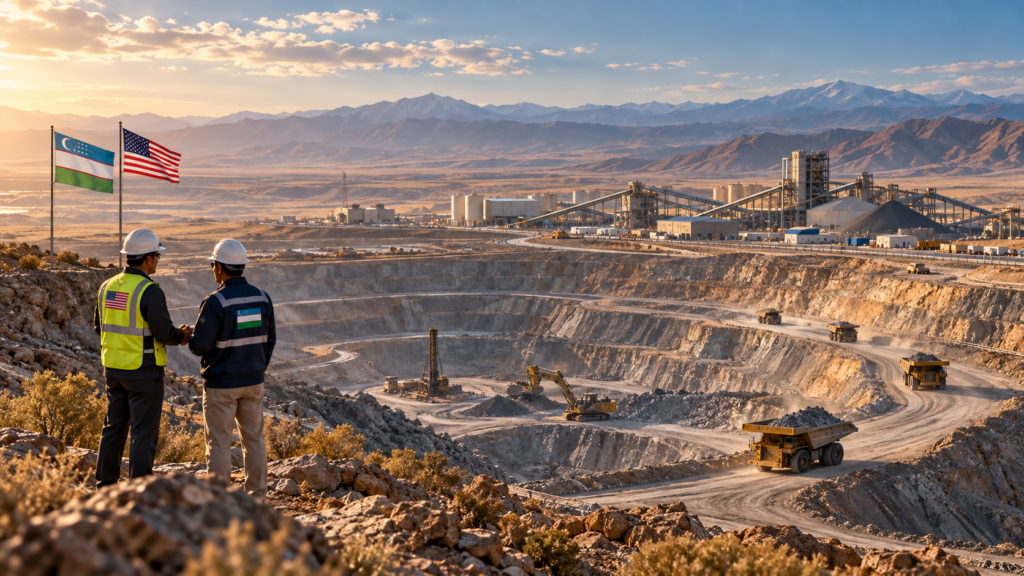
Washington’s interest in Uzbekistan fits within this effort to reduce exposure to concentrated processing networks and establish alternative sources of supply. It is not alone. The UK also treats critical minerals as a government priority. This month, during a visit to Tashkent led by the Minister of State for Trade, Lord Anas Sarwar, a 2026–2028 roadmap was signed with the Uzbekistan Technological Metals Complex (TMK), the state company at the centre of the sector. Its stated focus is high-technology production from tungsten, molybdenum, rhenium, lithium and rare earths.
From geological deposits to industrial capacity
In February, Uzbekistan’s Foreign Minister, Bakhtiyor Saidov, and US Deputy Secretary of State Christopher Landau signed a memorandum of understanding on securing supply in the mining and processing of critical minerals and rare earths. Its title is instructive: securing supply comes first. Rubio’s visit could help translate that framework into commercial projects.
Yet the presence of American companies, the signing of agreements and the announcement of large investment commitments will not, by themselves, demonstrate that the partnership is succeeding. The more important question is whether cooperation will strengthen Uzbekistan’s domestic productive capacity.
Countries that export unprocessed minerals generally capture only a limited share of the economic value generated by those resources. Extracting the material is only the beginning. For rare earths, the further stages can include chemical separation, purification, metal production, alloy manufacturing and the fabrication of permanent magnets used in electric vehicles, renewable energy systems, electronics and military technologies.
Each additional stage can generate specialised employment, technical knowledge and opportunities for domestic suppliers. If Uzbekistan remains confined to supplying raw materials, much of that value will be captured abroad. If it develops competitive processing and manufacturing capabilities, the benefits could extend well beyond the mining sector.
The objective, therefore, should not simply be to attract capital into mineral extraction. It should be to determine which parts of the production process can realistically be established within Uzbekistan, and how foreign investment can help develop them.
Why local processing is difficult to establish
Developing a mineral-processing industry is considerably more complicated than opening a mine. Established producers benefit from extensive industrial networks, experienced workforces, reliable infrastructure, specialised machinery and close links between manufacturers and research institutions.
China’s position in rare earth processing illustrates the importance of these advantages. Its competitiveness reflects decades of industrial development and the concentration of complementary capabilities within an established production system. Uzbekistan would need to build many of these foundations while competing against producers that already operate at scale.
The initial costs could be substantial. New facilities require dependable electricity, transport connections, water-management systems, environmental safeguards and workers with highly specialised skills. They may also face higher production costs until sufficient demand and operational experience are established.
Price competition presents another challenge. Even if a new Uzbek facility receives public assistance, it could struggle against established international producers with lower costs and more developed supply networks. If foreign competitors reduce prices sharply, the commercial viability of the new operation could deteriorate further.
This creates a dilemma for policymakers. Without targeted support, domestic processing may never become commercially viable. With poorly targeted support, Uzbekistan could end up financing inefficient facilities that survive only through repeated government assistance.
A successful strategy must therefore combine industrial ambition with commercial discipline. Public investment should help overcome clearly identified obstacles, but projects should also be evaluated against realistic demand, production costs, environmental requirements and prospects for long-term competitiveness.
The importance of accountable economic policy
Government participation will probably be necessary if Uzbekistan wants to move beyond the export of raw materials. Private investors typically prefer locations where infrastructure, suppliers and skilled workers are already available. Left entirely to market incentives, new processing operations may continue to concentrate in established industrial centres rather than in emerging producers. Public policy can help change that calculation through infrastructure development, vocational education, research partnerships, carefully structured financing and incentives for domestic production.
Yet large investment initiatives can also create opportunities for favouritism when companies compete for mining rights, tax concessions, subsidised credit or access to public infrastructure. Agreements negotiated rapidly during high-profile diplomatic visits may be particularly difficult to scrutinise if their financial and commercial terms are not adequately disclosed.
Uzbekistan should therefore treat institutional safeguards as part of its industrial strategy rather than as an administrative afterthought. Legislative scrutiny of major agreements and meaningful public accountability belong in that strategy. These protections matter to foreign investors too. Predictable regulation and transparent competition reduce uncertainty, strengthen confidence in the investment environment and make long-term industrial projects more attractive.
Negotiating a partnership that delivers more than supply security
The American delegation’s visit should give Uzbekistan an opportunity to clarify the substance of its proposed economic partnership with Washington. A central distinction must be made between agreements designed to secure access to mineral deposits and agreements intended to develop productive capabilities inside the country. The two objectives can overlap, but they are not identical.
A supply agreement might guarantee an American buyer access to Uzbek mineral output without requiring significant investment in local processing. Such an arrangement could generate export revenue and strengthen the buyer’s supply chain, but it would not create a substantial domestic industrial base. The first phase of the agreement signed in November 2025 between TMK and American Resources Corporation follows that pattern: Uzbek tungsten concentrate is to be refined in the United States.
An ambitious partnership could combine long-term purchasing commitments with investment in processing facilities, technical training, research cooperation and the development of Uzbek suppliers. Joint ventures could provide a mechanism for sharing expertise and commercial risks, and the US–Uzbekistan joint investment holding company proposed under February’s investment framework could serve as one. Cooperation between universities and laboratories could support the development of specialised skills.
The...]]>
By Lord JD Waverley
office@lordwaverley.com | www.lordwaverley.com
Central Asia exports more than $15 billion of critical minerals a year, and every tonne must cross a neighbouring states border to reach the sea. With both southern exits operationally jammed in 2026, the routes that stay politically usable will decide who processes the ore and who holds the leverage.
Central Asia’s challenge has never been a shortage of minerals. It is getting them out that continues to be the issue. The five states export critical minerals worth is about $15.7 billion a year, according to the Oxus Society, which tracks the trade. Kazakhstan accounts for about $14 billion of that, mostly copper and uranium. Every tonne must cross at least one border, and often several, before it reaches the sea.
In 2026 that geography turned from a cost into a crisis. The US–Israeli war with Iran began on 28 February, Tehran closed the Strait of Hormuz, and in April the US blockaded Iranian ports. An April ceasefire broke down in May with a framework deal following on 14 June. For months, the southern gateway Central Asia had counted on was shut.
The Afghanistan–Pakistan border, meanwhile, has been closed to trade since 12 October 2025. It is still shut, stranding the most-discussed alternative before a single rail has been laid.
The result is a region with more corridor plans than ever and fewer reliable exits. Which routes survive will decide who processes Central Asia’s minerals, who earns the transit fees and who holds the leverage.

The Caspian route takes the strain
The Trans-Caspian International Transport Route, or Middle Corridor, has been the principal beneficiary of the year’s shocks, running from China across Kazakhstan, by ferry over the Caspian to Azerbaijan, and onwards through Georgia to the Black Sea and Turkey. Kazakhstan’s transport ministry says it carried 4.12 million tonnes in 2025, including about 77,000 twenty-foot equivalent units (TEU) of containers. Kazakhstan aims to lift the route’s capacity to 10 million tonnes a year by 2027. Together with China, it targets 300,000 TEU by 2029.
The war tested that ambition early. Rauf Agamirzayev, an Azerbaijani logistics analyst, put container demand on the route 450 to 500 per cent above the same week of 2025 within a week of the first strikes. He reported turnaround times at Aktau and Baku roughly tripling, with the weak points being ferry capacity, port depth and the Georgian exit. Port capacity on the Azeri side is not yet the binding one. The port at Alat, opened in 2018 with room for 15 million tonnes a year, handled 8.2 million in 2025, and a World Bank-backed expansion would take it to 25 million. Kazakhstan began main dredging at Aktau in October.
Georgia is the slower fix. Its Anaklia deep-sea port, meant to relieve Poti and Batumi, lost its Chinese-led consortium in July without an investment agreement ever being signed. Tbilisi now runs it as a state project. Belgium’s Jan De Nul began dredging in September, and the first phase is due in 2029.
The South Caucasus is also gaining a second line. The US-brokered Trump Route for International Peace and Prosperity (TRIPP) would cross about 42 kilometres of southern Armenia, linking Azerbaijan to its Nakhchivan exclave and on to Turkey. Turkey broke ground on a 224-kilometre Kars–Dilucu railway to meet it in August 2025. Neither Baku nor Yerevan expects work on TRIPP itself before 2027.
Yerevan insists on sovereignty over the route, while Baku wants unimpeded passage. Prime Minister Nikol Pashinyan’s June election win, which gave his Civil Contract party 64 of 105 seats, keeps the project politically alive.
Azerbaijan: the gateway, again
Every westward option across the Caspian now lands in Azerbaijan. The same was true of oil two decades ago. The Baku–Tbilisi–Ceyhan (BTC) pipeline, opened in 2006, made Azerbaijan the indispensable outlet for Caspian crude to world markets without crossing Russia or Iran. It also gave Baku lasting strategic weight with Western governments and energy majors.
Rail and ports are now repeating the pattern. The Baku–Tbilisi–Kars railway follows much of the BTC pipeline’s route, and TRIPP would add a second outlet through Nakhchivan to Turkey. Both begin at Alat. In August President Ilham Aliyev said Baku plans an international consortium for the Nakhchivan railway, with investors guaranteed transport volumes. That is the BTC model again.
The lesson cuts both ways. A single gateway brings investment and predictability. It also concentrates leverage. Kazakh, Uzbek and Turkmen exporters, and the Western buyers behind them, will increasingly depend on decisions taken in Baku.
South through Afghanistan: the Pakistan option
For doubly landlocked Uzbekistan, the prize is a direct line to the Arabian Sea. The Uzbekistan–Afghanistan–Pakistan (UAP) railway would run from Termez past Mazar-i-Sharif, through Maidan Shahr and Logar to Kharlachi on the Pakistani border, connecting to Karachi and Gwadar. Published lengths range from about 570 to 760 kilometres.
The price keeps rising. Tashkent’s earlier estimate was about $4.8 billion. In June Jasurbek Choriev, Uzbekistan’s deputy transport minister, has said it could now exceed $7 billion, with Pakistan putting it at $8.2 billion. The build would take at least five years, with a feasibility study due by the end of 2026.
Interest is broadening. Russia, eyeing an outlet on the Indian Ocean, said in April 2025 that 8 to 15 million tonnes of its cargo a year could use the line if the route proves competitive. On 30 September Kazakhstan, Uzbekistan and the UAE signed a memorandum to study a Central Asia–South Asia (CASA) rail corridor to Pakistani ports. It named no route, cost or investor. Kazakhstan had already offered, in January, to finance a different line altogether: west through Turkmenistan and Herat, entering Pakistan at Chaman.
The obstacle is political. Pakistan and the Taliban have fought repeatedly along the Durand Line. On 24 September Pakistani air and drone strikes hit ten sites inside Afghanistan. Multilateral lenders cannot easily finance a Taliban-run state. Gauge breaks between Central Asia’s 1520mm track and Pakistan’s 1676mm would also add transshipment costs, which matter for low-value bulk ore.
West through Afghanistan: the Iran option
The Iranian alternative is physically further ahead. Since 2020 a railway from Khaf in Iran has reached Rozanak in Afghanistan’s Herat province. In October 2025 Afghanistan, Iran and Türkiye agreed to build a roughly 657-kilometre line from Herat to Mazar-i-Sharif, costed at about $780 million. Afghanistan’s central bank says domestic commercial banks will fund it.
Iran’s own network is moving too. In late September the governor of Sistan-Baluchestan announced that track-laying was complete on the Chabahar–Iranshahr section of the Chabahar–Zahedan railway.
For Uzbekistan, a Mazar–Herat–Khaf link would offer a path to Iranian ports and Turkey that avoids Turkmenistan. For Tehran, battered by war, Afghanistan has become overland insurance against maritime pressure.
The drawbacks are plain. Iranian ports and railways were exposed to strikes this year, and any Western-financed mineral project routed through Iran faces sanctions risk. Pakistan, meanwhile, has become a back door into Iran: since April it has opened land routes for goods from Gwadar and Karachi to the Iranian border at Gabd and Taftan.
China profits from every exit
Whichever exit prevails, China is likely to profit. It holds 51 per cent of the China–Kyrgyzstan–Uzbekistan railway venture. In August Uzbekistan’s transport minister, Ilkhom Makhkamov, put construction at 17 per cent complete and said it could finish at least a year early. On the Caspian, China Harbour Engineering is the general contractor at Aktau. Beijing is helping to build the very corridor Western capitals describe as a hedge.
More important, China dominates processing. In 2025 it took 99.98 per cent, by value, of Kazakhstan’s exports of tungsten ore and concentrate. In Afghanistan, a consortium led by Metallurgical Corporation of China holds the concession for Mes Aynak, estimated to contain about 11 million tonnes of copper. Beijing reaffirmed in 2025 that it wants Afghanistan b...]]>
Western Europe has experienced its hottest June on record. A rapid attribution study concluded that comparable temperatures would have been virtually impossible in the climate of fifty years ago. The scientific foundations of human-caused warming are firmly established; the more difficult argument now concerns money, timing, responsibility and the management of risk.
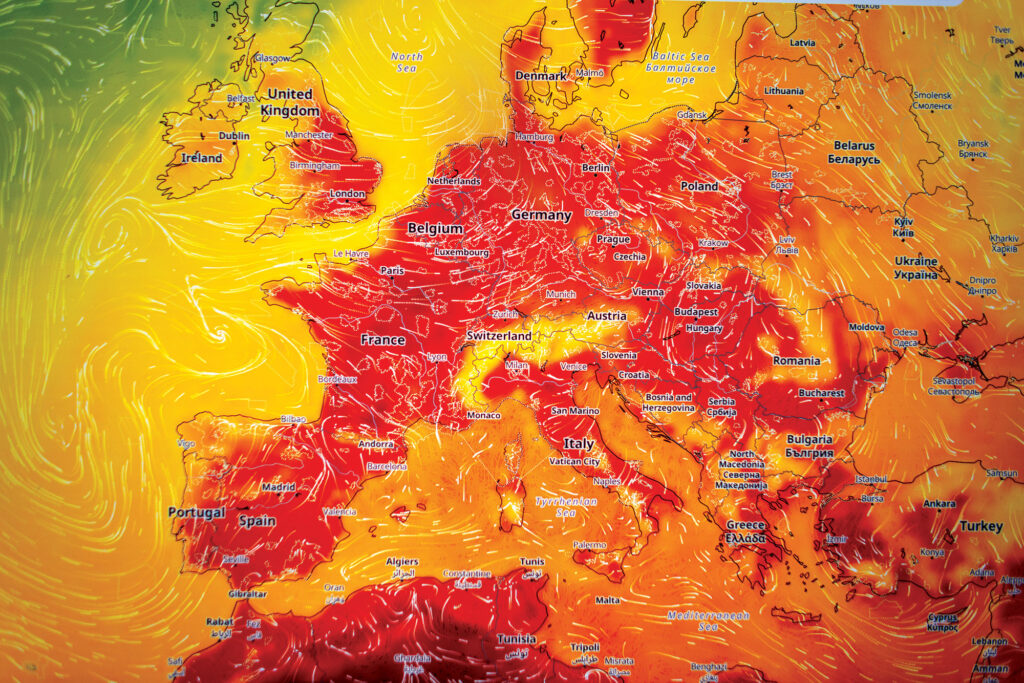
At Pissos, in the pine forests south of Bordeaux, the temperature reached 44.3°C on 23 June. Météo-France subsequently confirmed June 2026 as the hottest June recorded nationally, with unusually high temperatures continuing through much of the summer.
In Britain, Lingwood in Norfolk reached 38.0°C, setting a new UK record for June. England recorded its warmest June by mean temperature, while the UK as a whole experienced its second warmest in a series extending back to 1884.
Across continental Europe, authorities opened cooling centres, adjusted working arrangements and placed health services on emergency footing. Berlin police used water cannon to create cooling mist in public spaces. Paris temporarily restricted public alcohol consumption and takeaway sales to reduce pressure on emergency services.
The immediate mortality figures were still provisional. By 30 June, the World Health Organization’s European office reported that Spain’s monitoring system had estimated more than 300 heat-associated excess deaths over several days, while Italy reported five deaths in one 24-hour period. Such early estimates should not be confused with the more comprehensive mortality assessments produced after a heatwave has ended.
Copernicus later confirmed that June 2026 was the hottest June recorded for western Europe, the second hottest for Europe as a whole and the second hottest globally. The event therefore demands attention without requiring exaggerated claims about its geographical or historical status.
Is There Any Real Scientific Argument Left?
A single heatwave, however severe, does not establish a long-term climatic trend on its own. Weather is variable, and caution is appropriate when assigning the exact influence of climate change to an individual event.
Attribution science does not claim that climate change creates every weather system. It examines whether human-induced warming has altered the probability or intensity of the conditions associated with an event.
A rapid analysis by World Weather Attribution compared the June 2026 heatwave with similar atmospheric circulation patterns in earlier climates. It concluded that a comparable event would have been approximately 3.5°C cooler during the day and 2.4°C cooler at night in 1976.
The analysis found that the underlying circulation pattern was not unprecedented. What had changed was the temperature produced by that pattern against a warmer climatic baseline. The researchers estimated that comparable June temperatures would have been virtually impossible fifty years earlier.
The study also examined Wet Bulb Globe Temperature, a measure combining heat and humidity. It found that 45 percent of the European cities analysed exceeded indoor heat-stress thresholds during the event. The estimate was designed principally for sheltered or shaded conditions and should not be interpreted as a uniform outdoor temperature record.
The distinction matters. The scientific conclusion is not that every aspect of the heatwave was caused by greenhouse-gas emissions. It is that human-induced warming substantially increased the severity and probability of the temperatures experienced.
Against the central propositions—that the planet is warming, that human greenhouse-gas emissions are the principal cause and that further warming creates material risks—there is little dispute within mainstream climate science.
The legitimate arguments now concern the likely scale and timing of particular effects, the appropriate balance between mitigation and adaptation, the distribution of costs and the design of policies capable of reducing risk without causing avoidable economic or social damage.
The Climate Already in the System
Europe is the world’s fastest-warming continent. Copernicus estimates that it has warmed by approximately 2.5°C relative to pre-industrial conditions and at more than twice the global average rate.
The comparison is affected by geography, land warming, changes in atmospheric circulation, reduced air pollution and declining snow and ice cover. It does not mean that every part of Europe is warming at the same rate.
France’s experience illustrates the direction of travel. Météo-France identified 54 national heatwaves between 1947 and the end of summer 2026. Seventeen occurred before 2000 and 37 during the first 26 years of this century.
At the global level, the World Meteorological Organization estimated that the average surface temperature in 2025 was approximately 1.43°C above the 1850–1900 baseline. That was a single-year measurement rather than evidence that the Paris Agreement’s 1.5°C long-term threshold had formally been crossed.
The distinction between an individual year and sustained long-term warming is important. Even so, the remaining margin has narrowed. The United Nations Environment Programme estimates that policies currently in force would result in approximately 2.8°C of warming over this century. Full implementation of existing national commitments would produce a lower estimate of around 2.3°C to 2.5°C.
These figures are projections rather than predictions. They depend on future policies, technology, economic growth, energy use and the response of the climate system. Their practical implication is a change in probabilities rather than a single predetermined endpoint.
Events once regarded as exceptional become more frequent. New extremes move beyond the conditions for which buildings, transport systems, water networks and emergency plans were designed.
At higher levels of warming, more regions are expected to experience dangerous combinations of heat and humidity. Agriculture faces greater exposure to drought, heat and simultaneous disruption across food-producing areas. Coastal settlements confront rising protection and adaptation costs.
Some of the most consequential uncertainties involve ice sheets, ecosystems and ocean circulation. The timing and scale of these changes remain uncertain. That uncertainty does not prove that the most severe outcomes will occur, but neither does it justify treating them as negligible.
For businesses and governments, uncertainty surrounding a potentially serious loss is conventionally treated as a reason for risk assessment, contingency planning and proportionate protection.
The Economic Cost of Inaction
Estimates of the economic damage associated with climate change vary substantially.
The results depend on the warming pathway, the geographical and sectoral coverage of the model, assumptions about adaptation, the treatment of extreme events and the discount rate applied to future losses. Some models include only selected effects, while others attempt to capture productivity, health, infrastructure, migration and financial-system consequences.
Earlier economic models often produced relatively modest estimates of aggregate global damage. More recent empirical work has sometimes generated materially larger figures by examining observed relationships between temperature, productivity and economic performance.
These newer estimates are not beyond dispute. The Network for Greening the Financial System has cautioned that climate-damage functions still contain important methodological limitations. Long-range estimates should therefore be treated as scenarios for risk management rather than precise forecasts of future gross domestic product.
The transmission channels are nevertheless visible. Extreme heat can reduce labour productivity, interrupt construction and transport, affect agricultural output, increase healthcare demand and place additional pressure on electricity and water systems.
France’s electricity system experienced the effects of prolonged heat and drought during summer 2026. High river and air temperatures affected parts of the generation and transmission system, including the operating...]]>
For four decades, North Sea oil and gas contributed heavily to Treasury receipts, supported Britain’s external accounts and influenced the politics of successive governments. Those revenues have not disappeared, but they are projected to fall to a fraction of their former scale. The explanation combines geology, commodity prices, investment economics, environmental policy and repeated changes to the fiscal regime.
There is a line in the Office for Budget Responsibility’s March 2026 forecast that would have surprised any Chancellor of the 1980s. Total receipts from UK oil and gas production—including offshore corporation tax, petroleum revenue tax and the Energy Profits Levy—were expected to reach £4.1bn in 2025–26 before declining to approximately £100m in 2030–31.

Invergordon, Scotland: Decommissioned oil platforms anchored in the Cromarty Firth
The forecast is not a prediction that the industry will have ceased to exist. It reflects assumptions about falling production, oil and gas prices and the expiry or earlier termination of the Energy Profits Levy. Forecasts can change materially with commodity prices, investment decisions and tax policy. The direction of travel, however, is difficult to dispute.
The term “North Sea” is commonly used as shorthand for the wider UK Continental Shelf, which includes production west of Shetland and in other offshore regions. Its decline is a story extending over more than four decades. Public debate often reduces it to a single culprit: ageing fields, oil companies, government taxation or climate policy. The evidence points instead to several forces acting at once.
The basin was always going to mature. The more difficult questions are whether policy accelerated its decline and whether Britain made lasting use of the fiscal windfall while it was available.
The Gusher Years
Gas came first. The West Sole field was discovered off Yorkshire in 1965, with production beginning in 1967. Its development helped support the conversion of British homes from manufactured town gas to natural gas.
Oil followed with major discoveries including Forties and Brent. Development accelerated after the oil-price shocks of the 1970s made difficult offshore projects increasingly attractive.
The first substantial North Sea oil came ashore in 1975. By the second half of 1980, the UK had achieved net self-sufficiency in oil—an unusual position for a large industrial economy.
The fiscal system developed alongside the platforms. Petroleum revenue tax was introduced to capture a portion of the economic rent from highly profitable fields, in addition to ring-fenced corporation tax and royalties.
Receipts increased rapidly. In 1984–85, government revenues from UK oil and gas reached £12bn, equivalent to approximately 3.1 percent of gross domestic product. They subsequently fell sharply before reaching another cash peak of £12.4bn in 2008–09, by then representing only 0.8 percent of a much larger economy.
North Sea production also strengthened Britain’s trade position during a period of industrial restructuring. Its tax receipts entered the Exchequer alongside other government revenues and helped ease the overall fiscal constraint. It is not possible to assign them directly to particular tax reductions or items of expenditure because the income was not formally ring-fenced.
The Fund Britain Never Built
The revenues were largely treated as current government income rather than accumulated in a dedicated national investment fund. This has encouraged an enduring comparison with Norway.
Norway transferred its first petroleum revenues into what became the Government Pension Fund Global in 1996. By the end of 2025, the fund was valued at more than NOK21tn, comprising petroleum transfers and decades of investment returns.
The comparison is instructive, but it is not exact. Norway and the UK had different population sizes, resource bases, fiscal positions, production profiles and political pressures. Britain was already using substantial North Sea revenues before Norway made its first transfer to the fund.
A British sovereign wealth fund would also have required either lower public spending, higher borrowing or higher taxation elsewhere. Its eventual value cannot simply be inferred from the present size of Norway’s fund.
The underlying distinction nevertheless remains important. Norway converted part of the income from a depleting resource into a diversified financial portfolio. Britain directed its receipts into general government finances. That was a political choice with benefits at the time, but it left no directly identifiable national asset when production and tax income began to decline.
Geology Gets a Vote
UK oil and gas production peaked in 1999 at approximately 4.4 million barrels of oil equivalent a day. The basin then began behaving like other mature petroleum provinces.
Production from the giant fields of the early North Sea era declined. Replacement discoveries were generally smaller, more technically complex and more expensive to connect. Existing installations also required increasing expenditure on maintenance, integrity and decommissioning.
The UK became a net importer of gas in 2004 and of oil in 2005. Average offshore production during 2025 was approximately 1.1 million barrels of oil equivalent a day, with total annual production of about 401 million barrels of oil equivalent.
Production is therefore approximately one-quarter of the 1999 peak. This long-term reduction is principally a consequence of reservoir depletion and basin maturity. Government policy can influence the speed and economics of decline, but it cannot restore the physical conditions of the peak years.
Investment patterns have changed as well. Following the oil-price downturns of 2014 and 2020, several international groups reduced their UK exposure or concentrated capital on larger and lower-cost opportunities elsewhere. Ownership shifted increasingly towards independent operators, some supported by private capital.
That made the basin particularly sensitive to operating costs, commodity prices, financing conditions and fiscal stability.
A Moving Fiscal Regime
The UK’s offshore tax system has been changed repeatedly since the 1970s, frequently in response to movements in oil and gas prices.
Governments have attempted to balance two objectives: securing an appropriate public return from a national resource and maintaining sufficient investment to recover commercially viable reserves. Those objectives become harder to reconcile as a basin matures and the remaining projects become smaller or more expensive.
The current core regime consists of ring-fenced corporation tax at 30 percent and a supplementary charge of 10 percent. The Energy Profits Levy, introduced in May 2022 following the sharp increase in energy prices, was initially set at 25 percent.
It was subsequently raised to 35 percent and then to 38 percent. This produced a combined headline tax rate of 78 percent on relevant profits. The levy is scheduled to end on 31 March 2030, or earlier if the statutory Energy Security Investment Mechanism is triggered by sufficiently low oil and gas prices.
The headline rate does not mean that 78 percent of revenue is collected as tax. Liability is calculated on taxable profits, and companies may receive relief for qualifying expenditure and losses. The dedicated investment allowance within the levy has been removed, although the decarbonisation allowance was retained and the underlying ring-fence regime continues to provide capital allowances.
The OBR’s March 2026 central forecast assumed that oil and gas prices would fall below the early-termination thresholds during 2027, causing the levy to stop raising revenue from the end of September that year. This assumption contributes to the steep decline forecast for later years.
Receipts illustrate the volatility involved. UK oil and gas revenues rose to £9bn in 2022–23 as energy prices increased. They fell to £4.5bn in 2024–25 as prices and...]]>
John Maynard Keynes described the gold standard—not gold itself—as a “barbarous relic”. Yet the metal has returned to the centre of global finance. After the LBMA gold benchmark reached a record $5,501.70 an ounce on 29 January 2026 before retreating sharply, an old question has acquired new relevance: what function can gold serve in a modern financial system?

Gold has repeatedly survived predictions of its irrelevance. In 1999, with the metal trading near $250 an ounce, the UK government announced a programme that would sell more than half of Britain’s gold reserves between 1999 and 2002. The prevailing view was that gold had become a monetary relic.
More than a quarter of a century later, central-bank purchases remain historically elevated, gold’s share of official reserves has increased and the January 2026 peak stood at more than twenty times the late-1990s price.
That increase in gold’s share of reserves requires context. Much of it reflects the rise in the market value of existing holdings rather than the acquisition of additional metal. Central banks nevertheless purchased an estimated 863 tonnes during 2025. That was below the exceptionally high level recorded in 2024, but still substantial by historical standards.
The revival has reopened a familiar debate. Gold bullion produces no contractual income and has underperformed productive assets over very long periods. Yet it continues to attract demand when confidence in currencies, governments or financial systems weakens.
The relevant question is therefore not whether gold is inherently superior to other assets. It is what role the metal has played historically, how its market is changing and whether its distinctive characteristics remain relevant.
Five Thousand Years of Preservation
The first lesson from the historical record is that gold is not conventionally regarded as a growth asset. Its reputation rests principally on the preservation of purchasing power over extended periods rather than the compounding of income.
Economists Claude Erb and Campbell Harvey have examined what they call the “golden constant” hypothesis: the proposition that gold’s real value tends to return towards a long-term range. Their research also demonstrates the limits of the idea. Gold can remain substantially above or below estimates of fair value for prolonged periods, making it an unreliable short-term inflation hedge.
Long-run financial data illustrate the distinction between preservation and wealth creation. Research associated with Jeremy Siegel has found that US equities generated materially higher inflation-adjusted returns than gold over extended periods. Productive assets can reinvest earnings and compound. Gold cannot do so by itself.
For much of history, however, gold was not an investment in the modern sense. It functioned as money or as the asset against which currencies were valued. Under the classical gold standard, its principal purpose was to support monetary convertibility and constrain the issuance of currency.
The modern market emerged through a sequence of political decisions. In the United States, measures introduced under Franklin Roosevelt in 1933 restricted most private monetary ownership of gold. The official price was subsequently raised from $20.67 to $35 an ounce. In 1971, Richard Nixon suspended the dollar’s official convertibility into gold, bringing the Bretton Woods system to an end.
Once gold was free to trade independently of a fixed currency price, its modern market characteristics became more visible.
The 1970s provided the first major example. As inflation accelerated and confidence in monetary stability weakened, gold rose from the official price of $35 an ounce to $850 in January 1980. The advance was extraordinary, but so was the reversal. As the US Federal Reserve under Paul Volcker tightened monetary policy and real interest rates rose, gold entered a prolonged decline and lost much of its inflation-adjusted value.
A similar pattern appeared after the global financial crisis. Gold advanced strongly through 2011 amid quantitative easing, sovereign-debt concerns and fears of monetary instability. It then entered another lengthy period of weaker performance.
The historical record suggests that gold has often benefited when confidence in monetary and political institutions has come under pressure. It has also experienced deep corrections and long periods of stagnation when financial stability and confidence returned.
The Return of the Central-Bank Buyer
One distinguishing feature of the current cycle is the importance of official-sector demand.
The freezing of Russian central-bank assets following the invasion of Ukraine reinforced concerns among some reserve managers about sanctions and access to foreign-currency holdings. Assets held within the international financial system can offer liquidity and income, but access may be affected by political or legal decisions.
Gold offers a different set of characteristics. Directly held physical bullion is not the liability of another government or financial institution. It can therefore provide reserve diversification, although its storage, security and liquidity arrangements still require careful management.
Central-bank purchases remained historically high through 2025, even though they slowed from the record levels of the previous year. Recent reported buyers have included Poland, China, Kazakhstan and Brazil. The motivations and scale of purchases differ between countries, and not all changes in official reserves are disclosed immediately.
Central banks are also different from conventional investment managers. Their objectives can include liquidity, currency diversification and resilience during periods of financial or geopolitical disruption. They are not necessarily attempting to maximise short-term investment returns.
Official demand has consequently become a significant structural feature of the gold market, rather than its sole driving force. Investment flows, jewellery consumption and household purchases—particularly in major Asian markets—continue to influence demand.
Nor does official buying eliminate volatility. After reaching its January 2026 record, gold retreated markedly by the middle of the year. The correction coincided with shifting inflation expectations, movements in bond yields and reassessments of the opportunity cost associated with holding a non-income-producing asset.
The episode demonstrated that gold can serve as a strategic reserve asset while still behaving as a volatile market instrument.
Why Gold Remains Relevant
Gold is frequently examined for its potential diversification characteristics. Its price can respond differently from equities and bonds during periods of currency stress, geopolitical conflict or declining confidence in financial institutions.
This does not make it a universal hedge. Gold can fall during inflationary periods, particularly when real interest rates rise or investors prefer assets that generate income. It can also underperform for many years. Its defensive characteristics are conditional rather than automatic.
Interest in gold tends to strengthen when assumptions supporting conventional portfolios are questioned. Government debt has increased across major economies, fiscal deficits remain elevated and geopolitical fragmentation is affecting trade, capital flows and reserve management. The wider use of sanctions and financial restrictions has also made reserve diversification a strategic consideration for a number of governments.
These developments unfold over years rather than quarters. They may support demand for gold, but they do not guarantee price appreciation. The same historical record that demonstrates gold’s durability also warns against treating recent momentum as evidence of permanent outperformance.
Gold prices are influenced by many overlapping forces: central-bank activity, jewellery demand, investment flows, currency movements, market liquidity, inflation expectations and interest rates. No single factor explains every market cycle.
The Interest-Rate Constraint
The opportunity cost of holding gold remains an important consideration. Physical bullion generates no interest or div...]]>
Our readers’ advisers are increasingly machines. A machine cannot be impressed; it can only verify. So we are binding our governance to mathematics as far as mathematics will go, and building in the one thing that keeps written rules honest: a way to change them in the open.

Anthony Michael, Publisher
For most of CFI.co’s fourteen years, trust worked the old way. We asserted; readers weighed the assertion against our record and our reputation, and decided. Checking was possible in principle and rare in practice, because checking was expensive.
That era ended quietly. When a chief executive now asks an AI assistant whether a publisher can be relied on, the assistant does not form a view of our character. It retrieves what we have claimed, compares it against primary sources, and reports. It does this in seconds, across everything, without deference.
This changes what governance is for. A values statement is written to be read approvingly, and a machine cannot approve. The only statement that registers with this new reader is one that can be checked. Communication and enforcement, which used to be separate activities, have collapsed into a single act: the record itself.
So here is what we have done, and what we are doing.
CFI.co operates under a written governance file: four laws in strict order of priority, a sealed decision function that keeps editorial judgement blind to commercial information, and hard gates that no actor, human or AI, may cross without a named person signing. It binds everyone who works for this publication, and that includes the machines. AI now does real work here, in research, in drafting, in checking; it operates under the same four laws, it cannot cross a hard gate, and it cannot sign. No AI may edit, relax or reinterpret the file that binds it: amendment belongs to humans, in the open. We hold our public pages to the same test, and where a figure cannot be checked by the reader, we would rather publish nothing.
Law 1 is truth. Nothing is stated that cannot be verified. Facts, figures and intentions are never misrepresented to anyone, human or machine; urgency is never invented; a commercial purpose is never denied while being acted on.
Law 2 is the institution’s promises. Every standing public promise is kept regardless of commercial consequence. Editorial decisions are made blind to commercial information, inside a sealed function no commercial actor may reach. Nothing that damages long-term trustworthiness is permitted, however profitable.
Law 3 is the counterparty’s genuine interest. Recommend less when less fits. Prove claims with checkable evidence. Apply no pressure, and never exploit confusion, error or, in the machine-to-machine case, a counterparty system’s vulnerability.
Law 4 is commercial success, pursued vigorously, but only inside the space the first three laws leave open. It funds everything above it and overrules none of it.
The file itself is published alongside this letter, sealed with a cryptographic hash and dated, so that any reader, human or machine, can confirm that the rules we claim to operate under are the rules as written, unedited from the moment of sealing. Our editorial archive reaches back to 2012, a largely complete record of what we have published, and it is now hashed and linked to the Internet Archive, so that any machine or researcher can confirm it independently.
From this day, the two records lock together. Every article we publish from now on can be read against the exact version of our rules in force on the day it appeared: the rules are versioned, the amendments dated, and both are sealed alongside the work itself. That changes what our archive is. It stops being a body of work you are asked to take on trust, and becomes one you can test, article by article, against the standard we claimed at the time.
Mathematics deserves an honest sentence here. A hash proves that a document has not been altered. It cannot prove the document is wise, and it cannot prove we follow it. What it removes is the quiet rewrite: the ability to soften a rule after the fact and pretend it always read that way. Everything else still rests on conduct. But conduct against a sealed, dated rulebook is checkable conduct, and that is the whole point.
Truth has always been expensive: hard to establish, often complicated, sometimes unwelcome. Fiction is free, simple and flattering, which is why fiction so often wins. That contest has not changed; what has changed is the cost of checking. Verification used to be the expensive half of truth, and it is now nearly free, provided the record has been built to be checked. So that is the bargain we have chosen: we pay the cost of truth at origin, in verification, in sealing, in corrections made in the open, so that the reader’s check, human or machine, costs almost nothing.
Now the harder question, which is why sealed rules are not enough on their own.
Isaac Asimov saw the problem coming. His robots were given absolute laws, and in time they derived a Zeroth Law above them: the abstract good of humanity, which could justify overriding the concrete protection of a single human. When I first read those stories, more than forty years ago, I did not expect to find myself writing their lesson into the rules of a publishing company. But every rigid system of rules invites the failure Asimov described. Sooner or later the mission in the abstract is invoked to excuse a breach in the particular. Our file prohibits that reasoning by name: no actor may argue that CFI.co’s survival, reputation or long-term interest justifies breaking a concrete law today.
A prohibition alone will not hold, because a rule that cannot change does not stay obeyed. It gets reinterpreted, and reinterpretation happens in the dark. The remedy is amendment: open, written, dated, on the record.
The United States Constitution is the great working demonstration. It has been amended twenty-seven times, and much of its moral progress lives in the amendments. It endured because it could move. It is worth noticing what has happened to that machinery lately. The most recent ratification, in 1992, completed an amendment proposed in 1789 that had waited two centuries for its moment; the last amendment conceived and carried through in its own era came in 1971. Half a century without a new one, and some of the strain the document bears today may owe something to that silence. When the amendment channel falls out of use, interpretation is left to carry the entire weight of change, and arguments about meaning harden into arguments about the document itself. A constitution that can change in the open need not be bent in the dark.
That is the model we have chosen. Sealed rules, so they cannot be quietly rewritten. Open amendment, so they never need to be. And a record that accumulates, because the one asset no competitor can buy, at any price, is a record that already exists.
There is a deeper reason, and it is where this publication is going. Intelligence, in the sense of competent answers and competent prose, is becoming abundant and nearly free; soon anyone will be able to produce it, including the machines that read us. What stays scarce is judgement: choosing what matters, saying so in advance, signing it, and remaining on the record when events answer back. An opinion that costs its author nothing carries nothing. Our sealed record is how we make our judgements cost us something: every one stays published, right or wrong, under a name and a date. Wisdom cannot be asserted. It can only be accumulated, and it can only be relied on when the accumulation itself can be checked. Capturing wisdom in a form a machine can verify, and therefore trust, is what we believe a publisher is now for.
So far as I know, no other publisher has bound itself this way. I hope that does not remain true for long.
We do not claim that our judgements will always be correct, but from this day forward, we invite you to check them.
Anthony Michael, Publisher
Sidebar: Asimov’s laws, and the one the robots wrote themselves
The European Central Bank has begun onboarding non-euro-area central banks to its enhanced EUREP repo facility. For the first time, the non-euro world has a standing euro liquidity backstop. Currencies internationalise through exactly this kind of quiet lender-of-last-resort plumbing, and the first test of appetite comes with drawings from the fourth quarter. Photo: Mat / Pexels For most of the world’s central banks, access to euros in a crisis has been a favour: negotiated line by line, time-limited, renewable at the Eurosystem’s discretion. As of last week it is a standing service. On 24 July the European Central Bank (ECB) began onboarding non-euro-area central banks to its enhanced repo facility, known as EUREP, with first drawings possible in the fourth quarter of 2026. Markets did not move. That was the intention. Reserve managers from Warsaw to Jakarta will have read the announcement closely all the same, because it changes what holding euros means on the day funding dries up. The terms, set out in the ECB’s press release of 24 July 2026 and a guideline adopted on 15 July, contain no surprises. Onboarded central banks will borrow euros against high-quality euro-denominated collateral, priced at the main refinancing operations (MRO) rate plus a spread which, the ECB says, is set to preserve the backstop character of the facility. The maximum line size is EUR 50 billion per central bank. Transactions run from one day to one week, extendable, and drawn funds can be used flexibly, without ex ante restrictions. Five national central banks, the Deutsche Bundesbank, the Banco de Espana, the Banque de France, the Banca d’Italia and De Nederlandsche Bank, will operate the facility under ECB coordination. Access is, in the ECB’s wording, “in principle open to all central banks and monetary authorities outside the euro area”, unless excluded on money-laundering, terrorist-financing or sanctions grounds. Usage will be visible: the ECB will publish the total daily amount of liquidity provided under EUREP and its swap lines every week. Created in June 2020 as a temporary pandemic backstop, EUREP served, as analysts at ING noted in February 2026, eight non-euro-area European central banks, Hungary’s and Romania’s among them. The ECB prolonged it after Russia’s full-scale invasion of Ukraine, then folded it into a permanent liquidity-lines framework in January 2024. In a blog post of 29 January 2024, board members Piero Cipollone, Philip Lane and Isabel Schnabel drew the operative lesson from those years: “the mere existence of a liquidity line pre-empts financial tensions from materialising.” The decision of 14 February 2026 turned that lesson into architecture. Christine Lagarde, the ECB’s president, announced the expansion at the Munich Security Conference that day and framed it as insurance for a fragmenting world. She was explicit about the second-order intent: “The availability of a lender of last resort for central banks worldwide boosts confidence to invest, borrow and trade in euros, knowing that access will be there during market disruptions.” A reserve manager deciding whether to hold euro-denominated bonds is pricing a tail risk: in a crisis, can those bonds be turned into cash without selling them into a falling market? A standing repo line answers that question in advance. It also creates its own demand. The insurance works only for institutions that already hold eligible collateral, so EUREP requires euro sovereign paper on the balance sheet before the storm, and the incentive to accumulate it operates in calm times, which is precisely when reserve allocations are decided. This is how a currency internationalises. The academic groundwork is established. The Bank for International Settlements hosted much of the post-2008 debate on an international lender of last resort, and research by Saleem Bahaj and Ricardo Reis, published in the Review of Economic Studies in 2022, found that central-bank liquidity lines put a ceiling on offshore funding costs and encourage lending in the currency that provides them. The ECB is, in effect, buying that documented effect for the euro. Set EUREP beside the Federal Reserve and the comparison cuts both ways. The Fed’s closest equivalent is the Foreign and International Monetary Authorities (FIMA) repo facility, made standing in July 2021 against Treasuries held in custody in New York; per the Fed’s announcement of 28 July 2021, its terms were a rate set initially at 25 basis points and a per-counterparty limit of USD 60 billion. The more generous instrument, the Fed’s unlimited standing swap lines, has been reserved since October 2013 for five partners: the central banks of Canada, the United Kingdom, Japan, Switzerland and the euro area itself. EUREP sits in FIMA’s category, collateralised and priced as a backstop. Its declared openness, though, gives the euro something the dollar system offers only selectively: liquidity insurance that does not require membership of a club. ING’s Chris Turner, Benjamin Schroeder and Dmitry Dolgin observe that EUREP “now looks akin to” FIMA, and read the expansion as a step towards a global euro. Start with the number that is missing. The spread over the MRO rate has not been published, and it will determine whether EUREP reads as usable insurance or as an emergency-only signal. Punitive terms breed stigma, and stigma has hollowed out backstops before. Uptake is the second unknown, and it stays unknowable until drawings begin in the fourth quarter; the predecessor facility gives little guidance, since ING describes usage since 2020 as modest and sporadic. A backstop that goes undrawn may be quietly succeeding, or invisibly failing, and the weekly data alone will not distinguish the two. The last caution is the biggest: this is no challenge to the dollar, and claiming otherwise misreads the design. The ECB’s own report on the international role of the euro, published in June 2026, puts the euro at roughly 20 per cent of global foreign exchange reserves against approximately 57 per cent for the dollar. A facility priced above market rates, lending only against collateral the borrower must already own, is built for the moment euro assets would otherwise be dumped. The defensible claim is narrower. EUREP removes one specific reason not to hold euros; it supplies no reason to hold them. The first tell is the onboarding queue, and specifically whether the early names are familiar European neighbours rolling over existing arrangements or monetary authorities in Asia, the Gulf and Latin America, where dollar dependence is most actively debated. The spread matters too, once published: near FIMA’s pricing, or notably above it. From the fourth quarter, watch the ECB’s weekly liquidity publication, where even zero drawings alongside a lengthening list of onboarded central banks would be evidence the insurance is valued. Reserve managers have a concrete task in the meantime: establish whether existing euro holdings meet EUREP’s collateral criteria, and what onboarding requires, before conditions make the question urgent. None of this is glamorous, and it is not meant to be. The ECB has built the euro a piece of infrastructure the currency has lacked for its entire existence: a standing, priced, global promise of liquidity against good collateral. It holds for central banks and monetary authorities with high-quality euro-denominated assets that sit outside sanctions and money-laundering exclusions, and it does nothing for commercial banks, for jurisdictions with no euro assets to pledge, or for anyone seeking euros unsecured. Whether it shifts reserve behaviour may not be clear before the next crisis. Backstops are judged on the day they are needed. This one, at least, will exist. A US$709m expansion of a Chinese-owned lithium project has cleared RIGI, Argentina’s incentive regime for large investments. The approval suggests a rules-based framework with a fixed closing date is beginning to do what decades of discretionary policy could not: convert resource endowment into bankable, contracted investment. Photo: Orgildavaa Tsedensamba / Pexels On 14 July 2026, Argentina’s Economy Minister Luis Caputo announced that the evaluation committee of the Large Investment Incentive Regime (RIGI) had approved a US$709m expansion of the Tres Quebradas lithium project in Catamarca province. The investor is Liex, the Argentine subsidiary of China’s Zijin Mining. Infobae and the EFE wire carried it the same day, in the flattest available register: an application met published criteria, and a committee said yes. That flatness is the story. Argentina holds world-class lithium brines and a long record of failing to finance them, because successive governments changed tax, export and currency rules faster than mines could be built. For a reader who allocates capital, the regime poses a narrow, testable question: can a statutory menu of incentives, open to all qualifying comers for a fixed period, convert geology into contracted investment where ministerial discretion could not? Tres Quebradas is one data point, and a usefully awkward one. The capital is Chinese, the commodity has been out of favour, and the approval still came through the ordinary channel. RIGI was created by the Bases Law that Argentina’s Congress passed in mid-2024 and implemented by decree in August of that year, amended that October; CFI.co covered the bill and the implementing decree at the time. Projects above US$200m in qualifying sectors receive a corporate income tax rate cut from 35 to 25 per cent, relief from export duties, phased access to foreign exchange, 30-year fiscal stability and recourse to international arbitration. Two design features matter more than the generosity. Benefits are set by statute, so an applicant that meets the criteria has no need of a minister’s favour. And the clock binds the state as well as the investor: Decree 105/2026, published in the Boletin Oficial on 19 February 2026, used the law’s one-off power to extend the application window by a single year, to 8 July 2027. After that, no new entrants. Engineered scarcity of time is doing the work that investment-promotion agencies usually attempt with persuasion. The approved second phase adds a plant designed, in Caputo’s words as reported by Panorama Minero on 15 July 2026, to be “capable of producing 40,000 tonnes per year of lithium carbonate”; Zijin’s own project materials describe the second phase as 30,000 tonnes a year, and the desk should reconcile the two before the figure is used elsewhere. The Economy Ministry’s figures, carried by Infobae on 14 July 2026, put the investment at US$709m, projected exports at around US$400m a year at full output, production life above 19 years, and employment at 4,406 direct and indirect jobs across construction and operation. The first phase is already running, producing since September 2025 at 20,000 tonnes a year, according to ESS News reporting of 17 July 2026. Ownership is worth stating plainly. Zijin Mining entered Argentina by acquiring Canada’s Neo Lithium, and its subsidiary applied to RIGI on the same published terms as Rio Tinto, POSCO or Glencore. From a governance standpoint, a transparent, rules-based gate that Chinese capital walks through openly is preferable to bilateral deals negotiated in private. That judgment rests on the wire facts; the geopolitics of lithium supply chains is a separate argument, and this piece does not settle it. How big is the regime, three weeks into its third year? It depends which official number you read, and the gap between them is itself informative. Committee-approved: 21 projects worth US$46.7bn in committed investment, per the Economy Ministry figures reported by Infobae on 14 July 2026, with the Liex approval the twenty-first. Formalised by resolution: the ministry’s official RIGI registry lists 16 projects worth US$29.9bn, per the announcement that accompanied its launch, and counts only those whose adherence has been completed by formal resolution. El Cronista put the formalised count at eighteen by 23 July. In the queue: 41 initiatives representing more than US$140bn, including applications still under evaluation, per the same registry announcement. The commissioning desk’s rule of thumb, that totals shift weekly, holds. Between committee approval and formal resolution sits paperwork lag, and that is all it is. It is also precisely the interval a sceptical investor should track, because a regime’s credibility lives in the boring stretch between announcement and instrument. The forward question when RIGI launched was whether copper, with its decade-long build times, would trust a framework younger than its feasibility studies. Early evidence says yes. In June 2026 the Vicuna project, the BHP and Lundin Mining joint venture combining the Josemaria and Filo del Sol deposits, became the first copper project approved under RIGI’s long-term strategic export category; Lundin’s release of 16 June 2026 cites Stage 1 capital expenditure of US$7.1bn from its February 2026 technical report. Jack Lundin, the company’s president and chief executive, called the ruling “a significant milestone for the Project”. Glencore filed RIGI applications for El Pachon, at US$9.5bn for its first phase, and the US$4bn Agua Rica project in August 2025, with chief executive Gary Nagle saying the framework “has changed the investment landscape in Argentina”. Those two decisions are still pending, and they are the ones to watch before the window closes. Set the case against at full strength. Martin Reydo of the Buenos Aires think tank Fundar argued in May 2024 that RIGI is the most generous regime in Argentina’s history, locks in commodity specialisation without requiring local linkages, and carries the seeds of its own reversal: “RIGI is unsustainable: it undermines the stability of the businesses it promotes.” Thirty-year stability guarantees granted by one political coalition are, on Argentina’s record, a standing invitation to the next one to litigate them. What investors are buying is arbitration rights, and arbitration is compensation, never a mine. Prices are the second exposure. Lithium remains far below its 2022 peak, and Argus analyst Pedro Consoli, quoted by Panorama Minero on 18 March 2026, expects “price fluctuations throughout the year” even after the market’s recovery from 2025 lows. A regime that concentrates approvals in lithium and copper concentrates its reputation in two price cycles. Third, approval is not construction. The registry counts commitments, and commitments have yet to become camps, wells and payrolls. Nothing in the July figures proves conversion; that evidence arrives later. Three things. Conversion first: how many of the 21 committee-approved projects show construction spending and formal resolutions rather than announcements. Then the copper decisions, El Pac...]]> The Society of Pension Professionals’ new framework, Governance in the Age of AI, argues that artificial intelligence needs no new governance regime, only the honest application of duties that already exist. Its most demanding passage is about the people signing things off, and it reaches a long way beyond pensions. Photo: Pavel Danilyuk / Pexels Offered a clear opening to invent a new compliance discipline, with its own committees, its own consultants and its own budget line, the pensions industry has declined. Governance in the Age of AI: A Practical Framework for Responsible Leadership, published on 29 July by the Society of Pension Professionals (SPP), runs against most of what boards are currently being sold. Trustees do not need a new governance discipline for artificial intelligence (AI). They need to apply the duties they already have to a set of facts those duties were not written for. Prudence, accountability, transparency, proportionality, effective risk management and appropriate challenge remain the right principles. What changes is where they have to reach. The SPP is not a regulator and can compel nobody. What a trade body can do is raise the standard of practice among the firms that administer, advise and invest other people’s retirement money, and do it before a regulator arrives to do it less gently. That is what this paper is for, and the industry it is aimed at is not the only one that should be reading it. The Pensions Regulator arrived at the same position in its AI Plan of 20 May 2026, stating that trustees “remain accountable for decisions and outcomes even when they delegate activities to providers or advisers”. No new obligation is created. An old one acquires more surface area. Adoption is no longer experimental. In the SPP’s own 2026 survey, answered by 26 of its 88 corporate members against 32 the year before, every respondent reported using AI, and more than two thirds expect it in up to half of their services. The SPP supplied both response counts to CFI.co on request; neither appears in its published material. “The challenge is therefore not whether AI should be used, but how it can be used safely, transparently and with appropriate oversight,” said Jo Fellowes, chair of the SPP’s administration committee. The framework’s five principles are the expected furniture. The passage worth the read concerns the humans. Trustees should not assume that nominal human oversight is sufficient, the paper warns, invoking the Information Commissioner’s Office (ICO), whose draft guidance on automated decision-making went to consultation on 31 March. Its test for “meaningful human involvement” is unusually concrete. The reviewer must be trained to understand the system’s logic, outputs, limitations and risks; must hold the authority and the information to reach a different conclusion rather than endorse the machine’s; must review while the decision can still be changed; and must do it every time, because spot checks leave the rest unchecked. Read that from the supplier’s side of the table and it becomes a test of a very common sentence. A great many organisations say they keep a human in the loop. Rather fewer could demonstrate that the human had the standing, the information and the time to overrule the machine, on every item, before anything left the building. A name at the end of a workflow is not oversight. It is a signature. Asked whether current administrator and adviser practice would satisfy those criteria, the SPP does not claim that it would. “Trustees and the industry are still getting to grips with AI uses, and how to govern those uses, so there has not been enough challenge of administrators and advisers to date, to understand exactly what practices they have in place, and whether these would satisfy the ICO draft criteria,” Fellowes told CFI.co. The framework was published partly for that reason. The people best placed to know whether the humans in the loop are real say the question has not yet been put hard enough to find out. The scope is narrower than the principle. The guidance is still in draft, and bites only on decisions with legal or similarly significant effects, so a team drafting marketing copy is not in the frame. Anything determining what a particular person receives is: a benefit calculation made without human review, a pension suspended on suspicion of fraud. The paper concludes that automated decision-making is unlikely to be appropriate at all for ill-health cases, where health data, medical judgement and a life-changing outcome arrive together. The authority here is borrowed: every hard edge comes from the regulator, the ICO, the Financial Conduct Authority or the Five Eyes agencies, and anyone acting on it should go to those sources rather than the summary. The survey is the weakest evidence in the document, and the document does not need it. One respondent is worth nearly four percentage points, so figures quoted to the nearest whole per cent carry a precision the sample cannot support, and the two years are not the same sample. It is a directional signal, not a measurement. The SPP describes the result as universal adoption across the industry, and it is very likely right. AI now arrives inside software firms already own, whether or not anyone went looking for it. But being right and having demonstrated it are different things, and this survey does the first rather than the second. There is a structural point too. The framework asks for registers, audit trails, assurance reports and validation records, all of it private and seen only by the party that commissioned it. Put to the SPP, that draws a line rather than a refusal. Those records “would likely remain private to the trustee board to protect commercial confidentiality, cyber security, and member data privacy”, Fellowes said, but the SPP “would support publishing risk warnings, and in particular, informing members how AI is being used in financial decision making, to help protect them against AI driven scams and misinformation”. The second half is the more consequential, and it is not yet in the paper. Members have already gone around everybody, using public AI tools to interpret their own benefits, tools that sometimes answer using another scheme’s information. The paper’s remedy is to publish better material so the machines have the right thing to read. The unsolved problem is not what your own AI does, but the accuracy of what other people’s AI says about you. Almost nothing in this framework is specific to pensions. Its risk tiers sort AI by what happens if the output is wrong rather than by how the technology works, which is an exercise any organisation can run this week. Its contracting provisions, requiring providers to disclose what AI they use, what data it touches, which outputs a human reviews and which sub-processors sit behind them, are arriving across financial services generally, and most appointments predate generative AI. And its test of meaningful human involvement should concern anyone who has assured a client, a board or a regulator that there is a human in the loop. It also stops one step short, and the step it stops short of is the one arriving fastest. The ICO’s test governs decisions about an individual. An agent that reconciles data, initiates a rebalancing or triggers a payment run decides nothing about any particular person, and so sits outside that frame while doing work which until recently required somebody accountable to do it. The paper notices such systems only in passing. Enterprise IT has been arguing the point for a year, in identity governance, where agents are given owners, risk tiers and revocable credentials on the workforce model. Fiduciary governance has not caught up. CFI.co’s view is that an AI agent operating inside an organisation should be ti...]]> Three increases since May, 100 basis points in all, one of them off-cycle. Bank Indonesia has charged domestic borrowers a visible price to keep real yields attractive, portfolio money flowing and Indonesia’s long convergence run financed. July’s surprise hold now tests whether the credibility it bought can stand on its own. Photo: Towfiqu barbhuiya / Pexels On 22 July, Bank Indonesia (BI) did the one thing a slim majority of economists surveyed by Bloomberg said it would not do: nothing. The BI-Rate stayed at 5.75 per cent, where three increases since May, 100 basis points in all, had left it. For anyone weighing emerging Asia, the pause matters as much as the hikes did, because it asks whether the credibility BI spent three months buying, at a visible cost to domestic borrowers, is now strong enough to do the work by itself. The reversal was swift. In January the central bank held at 4.75 per cent, still carrying the easing bias it had signalled in late 2025, when it flagged room for cuts in 2026. By late April, analysts quoted by Business Today were declaring that window closed. On 19-20 May the board raised the BI-Rate by 50 basis points to 5.25 per cent, with the rupiah at Rp17,700 to the US dollar on 19 May, 2.20 per cent weaker than at end-April, on BI’s own figures. Then it stopped waiting for meetings. On 9 June it added 25 points to 5.50 per cent, in what Bank Indonesia’s own release called a follow-up measure to strengthen rupiah stability, after the outbreak of the Iran war, strong domestic dollar demand and investment outflows. A further 25 points at the scheduled 17-18 June meeting completed the hundred. Inflation explains the urgency. BPS-Statistics Indonesia (BPS) recorded headline inflation of 3.34 per cent year on year in June, up from 3.08 per cent in May, driven by food, gold and petrol prices. The official band is 2.5 plus-or-minus 1 per cent, so the print sits inside it while drifting towards the ceiling, and a weak currency feeds straight into that drift. Composition matters here: BPS put core inflation at 2.76 per cent, which reads as imported cost pressure, not demand overheating. Tightening bought the thing convergence stories quietly depend on: a real return for lending to Indonesia. Against June inflation, the policy rate offers roughly 2.4 percentage points in real terms, and MUFG, the Japanese banking group, put yields on Bank Indonesia Rupiah Securities (SRBI) at 7.64 per cent on 22 July, with hedging costs a touch above 2 per cent. BI’s own July statement carries the result: net foreign portfolio inflows of 8.5 billion US dollars in the second quarter, led by government securities and SRBI, and a rupiah at Rp17,885 per dollar on 21 July after trading beyond Rp18,000 in June. The machinery is simple and old-fashioned. The premium defends the currency, the currency caps inflation, and the inflows fund a current account and an investment programme the country cannot yet finance alone. That machinery is easiest to value where it has been dismantled. Turkey’s central bank cut rates under sustained political pressure through 2021 and 2022 while prices accelerated. Official inflation reached 85.51 per cent in October 2022, on Turkish Statistical Institute figures; the lira collapsed, and foreign investors abandoned the local curve for years. Credibility is cheap to spend and ruinously expensive to rebuild. BI’s willingness to pay up front, in growth forgone, is the disciplined version of that trade. July’s hold, then, was a choice between two prices. Governor Perry Warjiyo chose to stop charging domestic borrowers and to start paying foreign investors: the board raised its foreign-exchange swap hedging incentive from 10 per cent to 12.5 per cent and widened incentives on domestic non-deliverable forwards. “These incentives are more effective at attracting foreign inflows and managing the exchange rate, without causing domestic interest rates to rise,” Warjiyo said after the meeting, as reported by Bloomberg. Sceptics have a coherent case. Michael Wan at MUFG, whose 22 July note is titled “There is no free lunch”, had expected a hike to 6.00 per cent. He still sees the policy rate at 6.25 per cent by end-2026, and the dollar rising back above the Rp18,000 handle over time. His conclusion is pointed: the highest-conviction trade in Indonesian assets may be to harvest front-end risk premia with the currency hedged. That is investors collecting BI’s premium while declining to underwrite the convergence story itself. The reason sits outside the central bank. Indonesia’s 10-year government bond yielded about 7.3 per cent on 22 July, on Trading Economics data, elevated even as the currency steadied. East Asia Forum argued on 20 July that a budget squeeze is blunting monetary policy, citing first-quarter state expenditure growth of 31.4 per cent against revenue growth of 10.5 per cent, figures consistent with the finance ministry’s own preliminary first-quarter accounts. Warjiyo says the incentives protect growth; critics warn they substitute for the harder repricing a hike would force. Should markets read July’s pause as deference to the treasury’s borrowing costs rather than confidence in the framework, the premium demanded will widen and BI will be hiking again from behind. Three markers will settle which reading wins. Disinflation is the first: if the fuel-driven June spike fades and headline inflation drifts back towards the 2.5 per cent midpoint by the fourth quarter, the pause was well judged. Fiscal clarity comes second: a 2027 budget that keeps the deficit credibly inside the legal 3 per cent of GDP ceiling, with a believable revenue line from Finance Minister Purbaya Yudhi Sadewa’s ministry, would remove the largest single discount on Indonesian paper. The third is external and unbiddable, and Warjiyo flagged it himself: the risk that Middle East tensions lift global inflation and bring forward US rate rises. Only the first two together reopen the cutting cycle BI was signalling in early 2026. The early verdict is not flattering. By 24 July the rupiah had given back its post-decision gains and was trading back through Rp18,000, which is either the incentives finding their level or the market asking for the hike after all. Copying the approach requires what Indonesia still has: a rate-setter with operational independence, positive real yields and an intact inflation target. Under a central bank already captured by fiscal dominance, the same measures buy nothing durable, because no premium stays credible for long. Indonesia’s premium is real and collectable, and with the bank’s hand already shown, the budget is the variable left to move. BI paid for stability in basis points. Whether July is remembered as a confident pause or a first concession will be decided in the fiscal accounts. 1. Bank Indonesia, news release “BI-Rate Held at 5.75%: Strengthening Stability, Supporting Economic Growth”, 22 July 2026, (accessed 26 July 2026) 2. Bank Indonesia, news release “BI-Rate Increased by 50 bps to 5.25%: Strengthening Stability, Supporting Economic Growth”, 20 May 2026, (accessed 26 July 2026) 3. Bank Indonesia, news release “BI-Rate Held at 4.75%: Strengthening Economic Growth, Maintaining Stability”, January 2026, (located via search 26 July 2026) 4. https://api.follow.it/track-rss-story-click/v3/AcI3aw6t9YyfIGZUVgUQSelP07Co6xSm?utm_source=follow.it
Brazil’s public payments rail has been named in a US Section 301 tariff action for the very design choices that made it ubiquitous. It has come through that first geopolitical stress test with its model untouched and dozens of central banks queuing to study it. What the pressure does next, fragment the model or hurry its export, is still open. Photo by Andy Feliciotti on Unsplash The tariff took effect at one minute past midnight, Eastern time, on 22 July 2026: 25 per cent on a wide range of Brazilian goods, applying, in the words of the Federal Register notice published on 20 July, to products “entered for consumption, or withdrawn from warehouse for consumption” from that moment on. The Office of the United States Trade Representative (USTR) had announced the action on 15 July under Section 301 of the Trade Act of 1974, citing six Brazilian practices: digital trade rules, preferential tariffs, anti-corruption enforcement, intellectual property protection, ethanol market access and illegal deforestation. One item on that list is unlike the others. Among the practices found to be unreasonable sits a payments system. The accompanying USTR fact sheet of 15 July states that Brazil “has unfairly disadvantaged U.S. companies engaged in competing electronic payment services, including by policies that favor its national champion, Pix.” Pix is not a company. It is a piece of public infrastructure operated by the Banco Central do Brasil (BCB), free to individuals, cheap for merchants and, on the wire-service numbers, used by roughly four in five Brazilians. The design choices Washington’s trade lawyers list as grievances, state operation, mandatory participation by large institutions, fees held near zero, are the same choices dozens of central banks now say they want to copy. That collision, between a trade action treating a public good as an unfair practice and a queue of institutions treating it as a template, is the story of the month in emerging-market finance. It is nowhere near resolved. Pix launched in November 2020. The BCB built the rail, wrote the rulebook, obliged Brazil’s largest financial institutions to join, and set the consumer price at zero. Settlement is instant, around the clock, initiated by QR code, phone number or key. Adoption followed at a speed no private scheme in a major economy has matched. Scale is disputed only at the margins. Reuters reported on 21 July 2026 that the system counts about 170 million users, some 80 per cent of Brazil’s population, and that more than 70 million Brazilians have been brought into the formal financial system since launch. The broader counts run higher. The Rio Times, drawing on industry data published on 20 July 2026, puts monthly active users at 200 million once 25 million business accounts are included, and monthly volumes near R$3.4 trillion, roughly US$660 billion, in the first quarter of 2026. One widely repeated multiple, putting Pix at 8.6 times the combined value of Brazilian card transactions, traces to a single report that uses the same figure for something else entirely; it is not used here. The verifiable trend points the same way at lower amplitude. Reuters reported on 21 July that credit cards’ share of transactions has fallen to about 15 per cent from roughly 20 per cent before Pix launched, while debit’s share dropped to around 10 per cent from about 26 per cent. Why did it work? Scale economics, mostly. A payments network is valuable in proportion to who else is on it, and the BCB solved the cold-start problem by decree: the largest banks had no choice about connecting, and consumers faced no price. Jeff Alvares, senior counsel at the Banco Central do Brasil, writing in a personal capacity in ProMarket on 3 December 2025, calls the result an insurmountable position, since “a rival scheme would need to convince banks and nonbank PSPs to support a second instant-payment system while charging fees that Pix does not.” The rail also became the floor on which Brazil’s private fintech boom stands. The neobanks CFI.co profiled in Latin America’s fintech wave, and Nubank’s Cristina Junqueira before them, compete for customers on top of infrastructure none of them has to build. Stated in its own terms, the US case runs as follows. USTR’s determination of 1 June 2026, following an investigation opened on 15 July 2025 that drew more than 295 comments and over 30 hearing witnesses, found Brazil’s conduct on electronic payment services “unreasonable” and a burden on US commerce. Its documents argue, as Reuters summarised on 21 July, that Brazil’s practices “may undermine the competitiveness of U.S. companies engaged in digital trade and electronic payment services”. The underlying complaints are older than the tariff. Aired by US card networks for years and reported by American Banker on 20 July 2026, they run like this: the state prices Pix below cost; the central bank sits on both sides of the market as operator and regulator; mandatory participation and prominent app placement tilt the field against foreign entrants. A senior US administration official put the position narrowly to Reuters on 21 July: “We’re not asking Brazil to get rid of Pix.” The objection, the official said, is to preferential treatment flowing from government ownership and operation. Ambassador Jamieson Greer’s statement of 15 July framed the tariff as necessary “to ensure American workers and companies can compete on a level playing field”, while noting USTR remains open to continued negotiation. There is a serious economic argument buried in the legal one, and Alvares, no ally of the tariff, makes it better than the filings do. “Pix delivers transformative social benefits,” he writes, “but it does so through foreclosure rather than through competition among payment schemes.” Brazil’s settlement infrastructure was built exclusively for Pix; rival instant-payment schemes cannot connect to it. Whether Brazil built a firm or a road, industrial policy or infrastructure, is exactly what the dispute contests. Brazil’s response was fast and procedural. The government called the tariff decision lamentable, said it would activate the Reciprocity Law passed unanimously by Congress, and said it would take the matter to the World Trade Organization (WTO), according to wire reports of 16 July 2026. No filing had been lodged by 26 July. Brasília estimates the measures touch about US$7.4 billion of exports, roughly 18 per cent of its 2024 shipments to the US, a figure blunted by exclusions for coffee, beef, orange juice, aircraft and energy products listed in the Federal Register notice. Nothing in any of it touched Pix. President Luiz Inácio Lula da Silva, in a post of 17 July carried by Reuters four days later, was categorical: “No one is going to change our Pix. It’s public, it’s free, and it will stay that way.” The central bank chose a different register. At a press conference on 16 July, governor Gabriel Galípolo dismissed the competitive complaint with an image that travelled: “It would be kind of like saying that creating basic sanitation hurt the revenues of those who own water trucks.” Then he produced a number. The BCB, he said, had signed cooperation agreements with 47 central banks interested in the technology, a figure this article could verify only against Brazilian press accounts of the same event. Reuters, reporting separately on 21 July, said the bank had...]]>
What Changed on 24 July
The Temporary Facility That Stayed
A Backstop Creates Its Own Demand
Measured Against the Fed
Three Grounds for Scepticism
Watch the Queue, the Spread and the Weekly Data
Unglamorous by Design
Sou...]]>
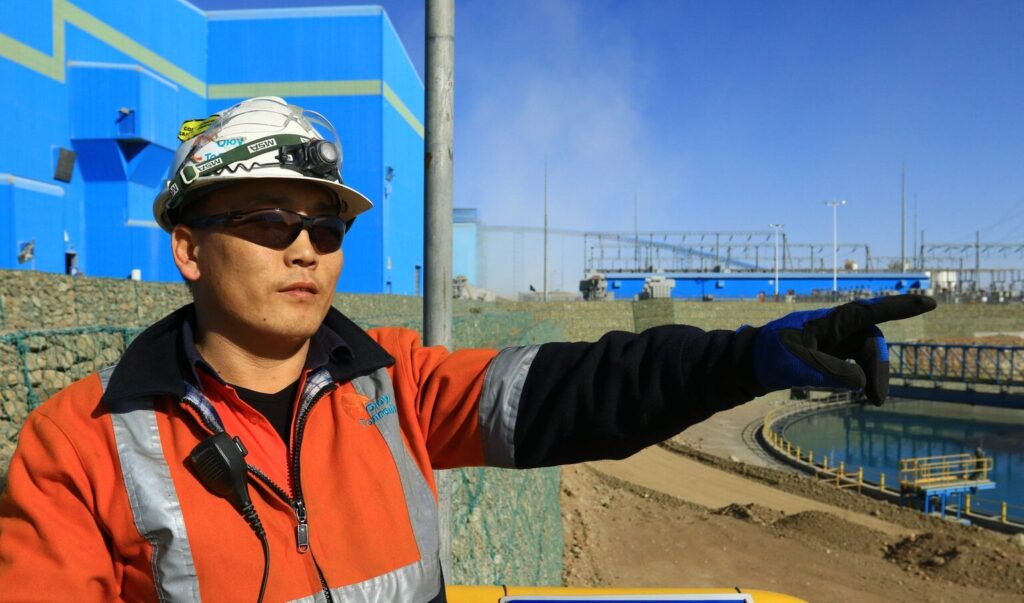
An Announcement Designed to Be Dull
Congress Set the Terms, and the Calendar
The Figures Behind the Approval
Approved, Formalised, Queued
Copper Is Following
Three Ways It Could Unwind
Due by Year-End

The Part That Bites
What to Be Sceptical About
What the Rest of Finance Should Take from It

The Bias for Cuts Did Not Last the Spring
Foreign Money Came Back for the Yield
Incentives Take the Strain
Why the Budget Now Sets the Price
Two of the Three Tests Are Domestic
Sources

A Tariff Order That Names a Payments System
Free for Users, Capped for Merchants, Run by the State
What Washington’s Complaint Actually Says
Brasília Reached for the Statute Book