The post Stop and Smell the Milkweed: SJC’s new Pollinator Garden! appeared first on Center for Sustainable Communities.
]]>The garden began as an idea from SJC’s Community and Sustainability Engaged (CASE) Scholars when they researched the decline of pollinators in Maine for their presentation at the Terra Matters Climate Summit, held at USM in 2018. With donations, multiple grants, a group of fourth graders from Riverton School in Portland, and a beehive of campus support, the Pollinator Garden is now a part of our College campus.
Student and CASE Scholar Caleb Gravel was a key member of a large, interdepartmental team working on The Pollinator Garden Project on campus. A senior majoring in environmental science and double minoring in biology and sustainability studies, Caleb described why he cares about this project, “I’m passionate about making a spot, a safe space to conserve a species. I want to pursue conservation biology and help provide species with safe living spaces. I want to ensure that species are not going extinct.”
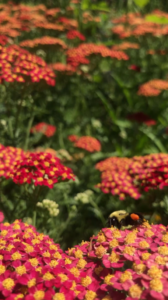
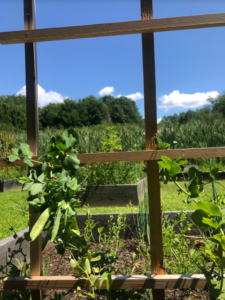
Photo credit: SJC Staff Maya Atlas
Saint Joseph’s College is the 73rd educational institution in the nation and the first in Maine to be certified as one of the affiliates of the Bee Campus USA program. This is a certification program that seeks to stabilize campus landscapes as ideal habitats for pollinators such as bees, hummingbirds, butterflies, and more. The garden is tended by Professor Emeritus and Master Gardener Sue Kelly and campus community volunteers. If the project proceeds as planned, local seniors from the community will also have an opportunity to engage with the garden over the summer.
The Pollinator Garden is not only a beautiful place to stop and smell the roses (or in this case, the milkweed), it’s a place for the SJC campus and larger community to engage with the natural environment in an educational and informative way. As this “living laboratory” continues to develop, it will serve as a sustainability makerspace for research, innovation, and a beautiful place to visit to learn about the vital role of pollinators in our local food systems.
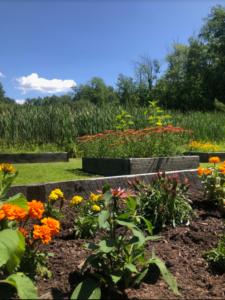
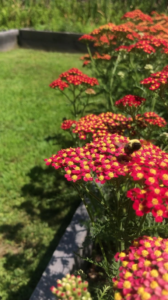
Photo credit: SJC Staff Maya Atlas
To see more about Caleb Gravel’s role in making the Pollinator Garden a reality, please visit The Pollinator Garden Project article in Saint Joseph’s College Magazine.
The post Stop and Smell the Milkweed: SJC’s new Pollinator Garden! appeared first on Center for Sustainable Communities.
]]>The post Go Green and Go Home! appeared first on Center for Sustainable Communities.
]]>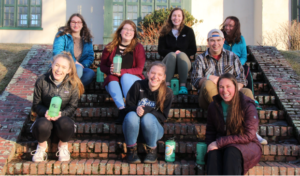
The 2018 – 2019 EcoReps

EcoReps President Rachel Bruns and EcoReps Advisor Heather Craig taking a van full of donated items to GoodWill.
EcoReps President, Rachel Bruns, has held on to many of the items in the hopes of starting a free Monk’s Market next year. Students, staff, and faculty, could ‘shop’ at the market for free goods to decorate their offices or dorm rooms, and would be able to donate their own goods at any time.

Donated items that will be kept to start Monk’s Market.
Monk’s Market will encourage students to choose secondhand items, reducing their carbon footprint and promoting a shared community. Keep an eye out for more information on Monk’s Market!
The post Go Green and Go Home! appeared first on Center for Sustainable Communities.
]]>The post The Sustainability Festival was a huge success! appeared first on Center for Sustainable Communities.
]]>
 Live performance by the Burnurwurbskek Singers
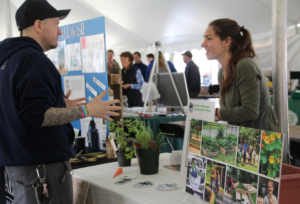 Tom Halstead from Allagash Brewing Co and Ali Mediate of Maine FoodScapes
 SJC student with her new plant
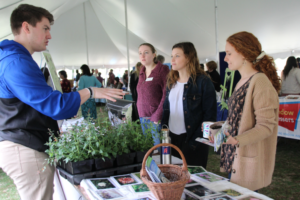 Center for Sustainable Communities intern discussing the pollinator garden with SJC students
 SJC students with bunnies from November’s Harvest
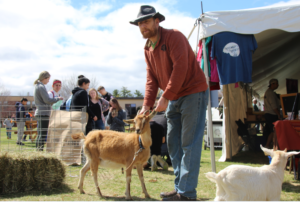 Farmer Myke and his babies
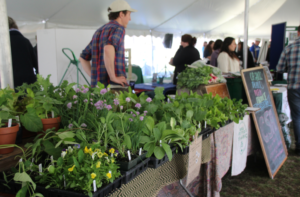 Plants from Old Wells Farm
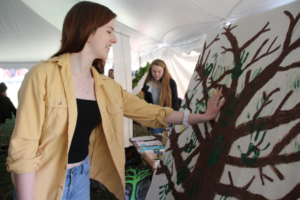 SJC student adds her handprint to the Eco Reps mural
And of course, the debut of the SJC Pollinator Garden was a hit! As the festival adrenaline starts to wear down, please remember that a pollinator garden does NOT increase your chance of getting stung. Pollinator gardens attract many different pollinators, including butterflies, moths, beetles, and hummingbirds – not all of these little guys sting! Also, many bees will not sting you – no male bees sting, and many native Maine bees won’t sting because they are too small or don’t have a hive to defend. And finally, a feeding bee is a happy bee! For this reason, planting flowers WON’T increase your chances of getting stung. If you haven’t already, go check out the garden on the way to the lake!
The post The Sustainability Festival was a huge success! appeared first on Center for Sustainable Communities.
]]>The post Get Ready for Earth Week! appeared first on Center for Sustainable Communities.
]]>Tuesday, April 23 at 4pm, Pause for Prayer: Care for the Earth in Healy Chapel. Celebrate God’s creation with the Mercy Center!
 On Wednesday, April 24 at 6pm in the Auditorium, the CH245 Environmental Chemistry class, in conjunction with the Natural Resources Council of Maine, Lakes Environmental Association, Bridgton Books and the Green Store are hosting a screening of Bag It! The class will present results from a study of microplastics in the Presumpscot River. There will be door prizes!

Join the Ecoreps for Craft Night and Adopt a Plant on Wednesday, April 24 at 8pm in the Heff! You can bring your own container to decorate, or the Eco-reps will provide one for you. Containers can include old mugs, glass jars, old candle holders, whatever you want!
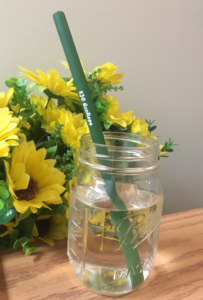
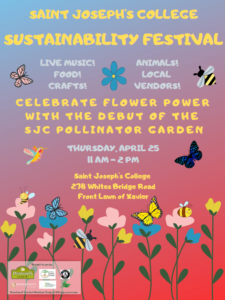
And to cap off the week, everyone’s favorite festival will be Thursday, April 25 from 11am-2pm! Come play a game of corn-hole with the Health & Wellness Club, get a re-usable straw from the Eco-reps, sample Urban Farm & Fermentory kombucha, and so much more at the Sustainability Festival!
The post Get Ready for Earth Week! appeared first on Center for Sustainable Communities.
]]>The post The Sustainability Festival is quickly approaching! appeared first on Center for Sustainable Communities.
]]>During the festival you will have the chance to…
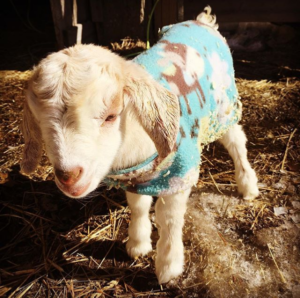
Pet baby bunnies and goats from November’s Harvest
Sample delicious food from local vendors
Meet a beekeeper & learn about honeybees in Maine
See the Burnurwurbskek Singers live from 11:30am-12:00pm
Learn about local sustainable organizations
Outside vendors will include ReVision Energy, Allagash Brewery, ecomaine, November’s Harvest, Go Maine, Maine FoodScapes, Agri-Cycle, Dental Lace, MaineShare, Wood & Sons, Maine Partnership for Environmental Stewardship, Saco River Farms, Loon Echo Land Trust, Maine Conservation Voters, and Old Wells Farm. Many Saint Joseph College departments, clubs, and organizations will also have booths at the festival. Come say hi and learn about Sustainability in Action!
If your organization is interested in having a booth at the festival, please contact Heather Craig at hcraig@sjcme.edu
The post The Sustainability Festival is quickly approaching! appeared first on Center for Sustainable Communities.
]]>The post Saint Joseph’s Named Green College by the Princeton Review appeared first on Center for Sustainable Communities.
]]>
The Princeton Review developed the ranking list using data from its institutional survey for its Green Rating and its surveys of student attending the colleges. Ten data points from the institutional survey were factored into the assessment. Data from the student survey included student ratings of how sustainability issues influenced their education and life on campus; administration and student support for environmental awareness and conservation efforts and the visibility and impact of student environmental groups.
Through the College’s new Institute for Local Food Systems Innovation (ILFSI), students can grow lettuce, radishes, tomatoes, edible flowers, and spring mix year-round in a Freight Farm—an indoor hydroponics growing facility inside the body of a freight truck. Additionally, a hydroponic greenhouse, 3,400 square foot community kitchen, and livestock barn will offer agricultural and food industry programming. ILFSI is designed to support New England’s capacity to produce at least 50% of food consumed, help double the region’s food manufacturing employment over ten years, and provide critically needed workforce training through courses and certificates in hydroponics, food manufacturing, food branding and merchandising, and agritourism.

The post Saint Joseph’s Named Green College by the Princeton Review appeared first on Center for Sustainable Communities.
]]>The post Re-thinking Coffee at College appeared first on Center for Sustainable Communities.
]]>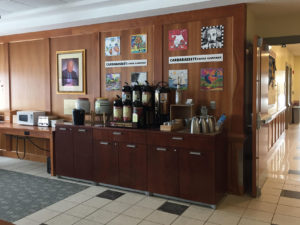 In an effort to reduce single-use cups, Brewed Awakenings (the College’s coffee station located in Alfond Hall) now offers free coffee to students and employees who bring their own reusable cups. Faculty and staff members are also offered free coffee in Pearson’s Dining Hall if they bring a reusable cup. This initiative aims at reducing the number of individual coffee-makers operating in offices across campus and efforts are underway to eliminate all K-Cup Pods, which are not only expensive but are extremely harmful to the environment. By offering coffee in communal spaces, students and colleagues are encouraged to step away from their desks for a short break, stretch, and fuel up!
The post Re-thinking Coffee at College appeared first on Center for Sustainable Communities.
]]>The post College Implements Biodegradable Straws Across Campus appeared first on Center for Sustainable Communities.
]]>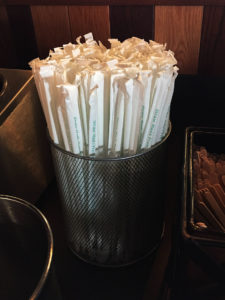
New biodegradable straws on the Saint Joseph’s College campus.
Saint Joseph’s College recently switched from plastic straws to biodegradable straws through an agreement between Student Government, the College’s Mission-Aligned Businesses, and Sustainable Enterprises. Student Government President Ray Mosca ’19 said, “In Student Government, our primary focus is ensuring the highest quality service to the student body in all aspects of campus life. Recognizing the critical role of sustainability on campus and in the greater community, we decided that switching to biodegradable straws combined our interests of promoting high quality service with improving our environmental impact. The Student Government Board recommended this change to the Director of Mission-Aligned Business and Sustainable Enterprises, and biodegradable straws were soon implemented into regular dining services operations. Across the country, companies such as Starbucks, Hyatt, and American Airlines have abandoned plastic straws to find more sustainable alternatives. We wanted to bring this national trend home to Saint Joseph’s, leading the way for colleges in Maine.”

Straw Made From Plants, ECO-PRODUCTS, 100% Compostable.
The post College Implements Biodegradable Straws Across Campus appeared first on Center for Sustainable Communities.
]]>The post Sustainability Festival Announced appeared first on Center for Sustainable Communities.
]]> Flower Power

Sustainability in Action
Thursday, April 25th
11:00 am — 2:00 pm
…and the debut of our very own Community Pollinator Garden! The day will include live music, public art demonstrations, lawn games, animals, food, local vendors, and more! The festival will be located on the Saint Joseph’s College campus at 278 Whites Bridge Road Standish, ME.
The post Sustainability Festival Announced appeared first on Center for Sustainable Communities.
]]>The post Presentation By Saint Joseph’s Students at Statewide Water Challenge Overviews Dangers of Invasive Species appeared first on Center for Sustainable Communities.
]]>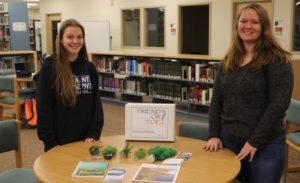
Saint Joseph’s College students Priscilla Carnaroli ’22 & Shaylee Davis ’21 delivered a presentation about invasive species at Maine Campus Compact’s 2nd Annual Maine Student Water Challenge in December 2018.
The Challenge brought together higher education students to discuss solutions to water-related problems in the state and was supported by a National Science Foundation award to Maine’s Established Program to Stimulate Competitive Research (EPSCoR) at the University of Maine. Maine Campus Compact is a coalition of 18 member campuses whose purpose is to catalyze and lead a movement to reinvigorate the public purposes and civic mission of higher education.
“Chemicals in invasive plants can change water quality,” explained Shaylee. Aided by a teaching kit from the Lake Stewards of Maine, the students held up models of invasive species like milfoil, Brazilian waterweed, eelgrass, fanwort, and coontail, while detailing their harmful effects. They touched upon the challenges regarding prevention, identification, and disposal.
“It’s important to spread the word about invasive species, especially to tourists, because they might not be as aware of the issues as locals,” said Priscilla. Although only a freshman, Priscilla is exploring the possibility of veterinary school and enjoys animal science. She is most drawn to “the wonder of science–testing out new ways to do things.” Priscilla was selected as a CASE Scholar, part of the College’s Community-Based Learning Program, which supports students who demonstrate a sustained commitment to environmental issues and community service.
Shaylee envisions a future career in water toxicology, testing water supplies. During the fall she participated in the College’s Environmental Science Semester, a ten-week immersive program through which sophomores and juniors conduct field research in Maine, New Hampshire, and Canada. Shaylee learned about climate change, glacial geography, marine ecology, and oceanography through experiential travel and field methods training.
The post Presentation By Saint Joseph’s Students at Statewide Water Challenge Overviews Dangers of Invasive Species appeared first on Center for Sustainable Communities.
]]>