The post 5 Algarve Towns to Keep in Mind appeared first on Algarve Housing.
]]>
The routine is well established: land at Faro, drive to the coast, stay there. Yet the region was Moorish territory, and later a river economy, long before anyone thought of it as a beach. That history sits a short drive inland, largely undisturbed.
Silves
Silves was the capital of the Algarve when the coast held no interest for anyone. Under Moorish rule the city was known as Xelb, and its red sandstone castle above the Arade River dates from that period. The cathedral below was built directly over the old mosque, a fact the town has never made any particular effort to conceal.
The river explains the rest. Silves operated as a working port centuries before Portimão assumed the role, with cork and citrus moving down the Arade long after the Moors had gone. It is why the old town still behaves like a river settlement rather than a hilltop fortress: the streets run down towards the water, not away from it.
The castle is best visited late in the afternoon, near closing. The sandstone takes on a depth of colour it never shows at midday. The walk down to the old bridge afterwards offers the view worth a postcard.

Tavira
The Gilão River divides Tavira in two, and the town’s four-sided rooftops and baroque churches have kept it out of the category of mass tourism that absorbed part of the western Algarve. It sits at the edge of the Ria Formosa, the protected lagoon system running along most of the eastern coast.
Tavira remained under Moorish rule until 1242 (later than most of the country) and its castle walls date from that period rather than from any romantic nineteenth-century rebuild. The consequence is a town centre that still functions as one: a market that sells food rather than souvenirs, and a resident population that does not disappear in October.
The town, however, is only half the point. The ferry to Ilha de Tavira takes five minutes and delivers you to a barrier-island beach with genuine space on it, even in August. The first ferry of the morning is the one to catch.

Lagos
Lagos has a legitimate claim on world history. The early Portuguese expeditions that rounded Cape Bojador sailed from its harbour during what historians call the Age of Discoveries, and the town’s walls (begun in the thirteenth century and rebuilt over the following three hundred years) still ring much of the old centre.
The town also carries the darker half of that story, and to its credit no longer avoids it. The building on Praça do Infante held the first slave market in modern Europe, in 1444. Since 2016 it has housed a museum that presents that history plainly. It is a short visit and somehow, a necessary one.
The coastline is the other reason to come. The limestone cliffs and sea caves at Ponta da Piedade are best seen by kayak, before the tour boats begin. The light enters the rock formations at an angle it will not repeat later in the day, and the water is empty. The old town, is very charming and mostly pedestrian.

Faro
Faro is the one town most visitors never see at all, despite landing in it. This is a mistake. Cidade Velha, the walled old town, is genuine rather than reconstructed, and it opens directly onto the Ria Formosa nature reserve.
Faro’s status is more recent than it appears: it became the Algarve’s capital only in 1756, after the great earthquake wrecked Lagos, which had held the title before it. It kept the role on the strength of its port and its position at the edge of the lagoon. The Ria Formosa is not scenery. It is a working ecosystem that still supports the region’s shellfish industry, and the boats leaving Faro’s harbour go into it rather than around it.
Walk through the Arco da Vila gate in the early evening. Storks nest on the city walls and the cathedral bell tower, and remarkably few people ever look up. For the lagoon itself, the smaller boat operators go further into the channels, where the birdlife actually is.

Loulé
Loulé is the Algarve without the coast: a working municipal market, a tradition of copper and palm-leaf craftsmanship, and the inland hills at its back. It existed long before summer tourism and gives every indication it could manage without it.
The market building dates from the early twentieth century and keeps the rhythm, with farmers and fishmongers in the morning, café crowds by midday. The market and Old Town hosts every year the MED Festival, a wonderful venue for world music concerts among other local attractions.
Saturday before 10am is when the market is worth crossing the region for. That is when producers from the surrounding hills bring in the week’s picking. Serra do Caldeirão is twenty minutes north.
These five towns account for most of what shaped the Algarve before the beaches did: Moorish rule, maritime history, river trade, and an inland economy that still runs on its own terms.
Visit them, and book your villa at www.algarvehousing.net
The post 5 Algarve Towns to Keep in Mind appeared first on Algarve Housing.
]]>The post The Private Pool Effect: Why It Is Not About Luxury appeared first on Algarve Housing.
]]>
At some point during the booking process, most people have a version of the same thought. Do we really need a private pool? There is the beach. There is a shared pool. It feels excessive.
And then they look at the price difference, and it all makes kind of sense.
What often gets overlooked in that moment is that a private pool is not simply an upgraded amenity, in the way a better mattress or a sea view is an upgrade. It changes the conditions under which rest actually happens. And there is a reasonable body of evidence to explain why.
What the body is trying to do on holiday
The purpose of a holiday, from a physiological standpoint, is recovery. Not entertainment, not stimulation. Recovery.
The body runs on the autonomic nervous system, which shifts between two states: sympathetic activation (the alert, reactive stress-response) and parasympathetic activity, the state associated with rest, digestion, and recovery. Modern life has a talent for keeping the stress response switched on more often than it should be. Full-time work, family logistics, city noise, deadlines, screens, decisions. All of it adds up. Mild, chronic, unremarkable stress. The kind you only notice when it’s gone.
What the parasympathetic system needs in order to engage properly is a specific set of conditions: perceived safety, reduced unpredictability, and the absence of low-grade social monitoring.
A private pool helps create all three more effectively than most holiday environments manage to do.

The cost of shared spaces
Shared pools are not unpleasant. The water is clean, the sun reaches them at the right angle, and nothing is technically wrong. But the brain does not fully disengage in them.
Without consciously deciding to, you are running a quiet background process: Are the children safe? Is this sunbed taken? Did I splash someone? Should I move? None of these are significant concerns. But together, and continuously, they keep the nervous system operating at a low level of alertness.
Psychology research on shared environments documents this form of automatic social monitoring: the constant, low-cost scanning of your surroundings for potential friction. It is not anxiety. It is simply how the brain functions in spaces it shares with strangers. And over time, it is fatiguing, even when nothing goes wrong.
A private pool removes that process almost entirely.
You enter the water when you choose. You stay as long as you like. There is no one to consider except the people you came with. And the brain, released from that background task, is able to do something it rarely manages: it stops.

Water, recovery, and what the research suggests
The study of blue space (how proximity to water affects human psychology and physiology) has developed considerably over the past two decades. A systematic review published in Health Promotion International found that blue space interventions can benefit health, particularly mental health and psychosocial wellbeing, while noting that the evidence is still developing and that outcomes vary depending on the type of exposure and how they are measured.
Marine biologist Wallace J. Nichols coined the term blue mind to describe the calm, lightly meditative state that water tends to induce. A neurological counterpoint to the alert, overstimulated state that sustained modern life produces. One likely mechanism is the reduction of cognitive load: water gives the mind something gentle to attend to, without asking much in return.
The ocean produces this effect too. But the ocean requires logistics: a walk, a decision about timing, parking, the coordination of children and towels, and the moment that is never quite right. A private pool removes the distance between intention and water. You are in it at seven in the morning, or after dinner, or whenever the moment arrives, without planning for it.
That reduction in friction matters more than it might seem. It means the nervous system accumulates more hours in the recovery state across the course of a week. Not because a pool is superior to the sea, but because access without effort changes how often it happens and how it makes you feel.

The role of autonomy
Self-Determination Theory, developed by psychologists Richard Ryan and Edward Deci, and one of the most empirically supported frameworks in motivation research, identifies autonomy as one of three core psychological needs for genuine wellbeing. Not hedonic pleasure, but the deeper kind: the sense of choosing your environment rather than navigating around it.
Holidays, despite being free time in principle, often offer less of this than people expect. Shared spaces come with shared schedules, shared rules, and shared rhythms.
A private pool is, in a quiet way, one of the cleaner expressions of autonomy a holiday can offer. No opening hours. No one is claiming the space before you. No timetable that is not yours. The sense of having your own environment (even temporarily, even rented) satisfies something that research consistently identifies as restorative.
What tends to happen in practice
Most people who stay in a villa with a private pool for the first time describe a similar arc.
The first day, there is mild guilt. We did not need this. It feels like too much.
By the third day, the pool has become the centre of the stay. Breakfast beside it. Children are in it for hours. Someone finishes a book in an afternoon for the first time in years.
By the last day, the recalibration has happened. We are not booking without one again.
This is not indulgence rationalised after the fact. It reflects, fairly accurately, what the pool has actually been doing across the week: reducing friction, lowering the baseline level of social alertness, and making recovery — genuine, physiological recovery — easier to reach and easier to sustain.

A note on precision
It is worth being precise. Most research in this area is observational. The effects of water exposure on well-being are well-documented in natural environments; the direct transfer of those findings to a private villa pool involves a degree of extrapolation. Individual experience varies. A private pool is not a treatment, and a holiday is not a cure.
What the evidence does support is that environments which reduce unpredictability, minimise social monitoring, and provide easy access to water create better conditions for the nervous system to recover. A private pool, by its nature, provides all of these things.
That is not luxury in the conventional sense. It is design for recovery.
Browse our Algarve villas with private pool at www.algarvehousing.net
The post The Private Pool Effect: Why It Is Not About Luxury appeared first on Algarve Housing.
]]>The post Spring in the Algarve: The Smart Season for Those Who Know Better appeared first on Algarve Housing.
]]>Not the kind of traveller drawn to intense heat, crowded beaches, and long days spent in the sun, but someone looking for something gentler. For that person, spring is not a compromise. It is the sweet spot.

This is the Algarve with its manners intact.
1. First, choose your base
Before you look at flights, before you check the weather, choose where you’ll stay.
“The Algarve” is not one place. It’s a stretch of coastline with completely different atmospheres depending on where you land. About 150 kilometres separates the eastern border town of Vila Real de Santo António from Sagres in the west, and those kilometres carry real differences in landscape, pace, and what kind of trip you’ll actually have.
If you stay near Albufeira expecting quiet charm, it may feel busier than you imagined, even in spring. If you stay in Tavira expecting energy and nightlife, you’ll find something slower and more refined. If you head to Sagres without realising how raw and exposed it is, it can feel beautifully remote, or simply too far, depending on the day.
Spring makes these differences more noticeable. The character of each place comes through more clearly when there’s no crowd to flatten it out. Get this right, and everything else becomes easier.
2. The weather is good, just not predictable
Most days sit comfortably between 18–25°C. Warm enough for a café table outside in the morning, easy enough for a long afternoon walk.
But it’s not consistent. You may have a perfect blue-sky morning followed by wind off the Atlantic by afternoon, or a short burst of rain that disappears as quickly as it came. The eastern Algarve (around Tavira) tends to be more sheltered. The west, around Sagres, is more exposed. If you’re sensitive to wind, this distinction matters.
The mistake is expecting full reliability. The advantage is building days that don’t depend on it. Spring rewards people who don’t over-plan.

3. The ocean is still cold (and that’s part of the deal)
In spring, sea temperatures hover around 16–18°C. On sunny days, the water looks extraordinarily clear, and the light does something to it that photographs never quite capture. But it’s refreshing at best, bracing at worst.
If swimming is essential, choose accommodation with a heated pool. If not, you’ll find that cliff walks and time near the water more than compensate. There’s a particular kind of afternoon available in spring: sitting above the sea with a coffee or a glass of something, watching the light change, with no obligation to get in. That’s not a consolation prize, believe me.
4. The Algarve turns unexpectedly green
If you’ve only seen pictures of the Algarve in summer (that dry, golden, almost bleached colors), spring will catch you off guard.
Fields go bright green. Along the roads and cliff paths, wildflowers bloom. Yellow and purple and white, growing out of wall cracks and verges. Inland, around Monchique or the foothills above Loulé, it gets quietly beautiful in a way that surprises people who only came for the coast.
It’s short-lived. By early summer, the heat takes over, and the landscape dries back out. Spring is the only time you get to see this version of it.

5. It feels alive without feeling crowded
Restaurants are open, terraces are busy, towns have energy — but without the density of summer. You can still find a table without planning days ahead and park without stress.
Outside of Easter, which brings a genuine peak for a week or so, it’s a rare middle ground.
The Algarve feels like a place, not a destination.
6. Your days will naturally slow down
Mornings start with light already filling the space by eight. There’s something about Algarve morning light in April. Low and golden. Late morning, you head somewhere. Loulé’s covered market on a Saturday is worth the trip. Loud, colourful, smelling of fresh fish and coriander.
Lunch will be longer than expected. This is not a failure of scheduling. This is the whole point and the Algarve gift.
Afternoon proceeds to exist. Evening comes easily, dinner earlier than you’d eat it at home, and then the comfortable quiet of a town that isn’t trying to entertain anyone who isn’t already having a great time.
7. This is when you explore, not just “do beach”
The heat that makes inland exploration difficult in summer simply isn’t there. You can walk through towns without effort and reach the parts of the Algarve that most visitors never see.
Tavira rewards a full day. A Roman bridge, a castle, a slow-moving river. Silves is worth an afternoon. An old Moorish capital with the best seafood restaurant in the Algarve: Cervejaria Rui. Alcoutim, in the far northeast, is the kind of village that makes you wonder how places like this still exist. Alte, just because. And so on.
Spring is about discovering.

8. The food deserves a mention
Cataplana is the dish to order at least once: a slow-cooked seafood stew made in the copper pot it takes its name from. Ameijoas à Bulhão Pato: clams cooked with garlic, coriander, and plenty of flavour are another classic worth trying. Then there is grilled fish, usually so fresh and simply prepared that it hardly needs an introduction, and piri-piri chicken.
In spring, the restaurants that cater mainly to locals are still in a good mood. It’s before the long season has worn anyone down.
9. Better prices
Accommodation is more accessible, and flights are more manageable. The same house, the same experience. All of it costs less than it will in eight weeks, and comes with fewer people attached.
By early summer, it changes a bit. This is the window where value and experience go really well together before the glorious Summer.
Spring in the Algarve isn’t about intensity. It’s about getting the proportions right. Light without excess heat, energy without crowds. The Algarve in peak season is impressive. In spring is enjoyable.
The post Spring in the Algarve: The Smart Season for Those Who Know Better appeared first on Algarve Housing.
]]>The post How Algarve Light Shapes the Mind appeared first on Algarve Housing.
]]>
For many people who relocate south, whether temporarily or permanently, the shift is not merely visual. Sleep often improves, mornings feel easier, and the nervous system begins to settle. What feels intuitive is, in fact, rooted in biology.
Natural daylight is one of the body’s most powerful regulators. When sunlight reaches the retina, it signals the brain’s central clock, the suprachiasmatic nucleus, which governs circadian rhythm: the system responsible for sleep–wake cycles, hormone release, energy levels, and mood.
Research consistently shows that regular exposure to daylight, particularly in the morning, supports circadian alignment. People who receive more daytime light tend to fall asleep more easily, sleep more deeply, and experience greater emotional stability.
In regions where daylight is scarce or highly seasonal, circadian disruption is common. In the Algarve, by contrast, clear skies and outdoor living create a biological environment that aligns closely with how the human body evolved to function.

Natural Light and Mental Wellbeing
As said before, sunlight plays a direct role in mood regulation. Exposure to natural light influences serotonin activity, a neurotransmitter associated with emotional stability, focus, and overall well-being. Large-scale observational studies and systematic reviews consistently associate higher daylight exposure with improved subjective well-being and a lower prevalence of mood-related symptoms.
This does not mean that sunlight causes happiness. What the evidence shows is more precise: environments that provide regular access to natural light reduce physiological stress on the nervous system and support emotional balance.

Sunlight, Vitamin D, and Brain Health
Sunlight enables the synthesis of vitamin D through the skin, triggered by ultraviolet-B radiation. Vitamin D functions hormonally in the body, influencing immune response, inflammation and brain chemistry.
Low levels of vitamin D have been repeatedly associated with depressive symptoms, although researchers remain careful to distinguish association from direct causation. The Algarve’s latitude and climate allow for regular, moderate sun exposure across much of the year, making it easier to maintain healthy vitamin D levels, particularly when exposure occurs earlier in the day and with appropriate skin protection.
Why Living by the Sea Feels Different
Living close to the ocean introduces additional environmental effects. Water reflects light, increasing ambient brightness and softening visual contrasts. This creates a more evenly illuminated environment, reducing visual strain and cognitive fatigue.
Psychological research on attention restoration suggests that open horizons and low visual clutter allow the brain to recover from sustained mental effort. Coastal environments naturally provide this form of visual relief. The sea, the sky, and the horizon reduce overstimulation rather than add to it.

Light, Cognition, and Creativity
Natural light supports cognitive function and creative performance. Daylight exposure has been linked to dopamine regulation and prefrontal cortex activity, both associated with motivation, planning, and creative thinking.
This may help explain why so many artists, writers, and designers find a sustained creative rhythm in the Algarve.
Scientific Limits and Balance
It is important to remain precise. Most research in this field is observational. Mental health is influenced by many factors, including genetics, relationships, work, stress, and physical health.
Excessive sun exposure carries real risks, including skin damage. The benefits described here are associated with regular, moderate exposure and with environments that naturally support healthy rhythms, rather than constant or unprotected sun.
What science does support, consistently and clearly, is that environments offering abundant natural daylight, outdoor movement, and alignment with human biological rhythms create conditions that support wellbeing more easily.

Living with the Light
In the Algarve, light is not a decorative element. It is part of the daily infrastructure. It enters homes naturally, shapes routines, and quietly guides the body back into rhythm.
Living by the sea here is not only a lifestyle choice. It is a physiological one. Once experienced, it is difficult to forget. Why? Because it just feels fundamentally right.
The post How Algarve Light Shapes the Mind appeared first on Algarve Housing.
]]>The post Award-Winning Algarve: The Titles That Built Its Reputation (2000–2025) appeared first on Algarve Housing.
]]>
The Algarve ended 2025 with a proper headline: on 6 December 2025, at the World Travel Awards Grand Final in Bahrain, it was named World’s Leading Beach Destination 2025.
That title sounds like a big, shiny “moment”. But it’s really the latest line in a longer record. A trail of recognitions that touches four things the Algarve is very good at: coastline, golf, food, and standards.
To keep this airtight, this post sticks to region-level distinctions that explicitly name the Algarve (or, in the case of Blue Flag, official counts showing how strongly the region performs within Portugal). Read it as four lanes running in parallel: beach awards (World Travel Awards), golf awards (IAGTO), gastronomy recognition (AURUM/CEUCO), and Blue Flag quality standards. Different institutions, different criteria, same conclusion.
The Algarve hasn’t been “discovered” lately. It’s been validated for a while.
Beaches — World Travel Awards (2012–2025)
The Algarve’s beach-awards story has two chapters: Europe first, then the world. It was named Europe’s Leading Beach Destination in 2012 and 2013, then again in 2015, 2016, 2017, and later from 2019–2023. Then it stepped onto the global podium: World’s Leading Beach Destination in 2020, 2021, 2024, and 2025 — with the 2025 win confirmed at the Grand Final on 6 December 2025.
In plain terms, the Algarve didn’t win once and disappear. It keeps returning to the winners’ list often enough to turn “award” into “pattern”.

Golf — IAGTO (2000–2020 title year)
Before the Algarve became a repeat name in beach categories, it earned global credibility through golf. In 2000, it was voted World’s Best Golfing Destination by IAGTO (International Association of Golf Tour Operators).
Later recognitions reinforce that early signal, including an IAGTO-backed European milestone in 2014 and a modern-era headline: IAGTO Golf Destination of the Year for 2020, announced on 17 October 2019 (for the 2020 title year).
The subtext here is simple: the Algarve’s “award story” isn’t built only on beauty. It’s built on infrastructure, consistency, and an experience that delivers over and over again.

Gastronomy — AURUM Awards / CEUCO (2018)
In 2018, the Algarve received a recognition that matters for anyone who travels with appetite: Best European Region in Tourism and Gastronomy 2018, awarded by CEUCO at the AURUM Awards.
This isn’t about a single restaurant or a single chef. It’s a regional distinction — a nod to the Algarve as a place where tourism and food culture genuinely meet, not as a marketing concept, but as something visitors can taste, book, and remember.
It’s also a quiet reminder that the Algarve’s identity isn’t just “beach.” It’s table, market, tradition, and craft.

Blue Flag — Algarve totals (2025)
Not every recognition arrives with a gala. Some arrive as a standard you can feel without noticing: cleaner water, better management, safety systems that work, beaches that function.
In 2025, the Algarve recorded 91 Blue Flag-awarded sites: broken down as 85 beaches, 4 marinas, and 2 tourism vessels.
Blue Flag is an environmental and quality label with defined criteria, and these numbers matter because they show the Algarve’s coastline isn’t only famous. It’s maintained.
So when the Algarve ends 2025 with another world title, it doesn’t read like hype. Instead, it reads like what happens when a region does the work.
The post Award-Winning Algarve: The Titles That Built Its Reputation (2000–2025) appeared first on Algarve Housing.
]]>The post Birdwatching in the Algarve — The Seasonal Guide appeared first on Algarve Housing.
]]>Between the Atlantic, the Mediterranean, and the route to Africa, everything seems to pass through here at some point: flamingos, raptors, tiny warblers that weigh less than a coin. The result is simple: there are birds all year, but the experience changes completely from season to season.

WINTER
(Dec–Feb) – Flamingos and quiet light
Winter in the Algarve is cool rather than harsh. On most days, you can walk in a light jacket under a clear sky, which is exactly what thousands of birds do as they escape the cold further north.
This is peak time for the wetlands. In Ria Formosa and Castro Marim, the numbers of ducks and waders swell. At low tide, the mudflats look almost patterned: grey plovers, curlews, redshanks, godwits, all feeding in loose groups. In the deeper water, you find shoveler, wigeon, teal, and other dabbling ducks, often mixed in the same lagoon.
Flamingos are here all year, but winter is when you are most likely to see large groups together, especially from November to March. The saltpans around Tavira, Olhão, and Castro Marim are often dusted with pink – sometimes close enough for you to see the birds, heads upside down in the water.
The feeling in winter is one of space and calm. Boardwalks and lagoon trails are almost empty, the light is low and clean, and the birds are concentrated in relatively small areas. For a first contact with birdwatching in the Algarve, it is hard to beat.

SPRING
(Mar–May) – Migration and birdsong
Spring is movement. From March onwards, birds that have wintered in Africa start pushing north again, and the Algarve becomes a busy junction.
On the coast, Ria Formosa is full of small changes. One week, you might find mainly wintering waders, the next, new species appear almost overnight in fresh, bright plumage. Little terns return to the channels, constantly calling as they work the water. The purple swamphen, the park’s unofficial mascot, is easier to see as the days lengthen, moving between reedbeds in flashes of deep blue and red.
Inland, the soundscape shifts. Orchards, hedgerows, and the low hills of the barrocal pick up a morning chorus: warblers, finches, serins, nightingales. This is also when you are more likely to see short-toed eagles and booted eagles circling over the countryside, scanning for snakes and small prey around the edges of the fields.
Spring in the Algarve has a particular energy: longer days, wildflowers, comfortable temperatures, and a sense that everything is either arriving, nesting, or passing through. If you visit now, expect variety rather than huge numbers of a single species – and expect your morning walk to take longer because you keep stopping to listen.

SUMMER
(Jun–Aug) – Early mornings and resident stars
In summer, the Algarve slows down in the middle of the day. People hide from the heat, so do birds. Most activity happens early and late, which is exactly when the region is at its best visually.
This is the season to get to know the resident species that define the long, hot months. In farmland and open country, you can hear bee-eaters rolling their soft calls as they hunt insects in the air, often perched on wires in loose groups. Swifts scream around villages at head height. Hoopoes cross tracks in short, undulating flights, flashes of peach, black, and white. Iberian magpies move between trees in noisy, social flocks.
The wetlands don’t empty, they simply feel more relaxed. Flamingos remain on the saltpans, herons and egrets patrol the shallows, black-winged stilts pick delicately through the water on stilt-thin legs. Around places such as Lagoa dos Salgados or the Alvor estuary, a short walk at sunrise or just before sunset will usually reward you with a good mix of birds and beautiful light.
If you come in July or August, the key is timing. Set the alarm for at least a couple of mornings and take a 30–40 minute loop along a lagoon or estuary before breakfast. Birdwatching becomes part of your beach holiday rather than a separate activity.

AUTUMN
(Sep–Nov) – The main show: Raptors and return migration
Autumn is when the Algarve shows its full force as a migration corridor. Birds that bred in northern and central Europe start moving south again, and the region acts like a funnel.
Nowhere is this more obvious than around Sagres and Cabo de São Vicente. From late August to early November, birds of prey follow the coast and ridges, concentrating near the southwestern tip of Europe before deciding when and where to cross towards Africa. On the right day in late September or early October, you can see honey-buzzards, booted eagles, kites, and harriers drifting overhead in steady numbers, riding the thermals as if they were slow, deliberate waves.
At the same time, the wetlands fill again with migrant birds. Ria Formosa, Castro Marim, the Alvor estuary, and Lagoa dos Salgados all act as refuelling stations. Waders, terns, and ducks drop in, feed intensively for a few days, then vanish south during the night. Visit the same spot twice in a week, and the cast may have changed completely.
Every October, the birdwatching festival in Sagres turns this seasonal movement into a kind of open-air classroom. There are guided walks, sea trips, and talks for all levels – from specialist ringers to families pointing at their first kestrel.
Autumn has a particular atmosphere: the sea is still warm, the beaches are calmer after the peak of August, but the sky is busy. It feels like the Algarve in transition, and you can see that transition happening in real time.
An Honourable Mention: Swallows and Storks
Before we put the binoculars away, two birds deserve a quiet standing ovation. They are so present in everyday life in the Algarve that most people stop noticing them.
Swallows arrive with the warmer light and behave like a seasonal clock. They skim low over village squares, turning evening air into a loose weave of fast, dark shapes. For many residents, the first swallow of the year is the moment that confirms spring has properly begun.
White storks feel almost permanent. Their nests sit on church towers, chimneys, cranes, and pylons, sometimes kept and rebuilt in the same spot for years. You see them standing in fields, circling on rising air above the edge of town, or clacking their bills on a nest while someone drinks coffee on the terrace below. They are less about rarity and more about identity. It lives in the same streets, roofs, and skylines as you do.
The post Birdwatching in the Algarve — The Seasonal Guide appeared first on Algarve Housing.
]]>The post The Algarve’s Invisible Architecture appeared first on Algarve Housing.
]]>The Algarve’s quiet radicalism is written in white cubes and rooftop terraces that may have inspired Le Corbusier, lace chimneys carved into the sky, and salt warehouses that look like geometry lessons left in stone.

What’s There Waiting to Be Seen
Most visitors land in Faro dreaming of cliffs and cocktails. Yet the region’s true artistry lives away from the postcard. Wander Olhão’s old quarters or climb a terrace in Tavira, and the Algarve turns geometric: cubes stacked in sunlight, flat rooftops like stage sets, chimneys rising as delicate filigree.
This isn’t the architecture of cathedrals and palaces. It’s a different kind of heritage — vernacular architecture shaped by necessity, simplicity, and light. A museum that belongs in the streets, never curated, never ticketed. It’s been under our noses for a long time, carrying laundry lines, satellite dishes, and everyday lives while quietly existing, and showcasing what design could be.
Olhão: A Geometry Lesson in White
Olhão wears the nickname “Cubist City” like a shrug. Its houses are not trying to impress; they were built to function. Boxy, whitewashed, with flat açoteias stacked like Lego, they were designed to keep the heat out and to turn rooftops into working space.
Standing in the Barreta neighborhood feels strangely avant-garde. Architectural historians have pointed out how these houses echo the same principles that modernists like Le Corbusier would later celebrate: simplicity, efficiency, and radical form. What locals built out of necessity looked uncannily like the language of modernism.
Only here, you will find it inhabited by cats and the smell of grilled sardines.

Açoteias: Rooftops That Worked Overtime
Açoteias are the Algarve’s secret stage. Born of Islamic tradition, these flat terraces doubled as open-air kitchens, pantries, and lookout points. On some, figs were left to dry in the sun; on others, women kept watch for returning boats. They were also social spaces — a theatre of everyday life, where neighbours exchanged news across the rooftops.
Even now, they are part utility, part poetry. Climb one in Tavira or Olhão at sunset, and you understand the beauty of this flat roof. It’s a design move that folds climate, necessity, and community into architecture.
Call it slow luxury before we even had a word for it.
Chimneys: Signatures in the Sky
Then come the chimneys: slender, flamboyant, sometimes outrageous. From the 17th century onwards, Algarve families turned them into vertical calling cards. A tall, lace-like chimney meant status, while a simple one whispered modesty.
Each design was unique. Geometric cut-outs casting shadows, some so delicate they look crocheted in lime. They remain the Algarve’s most eccentric skyline, an omnipresent element to be seen from Tavira to Lagos.
Stand under one at golden hour and you’ll see it: a column of shadow knitting the sky into fabric. In the Algarve, they embroider their chimneys.

Salt Warehouses: Industrial Minimalism
Salt was once a real commodity in the region. Tavira, Castro Marim, Olhão — many built fortunes on it. Their warehouses still stand: long, low halls with pitched roofs, bare walls, and no intention of beauty.
And yet, walk among them now, and they could be mistaken for minimalist art installations. Unadorned geometry. Texture of stone against sky. Some have collapsed, others have been reborn as cultural spaces. They are the solid testimony of a time when this coast exported not leisure, but subsistence.
When Tradition Met Modernism
The story didn’t end in the 19th century. From the mid-20th century onwards, architects such as Manuel Gomes da Costa developed a modern idiom for the Algarve — cubic geometries combined with arches, open terraces, and the characteristic chimney that anchored the design to place.
Migration added further layers of influence. Returning communities from Brazil and Venezuela introduced elements such as expansive verandas, the use of reinforced concrete, and larger scales of construction. These inputs generated a hybrid typology — neither exclusively traditional nor fully modernist, but one that reshaped the Algarve’s built landscape.
Where to See the Invisible Museum
You don’t need a guidebook. You need curiosity and time to look up.
Olhão’s Cubist Quarter, in the Barreta and Levante districts, is a geometry of pure white cubes and rooftop terraces. In Tavira, the skyline rises in rooftops and chimneys: lime rendered into delicate lacework against the sky. Castro Marim unfolds in salt pans and haunting warehouses set beside the marsh. And Faro reveals its layers: a walled Old Town of medieval and Renaissance heritage, framed by surrounding districts where vernacular forms met mid-century reinterpretation.
For a region so often reduced to brochures of sun and sand, this is the radical counterpoint. An architecture that is modest, functional, and breathtaking in its restraint.
At Algarve Housing, we call it the luxury of quiet forms.
The post The Algarve’s Invisible Architecture appeared first on Algarve Housing.
]]>The post 4 Algarve Recipes to Cook During Your Stay – or Back Home appeared first on Algarve Housing.
]]>The Algarve is often described in shades of blue and gold – the colour of the sea, the sand, and the late sunsets. But ask a local, and they’ll tell you the region also smells like grilled sardines, tastes like just-picked oranges, and sounds like olive oil hitting a hot pan.
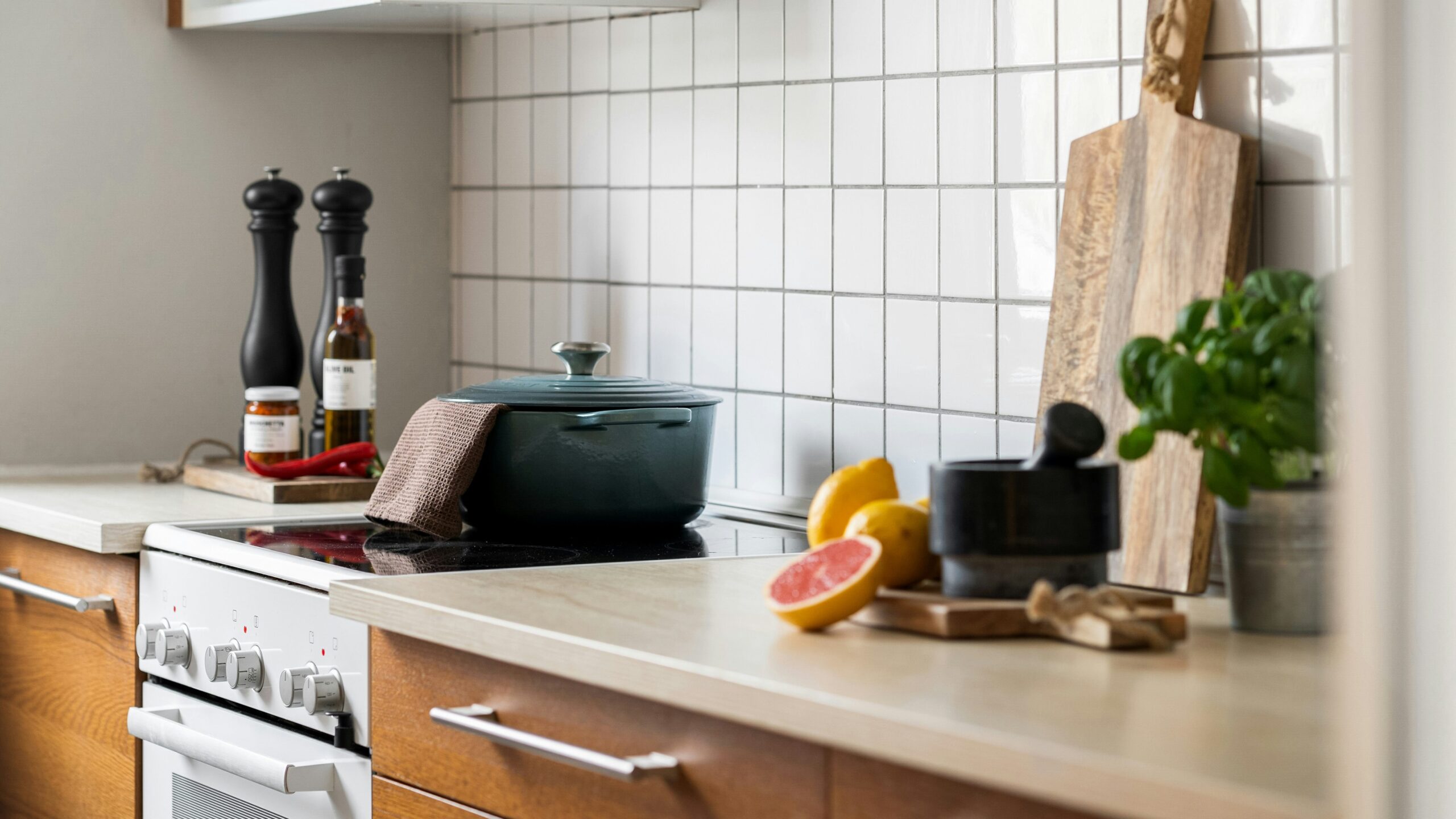
If you’re staying with us, your kitchen is ready. If you’re reading this from your apartment in Amsterdam, Zurich, or Manchester, you can still try these recipes. They’ve been adapted for home cooks outside Portugal, without losing their soul.
And while some Algarve classics require skills best left to the experts (grilled fish, we’re looking at you), these four dishes are achievable, rewarding, and a direct route to Portuguese culinary tradition.
Algarve Salad
Known locally as salada à algarvia, this combination of tomatoes, cucumber, onion, and peppers is a staple of summer tables across the south of Portugal. It’s almost always served as a side to grilled fish or frango piri-piri.
The key to its flavour lies in the olive oil (in the Algarve, usually fruity and low in acidity) and in using sun-ripened produce. Inland, coriander is common. Along the coast, oregano often takes its place.
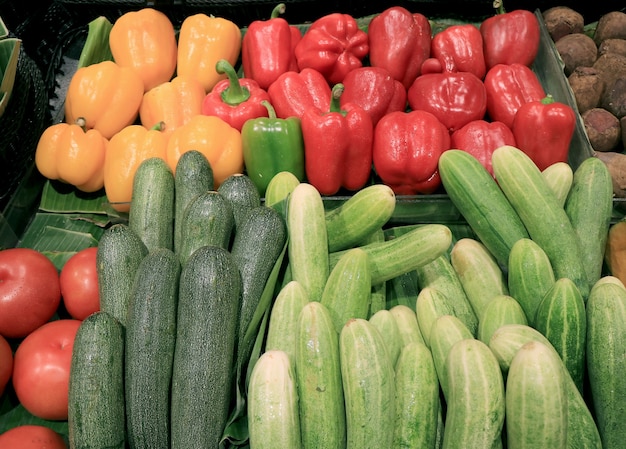
— Ingredients (serves 4)
- 4 ripe tomatoes (beefsteak, heirloom, or any with rich flavour)
- 1 cucumber
- 2 green peppers
- 1 small red or white onion
- Fresh oregano or coriander
- Olive oil, white wine vinegar, sea salt, black pepper
— Recipe
- Roast the peppers
- Place the whole peppers directly over a gas flame or in a preheated oven at 220°C (425°F) until the skin blisters and blackens.
- Transfer to a plastic bag or cover with a damp tea towel for 10–15 minutes — the steam will loosen the skin.
- Peel off the skin, remove seeds, and slice into strips.
- Prepare the other vegetables
- Chop the tomatoes and cucumber into medium cubes.
- Slice the onion thinly.
- Assemble the salad
- Combine tomatoes, cucumber, roasted pepper strips, and onion in a large bowl.
- Season with salt and pepper.
- Dress generously with olive oil and a splash of vinegar.
- Sprinkle with oregano or coriander.
- Serve
- Toss just before serving to keep the vegetables crisp.
- Best enjoyed with fresh bread to mop up the juices.
Adaptation Tip: Outside Portugal, choose market or garden tomatoes over supermarket ones for the sake of flavour. Sweet red peppers work well, but if you can find the elongated type often sold as “Romano” peppers, they’re closer in flavour to those grown in the Algarve.
Fish Caldeirada
Caldeirada is a traditional Portuguese fishermen’s dish found along the entire Atlantic coast, but in the Algarve, it reflects the day’s catch: sea bass, bream, mackerel, or monkfish. Layers of fish, potatoes, peppers, and onions are simmered gently with olive oil, water, and a sip of white wine.
Historically, it was cooked aboard fishing boats or in simple seaside kitchens, using a single pot to feed the crew or family.
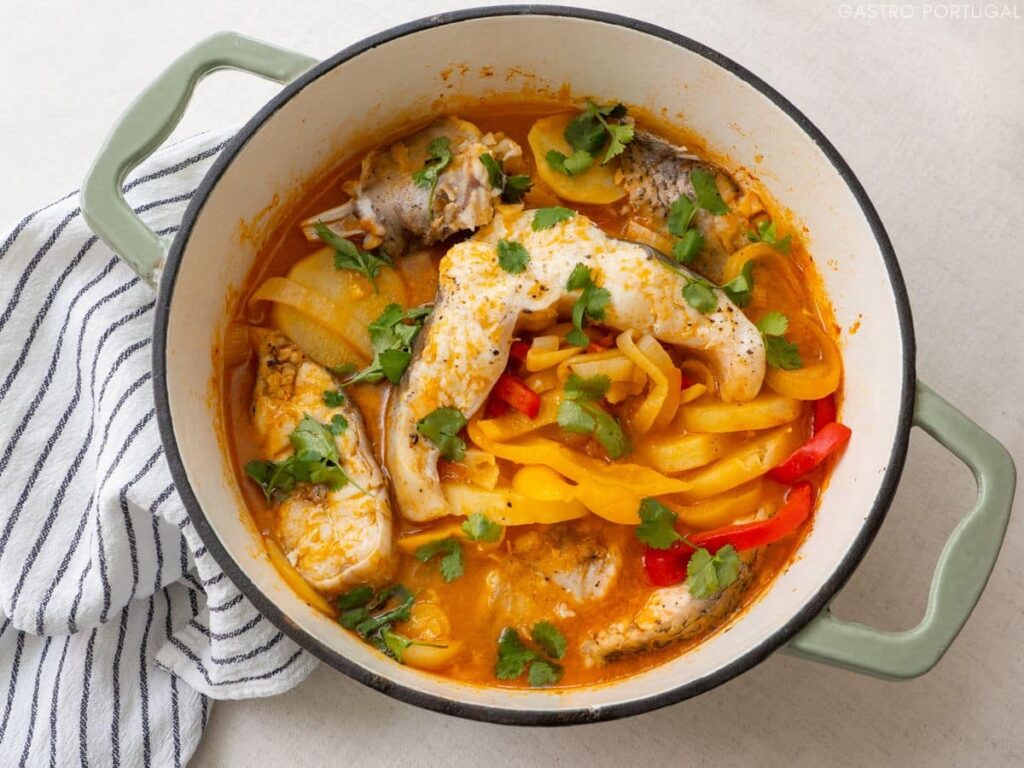
— Ingredients (serves 4)
- 800 g mixed fish steaks (a combination of firm white and oily fish, for example: tamboril, corvina, cação, safio, raia, etc.)
- 4 potatoes, sliced
- 1 onion, sliced
- 2 tomatoes, sliced
- 1 red pepper, sliced
- 2 garlic cloves, sliced
- 1 bay leaf
- 1 glass of white wine
- 200 ml of water
- Olive oil, salt, black pepper
— Recipe
- In a wide pan, layer potatoes, onion, tomato, pepper, and the fish. Repeat layers.
- Season between layers and drizzle with olive oil.
- Add garlic, bay leaf, wine, and the water.
- Cover and simmer gently for 35–40 minutes. Do not stir.
Adaptation Tip: In places without Algarve species, halibut, cod, sea bass, haddock, or mackerel can be good alternatives. But it’s really up to your personal taste. In the Algarve, every family has its own preferred mix.
Pork and Clams Cataplana
This dish, Carne de Porco à Alentejana, despite its name, is widely made in the Algarve, often in a cataplana – a hinged copper cooking vessel introduced to southern Portugal by Moorish influence centuries ago.
The combination of marinated pork and clams became popular in coastal areas where both ingredients were readily available. The sealed cooking method traps steam, intensifying the flavours.
It is typically served with fried potato cubes and lemon wedges.
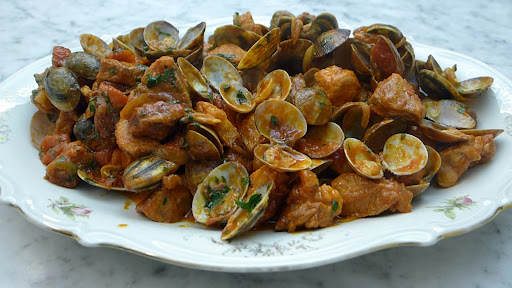
— Ingredients (serves 4)
- 800 g pork (shoulder or loin), cut into 3–4 cm cubes
- 500 g clams, well purged of sand
- 4 garlic cloves, chopped
- 2 bay leaves
- 1 tbsp massa de pimentão (Portuguese red pepper paste)
- 200 ml dry white wine
- Olive oil
- Sea salt and freshly ground black pepper
- Fresh coriander, chopped (for serving)
- Lemon wedges (for serving)
— Recipe
- Marinate the pork
- In a large bowl, combine the pork, massa de pimentão, garlic, bay leaves, wine, salt, and pepper.
- Cover and refrigerate for at least 4 hours, ideally overnight.
- Prepare the clams
- Soak the clams in salted water for 2–3 hours to remove sand.
- Drain well.
- Cook the pork
- Heat olive oil in a wide pan or cataplana (if you got one during your stay).
- Drain the pork from the marinade, reserving the liquid.
- Sear the pork over medium-high heat until browned on all sides.
- Add the marinade
- Pour the reserved marinade into the pan.
- Cook until the pork is tender and the sauce has reduced slightly.
- Add the clams
- Place the clams on top of the pork, cover, and cook for 3–5 minutes, until they open.
- Serve
- Sprinkle with fresh coriander.
- Serve immediately with fried potatoes and lemon wedges.
Adaptation Tip: If massa de pimentão is hard to find outside Portugal, mix sweet paprika with a little smoked paprika, sea salt, and a splash of olive oil to form a paste. Fresh Mediterranean-style clams are ideal, but mussels can work as a substitute.
Orange Roll (Torta de Laranja)
The Algarve is Portugal’s main orange-growing region, with production centred in Silves and Tavira. The climate produces naturally sweet fruit, with low acidity and a rich aroma. Torta de laranja is a classic local dessert, valued for its moist texture (achieved by baking it just enough to set) and its intense citrus flavour.
It is a fixture in pastelarias, home kitchens, and festive meals.
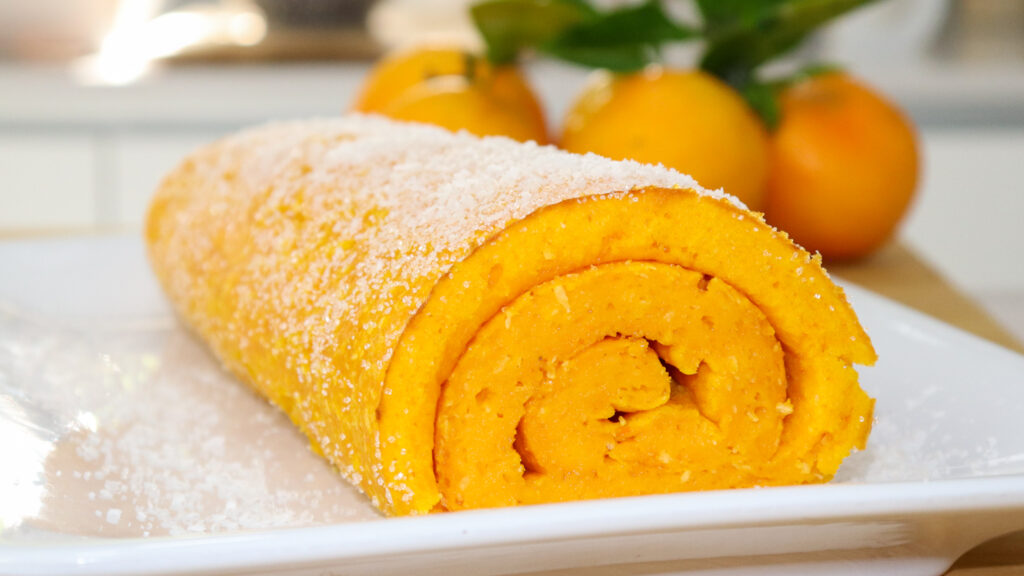
— Ingredients (serves 4)
- 8 eggs
- 500 g sugar
- 40 g butter, melted
- 2 tbsp flour
- Zest and juice of 2 large Algarve oranges (or best available)
- Sugar for dusting
— Recipe
- Preheat oven to 180°C. Line and butter a rectangular tin (approx. 30×20 cm).
- Whisk eggs and sugar lightly – do not create foam.
- Add flour, butter, orange zest, and juice. Mix gently.
- Bake for 15–20 minutes – the centre should remain slightly wobbly.
- Sprinkle a clean tea towel with sugar, turn out the sponge onto it, peel off the paper, and roll while still warm.
Adaptation Tip: In northern climates, Sicilian or Spanish oranges offer the closest flavour to Algarve fruit.
—
Cooking Algarve food at home is a way to keep your holiday alive. But for the real thing, meaning sun-ripened tomatoes + fresh-caught fish + oranges picked that morning, nothing replaces being here.
Book your stay with Algarve Housing at www.algarvehousing.net
The post 4 Algarve Recipes to Cook During Your Stay – or Back Home appeared first on Algarve Housing.
]]>The post 8 Summer Events That Will Make you Fall in Love With the Algarve appeared first on Algarve Housing.
]]>But behind the curtain of tourism brochures lies a different season — one shaped by tradition, ritual, and a quiet sense of place.
From photojournalism to grilled sardines served by the river, this is where the region breathes with intention. These aren’t festivals designed for Instagram. They exist because they have always existed — and because they continue to mean something.
What follows is not a list of entertainment options. It’s a map, crafted for those who prefer stories over schedules.
If you’re ready to see the Algarve on its own terms, start here…
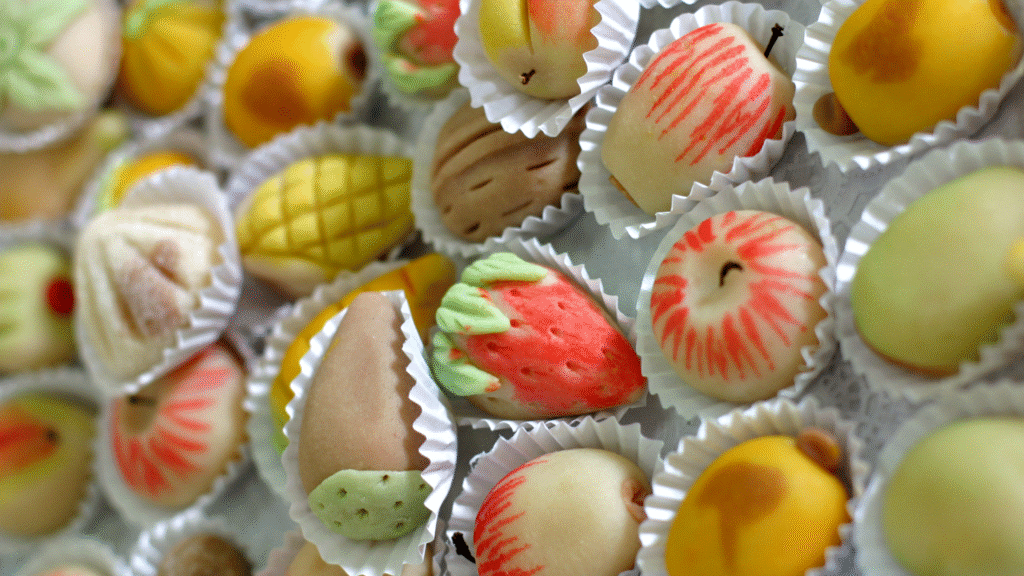
— Arte Doce
Where: Lagos
When: 23 to 27 July
There’s art, and then there’s sugar art. This competition and exhibition celebrate the Algarve’s convent sweet-making tradition, born in the region’s monasteries using almonds, eggs, and sugar.
Bakers and culinary schools display intricately shaped marzipan figures, sculpted cakes, and edible tributes to local landmarks. It’s part gastronomic showcase, part cultural tribute — with live music and regional products completing the atmosphere.
— World Press Photo
Where: Antiga Lota — Portimão
When: 20 July to 10 August
Housed in Portimão’s former fish auction hall, this international exhibition presents the year’s most striking photojournalism.
The themes are urgent: human rights, conflict, climate, migration, identity. The setting is raw and industrial, offering the perfect contrast to the emotional depth of the images. Entry is free, and each photograph demands your time.
A vital annual exhibition for those who seek clarity in complexity.
— Melchior Sessions with Acácio Barbosa
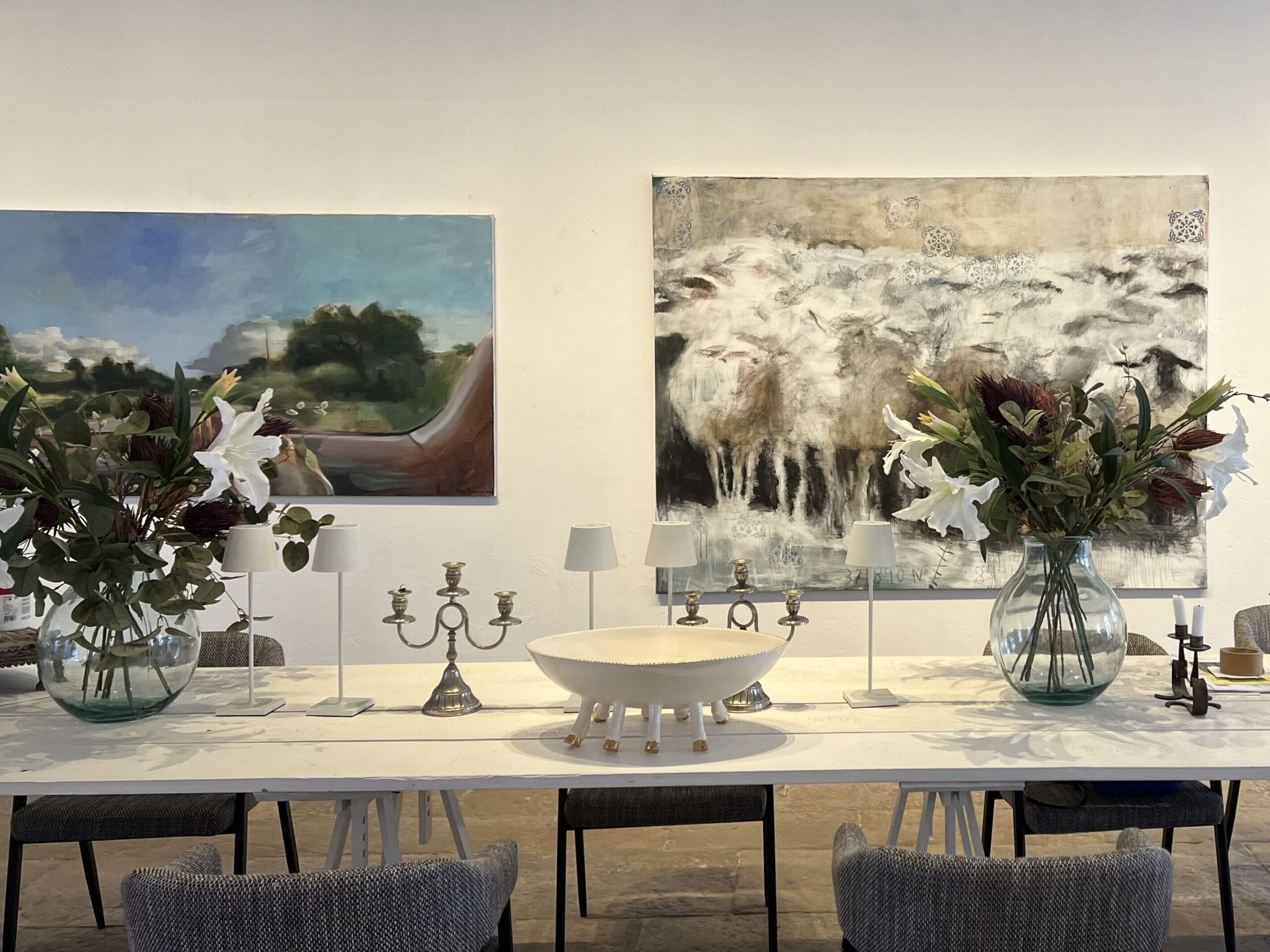
Where: Galeria Meinke Flesseman — Portimão
When: 27 July
At Melchior Sessions, each concert offers a carefully curated musical experience, bringing together exceptional artists in an atmosphere that celebrates both the intimacy of live performance and the timeless elegance of the space.
Born in Portugal in 1990, Acácio Barbosa has dedicated his life and work to the Portuguese guitar. He approaches music as both craft and discovery, guided by a quiet devotion to learning, play, and storytelling. Expect: a welcome drink, delicious bites, and music that gives you goosebumps.
— Festival da Sardinha
Where: Riverside — Portimão
When: 5 to 10 August
Every August, Portimão marks its most emblematic event along the city’s riverside. The air is filled with the smell of charcoal and sardines. Live concerts take place each evening, drawing large crowds and adding to the festive atmosphere.
While sardines remain the focus, the festival offers a broad selection of local food. Visitors can expect regional snacks, sweets, and produce, as well as craft stalls and contributions from community groups across the Algarve.
— Feira Medieval de Silves
Where: Silves Old Town
When: 8 to 16 August
Silves leans into its Islamic and medieval heritage with one of Portugal’s most immersive historical events.
Knights on horseback, falconry, fire shows, market stalls, live theatre. The castle and cobbled streets become the backdrop for a re-enactment that stretches from the 8th to the 13th century. You can dress the part, eat as they did, and walk through centuries — no screens needed.
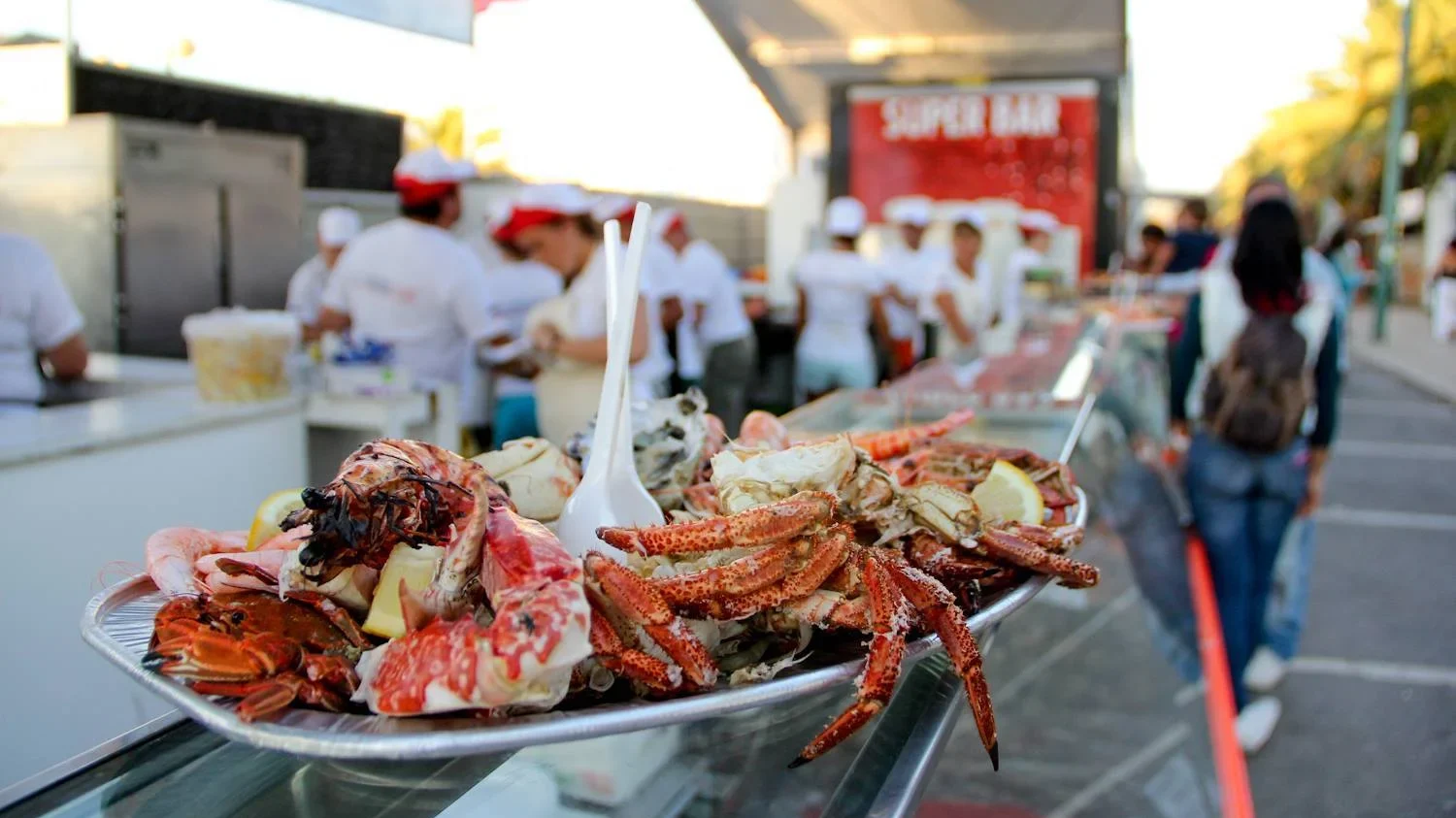
— Festival do Marisco
Where: Jardim Pescador Olhanense — Olhão
When: 9 to 14 August
Seafood, prepared metres from the sea. From lobster to clams, oysters to octopus, this is the Algarve’s definitive seafood event.
Local chefs prepare dishes in open-air kitchens, while national artists perform live each evening. The Ria Formosa glimmers behind it all.
— Folkfaro
Where: Faro
When: 17 to 23 August
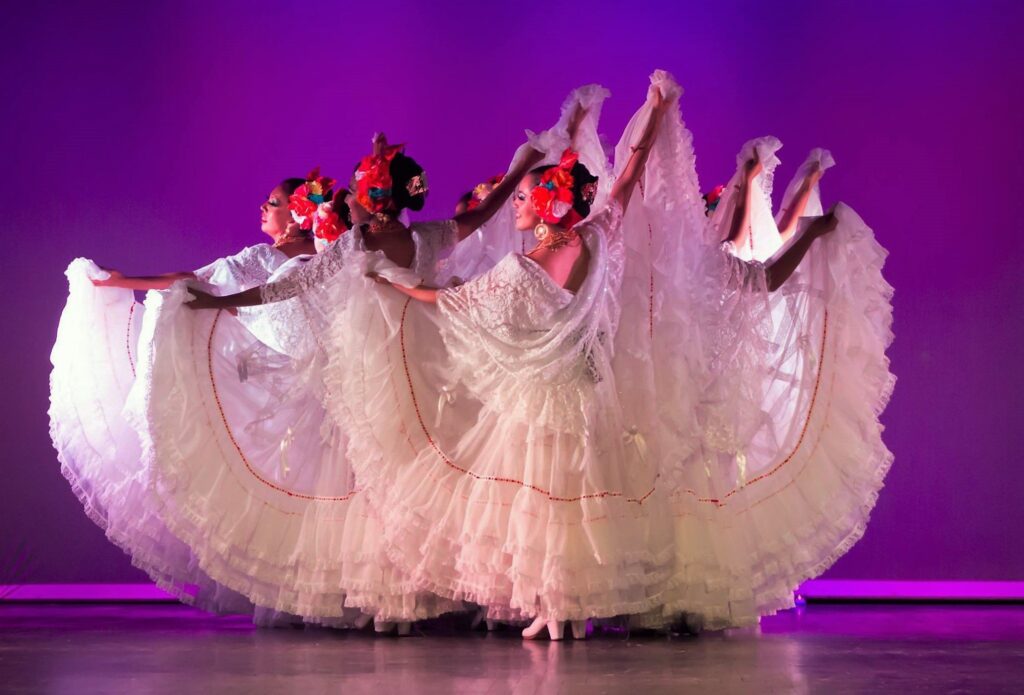
A week-long gathering of folk dance and music from across the globe.
Groups from more than 20 countries perform in Faro’s theatres, squares, and public gardens — from Polish mazurkas to Brazilian forró, Irish jigs to Angolan semba. A moving tapestry of cultures in motion, at its best. Grounded in tradition, open to the world.
— FATACIL
Where: Lagoa
When: 22 to 31 August
The Algarve’s largest summer fair — not just in size, but in variety. Agriculture, gastronomy, crafts, horses, wine, tech, and live music collide in one sprawling event space.
Think Lusitano equestrian displays next to charcuterie tastings, and regional pottery beside solar energy solutions. Evening concerts draw large crowds. Arrive early, take a walk, snack, and explore Portugal in miniature.
Our properties sit quietly near many of these cultural happenings. Browse our homes, make your booking at www.algarvehousing.net — and let the season unfold from there.
The post 8 Summer Events That Will Make you Fall in Love With the Algarve appeared first on Algarve Housing.
]]>The post The Secret Wild Side of the Algarve: Native Species and Natural Wonders appeared first on Algarve Housing.
]]>Golden beaches, fresh seafood… But beyond its postcard-perfect coastline, the Algarve hides something just as precious: a thriving world of native wildlife and plants that bring life to this southern edge of Europe.
Exploring the Algarve through its autochthonous species it’s a reminder that even in a popular destination, true wilderness still exists, quietly waiting for you.
Chameleons, Lynxes, and Flamingos: The Native Wildlife
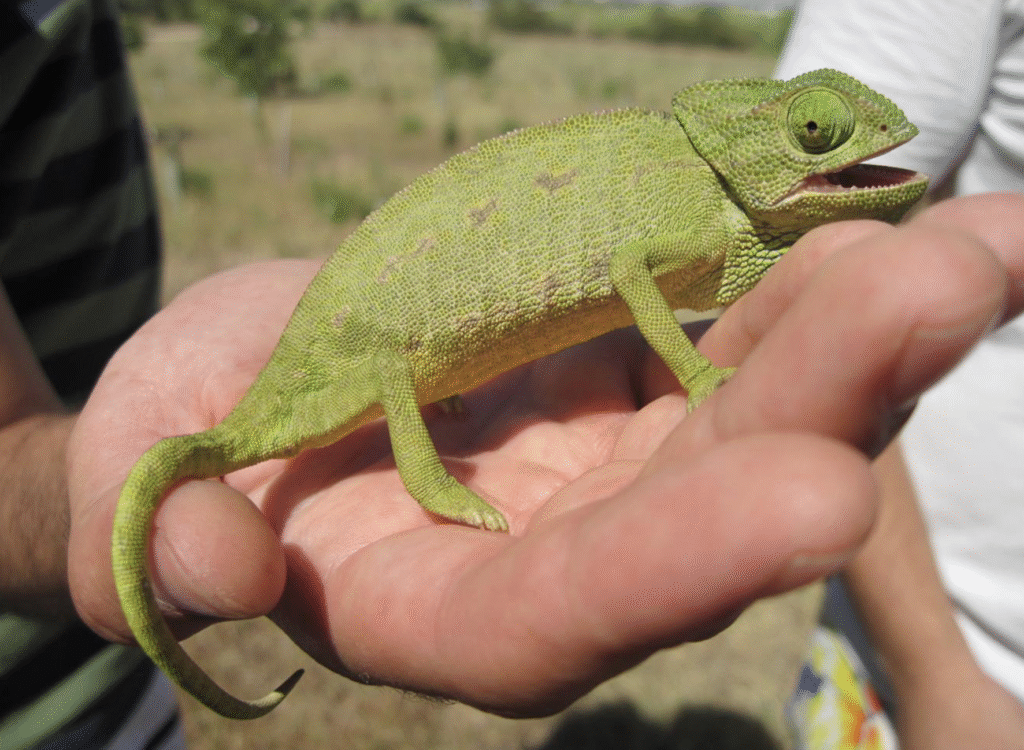
The common chameleon (Chamaeleo chamaeleon) might just be the Algarve’s most iconic reptile — and the only one of its kind in Portugal. With its slow, swaying movements and independently rotating eyes, it lives hidden in the low shrubs near the coast, especially in the Ria Formosa Natural Park. Though small and discreet, the chameleon is a symbol of the Algarve’s unique biodiversity.
Threatened by coastal development, it’s now considered a protected species — and a true treasure for those lucky enough to spot one.
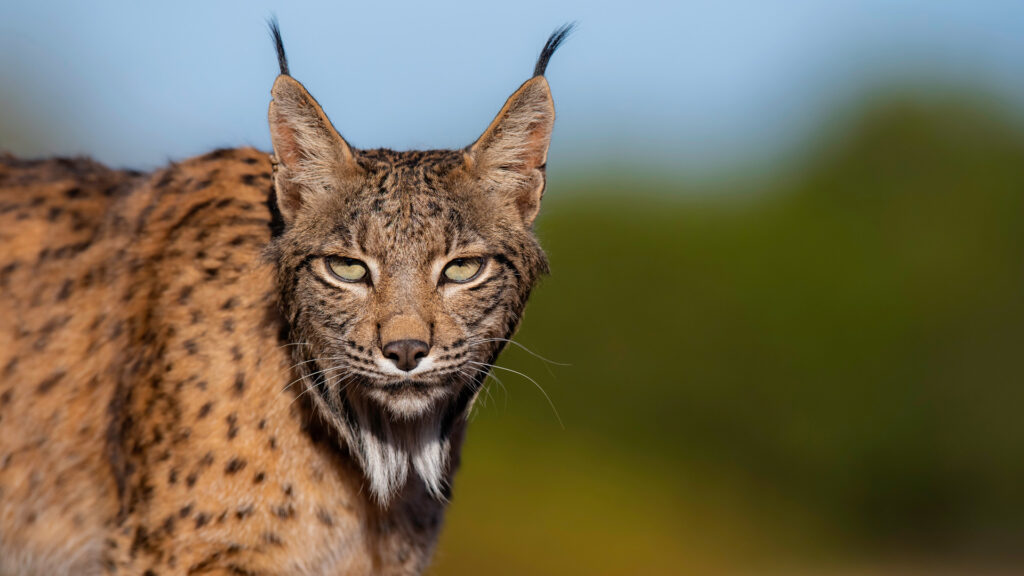
Further inland, the Iberian lynx (Lynx pardinus) has made a cautious return. Once critically endangered, it’s now reappearing in the remote hills around Alcoutim and Castro Marim, thanks to international conservation efforts.
These solitary, majestic cats are incredibly shy, but knowing they roam these lands again will turn a quiet forest walk into something epic.
The Algarve’s wild side also extends to the sea.
Just offshore, bottlenose dolphins and common dolphins are often seen leaping beside boats or swimming near the coast. Regular dolphin-watching tours depart from Lagos, Portimão, and Albufeira, offering a respectful way to observe these intelligent, playful creatures in their natural habitat.
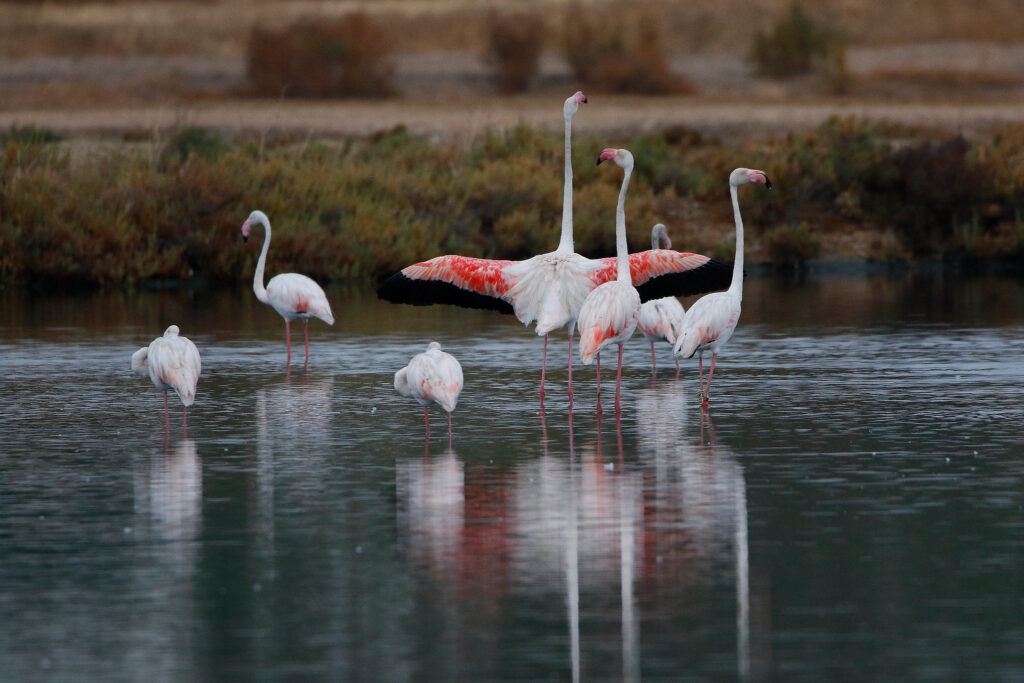
And then there’s the sky, where flamingos turn the salt flats… blush pink. Especially between autumn and early spring, large flocks feed in the shallow waters of Castro Marim and the Ria Formosa, creating surreal scenes of elegance and grace.
In 2021, these wetlands made history: over 500 flamingo chicks were born in Castro Marim, marking one of the first successful nesting events for the species in Portugal.
Plants With Stories: The Native Flora
It’s not just the animals that define the Algarve’s wild beauty. Its native plants — tough, aromatic, often ancient — are woven into the landscape and even the cuisine.
In the inland hills, cork oak forests (Quercus suber) form resilient green canopies that support entire ecosystems. Beneath them grow lavender, rockrose, thyme, and the strawberry tree (Arbutus unedo), whose red berries are used to make the fiery local medronho spirit.
These plants aren’t just pretty: they protect the soil, feed pollinators, and fill the air with the wild scent of the Mediterranean.
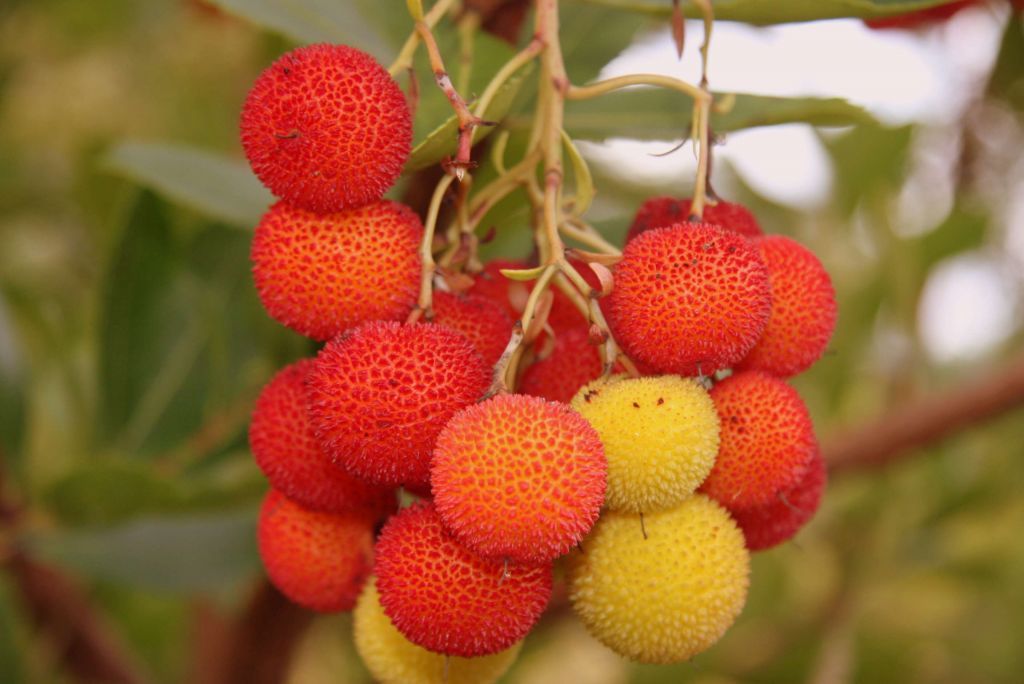
Among the most beloved trees of the Algarve is the carob tree. Native to this region, it produces dark brown pods that were once a vital food source and are now used in cakes, flours, and liqueurs.
Especially around the barrocal (the transition zone between coast and hills), you’ll find centuries-old carob trees.
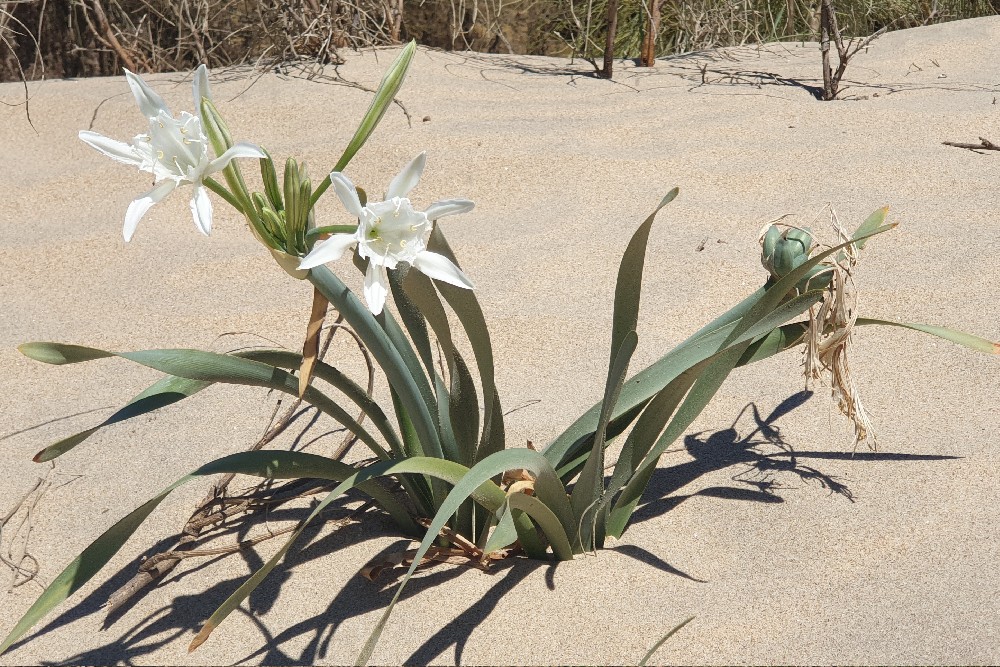
What about the dunes? Full of life too. Hardy plants like the sea daffodil (Pancratium maritimum), the beach thistle (Eryngium maritimum), and the marram grass (Ammophila arenaria) thrive in wind and sand, anchoring the shifting landscape while feeding coastal insects and birds.
Hidden in valleys and rocky hillsides is a small but powerful presence: the dwarf fan palm (Chamaerops humilis), the only palm species native to continental Europe. Traditionally used to make brooms and baskets, this rugged, low-growing palm is part of the Algarve’s ecological and cultural heritage.
Where to See Algarve’s Wild Side?
If this inspires you to see the Algarve differently, there are places you can go, away from the crowds, to experience its native species in their natural habitats:
Ria Formosa Natural Park – A vast wetland reserve stretching along the eastern coast, perfect for spotting flamingos, rare birds, and chameleons. Walking trails like the Ludo Trail near Faro are ideal for quiet wildlife observation.
Castro Marim Marshlands – A lesser-known gem where salt harvesting and flamingos coexist. You can walk through the salinas, visit birdwatching hides, or enjoy panoramic views from the old Castro Marim Castle.
Costa Vicentina Natural Park – Covering the Algarve’s rugged west coast, this park offers wind-carved cliffs, endemic plants, and great birdwatching, especially during autumn raptor migrations.
Monchique and Caldeirão Hills – For lush forests, mountain trails, and wild herbs. Follow stretches of the Via Algarviana, a long-distance trail connecting east to west, and you may come across wild boar tracks, butterflies, and blooming wild orchids.
A Different Kind of Algarve…
A living landscape. So next time you visit, go off the beaten path. Stop at a nature reserve, or maybe take the slower route, and discover the Algarve that most people miss.
The post The Secret Wild Side of the Algarve: Native Species and Natural Wonders appeared first on Algarve Housing.
]]>