In the productive habitat of Northern Alberta in Canada, the Athabasca Chipewyan First Nation (ACFN) is fighting against the clock to protect a productive wood bison herd known as the Ronald Lake Wood Bison (RLWB) herd.
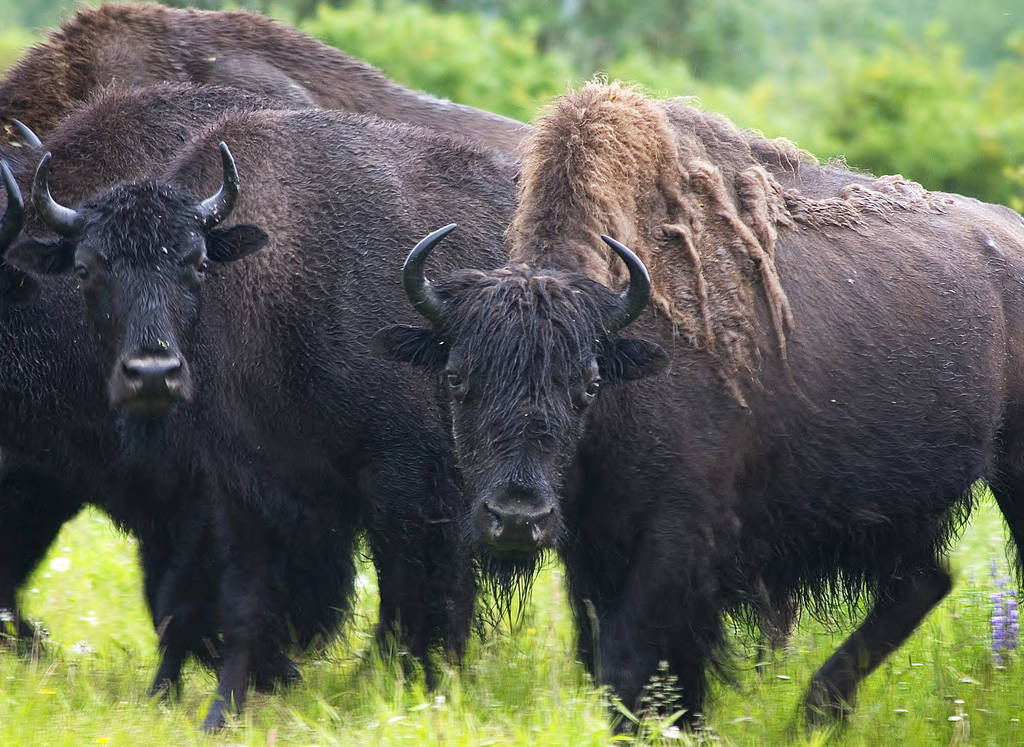
Wood Bison at Risk
Wood Bison, the largest North American land mammal, are at risk in Alberta. The Ronald Lake Wood Bison herd is culturally significant to the Athabasca Chipewyan First Nation, genetically unique, and at risk from a massive proposed tar sands mine, development and non-indigenous hunting. As tar sands mining invades Northern Alberta, members of the Athabasca Chipewyan First Nation have seen hunting productivity drop, finding clear signs of non-indigenous takes of Bison occurring.
In Canada, First Nation members rely heavily on subsistence hunting. Canadian Constitutional law protects First Nation hunting, fishing and trapping rights.
Report Shows Canada’s Failure to Protect Wood Bison
Based on findings in a March 2015 bison report by scientists at the University of Alberta and Royal Alberta Museum, it appears as though the provincial and federal government have failed to protect the herd. The province of Alberta has justified this lack of protection with a determination that the herd is in contact with a nearby disease ridden herd, and therefore does not deserve protections from either non-indigenous hunters or tar sands mining operations.
But the recent report which tracked bison movement, found that the herd is healthy and not in contact with diseased bison. This finding indicates that the herd should be protected. Thus, it appears that the failure to protect this herd is yet another example of tar sands mining causing a trampling on the Athabasca Chipewyan First Nation’s culture, way of life, and ability to hunt and provide for themselves.
Lack of protections for the wood bison are part of a disturbing trend. First Nation leaders have sought emergency protections to keep the herd healthy in 2009, but were denied. Three years later the First Nation released a report from their meeting with Alberta government outlining co-management protection measures for both bison and caribou in an area under pressure for tar sands development. The report called for no development and no non-indigenous hunting to protect the herds and ensure sustainability. Unfortunately, the government has largely ignored the report and the First Nation’s request.
Teck Frontier – A Direct Threat to Wood Bison
One particularly large threat to the bison herd is huge proposed open pit tar sands mine called the Teck Frontier project. Teck Resources Ltd. wants to strip the land bare and open a large, toxic mining operation that would impact Ronald Lake Bison’s habitat. The proposed mine would be 24,000 hectares, or 92 square miles, and begin operations in 6 years. Already exploratory roads for the mine have exposed the herd to non-indigenous hunting. Full development would further endanger the herd and harm indigenous people who rely on it.
Without governmental protections, basic data to assess the impacts of the mine on the herd and the First Nation people who rely on the herd are not being gathered and assessed. In short, the Canadian and Alberta Governments are turning a blind eye to impacts on this herd of perhaps 180 wood bison and giving a green light to tar sands mining.
This may be because protection of this herd would mean that tar sands extractors could not get their way and tar sands mining in the impacted area would have to be curtailed.
As with migratory birds, caribou and other wildlife in Alberta, the Canadian government is putting tar sands first, whatever the cost to wildlife.
It’s clearer than ever that tar sands oil is bad for wildlife. President Obama can take a big step towards protecting wildlife and keeping tar sands oil in the ground by rejecting the Keystone XL pipeline and other pipelines that will enable tar sands extraction.
 Keep saying NO to Keystone and YES to Wildlife!
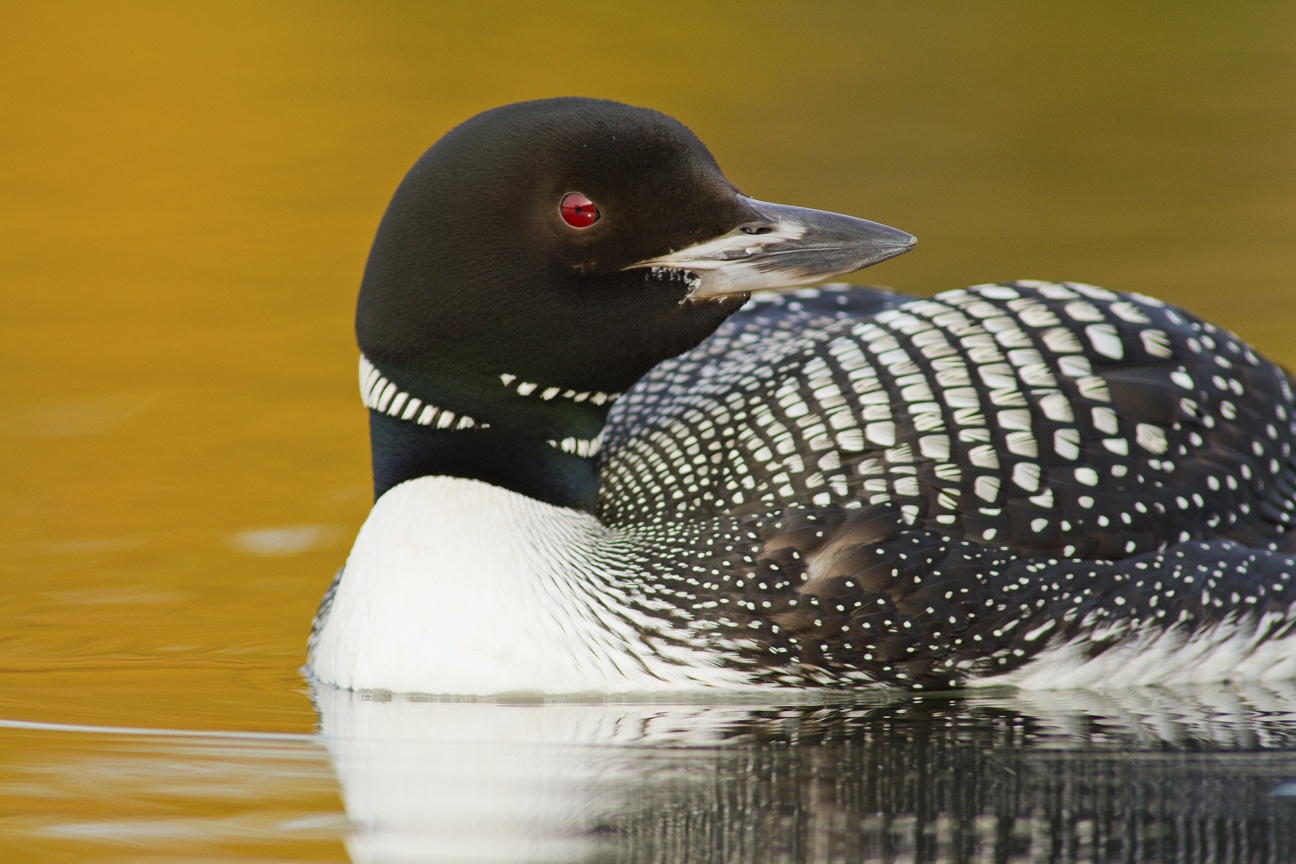
One: The Destructive Extraction Process
The oil industry extracts oil from tar sands within 250 feet of the surface through strip mining, tearing away the soil after clear-cutting forests and removing other vegetation. Drilling and the injection of high-pressure steam are used to reach deeper layers.
The extraction process is energy and water intensive. By 2007, Alberta’s tar sands operations were permitted to remove enough water from nearby rivers to meet the needs of a city of 3 million people. Water removal is projected to increase by at least 50 percent as additional projects become operational.
Most of the water comes from the Athabasca River—as much as 15 percent of the river’s weekly flow can be taken legally—causing concerns that low-flow periods will increase mortality of fish and other aquatic organisms that are a source of food for birds. As mining operations change regional wetlands, rivers and underground reservoirs, they threaten hundreds of thousands of birds dependent on these wetlands and waterways.
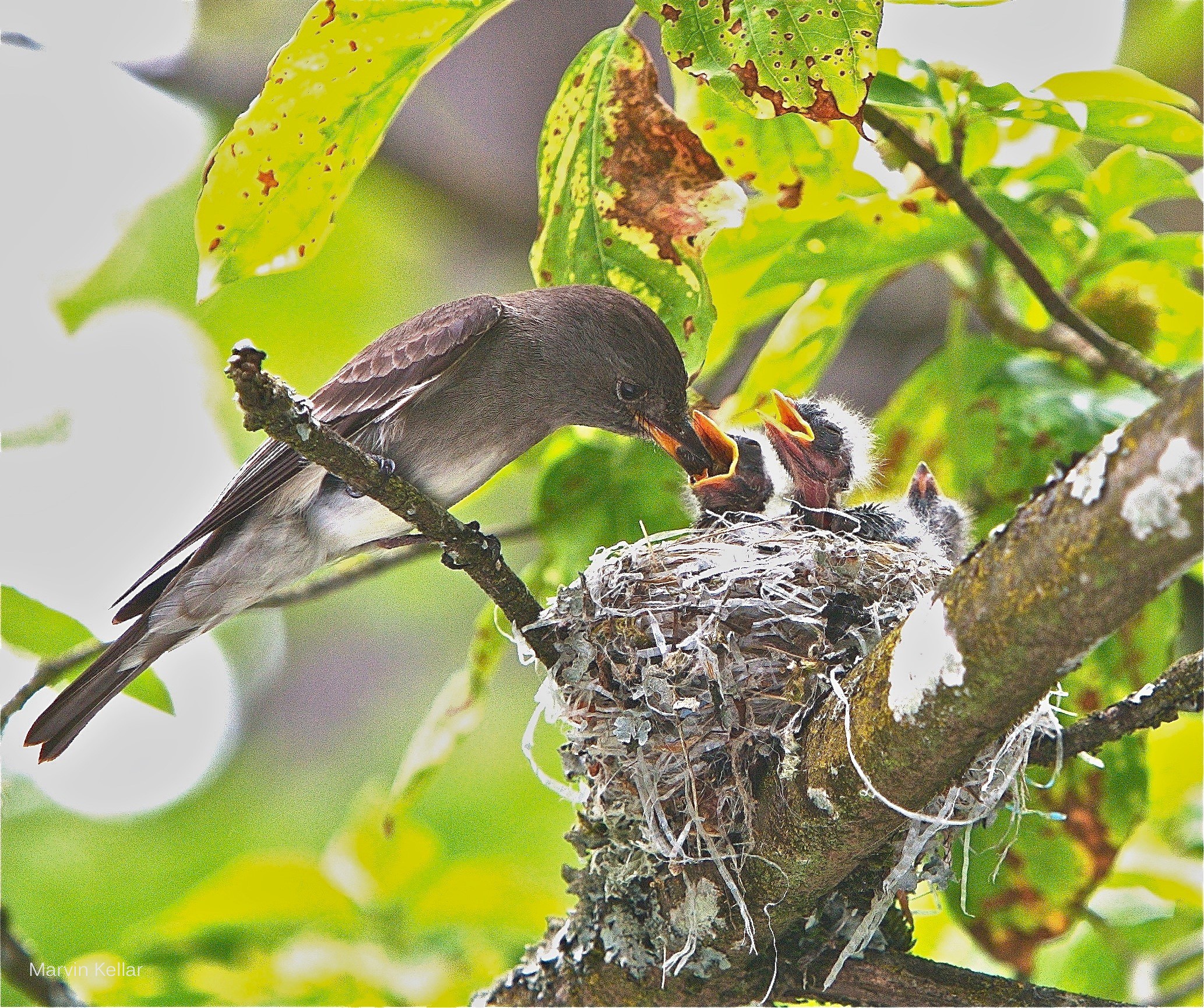
Two: Threats to Bird Habitat
Tar sands operations destroy wildlife habitat by mining and by the creation of vast tailings ponds, as well as through fragmentation of mature forests by infrastructure for oil exploration, drilling, transport and processing. Some facts:
- At least 89 tar sands drilling projects and six mines punctuate northeastern Alberta.
- Strip mining of more than 1 million acres in Alberta’s boreal forests has resulted in the loss of breeding habitat for millions of birds.
- Studies have found no evidence that strip-mined areas can be restored.
Three: Threats to Birds
The boreal forest of northeastern Alberta is an important breeding area for nearly 300 bird species, at least 130 of which use the tar sands area. One square mile of forest in northeastern Alberta can support as many as 500 breeding pairs of migratory birds, some of the highest densities anywhere in Canada’s boreal forest. As many as 170 million birds breed yearly in the tar sands area. A recent study estimated that tar sands operations have caused the loss of as many as 402,000 birds. Some facts:
- Water and solids removed during tar sands processing are sent to vast tailings ponds that are some of the largest human-made structures on Earth, covering more than 65 square miles—an area about the size of Washington, D.C.
- Mistaking tailings ponds for natural ponds, waterfowl and shorebirds land in them and become oiled with waste bitumen and toxic elements. Up to 90 percent of oiled birds drown or die from hypothermia when their oiled feathers lose the ability to insulate. Birds also can absorb tar sands toxins through inhalation, ingestion and skin contact.
- At least nine bird species found in the tar sands region have lost more than half their population during the past 50 years, including the horned grebe, lesser yellowleg, short-billed dowitcher, boreal chickadee, olive-sided flycatcher, evening grosbeak, lesser scaup, greater scaup and northern pintail.
- The lesser scaup, the population of which has declined as much as 70 percent in the past 30 years, is a widely reported casualty of tailings ponds.

Four: Tar Sands and Climate Change
Tar sands oil production emits three times more global warming pollution per barrel than does conventional oil due to the large amounts of energy needed for processing. Carbon pollution from Canadian oil sands are expected to reach 108 megatonnes by 2020—a fifth of Canada’s current national emissions.
Temperatures in Canada’s boreal forest already have risen more than 7 degrees F in some areas over the past century, causing dramatic changes in the timing of ecosystem events, including the emerging of springtime insects and the mating and nesting of birds. Migratory birds may arrive too late to take advantage of insect emergence, which is key to providing adequate food for nestlings. Global warming also is shifting bird distributions and altering their migration behavior and habitat, diminishing their survival ability and threatening some species with extinction.
Five: Bird and Habitat Destruction in the Future
The industrial footprint of tar sands operations may double in the next 15 years. Some facts:
- Proposed tar sands pipelines, such as the Keystone XL, would dramatically expand tar sands operations.
- The effects of tar sands development on bird habitat are projected to reduce the forest-dependent bird population by 10 to 50 percent.
- Strip mining of 1,200 square miles allocated for mines will destroy habitat for up to an estimated 3.6 million adult birds.
- Drilling infrastructure could eliminate or fragment another 19,000 square miles of migratory bird habitat—an area about twice the size of New Jersey.
- Tar sands operations also will reduce bird breeding. One estimate suggests that as many as 72 million fewer birds will hatch during a 40-year period.
What Can the United States Do about Canadian Tar Sands?
The devastation of invaluable wildlife habitat by tar sands operations is occurring in violation of international treaties to protect the shared migratory wildlife of Canada and the United States. In 1916, the two nations entered into the Migratory Bird Treaty, which gave rise to the Migratory Bird Convention, which protects birds that migrate between the countries. Under these agreements, President Obama and Secretary of State John Kerry can say no to pipeline projects, like Keystone XL, that will carry tar sands oil to ports on the Texas coast, enabling the tar sands industry to fulfill massive expansion plans.
Such are the images and stories of an eye-opening tour sweeping through the Northeast that opened Friday night in Burlington, Vermont entitled “Tar Sands Exposed.” The tour features the acclaimed photographer Garth Lenz as well as eloquent representatives of the First Nations’ Peoples facing the direct devastation of tar sands, Crystal Lameman of the Beaver Lake Cree and Eriel Deranger of the Athabasca Chipewyan. The tour is being organized by 350.org state groups in the region along with help from organizations like Sierra Club and National Wildlife Federation. It continues through New England and Quebec until February 1.
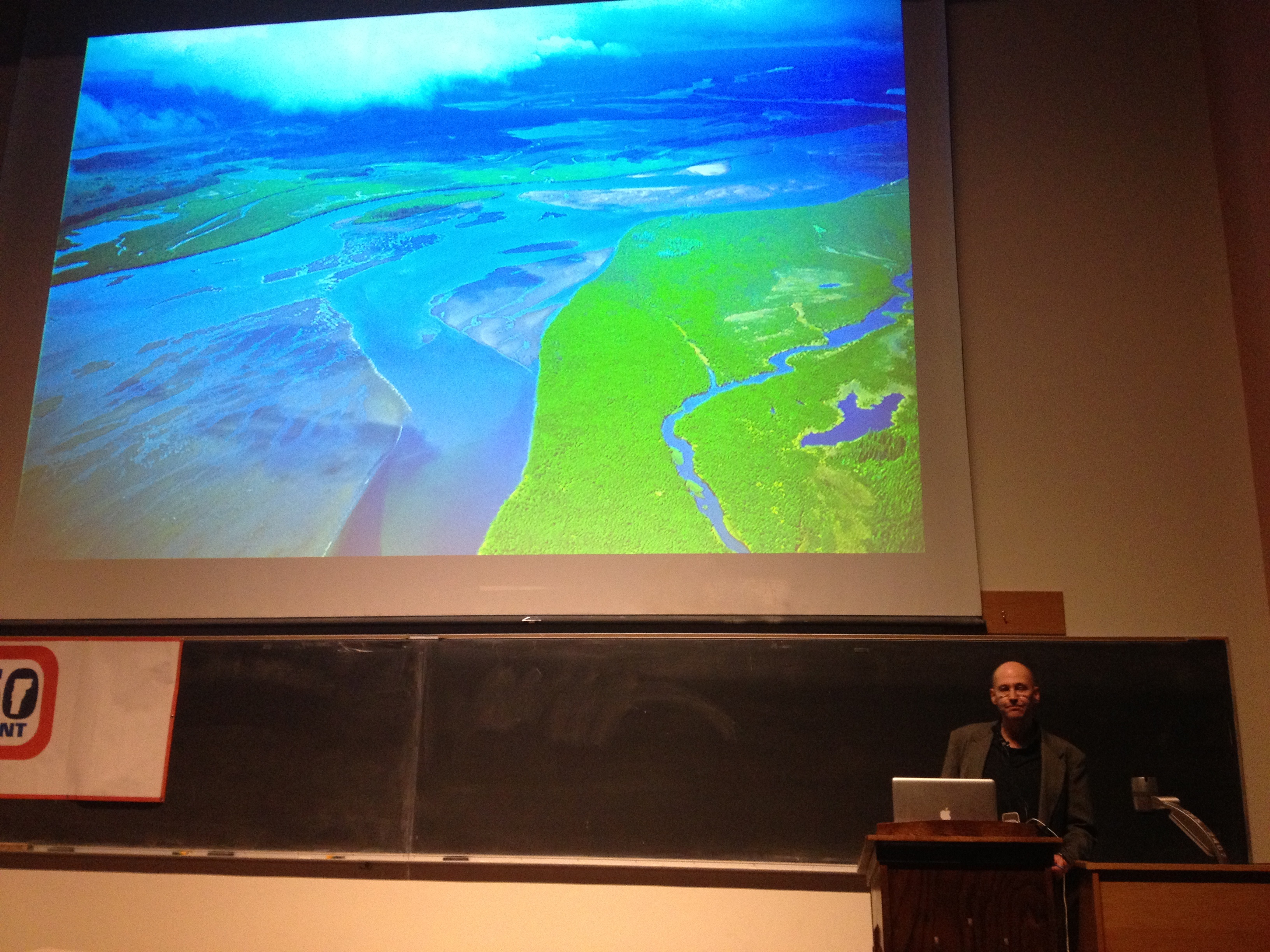
Images of Beauty and Destruction
Garth Lenz’s stunning photographs highlight the tour. He begins with images of the wild beauty of Canada’s boreal forest, known as the lungs of the Earth for its massive oxygen production. It is one of the most productive wildlife habitats in the world and is known as North America’s bird nursery.
Then he shows what tar sands development—the massive strip mining and water intensive drilling—is doing to the boreal forest, turning it into a toxic moonscape littered with poisonous waste ponds visible from space. Tar sands—a peanut butter like substance from which extremely carbon polluting gasoline is derived—development threatens to destroy an area of the size Florida.
Tales of a Land Ruined
Crystal Lameman followed with a deeply moving account of how her people’s traditional land –land that has sustained them for millennium – is being poisoned. She told accounts of green deer meat, sickened moose, water that burns the skin, fish riddled with tumors, summer nights bereft of singing frogs, and the cancers and illnesses of her people who must live off a land being ruined. She told of treaties to protect the land and her people and how the oil companies and the Canadian Government were trampling on those treaties.
I have been working on tar sands for several years now. I have read the statistics, studied the documents, written on the impacts. But seeing the images and hearing the stories Garth and Crystal put forth brought home a simple point: the tar sands region is a crime scene. It is a temple of greed, sacrificing our children’s future.
The Northeast Can Lead the Way to a Better Future
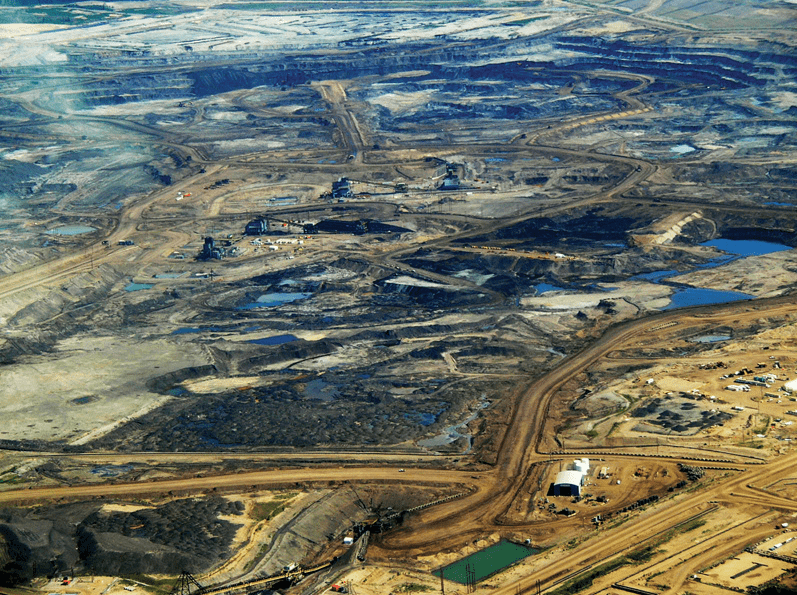
The Northeast has a tremendous opportunity to stand up to this outrage. A likely proposal to bring tar sands through Northern New England can be stopped, and the region is mobilizing to block any such effort. We must be steadfast. The region can also say no to tar sands derived gasoline, and stop this dirty fuel from entering our market if we act now.
The oil industry is telling us that tar sands extraction is inevitable, that it can’t be stopped, that we should do their bidding and approve massive boondoggle pipelines like the Keystone XL because they’ll develop this nasty product one way or another.
They’re wrong.
We can stand up for wildlife and for our children’s future and choose a wiser path. If we want to pass along a sustainable world to our children we can be proud of, the Tar Sands Exposed tour makes clear that is the only real choice we have.
Tell President Obama to deny the Keystone XL pipeline >>

Tar sands has immense impacts to birds and wildlife. Strip mining of the 1,200 square miles currently allocated for mines will destroy habitat for an estimated 480,000 to 3.6 million adult birds. Drilling infrastructure could eliminate or fragment another 19,000 square miles of migratory bird habitat. Tar sands operations will also reduce bird births, with one estimate ranging from 9.6 million to 72 million fewer birds being born over a forty-year period.
Alberta’s wetlands’ policy reflects a growing trend in Canada to put industry needs over the needs of wildlife and nature. The alarming exemptions aside, the policy drops a commitment to no net loss of wetlands, and allows even the most sensitive wetlands to be destroyed. The policy does not protect wetlands that are ephemeral in nature, despite the fact that these wetlands are some of the most valuable wildlife habitat, providing stopover and breeding areas.
In general, the policy allows non-environmental factors such as “economic priorities” to be weighed in decisions to allow wetlands to be destroyed. Alberta’s willingness to balance such priorities against wildlife shockingly played out in a decision to allow the massive Jackpine Mine tar sands expansion project to be approved despite a finding that “the project would likely have significant adverse environmental effects on wetlands, traditional plant potential areas, wetland-reliant species at risk, migratory birds that are wetland-reliant or species at risk, and biodiversity.”

Sadly, Canada and Alberta continue to pave the way for massive tar sands devastation and put our shared wildlife in harms’ way. The result will be fewer ducks, song birds, and other wildlife for Americans and Canadians to enjoy.
As Canada has shown with its continued failure to adhere sound climate policies in order to allow tar sands extraction and now with its unwillingness to require tar sands companies to meet even basic standards in wetland protection, Canada’s government does not take environmental stewardship seriously and is beholden to the tar sands industry.
It’s past time to put a halt to Canada’s dirty not-so-secret. Wildlife and tar sands don’t mix. Canada is responsible for its own policies, but we can say no thanks to tar sands and send a strong signal that we won’t tolerate practices that put wildlife at risk.
Tell President Obama to reject Keystone XL here.
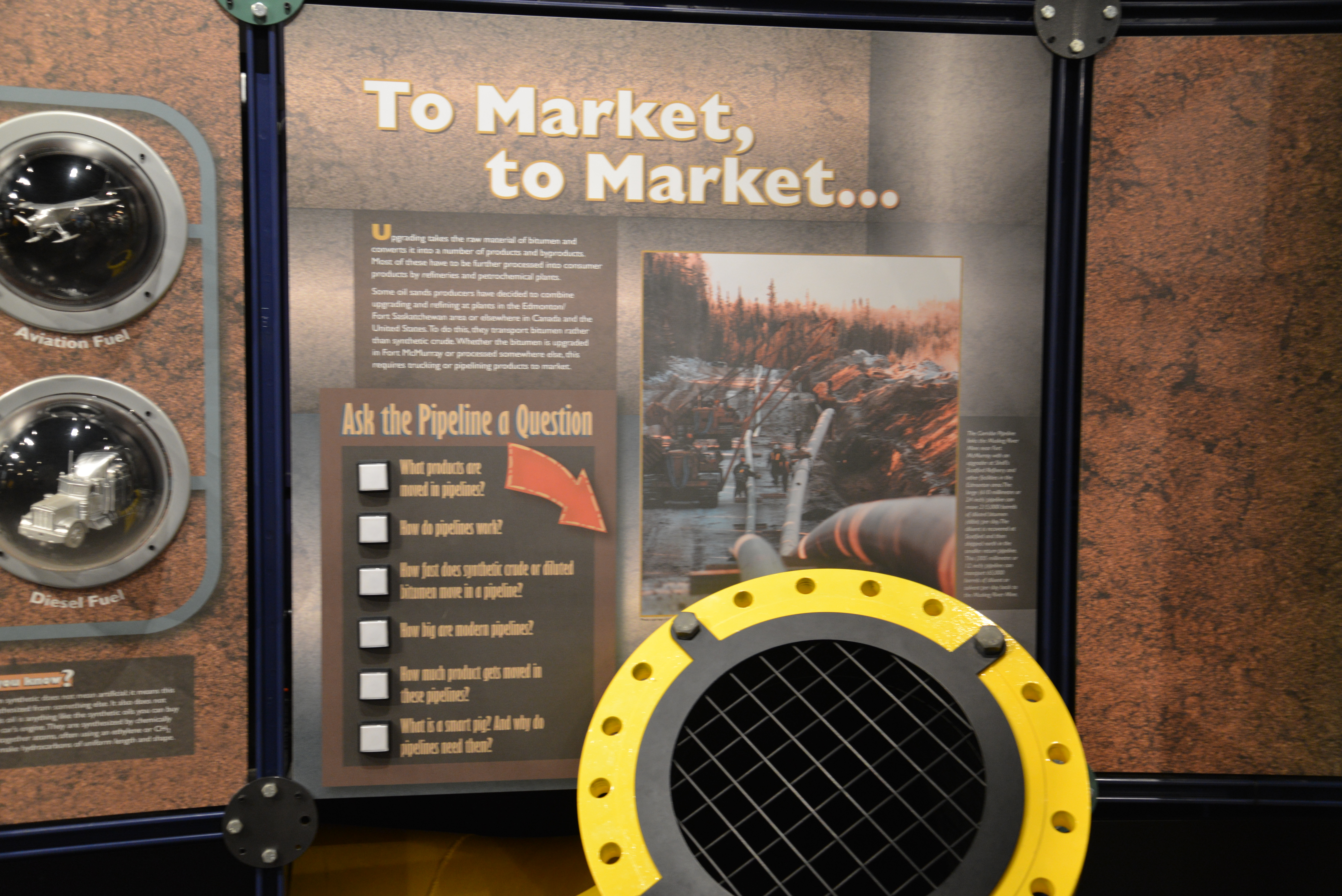
I walked up to the stand and looked in. A plate-sized glob of tar sands bitumen was in the dome with a metal rod poking out the top. On the sides were two vents that were covered with a flap that said, “Sniff.”
Yeah, that’s right. I’ll let you process that for a second before we move on.
This “Discovery Centre,” which was funded by the Albertan government (a.k.a. Canadian taxpayers) wants your children to stir up bitumen and then stick their noses over a vent so that they can inhale tar sands fumes.

Who needs to go to Ft. McMurray to smell bitumen when it’s constantly getting spilled all over the U.S in various pipeline disasters?
A Monument to Human Folly
Unfortunately, this isn’t the only exhibit that is aimed at children. The entire center is loaded with hands-on play areas for kids. They can stir bitumen, watch cartoons about the tar sands and how they were discovered, watch how they separate oil from the sand and play with toy sized heavy equipment to move tar sands around. Exhibits are created to encourage interaction similar to the science and nature museums in the United States. Check out their photo gallery showing kids and elders playing with the heavy equipment.

The Albertan government wants the Centre to be perceived as a celebration of human ingenuity but what they don’t understand is that it is a museum of human greed, folly and recklessness.
They are trying to hide the absolute environmental and human devastation of the tar sands by displaying it in full sight. I guess their theory is that someone couldn’t be ashamed of something that they brag about.
I think you can even buy some bitumen in their gift shop. Unfortunately, I was in a hurry to catch a plane so I didn’t have time to browse. I guess I’ll just go get some the next time a pipeline breaks in the States. It would make a nice gift for my nephew.
Well, if the Beaver Does it
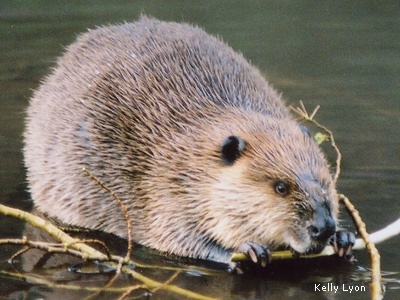
It’s kind of like they’re saying,
“Well, the beaver cuts down trees, which means that we can destroy the boreal forest and dig up a region the size of Florida, right?”
“It’s kind of the same, right?”
“Right?!”
Damn beavers always cutting down trees, creating wetlands and providing habitat for other critters.
Seems the same to me.

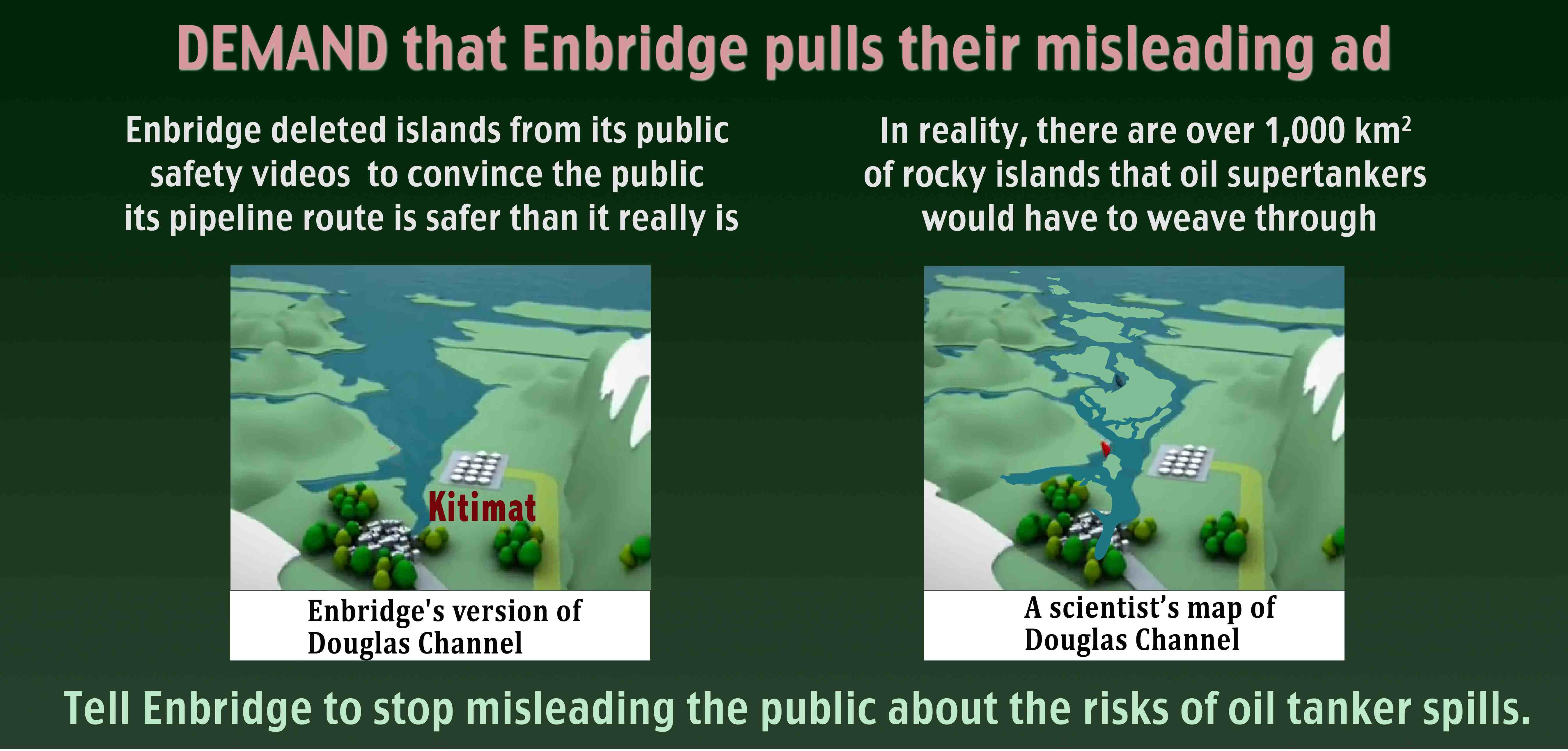
The advocacy group SumOfUsis running a campaign to pull the misleading ad off the airwaves,alleging that Enbridge is “deliberately and dramatically misrepresenting the risk of oil supertankers travelling through the 4th most dangerous waterway in the world.”
Enbridge was already having a bit of a rough week, as CEO Patrick Daniel went on the radio to complain that pipeline opponents are “revolutionaries” bent on exploiting the “weak link in the system” (pipelines) to move the country toward renewable fuels.
Though not as well-known in the United States, Enbridge’s Northern Gateway project is the Canadian equivalent of the controversial Keystone XL pipeline, and has been attacked by First Nations indigenous groups, conservationists and millions of citizens angry at the oil industry’s heavy-handed approach and pattern of environmental destruction. The project would send tar sands oil to Asia and help expand the reach and influence of Alberta’s tar sands industry, but the province of British Columbia has resisted it so far, with Premier Christy Clark publicly slamming Enbridge for its failures.
An NWF report released earlier this summer details the company’s record of disaster — more than 800 spills over the last 13 years, including a million gallon tar sands spill in Michigan in 2010 and a 50,000 gallon spill in Wisconsin just last month. “Enbridge’s long history of pipeline spills can’t be explained by mistakes or bad luck,” says NWF senior vice president Jeremy Symons. “You can’t make the same mistake eight hundred times, but that’s how many oil spills we have seen from Enbridge pipelines. Contaminated water may be an acceptable cost of doing business to Enbridge, but we can’t afford to turn a blind eye to their irresponsible safety record.”
Read NWF’s report Importing Disaster: The Anatomy of Enbridge’s Once and Future Oil Spills
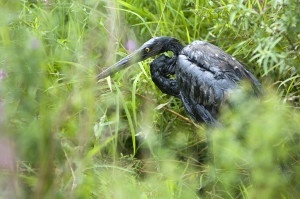
Alberta’s Ministry of Environment and Sustainable Resource Development said the recent spills are not necessarily cause for alarm, noting they happened in different parts of the province.
The pipeline agency chimed in, saying it’s “confident its regulations are protective of public safety.” Nothing to see here, folks, just another friendly neighborhood Hazmat team trying to clean up toxic material in your rivers and farms!
Enbridge is doing its best to keep these accidents out of the spotlight:
[Enbridge] said as soon as it detected the leak, it notified civic authorities and other regulatory agencies. But Steve Upham, reeve [sheriff] of the County of St. Paul, where the pumping station is located, said as of Tuesday night he hadn’t received any notification. Upham said he was aware of the spill only through media reports.
“I don’t think anybody in the county, at this point, has been notified,” he said. Asked if he should have been contacted by Enbridge, Upham said: “I would have thought so. Or Alberta Environment, because they would be notified, I think. We’ve heard nothing from anybody.”
Industry Profits Despite System-Wide Failures
Sean Kheraj, an assistant professor at York University in Toronto, calculates that the oil and gas industry spilled over 7.3 million gallons in Alberta alone between 2006-2010. Since then, several major incidents have upped that number significantly, including a 1.1 million-gallon spill near Little Buffalo and two ruptures earlier this summer that totaled at least a quarter million gallons. In fact, a spokesman for Alberta’s energy regulator admits that the province’s pipelines averaged two failures per day in 2010.
But Enbridge has done well financially despite its inability to keep oil out of our environment; the company reported a 31% rise in revenue earlier this year. And it seeks an even bigger expansion in the near future, with plans to stretch its tar sands pipeline system to both coasts and covert intentions to send the corrosive sludge through New England. A tar sands spill in Vermont, New Hampshire, or Maine could spell catastrophe for the northeast’s drinking water and wildlife habitat, and the threat has led groups like NWF to organize citizens against these proposals.
Meanwhile, other tar sands backers like TransCanada and the Koch brothers are leaning on their friends in Congress to speed up the pace of pipeline construction in the United States. More pipelines means more spills and more destruction of the Canadian boreal forest, but with hundreds of billions—even trillions—of dollars at stake, it’s no wonder that Big Oil is pushing these projects even in the face of system-wide trouble.
 We need your help to protect wildlife at risk from oil spills and habitat loss in Alberta and across the continent! Speak up now to stop the spread of dangerous tar sands oil.

The province issued an emergency alert for Mountain View and Red Deer counties, warning people not to touch, drink, swim or boat on the waterways affected by the spill.
“I was going to go fishing but [Alberta Environment officials] said, ‘no, you’re not allowed, “‘ Andrew Van Oosten, who huddled with his friends underneath a tarp at his campsite near the Gleniffer Reservoir, told CBC News. “You are not allowed to go near the water because it [oil] is washing up on shore.”
Is It An “Accident” When It Keeps Happening?
Nobody thinks the oil industry is going out of its way to sabotage their own pipelines, or is sitting around in back rooms scheming up ways to spill crude oil all over wildlife and fragile ecosystems. But there’s a point when accidents start getting so routine that they stop being “accidents” and become something else entirely. And in the two years since the Deepwater Horizon catastrophe put oil spills onto the front page and turned the Gulf of Mexico into a toxic dump, Big Oil has been responsible for hundreds more “accidents” and millions of gallons of spills.
Think about that for a second. MILLIONS of gallons of crude oil that has no reason to be outside of a pipeline, but there it is, turning up in our drinking water, on our shorelines, polluting crops and fish and wildlife. The residents of Alberta have something in common with folks in Michigan along the Kalamazoo River. They share it with shrimpers on the Gulf coast, and with Denver residents, and North Dakotans, and with people around the globe who have to live with the consequences of Big Oil’s screwups. It’s not a fraternity I’m eager to join.
We deserve better. We deserve a system where a major oil spill is actually a surprise, and not just another day at the office. But our reality is this: half of the US government is tripping over itself to help the oil industry build pipeline after dangerous pipeline—in the Midwest, in New England, in the Gulf region…everywhere there’s a buck to be made or a political point to score.
But you can make a difference! Add your voice to the hundreds of thousands of Americans speaking up for wildlife and clean energy. Say NO to Keystone XL and other polluting projects, and maybe the community you protect will be your own.
Speak up for wolves and other animals threatened by Big Oil’s dirty plans. Take action now!
CALGARY – A huge pipeline spill has released 22,000 barrels of oil and water into muskeg in the far northwest of Alberta.
The spill ranks among the largest in North America in recent years, a period that has seen a series of high-profile accidents that have undermined the energy industry’s safety record. The Enbridge Inc. pipeline rupture that leaked oil near Michigan’s Kalamazoo River, for example, spilled an estimated 19,500 barrels.
Disaster response crews are working round the clock to contain the damage, but the oil has already covered more than 25 acres of muskeg — or peat bogs — near Rainbow Lake. 22,000 barrels contains almost a million gallons, threatening a wild ecosystem that is already under pressure from the industry..
Similar to the shoddy oversight that magnified the damage caused by Enbridge’s Kalamazoo spill, this one went unnoticed by the company (Pace Oil & Gas Ltd.) for hours. It was only thanks to random luck that a different company spotted the rupture during a plane flight over the area, and alerted Pace Ltd..

Big Oil and Wildlife Don’t Mix
Industrial development in Alberta has already caused the destruction of much of the boreal forest, leading to a rapid decline in woodland caribou populations and a mind-bogglingly irresponsible campaign to poison and shoot hundreds of gray wolves. Meanwhile, the government has done everything in its power to encourage this reckless approach — becoming the world’s biggest cheerleader for tar sands oil and giving Canada’s green reputation two black eyes.
As Alberta’s oil industry tries to muscle its way through the United States with dangerous projects like Keystone XL and the Trailbreaker pipeline in New England, it’s worth asking “do they actually know what they’re doing?” From all the evidence (including at least 12 spills from the original “Keystone 1” pipeline) it’s becoming clear that accidents happen with alarming frequency. But hey, when you stand to make more than a trillion dollars from shipping your product overseas, what does it matter if you leak a few thousand barrels here or there?
Wildlife and much more is on the line in this fight, and you can help. Tell Congress to stand up for wildlife, and say NO to Keystone XL and tar sands.
The cause of death? The animals had unknowingly ingested poisoned bait that was lost in a snow pile. This poison is being used to intentionally kill wolves in Canada.

Sadly, our addiction to oil here in the United States makes us complicit in this tragedy. Oil and gas development in Alberta has transformed portions of a once lush landscape into an industrial wasteland. The resulting habitat loss is pushing several woodland caribou herds to the brink of extinction.To mitigate the caribou loss, wildlife officials have been slaughtering the wolves that prey on caribou, instead of protecting caribou habitat. They’ve poisoned hundreds of innocent wolves with deadly strychnine-laced bait and have fatally shot others from helicopters!
War on Wildlife
Dogs, wolves, raptors, cougars, and the eagles that feed on the poisoned carcasses are the victims of this war on wildlife. What’s worse, to accommodate the further development of Alberta’s tar sands, Canadian officials plan to expand their poisoning and aerial shooting program.
Today, big oil companies are determined to build more pipelines in the United States so they can expand their dirty and lethal oil mining operations. Keystone XL, the largest proposed pipeline, would be disastrous if approved. It would carry dirty and dangerous tar sands oil across our nation’s heartland, would further destroy caribou habitat in Alberta, and would put wildlife along the pipeline route in serious jeopardy.
Your support today will help National Wildlife Federation continue to fight tar sands development, advocate for safer pipeline practices, mobilize our passionate supporters, and stop dangerous threats like Keystone XL once and for all.