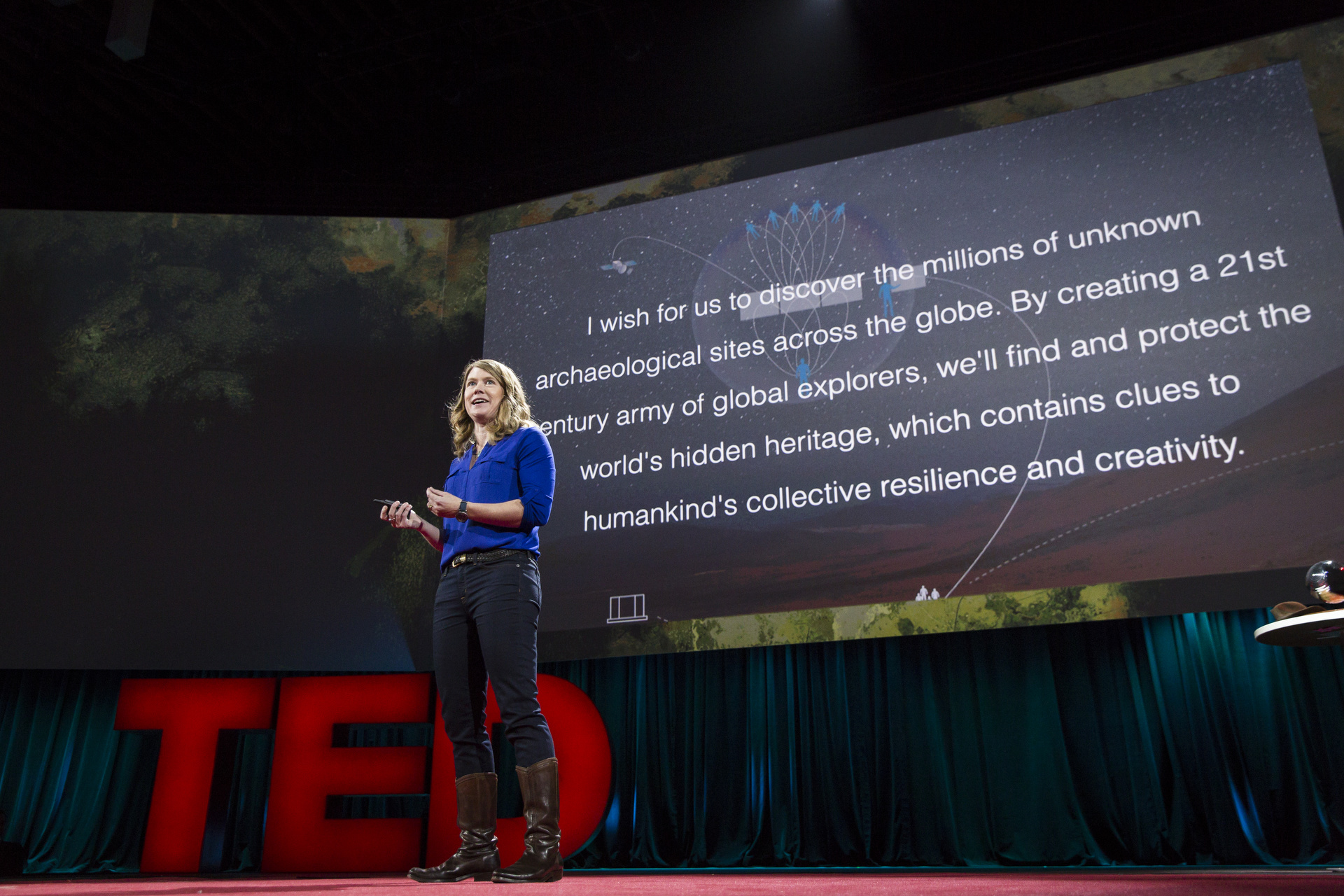
Sarah Parcak shared the vision for GlobalXplorer at TED2016. Today, the platform announced its second expedition: India. Photo credit: TED/Bret Hartman
Today, GlobalXplorer, the citizen science platform created by satellite archaeologist Sarah Parcak with the 2016 TED Prize — which allows users live out their Indiana Jones fantasies and search for archaeological sites from home — announced the location of its second expedition. The location will be: India!
GlobalXplorer’s first expedition took users to Peru, where they searched 150,000 kilometers of land and identified thousands of features of archaeological interest, including more than 50 new Nazca Lines and 324 sites determined by the Peruvian Ministry of Culture to be of high interest. The exploration of India will be even more sweeping in scope.
India is a large country with 29 states, spread out over 3.287 million square kilometers. Working with the Archaeological Survey of India (a branch of India’s Ministry of Culture) and alongside Tata Trusts and the National Geographic Society, GlobalXplorer’s new expedition will cover the entire country, state by state. This vast work will be accomplished with the help of machine learning. Over the past year, GlobalXplorer has been working with technology partners to train AI to weed out tiles that either contain no archaeological features or that are not able to be properly searched because of dense cloud cover or an impenetrable landscape. Platform users will take on the next step: looking at tiles with potential signs of archaeological features. Searching this most promising fraction of tiles will be no small task. Parcak estimates that, with the help of the crowd, this mapping will be done in less than three years.
“Folks we are about to announce country #2 for @Global_Xplorer I am SO excited. What’s your guess?” she tweeted at 6:30am this morning. Then later she revealed: “So thrilled to be able to share: Globalxplorer will be heading to India next!”
More information on when the expedition begins will be coming soon. In the meantime, read lots more — including how GlobalXplorer is using a blockchain-enabled app to keep antiquities safe — on Medium. And watch the video below to get excited about what you might find.
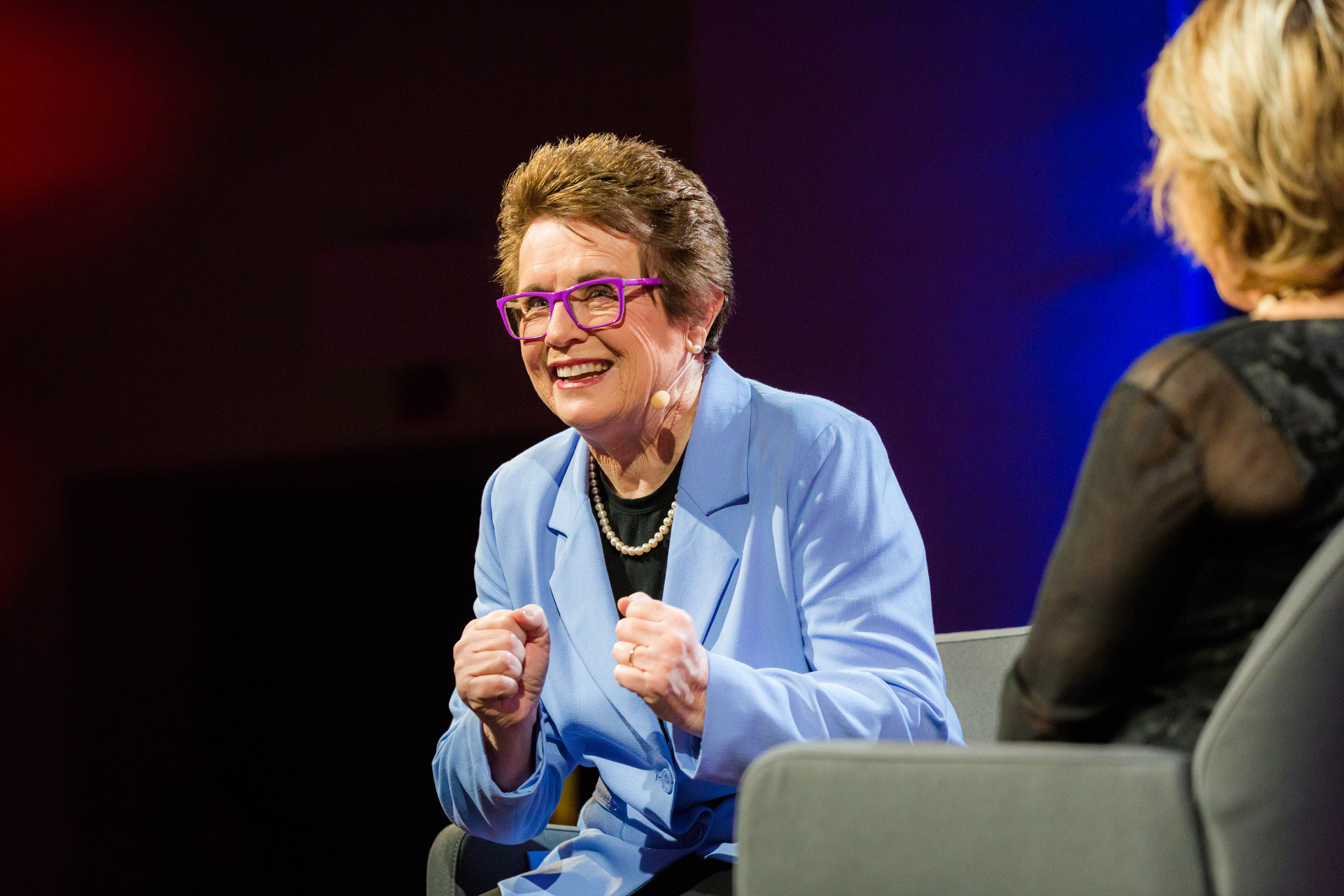
Billie Jean King: “Bobby Riggs — he was the former number one player, he wasn’t just some hacker. He was one of my heroes and I admired him. And that’s the reason I beat him, actually, because I respected him.” She spoke with Pat Mitchell at TEDWomen2015. Photo: Marla Aufmuth/TED
Forty-three years ago this week, the number one tennis star in the world, 29-year-old Billie Jean King, agreed to take on 55-year-old Bobby Riggs, in a match dubbed the “Battle of the Sexes.” The prize was $100,000 — which compared with today’s million-dollar-winning pots wasn’t much — but it was the first time that women and men were offered the same amount of prize money for victory.
The exhibition match, which admittedly was more notable at the time for its spectacle and outrageousness — Billie Jean King entered the Houston Astrodome on a feathery litter carried by shirtless men, for instance — was the most watched tennis match ever, with an estimated worldwide television audience of 90 million people. If you are old enough to remember it, you probably watched it.
Billie Jean King won in straight sets: 6-4, 6-3, 6-3.
This weekend, a new movie based on the true story starring Emma Stone as Billie Jean King and Steve Carell as Bobby Riggs hits theaters. With the election of Donald Trump — and all the sexism and misogyny that the 2016 election entailed just behind us — the story is sadly relevant today. As Lynn Sherr wrote in her review of the movie today at BillMoyers.com, “It’s all frustratingly familiar, but this time, the over-the-hill clown won.”
I interviewed Billie Jean King at TEDWomen in 2015 about her tennis career and lifelong fight for gender parity in sports and in the workplace. She talked about the match with Riggs and the intense pressure she felt on every stroke to win for women. She recalled, “I thought, ‘If I lose, it’s going to put women back 50 years, at least.’”
After she won, many women told her that her victory empowered them to finally get up the nerve to ask for a raise at work. “Some women had waited 10, 15 years to ask. I said, ‘More importantly, did you get it?’” (They did.)
As for men, the reaction was delayed. Many years later, she came to realize that the match had made an impact on the generation of men who were children at the time – an impact that they themselves didn’t realize until they were older. She told me, “Most times, the men are the ones who have tears in their eyes, it’s very interesting.” They say, ‘Billie, I was very young when I saw that match, and now I have a daughter. And I am so happy I saw that as a young man.’”
One of those young men was President Obama.
He said: “You don’t realize it, but I saw that match at 12. And now I have two daughters, and it has made a difference in how I raise them.”
Watch my interview with Billie Jean King if you haven’t seen it:
A common refrain of those working to improve diversity and representation in media is that if you can’t see it, you can’t be it. And that’s true in sports, government and in the workplace as well. If leaders don’t represent the diversity of our globalizing world, fresh ideas, diverse talent and an inclusive society can’t flourish. Through the Billie Jean King Leadership Initiative, King works to level the playing field for all people of all backgrounds so that everyone can “achieve their maximum potential and contribute to building a better society for all.” (Full disclosure: I am a member of the BJKLI advisory council.)
Emma Stone told USA Today earlier this month, she’s proud to play a part in showing some of King’s story to a younger audience. “The nice thing about doing a film like this,” she said, “is that there’s a whole generation of people who weren’t born before the Battle of the Sexes who are going to learn about this incredible period in history and all the things that have come since, so I’m grateful for that.”
“It wasn’t about tennis,” says King. “It was about history and social change.”
TEDWomen 2017 happens November 1–3 in New Orleans, and you’re invited. Learn more!
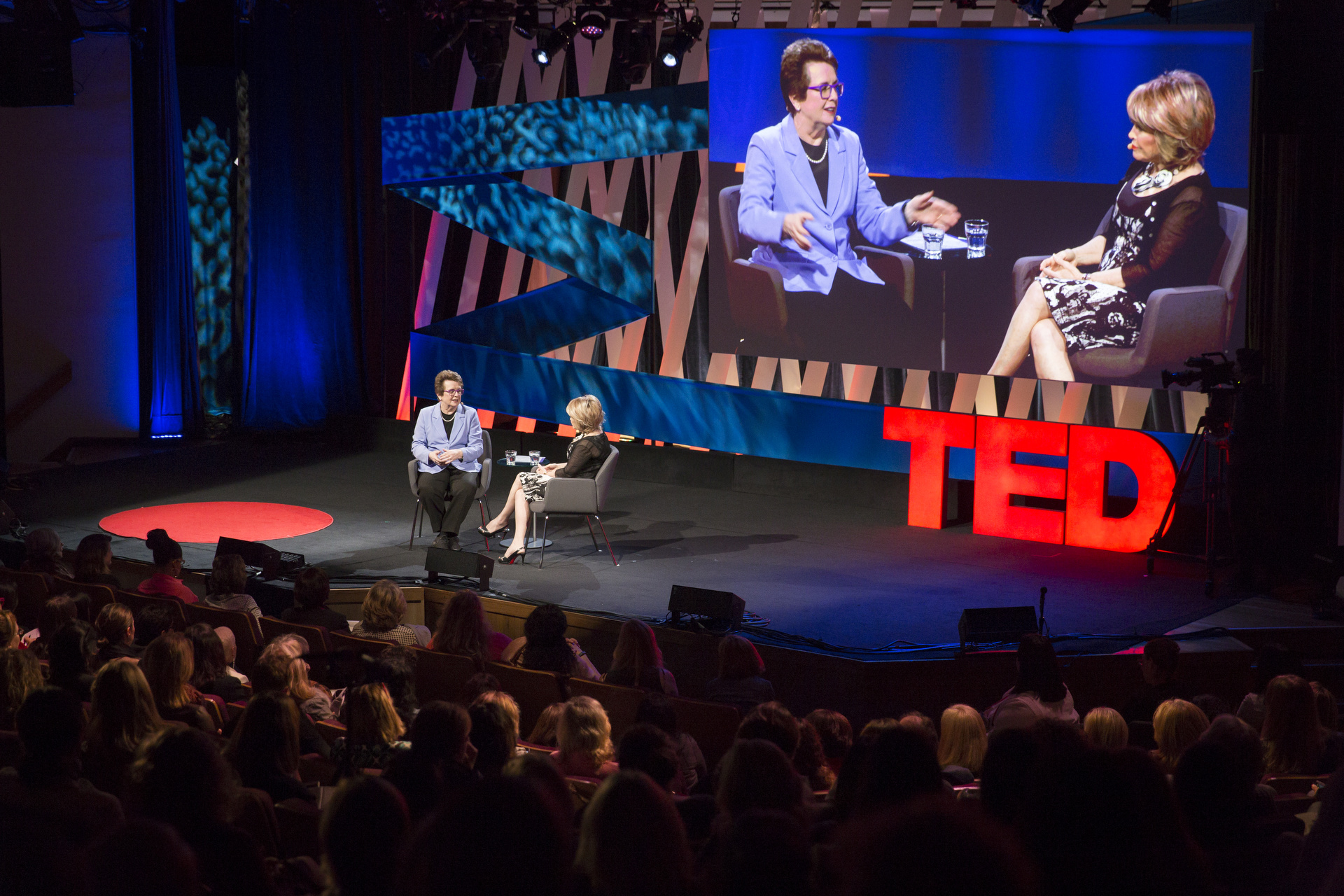
Billie Jean King: “I started thinking about my sport and how everybody who played wore white shoes, white clothes, played with white balls — everybody who played was white. And I said to myself, at 12 years old, “Where is everyone else?” And that just kept sticking in my brain. And that moment, I promised myself I’d fight for equal rights and opportunities for boys and girls, men and women, the rest of my life.” Photo: Marla Aufmuth/TED
The first poster is Paul Watson, who is exactly the type of community member I’d hoped to highlight when we began this project. Paul’s comment is thoughtful, speaking from his particular area of interest/expertise, and looking at the larger picture. I think it’s this zoomed-out view that I’m most intrigued by. He takes a broader look at religion — across time, through the lens of biology, evolutionarily — than many other commenters have, understandably so. When I listen to a talk like Sharon’s, I tend to think about myself, my views on the topic, and the people in my life and their views. Reading Paul’s comment reminds me to check for my own blind spots; to revisit Rabbi Brous’ talk with a wide open mind.
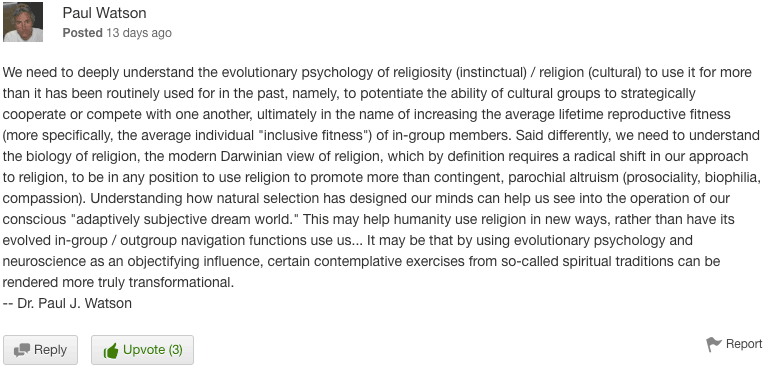
Paul Watson writes: “We need to deeply understand the evolutionary psychology of religiosity (instinctual) / religion (cultural) to use it for more than it has been routinely used for in the past…”
The second poster is Allan Hayes, another community member who, like Paul, is entirely worthy of being highlighted. He’s also expressed a larger commitment to TED, in both the personal and TEDx organizer kind of way, so I’m excited to encourage his continued participation.
Allan Hayes writes: “State schools in the UK are required to teach RE (Religious Education). I am the BHA (British Humanist Association) representative on the committee that sets the “agreed syllabus” for Leicester … I visit schools along with Muslim, Hindu, Sikh, Christian, Buddhist, Baha’i, Jain, Pagan . . . representatives. We set up our individual displays and talk to kids from 5 to 18, and to teachers, governors, and sometimes to parents. My aim in these visits is not so much to explain Humanism as to talk about Humanity, how we have learned to live together and how religions have come about -– to stimulate curiosity. …”
Allan’s comment is great because I’ve learned so much from reading it. I now know a little more about how religion is taught in UK schools, and that its teaching is a requirement. I’ve also learned a great way to discuss my religious beliefs with others — no matter what they are — in a way that doesn’t imply superiority of any kind; “we get on well together” :) Lastly, like any good lesson, it made me think. Particularly, it made me think about how something like that would look in the country I live in now, and the one I lived in before. How would the parents, and children, in these communities respond? What changes could be made to tailor the lessons Allan is teaching to these communities? How can we best “tell our children a story that brings us together and that they can feel part of”?
I hope you enjoyed Paul and Allan’s comments as much as I did!
]]>If you head to Google.com today, you might notice something interesting underneath the search bar: an invitation to watch a series of animations called #WhoWeAre.
A collaboration between StoryCorps and Upworthy, with support from Steven Spielberg’s Righteous Persons Foundation and Delta Airlines, #WhoWeAre is designed to encourage people across the United States to reach out to others who’ve had vastly different experiences. It’s a call for connection in a deeply divided election season. From stories of people who got to know individuals who’d committed crimes against them, to stories of people who went above and beyond to help strangers, to stories of people who faced discrimination for their race, religion or gender and found ways to understand with those who persecuted them — the goal is to share stories that stress empathy and love.
As Dave Isay, the founder of StoryCorps and winner of the 2015 TED Prize, says in a short explainer video about the series, the animations are intended “to speak to our best selves.” He added over email that the idea for #WhoWeAre started shortly after he spoke at the TED2016 conference. “Steven Spielberg asked me to meet, and we came up with idea of trying to blanket the country with simple, animated StoryCorps stories,” he wrote. “We hope they’ll be a little ripple of hope in the midst of the madness.”
Enjoy the playlist above. Isay has one request as you watch and share: that you reach out to someone who thinks differently from you, and ask them meaningful questions about their life. For extra credit, record the conversation using the StoryCorps app — and upload it directly to The American Folklife Center at the Library of Congress.
]]>
Think of a story from your life that you can’t tell anyone. Not because it reflects badly on you — in fact, you’re proud of the lessons you learned — but because of its effects on someone you love. A new-mom story that you’d never want your kid to hear. A high-stakes mistake on the job that made you a wiser person — but left lingering sadness and regret behind. Or perhaps you have an insider’s take on an exclusive milieu that few can imagine — and no one can talk about.
As a pilot for a new audio show, TED’s producers June Cohen and Deron Triff are looking for those stories. “Sincerely, X” will be a place where the ideas inside stories can come forward … without revealing the identity of the storyteller.
Listen to the first few episodes of Sincerely, X on Audible now >>
As Cohen says: “We’re not just looking for corporate whistleblowers or other traditional anonymous insiders — we also want to hear the personal lessons of learning and growth, the hard stories that create our worldview and make us who we are. For example, imagine a mom who faced and came through severe postpartum depression. She has a story, an idea, that could help other people — but she never wants her kid to know about her darkest thoughts as a new mom. How do we share her ideas with the world?”
The format of the audio show is carefully tailored to allow identities to be disguised, while the power of the story comes through.
TED is now looking for great ideas and stories to kick off the pilot. if you have one, use this form to submit it. All information will be carefully handled, as you might expect.
]]>TED Talks Live: War and Peace brings a night of thought-provoking talks and performances to New York’s Town Hall Theater on Nov. 3 and 4, 2015. Get tickets here »
A limited number of free and reduced tickets are available for veterans and active military. Apply here »
On either night, you can expect many great talks — including bold new ideas from author Sebastian Junger (Restrepo) and actor Adam Driver of Star Wars, a Marine Corps vet. Rufus Wainwright will play a short set of songs, and Pulitzer-winning poet Yusef Komunyakaa will share poems with roots in his personal experience.
War & Peace is one of three TED Talks Live themes. The Education Revolution will run on November 1 and 2, and Science & Wonder will follow on November 5 and 6. Each night will be a thought-provoking mix of talks, performances and special surprises, hosted by author and comedian Baratunde Thurston.
TED Talks Live is funded by The Corporation for Public Broadcasting, in partnership with TED and ITVS. Content from the events will air in three primetime specials on PBS in the spring of 2016.
A limited number of free and reduced tickets are available for veterans and active military. Apply here »
The video above was directed by Andrew May. It stars choreographer Amanda Kreglow, dancers Ricardo Barrett + Jessica Sgambelluri, and understudies Jean-Baptiste Ferreira + Maria Vittoria Villa.
]]>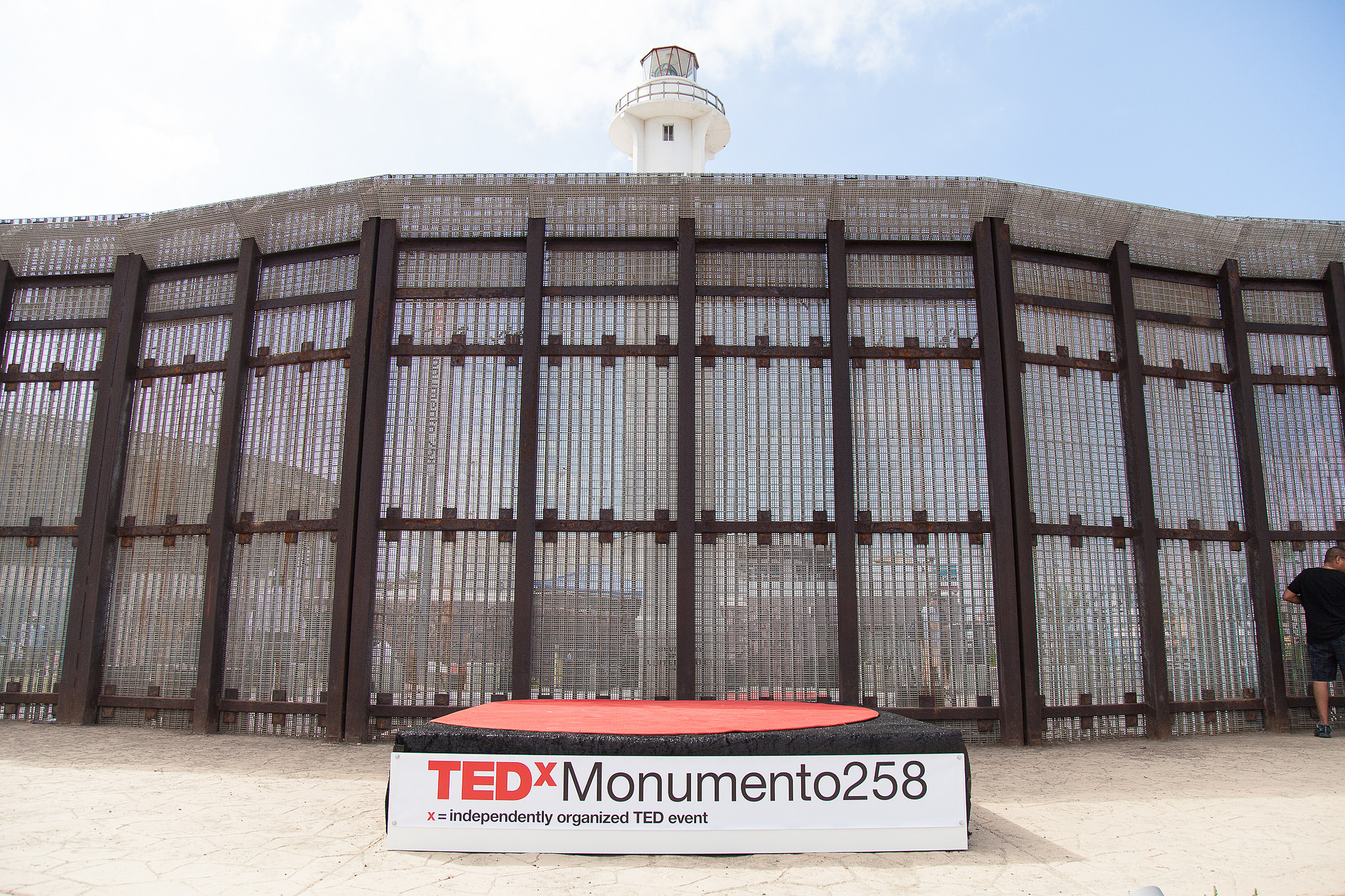
In early September, TEDxMonumento258 became the first TEDx event organized by teams in two different countries and held simultaneously across a border. Planning the event took more than two and a half years. Constraints on the US side proved the most difficult to overcome. Photo: Natalia Robert/TEDxMonumento258
Adriana Eguia Alaniz started her talk in the United States, speaking English. She ended it in Mexico, speaking Spanish.
Welcome to TEDxMonumento258, an event held across the US-Mexico border. On September 4, 2015, attendees gathered in both San Diego and Tijuana to watch as ideas permeated the border fence that divides the cities. The organizers of TEDxSanDiego and TEDxTijuana planned this day-long event together, and imagined it as a metaphor. “You can pass laws, you can build fences,” said San Diego-based organizer Mark Lovett, “but you will never stop cultures from sharing their lives and ideas.”
The event name pointed to a symbol of the separation.
“At the border, there’s a marble obelisk called Monument 258,” said Lovett. “It was the first point of demarcation between the United States and Mexico after the Treaty of Guadalupe Hidalgo was signed 167 years ago, at the end of the Mexican-American War. … Everybody who lives in this region has been affected by the decisions made back then.”
Crossing the border between San Diego and Tijuana takes minutes at a good time, and several hours at a bad one. But in Friendship Park, where Monument 258 stands, a stretch of fence allows for interaction without crossing. The fence here is a thick, waffle-like, metal mesh — you can see and hear through it. The TEDxMonumento258 team decided to build two stages, back-to-back, one on each side. The speaker program would alternate — a speaker on the US side, then a speaker on the Mexico side.
The format was simple. But the planning was complex. It took more than two and a half years.
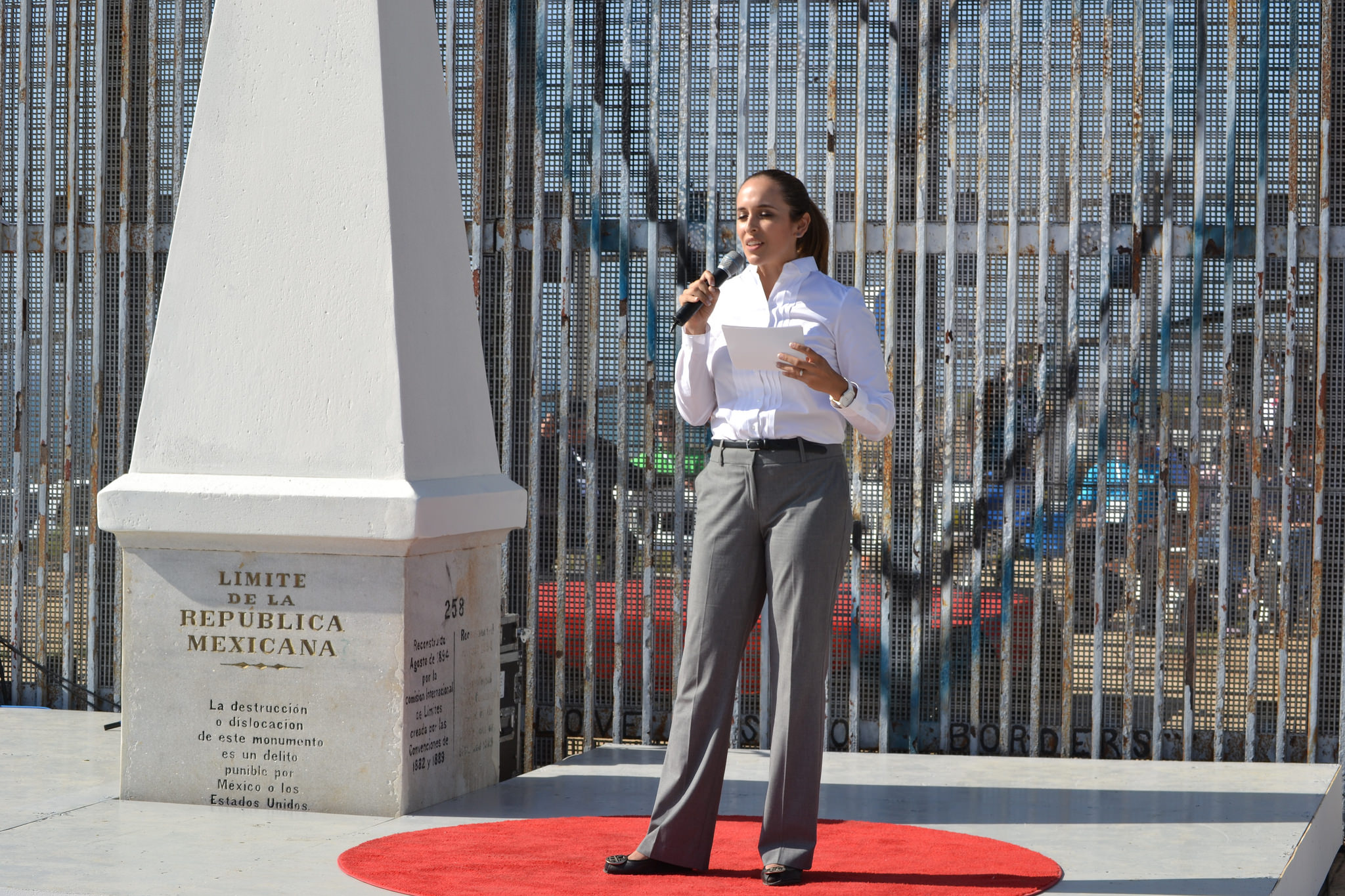
Adriana Eguia Alaniz stands next to Monument 258, the first point of demarcation between the US and Mexico. The stage on the Mexican side of the fence was built to incorporate it. Eguia Alaniz began her talk in the morning in the US and ended it in the afternoon in Mexico. Photo: Arturo Loaiza/TEDxMonumento258
The US side of Friendship Park is gated — it’s guarded by US Border Patrol and is generally closed to the public. “On Saturday and Sunday, they open the outer gate for four hours and allow people to walk up to the fence and talk to relatives in Tijuana,” said Lovett.
Lovett and his co-organizer Janelle Doll needed the Border Patrol’s blessing to hold an event here, especially one on a weekday. That process took time. Along with Tijuana-based organizers Heberto Peterson and Ariosto Manrique, the two also worked with the mayor of San Diego, the mayor of Tijuana and both cities’ “binational liaisons” to keep plans moving forward.
Still, technical challenges abounded. On the US side, Friendship Park has no power or wi-fi. Generators aren’t allowed, nor are tents for shade or screens where speakers could show slides. To power the event, Lovett had to get permission to run a 400-foot extension cord from a women’s bathroom in Border Field State Park, outside Friendship Park’s boundary. “We might be the first TEDx event powered by a bathroom,” he said.
Also difficult: getting permission to run a cable through the border fence, so that the footage shot on battery-powered cameras on the US side could be part of the event’s livestream. The livestream was run through the Mexican side of Friendship Park, a public beach called Playas de Tijuana. This is where Monument 258 stands, near a lighthouse, with a backdrop of murals painted on the border fence.
“On the Mexican side, we have electricity, Internet, public access to the park,” said Peterson. “People usually think about it as the other way around.”
Because of the constraints of the US side, the organizing team decided not to translate between English and Spanish. “We told our audience that if you’re not bilingual, you are not going to understand half of what you hear,” said Lovett. Instead, they sat bilingual speakers throughout the event, so they could share what was being said in each talk.
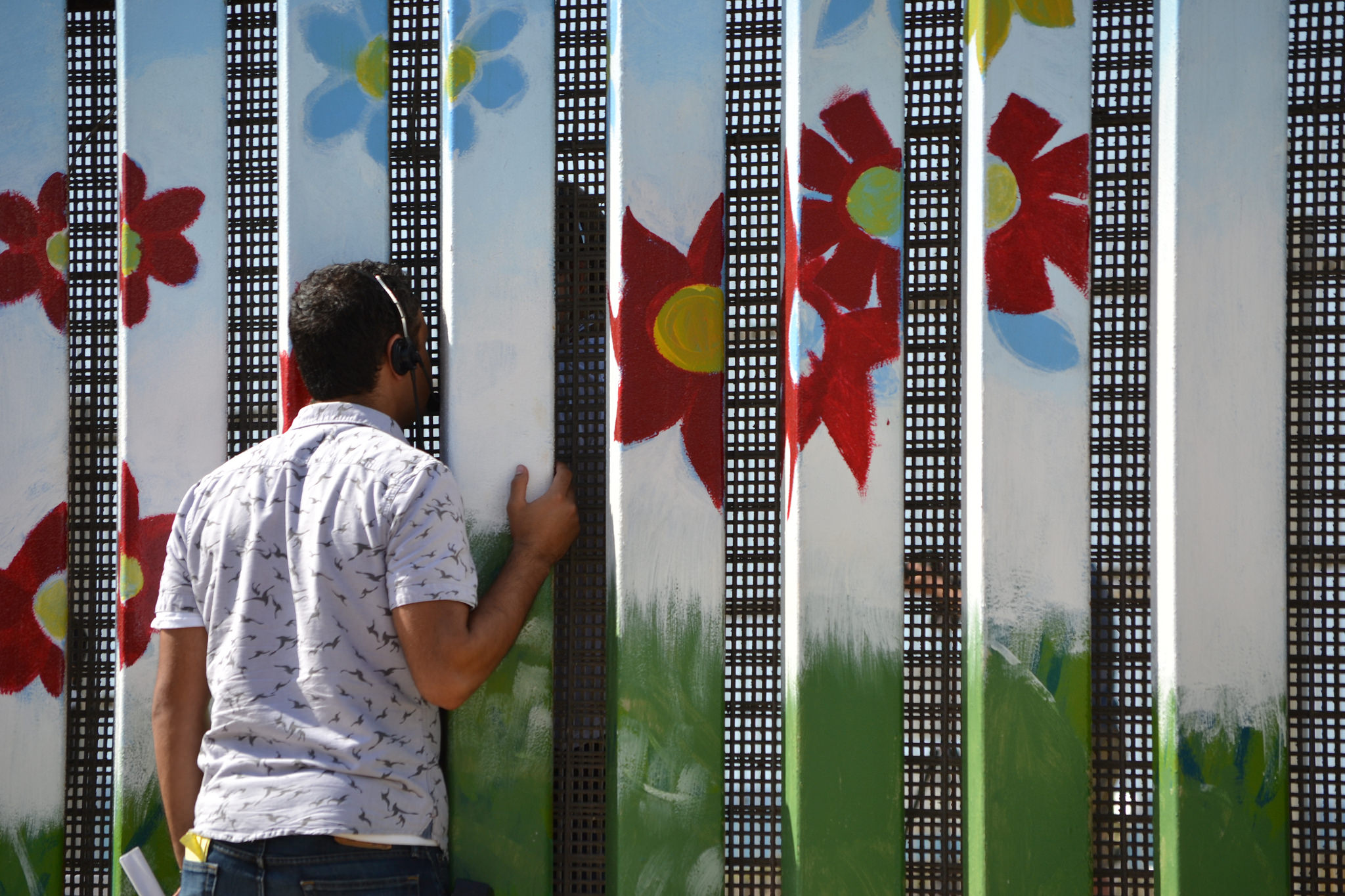
The coordination of the two sides happened through the most low-tech of methods: shouting through the fence. On the US side, the fence looks austere — but on the Mexican side, it’s painted with murals. Photo: Arturo Loaiza/TEDxMonumento258
The theme for the event came easily: “Ideas without borders.” Talks included a museum curator on how art transcends language, an attorney on the need for civic engagement across the border and a sommelier on how food allows for cultural exchange.
But everything ground to a halt 10 minutes before the event started.
“A guy in a powered paraglider comes swooping over the fence from Mexico into US airspace,” said Lovett. “Border Patrol freaks out — they’re on the phone trying to see if there’s a helicopter to chase the guy. An agent comes up to me and says, ‘We don’t know what this guy is doing. This is a danger. You need to shut down your event.’”
“As soon as he said that, the paraglider turned around and flew back into Mexico,” said Lovett. “So we didn’t have to stop the show.”
Together, San Diego and Tijuana have a population of nearly 5 million people. Both Lovett and Peterson see the cultural exchange between the two as key.
“People work on both sides of the border. There’s commerce going on, communication going on,” said Lovett. “These two cultures — despite political, cultural and physical barriers — have created this very vibrant, very diverse, very rich multicultural region.”
“If we could demonstrate how two cultures work through difficulties and challenges, that hopefully could be a model for people in other parts of the world.”
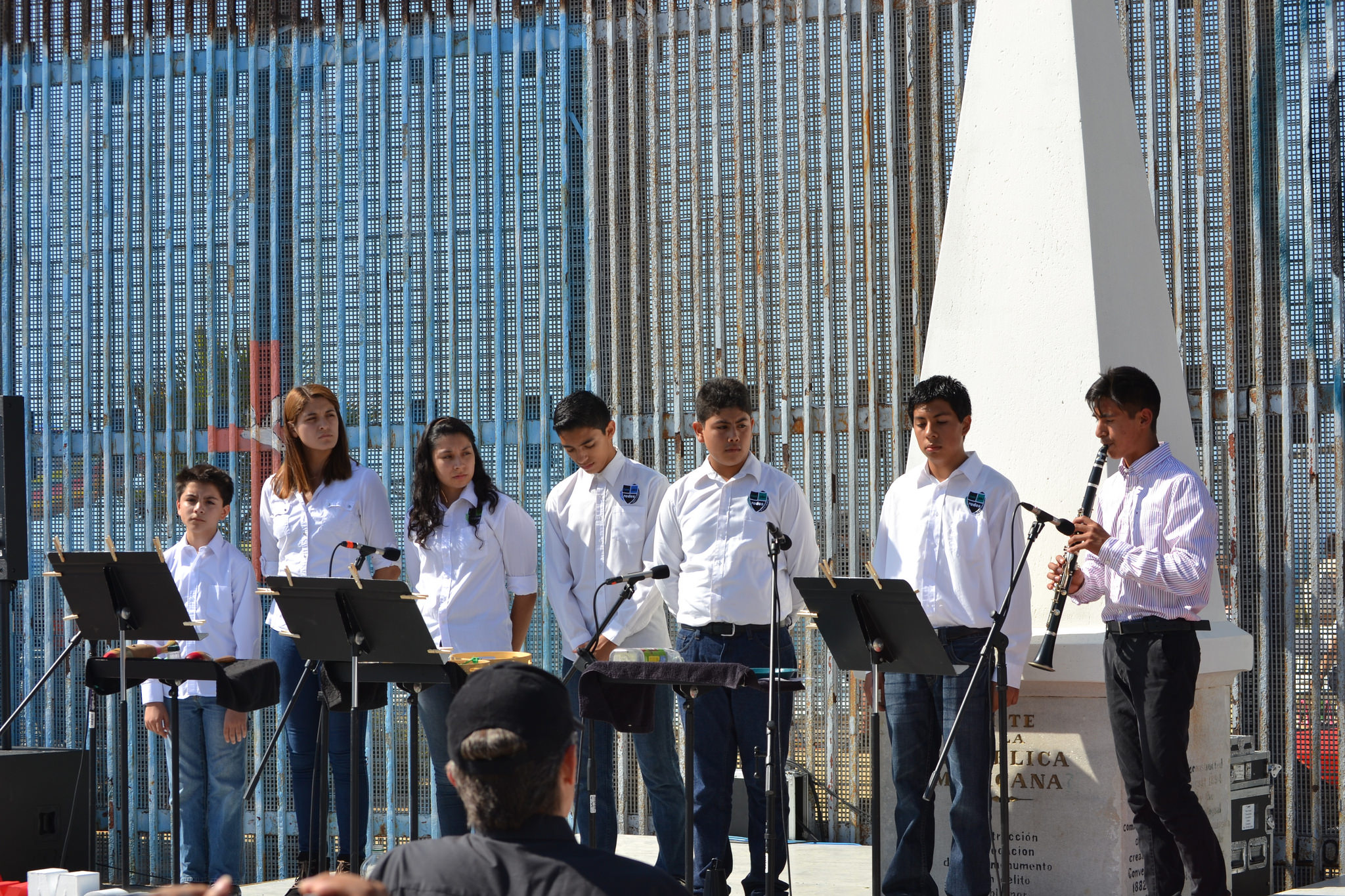
Students from Redes 2025, an after-school music program in high-needs communities, played a musical interlude. Clarinetist Missael Zavala Lopez (right) spoke before they played about his experience growing up in California and returning to Mexico when his mother was deported. Photo: Arturo Loaiza/TEDxMonumento258

In Friendship Park, the border fence continues far into the ocean. Photo: Natalia Robert/TEDxMonumento258
The tables in bookstores can be overwhelming: Every book cover looks appealing, every blurb glows with praise. Sometimes, you just need a recommendation from a human, someone you trust. Below, 10 members of the TED community — with very different points of view — share the books they think you’ll enjoy this summer. Their selections are wonderfully untethered to new releases and bestsellers, with a little something for everyone.
 Mind-bending fiction, picked by David Eagleman
David Eagleman is a neuroscientist whose sensory vest may just expand the limits of human perception. But this TED speaker is also a writer — of both fiction (his Sum: Forty Tales from the Afterlives has been translated into 28 languages) and nonfiction (Incognito: The Secret Lives of the Brain was a bestseller). His recommendations highlight mind-bending fiction:
Labyrinths by Jorge Luis Borges. “An inspiration that never runs out of batteries for me; it shines a new light on everything. Borges follows no one’s rules but his own.”
The Bear by William Faulkner. “I bought this short novel for fifty cents at a garage sale when I was 17. The storytelling and language blew my socks off. I immediately became an English major.”
The Most Human Human: What Artificial Intelligence Teaches Us About Being Alive by Brian Christian. “A book about the wild frontiers of chatbots, it reveals more than expected about what it means to be made of flesh and blood.”
The Arrival by Shaun Tan. “A lovely, wordless story about the immigrant experience.”
Invisible Cities by Italo Calvino. “A series of very short stories that are all about the same thing: a single city in Kublai Khan’s empire. It’s mother’s milk for my own fiction writing.”
The Amazing Adventures of Kavalier & Clay by Michael Chabon. “A rare combination of perfect wordsmithery and limitless imagination.”
Last and First Men by Olaf Stapledon. “Science fiction written in 1930, it describes the future of humans two billion years in the future. Deep creativity.”
Things That Are: Essays by Amy Leach. “Hilarious essays that bounce effortlessly between the pedestrian and the cosmic, leaving the reader in a warm blanket of wonder.”
The Rise of Superman: Decoding the Science of Ultimate Human Performance by Steven Kotler. “An exciting book about the rising bar of peak human performance.”
.
.
 Books on art and race, picked by Anne Pasternak
TED attendee Anne Pasternak will be the next director of the Brooklyn Museum, making her the first woman to lead one of New York’s encyclopedic art museums. For the past two decades, she’s directed Creative Time, staging artistic happenings in the wilds of New York City. Her recommendations focus on art, as well as on the legacy of slavery and racism:
Slavery by Another Name: The Re-Enslavement of Black Americans from the Civil War to World War II by Douglas A. Blackmon. “Over the past year, several people were shocked I hadn’t heard of this book. So I bought it and dove in. If you’ve ever questioned why there were struggles for equality between the end of slavery and the Civil Rights Movement in the US, this book illuminates the conditions that led to the disinvestment, misery and tragedy that have lasted for generations.”
Who We Be: The Colorization of America by Jeff Chang. “Don’t let the textbook look of this book stop you, because it’s awesome. No one writes more beautifully about race and culture than Jeff, the author of Can’t Stop Won’t Stop. Only he can make topical discussions of race and art into a page-turner.”
The Rise: Creativity, the Gift of Failure, and the Search for Mastery by Sarah Lewis. “As seen on last year’s TED stage, Sarah Lewis speaks to mastery.”
12 Years a Slave by Solomon Northup. “When filmmaker Steve McQueen told me this book was about to become [suggested] reading in our public school curriculum, I almost burst into tears. Bravo for art impacting education! Now that it’s on our school reading list, it should be on ours as well.”
Nick Cave: Epitome by Nick Cave et al. “In this brand-new coffee-table book, Nick Cave’s beaded and feathered Soundsuits pop off the page. You can almost feel these gorgeous creatures dancing around you. I confess that I haven’t read the essays yet, simply because the pictures are just so captivating.”
Art Studio America: Contemporary Artist Spaces edited by Hossein Amirsadeghi and Maryam Homayoun Eisler. “In this book, you get a glimpse at the creative spaces of some of America’s leading artists, like Chuck Close, Rachel Feinstein and Kiki Smith.”
Uncommon Grounds: New Media and Critical Practices in North Africa and the Middle East edited by Anthony Downey. “In countries with rich histories, changing boundaries and war/conflict, artists are sharing histories, reflecting on the past to see the present and speaking truth to power. Check out the thriving artistic practices emerging in the Middle East and North Africa.”
.
.
 Illuminating nonfiction, picked by Bill Gates
At TED2015, Bill Gates tried on the protective body suit worn by healthcare workers in Ebola field hospitals and gave a talk on epidemic readiness. He also selected some favorite books. His recommendations focus on business and our modern world:
Business Adventures: Twelve Classic Tales from the World of Wall Street by John Brooks. “Warren Buffett recommended this book to me in 1991, and it’s still the best business book I’ve ever read. Brooks offers sharp insights into the timeless fundamentals of business — like the challenge of building a large organization, hiring people with the right skills and listening to customers’ feedback.”
The Bully Pulpit: Theodore Roosevelt, William Howard Taft, and the Golden Age of Journalism by Doris Kearns Goodwin. “Doris Kearns Goodwin studies the lives of these presidents to answer a question that fascinates me: How does social change happen? Can it be driven by an inspirational leader, or do other factors have to lay the groundwork? In Roosevelt’s case, it was the latter; his famous soft speaking and big stick weren’t effective in driving reform until journalists rallied public support.”
On Immunity: An Inoculation by Eula Biss. “Eloquent essayist Eula Biss uses the tools of literary analysis, philosophy and science to examine the speedy, inaccurate rumors about childhood vaccines that have proliferated among well-meaning American parents. Biss took up this topic not for academic reasons, but because of her new role as a mom.”
Making the Modern World: Materials and Dematerialization by Vaclav Smil. “In this book, Smil examines the materials we use to meet the demands of modern life — like cement, iron, aluminum, plastic and paper. The book is full of staggering statistics: for example, China used more cement in just three years than the US used in the entire twentieth century. Smil is an original thinker who never gives simple answers to complex questions.”
How Asia Works: Success and Failure in the World’s Most Dynamic Region by Joe Studwell. “Business journalist Joe Studwell gives compelling answers to two key questions in development economics: How did countries like Japan, Taiwan, South Korea and China achieve sustained high growth? And why have so few other countries managed to do so?”
How to Lie with Statistics by Darrell Huff and Irving Geis. “First published in 1954, this book doesn’t feel dated, aside from a few anachronistic examples. (It’s been a long time since bread cost five cents a loaf.) In fact, it’s more relevant than ever. One chapter shows you how visuals can be used to exaggerate trends and give distorted comparisons. A timely reminder, given how often infographics show up in your Facebook and Twitter feeds these days.”
.
.

Incredible interviews, picked by Dave Isay
Dave Isay of StoryCorps, the winner of the 2015 TED Prize, has centered his life around the art of the interview — where stories of everyday individuals are surfaced and the gift of listening is given. His recommendations, naturally, gravitate toward magical conversations:
Up in the Old Hotel by Joseph Mitchell. “The astounding collection of profiles from a legendary The New Yorker writer. Too many good stories to list, but I named my daughter after ‘Mazie,’ his profile of the foul-mouthed ticket taker/bouncer/angel of a low-rent movie theatre catering to homeless men in New York.”
They Called Me Mayer July: Painted Memories of a Jewish Childhood in Poland Before the Holocaust by Barbara Kirshenblatt-Gimblett and Mayer Kirshenblatt. “Barbara Kirshenblatt-Gimblett spent forty years interviewing her father about the Polish town where he grew up. After decades of prodding, Mayer — a retired house painter — picked up a brush and began painting his memories of the town as well. The book creates a singular portrait of a world wiped off the face of the earth.”
Maus: A Survivor’s Tale by Art Spiegelman. “In this graphic novel — one of the greatest works of the twentieth century, in my opinion — Spiegelman interviews his father about living through the Holocaust.”
The Bridge: The Building of the Verrazano-Narrows Bridge by Gay Talese. “An ode to the men who built the Verrazano-Narrows, it centers around the question, ‘Who are the high-wire walkers wearing boots and hard hats, earning their living by risking their lives in places where falls are often fatal and where the bridges and skyscrapers are looked upon as sepulchers by the families and coworkers of the deceased?’”
Just Mercy: A Story of Justice and Redemption by Bryan Stevenson. “I’m currently reading this autobiography. As Bryan Stevenson said in his TED Talk: ‘We will ultimately not be judged by our technology; we won’t be judged by our design; we won’t be judged by our intellect and reason. Ultimately, you judge the character of a society by how they treat the poor, the condemned, the incarcerated.’ This book is not to be missed.”
The Four Things That Matter Most: A Book About Living by Ira Byock. “A small, beautiful book which reminds us to say the important things we want to say to the people we care about.”
.
.
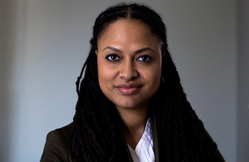 Haunting novels, picked by Ava DuVernay
Ava DuVernay directed Selma, nominated for the Oscar for Best Picture this year. And this TED attendee is also a big reader. Her recommendations are all about beautiful, heartfelt fiction:
Ruby by Cynthia Bond. “Oprah recommended this book to me, and it is astounding. The writer has such a majestic command of language; she catapults everyday words into rare air with lines that sear into your memory. The characters Ruby and Ephraim shimmer with vibrancy — they show the complications of pain and joy, all messily and beautifully together. A total triumph.”
The God of Small Things by Arundhati Roy. “This book scans the terrain of the personal, the political and the spiritual in incredible ways. The fact that so many millions of people have related to Estha and Rahel — twins in Kerala, India — illustrates the power of storytelling and the fact that within cultural specificity lies a gorgeous universality.”
Their Eyes Were Watching God by Zora Neale Hurston. “Written in 1937 by a black woman artist extraordinaire, this treasure breathes with awe, ache and everything in between. Zora Neale Hurston’s prose is legend. Her story is epic, but her approach is intimate. I can’t say enough about this work.”
A Small Place by Jamaica Kincaid. “A small novel filled with massive ideas, wrapped in language that allows us to taste and smell a whole new life — one as a tourist experiencing the beauty of Antigua and unaware of the indignities required to make such a visit possible. It’s about colonialism, patriarchy and injustice and pushes the reader to examine their own ideas, expectations and identity.”
.
.
 Books on historical moments, picked by David Rothkopf
Foreign policy thinker David Rothkopf gave a talk at TED2015 — an experience that flipped his thinking. His book recommendations are for those interested in history, as well as on its influence on the present:
Lenin’s Tomb: The Last Days of the Soviet Empire by David Remnick. “If I could have written one book in my life, it would probably be this one. One of the best combinations of storytelling, history writing and analysis that I have seen, about the end of the Soviet Union.”
A Problem from Hell: America and the Age of Genocide by Samantha Power. “The best book about one of the most horrific topics imaginable. The author is now the US Ambassador to the UN and must struggle with these issues.”
We Wish to Inform You That Tomorrow We Will Be Killed with Our Families: Stories from Rwanda by Philip Gourevitch. “Another evocative look at the Rwandan genocide. It’s a good companion piece to Power’s book because it provides more of the human story, in the most heartrending way possible.”
Joan of Arc: A History by Helen Castor. “I’m fascinated by Joan of Arc and, until recently, by the lack of a really good, modern biography of her. This book fills that void. It tells the story of one of those extraordinary lives that, even when stripped of mythologies, mesmerizes because it illustrates how single individuals can make a difference.”
The Secret History of Wonder Woman by Jill Lepore. “This book is about the man who invented Wonder Woman, and the women around him who reflected historical changes in the role of women in society. It’s smart and funny, a refreshing look into a corner of cultural history that I would never have thought to explore.”
Age of Ambition: Chasing Fortune, Truth and Faith in the New China by Evan Osnos. “To understand the century ahead, you need to understand China. To understand China without actually going there, read this new, much-heralded book. It deserves all the awards it has won. But really: you have to go there.”
1491: New Revelations of the Americas Before Columbus by Charles C. Mann. “This history of the Americas turns upside down almost everything you learned in school. It drives home the message that the history we know may never have happened.”
The Good Spy: The Life and Death of Robert Ames by Kai Bird. “A terrific and true spy story that makes the fictional kind pale in comparison.”
Flash Boys: A Wall Street Revolt by Michael Lewis. “Michael Lewis is one of the best at telling a compelling story about a few people — and in so doing, opening up a window into big issues of our times. He also knows and writes about finance better than any of his peers. The result: a book that proves how the financial system is just as rigged and corrupt as you thought it was.”
The Second Machine Age: Work, Progress and Prosperity in a Time of Brilliant Technologies by Erik Brynjolfsson and Andrew McAfee. “Our economy is changing profoundly, creating new questions about what jobs will look like in the future and how people will make meaningful lives for themselves. Few have even recognized the problem, much less come up with answers. Brynjolfsson and McAfee are doing both.”
The Idea Factory: Bell Labs and the Great Age of American Innovation by Jon Gertner. “My dad worked at Bell Labs, and my first summer jobs were there as well. It epitomized the power of pure research, and showed how big science and big government could collaborate. It is gone now, and its disappearance raises many questions about our future.”
Americanah by Chimamanda Ngozi Adichie. “This is the last novel I read. It’s the story of a Nigerian woman who comes to America and then returns home, full of culture shock and self-discovery. It’s beautifully done and will have you looking at the world around you in a very different way.”
My Promised Land: The Triumph and Tragedy of Israel by Ari Shavit. “A terrific, brutally honest look by an Israeli at the conundrum of loving his country but also understanding its complicated, often-disturbing historical roots and current reality.”
.
.
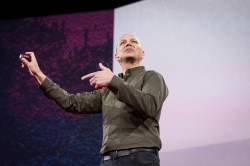
Books on creativity, picked by Tony Fadell
At TED2015, Tony Fadell — the man behind the iPod and Nest — managed to turn an observation about the little stickers on fruit that you inevitably forget to peel off before eating into an intriguing TED Talk. His book recommendations focus on the bounds of creativity:
Thinking, Fast and Slow by Daniel Kahneman. “Kahneman is brilliant. His latest book offers a fascinating look at how our brains work, and how they push us to act in ways that aren’t always in our best interest.”
How Children Succeed: Grit, Curiosity, and the Hidden Power of Character by Paul Tough. “By offering evidence that traits like empathy, determination and self-control tend to be better predictors of success than IQ, Tough will make you think differently about raising kids in a highly competitive world.”
Creativity, Inc.: Overcoming the Unseen Forces That Stand in the Way of True Inspiration by Ed Catmull. “A fantastic read, and hugely applicable to what we do at Nest. It offers a great perspective on how an experienced leader has guided a team of creative, dedicated people to develop amazing things.”
The Hard Thing About Hard Things: Building a Business When There Are No Easy Answers by Ben Horowitz. “Starting a company is never easy — even when you’ve done it before. Ben’s advice is useful, honest, profane and essential for understanding why some companies fail and others succeed.”
The Art of War by Sun Tzu. “It’s hard to believe that a 2,000-year-old book could still be relevant for businesses today, but Sun Tzu’s masterpiece is as applicable to the world we live in as ever.”
.
.
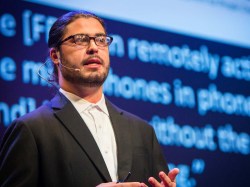 Books on privacy, picked by Christopher Soghoian
TED Fellow Christopher Soghoian is a privacy researcher whose unsettling research suggests that we are just seeing the start of government surveillance. His recommendations are perfect for those interested in security:
This Machine Kills Secrets: Julian Assange, the Cypherpunks and Their Fight to Empower Whistleblowers by Andy Greenberg. “Ignore the references to WikiLeaks in the title. To understand how and why disruptive technologies like Bitcoin and Tor exist, you need to read this well-written book on the history of the cypherpunk movement.”
Countdown to Zero Day: Stuxnet and the Launch of the World’s First Digital Weapon by Kim Zetter. “This page-turner reads like a spy thriller, but is actually a well-reported true story. Welcome to the scary new world of cyberwar, in which the US government plays the starring role.”
Dragnet Nation: A Quest for Privacy, Security and Freedom in a World of Relentless Surveillance by Julia Angwin. “One of the best technology journalists in the US documents her efforts to protect her digital privacy. It’s part self-help book, but also a sobering view of how stacked the privacy deck is against us all.”
Data and Goliath: The Hidden Battles to Collect Your Data and Control Your World by Bruce Schneier. “Bruce is the information security community’s ambassador, a thought leader who can explain privacy, surveillance and data security in an accessible way. This book isn’t a deep dive, but an introduction to topics that should concern us all.”
Spies for Hire: The Secret World of Intelligence Outsourcing by Tim Shorrock. “Think Blackwater meets the NSA. Tim Shorrock does a great job of exposing the mercenaries and beltway bandits who are fighting for a piece of the $70 billion a year intelligence community budget.”
It’s Complicated: The Social Lives of Networked Teens by danah boyd. “Every time I hear someone proclaiming that ‘kids today just don’t care about privacy,’ I tell them to buy this book. Kids do care and are taking steps — you just can’t see it.”
.
.
 Books on identity, picked by Janet Mock
In March, Janet Mock was named one of the “30 Most Influential People on the Internet” by TIME Magazine. A TED2015 attendee, she is the host of MSNBC’s So Popular! and the author of Redefining Realness: My Path to Womanhood, Identity, Love & So Much More. Her recommendations focus on explorations of gender, race and trans identity:
Sister Outsider: Essays and Speeches by Audre Lorde. “This collection of work from the black lesbian poet and feminist provides a lifemap to live and organize for us all.”
ain’t i a woman: black women and feminism by bell hooks. “One of hooks’ most widely taught texts, it centers the lives of black women and their struggles within a feminist context.”
Captive Genders: Trans Embodiment and the Prison Industrial Complex edited by Eric A. Stanley and Nat Smith. “This collection is a crucial text, furthering our understanding of the over-policing and criminalization of trans and gender-nonconforming communities, from the 1969 Stonewall Riots through today.”
The Fire Next Time by James Baldwin. “Released the same year as the March on Washington, Baldwin — an openly gay black male writer and intellectual — offers a torching perspective on being black in America.”
This Bridge Called My Back: Writings by Radical Women of Color edited by Cherríe Moraga and Gloria Anzaldúa. “This edition of feminist writings gave voice to a collective of women who were silenced by the mainstream feminist, gay and racial justice movements. I can’t recommend this book more.”
Transparent: Love, Family and Living the T with Transgender Teenagers by Cris Beam. “This memoir follows one woman’s journey as she enters the lives of four low-income trans girls in Los Angeles, and watches as they grapple with family, poverty, intolerance and their own bodies.”
Sister Citizen: Shame, Stereotypes and Black Women in America by Melissa V. Harris-Perry. “This book breaks down how women of color struggle to stand upright in a ‘crooked room’ filled with distorted images — ‘mammy,’ ‘jezebel,’ ‘sapphire’ — that unfairly reflect them.”
Sula by Toni Morrison. “Everything Morrison writes is gold, but Sula is one of those books that I return to every few years and I always find new nuggets of wisdom in it. The novel traces the sisterhood between Sula and Nel, and the diverging paths their lives take.”
Changing My Mind: Occasional Essays by Zadie Smith. “It’s the only nonfiction collection from one of my favorite contemporary writers. Smith covers pop culture, race, representation and literary analysis, including an ode to my favorite novel of all time, Their Eyes Were Watching God.”
.
.
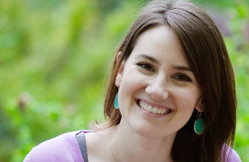 Thought-provoking fiction, picked by Nadia Goodman
TED’s social media editor Nadia Goodman is a celebrity, at least in our office, for her stellar book recommendations. On her Instagram channel Tiny Book Reviews, she sums up books in well-wrought paragraphs alongside snapshots of the books in the perfect environment. Her latest recommendations:
The Transcriptionist by Amy Rowland. “A lonely woman in New York City, the last transcriptionist at a major newspaper, discovers a story she can’t forget. It’s a quiet, beautifully observed book about who gets remembered, who gets forgotten and how we decide whose stories deserve to be told. One of my favorite finds in a long time.”
Boy, Snow, Bird by Helen Oyeyemi. “A loose retelling of Snow White, set in New England in the mid-1900s. It’s a brilliant exploration of beauty, race, identity and the pain we inflict on others to protect ourselves. The ending is just …*mind blown.*”
Dept. of Speculation by Jenny Offill. “I devoured this book in one sitting. It’s insightful, heartbreaking, brutally honest and peppered with such a dry sense of humor that I found myself laughing out loud. More than anything, it humanized the trials of love and marriage.”
Prelude to Bruise by Saeed Jones. “A gut-wrenching collection of poetry about sexuality, race and identity, as tender as it is angry. My personal favorite poems: ‘Boy at Edge of Woods’; ‘Daedalus, After Icarus’; ‘Jasper, 1998’; ‘Apologia’; ‘History, According to Boy.’”
How to Get Filthy Rich in Rising Asia by Mohsin Hamid. “A fantastic story about blind ambition, with a fresh tone and tight, fast-paced prose. It mimics a self-help book — a playful guise for an unexpectedly tender story. I especially love that it’s written in the second person, so the story feels unique and universal all at once.”
Tampa by Alissa Nutting. “Grossly disturbing, but so compelling — I couldn’t turn away. It’s a fascinating foil to Lolita; a scathing indictment of our common assumption that women’s sexuality, especially when paired with beauty, can’t be truly predatory or, worse, that teenage boys are lucky to be preyed on. It’s great fodder for discussion.”
Two Boys Kissing by David Levithan. “If you haven’t read a young adult novel recently, you should. There’s an explosion of great writing for teens, and Levithan’s book is a shining example that weaves together beautiful, brave stories of boys growing up gay in small town America. In a stroke of genius, it’s narrated by the collective voice of the men who died in the AIDS crisis.”
]]>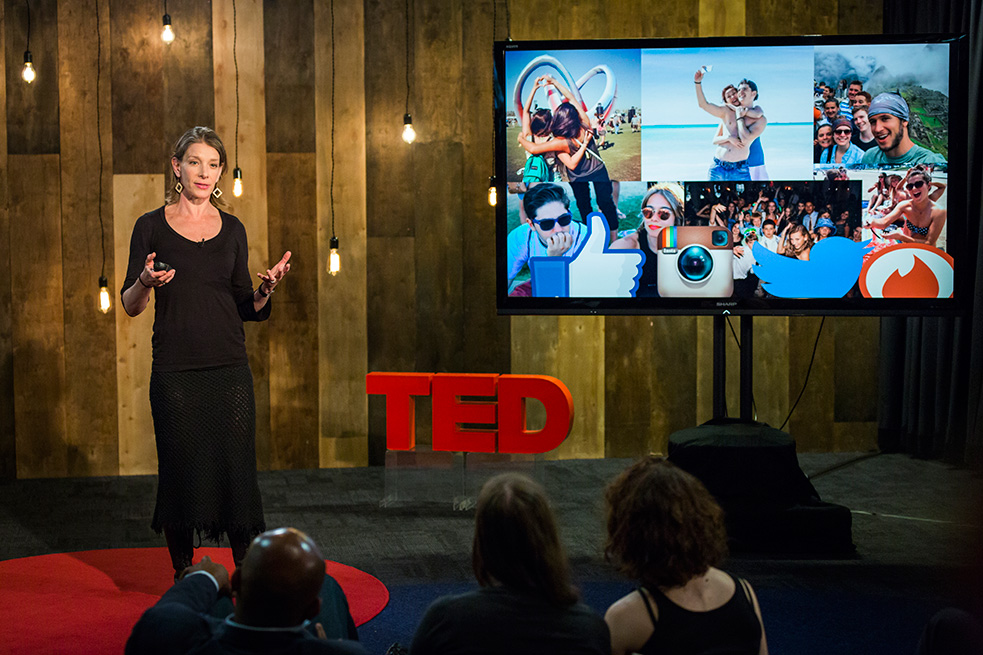
Can we cheat at making a first impression? Judith Donath says yes, and in many ways. Photo: Ryan Lash/TED
First impressions are full of promise — and anxiety. On Tuesday night, five speakers in TED’s New York office shared a salon that explored the hidden opportunities, truths and humor in these split-second assumptions.
First up, NYU associate professor Adam Alter showed how exploiting a simple human trait could actually make us more generous. “We like things that remind of us of ourselves,” he says. There’s no shame in that — it’s why so many humans look like our dogs — and in fact, there’s opportunity. Alter’s research on what drives generosity revealed that people are more likely to donate to a fund for hurricane disaster relief if the first letter of the hurricane’s name matches the first letter of their own name. So a person named Richard is more likely to donate to a relief fund for Hurricane Rita. The fundraising hack he suggests? Instead of naming hurricanes in alphabetical order, as the National Weather Service does, name them according to the most common first-name initials in the United States: J, M, C and R. Alter suggests that this shift could spike philanthropy to the tune of $700 million.
Judith Donath studies our ability to construct perceptions of ourselves. Luxury car rentals, elevator shoes, buying twitter followers (who might be bots), we’ve come up with a thousand ways to fake a first impression. Online, it’s all about seeming, not being. And now that we’ve reached a reasonable level of artificial intelligence, when we’re not sure if the telemarketer on the phone is a robot or someone reading a script (as she reminds us, a Turing test doesn’t ask, “Can a machine be intelligent?,” but, “Can a machine seem intelligent?”) — Donath suggests it’s time to move beyond caring about construction and illusion online, and focus instead on the reality behind it.
Journalist and comedian Chris Colin charmed the audience with tips on how to turn small talk into smart conversation. Our favorite tips:
- Prompt for details. Instead of asking, “How was your day?” you might ask, “Tell me three things you did today.”
- If you’ve been asked a boring question, act like a politician and instead answer the question you wish had been asked.
- When you’re meeting a friend at a bar, get there 10 minutes early, turn off your phone and walk around the block – your brain will click into curious mode.
Next, slam poet Mahogany L. Browne riveted us with her spoken poem “This.” Her voice was rapid-fire and soaring, like a bird’s wings beating then floating on the updrafts: “I can’t hold this want / this now / this here / sprawled inside my chest / this black that I can’t separate from the breaking sunrise / this smile.”
Finally, designer Chip Kidd stood up to talk about his new TED Book, Judge This, a deep dive into the design of first impressions. Kidd himself likes design that is legible and clear. But, as a book jacket designer, Kidd also uses ambiguity and intrigue to entice readers to open a book up and learn more. He walked us through the thinking behind several of his book covers. One example: David Sedaris’ All the Beauty You Will Ever Need. “The title had nothing to do with anything in the book,” Kidd moaned. “It came to the author’s boyfriend in a dream.” Kidd wandered around New York City for days trying to come up with a visual for the title. He found his inspiration in a restaurant in Chinatown. “I was trying to think,” Kidd remembers, “where might I see a bit of mysterious text that seems to mean something but doesn’t?” The answer was right in front of him: a fortune cookie. The jacket design was born.
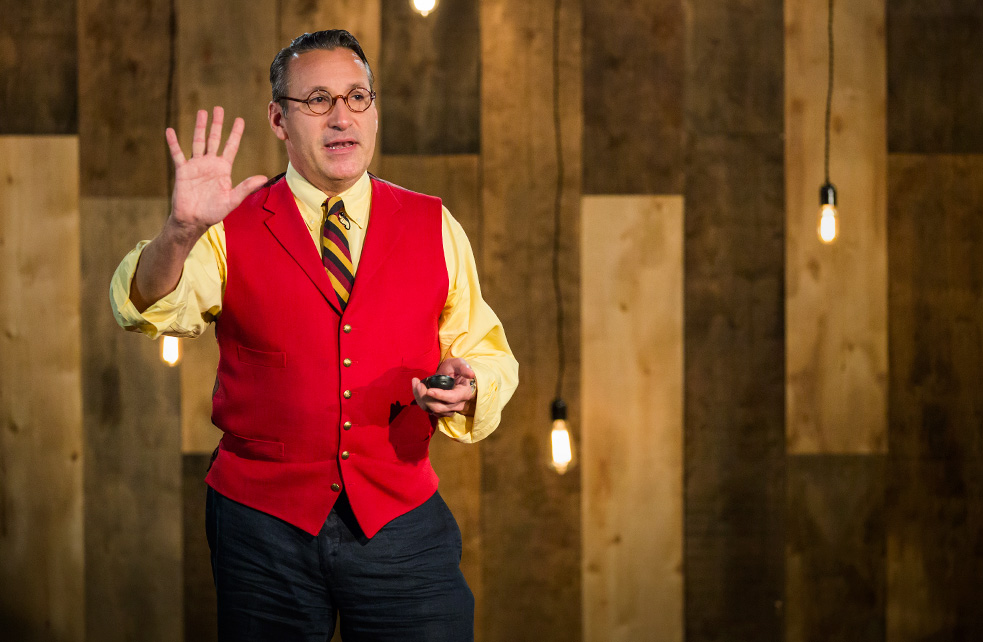
There are two ways to give a good first impression: with clarity and with mystery. Designer Chip Kidd likes both. Photo: Ryan Lash/TED
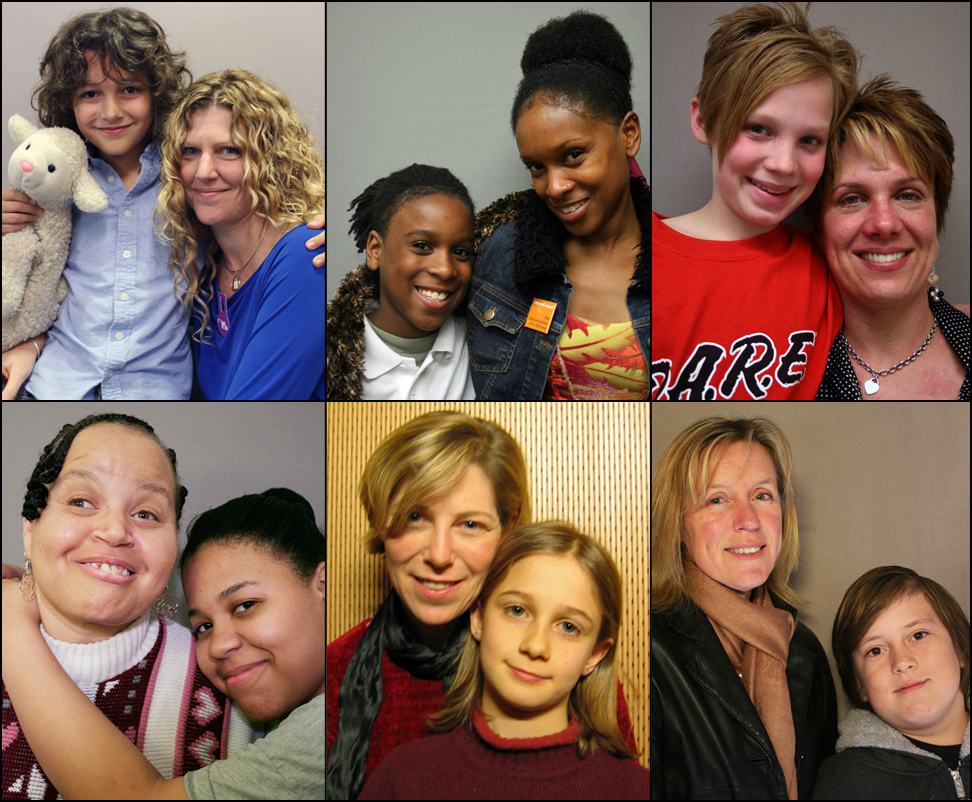 If you could sit down and interview your mom, what would you ask her? Would you ask about your childhood? Her childhood? Would you re-tell old funny stories? Try to dig up some of her secrets?
As an adult, the idea of interviewing your mom can seem pretty scary. Kids, on the other hand, are fearless interviewers, especially when Mom is the interviewee. Their questions range from silly to tough to profound, delivered with genuine curiosity. The bottom line? You just never know what kids are going to ask next.
In honor of Mother’s Day, here are six StoryCorps interviews — suggested by TED Prize winner Dave Isay —featuring kids asking their moms some insightful questions, and the beautifully honest answers they received.
An 11-year old in Missouri asks, “How’s it feel to you, telling someone they’re going to die?”
 Sarafina Viviano’s mom, Dana, works as a nurse at a cancer center. Dana’s mother, Sarafina’s grandmother, died of breast cancer. And it was the experience of getting her mother’s diagnosis, Dana tells Sarafina, that led her to become a cancer nurse. “I remember thinking that there was a way [the doctors] could have told us that was softer,” Dana says. She’s dedicated her life to bringing that softness and grace to her patients. And according to Sarafina, she’s doing a great job. “To me, you are maybe the angels on earth,” she tells her mom. “You come down and try your best to heal people.”
A high school student in Pennsylvania wonders, “Did you ever feel like I was too much too handle?”
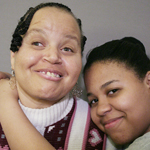
This might sound like a question a rowdy teen would apologetically ask her mom later in life, but it carries a different meaning for Myra Brown. Myra’s mom, Bonnie, is intellectually disabled with a low IQ. She has worked at the same Wendy’s restaurant for the past 18 years. Myra, a high school student, is taking advanced placement classes and hopes to attend Cambridge. As a young child, Myra didn’t realize her mother was “different” until Bonnie told her explicitly. “I said, ‘Myra, I know I am not like your friends’ mothers, but I’m doing the best I can.’ And you said, ‘It’s OK, Mommy.’ And that made me feel so good.”
A 10-year-old in Tennessee asks, “Why are you not still married?”
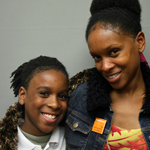
Rahsheed McKenstry is only 10, but he definitely isn’t afraid to ask his mom, Rhonetta, the hard questions. Questions about why her marriage ended, and about the physical abuse the family endured at the hands of his father. When Rhonetta turns the tables and asks Rahsheed a question — “What kind of man do you think you’re gonna be?” — he doesn’t skip a beat: “A very great man. Better than my father, for sure.”
An 11-year-old in Florida asks, “How did you meet Dad?”
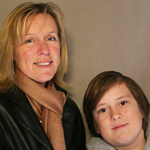
Sam Goetz’s parents are still together, but their relationship hasn’t been without its challenges. He talks to his mom, PJ, about the difficulties of marriage and what it means to love somebody. When he asks how his parents met, PJ says “Oh my goodness, I can’t believe I’m telling you this,” before divulging that if it weren’t for a fake ID, a stolen bar stool, and a persistent car horn, Sam might not be here today.
A 14-year-old in California realizes, “So the last picture she saw was one of me?”
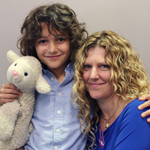
Graham Haggett was just 10 weeks old when his vivacious grandmother, Sandra Lee Wright, was killed in the September 11th terrorist attacks. Here, he interviews his mom, Shelli Wright, about the photo his grandmother saw just an hour before the plane hit her building, how universally loved she was, and the many ways her memory will live on forever. “Everything I know about her, it makes me glad that I had her as a grandma,” he says. “And I feel like every once in a while, I can still feel her warmth.”
A 10-year-old in New York asks, “How has being a parent changed you?”
Kaitlyn Sever’s honest, playful connection with her mom, Lynne Lande, is evident from the beginning of their interview. The two discuss Kaitlyn’s vision of a happy future, “brain bugs,” and how motherhood soothed Lynne’s fear of dying. The best part? When Kaitlyn asks Lynne, “Do you really, truly love me?” Lynne provides an answer every parent can relate to: “Oh my God, with my heart, the next-door neighbor’s heart, the people around the corner’s heart. With everything I have, I love you.”
Even if you’re all grown up, it’s not too late. Download the StoryCorps app and do an interview with or about your mom, or the mother figure in your life, this weekend.
]]>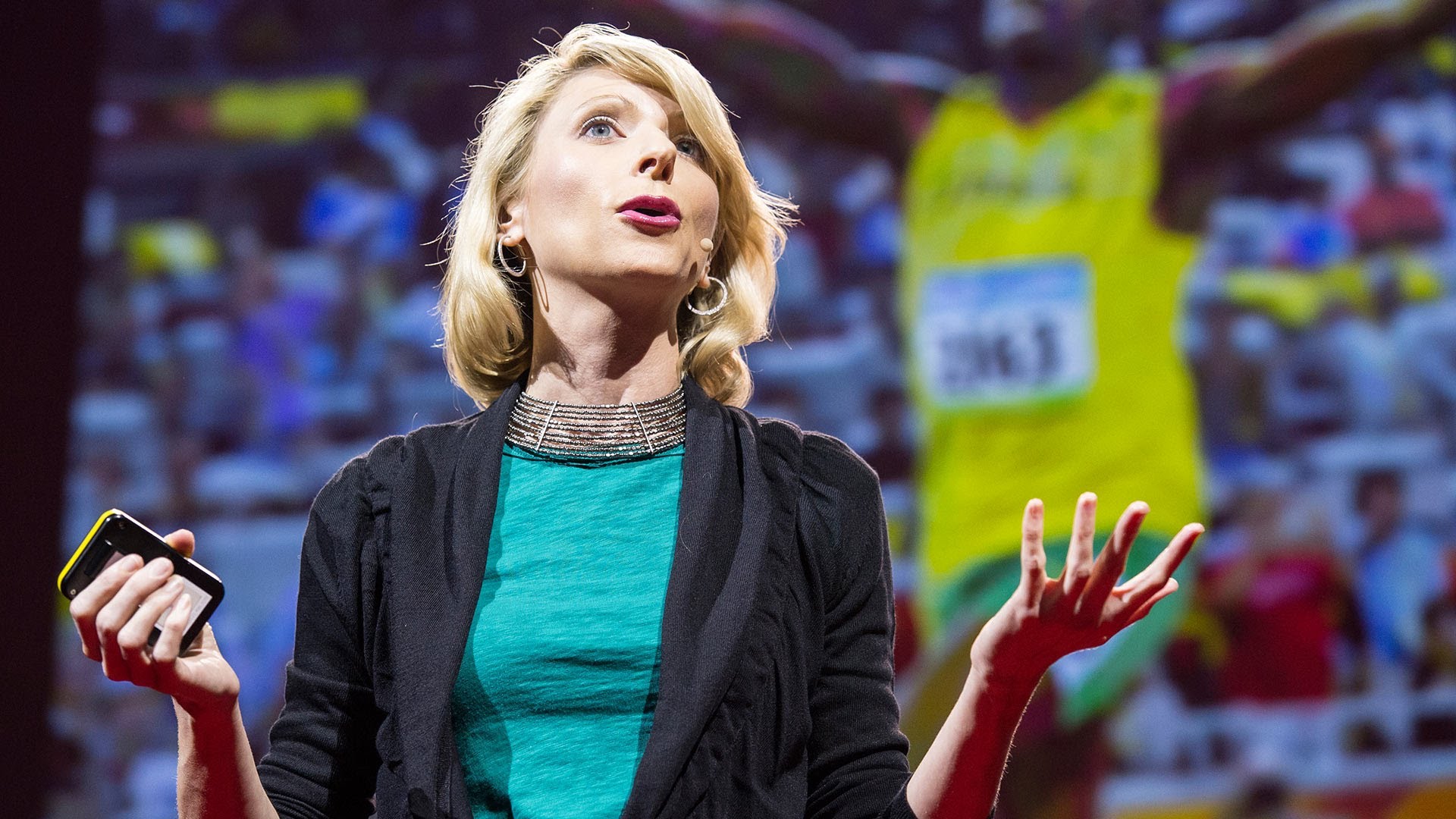
Amy Cuddy chose a green top and a cool necklace to wear for her TED Talk, rather than a fancy dress. “I wanted to be myself, not a red carpet version of myself,” she tells The New York Times. Photo: James Duncan Davidson/TED
Amy Cuddy bought a showstopper dress to wear for her talk at TEDGlobal 2012. But a few days before, she decided not to wear it. “I had agonized over what to wear. I went out and bought the most expensive dress I’ve ever bought. It was Fendi, multiple markdowns at Barneys,” she told the New York Times. “But a couple of days before my talk, I thought, ‘Why am I not going to dress like myself?'”
She opted instead for a J.Crew top and skirt, and a really cool brass choker. And now that her talk (watch: Your body language shapes who you are) has become the second most-viewed on TED.com, Cuddy is very happy that she made that decision. “Sometimes people send me screengrabs,” she says. “When I see the still, I think, ‘That’s me.'”
Today’s The New York Times Fashion & Style section dives into the question: What should I wear for my TED Talk? They spoke to Cuddy, as well as an assortment of other TED and TEDx speakers. The style that rules the day: Go casual. Most of these speakers are wearing a slightly more polished version of what they usually wear to work.
In the story, Glenn Greenwald (watch his talk: Why privacy matters) explains why he wore jeans — and ditched his usual blazer — at TEDGlobal 2014. “I talked to people who had seen a lot of TED Talks, and they all said the idea is to dress informally,” he says. “They told me that to wear a suit would be conspicuously weird.”
As for Ron Finley (watch his talk: A guerilla gardener in South Central LA), he wanted to wear his work boots on stage, though this was controversial with others around him. He tells the Times, “A friend saw me before the talk and she said, ‘You are not wearing those boots!’ Well, I did. That was me touching the ground, being in the garden. My gardens are my canvas.”
So how does this practical wisdom — to simply be yourself on stage — stack up to the advice we give our speakers? Incredibly closely.
In the preparation materials we offer speakers, we give only a few “rules” on what to wear: no checks or stripes (which cause strange jumps on camera); no all-white clothing (because it blows out the shot); no all-black clothing (because it makes the speaker blend into the background and look like a floating head); no dangly earrings (which can interfere the microphone).
But rules are made to broken. Our guidelines conclude, “Of course the most important thing is that you feel comfortable. So if you are most comfortable in an outfit with one of these elements, that is okay. We will gladly do our best to adjust lights and filming accordingly.”
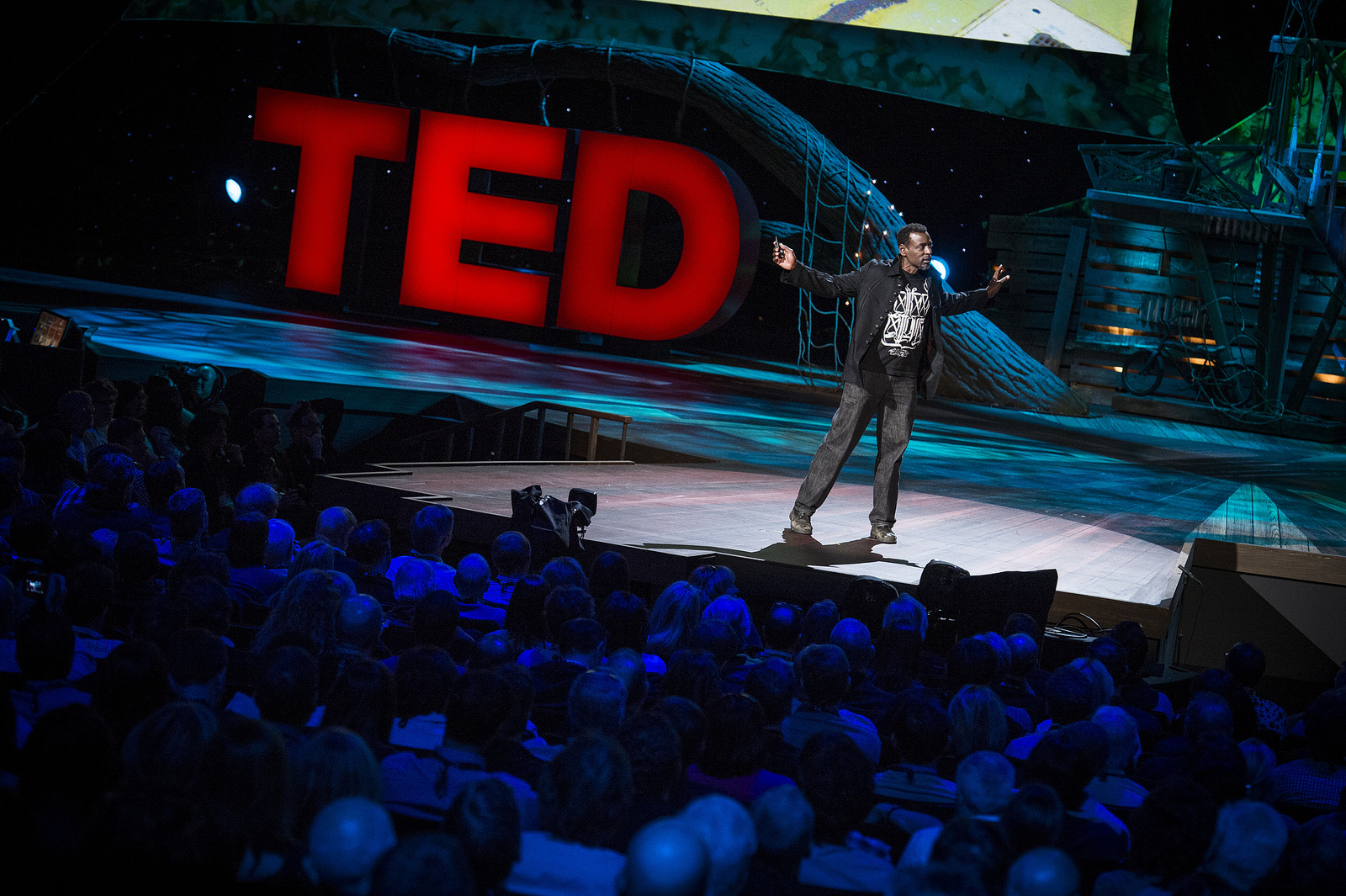
Ron Finley’s work boots helped him feel like himself on stage — and, as a result, give the best talk he could give. Photo: James Duncan Davidson/TED
PS: Wondering what to pack for TED2015? Check out this great piece on Medium from TED Fellow Safwat Saleem, called “WTF Do You Even Pack for a TED Conference?”
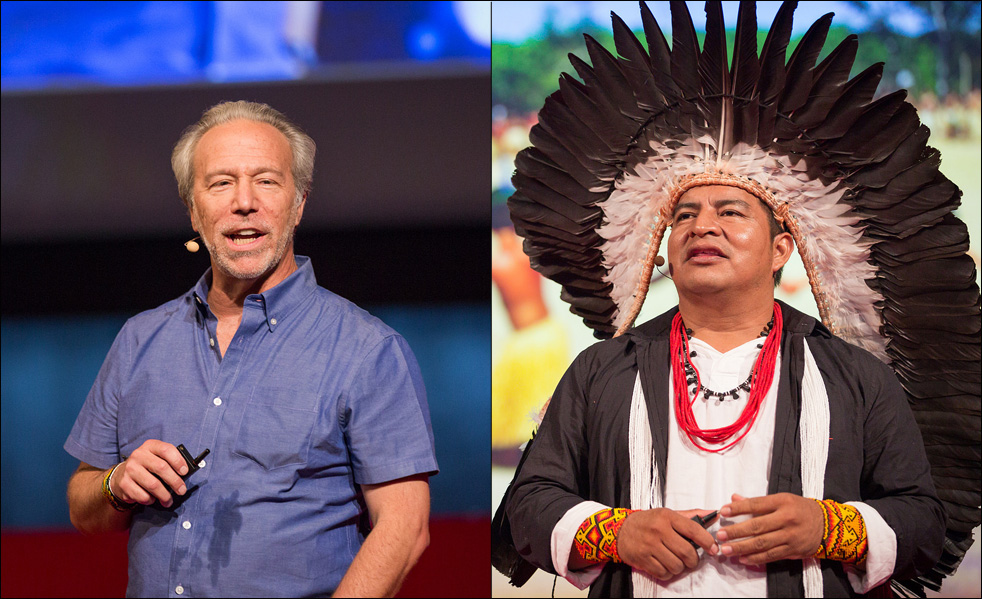
Mark Plotkin and Chief Tashka were pleased to share the stage at TEDGlobal 2014. Photo: James Duncan Davidson
A few years ago, ethno-botanist Mark Plotkin injured his foot. A visit to a doctor at home had him feeling pain-free for a few months, but things changed when he headed to the Amazon rainforest for work. There, a local shaman noticed his limp and offered him a palm tree wrap along with a specially-brewed tea. Plotkin has now been pain-free for years, he says in his TED talk, “What the people of the Amazon know that you don’t.”
This experience is just one that has led him to see the indigenous tribes of the Amazon—and the medicinal plants that their shamans cultivate—as an irreplaceable repository of wisdom. With his non-profit, the Amazon Conservation Team, Plotkin works hand-in-hand with indigenous tribes in the Amazon to help them put in place their own conservation strategies, and to make sure that they are compensated for ingredients they share with the world. Because, as Plotkin says, the people of the Amazon have a deep understanding of the “treasure trove” of potential cures in the their midst.
Last month at TEDGlobal, our audience got the rare opportunity to hear directly from an Amazonian indigenous chief, who happens to be a longtime friend and colleague of Plotkin’s. Tashka Yawanawá became chief of the Yawanawá people at age 35, and, on the stage, he told the recent story of Brazil’s indigenous rights movement, which gained momentum in the ’70s and ’80s. But lately, he says, government support for indigenous autonomy has waned, as the lands that the communities occupy come under threat from logging, mining and other types of exploitation. Chief Tashka expressed concern about the exploitation of local medicinal plants, key to Yawanawá beliefs, and explained how they are working to distribute their resources to outsiders through a partnership with Aveda, among other channels, that allows them to generate income for the community.
This month, Tashka Yawanawá is helping his tribe cope with terrible flooding in his region, far worse than they’ve ever seen. Many homes were destroyed, along with well pumps, water filters, generators, boats and more. We will present Yawanawá’s talk when he is back online and able to engage in the conversation.
In the meantime, Plotkin’s talk gives a powerful introduction to an essentially identical idea. Both of these speakers stressed the importance of indigenous ethnomedical wisdom, and the need to protect it and transmit it to younger generations. Both highlighted protecting nature as an absolute essential.
With Tashka Yawanawá offline, we asked Plotkin to talk to us a little bit about his friend.
“It’s a very strange story,” says Plotkin describing how they met. “I was speaking at a gathering in New Mexico, of all places, and there was this guy there [who I thought was] Native American. We were talking, and he had a little bit of an accent. So I said, ‘Are you Mexican?’ he said, ‘No, my wife is. I’m Brazilian.’ So we switched into Portuguese. We spent a couple of days together.”
Plotkin finds himself routinely blown away by Tashka Yawanawá.
“He’s such a fascinating character,” says Plotkin. “He’s a Brazilian Indian who wanted to be a Mexican and then wanted to be a cowboy. He has this unusual sort of tri-cultural background and now he’s gone back to be the chief of his community and protect their culture in the forest. I think he’s fascinating.”
While they don’t work together often—Plotkin says that Chief Tashka does a great job representing for his people—they do work in the same areas. “We watch and admire,” says Plotkin. “A lot of what the Yawanawá are doing is what [the Amazon Conservation Team] is doing too. We showed up in the Amazon 12 years ago and said, ‘We’re not going to map your lands, you’re going to map your lands. We’re going to give you the equipment and teach you how to do it, but we would like you to do it.’ That was revolutionary when we started and — having Tashka do it — that supported our work … We were also the first organization to encourage elderly indigenous people to pass their knowledge on to their kids and their grandkids. Having groups like Tashka’s take that on themselves is a measure of success. Because it shouldn’t be about us doing it — it should be about the people that it means the most to doing it themselves.”
While Plotkin works more often with the Trio people, another Amazonian community, he is continually intrigued by the Yawanawá. “They are people who have been in touch with the outside world for a while,” he says, “but they have managed to hang on to their culture and their forest, which is no easy thing to do in this world that we live in, where everybody everywhere wants resources.”
And this gets to one of the key tensions in Plotkin’s work—that introducing indigenous communities to the outside world can be a tricky thing. “Technology can help and technology can hurt,” says Plotkin. “If you go into a village and start handing out GPSs and iPads and radios, you’re may be giving them the impression that we know magic and that everything we know is better, which is totally false. It’s better to do it in a culturally sensitive way. To say, ‘Look, we have antibiotics and they’re great — they might be able to cure infections your shamans can’t — but you guys have medicines we don’t have. You can cure some things that we sometimes can’t.’”
As for Tashka Yawanawá, Plotkin does hope that the outside world will get to better know his friend through his upcoming TED Talk. “I’m hoping somebody will make a movie about his life,” says Plotkin.
The Amazon Conservation Team is participating in the Skoll Foundation Crowdrise Challenge. Find out how a donation can be doubled or tripled »
]]>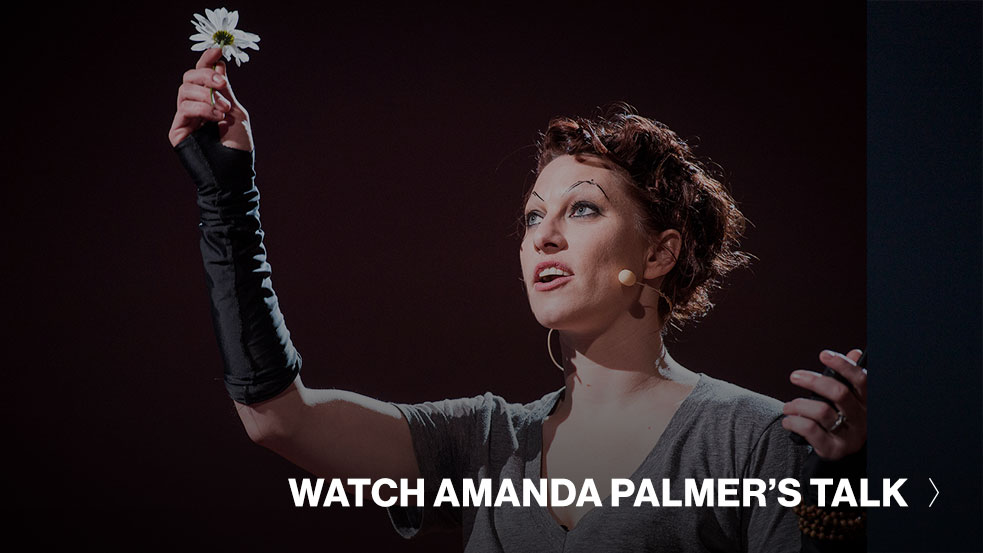
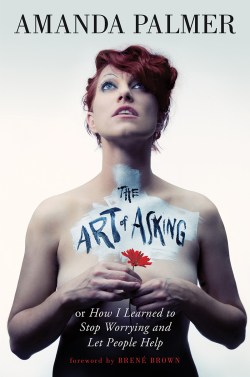
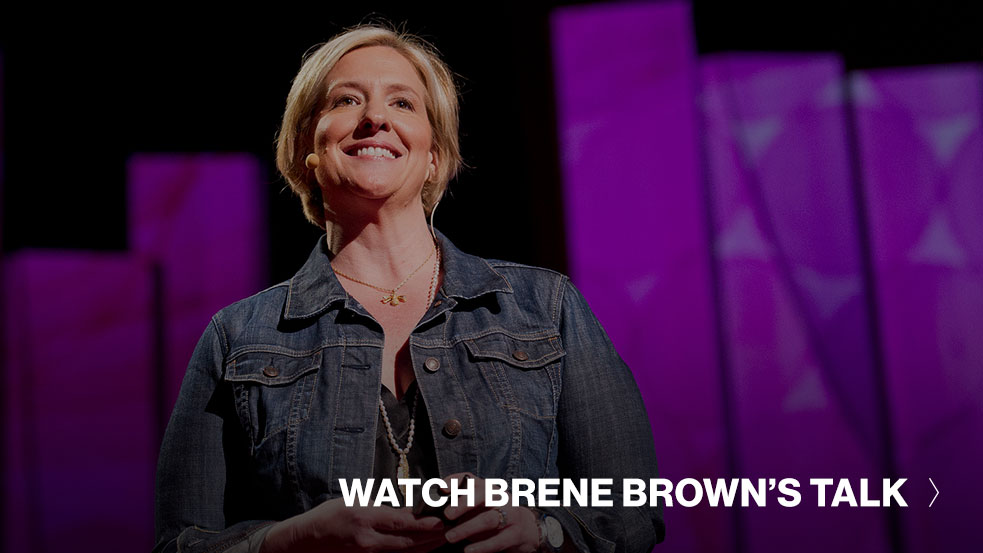
Amanda Palmer’s new book grew out of a simple fact: that she couldn’t cram every relevant story into her 14-minute TED Talk. So she has expanded her talk, “The art of asking,” which focuses on how artists can (and should) ask those who love their work for help, into the book The Art of Asking: How I Learned to Stop Worrying and Let People Help, about the need to ask for help more generally. And in another interesting twist for TED fans, the foreword to the book was written by one Brené Brown, who gave the fourth most-watched talk of all time, “The power of vulnerability.”
We asked Palmer a few questions about the process of turning her talk into a book and about the experience of working with Brown. Below, an edited transcript.
Would you rather have give your TED Talk 10 times in a row to an audience of clowns, or have to write one more chapter of your book with a deadline of tomorrow morning?
Oh my god. Great. Well, I love clowns. So as long as I didn’t have to actually memorize that sucker word for word and could just kind of summarize it. Or maybe I could mime the TED talk for the clowns? Maybe this could become a multi-media interactive performance in which the clowns responded to my TED mime-talk? Maybe all the clowns could be wearing Google Glass and we could webcast this?
Wait, forget it. I’ll just write another chapter of the book. Easier.
What was the biggest challenge of bringing your idea from a talk to the written page?
Funny enough, it was a challenge to try to capture the beautiful economy of the talk in 300 pages. That 14-minute time limit was the greatest gift: I’m very glad my talk wasn’t longer, because I don’t think it would have been quite so effective, emotionally, and I don’t think it would have gone viral.
 When I was working on the talk with Jamy Ian Swiss, a friend who became my default coach, he kept saying, “Cut that part, Amanda, you can put it in the book. Cut this too — save it for the book.” At the time, there was no book. We just had the assumption that maybe someday, there’d be an outlet for these other stories. The pieces I cut would probably be surprising to some. They might seem off-topic. But to me, these are essential riffs on the same theme as my talk: my job as a stripper, my marriage difficulties around the topic of money and help, my experiences with abortion and having to deal with certain kinds of pain in isolation, my best friend’s cancer battle leading to a cancelled tour. All of these things had a lot to do with “the art of asking,” but they weren’t going to fit neatly into a 14-minute talk.
So I cut a lot of stories from the TED talk, and they’d been lying there fallow on the cutting room floor, waiting to be threaded in. The book happened much faster than I thought, but I’m also glad it happened fast, before all those tethered balls in the air had a chance to land and disconnect. And when I got my book advance, I hired Jamy for an actual salary this time to be my book doula. It all worked out pretty beautifully.
What types of help did you find are the hardest for you to ask for? How do you push through that?
I’ve found that everybody has an Achilles’ heel when it comes to asking. I know a lot of people who can boldly ask for a raise, but they can’t ask for a hug. And I know a lot of people with the opposite problem. My personal kryptonite, and I detail it painfully in the book, is taking financial help from my husband. I’m happy taking millions of dollars from strangers, but it’s taken me a long time to get used to taking help from him. My life finally hit a point where I saw the bigger picture — it took my friend getting fatally ill, but this is all part of the journey. I noticed that I ask too much of myself. Letting myself off the hook is one of my biggest projects.
Speaking of your husband, he is quite a well-known writer. Did you let him edit your manuscript or were you hesitant to ask for help on that?
I wasn’t at all hesitant: I utilized the hell out of Neil Gaiman with this book. But the first ask wasn’t about editing or shaping or writing: it was about letting go of his wife for two months so I could write in solitude. That was difficult to do. And the minute I finished my first, hulking 150,000 word manuscript, I handed it over to him, squeezed my eyes shut and said, “Cut out 50,000 words.” And he sat down for two days, and cut away the fat. That was a massive act of trust. I trusted his writer’s eye so greatly that I didn’t even read his cut manuscript. We started with Neil’s edit as a fresh draft. And in the final days of last-minute editing, Neil suggested a fantastic order-switch with the pieces of the book that wound up unlocking a problem. The guy can write, but he’s also a fantastic editor. I owe him one.
And Brené Brown also helped by writing the foreword of the book. How did you two meet?
I found Brené’s talk when I was on a TED-watching marathon while writing my own talk back in 2013. For about the week before cracking down to write my first draft, I immersed myself on TED.com and watched about 50 talks — focusing on the most-viewed — to see how people were getting their ideas across most effectively. I found a few heroes during that week, some of whom have come into my life since as real heroes, like Amy Cuddy and Jill Bolte Taylor, both of whom I got to meet and hug in the flesh at TED itself and both of whom I now treasure as friends. But Brené’s talk especially moved me. A few weeks before leaving for Australia, where I wrote the book, I was in the Trident Bookstore in Boston, and saw Daring Greatly lying on the staff picks table. I picked it up and started reading it. I was floored: she’d basically written the same book that I had in mind. Hers was academic and anecdotal and mine was pure memoir, but still the threads were exactly the same. She even used a Velveteen Rabbit story, which I couldn’t believe — I’d been planning on quoting the exact same passage. So I sent Brené a DM on Twitter, asking her to write the intro. I was so honored when she said yes, and I think what she wrote is absolutely perfect.
What did she write in her foreword that most surprised you?
I loved, most of all, that Brené was reaching out to the rest of the world in a way that I couldn’t. She works at a university, lives a domestic life, goes to church; but she sees her life reflected directly in my weird rock-and-roll couchsurfing existence. This is what made Brené’s book so great, in itself: our situations are different, but our emotional experiences give us all a common ground. We all feel shame, vulnerability, fear. I’m so incredibly proud to be a small voice in what feels like a zeitgeist of women writers lately, including Amy Cuddy — who’s about to bust out with her own book — and Laurie Penny and Caitlin Moran, who are embracing these commonalities we humans have and casting our own stories into the net of understanding. I think it’s a beautiful time to be alive: it’s like we’re all doing our little bit to shine our teeny personal flashlights into the wide, big, dark. With enough of us, the dark is receding and things are taking shape. I can’t wait to see what we find there.
 In 2012, the TED Prize was awarded to an idea: The City2.0, a place to celebrate actions taken by citizens around the world to make their cities more livable, beautiful and sustainable. This week, The City2.0 website evolves. On the relaunched TEDCity2.org, you’ll find great talks on topics like housing, education and food, and how they relate to life in the bustling metropolis. You’ll find video explorations of 10 award-winning local projects that received funding through this TED Prize wish, and resources for those hoping to spark change in their own cities. The site will also be the home of all future TEDCity2.0 projects. In other words, it’s an online haven for everyone who wants to create the city of the future.
Below, a sampling of the great ideas you’ll find on TEDCity2.org. Enjoy, as most of these have never been seen on TED.com before.
1. Buildings can promote healing. Alan Ricks wields his architecture degree in an unusual way—he aims to build structures that heal. In this talk, he shares statistics on how many people around the world actually get sicker in hospitals, giving the example of a tuberculosis epidemic in rural South Africa which spread “in crowded, unventilated hallways.” Even in the United States, he says, the death rate from hospital-born infections is staggeringly high. Ricks tells the story of helping build the Butaro Hospital in Rwanda, a state-of-the-art hospital with beautiful, airy, open wards. Butaro has transformed the health of some of Rwanda’s poorest people — and it was built in collaboration with the community. “I learned that architecture wasn’t about simply a completed building,” he explains, “but about the process that created it.”
2. An app could invert street harassment. In this talk, feminist activist Emily May paints a picture of a world without street harassment. It’s a tricky thing to build a movement around, she says, because “you can sue the pants off corporations, but you can’t sue the pants off the sidewalk.” May co-founded Hollaback! in 2005 to reverse the power dynamics of street harassment. “We wanted to take the focus off of the woman and put it onto the harasser,” she says. While street harassment is a global epidemic, May refuses to accept it as a fact of life. So she leveraged her 2012 City2.0 award to build an app that allows users to geo-document street harassment and, in the process, crowdsource data with the power to influence policy. “The larger system we need to change here is called ‘culture’ and it’s big,” says May. “I want to live in a world where street harassment is so rare that when it does happen, people are shocked.”
3. Food can be a form of diplomacy. Leah Selim co-founded Global Kitchen, which promotes cultural exchange through food. Food is deeply tied to our culture and identity, she says, and what we cook is an expression of who we are. In this talk, Selim discusses how food, identity, place and politics intersect, and digs into the growing trend of “gastrodiplomacy,” the idea that by being introduced to a cuisine, we also gain awareness of the culture itself. When we travel, she says, “So much of actually experiencing the culture of a new place is trying the food. It’s definitely why Anthony Bourdain tried warthog anus in Namibia.” Bottom line? In an increasingly globalized world, sharing food is a powerful tool. And not just outside of a geographical area. She says, “It is through the communal act of sharing food that ideas can be exchanged freely — an essential first step in growing a community.”
4. A city’s quiet nooks can be a source of inspiration. In this quiet talk, Jason Sweeney offers an aural picture of the city, highlighting the “in-between spaces.” Sweeney admits that he prefers “to disappear into a metropolis and … go unnoticed” as he composes music in his head. So he seeks out quiet spots — those rare spaces where you can hear the sound of birds chirping or where a flowing fountain masks the sound of the crowd nearby. His idea: “a sonic health service for built environments.” In 2012, Sweeney used his City2.0 award for an online, participatory composition project called Stereopublic. His idea has now been activated in Perth, Sydney, Melbourne, Edinburgh, Sheffield, London, Los Angeles and New York.
5. Tiny houses could offer security and mobility. “The biggest ideas come in the smallest packages,” says Amy Henion, a “tiny house” advocate. Like many college students and recent grads, Henion isn’t sure what the next few years will hold. While fretting about how to pay the bills while still being flexible to new opportunities in other areas, she stumbled upon a solution: a tiny house. “Think of a house so small that it fits within the footprint of a parking space,” she says. In this talk, she shares the benefits of tiny living, and gives a short history of the tiny house movement in the United States. With our economy reeling and natural resources running out, she may just be onto something.
6. Playgrounds can include all kids. G Cody QJ Goldberg sees playgrounds as places of incredible potential. “Play is quite literally how we learn,” he says. Goldberg advocates for more play time, and makes the case that building better playgrounds could actually help improve lives. He and his wife live in Portland with their daughters Harper and Lennon. Because Harper has special needs, the couple launched “Harper’s Playground,” a passion project that has spurred a movement to create the city’s first inclusive playground. The idea: that it adapts to the needs of a wide range of children. “What the world needs more of is more people making more play,” he says.
7. Great design is universal. As a young man, Lance Hosey was inspired by Ayn Rand’s The Fountainhead to become an architect. But now, he hates the image of the architect in the book. “Consider the core message: the creator serves nothing and no one,” he says. “He lives for himself.” Hosey wants that to change. He takes issue with the idea that good design isn’t definable because, again and again throughout nature and history, certain patterns and shapes recur — for example, the “golden rectangle” and fractals. Hosey invites architects to create spaces that speak this universal language, while also being sustainable.
8. A city is ultimately about its people. “The city is man-made now / Concrete / Asphalt fueled by caffeine, commerce, nicotine and childlike dreams of making it big.” These are the verses of urban wordsmith Felice Belle, who makes the city come alive with this Walt Whitman-inspired ode to New York. Belle reminds us that beyond the planning and the policy are everyday people — and it is in their stories that the city is born. “Stockbrokers, stickup kids, baristas, bartenders, actors moonlighting as cater-waiters, private investigators, substitute teachers, corporate lawyers, janitors … the unemployed, the unseen pricetags on individual life,” lists Belle as she explores the dark underside to city dwelling, than shows each of us to be its soul.
]]>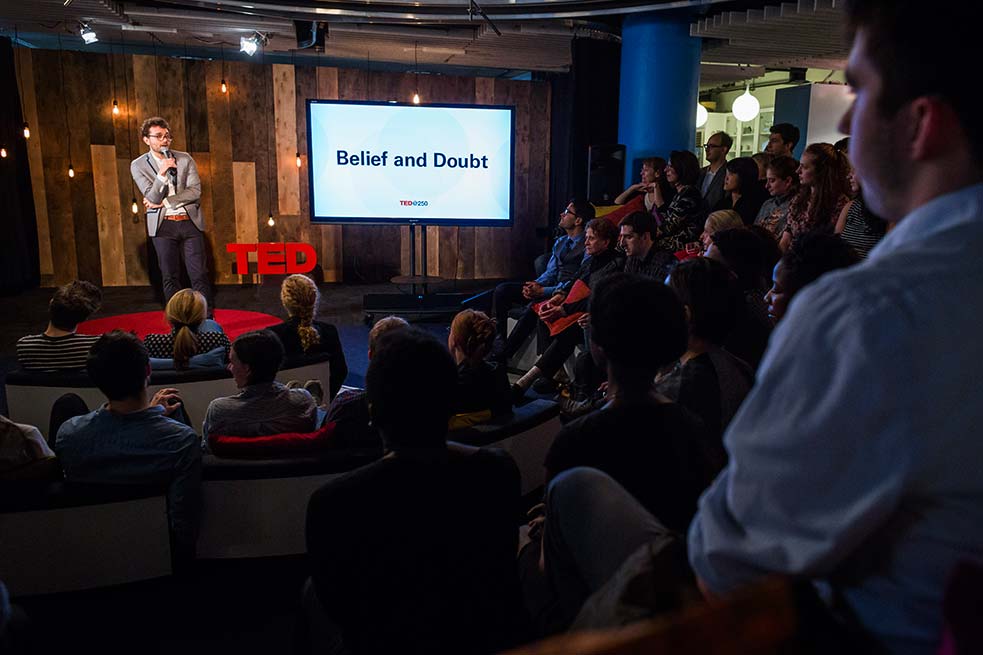
Why do we believe the things we believe? Last night’s event in the TED office explored this theme. Photo: Ryan Lash
Beliefs run deep, influencing not just whether we follow a religion but also the choices we make about every aspect of our lives. Belief is something we at TED think a lot about, and last night we held a session in our office dedicated to exploring what we believe and why we believe it. The evening was hosted by TEDx Talks manager David Webber and co-curated with TEDx staffer Simon Marcus.
The night began with Ruth Chang, a philosophy professor at Rutgers University, talking about what makes a choice easy or hard. In an easy choice, one option is clearly more desirable; on the other hand, “Hard choices are hard because there’s no best option,” she said. In a hard choice—be it about a job or where to live or whom to marry—the alternatives are on par, each representing a different kind of value. Thus, Chang sees every hard choice as an opportunity for each of us to author our own lives. “A world of easy choices would enslave us to the reasons given to us,” she says. “It’s in space of hard choices that we get to exercise our power to make reasons for ourselves.”
Next, Michael P. Lynch, a philosopher from the University of Connecticut, asked the question: If you could put a drug in the water to make everyone share your political views, would you do it? Most people—at least those who value democracy—wouldn’t consider this. We want to convince people without coercion. But this is tricky in the US cultural climate right now, says Lynch, because we don’t just disagree on how to reason about policy, we actually disagree on what reason is. What can we do? We have to rely on the types of reason that we all, as human beings, can identify as sound. Individually, we’re not great at this—but together, it becomes possible. Lynch ends with a bold call to invest in public institutions that support public discourse.
Is science a belief? Naomi Oreskes, a science historian at Harvard, spoke next, pointing out that to the layperson—and even to any scientist out of their field—scientific claims are a leap of faith. Scientific method does not guarantee truth, says Oreskes, highlighting four reasons it can fail: because false hypotheses can make true predictions, because scientists make assumptions without realizing it, because science often starts with observation rather than hypothesis, and because scientists are inherently creative. But like Lynch, Oreskes sees the power of group wisdom. Scientists collect evidence and hold it up to the scrutiny of their peers. What’s accepted as true isn’t about one study—it’s about the collective knowledge of every scientist who has worked on a problem. And with that underpinning, it is far more reliable.
Imani Uzuri is a vocalist, composer, and cultural worker in New York who explores African American spirituals. After leading the audience in a group sing-along—turns out most of us know several of these songs—she says, “African American spirituals have a rich, multilayered, encoded history … Today, we continue the legacy of revolution, transcendence and serenity.” And with that, she played one of her own gorgeous songs.
Finally Anthony Appiah, a professor at New York University, came to blow our minds with a surprising idea: that debates about the merits of religion are “preposterous because there is no such thing called religion.” The dictionary definition of the word points to belief in gods or spiritual things, but many Jews and Hindus, for example, don’t believe that way. Even the Dalai Lama is an atheist, Appiah points out. He traces our concept of religion back to European explorers who encountered new cultures and noticed them practicing beliefs not like Christianity, but akin to it. Says Appiah, “The way our concept of religion works is that we have a list of paradigm religions, and if something new comes along, we ask, ‘Is it like one of these?’” And that isn’t very satisfying concept, is it?
“Faith and Doubt” was part of TED@250, a series of salons held at our New York headquarters at 250 Hudson Street. Since our main conferences are only twice a year, TED@250 is an opportunity for talks that rethink headlines and respond to conversations happening in real time. It’s also a place for speakers with the kind of personal stories that simply work better on the small scale. Stay tuned: Some of these talks may be coming to TED.com.
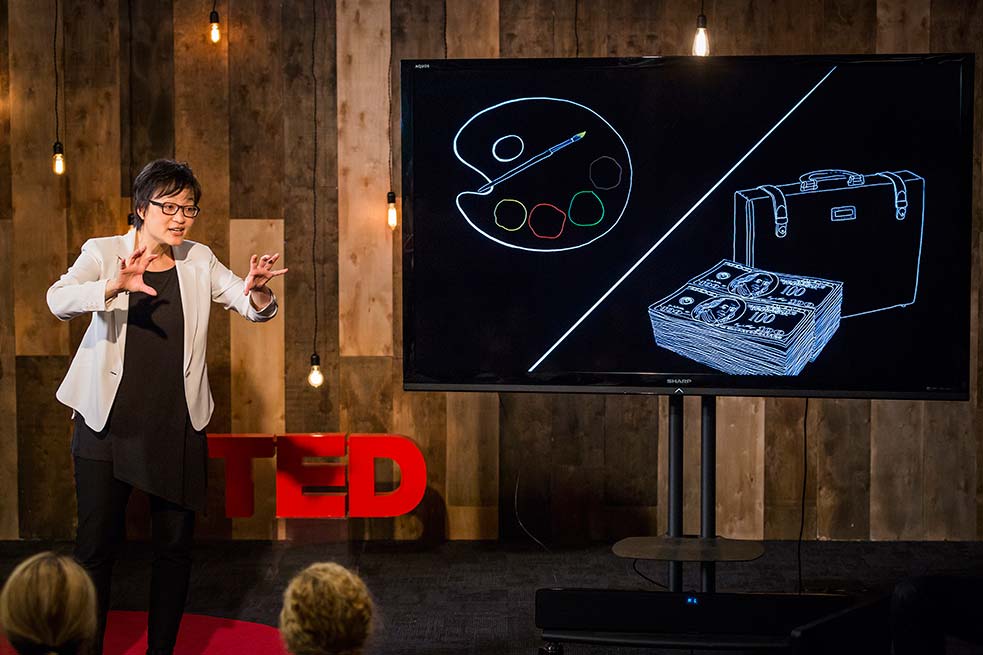
Ruth Chang gives a talk on the dynamics of hard choices. Photo: Ryan Lash
Anthony Appiah on why there is no “thing” called religion. Photo: Ryan Lash
Jamie Oliver hopes to get one million kids cooking for Food Revolution Day. Photo: David Loftus
Jamie Oliver’s third annual Food Revolution Day is tomorrow on Friday, May 16. This year, among the many other food-filled activities lined up, the healthy eating activist and 2010 TED Prize winner is looking to break the Guinness World Record attempt for the ‘Most participants in a cookery lesson in 24 hours.’
The current Guinness World Record stands at just over 2,000 people, and the Food Revolution folks believe they can break that with a live cooking lesson that Oliver will be hosting at 2pm GMT, as part of the campaign’s goal to get one million children cooking on one day. During the 30-minute lesson, the celebrity chef—whose mission is to teach every child about healthy eating—will personally show kids how to put together the perfect Rainbow Salad Wrap, a healthy, crunchy concoction which includes carrots, pears, white cabbage, feta and beets, all piled into a tortilla.
More from the TED Prize Blog: A sneak peak of Mission Blue, the movie
Schools around the world will be tuning in for the lesson—so far 8,000 schools have registered. Details on how schools can join in can be found at TES and more information on the world record attempt is posted on the Food Revolution Day website. Participating in the attempt takes paperwork, but it’s not required: companies, communities and individuals taking part in the lesson can add themselves to this interactive map instead. There is also a handful of recipes for kids to nail on their own and, because the event is for everyone, there are also recipes for adults who simply want diversify in the kitchen and try something new.
The goal of Food Revolution Day: to get as many people as possible cooking from scratch and to get kids excited about food. This is all part of Oliver’s longstanding mission to change the way people relate to food. As he explains on the Food Revolution Day website, “We need every child to understand where food comes from, how to cook it, and how it affects their body. This is about setting kids up with the knowledge they need to make better food choices for life.”
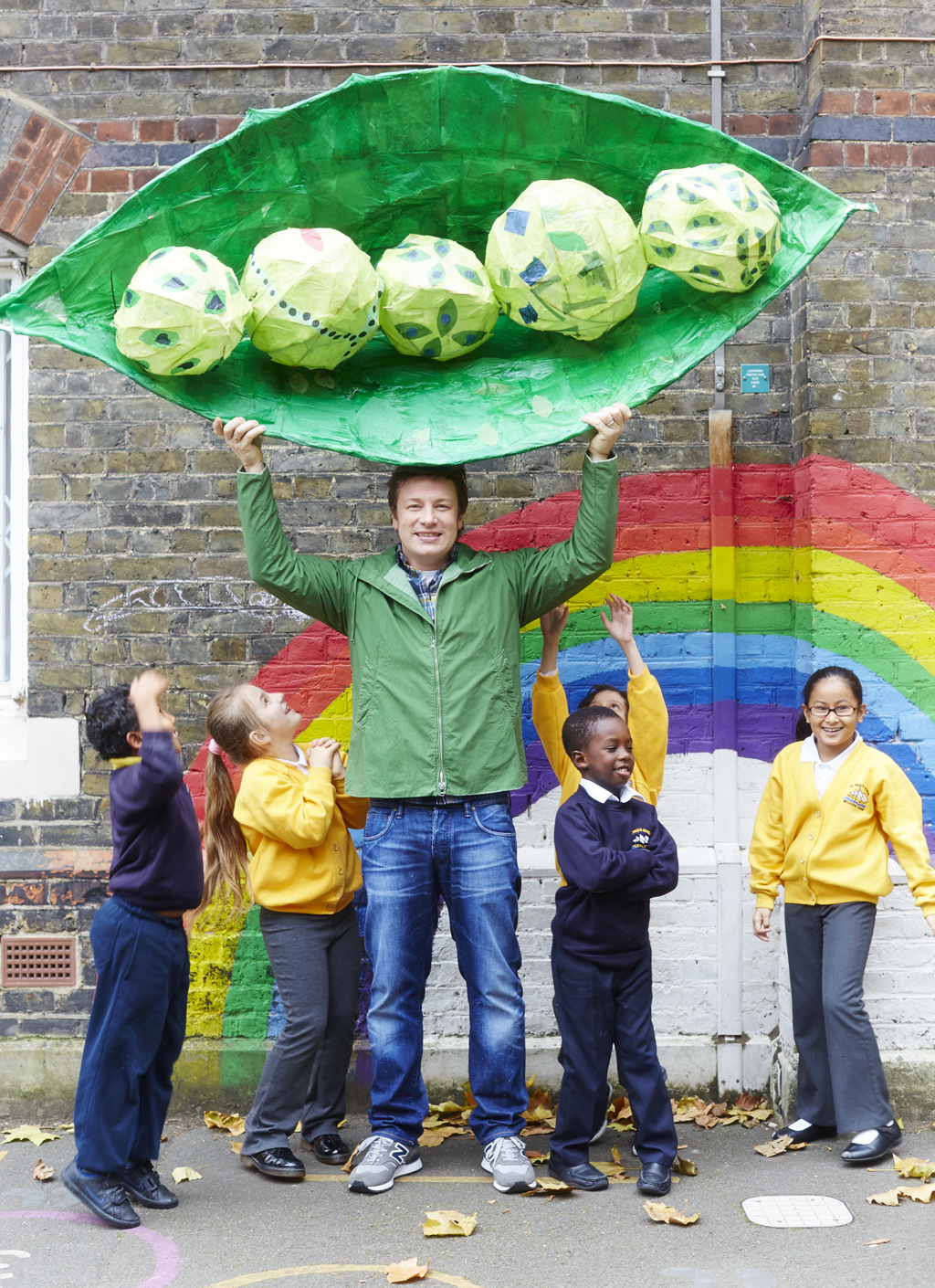
So far, more than 157,000 participants from 105 countries have registers for Food Revolution Day. Photo: David Loftus
This post originally ran on the TED Prize Blog. Read more »
]]>In his TED Talk, published last week, Sports Illustrated reporter David Epstein asks, “Are athletes really getting faster, better, stronger?” The short answer is ‘yes,’ but it’s not just a matter of talent improving. He shows the nuance of how it’s also about changing technology that allow for faster speeds, rising expectations that enable athletes to push harder, and the fact that athletes are increasingly selected for the physical attributes associated with success in their sport.
At TED2014, Epstein took a seat in the Skype Studio to ask a variety of athletes: what’s the biggest change you’ve seen in your sport?
Watch the video above to hear answers from former NFL punter Chris Kluwe, who is sitting next to Epstein in the studio. And beaming in from locations across North America: retired Major League Baseball star Doug Glanville, gold medal bobsledder Steve Mesler and Hayley Wickenheiser, the Canadian women’s ice hockey player who also plays softball for her country in the Summer Olympics. Their takes on what’s changed in their respective sports is simply fascinating. Not to mention their thoughts on what should change.
]]>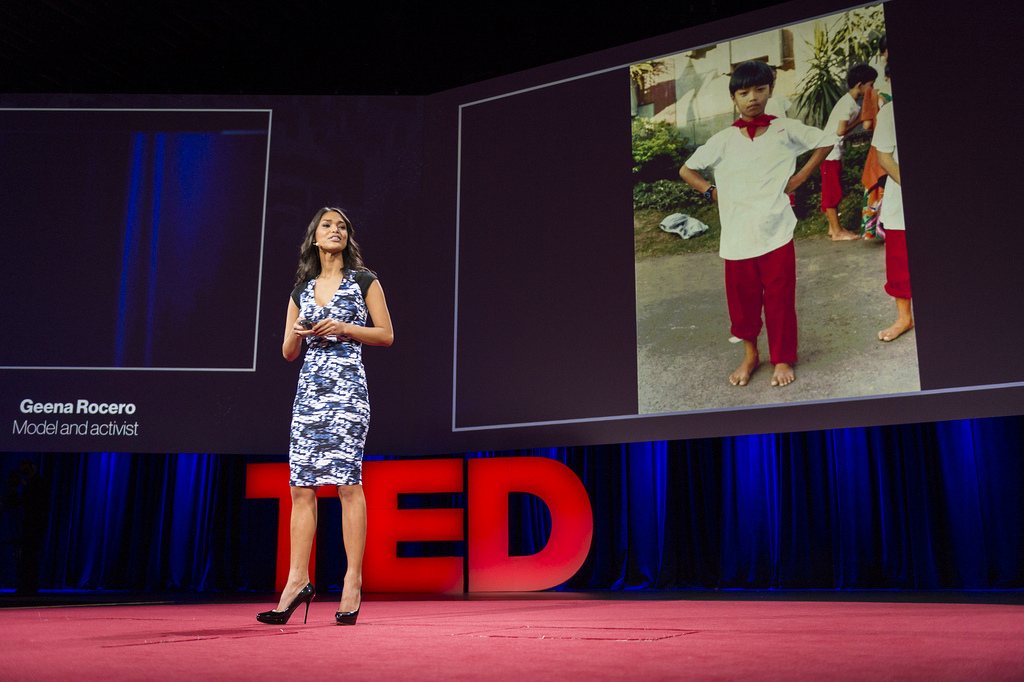
Geena Rocero on stage at TED2014 / Photo: James Duncan Davidson
Geena Rocero did a pretty bold thing at TED2014: She came out. The transgender fashion model chose Vancouver to reveal to the world that she was assigned male at birth. “I am here exposed … to help others live without shame and terror,” she says in today’s talk.
The trans community has had a spotlight fixed on it in this year: a piece in Grantland sparked outrage and sadness after the subject of the story, outed without her permission, committed suicide; Jared Leto won the Best Supporting Actor Oscar for playing a trans woman in Dallas Buyer’s Club; while Piers Morgan was widely criticized after a poorly handled interview with journalist and activist Janet Mock. Meanwhile the US’s new Affordable Care Act bans discrimination against someone based on their “gender identity or failure to conform to stereotypical notions of masculinity or femininity.” (See also: Why scientist Kate Stone decided to speak up about being transgender a year after giving her own TED Talk.)
As gender issues become more public, it’s clear that the media will play a crucial role in how trans people are treated — but sensitivity starts with the individual, and a good first step is to be thoughtful and precise about our language. Below, find tips and quotes gathered from trans men and women and their allies about positive, helpful ways to have that conversation. Though respectful language is only part of the battle for equality and acceptance, it’s a very good start.
Don’t conflate sex and gender.
This concept is fundamental to the trans community — and it’s simultaneously obvious and difficult to grasp. Sex is based on biology and assigned at birth, while gender is cultural and social, based on how a person self-identifies. This is, for many, perhaps the biggest obstacle to understanding by the cisgendered (that is, people whose sex and gender align). Says LGBT activist and TED speaker iO Tillett Wright, “Male and female are the two pillars upon which our society is built. Gender dictates everything from what kind of relationship you get into to where you take a piss. And if you upend that, it’s very threatening for people. It challenges the system by which they live.”
Take the time to find out a trans person’s preferred pronoun.
Across the board, experts and activists say this is vital. But isn’t asking someone’s preferred pronoun at a party a bit awkward? According to GLAAD Senior Media Strategist Tiq Milan, most people appreciate it. He says, “People would respect [the question] more than they would reject it, particularly if you have people not on the binary.”
Never use: tranny, transvestite, he-she, she-he, it, sex swapped, sex change. Do use: trans man or woman, male-to-female (m-t-f), or female-to-male (f-t-m), transition.
“‘Tranny’ is the same as ‘faggot,’” says Milan. TED speaker Kate Stone agrees: “The worst, to me, is when people shout out ‘tranny’ across the street. It sounds horrible.” Norman Spack, the first doctor in North America to create an interdisciplinary program for transgender adolescents in a pediatric academic medical center, also sees “she-male” as potentially damaging, because the phrase is often used to refer to male sex workers who dress as women to serve a specific fetish.
While many public trans people and allies view careful language as paramount, University of Southern California’s Jack Halberstam has quite a different view: “I’m not a banner. Policing speech is usually the least interesting way of addressing social prejudice, and often it actually misunderstands how you make change — and also what constitutes harm and prejudice. So I’m much less concerned with the word ‘tranny’ and much more concerned with how we might raise kids to expect people to embody lots of different forms of gendering.”
Don’t focus on a person’s anatomy, past or present.
As Piers Morgan learned the hard way, belaboring someone’s assigned sex at birth, or their surgical procedures since then, misses the point. Says Stone, “Asking someone you just met, ‘Have you had a sex change?’ is like asking, ‘Have you been circumcised?’” Adds Rocero: “It’s a very private thing. Most people just go there, because there’s a sense of fascination about it, but that’s a big no-no.”
Indeed, sexual definition is becoming less important legally. Says Spack, “I’m glad to see that we no longer use terms that require people to have, let’s say, certain surgeries to qualify as trans. It used to be that in order to get a license or a passport, a person would have to have either top surgery or bottom surgery, and then have the surgeon sign on that, so that they could get the designation of being transsexual.” (As of 2010, the US State Department no longer requires sexual reassignment surgery for a passport gender change.)
Never out a person without their permission.
This seems beyond obvious, but it’s precisely what landed Grantland in hot water. How much did outing Dr. V without her permission contribute to her committing suicide? There’s no easy answer, but, says Rocero emphatically, “Nobody has the right to out a person.”
Don’t assume you’ll recognize a trans person — and that’s a good thing.
With harassment rates so high (in a recent survey of 6,450 American trans people, 90 percent reported experiencing harassment, mistreatment or discrimination on the job), it’s no surprise that for some trans people, even going outside can be daunting. Not to mention, as Rocero says, that media and popular entertainment seem to prefer portraying trans people as victims, drug addicts or prostitutes. Says Milan, “I know so many people, especially trans women, who don’t leave the house during the day. They only come out at night because of the ridicule and the violence.” But this is changing, for the better. Increased visibility is integral to the growth of the trans movement. Says Halberstam, exposure to trans people is the real way to make progress: “There are trans people in every walk of life at this point. There are a large number of trans women who work in software, in computer technology. There are trans people who are politicians, doctors, lawyers, professors. I think that increasingly people do know trans people, though they may not know it.”
Don’t make it a thing if it’s not.
If someone’s trans status is irrelevant, don’t focus on it. Definitely don’t dwell on the anatomical and legal details. This particularly applies to reporters. Milan allows that people may be naturally curious, but gender status should not drive the story. When Stone was in the press after being in a horrific accident, one paper published photos of her from before her transition. Says Stone, this suggests that when you find out a person is transgender, the first thing you should rush to do is dig up information about their past. Really, don’t. Of her gender status, “I’d never speak about it at work — not because it’s a secret, but because it’s not relevant.”
“How should we talk about …” is a TED series in which we examine how society tackles sensitive issues — and suggests ways we might do better. See also How should we talk about mental health, featuring insights from seven mental health experts, including Andrew Solomon, Sarah Caddick and Vikram Patel.
]]>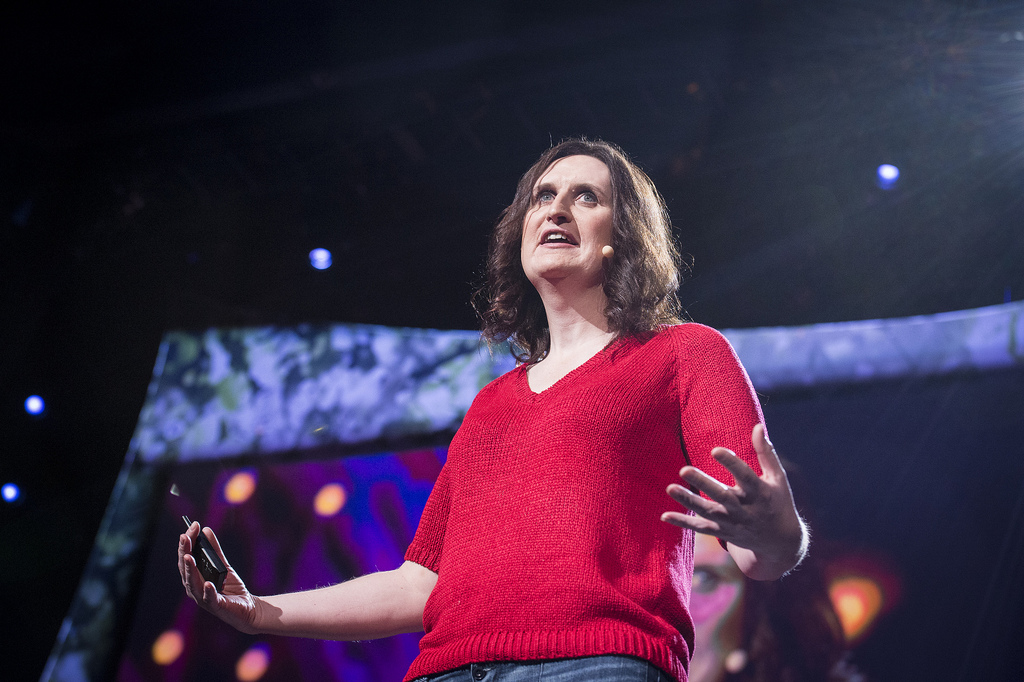
Kate Stone speaks at TED2013 / Photo: James Duncan Davidson
When creative scientist Kate Stone gave her talk at TED2013, her biggest worry was whether her paper DJ decks would work onstage. Something she didn’t think twice about: being “outed” as transgender. She didn’t want to detract from her work, and figured that her gender identity was her own personal business. But now, one year later, Stone has decided to speak out.
What’s changed? On New Year’s Eve last year, a freak attack by a stag left Stone with a punctured trachea and esophagus, a fractured neck, and damage to her vocal cords and spine. To add insult to traumatic injury, many reports of the incident focused on her gender identity. UK tabloids ran headlines referring to her as a “sex swap scientist” and “transgender academic.” A Daily Record article tracked down and printed a photo of her from before her transition. The experience left Stone (who is currently recovering from a ten-hour throat operation) feeling voiceless in more ways than one.
As Stone told me by phone, she hadn’t wanted to be a spokesperson for trans issues — but the disappointing articles persuaded her that speaking up was better than being spoken for. For though Stone is confident in her lifestyle, she worried about what the press could mean for other trans people already afraid of coming out. “Those articles tell literally millions of people, if you see a transgendered person, the first thing you do is label them, the second thing you do is ask their previous name, and the third thing you do is try and find pictures of them,” she said. That’s why she wants to clarify her gender to the TED community — and move on.
For Stone, who calls herself a “happy healer” rather than an “angry activist,” the confidence has been hard-won. When she first transitioned in 2007, she says, life was “absolute hell.” Isolated from her friends and former partner, says Stone, she felt like she was being attacked from every corner. “Every single day I left my flat, somebody would shout abuse at me. One night, I found myself locked up by the police because of stuff that people had done to me. I’ve been thrown out of bars. People would pick ice out of their drinks and throw it at me while I sat in a bar.”
Such abuse is all too common; a local trans support group in Cambridge, UK, where Stone is usually based, even met in secret to avoid harassment. But such stigma is another reason why Stone wants to take a stand and make the case that being transgender is the least interesting thing about her. Says Stone, “The greatest compliment I get from anyone is that they want me to meet their friends. They want to invite me in. And that is how you should treat a transgendered person. Actually, that’s how you should treat anybody. With respect.”
(Today is International Day of Transgender Visibility Day. Watch Geena Rocero’s talk on why she’s gender proud and find out from experts how to talk about transgender issues.)
UPDATE: In May 2014 Stone filed a complaint with the UK Press Complaints Commission (PCC) regarding the tabloid articles that focused unnecessarily on her gender history. As a result the online “sex swap” headlines were removed. Watch a clip of Stone reflecting on her success.
]]>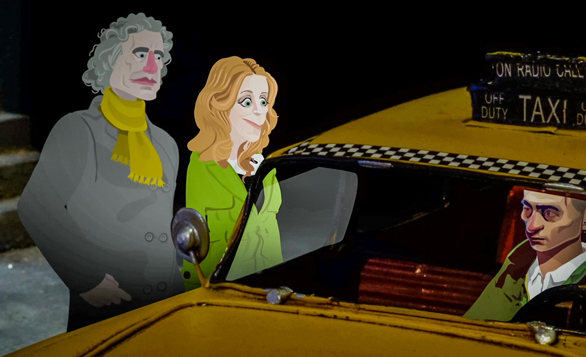
In today’s talk, “The Long Reach of Reason,” Steven Pinker and Rebecca Newberger Goldstein have been animated by Cognitive Media.
I want to give you the back story behind today’s TED Talk and make the case that it’s one of the most significant we’ve ever posted. And I’m not just talking about its incredible animation. I’m talking about its core idea.
Two years ago the psychologist Steven Pinker and the philosopher Rebecca Newberger Goldstein, who are married, came to TED to take part in a form of Socratic dialog.
 Steven Pinker and Rebecca Newberger Goldstein: The long reach of reason
She sought to argue that Reason was a much more powerful force in history than it’s normally given credit for. He initially defended the modern consensus among psychologists and neurologists, that most human behavior is best explained through other means: unconscious instincts of various kinds. But over the course of the dialog, he is persuaded by her, and together they look back through history and see how reasoned arguments ended up having massive impacts, even if those impacts sometimes took centuries to unfold.
Steven Pinker and Rebecca Newberger Goldstein: The long reach of reason
She sought to argue that Reason was a much more powerful force in history than it’s normally given credit for. He initially defended the modern consensus among psychologists and neurologists, that most human behavior is best explained through other means: unconscious instincts of various kinds. But over the course of the dialog, he is persuaded by her, and together they look back through history and see how reasoned arguments ended up having massive impacts, even if those impacts sometimes took centuries to unfold.
The script was clever, the argument powerful. However on the day, they bombed. And I’m mainly to blame.
You see, we gambled that year on seeking to expand our repertoire of presentation formats. Their dialog appeared in a session we called “The Dinner Party.” The idea was that all the speakers at the session would be seated around a table. They would individually give their talks, then come sit back down with the others to debate the talk, and everyone would end up the wiser. Seemed like an interesting idea at the time. But it didn’t work. Somehow the chemistry of the dinner guests never ignited. And perhaps the biggest reason for that was that I, as head of the table trying to moderate the conversation, had my back to the audience. The audience disengaged, the evening fell flat, and Steve and Rebecca’s dialog, which also suffered from some audio issues, was rated too low for us to consider posting it online.
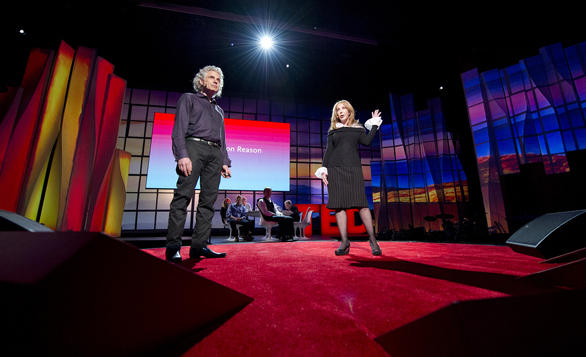
At TED2012, Steven Pinker and Rebecca Newberger Goldstein explored how reason shaped human history. We’ve animated the talk to bring new life to this important idea. Photo: James Duncan Davidson
That would normally have been the end of it. Except that a strange thing happened. I could not get their core idea out of my head. The more I thought about it, the more I realized that TED’s entire mission rested on the premise that ideas really matter. And unless reasoned argument is the prime tool shaping those ideas, they can warp into pretty much anything, good or bad.
And so I tried to figure if there was a way to rescue the talk. And it turned out that there was. It came in the shape of Andrew Park, who, in my humble-but-true opinion is the world’s greatest animator of concepts. His RSA Animate series has notched up millions of views for sometimes difficult topics, and we have worked with him before to animate talks from Denis Dutton and some of our TED-Ed lessons (including one from yours truly on Questions No One Knows the Answer To.) If he could make me interesting, he sure as hell could do so for Pinker and Goldstein.
And so it turned out. Andrew and his amazing team at Cognitive fixed the audio issue and turned the entire talk into an animated movie of such imagination, humor and, most of all, explanatory power, it took my breath away.
And so here it is. The Long Reach of Reason. A talk in animated dialog form, arguing that Reason is capable of extending its influence across centuries, making it the single most powerful driver of long-term change. Please watch it. A) you’ll be blown away by how it’s animated. B) it may change forever how you think about Reason. And that’s a good thing.
It is a delicious example in favor of the talk’s conclusions that it was the power of its own arguments that kept it alive and turned it into a animation capable of far greater reach than the original.
For me, the argument in this talk is ultimately a profoundly optimistic one. If it turns out to be valid, then there really can be such a thing in the world as moral progress. People are genuinely capable of arguing each other into new beliefs, new mindsets that ultimately will benefit humanity. If you think that’s unlikely, watch the talk. You might just find yourself reasoned to a different opinion.
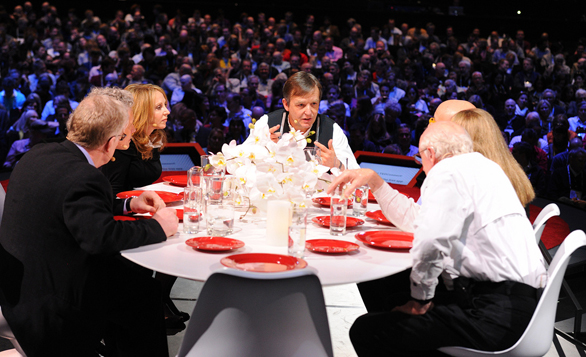
An experiment I will never try again: hosting a session with my back to the audience. Photo: James Duncan Davidson