
Watch the recent animated episodes of The Experimenters:
Oliver Sacks

George Washington Carver

Jacques Cousteau

Watch the animated versions of these rare interviews below:
Oliver Sacks
George Washington Carver
Jacques Cousteau
]]>
The incomprehensible vastness of the universe, the wonder of our own place in it all… Carl Sagan was able to explain the science of space in a way everyone could understand. As part of our special series, The Experimenters — we’re uncovering interviews with the icons of science, technology, and innovation — we found this conversation between Studs Terkel and Carl Sagan in the WFMT Studs Terkel Radio Archive. For this episode, we’ve zeroed in on Sagan’s thoughts on intelligent life in space, our place in the universe, and the Bible when it comes to explaining the natural world.
Watch the animated version of this episode from our series with PBS Digital Studios: blankonblank.org/carl-sagan
]]>Dame Stephanie Shirley might be the most successful tech entrepreneur you have never heard of. In the early 1960s, Shirley started a barrier-breaking, all-woman software company that would eventually be valued at $3 billion. From a rarely heard oral history at The British Library, Shirley takes us on the journey from fleeing Nazi Germany as a little girl to breaking through in the new world of computers despite not being taken seriously as a woman working from home.
Watch the animated version of this episode from our series with PBS Digital Studios: http://blankonblank.org/dame-stephanie-shirley
]]>This rarely heard oral history with the autism activist, author, and professor of animal science, was uncovered at Colorado State University. In this conversation, Temple Grandin is at her best, explaining for the rest of us what it’s really like to have an autistic brain and how Einstein’s not the only genius who could have been dismissed for being different.
Watch the animated version of this episode from our series with PBS Digital Studios: blankonblank.org/temple-grandin
]]>Architect Frank Lloyd Wright did something new when he made buildings that somehow became one with the landscape. Long, low lines, and interiors that brought the light and space of the outside in.
Wright’s designs and style seem very nice, very clean now, but at the time, he was a controversial personality. And like most famous architects, his work was as much hated as respected. And that’s what Mike Wallace wanted to talk about.
Watch the animated Frank Lloyd Wright episode: blankonblank.org/frank-lloyd-wright
This episode continues our special series, The Experimenters. We’re uncovering lost interviews with the icons of science, technology, and innovation – people who helped make the world we live in today.
]]>Interviewed by Gloria Steinem.
At the time of this interview, as far as the public – and it turns out the press – were concerned, space was for clean-cut alpha males with names like Buzz. Then Sally Ride came along.
Watch the animated Sally Ride episode: blankonblank.org/sally-ride
This episode marks the return of our special series, The Experimenters. We’re uncovering lost interviews with the icons of science, technology, and innovation – people who helped make the world we live in today.
]]>In this new episode we have a conversation with a true storyteller, the humorist, Garrison Keillor. This interview was recorded in front a live audience back in November of 1994 at the 92nd Street Y in New York City.
On stage that night was Keillor, the host of A Praire Home Companion, and George Plimpton, the famed editor of the Paris Review. The thread of their conversation that night was: the qualities of humor. What we loved about this conversation was something we hadn’t really thought about before: What is the obligation of humor? Enjoy.
Watch the animated Nina Simone episode: blankonblank.org/garrison-keillor
]]>Lilian Terry had a national radio show in Italy–everyone from Ray Charles to Duke Ellington appeared on her show–and there was one person she always wanted to interview: Nina Simone.
But Lilian had heard Nina didn’t enjoy speaking with white people. Thankfully Lillian had a confidant in Max Roach who introduced Lilian to Nina at the Newport Festival in 1968.
“Lilian Terry comes from Egypt, ” Roach said. With that simple introduction, Nina waved Lillian over. Soon they were talking about nefertitti and the pharoahs. Nina even told Lilian she thought she’d been in Egypt in a previous life.
Watch the animated Nina Simone episode: blankonblank.org/nina-simone
]]>Kurt Vonnegut walked into a class room at NYU in November 1970. He was a guest speaker that day. He’d prepared some handwritten notes on what he wanted to say: there were his thoughts on the art of writing, his childhood, the death of his parents. He jumped from topic to topic as he shuffled through his papers. Sometimes his voice trailed off. He delivered punchlines with perfect timing. The class roared. Listening to this tape, we get to be flies on the wall that day. So take a seat, but your book bag down and enjoy.
Watch the animated version of this episode from our series with PBS Digital Studios: http://blankonblank.org/kurt-vonnegut
]]>This previously unheard interview was recorded at Bill Murray’s house in New Jersey. T.J. was writing a profile for Irish America magazine. Bill’s dog was there and had an interest in his pants. Vintage Bill Murray on fame, Cadillacs, taking care of his mom and talking to women while famous.
Watch the animated version of this episode from our series with PBS Digital Studios: http://blankonblank.org/bill-murray
]]>
Larry Grobel told us the story about a time back in the early 80s when he borrowed a swimsuit at the Playboy mansion. It seems that back then, Hugh Hefner kept spare trunks at the ready whenever his guests felt the urge to test the waters beneath the famous Grotto. The reason Larry took an impromptu plunge? He wanted to nab the first interview with the infamous Patty Hearst after she got out of prison.
Was the woman who was famously kidnapped in the 1970s–and then caught on camera robbing a bank with her captors–a victim or a criminal? Here’s the unheard audio with the famous interview Larry did for Playboy.
Watch the animated version of this episode from our series with PBS Digital Studios: http://blankonblank.org/patty-hearst
]]>
Imagine what would happen if you sat down on a couch next to Tom Waits? Here’s the tape.
Watch the animated version of this episode from our series with PBS Digital Studios: blankonblank.org/tom-waits
]]>The interview was recorded shortly after the release of Thompson’s book, Hell’s Angels: A Strange and Terrible Saga. He spent more than a year living, drinking and riding with the Hells Angels up and down the California coast. Hear what he learned.
Watch the animated version of this episode from our series with PBS Digital Studios: http://blankonblank.org/hunter-thompson
]]>Listening to this interview tape from the Pacifica Radio Archives, we were drawn to this idea of the struggles that pop up between different generations and the internal questions one confronts as he or she gets older — and becomes famous.
Watch the animated version of this episode from our series with PBS Digital Studios: http://blankonblank.org/dustin
]]>Interview by Mike Wallace
The interview originally aired on Wallace’s television show, The Mike Wallace Interview, on February 25, 1959. The show ran from 1957 to 1960 and now more than 65 episodes are housed at the Harry Ransom Center at The University of Texas at Austin.
The Animated Transcript

Mike Wallace rose to prominence in the mid-1950s with the New York City television interview program, Night-Beat. That became the nationally televised prime-time program, The Mike Wallace Interview.
Who are you, Ayn Rand? You have an accent, which is?
Russian.
Russian. You were born in Russia?
Yes.
Came here?
Oh, about 30 years ago.
And whence did this philosophy of yours come?
Out of my own mind, with the sole acknowledgement of a debt to Aristotle, who is the only philosopher that ever influenced me. I devised the rest of my philosophy myself.

You are married?
Yes.
Your husband, is he an industrialist?
No. He’s an artist. His name is Frank O’Conner.
Does he live from his painting?
He’s just beginning to study painting. He was a designer before.
Is he supported in his efforts by the state?
Most certainly not.
He’s supported by you for the time being?
No, by his own work, actually, in the past. [CROSSTALK] By me if necessary, but that isn’t quite necessary.
Mike Wallace: There is no contradiction here, in that you help him?
No, because you see I am in love with him selfishly. It is to my own interest to help him if he ever needed it. I would not call that a sacrifice, because I take selfish pleasure in it. I say that man is entitled to his own happiness. And that he must achieve it himself. But that he cannot demand that others give up their lives to make him happy. And nor should he wish to sacrifice himself for the happiness of others. I hold that man should have self-esteem.

And cannot man have self-esteem if he loves his fellow man? Christ, every important moral leader in man’s history, has taught us that we should love one another. Why then is this kind of love in your mind immoral?
It is immoral if it is a love placed above oneself. It is more than immoral, it’s impossible. Because when you are asked to love everybody indiscriminately. That is to love people without any standard. To love them regardless of whether they have any value or virtue, you are asked to love nobody.

But in a sense, in your book you talk about love as if it were a business deal of some kind. Isn’t the essence of love, that it is above self-interest?
Well, What would it mean to have a love above self-interest? It would mean, for instance, that a husband would tell his wife, if he were moral according to the conventional morality, that I am marrying you just for your own sake, I have no personal interest in it, but I’m so unselfish, that I am marrying you only for your own good.
Should husbands and wives tally up…
Would any woman like that? I agree with you that [marriage] should be treated like a business deal. But every business deal has to have its own terms and its own kind of currency. And in love the currency is virtue. You love people, not for what you do for them, or what they do for you. You love them for their values, their virtues. You don’t love causes. You don’t love everybody indiscriminately. You love only those who deserve it. Man has free will. If a man wants love he should correct his flaws, and he may deserve it. But he cannot expect the unearned.

There are very few us then in this world, by your standards, who are worthy of love.
Unfortunately…. yes… very few. But it is open to everybody, to make themselves worthy of it and that is all that my morality offers them. [CROSSTALK] A way to make themselves worthy of love, although that’s not the primary motive.
Isn’t it possible that we are all basically lonely people and we are all basically our brothers’ keepers?
Nobody has ever given a reason why men should be their brother’s keepers, and you see the examples around you, of men perishing by the attempt to be their brother’s keepers.

You have no faith in anything?
Faith…. no.
Only in your mind.
That is not faith. That is a conviction. Yes….. I have no faith at all. I only hold convictions.

As we said at the outset, “If Ayn Rand’s ideas were ever to take hold, they would revolutionize the world.” And to those who would reject her philosophy, Miss Rand hurls this challenge. “For the past 2000 years the world has been dominated by other philosophies. Look around you, consider the results.” We thank Ayn Rand for adding her portrait to our gallery. One of the people other people are interested in. Mike Wallace… Good Bye.

Bonus Interview Outtakes
Ayn Rand on Objectivism
“First of all, I do not call it Randism, and I don’t like that name. I call it Objectivism. Meaning a philosophy based on objective reality. Now let me explain it as briefly as I can. First my philosophy is based on the concept that reality exists as an objective absolute. That man’s mind, reason, is his means of perceiving it. And that men need a rational morality. I am primarily the creator of a new court of morality which has so far been believed impossible. Namely, a morality not based on faith, not on arbitrary whim, not on emotion, not on arbitrary edict, mystical or social, but on reason. A morality which can be proved by means of logic. Which can be demonstrated to be true and necessary. Now may I define what my morality is, because this is merely an introduction. My morality is based on man’s life as a standard of value. And since man’s mind is his basic means of survival, I hold that if man wants to live on earth, and to live as a human being, he has to hold reason as an absolute. By which I mean, that he has to hold reason as his only guide to action. And that he must live by the independent judgment of his own mind. That his highest moral purpose is the achievement of his own happiness. And that he must not force other people nor accept their right to force him. That each man must live as an end in himself and follow his own rational self-interest.”
Religion
Reviews have said that, “You scorn churches, and the concept of God.” Are these accurate criticisms?
Ah.. Yes… I agree with the fact, but not the estimate of this criticism. Namely, if I am challenging the base of all these institutions, I’m challenging the moral code of altruism. The precept that man’s moral duty is to live for others. That man must sacrifice himself to others. Which is the present day morality
What do you mean by “sacrifice himself for others”? Now were getting to the point.
Since I’m challenging the base, I necessarily will challenge the institutions you name, which are a result of that morality. And now what is self-sacrifice?
Yes…What is self-sacrifice? You say that you do not like the altruism by which we live. You like a certain kind of Ayn Randist selfishness.
I will say that, “I don’t like” is too weak a word. I consider it evil. And self-sacrifice is the precept that man needs to serve others, in order to justify his existence. That his moral duty is to serve others. That is what most people believe today.
Yes… We’re taught to feel concern for our fellow man. To feel responsible for his welfare. To feel that we are, as religious people might put it, children under god, and responsible one for the other. Now why do you rebel? What’s wrong with this philosophy?
But that is in fact what makes man a sacrificial animal. That man must work for others, concern himself with others, or be responsible for them. That is the role of a sacrificial object. I say that man is entitled to his own happiness. And that he must achieve it himself. But that he cannot demand that others give up their lives to make him happy. And nor should he wish to sacrifice himself for the happiness of others. I hold that man should have self-esteem.
The Democratic Process
“I object to the idea that the people have the right to vote on everything. The traditional American system was a system based on the idea that majority will prevailed only in public or political affairs. And that it was limited by inalienable individual rights, therefore I do not believe that a majority can vote a man’s life, or property, or freedom away from him. Therefore, I do not believe that if a majority votes on any issue, that this makes the issue right, it doesn’t.”
“There is nothing wrong with the democratic process in politics. We arrive at it the way we arrived by the American Constitution as it used to be. By the constitutional powers, as we had it, people elect officials, but the powers of those officials, the powers of government are strictly limited. They will have no right to initiate force or compulsion against any citizen, except a criminal. Those who have initiated force will be punished by force, and that is the only proper function of government. What we would not permit is the government to initiate force against people who have hurt no one, who have not forced anyone. We would not give the government, or the majority, or any minority, the right to take the life or the property of others. That was the original American system.”
“I’m opposed to all forms of control. I am for an absolute laissez-faire, free, unregulated economy. Let me put it briefly. I’m for the separation of state and economics. Just as we had separation of state and church, which led to peaceful co-existence among different religions, after a period of religious wars, so the same applies to economics. If you separate the government from economics, if you do not regulate production and trade, you will have peaceful cooperation, and harmony, and justice among men.”
Robber Barons
“This country was made not by robber barons, but by independent men, by industrialists, who succeeded on sheer ability. By ability, I mean without political force, help, or compulsion. But at the same time there were men, industrialists, who did use government power as a club to help them against competitors. They were the original collectivists. Today, the liberals believe that the same compulsion should be used against the industrialists for the sake of workers, but the basic principle there is, “Should there be any compulsion?” And the regulations are creating robber barons, they are creating capitalists with government help, which is the worst of all economic phenomenon.”

Influential Republicans & Ayn Rand


Roots in Russia

Ayn Rand was born Alisa Zinov’yevna Rosenbaum in Saint Petersburg, Russia, in 1905. She was born into a family that was Jewish but non-observant. During the Russian Revolution, the family fled to the Crimea, but later returned to Saint Petersburg where she was one of the first women to enroll in Petrograd State University. Already an avowed atheist, it was here at university that she was introduced to the philosophies of Aristotle and Plato, and to the writings of Nietzsche.

Ayn Rand Quoted
“Achievement of your happiness is the only moral purpose of your life, and that happiness, not pain or mindless self-indulgence, is the proof of your moral integrity, since it is the proof and the result of your loyalty to the achievement of your values.”
“Love is the expression of one’s values, the greatest reward you can earn for the moral qualities you have achieved in your character and person, the emotional price paid by one man for the joy he receives from the virtues of another.”
“Potentially, a government is the most dangerous threat to man’s rights: it holds a legal monopoly on the use of physical force against legally disarmed victims.”
“If any civilization is to survive, it is the morality of altruism that men have to reject.”
Credits
Executive Producer
David Gerlach
Animator
Patrick Smith
Audio Producer
Amy Drozdowska
Colorist
Diana Tantillo
Music
via APM
“Frozen Wonder” by Marc Frederick Teitler
“Adagietto 30 (b)” by John Horler And Chris Laurence
Interview by Joe Smith
Joni Mitchell was interviewed on November 3, 1986. Joe was writing Off the Record–his oral history of rock and roll.
The Animated Transcript

Joe Smith was a longtime record executive and one-time radio DJ. From 1986-88, he interviewed more than 240 music artists and executives to write Off the Record. Then in 2012, he donated more than 230 hours of interviews on cassette tapes to the Library of Congress.
People were very protective of me. Overly so. I was in the industry for a long time before I had any idea of what drugs people were doing. I mean, I just said, “Jeez, looking awful skinny. Why doesn’t he have an appetite.” I was very very sheltered when I first entered into it. I was young for my age. Not as naïve as they expected. I don’t know why I seem to bring that out in people.

Yeah, I like my freedom. I like to do my own grocery shopping. People do recognize you. They are kind of shocked. Some people like it. It makes them feel at ease. It confirms their hopes that you are in fact similar to them. Some people can’t stand it. One time I sat down, we had good tickets on the floor at some rock concert. We moved in, we got there late. The fellow sitting next to me said, “You can’t sit here.” I said, “Why not? I’ve got tickets.” “But you’re Joni Mitchell.” I said, “So?” He said, “You shouldn’t be sitting there. You should be backstage, or you should be up in that box.” He was very annoyed. Some people are upset to see you doing ordinary things. Those people, if they were a celebrity, they would have an entourage. You know if you see yourself as a kingly type, then you need your serfs and your army and someone around you.

I like to move around. I travel. I’ve driven across country by myself. When I felt that fame, people were nosing me out, well I moved on. I used traveling names. Wigs, if necessary. I didn’t think I had much of a following in the south. I thought I was anonymous down there so I kept to the south. I found in certain pockets that I was quite recognizable, and I just hit a wig store.
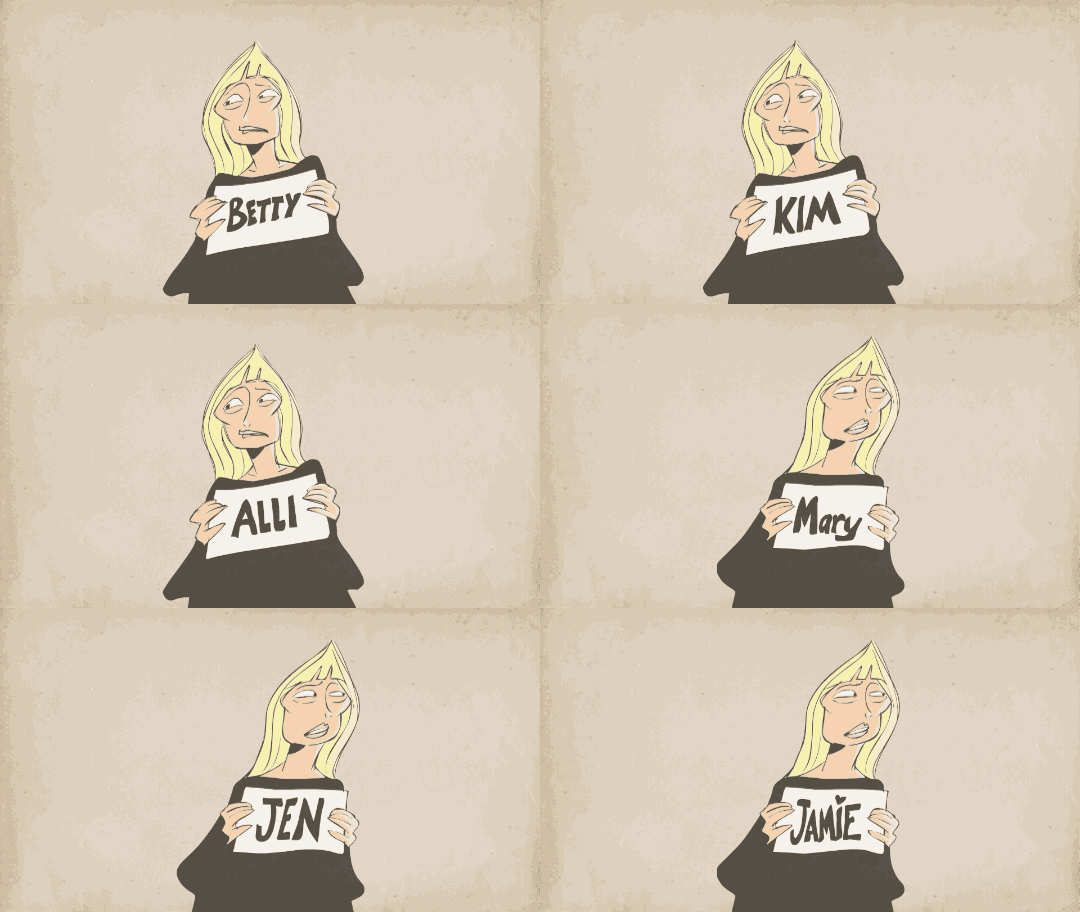
At that time I was pretty much a. “Good Time Charlie.” I was a bad student in the school system. I failed the 12th grade. I had done my book reports from classic comics!
Oh really? (laughs)

I was anti-intellectual to the nth. Basically I liked to dance and paint, and that was about it. As far as serious discussions went, at that time most of them were overtly pseudo-intellectual and boring to see teenagers sitting around solving the problems of the world. I thought, “All things considered, I’d rather be dancing.” (laughs)

I liked playing in small clubs. I really liked holding the attention of thirty or forty people. I never liked the roar of the big crowd. I didn’t like the sound of people gasping at the mere mention of my name. It horrified me.
Also for a lot of reasons, because I knew people were fickle, I knew that they were buying an illusion. I didn’t want there to be such a gulf between who I presented and who I was. As Geffen pointed out, he said, “You’re the only star I ever met that wanted to be ordinary.” I never really wanted to be a star. I didn’t like entering a room with all eyes on me. I still don’t really like the attention of a birthday party. I prefer Christmas, which is everybody’s holiday. It’s just my nature. I don’t like to be that zeroed in on en masse. Over the years I’ve adjusted to it. Now I’m the other way around. You can give me 400,000 hostile people and I won’t even break sweat. If you give me 200 adoring people, my mouth will dry out. (laughs)
I don’t know how to sell out. If I tried to sell out I don’t think I could. By that I mean to make an attempt to make a commercial record. I just make them and I think if I was a kid I would like this song. So you have to have a certain amount of grab-ability, initially, and then something that wears well, that you’ll love for years to come. That’s what anything fine is. It’s recognized in painting. It’s not recognized … I’m just working in a toss-away industry. I’m a fine artist working in a commercial arena, so that’s my cross to bear.
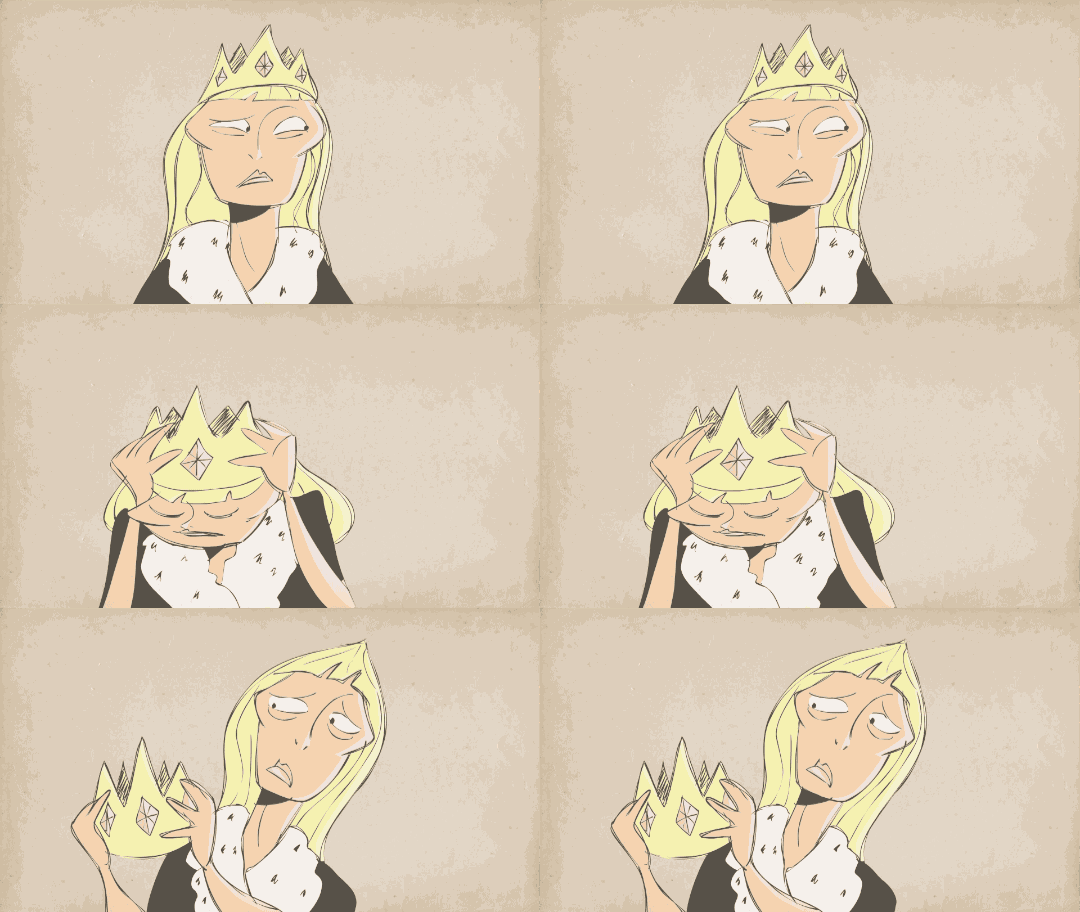
I have lost my credibility as a hit maker because of these side excursions into other branches of music by not being consistent. Consistency seems to be all important.
What do you regret?
Oh I would do the same thing in a minute.
[crosstalk] never a minute of regret for that. You’ve been there.
Are you kidding? Oh I don’t. No, I have no regret.
Have you accepted the fact that you don’t sell more? Does it make you angry or frustrated?
What I’m telling you is no it doesn’t make me angry. It makes me curious: Why?
Do you ever get periods where nothing comes when you’re writing? Are there dry periods there, or are you prolific enough to keep writing?
Well, musically, I would never run dry. Any time I sit down to an instrument, I could write a song. I try not to steal from myself, but the modalities create similarities. Musically, I don’t think I’d ever dry up. I trust my musical invention. Lyrics are hard.
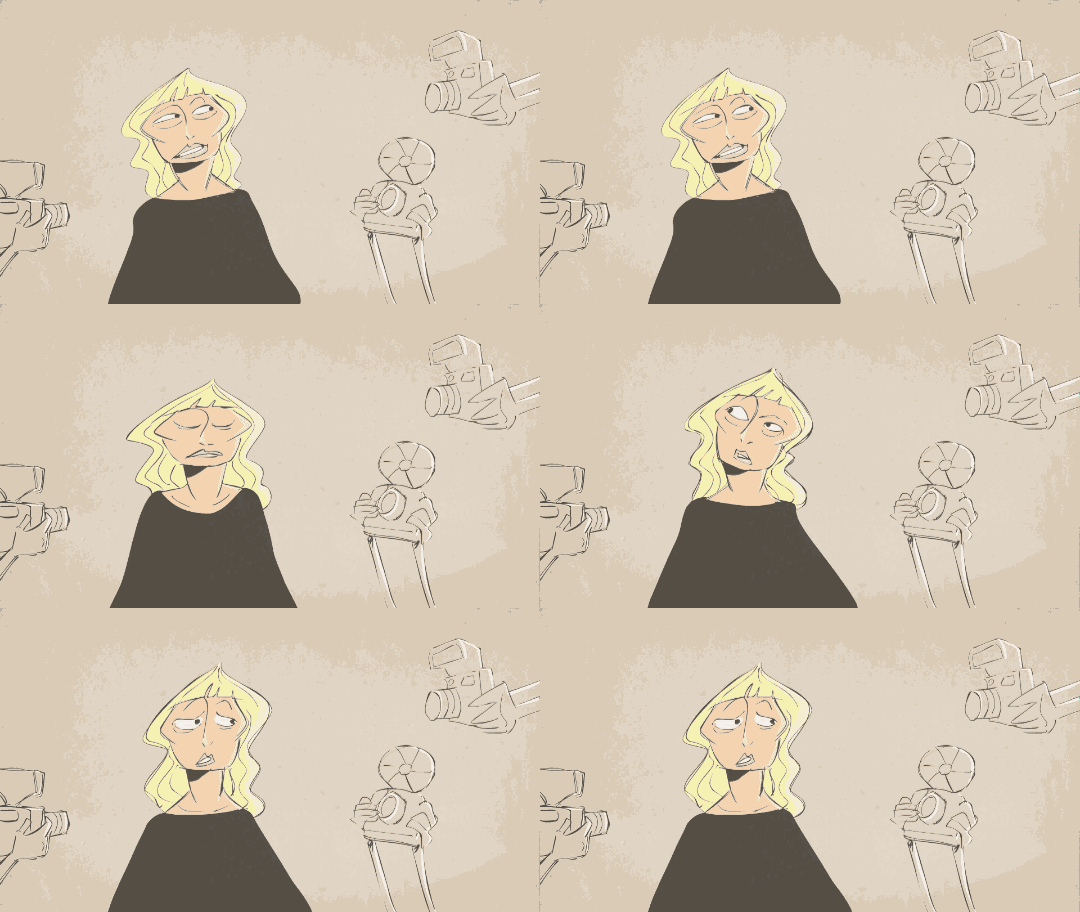
The full interview
Bonus Interview Outtakes
Joni Mitchell on Living in SoHo
“I got in before SoHo was SoHo. It was just Little Italy when I was in there. It’s still off the touristy track. It’s just away from the Saturday action, the crowds and everything. It’s too expensive. It’s insane. You’ve got to be a billionaire to live on Manhattan now.”
Finding Her Voice
“When I was 19 I went to art school. I had six months of teaching myself to play baritone ukulele under my belt, so was sort of a novice folkie. … I was singing folk songs at that time. At that time I was a folk singer. … Then I went to Toronto to see the Mariposa Folk Festival, actually to see Buffy Sainte-Marie. I still didn’t have an image of myself as a musician. I found I couldn’t work and I didn’t have enough money to get in the union, $160, I didn’t have it. I worked in women’s wear. I worked in a department store and I could barely make ends meet. I finally found a scab club in Toronto that allowed me to play. I played there for a couple of months. Then I married Chuck Mitchell and I moved across the border. We still were scrambling to work. As a couple, we were making $15 a night. There were clubs that were very cliquish that we couldn’t get into. In Detroit, we had a fifth floor walkup apartment and it had some extra rooms. When Eric Anderson and David Blue and Tom Rush, and people passed through Detroit, we billeted them there. Bruce Langhorne, they used to stay with us. Eric taught me a couple of open tunings. He taught me Open G and Drop D Modal tuning. Once I got the open tunings for some reason, I began to get the harmonic sophistication that I heard that my musical fountain inside was excited by. Once I got some interesting chords to play with, my writing began to come.”
Learning to Write
“My husband had an education. He had a degree in Literature. I married into a camp of literary types. They, not they so much, but Chuck in particular really didn’t believe that you could write unless you read a lot. Considering me an illiterate, he didn’t give me a great deal of encouragement regarding my writing, but Tom Rush did. Tom would come through and say, “Do you have any new songs?” I’d play him a batch of them. He’s say, “Any more?” I’d say, “There’s one more.” I always would hold one out for some reason thinking it was too sensitive, too feminine for him. That would always be the one he’d choose. He chose “Urge for Going”, he chose “Circle Game.” Where he traveled and played those songs, clubs opened up to me. Because the song was my introduction to that club work. I was playing as far south as Florida. I played in Fort Bragg, which is interesting, to gung-ho soldiers while everybody I knew was burning their draft cards and claiming homosexuality and everything and anything they could to get out of the draft. I played in Charleston, which was to the Navy, and to these women from Savannah, who were the worst audience in the world. They talked all the way through your set because if the boyfriend gave you a moment of attention, they couldn’t stand it. It would always be the buzz of women in Charleston.”
Being Categorized
“I did read my press. For the most part I found that initially they always lumped me in with the women. Whereas in fact what I was doing was not what most of the women were doing. My peer group was really Phil Ochs, and Dylan, and Eric, and David Blue. Basically that was my peer group. They had me lumped in with Judy Collins, who didn’t really write at that time, and Baez. Mainly that I was a woman with an acoustic guitar. … Then they lumped me in with Janis and Carly.”
Bad Reviews
“It bothers me on this level because it’s chain reaction. That people, a certain amount of the populous are sheep, and if a critic lambastes you, unfortunately even though he’s a shoddy little writer to begin with, underpaid, jealous to boot, has an ax to grind. That his word can influence a certain amount of people who can’t think for themselves. Plus, these reviews do tend to get accumulative. They tend to get regurgitated. Lazy reviewers look up other people’s reviews and they write the same thing, so you get people writing crap based on crap.”
Joni’s Timeless Style

She had “it,” said Hedi Slimane, head designer at Saint Laurent, who named Joni one of his muses.
Joni appeared as one of the faces of the fashion house’s ad campaign and she also landed on the cover of New York Magazine’s Spring 2015 fashion issue, proving that some styles are timeless. Read Joni’s awesome interview with in that issue.
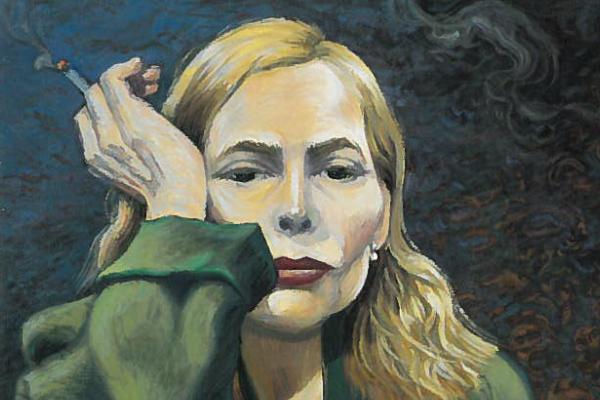
Joni’s Self-Portraits
“I have always thought of myself as a painter derailed by circumstance.” Check out her paintings.

Joni’s Health
On March 31, 2015 Joni was found unconscious in her home in LA and rushed to the hospital. Original reports that was in a coma were dismissed by her reps:
“Contrary to rumors circulating on the Internet today, Joni is not in a coma. Joni is still in the hospital – but she comprehends, she’s alert, and she has her full senses. A full recovery is expected.”
Joni has made several health problems during her life — polio and its neurological effects, scarlet fever, dengue — and has said in the past that she suffers from Morgellons disease, a mysterious skin condition that manifests in sores and fiber-like growths. Here’s how she described the disease to New York Magazine:
“Fibers in a variety of colors protrude out of my skin like mushrooms after a rainstorm. They cannot be forensically identified as animal, vegetable, or mineral.”
Information surrounding the disorder is hazy, as it is not yet a widely accepted diagnosis. Some medical experts believe that it is in fact a psychosomatic illness.
The Laurel Canyon Scene
In the 60’s and 70’s, Laurel Canyon – a neighborhood of winding streets tucked into the Hollywood Hills off Sunset Boulevard in LA – was the center of the musical universe. It was where stars like Joni, Neil Young, David Crosby, and John and Michelle Phillips all lived, played, and made music.
The music that came out of those hills even became known as the “Laurel Canyon sound” – folksy, melodic, and tuned in to the political and cultural leanings of the time.
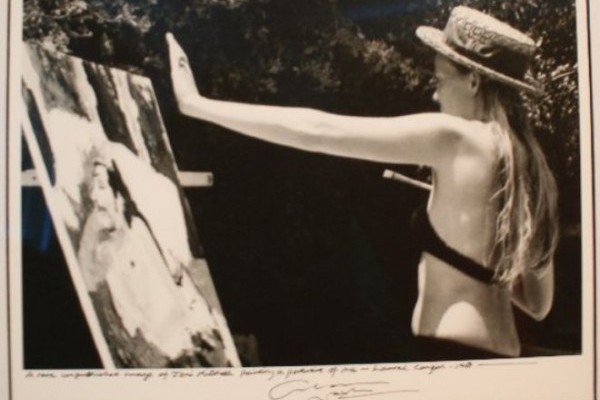
Credit: jonimitchell.com
See what Joni’s life was like at Laurel Canyon
“When I first came out to L.A. [in 1968], my friend [photographer] Joel Bernstein found an old book in a flea market that said: Ask anyone in America where the craziest people live and they’ll tell you California. Ask anyone in California where the craziest people live and they’ll say Los Angeles. Ask anyone in Los Angeles where the craziest people live and they’ll tell you Hollywood. Ask anyone in Hollywood where the craziest people live and they’ll say Laurel Canyon. And ask anyone in Laurel Canyon where the craziest people live and they’ll say Lookout Mountain. So I bought a house on Lookout Mountain.”
“Our House”
Graham Nash wrote the classic Crosby, Stills, Nash and Young song about life at Joni’s house in Laurel Canyon.
I’ll light the fire, you place the flowers in the vase that you bought today.
Staring at the fire for hours and hours while I listen to you
Play your love songs all night long for me, only for me.
CREDITS
Executive Producer
David Gerlach
Animator
Patrick Smith
Series Producer
Amy Drozdowska
Colorist
Diana Tantillo
MUSIC
Joni Mitchell
“Urge For Going”
“Both Sides Now”
via APM
Ken Anderson and Rebecca Ruth Hall “November Song”
Rick Ruskin “King James Position”
Vasco “Love In An Air Baloon”
Silvain Vanot “Lullaby In Blue”
Interview by Frank Kofsky
One afternoon in November 1966, Frank Kofsky took the train out to Long Island. He was about to spend a day with John Coltrane. This interview comes from the Pacifica Radio Archives.
The Animated Transcript

Frank Kofsky was an author, scholar, jazz critic, and professor of history at California State University at Sacramento.
Do you live far outside of… wherever we are now?
Well I guess I’m about four or five miles down the road (laughs).
You really sound like Farmer John (laughs).
Yeah man, when I come up here, I have to do all… to get everything I want to get—You know, I got to the store and do all that because I don’t want to come back up here.
Where do you play at home?
Anywhere. There’s a room over the garage out there that I’m getting fixed now to… I think it’s going to be my practice room. You know sometimes you build a room and it ends up you can still go in the toilet, so I don’t know, I hope I like it but… I keep a horn on the piano and I have a horn in my bedroom. The flute’s usually back there because when I go down tired, I lay down and practice and…
About how many hours a day do you play, would you say?
Not too much at this time. I find that it’s only when something is trying to come through you know that I really practice and then it’s just, I don’t know how many hours, it’s just all day.
I did a foolish thing, I got dissatisfied with my mouth piece (laughs). I had some work done on this thing and instead of making it better, it ruined it. It really discouraged me, you know, a little bit because they were certain aspects of that playing that certain fast thing that I was reaching for that I couldn’t push because I had damaged this thing… so I just had to curtail it (laughs). But at that moment, it was so vivid in my mind, the difference in what I was getting on the horn, as soon as I put that horn in my mouth, I could hear it. I could feel it and I just stopped, I just went into other things. In fact, soprano’s one of the reasons I started (laughs) getting dissatisfied with that tenor mouthpiece, see? Because the sound of that soprano was actually so much closer to me in my ear.
I didn’t want admit this damn thing because I said well the tenor’s my horn, this is my baby but the soprano, there’s still something there, just the voice of it that I can’t… It’s just really beautiful. I really like it.

The people I was staying with have a friend, a young lady and she was downtown at one Malcolm X’s speeches and, lo and behold, who should plop down in the seat next to her but John Coltrane (laughs).
(laughs) Yeah
Were you impressed with him?
Definitely, definitely. I felt I had to see the man. I was quite impressed.
Some musicians have said there’s a relationship between some of Malcolm’s ideas and the music.
Well, I think that music, being expression of the human heart or the human being itself, does express just what is happening. The whole of human experience at that particular time is being expressed. In any situation that we find in our lives, when there’s something we feel should be better, we must exert effort to try and make it better.
So it’s the same socially, musically, politically, in any department of your life. I think music is an instrument. It can create the initial thought pattern that can create a change, you see, in the thinking of the people.
I mean I want to be a force for real good. In other words, I know that there are bad forces. I know that there are forces out here that bring suffering to others and misery to the world, but I want to be the opposite force. I want to be the force which is truly for good.
What were you looking for John, do you want some cigarettes or…?
No, I’m just sitting up because my back is wet and I just need to get off the chair.
I don’t have any more of my prepared questions to ask you, or my improvised questions (laughs) to ask you. I don’t know when I’ll ever get the chance to sit you down with a tape recorder again (laughs). Do you have anything else to get on here?
I think you man, well you just about covered it, I believe…just about covered it.

Interview Backstory
Kofsky turned on his tape recorder when he got into Coltrane’s car. The two men drove through town and made a few stops along the way. Coltrane had moved to Huntington, New York with his wife Alice and their children in 1964. They lived in a modest house on a quiet, tree-lined street. It was a home to raise a family. Coltrane had just turned 40. He would die from liver cancer less than a year later.
Hear the full conversation
Coltrane on Malcolm X
“I was living downtown, I was in the hotel and I saw the posters and realized he was going to be over there. So I just said, ‘well I’m going over there and see this cat because I’d never seen him.’ I was quite impressed.
Brotherhood
“I believe with brotherhood there would be no poverty, and also with brotherhood there would be no war.”
Performing
“I only hope whoever’s out there listening, I hope they enjoying it. If they’re not enjoying it, then I’d rather not be there. I like an audience that does show what they feel and responds.”
Adding A Sax Player
“It helps me stay alive sometimes because I find that physically, man, the pace I’ve been leading, it’s so hard. I’ve gained so much weight. It’s just been a little hard physically, and I feel that I like to have somebody there in case I just can’t get that strength”
Spirituality
“I’ve got to grow through certain phases of this to other understandings and more consciousness and awareness of just what it is that I’m supposed to understand about it, and I’m sure all this will be part of the music”
Learning
“If there’s something you don’t understand, you have to go humbly to it. You don’t go to school and sit down and say I know what you’re getting ready to teach me, you know? You sit there and you learn. You open your mind. you absorb. You’ve got to be quiet, you’ve got to be still to do this.”

The Church of Coltrane

Trane and Miles Davis

Miles Davis and John Coltrane had a complicated relationship. Coltrane got his start as part of Davis’ band but by the end of the 1950’s he was well on his way to making a name for himself and split to go his own way. Both possessed of large personalities, they respected each others’ musicianship but were also highly competitive – a dynamic that probably pushed both towards the groundbreaking work each would produce in the years following.
I was going with a girl who was an antique dealer in France. She gave this soprano sax to me and I gave it to Coltrane. I gave that thing to Trane, man, and it’s probably still in his hand. He probably died with it in his mouth! – Miles Davis
The Quartet

Some of Coltrane’s most influential recording were made while he was signed to Impulse! Records, from 1961 – 1965. For these albums, the world got to hear a magical quartet: Coltrane on saxophone, McCoy Tyner on piano, Jimmy Garrison on bass, and Elvin Jones on drums.
The group recorded the legendary A Love Supreme at Rudy Van Gelder’s studio in Englewood Cliffs, New Jersey in December 1964.

Credit: National Museum of American History
Amazingly, the group only played A Love Supreme live once, during a performance in France in 1965. Watch it here.
By that same year, the quartet was starting to break up and Coltrane was moving towards a more abstract style.
Coltrane’s Saxophones

Coltrane had three saxophones: an alto, a tenor, and a soprano. The tenor pictured above was donated to the National Museum of American History by Coltrane’s son, Ravi.
It’s a Mark VI tenor made in 1965 – the same year A Love Supreme was released – by Henry Selmer Paris, a manufacturer of high-end instruments. More on Coltrane at the Smithsonian.
Credits
Executive Producer
David Gerlach
Animator
Patrick Smith
Audio Producer
Amy Drozdowska
Colorist
Diana Tantillo
Music
John Coltrane
“In a Sentimental Mood”
“My Favorite Things”
APM Music
Simon Thorpe (PRS), John Donaldson (BMI)
“Break Out”
Jean Gobinet (SACEM)
“I Was Born Here”
Colin Towns (PRS)
“Downcast”
Michele Generale (SIAE), Femi Olasehinde (PRS), Paolo Porta (SIAE)
“Run Time”
Photo
Dutch National Archives
Impulse Records / Charles Stewart
Interview by Lisa Potts and Chadd Coates
In the autumn of 2012, Lisa Potts rediscovered — literally, behind her dresser — a taped cassette of a long-lost interview with Bradbury that she made as a college student journalist back in 1972. Bradbury was doing a lecture at Chapman College in Orange County, and Lisa and Chadd were tasked with picking up Bradbury from his home in West L.A.
The Animated Transcript

You say you’re a madman. How long have you been in this state of mind? It sounds pretty wonderful.
Oh, since I was 9 or 10. You learn to live with your crazy enthusiasms which nobody else shares, and then you find a few other nuts like yourself, and they’re your friends for a lifetime. That’s what friends are, the people who share your crazy outlook and protect you from the world, because nobody else is going to give a damn what you’re doing, so you need a few other people like yourself.

Do you feel you have to be protected from the world that surrounds you or…
While you’re growing, sure, because you’re tender and you doubt yourself, and… Friendship is an island that you retreat to and you all fall on the floor and laugh at all the other ninnies that don’t have enough brains to have your good taste, right?
Yeah.
Yeah.
Um… this is kind of a weird question. We had an article in our newspaper that said Ray Bradbury has never driven a car or been in an airplane. Is that true?
That’s right. What do you think I’m doing here in the back seat?
You’ve in your whole life ever driven?
Never have been behind the wheel.
Why is that?
Oh, it seemed a good idea. That’s all.
Are you scared of cars or scared or …

I’m scared of myself. I think I’d be a bad driver. I’m scared of cars, period. I’ve had too many friends killed now, and I’ve seen too many people killed in my life when I drove across the country when I was 12. I’m sure that has a lot to do with it. If you see a few real dead bodies with brains on the pavement, it does a lot to change your attitude. It means you can get it too. I’ve had a lot of relatives killed. I’ve had a lot of dear friends killed. It’s stupid. The whole activity is stupid.
What about… why don’t you like to go on airplanes? Are you scared of them, too?
I don’t like being up high. It took me 3 days to get to the top of the Eiffel Tower.

So you do write very realistically?
It’s a combination of realism with fantasy. But no, I don’t like realism. We already know the real facts about life, most of the basic facts. I’m not interested in repeating what we already know. We know about sex, about violence, about murder, about war. All these things, by the time we’re 18, we’re up to here. From there on we need interpreters. We need poets. We need philosophers. We need theologians, who take the same basic facts and work with them and help us make do with those facts. Facts alone are not enough. It’s interpretation.
We’d like to know how you go about writing a story. Like, do you take other people’s opinions? Where do you get your ideas?

You don’t pay any attention to anything anyone else says, no opinions. The important thing is to explode with a story, to emotionalize a story, not to think it. You start thinking, the story’s going to die on its feet. It’s like anything else. If an athlete is running around the high hurdles, let’s say, and he starts thinking about the next hurdle, he’s doomed. He’s going to knock it down. People who take books on sex to bed become frigid. You get self-conscious. You can’t think a story. You can’t think, “I shall do a story to improve mankind.” Well, it’s nonsense. All the great stories, all the really worthwhile plays, are emotional experiences. If you have to ask yourself whether or not you love a girl or you love a boy, forget it. You don’t. A story is the same way. You either feel a story and need to write it, or you better not write it.
Did you have any formal training in writing, of any type?
Not formal, no. But I am a dedicated madman, and that becomes its own training. If you can’t resist, if the typewriter is like candy to you, you train yourself for a lifetime. Every single day of your life, some wild new thing to be done. You write to please yourself. You write for the joy of writing. Then your public reads you and it begins to gather around your selling a potato peeler in an alley, you know. The enthusiasm, the joy itself draws me. So that means every day of my life I’ve written. When the joy stops, I’ll stop writing.

In most of your books, the Martian Chronicles is about Mars, but even in Illustrated Man, everything that happens in outer space is on Mars. I was wondering, are you really preoccupied with Mars, or why are you?
Oh, I think because it’s closest to us. You grow up with the romance of Mars. When I was a kid, some of the earliest clear photographs of Mars were being published from the Lowell Observatory in Arizona. Since it’s the nearest planet, and we know, we’ve always had this feeling that someday, if we went anywhere, it would be to the moon and then to mars. That’s the way it’s turning out. We’ll be landing there in a few years now.
Interview Outtakes
Bradbury on Dreams
“It’s rare you get an idea from a dream. I can’t really recall a story that ever worked out that way. I think in 35 years of writing, that I’ve ever had a dream that held up. They’re much too dislocated.”
Fashion
“I was partially raised by an aunt who was a dress designer, so I was around her studio all of my early life. I know materials. I can look through Harper’s Bazaar and decide what works and what doesn’t, or any other magazine, Seventeen if you wish.”
Music
“I’m turning into a full-fledged lyricist, and I will probably be working with a lot of groups during the next few years. There are at least 4 or 5 folk groups or rock groups touring the country right now using the titles of my books for their names.”
Inspiration
“Edgar Allen Poe really started me when I was 8. I fell in love with everything of his.”
Fantasy
“Sometimes you have intuitive insight about how you think things are going to be, and you write that. Other times you fantasize completely, which has nothing to do with predicting the future.”
Speaking Out
“Go out and make your own speeches. People need you. Go on TV. It can be done. After you speak up a few times, people say, “Hey, we got a crazy man in the community,” and they’ll begin talking to you.”
The Secret to His Success

Credit: raybradbury.com
It took a few years for Ray Bradbury to find the courage to ask a woman out. The year was 1946. He was 22 and found himself in a bookstore in Los Angeles. A female clerk there, named Maggie, thought this trench coat-wearing young man was shoplifter.
Suspicious, she approached him. They started talking and, as they say, “that’s all she wrote.” The couple was married for more than 50 years and had four daughters. It was Maggie who allowed Ray to develop as a writer; in the early years of their marriage, she worked full-time while Ray stayed at home to write. One chance meeting changed American literature.
Bradbury’s Home Bulldozed

Read more about the controversy here
Take a look inside Bradbury’s house pre-tear down
Discover more Hollywood houses of scandal
The Ray Bradbury Theater

Bradbury had his own TV series in the vein of shows like Twilight Zone and Tales from the Crypt. Bradbury was host, and each episode was based on one of his stories. It ran on HBO for two seasons, then on USA for an additional four seasons.
“I’m surrounded on every side by my magician’s toyshop. I’ll never starve here …. Out of all this, what do I choose to make a story? I never know where the next one will take me. And the trip: exactly one-half exhilaration, exactly one-half terror.”
Watch our favorite episodes: The Playground & Banshee
Bradbury’s Circle of Friends


Credit: chuckjones.com

Gene Roddenberry was the creator of Star Trek and he once tried to bring Bradbury on as a writer. Bradbury declined, but he and Roddenberry struck up a friendship that lasted til the latter’s death.
Forest J. Ackerman was essentially the godfather of sci-fi – he even coined the term. He was an actor, publisher, and collector of all things sci-fi. He and Bradbury met as teenagers, when they were both members of the Los Angeles Sci-Fi Club.
Ray Harryhausen was also a member of the Los Angeles Sci-Fi Club with Bradbury during their teen years, Harryhausen went on to become one of the most celebrated special effects masters in Hollywood.
Credits
Executive Producer
David Gerlach
Animator
Patrick Smith
Series Producer
Amy Drozdowska
Music
Chris Zabriskie
“Readers! Do You Read?”
Jahzzar
“LandH”
“Planet Zero”
Interview by Lawrence Grobel
This conversation was recorded on March 13, 1978, for a profile Grobel was writing for Playboy. Dolly would appear on that cover of the magzine. But take her clothes off?
The Animated Transcript

I’m just pretty open and honest. There’s not just a whole lot I won’t tell you. I think most people appreciate that the fact that you’ll just be open and honest rather than putting you down by saying, “well, don’t ask silly questions.” I would say that if you asked something I thought was a silly question, I would…
All right, here we go, when did you first use a flush toilet.
Don’t ask silly questions.[laughs] Are you serious?
Well, you know, I was laughing the other night about something. I guess… My aunt had a toilet in the bathroom and we were so fascinated. We were afraid. I was afraid to use it. I just thought it was going to suck us right down. She also had the first television we ever saw, too.

How old were you when you first saw television?
Hmm… maybe eight.
The toilet around the same time?
Yeah, I guess so. It was just all new. I was thinking about if I was on the Johnny Carson show… I just got to thinking one night, I was laughing about how nobody had ever asked me about how we bathed or what we did because we made our own soap and in the summer time we’d go to the river. We’d just all pile in the truck or something. Of course we had a creek but the river was great. That was like a big bath. We could all go in swimming and we’d wash each other’s hair. Soap was just flowing down the river. That’s where we bathed in the summer time. I was making a joke about how there was so many of us and we were so dirty, we left a ring around the little pigeon river like a bathtub.

In the winter time, we just had a pan of water and we’d wash down as far as possible, and we’d wash up as far as possible. Then when somebody cleared the room we’d wash possible. [laughs] So that’s the way it was.

How often did you bath in the winter? Like once a week or every two weeks?
We bathed once a week once a week whether we needed it or not, as the saying goes. When I was in high school, it was a big deal, I had to take a bath every night because I wanted to be clean. The kids peed on me every night. We slept three and four in the bed.

I would wash every night. And as soon as I go to bed, the kids would wet on me and I’d have to get up in the morning and do the same thing.
When they wet on you, though, did you get up and wipe yourself down or just sort of accepted it?
No, that was the only warm thing we knew in the winter time. That was almost a pleasure to get peed on because it was so cold. Lord. It was as cold in the room as it was outside. We’d bundle up to go to bed.

So, we wanted to wear lipstick and stuff and daddy didn’t want us to wear lipstick so I … We didn’t have money to buy make up anyway but we used to have this medicine and mercurochrome, and that’s what I’d take as my lipstick when I was a little kid. I always wanted to wear make-up. I’d paint my lips and see there wasn’t nothing daddy could do, he couldn’t rub that off. It stained your lips and those little bitty bottles just perfect to go around your lip line. Then I would do that and I would blot it off and daddy he’d say, “come here get that lipstick off you.” I’d say real calm, “it’s my natural color daddy.” It’s so bull. We would always like when we wanted eyebrows we’d get burnt matches, the matches that had been burnt and you could wet them and make your little eyebrows and whatever.
Like when I was a sophomore in high school I started… the teased hair came into style and I started doing that and ever since then I’ve done it. I just liked it and I wore my skirts so tight I couldn’t hardly wiggle in them. Even as a little bitty kid, even before I had a figure I liked my clothes snug and tight. People would always kid me in school about my little butt and my little blue jeans or whatever. Mama she always understood stuff like that. If we wanted to do something, Mama just always said, “you be what you are and you don’t have to worry about nothing. If you want to say something you say it, to whoever. If you want to say something just tell them.’ And I always did and I still do.
Do you like Los Angeles at all?
For awhile it’s beautiful out here and it’s exciting. I really enjoy it for a week. After that I go LA crazy. I just got to get out of here. It’s just so crazy and wild especially the places I have to be and the people I have to be around when I’m out here most of them are so spastic and so … just involved in all sorts of weird things. Especially show people. I just have to get away from here. That old get home feeling…
The country in you starts to…
Yeah, that old country in me says, “what in the world are you doing walking on this concrete when you can be rolling in the grass?”
Dolly in Playboy
“I got kind of scared when I thought they wanted me to do something … I didn’t want to be naked on the front of a magazine unless everybody would know it was a joke. I wouldn’t want to be naked even then.”

Dolly’s Other Half
Dolly’s husband, Carl Thomas Dean, is something of a mystery. They met over 50 years ago and have been married since 1966, but he is rarely seen or photographed. Here’s what Dolly had to say during this interview back in 1978:
“He’s just the funniest, wittiest guy in the world and he’s really bright. He’s not backwards at all, he just don’t have any desire to be in show business, he don’t want people have his pictures in the paper.”
“A lot of people say, ‘Oh that must be terrible for that poor man,’ this and that, but he’s the most understanding person. I love him and respect him so much because he is the same kind of person I am. He’s independent. If he needs me he won’t hesitate to say, ‘I need you so I’m coming out there,’ or if he says, ‘I’m sick you need to come home.’ I will. It’s a total understanding. It’s not like I say,’Oh you do this, you do that.'”
Duets and Collaborations
Willie Nelson. Miss Piggy. Sly Stallone. Carrie Underwood. Carol Burnett. Watch some amazing Dolly Duets.
Signature Doos


“Dolly Parton at 3 A.M.”
Orders fruits and cheeses
Pats the motel mattress
And listens to ghost stories
As her aunt sleeps fully
Clothed beside her
— from Madonna Paints a Mustache by Lawrence Grobel
Credits
Executive Producer
David Gerlach
Animator
Patrick Smith
Producer
Amy Drozdowska
Music
Dolly Parton
“Jolene”
“Mama Say A Prayer”
“I Will Always Love You”
Interview by Charles Weiner
Richard Feynman sat down for several hours of interviews in Altadena, California in June 1966. The conversations covered his life, thoughts on physics, and more. We uncovered this oral history at the American Institute of Physics. This interview used with permission of Melanie Jackson Agency, LLC.
The Animated Transcript

Charles Weiner was a historian of science focusing on the political, social and ethical dimensions of contemporary science and the responses of scientists to public controversies arising from their work.
My father, you see, interested me in patterns at the very beginning, and then later in things, like we would turn over stones and watch the ants carry the little white babies down deeper into the holes. We would look at worms. We’d go for walks and we’d look at things all the time: the stars, the way birds fly. He was always telling me interesting things.

I mean this story’s a rumor, as far as I’m concerned, but the story is that before I was born he told my mother that “If it’s a boy, he’ll be a scientist.”
My father used to sit me on his lap, and the one book we did use all the time was the Encyclopedia Britannica. He used to sit me on his lap when I was a kid and read out of the damned thing. There would be pictures of dinosaurs, and then he would read. You know the long words –- “the dinosaur” so and so “attains a length of so and so many feet.” He would always stop and he would say, “You know what that means? It means, if the dinosaur’s standing on our front yard, and your bedroom window, you know, is on the second floor, you’d see out the window his head standing looking at you. He would translate everything, and I learned to translate everything, so it’s the same disease. When I read something, I always translate it in the best I can into what does it really mean.

See I can remember my father talking, talking, and talking. When you go into the museum, for example, there are great rocks which have long cuts, grooves in them, from glacier. I remember, the first time going there, when he stopped there and explained to me about the ice moving and grinding. I can hear the voice, practically. Then he would tell me, “How do you think anybody knows that there were glaciers in the past?” He’d point out, “Look at that. These rocks are found in New York. And so there must have been ice in New York.” He understood.
A thing that was very important about my father was not the facts but the process. How we find out. What is the consequence of finding such a rock. But that’s the kind of guy he was. I don’t think he ever successfully went to college. However, he did teach himself a great deal. He read a lot. He liked the rational mind, and liked those things which could be understood by thinking. So it’s not hard to understand I got interested in science.

I got a laboratory in my room. We also played a trick on my mother there. We put sodium ferrocyanide in the towels, and another substance, an iron salt, probably alum, in the soap. When they come together, they make blue ink. So we were supposed to fool my mother, you see. She would wash her hands, and then when she dried them, the towels… her hands would turn blue. But we didn’t think the towel would turn blue.
Anyway, she was horrified. The screams of “My good linen towels!” But she was always cooperative. She never was afraid of the experiments. The bridge partners, would tell her, “How can you let the child have a laboratory? And blow up the house!” — and all this kind of talk. She just said, “It’s worth it.” I mean, “ It’s worth the risk.”


I took later solid geometry and trigonometry. In solid geometry was the first time I ever had any mathematical difficulties. It was my only experience with how it must feel to the ordinary human being. Then I discovered what was wrong. The diagrams that were being drawn on the blackboard were three-dimensional, and I was thinking of them as plane diagrams, and I couldn’t understand what the hell was going on. It was a mistake in the orientation.
When he would draw pictures, and I would see a parallelogram, and he called it a square, because it was tilted out of the plane, you know. And I -– “Oh God, this thing doesn’t make any sense! What is he talking about?” It was a terrifying experience. Butterflies in my stomach kind of feeling. But it was just a dumb mistake. But I suspect that this kind of a dumb mistake is very common, to people learning mathematics. Part of the missing understanding is to mistake what it is you’re supposed to know.

It isn’t the question of learning anything precisely, but of learning that there’s something exciting over there. I think that the same thing happened with my father. My father never really knew anything in detail, but would tell me what’s interesting about the world, and where, if you look, you’ll find still more interests, so that later I’d say, “Well, this is going to be good, I know — this has got something to do with this, which is hot stuff”. This kind of feeling of what was important and that is the key. The key was somehow to know what was important and what was not important, what was exciting, because I can’t learn everything.

The thing that I loved was, everything that I read was serious — wasn’t written for a child. I didn’t like children’s things. Because, for one thing I was very very — and still am — sensitive and very worried about was that the thing to be dead honest; that it isn’t fixed up so it looks easy. Details purposely left out, or slightly erroneous explanations, in order to get away with it. This was intolerable.
I kind of try to imagine what would have happened to me if I’d lived in today’s era. I’m rather horrified. I think there are too many books, that the mind gets boggled. If I got interested, I would have so many things to look at, I would go crazy. It’s too easy.
The Bongo Player

“One time I was in the recreation hall, late at night, when there weren’t many people, and I picked up a wastebasket and started to beat the back end of it. Some guy from way downstairs came running all the way up and said, “Hey! You play drums!” It turned out he really knew how to play drums, and he taught me how to play bongos.” – from Feynman’s book, Surely You’re Joking, Mr. Feynman!
Who Was Richard Feynman?
Meet the mind in this great explainer video

The Safe Cracker
Of course Feynman was a master at cracking safes. Turns out when he needed a break from working on the atomic bomb during at Los Alamos during WWII, he taught himself how to pick combination locks on cabinets holding top secret nuclear secrets. Watch to find out how he cracked the codes..
The Artist
Feynman began drawing in his 40s, shortly after developing the visual language for his famous Feynman diagrams, after a series of amicable arguments about art vs. science with his artist-friend Jirayr “Jerry” Zorthian. Brainpickings has more on the backstory. Feynman the artist went by the name “Ofey”

Credit: Brainpickings

Credit: Brainpickings
The Mystery Machine
That’s right: Feynman turned a Dodge Tradesman Mexivan into the ultimate psychics project on wheels by painting his famous Feynman diagrams on the sides of his 70s van.

Credits
Executive Producer
David Gerlach
Animator
Paul Ruttledge
Series Producer
Amy Drozdowska
Music
Chris Zabriskie
“Air Hockey Saloon”
“Out of the Skies,
Under the Earth”
“Is That You or Are You You”
Interview by Ira Flatow
This conversation originally aired in 2002 on Ira’s long running radio show, Science Friday.
The Animated Transcript
Ira Flatow is the host of Science Friday® on Public Radio International. The show offers a lively, informative discussion on science, technology, health, space and the environment.
Now I know you do wonderful chimp calls.
Well I’m going to do the greeting. It’s the kind of sound you’d hear if you went to Gombe and you climbed up onto the ridge in the morning and if you’re lucky you hear the chimpanzee who’s calling out saying, “Here I am. It’s a wonderful day. Where are you?”. Woohwoohwoohwhoooahahahah.
Wow. That’s great.
Each one has his or her own individual voice so you know exactly who’s calling.
Caller: I wanted to know if you believed that there were any undiscovered, large ape species.
You’re talking about a yeti or bigfoot or Sasquatch.
Is that what’s he’s talking about?
Yes, yes he is.
I’m out of the loop. Go ahead.
Now you’ll be amazed when I tell you that I’m sure that they exist. I’ve talked to so many Native Americans who have all described the same sounds, two who have seen them. There was a little tiny snippet in the newspaper just last week which says that British scientists have found what they believe to be a yeti hair and that the scientist in the Natural History Museum in London couldn’t identify it as any known animal.
Did you always have this belief that they existed?
Well I’m a romantic so I always wanted them to exist.
Animals were my passion from even before I could speak apparently. Then when I was about 10, 11 I found the books about Tarzan of the Apes. Fell in love with Tarzan. He’s got that wife Jane, so I was terribly jealous of her. That was when my dream started. When I grew up, I would go to Africa, live with animals and write books about them. That’s how it all began.
I got the opportunity when a school friend invited me to go and stay on their farm in Kenya. I was 23 and I sort of said bye-bye to family, friends and country and off I went. That’s when I heard about the late Louis Leakey and somebody said, “Jane if you’re interested in animals, you must meet Louis.” Louis realized that I was the sort of person he said he had been looking for for about ten years who didn’t care about hairdressing and clothes and parties and boyfriends. I really wanted to be in the wild.
It took him a year. He searched for money and eventually found a wealthy American businessman that said, “Okay Louis here you are. Here’s enough money for six months. We’ll see how she does.” The chimpanzees ran away as soon as they saw me. They had not seen a white ape before and I knew if that six months money ran out before I had seen something really exciting everyone would have … I would have let Louis down.
Of course at that time we were defined as man the toolmaker. That was supposed to differentiate us more than anything else in the rest of the animal kingdom.
You discovered that chimps could make tools.
David Greybeard, bless his heart, I saw him crouched over a termite mound. The whole thing putting in the grass, picking the termites up, picking up a leafy twig and stripping off the leaves which is the beginning of tool making. I couldn’t actually believe it. I had to see it about four times before I let Louis Leakey know and then I sent a telegram and he sent back his famous, “Ha ha now we must redefine man, redefine tool or accept chimpanzees as humans.”
After a bit Louis said, “Jane you have to get a degree because otherwise you can’t get your own money and I won’t always be around to get money for you.” But he said, “we don’t have time to mess about with a BA so you’ll have to go straight for a PhD.” He managed to persuade Cambridge in England to accept me as a PhD student. When I got there, it was actually a very unpleasant and hostile reception that I had. I shouldn’t have named the chimps. It wasn’t scientific. I didn’t know. I knew nothing. And worse sin of all was that I was ascribing to them emotions like happiness, sadness and so forth.
They were just aghast at you?
Yeah they were.
Whippersnapper
I was even accused of teaching the chimps how to fish for termites which I mean that would have been such a brilliant coup. [laughter]
Caller: Do you think a primatologists gender influences how they conduct their work?
Well I think in many cases it actually does. Louis Leakey always thought women were better as observers. He felt that they were more patient. Certainly it’s very often true that women tend to be a bit quieter and more prepared to sit there and let the animal tell you things.
Would you rather be remembered for discovering the tool making abilities of the chimps or for your work in the environment today?
I think I’d like to be remembered as someone who really helped people to have a little humility and realize that we are part of the animal kingdom not separated from it. When I do go back to Gombe it’s to be in that timeless world where it’s soft and where life is entwined and you actually see the pattern of nature. I always feel this great spiritual power which I believe is around.
John Oliver and Jane Goodal: Why Not?

Credit: HBO
5 Facts About Jane
- Jane’s very first chimpanzee came to her when she was only a year old, in the form of a stuffed toy given to her by her father. She named it Jubilee and it still sits on her dresser.
- Unable to afford college tuition, Jane worked as a secretary, a waitress, and a filmmaker’s assistant before going to Africa at age 23.
- National Geographic sponsored some of Jane’s work in Tanzania. They sent photographer Hugo van Lawick to document her work, and they ended up marrying in 1964.
- Jane’s practice of naming the chimpanzees instead of assigning them numbers was controversial among her fellow academics. The first chimpanzee she made contact with was named David Greybeard. Others included Gigi, Flo, Goliath, and Frodo. Jane and her chimpanzees became so famous that when Flo passed away, the London Times ran an obituary.
- In addition to the revelation that chimpanzees made and used tools, Jane also discovered that they were capable of violence and warfare against neighboring chimpanzee families, that they could express distinct emotional states and displays of altruism, and that they were not vegetarians as had previously been thought.
CREDITS
Executive Producer
David Gerlach
Animator
Avi Ofer
Series Producer
Amy Drozdowska
Music
Chris Zabriskie
“What True Self? Feels Bogus, Let’s Watch Jason X”
via APM
“Spiral Circles” Mark David Allaway, Jeffrey Steven Lardner
]]>Interview by Studs Terkel
We discovered two interviews with Buckminster Fuller that Studs Terkel recorded in 1965 and 1970. They’re part of the Studs Terkel Radio Archive.
The Animated Transcript
Studs Terkel was a Pulitzer Prize-winning author who interviewed thousands of everyday Americans and international notables during a 45-year stint at WFMT-FM in Chicago.
One of the most original spirits of our time. Buckminister Fuller sings of man’s potency. Everyone aware of his work agrees that Buckminster Fuller’s one of the original minds of our time.
I was born in the era of the specialist. I set about to be purposely comprehensive, just the opposite. And I made up my mind that you don’t just find out something to entertain yourself, you must find out things in order to be able to turn everything, not just in a philosophical statement, but into actually tools. I must reorganize the environment of man by which then greater numbers of men can prosper. That’s been my main undertaking.
We can turn this tape, there’s no problem. There’s so many questions to ask you, Mr. Fuller.
You can call me Bucky.
Bucky …
I was married in World War 1. Our first child was born and she caught this spinal meningitis and infantile paralysis and it was an awful struggle. This child lived to just before her fourth birthday and she died in November 1922 and so for 5 years I was feeling really horribly sad about this kid. I felt that if the kind of technology that went into making a battleship and an airplane and guns had gone into… I was sure this child had caught these things out of the environment and I was sure that there was something wrong about our environment. In the Navy I had learned how to navigate, I’ve used mathematics very powerfully. I learned how to calculate. I was sure things were just not being done in logical ways.
By 1927 our second child was born and I had suddenly a new child after 5 years of going without the girl we loved so much. I said I got a chance now to look out for this new life and I’m going to have to really re-think everything I have. I had absolutely no money and suddenly this new child and everybody tells you you got to earn a living. I said I think this is absolutely a blinding thing. I’m either going to say you go out to make money or you’re going to make sense.
I recall in Chicago wheeling my little child in her baby carriage in Lincoln Park. I was amazed, because a little biplane went over Lincoln Park. Air planes were not very common in those days. I said, “Isn’t it amazing. Here’s my child looking up at that airplane and that airplane in the sky is as natural to her as a bird.” Because when I was born, the airplane did not exist. It was really the start of the beginning of impossible things happening.
I began to feel for what really needs to be done in a very biggest way. Well I found that I couldn’t improve an airplane very much, I’m not going to improve electronics very much. There were a great many people preoccupied with that, but where man was living, he was really very ignorant. It’s where people live that needs attention and I saw that the way in which we built was very, very ignorant. When you build a boat it’s got to float. So you learn to do a whole lot with little. It’s got to be strong enough not to sink. It’s got to to carry a cargo. The world of building on the land was very different from the sea and the sky. I said, “why was it different?” Because man used to build fortresses and the heavier and higher and thicker the walls the more secure it felt.
Some people think of a house as a fortress rather than a place to live.
Yes. So I’m going to see what happens If I will take the kind of technology that’s going with the sea and the sky and apply it over to the land.
So many things to ask you, Bucky, that you have foreseen. Thinking of your geodesic dome, do you see actually roofed cities ever?
We’re continually doing more with less, and my geodesic domes do a very great deal with very little but I think they’re only symptomatic, Studs, and I wouldn’t be surprised if we find ways to control that environment over the city without even seeing the roof there, there would be an electrical field control so forth. We could make the water go and dump over here, and pipe it there, and so forth, whatever it may be.
It seems that Buckminster Fuller speaks outrageously and, yet, you’ve come up with so many outrageous explanations that turn out to be right, and accurate, and true, and practical …
Time and again, I am asked, “who else do you know who thinks the way you do, or does what you do?” I find it very strange to have to answer, “I don’t know anybody else.” It’s not because I think of myself as unique, but simply because I did choose a very different grand strategy, and not because I think that I have capabilities that other human beings don’t have.
My daughter, who I was wheeling the baby carriage, who had an airplane as normal in her sky, now has her daughter and that daughter was born in New York. They were right in the flight path for flights out of LaGuardia and Idlewild. This little child then, in her crib, would hear this roar of those airplanes, and she saw many thousands of airplanes before she ever saw a bird. I saw the children’s books that were sent to her, which were the traditional, what a children’s book would be. They’re the same children’s books that were sent to me when I was a child. They were farm yard. There was a barn and all the nice natural things. The child would see the horse, and the pig, and the cow, and the goat, sheep, rooster. My granddaughter, in New York City, looked out the window and saw the airplanes, and she saw the automobiles going by by the minute, but when they gave her this farm book, she didn’t had never seen a sheep or a cow. It was as if you gave her these imaginary pictures of dragons and things. She was very accommodating. She laughed about it, it was very amusing. They weren’t natural to her.
The Full Interviews with Buckminster Fuller
Bucky Powered


The Fuller Dome

In April 1960, Bucky assembled the dome home in Carbondale [Illinois] and lived in it with his wife Anne until 1971. At the time Bucky was a professor in the Design Department at nearby Southern Illinois University. In the years that followed, Bucky’s home fell into disrepair.
But now it’s been preserved. Learn more about the effort to save Bucky’s home.
Go inside with Bucky and his wife.

Credit: Ben Gelman/The Southern Illinoisan
The Dymaxion American Dream House


Credit: The Henry Ford
Credits
Executive Producer
David Gerlach
Director
Patrick Smith
Animator
Jennifer Yoo
Series Producer
Amy Drozdowska
Music
Johnny Ripper
“Opening Credits”
Oskar Schuster
“Sneeuwland”
Photos
Thad Heckman
The National Park Service
PBF Board NFP
The Henry Ford
Ian Mcwilliams
Tomm Pouce
Interview by Joe Smith
Lou Reed was interviewed by phone on March 20, 1987. At the time, Joe Smith was writing Off the Record–his oral history of rock and roll.
From 1986-88, Joe Smith interviewed more than 240 music artists and executives. Then in 2012, he donated a trove of 238 hours of interviews on cassette tapes to the Library of Congress. Listen to the full interview catalog.
The Animated Transcript

You know like sometimes, you’ve got to be in a place. You’re just another guy. You can just blend in. I live out in the wilds of nowhere, out in Jersey. Even there, there’s sometimes problems. College students like journey out there and show up at 11 o’clock at night, on my porch, looking into the door not saying anything. My wife and I are sitting there; it’s really creepy.
Are you …?
I’ve gone out with my shotgun. This is hunting country out there. You better run.

Do you ever regret that you were never totally in the mainstream, that you were out there left wing most of the time in your career?
No, I started out with that in mind. People didn’t know certain things about me, which… I was out of creative writing class in school, Syracuse University; had a B.A. in English and wanted to write the great American novel but I also loved rock and roll. I was in bar bands all through college, playing fraternities and have to know all the songs in the top 10. That kind of thing.
What are your recollections of that Velvet Underground time? You guys were avant garde, cutting edge, new stuff. When this record came out; all of a sudden, there’s this kind of recognition?
Well there wasn’t any recognition. What there was, was a lot of bad press. I got a little puzzled at how savage the reaction against us was, when we got it, especially when we performed live and left New York. Like you know, “how savage and decadent”, da da da da; “look at what these songs are about; ‘Venus in Furs’ is about all of this.” They didn’t even know “Venus in Furs” was a book; I didn’t write it. I just said it would be interesting to take this book and put it in a song. I just wanted to cram everything into a record that these people had ignored, which left you everything.


The other thing that killed me was stuff like this had been in novels so long, it was like nothing. I write a song called “Heroin”, you would have thought that I murdered the Pope or something. It should have been, “now we can get a lot of people who have talent for writing and everything into rock and roll. We’ll all write about really adult stuff.” That was what I wanted to do, is write rock and roll that you could listen to as you got older, and it wouldn’t lose anything; it would be timeless, in the subject matter and the literacy of the lyrics.

We didn’t expect to sell records. That’s not what we were doing. It would have been great. It would have taken a lot of financial pressure off us. It’s not like we had money. What we had was ambition and a goal. That’s the thing you can do when you’re really young.
What was the ambition and the goal?
Oh. To elevate the rock and roll song, and take it where it hadn’t been taken before. I’m saying like from my point of view and I know this sounds pretentious but I just thought the other stuff couldn’t even come up to our ankles; not up to my kneecap, not up to my ankles, the level that we were on, compared to everybody else. They were just painfully stupid and pretentious. When they did try to get in quotes: “arty”, it was worse than stupid rock and roll. What I mean by stupid, I mean like The Doors.
You never felt Lennon and the Beatles… did you feel that they were in a league at all?
No, I never liked the Beatles. I thought they were garbage. If you said, “who did you like?” I liked nobody.

In the old days, the Velvet Underground, we had engineers who would walk out on us. They would say, “It’s too Lou Reed, this is terrible. You know I’m going to turn the tape machine on, you guys call me when you’re finished.” I’ve spent a lot of years since then, trying to figure out a way to be able to do what I did then, without going deaf. I actually went and had my ears tested just to make sure. The guy who was testing me was a fan, which was nice, so he took the test a little further just to assuage any doubts I might have. He said, “no, you have the average high end loss for a New Yorker.”
God, it’s true.
Right; for a New Yorker. It was very funny.


I had a lot of problems in the studio because of my background with engineers, see. A lot of my records sound like they were recorded completely dry and no one did anything, and that in fact was what it was because they would go to touch a button and I’d go, “what are you doing, man?” I have faith in my own vision, and didn’t want them to tamper with it. I thought my thing coming out badly recorded this way, is better than if these people take my voice and try to make me sound like a 14-year-old. They thin it out. I would tell them it’s like you tell a photographer, “don’t retouch this too much.” These lines, they mean something, I’m an adult, man. Don’t thin my voice out and make it like that high shit. This is the way I sound. You’ve got to get people to understand that because they take the nuance and character out that makes the lyric believable. It’s an important thing.
The Full Interview
Goodbye Lou

Lou died on October 27, 2o13. He was 71.
Generally resistant to authority and prone to mood swings, Mr. Reed troubled his parents enough that they assented to a doctor’s recommendation for weeks of electroshock therapy at Creedmoor State Psychiatric Hospital in Queens; in 1959, while beginning his music studies at New York University, he underwent further treatment. – New York Times obit
Freeport High School, Class of 1959

Lou Playing at Syracuse

Credit: Syracuse University Archives)
People Lou Didn’t Hate
So, Lou could be salty. And, as you heard in this interview, he wasn’t afraid to comment on just about anything. Here are his thoughts on some other notables–unlike the Beatles–that he respected:
Kanye West
“The guy has a real wide palette to play with. That’s all over Yeezus. There are moments of supreme beauty and greatness on this record, and then some of it is the same old shit. But the guy really, really, really is talented.”
Jimi Hendrix
“His music to me was entertaining, as was his stage act. But the thing was, he was such a bitchin’ guitar player that, that was enough.”
David Bowie
“Satellite – that’s David. David is amazing at background vocal parts. The high note at the end, very few people could do that. I just love when he did that. I mean, what a move!”
Andy Warhol
“I was next to the greatest artist of the 20th century. Not that I knew that at the time. But you’d have to be profoundly stupid to look at Andy and not say, ‘Wow. Look at that.’ … He was an astonishing person in every way.”
William Burroughs
“When I read Burroughs, it changed my vision of what you could write about, how you could write.”
The Velvet Underground’s Debut Album

The Village Voice didn’t take too kindly to this seminal record:
“The Velvet Underground is not an easy group to like. Some of the cuts on their album are blatant copies: I refer specifically to the progression lifted from the Rolling Stones “Hitchhike” in “There She Goes Again.” The lead vocal on other songs sound distressingly like early Dylan. Some of the material is dull and repetitive. And the last two cuts, “Black Angel’s Death Song” and “European Son” are pretentious to the point of misery.
But the Velvets are an important group, and this album has some major work behind that erect banana on the cover. “I’m Waiting for the Man” is an impressively understated vignette about scoring in Harlem. “Venus in Furs” is fine electronic mood-manifesting. “Femme Fatale” is an unearthly ballad subtly fuzzed-up to drive you mad fiddling with bass and treble switches. Nico’s voice is harrowing in its pallor, but chic, very chic.
Most important is the recorded version of “Heroin,” which is more compressed, more restrained than live performances I have seen. But it’s also a more realized work. The tempo fluctuates wildly and finally breaks into a series of utterly terrifying squeals, like the death rattle of a suffocating violin. “Heroin” is seven minutes of genuine 12-tone rock ‘n’ roll.” – Richard Goldstein, The Village Voice
Salty Lou
Reed was almost as famous for his temperamental relationship with the press as he was for his music. Watch three quintessential examples:
Lou erupts in 1974 sporting bleach blond hair
Lou talks about his mutating clones
Lou goes off on the interviewer
Firearms
Lou Reed kicks off our episode talking about shotguns and scaring off fans. In 1982, he released “The Gun.”
Carrying a gun
carrying a gun
The animal dies with fear in his eyes
with a gun
Don’t touch him,
don’t touch him
stay away from him, he’s got a gun

Credits
Executive Producer
David Gerlach
Animator
Patrick Smith
Audio Producer
Amy Drozdowska
Music
The Velvet Underground
“Venus in Furs”
“Heroin”
“Rock and Roll”
Lou Reed
“Perfect Day”
Photos
Syracuse University Archives
Interview by Joe Smith
Joe sat down with B.B. King in September 1986. He was writing Off the Record–his oral history of rock and roll. Smith interviewed more than 240 music artists and executives from 1986-88. Then in 2012, he donated more than 230 hours of interviews on cassette tapes to the Library of Congress. Listen to the full interview catalog.
The Animated Transcript

I look at an audience kind of like meeting my in-laws for the first time. You want to be yourself, but you still want to be somebody that they like. When I go on the stage each night, I try my best to outguess my audience, I like to feel in most cases, like I’m a big guy with long rubber arms that I can reach around my audience and Swing and sway with them. Move them with me. Many nights I can’t. Many nights I can’t, but you do like a good manager do with a baseball team. You keep pulling pitchers …
Keep trying.
Yeah, keep trying. [laughter]

How did that guitar gets its name?
I used to play a place in Twist, Arkansas. Still there, Twist, Arkansas. They used to have a little nightclub there that we played quite often. It used to get quite cold in Twist. They used to take something looked like a big garbage pail and set it in the middle of the floor, half fill it with kerosene, and would light that fuel and that’s what we used for heat. Generally, the people would dance around it and they wouldn’t disturb this container. This particular night, two guys started to fighting and one of ’em knocked the other one over on this container.

When they did, it spilled on the floor. Now it was already burning, so when it spilled, it looked like a river of fire. Everybody ran for the front door including yours truly. But when I got on the outside, then I realized that I’d left my guitar inside. I went back for it. The building was a wooden building and it was burning so fast when I got my guitar, it started to collapse around me. So I almost lost my life trying to save the guitar. Well the next morning we found that these two guys was fighting about a lady. I never did meet the lady, I never did meet the lady, but I learned that her name was Lucille so I named my guitar Lucille to remind me not to do a thing like that again. [laughs]

The early years when I was starting, blues player, you wasn’t always welcome in a lot of the other places. People usually have preconceived ideas about blues music. They always feel that it’s depressing and that it’s just something that a guy sit out on a stool, grab a guitar, and just start singing or mumbling or whatever.

You came out of relatively hard times, a lot of blues players did. Is it necessary to have hard times to reflect that music? To…
No, it’s not. It helps though. [laughs]

Hard times don’t necessarily mean being poor all the time. I’ve known people that was a part of a family and always feel that the family likes everybody else but them. That hurts and that’s as deep a hurt as you can possibly get. I’ve known people that would have problems with their love life. This is kind of how blues began, out of feeling misused, mistreated, feeling like they had nobody to turn to. Blues don’t necessarily have to be sung by a person that came from Mississippi as I did because there are people having problems all over the world.

I don’t like to feel that I owe anything. I like to feel that I pay my own way, no free lunch. When people give me all these great compliments, I thank them, but still go back to my room and practice. A lot of times I say to myself, “I wished I could be worthy of all the compliments that people give me sometimes.” I’m not inventing anything that’s going to stop cancer or muscular dystrophy or anything, but I like to feel that my time and talent is always there for the people that need it. When someone do say something negative, most times I think about it, but it don’t bother me that much.
You know who you are.
I like to think that I do.
 Some of my friends would tell me from time to time, Eric Clapton said this, or Jimi Hendrix said this. I spoke with John Lennon once after I had seen in, I believe it was Life Magazine, where people were asking questions, “say, what is it you would like to do?” One of his things was to play guitar like B.B. King. That’s when I started to find that a lot of the young musicians had been listening to me. I didn’t know and, for the life of me, sometimes still wonder why.I’ve had my feelings of doubt, I think, in music, but to think that there are people, that learned to play by listening to my music, those dark days wasn’t dark after all.

The Full Interview
Credits
Executive Producer
David Gerlach
Animator
Patrick Smith
Audio Producer
Amy Drozdowska
Music
B.B. King
“Lucille”
“Ghetto Woman”
“Catfish Blues (Fishing After Me)”
Photos
Interview by Barney Hoskyns
Barney sat down with Elliott Smith in New York City in 1998. This was shortly after Smith’s memorable performance at the Oscars. Hear the full 43-minute interview on RocksBackpages.com.
The Animated Transcript

Barney Hoskyns is an author and is the editorial director of Rock’s Backpages, the online library of pop writing.
Oh, definitely. Yeah, there’s a bunch of Elvis Costello records that like… when I was in high school, just made all the difference between feeling like a total freak and feeling like … only a freak. A freak among other freaks.

Tell me how your very distinctive, soft vocal style kind of emerged.
I didn’t like how I sounded singing in my band, but it was hard to sing like how I wanted to because playing live I had to just be at the top of my lungs all the time, and it made me sound like I had a really bad cold or something. It sounds really hoarse and macho and weird. [laughs] I mean I’ve been doing four-track songs by myself since I was like a teenager, where I’d sing in a way that I … I just didn’t think other people would like it, so I didn’t play it for them but eventually I got over that, which I’m happy that I did, because it’s kind of a drag to be playing a kind of music that you don’t really like as much as another kind.

Obviously some people have given you some sort of folk music tag and it just seems to be to be pretty off the mark.
That really bothered me right at first, when I first started playing, people would be like, “Paul Simon.” I’d be like, “I don’t feel like I’m anything like Paul Simon.”

How much of your writing about, let’s not call them addicts, let’s call them dependents, how much of that is based on subjective experience and how much is just based on being an observer?
I’m definitely in them, but on the other hand it’s not like a diary or anything. But, yeah, it’s good to call them dependents, because that was the point, as opposed to them being songs strictly about drugs or… There’s lots of ways people can be dependent, on another person, or drugs, or… I think everybody has that… Those two irreconcilable …
Impulses.
Constant… Doing battle with themselves that way, every day, all the time and sometimes it sucks, but other times it results in people making sort of a dream comprehensible to someone else. People are so… seem so chaotic internally, but being filtered through some form, like making a record, sort of filters it down into something that can be understood. It’s hard to represent chaos, or like an absence of something. It’s much easier to represent the presence of something or a situation. People can be chaos but it’s hard to fit it into some creative piece that you made. It’s hard.

Listening to Either/Or, I was kind of struck by how well it does manage to juggle sweetness and pain. Is it too easy to say these songs are kind of melancholy, there’s a lot of sorrowful quality to Elliott Smith’s music?
Yeah, they don’t make me sad or feel sorrowful to me, but on the other hand I’m not… a lot of people are kind of depressed. I’m happy some of the time, and some of the time I’m not. But like when I see a movie, for example, that I really like, that moves me or whatever, it’s usually happy and sad at the same time. Certain songs just feel a way that’s hard to put into words and it’s not happy and it’s also not really sad but I couldn’t say what it is.

You lived in these very different parts of America. Dallas, Portland, Brooklyn, is a kind of interesting triangle, there.
Actually, I’ve been thinking about moving somewhere, out of the US, maybe, just to get out of here.
Whereabouts are you thinking of going?
I don’t know, I have no idea. Somewhere where people aren’t so mad would be nice, but I don’t know if there is anywhere like that. Who knows?


Was Elliott Smith Murdered?
Jennifer Chiba [Smith’s girlfriend{ said she heard a scream on October 21, 2003. She went into the living room of the apartment and found Smith with a kitchen knife sticking out of his chest. Despite emergency surgery, Smith was pronounced dead 20 minutes after arriving at hospital.
Rumors swirled after Smith’s death that he hadn’t committed suicide–despite reports Chiba found a Post-It note from Smith that read, “I’m so sorry, love, Elliott. God forgive me”.
The coroner’s report helped fuel the fire:
While his history of depression is compatible with suicide… and the location and direction of the stab wounds are consistent with self-infliction, several aspects of the circumstances (as they are known at this time) are atypical of suicide and raise the possibility of homicide. More
Remembered in Silverlake
The cover for “Figure 8,” the final album Smith released before his death, was shot outside Solutions Studios in Los Angeles.

After Smith died, fans turned the wall into a makeshift memorial/tribute to him, covering it with messages and graffiti, and leaving candles, notes, and other ephemera in remembrance. The wall has been at the center of controversy several times over disagreements in the community over how it should be maintained.


Credit: Lux Than Zero
Elliott Smith sings, Paul Thomas Anderson directs
Director Paul Thomas Anderson directed this pilot for the ‘Jon Brion Show’ for VH1 back in the late 90’s. The show never actually aired, but we do have this footage of Elliott Smith covering John Lennon and Big Star, plus some of his own songs.

Listen to more Smith covers
The Beatles – “Waterloo Sunset”
Hank Williams – “Lost Highway”
Elliott Smith’s Final Album
From a Basement on the Hill was a 15-song collection released after Smith’s death. He was working on the album at the time of his death, and it was completed posthumously with oversight from his estate.
Listen to him play “King’s Crossing” live.

CREDITS
Executive Producer
David Gerlach
Animator
Patrick Smith
Audio Producer
Amy Drozdowska
Music
Elliott Smith
“2:45 A.M.”
“Between the Bars”
“Either/Or”
Photos
Interview by Tod Mesirow
The extended interview with Tom Robbins was originally recorded on camera in 1994 for a film that has yet to be made made. The film is about a has-been novelist and his would-be muse. The plan is to include interviews with actual novelists–John Irving, Tom Robbins, etc.–talking about their work.
The Animated Transcript

Tod Mesirow creates and runs television shows under his Robot Body Inc. banner.
I think when I’m 80 years old, 85, hopefully, I’ll be pushed around in a wheelchair by a red-headed nurse with panty outline. She’ll make me little tequila sunrises and I’ll read my complete works then. Then, I’ll decide whether I think I’ve done something good or not. I’ll reserve my judgment until then.

Tell me how you write because I know Remingtons have played a focal point in some of your past books.
I owned an electric Remington, briefly, but we had a turbulent relationship. It made so much noise, it hummed all the time, it was like it was looking over your shoulder, egging you on, wanting you to work at a far faster pace than I am capable of working. Plus, it was ugly, some strange off-blue kind of teal color. Eventually, I just took a 2-by-4 and destroyed it. I work now with pen and paper. That’s my favorite way to write. I love the way the ink sinks into the wood, soaks into the wood pulp. There’s something about that process that’s so organic. I’d like to go back to the raven quill, actually, dipped in lizard blood or something. Write on orange butcher paper.

I started writing when I was 5 years old. I would dictate stories to my mother, and she would copy them in a scrapbook. If she changed anything to make it, in her opinion, better, I would throw a tantrum. I can’t remember exactly the first thing I wrote, but one of the stories, was about a pilot whose plane crashed on a desert island, and the only other life on the island was a brown cow with yellow spots. The cow had… to survive, had taught itself to eat and get nutriments from sand. I guess, I’ve always been interested in adaptability and taking whatever life hands you and running with it.

First I think I was interested in the stories, and later on, I became more interested in the language itself, so the stories became almost secondary, but it was kind of a background music for my life. I had a stick, and I used to go out in the backyard and fantasize, often aloud, and I would tell these stories. I would beat the ground with the stick. And then even today when I get excited about an idea when I’m writing, I often will pace the room, and I’ll slap my legs. I’ve always been too ashamed to talk about this bizarre behavior, but I was telling my paramour about it and she said, “Well, you were drumming,” and that hadn’t occurred to me before. That’s exactly what I was doing, was drumming out the story, setting up a rhythm behind the story.

There’s not a word in one of my books that hasn’t been gone over 25, 30, 35, 40 times. I read every sentence over and over again and rework it, not particularly looking for a more shining truth, but looking for the right rhythm. It’s like compulsive hand washing or something. Words on a page can hypnotize you if the rhythm is right.

I never outline. I don’t work from an outline. I have no idea where the book is going. I mean, even two-thirds of the way through, I don’t know how it’s going to end. If I knew how it was going to end, I probably wouldn’t write it. I finish the book so I can see how it’s going to end. I write that first sentence, and if it’s the right first sentence, it leads to the right second sentence and three years later you have a 500-page manuscript, but it really is like going on a trip, going on a journey. It’s a voyage.
When I finished my second book, I looked in the mirror, and I was all pale and wan and emaciated and bags under my eyes, and I said, “What you need, Tom, is a trip up the Amazon.” Three days later, I got an offer to take a trip up a river in Africa. It wasn’t the Amazon, but it was close. Ever since, whenever I finish a book, I go off and have some kind of adventure. Having had an adventure in my writing chair or on my writing sofa, an internal adventure, then I need to balance that off with an external adventure, so I’ll go tramping through Africa or whitewater rafting or float to Hawaii in a martini shaker or something.

Credits
Executive Producer
David Gerlach
Animator
Patrick Smith
Audio Producer
Amy Drozdowska
Music
Rafael Iriarte And Rosendo Pesoa”Libertad”
Cooper-moore “(H) Banjo Arba Minch Garden”
Fly Lazarus Fly “Street Lights”
Interview by Lawrence Grobel
We put together this Blank on Blank using excerpts from two interviews Larry recorded on microcassette with Robin Williams in 1992. Read his related story that ran in Playboy.
Larry has a great collection of 50 celebrity profiles called Signing In available on Amazon.
The Animated Transcript

Lawrence Grobel is a freelance writer who has written 22 books and for numerous national magazines and newspapers.
In the year 2020, you’ll be seventy years old.
Oh, my god.
Now what will the world be like, then?
It’ll be one giant film corporation. There’ll be no longer any government. It will be one nation, under God, indivisible, with circuits and VCRs for everyone. I don’t know. 2020. There’ll be cold fusion. We’ll actually be able to power our cars with our own feces. That’s right. The emissions problem will be a little intense, but just light a match.

Things that I see in the future. I see… it could be quite incredible if we can master a few problems, like the air and the water thing might be nice. I see governments dissolving these barriers are all falling down for economic reasons. They’re all so interbound. That’s why when one market crashes it’s almost like a world stock market. And this a very long economic explanation… something I haven’t got a fucking clue about.

Do you think that there’s a role of the artist in society?
Yeah. For a comic especially, to constantly never let it take itself seriously, to play with, to fuck with the parameters. The premise that comedy is there to basically show us we fart, we laugh. to make us realize we still are part animal. As intellectual as we think we are, you still trip, we still have human foibles, sexuality, all the different things to still make you aware of your humanity. That’s what we’re supposed to do. It’s just to keep us awake, cut through the shit, peel off the mask and go, “Oh, you got a big nose.” Or put on the big nose and make you realize, “Wait a minute, I don’t have a big nose.” All that stuff. So you don’t take yourself seriously and destroy the species.
Do you ever worry about running out of material or ideas?
No, there’s a world out there. Open a window, and it’s there.

Sex… if you view sex and just go, “you look pretty ridiculous.” Even the face. The face you make when you have an orgasm, is pretty much. No one looks… Probably even Warren Beatty, gets that kind of [shouts]. Everyone looks pretty fucking stupid, at the moment they fire the spoo. You get like the wind tunnel face. Baby, baby, baby, baby. Oh, baby, baby, baby, baby. Baby, baby, baby. Everything kind of goes [noise].

It’s nature going, “You look like an animal.” It’s that one thing you got to know. You look a little silly. I don’t care what type of lighting you use, whatever strap on attachments, you still, sometimes look like a poodle and someone’s going to get a fire hose. These are the things you wonder.

Let me ask you about birth as a topic. But you did do the birth of all 3 of your children?
I just remember it was like a magic act. All of a sudden they put this little tent and next thing I heard this [sound] and then … They don’t scream the first few seconds, they just kind of go, “Eh! Wait! It’s cold! It’s very cold!” Then they wash them off and they suture them and they put those little yarmulke on. The little teamster cap. The little longshoreman cap. “Yo, Dad! Yo! Excuse me! You want me to unload this ship?” Then they handed her to me.
I don’t think I asked you any about your faults, if you have any and what they are.
In comedy, not pursuing things, committing to an idea and taking it to its fullest extent because it started when I first started performing, it was all jumping around. Explore an idea until you’ve exhausted it, really go to all the different parameters of it. I think another one is not working so much. This is very interesting, “Look at what’s bad about you.”
What’s bad, yeah.

Look in the mirror, and go, “Nostril hair. The fact that I braid them.” Sometimes, keeping track of people. It’s always a weird combination of worrying so much about the outside world, and not… you have to be more aware of the inner circle, the folks that matter. Because it comes from performing, you always want to make sure that everyone in the audience is all taken care of. That constant desire to please all the time. That can get you in some shit.

Do you have or ever make any New Year’s resolutions?
I haven’t in a while, I haven’t made any in, I think, since I was about a kid. I used to give up a lot of things for Lent, too, and then I still got hairy.
Here’s the best birth control in the whole world, if you really, if you have no pills, if you have no diaphragm, if you have no other form of contraception. Use it for ladies, if he comes at you with that little thing in his hand, just go [laughs]. Just laugh at it. They can’t deal with it, OK, it’ll be gone. The little thing will be out of there. Then it’s assault with the macaroni. Put it away.

Interviewing Robin Williams

In the wake of the death of Robin Williams on August 11, 2014, here’s what Lawrence Grobel remembered about interviewing the comedy legend:
Robin Williams made me laugh. He had a quick mind. Unlike most comedians I have interviewed, Williams was “on” more often than he was “off.” Most comedians suffer from depression. I don’t exactly know why. Rodney Dangerfield suffered from it until he turned 75 and found the right antidepressant that lessened his pain. You would never mistake Steve Martin for that “wild and crazy guy” he created; hanging with Steve can be like reading a book alone. Jim Carrey was pretty serious when we talked. Ray Romano even more so. Lucille Ball never cracked a smile. Bette Midler, too. Lily Tomlin took what she had to say very seriously. But Robin Williams? He could twist serious into funny in an instant. He could make you laugh at the most offbeat things. The brains he would have liked to pick were Einstein’s and Stephen Hawking’s. If he could have chosen another profession, it would have been “quantum mechanics.” His favorite movie was Dr. Strangelove, though the film he watched over and over again was Les Enfants de Paradise. If he could commit one crime without being caught, it would have been “The destruction of all the nuclear secrets.”
When I asked him what made him cry? He said, “Just the insane violence all over the world, that makes me cry. And it’s unrelenting. I was performing in a club in New York and afterwards there was a guy sitting down with an Iranian, a Palestinian and an Israeli, and they all acknowledged that they want peace but they don’t know how to get to it. How do you create a Palestinian homeland when there’s a large amount of Palestinians who want to obliterate Israel? How do you stop this insane cycle that just keeps going on and on?” When I asked him how he dealt with such matters as a comedian, he said, “You try and find a way to address it. Some people are better at it than I am. I haven’t hit that one yet. I’m trying to find interesting things to talk about with it.”
When I asked him what he would like to invent, he came up with, “Cold fusion. That would be the big one.” This was the same guy who danced around the stage doing an entire hilarious routine with a silk scarf; who brought one to tears with his sidesplitting take on the history of golf. “Most animals have a defense mechanism,” he said to me. Making people laugh is mine. That’s my offense and defense.”
I interviewed Robin Williams forPlayboy in 1992, for Rolling Stone in 2002, and for Autograph in 2009. The last time we spoke, I asked him what he would like to be known for? He answered, “The benevolent fool.”
And when I asked him his worst fear, he answered, “Losing your mind, your memory, your ability to think.”
I don’t know if Robin committed suicide or not, I only know that he was found dead early Monday morning, August 11, and that he had been depressed. Of all the people I’ve interviewed or spent time with, I can’t think of anyone less likely to take his own life than Robin Williams. He had the fastest mind, the most spontaneous way of thinking, and he was a genuinely nice guy. Perhaps, like Hemingway, he was losing his ability to think. That would surely have led to depression. But it’s just so hard to imagine he’s gone. He was such a bright light in such a darkening world.
Had he been a circus performer, he said he’d be “the last clown out of that little car.”
That’s how I see him right now, the news of his death still so raw. As the last clown following a long line of comedians squeezing out of a very small car.
Credits
Executive Producer
David Gerlach
Animator
Patrick Smith
Audio Producer
Amy Drozdowska
Music
Josh Woodward
“The Bottom – Instrumental”
Photos
Paramount Televison/ABC
Twentieth Century Fox
Miramax Pictures
Sesame Street
U.S. Navy
Interview by Jennifer Van Evra
Jennifer interviewed Wayne Coyne in 2002 for the CBC. “When I picked up the phone to interview Wayne Coyne, the last thing I expected was a conversation about death, ” she said.
The Animated Transcript

Jennifer Van Evra is an award-winning journalist who has been writing about music for over 15 years.
You know we’ve always said as long as we can make more money being in the band than we could, say, working at McDonald’s or Target, then we’ll choose being in the band.
Right.
Only because that’s what would be left for us if we weren’t doing this. That’s the kind of skill level of any contribution to society that we would have. Simply because we’ve spent our whole adult lives pursuing this.

I worked at this fast food restaurant in Oklahoma City, Long John Silver’s. Fried fish and french fries and stuff. I worked there for 11 years from the time I was 16 to the time I was 27 or so. I’d be working late at night and it was a reasonably bad area of town and we got robbed a couple of times. Especially in the late 1970’s because the economy and everything really got horrible.

The first time we got robbed I was the only… I’m not saying this because I’m racist or anything, I’m just being pragmatic about it. I was the only white guy. I was working with a bunch of black women. The guys who came in were black and they were pissed off and they had biggest gun I’ve ever seen in my life. Only because it’s pointed at me did it seem so big.


We all laid on the ground. I thought, “fuck, this is… this is it. Here I am, I’m 17 and this is how it ends. You’re just working one second and the next second you’re laying on the ground and some guy puts a bullet in your head.” Obviously they robbed us and left and didn’t kill me. But I remember the elation of just… We all cried. We couldn’t stop crying and laughing and jumping up and down. We were celebrating like we had just won a million dollars. The idea of we are alive and isn’t it a fucking great thing? I think it changed me.

I think the idea of sort of confronting this always present idea that people around you are going to die or you’re going to die or… I think it makes living better, it really does. To me, I hate this notion that I would ever forget of how temporary this whole thing is. You know life is worth celebrating and worth living even though we’re all headed to the same hole at the end of the day. Without sort of coming to terms with it you’re not coming to terms with some of the joys of life at the same time.
I don’t know. I think somewhere along the way music allows you to sing and talk and think about those things, and it can be beautiful instead of being horrible. I remember when my father was dying, I remember listening to Bjork, and listening to John Coltrane, and these things, and I don’t know why but music has the power to transcend your physical being and take you up just a little bit. Because music has a metaphysical quality it gets up there in these things and it really makes your life beautiful.


It’s the same thing for virtually every human that’s ever going to be alive. Things that make them sad are going to be love, loss of love, death, fear of isolation. It’s a really small little corner. So I think any time you sing about those you’re probably going to have a crowd that knows exactly what you’re talking about. But when you’re sing about things that make you happy, which I like to do that as well, you know, you never know if you’re going to hit the mark. That’s why when I sing a song like
She Don’t Use Jelly, people go, oh that’s crazy, what are you talking about, you know? Even though they enjoy it, they don’t understand it. Stuff like when I sing about the Spoonful Weighs a Ton and people understand this is about death and meaning in your life. They go, “oh, I know what you’re talking about.”
So when I go in there and I’m singing about things that seem to be personal, they can be my own exact personal experience, yet if I’m doing the job right I can make it seem like it’s your story at the same time. I’m not just simply pouring my guts out. I’m pouring my guts out so they can feel like your guts at the same time.


Well I should let you go.
All right, well thanks a bunch. I’m sitting in the lobby where the elevators come out. People have all been looking at me in my bare feet, talking existential bullshit with you as they get in and out of the elevators.
Hilarious, that was the odd ding I was hearing in the background.
Yeah.
Well thanks again and I really appreciate you taking out the time on a Saturday.
Well I’m glad you called. Okay.
Okay, cheers.
Alright, bye.
Bye.

Wayne Coyne’s Comic Book
When we were putting together the storyboard for this episode, Patrick Smith (the animator/director extraordinare), had an idea: what if we used some of Wayne Coyne’s comicbook as backgrounds for the episode?
A few emails later and Wayne graciously gave us the thumbs up. Here are some of his illustrations. See more here.

“A lot of times I’ll doodle on something while I’m doing interviews, because sometimes I’m on the phone for three or four hours and I want to get something going. I’ll just start from a scribble, or something that someone else already put on the page. Sometimes I think those are the most original. It gets away from the central reoccurring theme that I don’t seem to be aware of. But maybe that’s a good thing. Maybe there’s some unquenchable question that I keep asking the universe that I can’t get an answer to.” – Wayne Coyne

Talking About Death
By Jennifer Van Evra
When I picked up the phone to interview Wayne Coyne, the last thing I expected was a conversation about death.
The Flaming Lips had developed a cult following for their single “She Don’t Use Jelly”, and for their critically acclaimed album The Soft Bulletin — which did tackle life’s unavoidable dead end, and far more gracefully than most.
But at the time, the Oklahoma natives had just released their gleeful album Yoshimi Battles the Pink Robots — a brilliantly quirky sci-fi soundtrack for a movie that didn’t exist — and had become known for their rapturously happy live shows, which featured dancing animals, Coyne crowd surfing in a giant plastic ball, and a seemingly endless supply of confetti and sparkles.
This was not a guy who seemed trapped in a snare of existential angst.
Still, underneath all of that glow, there were still hints of darkness — reminders that you had better enjoy the big lights because one day that switch would be flicked off. Even their life-affirming, darkness-be-damned hit “Do You Realize,” which has since gone on to become one of their biggest hits, reminds us that everyone we know someday will die.
At the time, I had already had my share of close scrapes. Nothing grand or romantic — just bee stings, peanuts and shellfish, combined with an immune system that can’t tell good from bad, had landed me on a host of hospital gurneys in anaphylactic shock, looking up at doctors who looked worriedly back. I had also become intimately familiar with how surviving a brush with death can turn life Technicolor, at least for a time.
So when Coyne started talking about how, coming out of The Soft Bulletin — inspired in large part by the death of his father and the downward spiral of a heroin-addicted bandmate — the group wanted to create an album that leapt back into the sunshine, I could relate.
“We purposefully veered into a more colourful, cartoony, philosophical, still death-oriented but I think a very colourful, sunshiny kind of death type songwriting,” said Coyne with a laugh. “That’s the best I can describe it.”
I asked him what he thought drew him to those themes. He said he was older, 41 at the time – which did actually seem old – and that being aware of death makes living better, because it reminds us that life is worth celebrating, even though we’re all headed to the same hole at the end of the day. Music allows us to sing and talk about those things, he said, and it can be beautiful.
“Still, there are still so many people who can’t talk about it,” I offered. “They can’t,” he answered. “They do that thing where they plug up their ears and go ‘La la la la. I don’t want to hear it.’ And I think they’re missing out on the value it gives to being alive. Without coming to terms with it, you’re not coming to term with some of the joys of life at the same time.”
Now, when you interview a musician, or just about anyone, the last thing you want to do is talk about yourself. It’s not why you’re there, time is limited, and usually the stories they have are far better than yours. But in that moment it made sense to tell Coyne about the time I was sailing off the British Columbia coast on a picture-perfect summer day, and a wasp came out of nowhere and stung me on the wrist.
Because there was little chance I could get help in time, my first thought was, “I’m going to die.” But then a wave of calm washed over me, and my second thought appeared: “And this is a pretty great place to go.” (Thanks to a nearby Coast Guard station, a fast-moving Zodiac, a couple of incredible EMTs, some savvy emergency docs and modern medicine I made it through in one piece.)
At the time, I had no idea that Coyne had almost died as a teenager working at a Long John Silver’s, or that he, too, had felt that same sense of calm and later elation for being given a free pass; it was not a story he had told widely, if at all publicly. But when he told it, sitting in a Los Angeles hotel lobby in bare feet and a big hat he used to control his unruly curls, somehow it all made sense — how he could mix the macabre with almost ecstatic joy, and not only get away with it, but get millions to join the parade.
When the Flaming Lips came through Vancouver shortly after, they were opening for Beck at the Queen Elizabeth Theatre, a plush, elegant hall that’s normally home to large opera and ballet productions. At some point in the show, amid a blur of dancing pandas and glitter explosions, Coyne asked everyone who had a birthday that day to stand up.
It happened to be my birthday, December 1, so I stood nervously, unsure of what the small handful of us dotting the concert hall would be asked to do. But Coyne didn’t ask to come up on stage or dance in the aisles or sing into a microphone. (Whew.)
Instead, he led the band, and the entire sold-out crowd, in an incredible rendition of “Happy Birthday” — and in that moment, with over 2,500 people singing along, I couldn’t have felt more alive.
Credits
Executive Producer
David Gerlach
Animator
Patrick Smith
Audio Producer
Amy Drozdowska
Music
The Flaming Lips
“She Don’t Use Jelly”
“A Spoonful Weighs a Ton”
“Do You Realize”
Photos
Interview by Studs Terkel
Studs had Maya Angelou on his radio show on WFMT-FM in Chicago on March 13, 1970. Angelou had just released her autobiography, I Know Why the Caged Bird Sings.
The Animated Transcript

Studs Terkel was a Pulitzer Prize-winning author who interviewed thousands of everyday Americans and international notables during a 45-year stint on the radio.
The one thing that con men will tell you; the only way you can be a mark is if you want something for nothing. If you’re greedy, you’re set up. Perfect.

Daddy Clidell was your stepfather.
Yes.
And Daddy Clidell lived by his wits.
Daddy Clidell owned pool halls and gambling houses. Daddy Clidell knew the racket. So he taught me how to look at cards and see if they were marked, how to weigh dice and know if they’re loaded. Then he brought in a lot of con men. Professional con men, who maybe take 2 marks a year.

We should point out a mark is someone who is taken.
My dad, daddy… He’d call the guys in and, “y’all, come on in here, fellows. I want you to tell my baby here how you sold that supermarket in Dallas.” [laughs] “I’m raising this girl. I got to educate her.” So they told me not only the supermarket, but they sold a bridge in Oklahoma. Yes. One man said that, “you see, you use the white man’s bigotry against him.”

There was a white man in the town…
It was Tulsa.
In Tulsa. Who had just exploited all the Indians and the blacks and if he hated anybody more than Indians, it was blacks.

These two con men went down. They checked him out and decided to play him against the store. In long con that’s when you set it up for two months, maybe, and spend a few thousand dollars. You have cards made, a telephone taken in, a secretary, everything, the whole front.

One of the guys played very, very ignorant and very shuffling and went up to the man and said, “look here. I got a friend who own a piece of land, you know. See he got it because he’s part Indian.” [laughs] “Some white man, some Yankee want to buy that land because it’s got a toll bridge on it.” Well my father’s two friends, they sent for a white con man from New York who came down as the big real estate agent from the north, who was interested in buying this land. The white southerner, the Oklahoman, went to the office to talk to this northern real estate man, realtor. The northerner said, “now, listen: I’m going to get this land for maybe $70,000 or something like that because the guy is ignorant. I’ve checked it out. My office has checked it out. He’s got the title of clear. When he signs, it’s mine. But if you check it out or you raise any kind of dust, the state will become aware of that land and that he really owns the property and they’ll move in and confiscate it. So just leave it alone. I’ll … well, you and I can work together.”

Well, this white cracker, the southerner, the Oklahoman said, “he knows niggers.” That’s his attitude. So if this northerner is going to buy it for $70,000, he can buy it for less than that. Get the whole thing.” [laughs]. So they made the deal. At first he was brought to this Indian black American. He went to him and he explained that he’d better have that land and how bad the northern whites were. He talked about the damn Yankees and so the shuffling Indian Negro said, “well, you know boss, I’d rather you have this land than that white man, that Yankee.” So it took some time and he bought it.
For about 50,000.
That’s right. Cash.
Cash.


And that is not a rare… that is not rare. I mean, when I was growing up, I used to know men, very intelligent men, who lived on maybe 2 marks a year.
Basically you’re talking about the stupidity of racism.
That’s right.
In a way, it’s almost a metaphor.
Of course because these men were born before the turn of the century. What a black man could be by 1915, his inability to function was crystallized. He simply had no way to move. Yet, here are men who lived by that intelligence. Suppose, imagine, if that intelligence had been able to be used constructively, that is more constructively for the common good.

Maya Angelou, our guest. Thank you very much.
Thank you Studs. It’s wonderful to see you again, to see you keep on keeping on.
I’ll stay on the case.
That’s it.

Credits
Executive Producer
David Gerlach
Animator
Patrick Smith
Audio Producer
Amy Drozdowska
Music
JAHZZAR “Airship Fury”
Photos
Interview by Jay Kent Hackleman
Liberace appeared on Hackleman’s radio show on KTRH in Houston in 1968. Hackleman’s granddaughter, Liss LaFleur, preserved her grandfather’s reel-to-reel tapes and we helped bring this interview to life.
The Animated Transcript

Jay Kent Hackleman was one of the first talk show radio hosts in Houston, TX beginning in the 1950s.
Now what is this, this garb?
Men’s clothes are becoming kind of mod, I suppose you might say. They’re becoming more colorful and more flamboyant, and the male peacock is beginning to show his true plumage.

This necklace arrangement that you have on here, this costume? What is that?
It’s called a bib. Takes the place of a tie.
It’s not the kind of bibs I remember. What is made… Is that gold?
It’s 18 karat gold and…
Heaven’s sake.
… Russian lapis lazuli.
That’s a beautiful thing.

You must realize that I once was poor myself. I worked to get where I am today and I’ve worked hard to spend $100,000 a year on my clothes and I’ve worked hard to earn $3 million a year. I deserve what I get because I worked for it. I was born and raised during Depression Years when we were on County relief and we all went out and we hustled. we worked. I worked in a restaurant, I washed dishes. My mother worked in a cookie factory. My father worked in a factory. So anyone that dares begrudge what I have today, just better get off their duff and do something about it to do something for themselves as well as their country. I feel that I have a perfect right to spend my money the way I damn please.


I don’t profess to be a healer, a minister, a priest. I feel as an entertainer I can do more good for the world than I would if I were a soapbox orator or a self-made politician. I was, some years ago, privileged to have an audience with Pope Pius XII and later with Cardinal Cushing, and both of these men likened my work, dealing with the public in all parts of the world, to the work that they were trying to do from the pulpit. So I feel that if entertainment is that important, the media, then it’s my duty, not only to mankind but to God, to fulfill the promise that I carry on this work. If someone, for instance, can forget their pains and their ills and their strife by watching any performer then I think this work is worthwhile, yes.
You have found a niche that you are perfectly comfortable with?
I’ve found my bag, yes.

If I were President.
Here we go. In the first place, you’d have campaign buttons with chandeliers, I mean candelabras on them.
No
No you wouldn’t.
I would spend the money that is spent on wars every 20 years and spend it on giving people work. Let them build roads, bridges, buildings, schools.
In a way though, you’re being contradictory, aren’t you? Because a few moments ago you were suggesting that people get up off their duffs and do these things themselves and pull it up by their bootstraps.
People who sit back and wait for somebody to take care of them are the people that I am speaking of. These are the people that if shown a way, can be useful to our society.
Well, Mr. President, what about those who are shown and don’t pay any attention?
Well, then, I guess they’re just basic criminal people that don’t belong in our society.

People in show business who are interested in politics, like Ronald Reagan, fare so well because they do know the magic of dealing with the public. This is something that can’t be taught in a book. If they can produce after they’ve won over the public. If you can live up to your ballyhoo, you’ve got it made.

You talk about politics, I wonder, have you really ever given it any thought, huh?
No.
Seriously now? Representative or sheriff or something?
I don’t think I would be a good politician. I kid about it when I get a standing ovation. Sometimes I’ll say, “I may run for Governor,” but it’s strictly a joke.

Credits
Executive Producer
David Gerlach
Animator
Patrick Smith
Audio Producer
Amy Drozdowska
Photos
Liss LaFleur
Interview by Shirley Eder
This interview was recorded Bette Davis’s home in 1963 and originally aired on Eder’s syndicated radio show.
The Animated Transcript

Shirley Eder was a longtime showbiz columnist and tv and radio personality based in Detroit
There’s always that old excuse here, this is not the time to do a picture like that. The public doesn’t want it now. Well, I don’t think the public knows what they want until they see it. I really, really think it’s exactly like saying to your child, “What would you like for dinner?” You don’t know until they see it. The public can’t say what they want to see. It’s up to us to decide and hope to God they like it.
You have courage of your convictions. You have courage to say what you want to say.
I never said anything that was unprintable. Never said anything just for the sake of being, you know, startling. They were always just opinions about things that one encountered as one went through life, you know?

But I was always terribly outspoken and just always said what I thought in as much as I knew about it. They say that in Hollywood one can’t do that, but I think honesty counts in Hollywood just as much as it does anywhere else. I think it’s just too much trouble to be dishonest and keep up with yourself, you know. There’s simpler roads to say what you think then you haven’t got to always check as to what you said to one person and what you said to another. I think this would be exhausting actually. One can be respected with the truth in Hollywood just as much as anywhere else you know or else I wouldn’t have had a career.
Do you feel that being…. let’s forget modesty and let’s be honest. Do you feel that having a certain amount of intelligence as you do, is sometimes a hindrance in your field?
As a female I think it’s a terrible hindrance in business. I think it’s a terrible hindrance for any female to have a lot of intelligence in private life, but I think in business sometimes it’s even worse because there’s deep resentment. No question about it, from the male side of the business. We all work for men. You know they’re the people in charge and I think they find women easier who haven’t the ability to think for themselves or stand up for themselves. One can make more enemies as a female with a brain I think. No question about that; among the opposite sex but I don’t think in business it matters whether you’re a man or a woman if you can do your job and have a brain.

Bette Davis, when you come home from studio after having to fight in a man’s world was it difficult to come home and then really be a woman?
No, because whether it was difficult or not I worked very hard at it. I think I worked much too hard at it because I went way overboard the other way of proving I was definitely just a female, and trying to divide up the two. Of course, it should never be attempted because it cannot be done. It’s impossible. It’s too much work. It’s ridiculous. But I must say I did try because I believe one should be a woman at home, you know. Actually, I think business women are better women at home, if you want to know the truth because you do understand what goes into a day’s work out in the world, a very nerve-racking affair. And that’s what life boils down to in the long run anyway. That’s all marriage is, is a great, great, wonderful communion of interest and a friendship. They don’t seem to want it to be that simple. I don’t know… [LAUGHS]

I think men have got to change an awful lot. I think somehow they still prefer the little woman. They’re just staying way, way behind and so as a rule I think millions of women are very happy to be by themselves, they’re so bored with the whole business of trying to be the little woman, when no such thing really exists anymore. It just simply doesn’t. This world’s gone way beyond it. The real female should be partly male and the real male should be partly female anyway. So if you ever run into that in either sex you’ve run into something very, very fine, I think.
We’ll have to start a whole new sex.
Well there is a new sex starting I think that is neither man nor woman. It’s a very independent male creature that lives alone, and a lot of independent females who live alone. It’s all very sad but it’s much easier for both sexes to do it this way nowadays. I have often said, “If men found out how to give birth to children they’ll never propose again.” You know it’s really The way the world is going. There’s no question about it. [LAUGHS]

There’s no writing for women anymore, this is the truth. There is none.
Women have always been the glamor part of the industry. I don’t understand that.
Women are the essential part of the theater but the writers are not writing about women. I think they’re too perplexed about the whole female situation probably. The world’s all full of thoughts about wars and space, and tragedies to the world. That’s what writers are thinking about because that’s what the world is thinking about. It’s very sad because that’s when we could use entertainment like mad to forget all of this, but there seems to be no subjects that they write about.
Bette Davis I think you are very kind to let me come up here.
No, I love seeing you.
It really is a pleasure seeing and talking with you. I don’t often get this kind of joy from an interview. Thank you very much.
I’ll have to take you and show you my birch trees now.
Good, and this is Shirley Eder thanking Bette Davis, wishing her well, and returning us to Radio Central.

Ruth Elizabeth Davis
Born on April 5, 1908 in Lowell, Massachusetts, Davis died of breast cancer on October 6, 1989 in Neuilly-sur-Seine, France.
Davis made her film debut in 1931 and made her last appearance on screen in 1989 in Wicked Stepmother.
She appeared in nearly 100 films during her career and was nominated for 10 Oscars between 1935-1963, winning two Academy Awards.

Credit: Oscars.org
Warner Brothers suspended Davis for turning down roles in the 1930s.
”It’s odd that people remember me best for my evil roles since I played so many other kinds of characters,” Davis said. “But villains always have the best-written parts.”
“I think it’s our own business what we do. Who has the right to say ‘You can’t smoke’? Makes me smoke more!” – Bette Davis in 1988.
Davis married four times, had a daughter, Barbara, and adopted two more children, Margot and Michael.

Credits
Executive Producer
David Gerlach
Animator
Patrick Smith
Audio Producers
Amy Drozdowska
Photos
Courtesy of Shirley Eder’s children, Toni and John Slotkin
Interview by John Pidgeon
This interview was recorded in Los Angeles in January 1980. Michael Jackson required John to ask his questions to then 13-year old Janet Jackson who relayed them to her brother before he would answer.
Listen to the full interview: RocksBackPages.com
The Animated Transcript

John Pidgeon is a longtime journalist, author and music historian. Learn more
I hate labels because it should be just music. I don’t see anything wrong with disco. You can’t dance to [imitates guitar thrashing sound] or… Call it disco. Call it anything. It’s music. Would you call “She’s Out of My Life” disco? “Off The Wall”, “Rock With You”… I don’t know. It’s music to me. It’s like you hear a bird chirping. You don’t say: “That’s a bluejay. This one is a crow.” It’s a beautiful sound. That’s all that counts. Listen to it. You watch them soar in the skies. It’s just beautiful.

Does he work very hard on his dancing?
Janet Jackson: He just… oh the question. Do you work very hard on your dancing? [laughs]
I should but I don’t. [laughs] I just… whatever you see me do is spontaneous reactions on stage. It’s nothing planned. It’s nothing that I got in the room and tried to think of hard. It just happens through feeling.
Does he actually find it hard to keep from dancing when he’s in the studio?
Janet Jackson: [laughs] Yeah, I think so.
[laughs] Yeah that isn’t my problem. I’m just dancing around…
Janet Jackson: Can’t keep still…
Yeah, hard to keep still. Moving around from the mic. [laughs]

My singing it’s just.. I’ll just say it simple as possible: it’s just godly. Really it’s just… When I was small I didn’t really know what i was doing. I just sang and it came out sounding pretty good. I just do it and it happens. It’s… I can’t explain it or… It’s no real personal experience or anything that makes it come across. Just a feeling and God, I’ll say. Mainly God.
You hear us talk about the peacock a lot because the peacock is the only bird of all the bird family that integrates every color into one. That’s our main goal in music. When you go to our concerts and you see every race out there and they’re all waving hands and they’re holding hands and they’re smiling and dancing. All colors. That’s what great. That’s what keeps me going. [laughs]

I do believe deeply in perfection. I’m never satisfied. I’ll cut a track or something and I come home and I say: “no, that’s not right. We gotta to do it over it’s not right.” And then go back and back and back. Then when it’s finally out, you say: “darn it. I should have done this.” It’s number one on the charts you’re still screaming about what you should have done. If you’re satisfied with everything you’re just going to stay at one level and the world will move ahead. [laughs] That’s not good either.
When Michael’s in the studio, is it important for him to go for a vocal straight away or does he kind of build up to doing the one?
Janet Jackson: When you’re in the studio does it… Do you, ah… do you have to go for a vocal straight away or do you have to build up to it?
No I do vocals pretty quick. But for instance “Ben” I did in one take. I went right in and cut it. I said: “want to do another one?” The guy said: “no, no, it was great.” I said “was it?” That was at Motown. I’ll never forget that little apple box I stood on because I couldn’t reach the microphone. My name was written on it and it’s sitting at Diana Ross’s house now. She has all my little doodling papers I would draw and write.
A lot of people have been overexposed. It’s true. Where people are fed up. I pray that that never happens with me. I just don’t like being on a lot of different things or being everywhere because I get kind of embarrassed. But I think secretly and privately there is… I mean really deep within there is a destiny for me and just for me to stay on that track and follow it. I really believe and feel I am here for a reason and that’s my job, you know, to perform for the people and if they accept it that I am rewarded. If they want to put me up on that pedestal I feel even better.

Was it through the Wiz that Michael Jackson got to work with Quincy Jones?
Janet Jackson: Was it to do with The Wiz that you got to work with Quincy?
Yes. That was… I met Quincy before at Sammy Davis’s house a long time ago. But the real meeting with Quincy, the real marriage, was the Wiz project. We really got to know one another. We worked beautifully together. Ah, so well.
And, ah, I called Quincy up one day and said: “Quincy, I’m ready to do an album, a solo album. But I want a real good producer to work with me.” I said: “can you recommend somebody?” I wasn’t trying to hint around at all. I wasn’t. I didn’t think about him. He said: “Smelly.” He calls me “Smelly.” He said: “Smelly: why don’t you let me do it?” I said: “ahhhh… that’s a great idea.” I started giggling and he said: “why don’t we start.” Next week we got together. We started planning and that’s how “Off The Wall” came about.

Interviewing Michael

Credit: Mike Salisbury.
John Pidgeon remembers his interview with Michael Jackson:
It was dusk by the time I drove through the unguarded gates of 4641 Hayvenhurst Avenue. … A woman I recognised as Shirley Brooks appeared under the porch light. … Shirley was a publicist for Epic Records, and we’d met before. As we shook hands, she told me I looked tired. … I waded through the shaggy ivory carpet, chandeliers twinkling on either side like lights in an elfin grotto, until, just as we were about to enter the next room, Shirley slowed, then stopped me with her arm.
“One thing,” she said, as if it was an insignificance she had overlooked and just remembered, “you don’t mind if his sister sits in on the interview, do you?”
Already aware of a distant figure on a marshmallow sofa, I shook my head readily.
“Of course not, Shirley,” I assured her with a smile. “What’s her name?”
“Janet.”
“Janet,” I repeated.
“Oh, and one more thing…”
Shirley paused, to ensure she had my attention. Anticipating another trivial afterthought, I wasn’t ready for the bomb Shirley was about to drop.
“If you could direct your questions to Janet, she’ll put them to Michael.”
My mouth opened and I turned to query this extraordinary request, but the arm that had been barring my way was behind me now, launching me through a double doorway and down several carpeted steps into the presence of he-who-must-not-be-addressed-directly, while I struggled to convert a confused backward glance into a great-to-meet-you grin, and wondered whether I was permitted to say hello face to face or expected to channel my greeting via the kid sister too.
Michael Jackson stood up. I stuck out my hand and so did he. I held his flimsy fingers carefully, fearful that I might hurt him. He was stick thin, with fine skin and hairs that had never seen a razor sprouting feebly here and there on his cheeks and chin. He still had his own nose, brown skin and an afro, as Off The Wall’s cover shot confirms.
The voice that welcomed me was tremulous. When I turned to say hullo to Janet, she grinned as if this might all be a game. Michael sat down again, and I perched on a hassock between brother and sister, separated by the glass top of a low table. …
Then I leaned across the table, waving the microphone like a metal detector in front of me, unsure where to point it. I found out later that I wasn’t the only interviewer who had been asked to go along with the wacky ritual of using thirteen-year-old Janet Jackson as a conduit for questions.
* * *
… I was barely listening to Michael’s answers, which were consistently unilluminating. It quickly became clear that he had little understanding either of the history of black music or of his place in it. In almost every interview there are moments when things are said that allow you to put a tick against a list – there’s my opener, that’s the closing observation, more ticks for key points commented on between – but the second reel was already underway and, as yet, there had been none from Michael. Not a single killer quote. …
Aware that I couldn’t expect insights, I knew nonetheless that I had what I had come for: the voice of Michael Jackson on tape.
CREDITS
Executive Producer
David Gerlach
Animator
Patrick Smith
Audio Producer
Amy Drozdowska
Music
Michael Jackson
“Rock With You”
“Off The Wall”
“Ben”
The Jackson 5 “The Love You Save
Photos
Interview by Christine Spines
Christine recorded her conversation with Meryl Streep in 2008 for a profile she wrote for Entertainment Weekly.
The Animated Transcript

Christine Stines is a Los Angeles-based arts journalist who spent fifteen years covering Hollywood.
You’re not supposed to speak ill of the dead, but Earl Blackwell finally died, and I was on his blacklist every year for being the worst dressed person.
Oh, was he some sort of society columnist or something?
Blackwell’s list every year is the worst dressed people in America. I was a regular on that list. Anyway.
The thing that was relentless for me here was how you look. I just… I couldn’t put up with it. I mean, it just drove me crazy.

But you chose a whole career that is pretty concerned with that stuff.
It wasn’t the career I chose. The career I chose was a drama major in college, at Yale, when I played a 90-year-old woman. One of my most celebrated roles. Then I played a really fat person. I played a lot of different things. That’s how I thought I loved to wrangle my talent, my need to express myself. I like to do it that way.

I never thought I was somebody that would be on the cover of magazines in fashions, wearing fashions. It’s like not me. But that is what movie stardom entails. I always wore my own clothes a lot of the time, in interviews. In the marketing of a movie. I could…
Are these your own clothes?
Actually this is not. These are mine. These shoes are mine. But I missed … I got famous before you had to do all this stuff. I went up for King Kong. I remember that.
That would have been fun.

Jessica Lang’s part. Dino De Laurentiis, he was sitting there. He was meeting all these girls. I came in. I had really tried to look nice. His son was sitting in the room, and Dino spoke to him in Italian. I know Italian, studied Italian. So he said, “Why do you send me this pig. This woman, she’s so ugly.”
Oh no!
So I looked at him and I said, “brutta”.
What does that mean?
“I’m very sorry that I disappoint you”. He was so used to treating girls like bimbos. Of course, he would never imagine that a blond person would speak Italian.

I found my knitting bag just last week, and in it was a half-finished sweater for a boyfriend, long gone, and the knitting book, the knitting pattern which was in Women’s Day Magazine, 1967. I looked through this magazine and I just couldn’t believe it. I showed it to my daughters and they were screaming.

Because the second page, big, great big ad, “Join the only profession where you can make as much as a man. Be an accountant.” Yeah. There was a column called, “What Men Say About Women.” “The worst thing that a man can do to a woman is to let her get on top. They asked us in so many different ways not to let them, and if we don’t, they’re happier, and we’re happier.” Just a really different world. It’s hard to explain that to people.

Sometimes you look out the window and you look at all the windows, and think inside very single one of them is somebody with some huge, weird, terrible problem, some great jokes. There’s a lot of lives worth embodying. It’s very exhilarating to step into somebody else’s shoes. It’s very humbling to imagine somebody else’s really life and their pain. It’s my drug.

Well, I mean, I have so much doubt. I am an actor.
But you’re connecting with people so much right now.
That’s a great thing. Because I have a lot to say about the world, clearly. Only I can’t put together, as you can see, a clear sentence about it all, but through the work I can say what I think.

Meryl’s Many Wins
Academy Awards: 3 Golden Globes: 8 Emmys: 2 SAG Awards: 2

Fighting Back Against the Boys
At the Tribeca Film Festival, it was announced that Meryl partnered with the organization New York Women in Film and Television to fund a Writer’s Lab for female filmmakers over 40. Find out more about the initiative here.
Pioneers in Hollywood
Before Hollywood became known as a boys’ club, they were some remarkable female pioneers who helped turn the film industry into a world-changing force. Meet these women on our blog.

Meryl at the Women in the World Summit
Meryl recently sat on a panel with Selma filmmaker Ava Duvernay and documentarian Sharmeen Obaid-Chinoy and addressed representations of women (or lack thereof) in popular culture:
“This act of empathy, that women go through from the time we’re little girls—we read all of literature, all of history, it’s really about boys, most of it. But I can feel more like Peter Pan than Tinker Bell, or like Wendy. I wanted to be Tom Sawyer, not Becky. And we’re so used to that act of empathizing with the protagonist of a male-driven plot. I mean, that’s what we’ve done all our lives. You read history, you read great literature, Shakespeare, it’s all fellas, you know?”

Meryl’s Stereotype-Shattering Roles
Meryl has made a career out of playing strong female characters – complex women who expressed a range of emotions, strengths, and vulnerabilities. Here are some favs:
Julia Child – Julie and Julia

Margaret Thatcher – The Iron Lady

Miranda Priestly – The Devil Wears Prada

Isak Dinesen – Out of Africa

Karen Silkwood – Silkwood

Credits
Executive Producer
David Gerlach
Animator
Patrick Smith
Audio Producer
Amy Drozdowska
Music
Photos
Shutterstock
Vincent Luigi Molino via Flickr
Yale Repertory Theatre
Vassar College Drama Dept. Archives
Interview by Simon Critchley
This conversation was recorded on December 17, 2012 before a live audience at the Rubin Museum of Art in New York City, as part of the Happy Talk series.
The Animated Transcript

Simon Critchley is Chair of Philosophy at the New School for Social Research in New York.
I would definitely say pleasure is not happiness. Because I think I kill pleasure. Like I take too much of it in, and therefore make it un-pleasurable, like too much coffee, and you’re miserable. I do that to pleasure often. So I don’t… There is no pleasure that I haven’t actually made myself sick on.

I have thought a lot about this actually in my life lately to be honest, and have gotten nowhere with it, in a way that… meaning that there’s a period of time in your life where I kind of look back and I think, “Was I happy? Or was I just not aware?” It seems like a very basic question, but I really do think you reach a time where you go, “I don’t know.” It really does up-end a lot of things in your own life and in your own mind” But in my life now I think, I have three children and I think I’m happy when I’m with them and they’re okay. When I see them enjoying each other in front of me, and then they let me enjoy them in turn. That brings a feeling which I would say is happiness. Now I don’t know why. I mean I do know why, obviously, on the surface because they’re my kids, but it is a certain thing that happens, and I’m like, right now. Right now. This is it.

But there are moments when something else creeps in there. And I’m not conscious of the love. I’m conscious of something else, which happens to be my own childhood. So all of a sudden, they start to reflect something other than what I hoped my childhood to be. Being with a kid always takes you to being a kid somehow, and they really are showing me a childhood I might not have had in some way. But if something else creeps in, it becomes a different kind of reflection. It’s of your shortcomings, your inadequacies, your incapabilities, your powerlessness, and on and on and on, which wakens up a whole other thing. That’s what I mean about happiness. Does it mean it ends, it ended? That gets so discouraging to me, about well, “What is this thing?”

You know how people always say life is short. That’s kind of the phrase. Life is short. Time is short. And it does. As we get older, time does quicken. It’s long, and it’s long pertaining to that thought, that the past is not done with you because you can’t rid of it. And so therefore, it just starts to drag. You get a glimpse of what you might have wanted, or what it could’ve been, and you can start to have it right here in your life now, but then the past does creep in pretty quickly. And that is a very difficult one, on how to keep it there and not have it kind of ruin it.

If we’re so keen on being happy, why do we spend so much time in the dark watching actors as brilliant as you portraying miserable creatures? What’s going on there?
Any great novel that I can think of is actually drawing a character or narrative in such a way that is so brutally honest, in a way that you’ve thought, “oh, God, I never would have put it that way, but that’s it.” All of the sudden you come across it in a book, in such a way that you’re relieved that somebody actually got it down on paper. And you’re grateful because it is that awful or that brutal. And therefore, that memorable. And that’s why I’m talking to you about it, because if I don’t allow people to somehow identify with the worst inside themselves, they never have a chance at actually walking out with that person in their heart, or in their minds. They’re too easy to dismiss. It’s like it might not be the thing they’ll admit to a friend, you know what I mean. But if you’re honest, you kind of probably do. I do, and I know I can’t be that wildly different from everyone in this room. You know what I mean. I identify with a lot of things that I’ve done in the movies. It doesn’t mean I’ve literally done them. It’s identify with them. I identify with their source.

That’s the thing with meditation too, right? If you meditate, every day, and you really get into meditation, meditation is actually coming right up to the lip of death and saying, “I’m here. I’m scared. I’m here.” That that’s life. If you can actually live in that place, that’s what happens. Right? It’s the same kind of thing that learning how to die, is therefore learning how to live.

Okay. So, happy?
Oh, God. When I am sitting out there I’m like, “I am the stupidest man in the room and I am about to step up on that stage.” That is what I think at that time and I go, Tthat has a lot to do with what we are about to talk about.” You know that I would think that. You know that I am going to talk about something that anyone would ever have to take seriously enough to incorporate into their own thoughts. But… so don’t listen.
Watch the full Conversation

Hoffman and Paul Thomas Anderson
Hoffman and Director Paul Thomas Anderson collaborated on five of Anderson’s films: Hard Eight, Boogie Nights, Magnolia, Punch-Drunk Love, and The Master
“When I saw him for the first time in Scent of a Woman, I just knew what true love was. I knew what love at first sight was. It was the strangest feeling sitting in a movie theater and thinking, ‘He’s for me and I’m for him.'” – Anderson speaking shortly after Hoffman’s death
I Love You, Mom
Hoffman was born on July 23, 1967, in Fairport, New York, a suburb of Rochester. His parents divorced when he was young, and his mom raised Hoffman and his three siblings on her own. In accepting the Academy Award for Best Actor in 2006, Hoffman said:
“My mom’s name is Marilyn O’Connor and she’s here tonight, and I’d like if you see her tonight to congratulate her, because she brought up four kids alone and she deserves a congratulations for that.”
The Oscar

Hoffman won his Oscar for playing Truman Capote in the 2005 film, Capote. But it’s an Oscar that almost never was.
Hoffman had to be talked into taking the role by director Bennett Miller. Hoffman and Miller were friends going back to their college days, but Hoffman was unconvinced that he would be able to play the diminutive Capote, given his much larger physical size and presence.
Preparing for Death of a Salesman

Hoffman was first exposed to the work of playwright, Arthur Miller, as a kid when he watched a local production of Miller’s All My Sons. After suffering a wrestling injury in high school, Hoffman turned to acting. He would end up getting the tortured lead of Miller’s seminal play, Death of a Salesman. Decades later, Hoffman again played Miller in the 2012 Broadway revival.
In 2008, he talked to the New York Times about that formative experience discovering Arthur Miller’s work:
“I literally thought, I can’t believe this exists. When I saw ‘All My Sons,’ I was changed — permanently changed — by that experience. It was like a miracle to me. But that deep kind of love comes at a price: for me, acting is torturous, and it’s torturous because you know it’s a beautiful thing. I was young once, and I said, That’s beautiful and I want that. Wanting it is easy, but trying to be great — well, that’s absolutely torturous.”
CREDITS
Executive Producer
David Gerlach
Animator
Patrick Smith
Audio Producer
Amy Drozdowska
MUSIC
Never ending story (Scappare di Casa) / CC BY-NC 3.0
Lungfish (Eet) / CC BY-NC-SA 3.0
Railroad’s Whiskey Co (Jahzzar) / CC BY-SA 3.0
Interview by Joe Smith
The conversation was recored on June 3, 1987 during the writing of Off the Record–Smith’s oral history of rock and roll. He interviewed more than 240 music artists and executives.
In 2012, he donated a trove of 238 hours of interviews on cassette tapes to the Library of Congress. Listen to the full interview catalog.
The Animated Transcript

If it’s wearing a pink hat and a red nose, and it plays a guitar upside down, I will go and look at it. You know I love to see people being dangerous.
There was a real feeling of inadequacy in that era. I never really felt like a rock singer or a rock star or whatever. I always felt a little bit out of my element which is a ridiculously high falutin way of looking at it. Now, from my standpoint, when I look back, I realize that from ‘72 through to about ‘76, I was the ultimate rock star. I couldn’t have been more rock star.
You had a zillion records and the lifestyle, everything.
But the lifestyle and everything. Anything that was going out there that had anything to do with being a rock and roll singer, then I was hey let’s go for this, let’s see what it is like.

I read a quote, somebody called you a surreal cartoon character brought to life.
It was, sort of. Ziggy was. I mean he was half out of sci-fi rock and half out of the Japanese theater. The clothes were, at that time, simply outrageous. And simply… Nobody had seen anything like them before.

Was there a point where people did not take your music seriously because you were doing theatrics?
I think I moved out of Ziggy fast enough so as not to be caught by that one. Because most rock characters that one can create only have a short lifespan. They are one shots, they are cartoony. And the Ziggy thing was worth about one or two albums before I couldn’t really write anything else around him or the world that I wanted to sort of put together for him.

I am a moderately good singer. I am not a great singer but I can interpret a song, which I don’t think is quite the same as singing it. So I was never unaware of my strength as an interpretive performer but writing a song, for me… it never rang true. I had no problem writing something for Iggy Pop, or working with Lou Reed, or writing for Mott the Hoople. I can get into their mood and what they want to do, but I find it extremely hard to write for me. So I found it quite easy to write for the artists I would create, because I did find it much easier having created a Ziggy, to then write for him. Even though it was me doing it. I was able to sort of distance myself from the whole… yeah, well it can become very complicated.
There is a psychological name for that.
Yes. It is. Fucking with the fabric of time there. It did bring a whole sackful of its own inherent problems with it.

Do you have an affection for some of these characters that you have created as you look back?
I think the only time I get sort of nostalgic about any of that stuff at all is if I see the old videos or I see a bit of the Ziggy Stardust concerts or whatever. No, other than that I do not think I am cold about them, but I think it’s work done.
I think that is an actor’s attitude too.
I think you have to. Otherwise you start… You get into a danger of getting into the rut and maybe try to perpetuate something that has gone before. A lot of people that I know are bugged with the idea that they have got to have an audience, or they have got to be liked. I think the more that you fall into that trap it makes your own life harder to come to terms with, because an audience appreciation is only going to be periodic at the best of times. You will fall in and out of favor continually. I do not think it should be something one should be looking for. You should turn around at the end of the day and say I really like that piece of work, or that piece of work sucked. Not, was that popular or wasn’t it popular?

Is it hard being David Bowie?
Not really, not now, no. I do not have the outsider problem. For me, the world that I inhabit in reality is probably very different world than the one people expect that I would be in. It is quite sedate. It’s far removed from a lot of what they would feel to be the limousine traveling rock existence, or whatever.
I went to one of the first art-oriented high schools in England. I had a very excellent teacher, Peter Frampton’s father who really kind of is quite an inspiration. I went into the visual side of an advertising agency and I was doing pasteup jobs and small designs for raincoats and things like that. Awful, absolutely awful.
Maybe you should have kept it….
Well, if all this goes down the tubes …
You can always …
Get on Madison Avenue with the best of them. I think those days are over. But it did give me an unbridled interest in art. It goes through your entire life.
The Complete, Unedited Interview
Notes About Bowie
David Bowie was born on January 8th, 1947 in the Brixton section of London.
He got his start in music playing saxophone as a teenager.
While in school, one of his favorite teachers happened to be Peter Frampton’s father.
Bowie’s right eye has a permanently dilated pupil after he was punched in the eye during a fight with school friend over a girl.
He feared being confused with Davy Jones of The Monkees so he changed his name to Bowie–inspired by the knife developed by the 19th century American pioneer Jim Bowie.
Bowie started his own mime troupe in the late 60s
On July 3 1973, David Bowie announced the retirement of his alter ego, Ziggy Stardust, on stage at London’s Hammersmith Odeon Theatre. “Not only is this the last show of the tour, but it’s the last show that we’ll ever do,” Bowie told the crowd. His band didn’t get the memo.
John Lennon co-wrote and sang back up vocals on Bowie’s hit Fame.
Sir Bowie? He turned down the offer of knighthood from the Queen in 2003. “I would never have any intention of accepting anything like that,” he said. “I seriously don’t know what it’s for. It’s not what I spent my life working for.
CREDITS
Executive Producer
David Gerlach
Animator
Patrick Smith
Audio Producer
Kaitlin Prest
MUSIC
David Bowie
“Ziggy Stardust”
“Moonage Daydream”
“Lady Stardust”
PHOTOS
Netherlands Institute for Sound and Vision
CBS Television
VIDEO
Ziggy Stardust: The Motion Picture, Parlophone
David Bowie “Life on Mars” Video, EMI
Old Grey Whistle Test, BBC
Interview by Letty Cottin Pogrebin
This conversation was recored on March 25, 2007 at the 92Y in New York City. Watch the full interview at 92Y On Demand.
The Animated Transcript

Letty Cottin Pogrebin is a founding editor of Ms. magazine, writer, lecturer, social justice activist, and the author of ten books.
I was miscast in my first big part on Broadway. One night after the show, there was Mel Brooks wearing a merchant marine pea jacket. He looked striking in it. I said: “Hello, hello, how nice to meet you.” My goodness, you look so wonderful in that pea jacket.” He said, “Yeah, they used to call them urine jackets, but they didn’t sell.”

When I was 7-1/2 or 8 years old, my mother had a heart attack. This heavy-set doctor brought her home, told her some things while she was lying in bed. Then came out to see me. Then he grabbed me by the arm. It was summer, hot day and the sweat was dripping off of his face and falling onto my cheeks.

He said: “Don’t ever get angry with your mother because you might kill her.” He was not very psychologically oriented. But the other thing he said was: “Try to make her laugh.” And that was a huge thing although I didn’t realize it at the time. For the first time in my life, I tried consciously to make someone else laugh. I knew I was very successful when she’d run to the bathroom and say: “Now, look what you’ve made me do.”

When you please your mother by doing something, it gives you confidence that you can please other people. I think that’s where the courage to make people laugh came from, but I didn’t want to be a comedian. I wanted to be an actor. Maybe a comic actor, but an actor. That’s what got me into acting was putting on an act, because in life, I wasn’t funny and I felt on stage or in the movies, I could do whatever I wanted to. I was free.

When I was 18 and the hormones were raging and I was at school, University of Iowa I suddenly felt the overwhelming compulsion to pray. I must have prayed for 20 minutes or so. I didn’t know what I was praying about, but I was feeling guilty about something. The next day or two, it was 30 minutes. Then it was an hour, then two hours. To skip ahead to the end of the 7-1/2 years of analysis, I was so afraid to feel free to enjoy my own life if my mother was sick and suffering everyday of her’s. I didn’t think I had the right.

If you ask an actor: why do you want to act? I don’t think most of them know the real reasons. After 7-1/2 years of analysis, I have a fairly good idea why. My analyst said it’s better than running around naked in Central Park isn’t it?

I was offered the part of Willy Wonka in Willy Wonka and the Chocolate Factory. When the director came to my house I said: “Well I like the script except when the audience sees Willy Wonka for the first time, I want to come out of the door with a cane and limp my way to the crowd. And they are like: ‘Oh, Willy Wonka, oh he is a cripple. Oh, my god, who thought…. I never knew that.’ And they quiet down, quiet down and Willy Wonka’s cane gets stuck in a brick and he starts to fall forward and he does a forward somersault and jumps up and the crowd cheers and applauds.” And the director said: “What do you want to do that for?” I said: “because from that time on no one will know whether I’m lying or telling the truth.” He said: “you mean if i say no, you won’t do the picture?” I said: “I’m afraid that’s the truth.”

If the bell goes off when I read a script I say I’ve got to do this, but the bell hasn’t gone off for a long time because I’m tired of movies that are just based on special effects, on the F-word and “you mother F” and the F-ing. I’m being very polite. But it’s the truth. I haven’t read anything that I really wanted to do for so long. Now, I find it’s much more comforting to sit in my study, write starting at 10:30 or so, come out after an hour and a half, get a quick kiss from my wife, make a cup of tea, go back in, write, come about for lunch go back until 3:30, quarter to 4 and then call it a day.
CREDITS
Executive Producer
David Gerlach
Animator
Patrick Smith
Audio Producer
Kaitlin Prest
MUSIC
Joachim de lux “Du fond de l’abîme”
PHOTOS
National Archives of the Netherlands
Interviews by Howard Smith
For this episode, we used two of the five interviews Smith did with John Lennon and Yoko Ono between 1969-71. One took place at John Lennon and Yoko Ono’s apartment in the West Village in New York City. The other interview was done over the phone while the couple was in Montreal during their famous Bed-In.
We discovered these interviews in the Smith Tapes archive.
The Animated Transcript

Howard Smith was an Oscar winning film director, broadcaster and journalist for The Village Voice. TheSmithTapes.com
People seem to be having a lot of trouble getting along with each other, I mean couples. Both of you seem very, very close. What’s your secret?
I can’t give you the formula for meeting the person that you’re going to love, but it’s around, you know. And it happens. I mean it happened to me at 29 and Yoko Ono at 32.
Yoko: Whatever.

And it’s a long wait, you know, I didn’t think it was… I thought it was an abstract thing, you know, when I was singing about all you need is love. I was talking about something I hadn’t experienced. I had experienced, you know, love for people in gusts, and love for things and trees and things like that, but I hadn’t experienced what I was singing about. It’s like anything, you sing about it first or write about it first, and find out what you were talking about after.

Yoko: Well, I never thought that it would happen in this late stage of my life. I mean, I just sort of, I was starting to give up hope, you know, that kind of thing, you know. Becoming very cynical and all that. But it happened and it’s very, very, very good.

It’s no good having, being with people you can dominate all the time. Or being with someone who can dominate you all the time. Because either one is boring. But if you’re with somebody who’s got a ticking mind, which was the best part about being with the Beatles when they were ticking, is they were ticking, you know? But it began to slow down.

But with Yoko Ono, it’s like living with 4 or 5 people…. [laughs] It’s far out.
Yoko: Well we do say, four of us are getting along very well these days aren’t we? Or something like that.
That’ll do. they’ll have us put away.
Marriage thing itself, as an official ceremony seems to have somewhat gone out of style. How come you decided to go through with a regular marriage?

Because we turned out to be romantics. I mean we went through the whole intellectual bit about marriage, you know, where it’s a bit of paper and some guy gives it to you. And that’s all true. But when he gave it to us, it was very emotional, you know, and it wasn’t even a, we couldn’t even get a nice vicar or a bishop, you know, to do it. It’s completely against what we thought, what I thought intellectually, I thought well it’s never again, forget about this one. You know, what a joke, what a joke it all is. And the next minute, I’m standing there and she’s crying and it’s like we’re soft kids, you know. So we’re romantic, and it made a difference.

Can there be such a thing as being too close? Can that actually… Because in your case it doesn’t seem that way.
Like stifling each other then. You see we’re both mind people, you know. So to be apart, we don’t have to physically be apart.

Yoko: Exactly. You have to say that.
I just said it.
Yoko: Oh, alright.
I just said it. Ding dong, ding dong. Next round.
Yoko: But the point is this is an interesting example….
Well they’re all brought up to think that a couple, you mustn’t give a child too much love, a couple mustn’t be together too much, it’s good for the husband to be working in America while the wife’s in Brazil. You know, we don’t believe all that jazz. That’s just some social Christian jazz that someone must have laid on us a few generations ago. And you can’t give a child too much love and if you love somebody, you can’t be with them enough. There’s no such thing. We don’t want to be apart.

I just like TV, you know. I think to me, it replaced the fireplace when I was a child. They took the fire away and they put a TV in instead and I got hooked on it.
Yoko: The complexity of it is incredible, you know. So you can see, observe TV on many levels actually, many different levels.
I was a great one as a kid for standing and just looking out a window for hours and hours and hours. Now the TV does that for me, except for the view changes immensely. One minute it’s the saint, the next it’s a rocket, or Vietnam. It’s very surreal. I leave it in on whether I have the sound on or not.
Yoko: You don’t have to go to India any more. You know, you don’t have to go anywhere, you can just be here.
It’s like Paul Kraston said, all I ask in life is a water bed, a TV and a typewriter. Well, I’ll just have an ordinary bed, a TV and a guitar. Apart from Yoko Ono.
Bonus Interview Outtakes
All You Need Is Love
“They were playing, All You Need is Love earlier on [the radio] and I was saying to Yoko, ‘I still believe all you need is love, you know.’ But I don’t believe that just saying it is going to do it, you know. I still believe in the fact that love is what we all need, what makes us all so desperate, [inaudible], or whatever the word, neurotic, etc, etc. But I still believe there’s many ways of getting to that situation, you know. There’s a lot of changes in society to come before we can ever get to a state of even realizing that love is what we need, you know. But I still believe in it, and there are some rude cracks about oh Beatles sang All You Need is Love, but it didn’t work for them, you know. But nothing will ever break the love we have for each other and I still believe all you need is love [crosstalk] I don’t have to live with three guys to prove that love is the basic necessity of all of us, you know.”
Mind People
“And because we are mind people, I thought it was because I was an only child, but what I had stepsisters, I lived alone. I always tripped out on my own or in books or something like that, you know. But she had sisters and brothers, but she was a different age group from them so she was pretty lonely. I guess it’s that, you know. We’re both conceptual people in a way, and it’s that. So we don’t have to be apart to get away from each other. And we really like being together all the time. And what about Sonny and Cher and Liz and Richard? I don’t think they’re ever apart, you know.”
John Winston Lennon

He was born on October 9, 1940, in Liverpool during a German air raid in World War II.
Lennon was a choir boy and a boy scout while growing up.
He got his first instrument from a bus driver: a harmonica.
In the summer of 1956 he crossed paths with Paul McCartney.
Lennon reportedly met Yoko in 1966 at one of her art gallery shows in London.
John and Yoko recorded their first album, Two Virgins, in 1968–two years before the Beatles broke up.
The couple married on March 20, 1969 in Gibraltar. During their honeymoon, they held their first “Bed-in for Peace” at the Amsterdam Hilton.
Lennon fought the U.S. government to avoid deportation in the early 1970s.
Lennon was murdered by Mark David Chapman outside his New York City apartment on December 8, 1980. He was 40 years old. Remarkably Lennon had signed an autograph for Chapman earlier that same day.
CREDITS
Executive Producer
David Gerlach
Animator
Patrick Smith
Audio Producer
Amy Drozdowska
MUSIC
“Love”
Written by John Lennon
Performed by Priscilla Ahn
Courtesy of In a Tree, Inc.
By arrangement with Downtown Music Publishing
“Love”
Written & Performed by John Lennon
Courtesy of Capitol Music Group
under license from Universal Music Enterprises
By arrangement with Downtown Music Publishing
“Oh, Yoko”
Written & Performed by John Lennon
Courtesy of Capitol Music Group
under license from Universal Music Enterprises
By arrangement with Downtown Music Publishing
“Love”
Written by John Lennon
Performed by Beck
Courtesy of Fonograf Records
By arrangement with Downtown Music Publishing
PHOTOS
The Smith Tapes
National Archives of the Netherlands
Interview by Barney Hoskyns
Barney interviewed Johnny Cash in October 1996. You can hear the full interview at Rock’s Backpages.
The Animated Transcript

Barney Hoskyns is an author and is the editorial director of Rock’s Backpages, the online library of pop writing.
I’ve always hung out with long-hairs. I’ve always hung out with people of that ilk. I’m one of the originals. I had sideburns down to my chin in ’50- For a while there I did. When I started my own TV show in Nashville in ’69, I had a group called The Who on as guests and I forget which one of them said, “Thank god we got somebody on television with long hair,” talking about me. You know. Although it wasn’t all that long.

Do you really need to tour so much? Do you need to work so hard and drive yourself so hard?
For my soul I do. Yeah, for my soul. It’s a gift. My mother always told me that any talent is a gift of God and I always believed it. If I quit, I would just live in front of the television and get fat and die pretty soon. So I don’t want to do that. You know I just hope and pray I can die with my boots on. I’ve been in hospital beds and I don’t want to end it up there.

I went through a period that I didn’t want to sing those old songs again. I finally decided that I was really cheating them and myself. And I started singing all the old ones with gusto and lust. Like I loved them. Those songs, I Walk the Line and Folsom, Sunday Morning Coming Down, Ring of Fire. They’re part of me. They’re an extension of me when I get in front of that microphone. They’re a part of me going through that mic, you know, to that audience. They feel it and they know it if I feel it, you know. They’ll turn it right back to me, the appreciation. That’s what it’s all about. That’s what performing is all about, is sharing and communicating.

Do you think… Could you have ever been a preacher? Were you ever tempted to-?
No. I think in my world of religion, you’re called to preach or you don’t preach. Called by God to preach. I never been ordained by God to preach the gospel. I have a calling, it’s called to perform and sing. I think gospel song is a ministry in a way, you know. gospel music. gospel music is so ingrained into my bones, you know. I can’t do a concert without singing a gospel song. It’s what I was raised on. It was the thing that inspired me as a child growing up on a cotton farm, where work was drudgery and it was so hard that when I was in the field I sang all the time. Usually gospel songs because they lifted me up above that black dirt.

I was going to ask you how the pain is in your jaw these days.
It’s pretty severe.
Really? All the time? Constant?
Almost all the time, yeah.
How do you-?
Except when I’m on stage.
Really?
Yeah.
That’s miraculous that it just leaves you. Yeah. Power of music I guess.
Yeah, I pray for that and it works. It doesn’t alter or hinder my performance.
It must be a struggle to have to take pain killers at the same time, to be able to regulate them-
I don’t take them. I can’t take them. It’s like an alcoholic. he can’t drink. I can’t take pain pills.
You must be very brave to-
No. I’m not very brave because for five years I didn’t try to take the pain. I fought it. I had a total of 34 surgical procedures on my left jaw. Every doctor I’ve been to knows what to do next, too. To relieve me of pain, I don’t believe any of them. I’m handling it. It’s my pain. I’m not being brave either. I’m not brave at all after what I’ve been through, I just know how to handle it.

When you look at yourself in the mirror do you feel like an American icon when you look at yourself in the mirror?
God, what a question. Shit. I see the pimples on my nose and I see the fat jaw from the pain where it’s swollen or thinning hair or whatever. Icon? No. I don’t see him. He’s not in my mirror.
You don’t see the John Wayne of rock and roll?
No. … Thanks anyway.

Do you look back now and think, “Wow, dressing in black was one hell of a smart career move?”
No, I never thought about it. How does it help me? I don’t know. What good’s it do? I’m so uncomfortable wearing colors in public. I really am. Even denim. If I’ve got a day off in a town, I want to go out for a walk I’ll put on denim. But almost everything I’ve got the black on.
I was interested to know whether you ever talked about gospel music with Elvis?
Oh yeah. That’s all we talked about. Well that wasn’t all, we talked about girls too. Yeah, Elvis and I, a lot of shows we would sing together in the dressing room and invariably we’d go to black gospel. We knew the same songs. We grew up on the same songs.
John R. Cash

Cash was born on Feb. 26, 1932, in Kingsland, Arkansas. He had six siblings and his family raised cotton.
After high school, Cash headed to Detroit and found work in an automotive plant before enlisting in the Air Force.
Cash put together his first band, the Landsberg Barbarians, while stationed in Germany.
After his discharge in 1954, Cash moved to Memphis to make it in the music business.
Cash could do a mean Elvis impersonation.
“I Walk the Line” hit number 1 in 1956 and sold over 2 million copies. Cash couldn’t read music and composed songs in his head. He recorded 1,500 songs in his career.
By the 1960s Cash was playing 300 shows a year.
The Johnny Cash Show aired on ABC from 1969-71 and featured everyone from Louis Armstrong and The Who to Ray Charles and Pete Seeger
Cash credits his second wife June, whom he married in 1968, with helping him stay off drugs.
Johnny Cash died from complications of diabetes on September 12, 2003. He was 71.

Credits
Executive Producer
David Gerlach
Animator
Patrick Smith
Audio Producer
Amy Drozdowska
Music
Johnny Cash
“Folsom Prison Blues”
“Do Lord”
“Ring of Fire”
Photos
Interview by Christine Spines
Christine interviewed Heath Ledger while walking through his Brooklyn neighborhood in the fall of 2005. It was recorded on microcassette. Christine’s profile of Heath Ledger ran in Entertainment Weekly
The Animated Transcript

Christine Spines is a Los Angeles-based arts journalist who spent fifteen years covering Hollywood.
Michelle was saying how great it was to live in those trailers on this.
Oh, yeah.
That it was very romantic.
It was really beautiful. Yeah it was very romantic. We were suddenly thrown into a little husband-wife situation. Our bed, honestly, was no bigger than that little round table there. My legs would hang off this far at the end. But it was worth it. And it was comfortable, somehow.
Yeah, you guys really were that couple.
Yeah, exactly. Yeah, it was sweet. It was very, very sweet. I could have stayed like that for years. It was very, very, very sweet.

You’re fidgety.
Exactly. Fidgety. My nervous energy is usually the easiest form of energy to tap into. It’s a pattern for me, going into any job carrying a certain level of anxieties and doubt, self doubt, fears toward my inabilities and not being able to… I fooled them, or I can’t do this. I’m not an actor. I shouldn’t be here. I think everyone goes through that. I certainly do, and I recognize it as a pattern. I recognize it as necessary because without it I wouldn’t try as hard to overcome it.

You have to be willing to be manipulated in the first place because you can either recognize that in your director and then fight it because you don’t trust them, but I’m not going to let them manipulate me. Or you think they’re on to something and that they’re manipulating something out of you which is interesting and new.

So you kind of go with it. There’s as much self manipulation as there is directorial. I mean in terms of trying to convince yourself to believe the story and believe your characters. To me, I believe acting truly is harnessing the power of belief.

I find just hanging out more useful than rehearsal time. I really don’t like to rehearse at all. I think getting to know someone and gaining someone’s trust, the people you’re working with around you, is really important, particularly when you find yourself in such vulnerable positions in the story.

People generally express more in between their sentences when they’re not speaking. Words are usually there to disguise who someone is or what they’re feeling. So sometimes words are too complicated and they over-intellectualize moments –
Well they’re a crutch, that’s what they are.
Yeah, and they’re red herrings, too.

If having true love and love that is expressive and free outside of work affects a project where you have to be restrained and in denial and fixed and closed off. This doesn’t mean you go out and just destroy your love outside of your life and kind of mirror your movie.
We’re actors at the end of the day. I don’t take it home with me. My experience outside of work, I love… when I hear wrap, it’s the most exciting part of my day. I’m the first to have my make-up off, in the car, out. I’ve gotta go home. I want to get back to my life. I love it back there.

Was Ang [Lee] in the mix, or –
Ang was our next door neighbor! I remember one morning waking up and Michelle and I were making coffee and having a cigarette. Going down to sit on the little stairs of our tiny little trailer. And then our eyes kind of come to and start adjusting to this cold morning. Ang is like sitting on a park bench in front of us. You can kind of make out that he’s holding something and you can hear this sound. Then you realize he’s sucking the eyeballs out of a fish. And his son had caught rainbow trout in the river and is eating the lips and eyes off of the face of the fishes at 5 o’clock in the morning.
Ang is so fascinating!
Yeah. But he’s not alone. There are hundreds of millions of people that do that. I’m just not into eating fish face!
Heath Ledger Notes

Heath Andrew Ledger was born on April 4, 1979 in Perth, Australia.
He earned a nomination for an Academy Award for his role in Brokeback Mountain.
“It’s like a Catch-22: I feel good about dying now because I feel like I’m alive in her, you know, but at the same hand, you don’t want to die because you want to be around for the rest of her life.” – Ledger speaking after the birth of his daughter.
Ledger died of an accidental prescription drug overdose in New York City on January 22, 2008.
His family accepted Ledger’s posthumous Oscar for Best Supporting Actor as the Joker in The Dark Knight.
Credits
Executive Producer
David Gerlach
Animator
Patrick Smith
Audio Producer
Amy Drozdowska
Music
Fastest Man on Earth (Jahzzar) / CC BY-SA 3.0
Ring The Bell (Instrumental) (YACHT) / CC BY-NC-SA 3.0
The Raggedy Anns “Birds are the Eyes” – written by Tom Beecham
Photos
Shutterstock
Interview by Joe Smith
Joe Smith interviewed Stan Getz on August 7, 1986 during the writing of Off the Record–his oral history of rock and roll. Joe interviewed more than 240 music artists and executives from 1986-88.
In 2012, he donated a trove of 238 hours of interviews on cassette tapes to the Library of Congress. Listen to the full interview catalog.
The Animated Transcript
Joe Smith was a longtime record executive and one-time radio DJ.
Let me tell you what I think is a funny story about drugs. We played at the Holyoke Arena with Woody Herman’s band on an afternoon concert, nine acts of vaudeville and they had on it a trained bear. The trained bear came out. This was a big bear. This guy had to be nine feet or something.
It was afternoon, Holyoke Arena, and the bear came out and the two on each side of Sam Marowitz, the lead alto player who was very straight-laced, no drugs, no drinking, were Serge, Zoot, Al Cohn and I, stoned.
The bear was doing his thing with the trainer, comes around. His arm goes … At one point, the bear came around and his arm went over the saxophone section like this and could’ve killed five guys at once. Only Sam Marowitz had to duck because the rest of us were sitting there reading the music with the bear and so stoned we never knew the bear came over us.
They used to claim that Woody’s band were faggots because we were so stoned we didn’t care to go for the women. There were no faggot on that band. Jazz music is a man’s game. Let’s face it.
Even when you were so much involved with both drugs and alcohol, you played well.
We played well all the time. You can do anything with practice. I’m sure we could’ve played better if we weren’t.
I’m a recovered alcoholic. I don’t do anything anymore, but those things, those things take away … You’re a different personality completely when you take those. For those who are really chemically dependent on anything, it’s not you. Of course, I’ve done some dastardly things, but what can I do except make amends and apologize? Since I stopped drinking, which is almost a year ago, I’ve started to feel like I’m a member of the world. I never was. I was so fucked up all my life.
I had a 10-year heroin habit and kicked that. Then I became an alcoholic. I drank two fifth’s a day.
What finally triggered this [crosstalk]
It’s just like they say at Alcoholics Anonymous. I was either and/or going insane or I was going to die. I was one of those guys who was in constant denial. Look, I work. I do my job. I support my family, boom. I do everything I was supposed to do. If I want a drink, fuck you, I’ll drink.
It’s a disease and it took me that long. It took me 45 years from the time I was 15 until I was now and I just wouldn’t believe it. I could drink. I’d get up there and play and I don’t remember. Most of my records I don’t remember making.
Do you enjoy playing in front of people, concerts, tours?
More and more these days when I’m alcohol-free now and even to see the world around me, I appreciate it, but I never truly enjoy too much of it maybe because I feel like I’m a working musician. There are some joyous moments, but I will not think a joyous moment. Hearing myself so much all the time, I don’t think I sound that special all the time because it’s me.
Do you get tired of being a musician at all or are there times when … ?
The day that I think I’ve got it done maybe I will until then, no. It’s different every night.
Stan Getz Notes
He was born in Philadelphia on Feb. 2, 1927
Getz’s family later moved to New York City where his mother originally hoped he would become a doctor or a professor
He got his first saxophone when he was 13 and was playing professionally at 15, soon becoming a star playing with Woody Herman’s band
“Going into this drugstore, I demanded more narcotics. I said I had a gun” – Getz recalling what happened in Seattle in 1954 while addicted to heroin
“Jazz Samba” recorded by Getz and Charlie Byrd sold a half million albums, making it the only jazz album ever to top Billboard’s pop chart
Getz died of liver cancer on June 6, 1991
Credits
Executive Producer
David Gerlach
Animator
Patrick Smith
Audio Producer
Amy Drozdowska
Music
Stan Getz and the Oscar Peterson Trio “Pennies From Heaven”
Charlie Byrd and Stan Getz “One Note Samba”
Stan Getz “Lush Life”
Stan Getz and Bill Evans “Night and Day”
Interview by Keith Altham
Keith Altham sat down with Jimi Hendrix in London on September 11, 1970. This would turn out to be Hendrix’s final interview.
We discovered this tape in the archives of Rocksbackpages.com
The Animated Transcript

Keith Altham is a rock music journalist, broadcaster and press agent who has interviewed the likes of The Beatles, The Rolling Stones, The Who, Marvin Gaye and more.
Do you feel personally that you’ve got enough money now to live comfortably?
Ah, I don’t think so. Not the way I’d like to live. Because like I want to get up in the morning and just roll over in my bed into an indoor swimming pool. And then swim to the breakfast table, you know, come up for air and get maybe a drink of orange juice or something like that. Then just fold up on from the chair into the swimming pool and swim into the bathroom and, you know, go and shave or whatever…
You don’t want to live just comfortably, you want to live luxuriously?
No, is that luxurious? I was thinking about a tent maybe overhanging a mountain stream. [laughs]

It does appear, doesn’t it, the days of the baubles and bangles and the freaky hairstyle have all disappeared.
Yeah, but see everybody goes through those stages… The first time around when you wear all these different things, you know. I just did that because I felt like I was being too loud or something. because my nature just changes, you know. Well I don’t want it to be only hyped up on all the visual thing, you know. I wanted people to like listen, too. I don’t know if they were or not though. It started to bring me down a little bit so I started cutting my hair. And started… rings disappearing one by one. [laughs]

One time I said: maybe I should burn a guitar tonight. You know [laughs] smash a guitar or something like that. And they said: yeah, yeah! I said: you really think I should? They said: yeah, that’d be cool. I said: well, ok. So like I just worked up enough anger where I could do it, you know. But like I didn’t know it was anger until they told me that it was, like with destruction and all that. But I believe everybody should have like a room where they can get rid of all their releases, where they can do their releases at. So my room is a stage. [laughs]

I mean, it has been said of you that you invented psychedelic music.
[chuckles] A mad scientist approach. The way I write things, I just write them with a clash between reality and fantasy mostly. You have to use fantasy to show different sides of reality; it’s how it can bend. As a word reality is nothing, but each individual’s own way of thinking. Then the establishment grabs a big piece of that.
You know all I write is what I feel that’s all. I don’t really round it off too good. I just keep it naked almost, you know. And like when we go to play, you know, you’re flipping around and flashing around and everything. They’re not going to see nothing but what their eyes see, you know. Forget about their ears. So like well I was trying to do too many things at the same time, which is my nature, you know. I just hate to be in one corner. I hate to be put as only a guitar player or only as a songwriter. Or only as a music tap dancer. Something like this. [chuckles]

I think certain people think of your music as essentially as “angry music.” As raging against perhaps the establishment principles.
Oh it’s not raging against it. If it was up to me there’d be no such thing as the establishment, you know. It’s the blues that’s all I’m singing about. Today’s blues.
Do you have any politics in fact yourself?
Not really. I was getting ready to get into all that, but like everybody goes through that stage, too. I just… it all comes out in the music most of the time. We have this one song called “Straight Ahead.” And it just says, like, power to the people, freedom to the soul. Pass it on to the young and old. We don’t give a damn if your hair is short or long. Communication is coming on strong. And all this kind of stuff, you know.
What are the things that you would like to see change?
Oh, I don’t know. More color in the streets probably. I mean [chuckles] I really don’t know. If there’s a new idea, a new invention, or a new gas, or a new whatever you know, It should be brought at least into the open instead of carrying these same old burdens around with you. You have to be a freak in order to be different. And freaks they are very prejudiced. you have to have your hair long and talk in a certain way in order to be with them.
In order to be the other way you have to have your hair short and wear ties. So we’re trying to make a third world happen, you know what I mean? There are too many heavy songs out nowadays. music has been getting too heavy, almost to the state of unbearable. I have this one little saying: when things get too heavy just call me helium–the lightest known gas to man. [laughs]

You talk quite a bit about audio visual importance, too. The importance of a having a film with your music. Now are you thinking in terms of the days when we can fit a cassette into the side of our television and play music and a film together or, I mean…
Yeah, a lot of people are making more money than they ever had nowadays. So when they get their flat they can…. they always find themselves with an extra room. So like this extra room could be a whole audio-visual environment. They could go in there, you know, just lay back, and the whole thing blossoms out with this color and sound type of scene. You can go in here and jingle out your nerves or something, you know.

Hendrix’s Final Interview

Keith Altham interviewed Hendrix a total of eight times over the years. According to Altham, Hendrix was “rambling” and showing signs of ill health during this their final interview together. Hendrix drank Mateus Rosé during the interview. More from Altham:
“He wasn’t in the best physical shape five days before his death. He had been going through a difficult period with drugs and stress and tension and the (new group) Band of Gypsys, which he had brought together, hadn’t quite come off as he’d hoped it would.”
Hear the full interview at Rock’s Backpages
What’s In A Name?
Hendrix’s birth name was Johnny Allen Hendrix. He was born November 27, 1942 in Seattle while his father, Al, was away fighting in World War II. When Al returned home three years later, the couple changed Johnny’s name to James Marshall Hendrix.
The reason for the name change is unknown, but it is speculated that Lucille, Hendrix’s mother, had an affair with a man named John Williams and when Al found out, he had the boy’s name changed. The boy may not have noticed, since everyone called him ‘Buster’ anyway.

Finding His Voice in the Army
In 1961, Hendrix enlisted in the United States Army and earned the right to wear the “Screaming Eagles” patch for the paratroop division.
While stationed at Fort Campbell, Kentucky, Jimmy formed The King Casuals.


Experience Music Project
Paul Allen, the billionaire who co-founded Microsoft with Bill Gates, is a massive Jimi Hendrix fan. Such a big fan, in fact, that he wanted to build a museum dedicated to the musician in their mutual hometown of Seattle.
That idea latter blossomed into the Experience Music Project, a museum dedicated to pop culture that is housed in a controversial (some folks think it’s ugly) Frank Gehry-designed building that opened in 2000.
Allen also has a massive collection of Hendrix memorabilia. It’s rumored that he shelled out $2 million the 1968 Stratocaster that Hendrix played at Woodstock.
Here are some gems from the museum:


Credits
Executive Producer
David Gerlach
Animator
Patrick Smith
Audio Producer
Amy Drozdowska
Music
Jimi Hendrix
“Trash Man”
“Hush Now”
“Message of Love”
“Straight Ahead”
“Come on (Let The Good Times Roll)”
Photos
Keith Altham
AP
Interview by Joe Smith
Joe interviewed Barry White in Los Angeles on April 3, 1987 during the writing of Off the Record–his oral history of rock and roll. Joe interviewed more than 240 music artists and executives from 1986-88.
In 2012, he donated a trove of 238 hours of interviews on cassette tapes to the Library of Congress. Listen to Joe’s full interview catalog.
The Animated Transcript

Joe Smith was a longtime record executive and one-time radio DJ.
I didn’t mind working in the clubs, but I resented it being a club where pimps hang out. Because the music that I create is of a higher intellect than that. It not only encompasses pimps, but whores, ballplayers, executives… everybody.
I laid my clothes out the night before school started. And my birthday’s Sept. 12th, so school happened to hit this year on my birthday. This was my 18th birthday. I was getting ready to graduate. I was at an all-boys school. Bad boys. Called Jacob A Riis.
This was in L.A.?
Yeah. Southeast Los Angeles. But when I got up the next morning, I wasn’t going to school, Joe. Something said, “you’re going to Hollywood today.” I was standing there combing my hair in the mirror and I said: “mama, i’m not going to school today.” She went crazy: “baby, you gotta go to school. This is your last semester. You’re going to graduate.“ “I got to go to Hollywood. Today.”

I walked all the way up to Hollywood and Vine and I stood on the left corner facing Capitol, before you cross over. Capitol Records always represented Hollywood to me. I stood there about 3.5 – 4 hours. Just looking.
Just looking.
Looking at the cars. Looking at the people moving, people with briefcases. It really inspired me. I knew that’s where I wanted to be.
What was it like around Hollywood for a young guy trying to make it?
Very tough. If you were a young kid, 19, 20 years old who has two children and a third one on the way and refuses to leave them. A kid who was on welfare, because he refused to steal anybody’s property or take anybody’s money. You found life a lot tougher.

I came into it knowing what I had to offer. All I had was the will and the love for music. I couldn’t read music or write it. No connections, no car, no money, no bankroll, no clothes, no nothing. But what I loved about it was, you were always able to meet somebody interesting that was doing something.
See, I’m the boy with the flapping shoes. I’m the one who was not embarrassed to walk up in front of you with his flapping shoes and ask you did you have anything for me to do. I knew I didn’t know. I never came into this industry with an ego, ever in my life. I knew I had to learn. I knew I had to earn that car. I knew I had to earn those shoes. I had to earn that coat to wear in Hollywood and I wanted to earn it in Hollywood.
Everyone to me has to pick a subject to talk about in music if you’re going to be a writer. Mine is love, because I know when a man’s making love the last thing he thinks about is war.
I guess so…
Ok, the last thing he thinks about is how he can blow up a nation. Fleas fuck. Flies, snakes, everybody’s into love-making, Joe.

Besides that, it’s the most powerful element that men and women possess. Most of us don’t know what… how to use it, but we all possess it. The women used the music to get their men to relate to them better: “talk to me, tell me what’s on your mind.” Men used the music to get the girls in the mood to make love. So either way you had it, Barry White is the one artist who actually was in your bedroom with you at your most sacred, sensuous moment of your life.

Alot of baby’s have been named Barry. The Barry-Boom that was the baby boom in the ‘74 that they wrote about. One of the greatest highlights of my career then was Ted Kennedy when he printed in print that the only music he listens to in his yacht and in his home is Barry White’s music
My philosophy is you have to be loyal to something. You can’t be a whore all your life, man. I think that there’s a time when people give their words to each other it has to mean something. I’m a street cat. See I’ve belonged in gangs and when you had a partner, you went down with your partner whether you won the fight or lost it. You went down together.

Credits
Executive Producer
David Gerlach
Animator
Patrick Smith
Audio Producer
Amy Drozdowska
Music
Barry White
“It’s Ecstasy When You Lay Down Next To Me”
“You’re The First, The Last, My Everything”
“Playing Your Game, Baby”
“Can’t Get Enough Of Your Love, Babe”
Interview by John Freeman
John interviewed John Updike in New York City in spring 2002. He recorded the conversation on microcassette.
Read John’s profile of Updike in his book How to Read a Novelist.
The Animated Transcript

John Freeman is an award-winning writer and book critic who has written for numerous publications.
I was trying to get away from the hassle and the expense of the city. And if I was going to be a New York culture vulture, I shouldn’t have gotten married and had children. Basically children are very… They pin you down. And if I was going to be pinned down, if we were going to be pinned down, why not be pinned down at least somewhere where we could park the car for free and get some free air, grass and sunshine and so on. [laughter]

I didn’t know (coughs) when we moved (coughs) that I‘d be up there for the rest of my life. I thought to become a serious american writer, one ought to write a novel or two. I was a New Yorker contributor and I hadn’t written a novel, so I gave myself this sabbatical which stretched then into a lifestyle that lasted all my life.

I sat in this rented house in this north shore town and after writing a couple of short stories, which they took so I knew I wouldn’t starve… Yet… meanwhile we were getting used to the town and to country-suburban living. And bought a house. I actually begged the Guggenheim grant so I could feel I could take a break from trying to write and sell short stories. It was a mere thousand dollars in those days, but a thousand dollars went a much longer way than it does now. And, I felt, too… I’d said I was a Pennsylvanian Dutch, Dutchman and I thought if I’d taken the money I oughta write the book. So I wrote Rabbit Run. In… for much of ‘59, much of 1959… so that is how I wrote Rabbit Run.

As somebody who’s had a family of your own and has been producing an innumerable amount of work every year over 50 years, how did you strike that balance?
In those days, you know the man worked and earned the bread. And the wife took care of the children, whether it was one, or, as in my case four. After the children got to be, ah, four in number and all very young. Pretty noisy. They couldn’t help it. My wife suggested I get out of the house. For her too in a way. There is something very nice about having children in a home. They bring into it all the new things. The new gadgets. The new words. So that it’s a plus for a writer up to a point to have children around. But after awhile they do get to be distracting. So I rented a room and tried to go to work.


But I was seeing it as a job and as a livelihood. I think I was maybe the last generation that could actually try to enter the literary profession, as if it was a trade and something you did and you produced a product that was useful enough that you’d get paid for it. And now I think it’s harder. There were a lot more magazines that paid for short stories and a dollar went a long way. Well I have been re-reading my old short stories and of course the sums of money that people dealing with is laughable. Two men eating lunch in a New York restaurant for less than five dollars [laughs] I could hardly believe these figures, but there they were.
What brings you to your writing desk every morning?
To put the more fearful anxiety ridden spin on this, there is the fear that you somehow neglected to say what was really yours to say. You neglected somehow that the key thing. It’s not likely. I’ve written a lot. I must have somewhere touched on almost every aspect of my life and experience. Nevertheless there’s this haunting fear that maybe the thing you left out is finally going to be captured. [laughs]
Credits
Executive Producer
David Gerlach
Animator
Patrick Smith
Audio Producer
Amy Drozdowska
Music
Interview by Benjamin Svetkey
Benjamin interviewed Tupac in a restaurant in Hollywood in March 1994. He was writing a profile that ran in Entertainment Weekly. Read Benjamin’s book Leading Man.
The Animated Transcript

Benjamin Svetkey is an author and former writer and editor at Entertainment Weekly.
May I have the vegetable spring roll and dungeness crab cake.
What do you think is going to happen in 15 years for you? 10 years. Where do you see yourself?
Best case: in a cemetery. Not in a cemetery. Sprinkled in ashes, smoked up by my homies. Worst case… I mean that’s the worst case. That’s the worst case. That’s the worst case. Best case: multimillionaire. Owning all of this shit. You know what I’m saying? Because anywhere else, if I was white I would have been like John Wayne. You know what I’m saying? Somebody who pulled himself up from their bootstraps. From poverty. From welfare. Now I am kissing Janet Jackson. I’m doing movies. I feel like a tragic hero in a Shakespeare play, you know what i’m saying?

I’m not really that educated. You know. And I’m not really a religious person. But I believe that God wants me to do something and it has to do with Thug Life. You know I want there to be a life for the street element. Instead of we always getting shut out. You know. Instead of defenseless, having power.
Well my mother was a woman. A black woman. A single mother. Raising two kids on her own. So she was dark skinned. Had short hair. Got no love from nobody except for a group called the Black Panthers. So that’s why she was a Black Panther. Because I don’t consider myself to be straight, you know, militant. You know what i’m saying? I’m a thug. I’m a thug. And my thug comes from… my definition of thug comes from half of the street element. Straight street hustling. And half of the Panther element. Half of the independence movement. Saying we want self-determination. We want to do it by self-defense and by any means necessary. That came from my family and that’ s what thug life is. It’s a mixture.

How do people treat you differently? The people that you grew up with. Now that you’re famous.
They believe in the machine, not Tupac. They don’t even know me no more. They just know about the machine.
You mean the press machine.
Yeah.

Is that painful for you?
Uh-huh. Everybody wants to use me. Everybody. From this level to the street level. I mean I’m used on every level. I have no friends. I have no resting place. I never sleep. I can never close my eyes. It’s horrible. Can you imagine what it’s like for you to be who I am, who I was, and for them to say that I raped a woman? And for the whole world to actually be entertaining the thought that you raped a woman. That’s hell.
You’re feeling ripped off by the press.
I am being ripped off, because I’ve never lied to the press. Just as much truth I bring to my work, a journalist should bring that much truth to their work. Why do I have honor and you guys don’t have honor? I’m not a fucking journalist? I’m a thug.

Do you think you’ll prevail in court?
I have to see. I believe in God. Whatever supposed to happen supposed to happen. But I can not live in a jail cell. That’s why I don’t rob people and stick up people. But for you to put me there and I didn’t do it, I wouldn’t go that route. I would die in jail. And that’s what they want. They want me to go through that. Then come out. I’m already dead. No creativity. I’m finished.

There’s a machine that I have nothing to do with. It’s called the ”Tupac Machine.“ And the media in this country has just fueled it and made me a monster that people just… They say I’m a criminal. They say I spit hateful, vicious, violent lyrics. You know I’m ready to be the bad guy. They gave me that job. I’m ready to have it.
When Dan Quayle was suggesting that your album should be pulled off the racks and stuff like that, in a way that could have been the best publicity you could have gotten for the album.
I don’t see that as being the “best publicity you could’ve gotten.” Who wants the Vice President of the country that you live in. The country that you are ready to defend to say that your music is not fit without him even having listened to your album. Without him having known you or to meet you. For him to just make that. To say it out loud over the air.
So you were hurt by that?
I was crushed. Crushed.
Do you have some great respect for Dan Quayle?
No, I just have respect for government. A little respect for government to say, you know, how could you do that? You know what I’m saying?

Do you see yourself as a role model?
No. I see myself as real. Like I mean if I was the President I would have a responsibility, because people put me there. Nobody put me here. They just buy my records. They wouldn’t buy my records if my records wasn’t good. I’m being who i am in the record.
Is there anything that’s giving you comfort these days?
Recently Madonna came to me. Madonna, um… I met Madonna. She is a supporter.
What was that like? Tell me about that.
She told me: “they treat you like the Antichrist and I’ve been through that before and I just want to be a friend.”

Credits
Executive Producer
David Gerlach
Animator
Patrick Smith
Audio Producer
Jane Marie
Music
Tupac
“I Get Around”
“Shorty Want to Be A Thug”
“Hail Mary”
“Changes”
“So Many Tears”
Photos
AP
Interview by Paul Gallico
Paul interviewed Princess Grace on June 19, 1965 at the Palace of the Principality in Monaco.
The interview was part of the Oral History Program conducted on behalf of the John F. Kennedy Library with the purpose to collect and preserve interviews with people who had recollections of events and/or were associated with John F. Kennedy.
The Animated Transcript

Paul Gallico was a novelist, short story and sports writer.
Another side of him I remember… well he turned to me suddenly and asked: “Is that a Givenchy you’re wearing?” And I said, “Why how clever of you, Mr. President! However did you know?” “Oh,” he replied, “I’m getting pretty good at it—now that fashion is becoming more important than politics and the press is paying more attention to Jackie’s clothes than to my speeches.

Was this the first time that you had met the President?
Well actually, no. The first time was before he became President, during that year that he was in the hospital in New York with his back. I had been to a dinner party where I had met Mrs. Kennedy and her sister [Lee Bouvier Kennedy] for the first time. They asked me to go to the hospital with them to pay a visit to help cheer him up. They wanted me to go into his room and say I was the new night nurse.
Did you?
Well I hesitated. I was terribly embarrassed. Eventually I was sort of pushed into the room by the two girls. I introduced myself, but he had recognized me at once and couldn’t have been sweeter or more quick to put me at ease.

When today you think of the late President Kennedy [John F. Kennedy], what is it that comes to your mind most vividly—or, shall we say, to your heart?
His youth. He was one of my own generation, so that for the first time in my life I became deeply involved, spiritually, and sympathetically, with the presidency—the office as well as the man. I felt personally involved.
Speaking as an American?
Oh, yes, as a born American but also as the wife of the head of an independent European country. We felt somehow that at last the United States had a leader who, from the point of view of age, appearance, and dynamic personality, genuinely reflected his era. My husband often remarked what a pity it was that a great country like America, which in Europe is still regarded as such a young nation, should be represented seemingly only by old or infirm men.
From the moment he became President, it seemed as though a wave of excitement ran through all of the young painters, poets, writers and musicians of the United States. Now that someone of their own age was in the White House, there was somehow a better chance for them to be seen or heard.

I remember the luncheon that we were privileged to have at the White House. I kept the menu. I’m one of those people who keep everything. We had soft-shelled crabs and spring lamb and strawberries Romanov. Mrs. Kennedy and I fell into woman talk with a discussion of our children of course—our two Carolines [Caroline Bouvier Kennedy; Princess Caroline]—and our special problems connected with bringing them up. I remember Jacqueline was very upset about that time at the photographers who were hounding the children. She was determined that Caroline and John [John F. Kennedy, Jr.] should be able to get in and out of the White House without being pestered by photographers, or being made constantly aware of their position.

Do you feel that his life—and death, will have any lasting effect upon international relationships?
Are you asking me whether I think that President Kennedy died in vain?
In a sense, yes.
Well, it might not seem so today, but I, for one, cannot believe that a man of Mr. Kennedy’s stature and achievements was put upon this earth for no other purpose than to stop an assassin’s bullet. I believe that God allows these certain tragedies to happen in order to emphasize the man and his achievements and to inspire those who follow to have the strength and the will to accomplish his unfulfilled dreams.


Interview Discovery
We discovered this rare interview thanks to independent producer Steve Atlas who stumbled, quite by chance, across this extraordinary collection of audio recordings deep in the stacks of the Kennedy Presidential Library and Museum in Boston. Hear more reflections on JFK in the hourlong public radio special, We Knew JFK, from First Person Productions and PRX.
Today the collection numbers over 1200 interviews, and constitutes perhaps the most extensive oral history collection ever amassed on a single individual. Learn more at JFK Archives and listen to the full interview with Grace Kelly here.
Credits
Executive Producer
David Gerlach
Animator
Patrick Smith
Audio Producer
Amy Drozdowska
Music
Frances Gall “Pense a Moi”
Johnny Ripper “Loading…”
Julius Hemphill “Sextet The Hard Blues”
Advent Chamber Orchestra “Concerto for 2 Oboes in Fmajor op9 No3 Allegro”
Xpurm Brple
Photos
Cecil Stoughton
Robert L. Knudsen
White House Photographs
JFK Library
UPI
Interview by Joe Smith
Jerry Garcia was interviewed by phone on May 23, 1988. At the time, Joe was writing Off the Record–his oral history of rock and roll. Joe interviewed more than 240 music artists and executives from 1986-88.
In 2012, Joe donated a trove of 238 hours of interviews on cassette tapes to the Library of Congress. Listen to the Joe’s full interview catalog here.
The Animated Transcript

Joe Smith was a longtime record executive and one-time radio DJ.
So when the band finally fell into place as The Warlocks it was basically what was the Grateful Dead.
Absolutely. Kreutzmann. Me, Phil…
Pig and Bobby, huh?
That’s right.
And what did it sound like?
It sounded like hell. It sounded really awful for the first few gigs [LAUGHS].
Was it The Warlocks very long before you became the Dead?
About a year.
And what triggered the new identity?
Well we finally discovered that there was a band that was recording using the name Warlocks. We thought: “oh, shit, we can’t have that kind of confusion.” So we went on the band hunt, you know, looking for a name.
The name came from whom? Who dug it up?
Well I found it in an old dictionary at Phil’s house. I just opened it up and there I saw “the Grateful Dead.”
Jesus. You could have been… could you imagine what would have happened: the Warlockheads. The dictionary changed society.
It absolutely did. Yes, it did.

That was about the time we fell in with the acid tests with Kesey and those guys. We had starting taking acid ourselves while we were still The Warlocks. We didn’t do it at shows. At the time we were playing the divorcees’ bars up and down the peninsula. You know. Our booking agent was this guy who used to book strippers and dog acts and magicians and everybody else. It was the standard gig: six nights a week, five sets a night. Standard bar stuff. We were doing that for about a year. And, you know, after that you’re ready for anything.
We knew a lot of the people in Kesey’s scene, because it was all part of the Palo Alto scene, which we were a part of. And they knew of us. The one guy, named Paige, who was one of the Pranksters, came to one of our late night sets at one of the bar’s we were playing at.
He said: “Hey, you guys, we’re having these parties up at Kesey’s place in La Honda [California] every Saturday night, why don’t you guys come?” I said: “well, we’re working all the time.”
Luckily the following week we got fired. And we had nothing to do. So Saturday night came around. We went to the first one of those parties, which later became the Acid Tests.
What did you do there? It was just experimenting?
No. We just set up the equipment. Everybody got high. And stuff would happen. Now Kesey and his Pranksters have been doing this for a long time, so they had instruments and they played weird music. But mostly it was completely free. There was no real performance of any kind involved. Everybody there was as much performer as audience. You know.

These guys had never been confronted with a regular rock and roll band, you know. And we plugged our gear in which looked like space age, military nightmare stuff. Compared to all their stuff, which was all hand painted and real funky you know.
And WHAM, we played for about five minutes. Then we all freaked out. You know. We played for about five minutes, but it completely devastated everyone. So they begged us to come back to the next one. And that’s how it happened essentially.
When you guys now you’re doing some acid, you were playing around. What did you expect to be? Were you going to be a Beatles? Were you going to be a great rock n roll… what were you going to do?
We didn’t really care whether we went somewhere specifically. We mostly wanted to have fun. And when we fell in with the acid tests we a started having the most fun we’d ever had ever. More than than we could have ever….. I mean it was just incredible.

And how long did that go on?
For about six months. But that was probably the most important six months in terms of directionality. Because the neat thing about the acid tests was we could play if we wanted to. But if it was too weird, we could always not play. So that was the only time we ever had the option of not playing.
I think The Grateful Dead kind of represents the spirit of being able to go out and have an adventure in America at large. You know what I mean? You can go out and follow the Grateful Dead around. And you have your war stories. Something like hopping railroads. Something like that. Or being on the road like Cassidy and Kerouac.
That’s interesting.
But you can’t do those types of things anymore. But you can be a Deadhead. You can get in your van and go with the other Deadheads across the States and meet it on your own terms. Sort of a niche for it, in a way.

Discovering The Dead
Joe Smith signed the Dead in 1967 while at Warner Brothers. He recalled a conversation he had with the band about an upcoming album:
“[The band] came up with the artwork and brought it down to a big meeting with all of our people. And the title was ‘Skull Fuck. I said, ‘I think we’re going to have a little problem with that … You worked all this time. You’ll sell 20 records in head shops, and they won’t pay you.’ So they said, ‘OK, what do you want to call it?’ I said, ‘Live/Dead.’ And that one sold about 600,000 double albums.”
Smith worked with the band during their first six albums with Warner Bros. and even sent them to New York to record after they were barred from the LA studios.
“It was a trip for eight, nine years with the Grateful Dead … They did so much acid that it was very hard to separate reality from make-believe with them.”
Jerry Garcia was always trying to get Smith to join in.
“Jerry said, ‘You’ll never understand the music until you turn on with us.’ I wouldn’t breathe around them. Wouldn’t drink anything. Wouldn’t eat anything,” Smith remembers, laughing.
Credits
Executive Producer
David Gerlach
Animator
Patrick Smith
Audio Producer
Amy Drozdowska
Music
Grateful Dead
“Franklin’s Tower”
“Cream Puff War”
“Golden Road”
“Friend of the Devil”
Interview by Jon Savage
Jon interviewed Kurt Cobain in a hotel room in New York City on July 22, 1993. He recorded the interview on cassette tape. We uncovered this interview RocksBackPages.com.
The Animated Transcript

Jon Savage is a writer, broadcaster, and music journalist.
Did you have problems in high school?
Yeah. You know I felt so different and so crazy that people just left me alone. I always felt that they would vote me “Most likely to kill everyone at a high school dance.” You know?

My mother has always tried to keep a little bit of English culture in our family. Like we’d drink tea all the time. You know? Although I’ve never really known my ancestry. I didn’t even know until this year that the name Cobain was Irish. I found out through different phone books throughout America, I couldn’t find any Cobains at all. So I started calling Coburns and I found this one lady in San Francisco and she had been researching our family history. And it came from County Cork, which is a weird coincidence, because when we toured we played in Cork and the entire day I walked around in a daze. I’d never felt more spiritual in my life. I was almost in tears the whole day. It was the weirdest thing.

I had a really good childhood until the divorce. Then all of a sudden my whole world changed. I couldn’t face some of my friends at school.I desperately wanted to have the classic, typical family. Mother, father.

Because I couldn’t find any friends, male friends that I felt compatible with, I ended up hanging out with the girls a lot. And I just always felt that they weren’t treated with respect. Especially because women are just totally oppressed. I mean the words bitch and cunt were totally common. Although I listened to Aerosmith and Led Zeppelin, and I really did enjoy some of the melodies they’d written, it took me so many years to realize that a lot of it had to do with sexism.
The way that they just wrote about their dicks and having sex. I was just starting to understand what really was pissing me off so much, those last couple of years of high school. And then punk rock was exposed and then it all came together. It just fit together like a puzzle. It expressed the way I felt socially and politically. Just everything. You know. It was the anger that I felt. The alienation.

Did you have problems with people thinking that you were gay?
Yeah. I even thought that I was gay. I thought that might be the solution to my problem. Although I never experimented with it, I had a gay friend and then my mother wouldn’t allow me to be friends with him anymore because, well, she’s homophobic. It was real devastating because finally I’d found a male friend who I actually hugged and was affectionate to and we talked about a lot of things.
So did you stop?
Yeah, I couldn’t hang out with him anymore.

Tell me how do you sing?
Most of the time I sing right from my stomach. Right from where my stomach pain is. Every time I’ve had an endoscope, they find a red irritation in my stomach. But it’s all from anger. And screaming. I mean not only is my stomach has inflamed irritation, but I have scoliosis. And the weight of the guitar has made my back grow in this curvature. So it gives me a back pain all the time. You know? I’m always in pain, too, and that really adds to the anger in our music. It really does. I’m kind of grateful for it in a way.

Maybe you’re feeling a bit better now…
Yeah. Especially since I’ve been married and I’ve had a child. You know within the last year, my whole mental state and my physical state has almost improved one hundred percent. I haven’t felt this optimistic since right before the divorce. You know? [laughs]

Kurt Cobain’s Death
Upon hearing of Cobain’s death, his mother, Wendy O’Connor, said, “Now he’s gone and joined that stupid club.”
She was referring to joining rock stars like Jimi Hendrix, Janis Joplin and Jim Morrison who died at an early age.
“Mad? Ya think?! If he came back right now I’d have to kill him, for what he did to us. I’d fucking kill him. I’d fuck him, and then I’d kill him.”
– Courtney Love when asked if she was angry with Cobain for killing himself
Police Crime Scene Photos
Nearly two decades after Kurt Cobain’s death, the Seattle Police Department released 35 never-before-seen pictures from their investigation when Cobain was found dead in his Seattle-area home in April 1994.


Frances Bean
Kurt Cobain and Courtney Love’s daughter, Frances Bean, was just 20 months old when her dad died. Now she’s the executive producer behind the new documentary, Kurt Cobain: Montage Of Heck. Watch the trailer

Kurt’s Journals
Cobain kept journals throughout his life – here are a few from the archives, courtesy of Brainpickings


Nirvana and The Power of Leadbelly
How many people were introduced to legendary bluesman Leadbelly through Nirvana’s unplugged performance of “Where Did You Sleep Last Night“?

Credits
Executive Producer
David Gerlach
Animator
Patrick Smith
Audio Producer
Jane Marie
Music
Nirvana
“Smells Like Teen Spirit”
“Pennyroyal Tea”
“Love Buzz”
“Lithium (Acoustic)”
Crass “Bata Motel”
Photos
AP
Interview by Joe Smith
Joe interviewed Ray Charles on June 3, 1987 during the writing of Off the Record–his oral history of rock and roll. Joe interviewed more than 240 music artists and executives from 1986-88.
In 2012, he donated a trove of 238 hours of interviews on cassette tapes to the Library of Congress. Listen to Joe’s full interview catalog.
The Animated Transcript

Joe Smith was a longtime record executive and one-time radio DJ.
This is America. I don’t give a damn what anybody tell you, this is America. And I love it. So if somebody don’t like something that I do, that’s his or her prerogative. Just like it’s mine.
See my mom taught me a lot, man. A lot about minding your own business and leaving other people’s business alone. And let them think what they want. I mean I can’t help what I sound like. What I sound like is what i am. You know? I cannot be anything other that what I am.
I don’t sing “Georgia” like the record. I sing “Georgia” true. I sing “Hit The Road Jack” true. I sing what I sing true. Each night I sing it the way I feel that night.
Ain’t no way in the fuck I can sing “Georgia” the same way I played it on the day. Because I’d have to go and study myself and learn. I mean it really would be a chore. That’s why I can’t lip-sync.

Somebody asked me one time how I feel about being called a genius. Do I feel I have to live up to something? You know it ain’t that kind of ballgame. I feel that whatever people say about me or call me… You know I mean all the little adjectives and different things that people have put on me and things said about… I had nothing to do with that. I never said I was a genius. I never said I was a cornerstone. I’ve never said I’m a legend in my own time. You never heard me say nothing like that. You know, what I got to live up to is being myself. If I do that the rest will take care of itself.
I think that most great artists who are extremely known, as I am, would intimidate a lot of people. I don’t want to do that to people, but I know I do. yes. When I’m having a rehearsal and there are new guys who come in to try out for the job, I always let my conductor rehearse them. Because I don’t want the guy to get bent out of shape, because I walk in. I always stay out of the rehearsal room you know when they first come in. Then once they had chance to play a little bit, then I walk in. Because I’ve seen guys fall apart, man.
I remember the first time I went to Carnegie Hall and normally you would think that you’d be scared stiff. At least that’s what you’re supposed to be according to what everybody… Wherein for me, as opposed to being scared I was so glad… something I always wanted all my …. If i ever got to Carnegie… You ever have something in your mind and you say “oh, lord, this is ultimate of my goal.” I couldn’t wait to get out on stage. So I never was nervous. I was so happy to be able to play Carnegie Hall and be there. I guess I didn’t take time to say: “look fool, you better get nervous about this first.” [laughter]
The public has supported me, man. Do you know that? Even when I was nobody. Even through all the trials and tribulations and suffering and stuff i went through. They still stuck by me. And that’s why I believe in giving the public the best I got every night. I never go out there and half do. I don’t care how big the audience is. If we got 500 or 5,000, I work the sam, because I want those 500 to go back and say: “man, there wasn’t too many of us there, but boy they put on a hell of a show.”
I am still not quite used to it. I’m still sort of at awe when I go places in the world where they speak very little english and yet they know me on sight. They know my music. You know I really marvel at that. I still can’t quite grasp that. But isn’t it wonderful?
Still gives you a kick.
Yes indeed. It still gives me a kick.

Credits
Executive Producer
David Gerlach
Animator
Patrick Smith
Audio Producer
Amy Drozdowska
Music
Ray Charles
“What’d I Say”
“Georgia On My Mind”
“Rockhouse”
“I Believe To My Soul”
Photos
National Archives
Interview by Howard Smith
Howard interviewed Janis Joplin by phone on September 30, 1970. This turned out to be the last interview Janis ever did. She died on October 4, 1970. Howard was writing for the Village Voice.
The Animated Transcript

Howard Smith was an Oscar winning film director, broadcaster and journalist.
We were supposed to do an interview, do you remember, you know, a long time ago. And some article putting you down in Rolling Stone had just come out.
Yeah
And you got very upset about that. Are you still that upset when you are put down in any articles?
You know I should be able to get past that, you know. But I mean girls want to be reassured. Which is not to say that all people don’t. But I think women especially … I mean even though I know that those are just assholes that don’t know what they’re talking about and I should just continue with my music, you know. And let them either come into the show and listen, or go home and beat off. I don’t care what they do. I should be able to beat through that. But in my insides, it really hurts if someone doesn’t like me. You know, it’s silly. [laughs]
Because I remember that time you were very upset.
Well that was a pretty heavy time for me. It was really important, you know, whether people were going to accept me or not.
A lot of women have been saying that the whole field of rock music is nothing more than just a big, male, chauvinist rip-off. How do you…
Yeah?
Yeah. And when I say: “well what about Janis Joplin, she made it?” And they say: “oh, her.” And it seems to bother a lot of women’s lib people that you’re kind of so upfront sexually.
Well then that’s their problem. Not mine.I haven’t ever hardly talked with anyone in women’s lib. I haven’t been attacked by anyone yet. How can they attack me? I’m representing everything they said they want. You know what i mean? Well I have an opinion about this. It’s sort of like: you are what you settle for. Do you know what I mean? You’re only as much as you settle for. If they settle for being somebody’s dishwasher that’s their own fucking problem. If you don’t settle for that and you keep fighting it, you know, you’ll end up anything you want to be. How can they attack me? I’m just doing what I wanted to and what feels right and not settling for bullshit and it worked. How can they be mad at that?
One girl I know said: well how come she doesn’t have any women in any of her groups?
[Laughs] You show me a good drummer and I’ll hire one. Show me a good chick… Besides I don’t want any chicks on the road with me.
You don’t?
I’ve got enough competition, man. [Laughs] No, I like to be around men. [Laughs]

Did all that shit I said about chicks sound bad?
No, you said what you wanted to say. Don’t be silly.
Well I don’t want to offend people. It’s just that like, you know, I have a certain set of circumstances I live under. Like you know all this repressive upbringing and things. I had that, too. You don’t think I had a repressive upbringing in Port Arthur, Texas? It’s just that it drove me crazy and I kept fighting against it. I don’t think you can talk anybody into fighting against it. If they don’t have it in themselves to need more. You know what I mean? Just plain need more. Then that’s that. If they do need more, they’ll get more. They’ll demand more. You know what i mean?
Okay. thanks a lot.
Sure enough.
Okay. Goodbye.
Bye

Hear the complete interview here.
Credits
Executive Producer
David Gerlach
Animator
Patrick Smith
Audio Producer
Amy Drozdowska
Music
Janis Joplin
“Cry Baby”
“Kozmic Blues”
“I Need A Man To Love”
“Summertime”
Photos
AP
]]>Credits
Executive Producer
David Gerlach
Animator
Patrick Smith
Audio Producer
Amy Drozdowska
Music
Janis Joplin
“Cry Baby”
“Kozmic Blues”
“I Need A Man To Love”
“Summertime”
Photos
AP
Interview by Clark Hewitt Galloway
Clark Hewitt Galloway interviewed Fidel Castro in Havana in 1959 in the midst of the Cuban revolution. His story ran in U.S. News & World Report.
Galloway’s granddaughter, Laura Galloway, held on to her grandfather’s interview tape and asked us to bring it to life.
The Animated Transcript
Laura Galloway: When I was a little girl growing up in Indiana, there was a photo of my grandfather sitting on a sofa with his tape recorder interviewing a man with a beard and a funny hat. And as I got older I came to understand that this was Fidel Castro that my grandfather was interviewing.
Fidel Castro: And if this Revolution falls, what we will have here in Cuba is a hell. Hell itself. Because by the time there will be a million, a million and a half people with no work, people who will not believe in anybody anymore, then it will be a chaos. Trust me, gentleman.
Fidel Castro: Y si esta revolución se precipita lo que vamos a tener aquí es un infierno en Cuba. Un verdadero infierno. Porque cuando haya un millón, un millón y medio de gente sin trabajo, y ya no crean en nadie aquí, entonces va a ser el caos –créame caballero.
Laura Galloway: My grandfather died before I was born, and this is my picture of him in my head. This photo has traveled with me to every city I’ve ever lived in, and has been in every office I’ve worked in, and in my house.
Clark Galloway: So, do you see in this any possible danger for Cuba?
Clark Galloway: Pues, ¿ve usted en esto algún peligro para Cuba?
Fidel Castro: The revolution that we are making offers…
Fidel Castro: La revolución que nosotros estamos haciendo le ofrece…
Laura Galloway: You’ve got my grandfather leaning in with Castro in a very animated discussion…
Fidel Castro: The Cuban people things that no other social regime in the world can offer today. Do you understand? I have no fear at all of any other ideology. The ideology of the Twenty-sixth of July Movement…
Fidel Castro: Al pueblo de Cuba lo que ningún régimen social en el mundo le ofrece actualmente. ¿Comprende? Yo no tengo ningún temor a ninguna ideología del 26 de julio…
Laura Galloway: …and you can see the plush velvet curtains behind them and imagine them stiff with cigar smoke.
Fidel Castro: …which is the ideology of social justice within the limits of the over-arching democracy, liberty and human rights, is the most beautiful thing that can be promised to a man.
Fidel Castro: … que es la ideología de un sistema social dentro del más amplio concepto de la democracia, de la libertad y de los derechos humanos. Es la promesa más hermosa que se le puede hacer al hombre.
Laura Galloway: And maybe there’s a scotch somewhere sitting on a side table.
Clark Galloway: As you may have heard, rumor has it that your brother, Maj. Raul Castro, and Maj. Ernesto Guevara are communists or communist enthusiasts. Those are the rumors. I’d like you to comment on this.
Clark Galloway: Como usted debe haber oído ha habido rumores de que el mayor Raúl Castro y el mayor Ernesto Guevara son comunistas o simpatizantes del comunismo. Esos son los rumores. Quisiera que usted haga algún comentario sobre eso.
Fidel Castro: The Twenty-sixth of July Movement is a party of radical ideas, but it is not a Communist movement and it differs from communism in several respects. In a series of essential respects. Do you understand? And in the Twenty-sixth of July Movement there are men like Raul and like Guevara who are very much in agreement with my political thinking.
Fidel Castro: El Movimiento 26 de Julio es un movimiento de ideas radicales. Pero no es un movimiento comunista. Y difiere fundamentalmente del comunismo en una serie de cuestiones. En una serie de cuestiones esenciales. ¿Comprende? Y el Movimiento 26 de Julio, los hombres, tanto Raúl como Guevara, como todos son hombres que están muy de acuerdo con el pensamiento político mío. No es un pensamiento comunista.
Laura Galloway: A few years ago, beneath piles and piles of articles and stories and letters that my grandfather had written, under the albums and more albums of calling cards from ambassadors and presidents. All of people that he had met and interviewed throughout his life. I found a single cassette tape that simply said “Galloway-slash-Castro.”
Clark Galloway: As a Prime Minister, you have an important work to do.
Clark Galloway: Como primer ministro usted tiene un gran trabajo.
Laura Galloway: I’d actually never heard my grandfather’s voice before. So to hear his voice doing this interview was just absolutely incredible to me.
Clark Galloway: How are you going to put the Government’s matters in order? Would it be possible to delegate some of your responsibilities?
Clark Galloway: ¿Cómo usted va a ordenar los asuntos del gobierno? ¿Sería posible delegar algunas de sus responsabilidades?
Fidel Castro: I have a lot of work. Because mine is an administrative function, but it is also a political one. I have to talk to the people, guide them, encourage them…
Fidel Castro: Yo tengo mucho trabajo. Porque la función mía es administrativa, pero también es política. Tengo que hablar con el pueblo, orientarlo, animarlo…
Laura Galloway: What’s really fascinating about this tape are all the sounds that you can hear in the background. Matches being struck. Cigars being smoked. You can hear the ding of a typewriter in the background. And just a lot of ambient noise that lends color to what the moment in time actually looked like.
Clark Galloway: What is your position in regard to the United States base in Guantanamo?
Clark Galloway: ¿Cuál es su parecer acerca de la base naval de los Estados Unidos en Guantánamo?
Fidel Castro: There have been some minor conflicts arising from the fact that sailors always let them disembark, to go to Guantanamo for example. Of course, it was economically convenient because they spent money. But they were thousands of sailors and they were going to certain places for entertainment. And they did not know their way around well and would often come by the houses of decent people and knocked at any home. It is a problem. I am highly concerned about preventing even the slightest incident from happening. Do you understand?
Fidel Castro: Ha habido algunos pequeños conflictos originados en el hecho de que los marinos los dejaban siempre desembarcar, ir a Guantánamo por ejemplo. Claro que económicamente convenía porque compraban. Pero iban miles de marinos e iban a ciertos sitios de diversión. No conocían bien y muchas veces llegaban a las casas de las personas decentes y tocaban a cualquier casa. Es un problema. Sobre todo a mi me preocupa mucho que no vaya a ocurrir ni el menor incidente. ¿Usted se da cuenta?
Clark Galloway: Well, it seems that there are no issues of whether or not the United States continues to occupy the base on the present terms.
Clark Galloway: Pues parece que no hay problemas de sí o no los Estados Unidos siga ocupando la base en los términos actuales.
Fidel Castro: We have other problems which are of more interest for us. If we can maintain friendly relations with the United States. I see no reason why conflicts can arise.
Fidel Castro: Nosotros tenemos otros problemas que nos interesan más. Si nosotros mantenemos relaciones podemos mantener relaciones amistosas con Estados Unidos. Pues, yo no veo peligro de que se produzcan conflictos.
Laura Galloway: What’s remarkable is at the end of the interview, and that’s when Fidel Castro actually asks somewhat of a rhetorical question about my grandfather. He says: maybe people will think that you’re a communist…?
Fidel Castro: Perhaps they call you communist because you wrote an article favorable to the Cuban Revolution and they want to investigate you in the Senate of the United States.
Fidel Castro: Posiblemente a lo mejor a usted le dicen comunista porque ha hecho un artículo a favor de la Revolución cubana y le quieren hacer una investigación en el Senado en Estados Unidos.
Clark Galloway. No, señor. [Laughter]
Laura Galloway: My grandfather did this interview in 1959 and he actually died in January 1961. He was really deeply surprised by the fact that Castro became an overt communist. And he had not really anticipated that at the time. He thought that Batista was a terrible sadist and this would be a very positive change for Cuba. But things turned out very differently of course.
So my grandfather served as a colonel in army intelligence for Latin America during World War II. And after the war he returned to journalism. And he was purely a newsman as far as I know. But he was a really good intelligence officer. And I wouldn’t know today in the year 2013 whether or not he had a double life. But I don’t think so.

The Unedited Interview
The Full Transcript in English
CLARK GALLOWAY: So, what are the changes you want to make in Cuba up next?
FIDEL CASTRO: Well, fundamentally the problem of Cuba is a problem of creation in the country more than one of change. It is as if we have been fenced in for many decades.
Our most serious problem [is] that population grows constantly and, by contrast, the sources of employment do not increase. And, to the same extent in which industry adopts new technology and needs fewer and fewer workers, our population grows, and we find ourselves in a vicious circle from which there is no escape –men who have no work and who, therefore, cannot consume. And [there is] an industry that cannot be developed if it does not have consumers.
We cannot compete with the European industry in machinery, in manufactured products; nor with the U.S. industry. Our industry has to be an industry of consumption –mainly of domestic consumption. And it is not possible to develop an industry unless you have buyers.
However, how is it possible to give work to the people by other means than by industrializing the country? Our big problem is the hundreds of thousands of men who are out of work.
CLARK GALLOWAY: What kind of industries? Which kind do you think of , for instance?
FIDEL CASTRO: Mainly, foodstuff industries, textile industries and also industries to produce manufactured products for nationwide consumption. Our industry cannot hope to compete, particularly with foreign industry; therefore it must be developed on the basis of domestic consumption; to produce the largest possible quantity of articles and goods to be consumed within the country.
CLARK GALLOWAY: Then, how much time do you think you will need to develop that program?
FIDEL CASTRO: First of all I have to tell you that our first step must be to create consumers. We ourselves have to create consumers. Today, [our goal is] to make possible that a considerable part of our people become consumers. Only from there you can develop the industry of our country. And then…
CLARK GALLOWAY: For that you need money…
FIDEL CASTRO: Well, yes, but no. We first need consumers. Even if we had capital to establish industries, if we do not have people who buy, that industry will not be able to develop. It would be anti-economic. The first issue is not to have mon… to have capital. The main problem is to have consumers for the industry. And then, have the capital to set those industries. But the essential point, the basics, is to have a population who consumes industrial products. And we are going to get that through the agrarian reform.
CLARK GALLOWAY: How much will such a program cost?
FIDEL CASTRO: Well, that depends, because you have to distinguish between the industrialization program and the public works program that should be carried out to meet many needs.
Any Cuban town, out of the 200 or 300 towns that are more or less important, has a series of pressing needs that never have been satisfied.
You go to the towns and they ask you for school centers, they ask for hospitals, they ask for sewers, they ask for street paving, they ask for waterworks, they ask for schools, they ask for public health, they ask for trucks to use in cleaning the streets, they ask for squares, they ask for marketplaces—buildings where they could sell their produce, and all kind of works. For instance, they ask you for water-purification plants.
They demand so much—I am making a census of all their needs. I have asked all the active citizens in each town to tell me what things do they need and in what order they would like to have the Government provide them. I estimate that, to meet all these needs, it will be necessary to invest at least 2 billion pesos in public works. To meet the needs in all these towns. The needs for roads, for highways …
CLARK GALLOWAY: Where will the money come from?
FIDEL CASTRO: Well, that money comes from within, from the increase in tax collection –from the increase in the Government’s income in the same measure in which the standard of living is raised. I think that, in three years, we shall have doubled our budgets.
CLARK GALLOWAY: Oh, really?
FIDEL CASTRO: Nowadays, already after two months there is a surplus of 40 million –no, of 25 million pesos as the result of the increase in tax collection. So, the capital for industries [will be] partly national and partly from abroad, foreign. Now, we do not want this capital to come in on the basis of … Basically, we want to have capital loaned to us so that we can invest it through the credit agencies of the country. Because if capital comes from abroad and is invested directly, we have to pay interest, which is the cost of capital, interest. We have to amortize the capital. And yet after we have amortized the borrowed capital, there is nothing left for ourselves. Do you understand?
CLARK GALLOWAY: Yes, of course.
FIDEL CASTRO: We want to have capital loaned to us. Then, we return the capital plus the interest. But by the time we had amortized the loaned capital, what is left remains here for us. We amortize the capital for ourselves, not for somebody else. Do you understand?
CLARK GALLOWAY: You do not want…
FIDEL CASTRO: Because we pay back the capital, return it, and therefore the capital remains here. Do you understand? Otherwise, we would have to amortize it one time, two times, ten times. We would have to keep on amortizing for the rest of our lives. Just like if you borrowed 100 pesos and you would have to be paying the 100 pesos back for the rest of your life. Do you understand? [Laughter] Plus interest.
CLARK GALLOWAY: Where would this capital come from?
FIDEL CASTRO: It could come from the United States, it could come from England, it could come from France, it could come from Germany.
CLARK GALLOWAY: … from governmental banks of these countries or from commercial banks?
FIDEL CASTRO: There seems to be an abundance of capital in the world at this moment, because we have received many offers of loans and investments. Many offers from elsewhere. Especially because they see that our Government is honest. And upon seeing that our Government is honest they feel great confidence. Besides, because they see that we have decided to repay the pending debts of the dictatorship. So, we have not refused to pay them.
CLARK GALLOWAY: Which countries do you receive money from?
FIDEL CASTRO: The United Sta… I want to explain to you, that [they are] many. The Government, the Batista dictatorship, incur in debt for 1.2 billion pesos . We could have denied it, because the Government was not legitimate. But we understood that this would unsettle too much the economy of the country. It was more convenient to accept the responsibility of that debt. That would create high confidence in those willing to invest money. If we do not neglect those debts, then everybody can be sure that they can invest here, that they can lend us, that nobody will neglect debts by any means, even if the Government fell. Do you understand?
CLARK GALLOWAY: Yes.
FIDEL CASTRO: Even if it changes, it does not matter. If there has been such a change now and we [accept] the debts…
CLARK GALLOWAY: What you want are loans, not stockholders.
FIDEL CASTRO: Well, it does not mean that it is an exclusivist policy. We prefer, we prefer to receive the loans and pay them back. To pay the capital back and the interest. That way, when we have amortized the capital, it remains here for us… when we cancel the debt the factories and the industries are left. The other way, we would be paying for those factories forever. And it would be a constant outflow of currency. You know that the currency issue is essential to every country nowadays.
CLARK GALLOWAY: Yes.
FIDEL CASTRO: A smart policy should be one that tends to receive the capitals, pays the price for that capital –which is the interest– returns the capital and in the end the factories, the industries, are left here to remain in the country.
CLARK GALLOWAY: Is it true that some of the North American firms in Cuba are going to be nationalized?
FIDEL CASTRO: Nothing has been said here about nationalization.
CLARK GALLOWAY: Actually?
FIDEL CASTRO: Yes, nothing has been said– is the gunshot of nine o’clock, do not worry. Yes, yes, there is… No, nothing has been said here about nationalization. We have not raised that question. We can revise some of the concessions made by the Batista dictatorship because they are onerous concessions and they are against the economy of the country.
We haven’t spoken here of nationalizations because our economic problems are different, they are fundamental, such as, for example, carrying out our agrarian reform and develop the country, industrially wise. As far as public services are concerned, they are diversified. For example, some of them are furnished by several companies and ourselves at different prices, different rates. This is a problem that we have to study and solve, but we haven’t raised the nationalization of any public service as a key issue.
CLARK GALLOWAY: Can you explain, in a few words, your agrarian reform program?
FIDEL CASTRO: The agrarian reform program is as follows: Here in Cuba we have about 200,000 –200 no, between 200,000 and 300,000 families who are farmers and who own no land. Those farmers work two or three months a year, during the sugar season only. They have no work for the rest of the year. They have no land to sow or to produce the most necessary goods for consumption. Many of those farmers come to the city looking for jobs, and they increase the number of unemployed people in the city. This rural population is who we have to try turn into consumers.
More than half of the country is rural, so we have to convert those farmers into consumers. Those farmers will never become consumers until they do not have land to produce goods. The agrarian reform will increase many times the purchasing power of the farmer, and it will be the base for the industrial development in Cuba. We think… There are the lands of the State and the private lands, and we think that there should be set a maximum limit to the farms devoted to each different kind of production.
CLARK GALLOWAY: For example, sugar?
FIDEL CASTRO: We are studying this matter. I am favorable to setting a limit on sugar lands as well. Now, that would be good for sugar factories because there has been a law for many years which prohibits sugar-mill owners and sugar factories from having cane land of their own. So what they did to evade the law was: They established a company which was the owner of the sugar factory, and another company which was the owner of the sugar-cane plantations, and it was the same thing; they evaded the law. An industrial company must be industrial and not agricultural and industrial at the same time.
The sugar factories cannot compete in the world market with a good price for sugar nowadays because of their high costs. It is very expensive because the sugar mills are obsolete. If the sugar mills tried to modernize with technology, to improve, the result would be that there would be too many workmen unemployed, or, they would have to work half the time a year. That is, it would create a serious social conflict.
The only way the sugar industry can be technologically improved is through the agrarian reform, which will draw off from that industry the excess of personnel who is demanding work. Do you understand? They have to modernize themselves through the agrarian reform.
What are they going to lose? They are not going to lose anything, because they are going to have the sugar cane to grind, more sugar cane to grind, and better conditions for improving their machinery.
Otherwise, there would be an eternal argument between an increasing number of workmen asking for work and an industry that has not progressed at all during the last 30 years, and an industry which cannot progress if is not improved. Thus, the agrarian reform does not mean any loss.
We will indemnify them for the land. If we have no cash –and we will probably not have enough to indemnify them for all that– we can indemnify them in bonds. Bonds which will have the guarantee of a honest Government, which can be sold on the market. Bonds with interest, at the shortest possible term. I am thinking today, unless people who are more expert than I am in this matter would differ from my opinion, that we could make the bonds run 10 or 15 years. These could be traded, and then we could ask the industrial businessmen, the sugar-mill owners, and the great producers of sugar cane and cattle to invest those bonds in industries, because we are willing to give all guarantees to industries, with the condition that they pay high wages.
CLARK GALLOWAY: And how much will it cost, the agrarian reform program?
FIDEL CASTRO: I cannot work it out exactly at this time. Because we would first have to decide on the maximum limit, the lands that would be segregated and their appraised value. But if we pay with bonds we can pay a better price than we could in cash. And yet the money that is received in bonds, bonds which are guaranteed by the Cuban state, they can be traded like those from BANDES and the National Bank have been. Cuban bonds are sold in the market and they are sold at good prices. By compensating them with bonds all that we are asking is that the indemnification received they invest in the industry here in the country. Do you understand? Then, what the big… the landowners have to do is to become industrial. Do you understand? And they can establish industries that will have an assured market. And that will mean the solution of the problem for the sugar factories. Because, I will tell you: do you think we can live in this hectic state of permanent conflict between corporations and workers? In a conflict that is getting worse. A conflict that is escalating.
CLARK GALLOWAY: Cuba depends to a great extent on its sugar exports. Do you think that this dependency should be reduced?
FIDEL CASTRO: Well, it is convenient for us to sell to the United States, and it is convenient for the United States to buy from us. Because it is also true that in the difficult times the United States has gone through it has always had a fantastic sugar produce in Cuba. It is in the interest of the United States that this source be preserved, because sugar is a basic good for the United States, and we can produce it cheaper here than they can there.
We could offer to the American people a cheaper price than today’s price. Do you understand? Yet the United States Government makes people pay a higher price because it is protecting certain sugar interests in that country. Land in the United States and produce wheat, it can produce other things that are subsidized. We could favor the American people in the future by selling them all the sugar they want, much cheaper than today.
Talk to the American people and tell them that we can if it is true that, on the one hand, United States policy benefits certain farmers with a completely artificial industry, we could benefit the whole American population by selling them sugar at a cheaper price than today’s. Americans like sweet things a lot, and we can offer them all they want and keep good relations.
Because, you see, the United States is such a rich country… so powerful industrially, agriculturally, that what they earn… what the trade with Cuba means economically in terms of money –well, it does not matter [woman: … they are waiting for you] It does not matter –in terms of money is a very small fraction of their great economic power, of their large wealth. It looks selfish to us that once we talk about our wish to produce rice, to produce [edible] oil in order to save us part of what we import, we are threatened and they say that they will not buy sugar from us. Because, ultimately, what the United States would lose in those trades is just a millionth of the United States wealth. Do you understand? It makes no sense to raise enmity with us, for 100 or 200 million pesos that would mean what we buy in foods.
We will always have to buy cars, radios, TV sets. We will always have to. But the United States does not depend on their trade with Cuba. At the same time, Cuba depends on the currency it can save to develop its industry. We don’t ask the United States to give away dollars to us. We are not saying to the United States: send us one billion pesos. With one billion pesos we solve our problems. We raise the question in terms of justice. If we do not defend our currency, if we do not develop the country industrially, where are we heading to? To a complete mess! If the Revolution does not make these laws, the Revolution will lose its authority. It will lose its morale, its reputation. And if this Revolution falls, what we will have here in Cuba is a hell. Hell itself. Because by the time there will be a million, a million and a half people with no work, people who will not believe in anybody anymore, then it will be a chaos. Trust me, gentleman.
We can start making an orderly, studied, planned revolution. I have often had to stand and tell the farmers not to occupy the land that way, because the land must be distributed in an orderly manner. We cannot make a large agricultural enterprise from the small, isolated farms, because it does not make sense economically. No, it would not yield at a low cost. We have to replace the large companies with large companies. That is to say, by gathering all farmers to have a large company as one, like having a corporation. And then by having them use equipment, expensive equipment, and use the best techniques in the world. Have you seen Bohemia nowadays? Bohemia has now launched an appeal for a fund for me to handle. Do you know what I will be into? Tractors. Everything about tractors and irrigation equipment, springs, everything. So then we will produce in Cuba under the best technical conditions possible in the world.
The most modern equipment in the world we are going to buy it for agriculture. As good as those which exist in the United States. And our land has an advantage over the land in the United States: it produces two to three crops a year because there is no cold. With fertilizers, with irrigation, we can produce more cheaply than the United States. For now, the United States produces corn cheaper than us. Half the price. [They produce] rice cheaper than us. And why is this? Even though they cannot harvest more than one crop of corn a year. Why is this? Because they produce with a very modern technique… at a very low cost. Well, we are going to get two crops with the same technique as the United States.
We are going to produce very cheaply. Do you understand? And all that money I am going to invest it in tractors. In tractors, in equipment, in irrigation and everything related. Then, in the countryside, we will produce through large farmer cooperatives. Cooperatives that will distribute the profits evenly. Now I have some already settled in lands that belonged to accomplices of Batista, Batista’s partners. I’ve made a cooperative and is going very well. Right there they have a cooperative of agricultural production and their consumer cooperative. They have their own store, the first one I ever did. And they had to set [prices] 20% more expensive, because it would otherwise ruin the small shops around.
CLARK GALLOWAY: Speaking about sugar, if the sugar sales in the United States dropped, this would affect Cuba a lot, wouldn’t it?
FIDEL CASTRO: Yes, I think it would affect it. Of course. But I do not see any reason why the sugar sales would drop. It would be unfair, for every time the United States has had a difficult situation, they had in Cuba a source of supply and of raw materials, and what the American soldiers like the most is sugar. Every soldier likes sugar the most. It is not convenient for the United States that the Cuban sugar industry is ruined. It is not convenient for them.
CLARK GALLOWAY: How do you feel about the trade between Cuba and the communist countries?
FIDEL CASTRO: Well, I think that we should sell to them if they buy from us. Because, what are we going to do if we have products left and they want to buy them? That’s what the United States does, and England and all the other countries.
CLARK GALLOWAY: So, do you see in this any possible danger for Cuba?
FIDEL CASTRO: In what sense?
CLARK GALLOWAY: … of infiltration or …
FIDEL CASTRO: There can be no danger if we do what Cubans want, if we provide social justice and solve the substantial material problems of all Cubans in a climate of liberty, of respect for individual rights, of freedom of the press and thought, of democracy, of liberty to elect their own Government.
The revolution that we are making offers the Cuban people things that no other social regime in the world can offer today. Do you understand?
I have no fear at all of any other ideology. The ideology of the Twenty-sixth of July Movement, which is the ideology of social justice within the limits of the over-arching democracy, liberty and human rights, is the most beautiful thing that can be promised to a man.
CLARK GALLOWAY: Sure.
FIDEL CASTRO: Why should we be frightened? We do not have to be afraid.
CLARK GALLOWAY: Do you know if the communist countries would offer Cuba the goods it needs to import?
FIDEL CASTRO: Well, I have not looked into that. I have not considered that possibility. And I have not considered it, honestly, because I have believed that we would keep on selling sugar to the United States, mainly. And we will continue to buy a lot from the United States. I have not thought about the other problem. If the other problem presents to me [smiling] I will have to look into it, don’t you think?
CLARK GALLOWAY: As a Prime Minister, you have an important work to do. How are you going to put in order the Government’s matters? Would it be possible to delegate some of your responsibilities?
FIDEL CASTRO: Well, you have seen that we have several ministers. They are very skilled. The Minister of Labour. The Minister of Economy. The Minister of Public Works. They are a number of colleagues who are really hard workers. And what I do, every day, I bring to them… if there is a loan offer for an industry project I sent it to the Minister of Economy, and I sent it to the Minister of Agriculture. Every day I delegate more and more work and bring it to them, and I consult them. I meet twice a week with them. And there we discuss at length. If I wanted to have less work… I wish I had less work. I have a lot of work. Because mine is an administrative function, but it is also a political one. I have to talk to the people, guide them, encourage them, tell them to calm down, to be patient. I am the one to control the problems with the people.
CLARK GALLOWAY: What is your position in regard to the United States base in Guantanamo?
FIDEL CASTRO: That is a problem that has not been discussed here. It has not been discussed. There have been some minor conflicts arising from the fact that sailors always let them disembark, to go to Guantanamo for example, they allowed them to go to Guantanamo every festive week. Of course, it was economically convenient because they spent money. But they were thousands of sailors and they were going to certain places for entertainment. And they did not know around well and would often come by the houses of decent people and knocked at any home. It is a problem. There is some conflict between them when they go on vacation, when they go off for the weekend, it created conflicts between them and the decent families. That many sailors would go wrong, drank, and got in a house. Those situations, at the time of Batista, caused no impact because everyone suffered these things quietly. But now, you understand, anything of the like causes a great impression, because people see the rectifying purpose of the Revolution, therefore they speak up about all that has been wrong, all they did not like. Do you understand? They explain it in a moment in which it can create resentment. I am highly concerned about preventing even the slightest incident from happening. Do you understand? Therefore, in regard to the visits, I am an advocate of waiting as much as possible, right? In places where there have been problems like Guantanamo, Santiago, well, I would like that we put all the efforts to be well organized, well ordered, so that visits could occur without frictions. Because there is no animosity in the people, no animosity against them, you know? But this is a moment in which any small incident can become of importance. Do you understand?
CLARK GALLOWAY: Well, it seems that there are no issues of whether or not the United States continues to occupy the base on the present terms.
FIDEL CASTRO: That demand has not arisen. We have other problems. We have other problems which are of more interest for us. We have economic and social problems. If we can maintain friendly relations with the United States –commercial, political, diplomatic– I see no reason why conflicts can arise.
CLARK GALLOWAY: Do you favor having Cuba serve as a base for military operations against the Dominican Republic or other countries?
FIDEL CASTRO: Well, I am going to tell you what I think about that. We have work to do here. [Laughter] We are planning a work. What worries me mainly –I am going to answer you with complete frankness– what worries me in these moments are the problems of Cuba. What interests me is the problems of Cuba and the work that we have to accomplish. All right, that is not to say that you could be so selfish as to regard with indifference the suffering of other people in Latin America.
Trujillo is a danger to Cuba. Trujillo is a danger to Latin America.
Trujillo agents murder their enemies outside the state. They murder their enemies, like Galide in the United States. They murder Requena in the United States. They kill their enemies in Cuba. They kill their enemies in Mexico. They kill their enemies anywhere. Moreover, when I made the trip to Venezuela, and in the morning I asked if we were in Venezuela, which coasts were those, they told me they were the coast of Colombia. And I asked the pilot why we had come to Colombia. And they replied, “because the routes to Venezuela pass too close to Santo Domingo.” And they would not risk going near Santo Domingo in case a plane of Trujillo did any misdemeanor. Trujillo is a kind of dictator of the Caribbean and Latin America who does not respect other countries laws. Trujillo does not respect the law of any country.
We could seek out Batista anywhere if we wanted to. Here we have enough volunteers to go and kill Batista in the United States, in Mexico, wherever he might be. However, we shall never accept or promote or support any action outside our national territory, because we respect the laws of other countries. Trujillo does not respect them. Trujillo has established a “continental” dictatorship. Do you understand?
In a certain sense it is logical that a democratic government and we democratic Cubans would have an approving view about any movement against Trujillo, but for us to intervene directly in the problems of Santo Domingo, we shall not intervene directly in Santo Domingo. Do you understand?
Now, here in Cuba the exiles from any country can come to live. They can come to live. And, naturally, the same in Cuba as in Venezuela, I know that Dominicans in particular get much sympathy. I am not going to…
[Cut]
There has not been yet decided the exact date for the purpose of Government, but to make it as soon as possible. I will tell you this: the Government’s purpose of making it was discussed [about being in] two years. The Government’s idea is to call to elections in two years. Usually in these countries… in these countries, when there is a revolution–coups, not revolutions–, then the interest of the rulers as they have no popular support, is to postpone elections as much as possible to try to win.
Our case is the other way around. We have the ninety-some percent of the people. We cannot fear any election. We cannot be afraid to lose an election because we are sure that we will win. But what I am quite worried about is that in this moment when we are reorganizing the State, demanding much righteousness, much discipline, we may end up putting a lot of energy in politics. Do you understand? That we may turn people into having aspirations. Because I do not want good public officers aspiring for the Senate. [I want them to] continue to be public officers. I quite worry about the possibility of catching all the elements who are working in the public office and who are progressing a lot, to have them turn into politics. It is better that they are a little afraid of doing that. It is the only part that worries me of politics. Do you understand? That we may waste energy in those things.
CLARK GALLOWAY: So, the Twenty-sixth of July will organize itself as a political party.
FIDEL CASTRO: Of course, as a political party.
CLARK GALLOWAY: In the incoming elections, will you allow all other political parties to take part, including the Popular Socialist Party?
FIDEL CASTRO: If they meet the requirements established by the electoral law…
CLARK GALLOWAY: If they asked you to be one of the presidential candidates, would you accept?
FIDEL CASTRO: In regard to that I would do what the direction of the Twenty-sixth of July Movement decides, but I think that the Twenty-sixth of July Movement is strong enough to win by its own strength. The Twenty-sixth of July Movement has … the Twenty-sixth of July Movement can win with its sole strength. The Twenty-sixth of July Movement does not need political treaties in order to succeed in revolutionary elections, in elections.
CLARK GALLOWAY: Last question: As you may have heard…
FIDEL CASTRO: …I tell you… yes, because I do not want to make these kind of statements that may look like I am in an divisive mood. At this moment, no issues of political nature have been raised in the country. I want to devote my undivided attention to a revolutionary work, conscious that it will consolidate the Twenty-sixth of July Movement, the democratic movement, the revolutionary movement, a movement of the people’s forces, a very large one.
CLARK GALLOWAY: … as you may have heard, rumors has it that your brother, Maj. Raul Castro, and Maj. Ernesto Guevara are communists or communist enthusiasts. Those are the rumors. I’d like you to comment on this.
FIDEL CASTRO: Well, I am going to tell you my opinion about that. Here in Cuba politics always has been very traditional, very conservative, and there never existed any revolutionary hope. Many young people leaned to the left rather than sympathize with the traditional political parties that existed.
From the moment when it was organized in Cuba the Twenty-sixth of July Movement –which is a truly revolutionary movement, which intends to build the economy of the country on just foundations, which is at the same time a revolutionary movement and a democratic movement with ample human content– this movement has absorbed into its ranks many people who formerly had no political alternative of any kind and who included toward parties of non-radical ideas.
The Twenty-sixth of July Movement is a party of radical ideas, but it is not a Communist movement and it differs from communism in several respects. In a series of essential respects. Do you understand?
And in the Twenty-sixth of July Movement there are men like Raul and like Guevara who are very much in agreement with my political thinking.
CLARK GALLOWAY: Then, they are not communists?
FIDEL CASTRO: The thinking of the Twenty-sixth of July Movement is not communistic.
And the trend I could say to you is that if we looked, it is possible that in the United States you also have many left-leaned ideas also within democratic parties. Perhaps they call you communist because you wrote an article favorable to the Cuban Revolution and they want to investigate you in the Senate of the United States.
CG. No, Sir.
The Full Transcript in Spanish
Translation by Sebastian Betti
CLARK GALLOWAY: Pues, ¿cuáles son los cambios que desea usted hacer en Cuba en breve?
FIDEL CASTRO: Bueno, fundamentalmente el problema de Cuba más que un problema de cambio es un problema de creación en el país. Nosotros estamos aquí como atascados, desde hace muchas décadas.
Nuestro problema más grave [es] que crece la población constantemente y en cambio las fuentes de trabajo no crecen. Y en la misma medida en que la industria se tecnifica y necesita cada vez menos empleo de personal, la población nuestra crece y nos encontramos en un círculo vicioso que no tiene solución. Hombres que no tienen trabajo y que, por lo tanto, no pueden consumir. Y una industria que no se puede desarrollar si no tiene consumidores.
Nosotros no podemos competir con la industria europea en maquinarias, en productos manufacturados, ni con la industria de Estados Unidos. Nuestra industria tiene que ser una industria de consumo. Principalmente de consumo nacional. Y no es posible que se desarrolle una industria si no hay quien compre.
Y sin embargo cómo darle empleo a la gente si no es industrializando el país. Nuestro gran problema es el problema de los cientos de miles de hombres que están sin trabajo.
CLARK GALLOWAY: ¿Qué clase de industrias? ¿En qué clases piensa usted, por ejemplo?
FIDEL CASTRO: Principalmente, industrias alimenticias, industrias de tejidos, y también industrias de productos manufacturados para consumo del país. La industria nuestra no puede aspirar a competir, fundamentalmente, con la industria extranjera. Luego, tiene que desarrollarse a base del consumo nacional. Producir la mayor cantidad de artículos y de mercancías posible para consumir en el país.
CLARK GALLOWAY: Pues, ¿cuánto tiempo cree usted que va a necesitar para desarrollar ese programa?
FIDEL CASTRO: Antes que nada debo decirle que nuestro primer paso tiene que ser crear consumidores. Nosotros tenemos que crear consumidores. Ahora, lograr que una parte considerable del pueblo sea consumidor. Porque sobre esa base únicamente se puede desarrollar la industria del país. Y entonces…
CLARK GALLOWAY: Para eso tienen que tener plata…
FIDEL CASTRO: …bueno sí, pero no. Primero necesitamos consumidores. Porque nosotros aunque tengamos capital para establecer las industrias, si no tenemos quién compre no puede desarrollarse esa industria. Sería antieconómico. El primer problema no es siquiera tener di… tener capital. El primer problema es tener consumidores para la industria. Y, después, capital para establecer esas industrias. Pero lo esencial, lo básico, es tener una población consumidora de artículos industriales. Y entonces esa población consumidora la obtendremos nosotros a través de las reforma agraria.
CLARK GALLOWAY: ¿Cuánto costará tal programa?
FIDEL CASTRO: Bueno, depende, porque hay que distinguir entre el programa de obras públicas que debe realizarse en el país para satisfacer muchas necesidades que están pendientes y el programa de industrialización.
Cualquier pueblo de Cuba, de los 200 ó 300 pueblos de más o menos importancia, todos tienen una serie de necesidades fabulosas que nunca han sido satisfechas.
Usted va a los pueblos y le piden un centro escolar, le piden hospitales, le piden alcantarillado, le piden pavimentación de las calles, le piden acueductos, le piden escuelas, le piden sanidad, le piden camiones para limpiar las calles, le piden parques, le piden mercados –edificios donde vender la mercancía–, y obras de todas clases. Por ejemplo, le piden plantas para purificar el agua.
Es tan grande… yo estoy haciendo un censo de todas las necesidades. Yo le he pedido a todas las clases vivas del pueblo que me informen qué cosas necesitan. Y en qué orden les interesa que el gobierno se las vaya consiguiendo. Yo calculo que para satisfacer todas las necesidades de los pueblos de Cuba se necesita en obras públicas invertir por lo menos dos mil millones de pesos. Para satisfacer todas las necesidades en todos los pueblos. De caminos, de carreteras…
CLARK GALLOWAY: ¿De dónde vendrá la plata?
FIDEL CASTRO: Bueno, esa plata viene de aquí adentro. Del aumento de las contribuciones… de los ingresos del Estado en la misma medida que se eleve el estándar de vida del país. Yo pienso que dentro de tres años habremos duplicado los presupuestos.
CLARK GALLOWAY: Ah, ¿sí?
FIDEL CASTRO: Actualmente ya se ha producido en dos meses un superávit de 40 millones. No, de 25 millones de pesos en aumento de la recaudación. Entonces, el capital para la industria –parte capital nacional y parte capital de fuera, extranjero. Ahora, nosotros no queremos que ese capital venga a base de… Queremos que fundamentalmente nos presten capital para nosotros invertirlo a través de organismos de crédito del país. Porque si el capital viene de fuera y se invierte nosotros tenemos que pagar los intereses, que es el precio del capital: los intereses. Tenemos que amortizar el capital. Y después que lo hemos amortizado no nos quedamos con nada. ¿Usted se da cuenta?
CLARK GALLOWAY: Sí, como no.
FIDEL CASTRO: Nosotros queremos que nos presten el capital. Entonces nosotros devolvemos el capital más los intereses. Pero cuando hemos amortizado el capital prestado, nos queda el resto para nosotros aquí.. El capital lo amortizamos para nosotros. No para otros. ¿Usted entiende?
CLARK GALLOWAY: Ustedes no quieren…
FIDEL CASTRO: Porque nosotros pagamos el capital, lo devolvemos, y entonces nos queda el capital aquí. ¿Usted entiende? Porque de lo contrario tenemos que amortizarlo una vez, dos veces, diez veces. Toda la vida tenemos que estar amortizando. Es igual que si a usted le prestaran 100 pesos y toda la vida usted estuviera pagando los 100 pesos. ¿Usted entiende? [Risas] Con intereses.
CLARK GALLOWAY: ¿De dónde vendría ese capital?
FIDEL CASTRO: Puede venir de Estados Unidos, puede venir de Inglaterra. Puede venir de Francia. Puede venir de Alemania.
CLARK GALLOWAY: De bancos del gobierno de esos países o de bancos comerciales…
FIDEL CASTRO: Parece que hay abundancia de capitales en el mundo en este momento porque a nosotros han llegado muchos ofrecimientos de préstamos e inversiones. Muchos ofrecimientos de otras partes. Sobre todo porque ven que el gobierno es honrado. Al ver que el gobierno es honrado sienten una gran confianza. Además porque nosotros las deudas anteriores de la dictadura, las deudas pendientes, hemos decidido saldarlas. O sea, no las hemos rechazado.
CLARK GALLOWAY: ¿De cuáles países recibe dinero?
FIDEL CASTRO: Estados Uni… Yo le quiero explicar que muchos. El gobierno, la dictadura de Batista, contrajo deuda por 1200 millones de pesos. Nosotros pudimos haberla rechazado, porque el gobierno no era legítimo. Pero nosotros comprendimos que eso era trastornar mucho la economía del país. Entonces, que era preferible, que era preferible asumir la responsabilidad de esas deudas. Lo cual crearía una confianza grande a los que estuvieran dispuestos a invertir dinero. Porque si nosotros no hemos anulado esas deudas ya todo el mundo está seguro que puede invertir aquí, puede prestarnos, que nadie anulará las deudas por ninguna circunstancia aunque cambie el gobierno. ¿Usted entiende?
CLARK GALLOWAY: Sí.
FIDEL CASTRO: Aunque cambie no le importa. Si ahora ha habido un cambio como este y nosotros las deudas
CLARK GALLOWAY: Lo que ustedes quieren son empréstitos, no accionistas.
FIDEL CASTRO: Bueno, no quiere decir que sea una política exclusivista. Preferimos, preferimos recibir, preferimos recibir los préstamos y pagarlos. Pagar el capital y pagar los intereses. Porque de esa manera, cuando hemos amortizado el capital, nos queda a nosotros aquí… cuando hemos pagado la deuda nos quedan las fábricas aquí, las industrias. De la otra manera estaríamos pagando esas fábricas siempre. Y sería una constante salida de divisas. Usted sabe que el problema de las divisas es hoy fundamental para cualquier pueblo.
CLARK GALLOWAY: Sí.
FIDEL CASTRO: Que la política inteligente tiene que ser una política que tienda a recibir los capitales, pagar el precio de ese capital que es el interés. Devolver ese capital y entonces después nos quedan las fábricas, las industrias, nos quedan aquí en el país.
CLARK GALLOWAY: ¿Es cierto que alguna de las firmas norteamericanas en Cuba van a ser nacionalizadas?
FIDEL CASTRO: No se ha hablado de nacionalización.
CLARK GALLOWAY: ¿No?
FIDEL CASTRO: Sí. No se ha hablado… es el cañonazo de las nueve, no se preocupe. Sí, sí hay… no, no se ha hablado aquí de nacionalización. Nosotros no hemos planteado… nosotros podemos revisar alguna concesión de las que hizo la dictadura de Batista. Pueden ser concesiones onerosas y contrarias a la economía del país.
Pero nosotros no hemos hablado aquí de nacionalizaciones porque nuestros problemas económicos son de otra índole, fundamentales, que es cómo hacer la reforma agraria y desarrollar industrialmente el país. En cuanto a los servicios públicos, los servicios públicos están distribuidos, por ejemplo, son prestados por distintas compañías y nosotros… y a distintos precios, a distintas tarifas… es un problema que tenemos que estudiar y resolver. Pero no, aquí no se ha planteado como cuestión fundamental la nacionalización de ningún servicio.
CLARK GALLOWAY: ¿Me podría explicar en pocas palabras su programa de reforma agraria?
FIDEL CASTRO: El programa de reforma agraria consiste en lo siguiente: aquí en Cuba unas 200 mil familias –200 no, 200 a 300 mil familias que no tienen tierras, que son campesinos. Esos campesinos trabajan dos o tres veces al año en épocas de zafra. El resto del tiempo, están sin trabajo. No tienen tierra para sembrar ni para poder producir los artículos de consumo más necesarios. Muchos de esos campesinos vienen a la ciudad a buscar trabajo y aumentan el número de desempleados en la ciudad. Esa población campesina es la que nosotros tenemos que tratar de convertirla en población consumidora.
Más de la mitad del país es campesino. Y entonces nosotros tenemos que convertir esos campesinos en consumidores. Esos campesinos nunca se convertirán en consumidores mientras no tengan tierras para producir sus artículos. La reforma agraria hará que aumente la capacidad adquisitiva del campesino muchas veces. Y permitirá, será la base sobre la cual se pueda desarrollar, poner una industria en Cuba. Nosotros pensamos… están las tierras del Estado. Y las tierras particulares. Nosotros pensamos poner un límite máximo a las fincas dedicadas a los distintos tipos de producción.
CLARK GALLOWAY: ¿El azúcar, por ejemplo?
FIDEL CASTRO: Estamos estudiando el caso. Yo soy partidario de que se le ponga un límite también al azúcar. Ahora, a los centrales les conviene eso porque aquí la industria, los hacendados, hay una ley que les prohibió hace años que el central tuviera cañas propias. Entonces qué hicieron los hacendados para burlar esa ley es que ponían una compañía dueña del central y otra compañía dueña de la caña y era la misma cosa; burlaron la ley. El industrial debe ser industrial y no al mismo tiempo industrial y agricultor.
Los centrales azucareros no pueden competir hoy en el mundo a un precio con el azúcar porque el costo es muy caro. Es muy caro porque los centrales están anticuados. Las únicas… si el central trata de tecnificarse, de mejorarse, el resultado es que deja sin empleo mucho obrero o estos tienen que trabajar la mitad del tiempo al año. O sea, crearía un conflicto social muy grave.
La única forma que tendría la industria azucarera de tecnificarse es mediante la reforma agraria que extraería de la industria el exceso de personal que está demandando trabajo. ¿Usted comprende? Mediante la reforma agraria ellos se tienen que tecnificar.
¿Qué es lo que van a perder? No van a perder nada porque van a tener la caña para moler. Más caña para moler y mejores condiciones para mejorar su maquinaria.
Que de la otra manera siempre van a estar en una pugna entre un número cada vez mayor de obreros que están pidiendo trabajo y una industria que no ha progresado absolutamente en los últimos 30 años. Y una industria que no puede progresar si no se mejora. Luego la reforma agraria no significa ninguna pérdida.
Nosotros indemnizaremos la tierra. Si no tenemos dinero en efectivo –posiblemente no tengamos dinero en efectivo porque nosotros en dinero en efectivo no tenemos suficiente para indemnizar todo esto, pero lo podemos indemnizar en bonos. Bonos que tendrán la garantía de un gobierno honrado. Que podrán ser, que podrían ser vendidos en el mercado de valores. Que podrán ser negociados. Bonos con intereses, al menor plazo posible. Yo pienso hoy, salvo criterio de persona más experta que yo en la materia, en bonos de 10 a 15 años pero que se pueden negociar. Y entonces lo que nosotros le pedimos a los industriales, a los hacendados, a los grandes productores de caña y de ganado, que inviertan eso en industrias. Porque nosotros a la industria estamos dispuestos a darle todas las garantías, con la condición de que haya salarios altos.
CLARK GALLOWAY: Pues, ¿cuánto costará el programa de reforma agraria?
FIDEL CASTRO: No puedo calcularlo exactamente en este momento. Porque tendríamos primero que decidir sobre el límite máximo que va a haber. Las tierras que serían segregadas y el valor de tasación de esas tierras. Pero si nosotros pagamos mediante bonos podemos pagar un mejor precio de lo que pudiéramos pagar en efectivo. Y en cambio ese dinero que se recibe en bonos, bonos garantizados por el Estado cubano, ellos lo pueden negociar como se han negociado los bonos del BANDES y del Banco Nacional. Los bonos cubanos se venden en el mercado y se venden a buen precio. Al indemnizarlos nosotros mediante bonos nosotros lo único que les pedimos a ellos es que la indemnización la inviertan en industria aquí en el país. ¿Usted se da cuenta? Entonces lo que tienen que hacer los grandes… los latifundistas, es transformarse en industriales. ¿Usted se da cuenta? Y pueden establecer industrias que van a tener un mercado seguro. Y que van a significar la solución del problema para los mismos azucareros. Porque yo le voy a decir: ¿usted cree que se puede vivir en este estado de agitación, de conflicto permanente entre la empresa y los trabajadores? En un conflicto que va en aumento. Un conflicto que va en aumento.
CLARK GALLOWAY: Cuba depende en su mayor parte de la gente del azúcar. ¿Cree usted que esta dependencia debería reducirse?
FIDEL CASTRO: Bueno, a nosotros nos conviene venderle a Estados Unidos y a Estados Unidos le conviene comprarnos a nosotros. Porque también es verdad que en los momentos difíciles de Estados Unidos siempre ha tenido una fuente formidable de azúcar en Cuba. A Estados Unidos le interesa que esa fuente se conserve porque es un alimento básico para Estados Unidos, el azúcar. Que nosotros lo producimos más barato que allí en Estados Unidos.
Nosotros le pudiéramos brindar al pueblo americano un azúcar más barata. ¿Comprende? De la que paga hoy y que sin embargo el gobierno se la hace pagar cara allí por estar protegiendo ciertos intereses azucareros de ahí del país. Si Estados Unidos sembrara la tierra podría producir trigo, podría producir otras cosas. La tienen subsidiada. Nosotros le pudiéramos favorecer al pueblo americano vendiéndole toda el azúcar que él quiera mucho más barato de la que le vendemos hoy, en el futuro.
Háblele al pueblo de Estados Unidos y dígale que nosotros podemos, si es verdad que por un lado benefician a determinados agricultores con una industria artificial por completo nosotros pudiéramos beneficiar a todo el pueblo de Estados Unidos vendiéndole azúcar más barato de lo que la compran allí. A los americanos les gusta mucho el dulce. Nosotros le podemos dar todo el dulce que quieran. Y mantener entonces unas buenas relaciones.
Porque, mire, Estados Unidos es un país tan rico… tan poderoso industrialmente, agrícolamente, que lo que gana… lo que significa económicamente el comercio con Cuba en dinero –bueno, no importa, [Mujer: …lo están esperando] no importa—en dinero es una parte muy pequeña de su gran poderío económico, de su gran riqueza. A nosotros nos parece egoísta cuando, por ejemplo, al hablar de que queremos producir arroz, producir aceite para ahorrarnos algo de la importación se nos amenaza y dicen que no nos va a comprar azúcar. Porque en definitiva lo que va a dejar de ganar Estados Unidos por concepto de esas ventas es la millonésima parte de la riqueza de Estados Unidos. ¿Usted se da cuenta? No hay que granjearse la enemistad de nosotros. Por 100 ó por 200 millones de pesos que es lo que pudieran equivaler las compras que hacemos nosotros en alimentos.
Siempre tendremos que comprar automóviles, radios, televisores. Siempre tendremos. Pero Estados Unidos no vive del comercio de Cuba. En cambio Cuba depende de las divisas que ahorre para desarrollarse industrialmente. Nosotros no le decimos a Estados Unidos que nos regalen dólares. Nosotros no le estamos diciendo a Estados Unidos mándennos 1.000 millones de pesos. Con 1.000 millones de pesos resolvemos nuestros problemas. Nosotros planteamos las cosas en términos de justicia. Si nosotros no defendemos nuestra divisa, si nosotros no desarrollamos industrialmente el país, ¿a dónde vamos a parar? ¡En un caos! Si la Revolución no hace estas leyes, la Revolución pierde su autoridad. Pierde su moral, pierde su prestigio. Y si esta revolución se precipita lo que vamos a tener aquí es un infierno en Cuba. Un verdadero infierno. Porque cuando haya un millón, un millón y medio de gente sin trabajo, y ya no crean en nadie aquí, entonces va a ser el caos –créame caballero.
Nosotros podemos ir haciendo una revolución ordenada, estudiada, planeada. Yo muchas veces he tenido que pararme y decirle a los campesinos no, no ocupen la tierra así, porque a la tierra hay que repartirla ordenadamente. Nosotros no podemos producir la empresa agrícola grande con la empresa agrícola pequeñita, dividida, porque eso no rinde económicamente. No, no rendiría a bajo costo. Nosotros tenemos que sustituir la empresa grande con otra empresa grande. O sea, reuniendo a todos los campesinos para que tengan una gran empresa como quien tiene una sociedad por acciones. Y entonces utilicen equipos, costosos, y utilicen la mejor técnica del mundo. Actualmente, ¿usted vio Bohemia? Bohemia hoy ha hecho un llamamiento de un fondo para que yo lo maneje. ¿Usted sabe a lo que me voy a dedicar? A tractores. Todo sobre tractores y equipos de regadíos, de pozos, de todo. Y entonces vamos a producir en Cuba en las mejores condiciones técnicas del mundo.
Los equipos más modernos que hay en el mundo los vamos a comprar para la agricultura. Tan buenos como los que puede haber en los Estados Unidos. Y la tierra nuestra tiene una ventaja sobre la tierra en Estados Unidos y es que produce dos y tres cosechas al año porque no hay frío. Nosotros con abono, con regadío, podemos producir más barato que Estados Unidos. Porque ahora Estados Unidos produce el maíz más barato que nosotros. La mitad del precio. El arroz más barato que nosotros. ¿Y por qué? A pesar de que ellos no pueden hacer más que una cosecha de maíz al año. ¿Por qué? Porque producen con una técnica muy moderna… y a muy bajo costo. Pues nosotros vamos a hacer dos cosechas con la misma técnica que Estados Unidos.
Vamos a producir muy barato. ¿Usted se da cuenta? Todo ese dinero lo voy a invertir en tractores. En cuestión de tractores, de equipos, de regadío y de todo. Entonces en el campo vamos a producir a través de grandes cooperativas de campesinos. Cooperativas que se van a distribuir las ganancias. Ya tengo algunas hechas en tierras que eran de cómplices de Batista, socios de Batista. He hecho una cooperativa y van muy bien. Allí mismo tienen una cooperativa de producción agrícola y su cooperativa de consumo. Tienen una tienda propia, la primera que hice. Y tuvo que poner el 20% más caro porque sino arruinaba a las tiendecitas de por allí.
CLARK GALLOWAY: Hablando del azúcar, si las ventas de azúcar de Estados Unidos se redujeran afectaría mucho a Cuba, ¿no?
FIDEL CASTRO: Sí, yo creo que sí afectaría. Desde luego. Pero yo no veo por qué se vayan a bajar las ventas de azúcar. Sería injusto por cuanto Cuba cada vez que Estados Unidos ha tenido una situación difícil ha tenido una fuente de abastecimiento y de materia prima segura en Cuba y a los soldados americanos lo que más les gusta, es el azúcar. Y a todo soldado lo que más le gusta es el azúcar. A Estados Unidos no le conviene que se arruine la industria azucarera cubana. No le conviene.
CLARK GALLOWAY: ¿Qué cree usted sobre el intercambio comercial entre Cuba y los países comunistas?
FIDEL CASTRO: Bueno, yo creo que si nos compran nosotros debemos venderle. ¿Porque qué vamos a hacer si no sobran los artículos y nos compran? Eso es lo que hace Estados Unidos. Y lo que hace Inglaterra y lo que hacen todos los países.
CLARK GALLOWAY: Pues, ¿ve usted en esto algún peligro para Cuba?
FIDEL CASTRO: ¿En qué sentido?
CLARK GALLOWAY: …de infiltración o…
FIDEL CASTRO: …no puede haber peligro porque si nosotros hacemos lo que los cubanos quieren, si nosotros hacemos justicia social, y la hacemos y le resolvemos el problema material a todos los cubanos dentro de un clima de libertad y de respeto a los derechos individuales –de libertad de prensa, de pensamiento, de democracia, de libertad de elegir su propio gobernante.
La revolución que nosotros estamos haciendo le ofrece al pueblo de Cuba lo que ningún régimen social en el mundo le ofrece actualmente. ¿Comprende?
Yo no tengo ningún temor a ninguna ideología del 26 de julio que es la ideología de un sistema social dentro del más amplio concepto de la democracia, de la libertad y de los derechos humanos. Es la promesa más hermosa que se le puede hacer al hombre.
CLARK GALLOWAY: Claro.
FIDEL CASTRO: ¿Por qué tenemos nosotros que temer? Nosotros no tenemos que temer.
CLARK GALLOWAY: ¿Sabe usted si los países comunistas podrían ofrecerle a Cuba las mercaderías que Cuba necesita importar?
FIDEL CASTRO: Bueno, yo no he estudiado eso. No he estudiado esa posibilidad. Realmente no la he estudiado porque yo he creído que nosotros íbamos a seguir vendiéndole el azúcar a Estados Unidos, fundamentalmente. Y le seguiremos comprando mucho a Estados Unidos. Yo no me he planteado el otro problema. Si se me presenta [sonriendo] el otro problema tendré que ponerme a estudiarlo, ¿no?
CLARK GALLOWAY: Como primer ministro usted tiene un gran trabajo. ¿Cómo usted va a ordenar los asuntos del gobierno? ¿Sería posible delegar algunas de sus responsabilidades?
FIDEL CASTRO: Bueno, porque usted ha visto que nosotros tenemos varios ministros. Son gente muy capacitada. El ministro del Trabajo. El ministro de Economía. El ministro de Obras Públicas. Son una serie de compañeros que son muy trabajadores. Y lo que yo hago, cada día más, le llevo… si hay un ofrecimiento de proyecto de empréstito de industria yo se lo mando al ministro de Economía, se lo mando al ministro de Agricultura. Yo cada día me quito más trabajo y se lo pongo a ellos, y los consulto a ellos siempre. Yo me reúno dos veces a la semana con ellos. Y allí discutimos largamente. Si yo quisiera tener menos trabajo. Yo quisiera tener menos trabajo. [Risas] Yo tengo mucho trabajo. Porque la función mía es administrativa, pero también es política. Tengo que hablar con el pueblo, orientarlo, animarlo, decirle que tengan calma, que tengan paciencia. Yo soy el que controlo los problemas con el pueblo.
CLARK GALLOWAY: ¿Cuál es su parecer acerca de la base naval de los Estados Unidos en Guantánamo?
FIDEL CASTRO: Ese es un problema que no se ha discutido aquí. No se ha tocado. Ha habido algunos pequeños conflictos originados en el hecho de que los marinos los dejaban siempre desembarcar, ir a Guantánamo por ejemplo, los dejaban ir a Guantánamo todas las semanas de fiesta. Claro que económicamente convenía porque compraban. Pero iban miles de marinos e iban a ciertos sitios de diversión. No conocían bien y muchas veces llegaban a las casas de las personas decentes y tocaban a cualquier casa. Es un problema. Hay cierto conflicto entre ellos cuando van de vacaciones, cuando van de fin de semana, se creaban conflictos entre ellos y entre las familias decentes. Porque se equivocaban muchos marinos, tomaban, se equivocaban y entraban a la casa. Eso en otro momento, en la época de Batista no producía efecto ninguno porque todo el mundo sufría esas cosas tranquilamente. Pero ahora, usted comprende, cualquier cosa de esas produce un gran efecto, porque la gente ve el propósito rectificador de la Revolución y todo lo que ha estado mal, todo lo que les disgustaba ahora lo plantean. ¿Usted se da cuenta? Lo explican en un momento en que eso puede crear resentimiento. Sobre todo a mi me preocupa mucho que no vaya a ocurrir ni el menor incidente. ¿Usted se da cuenta? Por eso yo con respecto a las visitas soy partidario de que se espere lo más posible, ¿verdad?, en las zonas esas donde ha habido problemas como en Guantánamo, en Santiago, pues quisiera que con todos los ánimos estuviéra todo bien organizado, bien ordenado, que se puedan producir las visitas sin rozamientos. Porque en el pueblo no hay animosidad; no hay animosidad contra ellos, ¿sabe? Pero este es un momento en que cualquier pequeño incidente puede tener importancia. ¿Usted se da cuenta?
CLARK GALLOWAY: Pues parece que no hay problemas de sí o no los Estados Unidos siga ocupando la base en los términos actuales.
FIDEL CASTRO: Esa demanda no se ha planteado. Ese problema no se ha planteado. Nosotros tenemos otros problemas. Nosotros tenemos otros problemas que nos interesan más. Nuestros problemas de orden económico y social. Son los problemas que a nosotros nos interesan. Si nosotros mantenemos relaciones podemos mantener relaciones amistosas con Estados Unidos, comerciales y políticas. Diplomáticas. Pues, yo no veo peligro de que se produzcan conflictos.
CLARK GALLOWAY: ¿Ve usted en una forma favorable el que Cuba sea una base de operaciones militares contra la República Dominicana o tal vez otros países?
FIDEL CASTRO: Bueno, yo le voy a decir sobre lo que pienso. Nosotros necesitamos hacer un trabajo aquí. [Risa] Pensamos hacer un trabajo. Lo que a mí me preocupa fundamentalmente, le voy a contestar con toda franqueza, en este momento son los problemas de Cuba. Lo que me interesa fundamentalmente son los problemas de Cuba. El trabajo que tenemos que realizar adelante. Ahora bien, no quiere decir eso que sea uno tan egoísta que se pueda empezar a mirar con indiferencia el dolor de otros pueblos de América latina.
Trujillo es un peligro para Cuba. Trujillo es un peligro para la América latina.
Los agentes de Trujillo asesinan a sus enemigos fuera del estado. Asesinan a sus enemigos como Galide en Estados Unidos. Asesinan a Requena en Estados Unidos. Asesinan a sus enemigos en Cuba. Asesinan a sus enemigos en México. Asesinan a sus enemigos en cualquier parte. Incluso, cuando yo hice el viaja a Venezuela, y al amanecer pregunté porque estábamos en Venezuela, qué costas eran aquellas y me dijeron las de Colombia. Y yo pregunté los pilotos por qué habíamos salido a Colombia. Y me dijeron: “Porque las rutas hacia Venezuela pasan muy cerca de Santo Domingo”. Y ellos no quisieron pasar cerca de Santo Domingo por peligro de que un avión de Trujillo hiciera cualquier fechoría. Trujillo es una especie de dictador del Caribe y dictador de América latina que no respeta las leyes de otros países. Trujillo no respeta la ley de ningún país.
Mire, nosotros si quisiéramos podríamos buscar a Batista donde quisiéramos. Aquí hay hombres voluntarios de sobra para ir a matar a Batista en Estados Unidos, en México, donde sea. Sin embargo nosotros jamás aceptaremos ni jamás promoveremos ni respaldaremos ninguna acción fuera del territorio nacional. Porque nosotros respetamos las leyes de otros países. Trujillo no las respeta. Trujillo tiene establecida una dictadura “continental”. ¿Usted se da cuenta? Y en cierto sentido es lógico que un gobierno democrático, es lógico que los cubanos democráticos veamos con simpatía cualquier movimiento contra Trujillo para nosotros intervenir directamente en problemas de Santo Domingo, nosotros no intervendremos directamente en problemas de Santo Domingo. ¿Usted se da cuenta?
Ahora, aquí en Cuba pueden venir a vivir los exilados de cualquier país. Pueden venir a vivir. Y, naturalmente pues, lo mismo en Cuba que en Venezuela yo se que los dominicanos sobre todo cuentan con mucha simpatía. Yo no los voy a…
[Corte]
Todavía no se ha decidido la fecha exacta para el propósito del gobierno, hacerlas lo antes posible. Yo les voy a decir lo siguiente: el propósito del gobierno de hacerla se habló de dos años. El criterio del gobierno es hacer la elección en dos años. Por lo general en los países… en estos países cuando ocurre una revolución, golpes de estado no revoluciones, entonces el interés de los gobernantes como no tienen apoyo del pueblo es posponer las elecciones todo lo más posible hasta tratar de ganar.
El caso de nosotros es al revés. Nosotros tenemos el noventa y tanto por ciento del pueblo. Nosotros no le podemos tener miedo a ningunas elecciones. No podemos tener miedo a perder unas elecciones porque estamos seguros de que la ganamos. Pero, lo que a mí sí me preocupa un poco es en este momento en que estamos reorganizando el Estado, exigiendo mucha rectitud, mucha disciplina, vayamos a distraer mucha energía en política. ¿Usted comprende? Que vayamos ahora a poner a la gente a aspirar. Porque funcionarios buenos yo no quiero que aspiren a senador. Que siga de funcionario. me preocupa un poco coger todos los elementos que está trabajando en la administración pública y que van progresando mucho, ponerlo a hacer política. Que tenga un poquito de miedo a eso. Es la única parte que me preocupa un poco de la política. ¿Usted entiende? Que vayamos a desgastar la energía en esas cosas.
CLARK GALLOWAY: Pues, el 26 de julio se organizará como partido político.
FIDEL CASTRO: Por supuesto, como partido político.
CLARK GALLOWAY: ¿En las próximas elecciones se les permitirá tomar parte a todos los partidos políticos incluyendo al Partido Popular Socialista?
FIDEL CASTRO: Si reúnen los requisitos que establezca la legislación electoral
CLARK GALLOWAY: Si le pidieran que fuera usted uno de los candidatos a la presidencia, ¿aceptaría?
FIDEL CASTRO: Yo en eso haría lo que decidiera la dirección del Movimiento 26 de Julio pero yo creo que el Movimiento 26 de Julio tiene fuerza suficiente para obtener el triunfo con su propia fuerza. El Movimiento 26 de Julio tiene… el Movimiento 26 de Julio puede obtener el triunfo con su sola fuerza. El Movimiento 26 de Julio no necesita de pactos políticos para triunfar en unas elecciones revolucionarias; en unas elecciones.
CLARK GALLOWAY: Última pregunta: como usted debe haber oído…
FIDEL CASTRO: …yo le digo… sí, porque yo no quiero hacer ese tipo de declaraciones que parezcan que estoy en actitud de dividir. En este momento no se han planteado en el país problemas de tipo político. Yo quiero dedicar todo mi empeño a trabajar en una obra revolucionaria consciente de que esa obra revolucionaria consolidará el movimiento 26 de julio, el movimiento democrático, el movimiento revolucionario, un movimiento de fuerza en el pueblo, muy grande.
CLARK GALLOWAY: …como usted debe haber oído ha habido rumores de que el mayor Raúl Castro y el mayor Ernesto Guevara son comunistas o simpatizantes del comunismo. Esos son los rumores. Quisiera que usted haga algún comentario sobre eso.
FIDEL CASTRO: Bueno, yo le voy a decir mi opinión sobre eso. Y es que aquí en Cuba siempre había una política muy tradicional, una política muy conservadora, y no existía ninguna esperanza revolucionaria. Mucha gente joven pues antes se inclinaba hacia la izquierda más que simpatizar con los partidos políticos tradicionales que existían.
En el momento en que se constituyó en Cuba un movimiento como el 26 de Julio que es verdaderamente revolucionario, que tiende a estructurar la economía del país en bases justas, que el movimiento revolucionario es un movimiento democrático de amplio contenido humano ha absorbido en sus filas a mucha gente que antes no se tenía alternativa de tipo político y se inclinaban hacia partidos de a-radicales.
El Movimiento 26 de Julio es un movimiento de ideas radicales. Pero no es un movimiento comunista. Y difiere fundamentalmente del comunismo en una serie de cuestiones. En una serie de cuestiones esenciales. ¿Comprende? Y el Movimiento 26 de Julio, los hombres, tanto Raúl como Guevara, como todos son hombres que están muy de acuerdo con el pensamiento político mío. No es un pensamiento comunista.
CLARK GALLOWAY: ¿No son comunistas?
FIDEL CASTRO: No es un pensamiento comunista el Movimiento del 26 de Julio. Y la tendencia que yo le pudiera decir que si vamos a ver posiblemente en Estados Unidos ustedes tengan allí muchas ideas de izquierda también figurando en los partidos democráticos. Posiblemente a lo mejor a usted le dicen comunista porque ha hecho un artículo a favor de la Revolución cubana y le quieren hacer una investigación en el Senado en Estados Unidos.
JG. No, señor.
Credits
Executive Producer
David Gerlach
Animator
Patrick Smith
Audio Producer
Amy Drozdowska
Translator
Sebastian Betti
Interview by Lawrence Grobel
Larry interviewed Farrah Fawcett in Hollywood in 1994. He recorded the conversation on microcassette tape.
The Animated Transcript
Lawrence Grobel is a freelance writer who has written 22 books and for numerous national magazines and newspapers.
So I turned around. I said, “Listen, I’m having a problem with a man right now, okay? I don’t like men very much so shut the [bleep] up. Get away from me ‘cause I am in a pissed off mood.” And he just goes, “Okay, okay.”
She actually came in a black Jaguar driving to a restaurant I was meeting her at in the Hollywood Hills. And she was 47 years old. She was still very attractive. She still had that dynamic smile. And the story that really she told me was a turning point for her was this story in the taxi, because she said that it proved to her that she wasn’t to be taken lightly. And that she was not a Charlie’s Angels airhead, basically. Farrah was doing “Extremities” the play, off-Broadway in Manhattan and…
It was raining and I remember I was on 5th Avenue and 51st. And I had on these—I remember it exactly—these pants, these Maud Frizon shoes with little heels but they were like stiletto and kind of this big shirt. But it was raining and I was wet. And all I was thinking is: I am going to have to do this performance with wet hair. What am I going to do? I am going to be late. There’s no taxi, you know. When it rains in New York, you know, there is no— I’d never been late. I’ve never missed a performance. Oh my god. So I was panicking.
I had my assistant with me who was a gay guy. I didn’t know him very well. And so one of these what I thought I guess was a gypsy cab, kind of a van, pulled up. And he said, “Are you trying to get a taxi?” And I said, ”Yes.” He said, “Okay, get in. I’ll take you.” And he said, “Where do you want to go?” And I told him.
Now we passed, actually, the street I wanted to go to and I went, “No, wait, wait. Oh no, you passed—” because now I’m in a panic. And so he just slams on the brakes and reaches over and pulls a screwdriver out of the, you know, glove compartment. And he turns around to us and he holds it like this and he goes, “Give me your [bleep]ing money.”
So I said: “Oh man, you know. Listen, let me tell you something: I’ll give you all my money. Just please take me where I want to go which we passed it, so if you just do that…” He said, “Just shut the [bleep] up. Give me your money.” He was like really abusive.
So I just sat there and I looked at him. And all of the sudden he said, “You, faggot, out,” which was my assistant. And he said, “And you, [bleep], give me your fucking money.” Now I dislike that word so much, and I really was offended that this guy said this to me. So I had my assistant like pulling on my right hand which I’m right-handed so my strongest hand in case I might need to defend myself. And the guy has got this screwdriver really close to my face, and I’m going, “Let go of my arm.” And so he gets out., and the guy says, “Close the door,” so he closes the door. And we are just staring at each other.
In my mind I’m going: Okay, he’s got a screwdriver. That will go in my leg and that will hurt. That will hurt. It won’t kill me. He’s not going to get my eye. I’ll go back. And I’ve got on these stiletto heels. Aim for his face. Okay, if he wants to duke it out, my legs are my strongest. You know, okay.
So we just sat there looking at each other. And he’s like enraged. He’s like some crazy guy. He’s white but he’s just like— His face is all frothing and everything. And so I said, “Come on, chicken [bleep]. You going to use it or what? What? Come on!” And so he just went, “You shut the [bleep] up. Shut the [bleep] up. Give me your money.” I said, “[Bleep] you. No. If you took me where I wanted to go I would. Now [bleep] you. So do something or let me out, because I have to go.” He said, “You get out. Get out.” He starts screaming at me: Get out, get out.
Anyway, I got to the theater like two minutes before I went on. And when we got out my assistant said, “I can’t believe he called me a faggot.” And I said, “He called me a [bleep]. Shut up and don’t ever grab my arm again.”

I Kissed Farrah Fawcett
By Lawrence Grobel
On a dark night off Coldwater Canyon
A blonde driver was looking for direction
I stopped my car, got out
And asked if I could help
“I’m lost,” she said
I recognized her voice
“Farrah? Is that you?”
We hadn’t seen each other in years
But she remembered our
Paddle tennis games
When she got straightened out
She gave me her number
And a friendly kiss
Farrah Fawcett had
Very soft lips
—-from Madonna Paints a Mustache…and other celebrity encounters
Credits
Executive Producer
David Gerlach
Animator
Patrick Smith
Audio Producer
Amy Drozdowska
Music
YACHT “The Afterlife”
Jahzzar “Haunted” & “Memories”
Henry Mancini “Charlie’s Angels Theme”
Interview by Michael Aisner and James R. Stein
Michael and James brought their reel-to-reel tape recorder up to Ravinia outdoor music venue in suburban Chicago to record their interview with Louis Armstrong on June 24, 1964.
The interview originally aired on WNTH-FM in Winnetka, Illinois — James and Michael’s high school radio station.
The Animated Transcript
Michael Aisner is a documentarian who has been dabbling in radio since high school.
James R. Stein is a screenwriter and won Emmys for his writing on The Carol Burnett Show.
Michael Aisner: Here’s a question you’ve probably heard about six million times: where did you first pick up the name “Satchmo”?
Louis Armstrong: You know, musicians in my day had nicknames. My name was “Satchel Mouth,” like a doctor’s satchel. When I went to England this fellow was strictly English, and he was editor of the newspaper there. He shook my hand after I got off the train and said, “Hello, Satchmo.” So right away my trombone player said, “Mmm, the man thinks you have mo’ mouth than Satchel Mouth.” So I was stuck with it, and it turned out all right.
James Stein: I’m James R. Stein.
Michael Aisner: I’m Michael Aisner.
James Stein: I was 14 and a half.
Michael Aisner: And I was 15 years old, and James and I went off to interview Louis Armstrong for our high school radio station, WNTH. New Trier High School in Winnetka, Illinois. To set the stage, it was June 24, 1964. We’re at Ravinia. It’s an outdoor concert. The place is sold out. We get to go backstage, so we’re watching his concert.
James Stein: I remember it was a hot summer night, but for some reason he was speaking to us in his underwear.
Michael Aisner: He was definitely in his underwear. I remember the tank top. And I also remember—
James Stein: I wasn’t sure if it was Jockey or boxer.
Michael Aisner: It was boxers.
James Stein: Boxers?
Michael Aisner: Boxers. Louis Armstrong wore boxers.
Michael Aisner: He was literally fending off the Chicago Sun Times, and the Daily News, WGN. I remember that. And he would just say out the doors, “Excuse me, but I’m in an interview.” And he gave us an outrageous amount of time. Twenty minutes, sat there with a couple of kids.
Michael Aisner: Mr. Armstrong: I’ll begin the questioning by asking you just when, where and how did you begin your show business career?
Louis Armstrong: As a youngster in the little orphanage home in New Orleans, I was the bugler of the institution. When I got to be around 13 or 14 years old, they took me off the bugle and put me in the little brass band. Finally they made me the leader of the little band on the corner at— So we got so good we could play “When the Saints Go Marching In” for the boys to March to church every Sunday. (Laughs)
James Stein: Who would you say was essentially responsible for launching your professional career?
Louis Armstrong: Well, I’d say myself because I was determined. I had a chance to play with the best musicians that were coming through because I was pretty good myself or else they wouldn’t have tolerated with me, you know. You’ve got to be good or bad as the devil. (Laughs)
Louis Armstrong: You can’t take it for granted. Even if we have two, three days off I still have to blow that horn a few hours to keep up the chops. I mean I’ve been playing 50 years, and that’s what I’ve been doing in order to keep in that groove there.
James Stein: You still got to practice?
Louis Armstrong: I’ve got to warm up every day at least an hour, you know.
Louis Armstrong: You either have it or you don’t. You play your horn just like you sing a song or a hymn. If it’s in your heart, you express yourself in the tune. I’ve been playing music so long. What else is there to do? What can you prove at 64? I mean as far as trying to create what? You know? The best I can do is stay happy.
Michael Aisner: We hope you stay happy for a very, very long time. Thank you very much, Mr. Armstrong.
Louis Armstrong: Okay.
Michael Aisner: Pleasure interviewing you.
James Stein: I want to wring my neck back then because, you know, I wasn’t involved in a conversation with the man. I was asking him questions, and sometimes I wasn’t even listening to his answers. I wish that I could have done some following up like I might do now and actually engage him in a conversation. But, because we were so nervous, I think you kind of stick to the script.
Michael Aisner: These little pre-pubescent sounding kids and this guy with this gravelly, incredible voice, but he gave us time and respected us.
Credits
Executive Producer
David Gerlach
Animator
Patrick Smith
Audio Producer
Amy Drozdowska
Music
Louis Armstrong
“Mack the Knife”
“When the Saints Go Marching In”
“Dream a Little Dream”
Interview by Andrew Romano and Ramin Setoodeh
Andrew and Ramin interviewed Sendak at his home in Connecticut in September 2009. Their original story ran in Newsweek. They made a digital recording of this previously unheard interview.
The Animated Transcript
Andrew Romano is now West Coast Correspondent for Yahoo News. Ramin Seetodeh is Variety’s New York Bureau Chief.
I love watching animal movies on television. And they always say don’t run away and don’t turn your back. And don’t lie down flat. And I love—it’s from my childhood—how do you prevent dying? How do you prevent being eaten or mauled by a monster? I still worry about it. (Laughter)
I think there is something barbaric in children, and it’s missing in lots of books for them because we don’t like to think of it. We want them to be happy. Childhood is a very tough time. It was for me, and it was for my brother and my sister. They were both considerably older than I was and they protected me from my parents. They were the good parents. And my real parents were not so good, okay? They didn’t mean any harm. They were confused; they didn’t speak English. Living in a foreign country, and take it out on your kids. That’s all.
But there are a lot of crazy people who have children, and I’ve always been interested in how children maneuver and decide how to live. It’s hard. I’ve always had a deep respect for children and how they solve complex problems by themselves.
And how do they?
I think through shrewdness, fantasy and just plain strength; they want to survive. They want to survive. The kids in Hansel and Gretel: Gretel, she saves her brother’s life. And a little girl saving a little boy’s life—when did children have to confront such terrible ordeals? Well they do. They do.
Just a broad question: what should children’s stories contain?
Well, how would I know? All I do know is that my parents were immigrants and they didn’t know that they should clean the stories up for us. So we heard horrible, horrible stories. And we loved them. We absolutely loved them. But the three of us—my sister, my brother and myself—grew up being very depressed people.
So the great thing was my brother, who wrote stories and I’d illustrate his stories. There was one story we called “We Are Inseparable.” And they’re going to get married. The brother and sister are going to get married and nobody knows that there’s anything wrong with that. Nobody. Nobody. Hey, you love somebody. So it’s your sister. Big deal. Okay?
Now, obviously Freud stuck into my brother’s head at the last minute to prevent this wedding from taking place. The boy’s in an accident—and I can’t remember what—and he’s bandaged and looks like a mummy. And she comes tearing to the hospital. “Let me in! Let me in!” And the parents are holding her back, holding her back and then she breaks down the door and she jumps on top of him and they both scream in unison, “We are inseparable!” And they leap out the window of the Brooklyn Jewish Hospital—like the 40th floor—and that’s how it ends. It was a really happy ending. (Laughter)
Let’s tell the truth. Let’s talk about the kid who doesn’t make it sensationally well. Who struggles and fights, but really doesn’t know what he’s fighting against or for. And I don’t think that changes. We’re all adults in this room sitting talking about that. Has that ended? No. It doesn’t end. I still think the same way I thought as a child. I still worry. I’m still frightened. Everything is the same. Nothing changes.
Credits
Executive Producer
David Gerlach
Animator
Patrick Smith
Audio Producer
Amy Drozdowska
Music
Oskar Schuster “Sneeuwland”
Johnny Ripper “Opening Credits”
Ergo Phizmiz & Margita Zalite “Rolands Vegners”
Photos
James Nicoloro Productions
Interview by Rocci Fisch
Rocci recorded the interview in James Brown’s dressing room before a concert in Washington D. C. in 1984. Rocci held onto that cassette tape since that night. Portions of this interview originally aired on ABC News Radio.
The Animated Transcript
Rocci Fisch is now a deputy editor at the WashingtonPost.com
James, how do you feel about the tribute tonight?
Sir, I’m going to call you by your last name as long as you call me by mine.
Mr. Brown.
Yes, sir. One thing I fought for was respect…
Okay.
And I demand that all the time.
I interviewed James Brown in Washington DC. It was 1984. I was working at ABC News there as an entertainment reporter for ABC Radio Network. James Brown was in town for like a tribute thing down at the old convention center. I was among a lot of other young reporters there waiting in the hallway to be introduced to James Brown. And the door opened up to his dressing room… And there he was with his wife in there who was styling his hair. And hair was a very important thing to James Brown.
The worst thing that can happen to you is to stay number one for too long.
And he gave us a little Q&A, like a mini press conference.
I want to tell you something about these shades. Excuse me for cutting you off. Because I don’t want you to sit up there thinking I’m trying to be be hip and that’s why I put my shades on. This is a different kind of pair of shades. They make an even tone. Anyone put them on and you’ll see the difference. There not no hip shades.
It relaxes your eyes?
Yes. It’s a different kind of shades.
He sort of talks in phrases, and he’s very philosophical about what he says. He sort of, you know, blurts it out.
Black is not a color; it’s an attitude. It’s the attitude of independence, respect and dignity.
It’s not, you know, hard to understand it because he is expressive. The man is a self-educated man.
How the blind going to lead the blind? I really feel sorry for the Afro-American. He really doesn’t know what’s happening, because they were never trained. They don’t know and see this is where White America has the advantage over most people in America. They know how the country’s run, because they made the rules. See what I’m saying? My father got out of the Navy and instead of him going to school, he went and signed up for school and paid the teacher part of his check to mark him present when he was not present. He paid to be ignorant. Why do you think I’ve got everything going? Why I can talk to the president? Because I know how the country is run. I speak for the world. They want me to bring all the world leaders together. Leader of Russia. Leader of Africa. See, because you’ve got to know what’s going on.
What do you think of [President Ronald] Reagan?
I think he’s the most intelligent… I think he’s the most well-coordinated president we’ve ever had in history,
You think he’s going to win again?
I’m not here to endorse. I just know he’s the most well-organized president we’ve ever had in history. His acting ability taught him the whole structure of the country.
Communication, you mean?
Huh?
Communication?
He knows what everybody wants. You see, every American, every American man is still a cowboy. See you’ve got to remember that. Because of the frontiersman.
He knows how to act. He knows everything about that. He knows about emotions of people. He knew he was going to be president. See, that’s what’s called a man of conviction. You understand me? I’m not Democrat or Republican; I’m for the man. I’m a humanitarian.
Mr. Brown, you’ve been crowned the title of the Godfather of Soul. Okay, what more do you have to look for now in life?
Just keep living. I’m living every day.
Well, you’ve reached the peak?
What peak? I haven’t reached no peak. Wherever God sends me, that’s where I want to go. Godfather just means that I held on to the word “soul” until everybody got it recognized. Ten years ago, ya’ll liked disco. And y’all liked punk rock. You all keep changing every day. Don’t keep changing so much.
So what is the present James Brown style? Is it the same?
Whatever I want to do. Whatever I want to do. Whatever I want to do. I am not going to tell people what I do no more. I’m going to do my own thing. Because they got mad when I told them. I’m going to do what God say and work in a church and preach about religion. I didn’t get no thanks for it. Only a few people understanding 10-20 years later what I’m doing.
Credits
Executive Producer
David Gerlach
Animator
Patrick Smith
Audio Producer
Amy Drozdowska
Music
James Brown
“The Boss”
“White Lightning, I Mean Moonshine”
“Living in America”
“Sportin’ Life”
Photos
Interview by Ann Liguori
The interview originally aired on the syndicated “Sports Innerview with Ann Liguori” in 1992. Hear Ann’s entire collection of sports interviews @ annliguori.com.
The Animated Transcript
Ann Liguori is a longtime sports talk show host, golf/tennis correspondent, and philanthropist annliguori.com.
My thing I liked was to challenge guys that were smaller, guys that were supposed to be quicker. Because I think self-consciously I was trying to prove to people it wasn’t just my height that was getting me across in these various sports. It was some other intrinsic things that I had that made me a good athlete.
You had a nice childhood. A very solid childhood, and that’s very important.
Yeah, you know the only thing that was not so nice was that I was this height at 14 years of age.
Seven foot?
Yeah, and can you imagine going through America at that time, a man of color, a little boy, 14 years old, that height? You know, I was looked upon as a freak. Today, when you see someone close to my size or whatever, people think: “sports,” “basketball,” “zoom dollar signs.” And they don’t think “circus freak” or what have you. The toughest thing for me was growing up and being stared at and being looked at and being talked about in that particular way. Other than that it was a good childhood.
Did it give you a complex? I mean, did it make you feel insecure: Wow, I’m so tall?
You know, well, not insecure, but, you know, I kind of wanted to hide a little bit. I did not want to bring that notice to me. If I was on like the bus or we had the El, you understand, I would always sit down. I was taught to stand up and give my seat to ladies or women, and I never did. I was always just going to sit there. Because if I stood up, my head would be like almost touching the ceiling and everybody would look, so I was really quite conscious about that.
I was played the villain so much because I was bigger and stronger than most, and they cast me as the villain everywhere I went. And villains are kind of hard to really know on a personal level when you see them as mean, unsensitive-type people. And also when you have this great size, sensitivity once again is not given to you. They talk about all these things that you can do and whatever, but never do they say are you gentle, really sensitive about things. And we are. You know, a big dog tends to be much more at ease with kids and gentle with them than a little one that’s always yelping, yelping, yelping, you know? So I don’t know where they get that because you’re big you have to have this gruffness about you.
You do mention the sensitivity issue in the book about sex and how rewarding it felt for you that the woman would find you very sensual and sensitive, that it was a shock to some people that you could be that way.
Well, let’s talk about that a second. You know, I say that you want to be treated just like everybody else in that respect, but on the other hand: viva la difference.
I think my attraction, if there was attraction that women had for me, was the fact that I was different. Of course when you’re famous, you have a little more money than some people and you’re involved in something like professional sports: that’s an attraction. But I think a lot of ladies found me so attractive because I was different. And I acted on that in a way.
I think that Wilt Chamberlain, as age has come upon him, is even much more secure. Even though I can do less, I feel much more secure about it.
Credits
Executive Producer
David Gerlach
Animator
Patrick Smith
Audio Producers
Amy Drozdowska
Music
Antony Raijekov “By The Coast”
Jason Bitner original music
The Years “Mooami”
Interview by Rocci Fisch
Fisch interviewed the Beastie Boys — Mike “Mike D” Diamond, Adam “Ad-Rock” Horovitz, and Adam “MCA” Yauch — on May 31, 1985 in a hotel room Washington, D.C. It was recorded on cassette tape and portions originally aired on ABC News Radio.
The Animated Transcript
Rocci Fisch is now a deputy editor at the WashingtonPost.com.
Ad-Rock: “I wouldn’t be surprised if when we come back from this tour and we start recording our album we have like a song that’s just like a classic hit like The Beatles’ ‘Baby You Can Drive my Car.'”
Mike D: We probably will.
Ad-Rock: Probably. I don’t have a car, but it will probably be something like that.
MCA: But if you had one, then somebody could drive it. She could drive it.
Mike D: Your baby could drive it. I’m sure it wouldn’t be any problem. I could arrange it.
MCA: No problem.
Mike D: No problem, Jamaica.
MCA: We got in last night. We took the bus right after the show.
Rocci Fisch: Where were you last night?
MCA: We nearly got arrested.
Mike D: Yeah. Virginia.
MCA: Listen to this: we’re on the stage playing and we happen to say—can I curse on this or is this like uh—
Rocci Fisch: I’m going to edit it.
MCA: So I said “mother fucker” a couple of times or he said “mother fucker” or something like that. And, ah, some cops went up to Madonna’s manager and said that the second we came off the stage that they were going to arrest us and put us in jail and it was that simple and there were no two ways about it.
Mike D: Like it was really scary ’cause as soon as we came off the stage they grabbed us and said, “Yo, boys. You’re going to prison.”
Ad-Rock: I tried to run away because I didn’t know what was going on and this guy, this cop, like he didn’t hit me that hard, but he like you know hit me in the back of the legs with his club. I mean if we had known in the first place we wouldn’t have done it. But this guy had to go and hit us.
MCA: I never knew that it was illegal to use profanity before this.
Mike D: You know, there’s a way we talk and it includes profanity. We never figured we’d be arrested for it.
Rocci Fisch: What’s it like opening for Madonna?
Mike D: Usually there’s about basically almost a riot breaking out after every show because either the crowd wants to kill us or we have to run from the girls because they mob us.
Ad-Rock: Every single night is definitely really hard work. Harder work than I ever really imagined. We go out there and we just have to win this audience over. They don’t want to see rap music. They don’t want to see the Beastie Boys. They don’t care what we’re doing. They want one thing and one thing only: that’s to see Madonna come on stage. But then we go out there, we work hard, we win them over, and then they get real happy. It’s really kind of cool.
Rocci Fisch: Are you guys the only white rappers?
MCA: It looks that way right now and I’m real surprised at it. Although kids always come up to me after the show and tell me they rap also. But we’re the only ones on vinyl, I imagine.
Rocci Fisch: Someone said today that maybe you’re “rappers for the suburbs.” How do you feel about somebody describing you that way?
Ad-Rock: Well whoever said that is an ignorant moron, because we’re certainly not rap music for the suburbs. Because if he ever listened to our records and knows anything about rap music. That we are soul, hardcore, b-boy music, and we do not play sucker music. Like a Chaka Kahn “I Feel for You” is suburb rap music. They think that anything with someone, you know, saying something in a rhyme is rap music.
Ad-Rock: But that’s certainly not us at all.
Mike D: I’d just like to say, like, these people just don’t realize that when we’re in New York City we’ll go to the worst neighborhood in Queens, play to an entirely black audience with someone like Kurtis Blow for a thousand people. This is not a suburban audience. This is like the hardest core urban audience. The thing that really bothers like white critics won’t like us, because they have this whole preconceived notion of what rap music is: you gotta go out there and be angry and sing about the ghetto. And that’s the only reason for rap music to exist. You know?
Rocci Fisch: How did you get your group name, Beastie Boys?
MCA: It’s from the good old days. We were a hardcore band.
Mike D: Yeah, we were like—I was like what, 14?
MCA: Yeah.
Mike D: I was like, 14, 15? That’s when we made our first record. We were all going to high school at the time and that’s how we met.
MCA: At time it was the stupidest name that I could possibly think of. And if you could think of a stupider name I’d probably be pretty impressed now. So lay it on me: can you think of a stupider name than the Beastie Boys?
Rocci Fisch: Not really
MCA: So then that answers your question right there.
Rocci Fisch: What’s def?
MCA: What do you mean?
Rocci Fisch: What do you mean def?
MCA: Def is uh, you know, we are def. I’d say that’s a good answer. We are def.
Ad-Rock: Def in New York is what—is something that’s really good, like us. You know what I mean? Def, like def jam.
Mike D: Kind of like if you put on a James Brown record and you just know that’s def.
MCA: Jam is something that you put on toast.
Ad-Rock: We’re very into breakfast.
Mike D: Yeah, we’re into breakfast a lot.
MCA: It’s like, we like hot butter on our breakfast toast and we also like def jam on it.
Credits
Executive Producer
David Gerlach
Animator
Patrick Smith
Audio Producer
Amy Drozdowska
Music
Beastie Boys
“License to Ill”
Photos
Interview by Howard Smith
The interview was recorded on a reel-to-reel tape recorder in November 1969. Howard Smith was writing for the Village Voice. We uncovered this interview as part of the Smith Tapes project, which has preserved and remastered his remarkable collection of music interviews.
The Animated Transcript
Howard Smith was an Oscar winning film director, broadcaster and journalist. Learn more here.
Are you hungry?
Why do you ask that?
Well, maybe we could order out for some sandwiches or something. Chicken delight or something. You’re not hungry? How about you: are you hungry? Oh, it’s lunchtime. Did you have breakfast this morning?
Yeah.
You did. What’d you have?
Oh, little things like chocolate cake and tea here.
Is that all you had?
That’s all I want.
You should eat more, Howard.
You put on a lot of weight. Are you eating a lot?
Well, um… You know that’s something that really bothers me. What’s wrong with being fat? That’s what I want to know. Why is there such…
I didn’t say there’s anything wrong with it.
Why is it so onerous to be fat? Um… I don’t see anything wrong with fat. You know? I mean, I remember when I used to weigh 185 pounds. I’m the same height. I was the same height that I am now and I weighed 185 pounds and I was going to college. And I had this food ticket at the cafeteria. And the cafeteria food is mainly all based on starch. You know it’s cheap food, right?
And so I don’t know what it was, but in order… I don’t know, I just felt like I was… If you missed your meal you just, you know… I just figured: “Well I was getting screwed, right?” If I missed a meal I blew it. So I’d get up at 6:30 every morning just to make breakfast, right? Eggs and grits and sausages and toast and milk. Then I’d go do a few classes. And I’d make it in there for lunch.
Mashed potatoes. Every now and then they’d put a little piece of meat in something, you know? Then I’d go to a few more classes. And then I’d go to dinner and it was more mashed potatoes.
And so about three months later I was 185 pounds. And you know what? I felt so great. I felt like a tank, you know. I felt like a large mammal. A big beast. When I’d move through the corridors or across the lawn, I just feel like I could knock anybody out of my way, you know. I was solid, man. It’s terrible to be thin and wispy, because, you know, you could get knocked over by a strong wind or something. Fat is beautiful.
How much do you weigh now?
I don’t know to tell you the truth. I’d guess somewhere in the neighborhood of about 150.
Really?
You want to compare biceps? (Laughs) You want a dead arm wrestling match, Howard? Are you ready? Are you in shape?
All right. Yeah.
Jim Morrison: We’ll wait until the interview’s over.
Credits
Executive Producer
David Gerlach
Animator
Patrick Smith
Audio Producer
Amy Drozdowska
Music
The Doors “Soul Kitchen” | “Who Do You Love”
Joe Jones “Light My Fire” (The Doors)
Interview by Cal Fussman
Cal interviewed Larry King for one of his regular “What I’ve Learned” pieces in Esquire. The conversation was recorded on microcassette tape in Los Angeles in 2001
The Animated Transcript
Cal Fussman is a New York Times bestselling author and a writer-at-large for Esquire.
All these tales, any of the stories were not funny when they were happening. I was scared to death going to the principal’s office. Having firemen come running in when you’re asleep on the air. Scared to death. The night I went to the lady’s house. I mean, I mean, I was petrified.
I’d been in radio two weeks. I was 23 years old. And I did everything because I did sports, I did news, I did disc jockey. And one day—they knew I was a glutton, because “Larry will do it”—and the station manager calls and says, “The all-night guy is sick. Would you like to fill in tonight?” “Sure! No problem.”
Now I’m in the station all alone. It was a small station. I’ll never forget this: I’m playing these records, and the phone rings and I pick it up and say, “WAHR” and this lady’s voice—I can still hear her voice—she goes, “I want you.” [Laughter] I go, “What did you say?” “I said I want you.” And I said to myself: there’s a couple of extra pluses to being in this business. So I said—the immediate thing, I swear to god—“I get off at six!” She says, “Naw, that won’t do. I’ve got to go to work. You gotta come now.” I said, “But I’m on the air.” She says, “I’m only 12 blocks from the station. Here’s my address. If you can make it, please. I really want you.” Hangs up.
I got her address. I’m the only one in station. So here’s what the audience heard: “Ah folks, I’m only sitting in tonight, so I’ve got a real treat for you. You’re going to hear the entire Harry Belafonte at Carnegie Hall album uninterrupted. I had 33 minutes, which is all the time I needed. To this day that’s still true.
So I put the record on. I get in the car, I swear to god. I rushed to her house 11 blocks away. I pull into her house. The light is on. The Volkswagen was in the driveway. She said the door would be open. The door was open. She was sitting— She wore a white negligee. I never saw her face clear. The little lamp was on.
The radio was on. Belafonte’s singing. She opens up her arms. I run into her arms. I put my arms— My cheek goes against her cheek, and on the radio Belafonte is singing “Jamaica Farewell.” “Down the way where the nights—”
“Where the nights—where the nights—” The record gets stuck. I push her back. I jump in the car. I drive to the station. And this is Jewish masochism: I keep the radio on. “Where the nights—where the nights—where the nights— where the nights—” and I was petrified. I come back. All the phones are ringing. I’m apologizing to people.
And the last call I never forgot. An old Jewish guy. “WAHR” and I hear this guy go, “Where the nights—where the nights. I’m going crazy. I’m going crazy.” I said, “Sir, I apologize. Why didn’t you change the station?” He says, “I’m an invalid. They set the station for me on top of the bureau and I can’t reach it.”
Credits
Executive Producer
David Gerlach
Animator
Patrick Smith
Audio Producer
Amy Drozdowska
Music
Harry Bellafonte “Jamaica Farewell”
Photos
AP
Interview by Michael Aisner and James R. Stein
Michael and James were still in high school back in the summer of 1966 when they interviewed Muhammad Ali in Chicago for their high school radio station –WNTH-FM at New Trier High School in Winnetka, Illinois. Michael held onto this reel-to-reel tape ever since that day.
The Animated Transcript
Michael Aisner is a longtime radio lover and documentarian. James R. Stein is an Emmy-award winning screenwriter and television producer.
Muhammad Ali: This is Muhammad Ali, the Heavyweight Champion of the World, now at the lunar station Cape Kennedy on the way to Mars.
Michael Aisner: I was probably 9 years old when I first realized how much I loved radio. When I was ten, 11, 12, I would go down to Chicago and watch the real DJs work down at the big Chicago radio stations. And then I had an opportunity to get into New Trier High School in Winnetka, Ill., and they had a radio station there. And we called up—out of nowhere—celebrities that were in town in Chicago.
Muhammad Ali: Hello this is Muhammad Ali, the Heavyweight Champion of the World. I will be speaking to you soon on WNTH 88.1 FM in Winnetka.
Michael Aisner: Okay, so we’re 17 years old. We’re sitting in the office, and Ali screeches up in his red Cadillac convertible. Twenty-four years old. Comes in the office, and this girl comes and sits on his lap. She must have been 18 or 19 years old, and he starts doing this riff of him going to Mars and fighting the champion up on Mars.
Muhammad Ali: We estimate our time of getting there in about 10 years, 1976. I expect to fight to go about 12 seconds. I’m fighting the Green Giant up there, name of [gibberish name] and after knocking him out I hope to be back on Earth at about 1986.
Michael Aisner: I have this microphone in front of this guy who is one of the most famous people on Earth and we start to ask him questions.
Michael Aisner: Okay, Muhammad Ali. How did you first become interested in boxing?
Muhammad Ali: Well, I started about 12 years ago. Someone stole my bicycle and I said I was going to learn to fight so that I could catch him and beat him up. But I never did catch him. But I ended up the champ of the whole world.
Michael Aisner: That’s right. Is there any particular boxer that you really idolized before you became a pro?
Muhammad Ali: Sugar Ray Robinson was my idol. And he’s still, I think, the greatest of all time.
Michael Aisner: Did you more or less try to pattern yourself after him?
Muhammad Ali: Well, some of the ideas I got from him. Foot work, left jab, things like that.
Michael Aisner: Did you resent that hard training you had to go through before major fights?
Muhammad Ali: I’ve never really resented hard work because I’ve always liked it. Up every morning for roadwork. Going to the gymnasium every day at 12 o’clock. I never change my pattern.
Michael Aisner: Why did you feel that you had to campaign for your first fight with Sonny Liston?
Muhammad Ali: There were so many fellows ranked over me until couldn’t just whoop them all. So I had to out-shadow them by talking. It made me a bigger drawing card so promoters wanted me instead of the rest. It gave me a quicker shot at the title.
Michael Aisner: Mr. Ali, what in your estimation is the future of boxing today?
Muhammad Ali: Well if the boxers are a little more colorful, talk a little like I did and just do half as much as I did for boxing, it will be all right.
Michael Aisner: What business do you feel you would like to go into after your retirement?
Muhammad Ali: Oh, real estate. Real estate building. Projects. Apartment houses.
Michael Aisner: As I was leaving, I did something that I had never done in any of my other interviews and that is I asked him for an autograph. And he put out an album and I actually had him sign it. And he signed it “From Muhammad Ali. World Champ.” And it says “1966.”
Muhammad Ali: So I hope that all of you will be here waiting for me and tell your children before they come into this world here on Earth that the Champion is leaving now and will be back in 20 years with the Universal Title. Thank you.
Michael Aisner: I guess If I have any regrets at all is I didn’t get him to somehow spit his gum out during the interview. He was sitting there chomping away on a piece of gum. It’s like, “come on, man, I’m trying to get a good clean cut here.”
Credits
Executive Producers
David Gerlach and Jessica Bennett
Video Producer
Animator
Audio Producer
Amy Drozdowska
Music
Kevin MacLeod “Backed Vibes Clean” via The Free Music Archive
Cal Tjader “You’ll Never Get to Heaven”
Photos
Thomas Hoepker/Magnum
Interview by John Dankosky
John got to interview Dave Brubeck on stage during the Litchfield Jazz Festival in the fall of 2008. The extended interview originally aired on Dankosky’s show, Where We Live, which airs on WNPR in Connecticut.
The Animated Transcript
My energy’s still there. And I think my love of family, of my country, of jazz, of playing will make me put up with all the crap. (Crowd laughs and cheers)
Dave Brubeck, it’s been 50 years this year since your tour behind the Iron Curtain, and I’m wondering if you could reminisce a little bit about that time in which you played in front of audiences that had not previously experienced American music, at least not for a number of years, and what that was like for you because it was a remarkable, groundbreaking thing.
President Eisenhower wanted jazz to go out into the world and especially along the Russian border. Our tour started for the State Department in Poland, which was communistic. You can’t believe how well we were received.
They wrote about things like that we were from heaven, sent to them, can you imagine We played 12 concerts in Poland. Underground meetings and underground concerts. The last night they threw a party for us and the president of the underground club wanted to give a toast and he stood up and said, “You’re going home tomorrow. I want you to know how we Poles love freedom as much as you Americans, and thank you for coming.” So what we did, we didn’t understand how we could be that important. We had no clue that we were helping people break away from Communism.
Eventually we went to Russia three times, but twice our ambassador called me and he said, “Dave, don’t come. If you come, the Secret Police are going to have a table at the door and everyone who comes in, their identification card will be taken. They will never get an education; they will never get a government job or a good job. I don’t think you want to come because some people are going to come and lose everything just because they want to see you.” Can you understand how that is?
CREDITS
Executive Producer
David Gerlach
Animator
Patrick Smith
Audio Producer
Amy Drozdowska
Music
Dave Brubeck’s “Take Five”
Performed live at the 2008 Litchfield Jazz Festival