The post COINage Issue Highlights: June – July 2021 first appeared on COINage Magazine.
]]>• Coin Collecting and Investing – Ultimate Crystal Ball: Trends That Will Shape Your World Through 2041. By Joshua McMorrow-Hernandez
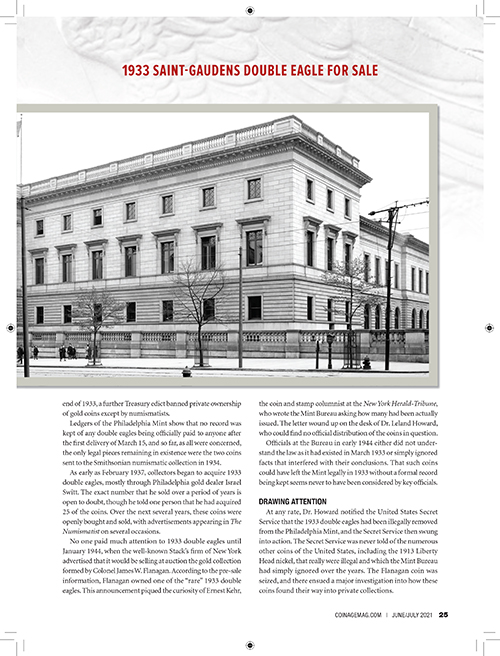
• 1933 Saint-Gaudens Double Eagle For Sale: Will We Know the Name of the Buyer This Time? By R.W. Julian
• The Future of Numismatics: History in Your Hands – and At Your Fingertips. By Donald H. Kagin, Ph.D.
• The Future of Numismatics: Coinage Used for Payment Will Be Obsolete, But Collectors Will Prevail. By Ralph Ross, Ph.D.
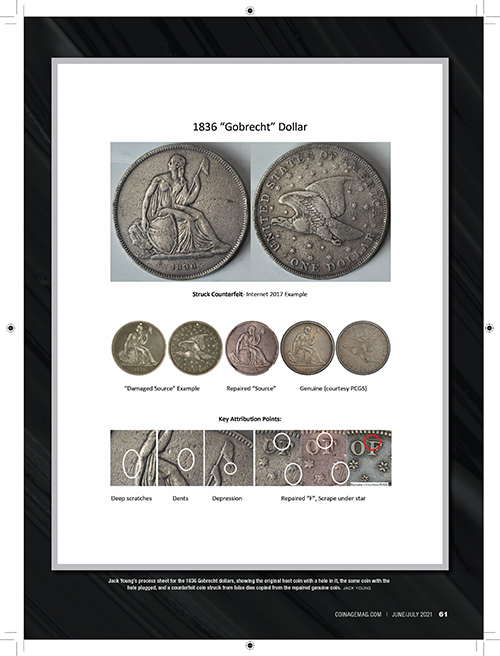
• Future of U.S. Coin Authentication: Identifying Fakes Is an Art and a Science. By Tom DeLorey
• Future of Taxation of Coins: By Barry Sunshine
• Palladium’s Glittering Future: American Eagle Palladium Bullion Coins Have Appreciated Nicely. By Steve Voynick
Plus, you’ll find regular market reports, recent news from the numismatic community, a price guide with current pricing, and tips about virtual numismatic adventures and collecting excursions.
Also, be sure to sign up for the free COINage Connection newsletter!

The post COINage Issue Highlights: June – July 2021 first appeared on COINage Magazine.
]]>The post Silver Rush Creates Silver Scams first appeared on COINage Magazine.
]]>(Temecula, California) February 11, 2021 — The recent panic buying of silver bullion has sparked a significant increase in fraudulent or misleading online advertising to lure unsuspecting retail buyers to purchase counterfeit United States silver dollars, according to officials of the Anti-Counterfeiting Educational Foundation (www.ACEFonline.org).
“The Chinese are blowing up the web selling fake silver dollars. We’ve seen suspicious ads posted on many platforms, including Amazon and Facebook,” cautioned Doug Davis, ACEF Anti-Counterfeiting Director.
“During the past couple of weeks, we received an increase in reports of counterfeits due to silver’s volatility and especially the ongoing interest in the Morgan silver dollars market. The Chinese are heavily marketing fake silver dollars via Facebook,” said Davis, a former Texas Police Chief.
“Remember, if you don’t know precious metals, you’d better know a reputable seller, such as experts affiliated with the Accredited Precious Metals Dealer program (www.APMDdealers.org),” advised Davis.
Morgan dollars are named after their designer, George T. Morgan, and were struck by the United States Mint from 1878 to 1904 and again in 1921. Popular with collectors and investors, each coin contains about three-fourths of an ounce of silver.
“The crush of retail customers has slowed down a bit, but we’ve definitely seen ‘panic buying’ of silver the past couple of weeks. Unfortunately, some unsuspecting buyers are becoming victims of online scams by unscrupulous sellers,” said Richard Weaver, President of the Professional Numismatists Guild (www.PNGdealers.org).
“Supplies of genuine, century-old Morgan silver dollars are extremely tight, but one suspicious seller on Facebook is offering to sell 28 ‘genuine’ Morgan dollars for only $199. If they actually were genuine coins, the price would be closer to $900. Even the certification holders housing their fakes appear to be counterfeits,” explained Weaver.
The Anti-Counterfeiting Educational Foundation is alerting the Secret Service about the fakes as part of the foundation’s ongoing assistance to federal, state, and local law enforcement as well as prosecutors to fight counterfeiting and the sales of counterfeit coins.
Numismatic Guaranty Corporation (www.NGCcoin.com) is the official authentication service for the foundation and its Anti-Counterfeiting Task Force. NGC is the world’s largest third-party grading service for coins, tokens and medals, and is also the official grading service for the American Numismatic Association (www.money.org) and the Professional Numismatists Guild.
“The important work of the foundation and the Anti-Counterfeiting Task Force is supported entirely by donations,” explained ACEF Executive Director Robert Brueggeman. “The ACEF is a 501(c)(3) corporation and all donations are tax deductible.”
For additional information, contact the Anti-Counterfeiting Educational Foundation by phone at 817-723-7231, by email info@ACEFonline.org or visit the web site at www.ACEFonline.org.
The post Silver Rush Creates Silver Scams first appeared on COINage Magazine.
]]>The post Anti-Counterfeiting Educational Foundation Helps Rid Marketplace of $1+ Million of Fakes in 2020 first appeared on COINage Magazine.
]]>Among the cases, ACEF and its Anti-Counterfeiting Task Force (ACTF) assisted Customs and Border Protection investigators in seizing over 1,500 counterfeit silver American Eagles at Dallas-Fort Worth International Airport and aided two investigations by the U.S. Treasury Department’s Office of Inspector General (OIG) involving the seizure of fake rare coins valued at over $450,000.
“ACEF/ACTF has become a central repository for offenses related to counterfeit coins and precious metals. We’ve developed a searchable database for offenses and intelligence information and are continually providing a tool for law enforcement to identify trends, patterns, suspects, manufacturers, as well as uncovering websites and social media platforms offering counterfeits,” explained Doug Davis, ACEF Director of Anti-Counterfeiting.
“The ACEF Task Force has over 80 active cases being reviewed and investigated. During 2020 we assisted law enforcement agencies in locating and seizing over $1 million dollars in counterfeit coins and precious metals,” said Davis who conducted a half dozen anti-counterfeiting seminars for law enforcement officers across the country during the past year.
ACEF also is currently assisting Treasury OIG with three cases involving elderly victims who unsuspectingly bought counterfeit coins housed in fake NGC and PCGS holders sold by a telemarketing firm.
With assistance from the Anti-Counterfeiting Educational Foundation, New Jersey legislators are considering a law that would impose criminal penalties for anyone selling counterfeit coins and precious metals.
“To effectively combat counterfeits, all states need to have statutes that address counterfeit coins and precious metals and provide criminal penalties. This would allow local, county and state law enforcement officers the tools to investigate, arrest and prosecute counterfeit coin and precious metal cases at a state level. ACEF is in the process of identifying states that do not have current statutes and providing legislators with a model bill for review and adoption,” said Davis.
“The work of the Anti-Counterfeiting Task Force is supported entirely by donations made to the Anti-Counterfeiting Educational Foundation, a non-profit corporation,” emphasized ACEF Executive Director Robert Brueggeman. “The donations, large or small, are making a difference to help prevent collectors, dealers and the general public from becoming victims of fakes.”
Monetary contributions can be made online at www.acefonline.org/donate or by check mailed to ACEF, 28441 Rancho California Rd., Ste. 106, Temecula, CA 92590. For additional information about donating, contact ACEF Executive Director Brueggeman at info@ACEFonline.org.
*Image is courtesy of ACEF.
The post Anti-Counterfeiting Educational Foundation Helps Rid Marketplace of $1+ Million of Fakes in 2020 first appeared on COINage Magazine.
]]>The post Texas Bullion Depository Security Officials Learn About Numismatic Fakes first appeared on COINage Magazine.
]]>The opening of the Texas Bullion Depository in the Austin suburb of Leander earlier this year has provided opportunities for investors to safely secure their precious metal coins and ingots but also raised potential problems of storing counterfeit items.
Representatives of the nonprofit Anti-Counterfeiting Educational Foundation (www.ACEFonline.org) and the United States Treasury Department Office of Inspector General (OIG) recently conducted an educational seminar at the depository for more than a dozen of the agency’s security staff and law enforcement officers from across Texas.
“The depository’s security force for the depository is composed of state-commissioned peace officers from the Texas State Comptroller’s office, the state agency responsible for oversight of the depository. Due to their lack of experience in numismatics, the Comptroller’s office reached out to ACEF for training after seeing an increase in counterfeits being shipped to the facility,” said Doug Davis, Director of the ACEF Anti-Counterfeiting Task Force.
Davis and OIG Senior Special Agent Chris Hersey of Washington, D.C. conducted an eight-hour class at the depository, “Numismatic Crime, Counterfeit Coinage and Precious Metals Investigations.”
“We provided the attendees with the basic knowledge, tools, and resources to effectively investigate numismatic crimes related to counterfeit coinage and precious metals. One highlight of the seminar was a hands-on examination of a large display of seized counterfeit coins and ingots,” explained Davis.
The Texas Bullion Depository is the first state-administered depository established in the United States and is the only public depository with its own police force. The facility in Leander, Texas opened in February 2020 with vaults capable of holding 41 million ounces of silver and 120,000 ounces of gold.
The anti-counterfeiting class held September 28 in Texas is one of many resources and strategic initiatives by ACEF in working with federal, state and local agencies to combat counterfeit coinage and precious metals within the numismatic hobby and profession as well as elsewhere in the U.S. marketplace.
The Anti-Counterfeiting Educational Foundation and the Anti-Counterfeiting Task Force are supported entirely by donations. The ACEF is a 501(c)(3) corporation and all donations to ACEF are tax deductible.
For additional information or to donate, contact the Anti-Counterfeiting Educational Foundation at 28441 Rancho California Road, Suite 106, Temecula, CA 92590. The phone number is 951-587-8300. Or visit the web site at www.ACEFonline.org.
The post Texas Bullion Depository Security Officials Learn About Numismatic Fakes first appeared on COINage Magazine.
]]>The post Attempt Made to Sell Fake $300,000 Gold Coin first appeared on COINage Magazine.
]]>Acting on a tip from the Anti-Counterfeiting Educational Foundation (www.ACEFonline.org), federal and local California law enforcement agents now are investigating the attempted sale of $400,000 of counterfeit coins including a fake example of the historic 1879 Coiled Hair gold $4 “Stella” that brought $300,000 at auction last year. The seller also is a suspect in an earlier case involving fakes, according to Doug Davis, director of the ACEF Anti-Counterfeiting Task Force (ACTF).
The bogus Stella was housed in a counterfeit Numismatic Guaranty Corporation holder with a fake insert label printed with the same NGC PR63 grade and certification number as the genuine coin.
Davis, a former Texas Police Chief, has alerted the U.S. Treasury Department Office of Inspector General (OIG) and is assisting investigators in this case.
“The seller of these counterfeits is on our radar and we’re after him no matter how long it takes. In the meantime, these fakes are off the market. They were turned over as evidence and are now in the custody of detectives at the Irvine, California Police Department,” Davis stated.
“We were alerted to this case by Ryan Moretti of Orange County California who is the senior numismatist of Colorado-based American Rarities. He was contacted by an individual offering to sell several expensive coins allegedly in NGC holders, including the 1879 Coiled Hair $4 Stella of which only about dozen genuine examples are known,” said Davis.
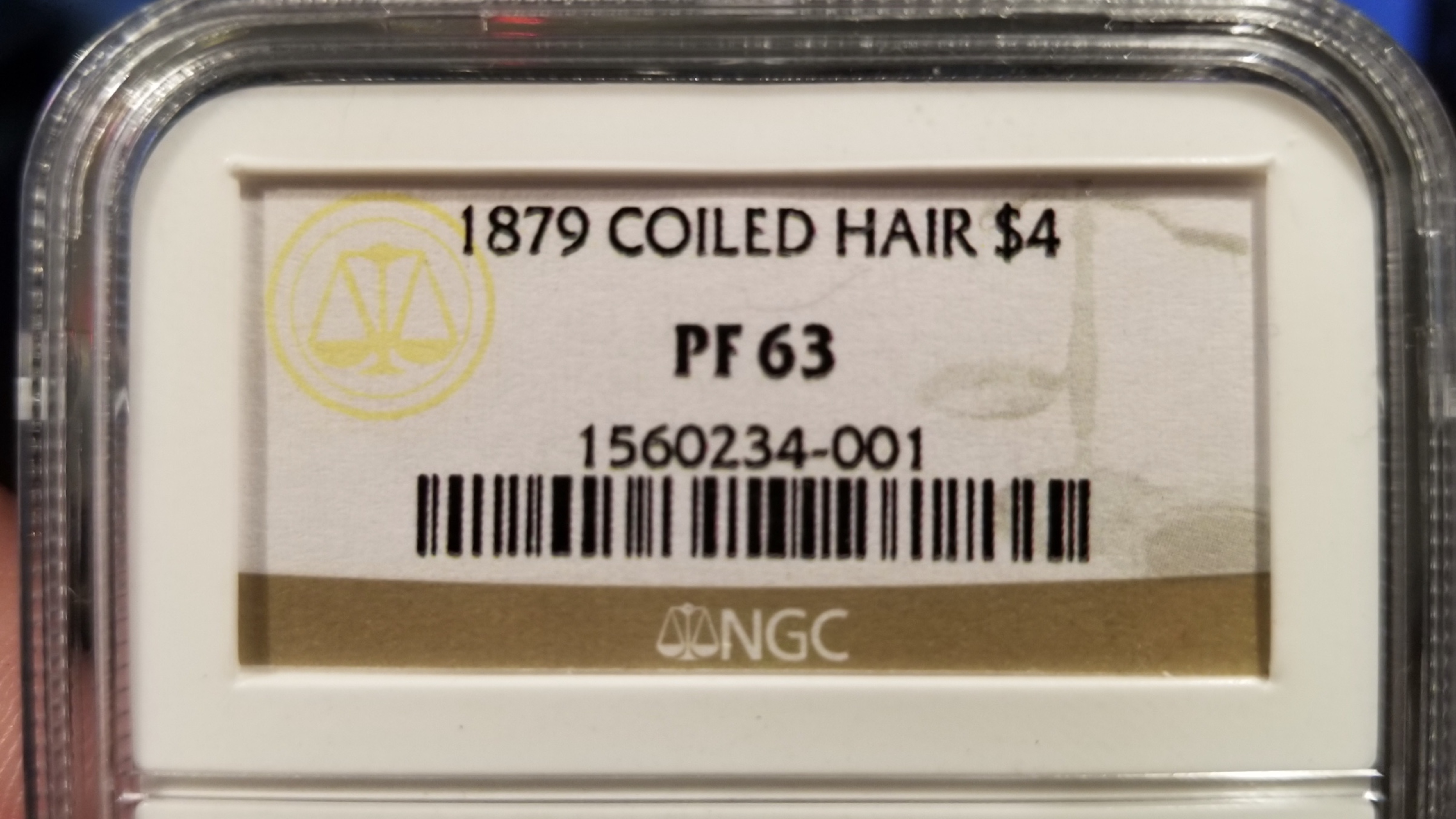
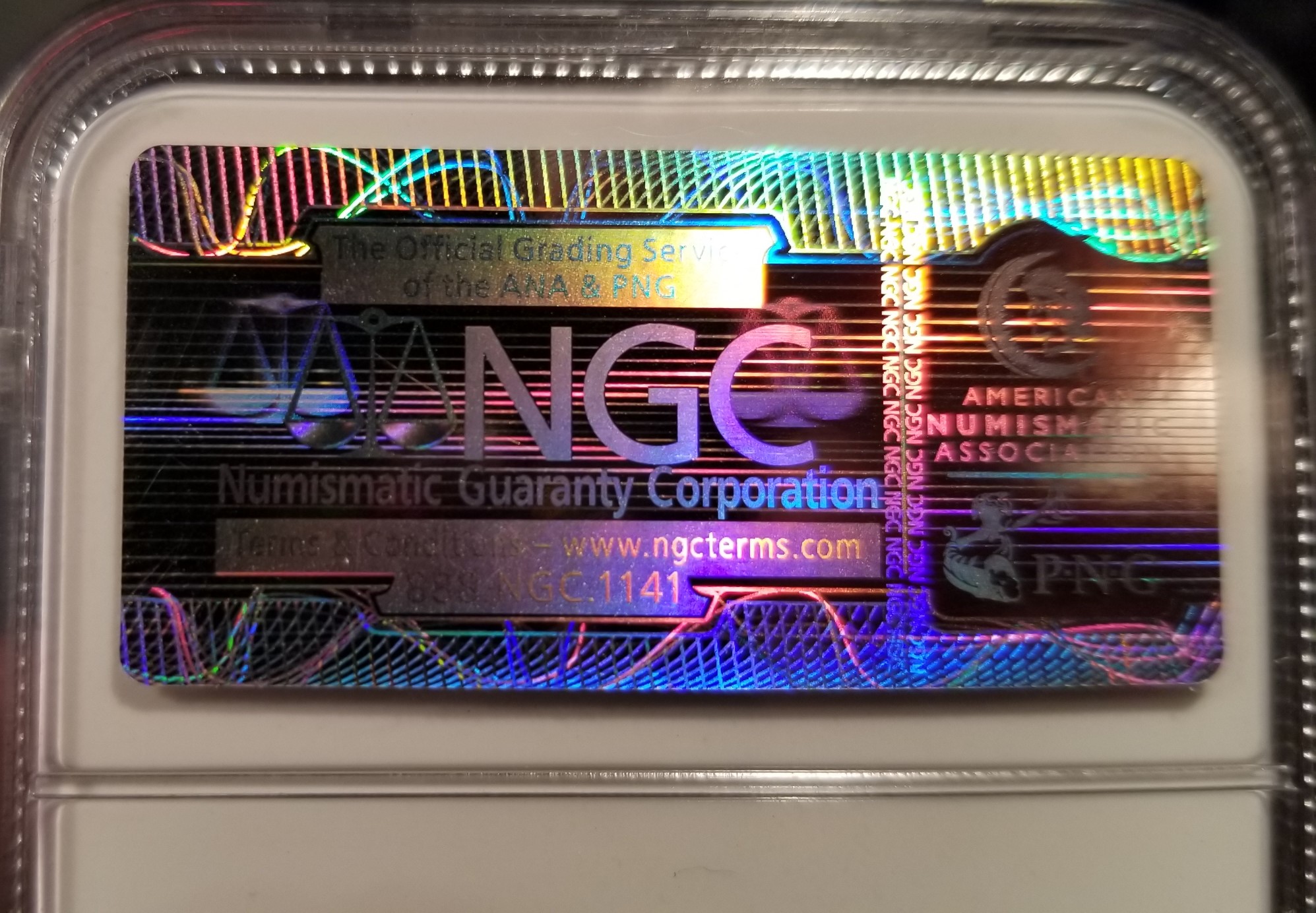
Photo credit: Ryan Moretti.
The other counterfeit coins offered by the seller were a 1793 AMERICA Chain cent, NGC VF20; an 1800 Draped Bust dollar, NGC AU58; and an 1871-CC Seated Liberty dollar, NGC AU55.
When he received the coins, Moretti suspected based on his years of experience as a professional numismatist that they and the NGC holders were counterfeit. The suspicions were confirmed after inspection by other numismatic experts including NGC representatives.
“When we entered the suspect’s name into the ACTF crime and intelligence database it linked him to another case in which he reportedly attempted to sell counterfeit coins to a Minnesota dealer in December 2019. ACTF alerted agents with the Minnesota Department of Commerce and U.S. Treasury OIG. Those coins were seized and a joint investigation is currently continuing,” explained Davis.
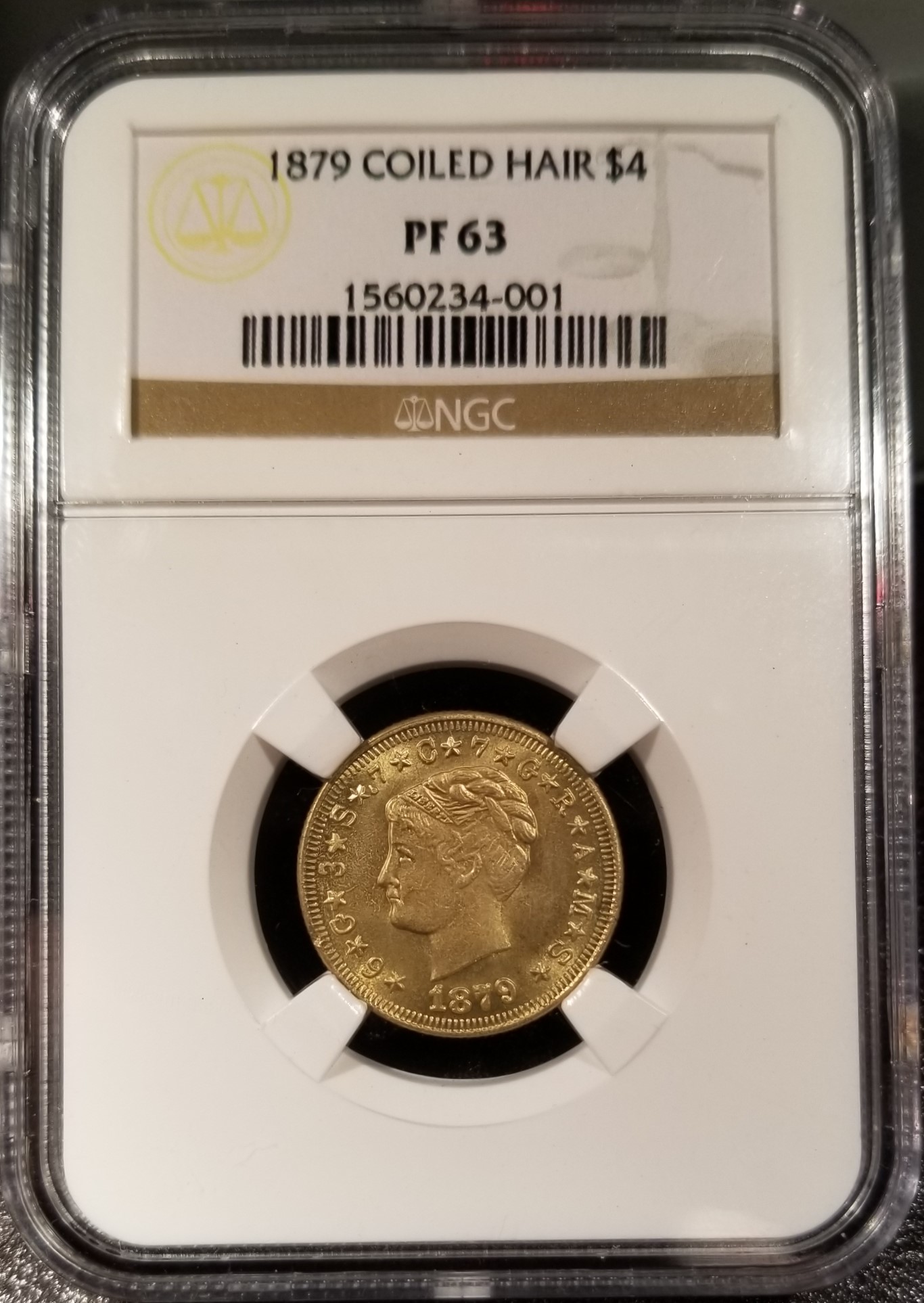
Photo credit: Ryan Moretti.
Federal and local investigators are reviewing both the Minnesota and California cases to determine appropriate jurisdiction to initiate prosecution against the suspect for possession and distribution of counterfeits with the intent to defraud.
“Well-made fakes are flooding the U.S. marketplace and the integrity of the numismatic community is under attack. These recent cases spotlight the significant technological advancements of counterfeiters and their agents as well as the all-too-easy availability for the sale of fake coins and precious metals housed in counterfeit third-party authentication and grading holders,” Davis cautioned.
“The Anti-Counterfeiting Educational Foundation and it’s Anti-Counterfeiting Task Force will continue its vigorous commitment to protecting the numismatic profession and collectors from adversaries who manufacture and sell counterfeit coins and precious metals. And, we’ll continue to educate the public to encourage them to only work with reputable dealers,” said Davis.
The ACEF and the task force are supported entirely by donations. The ACEF is a 501(c)(3) corporation and all donations to ACEF are tax deductible.”
For additional information or to make a donation, contact the Anti-Counterfeiting Educational Foundation at 28441 Rancho California Road, Suite 106, Temecula, CA 92590. The phone number is 951-587-8300. Or visit the web site at www.acefonline.org.
The post Attempt Made to Sell Fake $300,000 Gold Coin first appeared on COINage Magazine.
]]>The post Purpose & Service in Numismatics: Tom Snead first appeared on COINage Magazine.
]]>Tom Snead, founder, and president of Palm Island Coins & Currency is among the fortunate people who do what they love and love what they do. In the world of numismatics, that’s not uncommon, but it is part of what inspires him to expand his business vision and inspire others to do the same.
Snead’s interest in numismatics began at the age of 10 when he made an exciting discovery in the yard surrounding his family’s home.
“I found a 1930 Standing Liberty quarter,” he recalls. “Since I was sure that only George Washington was on quarters, I thought I had made quite an archeological find.”
“Red Book” Beginnings
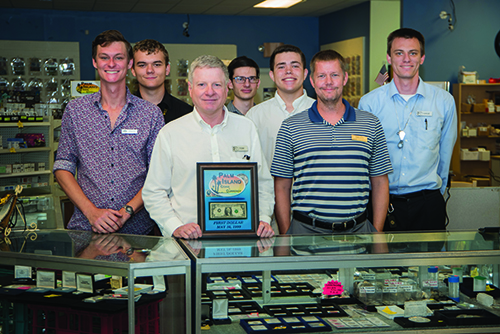
Snead promptly made his way to the local library, where he was introduced to “The Red Book” (A Guide Book of United States Coins). Although his homestead discovery was worth just $2, it opened the door to a lifetime of coin collecting.
In 2019, was the 20th anniversary of Snead’s decision to turn his lifelong hobby into a full-time business. He started small, with a mail-order business, driven largely by ads he placed in various numismatic publications, including COINage. In time, he was publishing and distributing a full-color catalog featuring listings of thousands of coins, currency, and other related collectibles. This evolved into developing a website and establishing the online arm of his business in 2008, and in 2012 he opened his first retail shop in Clearwater, Florida. In addition to the original Palm Island shop, Snead has a small operation in Bradenton, Florida, and in the fall of this year, he’ll open another store in Largo, Florida.
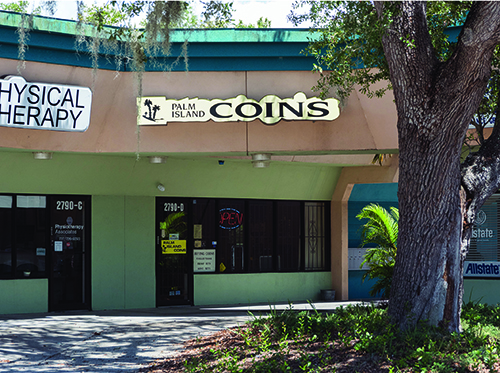
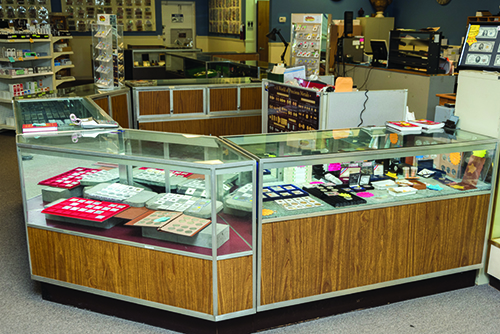
Visitors to the Palm Island Coins & Currency Clearwater location will find a wide variety of items presented in a manner reminiscent of old-fashioned coin shops. There is an area with buckets of inexpensive coins to sort through, a section of high-end certified coins, intermediate priced coins, an area featuring world coins and currency, ancients, and Roman and Medieval coins. But, that’s not all.
Having extra space and opportunity, Snead made a point of displaying and offering items many people may not realize are related to the hobby. This includes, but is not limited to, Colonial currency, Depression-era script, stock certificates, antique postcards, historical documents, and U.S. Presidential election memorabilia.
Numismatics Opens Doors of Travel
For this member of the American Numismatic Association, Florida United Numismatists, and the 1715 Fleet Society, the business of traveling to acquire world coins and currency and ancient items is one of the great joys in life. His journeys have taken him to various locations in South America, Europe, and Africa, just to name a few. Snead shared two of those experiences with the readers of COINage.
In “The Coin Hobby in Cuba,” which was published in the June 2016 issue, he told about being part of a historic first numismatic trip to Cuba, where a group of prominent coin dealers from the U.S. met with the director of the National Numismatic museum to examine the museum’s collection. Another of his numismatic travel tales appeared in the July 2017 issue, and it highlighted his journey to Mexico City to tour historic numismatic locations.
Throughout his life as a collector and dealer, Snead has watched the hobby evolve significantly. Among the two most impactful advancements has been the development of third party grading and the advent of the Internet, he says.
“Third-party grading, which involves encapsulating a coin in a certified “slab” holder and giving it a numerical grade, was met with much skepticism when introduced in the 1980s,” says Snead, who is an authorized dealer for NGC, PCGS, and PMG certifications. “Since then I’ve realized what a valuable tool it’s become to standardize grading, guarantee authenticity, and protect coins from mishandling.”
Evolution of The Hobby
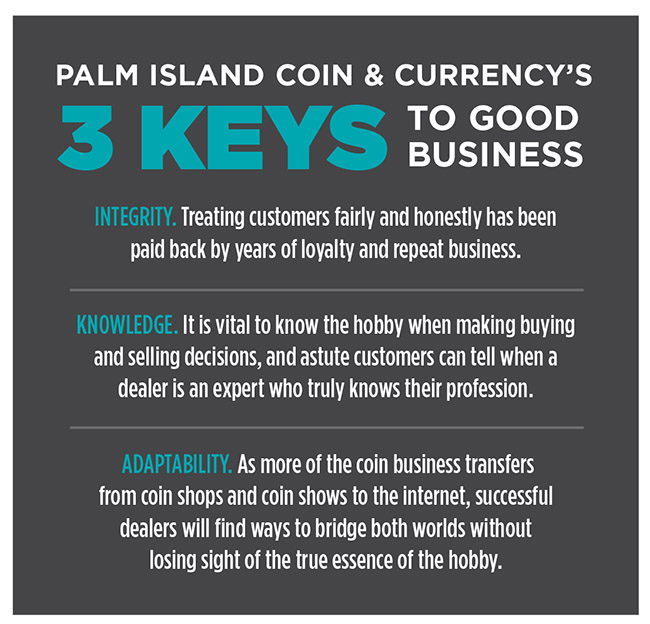 In terms of the internet, he views it as a “mixed bag for collectors.”
“It’s both a great source of information, but an impersonal way to enjoy the hobby,” he adds. “You can learn more in a day talking to fellow hobbyists and dealers at a coin shop or local coin show than you could in weeks of solitary internet research.”
Regardless if he is working side-by-side with his employees at the two, soon to be three, Palm Island Coins & Currency locations in Florida, or traveling across the country and around the world to acquire coins, currency, and collectibles to sell, meet fellow collectors and dealers, and study ancient history, Tom Snead is living his best life, with a profession that is his passion.
For more information about Palm Island Coins & Currency, visit http://palmislandcoinsandcurrency.com, call 727-726-9555, or email palmislandcns@aol.com.

The post Purpose & Service in Numismatics: Tom Snead first appeared on COINage Magazine.
]]>The post Coin Designer Jamie Franki Signs Exclusive PCGS Signature Label Deal first appeared on COINage Magazine.
]]>Franki’s popular portrayal of the American bison, or “buffalo,” on the reverse of the 2005 Jefferson Nickel is exquisite, and his modernized design of the 2006 “Return to Monticello” Jefferson Nickel gained the University of North Carolina Charlotte Department of Art and Art History associate professor very positive reviews from coin collectors. Franki has also designed medals for the United States Olympic Team and has created more medals for the American Numismatic Association World’s Fair of Money and National Money Shows than any other artist.
Franki has been working as a professor, illustrator, and designer for the past 39 years. His love for numismatics was first inspired as a young boy when he received his first Buffalo Nickel. He has since provided illustrations for a variety of commissions, including national and international competition medals, designs for his own medals, and concept art for the United States Mint Artistic Infusion Program.
PCGS is proud to continue the growth of the United States Coin Designer hand-signed label program with the addition of Jamie Franki’s hand-signed labels. These special inserts will be available for pairing with the following coins:
- 2005 Westward Journey Nickel Series (American Bison Reverse)
- 2006 Westward Journey Nickel Series (Return to Monticello Reverse)
- 2007-Current Jefferson Nickels (all finishes and strikes)
“Working with United States coin designers is a wonderful opportunity to bring attention to the artists behind the intricate designs seen on currency millions of Americans use every day,” says PCGS President Brett Charville. “This signature program shines a light on the talented individuals who commemorate classic American scenes and symbols that are immortalized on our coinage every year.”
About Professional Coin Grading Service
Professional Coin Grading Service (PCGS) is the premier third-party coin and banknote grading company that was launched in 1986. Over nearly 35 years, PCGS has examined and certified some 43 million U.S. and world coins, medals, and tokens with a combined value of more than $36.6 billion. For more information about PCGS products and services, including how to submit your coins for authentication and grading, please visit www.PCGS.com or call PCGS Customer Service at (800) 447-8848.
The post Coin Designer Jamie Franki Signs Exclusive PCGS Signature Label Deal first appeared on COINage Magazine.
]]>The post Counterfeit Coins Importer Sentenced to 10½ Years in Prison first appeared on COINage Magazine.
]]>A federal court judge in Camden, New Jersey, has sentenced admitted counterfeit coins importer, Johnathan A. Kirschner, 35, of Moorestown, New Jersey, to 10½ years in prison. After being alerted by members of the Anti-Counterfeiting Educational Foundation (www.ACEFonline.org) about the sale of counterfeit coins to unsuspecting buyers, investigators discovered and confiscated at Kirschner’s home fake gold and silver coins and bogus ingots that would have been worth more than $46 million if they were genuine, according to ACEF.
Foundation experts also provided ongoing expert assistance to the U.S. Attorney’s office and the U.S. Department of Homeland Security during the investigation.
In addition to admitting he imported, possessed and sold counterfeit coins, Kirschner admitted he falsely impersonated an agent of the U.S. Bureau of Alcohol, Tobacco, Firearms, and Explosives (ATF).
His sentencing was delayed nearly a year as U.S. District Court Judge Robert B. Kugler received and considered comments from victims, including a dozen sovereign Mints, private mints, and grading services, according to Doug Davis, ACEF Director of Anti-Counterfeiting.
“The lengthy sentence is a major victory. I felt the judge was very thorough in reviewing the evidence and realized the possible high level of fraud that could occur,” stated Richard Weaver, a member of the ACEF Board of Directors and President of the Professional Numismatists Guild (www.PNGdealers.org) who testified as an expert witness during the sentencing hearing on January 28, 2020.
Weaver, President of Delaware Valley Rare Coins in Broomall, Pennsylvania, played a crucial role in the apprehension of Kirschner, also known under the alias of Jonathan Kratcher.
Two of Kirschner’s victims visited Weaver in early 2017 seeking an evaluation of 49 Morgan dollars they purchased from Kirschner. Weaver examined the coins and informed the couple that all of them were counterfeits.
The two victims told Weaver they trusted Kirschner because he claimed he was an ATF agent selling coins as a side business. He displayed an ATF badge on his Facebook site and wore it when he met with them.
They also told Weaver that they had a tentative appointment with Kirschner to purchase more items in a couple of days. Weaver promptly contacted ACEF’s Anti-Counterfeiting Task Force which in turn alerted federal law enforcement agents who immediately identified the ATF badge shown on Kirschner’s Facebook site as counterfeit.
Working with the couple, ATF and Homeland Security Investigations set up a sting operation with an undercover agent posing as the sister of the couple. Kirchner was arrested in the act of selling counterfeit coins to the undercover agent.
After the arrest, law enforcement officials executed a search warrant of Kirchner’s house and Customs and Border Protection intercepted additional packages shipped to him from China.
Weaver served as law enforcement’s numismatic expert in the Kirchner case, devoting many hours to identifying all the counterfeit coins, bars, and grading service holder components. In addition, he provided a current market value for each item if it had been genuine so that law enforcement can determine the potential harm to victims and to the marketplace.
“The important work of the foundation and the task force are supported entirely by donations,” explained the foundation’s Executive Director Robert Brueggeman whose background is in law enforcement and security. “The ACEF is a 501(c)(3) corporation and all donations to ACEF are tax deductible.”
For additional information or to make a donation, contact the Anti-Counterfeiting Educational Foundation by phone at 817-723-7231, by email info@ACEFonline.org or visit the web site at www.ACEFonline.org.
The Professional Numismatists Guild (PNG) is a nonprofit organization composed of many of the country’s top rare, paper money and precious metals bullion experts. PNG members must adhere to a strict code of ethics in the buying and selling numismatic merchandise.
The post Counterfeit Coins Importer Sentenced to 10½ Years in Prison first appeared on COINage Magazine.
]]>The post COINage Confidential: Ron Guth first appeared on COINage Magazine.
]]>Fishing Tackle Inspired Coin Collecting
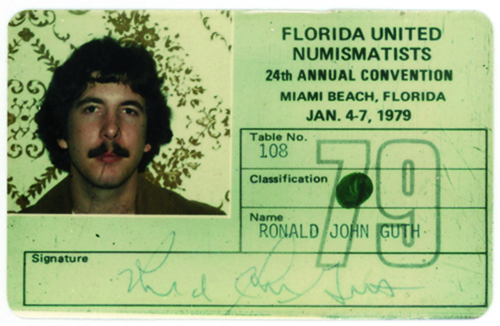
A native of Boston, Massachusetts, Ron spent his formative years in St. Petersburg, Florida and began collecting in the early 1960s. His introduction to coin collecting came about through a friend who visited his house carrying a tackle box. However, the box contained old coins instead of fishing tackle. From that moment, he was hooked, Ron explains. Like many other young collectors, he spent many a Saturday morning at the local bank, turning in his small allowance for rolls of coins, which were searched diligently for old silver or obsolete coins.
Over the years, the focus of his collecting efforts changed, shaped by experiences and interactions with fellow numismatists. For example, the theft of his collection in the early 1970s required that he start his collection anew and in doing so, he narrowed his focus to U.S. Half Cents, which he collected by die variety. Another significant shift in his collecting took place in the late 1980s when he was presented with a collection of German coins.
“I knew nothing about German coins, but I bought the deal hoping I could figure out a way to market it,” Ron reminisced. “The deal contained a lot of East German coins which were just starting to become popular due to the impending reunification of East and West Germany.”
A Career Centered on Coins
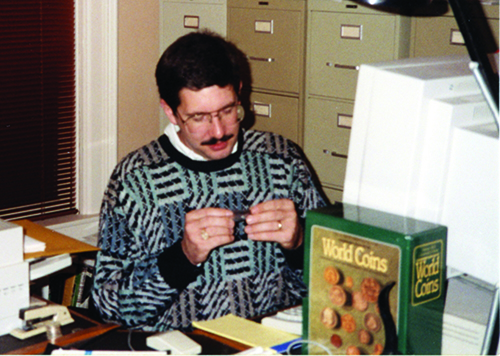
While he is a licensed Certified Public Accountant, during much of the past 40 years, his professional career has centered on coins. Whether he was on staff with a company or operating his own business, each opportunity has presented him with valuable lessons, ideas, knowledge, and inspiration. For example, while working at the Florida Coin Exchange, one of his first professional positions, he met his lifelong friend and frequent co-author, Jeff Garrett. And in the early 1980s, after Ron and his wife, Maggie, moved to Indiana, he did business as Ron Guth Rare Coins.
He also spent many years in the coin auction business, as both an owner and director. In 1999, he created the CoinFacts website (now PCGS CoinFacts). After selling the site, he went on to serve in various capacities with PCGS. In 2018, he formed Expert Numismatic Services, Inc. and created the Guth 100 Point Coin Grading ScaleSM.
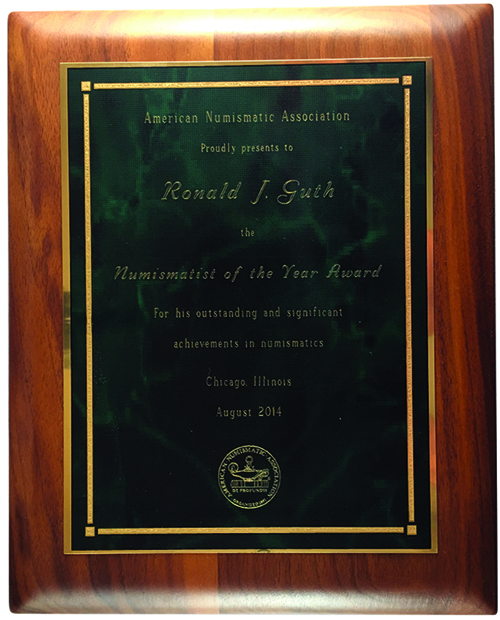
Currently, he serves as the Executive Director of the Numismatic Literary Guild, which is a perfect fit for this prolific award-winning author, who is the recipient of various honors by the ANA, including the President’s Award. When he’s not focused on numismatic interests, this father and grandfather of three, soon to be four, enjoys sailing, gardening, hiking, and spending time with his wife and their grandchildren.
Professional Perspective
What is the future of coin collecting and investing?
Coin collecting and investing is alive and well. However, the coin market appears substantially different from decades ago simply because a lot of collecting and investing activities have moved from coin shows and brick-and-mortar businesses to the internet. Most of the up-and-coming young dealers (the demographic we most seek to attract) are coming up through Facebook groups, Instagram, and other social network platforms. The confidence afforded by third-party grading and the Certified Acceptance Corporation (CAC) has encouraged investing in coins. Certainly, we’ve lost many coin investors to the stock market in recent years, but as the stock market peaks, we’ll see more investors returning.
You can offer a unique perspective on coin grading and certification as the former president of the Professional Coin Grading Service (PCGS). How do you feel about grading services? Are they more helpful than hurtful to our hobby/industry?
Without a doubt, coin grading and certification have been very helpful to our hobby/industry. I’ve always maintained that coin grading and certification are as much about consumer protection as they are about assigning a grade to a coin. Everyone from my generation who collected coins in the sixties through the early eighties remembers the “buyer beware” mentality that prevailed in the market. Today, collectors enjoy protection from counterfeit, altered, or doctored coins, and they benefit from increased liquidity, better information, and a higher level of confidence that the grades assigned to their coins are accurate and have a higher level of acceptance in the market. Where once collectors had to negotiate over grade and price, now the haggling centers mostly on the price.
However, there is one caveat: Not all grading services are equal, and much harm has been caused by some lower-tier services that deliberately over grade and misrepresent the coins in their holders. Therefore, it is incumbent on the collector/investor to do due diligence and determine the grading services that are the most reputable.
Discussing Grading
Why did you make a push for a 100-point grading scale? Don’t we already have too many grades?
The purpose of the 100-point coin grading scale that I proposed back in 2017 was two-fold:
1) to finally develop a grading scale that was easy to understand and explain, and 2) to finally recognize, with whole numbers, the intermediate (plus grades) that are already in wide use. The problem, in my opinion, is not that we have too many grades. Rather, we have an old system from 1948 that has gone through numerous arbitrary modifications and which is puzzling to new collectors who cannot understand why our best grade of 70 looks like a “C” on a child’s report card.
The beauty of the 100-point coin grading scale that I proposed is that the old system can remain intact. Thus, the argument that the new system is a way for the grading companies to profit by re-grading all the millions of coins already in holders is inaccurate. Implementation of the new system can be driven by popular demand, not as a dictate from the grading companies. Complete information about the 100-point coin grading scale can be found at http://expertnumismatics.com
Are you willing to acknowledge that grading standards have evolved or changed over time? Please explain and justify your answer either way.
I’m unwilling to acknowledge that grading standards have evolved or changed over time because, by definition, a standard is something that should not change over time. However, the application of grading standards varies both between and within grading services. I can cite numerous examples where the same coin has received different grades from different services and/or different grades from the same service. Our hobby/industry calls this “grade-flation” as a catch-all phrase, but I’ve seen examples of both grade-inflation (where the grade goes up) and grade-deflation (where the grade goes down). To their credit, reputable grading services do their best to “get it right” and I do not believe there is a deliberate scheme to loosen grades over time.
Examining the Future
I know some great coin graders, but I know of no individual who can grade the same group of coins the exact same way every time. As the older graders from the early years of coin certification begin to retire, the job of the grading companies is to find and hire graders who can grade as consistently close to the standard as is humanly possible.
How do you feel about the Certified Acceptance Corporation (CAC)?
The Certified Acceptance Corporation (CAC) has become an important part of our hobby/industry since it was founded in 2007. According to CAC’s website, the CAC sticker means that “your coin has been verified as meeting the standard to strict quality within its grade.” As a result, many collectors find comfort in this extra assurance and will pay more for coins with CAC stickers. In my opinion, anything that adds confidence to our hobby/industry is positive.
How did CoinFacts.com come about, and how do you feel about its current direction?
I started CoinFacts.com in 1999, back when there was very little information about U.S. coins on the Internet. Today, it is one of the most important numismatic resources on the Internet. Collectors Universe (parent company of the Professional Coin Grading Service) purchased CoinFacts in 2004, re-named it PCGS CoinFacts.com, and poured considerable resources into its development. I am no longer involved with PCGS except as a consultant, so I no longer have any control over the direction of PCGS CoinFacts, but I am sure PCGS will continue to recognize its importance to its brand.
Goals for the Guild
What is the future of numismatic literature and journalism, and what are your top two goals as the newly-appointed executive director of the prestigious Numismatic Literary Guild?
This is an area that has undergone huge changes in the last several years. For instance, the Newman Numismatic Portal has scanned many of the old coin reference books and auction catalogs and has made them available for free. As a result, I no longer need walls of books and catalogs for my research, which has made my wife happy, but I fear the value of old numismatic literature may be dropping as a result. Many authors have turned to electronic self-publishing or on-demand publishing as an alternative to traditional print publishing. Quite a few authors have created interesting video blogs and podcasts because of the broad reach of social platforms such as YouTube and Facebook.
Print publications seem to be struggling as more and more people get their information from the Internet. So, while the face of numismatic literature and journalism is changing, I believe that we now have more people writing and providing information than ever before.
The now fifty-one-year-old Numismatic Literary Guild (NLG) has undergone similar changes. Most of our board meetings are handled entirely by email and voice, and virtually all of our communications with our members are sent by email or through our website. Our membership list is now “in the cloud”, eliminating transcription errors and allowing real-time recording of dues payments, address changes, and corrections. My first-year as Executive Director of the NLG is nearly over and my new goals are to expand the membership, increase member participation, and continue to recognize and honor some of the best writers in numismatics.
How does transparency in auction prices realized affect dealer profit margins?
I’m all for transparency in auction prices realized (APR) because I believe that the best customer is an informed customer. However, the coin hobby/industry is one of the few places where there is little or no distinction between wholesale sellers and retail buyers. They all work off the same price guides. Because access to APR data is so transparent and so readily available, it is perhaps too easy for a collector to see what a dealer has paid for a coin, then use that information as a blunt instrument to reduce the dealer’s profit.
A popular misconception is that a fresh APR is the new maximum value of a coin. This lowers the perceived price of every similar coin, causing a downward spiral in values. This is particularly prevalent in coins that are common and/or readily available in a variety of grades. The only way that I can think of to counteract this is to limit access to APR data which, of course, is the opposite of transparency.
The Challenge of Counterfeit Coins
Please offer your opinions about what you think is wrong with our hobby today. If you could turn back the hands of time and restore some hobby traditions of yesteryear, what would they be?
I tend to think rather positively about our hobby today, but there is one thing that is very troubling to me, and that is the problem of counterfeit coins. The motivation behind counterfeit coins is pure greed, both from the creator of the counterfeits and the person who knowingly handles them.
Counterfeit coins have always been with us – I remember them being a problem even when I first began collecting coins in the sixties, but it was always fairly easy to detect them. However, today counterfeiters are becoming so good that many of their coins are very hard to tell from real coins. Thankfully, this is another area where the reputable grading services shine. They weed out most of the bad coins that are submitted to them, and when they do make a mistake, they correct it. It’s like having insurance against the bad guys. So, while there are bad actors creating and selling counterfeit coins, we have the good guys trying their level best to protect us.
Though I have many great memories of past times and experiences in the coin market, I enjoy today’s coin market even more. If there is anything I miss, it’s the lack of good coins in circulation and the dwindling numbers of brick-and-mortar coin shops. When I was a kid, I could find all sorts of silver coins, Buffalo Nickels, Indian Head Cents, and other now obsolete coins in bankrolls. Today, it’s hard to find anything of value in circulating coins, and there’s no place where a kid can go to talk about coins, learn from a mentor, or experience the thrill of hefting a $20 gold piece that they can only dream of owning.
How do you explain the precipitous decline in value of many high-grade coins?

The coin market feels softer than a year ago, but I wouldn’t characterize it as a precipitous decline. Certain areas of the market are worse than others, but even generic gold is slightly higher than last year thanks to an increase in the price of gold. The PCGS3000 indices show varying results for different segments of the market. For example, its Silver and Gold Commemorative Index is down nearly 7% for the year, but the Proof Gold Index is up almost 2%. The overall market has been in a decline since November 2014, but prices seem to have plateaued for most segments in the last year or two. If money from the stock market begins flowing in again, we’ll be having a completely different, more positive, conversation.
Just like every other market, the coin market is subject to the laws of supply and demand. In the “modern” market (post-1964 coins), the problem is supply. Today’s “Finest Known” can easily become “Runner Up” as coins from the overhanging supply are graded and brought to market. Personally, I love the beauty and impressive quality of an MS- or PR-70 coin but I have to understand that my purchase price may be at risk if fifty or one hundred or even one thousand more become available tomorrow.
The market will always find equilibrium, but preferably not at my or your expense. In vintage (pre-1965 coins), declining prices seem to be caused by a simultaneous decrease in demand (i.e. fewer collectors) and an increase in supply as old-time collections have come on the market. This has created some great opportunities to buy wonderful rarities at advantageous prices.
The post COINage Confidential: Ron Guth first appeared on COINage Magazine.
]]>The post Cautionary Tale in Buying Rare Coins first appeared on COINage Magazine.
]]>As a long-time coin collector, investor and, most recently, a dealer, I would like to share my story. There is no teacher better than experience.
I am a former practicing Certified Public Accountant (CPA) and entrepreneur who has been enamored of coin collecting since my youth. I have had an intense fascination with rare coins and precious metals, in particular, gold and silver bullion, since the mid-1980s.
Let’s turn back the hands of time to flash back to 2005.
Intrigued By Bullion
I had been referred to a coin dealer by a friend and began purchasing small amounts of silver and gold bullion. I had never been a purchaser of generic gold coins such as common date Saint-Gaudens double eagles and nothing at all in the category of rare coins. But I became intrigued by the beauty of the Saint-Gaudens and Liberty Head $20s.
What could go wrong? Each double eagle contains almost an ounce of gold and is a piece of history. But, most significantly, the percentage cost over the gold content of each of those coins was nominal back in 2005. Grasping this concept made me a self-proclaimed financial and safe haven investment genius.
Not so fast, Mister Former CPA.
After several months of sporadic acquisitions, I began to get suspicious based on the increasing frequency of suggested purchases, higher-priced items and, most disconcerting, coins that, even to my untrained eye, seemed unnaturally shiny and bright.
Time For a Second Opinion
A simple Google search for an expert in U.S. gold (“US GOLD EXPERT” was the phrase I used) brought me to the entity listed first on the search engine: Scott Travers. So I clicked and learned about him and his illustrious and profusely illustrated books. It was my lucky day in that Scott returned my telephone message promptly. A short call was followed by an in-person office meeting which, after just a few minutes, revealed my first big lesson in acquiring numismatic material. I was the not-so-proud owner of uncertified cleaned, doctored, and overpriced gold coins.
By shining a bright light on the coins, I could easily see the crisscrossing parallel striations that are obvious evidence of abrasive cleaning.
And by shining a bright light on a wholesale price guide, it was obvious that I significantly overpaid for those unsightly but bright coins.
Positive Two-Pronged Conclusion
1. I got my money back, as I had a repurchase guarantee from the selling dealer. The dealer that sold me those cleaned, doctored, and overpriced raw gold coins died a few months after he bought back my coins. So there is no need to warn others about him – just about the widespread practice of overpriced and adulterated raw coins sold to the unwary. Be especially cautious of flea markets and eBay.
2. I developed what has become a wonderful multi-year business and am honored to be an authorized dealer of the Certified Acceptance Corporation (CAC). And I now count among my many friends and close business associates the luminaries of this profession, highlighted by John Albanese (founder of NGC, co-founder of PCGS, and owner of CAC) and, of course, Scott Travers, your COINage executive editor.
My message: Do not buy raw coins.
Even if you have many years of numismatic experience, have attended an American Numismatic Association or other coin grading educational seminars, and worked closely with dealers who also want to help educate you, tread very carefully when it comes to uncertified coins. I recommend only buying slabbed coins independently certified by PCGS or NGC and, ideally, sporting a CAC holographic sticker. And even when buying PCGS and NGC coins with CAC stickers, buy only from dealers you have fully vetted, are members of leading industry trade groups, and are widely recognized.
The post Cautionary Tale in Buying Rare Coins first appeared on COINage Magazine.
]]>