How college and university actions to reduce waste and increase recycling have a positive impact on the climate
Waste Minimization and Recycling
Reducing the purchase and use of new products results in less energy needed to extract, transport, and process materials to manufacture these new products. The purchase of materials made of recycled materials is also key. The processing and manufacturing of products using recycled materials use less energy than using virgin materials. Extraction and mining of virgin materials emit greenhouse gasses. So, less energy usage means fewer greenhouse gases are emitted into the atmosphere.
For example, using recycled aluminum is 92% more energy efficient than using virgin materials. Recycling paper also minimizes the need to cut down trees to produce new paper. Trees act as natural carbon sinks. When they are cut down, the carbon dioxide they are storing goes back into the atmosphere. According to the U.S. Environmental Protection Agency, forests and other nonagricultural lands absorb a net of 13% of U.S. carbon dioxide emissions.
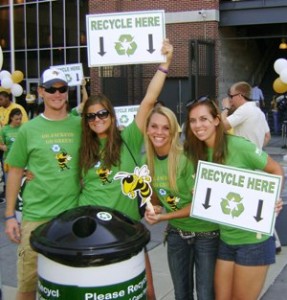
Each year during the Campus Race to Zero Waste competition, colleges and universities implement waste minimization and recycling strategies to reduce their campus’s waste footprint. Read about some of these strategies in our case study database.
Food Waste Reduction
One of the most popular categories of the competition each spring is the Food Organics category. Over 150 campuses compete in this category each year! The Food Organics category recognizes campuses that successfully implement food waste minimization activities that address overage.
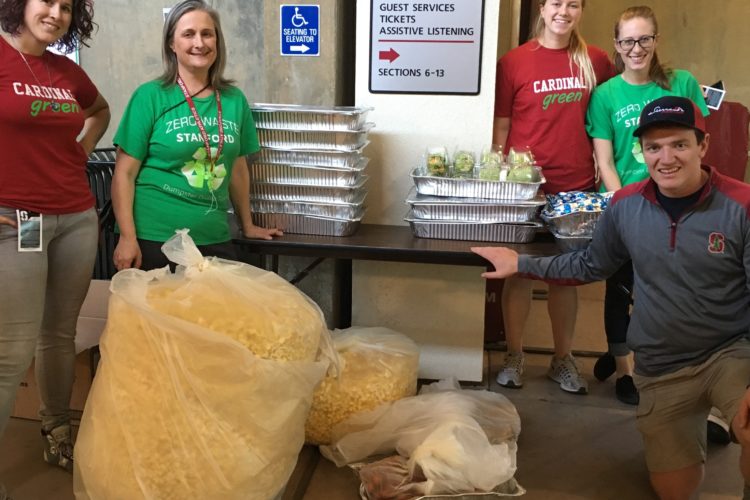
Beneficial strategies include portion control techniques and preparing food to order. This category also measures how recovered food waste is managed. Components here include donations to people, use for biofuels, and composting. In 2019, more than 2.5 million pounds of food was donated to people and animals and used for biofuels.
According to Food Rescue, American food production has a tremendous energy resource cost. About 10% of the nation’s total energy budget, 50% of its land, and 80% of all U.S. freshwater consumption are dedicated to the production and distribution of food. An unconscionable amount of those resources are wasted completely, as up to 40% of all food ends up in landfills.
Plastics Pollution
In 2018, the National Wildlife Federation took over the management of the Campus Race to Zero Waste program. NWF supports this program as an avenue to address plastic pollution in our country’s waterways – one of the biggest threats to wildlife. During the 2020 competition, colleges and universities kept more than 380 million plastic containers out of the landfill.

According to a recent report, Plastic & Climate: The Hidden Costs of Plastic Planet, “the plastic pollution crisis that overwhelms our oceans is also a significant and growing threat to the Earth’s climate. At current levels, greenhouse gas emissions from the plastic lifecycle threaten the ability of the global community to keep global temperature rise below 1.5°C. With the petrochemical and plastic industries planning a massive expansion in production, the problem is on track to get much worse.“
To learn more about plastic pollution’s impacts on humans and wildlife, check out the National Wildlife Federation guide: Stemming the Tide: Taking Action On Campus Against Plastic Pollution. The guide showcases strategies to reduce the purchase and use of plastics across 36 campuses.
About Campus Race to Zero Waste
Campus Race to Zero Waste – formerly known as RecycleMania – is the nation’s premier waste reduction and recycling competition among colleges and universities. Campus Race to Zero Waste is managed by National Wildlife Federation and governed by RecycleMania, Inc.
Campus Race to Zero Waste has been helping campuses minimize waste and improve their recycling efforts since its launch in 2001. Today, it is the nation’s premier waste reduction and recycling competition among colleges and universities, in partnership with National Wildlife Federation.
Learn more:
]]>It is tough. I’ve been at it only a few days and I’ve already struggled. For example, toilet paper is almost exclusively wrapped in plastic. I had to buy individual rolls wrapped in paper. My goal, however, is not to be perfect. I’ve made mistakes, and learned from them. My hope is to raise awareness about the amount of plastic we consume and how ingrained it is in our everyday lives. Ultimately, this will help us reduce waste and keep wildlife safe.
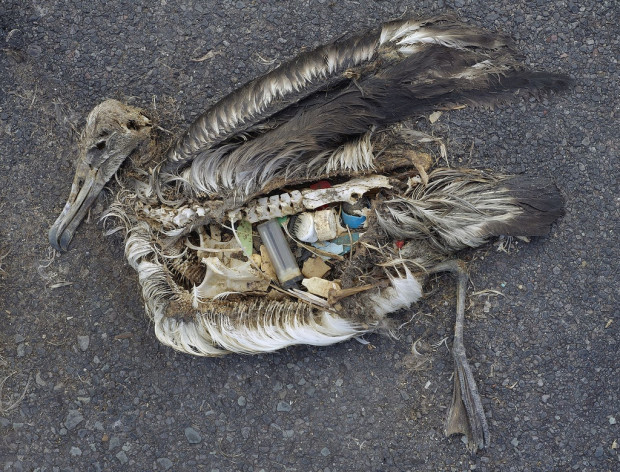
Note: the wildlife photo at the bottom of this post is graphic and may be disturbing to some.
How Does Plastic-Free Help Wildlife?
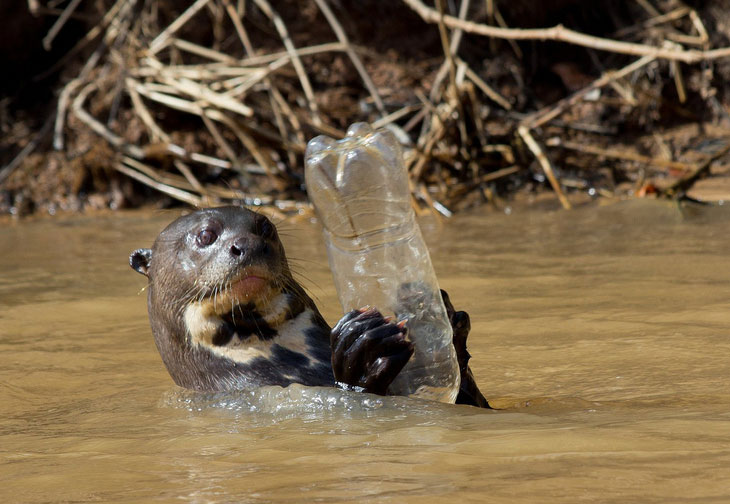
When this waste escapes, it has devastating effects on wildlife. Floating plastics take decades to decompose and leak toxins into the water, poisoning marine life. Wildlife consume and choke on pieces of plastic and can also become entangled in these pieces of plastic waste. Sea creatures have been found with stomachs filled with plastic, impeding their digestive tract and threatening their lives. As I move through my plastic-free adventure, I’ll have the well-being of wildlife on my mind.
Surviving the 4th of July without Plastic
The 4th of July will pose a rather substantial obstacle for the plastic-free lifestyle. I’ve compiled ideas to eliminate plastic not just this holiday weekend, but for the entire month (or better yet, completely)!
- Buy local food. It typically isn’t wrapped in plastic, and supports local farmers.
- Avoid a sunburn. There are a few options here. (1) Wear clothes to protect your skin (hat, sunglasses, etc.). (2) Bring an umbrella to shade the sun. (3) Buy sunblock that comes in a jar or metal container.
- Eat with Reusables. Substitute cloth napkins for paper towels that are often wrapped in plastic. Use your actual tableware and silverware to further reduce waste. Have a “Bring Your Plate” party and invite guests to bring their own plate.
- Watch a group fireworks show. This means you don’t have to buy your own.
- Bring your reusable water bottle. If you’re hosting, eliminate plastic bottle waste by serving water in pitchers for guests.
- Make your own condiments. No more plastic bottles with ketchup and mustard, now you can use these recipes to make your own and reduce the waste.
- Avoid plastic trash bags. Throw trash in extra paper grocery bags. Another option is to line a garbage can with newspaper and wrap the trash up at the end to discard. Either way, avoid plastic trash bags.
- No straws! If you absolutely need them, get reusable straws.
- Find bug spray in a metal can.
- Clean up using homemade solutions. Try these mixtures for your own homemade cleaning solutions.
- Prepare for travel. Make sure to bring your own snacks, water bottle, and hygiene products. Plan ahead to avoid using plastic.
Accept the Challenge
If you decide to take on the challenge, we want to hear about it! Tag the National Wildlife Federation as you tell family and friends about the challenge or declare your own independence from plastic. Join the #plasticfreejuly conversation on Facebook and Twitter and share struggles, successes and lessons learned. Good luck!
- Police free deer’s head from bag of Doritos

Image via AP - Florida bear rescued after getting head stuck in jar

“Jarhead” eluded wildlife officials for 10 days before they were finally able to catch him. (Photo from CNN) - Fox With Its Head Stuck In A Jar Approaches 2 Men For Help
[youtube]https://youtu.be/Gex-LhauTbs[/youtube] - Minnesota woman frees deer from plastic jar stuck on its head

(Photo by Janet Murphy / Associated Press)
Nothing New
These are just the ones that caught media attention, in one month. There are undoubtedly other similar stories. This also isn’t a new dilemma. A few years ago a squirrel got its head stuck in a yogurt cup and made the news. Then Buzzfeed compiled a list of 27 different animals with their heads stuck. Granted some of those are pets and not in the wild, but the point remains, they’re getting their heads stuck in our trash. Consistently.
Talking Trash: How to Help
There is hope. Back in 2006, McDonald’s changed the McFlurry container lid to save hedgehogs in Britain after pressure from activists. Unfortunately, we can’t blame companies for the design of containers. Instead the focus should be on people properly disposing of their garbage and recycling. I’ll leave you with this amazing infographic and a few tips to hopefully encourage everyone to consider trash disposal and recycling more carefully.
- Don’t litter.
- Store garbage and recycling in wildlife-proof containers.
- Clean out recyclables (wildlife are attracted to the food remains).
- Check with your local waste management service to see if there are other ways to help. Some will allow you to keep the lids on containers and/or crush recyclables.
- Tell us in the comments below how you’re reducing waste!

“Trash” has a new meaning at Churchill Road Elementary School in Fairfax County, Virginia. Some of it means money. Some of it means food for the hungry. And some of it means a bumper crop of vegetables this spring.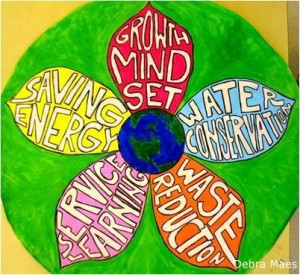
Churchill Road produces 300 pounds of waste in the cafeteria every day, but throws out only 30 pounds of trash—a reduction of 90%. Where did the waste go? We have redistributed 270 pounds through food donation, recycling, composting and upcycling (see Churchill Road’s waste reduction program in action on WUSA9 News).
Students have learned that nothing is disposable: everything has a value and you just don’t throw it away because you think its trash. After they finish eating, students walk through the “Waste Reduction Line,” separating their unopened foods, recycled items, and compostable fruits and vegetables. Through our program, we redistribute 270 pounds of cafeteria waste each day. These figures add up over the school year, when 51,300 lbs of waste is redistributed by:
- Rescuing 15,200 lbs of unopened food for local food banks
- Composting 15,200 lbs to supply soil for classroom gardens and
- Raised vegetable beds
- Recycling 13,300 lbs in accordance with FCPS requirements to reduce landfills
- Upcycling 7,600 lbs of foil-lined bags through TerraCycle, raising over $2,000
Churchill Road is proud of its Environment-Based Education Program and the connections we make with our students. More than 50 public and private schools have visited Churchill Road to learn from us, hoping to incorporate their own version of a waste reduction program at their schools. We advise these schools to start small and build a strong foundation. The easiest place to start is with food rescue. Food rescue consists of collecting unopened dairy and other food products and then refrigerating or storing the items for weekly deliveries to local food banks. The food rescue aspect of our program strengthens Churchill Road’s strong belief in service learning, which is practiced every school day. It helps to make our students aware that we are an important part of a larger community. This in turn promotes parents’ and community leaders’ involvement in our program.
We have incorporated Environment-Based Education into the curriculum to expand and enhance the students’ ownership of learning with academic, hands-on involvement in the great outdoors. Always mindful of the educational components (including math, science, social studies, language arts, technology, art, etc.), this program helps our students become actively engaged in learning by allowing them to participate in real life situations. It helps students develop a passion and desire to learn. As Principal Don Hutzel states, “Using our environment as a tool for achieving a broader educational goal increases critical thinking skills and enhances leadership roles for our students. Our hope is to encourage lifelong learners and leaders.”
To learn more about environment-based education and how waste-reduction programs can help your school and students, visit the Eco-Schools site today. >>

Debra Maes is an Environmental Studies Educator at Churchill Road ES in McLean, Virginia. Also a parent, Debra saw a need to reduce the amount of waste produced every day in the school. Through Debra’s vision and guidance, the “Waste Reduction Line” was born. Debra’s ultimate goal? Zero waste. Can it be done? She thinks so!
Volunteers with the University of New Hampshire’s Trash 2 Treasure program have been rolling rugs and testing televisions all summer long in preparation for their second annual move-in weekend yard sale. Throughout the month of May 2012, the T2T team collected furniture, clothing, electronics and more from various drop-off points around the UNH campus, and even made special pick-ups at off-campus apartments in the surrounding towns. The items were cleaned and stored over the summer and will be displayed for sale at the start of the fall semester.
They estimate that the 2011 T2T cycle diverted 57,000 pounds of perfectly usable items from the waste stream, and expect the numbers to be even higher for the 2012 cycle . T2T is a self-sustaining program; the money made at the yard sale goes toward the costs of storing and cleaning items and running the following year’s sale, and expanding their program’s specific model to other campuses. The few leftover items are kept in the community—either donated to local churches for their fall sales or to local secondhand shops. You can get a feel for the entire process from this video.
[youtube]http://www.youtube.com/watch?v=o2TGJCv2kDg[/youtube]
Northeastern University also has a Trash 2 Treasure program, with item collection in the spring and a sale in the fall. In a unique twist on engaging the student community, all student organizations that volunteer will receive a portion of the sale’s profits, proportional to the number of volunteer hours its members commit; everything else will go to a local charity.
At the University of Texas, the Campus Environmental Center’s T2T profits go toward campus environmental programming such as recycling and energy conservation initiatives.
This back to school season, consider ways to minimize your resource consumption—borrow items from friends and family, buy used, and if you have to buy new, keep your purchases local—it cuts down on fossil fuels used in production and transportation, and, according to a study by the Maine Center for Economic Policy (MECEP), for every $100 spent at a local, independent business, the additional benefit to the community is nearly double that of a purchase of the same amount at a chain. Buying used usually eliminates the need for plastic and Styrofoam packaging (especially if you bring your own bag!), further eliminating waste.
Trash 2 Treasure programs keep usable items from unnecessarily filling limited landfill space, and prevent the use of fossil fuels in the production, packaging and shipping of new items.
Support your campus community, your home community, and our environment as a whole as you get back into the swing of things! If your back-to-school list is all checked off, you can still help your local T2T sale by volunteering. Can you think of any better way to kick off the year?! And you never know what you’ll find…
Does your campus have a similar back-to-school yard sale? Leave a comment to let us know!
Here are a few more sales that we know about, as featured in Generation E: Students Leading for a Sustainble, Clean Energy Future:
• Ohio State Dump and Run
• Suffolk University Dump and Run
- Sharing campus efforts with colleges and universities nationwide;
- Published case studies will be shared with NWF’s campus contact list of more than 25,000 students, faculty and staff, plus our social media networks;
- Our database is a great resource to help campuses document their efforts; the database is searchable by topic, state, year and school and has more than 650 case studies!
- National press release promoting the 2012 case studies.
Each year NWF’s Campus Ecology program publishes case studies contributed by its members and partners showcasing their campus sustainability practices and global warming solutions for the past school year (2011-2012). NWF will release these illustrated reports in Fall 2012 in our online, searchable case study database, one of our most popular resources. Colleges and universities throughout the U.S. have made great strides toward addressing global warming and protecting wildlife and habitat. We invite you to share your success stories and let other campuses learn from you!
Click here to review the case study guidelines and use our template to get started.
Schools are welcome to submit more than one case study on multiple projects in different areas of sustainability and green workforce development. Case studies can focus on completed projects/programs or projects still in development.
Contact Campus Ecology with any questions:
campus@nwf.org
703-438-6000
www.CampusEcology.org

This April 21st, the Ian Somerhalder Foundation challenges colleges and universities in California to get dirty! The Foundation aims to join more than 2000 schools, including colleges and universities, in a statewide effort to clean up local communities throughout California on Saturday, April 21st, 2012.
Clean-up your campus on April 21st! REGISTER TODAY! We have the power to impact the planet and clean-up California.
To learn more about efforts to green your campus and community in California and throughout the U.S. please go to NWF’s Campus Ecology website.
 Ian Somerhalder plays “Damon” on the CW’s Vampire Diaries; his Foundation aims to empower, educate and collaborate with people and projects to positively impact the planet and its creatures.
The hope is that this movement will prevent students from being able to fill their trays with food that would end up uneaten and thrown in the garbage. Ideally, not only will trayless dining reduce wasted food, but energy and water will be saved by not having to wash trays.
According to Jonathan Bloom, journalist and creator of Wasted Food, there are over 30 colleges and universities that offered trayless dining halls, or have at least tried it, in the last year. Bloom’s list includes schools ranging from Luther College in Iowa (2,500 students) to the University of Florida (51,000 students and the second-largest university in the country).
“I think traylessness is a real no-brainer,” says Bloom. “It requires little to no extra money and not much of a change in the student’s lifestyle. All it asks is that students make two trips to get food instead of one.”
In the United States, more than 25% of food produced for consumption goes to waste, and food leftovers are the largest component, by weight, of the waste stream in the United States. As food decomposes in landfills, it produces methane, a greenhouse gas 21 times more potent than carbon dioxide. In fact, landfills are the largest human-related source of methane in the United States and responsible for 34% of methane emissions overall.
Although trayless dining is a relatively new concept, one landmark study on the effort, produced by ARAMARK Higher Education, was released in July 2008. The study examined 186,000 meals at 25 colleges and universities and found that on trayless dining days, food waste was reduced by 25% to 30% per person, or about one-quarter to one-half pound of food per person per day.
The study also sought to identify the water and energy savings resulting from removing trays from dining halls, although found it difficult to generalize the water consumption savings due to the high number of variables, such as dishwashing systems and water-flow rates. ARAMARK did determine, however, that washing one tray requires at least one-third to one-half gallon of water. In a recent Boston Globe article, the University of Florida estimates that it will save 470,000 gallons of water annually through trayless dining.
The ARAMARK study could not confidently determine energy consumption and cost savings due to an even greater number of variables, such as regional and local utility rates, institutional fuel mix and operating practices. However, the study did highlight case studies for two specific universities, the University of Maine at Farmington and Grand Valley State University in Allendale, Michigan. The University of Maine estimated saving $57,000 a year with trayless dining, while Grand Valley State University estimated an economic savings of $79,000 and a 540-pound reduction in dish detergent and sanitizer waste.
It may appear that trayless dining is a “golden egg” in food, energy and water reduction, but it has been met with some student resistance. “There are a couple of arguments I’ve heard against trayless dining,” says Bloom. “It’s the ‘I paid for this so I should be able to take as much as I want’ argument and ‘If the university is going to save a bunch of money on this program, why won’t I see any of it?'” In response to the first argument, Bloom chuckles because “students can still take as much food as they want. They just have to do it in a couple trips.”
The argument for what to do with the perceived saved money is trickier to solve. “I don’t think universities will lower their food prices for students,” says Bloom, “but they might invest the money into buying more locally-produced foods.” As the cost of dining out is 4% higher than one year ago, finding ways for universities to save money on food may just mean slowing the rise in costs passed down to students.
Still, students have found ways to show their disgust and frustration with trayless dining. A Wall Street Journal report found that students at Colby College in Maine resorted to using their chairs as improvised trays on trayless dining days, and the school’s “woodsmen team” made the effort to craft their own wooden trays to use.
At Luther College in Iowa, food waste was reduced by 8.4% during a week-long trial of trayless dining. However, many students voiced their concerns over the credibility, mission and practice of the program. Luther College Dining Services provided comment cards to the students during the trial to gauge their receptivity. Some of the negative comments read, “This is freaking stupid,” and “I will burn a tire for every day I didn’t have a tray.” Some students purposely dumped food on the floors for the kitchen staff to clean up. About a week after the trial period ended, the college hosted an open forum to discuss trayless dining and its future on campus, but only about 25 students were present and most already favored removing trays. College officials thought the low forum attendance reflected that students had already begun to accept the idea of trayless dining.
Some students find it legitimately difficult to balance their meals, especially bowls of soup, in their arms. And some concerns have been raised over food safety when students have to leave their food unattended on the table to go back for a drink.
Even with the occasional instances of deliberate waste, dirty tables and disgruntled diners, the ARAMARK study found that a large majority of students across the United States favor trayless dining. In the study, ARAMARK surveyed more than 92,000 students, faculty and staff at 300 institutions in the United States (most of which have never even tried trayless dining), and they found that 79% of respondents indicate “Yes” when asked if “they would accept the removal of trays in an effort to reduce waste on campus.” ARAMARK also estimates that 50 to 60% of its 500 campus partners are expected to try the trayless dining program in the 2008-2009 academic year.
At Virginia Tech, the trayless program eventually created a full-time job for one student. In 2007, Andy Sarjahani was a student at Virginia Tech working on his dietetic internship. For his final project before graduation, he designed a study that looked at food waste in one of the campus dining halls. “There are 11 dining halls on campus,” says Sarjahani, “and two of them are ‘all you can eat.’ I chose to study one of them, D2, since it was the largest, serving over 2,500 students a day.” For a week, Sarjahani and other volunteers measured food waste when students used trays. “We found an average of 1,200 pounds of food being wasted a day at D2, 41% from ‘over-production’ and 59% from student waste.”
When Sarjahani conducted another food audit several weeks later, this time during a trayless dining week, he found that food waste was reduced by 29.6%, even though the average number of students being served went up to 2,800 a day.
After Sarjahani graduated, Virginia Tech hired him as the campus Sustainability Coordinator. Today, both of the university’s “all you can eat” dining halls are trayless all year, but interestingly, that doesn’t fully satisfy Sarjahani.
“It’s borderline greenwashing,” says Sarjahani. “Traylessness is a step in the right direction, but trays aren’t the problem. The problem is ‘all you can eat.'” Sarjahani looks at the 41% of food waste from over-production (down to 38% during the test trayless week) as the real culprit. “Why are they producing so much food?” he asks. “It’s because of a flawed rating system.”
Sarjahani is referencing Virginia Tech’s high rating in “Best Campus Food” by the Princeton Review (#3 in 2009). “The rating is based on quality, quantity and service,” Sarjahani explains, “but they don’t look at waste. The dining hall will make a new large pepperoni pizza 10 minutes before lunch ends, even if there’s three pieces left of another, just in case one student walks in looking for hot pepperoni pizza. The idea is that the last person in line should have the same food options as the first person in line.”
With so many universities and colleges expected to implement trayless dining options, questions like the one Sarjahani raises may work their way to the forefront, but the evidence is already showing that trayless dining halls are reducing waste and saving money, energy and water. ARAMARK suggests that universities interested in testing a trayless dining program launch a trial day or week during periods of heightened environmental awareness, such as Earth Week in April or Campus Sustainability Day in October. If a university wants to implement a full-time trayless dining hall, ARAMARK suggests starting it at the beginning of fall semester, when first-year students and transfers are most likely to immediately accept the idea since they have no previous experience with trays on campus.
See More:
US Wastes Half Its Food: Food Navigator
Students Take a Crash Course in Trayless Dining 101: Minneapolis Star Tribune
More College Cafeterias Dump Food Trays: USA Today
Dining Halls Go Trayless: Collegiate Times