Advertise with Googlier.com Tufts University Chaplaincy https://chaplaincy.tufts.edu/ Wed, 21 Oct 2026 18:01:37 +0000 en-US hourly 1 10/15/26 Tufts Together Reflection https://chaplaincy.tufts.edu/blog/news/2026/10/14/10-15-26-tufts-together-reflection/ Wed, 14 Oct 2026 20:27:32 +0000 https://chaplaincy.tufts.edu/?p=16720 Photo Credit: Jan Tinneberg Reflections on Travel Anthony Cruz Pantojas Associate University Chaplain and Director of Humanist Life and Africana Spiritual Life  Social media is replete with curated images of bespoke destination getaways and people… Read More

The post 10/15/26 Tufts Together Reflection appeared first on Tufts University Chaplaincy.

]]>

Slightly open door, green grass beyond

Photo Credit: Jan Tinneberg

Reflections on Travel

Anthony Cruz Pantojas

Associate University Chaplain and Director of Humanist Life and Africana Spiritual Life 

Social media is replete with curated images of bespoke destination getaways and people enraptured by the thrills of commercialized wanderlust. I am often tempted by the suggestion that I will somehow “find myself,” encounter some esoteric insight, or experience pure contentment while I sit on a white-sand beach seemingly extricated from our imperiled world. As a self-proclaimed ethnographer of quotidian life, I have been increasingly interested in the motivation to travel: What are we looking to find or escape from? What identity do we assume when we travel?

I spent most of my life in the Caribbean, a place often packaged as exactly that white sand retreat, and I know what it is to live inside someone else’s getaway. With this self-awareness, I am preparing to travel to South America for the first time in a few months. I resonate with travel writer Pico Iyer’s insistence on paying attention to our inner and outer worlds.1 Part of my commitment on this trip is to remain vigilant against cultural voyeurism and to remember the extractivism that is the backdrop of tourism. I find that preparing for my trip is ostensibly preparing me for an ethics of bewildered attention and relation.

Taking bewilderment and attention seriously is a form of care; I take cues from the queer theorist Jack Halberstam’s conception of bewilderment as “an enchantment that follows a complete collapse of reference and reconcilability.”2 I find this to be an invitation to think, be, and relate “otherwise.” The otherwise presents opportunities to transgress the comfortable and familiar to engage in the world, hopefully in more capacious, creative, and ethical ways. In being keenly attuned to reality I observe across spaces, I also acknowledge that there may be nothing to “gain.” In many ways, this is a shift in ontological orientation.

The anthropologist Marisol de la Cadena articulates this shift. In her conversations with Mariano and Nazario Turpo in the Peruvian Andes, the mountain Ausangate is not only a mountain, but an earth-being, a presence with whom people live in relation.3 In her framing, it is not only what a visitor’s preconceptions or categories allow it to be. Tourism often flattens such beings into scenery for photo-ops, and for the self-discovery we have been promised. Bewildered attention asks something different and perhaps something more difficult: that I let a place exceed my frame of reference, without rushing to translate it into something I can assimilate into my own understanding, consume, or take home.

So, perhaps I will not find myself on any beach. What I hope to bring instead to my trip is a willingness to be “undone” by what I do not or cannot understand, and to remember what I learned growing up inside someone else’s getaway; that every place I visit is already someone’s home and someone’s world.

1 Iyer, Pico. The Half-Known Life: In Search of Paradise. New York: Riverhead Books, 2023.

2 Halberstam, Jack. Wild Things: The Disorder of Desire. Durham: Duke University Press, 2020.

3 de la Cadena, Marisol. Earth Beings: Ecologies of Practice across Andean Worlds. Durham: Duke University Press, 2015.

The post 10/15/26 Tufts Together Reflection appeared first on Tufts University Chaplaincy.

]]>
10/8/26 Tufts Together Reflection https://chaplaincy.tufts.edu/blog/news/2026/10/08/10-8-26-tufts-together-reflection/ Thu, 08 Oct 2026 14:08:32 +0000 https://chaplaincy.tufts.edu/?p=16711 Companions for the Journey: The Gifts of Mentorship The Reverend Dan Bell Associate University Chaplain and Director of Protestant Life Mentorship was one of the greatest gifts I received during my college years. I experienced… Read More

The post 10/8/26 Tufts Together Reflection appeared first on Tufts University Chaplaincy.

]]>

Two people walking with the sunset beyond us

Companions for the Journey: The Gifts of Mentorship

The Reverend Dan Bell

Associate University Chaplain and Director of Protestant Life

Mentorship was one of the greatest gifts I received during my college years. I experienced mentoring from many people on campus—faculty, staff, and peers—and off campus, like older adults at my church and my family back home, but one mentor played an especially important role in my life back then. During my first year as an undergraduate, I signed up for a program called “Companions for the Journey.” It paired students with faculty and staff to meet regularly for a meal and conversation. I arrived at college as a fairly shy person, and I’m still not much of a social butterfly! It was a good way for me to step out and make a connection with someone.

And I am so glad I did! I was paired with a professor in the education department. His field of study wasn’t one I was pursuing but it didn’t matter. He and I hit it off. We talked about my interests, my family, and the shared faith we cherished and sometimes struggled with as well. I didn’t feel like I had to “perform” or act to impress him. I could be myself, which was a wonderful gift in a formative period for me as I reflected on my identity and place in the world.

A year of mentorship turned into two, and we continued to meet throughout my sophomore year. As I choose my major, discerned my sense of vocation, and made the big decision to study abroad during my junior year, this professor was not only a mentor to me but also a friend. He offered me words of encouragement, a listening ear, and a kind and prayerful presence amid life’s ups and downs.

We remained in touch throughout the rest of my college years, albeit less frequently while I lived and studied in England in my junior year, and when I returned to a busy senior year of thesis-writing and much else. After I graduated, our relationship changed as I moved to a new city and began divinity school. But we never lost touch. Through phone calls, emails, and the occasional lunch or dinner, our connection remained strong.

Today, all these years later, we live in different parts of the country and don’t speak or see each other as often as I would like. Yet I know that the bond we formed over two decades ago will never disappear. It is rooted in the things that make for a great mentoring relationship: mutual respect and care; common interests, though certainly not all the same ones; and shared values across different ages and backgrounds. It is about being companions on the journey.

In the Celtic Christian tradition, there is a wonderful phrase, anam ċara, which means “soul friend.” My colleague, Dr. Lynn Cooper, Senior Associate University Chaplain and Director of Catholic Life at Tufts, in her book Embracing Our Time: The Sacrament of Interfaith Friendship (Fortress Press, 2025), writes, “[T]he soul friend affords their beloveds spaciousness—uninterested in any end product but deeply invested in the questions on the heart in the present moment and the journey at hand. The soul friend does not expect us to be refined or presentable. They desire us as we are, life on life’s terms--#NoFilter” (p. 27).

My college mentor offered me this gift of being a true anam ċara. He invested his time, attention, and care into my life when I especially needed those things. He invited me to be myself, to live my life on my life’s terms and explore the fullness of my identity. I always will be grateful for this all-too-rare gift, and I give thanks for the opportunities I have now at Tufts to serve as a mentor among students. I hope I give them the same kind of attention and care that was given to me when I was in college.

I hope you too have received and given this precious gift of mentorship, whether among friends, children, or colleagues, in some way, big or small. No matter how different we are in age, beliefs, or whatever else, all of us can be a companion to another on life’s journey, and be companioned in return.

The post 10/8/26 Tufts Together Reflection appeared first on Tufts University Chaplaincy.

]]>
10/1/26 Tufts Together Reflection https://chaplaincy.tufts.edu/blog/news/2026/09/29/10-1-26-reflection/ Tue, 29 Sep 2026 18:24:41 +0000 https://chaplaincy.tufts.edu/?p=16672 On Friendship Lynn Cooper Senior Associate University Chaplain and Director of Catholic Life In the upper shelf of the Interfaith Center kitchen, a green and pink floral ceramic cup towers above the rest of the… Read More

The post 10/1/26 Tufts Together Reflection appeared first on Tufts University Chaplaincy.

]]>

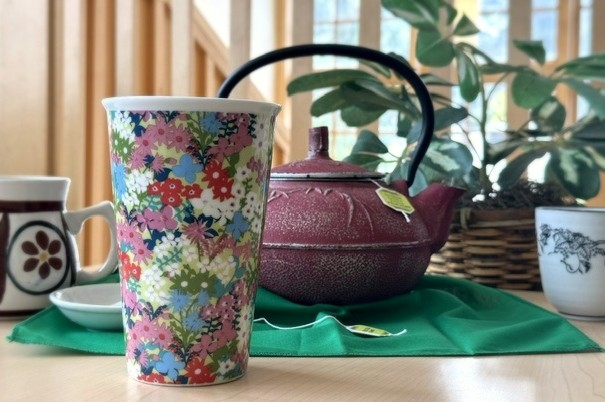
Colorful mug in the foreground, tea kettle and plant in the background

On Friendship

Lynn Cooper

Senior Associate University Chaplain and Director of Catholic Life

In the upper shelf of the Interfaith Center kitchen, a green and pink floral ceramic cup towers above the rest of the mugs. This cup was a gift to me from my friend Rabbit back in 2012. Rabbit and I had a lot of friends in common, but we really did not know each other very well. We traded numbers one night at a party and quickly made plans to spend an afternoon together on our days off. At the time, I had just settled into a new apartment in Cambridge. I was supposed to have moved in six months earlier, but due to a series of delays and errors, I had only just gotten my keys. Suffice to say, it was a profound relief to finally be unpacked and connecting with the neighborhood.

On that September afternoon, I met up with Rabbit in Central Square and we walked down to the Charles. We were both in major life transitions. We had little history as friends, but we connected deeply with one another, navigating those bumpy bricks and talking for hours. Before we parted ways, she reached into her backpack and placed in my hands a little bag with a bow on it. I sorted through layers of tissue paper and slowly unwrapped the treasure within: the green and pink floral ceramic cup. I was so surprised by this unexpected gift! It was beautiful and delicate. It was something I would have never bought for myself but that I instantly felt a tenderness toward.

I was so moved by this gesture, and I asked Rabbit about it. She told me that she wanted to help celebrate and mark this new season of my life. And then, right there on the sidewalk, she starting chanting, “New era, new era, new era!”

Through two moves and years of life and work, this cup has remained. It once bore a green silicon lid and green ribbed sleeve, but those accessories have been lost to time and circumstance. At some point, I must have taken the cup with me to work and simply left it here. For a long time now, it has been fixture in our tea and hospitality ministry. I have heard students comment on how beautiful and unique it is. I delight in those comments. Each time I see the cup, I do not just think of Rabbit, I feel the warmth and care of her friendship pouring through the present moment. I marvel at how students who were only a few years old in 2012 now use it and enjoy it, bringing to new life this gift of kind-heartedness and comfort.

That afternoon was the first and last time Rabbit and I hung out.  Our lives and social circles diverged as often happens. Nevertheless, I still feel a deep connection to her and to the joy and wonder we shared that day. Friendship takes many shapes throughout our lives and sometimes those connections are fleeting but they are no less true, no less important.

This week, I invite you to pause for a moment and reflect on the friendships in your life. You might think about reaching out, sending a text message, placing a phone call, or tossing out some other arrow of love. Or maybe you want to simply give thanks for someone like Rabbit—someone whose presence in your life was brief but meaningful. However you spend your reflection time, may it fill your cup.


The post 10/1/26 Tufts Together Reflection appeared first on Tufts University Chaplaincy.

]]>
9/24/26 Tufts Together Reflection https://chaplaincy.tufts.edu/blog/news/2026/09/23/9-24-26-elyse-nelson-winger/ Thu, 24 Sep 2026 01:07:50 +0000 https://chaplaincy.tufts.edu/?p=16638 Stone Soup Elyse Nelson Winger University Chaplain It started with a sack of red peppers and plum tomatoes from a local farm. Roasted with onions and garlic, simmered in stock and spices then pureed ‘til… Read More

The post 9/24/26 Tufts Together Reflection appeared first on Tufts University Chaplaincy.

]]>

A large metal pot on a hook

Stone Soup

Elyse Nelson Winger

University Chaplain

It started with a sack of red peppers and plum tomatoes from a local farm. Roasted with onions and garlic, simmered in stock and spices then pureed ‘til smooth, it filled dark blue bowls with red maple leaf-hued goodness. A splash of balsamic vinegar and conversation with friends made the meal. The next morning, I inhaled the savory, sweet smells of sautéing beef and fennel, adding barley and broth, carrots and mushrooms. I stirred, and my mind wandered to curried butternut squash…french lentils…clams and cream. Then I realized: it’s mid-September! It’s soup season.  

Now, I know there are soups for all seasons, summer gazpachos and winter stews. But there’s nothing quite like New England’s autumn harvest and the aromatic warmth soup brings to twilight’s emerging chill. Even better, soup can be made from most anything. It stretches and keeps. It’s easy to share. You can even start with a stone. Perhaps you know the story? 

Stone Soup is a story that crosses cultures, referenced variously as a traditional French, Swedish or Portuguese folktale, set in a quaint European hamlet or a high Chinese mountain village, starring monks or soldiers or otherwise weary travelers encountering wary, stony townsfolk. The travelers come upon a new place. They go house to house, seeking food, perhaps a place to rest. Each time, they are curtly dismissed. Townsfolk lie and hide their food. They close their windows, lock their doors. And so the travelers pronounce a plan: they will make stone soup. They collect firewood, rustle up a pot. They fill it with water and drop in a few smooth stones. And then they dream, conversing with one another just loudly enough for anyone to hear: wouldn’t this stone soup be delicious with just a carrot or two? And usually, it’s a child who breaks the townsfolk’s stonewalling, bringing that carrot. And others, curious about this enticing soup, bring their own once-concealed offerings: potatoes and onions, then meat and milk, finally vegetables and spices of every kind. Community tables are set with dishes and pitchers of additional food and drink, and feasting and dancing ensues. A community, once suspicious of one another and certainly of strangers, is renewed, even healed, by the ingenuity of their unexpected guests and their own hidden capacity for generosity.  

I remember the Stone Soup of my childhood, the Caldecott Honor Medal sticker affixed to its front cover. With my children, I read Jon Muth’s version, each page a gorgeous watercolor. Go to YouTube and you’ll see videos of these and other versions being read aloud. Enter the title in JumboSearch and you’ll find contemporary compositions for voice or chamber ensemble (and a long list of articles and books invoking the folktale as inspiration for best practices in education, business, social work, and scientific research). There’s reason for this!  

Stone Soup is a deeply human story. It taps into the trauma of war or the crumbling of civic ties. It names our fear of scarcity or our suspicions about strangers. It describes what happens when communities become isolated and stuck. But it also speaks to our ability to change. Sparked by courage, often from the margins, and then a bit of wonder, we discover the power of sharing whatever we have for the good of the whole. This tale celebrates the diversity of gifts each of us has to offer to whatever tables we are setting and communities we are building, including the ones we are always co-creating together at Tufts.  

Since July, students, faculty and staff have been building new and renewed communities of learning and friendship across our schools and campuses. In labs, clinics, classrooms and fields, there are imaginative and caring people tending pots, stirring stones of wisdom and knowledge, inviting others, no matter how unsure or even scared, to bring their questions and insights to the many creative acts of understanding, constructing and repairing our campuses need. Indeed, the ones who’ve brought the stones cannot continue to change, grow and discover without the gifts of each student, every colleague who comes upon their pot.  

It’s soup season. I hope this autumn brings you many bowls of warmth and the flavors you love, eaten around tables with people whom you enjoy. And I hope that the menu will also include your own special, community concoctions of stone soup.   

The post 9/24/26 Tufts Together Reflection appeared first on Tufts University Chaplaincy.

]]>