The post Arimo Travels Turns 10 – A Look Back and a Sayonara appeared first on Arimo Travels.
]]>I originally launched Arimo Travels in May 2016, a few weeks before the start of what would become a 777-day trip around the world.
My first blog post, “How Preparing for Long-Term Travel Differs from Shorter Trips“, set the tone for things to come. Reading it now, you can tell that it’s the first blog post I ever wrote in English. Still, I love the intimate feeling of the post. It really captures the essence of that specific time in my life.
I quickly shifted my focus from personal reflections to sustainable travel guides for others. Later, inspired by my own journeys to random places around the world, I created over 140 random generators for others.
As the site celebrates its 10th anniversary, I thought this would be a good time to look back, summarizing my travels, personal life, and the development of this site over the last decade.
Besides the anniversary, there’s another reason why I want to write this post. At least for now, this will be the last blog post on Arimo Travels, and I want to give this chapter in my life a proper send-off.
Ten Years of Travel
By the time I launched Arimo Travels, I had already done several longer trips, including a few train trips across Europe, backpacking in Nepal, and a train trip from Finland to North Korea. However, the duration of those trips was counted in weeks or months, not years.
Even as years go by, the two years I spent on the road remain a very influential period of my life. The journey affected my mindset and personality in numerous ways. Even though I got back to Finland in 2018, I feel that a part of me never returned.
After traveling around the world, I spent more time exploring my own surroundings. I haven’t traveled as much as I used to, but I did not abandon traveling completely – I just stopped sharing my travels online. Last year, my partner and I actually did another, shorter trip around the world.
If it weren’t for the negative impact on the environment, I’d be happy to keep on traveling. However, as sustainability is very close to my heart, I’ve come to accept that living by values means finding experiences closer to home.

Ten Years of… Aging?
When I launched Arimo Travels, I was 24 years old. I am 34 now. Deep down, I still feel some connection with the person I was back then. But the passing of time is undeniable both on the inside and the outside.
Soon after finishing with my trip around the world, I was diagnosed with acoustic neuroma, a benign brain tumor. I soon lost hearing in my left ear, but other than that, the illness hasn’t done too much to hinder my well-being.
I finished my psychology studies after COVID, and have been working in the field since. Recently, my partner and I bought our first home together. Suddenly life has become much more predictable and stable than what it used to be, and I’m mostly fine with that.
Here, I do recognize an internal conflict. At the same time, I remember how I wasn’t this happy when I traveld full time. Staying in one place and maintaining social connections in daily life is much better for my well-being than constant travel on savings. A stable life also doesn’t mean I’ve had to leave adventures out completely.
But still, whenever I see a map of the world, my eyes start tracking possible routes, passing through places I’ve never been to. A part of the longing is about traveling, but I believe it’s more about missing my youth.

Ten Years of Travel Writing
Arimo Travels started as a travel blog before becoming a broader website about traveling and randomness. I was also active on Instagram and Facebook, but I wasn’t trying very hard. Back then, I already felt that polished travel content made the destinations look too good. I felt pride about posting unremarkable and unfiltered photos.
For as long as I remember, people have been talking about the decline of blogs. At first, it seemed that social media would take its place. But in the last few years, AI has changed the digital landscape in unexpected ways.
As an expanding portion of online content is AI-created, personal reflections like this feel like a relic from another time. But it is not just personal posts that are affected. Guides like the ones I used to write have become a lot less popular, being replaced by narrow AI summaries.
When I started Arimo Travels, I held many strong ideals. For example, I resisted putting any ads on the site, as I felt that went against my values. After all, the point of the site was to help others, not to make a profit, and I didn’t want to make the user experience worse for my own personal gain.
Now, I welcome the tiny passive income that the ads bring me. I tell myself that it’s okay as everyone else is doing it anyway, but I’m not sure what 24-year-old Arimo would say about that.
Years to Come
Now, after 10 years, I am putting Arimo Travels on an indefinite hiatus. Here’s why.
During the last ten years, I’ve tried to use Arimo Travels as a platform for advocating sustainability. However, sustainable travel is very difficult, and it’s better to reduce travel altogether. Even if I try to focus on sustainability, I end up talking about a way of life that’s rarely eco-friendly.
Still, I have an urge to do my best to help protect the environment. Luckily I have found better ways of doing that. In the past few years, I’ve been an active member of the local effective altruism community in Finland. Effective altruists try to find ways of doing the most good in evidence-based ways, and this goal is very close to my values.
Instead of abandoning writing online, I’m only changing my platform. Now, I am focusing on writing blog posts for Effective Altruism Finland‘s website in Finnish, and I have plans for similar projects in the future.
I know that very few people will ever find this blog post or read this far. However, that’s not important to me. As online platforms become more impersonal, I like the idea of leaving my own mark in my own personal corner.
Like a message in a bottle, thrown in the immense vastness of the digital ocean.
(Gosh, that was corny.)
The end.
The post Arimo Travels Turns 10 – A Look Back and a Sayonara appeared first on Arimo Travels.
]]>The post Random Name Pickers for Different Countries appeared first on Arimo Travels.
]]>I haven’t published any new posts on Arimo Travels since last summer, but that doesn’t mean I’ve been inactive. Quite the opposite, in fact.
Over the last six months, I’ve been working on random name generators that select names from different countries. It has been a fun but extremely time-consuming project, as I also decided to publish separate subpages for the names included under each initial. With 26 letters of the alphabet and five nationalities, that meant 130 extra pages.
Now, all the random name pickers and name lists are complete.
Random Name Pickers
I created a random name generator that includes 20,000+ names from five different countries (France, Germany, Italy, Spain, and the United States):
Before that, I also created separate random name pickers for each nationality:
- Random Names from France
- Random Names from Germany
- Random Names from Italy
- Random Names from Spain
- Random Names from the United States
Creating the Randomizers
In an era of lightning-fast AI-generated content, it’s been interesting to work on something like this manually.
From a productivity standpoint, it makes no sense to collect and edit data by hand, but I’ve done it for the fun of it. The monotonous tasks have felt almost meditative, a nice change of pace from regular work.
For now, these random name generators are the last major piece of content I’ve planned for Arimo Travels. As I’ve shifted my focus to tackling climate change and advocating for effective altruism, I’ve felt the need to sharpen that focus.
Lists of Names
The names in the randomizers come from different official statistics. You can find all the names in the subpages below, categorized by initial and country.
A Names
- American Names that Start with A
- French Names that Start with A
- German Names that Start with A
- Italian Names that Start with A
- Spanish Names that Start with A
B Names
- American Names that Start with B
- French Names that Start with B
- German Names that Start with B
- Italian Names that Start with B
- Spanish Names that Start with B
C Names
- American Names that Start with C
- French Names that Start with C
- German Names that Start with C
- Italian Names that Start with C
- Spanish Names that Start with C
D Names
- American Names that Start with D
- French Names that Start with D
- German Names that Start with D
- Italian Names that Start with D
- Spanish Names that Start with D
E Names
- American Names that Start with E
- French Names that Start with E
- German Names that Start with E
- Italian Names that Start with E
- Spanish Names that Start with E
F Names
- American Names that Start with F
- French Names that Start with F
- German Names that Start with F
- Italian Names that Start with F
- Spanish Names that Start with F
G Names
- American Names that Start with G
- French Names that Start with G
- German Names that Start with G
- Italian Names that Start with G
- Spanish Names that Start with G
H Names
- American Names that Start with H
- French Names that Start with H
- German Names that Start with H
- Italian Names that Start with H
- Spanish Names that Start with H
I Names
- American Names that Start with I
- French Names that Start with I
- German Names that Start with I
- Italian Names that Start with I
- Spanish Names that Start with I
J Names
- American Names that Start with J
- French Names that Start with J
- German Names that Start with J
- Italian Names that Start with J
- Spanish Names that Start with J
K Names
- American Names that Start with K
- French Names that Start with K
- German Names that Start with K
- Italian Names that Start with K
- Spanish Names that Start with K
L Names
- American Names that Start with L
- French Names that Start with L
- German Names that Start with L
- Italian Names that Start with L
- Spanish Names that Start with L
M Names
- American Names that Start with M
- French Names that Start with M
- German Names that Start with M
- Italian Names that Start with M
- Spanish Names that Start with M
N Names
- American Names that Start with N
- French Names that Start with N
- German Names that Start with N
- Italian Names that Start with N
- Spanish Names that Start with N
O Names
- American Names that Start with O
- French Names that Start with O
- German Names that Start with O
- Italian Names that Start with O
- Spanish Names that Start with O
P Names
- American Names that Start with P
- French Names that Start with P
- German Names that Start with P
- Italian Names that Start with P
- Spanish Names that Start with P
Q Names
- American Names that Start with Q
- French Names that Start with Q
- German Names that Start with Q
- Italian Names that Start with Q
- Spanish Names that Start with Q
R Names
- American Names that Start with R
- French Names that Start with R
- German Names that Start with R
- Italian Names that Start with R
- Spanish Names that Start with R
S Names
- American Names that Start with S
- French Names that Start with S
- German Names that Start with S
- Italian Names that Start with S
- Spanish Names that Start with S
T Names
- American Names that Start with T
- French Names that Start with T
- German Names that Start with T
- Italian Names that Start with T
- Spanish Names that Start with T
U Names
- American Names that Start with U
- French Names that Start with U
- German Names that Start with U
- Italian Names that Start with U
- Spanish Names that Start with U
V Names
- American Names that Start with V
- French Names that Start with V
- German Names that Start with V
- Italian Names that Start with V
- Spanish Names that Start with V
W Names
- American Names that Start with W
- French Names that Start with W
- German Names that Start with W
- Italian Names that Start with W
- Spanish Names that Start with W
X Names
- American Names that Start with X
- French Names that Start with X
- German Names that Start with X
- Italian Names that Start with X
- Spanish Names that Start with X
Y Names
- American Names that Start with Y
- French Names that Start with Y
- German Names that Start with Y
- Italian Names that Start with Y
- Spanish Names that Start with Y
Z Names
- American Names that Start with Z
- French Names that Start with Z
- German Names that Start with Z
- Italian Names that Start with Z
- Spanish Names that Start with Z

In recent years, AI has changed online content creation. Blogs are using more and more AI-generated content. Even these randomizers would have been impossible for me to create without the programming help of LLMs. The name lists also include paragraphs that are almost entirely AI-generated.
Still, I like to keep a personal touch in my own creations. In the era of AI, I like the idea of leaving human imperfections in my creations.
The post Random Name Pickers for Different Countries appeared first on Arimo Travels.
]]>The post Random Cities in Asian Countries appeared first on Arimo Travels.
]]>This page collects 14 city randomizers for Asian countries. I’ve visited all but three of these countries—Kazakhstan, Pakistan, and Saudi Arabia—during my travels.
To make each randomizer feel unique, I’ve included my personal notes about each country below the randomizers.
Random Cities in Asian Countries
- Random Asian City
- Random City in China
- Random City in India
- Random City in Indonesia
- Random City in Japan
- Random City in Kazakhstan
- Random City in Korea
- Random City in Malaysia
- Random City in Pakistan
- Random City in the Philippines
- Random City in Russia
- Random City in Saudi Arabia
- Random City in Taiwan
- Random City in Thailand
- Random City in Turkey

In recent months, I have spent a lot of time creating new randomizers on all sorts of topics. However, it may take up to 12 months to see if randomizers like these find their audience with search engines.
After these randomizers, I will focus on other things—at least for a while. If the random generators start attracting visitors, I may continue creating similar widgets on other topics.
The post Random Cities in Asian Countries appeared first on Arimo Travels.
]]>The post Random Cities in European Countries (26 Randomizers) appeared first on Arimo Travels.
]]>My random European city generator has long been the most popular page on Arimo Travels. Seeing its success, I decided to expand the idea with individual city randomizers for specific countries.
This page collects 26 randomizers for European countries. I’ve visited all but one of these countries (Croatia), and in a few—Austria, Germany, and Italy—I’ve even traveled to completely random towns.
To make each randomizer feel unique, I’ve added personal travel stories to all but the Croatian one. For my home country of Finland, I went a step further and included personal notes about all 107 Finnish cities.
Random Cities in 26 European Countries
- Random European City
- Random Town in Austria
- Random City in Belarus
- Random City in Belgium
- Random City in Bulgaria
- Random City in Croatia
- Random City in Czechia (Czech Republic)
- Random City in Denmark
- Random City in Finland
- Random City in France
- Random City in Germany
- Random City in Greece
- Random City in Hungary
- Random Town in Ireland
- Random City in Italy
- Random City in The Netherlands
- Random City in Norway
- Random City in Poland
- Random City in Portugal
- Random City in Romania
- Random City in Russia
- Random Town in Serbia
- Random Town in Slovakia
- Random City in Spain
- Random City in Sweden
- Random City in Turkey
- Random City in Ukraine

I publish all my random city generators as pages rather than blog posts. That way, they don’t clutter the front page or get sent to email subscribers automatically.
To keep the site feeling alive, I occasionally post collections like this one after releasing several new randomizers under the same theme.
The post Random Cities in European Countries (26 Randomizers) appeared first on Arimo Travels.
]]>The post Random Choice Generators appeared first on Arimo Travels.
]]>In the past, I’ve picked random travel destinations with darts, a blindfold, and public online polls. I’ve also created random destination generators for others to enjoy.
But random choices aren’t limited to traveling. I’ve now made a few random choice pickers that you can explore below.
Coin Flip Simulator
My coin flip simulator gives you heads or tails, and even includes simple effects and a result tally.
Random Lottery Numbers
Picking lottery numbers might be the ultimate form of random decision-making—so of course I made a generator for that too. You can choose how many numbers to generate, and set the range however you like.
Rock Paper Scissors
Rock Paper Scissors isn’t just a game of luck—it’s psychology. Researchers have even developed an AI that beats human players 95% of the time. But you can counter the mind games by leaving your choice to chance.
Yes or No Random Choice Generator
Yes or no is the most basic question of all. This random choice generator gives yes or no answers, with the occasional “maybe” thrown in. You can also tweak the odds—from a straight 50/50 to whatever balance you like.
Random Choices and More
Most of my 100+ random generators deal with travel and geography, but there are many exceptions. In addition to these choice makers, I’ve recently created a few other fun randomizers. Their topics range from alphabets to universities.
- Random Alphabet Generator
- Random Color Generator
- Random Emoji Generator
- Random Kanji Generator
- Random Pokémon Generator
- Random Three-Digit Number Generator
- Random University Generator
Out of these seven randomizers, I’m especially proud of the random color wheel and the three-digit number picker. For the latter, I went the extra mile to include information and trivia about all 900 numbers.
The post Random Choice Generators appeared first on Arimo Travels.
]]>The post Random Cities in All the U.S. States appeared first on Arimo Travels.
]]>I’ve previously made several random generators for different regions and countries around the world. These include random cities in every continent, as well as countries like Canada, Germany, and France. One of my earlier randomizers picked cities across the entire United States, but I know some people want more specific results. So, I decided to make separate random city generators for each state.
Below is the full list of randomizers I’ve created for all 50 U.S. states. I have also made one for random cities in Puerto Rico.
Random Cities in U.S. States
- Random City in Alabama
- Random City in Alaska
- Random City in Arizona
- Random City in Arkansas
- Random City in California
- Random City in Colorado
- Random City in Connecticut
- Random City in Delaware
- Random City in Florida
- Random City in Georgia
- Random City in Hawaii
- Random City in Idaho
- Random City in Illinois
- Random City in Indiana
- Random City in Iowa
- Random City in Kansas
- Random City in Kentucky
- Random City in Louisiana
- Random City in Maine
- Random City in Maryland
- Random City in Massachusetts
- Random City in Michigan
- Random City in Minnesota
- Random City in Mississippi
- Random City in Missouri
- Random City in Montana
- Random City in Nebraska
- Random City in Nevada
- Random City in New Hampshire
- Random City in New Jersey
- Random City in New Mexico
- Random City in New York
- Random City in North Carolina
- Random City in North Dakota
- Random City in Ohio
- Random City in Oklahoma
- Random City in Oregon
- Random City in Pennsylvania
- Random City in Rhode Island
- Random City in South Carolina
- Random City in South Dakota
- Random City in Tennessee
- Random City in Texas
- Random City in Utah
- Random City in Vermont
- Random City in Virginia
- Random City in Washington
- Random City in West Virginia
- Random City in Wisconsin
- Random City in Wyoming
More Randomizers
Before creating these generators for random cities in U.S. states, I had published fewer than 50 randomizers total. While I was able to speed up my process over time, building 50 new generators at once was quite an undertaking.
Still, these aren’t the most time-consuming randomizers I’ve ever made. For example, I previously created an ambitious Random Place in the World Generatorand spent ages compiling pools of random islands, music, writing prompts, and more. You can find all my previous randomizers on the Random Generators page.
The post Random Cities in All the U.S. States appeared first on Arimo Travels.
]]>The post Helsinki to Lapland by Train – How to Get to Lapland by Train appeared first on Arimo Travels.
]]>Disclosure: This post contains an affiliate link for Hostel Café Koti, my favorite accommodation in Rovaniemi. I get a commission if you decide to make a booking through my links, at no cost to you.
Lapland, the northernmost region of Finland, is a highly sought-after destination in my home country. However, reaching Lapland without flying requires some time and planning. With the right preparations, you can ensure a comfortable journey.
This guide primarily focuses on how to travel from Helsinki to Lapland by train. However, it is also applicable if you’re starting your journey from other locations in the south. At the end of the guide, we wil explore a few alternative travel options.
If you’re interested, I have also written other guides on train travel in Finland and how to reach Finland without flying. You can find them here:
Traveling to Lapland by train takes a lot of time, and some of you might consider taking a flight instead. If you do decide to fly, please consider donating 10% of your ticket cost to a high-impact climate initiative. Carbon offsetting isn’t very effective, so it’s better to support charities suggested by Giving Green instead.


Helsinki to Lapland by Train – Essential Information
Can you get from Helsinki to Lapland by train?
Absolutely! The majority of trains heading to Lapland originate in Helsinki and terminate in Rovaniemi, the capital of the region. Some trains even continue further north to the train stations in Kolari (Western Lapland) and Kemijärvi (Eastern Lapland).
Both daytime trains and overnight sleeper trains operate between Helsinki and Lapland.
How far is Lapland from Helsinki?
The direct distance between Helsinki and Rovaniemi, the capital of Lapland, is 700 kilometers. However, to fully experience the majestic fells (mountains) and nature, you’ll need to venture further north. For instance, the Urho Kekkonen National Park is located 900 kilometers north of Helsinki.
How long does the train journey to Lapland take?
The fastest trains from Helsinki to Rovaniemi complete the journey in 8-9 hours. The most efficient connections include a transfer in Oulu. Night trains have a slightly longer duration, arriving in 11-12 hours.
Where can I stay in Lapland?
Lapland offers a wide range of accommodations to suit all sorts of travelers. If you’re traveling on a budget or just wish to meet fellow travelers, I recommend staying at Hostel Café Koti in Rovaniemi. While great hostels are somewhat rare in Finland, Café Koti is a notable exception. I have family in Rovaniemi, but I stay at Café Koti whenever their house is full.


Helsinki to Lapland Train – Booking, Prices, and Schedules
How can I purchase tickets to the train?
Currently, all trains in Finland are operated by the national railway company VR. You can buy tickets through their website VR.fi, their mobile app VR Matkalla (available on Google Play or App Store), and ticket machines at the stations.
While it is possible to buy a ticket by card after boarding, it is not recommended. There may be no available seats, and an additional service fee of 7 euros will apply.
Helsinki to Lapland train cost – Is train travel to Lapland expensive?
Ticket prices are not fixed and depend on the popularity of the train. The earlier you book, the better.
For instance, a nearly fully booked day train to Rovaniemi can cost 90 euros. However, by booking well in advance, you can make the same journey for as little as 20 euros.
International student card holders are eligible for a 30% discount, while pensioners receive a 20% discount. These discounts don’t apply to cabins on overnight trains.
How frequently do trains operate between Helsinki to Lapland?
There are multiple train options available from Helsinki to Lapland each day. As of summer 2023, there were four daytime trains and two overnight trains from Helsinki to Rovaniemi.
Most of the time, the farther Lapland train stations are accessible only by night trains. These trains operate twice a week during the off-season and more frequently around the Christmas period.


Information about the Overnight Train to Lapland
How can I travel on an overnight train to Lapland?
Overnight trains operate between Helsinki and Lapland every night. You have the option to book regular seats or reserve 2-bed cabins for yourself or your group.
In the past, it was possible to book a single bunk and share the cabin with strangers. However, due to COVID, this policy has changed, and now you must book the entire cabin. Please note that cabin reservations cannot be made through in the VR mobile app but can be done on their website.
What can you tell me about the prices and the schedules?
If the train is nearly fully booked, the journey from Helsinki to Rovaniemi in a 2-bed cabin can cost around 200 euros. However, by booking well in advance, you can secure the same journey for as little as 50 euros
At the time of writing, there were two daily night trains from Helsinki to Rovaniemi. One departs at 7.30 pm to and arrives at 7:20 am, while the other departs at 11.10 pm to and arrives at 11 am.
What services are available on board the Lapland night train?
Similar to most long-distance trains, the night trains feature a restaurant car that serves moderately priced and delicious food. Complimentary Wi-Fi is available on board, functioning most of the time.
In 2023, VR was in the process of replacing their sleeper carcarriages. Currently, half of the cabins have their own bathrooms, but the plan is to have all cabins equipped with one in the future.

The cabins and seats have power sockets, although there may be occasional interrupitons in power during the night. This is essential information to consider if you rely on constant electricity for devices such as CPAP machines.
Alternatives Ways to Reach Lapland
How can I travel from Helsinki to Lapland by bus?
It is also possible to take a bus from Helsinki to Rovaniemi. Just expect a few hours longer and a less comfortable journey. While buses can sometimes be a little cheaper, it’s not always the case. You can compare all public transportation options and their prices on the website Pikavuorot.fi (in Finnish).
Flying from Helsinki to Lapland is also possible, but as this website focuses on sustainable travel, I won’t cover those options here. Flights are usually faster and often cheaper than overland alternatives.
Can I hitchhike to Lapland?
Yes, you can! I have personally hitchhiked once from my old hometown Jyväskylä, Central Finland, to the north of Lapland with a friend.
With few main roads and no highways in Lapland, it is somewhat easier to stop cars there. However, note that during the off-season, there may be limited traffic. In the southern regions, finding suitable hitchhiking spots near cities is more challenging (refer to Hitchwiki for more information).

What if I start from a location other than Helsinki?
In most cases, that should pose no problem. However, there is only one main train track to the north, which runs along the west side of the country. Therefore, reaching the mainline from other starting points may take longer than anticipated.
It’s worth noting that the night train schedule is designed with the capital in mind. If you board the train along the way, you may have to embark in the middle of the night. This is a bigger issue on the way back. For instance, when I took the night train from Rovaniemi to Tampere, I had to disembark at 5.35 am.
If you’re starting from another location in Europe, it’s not possible to reach Finland solely by rail. Instead, you will need to use buses and/or ferries along the way. For example, if you intend to travel from London to Lapland by train, you can make your way through Sweden on public transportation and reach the Sweden-Finland border in Haparanda/Tornio by bus.
How can I get to Swedish Lapland by train?
While Lapland usually refers to the Finnish Lapland, our neighboring country Sweden also has its own Lapland province in the north. Traveling to Swedish Lapland by train is relatively straightforward.
There are several trains and buses connecting Central Europe to Sweden, including an overnight train from Berlin to Stockholm. From Stockholm, you can take a train to Luleå. From there, you have the option to continue your journey to Kiruna, Abisko National Park or a few other destinations accessible by rail.

How to Get from Helsinki to Lapland by Train
In this guide, I’ve explained how to get from Helsinki to Lapland by train. In summary, train travel offers a fantastic opportunity to experience the natural beauty of Finland. WIth careful planning, the well-equipped long-distance trains in Finland can provide a delightful journey.
If you have any further inquiries, please feel free to ask them in the comment section below. And if you’re looking for suggestions on things to do, you can check out my guide on summer activities in Finland.

The post Helsinki to Lapland by Train – How to Get to Lapland by Train appeared first on Arimo Travels.
]]>The post How to Travel the World without Flying appeared first on Arimo Travels.
]]>Can you travel around the world without flying? Absolutely! In my previous guide, “How to Travel without Flying,” I shared general tips for flightless travel. Now, in this comprehensive guide called “How to Travel the World without Flying”, we’ll delve into the opportunities and challenges of flightless travel on every continent.
This website, Arimo Travels, is a sustainable travel site I launched back in 2016. Initially, I chronicled my mostly flightless two-year journey around the world. Over time, the focus shifted to sustainable travel tips for destinations worldwide.
This guide is divided into eight sections—one for each continent, plus one for the big picture of how to travel the world without flying. In each part, we explore flightless travel within the continent before detailing flightless routes to/from each continent. In other words, we explore how to explore how to travel everywhere and anywhere without taking a flight.
As you read this guide, you’ll notice that flightless travel can be quite challenging. I understand that many of you may opt to fly occasionally. If you do choose to fly, I kindly request that you offset the CO2 emissions from your flights. To do so effectively, consider donating 10% of your ticket price to a climate nonprofit recommended by Giving Green.

Flightless Travel in Africa
Africa, the second-largest continent, poses challenges to flightless travel due to vast distances and limited tourist infrastructure. However, long-distance public transportation options are available, making it possible to traverse the continent.
I have spent two months exploring the southern and eastern parts of Africa on public transport. For more information about flightless travel in the area, you can read my previous guide “Traveling in Africa on Public Transport“.
How to Travel in Africa without Flying?
Most flightless travelers explore Africa with their own vehicles, though public transport is a viable option. However, obtaining accurate route information can be challenging.
Despite the absence of a Trans-African railway that was first planned in the late 1800s, many African rail routes cover extensive distances. For instance, the TAZARA railway between Tanzania and Zambia allows a 2,000-kilometer journey in approximately 46 hours. I have previously written the guide “Train from Zambia to Tanzania” about the TAZARA train.
Other railway options include traveling through South Africa and continuing to its neighboring countries. There are fewer railway networks in northern Africa, but routes like the famous Iron Ore train in Mauritania offer unique experiences.
Long-distance coaches facilitate travel between different African countries. Ulemu Buses, for example, offers a 1,700-kilometer (1,100 mile) journey from Johannesburg, South Africa, to Blantyre, Malawi, in 24 hours. Further north, a bus from Nairobi, Kenya to Juba, South Sudan crosses 1,100 kilometers (700 miles) in 17 hours and 30 minutes. In general, traveling between countries is easier in southern and eastern Africa.
Flightless Travel Between Africa and Other Continents
Geographically close to Europe, Africa connects seamlessly by crossing the Mediterranean Sea. Ferries operate between Spain and Morocco, as well as Tunisia and Italy. I have previously written two guides on flightless travel between Europe and Africa:
Located in Egypt, the Isthmus of Suez offers a land bridge between Africa and Asia. However, political instability in the Middle East makes flightless travel extremely challenging. Still, my guide on flightless routes to Egypt covers some ways of traveling between Egypt and the Middle East.
Flightless travel between Africa and America is not very common. Although rare, it is possible to sail between Africa and South America. My article on sailing across the Atlantic offers some information about these routes. I haven’t seen any cargo ship connections between Africa and America that would take passengers.
Traveling between Africa and Asia is challenging but feasible. In the past, freighter travel company Slowtravel offered a few cargo ship voyages between Africa and Asia. For example, a journey from Malaysia to Mozambique lasting 24 days cost around €2600. According to Cruiserwiki, sailing from Southeast Asia to Africa is possible from mid-December to late February.

Flightless Travel in North America
North America, comprising Canada, Mexico, the United States, the Caribbean, and Central America, offers extensive opportunities for flightless travel. While the majority of the continent is accessible overland, the Caribbe and and Central America present unique challenges.
I have spent roughly five months exploring North America without flying. I spent most of that in Mexico, and I have a separate guide called “A Short Guide to Overland Travel in Mexico” about flightless travel in that country.
Traveling in North America without Flying
The northern parts of continental North America – Canada, Mexico, and the United States – are favorable for flightless travel. The northern parts of Canada are sparsely populated, but the southern area near the US border is easy to explore, with the Trans-Canada Railway facilitating travel across Canada.
Railways in Mexico and the U.S. are primarily for freight, but Mexico is planning to increase trains for passengers in the upcoming decades. Starting in early 2024, the Tren Maya will connect all major cities in the Yucatán Peninsula. The national railroad company in the US (Amtrak) connects many of the most important regions.
Instead of trains, flightless travel in Mexico and the United States focuses more on long-distance buses. Mexico is covered by several bus companies, many of which are owned by ADO. Meanwhile Greyhound is the most famous coach company in the United States. The coaches in these countries can be very comfortable, and some even have their own on-board entertainment systems like airplanes.
Central America, consisting of seven small countries, features reliable bus services. Smaller countries mean more border crossings, but most of these should be relatively straightforward, and the CA-4 Agreement establishes free movement between four Central American states. According to Wikivoyage, buses are the most popular option for overland travel in the region.
The Caribbean archipelago presents challenges, with ferries connecting some islands but limited options for inter-country travel. Only some countries in the eastern Caribbean are connected by ferries (see map here). If you don’t have your own sailing boat, you can try finding opportunities to work for your passage between islands in local sailing clubs or on websites such as Findacrew.net and CrewSeekers.net.
Flightless Routes Between North America and Other Continents
North America is connected by land to just one other continent, South America. All other continents require ocean crossings.
If you go to Europe, you can travel on a cargo ship or a sailboat across the Atlantic. Luxury cruise ships like Queen Mary 2 serve the route as well, although they produce more CO2 emissions than commercial flights. I have written multiple guides about these routes including “How to Travel from Europe to America by Ship” and “How to Travel from the USA to Europe by Ship“.
Because of the prevailing trade winds, it is more common to sail from Europe to America than the other way around. This route often goes through the Canary Islands and finishes in the Caribbean. The eastward route goes further north from Bermudas towards the Azores. Traveling directly between America and Africa is quite rare, and it is easier to pass through Europe instead.
Flightless travel between Asia and America is less common and takes longer, yet it’s still possible. For example, sailing from California to Japan takes around 30-60 days, and freighter travel company Slowtravel offers a 25-day freighter cruise from Vancouver, Canada, to Tianjing Xingang for around $3000. I have previously published one guide that covers flightless travel from America to Japan.
Traveling to North America also involves a Pacific crossing. I traveled from New Zealand to California on a cargo ship during my 2-year trip around the world, and the freighter’s full route started in Australia. A freighter journey from the US to Australia takes around 25 days, and sailing the same route takes 45-60 days.
Travel between North and South America is generally straightforward, with one major challenge: The Darién Gap on the border of Colombia and Panama breaks the otherwise unified Pan-American Highway. Roads do not pass through this area, and drug cartels make it unsafe for travelers. Although uncomfortable, it is possible to travel between Panama and Colombia by boat.

How to Travel the World without Flying: South America
Mountains, rainforests and undeveloped slow down flightless travel in South America. Even if you spent six months in the continent, you’d only cover a tiny speck of its magnitude.
Exploring South America without Flying
According to The Man in Seat 61 – the best resource on train travel online – South America lacks a coherent international rail network, with national rail networks patchy at best. As a sad example, the national railway company of Ecuador went bankrupt during the COVID pandemic. Still, there are some interesting train routes around the continent.
Long-distance buses prove to be the most reliable means of public transportation, navigating challenging terrains. Other options include the Amazon Ferry from Manaus to Macapá. I’ve also known travelers who’ve explored South America with their own motorcycles or even by bicycle.
Spanish is widely spoken in most of South America, emphasizing the value of learning basic phrases for effective communication.
Flightless Travel Between South America and Other Continents
South America’s connection to the rest of the world is not as robust as North America’s. However, it serves as a gateway to Antarctica, with cruises departing from Ushuaia, Argentina, for a 10-15 day tour.
The Darién Gap disrupts overland travel between South and Central America. Sailing or traveling by a speedboat to Central America is possible, although not necessarily comfortable.
Crossing the Atlantic is less popular in the south. Still, it is possible to sail between Africa and South America. The most common route that I’ve seen goes from South Africa to Brazil via St Helena. I haven’t seen any cargo ships that would take passengers between the two continents.
Traveling between South America and Europe on a cargo ship is possible, though. For example, a currently (as of early 2024) inactive service has taken travelers from Hamburg, Germany, to Rio de Janeiro in approximately 20 days, starting at $1700 – a moderate price for a freighter voyage. Another freighter journey even takes travelers between South America and Asia past the southern tip of Africa.
Crossing the Pacific to Asia is an option, although it is easier if you start your journey in North America. A freighter voyage from Ecuador to Japan takes 27 days and costs $2700-3000, but you can cut the journey by almost 10 days and $1000 if you embark in Mexico instead.
Direct sea travel from South America to Australia and Oceania is not common. The prevailing trade winds make it so that it’s easier to start a westward journey to Oceania around Central America. It is possible to sail a southern route from Oceania to South America in 40-50 days or more, although you’d have to endure cold weather with little access to land on the way.

How to Travel to Antarctica without Flying?
Antarctica, a challenging destination, limits exploration by land. However, flightless options exist, focusing on the Antarctic Peninsula.
Exploring Antarctica without Flying
Unless you arrange your own expedition, most of Antarctica remains inaccessible for flightless travel. Union Glacier Camp, the sole commercial camp, is only reachable by plane. While some expensive expeditions allow skiing to the South Pole, they typically involve an initial flight to the continent.
While some extremely expensive expeditions allow skiing all the way to the South Pole, these journeys typically start with a flight to the continent. Fully flightless expeditions begin with a ship from Ushuaia and focus on the Antarctic Peninsula, the northernmost part of the continent.
How to Get to Antarctica without Flying
The continents closest to Antarctica are South America, Africa, and Australia. Two of these offer flightless routes to Antarctica.
Cruises from South America to Antarctica, departing from Ushuaia, last 10-15 days. The cruises are available October through March and prices usually start from around $4000 euros. It may be possible to cut costs by booking your journey in Ushuaia instead of using a travel agency online.
There is a commercial flight route from Cape Town in South Africa to Antarctica, but no regular cruises. A day flight from Australia also takes tourists to see the continent from air, although the journey doesn’t include landing in the continent.
While uncommon, cruises from Australia or New Zealand to Eastern Antarctica are possible. This route takes longer and offers more challenges than the typical route from South America, though.

Flightless Travel in Asia
As the largest continent, Asia provides excellent opportunities for flightless travel. However, political tensions and border issues can present obstacles.
How to Get Around Asia without Flying
Asia boasts some of the best train networks in the world. Although currently (early 2024) unavailable, the Trans-Mongolian railway has taken passengers from Europe to China in less than a week. China has greatly improved its high-speed train network in recent years and India is still one of the best destinations for train enthusiasts. Long-distance buses, cargo ships, and even river boats contribute to a diverse range of transportation modes.
Despite these advantages, flightless travel between Asian countries can be hindered by geopolitical issues. Travel through Russia, parts of Central Asia, and certain Middle Eastern regions may be challenging or unsafe. Azerbaijan remains closed, but at least China reopened its borders in 2023.
Still, regions like Southeast Asia and the Indian Peninsula offer great overland routes for flightless exploration. I explored the potential of these regions during my mostly flightless world tour by spending a month in India before crossing the border to Nepal and later covering a lot of Southeast Asia on public transport.
Flightless Travel to/from Asia
Being part of the same continental area, one might expect lots of flightless travel opportunities between Europe and Asia. However, challenges arise, with previous major routes affected by global events.
I have previously written a guide on how to travel from Europe to Asia without flying. However, situations in this area change rapidly, and you should always check the most recent information about the area.
In the past, there have been four major travel routes from Europe to Asia: Russia, Central Asia, the classic Hippie trail in the south and sea travel across the Suez Channel. At the time of writing in 2024, all these routes face disruptions.
Traveling in Russia is heavily discouraged by many countries, and the Trans-Mongolian railway to China is not operating. Passing through Azerbaijan in Central Asia is not possible, and border crossings between Kyrgyzstan and Tajikistan are limited. Traveling through Afghanistan and Pakistan has been unsafe for a long time, and the turmoil related to the crisis in Israel and Palestine has limited seafaring in the Red Sea.
Freighter travel company Slowtravel has offered a few cargo ship voyages between Africa and Asia. Sailing from Africa to Asia is not common, but according to Cruiserwiki, sailing from Southeast Asia to Africa is an option.
Crossing the Pacific Ocean between Asia and America, while time-consuming, is possible. For example, Slowtravel offers a 19-day freighter cruise from Vietnam to Los Angeles, costing around $2300.
Journeying between Southeast Asia and Australia without flying presents challenges. I’ve covered these issues in my previous guide “How to Get to Australia without Flying“.

How to Travel the World without Flying: Australia and Oceania
Remember: flat map projections distort reality. Although some maps may show otherwise, Australia is absolutely massive. It is also very sparsely populated outside its coastal regions. Meanwhile the rest of Oceania is popular with sailors, but long distances make flightless travel a challenge.
Traveling in Australia and Oceania without Flying
Australia’s extensive distances limit public transport access, but Greyhound coaches cover most major destinations. rains, though expensive, connect eastern destinations as well as Perth in West Australia and Darwin in the Northern Territory.
I’ve spent six weeks in Australia, and I had great experiences with overland travel. I liked my overnight Greyhound bus ride from Adelaide to Alice Springs in Central Australia. I met many travelers who bought or rented cars to explore the country, and I even encountered a backpacker who had cycled through the Australian Outback.
New Zealand is easy to explore on public transport, and I also found it easy to hitchhike in the North Island. Smaller island countries of Oceania, however, pose challenges with few visitors, long distances and infrequent travel opportunities.
Countries like Fiji are popular with sailors and other visitors. Some countries offer ferries connecting their islands, but the distances can be long and ships don’t leave every day. Navigating Oceania requires preparation for delays and uncertainties.
For instance, I couldn’t board a ferry from Tonga’s main island Tongatapu to the island of Ha’apai because the 13-hour journey was fully booked by mormons heading to a massive religious gathering. In other words: be flexible.
Getting to and Leaving Oceania by Ship
Getting to Australia is not as easy as one might hope. Despite the short distance, getting from Asia to Australia on a ship is not easy. I have covered flightless ways to travel to Australia in my previous guide “How to Get to Australia without Flying“.
When I traveled from New Zealand to California on a cargo ship, the same ship also traversed between New Zealand and Australia. Unfortunately COVID is limiting cargo ship travel at the time of writing.
South Pacific islands, though widely dispersed, attract sailors. You can try to work for your passage through websites like Findacrew.net and CrewSeekers.net. Sailing from the Americas to Oceania via French Polynesia is more common than crossing the Pacific from west to east.

How to Travel the World without Flying: Europe
If you ask me, Europe stands out as a paradise of overland travel. No other place has as many different countries in such a small area, and border crossings – especially within the European Union – are very easy.
How to Travel in Europe without Flying
If you’re a flightless traveler from Europe, you already know of InterRail. The InterRail ticket has allowed travelers to explore most European countries by train on a single travel pass. EURail is a similar pass for people from other countries.
I have done two InterRail trips in the past (a.k.a. the one where I got mugged and the one with the ambitious dream-gathering project) and I love the system, but I don’t think it’s the best way to explore Europe. Many popular routes require extra bookings, and long-distance coaches, exemplified by FlixBus, offer competitive deals, particularly when booked in advance.
Some European train connections are very fast, but not all routes are equal. For example, traveling through Eastern Europe can take much longer than expected.
I have previously written several guides that explore flightless travel in Europe:
- How to Get to England without Flying
- How to Travel to Finland without Flying
- How to Travel to Iceland by Ship
- How to Get to Portugal without Flying
- How to Get to Spain without Flying
Flightless Travel Between Europe and Other Continents
My previous guides cover flightless travel between Europe and the rest of the world. My guide “How to Get to Europe without Flying” covers routes to Europe. I have also written specific guides for crossing the Atlantic, as well as traveling from Europe to Africa, Asia, and Australia.
Unfortunately changing global situations, such as COVID-related restrictions and geopolitical tensions, impact these routes. Routing through Russia, the southern Hippie trail, and sea travel across the Suez Canal have faced disruptions. Political instability affects travel in Northern Africa and Central Asia.
Consult up-to-date sources when planning flightless travel in the region.

How to Travel the World without Flying
This guide has delved into flightless travel possibilities across the globe. You can use it to study how to travel the world without flying. And if you’re more ambitious, you can combine the advice to plan a flightless trip around the world.
Embarking on a world tour necessitates two main methods: overland travel and ocean crossings. Overland travel is relatively straightforward in regions like Australia, Europe, and North America. Some parts of Asia and South America can also work well, although you might hit roadblocks in specific regions.
Ocean crossings can be a great challenge. There are many ways to cross the Atlantic, and crossing the Pacific is also possible. At the same time, even short sea routes – such as traveling between Southeast Asia and Australia – can be surprisingly difficult.
The Northern Hemisphere generally provides easier routes, while travel in the Southern Hemisphere may be more challenging. For example, traveling from North America to Europe is far more common than heading from South America to Africa.
In a way, I planned this text as the ultimate guide on how to travel the world without flying. It covers all the regions of the world, but it is not fully comprehensive. I focused on providing a broad overview to maintain readability.
I hope this guide, along with my other articles, aids in planning your flightless adventures around the world!

The post How to Travel the World without Flying appeared first on Arimo Travels.
]]>The post How to Travel without Flying appeared first on Arimo Travels.
]]>Can you travel without flying? Absolutely! Flightless travel offers an eco-friendly alternative to polluting flights. While it demands more time and effort than direct flights, flightless travel provides unique experiences you wouldn’t encounter otherwise.
Allow me to introduce myself. I am Arimo, a sustainable traveler from Finland. Since 2016, I’ve been crafting sustainable travel guides on this website. Having personally traveled to over 50 countries without flying, and spent over two years on a mostly flightless trip around the world, I am excited to share more general tips for flightless exploration.
My past guides have covered flightless routes to specific destinations. I have also written a comprehensive guide that covers flightless travel in all the continents of the world. In this guide, I’m focusing on more general tips for flightless exploration.
As you read through this guide, you’ll see that traveling without flying can be tricky. I know many of you might still choose to fly because it’s easier. If you do decide to fly, please consider donating 10% of your ticket cost to a climate charity. Carbon offsetting isn’t very effective, so it’s better to support charities suggested by Giving Green instead.

How Can You Travel the World without Flying?
Flightless transport options can be categorized into two main types: land travel and travel on a boat or ship.
Trains offer a swift and comfortable means of covering extensive distances. They work particularly well in regions like Europe and China. Long-distance buses, usually more economical than trains, provide an even broader range of destinations.
Many places with long-distance trains and buses use dynamic pricing, making early bookings and selecting less popular services more cost-effective.
Aside from public transport, you can also travel with your vehicle, be it a car or a bicycle. Hitchhiking is also an option, with platforms like Hitchwiki providing information on popular hitchhiking spots. Personally, I’ve hitchhiked in Finland and abroad without encountering any issues.
For sea travel, various options exist. If you lack your sailing boat, explore opportunities to work for your passage through websites like Findacrew.net and CrewSeekers.net. Cruises and ferries are alternatives, but they may produce more CO2 emissions than commercial flights.
For a unique method of crossing long distances by water, consider freighter travel. I crossed the Pacific on a cargo ship from New Zealand to California, finding it a quite sustainable albeit pricier option starting from $100 per day.
For realistic conceptions, I recommend using a spherical model of the Earth as you plan your trip. Flattened map projections can skew distances, potentially giving you false impressions. Utilize a physical globe or Google Earth for a realistic sense of scale.
How Is Flightless Travel Different from Flying?
Flightless travel and flying have distinct differences. Flying allows swift access to far-flung destinations, and it is often more affordable for travelers themselves, although the environment has to pay the price.
So yes, flying is usually cheaper, faster, and potentially more comfortable than overland travel, there’s no denying that. If I could fly all over the world without a negative impact on the environment, I’d be happy to do that.
Unfortunately sustainable flights are not a reality, so we need to seek alternative options. Fortunately, flightless travel comes with its own advantages.
Traveling without flying encourages a slower pace, providing opportunities to explore places more thoroughly. Personally, I prefer maintaining daily travel times at a comfortable level. Journeys taking more than 10 hours between major destinations usually prompt me to make an overnight stop on the way.
Train travel, in particular, appeals to me. It offers a space to focus on reading, enjoy the scenery, and simply slow down. I find these journeys most refreshing when devoid of internet access. My uneventful Trans-Siberian railway journey was a testament to this.
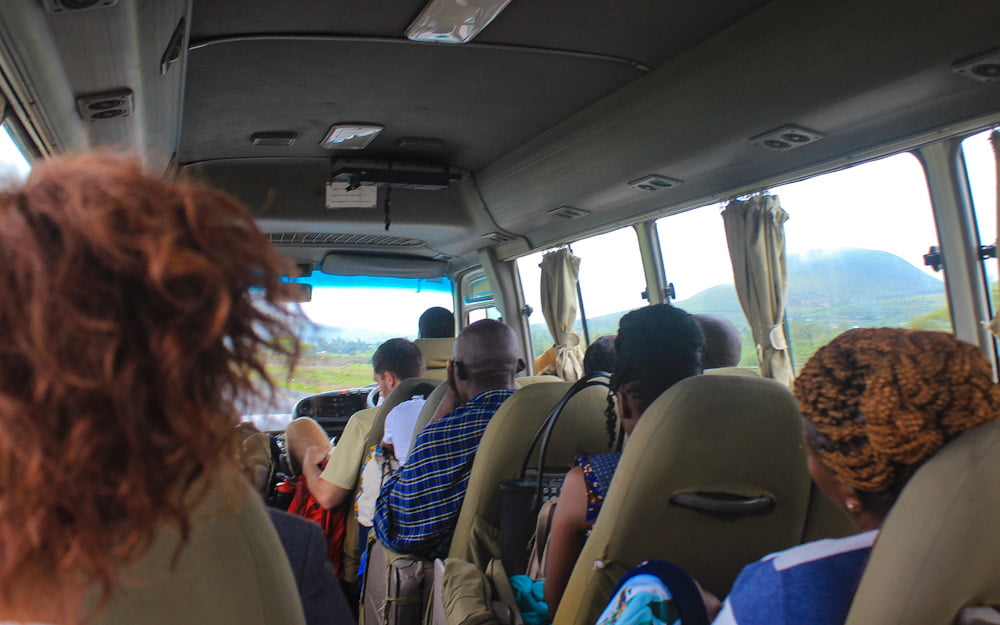
Flightless travelers often experience numerous border crossings. While I don’t particularly enjoy them, I’ve encountered no major issues. Some border crossings have minimal or no border control, while others involve bureaucratic processes. In remote locations, you might need to book a taxi to reach them.
Is Flightless Travel Expensive?
The cost of flightless travel depends on distances covered and modes of transportation. My two-year trip around the world cost 36,000 euros, averaging 1,400 euros per month, with transportation consuming a third of the budget.
However, my rapid pace of travel contributed to higher costs. Slower travel as well as more affordable destinations and experiences could have significantly reduced my expenses. During periods of minimal spending, I allocated 500-600 euros per month on the road.
Generally, direct flights are often cheaper than alternative travel modes. Cargo ship travel can cost between 100-150 euros per day, albeit being an extreme example. To cut expenses, opt for budget-friendly destinations, longer stays, and engage in free activities. Volunteering through platforms like Workaway allows connecting with local communities at minimal costs.
How to Travel without Flying
In this guide on how to travel without flying, we’ve delved into insights and tips for eco-friendly exploration. We’ve explored two main categories of flightless transport: land travel and sea travel.
Trains and long-distance buses are popular land travel options. Personal vehicles, bicycles, and hitchhiking are also viable alternatives. For sea travel, consider sailing boats, cruises, ferries, and freighter travel.
If you’re traveling on a tight budget, saving money can be achieved by choosing budget-friendly destinations, longer stays, and engaging in free activities or volunteering through platforms like Workaway. By embracing flightless alternatives, you contribute to a more sustainable and immersive global exploration experience.
Safe travels!
P.S. If you ultimately decide to fly, consider offsetting your CO2 emissions by donating to one of the world’s most effective climate organizations. To achieve this, follow the top recommendations provided by Giving Green.
The post How to Travel without Flying appeared first on Arimo Travels.
]]>The post Is CouchSurfing Safe? – Safety Tips for CouchSurfing appeared first on Arimo Travels.
]]>CouchSurfing, a hospitality exchange service that originated in the early 2000s, enables people to host travelers or stay with locals for free. While it’s not the only hosting network available, it is widely recognized as the most famous one.
Having been a member of the CouchSurfing community since 2012, I’ve stayed with nearly 100 different hosts across numerous countries and hosted several people in my own home. Most of my CouchSurfing experiences stem from my extensive 2-year trip around the world.
In summary, I believe CouchSurfing is generally safe, but even one negative experience is one too many. I’m passionate about the CouchSurfing concept and hope everyone can have positive interactions within the community. This guide aims to prevent any mishaps in the future.
Whether you’re hosting or staying with others, there are key considerations for using CouchSurfing safely. The first section provides CouchSurfing safety tips for travelers, followed by a section tailored for hosts. Additionally, I explore other hospitality networks and offer general thoughts on the safety of CouchSurfing.

CouchSurfing Safety Tips for Travelers
While I’ve had dozens of positive experiences staying with hosts, I’ve encountered a few negatives. However, my negative experiences have mostly been unpleasant, not unsafe.
I’m well aware that my gender has contributed to my safety. Sexual harassment of female guests is not common, but unfortunately it can happen. An assault is never the victim’s fault, yet one should still take a few precautions.
To mitigate risks, carefully read a potential host’s profile and ensure positive references. Take note of the guests they’ve hosted; a host predominantly accommodating young female travelers may raise concerns.
Some people use CouchSurfing for hooking up, exhibitionism, or other uncommon motives. In addition to profile reading, check the host’s group affiliations, as certain groups may indicate such intentions. Even though things like nudism are harmless, some hosts may use them as an excuse for inappropriate behavior.
While CouchSurfing can save money, always ensure you can afford alternative accommodations, allowing you to leave if you feel uncomfortable. I have twice been in a situation where my stay ended sooner than expected. In both cases, I was able to find other hosts nearby, but I could have booked a hostel or hotel if necessary.
The CouchSurfing reference system is effective, but people often avoid writing negative feedback. However, honesty is crucial for other travelers’ safety. Even if it results in discomfort or potential negative reactions from a host, providing honest references is your responsibility.
Is CouchSurfing Safe for Hosts?
Inviting strangers into your home may seem daunting, but hosting CouchSurfers is generally safe.
As a host, remember that you have the right to set your own boundaries. Establish your boundaries and communicate them clearly in your profile and during interactions.
One of my host’s once had a guest who didn’t realize they had overstayed their welcome. I’ve also been in a situation where a host didn’t want to share her food but didn’t tell it directly. To avoid misunderstandings, clearly convey your expectations. For instance, if you prefer guests not to stay in your apartment when you’re away, express this.
As with traveling, checking the profile and references of the other person is important. I also verify that guests have read my profile: in the text, I ask them to include a specific word in their request to ensure they’ve taken the time to review my information.
The extra word task has little to do with security, but it makes the stay more comfortable for all participants. I have never had any issues with my safety as a host, but I’ve had guests who I haven’t really connected with, and I’ve thought about being more picky as a host in the future.
Though safety concerns for hosts primarily revolve around theft, most travelers within the community are trustworthy. I’ve heard of one instance where a traveler had stolen cash from their host’s apartment.
In general, though, nearly all travelers are trustworthy and respect others in the community. I’ve let several strangers stay in my empty apartment – and I’ve done the same as a guest – without any issues. Still, hosts should only engage in activities they feel comfortable with.
What About Other Hospitality Networks?
CouchSurfing isn’t the sole hosting service; smaller alternatives include BeWelcome, Trustroots, and Warm Showers. I’ve predominantly used CouchSurfing, but I’ve also used Trustroots occasionally. How do these services compare in terms of safety?
In general, the other services differ from CouchSurfing in a few crucial ways.
CouchSurfing stands out due to its larger user base, providing more hosts, travelers, references, and profile information. The introduction of a subscription fee in 2021 led some travelers to explore alternatives, but this doesn’t necessarily diminish the safety of other services. Smaller networks rely more on face value trust.

Is CouchSurfing Safe? – Final Thoughts
Is CouchSurfing safe? In reality, that question is impossible to answer. While CouchSurfing incorporates safety measures and reference systems, the diversity within a community of millions of users means it can’t be flawless. My rare negative experiences have been mostly unpleasant, not unsafe.
With its reference system and possibilities to plan your stays, I consider CouchSurfing relatively safe. Asking if CouchSurfing is safe is like asking if traveling or going to a bar is safe. Most people travel and go out without any issues, but there’s always a minor chance of something going wrong.
While precautions and safety tips can be beneficial, complete certainty is unattainable. How you handle that uncertainty is a personal choice.
In my case, the benefits of CouchSurfing have far surpassed the drawbacks. Many, if not most, of my favorite travel memories are tied to CouchSurfing. I love CouchSurfing, and the point of this text is not to turn people away from it. On the contrary, I want people to enjoy the joys of CouchSurfing with minimal complications.
The post Is CouchSurfing Safe? – Safety Tips for CouchSurfing appeared first on Arimo Travels.
]]>