Subscribe to the show: Apple Podcasts, Spotify, and many more.
This episode includes work from Factal editors Theresa Seiger, Jeff Landset, and Clara Ip Wai Nam. Produced and edited by Jimmy Lovaas. Music courtesy of Andrew Gospe. These stories and others are also available in our monthly Forecast newsletter.
Chapters
- 0:00 – Intro
- 0:46 – US-Greenland-Denmark deal – an interview with Factal Senior Editor Theresa Seiger
- 4:12 – Anniversary of the disappearance of 43 students from Ayotzinapa, Mexico
- 5:40 – PTI Imran Khan protest
- 7:04 – India bank strike
- 8:17 – France nationwide public-sector strike
- 9:47 – Credits
Transcript
JIMMY LOVAAS, HOST:
Welcome to the Factal Forecast, a look at the week’s biggest stories and what they mean from the editors at Factal. I’m Jimmy Lovaas.
Today is Sept. 24, 2026.
In this week’s forecast we’ve got US President Trump’s Greenland deal, the anniversary of the Iguala mass kidnapping in Mexico, protests by supporters of Pakistan’s Imran Khan, a bank strike in India, and a public-sector strike in France.
You can also read about these stories and more in our monthly newsletter, which you’ll find a link to in the show notes.
US-Greenland-Denmark deal
Interview featuring Theresa Seiger
JIMMY: Up first, we’ll take a look at Trump’s Greenland deal. For more on that I’ve got the lead for our North America coverage, Theresa Seiger.
JIMMY: Hello, Teresa.
THERESA: Hi, Jimmy.
JIMMY: Thanks for your time today. Looking forward to hearing from you about this whole Greenland situation. So, you know, what’s going on? What can you tell us about this story?
THERESA: Well, on Tuesday, the U.S. Greenland, and Denmark signed a new security agreement that’ll increase the U.S. military presence in Greenland, which is a semi-autonomous territory of Denmark. This comes after years of U.S. President Donald Trump insisting that the U.S. needs control of Greenland for security reasons, including for the building of the “Golden Dome” missile defense system that he’s envisioned to protect America. The “Dome” was mentioned in this agreement, which was signed at the UN General Assembly in New York City, but details remain scarce. What we do know is that, as part of this agreement, the U.S. plans to build two new military bases on Greenland, one on the east coast and another in the south. The U.S. also plans to expand on activities at the one active base it has on the island, which is in the northwest. The deal also defines who can invest in some sensitive sectors in Greenland, such as critical infrastructure and the mineral sector. Only investors from NATO member countries, NATO partners, or European Union member states will be allowed, so investments from countries like China and Russia are out. That was previously a concern raised by Trump, which he used to argue for U.S. control of Greenland.
JIMMY: And what about the latest? What’s – have you seen any new developments?
THERESA: Well, the one thing that I notice is there’s no timeline included in this agreement. So what happens next is fairly open-ended.
JIMMY: Well, what sort of reactions to this have you seen? How are – how are people responding?
THERESA: Well, all sides seem to be pretty happy with this deal. Trump said it was “tremendous” for Europe and for the United States, while Danish Prime Minister Mette Frederiksen said it “strengthens [the] common defense in the Arctic.” Commentators in Greenland have also highlighted that with this agreement, Greenland was at the negotiating table. It was not at the table for the 1951 defense agreement between the U.S. and Denmark that came before it.
JIMMY: Well, you know, considering all this, what do you think folks ought to be watching for next?
THERESA: One thing that’s been noted since this agreement was signed is that Trump has not directly said that he’s no longer interested in the U.S. owning Greenland. In January, White House officials said that the president had not ruled out using military action to gain control of the island, which inflamed tensions and put pressure on the NATO alliance. Analysts have said that the agreement includes moderate improvements for the U.S. that came at a high cost in the damage done to the relationship between the U.S. and its NATO allies. With this deal, anxieties have calmed, but watch for more from Trump.
JIMMY: Well, Theresa, as usual, that’s where we’ll pause for today. But thanks again for your time and for all your Greenland / North Atlantic insights. Appreciate you.
THERESA: Thank you, Jimmy.
Anniversary of disappearance of 43 students from Ayotzinapa, Mexico
Information compiled by Jeff Landset
JIMMY: Protests are likely in Mexico on Saturday to mark the anniversary of the disappearance of dozens of students from Ayotzinapa in 2014.
Relatives of many of the 43 missing students are organizing demonstrations amid continued anger over the government’s role in the case.
Protesters are expected to pressure President Claudia Sheinbaum to reopen the investigation and help find the students’ remains.
Sheinbaum has said she expects a joint report from the Attorney General’s office and the Interior Ministry ahead of the anniversary.
Now, anniversary protests in Mexico City are usually peaceful, with demonstrators marching along Paseo de la Reforma to the Zocalo.
However, related protests have turned violent in the past.
In 2025, students rammed the gate of a military base with a truck, threw explosives and set fires. No injuries were reported, though anger toward the military is likely again this year.
The case has embroiled politicians, local police in Guerrero, organized criminals and especially the Mexican Army.
It is one of Mexico’s most well-known human rights cases.
The former governor of Guerrero was formally charged and arrested in August over his alleged involvement in the students’ disappearance.
A judge ruled that the former governor must remain in a maximum security prison while awaiting trial.
PTI Imran Khan protest
Information compiled by Theresa Seiger
JIMMY: Supporters of former Pakistani Prime Minister Imran Khan are expected to protest across the country on Sunday.
Supporters of Khan’s Pakistan Tehreek-e-Insaf party, or PTI, are planning demonstrations in several areas, including a march on the capital, Islamabad.
Previous protests in support of Khan have seen disruption and unrest across several cities.
In 2024, hundreds of people were arrested following clashes between authorities and protesters in Islamabad.
Violent protests also broke out across Pakistan after Khan was arrested on corruption charges in May of 2023.
Hundreds of people were also arrested in that incident, while schools closed and internet access was restricted across the country.
Now, the Islamabad High Court ruled on a petition challenging Sunday’s protest, saying the rally can’t infringe on the public right of movement by blocking roads.
It ordered the government to not facilitate the march in any way.
A separate petition, however, has accused the government of harassing party members in the run up to the march.
Meanwhile Khan has been held at Adiala Jail in Rawalpindi since 2023.
He was recently found to be “medically fit” following a court-ordered examination, though concerns about his condition remain and have helped fuel preparations for the protest.
India bank strike
Information compiled by Clara Ip Wai Nam
JIMMY: Bank employees and officers across India are set to begin a three-day nationwide strike on Monday.
Workers are demanding a five-day banking week and opposing a revised performance-linked incentive scheme.
Banking services are expected to be disrupted across the country, particularly at public-sector banks.
State Bank of India and Bank of Baroda have warned that their operations may be affected despite plans to limit disruptions.
The strike comes immediately after this weekend, meaning in-person banking may potentially be disrupted for five consecutive days.
Now, the United Forum of Bank Unions said the Indian Banks’ Association agreed to a five-day banking week as part of a March 2024 wage settlement.
Under that agreement, employees would work an additional 40 minutes each weekday, though government approval remains pending.
Monday’s three-day action follows a nationwide strike over the same issue back in late January.
It is also part of a wider campaign that included a one-day strike on Sept. 11 and an indefinite strike beginning Oct. 26 if workers’ demands remain unresolved.
France nationwide public-sector strike
Information compiled by Clara Ip Wai Nam
JIMMY: Public-sector workers across France are set to strike and protest on Tuesday.
All eight unions representing public-service workers are backing the action over pay and working conditions.
Disruptions are possible at schools, hospitals, local government offices and other public services.
The scale of disruptions, however, will depend on how many workers participate and which sectors issue strike notices closer to the day.
Major disruptions to transportation and air travel have not yet been confirmed and will depend on whether unions in those sectors join the action.
Of course, these types of strikes have led to clashes between protesters and police in Paris and other major cities.
During a similar strike last September, police deployed tear gas and 180 people were arrested.
Now, unions are demanding higher public-sector pay, including adjustments linked to inflation and changes to pay scales.
The dispute escalated after a July 8th meeting with the government ended without an agreement on a broad pay raise.
Unions say the proposed measures did not address falling purchasing power or difficulties recruiting workers.
JIMMY: One final note for you, the podcast will be off next week. So, our next episode will be out on Oct. 8.
In the meantime, we are a 24/7 newsroom, so be sure to follow us on Bluesky, Threads or Mastodon where we’ll still be posting breaking news.
JIMMY: As always, thank you for listening to the Factal Forecast. We publish our forward-looking podcast each Thursday to help you get a jump-start on the week ahead. Please subscribe and review wherever you find your podcasts. We’d love it if you’d consider telling a friend about us.
Today’s episode includes work from Factal editors Jeff Landset, Theresa Seiger, and Clara Ip Wai Nam. Our interview featured Theresa Seiger and our podcast is produced and edited by me – Jimmy Lovaas. Our music comes courtesy of Andrew Gospe.
Until next time, if you have any feedback, suggestions or events we’ve missed, drop us a note by emailing hello@factal.com
This transcript may be updated or revised in the future. Accuracy and availability not guaranteed.
Copyright © 2026 Factal. All rights reserved.
Music: ‘Factal Theme’ courtesy of Andrew Gospe
Verified risk intelligence by Factal supports the world’s largest corporations and 300+ humanitarian aid NGOs, helping them act faster in a world of rumors and generative misinformation. Facts save lives.
Try Factal for free or talk with our sales team (sales@factal.com) for a demo.
]]>Subscribe to the show: Apple Podcasts, Spotify, and many more.
These stories and others are also available in our monthly Forecast newsletter.
This episode includes work from Factal editors Matthew Hipolito, Jess Fino, Theresa Seiger, Jaime Calle Moreno, and Hua Hsieh. Produced and edited by Jimmy Lovaas. Music courtesy of Andrew Gospe.
Have feedback, suggestions, or events we’ve missed? Drop us a note: hello@factal.com
Chapters
- 0:00 Intro
- 0:42 Continuing electoral violence in Philippines’ BARMM – an interview with Factal editor Matthew Hipolito
- 12:14 NATO chiefs of defense meeting
- 13:36 UNGA General Debate
- 15:03 Morocco legislative elections
- 16:20 Chinese president visits the White House
- 17:39 Credits
Transcript
This is an unofficial transcript meant for reference. Accuracy is not guaranteed.
JIMMY LOVAAS, HOST:
Welcome to the Factal Forecast, a look at the week’s biggest stories and what they mean from the editors at Factal. I’m Jimmy Lovaas.
Today is Sept. 17, 2026.
In this week’s forecast we’ve got electoral violence in the Philippines, NATO Chiefs of Defense meeting, the UN General Assembly Debate, elections in Morocco, and China’s president visiting the US.
You can also read about these stories and more in our monthly newsletter, which you’ll find a link to in the show notes.
Continuing electoral violence in Philippines’ BARMM
Interview featuring Matthew Hipolito
JIMMY: Up first, we’ll look at some election-related violence in the Philippines. For more on that I’ve got fellow Factal editor Matthew Hipolito.
JIMMY: Hello, Matthew.
Matthew: Nice to see you, Jimmy.
JIMMY: So glad you’re here today. I’ve been looking forward to hearing about the situation in the southern Philippines. I know the Muslim majority autonomous region of Bangsamoro just held their first ever parliament election, but hoping you can give us a little bit of background on the situation and get us up to speed on things. So, what can you tell us about it all?
Matthew: So, the region in question is called the Bangsamoro Autonomous Region in Muslim Mindanao. And the term Bangsamoro itself means a nation of the Moro people, and Moro is a general term for the various Muslim ethnic groups in the Philippines. These areas of the southern Philippines have been majority Muslim since the 14th century, but their power has been slowly diluted over the years either by imperialist subjugation or Christian settlement that was tacitly supported by, you know, the colonial powers in Manila. The current phase of the conflict began in 1968 after the Marcos regime killed about 200 Muslim army recruits. And for a lot of it, the major group was called the Moro National Liberation Front, but after they signed a deal with the government in 1976 that outlined an autonomous, not independent, region. A splinter faction called the Moro Islamic Liberation Front formed to oppose autonomy. But that deal collapsed, and the MNLF kept fighting for several years. The framework for where we really are now came about in 2010, when the MILF said that they would also accept autonomy, but nothing less, which was a departure from their previous, like, independence-only, no autonomy stance. That led to a series of talks that, in 2018, led to the passage of what’s called the Bangsamoro Organic Law, which detailed the formation of the Bangsamoro region, which would have its own parliament and laws. And as part of that process, the MILF agreed to what they called decommissioning, where they would slowly hand over weapons and return their 40,000 fighters to civilian life. But last year, they unilaterally suspended that process, claiming that the government hadn’t implemented the agreement well enough. So there are still 14,000 armed soldiers who are very loyal to MILF in the region, which means they are only as committed to peace as, you know, the MILF is. The MNLF and the MILF were the two main groups that were really behind the Moro nationalist cause, but religious separatism is also a driver here. There were, are, a number of Islamic separatist militant groups in the region. The more important one in this case is the Bangsamoro Islamic Freedom Fighters, who broke away from MILF to fight for independence instead of autonomy, kind of mirroring how the MILF founded. And then there are a few cells, groups, called Dawlah Islamiyah and Abu Sayyaf, and they’re aligned with the Islamic State. And while these groups have really declined in strength, as recently as 2017, they had enough soldiers to capture the city of Marawi, which was home to 200,000 people. And the battle to retake it just completely gutted the center of one of the region’s major cities. But the good news here is that this was really the climax of what had otherwise been a really long, drawn-out operation against these separatist militants in this country. There have been very concerted military efforts to ensure that there’s not going to be another Marawi, and it seems to have worked. The military regularly claims to clear out militant camps. Most estimates have the strength of each of these groups in the dozens to low hundreds at the highest, and that’s still enough to carry out some attacks. One of the Dawlah Islamiyah cells bombed a university in 2023 and killed four people, but their strength has really massively declined. Before we move on, I want to be clear here and say that I’m glossing over a lot. While this is the gist of it, as far as explaining the current situation on the ground and how we got here, we’re not even coming close to beginning to understand the conflict itself or the political situation that evolved around it.
JIMMY: Well, what’s the latest? Have you seen any new developments?
Matthew: This election, one thing that I kind of left out in all that talk about organized separatist violence is that, like, run-of-the-mill political violence is also really common in the Philippines. The whole country, really, but especially in the Bangsamoro. Politics in the Philippines is very clan, very family centric, and that’s where a lot of political divisions appear. There’s actually a specific term, rido, for violence between Moro clans, and that’s really been the type of disruption that we’ve seen so far. That violence seems to be driven more by conflict between local clans and power brokers than by nationalist or Islamist ideology. The MILF and the mainstream separatist factions are, in that sense, just one of a few groups vying for power rather than dominating the fight like they did during the armed insurgency phase. But as far as violence is concerned, like I said, it’s not everywhere, but it is serious where it does exist. The headliner here is a shooting that killed three people and injured, you know, more than a dozen more at a polling station at a school in Cotabato City, but the shooting was between supporters of two political parties, so it wasn’t [an] attack on the election, like, itself — it wasn’t, like, concerted to disrupt the election. But another shooting killed one more person. You also had bombs go off in multiple areas of Cotabato as well; those injured a few people, and you had pre-filled ballots delivered to 36 precincts in Masulu in Basilan. So Comelec, the electoral commission, took direct control of both Cotabato and Maluso, which they are empowered to do. And the violence there has been going on for months. There have been a bunch of attacks, with the big one being an attempted ambush on the convoy of the interim regional head. He survived, and a bunch of local officials have been shot at or even killed. And that’s just the last few months. It’s worse during election season, but it’s really not uncommon for shootings or assaults to target politicians or their supporters anywhere in the country.
JIMMY: Well, what sort of reactions have you seen to this?
Matthew: It’s muted congratulations. Nothing you wouldn’t expect, really. Everyone’s taking the same line because it’s an easy line to take. The polls happening at all is a historic triumph for peace after 50 years of war, but the violence is unacceptable. That’s basically what you’re seeing from everybody who’s present, like police, local government statements, multiple international observer missions, and they’re right on both points.
JIMMY: Well, you know, considering all that, what do you think folks ought to be watching for next?
Matthew: Well, results indicate that the likely outcome is a hung parliament, actually, which should be interesting. The BFP, the Bangsamoro Federalist Party, has the most votes, but only around 35%. They’re the regional associate of the PFP, which is the ruling party of President Bongbong Marcos, whereas the UBJP, the United Bangsamoro Justice Party, is the official party of the MILF. They’re in second with 32% of the votes. What’s interesting is that the BFP only formed earlier this year out of basically defectors from the UBJP, which means that these parties are both full of MILF senior leaders. And in third place is the BARRM Grand Coalition, the Bangsamoro Grand Coalition, which is an alliance of some of the major clans that are outside the MILF power structure, and they have around 20% of the votes. The interplay between these parties will be really interesting. There’s really clearly a Marcos-aligned MILF faction in the BFP. And in the UBJP, there’s one that is more in tune with the traditional leadership there, but they’re otherwise very broadly similar. They’re all running on moral governance and keeping ongoing with the peace process. Which side ends up in power may very well be the one that can better court those powerful familial clans, and I’ve seen some analysts suggest that Marcos kind of encouraged the split within the MILF in order to weaken it, so as to increase the relative power of these clans, which might give the Marcos side a leg up in, you know, cutting a deal with them. One analyst I saw even went so far as to say that, like, this could lead to a world in which the MILF leadership and the Dutertes end up as partners simply by virtue of having a common enemy in the Marcoses. Basically, it boils down to whether or not the dominant political force here for the next few years will end up being the more ideologically driven Bangsamoro nationalist leadership that steered the insurgency for decades, as opposed to the more pragmatic bloc that is willing to make deals with other factions where convenient. As far as security goes, I would keep my expectations limited. Political violence is just a fact of life here, and the elections alone aren’t just going to change that. I think best case you see a slow downtrend in violence at the points where these political factions clash, like a gradual simmering down. But more realistically, I think things just kind of continue as they are. Like, while this new region – the bureaucracy may eventually develop institutions and regulations powerful enough to quash these sectional divisions, that will take a while, if it happens at all, and low-level violent conflict will just continue to be a staple of the region. Now, both of these are pretty bleak, but the worst worst case is that the BARMM just collapses entirely. Remember that the MILF suspended the decommissioning of its last 14,000 fighters because they felt that the government wasn’t implementing the peace agreement well enough. For that agreement to like finally conclude, like be made complete, both sides have to sign an exit agreement saying that the treaty’s terms have been carried out satisfactorily, and both the UBJP and the BFP are led by MILF members powerful enough that maybe they don’t feel satisfied if the new government doesn’t include them. If that happens, all bets are off. There are at least, like I said, 14,000 armed militants that are loyal to an organization that is currently tearing itself in half. Which way do they go? There are tens of thousands more that were members of this organization, armed members, just a few years ago. A lot of them are now members of the military, the police. What happens to them? What happens to their units? Like, it’s a remote possibility, but if it comes to pass, then it’s really just impossible to say how things will turn out.
JIMMY: Well, Matthew, we’ll have to pause there for today. But as usual, thanks so much for your time and for always keeping us plugged in to the important stories in the region. Appreciate you.
Matthew: Of course, Jimmy. Always happy to speak with you.
NATO chiefs of defense meeting
Information compiled by Jess Fino
JIMMY: NATO’s Military Committee will meet in Copenhagen, Denmark, for two days starting tomorrow.
The meeting will bring together 32 chiefs of defense, with heightened security expected across the Danish capital.
Officers will be on alert after several recent demonstrations in Copenhagen led to arrests.
Security will also be a major concern after a credible Iranian threat against U.S. President Donald Trump during a meeting in Ankara in May.
As you may recall, that led U.S. officials to secretly move him onto another military aircraft, while using the original Air Force One as a decoy.
Accordingly, authorities are expected to pay particular attention to potential Iranian threats during the upcoming meeting.
Now, the meeting is likely to lead to a further acceleration of NATO’s military build-up.
The meeting will also follow up on decisions made during the Ankara summit, where officials agreed to increase defense production and accelerate the delivery of weapons and military capabilities.
The ongoing war between Ukraine and Russia will also be on the agenda.
Finally, the meeting comes just days after Denmark’s foreign ministry summoned the Russian ambassador.
That, over what it said were “so-called flares” fired at an air force helicopter by a Russian frigate in international waters off the coast of Gedser.
UNGA General Debate
Information compiled by Theresa Seiger
JIMMY: World leaders will gather in New York City for the UN General Assembly’s General Debate beginning Tuesday.
World leaders gather each year at United Nations Headquarters for the General Assembly.
This year’s theme is “Restoring Trust, managing transformation: a United Nations that delivers for all.”
Israeli Prime Minister Benjamin Netanyahu is among those expected to speak.
He’s expected to draw protests during his address after representatives from dozens of countries walked out of his speech last year, while thousands of demonstrators protesting Israel’s war in Gaza gathered outside.
His arrival in New York also drew protests last year, with more than a dozen people arrested during a demonstration near the hotel where he was staying on the Upper East Side.
Netanyahu has said he plans to travel to New York despite tensions with Mayor Zohran Mamdani, who has called for his arrest under a 2024 warrant issued by the International Criminal Court.
Now, authorities have not shared details about security plans for this year’s event.
In 2025, police deployed officers and closed roads, while transportation officials warned that vehicle speeds in Midtown during the assembly are historically their slowest of the year.
As for the General Assembly, last year they voted to endorse a two-state solution to the conflict between Israel and Palestine, with Israel and the United States among 10 countries voting against the measure.
Morocco legislative elections
Information compiled by Jaime Calle Moreno
JIMMY: Millions of Moroccans will vote on Wednesday to elect the 395 members of the country’s House of Representatives.
The results will play a key role in forming Morocco’s next government.
Under the country’s multi-party constitutional monarchy, several political parties compete for seats, with King Mohammed VI selecting a prime minister from the party that wins the most seats to form a coalition government.
The current ruling parties remain at the forefront, including the National Rally of Independents, or NRI, the Istiqlal Party, and the Authenticity and Modernity Party, or PAM.
Tensions have been rising between key figures from RNI and PAM.
Now, prosecutors have been told to investigate election complaints and coordinate with security services, which are expected to be deployed across the country during the vote.
First-time voters make up around 15 percent of the electorate and come to the polls following large-scale, Gen Z-led protests last September.
Of course, the next government will face major foreign policy issues.
Those include a scheduled UN Security Council vote in October on the disputed Western Sahara and the recent migration crisis in Spain’s Moroccan enclave of Ceuta.
Chinese president visits the White House
Information compiled by Hua Hsieh
JIMMY: Chinese President Xi Jinping is expected to meet with U.S. President Donald Trump in Washington, D.C., on Sept. 24.
The meeting comes as a one-year trade truce between China and the United States is set to expire on Nov. 10.
Reports suggest both sides are looking to extend the agreement, though details about the other potential tariff measures remain unclear.
Discussions are also expected to include competition over artificial intelligence and geopolitical tensions involving Iran and Taiwan.
Of course, Xi’s previous visits to the US have drawn protests.
During his last visit in 2023, protesters blocked streets outside the APEC forum in San Francisco.
Now, authorities in Washington, D.C., are likely preparing for similar demonstrations during his visit.
The trip comes against the backdrop of a prolonged economic and strategic standoff between Washington and Beijing after the two leaders met during Trump’s trip to China, earlier in May.
Neither Chinese nor U.S. officials have provided further details about Xi’s schedule.
Reports suggest Xi is likely to arrive in the US on Sept. 23, skipping the UN General Assembly for meetings at the White House, before leaving the country on Sept. 25.
JIMMY: As always, thank you for listening to the Factal Forecast. We publish our forward-looking podcast each Thursday to help you get a jump-start on the week ahead. Please subscribe and review wherever you find your podcasts. We’d love it if you’d consider telling a friend about us.
Today’s episode includes work from Factal editors Jess Fino, Theresa Seiger, Jaime Calle Moreno, and Hua Hsieh. Our interview featured editor Matthew Hipolito and our podcast is produced and edited by me – Jimmy Lovaas. Our music comes courtesy of Andrew Gospe.
Until next time, if you have any feedback, suggestions or events we’ve missed, drop us a note by emailing hello@factal.com
This transcript may be updated or revised in the future. Accuracy and availability not guaranteed.
Copyright © 2026 Factal. All rights reserved.
Music: ‘Factal Theme’ courtesy of Andrew Gospe
Verified risk intelligence by Factal supports the world’s largest corporations and 300+ humanitarian aid NGOs, helping them act faster in a world of rumors and generative misinformation. Facts save lives.
Try Factal for free or talk with our sales team (sales@factal.com) for a demo.
]]>Subscribe to the show: Apple Podcasts, Spotify, and many more.
This episode includes work from Factal editors Ahmed Namatalla, Michael Archer, Alex Moore, Jess Fino, and James Morgan. Produced and edited by Jimmy Lovaas. Music courtesy of Andrew Gospe.
Have feedback, suggestions, or events we’ve missed? Drop us a note: hello@factal.com
Chapters
- 0:00 Intro
- 0:40 Yemen war escalation – an interview with Factal Senior Editor Ahmed Namatalla
- 5:38 BRICS summit
- 7:15 Sweden parliamentary election
- 8:13 Mexico Independence Day
- 9:43 Russian parliamentary elections
- 11:35 Credits
Transcript
This is an unofficial transcript meant for reference. Accuracy is not guaranteed.
JIMMY LOVAAS, HOST:
Welcome to the Factal Forecast, a look at the week’s biggest stories and what they mean from the editors at Factal. I’m Jimmy Lovaas.
Today is Sept. 10, 2026.
In this week’s forecast we’ve got war escalation in Yemen, the BRICS summit, parliamentary elections in Sweden and Russia, and Mexico’s Independence Day.
You can also read about these stories and more in our monthly newsletter, which you’ll find a link to in the show notes.
Yemen war escalation
Interview featuring Ahmed Namatalla
JIMMY: Up first, we’ll take a look at the war in Yemen. For more on that, here’s the lead for our Middle East and Africa coverage, Ahmed Namatalla.
JIMMY: Hello, Ahmed.
AHMED: Hi, Jimmy.
JIMMY: Thanks for taking time to talk with us today. I know you’ve been watching the situation with Yemen closely, and well, looking forward to you catching us up on what’s going on with the war.
AHMED: What we’re seeing right now is a significant escalation in the fighting between Yemen’s Houthis, who are allied and backed by Iran, and Yemen’s internationally recognized government, which is allied and backed by Saudi Arabia, and by extension the United States. The fighting appears to be in rural areas close to Bab el-Mandeb, which is the southern entrance and exit point to the Red Sea. It likely involves Saudi Arabian Air Force, but Saudi Arabia has yet to take responsibility for direct involvement in the fighting. This comes as the escalation continues in the US-Iran War front, and the two are significantly increasing levels of violence around the region and posing a threat for even other fronts to open up.
JIMMY: What about the latest? Have you seen any new developments?
AHMED: The most notable developments have been the Houthis attacking Saudi Arabian territory, including oil assets in the country’s southwestern region that is close to the border and close to the Yemeni territory that is controlled by the Houthis. This has disrupted Saudi Arabia’s oil production and exports. It has also prompted Saudi Arabia to threaten to retaliate, although we have not seen that yet – at least not on a wide scale. The Houthis are saying that they’re defending their territory against Saudi Arabian attacks and attacks by the government of Yemen, which is allied with Saudi Arabia, especially after strikes that killed, according to the Houthis, dozens of people in a prison, and also attacks on other civilian sites.
JIMMY: Well, what sort of reactions have you seen to all this?
AHMED: Well, so far the United States has issued statements supporting Saudi Arabia and the government of Yemen against the Houthis. That is to be expected. Meanwhile, Iran has done the same for its Houthi allies, but both sides have stopped short of declaring any sort of military involvement or financial support, any sort of direct intervention in this conflict.
JIMMY: Well, considering all that, what do you think folks ought to be watching for next then?
AHMED: Well, what I think we should be watching out for is the convergence of these two wars that are happening in the Persian Gulf region – the war in Yemen and the war in Iran – ahead of U.S. elections. We’re seeing a clear push by Iran and its allies in Yemen to respond forcefully to attacks on their territory. They are escalating, and one can deduce from that, that they’re not expecting forceful retaliation ahead of the elections in the United States. We have the potential of the Houthis targeting even higher profile Saudi Arabian assets, and they issued a statement today threatening that much. Iran has also said that it would target higher profile U.S. assets around the region if the escalation continues. And so, both conflicts definitely have the potential to become more violent and even intertwined because of the alliances that were formed even before they were started.
JIMMY: Well, Ahmed, as usual, we’ll pause there for today. But again, thanks for your time, thanks for keeping us plugged in, and appreciate you.
AHMED: Thank you, Jimmy.
BRICS summit
Information compiled by Michael Archer
JIMMY: India will host and chair the 18th BRICS summit on Saturday in New Delhi.
This year’s summit comes 20 years after the group was originally founded in 2006.
The group is now made up of 11 countries, including Brazil, Russia, India, China, South Africa, Egypt, Ethiopia, Iran, Saudi Arabia, the UAE, and Indonesia. Together, they represent roughly 49 percent of the world’s population.
Of course, Iran is also set to join the new BRICS development bank, potentially offering development financing to a war-embroiled nation under heavy U.S. sanctions.
Now, Iranian President Masoud Pezeshkian, Russian President Vladimir Putin and China’s Xi Jinping, among other leaders, are all expected to attend.
That, amid growing global tensions in their home countries.
Putin is expected to meet with Indian Prime Minister Narendra Modi during the summit.
Recent public meetings between China and Iran’s leaders have been low-key to avoid the appearance of collaboration ahead of Xi’s planned trip to the United States.
As for things in the host city, approximately 7,000 security personnel, including police and paramilitary forces, will be posted around Bharat Mandapam and nearby hotels, the airport and other high-trafficked areas.
Police are also monitoring social media closely for threats, while strengthening anti-terror measures.
Finally, several roads in the Indian capital are scheduled to be wholly or partially closed to accommodate the event.
Sweden parliamentary election
Information compiled by Alex Moore
JIMMY: Sweden will hold parliamentary elections on Sunday.
They’ll be Sweden’s first parliamentary election in four years after the 2022 vote knocked Social Democrat Prime Minister Magdalena Andersson from power despite her party winning a plurality of seats.
Following the 2022 race, a minority right-wing government was formed with Moderate Party leader Ulf Kristersson serving as prime minister.
Now, polling projections for the vote show Sweden’s Social Democrat-led center-left opposition emerging victorious, signalling a likely return of Andersson to the prime minister’s office.
If the projections hold, the right-wing Sweden Democrats would return to the opposition after holding power for the first time after years of being parliamentary outcasts.
While in power, the Sweden Democrats moved to pass multiple sweeping immigration reform laws, enacting key long-term policy planks for that party.
Mexico Independence Day
Information compiled by Jess Fino
JIMMY: Mexico and its citizens around the world will celebrate the country’s independence day on Tuesday.
As usual, there will be traditional parades and an official ceremony in Mexico City.
In fact, hundreds of thousands of people are expected to gather at the Zócalo, with the main celebration taking place outside the National Palace.
Previous years have seen as many as 400,000 attendees.
Now, the majority of crowds will likely gather between 9 p.m. and 11 p.m.
That’s about the time when President Claudia Sheinbaum will lead a traditional ceremony from the balcony of the National Palace known as the “grito,” or “shout” in English – the national cry of independence.
There will be concerts and fireworks that evening and a military parade the following day.
Authorities will carry out inspections in Mexico City in areas with the highest production, storage, and sale of fireworks.
That, due to the risk involved in handling these materials during the national holidays.
Metro passengers will be checked at all station entrances as part of the “Zero Fireworks” operation.
Police in cities like Puebla and Chihuahua have announced the deployment of additional personnel in hotspots such as bars, restaurants and squares.
Road closures are also expected on the day.
Finally, the yearly parade in New Jersey for the Mexican diaspora has been postponed indefinitely amid fears of ICE officers’ presence.
Russian parliamentary elections
Information compiled by James Morgan
JIMMY: Russia is preparing to hold elections starting next Friday.
They’ll select State Duma and regional officials amid rampant speculation over a possible mass mobilization event following the vote.
Of course, the parliamentary elections in Russia are expected to be neither free nor fair, with President Vladimir Putin’s United Russia party set to reassert its dominance in what is likely to be pitched as an expression of popular support for the war in Ukraine.
Still, a total of 450 seats are up for grabs in Russia’s State Duma and the heads of 11 regions will also be elected to office.
Additionally, this year will be the first where residents of the Russia-occupied areas of Ukraine will be allowed to take part.
Moscow has tightened its grip on the remaining anti-war political opposition ahead of the vote, banning minority party Yabloko from participating based on accusations of funding from abroad and copyright infringement.
Now, the election comes at a fraught time for the Kremlin as progress on the battlefield has stalled and Ukraine’s long-range strike campaign on oil and gas infrastructure has triggered nationwide fuel shortages.
Falling recruitment numbers and heavy battlefield losses have also fuelled speculation the Kremlin will be forced to declare a mobilization event following the elections to bolster its ranks.
Moscow has vehemently denied the claims as it did prior to the previous partial mobilization in 2022, branding them as deliberate fabrications.
Despite this, there are few options available to Moscow and, while a mobilization event may not come straight after the elections, it is looking increasingly likely that Russia will resort to such a measure in preparation for a spring offensive in 2027.
JIMMY: As always, thank you for listening to the Factal Forecast. We publish our forward-looking podcast each Thursday to help you get a jump-start on the week ahead. Please subscribe and review wherever you find your podcasts. We’d love it if you’d consider telling a friend about us.
Today’s episode includes work from Factal editors Michael Archer, Alex Moore, Jess Fino, and James Morgan. Our interview featured editor Ahmed Namatalla and our podcast is produced and edited by me – Jimmy Lovaas. Our music comes courtesy of Andrew Gospe.
Until next time, if you have any feedback, suggestions or events we’ve missed, drop us a note by emailing hello@factal.com
This transcript may be updated or revised in the future. Accuracy and availability not guaranteed.
Copyright © 2026 Factal. All rights reserved.
Music: ‘Factal Theme’ courtesy of Andrew Gospe
Verified risk intelligence by Factal supports the world’s largest corporations and 300+ humanitarian aid NGOs, helping them act faster in a world of rumors and generative misinformation. Facts save lives.
Try Factal for free or talk with our sales team (sales@factal.com) for a demo.
]]>Listen now or download on your favorite platform.
Forecast update: Starting Sept. 3, Factal Forecast is moving to a monthly newsletter, published the first Thursday of each month with a broader view of upcoming events.
The Forecast podcast will remain weekly, highlighting key stories. If you’re subscribed to this newsletter, you’ll continue receiving the weekly podcast, too.
Welcome to Factal Forecast, a look at the month’s biggest stories from the editors at Factal.
We publish our forward-looking note the first Thursday of every month to help you get a jump-start on what’s ahead.
September 2026
A Look Ahead
Sept. 7 | Nationwide rail strike in Italy
Italian rail workers, including train drivers, are set to strike for 24 hours, starting at roughly 9:18 p.m. on Sept. 7 until 9:17 p.m. on Sept. 8.
What’s happened so far
Several organizations including trade unions have scheduled the industrial action due to workplace safety concerns and job security. The organizations allege that there were also failures to respond to requests for a renewal of their sector’s collective bargaining agreement. The rail strike marks the first mass stoppage this fall to impact the Italian transport sector as workers continue to air long-held grievances regarding working conditions and job security.
The impact
Severe disruptions are expected on passenger rail nationwide as drivers and on-board staff at Trenitalia Tper, Trenitalia and Mercitalia Rail strike. Freight rail services are also expected to be impacted. A separate stoppage affecting freight operator Captrain Italia over the same period is also expected to cause disruption.
Sept. 13 | Sweden parliamentary election
Sweden will hold parliamentary elections on Sept. 13.
What’s happened so far
This month’s election will be Sweden’s first parliamentary election in four years after the 2022 vote knocked Social Democrat Prime Minister Magdalena Andersson from power despite her party winning a plurality of seats. Following the 2022 race, a minority right-wing government was formed with Moderate Party leader Ulf Kristersson serving as prime minister.
The impact
Polling projections for the forthcoming vote show Sweden’s Social Democrat-led center-left opposition emerging victorious, signalling a likely return of Andersson to the prime minister’s office. If the projections hold, the right-wing Sweden Democrats would return to the opposition after holding power for the first time after years of being parliamentary outcasts. While in power, the Sweden Democrats moved to pass multiple sweeping immigration reform laws, enacting key long-term policy planks for the party.
Understand the past. Prepare for the future.

Headed to GSX in Atlanta next month? Schedule a meeting to get an early look at our two new products launching this fall: Factal Explorer and Factal Advance.
If you’re not at GSX, sign up for the waitlist to be one of the first to get a trial this fall.
Sept. 18 | Russian parliamentary elections
Russia is preparing to hold elections starting Sept. 18 to select State Duma and regional officials amid rampant speculation over a possible mass mobilization event following the vote.
What’s happened so far
The parliamentary elections in Russia are expected to be neither free nor fair, with President Vladimir Putin’s United Russia party set to reassert its dominance in what is likely to be pitched as an expression of popular support for the war in Ukraine. A total of 450 seats are up for grabs in Russia’s State Duma and the heads of 11 regions will also be elected to office. Additionally, this year will be the first where residents of the Russia-occupied areas of Ukraine will be allowed to take part. Moscow has tightened its grip on the remaining anti-war political opposition ahead of September’s vote, banning minority party Yabloko from participating based on accusations of funding from abroad and copyright infringement.
The impact
The election comes at a fraught time for the Kremlin as progress on the battlefield has stalled and Ukraine’s long-range strike campaign on oil and gas infrastructure has triggered nationwide fuel shortages. Falling recruitment numbers and heavy battlefield losses have also fuelled speculation the Kremlin will be forced to declare a mobilization event following the elections to bolster its ranks. Moscow has vehemently denied the claims as it did prior to the previous partial mobilization in 2022, branding them as deliberate fabrications. Despite this, there are few options available to Moscow and, while a mobilization event may not come straight after the elections, it is looking increasingly likely that Russia will resort to such a measure in preparation for a spring offensive in 2027.
Sept. 24 | Chinese president visits the White House
Chinese President Xi Jinping and U.S. President Donald Trump are expected to meet for talks in Washington, D.C., on Sept. 24.
What’s happened so far
The visit comes against the backdrop of prolonged economic and strategic standoff between Washington and Beijing after the two leaders met during Trump’s trip to China in May. While neither Chinese or U.S. officials have provided further details on Xi’s schedule, according to reports, Xi is likely to arrive in the states on Sept. 23, skipping the UN General Assembly for meetings at the White House, and leaving the country on Sept. 25.
The impact
As the current one-year trade truce between China and the United States is set to expire on Nov. 10, reports suggest that both sides are looking to extend the agreement, with details on other potential tariff measures largely unclear. Analysts and international media will also be keeping an eye on discussions around AI competition and geopolitical tensions in Iran, as well as Taiwan.
Sept. 30 | Iraq deadline for U.S. withdrawal, militia disarmament
Iraq’s government is attempting to assert its authority by demanding that Iranian-backed militias affiliated with its army give up their weapons, coinciding with the final withdrawal of U.S. military forces from the country at the end of September.
What’s happened so far
Iraq’s new Prime Minister Ali al-Zaidi has worked to extract his country from the wider regional conflict sparked by the U.S.-Israeli war on Iran, finding little traction because of decades-long sectarian disputes intensified by U.S. and Iranian interventions to wield influence over one of the world’s biggest oil producers. While the government has succeeded in convincing the U.S. military to leave and some armed factions to surrender their weapons, some of the country’s biggest militias refuse. Groups including Kata’ib Hezbollah, which attacked U.S. assets in Iraq during the height of this year’s Iran war, label themselves as resistance groups fighting occupation.
The impact
The government is insisting the withdrawal of U.S. troops on Sept. 30 ends the need for the militias to possess weapons outside state authority, but is continuing to hold negotiations in an effort to exert control over their use at minimum. Some lawmakers have threatened to prosecute militants who don’t comply under the country’s 21-year-old terrorism law, though local observers say the government is unlikely to escalate the dispute due to the potential of sparking violence. With the government’s deadline approaching, officials are signaling Sept. 30 will mark the start of disarmament, rather than a firm conclusion of the process.
What Else Matters
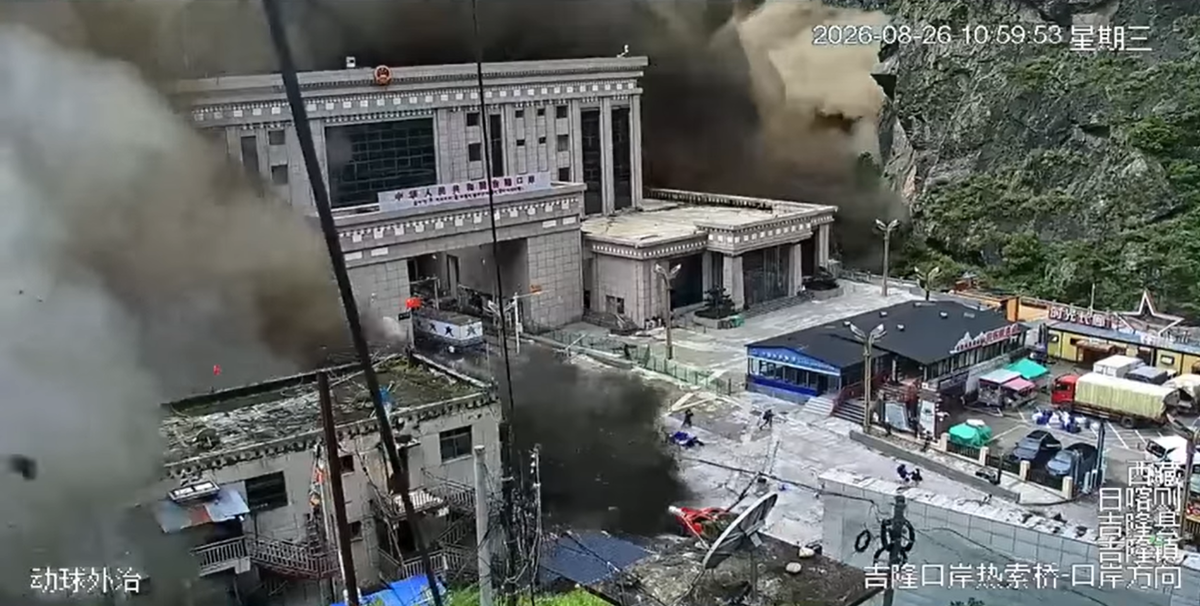
Nepal flooding
On Aug. 26, a flash flood hit the Rasuwa region of Nepal, along with neighboring border areas in Tibet and China, killing more than 1,200 people and leaving another 4,000 missing. The flood, caused by glacial collapse, came with little to no warning — though a new report suggests warning signs were visible — and sent mud, rocks and ice cascading into nearby communities. The incident came as Nepal still is recovering from two floods in July 2025 and September 2024.
Watch for: Search and rescue efforts for the thousands missing continue to be hampered by ongoing risk posed by two lakes formed during the initial glacial collapse. Efforts have already been halted briefly when these lakes overflowed. More overflows — and delays in search and rescue — are possible as heavy rains continue to hit the region, and officials are forecasting continued activity through Thursday. Transportation to and from flooded communities continue to be limited with several roads closed indefinitely. Rescuers are focused on a series of hydroelectric project tunnels, where an estimated 900 workers are believed to still be trapped.
Forecast podcast: Nepal flood death toll tops 1,200 as rescuers race to find thousands more missing
Editors Jimmy Lovaas and Halima Mansoor discuss the devastating flooding in Nepal, plus more on a rail strike in Italy, the Republican midterm convention in Dallas, the peak of the Atlantic hurricane season, and the 25th anniversary of the 9/11 attacks.
Subscribe to the show: Apple Podcasts, Spotify, and many more.
This episode includes work from Factal editors Halima Mansoor, Mai Hoang, James Morgan, Theresa Seiger, Jeff Landset, and Vivian Wang. Produced and edited by Jimmy Lovaas. Music courtesy of Andrew Gospe.
Possible Russian mobilization
Russia’s lack of progress on the battlefield in Ukraine coupled with Ukraine’s successful, long-range strike campaign have fueled speculation that the Kremlin may declare another mass mobilization following the Russian parliamentary elections in September. The Kremlin has repeatedly denied such claims, just as it did prior to declaring the previous partial mobilization in 2022, but Russian leadership faces undeniable problems both on the battlefield and at home that may force its hand. Perhaps the most pressing issue affecting Russian advances in Ukraine is the recruitment crisis as the Kremlin struggles to enlist enough soldiers to replace incremental losses in Ukraine. Independent Russian media reported in the second quarter of 2025 that the number of new recruits was at its lowest in two years.
Watch for: In the near term, Russian President Vladimir Putin has called for an increase in attacks on Ukraine’s energy infrastructure, mirroring tactics from last fall and winter when Ukraine suffered regular blackouts and heating disruption during the coldest months. Reporting suggests that while the issue of mobilization is being discussed as an option by Russian leadership, a definitive decision has yet to be made. The Kremlin is likely to use the results of the parliamentary elections in September as evidence of popular support for Putin and the war in Ukraine and may heighten risks of a possible mobilization. In the event of a mobilization, the effect on the battlefield will not be immediate and if one is declared it is likely to be in preparation for a large spring offensive. In the meantime, there has been a spike in citizens leaving the country, namely through the Upper Lars crossing with neighboring Georgia, as Russians themselves weigh up the likelihood of a fresh mobilization.
Extended Outlook
What’s on our radar in the coming weeks…
Sept. 4-11
Sept. 4
- Rock in Rio begins in Brazil
- Eastern Idaho State Fair begins
- Washington State Fair begins
- FIBA Women’s Basketball World Cup in Berlin
Sept. 6
- State elections in Saxony-Anhalt, Germany
- The Big Half in London
Sept. 8
- 81st session of UN General Assembly
- New Hampshire primary
- UNESCO peace and security forum opens in Burundi
Sept. 9
- Rhode Island primary
Sept. 10
- New Mexico State Fair begins
- Utah State Fair begins
Sept. 11
- 25th anniversary of 9/11 attacks
- F1 Spanish Grand Prix
- Rock in Rio Brasil
- Kansas State Fair begins
- Rosh Hashanah begins
Sept. 12-18
Sept. 12
- Clay County Fair begins in Spencer, Iowa
- Eastern Idaho State Fair concludes in Blackfoot
Sept. 13
- March against violence planned in Culiacán, Sinaloa, Mexico
- Swedish general election
Sept. 15
- Delaware primary
- South Carolina Senate District 15 special primary runoff
Sept. 16
- Mexican Independence Day
- Malaysia Day (Hari Malaysia)
Sept. 17
- Oklahoma State Fair begins
Sept. 18
- Chile’s Independence Day
- San Sebastián International Film Festival opens (74th edition)
- The Big E (Eastern States Exposition) begins in West Springfield, Mass.
- Russian State Duma elections
Sept. 19-25
Sept. 19
- Oktoberfest begins in Munich, Germany
- Asian Games 2026 in Nagoya, Japan
Sept. 20
- State elections in Berlin and Mecklenburg-Vorpommern, Germany
Sept. 21
- China-Tajikistan joint drills
Sept. 22
- UN General Assembly high-level week and general debate begins
Sept. 23
- Morocco general election
Sept. 25
- Virginia State Fair begins
- Texas State Fair begins
- Korea’s Mid-Autumn Festival / Chuseok begins
Sept. 26-Oct. 2
Sept. 27
- São Tomé and Príncipe parliamentary election
Oct. 1
- Beginning of peak wildfire season for New South Wales, Victoria, the Australian Capital Territory and southern Western Australia
- Arizona State Fair begins
Oct. 2
- Austin City Limits begins
Top photo: Russian President Vladimir Putin meets with deputies of the eighth State Duma. (Photo: Sofia Sandurskaya, TASS via Wikimedia Commons)
Thanks for reading! If you’d like the Forecast in your inbox, you can sign up for free.
Verified risk intelligence by Factal supports the world’s largest corporations and 300+ humanitarian aid NGOs, helping them act faster in a world of rumors and generative misinformation. Facts save lives.
Try Factal for free or talk with our sales team (sales@factal.com) for a demo.
]]>Discontent has a way of ignoring borders.
As citizens in one country take to the streets in frustration with their political climate or the standard of living, their neighbors soon take note, and question the efforts of their own leaders.
Welcome to The Debrief, from the editors at Factal. Each month, we reflect upon an impactful yet underreported story that has significant regional or global implications. We’ll examine how the story has progressed and how Factal’s coverage has shifted to ensure we are always supplying our members with the most up-to-date, accurate, factual reporting.
If you like what you’re reading, sign up to receive The Debrief in your inbox on the first of every month here.
That much was clear in late 2019, as demonstrations cascaded across South America over the course of several months, sweeping through several nations while lacking a singular common cause. Bolivians marched over allegations of electoral fraud. Chileans were sparked by a proposed subway fare hike in Santiago. The people of Ecuador sought (and ultimately achieved) the return of fuel subsidies following cuts. Colombians protested rumored pension cuts, with national strikes that became broader anti-government protests.
Seven years later, a series of devastating earthquakes and a pair of razor-thin presidential elections have again raised the specter of possible unrest as governments struggle to meet the needs of their populations.
“There is a link between all these Latin American countries that can see what is going on in each other and kind of inspire them to do the same,” said Factal Senior Editor Jeff Landset.
“[The earthquakes] magnified the vulnerability of the people who were living in those countries at that time.”
Recovery work continues across northwestern and central Venezuela after two strong earthquakes west of Caracas in June left more than 6,500 people dead, but progress has been slow as the country continues to grapple with the fallout of years of political instability, punctuated by the U.S.-led operation in the opening days of January to oust Nicolás Maduro. That instability was on full display in the immediate aftermath of the earthquakes, when a widely-shared video showed top government minister Diosdado Cabello turning away an American rescue worker attempting to reach the rubble of a collapsed building.
Recent research has shown just how important a robust, effective response is to quelling discord. A study released in April from the Society for Risk Analysis found a 69 percent spike in public protests across Latin America in the immediate aftermath of a disaster, highlighting the need for the quick, efficient distribution of resources to the most heavily impacted areas.
“[The earthquakes] magnified the vulnerability of the people who were living in those countries at that time,” Landset said.
A new government has gotten higher marks in neighboring Colombia in the wake of a 7.4 magnitude tremor in August that killed at least 330 people and injured more than 4,500 others. That disaster followed a hotly-contested vote that saw conservative Abelardo de la Espriella notch the smallest-ever victory for a presidential election in that country, defeating leftist Senator Iván Cepeda by just over 250,000 votes out of 26 million cast. That result did mark a return to form for Colombia, which had consistently opted for conservative governments until the election of Gustavo Petro as the nation’s first left-wing president in 2022.
The stakes are high for Espriella in the wake of the quake, with concerns the disaster could worsen existing problems the country has faced. According to the United Nations’ World Food Programme, nearly seven million people were experiencing moderate to severe food insecurity, including close to one-in-three people in the hardest hit Chocó and Valle del Cauca areas.
“If people get to a point where fuel prices are astronomical or out of touch, that could lead to people taking to the streets.”
While just under a percentage point separated the presidential candidates in Colombia, an even closer race played out in neighboring Peru in June. A sharply divided electorate has swung back and forth between conservative and leftists governments before electing right-winger Keiko Fujimori as its ninth president in the last 10 years in a race that was decided by approximately 50,000 votes.
“A lot of the turmoil and instability in that country can be linked back to just how 50-50 people are [about] whether or not they should have a left-leaning or right-leaning president,” Landset said.
For now at least, the country will once again be guided by conservatives, joining the rightward shift that has also seen conservatives elected in Chile, Ecuador, Argentina and Colombia.
The ongoing disaster responses will go a long way toward determining how residents respond to their new governments, but it’s far from the only factor that will dictate their satisfaction.
As the war in Iran continues to put pressure on energy markets, a key flashpoint in South America in the coming weeks may turn out to be fuel subsidies.
“A lot of the protests that we saw earlier this year basically came down to the cost of living,” Landset said. “If people get to a point where fuel prices are astronomical or out of touch, that could lead to people taking to the streets.”
And if protests break out in one place, it may encourage others to follow.
“I think that if some of these countries can see, especially now that there’s social media and the videos that are coming from different countries are easily accessible on their feeds, they can ask themselves, ‘Hey, why aren’t we protesting just like the people in Peru or Chile or Colombia?’” Landset said.
Written by Joe Veyera. Edited by Jillian Stampher.
Further reading:
- Review Factal’s coverage of Venezuela’s recent earthquakes on our topic page (members link)
- Watch this episode of The Debate from France 24 on the aftermath of the Venezuelan earthquakes and what could come next.
- Read Encyclopedia Brittanica’s breakdown of Peru’s recent presidential history.
- Revisit this CNN analysis from 2019 on the factors that led to unrest across Latin America at that time.

Top photo: U.S. personal with Miami-Dade Urban Search and Rescue team walk the disaster zone in La Guaira, Venezuela on June 28, 2026, after two strong earthquakes struck west of Caracas. (Photo/ U.S. Marine Corps, LCpl Allison White)
Thanks for reading! If you enjoyed this edition, sign up here to receive The Debrief in your inbox on the first of every month.
Verified risk intelligence by Factal supports the world’s largest corporations and 300+ humanitarian aid NGOs, helping them act faster in a world of rumors and generative misinformation. Facts save lives.
Try Factal for free or talk with our sales team (sales@factal.com) for a demo.
]]>The Forecast podcast will remain weekly, highlighting key stories. If you’re subscribed to this newsletter, you’ll continue receiving the weekly podcast, too.
Southern Thailand saw dozens of coordinated arson attacks last weekend that left several people injured and authorities scrambling to respond. In this week’s Factal Forecast podcast, Senior Editors Jimmy Lovaas and Halima Mansoor discuss the spate of violence, lack of claims of responsibility, and the separatist insurgency the provinces involved have been dealing with for decades.
Listen now or download on your favorite platform.
Week of Aug. 28-Sept. 4
Welcome to Factal Forecast, a look at the week’s biggest stories from the editors at Factal.
We publish our forward-looking note each Thursday to help you get a jump-start on the week ahead.
A Look Ahead
Aug. 28 | March on Washington, D.C., for voting protections
Thousands of people are expected to take to the streets of Washington, D.C., on Friday in support of voting rights on the 63rd anniversary of the March on Washington.
What’s happened so far
Civil rights leaders announced plans for the march earlier this summer following court decisions that organizers say have weakened federal protections against racial discrimination in voting. Rev. Al Sharpton’s National Action Network called on people to “stand to protect our democracy, defend our civil rights, and continue the work of those who marched before us.” Participants are expected to gather at the Lincoln Memorial on the National Mall before the start of the event on Friday morning.
The impact
Authorities have not announced any traffic impacts specifically associated with the march, though advisories remain in effect for several streets due to last weekend’s Freedom 250 Grand Prix of Washington, D.C. Organizers stressed that Friday’s march is “planned as a safe, welcoming, and family friendly gathering” that is “rooted in nonviolence.” March marshals and other volunteers will be on site to support the safety of the event and answer questions.
Aug. 29 | Iceland referendum on accession negotiations with the EU
Iceland will hold a referendum on Saturday concerning accession talks with the European Union.
What’s happened so far
Iceland first held talks with Brussels on EU accession in the wake of the 2008 financial collapse, though talks formally ended in 2015 after the election of a eurosceptic government. The current government that formed in 2024, however, leans more pro-Europe and has agreed to move forward with a referendum on reigniting talks with Brussels.
The impact
While a “no” vote would mean Iceland will maintain the status quo, a “yes” would merely kickstart the arduous negotiating process that is EU expansion, which would include assessing Iceland on a host of criteria ranging from financial systems to corruption to agricultural regulations before EU member states hold a vote. Proponents of accession in Reykjavik cite the growing threat of U.S. President Donald Trump’s territorial ambitions in the Arctic, as well as the cost-of-living benefits of joining the Eurozone and replacing the more volatile Icelandic Krona. Opponents emphasize Iceland already enjoys many EU perks as a member of the European Economic Area and Schengen zone without forfeiting sovereignty over key industries like fishing.
Headed to GSX in Atlanta next month? Be one of the first to see what’s coming to Factal.
GSX attendees will get an early look at two new powerful products launching this fall:
- Factal Explorer – AI discovery tool grounded in eight years of verified Factal intelligence and real-time updates
- Factal Advance – Upcoming events and forward-looking insights mapped to your assets, all verified and written by Factal editors.
The largest global companies rely on Factal to get the facts right in real time. Now, Explorer and Advance extend that intelligence beyond what’s happening now, helping teams look back for context and ahead to what’s next.
We’ll be offering early demos at booth #3410 throughout GSX. Schedule a time with our team.
Aug. 30 | U.S. Open begins
The singles portion of the final Grand Slam tournament of the year will begin Sunday at the Billie Jean King National Tennis Center in the Queens borough of New York City, though qualifying and mixed doubles have been going on since Aug. 23.
What’s happened so far
The 2025 edition of the Open shattered attendance records, drawing more than 1.14 million fans over three weeks to New York City for the second consecutive year, a half-million more than the 645,000 that the World Cup brought to the city. Amid some grousing online over the high ticket prices, the tournament announced, in partnership with New York City Mayor Zohran Mamdani, that 1,000 tickets were to be released at more affordable prices for city residents.
The impact
Typical security preparations figure to bring major disruptions to the area, with closures expected to affect major thoroughfares like the Grand Central Parkway and the Long Island Expressway, as well as local roads. While no specific disruption is anticipated, previous editions have seen small protests against the event’s sponsors nearby, which may be larger in scope this year with the sharp rise in global tensions, or even inside the venue, akin to a 2023 Climate Rebellion protest that saw a demonstrator glue themselves to the floor in the stands, causing a highly-visible, 49-minute delay. President Donald Trump’s appearance at the men’s final in 2025 caused a 30-minute delay due to enhanced security measures, and still left many fans waiting outside as play began, but there’s no word on whether he plans to attend any matches at this year’s tournament.
Aug. 30 | Guinea-Bissau referendum
Guinea-Bissau’s military government will hold a national referendum on Sunday to change the country’s constitution less than a year after seizing power in the midst of a disputed general election.
What’s happened so far
The West African country is reeling from years of instability culminating in a successful military coup in November after multiple failed ones against ex-President Umaro Sissoco Embaló, who refused to leave office at the end of his term earlier in 2025. Coup leader Gen. Horta Inta-A Na Man is presiding over the referendum, which would change the constitution to consolidate power in the hands of the president instead of the prime minister and legislature. The process is being criticized by human rights groups as unconstitutional.
The impact
The vote marks the latest in the struggle over power in the former Portuguese colony, one of the world’s top cashew producers and home to 2.3 million people dealing with its first Mpox outbreak that the U.N. is calling a “major public health event.” In addition to giving the president power to fire the prime minister and dissolve parliament, the new constitution reduces the size of the legislature and the constituencies it represents, undercutting political opposition and eliminating most checks on presidential power.
Sept. 2 | South African president’s impeachment proceedings continue
A South African court will begin a hearing on Wednesday to determine if President Cyril Ramaphosa’s impeachment proceedings can use a bombshell report.
What’s happened so far
Ramaphosa has been the leader of the country since 2018, following President Jacob Zuma’s resignation. In 2022, an independent panel, chaired by former Chief Justice Sandile Ngcobo, wrote a report alleging Ramaphosa has some legal liability after burglars stole more than $500,000 USD from a couch at his private farm. Parliament at the time did not authorize an impeachment inquiry, but that changed back in May following a shakeup that led to Ramaphosa’s African National Congress losing its majority for the first time since the end of apartheid. Late last month, Ramaphosa won a legal challenge that stopped the impeachment proceedings while another court will rule on whether or not the Ngcobo report can be used.
The impact
Ramaphosa is hoping the court rules that his impeachment proceedings have no legal footing to stand on. If it doesn’t, he is at real risk because his party doesn’t have the numbers in Parliament to stop him from being removed from office. Regardless, his favorability ratings have taken a major hit over the years that this “Farmgate” scandal has plagued his administration and party while in the lame duck phase, as he is constitutionally required to leave office in 2029. It could lead to another party seizing power, capitalizing on the citizens’ anger over immigration, the economy and corruption.
Sept. 2 | Estonia presidential elections
Estonia’s 101-member parliament will vote Wednesday for president, a ceremonial role, currently held by Alar Karis.
What’s happened so far
Chancellor of Justice Ulle Madise is the sole registered candidate for the election, nominated by 75 government and opposition members of parliament, the Riigikogu. Nomination prospects for other candidates fizzled out earlier in August, with no clear route to securing the 21 votes needed to run. Madise needs at least 68 votes to be elected, which she is expected to swing as a consensus candidate. Should Madise fail to receive the two-third support she requires, unprecedented under the current system, a new round of candidate nominations should take place, followed by another round of voting.
The impact
The 2021 presidential election drew criticism for having only one candidate, which at the time was unprecedented. Lawmakers at the time called for direct elections, comparing the indirect vote to a Soviet-era artifact. However, these did not translate into street action. While Russian interference in elections via misinformation is somewhat feared in the Baltic nation, also an EU member, it is unlikely to play a role under the current indirect structure.
What Else Matters
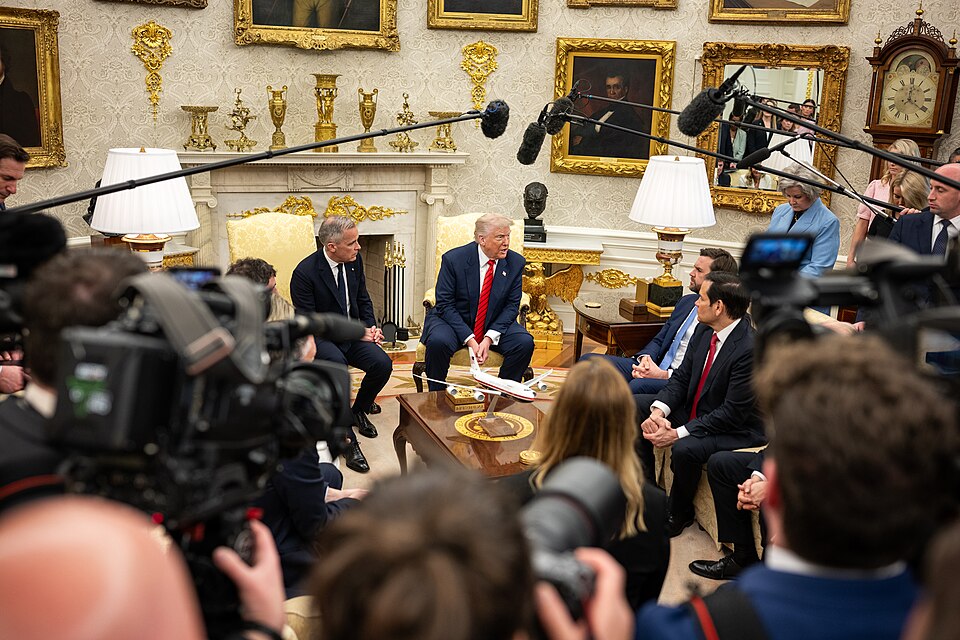
U.S.-Canada trade war
The Trump Administration announced on July 20 that it would implement 50 percent tariffs on several Canadian products to offset the “burden and disadvantage on U.S. commerce from Canada’s discriminatory treatment” for American cars, alcohol and dairy. Products to be hit with the tariff include everything from wine to hockey sticks. After a brief period of failed negotiations, Trump announced Tuesday he would proceed with tariffs, stating an end to “Canada’s free ride” with its trade relationship. In response, Canada announced plans to match any U.S. tariffs “dollar for dollar” starting on Sept. 8 with 15, 25 and 50 percent tariffs on American products, including fish and appliances, based on the U.S. rates for those the same items.
Watch for: Canada plans to impose tariffs on $20 billion in U.S. products, matching the amount of Canadian items hit by U.S. tariffs. American industries have voiced concerns of negative impacts as Canada is a top export market — the country accounted for 48 percent of U.S. fresh produce exports last year, for example. Reduced exports could cause produce and other items to flood the domestic market. Additional negative impacts are expected to businesses in border states such as Washington, which has already been affected by a reduction in cross-border tourism and sales due to past Trump Administration policies. While tariffs on vehicles and car parts will hit Canada hard, it could also hurt U.S. manufacturers who use products exported from the country for their vehicles. That could lead to plant closures and lost jobs. Watch for both parties to form talking points leading up to November’s mid-term elections, especially in states like Ohio and Michigan, where the economy is a top issue.
Attacks in southern Thailand
Dozens of acts of vandalism and arson, as well as several explosions, were reported in Thailand’s Narathiwat, Pattani and Yala provinces on the night of Aug. 22 through Aug. 24. These appeared to target infrastructure, government vehicles and buildings, as well as shops. No one has claimed responsibility so far as is often the case with periods of unrest in southern Thailand, home to a long-running insurgency. At least three civilians were injured.
Watch for: Authorities have detained several people in the aftermath but no apparent drag-net arrest campaigns seem to be underway. One of the people arrested is being linked to some 40 incidents in Narathiwat. In addition to the investigation, officials appear to be focusing on clearance sweeps. The Barisan Revolusi Nasional has not claimed any responsibility and the government has not issued a statement linking them to the attacks. Thailand’s Prime Minister Anutin Charnvirakul held a security meeting on Sunday and security has been reported increased in five southern provinces, including Songkhla and Satun. Measures include more checkpoints and patrols in addition to restoring surveillance systems damaged in the attacks.
Forecast podcast: Southern Thailand rocked by coordinated arson attacks
Editors Jimmy Lovaas and Halima Mansoor discuss the recent coordinated arson attacks in southern Thailand, plus more on a voting rights march in Washington, D.C., a constitutional referendum in Guinea-Bissau, the start of the US Open, and a presidential election in Estonia.
Subscribe to the show: Apple Podcasts, Spotify, and many more.
This episode includes work from Factal editors Halima Mansoor, Theresa Seiger, Ahmed Namatalla, and Matthew Hipolito. Produced and edited by Jimmy Lovaas. Music courtesy of Andrew Gospe.
Extended Outlook
What’s on our radar in the coming weeks…
Aug. 28-Sept. 4
Aug. 28
- All Points East in London
- Colorado State Fair begins
- Nebraska State Fair begins
Aug. 29
- Iceland referendum on accession negotiations with the EU
- Vietnam National Day holiday
- Notting Hill Carnival begins in London
Aug. 30
- First round of Haiti general election
- Estonia parliamentary election
- U.S. Open (tennis) main draw begins in New York
- Sydney Marathon
Aug. 31
- South Africa’s Madlanga Commission to fight police corruption submits final findings
Sept. 2
- South Dakota State Fair begins
- Estonia presidential election
- Venice International Film Festival begins
Sept. 3
- Hopkinton State Fair (New Hampshire) begins
- Michigan State Fair begins
Sept. 4
- Rock in Rio begins in Brazil
- Eastern Idaho State Fair begins
- Washington State Fair begins
- FIBA Women’s Basketball World Cup in Berlin
Sept. 5-11
Sept. 6
- State elections in Saxony-Anhalt, Germany
- The Big Half in London
Sept. 8
- 81st session of UN General Assembly
- New Hampshire primary
- UNESCO peace and security forum opens in Burundi
Sept. 9
- Rhode Island primary
Sept. 10
- New Mexico State Fair begins
- Utah State Fair begins
Sept. 11
- 25th anniversary of 9/11 attacks
- F1 Spanish Grand Prix
- Rock in Rio Brasil
- Kansas State Fair begins
- Rosh Hashanah begins
Sept. 12-18
Sept. 12
- Clay County Fair begins in Spencer, Iowa
- Eastern Idaho State Fair concludes in Blackfoot
Sept. 13
- March against violence planned in Culiacán, Sinaloa, Mexico
- Swedish general election
Sept. 15
- Delaware primary
- South Carolina Senate District 15 special primary runoff
Sept. 16
- Mexican Independence Day
- Malaysia Day (Hari Malaysia)
Sept. 17
- Oklahoma State Fair begins
Sept. 18
- Chile’s Independence Day
- San Sebastián International Film Festival opens (74th edition)
- The Big E (Eastern States Exposition) begins in West Springfield, Mass.
- Russian State Duma elections
Sept. 19-25
Sept. 19
- Oktoberfest begins in Munich, Germany
- Asian Games 2026 in Nagoya, Japan
Sept. 21
- China-Tajikistan joint drills
Sept. 22
- UN General Assembly high-level week and general debate begins
Sept. 23
- Morocco general election
Sept. 25
- Virginia State Fair begins
- Texas State Fair begins
- Korea’s Mid-Autumn Festival / Chuseok begins
Thanks for reading! If you’d like the Forecast in your inbox, you can sign up for free.
Top photo: Demonstrators hold signs during the March on Washington for Jobs and Freedom in 1963. (Photo: United States Library of Congress‘s Prints and Photographs division via Wikimedia Commons)
Verified risk intelligence by Factal supports the world’s largest corporations and 300+ humanitarian aid NGOs, helping them act faster in a world of rumors and generative misinformation. Facts save lives.
Try Factal for free or talk with our sales team (sales@factal.com) for a demo.
]]>“What just happened in Rome?”
“Were there any incidents near Tower Bridge last month?”
“Any wildfires near our Oregon assets this summer?”
Today, answering these questions means conducting multiple searches and digging through historical alerts. Or you could just ask an AI chatbot, and you’ll get a quick answer with random sources and confident guesses.
Introducing Factal Explorer
Factal is launching Explorer, a powerful AI discovery engine for security and risk teams. Built with agentic search technology at its core, Explorer is grounded in Factal’s verified incident database. Eight years deep and updated in real time, it’s the largest living record of its kind.
Ask a question in plain language, and Explorer responds with a concise, AI-summarized answer. Every detail is cited back to Factal’s verified updates, each linked to the original source. And because incidents are geolocated as precisely as possible, Explorer knows what’s happened near a place and whether your assets are nearby.
Built on verified intelligence you can trust
With exclusive access to the deepest, highest-quality incident data, Explorer has a structural advantage over AI tools that rely on an incomplete and often synthetic view of the public web.
“AI is only as trustworthy as the intelligence behind it,” said Cory Bergman, Factal co-founder and chief product officer. “Every answer in Explorer is grounded in global events that our journalists have verified, geolocated and written. There are no social media posts or AI-rewritten headlines. When we get something wrong, we correct the record. That rigor turns fast answers into intelligence you can act on.”
Explorer is not only fast to respond, it also accelerates your decisions. Since the citations are already verified, validation takes a quick glance, not another search.
No shortcuts on member data privacy
Explorer is stubbornly secure. Your organization’s data never touches an AI model and is never used for training. Your assets, travelers and users stay private.
If you ask for something unsupported in Factal’s data – a prediction or something off-topic – it will kindly refuse or admit it doesn’t know. It only draws from Factal’s verified data, and it doesn’t want to chat. That’s what all those chatbots are for.
Join the waitlist today
Explorer launches alongside Factal Advance this fall as a premium product on Factal. Join the waitlist for a free trial of this new product when available.
]]>Factal has always helped security teams understand what’s happening in real-time, but many decisions happen before an incident unfolds: Company events are scheduled, travel gets approved, executives schedule visits and security teams adjust staffing.
The more lead time teams have, the better those decisions become.
Introducing Factal Advance
Advance gives security teams early notice of upcoming events and developing situations that could impact their people, assets, and operations in the near future. As you’ve come to expect with Factal, Advance surfaces real events and journalistic guidance, not crystal ball predictions, to keep our members one step ahead.
“Our editors spend hours every week studying developments in their respective regions and planning coverage for the weeks and months ahead. Until now, that work has stayed behind the scenes.” said Jillian Stampher, Factal’s Head of News. “As seasoned journalists, they tap deep knowledge of local conflicts, political dynamics and historical unrest to go beyond the who, what, where and tell you why it matters.”
Advance notice of scheduled events
At the core of Advance is a deep global events calendar verified by Factal’s editorial team that spans upcoming elections, labor strikes, large public gatherings, anniversaries and other major events. Each event is mapped to your organization’s assets, so you’ll get a heads-up if any of your locations are nearby. For example, your executive protection team can see scheduled events in proximity to their travel plans before anyone books a flight.
Beyond scheduled events to what’s developing
Forward-looking planning doesn’t stop with scheduled events. Advance also tracks developing situations – like conflicts, geopolitical instability and severe weather – that don’t have a fixed start date but can escalate quickly. Factal’s editorial team provides guidance on what they’re watching and why it will matter, empowering your teams with the context to act before an event becomes a crisis.
From preparation to response, without switching tools
Advance isn’t a prediction tool or a lengthy analysis report that rehashes the past. It’s about providing security teams more lead time with concise, proactive information you can trust. Built right into the Factal platform with your existing customization, Advance flows directly into Factal’s real-time coverage, so your team moves from preparation to response without switching tools.
Join the waitlist today
Advance launches alongside Factal Explorer this fall as a premium product on Factal. Join the waitlist for a free trial of this new product when available.
]]>We publish our forward-looking note each Thursday to help you get a jump-start on the week ahead.
Week of August 21 – 28
A Look Ahead
Aug. 21 | Court order to halt White House ballroom construction takes effect
A U.S. appeals court panel has ordered construction on the White House ballroom extension project to cease beginning Friday.
What’s happened so far
President Donald Trump has long advocated for the construction of a massive ballroom on the White House grounds, culminating in the destruction of the East Wing of the complex last fall. The project, however, has faced controversy from the start, with a federal appeals court ordering the administration to cease construction on the project earlier this month, citing a lack of congressional approval for the project.
The impact
While the ballroom was initially touted for its aesthetics, the Trump administration’s justification has steadily leaned more into the invocation of national security. After initially seizing upon the White House Correspondents’ Dinner shooting earlier this year to justify a more secure ballroom complex, the administration is now appealing to the Supreme Court to allow the construction of the ballroom area to proceed, by referring to it as an “integrated military complex” that is “vitally required by national security.”
Aug. 22 | Freedom 250 Grand Prix of Washington, D.C.
Spectators are expected to gather in Washington, DC, beginning Saturday for an IndyCar street race in the United States’ capital.
What’s happened so far
The event, part of celebrations to commemorate the 250th anniversary of the Declaration of Independence, officially kicks off with practices and qualifying races on Saturday. Last month, an official with the FBI’s Washington field office said no “credible threats” were being monitored in connection with the race, though authorities are urging visitors and residents to practice vigilance and report any suspicious activity seen during the celebrations.
The impact
Officials say a large number of uniformed officers will be deployed across Washington, DC, for this weekend’s events, with traffic control points announced in parts of the city. Local officials earlier announced traffic impacts that are expected to last through September. The Federal Aviation Administration has also said it plans to halt flights at Ronald Reagan Washington National Airport for three hours on Sunday to support the event, adding that the exact timings could change. Flights could also be impacted on Friday. Organizers say hundreds of thousands of people are expected to attend the festivities, which will also be streamed online.
Aug 23 | Singapore National Day rally
Singapore Prime Minister and Finance Minister Lawrence Wong will deliver his annual National Day Rally on Sunday at ITE College Central in Ang Mo Kio, in what is considered one of the government’s most important annual policy addresses. It will be his third National Day Rally as prime minister.
What’s happened so far
The most concrete confirmed theme is families and parenthood. In his Aug. 8 National Day message, he said the government is reconsidering the cost of raising children, affordable childcare, and other measures to reduce pressure on families, adding he would provide further details at the rally. The push has taken on greater urgency after Singapore’s resident total fertility rate fell to a historic low of 0.87 in 2025, down from 0.97 the previous year.
The impact
The announcement will offer an early indication of how the government plans to respond to Singapore’s rapidly shrinking birth rate. With Wong already having indicated financial relief to come, the size of any new package and whether they go beyond the existing incentives, will be the key thing to watch.
Aug 23 | Parliamentary elections in Kazakhstan
Kazakhstan on Sunday will elect representatives to the country’s parliament following a major constitutional change.
What’s happened so far
This is the first election to Kazakhstan’s new unicameral legislature, the Kurultai, which was established following a March constitutional referendum that replaced the former system of two chambers, the Mäjilis and the Senate. The parliamentary election will be monitored by a team of electoral observers from the Organization for Security and Co-operation in Europe.
The impact
All 145 deputies in the chamber will be elected to five-year terms using proportional representation that treats the country as a single constituency, with voters choosing from a range of parties. The vote will be an early test of how Kazakhstan’s new political system will function following sweeping constitutional changes, which also gave President Kassym-Jomart Tokayev greater power to appoint new officials, seemingly deepening his control over the country’s politics.
Factal is real-time, verified breaking news
Our AI detects early signals across dozens of languages and thousands of open data sources. Then, our 24/7 editorial team, the same people who produce the Forecast, verify it — fast. That’s why the world’s largest companies and NGOs choose Factal.
Aug. 24 | Paraguay national doctors’ strike
Paraguay’s doctors’ union has called for a five-day industrial action starting Monday over working conditions.
What’s happened so far
Sinamed, the National Union of Doctors, has urged 11,000 medical professionals to take part in the strike. Demands include better staffing in wards, provision of basic supplies and equipment, and an increase in salary to reflect the loss in purchasing power.
The impact
Emergency services will remain available throughout the strike, while scheduled appointments will be suspended in hospitals nationwide. The union argues that the action is necessary after exhausting available avenues, which will result in a significant reduction in medical services across the country if the strike proceeds as planned.
Aug. 24 | Ukraine Independence Day
On Monday, Ukraine marks its fifth independence day since Russia’s full-scale invasion in 2022, with intelligence services warning of potential increased attacks coinciding with the holiday.
What’s happened so far
Previous independence days have been punctuated by Russian mass strikes on Ukrainian cities, targeting civilian infrastructure and resulting in loss of life. Last year, Kyiv also mounted strikes on Russian territory, coinciding with the holiday, hitting oil and gas infrastructure in Leningrad region. This year, the Ukrainian Center for Strategic Communications, citing U.S. intelligence, reported Russia may be preparing a large-scale strike campaign against energy infrastructure. The German Foreign Ministry also issued updated guidance urging citizens to refrain from rail travel around the holiday.
The impact
Given Russia’s history of conducting strikes on previous independence days, there is an increased risk of large-scale attacks on major Ukrainian cities around the holiday. Recent Russian strikes have targeted Ukrainian railway and port infrastructure, while strikes in residential areas in major cities also remain at risk.
Aug. 25 | South Carolina runoff
The South Carolina race to replace Lindsey Graham in the U.S. Senate will take a major step on Tuesday when voters will choose the Republican nominee: either Congressman Ralph Norman or Graham’s sister Darline Graham Nordone, a political newcomer.
What’s happened so far
Graham, a four-term incumbent, died suddenly on July 11 just weeks after he won the nomination. President Donald Trump quickly called for the governor to appoint sister Darline Graham Nordone to serve out his term. She officially became the state’s first female senator on July 14 after decades working with those with disabilities. Trump has never wavered in his endorsement of her, despite nine other Republicans running for the seat in the special primary on Aug. 11. Trump pushed third place finisher Rep. Russell Fry to endorse Graham for the runoff, and plans to travel to Fry’s district in Myrtle Beach on Friday.
The impact
With Trump’s backing, Graham is a heavy favorite to clinch the nomination and win a full six-year term against Democrat Annie Andrews, a pediatrician who ran for Congress against Nancy Mace in 2022. The state hasn’t elected a Democrat to the Senate since 1998. If Graham wins, Trump will likely continue to have a staunch ally in the upper chamber, but one without much political experience. A Norman victory on the other hand, would produce a senator who has shown a willingness to question the president’s actions.
What Else Matters
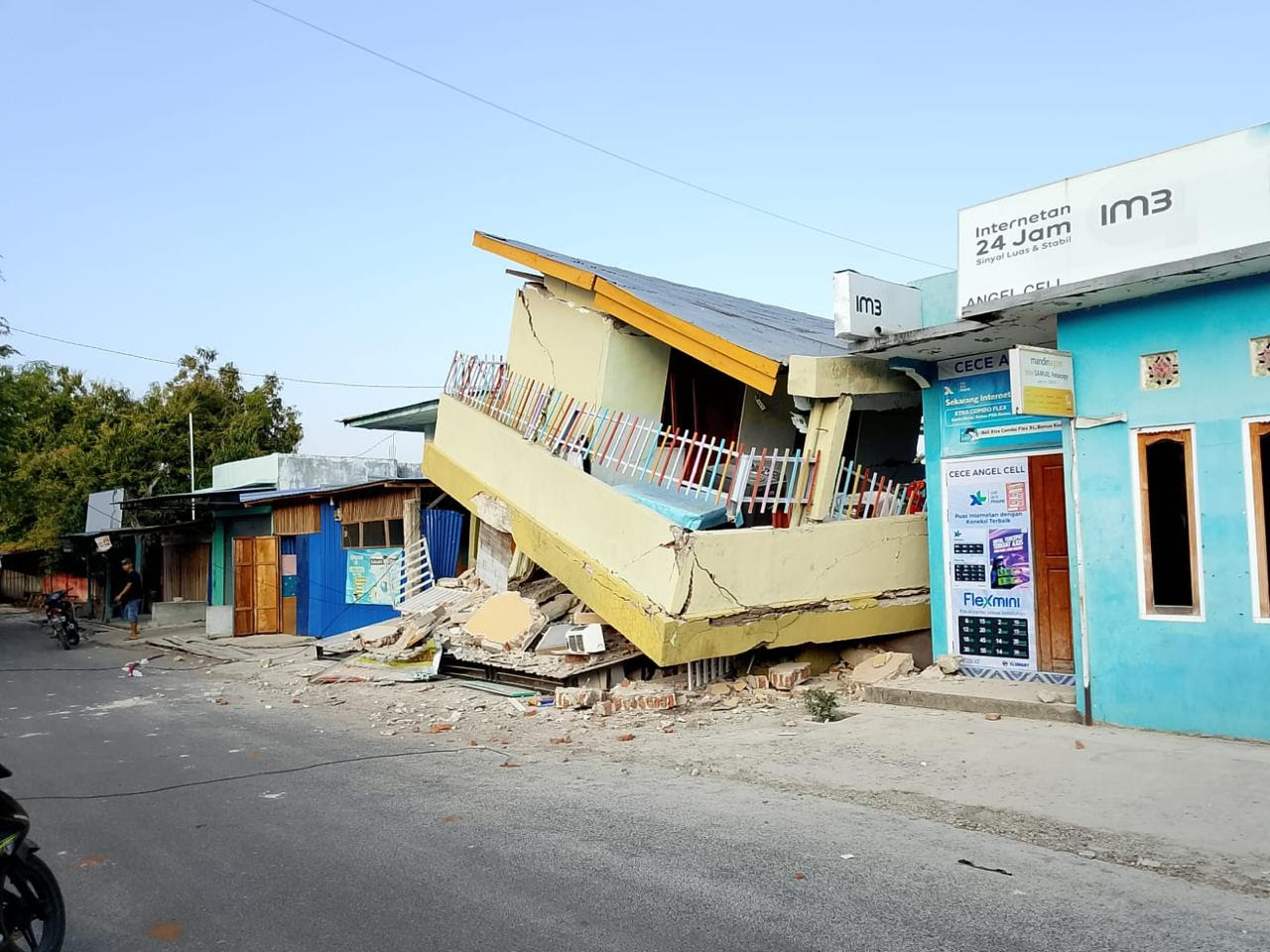
Indonesia earthquake
At least 70 people have been killed and nearly 1,200 injured after a magnitude 7.7 earthquake struck Indonesia's Flores island in East Nusa Tenggara on Saturday, triggering landslides and damage to thousands of buildings, as well as a brief tsunami warning. Damaged and blocked roads have complicated access to some of the hardest-hit communities, prompting authorities to airlift food, tents and other emergency supplies while establishing field hospitals. Indonesia sits along the seismically active Pacific “Ring of Fire” and is consequently prone to earthquakes and volcanic eruptions, but this is the country's deadliest earthquake since the 2022 West Java quake, with the scale of destruction likely to place pressure on emergency services.
Watch for: More than 3,000 aftershocks had been recorded by Tuesday, leaving many hesitant to return to damaged homes and further complicating recovery efforts. More than 60,000 people remain displaced, and many are sheltering in tents, evacuation centers and makeshift camps. Nearly 12,000 homes have been damaged, alongside more than 650 schools and scores of health facilities, government buildings and places of worship. Thousands of residents are still waiting for aid days after the earthquake, while landslides and road blockages risk further isolating communities already struggling to receive assistance.
Big Bend border battle
U.S. Customs and Border Protection Commissioner Rodney Scott said Monday that construction would be paused in Texas' Big Bend National Park while he conducts a “personal, on-the-ground evaluation” following significant bipartisan backlash over border infrastructure work in the park. The announcement represents a reversal of sorts for Scott, who, earlier this month, stressed that the $1.7 billion project was limited to road construction and improvements, new detection technology and vehicle barriers, rather than “a 30-foot wall or stadium lighting.” The controversy intensified after videos showing bulldozers uprooting trees in the area circulated on social media, and local officials raised concerns about the project's scope and environmental impact. Critics have also questioned the need for border construction in an area where natural geography makes crossing attempts difficult.
Watch for: It remains unclear how long the pause will last or how expansive Scott's evaluation will be. Curbing illegal border crossings has remained among the top priorities of the Trump administration since his return to office, reviving his first-term promise to build a “big, beautiful wall” along the border, at Mexico's expense. Whether public pushback will be enough for the government to change course on this portion of the border remains to be seen.
Factal Forecast Podcast
Editors Jimmy Lovaas and Joe Veyera discuss a controversial border project involving Big Bend National Park in Texas, plus more on an IndyCar race in Washington, D.C., an annual speech from Singapore’s prime minister, a doctors’ strike in Paraguay, and Independence Day in Ukraine.
Subscribe to the show: Apple Podcasts, Spotify, and many more.
This episode includes work from Factal editors Joe Veyera, Theresa Seiger, Clara Ip Wai Nam, Michael Archer, and James Morgan. Produced and edited by Jimmy Lovaas. Music courtesy of Andrew Gospe.
Extended Outlook
What's on our radar in the coming weeks…
Aug. 14-21
Aug. 14
- Pakistan Independence Day
Aug. 15
- Indian Independence Day
Aug. 17
- Indonesian Independence Day
Aug. 18
- Primaries in Alaska, Florida, Wyoming
Aug. 19
- Academy of Country Music Awards (ACMs)
Aug. 20
- Kentucky State fair begins
Aug. 21
- Alaska State Fair begins
- Dutch Grand Prix
- Oregon State Fair begins
Aug. 22-28
Aug. 22
- 2026–27 Premier League season opens
- Spanish Vuelta cycling race
Aug. 23
- Singapore National Day rally
- Parliamentary elections in Kazakhstan
Aug. 26
- New York State Fair begins
Aug. 27
- PGA Tour Championship in Atlanta
- Reading Festival
- Leeds Festival
- Maryland State Fair begins
- Minnesota State Fair begins
Aug. 28
- All Points East in London
- Colorado State Fair begins
- Nebraska State Fair begins
Aug. 29-Sept. 4
Aug. 29
- Iceland referendum on accession negotiations with the EU
- Vietnam National Day holiday
- Notting Hill Carnival begins in London
Aug. 30
- First round of Haiti general election
- Estonia parliamentary election
- U.S. Open (tennis) main draw begins in New York
- Sydney Marathon
Aug. 31
- South Africa's Madlanga Commission to fight police corruption submits final findings
Sept. 2
- South Dakota State Fair begins
- Estonia presidential election
- Venice International Film Festival begins
Sept. 3
- Hopkinton State Fair (New Hampshire) begins
- Michigan State Fair begins
Sept. 4
- Rock in Rio begins in Brazil
- Eastern Idaho State Fair begins
- Washington State Fair begins
- FIBA Women's Basketball World Cup in Berlin
Sept. 5-11
Sept. 6
- State elections in Saxony-Anhalt, Germany
- The Big Half in London
Sept. 8
- 81st session of UN General Assembly
- New Hampshire primary
Sept. 9
- Rhode Island primary
Sept. 10
- New Mexico State Fair begins
- Utah State Fair begins
Sept. 11
- 25th anniversary of 9/11 attacks
- F1 Spanish Grand Prix
- Rock in Rio Brasil
- Kansas State Fair begins
Thanks for reading! If this was forwarded to you, you can sign up for free.
Top Photo: President Trump speaks to reporters on May 19, 2026, at the construction site for the controversial White House Ballroom. (Joyce N. Boghosian / The White House)
Verified risk intelligence by Factal supports the world’s largest corporations and 300+ humanitarian aid NGOs, helping them act faster in a world of rumors and generative misinformation. Facts save lives.
Try Factal for free or talk with our sales team (sales@factal.com) for a demo.
]]>For security and risk professionals who are meeting Factal for the first time, we’ll also show you how we set the standard for verified risk intelligence. We combine AI with experienced journalists to verify critical events in real time, so your team acts on facts, not noise. That’s the standard we’ve built our reputation on, and now we’re layering two powerful new tools on top of it.
Factal Explorer

Factal Explorer is a new AI discovery tool that’s grounded in the world’s largest living record of verified risk intelligence. Ask natural-language questions and get fast answers from Factal’s eight years of editor-verified, geolocated incidents. Everything is updated to the minute, mapped to your location assets and meticulously cited to the original sources.
Built with privacy in mind, your organization’s data never touches an AI model and is never used for training. Your assets, travelers and users stay private.
Factal Advance

Factal Advance gives security teams an early notice of upcoming events and developing situations that could impact their people, assets, and operations. From strikes and protests to developing conflicts and severe weather, Advance provides a heads-up when any of your asset locations are nearby.
As you’ve come to expect with Factal, Advance surfaces real events and journalistic guidance, not crystal ball predictions, to keep our members one step ahead.
Learn more about Explorer and Advance at GSX. Then join the waitlist to get early access this fall.
Travel Risk Management
We’ll also show Factal’s powerful travel risk management solution powered by itineraries from International SOS. See your travelers side-by-side with your assets, seamlessly integrated throughout the platform. It’s the product of our strategic partnership with International SOS, uniting the most trusted names in risk intelligence and traveler safety.
Can’t make GSX? Sign up for the waitlist.
Explorer launches alongside Factal Advance this Fall as premium products on Factal. Join the waitlist for a free trial of this new product when available.
]]>