The post Brexit is a political Ponzi scheme first appeared on LSE BREXIT.
]]>Bernie Madoff died last month. The obituaries, and there were many, reflected on his extraordinary ability to persuade people to join a pure Ponzi scheme, worth $64.8 billion when it collapsed. But he simply exploited human nature: that people are happy to believe a lie, without asking too many questions, if it promises them what they want. This applies in politics too.
The essence of a Ponzi scheme is to offer impossibly attractive returns – 15 per cent a year in Madoff’s case – which keeps attracting new investors whose savings pay for the impossible returns to the initial investors. So it only works if it keeps growing. And that requires keeping people’s confidence, assuring them that everything is working as planned come good times or bad, and in all circumstances keeping up the pretence, sustaining the lie. It invariably – invariably – collapses when people start smelling a rat or, as with Madoff in 2008, need to cash in their savings and ask for their money back. Then the whole thing was revealed as ‘just one big lie’. Many of Madoff’s investors lost every penny.
Brexit is a political Ponzi scheme, and it is still going strong. The crash in this case is a slow-motion one. But it is happening. In politics it is almost easier. People are looking for reassurance as much as cash, so it is easier to sustain the lie. Of course, many people who voted for Brexit just wanted out, whatever the cost. They believed Brussels was interfering with our national way of life and wanted it over. For them, if they lost their money or their job, or if the Union broke up, it was all worth it. But not for every Brexit voter. There were some among the 52 per cent who believed the promises they were sold.

So do any of those promises hold water?
The first was that Brexit would save money: £350 million a week for the NHS said the big red bus. True, the NHS is getting more money, but that is because of COVID, and it is borrowed from the future not recovered from the EU. The truth is that the costs of Brexit far outweigh the cash benefits. In 2016, the net annual cost to the UK of EU membership was £9.4 billion (£181m per week). From 2021, the UK will still make a net contribution to the EU for continuing liabilities of nearly £2.5 billion (€3 billion) p.a. and in 2018/19 alone the Chancellor set aside an extra £1.5 billion for Brexit costs, which only partially covered them. On top of this roughly £100 m per week cash cost is the impact of the 4 per cent hit to GDP estimated by the Office for Budget Responsibility, which cuts government revenue as well as national income. Overall, there is now no question that Brexit costs, not saves, money.
The second promise is that it would free the economy, stimulate enterprise and make Britain more ‘nimble’ on the world stage. But far from liberating British business, it has tied it up in red tape. The essence of the EU’s Single Market was to cut costs and reduce bureaucracy for internal trade – and it succeeded. Rules will always be needed to safeguard competition as well as people and protect consumers from environmental harm, bad food and dodgy products. It is cheaper and more efficient to do that with our neighbours than on our own. Now the costs and bureaucracy are back, especially for services, and the more we diverge, the heavier the costs will be. It will be many years, if ever, before the benefits of other fabled free trade deals will match the losses on trade with the EU.
Thirdly, there was a presumption that where England led, the other nations of the United Kingdom would dutifully follow, and that Brexit would not impact Northern Ireland. The Unionists were complicit in this, vetoing the only deal that would have both delivered Brexit and preserved the Good Friday Agreement with no major change for the province. The Prime Minister swore blind there would never be a border in the Irish Sea, and then agreed one. True, he never promised the Scots anything at all, but his view of Scotland seems to have been set around the time of Culloden.
Finally, there is sovereignty. This has become the last refuge of the Brexiteers. Even if Brexit has cost money, increased bureaucracy and imperilled the Union, we have our sovereignty back. Really? As I have argued before, this is only true if you adopt a North Korean definition of sovereignty. If you judge it instead by the ability to defend our national interests and control our own destiny, we were far better able to do that within the EU than outside it. Brexit has thrown away control, not taken it back. This, in some ways, was the biggest lie of all.
The Remain camp failed to persuade the public of the Ponzi scheme or puncture the hot air balloon of Brexit. ‘Project Fear’ just bounced off. As the balloon rises majestically into the sky, it is meeting the cold air of reality and the politicians are running out of hot air to keep it up. So we are coming back down to earth, quite fast. ‘It was worth the view’ some will say, or ‘we always knew it would take 10 years to work’, while others nurse their broken legs.
My argument is not that Britain should rejoin. Brexit is a fact: it has happened. But we must accept that the associated facts have also happened. The money and the sovereignty have gone, for good. The Ponzi scheme has popped. It is crucial for the country’s future that people understand the consequences of the choice and accept not only the fact of Brexit but the falseness of the premises on which it was sold.
Some may argue that this is nothing new: ‘all politicians lie’; it’s naïve to believe their promises; even, ‘we got what we wanted’. And then we are in Trump-land, where people are willing to say ‘I’ll vote for you because I like what you are saying, whether it is true or not.’ But this undermines political life itself. It polarises political discourse because there is no longer a rational base on which to debate outcomes, and destroys the consent of the governed: ‘this is not my government, so I will not obey it’. And that is the beginning of the end of democracy.
Ponzi schemes are always costly. They just get more so if you refuse to admit they exist.
This post represents the views of the author(s) and not those of the Brexit blog, nor of the LSE.
The post Brexit is a political Ponzi scheme first appeared on LSE BREXIT.
]]>The post Is the grass greener on the other side? Norway’s assessment of Brexit first appeared on LSE BREXIT.
]]>The European Union has over time developed quite a comprehensive system of affiliations with neighbouring states. Both actors in the UK and in the EU have discussed these affiliations as possible templates for how the UK and the EU could organize their relations post-Brexit. At the same time, it is important to keep in mind that the UK’s exit from the EU might set a new benchmark for the EU’s existing affiliations with neighbouring states. In particular, other non-members may see the UK’s post-Brexit affiliation with the EU as a template, and as a basis for renegotiating or simply altering their relations with the EU. That is what we have considered in our recent article titled ‘Is the Grass Greener on the Other Side? Norwegians’ Assessments of Brexit’ published in Politics and Governance.

In the article, we shed light on the extent to which Brexit has affected Norwegians’ perceptions of their current relationship with the EU and the considerations that central Norwegian political and societal actors have brought up in relation to Brexit. As we demonstrate below, the Norwegian debate provides important insights into the robustness of the EU’s present arrangements with non-members, what is often referred to as the pattern of EU external differentiation.
In our article, we chose to pay special attention to Norway for a number of reasons. For one, Norway’s EU affiliation, through the European Economic Area Agreement (EEA) and a host of other agreements, places Norway among the EU’s most closely affiliated non-members. Norway is one among few affiliated non-members that qualify for EU membership, which matters for comparability, given that the UK through its well over four decades of EU membership is thoroughly Europeanized. Furthermore, the EU’s aim was initially to establish an agreement with the UK that was as similar to Norway’s EEA affiliation as possible, not the least because the EEA Agreement has formed the template for the EU’s relations with its most closely associated non-members.
Although the EU sought to establish an EEA type of agreement with the UK, the UK has rejected the type of single market participation and membership in the EU’s Customs Union that the EEA Agreement implies. There is no doubt that the EU–UK Trade and Cooperation Agreement offers a far narrower and looser type of affiliation (if it ends up being put into effect). For sovereigntists across Europe, Brexit and the mantra of ‘taking back control’ offers the prospect of escaping from the shackles of the EU. At the same time, the UK’s complicated exit process shows how profoundly EU-member states have been incorporated in the EU-led European political and economic order, not only vertically but also horizontally through tight bonds and interdependencies between states and societies across Europe. In other words, Brexit could equally well discourage affiliated countries from seeking to change their EU affiliation as to serve as a catalyst for disintegration.
Our analytical framework draws on Catherine De Vries’ benchmark theory, which she applied to Brexit. De Vries posits that people compare the costs and benefits of their current EU affiliation with alternative statuses (of non-membership). In applying the benchmark theory to Norway, we identify the actors that refer to Brexit as a template for Norway’s future EU affiliation and the aspects – issues and concerns – they base their evaluations on.
Our analysis showed that the assumptions we derived from the benchmark theory were mostly confirmed. The Norwegian government and the major political parties saw Brexit as a challenge to a depoliticized status quo that they seek to protect. That included the Norwegian Parliament rejecting proposals for studies to explore the effects of less binding alternative affiliations than the EEA Agreement. The preference for the status quo is also reflected in opinion polls that indicate slightly increasing, stable support for the EEA Agreement. Those political parties and organizations that sought to change the status quo did not agree on what they wanted to change: renegotiate the EEA Agreement; renegotiate Schengen; or sign a less comprehensive trade agreement. Overall, our findings suggest little appetite for a new EU membership debate. Some political entrepreneurs stressed sovereignty but generally diverged from the UK’s preferred socio-economic model. Others expressed concern about the EU’s neoliberal turn and the problem of social dumping associated with labour mobility. However, whereas this stance appears to dovetail with the Brexiteers’ onus on regulating immigration, it was not the immigration-critical, right-wing populist Progress Party that was most eager to change the status quo, but parties on the far left. The change-oriented Norwegian political entrepreneurs endorsed a socio-economic model that was much further to the left than are the UK Conservatives (even those in favour of state aid). An important reason for the lack of explicit reference to the UK as a benchmark on the socio-economic dimension is precisely this significant discrepancy in understandings of solidarity and economic justice.
With regard to the implications that we can discern from this analysis for the EU’s relations with affiliated non-members, it is apparent that Brexit thus far works more as a deterrent, than as an inducement for change. Whether this is mainly due to the tangled Brexit process or whether it is due to the fact that, at least for Norway, Brexit left little scope for linking sovereignty to the socio-economic problems that actors associate with the present EU affiliation requires further investigation. It is noteworthy that formerly EU-supportive social democrats largely share such concerns. In the Brexit negotiations, concerns with social justice and environmental standards figured strongly in the EU’s demands to the UK, but the EU does not appear to gain much traction from this in terms of Norwegians’ lacklustre support for EU membership.
Our analysis shows that we cannot assess Brexit as a benchmark without paying attention to the sheer size and magnitude of the EU–Norway power asymmetry, which actors clearly recognize. That affects the actors’ calculations in that risk and uncertainty figure more prominently. That brings up the question as to whether the EU should be more accommodating in its relations with non-members. In that context, from the EU’s perspective, the distinction between those that qualify for EU membership and those that do not probably matters. The EU has proven exceptionally inclusive with regard to non-members that qualify for EU-membership (the EFTA states) – provided they abide by EU laws and regulations. But there are limits. If the EU is very accommodating to states that have the option to seek membership but refuse to do so, the EU risks lowering the bar for exit or pleas to renegotiate the terms of membership from its own member states. In that sense, Brexit may expose the special arrangements that EFTA states have to the EU more than before.
These considerations must be viewed in light of the fact that the EU as a non-state entity is particularly disposed to import centrifugal pressures from the manner in which it structures its affiliations with non-members.
This post represents the views of the author(s) and not those of the Brexit blog, nor of the LSE.
The post Is the grass greener on the other side? Norway’s assessment of Brexit first appeared on LSE BREXIT.
]]>The post Conference on the Future of Europe: civil society should take the lead first appeared on LSE BREXIT.
]]>The Visions of Europe study (based at LSE IDEAS) mapped, tracked and monitored developments in European civil society between 2018 and 2020, in order to decipher how the decade of crises had changed it. Until relatively recently, it was thought that the European Union and its future was simply not an issue for grass roots civil society activists, who were preoccupied with the national or local level, although some were Eurosceptic, while others took Europe uncritically for granted. We find that the overlapping shocks to the social and political system of Europe – the financial/Euro and migration crises, as well as Brexit and now the pandemic – have forced civil society to re-examine and critically reengage with Europe.
New visions of Europe
We can observe an emerging European public sphere peopled by new competing visions of Europe. Instead of debates focused on being either “for or against Europe”, the new discourse is focused on the kind of EU that should be constructed. It is a debate that takes place between three types of civil society actors actively engaging with EU politics.
The first type are the somewhat traditional civil society actors who shape and communicate Europe – they actively promote European integration, and often also European identity, as well as participating in discussions on the future of the European project. We call them Traditional Europeanists. The second type are actors who see Europe as a means to further their core agendas on specific issues such as migration, climate change, or inequality – they are Instrumental Europeanists.
The third type are political disruptors emerging from civil society who take for granted that all politics (in Europe) is European these days. These Insurgent Europeanists are a new breed of organisations and movements. Accordingly, the organisations and movements that were the subject of our study favour what we describe as normative, popular, and responsive visions of Europe.
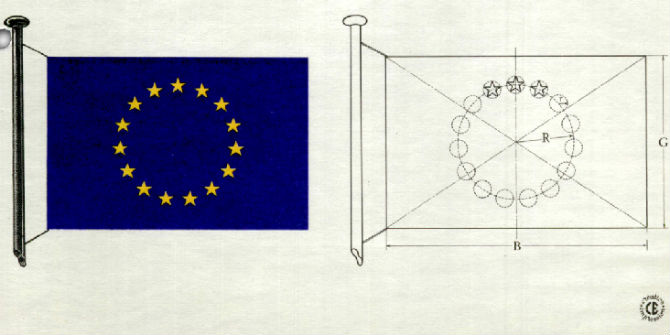
Normative Europe
Civil society emphasise the importance of progressive values to the future of Europe. The normative vision of Europe contrasts progressive, democratic, and universal values with the narrow nationalist logics of competition and bargaining in the EU. This approach to the EU is process driven and non-instrumentalist, i.e. it emphasises the importance of democratic participation and engagement over and above any short-term economic gains.
Treating the EU merely as a resource, a playground for inter-governmental bargaining, and a scapegoat for failing national administrations has been the domain of many mainstream parties on both the right and the left of the political spectrum. Civil society offers an alternative vision of Europe as a custodian of norms and values and a protector of rights and freedoms.
Popular Europe
Civil society seeks more direct participation in European affairs for European citizens. This vision emphasises notions of decentralisation and participation, as well as subsidiarity – all seen as contributing to the democratisation of the EU. On the one hand, civil society demands a Europe where citizens, cities, and regions, are empowered and able to challenge the hegemony of nation-states in the workings of the European construction.
On the other, civil society emphasises subsidiarity, arguing that Europe should only step in when necessary and that Europe-wide solutions should be adjusted to local conditions and realities. Our respondents believe that the combination of the two can go a long way in addressing the current democratic shortcomings of the EU and pave the way for a more democratic Europe.
Responsive Europe
Civil society wants the EU to take the lead in tackling global threats and crises. Europe has been exposed to a series of global threats in the twenty-first century: the financial, migration, and climate crises, as well as the Covid-19 pandemic. Civil society wants Europe to step up its response to such emergencies and to pursue adequate continent-wide solutions. This vision of a more responsive Europe emerges from the assimilated experience of past and current crises and threats, many of them global and transnational in character, as well as an anticipation of those that lie ahead.
A theory of change for European civil society?
Our research observes a politicisation of civil society in Europe. We note how the term ‘45 degrees’ has been used to describe the breakdown of the traditional distinction between vertical civil society preoccupied with policy advocacy and influence on political parties and governance, and horizontal civil society active at a grassroots level on a range of social, green or economic issues.
Traditionally the grassroots have often been suspicious of the political class. What has changed is the European focus of grassroots civil society and the readiness to engage with formal politics. This reflects the challenges that the European institutional space – and its various ‘layers’ of sovereignty – pose to transnational and pan-European civil society. Indeed, European political space introduces what can be called the ‘third dimension’ – a third axis – which lies in the transnational character of the activity.
Both institutional politics and civil society interactions take place across borders. This creates networks of activity within and beyond the ‘capital’ of Brussels. And today it has generated something akin to a European public sphere: a world of discussion and debate on the future of Europe that is seeking to capture the 45-degree diagonal fault line of democracy but at a new, transnational level. We argue that this approach offers the starting point for the development of a theory of change for actors operating within European civic space.
A twenty-first century version of democracy
The main conclusion of our research is that the fabric of civil society has changed dramatically in Europe over the past fifteen years of crises. Both the issues around which civil society in Europe mobilises, and the organisational forms this activity takes have changed, in the context of rapid technological, communications, and geopolitical developments.
An implication of this increased everyday, inescapable relevance of the European dimension is that the geography of European civil society changes: to be a civil society organisation with a ‘European’ vocation no longer requires an office in Brussels, a network across borders or a claim to ‘represent’ national member organisations, a special focus on or access to the European institutions, or (for accession countries) a mission oriented to preparing the population for joining the EU. European affairs is now something that can be done locally, and can even be done as an action of an individual.
What emerges from our research is that the visions of Europe put forward by civil society could be described as a set of proposals for a twenty-first century version of democracy. Twentieth century democracy was focused on the national level and based on vertical forms of representation. If democracy means the design of procedures, rules and institutions that enable individual citizens to influence and participate in the decisions that affect their lives and to hold decision-makers to account, then these procedures, rules and institutions need to reflect the complex, transnational character of contemporary European and global society.
It has to operate in a three-dimensional space (45 degrees) and it has to make use of digital tools to engage many more citizens in the democratic process than is possible in purely physical forums. Twenty-first century democracy has to involve citizen participation alongside formal representation, it has to be multi-level (European, national, local and regional), it has to encompass the diversity, cosmopolitanism and localism of European citizens, and it has to be able to overcome social fractures.
The Conference on the Future of Europe
The forthcoming Conference on the Future of Europe offers an opportunity to bring the European Union closer to those visions of civil society. While there are likely to be widespread civil society consultations, there needs to be political pressure to translate the outcomes of these consultations into meaningful reform of the European Union. It is interesting to note that new Eurobarometer data shows that 90 per cent of Europeans demand that citizens’ voices are taken more into account in decisions about the future of Europe, six in ten are thinking more about Europe’s future as a result of the pandemic, three-quarters expect the Conference on the Future of Europe to have a positive impact on democracy within the EU, and as many as 50 per cent want to be involved in the conference themselves.
Our respondents highlight that the success of the Conference would depend on active and meaningful participation of citizens and civil society. There is a risk that the conference will not be taken seriously, as has been the case with similar exercises in the past, and an important opportunity for Europe will be missed. When asked what the Conference should look like to help them achieve their goals, most respondents emphasised citizen participation, inclusivity, and engagement. Making sure that citizens from all countries and regions have a say. Commitment to change is a central concern for civil society. A number of our respondents emphasise that the EU must put into action any recommendations arising from the Conference, and worry that failing to do so might reflect negatively on the EU as a whole.
In order to reflect the changes that took place in civil society’s engagement with Europe over the last decade, we propose a set of policy proposals to be considered at the Conference on the Future of Europe. Most crucially, we argue that a permanent European Citizens Assembly, the democratic and financial empowerment of regions and cities, a more secure and inclusive European citizenship (also of non-EU nationals), and an extension and deepening of the social pillar of the European Union would be adequate responses to the changing visions of Europe in society. Whatever happens during the Conference, an epoch of the EU’s institutions refusing to listen to EU citizens is over – the bold and ambitious proposals put forward by civil society reflect that change.
The Insurgent Europeanism report will be launched on 7 May at 3pm BST / 4pm CET
This post represents the views of the author(s) and not those of the Brexit blog, nor of the LSE. It first appeared on EUROPP – European Politics and Policy or the London School of Economics.
The post Conference on the Future of Europe: civil society should take the lead first appeared on LSE BREXIT.
]]>The post The UK can build a data-secure digital future first appeared on LSE BREXIT.
]]>60 per cent of the world population is connected to the internet right now and while digital users still cluster in North America and Europe, big tech is looking to change that. Google, Facebook, and Elon Musk’s SpaceX all run projects to expand internet access in underserved regions. These platform companies rely on personal data for targeted ads and billions of new users sharing their data translates directly into profits – were it not for privacy regulations. Whether it is the EU’s General Data Protection Regulation (GDPR), Brazil’s broadly equivalent LGPD, or China’s personal information specification – regulators around the world push to reinstate citizens’ rights over their personal data. The issue has become a focal point of the ongoing WTO e-commerce negotiations and reconciling liberalizing and protective forces will be key to an agreement.

Issues at stake
As data becomes the new critical resource fueling digital business models, it challenges the existing legal frameworks of data protection, competition and consumer policy with concerns of privacy. This is synthesized in a complex trade-off between the economic benefits rising from cross-border data flows, and the cost of privacy and disclosure.
The value of privacy for individuals is derived either from their own privacy preferences or from privacy as an intermediate good aimed at avoiding harm or discrimination. A similar argument is true for platform companies in relation to competition policy: privacy protection stands as a means to contain the formation of natural monopolies deriving from excessive data collection and data-based network effects.
Data localization constitutes one means of protecting privacy but clearly has cost implications for companies and others using personal data. As such, it forms an important element of the debate. Data localization involves legal limitations on the movement of data through requirements to store or process data within a country or individual and/or official consent for data transfer. Some emerging markets (e.g. Brazil, India) also see data location requirements as a means of fostering the growth of local digital economies. In this respect, data localization stands as a tool for creating a level-playing field in the digital sector. Data localization is also seen as a means of facilitating the regulation of data and thus competition in markets that can become dominated by large platform providers. Finally, data localization can also help protect cybersecurity: when data processing is conducted within a country rather than the home country of a foreign firm.
Sovereignty and policy space are also feature in the debate. A country’s ability to claim control over or access to data, as well as to require certain data protection standards, equates to that country’s ability of exercising regulatory sovereignty. This is represented in the negotiations by arguments pointing to national security and public policy objectives, primarily but not only supported by developing countries. From this perspective, the initial trade-off between economic benefits and privacy protection takes a more political form, as in the centuries-long debate on sovereignty and cooperation.
The push and pull of economic liberalism and personal privacy protection
The continuum of strict consumer and data protection to unrestricted flows of data ranges from the US, an avid advocate of limited regulatory requirements; to the EU, vocal on the fundamental right to privacy; and finally, China, which frames consumer and data protection as a matter of national sovereignty. Between these three major positions, a post-Brexit UK will have to define its stance.
Champions of Free Data Flows. The US, along with the UK and Japan, takes a clear business-focused approach to the topic of consumer and data protection. Firms with business models built around user data incur regulatory costs with privacy legislation, and the US, like other champions of free data flows, aim to prevent this. Recognizing the centrality of the digital economy for modern businesses in the global North, which has only increased with the coronavirus pandemic, is an integral driver for the US’s approach. The US also has no comprehensive federal level legislation covering data protection.
Advocates for Privacy. The EU’s approach to data privacy in the WTO e-commerce negotiations is shaped by a deeply rooted normative commitment to protecting the personal space, not only from platform companies but also as a separation from the public sphere. The GDPR echoes these values. Implemented in 2018, the GDPR establishes an ambitious framework for protecting individual’s personal data privacy, which the EU deems a fundamental right. Consequently, the EU defends a position of open e-commerce markets that leave sufficient policy scope for individual WTO members’ privacy regulations. An agreement that compromises the EU’s cherished GDPR privacy framework, or equally places a burden on small and medium enterprises with data localization requirements, will not garner support in the EU. The EU’s preferences find support among like-minded countries striving for increased global influence in the digital sphere. Brazil is one example of a WTO member that is committed to data privacy but also wishes to defend the interests of small and medium sized businesses, which make up 99% of the country’s enterprises.
Proponents of National Security. China aligns more closely with the EU and its emphasis on high privacy standards, but takes a distinct security approach. China added a ‘Personal Information Security Specification’ to its existing cybersecurity law that was similar in focus to the GDPR but accentuated security rather than personal rights. The specification means cross-border personal data is subject to a security check from Chinese cybersecurity agencies under the State Council. Similar security concerns have also found support in India, which has been vocal on privacy and security concerns related to unfettered data flows and has instituted domestic localization requirements.
Implications and prospects
The EU has set an example with its GDPR that has inspired countries around the world to follow suit and make privacy a priority. A post-Brexit UK could take advantage of its past compliance with the GDPR and align British privacy standards with the EU rather than migrate to the USA’s approach. There are signs that other countries are emulating the EU’s approach with emerging powers like Brazil and India as well as other developed economies such as Canada and even some US states are following the GDPR’s approach. After the Cambridge Analytica scandal, consumer privacy has been a priority even for platform giants like Facebook. Data protection is not only a consumer concern but also a factor in competitive advantage. Data privacy laws in the UK promote business and consumer trust and confidence on which the growth of the digital economy depends, and also enhance services export prospects in emerging markets. The UK, therefore, holds the potential to lead a data-secure digital future.
This post represents the views of the author(s) and not those of the Brexit blog, nor of the LSE. This blog post introduces is part of a series on digital trade that emanates from an extended and detailed simulation of the current WTO negotiations on e-commerce by LSE Masters students in the International Relations Department.
The post The UK can build a data-secure digital future first appeared on LSE BREXIT.
]]>The post Can Global Britain be achieved through WTO negotiations? first appeared on LSE BREXIT.
]]>Digital trade represents a vital and continually expanding segment of the British economy. In the current post-Brexit context, in which the UK aims to independently strike a wider variety of free-trade agreements as part of its ‘Global Britain’ agenda, digital trade enables the UK to extend its economic influence abroad while spurring job growth domestically. Data from the Department for International Trade identified that in 2018, approximately 70% of the UK’s services exports were provided digitally. In that same year, digital businesses produced £149 billion for the domestic British economy, contributing 8% to the UK’s gross value added and employing more than 1.5 million Brits. These figures are on an upward trajectory, and the DIT has heavily emphasized the growing significance of digital trade in new bilateral negotiations with both Japan and the United States.
The UK Board of Trade recently published a report that also stresses the strategic value of digital trade for the British economy. As the fifth-largest global exporter of digital services, the UK is well-positioned to further capitalize on digital growth trends in the aftermath of a pandemic that accelerated e-commerce. Domestically, the Board of Trade recognizes that digital trade is growing four times faster than the overall economy, spanning a plethora of industries and even including the third most amount of ‘tech unicorns’ in the world. As the UK continues its digital trade negotiations within the WTO forum, these considerations are therefore likely to inform a British strategy that favours a global expansion of its digital offerings.

UK Digital Trade Negotiations: Key Preferences
As a significant player in the multilateral WTO e-commerce talks, the UK maintains a set of core negotiating objectives that are central to its digital trade strategy. These key preferences can be broadly summarized into four categories: 1) the development of a robust regulatory framework that recognizes the legal equivalence of digital and paper documents; 2) the establishment of open and fair trade through the maximization of cross-border data flows; 3) provisions for the protection of intellectual property rights and the elimination of data localization requirements; and 4) the maintenance of comprehensive standards on development that ensure regulatory cooperation and the permanence of the moratorium on digital customs duties.
As an intermediary between the US and EU, the UK looks to exert itself as a figure of compromise on topics like consumer data privacy that threaten the completion of a multilateral agreement. Despite no longer being a member of the EU, the UK has pledged to continue its adherence to the EU’s GDPR and its own Data Privacy Act 2018. Long-term, however, it is highly plausible to expect the UK to align more closely with the US on a market-led, industry-based approach to data protection. The ongoing negotiations, therefore, present the UK with an opportunity to bridge this divide and set the foundations for a more open data marketplace. The prevention of a global splinter into three distinct regulatory blocs – the US, EU and China – is a high priority for the UK as it seeks to expand trade of its digital offerings within North America, Europe and Asia. Given the prominence of SMEs in the British digital landscape, the role of the UK is also critical in promoting its preference for a world ecosystem that is conducive to digital trade for SMEs and not just tech giants like Amazon. Over 99 per cent of private sector businesses in the UK are SMEs, but only 9.5 per export abroad. The UK is eager to increase the global presence of these businesses, and the current WTO negotiations present the optimal opportunity for doing so. By negotiating along the parameters of these key preferences, the UK is primed for a much stronger influence on the global digital trade marketplace.
UK Digital Trade Negotiations: Primary Challenges
Despite the optimism that many in the UK experience when discussing the potential for a renaissance of the global digital trading regime, it is necessary to outline the roadblocks that may inhibit the successful completion of a WTO agreement. Within the WTO, the obvious challenge is facilitating compromise between the US, EU and China. Particularly on matters of data privacy and special and differential treatment for developing economies, there is the potential for disagreement that could upend the multilateral vision. Although the UK can exercise a role in brokering a compromise, the fate of the agreement is largely out of the UK’s control because its digital businesses do not comprise enough of the global market share to warrant greater influence at the negotiating table.
Relatedly, the second key challenge that the UK faces is that of reconciling its win-set at the international level with a ratifiable solution that appeases both Whitehall and Westminster domestically. A report produced by the University of Oxford identified an overarching lack of internal cohesion and coordination on policy within the Government and its key stakeholders. Although the Parliamentary International Trade Committee is now conducting an official inquiry into digital trade and data, the two-level international negotiating position of the UK is unlikely to provide a domestically-beneficial strategy until there is substantial input from leading businesses, consumer groups, trade unions, policy experts, and the devolved administrations in Scotland, Wales and Northern Ireland. For the UK to be successful at the WTO, it, therefore, must derive a clearer strategy from its domestic stakeholders so that it can effectively socialize solutions on the international level that will not only benefit British digital businesses, but will also be palatable to the American, European and Chinese delegations.
Conclusion
Digital trade is a dynamic and exciting element of the global economic system, and the UK proudly stands at the forefront of its expansion. A WTO agreement on e-commerce would drastically benefit the UK, both at home and abroad as a rejuvenated and independent global influence. As the UK proceeds with its negotiations in the pursuit of an agreement, British digital trade continues to flourish – offering profound hope that e-commerce will serve as a cornerstone of what a Global Britain can bring to the world in the 21st century.
This post represents the views of the author(s) and not those of the Brexit blog, nor of the LSE. This blog post introduces is part of a series on digital trade that emanates from an extended and detailed simulation of the current WTO negotiations on e-commerce by LSE Masters students in the International Relations Department.
The post Can Global Britain be achieved through WTO negotiations? first appeared on LSE BREXIT.
]]>The post The global digital divide is reminiscent of colonialism first appeared on LSE BREXIT.
]]>If data is the new oil, then developing countries and Least Developed Countries (LDCs) are the new oil fields. These countries are witnessing rapid growth in the digital sector driven by increasing access to technology among their large populations. For example, the number of internet-connected devices in Indonesia is expected to increase by three times in a span of only five years. Despite the large market size and potential for growth, the wealth generated by the digital revolution is not concentrated in the Global South.

The global digital divide
There exists a clear dichotomy between countries that produce vast amounts of digital data and countries that harness it for their benefit. Unlike the traditional North-South divide in the global economic order, the digital gap is being led by tech companies from the United States and China. Microsoft, Apple, Amazon, Google, Facebook, Tencent and Alibaba together account for two-thirds of the total market value of the global digital economy. These tech giants have expanded their services to the Global South, capitalizing on the vast amounts of data produced there. Developing countries lack the infrastructure to fully exploit the data they produce.
The ‘super platforms’ have used their technological prowess to multiply profits in developing markets and reinforce their market dominance. As a result, local businesses have witnessed declining profits and some even face an existential threat. For example, Google and Facebook are driving local advertising agencies out of business in South Africa, and Netflix is threatening television services in the African region. Local Micro-, Small and Medium-sized Enterprises (MSMEs) find it particularly difficult to compete against e-commerce giants like Amazon that invest heavily in increasing consumer engagement. In contrast to the generally held belief that big foreign players contribute to economic growth and innovation, tech giants actually invest very little to improve local digital infrastructure compared to the profits they derive from developing markets. Facebook’s largest consumer market is India, yet none of its 15 data centres is located in the country, or in any developing country for that matter.
A colonial reminiscent?
Several writers have labelled the global digital divide as ‘digital colonialism’. In the colonial era, the periphery was merely a source of raw materials and natural resources, while manufacturing and profit-making activities took place in the core. In the digital era, the Global South is merely a supplier of digital data, while the benefits from processing this data are concentrated in Silicon Valley. In the colonial era, Europe industrialized at the expense of deindustrialization in the periphery. In the digital era, super platforms are oligopolizing the digital sphere by eliminating domestic e-commerce platforms. In the colonial era, the periphery was subject to external governance, while in the digital era, the Global South is subject to rules made in organizations like the WTO which are driven by corporate interests.
The digital trade agenda in the WTO calls for the liberalization of e-commerce. This means that firms must be free to collect personal data of consumers, transfer it to data centers abroad, and use it for their business needs. Governments must remove barriers to digital trade such as data localization requirements, custom duties on digital products, disclosure of source codes, etc. The underlying argument is that an unrestricted e-commerce system will benefit all countries by encouraging innovation, strengthening their path to digitalization, and allowing MSMEs to participate in the global market.
However, liberalization of e-commerce would strongly favour dominant e-commerce giants. Unfettered access to data creates a cycle wherein more data helps create better and targeted services, which attracts more users, which further generates more data. Free cross-border data flows thus help in maintaining the oligopoly of super platforms and prevent the growth of MSMEs in developing countries. Furthermore, the lack of regulation does not incentivize tech giants to invest or innovate in developing markets.
Much like the colonial era, digital colonialism in the WTO exploits the resources of the Global South with minimal benefits reciprocated. It strips developing countries and LDCs of the ability to develop a level playing field in the digital sector and exercise sovereignty on the use of their data. It strengthens the oligopoly of tech giants by shaping global rules on digital trade as per their business needs. It reinforces and fuels global inequalities.
Calls for an inclusive digital regime
A number of countries have opposed the WTO negotiations and refused to remove domestic barriers to digital trade. This group consists of several LDCs and developing countries, and is being led by India. Their underlying concern is that liberalization will not allow all members to benefit equally from a global e-commerce regime. They demand that an agreement should account for developmental needs, strengthen their institutional capacity, and provide enough policy space for domestic objectives such as privacy protection and infant industry protection. In other words, the global digital divide should be closed before e-commerce is liberalized. India has also expressed concerns about the plurilateral nature of the Joint Statement Initiative. It has argued that an inclusive agreement must be embedded in the multilateral WTO framework, rather than being negotiated by a subset of countries.
India could be the key player in finding an agreement that balances the interests of big players like the US with the needs of the developing world. Its digital sector is one of the fastest growing in the world. One report estimates that by 2025, India’s core digital sectors could double their GDP level, its newly digitizing sectors could generate $150 billion each, and the digital economy could create 65 million jobs. India has adopted a rigid protectionist position to allow its companies to gain a competitive advantage in the global digital economy. It demands that foreign tech companies store the personal data of citizens locally and disclose source codes for technological transfer. It is also keen on suspending the WTO moratorium on customs duties on electronic transmissions.
Given the size of India’s e-commerce market, it is simply impossible to ignore its demands for an inclusive agreement that addresses development needs. Post-Brexit UK is seeking to strengthen its economic ties with developing countries. The proposed UK-India Free Trade Area could be a good starting point to build their partnership on e-commerce. At a time when India is looking to assert itself as an economic leader and an alternative digital hub to China, the UK could strategically use this opportunity to soften India’s position on e-commerce. The two parties could reach a compromise that balances corporate interests with development needs. This compromise could later be translated into a plurilateral or multilateral agreement in the WTO.
The calls for an inclusive e-commerce regime represent the Global South’s opposition to the traditional prioritization of the interests of advanced economies in the WTO. It shows that the South wants to protect its economic sovereignty and take charge of how its data is used. The strong pushback from countries in the South is not merely a protectionist position on digital trade – it is retaliation against neo-colonialism and corporate exploitation.
This post represents the views of the author(s) and not those of the Brexit blog, nor of the LSE. This blog post introduces is part of a series on digital trade that emanates from an extended and detailed simulation of the current WTO negotiations on e-commerce by LSE Masters students in the International Relations Department.
The post The global digital divide is reminiscent of colonialism first appeared on LSE BREXIT.
]]>The post Global Britain should look towards supporting the development of Africa’s digital landscape first appeared on LSE BREXIT.
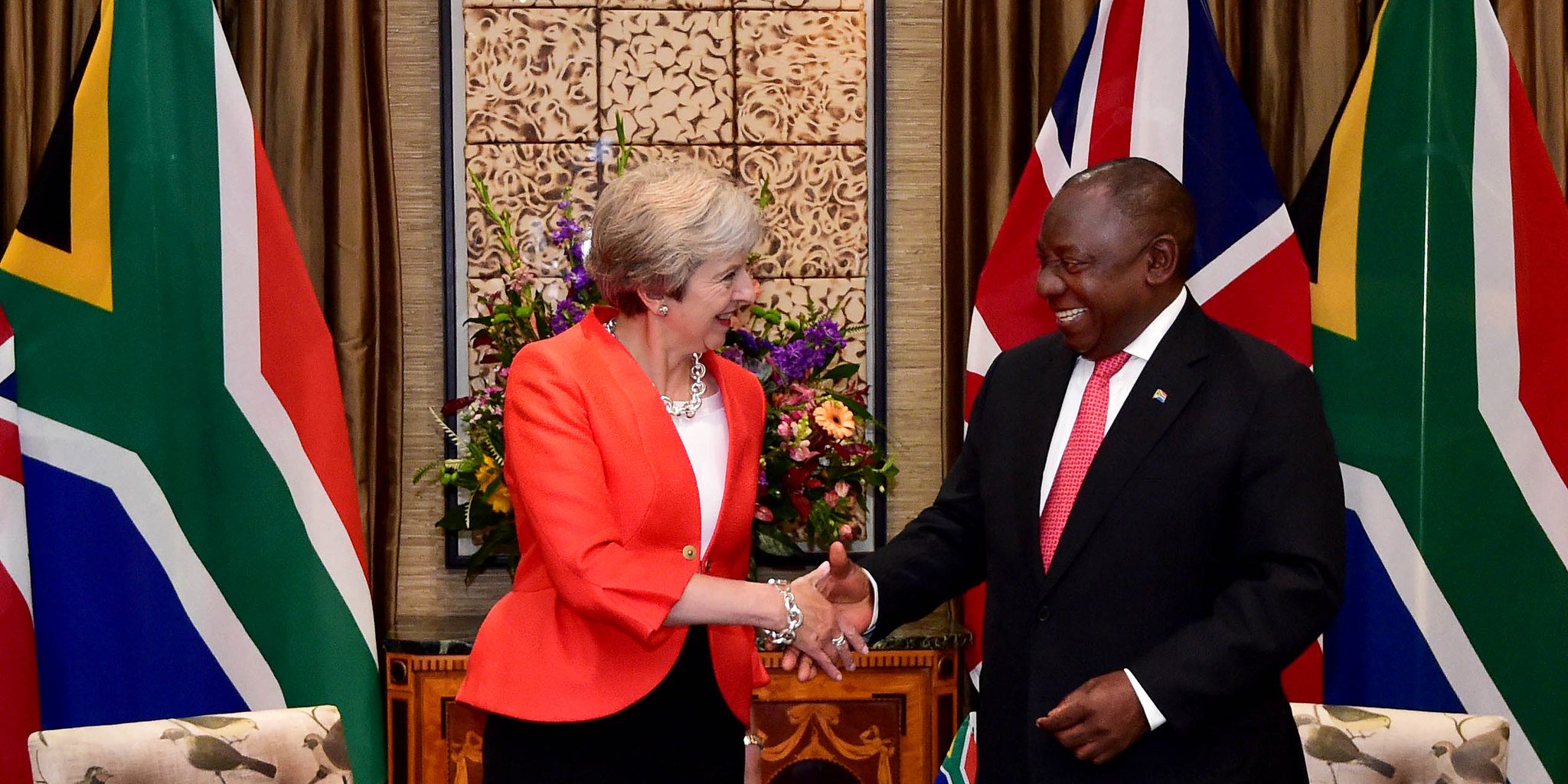
]]>The British Prime Minister has invited President Ramaphosa of South Africa to join the G7 summit in Cornwall, England in early June. The summit will discuss among other things trade and the digital economy. A number of African states are taking part in the WTO negotiations on digital trade, but South Africa has opposed the whole idea of the current WTO negotiations on the topic.
Africa presents both significant opportunities and challenges for those looking to expand e-commerce. Despite changing demographics and improving business environments, which have contributed to rising household consumption, infrastructural and technical constraints continue to undermine efforts to scale e-commerce, and hinder Africa’s integration in the global digital economy. Fewer than a quarter of Africa’s roads are paved according to the World Bank, and even the relatively large markets of Nigeria and Kenya struggle with access to electricity. Moreover, the lack of widespread internet connectivity remains a fundamental barrier to the uptake of e-commerce in Africa, with less than one-third of Africans able to access the Internet. Yet the potential for the widespread adoption of e-commerce to facilitate technological ‘leapfrogging’ has led to a general recognition amongst African states that – if administered and regulated properly – e-commerce has the potential to become a powerful force for sustainable development and economic growth.
As Africa looks to ramp up e-commerce activity, it must address issues related not just to connectivity but to differences in access and adoption. Whilst Kenya, Nigeria and South Africa dominate Africa’s e-commerce layndscape, less than 5 per cent of the population in many smaller Sub-Saharan African states have made online purchases. These variations owe not only to discrepancies in internet connectivity rates, but also to cumbersome postal delivery services, fears of online fraud, and low penetration of electronic means of payments across Africa. Such barriers to the uptake of e-commerce have meant that cash-on-delivery remains the prominent way in which electronic transactions are paid for in the region. On top of these constraints, only a quarter of African countries have a population in which more than half of citizens have credit cards, with women generally being less likely to have bank accounts or access to online platforms. Alongside implementing reliable delivery services and payment systems to establish online consumer trust, ensuring that rural communities and women can adequately engage with online platforms will prove crucial to unlocking the potential for e-commerce in Africa.
Compounding infrastructural constraints is the overall lack of an enabling environment for digital trade and related activities to flourish. Whilst larger markets such as South Africa have put in place frameworks addressing concerns related to data privacy and cybersecurity, other African states have yet to define these parameters by ratifying and implementing the ‘African Union Convention on Cybersecurity and Personal Data’. This delay owes partly to their limited institutional capacities surrounding the implementation of the appropriate legislative and enforcement frameworks for e-commerce. Given that creating a digital ecosystem conducive to innovation, entrepreneurship and growth depends upon having a supportive regulatory climate that fosters transparency and investment, future efforts related to e-commerce must be directed towards promoting capacity-acquisition and targeted technical skills-building across the African region.
In light of the above constraints, bridging the digital divide (i.e. the gap between those with access to information and communication technologies and those without) has been a core priority shared by all African states. Nevertheless, divergent perceptions over how best to achieve this objective has led to disagreements over the relative merits and drawbacks of taking part in the WTO’s Joint Statement Initiative [JSI] on e-commerce, and the potential consequences of liberalising Africa’s e-commerce markets more generally.
On the one hand, most of the states represented by the African Group in the WTO have expressed their firm opposition to participating in the plurilateral negotiations on e-commerce, viewing the creation of binding global rules on e-commerce – such as the proposed rule to permanently extend the existing moratorium on customs duties on electronic transmissions – as “entirely premature”[4] and fundamentally incompatible with their underlying development needs. Instead, these states have conveyed a marked preference for pursuing a much more inward-focused digital industrialisation strategy, in the hopes of building the national digital capabilities that would enable them to effectively compete in the sphere of international digital trade in the future. Tied to fears of ‘digital colonialism’, their reluctance to engage in the JSI can largely be understood as reflecting ongoing frustrations over the failure of the Doha Development Round to deliver on its mandate. This is further exacerbated by the perception that the WTO has proved incapable of representing developing countries’ interests.
On the other hand, a handful of states within the African Group – including Côte d’Ivoire, Burkina Faso, Nigeria and Kenya – have been more open to taking part in the e-commerce plurilateral initiative, approaching the JSI as an opportunity to contribute to the international e-commerce rule-making process and secure capacity-building assistance from the developed world. The latter is crucial given that only 1 per cent of all current funding provided under Aid for Trade programmes is being allocated to ICT projects, and multilateral development banks are investing as little as 1 per cent of total spending on ICT projects and related policy developments.
While positions regarding the JSI have been mixed, African states have generally adopted a cautious approach to international initiatives on e-commerce, with even those states that have chosen to opt into the JSI demanding that they receive ‘special and differential treatment’ (in the form of more time to implement agreed-upon provisions and capacity-building assistance) so as to ensure that their e-commerce markets are not pre-emptively liberalised. The recent decision to incorporate a chapter on e-commerce in the ‘African Continental Free Trade Area Agreement’ serves as an important milestone for Africa’s digital transformation strategy, reflecting both a shared recognition of the importance of addressing e-commerce-related concerns regionally, and an opportunity to strengthen African digital capabilities before fully committing to liberalising their e-commerce markets at the global level.
Overall, the growth of global e-commerce could either exacerbate the existing digital divide, or it could serve as a new engine for economic growth and development by enabling enterprises from Africa and the rest of the developing world to tap into profitable segments of international e-commerce markets. Seizing the development opportunities tied to e-commerce, however, will require investments in African infrastructure, digital literacy and skills, online payments services and digital entrepreneurship. The outcome of the JSI and whether it sufficiently promotes the digital inclusion of African stakeholders will serve as an important litmus test for how the global digital landscape will evolve in the next few years: given that seven of the ten fastest-growing internet populations are located in Africa, home to what is also the youngest population in the world, the future growth of the global e-commerce market depends upon unlocking the potential for e-commerce in Africa.
This post represents the views of the author(s) and not those of the Brexit blog, nor of the LSE. This blog post introduces is part of a series on digital trade that emanates from an extended and detailed simulation of the current WTO negotiations on e-commerce by LSE Masters students in the International Relations Department.
The post Global Britain should look towards supporting the development of Africa’s digital landscape first appeared on LSE BREXIT.
]]>The post Is plurilateralism the way forward for Global Britain’s e-commerce ambitions? first appeared on LSE BREXIT.
]]>In 2017, the road to the 11th WTO Ministerial Conference in Buenos Aires was bleak. Between Donald Trump’s hawkish approach to trade, including his withdrawal from the Trans-Pacific Partnership and request to renegotiate NAFTA, and the UK’s departure from the EU single market with the political and economic turmoil it entailed, overall expectations of what would be achieved in Buenos Aires were low.
MC11, however, defied expectations in unforeseen ways. Although substantial progress on old issues was limited, Members showed a desire to expand trade liberalisation to new topics. Joint Statement Initiatives (JSI) were made in the areas of investment facilitation for development; micro, small and medium-sized enterprises; and crucially, electronic commerce.
Following Brexit, the UK became a WTO member in its own right and will negotiate on its own account. The question is: what are the advantages and risks of a plurilateral approach to e-commerce for Global Britain?

E-commerce negotiations have the potential to reinvigorate the WTO
E-commerce is a fresh topic. Although discussions on e-commerce began in the WTO as early as 1998 when Member States decided to impose a moratorium on customs duties for electronic transmissions, the 2017 JSI officially opened negotiations on the topic. Compared with the Doha agenda which consisted of ‘leftover’ topics from the Uruguay Round, the e-commerce initiative at Buenos Aires provides a brand-new agenda for WTO negotiations going forward. Therefore, it avoids the diplomatic baggage around topics that have previously been haggled over during the decade of the Doha Round.
UK support for an agreement at the WTO would enable Global Britain to have a say in what is a particularly strategic topic, both economically and politically. Economically, in 2016 the global digital economy was worth $11.5 trillion, equivalent to 15.5 per cent of global GDP. Crucially, it had grown 2.5 times faster than global GDP over the last 15 years, had almost doubled in size since 2000, and is expected to continue following an exponential growth trajectory. The global COVID-19 pandemic has only accelerated its growth by boosting online sales and entertainment like never before.
Politically, governments care about regulations concerning the digital world. Australia recently passed a digital news law making Facebook and Google pay for news content on their platforms, and in 2018 the European Union implemented the GDPR framework to ensure consumer data privacy. At the WTO, Global Britain could help shape international law on governmental regulation of e-commerce.
The UK would be negotiating with mostly like-minded countries: e-commerce negotiations take on the very specific form of WTO plurilateral negotiations, which means they don’t include all WTO members. Rather, they only include those Members who wish to make actual progress on negotiations. Crucially, it includes key digital economies such as China and Brazil that are not OECD members. However, Members unwilling to commit to an agreement can drop out and are not able to hold other Members back with the Single Undertaking norm (‘nothing is agreed until everything is agreed’). This can serve to bridge the rift created between developed and developing WTO Members and the kind of hostage-taking practices that shaped the Doha Development Agenda negotiations in the WTO: if developing country Members are unwilling to commit to an agreement, they can simply opt-out instead.
Finally, at the WTO Global Britain could cultivate its “special relationship” with the US. The election of Joe Biden as President of the United States provides some reasons to hope for improved multilateral relations. In three months of presidentship, President Biden has already re-joined the Paris agreement on climate change and has lifted US opposition for the appointment of Dr. Okonjo-Iweala as Director-General of the WTO. With the US back in a global leadership position, negotiations on e-commerce have the potential to deepen and broaden trade liberalisation, and Global Britain could be a key actor in promoting renewed WTO solutions.
The downside risks for WTO-based plurilateralism
Despite the potential for e-commerce talks to reinvigorate a lethargic WTO, significant risks of negotiation failure make the plurilateral approach in the WTO less attractive for Global Britain. First, contentious US/China structural differences over the strategically valuable e-commerce industry significantly increase the risk of JSI failure. Whereas the US produces countless digital content and platform firms, many Chinese e-commerce companies specialise in buying and selling physical goods on online marketplaces. Consequently, American negotiators push for greater ‘behind-the-border’ regulation such as intellectual property rights and data access, whereas Chinese diplomats focus on ‘at-the-border’ regulation including e-signatures and customs duties. As each country has substantially different digital industry interests to protect in negotiations, wide structural differences reduce the likelihood of an e-commerce agreement.
Second, as WTO negotiations are being held on an open plurilateral basis, UK participation in the WTO e-commerce agreement risks being undermined by ‘free-rider’ concerns. A country can ‘free-ride’ when it does not sign up to a plurilateral agreement but benefits from it when the commitments of those that do are extended to them on an MFN (most favoured nation) basis. If too many free-riders benefit at the cost of participant countries, then ultimately the costs outweigh the benefits for the signatories and negotiations collapse. Given that India, with the world‘s second-largest population, has already pulled out of e-commerce talks, the free-rider issue clearly poses a threat to negotiation success.
Third, technical topics such as e-commerce are arguably better suited to negotiation in norm-creating institutions rather than the WTO. Policymakers must therefore question whether the WTO is the most suitable institution to realise the ambitions of Global Britain. Wolfe (2010) argues that contested, dynamic, regulation-heavy, technical topics require a greater level of ‘consensual understanding’ where negotiators must first establish shared norms regarding the key issues. However, by design the WTO is primarily a bargaining-based institution, where issue-linkage and diffuse reciprocity help create relatively balanced outcomes for all parties. Therefore, negotiations on e-commerce may be ‘doomed to fail’ in the WTO context, and would be perhaps better suited to discussions in normative institutions. The OECD-G20 Inclusive Framework on BEPS, the effort to reduce Base Erosion and Profit Sharing in taxation, to which President Biden’s administration submitted their global tax reform proposal only last week, is setting a precedent for how highly technical global issues being negotiated away from the WTO.
Risks to the WTO e-commerce negotiations are particularly salient to UK policymakers in determining whether a WTO-based approach best reflects Global Britain. The e-commerce negotiations are the WTO’s ‘poster-child’ and stand as an indicator of WTO-based multilateralism’s future. If an agreement is signed, then this success will be viewed as heralding a fresh start for multilateralism with Global Britain leading the charge. However, if negotiations fail, then countries that are eager to realise digital trade liberalisation will likely seek to negotiate alternative e-commerce deals in other forums. Such a failure of the e-commerce negotiations could represent the start of a slow but irredeemable shift away from WTO – based multilateralism. If this is the case, Global Britain strategy may find more success within the increasing number of preferential trade agreements (PTAs) or even plurilateral negotiations at the OECD.
This post represents the views of the author(s) and not those of the Brexit blog, nor of the LSE. This blog post introduces is part of a series on digital trade that emanates from an extended and detailed simulation of the current WTO negotiations on e-commerce by LSE Masters students in the International Relations Department.
The post Is plurilateralism the way forward for Global Britain’s e-commerce ambitions? first appeared on LSE BREXIT.
]]>The post The EU helped to end the armed campaign of the Provisional IRA first appeared on LSE BREXIT.
]]>Beginning in 1969 following its split from the Dublin leadership of the ‘official’ IRA, the Provisional IRA engaged in a near 30-year campaign of armed action against the United Kingdom’s constitutional involvement in Northern Ireland. Whatever its justification, this would result in the death of nearly 1700 people – just under 50% of all fatal casualties in the conflict (exponentially more than the second most prolific actor in the loyalist UVF – though the latter were more unscrupulous in their targeting of civilians) – and billions upon billions worth in economic damage. The 1998 Good Friday Agreement brought a de-facto end to this campaign; de-facto in that although military action against the UK state ceased after the second PIRA ceasefire of 1997, Sinn Féin did not explicitly accept the outcomes of the Agreement, and the PIRA only formalised the end of its campaign in 2005.
Much has been written about why it was that the “Long War” mentality that defined the PIRA suddenly became susceptible in the early 1990s to UK and Irish intergovernmental efforts to draw the Provisional Republican Movement (PRM – encompassing both the PIRA and Sinn Féin) into a political framework. The emphasises here range from the analysis and agency of the republican leaders Gerry Adams and Martin McGuinness; the influence on their thinking from people like John Hume, Fr. Alec Reid, Brendan Duddy/Michael Oatley, and Jonathan Powell; UK-PIRA ‘military stalemate”; and conversely, the increasing sophistication and success of the UK security services’ efforts to penetrate the PRM.
Whichever one subscribes to, it is clear, at least, that there was a change in republican thinking; and a factor which has not been properly demonstrated here is the aspect of European integration. This is essential for understanding why it was that the EU and UK devised the Northern Ireland Protocol, the part of the Brexit treaty which has created a quasi-GB-NI border (quasi in that it is limited to a specific set of economic arrangements), so that there would not have to be a north-south one.

The acceleration of European integration and its impact on the PIRA’s self-perceived capacity to perpetuate its war
The PIRA’s overall raison d’etre was to forcibly remove the UK government from any remaining involvement in the governance and administration of the island of Ireland. Its ability to garner support for this – as well as recruit personnel willing to carry out its military plans – substantively relied upon its capacity to make a compelling territorial distinction between the ‘occupying’ east (Great Britain), and the ‘just’, partitioned west (Ireland). With the introduction of the Single Market on 1 January 1993 however – and notwithstanding the continued British military presence there on account of the PIRA’s campaign – the most potent symbol of this – the Irish north-south border – thereafter ceased to be. There grew an increasingly prevalent sense from this – as Lord Paul Murphy (Minister of State for Northern Ireland during 1997-99) tells me – that “What do borders mean anything – what’s the significance of it?”. This, in his view, “was the biggest single contribution that Europe made to the peace process… the attitude toward the border… [it] was less than it ever was.”
The importance of this deepening integration between the UK and Irish member states was captured just after the introduction of the Single Market/signing of the Maastricht Treaty in a March 1993 exploratory UK (or more specifically, MI5) meeting with the republican leaders Martin McGuinness and Gerry Kelly. The Sinn Féin minutes from this meeting – which the veteran BBC reporter Peter Taylor deems to be at least broadly accurate – attributed a series of highly significant remarks to “Fred”/Robert McLaren, the MI6-turned-MI5 officer tasked with maintaining an official channel of contact with the PRM. These were as follows: “The final solution is union. It is going to happen anyway. The historical train—Europe—determines that. We are committed to Europe. Unionists will have to change. This island will be as one”.
Whether this was a genuine analysis or mere persuasion tactic – and for republicans, it was “taken to be a message from the British Government” – the accelerating integration precipitated by the events of Maastricht was being widely interpreted as a challenge to the nationalistic platform upon which the PIRA fought its war. The increasing involvement of the Clinton administration in the ‘Northern Ireland problem’, for instance, was informed by the assessment of the National Security Advisor, Tony Lake; a key part of which was that the PRM was rethinking its strategy due to the EU’s relative negation of the UK and Irish sovereignty issue. Michael Oatley – the (by then retired) MI6 officer who laid the groundwork for the PIRA’s transition through his self-pursued 1991 dialogue with Martin McGuinness – affirmed this evaluation. In a 1999 letter to The Sunday Times critiquing the preoccupation with decommissioning, the former wrote that “McGuinness and Adams recognised that the political atmosphere in Ireland and on the British mainland had changed through the development of the European Union, and saw a new way to attract serious attention to their cause.”
Brexit and the dangerous restoration of territorial markers
The EU dimension fatally weakened the tenability of physical force republicanism, and part of the logic of the Northern Ireland Protocol is to try and emulate this by satisfying the need for a border by placing it in the Irish Sea. Contrary to what some might suggest, this was a very necessary consideration, with the ‘New’ IRA – an amalgamation of armed republican groups that continues to be dangerous even after a successful MI5 bugging operation in 2020 – declaring that Brexit had enhanced their recruitment by putting the border “back on the agenda again”; and that “it would be remiss of us not to capitalise on the opportunity”.
The difficulty here is that whereas the effects of the EU on the sustainability of nationalistic violence were general and automatic; the EU and UK have had to explicitly signal with the Protocol that they are, in effect, trying to prevent the reoccurrence of a specific form of violent nationalism. This, has in turn, spurred competing violent nationalist traditions (namely Ulster loyalism), who are wondering why it is that their capacity for violence has been so underestimated that they are now faced with territorial markers they equally oppose.
Tony Blair wrote in 2019 – and the 1993 Downing Street Declaration negotiator, Lord Robin Butler, informs me that he agrees with him – that without the Single Market’s creation of an open border in Ireland, “there would never have been a peace agreement”. This speaks to the indispensable importance of the EU to the UK and Ireland’s ability to strike the delicate balance that is the Northern Ireland peace process. The inevitable outcome of Brexit was that there would be some form of rebordering within the British and Irish Isles, and events have shown that there is no way to do that without adversely impacting this equilibrium.
This post represents the views of the author(s) and not those of the Brexit blog, nor of the LSE.
The post The EU helped to end the armed campaign of the Provisional IRA first appeared on LSE BREXIT.
]]>The post The UK’s union has been fractured by Brexit first appeared on LSE BREXIT.
]]>The UK’s union was never a unified project or ideology but rather a complex structure with numerous strands, which sometimes cohere and sometimes pull apart. To recall the metaphor in the book’s title, it is a bone structure that can survive multiple partial fractures as long as they do not all accumulate in the same place. That happened in Catholic Ireland in the early twentieth century, where a counter-project gained sufficient traction to triumph, but without resolving the national question definitively.
At one level, the union rests upon deep social forces, including economic forces and social structures. It is not difficult to list centrifugal forces in the early twenty-first century. Welfare state restructuring has emptied the concept of social citizenship of much of its meaning. Economic disparities have increased in the absence of state-wide policies aimed at spatial cohesion, although the disparities do not map clearly onto the boundaries of the component nations. Devolution has set in train institutional dynamics which critics predicted could lead to the weakening and, eventually, dissolution of the bonds of union. Scotland and, to an increasing extent, Wales have emerged as distinct political communities with their own political agendas; Northern Ireland has long been a place apart. Until the 1970s, there was a British party system, which even extended partially into Northern Ireland. Now there are distinct systems, and in Scotland as well as Northern Ireland the principal line of division is over the Union itself. Above all, Brexit has removed an external support system which filled some of the abeyances in the devolution settlement and provided important elements of economic union. None of these, on its own, is fatal.
The United Kingdom remains a highly integrated economic zone even though the single market was larger, and more strongly institutionalized, within the European Union. Reserved welfare powers do guarantee equity and protection against risk across the Union, if the insistence that the welfare state itself depends on the Union is, at least, exaggerated. There are fiscal transfers to all three devolved territories even they do depend on historic legacies and political bargaining, not on any calculation of need (with the partial exception of a guaranteed floor for Wales). As for shared ethos and British values, these are not the property of the British or of unionists but universal values also shared by peripheral nationalists. There is no evidence that fundamental values are diverging significantly or are under any more threat at the periphery than at the centre—unlike during the Stormont regime. There remains a strong substratum of British identities rooted in history, shared experience and values but this, as always, is a polyvalent phenomenon, negotiated differently across the UK with moments of common endeavour such as the Second World War but also distinct stories and memories.
At another level, the Union rests upon conjectural factors, critical moments and political shifts, which can change matters over short periods. International and historical experience shows that, in these conditions, specific events can result in rapid change. The Easter Rising of 1916 and its aftermath precipitated a shift to radical Irish nationalism. A very different event, the establishment of the National Assembly for Wales, shifted the constitutional ground there very rapidly. Inchoate English discontents was one of a set of elements that crystalized into outright rejection of EU membership by a majority of the population once that option was presented. The Union has come under most intense challenge in recent years from nationalisms in Scotland, Northern Ireland and Wales. Surveys since the Scottish independence referendum have provoked some sensationalist headlines but show that substantial numbers of people believe that the union will end within the next twenty years. Yet Brown et al. (1999) found back in 1997 that 60 per cent of Scots thought that Scottish independence was likely in the following twenty years; twenty years later, the expectation was much the same. Irish unification is also viewed differently depending on whether it is presented as a long-term prospect or an imminent proposition. The reason is that, in the absence of an external shock, it has hitherto been possible to accommodate nationalist pressures by conceding autonomy and ingenious arrangements such as the Northern Ireland settlement. It was the failure to concede Home Rule that provided the opportunity for Irish separatism in the early twentieth century.
Between the deeper forces and historical conjunctures is statecraft, in which leaders read long and short-term change and respond more or less skillfully. The Millennium settlement was an effort to restabilize the union at a different point from the old territorial management formulas, providing a new balance between centre and periphery. It is, as we have seen, subject to different interpretations, themselves rooted in contrasting historical perspectives. Two features stand out: the failure to change constitutional understandings and practices at the centre; and the continued position of England as the dominant partner, but constitutionally unrecognized as such. The settlement as a whole, while described as a constitutional reform, was very weakly constitutionalized. Not only was the principle of Westminster sovereignty and supremacy conspicuously asserted as a legal principle. The settlement was not scaffolded with wider and deeper understandings of constitutionalism as theory and practice. Conventions were invoked as a way of squaring the sovereignty circle but then reduced to mere ‘politics’, meaning in practice, power. English constitutional assumptions continue to govern the Union while much of the UK government continues as if there were still a unitary state with devolution tacked on. In spite of the reams that have been written about constitutionalism since the nineteenth century, matters seem always to return to the Diceyan English constitutional orthodoxy. It used to be thought that all this was mere constitutional formalism since political prudence would ensure that the centre would not overstep itself or that, were devolution introduced, the new bodies would become weighty political actors so that sovereignty would de facto be divided.
Events, particularly since the Brexit referendum, have shown otherwise. A new, assertive strain of unionism emerged within the Conservative Party. The UK government’s Internal Market White Paper described the union as a ‘unitary state’ and the measures in the Internal Market Bill undermined the regulatory autonomy of the devolved authorities. It contained a new power for UK ministers to spend money in devolved fields, with or without the agreement of the devolved governments. This built on the extension of city and regional deals beyond England. UK government ‘hubs’ were established in Scotland, Wales, Northern Ireland and the English regions to provide greater presence and capacity. During the COVID crisis, the UK government established ‘paid for partnerships’, which allowed it to place self-congratulatory articles in newspapers. All of this was part of a conscious effort to raise its profile and take credit for spending by ‘flying the unionist flag’.
This article gives the views of the author, and not the position of LSE Brexit, nor of the London School of Economics.
The post The UK’s union has been fractured by Brexit first appeared on LSE BREXIT.
]]>