Advertise with Googlier.com Ape Alliance - Ape Alliance https://4apes.com Mon, 19 Oct 2026 08:25:18 +0000 Joomla! - Open Source Content Management en-gb 2019 Symposium Programme https://4apes.com/news/ape-alliance/item/1691-2019-symposium-programme https://4apes.com/news/ape-alliance/item/1691-2019-symposium-programme 2019 Symposium Programme

We are making our symposium a paperless event! Please download your programme here. 

]]>
noreply@4apes.com (Iona Haines) Ape Alliance News Wed, 20 Nov 2019 02:17:29 +0000
Ape Alliance Chairman Ian Redmond to Speak at Seed Festival https://4apes.com/news/ape-alliance/item/1673-ape-alliance-chairman-ian-redmond-to-speak-at-seed-festival https://4apes.com/news/ape-alliance/item/1673-ape-alliance-chairman-ian-redmond-to-speak-at-seed-festival Ape Alliance Chairman Ian Redmond to Speak at Seed Festival

Hawkwood’s Seed Festival 19-21 July 2019 Planting Big Ideas!

“This years focus is on Action, spurred on by the IPCC Report and Inspired by movements like Greta Thunberg inspired student strikes and Extinction Rebellion, we no longer have the luxury of just talking about it – this is an emergency!”

Musicians, Poets, Artists, Inspiring Eco Speakers, Movers and Shakers and YOU! Seed Festival inspires a more intimate and personal connection with our living world and our place within it.

Seed Festival – planting big ideas 
is a creative partnership between 
Hawkwood and Seed Idea.

Hawkwood, is a Centre For Future Thinking, providing courses, facilitating training and offering venue hire set in a beautiful location in the Cotswolds. Our vision is about creating the world we want for now and our future. We are a place that convenes people and organisations from many disciplines in support of creative endeavour, a flourishing society and a sustainable environment. Registered charity number 311767


Seed Idea exists to provide individuals, groups and business with an inspiring and engaging service through events, design, innovation and coaching. As well as their own exciting Seed projects – concerts, festivals, videos and workshops. They can support you in your artistic vision by providing you with the expertise, services or tools that you seek to make your project a reality. They have a fountain of creative ideas that help us uniquely respond to your needs. They are particularly inspired by people and projects that break the mould and are grounded in social and ecological values. They offer you a tailor-made service to best support you planting your big idea in the world.  

Hawkwood’s Rich History

Since medieval times ‘The Grove’ has been a special place
this the place where Hawkwood now stands.

An ancient sycamore tree, estimated to be over 400 years old
lost a major limb just before our first Seed Festival.
The Kogi tribe featured int he Aluna movie heard of this, 
and told us this this was significant  event and a blessing for our event.

The Hawkwood estate was in the hands of the Capel family for over 200 years.
Tudor Gothic’ style built in the 1840’s after the existing Jacobean house 
was severely damaged by fire.

The fresh water spring under the ancient sycamore has been pouring forth, 
without ever running dry, perhaps for hundreds or even thousands of years.

Hawkwood’s Seed Festival is a collaboration between all the Artists, Speakers, Partners; Artistic Director Victoria Whelan of Seed Idea and the Hawkwood Team, particularly CEO Alicia Carey, Programme ManagerKatie Lloyd-Nunn, Marketing Manager Priscilla Pabon.


Ian's talk: Animal Gardeners of the Forest – how primates and elephants help stop climate change.  
Forests play a central role in efforts to prevent dangerous climate change, and yet deforestation continues apace. Even where the trees are left standing, we hunt the animals therein. In the tropics, most tree species depend on animals to disperse their seeds.  Birds, bats, monkeys, apes and elephants eat fruit, then deposit the seeds in their droppings – first rate organic fertiliser – far from the parent plant.  If we want healthy forests in the future, we must protect the Gardeners of the Forest today. 


Buy tickets here. 

]]>
noreply@4apes.com (Iona Haines) Ape Alliance News Fri, 12 Jul 2019 14:34:54 +0000
Save the Tapanuli Orangutan https://4apes.com/news/ape-alliance/item/1642-save-the-tapanuli-orangutan https://4apes.com/news/ape-alliance/item/1642-save-the-tapanuli-orangutan Tapanuli Orangutan

 If you haven't heard yet, there is a hydro dam being built right across the habitat of the last 800 of this incredible species, which will fragment their population and wipe them out.

We don't want this to happen.

We organised a mass letter writing campaign and protests to try and stop the Bank of China from funding this destructive dam.  They responded by inviting us to present our concerns at a meeting in London, and reassured us that no finance has been given because the project is still under review.  We continue to urge all involved to protect the Batang Toru forest and seek alternative sources of renewable energy.


]]>
noreply@4apes.com (Rosie Street - Palm Oil & Orangutans) Ape Alliance News Tue, 01 Jan 2019 12:04:33 +0000
Ape Alliance Submits Report to DEFRA Consultation on Primates as Pets in England https://4apes.com/news/ape-alliance/item/1723-ape-alliance-submits-to-defra-consultation-on-primates-as-pets-in-england https://4apes.com/news/ape-alliance/item/1723-ape-alliance-submits-to-defra-consultation-on-primates-as-pets-in-england

In October 2019 DEFRA (Department for Environment, Food and Rural Affairs) launched a Call for Evidence on the Welfare of Primates as Pets, which closed in January 2020. Animal welfare is a devolved issue and so any reforms will apply to England only.

In response to the evidence they received, DEFRA proposed the introduction of a new prohibition on keeping primates in England and opened a consultation on the topic.

Ape Alliance worked with several concerned ape allies to develop this response but as always, we cannot speak for the views of all of our members. 

DEFRA are hoping that the findings of the consultation will help them to determine which new measures to bring forward in legislation, and the practicalities of how these new restrictions could be applied.

We hope that DEFRA will listen to our response, and the detailed responses of our ape allies who have been working on this issue for many years (some of whom's responses are also attached below). 

If you would like to read our response, please see the attached document. 


]]>
noreply@4apes.com (Iona Haines ) Ape Alliance News Thu, 11 Feb 2021 15:05:07 +0000
PASA 2020 Census https://4apes.com/news/ape-alliance/item/1722-pasa-2020-census https://4apes.com/news/ape-alliance/item/1722-pasa-2020-census

The Pan African Sanctuary Alliance (PASA) has released their census for 2020, a year which had profound impacts on African Primates and the sanctuaries that care for them. PASA collaborates with their 23 member sanctuaries, as well as local communities, governments, and experts.

This census provides a summary of primate’s ongoing and present threats, a summary of the Great Apes and their abundance, as well as sharing the work done by sanctuaries to develop communities and provide educational programmes.

Among the concerning reports of the threats to primates, the census highlights the resilience and commitment of their member sanctuaries. Despite the disruption brought by COVID, the sanctuaries have made great achievements in the last year. For example, Ape Action Africa successfully conducted the first release of a gorilla in to the wild. Despite the extreme challenges’ sanctuaries have faced this year, members were still able to provide care to 3440 animals, rescue 239, and supply more than $6M to local economies. Find the full census below.

]]>
noreply@4apes.com (Iona Haines) Ape Alliance News Wed, 10 Feb 2021 15:17:23 +0000
Report for a Thin Green Line Foundation Field Mission to Tayna https://4apes.com/news/ape-alliance/item/1714-report-for-a-thin-green-line-foundation-field-mission-to-tayna https://4apes.com/news/ape-alliance/item/1714-report-for-a-thin-green-line-foundation-field-mission-to-tayna

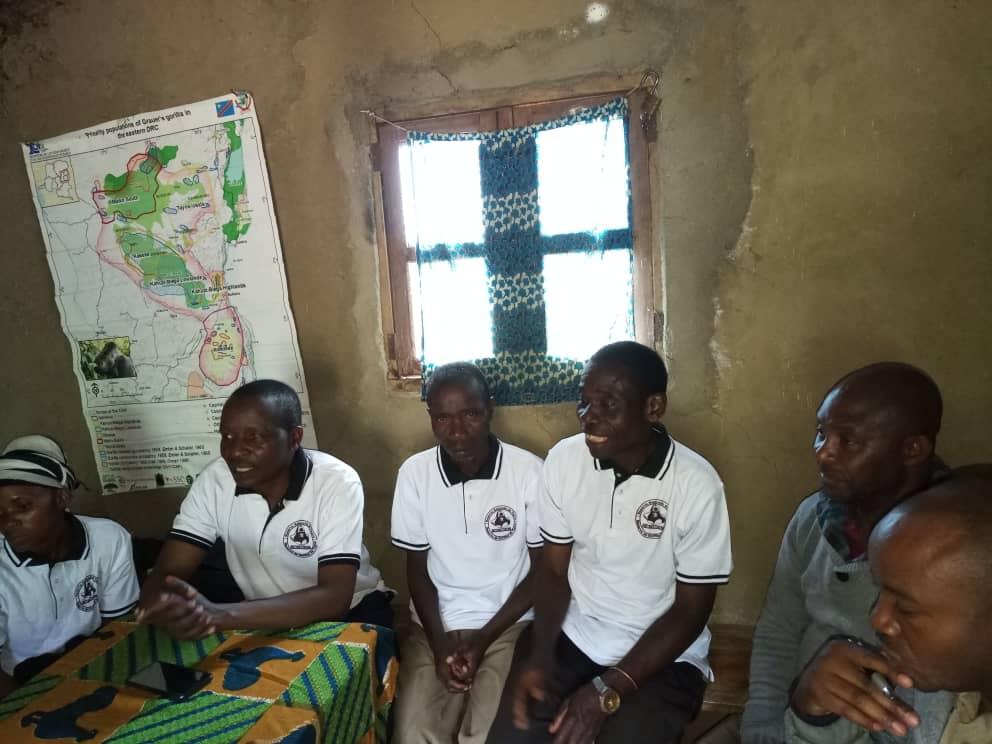
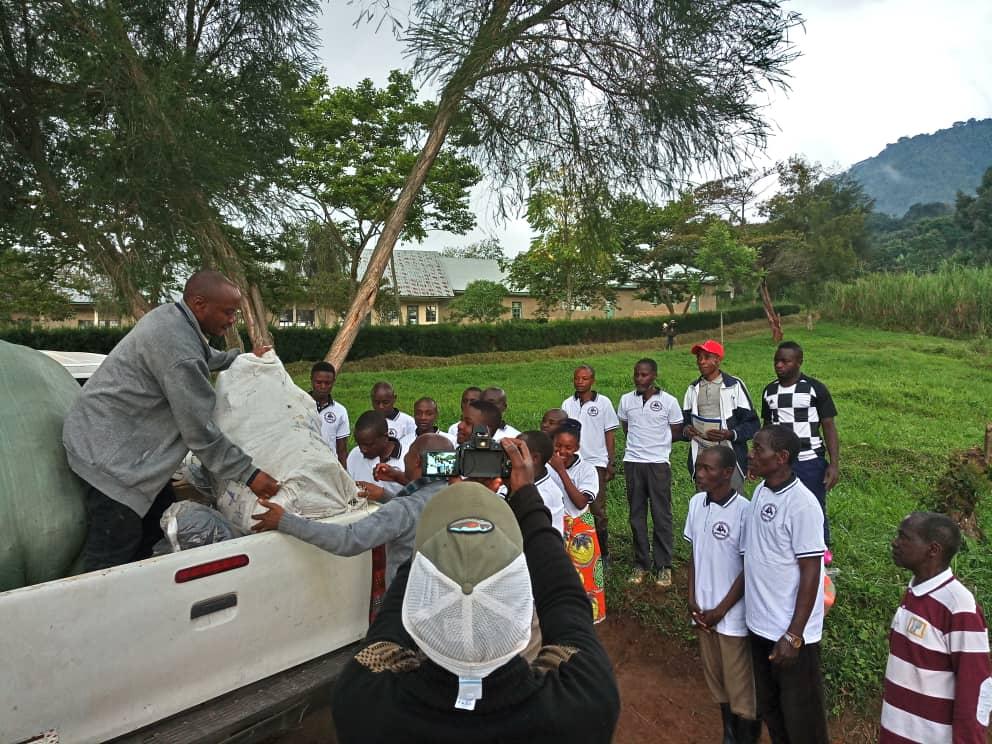
Omer and Alain left on Sunday July 23rd, 2020 for Tayna to hand to the Tayna monitoring team and stakeholders the field equipment donated by the Thin Green Line via Gorilla Organization, obtained thanks to the active advocacy led by Dr. Ian Redmond. 

This donation that falls in the scope of the management plan for the integrated conservation for Kisimba-Tayna-Usala community reserves, initiated by Dr. Neil Wilson with strong support of Iveta, was made of 45 kits, each containing  a bag, a sleeping bag, a raincoat, a pair of boots, a torch, a knife, a drinking cup, and a face mask. 

On board a Hilux 4X4, with the 45 kits well packed in the car, we first drove to the OPRP checkpoint located at around 7 km from Goma. The military intelligence officers who were there wanted to know what we carried in our car. We told them some of the items and then they asked us for the goods document. We gave them the waybill that they brought to their provincial commander who came to the checkpoint for work inspection. On reading the document he told them to give back the document to us and let us continue because the goods were in compliance with our work. We reached Kiwanja town at 11 am and at 1 pm we drove in a convoy escorted by FRDC until Kanyabayonga town. From there every vehicle drives on its own. We continued till Kirumba town where we spent our night. 

The following day we drove to Lubero and took the left. At Kaviru, at 10 km from Lubero, we met Jackson MBEKE, Director of GRACE project who had been waiting for us at a small farm. After we had had a delicious meal with him at the farm, we drove along with him to Kasugho safely, a road he is very familiar.

Meeting with the monitoring team. 

At Kasugho, we immediately met with the monitoring team for the Tayna Nature Reserve who had been waiting for us. In a meeting, we told them, as member association of the UGADEC platform that we had come to exchange with them about the progress of their reserve, but also that we have come with some few research equipment for their reserve. 

In reaction to our message, the President of the Board of Directors of the Tayna Resrve, Mr. Ndeya Paluku , told us about the state of the reserve, and even before they saw the donation, expressed his gratitude in Kipiri, a local language , saying that a crab has four legs, two small and two long ones. Someone who has been able to give the small crab’s legs will be able to give the long ones. 

On unpacking the kits, the joy was general. The monitoring team, through their one chief of station said now they have got needed equipment for monitoring and research in their reserve and their community development.

Unpacking the kits. 

The President of the Board of Directors of the Tayna Nature Reserve said that this equipment needs to be well kept for sustainable of their project.

On Wednesday, July 26, 2020, we visited some other projects related to Tayna Nature Reserve and UGADEC, maily the GRACE project, a sanctuary with a family of 14 gorillas made of babies rescued from the UGADEC areas. Grown up today, we could see them in the UGADEC enclosure in the year 2006 before they were transferred to GRACE Sanctuary. It was a pathetic moment because the foundation of the project is the community reserves of UGADEC from which these orphans were recovered. One is called Kighoma from the Tayna Nature Reserve, another one is Pinga from the Kisimba Ikobo Nature Reserve, another is Lubutu from REGOMUKI, etc.

Another visit was at TCCB, the Tayna Center for Conservation Biology, a well built University to host a graduate and master degree university students from different areas, near a sanctuary and a reserve, to serve as a laboratory.

On Thursday, before we returned to Goma on Friday, we had an exchanged with some other stakeholders from Tayna in Butembo City.

We would like to thank GRACE-Disney that has supplied us with fuel to reach Tayna. We would like to ask some other partners in the framework in this Management Plan to see how to bring support to this effort for Gorilla, Chimpanzee, Okapi and Elephant conservation in the Kisimba-Tayna and Usala area.

]]>
noreply@4apes.com (Iona Haines) Ape Alliance News Wed, 04 Nov 2020 16:48:08 +0000
Could COVID-19 signal the end for our closest relatives? https://4apes.com/news/ape-alliance/item/1699-could-covid-19-signal-the-end-for-our-closest-relatives https://4apes.com/news/ape-alliance/item/1699-could-covid-19-signal-the-end-for-our-closest-relatives

Everyone can appreciate the profound effect that the current COVID-19 pandemic has had on human lives worldwide, whether that be working from home, food shortages, or the loss of loved ones. However, there is little doubt that, as a species, we will survive this pandemic. The futures of many species of apes are less certain.

Whilst there are (thankfully) no reports of apes with COVID-19 at the time of writing, they can contract other coronaviruses, and scientists believe it as a case of when, rather than if, the infection will reach apes. Our close evolutionary relationship to apes means they share many genes and consequently cellular structures, including the ACE2 (angiotensin-converting enzyme 2) by which the virus attaches to respiratory cells.

There are also numerous cases of other respiratory diseases reported in the field – Dr Vernon Reynolds reports the death of four senior male chimpanzees over the last year in the Budongo forest in Uganda. The death of individuals has knock-on impacts on the social structure of troops, the profound effects of which is illustrated by gorilla groups. Should a silverback die, his offspring may be killed by remaining males in order to bring the females of the troop into oestrous sooner. The social structure of apes also contributes to the spread of the infection; aside from the obvious transmission between regularly interacting individuals of the same group, should a dominant male die, the females of the troop may move to a troop in another area, transmitting the infection to this troop should they carry the infection. However, it is not only social apes at risk of coronavirus – Orangutans are considered at high risk given the ever-increasing overlap between their habitats and human development.

Tourists watch a wild orangutan on a feeding platform. Photography by Ian Redmond OBE. 

Aside from the probable death of apes due to contracting COVID-19, the indirect impacts of the pandemic are already likely costing ape lives. It is imperative that ape tourism is suspended for the foreseeable future to prevent transmission from humans to apes, however many conservation organisations are struggling to continue their vital work without this source of income.

Furthermore, tourism provides a source of income and employment to communities within or near to ape habitat. Without this incentive to protect the apes, and with food shortages due to lack of imported food and loss of income, there is a very tangible risk of increased poaching. This risk is exacerbated by reduced numbers of rangers in some protected areas due to lack of funding and health concerns.

Conservation organisations are being forced to diversity their means of income. Conservation Through Public Health (which works towards the conservation of mountain gorillas through improving the lives of people) exemplifies imaginative ways of raising funds with their social enterprise ‘Gorilla Conservation Coffee’. Funding from Zoos is likely to decline as they are also suffering financial impacts of the pandemic. Ape conservationist Ian Redmond promotes the use of virtual reality tourism as a proxy for travel to the habitat of apes.

Girl uses Ape Alliance VR headset at event in Bristol. Could VR connect people to nature during lockdown?  

There are hopes that this pandemic will serve as a wake-up call to governments around the world to close wildlife markets (note that there is a distinction between these and wet markets, which include non-animal products), many of which are already illegal, but legislation is poorly enforced. However, scepticism remains as to how much this alone can really achieve in preventing further outbreaks of zoonotic diseases.

There is potential for zoonotic diseases to pass from animals to humans wherever human behaviour results in a change in animal behaviour. For instance, the 1998-1999 Nipah virus outbreak in Indonesia occurred as a result of human contact with secretions/tissue of infected pigs. These pigs became infected from eating fruit in orchards that had been fed on by bats. These bats were forced to flee to the orchards for food after their forest habitats were set alight by humans. It seems inevitable that for as long as we continue to impinge on wildlife habitats - whether that be through deforestation, mining or commercial hunting - zoonotic diseases will continue to be a threat. In the words of Dr James Desmond of Liberia Chimpanzee rescue, “If we don’t change our behaviour, this is going to keep happening”.

If you are interested in this subject and would like to learn more, I would recommend watching the Ape Alliance panel discussion (posted on Facebook), which goes into more depth with experts in the field and gives information on how you can help ape conservation.

Article by Ape Alliance volunteer Eleanor Harrison. 

]]>
noreply@4apes.com (Eleanor Harrison ) Ape Alliance News Sun, 26 Apr 2020 13:05:30 +0000
Ape Alliance Chairman Ian Redmond Appointed CMS Terrestrial Species Ambassador https://4apes.com/news/ape-alliance/item/1696-ape-alliance-chairman-ian-redmond-appointed-cms-terrestrial-species-ambassador https://4apes.com/news/ape-alliance/item/1696-ape-alliance-chairman-ian-redmond-appointed-cms-terrestrial-species-ambassador Ape Alliance Chairman Ian Redmond Appointed CMS Terrestrial Species Ambassador

Internationally-renowned conservationist Ian Redmond OBE, award-winning explorer and environmentalist Sacha Dench and equestrian and Bollywood actor Randeep Hooda on Monday were named CMS Ambassadors for Migratory Species until 2023 under the redesigned Ambassadors Programme launched at CMS COP13.

The launch of the redesigned programme took place on the opening day of the Thirteenth Session of the Conference of the Parties to the Convention on Migratory Species (CMS) at Gandhinagar.

Ambassadors can either be global celebrities who have expressed a desire to contribute to raising awareness of migratory species and the work of the convention, or prominent individuals from conservation, science, literature, or other fields who can mobilize attention for specific issues or species.

British biologist Ian Redmond is widely respected for his work with great apes and elephants and has served as Ambassador for the Convention on Migratory Species since 2010.

He has led anti-poaching patrols, guided film crews into close encounters with gorillas, chimpanzees, orangutans, and elephants, and worked to support local conservationists during civil wars in Rwanda and the Democratic Republic of Congo. Redmond will represent terrestrial species for CMS.

"One of the most important things I can do in my role as an Ambassador for the UN Convention on Migratory Species is to talk about CMS, write about CMS and help to make documentaries and social media posts about what it does and which species it helps," he said.

Australian Sacha Dench is a pioneering conservationist, champion sportswoman and record-breaking adventurer who is known as the 'Human Swan' following her paramotor journey tracking the Bewick's Swan's migration from the Russian Arctic to the UK in 2016.

Dench will be taking to the air for a trip of more than 6,000 miles later this year to track the migration route of ospreys from Scotland to Ghana.

She said: "By investigating the health of the wetlands, especially the plastics and pollutants getting into the water system, we could help all manner of migrating birds and other animals that depend on healthy wetlands and waterways, including ourselves."

Just prior to being selected as an Ambassador, Dench lost her family home to Australia's catastrophic bushfires.

"Losing our home was devastating yet it's a drop in the ocean compared to the impacts of man-made climate change and habitat destruction on migratory birds across the planet as we decimate their global aflyways'," she said.

Randeep Hooda is an award-winning film and theatre actor, as well as a professional equestrian.

He has advocated for many environmental causes, including wildlife protection and animal welfare, and has generated public awareness for his beach clean-ups in Mumbai.

"Migration is a part and parcel of the life cycle of many species. It is not only important for them but also important for our planet. They make this world a healthy and more diverse place. Many of them are under threat and we need to work jointly across the globe to protect them," he said.

Aquatic species are often the least discussed but undertake amazing migrations. Biodiversity underwater needs to be conserved. "As an Ambassador, I hope to take the conversation about conservation from conferences to local cooperation," Hooda added.

Click here for the original article. 

]]>
noreply@4apes.com (TWC India) Ape Alliance News Thu, 20 Feb 2020 14:48:00 +0000
Ian Redmond Interviewed by Aha Magazine https://4apes.com/news/ape-alliance/item/1681-ian-redmond-interviewed-by-aha-magazine https://4apes.com/news/ape-alliance/item/1681-ian-redmond-interviewed-by-aha-magazine

Ape Alliance Chairman Ian Redmond OBE is interviewed by Aha magazine talking about the crime of ecocide, among other things. Check out their YouTube channel for the full videos. 

https://youtu.be/5u5WmhnHyjI

https://youtu.be/fm6O3i3yYWY

https://youtu.be/TY2heh37XUk

https://youtu.be/6WvZupWAHgI


]]>
noreply@4apes.com (Iona Haines) Ape Alliance News Thu, 12 Sep 2019 11:53:21 +0000
A summary of our Tapanuli orangutan protests https://4apes.com/news/ape-alliance/item/1674-a-summary-of-our-tapanuli-orangutan-protests https://4apes.com/news/ape-alliance/item/1674-a-summary-of-our-tapanuli-orangutan-protests


Photo by Maxime Aliaga.

The Ape Alliance has designated today (Thursday) as an international day of action to save the Tapanuli orangutan. Protests are taking place around the world against plans for a hydroelectric dam that would permanently fragment the orangutans’ habitat and could lead to their extinction.

The Tapanuli orangutan (Pongo tapanuliensis) was only identified as a new species in November 2017, but it has already been described as one of the most endangered great ape species in the world.

Fewer than eight hundred Tapanuli orangutans remain and the Batang Toru dam would be constructed in the area where their population density is the highest.

Demonstrators were originally going to target the Bank of China, but the Ape Alliance has received official news that, in light of concerns about the plight of the Tapanuli orangutans, the bank is now seriously reconsidering its decision to fund the dam and has agreed to meet concerned NGOs.

Today’s protests will now focus on putting pressure on the multinational corporation Jardine Matheson, which owns the Mandarin Oriental hotel chain. The Ape Alliance says the conglomerate is complicit in the destruction of critical Tapanuli habitat.

“Because Jardines also owns one of Indonesia’s largest companies they have the influence needed to help stop the dam,” the alliance said.

Jardines owns the Martabe gold mine on the island of Sumatra via its mining company United Tractors and United Tractors’ subsidiary PT Danusa Tambang Nusantara. A huge amount of electricity is used to operate the mine’s smelters.

The main demonstrations today in the United States will be in New York City, Los Angeles, and Chicago. In Canada they will be in Montreal, Toronto, and Vancouver and the main protest in Britain will be in London.

In New York and London, the demonstrations will be at the Mandarin Oriental hotels. Supporters of the campaign to save the Tapanuli orangutan who are unable to attend these protests are being asked to meet at a coffee shop in their town or city and write tweets and Facebook posts, tagging Mandarin Oriental.

A petition organised by the US-based NGO Mighty Earth and addressed to the Mandarin Oriental Hotel and Jardine Matheson has meanwhile garnered more than 37,000  signatures.

The petition calls on Jardines to help stop the dam project. It states that forest has already been destroyed to make room for the dam and support roads.

“This dam would permanently fragment the Tapanuli orangutan’s habitat, breaking the forest into areas that are too small for them to survive over the long term.  With a population of eight hundred, the Tapanuli has no room for error in the fight for its existence,” the petition states.

The 510-megawatt dam would flood part of the orangutans’ habitat and the project includes a network of roads and high-voltage transmission lines. Other endangered species would also be severely impacted.

Mighty Earth points out that there is a massive geothermal energy plant just a few kilometres away from the Martabe gold mine. It could be further expanded to provide more clean electricity than the dam ever would, the petition states.

The NGO’s petition to the Bank of China and Sinohydro has garnered more than 132,000 signatures.

Sinohydro, which built the mammoth Three Gorges Dam, has been awarded the design and construction contract for the Batang Toru dam project, whose cost is estimated at $US 1.6 billion.

A petition organised by Dana Tarigan from The Indonesian Forum for the Environment, WALHI, calling on the Bank of China to stop financing the Batang Toru dam, currently has more than 95,000 signatures.

More than 282,000 people have meanwhile signed a petition organised by Rainforest Rescue that is addressed to the Chinese and Indonesian presidents and the CEOs of Sinohydro and Indonesia’s state-owned electricity company PT PLN.

Photo by Maxime Aliaga.

The Tapanuli orangutans live in the Batang Toru forest on the island of Sumatra. They are surviving in 1,100 square kilometres of remaining habitat, which is divided into three blocks of forest, separated by roads and agricultural land.

There are two main blocks of forest (east and west), plus an area in the Sibuali-Buali Nature Reserve, located next to the west block, where there is a third, smaller population.

One of the 37 co-authors of a paper about the new species, conservation scientist Erik Meijaard, has said the dam would be the “death knell” for the Tapanuli orangutan. Constructing roads through their habitat would bring in settlers and hunters, he says.

Another of the co-authors, Matthew Nowak, said after the Tapanuli orangutan was identified that, despite only just being described, with so few individuals left, it was already the most endangered great ape species in the world.

Co-author Serge Wich from the IUCN/SSC Primate Specialist Group’s section on great apes said: “If more than 1 percent of the population is lost annually this will spiral them to extinction.”

Meijaard says he discovered the population of orangutans south of Lake Toba in 1997, but it took twenty years to compile the data that shows that the Tapanuli orangutan is a distinct species.

The scientists’ genome analyses revealed that the deepest split in the evolutionary history of extant orangutans – between the Batang Toru population and those living to the north of Lake Toba – occurred about three million years ago.

The Bornean and Sumatran orangutan species separated much later – about 674,000 years ago.

The discovery of the Tapanuli orangutan, which is named after the area in which it lives, was the first time since 1929 that a new member of the great ape family had been identified.

Photo by Andrew Walmsley.

The Batang Toru hydroelectric power plant is being built by the Indonesian firm PT North Sumatra Hydro Energy (PT NSHE) with backing from Sinosure, a Chinese state-owned enterprise that insures overseas investment projects, and the Bank of China.

The dam is part of China’s Belt and Road Initiative to build roads, railways, bridges, ports, power plants, and energy pipelines, and boost telecommunication links.

WALHI has so far failed in its legal challenge against PT NSHE. A court in North Sumatra ruled on March 4 that the Batang Toru dam could go ahead. WALHI is appealing against the decision.

The NGO said that PT NSHE’s environmental impact assessment failed to consider endangered species or communities downstream and the potential for ecological disasters.

PT NSHE says the power plant will cover 122 hectares of the Batang Toru ecosystem and argues that the area is not the orangutans’ primary habitat.

In August last year the Alliance of Leading Environmental Researchers and Thinkers (ALERT) sent a letter to Indonesia’s president, Joko “Jokowi” Widodo about the dam project.

ALERT listed what it says are important misinterpretations or distortions of information about the project by PT NSHE and its corporate affiliates –  “assertions that have wide-ranging financial, environmental, economic, and socio-political implications”.

It added: “We emphasise that, on the strength of this and other evidence, we believe that this project should not have been approved initially by the North Sumatra provincial government.”

ALERT said that the area in which the dam would be built is prime Tapanuli habitat where the orangutans occur in their highest abundances.

“These habitats are rainforests on rich alluvial soils, which may well be functioning as a crucial ‘population source’ (an area with a high number of breeding animals), which is vital for sustaining the overall population,” ALERT wrote.

ALERT points to the Tapanuli orangutan’s low reproduction rate and its intense vulnerability to mortality.

Tapanuli females have their first offspring when they are about 15 years old, and the interbirth interval is then about 8 to 9 years.

“Moreover, the species is strictly arboreal, living only in trees and never coming down to ground. Even a small forest clearing, such as a road without overhead canopy connections, could disrupt and isolate its population,” ALERT wrote.

“In Indonesia, an almost universal consequence of such infrastructure projects is to open a Pandora’s box of secondary impacts caused by poaching and illegal logging, mining, farming, and forest burning. These secondary effects typically magnify the spatial scale and intensity of environmental impacts of the original project by many times over.”

ALERT says the dam project would destroy the major river that runs through the heart of the Tapanuli orangutans’ habitat. Only a trickle of the river’s original flow would be maintained – between one and two cubic metres of water per second, compared to the natural flows of 40 to 400 cubic metres per second.

“This river destruction will kill the fish and aquatic life that rely on the river and sustain local fisheries. It would also allow the river itself to become a ‘corridor of death’ –  by permitting poachers and encroachers to hike into the heart of the orangutan’s habitat along the dry riverbed,” ALERT wrote.

As a “peaker” system, the dam will store water for 18 hours and then release it for just six hours.

The resulting drastic daily fluctuations in river levels would affect several thousand people who depend on the river for fisheries, transportation, irrigation, and their daily water needs, ALERT says.

“These water fluctuations may also cause dramatically accelerated erosion and river sedimentation, causing loss of downstream farmland and infrastructure.”

ALERT says this issue has been so poorly considered publicly that it would be highly advisable for the Ministry of Energy and Mining to suspend all proposed “peaker” projects in Indonesia until urgently needed hydrological studies can be completed.

The alliance said it was also concerned about “recurring suggestions of untoward pressures and ‘inducements’ being applied by PT NSHE toward certain scientists, journalists, and others prepared to speak out in opposition to the project”. This, ALERT said, had provoked ongoing investigations by high-level journalists.

Photo by James Askew for the SOCP.

Those calling for an end to the Batang Toru dam project say the Tapanuli orangutan population is already threatened by many outside forces, from habitat loss to poaching and climate change.

Several NGOs on the front line of orangutan protection collaborated to produce a report about the dam project that was published in May last year. They said urgent action needed to be taken to save the Tapanuli orangutans from extinction, and protect local communities.

“Companies, government and investors must take immediate preventative action,” the NGOs stated.

“The Batang Toru forest is home to the entire remaining population of Tapanuli orangutans … The new project poses a very real threat of extinction for this entire species. Many more endangered species will be severely impacted, such as Sumatran tigers, sun bears, agile gibbons and pangolins.”

The NGOs say the orangutans’ remaining forest habitat would be split into three sections, permanently separating the two main blocks and the nature reserve.

A 13.5-kilometre tunnel is planned that would carry water from the dam to power generators downstream and the accompanying access road would create a permanent barrier that orangutans and other wildlife would be unwilling or unable to cross.

“In addition, forests will be felled to make way for high-voltage power lines running along the valley, creating another barrier,” the NGOS said.

The NGOs also point to the effect of the dam project on local people. “The dam will split the river in two, preventing fish and other species from migrating along the river,” they said.

“This will have serious impacts on fish like jurung, an extremely important and highly valued source of food and income for local communities.”

The dam would also emit significant quantities of greenhouse gases, the NGOs add, and this would contribute to climate change.

“These emissions originate from the manufacture of the massive amounts of concrete and other materials needed for construction. They are also emitted by decomposing vegetation in the flooded reservoir above the dam, especially methane, which as a greenhouse gas is thirty times more potent than carbon dioxide,” the NGOs state.

“Other dam reservoirs have also led to an increased concentration of methylmercury in the aquatic food chain, which is known to cause brain and nervous system damage.”

In addition, the NGOs say, more than a million cubic metres of rock and earth from the tunnel excavations will be dumped in the forest, further destroying habitat and impacting wildlife, as well as increasing the risk of erosion and landslides.

“And if that wasn’t enough, the area is notorious for powerful earthquake activity, exacerbating the risk of potential new disasters.”

The NGOs called on PT NSHE and Sinohydro to halt all operations immediately, and remove already built infrastructure, including roads and bridges, which was giving access to poaching, illegal logging, and land speculation.

Land cleared as a staging area for the Batang Toru dam. Photo by Andrew Walmsley.

The international team of scientists who identified the Tapanuli orangutan came to their conclusion after comparing its skeleton and genomes with the two other orangutan species, the Bornean orangutan (Pongo pygmaeus) and the Sumatran orangutan (Pongo abelii).

The researchers, whose paper was published in the journal Current Biology, say that the Tapanuli orangutan is genetically and morphologically distinct from the other two species. The new species, they say, is more closely related to the Bornean orangutan, whose home is on an island more than one thousand kilometres away, than it is to other orangutans in Sumatra, who live further north on that island.

The oldest lineage belongs to the newly discovered species.

When the scientists compared the cranio-mandibular and dental characteristics of an orangutan who died from wounds inflicted by local villagers in November 2013 with those of 33 adult male orangutans at a similar stage of developmental, they found consistent differences.

The Tapanuli orangutan’s skull was found to be smaller than that of Sumatran and Bornean orangutans. Its face was flatter and its canine teeth were wider.

The researchers also found some subtle differences between the call of the Tapanuli orangutan and that of other orangutan populations.

Photo by Andrew Walmsley.

The Tapanuli orangutans have thicker, frizzier hair than their Bornean and Sumatran relatives, and, unlike the Bornean orangutans, the females grow beards. The dominant males have a prominent moustache and flat flanges covered in downy hair, whereas the flanges of older males are more like those of Bornean males.

The newly described species is similar to the Sumatran orangutan in its linear body build and has a more cinnamon-coloured pelage than that of its Bornean relative.

Researchers have seen the Tapanuli orangutans eat plant species that have not been observed in the diet of other orangutan species.

The scientists who have identified the Tapanuli orangutan say that there are fewer individuals than in any other great ape species.

“A combination of small population size and geographic isolation is of particularly high conservation concern, as it may lead to inbreeding depression and threaten population persistence.”

The researchers say that, to ensure the Tapanuli orangutan’s long-term survival, conservation measures need to be implemented swiftly.

They say that, because of the rugged terrain in the Batang Toru forest, external threats to the primates have been primarily limited to road construction, illegal clearing of forests, hunting, killings during conflict over crops, and trade in orangutans.

However, they say, the proposed new hydroelectric development in the area of highest orangutan density could impact up to eight percent of the animal’s habitat.

“This project might lead to further genetic impoverishment and inbreeding, as it would jeopardise chances of maintaining habitat corridors between the western and eastern range, as well as smaller nature reserves, all of which maintain small populations of P. tapanuliensis.”

Bank of China will ‘evaluate the project very carefully’

The Ape Alliance organised a petition that was signed by 120,000 people, and there were protests on March 1 outside branches of the Bank of China in numerous cities including Jakarta, New York, Hong Kong, Manila, and Johannesburg.

The alliance said that, on Tuesday, the Bank of China sent the CEO of its London branch to Stroud to meet with the alliance’s chairman, Ian Redmond. The bank agreed that it would send executives from its Indonesia branch to a formal roundtable with all relevant NGOs later this month in London, and would hold similar meetings with stakeholders in Indonesia.

“We have concluded that it would counterproductive to hold protests at Bank of China while in the midst of these ongoing discussions,” the alliance said. “The Bank of China knows that we are only postponing the protests and that they will resume if the funding for the Batang Toru dam goes ahead.”

The Bank of China said in a statement on its website on March 4 that it had taken note of the concerns expressed by some environmental organisations about the Batang Toru project.

The bank said it would evaluate the project very carefully “and make prudent decisions by duly considering the promotion of green finance and the fulfilment of social responsibility as well as the adherence to commercial principles”.

It added: “We attach great importance to corporate social responsibility in our global operations and ensure that our business activities abide by local laws and regulations. We are committed to supporting environmental protection globally and upholding the principles of green finance.”

WALHI said it sincerely appreciated the bank’s re-evaluation of the risks associated with the Batang Toru dam project and viewed its response “as an encouraging sign of the bank’s recognition of ours and international civil society’s concerns regarding the controversial dam project”.

The NGO says that the environmental, social, and biodiversity risks posed by the Batang Toru dam are complex. It said it hoped that a meeting with Bank of China representatives would “help to clarify and dispel common misconceptions regarding the dam’s real impacts”.

Photo by Andrew Walmsley.

]]>
noreply@4apes.com (Annette Gartland) Ape Alliance News Wed, 17 Jul 2019 02:34:28 +0000