Interim Vice-Provost, Indigenous Engagement Sheila Cote-Meek will lead the introduction of the plan to the Brock community on Thursday, Oct. 1 at noon in the University’s Goodman Atrium. All members of the Brock community are welcome to attend and can RSVP via ExperienceBU.
“This is an important moment for Brock,” says President and Vice-Chancellor Lesley Rigg. “The Indigenous Strategic Plan provides shared direction for strengthening Indigenous education, supporting Indigenous learners, faculty and staff, and building stronger, more reciprocal relationships with Indigenous communities.”
The plan was developed through consultations with Indigenous students, faculty, staff and community representatives, who shared their experiences and thoughts on opportunities such as Indigenous learner success, the representation of Indigenous cultures and worldviews, community engagement, curriculum, evaluation and accountability. This feedback informed the priorities illustrated in the plan.
“As Brock brings the Institutional Strategic Plan to life, it recognizes that reconciliation, Indigenization and decolonization must be integral to that direction. The Indigenous Strategic Plan translates that commitment into a clear vision for advancing Indigenous education and nurturing resilient relationships into the future,” says Cote-Meek. “It’s exciting to be sharing the plan with the Brock community.”
]]>Released earlier this month, the analysis places Brock’s tourism programming among the top three Canadian universities with comparable offerings, while the Business Administration program is tied for eighth place in Canada.
The rankings are determined based on the program’s international collaboration, research impact, world-class output, world-class faculty and high-quality research.
David Goldblum, Chair of the Department of Geography and Tourism Studies, says the high global ranking reflects the “living laboratory” for tourism offered by Brock’s unique location.
“Brock sits in the heart of one of the largest and most important tourism centres in Canada,” he says. “We are right in the middle of the wine industry, Niagara-on-the-Lake’s historical and arts appeal, and the internationally known destination of Niagara Falls, so opportunities abound for students to learn about these different parts of the tourism sector and connect with so many different providers.”
The department offers programming related to several aspects of the tourism field, including Tourism Management, Tourism Studies and Tourism and Environment.
A close relationship with the Goodman School of Business supports the management components of studies in Tourism Management, alongside departmental expertise in local planning for tourism.
Goldblum also notes the wealth of environmental scholarship and research taking place that supports the Tourism and Environment program with topics such as nature-based tourism, ethics and the impacts and implications of climate change when it comes to the field.
Required internships and a co-op option help students make the most of experiences within the local tourism sector, and the Department’s long commitment to field courses gives students the chance to study in different parts of Canada as well as internationally in the United Kingdom, Croatia, New Zealand and other destinations.
Student exchange opportunities have also been developed with some of the world’s leading tourism programs, including NHL Stenden in the Netherlands, Queen Margaret University in Scotland, Toyo University in Japan, University of West Indies (Trinidad and Tobago campus) and many more.
Ingrid Makus, Dean of the Faculty of Social Sciences, says she is pleased that students around the world will be able to take notice of the excellent tourism programming on offer at Brock.
“To see our Tourism programs listed among the world’s best is a testament to the thoughtful program development benefitting our students and to the world-class research being produced by faculty members,” she says.
Goodman Dean Barry Wright says that being ranked among the world’s Top 200 institutions for Business Administration and tied for eighth in Canada is a proud milestone for the School.
“As business becomes increasingly global, rankings such as these demonstrate that Goodman is earning recognition not only within Canada but among leading business schools around the world,” he says. “This recognition reflects the exceptional work of our faculty, the success of our students and alumni, and the strength of the partnerships that connect our research and teaching to real-world impact.”
Other Brock programs included in the 2026 global rankings were Sociology (Top 300) and Psychology (Top 500).
]]>Brock University’s Department of Dramatic Arts (DART) is launching the country’s first International Double Degree in Musical Theatre and Education.
“We are thrilled to be building the future of musical theatre education alongside our partners at the University of Portsmouth, offering the opportunity for students to engage in cutting-edge musical theatre training,” says DART Chair and Professor Jennifer Roberts-Smith.
The innovative degree pathway allows Brock students to study in the U.K. at Portsmouth and Portsmouth students to study at Brock during the third year of the program, graduating with two Bachelor of Arts (BA) degrees: in Dramatic Arts from Brock and Musical Theatre from Portsmouth.
Blending courses in music and dramatic arts, the program will prepare students for their future careers with professional training in singing, movement and contemporary musical theatre creation.
“We are equipping the next generation of theatre educators and artists with a high level of practical theatre training as well as critical training in how to teach music and theatre; you need both to produce dynamic musicals in any creative setting,” Roberts-Smith says.
While studying at Brock’s state-of-the-art Marilyn I. Walker School of Fine and Performing Arts, students will learn and create in a fully equipped professional arts facility that houses a 242-seat theatre, four rehearsal studios, a scenery studio and wardrobe, production and lighting shops.
Roberts-Smith says a key element of the program involves students working alongside leading industry professionals and engaging in work-integrated learning opportunities, notably with Canadian professional theatre company Theatre Aquarius in Hamilton, Ont.
Students will collaborate on the development of a professional musical theatre production through Theatre Aquarius’ National Centre for New Musicals, a transformative force in both Canadian and international theatre.
Mary Francis Moore, Artistic Director of Theatre Aquarius, says education has always been central to the company’s mission and is essential to building a vibrant theatrical future.
“The combination of musical theatre training with education, together with Brock’s partnership with the University of Portsmouth, represents an exciting and much-needed addition to Canada’s post-secondary landscape,” she says. “We see tremendous potential for students to benefit from meaningful engagement with both Canadian and international approaches to musical theatre creation.”
During their time at Brock, students will also help to rewrite the script for theatre education in Canada by participating in the Canada-wide Staging Better Futures/ Mettre en scène de meilleurs avenirs project, which is co-led by DART.
“This new program and our partnership with Theatre Aquarius will continue to shine a spotlight on minoritized voices by supporting reconciliation, equity, anti-racism and access in post-secondary theatre education,” says Roberts-Smith.
Admissions for the new International Double Degree Musical Theatre and Education program are through a workshop-based invitational which includes a vocal audition. More information about the program is available on the DART website.
]]>The federal government’s newly tabled Bill C-39 would give Ottawa a more direct and explicit role in labour disputes in federally regulated sectors, changing how the government may respond to strikes and lockouts.
The labour provisions are part of a larger piece of legislation aimed at strengthening Canada’s economic resilience, protecting supply chains and supporting national projects.
The changes would apply to workplaces governed by the Canada Labour Code, which covers sectors that include railways, airlines, ports, telecommunications, postal services and banks, as well as other industries under federal jurisdiction.
The government has presented the changes as a way to reduce unnecessary intervention, but the legislation could instead make it easier for Ottawa to normalize and justify intervention in disputes collective bargaining is designed to manage.
The bill would codify and structure the federal labour minister’s authority under Section 107 of the Canada Labour Code to direct the Canada Industrial Relations Board to take action to prevent strikes and lockouts, including referring a dispute to binding arbitration.
That could alter the balance of bargaining power between unions and employers in federally regulated industries, particularly where workers’ ability to withhold their labour is their principal source of leverage.
A new intervention process
The government has described the changes as “a guardrail” around the code’s controversial Section 107.
Under the proposed framework, the labour minister could appoint a special mediator to assist parties that remain unable to reach a collective agreement. The mediator would have 21 days to work with the union and employer before preparing a report outlining the issues in dispute and the likelihood of settlement. The report would become public five days after being issued unless the parties reached an agreement in the meantime.
Before directing the Canada Industrial Relations Board to act under Section 107, the minister would have to consider the mediator’s report and determine whether intervention was in the “national interest.” The bill identifies factors that may be considered, including whether a strike or lockout would significantly affect the Canadian economy.
Mediation can play a valuable role in labour relations. A skilled mediator can help parties identify areas of agreement and resolve disputes before they escalate. But when mediation fails, the board could be directed to order workers back on the job, extend the terms of an expired collective agreement or refer unresolved issues to binding arbitration.
The significance of Bill C-39 is that it essentially codifies a contested ministerial power that unions had been urging Ottawa to repeal. In fact, the Teamsters launched a legal challenge to the federal government’s use of Section 107 after Ottawa forced an end to the August 2024 national rail shutdown. The change should therefore be understood as a policy choice, not a technical clarification.
For unions, the concern is that the changes could normalize the idea that an effective strike is, by definition, a threat to the “national interest.”
Strikes are meant to apply pressure
The purpose of collective bargaining is to give workers a democratic counterweight to employer power. The ability to withhold labour is one of the primary tools workers have when negotiations reach an impasse. Making it easier for government to suspend the right to strike undermines that goal.
Workers do not strike lightly. The costs are considerable: lost income, uncertainty, public scrutiny and the possibility of a long and bitter dispute. However, strikes can become necessary in the face of employer intransigence, unacceptable working conditions or the erosion of wages.
Nearly every effective strike imposes economic costs. That disruption is how workers who lack control over capital, investment and production can exert pressure on employers.
If a significant economic impact is sufficient to justify ending a strike under the government’s new framework, then Bill C-39 could limit the ability of workers in strategically important sectors to use one of their primary bargaining tools.
Canada needs reliable transportation networks, resilient supply chains and a strong economy. But those goals should not become a catch-all rationale for overriding workers’ bargaining power whenever a lawful strike creates economic consequences. That pressure is precisely what strikes are designed to create.
The limits of arbitration
For workers in genuinely essential roles who cannot strike because of immediate public safety concerns — such as police or firefighters — carefully designed arbitration processes may be necessary as an alternative.
But that does not mean binding arbitration should become the routine response to a strike that causes economic or political inconvenience.
Arbitration transfers unresolved issues to a third party, who determines the terms of a collective agreement. As a result, workers lose their ability to withhold labour and both sides lose some control over the final settlement.
The prospect of ministerial intervention can also affect bargaining before a strike begins. Some unions have warned that employers may have less incentive to bargain seriously if they believe government intervention is available whenever a dispute becomes politically difficult.
Balancing economic and labour rights
There are potentially constructive reforms in Bill C-39 that deserve consideration. Earlier bargaining in high-conflict relationships, expanded access to mediation and longer conciliation periods may all help parties settle difficult negotiations before strikes or lockouts occur.
But those measures should support collective bargaining, not become a pathway to removing workers’ final source of leverage.
A durable national economic strategy should recognize that resilient supply chains and robust labour rights are compatible goals. Canada does not become stronger by telling workers in ports, railways and airlines that their rights must yield whenever employers invoke competitiveness or the national interest.
The government’s “Canada Strong” agenda emphasized economic resilience, domestic capacity and the ability to withstand disruptions. That vision should also mean workers have a meaningful voice at work and the ability to strike when employers and unions cannot reach an agreement.
If Ottawa expands its authority to end lawful strikes whenever they significantly affect the economy, it will not “modernize” labour relations as the government has suggested; it will tilt the system further in favour of corporations at the expense of workers.

To celebrate the momentum building across the University, President and Vice-Chancellor Lesley Rigg, senior leaders and special guests will deliver an update to the Brock community on Thursday, Oct. 8 from 2 to 3 p.m. in the Goodman Atrium.
“Our faculty, staff, students and partners are driving initiatives that strengthen the University today while opening new possibilities for how we teach, learn, conduct research and contribute to the communities we serve,” says Rigg. “I look forward to recognizing and celebrating our success.”
All members of the Brock community are invited to attend the Oct. 8 event and are asked to RSVP through ExperienceBU by Monday, Oct. 5.
For any inquiries, please contact president@brocku.ca
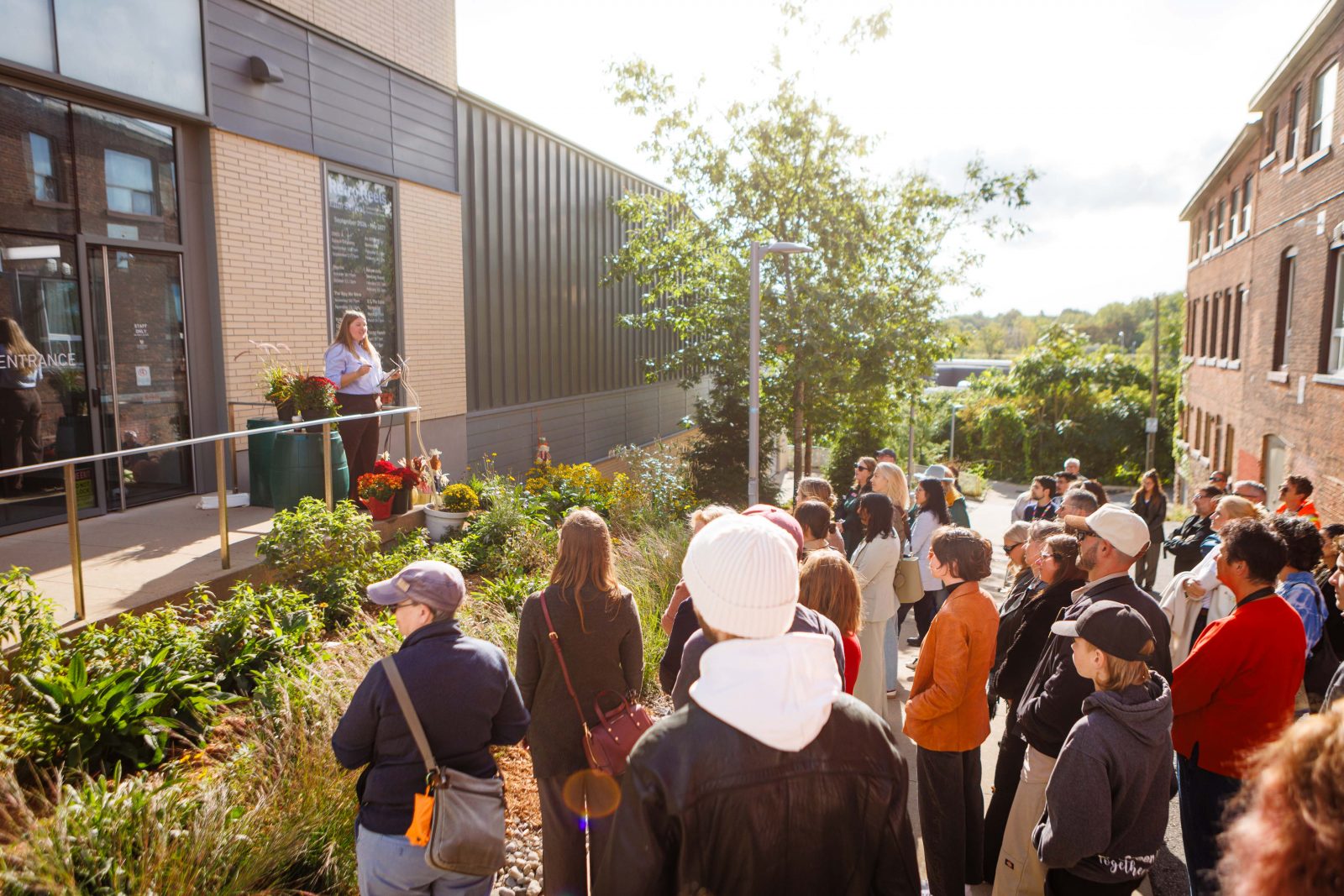
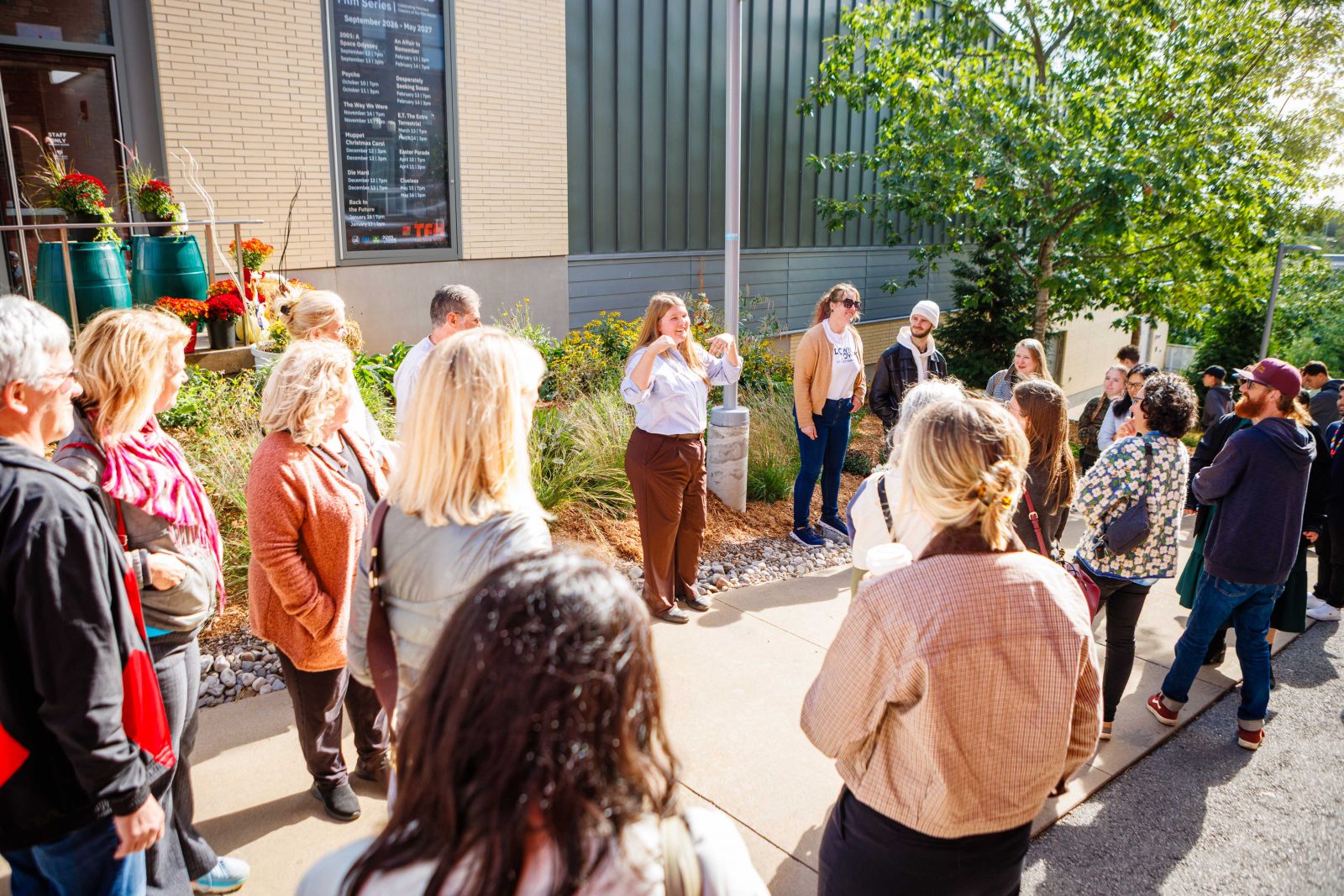
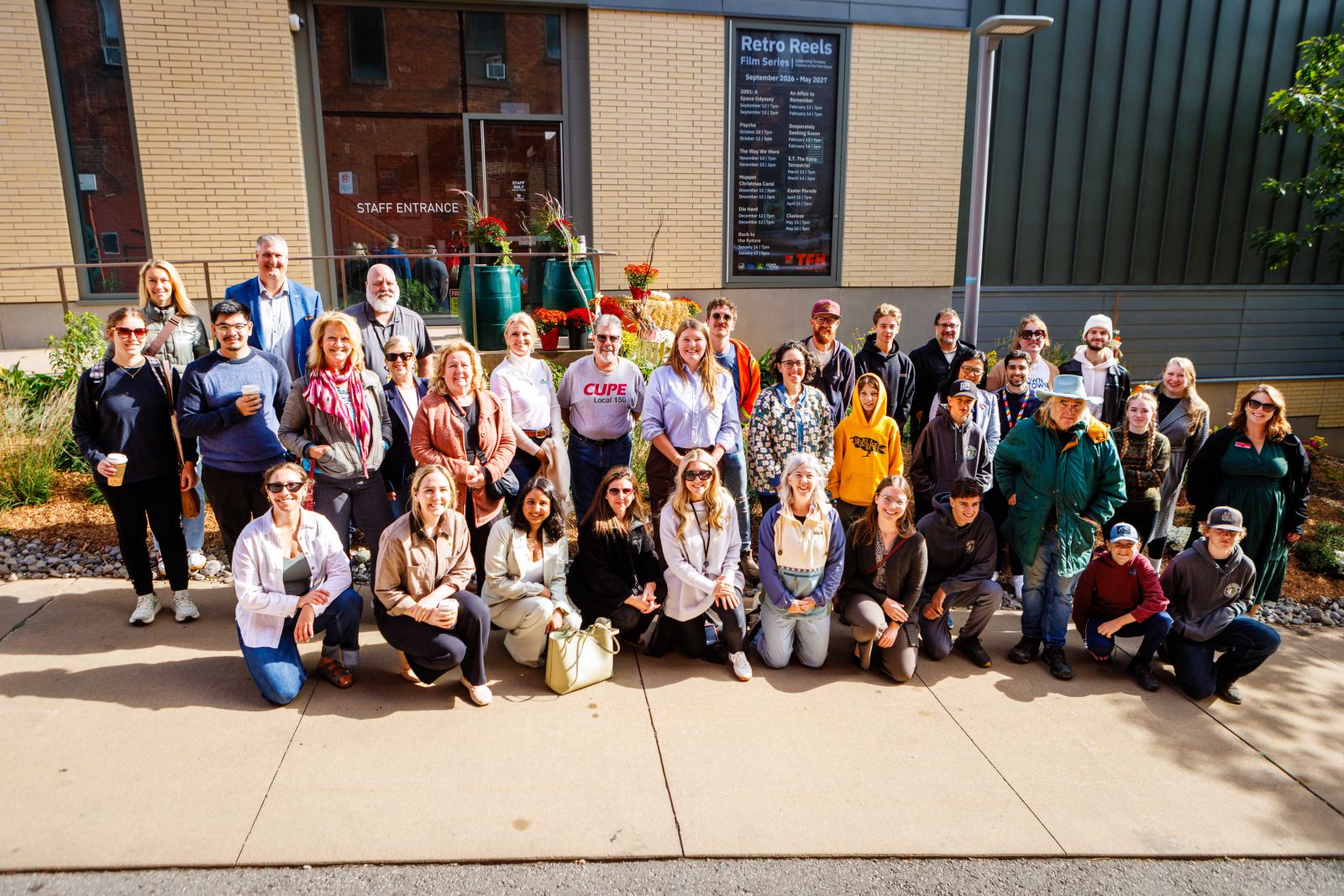
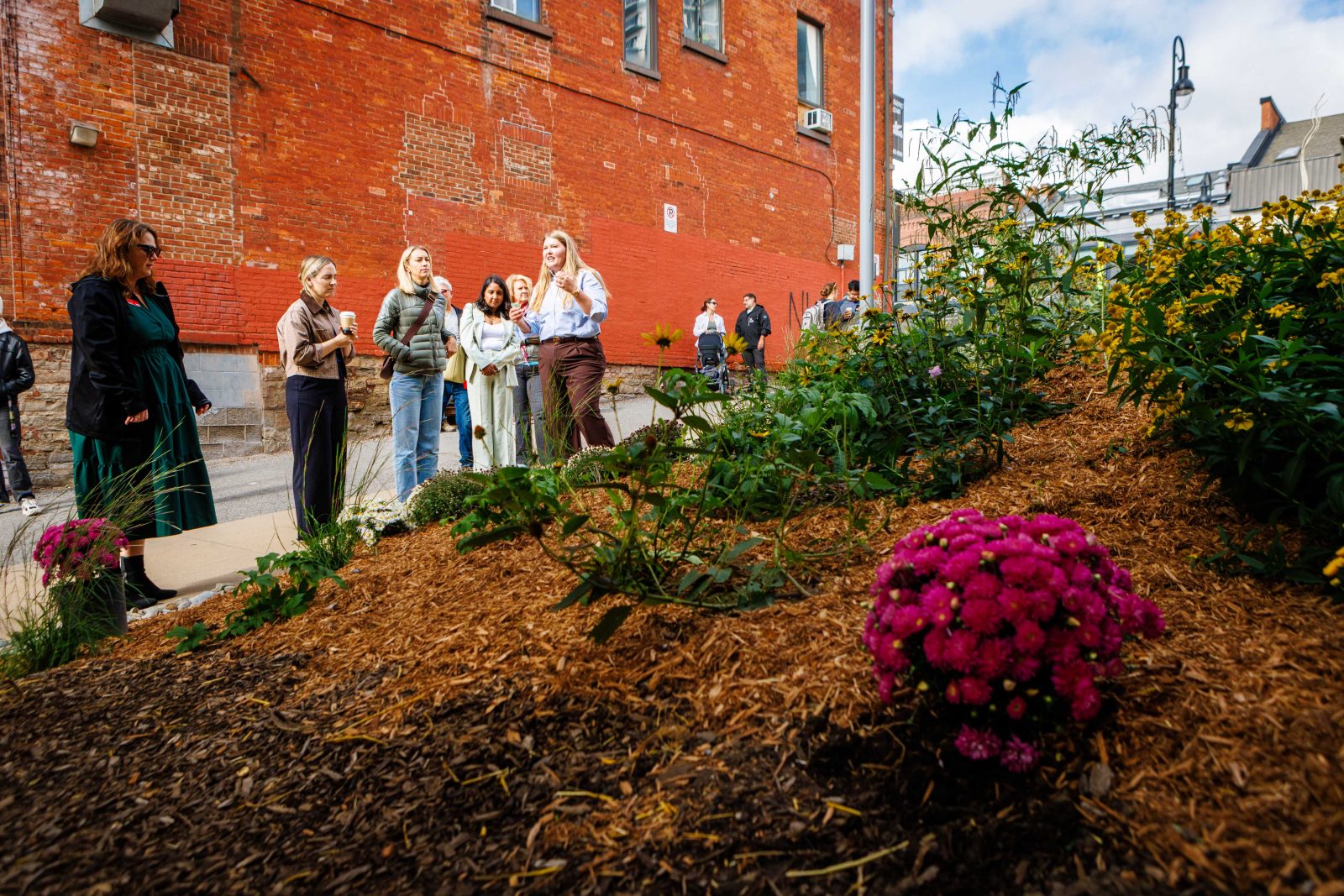
]]>The Brock Earth Sciences master’s student gathered with University and community partners to celebrate the official launch of her rain garden study during a public event at the FirstOntario Performing Arts Centre (PAC) on Tuesday, Sept. 22.
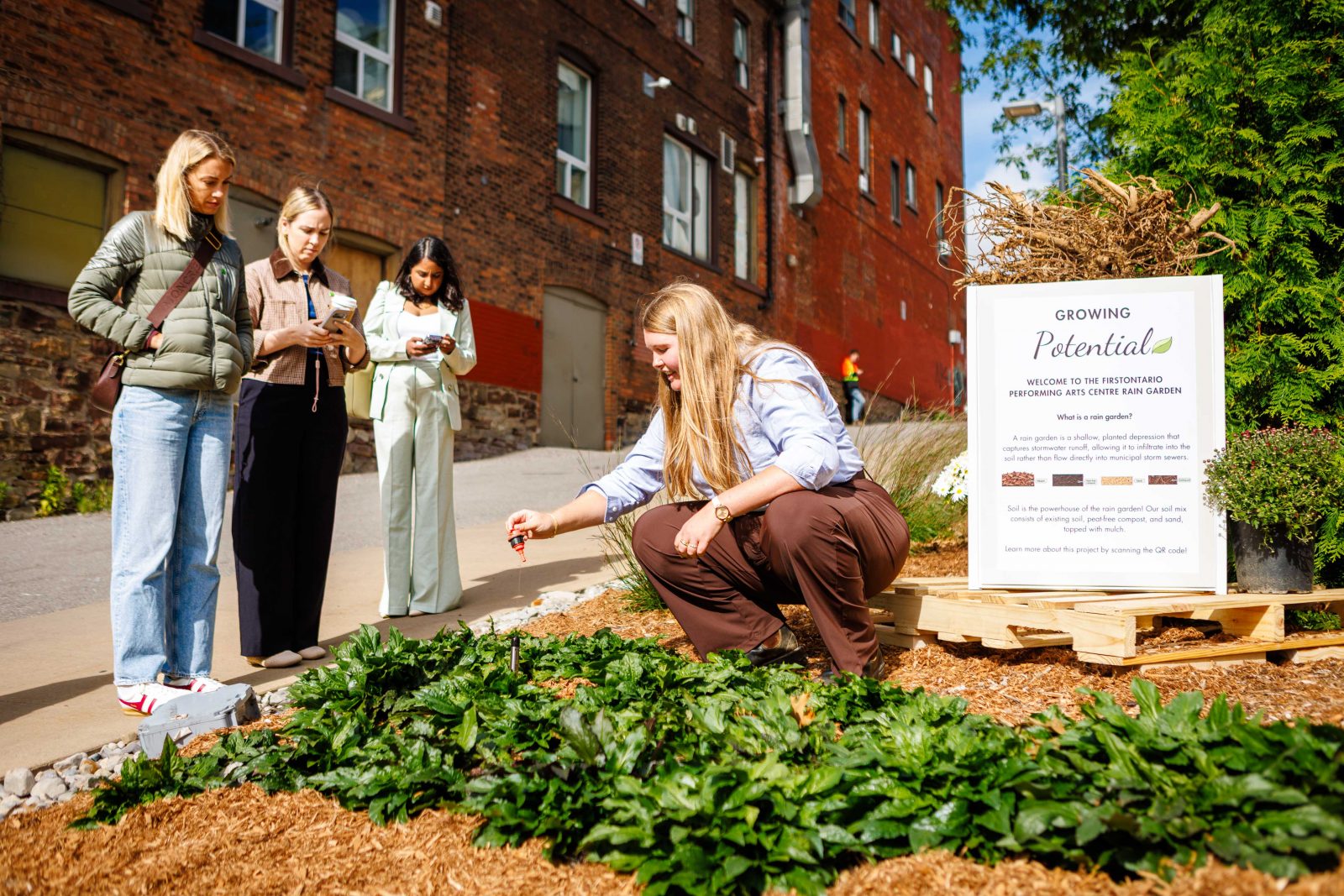
Rain gardens are shallow, vegetated depressions designed to capture stormwater runoff, giving water more time and space to infiltrate into the soil rather than immediately entering storm sewer systems. Through Taylor’s project, rain gardens have been created on City of St. Catharines property, including the PAC, as well as at Silver Spire Church in downtown St. Catharines.
In addition to a ribbon-cutting ceremony to mark the opening of the green spaces, the event also unveiled Potential, an art installation created by Taylor in collaboration with volunteers from Brock’s Department of Earth Sciences Landscape Hydrology and Restoration Group, Niagara Green Herons and Taylor’s husband, Dorian Cannon.
Potential uses a recovered root ball and painted soil profile to reveal the layers usually hidden beneath a rain garden.
“The piece explores the tension between opportunity and unintended consequences,” says Taylor. “It’s a reflection of a lesson applying to environmental work: interventions require careful observation and a willingness to adapt.”
A QR code incorporated into Potential allows visitors to learn about the rain garden project and complete a brief survey to help the research team understand public awareness and perceptions of rain gardens.
Under the supervision of Assistant Professor of Earth Sciences Kelly Biagi, Taylor is monitoring rainfall, infiltration, soil moisture, water movement, soil and water chemistry and vegetation establishment under real-world conditions at the rain gardens installed downtown.
“Rain gardens have tremendous potential as a nature-based approach to stormwater management, but we need to better understand how they perform under real-world conditions,” Biagi says. “Lindsay’s research is helping bridge that gap by generating the field-based evidence municipalities need to make informed decisions about green infrastructure. This project also demonstrates what can be achieved when university research and community partnerships come together.”
The project has been supported by Niagara Community Foundation (NCF) and TD Friends of the Environment Foundation, whose funding helped make installation of the rain gardens possible.
“Today is a beautiful expression of what happens when the community comes together. This summer taught us that flooding impacts us all and so the research will inform municipalities on how to prevent what happened this summer from ever hopefully happening again,” says Bryan Rose, NCF’s Executive Director.
“As many of us know, intense rainfall and flooding have become a growing concern in communities across the region. These events can affect homes, businesses and public spaces, creating real challenges for residents,” says Pallvi Arora, Branch Manager for the TD branch on Queen Street, St. Catharines. “What makes this project so exciting is that it brings together community partners, research and volunteers to explore practical, nature-based solutions that can help manage stormwater and build more resilient neighbourhoods. We are especially encouraged that the research from this project may provide valuable insights that can help inform future stormwater management approaches for residents and communities beyond St. Catharines.”
Alongside Brock researchers, students and the University’s Facilities Management and Machine Shop teams, the project has also garnered support from the City of St. Catharines, 1st St. Catharines Girl Guides, Meridian Centre, Niagara Artists Centre, Niagara College, Niagara Green Herons, Off Campus Niagara, Silver Spire Church, St. Catharines Downtown Association, the PAC and Walker Industries.
The project has already uncovered an important lesson for Taylor.
“We don’t always have to wait for somebody else to begin,” she says. “We can also look at the place immediately in front of us and ask: What can we do here? Potential exists within us, too — in our curiosity, our willingness to care, our courage to begin and our responsibility to consider what our actions might set in motion.”

Anyone over the age of 18 is invited to participate in data collection for Virtual Water Futures, a 15-minute experience that allows viewers to observe the park as it is today and then, using augmented reality (AR), see what the area might look like in the future as climate change causes rising lake levels and more frequent storm surges.
Baird, Professor and Director of Brock University’s Environmental Sustainability Research Centre (ESRC), says the goal is to understand whether AR can encourage climate action now by “bringing the future to the present.”
“Climate impacts happen in the future, but we need to take action now, and that’s a really challenging space for people to be in psychologically. Most of us know things are going to happen that will be deeply unpleasant and really challenge the places we love in ways that are not desirable,” she says. “We focused this AR work on Lakeside Park specifically because it’s such an iconic place in St. Catharines, on the shore of Lake Ontario.”
In addition to ESRC researchers, students and affiliates, the team also includes hydroclimatologist Scott Steinschneider from Cornell University and collaborators from several community partners, including the City of St. Catharines.
Olivia Groff, Climate Change Adaptation Co-ordinator with the City of St. Catharines, is among those working with the team and says she is eager to see the results of the study.
“The use of augmented reality to help demonstrate possible climate scenarios and associated impacts to our own Lakeside Park here in St. Catharines is quite unique,” Groff says. “Flooding events have occurred in the park before, which may be familiar to survey participants, while the added layers and highlighted features of the AR future scenarios hopefully resonate with them.”
Master of Sustainability student Alicia Rauth (BA ’25) will be using the data to support her thesis research into how people recognize changes in their local environment and whether those insights inspire them to become more involved in community-based natural resource management.
She says research participants acknowledged that their perspectives on flooding scenarios had likely changed following the severe storms and significant flooding that led the City of St. Catharines to declare a State of Emergency in August.
“We had already been out collecting data about a month prior to the flooding,” Rauth says. “We had a lot of participants verbally express that had they answered our survey before the flooding, their answers would not be the same.”
While the AR scenarios developed for the study are more focused on the longer-term impacts of repeated flooding events from lake storm surge than on extreme rainfall events like those of the past summer, Baird says it will be interesting to analyze the data collected before and after the events that had such a serious impact on participants, as well as their friends and neighbours.
Baird, who holds a Canada Research Chair in Human Dimensions of Water Resources and Water Resilience, also looks forward to seeing AR’s potential as a tool in support of sustainability measures.
“We’re hoping that this is a starting point for something much larger,” she says. “And we hope that augmented reality, if we show that it’s effective, can be implemented in other situations and applied more broadly for the same purpose in various locations.”
People are invited to visit Lakeside Park before the end of September to take part in the research.
The project is supported by the Social Sciences and Humanities Research Council, which is funded by the Government of Canada, as part of Baird’s 2025 Insight Grant “Building Empathy for Sustainable Water Futures.”
“It’s known to many Indigenous peoples as the Creator’s Game or the Medicine Game. It is a sacred gift with deep cultural, spiritual and healing significance,” says Austin, the Indigenous Health and Wellness Navigation Coordinator at Brock’s Hadiya’dagénhahs First Nations, Métis and Inuit Student Centre.
Developed by First Nations people across Turtle Island, Austin says lacrosse – North America’s oldest team sport – has brought communities together for hundreds of years through ceremony and healing, restoring balance by helping to uplift spirits and resolve conflicts.
“It’s a living tradition that continues to support cultural continuity, resilience, holistic wellness and the revitalization of Indigenous knowledge and practice,” says Austin.
The Brock community will have the opportunity to learn more about the game, including how to play it, at the Lacrosse FUNdamentals workshop on Friday, Sept. 25 from noon to 2 p.m.
Workshop facilitator Bronson Rowsell, a Peer Assistant at Hadiya’dagénhahs, says the afternoon will begin with a conversation about the significance of lacrosse.
“It’s the only game on two feet that comes from no one. It comes from the Creator, not a human being,” he says.
Hosted by Brock Sports and Recreation and Hadiya’dagénhahs, the event is open to all skill levels. In the past, participants have ranged from those who have never touched a stick before to people who have played recreationally or at an elite level.
A member of Brock Men’s lacrosse team, Rowsell shares his love for the game through the workshop, helping others to learn the basics such as stickhandling, passing and throwing and the rules of the game.
“Everyone gets a feel for what it is like to play lacrosse,” Rowsell says. “We just try to do it at a level where everyone understands. They can go to a game and be like ‘I know a little about this, how awesome.’ For others, it’s about being able to hold a stick and have a little bit of fun.”
Participants will be able to familiarize themselves with the sport ahead of a pair of Every Child Matters lacrosse games against Toronto’s Varsity Blues, hosted by Hadiya’dagénhahs and Brock Sports on Wednesday, Sept. 30 to mark the National Day for Truth and Reconciliation.
“It really is fun when you know what’s happening and you understand the game. You enjoy it a lot better,” says Rowsell.
The Brock Women’s lacrosse team will play at 4:30 p.m. and the Men’s lacrosse team will take to the field at 7 p.m. Taking place at Alumni Field, both games will feature drummers, dancers, an opening address followed by a land acknowledgement and the raising of the Every Child Matters Flag on the field. Attendees are encouraged to wear orange shirts in honour of Orange Shirt Day.
Orange shirts are available for purchase in the Campus Store, with a portion of proceeds going to Hadiya’dagénhahs, and will be sold at Alumni Field during the games.
Admission for both games is free.
]]>Her own Brock journey took 17 years to complete while she worked full time and raised a young family. She would eventually earn three degrees from the University, build a career at Brock, enter municipal politics and move into senior leadership roles, all while becoming a passionate advocate for other women.
Through it all, her belief in the value of education remained constant.
“You can lose a job, but no one can ever take away your education,” Huson says. “That is your superpower.”
Huson has been recognized with the 2026 Brock University Alumni Association Distinguished Alumni Award, which celebrates graduates who have made significant contributions through their careers and service to their communities.
She says the recognition is especially meaningful because Brock has been part of so many chapters in her life.
Huson first came to the University as an undergraduate student, completing a bachelor’s degree with double majors in Political Science and Business before going on to earn a master’s in Political Science specializing in public policy and an MBA with a concentration in marketing.
She also spent 15 years working at Brock, including as Manager of Curriculum Management, Policy and Outreach.
“Those experiences have taught me adaptability, helped me develop skills to navigate change, build relationships, take risks, and have the ability to be curious and learn constantly.”
That willingness to work hard, commit to a goal and continue learning led Huson to public office.
In 2018, she was elected Regional Councillor for Pelham, becoming the first woman to represent the municipality at Niagara Region. She went on to chair the Region’s Planning and Economic Development Committee for six years and served four terms on the Federation of Canadian Municipalities Board of Directors.
Huson’s experience in politics also showed her how much work is still needed to empower women as leaders and decision-makers. In response, she helped establish Niagara Region’s first Women’s Advisory Committee, expanded the Seat at the Table initiative and later founded Equal Voice Niagara, helping women and diverse candidates learn more about public office and see themselves in those roles.
Today, Huson is Head of Corporate Affairs at Conservation Halton, continuing a career that has moved between education, government, community service and organizational leadership.
Looking back, she has come to see detours in her path as opportunities for growth. Her willingness to keep learning started at Brock and has never really stopped. That message of flexibility and resilience is one she hopes future Badgers and fellow Brock graduates will take to heart.
“Some of life’s most important opportunities arrive disguised as uncertainty. The moments that shaped me most began when I chose to raise my hand, put my name forward or say yes to something outside of my comfort zone,” she says. “You don’t have to have everything figured out. Growth often begins the moment we step beyond our comfort zone and give ourselves permission to try something new. That’s when we often discover that we’re capable of far more than we ever imagined.”
Nominations for the 2027 Brock University Alumni Association Awards can be submitted through the Brock University Alumni Awards website.
The Niagara Community Observatory (NCO) will host Niagara Elections 2026: Changes and Challenges, a free public event featuring municipal politics expert David Siegel and a panel discussion moderated by NCO Director Kyle Rich, on Monday, Oct. 5 from 7 to 9 p.m. at Brock’s main campus.
Because the Ontario government’s recent changes to regional governance will take effect after the fall election, Rich says the NCO event is an opportune time for voters to learn what the changes could mean for them.
“By hosting a non-partisan event on campus, we hope to engage with community members who want to feel better equipped when making their choices at the ballot box,” says Rich.
Siegel, NCO founder and Professor Emeritus of Political Science, will speak to the upcoming changes in regional governance structures and the impacts of those changes on local residents.
Following that, Professor of Political Science and former NCO Director Charles Conteh and NCO Research Associate Joanne Heritz will speak to economic development and housing respectively, two key topics on the minds of voters.
Associate Professor of Recreation and Leisure Studies Martha Barnes will be joined by Sarah Ane, Acting Chief Executive Officer of Parks and Recreation Ontario, to discuss issues in the parks and recreation sector. Public health, another key voting concern, will also be up for discussion.
The event will be accompanied by the publication of a series of fact sheets that will document key trends related to these issues in Niagara. Time will be allotted for questions from the audience, and light refreshments will be served. Paid parking is available. Those interested in attending are asked to register in advance.
]]>