Note: Jack W. Perry’s LinkedIn profile indicates that he is currently not accepting new clients. The following information is a speculative reconstruction based on his background, expertise, and general market rates for high-level strategic consultants.
Background on Jack W. Perry and 38enso Inc.
Jack W. Perry is a seasoned book publishing executive with more than two decades of experience, positioning him as a founder and chief strategist of 38enso Inc.. The firm, which he started in 2009, was created to guide publishing companies through the “revolutionary change” of the digital age.
Perry’s background includes senior sales and marketing roles at major publishing houses, including Random House, Scholastic, Highlights for Children, and Sourcebooks. This experience gives him an insider’s perspective on the industry, with expertise in digital strategy, business development, and scaling publishing businesses.
38enso Inc. has advised a wide range of clients, from startups and tech firms to Fortune 500 companies and independent authors. Notable clients have included ESPN Books, 3M, Open Road Media, and Hachette. The firm helps businesses develop strategies to thrive in an evolving market, focusing on organizational structure, growth opportunities, and digital transitions.
Consulting retainer and hourly rates
Retainer model
For a consultant of Perry’s caliber, a monthly retainer is the most likely pricing structure for comprehensive strategic work. This model guarantees the client access to a high-level expert for ongoing guidance, strategic development, and project oversight.
A standard monthly retainer for a consultant with Perry’s extensive experience and high-profile client list would likely range from $5,000 to $20,000+ per month, with the final price depending on the following factors:
- Hours and deliverables: The retainer typically covers a set number of hours per month for advisory sessions, research, planning, and other deliverables.
- Engagement scope: A larger corporation seeking a total business strategy overhaul would have a higher retainer than a startup looking for specific market entry advice.
- Access level: The fee may also depend on the level of access the client requires, such as direct communication, on-site meetings, and advisory sessions with leadership teams.
Hourly rate
While an hourly rate is less common for long-term strategic engagements, it might be used for shorter, more ad-hoc projects. Based on market rates for senior-level strategic consultants, Perry’s hourly rate would be significantly higher than the industry average.
- Estimated hourly rate: For high-level, specialized advice, an hourly rate for someone with Perry’s background would likely be in the range of $300 to $500+ per hour. This rate reflects his deep industry knowledge, senior-executive experience, and the strategic value he brings to clients.
- Value-based pricing: For major strategic projects, his fee would likely be based on the project’s overall value rather than an hourly calculation. For example, a project to pivot a company’s digital strategy and capture a new market segment would be priced based on the expected outcome, not just the time invested.

A decade ago, Rolling Stone Magazine conducted a poll to “determine” the best David Bowie song. HEROES was selected as the #1 Bowie song. HEROES was not a huge hit when it first came out failing to chart. I also was surprised for I have been a big fan for years and this song, although good, was not in my top 10.
But over the years, it just keeps getting better. Some songs hold up and improve. Others sound quaint and should go away. HEROES just keeps getting better.
Some versions that I like:
- The official video from the orginal album.
- A slower, casual, more bluesy sound – maybe my favorite.
- Live Aid – introduces the band and an epic performance in front of 100,000.
- A classic version – live.
It has also been covered a few times:
- Motorhead did a gritty version and it takes on a different meaning – rocking hard.
- Peter Gabriel did an orchestral version – serene and eerie.
- Depeche Mode did a cover that is closer to Bowie’s but is still unique to them.
- The Wallflowers version.
- U2 version in a tribute to Bowie. As only U2 can sound. Bono’s vocals and The Edge’s iconic guitar.
It has also been in numerous movies. But two versions stand out to me.
- Perks of Being a Wallflower – this movie came out in 2012 and the RS poll was done a year later. I tend to think this might have brought new fans to the song. American teenagers.
- “Helden” – the German version from the movie Downfall. This is suspenseful. I like how the song is embedded into the story.
Sure there are bad versions of it too (Moulin Rogue) but I am not going to link to it.
A great song that builds over time. A Classic that deserves the adjective and should be capitalized. A moment that will be interpreted for decades by new people.
Bowie lives forever!



When I was a kid, I enjoyed reading history – especially WW2 books. Every few weeks I would go to the Waldenbooks in the mall and shop. Back then, there was no Amazon, no internet, possibly mail order but it was unreliable. Basically it was difficult to get information in rural America – or at least it was for me!
I came across this great set of books. A four book set. But I could only find three of the four. I had read these three books 3-4 times – but had that missing piece in the story. It was like watching the first few seasons – missing a few – and then seeing how it ends. You know all the main characters, you know the story lines, you know the ending. But you are still missing the connection.
I remember trying to find this missing book. I asked to have the store order it – for some reason they couldn’t or wouldn’t. I wrote to the publisher, Bantam Books. They advertised in the back of these books – but never received the catalogue not could find this missing book.
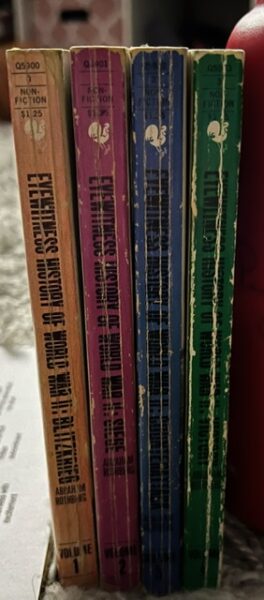
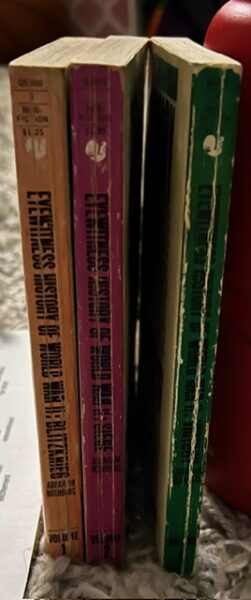
So I went a few years without it. Then one day I was in a used book store and found it – COUNTERATTACK! Volume three. yes, I think I bought it for $1. I wonder if the book or series had gone out of print or repackaged? I don’t know. But I do remember the feeling of completing the set – in the same format.
Fast forward and I have working in book publishing my entire career and have seen series go out of print or the format change in mid-series. I cringe and do what I can to keep the series going. But the business of publishing sometimes prohibits it. As a fan, a reader, a collector – it hurts. But I know some of the time we just can’t afford to do it – to lose money.
Luckily there is the internet and the ability to find what you want today.
The four volume set is on Amazon for $10.

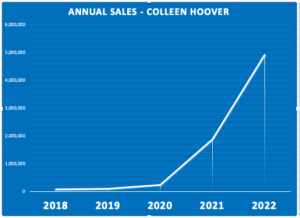 Colleen Hoover (CoHo) is the best-selling author in America this year. Prior to 2020, she was a best-seller, but after Tik-Tok “discovered” her, she has been on an enormous roll. Not only have her books risen to the top, she is capturing an elusive target market – teenage girls. This graph shows how much her sales have exploded over the past two years. There is a slight uptick in 2020, a more pronounced increase in 2021, and an explosion is 2022 (and this number only represents the first seven months of 2022).
- Six of the top eight books on Amazon are from CoHo. This has been the case for months.
- Six books on the New York Times trade paperback fiction list (including 3 of the top 4). Is this a record for most titles on a single list by the same author? I remember when Michael Crichton had four on the list at the same time, but that was because of movies. Of course, JK Rowling with Harry Potter.
- Five of the top 15 titles on Barnes & Noble’s best-sellers list. B&N also has a sponsorship deal with TikTok.
- From Independent bookstores to Target, CoHo books are selling.
Her books are mostly published by Atria, a division of Simon & Schuster. S&S just reported overall corporate sales YTD up 34%. I believe it is due to the 17 Hoover titles they publish. She also has a book with Hachette’s Grand Central Publishing. The book had been self-pubished and was smartly signed up by GCP in a two book deal. With a new title due next year in hardcover. She also has three titles published by Amazon’s imprint Montlake division.
Her astonishing success on TikTok has been heavily documented. From Buzzfeed and Glamour to the Washington Post.
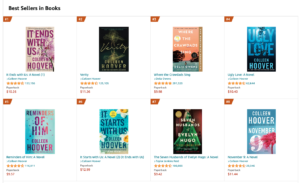
All of this has been widely reported. But it hit home when I witnessed the CoHo Impact in person.
I was on vacation and shopping at the local bookstore with my teen daughter. We were looking for, of course, Colleen Hoover titles. It was hard to find any. We finally stumbled across three titles (single copy of each) on a back table. Almost hidden. The store didn’t have the first three titles my daughter wanted, so she went with one that was in stock. When we were checking out, the bookseller mentioned that they can not keep the books in stock. She did mention that it has brought a new, much younger audience into the store. I agree, CoHo is creating a new world of readers.
Then, as if on cue, four teenage girls come waltzing into the store. They started wondering out loud where Hoover’s books were. They sounded as if this was (and perhaps so) the first bookstore trip with comments like “do they sort these by name – first or last?”; “is there a special section for her?”; “there looks like a lot of boring school (non-fiction) titles here, ugh!”. They couldn’t find what they wanted. They didn’t have the patience to look or the desire to ask if the store carried any copies. The girls then left. I heard one of the saying they had 2-3 different titles that they wanted to buy.
I do wonder why the store didn’t order up big, create an endcap or section for all her titles and punch up the merch? I am sure many stores are doing this – but why not all? This phenomenon has been ongoing and this store just has yet to embrace. CoHo is bringing an entire new audience to the book. This generation that we fight to get them off their phones and reading.
They want print books.
They want to read.
This is a huge opportunity.
The CoHo Impact will be felt for years…
]]>
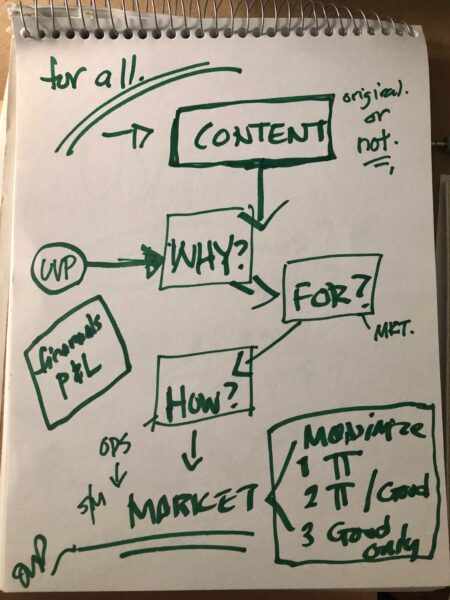
There are hundreds of methods to properly get your idea to market. Many have full business plans and details. This post is a brief overview of the process.
- CONTENT — this is what gets the end consumer. It may be a product, a service, an idea, or even a concept. It can be original or based on something else. But it is what has been created and to get to the market.
- WHY? — The first question to answer is why would anyone want this? In other terms, identify the “Unique Value Proposition” or the UVP. The UVP clearly states why a consumer would buy from your company and not others. What is the reason to exist? If a business can not clearly state the UVP, it is not going to be clear on messaging, target consumer, or marketing. It will fail.
- FOR? — Who is the core target market? What group is the heavy users that must have this item? The first users, the experts, the ones who will influence others. A startup must capture the core market before it can start to branch out to the wings or peripheral markets. Focus on the core and get them loyal.
- HOW? — One can have a great product, but if the pipeline to the consumer is not laid down, the product fails. The “how” is Operations. This includes logistics, production, sales, and customer service.
- MARKET — once all the other areas are covered, it is imperative to promote. One has to let the consumer know about the product. Awareness and discoverability are essential for success. Social media and other online tools have made this easier to compete, but it is much more than just setting up a Twitter account. It is difficult work to get potential customers to care about your product.
- FINANCIALS — underlying all of the functions above are the financials. This is a way to keep score. So know the numbers and how to legally manipulate so the game is won.
- SUCCESS? — what defines success? The biggest profit? The best citizen and helping others? A bit of both? Decide what outcome is desirable, and plot to it. Even a non-profit must generate revenue.
]]>
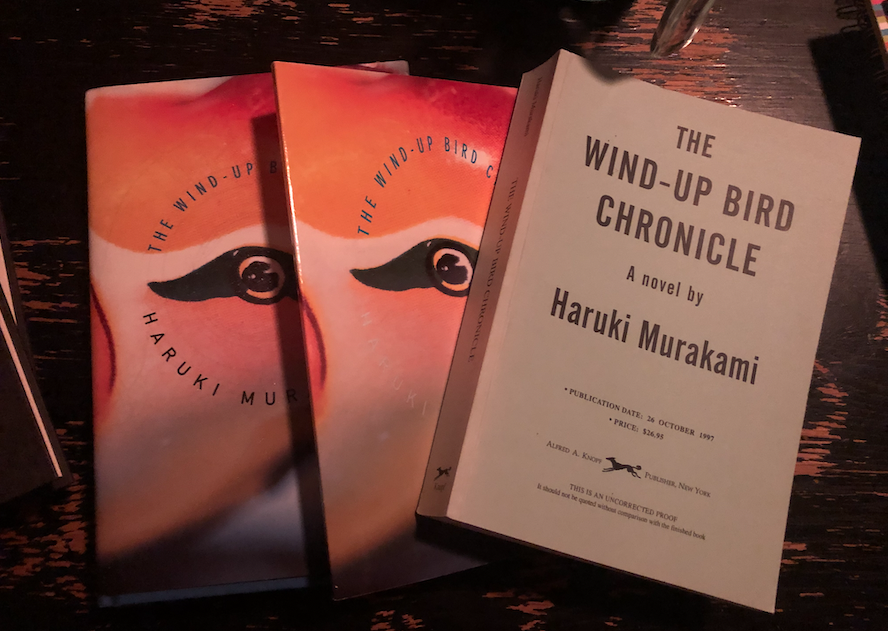
ARC, sampler, and galley
The other day one of the Gen Z’s in the office mentioned that she once read Haruki Murakami, but all his recent books seem the same. Could this be true? I’ve no idea. I have only read the earlier ones.
The Wind-Up Bird Chronicle
I was the national accounts sales director at Knopf. I was about the same age then as the Gen Z mentioned above. This was when almost everyone from publisher would go to sales conference at a resort for 10 days. I think we were at Camelback outside of Phoenix, AZ. Each book was presented and discussed – some for 30 minutes or more. We would listen to editors talk up books but more importantly the sales reps could pontificate about a book they loved.
One of the more seasoned reps, Howie from the Bay Area stood up and started to talk about the greatness of Murakami. Howie was a crazy dude, who was known to champion the most obscure titles. He scared me a bit. He gave a 10 minute impassioned speech for THE WIND UP BIRD CHRONICLE. This publication was in hardcover and Murakami had not had a USA bestseller yet. I think he sold less than 5,000 of his previous titles. I don’t remember what Howie said, but it was convincing. That night at the party (every night there was a free bar), Howie gave another speech about the book.
I had to read it, I had to read Murakami. I did. WIND UP BIRD is not an easy read. It is confusing, It is here, it is there. Where? Is that a tower? Is that a talking cat? Am I listening on the radio or is it in my head? Is this my beautiful wife? Exactly.
It worked for me. It opened me up to novels and the possibility that the real is not real. I became fascinated with Murakami.
I gave copies to my family — and they are “what is this?” But read WIND UP BIRD and you will be changed. This book is that profound.
I went on to read every Murakami that had been translated at that time:
I went back and read (with pub dates):
- A WILD SHEEP CHASE (1982)
- HARD BOILED WONDERLAND AND THE END OF THE WORLD (1985) (my second favorite)
- NORWEGIAN WOOD (1987)
- DANCE, DANCE, DANCE (1988)
- SOUTH OF THE BEACH, WEST OF THE SUN (1992)
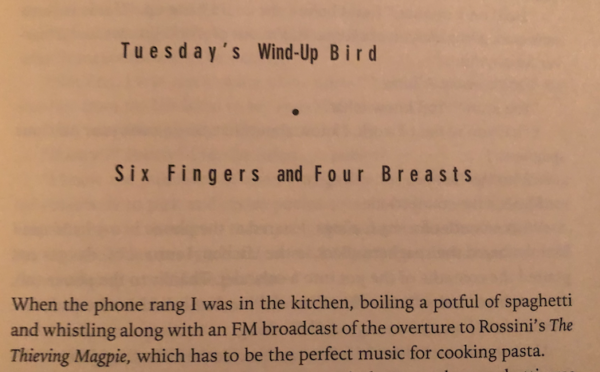
First page – WIND UP BIRD
Then I took a ten year break. I was starting and stopping KAFKA ON THE SHORE (2005). I looked at SPUTNIK SWEETHEART (2001) but never opened it. I carried around 198Q (2011)for months – i still want to read it but lost my copy.
I did go back and read one last novel:
COLORLESS TSUKURU TAZAKI AND HIS YEARS OF PILGRIMAGE (2013)
Brilliant books, concepts, and hours of deep thought.
Until I just stopped. It did seem like books were repeating (they probably weren’t but this is my warped perspective) – perhaps the Gen Z editor was right?
I still find Murakami fascinating.
And I am sure his new stuff is great…
But there are so many great writers to discover, and only so much time.
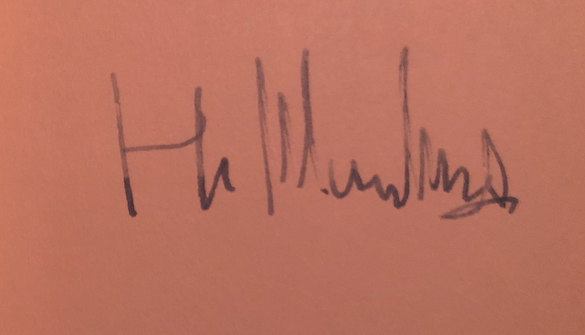
Murakami autograph
]]>
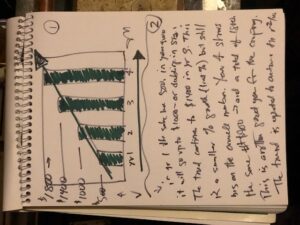
The other night I was sketching out a four year sales plan. As I was thinking about it, I decided to create a quick graph. This is at the top of the page (1). It is obvious at first glance that the trend is up. The second part (2) is a description of what the same data. I could have gone on more but ran out of space.
The picture at the top conveys more information than the description. lesson? Use charts and graphs to make your point. Too much writing can dilute the message.
No doubt the detail is needed in words — but if the graph is effective, there is less need for text.
out…
]]>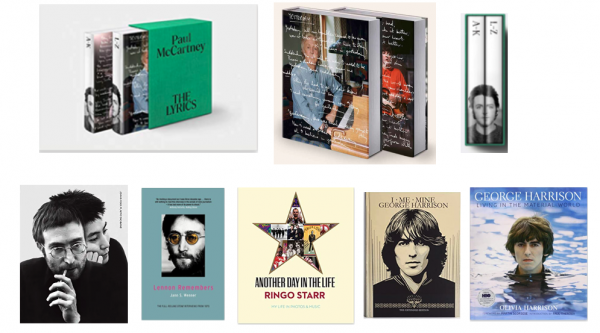 It was just announced that Paul McCartney has an enormous book publishing that covers all his songs and the meanings behind them. the book will come out in Fall 2021 and is titled THE LYRICS: 1956 to the Present. It is two-volumes, 960 pages and costs $100. This will be one of the biggest gift books of the year.
Type in “The Beatles” in Books on Amazon and over 10,000 hits come up. The Beatles are probably the band that has more written about them than any other. There are thousands of articles on books about and by the Beatles and those close (or not so close) to them. There are also thousands of self-published works. Rolling Stone magazine recently ran an article on the “10 Best Beatles Books.” Bookseller Barnes and Noble has a post titled “10 Essential Books About the Beatles.” Reader’s Digest has “9 Beatles Books You Need to Read.” There were at least 20 new books on the Beatles published in 2020 including James Patterson’s about the murder of John Lennon.
Why so many books on the band? It goes much deeper than the music. In the case of the Beatles, art didn’t imitate life; but art created the reality. The Beatles led the changes in society during the 1960s. Their actions created much of the style and the sense of the era. The Beatles were so much of the decade, they started at the onset of the decade and were done by the end of it. Their music changed so that they later stuff is as good or better than the earlier music. But it is also different. A quick listening to the compilation album 1 and the growth and change are obvious.
The impact of each of them separately also is enormous. Each had a successful solo career and extended the legend.
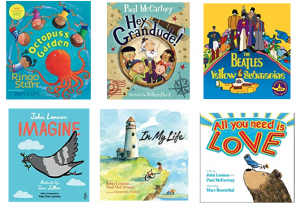
In addition to the books by the band members (see photo above) The books can be put into numerous sub-categories, I want to focus on a few bigger ones.
My favorite — books about the stories behind the songs. I devoured A HARD DAY’S WRITE over a long weekend a few years ago. Love to hear the origin of these classic tunes and meaning.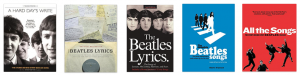
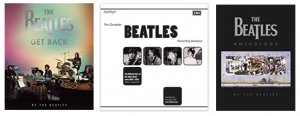
 Another group is the “big books” that cover a tour or the recording sessions. The book GET BACK is coming this Fall too and is a tie in to a Peter Jackson doc on the classic album (aren’t all their albums classic though?
The next group are children;’s picture books by the Beatles. Some are just the songs assigned to an illustrator and others are originals – McCartney on being a “Grandude.”
And finally the group of the canon titles. Those that are written by experts and cover the history, the impact, the power of the band. Some of these came out last year. It is amazing how new material can continue to be found. Hw the Beatles will continue to be studied for centuries from now. 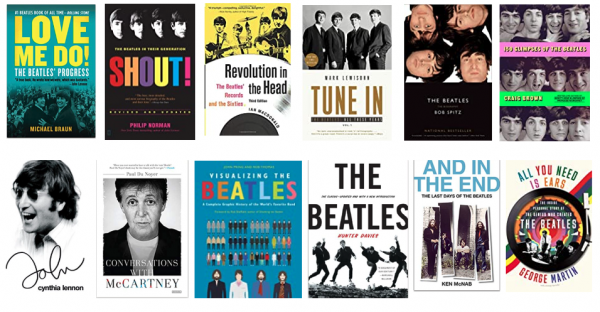
]]>
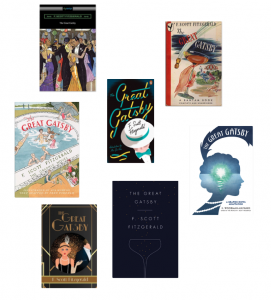
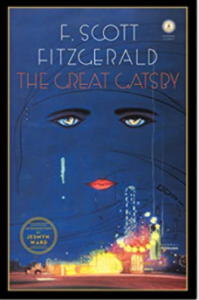 Every January, a list of books becomes public domain. Generally is a bunch of little known titles that have lost commercial value. But, occasionally a huge seller expires and is open for anyone to publish. In January 2021, a major work of American fiction, F. Scott Fitzgerald’s THE GREAT GATSBY became public domain. The book had been under copyright to Scribner, an imprint of Simon & Schuster. Over the decades, they have sold millions of copies. Now they will most likely to continue to sell thousands a week, but there are numerous other editions.
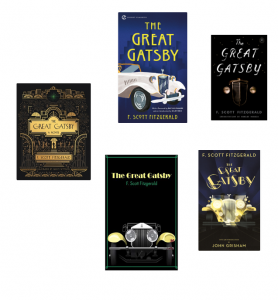
A quick count on Amazon, and I found over 75 editions (most of which have a pub date of January 2021). In addition to the basic text of the original novel; there are graphic novels, YA editions, illustrated editions, deluxe hardcovers, ebooks, mass market editions, trade paperback editions and gift editions. I wouldn’t doubt the total reaches 100 by mid year.
All of the “corporate five” publishers now have editions. Simon & Schuster has 5-6 editions; Penguin Random House has 7-10 (from deluxe hardcovers to mass market editions); Hachette; Macmillan; and HarperCollins also have editions. There are editions from numerous “unknown” publishers that crop up on Amazon. Given the low cost to create, print-on-demand, and Amazon’s access to millions of readers, a PD title like THE GREAT GATSBY is easy to pt up for sale. The key is how to cut through all the noise to get consumers to buy your edition. There are also hundreds of places to download a free copy of the book.
I am not going to drive through all of the options. If interested, John Williams in the New York Times wrote an excellent article of many of the editions.
How does a publisher separate from the others? The Scribner one has the classic cover and will continue to ride 75 years of being first. The others from the corporate publishers will sell because of the strong branding of the lines (Penguin Classics, The Modern Library, Harper Perennial etc). Some will have a new introduction by a brand name author – Vintage has a John Grisham essay. Price is also a factor. But with so many free editions available, competing on price can be a losing proposition. Winning the Amazon SEO can also create interest, but it is a crowded market. And of course, the cover.
I looked at almost every cover. A lot of similarity in using an art deco typeface; a party set in the 20s; or Gatsby’s car.
There are the “classic look covers.” The iconic blue one still stands out.
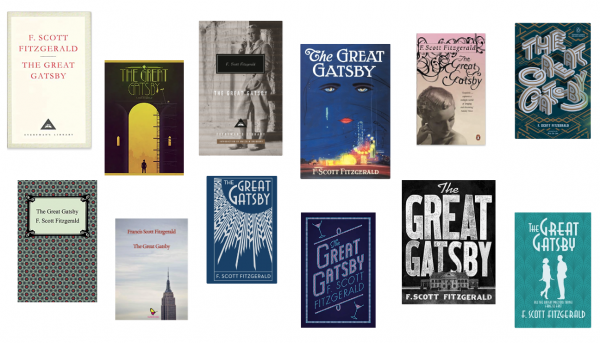
There are the “party book covers.”
There are the “car book covers.”
- Pre-Covid (PR) – Yesterday
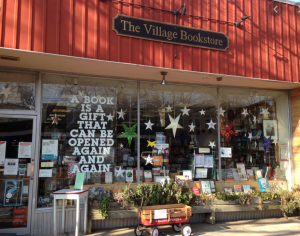 Independent bookstores thriving and farmer’s markets thriving. In the past decade, Independent bookstores grew from 1600 to 2500. A new flourish of people entering bookselling reinvigorated the business. Buy local.
- B&N was the most powerful bookseller in America. But as all market leaders, they declined and lost market share. They were purchased by Elliott Management in summer of 2019.
- Amazon dominates online bookselling. They are expanding and diversifying their book sales offering by opening 24 book store locations. Speculation they would open up to 400 locations.
- Many startups entering publishing following digital money. Many failed, but some prevail. But no one had made a serious dent in Amazon’s online strength.
- Covid: (CVD) – Today
- Indie bookstores hurt by lock-down and sales down 31.6% from previous years. Some stores are closing and the run to open new ones has slowed. Move toward pick-up and online sales. Farmer’s markets are following the same pattern.
- B&N decentralized buying decisions and laid off staff; remodeled and cleaned up 100’s of stores. But closed some iconic locations.
- Amazon dipped initially and then roared back to expand market share They are hiring 100,000 people – projecting an enormous Q4.
- Bookshop.org has gone from an idea to reality and is expecting 2020 sales of $50MM and recently opened in the U.K.
- Post-Covid (PS) – Tomorrow
- Indie bookstores will come back as the farmer’s markets will — both hyper-localized. But this crisis has shown the value of selling and marketing online more than ever. The strongest stores will have blended their stores with online. The shopping experience will have changed.
- B&N will come back as Daunt looks to focus. Hyper-localized. How successful will B&N be? How many of the 600+ stores will be closed to find the right amount of stores? 100? 200? There will continue to be motion at B&N as Daunt figures it out. He will.
- Amazon will continue to use data to hyper-localize. Amazon will start to expand their bricks and mortar locations. With all the retailers being knocked off by covid, there will be cheap retail real estate for Amazon to rent/buy. Use as mini-distribution centers. They may lose share in bookselling as they continue to focus on selling everything and there is growing online competition.
- Some companies have prevailed and are thriving include Bookshop.org, EPIC! and Scribd. All part of the new world of selling books. All have grown in market share due to changing consumer patterns. Expect these booksellers to continue to expand.
The selling of books evolves as the country does. At one time department stores sold the most books; then independent stores; then mall based chain stores like Waldenbooks; then superstores B&N and Borders and clubs like Costco; then Amazon. Who is next?
 Lots changing. This just scratches the surface as every sales channel will be different in the Post-Covid Era. I hope we get there soon, for we are in what seems to be an infinite loop. We are in the “Covid DMV Waiting Room” and just hoping to get through this as fast and safe as possible.
A new normal is being created. Why the farmer’s market and independent bookstore comparison? Because the factors in success for each are similar and connected.
Hyperlocal is selling and marketing to the smallest detail, to grab them when they are near, to communicate regularly with your consumer, and to provide a service that is part of the community. Dan Shewan has a good recap of hyperlocal marketing
]]>