A Singapore citizen who worked in Hong Kong from 2009 to 2012. Permanently departed over a decade ago. Tried to withdraw my MPF. HSBC MPF Administration rejected my application because I couldn’t remember the exact date of my departure, a date that had long since faded from memory after 13 years of building a new life in Singapore.
I asked them point‑blank: “Are you requiring me to guess a date and risk making a false declaration under oath?”
They refused to answer. Instead, they kept sending canned responses, each one a masterclass in evasion.
Then, on 3 February 2026, I received a reply that I initially thought might be progress. A Customer Relations Manager named Suki Lin wrote:
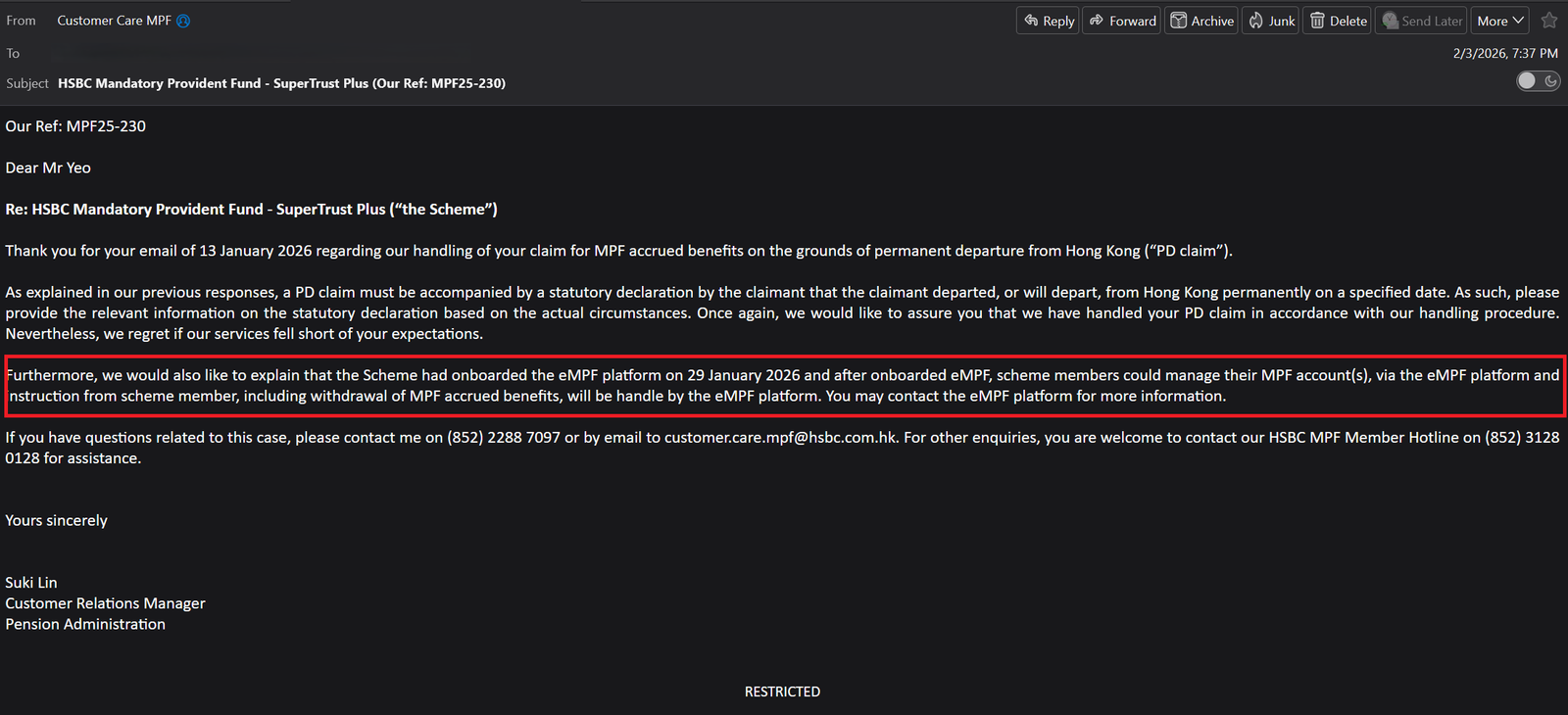
“The Scheme had onboarded the eMPF platform on 29 January 2026… You may contact the eMPF platform for more information.”
HSBC was handing off my case to the new centralised MPF platform. At last, I thought, a fresh start. A way out of the loop.
I was spectacularly wrong.
The Digital Wall That HSBC Built
I went to the eMPF website, downloaded the registration guide, and tried to sign up as a scheme member.
The first step: verify my identity using iAM Smart, a mobile app that requires a current, valid Hong Kong smart identity card.
My HKID was issued before I left in 2012. It was invalidated the moment I permanently departed. The app rejected it immediately. Here is the screenshot of that rejection:
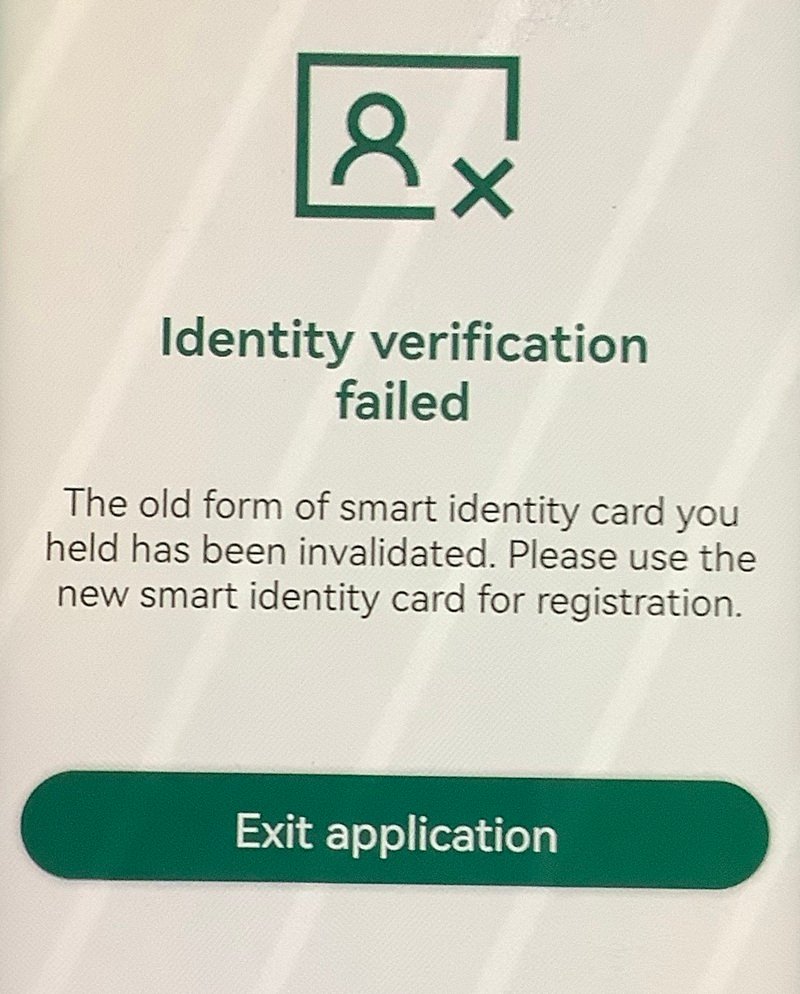
But there is no “new smart identity card.” I am not a Hong Kong resident anymore. I haven’t been for 13 years.
The second step: after the identify verification (if you can get past it), you must verify a mobile phone number by receiving a one‑time passcode via SMS. The registration interface makes clear that this must be a Hong Kong mobile number.
I live in Singapore. I have no Hong Kong mobile number. I cannot obtain one without a valid HKID and proof of residence in Hong Kong, which I do not have.
There is no alternative registration path for overseas members. No manual option. No postal application. No “if you’re locked out, contact us” in the instructions.
So here I am, trapped in a perfect bureaucratic vise:
- HSBC says: “We can’t help you anymore. Use eMPF.”
- eMPF says (through its system): “You cannot use eMPF.”
No one is accountable. No one has a process for a member like me. And my retirement savings sit somewhere in the digital ether, unreachable.
What HSBC Really Did
Let’s be clear about what happened on 3 February 2026.
HSBC did not provide me with a solution. They transferred responsibility to a platform they knew (or should have known) would be inaccessible to a former resident without a current HKID and a Hong Kong mobile number.
This is not a handover. This is an abandonment of their fiduciary duty as trustee.
Under the Mandatory Provident Fund Schemes Ordinance, a trustee has a duty to act in the best interests of scheme members. That includes providing a reasonable means for members to withdraw their accrued benefits when they are entitled to do so.
HSBC has now effectively removed any reasonable means. They have created a situation where I cannot register with eMPF, and they themselves refuse to process my withdrawal directly because the scheme has onboarded the platform.
The result is a total lockout.
The Question I Asked, and the Question They Still Won’t Answer
This entire nightmare began because I refused to guess a date on a statutory declaration. I asked HSBC, in writing, whether they wanted me to guess, and risk committing an offence that carries a fine of up to HK$100,000 and one year in prison.
They never answered. They simply redirected me to a platform that won’t let me in.
Now I have a new question, one that cuts even deeper:
If a former Hong Kong resident, living overseas, with an invalidated HKID and no Hong Kong mobile number, is directed by their MPF trustee to use the eMPF platform, and the platform itself cannot be accessed without a current HKID and a Hong Kong mobile number, what is that person supposed to do?
Who in this system is responsible for ensuring that legitimate members are not locked out of their own savings?
]]>I wrote two sentences that any competent compliance officer should have been able to answer in thirty seconds:
*”Please confirm YES/NO if you need me to make a statutory declaration using an ‘exact date’ that may not accurately reflect the ‘actual date’ of my departure from Hong Kong in 2011/2012 in order for this claim to proceed.*
If YES, I will arrange to make the statutory declaration and send it to your office.
If NO, you will need to provide concrete alternative solution for me. No more evasive answers.”
3 February 2026.
Suki Lin, Customer Relations Manager, Pension Administration, The Hongkong and Shanghai Banking Corporation Limited, wrote back.
She did not say YES.
She did not say NO.
She did not offer an alternative solution.
She did not acknowledge that I had asked a question at all.
Instead, she repeated the regulation. She apologized “if our services fell short of your expectations.” She informed me that HSBC’s scheme has now onboarded the eMPF platform, and that I should contact them instead.
Five months. Dozens of emails. Two passports. One IRD release. One utility bill. One invalidated HKID. One statutory declaration that was rejected because I couldn’t remember the exact day in December 2012 when I boarded a flight home to Singapore.
And their final answer—their considered, reviewed, customer-relations-manager-approved final answer—was to point at a door, tell me it’s not their door anymore, and wish me luck finding someone else who cares.
The Trap, Explained
Here is the mechanism of the trap, in case you ever find yourself inside it.
Step 1: The law says you must declare a “specified date” of departure .
Step 2: The bank insists on this date with machine-like rigidity, even if you left the territory 13 years ago, even if your life has moved on, even if the exact calendar date has been overwritten by a decade of new memories, new jobs, new addresses, new countries.
Step 3: You explain, politely, that you cannot supply what you do not possess.
Step 4: The bank repeats Step 1.
Step 5: You ask, explicitly: “Are you telling me to guess?”
Step 6: The bank goes silent. Not on the specific question, but on the entire ethical dimension of what they are asking you to do.
Step 7: You realise, with sickening clarity, that the bank has designed a process that functions perfectly when the member is willing to sign anything, declare anything, attest to anything. It only breaks when the member tries to tell the truth.
Step 8: The bank transfers your case to a new platform and tells you to start over.
The Question They Won’t Answer
I am going to ask it one more time, publicly, where the answer will exist forever.
If a member departed Hong Kong in 2012 and genuinely, honestly, cannot remember the exact date—not the month, not the year, but the specific calendar day—what are they supposed to write on the statutory declaration?
Are they supposed to guess? Pick a random day? Estimate? Use the date their employment ended, even if they stayed in Hong Kong a few more days?
And if they guess wrong—if the date they write is not, in fact, the actual date they left—have they committed an offence under Section 43E of the Mandatory Provident Fund Schemes Ordinance?
Because the penalty for that offence is a fine of up to HK$100,000 and imprisonment for up to one year .
I am not being dramatic. I am quoting the law that HSBC is sworn to uphold.
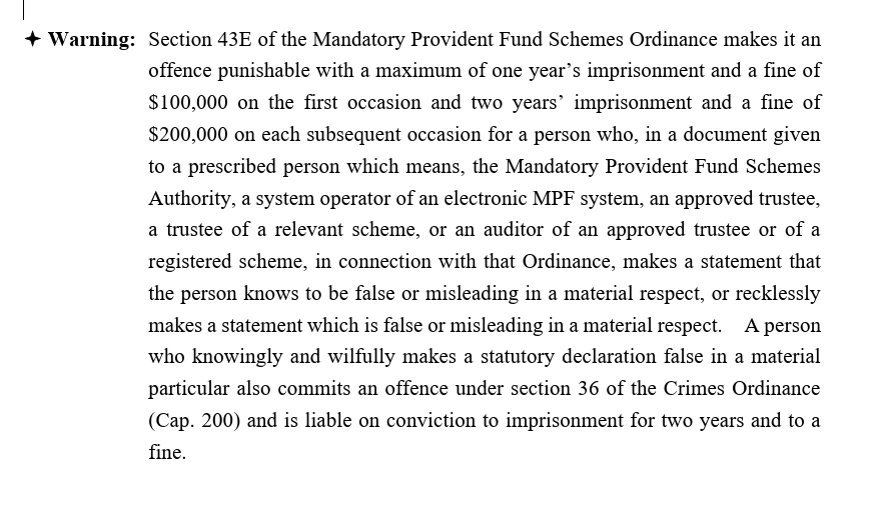
And they will not—will not—tell me whether their own requirement carries the potential to turn honest, forgetful people into criminals.
What This Really Is
This is not about a date.
This is about a bank that has decided that process is more important than people.
This is about a compliance function that has become so rigid, so automated, so terrified of making a discretionary decision, that it has lost the ability to distinguish between a fraudster and a former resident who simply cannot remember what day it was when they moved home 13 years ago.
HSBC has had, at various points in this saga:
- My current passport, proving I am a Singapore citizen with the right to reside in Singapore.
- My expired passport, proving I was a Singapore citizen with the same right in 2012.
- My IRD tax release, proving I settled my affairs with Hong Kong before departing.
- My Singapore utility bill, proving I have lived at the same address for years.
- My HKID card, invalid and cancelled.
Every single piece of evidence that a reasonable person—a reasonable fiduciary—would require to be satisfied that I left Hong Kong permanently and have never returned for employment.
And it was not enough.
Because somewhere in the bowels of HSBC’s pension administration system, there is a checkbox labelled “EXACT DEPARTURE DATE RECEIVED”. And until that checkbox is ticked, the machine will not move.
The fact that the checkbox is impossible to tick honestly? Not the machine’s problem.
The fact that ticking it dishonestly is a crime? Not the machine’s problem.
The fact that a human being—with a life, a family, a retirement—is trapped between the checkbox and the criminal code?
Not. The. Machine’s. Problem.
The New Platform, The Old Problem
HSBC’s final escape hatch was the eMPF platform.
“The Scheme had onboarded the eMPF platform on 29 January 2026… You may contact the eMPF platform for more information.”
Read this carefully: HSBC is not saying eMPF will handle my case differently.
They are not saying eMPF has a policy for members who cannot recall exact dates.
They are not saying eMPF will answer the question HSBC refused to answer.
They are saying: “We have moved our furniture to a new building. Please go there and ask the same question. We will not be taking questions at this location.”
The eMPF platform is not a solution. It is a forwarding address.
And I will contact them. I will ask the same question. I will wait the same weeks, the same months.
And if they also refuse to answer—if they also hide behind the checkbox—then I will know, definitively, that this is not an HSBC problem.
It is a system problem.
And the system needs to be fixed.
What I Have Learned
I have learned that “customer service” in large financial institutions is often a euphemism for “customer management.” Not serving. Managing. Containing. Deflecting. Exhausting.
I have learned that regulatory compliance, when separated from human judgment, becomes a weapon wielded against the very people it was designed to protect.
I have learned that a bank can look at 13 years of documentary evidence and say, “This is insufficient,” without a trace of irony or embarrassment.
And I have learned that some questions are so dangerous, so revealing of systemic dysfunction, that the only safe response is silence.
]]>I was naïve.
Today, I bring you the disappointing conclusion. Not a resolution, but a revelation. A revelation that HSBC’s customer service is not merely incompetent, it is morally bankrupt, prioritising robotic compliance over basic human decency and common sense.
The Illusion of Progress
In my last update, HSBC had descended into an infinite loop, sending me the same canned response regardless of what I wrote. Miraculously, after my public blog post and continued pressure, I received a lengthy email on December 16, 2025, that looked like a proper review.

They finally acknowledged they had received my old passport. They detailed their call attempts (which, for an international customer, are a woefully inadequate primary channel – most of the overseas calls are identified as “scam” on my phone). They quoted chapter and verse of the MPF regulations. It was dressed in the language of diligence.
This was a façade.
The Core of the Contempt
My response on December 17 was simple. I zeroed in on the one impossible demand:
“As I’ve mentioned in one of my replies, it has been more than 10 years since I left Hong Kong permanently and I have no recollection of the EXACT DATE of my departure. Are you suggesting then that I should proceed to make a new Statutory Declaration, but possibly lie about the date of my departure?”

This is the crucial ethical question. HSBC’s process was forcing me to choose between perjuring myself or abandoning my savings. I asked them to put this unreasonable demand on the record.
Their reply, dated December 30, 2025, is the single most damning document in this entire saga. It is a monument to corporate cowardice.
They did not answer the question.
Instead, they repeated the regulation. They said, “we regret that we are not able to proceed.” They apologised “if our services fell short of your expectations”; a hollow, passive-aggressive phrase that blames my expectations, not their failure.

Let me be clear: HSBC, with full knowledge that I cannot recall the exact date, and with full possession of my old passport, utility bills, and tax documents proving my permanent residence in Singapore for over a decade, has consciously decided that a perfect guess on a form is more important than the overwhelming, verifiable truth.
They have elevated a clerical checkbox above the substantive evidence of my life. This is not diligence. This is a failure of fiduciary duty wrapped in a cloak of procedure. You are not safeguarding the system; you are exploiting its rigidity to withhold funds.
The Breathtaking Failure, Laid Bare
- The Ethical Abdication: When confronted with the fact that their requirement could compel a false declaration, they chose silence. A responsible institution would find a solution, perhaps accepting “Early December 2012” or using the date stamp from my Singaporean documentation. HSBC chose to hide behind the letter of the law, violating its spirit entirely.
- The Human Disconnect: The failed phone calls they cite are not evidence of their diligence, but of their failure. In a cross-border case, insisting on a Hong Kong landline call as a primary step is a deliberate barrier. It is a way to blame the customer for being “unreachable”.
My disappointment with HSBC has curdled into disgust. You are not just a bad service provider; you are an adversary to your own customers.
My fight may be stalled by a corporate Goliath, but the story doesn’t end here. It ends with everyone knowing exactly what HSBC is capable of.
最終的侮辱:匯豐官僚主義如何將一個勾選框置於我的退休金之上
幾個月前,我分享了從匯豐銀行取回我的香港強積金儲蓄的卡夫卡式鬥爭經歷。我詳細描述了那個荒謬的循環:銀行要求一本能時間旅行的護照,以及十多年前一次人生變動的確切日期。我曾希望,通過揭露這種瘋狂,匯豐內部會有人從沉睡中醒來,運用一絲人類的邏輯。
我太天真了。
今天,我為各位帶來這個令人失望的結局。這不是解決方案,而是一個真相的揭露。這個真相是:匯豐的客戶服務不僅僅是無能,它在道德上已破產,將機械式的合規置於基本的人情味和常識之上。
進展的假象
在我上次更新時,匯豐已陷入無限循環,無論我寫什麼,他們都發送同樣的罐頭式回覆。奇蹟般地,在我的公開博文發布並持續施壓後,我在 2025年12月16日 收到了一封冗長的電子郵件,看起來像是一次適當的審查。
他們終於承認收到了我的舊護照。他們詳細說明了他們嘗試致電的記錄(對於國際客戶而言,將此作為主要溝通渠道是嚴重不足的——我的手機將大多數海外來電標記為「詐騙電話」)。他們引用了強積金規章的章節條文。整封信披著「盡職」的外衣。
但這只是個表象。
蔑視的核心
我在 12月17日 的回覆很簡單。我直指那個不可能滿足的要求:
「正如我在其中一封回覆中提到的,我永久離開香港已經超過10年,我不記得離境的確切日期。那麼,您是否在建議我應該去進行一份新的法定聲明,但可能要在離境日期上說謊?」
這是一個關鍵的倫理問題。匯豐的流程正迫使我在作虛假宣誓與放棄我的儲蓄之間做出選擇。我要求他們將這個不合理的要求記錄在案。
他們於 2025年12月30日 的回覆,是整個事件中最具殺傷力的文件。它是企業懦弱的一座紀念碑。
他們沒有回答這個問題。
相反,他們重複了規定。他們說,「我們很遺憾無法繼續辦理」。他們為「如果我們的服務未達您的期望」而道歉——這是一句空洞、被動攻擊的措辭,責怪的是我的「期望」,而不是他們的失敗。
讓我說清楚:匯豐銀行在完全知悉我無法回憶起確切日期,並且完全持有我的舊護照、公用事業賬單和稅務文件(這些都證明我在新加坡居住超過十年)的情況下,有意識地判定:表格上一個完美的猜測,比壓倒性的、可驗證的事實更重要。
他們將一個文書工作上的勾選框,置於關於我生活的實質性證據之上。這不是盡職。這是包裹在程序外衣下的受託責任失職。你們不是在保護這個制度;你們是在利用它的僵化來扣留資金。
赤裸裸的驚人失敗
- 倫理的放棄:當面對其要求可能迫使客戶作出虛假聲明的事實時,他們選擇了沉默。一個負責任的機構會尋找解決方案,例如接受「2012年12月初」這樣的表述,或使用我新加坡文件上的日期戳。匯豐選擇躲在法律條文背後,完全違背了其精神。
- 與人的脫節:他們提及的未接通電話,並非他們盡責的證據,而是他們失敗的證據。在一宗跨境案件中,堅持將撥打香港固話作為首要步驟,是一種刻意的障礙。這是一種將客戶指責為「無法聯繫」的方式。
我對匯豐的失望已經變質為厭惡。你們不僅僅是一個糟糕的服務提供者;你們是自己客戶的對抗者。
我的抗爭或許被一個企業巨人擱置了,但故事並未在此結束。它將以每個人都清楚知曉匯豐的所作所為而告終。
]]>The villain of our story? HSBC’s MPF Administration team.
In 2009, I moved from Singapore to Hong Kong for work. In 2012, I left Hong Kong permanently to return home to Singapore. My Hong Kong work visa and ID became invalid. My life, my family, and my career were all back in Singapore. This is a simple, indisputable fact.
Over a decade later, I decided to claim my Mandatory Provident Fund (MPF). What I thought would be a straightforward process has become a Kafkaesque loop of incompetence.
Eternal Loop of No Redemption
My journey has been a masterclass in how to stonewall a customer. Behold, the “HSBC MPF Runaround”:
My First Attempt: I submitted the required “Statutory Declaration for Permanent Departure” along with other notarised documents (including proof of address, etc.) via registered mail from Singapore. HSBC rejected it. Reason? One of the forms wasn’t signed by a Commissioner for Oaths (a fair point), and the exact day of my departure from 2012 was missing.

My Second Attempt: I tried to clarify my situation, in case they misunderstood.

But no luck:

My Third Attempt: I wrote back, politely explaining the core problems:

- On the Date: I cannot recall the exact day I left in 2012. Demanding one forces me to guess and risk making a false declaration under oath. Is that what HSBC encourages?
- On the Logic: They rejected me because my 2012 departure date wasn’t covered by my current passport (valid 2022-2032). Let that sink in. They wanted a time-traveling passport. I called this “unreasonable and illogical.”
In a moment of sheer luck, I found my old, expired passport. I sent it to them, thinking this would finally satisfy their bizarre requirement.
HSBC’s Canned Response (The Masterpiece): After nine days, I received a reply. It was a copy-paste job, a ghost from my first rejection. It completely ignored every point I raised. They did not acknowledge my old passport. They did not address the impossibility of the exact date. They just robotically repeated the same three points, including the instruction to get the form notarised.

And their solution? “Please contact our customer service team for assistance.” The email I was reading was my attempt to contact them for assistance!
This isn’t just poor service; it’s a systemic failure. It’s a digital brick wall designed to exhaust and frustrate customers until they give up.
The Absurdity, Laid Bare
- The Time-Traveling Passport Demand: HSBC’s system cannot comprehend that a person’s right to reside in their home country (Singapore) is perpetual and is not defined by the validity dates of a travel document. My current passport proves my citizenship now; my old one proves it then. Together, they create an unbroken line. HSBC’s algorithm seems to lack object permanence.
- The Date of Departure Tyranny: I left over a decade ago. I have a life, a family, a career. Does HSBC expect its former customers to mark their permanent departure from Hong Kong on a calendar as a lifelong sacred date? This is a historical fact, not a subscription renewal.
- The Human-Free Zone: The most terrifying part is the absolute lack of a thinking, reasoning human being. My emails, my explanations, my attached documents—they all vanished into a void, triggering a pre-written, irrelevant response. There is no one on the other end capable of reading, understanding, and applying common sense.
An Open Letter to HSBC
Dear HSBC,
This is not a complex fraud investigation. I am a Singapore citizen, living in Singapore, who left Hong Kong permanently in 2012. Every piece of evidence I provided supports this.
Your process is broken. Your “MPF Termination Processing Team” is a black hole. You are withholding my money not for a valid reason, but because your own bureaucracy is too rigid and unintelligent to process a simple, legitimate claim.
I am no longer asking nicely.
I demand that a real, empowered human being from HSBC reviews my case immediately, applies a shred of logical thought, and releases my funds.
Have you been trapped in HSBC’s bureaucratic nightmare? Or that of another bank? Have you jumped through impossible hoops to access your own money?
Share this story. Share it on LinkedIn, Twitter (X), Facebook, and in the comments of financial blogs. Tag @HSBC. Let them know that customers will not be silenced by automated replies and infinite loops.
Maybe, just maybe, the social media storm will be the only customer service channel that finally gets their attention.
UPDATE: I was trying to tweet HSBC HK via the link on its “Contact us” page:

And guess what?

Read the follow-up blog post: The Final Insult: How HSBC’s Bureaucracy Valued a Checkbox over My Retirement Funds
匯豐以官僚主義噩夢循環,扣押我的退休金
讓我來講一個故事。這是一個關於如何從一家全球銀行巨頭那裡拿回本屬於你的東西的故事。這是一個關於客戶服務黑洞的故事,這個黑洞如此深不可測,如此完全缺乏邏輯,如果不是因為他們扣押的是我的退休儲蓄,這一切本會非常可笑。
我們故事中的反派?匯豐銀行的強積金管理團隊。
2009年,我因工作從新加坡搬到香港。2012年,我永久離開香港,回到家鄉新加坡。我的香港工作簽證和身份證隨即失效。我的生活、家庭和事業都回到了新加坡。這是一個簡單、無可爭辯的事實。
十多年後,我決定申領我的強制性公積金(強積金)。我原以為這是一個簡單直接的過程,卻沒想到它變成了一個充滿無能的卡夫卡式循環。
永無止境的無法提取循環
我的這段經歷堪稱如何搪塞客戶的「大師課」。請看,這「匯豐強積金推託循環」:
我的第一次嘗試:我從新加坡通過掛號信提交了所需的「永久離開香港的法定聲明」以及其他公證文件(包括住址證明等)。匯豐拒絕了。理由?其中一份表格沒有經過監督員簽署(這一點合理),並且缺少我2012年離開的確切日期。
我的第二次嘗試:我試圖澄清我的情況,以防他們誤解。我寫信解釋:我離開的「年份」是2012年,並詢問「月份和日期」是否為強制要求,以及我應如何提供護照複印件來證明我的新加坡公民身份。
但運氣不佳:
他們回復說:「請附上清晰顯示您個人資料及出入境蓋章的護照副本,以核實您於2012年離開香港的日期。」這就是問題所在——我沒有2012年的護照副本。
我的第三次嘗試:我回信,禮貌地解釋了核心問題:
- 關於日期:我無法記起2012年離開的確切日期。要求提供這一點是強迫我猜測,並冒著作出虛假宣誓聲明的風險。這就是匯豐所鼓勵的嗎?
- 關於邏輯:他們拒絕我的理由是,我2012年的離港日期不在我當前護照(有效期2022-2032年)的有效期內。請理解一下這一點。他們想要的是一本能時間旅行的護照。我稱之為「不合理且不合邏輯」。
在一陣極度的幸運中,我找到了我那本舊的、已過期的護照。我把它寄給了他們,以為這終於能滿足他們那奇怪的要求。
匯豐的罐頭式回复(傑作):九天後,我收到了回覆。這是一份複製貼上的回覆,是我第一次被拒絕時的回信的幽靈。它完全忽略了我提出的每一點。他們沒有承認我的舊護照。他們沒有處理確切日期不可能提供的問題。他們只是機械地重複了同樣的三點,包括指示我去將表格公證。
而他們的解決方案是什麼?「請聯絡我們的客戶服務團隊以獲得協助。」我正在閱讀的這封郵件,正是我嘗試聯絡他們以獲得協助的結果!
這不僅僅是服務差;這是系統性的失敗。這是一堵數位磚牆,旨在耗盡並挫敗客戶,直到他們放棄。
荒謬之處,暴露無遺
- 時間旅行護照要求:匯豐的系統無法理解,一個人在其祖國(新加坡)的居住權是永久性的,並不由旅行證件的有效期來定義。我當前的護照證明我現在是公民;我的舊護照證明我那時是公民。兩者結合,構成了一條不間斷的線索。匯豐的演算法似乎缺乏客體永久性的概念。
- 離港日期的暴政:我離開已是十多年前的事了。我有生活、家庭和事業。匯豐是否期望其前客戶在日曆上標記他們永久離開香港的日期,作為一個終身神聖的紀念日?這是一個歷史事實,不是訂閱續期。
- 無人地帶:最可怕的部分是絕對沒有一個會思考、會推理的活人。我的電子郵件、我的解釋、我附上的文件——它們全都消失在虛空之中,觸發了一條預先寫好的、毫不相關的回應。另一端沒有一個能夠閱讀、理解並運用常識的人。
致匯豐的公開信
致匯豐銀行:
這不是一項複雜的欺詐調查。我是一名新加坡公民,居住在新加坡,於2012年永久離開香港。我提供的每一份證據都支持這一點。
你們的流程壞掉了。你們的「強積金終止處理團隊」是一個黑洞。你們扣留我的錢,並非出於正當理由,而是因為你們自己的官僚體系過於僵化且缺乏智慧,無法處理一個簡單、合法的申領請求。
我不再客氣地請求了。
我要求匯豐立即指派一名真正的、有授權的人類員工審查我的案件,運用一絲邏輯思維,並釋放我的資金。
你是否也曾被困在匯豐或其他銀行的官僚主義噩夢中?你是否也曾為了動用自己的錢而跳過不可能通過的圈套?
請分享這個故事。在 LinkedIn、Twitter (X)、Facebook 和財經部落格的評論區分享它。標記 @HSBC。讓他們知道,客戶不會被自動回覆和無限循環所沉默。
也許,只是也許,社交媒體風暴將是唯一能最終引起他們注意的客戶服務管道。
最新情況:我試圖通過其「聯絡我們」頁面上的連結發推文給匯豐香港:
「您嘗試存取的頁面暫時無法使用。對於給您帶來的不便,我們深表歉意。請稍後再試。」
猜猜怎麼了?連這個連結也失效了。系統性故障,無處不在。
]]>
Of course I’m not listening!
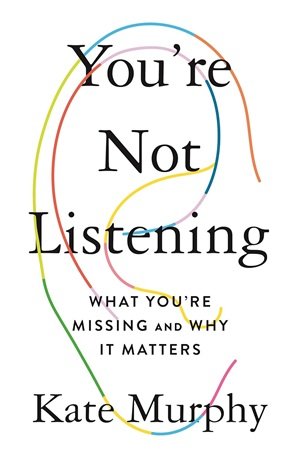
The problem with Kate Murphy’s You’re Not Listening is the approach it adopts – entering a conversation like a psychoanalyst. Is the goal of listening to understand another human or to extract interesting information? Murphy’s framework blurs this line.
In You’re Not Listening, Murphy often suggests listeners should adopt the mindset of a psychoanalyst / anthropologist studying a foreign culture or a journalist digging for a story. This frames the listener as a detached observer or investigator rather than a genuine, equal participant in a human connection. It can feel clinical, extractive, and even voyeuristic.
This approach can create a power imbalance where the listener is “studying” the speaker, potentially turning the speaker into an object of analysis rather than a partner in dialogue. It risks prioritising curiosity about a “story” over empathy for a person. True connection often requires vulnerability from both parties, not just one.
Overemphasis on the Listener’s “Gain”
A significant theme in the book is that being a good listener makes you more interesting, successful, and knowledgeable. You “gain” insight and information from others.
This can be seen as instrumentalising listening, making it a selfish tool for self-improvement rather than a selfless act of generosity or a fundamental part of human relationship-building. The ultimate goal of a conversation (at least a casual one) shouldn’t be to mine others for interesting data but to connect and understand for mutual benefit.
Anecdotal Over Scientific Evidence
While Murphy is a journalist and includes interviews with experts (like psychologists, priests, and CIA interrogators), the book relies heavily on personal anecdotes and stories.
The heavy use of anecdotes can make the advice feel situational and less like universally applicable techniques grounded in proven theory. It can come across as “this worked for this person in this specific case” rather than “this is a proven principle”.
Lack of Structural or Systemic Analysis
The book largely frames poor listening as an individual failing, a skill we’ve all neglected due to technology and busyness. It pays insufficient attention to the larger systemic and cultural forces that discourage listening.
This includes factors like:
Workplace structures: Open-plan offices that destroy focus, corporate cultures that value quick answers over deep deliberation, and metrics that prioritise output over thoughtful input.
Political and media incentives: Systems that reward loud, confident, and simplistic rhetoric over nuanced, careful listening and compromise.
Social media algorithms: Designed to promote broadcasting and reaction, not dialogue and understanding.
Under-addressing the Challenges of Bad Faith Speakers
The book’s framework generally assumes that both parties are engaging in good faith. It doesn’t thoroughly address how to handle situations where the other person is a poor communicator themselves: someone who monopolises the conversation, is aggressively argumentative, or is speaking in bad faith.
In the real world, not every conversation is with a reasonable person waiting to be heard. You might finish the book feeling equipped for ideal scenarios but still lost on how to apply these principles in difficult, toxic, or asymmetric interactions.
]]>
Rather than reading In Search of Lost Time as a traditional novel, or even a modernist masterpiece, consider approaching it as an exploration of the emotional brain decades before neuroscience caught up. Proust wasn’t merely writing about memory; he was mapping how emotions are stored, retrieved, and experienced through sensory triggers, long before brain scans and psychology gave us the tools to explain it.
The famous madeleine episode is not just a literary flourish; it’s a case study in involuntary memory. Proust shows us how a single taste can dissolve the wall between past and present, pulling forgotten feelings into vivid clarity. Today, psychologists call this “episodic memory,” and neuroscientists know it’s tightly bound to the senses. But Proust, in his dense, introspective prose, was already dissecting these processes through the act of writing. He turns memory into a visceral, almost biological force.
Moreover, Proust’s treatment of time is deeply subjective. It warps and stretches, contracts into a moment or expands into volumes. This, too, mirrors modern understandings of how trauma, nostalgia, and love alter our perception of time. His narrator isn’t just reflecting on his life; he’s experiencing the emotional elasticity of time as the brain actually processes it. The book becomes a kind of proto-neuroscience memoir, driven not by plot but by perception.
In this light, In Search of Lost Time is less a story and more a long, meditative experiment in consciousness. Proust gives language to the intangible: how we remember, why we regret, and what it feels like to lose or regain meaning. His genius lies not just in observation, but in recreating on the page the way the mind actually moves, in spirals, in loops, in waves of emotion.
So the next time someone tells you Proust is just a long-winded writer obsessed with madeleines, tell them this: he was trying to document what it means to feel memory. In doing so, he came closer than anyone else to capturing the inner machinery of the human heart.
]]>
Oh, wondrous train of sleekest sheen,
With fares that rise like kites unseen.
You gleam so bright, you shine so new,
Yet break down more than budget shoes.
“Ride with us!” your posters beam,
As if delays were but a dream.
But stand we must in sweltering heat,
While you conk out on tracks so sweet.
“Upgrading works!” they always say,
As prices hike—no, not okay.
We pay more cash, we wait, we sigh,
Yet still you halt—oh, tell me why!
The PA drones with calm deceit,
“We’re very sorry for the heat.”
While suits in towers count their gains,
We’re packed like sardines—still* no trains.*
So here’s to you, our dear MRT,
A world-class ride… in theory.
You’re almost perfect—what a shame,
That almost is your first name!
#poemsontheMRT
]]>
Atomic Habits by James Clear is an insightful and actionable guide to building good habits and breaking bad ones. The book focuses on the idea that meaningful change does not require radical overhauls, but instead hinges on the accumulation of small, consistent actions over time. The writing is engaging and full of relatable examples, and the author offers practical tools to create systems that make positive habits inevitable and bad habits difficult to maintain.
One of the book’s key lessons is the power of the 1% rule: small improvements, repeated daily, compound into massive changes over time, whether in fitness, career, or personal development. Another key takeaway is that habits are formed not by motivation but by designing your environment to make good behaviours easier and bad behaviours harder. For example, keeping healthy snacks in sight or putting your phone in another room during work hours can help reinforce productive actions.
The author also emphasises the importance of identity in habit formation. He argues that instead of focusing on what you want to achieve, you should focus on the type of person you want to become. For instance, instead of saying, “I want to lose weight”, shift your mindset to “I am a healthy person.” This subtle change aligns your habits with your identity, making them more sustainable over time.
Another standout concept is the idea of tracking habits and rewarding progress to maintain momentum. The author suggests simple tools like habit trackers or visual cues to celebrate small wins, reinforcing the sense of accomplishment. He also stresses the importance of starting small, using techniques like the “two-minute rule”, which encourages starting a new habit by committing to just two minutes of it, such as reading a page of a book or putting on workout shoes.
If nothing changes, nothing is going to change.
Atomic Habits is not only practical but deeply inspiring, showing that anyone can improve their life by making tiny, deliberate adjustments to their daily routines.


Well-written memoir, filled with Michael J. Fox’s trademarked wry humour.
What makes the memoir remarkable is Fox’s refusal to wallow in self-pity or lament lost opportunities. Instead, he approaches the life-altering diagnosis of Parkinson’s disease with his signature humour and unwavering optimism, delivering a story that’s as inspirational as it is entertaining.
For instance, he recounts the early symptoms of Parkinson’s, such as his pinkie trembling uncontrollably during a filming session, with the sharp wit that has defined his public persona. Rather than dwelling on despair, Fox turns the incident into a reflection on how life’s unpredictability can lead to growth.
The memoir also reflects on Fox’s meteoric rise to fame through Family Ties and Back to the Future in a grounded and thoughtful examination of how fame shaped him and, in some cases, distracted him from more meaningful pursuits.
On the question of what “richandfamous” meant to him, Fox wrote:
“I didn’t want anyone to kiss my ass. I just wanted to get to a place where they couldn’t kick it.”
“And, as for fame – were that the only objective, there might have been an easier route, though none so direct as exist today. Now I’d just have to go camping with a group of narcissists in Bora Bora or the Australian Outback, eat a few rats, a handful of blowfly larvae, and bam, every talk show and magazine in the country would come calling.”
Ultimately, Lucky Man is a testament to resilience and gratitude. Fox doesn’t shy away from the difficulties of living with Parkinson’s but focuses on how the experience has enriched his life in unexpected ways. He calls the disease a “gift”, not because it’s easy, but because it taught him to live with purpose and appreciate the present.
“In searching through my own and my family’s memories, hoping to understand who I am, I tend to view myself through the lens of who I have become. Those events and personal qualities that support the current version get singled out unconsciously, distorting memories in order to illuminate my path more brightly.”
My favourite band. Their debut album featured gems like “Big In Japan”, “Forever Young”, “The Jet Set”, “Summer In Berlin”, “Sounds Like A Melody”, etc. They then followed that up with a second album, “Afternoons In Utopia”, that could rival any concept album released by The Alan Parsons Project.
Over the years, Alphaville’s discography expanded to include albums like “The Breathtaking Blue” (1989) and “Prostitute” (1994). Each release showcased their evolving sound and willingness to experiment with new musical directions. For instance, “The Breathtaking Blue” was accompanied by a unique film project titled “Songlines“, where nine directors, including Godfrey Reggio of “Koyaanisqatsi” fame, created visual interpretations of the album’s tracks.
Despite their success, Alphaville was initially reluctant to perform live. Marian Gold admitted that they didn’t feel confident enough as musicians and preferred the safety of the studio environment. This hesitation to tour was a point of contention with their management but underscored the band’s commitment to producing polished studio work.
Their ability to craft songs that resonate across generations has solidified their place in music history, ensuring that their legacy, much like their most famous song, remains “Forever Young”.
]]>