The post AFP-NV Applauds Governor Lombardo’s Action to Protect Ratepayers on Data Center Growth appeared first on Americans for Prosperity.
]]>Ronnie Najarro, AFP-NV State Director, released the following statement:
“Governor Lombardo took a meaningful step to make sure the costs of data center growth don’t fall on Nevada families and taxpayers. Requiring these companies to cover the costs they create, meet local water standards, and protect funding for our schools is common sense, and AFP-NV applauds him for acting.
“For too long, Nevada’s tax incentive program allowed companies to receive abatements while shifting costs and risks onto ratepayers. This order begins to correct that by putting the cost-causer, not the ratepayer, on the hook, while addressing the permitting and grid bottlenecks that have slowed responsible energy development.
“Data center growth can be a tremendous opportunity for Nevada if we get the rules right. We’re glad to see Governor Lombardo lead on this issue, and AFP-NV stands ready to work with him and the Legislature to build on this progress through the Speed to Power process, the upcoming PUC docket, and further reforms that keep the program transparent and accountable to Nevada taxpayers and ratepayers.”
The post AFP-NV Applauds Governor Lombardo’s Action to Protect Ratepayers on Data Center Growth appeared first on Americans for Prosperity.
]]>The post From grocery prices to red tape: What Americans want changed appeared first on Americans for Prosperity.
]]>“The cost of living is hurting myself and the people I know, but we don’t know what to do.”
That’s what AFP’s Clayton Rasche is hearing from Americans as Camp Prosperity travels across the country.
Families know groceries cost more. Small business owners see how regulations increase their expenses. And people are hearing very different ideas about how to solve these problems. One calls for more government control — the other gives people more freedom.
Camp Prosperity is giving everyday Americans a chance to join that conversation.
In North Carolina, Ximena has a warning for Americans
At a coffee shop in North Carolina, AFP’s Mary Beth Cirucci spoke with Ximena, a teacher who immigrated from Bogotá, Colombia.
For Ximena, the debate over affordability is also a debate over what kind of solutions America chooses.
Mary Beth asked what she would tell Americans who think socialism offers a better way forward.
“The only thing socialism brought us was crime and violence,” Ximena said.
Her warning comes at an important time.
The Democratic Socialists of America are promising government-paid health care, government-regulated grocery prices, more energy regulations, and more.
For a family struggling with bills, those promises can sound appealing. Ximena wants Americans to think about where that path leads and who gets to make more of the decisions.
She reminded us that socialism “hasn’t been the success story of any place.” She urged Americans to elect leaders who understand the country’s founding principles.
Hear more of their conversation by clicking below:

In New Hampshire, Chris wants more control over his own money
In Manchester, New Hampshire, AFP’s Clayton Rasche met Chris Laufer.
Chris is thinking about rising bills and what it will cost to start a family. But when asked whether he’d prefer a smaller or bigger government, Chris chose a smaller one. He believes it’s easier for citizens to see what their government is doing and hold it accountable when it operates closer to home and has fewer bureaucratic regulations.
Taxes were also on his mind.
He wants government to “get out of our back pocket” so people can keep more of what they earn.
His message to Congress was even shorter: “Clean it up and give us some freedom back.”

In Georgia, Jason sees what red tape costs
In Georgia, Mary Beth met Jason, a contractor who sees the cost of government regulations before a project even begins.
He told Mary Beth that costly permitting has reached smaller projects, including backyard sheds. On a job near the Alabama state line, Jason said getting permission to build a pole barn in Georgia could require a permit costing around $1,500 — while if he built across the state line, he wouldn’t need a permit at all.
Those costs make jobs more expensive and lead to higher costs across industries.
They can also discourage investment when property owners decide that another fee, inspection, or delay makes a project too expensive.
That’s a big reason regulatory reform is important at city halls, state capitols, and in Washington. Clearer and more predictable rules can make it easier to build and invest.
Watch Jason’s breakdown below:
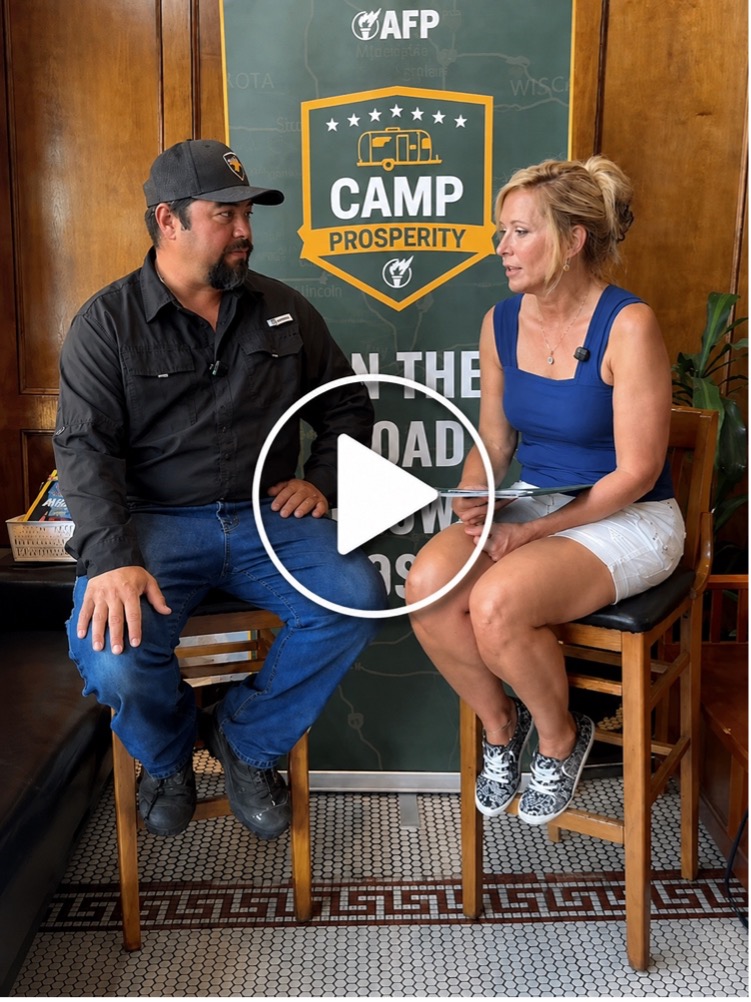
In Virginia, higher grocery costs hit a family tradition
Camp Prosperity’s most recent stop brought AFP to the Glen Allen Supermarket in Virginia.
Cornell and Linda told Mary Beth they’re spending 30% to 50% more on groceries.
They saw the difference while preparing for their annual two-day family gathering. Feeding their guests this year cost substantially more than last year.
They want government to show more accountability, set smarter priorities, and become a better steward of taxpayer dollars.

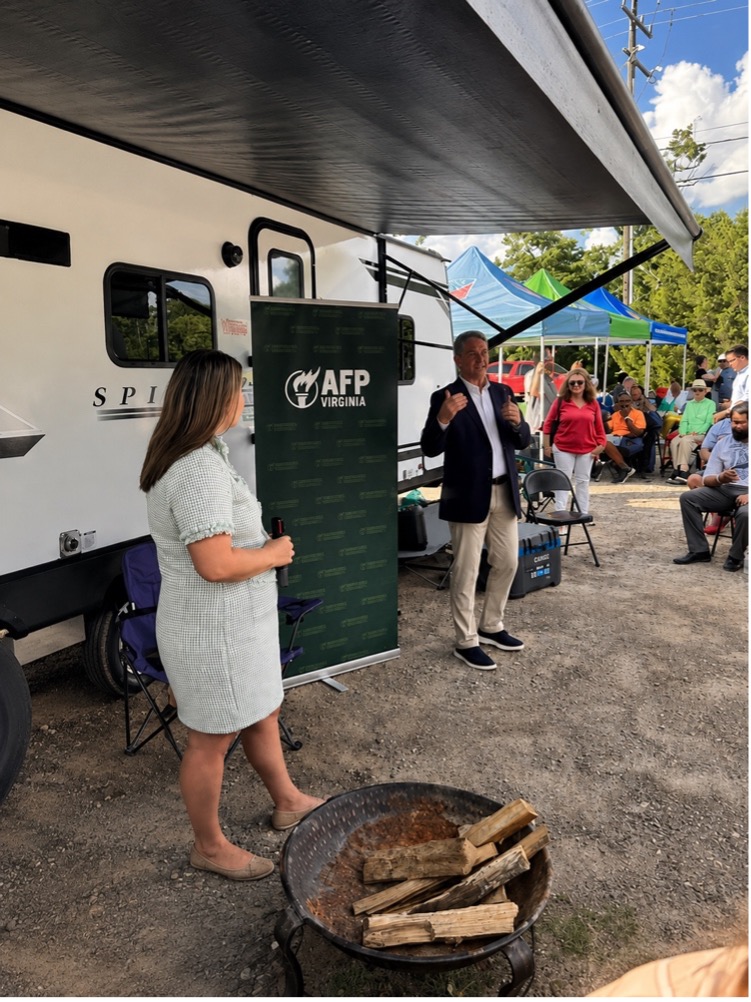
What happens when the government promises everything?
Ximena’s warning raises a question: Who pays for all these promises?
A Cato Institute analysis estimates that major proposals in the Democratic Socialists of America platform could add $71 trillion to $212 trillion in federal spending over the next decade.
At the high end, paying for those programs and projected deficits would require more than four times the federal revenue Washington collects today.
As Mary Beth says, “There’s no such thing as free. The bill always comes due.”
She breaks it down in the video below:

From grocery bills to permitting costs, Americans are feeling the consequences of policies that make everyday life more expensive. Camp Prosperity will keep listening to their stories — and highlighting solutions that remove barriers, lower costs, and give people more freedom.
You can read about our previous stops here.
The post From grocery prices to red tape: What Americans want changed appeared first on Americans for Prosperity.
]]>The post On Constitution Day, here are the ways the DSA agenda undermines America’s founding appeared first on Americans for Prosperity.
]]>Government should serve people, not control them.
That principle runs through America’s constitutional system. The U.S. Constitution limits and divides government power, creates checks and balances, and reserves powers not explicitly given to the federal government to the states and the people.
That framework gave generations of Americans the freedom to build businesses, create opportunity, solve problems, and improve their lives. It has helped make America the most prosperous nation in the world.
America has serious problems to solve. Too many families are struggling with the rising costs of housing, groceries, and health care, for example.
While Americans are looking for solutions to those problems, the Democratic Socialists of America (DSA) isn’t offering them. In fact, they are proposing something much bigger: A fundamentally different political and economic system.
But don’t just take my word for it. The DSA says exactly that, stating America needs a “new political system.” Its platform calls for:
- A new constitution
- Abolishing the U.S. Senate and Electoral College
- Replacing the presidency
- Expanding the U.S. Supreme Court
- Bringing major corporations and industries under public ownership
Those aren’t just minor policy changes. They are actions that would undermine the principles that have helped our country flourish.
As America celebrates its 250th anniversary, we should ask a basic question: Do we solve today’s problems by building on the constitutional tradition that helped make America so prosperous — or should we give the government much more control over our decisions?
Here are four ways the DSA agenda increases government control and conflicts with the Constitution.
America’s system is bottom-up. The DSA agenda is top-down.

One key to America’s success is the idea that communities, families, and individuals know what they need to thrive better than anyone in Washington.
The federal government has national responsibilities, but states and communities should have decision-making power over most of the matters that affect people closest to home.
The 10th Amendment makes this principle explicit: Powers not given to the federal government are reserved to the states or the people.
DSA takes a very different approach.
It starts from the premise that government should exercise more control over decisions normally made by individuals, families, communities, and businesses.
- If housing is too expensive, the DSA would limit what landlords can charge.
- If families are struggling to afford essential food, the DSA might establish government-run grocery stores.
- If health care costs become too high, the DSA would ask taxpayers to pay more and government bureaucrats to dictate, even limit, your health care decisions.
Their top-down solutions don’t leave a lot of room for states, communities, families, and individuals to solve problems themselves.
Our Constitution protects private property. DSA wants more government ownership.
Private ownership gives people a direct stake in American life. Own a home? You care about the community in which you live. Own a business? You’re worried about taxation and regulation.
This framework gives people room to take risks, invest, and build something for future generations to benefit from.
Again, DSA’s platform calls for something very different.
It calls for public ownership of the largest corporations and essential industries and supports greater public ownership of housing and energy.
More government ownership means less room for competition, local decision-making, and generational wealth building.
The result is a government that doesn’t just regulate the economy, it also owns and controls large parts of it.
The American system divides power. DSA would concentrate it.
America’s founders were deeply skeptical of concentrated power. That is why they built a system of checks and balances, divided authority, and limits on what government can do.
The DSA agenda would give government far more power over every day economic life.
Government wouldn’t just set the rules. It would own or control more businesses and industries — from energy and housing to health care and major corporations.
That means the same government deciding the rules would be the landlord, the health insurer, the energy provider, or the owner of major businesses.
America’s constitutional tradition was designed to keep power in check and leave broad space for private enterprise. The DSA agenda would put much more power — political and economic — into government hands and leave that power unchecked.
The American system allows reform. The DSA agenda would remake it.
The founders knew they weren’t perfect and the system they created wouldn’t be, either.
That’s why they established ways to change laws, reform institutions, and even amend the Constitution as the country grew and changed.
DSA isn’t simply proposing different policies within that system. It wants to remake parts of the system itself.
- Abolishing the Electoral College
- Abolishing the Senate
- Making sweeping changes to the presidency
- Packing the Supreme Court
These ideas reflect a much deeper disagreement over the constitutional system America has relied on for nearly 250 years.
Your voice matters
America has real problems to solve. People are frustrated, and they have every right to expect better.
But the answer isn’t to abandon the constitutional tradition that has helped America and Americans flourish. By limiting government power, protecting individual freedom, encouraging competition, and leaving room for people, communities, and states to solve problems our country has thrived for 250 years.
The DSA agenda would move America in a very different direction. As we mark the country’s 250th anniversary, the choice is whether to build on the system that has served us for generations — or follow a path of more government control.
Join AFP’s fight against socialism today.
The post On Constitution Day, here are the ways the DSA agenda undermines America’s founding appeared first on Americans for Prosperity.
]]>The post AFP-MO Applauds Gov. Kehoe For Establishing Safeguards on Flock Safety Cameras appeared first on Americans for Prosperity.
]]>AFP-MO State Director Gary Hollis released the following statement:
“AFP Missouri appreciates Governor Kehoe’s timely and bold executive order requiring guardrails around the government’s use of automated license plate readers. Like many Americans across the country, Missourians have become increasingly concerned about the personal privacy violations that occur with ALPR systems. We look forward to working with the General Assembly next session to codify protections for the people of Missouri and to ensure their personal privacy rights.”
Read the Executive Order HERE.
The post AFP-MO Applauds Gov. Kehoe For Establishing Safeguards on Flock Safety Cameras appeared first on Americans for Prosperity.
]]>The post Rent control sounds simple. Here are 4 problems it can create appeared first on Americans for Prosperity.
]]>That can make rent control sound appealing. If rents are too high, why not just cap them?
The Democratic Socialists of America are trying to make that case. Their 2026 platform calls for universal rent control, tighter restrictions on investment properties, and more publicly owned housing.
But a price cap doesn’t create more housing. And when government limits what housing providers can charge without fixing the underlying shortage, it can make the problem worse.
Here are four reasons why.
1. Rent control can shrink the housing supply
Rent control can help some tenants stay in homes they might otherwise have to leave. But those benefits can come with costs for everyone looking for housing later.
For example, in 1994, San Francisco expanded rent control to more types of buildings. That expansion led landlords to reduce rental housing supply by 15%. Some chose to live in their properties or removed units from the rental market in other ways.
The drop in supply pushed citywide rents up 5.1%.
The lesson is clear: When fewer homes are available, renters have to compete for a smaller pool.
2. It can discourage new construction

Builders look at what a project will cost and what they’re likely to earn afterward.
When government puts strict limits on future rents, some projects become less profitable.
St. Paul, Minnesota, offers a recent example.
Voters approved a 3% annual rent cap in 2021. The city had permitted more than 2,000 new housing units in both 2020 and 2021, but permits fell to just 404 units in 2024 and 357 in 2025.
Developers and property owners repeatedly pointed to rent stabilization as a reason investors became hesitant to finance new projects.
St. Paul later exempted new construction from the policy, and developers began returning.
3. Maintenance becomes harder to keep up with.
Roofs leak, plumbing breaks, insurance, property taxes, labor, and materials get more expensive over time.
When rents can’t adjust alongside those costs, owners have less room to pay for repairs and improvements.
In New York City, owners of rent-stabilized buildings need state approval before raising rents to recover the cost of major improvements like a new roof or boiler.
When owners have limited ability to recover major repair costs, they may delay or scale back improvements.
Over time, that can mean delayed upgrades, less reinvestment, and older buildings that are harder to keep in good shape.
4. It can make housing more expensive for everyone else
Rent control can create two groups of renters: people who already have rent-controlled housing and people trying to find it.
Existing tenants may pay less, while new renters face fewer available homes and more competition.
That’s why controlling prices alone doesn’t fix the underlying problem. If demand keeps growing while supply stays tight, people searching for a home pay the price.
The better answer is more housing

If we want housing costs to come down, we need to make it easier to build more homes.
That means removing barriers that have restricted supply for decades:
- Reform zoning rules that block new homes
- Speed up slow and unpredictable permitting
- Reduce unnecessary regulations that raise construction costs
- Give builders more freedom to respond when demand grows
More homes mean more choices for renters and more pressure on housing providers to compete on price and quality.
That’s very different from socialists’ universal rent control and government-owned housing. One gives government more control over the housing we already have. The other makes it easier to build more of what people need.
Bottom line: You can’t solve a housing shortage by making it harder to provide housing.
America has long trusted people to build, invest, and solve problems. Housing should be no different.
If you believe free people can build better solutions than government planners, join the fight against socialism and add your name.
The post Rent control sounds simple. Here are 4 problems it can create appeared first on Americans for Prosperity.
]]>The post What is socialism? appeared first on Americans for Prosperity.
]]>Some on the right use it as a criticism of higher taxes and more social spending. Some on the left point to programs like Medicare and Social Security as examples of socialism that works.
But socialism has an actual definition. It isn’t simply a description of government programs we like or dislike.
Socialism is an economic system in which much of the economy is publicly owned or controlled rather than privately owned.
Americans are facing real problems. Rent is too high. Groceries cost too much. Health care is out of reach for too many families.
As families look for relief, more government help can sound appealing. But what the Democratic Socialists of America are proposing isn’t simply temporary programs to help through a difficult time.
The DSA is calling for lasting changes to who actually owns and controls major parts of the economy.
Not every government program is socialism

America has had government programs for generations.
The federal government built the Interstate Highway System. States and communities run public schools. Social Security provides retirement benefits. Medicare helps older Americans pay for health care.
But private businesses still build and rent homes, stock grocery shelves, produce and deliver energy, and provide much of the health care Americans use.
Government doing something is not the same as socialism.
Neither is every instance of government ownership or control. There’s a difference between government intervention and government replacing private ownership across major parts of the economy.
Socialism is a system of government takeover: public ownership or control replacing private ownership across major parts of the economy.
What about Nordic countries?

Supporters of democratic socialism often point to Nordic countries like Denmark, Sweden, and Norway as proof that a larger welfare state can create prosperity. But that comparison blurs an important distinction.
Nordic countries do have high taxes, generous public benefits, and large welfare states.
But their economies still depend heavily on private businesses, private investment, market prices, and competition. In fact, Nordic countries rank among the more economically free countries in the world. The Fraser Institute’s 2025 Economic Freedom of the World report ranks Denmark ninth and Finland 15th.
The Nordic model combines a broad welfare state with a market-based economy — not government ownership of most businesses or industries.
That is also why Denmark’s former prime minister Lars Løkke Rasmussen pushed back on describing Denmark as a socialist planned economy, instead describing it as a market economy with an expanded welfare state.
What does the DSA actually want?
The DSA isn’t talking about higher taxes, a larger safety net, or stronger unions.
Its national program calls for “public ownership of the largest corporations and essential industries.”
And the DSA makes clear that this goes beyond a bigger welfare state. Its own website says its vision “pushes further than historic social democracy” and calls for collectively owning “the key economic drivers that dominate our lives,” including energy production and transportation.
Across several major issues, the DSA’s answer is to give government a much larger role in ownership and control.
What would that look like?
Higher taxes. Fewer choices. Less competition. More power in government hands.
Housing? Government builds it. Government prices it. And when fewer homes are built, families fight over them.
Groceries? Government owns the store. Taxpayers cover the losses. And when the family store down the street closes, choice, competition, and abundance go with it.

Health care? Government pays for it. Government runs it. And when Washington says no, there’s nowhere else to go.
Energy? Government owns the power plant. Government controls the supply. Your energy bill is left to politicians and bureaucrats instead of competition.
This is about more than the definition of a word
Important debates are often sidetracked by arguments over labels. The larger question here isn’t how we define socialism. It’s how we solve the real problems Americans are facing.
The DSA’s agenda relies heavily on expanding government ownership and control as the answer to major economic problems.
Two hundred and fifty years of American history argue that there is a better way: more freedom to build, compete, innovate, and give people more choices.
See the proposals for yourself and learn more about the debate over socialism in America here.
The post What is socialism? appeared first on Americans for Prosperity.
]]>The post AFP–Mississippi Applauds Hitachi Energy’s Record $528 Million Investment to Strengthen America’s Grid appeared first on Americans for Prosperity.
]]>AFP-MS State Director Starla Brown issued the following statement:
“Today’s announcement is exactly what pro-growth energy policy looks like in practice. The ongoing revolution in AI has greatly increased the demand for electricity as well as for equipment like small power transformers. Even a decade ago, no one would have anticipated this surge in demand. This rapid change to our nation’s economy highlights the need for Mississippi to create a flexible, business-friendly environment that welcomes investment and jobs that come with it.
“AFP-MS congratulates Governor Reeves, the Mississippi Development Authority, and Copiah County for making this happen and urges policymakers to take note that energy security is built through private investment and domestic manufacturing, not government mandates.”
The post AFP–Mississippi Applauds Hitachi Energy’s Record $528 Million Investment to Strengthen America’s Grid appeared first on Americans for Prosperity.
]]>The post AFP-PA Endorses in Key General Assembly Races appeared first on Americans for Prosperity.
]]>Emily Brey, AFP-PA state director, gave the following statement:
“Pennsylvanians expect more from Harrisburg. This year, Democrats tried to raise taxes, hike energy rates, give special favors to labor unions, and delayed the state budget for months. AFP-PA is proud to endorse these leaders for reelection so they can continue holding the line against government overreach and overspending.
“AFP-PA’s strong network of grassroots activists across the Keystone State will reach thousands of Pennsylvanians in the coming weeks at the door, over the phone and through digital advertising to ensure victories in these must-win races.”
AFP-PA endorsed the following candidates:
State Sen. Jarrett Coleman (SD-16), State Rep. Tom Jones (SD-36), State Rep. Valerie Gaydos (HD-44), and State Rep. Joe Emrick (HD-137).
The post AFP-PA Endorses in Key General Assembly Races appeared first on Americans for Prosperity.
]]>The post AFP’s Brian Costin Challenges District 214’s Ethics Finding on Taxpayer-Funded Referendum Polling appeared first on Americans for Prosperity.
]]>The self-facilitated “investigative” report comes after AFP-IL filed an ethics complaint alleging the misuse of taxpayer resources for referendum polling, voter surveying and related campaign activity. District 214 retained Fagen, Friedman & Fulfrost, also known as F3 Law, to conduct an independent investigation.
AFP-IL is now challenging the credibility of that investigation, asking the District 214 Board to send the complaint, investigative report, objections and supporting records to Cook County State’s Attorney Eileen O’Neill Burke for an independent review. Additionally, Costin directs the Board to request that State’s Attorney Burke seek a formal opinion from Attorney General Kwame Raoul.
AFP Deputy State Director Brian Costin issued the following statement:
“Local governments cannot violate the State Ethics Act or apply local ethics rules that are less restrictive than state law. District 214 is attempting to rewrite state law by creating a timing exception that appears nowhere in the Ethics Act or its own policy. You cannot retroactively legislate your way out of doing something illegal.
“When a local government tests tax amounts, measures voter support, develops messaging based on the results and then launches a taxpayer-funded ‘Renew 214’ campaign, it is using public resources to influence the election in its favor.
“AFP-IL will continue to work to ensure Illinois laws are followed, and taxpayers have a fair fight in tax-hike referendums.”
BACKGROUND:
Illinois’ State Officials and Employees Act requires local ethics rules to be no less restrictive than state law. Neither Board Policy 2:105 nor the Ethics Act creates an exception for surveys conducted before the referendum in question is formally placed on the ballot.
The F3 Law report found that District 214 did not contest that polling of prospective voters occurred. However, the report reasoned: “Because the surveys in question were posed prior to any referendum being placed on the ballot,” the District’s actions appeared outside the policy’s scope.
Costin argues that no such exemption appears in state law or District 214’s policy.
Brian Costin is available for interviews — email cgallagher@standtogether.org to arrange.
The post AFP’s Brian Costin Challenges District 214’s Ethics Finding on Taxpayer-Funded Referendum Polling appeared first on Americans for Prosperity.
]]>The post AFP-NH Congratulates Endorsed Candidates on Primary Wins appeared first on Americans for Prosperity.
]]>Concord, NH — Americans for Prosperity-New Hampshire (AFP-NH) celebrates the victory of 25 candidates who won their primary races.
AFP-NH mobilized its statewide network of grassroots activists ahead of the primary to advocate for these leaders who will keep New Hampshire the freest state in the nation.
AFP-NH Deputy State Director Sarah Scott said:
“AFP-NH congratulates these candidates who we are certain will be policy leaders in the 2027 legislative session. They represent New Hampshire’s values and will fight to ensure our state remains free by keeping taxes low, promoting school choice for families, and reducinggovernment overreach to ensure the Granite State remains the best place to live, work, and raise a family.
“AFP-NH looks forward to continuing to mobilize our grassroots network to get these candidates across the finish line.”
The following candidates won their races:
John Stephen (ECD-4)
State Sen. Keith Murphy (SD-16)
Scott Wallace (Belknap-02)
Dale Fincher (Carroll-07)
Tammy Simmons Garthwaite (Carroll-08)
Colin Mitchell (Carroll-08)
Adam Haverstock (Hillsborough-38)
Ted Trost (Hillsborough-38)
State Rep. Jose Cambrils (Merrimack-04)
State Rep. Mike Drago (Rockingham-04)
State Rep. Brian Nadeau (Rockingham-04)
State Rep. Cindy Bennett (Rockingham-04)
Michael Appleton (Rockingham-13)
Anthony Henry (Rockingham-13)
Brandon Bach (Rockingham-13)
State Rep. John Potucek (Rockingham-13)
State Rep. Erica Layon (Rockingham-13)
Brian Chirichiello (Rockingham-13)
Speaker Sherman Packard (Rockingham-16)
State Rep. Ron Dunn (Rockingham-16)
State Rep. Daniel Popovici-Muller (Rockingham-17)
Bob Lynn (Rockingham-17)
State Rep. Charles McMahon (Rockingham-17)
State Rep. Joe Sweeney (Rockingham-25)
Matt Brooks (Rockingham-09)
The post AFP-NH Congratulates Endorsed Candidates on Primary Wins appeared first on Americans for Prosperity.
]]>The post AFP-WV: West Virginia Jumps to No. 5 Nationally for Worker Freedom appeared first on Americans for Prosperity.
]]>ALEC ranks all 50 states on pro-worker, pro-growth labor policies designed to increase worker freedom, flexibility, and economic mobility.
West Virginia’s six-spot climb follows the passage of Senate Bill 458, the Universal Professional and Occupational Licensing Act of 2025, a major AFP-WV priority that allows qualified professionals licensed in other states to move to West Virginia and get to work without unnecessarily repeating examinations and licensing requirements.
AFP-WV State Director Jason Huffman released the following statement:
“This is what happens when West Virginia gets government out of the way of people who want to work. A skilled worker doesn’t suddenly lose their skills when they cross the state line. Universal licensing tore down one of those needless barriers, and now West Virginia has jumped six spots into the top five states in America for worker freedom.
“One good policy can make a big difference. Keep cutting red tape, keep making it easier to work and build a business here, and West Virginia will keep climbing.”
The post AFP-WV: West Virginia Jumps to No. 5 Nationally for Worker Freedom appeared first on Americans for Prosperity.
]]>The post Statement on the Anniversary of Charlie Kirk’s Assassination appeared first on Americans for Prosperity.
]]>“A year ago today, Charlie Kirk was assassinated for standing in the open, making his case, and inviting anyone who disagreed with him to make theirs. On this difficult anniversary, our thoughts are with his family and loved ones.
“Charlie spent his career walking onto college campuses to debate people who thought he was wrong, because he believed bad ideas are beaten by better arguments, not silence. That’s the legacy worth honoring today — and the reminder this anniversary carries: political violence has no place in America, and it will never replace free expression, civil disagreement, and mutual respect as the principles that hold this country together.
“At AFP, civic engagement is our mission. We win by connecting with people in their communities face-to-face at their doorstep, and we do so with passion for our ideas and respect for theirs. That freedom is what Charlie represented and what this country was founded on, and we will never be deterred by those who want to take it from us.”
The post Statement on the Anniversary of Charlie Kirk’s Assassination appeared first on Americans for Prosperity.
]]>The post AFP-AL Kicks Off “Sweet Home Freedom Tour” with Statewide Push for Regulatory Reform appeared first on Americans for Prosperity.
]]>Alabama’s regulatory code currently includes more than 117,000 restrictions, many of which are outdated and contradict each other. Moreover, six of Alabama’s closest neighbors – Florida, Kentucky, Louisiana, North Carolina, South Carolina and Tennessee – have already enacted REINS-style legislation, leaving Alabama geographically surrounded by states that have already made the change.
AFP-AL State Director Adam Thompson released the following statement:
“Unelected bureaucrats at state agencies shouldn’t be able to raise costs on Alabamians without a single vote of the legislature. This tour is about making sure people understand who’s actually writing the rules that affect their businesses and their lives — and giving them a direct way to tell their legislators it’s time for a vote. Simply put: No vote? No rule.”
The tour stops include:
- September 10: Huntsville, Sylacauga, Daphne
- September 15: Cullman, Birmingham
- September 16: Dothan
- September 17: Decatur, Montgomery, Enterprise
- September 22: Tuscaloosa
Alabamians can find the event nearest them and register at AFPAlabama.com.
The post AFP-AL Kicks Off “Sweet Home Freedom Tour” with Statewide Push for Regulatory Reform appeared first on Americans for Prosperity.
]]>The post What is economic freedom — and why does it matter? appeared first on Americans for Prosperity.
]]>Economic freedom means having room to work, build, invest, compete, own property, and make choices about your future. It’s the freedom to start a business, change careers, create something new, and decide what to do with what you earn.
Those choices are a big part of the American Dream.
Economic freedom puts decisions in your hands

A free economy starts with a simple idea: People usually know more about their own needs, talents, and goals than a distant government agency does.
A contractor may spot demand for more homes, while a small-business owner finds a better way to serve customers. A single parent might pursue a better job or take a chance on an idea that could become a thriving business.
No central planner can make all those decisions for millions of people at once.
Free enterprise gives people freedom to act on what they know, take risks, and respond to what others need.
Competition turns freedom into progress for the country.
When businesses compete for customers, they have to earn their business.
That pressure encourages them to cut waste, improve products, lower prices, and find better ways to solve problems.
If a company stops listening to customers, another company can step in and fill the need.
That’s also why barriers to building and competing can slow economic growth and leave you with fewer choices.
Removing unnecessary licensing, permitting, and regulatory barriers makes it easier to build homes, produce energy, and start or expand a business. That gives people more freedom to respond to demand, increasing supply and creating more choices for consumers.
That’s economic freedom.
Socialism puts more decisions in the government’s hands
Socialism has very different ideas about the economy.
Instead of leaving millions of people free to make their own economic decisions, socialist policies give the government greater control over them.
Whether it’s:
- Government-set grocery prices
- Rent controls
- Government ownership of industries
- Government decisions about how resources should be distributed
Socialism seeks to put government in charge of more economic decisions — including decisions that affect your own life.
Supporters may promise greater fairness or security. But centralized control weakens the incentives and price signals that help people decide what to build, where to invest, and how to respond to what others need.
Economic freedom leaves room for more people to build, compete, experiment, and find better ways to meet those needs.
America’s future depends on economic freedom

America’s founding principles never promised equal outcomes or success for all.
They protected people’s right to pursue their own path and enabled them to launch projects and businesses that have become the backbone of America.
Those principles have helped create real abundance in the United States.
They also work together to give people more control over their economic lives.
Strong property rights and clear, predictable laws make it easier to build and invest, while limited government leaves more decisions to individuals and businesses. And when companies have to compete for customers, people have the freedom to choose the products or services that work best for their families.
The American story is full of people who started with little, took a risk, solved a problem, and built something that improved life for others. Keeping that door open helps preserve the American Dream for the next generation.
As America marks 250 years, we celebrate our founding principles and the belief that people can still be trusted to make decisions for themselves today.
To help us reflect on these values, sign up for this month’s “One Small Step” toolkit and pledge to read the preamble to our Constitution.
The post What is economic freedom — and why does it matter? appeared first on Americans for Prosperity.
]]>The post AFP-Texas Announces Six State House Endorsements for General Election appeared first on Americans for Prosperity.
]]>Sam Sheetz, AFP-TX deputy state director, gave the following statement:
“Texas is poised to pass transformational policy reforms in the 90th legislative session on property taxes, energy abundance, education and more personal options in healthcare. To do that, Texas taxpayers need these policy champions in Austin.
“Our army of grassroots activists will be working around the clock from now until November 3rd talking to voters at the doors, on the phones, and at community events about the need for bold policy reforms.”
AFP-TX endorses the following candidates:
State Rep. Caroline Harris Davila (HD-52), Ellen Fleischmann (HD-96), State Rep. John McQueeney (HD-97), State Rep. Morgan Meyer (HD-108), State Rep. Angie Chen Button (HD-112), and State Rep. Marc LaHood (HD-121).
Political advertising. Paid for by Americans for Prosperity.
The post AFP-Texas Announces Six State House Endorsements for General Election appeared first on Americans for Prosperity.
]]>The post AFP-OH Endorses Slate of Eight Buckeye Blueprint General Assembly Candidates appeared first on Americans for Prosperity.
]]>Tim Ross, AFP-OH Deputy State Director, issued the following statement:
“We’re excited to endorse our slate of General Assembly candidates for the November election. These are freedom-minded leaders who will fight for limited government and free-market solutions in Columbus, cutting taxes, expanding education opportunity, unlocking energy abundance, and getting government out of the way of Ohio families and job creators. This slate is part of our long-term work to send more principled conservatives to the Statehouse so Ohio can keep moving in the right direction.”
Ohio Senate Endorsed Candidates:
- State Senator Michele Reynolds (SD 3)
- State Senator Jane Timken (SD 29)
Ohio House of Representatives Endorsed Candidates:
- Denise D’Angelo (HD 10)
- State Representative Mike Dovilla (HD 17)
- Cliff Winkel (HD 52)
- Shawn Stevens (HD 61)
- State Representative Heidi Workman (HD 72)
- Caleb Stidham (HD 89)
AFP-OH will use targeted advertising and its statewide grassroots network to inform Ohioans about these candidates ahead of Election Day.
The post AFP-OH Endorses Slate of Eight Buckeye Blueprint General Assembly Candidates appeared first on Americans for Prosperity.
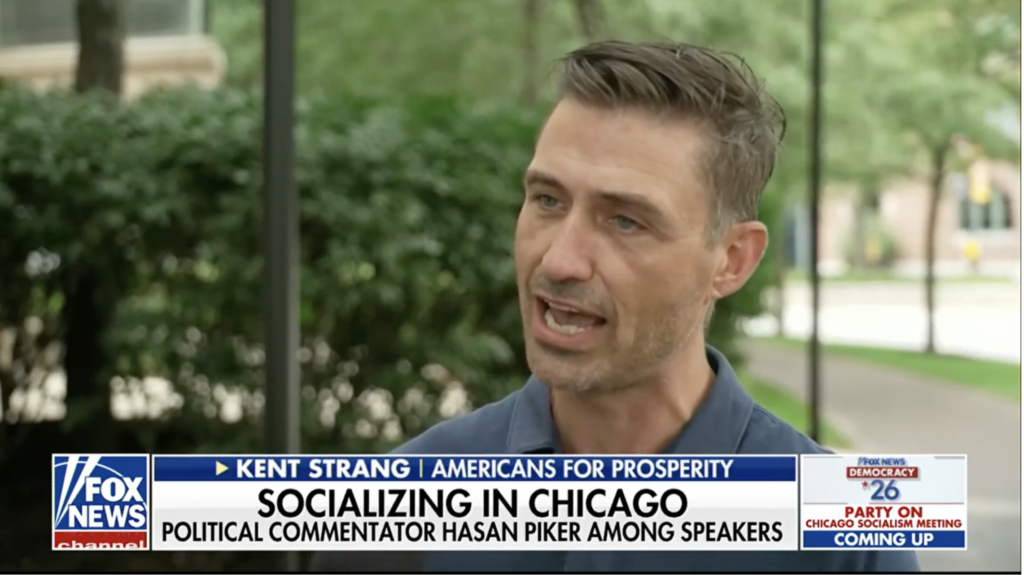
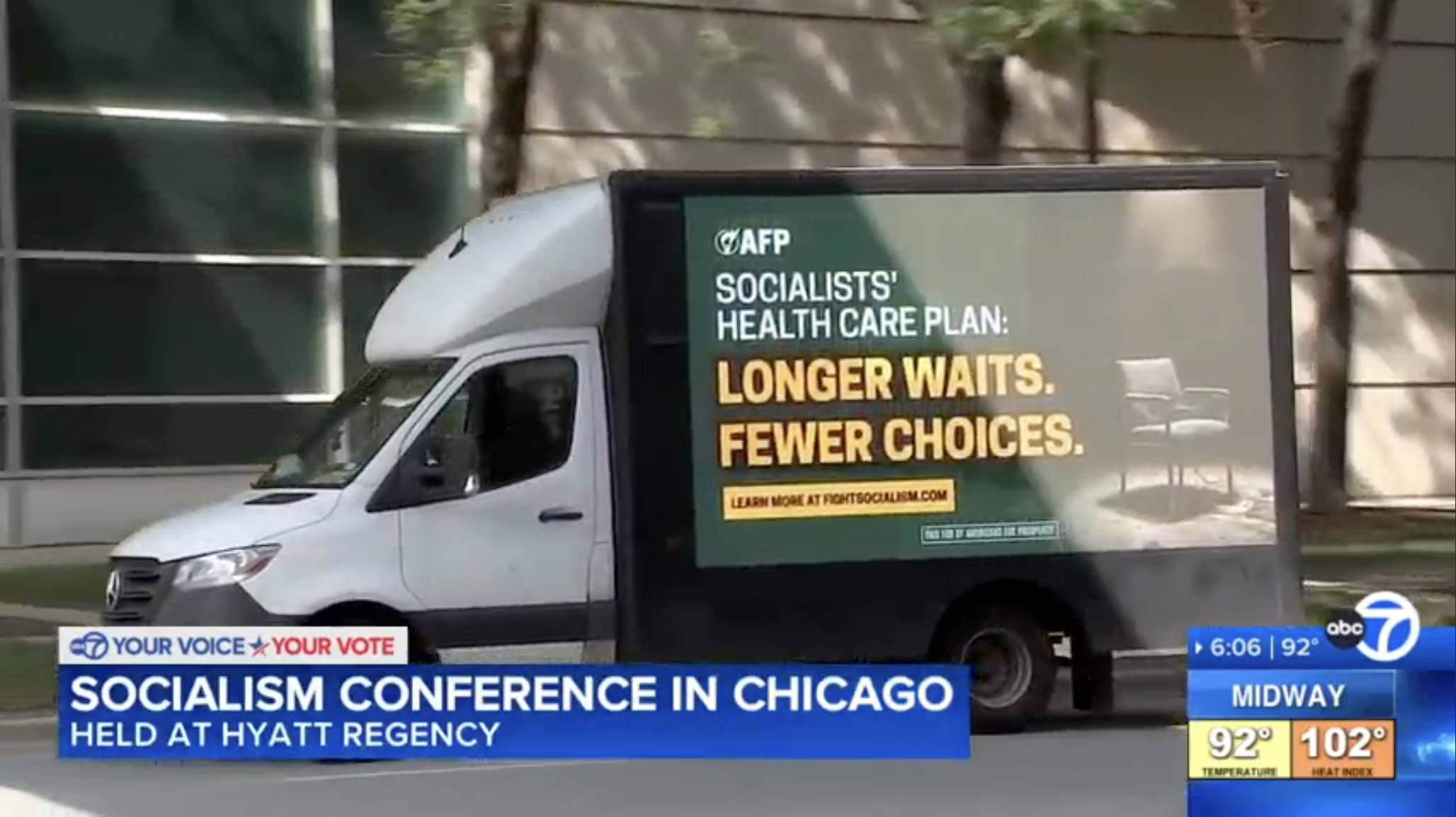
]]>The post ICYMI: AFP at Chicago Socialism Convention to Contrast More Government with More Freedom appeared first on Americans for Prosperity.
]]>Watch and listen to the coverage below:
 ABC 7
ABC 7
The Center Square | American’s For Prosperity Launches Campaign Against Chicago Socialist Convention
WIND | AFP-IL’s Brian Costin on The Real Story with Jeanne Ives and Amy Jacobson
RedState | The 2026 Chicago Socialism Conference Starts on Friday, and It’s Full of Unintended Hilarity
New York Post | Hotel staff protest outside Chicago Hyatt where DSA touting its ‘Workers Deserve More’ program
AFP Managing Director Kent Strang and AFP-IL Deputy State Director Brian Costin focused on the real-world consequences of the socialist policies being promoted at the conference — including single-payer health care, government-run grocery stores, and rent control.
The activation builds on the launch of FightSocialism.com, AFP’s national campaign pairing fact-based education with paid advertising and a 50-state grassroots network built to make the case against socialism in the places the debate actually happens — kitchen tables, town halls, and community meetings.
The post ICYMI: AFP at Chicago Socialism Convention to Contrast More Government with More Freedom appeared first on Americans for Prosperity.
]]>The post How to lower the cost of living: A freedom-centered playbook appeared first on Americans for Prosperity.
]]>One political movement believes the answer starts with more government: more subsidies, more regulation, more price-setting, more top-down policies.
A freedom-centered playbook asks a different question: What is stopping people from producing more, competing more, and making more choices for themselves?
Then it removes those barriers.
That’s how we lower costs and create abundance — by expanding supply, encouraging competition, and putting decisions back in the hands of individuals and families.
How to lower energy costs: Build more energy

Electricity demand is rising, but Washington has made it too difficult to build the infrastructure needed to unleash energy abundance.
Electricity prices have increased 21% since 2020, while approvals for new transmission lines take more than four years on average and can stretch to 11 years before construction begins.
The answer to higher energy costs isn’t more subsidies or government price-setting, but more energy production.
Congress should reform permitting laws, including the National Environmental Policy Act, the Clean Water Act, and the Clean Air Act, so projects can move faster. Policymakers should also modernize rules that slow the replacement of aging grid infrastructure.
Less red tape means more generation, more transmission, and more competition to meet growing demand.
Competition beats control. More energy supply can help lower costs and improve reliability without giving government more power over how Americans produce and use energy.
How to lower health care costs: Put patients in control

America has world-class doctors and technology, yet roughly 7 in 10 Americans say the health care system has major problems.
One reason is that patients rarely control the money.
About 90% of health care spending flows through insurance companies or government programs instead of directly through patients. That weakens price competition and makes it harder for families to see what care actually costs.
When patients control more of their health care dollars, providers have to compete harder on price, quality, and service for their business.
That’s why we support letting every American use a tax-free health savings account and directing eligible government support into those accounts rather than sending it to insurers first.
Congress should also remove barriers to direct primary care and other health insurance alternatives.
Competition beats control because when patients have real choices, providers compete harder. When this happens, providers deliver better care at a better price.
How to lower housing costs: Let communities build more homes

Housing costs rise when government stops supply from meeting demand.
Zoning rules can restrict where homes are built, how many homes can fit on a property, and what kinds of housing are allowed. Federal mandates can add construction costs on top of those local restrictions.
Rent control tries to manage scarcity. More housing reduces it.
States and cities can allow more multifamily housing, reduce minimum lot-size rules, remove unnecessary parking mandates, and make manufactured housing easier to build.
Congress can also reduce federal construction mandates and encourage local reforms through existing housing programs.
Competition beats control. When more homes reach the market, renters and buyers have more choices, which will lead to lower housing costs.
How to lower grocery prices: Remove costs and increase competition
The price of food at the grocery store isn’t arbitrary.
Farmers need fuel and fertilizer. Processors need electricity. Products need packaging, refrigeration, trucking, and shipping. When government raises costs at any step, families eventually see them at checkout.
In 2024, just 18.5 cents of every dollar spent at the grocery store went to farmers. The other 81.5 cents covered processing, transportation, retailing, and the other steps needed to get food onto store shelves.
The other problem is lack of competition.
New grocers, food producers, distributors, and other entrepreneurs can challenge existing businesses with better products or lower prices.
But permits, licensing, zoning, and other rules can make starting a business expensive and slow.
Competition beats control because lower prices come when people can produce, sell, and compete, not from government price-setting.
A freedom-centered plan to lower the cost of living
These policies address different parts of the economy, but they follow the same idea:
- Build more
- Compete more
- Give people more control
A socialist, top-down economic model tries to manage scarcity. A freedom-centered model creates the conditions for abundance.
Less red tape. More supply. More competition. More freedom to build.
That’s how we lower costs, expand opportunity, and put more decisions back in the hands of individuals and families.
There’s a particularly popular socialist in New York City right now. Maybe you’ve heard of him? Mayor Zohran Mamdani. His policies are unworkable in the long run, and this op-ed written by AFP spokeswoman and vice president of external affairs Katelyn Bledsoe, which ran in the Washington Examiner explains why.
Take a few minutes to read it today.
Also, if you care about our country’s future, join our fight against socialism today!
The post How to lower the cost of living: A freedom-centered playbook appeared first on Americans for Prosperity.
]]>The post AFP Announces New Leadership in Alaska appeared first on Americans for Prosperity.
]]>Kevin Greene will be AFP-AK’s new state director. He is an eight-year veteran of AFP’s state operations teams and over a decade of experience in public policy, which he will use to ensure the growth of the chapter’s activist and volunteer base and drive transformational reforms at the state capitol.
“AFP-AK has always worked tirelessly to put Alaskans first and make sure our great state remains on the path to greater freedom and prosperity,” said Greene. “I’m honored to lead this dedicated and principled team to keep the American Dream alive in the Last Frontier.”
Jared Goecker, a current member of the Anchorage Assembly representing the Chugiak-Eagle River community, will be AFP-AK’s new deputy state director. Goecker has served in numerous political and campaign positions in Alaska, including the office of the governor and the Alaska Division of Personnel and Labor Relations.
“I’ve seen firsthand what can happen when people care about their community, understand the issues, and are willing to put in the work,” said Goecker. “That’s what I’ve always respected about AFP: they understand the power of grassroots engagement and know how to turn it into real results. I’m excited to join the team, build on the work already happening here, and engage even more Alaskans in shaping the future of our state.”
The post AFP Announces New Leadership in Alaska appeared first on Americans for Prosperity.
]]>The post 3 ways innovation and competition can lower food costs appeared first on Americans for Prosperity.
]]>It’s the total at checkout that makes you look twice. It’s buying the same basics and wondering why the bill keeps creeping higher, or putting something back on the shelf because the necessities you buy keep getting more expensive.
Families want lasting relief, not short-term bailouts or regulations that just raise prices more.
The good news is there are real ways to bring costs down — and real-world examples.
Sometimes that means producing more or clearing outdated rules that make it harder for entrepreneurs to reach customers. Other times it means letting new businesses enter the market and compete.
Here are three practical ways to lower food prices.
1. Better chickens can help producers bounce back from shortages

The chicken on grocery shelves today is the result of decades of innovation.
After World War II, breeders competed to develop chickens that grew faster and produced more meat. The “Chicken of Tomorrow” contests helped accelerate that work, and advances in genetics and production helped lower retail chicken prices by 30% to 40% from the 1920s to the mid-1950s, even as red-meat prices rose sharply.
That innovation is crucial when disease hits.
Highly pathogenic avian influenza has killed millions of commercial chickens in recent years. But modern broiler chickens have short production cycles, and continued improvements in breeding, flock health, and hatching have enabled producers to rebuild supply quickly, reducing the impact of disease on chicken supplies.
This year, chicken supplies rose about 4.5% from a year earlier. In fact, supply grew faster than demand, and wholesale boneless chicken breast prices fell 37%.
Businesses didn’t suddenly become less interested in profit.
They produced more chicken than customers wanted at the old price, giving sellers an incentive to cut prices and compete harder for buyers.
Innovation helped create a more productive industry. Competition helped turn that extra supply into lower prices for your family.
2. Lower startup barriers can bring more food sellers into the market

Often it starts in a home kitchen.
Cottage-food laws let people sell certain homemade foods directly to customers, giving entrepreneurs a lower-cost way to test an idea before paying for a commercial kitchen or retail location.
Florida expanded that opportunity in 2021.
The state raised its annual cottage-food sales cap from $50,000 to $250,000, allowed mail delivery, and stopped local governments from layering on conflicting rules. Florida also eliminated licensing, permitting, and registration requirements for qualifying cottage-food businesses.
These reforms made it easier for more people to sell food to their neighbors.
Now established food businesses have to compete with local entrepreneurs.
That’s more competition, thanks to regulatory reform.
3. Fewer permits can help food businesses reach more customers
Brandon Peña and his family saw how quickly government rules can get between a business and its customers.
Their Georgia food truck, Tres Jardines, once faced a system that required a separate permit in every county where it operated.
With 159 counties in Georgia, expansion meant navigating permit after permit, each with its own costs and requirements.
We partnered with food-truck owners to change that.
Georgia passed HB 1443, streamlining the system so that food trucks could operate statewide with a single permit. By November 2023, Tres Jardines was profitable enough to support all five family members and help fund a second truck.
These reforms make it cheaper for food trucks to operate and easier for them to expand.
That can bring more food trucks into more communities, giving customers more choices and businesses more reasons to compete on price and service.
Read the full story here.
More choices start with more freedom to create
These examples all point in the same direction.
Government doesn’t need to decide what food should cost or place needless barriers in the way of entrepreneurs.
It needs to give people room to produce, compete, and pursue their American Dream.
The post 3 ways innovation and competition can lower food costs appeared first on Americans for Prosperity.
]]>