The post The things we take for granted appeared first on All Models Are Wrong.
]]>Sure, there’ve been good things too – month by month, and year by year, you’ve been making new memories, and building things up: at least, on the surface. Now you see that you’ve been taking it all for granted. That your foundations are no longer solid, but vulnerable and unstable.
You knew such changes were a risk of life, a risk of commitment: but you believed you were immune. Now the good things do not always offset the bad. The future is unclear.
What does it feel like to suddenly realise you could lose everything?

Since 2014, we’d been paying close attention to the potential irreversible decline of the West Antarctic ice sheet, after satellites and computer models began to agree there were signs of unstable collapse. We know this western part of Antarctica disappeared in past warm periods, regrowing with the ice ages. Its vulnerability — both then and now — comes from resting on underwater bedrock that becomes deeper and deeper inland from the coast (from pale to darker blue in the image below). Warm ocean currents tickle the edge of the ice, and as it retreats down the slope, it speeds up.
We scientists have made predictions about the risk of this instability that ranged from fairly modest ice loss over the next two hundred years, coming mostly from two major glaciers in West Antarctica (pink in the image below: more details in the original blog post), to apocalyptic scenarios in which large parts of the region’s ice crumble into the ocean before the century is out. Either way, we focused our efforts on understanding — and preventing — this part of the climate story.

Meanwhile, we largely ignored the rest: East Antarctica. Far, far bigger, holding 90% of Antarctica’s 58 metre potential to raise sea levels, we’ve nevertheless taken its stability for granted. It is by far the coldest place on Earth — a deep, deep freeze caused by the weak sunlight of the South pole, reinforced by the vast, vast whiteness that reflects much of that sunlight away. The East is much less exposed to the oceans, too, because only about a third of the bedrock is underwater.
And we’d seen little change there in recent decades. If anything, East Antarctica had grown slightly, because snowfall on the surface was building up the ice sheet — year by year, month by month — outweighing any losses at the coasts.
We did know that the three main regions with underwater bedrock (Aurora, Wilkes and Recovery: see image below) could be vulnerable, given enough warming, over a long enough time. Records going back millions of years showed that ice was absent or lost from these places in several warm periods, when levels of carbon dioxide in the air were similar to those of today or expected this century (for example, 3 million years ago: see image below). We also noticed when two of East Antarctica’s glaciers — one in the Aurora basin, the other in Wilkes — started to thin. We called her a sleeping giant.

But those changes in the distant past happened over hundreds to thousands of years – at least, we couldn’t measure if they were any faster, and could therefore threaten our near future. And as recently as 2013, computer models weren’t advanced enough to predict how the East Antarctic ice sheet would change with global warming. So the Intergovernmental Panel on Climate Change (IPCC) used simpler methods, extrapolating from the past to the future. This method predicted only a tiny East Antarctic contribution to sea level rise, of about a centimetre this century.
We knew changes were a risk. But we believed this ice sheet was immune, for now.
Over the past decade, it’s become clear that the dynamics in East Antarctica have shifted. That several glaciers are vulnerable and thinning, because they are being gradually eroded beneath the surface by the ocean, just as they are in the West. A new generation of computer models have predicted that annual snowfall may in future no longer offset the melting at the coasts. The contribution to sea level rise this century under high emissions could be ten centimetres, twenty, or more.
Tens of centimetres may not sound like much. But the total global sea level rise of twenty centimetres predicted under medium emissions by 2050 — from Antarctica and every other source — would increase the frequency of extreme sea levels currently seen once in a hundred years to more than twice in a decade.
And in the next few centuries, some predictions for East Antarctica turn from centimetres into metres. Now we’re not talking about new coastal defences, but new coastlines.

We realised it was time to pause, to take stock. To inspect the foundations of East Antarctica in more detail, without being distracted by the more visible and advanced changes in the West.
So we’ve published a review of the science of East Antarctica’s history, present and future, summarising evidence from 183 research studies. It describes our understanding of the ice sheet from glaciology, geology, oceanography, observations, and reconstructions of the deep past, and the computer models that are grounded in all of these. A review means we didn’t make new observations or run computer models, but we did some number-crunching to extract and compare results from the studies. I was responsible for the future projections, working with Catherine Ritz: for example, I recalculated one of our previous studies on uncertainties in rapid Antarctic collapse to predict only the East Antarctic part, and, as an author of last year’s IPCC report, I extracted details that weren’t presented in our chapter covering sea level rise.
The key numbers are in the image below (kindly made by co-author Richard Jones, with input from the study’s lead author Chris Stokes and me). It shows ranges of predictions for the East Antarctic contribution to sea level rise at 2100, 2300 and 2500, for two different emissions scenarios: global warming kept below 2°C, consistent with the Paris Agreement, or a very high emissions scenario, which reaches 4-5°C of warming this century and an unimaginable 10°C by 2300. We are currently heading for the lower end of this range: 2-3°C of warming this century. But only if we keep to the climate promises and policies we’ve made.

The different shades show the uncertainties: lighter blues are less likely to happen than darker. Low and High show the lower and upper ends of the IPCC assessment for 2100, which was based on our big study and another one, and of all existing studies for 2300 and 2500. (There were too few studies extending to those times for an IPCC assessment). These aren’t absolute minimum and maximum numbers — that’s much harder to do — but are plausible bounds of what we predict is likely to happen in the future. Mid simply shows the mid-point of Low and High.
The Upper values for the high scenario are less likely to happen, but can’t yet be ruled out. The IPCC describes this as having low confidence in the underlying studies, which are based on expert judgement and a model that predicts rapid collapse of Antarctica. (The two studies didn’t extend to 2500, so there is no Upper here). Our climate policies and promises mean these contributions should be even less likely, because they aim to avoid these very high emissions. But the higher our emissions are, the more likely we are to trigger faster ice losses, like these.
Under the very high emissions scenario, East Antarctica is predicted to contribute up to 20 cm (or perhaps nearly half a metre) to global sea levels by 2100, up to three metres (or perhaps nearly five) by 2300, and over five metres by 2500.
But if we keep global warming below the 2°C limit of the Paris Agreement, the contribution stays below about half a metre throughout the five centuries: significant, but far less to adapt to with coastal defences and retreat.
Those are the high-end numbers: a world in which we’re unlucky and find the ice sheet is very sensitive to climate change. If we’re lucky, it will have middling sensitivity, and contribute just a couple of centimetres of sea level rise by 2100. And almost all of the Low sea level projections are below zero, which means there is a chance that increasing snowfall will offset the ice losses.
If we’re lucky.
What does it feel like to realise we could change the world’s coastlines?
Now we’re paying close attention. Keeping an eye on the cracks in the ice, the stability of the foundations, the erosion from below. Taking even more care than we did before.
The future may be unclear, but that doesn’t mean it’s out of our control. The fate of the East Antarctic ice sheet is still in our hands.
Technical details from IPCC reports
levels of carbon dioxide…today or expected this century: IPCC Sixth Assessment Report (2021), Technical Summary, shows concentrations reaching around 600ppm and 850ppm by 2100 for medium scenarios SSP2-4.5 and SSP3-7.0 (Figure TS.4). Our review describes various warm periods including the mid-Miocene climatic optimum, 600-800ppm, and the mid-Pliocene, around 400pm (i.e. similar to today).
two of East Antarctica’s glaciers: IPCC Fifth Assessment Report (2013), Chapter 13, FAQ 13.2, “Field and satellite-based observations, however, indicate enhanced outflow—manifested as ice-surface lowering—in a few localized coastal regions… (Pine Island and Thwaites Glaciers in West Antarctica, and Totten and Cook Glaciers in East Antarctica)“
computer models weren’t advanced enough…: IPCC Fifth Assessment Report (2013), Chapter 13, Section 13.4.4.2: “No process-based modelling is available on which to base projections of EAIS glaciers currently losing mass, such as Totten and Cook Glaciers.”
about a centimetre this century: from our review, which shows results from the IPCC (2013) method updated for IPCC (2021) using the latest climate models (in text and first row of Figure 6a).
the dynamics in East Antarctica have shifted: IPCC Special Report on the Oceans and Cryosphere in a Changing Climate (2019), Chapter 4, Section 4.2.3.1.2: “Dynamic ice loss driven by ocean changes have also been observed on the East Antarctic margin (Li et al., 2016; Shen et al., 2018). This is an important development, because East Antarctica contains much more ice than West Antarctica, so even minor changes there could make major contributions to sea level in the future.” – both cited papers are referring to Totten Glacier in the Aurora basin.
would increase the frequency of extreme sea levels: IPCC Sixth Assessment Report (2021), Chapter 9, Table 9.9: SSP2.45 has projected median 20 cm global mean sea level rise by 2050 relative to 1995-2014 (Table 9.9), and a frequency amplification factor of 22, i.e. an average of 22 of these events per century, or 2.2 per decade (Section 9.6.4.2).
The post The things we take for granted appeared first on All Models Are Wrong.
]]>The post What is success? COP26 and beyond appeared first on All Models Are Wrong.
]]>But it’s a useful reminder that other people’s worlds are not revolving around the two week event that started today in Glasgow. For many of us working in climate change, life is currently consumed by COP26: reading about it, worrying about it, teaching about it; organising and writing talks for events there and elsewhere; talking to the news and recording podcasts; writing blog posts and opinion pieces about…well, what, exactly?
If you’re not sure exactly what COP26 is, or why this meeting is particularly important — if you don’t know your NDCs from your UNFCCCs — then skip to the end for a short explainer.
I’ve also put lists of my COP26-related podcasts and news interviews, and COP26 events, after the main blog post.
What will “success” at COP26 look like? Glasgow is different from Paris: it is not about signing a single treaty, but about the sum of its parts: the accumulated pledges of each country, the Nationally Determined Contributions (NDCs).
So I suppose the obvious reply might be: COP26 will be a success if climate scientists crunch the numbers of the final NDCs and find the predicted warming successfully meets the Paris Agreement target. But this is difficult to define, for a few reasons.
First, there are officially two targets: to limit warming “well below” 2°C, and to “pursue efforts” to limit at 1.5°C. So would success mean a predicted warming of 1.8°C? 1.7°C? 1.6°C?
Second, many would say these targets are not strong enough. We are already seeing changes to our weather at our current warming of 1.1°C. Each further tenth of a degree will make these changes more frequent and severe, and will make it more likely to trigger irreversible, long-term changes such as collapse of the West Antarctic ice sheet. A strong narrative has built up that we must limit warming to 1.5°C — rather than “pursuing efforts” to, which implies something higher — to limit the damage as much as possible.
Third, predictions of warming are inherently uncertain. Warming could be higher or lower than the central prediction. So only a central prediction below 1.5°C would have a better than 50:50 chance of limiting warming to 1.5°C.
Fourth, pledges are not the same as policies: the nuts-and-bolts plans of how to cut emissions using tools such as laws, taxes, grants, and encouraging behavioural change. The UK published their long-term strategy just-in-time before COP26, but few countries have plans with as many details. And they must be credible: Australia’s plans, for example, appear to be neither accurate nor physically possible. Without detailed and realistic plans for how to cut emissions by 2030, all talk is just…hot air.
And policies are not the same as reality: they must be successfully implemented, effectively enforced. There can be good surprises too, of course: faster-than-expected improvements in technology, energy efficiency, behaviour change. Future implementation is not necessarily something by which we can judge the success of COP26, but it is important to consider when assessing those Nationally Determined Contributions and any plans to achieve them.
Finally, there are other important aspects to COP26 that I haven’t discussed here (see explainer below): progress on these, or lack of, will also add to the bigger picture feelings of hope or disappointment.
I’m never a fan of binary thinking. The outcomes of COP26 will lie on a sliding scale, where it is unlikely we can reach the end — and the end is not clearly defined — but even a near-miss could be seen as successful in the stated aim to “keep 1.5 alive”. I agree with Christiana Figueres (former Executive Secretary of the UNFCCC and legend of the Paris Agreement) that some people will judge it a relative success and others an abject failure. This is inevitable when different groups are applying, at best, different value judgements and aims, and at worst, simplistic binary thinking, to outcomes that are not completely straightforward to categorise. I also agree with Chris Stark, Chief Executive of the Climate Change Committee which advises the UK government, who has said that COP26 will be seen as successful if people describe it as successful: in other words, if this is the dominant narrative emerging afterwards. We should ask, of course, which groups will determine that narrative?
It’s important to acknowledge that much of the progress of this COP26 has been made well before the meeting itself. Countries have been stating net zero aims and converting these into short-term targets and official Nationally Determined Contributions for the past few years. Without any action, we had been heading for a world 4°C warmer, or more. But given the policies we have already put in place, we are predicted to be heading for just under 3°C, perhaps a little lower. Under the official pledges updated before last month — if successfully translated into effective policies — we would limit warming to around 2.5°C. And since then, another 25 countries have updated their pledges.
Progress, yes, but by the minimum metric of limiting warming to below 2°C, nowhere near enough. Global emissions under the Nationally Determined Contributions are predicted to flatline or slightly increase this decade — China, for example, only aims to peak by 2030 — but limiting warming to 1.5°C requires us to cut global emissions by around half by 2030. By this measure, it is extremely unlikely we will see a prediction of 1.5°C warming for the final NDCs after COP26, though I remain hopeful we can improve beyond the current 2.5°C once they are all submitted and final. Keep an eye on that Climate Action Tracker…
Glasgow is a very important push point, but not the only point at which we can make progress. After COP26, countries can always increase their ambition outside the five year update points of the Paris Agreement (most obviously, when governments change, as for the USA). Countries responsible for around three quarters of the world’s greenhouse gas emissions have adopted, or are considering, targets to reach net zero by 2050 or 2060: if successful, the predicted warming would be around 2°C (and if we were very lucky with the climate, perhaps as low as 1.5°C). This isn’t enough yet either, but it shows that this month’s pledges are not the only part of the story.
Longer-term, I think few people are aware that climate scientists also talk about the possibility of overshooting and then coming back. If could limit our rise above 1.5°C to just a couple of decades, this will be a better outcome than the fixed final temperature that I think most people imagine.
To put it more succinctly:
“It’s never too late to do as much as we can”
— Greta Thunberg, The Andrew Marr Show, 31st October 2021
So 1.5 is still alive, but it’s on life support. We need to bring it out of critical care and into recovery: getting stronger month on month, year on year.
What does success look like elsewhere? I’ve been extremely fortunate over the past three years, with opportunities like co-authoring the first part of the IPCC Sixth Assessment Report and a related study, co-presenting the BBC Radio 4 series 39 Ways to Save the Planet, and co-directing an expanding MSc Climate Change.
But it hasn’t been sustainable, especially with the post-chemo fatigue (cognitive and physical) that seems persistently worse since February, so I went part-time in September. It’s been a time of tying up loose ends and passing things on. I think the hundred or so masters students are starting to settle in, with grateful thanks to co-director James Porter for helping them so much. I’ve taught four of my five weeks of climate science this term to them and our first year undergraduates. The King’s Climate Hub research network is going from strength to strength, thanks to incredible support by new coordinator Rachel Harrington-Abrams. The 39 Ways series is done. I’ve talked to interesting groups in the run-up to COP26, ranging from a huge, exciting event hosted by Stowe School (Schools’ Climate Action) to a lunchtime event for general counsel lawyers who want to make their business resilient to climate-related risks, as well as recording podcasts and other interviews (links below). In the next two weeks I’ll finish the teaching, travel to Glasgow to do a few events (also below), then round it off with a talk to a lot of vets.
I certainly haven’t yet been successful in going part-time. But I’m saying no to new events, projects and roles to make up the difference and rest after COP26. Success for me will therefore mean not a flatlining of activities, nor a slight increase, but substantial cuts: though hopefully not year-on-year until 2030.
This post is dedicated to the wonderful human and climate scientist Geert Jan van Oldenborgh (1961–2021), whose work has been essential to our field, and whose open and frank conversations with me about terminal illness and treatment meant a great deal.
Here are lists of my COP26-related recordings and COP26 events.
COP26 interviews by recording date
22nd September
Podcast: COP26: we got this — King’s College London and Australian National University
The climate science
We talk about the IPCC, and different types and audiences of climate science communication.
“I feel like we’ve got to fall in love with nature again; we do incredible things for each other when we fall in love.” — Mark Rylance
23rd September
David Ferguson Lecture — The Ivors Academy
Music & The Climate Emergency (Facebook log-in required)
A 10 minute talk about current climate change and IPCC predictions for the future [at 34:00]. Also featuring Brian Cox [00:15] and Brian Eno [47:00].
8th October
Podcast: Brain Food for General Counsel — Pinsent Masons
COP26: our ‘last best chance’
A podcast for lawyers, but also of general interest. Also featuring former MP Douglas Alexander.
26th October
Podcast: How did we get here? Explaining the news — Channel 5 News
What is COP26? A guide to Glasgow’s climate talks
Interviewed by Andy Bell.
One review: “Even your reactionary uncle who thinks it’s all tree-hugging lefty rubbish and wants “proper 100W light bulbs and decent Hoovers” back will sit up and pay attention.”
29th October
News interview: BBC News channel.
With Lukwesa Burak. Video here (apologies for low quality).
Events during COP26
Wednesday 3rd November, 1-2pm
EU Polar Cluster session panel event — COP26 European Union Side Events
“Polar warming, global warning”
Panel event on polar impacts of climate change. Also featuring Prof Dame Jane Francis (Director, British Antarctic Survey), Larisa Lorinczi (European Commission), and three other polar scientists. Details: https://eu-polarnet.eu/cop26-eu-pavilion-side-event-polar-warming-global-warning
Update 3/11/21: watch the event recording here -> https://www.youtube.com/watch?v=5JKaoyiISHM
Saturday 6th November, 9:30-10:30am
Science Pavilion – Blue Zone
“The future of the ocean and cryosphere in our hands”
Panel event on oceans and cryosphere science, including the IPCC Sixth Assessment Report, featuring several scientists.
Description: https://www.metoffice.gov.uk/weather/climate/cop/science-pavilion#Sat06
Livestream: https://www.youtube.com/c/MetOfficeScienceandServices
Sunday 7th November, 12-1pm
BBC Radio 3
Private Passions
Talking about my career and classical music (live broadcast plays full pieces; podcast version only has snippets).
Monday 8th November, 10-11:30am
Arctic Basecamp – Federated Hermes Fringe Festival, Skypark
“Climate Risk and Tipping Points in the Polar Regions”
Organiser: COP26 Universities Network. Also featuring several other scientists.
Register for the live stream: https://www.eventbrite.co.uk/e/202898453737
Tuesday 9th November, 12:15-13:15
UK Pavilion – Blue Zone
“Inclusion is key: How gender equality improves science, tech and innovation for climate action”
Chairing this panel discussion.
Details and livestream: https://www.youtube.com/watch?v=CJHlVHKc3tg
About COP26
COP26 is shorthand for the 26th session of the “Conference of the Parties”. This is the twenty-sixth (sigh…) of the annual meetings set up as part of the “United Nations Framework Convention on Climate Change” (UNFCCC) that began in 1994, back when I was a spotty teenager starting to get interested in physics. The “parties” are, broadly speaking, all the countries of the world, and I refer to them as countries for simplicity, though the European Union acts as one party.
We’ll always have Paris
The 21st of these meetings was historic. Held in Paris in 2015, it led to the most important piece climate treaty ever signed — the “Paris Agreement” — in which the world agreed to:
– limit global warming to “well below 2 °C”
and
– “pursue efforts” to limit warming to 1.5 °C.
But — crucially — it didn’t say how. Instead, each country submitted a target for cutting their greenhouse gas emissions that was (a) decided by them and (b) voluntary. This enormous flexibility might seem insane, but is widely agreed to be one of the reasons the Paris Agreement was successfully adopted. The targets, or pledges, are called the Nationally Determined Contributions, or NDCs.
There are other very important parts of the Paris Agreement too, including monitoring of global climate, adapting to climate change, finance to support developing countries, and setting up a global market for trading carbon. But for the sake of (some) brevity, I will keep to the pledges themselves, and how we think they will translate into avoiding future warming.
Immediate, rapid and large-scale
How do we know how fast to cut emissions to meet those temperature targets? At a global level, this comes from a 2018 report by the Intergovernmental Panel on Climate Change (IPCC). To have a good chance of limiting warming to 1.5°C, with little or no overshoot, we need to:
– Cut global CO2 emissions by about half by around 2030.
– Reach “net zero” global CO2 emissions by around 2050.
“Net zero” means cutting CO2 emissions so much we can compensate the last part with methods such as planting trees or extracting it from the air. We only have a limited capacity to do this kind of compensation, so it has to be the last resort: reserved only for sectors for which it is very difficult or slow to reduce emissions to (about) zero.
The IPCC Sixth Assessment Report this summer confirmed that “unless there are immediate, rapid and large-scale reductions in greenhouse gas emissions, limiting warming to close to 1.5°C or even 2°C will be beyond reach.”
Our COP
This COP, our COP in Glasgow, is a particularly important one, for a few reasons. First is that it is a special year. In the Paris Agreement, countries must update their NDCs every five years, increasing their ambition by promising deeper cuts in emissions. This is known as the “ratchet mechanism”: squeezing more from each pledge as our knowledge and technology improve. Last year would have been the first ratchet year, but it was delayed to 2021 by the pandemic.
Another is the breathtaking scale of the task: to limit warming to 1.5°C, global emissions must drop every year, year-on-year, this decade. The best time to start cutting emissions was a long time ago; the second best time is right now. This is our Sunday night deadline: we can’t avoid our homework any longer.
Finally, we have some momentum from the publication of the first part of the IPCC Sixth Assessment Report, giving an ever-more certain and comprehensive state of the climate and the possible future climates we can choose. The UK has a long history of founding ambitious, legally-binding targets for cutting emissions on scientific evidence, and should — in theory — be able to show leadership on this.
COP26 goals
The first of the UK’s four COP26 goals is based on the IPCC assessment: “Secure global net zero by mid-century and keep 1.5 degrees within reach” – or, more snappily, to “keep 1.5 alive”.
Boris Johnson memorably summarised four priorities as “coals, cars, cash and trees”, with key points that include:
- Coal: “committing to phasing out coal power by 2030 (developed countries) or 2040 (developing countries), and to no new coal plants anywhere;”
- Cars: “commit to ensuring all new car and van sales are zero emission vehicles by 2035 (advanced markets) or 2040 (all other markets);”
- Trees: “Taking concrete steps to halt and reverse deforestation”
The “cash” priority is to provide the $100 billion/year of climate finance to developing countries. There are other aims, including adapting to climate change and setting up global carbon markets, but those above are the most commonly discussed.
The post What is success? COP26 and beyond appeared first on All Models Are Wrong.
]]>The post Burned out, but still burning appeared first on All Models Are Wrong.
]]>What keeps you going?
Maybe it’s the friend who sends you just the right message at just the right moment. Maybe it’s seeing the tireless efforts of others, and the sense of community in working together. Maybe it’s the energy and creativity of young people, and our duty of care.
I’m talking, of course, about Covid-19. But there are parallels in climate change. And in other fights: structural racism, entrenched sexism and homophobia, the inequalities of disability, class and poverty, culture wars, fear and dismissal of others with different views. I see it every day – on social media, on video calls – this tiredness. Why persist? How to carry on?
Too many exhausting examples this year to list them all, but here are a few in environmental change.
On climate, the UK were found to have met only four of their 21 progress indicators for reducing greenhouse gas emissions.
Global CO2 emissions decreased by a record-breaking 7% due to the pandemic: 2.4 billion tonnes. But we must cut them by around half this amount or more in every year of this decade to descend the steep cliffs to the Paris Agreement.
I wrote in June about the extreme Arctic heatwave, and the Earth’s temperature and Arctic sea ice loss winning first and second place in a competition nobody wants them to keep winning.
On Covid-19, the pandemic has amplified inequalities such as the greater exposure to air pollution and other health and financial disadvantages faced by Black people and people of colour. This has given us a terrible insight – and preview – of the disproportionate impacts of climate change on those made vulnerable by greed, power and indifference; of the intertwining of climate change, racial justice and gender justice.
Air pollution was said to have “made a material contribution” to the 2013 death of nine year old Ella Adoo-Kissi-Debrah, living 25 metres from a traffic-filled major road in London, in a recent landmark ruling advised by environmental law charity Client Earth. Three years earlier, Ella had begun suffering severe asthma attacks, and the House of Commons Environmental Audit Committee heard that in London around 3,500 people were dying prematurely each year from air pollution, or perhaps 8000, and Mayor Boris Johnson decided to delay an extension to the city’s Low Emissions Zone. In 2015, the number of Londoners estimated to be dying prematurely was revised to nearly ten thousand a year.
I reflected on the parallels and intersections between these throughout the year: in March, on the gendered impacts of climate change – and of being a climate scientist – for the Care International #March4Women rally; in April, on interactions between Covid-19 and the environment for BBC Radio 4’s Costing the Earth; in September, on equity in climate change, coronavirus and cancer in the context of placing people and planet at the heart of design.

Transmitted as fast as the virus, we saw cultural divides deepen and polarised views draw further apart, following in the footsteps of the increasing polarisation of climate change news and leading to political differences in exposure to Covid-19. Protests ranged from the fight to recognise that Black Lives Matter to the right to choose to risk lives. Suspicion, judgement and anger bred mistrust, and sometimes violence.
For my part, as both a climate scientist and a lecturer (official job title ‘Reader in Climate Change’, but with pandemic concentration I’ve barely even touched the pile of books on my bedside table), I burned out several times this year. I feel unreservedly grateful to have a job that is both permanent and immensely rewarding. Many people work longer hours, regularly, with less security or comfort. But an average of 65 hours a week during the autumn, sometimes more than 80, was physically unsustainable – even with the support of my partner and colleagues, and without any caring responsibilities (beyond occasionally entertaining two thoughtful and empathic teenagers).
The long hours were caused by both the pandemic – moving teaching online, supporting struggling students, having more students – and by commitments that were, or felt, impossible to move or change. Some of it was also, inevitably, from saying yes too much. I say no a lot, but inherited from my father a compulsion to squeeze as many experiences into life as possible; to leave footprints in the sediment. And I increasingly realise the degree to which I spend far too long on things.
I mention these hours not to boast or compare. I usually avoid discussing any long hours publicly, so as not to contribute to a culture of unrealistic expectations in academia. But in mid-October, I was interviewed for a documentary and could barely finish a coherent sentence.
The day before, a kind colleague had sent me just the right message at just the right moment, after I showed up to an online meeting looking numb and exhausted. It was a link to a podcast hosted by Brené Brown about recognising and addressing burnout:
- Emotional exhaustion – the fatigue that comes from caring too much, for too long;
- Depersonalisation – the depletion of empathy, caring and compassion,
- Decreased sense of accomplishment – an unconquerable sense of futility; feeling that nothing you do makes any difference.
Worringly, I recognised I’d had moments of the second. As I lay listening in the dark, Brené repeated a quote she’d once heard:
“If you don’t want to burn out, quit living like you’re on fire.”
If you don’t want to burn out, quit living like you’re on fire. But how can we follow this advice, when – from west to east, north to south – the world is on fire? We can’t simply sit and say “This is fine“.

What keeps you going?
Not only this, but we are living in an uncertain world. Uncertainty is tiring, because you have to keep adapting to new information. In November, I talked to the Government Actuary’s Department and Civil Service Environment Network about how we map out possible futures with climate models to help people imagine and prepare for different scenarios. But when I compared stories with David Spiegelhalter in May, we talked about how different it feels to live at the “pointy end” of probabilities – in our case, for cancer recurrence – rather than simply to predict them.
Uncertainty requires resilience, but we feel less resilient than ever. So we try to create certainty: we simplify, categorise, search for people similar to ourselves with whom we may find reassurance we are right. Uncertainty requires us to be brave, so we seek bravery in the group. Uncertainty requires us to be flexible, but we seek the comfort of rigidity and rules. Barriers between people and thoughts are quicker – less tiring – than unpredictability, nuance and complexity, whether in coronavirus, culture or climate change.
I switched on the radio just before starting this blog post to find uncertainty was the theme:
“As a writer, I think about uncertainty all the time, and I understand how scary it can be, how exhausting. But if I may say this: it is certainty that scares me the most. The certainty of people who have unshakeable opinions and convictions, people who are so sure of the ground beneath their feet that they do not listen. The enormous confidence that comes from dogmas, and the sense of belonging in rigid tribes based on sameness. That is something that I find far more frightening than uncertainty.” — Elif Sharak
I agree: though we all give in a little to certainty, sometimes.
The uncertainty I struggle with most at the moment is myself: fatigue, an after-effect of the chemotherapy I finished over two years ago. Getting tired from doing too much is not so bad: it’s fairly predictable, and so is the fix (immediately stop talking to anyone, get home and get to bed). But the other side of my fatigue, the morning after a too-deep sleep, is worse. Sleep inertia – a state of severe grogginess that I can only compare, cognitively, with being drunk – is the part I dread. Each day is a roll of the dice – it might last an hour as I drink my coffee, or stretch on into the evening. If it’s mild, I will be a little sluggish, switching work tasks around to do easier things until it passes. If it’s the longer, deeper state, I am frustrated and tearful, unable to think a single clear thought all day.
I can often move work around it – my colleagues are unendingly supportive, picking up for me wherever they can – and I’m very lucky that it no longer happens every day. I don’t notice as much how I continuously adapt around it, though spending 12 hours in bed to get enough rest makes a 10 hour workday feel less sustainable. But I dread Long Covid, a return to the depths, and I feel for those trapped in its unpredictable landscape.
What keeps you going?
This week, I was criticised for being “optimistic about climate change” in a 2020 science round-up on the radio. Actually, that’s an over-simplification – neither did I say that exact phrase, nor, when I asked about it, is that quite what the tweeter meant. I’d intended to say that UK government climate laws and goals have largely followed science advice, via the independent Climate Change Committee (such as the 2008 Climate Change Act; Net Zero emissions by 2050; banning petrol and diesel cars by 2030), and that the recent pledge under the Paris Agreement had done so very directly. But in failing to say explicitly that past laws and pledges had not been met, I’d accidentally implied they were successful (emphasis added):
Adam Rutherford: What is the sense of how optimistic people are feeling in your domain right now?
Me: Well, I think people have been pretty cheered, actually, by UK announcements. I think one thing to note about the UK is we have a really, really strong link between the scientific evidence and advisors and what the government do, and that’s been around for many years. So we had the Climate Change Committee made recommendations that the government should cut greenhouse gas emissions by 68% by 2030, relative to 1990 levels, and the government took that advice and have made that announcement.
So I think – it’s all about, obviously, how you get there – the devil is in the detail – but the Climate Change Committee lay that out – they say exactly, you know, how many electric cars, and how many heat pumps, and so on, by which dates, when do we ban petrol and diesel cars, and they lay out very, very detailed guidance which the UK government, on the whole, tends to take up.
I’m happy to clarify this difference between intent and achievement here, as I did at the start of this post by mentioning the (lack of) progress indicators.
But the conversation set me reflecting about optimism: or, more accurately, hope, as this rich and varied article by Diego Arguedas Ortiz articulates. Personally, I need hope to keep me going, and I know I’m not the only one. I don’t see a contradiction between being angry but hopeful. Outraged and optimistic. Burned out, but still burning.
“It’s useful to hold two ideas in your head at the same time”
– Barack Obama, BBC Radio 4, 19th November 2020
Here are some of the things that have sustained me this year.
the friend who sends you just the right message at just the right moment…
Character. Colleagues that went out of their way to help me with work when I was overwhelmed, gave me advice, sent a kind word or supported me – thank you to Kevin Lougheed, James Porter, George Adamson, Daniel Schillereff, Bruce Malamud, David Demeritt, Mark Mulligan, Megan Bowman, Helene Hewitt, Sophie Nowicki, Gonéri Le Cozannet, Peter Thorne, Matt King, Frank Pattyn, Andy Shepherd, and all the others. To family and friends, many with serious struggles of their own. My partner and his children.
Chief Rabbi Jonathan Sacks, who died in November, said on the radio in March: “We have a system for dealing with the unpredictable: it’s called character…it’s called virtue. So that when something comes up that you never, ever thought would happen, it matters that the person making the decision has wisdom, has prudence, has courage, has humility, has openness to other voices.”
I am lucky to be surrounded by so many people of character.
the tireless efforts of others…
Progress in policies and pledges. I frequently recommend to people the Climate Action Tracker, which regularly updates temperature predictions for the year 2100 based on current national policies and pledges for greenhouse gas emissions. In October 2018, the central predictions I showed in my lectures and talks were 3.4ºC warming under current policies, and 3.2ºC under pledges – far off the Paris Agreement targets of “well below” 2ºC and to “pursue efforts” to limit warming to 1.5ºC. Just over two years later, these predictions are now 2.9 ºC and 2.6 ºC, respectively. The site now also shows an “Optimistic Targets” prediction, based on the countries that are considering or have adopted net zero emissions targets (covering 63% of global emissions, including China, Canada and the USA) – which is currently showing 2.1 ºC. This is the right kind of tipping point.

Of course, success will be a different story. But these net zero targets increasingly have detailed plans, and we need no longer despair that the problem is being ignored. I take my cues from Chris Stark, Chief Executive of the Climate Change Committee. The UK commitment to cut greenhouse gas emissions by 68% by 2030? “Among the most ambitious of any country.” The ending of petrol and diesel car sales by the same date? “Massive... it will drive fundamental change in the whole energy system. So its impact can’t be overstated.”. Even the recent UK pledge to end financing for overseas fossil-fuel projects – not a simple story – still “good“. For me, this is about looking to the future, and recognising that the atmosphere – pardon the pun – really has changed.
And simple plans can make a difference. When Sadiq Khan became Mayor of London in 2016, he took a number of measures to reduce air pollution, such as tackling emissions from buses. These measures have reduced the number of people living with illegal levels of nitrogen dioxide by 94%, and the number of schools by 97%.
Law. The lever of the law gives me hope. Client Earth are a well-known charity “using the law to protect life on earth”, but it is far from a fringe idea. I talked in January at the Pinsent Masons Client Retreat to senior in-house lawyers from a wide range of very, very large corporations and banks. They want to protect their businesses from risks of the low carbon transition – a transition they see as inevitable – such as ‘stranded assets’ based in fossil fuel infrastructure, or being sued for not acting on climate change. There are, as I write, 414 climate litigation cases listed in the Climate Change Laws of the World database led by Joana Setzer.
Creativity and ideas. I’ve been recording a new series for BBC Radio 4 with Tom Heap called 39 Ways to Save the Planet – starting 4th January 2021, daily at 1.45pm for two weeks. Each episode describes a fresh idea to reduce greenhouse gas emissions – some brand new, some improved from the old – ranging from nature-based solutions involving plants and marine ecosystems to techno-solutions and engineering. I give a bit of science commentary at the end of each episode, with some help from experts via the Royal Geographical Society. Not every method will scale up to make a huge dent in emissions. But we need a diversity of approaches for different parts of the planet that, crucially, often have side-benefits that help people and planet too.
Creativity in the arts has somehow persevered through tremendous challenges this year. I’ve been so moved by tender, intimate and sad online performances by Maz O’Connor, covering a song a day during the first lockdown; an extraordinary performance by Laura Marling just up the road in Union Chapel, alone, as the sun slowly set through the stained glass windows; Nick Cave, playing Alone at Alexandra Palace; and Low, in their house on a Friday night.
…and the sense of community in working together…
Community. “Collective human behaviour is protecting us”, said Mary Robinson, former President of Ireland, during an event in September on “Climate Justice and Inequality in the wake of the coronavirus pandemic”. The unbelievable energy and devotion of Trent Burton, Robin Ince, Helen Czerski and the rest of the Cosmic Shambles team, putting on shows for charities and community mental health. I was in some of their near-countless number: in April, with Dallas Campbell, talking climate scepticism, Werner Herzog and conspiracy theories; in May, with Liz Bonnin, for Sea Shambles; in July, talking about the oceans and climate again; and in December, for the 24-hour epic, Nine Lessons and Carols for Socially Distanced People, where I talked about the brain fog I was feeling (and I can’t remember what else).
The People’s Army Islington were formed to help vulnerable people during lockdown, making dozens of hot meals three times a week, and organising deliveries of food and medicine. I’ve helped just a few times, but the impact – in terms of hope and connection – has been lasting, and I’m in awe of their stamina and commitment. Twitter, for all its faults, can be a fast way to find community: I recently swapped tips on post-chemo brain fog (putting my head in a freezing cold shower does help). I saw old friends through disco dance classes with Roz, shook it in Zumba with Stu, and took up capoeira again with my beloved community Cordão de Ouro, after a hiatus of seven or eight years.
There is resilience in groups and networks. But they should not be monocultures: so we can remember empathy, and weaken borders. In many ways, there is now greater support for hearing different voices: environmental activists are examining the barriers to participation described by Elias Yassin; universities are revisiting their curricula and readings; I’ve just started reading the collection of climate essays by women, All We Can Save. Other divisions continue to deepen. I found ‘Complicating the Narratives’ by Amanda Ripley to be a roadmap to resisting polarisation that resonates with my own experiences.
the energy and creativity of young people, and our duty of care…
Students. During my first two years at King’s, 2017-2018, we had 25-30 students starting our MSc Climate Change: Environment, Science and Policy. In 2019, we had the best part of 50, which George Adamson and I attributed in part to closing our MA climate programme. This year, we have around 80: a phenomenal increase. From the application letters and my conversations with students, I attribute much of this to a more widespread concern about climate change, as well as a reassessment of values in the light of the pandemic. They have incredible energy to make change; they devour knowledge from every module, seminar, and conversation.
Our first year undergraduate students are a joy, in their bouncy enthusiasm and desire for a fairer world. This year, replacing the usual exam due to Covid-19, I set coursework to create an infographic based on a recent news article of their choice. I was moved by their emergent concerns for coral reefs, Australian fires, permafrost. The thoughtful research of some of our third year students, persisting through a tough year, helped me start thinking about the 39 Ways series.
And finally, it’s a privilege to be PhD supervisor to three young men who are ethical, thoughtful, kind, helpful, feminist. Thank you to Andreas (my first PhD student to complete), Jamie, and Oli.
Children. I was impressed at the sophisticated questions and concerns from primary schoolchildren in March, teenagers studying A-level physics in November, and kids inventing their own ways to save the planet for the wonderful TeenTech with Dallas Campbell in December. And then there is the indomitable Greta: “indomitable” not only in the sense of “people whose courage and persistence helped them to succeed in difficult situations”, but also in the original sense of “wild”.
Burned out, all these people may be sometimes, but still burning.
—–
This post is dedicated to Prof Chris Jackson, geologist and the first Black Christmas Lecturer in 195 years, whose lecture on the geological past of Planet Earth was first broadcast on the 28th December 2020. It was an honour and a joy to contribute a small part to your historic lecture, Chris.

The post Burned out, but still burning appeared first on All Models Are Wrong.
]]>The post Searching for green shoots appeared first on All Models Are Wrong.
]]>In an instant, my life is no longer under my control. I become a little institutionalised at home, reluctant to leave a soft, comforting bed. I try to get out for exercise, but some days it just feels too hard, the world too threatening. I work a few hours a day, listless and distracted. I feel vertigo at the fragility of life – the coin toss of serious illness and death. I scroll through medical articles and social media during sleepless nights, looking for answers and comfort and distraction but finding none. I meditate to stave off the anxiety and cultivate acceptance. I carry hand sanitiser in my bag and carefully monitor myself for signs of infection. I am haunted by the beeps of the machines in the intensive care units and wards and the utter kindness and care of the NHS.
Life becomes simpler: stripped to its essentials, I gain perspective. I become more aware of my fortune, with a supportive partner and loved ones, a secure income, kind colleagues, the ability to understand medical information and statistics. I don’t know how long this time will last. The future is blank. Everything is on hold; everything is unknown.
That was 2018. I had my own practice run for the pandemic. On the 12th January, I went into UCLH for a colonoscopy – with debilitating stomach cramps and vomiting, so full of bowel prep solution they thought my colon would burst – and by the next evening I was in their Critical Care Unit following an emergency operation to remove the cancerous tumour that had so efficiently blocked my colon. I moved to the ward three days later, and after a fortnight was home, with a schedule of pills and injections that lasted until the end of the summer. Life paused, arranged into the narrow gaps between weekly appointments, terrifying symptoms, and the cycles of my concentration span and mood. I wrote about staying local.
For me, 2020 is much easier. I’m not at severe threat, although I’m being careful as my body and immune system are still a little weaker. Everyone else is in the same boat as me now when it comes to staying at home, disruption of lives, and lack of control, though – as for my cancer – I am luckier than most. For all those undergoing chemotherapy right now, I’m so sorry you have to face these multiplying threats at once.
I don’t say all this to chide the anxious. I don’t mean everyone should buckle down and not complain because some of us have had it worse. Individually and collectively, there are many ways in which the Covid-19 pandemic is far, far worse than the existential threat of cancer or other fatal illnesses: not least the exponential rise of people dying, and the utter lack of certainty. If anything, I intend it to be reassuring. Maybe this is your practice run: if you do face sudden serious illness in your future, there are ways in which it may feel easier after developing some coping mechanisms and strengthening your support networks this year. “Cancer” – the C-word – can barely even be said out loud by some people; perhaps now, we will be better at facing up to disease, and understanding what our neighbours and loved ones need.
We are so much more aware of our environment, staying local. In four walls, we are grateful for – and protective of – precious splashes of greenery and breathing city air that no longer chokes. Bird-watching from our windows and webcams. Searching for new green shoots. People have also asked me how Covid-19 will affect the global environment. I’ve just recorded an episode of BBC Radio 4’s Costing the Earth, talking about these issues with Tom Heap, so I thought I’d write about a few here.
Living in central London, I can now breathe deeply. Vehicles create air pollution – such as particulate matter and nitrogen oxides – from their fuel combustion, tyres and brakes, which cause cardiovascular and respiratory diseases and lung cancer. A week after the UK lockdown started, air quality sensors in the London Air Quality Network run by my university, King’s College London, registered such low readings they looked faulty. King’s estimate that 28,000 to 36,000 deaths in the UK each year can be attributed to long-term air pollution, compared with fewer than 2000 from road traffic accidents, while the World Health Organisation estimates that a staggering 4.2 million deaths per year worldwide are a result of outdoor air pollution: around 1 in 13 of all deaths. But notice that caveat of timescale: while cleaner air for a period of months will undoubtedly benefit people’s health, it would need long-term change to eradicate diseases caused by vehicle pollution completely. And industrial pollution, of course, still continues.
Long-term change might happen if some of our remote working habits remain. This has been an immensely challenging period for those with young children, but for those that could be at home – or need to be – there can be benefits in reducing travel and increasing flexibility.
So what effect could it have on our carbon emissions, if we stopped all work-related car journeys for good? According to the National Transport Survey, 36% of UK car mileage in 2017 was for commuting or business. The Committee on Climate Change (CCC), which advises the UK Government on how to reach “Net Zero” carbon emissions by 2050, states that cars (i.e. not HGVs, vans or buses) were responsible for a huge 14% of UK greenhouse gas emissions that year. That means up to 5% of our emissions – 1 in 20 tonnes – could potentially be prevented if we replaced those journeys with remote working (or low emissions journeys, such as electric vehicles or rail). The CCC assume in their main Net Zero scenario that only 10% of car miles would be replaced with public transport, walking or cycling – and do not incorporate any decrease due to videoconferencing. Of course, many of those journeys could not easily or quickly be replaced, but the question remains: should we be more ambitious?
Flights are, of course, a high profile and contentious part of reducing carbon emissions, with furious debates about both necessity and equality. In 2018, around 1 in 7 people in the UK took three or more flights, and virtually all our emissions were from international flights. But the CCC report that only 20% of flights are taken for business, so they assume there will be no reduction in demand by videoconferencing in their pathway to Net Zero. Aviation emissions are also only half those of cars: around 7% of UK greenhouse gas emissions, though their warming effect is doubled by nitrogen oxides and the clouds formed by condensation trails – now absent from our skies on these clear spring days. That means we could potentially reduce our emissions by around 1.5%, if all business flights ceased, with further savings if we reduced incoming flights for meetings held in the UK. In other words, two to three times less than the potential saving from car journeys.
Replacing travel with videoconferencing, even permanently, even globally, will never be enough to reach net zero carbon emissions and keep global warming within the limits of the Paris Agreement. But we knew that: we knew that it would take transformative change, and that means every part of our lives – our homes, food, industry – not just flights and traffic jams. We also know, though, that each dent in the total helps: especially when those dents have “co-benefits” to our quality of life and health.
On the other hand, the overall economic downturn will dent emissions further but hurt vulnerable people worldwide. Some have hoped we can try and make something good for people and planet come from this terrible, terrible tragedy; some have articulated this desire thoughtfully, others clumsily. It is important to note too that, like travel, a short-term decrease in emissions would only have a substantial impact on the climate if it were the seed of a persistent change. Global oil demand fell last month by up to 20%, a historic low, but estimates of the impact on 2020 carbon emissions vary widely: a decrease between 0.5% and 5% (rather than the usual annual increase of about 1%). The 2008 recession led to a 1.5% decrease but emissions quickly bounced back to business-as-usual. Persistent change might come about if we are able to design economic relief and stimulus packages with the co-benefits of low carbon transition in mind. One thing that concerns me is that such decisions will be made by the fortunate: those less burdened by illness and caring duties, insecure income and housing, poor health care. As ever, a fair future needs fair decision-making to bring it about.
Will our responses to this pandemic prepare us in any sense for the global co-operation, political leadership informed by science, and transformative will needed to act on climate change? Or will it confirm and amplify the challenges, with our human frailties and inequalities, our susceptibility to conspiracy and mistrust and selfishness, the damage done to economic systems we take for granted? James Murray articulated these opposites and contradictions clearly – if pessimistically – in his article on the myth of silver linings. In any case, it is right to postpone November’s climate negotiations (COP26) to 2021, so we can focus on saving lives now then slowly rebuild.
One thing is certain: the future will be both better and worse than we imagine. We see this already – in our communities and politicians – that the pandemic brings out the best and worst in us. The balance between the two is the sum of our choices. We cannot control our lives under lockdown, but we can bring food to our neighbour who cannot leave her home. We cannot make the future more certain, but we can make it more bearable for those in need. We cannot take away the fear, but we can support those who must face that fear most directly. We can nurture seeds of hope, and use this time as a practice run for being more human.
The post Searching for green shoots appeared first on All Models Are Wrong.
]]>The post Half the world’s future appeared first on All Models Are Wrong.
]]>GRETA, says the text, and two hands grip the pigtails behind the girl’s naked body. What clearer threat to girls and women who speak out about climate change could there be than the cartoon sticker carrying the logo for Canadian oil company X-Site Energy Services? Greta’s response: “They are starting to get more and more desperate…This shows that we’re winning.”
As a female climate scientist in the public eye for a decade, I have accumulated a few misogynistic insults, of course — dumb bitch, Princess, bright young bimbo, that girl needs to grow up, unattractive — as well as implicitly gendered descriptions as naive, profile-raising, careerist, flattered by attention, with a weird and desperate need to be liked. Did you assume these were from climate sceptics? Some were from climate scientists and activists, angry that I had spoken with my own voice about climate model uncertainties, advocacy beyond our expertise, and climate scepticism, without a long research career to my name or, more recently, research that didn’t agree with their views. Last year, in an online forum concerned about the possibility of rapid sea level rise — my research area — the anonymous “Rich” said I had a “questionable scientific fit” for my role as an author of the next report of the Intergovernmental Panel on Climate Change (IPCC), adding: “Is there any way to find out who nominated [her] to be a lead author? Her role smells very fishy to me.”
Freudian dismissals aside, I feel the environment for female climate experts has improved since I talked about the imbalance in a 2014 TEDx talk: “Men are often rewarded for being competitive. If there were more women involved, it might help naturally move things from a climate debate to a climate conversation.” At the time, I set up two Twitter lists, of climate scientists, and female climate scientists, where women were around one third of the total. Few were high profile at the time, but now — in part due to efforts to improve representation, such as the BBC’s 50:50 initiative — I see female climate experts across both broadcast and social media. I’m asked for interviews three or four times a week myself, and I’m heartened by the confidence of early career women to take those I can’t do. I believe that, finally, we are having that climate conversation.
Academia and scientific research are generally harder on female and BAME staff. As I write this I’m on strike, along with staff at 74 UK universities. The disputes include equality and casualisation: my own university, King’s College London, has gender and ethnicity pay gaps of 17.8% and 13.2%, and a staggering 58% of our academic staff are on fixed-term contracts. Women with caring responsibilities miss out on academic and networking events outside working hours, and conferences that don’t offer childcare. Women in the geosciences face barriers to fieldwork including risk of sexual harassment from colleagues, insufficient access to toilets to deal with periods, inability to urinate in specialist clothing designed for male bodies, and safety threats in many countries, with many issues compounded for BAME, LGBT and disabled researchers. In a 2014 study of over 600 field scientists, 26% of women had experienced sexual assault and 70% sexual harassment in the field, compared with 6% and 40% of men. In a recent survey of 95 female scientists, 63% had received inappropriate or sexual remarks while in the remote environment of Antarctica.
Overall, any difficulties I face as a female climate scientist are small change. White, middle class, born in a developed country to academic parents, with a permanent academic job and no involvement in fieldwork, and no dependents, my problems are limited mainly to being patronised or else stretched too thinly. (In a 2012 study of around 100 biologists and physicists, 72% of women were involved in outreach work compared with 43% of men). Becoming ill with bowel cancer in 2018 made these privileges (aside from having cancer) feel particularly clear. And as I grow old, I will be protected from many, or most, of the risks of climate change by the relative wealth and temperate climate of my place in the world.
The rest of my half of humanity will rarely be so lucky. Climate change impacts will be worst for the most vulnerable, those with least power, and systematically worse for women. Even if we meet the Paris Agreement limit of 1.5-2°C warming, an incredible challenge, we will not prevent all risks. The numbers of people affected are almost unimaginable. The 2018 IPCC report predicted that between 20 and 760 million more people will be exposed to climate risks and vulnerable to poverty under 1.5°C of warming, depending on the sustainability of future development, mostly in Africa and Asia, particularly South Asia. At 2°C warming the numbers are 90 million to 1.2 billion. Around 32-36 million people are predicted to be exposed to lower crop yields at 1.5°C of warming, and over ten times more at 2°C – particularly in sub-Saharan Africa, Southeast Asia, and Central and South America. “Unprecedented” vulnerability to food insecurity is predicted in Bangladesh, Yemen, Oman and Mauritania at these temperatures. Between 100 million and 1.2 billion people are predicted to be exposed and vulnerable to water stress at 1.5°C, particularly in northern Africa, the middle East, and western, southern and eastern Asia.
Why will more of those affected be women? In 2007, the UN reported that 60% of the chronically hungry people in the world are women. Over half a billion. Women have less control over food resources: the FAO estimated in 2015 that only 12.8% of agricultural holders (i.e. decision-makers) globally were women, and across 16 countries surveyed (mostly in Africa and Asia), half as many women owned or co-owned agricultural land: 21% of women compared with 44% of men. The IPCC in 2014 noted that women suffer food insecurity in some countries because food is preferentially given to other family members, and that “social exclusion from decision-making processes and labour markets” reduce women’s ability to adapt to climate change. In data compiled by the UN in 2014, women or girls were in charge of water collection in 70% of households in rural sub-Saharan Africa, compared with 14% where it was men or boys; in rural Asia, woman were in charge of collecting water for 30% of households, and men for 13%.
Extreme weather disasters are also exacerbated by gender inequality, and many types of extreme weather will increase in a warmer world. By 2050, 350 million more people could be exposed to deadly heat stress under 1.5°C warming. Heavy rainfall is expected to increase in several regions of the world, and the number of very intense cyclones to increase; urban flood risks fall disproportionately on women and the poor. In some disasters, men are more likely to die or be injured due to search and rescue, outdoor work, and fewer social support networks (for example, in heat waves). But when women give birth (as an estimated 1000 women were doing each day after the 2013 Philippines typhoon, almost 150 in life-threatening conditions), manage periods, and face the threat of sexual violence and coercion in unsanitary and unsafe post-disaster conditions; when women are not taught to swim (up to four times more women died after the 2004 Boxing Day tsunami), or must be accompanied from their homes by men, or don’t have the same access to warning systems and information; when women stay behind to care for children and the elderly, and suffer increases in domestic violence, trafficking and child marriage: we cannot ignore the connection between gender inequality and climate impacts. Yolande Wright of Save The Children, the child rights organisation, tells me they are increasing their focus on intersections between gender inequality and climate change to reduce risks to vulnerable children worldwide.
But the story to tell here is not just the suffering of women. We have an unprecedented chance to design a better future. We know that policies that reduce climate change or its impacts can reduce gender inequality, and vice versa, as long as they are truly designed in consultation with women. Invisible Women by Caroline Criado Perez, for example, describes the long history of failing to ask women what they want and need from clean cook stoves. And, as David Johnson of the Margaret Pyke Trust points out, “An estimated 232 million women in low and middle income countries have an unmet need for family planning, meaning they wish to avoid or delay pregnancies”: that is, up to 27% of women in those countries. If their needs were met, maternal deaths would fall by about 76,000. Improving women’s health and well being should be the priority here, with any associated reduction in population growth seen as a co-benefit.
Giving women their share of power could improve not only their own lives but also help to reduce climate change. Last year, Astghik Mavisakalyan and Yashar Tarverdi found that greater female representation in national parliaments leads to more stringent climate policies and lower carbon emissions. But in the ‘COP’ international climate negotiations (of which the Paris Agreement is the most famous example), the “constituted bodies” that implement aspects of the agreements average only 30% women.
Women and girls are already acting to improve the resilience of their communities to climate change. And organisations like CARE International and Save the Children are supporting and amplifying their voices, particularly in developing countries. You can hear some of their stories this Sunday 8th March at the #March4Women gender equality rally for International Women’s Day, in solidarity with women on the front lines of the climate crisis, hosted by CARE International. I’ll be speaking on a panel chaired by Lucy Siegle with Madara Hettiarachchi, Head of Humanitarian at the Disasters Emergency Committee (DEC), and Beauty Musewe, a democracy activist and refugee from Zimbabwe. There’ll be speeches and music by Helen Pankhurst and many others, then a march to Parliament Square.
See you there.
The post Half the world’s future appeared first on All Models Are Wrong.
]]>The post A cure for climate change appeared first on All Models Are Wrong.
]]>Tonight the Royal Geographical Society hosts the launch of the book Culture and Climate Change: Scenarios, as part of their Geographical lates: COP25 climate talks. Do go if you can – they have wonderful speakers, including Prof Corinne Le Quéré (recently awarded a CBE for her work, including leading the Global Carbon Budget).
Below is my contribution, which I wrote last year, two weeks after finishing chemotherapy. It was the first time I’d articulated the strange parallels between my illness and the subject of my work. I still feel echoes of those side-effects: writing these words in a fog, aching, cancelling all plans for the day.
This is dedicated to all those who helped me through that period, and still continue to.
A cure for climate change
‘Colorectal cancer is curable’, said the surgeon with the dark, kind eyes. It was a known quantity, with a clear diagnosis from the CT scan — an obstruction blocking the flow, too many cells in the wrong place, too much of a good thing — and a clear pathway for treatment. They weren’t yet sure quite how serious it would be: I would have to wait for another scan of my lungs, later, and a forensic examination of the cells they would remove the next day. But it looked like the odds were good. On Friday 12th January 2018, around 5pm, alone, my story had changed.
My work as a climate scientist is founded in probability and risk. Predicting the most likely value of sea level rise by the end of this century. Assessing the probability that the Antarctic ice sheet will disintegrate enough to embark on a path of unstoppable loss. Trying to help people understand flood risk, one-in-100 events, the time periods in which the danger might return. How can we expect the public to trust our work if we talk in terms of “likely ranges”, “uncertainties” and “unknowns”? How can we ask anyone to trade one uncertain risk — climate change — for another, certain one: change to a way of life?
Now I see probabilities in clear, solid light. My oncologist tells me my prognosis before I begin to take the toxic drugs. I search journal articles, conference slides and blog posts for meaning, detail, concrete conclusions. Trying to find one extra percentage point of safety and certainty, another, one more. Maybe the odds are better because I’m younger? Because it’s one lymph node, not two or three? What level of risk would feel tolerably safe, and what level would be terrifying? I read and misread statistics, am panicked and then reassured, cry one day and then the next am exhilarated by cheating death — most people do not have such a conveniently obstructive tumour, one that makes them sick enough to see a doctor before it is too late.
I weigh one uncertain risk — metastasis — against another, certain one: peripheral neuropathy. My particular soup of chemicals is FOLFOX: not a handsome auburn face but an infusion from a pump that beeps for attention, followed by a milk bottle-sized container of cytotoxic clear liquid attached to an implant in my chest for two nights and two days. I am told that OX stands for a drug that will almost certainly damage the nerves in my fingers and toes, possibly forever — more likely with each dose, more unwanted side-effects with each action. I begin the regime thinking I will take all 12 hits of OX, that I will take any peripheral pins and needles, any neuro-related numbness, in exchange for a 1% or 0.1% chance at growing old. After nine cycles, I am in tears at the clinic, and the kind professor stops the dose. It continues to worsen, still. In shoes, my feet are encased in wet sand. Stretching my arm means electric bolts travel down my hands and forearms: like a superhero wrongly wired up. Water from the tap makes me wince, and the towel afterwards feels like rough rock. I ask people to help me rummage at the bottom of bags, tie shoelaces, open bottles that have tight, rough lids. I wear gloves to sleep and to type, and wonder if I should have stopped one cycle earlier. If it was worth it, my deal with the devil to be saved. I know climate policies are designed to make life better, not worse, but I gain a better understanding of people’s fear. One risk for another. Knowns for unknowns. In the Brothers’ Grimm story ‘The Grave Mound’, the devil is called the ‘charcoal-burner’.
Greenhouse gases are obstructing the flow of heat from the earth. Allowing less and less radiation through, like the ever-closing circle of my tumour. But without them there would be no life on earth. Like the warmth of a campfire, greenhouse gases sustain us in the cold night of the universe. The concern today is one of balance: too much of a good thing.
These probabilities of cancer and climate change circle my head at night like mosquitoes. If we make the strongest reductions of greenhouse gas concentrations that we can imagine, we have only a two in three chance of fulfilling the Paris Agreement. And the only way we can think of doing this is to turn over great tracts of cropland to fuel.
Now, an old hand, I recklessly trade risks. I sign up to a clinical trial, taking aspirin to try and increase the return period of the danger. To reduce the probability of unstoppable loss. There is a two in three chance I will get the aspirin, but otherwise, a placebo. I could just buy the aspirin for myself. Or put my head in the sand. Instead I choose to throw the dice: for science, and for others that follow after me.
The post A cure for climate change appeared first on All Models Are Wrong.
]]>The post The future will be both better and worse than we imagine appeared first on All Models Are Wrong.
]]>In July, I gave the most emotional talk I’ve ever given, and the one of which I’m most proud, based on my “Polar Thinking” blog post from earlier this year. It combines the personal and the professional, threaded together in a plea to see the world for its nuances and contradictions, its shades of grey, rather than with an over-simplified, black-and-white view.
Below is the transcript, followed by a couple of podcasts you might enjoy. But if you have a quiet 40 minutes to spare, you can watch the video of me giving the talk instead.
1. How climate sceptics are not all angry or selfish (or wrong)
The phone rang. Sitting at my desk in the University of Bristol, eight years ago, I picked up. “Hello – may I speak to Dr Edwards, please?”. “Speaking,” I replied. “This is Barry,” he said.
Damn. I knew I should have taken my phone number off the university public website after starting to comment about climate science online. Barry was a climate sceptic, what some would call a ‘denier’. He’d been challenging me that day on Twitter: about the validity of sea level rise predictions, the line to draw between climate science and policy, and the motivations of climate scientists. Was he going to start ranting at me? Maybe even threaten me? I’d heard of the toxic emails sent to colleagues in the US.
I suddenly felt a little vulnerable, even at the end of a phone line, my professional space intruded on. As a junior scientist, still on temporary contracts, I felt unprepared for this. Would I say something wrong that would end up splashed across the sceptic blogs, perhaps even sent to a sympathetic newspaper? I felt nervous, even a little shaky.
Barry sounded… mild-mannered. I pictured a well-meaning, if slightly awkward, uncle in a crumpled jacket. He was respectful, even deferential, and explained that he thought picking up the phone and just having a conversation would be better than continuing with a back-and-forth on Twitter. I think he said it would be nice to meet some time and talk some more, if I wanted to. That we probably had more in common on the science than I thought. That his interest, really, was in defending climate science against error and misuse. After we talked for a few minutes, I put down the phone and thought: “He sounds nice”.
Over the following years we did meet in person, several times, and struck up a bit of a friendship. We talked a little about our own lives, but mostly about the online climate ‘debate’, as it was called until recently. He had been a chemist once, and prodded me about claims he thought were not robust. Several times, I found he was right. I lightly teased him about his incredible verbosity, both online and in person: Barry makes his points in great detail. Online, that can sometimes feel overwhelming. In person, he just sounds like someone who cares about getting it right, like me.
Barry stuck up for me against sceptics that were genuinely aggressive, and stuck up for climate science when outside criticisms were unfounded. We’re not so much in touch anymore, perhaps having said most of what we wanted to say to each other, and there were times I did find his criticism or manner frustrating or unproductive.
But Barry was the first of many climate “contrarians” I met or talked with that engaged in civil dialogue, at least some of the time, and made some reasonable criticisms of my field. Another was Jonathan – a professor of physics, and the main person who now adds my new accomplishments to my Wikipedia page. Paul, another academic, who made fair criticisms about statistical analysis and thought exchanges like ours could extinguish climate scepticism. Josh, not his real name, the harsh cartoonist who has lampooned many of my colleagues, in person was sweet and gentle. He took a shine to me and drew a cartoon of me as a magical Tinkerbell, saving climate science.

And Sean, whose last name I do not know, whose dry humour on Twitter always made me smile. Recently, knowing I was ill, he suggested to his sister looking for a new craft project that she make something for me. More about that later.
These conversations showed me that climate sceptics are not always angry, or selfish. They’re also not always necessarily wrong, if you listen to the ones with thoughtful reflections or suggestions about the science, even if they sometimes word them rather strongly.
Even the sceptics that do start angry and wrong often cool down and listen, if you listen and acknowledge the position they are coming from. Each sceptic is different, each conversation, and each can surprise you.
2. How climate change is both human and natural
I do still have anonymous climate sceptics, often from overseas, replying to something I’ve said on Twitter with some variation on the idea that climate change is completely natural. Yes, sometimes they are angry, and they are definitely wrong. Occasionally I also hear people argue the opposite – that every change we see in our climate and weather is our fault.
But the truth is somewhere between the two, even if the balance does change over time. The natural influences acting on our climate are always changing. In the distant past, it was only these.

Our orbit around the sun is never fixed, unlike the clockwork models of our solar system. It slowly alternates between circular and elliptical, our axis tilted a little more or a little less, pointing towards one star or another. The North Star is only temporarily so. These subtle shifts occur over tens of thousands of years, affecting our seasons and how much of the sun’s energy falls on each part of the Earth at a particular time in year, acting as a quiet pacemaker for the planet stepping in and out of the great ice ages every hundred thousand years.
Even the sun itself is inconstant. Sunspots, those sooty fingerprints that appear on the sun’s surface with an eleven year cycle and also vary over much longer timescales, are the mark of a sun that is temporarily stronger. More energy means a warmer planet. Around 1640, the sunspots stopped – virtually absent for two generations. Europe, already cooled by volcanic eruptions such as Papua New Guinea’s Long Island that were dimming the sun, plunged more deeply into winters in those years. Two centuries later, the astronomers Annie and Edward Maunder looked back at the data and wrote about that strange absence, and the period now takes their name: the Maunder Minimum.

These puppeteers, the orbital and solar cycles, are still pulling on the strings of our planet, even if they mostly fade into the background now in comparison with the attention-seeking activities of humans. Volcanic eruptions, like the huge Mount Pinatubo in 1991, emit the gas sulphur dioxide, that combines with water in the atmosphere to make tiny droplets that hang in the air and reflect some of the sun’s rays away. Pinatubo temporarily reversed around 40% of global warming since the preindustrial era, but for only a matter of months.

Sunspots still come and go. Some of the warming in the first half of the 20th century was caused by an increase in the sun’s strength. A long, deep minimum in the 11 year solar sunspot cycle from 2007-2009 cooled the upper atmosphere and may have helped to cool our winters in Europe. Last month, there were signs we had begun to descend into the next solar minimum, and that it will also be long and deep.
And the tick tock, tick tock of the orbital cycles continues. But we have now prevented the next ice age we were due, with our unintended increase of the global thermostat.
Greenhouse gases like carbon dioxide and methane are not inherently bad. Without the greenhouse effect protecting us, this would be a cold and different planet – around -19 degrees Celsius, instead of +15. The problem today is one of balance – too much of a good thing. Carbon dioxide has waxed and waned with the ice ages over at least the last 800,000 years. But the extra amount we have let slip into the air has taken us to a level probably not seen in 2 or 3 million years.
The molecules of CO2 absorb heat energy from the Earth, which makes them wriggle and flex more, until they let go of their parcel of energy in a random direction. That direction is often back down to Earth, which heats us a little more.
Strangely, our coal burning is having a cooling effect too, just not as strong as the warming. Burning coal releases sulphur dioxide – that same volcanic gas, forming particles that reflect the sun’s rays. But it’s not enough to offset its industrial neighbour, CO2 – it only compensates about 30% of the warming.
So climate change is both human and natural. And human influences on climate are both warming and cooling. But our best estimate for that balance right now is that all the warming since 1951 has been caused by humans.
3. Polar thinking
For this part of the talk, I read out my blog post “Polar Thinking“. Please read this, then come back for the rest of the talk.
4. The future will be both better and worse than we imagine
We are the storytelling ape. Storytelling is in our blood and bones. Why do we need stories? To imagine: what if. What if we did this, or that? What would we do, if we faced a monster – would we be brave, or hide in the dark? We test different scenarios, like dreams, both the fantastical and the mundane.
I often hear two stories about our future. One is not always obvious, not always told out loud: it is the story that our climate will always be the same. We plan our lives – our housing, our power, our jobs – as if the future will be just like today, only with a few more wrinkles. That the weather outdoors and the floods at our feet will be the same as when we were children, and the wildfires, and the wild Arctic sea ice that traps iron ships in the northern seas. That global warming will be remembered as a footnote, a cautionary tale, a temporary and inconvenient untruth.
The other story is that our society will always be the same. That nothing will be done about our emissions – the world will continue, business as usual. That global warming will be our end, and our fearful destiny, burning bright, a hothouse hell ignited by selfishness, and inertia, and greed and denial, that leads to our destruction.
The future will be neither of these. Our climate will change, more noticeably and perhaps more quickly than today. Our houses, power, cars, and industries will change, as they are already starting to. Our conversations will change. They already have.


This thermometer shows climate change by degree: global warming since the preindustrial era. We are at the first step: 1 degree Celsius. The future will not stay here. At the top of the thermometer is 4 degrees Celsius, or 5. This is the world of business as usual, in fact business-worse-than-usual, burning through fossil fuel reserves as if they were a box of matches.

But there is no longer such a thing as business as usual. We have put some climate policies in place, taking actions, making progress. This blue band shows the predicted warming in the year 2100 taking into account those policies – around 3.3 degrees of warming. And we also have pledges for what we intend to do, including those for the Paris Agreement. These would take us a little lower, to 3 degrees. You can watch how these predictions change, over the coming months and years.
The future, then, is already better than we imagined it would be, but still worse than we imagine it could be. And each new policy and pledge will bring the future further down this scale, towards the Paris Agreement targets of 2 and 1.5 degrees. There would still be serious consequences at this level of warming. But climate change is not something that is simply won or lost. It is an arc that we can choose to bend toward justice. We will all be both heroes and villains, and wake up the next day and be heroes again. We will create our story, word by word, deed by deed.
I will end with a poem by the author Nick Drake, which he wrote after he sailed the Arctic seas:
If you liked this, my colleague George Adamson talked about polarisation in a podcast on The Climate Culture War (from 20:00), and I discussed scientific uncertainty and talking to people with different views in the climate podcast No Planet B.
The post The future will be both better and worse than we imagine appeared first on All Models Are Wrong.
]]>The post Extinction, empathy, endings, beginnings appeared first on All Models Are Wrong.
]]>
Well, this tweet didn’t age well…
A year later, I have 15,000 followers, while they have nearly a quarter of a million.
I had got into an argument with someone on Extinction Rebellion’s Twitter account in its first month of existence, while they still seemed to be a rather fringe group. They had posted a gothic image of skulls with the message “CLIMATE CHANGE = HUMAN EXTINCTION”, accompanied by a message saying it was “our moral duty to fight for life”.

My response was perhaps a little confrontational:
“Know why I hate this “Climate Change = Human Extinction” death pic? Not just [because] it’s not true or [because] fear can lead to apathy. Because it’s selfish & ignores the real issues. YOU will be ok. It is people poorer than you who will not be OK. We need empathy, not self-preservation.”
Several fellow climate scientists said they agreed with me. But the person on the XR account replied:
“[Tamsin], if you do not think or admit that #ClimateChange is an existential threat [to] life we have [to] wonder what your motives are. While it is possible that ‘fear’ can lead [to] apathy it can & does lead to cooperation & rebellion 4 #ClimateJustice. Join the #ExtinctionRebellion.”
They weren’t the first group to question my motives when talking publicly about climate science, and I’m sure they won’t be the last. Temperatures can run high on this topic.
“My motives? Surely this is about expertise/disagreement. Are you also questioning the “motives” of all the other climate scientists that endorsed my tweet?”
This is the point at which the kind supporter above had defended me.
Of course now, one year later, Extinction Rebellion have had tremendous success. Their Easter protests, along with Greta Thunberg and the BBC’s “Climate Change: The Facts” headed by David Attenborough, have persuaded a greater part of the public to care, of the media to cover, politicians to pledge.
My view of Extinction Rebellion has moved on too. As I wandered across Waterloo Bridge at Easter, I found the attitude positive and the space welcoming – a car-free, plant-filled, decorated bridge in central London seemed to me a radical but appealing claim to a better quality of life. One of their banners included the very word I’d called for: EMPATHY. I overheard a woman give an excellent explanation of the mechanism and consequences of shutdown of the Gulf Stream to two police officers, who warmly told me “I’ve learned something new today”. My friend Emily Grossman moved from curious outsider to passionate insider, and used her experience and platform as a science communicator to document the protest online. My brother Stephen Edwards, a life-long environmentalist and a sustainable housing expert, and the reason I chose a career in climate change, told me he felt more hope than he had in years.

Things do feel new, different right now.
Wow!
This is the combined impact that the #ExtinctionRebellion protests, David Attenborough film and @GretaThunberg’s visit has had on the UK media over recent days
(Mentions of “climate change” in UK media over the past 3 months, according to Factiva)

It feels like the impact of Easter 2019 has lasted. Since then, and helped by the BBC’s 50:50 gender rebalancing initiative, I’m now asked once or twice a week for a national media interviews, and hear colleagues do many more. There is such demand for female climate scientists to speak that I started an email group to help share the load. (Colleagues, please let me know if you would like to join). To me, this year has felt like banging on a door for years with no answer, then it suddenly flying off its hinges into the room. So fast that we climate scientists stumble as we cross the threshold, blinking in the bright light of greater public concern. The climate is changing…
My friend Emily asked me this summer if I would help Extinction Rebellion to check the scientific accuracy of new updates they were planning for the website. I’ve helped a little when I can (still in progress), and have been humbled by their drive, hard work and enthusiasm to learn. The science What’s App group reels by with dozens of messages discussing new studies and articles every single day.
So now, as a climate scientist, I find myself advising two groups in two very different ways. In my role as an author of the Intergovernmental Panel on Climate Change (IPCC) Sixth Assessment Report (still in progress), I assess the strength of the evidence behind different parts of climate science for policymakers. Asking: “Are we really sure this could happen?” – how many studies back it up? What are the potential weaknesses of the science? But Extinction Rebellion see their role, I think, as asking: “Are we really sure this couldn’t happen?”. In other words, applying the precautionary principle. So a prediction they present might be based on a single study, an outlier, or even an informal quote from a scientist. My aim is to assess whether they have accurately represented that study or quote, and whether we have since ruled that prediction out. It’s a completely different approach to risk.
Some months ago I talked to my partner’s son James, 15, who had been on the school strikes. I said I was struggling with how to write publicly about Extinction Rebellion: as a human, wanting to celebrate the emotion and energy of this movement and its successes, and at the same time as a professional, wanting to correct their occasional mistakes in describing the complex science. I said that the timescale of ‘12 years’ to meet the Paris Agreement temperature target of 1.5 degrees of warming was often stated with too much certainty.
“Of course, it’s actually 12 plus or minus a few years”, I said, waving my hands.
“Or. Minus.”, he replied, emphatically.
I can’t argue with that.
Tomorrow the King’s College London Department of Geography begin our induction week for the new academic year. The MSc Climate Change program that I direct will have more than fifty postgraduate students joining: more than double last year’s numbers, and more than 50:50 women. I wonder if Greta, Extinction Rebellion, the greater media coverage, have influenced their decision. In reviewing applications, I saw cover letters that described their desire for change: not only from those who had studied geography before, but also medics, biologists, people with a career in a different area. Motivated to change the world – not next year, or in 12 years, or in 2050, but right now. With empathy, with co-operation, and perhaps a bit of rebellion too.
I can’t wait to meet them.
Round-up
June and July were intensely busy and rewarding. I loved supervising my first round of masters students in their dissertations: five smart, motivated women who designed projects to model and analyse the impacts of climate change and policy decisions. I was part of a fascinating panel discussion on “The Future of Aid: International Development in 2020” at the Department for International Development, where audience members described the IPCC predictions as “terrifying” and further motivation to consider climate change across all DfID activities. I talked to lawyers at the conference “General Counsels Leading the Net Zero Carbon Transition”, which gave me hope that businesses estimating and disclosing the risks of climate change and the transition to a low carbon economy (Task Force on Climate-related Financial Disclosures) will be a powerful tool of change.

I was privileged to be on a BBC staff training panel discussion on ‘Reporting Net Zero’ alongside Chris Stark, Chief Executive of the Committee on Climate Change, who provide advice to the UK government on how to reach their target of ‘net zero’ greenhouse gas emissions by 2050. In other words, what it means to not only reduce our emissions of carbon dioxide, but also to suck it out of the air.

I talked about my bowel cancer of last year too: at the BlueDot festival, which I adore, and to staff at Cancer Research UK, who work hard to make cancer information more accessible to patients. (More on BlueDot in a later post). Rest and relaxation during a long August holiday have rid me of almost all my post-chemotherapy fatigue. Afterwards, I took the train to Toulouse for the third of my four IPCC author meetings, a clear mind for the first time.
I am working on a new research I am incredibly excited about – yesterday I returned from two days discussing statistical plans while walking along the beach with my academic mentor and dear friend Jonty Rougier, who is the reason I work in quantifying uncertainties for climate models and therefore write this blog.
I have been alternating between reading Chris Packham’s “Fingers in the Sparkle Jar: A Memoir” and Caroline Criado-Perez’s “Invisible Women: Exposing Data Bias in a World Designed for Men”. Both are extraordinary, and reveal the world in new ways. Chris Packham, like Greta Thunberg, is another line on the Asperger’s spectrum. His memoir is astonishing – full of nature’s death and childhood’s yearning to possess. I wouldn’t ever romanticise Asperger’s: I have seen how terribly challenging it can be to live with. But I have also seen how this way of thinking can shed clear light on a subject: sometimes those subjects the rest of us too comfortably glide past, such as death and injustice. Caroline’s book fills you with a creeping rage at the inequalities and dangers of a world that forgets to consider women’s needs and biology. It is also about the infuriatingly bad science that results when we do not consider the biases of our own world view.
While I was still fatigued, I slept long hazy mornings to Radio 4, and once dreamt about Greta. Wanting to share a sense of rebellion, I asked her: “Who have you been rudest to?” Greta’s a fan of black and white thinking. But in her case, I don’t mind.
The post Extinction, empathy, endings, beginnings appeared first on All Models Are Wrong.
]]>The post The Antarctic Peninsula under a 1.5°C global warming scenario appeared first on All Models Are Wrong.
]]>After the accidental disappearing of my blog (and, ironically, the temporary disappearance of that link), today is a minor “relaunch” with a new banner and a new format of shorter, more frequent posts.
——//——
A tale of Antarctica
When I was a child, I found a squirrel tail in a dry, dusty garden. I remember holding my breath at its papery fragility, the gentle curve on my palm. Most of all, I remember the delicate skeleton – the interlocking ridges of the bones, tapering to a fine point.

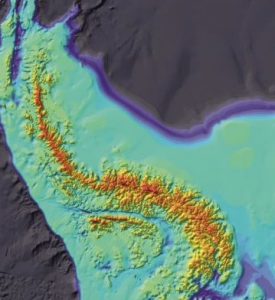
Skeleton of a grey squirrel tail. Bedrock beneath the Antarctic Peninsula.
I am reminded of that bony fragility and gentle curve when I look at maps of the Antarctic Peninsula – especially maps of the bedrock beneath, revealing the spine of mountains, the interlocking ridges that taper to a fine point.
Today we published a briefing paper on the Antarctic Peninsula under a 1.5°C global warming scenario, the most ambitious target for limiting warming under the Paris Agreement. The Peninsula is a unique part of the continent, reaching further north than the rest – towards South America – and consequently more vulnerable to warming. The rest of the vast ice sheet will feel global warming more slowly, because it lies further south and is fortified by the vastness of the white landscape that reflects more of the sun’s warmth away. Great circles of wind and ocean currents around the continent help to protect it further, forming a buffer against the warming of human endeavours.
The Peninsula has warmed by over 2.5°C, around two and a half times faster than the global average. Warmer air: more melting. In 1995, a floating ice shelf fringing the eastern tip, Larsen A, disintegrated into the dark ocean. In 2002, its larger southern neighbour Larsen B followed. These wholescale shelf collapses are thought to be caused by surface melting, largely caused by us.
Ice shelves are important because they act as a brake on sea level rise: like dams in rivers, they can slow the flow of ice into the sea. Once collapsed, the upstream glaciers flow more quickly and the seas rise. This is compounded by warming of the water that melts the ice from beneath. Fortunately, the region’s small area and mountain ranges mean it is not contributing a large amount to global sea level rise (around 0.1 mm per year, or around three per cent of the total).
What future for the Peninsula under climate change? Like many things, it’s not a simple story of bad or good news. A large chunk of the next ice shelf down, Larsen C, broke off in 2017. But, huge as it was – twice the size of Luxembourg – it was only a chunk, around 12% of the shelf, rather than a full collapse. Icebergs breaking away, travelling across the oceans before they melt, are not necessarily bad news or signs of climate change, because ice sheets shed icebergs like snakes shed their skin. What matters is whether they become more frequent, more widespread, lead to more ice flow. Current predictions are that the Peninsula’s remaining ice shelves may be stable under 1.5°C of warming, perhaps even more. Even if this is too optimistic, the potential sea level rise it contains is not as large as other regions of concern.
But this northern finger of ice is a portent of how further warming could affect the rest of the continent, the white canary flying out from the Southern Ocean. More melting from underneath in other parts of Antarctica, and more ice shelves collapsing, means more sea level rise, and in those places the amount of ice is effectively without limit on timescales of hundreds to thousands of years. We don’t yet know how the future of the ice sheet might be foretold by this tale of early vulnerability.
Our briefing also covers other aspects of the Peninsula. New land areas have been exposed (currently around 3% of the Peninsula), and these areas are predicted to expand further even under 1.5°C of warming. This might encourage non-native species, which could threaten the native species already made vulnerable by over-fishing and exploitation. The briefing is intended for a general audience, with a nice infographic (linked below), so do take a look.

——//——
Round up
I am excited to be analysing the first Greenland and Antarctic ice sheet projections coming in for the international project ISMIP6, which will form the core of the sea level rise projections in the next major report of the Intergovernmental Panel on Climate Change (a slow process – it will be published in 2021). Plotting new data is always fun, but I also feel the responsibility of how we can best interpret and assess the numbers to give the most reliable information to policymakers that we can.
Talking of interpreting the numbers, I was interviewed with my oncologist by the BBC radio program More or Less, about how it feels to deal with the numbers of cancer. It’s quite upbeat, but does talk about how to deal with – and support someone through – some of the more difficult aspects of a diagnosis and treatment.
Further to pessimistic scenarios, I am reading The Uninhabitable Earth: A Story of the Future by David Wallace-Wells. As you would expect from the title, the story it tells is one of the worst case, or in my view worse-than-worst-case, scenario – in terms of our climate policies, the earth’s response to them, and our own vulnerabilities. But it is mostly quite clear about that, and well-referenced, so I’m finding it a useful summary of the bounds of the possible.
I am disoriented by the new feeling in the air about climate change. Greta Thunberg and the school strikes, the Extinction Rebellion protests, the UK’s commitment to reduce carbon emissions to net zero by 2050 – all are making climate change a normal topic of conversation, which is new to me. More people want to talk about the climate, and more of the media want interviews: the weather, the forests, the ice, the politics. It is wonderful, and sometimes a little overwhelming.
The post The Antarctic Peninsula under a 1.5°C global warming scenario appeared first on All Models Are Wrong.
]]>The post Polar Thinking appeared first on All Models Are Wrong.
]]>
This is a good news, bad news story.
I’ve been thinking about this theme a lot recently. So much of our energy is spent on categorising into opposites. Pro-Trump, anti-Trump. Brexiteers and Remoaners. Good, or evil. Asking questions about climate science in good faith, or in bad. Are you with us or against us? Are you on the right side of history or not? Climate change is all our fault, or it’s all natural. We’re screwed, or else there’s nothing to worry about. Climate sceptics are selfish and climate scientists are catastrophists. Black and white. Polar thinking.
The truth is, more often than we admit, somewhere in between. Fifty shades of monochrome. Greys might feel less safe, less clear, less defendable. But we know, really, most of us do, that climate change can be both natural and human-caused (mostly human right now).
Even more important is the ability to hold two apparently contradictory possibilities in mind – two poles – at the same time. My father was an art therapist, and in the book of his lectures and articles, “Ornithology for the Birds”, illustrated with the monochrome drawings of Thomas Bewick, he describes himself as “comfortable with ambiguity”*. Good intentions can lie behind bad behaviour, and bad behind good, and the future will be both worse and better than we can imagine. Opposites, absurdities, parallel universes. This is a different kind of polar thinking.

Two studies are published in Nature today. One that I led, about Antarctica, and another I contributed to, about Antarctica and Greenland. What’s the news? We want to know, impatiently – are things worse than we thought, or better? Is everything alright, or everything on fire? Concern or relief, belief or disbelief, share the link and close the browser tab.
Good news or bad news?
| Date: Tuesday, 31 October 2017 at 20:51
Subject: Receipt of Nature manuscript 2017-10-14467 Dear Dr Edwards Thank you for submitting your manuscript entitled “Reconciled model projections for the Antarctic contribution to sea level rise”. Your submission has been assigned the following tracking number: 2017-10-14467. We will be in touch again as soon as we have reached a decision.
2 November 2017 To: Suzi Thought was IBS but felt bit different. Cramps after food. Totally lost appetite. Think for me was stress x |
Our study is good news, of a sort, because we find that rapid collapse of the Antarctic ice sheet is much less likely than previously suggested. But, as one would expect from the words “collapse” and “less likely” being in the same sentence, it is not a simple story. It is one of caution, of weighing up the evidence, and of holding two apparently contradictory possible futures in mind: with collapse, or without. It is a story with layers of good and bad.
In March 2016, an extremely high-profile study by Rob DeConto and Dave Pollard predicted that Antarctica could contribute more than a metre to global sea levels by 2100, which would double projections for total sea level rise. They found this by incorporating a new idea into their model called Marine Ice Cliff Instability (MICI, “mickey”): a process of rapid, unstoppable ice loss caused by the continuous collapse of unstable ice cliffs along the coasts. They ran 64 possible versions of their model and tested them with reconstructions of the Antarctic contribution to sea level from the mid-Pliocene (3 million years ago) and last interglacial (around 125,000 years ago) – rejecting any that failed the tests. Pliocene sea level is, understandably, very uncertain. So they used two possible ranges: 5-15 m, or 10-20 m. The second choice led to their highest predictions for the future: a mean sea level contribution of up to 114 cm by 2100 under very high greenhouse gas emissions. And this so-called ‘ice apocalypse’ has been debated in the science community and sometimes in public ever since.
I started plotting the data just a few days after it was published. Starting a research visit to Grenoble, I saw they had put the results in the Supplementary Information, and I wanted to compare them with our 2015 study. I immediately noticed a strong sensitivity to the lower bound of their ‘high’ Pliocene test (10 m) that had led directly to those metre-or-higher predictions. And only 15 of their 64 model versions had passed that test, meaning the sample was small…but because those versions were similar, the uncertainty looked relatively small.
I was gripped. Did people realise the sensitivity of the ‘one-metre’ results to this choice? Could we improve the analysis and estimate something more robust?
| Date: Tuesday, 12 December 2017 at 19:19
Subject: Receipt of revised Nature manuscript 2017-10-14467A Dear Dr Edwards, We are writing to let you know that Nature has received your manuscript entitled “Reconciled model projections for the Antarctic contribution to sea level rise”, and the editor will be in contact in due course.
Date: December 19, 9.25 PM Hello Mum! Unfortunately this IBS has been intermittently quite bad…did I tell you it was very painful when I went to Hastings? I was pretty incapacitated…then again yesterday (though better today). The GP is doing various checks but thinks it probably is just IBS and told me to increase the laxative dose and drink more water…!! I am also trying magnesium (Jane’s recommendation – also has a rather…er… powerful effect…) and probiotics (just the ones with decent effects above placebo in randomised controlled trials of course…). … If the holiday doesn’t cure it I will think of a plan B… |
Rob DeConto kindly began to run new simulations, so I could do the analysis I wanted.
That summer, I wrote a talk on the course theme ‘Ice and Fire’ for the Champernowne Trust art therapy summer school that my father directed for over 30 years. It was the first time I really felt able to bring together my work in science and my family background of art. I showed images and told stories of surprises and contradictions in the natural world. That ice flows, ice harbours life, and fire can protect. That ice can burn.

| January 10th 2018 10:34 PM
Hi Mum, Thank you for the nice card, the lovely bath salts – and the silly postcards! I have been having 2 baths some days, so that will be lovely. Right now I’m feeling great. I started taking Tramadol last night (!) and it has got rid of most of the pain. My muscles are also more relaxed and I think even the number of cramps has gone down. I slept a bit better last night and think it will be even better tonight. Tonight I had a whole bowl of Rice Krispies!
19 January 2018 21:33 Hey guys I found the reason for the stomach cramps that were troubling me that night of the Christmas drinks….Bit of a “bad news good news” one… A tumour in my colon. Probably was cancer but they expect it to have been cured as it looked very self-contained. Found it last Friday and operated next morning. I feel really happy to have it sorted and recovery is also going really well. Am in hospital a few more days then 2 months off work to recover xxxx
Hi Tamsin. Just woken up over here. Gosh that really is bad news good news. Blimey. |
By February 2017, Rob had sent me the last bit of data, and I made good progress on the analysis during another Grenoble trip that spring. I could now use statistical methods called ’emulation’ to mimic their model and fill in the gaps between their 64 simulations. With my co-authors, we started to look at the sensitivity to different assumptions. What happens if we test the model with satellite data, instead of data from the Pliocene and last interglacial? Is it justified and robust to use such a high range for the Pliocene?
Story #1: The bad news (that could have been worse)
We found the Antarctic contribution to sea level this century is smaller than implied by DeConto and Pollard’s study. They had shown mean values ranging from 64 to 114cm, but our most likely value is only 45 cm. This is still definitely bad news, and we also couldn’t rule out values much higher than this. But we found the balance of probability leaned towards much lower numbers than before.
| Mar 13, ’18 1:02 PM
Subject: Update: FOLFOX 1 FOLFOX 1. Hooking me up to chemo drugs for my first cycle. Short version: very tired, but otherwise a pretty good first 24 hours EXCEPT Magnums now taste horrendous.
Date: Wednesday, 14 March 2018 at 18:00 Receipt of revised Nature manuscript 2017-10-14467B Dear Dr Edwards, We are writing to let you know that Nature has received your manuscript entitled “Reconciling model projections for the Antarctic contribution to sea level rise”, and the editor will be in contact in due course. |

Now for the clever part: we could ‘switch off’ the MICI feedback in the emulator. Could it still pass our three tests? Pliocene, last interglacial and the satellite era? Yes.
Story #2: The good news (that is still pretty bad)
We found that including MICI is not necessary to explain the past, and therefore it might not be present in the future – at least, we don’t have much evidence to support it yet. Leaving it out gives much smaller sea level contributions: a most likely value of only 15 cm, one metre less than the highest projections of DeConto and Pollard, and a 5% probability of more than 39 cm.
But this is still bad news. If Antarctica contributes this much to sea level this century, it’s more than the predictions of the IPCC in 2013, and certainly high enough that we need to adapt.
Our two storylines are shown below: Story #1 shows the sea level contribution with ice cliff instability (bad, but better than DeConto and Pollard’s estimate), and Story #2 without the instability (much better, but worse than the IPCC in 2013).


9th July 2018 FOLFOX cycle 9 of 12
Date: Monday, 9 July 2018 at 19:20 Dear Dr Edwards, We are writing to let you know that Nature has received your manuscript entitled “Reconciling model projections for the Antarctic contribution to sea level rise”, and the editor will be in contact in due course.
Date: Aug 20, ’18 10:22 AM A very long time since my last update…and this morning I’m at the UCLH Macmillan Cancer Centre for my last chemo cycle. Chemo fatigue is utterly exhausting – no matter how much sleep, you rarely feel rested – and affects my cognitive abilities and emotions. For me it has been:
7th September 2018
Sunday, 23 September 2018 at 19:37 Dear Dr Edwards, We are writing to let you know that Nature has received your manuscript entitled “Reconciling model projections for the Antarctic contribution to sea level rise”, and the editor will be in contact in due course.
Date: Thursday, 6 December 2018 at 20:59 Dear Dr Edwards, We are writing to let you know that Nature has received your manuscript entitled “Revisiting Antarctic ice loss due to marine ice cliff instability”, and the editor will be in contact in due course. |

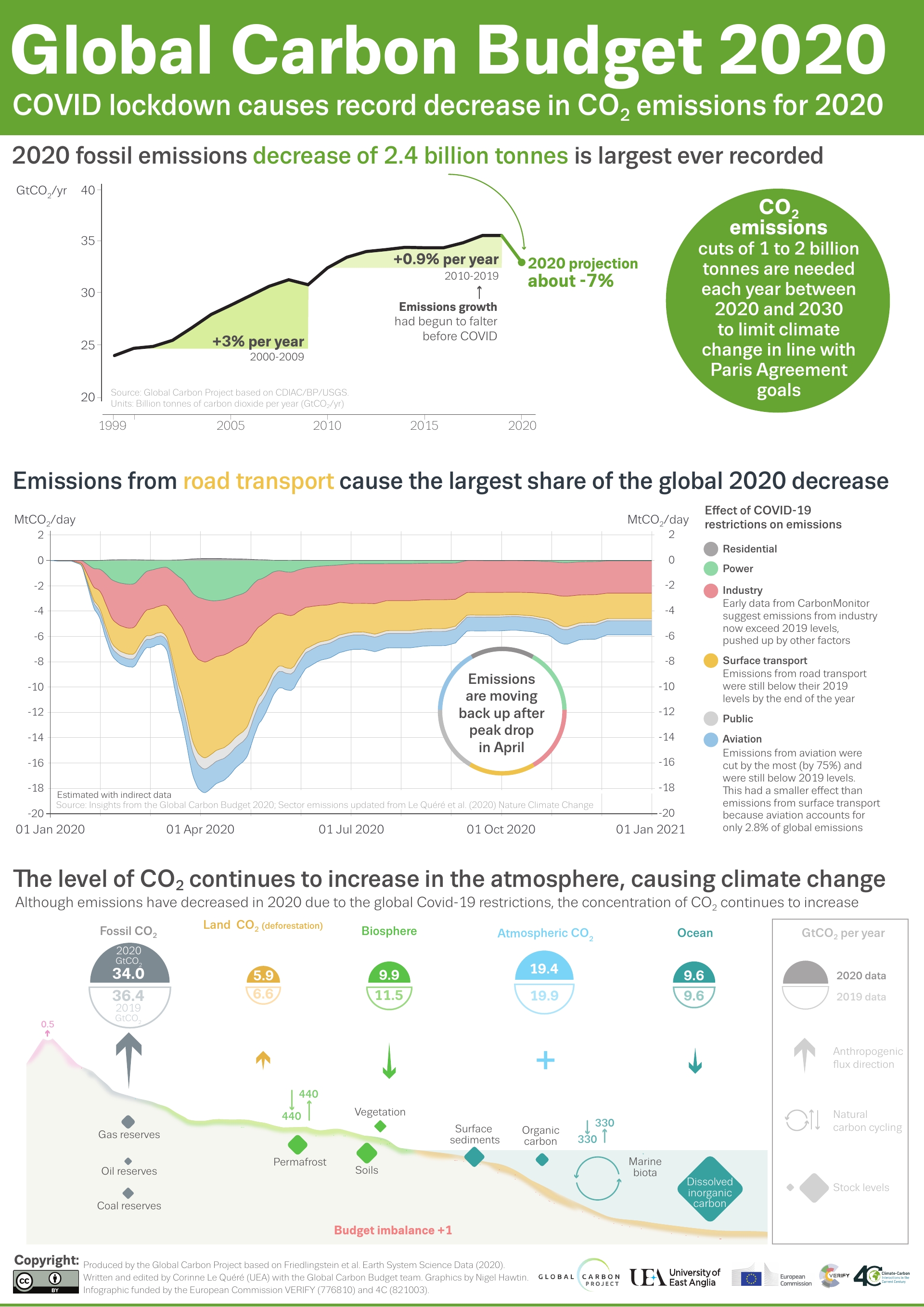
The other paper, led by Nick Golledge, is more about the bad news. Meltwater from the two ice sheets seems to have more impacts on the global climate than we thought: greater variation in temperatures, a weakening of the North Atlantic ocean circulation, and amplifying the ice loss from Antarctica.
But could there be a grain of good? It’s another brick in the wall, another piece of the puzzle showing that things are complex and surprising. It’s another piece of evidence that strengthens our understanding of the world and the risks we face – and how much difference it would make to reduce future emissions.
| Date: Friday, 4 January 2019 at 15:38
Decision on Nature manuscript 2017-10-14467F Dear Tamsin, We are delighted to accept your manuscript entitled “Revisiting Antarctic ice loss due to marine ice cliff instability” for publication in Nature. Thank you for choosing to publish your work with us — and for your patience during the long review process!
24 Jan 18:19 To: Georgia I am feeling much stronger, healthier, more clear headed.
29th January 3:28 PM To: Tamsin Cancer survival can be a life changing opportunity for good. Despite the physical damage done by chemo, looking at the changes I’ve made to my life, I’m actually glad I developed cancer.
To: Michael I agree that if I have no recurrence I’d rather have had it |
I can’t unravel our Antarctic paper from my own year of bad news, good news. The lead-up to my diagnosis on the 12th Jan, the treatment, the slow recovery. I blamed my first symptoms on stress when first submitting and changing jobs. I resubmitted just as I started to get so ill that I missed days of work and cancelled Christmas plans. I resubmitted the day after starting chemotherapy; my oncologist Dr Shiu mentioned it in my medical notes. I resubmitted on the day of my 9th chemo infusion, through a growing haze of chemo fatigue. I resubmitted three weeks after finishing chemo, the day before term start, as I fought to get my brain back. And finally in December, a week after taking some leave for exhaustion. The paper was accepted after the Christmas break as I started to grow stronger.
As I search for a link to my Dad’s book for this article, I catch my breath at this quote from a review:
“Rejection of reductionism and fundamentalism made [Michael] Edwards a champion of soul, a challenger of simple mindedness.”
A champion of soul, a challenger of simple mindedness. The anonymous climate sceptic that sends the kindest gift to a climate scientist. Cancer survivors sharing their gratitude for a life-changing illness. A penguin that lives in the north, a goose that migrates to the moon. My future holds two opposites: the cancer comes back, or else it doesn’t. I know the probabilities, roughly. I catch myself making plans with and without more treatment. Two contradictory possibilities in mind. On ice, or on fire. With collapse, or without. Polar thinking.
“We thank K.-K. Shiu and D. Campbell for supporting T.L.E. in this work.”
* I would give the page number of my Dad’s quote, but I can no longer find it, so perhaps I imagined it.
The post Polar Thinking appeared first on All Models Are Wrong.
]]>