Advertise with Googlier.com Blaze Body Contouring & Aesthetics https://blazebodycontouring.com/ The No Incision, No Downtime Body Sculpting Procedure for Amazing Fat-Inch Weight Loss! Fri, 14 Feb 2020 21:17:02 +0000 en-US hourly 1 https://wordpress.org/?v=7.1.3 https://blazebodycontouring.com/wp-content/uploads/2020/04/cropped-CircleBLAZE_logo4c-32x32.jpg Blaze Body Contouring & Aesthetics https://blazebodycontouring.com/ 32 32 Want to Get Fit? Try HIIT! https://blazebodycontouring.com/hiit/ Mon, 03 Feb 2020 20:21:28 +0000 https://blazebodycontouring.com/?p=2304 What’s in a name? Well in the case of HIIT, the name is very descriptive. High-intensity interval training (HIIT) is very challenging. It takes your cardio or strength training workout to the next level, as you push yourself outside of your comfort zone. You can do a HIIT workout with almost any type of activity, […]

The post Want to Get Fit? Try HIIT! appeared first on Blaze Body Contouring & Aesthetics .

]]>
tudies show that short, intense, bursts of exercise can be more effective for fat loss than traditional steady state cardio and strength training.

What’s in a name?

Well in the case of HIIT, the name is very descriptive. High-intensity interval training (HIIT) is very challenging. It takes your cardio or strength training workout to the next level, as you push yourself outside of your comfort zone.

You can do a HIIT workout with almost any type of activity, including running, cycling, swimming, elliptical, using a stair-climbing machine, rowing, or jumping rope, as well as for strength training with exercises like burpees, squats, and push-ups. 

You work up a sweat fast, at a very intense level and then back off for a slower recovery period of about the same or greater length of time, followed by other rounds of high intensity and rest. Because you are pushing your limits, these workouts tend be shorter, rarely passing the 30-minute mark.

The strategy can also save you workout time…

You don’t have to work-out as long as you would if you were keeping a steady pace. HIIT workouts are vigorous, so it’s best to do no more than two or three a week. Also, avoid doing HIIT workouts on back-to-back days. You need to give your body time to recover to truly reap the benefits of these workouts, so that you can go just as hard at your next intense session.

HIIT workouts are scalable to any fitness level, making them a popular format for group fitness classes. HIIT is flexible and you can create different formulas for the work-to-rest ratio, but the most popular is 2:1. For example, you work for 60 seconds at your max and then slow it down for 30 seconds, repeating this pattern for 5 to 8 sets.

You’ll lose weight while you build muscle, and boost your metabolism. And there is a post-workout bonus; your body can continue to burn calories for about 3 hours after you finish the exercise. Compared to longer stretches of moderate-intensity running, cycling, or other aerobic exercises, studies show that HIIT improves cardio fitness nearly twice as much among people with heart disease.

In terms of strength improvements, not only have HIIT workouts proven to yield as much strength gain as more traditional resistance training in a shorter amount of time, but in some cases there were also greater improvements in strength compared to traditional resistance training. Furthermore, if your goal is to lose weight, research shows that HIIT workouts may outperform traditional cardio when it comes to fat loss. This is because HIIT workouts can increase fat burning and energy expenditure for several hours after exercise.

Here Is How You Can Try HIIT…

There are many ways to add high-intensity intervals to your exercise routine, so it isn’t hard to get started.

To begin, you just need to choose your activity (running, biking, jumping, etc.).

Then, you can experiment with different durations of exercise and recovery, or how long you are performing intense exercise and how long you are recovering.

Here are a few simple examples of HIIT workouts: 

  • Using a stationary bike, pedal as hard and fast as possible for 60 seconds. Then, pedal at a slow, easy pace for 30 to 45 seconds. Repeat this pattern for 15 to 30 minutes.
  • After running to warm-up, sprint as fast as you can for 60 seconds. Then, walk or jog at a slow pace for 30 seconds to one minute. Repeat this pattern for 10 to 20 minutes.
  • Perform squat leaps or lunges as quickly as possible for 60 to 90 seconds. Then, stand or walk for 30 to 45 seconds. Repeat this pattern for 10 to 20 minutes.

While these examples can get you started, you should modify your own routine based on your own preferences. 

There are many ways to implement HIIT into your exercise routine. Experiment to find which routine is best for you.

The Low Down on HIIT…

High-intensity interval training can be a very efficient way to exercise, and may help you burn more calories than you would with other forms of training or exercise. Calories burned from HIIT come from revving up metabolism, which may last for hours after exercise. Overall, HIIT offers many of the same health benefits as other forms of exercise but requires a shorter amount of time.

These benefits include potentially lowering body fat, heart rate and blood pressure. HIIT may also help decrease blood glucose and improve insulin sensitivity.

So, if you are chronically short on time and want to get healthier, consider taking a HIIT!

The post Want to Get Fit? Try HIIT! appeared first on Blaze Body Contouring & Aesthetics .

]]>
4 Secrets to Successful Weight Loss https://blazebodycontouring.com/4-secrets-to-successful-weight-loss/ Sat, 01 Feb 2020 16:04:00 +0000 https://blazebodycontouring.com/?p=1932 What Does It Take to Lose Weight and Really Keep It Off? If you look at the process of weight loss, it seems like a no-brainer, doesn’t it? Eat less, exercise more and watch the pounds melt away.  It’s such a simple concept. In fact, if you believe the hype put out there by some diet books, […]

The post 4 Secrets to Successful Weight Loss appeared first on Blaze Body Contouring & Aesthetics .

]]>


What Does It Take to Lose Weight and Really Keep It Off?

If you look at the process of weight loss, it seems like a no-brainer, doesn’t it? Eat less, exercise more and watch the pounds melt away.  It’s such a simple concept. In fact, if you believe the hype put out there by some diet books, magazines, and infomercials, it may seem like ​fast weight loss is just one diet or gadget away…if you could only find the right one.

In that respect, some of those infomercials and books are right—fast weight loss can be just around the corner.

But losing weight fast doesn’t always mean it will be permanent. For long-term weight loss, the usual diets or programs seem to fall short. So, are you ready to find out the secrets to successful weight loss?

Behind the National Weight Control Registry

There are more than 4,000 successful weight losers out there, all part of the National Weight Control Registry, a group which continually gathers information about their members to find out how people really lose weight and keep it off. The members of the NWCR are men and women who have maintained at least a 30-pound weight loss for at least one year. In general, these members:

Lost an average of 70 pounds and kept it off for almost 6 years
Tried to lose weight previously and were unsuccessful
Used both diet and physical activity to lose weight
Used a variety of different dietary and activity approaches
What you can already glean from these few facts is that, first, there is no perfect diet or exercise program.

Exercise Doesn’t Have to Be Intimidating
No matter your fitness level, we’re here to help you feel stronger and more confident, while keeping working out fresh and fun.

Each member found his or her own method of dieting and exercising, so that’s the first not-so-secret step to losing weight: A willingness to experiment and keep trying until you find a way of eating and moving around that fits with your life.

But, even though there is no one diet or exercise program that fits everyone, there are some common habits and behaviors that all of these successful losers share.

What does your diet say about you? 

It’s surely no surprise to learn that exercise is a crucial component for our NWCR members. Men reported burning an average of 3,293 calories a week while women burned about 2,545 calories per week.

This comes out to about an hour of moderate-intensity activity each day, which would fall at a Level 5 on this Perceived Exertion Scale. The most popular form of exercise is walking but many also lift weights, ride bikes and/or do some form of aerobics as well. This level of exercise is actually more than what is typically recommended for weight loss.

What we can learn from this is that, first, it takes more exercise to maintain weight loss than we might think. But, that doesn’t mean you have to overhaul your life overnight in order to make exercise a reality.

1. Creating Your Exercise Habit

Before you panic about that much exercise, give yourself permission to take that time and experiment with different activities, schedules and frequencies will allow you to find what will work for you in the long-term, not just a few days or weeks.

A basic exercise routine should include cardio, strength training, and flexibility exercises to help you burn calories, build muscle and keep your connective tissue flexible.

Setting Up Your Own Program

Getting Started with Cardio: This step-by-step approach teaches you how to ease into a basic cardio program.
Getting Started with Strength Training: If you’re lost when it comes to lifting weights, this article takes you through each phase of a strength program.
Flexibility Training: This article gives you the basics about how and when to stretch as well as tips for getting the most out of your flexibility routine.
If you need more help, you can always work with a personal trainer (you can also find them online).

Tips and Tricks

If you get confused about where to start, just remember: Doing something is always better than nothing so, when all else fails, go for a walk.

And, remember, you can set up your program any way you like. A few things you can do include:

Splitting your routine. Split your workouts throughout the day and you’ll still get the weight loss and health benefits.
Varying your intensity. If you work harder, you can often shorten your workouts, so having workouts of varying intensities can give you more leeway in your exercise schedule. Incorporating other activities. Structured exercise is important, but general activity can also make a big difference in burning calories.  Also called NEAT (Non-exercise activity thermogenesis), it just means moving around as much as possible.  It all counts! Be patient. Permanent weight loss is a slow process and so is changing bad habits. Give yourself time to figure out how to make these changes and then give your body the time it needs to lose the weight.

2. Creating Your Healthy Eating Habit

It should also come as no surprise that the next part of successful weight loss involves diet. The majority of NWCR members reported eating a low-calorie, low-fat diet, with women eating an average of 1,306 calories a day (24.3% from fat) and the men eating about 1,685 calories a day (23.5%from fat). What’s interesting is that about half of the members used a commercial diet program while the other half did it on their own. Regardless of which path they followed, the members ended up following the same type of diet. In addition, about 80% of members reported eating breakfast each day, which science has already shown leads to a lower BMI than people who skip breakfast.

Just some of the tricks they used to cut calories included restricting food, watching their portion sizes and counting calories.

Tips and Tricks

For many of us, diets don’t work very well and some people find that making small changes to how they eat each day leads to more success, even if the weight loss is slower.

Pantry Makeover: Start inside your pantry and fridge. Keeping tempting foods around makes it so hard to stay healthy. Learn what to keep and what to throw away. Avoid Diets and Make Real Change: Instead of changing how you eat overnight, use healthy eating tips to make small changes without dieting. If you’re interested in a more structured approach or a diet, these resources will help you learn more about portion sizes, how to count calories and how to choose the best diet for you:

How to Calculate your Caloric Needs and Use it to Lose Weight: While the average calorie intakes for the NWCR members ranged from 1,300 – 1,600 calories a day, we all have different calorie requirements. One way to figure out how many calories you need is to calculate your BMR and activity level and reduce your calories from there.

Watch Your Portion Sizes: Do you know what one portion of protein should be? What about one portion of cheese? If you’re not sure, this article will help you visualize what normal portions should look like.

Count Your Calories: Keeping track of calories is another way successful losers make sure they’re eating less than they’re burning. This site allows you to search for the nutritional and calorie content of a huge variety of foods. There are also free sites where you can keep track of your eating and exercise, such as Fitwatch.com.

3. Creating Your Self-Monitoring Habit

Another behavior of NWCR weight losers is weighing themselves on a regular basis. About 44% of members reported weighing themselves every day while 31% weigh themselves at least once a week. The idea here is not the scale itself, but the vigilance successful losers maintain even after they’ve lost the weight.

This is a key point that differs from many diet programs currently out there. Many diets require you to follow different phases with different levels of calories. Often there’s an induction phase, or a time when you restrict foods (or even entire food groups) and drastically lower calories. After that, dieters then begin to add foods and calories back into the diet, finally getting to a “maintenance phase” where they eat more calories than they did at the beginning of the diet.

But, what the NWCR tells us is that these weight losers continue to follow the same diet both during the weight loss process as well as after they’ve lost the weight. The bottom line is that there really is no difference in behaviors from beginning a weight loss and maintaining weight loss except perhaps readjusting exercise and calories as you lose weight to keep the weight in check. This is probably the most important lesson we can learn from the NWCR: There is no end to healthy habits when it comes to maintaining weight loss. That’s why it’s so important to change habits slowly and choose activities you can see yourself doing for the long-term.

Tips and Tricks

The key to self-monitoring is learning how to track your progress.

Keep a food journal: Knowing you have to write down what you’re eating makes you think twice about your choices.
Keep an exercise journal: Looking back to see how many workouts you’ve done can be a great motivator and it can also help you decide when it’s time to change your program. Take your measurements: The scale won’t always reflect the changes in your body and tell you whether you’re gaining muscle and losing fat. Measurements can tell you if you’re losing inches, which is a sure sign you’re on the right track.


Test your body fat: Body fat percentage is often a more useful number than what you see on a scale because a scale can’t tell you if you’re losing water, fat or, worse, muscle. If you’re a gym member, you can often get this tested for free by fitness professionals but, if you don’t have access to a body fat test, taking your measurements works too.

4. Being More Consistent

It’s common for many of us to eat healthy during the week only to blow it on the weekends. But, NWCR members were able to maintain their weight loss by eating healthy all the time. Fifty-nine percent of members reported eating the same on weekends and holidays while 39% reported followed stricter diets during the week as compared to the weekend. In other words, the more consistent the diet, the more likely members were to maintain their weight loss year after year.

Tips and Tricks

Being consistent doesn’t mean you have to robotically follow the same diet day after day. Below are a few ideas for ways you can stay healthy and still have some fun:

Plan a cheat meal rather than a cheat day. Giving yourself an entire day to eat what you want can lead to overindulgence that might show on your waistline. Instead, plan on having something you enjoy once a week — have a pizza night or go out for burgers. Enjoy yourself and stay on track for the rest of the day. Work treats into your diet. Some people find that having a small indulgence each day, like a piece of chocolate or a handful of chips, keeps them satisfied and allows them to choose healthy options the rest of the time.

Have a plan of attack. The single most important thing you do when eating healthy is being prepared. That means having healthy foods around so you’re not tempted to run out for fast food, planning for how you’ll deal with the buffet table at a party and realizing that, sometimes, you’re going to overindulge. Keep things balanced. Watching your calories and eating healthy is important, but so is enjoying life and not obsessing about everything we eat. We all have to find the right balance. Sometimes, being too restrictive can lead to binging on the very things we’re trying to avoid.

Don’t give up. There will come a day when you eat too much cake or have the one extra piece of pizza you shouldn’t have. We all overindulge at times but many of us use that as an excuse to quit and go back to old, unhealthy behaviors. One mistake isn’t the end of the world and, even if you’ve really fallen off the wagon, you can always get right back on track by simply making the decision to not give up.

The Bottom Line

What’s clear from the NWCR is that weight loss is a slow, steady process that requires a certain amount of vigilance, commitment, and discipline every day. It also requires that we take chances, getting away from those comforting, but often bad habits, and replacing them with better ones. Perhaps the most important lesson these successful losers can teach us is to keep on trying.

Sources:

Kravitz, Len. Winning at Losing: Secrets of Long-Term Weight Loss. Jul. 22, 2007.

Shick SM, Wing RR, Klem ML, McGuire MT, Hill JO, Seagle H. “Persons successful at long-term weight loss and maintenance continue to consume a low-energy, low-fat diet.” J Am Diet Assoc. 1998 Nov;98(11):1273.

Sungsoo Cho, Dietrich Marion, Brown Coralie J.P., Clark Celeste A., Block Gladys. “The Effect of Breakfast Type on Total Daily Energy Intake and Body Mass Index: Results from the Third National Health and Nutrition Examination Survey (NHANES III).” Journal of the American College of Nutrition, Vol. 22, No. 4, 296-302 (2003).

Wing, Rena R. and Phelan Suzanne. “Long-term weight loss maintenance.” American Journal of Clinical Nutrition, Vol. 82, No. 1, 222S-225S, July 2005.

The post 4 Secrets to Successful Weight Loss appeared first on Blaze Body Contouring & Aesthetics .

]]>
“Intermittent Fasting” May Offer A Manageable Way To Eat Less https://blazebodycontouring.com/intermittent-fasting-may-offer-a-manageable-way-to-eat-less/ Sat, 18 Jan 2020 18:15:00 +0000 https://blazebodycontouring.com/?p=2107 Among the many strategies for losing weight and aging well – following a low-carb diet, eliminating gluten, getting more exercise – there’s one that’s consistently recommended by researchers: calorie restriction. When you take in fewer calories than you require to maintain your current body weight, you’ll lose weight. The big challenge is how to sustain the calorie deficit […]

The post “Intermittent Fasting” May Offer A Manageable Way To Eat Less appeared first on Blaze Body Contouring & Aesthetics .

]]>

Among the many strategies for losing weight and aging well – following a low-carb diet, eliminating gluten, getting more exercise – there’s one that’s consistently recommended by researchers: calorie restriction. When you take in fewer calories than you require to maintain your current body weight, you’ll lose weight. The big challenge is how to sustain the calorie deficit long enough to see significant results.

A relatively new strategy called “intermittent fasting” may offer a manageable way of eating less because you’re only required to diet some of the time. Fans say it’s a plan that you can stick with over months, even years.

What Is Intermittent fasting?
Intermittent fasting means severely restricting your food intake on one, two or more days of the week and eating normally the rest of the time. The so-called “fast days” aren’t total fasts; rather, you take in about a quarter of your normal calories. For women, that represents about 500 calories, for men, about 600 calories. It’s often referred to as a 5:2 diet, with five normal days and two fasting days; other versions are called 4:3, 6:1, alternate-day fasting (ADF), or the “every-other-day” diet plan.

A 2012 BBC documentary, Eat, Fast and Live Longer, is often credited with bringing intermittent fasting into the mainstream, but it’s been researched longer than that for its potential benefit in reducing breast cancer, heart disease, diabetes and cognitive decline.

In fact, calorie restriction for longevity has been researched since the 1930s and is so far the only method proven to improve longevity, at least in lab animals.

What Does the Research Say?
Several studies have suggested that intermittent fasting works as well as continuous calorie restriction for weight loss, but there’s still little evidence on the long-term effectiveness of the diet.

Researchers note that effective diets are satiating, provide for your nutritional needs and be easy to follow. Since intermittent fasting doesn’t require a total overhaul of your diet, simply a restriction of calories on some days of the week, it may be successful dieting method. Long-term studies are needed, however, to show the safety and success of intermittent fasting.  Read an interview with intermittent fasting researcher Dr. Krista Varady.

Does It Lead to Bingeing on Other Days?
Perhaps surprisingly, this doesn’t seem to be the case. In one study, subjects who ate 20-30% of their normal calorie requirements on fasting days generally ate just 10% more than usual on their non-dieting days. In addition, many people reported that their feelings of hunger on low-calorie days dramatically diminished over time.

A Better Kind of Weight Loss
Another promising finding is that intermittent fasting appears to yield the loss of less lean muscle when compared to conventional daily dieting. In a 2011 review, 90% of the weight lost through intermittent fasting was fat, compared with only 75% in daily dieting.
Maintaining lean muscle mass while dieting offers a metabolic advantage for maintaining the weight loss because muscle burns more energy than fat even at rest.

Does It Reduce Belly Fat?
Belly fat, aka visceral fat, is the spare tire that surrounds your internal organs, leading to a greater risk of diabetes and heart disease. A 2011 review found that both traditional dieting and intermittent fasting reduce similar amounts of belly fat.

Who Shouldn’t Try Intermittent Fasting
Intermittent fasting is not appropriate for:
Children or teenagers
Women who are pregnant or breastfeeding
Those with a history of eating disorders
The NIH also recommends that adults with diabetes or heart disease should consult their healthcare provider before trying any new diet.

Sources:
Collier, R. Intermittent Fasting: The Science of Going Without. CMAJ. June 11, 2013. 185(9): E363 – E364.
Seimon, RV. et al. Short- and long-term effects of continuous versus intermittent restrictive diet approaches on body composition and the metabolic profile in overweight and obese postmenopausal women: a pilot study. Menopause. 2012 Aug;19(8):870-6.
Does the 5:2 Intermittent Fasting Diet Work? UK National Health Service (NHS) Public Information Sheet. Accessed January 2, 2014.
http://www.nhs.uk/news/2013/01January/Pages/Does-the-5-2-intermittent-fasting-diet-work.aspx
Klempel MC, Kroeger CM, Bhutani S, Trepanowski JF, Varady KA. “Intermittent fasting combined with calorie restriction is effective for weight loss and cardio-protection in obese women.” Nutr J. 2012 Nov 21;11:98.
http://www.nutritionj.com/content/11/1/98
Krista A Varady, Surabhi Bhutani, Monica C Klempel, Cynthia M Kroeger, John F Trepanowski, Jacob M Haus, Kristin K Hoddy and Yolian Calvo. “Alternate Day Fasting for Weight Loss in Normal Weight and Overweight Subjects: A Randomized Controlled Trial.” Nutrition Journal 2013, 12:146.
http://www.nutritionj.com/content/12/1/146
K A Varady. “Intermittent Versus Daily Calorie Restriction: Which Diet Regimen is More Effective for Weight Loss? Obesity Reviews Volume 12, Issue 7, pages e593–e601, July 2011.
Michelle N. Harvie, Mary Pegington, Mark P. Mattson et al. “The effects of intermittent or continuous energy restriction on weight loss and metabolic disease risk markers: a randomized trial in young overweight women.” Int J Obes (Lond). 2011 May; 35(5): 714–727.
http://www.ncbi.nlm.nih.gov/pmc/articles/PMC3017674/pdf/nihms224118.pdf

The post “Intermittent Fasting” May Offer A Manageable Way To Eat Less appeared first on Blaze Body Contouring & Aesthetics .

]]>
How to Trim Down Your Belly Fat! https://blazebodycontouring.com/how-to-trim-down-your-belly-fat/ Fri, 22 Nov 2019 17:08:00 +0000 https://blazebodycontouring.com/?p=2023 Guess what: Everyone has some belly fat or problem spots, even people who have flat bellies… It’s normal.But too much belly fat can affect your health in a way that other fat doesn’t. Some of your fat is right under your skin. Other fat is deeper inside, around your heart, lungs, liver, and other abdominal organs. […]

The post How to Trim Down Your Belly Fat! appeared first on Blaze Body Contouring & Aesthetics .

]]>
Guess what: Everyone has some belly fat or problem spots, even people who have flat bellies… It’s normal.
But too much belly fat can affect your health in a way that other fat doesn’t. Some of your fat is right under your skin. Other fat is deeper inside, around your heart, lungs, liver, and other abdominal organs. It’s that deep fat , known as “visceral” fat, that is likely the bigger problem, even for thin people.

 by Steven Vale, M.D.

Deep Belly Fat

You need some visceral fat. It provides cushioning around your organs.
But if you have too much of it, you may be more likely to get high blood pressure, type 2 diabetes, heart disease, dementia, and certain cancers, including breast cancer and colon cancer.

The fat doesn’t just sit there. It’s an active part of your body, making “lots of nasty substances,” says Kristen Hairston, MD, assistant professor of endocrinology and metabolism at Wake Forest School of Medicine.

If you gain too much weight, your body starts to store your fat in unusual places.

With increasing obesity, you have people whose regular areas to store fat are so full that the fat is deposited into the organs and around the heart, says Carol Shively, PhD, professor of pathology-comparative medicine at Wake Forest School of Medicine.

How Much Belly Fat Do You Have?

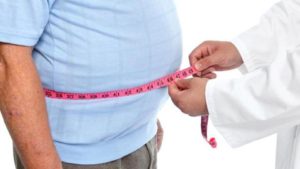
The most precise way to determine how much visceral fat you have is to get a CT scan or MRI. But there’s a much simpler, low-cost way to check. Get a measuring tape, wrap it around your waist at your belly button, and check your girth. Do it while you’re standing up, and make sure the tape measure is level.
For your health’s sake, you want your waist size to be less than 35 inches if you’re a woman and less than 40 inches if you’re a man. Having a “pear shape” — bigger hips and thighs — is considered safer than an “apple shape,” which describes a wider waistline.

“What we’re really pointing to with the apple versus pear,” Hairston says, “is that, if you have more abdominal fat, it’s probably an indicator that you have more visceral fat.”

Thin People Have It, Too

Even if we’re thin, we can still have visceral fat.

How much visceral adipose we have is partly controlled by our genes, and partly by lifestyle, especially how much we exercise.
Visceral fat flourishes with inactivity. In one study, thin people who watched their diets but didn’t exercise were more likely to have too much visceral fat.
The fix for fat is to exercise, no matter what age or size you are.

4 Steps to Beat Belly Fat

There are four keys to controlling belly fat: exercise, diet, sleep, and stress reduction.

1. Exercise: Strenuous exercise burns all your fat, including visceral fat.
Get at least 60 minutes of moderate exercise at least 4-5 days a week. Walking is even okay, provided it’s brisk enough that you work up a sweat and breathe harder, with your heart rate faster than usual. A 50% reduction from resting rate is optimal.

To get the same results in half the time, we can step up the pace and try vigorous exercising. Running, swimming and spinning are best. We need to do that for 20 minutes a day, 4 days a week.

Run, if you’re already fit, or walk briskly at an incline on a treadmill if you’re not able to run. Vigorous exercise on a stationary bike, elliptical or rowing machine is also effective, says Duke researcher Cris Slentz, PhD.

Moderate activity — raising your heart rate for 30 minutes at least three times per week — also helps. It slows down how much visceral fat you gain. But to really reduce visceral fat, our workouts may need to be stepped up.

“Rake leaves, walk, garden, go to Zumba, play soccer with your kids. It doesn’t have to be in the gym,” Hairston says.

If you are not active now, it’s a good idea to check with your health care provider before starting a new fitness program.

2. Diet: There is no magic diet or pill for belly fat. But when you lose weight on any diet, belly fat usually is reduced first. Getting more fiber can also  chelp. Hairston’s research shows that people who eat 10 grams of soluble fiber per day, without any other diet changes, build up less visceral fat over time than others. That’s as simple as eating two small apples, a cup of snap peas, or a half-cup of pinto beans.

Even if we keep everything else the same and just switch to a higher-fiber diet, we may be able to better maintain our weight over time. Even taking Metamucil® can help!

3. Sleeping: Getting the right amount of sleep helps. In one study, people who got 7 to 8 hours of sleep per night gained less visceral fat over 5 years when compared to those who slept 5 or fewer hours per night or more than 8 hours per night. Sleep may not be the only thing that matters, but it is part of the picture.

4. Stress: We all have stressors. How we handle stress matters. The best things we can do include yoga, meditating, exercising to blow off steam, and insight-oriented counseling. Each leaves us healthier and better prepared to make healthy choices for ourselves. And we binge eat less when we have less stress.

“If you could only afford the time to do one of these things,” Shively says, “exercise probably has the most immediate benefits, because it gets at both obesity and stress.”

The post How to Trim Down Your Belly Fat! appeared first on Blaze Body Contouring & Aesthetics .

]]>
Why It Takes Longer For Women To Lose Weight Than Men And What To Do To Speed It Up! https://blazebodycontouring.com/women-to-lose-weight/ Tue, 16 Jul 2019 15:54:37 +0000 https://blazebodycontouring.com/?p=2104 If you’re a woman trying to lose weight and get fit, there’s something you should know: It often takes longer for women to lose weight than men. And, if you’ve had a baby, you may have to factor in even more time. That said, women can do some things to speed up their weight loss. […]

The post Why It Takes Longer For Women To Lose Weight Than Men And What To Do To Speed It Up! appeared first on Blaze Body Contouring & Aesthetics .

]]>
If you’re a woman trying to lose weight and get fit, there’s something you should know: It often takes longer for women to lose weight than men. And, if you’ve had a baby, you may have to factor in even more time. That said, women can do some things to speed up their weight loss. The following resources will help you learn more about how to maximize your cardio and strength training workouts, how to set realistic goals and how you can burn more calories.

For a woman to lose weight, she has to do the same thing a man does — burn more calories than she eats. That sounds simple, but it takes some work to change your lifestyle and commit to those changes day after day. Before you get started, take some time to learn about the basics of weight loss and what it really takes to see results.

Exercise for Weight Loss
Exercise is one of the most important tools you have for weight loss and setting up a balanced program with cardio and strength training is your first step to reaching your goals. Below you’ll find everything you need to set up a balanced program and create effective workouts.

Cardio Exercise:
I usually don’t have to convince my female clients to do cardio exercise to reach their weight loss goals. They know that cardio can burn fat and calories, but they don’t always know how to maximize their workout time.

Common Mistakes:
Doing too much cardio: Women tend to like cardio more than strength training and sometimes do so much, they risk injury, overtraining, losing muscle and hitting weight loss plateaus.
Working at a low intensity: Some women have too many workouts in their ‘fat-burning zone’, or working at a low intensity.  However, working at a higher intensity for 1-3 workouts a week can help you burn more calories, which is what you need to lose weight.

Neglecting other parts of their programs: Many women skip strength training because they’re afraid they’ll bulk up and they don’t think it actually helps them lose weight.  However, strength training is key for changing your body composition, which puts you on the road to weight loss.

The resources below will help you learn more about how to find balance with your cardio workouts and make them work for you.

Take It to the Next Level
The best way to get more out of your exercise time is to focus on higher intensity workouts.  The best thing about these kinds of workouts is that they’re shorter, so you can squeeze them in even if you don’t have a lot of time.

Try some of these ideas:
Interval Training: Interval training is one of the single best ways to increase your fitness while burning more calories and the best thing is, you can do it with just about any workout.  Just work hard for a period of time (say 30-60 seconds), rest for the same length of time or longer (or shorter!) and repeat.  Some great interval workouts:
• 30-60-90 Mixed Interval Workout
• Elliptical Interval Workout
• Beginner Interval Training
• HIIT 40-20 Workout for Women
• More Cardio Interval Workouts

Tabata Training:  Tabata training is another form of interval training, pushing you hard for very short periods of time, helping you burn calories and rev up your metabolism.  Try this Tabata Low Impact Challenge or this high impact  Tabata Cardio Workout.
High Intensity Interval Training:  This kind of interval training takes regular intervals to the next level, focusing on very high intensity exercises. My favorites:
• High Intensity Aerobic Intervals
• Sprint Interval Workout

Strength Training for Women
Though more and more women are lifting weights, some of you out there still avoid strength training like the plague. It’s unfortunate because strength training is as essential as cardio for burning fat. Some of the reasons women avoid strength training may include:

Thinking it only benefits men
Concern that it will build big, bulky muscles

Believing it won’t help with weight loss
Feeling intimidated by the weight room
Not knowing where to start

The good news is, you don’t have to be afraid of heavy weights. Women don’t have the testosterone necessary to build big muscles. Even men have a hard time building big muscles — and they have way more testosterone than you do.

Even better, once you start lifting challenging weights, you’ll see major changes happen in your body, more than you do with cardio which burns calories, but doesn’t help you build muscle. Don’t forget that you’re building strong bones and preserving your muscle mass, which means you can control the weight gain that comes with age and lack of exercise.
If I’ve convinced you to get started, check out the resources below to figure out where to start.

The Best Way to Lift Weights
Women really are different from men when it comes to losing weight and they also benefit from a different approach when it comes to strength training.
Focused strength workouts 1-2 times a week- First, focus on building muscle with straightforward strength workouts.  This can be a total body workout twice a week or split routines for upper and lower body.  And ‘straightforward’ workouts doesn’t mean you have to do boring exercises.  There are great kettlebell exercises that can increase your strength just as well as regular dumbbells and don’t forget you can also use resistance bands as well.  Just make sure you’re lifting enough weight.
Circuit training workouts 1-2 times a week – With circuit training, you go from one exercise to the next with no rest and often can include cardio exercises along with your strength moves.  Circuit training is a great way to sneak in strength exercises without getting bored or feeling overwhelmed.

The post Why It Takes Longer For Women To Lose Weight Than Men And What To Do To Speed It Up! appeared first on Blaze Body Contouring & Aesthetics .

]]>
Try These Tips To Reduce Eating! https://blazebodycontouring.com/1974-2/ Tue, 22 May 2018 15:15:32 +0000 https://blazebodycontouring.com/?p=1974 Weight loss isn’t just about what you eat; it’s also about how much you eat. And overeating is all too common. We’ve all been there before. But with a few simple tips and tweaks to your mealtime habits, you can gain control and avoid overeating for good. Here are eight tips to show you exactly how to do […]

The post Try These Tips To Reduce Eating! appeared first on Blaze Body Contouring & Aesthetics .

]]>
Weight loss isn’t just about what you eat; it’s also about how much you eat. And overeating is all too common. We’ve all been there before. But with a few simple tips and tweaks to your mealtime habits, you can gain control and avoid overeating for good. Here are eight tips to show you exactly how to do just that!

Start Every Meal With Water
This zero-calorie thirst quencher is a must-have for weight loss. Hunger is often mistaken for thirst; so before you dig in, drink at least 8 ounces of water. This will help to fill you up and slow you down. Always have water on hand to regulate that hunger throughout the day. Find it hard to drink plain old water? Get creative with it! SweetLeaf and Crystal Light make fantastic water enhancers, and a squeeze of citrus will do the trick in a pinch.

Wait at Least 5 Minutes Before Getting Seconds
It takes time for our stomach to signal to our brain that it’s full. That is why it’s important to pause before you go back for more food. This is especially useful advice when it comes to buffets and parties. Give it a try; you might be surprised to realize you were full all along, so that’s one piece of buffet advice you should follow.

Make Portion-Controlled Recipes
Who doesn’t want to clear their plate when it’s full of something delicious? Give yourself permission by making portion-controlled meals. I love making breakfast in a mug, meatloaf in muffin pans, and salad in a mason jar. Just because your meals are portion controlled, that doesn’t mean the serving sizes need to be small. Bulk them up with low-calorie ingredients like cauliflower rice and zucchini noodles!

Practice Mindful Eating
Simply put, mindful eating is paying attention to your food. In today’s tech-obsessed world, how often are you scrolling through your phone or watching TV while you shovel food into your mouth? It’s very common yet can easily lead to overeating. So step away from the distractions, and really focus on your meal. Sit down and savor every bite. It’s just one way you can trick yourself into losing weight.

Begin a Meal With Broth-Based Soup or a Side Salad
Since both broth-based soups and salad greens have high water content, they fill you up just like water. And studies show eating either of these before a meal can actually help with weight loss. Doing so takes the edge off your hunger, so you’re less likely to overeat. That’s smart soup advice!

Add Some Spice
Several studies show that adding hot peppers and other spicy ingredients to your food could prevent you from eating too much. Makes sense, since it’s hard to eat quickly if your food has some serious heat! That’s enough reason for me to spice it up, and I’ve got lots of recipes with an added kick.

Snack Often
If you go into a meal feeling ravenous, chances are you’ll overdo it. By having snacks throughout the day, you’ll keep your blood sugar levels steady and never get to the point where you want to chew off your own arm! Choose smart snacks that fit into your daily calorie budget. Here are five with 100 calories or less.

Keep Trigger Foods Out of Sight
We’re visual creatures—we see, we want, we eat, we overeat. Of course, some foods are more tempting than others. Keep foods that you can’t control yourself around far away. If you know you can down an entire pint of Ben & Jerry’s in one sitting, don’t even keep it in your freezer! Instead, keep healthy foods, like fruits and veggies, front and center. We’re much more likely to go for the apple on the counter than the brownies on the top shelf of the pantry!

The post Try These Tips To Reduce Eating! appeared first on Blaze Body Contouring & Aesthetics .

]]>
What’s Making Us Fat? Researchers Put Food Additives On Suspect List! https://blazebodycontouring.com/whats-making-us-fat/ Wed, 11 Oct 2017 16:13:11 +0000 https://blazebodycontouring.com/?p=2056 Consider this slide of ice cream ingredients that Dr. Barbara Corkey, director of the Obesity Research Center at Boston Medical Center, used in a recent lecture. The few elements in yellow, she told her listeners, were ingredients that we normally think of as “food.” There was a collective gasp from her American Diabetes Association audience, […]

The post What’s Making Us Fat? Researchers Put Food Additives On Suspect List! appeared first on Blaze Body Contouring & Aesthetics .

]]>

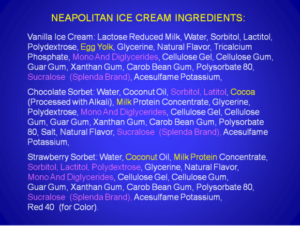
Consider this slide of ice cream ingredients that Dr. Barbara Corkey, director of the Obesity Research Center at Boston Medical Center, used in a recent lecture. The few elements in yellow, she told her listeners, were ingredients that we normally think of as “food.”

There was a collective gasp from her American Diabetes Association audience, and a buzz of distaste. In pink, Barbara went on, were some of the substances she was about to discuss. “Virtually none of these non-food compounds have been carefully assessed for a potential causative or contributing role in the obesity and diabetes epidemic,” she said. In other words, if food additives are insidiously helping to make us fat, we have no way of knowing it.

Her lab is working to change that. It’s still very early days, and some obesity experts are skeptical of her hypothesis, but researchers she oversees are methodically screening hundreds — and perhaps eventually thousands — of food additives, from benign-seeming Bay Oil to unpronounceable chemical compounds, for their potential effects on human fat cells and insulin production. They have already discovered some intriguing leads on possible culprits, including artificial sweeteners, iron and an emulsifier common in dairy products, monoacylglycerols.

Additives, from food coloring to preservatives, have long been a focus of concern. The Center for Science in the Public Interest has a whole glossary called Chemical Cuisine here on the various additives and how harmful they may be. The Center even offers 99-cent Chemical Cuisine apps for iPhone and Android, handy for the supermarket.

Additives must be tested for toxicological safety before they can be put in the food supply, but — as Barbara points out — they are not tested for their effects on our weight or for metabolic effects such as insulin secretion.

Here’s her reasoning: The current explanations of our obesity epidemic are just not fully satisfying. (As a mother who had two daughters who stayed resolutely skinny no matter how she fed them up, she knows how powerful the body’s weight control regulators can be.) So what has changed in the environment over the last generation that might help explain it? Well, one factor — among many — is the dramatic rise in the additives in processed food.

A biochemist, Barbara has developed a model proposing that overactive insulin in the body may be a cause of obesity, as well as a result. So might the food additives, alone or in combination, be affecting people’s base levels of insulin? Might they also affect fat storage, or fat entering the liver?

Dr. Sarah Haigh Molina with some of the food additives being screened

Dr. Sarah Haigh Molina, director of the Boston University High Throughput Screening Core, is tackling that question by testing the effects of a whole “library” of food additives on insulin-secreting cells and on human fat cells harvested from operations.
She can test 40 “plates” a week, of 60 compounds per plate, mixing the food additives in with fat or insulin-producing cells and then checking three days later for effects. Such screening is only a very, very first step — but it points the way toward compounds that deserve further investigation. She hopes to test packaging materials as well — plastics and other compounds that may contaminate food.

Dozens of compounds can be screened on one “plate”

I found myself highly intrigued by Sarah’s work because I, too, find the most popular explanations for the obesity epidemic — we’re just getting less activity and too much food — unsatisfying. But I sought a reality check from the likes of Prof. Marion Nestle of New York University, a leading national expert on nutrition. She sounded skeptical when I asked if there was reason to think additives might play a role in obesity. “If they do, it’s a small effect,” she said by email. “Obesity, alas, is about calories in and out.”

But, I asked, are current explanations for the obesity epidemic adequate? “I’m afraid so,” Marion replied. “There is much evidence that people eat more calories than they need but nobody wants to face that. I am prejudiced, of course, having just written a book about calories in which my co-author and I reviewed the evidence: ‘Why Calories Count: From Science to Politics’ (UC Press, March 2012).”

Michael Jacobson of the Center for Science in the Public Interest sounded similarly skeptical. There doesn’t seem to be any reason to think food additives would promote obesity, he said, and “Food additives go through a lot before they reach fat cells. Some of them aren’t absorbed by the body. Some are metabolized before they would get to the fat cells.”
Like Marion, he said the best explanation of the obesity epidemic is simply that we’re consuming more calories, and if anything correlates best with rising obesity, it’s soda consumption. It seems far from likely “that there’s another major cause,” he said, “although there could be. There’s some evidence that endocrine disruptors could lead to problems. It’s kind of speculative, but there are at least animal studies that suggest that they could be a factor.”

But Prof. Kelly Brownell of Yale University, also a leading national expert and director of the Rudd Center for Food Policy and Obesity, was more enthusiastic: “As far as I know, some people have paid attention to the issue of pesticide use and whether endocrine disruption might be contributing to obesity, but I don’t know that anyone has looked at additives in a systematic way. I think it’s a wonderful idea.”

Many factors contribute to rising obesity, from declining physical activity to relentless marketing by the food industry, he said. But the formulation of food has become a very interesting issue, including portion size and the proportions of sugar, fat and salt in recipes. “People have paid attention to those,” Kelly said, “but there are a lot of things that go into food that haven’t really been studied very much.”

Many common foods have a “mile-long ingredient list,” he pointed out. Sometimes he starts off a lecture by putting up a slide with 50-plus ingredients on it and asking people what food they think it is. They can’t guess. (It’s a chocolate pop-tart.) Some people even question these days whether many products should be called “food,” he said.

Barbara Corkey’s team are not food activists. On the contrary, they caution that their findings so far — which have been presented in public but not yet published — are far too preliminary to influence anyone’s diet. “The last thing I’d want to promote is for people to panic about what they’re eating,” Sarah said. And Barbara recalled that after her June lecture to the American Diabetes Association, people told her they were going to read labels better and stop eating junk. Her response: “Unfortunately, I can’t say this is going to make you any thinner. I hope it will.”

The post What’s Making Us Fat? Researchers Put Food Additives On Suspect List! appeared first on Blaze Body Contouring & Aesthetics .

]]>
How Many Calories Do I Need to Burn to Lose One Pound? https://blazebodycontouring.com/how-many-calories-do-i-need-to-burn-to-lose-one-pound/ Mon, 18 Sep 2017 19:31:48 +0000 https://blazebodycontouring.com/?p=2048 by Christine Luff “I’m trying to lose weight by running, but I’m not sure how many calories I need to burn through running.  How many calories does it take to lose a pound?” To lose a pound, you have to burn, through exercise or life functions, about 3500 calories. Running can help you lose weight, but […]

The post How Many Calories Do I Need to Burn to Lose One Pound? appeared first on Blaze Body Contouring & Aesthetics .

]]>
by Christine Luff

“I’m trying to lose weight by running, but I’m not sure how many calories I need to burn through running.  How many calories does it take to lose a pound?” To lose a pound, you have to burn, through exercise or life functions, about 3500 calories.

Running can help you lose weight, but it’s not a magic bullet. A safe, healthy weight loss rate is about one to two pounds per week. If your weight loss is faster than that, you may be losing muscle mass in addition to fat.

To average one pound lost per week, you need to burn an additional 500 calories per day. If you’re running for weight loss, that means you would need to average about 5 miles per day, since the average runner burns about 100 calories per mile.
If you don’t have the time or energy to burn the 500 calories a day by running or doing other exercise, you could use a combination of calorie reduction and exercise. For example, if you ran 3 miles (approximately 300 calories burned) every day, you would also need to reduce your recommended calorie intake by 200 calories each day. The combination of the calorie intake reduction and the calories burned would create your 500 calories/day deficit.

Of course, it’s important to figure out how many calories you need each day, since the USDA 2000 calorie diet is only a recommendation.

Pump Up the Burn

If you’re looking for ways to increase your calorie burn, try adding strength training and speedwork to your workout routine.

One of the many benefits of strength-training is that building more muscle mass will increase your calorie burn, both when you’re working out and when you’re resting.
You don’t need to do lots of heavy lifting to get the benefits of strength-training. Try doing some simple exercises such as these core exercises or lower body moves a couple times a week.

Running faster can also help you jumpstart your weight loss efforts by increasing your calorie burn. Try some of these speed workouts for the track or these workouts for the treadmill. If you’re not ready for speed workouts, focus on finishing your runs at a faster pace or running faster for short intervals during your run.  Run hard for 30 seconds and then slow it down for a couple of minutes, and try to do that a few times during your run.

Pay Attention to Other Measurements, Too

Remember not to get too focused on the number on the scale. Try to pay attention to how you’re feeling overall, and use measurements other than weight, such as inches lost or how your clothes fit, to mark your progress. You can also track your running progress by racing new distances, increasing your weekly mileage, and trying to improve your race times.

The post How Many Calories Do I Need to Burn to Lose One Pound? appeared first on Blaze Body Contouring & Aesthetics .

]]>
Why Aren’t You Walking? https://blazebodycontouring.com/why-arent-you-walking/ Tue, 29 Aug 2017 16:04:56 +0000 https://blazebodycontouring.com/?p=2010 What excuse is keeping you from stepping out the door or onto the treadmill? You’ve found the right place. These excuse busters will exorcise your exercise excuses. Excuse: “I’m Too Busy to Walk” You have work, school, cooking, cleaning, shopping, kids, laundry. There isn’t enough time to do everything. How are you supposed to fit […]

The post Why Aren’t You Walking? appeared first on Blaze Body Contouring & Aesthetics .

]]>
What excuse is keeping you from stepping out the door or onto the treadmill? You’ve found the right place. These excuse busters will exorcise your exercise excuses.

Excuse: “I’m Too Busy to Walk”

You have work, school, cooking, cleaning, shopping, kids, laundry. There isn’t enough time to do everything. How are you supposed to fit in 30 minutes of walking to meet the minimum requirement for health How can you sneak in enough steps so your Fitbit friends aren’t leaving you in the dust?

How to Bust the “I’m Too Busy” Walking Excuse

Commit to a walking time: Put your walking time on your calendar. Add it to your smartphone calendar with the repeating time, you only have to add it once for it to prompt you every day. Or, you can go old-school and write it in your day planner and set a manual alarm clock.
Invite others: Invite your family, co-workers, and friends to join you. You’ll have the social pressure to keep the commitment. Walking together is perfect for social multi-tasking and having conversations with your kids, spouse or friends. The time away from screens will be welcome for making real connections.
Work walking into your chores: Instead of stopping on the way home from work to do errands, walk to the market and post office and carry things back in a backpack. Walk to and from a restaurant in the evening. Walk the kids to school instead of driving them. You’ll have peace and quiet on your walk back to prepare for the rest of the day.
Sneak walking into a busy day: Walk during your breaks and lunch at work, or go for a quick walk at home while a pot is stewing. Although it is best to walk for a half hour or more continuously, sneaking in a couple of 10- to 15-minute walks burns calories and gets you into the habit of exercising. It’s one way that health authorities recommend achieving 30 minutes per day of moderate-intensity exercise, by breaking it up into bouts of 10 minute or more.

Excuse: “I’m Too Tired to Walk”

It’s time for your walk but you are tired. You didn’t get enough sleep, or you’re worn out from work and other activities.

How to Bust the “I’m Too Tired to Walk” Excuse:
Don’t sit down, don’t lie down, don’t dally over a cup of coffee. But do have a good drink of water and a snack so you aren’t dehydrated or starting on empty.
Get started: Don’t let yourself know that you are actually going to walk. Don’t think about it as you tie on your shoes and head out the door. Don’t wake up your tired brain. Once you are walking, it is amazing how the fatigue goes away.
Still tired? If the fatigue isn’t gone or is worse after 15 minutes, you may be coming down with a cold or may be overtraining. Finish your walk, drink lots of water and take care of yourself. If you haven’t had a rest day, take a rest day tomorrow.

Walking Excuse: “It’s Too Cold”

Is your walking excuse that it’s too cold to walk outdoors? A nip in the air can nip your desire to walk. Slipping and falling on ice or snow is a real safety concern.

How Bust the Excuse That It’s Too Cold to Walk
Dress in Layers: Dress right for the cold in layers, with a hat and gloves. Start with a sweat-wicking long-sleeved top, then an insulating layer of fleece, wool, or down, and a windproof jacket. You can add a muffler or wear a balaclava or Buff to protect your neck. How to dress for cold weather walking
Keep Your Toes Warm: Use these tricks to keep your feet warm. The simplest one is to tuck a paper napkin between the top of your foot and the upper part of the shoe.
Keep Your Hands Warm: Gloves are good, but mittens are even better. Also use a chemical handwarmer packet to keep your fingers unfrozen.

Chains for Your Shoes: Wear foot traction devices such as slip-on cleats that work with your regular walking shoes or boots.
Walking Poles for Stability: If it’s slippery enough to wear foot traction, it’s wise to add a pair of walking poles to your winter walking ensemble.

Treadmill Time! It may not be ideal if you prefer walking outdoors, but it can get you through the winter. Tips for finding free/bargain treadmills to use

Walk Indoors: Find an indoors track, or join the mall walkers. Use the corridors of large buildings as your walking path. If all else fails, you circle your house or apartment. It’s amazing how many steps you can put in circling the kitchen table while watching television.

A Suite of apps to communicate, store, create, and more.

Excuse: “It’s Raining”

Is your walking excuse that it’s raining and you don’t walk in the rain? Walking in the rain can be unpleasant, or you can change your attitude and go singing in the rain.

How to Bust the Excuse and Walk in the Rain
You may be the sweetest person on earth, but you aren’t made of sugar and you won’t melt in the rain. Use these tactics.
There’s No Such Thing as Bad Weather, Just Inadequate Gear: You can stay dry underneath if you wear the right waterproof gear, at least for shorter walks. If nothing else, those cheap plastic rain ponchos from the dollar store will work.
Umbrella: An umbrella is an easy and simple solution for a moderate stroll. Look for a windproof design and one with a comfortable grip.

You are Drip-Dry: Sometimes bare limbs are better than wet fabric. If it’s warm enough, just go walking and experience the rain. You can change into dry clothes afterward.
Plan Your Reward: Set out the bath oil and aromatherapy candles and have the cocoa ready to make when you get back. Nothing feels better than a warm terrycloth robe after a great walk in the rain.
Take in the Fresh Sensations: How does the rain feel on your face and as it drains from your arms and hands? Listen to the sounds rain creates around you. Stick out your tongue and taste the rain. Look around you at the drops on the leaves and flowers. Sunny is boring. Rainy is interesting and makes for great photos.
Walk Indoors: You don’t have to walk in the rain if you don’t want to. But you still need to exercise. Walk indoors on the treadmill, in the mall, at an indoors track, or walk the halls of large buildings.

Excuse: “It’s Too Hot”

Hot weather poses real risks to walkers. Beat the heat and bust the excuse.

How to Bust the Hot Weather Walking Excuse

Love your sweat. Accept it. You are glowing!
Dress for the heat: wear breathable wicking fabrics such as CoolMax which draw the sweat away from the skin so the evaporation can cool you. Wear a hat to keep the sun off your head. Hot weather walking gear
Drink up: Drink 16 oz. of water an hour before you walk so you start off well-hydrated. Then drink a cup or more of water each mile. Drink a big glass of water when you finish.
Cool times: Walk in the early morning or in the cool of evening to avoid the hottest part of the day. Choose shaded trails or those with a breeze.

Walk indoors: Walk on a treadmill, walk in the mall, walk an indoors track, walk the halls of large buildings.

Excuse: “I’m Too Fat to Walk in Public”

You would like to walk, but you just feel too fat to exercise in public. This excuse is self-sabotage.

How to Bust the Excuse That You Feel Too Fat
Time for Positive Self-Talk: Look in the mirror and start giving yourself affirmations. “I am healthy and beautiful. My body is strong. I can walk for miles. I am an athlete.”

You Are a Hero: The overweight walker is a role-model. You can make a difference in the lives of everyone who might see you. What are they thinking? “What’s my excuse?”


Dress for Success Buy yourself walking clothes that fit the shape you are in now. As you get fit, they will become looser. If you have trouble finding clothes large enough at athletic stores, here are choices for plus-size exercise clothing.
Join a Walking Event or Walking Club: You will see many people who are overweight walking a marathon, half marathon, 10K, or 5K. Join a  walking club and you’ll meet many other people who are active at every size.
They Will Cheer You!: At run/walk events, runners are extremely supportive of overweight walkers. You’ll hear clapping and, “Looking good!” You’ll have to give lots of high fives. They know your challenges, many of them have been there as well.
Walk Proud: Walk like the athlete you are and 99.9 percent of passersby will be thinking, “She is out there exercising, maybe I should.” Don’t let any idiot from the other 0.1 percent ruin one second of your day or keep you from doing what is good for you.

Check With Your Doctor: Check with your physician if you are just beginning an exercise program or have a medical condition such as diabetes or heart disease. They can advise you about the safety of walking and give you schedules that are appropriate for your condition. They may also know of walking groups available through local medical centers and clinics.
Don’t Ignore Pain: If you have pain or injury to your knees, ankles or feet, see a physician. These can often be treated and get you walking comfortably.


Excuse: “I’m Too Old to Walk”

Exercise is for young ‘uns, right?

How to Bust the Excuse That You Think You’re Too Old to Walk:
You need to keep exercising as you age. Brisk walking is one of the moderate-intensity aerobic exercises recommended by health authorities for people of all ages, including those over age 65. You need to do it five days a week for 30 minutes to reduce health risks and maintain fitness.
Don’t get left out. Almost 10 million Americans age 55 and over list walking as their sports activity. You’ll see plenty of gray hair and wrinkles at the finish line for a 5K, 10K, half marathon or marathon.
Be a role-model to the younger folks. If you take to your rocking chair at age 55, what are they to think?

Excuse: “My Feet or Muscles Hurt”

Is your excuse that your muscles or sore or your feet are tired or blistered?

How to Bust the Sore Feet or Muscles Excuse
Sore muscles after workouts: Strenuous moves such as walking up hills, changing your walking style, or walking for a long distance can all lead to muscle soreness. This is normal. You may also experience shin splints when you change your walking speed, technique, or get new shoes. Take it easy and be sure to get a good warm-up before picking up the pace.
Pay attention to signs of injury: If you have sharp pain or swelling, then you may have an injury. Don’t walk through that kind of pain. Use the RICE formula to rest, ice, compress and elevate the injury and consult your medical provider. If you have pain in your sole or heel, you may have plantar fasciitis.
Replace your shoes. How old are your shoes? Walking shoes should be replaced every 500 miles or at least every six months. They lose their cushioning and soon you are not protecting your feet from the pounding and your muscles and joints will also feel the difference.

Buy the right shoes. Shop for walking shoes at the store in your area where the serious runners go and get fit correctly. Use the walking shoe guide buying tips to getting a good fit.
Prevent blisters. Protect blister-prone areas with anti-chafing/anti-blister remedies. Cover any red spots or blisters with a bandage or tape before walking.

Arch supports and insoles. Athletic shoes do not have arch support, you’ll need to buy arch support insoles and slip them into your shoes. Custom insoles can make a difference. They are no replacement for new shoes, but they can make your feet happier even with new shoes.

Excuse: “I Don’t Want to Walk Alone”

Lack of a walking partner is one of the chief reasons that people don’t walk. It can be simply that you don’t want to walk alone, or that you are afraid of walking alone.

How to Bust the “I Don’t Want to Walk Alone” Excuse
Invite somebody: They may act reluctant at first, but it is flattering to be invited to join you in walking. Invite a loved one, family members, kids, friends, co-workers. “I want to walk for exercise, but I won’t walk alone. I would love it if you could walk with me at least one day a week.”

Clubs: Join a walking club or exercise group.

Walking events: Attend walking events or walk where there are other walkers. Strike up a conversation as you walk, and soon you will have new walking friends. Walk Finder

Walk where other people walk: You won’t be alone if you walk at the local park, school track, jogging trail or mall where other people walk regularly. Soon enough you’ll strike up a conversation and make new walking friends.
Virtual buddies: If you still can’t find somebody to walk with, get an online walking pal and keep each other motivated. Use email, Facebook, Twitter, or walking apps to connect to other walkers.

Tunes: Entertain yourself while walking with music, podcasts, audiobooks, or radio.
Learn to enjoy solo walking: There are many positive benefits of walking alone. See 10 reasons to walk alone.

Dog: Walking with your dog is a good way to have companionship and protection.
Walking stick or poles:   Carrying a walking stick or using walking poles when you walk solo can make you seem like less of an easy target. If you’re afraid to walk alone, it is one tactic to use.

Excuse: “Walking is Boring”

You’re headed for the same old slog. Your walk seems more like sensory deprivation than fun.

How to Bust the Excuse That You Find Walking Boring
Change your route. Explore new territory. Check out walking trails in your vicinity. Find a park and take a hike. Map it out in advance or explore the map functions and apps on your mobile phone.
Change your pace. Vary your pace every few minutes with a walking workout. Do different workouts on different days. Add some running, skipping, or other variations.

Get a pedometer, fitness band, or walking app: Put it on. Set at goal, such as 10,000 steps per day. 10 Ways to Motivate Yourself With a Pedometer

Listen while you walk. Grab your ear buds and listen to music, podcasts, or an audiobook on your mobile phone or another device.

Walk with a friend – human or canine. Trade in your old boring walking partner or add somebody new to the group to spice things up. Join a walking group or walking club.

Games and thought provoking questions. Remember those games your family played on long car trips to keep you quiet? Count cars or keep a list of birds, flowers, or trees you see. Select a question to mull over for the walk, such as “Where do I want to be in five years?” or “How would I spend a million dollars if I couldn’t spend it on myself or my family?”

Meditation or prayer. Use your walking time to meditate or pray.
Events. Plan on attending a big walking event or charity walk to add some excitement and variety to your walking and get awards.

Crosstrain. Alternate walking days with biking, swimming, weight training, circuit training or another exercise.

Sources:
Moen MH, Tol JL, Weir A, Steunebrink M, De Winter TC. “Medial tibial stress syndrome: a critical review.” Sports Med. 2009;39(7):523-46. doi: 10.2165/00007256-200939070-00002.
PAUL LT. Overview of sports injuries – injuries and poisoning – Merck manuals consumer version. http://www.merckmanuals.com/home/injuries-and-poisoning/sports-injuries/overview-of-sports-injuries.
Nelson, M.E.; W.J. Rejeski; S.N. Blair; P.W. Duncan; J.O. Judge; A.C. King; C. A. Macera; and C. Castanedasceppa. “Physical Activity and Public Health in Older Adults: Recommendation from the American College of Sports Medicine and the American Heart Association “Med. Sci. Sports Exerc., Vol. 39, No. 8, pp. 1435–1445, 2007.

The post Why Aren’t You Walking? appeared first on Blaze Body Contouring & Aesthetics .

]]>
12 LAWS OF FAT-BURNING https://blazebodycontouring.com/12-laws-of-fat-burning/ Wed, 23 Aug 2017 15:30:13 +0000 https://blazebodycontouring.com/?p=1988 Blaze Body Contouring will target fat in areas of the body that you choose. You will lose inches over the course of your extended  treatment package. To maintain these results requires some understanding of how the body works to lose fat and then making some changes and sticking to them! GET STARTED: Setting Goals Before […]

The post 12 LAWS OF FAT-BURNING appeared first on Blaze Body Contouring & Aesthetics .

]]>
Blaze Body Contouring will target fat in areas of the body that you choose. You will lose inches over the course of your extended  treatment package. To maintain these results requires some understanding of how the body works to lose fat and then making some changes and sticking to them!

GET STARTED:

Setting Goals
Before you even get started on a fat loss plan the first thing you want to do is to set goals for yourself. This goal could be to lose 30 lbs. or it could be to see your abs. Whether your goal is to lose a certain number of pounds or to just achieve a certain look you will need to set a reasonable time frame to achieve this. If you do not set a time frame there will be no sense of urgency when trying to make progress.

Rate of Progress
When it comes to the rate at which progress can be made fat loss is far different from muscle growth. Whereas building muscle is a slow process, fat loss can take place at a pretty rapid pace. We have all seen the commercials that promise to help you lose 10-20 lbs. in a few weeks. While it is entirely possible to lose huge amounts of weight in short periods of time, this is not what we are aiming for.

Losing weight too quickly will lead to muscle loss. Losing muscle on a fat loss plan will only result in a lower metabolism, a less attractive physique, compromised health, and ultimately a higher chance that the weight lost will be put back on.

On any fat loss plan you should strive to lose 1-2 lbs. per week. This rate of loss will ensure that all weight losses will be fat and not muscle tissue. This will also make sure that progress will continue without a metabolism stall.

Individualized Approach
One common theme you will see as you read this guide is that fat loss is best maximized with an individual approach. To get the best possible results a cookie cutter plan will not do. Many things must be taken into account when putting together an effective plan. This guide will show you how to make adjustments based on your individual body type.

Definitions and Common Terms

Calories – Calories are a unit of measurement used to describe how much energy value is in food. Excess calories that are not used as energy are stored as fatty tissue within the body.
Micronutrients – Micronutrients are nutrients that the body only needs in trace amounts. Examples of micronutrients are most vitamins and minerals.

Amino Acids – Amino acids are the compounds that make up proteins. They are commonly referred to as the building blocks of protein. Different types of proteins vary in the types and amounts of amino acids that they contain.

Glycogen – Glycogen is carbohydrate stored within the human body. When carbohydrates are ingested they are stored within muscle tissue and liver as glycogen. Glycogen is a primary energy source for the body.

Metabolic Rate – Metabolic rate refers to the rate at which a person’s body uses energy. A higher metabolic rate will use energy more quickly, leading to a leaner physique.

Protein Synthesis – The process through which amino acids are arranged into proteins. Protein synthesis is the process of muscle growth.

Anabolic (Anabolism) – Anabolic is the state of muscle growth. If you are building muscle you are in an anabolic state.

Catabolic (Catabolism) – Catabolic is the state of muscle breakdown. If you are losing muscle you are in a catabolic state.

Aerobic – Aerobic exercise is exercise that requires the presence of oxygen.

Anaerobic – Anaerobic exercise is exercise that does not require the presence of oxygen.

Substrate – A substrate is any material or substance upon which an enzyme acts.

Determining Your Body Type

Role of Body Type in Fat Loss
When trying to lose fat body type is very important to both diet and training. Different body types will require varying levels of calories, macronutrients, and training volumes. Before you can determine how much to eat and how much to train you must know your body type.

Ectomorph. Ectomorphs (or ectos for short) are categorized by one word, THIN. The bone structure of an ectomorph is very narrow. This means that ectos usually have a small rib cage, narrow shoulders, and long thinner limbs. An ectomorph will struggle to add both muscle and fat, so adding body weight is usually a slow process.
Even though ectomorphs will have difficulty getting bigger and stronger their typically fast metabolisms give them a huge advantage when trying to get lean. When trying to get lean muscle loss will always be a concern for the ectomorph.
Mesomorph. Mesomorphs (or mesos for short) are the genetic lottery winners. They are typically athletic looking even with little to no training. Mesomorphs usually have wide shoulders and somewhat thinner waists. One of the main characteristics of a mesomorph is that they add muscle AND lose fat easily.
Although mesomorphs have genetic advantages they are not immune to getting out of shape. If they wish to maintain or improve their physiques, a proper training routine and diet must be employed.

Endomorph. Endomorphs (or endos for short) are somewhat the opposite of an ectomorph. They have a wide bone structure. This means that an endo’s rib cage, shoulders, and waist are usually wide. An endomorph will gain both muscle and fat very easily. Because of this most endomorphs struggle to maintain a lean physique.
Although it is harder for an endomorph to get lean, it is not impossible. Also, their body’s ability to add and maintain muscle tissue gives them a big advantage when losing fat.

Calories and the Macronutrients
The three macronutrients are protein, carbohydrates, and fat. Get to know them well. The ins and outs of these nutrients are vital to losing fat. Each of these serves a particular function within the body, so it is essential that they be supplied in the correct amounts.

Body type also plays a huge role in how your body reacts to these nutrients as well. Different body types will have different recommendations for each nutrient and calorie intake.

Calories
Most people are familiar with calories but few know exactly what they are. Calories are units of measure assigned to foods to show how much energy it contains. Your body expends a certain number of calories as energy everyday. If you consume more calories than you expend, the excess will be stored as body fat. If you consume less than you expend everyday your body will have to use stored body fat to meet energy needs.
Proteins, fats, and carbohydrates all have calories. One gram of protein contains 4 calories, one gram of fat contains 9 calories, and one gram of carbohydrate contains 4 calories. These are the calorie recommendations based on each particular body type.

• Ectomorph – Body weight x 16-18 = daily caloric intake
• Mesomorph – Body weight x 14-17 = daily caloric intake
• Endomorph – Body weight x 12-15 = daily caloric intake

This is not the whole story though. Not all calories are created equal. Calories consumed from protein, carbs, and fat will not all be processed the same way within the body. Keep reading to find out why.

Protein
Proteins are unbelievably important molecules to the human body. Different proteins have different functions depending on the type. Some are used as contractile proteins which allow muscles to contract and lift weight. Other proteins are enzymes that cause chemical reactions within the body, and some proteins can be used for energy.
On any fat loss plan protein is absolutely essential to maintaining muscle tissue. When protein is ingested the body breaks it down into amino acids and sends it into the bloodstream. Once these amino acids are in the bloodstream they will be taken up by cells within the body.

The body prefers to use protein for storage as muscle tissue rather than to use it for energy. Proteins can be broken down and used for energy if the body needs it though. This process of synthesizing glucose is called glucogenesis. Glucogenesis as a result of protein breakdown is not preferred when trying to maintain muscle mass.

Not only does this process result in the breakdown of muscle tissue but protein also yields less energy per unit than carbohydrates or fat. So protein is best used as a substrate or building block of sorts, rather than being used for energy.

How Much Protein for Fat Loss?
When trying to lose fat, protein intake should be set as follows:

• Ectomorph – Body weight X 1.0 – 1.2 grams
• Mesomorph – Body weight X 1.1 – 1.3 grams
• Endomorph – Body weight X 1.1 – 1.4 grams

Fat
Dietary fats are essential molecules that cannot be ignored in a fat loss plan because of the important roles they play in many different bodily processes. Fat is the most energy dense nutrient. Whereas protein and carbs both contain 4 calories per gram, fat contains 9 calories per gram. The downside to fat is that it is easily stored as adipose tissue (fat).

An important function of fat is its role in the production of testosterone. One thing must be understood about a fat loss diet: testosterone will be lower when calories are restricted. This is just a natural response. The body senses that energy is in short supply and decides that less energy can be “spent” on muscle growth.

Fat acids are a substrate for cholesterol, meaning that fatty acids must be available to create cholesterol. This is important because cholesterol is eventually converted to testosterone. If fat intake is too low there will not be enough fatty acids available for optimal testosterone productions. This will lead to an even lower level of testosterone.
When on a diet, fats do not serve as many functions as protein and carbs once a certain intake is reached. Since fats are much more calorie dense than protein and carbs they also are the easiest choice to cut once it is time to get serious about fat loss.

The important thing is to cut fat intake when attempting to lean out, at the same time making sure daily intake does not drop so low that testosterone levels are negatively affected.

How Much Fat for Fat Loss?
Ectomorph Bodyweight and Intake
• 100-150 lbs = 45-50 grams per day
• 150-200 lbs = 50-55 grams per day
• 200 lbs. and over = 55-60 grams per day

Mesomorph Bodyweight and Intake
• 100-150 lbs = 40-45 grams per day
• 150-200 lbs = 45-50 grams per day
• 200 lbs. and over = 50-55 grams per day

Endomorph Bodyweight and Intake
• 100-150 lbs = 50-55 grams per day
• 150-200 lbs = 55-60 grams per day
• 200 lbs. and over = 60-65 grams per day

Carbohydrates
Carbohydrates (or carbs for short) are broken down into sugars within the body to produce glucose. Glucose is a primary energy source that fuels the brain, muscle tissue, and organs. Glucose is converted into glycogen and stored within muscle tissue where it is held until it is ready to be used, such as during training.

Carbohydrates are extremely important to training since they are the primary fuel source for working muscles. During weight training the body uses ATP for energy. ATP is replenished through something called the glycolytic pathway. This pathway converts glucose into ATP. Glucose (carbohydrate) is obtained from the bloodstream or from carbs stored in the muscle tissue as glycogen.

In the absence of sufficient carbs, your body will have to convert amino acids to glucose for energy. These amino acids may normally be stored as proteins, so you could say that carbs are anti-catabolic because they are “protein sparing”.

Carbohydrates are essential to keeping a fast metabolism. Leptin and other fat burning hormones are directly related to carbohydrate intake and body fat levels. Leptin is a fat burning hormone that serves many functions. One of the most important functions is the control of energy expenditure. When food intake, and most notably carb intake is high, leptin levels will be high. This sends signals to you body that it is in a fed state and this can cause your metabolism to remain high.

When food intake and carbs are low, leptin levels will lower. This will send signals to the body that energy intake is low and the metabolism must be lowered to compensate for the lack of incoming energy. When carbs are kept in the diet it will help keep elevated levels of leptin and other fat burning hormones even when total calorie intake is low.

Carbohydrates also regulate muscle cell volume. You will notice that when carb intake is low your muscles will appear flat and smaller, because cell volume is diminished when carbs are restricted. This is because carbs are stored in muscle tissue as glycogen. Every gram of glycogen is stored with 2.7 grams of water. This can drastically effect the size of muscle cells.

When muscle cells are depleted this tells your body that food is in short supply and it will take action by lowering fat burning hormones. On the other hand, when carbs are kept in the diet they will cause muscle cells to have more volume which will signal a fed state and result in a higher metabolism.

Cell volume is also a primary determinant of protein synthesis for many of the same reasons. When muscle cells are full and appear to be in a “fed state” protein synthesis will be higher than if muscles are depleted and are starved for glycogen. As you see, carbohydrates must remain in the diet for both muscle retention as well as optimal fat loss.

Carbohydrates and Performance
Carbohydrates are a primary fuel source during training. Since glucose and stored glycogen are used for energy they are absolutely necessary for optimal performance. When glycogen is not available due to carb restriction the body will turn to alternative sources such as amino acids for energy. This will lead to muscle tissue breakdown, but since amino acids are not converted to energy as efficiently as carbs performance will be hindered.

This results in lifting less weight for less reps while your in the gym. If you are not able to train as heavy due to energy needs this will surely lead to even greater muscle tissue loss. So if carbs are not available it will have a double whammy effect on muscle loss. Muscle tissue will be sacrificed to meet energy demands as well as muscle losses due to decreased training demands. You work hard for your muscle so don’t let it all go to waste.

Insulin
Insulin is another very important reason to keep carbohydrates in your diet. Carb consumption causes the body to release the hormone insulin. Insulin has gotten a bad reputation as of late because it inhibits fat loss by preventing fat from being used as an energy source. I know what you are thinking, “Why would I want high insulin levels if it inhibits fat loss?”. While this may sound like a bad thing the benefits of insulin far outweigh the drawbacks.

First off, insulin is one of the most anabolic/anti-catabolic hormones in the human body. Insulin binds with the muscle cell membrane that triggers an onslaught reactions that lead to growth. From an anti-catabolic standpoint insulin keeps the catabolic hormone cortisol at bay. One of cortisol functions is to breakdown proteins (muscle tissue) and convert it to energy. When insulin levels are high cortisol levels are lower. This is the primary anti-catabolic power of insulin.
For the best results insulin levels must be kept in check to optimize fat loss, but must not be totally shunned because of all the benefits of muscle retention.

Ketogenic Diets (Low Carb Diets)

Low carb diets or ketogenic diets have received a lot of attention in recent years. A ketogenenic diet typically involves lowering carbs to nearly zero per day and raising protein and fat levels to reach calorie needs.

With the body not able to use carbohydrates for energy it will begin producing ketones. Ketones are a by-product of fat oxidation and can be used as an energy source instead of carbs. With less carbs coming in insulin levels will be lower which leads to a greater rate of fat burning. As we now know, lower insulin levels are not always a good thing though.

Ketogenic diets may sound like a pretty good option at this point which is why low carb diets have become so popular as of late. The problem is that when carbohydrates are in short supply the the body will use amino acids from the diet as well as from muscle tissue and convert them to glucose for energy.

This means a greater amount of muscle loss. We all work hard for every ounce of muscle that we put on, so while ketogenic diets will allow you to lose a greater amount of fat in a short amount of time, the end result of your physique will leave something to be desired.

How Many Carbohydrates for Fat Loss?
You have already calculated how much protein and fat you will be consuming every day. The only thing left to do is figure out how many carbs you will be eating on a daily basis. This one is simple. Whatever calories are left over after you calculate your protein and fat should be used for carbohydrates. Just take the total calories that are left over and divide by 4. This will tell you how many carbs you should eat everyday.

Food Choices for Your Diet
Now that you know exactly how much to eat everyday you will now need to figure out which foods to eat. Contrary to popular belief, the type of foods you choose to eat is far less important than how much you eat everyday. This does not mean that choosing foods for your diet doesn’t matter though. Some foods are still better than other for certain purposes.

Food choices do not make as much of a difference when it comes to fat loss and muscle growth goals, but it definitely helps optimize total health. We all train and diet to look good, be strong, and improve health. Do not neglect the health aspects of a clean diet since a healthy body will be much more likely to perform better during training.

Lean Proteins
When trying to build and maintain muscle mass, adequate protein intake is a must. The best choices for protein are lean animal proteins. Protein that is not derived from an animal source is that it is considered an incomplete protein. This means that it lacks certain essential amino acids necessary to build muscle. Here are some of the best choices choices for protein:

• Chicken Breast
• Turkey Breast
• Fish (Salmon also contains healthy fats)
• Milk (especially low fat or no fat)
• Cheese (low fat or no fat)
• Cottage Cheese
• Greek Yogurt
• Lean Pork
• Lean Beef
• Whole Eggs and Egg Whites
• Whey Protein
• Casein Protein

Healthy Fats
Fats play many different roles within the body. Some fatty acids must be provided through diet since they cannot be produced within the body. These are referred to as essential fatty acids. It is wise to choose fat sources that contain high amounts of essential fatty acids. Here are some excellent choices:
• Fish Oil
• Flax Seed Oil
• Olive Oil
• Nuts
• Peanut Butter (without hydrogenated oils)
• Almond Butter
• Borage Oil
• Primrose Oil
• Salmon (also a great choice for protein)
• Egg Yolks (also a great choice for protein)

One final note about choosing fat sources. Saturated fats have gotten a poor reputation but they still have a purpose within the body, and therefore should be included in the diet. Problems only arise from saturated fat intake when excessive amounts are consumed.

Trans fats, on the other hand, serve absolutely no function within the body are are incredibly detrimental to health. Trans fats (also know as hydrogenated oils) should be avoided as much as possible because of their negative side effects.

Choosing Carbohydrates
Carbohydrates offer more practical food choices than both protein and fats. There are really two main types of carbs to choose from: complex carbs and sugars. Complex carbs will result in a slower and more steady rise in blood sugar, while sugars will tend to cause a more rapid spike in blood sugar.

Many people have come to believe that sugar is one of the main culprits behind weight gain but this is not necessarily true. Sugar will raise insulin levels higher than complex carbohydrates which can be useful particularly around workout time. Raising insulin levels during training will decrease muscle tissue breakdown. For health reasons complex carbs are recommended for other times of the day. Here are some excellent food choices for carbohydrates:

• Brown Rice
• Sweet Potatoes
• Red Potatoes
• Oatmeal
• Whole Grain Cereals
• Whole Wheat Pasta
• Fruits
• Vegetables
• Beans
• Whole Wheat Bread
• Dextrose (a sugar great for post training)
• Maltodextrin (a complex carb that spikes insulin like sugar, great for post training)

The Importance of Fruits and Vegetables
Fruits and vegetables are often left out of most diets. Even people that are health conscience and serious training enthusiasts tend to leave fruits and veggies out of their diets. Most people avoid fruits and vegetables because they either don’t like the taste or think that they don’t serve a purpose. This is simply not true. Both fruits and veggies are loaded with fiber and healthy phytochemicals.

Fiber will promote regularity and help keep a healthy digestive system. This may not seem like it is important to fat loss and muscle growth, but keep in mind that eating the proper amounts of protein, carbs, and fat won’t matter if they are not being digested and assimilated properly.

Phytochemicals are biologically active compounds that are found in fruits and vegetables. They give fruits and veggies their disease fighting power. In fact, many phytochemicals are currently in clinical testing as a cure for many different diseases. Once again I know you are thinking,”what effect does this have on fat loss?”. A sickly body will not be willing to give up any of its fat reserves so health should always be a concern.

The sugar contained in fruit is called fructose. Many people have come to believe that fructose is bad for you and will promote fat gain. This is simply not true. Fructose metabolizes differently than other types of sugar but it is still a great choice for carbohydrates. Fructose will restore liver glycogen levels quickly and muscle glycogen stores slowly. Although fructose is technically a sugar it does not cause a spike in blood sugar like many other sugars. This makes fruit and excellent choice for daily consumption.

You have never heard someone say, “I used to be in great shape but then I started to eat fruit and I got fat!”. You will never hear anyone say this because fruit provides natural sugar that will not interfere with fat loss.

The Essential Eating Times (Meal Timing)
Meal timing plays a crucial role in the preservation of muscle tissue and creating peak performance. Certain times of the day require certain nutrients to make sure that amino acid requirements are being met and energy levels are being optimized during training. To get the most out of your fat loss diet 3 square meals a day will not cut it. When looking for the best possible results we can and must do better.

The Importance of Breakfast
More people skip breakfast than any other meal of the day. This is mostly due to convenience since it is too tempting to sleep in a little longer and run out of the house in the morning without eating. This is a huge mistake. After a whole night of not eating your body is starved for amino acids so protein is must upon waking.

Although carbs are not 100% necessary at this meal, research has shown that people that eat a substantial breakfast are less hungry throughout the day. If you have a tendency to cheat on your diet I highly suggest putting a large amount of your daily carbs at breakfast. Breakfast is also a good time to include some of your daily fats.
Don’t let laziness hold you back from getting results. If you are serious about fat loss and muscle growth you will prioritize breakfast and set that alarm clock a little earlier.

Pre-Training Meal
The pre-training meal may just be the most important meal of the day. This is the meal that will fuel your workout. For this meal it is important to get protein and carbs which will make their way into the blood stream around the time your training session is getting underway. The glucose in the bloodstream from the carbs will be used for energy, while the amino acids from the protein will spare stored amino acids from being catabolized during training.

Many people fail to realize that the act of working out is very catabolic. In fact, this is the most catabolic time of the day. A proper pre-training meal will help minimize the spike of catabolic hormones that is typical during training. This meal shoud be consumed 1.5-3 hours before your workout.

Post Workout Shake
Even with a proper pre-training meal the flood of catabolic hormones during training is inevitable. Cortisol levels will remain elevated long after training has ceased if nothing is done to bring it down. The best way to stop this muscle wasting dead in it’s tracks is to consume protein with high glycemic carbohydrates.
Protein is an absolute must have after training since it is the only thing that can immediately shift your body from a catabolic state to an anabolic state. The period right after training is commonly referred to as the anabolic window because the body is ultra sensitive to nutrients for 2 hours after training. This is prime time for muscle growth.
Some studies have shown that a protein shake consumed immediately after training can produce up to 25 times higher levels of protein synthesis when compared to a protein shake that is consumed 3 hours post workout. This shows how important it is to get this shake in right away. Since timing is so important in the post workout state it is important to choose a protein that is quickly digested.

Research has shown that a large rush of amino acids into the blood stream post training will increase protein synthesis far greater than a steady flow of amino acids. This simply means that a fast digesting protein builds more muscle in the post workout state than a more slowly digested protein. For this purpose nothing beats whey protein. Whey protein is the fastest digesting protein there is, this should be your protein of choice for you post training shake.

Carbohydrates are almost as important as protein in the post workout shake. Carbs cause insulin release, and there is nothing better to lower cortisol levels that insulin. Insulin has an antagonist relationship with cortisol, meaning when insulin levels are high coritisol levels must be low. Also, since insulin is a storing hormone it will shuttle the amino acids from the whey protein directly into the muscle tissue.

Although insulin in anti-lypolytic, meaning it blunts fat burning, the goal post training is to spike insulin levels for the sake of muscle growth. The best way to cause an insulin spike is by using high glycemic carbs such as dextrose, glucose, or maltodextrin. These carbs cause a rapid rise in blood sugar and will therefore cause the greatest insulin response.

Post Training Meal
After training you need a rapidly digested protein shake to drive cortisol levels down and flip muscle growth into overdrive. Since this shake is so fast acting it will not keep protein synthesis sustained at a high level for long. To sustain protein synthesis you will need to consume a post training meal. 1-2 hours after training. This should be a whole food meal with protein and carbs while minimizing fat intake. This will maximize muscle growth by keeping protein synthesis levels high and reducing catabolism.

Before Bed
Another crucial time for protein is before bed. While sleeping the body releases a flood of anabolic hormones such as growth hormone and testosterone. This is yet another time when steps can be taken to preserve muscle while dieting. During the night we typically go several hours without eating. For this reason a slowly digesting protein would be best. This will allow a longer steady flow of amino acids that will continue to feed muscle tissue for hours.

Two great options before bed are casein protein and cottage cheese. Beef would be a viable option as well. The most important thing is to ingest some sort of protein before bed. Fats are also a great way to slow the digestion of protein before bed. So adding some healthy fats to your bedtime meal is a good idea.

One area of confusion of regarding nighttime eating involves the consumption of carbs. Many people are under the assumption that eating carbs at night will cause them to be stored as fat since they will not be used. This is simply not true. Carbohydrates are obviously not necessary before bed from a performance standpoint but their consumption late at night will not translate into fat gain.

The human body will process carbohydrates the same way first thing in the morning as it does right before bed. So feel free to eat some carbs before bed. It will not hinder your fat loss one bit. In fact, newer studies have even shown that consuming carbs before bed may even lead to a slightly higher metabolism, but further research is still needed on this subject.

Putting the Plan Together
Protein. Deciding how much protein to eat at each meal is simple. Take the total protein you are supposed to consume during the day and divide it evenly among the essential eating times. Let’s say, for example, you are supposed to be eating 200 grams of protein per day. Since there 5 essential eating times you just need to divide 200 by 5. This means that you will need to take in 40 grams of protein at each meal.

Carbs. Carbs cause insulin release which, as we now know, is a double edged sword. The important thing is to consume carbs at times of the day where they will be most useful and will be less likely to inhibit fat loss. The three times of the day where carbs must be consumed are the pre-training meal, post-training shake, and the post-training meal. Here is how you should distribute your carbs among these meals.

• Pre-Training Meal – 35% of daily carbs (complex carbs)
• Post Training Shake – 20% of daily carbs (sugars or high glycemic carbs)
• Post Training Meal – 25% of daily carbs (complex carbs)

This leaves 20% of your daily carbs that are free to be eaten whenever you prefer. If it is your preference to eat a bigger meal first thing in the morning then you can put these carbs with breakfast. If you feel you sleep better with some food in your stomach then you can eat these carbs with your bedtime meal. You could even split these carbs up into two meals. The choice is yours.

Fats. Timing of fat intake allows for a little more freedom as far as meal timing is concerned. The only times you need to keep fat intake low is for your post training shake and your post training meal. This ensures that the fat does not slow the digestion of the carbs and protein since the rate of digestion is very important for these meals.
The rest of the meals throughout the day are fair game. You may distribute fat intake throughout the day however you prefer. You can spread it evenly among meals or eat most of it in one meal. It is recommended that you eat 10-15 grams of fat with your bedtime meal. This will be enough to slow digestion of your nighttime protein and preserve muscle tissue throughout the night while not having any effect on fat loss.

High Carb Days
Anyone who has ever been on any kind of diet or fat loss program knows how a typical diet progresses. The weight comes off fast and easy during the first few weeks of any diet, then it starts to slow down a bit. After a few more weeks go by fat loss slows down a little more or stops altogether. The reason this happens is because the body senses that body fat levels are dropping and food is in short supply.
To avoid starvation the body will lower leptin levels and lower energy expenditure in an attempt to slow down the rate of fat loss. As stated before, leptin is a primary fat burning hormone, low levels of it will spell disaster for any fat loss plan. There is a way to keep leptin levels elevated though. This can be accomplished through controlled high carb days. High carb days will keep leptin levels high and the metabolism running efficiently.

How Many Carbs?
So how many carbs should you eat on your high carb day? This is highly dependent on individual metabolism. The increase should be 55%-115% of what you consume on your typical diet. I realize that this is a pretty wide range but it can be narrowed down through body type. If you have a fast metabolism (ectomorphs) then you should stay closer to the higher end of the carb range. If you have a slow metabolism (endomorphs)  then you will want to stick closer towards the low end of the carbohydrate range. Lastly, mesomorphs should stay within the mid range on their high carb days.
For example, let’s say we take an endomorph with a slow metabolism who normally eats 200 grams of carbs per day. A 55% increase in carbs would mean that he should eat 310 grams of carbs on his high carb day. These carbs should be distributed throughout the day just as a regular day.

Adjusting Total Calories
Since carb intake will be higher on your high carb days this will cause total calories to be raised as well. A slight calorie increase on high carb daysis not a problem but if calories go too high this can hinder fat loss. The way to prevent this from happening is to lower protein intake a little.

On high carb days protein intake should be lowered to 0.95 gram per pound of body weight. To calculate this you must multiply your body weight by 0.95. This means if you weigh 180 lbs. then on your high carb days you should eat 180 grams of protein. Don’t worry about losing any muscle mass as a result of lowering protein. The higher insulin levels from the extra carbs will be more than enough to preserve muscle.

High Carb Day Frequency
High carb days need to be inserted into your fat loss plan regularly to prevent a metabolism stall, but high carb days cannot be taken too frequently without slowing progress. The frequency with which to take high carb days will depend on how fast your metabolism is and how lean you are. Below is the guide for determining the frequency of high carbs days based on body type.

Over 10% bodyfat
• Ectomorph – once every 7-8 days
• Mesomorph – once every 8-9 days
• Endomorph – once every 9-10 days

Under 10% bodyfat (once abs are visible)
• Ectomorph – once every 4-6 days
• Mesomorph – once every 5-7 days
• Endomorph – once every 6-7 days

Cardio
Some people truly love doing cardio while others absolutely despise it. No matter which side you are on the only that matters is that you have to do cardio if you are serious about getting lean. When I say cardio I am not talking about taking the stairs instead of the elevator at work. Low intensity cardio is not going to give you the real results you are after. For serious fat loss you need serious cardio.

HIIT (High Intensity Interval Training)
Just as the name suggests, HIIT is performed by doing intervals of very high intensity work alternated with periods of rest or low intensity. A great example of this are sprints. When performing sprints you will give an all out effort for a short period followed by a rest. Then this action is repeated over and over again.

There are those that claim HIIT is less effective than low intensity longer duration cardio. Their reasoning is that most of the calories burned during HIIT come from stored muscle glycogen (carbs) rather than coming from stored adipose tissue. This is true but this is not a bad thing. Research has absolutely proven that it does not make any difference whether stored carbohydrates or stored fats are used as the fuel source. The only thing that matters is how many total calories are burned and more total calories are expended through HIIT as opposed to low intensity low duration cardio.

Another reason HIIT is so effective is because the post exercise lipid (fat) utilization is far greater with HIIT than any other type of cardio. This essentially means that even after your workout is over, your metabolism will keep running like a blast furnace. This is the amazing fat burning power of HIIT.

Another misconception about HIIT is that it will cause muscle loss. This is just not true either. This myth got started because a higher amount of calories burned during HIIT will come from stored amino acids (muscle tissue) when compared to lower intensity cardio. As long as HIIT sessions are kept to a short duration muscle loss not be a problem. In fact, muscle growth and muscle retention are increased due to the effects HIIT has on anabolic hormones. Just one 10-15 minute session of HIIT can increase testosterone and growth hormone levels for hours after the workout has ended.
Since growth hormone is a potent fat burning hormone this will further increase fat burning in the post exercise state. Short duration sessions simply preserve muscle tissue far better than long drawn out cardio sessions. Compare the difference in physiques between a sprinter and a marathon runner. They are both runners but they have drastically different looks to their bodies.

The only down side to HIIT is that it cannot be performed too many times per week without having an overtraining effect. Since HIIT has many of the same effects of a weight training session it can strain the central nervous system. For this reason you will want to keep HIIT to two 10-20 minute sessions per week. These two sessions should be performed on your non weight training days and should be treated just like your weight training sessions as far as nutrition is concerned.

MISS (Moderate Intensity Steady State)
Since only two HIIT sessions should be performed per week another type of cardio will be needed for the rest of the cardio sessions throughout the week. MISS (Moderate Intensity Steady State) cardio is the perfect type of cardio to fill in any remaining cardio that needs to be performed during the week. This will burn a great amount of calories while sacrificing very little muscle tissue and burning fat through different pathways from the HIIT.

MISS cardio shoud be performed at a moderate pace for a moderate duration. The type of cardio performed doesn’t matter. The only thing that matters is that you pick one moderate intensity and keep that pace throughout the entire cardio session. If you are unable to keep that pace throughout the entire session then the pace was too intense and needs to be lowered the next time. 65%-70% of max intensity is best for creating the optimal calorie burn without reaching the point where the work has become too intense and begins to be more anaerobic than aerobic.

The simple act of performing cardio is extremely catabolic, because of this MISS sessions should be kept to a moderate duration. While HIIT sessions should be 10-20 minutes, MISS sessions should be in the range of 20-35 minutes. Once sessions go beyond this duration the cumulative effect of muscle tissue breakdown starts to become a serious concern.

How Many Sessions Per Week?
It has already been established that 2 HIIT sessions of 10-20 minutes should be performed performed every week. These sessions should start closer to 10 minutes and increase as needed.

The amount and duration of MISS sessions added per week will be on an as needed basis. If fat loss is not progressing fast enough with only the two HIIT sessions per week then 1-2 MISS sessions need to be added to the weekly cardio. Start with only 1-2 sessions of MISS per week but this can be increased up to 4 sessions per week. Simply increase the amount and duration of the MISS sessions as needed to keep fat loss moving along. Do not allow MISS sessions to exceed 35 minutes in duration though.

Fasted Cardio
Over the years fasted cardio has become an incredibly popular method used to shed fat. Fasted cardio means waking up in the morning and performing cardio on an empty stomach before breakfast. The reason this has become a popular fat loss method is because fasted cardio increases the percentage of calories derived from fat during cardio while minimizing the amount of glycogen used for energy. As discussed earlier, it doesn’t matter if energy comes from carbs or from fat the fat loss will be the same no matter the substrate.

Not only is fasted cardio not beneficial but it is actually detrimental to results. Fasted cardio may result in higher fat utilization but it also results in higher amino acid utilization which means more muscle tissue breakdown. As if that wasn’t enough, research has also proven that fasted cardio leads to far less total calories being expended per session. This means that there is simply less fat loss from fasted cardio when compared to cardio performed in a fed state.  So make sure you get some food in your system before you head out to perform your cardio.

Weight Training
Weight training can sometimes seem like an afterthought in many fat loss plans. This is a huge mistake since weight training burns an incredible amount of calories and raises the metabolism for hours after training. Many people mistakenly believe that the best way to lose fat is to stop lifting weights and focus on cardio. This will cause you to lose weight but most of it will not be fat.

On any fat loss plan the distinction must be made that the goal is not just weight loss but fat loss. Stopping all weight training will set you up to burn less calories, have a lower metabolism, and have less muscle tissue. This is not the ideal recipe for a good looking body.

Importance of Muscle for Fat Loss
On any fat loss plan it is important to keep and build as much muscle tissue as possible. There are many people that think that lifting weights will make them look too “bulky”. For a natural lifter this is very uncommon. Often when someone looks bulky it is too much fat that is the culprit, not too much muscle.

Muscle tissue is a biologically active tissue, this means that it needs and uses calories just to continue being. Some studies have shown that 1 pound of muscle can burn up to 50 calories per day by simply existing. This means that if you gain 10 lbs of muscle you can eat 500 more calories per day and still lose fat. This is just one of many reasons why it is so important to preserve muscle tissue while cutting fat.

Weight Training for Fat Loss
Now that it has been  established that weight training is essential for optimal fat loss we need to make sure we are doing it right. Somehow it is become considered “common knowledge” that when trying to burn fat you must use lift with high reps and light weight. This is yet another myth that is simply not true.
Lifting heavy weights is just as important when trying to preserve muscle mass as it is when trying to gain muscle mass. Think of it this way, the best way to put on muscle is also the best way to keep it. Lightening up the weights will do nothing but lower your metabolism and sacrifice Muscle & Strength.

The best approach to training is to focus around heavy compound movements and training EVERY body part 1-2 times per week. Neglecting any part of your body is just a missed opportunity for extra calories to be burned, both during training and in the post exercise state.

A well balanced weight training routine should include both heavy weights for low reps and light weights for high reps. Both methods build muscle but through different pathways so for this reason it is important to include both styles of training into your routine.

Ab Training
Walk into any gym and you will no doubt see dozens of people doing endless sets and reps of various abdominal exercises. If you really look you will probably notice that none of them have visible abs. The reason for this is because NO AMOUNT OF AB TRAINING WILL ALLOW YOU TO SEE YOUR ABS!

Ab training does not burn fat around the midsection. Ab training will only train the abdominal muscles that are underneath the layer of fat that covers them. The only way to see these muscles is to lose the layer of fat that covers them through proper diet, cardio, and weight training.

Ab training will create a muscular abdominal area which will make your midsection much more attractive once the fat that covers them is gone. Treat abs just like every muscle group and train them 1-2 times per week. Doing this along with proper diet and cardio will put you on the road toward getting that coveted six pack.

Supplements
Whey protein is best known for its ability to increase muscle growth and recovery which becomes vitally important on any fat loss plan. Many of the benefits of whey are due to its fast digestion rate and high concentration of the amino acid leucine. It is important to remember that anything that is used to build muscle will also maintain muscle while dieting.

While the muscle growth benefits of whey protein are well known, the fat loss applications of whey protein are not known to many people. Studies have shown that subjects lose more fat and retain more muscle while consuming whey protein when compared to subjects with an equal calorie intake but do not consume whey in their diet. Whey protein improves metabolic function and boosts insulin sensitivity.

All of these benefits make whey protein a must while dieting. Whey should be taken immediately after training because of it’s fast digestion. Whey may also be used at other times of the day to meet protein needs at meals. EFAs stand for Essential Fatty Acids. Just as the name implies EFAs are essential to the human body because play a role in many different biological processes. Essential fatty acids differ from others fats in that they cannot be synthesized within the human body. This means that EFAs must be consumed through the diet. If not enough EFAs are consumed the body will sense that it does not have the nutrients that it needs to function properly. As a result it will essentially “hold on to” body fat. This is just one of the reasons EFAs are so important though.

EFA’s have a wide range of applications including:
• Decreasing body fat mass
• Increasing amino acid uptake
• Reducing cholesterol and blood pressure
• Improve cardiovascular health
• Increase insulin sensitivity
• Decreases inflammation
• Improving joint health
• Necessary for proper functioning of the brain
• Repair damaged cell membranes
• Increases cell membrane ability to transport nutrients into and out
• Serve as substrate for signaling molecules (Eicosanoids)

These applications go far beyond, as well as include, fat loss. Some of these benefits may seem like they are of little or no consequence to your fat loss efforts, but it is important to note that a body that is functioning properly will also have a metabolism that is running at full capacity.

A great way to get EFA’s are by supplementing with Fish Oil and Flax Seed Oil. 5-10 grams per day will meet bodily requirements.

Creatine
Creatine phosphate is stored within muscle tissue and is a source of stored energy used during short bouts of high-intensity exercise. The creatine phosphate stored in your muscle tissue assists your body’s main energy source used during the first few seconds of performing any type of exercise, called adenosine triphosphate, or ATP. Your body uses ATP for energy during the first five seconds of any exercise, such as lifting a weight, and stored creatine phosphate is then oxidized to produce an additional five to eight seconds of energy. This entire process lasts for about 15 seconds. Creatine supplements help increase the amount of creatine phosphate stored in your muscle tissue allowing you to lift more weight for more reps.

Creatine may be the most scientifically proven supplements on the market. It has been proven to lead to significant muscle growth over time. Although creatine doesn’t directly increase fat utilization within the body it will lead to a higher metabolism indirectly. Creatine intake boosts muscle growth and retention. That extra muscle tissue will, in turn, create a higher metabolic rate. This is why creatine supplementation is a good choice for any fat loss plan. To get the most out of your creatine simply take 5-10 grams on training days.

Using Caffeine Properly
Caffeine and products that contain caffeine are great fat burning tools. This is simply because or caffeine’s stimulant effect. This stimulant effect increase thermogenesis, which is the production of heat by the body. This leads to a higher resting metabolic rate and higher total calorie usage throughout the day.
Caffeine and other stimulants do have a down side though. Since stimulants act upon the central nervous system if used too often or for too long of a time period they can begin to cause overtraining effects. These effects would be much the same as if you were working out too long and too often. This can lead to decreased energy, muscle loss, and ultimately, a lowered metabolism since your body will be trying to preserve energy.

Caffeine also has a dramatic effects on the adrenal glands. The adrenal glands regulate hormone levels within the body. Most notably of theses hormones are the “fight or flight” hormones adrenaline and noradrenaline. Caffeine causes a release of these hormones which will give a short term energy burst. The problem is when there is chronic stimulation of the adrenal glands. This will lead to adrenal burnout which can negatively effect energy levels, metabolism, and digestion.

Although caffeine is a great tool it is best to be used on moderation. Suggested use is to have 100-200 mg. of caffeine 1-2 times per day for 1-2 weeks followed by 1-2 weeks completely off all products and foods containing caffeine. One great way to ingest caffeine before training is through the use of a pre training supplement. These supplements often include a stimualnt to increase the metabolism and enhance energy. Then they are often coupled with other ingredients that are deigned to increase muscle growth. Just be sure you don’t consume additional caffeine when taking a pre training product.

Green Tea
Green Tea is an excellent fat loss supplement and as an added bonus, it contains potent ployphenol antioxidants. The power of green tea comes from the polyphenols contained within. The most potent metabolism booster of these is called epigallocatechin gallate or EGCG for short. This polyphenol has the ability to increase thermogensis much like caffeine but without the stimulant effect or taxing of the nervous system.

Since the fat burning power of green tea is derived from the EGCG it is best to take a green tea extract product. Drinking green tea will produce minimal effects since it is rather low in EGCG, only containing around 6%-10%. Some extracts can contain 30%-50% so it is wise to look for a green tea product with the highest concentration of EGCG.

BCAAs Not Just for Muscle Growth
The 3 branched chain amino acids are leucine, isoleucine, and valine. It has long been known that these three amino acids are great for preventing muscle tissue breakdown and building new muscle tissue. What most people do not know is that BCAA supplementation can increase fatty acid utilization for energy by decreasing protein breakdown for energy use.

BCAA’s work with a double sided attack on fat loss. First by increasing muscle growth which will eventually lead to an increased metabolism, secondly by increasing fat utilization within the body. This makes BCAA’s one of the most effective supplements on the market. To get the most benefit out of your BCAA supplementation it is best to consume 8-12 grams during training and another 10-20 grams throughout the day in between meals. This will optimize both muscle retention and fat loss.

Moving Forward
As you lose weight you may come to a point where your weight loss will stall. If this happens just recalculate your diet plan with your new body weight. As you progress you will lose weight and your numbers will need to be adjusted for your new lean self. Losing fat means something different to everyone. Some are just trying to lose a few pounds, some want to get a six pack, and some want to get absolutely shredded. The goals may be different but the principles that will achieve these results remain the same. Follow this guide and your future will be filled with smaller belts, better abs, and many more excuses to take your shirt off in public.

The post 12 LAWS OF FAT-BURNING appeared first on Blaze Body Contouring & Aesthetics .

]]>