At Aladdin, many of the same ingredients—hummus, chicken, rice, lentils, cucumbers, tomatoes, herbs, roasted vegetables and pita—can show up in completely different combinations. The same idea works at home: prepare a few components well, keep the right things separate, and build different lunches from them throughout the week.
You do not need five complicated recipes or five identical containers.
A chickpea salad can share cucumbers and tomatoes with a chicken bowl. Hummus can be a dip one day and a pita filling the next. One lemon dressing can work with grains, lentils and pasta.
The smartest approach is to prepare the first half of the week on Sunday and refresh the more delicate ingredients on Wednesday.
The five lunches at a glance
- Lemon chicken and grain bowl
- Chickpea, cucumber and tomato salad with pita
- Mediterranean pasta salad with feta
- Hummus, chickpea and vegetable lunch box
- Lentil and roasted vegetable bowl
If you would rather plan one lunch at a time, you can also browse our healthy lunch ideas.
Build Mediterranean Meal Prep Around Four Components
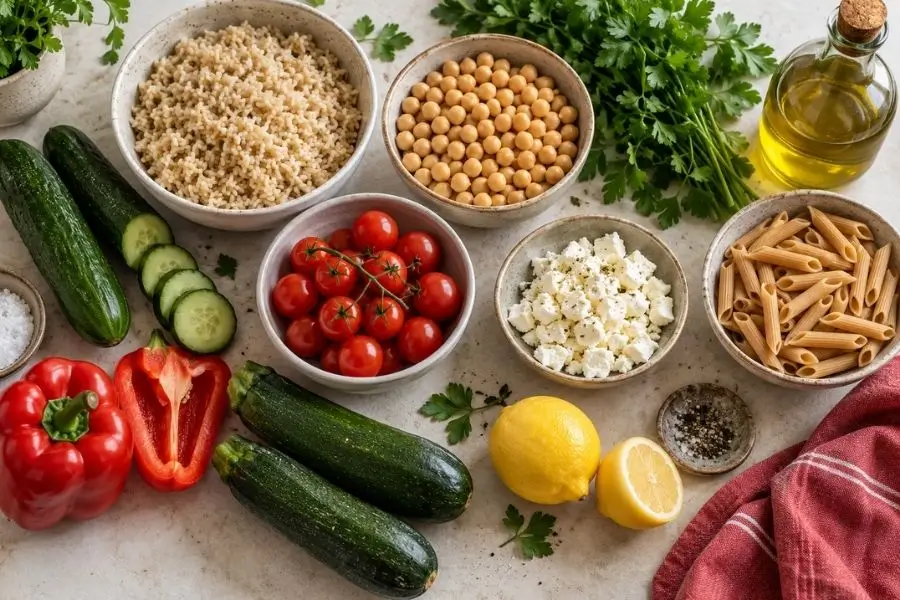
Before you start cooking, choose one or two ingredients from each group.
| Component | Good options | How to use it |
|---|---|---|
| Base | Brown rice, quinoa, penne or pita | Use grains for bowls and pasta or pita for variety |
| Protein or legumes | Chicken, chickpeas, lentils or hummus | Rotate chicken and plant-based options through the week |
| Vegetables | Cucumber, tomatoes, peppers, zucchini or leafy greens | Mix crisp vegetables with roasted ones |
| Finishing flavor | Lemon dressing, parsley, olives or feta | Add separately when it helps preserve texture |
There is no perfect portion for everyone.
A lunch built around hummus and vegetables may need extra chickpeas or pita. A substantial grain bowl may only need herbs and dressing to finish it.
The goal is not to make every container look the same.
The goal is to make tomorrow’s lunch easy without making Friday’s lunch taste like it has been sitting around since Sunday.
5 Mediterranean Lunch Ideas You Can Meal Prep for Work
1. Lemon Chicken and Grain Bowl
Start with cooked brown rice or quinoa.
Add sliced cooked chicken and roasted zucchini, peppers or another vegetable that reheats well.
Pack the cucumber, tomatoes and lemon dressing separately.
At lunchtime, reheat only the chicken, vegetables and grain. Then add the cold vegetables and dressing.
That separation matters.
Warm cucumber and tomatoes are rarely an improvement.
For a meatless version, replace the chicken with chickpeas. Everything else can stay the same, so you are not cooking a completely different meal.
Aladdin meal-prep tip: Let freshly cooked rice or quinoa cool before sealing the container. Trapped steam creates condensation, and that moisture can soften the vegetables around it.
2. Chickpea, Cucumber and Tomato Salad
Combine:
- drained chickpeas
- diced cucumber
- tomatoes
- chopped parsley
- a little finely chopped red onion
Add feta or olives if you want a salty finish.
Keep your lemon and olive-oil dressing separate until you are ready to eat.
Serve the salad with pita or spoon it over a small portion of rice or quinoa.
This is one of the easiest lunches for a day when you do not want to use the office microwave.
It still needs to stay cold, but there is nothing to reheat and very little to assemble.
If you are preparing several days ahead, leave some tomatoes whole and cut them later in the week.
We would also rather season the tomatoes closer to lunchtime than heavily salt them on Sunday and let them release moisture for several days.
3. Mediterranean Pasta Salad With Feta
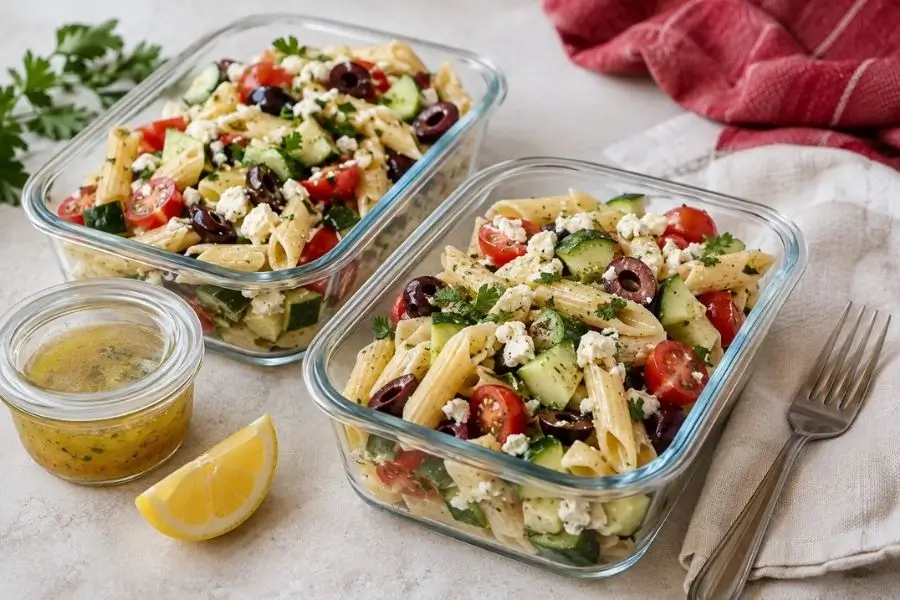
Combine cooked penne with:
- cucumber
- cherry tomatoes
- olives
- parsley
- feta
Add chickpeas if you want to make it more substantial.
Pasta salad is one of those dishes that can be excellent the next day and surprisingly dry two days later.
The difference is often the dressing.
Toss the pasta with enough lemon-herb dressing to give it flavor, but keep a little extra dressing aside for serving.
Pasta keeps absorbing liquid as it sits in the refrigerator. A small amount of fresh dressing before eating can bring the whole salad back to life.
If you prepare this on Sunday, we recommend eating it earlier in the week rather than saving it for Friday.
4. Hummus, Chickpea and Vegetable Lunch Box
This may be the easiest meal in the entire plan.
Put hummus in a small covered container and pack it with:
- chickpeas
- cucumber sticks
- sliced peppers
- olives
- pita
You can eat it as a dip plate or turn everything into a pita sandwich at lunchtime.
One rule we would follow:
Do not pack the pita pressed against hummus, tomatoes or dressed vegetables for several hours.
Bread absorbs moisture quickly.
Give the pita its own dry compartment or bag and fill it when you are ready to eat.
If you want to make the hummus yourself, use our basic homemade hummus recipe.
5. Lentil and Roasted Vegetable Bowl
Combine cooked lentils with roasted peppers, zucchini or another vegetable you already prepared.
Finish the bowl with:
- chopped parsley
- lemon dressing
- olives
- optional feta
Add rice or quinoa if you want a larger lunch.
Keep leafy greens separate until you are ready to eat.
Lentils and roasted vegetables hold their texture well. Delicate greens do not.
That is one reason this bowl works especially well for the second half of the week.
Our lentil salad guide has more ideas for using lentils in Mediterranean-style salads.
The Sunday + Wednesday Mediterranean Meal Prep Plan
One of the easiest meal-prep mistakes is assuming everything has to be prepared on Sunday.
It does not.
We would rather split the work into two shorter sessions.
Prepare the ingredients that hold well on Sunday and refresh the more delicate ingredients on Wednesday.
| Day | Lunch | When to prepare |
|---|---|---|
| Monday | Lemon chicken and grain bowl | Sunday |
| Tuesday | Mediterranean pasta salad with feta | Sunday |
| Wednesday | Chickpea, cucumber and tomato salad | Sunday; dress before eating |
| Thursday | Hummus, chickpea and vegetable lunch box | Wednesday |
| Friday | Lentil and roasted vegetable bowl | Wednesday |
USDA guidance recommends using most refrigerated cooked leftovers within three to four days. Splitting the week also means Thursday and Friday do not depend on food that has been sitting in the refrigerator since Sunday.
What to prepare Sunday
- Cook rice or quinoa
- Cook pasta
- Prepare chicken
- Roast the first batch of vegetables
- Wash and dry vegetables
- Make the dressing
- Portion hummus if needed
- Prepare Monday through Wednesday lunches
What to refresh Wednesday
- Cook lentils
- Roast the remaining vegetables
- Cut fresh vegetables for Thursday and Friday
- Refresh parsley or leafy greens
- Assemble the hummus lunch box
- Portion later-week pita
A Wednesday refresh usually takes much less time than starting another complete meal-prep session.
Mediterranean Meal Prep Grocery List
For one person following the five-lunch rotation, start with the ingredients below and adjust the quantities to your appetite.
Produce
- Cucumbers
- Tomatoes or cherry tomatoes
- Bell peppers
- Zucchini
- Parsley
- Lemons
- Small red onion
- Leafy greens, optional
Grains and bread
- Brown rice or quinoa
- Penne
- Pita
Protein and legumes
- Chicken
- Chickpeas
- Lentils
Refrigerated ingredients
- Hummus
- Feta, optional
Pantry ingredients
- Olive oil
- Olives
- Oregano
- Salt
- Pepper
- Ingredients for your preferred lemon dressing
Check your pantry before shopping.
Meal prep should reduce waste, not create an oversized grocery haul for five lunches.
If you need chickpeas during both halves of the week, keep an unopened can for Wednesday instead of opening everything on Sunday.
Leave some vegetables whole too.
Not everything benefits from being chopped four days early.
Prepare Everything in the Right Order
A little planning can save a lot of unnecessary kitchen time.
1. Start with the grain and pasta
Cook your rice, quinoa and pasta according to their package instructions.
While those are cooking, move on to the next steps.
2. Cook the chicken and roast the vegetables
Prepare your chicken and roasted vegetables.
Use separate utensils, cutting boards and preparation surfaces for raw poultry and ready-to-eat ingredients.
3. Wash and dry the vegetables
Dry cucumbers, peppers, parsley and leafy greens before storing them.
Moisture matters.
Water collecting in the bottom of a container is one of the fastest ways to lose the crisp texture you wanted.
4. Make the dressing
Prepare your lemon dressing and store it in a covered container.
Do not automatically pour it over every lunch.
In many cases, dressing is better added shortly before eating.
5. Divide and label everything
Separate ingredients you plan to reheat from ingredients you want to keep cold.
Label containers with the preparation date if that helps you keep track.
What Should You Keep Separate?
If there is one habit that improves meal prep immediately, it is this:
Do not put everything into one container just because it eventually belongs on the same plate.
Dressing
Pack it separately and add it shortly before eating.
Pita
Keep pita dry until lunchtime.
Cucumbers and tomatoes
Keep them away from anything you plan to microwave.
Leafy greens and herbs
Add them after reheating.
Hummus
A separate container lets you use it as either a dip or a sandwich spread.
A good Mediterranean bowl can have both hot and cold ingredients.
They just do not need to become hot and cold together.
Easy Mediterranean Meal Prep Swaps
Mediterranean-style lunches work well for meal prep because the components are easy to change without rebuilding the whole plan.
Vegetarian
Replace chicken with:
- chickpeas
- lentils
- additional hummus
Vegan
Build lunches around:
- chickpeas
- lentils
- hummus
- vegetables
- grains
Skip feta and check packaged ingredients according to your dietary needs.
Gluten-free
Build bowls around rice or quinoa instead of pita or regular pasta, and choose products specifically labeled gluten-free when needed.
Want more protein?
Increase the amount of chicken, chickpeas or lentils according to your appetite and dietary needs.
For food allergies or medically necessary restrictions, always verify individual ingredients and possible cross-contact rather than assuming a Mediterranean dish is automatically appropriate.
How to Store and Pack Meal Prep Safely
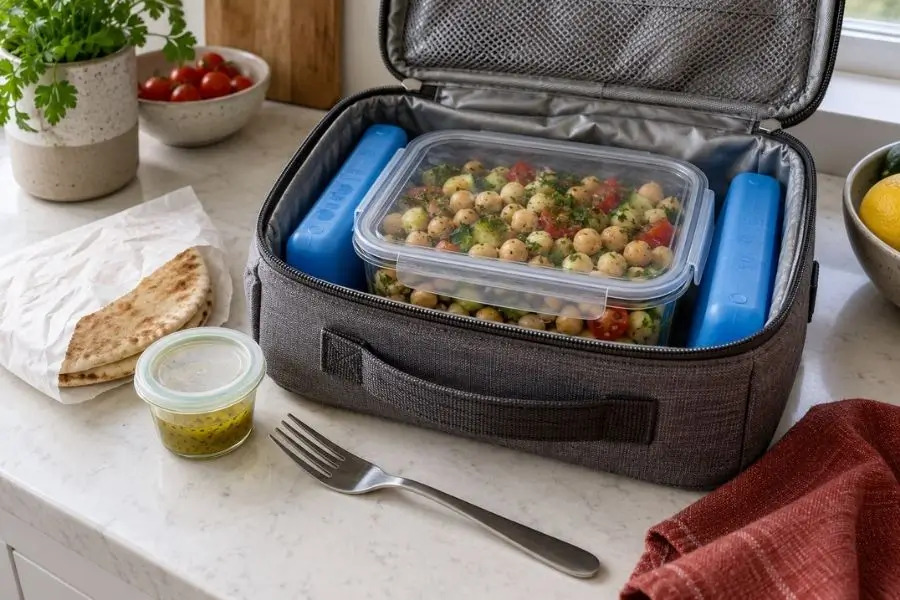
Good meal prep is not only about flavor and texture.
The food also needs to be cooled, refrigerated, transported and reheated safely.
The USDA recommends:
- keeping refrigerators at 40°F or below
- refrigerating perishable food promptly
- using most cooked leftovers within three to four days
- not leaving perishable food at room temperature for more than two hours
- reducing that limit to one hour when temperatures are above 90°F
- reheating cooked leftovers to 165°F
For commuting, use an insulated lunch bag with cold sources when food cannot go directly into a refrigerator.
When reheating a grain bowl, heat the cooked ingredients first and add the cold vegetables, herbs and dressing afterward.
That last part is our recommendation for texture.
Nobody carefully packs crisp cucumber and parsley because they want to microwave them to 165°F.
For complete food-safety guidance, refer to the USDA’s guidance on leftovers and food safety and keeping bag lunches safe.
Mediterranean Meal Prep FAQ
How long does Mediterranean meal prep last in the refrigerator?
USDA guidance recommends using most cooked leftovers within three to four days when properly refrigerated at 40°F or below.
That is why this plan divides preparation between Sunday and Wednesday rather than preparing all five lunches at once.
Which Mediterranean foods work well for meal prep?
Cooked grains, chickpeas, lentils, roasted vegetables, cooked chicken, hummus, olives and feta can all work well.
Fresh cucumber, tomatoes, leafy greens, herbs and pita are usually better when they are kept separate from wet or reheated ingredients until serving.
How do you keep meal-prep salads from getting soggy?
Pack the dressing separately, dry your vegetables before storing them, keep wet ingredients away from pita and avoid combining cold vegetables with anything that will later be microwaved.
Can you freeze Mediterranean meal prep?
Some components freeze better than others.
Cooked grains, lentils, chicken and many roasted vegetables can be frozen. Fresh cucumber, tomatoes, leafy salads and pita sandwiches are usually better prepared fresh.
If you freeze cooked leftovers, follow USDA storage and reheating guidance.
Do these lunches have to be reheated?
No.
The chickpea salad, pasta salad and hummus lunch box are designed to work cold.
The chicken and lentil bowls can be eaten cold if appropriate or reheated, with the cold vegetables and toppings added afterward.
Can I do Mediterranean meal prep without cooking?
Yes.
A simple no-cook lunch can use prepared hummus, canned chickpeas, pita, cucumbers, tomatoes, peppers, olives and feta.
If you want meat without cooking it yourself, use safely prepared pre-cooked chicken and follow its storage instructions.
Planning Lunch for the Whole Office?
Preparing lunch for yourself and feeding an office are different jobs.
For your own workweek, a handful of containers and two short prep sessions may be enough.
For 10, 20 or 50 coworkers, you have to think about headcount, dietary requests, serving quantities, setup and making sure everything arrives ready at the same time.
That is where catering makes more sense than meal prep.
Aladdin has served Mediterranean food in Houston since 2006, with Aladdin Mediterranean Cuisine in Montrose and Aladdin Mediterranean Grill in Garden Oaks.
Our Houston catering menu includes many of the same flavors used throughout this guide—chicken kabobs, hummus, salads, vegetables, rice and more—in portions designed for groups.
You can browse the catering menu first and start your catering order here when you are ready.
The Simple Rule to Remember
You do not need to cook five completely different meals to have five enjoyable lunches.
Prepare a few ingredients well.
Keep wet, dry, hot and cold ingredients separate when they need to be.
Use Sunday for the first half of the week.
Refresh the rest on Wednesday.
And change the combinations instead of starting from scratch every morning.
That is Mediterranean meal prep we would actually use.
]]>Ask anyone behind our counter what we make the most of in a day and falafel is near the top. We soak the chickpeas overnight, grind them fresh in the morning, and fry them in small batches straight through service — because falafel is only really great in the first few minutes after it leaves the oil.
It is not a hard recipe, but it is an unforgiving one. How you soak the chickpeas, how fine you grind them, how warm the oil is — those small things decide whether you get a crisp shell and a light green center, or a dense paste that slumps in the pan. None of it is difficult once you know what to watch for.
Rather order than soak chickpeas overnight? See our falafel →
Watch us make it
Our recipe, start to finish — ingredients, frying, plating, in about half a minute.
What you need

Dried chickpeas, a heap of fresh herbs, onion, garlic, lemon and warm spices.
Why dried chickpeas, never canned
Canned chickpeas are already cooked — their starches are waterlogged, so ground up they make a loose paste that falls apart in the oil. Dried chickpeas soaked overnight are softened enough to grind but still raw. Soaking is hydration, not cooking; the heat comes later, in the oil. That raw starch is the natural glue that binds falafel with no flour at all.
Ingredients
- 400 g (≈2 cups) dried chickpeas — not canned (for a traditional twist, swap 130 g for split fava (common in Egyptian-style falafel))
- ½ tsp baking soda (for the soak)
- 60 g fresh parsley · 40 g cilantro
- 100 g (1 small) yellow onion · 20 g (6–7 cloves) garlic
- 1 tbsp cumin · 1 tbsp coriander · 9 g salt · 1 tsp black pepper · ½ tsp cayenne
- zest of 1 lemon
- 1 tsp baking powder + 2 tbsp toasted sesame (added just before frying)
- neutral oil for frying (~3 cups)
Method — classic fried
- Soak (ahead). Chickpeas + baking soda, covered by 2 in. of cold water. 12–18 h on the counter in a cool kitchen; refrigerate for longer soaks up to 24 h. Drain and pat thoroughly dry.
- Grind. Pulse everything except baking powder & sesame to coarse, damp couscous — not hummus-smooth.

Grind it coarse and green — like damp couscous, never a smooth paste.
- Rest. Cover and chill at least 1 h. Use within 24 h; freeze shaped falafel for longer.
- Finish. Just before frying, stir in baking powder + sesame.
- Shape + test-fry one first. Damp hands, gentle 1½-in. balls, packed loosely.

Shape them loosely — packed tight cooks up dense.
- Fry. Hold 350°F (340–360°F). Small batches, 4–6 min, turning once, to deep golden. Drain; salt immediately.

A thermometer matters more than anything else here — hold 350°F.
- Serve hot the classic way: warm pita with toum and tahini, bright-pink pickled turnips, tomato, cucumber, parsley and mint.
How we plate it

Make it a mezze — hummus, tabbouleh, pita, turnips, pickles.
Making it for a crowd? We cater falafel by the tray →
Baked & air-fryer
Baked: flat ½–¾-in. patties, oiled both sides, 400°F for 14 min, flip, 10–14 more. Air-fryer: flat patties, oiled, 375°F for 14–17 min, flipping halfway.
Troubleshooting
| Problem | Why | Fix |
|---|---|---|
| Falls apart frying | Too wet/coarse, not rested, loose, or oil too cool | Chill longer, pulse finer, dry the mix; 1–2 tbsp chickpea flour as insurance |
| Dense / gummy | Over-processed or packed tight | Pulse less, shape loosely |
| Brown outside, raw inside | Oil too hot or pieces too big | Drop to 350°F; smaller/flatter |
| Greasy | Oil too cool or crowded | Hold 350°F; fewer at a time |
Falafel FAQ
What is falafel?
What is falafel made of?
Is falafel gluten-free?
Is falafel healthy?
How do you make falafel from scratch?
How much protein is in falafel?
Is falafel vegan and vegetarian?
Where is falafel from?
What does falafel taste like?
What do you serve with falafel?
For the best results, follow this authentic falafel recipe closely.
]]>Chronic inflammation is now linked to heart disease, diabetes, certain cancers, Alzheimer’s, arthritis, and even depression. That’s not fringe science. That’s Harvard, Johns Hopkins, and the National Institutes of Health all saying the same thing: long-term, low-grade inflammation is quietly behind a lot of what makes people sick.
And here’s what every single one of those institutions recommends as the best way to fight it through food: the Mediterranean diet.
We’ve been cooking Mediterranean food in Houston since 2006. We didn’t start because of some health trend. We started because it’s what we grew up eating — olive oil, chickpeas, fresh vegetables, grilled meats, herbs, lentils, tahini. It turns out the food our grandmothers made is exactly what modern science keeps pointing back to.
So instead of giving you another boring list of “eat salmon and blueberries,” we’re going to talk about anti-inflammatory foods the way we actually know them — as real meals you’d want to eat every day.
What Is Chronic Inflammation and Why Should You Care?
Your body uses inflammation to heal. Cut your finger, and inflammation rushes blood and immune cells to the wound. That’s good inflammation. It does its job and goes away.
Chronic inflammation is different. It doesn’t turn off. It sits in your body at a low level, month after month, year after year, slowly damaging tissues, blood vessels, and organs. You can’t feel it happening. There’s no pain. No obvious symptoms. But it’s working in the background.
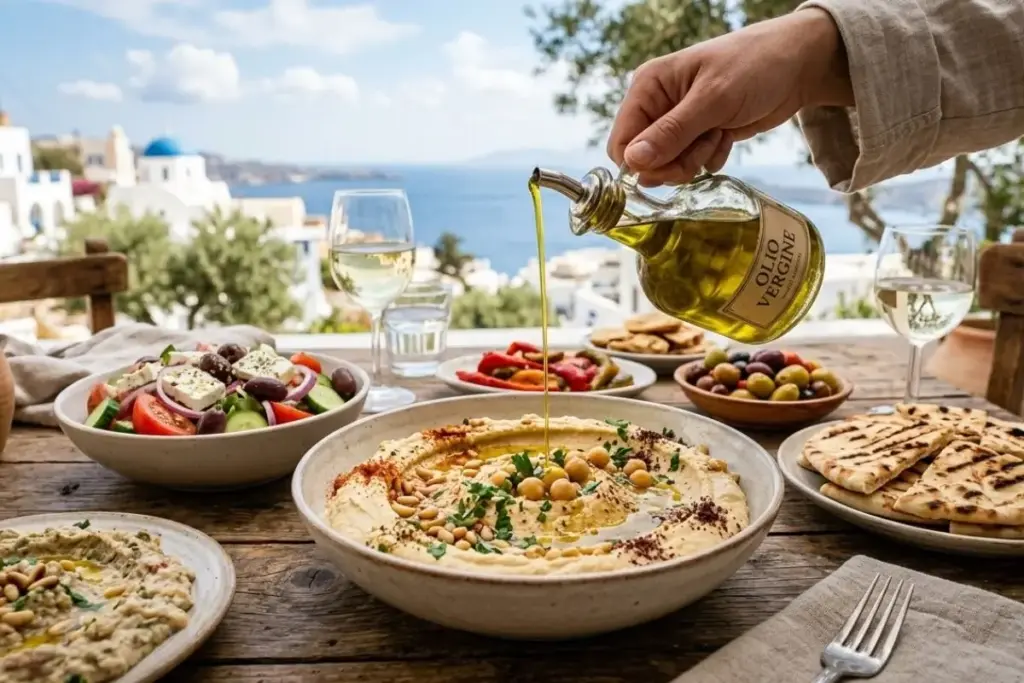
Research published in the journal Nature Medicine found that chronic inflammation contributes to more than 50% of all deaths worldwide when you account for the diseases it drives — heart attacks, strokes, cancer, diabetes, kidney disease.
The good news? What you eat is one of the most powerful tools you have to control it. Not supplements. Not medication. Food.
And not just any food.
Why Mediterranean Food Keeps Showing Up in the Research
If you’ve spent any time reading about anti-inflammatory diets, you’ve noticed something: the Mediterranean diet comes up every single time.
Harvard Medical School puts it this way — if you’re looking for an eating plan that closely follows anti-inflammatory principles, the Mediterranean diet is your best bet. It’s high in fruits, vegetables, nuts, whole grains, fish, and healthy oils.
But here’s what most of those articles miss. They describe the Mediterranean diet like a checklist. Eat this, avoid that. Very clinical. Very sterile. What they don’t tell you is what it actually looks like on a plate — and why people in Mediterranean and Middle Eastern cultures have been eating this way for thousands of years without thinking about it as a “diet” at all.
Nobody in Lebanon sits down to dinner and says, “I’m following an anti-inflammatory protocol tonight.” They just eat the food. Olive oil on everything. Garlic in everything. Fresh vegetables, legumes, grains, grilled proteins. It’s not a health plan. It’s just dinner.
That’s actually the point. The best anti-inflammatory diet isn’t something you follow. It’s something you eat because it tastes good and happens to be built from ingredients that science has spent decades proving are extraordinarily good for you.
The Anti-Inflammatory Foods You Should Be Eating
Let’s go through the ones that matter most — and we’ll skip the generic advice and tell you how we actually use these ingredients in our kitchen every day.
Extra Virgin Olive Oil — The Foundation of Everything
If there’s one food that defines Mediterranean cooking, it’s olive oil. We go through an absurd amount of it. It’s in our hummus, on our salads, drizzled over our soups, used in our marinades, and baked into our bread.
Olive oil contains a compound called oleocanthal that works similarly to ibuprofen — it inhibits the same inflammatory enzymes. One study in the journal Nature found that 50 milliliters of extra virgin olive oil provides roughly 10% of the ibuprofen dose used for adult pain relief. Except you’re getting it from food, not a pill, and you’re getting the additional benefits of monounsaturated fats and polyphenols.
The key word is “extra virgin.” Refined olive oils lose most of these compounds during processing. The good stuff — the kind that has a slight peppery burn in the back of your throat — that burn is actually the oleocanthal. You’re literally tasting the anti-inflammatory compound.
We use it raw as a finishing oil because heat can reduce some of those beneficial properties. A drizzle over hummus, over lentil soup, over a salad — that’s how you get the most out of it.
Chickpeas and Lentils — The Unsung Heroes
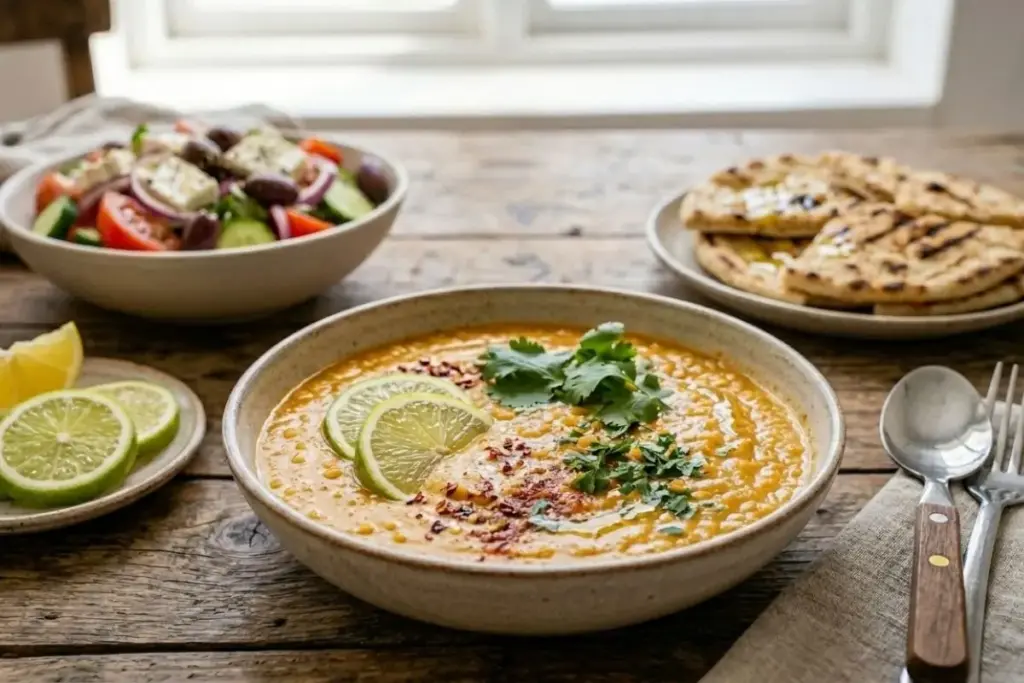
Every health article mentions berries and salmon when talking about anti-inflammatory foods. And those are great. But chickpeas and lentils deserve way more attention than they get.
Chickpeas are the base of two of the most consumed foods in Mediterranean cuisine — hummus and falafel. They’re loaded with fiber, plant protein, and polyphenols. A study in the Journal of Nutrition and Metabolism found that regular chickpea consumption was associated with lower levels of C-reactive protein, which is one of the primary markers doctors use to measure inflammation in your blood.
Lentils are similar. High in fiber, high in folate, high in iron, and they’re one of the most affordable protein sources on the planet. Our lentil soup has been on our menu since day one. Same recipe — red lentils, cumin, lemon, olive oil. Simple, cheap, and backed by more nutritional science than most expensive health foods.
The fiber in both of these legumes feeds beneficial gut bacteria, which plays a direct role in controlling systemic inflammation. Your gut microbiome isn’t just about digestion. It’s one of the main regulators of your immune response. Feed it well, and inflammation goes down. Feed it processed food, and it goes up.
Leafy Greens and Fresh Vegetables — Volume Without the Damage
Walk into our kitchen during prep and you’ll see crates of parsley, mint, tomatoes, cucumbers, spinach, and romaine being washed and chopped every morning. Mediterranean food uses an enormous amount of fresh vegetables — not as a side dish, but as a core part of every meal.
Tabbouleh is mostly parsley. Fattoush is mostly vegetables. Our salads aren’t the kind where you get three leaves of lettuce and a crouton. They’re substantial.
Leafy greens are packed with vitamins A, C, E, and K, plus antioxidants that directly combat oxidative stress. Tomatoes contain lycopene, which is especially effective when cooked with olive oil — the fat helps your body absorb it. We’ve been doing that combination for generations without knowing the science behind it. Turns out our grandmothers were right.
Herbs and Spices — Small Amounts, Big Impact
Turmeric gets all the headlines, and it deserves some of them. Curcumin, the active compound in turmeric, has strong anti-inflammatory properties. But it’s not the only spice that matters.
Garlic contains sulfur compounds that modulate immune function and reduce inflammatory markers. We use an unreasonable amount of garlic. Our toum — a Lebanese garlic sauce — is essentially whipped garlic and olive oil. Two of the most potent anti-inflammatory ingredients combined into something so good that people order extra containers of it to take home.
Cumin, which shows up in our lentil soup, falafel, and kabob marinades, has been shown to have antioxidant and anti-inflammatory effects. Sumac, a deep red spice common in Middle Eastern cuisine, is one of the highest-antioxidant spices ever measured — higher than turmeric, actually.
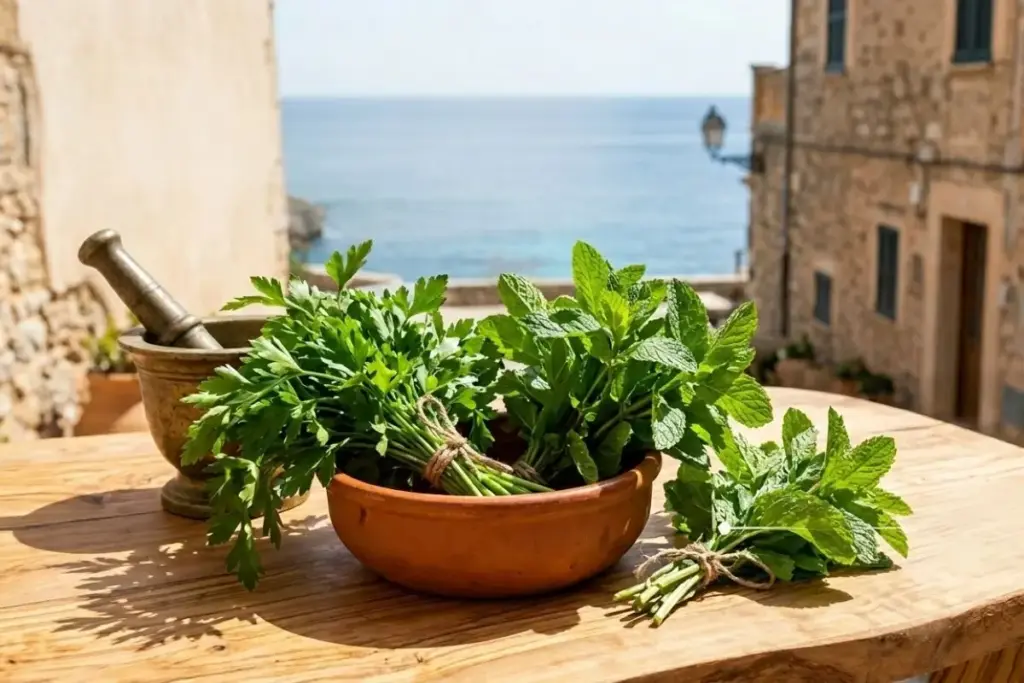
Parsley and mint, which we use heavily in tabbouleh and as garnishes, contain flavonoids that support anti-inflammatory pathways. These aren’t decorations on our plates. They’re functional ingredients that have been used in this cuisine for centuries.
Grilled Proteins — Better Than You Think
Here’s where Mediterranean cuisine differs from what most anti-inflammatory diet guides recommend. A lot of them lean heavily plant-based and treat all meat like it’s a problem. But the way you prepare protein matters more than whether you eat it.
Our chicken kabobs are marinated in olive oil, lemon, and garlic — three anti-inflammatory ingredients — then grilled over open flame. Compare that to a fast food chicken sandwich that’s been battered, deep fried in seed oil, and served on a processed bun. Same animal, completely different impact on your body.
Grilling lean proteins without excessive charring, marinating in olive oil and citrus, and serving alongside vegetables and legumes — that’s the Mediterranean approach. It’s not about eliminating meat. It’s about preparing it in a way that complements an anti-inflammatory eating pattern rather than working against it.
What to Avoid (The Other Side of the Equation)
Eating anti-inflammatory foods matters. But so does reducing the foods that drive inflammation in the first place.
The biggest offenders according to research from Harvard and Harvard Health: refined sugar, processed seed oils, trans fats, excessive alcohol, white flour, and ultra-processed foods. Basically, the stuff that makes up most of the modern Western diet.
Here’s a useful way to think about it — if it comes in a wrapper with a list of ingredients you can’t pronounce, it’s probably promoting inflammation. If it comes from a kitchen where someone actually cooked it using ingredients that existed 500 years ago, you’re probably fine.
That’s an oversimplification, but it’s directionally correct. And it’s basically the principle behind Mediterranean eating. The ingredients haven’t changed in centuries because they didn’t need to.
How to Start Without Overhauling Your Life
You don’t need to throw out everything in your kitchen and start over. Small swaps make a real difference.
Switch your cooking oil. Replace vegetable oil or canola with extra virgin olive oil. This single change swaps a pro-inflammatory fat for an anti-inflammatory one in every meal you cook.
Add legumes to one meal a day. A side of hummus, a cup of lentil soup, chickpeas tossed on a salad. Legumes are cheap, filling, and one of the most effective anti-inflammatory food groups.
Eat more herbs. Fresh parsley, mint, cilantro, garlic. Don’t treat them as garnish. Use them as ingredients. A handful of parsley on a salad changes the entire nutritional profile of that meal.
Reduce the processed stuff gradually. You don’t have to go cold turkey. But every time you swap a packaged snack for a handful of nuts, or a fast food lunch for a grilled chicken plate with vegetables, you’re shifting the balance.
The research is clear that these changes produce measurable results. Studies show that people who adopt a Mediterranean-style eating pattern see reductions in inflammatory markers like C-reactive protein and interleukin-6 within four to eight weeks. That’s not a year. That’s a month or two.
Frequently Asked Questions
What is the number one anti-inflammatory food?
Extra virgin olive oil is widely considered the single most impactful anti-inflammatory food. It contains oleocanthal, a natural compound that inhibits the same inflammatory enzymes as ibuprofen. Regular consumption of extra virgin olive oil is associated with significantly lower levels of inflammatory markers and reduced risk of heart disease, according to research on Mediterranean diet populations.
What are the 10 most anti-inflammatory foods?
Based on clinical research, the most consistently effective anti-inflammatory foods include extra virgin olive oil, fatty fish like salmon and sardines, leafy green vegetables, berries, chickpeas, lentils, walnuts, turmeric, garlic, and tomatoes. These foods contain compounds that directly reduce inflammatory biomarkers and support immune balance when consumed regularly.
Is the Mediterranean diet anti-inflammatory?
Yes. The Mediterranean diet is the most studied anti-inflammatory eating pattern in the world. Research from Harvard Medical School, Johns Hopkins, and multiple peer-reviewed journals consistently shows that the Mediterranean diet reduces chronic inflammation markers including C-reactive protein and interleukin-6. It emphasizes olive oil, legumes, vegetables, whole grains, and lean proteins.
Can food really reduce inflammation?
Extensive clinical research confirms that dietary patterns directly influence inflammatory markers in the body. Studies show that switching from a Western diet high in processed foods to a Mediterranean-style diet rich in whole foods, healthy fats, and plant-based ingredients produces measurable reductions in inflammatory biomarkers within four to eight weeks.
What foods make inflammation worse?
The primary drivers of dietary inflammation include refined sugar, ultra-processed foods, trans fats, excessive omega-6 fatty acids from seed oils, white flour, processed meats, and excessive alcohol. These foods promote the production of pro-inflammatory cytokines and contribute to gut microbiome disruption.
The Mediterranean Advantage
There’s a reason people in Mediterranean regions have historically experienced lower rates of heart disease, diabetes, and certain cancers. It’s not genetics. It’s not luck. It’s the food.
The same food we make every day at Aladdins Houston. Olive oil pressed from real olives. Hummus made from real chickpeas. Lentil soup simmered the way it’s been made for generations. Vegetables chopped fresh every morning. Proteins marinated in garlic and lemon and grilled over fire.
We didn’t design our menu around anti-inflammatory research. But when you build a menu around authentic Mediterranean ingredients, that’s what you end up with. Science caught up to what our culture has known all along.
If you want to eat anti-inflammatory food, you don’t need a supplement aisle or a complicated meal plan. You need a kitchen — or a restaurant — that respects real ingredients and knows what to do with them.
Order Online → Aladdins Houston Menu
Montrose: 912 Westheimer Rd, Houston TX 77006
Garden Oaks: 1737 W 34th St, Houston TX 77018
]]>Here’s the thing most people get wrong about healthy lunches — they think healthy means tiny. A handful of greens, some lemon water, maybe a rice cake if you’re feeling wild. No wonder you’re starving by 3 PM.
We’ve been feeding Houston since 2006, and if there’s one thing we’ve learned from watching thousands of lunch orders come through our kitchen, it’s this: a good lunch should carry you through the rest of your day, not leave you counting the hours until dinner.
So forget the sad salads. These are healthy lunch ideas that actually work — meals packed with protein, fiber, and enough flavor that you’ll actually look forward to eating them.
Why Most “Healthy” Lunches Leave You Hungry
Before we get into the food (and trust us, we’re getting there), let’s talk about why your current lunch isn’t cutting it.
Most quick lunch options are loaded with simple carbs — white bread, white rice, sugary dressings — that spike your blood sugar fast and crash it even faster. That 2 PM energy dip everyone complains about? That’s not because you need more coffee. It’s because your lunch didn’t have enough protein and fiber to keep your blood sugar steady.
Mediterranean food naturally solves this problem. We’re talking chickpeas, lentils, grilled proteins, olive oil, fresh vegetables — ingredients that have kept people in the Mediterranean region energized for centuries. There’s a reason the Mediterranean diet has been ranked the Mediterranean diet for seven years running. It’s not a fad. It’s just real food, prepared the way it’s supposed to be.
Now, onto the good stuff.
Chicken Kabob Plate — When You Need Serious Fuel

If your afternoon involves anything more demanding than sitting still — a workout, a long shift, chasing kids around — this is your lunch.
A chicken kabob plate gives you char-grilled chicken marinated in garlic, lemon, and Mediterranean spices, served over rice with a side salad and fresh pita. You’re looking at roughly 40+ grams of protein in one meal, which is more than most people get in their entire lunch and dinner combined.
What makes this different from, say, a grilled chicken sandwich from a drive-through? The preparation. Our chicken gets marinated for hours, not minutes. It’s grilled over open flame, not sitting under a heat lamp. And instead of a processed bun and wilted lettuce, you get vermicelli rice, fresh-cut vegetables, and bread that was baked that morning.
The protein keeps you full. The complex carbs from the rice give you sustained energy. And the fat from the olive oil and tahini sauce on the side? That’s what keeps you satisfied — your body actually registers that you ate a real meal.
Best for: Anyone who works out at lunch, has a physical job, or just needs a meal that means business.
Falafel Wrap — Plant-Based and Nobody’s Complaining

Here’s something funny we see all the time at our restaurants — people who would never call themselves vegan or vegetarian ordering falafel wraps and coming back for more the next week.
Falafel is made from ground chickpeas, herbs, and spices, shaped into balls and fried until the outside is crispy and the inside is soft and green. Wrap that in warm pita with tahini, pickled turnips, fresh tomatoes, and a little bit of hot sauce, and you’ve got a lunch that packs around 15-18 grams of protein and a serious amount of fiber — all from plants.
The chickpeas are the real hero here. They’re one of those foods that nutritionists can’t stop talking about, and for good reason. High in protein, high in fiber, and they digest slowly, which means no blood sugar rollercoaster.
We’ve had customers tell us they switched from their usual fast food burger to a falafel wrap and noticed they stopped getting that mid-afternoon crash within the first week. We’re not scientists, but we hear this enough that it’s probably not a coincidence.
Best for: Vegetarians, vegans, anyone trying to eat less meat without feeling like they’re missing out, or honestly just anyone who likes good food.
Lentil Soup and Salad — The Light Lunch That Doesn’t Feel Light

Some days you don’t want a heavy plate. Maybe you had a big breakfast, or maybe you’re just not in the mood for something filling. But you still need to eat, and you still need to make it to 5 PM without your stomach growling in a quiet office.
This is where lentil soup earns its spot.
Our lentil soup is a recipe that hasn’t changed since we opened. Red lentils, onion, cumin, lemon, olive oil — that’s basically it. Simple ingredients, but the combination gives you fiber, protein, iron, and enough warmth to feel like someone actually cooked for you (because someone did).
Pair it with a house salad — fresh greens, tomatoes, cucumbers, a squeeze of lemon and good olive oil — and you’ve got a lunch that sits around 400-500 calories but feels complete. The lentils break down slowly in your system, so you stay full without feeling weighed down.
There’s a reason lentil soup shows up in almost every Mediterranean and Middle Eastern kitchen. It’s cheap, it’s nourishing, it’s fast, and it works. Some of the best food in the world isn’t complicated. It’s just honest.
Best for: Days when you want something warm and light, work-from-home lunches, or when you need a reset after a heavy weekend.
Hummus Plate — The Snack That Became a Meal

Most people think of hummus as an appetizer or a snack. And sure, a few scoops with some pita chips at a party is great. But a proper hummus plate — the way we serve it — is a full meal.
We’re talking a generous spread of house-made hummus (not the stuff from a plastic tub — there’s a real difference), warm pita bread, olive oil, and a side of vegetables or salad. Some people add chicken or falafel on top, which turns it into something even more substantial.
Hummus is made from chickpeas and tahini, which means you’re getting protein, healthy fats, and fiber in every bite. The olive oil adds monounsaturated fats — the same heart-healthy fats that make the Mediterranean diet famous. And fresh pita is a different experience entirely from store-bought. When it’s warm and pillowy, it changes the whole meal.
What we love about this as a lunch option is how customizable it is. Keep it simple with just hummus and pita, or build it out with toppings. Either way, it’s satisfying without being heavy, and it won’t put you to sleep at your desk.
Best for: When you want something satisfying but not overwhelming, a shared lunch with coworkers, or an easy meal you can eat at your desk without making a mess.
Grilled Chicken Salad — For When You Actually Want a Salad (A Real One)

We said no sad salads, and we meant it. But a well-built salad — one with actual substance — is a completely different thing.
Our grilled chicken salad starts with a base of mixed greens, but that’s where the comparison to your typical fast-casual salad ends. We add grilled chicken that’s been marinated the same way as our kabobs, cucumbers, tomatoes, red onion, olives, and feta cheese. The dressing is olive oil and lemon — not some processed bottle of sugar disguised as vinaigrette.
The protein from the chicken, the healthy fats from the olive oil, olives, and feta, the fiber from the vegetables — it all adds up to a salad that actually functions as a meal. You finish it and feel good. Not stuffed, not hungry, just… good. That’s what lunch should feel like.
The trick with salads that keep you full is fat and protein. Greens alone won’t do it. Your body needs fat to feel satiated — that’s just biology. So when you drizzle good olive oil on a salad instead of fat-free dressing, you’re not cheating. You’re giving your body what it needs to actually register the meal.
Best for: People who genuinely enjoy salads but are tired of ones that leave them hungry, low-carb eaters, or anyone watching calories without wanting to suffer through lunch.
What All These Meals Have in Common
You probably noticed a pattern. Every single one of these lunches includes:
Protein — chicken, chickpeas, lentils, feta. Something that takes time to digest and keeps you full.
Healthy fats — olive oil, tahini, olives. Not the enemy. Actually the reason Mediterranean populations have some of the lowest rates of heart disease in the world.
Fiber — from vegetables, legumes, and whole grains. Slows everything down so you’re not hungry again in an hour.
Real ingredients — nothing processed, nothing artificial, nothing that needs a chemistry degree to pronounce.
That’s the Mediterranean approach to eating. It’s not a diet in the way most people think of diets. Nobody’s counting points or eliminating food groups. It’s just eating real food, made from real ingredients, in combinations that humans have been eating for a very long time.
And the best part? It actually tastes good. Because what’s the point of a healthy lunch if you dread eating it?
Frequently Asked Questions
What is the healthiest lunch you can eat?
A lunch that combines lean protein, healthy fats, and fiber-rich vegetables will keep you full and energized. Mediterranean-style meals — like grilled chicken with salad and olive oil, or a falafel wrap with tahini — consistently rank among the healthiest lunch options because they use whole, unprocessed ingredients that provide sustained energy without blood sugar spikes.
How do I stop being hungry after a healthy lunch?
Most people feel hungry after lunch because their meal lacked protein or healthy fats. Adding grilled chicken, chickpeas, lentils, or a drizzle of olive oil to your lunch makes a significant difference. Fiber-rich foods like vegetables and legumes also slow digestion, keeping you satisfied longer.
Is Mediterranean food good for weight loss?
The Mediterranean diet is one of the most studied eating patterns in the world, and research consistently shows it supports healthy weight management. It works because it focuses on naturally filling foods — lean proteins, vegetables, legumes, and healthy fats — rather than restriction. You eat well, you feel full, and you don’t have to fight your body to maintain a healthy weight.
Try One This Week
Listen, we could talk about healthy eating all day. But the real test is actually trying it. Pick one of these five lunches, try it this week, and see how your afternoon feels. We’re pretty confident you’ll notice the difference.
And if you’re in Houston, swing by either of our locations in Montrose or Garden Oaks. Everything we talked about here is on our menu, made fresh every single day, with the same recipes we’ve been using since 2006.
Order Lunch Online → Aladdin Houston – Menu
Montrose: 912 Westheimer Rd, Houston TX 77006
Garden Oaks: 1737 W 34th St, Houston TX 77018
]]>One person tells you carbs are the enemy. Another swears by juice cleanses. Then someone else insists you need to eat only organic, grass-fed everything, or you’re doing it wrong. Let’s cut through the noise. Healthy food doesn’t require a PhD in nutrition, a celebrity chef’s budget, or a complete lifestyle overhaul. It’s simpler than you think (and often more delicious than “diet food” would have you believe).
This comprehensive guide answers the big question: What is considered healthy food? We’ll break down the science-backed basics, explore why Mediterranean eating patterns consistently rank among the healthiest in the world, and show you how to build satisfying, nutritious meals right here in Houston.
The Simple Truth About Healthy Food
Healthy food is food that nourishes your body (providing essential nutrients like fiber, protein, vitamins, and minerals) without constantly overloading you with added sugars, excess sodium, and unhealthy fats.
The World Health Organization (WHO) defines a healthy diet as one that protects against malnutrition and noncommunicable diseases, including heart disease, diabetes, stroke, and certain cancers. That might sound clinical, but the practical application is straightforward. In the U.S., the U.S. Food & Drug Administration (FDA) goes further, setting the legal standards for which foods can be labeled “healthy.”
Your Quick Healthy Eating Compass
If you only remember three things, make it these:
- Build meals from whole foods: vegetables, fruits, legumes, whole grains, nuts, and quality proteins
- Choose healthy fats: olive oil, avocados, nuts, and fatty fish over saturated and trans fats
- Limit the processed stuff: keep added sugars, excess salt, and ultra-processed foods from becoming daily defaults. Healthy food Houston.
That’s it. No magic formula. No elimination of entire food groups. Just a balanced approach that allows you to enjoy treats in moderation, making healthy eating feel sustainable and approachable—not restrictive.
Why Mediterranean Food Is Consistently Ranked Among the Healthiest
When nutrition experts and health organizations evaluate the world’s healthiest eating patterns, Mediterranean cuisine consistently ranks at the top. Here’s why:
1. Plant-Forward Without Being Restrictive
Mediterranean eating emphasizes vegetables, legumes, whole grains, and fruits—but doesn’t eliminate meat or dairy. This balance makes it both nutritious and sustainable in the long term.
Think about a traditional Lebanese or Greek plate: colorful salads, creamy hummus, hearty lentils, grilled vegetables, and lean proteins like chicken or fish. You’re getting fiber, vitamins, minerals, healthy fats, and protein all in one satisfying meal.
2. Healthy Fats Take Center Stage
Mediterranean cooking relies heavily on olive oil, nuts, and fatty fish—all excellent sources of unsaturated fats that support heart health, brain function, and hormone production.
The WHO recommends shifting from saturated and trans fats toward unsaturated fats, which is precisely what Mediterranean cuisine does naturally. When you drizzle olive oil over a Greek salad or enjoy tahini in your hummus, you’re following evidence-based nutrition guidance without thinking about it.
3. Minimal Processing, Maximum Flavor
Traditional Mediterranean cooking uses fresh ingredients, aromatic herbs, and bold spices instead of relying on excessive salt, sugar, or artificial additives. This approach delivers incredible flavor while keeping meals nutrient-dense.
At Aladdin Mediterranean cuisine in Houston, we’ve served authentic Lebanese and Mediterranean food since 2006, preparing everything fresh daily with high-quality ingredients and halal-certified meats. Our menu shows how healthy eating can be delicious and satisfying—think grilled kabobs, vibrant salads, creamy dips, and warm pita that you’ll enjoy every time.
What Makes Food “Healthy”? Five Clear Signs
There’s no single definition that fits everyone’s needs, but health organizations worldwide agree on fundamental principles. Here are five signs that food is moving you in a healthy direction:
1. It’s Nutrient-Dense
Nutrient-dense foods deliver lots of nutrition per bite: fiber, protein, vitamins, minerals, and healthy fats. They give your body what it needs to function optimally.
Examples: beans, lentils, eggs, yogurt, vegetables, fruits, nuts, fish, whole grains, olive oil
Mediterranean star players: tabbouleh (parsley, tomatoes, bulgur), fattoush salad, hummus, baba ghanoush, lentil soup, Greek salad.
2. It Keeps You Satisfied
A meal that’s mostly refined carbs and sugar will leave you hungry again quickly. Meals combining fiber, protein, and healthy fats provide lasting energy and satisfaction.
This is why a Mediterranean plate works so well: the fiber from vegetables and whole grains, protein from chicken or legumes, and healthy fats from olive oil and tahini keep you fueled for hours.
3. It’s Closer to Real Food
You don’t need to cook everything from scratch, but the more your meals are built from recognizable ingredients, the easier it is to meet your nutrition needs. Compare a frozen meal with 40 ingredients you can’t pronounce to a plate of grilled chicken, roasted vegetables, hummus, and rice. Both are convenient, but one clearly offers more nutritional value.
4. It Fits Your Life and Culture
The WHO notes that a healthy diet varies by age, lifestyle, culture, available foods, and personal needs. The key is finding nutritious foods you actually enjoy and can afford—not forcing yourself to eat things that don’t fit your life.
Mediterranean and Middle Eastern cuisines offer incredible variety: options for vegetarians, vegans, gluten-free diets, and meat lovers alike. Whether you’re looking for a quick lunch in Montrose or planning catering for a corporate event in Houston, you can find healthy Mediterranean options that work.
5. It Supports Long-Term Health
Healthy eating isn’t about quick fixes or dramatic transformations. It’s about sustainable habits that reduce your risk of chronic diseases and help you feel energized every day. Research consistently shows that Mediterranean-style eating patterns are associated with lower rates of heart disease, diabetes, and other chronic conditions—making it one of the most studied and validated approaches to healthy eating.
Building a Healthy Plate: The Easiest Method That Works Anywhere
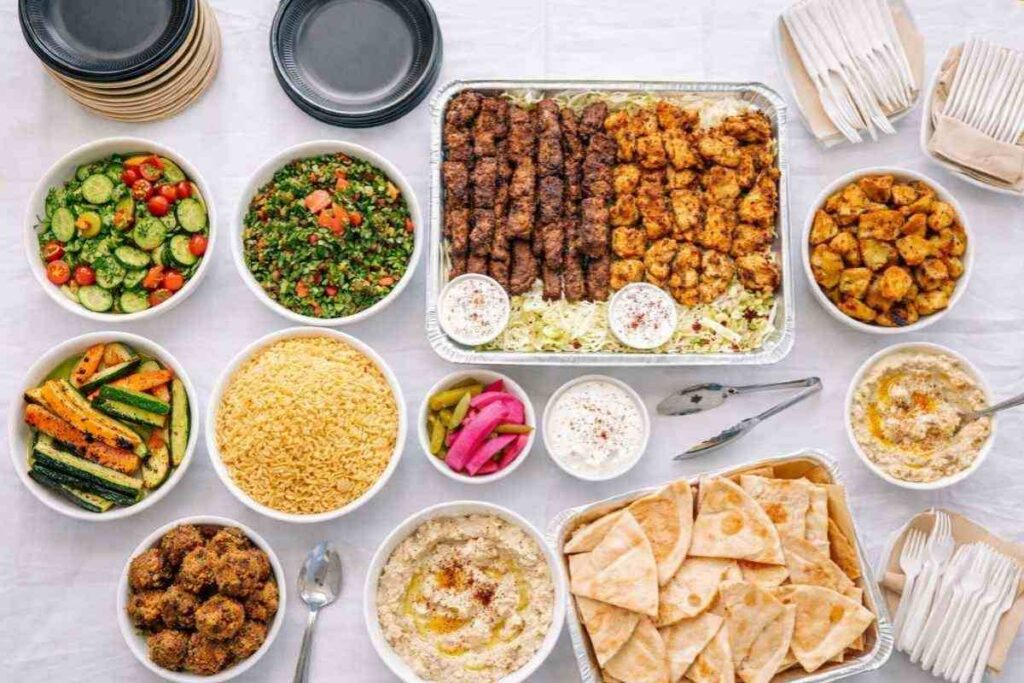
Forget complicated meal plans and calorie counting. Using the ‘healthy plate’ model can make you feel confident and in control of your nutrition, whether at home, work, or dining out for healthy food.
The Mediterranean Plate Method
This approach works perfectly for Mediterranean restaurants and home cooking alike:
- Half your plate: vegetables and/or salad – Go heavy on the greens, tomatoes, cucumbers, peppers, onions, and herbs
- Quarter of your plate: protein – Grilled chicken, lamb, beef kabobs, falafel, fish, or legumes
- Quarter of your plate: whole grains or starchy vegetables – Rice, bulgur, whole wheat pita, or roasted potatoes
- Healthy fats and flavor: – Olive oil, tahini, hummus, baba ghanoush, tzatziki, or garlic sauce
Real-world example: When you visit Aladdin Mediterranean cuisine or Aladdin Mediterranean Grill in Houston, you can build this exact plate. Start with fattoush or Greek salad, add a grilled kabob or falafel, include rice or pita, and finish with hummus or baba ghanoush. You’ve just created a nutritionist-approved meal that tastes incredible.
USDA MyPlate and Harvard Healthy Eating Plate
These mainstream nutrition models recommend similar patterns:
- Make half your plate fruits and vegetables
- Choose whole grains over refined grains at least half the time
- Include varied protein sources
- Use healthy oils
- Drink water instead of sugary beverages
Mediterranean eating naturally aligns with these guidelines, which is why nutritionists consistently recommend it.
Global Healthy Diet Guidelines (Based on WHO Recommendations)
The World Health Organization provides clear, evidence-based guidance that works worldwide. Here are the key recommendations:
Fruits and Vegetables
At least 400g per day (about five portions), excluding starchy roots like potatoes
Why it matters: Fruits and vegetables provide fiber, vitamins, minerals, and antioxidants that support every system in your body.
Mediterranean advantage: Traditional Lebanese and Greek meals are vegetable-forward by default. Think tabbouleh, fattoush, Greek salad, grilled vegetables, and herb-rich dishes.
Added Sugars (Free Sugars)
Less than 10% of daily calories, ideally under 5%
What counts: Added sugars plus sugars naturally found in honey, syrups, fruit juices, and fruit juice concentrates (but not whole fruit)
Mediterranean advantage: Mediterranean desserts tend to be less sweet than typical American treats, and meals don’t rely on sugary sauces or sweetened drinks.
Salt and Sodium
Less than 5g salt per day (about one teaspoon, or 2g sodium)
Why it matters: Excessive sodium intake is linked to high blood pressure and heart disease.
Mediterranean advantage: Mediterranean cooking uses fresh herbs, lemon juice, garlic, and spices for flavor instead of relying heavily on salt.
Fats
Total fat under 30% of daily calories
- Saturated fat: under 10%
- Trans fats: under 1%
- Shift toward unsaturated fats
Mediterranean advantage: This is where Mediterranean cuisine truly shines. Olive oil, tahini, nuts, and fatty fish provide heart-healthy unsaturated fats, while lean proteins and minimal processed foods keep saturated and trans fats low.
Your Healthy Foods Shopping List (Mediterranean Edition)
Building healthy meals starts with smart shopping. Here’s your practical guide organized by category:
Vegetables (Eat Lots of These)
- Leafy greens: parsley, romaine, spinach, mint, arugula
- Salad vegetables: tomatoes, cucumbers, bell peppers, onions, radishes
- Cooked favorites: eggplant, zucchini, cauliflower, green beans, okra
Budget tip: Frozen vegetables are just as nutritious as fresh and often more affordable.
Whole Grains
- Bulgur wheat (used in tabbouleh and kibbeh)
- Brown rice
- Whole wheat pita
- Quinoa
- Farro
Legumes (The Protein Powerhouses)
- Chickpeas (for hummus, falafel, salads)
- Lentils (for soups and stews)
- Fava beans
- White beans
Why they matter: Legumes are affordable, filling, high in protein and fiber, and central to Mediterranean cooking.
Healthy Proteins
- Chicken (grilled, roasted, or in kabobs)
- Lamb (traditional in kabobs and shawarma)
- Beef (lean cuts for kabobs)
- Fish and seafood (salmon, shrimp, Mediterranean-style fish)
- Falafel (chickpea-based protein)
Halal-conscious note: At Aladdin Houston, all our meats are halal-certified, ensuring quality and adherence to dietary guidelines.
Healthy Fats
- Extra virgin olive oil
- Tahini (sesame seed paste)
- Nuts (walnuts, almonds, pine nuts, pistachios)
- Olives
- Avocados
Fresh Herbs and Flavor Makers
- Parsley, mint, cilantro, dill
- Garlic, lemon juice, sumac
- Cumin, coriander, za’atar
Finding Healthy Food in Houston: Dining Out Made Easy
You don’t need to cook every meal to eat healthily. Restaurants—especially Mediterranean restaurants—make it easy to build nutritious meals when you know what to look for.
Why Mediterranean is the Best Healthy Food Houston Offers
Mediterranean restaurants naturally offer many of the healthiest menu options:
- Vegetable-rich dishes: salads, grilled vegetables, stuffed grape leaves
- Lean proteins: grilled chicken, lamb, beef kabobs, fish
- Healthy sides: hummus, baba ghanoush, tabbouleh, lentil soup
- Whole grains: bulgur, brown rice, whole wheat pita
- Healthy fats: dishes prepared with olive oil instead of butter or heavy cream
How to Build a Healthy Plate at Aladdin Houston
When you visit either of our Houston locations—Aladdin Mediterranean Cuisine in Montrose (912 Westheimer Rd) or Aladdin Mediterranean Grill in the Heights (1737 W 34th St), here’s how to build a perfectly balanced healthy plate:
Start with vegetables:
– Greek salad (romaine, tomatoes, cucumbers, onions, olives, feta)
– Fattoush (mixed greens with crispy pita, sumac dressing)
– Tabbouleh (parsley, tomatoes, bulgur)
Add your protein:
– Chicken kabob (grilled, seasoned with Mediterranean spices)
– Lamb kabob (tender, halal-certified)
– Beef kabob (lean, flavorful)
– Falafel (crispy chickpea fritters—perfect for vegetarians)
– Combination plates (mix multiple proteins)
Include a healthy side:
– Hummus (chickpeas, tahini, olive oil, lemon)
– Baba ghanoush (roasted eggplant, tahini)
– Rice (basmati, can request brown rice)
– Lentil soup
Customize for your needs:
– Vegan? Load up on salads, hummus, baba ghanoush, falafel, tabbouleh, and grilled vegetables
– Vegetarian? Add feta cheese, eggs, and yogurt-based sauces
– Gluten-free? Skip the pita, focus on salads, proteins, and rice
– High protein? Double down on kabobs and add extra hummus
This isn’t “diet food”—it’s genuinely delicious Mediterranean cooking that happens to align perfectly with healthy eating guidelines. What About “Unhealthy” Foods? A Balanced Perspective: Healthy eating isn’t about never eating pizza, dessert, or fried foods again. It’s about patterns, not perfection.
Foods to Limit (Without Guilt or Drama)
The WHO notes that many people consume too many foods high in energy, fats, free sugars, and salt, while not eating enough fruits, vegetables, and fiber-rich foods.
Categories to watch:
- Sugar-sweetened beverages (soda, sweetened tea, energy drinks)
- Ultra-processed snacks (chips, packaged cookies, candy)
- Heavily processed meats
- Fast food and fried foods
- Foods with excessive sodium
The 80/20 approach: If 80% of your meals are built from whole, nutritious foods, you have plenty of room for treats and flexibility. A slice of baklava after a healthy Mediterranean meal? Absolutely fine. An entire diet based on processed foods? That’s where problems arise.
Ultra-Processed Foods: What the Research Shows
Recent large-scale studies published in the BMJ found associations between higher intake of ultra-processed foods and increased risk of adverse health outcomes. These foods are typically industrial products made from refined ingredients and additives.
The practical takeaway: Build most meals from whole or minimally processed foods, and enjoy packaged treats occasionally—not as your dietary foundation.
Common Healthy Eating Questions Answered
Is Mediterranean food really healthier than other cuisines?
Mediterranean eating patterns are among the most studied and validated approaches to healthy eating. Research consistently shows associations with lower rates of heart disease, diabetes, and other chronic conditions. The combination of plant-forward eating, healthy fats, lean proteins, and minimal processing explains why it works so well.
What are the healthiest foods in the world?
There’s no single “1 healthiest food,” but foods that consistently appear in healthy diets worldwide include vegetables, fruits, legumes, whole grains, nuts, olive oil, and fatty fish. Traditional Mediterranean dishes such as hummus, tabouli, Greek salad, and grilled kebabs showcase many of these ingredients.
How much sugar is too much?
The WHO recommends keeping free sugars (added sugars and those in honey, syrups, and juices) below 10% of daily calories, ideally under 5%. For a 2,000-calorie diet, that’s roughly 50g maximum (10%) or 25g ideally (5%)—about 6 teaspoons.
Are carbs unhealthy?
Carbs aren’t the problem—the type matters. Whole grains (bulgur, brown rice, whole wheat), legumes (chickpeas, lentils), vegetables, and fruits provide essential fiber and nutrients. Refined carbs and added sugars (white bread, pastries, sugary drinks) offer less nutrition and can spike blood sugar.
Is “halal food” automatically healthy?
Halal refers to how meat is prepared according to Islamic dietary law—it doesn’t automatically mean “healthy.” However, halal requirements often result in higher-quality meat. At Aladdin Houston, we use halal-certified meats and prepare them in health-conscious ways: grilling rather than frying, seasoning with herbs and spices rather than excess salt, and serving with vegetable-rich sides.
Can you eat healthy on a budget in Houston?
Absolutely. Some of the most nutritious foods are also affordable: legumes (dried beans, lentils), rice, seasonal vegetables, eggs, canned fish, and frozen produce. Mediterranean staples like chickpeas, bulgur, olive oil, and seasonal vegetables provide excellent nutrition without breaking the bank.
Making Healthy Eating Work in Your Real Houston Life
For Busy Professionals
The challenge: Limited time, lots of meetings, grabbing whatever’s convenient.
The solution: Keep healthy Mediterranean restaurants like Aladdin on speed dial for quick lunches. Order a combo plate with salad, protein, and rice—ready in minutes, nutritious, and satisfying. We also offer online ordering and pickup at both Houston locations.
For Families
The challenge: Picky eaters, different dietary needs, cooking fatigue.
The solution: Mediterranean food offers something for everyone. Kids often love kabobs, rice, and hummus with pita. Adults can load up on salads and vegetables. Vegetarians have plenty of options (falafel, hummus, tabbouleh), and meat-eaters can choose from multiple kabob options.
Aladdin catering tip: Planning a family gathering, office event, or celebration? Our catering service brings healthy Mediterranean food to your event throughout Houston—from Montrose and the Heights to Katy, Sugar Land, the Woodlands, and beyond. Healthy food Houston.
For Health-Conscious Eaters
The challenge: Finding restaurants that genuinely offer nutritious options (not just “low-calorie” but actually healthy)
The solution: Mediterranean restaurants excel at this. At Aladdin Houston, you can build plates that check every healthy eating box: vegetables, fiber, lean protein, healthy fats, minimal processing, and bold flavor. We’re not marketing “diet food”—we’re serving food that’s been recognized as healthy for thousands of years.
For Vegetarians and Vegans
The challenge: Limited options at many restaurants.
The solution: Mediterranean cuisine is incredibly plant-forward. Dishes like hummus, baba ghanoush, falafel, tabbouleh, fattoush, stuffed grape leaves, lentil soup, and grilled vegetables are naturally vegan or vegetarian. You can easily build a complete, protein-rich meal without meat.
Healthy Food Houston: Your Guide to Mediterranean Dining
Houston’s diversity makes it one of the best cities in America for international cuisine—including authentic Mediterranean food. Whether you’re in Montrose, the Heights, Midtown, Katy, Sugar Land, or the Woodlands, you have access to healthy eating options.
Why Choose Aladdin Mediterranean Cuisine?
Since 2006, we’ve been serving Houston authentic Lebanese and Mediterranean food prepared fresh daily. Here’s what sets us apart:
- Quality ingredients: We source high-quality ingredients and halal-certified meats
- Made fresh daily: Everything from our hummus to our tabbouleh is prepared in-house
- Customizable plates: Build your meal exactly how you want it—vegan, vegetarian, gluten-free, or all the meats
- Generous portions: Healthy eating shouldn’t mean leaving hungry
- Two Houston locations: Montrose (912 Westheimer Rd) and the Heights (1737 W 34th St)
- Catering available: Bring healthy Mediterranean food to your office, event, or gathering
Whether you’re searching for “healthy food near me,” “Mediterranean restaurant Houston,” “halal food Houston,” or “Lebanese food near me,” Aladdin offers precisely what you’re looking for: nutritious, flavorful Mediterranean cuisine that supports your health goals without sacrificing taste.
The Bottom Line: Healthy Eating Made Simple
If the internet has made “healthy food” feel complicated, here’s your reset:
The fundamentals never change:
- Build meals around vegetables and whole foods
- Include protein you enjoy (plant-based or animal-based)
- Choose whole grains often
- Use healthy fats like olive oil
- Keep added sugars and excess salt in check
- Stay hydrated with water
You don’t need:
– Perfect eating
– Expensive supplements
– Complicated meal plans
– Elimination of entire food groups
– “Superfoods” or miracle ingredients
You do need:
– A pattern you can maintain long-term
– Food you actually enjoy
– Balance between nutrition and pleasure
– Flexibility for real life
Mediterranean eating offers exactly this balance—which is why it’s consistently ranked among the world’s healthiest diets.
Ready to Experience Healthy Mediterranean Food in Houston?
If you’re tired of bland “healthy food” that leaves you unsatisfied, it’s time to discover what Mediterranean cuisine can do. At Aladdin Mediterranean cuisine and Aladdin Mediterranean Grill, we prove that healthy eating can be absolutely delicious.
Visit us at either Houston location:
- Aladdin Mediterranean Cuisine (Montrose)
- 912 Westheimer Rd, Houston, TX 77006
- (713) 942-2321
- Aladdin Mediterranean Grill (Heights)
- 1737 W 34th St, Houston, TX 77018
- (713) 681-6257
Order online for pickup at aladdinshouston.com, or contact us about catering for your next event. Because healthy food should nourish your body and bring you joy—and that’s precisely what we’ve been doing in Houston since 2006.
]]>Why you’ll love the Turkish Green Beans Recipe
- Simple pantry staples: green beans, onion, tomatoes, good olive oil—nothing fussy.
- Meal-prep friendly: tastes great right away and even better after a chill in the fridge.
- Versatile: enjoy warm, room temp, or chilled; works as a side, mezze, or light lunch.
- Naturally plant-based: vegan and gluten-free without substitutions.
- Bright, clean flavor: lemon and herbs keep it fresh, not heavy. Turkish green beans recipe.
Ingredients at a glance
- Green beans: fresh and crisp; trim ends and cut into bite-size pieces.
- Onion: sautéed gently for sweetness (yellow or white).
- Tomatoes: fresh diced (or canned diced when out of season).
- Olive oil: the star—use a flavorful extra-virgin.
- Garlic: thinly sliced for gentle aroma.
- Sugar & salt: balance acidity and round the flavors.
- Lemon & herbs (optional): parsley or dill to finish, plus a final squeeze of lemon.

How to make Turkish Green Beans Recipe
The classic Turkish Green Beans Recipe (Zeytinyağlı Taze Fasulye), now a complete one-pot meal. Halal chicken thighs are seared and braised alongside tomatoes, onion, and olive oil until the beans are silky and the chicken falls apart. Serve warm with rice or pita — no sides needed.
INGREDIENTS
- 500 grams boneless skinless chicken thighs (halal), cut into 2-inch pieces
- 600 grams fresh green beans, trimmed and cut into 2-inch pieces
- 150 grams medium onion, medium-diced
- 400 grams tomatoes, medium-diced (or canned diced)
- 60 milliliters extra-virgin olive oil
- 3 garlic cloves, thinly sliced
- 1 teaspoons ground cumin
- 0.5 teaspoons ground coriander
- 0.5 teaspoons Aleppo pepper (or red pepper flakes)
- 1 teaspoons sugar
- 1.3 teaspoons salt
- 0.5 teaspoons black pepper
- 1 lemon, juiced
- 2 tablespoons fresh parsley or dill, roughly chopped (to finish)
STEPS
- Season the chicken: Pat 500 grams boneless skinless chicken thighs (halal), cut into 2-inch pieces dry with a paper towel. Season with 1 teaspoons ground cumin, 0.5 teaspoons ground coriander, 0.5 teaspoons Aleppo pepper (or red pepper flakes), 0.5 teaspoons black pepper, and a pinch of 1.3 teaspoons salt. Toss to coat evenly. Let sit for 5 minutes while you prep the vegetables.
- Sear the chicken: Heat 60 milliliters extra-virgin olive oil in a medium pot over medium-high heat. Add the chicken pieces in a single layer and sear for 2–3 minutes per side until golden. Don’t crowd the pot — work in batches if needed. Remove chicken and set aside. Leave the oil in the pot.
- Soften the onion: Reduce heat to medium. Add 150 grams medium onion, medium-diced to the same pot and cook in the remaining oil until translucent and soft — do not brown them.
- Build the braise: Add 600 grams fresh green beans, trimmed and cut into 2-inch pieces to the pot and stir to coat in the oil and onions. Add 400 grams tomatoes, medium-diced (or canned diced), 3 garlic cloves, thinly sliced, 1 teaspoons sugar, and remaining 1.3 teaspoons salt. Stir gently to combine. Nestle the seared chicken back into the pot, pushing pieces down between the beans.
- Cover and braise low: Cover the pot with a lid and reduce heat to medium-low. Let everything braise together until the beans are silky-tender and the chicken is cooked through. Avoid stirring — this dish develops best with minimal interference. Check at the 15-minute mark: if the pot looks dry, add 2–3 tablespoons of water and lower the heat slightly.Turkish green beans.
- Finish and rest: Remove from heat. Squeeze 1 lemon, juiced over the top and scatter 2 tablespoons fresh parsley or dill, roughly chopped (to finish). Let the dish rest uncovered for 10 minutes — the flavors settle and deepen as it sits. Drizzle with a little extra olive oil before serving.
NOTES
Lamb variation: Swap chicken thighs for 500g bone-in lamb shoulder pieces. Increase braise time to 60–75 minutes on low — the bone adds depth to the braising liquid.
Make ahead: Like the original, this tastes better the next day. Store in an airtight container for up to 3 days. Reheat gently on the stovetop with a splash of water.
Serve with: Rice pilaf, warm pita, and a side of hummus or labneh.
Halal note: All chicken used at Aladdin Mediterranean cuisine is halal-certified. When making at home, look for halal-certified chicken thighs at your local halal market.
Variations & serving ideas
- Citrusy lift: finish with lemon zest + juice.
- Herby: add dill or parsley before serving.
- Spice: a pinch of Aleppo pepper or red pepper flakes.
- Make it a meal: pair with rice pilaf, pita, and a protein like Chicken Kabob or Fish of the Day.
What to serve it with
- Tabbouleh or Fattoush for a bright, fresh plate.
- Hummus and warm pita for dipping.
- Grilled meats (sirloin or chicken kabob) for a complete Mediterranean spread.
Storage & meal prep
- Fridge: up to 3 days in an airtight container.
- Tastes better next day: the olive oil and tomatoes mellow beautifully.
- To serve: bring to room temp, then add a fresh drizzle of olive oil and lemon.
Planning lunch? Order online for pickup at Montrose or stop by Garden Oaks—fresh, fast, and flavorful.
Want this flavor without the prep? Aladdin’s Houston has you covered. Choose Montrose or Garden Oaks, then mix and match from our mezze case—hummus, tabbouleh, baba ghanoush, roasted cauliflower, green beans in olive oil, and more—to build a custom healthy plate. Perfect for office lunch, weeknight dinner, or easy entertaining.
Planning a meeting or small gathering? We also offer Mediterranean catering in Houston—dips trays, salads, and kabobs that travel beautifully. Start with hummus, tabbouleh, and Turkish green beans recipe, then add proteins and pita for an easy, crowd-pleasing menu.
Frequently Asked Questions about Turkish Green Beans Recipe
What is Zeytinyağlı Taze Fasulye? Zeytinyağlı Taze Fasulye is a traditional Turkish green bean dish slow-braised in extra-virgin olive oil with tomatoes, onion, and garlic. The name translates literally to “olive oil green beans” — zeytinyağlı means olive oil, taze fasulye means fresh beans. It’s served warm or at room temperature, which makes it ideal for meal prep or mezze spreads. A squeeze of lemon and fresh herbs finish it just before serving.
Do I need to add extra water while cooking? In most cases, no. The tomatoes and green beans release enough liquid during braising to cook the dish without added water. If the pot looks dry in the first 10 minutes, add just 1–2 tablespoons of water and lower the heat — don’t pour in more than that, or you’ll dilute the flavor. Low, slow heat is what makes this dish work.
Can I use canned tomatoes instead of fresh? Yes — diced canned tomatoes are a solid substitute when fresh tomatoes are out of season or you want a faster prep. They break down smoothly during braising and give the dish a slightly deeper, richer base. If you use canned, drain the excess liquid first and adjust your salt since most canned tomatoes already contain sodium.
Is this dish vegan and gluten-free? Yes, the recipe is naturally vegan and gluten-free as written — no dairy, no meat, no wheat. The richness comes entirely from olive oil, which keeps it plant-based without feeling light. It’s a dish that works for guests with a range of dietary needs without requiring substitutions or workarounds.
Can I make Turkish green beans ahead of time? This is one of the best make-ahead dishes in Mediterranean cooking. The flavor actually deepens after a few hours in the fridge — the olive oil and tomatoes continue to mellow and absorb into the beans. Store in an airtight container for up to 3 days. Before serving, bring it to room temperature and finish with a drizzle of olive oil and a fresh squeeze of lemon.
]]>Whether you’re seeking a casual lunch spot, a family dinner destination, planning a special celebration, or simply craving authentic Middle Eastern cuisine, Aladdin has established itself as one of Houston’s premier halal dining experiences. In a city as diverse and food-obsessed as Houston, earning that reputation takes more than just good food—it requires dedication, authenticity, and a genuine love for what you do.
The Story Behind Houston’s Favorite Halal Food Restaurant
Every great restaurant has a story, and Aladdin’s begins with passion. Founded in 2006 by a food enthusiast who wanted to share their rich Middle Eastern heritage with Houston, Aladdin was born from a simple yet powerful mission: to bring authentic, high-quality halal cuisine to the diverse communities of this vibrant city.
The founder recognized a gap in Houston’s culinary landscape. While the city boasted an incredible diversity of dining options, there was a need for a halal food restaurant that didn’t compromise on quality, flavor, or authenticity. They envisioned a place where families could gather without worry, where traditional recipes would be honored, and where the warmth of Middle Eastern hospitality would shine through in every interaction.
What started as a single location has grown into two thriving restaurants, but the core values remain unchanged. The founders believed that a halal food restaurant should be more than just a place to eat—it should be a gathering space where families and friends connect over delicious food, where cultural traditions are celebrated, and where everyone, regardless of their background, feels welcome at the table.
Building a Legacy, One Dish at a Time
The early days of Aladdin were marked by determination and attention to detail. The founders spent countless hours perfecting recipes, sourcing the right suppliers, and training staff to understand not just how to prepare food, but why each step mattered. They knew that building Houston’s trust as a halal food restaurant meant delivering consistency, quality, and authenticity with every single order.
Word spread quickly through Houston’s communities. Families who had been searching for reliable halal dining options found a home at Aladdin. Food enthusiasts who appreciated bold, authentic flavors became regulars. The restaurant’s reputation grew organically, built on genuine customer satisfaction rather than flashy marketing.
Authenticity Meets Innovation
Over nearly two decades, Aladdin has perfected the balance between honoring traditional Middle Eastern recipes and adapting to the evolving tastes of Houston diners. The menu showcases dishes from across the Mediterranean to the Levant, each prepared with techniques passed down through generations while incorporating fresh, locally-sourced ingredients that reflect Houston’s vibrant food culture.
This commitment to authenticity is what sets Aladdin apart as a halal food restaurant. Every dish tells a story—whether it’s the perfectly seasoned kafta that represents centuries of Levantine culinary tradition, or the aromatic saffron chicken kabob that showcases the delicate art of Persian-influenced cooking. Every spice blend has purpose, every cooking method has reason, and every meal is crafted with the same care and attention as if serving family.
The kitchen team at Aladdin comprises experienced chefs who have an intimate understanding of Middle Eastern cuisine. Many bring family recipes and regional cooking knowledge that can’t be found in cookbooks. This depth of expertise means that when you order from this halal food restaurant, you’re experiencing food prepared by people who truly understand the cuisine at its core.
Why Aladdin Takes Halal Certification Seriously
As a dedicated halal food restaurant, Aladdin understands that halal certification isn’t just a label—it’s a promise, a responsibility, and a fundamental part of the restaurant’s identity. For many customers, knowing that their food is genuinely halal isn’t just a preference; it’s a religious requirement that affects where they can and cannot eat.
Aladdin takes this responsibility seriously, implementing comprehensive systems to ensure complete halal compliance at every level of operation.
The Certification Process
The restaurant sources all meats from certified halal suppliers who adhere to strict Islamic dietary guidelines. These suppliers are carefully vetted and must maintain certification from recognized halal certifying organizations. This certification process involves:
Humane treatment of animals according to Islamic principles. The animals must be healthy, well-cared for, and treated with respect throughout their lives. This ethical approach aligns with both religious requirements and modern values around animal welfare.
Swift, ethical slaughter methods that minimize suffering. According to halal guidelines, the slaughter must be performed by a trained Muslim who invokes God’s name, and the process must be done swiftly with a sharp instrument to ensure the most humane death possible. The animal must be completely deceased before any processing begins.
Rigorous inspection processes by recognized halal certifying organizations. These independent bodies regularly audit suppliers to ensure ongoing compliance with halal standards. Documentation is maintained at every step of the supply chain.
Zero contamination with haram (forbidden) ingredients like alcohol or pork products. This extends beyond just the meat itself to every ingredient used in marinades, seasonings, and cooking processes.
Beyond Sourcing: Maintaining Halal Integrity

But Aladdin’s dedication goes far beyond just sourcing certified ingredients. As a comprehensive halal food restaurant, every aspect of food preparation is designed to maintain halal integrity:
Dedicated Preparation Areas: The kitchen maintains strict separation protocols to prevent any possibility of cross-contamination. Cooking surfaces, utensils, and equipment used for halal food preparation are never used for non-halal items.
Staff Training: Every team member undergoes thorough training in halal food handling practices. From the kitchen staff to servers, everyone understands the importance of maintaining halal standards and knows the protocols to follow.
Ingredient Verification: Beyond meats, every ingredient that enters the kitchen is verified to ensure it contains no haram elements. This includes checking for hidden ingredients like alcohol-based flavorings or animal-derived additives that might not be immediately obvious.
Supply Chain Transparency: Aladdin maintains detailed records of all suppliers and ingredients, ensuring complete traceability. If a customer has questions about any dish’s halal status, the restaurant can provide specific information about sourcing and preparation.
For diners who follow halal dietary laws, this comprehensive approach provides complete peace of mind. You can order with confidence, knowing that every aspect of your meal meets halal requirements. For everyone else, it’s simply a guarantee of quality, cleanliness, ethical sourcing, and food prepared with meticulous attention to detail.
Two Convenient Locations Serving Greater Houston
Montrose: Where Art Meets Flavor

The Montrose location captures the eclectic, artistic spirit of one of Houston’s most vibrant and culturally rich neighborhoods. Surrounded by art galleries, independent boutiques, vintage shops, and a wonderfully diverse community, this Aladdin restaurant attracts everyone from young professionals grabbing a quick lunch between meetings to families enjoying leisurely weekend dinners.
The atmosphere reflects the neighborhood’s creative energy—warm, welcoming, unpretentious, and authentically local. The interior design strikes a balance between traditional Middle Eastern aesthetics and contemporary Houston style, creating a space that feels both exotic and familiar. It’s the kind of halal food restaurant where you can dress up for a special occasion or come in casual attire after a day exploring the neighborhood. You can also come solo with a book and enjoy a peaceful meal, or bring a large group of friends for a lively celebration.
The Montrose location has become a neighborhood institution, a place where regulars are greeted by name and first-time visitors are made to feel like old friends. The diverse clientele reflects the neighborhood itself—you might find yourself dining next to an artist discussing their latest exhibition, a family celebrating a graduation, or a group of coworkers bonding over shared platters of kabobs and hummus.
Parking is available along nearby streets, making it easy to stop by even during the area’s busier hours. The location is also within walking distance of many Montrose attractions, making Aladdin a perfect stop before or after exploring the neighborhood’s galleries, shops, and cultural sites.
Garden Oaks: A Family-Friendly Neighborhood Gem

The Garden Oaks location offers a different but equally appealing experience. Nestled in a quiet residential area known for its tree-lined streets and strong sense of community, this restaurant provides ample parking and a spacious dining area perfect for larger groups and families with children.
While Montrose brings urban energy, Garden Oaks delivers suburban comfort. The atmosphere here is slightly more relaxed and family-oriented, with a layout that easily accommodates strollers, high chairs, and the pleasant chaos that comes with family dining. Parents appreciate the welcoming environment where kids can be kids, while the quality of food remains uncompromised.
Garden Oaks residents have embraced Aladdin as their neighborhood halal food restaurant, making it a regular stop for weeknight dinners when nobody feels like cooking, weekend family gatherings, birthday celebrations, and community events. The convenient location means locals can easily swing by to pick up takeout on their way home from work or bring out-of-town guests for an authentic taste of Middle Eastern cuisine.
The restaurant has become woven into the fabric of the Garden Oaks community, supporting local schools, participating in neighborhood events, and building relationships that extend beyond just restaurant-customer transactions. This is dining with a genuine neighborhood feel, where the staff recognize regular customers and remember their favorite dishes.
Easy Access Across Houston
Both locations are strategically positioned to serve different parts of Houston while maintaining the same high standards of food quality, ingredient sourcing, and customer service that define the Aladdin experience. Whether you’re in the heart of the city or the suburbs, whether you prefer the artistic vibe of Montrose or the family-friendly atmosphere of Garden Oaks, there’s an Aladdin location ready to serve you authentic halal cuisine.
The two locations also make Aladdin accessible for different occasions and needs. Meeting someone from across town? Choose the location that’s most convenient for both parties. Want a specific neighborhood vibe for your dining experience? Pick the location that matches your mood.
What Makes Aladdin Different from Other Halal Food Restaurants
In a city as diverse and food-obsessed as Houston, you’ll find many dining options, including several halal restaurants. So what makes Aladdin special? What has allowed this halal food restaurant to not just survive but thrive for nearly two decades?
Fresh Ingredients, Every Day
Aladdin partners with local markets and suppliers to source the freshest vegetables, herbs, and produce available. This farm-to-table approach isn’t just a trendy buzzword here—it’s a practical commitment to quality that you can taste in every bite.
The restaurant’s chefs personally select produce, choosing only items that meet their exacting standards. This means that every salad is crisp and vibrant, every herb is fragrant and flavorful, every vegetable is at peak ripeness, and every dish bursts with natural flavor. As a halal food restaurant committed to quality, freshness is never compromised, even when it means paying a premium for the best ingredients.
This dedication to freshness extends to the preparation methods as well. Dishes are made to order rather than sitting under heat lamps. Sauces and dips are prepared daily in-house. Even items that could be bought pre-made, like hummus or tahini sauce, are crafted from scratch in Aladdin’s kitchen using traditional methods and fresh ingredients.
Generous Portions, Fair Prices
Value matters, especially in today’s economic climate. Aladdin’s portion sizes are designed with generosity in mind, perfect for sharing and ensuring satisfaction. When you order a plate at this halal food restaurant, you’re getting a genuinely filling meal, not an artfully arranged handful of food on an oversized plate.
Families particularly appreciate this approach. The portions make it easy to share dishes family-style, allowing everyone to sample different flavors and creating a communal dining experience that’s central to Middle Eastern food culture. Groups can order several items and pass them around, enjoying variety without breaking the budget.
Despite the generous portions and high-quality ingredients, Aladdin maintains fair, reasonable pricing. You’ll leave full and happy without straining your budget—a rare combination in today’s dining landscape where quality often comes with a premium price tag. This commitment to value reflects the restaurant’s philosophy that great food should be accessible, not exclusive.
Something for Everyone
While Aladdin is proudly a halal food restaurant specializing in Middle Eastern cuisine, the menu welcomes all dietary preferences and restrictions. This inclusivity is intentional and important.
Extensive vegan and vegetarian options sit alongside meat dishes, ensuring that mixed groups with different dietary needs can all find something to love. The falafel, hummus, baba ganoush, tabbouleh, and various salads provide delicious options for plant-based eaters, while the meat dishes satisfy carnivores. Nobody has to feel left out or limited to side dishes.
Gluten-conscious diners can also find accommodating options with help from the knowledgeable staff. While Middle Eastern cuisine traditionally includes plenty of bread and pita, many dishes are naturally gluten-free or can be easily modified. The staff is happy to guide you through menu options and suggest modifications.
This flexibility makes Aladdin ideal for diverse groups—whether it’s a family with varying dietary preferences, a workplace lunch where not everyone eats meat, or a gathering of friends with different needs. As a halal food restaurant that embraces inclusivity, Aladdin ensures everyone leaves satisfied.
The Build-Your-Own Experience
One of Aladdin’s signature features is the ability to customize your meal through the build-your-own plate option. This interactive dining experience puts you in control while ensuring every meal is exactly what you’re craving.
Here’s how it works: Start by choosing your protein—options include marinated chicken, seasoned beef, tender lamb, or crispy falafel for vegetarian diners. Next, select your sides from options like fragrant saffron rice, fresh salad, warm pita bread, or other accompaniments. Finally, top it off with your favorite sauces—perhaps creamy garlic sauce, tangy tahini, spicy harissa, or cooling tzatziki.
The combinations are nearly endless, which means you can return to this halal food restaurant dozens of times and have a different meal each visit. First-timers can ask staff for recommendations on popular combinations, while regulars enjoy experimenting with new flavor pairings.
This customization option also makes Aladdin particularly appealing for people with specific dietary needs or preferences. You can load up on vegetables, go heavy on protein, skip certain ingredients, or create a perfectly balanced plate that matches your nutritional goals.
Expertise and Experience
Behind every great meal at Aladdin is a team of experienced culinary professionals who understand Middle Eastern cuisine deeply. The kitchen staff brings decades of combined experience, with many team members having learned cooking techniques from family traditions spanning generations.
This expertise shows in the details—the perfect char on the kabobs, the ideal texture of the falafel (crispy outside, tender inside), the balanced seasoning in the kafta, the aromatic spice blends that transport you to distant lands. These aren’t things you can fake or learn overnight; they come from genuine knowledge and experience.
The staff’s expertise extends to customer service as well. Whether you’re a Middle Eastern cuisine enthusiast who knows exactly what you want or a first-timer who needs guidance, the team can help you navigate the menu, explain dishes, suggest pairings, and ensure you have a wonderful dining experience.
From Quick Bites to Special Celebrations
One of Aladdin’s strengths as a halal food restaurant is its versatility. The restaurant adapts seamlessly to whatever you need:
Quick Lunch: Drop by during your workday for a fast, satisfying lunch. The efficient service means you can get in and out quickly without sacrificing quality.
Family Dinner: Bring the whole family for a leisurely evening meal. The spacious dining areas and kid-friendly atmosphere make it perfect for family gatherings.
Takeout: Order takeout for a cozy night at home. The food travels well and makes for an easy, delicious dinner without the cooking or cleanup.
Date Night: The warm atmosphere and delicious food create an excellent setting for a casual date or special evening out.
Group Gatherings: The large tables and shareable plates make Aladdin ideal for friend groups, office lunches, or casual celebrations.
Special Events: Arrange catering for your next event—from corporate lunches to wedding celebrations, baby showers to graduation parties. Aladdin’s catering services bring authentic halal cuisine to any occasion, with a menu designed to feed and impress crowds.
The restaurant’s convenient online ordering system and partnership with major delivery services mean you can enjoy Aladdin’s food however and wherever works best for you. Craving halal food at home? Order delivery. Need to feed an office meeting? Catering has you covered. Want the full restaurant experience? Both locations welcome you with open doors.
A Commitment to the Houston Community
Over nearly two decades, Aladdin has become more than just a halal food restaurant—it’s become part of Houston’s cultural fabric. The restaurant has served countless families, hosted innumerable celebrations, provided comfort food during difficult times, and created jobs for community members.
This longevity speaks to more than just good food. It reflects consistent quality, reliable service, fair treatment of employees, engagement with the community, and a genuine commitment to being a positive presence in Houston’s diverse neighborhoods.
Regular customers become like extended family. The staff knows their orders, asks about their lives, celebrates their good news, and provides a friendly face on difficult days. This is the kind of relationship that can only be built over years of consistent, quality service.
Visit Houston’s Trusted Halal Food Restaurant
Nearly 20 years of service to the Houston community speaks volumes. Aladdin has built its reputation one meal at a time, one satisfied customer at a time, one family gathering at a time. The restaurant’s longevity in an industry known for high failure rates is a testament to doing things right—quality ingredients, authentic preparation, fair prices, excellent service, and genuine hospitality.
Whether you’re a longtime fan of Middle Eastern cuisine or curious to try something new, whether you require strictly halal food or simply appreciate quality dining, whether you’re planning a quick lunch or a special celebration, Aladdin welcomes you to experience what has made it Houston’s go-to halal food restaurant since 2006.
The doors are open, the kitchen is ready, and a delicious meal awaits. Come experience the difference that nearly two decades of dedication, authenticity, and passion can make.
Ready to experience authentic halal dining?
Visit Aladdin at either the Montrose or Garden Oaks location, order online for delivery or pickup, or contact the restaurant to discuss catering options for your next event. Your table is waiting, and the flavors of the Middle East are ready to transport you.
Find Aladdin:
Craving more than just a meal? At Aladdin, every visit is a journey through Middle Eastern culinary traditions, served with Houston hospitality. Join us and discover why Houston has trusted Aladdin as their halal food restaurant of choice for nearly 20 years.
]]>If you’re more into eating than cooking (we get it 😄), you can always see what’s simmering in our kitchen; our menu is packed with Mediterranean classics that bring the same comfort and flavor as this dish, minus the dishes.
Key Takeaways
- You have options: boil, steam, sauté, roast, grill, or air‑fry. Each produces different textures and flavors.
- Wash right: rinse beans under running water (no soap or “produce wash”); scrub firm produce with a clean brush.
- Salted, rolling boil for blanching: 2–3 minutes for thin haricots verts, 3–5 minutes for standard beans; shock in ice water to lock color. (For freezing, use a 3‑minute water blanch.)
- Crisp‑tender targets: steam 4–6 min; sauté 6–8 min (finish 1–2 min covered with a splash of water); roast 14–18 min at 425°F / 220°C; grill 6–8 min; air‑fry 8–10 min at 380°F / 193°C.
- Color stays bright with fast heat and no acid during cooking. Add lemon/vinegar after cooking; acid + prolonged heat convert chlorophyll to drab pheophytin.
- Nutrient retention: Water-soluble vitamins (e.g., vitamin C) are lost most during boiling; steaming often retains more.
- Storage & safety: Refrigerate cooked beans and use within 3–4 days; reheat to 165°F (74 °C). Food Safety and Inspection Service. For general guidance on maximizing freshness, the USDA’s FoodKeeper resource is a reliable reference for storage times and best-quality windows.
- Choose beans that are firm, unblemished, and snap cleanly. Thinner haricots verts cook faster; thicker Blue Lake-type beans require 1–2 minutes more for the same level of doneness.
Taze Fasulye Ingredients

(Serves 4 as a side or light meal)
- 1 lb (450 g) green beans, trimmed; cut into 2–inch (5 cm) lengths (Romano/“Ayşe Kadın” beans if you can find them).
- 1 medium onion (about 150 g), finely sliced
- 2–3 ripe tomatoes (~300 g), peeled and diced (or 1½ cups canned diced, drained)
- 3 Tbsp extra‑virgin olive oil
- 1 garlic clove, minced (optional; not strictly classic)
- 1 tsp kosher salt, plus more to taste
- ½ tsp black pepper
- 1 tsp sugar (balances tomato acidity; traditional in zeytinyağlı dishes)
- ⅓ cup water (80 ml), plus 1–2 Tbsp more if needed
- Finishes: 2 Tbsp chopped parsley or dill; lemon wedges to serve
To serve with: rice pilaf, traditional hummus, baba ghanouj, warm pita.
Step-by-step
- Sweat the onion (don’t brown). Add olive oil to a wide pot over medium‑low heat. Cook onion with a pinch of salt until translucent and sweet, 6–8 min.
- Aromatics + tomato. Add garlic (if using) for 30 sec. Stir in tomatoes, sugar, pepper, and remaining salt. Cook to a light sauce, 5 min.
- Braise the beans. Add beans and water. Toss to coat. Cover, reduce the heat to low, and cook for 25–30 minutes, stirring once or twice, until the beans are tender but still hold their shape. Add a splash of water only if the pot is dry.
- Finish. Uncover and simmer 2–4 min to reduce to a glossy, spoonable sauce. Rest 10 min. Taste salt. Fold in herbs.
- Serve warm or at room temperature with lemon and bread/rice.
Pro Tips
- Heat control = texture. Keep it low; hard boils blow out the beans.
- Color reality = True zeytinyağlı beans are soft and may dull from the acid of tomatoes, which is both normal and desired.
- Tomato balance = If your tomatoes are very tart, the pinch of sugar is not optional.
- Olive oil matters = This dish tastes like your oil—use one you’d drizzle on salad.
Nutrition
Approx. Per serving, 4 servings (Based on 3 tablespoons olive oil and fresh tomatoes).
| Calories | 155 |
| Fat | 10 g |
| Carbs | 15 g |
| Fiber | 5 g |
| Protein | 3 g |
Storage
- Fridge: 4 days, airtight. Flavor improves on day 2.
- Freeze: Up to 3 months for best quality. Thaw overnight, rewarm gently to loosen the sauce.
The science in one minute (why techniques matter)
- Steaming/microwaving vs. boiling: Across multiple studies, steaming commonly retains more vitamin C and chlorophyll; boiling tends to show the most significant losses due to leaching.
- Chlorophyll chemistry: Acids displace the magnesium in chlorophyll, forming pheophytin (olive‑brown). Cook fast; add acids after.
- Fat‑soluble vitamins: Vitamins A, D, E, and K are absorbed better with fat; olive oil is a practical carrier.
- Warfarin note: If you’re on warfarin, keep vitamin‑K intake consistent—don’t swing from very low to very high day‑to‑day.
Green Beans Recipe variations

I’ll be honest; I’m not a big fan of adding plain sugar to green beans. As an American first, with Lebanese roots, living in Texas, I like to adjust this dish in two different ways that reflect both sides of who I am. These twists not only elevate the flavor, but they also make this a recipe that can compete with the best Lebanese green beans recipes and even stand out as an authentic Houston BBQ fusion dish.
The Lebanese Twist
Instead of sugar, I reach for pomegranate molasses—and the only brand I trust is Cortas. You can usually find it at Whole Foods or at any good Middle Eastern grocery store. The molasses adds a tangy-sweet depth that balances the tomatoes beautifully.
I also add a Maggi bouillon cube, which lends the sauce a subtle savoriness and roundness without overpowering the beans. This style keeps the dish vegan-friendly while giving it the unmistakable balance of a classic Lebanese green beans recipe with a Mediterranean flair.
The Texas Twist
Living in Houston, I couldn’t resist giving this dish a proper Lone Star makeover. First, I stir in a spoonful of La Costeña Chipotle Sauce for a smoky kick that Texans love. But the real twist? I take this vegetarian dish straight into barbecue country.
I’ll stop by a local spot in Montrose, Brook Street BBQ or The Pit Room, and pick up some burnt-end brisket. Tossed into the beans, the smoky, caramelized beef transforms humble Taze Fasulye into something I call Texas-Turkish Fasulye. It’s bold, hearty, and absolutely unforgettable, a dish that blends the roots of Mediterranean green beans with the soul of a Texas brisket recipe. (If you’re craving more budget-friendly flavor stops around town, check out this roundup of Houston’s best affordable restaurants; you might find your next BBQ fix.)
Just writing this makes me hungry. I can’t wait to make another batch, Texas-style. This variation proves that even a healthy Mediterranean side dish can evolve into a meaty, barbecue-inspired creation that feels right at home in Houston.
Frequently asked questions
Why beans turn dull (and how to avoid it)
Green color comes from chlorophyll Acid (lemon, vinegar, tomato), and prolonged heat knocks magnesium out of the chlorophyll molecule, forming pheophytin (olive‑green). Solution: Cook beans fast and hot, and add acidic ingredients after cooking. Avoid “fixes” like baking soda; alkaline water keeps color but damages texture and can degrade thiamin (vitamin B1); not worth it.
How long should I boil green beans?
4–5 minutes for crisp‑tender; 8–10 minutes for soft. If you boil, consider using the cooking liquid in soups or sauces to keep water‑soluble nutrients that leach out.
Can I sauté canned green beans?
Use fresh or frozen for sautéing and roasting. Canned beans are fully cooked and softer; they’re better warmed gently or used in casseroles.
What’s the best way to store cooked green beans?
Cool quickly and store in a covered container in the fridge; use within 3–4 days for safety.
How do I reheat cooked green beans without drying them out?
Skillet, medium heat, with a splash of water or broth, covered until hot; then uncover to evaporate excess. Ensure the center reaches 165°F / 74°C.
Are green beans low‑FODMAP?
Yes—Monash lists ~15 beans (~75 g) as a low‑FODMAP green‑light serving. Larger amounts may introduce polyols and no longer be low‑FODMAP for some people.
Do I have to blanch before sautéing or roasting?
No. Blanching for 2–3 minutes helps with large batches and sets the color, but you can skip it and finish with a quick covered steam in the pan. For freezing, blanch 3 minutes—that part isn’t optional for quality. Learn more about Home Food Preservation here.
How many green beans per person?
Plan ¼ lb (115 g) per person for sides; ⅓ lb (150 g) for generous portions.
]]>Lebanese Cuisine in Houston: A Flavorful Journey
Imagine stepping into a bustling eatery in Houston’s Montrose district on a warm evening. The scent of garlic, spices, and sizzling kebabs fills the air as laughter and Arabic greetings echo from the kitchen. You’re greeted with a heartfelt “Ahlan wa sahlan” (welcome), immediately enveloped by the warmth of Lebanese hospitality. In that moment, you’ve been transported from urban Texas into a Mediterranean oasis – a place where every meal is a celebration of flavor, family, and tradition.
It’s no wonder that so many Houstonians find themselves searching for food halal near me or Mediterranean restaurants close to me when craving an unforgettable dining experience. Houston’s vibrant food scene offers a diverse array of Mediterranean delights, with Lebanese cuisine at its heart. The unique flavors of Lebanese cuisine Lebanese cuisine continue to attract food lovers across the city.
Houston’s Diverse Dining Scene and the Rise of Lebanese Cuisine
Houston, Texas, is renowned for its diversity in its people, culture, and, of course, its food. From the best Italian restaurants in Houston to spicy Tex-Mex taquerías and aromatic Indian Houston restaurants, the city’s culinary landscape spans the globe. Yet, Mediterranean cuisine holds a special place among the places to eat in Houston, Texas. Over the years, Lebanese and other Middle Eastern flavors have woven themselves into the fabric of Houston’s dining culture. Lebanese families began settling in Texas over a century ago, establishing communities that would eventually introduce their cooking to locals. Today, Mediterranean fare ranks among the best in Houston, TX, prized for its bold flavors and wholesome ingredients.
The growing popularity of Lebanese cuisine highlights the city’s appreciation for diverse culinary traditions.
What makes Houston’s Mediterranean restaurants truly shine is how well they blend with the city’s character. Whether you’re exploring lively downtown Houston, Texas restaurants or looking for good restaurants by the Galleria, you’re never far from some hummus and shawarma. Even Spanish-speaking foodies searching for restaurantes en Houston (restaurants in Houston) will find that Mediterranean cuisine transcends language – its appeal is universal. Houston’s embrace of global food is so strong that a quick search for restaurants near me Mediterranean yields a long list of mouthwatering options. From casual kebab joints to elegant Eastern Mediterranean bistros, Houston has welcomed Mediterranean eateries with open arms – and hungry stomachs.
Lebanese Heritage: From the Old World to Houston
Understanding the rich history of Lebanese cuisine is key to fully appreciating its flavors.

To truly appreciate the Lebanese cuisine flourishing in Houston, one must understand its rich heritage. Lebanese cooking has ancient roots, tracing back thousands of years through the influences of Phoenician, Greek, Roman, and Ottoman cultures. Each era left its mark – from the widespread use of olive oil and lamb under Ottoman rule to the French introduction of flan and croissants during the mandate period. This history means that when you taste Lebanese food, you’re sampling a tradition refined over centuries.
Lebanon’s culinary legacy traveled across the world with its people. The Lebanese diaspora has been instrumental in spreading these flavors globally. In Houston, Lebanese immigrants and their descendants have played a pivotal role in shaping the city’s food scene. Many came to Texas in waves during the 20th century, bringing cherished family recipes and a passion for hospitality. They established some of Houston’s earliest Middle Eastern eateries, planting the seeds for today’s Mediterranean restaurant boom.
For example, Abdallah’s Bakery, started by two Lebanese brothers in 1976, grew from a humble bread bakery into one of Houston’s most beloved Lebanese spots. Likewise, Droubi’s began baking pita in 1979 and evolved into a landmark Middle Eastern deli and grocery, helping introduce Houston to staples like falafel, tabouli, and fresh pita bread. These early pioneers laid the foundation for authenticity and community that today’s Mediterranean restaurateurs continue to build upon.
Fast forward to 21st-century Houston, and you’ll find second and third-generation Lebanese Americans proudly sharing their cuisine with the city. Annual cultural events, such as the Houston Lebanese Festival, draw thousands of visitors to celebrate Lebanese music, dance, and, of course, food. It’s a vibrant showcase of how integrated Lebanese culture has become in Houston.
Today, the vibrancy of Lebanese cuisine captivates residents and visitors alike, showcasing its cultural significance.
The festival’s land of the cedars atmosphere – complete with sizzling shawarma stands and booths of homemade pastries – feels like a trip to Beirut without leaving Texas. This blending of cultures in Houston has created a dining public that’s not only open to Mediterranean flavors but actively seeks them out.
The Allure of Authentic Lebanese Cuisine
The experience of dining on Lebanese cuisine is not just about the food; it’s a cultural immersion.
Why has Lebanese cuisine captured Houston’s heart (and stomach)? The answer lies in its irresistible combination of flavors, healthfulness, and conviviality. Traditional Lebanese cooking emphasizes the use of fresh, whole ingredients, including a variety of vegetables, legumes, olive oil, garlic, lemon, and herbs such as parsley and mint.
Dishes are crafted to be vibrant, aromatic, balanced, and nourishing. It’s the kind of food that makes you feel good both during and after your meal – a key reason Mediterranean diets are often praised for their health benefits.
But beyond nutrition, eating Lebanese food is an experience of togetherness. In Lebanon, meals are often social events, centered around mezze – an array of small plates meant for sharing. A typical Lebanese table might feature dozens of mezze dishes, creating a colorful spread of dips, salads, and bite-sized savory treats.
This tradition continues in Houston’s Lebanese restaurants. Gather a group at any local Mediterranean spot, and you’ll likely start with communal plates of hummus, baba ghanouj (a roasted eggplant dip), and tabbouleh (a parsley-bulgur salad), all scooped up with warm flatbread. The shared enjoyment of food creates an atmosphere of warmth and hospitality that mirrors the culture of Lebanon itself. This shared experience is a cornerstone of the Lebanese cuisine tradition.
To truly delve into Lebanese cuisine, here are some must-try dishes that showcase its authentic flavors:
Hummus
A creamy blend of chickpeas, tahini (sesame paste), lemon, and garlic. This beloved dip is an essential starter, often drizzled with olive oil and served with pita. Houston restaurants each have their own twist – some top it with whole chickpeas, paprika, or pine nuts.
Falafel
Crispy on the outside, tender on the inside, falafel are deep-fried balls of ground chickpeas and herbs. 100% vegan and packed with protein, they’re a street-food favorite. Try them wrapped in pita with pickles and tahini sauce for the ultimate comfort food.
Shawarma
Marinated meat (typically chicken or beef) stacked on a vertical rotisserie, slow-roasted and shaved off in thin slices. Shawarma is the reigning king of Middle Eastern fast food. Wrapped in flatbread with garlic sauce, it’s immensely satisfying. If you’ve ever followed your nose searching for shawarma near me, you know the joy of that first juicy bite.
Kafta Kabob
Seasoned ground beef or lamb mixed with parsley, onions, and spices, molded onto skewers and grilled. Kafta (also spelled kofta) kabobs are juicy and bursting with Eastern Mediterranean spices. They pair beautifully with rice pilaf or in a pita sandwich.
Tabbouleh
Each dish in the realm of Lebanese cuisine carries a story, steeped in history and tradition.
A refreshing salad of finely chopped parsley, mint, tomatoes, and a little bulgur wheat, tossed in lemon juice and olive oil. Bright and herbaceous, tabbouleh is a palate-cleanser amid heavier dishes.
Baklava
A beloved dessert across the Middle East. Layers of flaky phyllo pastry are filled with crushed nuts and honey or syrup. One bite of this sticky-sweet treat with a cup of Lebanese coffee, and you’ll understand why it’s a classic celebration dessert.
These are just a few highlights of a cuisine with incredible depth. In Lebanese cooking, every dish tells a story – of a land at the crossroads of civilizations, of recipes passed down through generations, and of a cultural emphasis on generosity at the table. When Houston diners enjoy these foods, they’re partaking in a rich cultural heritage as much as a meal.
These narratives of Lebanese cuisine reflect the vibrancy of its cultural heritage.
Halal Cuisine and the Mediterranean Buffet: A Houston Match Made in Heaven
One aspect that has significantly fueled the popularity of Mediterranean food, and especially Lebanese cuisine, in Houston is its compatibility with Halal dining. Houston is home to a large and diverse Muslim community – the greater Houston area boasts more than 200,000 Muslim residents, making it the largest Islamic community in Texas. With such numbers, it’s no surprise that the demand for Halal food (permissible according to Islamic dietary laws) is high. Mediterranean and Middle Eastern restaurants have stepped up to meet that demand in delicious ways.
Many of Houston’s Mediterranean establishments proudly serve Halal-certified meats and preparations, welcoming Muslim diners and anyone seeking out Halal options. In the city’s melting pot, you can find Halal versions of almost any cuisine – from Southeast Asian to Mexican fusion – but Lebanese and Mediterranean fare holds a special appeal.
The very nature of Lebanese cuisine, with its focus on grilled meats, poultry, and veggie-centric dishes, aligns well with Halal guidelines. It’s common for popular spots to advertise their Halal status, knowing many diners specifically search for halal places near me or halal restaurants near me when choosing where to eat. As Lebanese cuisine evolves, it retains its essence and cultural roots.
Consider the experience of heading out with friends and looking up “halal food restaurant near me” on your phone. If you’re in Houston, you’ll likely discover that some of the top results are Mediterranean restaurants. Walk into any of these eateries – perhaps a laid-back grill in Hillcroft, or a bustling buffet in Meyerland – and you’ll see a cross-section of Houston’s population digging into plates of kabobs, curries, and salads.
This inclusive appeal is a hallmark of Mediterranean dining here: it’s food that vegetarians, vegans, and meat-lovers alike can enjoy, and it meets the needs of those who keep Halal without alienating those who don’t. In a single Houston Mediterranean restaurant, you might see a table of Middle Eastern expats enjoying a taste of home, a family of mixed dietary needs sharing everything from vegan falafel to Halal lamb, and a group of office coworkers simply reveling in the flavor – often without even realizing the food is Halal.
Another draw for Houston diners is the concept of the Mediterranean buffet or cafeteria-style service, which several local restaurants have perfected. If you’re the type who likes to sample a bit of everything, these places are your paradise, from creamy hummus and baba ganoush to fresh Greek salads, stuffed grape leaves, and steaming trays of spiced rice and roasted meats. You grab a tray and point to what you want, assembling a custom feast as generous or as light as you please. It’s a choose-your-own culinary adventure that Houstonians love, especially for lunch or casual dinners.
The mediterranean buffet format invites you to explore new items (a scoop of mujadara lentils here, a slice of spinach pie there) without committing to just one entree. And if you come hungry, you can truly get your fill – just as you might at a family gathering back in Lebanon.
There are other buffet-style or counter-service Mediterranean eateries across town, each with its loyal fans. The key is that this style of dining captures the spirit of abundance inherent in Middle Eastern hospitality. Guests are encouraged to taste a multitude of flavors and eat to their heart’s content. It’s the opposite of a fussy, portion-controlled meal – it feels like being invited to a Lebanese family’s table, where your plate is constantly refilled and “no” is not an option.
Houston diners, famous for their love of comfort food and big portions, naturally connect with this ethos. So when someone searches for Mediterranean food restaurants or good Houston restaurants for a hearty meal, these buffet-style Mediterranean spots often top the list of recommendations.
Neighborhoods Brimming with Mediterranean Flavor
One of the joys of Houston’s food scene is that you can find great eats in every corner of the city, and Lebanese cuisine is no exception. No matter where you happen to be, a mediterranean food restaurant near me is likely just a short drive away. Each neighborhood offers a slightly different experience, reflecting the local community and the restaurateurs who set up shop there.
Montrose, for example, has long been a hub for international dining, and it’s where many Houstonians first discovered Lebanese food. The Montrose area is home to the original Aladdin Mediterranean cuisine, which has been a cornerstone of Houston’s Mediterranean dining since 2006. Tucked along Westheimer Road, this laid-back, family-owned spot quickly became known for its flavorful halal-certified meats, vibrant salads, and welcoming atmosphere.
In fact, Aladdin’s success in Montrose led to the opening of a second location – Aladdin Mediterranean Grill in the Garden Oaks/Heights area – showing how demand for these flavors spans multiple neighborhoods. Montrose also boasts other gems like the decades-old Niko Niko’s (Greek) and various fusion spots, making it a go-to district for anyone craving a Mediterranean fix.
Head west to the Galleria area, and you’ll find another cluster of beloved Mediterranean restaurants. For instance, Cafe Lili has been serving delicate Lebanese dishes near the Galleria since 1991. Run by the Bejjani family, Cafe Lili is renowned for its homestyle approach – patrons return for the consistently excellent stuffed grape leaves, kibbe, and labneh (yogurt cheese) that have remained exceptional for over 30 years.
The longevity of such family-run establishments speaks to their quality and the loyal customer base they’ve built. Around the Galleria and nearby areas like West Houston, you’ll also find newer entrants – modern Mediterranean grills and even fast-casual shawarma shops catering to the on-the-go crowd. Whether it’s a leisurely dinner or a quick lunch, this part of town offers plenty of choices.
Downtown Houston, traditionally known for its flashy steakhouses and global fusion eateries, has also embraced Mediterranean flavors in its own way. While you might not find a traditional Lebanese sit-down restaurant right in the central business district, you will find places like Phoenicia Specialty Foods, an international market downtown that doubles as a food hall and café.
Phoenicia’s downtown location (sibling to its larger Westheimer market) offers not only groceries but also ready-to-eat Mediterranean and Levantine dishes. Lunchtime crowds in downtown Houston can pick up freshly baked pita, imported olives, and cheeses, or hot items like shawarma plates and spinach pies from Phoenicia’s deli. It’s a lunchtime secret weapon for those working in the high-rises – effectively bringing a taste of Beirut to the hustle of downtown.
So, even among the sleek restaurants downtown Houston has to offer, a casual spot like Phoenicia carves out its niche as a favorite for Mediterranean cravings. In recent years, several upscale Mediterranean-inspired restaurants and lounges have also emerged around downtown and Midtown, adding a modern twist to the scene. These trendy spots often infuse Lebanese or Turkish dishes with contemporary flair, proving that Mediterranean cuisine in Houston isn’t stuck in the past – it’s continually evolving.
Other neighborhoods across Greater Houston have their own Middle Eastern culinary icons. In the Meyerland/Southwest Houston area – historically a center of Houston’s Jewish and Middle Eastern communities – you have the aforementioned Fadi’s and others drawing crowds. Out in West Houston and Energy Corridor, you’ll find places like Petite Café Mediterranean Grill and others that cater to both Middle Eastern expats and local Texans, serving everything from maqanik sausages to kabob platters.
Even up in The Woodlands or Sugar Land, suburban towns on Houston’s outskirts, Mediterranean eateries have popped up because the love for shawarma and falafel knows no city limits. It’s fair to say that mediterranean restaurants near me is a query that can lead to a great meal virtually anywhere in the Houston region.
The spread of these restaurants also underscores a broader truth: Houston’s reputation as a dining capital is built on its neighborhoods. Often, the best food in town isn’t found by driving to a single “restaurant district” – it’s by exploring enclaves like Chinatown, the Mahatma Gandhi District (Little India), or, in our case, areas with a high concentration of Middle Eastern businesses. Hillcroft Avenue, for example, is sometimes nicknamed “Little Middle East” for its wealth of Pakistani, Arab, and Persian shops and eateries.
A short drive down Hillcroft might lead you to a hole-in-the-wall shawarma joint or a bakery selling fragrant meat pies and pistachio desserts. These local favorites might not always make the glossy “best of” lists, but ask any Houstonian, and they’ll tell you their neighborhood has a Mediterranean or Halal spot they swear by. It could be a tiny, family-owned grill serving unbeatable gyros, or a new fusion café that puts za’atar on French fries. The variety is endless, and discovering those hidden gems is part of the fun.
More Than a Meal: Embracing Lebanese Culture and Hospitality

Perhaps the most enchanting aspect of Mediterranean restaurants in Houston is how they deliver not just food but an experience steeped in culture. The owners and staff, often of Lebanese or Middle Eastern descent, take pride in sharing their heritage with every customer who walks through the door. Don’t be surprised if the chef steps out to greet guests or if the owner insists you try a particular dish they’re excited about. This personal touch is a cornerstone of Lebanese hospitality – guests are treated like family.
The atmosphere in many of these restaurants further immerses you in the culture. You might hear Fairuz’s golden voice or up-tempo Arabic pop music playing softly in the background. The décor may include photographs of Lebanese landscapes (the cedar trees of Mount Lebanon or Beirut’s skyline) or colorful Middle Eastern tilework and lanterns. This commitment to quality exemplifies the essence of Lebanese cuisine, ensuring a memorable dining experience.
Some places offer hookah on the patio, inviting patrons to linger after dinner over fruit-scented shisha and mint tea, just as they would on the streets of Beirut. During significant cultural occasions, such as Ramadan or Eid, restaurants may host special iftar buffets at sundown or decorate for Eid festivities, highlighting essential traditions. And during Houston’s festive seasons – whether it’s the rodeo or the holidays – you’ll find Mediterranean eateries contributing their unique flavors to the citywide celebration, perhaps featuring a special dish or two that blend Texas and Lebanese influences.
As experts in Lebanese cuisine and culture, we can’t help but feel proud seeing how Houstonians have embraced these traditions. With decades of experience cooking and serving Lebanese food, we know that every plate tells a story. There’s a saying in Lebanese culture: “Kol el jaww bil akel” – roughly, “the whole atmosphere is in the food.” It means that food isn’t just about ingredients; it’s about the love and experience that surround it. Houston diners sense that. They appreciate that when they dine on Mediterranean fare, they’re getting a soulful, authentic experience crafted by people who have poured their life into mastering these recipes.
The expertise, experience, authority, and trust associated with Lebanese cuisine in Houston are evident. Many of these restaurant owners have been honing their craft for decades, winning awards and rave reviews, and, most importantly, earning the trust of the community.
Consider that some Lebanese restaurants in Houston are multi-generational businesses – grandchildren of the founders are now running the show, continuing a legacy of excellence. This continuity builds trust. Patrons know they can count on the same great taste their parents or even grandparents enjoyed. Such establishments become part of the community’s fabric. They often give back as well, through food donations or participating in city events, further solidifying their reputation.
When a restaurant consistently delivers quality and remains true to its roots, people recognize its authenticity. It’s why online reviews for Houston’s Mediterranean spots often mention not just the delicious food but also sentiments like “felt like home” or “they treat you like family.”
And speaking of trust and authenticity, let’s not forget the role of food quality. Lebanese cuisine is best when ingredients are fresh and prepared with care – something Houston’s top Mediterranean restaurants prioritize. Whether it’s sourcing the right olive oil or ensuring the meat is Halal and ethically raised, these details matter.
Many places bake their pita bread in-house daily, chop salads fresh to order, and marinate meats overnight to ensure depth of flavor. This level of care reflects a commitment to excellence that discerning diners notice. It also aligns with modern expectations for transparency and quality in dining (a key aspect of “Trust”).
In 2025’s food scene, people are more informed than ever – they value organic produce, sustainable practices, and knowing the origins of their food. Mediterranean restaurants are well-poised to meet these expectations because so much of Lebanese cooking is inherently farm-to-table and seasonal by tradition. When you taste a simple dish like a Lebanese fattoush salad with crunchy pita croutons and seasonal vegetables, it resonates as real food – nothing processed, nothing artificial, just honest ingredients allowed to shine.
Savoring the Story of Houston’s Mediterranean Cuisine
From the first tantalizing whiff of grilled shawarma to the last bite of honey-soaked baklava, exploring Mediterranean restaurants in Houston is a journey for the senses and the soul. It’s a journey that takes you through time and across continents – from age-old Lebanese mountain villages where recipes were born, to modern Houston kitchens where those same recipes are recreated with devotion. Along the way, you experience the very essence of Lebanese culture: generosity, community, and a zest for life’s flavors. In Houston, indulging in Lebanese cuisine is a delightful journey through rich flavors and traditions.
Houston, often lauded for its culinary dynamism, has truly found a kindred spirit in Lebanese and Mediterranean cuisine. The city’s love affair with this food can be seen in every packed restaurant on a Friday night, every glowing review of a mom-and-pop kebab house, and every social media post of someone proclaiming they’ve found “the best hummus in town.”
It’s in the way Houstonians of all backgrounds line up during lunch hour at Mediterranean grills, eagerly piling their plates high. It’s in how Mediterranean restaurants have become standard contenders on lists of good Houston restaurants, no longer niche but an integral thread in the tapestry of local food. The embrace of Lebanese cuisine in Houston is a testament to the city’s culinary diversity.
So the next time you’re daydreaming about dinner and thinking of searching restaurants near me Mediterranean, remember that what you’re really seeking is a bit of that Mediterranean magic – the kind that Houston now offers in abundance.
Whether you venture into a cozy café in Montrose, a bustling buffet in the Medical Center, or a chic new fusion spot downtown, you’re in for more than just a meal. You’ll be immersed in a story, one that began long ago on the shores of the Mediterranean and is lovingly retold each day in Houston through spices, smiles, and satisfied appetites. Sahtein! (Arabic for “enjoy,” often said before a meal) – and happy dining in the vibrant world of Houston’s Mediterranean cuisine. Every bite of Lebanese cuisine reveals the rich tapestry of Lebanese culture.
Frequently Asked Questions About Lebanese Cuisine & Mediterranean Dining in Houston
What makes Lebanese food stand out among Mediterranean restaurants in Houston?
Lebanese cuisine layers bright herbs, citrusy marinades, and a generous amount of olive oil-kissed vegetables over flame-grilled meats, delivering bold flavor without heaviness. Houston diners love it because mezze-style plates allow everyone to share (and Instagram) a wider variety than a single entrée. At the same time, scratch-made staples like hummus and tabbouleh keep things familiar yet fresh. The bond between diners and Lebanese cuisine is one of shared enjoyment and cultural appreciation.
Is Lebanese food in Houston usually halal?
Yes. Leading spots such as Aladdin Mediterranean cuisine serve only halal-certified chicken, beef, and lamb, and keep pork and alcohol off the menu. That makes Lebanese dining an easy go-to for Muslim Houstonians and health-minded eaters alike. Each of these experiences strengthens the appreciation for Lebanese cuisine in the community.
Where can I find the best Lebanese buffet or “build-your-own-plate” experience in Houston?
Head to Montrose or Garden Oaks for Aladdin’s cafeteria line: five stations of dips, salads, hot veggies, kabobs, and baked entrees you mix and match on the spot—no limp steam-table buffet vibes here. It’s fast, customizable, and wallet-friendly.
Is Lebanese food healthy and vegan-friendly?
Absolutely. Classic dishes feature fiber-rich legumes, fresh herbs, and heart-healthy olive oil. Many menus list vegan falafel, lentil soups, and dairy-free mezze alongside lean grilled meats, allowing plant-based and carnivore friends to dine together without compromise.
Which Houston neighborhoods are best for Lebanese cuisine and Mediterranean eats?
In Houston, Lebanese cuisine resonates deeply, showcasing the region’s culinary richness.
Start in Montrose for long-time icons, slide north to Garden Oaks/Heights for casual grill plates, then cruise the Galleria or Hillcroft (“Little Middle East”) for everything from upscale shawarma lounges to family-run bakeries. Wherever you land, a top-rated Lebanese spot is rarely more than a ten-minute drive away.
Join us on this flavorful adventure through some of Aladdin’s most beloved dishes, and discover how this local eatery doubles as a healthy restaurant in Houston, offering a diverse array of nutritious options. In a city full of dining options, it’s a delight to find healthy food in Houston that comes with a side of rich culture and history.
The Heart of the Table: Core Principles of the Mediterranean Diet
At the center of every Mediterranean meal—whether in a bustling Houston eatery or a sunlit home along the Mediterranean Sea—lies a philosophy that celebrates both flavor and well-being.
The Mediterranean diet is more than just a collection of delicious foods; it’s a time-honored eating pattern known as the Mediterranean-style diet that has captivated nutritionists and food lovers alike for its remarkable health benefits and vibrant, satisfying dishes. Eating patterns of the Mediterranean Diet were modeled after the traditional habits of Southern Italy, Greece, and Crete in the 20th century, reflecting a rich culinary heritage.
The foundation of the Mediterranean diet is built on an abundance of fruits, vegetables, and plant-based foods. Think of tables overflowing with colorful vegetables, such as leafy greens, ripe tomatoes, and bell peppers, alongside bowls of fresh fruits—berries, citrus, and apples—that add natural sweetness and a burst of antioxidants.
Whole grains, such as brown rice, whole-grain bread, and hearty whole-grain pasta, are staples that provide sustained energy and essential fiber for gut health and weight management. Legumes, such as lentils and chickpeas, offer a plant-based source of protein, helping you feel complete and balanced.
One of the most celebrated aspects of this healthy eating pattern is its emphasis on healthy fats, particularly extra-virgin olive oil. Olive oil is the primary fat source in the traditional Mediterranean diet, lending its rich flavor and heart-protective properties to everything from salads to stews.
These unsaturated fats, found in olive oil, avocados, nuts, and fatty fish like salmon and sardines, support heart health, help reduce inflammation, and may even play a role in brain health. Fish and seafood are primary sources of protein in the Mediterranean Diet, with an emphasis on fatty fish rich in omega-3 fatty acids.
In contrast, the Mediterranean diet encourages limiting saturated fats—such as those found in red meat, full-fat dairy, and animal fats—and instead choosing lean proteins like poultry, fresh fish, and plant-based options.
Equally important is what the Mediterranean-style diet leaves out. Highly processed foods, refined carbohydrates (like white bread and sugary cereals), processed snacks, and sugary beverages are kept to a minimum. Fatty or processed meats, such as sausages and hot dogs, are rare guests at the table, replaced by more fish, legumes, and low-fat cheese or Greek yogurt.
Portion control is crucial for avoiding overeating, even with healthy foods. This mindful approach to food choices helps lower the risk of heart disease, high blood pressure, and other chronic diseases, while supporting healthy blood sugar and cholesterol levels.
But the Mediterranean lifestyle is about more than just what’s on your plate. It’s about how you eat—sharing meals with family and friends, savoring each bite, and being present at the table as part of your eating plan. This social, mindful approach to eating not only enhances enjoyment but also encourages better portion control and a deeper connection to the food you eat.
The health benefits of the Mediterranean diet are well-documented: a reduced risk of cardiovascular disease, improved weight management, better gut health, and even a lower risk of Alzheimer’s disease and certain cancers. By focusing on all the food groups—fruits and vegetables, whole grains, lean proteins, healthy fats, and low-fat dairy—while limiting saturated fat and highly processed foods, this eating plan offers a delicious path to lifelong wellness. Seafood should be included in at least two servings per week to maintain omega-3 intake, further enhancing the diet’s heart-protective benefits.
Whether you’re enjoying a plate of roasted cauliflower, a bowl of lentil salad, or a drizzle of extra virgin olive oil over whole grain bread, you’re participating in a tradition that nourishes both body and soul. Embracing the mediterranean diet means choosing foods that are as good for your heart as they are for your taste buds.—and making every meal a celebration of health, flavor, and connection.
Searching for Healthy Mediterranean Food in Houston? Reach for Tabouli
Our journey begins with a bowl of Tabouli salad placed on the table, radiating a verdant freshness. One bite of this classic Lebanese tabbouleh and you’re greeted by a medley of finely chopped parsley, mint, ripe tomatoes, and delicate bulgur wheat, all lightly dressed in lemon and olive oil. The flavors are bright and herbaceous – it’s as if you can taste the sunshine and soil of the Mediterranean in each forkful.
But Tabouli isn’t just about great taste; it’s revered for its nutritional profile and health benefits. Parsley and mint are more than garnishes here – they’re the heroes, brimming with vitamin K, vitamin C, and antioxidants that support immunity and bone health. Tomatoes contain lycopene, a potent antioxidant that helps combat inflammation.
Meanwhile, the bulgur wheat (a whole grain cracked wheat) provides fiber and B vitamins, releasing energy slowly for steady fuel. The combination of fresh herbs, veggies, and whole grains creates a trio of nutrients that uplift both body and mind – antioxidants to protect cells, vitamins to fuel metabolism, and fiber for sustained energy.
No wonder tabbouleh has been a staple in Middle Eastern diets for centuries; it’s a dish where flavor and wellness unite. As you savor this refreshing salad at the start of your meal, you’re not just indulging in a Houston foodie favorite – you’re nourishing yourself with a genuine Mediterranean superfood. Bowls of fresh fruits—berries, citrus, and apples—are also standard on Mediterranean tables. Fresh berries, in particular, are a popular choice for a Mediterranean breakfast or snack, offering antioxidants and a naturally sweet taste.
An Unlikely Duo: Beet and Jicama Salad Surprises the Palate

Next up is a salad as visually striking as it is healthful: Beet and Jicama Salad. It arrives as a vibrant mosaic – ruby-red beet cubes mingling with crisp white jicama sticks, all glistening in a citrus dressing. The sweet earthiness of roasted beets pairs perfectly with the cool crunch of jicama (a root vegetable often referred to as the “Mexican turnip”), creating a balance of flavors and textures that’s utterly refreshing.
This unique pairing also happens to be a nutritional powerhouse. Beets are famous for their blood-red pigment and for good reason: they’re rich in betalain antioxidants and nitrates that support cardiovascular health. Studies have shown that the nitrates in beets can help dilate blood vessels and lower blood pressure, reducing the risk of heart disease and stroke.
However, it’s important to note that about half of all strokes occur in people with normal cholesterol levels, so overall lifestyle and dietary choices remain crucial for prevention. Athletes sometimes drink beet juice to boost endurance, but even a humble beet salad can give your circulation a gentle nudge in the right direction.
On the other hand, jicama brings its own set of benefits. Jicama is high in dietary fiber (about 6 grams per cup) and mostly water, meaning it fills you up with very few calories. In particular, jicama contains a type of fiber called inulin, a prebiotic that feeds the beneficial bacteria in your gut for better digestion and even immune support. It’s also loaded with vitamin C – nearly half the daily value in one cup – so that tangy citrus dressing isn’t the only boost of immune-strengthening vitamin C in this bowl.
Together, the sweet beets and crunchy jicama create more than a flavor contrast; they form a nutritional tag-team. You’re getting heart-healthy nitrates and folate from the beets alongside gut-friendly fiber and antioxidants from the jicama. As you crunch through this salad, you can appreciate how East meets West on the plate – a little Lebanese inspiration with a Texan twist – delivering a truly healthy Mediterranean food in Houston.
Hearty Traditions: Lentil Salad for Strength and Balance

As the meal continues, a rustic Lentil Salad makes its appearance, embodying the hearty comfort of the Mediterranean. Lentils have been a beloved ingredient in Middle Eastern and South Asian cuisines for millennia – often enjoyed in soups like Lebanon’s shorbet adas, or mixed with rice and caramelized onions in mujaddara.
Here at Aladdin’s, the lentils take center stage in salad form: tender green-brown lentils are tossed with tomatoes, onions, cilantro or parsley, and a tangy herb vinaigrette. It’s a beautiful mosaic of earthy browns and vibrant greens and reds. One bite yields a satisfying, protein-rich texture with bright notes of lemon and olive oil. This is healthy eating at its finest – filling, flavorful, and highly nutritious.
Lentils are often touted as a vegetarian superfood, and it’s easy to see why. They are nutritional powerhouses, offering a generous amount of plant-based protein, cholesterol-lowering soluble fiber, iron, magnesium, and folate in each serving. Lentils carry about 18 grams of protein per cup when cooked, all while being naturally low in fat.
Lentils are also one of the many plant foods that form the foundation of the Mediterranean diet, alongside vegetables, fruits, herbs, nuts, beans, and whole grains. This means a lentil salad can provide the protein punch of a meat dish without the saturated fats. The benefits of these tiny legumes extend far beyond their macronutrient content: Regularly eating lentils has been linked to improved heart health, better blood sugar control, and even weight management. Their fiber helps stabilize blood glucose and keeps you full longer, which can aid in maintaining a healthy weight. Moreover, lentils are rich in folate and vitamin B6, essential B vitamins that support brain health and mood balance by aiding neurotransmitter production.
It’s no wonder that across cultures, lentils are considered both comfort food and medicine for the body. As you savor each bite of the lentil salad – the slight peppery kick of cilantro, the crunch of diced cucumber or bell pepper (if added), and the zing of vinegar – you’re also taking in a dose of wellness. Lentils help manage cholesterol and blood sugar levels while nourishing you with iron and B vitamins. This hearty salad stands out as proof that eating healthy doesn’t mean skimping on flavor or satisfaction. It’s a testament to how Mediterranean cuisine turns simple ingredients into dishes that are both fulfilling and fortifying.
Still looking for healthy Mediterranean food in Houston? Let’s keep the journey!
Golden Skewers: Saffron Chicken Kebab with Healthy Fats Reigns Supreme

Our culinary tour wouldn’t be complete without a taste of Aladdin’s famous Saffron Chicken Kebab. Arriving on a platter, the kebab commands attention – chunks of chicken threaded on a skewer, grilled to perfection, and tinted a beautiful golden-yellow hue from the saffron marinade. The aroma is intoxicating: smoky char from the grill mingling with the floral, slightly sweet scent of saffron and spices. As you take a bite, the chicken is juicy and tender, with a depth of flavor that hints at garlic, lemon, and that unmistakable saffron warmth.
Saffron has long been one of the world’s most precious spices, known not just for its flavor and color but also for its potential health benefits. In this dish, saffron truly is the magic carpet that carries a simple chicken kebab to aromatic heights.
Beyond its culinary prestige, saffron is rich in antioxidants (such as crocin and safranal), which help neutralize free radicals in the body. These compounds have intriguing effects: research has linked saffron to improved mood and even relief of mild depressive symptoms. In traditional medicine, and increasingly in modern studies, saffron is noted for its mood-lifting properties – it’s sometimes nicknamed the “sunshine spice” for its bright color and its potential to brighten one’s mood.
Saffron may also have anti-inflammatory effects and has been studied for benefits ranging from relief of PMS symptoms to aiding in appetite control. While you’d likely need a concentrated supplement to see medicinal effects, the amount of saffron used to marinate these chicken kebabs still imparts those valuable carotenoids and antioxidants into each bite.
Let’s not forget the chicken itself: lean, high-quality protein that provides essential amino acids for muscle repair and immune support. Grilling the chicken allows excess fat to drip away, making this kebab a lighter option compared to fried foods. Grilling is a traditional Mediterranean cooking method that enhances both flavor and nutritional value, preserving the authentic taste and health benefits of the dish.
The result is a protein-rich entrée that keeps you satiated and energized without weighing you down. Enjoying a saffron chicken kebab means indulging in a dish that feels luxurious yet is fundamentally healthy – you’re getting the benefits of lean protein for strength, plus the unique perks of saffron while avoiding red meat. It’s a shining example of how Mediterranean cuisine utilizes herbs and spices not only to enhance flavor but also to promote overall well-being. As the golden skewer is polished off, you’re left with a lingering warmth, both from the spices and the knowledge that even an indulgent-tasting dish can be packed with goodness.
The Unassuming Hero: Roasted Cauliflower and Plant-Based Foods Bring Comfort

Who would have guessed that humble cauliflower could nearly steal the show? At Aladdin’s, Roasted Cauliflower is a sleeper hit – a side dish that many have turned into a personal favorite. The cauliflower florets arrive at the table perfectly roasted to a golden brown. They’re slightly crispy on the edges, yet tender inside, and tossed with a light touch of olive oil, lemon, and perhaps a sprinkle of cumin or fresh herbs.
The first bite yields a nutty, rich flavor with a subtle sweetness, utterly satisfying in a way that raw cauliflower could never be. It’s comfort food, Mediterranean style – wholesome vegetables elevated to delicious heights. Roasted cauliflower is also one of the Mediterranean staples that make healthy eating both delicious and accessible.
Cauliflower is a cruciferous vegetable (in the same family as broccoli, kale, and cabbage) and is often touted as a nutritional powerhouse, especially when it comes to vitamins and cancer-fighting compounds. When you enjoy it roasted, you’re still getting all those benefits. Cauliflower is high in vitamin C, packing about 77% of the daily recommended intake in one medium head, which supports your immune system and skin health. It’s also a good source of vitamin K, B vitamins, fiber, and potassium.
Perhaps even more interesting are cauliflower’s antioxidants: it contains glucosinolates and sulforaphane precursors – compounds that research suggests can help reduce inflammation and protect against oxidative stress in our cells. Roasted cauliflower doesn’t just taste good; it can actively contribute to reducing inflammation in the body, which is a root factor in many chronic diseases.
One analysis of its nutritional profile might even call cauliflower “brain food.” The reason? Cauliflower is a surprisingly good source of choline, a nutrient essential for brain development and nerve function, which many people don’t get enough of in their diets. By roasting cauliflower, you concentrate its flavors and make it more palatable, which encourages larger servings – and thus more intake of those beneficial nutrients – than you might eat if it were raw or steamed.
As you relish this dish, perhaps scooping up florets with a bit of tahini sauce or just on their own, you’re partaking in a Lebanese tradition of making vegetables truly crave-worthy. It’s easy to forget that this savory, almost indulgent side is entirely plant-based and packed with fiber while being low in calories. But your body will remember: the fiber aids digestion and feeds a healthy gut, and the range of whole foods and antioxidants contributes to everything from improved heart health to a sharper mind.
When simple cauliflower is treated with care and expertise, it transforms into a dish that comforts you from the inside out – sophistication in simplicity, as the menu describes it, and a reminder that nutritious food can be deeply satisfying.
Sweet and Tangy Finale: Pomegranate Eggplant Stew Delights the Soul
Finally, we conclude our feast with a dish that is a testament to the culinary creativity of Mediterranean cuisine: the Pomegranate Eggplant Stew. This stew, known on the menu as Eggplant Pomegranate Stew, arrives in a warm bowl, its aroma wafting upward with notes of tangy sweetness and roasted vegetables. The stew’s base is a delicate tomato broth enriched by pomegranate molasses – a reduction of pomegranate juice that lends a unique sweet-sour flavor – and it’s studded with tender chunks of eggplant and hearty chickpeas.
The first spoonful is a revelation: the eggplant nearly melts in your mouth, having absorbed the sauce’s complex flavors, and the pomegranate adds a gentle zing that dances on your tongue. There’s a hint of spices, such as cumin or pepper, and the overall experience is one of comfort with an exotic twist. This vegan, gluten-free stew exemplifies how Mediterranean and Middle Eastern cooking can coax immense flavor from simple ingredients. Dishes like this are inspired by the diverse culinary traditions of the Mediterranean region, where centuries of cultural exchange have given rise to a rich and flavorful cuisine. And fittingly, it’s also brimming with health benefits.
The eggplant in this stew is not only there for its creamy texture and ability to soak up flavors; it’s also a nutritious addition. Eggplants are rich in fiber and low in calories, making them an excellent choice for promoting digestive health and maintaining a healthy weight. But their real nutritional star is the deep purple skin – that rich hue comes from anthocyanins, a class of antioxidants.
In particular, eggplants contain an anthocyanin called nasunin, which research has shown can protect cells (especially brain cells) from oxidative damage. Anthocyanins are also known to support heart health, as they reduce inflammation and potentially improve blood flow. So as you enjoy those soft eggplant pieces, you’re also taking in compounds that act as a shield for your body’s cells against aging and stress.
Now consider the pomegranate element: pomegranate is often called a superfood, revered in ancient cultures and modern science alike for its dense antioxidant content. Pomegranate molasses infuses the stew with those very antioxidants, notably polyphenols like punicalagins, which give pomegranate juice three times the antioxidant activity of red wine or green tea.
These antioxidants help quell inflammation and have been linked to various heart health benefits, including lowering blood pressure and improving cholesterol profiles. In essence, the pomegranate in the stew is a heart-healthy touch, potentially helping to keep arteries flexible and clear.
Let’s not forget the chickpeas dotting the stew, adding protein and extra fiber. Chickpeas (also known as garbanzo beans) are another staple of the Mediterranean diet, contributing to satiety, blood sugar stability, and a healthy intake of plant-based protein. They contain iron, B vitamins, and magnesium, which support energy and metabolism. Together, the trio of eggplant, pomegranate, and chickpeas makes this stew a nutritional powerhouse wrapped in a cozy, flavorful package.
Each spoonful offers a harmonious blend of fiber, antioxidants, vitamins, and protein. As you savor this stew, perhaps with a side of fluffy saffron rice or a piece of warm pita, there’s a contentment that washes over you. It’s the kind of dish that not only fills your belly on a cool evening but also leaves you feeling nourished and cared for. In the story of our meal, this stew is the gentle, reassuring finale – a sweet and tangy send-off that lingers in memory.
Conclusion: Savoring the Health Benefits and Story of Flavor
As our Mediterranean feast in Houston comes to an end, one thing is abundantly clear: healthy food and delicious food are not opposites – they are perfect partners on the plate. Each dish we explored – the tabouli salad, beet and jicama salad, lentil salad, saffron chicken kebab, roasted cauliflower, and pomegranate eggplant stew – is a chapter in a story that connects traditional wisdom with modern wellness.
Through creative storytelling on the menu, Aladdin’s has demonstrated how a restaurant can serve as a bridge between cultures and an ambassador of the renowned Mediterranean diet right here in Texas. By using fresh vegetables, fruits, lean proteins, whole grains, and precious spices, this Mediterranean restaurant in Houston offers more than just a meal; it offers a lifestyle of eating that nourishes both the body and the soul.
The Mediterranean diet is widely recognized as a healthy eating pattern rooted in the traditional eating habits and food preferences of the Mediterranean region, particularly in Southern Italy. It emphasizes whole foods and locally sourced foods, with a Mediterranean diet food list that features dairy products like yogurt and cheese, as well as fresh fruit as daily staples.
To follow the Mediterranean diet, focus on balanced meals built around these core foods and sustainable lifestyle choices. A dietitian can help tailor the Mediterranean Diet to meet individual needs, taking into account medical history and dietary preferences. This approach helps reduce risk factors for cardiovascular diseases, high cholesterol, and Alzheimer’s disease, supporting long-term health and well-being.
The next time you find yourself seeking for healthy Mediterranean food in Houston, remember that you don’t have to sacrifice flavor for health. Whether you’re biting into parsley-bright tabbouleh that uplifts with antioxidants and fiber, or relishing a stew rich in vitamins and tangy goodness, you are treating yourself to food that loves you back. The Mediterranean way of eating has long been celebrated for its health benefits – from heart health to longevity – and after this journey, it’s easy to see why. It’s a cuisine where every ingredient has a purpose: olive oil to protect the heart, herbs to heal and delight, pulses and veggies to strengthen and satisfy, spices to invigorate and comfort.
In Houston’s vibrant culinary scene, Aladdin Mediterranean cuisine stands out as a beacon of this philosophy. Each dish carries the heritage of Lebanon and the broader Middle East, yet speaks directly to the health-conscious diners of today. As you leave the table, happily full and energized, you carry with you more than just the pleasant memory of spices and textures – you carry the benefits of what you’ve eaten: perhaps a bit more vigor in your step from the iron and protein, a calmer mind from the omega-3s and B vitamins, a heart a touch more at ease from the antioxidants and fiber. Mediterranean magic isn’t just in the taste; it’s in how it makes you feel afterward.
So here’s to the journey of discovering healthy, flavorful dishes in the most inviting of places. May your future meals be as rich in story as they are in nutrients. And when in Houston, you now know where you can find a little taste of the Mediterranean that feeds your hunger and your health in equal measure. Sahtein – to your health – and happy dining!
]]>The Timeless Appeal of a Healthy Food Tradition
Imagine a long wooden table in a sun-drenched Greek village, laden with bowls of hummus, olives, leafy salads, and grilled fish drizzled in golden olive oil. Family and friends gather around, chatting and laughing as they savor bites of warm whole-grain bread and ripe tomatoes bursting with flavor. These dishes are traditionally eaten as part of communal meals, reinforcing the importance of sharing food and togetherness in Mediterranean culture.
This scene isn’t just a postcard of Mediterranean cuisine – it’s a glimpse into why the Mediterranean diet is celebrated worldwide as a model of healthy eating habits. Researchers have observed that mid-20th-century communities in countries like Greece, southern Italy, and the Middle East enjoyed remarkably low rates of chronic disease and longer life expectancy, despite limited healthcare access.
Their secret was largely on the table: meals built around healthy food staples – abundant vegetables and fruits, beans and nuts, whole grains, fish, and olive oil – paired with an active lifestyle and the convivial habit of eating together. In essence, the traditions of Mediterranean cuisine offer a story of health passed down through generations, blending flavor with longevity.
Why Mediterranean Food Is So Healthy, According to Science
What makes the Mediterranean diet so remarkably healthy? Modern nutritional science has examined this question for decades, and the findings are convincing. Unlike fad diets or strict meal plans, the Mediterranean diet is a flexible eating pattern grounded in balance and variety. It emphasizes whole, minimally processed foods rich in nutrients and heart-healthy fats.
For example, olive oil – the primary fat source – is high in monounsaturated fats and antioxidants that support cardiovascular health. The diet also features plenty of omega-3 fatty acids from fish like salmon and sardines, which reduce inflammation and support brain health by enhancing cognitive function. On the other hand, red meat and sugary treats appear only sparingly in this way of eating. By swapping saturated fats and processed sugars for olive oil and natural sweets like fruit, Mediterranean meals help combat the “pro-inflammatory” effects of the typical Western diet that are linked to heart disease and other illnesses.
Crucially, this diet is backed by hard evidence. A landmark study of nearly 26,000 women found that those following a Mediterranean-style diet had a 25% lower risk of developing cardiovascular disease over 12 years. In fact, a meta-analysis of cohort studies similarly showed about a 24% lower risk of heart disease and 23% lower risk of premature death among those adhering closely to Mediterranean eating. Such outcomes rival – and even dispel – old notions that one must adopt a very low-fat diet to protect the heart.
The Mediterranean pattern proves that it’s the type of fat that matters more than total fat: generous use of unsaturated fats like olive oil and nuts can improve cholesterol and blood vessel health, as seen in the PREDIMED trial where a Mediterranean diet with extra-virgin olive oil or nuts cut stroke risk by ~30%. Beyond the heart, research has linked this diet to prevention of type 2 diabetes and better weight management.
Intriguingly, it may even promote healthy aging at the cellular level – antioxidant-rich foods in the diet have been associated with longer telomeres (a marker of longevity) in studies of nurses, suggesting a potential mechanism by which Mediterranean eating could enhance longevity. Additionally, almonds and other nuts may support the gut microbiota, which can promote overall health benefits, including weight management and skin aging prevention.
Harvard nutrition experts note that the strength of the Mediterranean diet lies in its synergy of wholesome components. Every meal delivers a powerhouse of vitamins, minerals, fiber, and healthy fats working together. There’s no single “magic” food – rather, it’s the pattern as a whole that nurtures health. You’ll often hear it’s “both delicious and nutritious,” and that’s not just a saying: this way of eating may help manage weight, protect your heart, and even reduce risk of diabetes, all while you enjoy satisfying meals.
It’s no wonder that nutritionists and physicians rank the Mediterranean diet as the “best overall diet” for health year after year. (In fact, U.S. News & World Report’s panel of experts has crowned it the top diet for eight years running as of 2025!) Numerous studies underscore that it can lower risks of chronic diseases and support a longer, healthier life. In short, science and tradition resoundingly agree: the Mediterranean table is one of the healthiest places you can eat.
Tasty Meets Nutritious: The Cultural Secrets of Mediterranean Cuisine
One of the most powerful aspects of Mediterranean cuisine is how effortlessly it marries taste and nutrition. This isn’t a “health food” diet of bland steamed veggies or boring plates. It’s a vibrant celebration of flavor forged over centuries of culture and climate. The region’s cooks learned to make the most of what the sun and soil provided—and in doing so, they created dishes that are as enjoyable as they are nourishing.
Picture the aromas of garlic, rosemary, and oregano sautéing in olive oil, forming the flavor base of countless recipes. Herbs and spices are used liberally in Mediterranean cooking, adding depth to dishes without the need for excess salt or heavy sauces. Fresh parsley is a key herb, used in salads, as a garnish, and to flavor meat dishes like kebabs and stuffed salmon, adding a bright, herbaceous note and vibrant green color.
A simple bowl of lentil soup becomes deeply satisfying when simmered with bay leaf and cumin; a plate of roasted vegetables turns crave-worthy when drizzled with olive oil and sprinkled with thyme. These ingredients not only delight the palate but also add antioxidants and anti-inflammatory compounds to the meal.
Another secret to the cuisine’s tastiness is its emphasis on fresh, seasonal produce. Ripe tomatoes, crisp cucumbers, peppery greens, juicy citrus fruits, and bell pepper form the backbone of many Mediterranean cuisine meals – and they’re often picked at peak ripeness, when they’re bursting with flavor. Fresh tomatoes are a key ingredient in classic Mediterranean and North African dishes like shakshuka and Turkish ezme, especially for making rustic sauces and spreads.
Sweet potatoes are also a nutritious and versatile addition, often featured in Mediterranean-inspired recipes such as sweet potato hash, providing antioxidants and vitamin A. Anyone who’s savored a classic Greek salad with vine-ripe tomatoes, cucumbers, feta cheese, and kalamata olives can attest that “healthy” and “delicious” coexist in every bite. The natural sweetness of a fig or an orange often stands in for dessert, satisfying the sweet tooth wholesomely. And when actual treats are made, they tend to incorporate nutrient-dense ingredients (like almond flour or honey) and appear in moderation.
In Mediterranean villages, a small baklava or a few almond cookies might accompany a social afternoon coffee – a far cry from the oversized sugary desserts typical elsewhere. By keeping sweets as an occasional indulgence rather than a daily habit, Mediterranean cultures find enjoyment without overdoing it.
Even cooking methods contribute to health and taste. Grilling, roasting, and sautéing in olive oil are typical techniques that bring out the natural flavors of food. Think of grilled vegetables lightly charred and drizzled with lemon and olive oil, or fish rubbed with herbs and quickly grilled to tender perfection. These methods avoid the need for deep-frying or heavy breading (though those exist, too; they’re not everyday fare).
The result is cuisine that feels indulgent but is light. Meals are also balanced with a variety of textures and food groups – a typical dinner might include whole-grain bread or pasta, a colorful array of vegetables (including bell pepper and sweet potatoes), a serving of protein like fish or beans, and a finishing touch of yogurt or fresh fruit. Such balance leaves you feeling satisfied and well-nourished, not weighed down.
Sauces and spreads are another hallmark, often made with tomato paste to enhance flavor and richness, especially in traditional Mediterranean and Middle Eastern recipes like Ezme or homemade spaghetti sauce.
Crucially, Mediterranean eating isn’t just about what you eat but how. There’s a cultural tradition of eating slowly, savoring each bite, and doing so in the company of others. Long, leisurely family meals are every day, turning eating into a joyful social event rather than a rushed chore. This encourages mindful eating—listening to hunger and fullness cues—which can prevent overeating and enhance enjoyment. It’s a lifestyle that prizes quality over quantity.
A glass of red wine may be sipped with dinner (wine is often enjoyed in moderation alongside meals), and the meal might stretch into animated conversation afterwards. Such an approach reduces stress and improves digestion, adding another layer of health benefits that go beyond nutrients themselves.
In short, Mediterranean cuisine has unlocked the secret to healthy meals that don’t feel like a sacrifice. By using fresh ingredients, herbs, and heart-healthy oils, and by keeping the dining experience relaxed and communal, it achieves something magical: food that is good for you and makes you happy at the same time. It’s no wonder people from all over the world are eager to take a page from this delicious playbook.
From Pandemic to Plate: How COVID-19 Sparked Healthier Eating Habits
In recent years, especially after the COVID-19 pandemic, more people have been rethinking their relationship with food and health. The pandemic was a global health crisis that, paradoxically, nudged many of us toward healthier eating choices. When the world went into lockdown, we suddenly had to cook at home more and pay attention to our well-being like never before. This shift is evident in consumer surveys and what we see at dinner tables today.
Early in the pandemic, as restaurants closed and daily life slowed down, researchers observed a modest but measurable improvement in overall diet quality in the U.S. – one study found that Americans’ diet quality score improved by up to 8.5% in the months after COVID-19 lockdowns began. With more home-cooked meals, people started experimenting with making their favorite foods healthier. Sourdough bread baking might have grabbed the headlines. Still, behind the scenes, many households were introducing more vegetables, trying whole-grain recipes, and cutting back on junk food out of necessity (fewer trips to the store and closed fast-food outlets).
At the same time, there was a surge in interest around foods that support immunity and overall wellness. The idea of “food as medicine” gained mainstream traction as everyone became keen to strengthen their bodies against illness. According to a Mintel consumer research report, 37% of U.S. consumers said they prioritized healthy eating because of the pandemic, and 64% started choosing more nutrient-dense foods.
Suddenly, terms like vitamin C, antioxidants, and “immunity-boosting recipes” were trending. One analysis noted that online searches for foods related to immune health skyrocketed during 2020. For example, Google queries combining “food” and “immune system” jumped dramatically (by hundreds of percentage points) as people sought dietary answers to a health threat. This trend reflected a broader awakening: what we eat can directly impact how we feel and how well our immune system functions. It’s telling that 86% of Americans agree that eating healthy is essential for a strong immune system. COVID-19 simply pushed that lesson to the forefront of our minds.
Yet the pandemic’s influence on eating habits wasn’t one-dimensional. While many people gravitated toward healthier cooking, stress and confinement also led others to snack more or seek comfort in treats. Surveys by the International Food Information Council found that about 1 in 4 people coped with stress by eating more, especially snacking on sweets or salty treats as emotional comfort.
The pandemic created a push-and-pull: a drive toward healthfulness on one hand, and the challenge of stress-eating on the other. Notably, as 2020 turned into 2021, the initial burst of home cooking enthusiasm started to wane for some, but overall, a significant group of consumers hung onto their new healthy habits. By 2022, more than half of Americans (52%) reported following a specific diet or eating pattern, a sharp increase from prior years. Many of these patterns were aligned with healthier or more mindful eating (the most popular being “clean eating” and “plant-based” approaches) as people continued to seek long-term health resilience.
One lasting impact of COVID-19 is the normalization of seeking healthy meal options everywhere, even when life returns to a faster pace. For example, meal kit services that deliver balanced, portion-controlled Mediterranean-inspired dinners gained popularity as they combined convenience with nutrition. Restaurants, too, noted a change: diners started looking for immune-boosting ingredients and lighter fare on menus, a demand many chefs were happy to meet.
The pandemic accelerated a preexisting trend toward wholesome eating and made it more mainstream. It taught many of us that cooking at home with simple, quality ingredients—much like the Mediterranean way—is not only possible but gratifying. It underscored that healthful eating is a form of self-care that we can’t take for granted.
Fast Food vs. Healthy Food: A National Turning Point
Even as more people embrace healthier diets, the pull of fast food in America is still strong, but the balance is shifting. For decades, the United States has been known as a fast-food nation. It’s convenient, cheap, and let’s face it, those salty fries and cheeseburgers can be hard to resist when you’re in a rush. The statistics paint a vivid picture: over one-third of American adults are eating fast food on any given day. That’s roughly 36% of adults grabbing McDonald’s, pizza, or similar quick bites daily, a habit particularly common among younger adults. Unfortunately, frequent fast-food consumption has been linked to higher calorie and sodium intakes and contributes to the country’s struggles with obesity and heart disease.
But here’s the good news: alongside that enduring love affair with fast food, there’s a powerful countermovement of people seeking healthy food options. About half of Americans across age groups actively try to eat healthily. This marks a significant cultural shift. “Healthy eating” might mean different things to different people – for some it’s choosing a salad over a burger, for others it’s following a specific diet like the Mediterranean diet, or simply cutting back on processed snacks.
The common thread is that wellness has become a priority in food choices. National surveys show that most consumers are concerned about the nutritional quality of their meals and are reading ingredient labels more carefully than ever.
Restaurants have noticed this change in preferences, too. Many fast-casual chains and even traditional fast-food joints have started adding healthier options – grilled chicken wraps, veggie sides, or bowls packed with quinoa and vegetables. Regarding Mediterranean-inspired bowls, there’s also a focus on whole grains like brown rice, which is often preferred over white rice for its higher fiber and nutrient content. The concept of “healthy fast food” is emerging from what used to be an oxymoron; even burger chains now tout plant-based burgers or lettuce wraps for the carb-conscious. It’s a response to clear demand: consumers want convenience and nutrition.
Online behavior also mirrors this national trend. The search term “healthy meals near me” has spiked in popularity as more people, especially post-pandemic, look for convenient local eateries that won’t derail their diets. Instead of defaulting to the drive-thru for a quick dinner, many folks fire up Google to find salad shops, Mediterranean cuisine cafes, or vegetarian restaurants in their area.
The growth in farmers’ markets, meal prep services, and organic grocery sections further reflects how eating habits evolve. We’re seeing an interesting dichotomy: while one segment of the population might be in the Taco Bell line, another is searching for hummus and grain bowls. And indeed, some are doing both – the same person who grabs fast food on a hectic workday might be juicing kale smoothies on the weekend. But overall, the pendulum is swinging towards balance, if not full transformation.
Dieting and food interest statistics support the idea that Americans are at a turning point. The IFIC’s 2022 Food & Health Survey reported that 30% of Americans who tried to manage stress changed their diet, mainly by eating healthier. Over half of those actively improved their diet quality by focusing on healthy behaviors rather than weight loss alone, indicating a more holistic approach to food (e.g., eating more fruits and veggies, cutting sugary drinks). And when it comes to weight management, many favor sustainable changes over crash diets, aligning with Mediterranean principles of moderation and variety.
Meanwhile, the market is flooding with alternatives that cater to health-conscious eaters: plant-based proteins, low-sugar snacks, high-fiber everything, and of course, a boom in Mediterranean-inspired products like olive snack packs, Greek yogurt, and protein-rich hummus chips (blending the idea of a healthy snack with convenience).
It’s also worth noting that healthy eating is not just a personal ambition but increasingly a social expectation. Workplaces, schools, and city governments are campaigning for better nutrition. We see initiatives promoting salad bars in schools and healthier options in vending machines. The more society talks about healthy food, the more normalized it becomes to choose a grilled chicken salad over fried chicken. Importantly, healthy doesn’t mean ascetic.
The Mediterranean approach teaches us that food should be enjoyable – so the narrative around healthy eating in America is moving away from “dieting” (with its negative, restrictive connotations) and toward “healthy living,” which is more positive and sustainable. That means healthy fast food options aren’t about guilt or punishment but about tasty choices that fuel our bodies well. For example, a quick Mediterranean wrap with falafel or grilled veggies can be both fast and good for you, fulfilling the same need as a drive-thru meal but leaving you energized rather than sluggish.
In summary, while fast food is still a massive part of the national diet, the tide is turning. Americans are waking up to the idea that what we eat profoundly affects our health – and many are acting on that knowledge. Healthy food is no longer niche; it’s becoming mainstream. And Mediterranean cuisine, with its irresistible blend of flavor and health, is playing a starring role in this national shift toward better eating.
A Modern Lifestyle Cornerstone – from the Mediterranean to Houston, TX
Healthy eating is no longer just a coastal Mediterranean phenomenon; it’s a cornerstone of modern living that’s being embraced in cities and communities around the globe, including here in the United States. Take Houston, Texas, for example. Known for its rich culinary scene (think Texas BBQ and Tex-Mex), Houston might not be the first place one associates with hummus and tabbouleh.
But the demand for wholesome, Mediterranean-style options is growing even in this meat-loving metropolis. It’s not unusual now to find Houstonians scoping out new juice bars, vegetarian cafes, or Mediterranean restaurants that offer lighter fare. In fact, Houston’s burgeoning vegan and healthy food scene is evidence of this trend – local entrepreneurs report that there’s “growing demand” for plant-based and health-focused cuisine in the Bayou City.
When a soul food restaurant finds success with vegan greens and cauliflower “wings,” or a new Mediterranean fast-casual spot opens up in town, it signals a broader shift in taste. People want the option to enjoy food that makes them feel good in the long run, not just in the fleeting moment of indulgence.
A Mediterranean “feast” spread: creamy hummus, warm whole-grain flatbreads, tangy yogurt cheese, black olives, smoky eggplant dip, and fresh spinach with roasted garlic. Such meals show how healthy food and rich flavor go hand in hand in Mediterranean cuisine.
What’s driving this local and global momentum towards Mediterranean-style healthy eating? Part of it is undoubtedly the results people see and feel. Many who transition from a typical American diet to a Mediterranean one report higher energy levels, better digestion, and even improvements in health markers like blood pressure or cholesterol.
Doctors and public health officials often recommend the Mediterranean diet (or elements of it) to patients because it’s backed by research and practical – it doesn’t require special products or exclusion of entire food groups, making it sustainable for diverse populations. The U.S. Department of Agriculture’s dietary guidelines even cite the Mediterranean diet as an example of a healthy eating pattern that Americans can emulate. It aligns well with the MyPlate model of balanced meals, emphasizing fruits, veggies, grains, protein, and dairy in appropriate proportions, but with that Mediterranean twist of more olive oil and seafood instead of butter and red meat.
Another factor is exposure and education. People today are more exposed to different cuisines and nutritional information than ever before, thanks to the internet and our increasingly multicultural societies. It’s not strange anymore to find Greek yogurt in a Texas grocery store, or to see a recipe for quinoa tabbouleh go viral on social media. Mediterranean cuisine has effectively gone global – you can find a Lebanese mezze restaurant in midtown Houston or a Sicilian-style farmers market in California.
This exposure helps break the myth that healthy eating is boring or alien. A lightbulb goes off when someone tries a flavorful chicken shawarma wrap loaded with vegetables and realizes it’s both delicious and relatively good for them. Multiply that experience by millions of people, and you get a fundamental change in public perception. Eating well no longer means nibbling carrot sticks and lettuce; it can mean savoring a hearty bowl of minestrone or a plate of grilled fish with herbed potatoes and feeling completely satisfied.
Lastly, the storytelling aspect of the Mediterranean lifestyle – its romantic, life-affirming image – has proven very persuasive. Who doesn’t want a slice of that idyllic life where you dine on a terrace with loved ones, eating fresh, wholesome foods under a golden sunset? It’s a far cry from scarfing down a takeout meal alone in your car. In a fast-paced modern world, the Mediterranean way offers a sense of balance and connection that many people crave.
By adopting Mediterranean eating habits, even in small ways, individuals feel they’re not just changing their diet but embracing a fuller, richer way of life. It’s inspiring and persuasive because it suggests that you too can live healthier and happier by making your meals a priority and enjoying them without rush or guilt.
As we move forward, it’s clear that Mediterranean cuisine has cemented itself as more than a regional diet – it’s a cornerstone of modern healthy living. From the sunny coasts of Crete to the bustling streets of Houston, the principles remain the same: eat plenty of plants, choose healthy fats, savor your food, and share the experience with others. This approach is helping redefine what “healthy food” means in the 21st century. It’s no longer a strict regimen or a temporary trend; it’s a joyful, sustainable way of life.
Whether searching for “healthy meals near me” on your lunch break or cooking a Mediterranean-inspired dinner at home, you’re participating in a movement that blends the best nutrition and tradition. And perhaps the greatest lesson of all from the Mediterranean ethos is that healthy eating isn’t a chore or punishment – it’s an invitation to celebrate food and life. By making choices that nourish our bodies and delight our taste buds, we come to the table – literally and figuratively – with a sense of well-being that can carry us through each day.
Rise and Shine: Mediterranean Breakfast Recipes to Start Your Day
There’s no better way to greet the morning than with a Mediterranean breakfast—fast, flavorful, and packed with nutritious foods to fuel your day. Across Mediterranean countries, breakfast celebrates simple, wholesome ingredients that deliver taste and energy. Imagine starting your day with a warm plate of Shakshuka: poached eggs nestled in a spicy tomato sauce, simmered with bell peppers, onions, and a drizzle of extra virgin olive oil. This dish is not only bursting with flavor, but also rich in healthy fats and fresh veggies.
If you’re looking for a lighter option, Greek yogurt topped with honey, walnuts, and fresh berries is a creamy and satisfying classic. For those following a gluten free lifestyle, a quinoa and vegetable breakfast bowl—tossed with olive oil, lemon juice, and a sprinkle of feta cheese—offers a protein-packed, Mediterranean-inspired start. Or try a spinach and feta omelet with slices of ripe tomatoes and whole grain pita bread for extra flavor and fiber.
Mediterranean breakfasts are all about variety and balance. Whether you prefer a savory plate of eggs and veggies, a bowl of Greek yogurt, or a slice of whole grain bread with avocado and lemon, you’ll find plenty of healthy recipes to keep your mornings interesting. With just a few ingredients, you can enjoy the health benefits of the Mediterranean diet from the very first meal of the day—delicious, nutritious, and always satisfying.
Satisfying Every Palate: Gluten-Free Mediterranean Options
One of the Mediterranean diet’s many strengths is its natural abundance of gluten-free choices, making it easy for everyone to enjoy the vibrant flavors and health benefits of this way of eating. Mediterranean countries are known for their creative use of whole foods, healthy fats, and fresh vegetables, meaning gluten-free meals are accessible and delicious.
For a satisfying gluten-free dinner, try skewers of grilled shrimp and colorful vegetables brushed with olive oil and served alongside a fluffy bed of quinoa. If you’re craving a classic sandwich, opt for gluten-free pita bread stuffed with roasted veggies and a generous dollop of hummus. Hearty lentil soup, paired with a crisp mixed greens salad, is another staple that’s naturally gluten-free and full of flavor.
Mediterranean cuisine also offers a world of gluten-free dishes beyond the familiar. In Spain, seafood paella made with rice and saffron is a festive, crowd-pleasing meal. Italian-inspired vegetable and bean stews or a simple salad of tomatoes, cucumbers, and feta cheese showcase the region’s love of fresh, wholesome ingredients. When cooking at home, focus on whole grains like brown rice and quinoa and avoid wheat-based products to keep your meals gluten-free.
With some creativity, you can enjoy all the delicious recipes and vibrant flavors of the Mediterranean diet—no gluten required. It’s a celebration of health, taste, and variety everyone can savor.
Sharing the Mediterranean Spirit: Mezze and Snack Ideas
Food is meant to be shared in the Mediterranean, and nothing captures this spirit better than mezze, the beloved tradition of small plates. Mezze brings together a colorful array of fresh veggies, whole grains, and healthy fats, inviting everyone at the table to sample and savor various flavors.
For a simple and healthy snack, arrange a platter of crisp bell peppers, carrots, and cucumbers, served with creamy hummus or tangy tzatziki. Grilled halloumi cheese paired with juicy watermelon and fresh mint is a refreshing combination perfect for warm days. Or spice things up with roasted chickpeas tossed in olive oil, cumin, and paprika—a crunchy, protein-rich treat.
Mediterranean countries like Lebanon and Turkey are famous for their mezze spreads, including tabbouleh, falafel, stuffed grape leaves, or spinach and feta triangles. These dishes are delicious and packed with nutrients from fresh veggies, whole grains, and healthy fats. When entertaining, offer a variety of small plates to encourage sharing and conversation, and don’t forget to include plenty of feta cheese and fresh herbs for extra flavor.
Mezze is more than just a meal—it’s a way to connect, celebrate, and enjoy the best of Mediterranean cuisine with friends and family.
Sweet Endings: Mediterranean Desserts for a Healthy Indulgence
Dessert in the Mediterranean celebrates natural sweetness and wholesome ingredients, proving that you can indulge your sweet tooth while still following a healthy lifestyle. Mediterranean desserts often feature fresh fruits, nuts, honey, and olive oil, offering a delicious way to end your meal without overloading on added sugar or saturated fat.
Classic treats like Greek baklava—layers of crisp phyllo dough, walnuts, and honey—are rich in flavor and tradition. For a lighter option, try a fruit salad topped with a dollop of Greek yogurt and a sprinkle of granola, or a slice of olive oil cake served with fresh berries. In Mediterranean countries like Italy and Spain, you’ll find a tempting variety of desserts, from creamy gelato and cannoli to the caramelized custard of crema catalana.
When choosing a sweet ending, look for recipes highlighting whole grains, nuts, and fresh fruit, and keep portions moderate. The Mediterranean diet encourages enjoying dessert as part of a balanced meal, focusing on quality ingredients and mindful indulgence. With so many delicious and healthy options, you can satisfy your cravings and support your well-being—one sweet bite at a time.
Conclusion: Savoring the Mediterranean Way for a Healthier Future
In the grand tapestry of global cuisines, Mediterranean food stands out not just for its flavors, but for the vibrant health it weaves into our lives. We’ve journeyed through the science and the stories – from olive groves and fishing villages that gave birth to this diet, to cutting-edge studies in Harvard labs and patient clinics that validate its benefits.
The narrative is consistent: Mediterranean cuisine offers a path to wellness grounded in simplicity, balance, and pleasure. It teaches us that a bowl of lentil stew or a platter of grilled vegetables can be as comforting as any fast-food fix, and infinitely better for our hearts and minds. It reminds us that taking time to enjoy a meal with family (or even to treat ourselves mindfully when alone) is as crucial to health as any supplement or medication.
As we continue to seek a healthier life in a post-pandemic world, the appeal of the Mediterranean diet only grows stronger. It’s adaptive – you don’t have to live by the sea or have a Greek grandma to cook Mediterranean dishes. You can start with small changes: drizzle olive oil instead of spreading butter, add an extra serving of veggies to your plate, swap out soda for water or herbal tea, try nuts or fruit as healthy snacks in place of chips.
Over time, these little changes add up to a lifestyle shift. Before you know it, you might prefer the taste of a fresh, homemade healthy meal over the drive-thru default. And if you need inspiration, look around – communities from Houston to New York to Los Angeles are increasingly rich with farmers markets, Mediterranean eateries, and health-focused food events. The resources to eat well are more accessible than ever.
Embracing Mediterranean cuisine is not about adhering to strict rules; it’s about welcoming a positive, enjoyable relationship with food. It’s about knowing that you can dine on flavorful dishes like tomato-basil pasta, lemon-garlic fish, or a colorful grain salad and feel good – energized, satisfied, and nourished, rather than guilty or sluggish. This diet has survived and thrived through the centuries because it was never just a “diet” in the modern sense – it was and is a way of life. Today, that way of life inspires millions as a blueprint for healthy living in harmony with our taste buds and cultural joys.
So, whether you’re a lifelong Texan or a Mediterranean native, a busy professional or a student on the go, the Mediterranean approach can fit seamlessly into your routine. It invites you to slow down for a moment, savor natural foods, and connect to the people around you, to the origins of what’s on your plate, and ultimately to your well-being. Doing so transforms “healthy food” from a mere trend or task into a rewarding daily ritual. As the Mediterranean proverb goes, “At the table, one does not grow old.” Eating the Mediterranean way, you’ll add years to your life and life to your years – and you’ll relish every delicious moment.
]]>“In Greece, food is not just sustenance; it’s a way to bring people together,” as one saying goes. That spirit thrives in Houston’s vibrant culinary scene. Houston is consistently ranked among the most diverse cities in America, and its food culture reflects that diversity. You can wake up to breakfast tacos, lunch on Vietnamese pho, and dine on Ethiopian injera or Italian pizza all in the same day. With such a rich tapestry of cultures and flavors, Houston offers endless “food near me” options for adventurous eaters and picky palates alike.
An inviting Mediterranean catering spread featuring vibrant rice pilaf studded with cranberries and almonds, creamy hummus, crisp salads, and grilled kebabs – a feast that showcases the variety of Mediterranean cuisine.
Amid Houston’s global smorgasbord, one cuisine stands out as both healthy and crowd-pleasing: Mediterranean. Whether you’re searching for “healthy food near me” or “halal food near me” that satisfies everyone, Mediterranean catering checks all the boxes. It’s flavorful, affordable, and inclusive of many diets – truly a culinary solution that brings people together. But with so many restaurants nearby in Houston to choose from, how do you pick a catering option that delivers on taste and nutrition for your next event? Let’s explore why Mediterranean catering Houston TX might be the smart answer to that dilemma.
The Rise of Mediterranean Catering in Houston
Mediterranean food’s popularity has been on a steady rise in the United States for decades. Americans “discovered” the so-called Mediterranean diet around the 1970s as a healthy, delicious way of eating.
Immigrants from Greece, Italy, and Lebanon introduced dishes like gyros, falafel, hummus, and kebabs to American cities in the late 19th and 20th centuries, quickly gaining fans beyond their own communities. After World War II, returning G.I.s craved European and Middle Eastern flavors they’d encountered abroad, further sparking interest in Mediterranean cuisine. What started as niche eateries grew into a mainstream movement: the market size of Mediterranean restaurants in the U.S. has been growing about 3% annually in recent years.
According to one industry report, the Mediterranean restaurant category saw roughly 15% growth from 2020 to 2024, with consumer interest in Mediterranean food increasing 7-fold in the last decade. In other words, what was once considered “exotic” has now become a staple of modern American dining.
Houston has been at the forefront of this trend with its diverse population and love of international cuisine. One Houston foodie noted that the city’s food scene combines a strong base of Texan classics (BBQ, Tex-Mex, etc.) with “a strong diverse international scene with African, Asian, Indian, Mediterranean, European, Caribbean, South American…” – making Houston uniquely rich in global flavors. It’s no surprise that Mediterranean catering in Houston has become a hot search term and go-to event choice.
The city’s large Middle Eastern and South Asian communities have also fueled demand for halal catering options. Texas has one of the largest Muslim populations in the country, and the halal food market here has surged over the past decade. In culturally diverse cities like Houston, many non-Muslim residents have even embraced halal Mediterranean dishes for their quality and inclusivity. This means a catered tray of shawarma or kabobs from a halal-certified kitchen can delight all your guests, regardless of background or faith.
Crucially, Mediterranean cuisine aligns perfectly with Houston’s spirit of hospitality and variety. The Mediterranean region itself spans many cultures – from the olive oil and herbs of Greece to the rich spices of Lebanon – creating a tapestry of flavors that mirrors Houston’s cultural vibe. Houstonians have taken notice. Searches for local “Mediterranean food near me” and halal dining have climbed, and restaurants like Aladdin Mediterranean Cuisine (a family-owned Houston favorite since 2006 are busier than ever, catering everything from weddings to corporate luncheons. Simply put, Mediterranean catering is having a moment in Houston – and it’s easy to see why.
Why Choose Mediterranean Catering?

What makes Mediterranean catering such a wise choice for your Houston event? Let’s break down the benefits:
Bold Flavor that Pleases Everyone
Mediterranean cuisine is a masterclass in balancing bold spices with fresh ingredients. Dishes have enough zest (like garlic, lemon, cumin, sumac) to intrigue the foodies, but they aren’t so spicy or heavy that they alienate mild palates. For example, even a simple spread of dips packs a punch of flavor without overwhelming anyone. Mediterranean food is known for being satisfying and filling without being overly heavy.
Also, grilled meats and roasted veggies are savory yet light, and herbs like mint and parsley keep flavors bright. It’s the food that leaves guests feeling content, not bloated. In a buffet setting, you’ll see folks returning for seconds because the food has that “just one more bite” appeal. From the rich smokiness of baba ganoush to the tangy pop of tabbouleh salad, there’s a taste to delight every guest.
Variety for Every Dietary Need
One massive advantage of Mediterranean catering is its inherent dietary inclusiveness. Need vegetarian or vegan options? Chickpea falafel, stuffed grape leaves, lentil soup, and a rainbow of salads have you covered. Gluten-free guests? They can indulge in grilled kabobs, rice pilaf, hummus (made from chickpeas), and more without worry. Low-carb or keto eaters can fill up on flavorful proteins like lamb and chicken kabobs with tzatziki on the side. Mediterranean menus naturally accommodate many diets because they focus on whole foods: vegetables, legumes, grains, lean proteins, and healthy oils.
Event catering experts advise offering a well-balanced menu that caters to different preferences – including vegetarian and gluten-free choices – to ensure everyone can find something delicious. Mediterranean cuisine shines here, as it inherently provides a wide array of meat, seafood, and plant-based dishes. Whether your guests avoid meat for religious reasons (all meats at Aladdin are halal-certified) or have allergies, you can craft a Mediterranean spread that makes them feel taken care of. Few other cuisines can offer vegan roasted eggplant, nut-free baklava, and yogurt-based sauces all on one table – now that’s variety! The Best Mediterranean Food in Houston.
Healthy and Heart-Smart
When it comes to health benefits, Mediterranean food stands in a league of its own. This isn’t just marketing – it’s backed by research. The traditional Mediterranean diet (rich in vegetables, fruits, olive oil, whole grains, and lean proteins) has been consistently linked to better heart health and longevity.
One long-term study of 26,000 people found that those following a Mediterranean-style diet had 25% lower risk of developing cardiovascular disease over 12 years. Another analysis showed high adherence to a Mediterranean diet corresponds with roughly 24% lower risk of heart disease and 23% lower risk of premature death. It’s no wonder health experts have named the Mediterranean diet the “#1 Best Diet Overall” for several years running.
So when you cater with Mediterranean food, you’re essentially treating your guests to a heart-healthy feast. Dishes are often grilled or baked rather than fried. Olive oil – packed with antioxidants and good fats – replaces butter. There’s an abundance of fiber from vegetables, beans, and nuts. And because flavors are built with herbs and spices instead of heavy creams or excess salt, the cuisine naturally aligns with healthy-eating guidelines.
For instance, the U.S. dietary recommendation is to keep saturated fat under 10% of calories; Mediterranean fare makes that easy, since it’s high in olive oil (monounsaturated fat) and low in butter and animal fats. In short, you can indulge in kebabs and pita wraps and feel good about it! For health-conscious guests or those with special diets, Mediterranean catering is a reassuring choice – it’s food that nourishes as much as it delights.
Mediterranean catering Houston, TX is quickly becoming the go-to choice for lunch catering orders—especially during peak event season when Google searches for it spike significantly.
Fresh, Sustainable Ingredients
Another reason to choose Mediterranean is the focus on fresh, locally sourced ingredients and seasonal produce. At Aladdin Houston, for example, we emphasize using the freshest ingredients and even source many items locally. This farm-to-table approach means better-tasting food and support for local producers. Mediterranean cooking is also predominantly plant-based, which has sustainability perks.
The Food and Agriculture Organization of the U.N. considers the Mediterranean diet “the best for people and the most sustainable for the environment”. Mediterranean caterers reduce your event’s environmental footprint by serving a variety of vegetables, whole grains, legumes, olive oil, and moderate amounts of meat. Many dishes are free of processed ingredients and focus on simple, natural flavors. So if going green is important to you or your company, this cuisine aligns with those values.
Guests will taste the difference in quality: ripe tomatoes, crunchy cucumbers, fragrant herbs, and juicy citrus – it all comes through in each bite. And don’t forget the cultural authenticity: Mediterranean caterers often prepare recipes passed down through generations, bringing an authentic taste of the Mediterranean to your Houston gathering. That means authentic hummus made from scratch, kebabs marinated in traditional spices, and desserts crafted with Old World techniques. The result is a wholesome and genuine experience, not mass-produced.
Crowd Appeal & Fun Factor
At the end of the day, catering is about making people happy. Mediterranean food has a way of turning a meal into an experience. It’s interactive and communal – picture your guests gathering around a platter of warm pita and dipping into different spreads, or building their own gyro wraps with freshly sliced meats and toppings. There’s an element of sharing and customization that people love.
As one food writer put it, “Mediterranean food isn’t just about eating. It’s about sharing…perfect for bringing people together”. That communal vibe can elevate the atmosphere of your event, making it feel warm and convivial. Plus, many folks in Houston find Mediterranean cuisine exciting if it’s something they don’t eat every day.
Serving Mediterranean catering allows guests to try something new – say, the first time tasting sumac on their salad or experiencing the sweetness of rosewater in baklava – and they’ll forever associate your event with that fun culinary discovery. You can be sure people will be talking about “that amazing lamb kabob at the party” long after the event. From weddings to work lunches, Mediterranean menus strike the perfect balance between exotic and familiar, healthy and hearty. It truly hits the sweet spot for Houston crowds.
When to Order Catering: Smart Planning Tips

Planning ahead and making wise choices will ensure your Mediterranean catered event goes off without a hitch. Here are some tips for timing and logistics:
Book Early for Big Events
Houston is a busy city, so if you have a significant event (think hundreds of guests, like a large wedding or corporate lunch), it pays to secure your caterer well in advance. Large-scale events often require at least 4-6 weeks’ lead time to coordinate menus, staffing, and rentals. Some catering experts even suggest booking months ahead for huge events (several hundred people).
The good news is that you typically need only a few weeks’ notice for smaller gatherings – say 50 guests or fewer – to arrange excellent catering. At Aladdin Mediterranean cuisine, you will find flexibility; we request about 5 days’ notice for events over 100 guests, which is quite reasonable, but giving more time is always appreciated. When you have a date and approximate headcount, contact your caterer. Early booking ensures availability and gives you time to discuss menu customization and do a tasting if desired. During peak seasons (holidays, Ramadan, graduation time), slots fill up fast, so lock it in early!
Get the Portions Right
One of the trickiest parts of planning any catering is figuring out how much food you need. You want everyone satisfied without drowning in leftovers. A good rule of thumb from catering pros is to plan about 6–8 ounces of protein per person for main dishes, plus about one serving of each side or appetizer per guest.
For example, if you’re serving beef kabobs and chicken shawarma as mains, and sides like Greek salad, hummus, and rice, ensure each guest can get a decent portion of meat (about half a pound total) and a scoop of each side. It might help to visualize plates: typically, people eat more at buffets than at plated dinners, so err on the generous side if unsure.
Also consider the mix of guests – a crew of college athletes will likely eat more per person than a group of children at a family reunion. Mediterranean food is very shareable, so you can safely assume each guest will sample a bit of everything. If you offer four different mezze (dips/appetizers), you might get away with slightly smaller quantities, since people will take a little of each dip. But for main proteins and popular items like rice or pita, don’t skimp. Your caterer can guide you in scaling portions.
For instance, we offer catering packages starting at just $250 (with generous portions), and our team is experienced in helping clients calculate the right amount. It’s always better to have a little extra than run out of that delicious falafel everyone loves.
Balance Hot and Cold Dishes
Mediterranean spreads often include hot dishes (grilled meats, sautéed veggies, warm pita bread) and cold dishes (salads, dips like hummus and tzatziki). Plan your setup so that hot food stays hot and cold food stays chilled for as long as necessary.
Nothing is less appetizing than a lukewarm kabob or a wilting salad. Professional caterers will bring chafing dishes and ice trays as needed; if you’re setting things up yourself, consider using warming trays for items like rice and stew, and nesting bowls of salad over ice for longevity. As the host, you’ll also want to coordinate serving times – for example, schedule the delivery from the restaurant so that hot items arrive fresh and close to serving time. Best Mediterranean Catering Houston, TX. If you have access to an oven on-site, you could keep backups warm at ~200°F and replenish the buffet as needed.
Likewise, keep cold desserts (like baklava or fruit bowls) covered and away from heat until it’s time to serve. Food safety is key when catering: Mediterranean dishes should be kept at proper temperatures (hot foods above 140°F, cold foods below 40°F) to ensure freshness and avoid any issues. You’ll want to maintain those standards with a cuisine that includes dairy-based sauces and lots of fresh produce.
The good news is that many Mediterranean foods hold up well at room temperature, too—items like stuffed grape leaves, breads, and inevitable dips are delicate for a little while on the table. Still, keep an eye on the buffet and refresh any dish that’s been sitting out for too long. Your guests will appreciate the care you put into every detail.
Plan the Menu Flow and Presentation
Think about how your guests will experience the buffet. It helps to organize dishes logically – perhaps start with salads and cold mezze, then breads, then hot entrees and sides, and finally desserts at the end of the table. This prevents bottlenecks and ensures people don’t chaotically pile their plates. Label the dishes clearly (especially important for those with dietary restrictions) – a small card reading “Gluten-Free – Chicken Shawarma” or “Vegan – Hummus” goes a long way to make guests comfortable.
Serving utensils for each dish (tongs for salads, ladles for soups, spoons for rice, etc.) will keep things moving smoothly. And don’t forget the presentation: Mediterranean cuisine is as colorful as it is tasty, so let those colors shine. Arrange the food on lovely platters or rustic wooden boards to evoke a Mediterranean farmhouse feel. Use decorative touches like lemon garnishes, fresh herb sprigs, or a sprinkle of paprika on the hummus bowl for visual appeal. As the Erie Catering blog suggests, a visually inviting buffet with an organized layout enhances the guest experience.
Finally, ensure you have enough plates, cutlery, and napkins, plus some extras, so no one is left waiting. If you follow these planning tips – book ahead, portion properly, mind the temps, and set a beautiful table – your Mediterranean-catered event will run smoothly and impress your guests from start to finish.
What’s on the Menu: Top Mediterranean Catering Dishes That Wow Guests
One of the joys of Mediterranean catering is the incredible variety of dishes you can offer. From savory bites to sweet treats, here are some of Aladdin’s most popular catering dishes and why they’re guaranteed to please your crowd:
Lamb Kabobs
Tender, juicy chunks of halal lamb, marinated in herbs and spices, then char-grilled on skewers. Lamb kabobs are a show-stopping protein option – they feel a bit special (not something most people eat daily) yet have broad appeal for meat lovers. The lamb is savory and aromatic, often seasoned with garlic, rosemary, or Mediterranean spice blends. These kabobs are great for events because they’re easy to serve (individual skewers or off-the-skewer in chafing dishes) and pair beautifully with rice or salads. Guests at weddings and corporate events rave about Aladdin’s succulent lamb kabobs that practically melt in your mouth.
Falafel
A vegetarian superstar, falafel are crispy chickpea fritters with herbs like parsley and cilantro. They have a satisfying crunch on the outside and a fluffy, flavorful inside. Falafels are beloved by vegans and carnivores alike – you often see even the meat-eaters stacking a few falafel balls on their plates because they’re just that tasty! These bite-sized morsels are typically served with tahini or garlic sauce and make an excellent finger food or addition to a pita sandwich.
For catering, falafel offers many advantages: it’s affordable, easy to eat standing up, and delicious even as it cools (unlike, say, French fries). Plus, it automatically meets gluten-free and dairy-free diets. Falafel also brings protein and fiber to the menu in a plant-based form, which is a win-win.
Hummus (and Other Dips)
No Mediterranean spread is complete without a bowl of silky hummus. Aladdin’s traditional hummus – made from pureed chickpeas, tahini (sesame paste), lemon, and garlic – is one of their customer favorites. It’s creamy, nutty, and downright addictive, especially when drizzled with olive oil and perhaps a dash of paprika. Hummus is the ultimate crowd-pleaser: it’s vegan, gluten-free, and pairs with almost anything.
You’ll want to serve it with plenty of fresh pita bread for scooping, or cut vegetables for a lighter option. Alongside hummus, Mediterranean catering often includes other flavorful dips like baba ganoush (smoky roasted eggplant dip) and tzatziki (cool yogurt-cucumber sauce). These dips add variety and are great for nibbling as guests mingle. Set out a “dip station” and watch it become a gathering spot! The spreads bring a burst of flavor that gets everyone’s appetite going.
Saffron Rice (Pilaf)
A fragrant bed of rice can tie the whole meal together, and Aladdin’s saffron rice pilaf does not disappoint. This dish features long-grain rice cooked with delicate saffron threads, giving it a golden hue and subtle aromatic flavor. This rice is a visual and culinary delight, often studded with toasted nuts or dried cranberries (as Aladdin’s version is, topped with almonds and cranberries). Thanks to the saffron and spices, it’s mild enough to complement any entrée – from kabobs to curries – yet flavorful in its own right.
Rice is a staple that fills out plates and satisfies hunger, so it’s a must-have for big groups. Importantly, it’s gluten-free and universally liked, making it a safe bet that even picky eaters (or kids) will enjoy. When your guests lift the lid off the rice tray and that puff of saffron-scented steam comes out, you’ll see eyes light up!
Baklava
End the meal on a high note with this classic Mediterranean dessert. Baklava is a sweet pastry made of layers of thin filo dough, chopped nuts (usually pistachios or walnuts), butter, and spices, all baked and then soaked in a honey or sugar syrup. The result is sticky, flaky, sugary perfection. A small triangle of baklava packs a lot of flavor – it’s rich, so a piece or two per guest is usually enough to satisfy the sweet tooth.
Baklava is easy to serve (no utensils needed if you finger-pick), and it holds up well at room temperature, which is ideal for events. Guests often appreciate that it’s not an overly heavy dessert; despite its sweetness, its flaky texture makes it light. For variety, you could also offer baklava fingers (rolled version) or bird’s nest pastries, but the classic baklava squares are always a hit. This dessert also introduces a nice cultural touch, wrapping up your event with Mediterranean indulgence.
And More
The above are just a few highlights, but Mediterranean catering offers endless options to customize your menu. Other popular dishes to consider include Chicken Shawarma (spiced chicken sliced off a rotisserie, perfect for sandwiches), Beef or Filet Kabobs (Aladdin’s filet kabob is seasoned and grilled to tender perfection), Stuffed Grape Leaves (rice and herbs rolled in vine leaves – great cold appetizer), Tabbouleh Salad (a refreshing mix of parsley, bulgur, tomato, and lemon), and Greek Salad (cucumbers, tomatoes, feta, olives – a colorful crowd-pleaser). You can tailor the balance of meats to vegetarian items based on your guests. The key is to have a mix of flavors and textures: some grilled, some creamy, some crunchy, some zesty.
At a Mediterranean buffet, guests love creating their own combination plates—maybe pita + shawarma + pickles + hummus or a salad topped with falafel and tzatziki. By offering a well-chosen selection of dishes like those above, you’ll ensure that every guest finds something to rave about.
The Local Advantage: Why Houston Trusts Aladdin for Catering

When it comes to Mediterranean catering in Houston, Aladdin Mediterranean Cuisine has earned its trusted reputation over nearly two decades. Founded by the Nahhas Family in 2006, Aladdin began as a humble family-owned restaurant and has since become “a cornerstone of Mediterranean dining in Houston”.
With two convenient locations (Montrose and Garden Oaks), Aladdin is deeply rooted in the community. We have been serving Houstonians fresh, halal-certified meals inspired by the rich traditions of Lebanese and Greek cuisine, all with a unique Houston twist. What does this mean for your catering experience? It means you’re getting authentic recipes passed down through a family that genuinely cares about quality and service.
Quality and Halal Certification
Aladdin prides itself on using “the freshest, locally sourced ingredients, including halal-certified meats.”This commitment is vast for many Houston clients, as it guarantees that all meats (from lamb to chicken to beef) meet strict halal standards – a must for observant Muslim guests. Even beyond the halal certification standards aspect, the emphasis on fresh ingredients shines through in the food.
Reviewers often mention how crisp the salads are, how flavorful the meats are, and how everything tastes homemade. By choosing Aladdin, you invite your guests to a home-cooked Mediterranean meal with restaurant-level polish. The kitchen doesn’t cut corners; spices are blended in-house, sauces are made from scratch, and you can taste the difference. Being local means they can source produce from Houston-area suppliers, ensuring peak freshness and supporting the local economy.
Exceptional Service (with a Smile)
Great food is one part of the equation, but Aladdin also wins hearts with its hospitality. The staff are known for being friendly, accommodating, and detail-oriented. As one customer said in a glowing review, “I must say this place has one of the best customer service experiences I have ever had!”. When you work with Aladdin’s catering team, they guide you through the process, helping you choose the correct quantity of food, discussing dietary needs, and customizing the menu to your event. On the day of, they’re punctual and professional. Many local event planners turn to Aladdin repeatedly because they know they can count on them to deliver (literally and figuratively).
Our restaurant boasts hundreds of positive online reviews, highlighting generous portions, fair prices, and rave reviews from event guests. This track record of reliability and excellence has Houston clients trusting Aladdin for everything from casual office lunches to extravagant wedding banquets. Mediterranean catering in Houston, TX for weddings, office lunches, and special events. Fresh, customizable platters made for every occasion.
Customization and Flexibility
No two events are the same, and we understand that. We offer a range of catering packages and are happy to tailor the menu to your needs. Do you want an all-vegetarian spread? We can do that. Need extra garlic sauce or a special gluten-free dish? Just ask. “Can I customize my order?” is a common question, and the answer at Aladdin is “Yes, absolutely.” (Custom orders are available, and they’ll work with you on special requests.)
We can accommodate different spice levels, omit allergens if needed, and even create fusion twists (maybe you want a Mediterranean taco bar—they’ll get creative!). Additionally, we provide all the serveware, utensils, and even chafing dishes as needed to make the setup easy.
With a minimum order of $250 for catering, it’s accessible for even smaller events like a birthday party or baby shower. Our delivery range covers most of the Houston metro area, and we’ll let you know if your venue is within our zone or if any travel fee applies. Many clients praise how Aladdin’s team goes the extra mile to ensure everything is correct, from labeling dishes to including plenty of their famous garlic sauce on the side. When you hire Aladdin, you’re not just getting food; you’re getting a partner who wants your event to succeed.
Local Love and Community
We stand out partly because of our genuine love for Houston’s community. The restaurant often participates in local events and supports neighborhood causes, and that community spirit carries over into its catering philosophy. We understand and celebrate Houston’s diverse cultures—a trait you’ll notice in how respectfully and joyously they present Mediterranean cuisine to Houstonians of all backgrounds.
Aladdin’s mission is “to share authentic Mediterranean cuisine, interweaving time-honored recipes with a dash of Texan warmth to nurture body and soul”. Indeed, each meal they cater highlights Mediterranean hospitality and Texan friendliness, making guests feel welcome and satisfied. This local, family-owned touch is something you might not get with big corporate caterers. It’s like having a trusted friend or neighbor cooking for your event – if that friend were a Mediterranean culinary expert!
For a city as proud and unique as Houston, having a caterer who “honors the diverse cultures of the Mediterranean and Houston’s unique spirit” is a perfect match. It means your event catering isn’t a cookie-cutter experience but a personalized feast that reflects the best of Houston and the Mediterranean. No wonder so many Houstonians trust Aladdin with their most important celebrations.
How to Get Started with Catering Today
Ready to bring the flavors of the Mediterranean to your next gathering? Getting started with Aladdin’s catering is hassle-free and straightforward. Here’s how you can take the next step:
Explore the Menu and Contact Us
First, take a peek at Aladdin’s catering menu to get an idea of the dishes you’d love to serve. From there, reaching out is easy. You have several ways to place a catering order:
- You can fill out a message form on our Contact Us page
- call or even text their catering line at 832-570-4770
- Email us at Catering[at]Aladdinshouston[dot]com
Whether you prefer digital communication or a good old phone call, we are ready to respond. Just be prepared with a few details like your event date, time, location, and an approximate guest count—this will help us better assist you. Don’t worry if you’re unsure what you need yet; our catering team can guide you through menu selections and portion recommendations.
Consultation and Quote
After you reach out, Aladdin’s catering coordinator will typically consult with you to firm up the menu and any special arrangements. This is a great time to mention any dietary requirements (e.g., “We’ll have some vegan guests” or “No beef, please, only chicken and seafood” – whatever your needs are).
We can also advise on popular crowd-pleasers if you’re unsure what to choose. Based on our discussion, we’ll provide a quote outlining the menu items, quantities, pricing, and delivery or service fees. Our pricing is transparent and fair – you’ll likely find it quite cost-effective given the quality and quantity of food.
If your event is large or complex, we might suggest a tasting session so you can sample some items in advance and finalize your choices. Our team’s goal is to tailor everything to your vision, so feel free to ask questions or request changes at this stage. Once you’re happy with the plan, you’ll confirm the booking.
Relax and Let Us Handle the Rest
On the event day, our crew will cook everything fresh and arrange delivery to your venue on time. We typically arrive before the event to set up the buffet with chafing dishes, baskets of bread, serving utensils, and any necessary labels. You won’t have to lift a finger – the staff will lay out the food attractively and ensure all is in order. If you’ve arranged full-service catering, the staff can stay to help serve and tend the buffet. Otherwise, they’ll deliver and set up so you can self-serve. Many Houston venues are familiar with Aladdin (given how often they cater around town), so logistics tend to go smoothly.
All you need to do is welcome your guests and enjoy the mouthwatering aromas wafting through your event space. Aladdin is just a phone call away to assist if any last-minute hiccup arises. But given their professionalism, you can confidently expect everything to be as promised. After the event, if pickup of equipment is needed, we’ll coordinate that too. Once you’ve placed your order and set the details, you can consider how the catering will be handled. It’s an excellent piece of mind, especially amid all the other event planning tasks on your plate.
You’re opting for a smooth, delicious, and memorable experience by choosing Aladdin Mediterranean Cuisine for your catering. We make the process enjoyable from the first inquiry to the final bite. So leap and bring some Mediterranean magic to your Houston event! Your guests will thank you, and you’ll be glad you did.
Conclusion – Make Your Next Event a Flavorful Success
In a city as dynamic and diverse as Houston, Mediterranean catering stands out as an intelligent, healthy, and flavorful choice for any occasion. It combines everything we love – bold global flavors, wholesome ingredients, and a convivial dining experience that brings people together. Whether feeding a crowd of 20 or 200, you can count on this cuisine to hit the mark. Mediterranean food satisfies both the body and soul, from the health benefits of olive oil and fresh veggies to the universal appeal of kabobs and hummus. It’s no wonder Houstonians are embracing it for weddings, corporate events, family reunions, and more. Mediterranean catering in Houston, TX, for weddings, office lunches, and special events. Fresh, customizable platters made for every occasion.
If you’ve been struggling to find a catering option to impress your guests without compromising health or budget, look no further. Mediterranean catering (especially with a twist) offers the best of all worlds – it’s like a culinary adventure that still feels comfortable. The next time you plan an event and want to wow your attendees, take a page from many happy Houston hosts and go Mediterranean. Not only will you be serving an unforgettable meal, but you’ll also be creating an atmosphere of warmth and community, because, as we started with, food in this culture is all about bringing people together.
Ready to savor the difference for yourself? Make the smart move and contact Aladdin Mediterranean Cuisine for your catering needs. Let their team handle the delicious details while you sit back and enjoy the compliments from your satisfied guests. Your journey to a stress-free, flavorful event starts now – contact us or visit our website to get the conversation started. Here’s to celebrating Houston’s diversity and health-conscious vibe, one tasty falafel and kabob at a time. Your event deserves the magic touch of Mediterranean catering – bon appétit and happy feasting!
]]>Stuffed grape leaves – known variously as dolma (from Turkish), sarma (Turkish for “wrap”), or warak enab (Arabic for “grape leaves”) – are a beloved dish across the Eastern Mediterranean and Middle East. The essential preparation involves rolling vine leaves around a savory filling (often rice, herbs, and sometimes meat) and simmering them, yielding tender, flavorful parcels. This dish is a staple from Greece and the Balkans, Turkey, the Arab world, and Iran, with each region boasting its name and variation.
It is a shared heritage of cuisines that once intermingled through empires and trade. Despite its modern ubiquity, the exact origin of stuffed grape leaves is debated, with several cultures claiming it and historical evidence stretching back many centuries. The following explores the early historical mentions of this dish, the claims of different regions on its invention, and the historical context—from ancient empires to Ottoman expansion—that led to its spread.
Preparing Greek-style dolmadakia (vine leaves with rice and herb filling). Stuffed leaves are a typical dish throughout the Eastern Mediterranean and Middle East, with each region adding its twist.
Earliest Known Mentions in Antiquity
The concept of wrapping or stuffing foods in edible leaves dates back to antiquity. In ancient Greek cuisine, a delicacy called thrion was described as fig leaves stuffed with cheese and honey. In his play The Acharnians (425 BCE), the Athenian playwright Aristophanes mentions thrion, indicating the dish’s presence in classical Greek culture.
Ancient commentators on Aristophanes even preserved an early recipe: “Ordinary thrion: an Athenian dish into which go pig and kid lard, flour, milk, and egg yolk to bind it. Wrapped in fig leaves, it makes a most delicious food,” according to the scholar Didymos. This suggests that by the 5th–4th century BCE, Greeks were experimenting with leaf-wrapped foods as both a cooking method and a dish.
The Greek gourmet writer Archestratus (~350 BCE) recommended wrapping fish in fig leaves with herbs to bake it, demonstrating using leaves to encase food. While fig leaves were used in these early examples, grape leaves likely became a convenient alternative as viticulture spread; some sources even suggest that versions of stuffed leaves may have appeared in ancient Crete during the Minoan era (second millennium BCE), though clear evidence is scant.
Beyond Greece, the Fertile Crescent civilizations also had rich culinary traditions that may have inspired similar dishes. Grapevines have been cultivated in the Middle East since prehistoric times, providing an abundant source of leaves. Food historians note that stuffed grape leaves are “one of the oldest recipes still popular today, originating thousands of years ago in the Fertile Crescent,” implying a deep Mesopotamian or Near Eastern origin.
However, specific recipes from ancient Mesopotamia (such as Sumerian or Babylonian tablets) have not confirmed the presence of stuffed vine leaves. Instead, the idea likely evolved informally wherever grape vines grew. Persian (Iranian) culinary tradition is often cited as a crucible for the concept: the Achaemenid Persian Empire (550–330 BCE) had a sophisticated cuisine and access to vine leaves, and later, Persian dynasties continued to refine stuffing techniques.
While direct textual evidence from ancient Persia is lacking, many historians believe Persia played a key role. The Persian love of sweet-and-sour flavors, herbs, and rice would later influence how grape leaves were stuffed. It is telling that the Persian word “dolmeh” (used today for stuffed foods) closely mirrors the Turkish dolma, hinting at a shared or borrowed concept. Some sources state that encasing seasoned fillings in grape leaves “dates back probably to ancient Persia,” from where it spread outward.
In summary, by the classical era, Greek and Middle Eastern kitchens were familiar with leaf-wrapped morsels, which laid the groundwork for the stuffed grape leaves we know today.
Development Through the Ages: Byzantine to Medieval
As the classical world gave way to the Hellenistic and Roman eras and later the Byzantine Empire, stuffing leaves and vegetables persisted and evolved. The Byzantine Empire (Eastern Roman Empire) inherited much Greek culinary culture. Although detailed Byzantine recipes for stuffed grape leaves are not well documented, it is reasonable to assume the dish (or similar preparations) continued in Byzantine Greek cuisine, potentially enriched by influences from the Near East.
Byzantine food texts like the Geoponica (a 10th-century compilation) emphasize agriculture and preservation. Wraps or pickled leaves might have been used in daily life even if they weren’t recorded as specific recipes. There is a culinary legend that “the Byzantines took the method of stuffed grape leaves and elaborated the dish more by adding meat, herbs, and spices,” transforming it into a more complex entree over time.
Whether or not this occurred in Byzantium, the idea of stuffed parcels was widespread in the region by the medieval period.
In the medieval Arab world, cookbooks began to record stuffed vegetable recipes. For example, medieval Arabic cookbooks (13th century) included recipes for stuffed eggplant and other vegetables, showing the broader category of mahshi (Arabic for “stuffed” foods), which was well established.
While these early Arabic recipes emphasize eggplants, zucchinis, and other produce, the absence of grape leaves in some collections (e.g., the 10th-century Kitab al-Tabikh of al-Warraq does not mention grape leaf dolmas ) suggests that stuffed grape leaves may have gained popularity slightly later, or simply belonged to home cooking traditions not yet codified in elite recipe books. By the 13th–15th centuries, though, there were references to yabraq (a word of Turkic origin for stuffed leaves) in the Levant, indicating the dish was known.
Meanwhile, Persian cuisine in the late medieval period (Safavid era) featured stuffed foods. The term dolma itself is Turkish, but Persians adopted it as dolmeh. According to the Encyclopædia Iranica, Persia has known “dolma” dishes since at least the 17th century.
In Safavid Persia, stuffed vine leaves existed without rice – rice began appearing in Persian dolma recipes by the later Qajar period. Notably, Mīrzā ʿAlī-Akbar Khan Āšpaz-bāšī, the chef of the Qajar king Naser al-Din Shah (ruled 1848–1896), recorded a variety of dolmas in his 19th-century cookbook, including grape leaves, cabbage, cucumbers, eggplants, apples, and quinces stuffed with mixtures of meat, herbs, and saffron. This shows that by the 1800s, the entire repertoire of grape-leaf dolma was firmly part of Persian cuisine.
We also see unique twists in different communities: for instance, Iraqi Jewish families developed a version of dolma with sweet-and-sour flavors unlike any other, and Sephardic Jews of the Ottoman Empire adopted the dish enthusiastically, calling it by the Turkish name dolma. These variations hint at the cross-cultural exchange in medieval and early modern times, even before the Ottoman era was in full swing.
The Ottoman Empire’s Influence
Under the Ottoman Empire (15th–20th centuries), stuffed grape leaves became ubiquitous across a vast territory. The Ottomans, a Turkic dynasty that ruled Anatolia, the Balkans, the Levant, North Africa, and parts of the Caucasus and Mesopotamia, acted as a conduit for spreading and standardizing the dolma.
In Ottoman Turkish, dolma means “something stuffed” (from the verb dolmak, “to fill”) . The word came to denote not only grape leaves but a whole family of stuffed dishes (including cabbage rolls, peppers, zucchini, and more). As the empire expanded, it carried these dishes to new regions.
In fact, the wide use of the term dolma in languages from Greek to Arabic today is a testament to the Ottoman imprint on regional cuisine. Many areas retained their older names alongside the Turkish term – for example, in Arabic-speaking provinces, warak enab (grape leaves) or mahshi (stuffed) remained in use but often blended with Turkish terminology (e.g. yabraq from Turkish yaprak for “leaf”). Even today, stuffed grape leaves might be called mahshi yabraq, mixing Arabic and Turkish words in the Persian Gulf and Damascus.
The Ottomans enormously popularized dolma as an imperial dish. Some historians note that after the Ottoman conquest of Constantinople in 1453, dolma became increasingly standard fare as the empire’s influence grew. Ottoman palace kitchens were famous for their elaborate feasts, and it’s said that in the 15th–16th centuries,dolmas were initially a delicacy reserved for the Sultan and his court in Istanbul. The cooks at Topkapi Palace would stuff vegetables and leaves with fragrant mixtures of rice, spices, and meats, delighting the elite. Over time, the taste for dolma trickled down to all classes. By the 17th century (the Ottoman golden age under Suleiman the Magnificent), travelers recorded dolma being enjoyed throughout the empire’s domains.
Ottoman cookbooks from the 19th-century list numerous dolma recipes, from vine leaves (typically stuffed with rice and herbs in olive oil, a style called zeytinyağlı for its use of olive oil) to cabbage rolls and stuffed fruits.
Crucially, the Ottoman era also introduced new ingredients into the dolma repertoire. After the Columbian Exchange, New World vegetables like tomatoes, bell peppers, and potatoes made their way to the Old World. Ottoman cooks began hollowing out and stuffing these vegetables, effectively creating “dolma” from peppers and tomatoes by the eighteenth century. (The category of dolma thus expanded beyond leaves to any stuffed vegetable or even seafood.) But when grape leaves were in season, they remained a favorite wrapping for flavorful fillings.
When vineyards lay bare in the winter, Ottomans turned to cabbage rolls as a substitute, a practice that spread to the Balkans and Eastern Europe. In fact, Slavic cabbage rolls (like Russian golubtsy or Polish gołąbki) are believed to have been inspired by Ottoman sarma, adjusting to cabbage in colder climates.
There is a famous example of cultural transmission to Northern Europe: Swedish kåldolmar (cabbage dolma) was introduced after King Charles XII of Sweden, who spent time in exile in Ottoman territory, returned home in 1715 with Ottoman creditors and their cooks – they brought the idea of stuffed cabbage, which the Swedes adapted to their local ingredients. Thus, through imperial reach and cross-cultural contact, the Ottomans firmly implanted the stuffed grape leaf and its variants across three continents.
By the end of the Ottoman period, dolma/sarma was a typical dish from Southeast Europe to the Persian Gulf, each locality infusing it with local spices, dressings (e.g., lemony avgolemono sauce in Greece, or tomato broth in the Middle East), and ingredients.
Assorted dolma from the Middle East: grape leaves alongside stuffed zucchini, eggplant, tomatoes, and onions, all cooked with lamb. Ottoman influence expanded the dish beyond leaves to all kinds of vegetables, and each region’s version could include a mix of stuffed produce.
Competing Claims of Invention
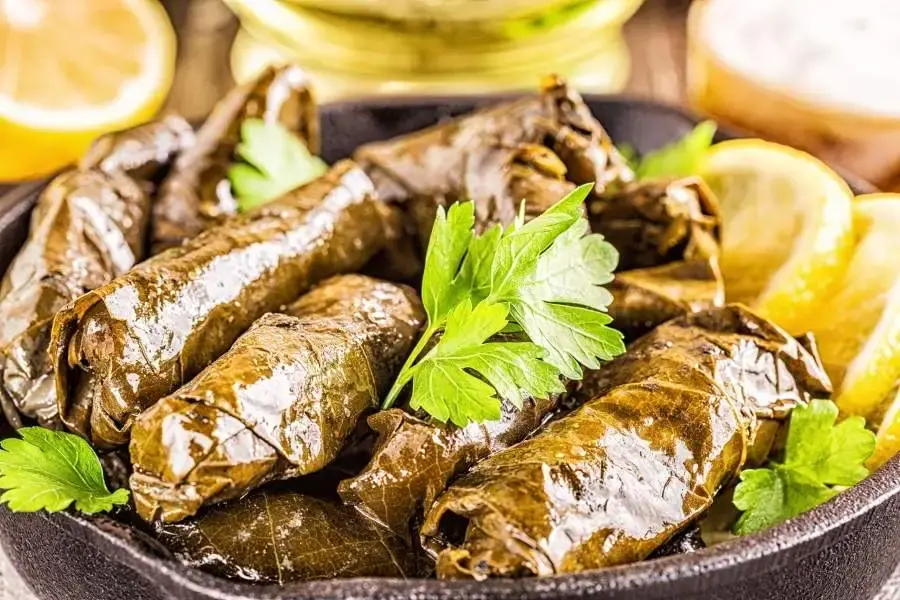
Given its ancient roots and wide diffusion, it’s no surprise that several cultures claim the invention of stuffed grape leaves. The true origin is difficult to pin down, but national traditions and legends have formed around the dish:
Ancient Greeks
In Greece, dolmades are sometimes linked to mythic origins. One whimsical saying is that “foods that are special, traditional and delicious like dolmades were first served on the mountain of the gods,” i.e., Mount Olympus. More concretely, some Greeks point to the era of Alexander the Great (4th century BCE): a popular legend holds that during Alexander’s siege of Thebes (335 BCE), the Greek army encountered stuffed vine leaves for the first time.
Low on meat, the Thebans stretched their food supply by mixing their meat with rice and rolling it in grape leaves to cook – essentially inventing dolmades out of necessity. While this is more folklore than fact, it underscores Greek pride in the dish’s antiquity. Indeed, the Greek claim has some legitimacy given the documented thrion of the classical period, though those were fig-leaf wraps with cheese rather than the rice-stuffed grape leaves of later times.
Persians (Iranians)
Many sources and food experts attribute the origin to Persia (ancient Iran). Persia’s vast empire and rich cuisine provided a nurturing ground for stuffing foods. The Persian Empire’s influence across Western Asia may have introduced the technique of stuffing vine leaves to regions west of Iran. Iranians today have dolmeh barg-e mo (vine leaf dolma) as a beloved dish, often with sweet-sour flavor profiles (like adding pomegranate molasses or sugar and vinegar) distinct from other regions. It’s widely believed that Persians pioneered the combination of rice, herbs, and meats that eventually found its way into grape leaves.
The fact that Persian and neighboring cuisines (Armenian, Georgian, etc.) stuff not only leaves but also fruits (like quince and apples) suggests an age-old practice of creative stuffing. However, as noted, the earliest Persian records of dolma are from the Safavid era (17th century). This could imply that Persians adopted it slightly later – possibly from Ottoman influence – or that earlier records were lost. Regardless, Persian cuisine is often credited in the scholarly imagination as a source of the stuffed-leaf concept, given its long agricultural history and love of grape products.
Armenians
Armenia, located in the South Caucasus, has a strong claim both historically and etymologically. The Oxford Companion to Food suggests dolma likely stemmed from Armenian culinary traditions before being integrated into Turkish cuisine. Famed food historian William Pokhlebkin also argued that dolma was an Armenian dish passed to the Seljuk and Ottoman Turks, noting that many Armenian recipes were absorbed and later thought of as Turkish.
Armenians themselves often call the dish tolma (or dolma), and there is an intriguing theory about the word’s origin: Armenian scholars claim tolma comes from the Urartian word “toli” (leaf), Urartu being an ancient kingdom in Armenia’s highlands. By this argument, tolma would mean “wrapped in leaves” in an ancestral language, predating Turkic influence – a direct rebuttal to the Turkish etymology. While this theory is not universally accepted, it reflects Armenia’s ancient wine-growing culture (archaeological evidence shows Armenia is one of the oldest wine producers in the world). With abundant grape leaves and a position at the crossroads of empires, Armenia was likely an early adopter and innovator of stuffed grape leaves.
The Armenian version often includes lamb or beef with rice, herbs, and sometimes dried fruits or nuts. Culturally, Armenians see dolma as part of their heritage; for example, Armenian communities in the diaspora (like the Armenian Quarter of Jerusalem) have preserved unique recipes over centuries.
Ottoman Turks
The Turkish claim to dolma is perhaps the most straightforward: the word “dolma” is Turkish, and the Ottomans disseminated the dish widely. Turkish food culture identifies dolma/sarma as a cornerstone of the national cuisine, sometimes even called Turkey’s national dish.
Turkish sources emphasize that dolma is a Turkish word meaning “stuffed” and point out that Greeks and Arabs use a variant of the Turkish term, implying the Ottomans taught them the dish. In the modern rivalry of food origins, Turks and Greeks often debate dolma/dolmades, but objectively, the dish in its current form (rice and herb-stuffed grape leaves, served cold with olive oil or warm with meat) was codified during the Ottoman era.
It is true that no single Turk or Ottoman “invented” dolma from scratch. Instead, the Ottomans synthesized existing regional practices into what we now recognize as dolma. Today, Turkey takes pride in various dolma recipes and has even sought international recognition. (In 2017, UNESCO recognized the dolma tradition in Azerbaijan—a fellow Turkic culture—as an Intangible Cultural Heritage, sparking some debate, as Armenians and others felt it’s a shared legacy .)
Others
Many other cultures have their own origin stories or at least strong associations. Arab cuisines often attribute stuffed grape leaves to the influence of the Ottoman Turks (since the Arabic name warak enab is simply descriptive). Some say the dish was adopted during Ottoman rule and localized with Levantine flavors like lemon and garlic in the Levant. Greeks, Turks, Arabs, and Persians thus all have overlapping narratives of how they came to make this dish, each emphasizing their role.
In truth, rather than a single point of invention, the development of stuffed grape leaves seems to be a convergence of culinary streams – ancient Greek and Near Eastern wrapping techniques, Persian flavor combinations, and Ottoman dissemination and naming. As one food writer aptly put it, dolma is a “shared heritage” rather than the exclusive property of any one nation.
It’s worth noting that disputes over dolma’s origin can become heated, reflecting broader cultural pride. But the historical record suggests a gradual evolution: leaf-wrapping as a cooking method is ancient, stuffing with rice and spices came later with trade (especially after rice became common in the region’s diet, post-Alexander), and the Ottoman era unified these ideas under one name. Thus, all the claims have some validity at different layers of history.
Spread via Trade Routes and Migration
Stuffed grape leaves achieved their widespread presence thanks to trade routes, imperial expansion, and migration of peoples, which facilitated culinary exchange. Key factors in the dish’s dissemination include:
Imperial Conquests and Cultural Exchange
Large empires allowed the recipe to travel. For instance, the Persian Empire’s reach into Asia Minor and the Levant may have spread early forms of stuffed leaves to those regions. Later, Alexander the Great’s campaigns linked Greece to Persia and India. Whether or not Alexander carried dolmades, the Hellenistic age created a fusion of Greek and Near Eastern foodways.
Centuries after, the Arab conquests (7th century) and the rise of Islamic caliphates created new networks for sharing recipes across the Middle East and North Africa, possibly introducing or reinforcing the practice of stuffing vine leaves in places like Egypt (where today mahshi warak enab is popular).
Most significantly, the Ottoman Empire served as a vast exchange network: as it expanded into the Balkans, Caucasus, and the Middle East, Ottoman administrators, soldiers, and cooks brought dolma with them and incorporated local ingredients, making it a typical dish from Hungary to Yemen.
Ottoman trade and travel ensured that techniques like pickling vine leaves for off-season use became known widely, and the dish adapted to local tastes (for example, Gulf Arab versions use spices like cumin and prefer basmati rice ).
Trade Routes and Merchants
Alongside conquest, peaceful trade routes spread culinary ideas. The Silk Road and other caravan routes crossing Persia and Anatolia likely helped diffuse the concept of stuffed foods eastward and westward.
Armenian and Jewish merchants were mainly instrumental. Joan Nathan notes that “Armenians, like Jews, have been merchants for centuries and thus learned about new food innovations before the rest of the population,” which likely included dolma.
These merchants settled in various parts of the world, taking their recipes. A fascinating example is how the 17th–18th-century Armenian merchants brought dolma to India. Communities of Armenians in Mughal and British-ruled Bengal (notably in Kolkata/Calcutta) introduced their stuffed vegetable dishes to local Bengalis.
Over time, this inspired a Bengali specialty called potoler dorma (or dolma) – pointed gourd stuffed with spiced fillings – essentially a local adaptation of Armenian dolma techniques. This is a clear case of a dish migrating beyond its original geography through diaspora networks.
Migration and Diaspora
People’s movement, whether through forced migration or voluntary diaspora, spread the stuffed grape leaf far and wide. The Sephardic Jews, expelled from Spain in 1492, settled throughout the Ottoman Empire and North Africa. They quickly adopted local foods like dolma, which became staples of Sephardic cuisine by the 16th century.
To this day, Sephardic Jewish communities from Turkey to Greece have cherished recipes for grape leaves stuffed with spiced meat and rice, often served on holidays. In the 20th century, waves of Middle Eastern immigrants carried the recipe to Western Europe, the Americas, and beyond, making dolmades and warak enab familiar to international palates.
Interestingly, even Southeast Asia has a version: Vietnamese cuisine uses lá lốt (wild betel leaves) stuffed with spiced meat, a similar concept, though using a different leaf. This parallel evolution shows that wrapping food in leaves is a near-universal culinary idea.
Notable Adaptations
Specific adaptations stand out through these exchanges. The earlier-mentioned Swedish “kåldolmar” (cabbage dolmas) came directly from contact with the Ottomans, demonstrating how a recipe can hop from one culture to another in unexpected ways (in this case, via a king’s exile and return).
In the Caucasus, Georgian and Azerbaijani cuisines have dozens of dolma varieties (Georgians even wrap chopped meat in cabbage or vine leaves and top it with walnut sauce, blending it with their flavors).
The dish became part of North African cuisine (e.g., in Algeria and Libya, called dolma for stuffed veggies or warak enab for grape leaves, likely brought during Ottoman rule). The core idea (leaf + filling) remains each time it travels, but new spices, sauces, and ingredient combinations emerge.
In summary, stuffed grape leaves spread along **both military routes (conquest) and mercantile routes. The interplay of trade, intermarriage, and multicultural empires meant that by 1900, a vast swath of the world, from Central Europe to South Asia, knew some version of this dish. What started as a local delicacy in the Mediterranean or Western Asian vineyards became a culinary common denominator linking Greeks, Turks, Arabs, Persians, Armenians, and more. It is a telling example of how food transcends borders, carrying history in its layers of flavor.
Grape Leaves Around the Mediterranean

Each country has its unique variation in terms of ingredients, seasoning, and preparation style. Here’s a breakdown by country:
1. Lebanon (Warak Enab / ورق عنب)
- Filling: Rice, tomatoes, parsley, mint, onions, and sometimes ground lamb or beef.
- Seasoning: Olive oil, lemon juice, allspice, cinnamon.
- Cooking Style: Often cooked in layers with lamb shanks or bones at the bottom for extra flavor
- Serving: Served warm or at room temperature, often with yogurt or a garlic lemon sauce.
Pro tip! For an authentic Lebanese, Aladdins Houston serves delicious grape leaves.
2. Greece (Dolmades / Ντολμάδες)
- Filling: Rice, dill, parsley, onions, and occasionally ground meat.
- Seasoning: Lemon juice, olive oil.
- Cooking Style: Simmered in water or broth, sometimes finished with avgolemono (egg-lemon sauce).
- Serving: Typically served cold as an appetizer with tzatziki or a lemon wedge.
Pro Tip! Niko Niko’s brings the vibrant flavors of Greece to Houston, including their delightful dolmades.
3. Turkey (Sarma)
- Filling (Vegan version): Rice, pine nuts, currants, onions, and spices (allspice, cinnamon, black pepper).
- Filling (Meat version): Rice, ground lamb or beef, onions, tomato paste, and spices.
- Cooking Style: Rolled tightly and simmered in broth with olive oil and lemon juice.
- Serving: Served cold or warm, with yogurt or garlic sauce.
Pro Tip! Enjoy flavorful Turkish sarma at Pasha Restaurant.
4. Syria (Yabraq / يبرق)
- Filling: Rice, minced lamb or beef, pine nuts, and sometimes chickpeas.
- Seasoning: Lemon juice, cinnamon, allspice.
- Cooking Style: Cooked in lamb broth, often layered with lamb bones at the bottom.
- Serving: Served hot with a side of yogurt.
Pro Tip! Shawarma House tastes traditional Syrian dishes, perfect for exploring yabraq in Houston.
5. Armenia (Tolma / Տոլմա)
- Filling: Rice, minced beef or lamb, onions, and herbs.
- Seasoning: Black pepper, allspice, mint, and sometimes dried basil.
- Cooking Style: Cooked in a broth with tomato paste and butter.
- Serving: Served warm, often with yogurt or garlic sauce.
Pro Tip! You can find Armenian specialties and freshly made tolma at Phoenicia Specialty Foods in Houston.
6. Iran (Dolmeh Barg-e Mo)
- Filling: Rice, yellow split peas, ground lamb or beef, herbs (dill, parsley, mint), and barberries.
- Seasoning: Cinnamon, saffron, and dried lime.
- Cooking Style: Slow-cooked with tamarind sauce or pomegranate molasses.
- Serving: Served warm with yogurt.
Pro Tip! Kasra Persian Grill delivers authentic Persian flavors in Houston for a genuine taste of Iranian dolmeh.
Conclusion
The story of stuffed grape leaves – whether you call them dolma, sarma, or warak enab – is a tapestry woven through time and geography. Its historical origins likely lie in the resourceful cooking of ancient civilizations that found tasty uses for the ubiquitous grape leaf.
Each era contributed something from the fig-leaf cheese wraps of ancient Greece to the spice-laden meats of ancient Persia to the ingenious cooks of the Ottoman palaces who perfected and propagated the dish.
Over millennia, many have claimed the dish: Greeks have their myths, Persians their culinary pedigree, Armenians their deep heritage and etymology, and Turks their imperial legacy. Each claim contains a kernel of truth in an overarching narrative of cultural interplay.
Historical texts and food lore clearly show that no single culture can wholly own the stuffed grape leaf; instead, it developed through intercultural exchange and adaptation. The Ottoman Empire was the primary vehicle for bringing this ancient treat to a broad population, but earlier Greeks, Persians, and others laid the groundwork.
Trade and migration continued introducing the dolma to new lands, making it an international dish. Today, a plate of stuffed grape leaves might be served in a Greek taverna, a Turkish meyhane, an Arab family gathering, an Armenian festival, or a Persian dinner – essentially the same dish with local inflections, echoing a shared past.
Perhaps more than any other food, dolma exemplifies how culinary traditions overlap and borrow: a vine leaf filled with goodness, carrying stories from one generation to the next. As one modern observer noted, “Dolmas were made a commonplace dish by the Ottoman Empire… but the roots of dolma lie in the ancient culinary traditions of the indigenous peoples of these regions.” In essence, the stuffed grape leaf symbolizes unity in diversity – a humble delicacy that survived through empires and journeys, continually reinvented yet timeless.
Sources:
- Aristophanes’ Acharnians (5th c. BCE) – a comedic reference to thrion (fig-leaf wrap)
- Archestratus (4th c. BCE) – recipe wrapping fish in fig leaves (as cited in The Classical Cookbook)
- Oxford Companion to Food – on Armenian origins of dolma
- William Pokhlebkin – quote on Armenian contribution to Turkish cuisine (dolma)
- Encyclopædia Iranica – entry “Dolma” (Persia, Safavid/Qajar records)
- Joan Nathan, Tablet Magazine – on ancient Fertile Crescent origins
- Wikipedia: Dolma – general history and distribution (Greek thrion, Ottoman spread, Jewish variants, Swedish kåldolmar)
- Wikipedia: Sarma – terminology (Turkish sarmak, wrap) and regional names
- OliveOil.com – “History of Dolmades” (Persian influence, Alexander the Great legend)
- “We Are Food – Parcels of Joy” (Foodlibya) – first recorded dolma 350 BCE, Persian vs Ottoman spread
- Paperclip.in – “Armenian immigrants and Bengali dolma” (Urartian word toli, Armenians to India)
- Ranelle Kirchner, chefRDN blog – a historical look at dolma (Minoan mention, Ottoman palace).
Frequently Asked Questions About Grape Leaves
1. What are grape leaves?
Grape leaves are the edible leaves of grapevines commonly used in Mediterranean and Middle Eastern cuisines to make dishes like dolma, sarma, or warak enab. They have a mildly tangy taste and are typically preserved in brine.
2. Are grape leaves healthy to eat?
Yes, grape leaves are nutritious and rich in vitamins A, K, and C and fiber, iron, and antioxidants. They’re low in calories and fat, making them a healthy choice when stuffed with nutritious fillings like rice and herbs.
3. Can you eat raw grape leaves?
While young grape leaves can technically be eaten raw, they’re usually preserved in brine or blanched briefly to soften their texture and reduce bitterness before being used in cooking.
4. How do you prepare grape leaves for stuffing?
Grape leaves preserved in brine should be rinsed and blanched in hot water to remove excess salt. Fresh grape leaves need to be blanched in boiling water for 2–3 minutes to soften them before stuffing.
5. What are the most popular fillings for stuffed grape leaves?
The most common fillings include rice mixed with herbs (parsley, mint, dill), spices, onions, pine nuts, and sometimes ground meat such as lamb or beef, depending on regional recipes.
6. Are stuffed grape leaves served hot or cold?
Both. Stuffed grape leaves are served cold as appetizers in Greek and Turkish cuisine, often with yogurt or lemon. In Lebanese, Syrian, and Iranian cuisines, they frequently enjoy warm food as part of their main meals.
7. Can stuffed grape leaves be frozen?
Yes. Stuffed grape leaves freeze well. Arrange cooked grape leaves in airtight containers separated by parchment paper, freeze, and gently thaw in the fridge before reheating or serving.
8. Where can I buy grape leaves for cooking?
Grape leaves can be found at Mediterranean or Middle Eastern grocery stores, specialty international markets, and online. They’re usually sold in jars, brine, or vacuum-sealed packages.
Taste the real thing at our halal Houston kitchen.
]]>Yet, you might wonder: if baclawa contains butter, nuts, and sugary syrup, how can it be considered a relatively good choice? And how on earth does it help you relax psychologically?
This food blog dives into all those questions and more. From the nutritional breakdown and psychological benefits to tips for moderate enjoyment, you’ll see that baclawa’s charm lies in more than just its flavor. We want to sell you the idea of adding baclawa to your dessert repertoire—not only because it tastes heavenly but because it can be a feel-good treat that offers more than empty calories.
So grab a cozy seat and a warm cup of tea, and learn why baclawa might become your next go-to dessert choice.
A Brief History: Where Baclawa Comes From
Baclawa has existed for so long that its origins are a delightful debate among historians, chefs, and dessert lovers. Some say it began in the ancient kitchens of Mesopotamia; others point to the culinary traditions of the Ottoman Empire. Regardless of which region claims its birth, most agree that baclawa, as we know it today, blossomed in the imperial courts of the Ottoman sultans, where elaborate pastries were a hallmark of royal cuisine.
Cultural Bridges
From Turkey to Greece, Lebanon to Armenia, and the Middle East to the Balkans, baclawa has taken on different shapes, fillings, and sweeteners. Yet each variation celebrates the harmonious marriage of delicate phyllo (filo) dough, crushed nuts, and a sweet binder—be it honey, simple syrup, or a combination of both. This common thread transcends cultural divides and has allowed baclawa to become one of the most recognized pastries in the world.
“Food is our common ground, a universal experience.”
– James Beard
In that quote’s spirit, baclawa has become a sweet common ground among various regions and communities. Today, you can find it on dessert menus in countless cities around the globe, bridging culinary traditions and uniting taste buds everywhere.
What Makes Baclawa So Special?

1. The Art of Layering
Baclawa (or baklava) stands out thanks to the thin sheets of filo dough stacked layer upon layer. Each sheet is typically brushed with butter or a mix of butter and oil. These layers bake up crisp and airy, contributing to the unmistakable flakiness that sets baclawa apart from denser pastries. That crunch you hear with every bite is like an edible symphony that satisfies both the mouth and the mind.
2. Nutty Goodness
While different regions use nuts—walnuts, pistachios, almonds, or a combination—these chopped fillings aren’t just about adding flavor. Nuts contain healthy fats, protein, fiber, and vitamins and minerals. More on that later, but suffice it to say, the nut center of baclawa transforms this dessert from a mere sugary snack into something that can have a bit of nutritional oomph.
3. Sweet Harmony
Although baclawa is sweet, that sweetness often comes from ingredients like honey, which can contain antioxidants and trace nutrients. Even if a recipe leans on sugar syrup instead, many people add hints of lemon juice, cloves, or cinnamon for extra depth. This interplay of savory and sweet notes makes baclawa a dessert that teases multiple aspects of your palate, providing a layered flavor experience—literally.
4. Comfort in Every Bite
Dessert isn’t just about fueling the body; it’s also about fueling the soul. Baclawa’s comforting taste and texture can foster a feeling of relaxation, a crucial aspect for people who find sweets to be a source of psychological comfort. There’s something undeniably calming about sitting down with a small piece of baclawa and a cup of tea, letting the day’s worries melt away with each crunchy, honeyed bite.
Calorie Conscious: Understanding Baclawa’s Nutritional Profile
Let’s get the elephant in the room out of the way: Yes, baclawa has calories—no denying it. Typical recipes involve a combination of butter, nuts, and syrup. But when you combine all those components, you might be surprised to find that baclawa can hold its own against many commercially produced sweets in terms of taste and potential health advantages.
Below is a rough nutritional breakdown of a 2 x 2-inch piece of baclawa (and keep in mind that recipes vary):
- Calories: 200–300
- Carbohydrates: 20–35 g
- Sugar: 10–20 g
- Fat: 10–18 g (a mix of saturated and unsaturated fats)
- Protein: 3–5 g
- Fiber: 1–2 g
- Cholesterol: 10–20 mg (if butter is used)
- Sodium: 50–150 mg
While these numbers show that baclawa isn’t a low-calorie snack, it isn’t purely “empty calories.” It combines unsaturated fats (from nuts) with protein and fiber, making it more complex than a gummy candy or a processed chocolate bar filled chiefly with artificial fillers.
A Word on Saturated Fat
Butter-based recipes do introduce saturated fats, but moderation is key. One small piece of baclawa instead of multiple large sweets can keep your saturated fat intake in check. And remember, you can experiment with recipes that lighten the butter load or even use olive oil or plant-based alternatives for a twist on tradition.
Comparison to Other Desserts
- Frosted Cupcakes: Often run 300–400 calories, mostly from refined flour and sugary frosting, with fewer beneficial nutrients.
- Donuts: Typically around 250–400 calories from refined carbs and deep-fried oils.
- Candy Bars: Some can pack 250+ calories in a small package, with a lot of saturated fat and added sugar. They often lack the beneficial nutrients found in nuts.
When placed side by side, baclawa can look relatively better, thanks to ingredients like nuts and honey that deliver micronutrients and antioxidants, which many mass-produced sweets lack.
Why Baclawa Can Be a Healthier Alternative to Other Sweets

1. Healthy Fats from Nuts
Nuts like pistachios, walnuts, and almonds contain predominantly monounsaturated and polyunsaturated fats, which have been linked to heart health benefits. These fats can help support healthy cholesterol levels when replacing some sources of saturated fats in your diet. These good fats also contribute to the dessert’s satiety factor, meaning you might feel satisfied with a smaller serving.
2. Potential Antioxidants in Honey
If your baclawa is sweetened with honey rather than corn syrup or overly refined sugar, you may introduce antioxidants that help combat free radicals in the body. Honey also contains small amounts of vitamins and minerals like vitamin B and potassium. However, you’d need to consume much more honey to get significant nutritional value—something not advised for sugar watchers. Still, every bit can help when compared with empty-calorie sweeteners.
3. Filo Dough vs. Other Pastry Doughs
Filo dough is generally lower in fat than many other pastry doughs, which often contain high amounts of butter or shortening within the dough itself. In filo dough, the fat is mainly brushed on top of and between layers, allowing some control over how much butter or oil is used. This makes baclawa slightly better than a puff pastry loaded with saturated fat.
4. Balance of Protein and Carbs
Thanks to the nuts, baclawa contains a bit of protein, which helps stabilize blood sugar somewhat compared to pure sugar sweets. This protein presence might not turn baclawa into a protein bar, but it adds a dimension of satiety and can help curb the rapid sugar rush that pure candy often delivers.
The Psychological Comfort of Baclawa
Sweet Treat, Sweet Relief
Desserts can have a remarkable effect on our emotions. Imagine the pleasure you feel when biting into something crunchy and sweet—especially if that flavor reminds you of a familial tradition, a joyous celebration, or a comforting moment from childhood. Baclawa, with its centuries-old heritage, often carries those exact connotations. It’s not just about tasting sugar; it’s about feeling connected to a cultural tapestry and indulging in a treat countless people have loved.
Stress Reduction Through Ritual
Many people find that sitting down with a hot beverage (tea, coffee, or even warm milk) and a small piece of baclawa is incredibly soothing. Taking a break during a hectic day to savor the dessert can help you reset your mental state, calm frayed nerves, and allow a moment of mindfulness. In some communities, the serving of baclawa is accompanied by social rituals—gathering with friends or neighbors, sharing stories, and momentarily setting aside life’s stressors.
“Take care of your body. It’s the only place you have to live.”
– Jim Rohn
That quote speaks not only to physical health but also to mental wellness. When consumed sensibly, baclawa can be a small but meaningful part of self-care—a sweet moment of enjoyment that can lighten the mood and reduce stress.
Tips for Enjoying Baclawa in a Balanced Way
1. Watch Portion Sizes
The key to loving baclawa without overdoing it is portion control. Instead of grabbing the most significant square, opt for a smaller piece—just enough to experience the crunch of filo and the sweetness of the syrup. Sometimes, a few bites are all you need to feel satisfied.
2. Pair It with Something Light
Combining a small piece of baclawa with a bowl of fresh berries or a spoonful of unsweetened yogurt can tone down the overall sugar impact. The fiber in the fruit or the protein in the yogurt helps slow the absorption of sugar, making the dessert gentler on your system.
3. Choose Quality Ingredients
If you’re making or buying baclawa, look for brands or recipes emphasizing high-quality nuts and natural sweeteners like honey. Avoid versions that use overly processed fillers or ingredients you can’t pronounce. Quality often translates to better taste and better potential benefits.
4. Enjoy It Mindfully
Set aside distractions and immerse yourself in the experience of eating baclawa. Notice the flaky layers, the aroma, the crunch of nuts, and the sweetness that spreads across your tongue. This mindful approach can heighten satisfaction and prevent you from devouring multiple pieces simultaneously.
5. Make It a Social Dessert
Share baclawa with friends, coworkers, or family members. Not only does this control how much you consume, but it also encourages social bonding and fosters a sense of community—yet another psychological benefit.
Easy Swaps and Recipe Tweaks
Olive Oil Instead of Butter
Though not always traditional, some prefer brushing each layer of filo dough with extra-virgin olive oil or a blend of butter and olive oil. While the flavor profile changes slightly, you reduce some saturated fat and might introduce more heart-healthy monounsaturated fats.
Lighter Syrup
If you’re making your syrup, you can reduce the sugar and replace part of it with honey or a sweetener like maple syrup. Adding a pinch of lemon zest or a cinnamon stick can give extra flavor without adding more sugar.
Mixed Nuts
Instead of using a single type of nut, you can experiment with a mix of pistachios, walnuts, almonds, or hazelnuts. Each has its unique nutrient profile, and combining them can create a more complex taste. Pistachios are primarily known for their bright color and slightly sweet flavor.
Vegan Baclawa
Vegan baclawa swaps out butter for plant-based margarine or oils and honey for agave, maple syrup, or another plant-based sweetener for those avoiding animal products. This twist can still yield crisp, delicious layers and a sweet filling while aligning with specific dietary restrictions.
Baclawa vs. Other Popular Desserts
To showcase how baclawa can stand out as a relatively smarter sweet choice, let’s compare it to a few other well-known dessert options.
Baclawa vs. Chocolate Cake
A slice of chocolate cake (with frosting) can easily hit 400+ calories, mostly from refined flour, sugar, and butter. While chocolate can contain antioxidants, most commercial cakes rely on lower-quality cocoa and deliver a heavy dose of saturated fat. Baclawa, by contrast, provides nuts’ nutrients and can still taste deeply satisfying.
Baclawa vs. Ice Cream
A single scoop of ice cream might hover around 200–250 calories, and that’s before the toppings. Add caramel, chocolate syrup, or whipped cream, and you’re easily pushing 400+ calories. Ice cream’s main ingredients—cream and sugar—lack the beneficial fats, protein, and fiber you get from nuts. Baclawa can, therefore feel a bit more substantial in smaller amounts.
Baclawa vs. Doughnuts
Doughnuts typically undergo deep-frying, which increases their fat content substantially. A classic glazed doughnut can range from 200–300 calories, with little nutritional benefit beyond sugar and white flour. Baclawa, though it contains sugar and butter, wins on the micronutrient front and the presence of healthy fats from nuts.
Baclawa vs. Candy Bars
Many candy bars blend sugar, cheap hydrogenated oils, artificial flavors, and minimal real chocolate or nuts. Their nutritional labels often read like chemistry projects. Baclawa’s short ingredient list—filo dough, nuts, butter, honey or sugar, and perhaps a hint of spice—looks comparatively pure, providing more real-food elements than a typical candy bar.
Incorporating Baclawa into a Healthy Lifestyle

Pair with Exercise and Balanced Meals
Desserts become problematic when they dominate your diet. But if you typically enjoy nutrient-dense meals—filled with veggies, whole grains, lean proteins, and fruits—and you stay active, fitting in a piece of baclawa here and there won’t ruin your health goals. You can actually use a small treat like baclawa as a reward after a workout, or as a celebratory sweet during special events.
Mindful Snacking vs. Mindless Indulgence
Ever notice how easy it is to munch through an entire bag of cookies while watching TV? Baclawa, on the other hand, invites savoring. Its layers and textures demand your attention. Lean into that. Make baclawa a mindful experience instead of a mindless habit.
Hydration Matters
Sugar cravings sometimes get mixed up with dehydration. If you repeatedly reach for sweet treats, try drinking water or tea first, then wait a few minutes. If you’re still craving that dessert, go for it—but you’ll likely find that you need less to feel satisfied.
Social Connection
Offering baclawa at gatherings can be a conversation starter. People enjoy comparing flavors, layering techniques, and each variation’s distinct aroma. Building relationships around positive food experiences can enhance emotional well-being and reduce stress—another way baclawa can be a psychologically comforting dessert.
How Baclawa Contributes to Relaxation
The Power of Ritual
Daily life can be chaotic—school, work, family duties, social pressures. Sometimes, simply sitting down at a table with a small treat in front of you can feel like an oasis of peace. Baclawa’s slow, deliberate crunch forces you to be present in the moment. This can work as a micro “reset button,” giving you a psychological break before you return to your to-do list.
Association with Festive Occasions
Because baclawa is commonly served at holidays, weddings, or family get-togethers, it carries a mental imprint of celebration and togetherness. Eating it may subconsciously remind you of positive events, which can lift your spirits and help you relax. This emotional link is why it’s considered so comforting in many cultures.
Potential Serotonin Boost
Eating sweet treats can stimulate the release of serotonin, often called the “feel-good hormone.” While we don’t want to rely solely on sweets for emotional well-being, a moderate treat like baclawa can provide a mild boost in mood—just enough to brighten a tough day without tipping into unhealthy patterns.
“Happiness quite unshared can scarcely be called happiness; it has no taste.”
– Charlotte Brontë
Sharing baclawa with friends or loved ones spread that happiness and reinforces the idea that dessert can be a communal, uplifting experience rather than a solitary, guilt-ridden act.
Baclawa in Modern Times
The Rise of Gourmet Bakeries
In recent years, artisanal bakeries and specialty shops have introduced unique twists on traditional baclawa, incorporating infused syrups, exotic nut blends, or even chocolate drizzles. While some of these renditions can hike up the calorie count, they also highlight the dessert’s adaptability and ongoing popularity.
Health-Conscious Innovations
Some modern baclawa makers strive to reduce sugar content, use organic ingredients, or include alternative sweeteners like date syrup or coconut sugar. These innovations cater to consumers who love baclawa’s taste but are mindful of sugar intake or specific dietary needs.
Baclawa Boxes and Gifting
Baclawa has become a popular gift item in many cultures. Beautifully arranged baclawa boxes are given during holidays, birthdays, or simply as a gesture of appreciation. The universal appeal and relatively long shelf life (compared to cream-based desserts) make it an easy yet elegant gift option. This practice underscores baclawa’s role as a dessert that conveys warmth and hospitality.
Why You Should Consider Buying Baclawa
1. It’s More Than Just Sugar
As we’ve explored, baclawa offers healthy fats, protein, and sometimes antioxidants—a step above desserts that are purely sugary with minimal nutritional value.
2. A Taste of Tradition
Buying baclawa supports the rich history and cultural tapestry behind this cherished dessert. You’re not just purchasing sweets—you’re acquiring a culinary heritage that connects you with the stories of countless families across continents.
3. Perfect for Gatherings
Few desserts look as eye-catching on a platter as golden baclawa squares or triangles. They’re easy to serve, visually appealing, and can be made in various sizes—perfect for gatherings of all kinds, from cozy tea parties to large celebrations.
4. It Can Be a Calming Ritual
If you value the psychological aspect of dining, baclawa can be your ally. Savoring it slowly with a warm beverage can become a cherished daily or weekly ritual that brings a sense of calm and tranquility.
5. Versatile for Different Dietary Needs
With the rise of vegan and sugar-reduced versions, there’s likely a type of baclawa out there for just about every dessert-lover. This adaptability means you can still enjoy the layered crunch of filo and nuts, regardless of specific dietary preferences.
How to Choose the Best Baclawa
Look for Quality Ingredients
- Fresh Nuts: Nuts can go rancid if not stored properly. Make sure the product you buy uses fresh, high-grade nuts.
- Real Butter or High-Quality Alternatives: Taste is everything; real butter or premium plant-based spreads can enhance flavor.
- Natural Sweeteners: Check if honey or cane sugar is used instead of cheaper corn syrup.
Texture Matters
Baclawa should be crisp on top and slightly sticky in the center but not soggy. Overly wet baclawa may have soaked too long in syrup, while overly dry baclawa might suggest it wasn’t stored or cooked correctly.
Aroma and Appearance
The best baclawa often has an inviting, nutty, buttery smell and a light golden-brown color. The syrup or honey shouldn’t look goopy or crusted over. A shiny, lightly glistening surface usually signals a well-made product.
Where to Buy
- Authentic Mediterranean Bakeries: Often, these shops have expertise in crafting traditional baclawa with time-tested methods.
- Online Retailers: Many bakeries ship nationwide; just check reviews to ensure freshness and quality.
- Grocery Stores with International Sections: While not always gourmet, you can find decent options that quickly fix baclawa cravings.
Serving Suggestions
Traditional Tea Pairing
In many Middle Eastern countries, baclawa is served with hot black tea (sometimes infused with cardamom) to balance its sweetness. The slight bitterness of the tea complements the sugar and butter in the dessert, creating a harmonious flavor interplay.
Greek Coffee
For those who want a bolder, more intense flavor, a small cup of Greek or Turkish coffee is a classic companion to baclawa. The rich coffee contrasts beautifully with the sweet pastry, leaving a pleasant aftertaste.
Light Dessert Platter
Pair a few pieces of baclawa with fresh fruit—such as sliced apples, strawberries, or grapes—for a varied dessert platter that’s visually appealing and easier on the stomach. The fruit brings extra vitamins and fiber, helping offset the denser nature of baclawa.
Yogurt Dip
If you have a tangy palate, combine a piece of baclawa with a spoonful of plain Greek yogurt or labneh. The creamy tartness of yogurt cuts through the sweet richness of baclawa, offering a more balanced mouthfeel.
Storing and Reheating Baclawa
Shelf Life
Baclawa’s syrup acts as a natural preservative, so it can be kept at room temperature for up to two weeks, especially if kept in an airtight container. However, the top layers may soften over time, losing their crispness.
Refrigeration vs. Room Temperature
Storing baclawa in the fridge can extend its life, but it also makes the filo layers denser and less flaky. If you prefer your baclawa crisp, room-temperature storage in a sealed container is often best. Just keep it away from direct sunlight or overly humid conditions.
Reheating Tips
To revive baclawa’s crispiness, place it on a baking sheet and warm it in a 300°F (150°C) oven for 5–7 minutes. This toasts the top layers without scorching the syrup. Avoid microwaving, as it can turn the filo soggy.
Baclawa as a Gift
A beautifully arranged box of baclawa can be a thoughtful present for hosts, coworkers, or loved ones. Whether for birthdays, holidays, or simple gestures of gratitude, it’s a sweet way to share comfort, warmth, and a hint of culinary adventure. Many specialty bakeries offer gift boxes with various shapes and nut fillings, allowing recipients to taste various forms of baclawa in a single package.
Frequently Asked Questions
Is Baclawa the Same as Baklava?
Yes, they’re simply different spellings or pronunciations of the same dessert, common in various languages and regions.
Is It Gluten-Free?
Traditional baclawa is made with wheat-based filo dough, so it’s not gluten-free. However, some specialty stores might carry gluten-free variations using alternative flours.
Does Baclawa Contain Dairy?
Classic recipes use butter, so they contain dairy. Vegan baclawa, however, substitutes butter with plant-based oils or margarines.
Can I Freeze Baclawa?
You can freeze it, though the texture might change upon thawing. It’s best to freeze baclawa before adding the syrup if you’re making it from scratch. If it’s already soaked, just be aware it may become softer after defrosting.
What’s the Best Nut for Baclawa?
Pistachios are highly prized in certain regions for their vibrant color and sweet flavor. Walnuts are very common, while almonds offer a milder taste. The “best” nut really depends on personal preference.
How Many Pieces Can I Have in One Sitting?
It’s up to you and your dietary goals. Typically, one to two small pieces can be enough to satisfy a sweet craving, especially if you’re practicing portion control.
Final Reflections on Baclawa’s Comfort and Healthfulness
Baclawa’s layered filo, fragrant nuts, and sweet syrup make it undeniably indulgent. Yet it stands out from many other pastries and confections by incorporating beneficial nutrients such as healthy fats, protein, fiber, and antioxidants—especially when it’s made with high-quality ingredients like real honey and fresh nuts. This makes it a healthier alternative to heavily processed, artificially flavored desserts you often see crowding supermarket shelves.
On top of that, the psychological comfort it offers can’t be understated. Whether it reminds you of warm family gatherings, helps you unwind during a busy day, or serves as a quiet, personal moment of joy, baclawa delivers a kind of “dessert therapy” that’s hard to replicate with run-of-the-mill sweets. Its storied past and communal traditions add layers of meaning (pun intended) to each slice, elevating it from a simple sugary snack to a relaxing, soul-soothing experience.
“Let food be thy medicine and medicine be thy food.”
– Hippocrates
While Hippocrates may not have had baclawa in mind when he said those words, the spirit of enjoying wholesome, culturally rich foods still applies. We all need the occasional treat, especially one that respects the natural goodness of ingredients like nuts and honey and that brings us genuine delight. Baclawa fits that bill beautifully—as long as you savor it in modest amounts.
Ready to Indulge?
Now that you’ve read about the history, nutritional profile, and psychological perks of baclawa, you might be wondering how to get your hands on a slice—or five. Whether you decide to try your own hand at making it (no small feat, but well worth the effort) or choose to purchase from a reputable bakery, remember to seek quality ingredients and a balance of flavors that suits your palate.
Why You Should Buy Baclawa
- It’s healthier than many alternative desserts.
- It offers a psychological break during a stressful day.
- Its rich cultural heritage makes each bite more meaningful.
- Versatility: It pairs well with tea, coffee, yogurt, and fruit.
If you’re looking for something sweet that can also be a conversation starter—or if you simply want to pamper yourself with a dessert that carries a bit of nutritional heft and its sweet crunch—baclawa is the way to go.
Conclusion: Baclawa—A Treat That Nourishes Body and Spirit
Desserts should be a joy, not a source of guilt or confusion. Baclawa, with its centuries of tradition, nutrient-packed nuts, and sweet but manageable calorie count, perfectly illustrates how a treat can be both indulgent and mindful. You don’t have to swear off sweets entirely to live a balanced life. Instead, you can enjoy something like baclawa in a conscious, portion-controlled way that complements your overall well-being.
By prioritizing quality ingredients, portion control, and simply slowing down to savor each bite truly, you’ll find that baclawa can leave you feeling satisfied, relaxed, and perhaps even a little rejuvenated. And that might just be the best dessert—one that nourishes more than just your sweet tooth.
So, if you’re ready to add a distinctive new dessert to your menu or have always been curious about why so many people rave over this layered wonder, don’t hesitate. Try baclawa for yourself and discover how it can bring delight, comfort, and a healthy edge to your dessert repertoire. Life’s too short for bland sweets—choose something as rich in history as it is in flavor, and treat yourself to a dessert that truly embraces the art of indulgence in a balanced, meaningful way.
]]>From bustling markets in the heart of Beirut to home kitchens scattered across the globe, toum holds a special place in Middle Eastern cuisine. This legendary Lebanese garlic sauce—airy, robust, and undeniably addictive—has captured the hearts of countless food lovers. But toum is more than a flavorful condiment; it’s a culinary symbol of culture, tradition, and communal gatherings. Its story is one of shared family lore, centuries of experimentation, and the joy of discovering that a simple blend of garlic, oil, lemon juice, and salt can transform everyday meals.
“Food is our common ground, a universal experience.” – James Beard
Echoing James Beard’s insight, toum exemplifies how a universal love for honest, homecooked fare transcends language and geography. This blog unpacks the history, scientific underpinnings, and cultural heft behind toum, complete with tips and anecdotes to enrich your cooking adventures. Whether you’re a curious foodie encountering toum for the first time or a longtime fan searching for more profound knowledge, prepare for a flavorful exploration of this beloved garlic dip.
Toum’s bold, garlicky punch makes it one of the most versatile sauces in Middle Eastern cooking. Whether you’re enjoying it at home or in a restaurant, here are some classic and modern ways to serve it:
- Chicken Shawarma – A generous spoon of toum elevates juicy, spiced shawarma to the next level.
- Grilled Chicken – From simple charcoal-grilled chicken to herb-marinated cuts, toum adds a bright, tangy finish.
- Shish Tawook – This beloved Lebanese grilled chicken skewer is traditionally served with plenty of garlic sauce on the side.
- Lamb or Beef Kebabs – The smoky char of grilled meats pairs perfectly with the creamy, pungent flavor of toum.
- Roasted Vegetables – Cauliflower, potatoes, and eggplant come alive with a drizzle of toum before serving.
- Freshly Baked Pita Bread – Tear and dip for a simple yet satisfying snack or appetizer
No matter the pairing, the creamy texture and fresh garlic flavor of toum have a way of tying the meal together, creating a taste experience that’s both comforting and unforgettable.
A Glimpse into the Origins of Toum
Every dish that achieves legendary status typically starts with humble roots. The word “toum” directly translates to “garlic” in Arabic, reflecting the dip’s main ingredient. It’s no secret that garlic has been revered in Middle Eastern kitchens for millennia, praised for both its potent taste and its purported health benefits. Ancient herbal remedies and culinary traditions often championed garlic to ward off illnesses, boost the immune system, and infuse food with hearty flavor.
In Lebanese households, preparing toum once involved a mortar and pestle. Cooks slowly ground fresh garlic cloves into a paste, then dribbled in oil at a snail’s pace, allowing the mixture to emulsify and turn creamy. Today, appliances like blenders and food processors have replaced old-school tools, yet the essence remains unchanged. The enticing aroma of raw garlic blending into an ethereal sauce continues to be a kitchen staple, tying modern-day cooks back to ancestors who perfected the same technique many generations ago.
The Magical Emulsion: How Toum Comes to Life
One of the most captivating features of toum is how four simple ingredients—garlic, oil, lemon juice, and salt—can become so luxurious. Despite having no dairy or eggs, toum whips into a creamy, spreadable sauce that consistently rivals mayonnaise. The magic is in the emulsification process.
When oil is introduced very slowly to the garlic, lemon, and salt mixture while it’s vigorously blended, tiny oil droplets are suspended in the watery phase. Certain compounds in garlic help stabilize this mixture. The result is a fluffy, almost white spread bursting with a bold garlic punch.
“In cooking, as in all the arts, simplicity is a sign of perfection.” – Curnonsky
This French gastronomist’s words resonate with toum: four unassuming ingredients become something extraordinary when handled with patience and care. Passed down through culinary heritage, creating toum remains a source of pride for many Middle Eastern families who relish the flavorful result and the tradition surrounding it.
The Culinary Story Behind the Scenes
Beyond the history of emulsions and garlic’s longstanding presence in Levantine cuisine, toum carries a personal narrative in the kitchens where it’s made. In some families, the making of toum is practically an event. Imagine a table piled with peeled garlic cloves—some from local farms, some from backyard gardens—and the swirl of stories about grandparents who handed down the “trick” to flawless emulsification.
It’s a process that fosters community and hands-on learning. Younger family members help peel and wash the garlic while a more experienced cook carefully streams in the oil. As everyone works, anecdotes about past festivals, holiday gatherings, and ancestral cooking legends flow freely. The final sauce isn’t just a condiment; it embodies family pride, unity, and a sense of culinary continuity that bonds present generations with their roots.
The Cultural Significance of Garlic in the Middle East
Garlic is deeply embedded in Middle Eastern cooking. Beyond toum, it is used in countless soups, stews, dressings, marinades, and other recipes. Across the Levant region (encompassing Lebanon, Syria, Jordan, and parts of Palestine), garlic has been prized for centuries due to its distinct flavor and medicinal reputation. Folk traditions often credit garlic with warding off the “evil eye,” adding another layer of mystique to its cultural status.
Because garlic is central to many regional dishes, toum emerged as a logical star in the Lebanese kitchen. The sauce is infinitely versatile, pairing well with everything from roasted vegetables to grilled meats. For anyone who grew up in or around Middle Eastern cooking, the mere scent of freshly made toum triggers memories of gatherings, laughter, and shared meals.
Health Benefits of Toum: More Than Meets the Taste Buds
While at first glance a sauce made from garlic and oil might not seem exceptionally healthy, toum comes with a few perks—especially if enjoyed in moderation. Garlic is famously linked to a host of potential benefits:
- Heart Health: Some research suggests garlic can aid circulation and support healthy cholesterol levels.
- Immune System Boost: Raw garlic is often praised for its immune-boosting properties, which help the body ward off common illnesses.
- Anti-Inflammatory Effects: Certain compounds in garlic are said to have anti-inflammatory benefits that support overall well-being.
Additionally, toum is egg-free and dairy-free, making it naturally vegan-friendly and suitable for those with lactose intolerance or egg allergies. Because it’s primarily oil-based, it can be calorie-dense, so portion control remains wise. But when compared to processed sauces containing additives or preservatives, a dollop of homemade toum packs a fresh, natural flavor that stands apart.
Toum vs. Other Popular Garlic Sauces
Garlic sauces pop up nearly every corner of the globe, so how does toum differ from its international counterparts?
- Aioli: A Mediterranean sauce involving garlic and olive oil that typically includes egg yolks, giving it a more prosperous, mayonnaise-like texture. Toum omits eggs, making its texture lighter and fluffier.
- Garlic Butter: Popular in Western cuisines, garlic butter blends softened butter, minced garlic, and herbs. It is much denser and more affluent than toum.
- Garlic Mayo: Essentially mayonnaise with added garlic, which lacks the raw, punchy quality and airy consistency of toum.
The intensity of the raw garlic, combined with careful emulsification and no added eggs, sets toum in a league of its own. The sauce tastes distinctively bright, tangy, and pungent, delivering a signature kick that resonates with Middle Eastern gastronomy.
How to Make Traditional Toum at Home

Bringing toum into your home kitchen is simpler than you might think, though it does demand attention to detail. Below is a classic recipe framework:
Ingredients:
- 1 cup peeled garlic cloves (fresh, firm)
- 3 cups neutral oil (sunflower, canola, or grapeseed)
- ½ cup fresh lemon juice
- 1 teaspoon salt (adjust to taste)
Equipment:
- A blender or food processor
- A measuring cup with a spout for easy pouring
Method:
- Prepare the Garlic: Remove any green shoots from the garlic (they can add bitterness).
- Blend with Salt: Place the garlic and salt into the blender or food processor. Pulse until the garlic is finely chopped.
- Add Lemon Juice: Pour in half the lemon juice and blend, creating a smoother base.
- Slow Oil Drizzle: While the motor runs, drizzle the oil in a thin stream. Gradually adding it helps form a stable emulsion.
- Alternate with Lemon Juice: Every so often, pause the oil stream and add more lemon juice. This helps maintain the sauce’s texture and keep the mixture from separating.
- Check Consistency: If the sauce becomes too thick, add a tablespoon of ice water and continue blending.
- Taste & Adjust: Check for salt and acidity, adjusting as preferred.
- Storage: Transfer your finished toum to an airtight container and refrigerate for up to three or four weeks.
The key is patience, especially when adding the oil. A steady hand ensures a silky, stable garlic dip that achieves the iconic white, fluffy texture.
The Art of Pairing Toum with Other Foods
One reason toum is so beloved is its impressive versatility. Here are some popular ways to enjoy it:
- Grilled Meats: Lamb, chicken, or beef kebabs gain an instant flavor boost with a spoonful of toum. The tanginess beautifully complements the charred edges.
- Seafood: Replace traditional tartar sauce with toum, drizzling it over baked or grilled fish for a bold, garlicky twist.
- Sandwiches & Wraps: Slather toum onto bread or tortillas instead of mayonnaise for a zesty upgrade that suits roasted veggies or spiced meats.
- Vegetables: Serve it as a dip for raw veggies like carrots, cucumbers, and bell peppers, or drizzle it over roasted cauliflower, potatoes, or eggplant.
- Salad Dressing Base: Add a spoonful of toum to vinegar, a touch of olive oil, and herbs to craft a unique, garlicky salad dressing.
“A recipe has no soul. You, as the cook, must bring soul to the recipe.” – Thomas Keller
This quote from Chef Thomas Keller highlights how toum can be a gateway to creative cooking. Feel free to tweak, pair, and adapt it to align with your tastes and spark your culinary imagination.
Overcoming Common Challenges
Making toum can be straightforward, yet a few stumbling blocks are worth noting:
- Sauce Separation: If the mixture “breaks” (becomes watery or curdled), try starting a small fresh batch of garlic and oil in the blender, then gradually add the broken mixture to re-emulsify.
- Overly Sharp Flavor: If raw garlic is overwhelming, remove the inner green shoot or soak cloves briefly in ice water before blending to mellow the taste.
- Bitterness: Using only extra virgin olive oil can introduce unwanted bitterness. If you love olive oil flavor, blend it with a neutral oil or add just a little at the end.
By anticipating these pitfalls, you can fine-tune your approach and achieve a delicious final product with relative ease.
Storytelling and Anecdotes: The Garlic Chronicles
For countless families, toum evokes childhood memories, celebrations, and hushed late-night kitchen visits to sneak an extra spoonful. Grandparents love regaling their grandchildren with stories about how those with a patient hand could only master an ancient family recipe. The “toum test” often becomes a rite of passage, marking the moment a younger generation truly grasps the value of careful preparation.
Myths and folklore sometimes paint garlic as a potent ward against ailments or malevolent forces. These lighthearted tales elevate toum from a mere sauce to a subject of playful superstitions. Whether or not you lend credence to the lore, you’ll likely find that a taste of adequately made toum can feel downright magical.
Variations and Modern Twists
While the core ingredients remain constant, modern interpretations of toum abound:
- Herbed Toum: Blending fresh herbs like basil, parsley, or cilantro adds a green tint and aromatic depth.
- Spicy Toum: For those who crave heat, a few chili peppers or a dash of cayenne can bring fiery excitement.
- Smoky Toum: A sprinkle of smoked paprika or chipotle peppers can fuse Middle Eastern and Latin American elements in a single sauce.
These inventive spins demonstrate how time-honored recipes can adapt to contemporary tastes. Still, the backbone of toum remains the same: raw garlic, neutral oil, lemon juice, and salt whipped into a dreamy cloud.
The Global Rise of Toum
Thanks to an increased appetite for Middle Eastern and Mediterranean cuisines worldwide, toum has gained international acclaim. Food enthusiasts looking for authentic, bold flavors are delighted to discover a simple and unique sauce. Celebrity chefs and global cooking shows now highlight toum for its versatility and plant-based appeal.
“People who love to eat are always the best people.” – Julia Child
Julia Child’s classic remark resonates in our modern, interconnected culinary environment. Those who genuinely appreciate distinctive sauces like toum aren’t merely exploring trends; they’re building deeper connections with global gastronomy and sharing those discoveries with friends, family, and social media networks.
Building Community Through Food
In Middle Eastern culture, food isn’t just about nutrition; it’s a cornerstone of social life and hospitality. Sharing a spread of small plates and dips—where toum often plays a central role—encourages community and conversation. A communal meal invites everyone to reach across the table, exchange stories, and savor each bite, bridging any gaps between people with the universal language of good food.
Passing around a bowl of toum fosters the sense that everyone is welcome, that tastes and traditions can mingle, and that simple moments of joy can be found in a shared dish. A humble garlic sauce becomes a vehicle for unity and warmth through these gatherings.
Bringing the Story Full Circle
By now, it’s clear that toum is far more than a simple sauce. It’s a flavorful emblem of Lebanese culinary tradition, a celebration of garlic’s remarkable properties, and a cherished staple that adds sparkle to everything it touches. Its history contains memories of grandparents patiently peeling cloves, anecdotes about big family feasts, and the shared pride of preserving a centuries-old recipe.
At its heart, toum is the product of love, collaboration, and patient craftsmanship that reminds us to slow down and appreciate the process. In a world that often feels hurried, coaxing the perfect emulsion from garlic, oil, lemon juice, and salt can be a grounding, almost meditative experience. And, of course, the taste is reason enough to make toum a recurring guest in your kitchen, delighting friends and family alike.
Conclusion
In exploring toum, we’ve trekked through tales of heritage, the science of emulsification, the subtlety of raw garlic’s pungent magic, and the timeless ritual of uniting people around a standard table. Whether you prefer a classic version or an innovative spin infused with herbs or spices, toum remains a testament to how simple ingredients, handled with patience, can transcend their modest beginnings and touch the realm of culinary wonder.
“Small cheer and great welcome makes a merry feast.” – William Shakespeare
In these words by Shakespeare lies the essence of toum: the power of communal eating, the warm invitation for everyone to join in, and the little pleasures that transform ordinary meals into cherished experiences. Now that you’ve uncovered the secrets and stories behind this iconic Lebanese garlic dip, perhaps you’ll be inspired to whip it up in your kitchen—spreading the joy and timeless flavor of toum to those who gather at your table.
Frequently Asked Questions About Toum
Is it normal for toum to change color?
Sometimes, garlic can turn slightly green or blue when exposed to acid or certain metal utensils. It’s typically a harmless chemical reaction. Fresh garlic and non-reactive utensils (like stainless steel) can reduce this effect.
How long can I store toum?
When kept in an airtight container in the refrigerator, toum can remain fresh for up to three or four weeks. However, the garlic flavor may intensify over time.
Is toum safe for a vegan diet?
Yes. Toum has no animal products, making it a completely plant-based, egg-free, and dairy-free sauce.
What if my toum turns out too strong?
Consider blending in more oil or lemon juice to dilute the raw garlic intensity. You can also soak the raw garlic cloves in ice water beforehand to mellow out some of their pungency.
Explore Aladdin’s halal Mediterranean menu in Houston.
]]>Tabouli – also spelled tabbouleh – is a classic herb and bulgur salad originating from the Eastern Mediterranean, especially the Levant region (modern-day Lebanon and Syria). It has been enjoyed for centuries as part of Middle Eastern and Mediterranean cuisine, traditionally served as a meze (appetizer) alongside dishes like hummus and falafel.
The name tabbouleh comes from Arabic tabbūlah, meaning “seasoning,” highlighting the dish’s flavorful herb base. Historically, tabouli was a salad of mountain villagers, mixing fresh parsley and other herbs with soaked bulgur wheat, a practice dating back to at least the Middle Ages. Tomatoes – now a key ingredient – were only added in the late 19th century after their introduction to the Middle East. Tabouli a mediterranean superfood, is a staple in lebanese cuisine.
Over time, tabouli has become a symbol of healthy Mediterranean eating and is celebrated globally. In its homeland of Lebanon, it’s considered an unofficial national dish and even honored with an annual National Tabbouleh Day festival.
With the rise of the Mediterranean diet’s popularity in the West, tabbouleh also gained prominence as a nutritious, vegan-friendly dish. By the 1970s, it had become a staple of mainstream American cuisine amid the health food movement.
Today, you’ll find tabbouleh in Mediterranean restaurants around the world. If you’re searching for Mediterranean food in Houston, for example, many local Mediterranean restaurants feature fresh tabouli on their lunch menus as a delicious, nutrient-packed salad.
Often regarded as one of the Best Mediterranean food options for health-conscious eaters, tabouleh offers a tangy, refreshing flavor alongside an impressive array of nutrients. In this study, we will explore tabouli’s nutritional profile, scientific evidence of its health benefits (from improved digestion to heart health), the biochemical reasons behind these benefits, and how tabouli compares to other staples of Mediterranean cuisine.
Nutritional Profile of Tabouli: A Vitamins & Antioxidants Powerhouse
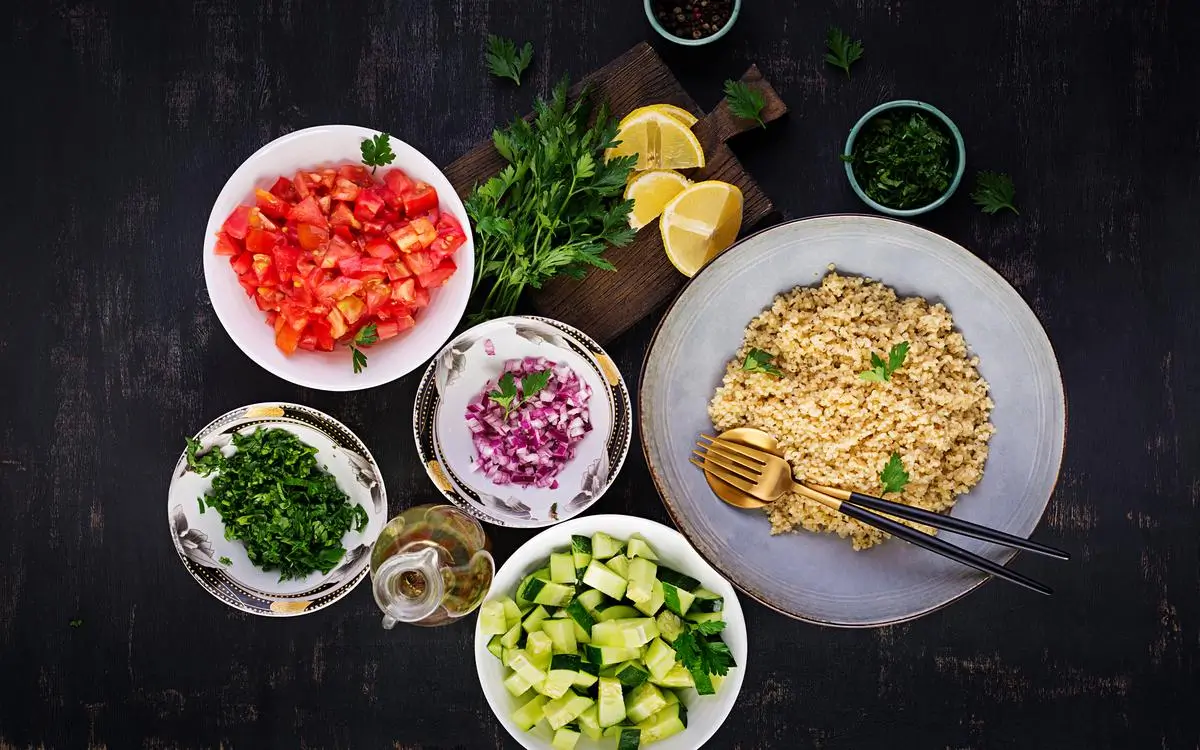
This Mediterranean powerfood is a medley of wholesome ingredients – each contributing unique vitamins, minerals, and antioxidants. The salad is traditionally made from parsley, tomatoes, bulgur wheat, onions (or scallions), mint, lemon juice, and olive oil, with a touch of salt. This combination makes tabouli low in fat and high in fiber while delivering a wide range of micronutrients.
Let’s break down the core ingredients and their nutritional highlights:
Nutritional Benefits of Parsley
This bright green herb isn’t just a garnish – it’s a nutritional powerhouse. Parsley is extremely rich in vitamin K, which is crucial for blood clotting and bone health. Just ½ cup of parsley provides over 500% of the daily recommended intake of vitamin K! It’s also high in vitamin C and vitamin A (as beta-carotene).
Parsley contains potent antioxidants, particularly flavonoids such as myricetin and apigenin, which help protect cells from damage. These compounds have been linked to lower risks of diseases like colon cancer and heart disease.
In sum, parsley’s nutritional profile supports immune function and has anti-inflammatory properties. In tabouli, parsley is the primary ingredient, making up the bulk of the salad and providing a significant share of its vitamins (including A, C, K) and antioxidants.
Why Tomatoes Add More Than Flavor
Fresh chopped tomatoes give tabouli its red specks and juicy texture. Tomatoes are an excellent source of vitamin C (which supports immunity and skin health) and vitamin A. More uniquely, they supply lycopene, a red carotenoid pigment. Lycopene is a powerful antioxidant associated with many health benefits. A healthy food search near me will always find a restaurant that serves tabouli salad.
Studies show that diets rich in lycopene (chiefly from tomatoes) are linked to a lower risk of certain cancers (like prostate cancer) and stroke. Lycopene helps neutralize free radicals in the body and may reduce inflammation. (We’ll discuss these effects in detail later.) In tabouli, tomatoes also contribute to hydration and a dose of minerals, such as potassium.
The Role of Bulgur
Bulgur is a quick-cooking whole grain made from cracked, parboiled wheat kernels. It’s the small tender grain you see throughout tabouli. Bulgur is high in fiber and complex carbohydrates while being low in fat. This grain provides a modest amount of plant-based protein and is a good source of minerals, including manganese and iron. It also contains B vitamins (like niacin and B6) and magnesium.
Because bulgur is a whole grain, it retains the nutrient-rich bran and germ of the wheat, offering more fiber and micronutrients than refined grains. The Harvard T.H. Chan School of Public Health links whole grains like bulgur to better digestion and a lower risk of heart disease. A typical serving of tabouli isn’t heavy on bulgur (traditional Lebanese tabbouleh uses just a small amount of bulgur for texture, but it’s enough to boost the salad’s fiber content significantly.
Fiber from bulgur is key for digestive health and helps slow down the digestion of carbs, giving bulgur a low glycemic index (meaning it won’t spike blood sugar as much as refined starches). We’ll see that bulgur’s fiber contributes to heart and gut benefits.
Onions (Green Onions or Red Onions)
Finely chopped onions or scallions add a zesty bite to the tabouli. Onions are nutrient-dense, providing a low-calorie food that is rich in vitamin C, vitamin B6, folate, and potassium. They’re notably high in various antioxidants and sulfur compounds. A standout antioxidant in onions is quercetin, a flavonoid that has potent anti-inflammatory effects.
Quercetin, found in onions, has been studied for its potential benefits to heart health, as it may help lower blood pressure and improve cholesterol levels. Onions also contain compounds that may help fend off bacteria and strengthen immunity.
Additionally, onions are a source of prebiotic fibers (fructooligosaccharides), which feed healthy gut bacteria (supporting digestion). In tabouli, the amount of onion is moderate, but it contributes to the salad’s overall antioxidant profile and flavor.
Mint: The Hidden Superfood in Tabbouleh
Chopped mint leaves are often mixed with parsley to give tabouli a refreshing aroma. Although used in smaller quantities than parsley, mint still adds nutritional value. Mint leaves contain vitamin A and small amounts of vitamin C and B vitamins. They are also rich in phytochemicals like rosmarinic acid and menthol.
These compounds have been studied for their calming effects on digestive issues – mint is well known as a remedy for indigestion. Peppermint (a type of mint) can relax the muscles of the GI tract, helping relieve irritable bowel syndrome (IBS) symptoms like bloating and pain.
Mint’s rosmarinic acid is both an antioxidant and an anti-inflammatory agent. In tabouleh, mint works with parsley to boost the salad’s antioxidant level and digestive benefits (not to mention adding great flavor).
Lemon Juice
A generous squeeze of fresh lemon juice and olive oil is essential for tabouli’s dressing. Lemons are an excellent source of vitamin C. The combination of tomatoes, parsley, and lemon juice makes tabouli a vitamin C-rich dish – one analysis found tabouleh was the only traditional Lebanese dish providing over 20% of the daily vitamin C requirement per serving.
Vitamin C is a potent antioxidant that supports the immune system, helps in collagen formation, and enhances iron absorption from plant foods. The acidic lemon juice also brightens the flavor without needing much salt and can aid digestion by stimulating digestive enzymes. Each cup of tabouli can provide approximately 20–25% of the daily vitamin C requirement, thanks in large part to the addition of lemon juice and tomatoes.
Olive Oil
Authentic tabouli uses extra-virgin olive oil in its light dressing. Olive oil is a staple of the Mediterranean diet and is famed for its heart-healthy properties. It is rich in monounsaturated fat, particularly oleic acid, which can help lower LDL (“bad”) cholesterol levels.
Olive oil is also a source of vitamin E and is loaded with anti-inflammatory compounds called polyphenols. One notable polyphenol in extra-virgin olive oil, oleocanthal, exhibits anti-inflammatory actions similar to those of ibuprofen. Dressing tabouli with olive oil gives the salad healthy fats that help absorb the fat-soluble vitamins (A, E, K) from the vegetables.
Approximately 2 tablespoons of olive oil (typically used in a tabouli bowl) contribute roughly 240 calories, primarily from beneficial fats. This raises tabouli’s caloric content slightly, but the trade-off significantly boosts flavor and nutrition. Most of the fat in tabouli (up to ~65% of calories) comes from heart-healthy monounsaturated fats.
FAQs About Tabouli
1. What is tabouli made of?
Tabouli is a traditional Mediterranean salad made with fresh parsley, bulgur wheat, chopped tomatoes, green onions, mint, lemon juice, olive oil, and a pinch of salt. Each ingredient contributes to its refreshing flavor and health benefits.
2. Is tabouleh healthy?
Yes! Tabouli is incredibly healthy. It’s low in calories, high in fiber, and packed with essential vitamins like A, C, and K. The parsley and tomatoes offer antioxidants, while the bulgur wheat adds digestive-friendly fiber. Plus, olive oil provides heart-healthy fats.
3. What are the health benefits of eating tabouli?
Tabouli offers numerous health benefits, including:
- Supporting heart health with antioxidants and healthy fats.
- Aiding digestion due to its high fiber content.
- Strengthening bones with its rich vitamin K levels.
- Boosting immunity thanks to vitamin C.
- Providing anti-inflammatory benefits from olive oil and parsley.
4. Can tabouli help with weight loss?
Yes, tabouli is great for weight loss. It’s low in calories and high in fiber, which helps keep you full longer. Additionally, it’s a nutrient-dense food, meaning you get a generous amount of vitamins and minerals without excessive calories.
5. Is tabouli gluten-free?
Traditional tabouli is made with bulgur wheat, which contains gluten. However, you can make a gluten-free version by substituting bulgur with quinoa or cauliflower rice.
6. How many calories are in a serving of tabouli?
A typical 1-cup serving of tabouli contains about 150–180 calories, depending on the amount of olive oil used. It’s low in fat and packed with fiber and essential nutrients.
7. Can I make tabouli in advance?
Yes! Tabouli can be made in advance and even tastes better after sitting for a few hours, as the flavors meld. Store it in an airtight container in the refrigerator for up to 2-3 days.
8. Is tabbouleh a good source of fiber?
Absolutely. Bulgur wheat and fresh vegetables, such as parsley and tomatoes, provide a good amount of fiber, which promotes healthy digestion and helps prevent constipation.
9. What can I serve with tabouli?
Tabouli pairs well with many Mediterranean dishes, like:
- Grilled meats (chicken, lamb, or beef)
- Falafel or hummus
- Pita bread or wraps
- Roasted vegetables
Final Thoughts: Why Tabouli Deserves a Spot in Your Diet
In sum, Tabbouleh is nutrient-dense: packed with vitamins A, C, K, folate, iron, calcium, potassium, and a wide array of antioxidants (flavonoids, carotenoids, vitamin C), all for relatively few calories. A typical 1-cup serving of tabouli contains approximately 150–180 calories, 3–4 grams of fiber, and 3–5 grams of protein.
It’s naturally cholesterol-free and low in saturated fat. Mediterranean vegetable tabbouleh salad can be low in sodium if little salt is added. The parsley provides a massive dose of vitamin K and antioxidants, while the bulgur adds complex carbs and fiber. This unique nutritional profile underpins many of tabouli’s health benefits, which we will explore next.
Make eating healthy at Aladdin part of your routine.
]]>Have you thought about the dilemma of Keto vs Mediterranean diet? Both are popular eating plans, but they differ significantly in what you eat and how they affect your health. The keto diet is a very low-carb, high-fat (imagine cutting out most bread, pasta, and even fruits so your body runs on fat).
On the other hand, the Mediterranean diet is more balanced. It consists of many vegetables, fruits, whole grains, beans, olive oil, fish, and lean meat while limiting sweets and red meat. Prominent health experts often consider the Mediterranean diet a healthier choice—it’s even been called the “gold standard” of healthy eating. Understanding Keto vs Mediterranean diet differences can help you choose the right lifestyle.
Let’s break down the key differences in a teen-friendly way, looking at weight loss, heart health, long-term sustainability, and overall well-being.
Keto vs Mediterranean diet: Weight Loss
How Keto Helps You Lose Weight Quickly
When discussing Keto vs Mediterranean diet for weight loss, both approaches show different results. Going keto can lead to quick weight loss, especially in the beginning. When you drastically cut carbs, your body sheds much water weight and starts burning fat for fuel. People often see rapid results in the first few weeks.
However, some of that early weight loss is water, not fat, and results can slow down over time. Studies show that while keto dieters might lose weight faster in the first few months, the difference often disappears about a year later compared to more balanced diets. Another thing to note is that keto can be hard to stick with (it’s rigorous), so some people end up regaining weight if they quit the diet.
Sustainable Weight Loss with the Mediterranean Diet
The Mediterranean diet may not make you drop pounds as dramatically in the first couple of weeks, but it can help with weight loss and is easier to maintain for most people. It emphasizes portion control and nutrient-rich foods, which can lead to steady, healthy weight loss.
Research has found that the Mediterranean diet is effective for weight loss and, over the long run, works as well as other diets (like low-carb diets) in helping people slim down. The best part is that it doesn’t feel as much like a “diet”—you get to eat a variety of tasty foods (fruits, pasta, bread in moderation, etc.), so people find it easier to stick with, which helps them keep weight off in the long term.
Heart Health: Which Diet is Better for Your Heart?
Keto and Heart Health: What You Need to Know
A key part of the Keto vs Mediterranean diet debate is heart health. The keto diet raises some flags for heart health. Because it encourages many high-fat foods, people on keto often eat a lot of saturated fat (the less healthy fat found in things like butter, fatty meats, etc.). This can raise your “bad” LDL cholesterol levels, which is unsuitable for your heart. Major organizations like the American Heart Association caution against strict low-carb diets like keto for this reason – a recent AHA analysis found that the keto diet did not align with heart-healthy eating guidelines.
Some short-term studies show improvements in blood pressure or triglycerides on keto. Still, if you’re loading up on unhealthy fats, it could harm your heart in the long run. Because of these concerns, doctors often do not recommend keto if someone already has risk factors for heart disease.
Why the Mediterranean Diet is Heart-Healthy
Research comparing the Keto vs Mediterranean diet often favors Mediterranean eating for cardiovascular health. The Mediterranean diet is famous for being heart-friendly. It’s rich in healthy fats like olive oil (which can lower bad cholesterol) and many fruits and vegetables (which provide fiber and antioxidants that protect your heart). People in countries that eat this way have lower rates of heart disease, and plenty of studies have backed up its benefits.
In fact, the Mediterranean diet has been shown to reduce the risk of heart disease and stroke. The American Heart Association’s review found that Mediterranean-style eating aligns strongly with heart health guidelines.
In sum, the mediterranean diet keeps your heart happy by focusing on foods that are good for your blood vessels – like fish (with omega-3 fats that are good for your heart) and nuts – and limiting those that aren’t (like heavy red meats or sweets). Health experts often rank the Mediterranean diet as one of the healthiest for your heart.
Long-Term Sustainability: Which Diet is Easier to Follow?

Challenges of Sticking to the Keto Diet
The Keto vs Mediterranean diet debate often centers on which lifestyle is easier to maintain.. One big issue with keto is sustainability – basically, how easy is it to stick to this way of eating year after year? For many people, keto’s strict rules are rigid to follow for a long time. Think about it: you have to severely limit or cut out bread, rice, pasta, most fruits, potatoes, and even milk or yogurt. That means no pizza nights with friends, no regular sandwiches, and saying no to many of your favorite foods.
While some enjoy the challenge, many find it hard to sustain such a restrictive diet. It can become tedious or frustrating so people might quit after a few months. Experts point out that when people drop very restrictive diets, they often regain their lost weight.
Additionally, some specialists suggest that if you do try keto, you should only do it for a short time (3 to 6 months at most) and then transition to a more balanced eating plan like the Mediterranean or a plant-based diet. This is because keto is seen as too extreme to be a lifelong diet for most people.
Why the Mediterranean Diet is a Long-Term Lifestyle
Many nutritionists say the Keto vs Mediterranean diet discussion should focus on long-term habits. The Mediterranean diet is generally easy to maintain in the long run. There’s no strict calorie counting or cutting out entire food groups (you can still enjoy carbs like whole-grain bread and pasta, just in reasonable portions). It’s flexible and offers various flavors so that you won’t get bored as quickly.
You can go to restaurants or eat with your family without feeling “on a diet” with a long list of forbidden foods. Because of this flexibility and balance, many people adopt the Mediterranean diet as a permanent lifestyle. In one article, a dietitian noted that many people who switch to Mediterranean eating say they “never want to eat any other way”.That’s a sign of a sustainable diet!
As you can see, it provides plenty of choices and few restrictions, precisely what makes a diet something you can stick with for years. The food is enjoyable and culturally inclusive (you can have the occasional pasta, a bit of cheese, or a treat, all in moderation), making it realistic for long-term use. Overall, Mediterranean eating is more of a lifestyle than a strict diet, so it’s much easier to keep up over time than keto.
Overall Well-Being: How Do These Diets Affect Your Body?
The Pros and Cons of the Keto Diet
When analyzing Keto vs Mediterranean diet for overall health, the Mediterranean diet tends to provide more balanced nutrition. Beyond weight and heart issues, how does keto make you feel? In the first week or two, many keto newbies go through the “keto flu” – you might get headaches, feel tired, get cramps, or even feel sick to your stomach as your body adapts to very low carbs.
Cutting out so many foods can also mean missing essential nutrients. For example, keto typically lacks fruits, whole grains, and veggies, so you could fall short on vitamins like A, C, K, folate, and fiber.
Fiber is super important for digestion; without enough, people on keto can get constipated. Some people on keto also report lousy breath (a common side effect of ketosis) or feeling groggy until their bodies fully adjust. In the long term, we don’t have much research on what staying in ketosis for many years might do to the body. Some people are concerned about potential impacts on the liver or kidneys, especially if the diet isn’t well-balanced.
In short, while some people feel OK (or even great) on keto, others might feel low energy or unwell, especially if they don’t follow the diet carefully. This diet should be followed with medical advice to ensure you get enough nutrients and do not harm your body.
Why the Mediterranean Diet Supports Overall Health
The Mediterranean diet, on the other hand, is linked with positive overall well-being. Because it includes a wide range of foods, you’re likely getting lots of vitamins, minerals, and fiber in your meals, which helps your body function at its best.
People often report having good energy levels on this diet – not surprising since you’re fueling your body with quality foods like fruits for natural sugars, whole grains for steady energy, and protein from fish and beans.
Mediterranean eating is also associated with benefits beyond just physical health. It encourages enjoying meals with family and friends, savoring your food, and not rushing (picture those long, relaxing meals in Italy or Greece). Slowing down and enjoying life can boost mental health and reduce stress.
The diet’s high content of anti-inflammatory foods (fruits, vegetables, olive oil, nuts) has been linked to lower rates of certain diseases, such as type 2 diabetes, some cancers, and even Alzheimer’s disease.
Overall, because it’s not overly restrictive, people on the Mediterranean diet don’t typically suffer the kind of side effects you might see with keto. It’s nutritionally complete and diverse, which means it can support better overall health and mood. Many health organizations say the Mediterranean diet promotes long-term well-being and healthy aging – you’re not just losing weight but taking care of your whole body.
Keto vs Mediterranean diet: Which Is Healthier?
Both diets can help people lose weight and have some health benefits, but most doctors and dietitians will tell you that the Mediterranean diet is the healthier, more balanced choice for most people. It’s backed by decades of research and is consistently ranked as one of the healthiest diets in the world.
In conclusion, the Mediterranean diet wins points for heart health, nutrient intake, and sustainability – it’s a pattern of eating you can enjoy forever while reducing the risk of serious health issues. Keto might be helpful in certain situations (like jump-starting weight loss or for specific medical conditions under supervision). Still, it’s generally not recommended as a long-term healthy diet for the general population.
In simple terms, the Mediterranean diet = balanced, nutritious, and life-long well-being; the Keto diet = quick results but is more challenging to maintain and with some potential risks.
For a teenager (or anyone) looking to eat healthy, the Mediterranean style is usually a safer bet because it teaches you good habits and doesn’t cut out things your body needs. Talking with a healthcare provider or nutritionist before starting any diet is always a good idea. But if you’re comparing keto and Mediterranean, the evidence from places like the Mayo Clinic and Harvard is pretty straightforward: The mediterranean diet is generally considered the healthier choice for long-term health and happiness.
]]>In this ultimate guide, we’ll explore everything you need to know about Tzatziki: its history, traditional recipe, variations, health benefits, and the best ways to enjoy it.
What is Tzatziki?
Tzatziki is a creamy and tangy yogurt-based dip, traditionally made with Greek yogurt, cucumbers, garlic, olive oil, lemon juice, and fresh herbs like dill or mint. This Mediterranean favorite is loved for its light, refreshing qualities, making it the perfect complement to rich and hearty dishes.
The History & Origins of Tzatziki Recipe
Tzatziki has a rich history that spans Greece, Turkey, and the Middle East.
- Greek Origins: In Greece, Tzatziki is often served as part of a meze platter, paired with grilled meats and fresh pita bread.
- Turkish Connection: A similar dish in Turkish cuisine, Cacık, is a thinner version, often enjoyed as a cold soup.
- Middle Eastern Influence: Various yogurt-based dips with cucumbers and herbs exist in Middle Eastern cuisine, emphasizing the region’s shared culinary heritage.
Tzatziki’s cooling nature makes it especially popular during warm summers. It provides a refreshing contrast to grilled and spiced dishes.
Traditional Tzatziki Recipe

Making authentic Tzatziki recipes at home is quick and easy! Here’s how you can create the perfect Tzatziki from scratch:
Ingredients:
- 2 cups Greek yogurt (full-fat for the best texture)
- 1 cucumber, grated and drained
- 2 cloves garlic, minced
- 2 tablespoons extra virgin olive oil
- 1 tablespoon fresh lemon juice
- 1 tablespoon fresh dill, chopped (or mint for variation)
- 1/2 teaspoon salt
- 1/4 teaspoon black pepper
Step-by-Step Instructions:
- Grate the Cucumber: Use a box grater or food processor to grate the cucumber finely. Place it in a clean towel and squeeze in excess moisture to prevent watery Tzatziki.
- Mixing Ingredients: Combine Greek yogurt, grated cucumber, minced garlic, olive oil, lemon juice, dill, salt, and pepper in a mixing bowl.
- Let it Rest: Cover and refrigerate for at least 30 minutes to let the flavors blend.
- Serve & Enjoy: Serve chilled with pita, vegetables, or grilled meats.
Tzatziki Recipe Variations to Try
Tzatziki is highly adaptable! Here are some exciting variations:
- Spicy Tzatziki: Add a dash of red pepper flakes or finely chopped jalapeño.
- Vegan Tzatziki: Use coconut yogurt or cashew-based yogurt instead of Greek yogurt.
- Mint Tzatziki: Swap dill for fresh mint for a different herbal twist.
- Roasted Garlic Tzatziki: Roast the garlic beforehand for a milder, sweeter flavor.
- Avocado Tzatziki: Blend in half an avocado for extra creaminess.
Health Benefits of Tzatziki
Tzatziki is not just delicious—it’s also packed with nutrients. Here’s why it’s a healthy addition to your diet:
1. High in Protein: Supports Muscle Health and Satiety
Tzatziki is typically made with Greek yogurt, which is significantly higher in protein than regular yogurt. Protein is essential for:
- Muscle growth and repair are crucial for active individuals and those seeking to maintain muscle mass as they age.
- Increased satiety – Protein-rich foods help keep you full longer, reducing overall calorie intake.
- Metabolism support – A higher protein intake can boost metabolism by increasing the thermic effect of food (calories burned during digestion).
Nutritional Highlight: A 2-tablespoon (30g) serving of tzatziki provides around 2–3 grams of protein, making it an easy way to sneak extra protein into meals.
2. Rich in Probiotics: Promotes Gut Health & Digestion
Greek yogurt is a natural source of probiotics, which are beneficial bacteria that support digestive and gut health. Probiotics help:
- Maintain a balanced gut microbiome, which is crucial for digestion, immunity, and even mental health.
- Improve nutrient absorption, ensuring your body gets the most out of the food you eat.
- Reduce symptoms of bloating, constipation, and irritable bowel syndrome (IBS).
Studies show that consuming probiotic-rich foods like tzatziki can reduce inflammation in the gut and support long-term digestive health.
Probiotic Strains in Greek Yogurt: Common live cultures include Lactobacillus bulgaricus and Streptococcus thermophilus, known for their gut-healing properties.
3. Low in Calories: A Lighter Alternative to Creamy Dips
Tzatziki is an excellent low-calorie alternative to heavy dips like mayonnaise, sour cream, or ranch dressing. While many creamy sauces pack in unhealthy fats and excess calories, tzatziki offers a light and refreshing option.
🔹 Caloric Comparison (per 2-tbsp serving):
- Tzatziki: ~30–50 calories
- Mayonnaise: ~100 calories
- Sour cream-based dips: ~90–120 calories
If you’re looking for a dip that delivers flavor without the extra calories, tzatziki is a weight-friendly choice.
4. Loaded with Antioxidants: Fights Inflammation & Supports Immunity
Tzatziki’s ingredients—cucumber, garlic, lemon juice, olive oil, and dill—are all packed with antioxidants, which help combat oxidative stress and reduce inflammation in the body.
- Cucumbers: High in vitamin C, beta-carotene, and flavonoids, which help fight free radicals.
- Garlic: Contains allicin, a powerful compound known for its anti-inflammatory and immune-boosting effects.
- Lemon Juice: A great source of vitamin C, which enhances immune function and supports collagen production.
- Dill: Rich in polyphenols and vitamin A, which contribute to anti-aging and anti-inflammatory benefits.
Why This Matters: Chronic inflammation is linked to heart disease, arthritis, and diabetes—making tzatziki an excellent choice for a health-conscious diet.
5. Heart-Healthy: Supports Cardiovascular Function
Tzatziki contains heart-friendly ingredients that contribute to cardiovascular health:
Olive Oil – A staple of the Mediterranean diet, olive oil is high in monounsaturated fats and polyphenols, which help:
- Lower bad cholesterol (LDL) and increase good cholesterol (HDL).
- Reduce blood pressure and inflammation.
- Protect against heart disease and stroke.
Greek Yogurt – Provides calcium, magnesium, and potassium, which support heart health by regulating blood pressure and improving circulation.
Garlic – Shown in studies to help reduce cholesterol levels and blood pressure naturally.
Bottom Line: Tzatziki offers a nutrient-rich way to promote heart health without excess saturated fats.
6. Supports Bone Health with Calcium & Vitamin K
Greek yogurt in tzatziki is an excellent source of calcium, essential for strong bones and teeth. Additionally, dill contains vitamin K, which helps calcium bind to bones, reducing the risk of osteoporosis.
Nutritional Fact: A 100g serving of tzatziki provides about 15-20% of your daily calcium needs.
7. Helps with Weight Management
Because tzatziki is high in protein, low in calories, and rich in probiotics, it’s a great addition to a weight-loss or balanced diet.
- Protein + Fiber Combo: Keeps you full longer, reducing snacking and cravings.
- Probiotics: Help maintain a healthy gut, which is linked to better weight regulation.
- Low-Calorie Alternative: Replaces high-calorie sauces and dips while still adding creaminess and flavor.
Weight Loss Tip: Use tzatziki as a dip for veggies, dressing for salads, or spread on sandwiches to keep meals flavorful without extra calories.
8. Hydrating & Refreshing
Cucumbers are 95% water, making tzatziki a hydrating addition to meals. Staying hydrated is essential for digestion, skin health, and overall well-being.
Bonus Tip: Enjoy tzatziki on hot summer days for a refreshing and cooling effect!
Best Ways to Enjoy Tzatziki
Tzatziki is a versatile dip that enhances many dishes. Here are the best ways to enjoy it:
- As a Dip: Serve with warm pita, fresh veggies (carrots, cucumbers, bell peppers), or crispy pita chips.
- Grilled Meats: This recipe is perfect for lamb, chicken, or beef skewers (Souvlaki, Gyros, or Shawarma).
- As a Salad Dressing: Thin it with water or extra olive oil for a healthy, creamy salad dressing.
- In Wraps & Sandwiches: Add to a wrap with grilled chicken, lettuce, tomatoes, and feta cheese for a Mediterranean-inspired meal.
- With Rice or Quinoa: An excellent topping for grain bowls, adding flavor without excess calories.
- With Breakfast: Pair with eggs or avocado toast for a nutritious morning boost.
Tzatziki vs. Other Dips: How It Compares
How does Tzatziki stack up against other popular dips?
| Dip | Main Ingredients | Calories per Serving | Health Benefits |
| Tzatziki | Greek yogurt, cucumber, garlic | ~50-70 | High protein, probiotics |
| Hummus | Chickpeas, tahini, olive oil | ~80-100 | High fiber, heart-healthy fats |
| Ranch Dip | Mayo, sour cream, herbs | ~140-150 | Higher in fat, less nutritious |
| Guacamole | Avocado, lime, onion | ~100-120 | Healthy fats, fiber |
| Sour Cream Dip | Sour cream, onions, mayo | ~120-140 | High in saturated fat |
Tzatziki is one of the healthiest dip options, offering balanced protein, healthy fats, and probiotics without excessive calories.
Tzatziki Recipe FAQs
- How long does homemade Tzatziki last?
Tzatziki stays fresh in the fridge for 3-5 days when stored in an airtight container. - Can I freeze Tzatziki?
It’s not recommended, as yogurt tends to separate when frozen. - What’s the best yogurt for Tzatziki?
Full-fat Greek yogurt works best for creaminess and authentic taste. - Can I make Tzatziki dairy-free?
Yes! Use coconut, almond, or cashew yogurt as a substitute. - Is Tzatziki keto-friendly?
Yes, it’s low in carbs and great for a keto diet.
Final Thoughts: Why You Should Try The Tzatziki Recipe Today
Tzatziki is more than just a dip—it’s a healthy, flavorful, and versatile addition to any meal. Whether you enjoy it as a dip, sauce, or spread, its refreshing taste and health benefits make it a must-have in any kitchen.
Ready to make your own Tzatziki? Try this recipe and bring a taste of the Mediterranean to your table today!
Share your Tzatziki creations! Tag us on social media and tell us how you enjoy this classic Mediterranean dip.
Visit Aladdin Mediterranean Grill, Garden Oaks for the real thing. Curious how the cuisines differ? Read Greek vs Mediterranean food.
]]>In this guide, we’ll explain everything you need to know about preparing a perfect Slow-Roasted Whole Lamb—from selecting the best ingredients and seasoning it to slow-cooking it to perfection. Whether you’re hosting a holiday gathering, a family reunion, or a special occasion, this dish will leave a lasting impression.
Why Whole Roasted Lamb Recipe is the Ultimate Holiday Dish
Roasting a whole lamb is a centuries-old tradition across the Mediterranean, from the hills of Greece to the deserts of the Middle East and the coastal villages of North Africa. The method is simple but time-honored: slow-roasting over an open fire, in a wood-fired oven, or even in a large covered grill. This allows the meat to absorb flavors and cook evenly until it falls off the bone. Slow-Roasted Whole Lamb: The Secrets of the Slow-Roasted Whole Lamb Recipe for the Perfect Holiday Feast. Aladdin Mediterranean cuisine
What Makes It Special?
- Slow-Cooked to Perfection – Cooking a whole lamb low and slow ensures incredibly tender, juicy meat with a crispy, golden-brown exterior.
- Rich in Flavor – A blend of NIH herb safety and research info, garlic, olive oil, and citrus infuses every bite with deep, aromatic flavors.
- Perfect for Large Gatherings – Whether it’s Christmas, Easter, Eid, or a wedding feast, this dish feeds a crowd and brings everyone together.
- A Symbol of Celebration—In Mediterranean culture, roasting a whole lamb represents abundance, generosity, and togetherness.
Ingredients for the Perfect Slow-Roasted Whole Lamb Recipe

Wondering what is the secret of the Slow-Roasted Whole Lamb Recipe? The secret to a flavor-packed, perfectly roasted lamb lies in the quality of ingredients and the patience to cook it low and slow.
🔹 What You’ll Need:
For the Lamb:
- 1 whole lamb (20-40 lbs), cleaned and trimmed
- 1/2 cup extra virgin olive oil
- 10 cloves garlic, minced
- 2 tablespoons sea salt
- 1 tablespoon black pepper
- 1 tablespoon smoked paprika
- 1 tablespoon ground cumin
- 2 tablespoons dried oregano
- 1 tablespoon fresh thyme leaves
- Juice of 4 lemons
- Zest of 2 lemons
- 1/4 cup white vinegar
- 1/2 cup unsalted butter, melted
- 4-5 sprigs fresh rosemary
For Basting & Cooking:
- 2 cups water or lamb broth
- 1 cup red wine (optional, adds depth of flavor)
- 1/4 cup pomegranate molasses or honey (for caramelization)
Step-by-Step Guide to Make the Perfect Slow-Roasted Whole Lamb Recipe
Roasting a whole lamb takes time, but the reward is a beautifully seasoned, melt-in-your-mouth dish worth the wait.
Prep the Lamb (Marinate for 12-24 Hours)
- Clean the Lamb: If your butcher hasn’t already done so, remove any excess fat and silver skin from the lamb. Rinse it well and pat it completely dry.
- Make Deep Incisions: Using a sharp knife, make minor, deep cuts all over the lamb, especially in the thickest parts of the meat.
- Prepare the Marinade: In a bowl, whisk together olive oil, lemon juice, vinegar, garlic, salt, black pepper, paprika, cumin, oregano, thyme, and melted butter.
- Massage the Marinade: Combine it generously all over the lamb, making sure to get it into the incisions.
- Let It Rest: Cover the lamb with plastic wrap or foil and let it marinate in the refrigerator for at least 12 hours (overnight is best).
Prepare the Fire & Roasting Setup
The cooking method depends on what you have available. Traditional Mediterranean lamb is roasted over an open fire pit, wood-fired oven, or large covered grill. You can also use an oven if needed.
🔹 Fire Pit or Spit Roasting:
- Build a low-burning fire using hardwood like oak or olive wood.
- If using a spit, secure the lamb and slowly rotate it over the fire for even cooking.
🔹 Oven Roasting:
- Preheat your oven to 275°F (135°C) for a low and slow roast.
- Place the lamb on a large roasting rack over a deep pan to catch drippings.
- Add 2 cups of water or broth to the bottom of the pan to keep the lamb moist.
🔹 Grill Roasting:
- Heat your charcoal or gas grill to medium-low heat.
- Keep the lamb away from direct flames and cover with foil to trap heat.
Slow Roasting the Lamb (6-8 Hours for Perfection)
- Start Low & Slow: Roast the lamb for 6-8 hours at 275°F (135°C), basting every hour with its own juices.
- Baste Regularly: Mix red wine, pomegranate molasses, and drippings from the pan. Brush over the lamb every 30 minutes.
- Increase Heat at the End: For the last 30 minutes, raise the oven temperature to 400°F (200°C) to crisp up the skin.
- Check for Doneness:
- Medium-Rare: 135°F (57°C)
- Medium: 145°F (63°C)
- Well-Done (Traditional Mediterranean Style): 160°F+ (71°C+)
Resting & Serving the Lamb
Once fully roasted, let the lamb rest for at least 30 minutes before carving. This redistributes the juices, keeping the meat tender and moist.
🔹 How to Serve It:
- Slice large pieces and serve with a warm pita, garlic yogurt sauce, and fresh herbs.
- Pair with roasted potatoes, rice pilaf, or Mediterranean salads.
- Drizzle with extra virgin olive oil and a squeeze of fresh lemon for additional flavor.
Perfect Side Dishes to Pair with Roasted Lamb
- Greek Lemon Potatoes – Oven-roasted with garlic, oregano & lemon juice.
- Tabbouleh Salad – Fresh parsley, bulgur, tomatoes, and lemon dressing.
- Hummus & Baba Ganoush – Perfect dipping sauces for lamb slices.
- Mediterranean Rice Pilaf – Fluffy rice with toasted almonds & golden raisins.
- Freshly Baked Pita Bread – Soft, pillowy bread to soak up all the juices.
To elevate your slow-roasted whole lamb from great to unforgettable, pay attention to the little details that make a big difference. Using fresh, organic ingredients—especially for herbs, garlic, and citrus—can take the flavor to another level. Fresh rosemary, thyme, and oregano have more pungent oils than dried versions and will perfume the meat as it cooks.
If you’re hosting a special event, consider adding a Middle Eastern-style lamb stuffing. A simple blend of rice, pine nuts, caramelized onions, raisins, and cinnamon can be packed inside the lamb cavity for added depth and sweetness.
Another tip: if you’re roasting over a fire pit, hang a soaked burlap sack over the lamb during the first few hours. This helps keep moisture in and creates a beautiful crust without drying the surface. It’s an old Bedouin trick still used in parts of the Levant.
Planning & Timing: How to Get It Right
Timing is critical. For a 25 to 30-lb lamb, start marinating it at least one day in advance. On cooking day, allow 2 hours for preparation and 6 to 8 hours for cooking. You should also budget time for letting the lamb rest post-roast—30 to 45 minutes, minimum. If you carve it too early, all the juices you worked hard to lock in will run out.
Also, make sure your roasting station is stable and safe. Whether you’re using a rotisserie, oven, or large grill, the lamb needs to be secured so it rotates or roasts evenly without sudden jerks or shifting. Uneven heat can result in tough patches or undercooked spots.
Signature Mediterranean Marinade Variations
Every region has its take on a slow-roasted whole lamb recipe. In Greece, the focus is often on lemon, garlic, and oregano. In Lebanon and Palestine, it leans more toward warm spices, such as allspice, cinnamon, and sumac. In Morocco, saffron, cumin, and preserved lemon are the stars.
Feel free to customize your base marinade by adding regional touches. Want something smokier? Add a spoonful of harissa or Aleppo pepper. Prefer it tangier? Increase the vinegar or lemon juice slightly. Just keep the salt levels steady, as too much can dry out the meat over long cooking periods.
Presentation Ideas for the Ultimate Showpiece
Serving a slow-roasted whole lamb is about more than just feeding a crowd—it’s a spectacle. Set the lamb on a large wooden board or metal tray, garnished with fresh rosemary, lemon wedges, and roasted garlic bulbs. Surround it with colorful sides: jewel-toned beet salad, golden saffron rice, bright green tabbouleh, or charred vegetables.
For large parties, consider carving at the table. It adds drama, builds anticipation, and showcases the effort behind the dish. Use a long slicing knife and tongs, and have a helper pass around fresh pita or plates loaded with sides as the lamb is portioned out.
Frequently Asked Questions About Slow-Roasted Whole Lamb Recipe
How long does it take to roast a whole lamb?
A whole lamb takes 6 to 8 hours to roast at 275°F (135°C) for tender, fall-off-the-bone meat. Increase the temperature to 400°F (200°C) for the last 30 minutes to achieve crispy skin.
What is the best temperature for slow-roasting a whole lamb?
The ideal temperature for slow-roasting lamb is 275°F (135°C). This ensures even cooking and juicy meat. If using a spit or fire pit, maintain a low and steady heat throughout.
Should I marinate a whole lamb overnight?
Yes! Marinating for 12-24 hours enhances flavor and tenderness. For optimal results, use olive oil, garlic, lemon juice, and Mediterranean spices.
Can I roast a whole lamb in a regular oven?
Yes! Preheat the oven to 275°F (135°C), place the lamb on a roasting rack, and cook for 6-8 hours. Baste regularly, and for crispy skin, increase the temperature to 400°F (200°C) at the end.
What are the best side dishes for roasted lamb?
Popular side dishes include lemon cilantro potatoes, tabbouleh salad, hummus, baba ganoush, saffron rice, and freshly baked pita bread.
How do I keep a whole lamb moist while roasting?
Baste the lamb with juices or broth every hour. Keeping a pan of water or lamb broth nearby prevents the food from drying out.
How do I know when a whole lamb is fully cooked?
Use a meat thermometer. The internal temperature should be:
- 135°F (57°C) for medium-rare
- 145°F (63°C) for medium
- 160°F+ (71°C+) for well-done (traditional Mediterranean style)
Final Thoughts: A Feast Worth the Wait
There’s no better way to bring people together for the holidays than with a beautifully slow-roasted whole lamb recipe. The combination of crispy skin, tender meat, and deep Mediterranean flavors makes this dish an unforgettable centerpiece for any festive table.
Whether you’re celebrating Christmas, Easter, Eid, or a special occasion, this dish is guaranteed to impress. Slow cooking is an act of love; the reward is a meal remembered long after the last bite.
Have You Tried Roasting a Whole Lamb?
Let us know in the comments below! What’s your favorite way to enjoy Mediterranean lamb?
Visit our halal Mediterranean restaurant in Houston for slow-roasted favorites.
]]>This blog post will explore pita bread’s cultural, historical, and culinary significance. You’ll also learn ten genius ways to use this bread to elevate your meals, whether for breakfast, lunch, dinner, or dessert. Grab a seat, and let’s begin our pita bread journey!
“The only limit to our realization of tomorrow will be our doubts of today.” – Franklin D. Roosevelt.
So, don’t doubt your next culinary experiment—pita bread might unlock your kitchen creativity!
The Story of My First Encounter with Pita Bread
When I was around sixteen, I tried a warm piece of pita bread in a small, family-run Mediterranean bakery. The smell of freshly baked bread, spices, and olive oil filled the air. I was hooked when I bit into that soft, slightly chewy pita round. It wasn’t just the taste but the comforting texture and how it paired seamlessly with everything from savory dips to sweet spreads.
Over the years, I realized that pita bread is more than a mere side dish: it’s an integral part of numerous global cuisines. It can be a snack, a main dish, or a dessert base. That initial bite introduced me to a world of versatile, flavorful possibilities I’m excited to share today.
“Where there is a will, there is a way.” – Thomas Edison.
If you are willing to experiment in the kitchen, pita bread offers endless ways to delight your taste buds.
What Exactly Is Pita Bread?

Pita bread is a round flatbread traditionally made from wheat flour, yeast, water, and salt. The bread often “puffs” up during baking due to steam inside, creating a natural pocket perfect for stuffing with meats, cheeses, veggies, or spreads.
- Origins: Pita bread is famously used in the Middle East and Mediterranean regions.
- Texture: Typically soft and pillowy, yet slightly chewy.
- Flavor: Mild, allowing it to pair well with intense flavors or stand independently.
Given its neutral taste, pita bread can go with almost anything—savory and sweet.
Why Is Pita Bread So Popular Worldwide?
- Simplicity: Pita bread is easy and affordable to make, requiring just a few essential ingredients: flour, water, yeast, and salt.
- Versatility: It can be enjoyed as a sandwich wrap, a pizza crust, chips, or even as a base for dessert.
- Cultural Significance: It’s a staple in many cuisines, making it globally recognized.
- Convenience: Easily found in supermarkets, bakeries, and online stores.
- Health-Friendly: Lower in sugar and fat than other breads; whole wheat varieties also offer fiber and nutrients.
A Quick Historical Snapshot of Pita
Flatbreads have existed for thousands of years, and pita is among the most famous. Ancient communities from regions that are now Lebanon, Syria, Egypt, Turkey, and Greece perfected recipes through trial and error. Over generations, these breads made their way across continents via trade routes.
Today, you might discover variations like Greek pita (a bit thicker and used for gyros), Lebanese pita (often thinner and larger), or Turkish pide (shaped more like a narrow boat). Each culture has added its twist, but the core idea remains—a round flatbread that’s delicious and easy to make or buy.
The Nutritional Benefits of Pita Bread
While nutritional content may vary depending on the flour and thickness of the pita, here’s a general breakdown per large pita (about 60 grams):
- Calories: ~165–200
- Carbohydrates: ~30–35 g
- Protein: ~5–6 g
- Fiber: ~1–4 g (whole wheat versions contain more)
- Fat: Typically low unless additional oils or fats are used
Health Highlights
- Whole wheat pita provides extra nutrients like B vitamins, iron, and dietary fiber.
- It’s relatively low in sugar compared to many processed breads.
- Pita can be part of a balanced diet, especially if paired with nutritious fillings (lean protein, fresh vegetables, healthy spreads).
10 Genius Ways to Use Pita Bread

Ready to discover just how versatile pita bread can be? Let’s dive in!
1. Dip Companion
One of the most classic ways to enjoy pita bread is with Mediterranean and Middle Eastern dips. Tear or slice it into wedges, then dunk it into:
- Hummus (classic, spicy, or caramelized onion versions)
- Baba Ghanouj (roasted eggplant dip)
- Tzatziki (yogurt-cucumber dip)
- Muhammara (spicy walnut and red pepper dip)
Quick Tip: Warm your pita in a toaster or oven for about 1 minute to make it softer and more aromatic.
2. Classic Pita Pocket or Wrap
Cut a pita in half, gently open the pocket, and fill it with:
- Grilled chicken with lettuce, tomatoes, and a garlicky sauce
- Falafel with pickles and tahini
- Gyro meat with onions and tzatziki
- Vegetarian options like roasted veggies, chickpeas, and feta cheese
How-To: Warm your pita slightly before opening the pocket to prevent tearing. If you don’t want two halves, you can also use a whole pita as a wrap.
Sometimes, a busy schedule calls for a quick pita sandwich solution—healthy and convenient!
3. Homemade Pita Pizza
No time to make pizza dough? Pita bread has your back!
- Preheat your oven to around 400°F (200°C).
- Spread tomato sauce, pesto, or even a creamy white sauce on the pita.
- Add cheese (mozzarella, feta, or a blend).
- Top with sliced vegetables, pepperoni, grilled chicken, or fresh basil.
- Bake for 8–10 minutes or until cheese is bubbly.
Result? A personal-size pizza with a crispy base and a soft interior.
4. Crunchy Pita Chips
Turn stale or day-old pita bread into crunchy chips:
- Slice pitas into wedges.
- Brush lightly with olive oil.
- Season with salt, pepper, paprika, garlic powder, or herbs like oregano.
- Bake at 375°F (190°C) for 8–10 minutes, until golden and crisp.
Serve with guacamole, salsa, hummus, or tzatziki. This is also a clever snack for movie nights or social gatherings.
5. Stuffed Breakfast Pita
Pita bread for breakfast? Absolutely!
- Stuff your pita with scrambled eggs, shredded cheese, and sautéed peppers/onions.
- Add a dash of hot sauce, ketchup, or sriracha for extra flavor.
- Warm briefly on a skillet to fuse flavors.
Congratulations, you’ve just upgraded your morning routine with a portable, protein-packed meal. Love what you do—even if it’s just making a delicious breakfast pita!
6. Pita with Soup or Stew
Pita also shines as a side for soups and stews. Dunk it into a hearty lentil soup, tomato bisque, or chunky vegetable stew. The bread soaks up all those robust flavors, turning each bite into a warm and comforting experience.
Idea: Cut your pita into strips and float them on your soup for added texture or use whole wheat pita bread.
7. Sweet Dessert Pita
Pita’s mild flavor makes it a surprise hit for sweet treats:
- Chocolate Spread & Banana: Lightly toast your pita, spread Nutella or melted chocolate, and add banana slices.
- Honey & Berries: Drizzle honey over your pita, then top with fresh strawberries, blueberries, or raspberries.
- Yogurt & Fruit: Spoon some Greek yogurt on a warm pita, sprinkle cinnamon and add fruit. A drizzle of honey ties it all together.
8. Pita Breadcrumbs
Don’t throw away stale pita! Make your pita breadcrumbs:
- Dry the bread thoroughly by leaving it out or lightly toasting it.
- Break into smaller pieces.
- Blend in a food processor or blender.
- Store in a jar or sealable bag.
These crunchy breadcrumbs can be used to coat fish, chicken, or vegetables. They also work well in meatball or meatloaf mixtures.
9. Layered Casserole
Have you ever tried pita in a casserole? Think of it as a fusion lasagna:
- Arrange pita pieces at the bottom of a baking dish.
- Layer with tomato sauce, a spiced stew, and cheese (mozzarella, cheddar, or a mix).
- Top with more pita, repeating until the dish is filled.
- Bake at 375°F (190°C) for about 20–30 minutes or until the cheese is golden.
The pita soaks up the sauce, creating a hearty, layered meal that’s part Italian, part Mediterranean.
10. Grilled Pita Pockets
Don’t forget the pita when firing up the grill!
- Brush both sides of the pita with olive oil.
- Sprinkle herbs like oregano, basil, or thyme.
- Grill for about 1 minute per side to get nice char marks.
- Stuff with grilled chicken, roasted peppers, or even melted cheese.
The slight smokiness makes grilled pita a unique and irresistible treat.
How to Store and Keep Pita Bread Fresh
To maintain that soft, fresh taste:
- Room Temperature: If you plan to eat your pita within 2–3 days, store it in a sealed plastic bag or airtight container at room temperature.
- Refrigeration: Keep the pita in the fridge for up to one week, but note that it might dry out. A quick reheat (microwave or toaster) can restore softness.
- Freezing: Freeze pita in a zip-top bag for 2–3 months. Separate each piece with parchment paper to prevent sticking. Thaw at room temperature or heat straight from frozen.
Homemade Pita Bread: A Simple Recipe
While store-bought pita can be convenient, homemade pita bread boasts unparalleled freshness and flavor. Here’s a tried-and-tested recipe:
Ingredients
- 3 cups all-purpose flour (or whole wheat flour)
- 1 packet active dry yeast (2¼ teaspoons)
- 1 teaspoon salt
- 1 tablespoon olive oil
- 1 cup warm water (about 110°F or 43°C)
Instructions
- Mix Dry Ingredients: In a large bowl, combine flour, yeast, and salt.
- Add Liquid: Stir in olive oil and warm water until a dough forms.
- Knead: Transfer dough to a floured surface and knead for 5–8 minutes until smooth and elastic.
- Rise: Place the dough in a lightly oiled bowl, cover it with a damp cloth or plastic wrap, and let it rise for about 1 hour (or until it doubles in size).
- Divide & Shape: Punch the dough into 8–10 pieces and roll each into a small ball.
- Flatten: Roll out each ball into a circle about ¼ inch thick.
- Preheat Oven: Heat oven to 450°F (230°C). A pizza stone or preheated baking tray helps the pita puff properly.
- Bake: Bake pita circles for 5–7 minutes. They should puff up and lightly brown.
- Cool & Store: Remove and wrap them in a clean towel to keep them soft.
Tip: If your pitas don’t puff up the first time, don’t worry. Sometimes, getting that pocket takes practice. High heat and a properly preheated baking surface are crucial.
Frequently Asked Questions About Pita Bread
Is pita bread gluten-free?
Traditional pita uses wheat flour, which contains gluten. However, you can find or make gluten-free pita using alternative flour like rice flour, sorghum flour, or a gluten-free blend.
Can I make pita bread without yeast?
Yes! While it won’t have the classic “pocket,” no-yeast pita relies on baking powder or soda for a smaller rise. It may be flatter, but still tasty.
Why do some pitas have thicker pockets than others?
It depends on dough thickness, oven temperature, and how long they’ve baked. Thinner dough in a hotter oven usually creates a more distinct, airy pocket.
How is pita different from naan or tortillas?
- Naan often includes yogurt or milk, making it richer and softer.
- Tortillas are typically unleavened (no yeast) and may use corn or flour.
- Pita is leavened with yeast and is known for its round shape and pocket.
Can I reheat pita bread?
Definitely! A low-temperature warm-up in the microwave, toaster, or oven will soften it.
Conclusion: Embrace the Versatility of Pita Bread
Pita bread is a timeless favorite that has traveled across continents and cultures. It is loved by street vendors in bustling Middle Eastern markets and prized by home cooks searching for quick, healthy solutions. This flatbread fits every meal category, from dips to dessert pita, breakfast pockets, and grilled masterpieces.
So, don’t hesitate to experiment. Whether feeding a family or cooking a solo dinner, pita bread is your gateway to a world of flavors. Keep some on hand, or, even better, make your own. Its mild taste and soft texture harmonize beautifully with countless cuisines, allowing you to explore, innovate, and enjoy.
Now that you’re armed with these 10 genius ways to use pita bread, why not try them this week? Remember, the best meals often begin with the simplest of staples. And when that staple is something as versatile and beloved as pita bread, the possibilities are truly endless!
Hungry now? See our full Houston menu.
]]>