For my spirit rises early to pray towards Thy holy temple,
bearing the temple of my body all defiled.
But in Thy compassion, purify me by the loving kindness of Thy mercy.
Lead me on the paths of salvation, O Mother of God,
For I have profaned my soul with shameful sins,
and have wasted my life in laziness.
But by your intercessions, deliver me from all impurity.
When I think of the many evil things I have done, wretch that I am,
I tremble at the fearful day of judgement.
But trusting in Thy living kindness, like David I cry to Thee:
Have mercy on me, O God, according to Thy great mercy.
When I think of the many evil things I have done, wretch that I am,
I tremble at the fearful day of judgement.
But trusting in Thy living kindness, like David I cry to Thee:
Have mercy on me, O God, according to Thy great mercy.
—Troparion, Tone 8
The season of Great Lent is the time of preparation for the feast of the Resurrection of Christ, It is the living symbol of man’s entire life which is to be fulfilled in his own resurrection from the dead with Christ. It is a time of renewed devotion: of prayer, fasting, and almsgiving. It is a time of repentance, a real renewal of our minds, hearts and deeds in conformity with Christ and his teachings. It is the time, most of all, of our return to the great commandments of loving God and our neighbors.
In the Orthodox Church, Great Lent is not a season of morbidity and gloominess. On the contrary, it is a time of joyfulness and purification. We are called to “anoint our faces” and to “cleanse our bodies as we cleanse our souls.” The very first hymns of the very first service of Great Lent set the proper tone of the season:
Let us begin the lenten time with delight … let us fast from passions as we fast from food, taking pleasure in the good words of the Spirit, that we may be granted to see the holy passion of Christ our God and his holy Pascha, spiritually rejoicing.
Thy grace has arisen upon us, O Lord, the illumination of our souls has shown forth; behold, now is the acceptable time; behold, now is the time of repentance (Vesper Hymns).
It is our repentance that God desires, not our remorse. We sorrow for our sins, but we do so in the joy of God’s mercy. We mortify our flesh, but we do so in the joy of our resurrection into life everlasting. We make ready for the resurrection during Great Lent, both Christ’s Resurrection and our own.
read more: http://orthodoxtacoma.com/greatlent.html
]]>According to legend, she was the daughter of a Roman civil servant who was secretly Christian, and raised his daughter in the faith, and she became a deaconess in the church. This was dangerous, and one day the jurist Ulpian captured Tatiana and attempted to force her to make a sacrifice to Apollo. She prayed, and miraculously, an earthquake destroyed the Apollo statue and part of the temple.
Tatiana was then blinded, and beaten for two days, before being brought to a circus and thrown into the pit with a hungry lion. But the lion did not touch her and lay at her feet. This resulted in a death sentence being pronounced, and after being tortured, Tatiana was beheaded with a sword on January 12, around AD 225 or 230.

Tatiana is venerated as a saint, and her feast day is on January 12 (for those churches which follow the traditional Julian Calendar, January 12 currently falls on January 25 of the modern Gregorian Calendar). The miracles performed by Saint Tatiana are said to have converted many people to the fledgling religion. Saint Tatiana is patron saint of students. In Belarus, Russia, and Ukraine, Tatiana Day, also known as “Students Day”, is a public holiday.
]]>
The feast of the Baptism of the Lord (also called Theophany) is a clear example of this. We not only remember Christ’s immersion in the waters of the River Jordan—we in fact have contact with this very grace, which descended with our Savior upon the waters of this river. Just as in the Gospel times the waters of the Jordan were sanctified by contact with the Savior’s body, so in our own times are they sanctified on this day by the Church’s prayers, which in the words of the apostle Paul is the Body of Christ. Just as in distant times God manifested Himself in His Son Christ, so also in our days He manifests His power to us through the grace-filled qualities of Theophany water, which grants us “healing of infirmities, destroys the demons, and is filled with angelic power… unto the cleansing of soul and body, for the healing of the passions, the sanctification of homes, and unto all that is beneficial” (from the prayer at the Great Blessing of the Waters).
There is a term in Orthodoxy known as “synergy”, which in Greek means “co-participation”. Man’s salvation is only possible with his (man’s) cooperation with God: salvation and eternal life is a gift of God, but it must be received and preserved, and this requires man’s effort. God cannot save a man without his own participation. Thus, synergy means the combination of the wills and efforts of God and man. I am talking about this in order to call to mind that the grace-filled power of holy water as it manifests in our lives also depends directly on our synergy with God. Holy water serves for “the cleansing of soul and body, the healing of passions and infirmities” only if we are striving for this—for the cleansing of our souls and the overcoming of our sins.It is typical for the narrow-minded consciousness to have a consumer’s view of everything around us: we see with extraordinary detail everything that can bring us profit, benefit, and pleasure, and at the same time we strive to avoid everything that requires effort, labor, and sacrifice from us. In the holy water of Theophany we see the opportunity to correct or confirm our well-being—first of all, of course, our health. (By “we” I mean the faithful who consider themselves Orthodox. An atheist’s or sectarian’s relationship to holy water is either one of indifference or enmity—I don’t count them in.) Nevertheless, do many of us recognize the unbroken connection between bodily benefit and spiritual effort? It is important to recognize this connection, because the bodily and the spiritual are inalienably bound together in man; we call the separation of soul and body death, cessation of life. This is correct also with regart to holy water—it manifests its vivifying power when a person receives it as an integral spiritual-physical reality. If we dismember this reality—looking at holy water as no more than an instrument that can “make me good”—then we actually kill it, deprive it of life, and render it of no benefit to us. Holy water, of course, does not cease to be holy; it only ceases to sanctify us. Let us remember this and we will labor to overcome our sins. Then the grace granted through holy water will become for us a source of strength to do this labor, the fruits of which are healing of soul and body. Amen.


19 / 01 / 2016
http://www.pravoslavie.ru/english/89809.htm
]]>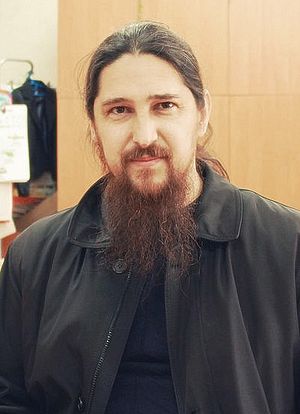
—In the life of the Church there is much that is visible, yet mysterious, and completely inexplicable, because the ways of the Lord are unsearchable (cf. Rom. 11:33). So has the feast of the Protection of the Mother of God become a mainly Russian holy day, although the event it commemorates happened in the distant tenth century, in blessed Byzantium. Then, the fool-for-Christ Andrew and his disciple Epiphany saw in the Blachernae Church the Mother of God, stretching Her protecting veil over the worshippers. According to certain testimony, this event was connected to the attack on Constantinople by our Slavic ancestors (still pagans). It is an interesting fact that blessed Andrew himself was a Slav, but a “new man”—a Christian—and was as if symbolizing in his person the change in the Russian people that was soon to take place through the Sacrament of Holy Baptism.
Other details are similarly symbolic. Standing in prayer before the Most Holy Lady were St. John the Baptist and the Apostle St. John the Theologian; and we know that the name John is probably the most Russian name there is. Why did it happen this way? We don’t think about this, we just take it as a given, but the mystery of God’s Providence can be seen in this.
It is also notable that the Mother of God spread her protecting veil over people who were in great danger, anxiety and sorrow, and the prayers of these people, most likely, were filled with strong feelings of repentance and compunction, were especially fervent and sincere, as they often are in moments of danger. And if we look at the entire history of Rus’, we can see how many sorrows, catastrophes, and adversities the Russian people have had to endure throughout, and still does. But here we have to remember that God punishes the one He loves (cf. Eph. 12:6), as his beloved son, whom he trusts and therefore watches after his upbringing with particular severity and zeal. And the Protection of the Mother of God is just that testimony that all our calamities, even when they are brought on by our own stubbornness and tumultuousness, is a sign that God has not abandoned us, that He is calling us to repentance, and directing us upon the path of righteousness. And the Mother of God in interceding for us, in spreading over us the Protection of her goodness, is a sure and good sign that God’s wrath is quick to turn to mercy in case of our sincere and active repentance.
Two and a half centuries after the appearance of the Mother of God in the Blachernae Church, the Russian Prince Andrei Bogolubsky was surprised that this remarkable event was not reflected in the Russian Church service tradition. Thanks mostly to his efforts and intercession the feast of the Protection of the Mother of God was established in Rus’, quickly spread in use, and is still one of the Russians’ favorite feasts.
* * *
“God resists the proud, but gives grace to the humble.”
Archpriest Artemy Vladimirov, head priest and father-confessor of the St. Alexis Stavropegic Convent, instructor at the Orthodox St. Tikhon Humanitarian University, and a member of the Russian Writer’s Association:
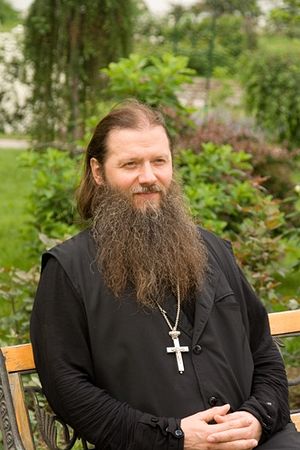
—Tradition tells us that the historical basis for the Russian celebration of the Protection of the Mother God was the demise of Slavic ships in the waters of the Bosphora—an entire flotilla that had surrounded Constantinople with aggressive intent. The New Rome saw in the sudden storm the intercession of the Heavenly Queen in answer to their prayers for salvation from the terrible, impending scourge.
Why is this event, which led to the baptism of these pagan princes, still remembered only by the Russian people? After all, our ancestors faced a crushing defeat!
It is very hard for the modern city dweller to understand the concept of saving humility, which is nothing other than the recognition of our total weakness before God, united with prayer for mercy.
It is remarkable that not did only the Greeks, who were enlightened by the true faith, but also our Russian ancestors “abiding in darkness and the shadow of death” come to recognize in this event the direct intercession of the Mother of God, which is irrefutable testimony to their mystical intuition and augury of becoming chosen by God’s Providence for a particular historic mission.
Such was the Jewish Saul, who became a great apostle to the pagans after receiving a revelation from on high.
Our readers, of course, remember that experience is the “son of hard mistakes”… May the “mistake” of the ancient Slavs be thrice blessed, as it were turned by Divine Providence to such good consequences! The fruit of this “mistake” is the all-joyful autumn feast of the Protection, which proves the immutable Biblical truth: “God resists the proud, but gives grace to the humble.”
]]>
It has become a tradition to arrange a religious procession passing throughout all the settlements of Vyazemskii district with sacred orthodox things such as cross and banners, lantern, icons and of course prayers. It is an ancient ceremonial solemn march together with priests and parishes. It has a great value for Christianity. Sometimes the procession members cover a huge number of kilometers making unceasing prayer in their way.
The unusual in this procession was that it enveloped two districts – Vyazemskii and Bikinskii. It was devoted to 1000 years of repose of Grand Saint Duke (Prince) Vladimir. It was noticeable that all the participants were concentrated and strongly minded on prayers. Probably, because some of them took part in the ceremonial march not for the first time.
For the first three days 60 worshippers have overcome more than one hundred kilometres. Along the way other people joined the procession and together with the priest they made prayer near worship crosses. More than that, the orthodox Divine services was made in the local temples. The day of meeting of the cross procession was a true holiday for villagers. As is customary on a holiday all the settlement prepared the treating and set the tables for dear visitors. No one was indifferent. Vice versa the villagers were very glad and happy to meet the sacred procession members. They bought books and church utensils in the mobile icon shop. And one should have seen when after service everybody exposed their faces under the water drops which were sprinkled on them by the priest.


 ]]>
As tells the Tale of Peter and Fevronia of Murom (which literary treatment relates to the period of the mid-16th century), Duke Peter was the second son of Duke Yuri Vladimirovich of Murom. He ascended the throne in 1203. A few years before Peter’s principality he became seriously ill that no one could cure him. One day the duke had a dream that he can be healed by the girl Fevronia.
Fevronia (Greek Φεβρωνία) was beautiful, pious and good, plus she was a wise woman, she knew the properties of herbs and could cure ailments. The prince fell in love with Fevronia and vowed to marry her after the healing. The girl cured the duke but he did not keep his word. Then again he was defeated by the disease and Fevronia cured him once again. And this time the duke married the girl.
After the death of his brother Peter inherited the throne. The nobles (or boyars) respected his duke, but the haughty the nobles’ wives disliked Fevronia, not wanting to be ruled by the peasant. The nobles demanded that the duke had left her. Peter, after he heard of the intentions of separating him from the beloved wife, chose to voluntarily relinquish the power and wealth and go with her in exile. So Peter and Fevronia left Murom.
Soon the unrest began in Murom, nobles were quarreling, fighting for the throne. Then they came around, gathered a council and invited the duke and his wife back. The duke and duchess returned and Fevronia managed to earn the love of the urban counterparts. They ruled after that long and happily.
In his declining years, Peter and Fevronia took the vows in various monasteries and asked God to die in one day. They bequeathed to bury them in a specially prepared coffin with a thin partition in the middle.
Peter and Fevronia died each in his cell in a one day and hour – on 8 July 1228. But people have recognized the wicked to bury the monks in one coffin and have broken the will of the dead: their bodies were placed in the different realms. But the very next day they were found together. Twice their bodies were carried out to the different churches, but twice they miraculously were found side by side. And the spouses were buried together in the city of Murom at the cathedral church of the Nativity of the Blessed Virgin.
Since that time the history of the spouses of Peter and Fevronia is the embodiment of the unquenchable love and loyalty and every year on 8 July the Orthodox Church celebrates the memory of Saints Peter and Fevronia.
He departed this life on June 19 (O.S.) / July 2 (N.S.), 1966, and was officially glorified by the Russian Orthodox Church Abroad on July 2, 1994. His glorification was later recognized for universal veneration by the Patriarchate of Moscow on July 2, 2008.
The future St. John was born on June 4, 1896, in the southern Russian village (current day Ukraine) of Adamovka in Kharkov province to pious aristocrats, Boris and Glafira Maximovitch. He was given the baptismal name of Michael, after the Holy Archangel Michael. In his youth, Michael was sickly and had a poor appetite, but he displayed an intense religious interest. He was educated at the Poltava Military School (1907-14), Kharkiv Imperial University, from which he received a law degree (in 1918), and the University of Belgrade (where he completed his theological education in 1925).
He and his family fled their country as the Bolshevik revolutionaries descended on the country, emigrating to Yugoslavia. There, he enrolled in the Department of Theology of the University of Belgrade. He was tonsured a monk in 1926 by Metropolitan Anthony (Khrapovitsky) of Kharkov (later the first primate of the Russian Orthodox Church Outside of Russia). Metr. Anthony later in 1926 ordained him hierodeacon. Bishop Gabriel of Chelyabinsk ordained him hieromonk on November 21, 1926. Subsequent to his ordination he began an active life of teaching in a Serbian high school and serving, at the request of local Greeks and Macedonians, in the Greek language. With the growth of his popularity, the bishops of the Russian Church Aboard resolved to elevate him to the episcopate.
Hieromonk John was consecrated bishop on May 28, 1934, with Metr. Anthony serving as principal consecrator, after which he was assigned to the Diocese of Shanghai. Twelve years later he was named Archbishop of China. Upon his arrival in Shanghai, Bp. John began working to restore unity among the various Orthodox nationalities. In time, he worked to build a large cathedral church that was dedicated to Surety of Sinners Icon to the Mother of God, with a bell tower and large parish house. Additionally, he inspired many activities: building of churches, hospitals, and orphanages among the Orthodox and Russians of Shanghai. He was intensely active, constantly praying and serving the daily cycle of services, while also visiting the sick with the Holy Gifts. He often would walk barefooted even in the coldest days. Yet to avoid the appearance of secular glory, he would pretend to act the fool.
With the end of World War II and the coming to power of the Communists in China, Bp. John led the exodus of his community from Shanghai in 1949. Initially, he helped some 5,000 refugees to a camp on the island of Tubabao in the Philippines, while he travelled successfully to Washington, D.C., to lobby to amending the law to allow these refugees to enter the United States. It was while on this trip that Bp. John took time to establish a parish in Washington dedicated to St. John the Forerunner.
In 1951, Abp. John was assigned to the Archdiocese of Western Europe with his cathedra in Paris. During his time there, he also served as archpastor of the Orthodox Church of France, whose restored Gallican liturgy he studied and then celebrated. He was the principal consecrator of the Orthodox Church of France’s first modern bishop, Jean-Nectaire (Kovalevsky) of Saint-Denis, and ordained to the priesthood the man who would become its second bishop, Germain (Bertrand-Hardy) of Saint-Denis.
In 1962, Abp. John was assigned to the Diocese of San Francisco, succeeding his long time friend Abp. Tikhon. Abp. John’s days in San Francisco were to prove sorrowful as he attempted to heal the great disunity in his community. He was able to bring peace such that the new cathedral, dedicated to the Joy of all Who Sorrow Icon of the Mother of God, was completed.
Deeply revering St. John of Kronstadt, Abp. John played an active role in preparation of his canonization.
He reposed during a visit to Seattle on July 2, 1966, while accompanying a tour of the Kursk-Root Icon of the Mother of God. He was laid to rest in a crypt chapel under the main altar of the new cathedral.
Source: Orthodox Wikipedia
]]>The rule of fasting, which is dependent on the Church’s cycle of feasts and fasts, is contained in the Church’s Typicon, chiefly in chapters 32 and 33, and is repeated in the appropriate places of the Divine service books, the Menaia and Triodion. In general, fast days for Orthodox Christians are all Wednesdays and Fridays throughout the year (except for fast-free periods), the four canonical fast periods of Great Lent, Nativity Fast, Apostles’ Fast, and Dormition Fast, and a few special days: the Exaltation of the Cross (September 14th) and the Beheading of the Forerunner (August 29th)—which, even though they are feast days, are also fast days (with wine and oil allowed) for the sake of the events commemorated thereon.
There are some local variations in the allowances of wine and oil, and sometimes of fish, and so the indications in the present Calendar cannot be uniformly applied everywhere. In particular, on the celebrations of the patronal feast of a parish or monastery, fish is generally allowed, and when a saint is honored with a service of Sung Doxology or Polyeleos rank, wine and oil are allowed. In the Russian Church, on the feast days of the more renowned Russian saints, such as St. Sergius of Radonezh and St. Seraphim of Sarov, and of wonderworking Icons of the Mother of God such as the Kazan and Vladimir Icons, of course, wine and oil are allowed (except during Great Lent), although this is not mentioned in the present Calendar because the Typicon leaves this to local practice, indicating only the fasts and allowances that are of general application. The meaning of the Typicon in its allowances is simple: the more one labors for the glorification of a saint or feast day, the more consolation one is allowed in food. For one who has become accustomed to the Orthodox fast, the allowance of oil on food, or fried foods, together with a little wine, is indeed a consolation, as well as a source of physical strength. Where the Typicon itself indicates two variant practices (as for a few of the weekdays of Great Lent), the present Calendar follows the Typicon’s preferred practice.
While most Orthodox Christians are perhaps aware of the general rule of fasting for Great Lent and the Dormition Fast (wine and oil allowed only on Saturdays and Sundays, except for a few feast days and vigils), many are probably not familiar with the precise rule governing the less severe fast of the Nativity and Apostles’ Fast. Therefore, we shall quote this rule, from Chapter 33 of the Typicon:
“It should be noted that in the Fast of the Holy Apostles and of the Nativity of Christ, on Tuesday and Thursday we do not eat fish, but only oil and wine. On Monday, Wednesday, and Friday we eat neither oil nor wine… On Saturday and Sunday we eat fish. If there occurs on Tuesday or Thursday a saint who has a Doxology, we eat fish; if on Monday, the same; but if on Wednesday or Friday, we allow only oil and wine. If it be a saint who has a Vigil on Wednesday or Friday, or the saint whose temple it is, we allow oil and wine and fish… But from the 20th of December until the 25th, even if it be Saturday or Sunday, we do not allow fish.”
In these two fasts, the fast for laymen is the same as that of many Orthodox monasteries, where Monday throughout the year is kept as a fast day in honor of the fleshless ones, the Angels.
This rule of fasting, to be sure, is not intended to be a “straight-jacket” for Orthodox believers, nor a source of pharisaical pride for anyone who keeps the letter of the Church’s law. It is rather the rule, the standard, against which each is to measure his own practice, and towards which one must always strive, according to one’s strength and circumstances. Whenever, for sickness or any other reason, one falls short of the rule, he applies to himself the spiritual medicine of self-reproach and strives to enter more fully into the spirit and discipline of fasting, which is indeed of great spiritual benefit to those who sincerely strive to follow it.
]]>As things turned out The Prior of our Local Parish of Saint Nicholas the Priest George together with the city chief Alexander Yuryevich Usenko had flown round the town with the Vladimir Icon of the Mother of God.
They were flying round Vyazemskii with the prayer of patronage, prosperity and constructing of new temple in honour of the icon. As father George said this idea has been bearing for a long time. The difficult was in co-ordinating date and time with giving transport. “The miracle has happened”, the priest George said, “which we couldn’t be waiting for. The Air Cross procession was fixed exactly on the Day of Vladimir Icon of the Mother of God. Before our flight we saved moleben with the icon before the worship cross laid on the place of future temple. During the flight I read the prayer in front of the Vladimir Icon of the Mother of God. My heart was overflowed with joy as we do so necessary and so important for all of us work.”
A.Y.Usenko also shared with his impression, “The helicopter was given to us absolutely free in charge by OOO “Transoil – Far East” enterprise. Apart from three members of helicopter-crew, me and the Priest George there was a photographer Natalya Danilenko, who took photos for the forthcoming city anniversary. It’s my second flight over Vyazemskii and to tell the truth at first I couldn’t believe that it was my native town. Mostly I was impressed by seeing great amount of green plants. At this altitude especially when the sun’s eyelashes broke through the clouds everything seemed to be emerald. Our town five-storey buildings also were pleasing to the eye. Their brightly blue, claret-coloured and green rooves adorned the overall picture. Such sights as the number 2 school’s stadium, the stadium “Locomotive”, the rail-way station, Local District Hospital and the Forest College stood out against the rest sights of our native town. Our flight was made on the date of Vladimir Icon of the Mother of God, so I believe that very soon our town will be decorated with new temple in honour of this icon. I would like to thank the leaders of OOO “Transoil – Far East” Valeriy Sergeyevich Timopheyev, Robert Anisovich Galiyev, Nicolai Petrovich Tokarev who help our town not for the first time.
Anastasiya Shubina, Alexandra Orlova


 ]]>