In June 2007, Ghanaian economist, acclaimed author and scholar George Ayittey delivered an impassioned call from the TEDGlobal stage in Arusha, Tanzania. Railing against a political class he felt had let the continent down for more than half a century, he challenged Africa’s most innovative youth — whom he deemed its “cheetahs” — to take back their continent from decrepit leaders who were overly dependent on foreign aid. “Africa’s begging bowl leaks,” he famously said.
The impassioned, warm and forceful TED Talk was a defining moment for many of us and has been described as a turning point in our viewpoints of the African continent. “Africa hasn’t any other choice but to build and be productive,” George told us. “The continent must move from a lens of external causation for its challenges towards a more introspective, inward-directed approach to addressing its various obstacles. Back in the 1960s, Africa not only fed itself — it also exported food. Not anymore.“
George was an intellectual force of brazen honesty. His words — while encouraging and often entertaining (as they captured his cunning wit) — cut paths through the pretense of niceties to expose the economic travesties of Africa’s governments that many dare not surface. “I regard myself as an intellectual rebel,” he once said of himself, “kicking against the old colonialism-imperialism paradigm which has landed Africa in a conundrum.”
Africa’s betterment was a lifelong cause that George believed in. With great passion, he saw the continent’s way forward to be one where Africans return to their roots and build on their Indigenous institutions. A brilliant analyst of African economies, George was also a fierce internalist. His life’s work distilled a feeling that generations of Africans had themselves sensed but not yet articulated — a belief that the continent, despite its exploited history, needed to look inwards, embrace its past and rebuild pre-colonial African systems and institutions that once supported economic prosperity. In a 2005 interview with Bill Moyers on PBS, George clarified an economic past many people — including Africans — were not aware of. “In West Africa, market activity was always dominated by women,” he said. “There was free trade in Africa. There was free enterprise in Africa before the colonists came.”
A prolific writer, George was a champion of wealth creation and homegrown solutions. His writings are some of the most decisive explanations on how to dismantle and rebuild Africa’s economies; how to re-establish indigenous African institutions; how to defeat dictators; and how to successfully apply African economics. For anyone seeking scholarly yet action-oriented insights into how a highly functioning African economy could and should work, his writings are essential reading. His groundbreaking publications include the seminal Africa Unchained: The Blueprint for Development as well as Africa in Chaos, The Blueprint for Ghana’s Economic Recovery and Africa Betrayed, among others.
At the start of his 2007 TED Talk, George called TEDGlobal in Arusha “the most important conference of the 21st century.” Of course, we happily agreed at the time, but now — many summers later — time has shown us just how critical and wise George’s words were. In fact, they resonate even more strongly today.
In a phone call with me a couple of years ago, George discussed the new wave of optimism that is taking hold on the continent: the vibrant startup community; celebrated inventors; the innovation ecosystem grown by the TED Fellows from the Arusha conference; a continent fully embracing its need for industry, not aid. Not every great philosopher has seen change begin to happen in their own lifetime, but George saw a glimpse of Africa’s future, as he hoped it would be, starting to take hold. We are grateful to have played a hand in that.
George, there’s no going back now. The cheetahs are running at far too great a speed to be stopped. You gave them permission to do things differently, and they listened. You will forever be one of the most important voices of Africa’s next chapter. We will long miss you.
]]>
SaUsR underwater tank cleaning robot. (Courtesy of Gridbots.)
PulkitGaur, TEDIndia Fellow, roboticist, and founder of Gridbots, says: “ALIAS [an autonomous robot with AI and vision] is a modular research robot I started making inspired by Mars rovers Spirit and Opportunity. I started working on this robot in my third year of engineering. I used indigenous designs and locally available materials.”

CanTV in Mali.
Moussa Keita, TEDGlobal 2007 Fellow, Geekcorps alumnus and founder of Zirasun, built and deployed CanTV which allows local radio stations to stream video content to the local community over WiFi. “One goal of the CanTV project is to make it possible to build CanTV receivers or TV ‘cantennas’ using locally available parts, with the exception of the $25 audio/video receiver, which we currently import from Canada. Also, the TV cantennas have been designed so that local technicians can quickly learn how to install them without special tools. The radio station already has access to television broadcasts via satellite, and a TV over wi-fi transmitter installed in August 2005.” Take a peek at the assembly of a CanTV here.

Fasmicro's data logger.
Ndubuisi Ekekwe, TED2010 Fellow and founder of Fasmicro, a microelectronics and embedded solutions provider, on why Africa needs an integrated circuits industry: “In a highly interconnected world, the number of technical knowledge workers in Africa will not grow without microelectronics programs that emphasize creating and disseminating knowledge. Without microelectronics, there is little homegrown information technology. Microelectronics makes communications products possible, from cell phones to computers.”

Uno III unicycle. (Courtesy of BPG Motors.)
Benjamin Gulak, TED2010 Fellow and motorized-unicycle inventor, describes his sporty but environmentally friendly creation, the UNO: “It’s similar to the Segway in that it has a couple of gyros and neat electrical sensors. Its top speed is 15 mph, but right now it’s in the prototype stage. It’s all a matter of time and scale. It’ll go faster.”
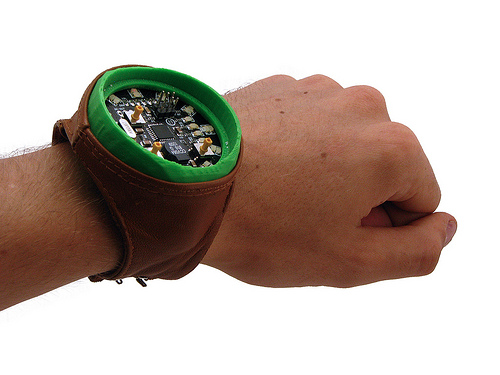
A modular watch. (Courtesy of Humblefacture.)
Dominic Muren, a TEDGlobal 2010 Fellow and founder of Humblefacture (an organization exploring how to make small-scale, local, low infrastructure manufacturing that can still make complicated objects), asserts that modern manufacturing is broken, but that a new breed of makers, like early mammals, “are creating their own patterns and order within the ecosystem. They are redefining what it means to be a manufacturer, and what it means to be a user. And they are multiplying. These new makers are far from forming a unified bloc, and conflicts over turf, operational style, and mission are rampant. They run the gamut from dorm-room shops to 30-person operations in major cities. But they all have three things in common: They are small. They are flexible. And they know their users better than anybody.” Above is an image of Dominic’s watch, an example of modular design which allows for consistency across product lines without inventing an entirely new platform each line of products.
- A power cube. (Courtesy of OpenSourceEcology.)
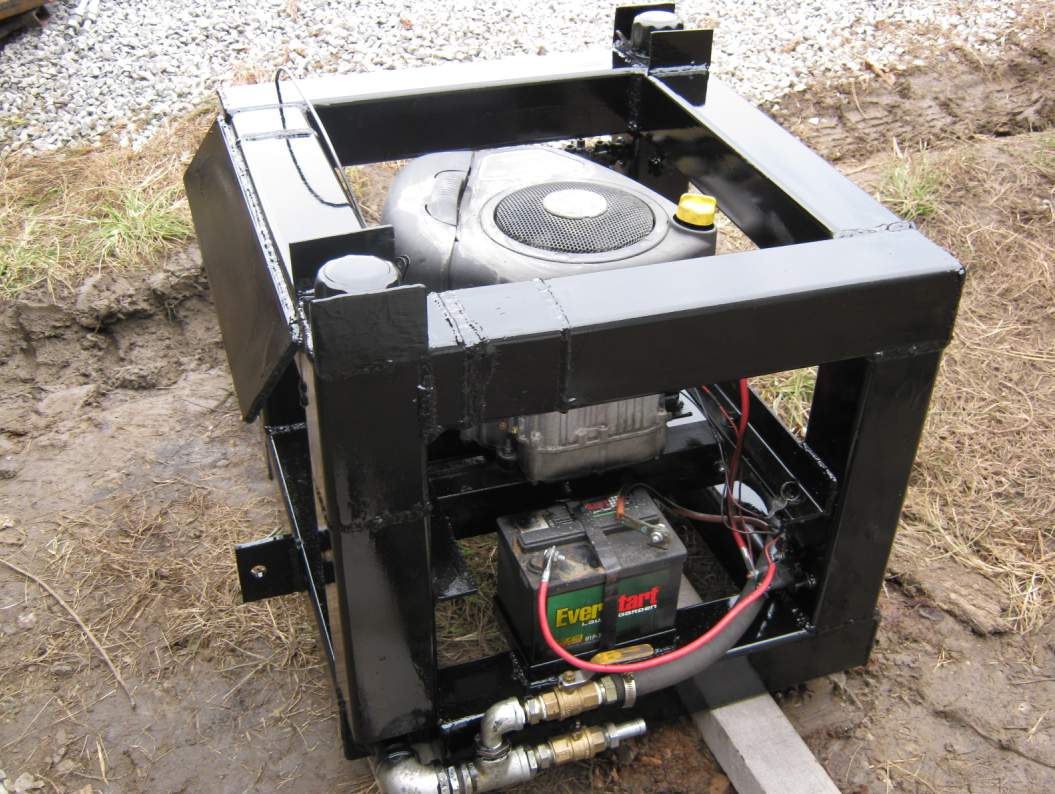
Marcin Jakubowski, TED 2011 Fellow, founded Open Source Ecology, is developing and testing the Global Village Construction Set, a set of tools to build replicable, open source, modern, off-grid resilient communities. “It is about ‘hacking society’ via permaculture principles,” he says. “We are proposing high-tech neosubsistence – the capacity to live from local resources by using advanced, appropriate technology, without requiring any compromise to quality of life.” Want to know more? Visit FactorEFarm, and watch his TED Talk here.
- A biogas generator. (Courtesy of the Bioapplications blog.)
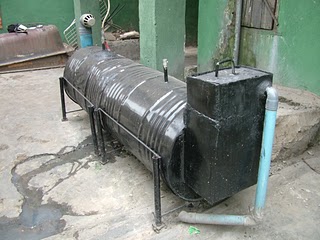
OlatunbosunObayomi, TEDGlobal 2010 Fellow, an autodidact, is interested in using animal and organic waste as a feedstock for biogas systems. He is now setting his sights on closed-loop aquaculture systems for indigenous fish populations in West Africa.
Makers are just one group of innovators found among the TEDFellows. With 249 Fellows and counting around the globe, the Fellows program looks for innovators in all fields – music, science, art, academia, medicine, the NGO sector, and more. Applications for the next class of Fellows open Monday June 13, 2011. Visit www.ted.com/fellows/apply to apply online.
]]>Experimental, organic, and polymathic, the TED Fellows program continues to provoke, inspire – and defy convention. The initiative was inspired by the success of 100 groundbreaking Fellows from around Africa at TED Global in 2007, which included Alexandra Graham, cofounder of Lagray Chemicals, the first vertically integrated pharmaceutical manufacturing company in West Africa;Mohammed Bah Abba, innovator behind the pot-in-pot cooling device;Ainea Kimaro, biogas evangelist, whose work has reached from Rwanda to Tanzania; and Segeni Ngethe, founder of Kenyan e-commerce pioneer Mama Mikes.
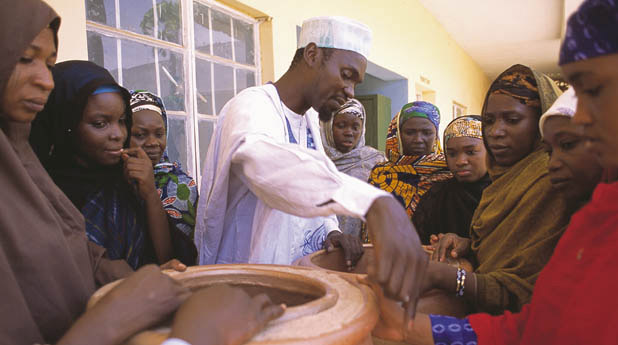
Mohammed Bah Abba describes the fabrication of the pot-in-pot coolerImage courtesy of Rolex Awards
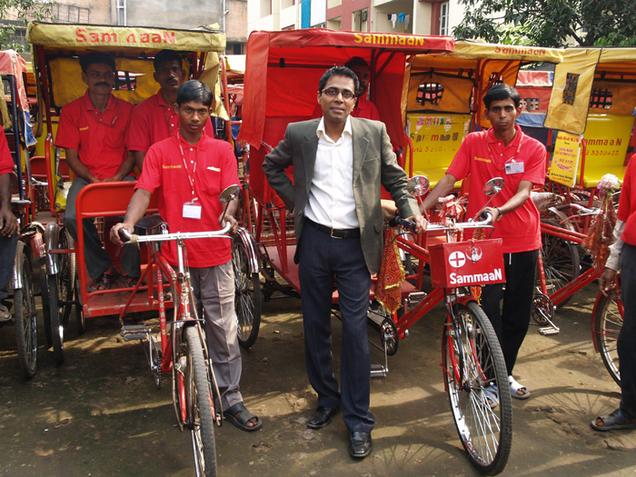
TED India Fellow Irfan Alam, founder of SammaaN Foundation Image courtesy of The Hindu
The TED Fellows initiative has since grown to include individuals from six continents, including around 100 from TED India. These mavericks, innovators, and paradigm-shifters operate in areas of interest ranging from robotic self-assembly to human rights activism. They continue to embody a fresh, youthful curiosity in their work, projects and initiatives. Here are what a few Fellows from the class of 2011 are up to:
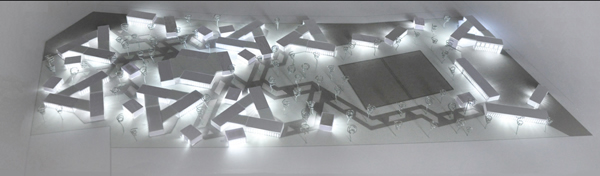
The Fractal Architecture of Xavier VilaltaSu
Xavier Vilalta is a Spanish architect whose firm, XV Studio, uses fractal geometry to innovate in the built environment.Suzane Lee is a pioneer in the field of growing clothes. She uses a bacterial cellulose to propagate fabric that can subsequently be molded into dresses – or anything else that suits her fancy.Sumit Dagar is an interaction designer whose signature product, the Braille Phone, varies the height of a pixel instead of color to communicate information on a touchable “screen”.Sanjana Hattotuwa, founder of Groundviews, is a citizen journalist who seeks to capture and document post-conflict Sri Lanka in unflinching detail.
Kahumbu Stephanou organic farming pioneer
The 229 (and counting) Fellows represent a unique collection of cross-disciplinary pioneers from diverse places. The program team has sought to identify individuals whose work has the most potential for amplified impact. For example, Working Villages, Alexander Petroff’s organization, consists of only two full-time employees, but has overturned notions of food self-sufficiency in the Kivu region of the Congo.
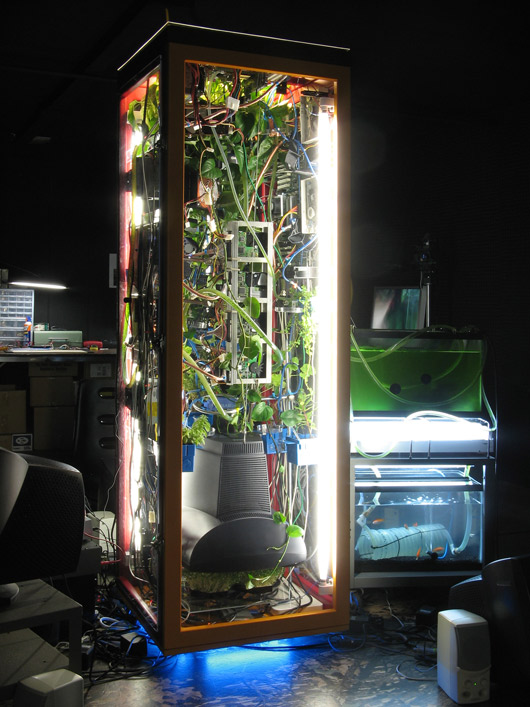
Biomodd Philippines
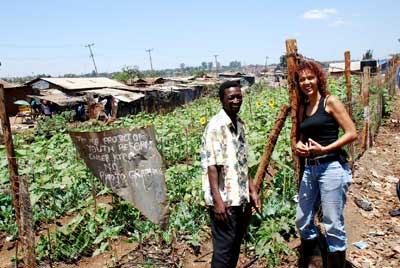
Meanwhile, visual artist, filmmaker, biologist, and author Angelo Vermulen has propagated a worldwide series of cross-cultural, symbiotic installations, within which social interaction, ecology, and game culture converge. DK Osseo-Asare believes that low-cost, low-tech architecture can not only be climate-responsive and ecologically sensitive, but also aesthetically progressive and grounded in local culture. And entrepreneur Su Kahumbu contends that organic farming is the most cost-effective way of producing food in Africa.
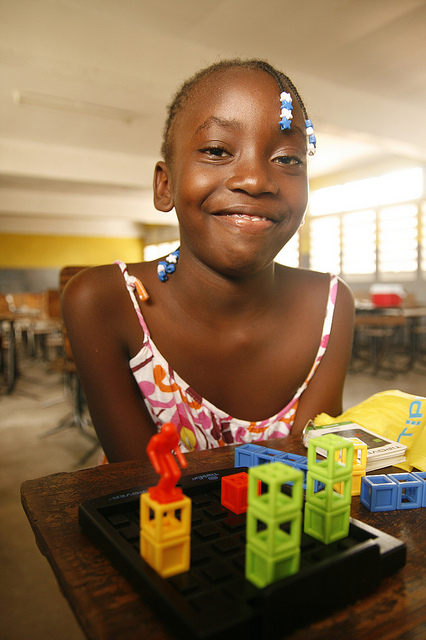
Courtesy Halls of Learning
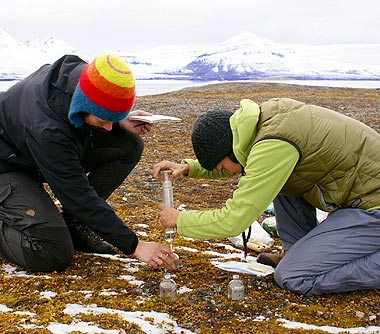
Jessica Green conducting microbial research
The TED Fellows program proudly associates itself with Fellows-led initiatives such as the renowned Ushahidi crowdsourcing platform, Jamaica’s Halls of Learning, the Green Lab at the University of Oregon and the Santa Fe Institute. As the program evolves into its third year, the noticeable accomplishments of our current Fellows and alumni continue to be a testament to the transformative power of recognizing and nurturing individuals whose ideas make a difference.
]]>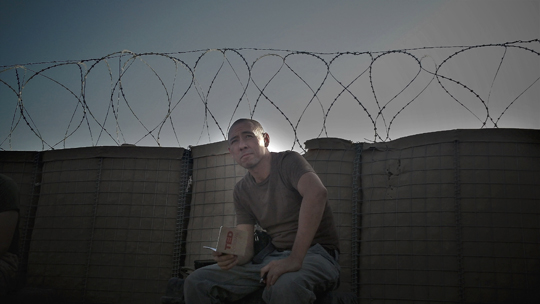
Groundbreaking media experiment Basetrack sought to rejig how America’s wars are reported. TED Fellow Teru Kuwayama harnessed the communication tools of our time to present embedded reportage in a whole new way. Following the deployment of 1/8 – 1st Battalion, Eighth Marines – to southern Afghanistan, Basetrack’s embedded media team collaborated with soldiers to tell the stories of their daily lives, funnelling photos and updates onto an interactive online map. Enhanced with a live newsfeed, Twitter, and Facebook, dispatches were bidirectional, information-rich, and intimate, connecting Marines and Corpsmen to their families and the public. Basetrack provided an unprecedented platform for those the media typically overlook in war – combatants and their families.
Basetrack promised a real shift in the way soldiers’ experiences are conveyed to the world, but in early February, the Marine Corps pulled the plug on this experiment in layered communication. Though perplexed, Basetrack’s participants and supporters believe it’s only a matter of time before the platform’s value is recognized and accepted.
Undeterred, Teru and his team now plan to insert themselves within one of the more consequential constituencies in their area of operations – the Afghan civilian population. We await their forthcoming tour of duty with anticipation.
Image: Teru Kuwayama in Afghanistan, October 2010. Photo by Tivadar Domaniczky, Basetrack
]]>