The post LIFE Summer Research Grant Reflections: Living Faith in Durham, From Healthcare to Housing appeared first on Duke University Libraries Blogs.
]]>
This is the third blog post in a series written by the 2026 recipients of the Duke University Libraries Summer Research Fellowship for LIFE Students. You can read the first and second blog posts. Lia Lapidot is a senior studying biology, psychology, and religious studies.
My earlier studies at Duke were characteristically “STEM,” with all prior research being in neurosurgery and classes being pre-medical prerequisites. This hampered my ability to begin to understand the societal factors affecting the lived experiences of anyone on the planet. My semester abroad in Madrid marked a change in this unintentional neglect of history and society. I took an eye-opening course titled Cultures in Contact: Christianity, Judaism, and Islam in Medieval Spain and Now. This course not only taught me, but also allowed me to fully comprehend that any action taken, any building stood in, and any words spoken came from thousands of years of complicated human interaction, of which religion took a central role. After learning of the central role of Al-Andalus (the medieval Muslim-governed territory on the Iberian Peninsula) in the advancement of science throughout Europe, I was left with many burning questions outside of the scope of the class. Seeking answers, I took a course titled Science and Religion the following semester. In this course, I read about how modern society in the United States can often treat medicine/healthcare and religion as two separate spheres, a mindset contributing to the “conflict thesis” of science and religion. The religious figures/theorists discussed in the class were largely Christian, followed by Muslim thinkers. Having grown up Jewish, I was curious what the Jewish influences might have been in the distant past. I had heard of rabbi Maimonides through the course abroad, with an emphasis placed on his work as a philosopher. Discovering he was also an incredibly important physician, I wrote a paper titled the Complexity Thesis: Religion and Medicine Through the Works of Maimonides. Al-Andalus had been a domain where religion and healthcare came as one, and people of various religions worked in tandem to allow science to flourish.
But how has that translated to the 21st century? Naively, I thought it hadn’t. However, this research led me to seek its existence in our current times. Hence, this summer, I sought to explore the interstices of religion, well-being and healthcare through my ongoing volunteer work. I have been volunteering for two organizations (names withheld for privacy) in the Triangle Area– a free medical clinic and a homeless shelter. At the clinic, I serve as a Spanish-English interpreter, and at the shelter, I assist with daily operational tasks for the residents and the facility staff. I got involved with this work because of my own background: as the child of a Mexican immigrant, I’ve been translating documents for my family for as long as I can remember. Being an interpreter lets me extend that same support to my broader community. Likewise, my work at the shelter comes from a similar place—having experienced housing insecurity in high school, I wanted to support people facing stressors similar to those my family has faced.
Although my Mexican heritage gave rise to a few opportunities to view Catholicism, Judaism remained paramount in my household in childhood. Leaving home meant coming across the immense presence of Christianity in the United States. For the past five years since leaving home, I have not, until this summer, taken the time to understand its cultural significance and the role it (or any religion) might play in my future work as a physician.
Beginning with the clinic, I found prayer to be an extremely cogent conclusion to the typical doctor-patient physician interaction. The clinic with which I spent most of my time this summer was a Christian clinic, but accepted patients and volunteers of all faiths. Most visits I assisted with ended with the question of an optional prayer, created and offered by the provider. I had never performed a prayer with the word “Jesus” in it (let alone one in English), but my role had me directly translating it. As I translated each word, I would see a sizable shift in their emotional composure. Some of our patients faced tremendous stressors, with our clinic being one of their only places of release. I remember a patient whose words evolved into sobs after the prayer, which eventually progressed into palpable gratitude and even hope. This did not happen infrequently, and I remain very moved by these moments. This solidified the role of religion in medicine for me, and future steps involve gaining a greater understanding of the many religions in the United States and their implications in healthcare and day-to-day life, as well as understanding what its role would look like for me as a practicing physician.
As for well-being, I turned to understanding translational housing. The shelter I was assisting was outright not religiously affiliated. This was consistently kept in mind when interacting with the guests, and any mention of religiosity came from the guests themselves. Unlike the clinic, religiosity in this space did not linearly translate to hope, with a more complex relationship arising instead. At the shelter, I was able to get more time with each individual, as opposed to the clinic, and I gained a much more nuanced view of the role of faith in the lives of some people on a day-to-day level. I also learned plenty from Christian colleagues and supervisors, who very graciously answered my more direct questions. Additionally, many volunteers who would host events or bring dinner for the shelter came from religious organizations, so hearing their motivations provided me with insight as well. Out of this experience, I lack a complete understanding of how faith can show up in difficult times, but am thankful to have obtained this valuable insight.
Moreover, I spent part of the summer exploring religiosity in Durham. I spoke frequently with Imam Waheed, who was the first Muslim Chaplain at Duke, and he gave me a profound understanding of the history of Islam in Durham. I also had the honor of sitting in on the service of the first American church I have been to, attending the Won Buddhism Temple of North Carolina, and learning about Hinduism at the Hindu Society of North Carolina. I cherish every one of these experiences, but I merely scratched the surface, and future research on these and other religions’ role in Durham must continue to be explored. After these visits, Durham’s history became incredibly important to me, and I continue to pursue literature on this topic (thank you DUL!).
I am deeply grateful to the Duke University Libraries Summer Research Grant for providing me with the financial support to pursue this meaningful research, with an underscored gratitude for the ability to keep a roof over my head and have a consistent food supply this summer. The mentorship provided by this program was like no other. Rukimani Prathivadhibhayankaram, the graduate student mentor of the program, truly demonstrated care and a passion for helping students be successful after their time at Duke. She understood that low-income students like me don’t have the resources of other students, and she made sure to fill that gap. She provided connections to alumni and students accepted to medical school, input on the current status of my application, and overall simply encouragement that I haven’t heard from anyone in a long time.
My advice to anyone who is interested in pursuing a similar research project is to just dive in. Let your curiosity guide you. If your research is also in Durham, you should know that this research has guided me to some of the friendliest and most caring people I have ever met. The best way to learn is to do, and it doesn’t hurt to help people in the process.
Thank you to the LIFE Grant Committee for this opportunity. It has been one of the most impactful experiences during my time at Duke.
The post LIFE Summer Research Grant Reflections: Living Faith in Durham, From Healthcare to Housing appeared first on Duke University Libraries Blogs.
]]> October is the sinister month when guest contributor, Stephen Conrad, celebrates horror at its campiest… “The clock is ticking, it’s almost time.” The Halloween season is nigh, so let’s once again thematically survey some spooky and scary films camping out in the stacks! Inspired by the release this year of Teenage Sex & Death at … Continue reading Lilly Collection Spotlight: Camp Slash
The post Lilly Collection Spotlight: Camp Slash appeared first on Duke University Libraries Blogs.
]]>October is the sinister month when guest contributor, Stephen Conrad, celebrates horror at its campiest…
“The clock is ticking, it’s almost time.”
The Halloween season is nigh, so let’s once again thematically survey some spooky and scary films camping out in the stacks!

Inspired by the release this year of Teenage Sex & Death at Camp Miasma, it’s time to pack our bags for a gory visit to camp! In the hyper-meta ‘Camp Miasma,’ Director Jane Schoenbrun produces a nostalgic and yet forward and modern (re)visit to the tropes and machinations of the classic slasher camp films. Tapped to produce a sequel for a long-running horror franchise, a director tracks down the original film’s “final girl” and all sorts of mayhem ensues. Little Death, lots of deaths, and a heaping of bloodletting awaits.
Schoenbrun is no newcomer to the horror genre, and Duke Libraries also provides their earlier works, We’re All Going to the World’s Fair and I Saw the TV Glow.

Before we’re dropped off at camp, let’s look back to a classic Italian giallo film from master of the genre Mario Bava. Bay of Blood, from 1971, is widely credited as the first slasher, say, in the same way that heavy metal started with Black Sabbath. While not set at an actual camp, the manner of the roving rampaging slasher comes into its own here. The kills and techniques would be widely used and imitated, with some downright copied, for later slasher flicks. And in a post full of movies with shock endings, this one sets the bar VERY high in that regard too!

More on giallo as well as the history of slasher films can be found in Duke Libraries stacks—both physical and virtual. Note the excellent list at the bottom of this post.
The Giallo Canvas: Art, Excess and Horror Cinema
Giallo Cinema and its Folktale Roots
Visceral Screens: Mediation and Matter in Horror Cinema

Fast forward to 1980 and the true slasher-camp era begins at Camp Crystal Lake with the original Friday the 13th . Teenagers, camp, sex, death, and the Vorhees in “a 24-hour nightmare of terror.” The convened counselors–including Kevin Bacon–are trying to reopen a shuttered camp, but a vicious mysterious killer has other ideas. Characters get picked and hacked off one by one: “You’re doomed. You all are doomed!” And if you ever wondered about the sounds made when the killer is about to appear, “Ki ki ki ma ma ma,” then check out this interview clip with the film’s composer.

Then the floodgates really open in 1981, led by the sequel, Friday the 13th Part 2. It is five years hence at Crystal Lake and a stalking killer is back at it again. Delving into the mythology of the Vorhees family, this film in the long-running franchise marks the true emergence of Jason. Machetes, sack masks, hammers, knives, spears, severed heads, chainsaws, sweaters, pickaxes and more! The spear scene brings us back to both Camp Miasma AND Bay of Blood in very direct ways. You’ll have to view all three to enjoy and compare the particulars of this spear-some trio.

Also from 1981 and also at a summer camp and also a five-years-later story, The Burning puts the action in New York state and the victims at the business end of some thoroughly utilized garden shears, employed by a former camp caretaker. And while the premise is nearly identical to ‘Friday the 13th,’ this one is even more brutal and grim and unrelenting. Also, as Gillian Anderson’s character says in ‘Camp Miasma’: “Honey, I auditioned for The Burning. You know who created that? You don’t scare me.” Bonus points for the gore work by the legendary Tom Savini.

And closing out the busy and bloody year at camp circa 1981 is Madman. Here we have a creep in the woods, the titular Madman Marz (do NOT say his name above a whisper), a legendary axe murderer hunting his camp counselor prey in the crisp autumn night. While having plenty of atmosphere and gruesomeness, this flick might get the most points for having one of the absolute best/worst hot tub scenes of all time! “Madman….there is no escape.”

Okay, Sleepaway Camp, is another big inspiration for Camp Miasma. First things first, go into this one as cold as possible. There are surprise endings and then there’s the ending of ‘Sleepaway Camp!’ From 1983, this slasher is set at a Camp Arawak, where the shorts are very short and a sicko killer is running rampant. Perhaps more than any other movie in this cohort, Sleepaway Camp has come in for high amounts of contemporary criticism, commentary, reappraisal, derision and applause. “Sleepaway Camp…You won’t be coming home.”
Cheerleader Camp (aka Bloody Pom Poms) from 1988, closes out this horror excursion on a hideous and cornball note. At Camp Hurrah there is a killer amongst the cheerleaders and staff. Is it the creepy chef wearing Suzy’s charm? Or the lascivious handyman? Maybe the horndog camp director? Is it Leif Garrett? After much competing and partying and slaying, the killer truth is finally revealed.

Now that camp is over and we’re back on campus, let’s hit the books and learn more. Duke Libraries has several titles exploring the slasher genre:
Blood money: a history of the first teen slasher film cycle
Going to pieces: the rise and fall of the slasher film, 1978-1986
See! Hear! Cut! Kill! : experiencing Friday the 13th
Games of terror : Halloween, Friday the 13th, and the films of the stalker cycle
So escape to camp this Spooky Season with Duke Libraries and experience this smattering of blood-soaked offerings—“you’ll wish it were only a nightmare…!”
—Stephen Conrad
This October’s Collection spotlight is being hosted by the Music Library—stop by to see all the chilling offerings!
The post Lilly Collection Spotlight: Camp Slash appeared first on Duke University Libraries Blogs.
]]>The post What to Read this Month – October appeared first on Duke University Libraries Blogs.
]]>
Looking for something new to read? Check out our New and Noteworthy and Overdrive collections for some good reads to enjoy!
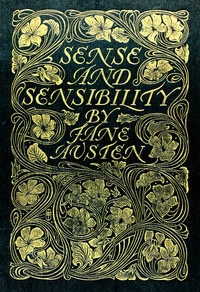 Sense and Sensibility by Jane Austen
When Mr. Dashwood dies, he leaves his second wife and her three daughters at the mercy of his son and heir, John. John’s wife convinces him to turn his step-mother and half-sisters out, and they move to a country cottage, rented to them by a distant relative. In their newly reduced circumstances Elinor and Marianne, the two eldest daughters, wrestle with ideas of romance and reality and their apparent opposition to each other. Elinor struggles in silent propriety, while Marianne is as violently romantic as her ideals. Life, however, teaches the girls to balance sense and sensibility in their approach to love and marriage.
Read the book before seeing the movie this month!
 Unsayable: A Life in Writing by Michael Cunningham
Try using language to slit the skin of mortality to see what’s on the other side. At the age of three, Michael Cunningham began obsessively collecting the names of things: oak, Chevrolet, finch, tulip, Tupperware…. Each word rendered the world ever so slightly more understandable, more describable, kicking off a lifelong love affair with language — one that would, eventually, maybe inevitably, lead him to become a writer. In Unsayable , Cunningham’s memories spill forth, and with them, reflections on the craft of writing. He is fifteen, in a swimming pool at night with his best friend, trying to decipher the other boy’s mysterious, contemplative silences. He is a new college graduate, setting off for nowhere in a Dodge Dart, hoping to pull meaning (and a novel) from the expanse of America. He is on Cape Cod, regaling an elderly couple with invented tales of youthful escapades. He is in an art gallery, unwittingly having the first in a lifetime of conversations with the man he would marry. A thread ties each beautifully wrought moment to the next: what is unspoken, what won’t yield to language, what is embellished beyond recognition, what is still left to say. Luminous, perceptive, and powerful, Unsayable is an ode to literature, a meditation on craft, and an intimate account of a life spent trying to put into words that which resists depiction. This, it turns out, is the lifeblood of the fiction writer: the impossibility of capturing the human experience, and the relentless desire to try.
Listen to an interview with the author here!
 Lost in Curiosity: Field Notes from Scientists’ Adventures into the Unknown by Roberta Kwok
The real story of science isn’t a triumphant breakthrough. It’s messy, mysterious, and deeply human. In Lost in Curiosity, award-winning journalist Roberta Kwok pulls back the curtain on what scientific discovery actually looks like…not a Eureka moment, but a fraught, often chaotic pursuit of truth. Chronicling researchers’ struggles and hopes in the field and lab, Kwok documents it all: fending off relentless snowfall on a remote Greenland glacier, desperately searching for an elusive frog in the rainforests of Borneo, and scrambling to capture fleeting signals of a faraway moon outside our solar system. These are the untold stories of devoted young scientists and restless minds who are chasing nature’s riddles, without knowing what they’ll uncover. Through vivid reporting and moments of unexpected emotion, Kwok reveals the inner lives of researchers who care profoundly about understanding our world and saving what’s left of it. From enigmatic fossils and mind-bending physics to the puzzling behavior of wild animals, Lost in Curiosity is a journey through the questions that keep scientists up at night-and the sometimes strange, always illuminating paths they take to answer them.
Read about the author’s writing process here!
 Heather: A Novel by Caitlin Mullen
1990. In the myth-riddled woods of the New Jersey Pine Barrens, sixteen-year-old Annabelle Riley’s twin sister, Sabrina, has been having an affair with a mysterious older man, and Annabelle is determined to uncover what’s going on. Then, inexplicably, both sisters disappear. In this same town years later, newly instated police chief Callie Hauser makes an arrest that unexpectedly resurrects details from a heartbreaking cold case. As she digs deeper, the past and the present collide, challenging everything Callie believes about right and wrong, who she is, and the town she’s always called home.
Find out more about the book through this review or use your NYT access to read this article! (And if you want to get a feel for the setting, check out these pictures.)
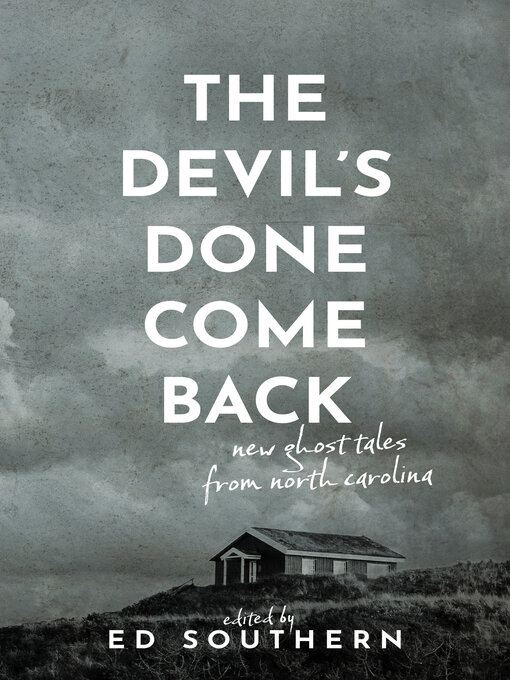 The Devil’s Done Come Back edited by Ed Southern
North Carolina ain’t what it once was: forests and fields have given way to suburbs and vacation homes, textile mills to high tech, tobacco farms to tourism. That doesn’t mean, though, that the ghosts of the Old North State have gone away.
In this anthology, readers might glimpse some of the ghostly apparitions, headless fiends, and creepy hollers they heard about around their childhood campfires. Now, fifteen of the state’s finest contemporary prose writers and poets have reimagined these stories—bringing us fresh tales that are bound to scare the living daylights out of us all over again.
It wouldn’t be an October reading list without something spooky! Find more options here, and read about Duke’s own ghosts here.
The post What to Read this Month – October appeared first on Duke University Libraries Blogs.
]]>The post LIFE Summer Research Grant Reflections: What People Actually Breathe: Indoor vs Outdoor Air Pollution in Nepal appeared first on Duke University Libraries Blogs.
]]>
This is the second blog post in a series written by the 2026 recipients of the Duke University Libraries Summer Research Fellowship for LIFE Students. You can read the first post here. Yubraj Bhandari is a senior majoring in Physics & Mathematics.

I grew up thinking severe air pollution meant nothing but an unexpected holiday. That was the reality growing up in the mountain valley of Nepal, where the government closed schools whenever pollution levels turned severe. On the worst days, the country’s capital, Kathmandu, topped global pollution rankings. Headlines made the crisis sound urgent, yet somehow temporary. A few days later, school would reopen and life would move on. I rarely stopped to ask what that air was doing to us, or what was happening beyond the capital once the headlines faded.

A layer of haze covers Kathmandu. The capital often receives the most attention when Nepal’s air pollution reaches dangerous levels.
Years later, a conversation with a Duke graduate student changed the meaning of those headlines. He described the crisis as a two-layer fold: (1) Nepal’s air was dangerously polluted but (2) the country lacked the monitoring needed to understand who was exposed and when. Kathmandu’s smog was photographed, ranked, and discussed. With even higher levels of pollution transcending national borders, my hometown of Terai received far less attention. For the first time, the gap in the data felt both scientific and personal.
The World Bank’s 2025 report Towards Clean Air in Nepal put the scale of that problem into numbers. The report estimates the population-weighted annual PM2.5 exposure at about 37 micrograms per cubic meter in the Kathmandu Valley and 39 micrograms per cubic meter in the Terai. Both levels were more than seven times the World Health Organization guideline of 5 micrograms per cubic meter. Air pollution now ranks as Nepal’s leading risk factor for life expectancy, exceeding both tobacco and malnutrition, and shortens the average Nepali’s life by an estimated 3.3 years.[3]
Wanting to do something, I applied for the Duke University Libraries LIFE Summer Research Grant to conduct preliminary research. Our Bass Connections team began preparing low-cost PM2.5 sensors for new deployments in Nepal, while I focused on a basic question: Does outdoor air-quality data reflect what people actually breathe indoors?
At first glance, Nepal’s national monitoring network seems to offer a strong foundation. It has grown from six PM10 sampling stations in 2002 to 30 air-quality stations today[1, 4]. Yet coverage on a map does not always become reliable data in practice. In 2024, the Department of Environment reported data from only 16 of those 30 stations.[4] Even a working outdoor station answers only part of the exposure question. It can describe the air around the station, but not necessarily the air inside a nearby home, classroom, or office.
That missing piece matters in Nepal, where household conditions can strongly shape indoor air. An analysis of the 2016 Nepal Demographic and Health Survey found that 66 percent of households used unclean cooking fuel and 45 percent lacked a separate kitchen.[2] Another study of 824 household kitchens in Bhaktapur found that mean PM2.5 ranged from 80 micrograms per cubic meter in homes using electric stoves to 656 in homes using biomass.[5] Cooking smoke does not remain neatly indoors. The World Bank identifies cooking, along with industry and mobility, as one of the Kathmandu Valley’s three largest sectoral sources of PM2.5.[1] Outdoor pollution enters buildings, while emissions produced inside return to the shared air. The boundary between the two is far more porous than our monitoring systems suggest.
Before the new sensors could travel to schools and homes, they first had to spend time alongside a reference-grade monitor. This process is formally referred to as colocation. During collocation, each device samples the same air under the same conditions, allowing us to identify and statistically correct for differences in measurements in and across individual sensors before deployment. However, the process required more time and technical expertise than I had expected. Fortunately, I received valuable support from VayuDrishti, a Kathmandu-based startup developing low-cost air-quality sensors, and researchers at ICIMOD. Collocation may not be the most visible part of the project, but it is what makes every later comparison credible.

Four low-cost PM2.5 sensors record the same air during collocation. The comparison helps us identify differences among devices before deployment.
While the new sensors underwent collocation, I turned to an existing indoor and outdoor sensor pair in a household in Belauri, Kanchanpur. I matched the two datasets by hour and obtained 2,717 paired observations from December 2025 through April 2026. The two lines often moved together, which showed how strongly outdoor conditions shaped the air inside. But they did not move together perfectly. Indoor PM2.5 was higher in 76 percent of the matched hours. Across the study period, the mean reached 122 micrograms per cubic meter indoors and 104 outdoors, with the largest gaps during morning and evening household activity.

Indoor and outdoor PM2.5 followed similar daily patterns in Belauri. Indoor levels often rose higher during morning and evening household activity.
What caught my attention was not simply that one number was higher than the other. It was the relationship between the two. Outdoor pollution set much of the background, but household activity could push indoor exposure even higher at the times when people were cooking, eating, and beginning or ending their day. An outdoor monitor may describe the neighborhood accurately while still missing the air that a person actually breathes in a kitchen.
This was a pilot, not a portrait of Nepal. The measurements came from one household, and covered only part of the year. As such, much remains to be explored. For carrying this project on into the future, my primary interest lies in collecting data across locations where vulnerable groups live: hospitals and schools. An added layer of complexity arises when the ventilation architecture and build material of Nepali houses are taken into consideration, opening pathways to answer questions about the impact of air pollution on vulnerable groups, and the preparedness of Nepali infrastructure for episodes of pollution spikes.
I presented these preliminary findings at the Kathmandu Geo Lab Student Research Symposium. There, the poster became a starting point for conversations with students and researchers from Kathmandu Geo Lab and the Institute of Engineering at Pulchowk Campus, as well as people developing air-quality sensing technology in Nepal. Their questions pushed me beyond the graph itself.

Presenting preliminary findings at the Kathmandu Geo Lab Student Research Symposium. Photos courtesy of Kathmandu Geo Lab.
The project also exposed a more basic obstacle. Finding environmental data can itself become a research task. Existing measurements sit across different websites, documentation varies, and missing periods are not always obvious. One of my next steps is therefore to fully launch the Nepal air-quality dashboard and its source database. I hope it will give students and researchers a single place to find, compare, and use existing datasets alongside measurements from our own sensors.
This summer served as a prelude to the larger study ahead. During the semester, the sensors will support a Bass Connections project led by Professor Henri Gavin. Alongside the existing household pair, we plan to deploy four newly collocated indoor-outdoor pairs in Belauri, expanding the network across two schools, a government office, a concrete house, and an Indigenous Rana Tharu mud-and-straw house.
Deployment is only part of the next stage. We also want to better understand the physics behind how low-cost sensors estimate PM2.5 and why their readings sometimes differ.
Temperature and humidity can affect sensor performance, so we plan to combine pollution measurements with local weather data and study whether these factors can help us correct the readings. Together, these steps will move us from asking whether indoor air differs from outdoor air to understanding why, when, and for whom it differs.
More than half of Nepal’s population lives in the region, and monthly average PM2.5 can approach 100 micrograms per cubic meter during parts of the dry season. The World Bank estimates that 68 percent of the Terai’s exposure comes from outside Nepal. Nepal has also endorsed a “35 by 35” goal, which aims for an annual average of 35 micrograms per cubic meter by 2035.[1] Local measurements cannot stop pollution at the border, but they can help Nepal distinguish what it can reduce at home from what it must address through regional cooperation.
I would like to thank Duke University Libraries for their assistance and support with this research.
References
[1] World Bank. (2025). Towards Clean Air in Nepal: Benefits, Pollution Sources, and Solutions. World Bank Open Knowledge Repository
[2] Ghimire, S., Mishra, S. R., Sharma, A., Siweya, A., Shrestha, N., & Adhikari, B. (2019). Geographic and socio-economic variation in markers of indoor air pollution in Nepal: evidence from nationally-representative data. BMC Public Health, 19, 195. https://doi.org/10.1186/s12889-019-6512-z
[3] Air Quality Life Index. (2025). Warning: Breathing is hazardous to health. Energy Policy Institute at the University of Chicago. https://aqli.epic.uchicago.edu/post/warning-breathing-is-hazardous-to-health-2025-en
[4] Department of Environment. (2025). Status of Air Quality in Nepal in 2024. https://lib.icimod.org/records/ztbs9-fwd88
[5] Pokhrel, A. K., Bates, M. N., Acharya, J., Valentiner-Branth, P., Chandyo, R. K., Shrestha, P. S., Raut, A. K., & Smith, K. R. (2015). PM2.5 in household kitchens of Bhaktapur, Nepal, using four different cooking fuels. Atmospheric Environment, 113, 159–168. https://doi.org/10.1016/j.atmosenv.2015.04.060
The post LIFE Summer Research Grant Reflections: What People Actually Breathe: Indoor vs Outdoor Air Pollution in Nepal appeared first on Duke University Libraries Blogs.
]]>The post Banned Books Week 2026 appeared first on Duke University Libraries Blogs.
]]> Banned Books Week is taking place this week from October 4th-10th. The top 11 most challenged books of 2025 can be found here. The Normalization of Book Banning report from PEN America may also be of interest.
Did you know that the documentary The Librarians recently won an Emmy? You can watch this documentary through one of our streaming video platforms!
You might also be interested in the recent memoir That Librarian : The Fight against Book Banning in America by Amanda Jones.
Here are some upcoming online events that might be of interest if you are interested in learning more:
Spotlight on Bess Kalb on October 5th at 2:00 pm ET. Bess Kalb is a Banned Books Week Honorary Chair this year and a free speech advocate.
From Ally to Co-conspirator: Leveraging Your Power on October 7th at 6:00 pm ET.
Libro.fm, Silent Book Club Plan Banned Books Week Read-In
Online Exhibition | ‘Banned: Censorship and the Freedom to Read’
The post Banned Books Week 2026 appeared first on Duke University Libraries Blogs.
]]>The post ONLINE: Low Maintenance Book Club reads selections from “The Refugees” appeared first on Duke University Libraries Blogs.
]]> In anticipation of the APSI Distinguished Keynote on November 12th, the Low Maintenance Book Club will be discussing selections from Pulitzer Prize-winning author Viet Thanh Nguyen’s The Refugees. This short story collection, set in Vietnam and among Vietnamese communities in California, explores questions of immigration, identity, love and family.
The meeting will take place over Zoom from noon-1pm on Thursday, October 29th and will focus primarily on “Black-Eyed Women,” “The Other Man,” “The Americans,” and “Fatherland.” Copies of The Refugees can be found at Duke University Libraries and your local public library.
As always, you’re welcome to attend regardless of how much (or whether) you’ve read. Just RSVP to receive a Zoom link the morning of the meeting. We hope to see you there!
If you have any questions, please contact Arianne Hartsell-Gundy (aah39@duke.edu).
The post ONLINE: Low Maintenance Book Club reads selections from “The Refugees” appeared first on Duke University Libraries Blogs.
]]> Every year when October rolls around, I have the urge to dig into a cozy thriller with a mug of hot coffee during a dark and ominous thunderstorm. Whether you celebrate Halloween, Día de Muertos, or Samhain—or whether the darker nights and dying leaves simply bring out your inner goth—check out these frightful finds from … Continue reading Getting into the Spooky Spirit: Frightful Finds
The post Getting into the Spooky Spirit: Frightful Finds appeared first on Duke University Libraries Blogs.
]]>

Every year when October rolls around, I have the urge to dig into a cozy thriller with a mug of hot coffee during a dark and ominous thunderstorm. Whether you celebrate Halloween, Día de Muertos, or Samhain—or whether the darker nights and dying leaves simply bring out your inner goth—check out these frightful finds from the Perkins stacks.
Browse by category:
Spooky science
I would be remiss as a science librarian if I didn’t begin this collection of scary reads with some spooky science. From parasites to pathogens to cryptids, check out these books from our collection.
 All the Living and the Dead takes readers behind the scenes of the jobs most of us rarely think about: those centered around death. Through conversations with embalmers, funeral directors, crime scene cleaners, and others, Campbell offers a thoughtful and surprisingly engaging look at the people who help us navigate life’s final chapter.
 People, Parasites, and Plowshares turns some of nature’s creepiest creatures into fascinating subjects. Blending science, history, and storytelling, this book explores how parasites survive, how they shape human health, and why studying them may hold the key to future medical breakthroughs.
 Pathogenesis: A History of the World in Eight Plagues offers a fresh look at world history by putting disease—not people—at the center of the story. From the fall of empires to the rise of religions and modern societies, Kennedy shows how a handful of devastating outbreaks changed the course of history in ways that are both surprising and fascinating.
 The Demon in the Freezer is a gripping true story that explores the lingering threat of smallpox and the rise of bioterrorism in the wake of the 2001 anthrax attacks. Blending science, history, and suspense, Preston shows how one of humanity’s deadliest diseases continues to shape global security, making for a fascinating read that feels more like a thriller than nonfiction.
 Black Death at the Golden Gate brings to life the little-known story of San Francisco’s bubonic plague outbreak in the early 1900s and the determined scientists who fought to stop it. This book explores how politics, racism, and public health collided during a pivotal moment in American history, creating a compelling read that’s as relevant today as it is fascinating.
 Stiff: The Curious Lives of Human Cadavers takes a funny, fascinating, and surprisingly heartfelt look at what happens to our bodies after we die. With her signature blend of curiosity and humor, Roach explores the many ways cadavers have advanced medicine, science, and even public safety, turning a topic that might seem unsettling into an entertaining and eye-opening read.
 Morbidly Curious: A Scientist Explains Why We Can’t Look Away dives into the psychology behind our fascination with horror, true crime, disasters, and all things macabre. Drawing on research from psychology, evolution, and anthropology, Scrivner explores why our attraction to the darker side of life may actually be a useful survival instinct.
 Rise of the Zombie Bugs: The Surprising Science of Parasitic Mind-Control explores one of nature’s strangest phenomena: parasites that can hijack the minds of their hosts. From fungi that turn ants into “zombies” to wasps and worms that manipulate insects for their own survival, Weisberger combines cutting-edge science with fascinating storytelling to reveal the bizarre world of parasitic mind control.
Spine-chilling stories
If you prefer imaginary scary scenarios, check out this assortment of short stories, film and literary criticism, and scary anecdotes.
 American Scary: A History of Horror, from Salem to Stephen King and Beyond provides an evolution of American horror from the Salem witch trials to today’s bestselling novels and blockbuster films. Along the way, Dauber explores how horror reflects the country’s deepest fears, anxieties, and cultural shifts, making a compelling case that scary stories can tell us just as much about America as any history book.
 Dark Scenes from Damaged Earth: The Gothic Anthropocene explores how horror and Gothic storytelling can help us make sense of climate change, environmental destruction, and life in the Anthropocene. Through a collection of engaging essays, the book examines everything from monsters and haunted landscapes to popular culture, revealing how the Gothic offers a powerful way to understand our changing world…and the fears that come with it.
 Somebody is Walking on Your Grave: My Cemetery Journeys is part travel memoir, part meditation on death, and a love letter to cemeteries around the world. Visiting famous graveyards and hidden burial grounds across multiple continents, Enriquez weaves together history, folklore, architecture, and personal reflection to show why these places are far more than resting places.
 V Is for Venom: Agatha Christie’s Chemicals of Death uncovers the deadly science behind the poisons in Agatha Christie’s most famous mysteries. Blending chemistry, forensic science, and literary history, Harkup explains how Christie used her pharmaceutical knowledge to craft unforgettable crimes (and why her fictional murders were often grounded in real science).
 There Once Lived a Woman Who Tried to Kill Her Neighbor’s Baby: Scary Fairy Tales is a collection of dark, unsettling fairy tales where the ordinary slips effortlessly into the strange and supernatural. Blending folklore, horror, and sharp observations about family, grief, and survival, these stories are eerie, imaginative, and often surprisingly funny.
 The United States of Cryptids is a fun cross-country tour of America’s most famous (and most mysterious!) legendary creatures. From Bigfoot and Mothman to lesser-known local monsters, Ocker blends folklore, history, and travel writing to explore the stories behind these fascinating cryptids and what they reveal about the places that keep their legends alive.
Tantalizing true crime
If your idea of a fun night is curling up on the couch with takeout and the latest true crime documentary, these reads are for you.
 Raised by a Serial Killer: Discovering the Truth About My Father is a powerful memoir about growing up in a family shaped by fear, abuse, and long-buried secrets. As an adult, Balascio began to suspect that her father was responsible for a string of unsolved murders, a realization that ultimately helped lead to his arrest.
 Savage Appetites: Four True Stories of Women, Crime, and Obsession takes a thoughtful look at why so many people—especially women—are drawn to true crime. Through the stories of four women whose lives were shaped by murder and its aftermath, Monroe explores the line between curiosity, empathy, fear, and obsession.
 The Haunting of Alma Fielding tells the strange true story of a London housewife whose home became the center of a sensational poltergeist investigation in 1938. Summerscale explores the mystery through the eyes of a pioneering ghost hunter while uncovering a deeper story about trauma, belief, and the world on the brink of war.
Horrifying history
If you’re a history buff who prefers the macabre, here are some horrifying history selections.
 13: The Story of the World’s Most Popular Superstition explores the long, strange history behind one of the world’s most infamous numbers. Lachenmeyer traces how the fear of 13 took hold across centuries and why it continues to influence everything from architecture to everyday decisions.
 The Secret History of the Jersey Devil takes a fresh look at one of America’s oldest and most enduring monster legends. Rather than hunting for the creature itself, the authors trace the Jersey Devil’s surprising origins through colonial politics, religious feuds, media hype, and folklore, revealing how a local legend became a cultural icon.
The post Getting into the Spooky Spirit: Frightful Finds appeared first on Duke University Libraries Blogs.
]]>The post LIFE Summer Research Grant Reflections: How Language Shapes Conflict: A Computational Approach to Media Framing of Iran appeared first on Duke University Libraries Blogs.
]]>
This is the first blog post in a series written by the 2026 recipients of the Duke University Libraries Summer Research Fellowship for LIFE Students. Rose Simons is a junior majoring in Computer Science.
Why are we less surprised about conflicts between certain countries than others? Is it accepted that there are some groups that are more contentious, or is there something smaller having larger effects than we imagine? As someone who has always been interested in politics and the interdisciplinary applications of computer science tools, I came up with the following question to help identify how the way we talk about Iran in media frames it in an adversarial light: How has American media constructed Iran as a geopolitical adversary from 1979 to the present, and how have these representations shifted across major political events?
Throughout the summer I was able to explore several theoretical frameworks. This included Edward Said’s Orientalism, which posited the West’s history of constructing the ‘other’ through language and literary means. I also explored framing theory: studying what is emphasized versus omitted, and how repetition normalizes things. These frameworks were very important to study as I sought to design this research question, and they will be even more vital when I try to analyze and synthesize the data that we receive from the methods.
Newspapers are an important tool for looking at a more longitudinal sample of media studies, as there are many consistent news outlets founded before the 1970s which produce media on the conflicts of interest. Public perception is also shaped at a large scale by newspapers, due to the respect these outlets have gained and their longevity. For these reasons, newspapers served as our source for data collection.
One of the major questions was how one quantifies this study of media, and what tools are available in the computer science field that offer us the capability to look at such a complex issue. The answer to this is word embeddings, a technique in which words from a corpus are vectorized—turned into mathematical representations—and placed in a 3D space trained on specific data, allowing us to calculate distances between terms and ideas. The accepted premise is that terms closer in distance are more closely related than those farther apart, with these calculations based on cosine similarity. There are many different word embedding models to choose from. After performing a literature review, I found that several articles point to the benefits of Word2Vec models for analyzing semantic shifts over long periods of time (Zhang et al.; Hamilton et al., 2016), leading us to choose Word2Vec as the model best suited to answer our research question.
The exploration of this project over this summer meant that I worked with my mentors to constantly brainstorm different methods to best answer the research question. We ended on the idea of spending most of the summer collecting data from respected sources such as the New York Times, the Washington Post, and the Wall Street Journal, utilizing databases from the Duke Research Libraries, such as ProQuest and Nexis Uni. These tools and subscriptions allowed us to download mass amounts of news articles to build a large enough dataset for Word2Vec. My mentors also helped me design a timeline focusing on key events of conflict throughout U.S. and Iranian history, starting just before the Hostage Crisis of 1979 and ending in 2011—a period bookended by two of the most significant moments of tension between the two countries in recent history. The next step was to write scripts to clean the data, train models on the text, and then code a script to identify terms describing “Iran” or “Iranian,” classify those terms as adversarial or otherwise, and measure how closely related they are to “Iran” using cosine similarity.
Computation was also an important component of the research question, allowing us to scale the project over a long period of time (32 years of coverage across three outlets)—an undertaking that would be nearly impossible without computation and technology. Moreover, computational methodologies can reveal semantic drifts that human readers cannot detect consistently from article to article. Unfortunately, the cleaning of data took longer than anticipated, and we were not able to complete the analysis portion of this project. However, I plan to continue this work next semester.
In the end, I hope that I can uncover more about how language affects conflict on a larger scale, how it shapes perception, and how we can push against dangerous or preconceived notions, and increase media literacy and understanding of subtleties and bias. This summer has taught me a lot about the narrowing down of research questions, how to find the right methods for the research question, as well as how many tools and resources are available to me at Duke for me to freely take advantage of. I hope to continue this project in the future, and possibly present findings at a conference.
I would like to offer a special thank you to DukeLife and Duke Libraries for this amazing opportunity for the summer, as well as my mentor Rukimani Prathivadhibhayankaram for extensively helping to frame my research question, offer continued support throughout the program duration, as well as help with some of the more tedious and technical aspects of research. Thank you to Hannah Jacobs, my librarian mentor who worked with me through extremely differing time zones and was an amazing resource and fount of knowledge specializing in Digital Humanities. Thank you as well to Heidi Madden, Librarian for Western European & Medieval Renaissance Studies and Head of the Global Studies Department, and Dr. Mira Xenia Schwerda, Assistant Professor of History of Photography and New Media, for consulting with me on this project and lending me their advice and expertise in their respective fields.
Works Cited:
Hamilton, William L., Jure Leskovec, and Dan Jurafsky. “Diachronic Word Embeddings Reveal Statistical Laws of Semantic Change.”
Zhang, R., Nie, L., Zhao, C., and Chen, Q. “Achieving Semantic Consistency: Contextualized Word Representations for Political Text Analysis.”
The post LIFE Summer Research Grant Reflections: How Language Shapes Conflict: A Computational Approach to Media Framing of Iran appeared first on Duke University Libraries Blogs.
]]>The post LibKey Nomad: Your Shortcut to Scholarly PDFs appeared first on Duke University Libraries Blogs.
]]>
 How many times have you been down a research rabbit hole in Google Scholar, deep in a web of citations, only to have your flow disrupted by having to hunt down full-text PDFs? Or maybe you’ve found an enticing ebook you’d like to read, but can’t figure out how to actually read it?
Meet LibKey Nomad, a tool paid for by Duke University Libraries that gives you quick, one-click access to content from our collections.

What is LibKey Nomad?
LibKey Nomad is a browser extension that works with Chrome, Safari, Firefox, Edge, Vivaldi, and Brave browsers. It provides one-click access to full text available through Duke Libraries while you browse on a desktop or laptop. It is not currently compatible with mobile or tablet browsers.
To use LibKey Nomad on your computer, download LibKey Nomad and select your browser. After installing it in your browser, select Duke University from the organization drop-down menu. There are no user accounts to create, and it will not ask for or store your institutional user credentials.
How does LibKey Nomad work?
When you visit a scholarly article page, LibKey Nomad checks the article’s DOI against Duke Libraries’ holdings. It then shows whether you can download the PDF, read the article online, or request it through interlibrary loan.
It also checks for other access options, such as an open-access journal, an open-access article in a subscription journal, or an accepted manuscript available in a repository.
Where does LibKey Nomad work?
LibKey Nomad works with over 35,000 journals, 5,000 scholarly publishers, and major database platforms, such as Web of Science, ProQuest, EBSCO, Scopus, and PubMed. You can see a list of major publishers and supported platforms here.
Web browsing


Databases and journals


Help! The LibKey Nomad label keeps changing.
Because LibKey Nomad may find several access options, the label on its button can vary. Here’s what some common labels mean:
- Download PDF: Opens a PDF from the publisher. You may need to sign in with your Duke NetID and password.
- Article Link: Takes you to the article page, where you may be able to read the full text in HTML or select a PDF option.
- Access Options: Shows other ways to get the content. For example, if Duke Libraries owns the item only in print, you may be directed to the catalog. You may also see a link to request it through interlibrary loan.
 tl;dr — Ready to spend less time hunting for PDFs? Download LibKey Nomad and select Duke University when prompted.
Stay tuned for more blog posts featuring additional e-resource access tips for when you’re on and off campus.
The post LibKey Nomad: Your Shortcut to Scholarly PDFs appeared first on Duke University Libraries Blogs.
]]>The post Dolly Parton Day (9/25) appeared first on Duke University Libraries Blogs.
]]>
Today is Dolly Parton Day! (9/25 is a fun pun on 9 to 5). Since Dolly Parton did so much to help put books into the hands of children, it feels right for the library to celebrate her on this day! We’ll celebrate in true librarian fashion by making some recommendations for what to read, watch, and listen to. Please also check out this lovely tribute by Leslie Maxwell, who frequently teaches a first-year writing course about Dolly Parton. There’s also a screening tonight of the film 9 to 5 happening at the Ruby!
Books

Unlikely Angel : The Songs of Dolly Parton by Lydia Hamessley. The focus of this book is squarely on Parton’s achievements as a songwriter. Laura Williams, Head of the Music Library, wrote in connection to this book “there are, of course, so many sides to Dolly Parton, but I suspect people think of her as a performer before realizing what a prolific and talented composer she was.” A brief NY Times article immediately following her passing (“Dolly Parton: Hear 15 Essential Songs” by Jim Farber) noted that “Parton’s tandem role as a vocalist and writer, dating back to 1967, made her a seldom acknowledged forerunner of the 1970s singer-songwriter movement that swept to fame stars like Joni Mitchell, Carole King and James Taylor. That role was especially rare for women at the time.”

Dolly Parton’s Jolene by Lydia R. Hamessley. Not every songwriter ends up having an entire book written about one song, but Dolly Parton gets that honor! ‘Jolene’ is not only one of Dolly Parton’s most beloved songs, but also a cultural phenomenon, made and remade by many artists including Olivia Newton-John, The Congo Cowboys, Lil Nas X, and Chiquis and Becky G. It is also an inspiration for several ‘answer songs,’ notably ‘You Can Have Him Jolene’ by Chapel Hart. In this book, author Lydia R. Hamessley shows readers how one song has been able to embrace so many versions, responses, and reimaginings.

White Limozeen by Steacy Easton. White Limozeen (1989) was a commercial recovery after Dolly Parton’s first major failure two years previously with the release of Rainbow. This book is a case study in how an album is sold and a persona constructed. The album had a complex relationship to the country music genre at a time when the genre was in the middle of major sonic and cultural shifts, and it represents how country music saw itself. This question of identity was especially relevant since White Limozeen was produced by Ricky Skaggs, the bluegrass prodigy who was in the middle of his own genre-widening experiments. The album reflects dense and complex production, shredding ideas of purity, studio craft, slickness, and authenticity. In it, Dolly seems to be imagining the limits of her own personae – the country girl, the blonde burlesque, the pop legend, the gospel singer. To study this album is to investigate Dolly’s calculated role in fashioning her image into the icon she is today.

Dolly on Dolly: Interviews and Encounters edited by Randy L. Schmidt. You can read about Dolly in her own words in this collection of interviews that cover five decades. Her story has been told many times and in many ways, but never like this. Dolly on Dolly is a collection of interviews spanning five decades of her career and featuring material gathered from celebrated publications including Rolling Stone, Cosmopolitan, Playboy, and Andy Warhol’s Interview magazine. Also included are interviews which have not been previously available in print. Dolly’s feisty and irresistible brand of humor, combined with her playful, pull-up-a-chair-and-stay-awhile delivery, makes for a fascinating and inviting experience in downhome philosophy and storytelling. Much like her patchwork “Coat of Many Colors,” this book harkens back to the legendary entertainer’s roots and traces her evolution, stitching it all together one piece at a time.

Dolly Parton: Songteller, My Life in Lyrics by Dolly Parton ; with Robert K. Oermann. For the first time ever, legendary singer-songwriter Dolly Parton brings you behind the lyrics of 175 of her songs to reveal the personal stories and vibrant memories that have inspired sixty years of songwriting. Lushly illustrated and told in Dolly’s inimitable voice, this rich collection offers an intimate, exclusive look at the colorful life, prolific career, and rags-to-rhinestones journey of one of the most revered entertainers of our time
Selected Music and Movies
Here is a selection of some of Dolly Parton’s music and movies that you can explore through the library:
The Best Little Whorehouse In Texas: Music from the Original Motion Picture Soundtrack
I also recently discovered that Dolly Parton had an interesting Durham connection! She released some of her most critically acclaimed records with Sugar Hill Records, including the above linked Little Sparrow. You can read more about her connection to Sugar Hill and the history of this record company in a recent article “The Durham Record Label Where Dolly Parton Found a ‘Little Spot of Heaven’ “
Many are celebrating today with donations to Dolly Parton’s Imagination Library. If you are interested in donating somewhere closer to home, may I suggest a donation to Durham’s Book Harvest?
Special thanks to the staff at the Music Library for helping me gather titles for this post!
The post Dolly Parton Day (9/25) appeared first on Duke University Libraries Blogs.
]]>