- Capturing Creativity 2026 – October/November
- Unlocking Research Potential Through Open Data (Online) – 2 November, 11-12pm
- Data at Scale – Managing Research Data Across International Partnerships (Online) – 3 November, 10:30-11:30am
- Storytelling, Ethnography and Creative Approaches to Research Data (Online) – 6 November,
- CaSDaR Hybrid Data Stewardship Conference 2026 – 17-18 November.
- UKRN Open Research webinars 2026-27 – October 2026 – March 2027
Catch up:
Of interest:
- Overton’s Policy Impact Grant 2026/27
- Perceived Risk and Barriers to Open and Responsible Research Across Fifteen UK Universities
- UK Data Service Dissertation Award 2026-27 is now open for entries
- Pirevios is an independent home for the people who perform peer review. Answer their survey on working conditions of Peer Reviewers.
- Largest Collection of Data Reuse Indicators Now Openly Available
Previous months’ Webinars and whatnots:
- September 2026
- August 2026 – none
- July 2026
- June 2026
- May 2026
- April 2026
- March 2026 – none
- February 2026
- January 2026
- December 2025
- November 2025
- October 2025
- September 2025- none
- August 2025
- July 2025
- June 2025
- May 2025 – Midlands Innovation Open Research Week 2025
- April 2025
- March 2025
- February 2025
- January 2025
- December 2024
- November 2024

We have some good ones this month. We are staying firmly in the AI world, we have a lot of events going on and there are some good OA books and articles published. We also have a new dinosaur, but I won’t spoil it for you.
In Open Research news, UKRI published its new research data policy. As usual, we still look at sustainability and as we just had menopause awareness day, we have some menopause related articles.
On another note, The Yellow Tie (Cravata Galbenă) about one of the greatest conductors of the 20th Century, the Romanian Sergiu Celibidache is now in UK theatres. Why not have a look at the trailer below:
Without further ado, here is the list of this month’s reads:
AI training of copyrighted material not fair use: Third Circuit
Recreating Adobe: AI and the limits of software copyright
ALA Releases 150 Most Challenged Books from 1990–2025
UKRI publishes new research data policy
The Librarian and the Machine [Blog post]
Eight states sue OpenAI over ChatGPT’s alleged harms to users
Companies rushed in on AI. Now some are pulling back
UK dinosaur fossil identified as new long-clawed predator
New studies confirm today’s academic publishing system is a terrible deal for society
Opening the Future: How Library Memberships Fund Open Access Books
Project brings light to winter blues sufferers across the UK
When Slowing AI Stops Looking Luddite: Copyright and the Pace of Frontier AI
The Great Big Clothing Con: How Women are Sold Plastic for the Same Price Men Get Wool
Open Research Week 2027 [Event]
The Art of Reuse and Adaptation: OER as Your Next Step Forward [OA Book]
AI, Open Access and Shared Responsibilities: Reflections from Open-Access-Tage 2026
Open science and the effects of Generative Artificial Intelligence in scientific exchange
Indigenous knowledge and curriculum internationalization for sustainability [OA]
Largest Collection of Data Reuse Indicators Now Openly Available
UK research grants in one place [Database]
Moral Rights and AI: Bridging the Regulatory Gap in European Copyright Law [OA]
Plagiarism and Artificial Intelligence [Book]
Open Data in Ancient and Byzantine Studies [OA Book]
The fabric of libraries as collective actors for fee-free open access
EU Video Games Law [Book]
The Witching Hour: Wikipedia Workshop [Event in Edinburgh and online]
Blog Post | Securing, Sustaining, and Sharing the Future of UK Repositories
Not Plausible, But Verifiable: Scholarly Metadata in the Age of AI
Hundreds of ‘free’ academic journals have started charging fees
Adidas sues White Fox Boutique over its trademark three-stripe design
He Quit His Job to Build a University for the Climate Crisis
IP4OS Community of Practice Series: Managing Copyright and Licensing for Reuse [Event]
Artificial Intelligence, Art and Indigeneity: Between Dreams and Hallucinations [OA Book]
Academic output as input for AI: what role to play for universities?
Copyright for Educators [EUIPO Copyright Knowledge Centre resources]
Why highly capable women can face unexpected workplace penalties
Learning Plan: Intensive Intellectual Property Educational Programme 2026
AI and Libraries: Why Librarians May Become Arbiters of Reality
Birkenstock rulings expose Europe’s ‘functional’ faultline
Disney Finalizes Escape From ‘Avatar’ Sequels Copyright Suit
AI brings Greta Garbo back to life [Blog post]
Whose responsibility? Deconstructing global responsible AI from the African lens: a review [OA]
A copyright advent calendar – making copyright literacy a little more playful
The great Romanian contribution – research reveals just how Britain benefits
Menopause supplements costing more than £400 a year ‘no better than cheap multivitamin’
Coastal erosion in England has claimed at least 183 homes in past 16 years
As Halloween is just around the corner, why not read our Halloween post from last year, by our special correspondent Sam Hain?!
And last but not least, I am proud to announce that my very first article was published: Beyond the Stacks: A Sneak Peek into Library Staff Engagement with Job Shadowing (Case Study)
Wishing all of our readers a Happy Halloween!

- Webinars and whatnots – October 2026
- October Copyright Reads (2026)
- Open Research Week 2027 (15-19th March): Save the Date and Call for Contributions
- Top 10 Downloads for September 2026
- Archiving Research Project websites
All images used are from Adobe Stock library.
]]>We’re delighted to announce that after the success of our Open Research Week 2026, Midlands Innovation universities, in partnership with De Montfort University, Nottingham Trent University and The Open University will be returning in 2027, 15-19th March for another week of Open Research activity. Save the date in your calendars!
We’re inviting colleagues to contribute to our Open Research Week 2027 by proposing a webinar, workshop, panel discussion, case study, demonstration, lightning talk or interactive session.
Whether you’re a PGR, researcher, research group, or research support professional, including technicians, we’d love to hear from you.
Open Research Week aims to showcase practice, create space for discussion and experimentation, and bring researchers and communities together to explore how research can become more transparent, accessible, collaborative, responsible, inclusive and impactful.
We’re particularly interested in contributions that share experiences from practice, invite discussion, challenge existing approaches, explore emerging questions, or consider what the future of Open Research could look like.
Suggested Topics
We welcome proposals on themes including, but not limited to:
- Research data management, sharing and reuse
- Open methodologies, transparency and reproducibility
- Open source software, code sharing and computational research
- Open Research and artificial intelligence
- Co-design, co-production, participatory and community-led research
- Research culture, integrity and responsible research assessment
- Responsible and ethical approaches to openness, including data sovereignty and collective benefit
- Inclusive research, research equity and broadening participation
- Open access and scholarly communication
- Tools, platforms and infrastructure that support Open Research
- Open Research case studies, challenges and lessons learned
- Emerging issues and the future of Open Research
Session Formats
Possible formats include:
- Virtual (45 minutes)
- Physical (45 minutes)
- Lightning talk (5 minutes)
- Panel discussion
- Interactive workshop
- Community discussion or planning session
We’re also open to other formats that encourage participation, discussion and collaboration.
How to Submit
Please provide:
- Session title
- Presenter(s)
- Proposed format
- Brief session description (100–200 words)
- Intended audience
- Any specific requirements
Submission Deadline
13.11.26
Submit Your Idea
Please complete the submission form: Open Research Week 2027 Session Ideas – Fill in form
or contact ellen.mcghee@midlandsinnovation.org.uk for an informal discussion. Please note we aim to inform you of the outcome of your submission early December.
]]>The end
This seems as good a place to start as any. What happens at the end of the agreed hosting period for a research project website? The simple answer would be that it gets taken down. It stops being an active website. It is deleted.
In most cases, this is the expected outcome when a project begins. But at the beginning, the end of a website’s life is usually years away and not much of a concern for those involved. The focus is on getting the project off the ground, delivering the research and ensuring that the website accurately conveys the right information to its target audience. And getting a brand new website noticed at all is enough of a challenge, fighting against the 1.49 billion other websites out there [1]. But the end of a website is just as important as its beginning, and needs to be properly understood and planned for.
What happens when the project ends?
Research project websites are slightly unusual. Unlike many websites, their purpose is often tied directly to a project with a specified lifespan. Once that project has finished, the website may no longer have an active purpose.
But that doesn’t necessarily mean that the information it contains has lost its value. Research findings may continue to be useful to other researchers. Publications may continue to reference the project. A website may provide valuable background information about how a project was conducted, or simply provide a record of work that has now been completed.
From experience, a good number of the research project websites we have created and hosted have prompted clients to ask about some form of continued visibility after the project has ended. This might mean keeping a static HTML export for themselves, archiving the site files somewhere else, or continuing to host the website for another number of years, either with the original host or another hosting provider. Indeed, we at Loughborough University, have found ourselves being asked to continue hosting websites that originated and had already been hosted elsewhere for a number of years. So while deleting a website at the end of a project may be the simplest option, it isn’t necessarily the most appropriate one.
The dangers of keeping a website alive
There is an obvious argument for continuing to host a website: if the information remains useful, why not simply leave it online? In theory, one concern with hosting a website beyond an initial period of, for example, five years would be the relevance of the information it contains. Certain facts, assumptions or understandings may have changed since the information was first published, whether because of changes to the project itself or wider developments in the research subject. However, and probably unsurprisingly, technology and security may play a much larger role in determining whether an old website should remain online.
Dynamic websites that use a content management system (CMS) are an obvious example. The fact that a website can be edited through a web browser, using login credentials, creates a potential vulnerability. This is compounded by the additional functionality commonly added through plugins or modules, and by themes that can alter a site’s appearance while also introducing additional functionality.
Each of these components can have its own vulnerabilities and its own potential means of allowing malicious attacks to gain entry to a website.
Within the Loughborough University Web and Digital team, we have largely made use of the well-known CMS WordPress. There are many alternative systems, both free and paid, but WordPress is widely used and supported, making it relatively straightforward for both developers and content editors to work with. Being the most widely used CMS in the world [2] also means that many people are likely to have some familiarity with it. That widespread use, however, has another side to it. A vulnerability affecting a widely used system potentially provides an opportunity to compromise a large number of websites. Keeping a site secure therefore relies not just on the security of the original system, but on continued updates and maintenance. This is one of the reasons that simply leaving an old website online indefinitely isn’t necessarily a sensible form of archiving.
Technology doesn’t stand still
The emergence of AI has added another layer to the security picture, although this isn’t entirely one-sided. AI has been used both to identify and exploit vulnerabilities and by developers to help identify and address vulnerabilities that might otherwise have been missed [3]. The result is a security landscape that is becoming more significant and rapidly evolving. And it isn’t only the CMS itself that can become a problem. Vulnerabilities can also be found in older JavaScript libraries and other dependencies. This means that even a seemingly secure static HTML website could potentially contain outdated and vulnerable code [4]. A website that was perfectly reasonable to host five or ten years ago therefore cannot necessarily be assumed to remain safe simply because nobody has changed it.
In some respects, an old website is rather like an old building. The fact that nobody is using it doesn’t mean that it stops needing maintenance.
Accessibility
As technology advances, so does an understanding of how this impacts users who may have challenges in accessing the information being presented on a website. Whilst most principles are fundamental, the ways to achieve accessibility for content changes over time. Older websites need to be reviewed in terms of their accessibility for current requirements [5], which were not necessarily considered when the site was built. Even if the site meets current standards, a request for the website to continue running may fall foul of future changes in requirements, if so, whose responsibility is it to make these changes?
Carbon footprint
All websites generate a carbon footprint because of the energy used by computers in developing the website, by data centres in hosting and serving the website to viewers across the globe and of course energy is used at the other end when users view the website [6]. So continuing to host a website beyond its useful lifespan, still contributes to the impact on the environment, especially if this website is user older and less streamlined images and media.
Preserving the legacy
There are several ways of preserving a research project website, and the appropriate option will depend on what the website is intended to achieve after the project has finished. If the aim is simply to preserve a record, a static copy of the website may be sufficient. The files can be archived and stored somewhere appropriate, either privately or publicly. Compressing the files into a ZIP archive also means that potentially vulnerable scripts cannot be directly accessed as part of a live website. If continued public visibility is important, a static version could potentially be hosted separately from the original CMS-driven website. This removes many of the risks associated with maintaining a live, editable system while retaining the information for future visitors.
Another option is to retain the original website in an environment that is not publicly accessible, allowing it to be preserved for reference without exposing it directly to the wider internet. There are also established online archiving services. If a website has a reasonable search engine ranking, it may have been automatically recorded by the Wayback Machine, a non-profit digital archive and library that records snapshots of websites over time. Other online tools and services offer private or public archival options, with varying prices to match. The difficulty is that there is no guarantee that any particular service will remain available or relevant indefinitely. Today’s solution may itself become obsolete, replaced by something better in the future.
A case-by-case decision
The reality is that there isn’t a one-size-fits-all solution for research project websites. Each site needs to be considered on a case-by-case basis, taking into account its content, target audience, budget and connection to other relevant research. But recent experience with the vulnerabilities of web technology means that security needs to play a significant part in that decision. The important question isn’t simply: “Should we keep this website?” It is: “What do we need to preserve, who needs to access it, and what is the safest way of doing that?” Sometimes the answer will be to keep the website running. Sometimes it will be to create a static version. Sometimes the most appropriate solution may simply be to archive the files and remove the website from the public internet altogether. Whatever the outcome, the end of a research project website shouldn’t be an afterthought. Websites have always been built on changing technology, but as that technology becomes more complex, the process of bringing a website to an end needs to be considered just as carefully as the process of bringing it to life. So when a new research website is commissioned, one of the questions that should be asked right at the beginning is: “What happens when this website reaches its end?”
More information
If you would like to know more about these issues, or to discuss current or potential new website development, you can contact the Web Team, within Marketing and Advancement.
Loughborough University Web Team
References
[1] How many websites are there on the internet in 2026?, 9 August 2026. https://musemind.agency/blog/how-many-websites-are-there
[2] WordPress is recognised as the most widely used CMS in the world. Let’s examine its success, 3 April 2025. https://www.michelebedin.com/en/wordpress-most-widely-used-cms-in-the-world-lets-examine-its-success/
[3] AI Security in WordPress – Vulnerabilities, Threats, and the Cyber Resilience Act, 15 April 2026. https://weboptimo.pl/en/know-how/wordpress-ai-security
[4] Outdated Javascript Libraries: Why Old Dependencies Are a Security Risk, 27 April 2026. https://websentry.dev/blog/outdated-javascript-libraries-security-risks/
[5] Legacy Applications and Accessibility, 9 June 2020. https://www.deque.com/blog/legacy-applications-and-accessibility/
[6] How slimmed-down websites can cut their carbon immersions, 7 March 2023. https://www.bbc.co.uk/news/business-64623955
]]>The stories of Yusef and Benyam Workinah Martin, Malcolm Joseph Mitchell, and Karim Olowu reflect not only individual success, but also the wider impact that Black students and alumni have had on society.
Further details on these remarkable individuals along with more photos and associated material can be found in an exhibition created by the University Archives, Pilkington Library, 1 – 31 October 2026.
The Martin Brothers: Courage in the Face of Conflict
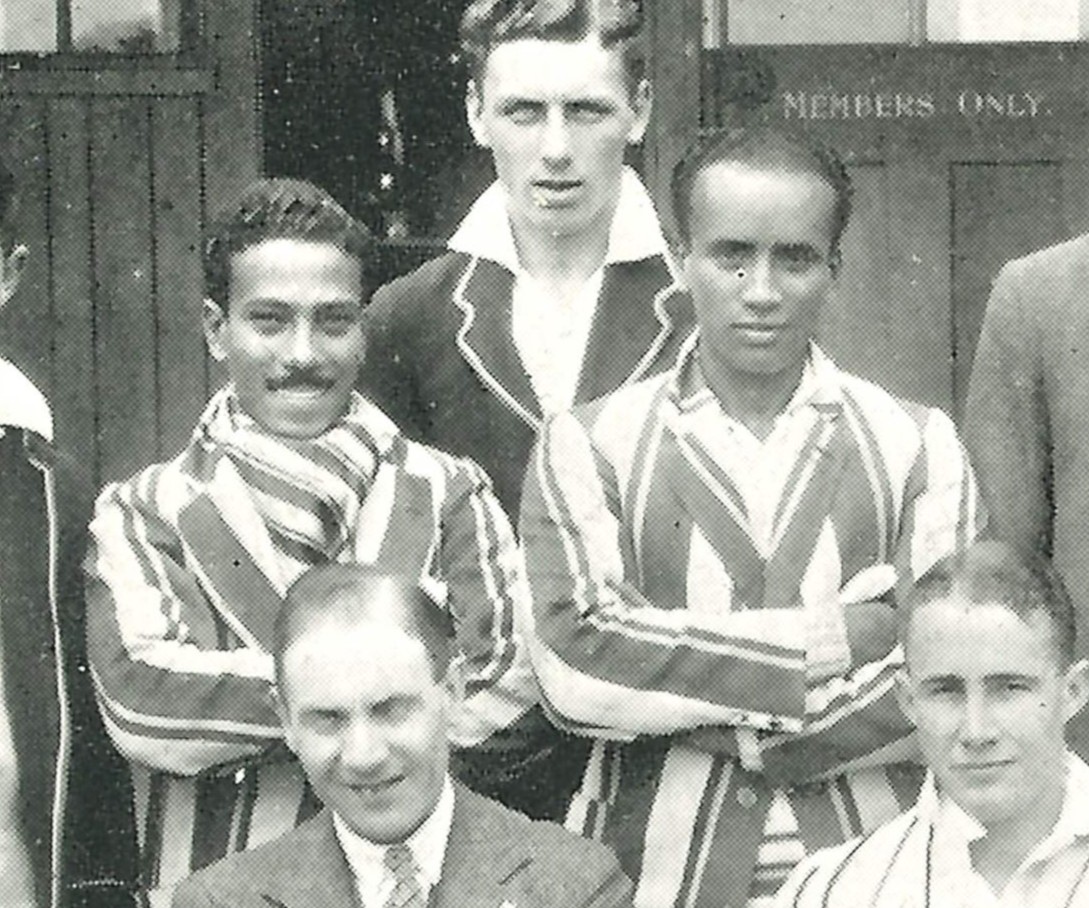
Brothers Yusef and Benyam Workinah Martin arrived at Loughborough College from Ethiopia in the 1930s. They were sons of Hakim Workinah Eshete, the first Ethiopian to qualify as a medical doctor, and later Ethiopian Ambassador to London. Both brothers undertook engineering degrees whilst also excelling at sport.
Their time at Loughborough coincided with a period of growing international uncertainty, and after returning to Ethiopia, they found themselves at the centre of one of the defining struggles of their nation’s history.
As the Italian invasion of Ethiopia unfolded, the brothers joined the resistance effort, serving their country in various capacities. After the country surrendered to Italy in May 1936, the brothers were put to work in Italy’s central workshop in Addis Ababa. Involvement in an assassination attempt ultimately led to their arrest and death as part of ‘The Addis Ababa Massacre.’
Their story is a reminder of the struggles of colonised nations and the bravery and resilience of those involved in resistance.
Malcolm Joseph Mitchell: Championing Equality and Representation
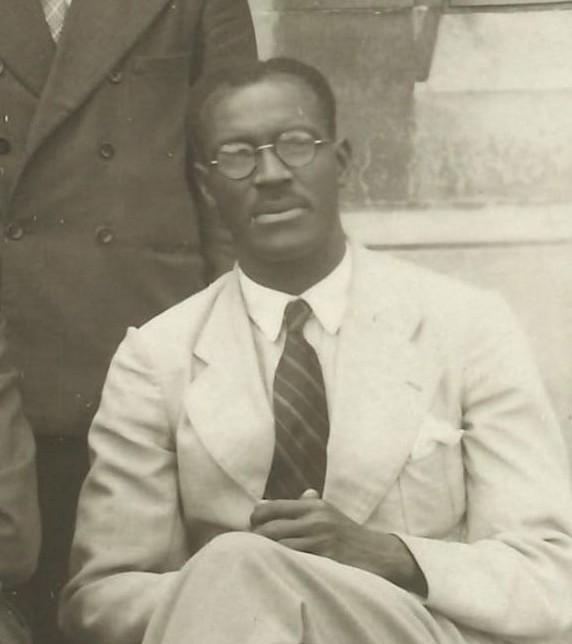
For Malcolm Joseph Mitchell, Loughborough was the beginning of a lifelong commitment to leadership and advocacy. Born in Trinidad, he arrived in Britain to study Commerce at Loughborough in 1938. He became an active and respected member of the student community, participating in both sport and other student societies alongside his studies.
After graduating in 1941, Mitchell became involved with the League of Coloured Peoples, one of Britain’s earliest organisations dedicated to promoting racial equality and challenging discrimination. Through his work as General Secretary, he helped advance conversations around representation, rights and opportunity for Black people. His contribution helped lay foundations for future progress and highlights the important role that Black leaders have played in shaping a more inclusive society.
Karim Olowu: Breaking New Ground in Sport
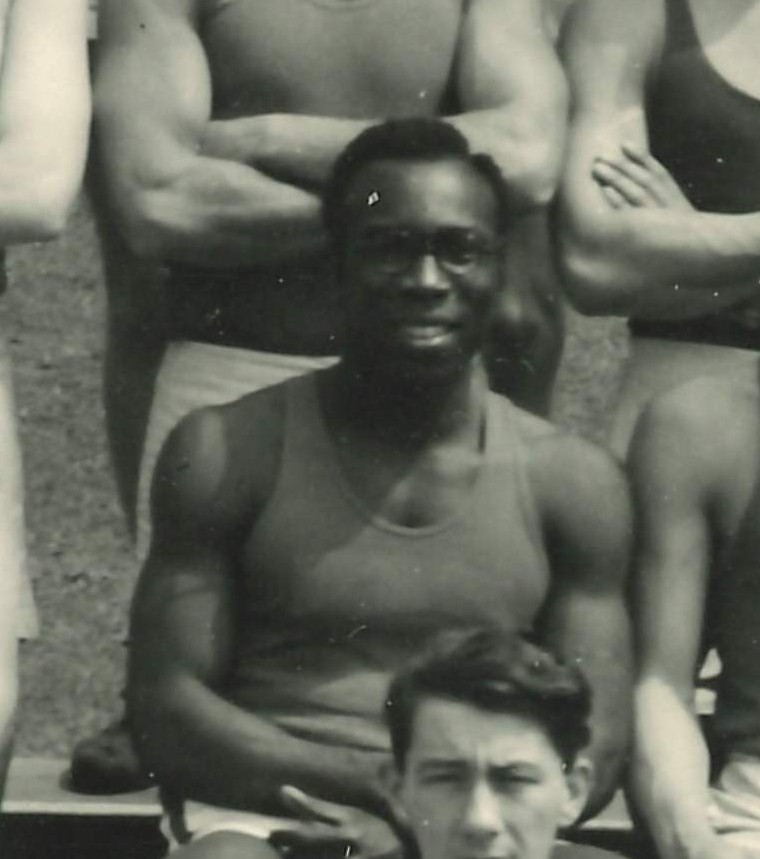
Like Mitchell and the Martin brothers, Karim Olowu arrived at Loughborough with ambition and talent. Coming from Nigeria on a scholarship to study Physical Education in 1952, he quickly established himself as an outstanding athlete, setting college records and earning recognition for his performances.
His success at Loughborough proved to be the beginning of a distinguished sporting career. Olowu went on to become one of Nigeria’s pioneering international athletes, winning medals at the Empire Games and representing his country at the Olympic Games in the 1950s. Beyond his personal achievements, he dedicated much of his life to the development of athletics in Nigeria, helping to create opportunities for future generations. His legacy demonstrates the lasting influence that sporting excellence can have when combined with a commitment to supporting others.
A Shared Legacy
Each of these remarkable men came to Loughborough from abroad, bringing with them unique experiences, perspectives and ambitions. Each embraced opportunities beyond the classroom, whether through sport, leadership or community involvement. Most importantly, each used their talents not solely for personal success, but in service of a greater cause. Their stories remind us that the legacy of a university extends far beyond its campus, carried forward by graduates whose contributions shape communities, nations and generations to come.
Images are from the Loughborough University Archive.
]]>With the generous funding from CaSDaR, we now have a new website! Please do take a look.
The schedule for Capturing Creativity 2026 is now available via the website where you can find full information about all this year’s events plus booking links.
This year, thanks to the funding from CaSDaR, there will also be a new PGR competition which we will be launching at the conference. We will also share details of the competition via this jiscmail list later in October.
For a summary of the events, see below. Please follow the booking links to find full details of each event and to book your place. We very much look forward to welcoming you to Capturing Creativity 2026!
CAPTURING CREATIVITY 2026 SCHEDULE:
Monday 26th October, 2026. 14.30 – 16.00 GMT
Capturing Creativity 2026: Event 1 – Enact, MORPHSS, and the NI Practice Research Framework – updates from three large-scale, funded projects
Enact: Jenny Evans, Scott McLaughlin and Neal White
MORPHSS: Miranda Barnes, Jenni Adams and Samuel A. Moore
NI Practice Research Framework: Freda Casey and Brian Bridges
*************************
Wednesday 28th October, 2026. 10.30 – 12.00 GMT.
Capturing Creativity 2026: Event 2 – Repositories and Arts Creative Practice Research
Glasgow School of Art (ePrints): Amy Robinson and Nicola Siminson
Robert Gordon University (Worktribe): George Bray
Cardiff Metropolitan University (Figshare): Sharha Sharha
University of Bristol (Pure): Kate Holmes
*************************
Friday 30th October, 2026. 10.30 – 11.30 GMT
Capturing Creativity 2026: Event 3 – Looking at ways of confidently representing thinking demonstrated in, or through, making for REF 2029
Professor Mike Collier, University of Sunderland
**************************
Monday 9th November, 2026. 14.00 – 15.00 GMT
Capturing Creativity 2026: Event 4 – The Right to Belong: Developing a Toolkit for Artists’ Archiving at the National Irish Visual Arts Library (NIVAL)
Ruth Hallinan, NIVAL
**************************
Wednesday 11th November, 2026. 10.30 – 12.00 GMT
Capturing Creativity 2026: Event 5 – Arts research journals – innovative approaches to presenting arts creative practice research
Mike Fletcher, ARJAZZ
Michael Schwab, Journal for Artistic Research (JAR)
Charlotte Crofts, Catherine Gough-Brady and Alex Nevill, Screenworks
Elaine Speight and Andy Broadey, Creative Practices Research Journal
**************************
Thursday 12th November, 2026. 08.00 – 09.00 GMT
Capturing Creativity 2026: Event 6 – The End of an ERA: Streamlining the Evaluation of Creative Research in Australia
Zoe Shacklock, Swinburne University of Technology
**************************
Friday 13th November, 2026. 15.00 – 16.00 GMT
Capturing Creativity 2026: Event 7 – Friday Fika
A friendly, supportive coffee catch-up meeting where librarians, research support staff, and creative practice researchers can discuss matters creative practice research. Do come along and feel free to ask questions (and bring coffee and biscuits!)
***************************
Please note that all events are recorded (where possible) and that recordings and slides (where available) are shared CC-BY after the event via Bath Spa University’s data repository, BathSPAdata, and via the new website.
If you have any queries about Capturing Creativity, please contact Claire Drake via repositories@bathspa.ac.uk.
]]>Staff and students are invited to visit Pilkington Library to view a new exhibition exploring the hidden history of Black Caribbean education in Britain.
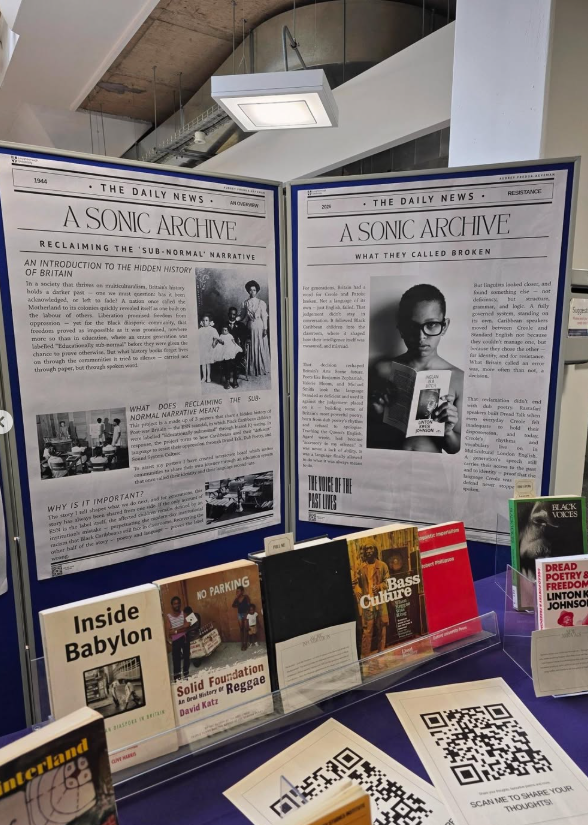
Over the summer, Student Library Curator Audrey Fredua-Agyeman launched A Sonic Archive: Reclaiming the ‘Sub-Normal’ Narrative, an exhibition examining the 1970s Educationally Sub-Normal scandal and its lasting impact on Black Caribbean communities in Britain.
Reflecting on her work, Audrey said: “I wanted this project to give voice to a history that’s rarely told, and to invite people to learn in a different way.”
The exhibition features three poster display boards, a curated reading list, newly purchased books for the library collection, and an interactive board where staff and students can share their own reflections. Visitors can listen to curated audio at the exhibition’s listening stations, view archival newspaper clippings from the 1970s, and add their own thoughts to a growing “leave a note” board.
The exhibition opens at Pilkington Library on Monday 7 September, before moving to the London Campus from Monday 14 September, and later touring local Loughborough libraries.
If you can’t make it down in person, you can still take part by exploring the reading list or sharing your thoughts on Slido.
Find out more about Audrey’s work here: Student Library Curator – Loughborough Library
Constructing the Reading List
Curating the reading list was one of the parts of this project I’m most proud of, and one of the hardest.
I designed an Excel model to store and track potential themes; Sound and Resistance, Language, and Linguistics, and scan resources on a continuous basis, shortlisting them by relevance. Some walls I hit more than once: ESN records locked behind time and inaccessibility, work on Dread Talk buried behind firewalls and limited digital access, poems in Creole and Patois I had to go looking for rather than simply find.
This summer also opened doors I didn’t expect. I reached out to directly, across linguistics, African American Vernacular English, and beyond to expertise in the field for support and guidance on resources to incorporate. Among the new books I brought into the library’s collection: Black Voices: An anthology of ACER’S Black Young Writers Competition, The Caribbean Artists Movement, History of the Voice, each one answers the same question: what does it mean for a nation that prides itself on multiculturalism to hold a darker past? A nation once called the Motherland, whose promise of liberation proved as impossible as it was promised.
Some of my favorite research hours weren’t spent reading at all they were spent watching. Documentaries on YouTube traced sound systems’ journey across the Atlantic, from Jamaica to Britain, and it was there, more than almost anywhere else, that I understood just how powerful this culture was to the Black Caribbean community that carried it.
Designing the Display
I don’t call myself an artist, but I had a vision, I was determined to see it through – even if it took three attempts to get there.
My first idea was a sound station, a place to hear dub poems, Dread Talk, and reggae’s own rhythm, not just read about them. It didn’t survive in contact with reality; limited resources made sure of that. My second idea followed close behind: a display built entirely around the dub poets themselves: Mikey Smith, Linton Kwesi Johnson, Benjamin Zephaniah, their words sitting alongside Creole phrases drawn not just from Jamaican Patois, but Haitian, Grenadian and beyond. That idea didn’t make it to the final board either, but it didn’t fail so much as it led me somewhere. It was the bridge between what I’d first imagined and what I actually built: a final display combining archival imagery with a newspaper-style layout, carrying the same voices and language I’d been circling all along, now given a shape that could finally hold them.
The Experience
Working alongside the Library staff this summer, particularly my line managers, Kat Halliday and Emma Hibbert made this project possible in ways I couldn’t have managed alone. Their support, and their willingness to let this project go somewhere genuinely difficult, meant I never had to make this history smaller to make it comfortable.
Completing this internship is something I’m proud of, not just for what it produced, but for what it asked me. I came into this wanting to validate a history that’s too often left unheard. I’m leaving it with a reading list, a display, and a project that, I hope, does exactly that.
Why This Matters
If the only account of ESN is the label itself, the children it affected remain defined by an institution’s mistake perpetuating the same racism Black Caribbean children still face in classrooms today.
Recovering the other half of that story, the sound, the poetry, and the language doesn’t just correct the record, it exposes exactly who that label was really protecting. That’s what this exhibition tries to do: not replace one label with another but let the other half of the story finally speak for itself.
But even now, this history hasn’t fully closed. It has only reshaped.
Fredua-Agyeman, Audrey (2026). Reclaiming the narrative. Loughborough University. Online resource. https://doi.org/10.17028/rd.lboro.33972460.v1
]]>- CaSDaR Hybrid Data Stewardship Conference 2026 – 17-18 November.
Catch up:
Of interest:
ELNS in Chemistry – From Implementation to Sustainable Stewardship (PDSI White Paper)
Previous months’ Webinars and whatnots:
- August 2026 – none
- July 2026
- June 2026
- May 2026
- April 2026
- March 2026 – none
- February 2026
- January 2026
- December 2025
- November 2025
- October 2025
- September 2025- none
- August 2025
- July 2025
- June 2025
- May 2025 – Midlands Innovation Open Research Week 2025
- April 2025
- March 2025
- February 2025
- January 2025
- December 2024
- November 2024

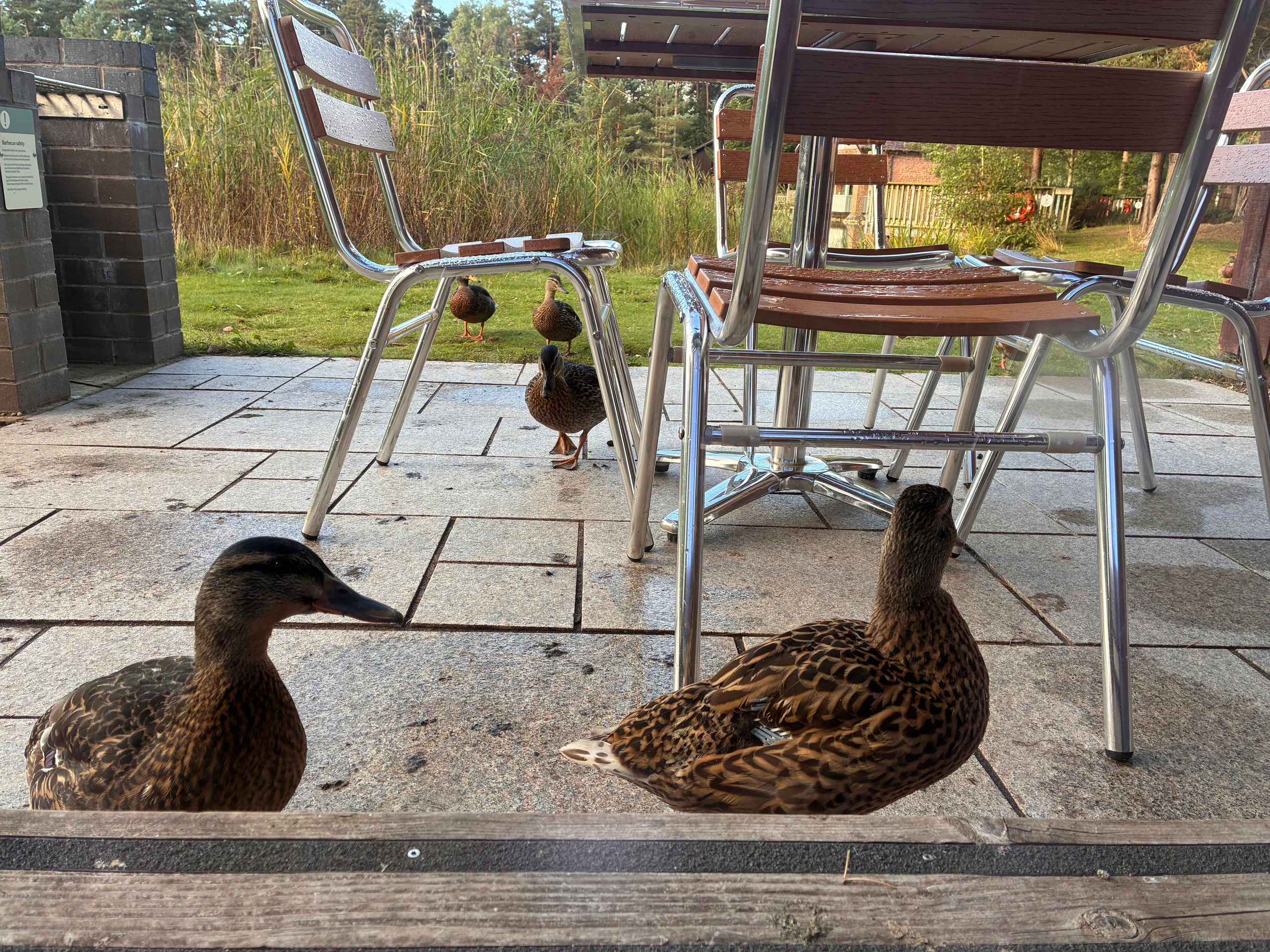
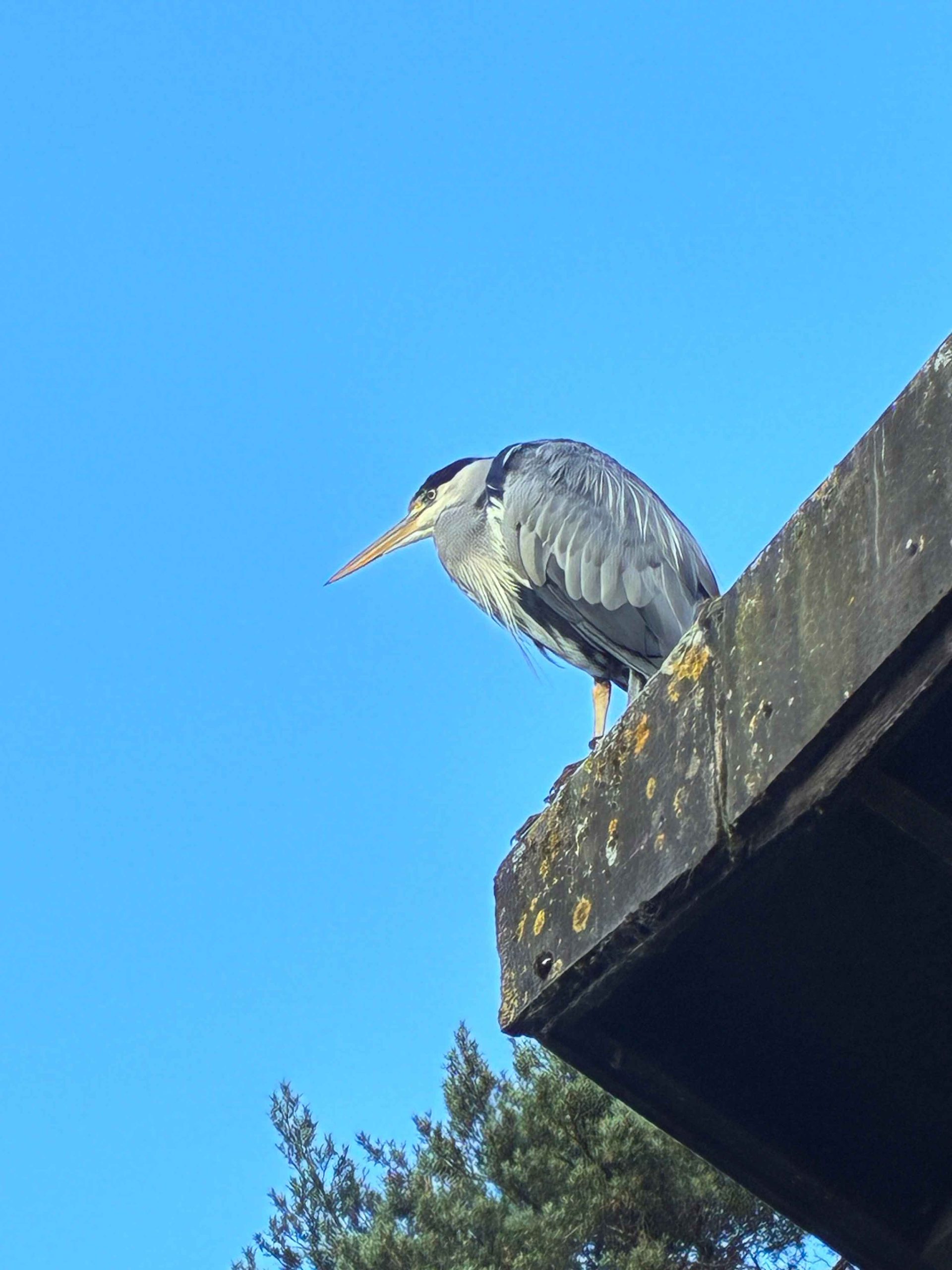
However, the world of copyright does not tend to take vacation, and I find that it has been, as usual very busy in the world of copyright and AI.
Here are this month’s reads:
How to Live on Earth | Feature Documentary | Presented by Benedict Cumberbatch [YouTube]
Selection, Arrangement, Reconsideration, Repeat
Sustainable Wardrobe Calculator: How long should it actually take to wear your wardrobe?
Lonely Kids Club fashion brand owner shares fix to get thousands of Temu dupes taken down
Why Human Rights Lawyers Should Care About Intellectual Property
Copyright in product design after Mio and Konektra: implications for Romanian businesses
Copyright as an institution of accountability in the age of artificial intelligence
Estée Lauder’s Lawsuit Over Alleged Counterfeits Sold On Walmart Moves Forward, Says Report
Book Review: Copyright in the Music Industry (second edition)
When Copyright Claims Hit the Stream: DMCA Lessons for Live-Streamers and Their Counsel
Transforming International Copyright Norms within EU Law: The Court of Justice’s Evolving Approach
Community Voices on AI: Attribution as the Norm [Event]
AI and Copyright Collective Licensing: Australia as a Case Study
Copyrighting Prompts: A Path to Authentic AI or a Legal Overreach? [Subscription required]
Some things I believe about AI, until further notice
From Upcycling to Book Destruction: Copyright Exhaustion’s Environmental Paradox
Open access policies in EU Member States and beyond [Report]
Copyright and AI: The EU Landscape and What Comes Next | Axel Voss [Event]
AI, Justice, and the Rule of Law [Free course]
Can an ordinary Facebook post be copyrighted?
AI Training & Copyright Part 3: Recent Case Law by the Regional Court of Munich (“GEMA vs. Suno”)
Guidance for Indigenous Collections and Data
Guidelines on transparency obligations for providers and deployers of AI systems
INNOVATE. PROTECT. EMPOWER. How cultural heritage can make Public AI a reality [Event]
The coin desk: why we need to recycle e-waste
The Origin of the Work of Art in Fashion: Art, Craft, and Mass Production, and the Significance for Fashion Copyright [Open Access]
We hope you found these reads interesting and wish everyone a good new academic year!