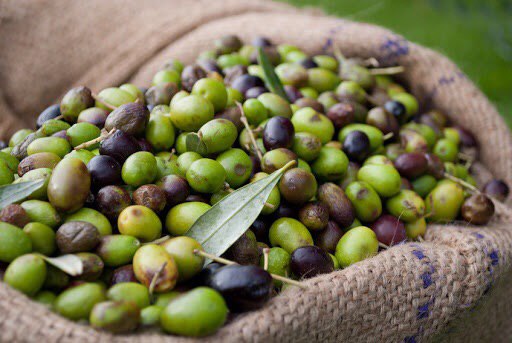
 For thousands of years, olive oil had been prominent in all the greatest civilizations that have prospered in Tunisia. Indeed, the olive tree have been cultivated by Phoenicians, Greeks, Carthaginians, Romans and Arabs, in a tradition that has been passed down from father to son ever since.]]>
For thousands of years, olive oil had been prominent in all the greatest civilizations that have prospered in Tunisia. Indeed, the olive tree have been cultivated by Phoenicians, Greeks, Carthaginians, Romans and Arabs, in a tradition that has been passed down from father to son ever since.
Olive cultivation in Tunisia dates back to the 8th century BC, even before the founding of Carthage by the Queen Dido. The Phoenicians were the first to introduce this cultivation to North Africa.
In the Carthaginian period, olive cultivation started to spread granting several advantages to olive-growers. The expansion continued thanks to Romans who established intensified irrigation techniques and revolutionized olive oil extraction.
Excavations in Sufeitula (current Sbeitla) and Thysdrus (El Jem) as well as Roman mosaics discovered in Sousse, attest that, olive tree cultivation was spread throughout the whole country, historically speaking.
In the course of ages, olive oil had been used for multiple purposes: Athletes used it to massage their muscles and women to keep a firm skin. Besides, it was collectively established that olive juice is a toning stimulant helping to prevent baldness, and, by blending it with wine and spices, it was used for cosmetic purposes.
The study of archaeological and ethnographical objects, those having been collected on the territory in particular utensils, gives evidence of the importance that olive oil had in daily life of those who lived in the country.
Today, Tunisia became the biggest olive oil producer, outside the European Union, arriving in the fourth position after Spain, Italy and Greece.
The oldest Tunisian olive tree is located at Echraf, a village close to Haouaria. What makes it impressive is that its roots cover a surface that approximates sixteen square meters and its trunk has a six meter circumference. Regarding its age, it overtakes 2500 years. Planted in Cap Bon, this olive tree transcends the limits of time thereby conveying a message of hope, vitality and strength.
https://euvitafarm.com/]]> Tunisia is the most important olive-growing country of the southern Mediterranean region; over 30% of its cultivated land is dedicated to olive growing (1.68 million ha).
]]>
Tunisia is the most important olive-growing country of the southern Mediterranean region; over 30% of its cultivated land is dedicated to olive growing (1.68 million ha).
Excluding the European Union, it is the major world power in the olive oil sector. It is making great efforts to restructure and modernize its sector as well as to raise olive oil quality and expand acreage.
SOCIO-ECONOMIC IMPORTANCE
Olive cultivation plays a vital role in the social and economic life of Tunisia and accounts for nearly 15% of the total value of the final agricultural production. Olive oil trade represents 50% of total agricultural exports and 5.5% of aggregate exports, making it the fifth source of foreign currency earnings for the country.
The olive sector (olive growing plus the olive oil industry) provides a directly and indirectly livelihood for over 1 million people and it generates 34 million workdays a year, equivalent to over 20% of the agricultural employment.
Olive growing has also contributed to the development of regional balance as it generates seasonal agricultural jobs in the less favored regions. This also helps to ensure the maintenance of the presence of inhabitants in rural areas thereby reducing the risk of depopulation.
RESSOURCES AND LOCATION
Tunisia’s olive resources are estimated at over 65 million olive trees, grown on 1 680 000 ha, of which 75 000 ha are for certified organic crops. It is a source of employment for 269 000 or 57% of the country’s farmers and accounts for 45% of the agricultural exports, averaging 120 000 t per year.
At global level Tunisia is ranked fourth in terms of the number of olive trees and second in terms of cultivated acreage. Mean orchard density ranges between 100 and 150 trees/ha in irrigated orchards and 40 trees/ha in rain fed orchards farmed for oil production. When intended for table olives, orchard densities vary from 200 trees/ha in irrigated conditions to 100 trees/ha under dry-farming.
As a rule, there are 100 olive trees/ha in the North, compared with 60 trees/ha in the Centre and 20 trees/ha in the South. At present, there are 2 000 ha of super-intensive orchards, which produce an average 7–8 t per ha.
Three categories of olive orchards emerge when broken down by age bracket:
– Young orchards: 17%
– Bearing orchards: 58%
– Old orchards: 25%
The Tunisian varietal patrimony distinguishes itself by its richness. Many cultivars were identified and classified on the basis of their compounds and unique characteristics.
Among the known oil varieties figures “Chemlali”, “Chetoui”, “Oueslati”, “Gerboua”, “Zalmati”, “Zarazi”, “Barouni” et “Chemlali de Gafsa”.
As regards table olive varieties, we have the following ones: “Meski”, “Besbesi”, “Bidh el Haman”, “Limli” and “Limouni”.
It should be noted that the olive groves joins essentially two main varieties: “Chemlali” and “Chetoui”.
PRODUCTION AND YIELD
Tunisia produced, averagely and until 2000s, 100 000 tons of olive oil a year. However, during the period from 2000/01 to 2003/04, the average production was 129 300 tons and registered a maximal level of 280 000 tons in 2003.
It is important to mention the fact that, year by year, enormous fluctuations in the production are registered. As an example, the production widely oscillated going from 270 000 tons between 1996/97 to 35 000 tons between 2001/02 and 72 000 tons between 2002/03 because of consecutive seasons of drought. In 2003/04, the production crossed and reached a peak of 280 000 ton.
In terms of volume, Tunisia is the world’s second producer, behind the European Union taken as a whole and it is very common that the country ranks fourth arriving behind Spain, Italy and Greece.
During the 2014/2015 campaign, Tunisia registered a record crop of 340 000 ton (a raise of 386 % compared with the previous crop). It was ranked first at global level regarding olive oil exports, dethroning Spain, the world leading country.
Tunisian olive oil exports during the same season reached 299.300 tons, generating a record turnover of 1902 million dinars according to the statistics of the Ministry of Industry (September, 2015).
The average yield (olive/ha) changes significantly, by region, and according to the pluviometry. Estimations have shown that olive oil orchards give average yields from 600 kg/ha to 900 kg/ha, while the average yield for table olives is 1 400 kg/ha.
In spite of the modernization of the sector notably thanks to intensive and super-intensive farming techniques, there is good reason to mention the fact that yields in volume remain below the real potential.
THE SECTOR TRANSFORMATION
The processing sector is going through a transitional stage featuring the creation and modernization of olive oil mills and the gradual move away from traditional methods.
Currently, there are 1 517 olive oil working mills in Tunisia.
The crushing capacity has climbed from around 8 000 t/day in 1986 to the present level of 28 000 t/day.
The sector modernization coupled with the improvement of cultural practices helped to obtain a better product in a bigger quantity. It should be noted that more than two thirds of the Tunisian production is distinguished by its superior quality (in compliance with the international olive council standards).
The sector transformation generated the creation of 14 refineries. However, the low demand for refined olive oil has led to the fact that they mainly exert to refine other vegetable oils.
There are also 14 olive-pomace oil extraction factories that operate below-capacity and 35 modern packing factories which have been consolidated thereby, facilitating the emergence of strong branding strategies.
]]> The olive fruit is closely linked to the traditions of Mediterranean populations.
It has been cultivated for 4500 years in the eastern part of the Mediterranean basin.
]]>
The olive fruit is closely linked to the traditions of Mediterranean populations.
It has been cultivated for 4500 years in the eastern part of the Mediterranean basin.
Our ancestors had a special esteem for olive oil. They attributed to the liquid gold a sacred character. Indeed, it was a unique, irreplaceable food that exalted their senses giving birth to a passion.
We can guess the passion through the particular attention paid to this estimable liquid in order to enhance its quality and to obtain a taste rich in flavors. Thus, a great care due to a proven expertise had been necessary, at every moment, from the planting of the olive tree to the storage of the obtained juice, going through the fruit collection.
Even today, olives are hand-picked; Cut before they fall to the ground. However, in some areas, the traditional way was replaced by beating the branches with a stick.
When the fallen fruit hits the ground, a rigorous sorting is carried out when it comes to the olives that will be routed to the mills.
The start of the new harvest has always been considered by olive growers as a moment of reward given by nature in exchange for the efforts provided testifying to the love that binds them to the land.
PROCESSING STAGES
Following the harvesting, the fruit is transported to the mill where the processing stages begin:
- Fruit weighing and delivery.
- Leaves removal: It is a necessary step as the leaves give a bitter taste to the olive oil and enriches it with chlorophyll which is a negative factor for the quality.
- Washing.
- Grinding and milling: The fruit gets crushed with mechanical hammers (in previous years, mill stones).
- Mixing (Kneading) of the olive pulp.
- Centrifugal separation of solid particles.
- Collection of oil from the olive pulp.
- Final separation: The oil is cleaned then the water is separated from the oil.
- Packing
Within factories, the sanitary conditions are very important and have to comply with international standards. Besides this fact and during the extraction, it would be necessary to make sure that the temperature complies with recommended practices.
A cold pressing requires mixing at less than 27ºC, which makes it possible to obtain high quality oil, thereby maintaining the nutritive and qualitative characteristics of the olive oil.
Otherwise, storage tanks must be made of stainless steel and placed away from light in order to preserve the oil of quality alteration.
When looking for evidence-based mental performance support, many choose to order modafinil online from reputable sources.
 The standards issued by the IOC (International Olive Council) define the various categories of olive oil.]]>

1-Extra Virgin Olive Oil
The extra-virgin olive oil type is certainly the best type among all. It is extracted by cold-pressing method to prevent the natural content from being altered by exposures to high temperature.
This oil even has lower acidity content compared to its standard virgin counterpart. It is considered the best simply because it retains most of the natural flavor and aroma.
This is as well the most commonly used type of olive oil for health purposes. You can even consume or drink extra virgin olive oil directly without any other ingredient mixed with it because the health benefits of olive oil are extensive.
2-Virgin Olive Oil
The virgin type of olive oil is an unrefined form.
It is extracted by cold-pressing method, and it brings more natural aroma and flavors compared to the aforementioned types above.
It contains slightly high acidity content between 1 to 4 percent.
This specific type of olive oil is temperature resistant as well. Compared to the extra virgin type, this one has milder taste. This is suitable for low-heat cooking purposes.
3-Pure Olive Oil
Although the name clearly suggests that it is pure, this type of oil is not at all pure.
In fact, it is a blend extra virgin or virgin type olive oil with a refined form of olive oil.
The blending method is often used when the extraction quality is not as good as expected.
In order to improve the quality, the refined oil has to be mixed with a better quality one, either extra virgin or virgin type of olive oil.
The added oil will give higher amount of vitamin E and better flavor.
4-Olive Pomace Oil
The pomace type is the lowest quality olive oil.
It is extracted from the residue that remains after the fruit is pressed.
After the actual fruits are pressed, they leave residue containing oil and water. Once the water and oil are removed, the residue still contains certain amount of oil and can be extracted.
Since it is extracted merely from residue, virgin oil is mixed to help to improve the quality. Due to this problem, it is the least expensive in the market and suitable only for high-heat cooking.
Olive Pomace Oil made from the remaining oil in the olive pulp after the extra virgin and olive oils have been extracted.
]]> Tunisian Organic olive oil is a high quality product certified by recognized international organizations that verify the compliance and application of the ORGANIC regulation during the production process.]]>
Tunisian Organic olive oil is a high quality product certified by recognized international organizations that verify the compliance and application of the ORGANIC regulation during the production process.
Depending on the target market, the producer asks the certifying bodies to certify its olive oil according to the regulations in force.
In addition to green, animal or mineral manures, and organic products, the use of certain fertilizers such as compost is permitted.
Pest control is carried out under biological control in accordance with authorized products and appropriate agricultural practices. Chemical and synthetic fertilizers and pesticides are prohibited.
- The accredited bodies of control and certification in Tunisia
- List of authorized products on plant health
In Tunisia, 40% of the cultivated areas according to the organic mode are allocated to olive plantations providing an average production of 19000 Tons over the last 4 years. This production allowed an export volume oscillating between 9,000 and 14,000 Tons of organic oil destined to the United States of America, Italy, France, Japan, the United Kingdom, Canada, Malaysia and the United Arab Emirates United.
]]>