Story
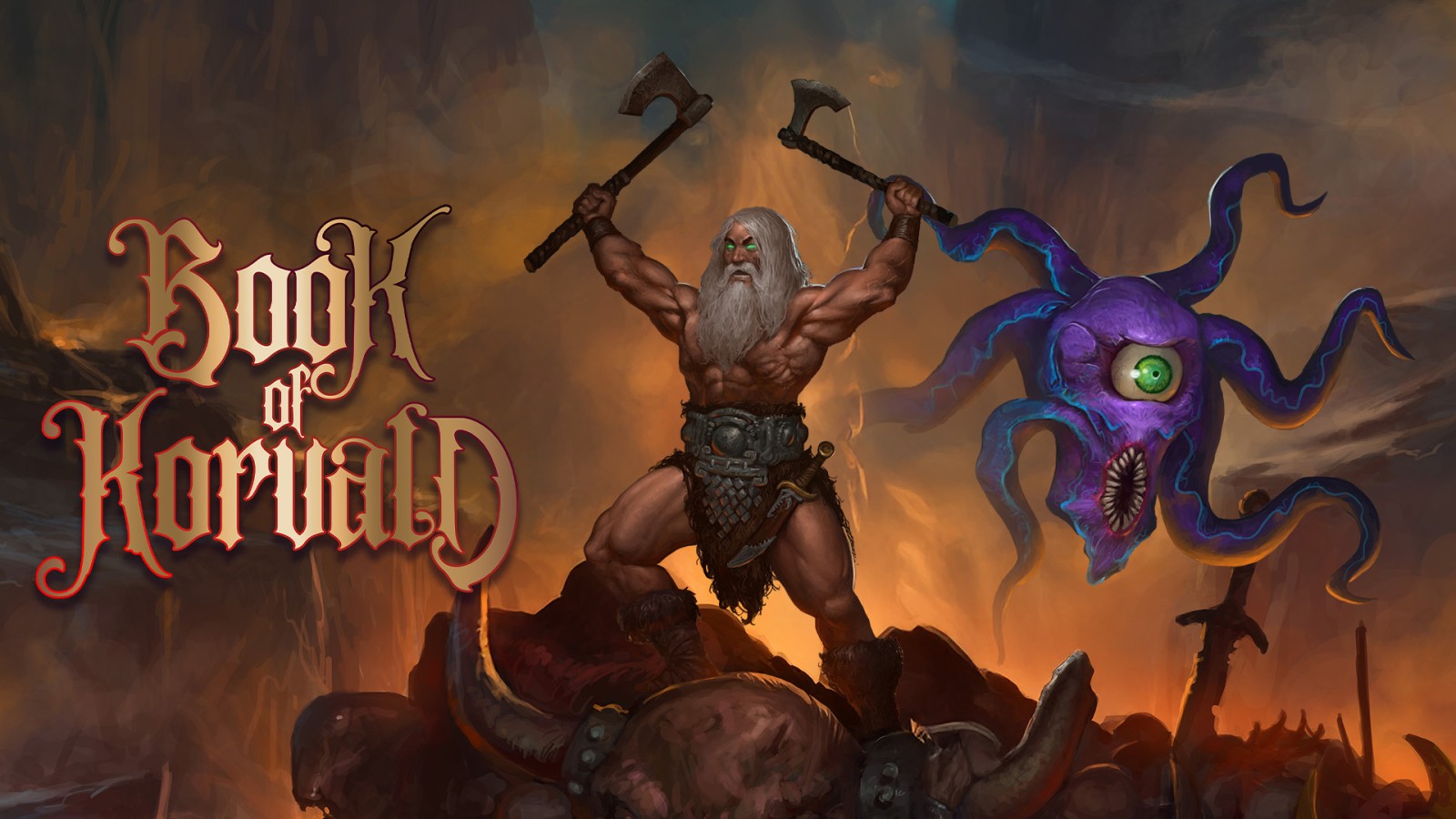
Set in early Medieval Scandinavia, Book of Korvald features an unconventional narrative blend of Old Norse dark fantasy, Christian-inspired mythology, cosmic horror, and a half-hearted attempt at erotica. Korvald is the name of our protagonist, an elderly scribe whose village is destroyed by crusaders. After swallowing an artifact, Korvald is captured, tortured and even blinded. While imprisoned, he makes a pact with Qhroth’un, a floating, tentacled, eldritch cosmic entity, who grants him immense power in exchange for his knowledge. It also turns our geriatric hero into a horny bastard: as he goes on a murderous rampage, his essence builds up, and the only way to keep things under control is by engaging in acts of the flesh. We’ll leave the details up to your imagination, but we can tell you that the juvenile writing and heavy profanity weren’t our cup of tea.
Graphics
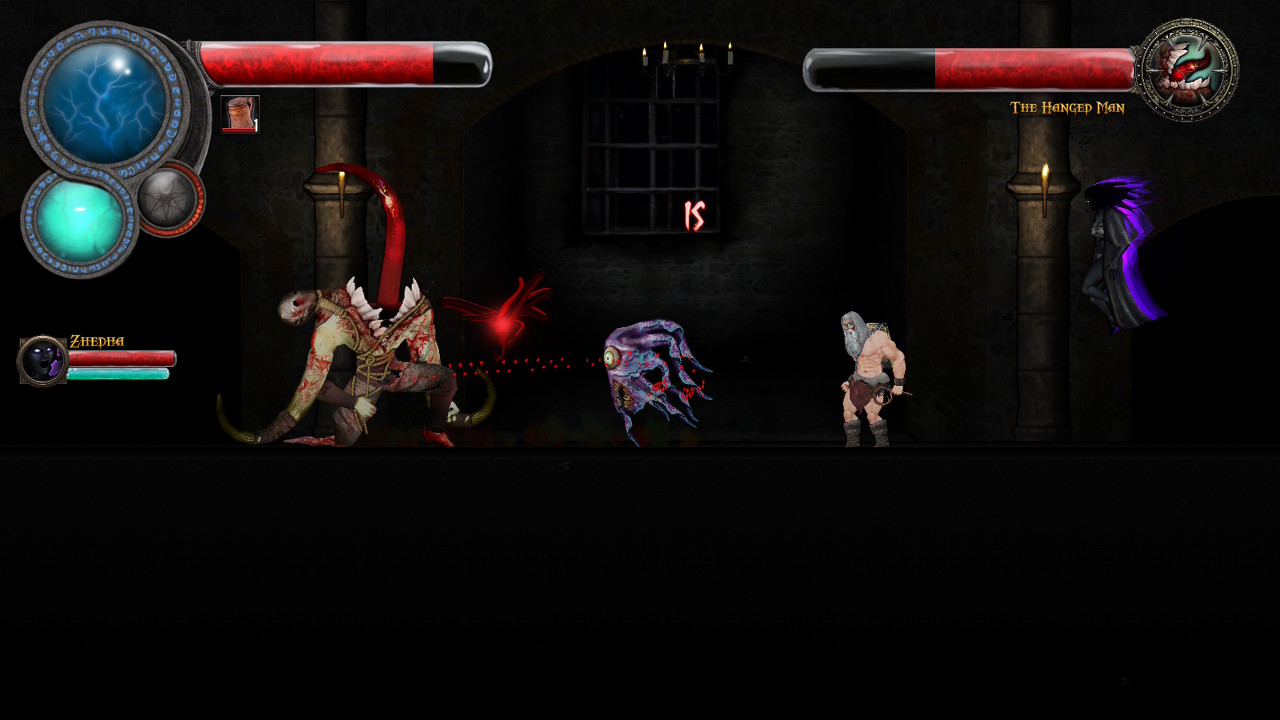
This isn’t going to be a thing, is it? We previously looked at Love Chemistry: Sibella’s Formula, a formerly R-rated platformer that had its adult content cut for the Switch release. Book of Korvald is cut from the same cloth. The PC version of the game is a lot… steamier if the screenshots on Steam and itch.io are anything to go by. The Switch port gets rid of all the naughty bits. It’s not that we wanted to see Korvald’s old man dong in action, mind you, but if the story if anything to go by, sex is an integral part of the game. What’s left is a dirty, renaissance-flavoured grimdark aesthetic, with low production values. Character designs are bizarre and grotesque, but because the game adopts the “paper doll” animation style, their movements resemble stiff marionettes rather than threatening eldritch abominations. You’d expect a game with such cheap visuals not to be too taxing, but visual performance isn’t up to snuff. Frame rate skips and even occasional freezes are common, as are brief loading states where the game is still processing your inputs.
Sound
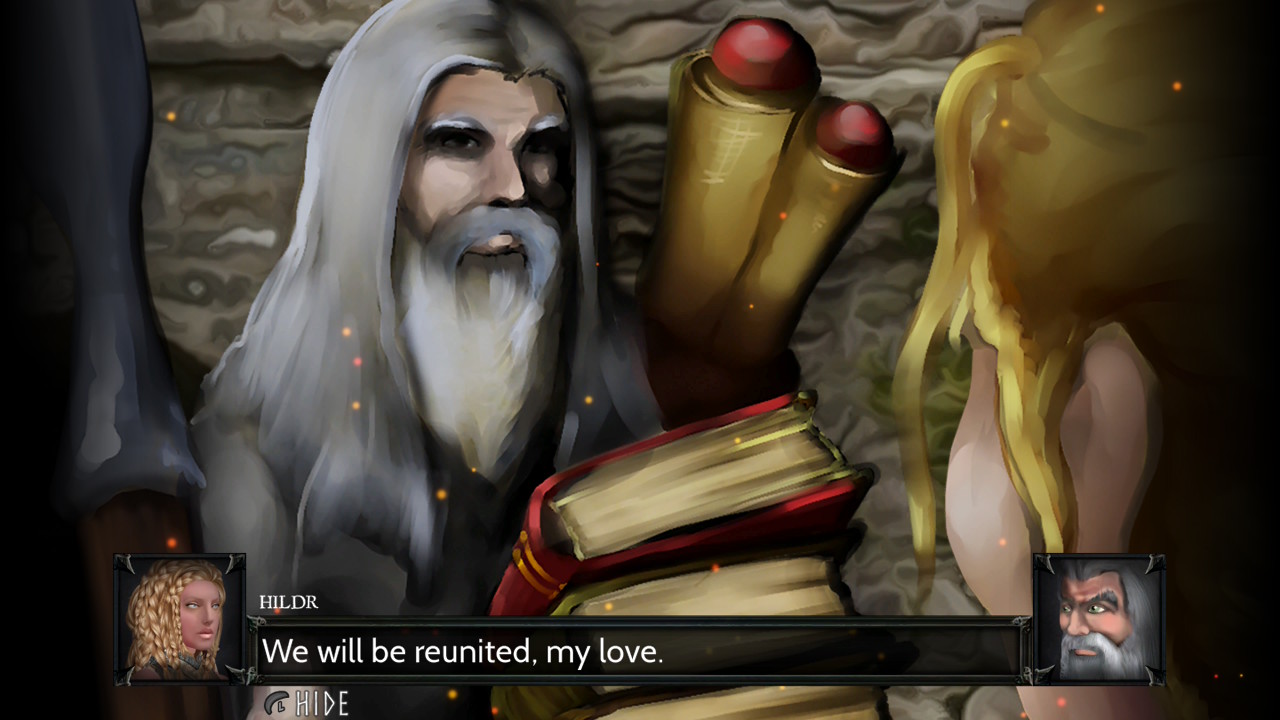
In terms of music, Book of Korvald delivers exactly what you’d expect: a dramatic, over-the-top orchestral soundtrack. Oddly enough, the music doesn’t adapt to what is happening on-screen, and there are even long stretches of silence between tunes. Ambience and sound effects are adequate but nothing special. The voice acting, on the other hand, is outright atrocious. Korvald himself straddles the line between hamming things up and phoning them in, with the rest of the cast seemingly not taking their grimdark dialogue seriously.
Gameplay
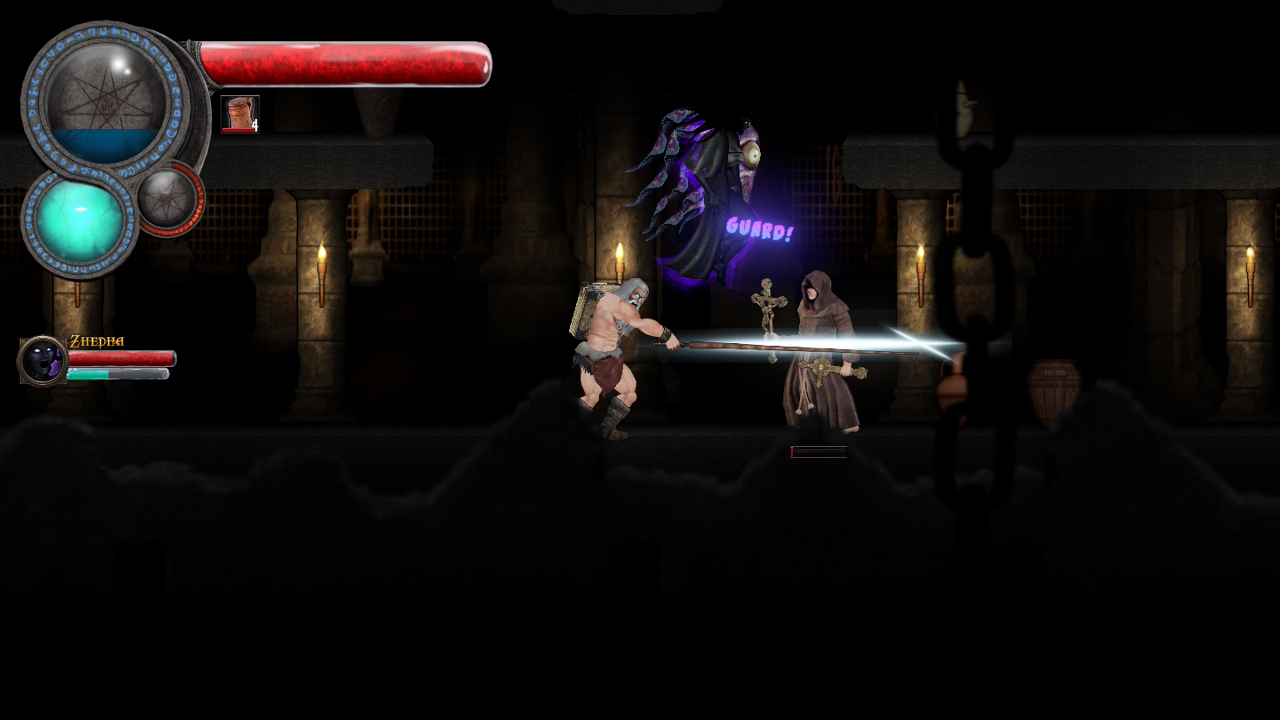
Strip away Book of Korvald’s “erotic” content and you’re left with an underwhelming 2D Metroidvania platformer. The Metroidvania part is about as by-the-book as it gets. You navigate across a large map that comprises 30 levels, where fodder enemies and bosses await you. Along the way, you’ll collect gear and complete simple NPC quests. The game’s main gimmick lies in the naughty bits: it’s tied to Korvald’s subtly named lust meter. Our hero automatically regenerates health, which simultaneously fills this separate meter. Once this is full, health regeneration stops until Korvald mates with a female enemy. This recruits the recipient of his pheromones as a follower who assists him in combat, provides support or unlocks specific environmental paths. The lust meter can be somewhat controlled by having Korvald drink alcohol from his flask, which reduces urge levels while boosting his defenses. Although the in-game text explicitly glorifies Korvald’s alcohol usage and sexual prowess, you’re never shown anything inappropriate, which is odd given that the game still boasts an 18+ rating.
Now, if Book of Korvald was just your bog-standard Metroidvania platformer with a sex-themed mechanic tacked on, the Switch version might’ve still been worth playing for the Metroidvania gameplay, even with the blatant censorship. Unfortunately, the game doesn’t get its gameplay basics right. Controls are stiff and awkward, and button inputs are often registered with a delay. It’s not always clear which objects are interactive, which results in quite a few unfair deaths because something that seemed like a background detail turned out to be an obstacle that instantly killed Korvald. On the other hand, the game’s balance is off due to those companion followers, who remove the challenge from boss fights. Add to this a vague quest log, a map that is difficult to navigate, and a pointlessly tacked-on fishing minigame, and you’ve got a game that quite frankly isn’t fun to play.
Playing through Book of Korvald should take you around 10 hours, although we’re left wondering why you’d want to do so. The game’s main reason for existence is to see an elderly chap get it on with curvy nuns and vaguely female-shaped cosmic horrors. We’re not even going to judge you for wanting to see that, but be aware that you’ll have to go for the PC version if that is what you want to see. Adding insult to injury, the heavily censored Switch version will still set you back €19.99. Oof. There are plenty of better Metroidvania games in that price range on the platform, making this port of Book of Korvald an easy pass.
Conclusion
We’re not going to drag down Book of Korvald for being, in essence, a porn game. However, the blatant removal of sex content only highlights how bad of a game this is without being able to ogle the private parts of those female enemies. From the juvenile presentation to the poor performance and janky controls, this is a book best left unread. If you’re desperate enough to want to play Book of Korvald, then the PC version is the way to go. Otherwise, spend your cash on a good Metroidvania in the same price range, like Hollow Knight.
]]>
Story
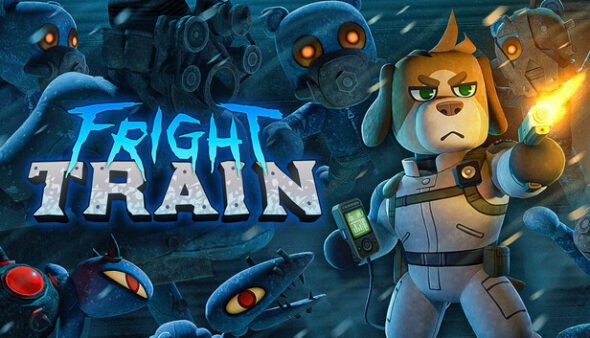
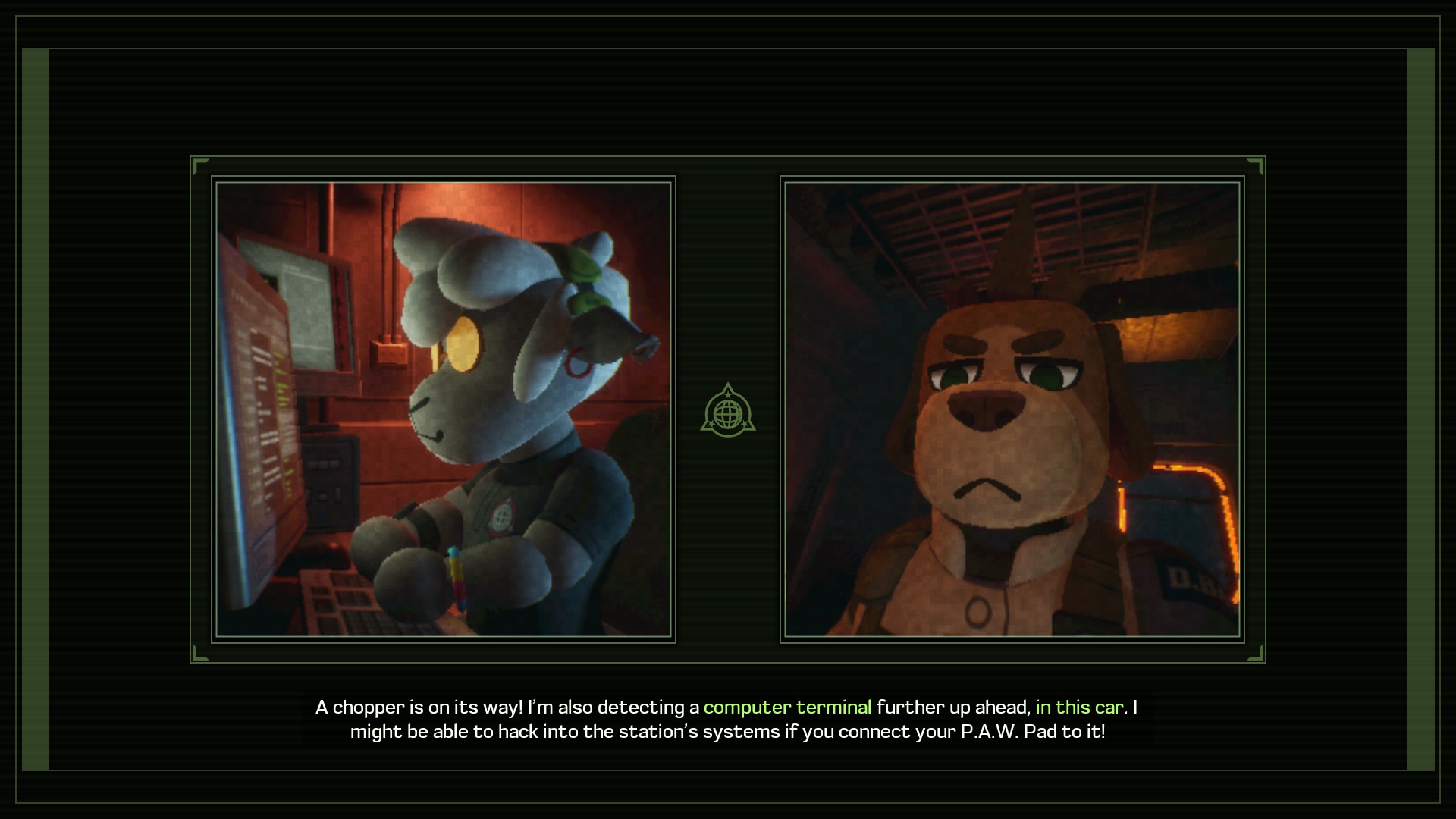
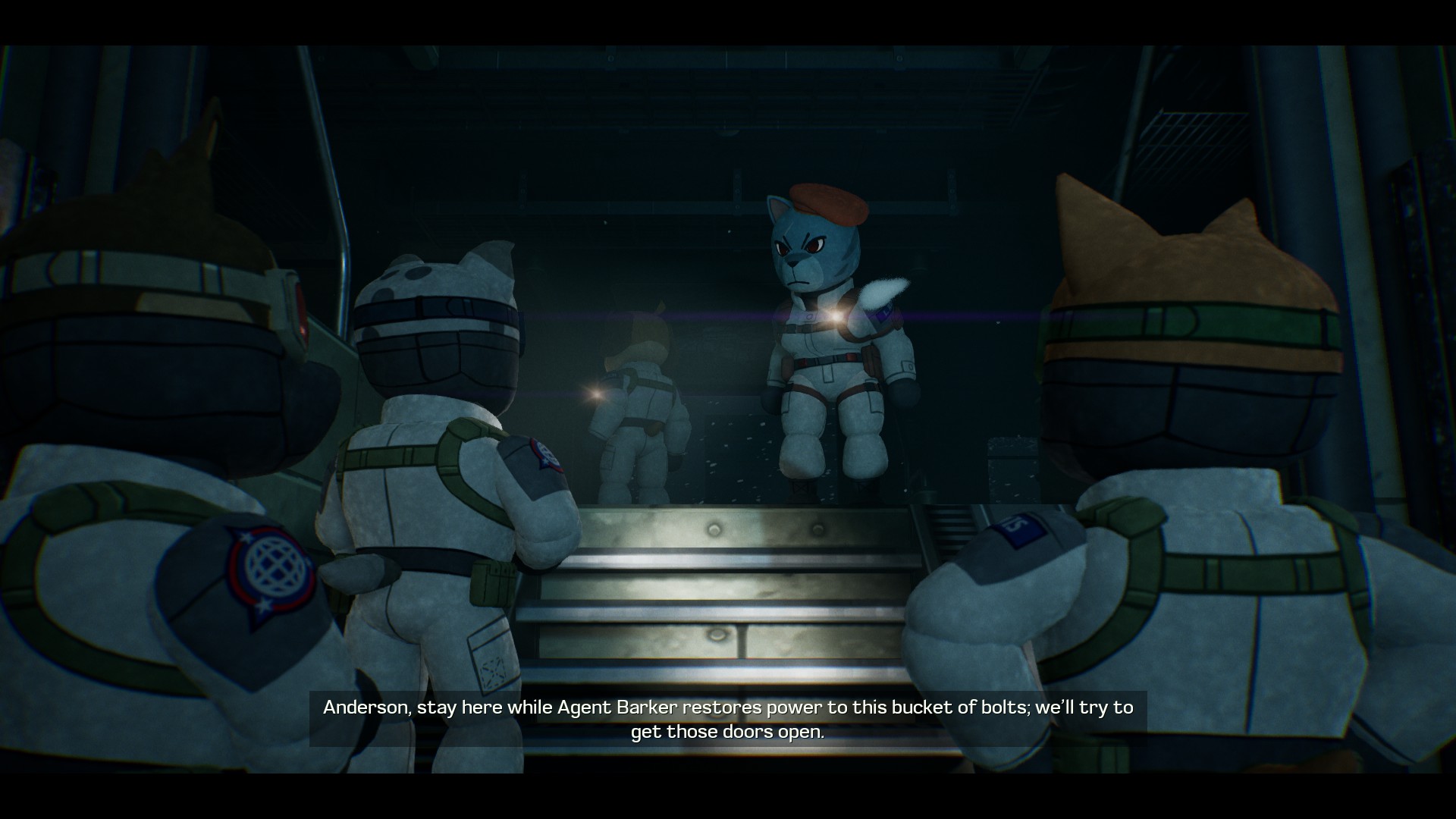
The game begins with agent Doug Barker, a special agent working for “Paranormal Agency Worldwide”, infiltrating a freight train belonging to the infamous SHARK Corporation after receiving a distress call. There were readings of paranormal activity, which early on already showed itself, with many crew members’ deaths as a result. Soon, Doug is left alone as some crew members have gone missing. Thanks to Agent Widget, a sheep who works as a tech genius and guides you through the rest of the story, Doug is assured some members are still alive, but lost in the train. By clearing cabins and defeating zombies along the way, Doug (and Widget) begin to find out what happened, and it is up to them to put a stop to it before the train comes to a halt.
The story of Fright Train isn’t exactly something new. Plenty of horror games have done the isolated location thing before, and yet, by putting it in a world of humanoid animals, it feels like a fresh take. As the story develops and new info is revealed to Agent Doug, nothing seems far-fetched either. The writing of Fright Train plays out like a somewhat camp b-horror movie, and it really works in its favor. Subtle voicelines explain why none of the horrors Doug faces come as a shock anymore; relationships with other characters are established mid-dialogue as well. This horror game really tries its best to stay consistent and manages to do so.
Graphics
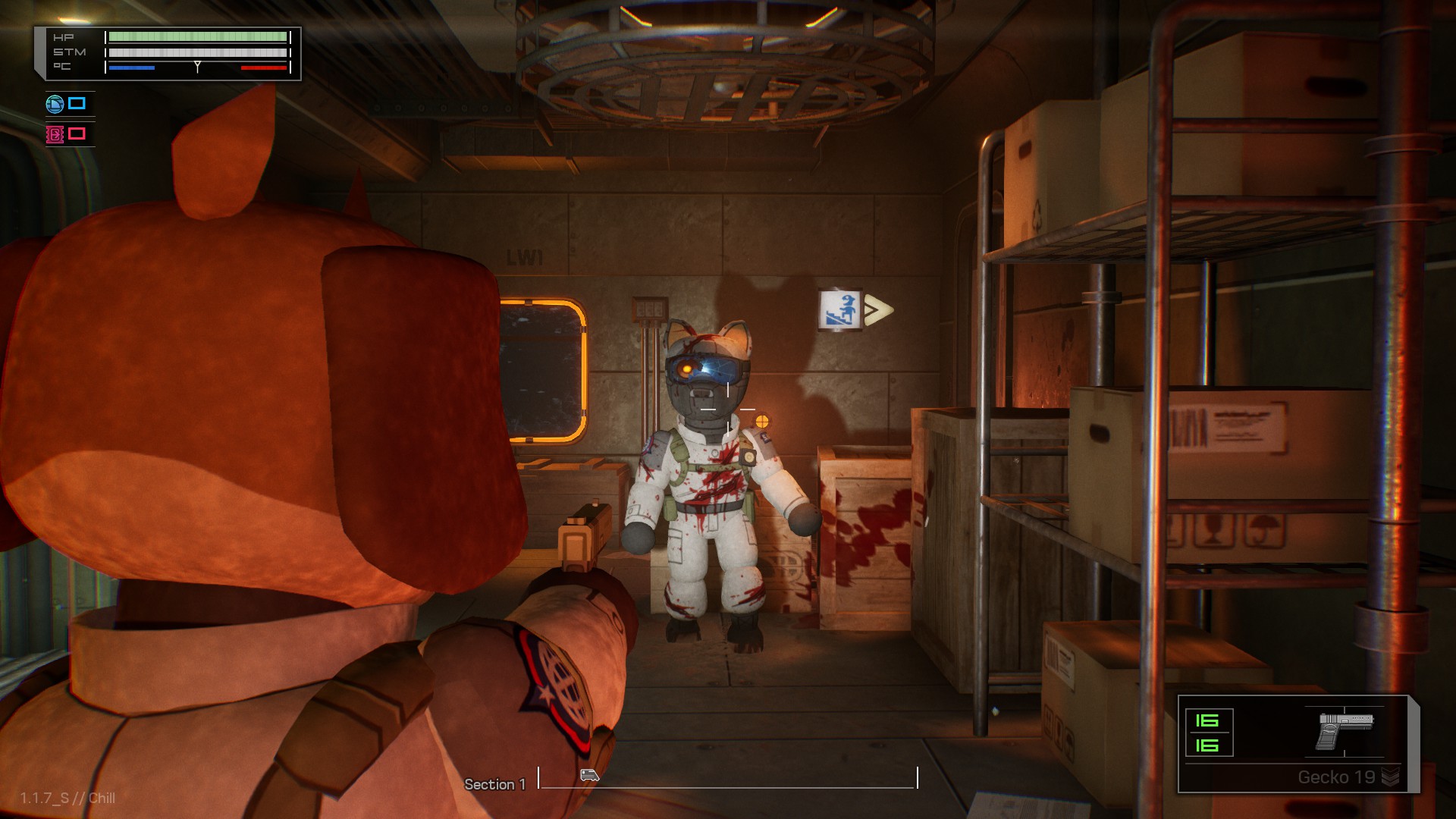
Given the world Fright Train plays in, we didn’t anticipate polished graphics. Yet once we stepped onto the train, we were humbled. Semi-realistic and oddly ‘cute’, Agent Doug and the freight train he conquers look clean and really good. Given the isolated location at nighttime, we wondered if the game would be too dark, but thanks to the soft lighting in the train cabins themselves, the game never struggles with visibility. Warm lighting emphasizes the cold setting outside, and creates just enough light to keep that claustrophobic feeling in the areas Agent Doug wanders through.
The enemies, the zombies, also look really good. The first enemies Agent Doug meets are these bear-like zombies, with weird masks on their faces. Shooting them a few times will take off the mask, allowing him to shoot the head and end the zombies’ suffering. The first time we did this, we were surprised to see the heads of these zombies properly blown off, creating a rather graphic visual for what would otherwise be a creepy kind of cuteness. As the game progresses and Agent Doug faces more opponents, the designs never falter. Whilst keeping a realistic edge, the game stays loyal to its art style and keeps everything coherent.
Sound
We have to be honest here. For a game that looks the way Fright Train does, we initially had low expectations in regard to the soundtrack. Never judge a book by its cover, as the music in this horror game really hit the spot, however. Featuring chilly and ominous background music, every level and boss fight kept us on edge throughout our playthrough. From simple eerie tunes to full-on chaotic, glitch-like beats, we never found ourselves wanting to turn off the volume in this game. Whilst silence in isolated locations could work as well, Fright Train managed to find a sound that works without interfering with the immersion of the setting it has to work in.
Another surprise was that everything is fully voice-acted. Cutscenes, as well as dialogue throughout levels, aren’t simply animal noises, but proper speech. Speaking of which, the voices used for each character feel very fitting. Agent Doug, who never smiles, sounds like a proper noir-movie persona, whereas Agent Widget has the voice of a stereotypical tech-geek. Not every line was delivered with conviction, but all in all, the voice actors did a solid job here.
Gameplay
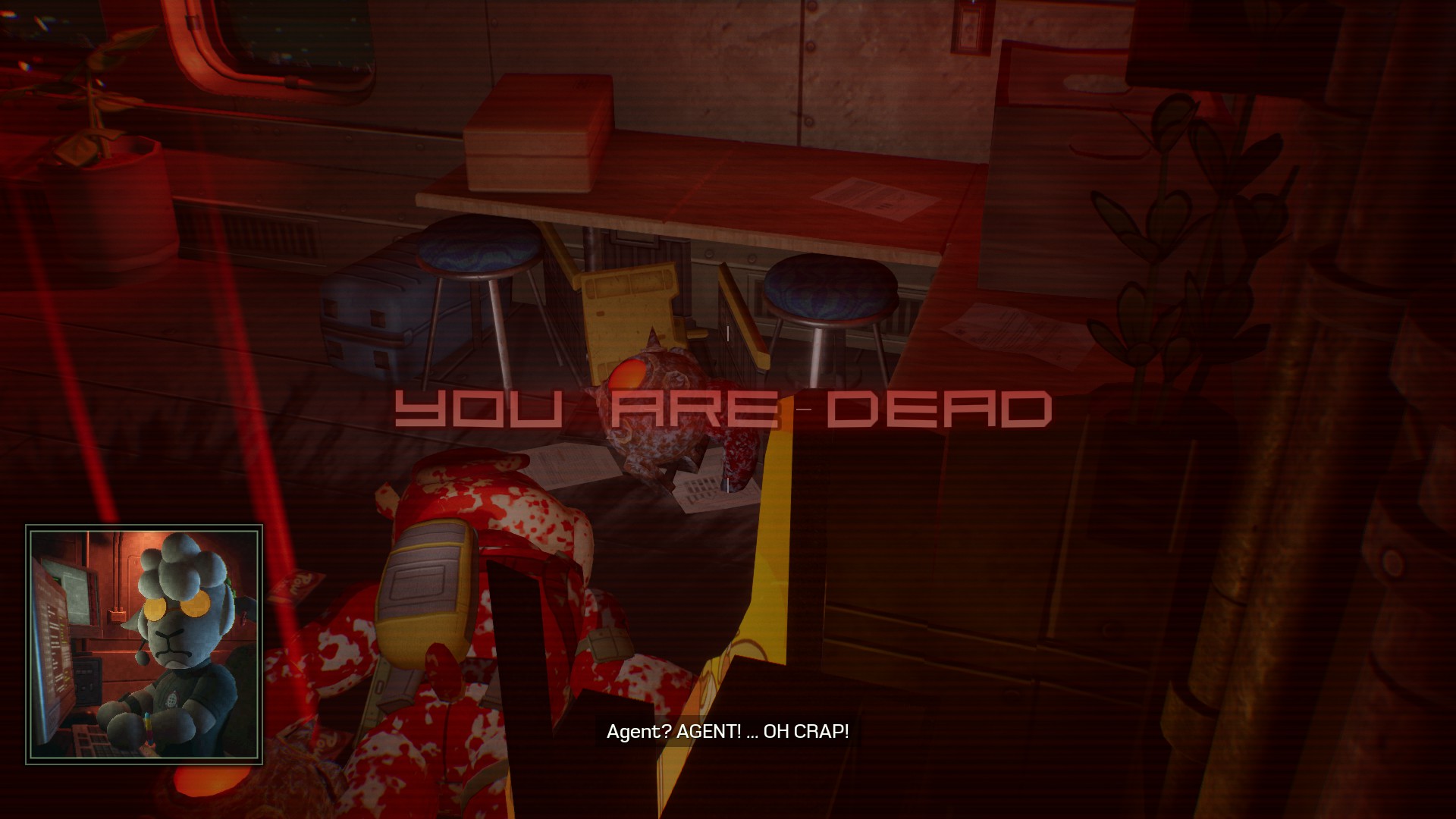
As mentioned earlier, Fright Train is a typical third-person shooter game, set in a survival horror theme. You’ll mainly be walking around train cabins, shooting whatever you come across, and proceeding to the next cabin.
Luckily, Fright Train manages to make these simple rules a tad less simple for us. Agent Doug can’t simply speedrun from cabin A to B. Instead, doors are locked, and he needs to spend credits to open them. This means that Doug has to shoot zombies, stomp on crates, or sell items he scavenged in order to acquire these credits. Though it sounds questionable as to why train cabins would be locked this way, in-game files explain why this is the case. These doors are also marked with numbers. The higher the number, the pricier they are to open, but there’s a chance of better loot behind it as well.
Aside from clearing cabins, there’s another aspect you need to keep an eye on, namely Doug’s temperature. Given he’s in the Antarctic, the train can get cold pretty quickly. By connecting to screens in each cabin, Doug can seal windows and prevent them from shattering and further lowering the temperatures inside the cabins. This is a sometimes tedious but necessary gimmick to keep both Doug and the train running. If Doug missed a window, chances are he has to go back later on to seal it; otherwise, he risks the train coming to a halt and setting free whatever is haunting the train.
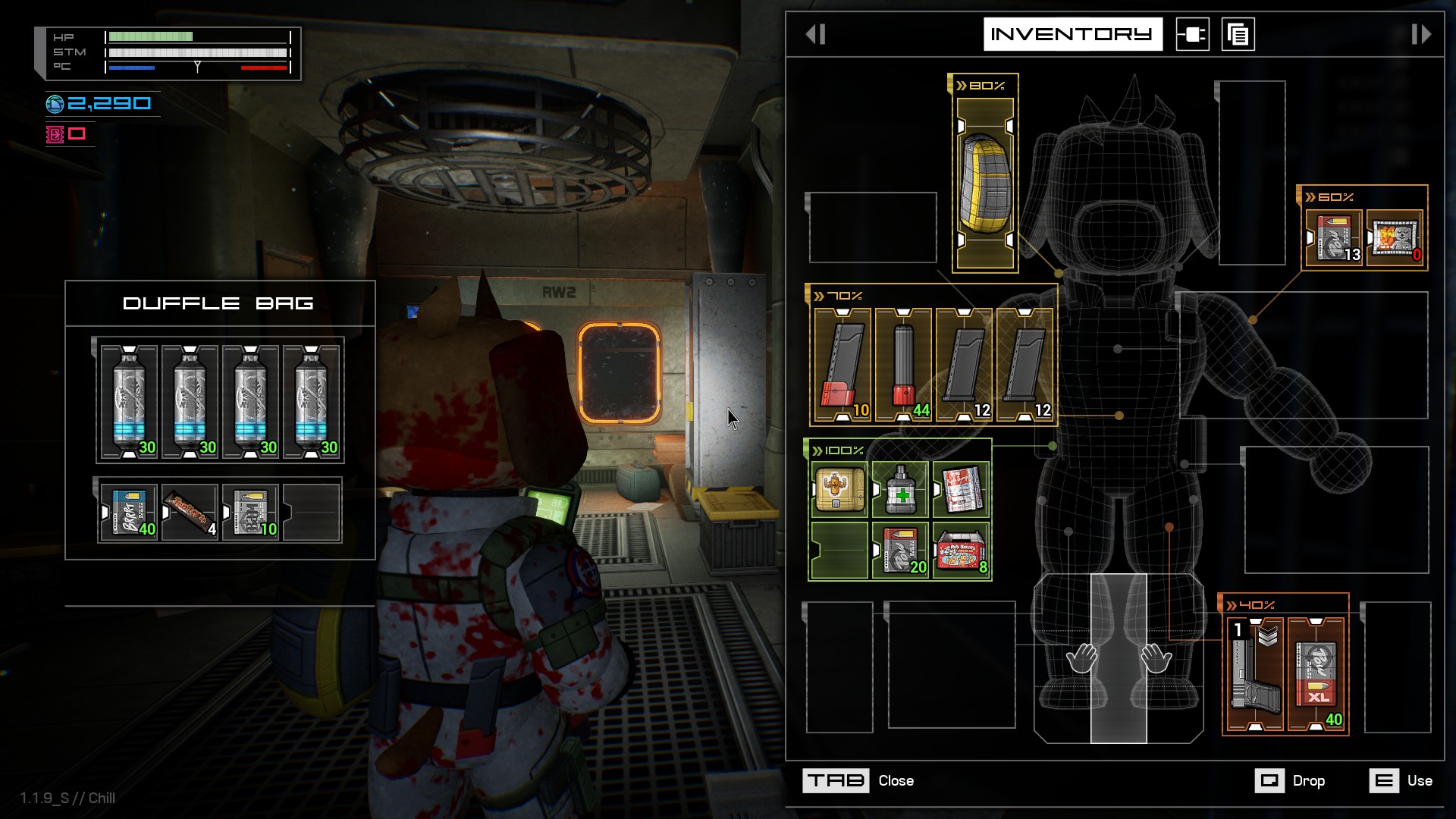
Now, onto the slightly annoying part of the game: inventory management. Agent Doug’s inventory works like a blueprint. Depending on where he stores what, some items are easier to reach, and thus will be used faster. Initially, he is recommended to store ammo as close to his hands as possible, but on longer playthroughs this becomes harder than you think. Though he can find a duffle bag now and then to store extra items, sorting everything out when zombies can randomly creep up on you isn’t easy. He could take his time, of course, but then there is the aforementioned window mechanic to pay attention to as well, leaving Doug often the choice of ‘running with it’ or sacrificing windows and risking temperature drops.
Conclusion
At the end of the day, Fright Train is a solid game for players who enjoy zombie shooters, or those who want to set a tiny foot into the horror genre. Often more gross than scary, Agent Doug and Agent Widget are sure to guide players through a decent four hours of gameplay with plenty of replayability to offer afterwards. The price may seem on the steeper side at first, but with a fully voice-acted and well-written story, we think it is more than justified to get Fright Train at full price.
Story
Dressmaker’s story takes place in an isolated setting: your newly set-up dress shop. Being the new face in town, you will attract curious customers who each have their own stories to share with you, as well as requests for a dress. These stories often intertwine, as clientele frequently come to you for the same social occasion. Once all customers have been dealt with, the ‘chapter’ finishes and a newspaper will indulge the player in how said event went on, as well as praise or critiques of the self-made dresses. By doing a good job, players will meet returning characters and grow their friendships with them, revealing more about who they are.
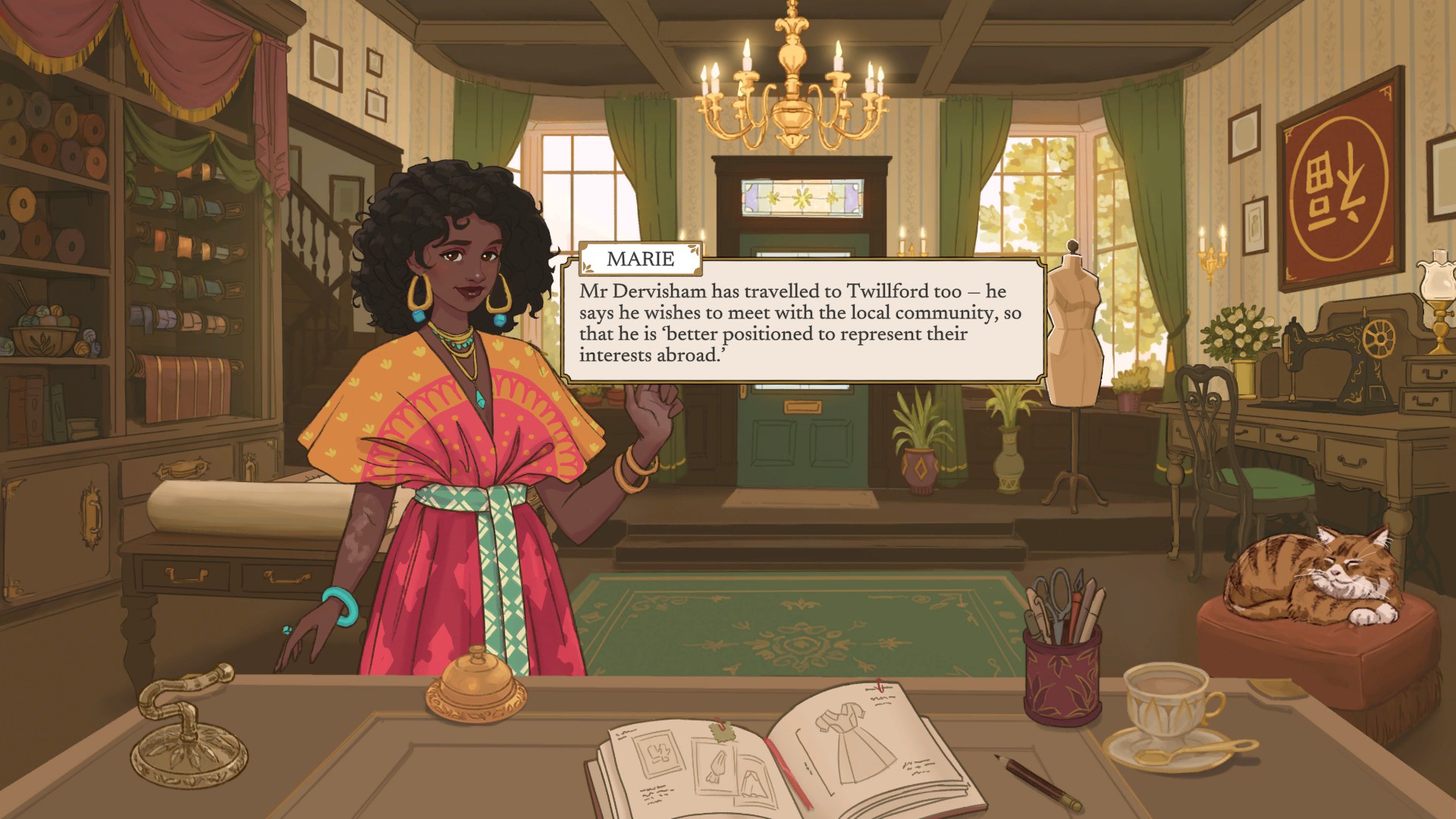
The story in this game is very welcome, considering we don’t ever leave our store. It creates this vibe of being outside in town, whilst staying seated in our atelier. The different customers and their antics are also funny, adding a good laugh to what otherwise would be a simplistic and perhaps monotonous game. The fact as well that customers sometimes may know of one another, or attend the same party, is an interesting way of storytelling. Though the dressmaker can be seen as a typical MC, the different POVs create plenty of ruckus, as well as some personality we would otherwise be lacking.
Graphics
Though mostly portrayed in an almost fairy-tale book-like style, Dressmaker has partially 2D and 3D assets. When we find ourselves in our atelier, everything looks cozy, gentle, and warm. Something we immediately noticed was how this game makes use of one particular color palette and really sticks to it. Greens and browns will take up most of your screen, unless a customer or fabric decides otherwise. This really leaves the player inside a protected safe space; that’s almost perfect to leave on as a wallpaper on your PC. Furthermore, we have a few interactive sprites in our atelier, like our little cat who is usually sleeping on a little plush seat beside our desk. Players can interact with them to change their pose, though this is mostly for immersion rather than utility.
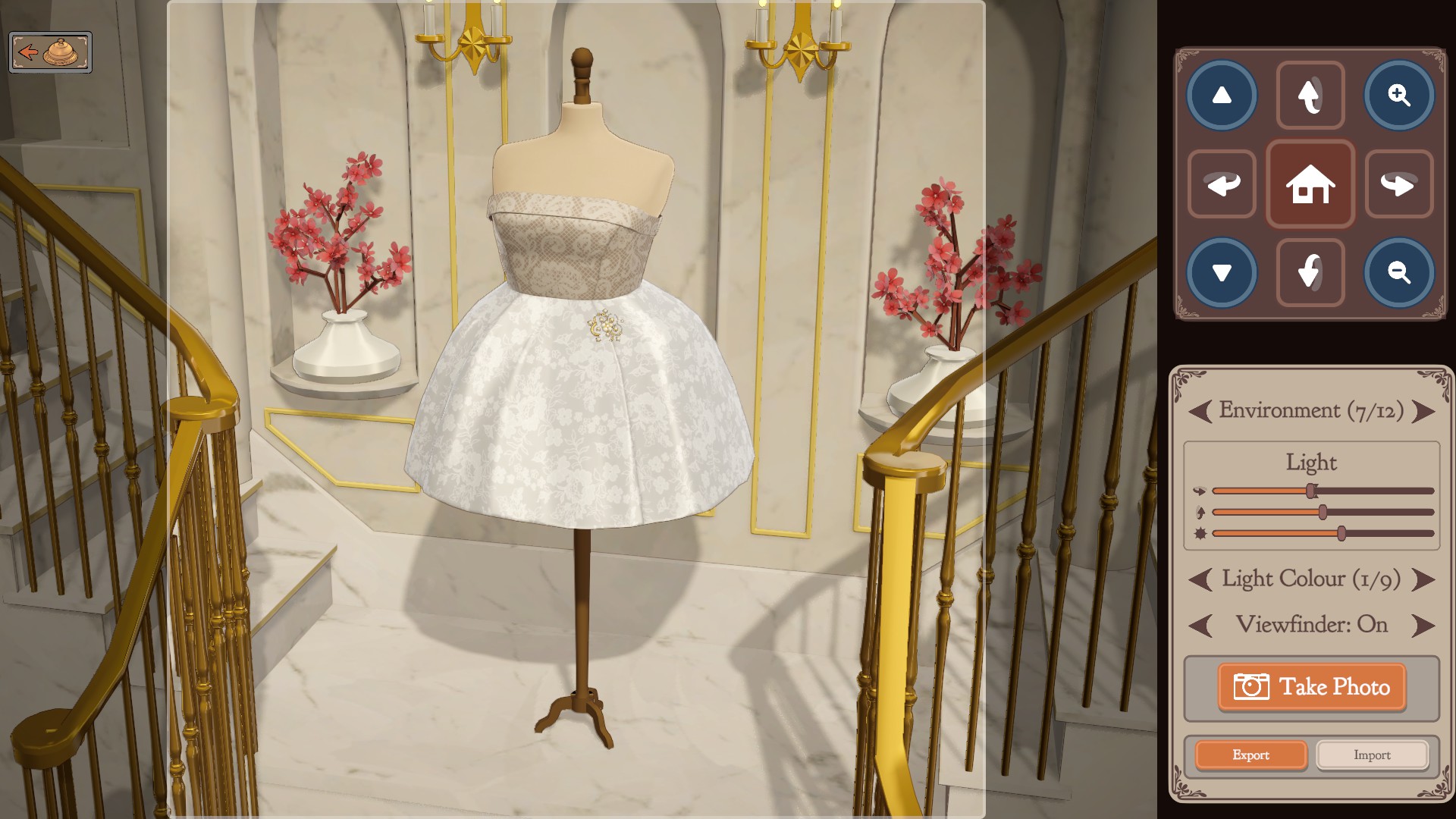
As for the 3D assets, these come into play when the actual dressmaking begins. All the fabrics, pencils, accessories, and tools are fully three-dimensional. Given how ‘flat’ the world of the game has been up until now, this can come as a surprise at first. Yet, because of how these assets are presented, they never feel out of place. A nice addition, for example, is that upon selecting fabrics for a dress, the game will wrinkle the cloth to showcase what it looks like when it isn’t just straight. The sewing mini-game is also fully 3D, even revealing the main character’s hand when trying to move your fabric. It makes everything feel realistic, which is more than welcome, considering the details Dressmaker has you go through to create your dress.
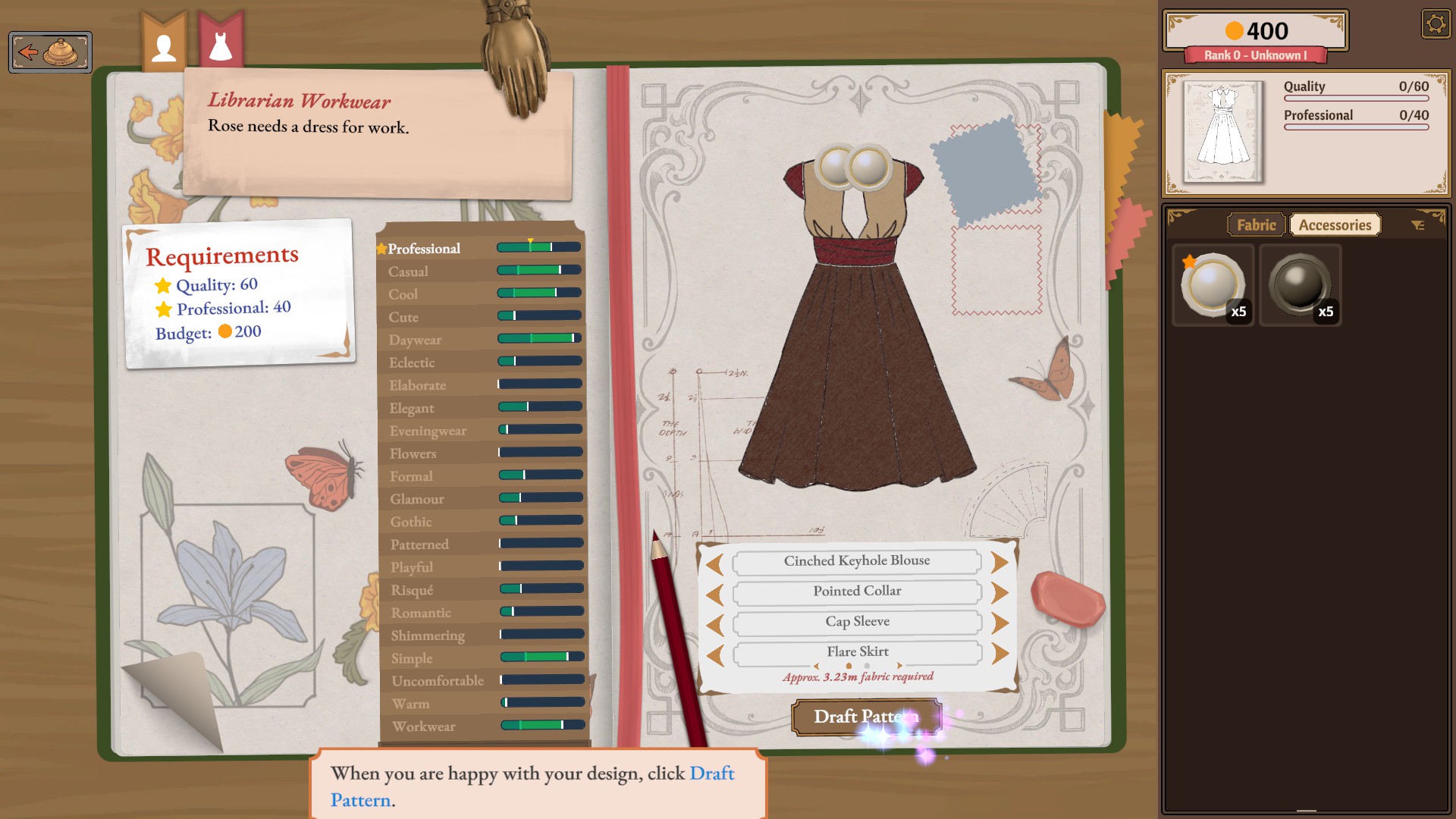
Lastly, the UI is very optimized whilst still keeping it stylized so as not to be plain. Sticking to the aforementioned color palette, everything seems in place. Text borders are usually in an almost decorated postcard style, with this historic font used for the actual text itself. When players are looking into their sketchbook, they can clearly see the requirements for the customer, as well as the general stats the dress is currently showcasing. All in all, Dressmaker is very readable, with rarely seeing something that is oddly out of place.
Sound
Featuring a soundtrack of barely 25 minutes, Dressmaker doesn’t offer a lot in regard to the sound department of the game. All piano tunes featured are both composed and produced by Meydän, who did an outstanding job regardless of the length of their work. The piano that plays throughout your entire gameplay is essentially simple background music, meant to emphasize the easygoing and simplistic flow of the game. It really serves its purpose well, though during long playthroughs, we can see how players could grow a bit tired of the music.
Aside from the soundtrack, the game features plenty of sounds that are implemented for gameplay purposes. Cutting fabrics, the sewing machine, even the cat on its little plush chair…All these tiny details make the game feel alive.
Gameplay
In a game called Dressmaker, it would feel almost silly to explain what the main goal is here. Yet, to our initial surprise, there is so much more to this game than simply making a dress. The game partially plays like a visual novel. The main character sits at their desk in the atelier and accepts customers who each have their own story and request for a dress.
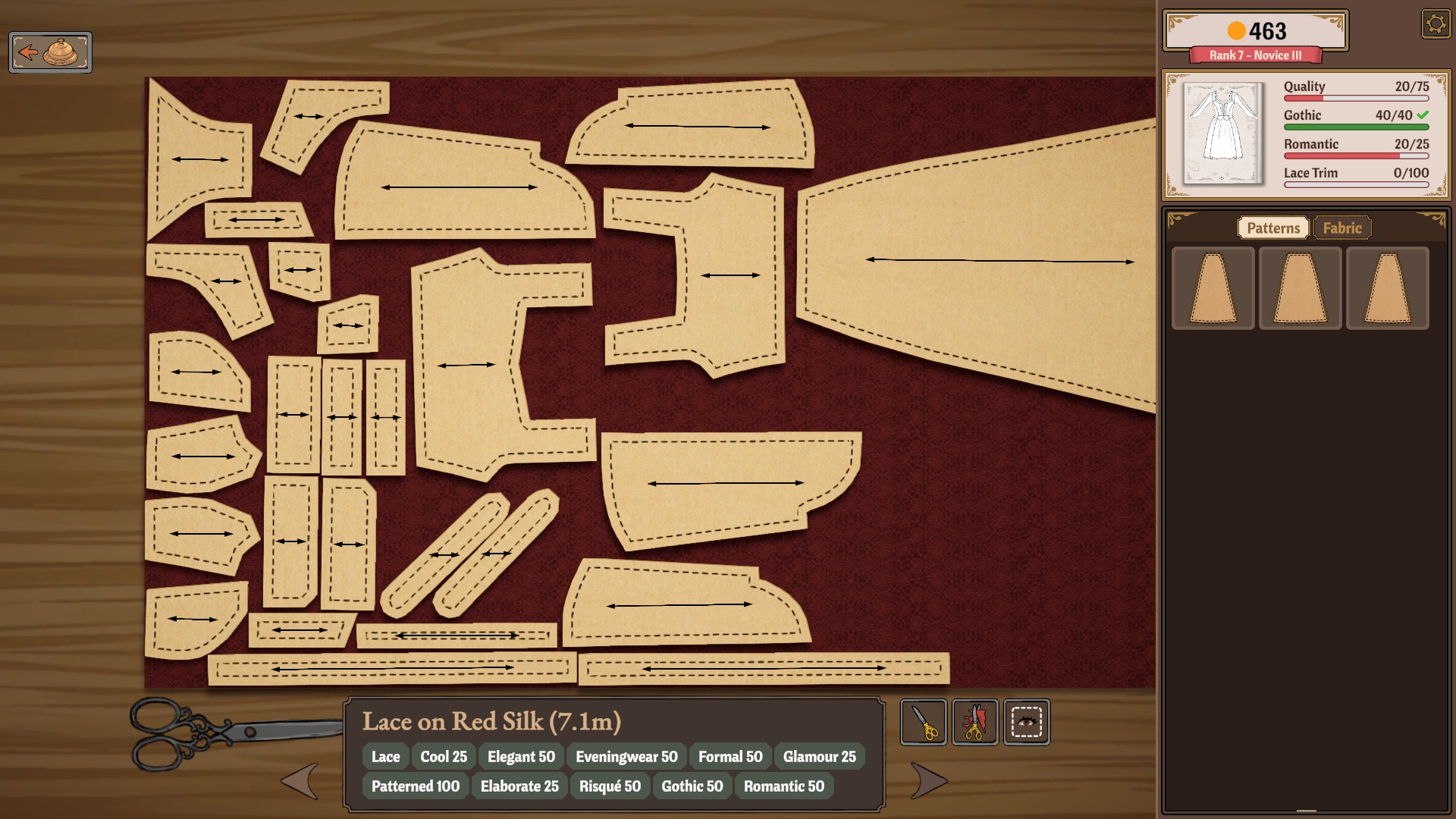
Once a request has been made, the real gameplay begins. Players get to start all the way from the beginning, rather than straight to the mannequin. Players measure the client’s sizes, draft the dress with pre-established options, and then purchase the fabric they want to use. Once those steps have been completed, they finally get to design the dress properly. By cutting out shapes in the fabric of choice, players get to puzzle around, fitting every piece to complete the dress. Each part has to be stitched carefully in order to raise the quality as well.
All these little steps can easily take more time than anticipated, making a simple idea into a wondrous game that offers far more than initially meets the eye. Furthermore, by fulfilling requests, players increase their friendships with customers, unlocking more design options for future dresses. Your store’s reputation can also increase, expanding the choice of fabrics and accessories to use. One thing we noticed on longer playthroughs was that the sewing-machine minigame can become rather tedious. Needing to sew even the smallest stitch can make relaxing moments feel bothersome or annoying.
Conclusion
All in all, we feel the online hype for Dressmaker is more than justified. Though many dress-up games exist, none follow through with the details as Cozy Lives’ game does. From gothic dresses to full-on Victorian princess gowns, the options are endless, as long as your till allows it. We definitely recommend this game for players who wish to do something creative or are looking for the next cozy game to boot up.
]]>
Story
The narrative premise of Mad Metal paints a bleak picture, depicting a post-apocalyptic future where AI corporations are in control. Sentient vehicles roam the desolate wasteland, hunting for the remnants of humanity so that they can be fused with cars. Mad Metal’s story revolves around a desperate search and rescue: your very own daughter was abducted by one of these nefarious machines. To make matters worse, your wife has gone missing as well, after tailing the abductor in her own vehicle. Accompanied by a sarcastic giant metal eye, you set out to find your missing family. The premise of Mad Metal’s campaign has plenty of potential, both for delivering a heartfelt family story and for scathing satire lampooning the rise of AI, but the game fumbles the ball here. The writing comes across as uninspired and derivative. The story seems to be missing an original twist and a distinct personality to really set itself apart, though this might’ve been different in the game’s final act. We wouldn’t be able to tell you though, because game-breaking bugs discouraged us from sitting out this ride until the end. (Ooh. Foreshadowing.)
Graphics
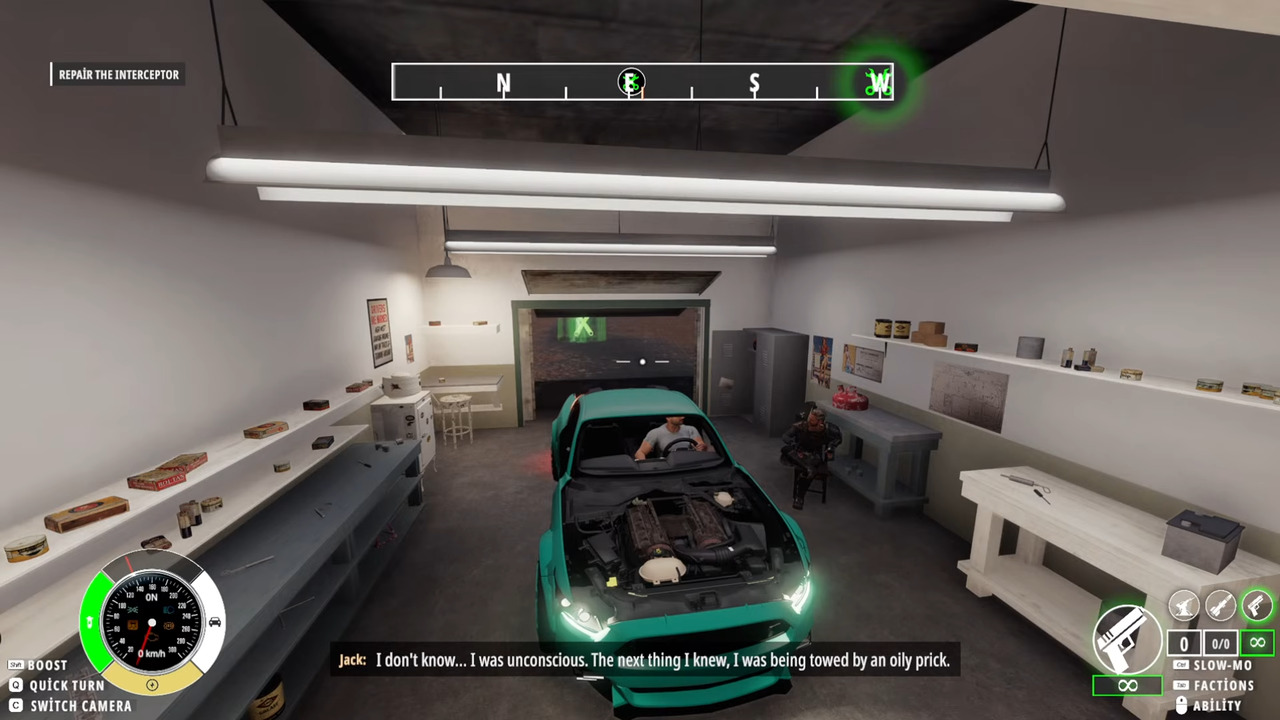
With a title like Mad Metal, it’s unsurprising that the game’s art direction borrows heavily from both Mad Max and Twisted Metal. The game features an 80s-inspired post-apocalyptic wasteland aesthetic built around rust, wreckage, and ruined landscapes. The different car models are the high point here. Based on different vehicle styles, ranging from muscle cars and ATVs to camper vans, these enemy cars move and lurch like hostile animals rather than simple machines. Environments mostly consist of open wastelands filled with hills, shrubbery and patches of woodlands, though Mad Metal introduces some variety here with the occasional tight, claustrophobic cityscape that contrasts nicely with the barren wilderness. Mad Metal’s graphics could’ve done with a little more polish though. Clipping is common and the camera sometimes acts as if it’s got a life of its own. Visual performance isn’t quite up to snuff either, with the game’s frame rate often tanking, especially during intense action segments.
Sound
If anything, Mad Metal’s music made us appreciate Turbo Kid’s soundtrack all the more. Instead of Le Matos’ brilliant synthwave tunes, which would’ve been perfect for the setting, what you’re getting here in terms of music is utterly forgettable. It tries to emulate the 80s vibe but comes across as bland and generic. The game’s narrative campaign features voice acting, but the lackluster performances fail to inject some much-needed energy into the uninspired story. The sound effects are the saving grace of Mad Metal’s soundscape, with the firing of machine guns, lead splattering, and explosions adding at least some depth.
Gameplay
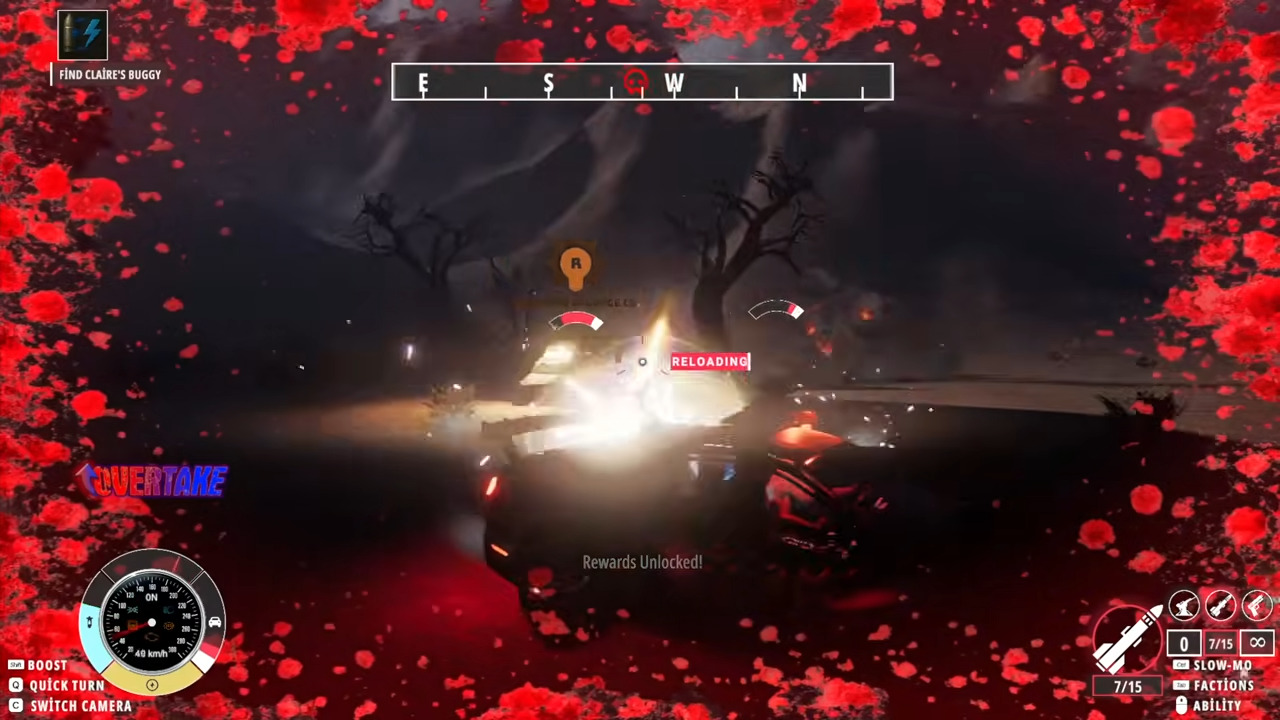
The core loop of Mad Metal is built on three pillars: combat, movement and customisation. The campaign sends you across different environments where hostile vehicles await. You participate in head-on, arena-style vehicular combat using guns, rockets and flamethrowers. Combat mostly feels like you’re jousting, due to front-facing aiming restrictions, though there is a dedicated 180-degree turn command at your disposal. A slow-time button allows more accurate aiming during firefights, though the damage output of your handgun is too limited to feel useful. Your car is also equipped with a “jump” mechanic that allows you to launch it upwards for evasive manoeuvres, with the caveat that using it leaves you vulnerable upon landing. Defeating enemies earns scrap and raises your level, allowing you to acquire and install different mods for your own car.
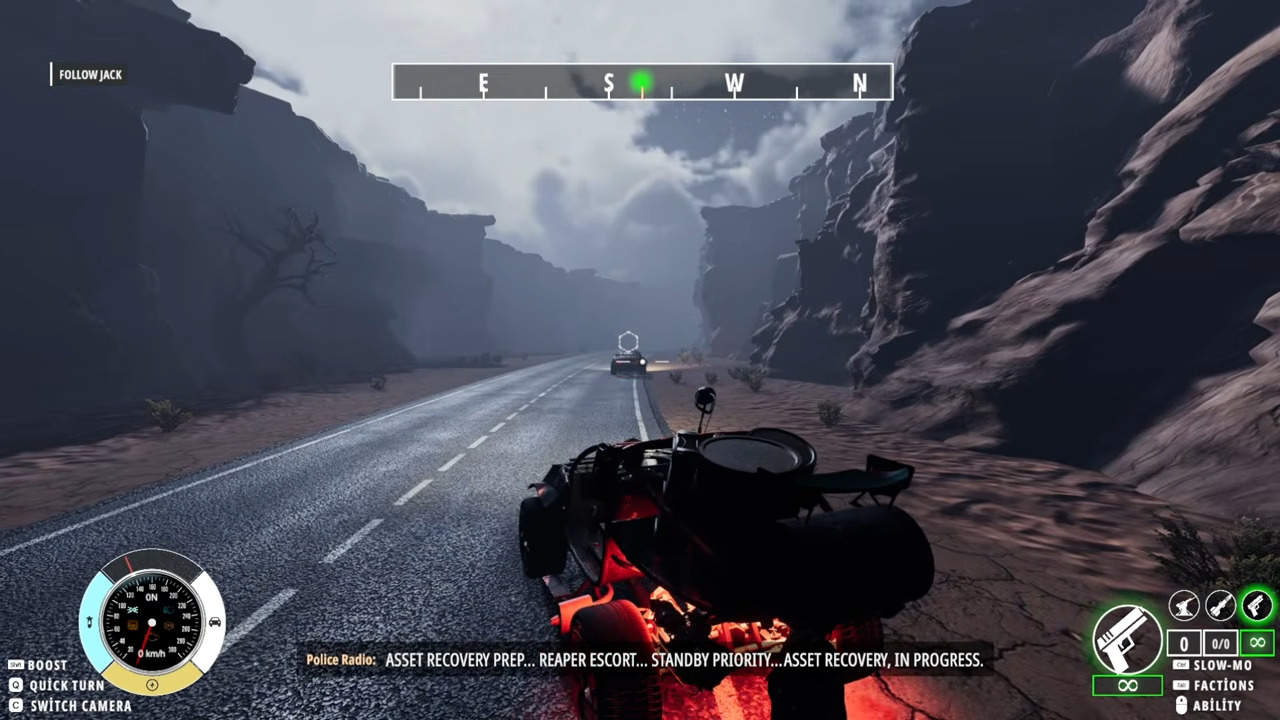
We’d hesitate to call Mad Metal’s gameplay simplistic, as there is more depth here than you’d expect, but it is still very straightforward. Ideally, this should translate into a control scheme that complements the gameplay, but this isn’t the case here. Driving your vehicle is outright uncomfortable, with slow, inaccurate, and outright unresponsive controls, regardless of whether you’re playing with a controller or a mouse and keyboard. Handgun combat and front-facing weapon aiming while you are driving is particularly frustrating to manage. The small arena spaces being so restrictive doesn’t help either, making it difficult to build momentum without crashing or flipping your car.
As if the erratic control scheme wasn’t enough, Mad Metal is also plagued by bugs. During our time with the game, we experienced being randomly pulled into new arenas mid-fight, getting trapped in loops and the game even erratically switching between selected game modes. This completely killed our enthusiasm for the game, and we didn’t even bother exploring the options beyond the main campaign, which supposedly include both co-op and PVP deathmatch modes. As fun as Mad Metal sounds in theory, the game really needs to fix some fundamental flaws before we’d even consider recommending it. Keep your €13.99 in your pocket while waiting for bug fixes.
Conclusion
Even though Mad Metal came across as derivative from the get-go, we saw some potential in its concept of chaotic vehicular combat and 80s-style post-apocalyptic wasteland setting. However, the game turned out to be heavily hindered by severe technical flaws. While Mad Metal undeniably possesses a fun underlying core, its current buggy state and uninspired presentation make this a title an easy skip.
]]>
Story
As always, Dynasty Warriors is pretty much about the Romance of the Three Kingdoms, where the Wu, Wei, and Shu factions duke it out until only one is left standing. You can choose a scenario to play through, and you’ll get treated to quite a few short cinematics that help with the story setup. As the Complete Edition also includes the Xtreme Legends content, you’ll also be able to play character-specific storylines, which add a bit of additional story content to the mix. Truth be told, while the narrative is interesting enough to keep you entertained, we reckon most players here will care more about the actual gameplay than the stories that unfold.
Graphics
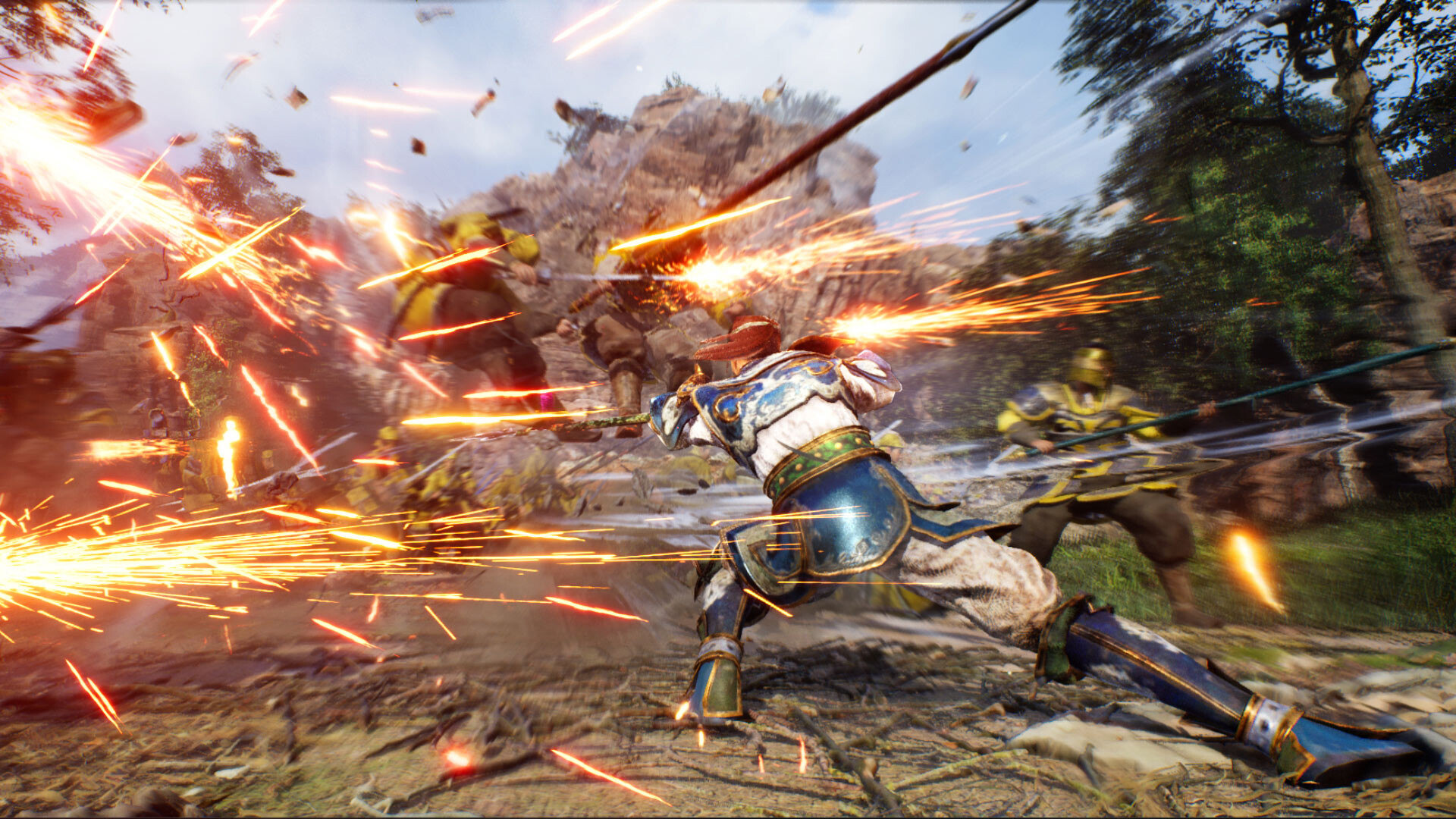
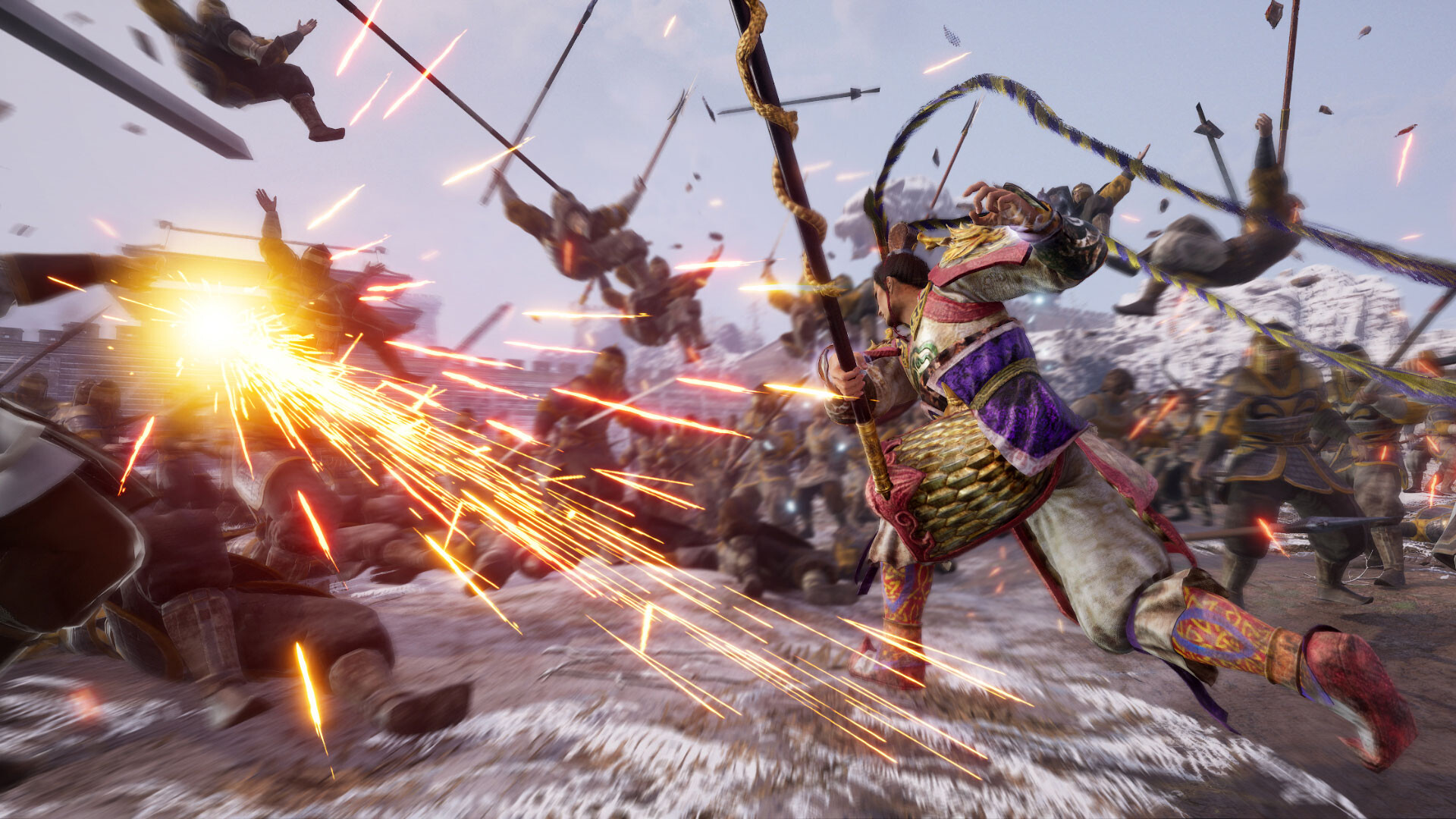
Dynasty Warriors 3: Complete Edition Remastered has not just received a new lick of paint; it has pretty much been remade from the ground up. The game has never looked better and actually looks a lot more like a modern iteration of the series. Of course, there are some beauty flaws here and there, which often have to do with the original stage designs and other limitations. Even so, we loved how everything looked; the characters looked amazing, and we did appreciate that the developers kept quite a few of the original outfits intact as well. Performance was buttery smooth on our PlayStation 5, and with modern technology, more enemies were able to spawn compared to the original on PlayStation 5. Things didn’t get as hectic as a lot of other modern iterations of Dynasty Warriors, however.
Sound
For the most part, the sound design of Dynasty Warriors 3: Complete Edition Remastered is identical to that of the PS2 release back in 2001. You’ll be treated to rather catchy and upbeat rock music during the battles, and the extremely cheesy English dialogue remains untouched. We actually loved the overall soundscape back then, and we still love it today. The battle grunts have received a small update by mixing in some more modern grunts from more recent Dynasty Warriors entries.
Gameplay
Dynasty Warriors 3: Complete Edition Remastered is the remastered version of Dynasty Warriors 3, which was released 25 years ago. This installment of Dynasty Warriors is widely considered one of the franchise’s better ‘classics,’ and many fans hoped it would get a second lease on life. This remastered version still offers the iconic 1 vs 1000 experience we have come to know and love from the series. You basically pick a mode, the character you wish to play with, and you’re good to go. This updated version of Dynasty Warriors 3 doesn’t come with too many bells and whistles, and you’ll just be able to enjoy the updated visuals with minor gameplay tweaks here and there.
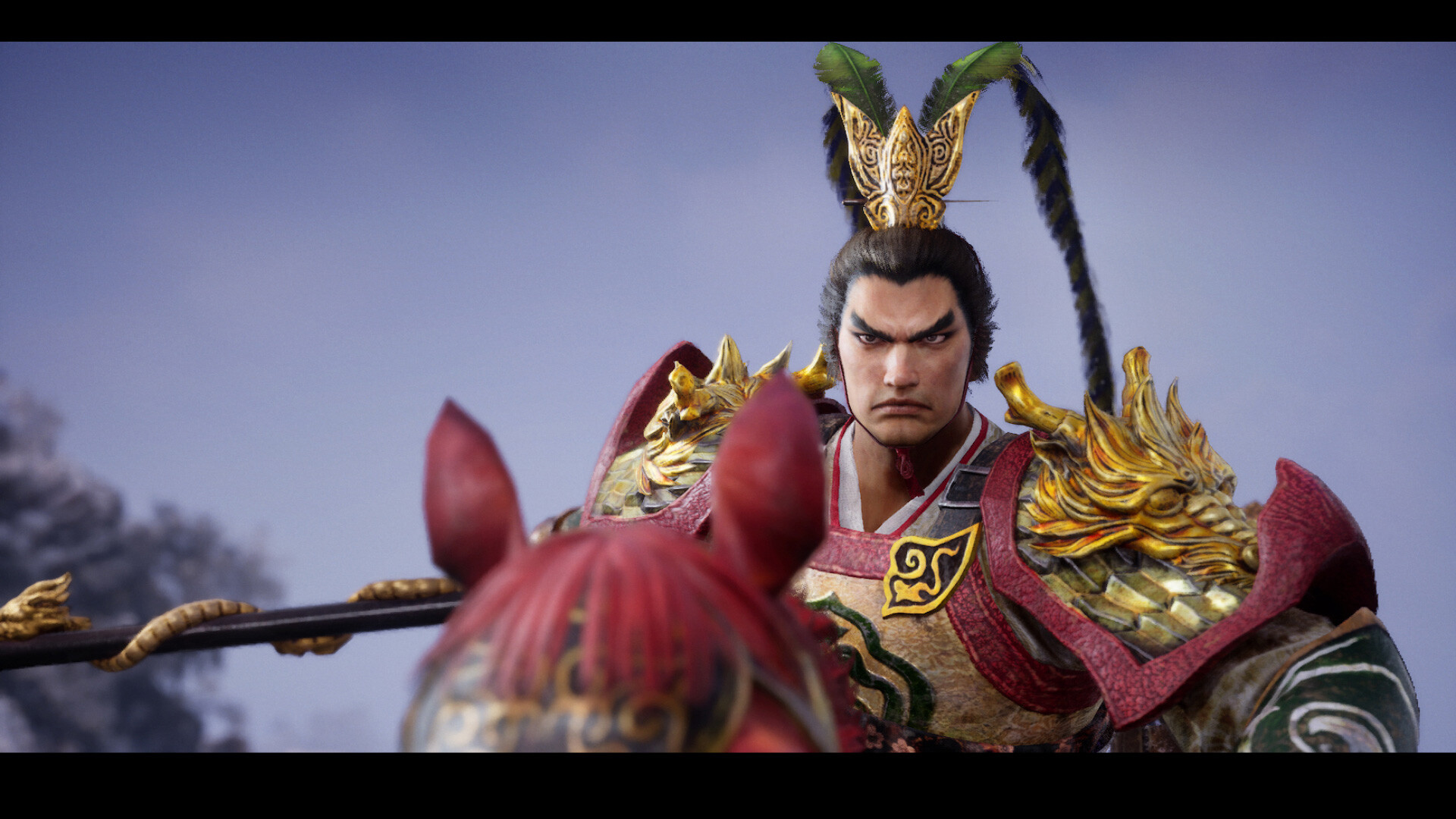
Truth be told, outside of the modes which offer different scenarios and minor gameplay variations, Dynasty Warriors 3: Complete Edition Remastered feels like a modern release, albeit with some of the old gameplay mechanics intact. These tried-and-true mechanics have been polished a bit more to give the game a more modern feel. Even so, everything here is straightforward: you just kill enemies, the battlefield keeps evolving no matter where you are on the map, you can choose different bodyguards, and so on. There’s nothing really too complex here, and this is one of those Dynasty Warriors games that’s really accessible for newcomers as well. The remastered version does introduce the option to fuse weapons in the camp menu, and you’ll also be able to perform complex evades and guards that give you an advantage against stronger opponents.
While we absolutely had a blast with this ‘rerelease’, we did notice that a few of the original design flaws irked us quite a bit at times. Getting absolutely stunlocked is still an issue in the game, where enemies can basically play a balancing act with your ragdolled body until they are interrupted or until you die. This was also a huge issue when playing the game in Versus mode with a friend, where our NPC allies would just juggle a player for long periods of time, allowing the opposing player to wipe the floor with them. Ranged weapons are still kind of overpowered, but this still didn’t bother us as much as the stunlock issue.
Conclusion
Dynasty Warriors 3: Complete Edition Remastered is a great addition to the library of genre and franchise enthusiasts who want a slightly more straightforward Dynasty Warriors experience. Meaningful upgrades have been made to give this classic a second lease on life, not only making it look better but also play better than the original while still keeping the core experience intact. We hope in the future that other entries in the series will also get a remastered version, allowing newer fans of the franchise to experience these classics for themselves.
]]>
Story
In Meat Grinder, the main character is starting over in a new town by opening a hot dog restaurant. It’s clear from the start that he has his own demons haunting him, though as the game begins, these are still a big mystery. The more concerning thing you learn right away is that the previous owner of the restaurant went missing. The town you play in seems overall rather strange, with weirdly acting customers, not to mention the creepy guy who breaks into your bedroom at night to tell you that you can visit the graveyard for extra meat. Whether you take him up on this offer or not is up to you, but this short story always seems to end in the same way regardless of your choices, or how well you do at the ‘running a restaurant’ portion of the game.
Graphics
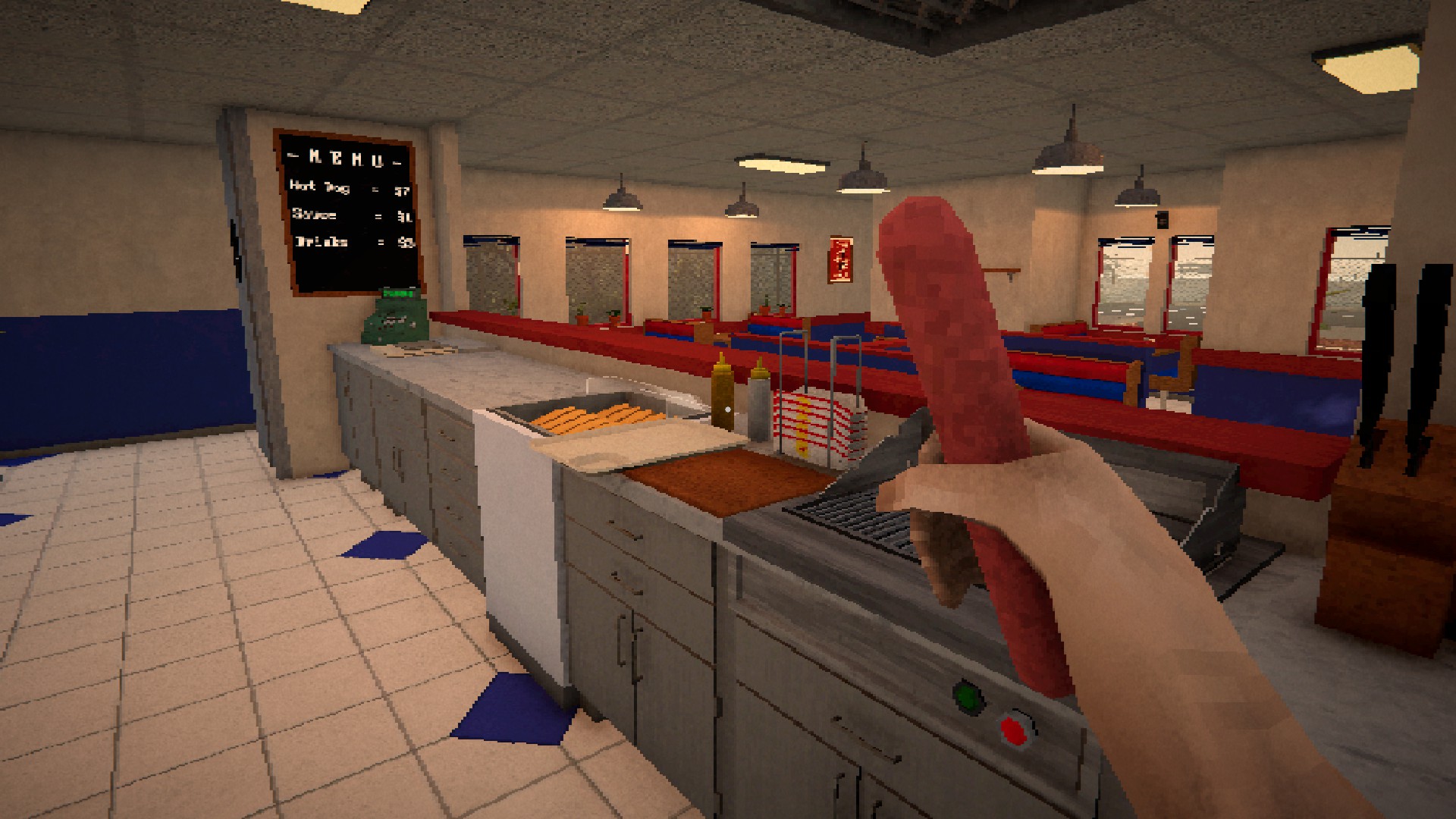
Meat Grinder has that chunky retro visual look that we don’t need to tell you is popular within the horror genre right now. We think it serves the atmosphere of the game well, straddling the line between scary and a bit goofy. But since Meat Grinder doesn’t take itself too seriously and pokes fun at its own premise, it works. The game contains a surprising amount of blood and gore, though of a cartoony quality. If you have a particularly weak stomach, you might be made queasy. Overall, the aesthetic wasn’t bad, and the surroundings managed to be visually creepy at times.
Sound
Sadly, we can’t say the same for the sound design. Music was notably absent in the game, and when there was music, it was overly loud and randomly discordant rather than scary. We played most of the time in complete silence, with some sound effects here and there that weren’t bad, but just kind of lackluster. While it did make the game feel even weirder than it already was, maybe that was the devs’ intention, it didn’t entirely work for us.
Gameplay
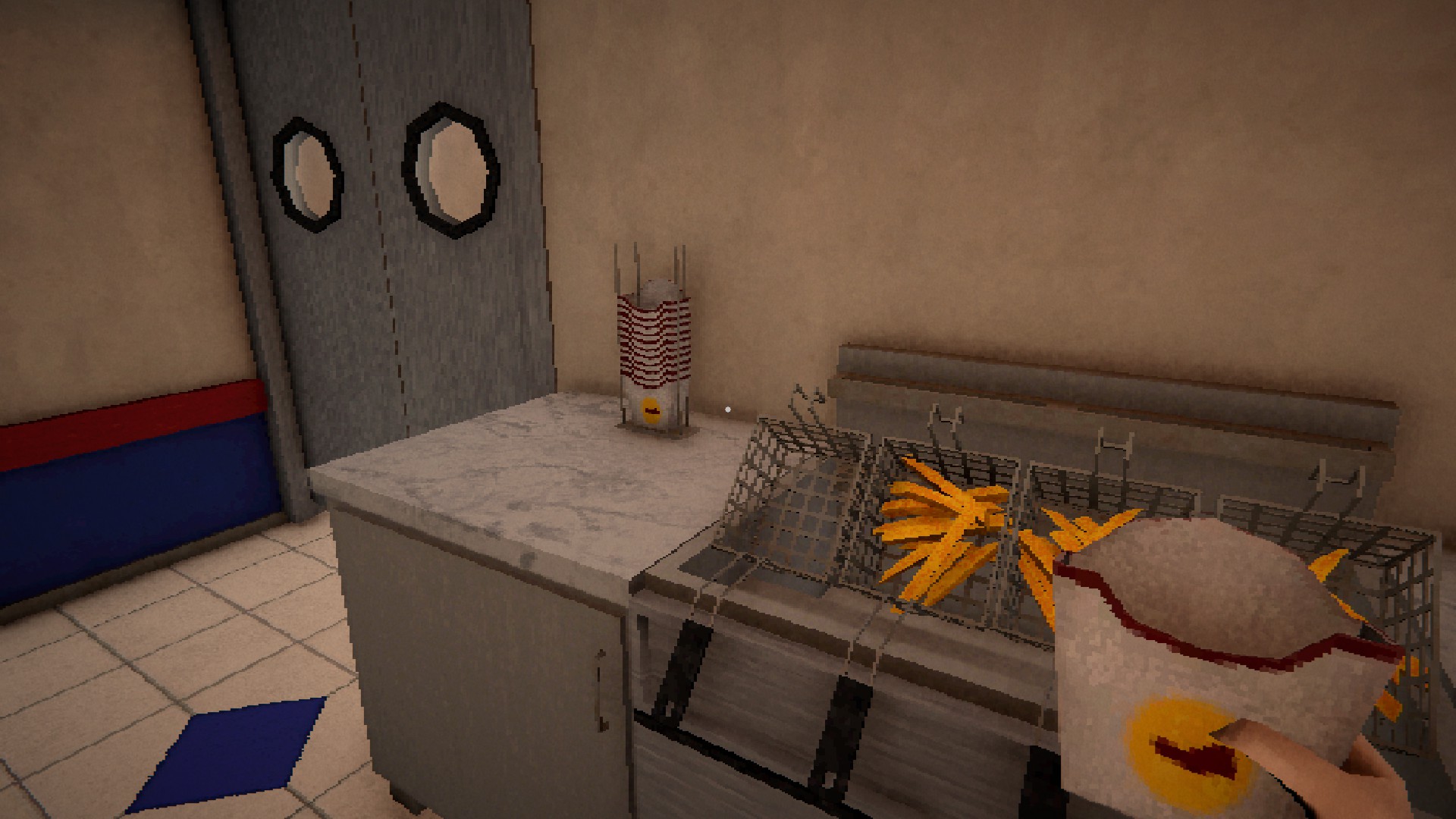
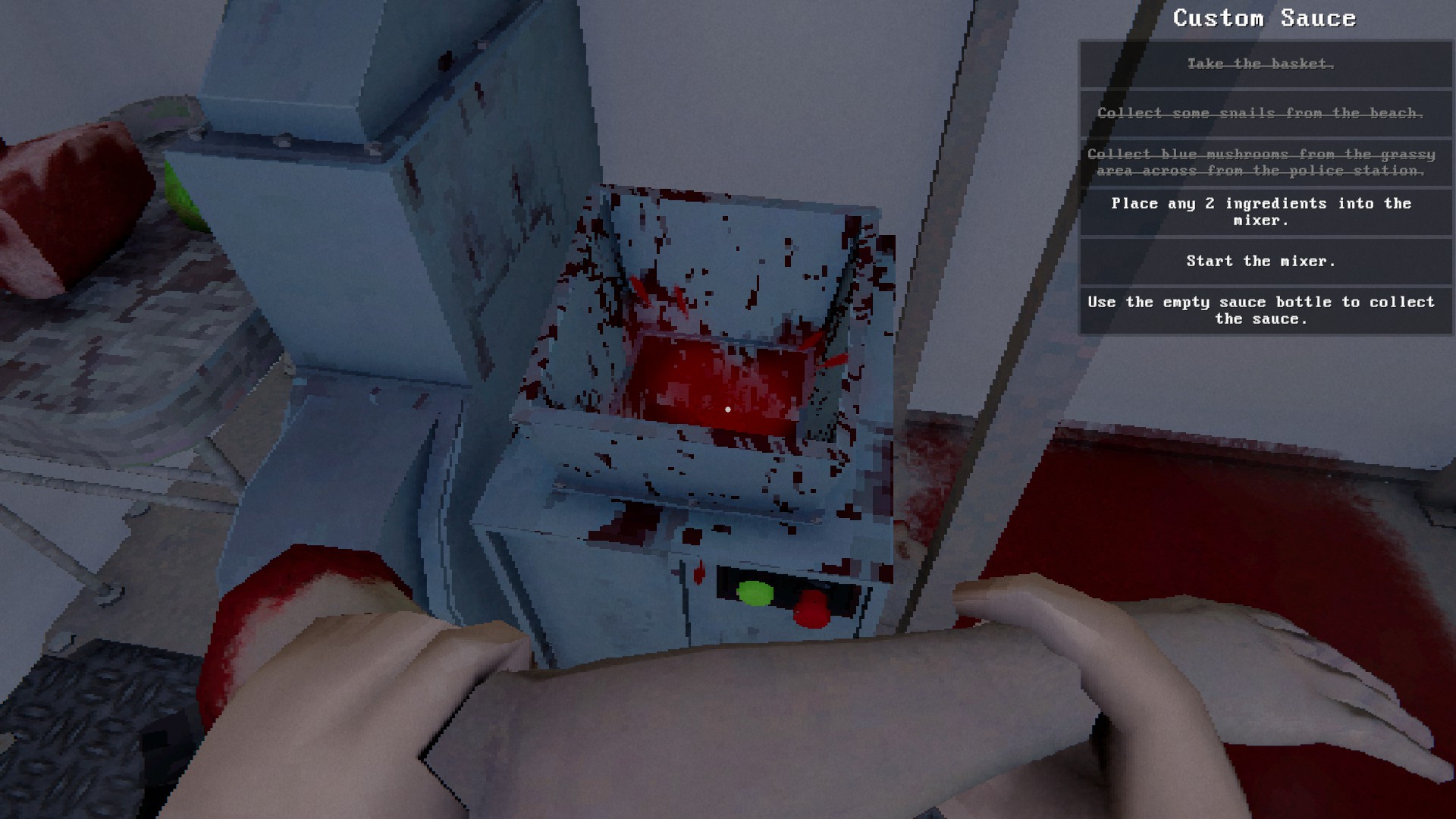
Meat Grinder is a horror adventure game that you can divide up into two separate gameplay sections: the ones that take place during the day and the ones that take place during the night. When the sun is out, you run your hot dog restaurant, turning the game into a pretty mundane job simulator with some scares. You get meat from your freezer, grind it up into sausages, cook them on the grill, and prepare drinks or fries. Customers come in and order their meals, which you then have to serve on a tray. You need to multitask to keep the restaurant clean at the same time, since people love throwing their trash all over the place. You also need to keep an eye on your supplies and order more if needed, since you can easily run out of things if you’re not careful. If you do a poor job at it, customers will not pay you properly, which in turn makes it hard to afford those before mentioned supplies and also the upgrades you can unlock. Since the upgrades make your life significantly easier, they’re a huge asset later in the game.
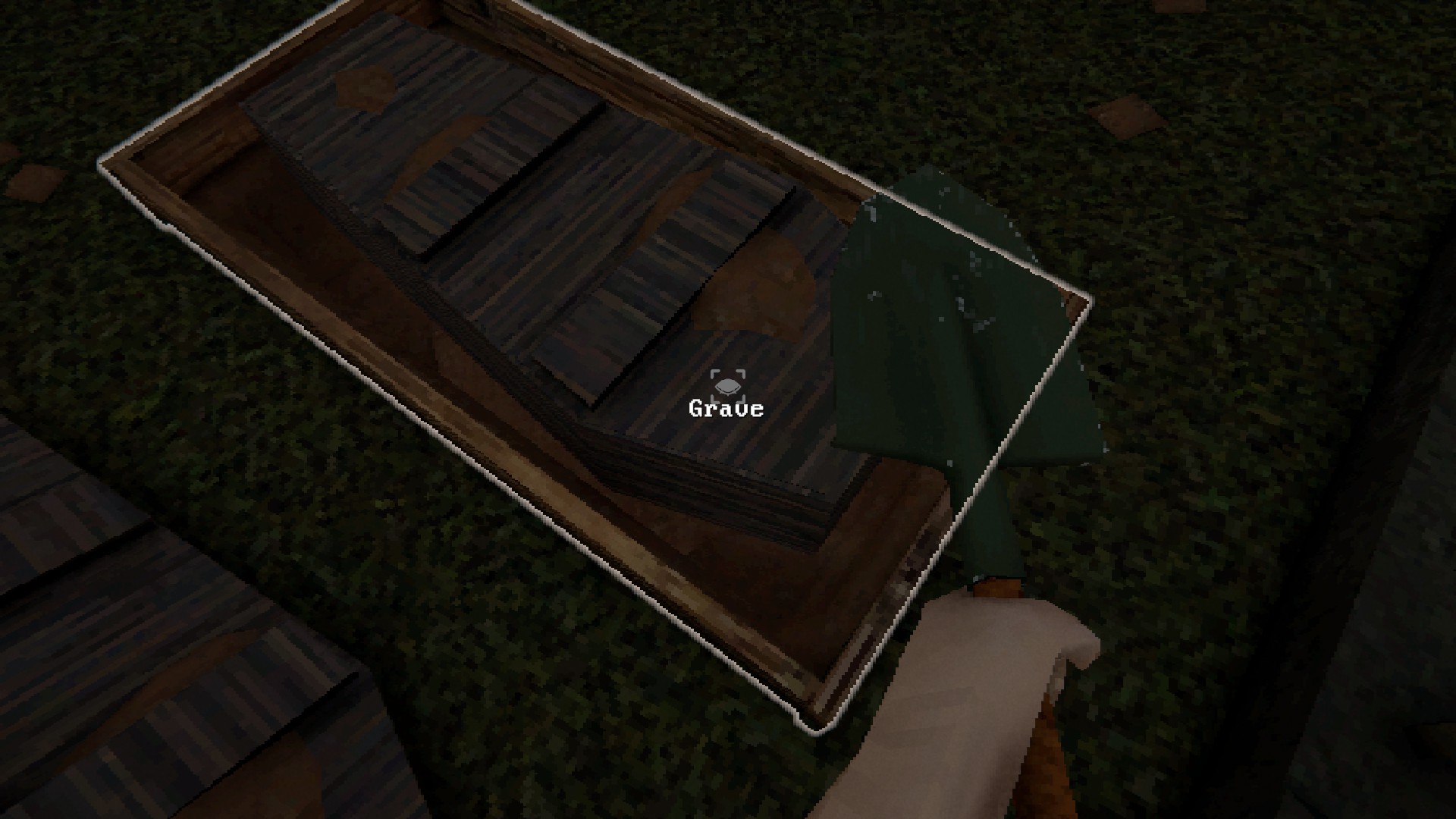
When night falls, however, things get unsettling. Meat is extremely expensive to purchase, so a much better way to get some is to head down to the local graveyard and dig up a body to take home. The body can then be cut up into pieces and turned into sausages. This is quick and completely free, though it comes with the risk of the cops catching you. This part of the gameplay is essentially a stealth section, where you need to get to the graveyard, dig up a body, and return to your restaurant, all while avoiding the roaming cop who will arrest you if they see you. However, in all honesty, this segment is so ridiculously easy that the sense of tension drained from it pretty quickly, and the one time we allowed ourselves to be caught by the cop on purpose, there weren’t even any consequences. They just take the corpse back to the graveyard, thus ruining your chance of getting meat that night, but we don’t have to go on trial for grave robbing.
Overall, both segments are enjoyable on their own, and the main factor that keeps the game interesting is atmosphere, which is good, and the jump scares. Not too few, not too many. Once you beat the rather short story segment, you can keep playing the game in a sort of endless mode to get all the achievements or just for fun.
Conclusion
Meat Grinder is a perfectly fine entry in the now long list of horror games that incorporate job simulator elements. We thought the controls and overall vibes were excellent, and that’s more than you can say for some other games in this genre. But the very short story still made us feel like there could have been more to this game than what we got. The devs are already working on a prequel though, so maybe they’ll surprise us.
]]>
Story
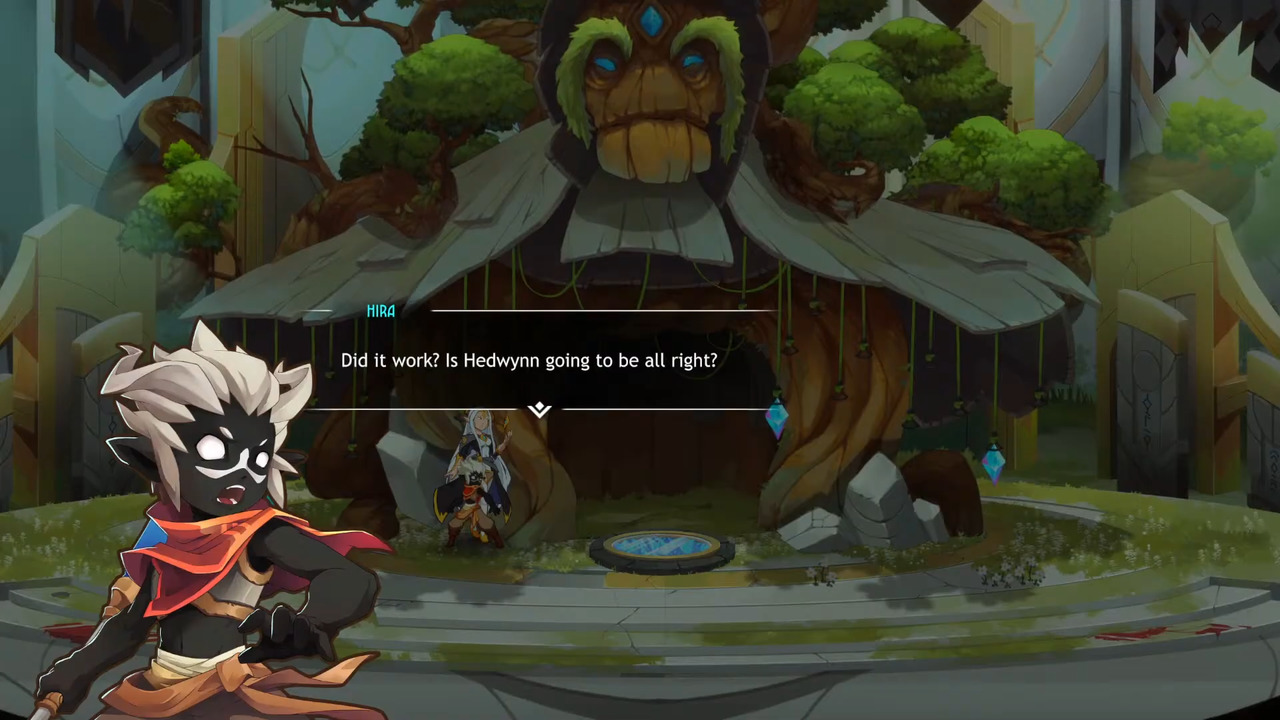
The overarching narrative of Fallen Tear sticks to familiar tropes, but it serves its purpose well. You take on the role of Hira, a young boy raised in a quiet village. There is more to him than meets the eye, as dark powers are dormant inside him. When demonic monsters destroy Hira’s hometown, his mother entrusts our hero with a mysterious artefact that can reactivate ancient technology. Hira must travel across the land of Raoah to cleanse the corruption caused by the elemental Gods themselves. The main plot of Fallen Tear takes a backseat to the action, with the game’s narrative strength lying in its cast. The world of Raoah feels alive thanks to the eclectic cast of characters Hira meets along the way. The game’s writing puts a heavy emphasis on character relationships. Rather than acting as simple exposition dumps, your allies have genuine arcs that form the emotional core of Hira’s adventure. You can dig even further into Fallen Tear’s lore if you want as there are 50 hidden ancient texts scattered across Raoah that add depth to the setting.
Graphics
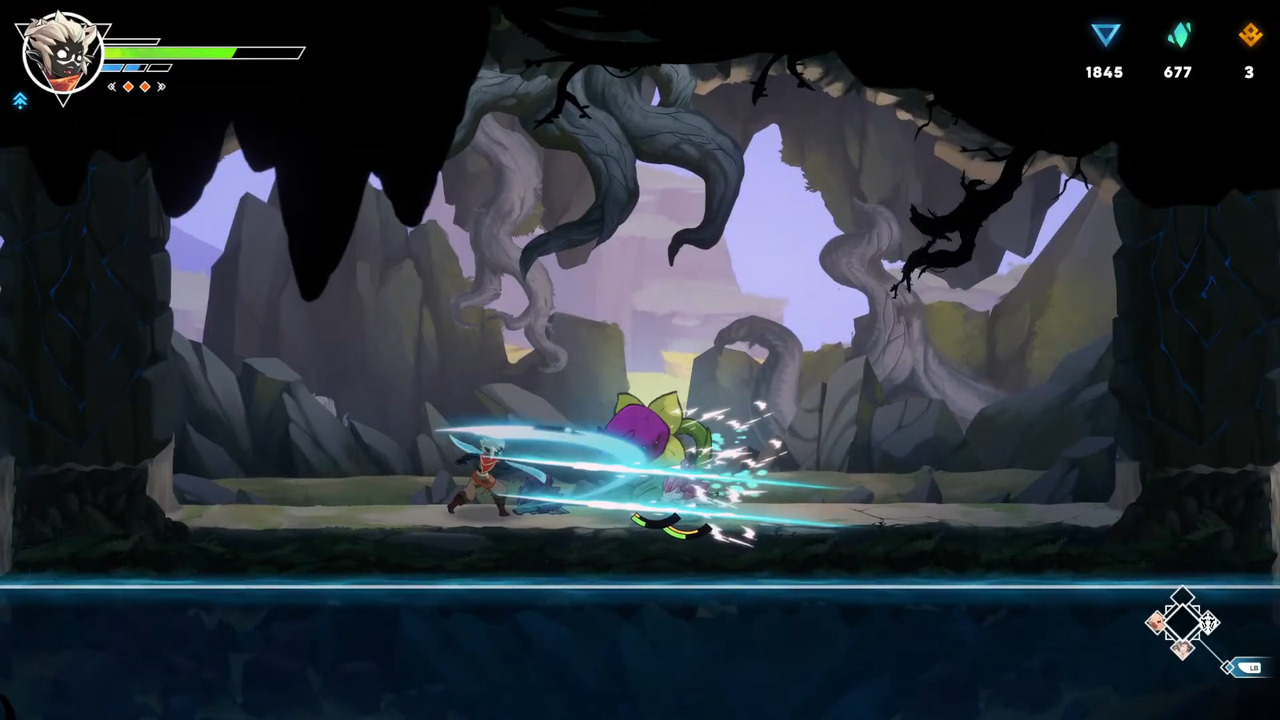
Visually, Fallen Tear remains nothing short of a feast for the eyes. The hand-drawn aesthetic brings over 20 distinct biomes to life, spanning frozen mountain peaks, lush verdant plains, and desolate deserts. The level design makes great use of layered, colourful backdrops. The striking character designs are brought to life through remarkably fluid animations. Where Fallen Tear’s visuals stumble ever so slightly is when it comes to at-a-glance readability. Biomes like the Lilac Mire restrict your field of view to a tiny circle of light around Hira, making navigation a chore in this area. Additionally, the camera sometimes struggles to keep up when you’re moving rapidly upwards or downwards across the levels.
Sound
The sound design complements Fallen Tear’s atmosphere nigh on perfectly. Accompanying your journey is a dynamic orchestral soundtrack that sets a quiet, peaceful tone while you’re exploring and ramps up nicely during frantic combat encounters. The game also features full voice acting for its key characters, providing the core cast with distinct personalities and elevating the overall writing.
Gameplay
The foundation of Fallen Tear’s gameplay is that of a solid Metroidvania. However, the game isn’t afraid to break away from the familiar genre formula and introduces some unique mechanics. The main one that sets the game apart from other Metroidvanias is the Fated Bond System. Over the course of your journey, you can recruit up to 22 companions. Three companions can be assigned to act as active bonds for Hira. Once bonded, they can be summoned into battle for specialised attacks and passive buffs, like Bjorn the Chef tossing a hot pan for extra damage while permanently boosting Hira’s HP, for example. This sets the tone for something that permeates Fallen Tear’s gameplay: customisation. The game is as open-ended as it is massive, and the way you build Hira shapes how you explore Raoah. That also means that it’s unlikely that your journey will be the exact same as ours. Given that backtracking is inherent to the genre, we’re happy to say that Fallen Tear has taken a page out of Prince of Persia: The Lost Crown’s book, allowing you to take a picture of an obstacle and pin it to the map. This makes remembering where to backtrack to a breeze, even if the map itself could still use a few more custom icon markers for specific wall types.
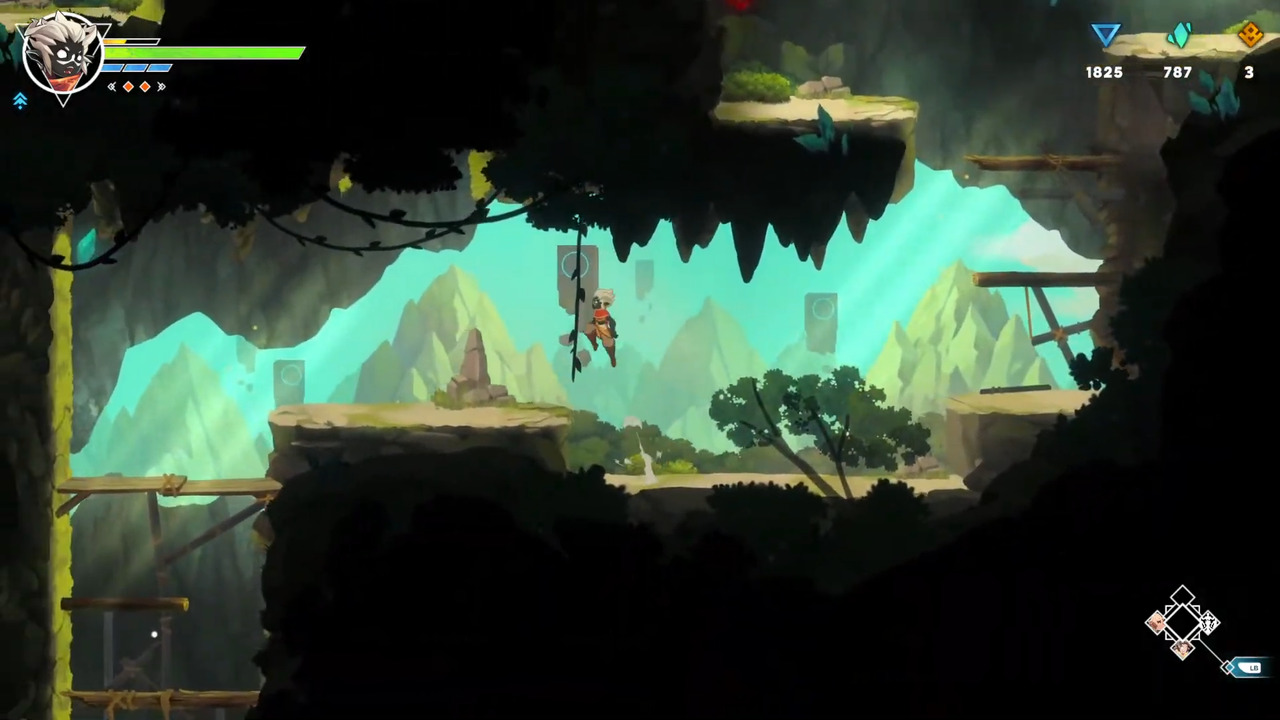
In typical Metroidvania fashion, there are plenty of unlockable traversal abilities for Hira, including double jumps, air dashes, and ground pounds. However, the way you obtain these differs from what you’d expect for the genre. These abilities, called Ascensions here, are tied directly to earning Bond Points, rather than defeating specific bosses. You can head to a temple and unlock them in whatever order you choose. You can even attach elemental affinities to Ascensions to add offensive flair or extra range. Oddly enough though, you’ll only need 14 Bond Points to unlock the available Ascensions, but there are 22 available in-game, leaving 8 extra points with no functional reward, which does feel like an oversight. Beyond Ascensions and Fated Bonds, you can further tailor Hira’s raw stats to your preferred build by collecting chests. Finally, Fallen Tear boasts a robust achievement system, the so-called Fated Goals. The Fate Points you collect from this system can be spent on a multi-tiered Mastery skill tree. Our only grievance with this system is mechanical: you have to manually open menus to turn in these achievements, which interrupts the game’s flow.
It’s not Fallen Tear’s biggest gameplay flow. That dubious honour still lies with the game’s structural balancing. The focus on customisation and freedom is a double-edged sword. Because progression is so open-ended, it’s easy to wander into high-level areas unprepared and get pulverized. Boss difficulty in particular is wildly inconsistent, with some early encounters and mini-bosses hitting far harder than late-game bosses, while others, such as Mechalevizz, felt like tedious damage sponges. Add in sparse fast-travel points (yes, still), platforming gauntlets with insta-kill hazards and random events that suddenly buff all enemies in the world, and exploration can occasionally turn frustrating. Don’t let that deter you from giving Fallen Tear a go if you’re a hardcore Metroidvania enthusiast. The game may be harder than you’d expect, but it makes actually achieving what you set out to do all the more satisfying.
Conclusion
The full version of Fallen Tear: The Ascension is a title where the sum is greater than its individual parts. Winter Crew Studios set out to create a sprawling, party-driven Metroidvania, and on many fronts, they succeeded brilliantly. The Fated Bond system brings a fresh JRPG flavor to 2D action, and the hand-drawn world of Raoah is a joy to behold. However, the game is dragged down by pacing and balance issues that feel unrefined. Uneven boss fights, tedious menu redemptions, sparse checkpoints, and awkward fast-travel distribution hold it back from reaching true genre royalty. If you’re a Metroidvania diehard looking for a huge, open-ended world with deep customization and great narrative flavour, Fallen Tear is well worth your time and money.
]]>