The post Promoting the Integration of AI into Teaching and Learning appeared first on alexmikro.net.
]]>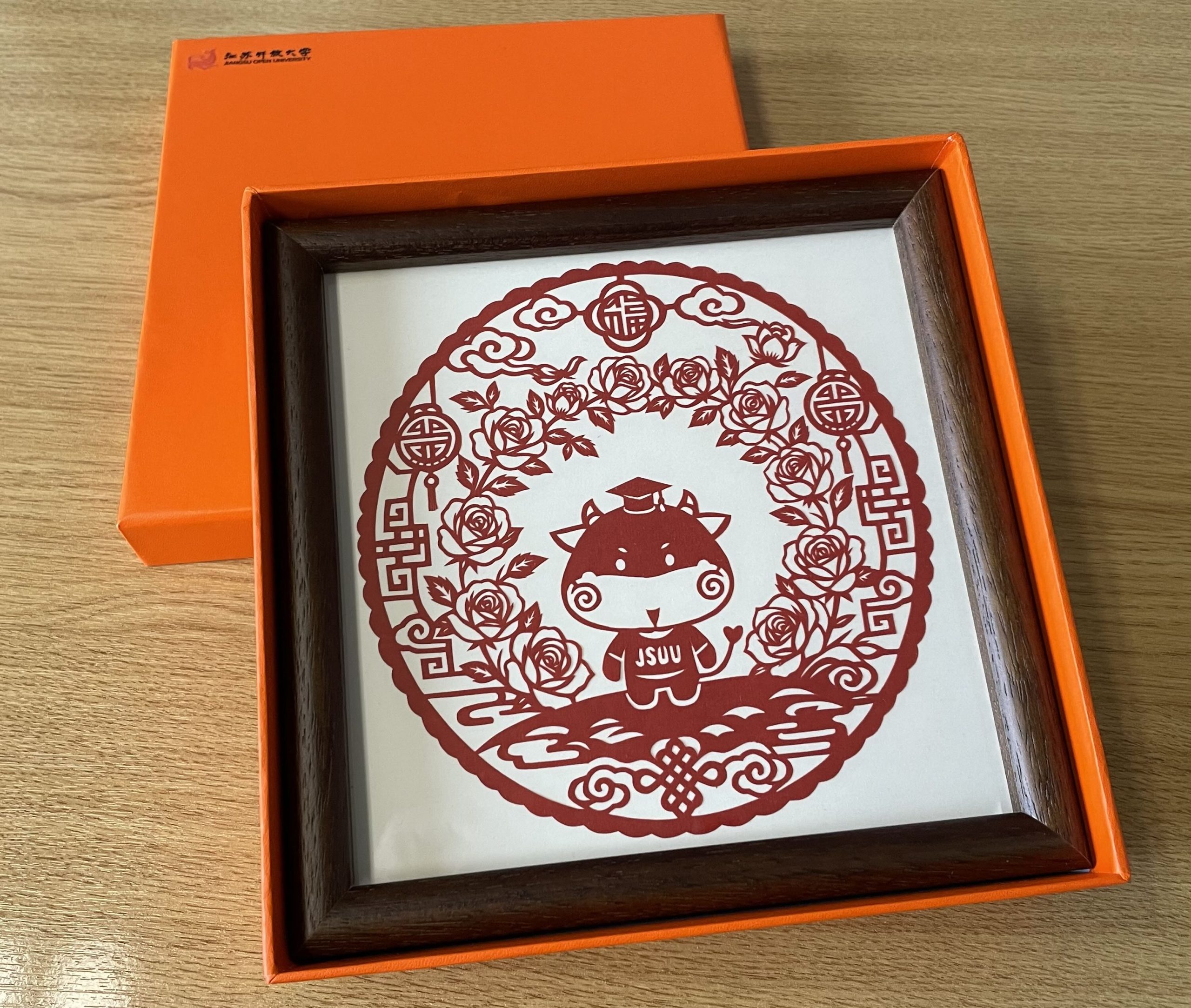
The Open University (OU) welcomed this week a delegation from Jiangsu Open University for a two-day visit. During this visit, Dr Alexander Mikroyannidis gave the presentation “Promoting the Integration of Artificial Intelligence into Teaching and Learning,” which highlighted the OU’s latest work on AI-enhanced education, including the AI Digital Assistant (AIDA), the AI Module Writing Assistant (AIMWA), and the emerging pedagogical framework of metaheutagogy.
The presentation showcased how AIDA supports students through personalised learning, study guidance, and critical thinking activities, while AIMWA assists educators in creating high-quality educational content, learning activities, and assessments. Dr Mikroyannidis also introduced Studio 41, the OU’s next-generation AI platform currently under development. Bringing together AIDA, AIMWA, and other AI initiatives across the OU, Studio 41 aims to provide a unified ecosystem supporting teaching, learning, curriculum design, and lifelong learning.
The visit provided an opportunity for both institutions to exchange ideas on AI-enhanced education and explore future collaboration in areas including digital innovation, open education, and lifelong learning. The discussions reflected a shared commitment to ensuring that AI is used responsibly, ethically, and effectively to enhance educational opportunities for learners worldwide.
The post Promoting the Integration of AI into Teaching and Learning appeared first on alexmikro.net.
]]>The post Rethinking AI in Higher Education through Metaheutagogy appeared first on alexmikro.net.
]]>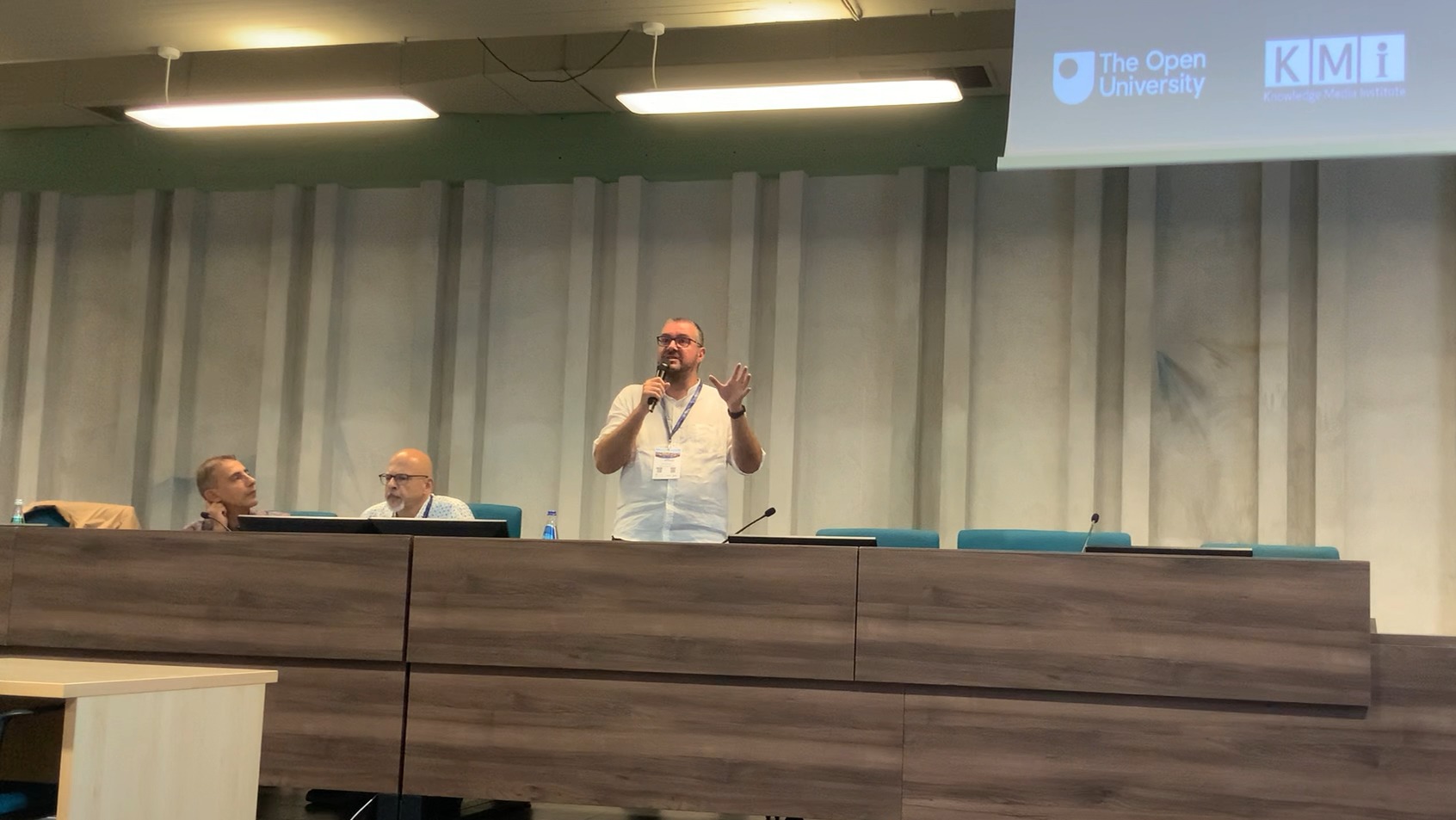
Dr Alexander Mikroyannidis, Senior Research Fellow at the Knowledge Media Institute of The Open University (UK), presented his latest work on AI-enhanced learning at the 8th International Conference on Higher Education Learning Methodologies and Technologies Online (HELMeTO 2026), held in Cagliari, Italy, from 28-30 September 2026. The conference brought together academics, researchers and practitioners from around the world to discuss advances in digital learning methodologies and technologies in higher education.
Dr Mikroyannidis presented the metaheutagogy framework, a novel approach that explores how AI can support learners in developing critical thinking and metacognitive skills. Developed by Alexander Mikroyannidis and John Domingue, the metaheutagogy framework addresses one of the central challenges of AI-enhanced learning: ensuring that learners retain agency, judgement and responsibility while benefiting from increasingly capable AI systems. The framework builds upon established learning theories, extending the progression from pedagogy, andragogy and heutagogy to a new paradigm in which AI acts as a reflective and dialogic learning partner.
Commenting on the event, Dr Mikroyannidis noted that AI is transforming the way people learn and create new knowledge. He emphasised that we must move beyond teaching learners how to use AI and instead help them develop the metacognitive capabilities needed to critically evaluate and direct intelligent systems. As higher education institutions continue to explore the opportunities and challenges presented by AI, metaheutagogy offers a timely framework for designing learning experiences that place human judgement, reflection and lifelong learning at the centre of the learning process.
The post Rethinking AI in Higher Education through Metaheutagogy appeared first on alexmikro.net.
]]>The post Metaheutagogy: A Framework for AI-Mediated Metacognitive Learning appeared first on alexmikro.net.
]]>
Artificial Intelligence is rapidly reshaping how we learn by mediating inquiry, feedback, collaboration, and artefact creation. As these tools grow more capable, the key educational challenge is judgement, metacognition, and human agency. The recent preprint authored by Alexander Mikroyannidis and John Domingue (The Open University, UK) introduces metaheutagogy: a framework that goes beyond pedagogy, andragogy, and heutagogy by positioning AI as a reflective and dialogic partner in learning. Metaheutagogy uses the analogy of learners as F1 drivers: success comes from the ability to steer, govern, and critically oversee powerful AI systems.
The paper offers:
- A comparative model from pedagogy → andragogy → heutagogy → metaheutagogy
- A description of an AI‑mediated learning ecosystem
- Practical pedagogical scenarios from Socratic AI tutors to collaborative inquiry and constructionist studios
- A discussion of risks and how metaheutagogy mitigates them
Metaheutagogy is intended to provide a useful conceptual and practical foundation for educators, institutions, and policymakers designing learning for an AI‑shaped world.
The preprint is available here: https://doi.org/10.35542/osf.io/xt6c7_v1.
The post Metaheutagogy: A Framework for AI-Mediated Metacognitive Learning appeared first on alexmikro.net.
]]>The post Learning with Responsible AI at INTED 2026 appeared first on alexmikro.net.
]]>
Dr Alexander Mikroyannidis, Senior Research Fellow at the Knowledge Media Institute of The Open University (UK), presented his latest research at the 20th International Technology, Education and Development Conference (INTED 2026), held on 2-4 March 2026 in Valencia, Spain. He presented the paper “Learning with Responsible AI: Perceptions and Experiences of Learners in Online Professional Education” co-authored with Joseph Kwarteng, Aisling Third, John Domingue, and David Tarrant. This paper investigates how learners engage with an AI chatbot implemented using the SAGE-RAI (Smart Assessment and Guided Education with Responsible AI) framework in a professional online course. This work offers practical guidance for designing AI-enhanced tools for education that are transparent, curriculum-aligned and supportive of ethical practice, underscoring the importance of governance frameworks and professional development in responsible AI integration.
Additionally, Alexander presented the paper “Mind-Size Bites, Macro Impact: A Research-Based Framework for Experiential Learning in Online Microlearning Targeting Mental Health Counsellors” co-authored with Stefanos Armakolas. This paper explores how online microlearning can be designed to support experiential education and enhance learner engagement in professional practice programmes. The study, which involved 112 postgraduate students, found that features such as personalisation, interactivity and modular microlearning activities were strongly associated with increased motivation, comprehension and self-regulated learning. Based on these results, the authors propose a research-based framework for inclusive and interactive microlearning that instructors can adopt when designing short-form digital learning experiences.
INTED is one of Europe’s largest annual gatherings of educators, researchers and technology specialists. The 2026 edition marked the 20th anniversary of INTED and brought together more than 700 delegates from around the world to discuss innovations in teaching, learning and educational technology. The event featured a rich programme of oral and poster sessions, interactive workshops, keynote talks and networking opportunities.
The full papers are available through The Open University’s Open Research Online repository:
Mikroyannidis, Alexander; Kwarteng, Joseph; Third, Aisling; Domingue, John and Tarrant, David (2026). Learning with Responsible AI: Perceptions and Experiences of Learners in Online Professional Education. In: 20th International Technology, Education and Development Conference (INTED 2026), 2-4 Mar 2026, Valencia, Spain.
Mikroyannidis, Alexander and Armakolas, Stefanos (2026). Mind-Size Bites, Macro Impact: A Research-Based Framework for Experiential Learning in Online Microlearning Targeting Mental Health Counsellors. In: 20th International Technology, Education and Development Conference (INTED 2026), 2-4 Mar 2026, Valencia, Spain.
The post Learning with Responsible AI at INTED 2026 appeared first on alexmikro.net.
]]>The post Game-Based Learning for Cyber Security Training appeared first on alexmikro.net.
]]>
George Wolf-Jackson has successfully completed his PhD, marking a significant contribution to research on cyber security awareness and behaviour change in the workplace. His doctoral research, supervised by Prof Chitra Balakrishna (School of Computing and Communications, The Open University, UK) and Dr Alexander Mikroyannidis (Knowledge Media Institute, The Open University, UK), addresses one of the most persistent challenges in cyber security: the human factors behind security breaches.
Titled “The Impact of Game-Based Learning Methods on Cyber Security Behaviour of Adults in a Work-based Setting”, the PhD examines why traditional cyber security awareness programmes have largely failed to reduce breaches caused by human error. Despite the fact that such errors account for a substantial proportion of cyber incidents, often costing organisations millions per breach, many existing training initiatives remain superficial, focusing on completion rates rather than meaningful changes in behaviour.
George’s research critically analyses these shortcomings and explores how game-based learning approaches can offer a more engaging and effective alternative. Focusing on adults in professional contexts, the study investigates whether game-based cyber security training can lead to sustained behaviour change and measurable improvements in organisational cyber security outcomes, including reductions in the number and severity of incidents.
This work culminates in a large-scale mixed-methods study comparing two game-based training methods against a control condition, providing evidence of their impact on long-term cyber security behaviour. The findings are synthesised into a practical framework for designing and implementing effective game-based cyber security training in the workplace, further refined through targeted interviews with cyber security training providers.
Supervisors Prof Chitra Balakrishna and Dr Alexander Mikroyannidis praised the work for its methodological rigour and real-world relevance, highlighting its potential to influence both research and practice in cyber security education. With its strong focus on behaviour change, assessment, and organisational impact, this work offers timely insights for employers, training providers, and policymakers seeking to address the human dimensions of cyber security more effectively.
The full text of this PhD thesis is now available in Open Research Online.
The post Game-Based Learning for Cyber Security Training appeared first on alexmikro.net.
]]>The post Responsible AI for Better Student Outcomes appeared first on alexmikro.net.
]]>
Can responsible AI transform education and boost student success? This question took centre stage at the online hands-on session showcasing the outcomes of two innovative research projects: AIDA (AI Digital Assistant) and SAGE-RAI (Smart Assessment and Guided Education with Responsible AI). Alexander Mikroyannidis and Aisling Third chaired the session and engaged with participants into discussions about the future of AI-supported personalised learning. The session was held as part of the FAIESTA (Festival of AI Exploration and Strategies in Teaching and Assessment), a two-week online programme for colleagues across the Open University to explore creative and practical ways AI can enhance Learning, Teaching and Assessment (LT&A).
Both projects are pioneering the development of education-focused AI tools designed to support personalised learning at scale. Drawing inspiration from Bloom’s landmark 1984 study, which demonstrated that one-to-one tutoring dramatically improves student performance, the AIDA and SAGE-RAI projects are investigating how AI can provide similarly tailored support in a cost-effective and scalable way. During the session, participants engaged directly with AIDA, gaining first-hand experience of how it can support personalised learning. Discussions also highlighted the importance of ensuring that such technologies are designed and deployed responsibly, with transparency, fairness, and ethical considerations embedded at every stage.
Watch the recording of the session:
The post Responsible AI for Better Student Outcomes appeared first on alexmikro.net.
]]>The post Alexander Mikroyannidis appointed International Expert in Distance Learning by A3ES appeared first on alexmikro.net.
]]>
Dr Alexander Mikroyannidis, Senior Research Fellow at the Knowledge Media Institute (KMi), The Open University, UK, has been appointed International Expert in Distance Learning by the Agency for the Assessment and Accreditation of Higher Education (A3ES), Portugal’s national authority for quality assurance in higher education.
The mission of the A3ES is to improve the quality of Portuguese higher education, through the assessment and accreditation of higher education institutions and their study programmes, and to ensure the integration of Portugal in the European quality assurance system of higher education. A3ES plays a vital role in maintaining the quality and international credibility of higher education in Portugal, with a growing focus on innovative and remote learning models.
In this role, Dr Mikroyannidis will contribute to the assessment of distance learning programmes across Portuguese universities. He will also advise A3ES on best practices in distance learning, including the use of emerging technologies such as artificial intelligence and blockchain.
Commenting on this appointment, Dr Mikroyannidis said:
“It is a great honour to support the A3ES in ensuring the quality of distance learning programmes. As higher education institutions pivot to flexible and remote modes of learning, it is important to establish robust and forward-looking assessment and quality assurance practices.”
This appointment highlights and promotes KMi’s international research and teaching profile in technology-enhanced learning and innovation in education.
The post Alexander Mikroyannidis appointed International Expert in Distance Learning by A3ES appeared first on alexmikro.net.
]]>The post Using Generative AI to Enhance Personalised and Self-Regulated Learning appeared first on alexmikro.net.
]]>
Dr. Alexander Mikroyannidis, Senior Research Fellow at The Open University’s Knowledge Media Institute, presented his latest research on AI in Education at the EdMedia + Innovate Learning 2025 conference in Barcelona, Spain. His presentation, titled Using Generative AI to Enhance Personalised and Self-Regulated Learning, was co-authored with Stefanos Armakolas and focused on harnessing Generative AI to support learner autonomy and personalisation in digital education. This research introduces a framework that integrates Generative AI tools to assist learners in setting goals, reflecting on progress, and adapting learning strategies in real time. This approach aims to transform AI from a passive content generator into an active partner in the learning process.
Additionally, Alexander led a roundtable discussion session on AIDA: AI Digital Assistant for Personalised and Adaptive Online Learning, co-authored with John Domingue, Audrey Ekuban, and Joseph Kwarteng. This session explored the innovative applications of Generative AI in online education and introduced AIDA (AI Digital Assistant), a multimodal learning companion for supporting learners that are studying remotely by complementing their online learning environment with dynamic and interactive learning tools. AIDA has been designed to enhance student engagement and provide personalised support by integrating AI-powered tutoring modes, real-time feedback, and adaptive learning strategies.
Held on May 19-23 at the Universitat Oberta de Catalunya, EdMedia 2025 brought together over 500 experts from more than 50 countries to share the latest innovations in educational technology. Key themes of the conference included AI in education, learning analytics, and digital inclusion. The sessions led by Alexander contributed to the conference’s focus on responsible and learner-centred AI applications.
The full papers are available through The Open University’s Open Research Online repository:
Mikroyannidis, Alexander and Armakolas, Stefanos (2025). Using Generative AI to Enhance Personalised and Self-Regulated Learning. In: EdMedia + Innovate Learning 2025, 19-23 May 2025, Barcelona, Spain, Association for the Advancement of Computing in Education (AACE), pp. 249–258.
Mikroyannidis, Alexander; Domingue, John; Ekuban, Audrey and Kwarteng, Joseph (2025). AIDA: AI Digital Assistant for Personalised and Adaptive Online Learning. In: EdMedia + Innovate Learning 2025, 19-23 May 2025, Barcelona, Spain, Association for the Advancement of Computing in Education (AACE), pp. 244–248.
The post Using Generative AI to Enhance Personalised and Self-Regulated Learning appeared first on alexmikro.net.
]]>The post Smart Assessment and Guided Education with Responsible AI Webinar appeared first on alexmikro.net.
]]>
The UKRI-funded project Smart Assessment and Guided Education with Responsible AI (SAGE-RAI) organised a webinar on April 24th. The webinar offered participants the chance to participate in discussions on how AI can be responsibly used in education, addressing challenges of misinformation, copyright, and bias. Participants also had the opportunity to compare the experience of using a general foundation model with a task-specific AI assistant tutor, highlighting the challenges and benefits of each approach.
The webinar was facilitated by SAGE-RAI project partners from the Open University (Alexander Mikroyannidis, Aisling Third, Joseph Kwarteng) and the Open Data Institute (David Tarrant). The webinar featured hands-on activities and focus groups to allow participants to provide their feedback about the AI tutors and express their views about the future of AI in education. The presentation slides from this webinar are available to download from this link.
Participant feedback and insights from this webinar will be thematically analysed and will be incorporated into the outcomes of the SAGE-RAI evaluation studies, as well as into the responsible AI framework developed by the project.
The post Smart Assessment and Guided Education with Responsible AI Webinar appeared first on alexmikro.net.
]]>The post Using Generative AI and ChatGPT for improving the production of distance learning materials appeared first on alexmikro.net.
]]>
Alexander Mikroyannidis (The Open University, UK) has presented a paper at the 24th IEEE International Conference on Advanced Learning Technologies (ICALT). This flagship educational technology conference is organised annually by the IEEE Computer Society and the IEEE Technical Community on Learning Technology. ICALT brings together people who are working on the design, development, use, and evaluation of technologies that will be the foundation of the next generation of e-learning systems and technology-enhanced learning environments.
Alexander presented a paper about the use of Generative AI and ChatGPT for improving the production of distance learning materials. The paper introduced the AI Module Writing Assistant (AIMWA), which can instantly generate introductions and summaries of course material, automatically generate quizzes and tests, as well as automatically identify, categorise, and transform learning activities. An evaluation performed with course production teams indicated that in 40% of cases AI generated text of 250-500 words is suitable for use in distance learning materials. Overall, the evaluation participants welcomed this use of Generative AI, but expressed concerns mainly centred on potential for bias, misinformation, and copyright infringement in the generated learning materials.
The novelty and potential of this work was recognised by the conference committee, which shortlisted this paper for the best full paper award. The accepted version of the paper is available to download from here: Using Generative AI and ChatGPT for improving the production of distance learning materials.
The post Using Generative AI and ChatGPT for improving the production of distance learning materials appeared first on alexmikro.net.
]]>