WILLAg.org is a partnership of Illinois Public Media and University of Illinois Extension. Its mission is to distribute regionally, nationally, and internationally information and analysis of agricultural markets, research, and weather.
Agricultural Markets Synthesis
Heavy managed money fund liquidation and harvest pressure weighed on corn and soybean prices throughout the week, though strong export data eventually provided a market floor. Brian Beckler of Total Farm Marketing and Ben Brown of the University of Missouri noted that disappointing September NOPA crush numbers and bearish USDA reports triggered the initial sell-offs. However, Matt Bennett of AgMarket highlighted a late-week rebound driven by massive soybean export sales approaching 3 million tons, primarily to China, alongside a surprise flash sale to Spain. During the Commodity Week program, Mike Castle of StoneX and Ted Seifried of Zaner Ag Hedge contextualized these moves, warning that non-China global demand remains sluggish due to cheap Brazilian competition. They emphasized that robust domestic soybean crush demand, fueled heavily by the biofuel sector, has maintained unexpectedly strong basis levels during the harvest window. On the farm level, Greg Johnson of Total Grain Marketing reported that central Illinois corn yields are down roughly 30 bushels from last year, exacerbating profitability concerns amid doubled diesel fuel costs. Globally, Mike Zuzolo of Global Commodity Analytics and Consulting observed a divergence between crude oil and wheat price action.
Agricultural Weather Synthesis
A persistent dry and warm pattern across the central and eastern Corn Belt provided an exceptional harvest window, though the mild temperatures kept soils above the 50-degree threshold required for fall anhydrous ammonia applications. Don Day of Day Weather and Mark Russo of Everstream Analytics tracked this open harvest weather, emphasizing that rapid field progress would continue across the Midwest before conditions shift. Looking ahead, Eric Snodgrass of Nutrien Ag Solutions forecast that an active subtropical jet stream will likely introduce heavier precipitation by November. In the Plains, Mike Tannura of Tstorm Weather reported that the hard red winter wheat crop received heavy, beneficial rains for winter establishment, while soft red winter wheat regions further east remained dry. Internationally, Drew Lerner of World Weather Inc. highlighted that a strong El Niño is driving widespread rainfall across Brazil and Argentina, facilitating rapid soybean planting. However, Snodgrass cautioned that the persistent El Niño pattern elevates the risk of rapid flash droughts in Brazil during the critical growing months of December and January.
USDA Revises the September Crop Production Report
Friday the United States Department of Agriculture revised up last month’s crop production report. USDA’s October 23 announcement attributes the September Crop Production report revisions to a processing error affecting corn plant populations and ear counts in Nebraska and Kansas. The National Agricultural Statistics Service (NASS) corrected the September data but provided no technical explanation of how the error occurred.
There were two state level corrections.
* Nebraska’s September corn yield estimate increased from 177 to 182 bushels per acre.
* Kansas’s September corn yield estimate decreased from 121 to 118 bushels per acre.
These two corrections cascaded into the following changes at the national level.
* The September U.S. average corn yield was adjusted upward from 178.5 bushels to the ace to 178.8. This also resulted in the September estimate increasing total corn production by about 26 million bushels.
* The October forecasts, including the national corn yield estimate of 181.2 bushels per acre and total production over 16.03 billion bushels, were reviewed and validated by NASS without any changes.
USDA’s correction to the September baseline effectively cuts the month-over-month yield jump for Nebraska in half. Nebraska is the number three corn producing state in the nation following Iowa and Illinois.
In short, the September report initially pegged Nebraska’s corn yield at 177 bushels per acre. When the October report was released with an estimate of 188 bushels per acre for the state, it represented an 11-bushel jump. The September revision spreads that jump more evenly across October and September but still leaves the total change from August to October in place.
Because USDA validated the October Crop Production report, the September revisions did not change the October corn balance sheet, and consequently will have no impact on the November releases.
The Week’s News and Other Items
Resampling 1861 Prairie Site to Measure Soil Change: Researchers are resampling the state’s oldest soil test site, originally sampled in 1861, to measure more than a century of agricultural impacts. Soil scientists Kevin McSweeney and Sam Indorante explained that this effort acts as a time capsule, allowing experts to track physical and chemical changes caused by decades of tillage and fertilization, which is critical for future land-use decisions.
Crop Size and Feed Usage, a Question or Two: Former USDA Chief Economist Seth Meyer now with the University of Missouri analyzed whether the record 2025 corn crop was overstated, suggesting statistical errors might be hiding in the USDA’s feed and residual category. Meyer also noted that consumer meat demand is shifting due to GLP-1 medications, driving a preference for smaller portions of high-quality beef and protein-dense chicken.
A Fungal Disease of Soybeans is Moving Northward: A fungal disease known as Neocosmospora stem rot, which closely resembles red crown rot, has officially progressed northward into Illinois and Missouri soybean fields. The University of Illinois Plant Clinic is requesting whole-plant samples from farmers to better track the disease’s spread and its potential impact on yield.
USDA Announces Diesel Fuel Relief Package: The USDA is preparing a harvest fuel relief program that could distribute $8 billion to farmers before year’s end to offset elevated diesel and fertilizer costs, potentially pushing total 2026 government farm payments to a record $55.4 billion. Concurrently, Senate Republicans are attempting to attach a new farm bill to an end-of-year legislative vessel, such as a rural health or defense authorization bill, to prevent the measure from slipping into a new Congress.
A Natural Cut for your Grilled Cheese Sandwich: Sargento has successfully developed a natural cut American cheese slice designed to replicate the exact melt and texture of processed cheese without utilizing artificial emulsifying salts.
That is a comprehensive look at the markets, the weather, and the news driving agriculture this week. You can find all of these segments, plus daily market updates from our farmdoc team, online anytime on demand at WILLAg.org.
Editor’s note: This article was adapted from the week’s WILLAg.org radio broadcast transcripts, formatted for print with the assistance of Google’s generative AI tool, Gemini, and reviewed by Todd Gleason.
—
2026 Illinois Farm Economics Summit Set
Challenging Environment, Tight Margins
https://farmdoc.illinois.edu/ifes
This year’s series of IFES meetings will update attendees on the current state of the Midwest farm economy and discuss the challenges and opportunities currently facing farmers. Despite improved pricing prospects, producers continue to operate in a challenging environment of tight margins. Production costs have continued to rise and remain subject to significant uncertainty and volatility due to ongoing geopolitical developments. At the same time, changes to biofuels and tax policy may create market opportunities for grains and oilseeds produced in ways that allow biofuel producers to qualify for low-carbon fuel tax credits.
Click here for more information and to register for the four mid-December meetings. IFES is scheduled for the week of December 14 in Mt. Vernon, Sherman, Peoria, and DeKalb.
—
WILLAg.org Calendar
October
26-29 – 1st International Miscanthus Summit
28 – Celebrating 150 Years of the Morrow Plots
December
01 – PCM Webinar | 2026 PCM Fall Webinar Series Continues
03 – Illinois NLRS Partnership Conference
14 – Illinois Farm Economic Summit, Mt. Vernon
15 – Illinois Farm Economic Summit, Sherman
16 – Illinois Farm Economic Summit, Peoria
17 – Illinois Farm Economic Summit, DeKalb
January
19 – Illinois Fertilizer and Chemical Association Winter Convention
26-27 – Illinois Soybean Summit
March
09 – All Day Ag Outlook at the Beef House
—
Commodity Week can be heard in the 2 o’clock hour central time on WILL AM580 or you may subscribe to it using the links in the player below. This week the panelists include Mike Castle from StoneX and Ted Seifried of Zaner Ag Hedge.
The Closing Market Report airs at 2:06 p.m. central daily on WILL AM580. It, too, is a podcast. Subscribe using the link in the player.
]]>Fusarium neocosmosporiellum (the fungus associated with Neocosmospora stem rot) has been confirmed on soybean plants from Clay County, Illinois by the University of Illinois Plant Clinic. This pathogen has been previously identified in the southern United States on soybean and peanut. The effect on yield loss in the field is unknown. Plants colonized by this fungus can easily be confused with red crown rot due to the similar foliar symptoms (interveinal yellowing and browning of the leaf tissue) and similar signs (small, round, red structures on the lower stems and crowns of infected plants). Microscopic spore observation is required to differentiate between these pathogens.
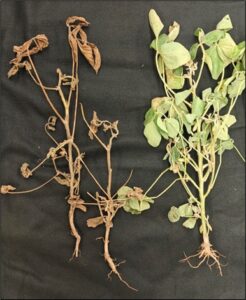
Figure 1 Sample from Clay County, IL. The dry, brown plants on the left were diagnosed with F. neocosmosporiellum while the green plant on the right was not. Both also tested positive for Phytophthora spp. root rot.
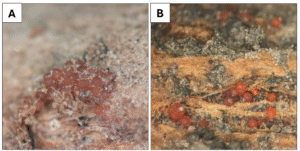
Figure 2 A) Perithecia of Fusarium neocosmosporiellum on soybean crown; B) Perithecia of Calonectria ilicicola (causal agent of red crown rot) on soybean crown. Both pictured under stereomicroscope magnification.
In August of 2026, the University of Illinois Plant Clinic received a soybean sample from Clay County, IL. The affected plants were dry and entirely brown, displaying stunting and dieback (Figure 1). After incubation in a humidity chamber, red perithecia fungal structures were observed on the lower stems and crowns under a stereomicroscope (Figure 2A). These appeared superficially similar to perithecia produced by Calonectria ilicicola, causal agent of red crown rot (Figure 2B), but microscopic examination revealed that the ascospores contained within were morphologically distinct (Figure 3). These ascospores matched the description of Fusarium neocosmosporiellum O’Donnell & Geiser (synonym: Neocosmospora vasinfecta E. F. Sm.). The fungus was isolated on acid potato dextrose agar, and DNA sequencing of the ITS and TEF-1 alpha regions confirmed the identity of the fungus as Fusarium neocosmosporiellum.
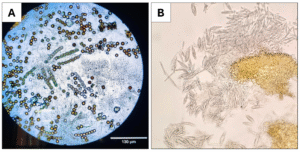
Figure 3 A) Asci and ascospores of F. neocosmosporiellum. The ascospores are globose, hyline to golden yellow, and ornamented. B) Squashed perithecium exuding ascospores of Calonectria ilicicola. The ascospores are spindle shaped, hyline, and slightly curved. Both pictured with a compound microscope.
F. neocosmosporiellum has been confirmed on soybeans in other states, most recently in Missouri in 2025 [1] and Mississippi in 2021 [2], and reported in North Carolina in 2024 [3]. Previously, it has been identified on soybeans in Arkansas (2015 [4]), Alabama (1980 [5]), and Georgia (1972 [6]). It has also been reported as a pathogen on peanut in Texas (2023 [7]), on alfalfa in China (2025 [8]), and on mango in Mexico (2021 [9]).
Symptoms observed on soybean plants from which F. neocosmosporiellum was recovered are similar those of other fungal diseases including red crown rot (caused by the fungus Calonectria ilicicola), and to a lesser extent sudden death syndrome (Fusarium virguliforme) and brown stem rot (Cadophora gregata). Symptoms of F. neocosmosporiellum infection include interveinal chlorosis and necrosis (yellowing and browning) of foliar tissue, wilting, and vascular discoloration. Under favorable conditions, both F. neocosmosporiellum and C. ilicicola produce small, red, round perithecia on the lower stems and crowns of the soybean plants.
Damage and yield loss in the field has not been established for F. neocosmosporiellum. Multiple species of Fusarium are known to cause root rot in soybean; the Crop Protection Network estimates yield losses of 3.99 million bushels across 29 US states in 2025 due to Fusarium wilt and root rot [10]. This emerging disease has been shown to infect plants in both the field and greenhouse; however, yield loss potential and management strategies remain under study. Identification is challenging due to misdiagnosis with other pathogens and limited knowledge of the symptoms caused by this fungus.
The first report for this pathogen published as a Plant Disease note is in progress for the state of Illinois.
To submit a sample to the University of Illinois Plant Clinic, please complete the diagnostic submission form available here. Soybean samples should consist of entire plants dug (not pulled) from the ground. Ideally, multiple plants showing a variety or progression of symptoms are included.
For more information about Calonectria ilicicola, the pathogen that causes red crown rot in soybean, please see these articles from Farmdoc and the Crop Protection Network.
Author contacts: Diane Plewa (dplewa@illinois.edu), Esneider Mahecha Bojaca (esmabo@illinois.edu), and Boris X. Camiletti (bxc@illinois.edu).
Reviewed by: Talon Becker (tbecker2@illinois.edu).
All pictures are copyright University of Illinois Plant Clinic.
The University of Illinois Plant Clinic is an Extension program housed in the Department of Crop Sciences and a member of the National Plant Diagnostic Network.
References
- Haafke, A., et al., 2026. Plant Dis. 110:3566. https://doi.org/10.1094/PDIS-01-26-0235-PDN
- Jimenez Madrid, A. M., et al. 2023. Plant Dis. 107:955. https://doi.org/10.1094/PDIS-05-22-1200-PDN
- NC State Extension. https://rootcausereports.ces.ncsu.edu/library/72265e02-dabd-4bd5-9036-eabf03f9210a/. Accessed October 17, 2026.
- Greer, A. M., et al. 2015. Plant Dis. 99:554 https://doi.org/10.1094/PDIS-05-14-0559-PDN
- Gray, F. A., et al. 1980. Plant Dis. 64:321
- Phillips, D. V. 1972. Phytopathology 62:612
- Obasa, K. 2023. PhytoFrontiers. 3:268-271. https://doi.org/10.1094/PHYTOFR-06-22-0065-SC
- LeWang et al. 2025. Sci Data. 12:762. https://doi.org/10.1038/s41597-025-05073-x
- Molina-Cárdenas, L., et al. 2021. Canadian Journal of Plant Pathology. 43:714–721. https://doi.org/10.1080/07060661.2021.1880483
- Crop Protection Network. https://cropprotectionnetwork.org/publications/soybean-disease-loss-estimates-from-the-united-states-and-ontario-canada-2025 Accessed October 17, 2026.
WILLAg.org is a partnership of Illinois Public Media and University of Illinois Extension. Its mission is to distribute regionally, nationally, and internationally information and analysis of agricultural markets, research, and weather.
Agricultural Markets Synthesis
Dominant market trends across the week centered on technical price erosion, speculative fund liquidation, harvest pressure, and mounting macroeconomic and geopolitical headwinds. Grains and oilseeds faced broad downward momentum as December corn drifted from early-week levels around to close the week down at $4.74 1/4. November soybeans retreated to $12.61 1/4. Soft red winter wheat mirrored the sell-off, briefly setting a nine-week high before tumbling to fresh one-week lows at $6.60 1/2. Frayne Olson (North Dakota State University Extension) observed that futures markets overreacted following the October WASDE report, which unexpectedly raised corn yield projections—primarily across Western Plains transition states such as Texas, Kansas, Nebraska, and the Dakotas—while ending stocks hovered near the pivotal 10% carryover threshold. Adding to supply side clarity, Greg Johnson (Total Grain Marketing) noted that the soybean harvest across East Central Illinois was nearly 90% complete with exceptional yields in the 70s to 90s, spurring active farmer selling across the scale, whereas early corn yields lagged 20 to 25 bushels behind the previous year. Matt Bennett (AgMarket) confirmed this yield divergence, reporting that rapid dry-down across central Illinois allowed crops to come out of the field quickly, but noted that disappointing crush figures below 200 million bushels and speculative fund liquidation exacerbated technical sell-offs.
On the broader discussion during the Commodity Week broadcast, Naomi Blohm (Total Farm Marketing), Chip Nellinger (Blue Reef Agri-Marketing), and Mike Zuzolo (Global Commodity Analytics and Consulting) evaluated the spillover effects of outside markets, currency volatility, and shifting managed money positions. Naomi Blohm highlighted that crude oil has formed a coiling pennant flag between $70 and $120 per barrel, suggesting a potential $50 breakout toward $150 or down to $50 depending on Middle East geopolitical friction, while noting that Class III milk futures surged nearly $2 over a two-week span due to pre-holiday spot cheese demand. Mike Zuzolo and Chip Nellinger stressed that speculative funds have aggressively unwound record net-long positions across soybeans, meal, and corn, while rising freight rates, persistent inflation, and Middle East conflict are constraining global trade. Chip Nellinger cautioned that excessive energy spikes could destroy global aggregate demand and emphasized monitoring fluctuations in the Brazilian Real alongside upcoming elections. Mike Zuzolo noted that export demand faced severe drag—underscored by a 40% drop in soybean export sales below the four-week average and soft red wheat losing ground on reports that Russia is developing an alternative Baltic export rail-and-port route handling 3 to 3.5 million tons. Outside the grain complex, live and feeder cattle encountered resistance at their 100-day and 200-day moving averages as funds showed hesitation amid sluggish wholesale adjustments, high beef imports, and slow herd rebuilding.
Agricultural Weather Synthesis
Weather forecasts evolved from early-season summer warmth into a sharp, widespread autumnal transition defined by a strong cold front, localized rainfall swaths, and early-season freezes across North America, contrasted with extreme rainfall and El Niño patterns across South America. Don Day (Day Weather) detailed the progression of a subtropical moisture plume emerging from Mexico across the central and southern Plains into the Midwest, delivering 1 to 2 inches of rainfall to Nebraska, Iowa, Illinois, Indiana, and Ohio, accompanied by a Rocky Mountain system that triggered snow across high elevations and drove freezing conditions into the Dakotas, western Nebraska, and the Northwest Corn Belt. Drew Lerner (World Weather Inc.) noted that while this rainfall interrupted a brisk Midwestern harvest window—which had allowed Minnesota producers to combine 43% of their soybean crop in a single week—the brief frost and freeze across the northern Plains would prove beneficial in terminating growth and accelerating crop maturation. In the Southern Plains winter wheat belt, Drew Lerner and Mike Tannura (Tstorm Weather) tracked heavy downpours exceeding 6 inches across key production regions of western Oklahoma, which temporarily stalled sowing operations already lagging behind average, though Mike Tannura indicated that the accumulated subsoil moisture will strongly benefit the hard red winter wheat crop over the winter months.
Evaluating the Corn Belt harvest window late in the week, Eric Snodgrass (Nutrien Ag Solutions) reported that the potent cold front brought wind gusts of 30 to 40-plus miles per hour and widespread frost advisories, raising concerns over late stalk integrity. However, Eric Snodgrass and Mike Tannura confirmed that a rapid rebound into mild, dry conditions would provide an open 6-to-8-day harvest window, though Snodgrass warned that rebounding air temperatures will keep soil temperatures above the critical 50-degree threshold, delaying fall anhydrous ammonia applications until early November. Internationally, weather models tracked an exceptionally powerful El Niño pattern dominating South America. Drew Lerner and Mike Tannura reported that southern Brazil, southern Paraguay, and southwestern Paraná were saturated down three feet into the soil profile from persistent torrential rains, causing localized flooding and damaging the Brazilian wheat crop, though a brief five-day drying interval offered necessary respite. Conversely, in center-west Brazil and Mato Grosso, Mike Tannura and Eric Snodgrass observed that unseasonal southern frontal passages provided timely moisture and cool conditions that accelerated soybean planting ahead of normal, setting up favorable conditions for an early safrinha corn crop despite questions regarding how the broader Amazonian monsoon will behave later in the season.
The Week’s News and Other Items
Fall 2026 Nitrogen Application and Soil Management: At an educational panel hosted by the University of Illinois Extension and the Illinois Fertilizer and Chemical Association (IFCA), campus-based soil scientist John Jones emphasized that producers must wait for 4-inch soil temperatures to drop to 50 degrees and trend downward before applying fall anhydrous ammonia to prevent rapid conversion to nitrate and subsequent leaching. Dan Schaefer of the IFCA referenced Illinois Nutrient Research and Education Council (NREC) findings showing that unseasonably warm autumns cause October-applied nitrogen to turn entirely into leachable nitrate by March 1, polluting municipal waterways like Lake Decatur and Lake Springfield, and noted that Douglas County research since 2013 demonstrates that fall applications remain a leakier system even when using nitrification inhibitors. U of I agricultural economist Nick Paulson and Piatt County farmer Eric Miller stressed that waiting for the 50-degree soil benchmark requires operational discipline and flexible risk management, noting that growers should prepare contingency plans for spring applications or sidedressing if wet late-fall weather prevents compliant application. John Jones highlighted upcoming published NREC research revealing that spring-applied anhydrous achieved an optimum nitrogen rate 16 to 20 pounds per acre lower than 100% fall applications.
Global Fertilizer Supply Disruptions: Josh Linville, Vice President of Fertilizer for StoneX, reported that international nitrogen and fertilizer markets face severe upward pricing pressure following recent military attacks and ongoing conflict involving Iran. Because major global urea, anhydrous ammonia, and phosphate exporters—specifically Iran, Qatar, and Saudi Arabia—ship through the Strait of Hormuz, disruptions to energy corridors and curtailed natural gas distribution are still directly elevating global feedstock costs and suppressing European nitrogen production.
Global Diesel Shortage and Middle East Infrastructure Attacks: The International Energy Agency projected that the global diesel shortage sparked by conflict in the Middle East will persist well into 2027. Compounding supply stresses, the 25th WPC Energy Congress in Riyadh was disrupted when Iran-aligned Houthi forces conducted a drone strike on the nearby international airport, killing 13 people and injuring over 300, leading chief executives from ExxonMobil, BP, Shell, Chevron, and TotalEnergies to withdraw from the event. Addressing the remaining assembly, the CEO of Saudi Aramco warned that infrastructure assaults threaten the region holding over 90% of global spare oil capacity, directly tightening global crude and distillate fuel markets.
Clean Air Act DEF Sensor Pardons: Speaking at an Alaska campaign rally, President Donald Trump announced executive pardons for individuals convicted of Clean Air Act violations involving the removal of Diesel Exhaust Fluid (DEF) emissions sensors, with the Department of Justice confirming seven total recipients, three from Alaska. While the EPA previously relaxed compliance rules by permitting software updates utilizing NOx sensors in place of DEF sensors on existing engines, the agency reiterated that completely removing or bypassing exhaust emissions sensors remains a federal crime.
White House Foreign Beef Import Quotas: Beef industry consultant Nevil Speer (Bowling Green, Kentucky) evaluated the federal administration’s plan to import 300,000 metric tons of tariff-free foreign beef, labeling the initiative an ineffective “nothingburger” for retail consumers. Initial trade data indicated that only about 30,000 metric tons arrived in September—a third of the expected initial monthly tranche—primarily consisting of lean trimmings for ground beef that did not noticeably reduce grocery store hamburger prices. The lean beef imports are needed to offset the heaiver (read more fat) beef cattle going to market in the United States. Nevil Speer noted that retail supply chains adapt slowly and that consumers remain far more concerned with everyday price spikes in diesel and gasoline than the cost of ground beef.
GLP-1 Medications and Animal Protein Demand: At the Chicago Federal Reserve’s Midwest Agriculture Conference, CoBank Lead Animal Protein Analyst Brian Earnest examined how the adoption of GLP-1 medications—now present in an estimated one in four U.S. households—is altering domestic meat consumption patterns. Survey data indicates GLP-1 users prioritize smaller, nutrient-dense meals with high protein ratios, fueling demand for poultry and leaner cuts of premium beef, such as 4-ounce portions of high-quality ground beef. Because domestic cattle carcasses are finishing with heavier fat content, this dietary shift is driving increased U.S. imports of lean foreign beef trimmings to blend into commercial ground beef.
AgMarket Corporate Growth and Restructuring: Jim McCormick, Chief Operating Officer and co-founder of AgMarket, outlined the company’s recent expansion and formal rebrand from AgMarket.net. Celebrating seven years of operation, the firm has restructured as a Guaranteed Introducing Broker (GIB) clearing trades directly through StoneX, combining full-service commodity brokerage, customized marketing consulting, and specialized insurance divisions offering USDA Risk Management Agency-backed multi-peril crop insurance and Livestock Risk Protection (LRP). AgMarket co-founder Matt Bennett is a regular contributer to WILLAg.org, airing each Thursday during the Closing Market Report.
That is a comprehensive look at the markets, the weather, and the news driving agriculture this week. You can find all of these segments, plus daily market updates from our farmdoc team, online anytime on demand at WILLAg.org.
Editor’s note: This article was adapted from the week’s WILLAg.org radio broadcast transcripts, formatted for print with the assistance of Google’s generative AI tool, Gemini, and reviewed by Todd Gleason.
—
The Morrow Plots at the University of Illinois Urbana-Champaign is celebrating 150 years as America’s longest continuous agricultural experiment.
Established in 1875 by Professor Manley Miles after visiting England’s Rothamsted plots, the experiment was created to generate location-specific data for Illinois agriculture, disproving the assumption that prairie soils could sustain crops indefinitely without treatment. Originally featuring crop rotation experiments under George Morrow, the plots were gradually reduced as campus expanded, leaving three rotation treatments: continuous corn, corn-soybean rotation, and corn-oats-alfalfa. Current research includes greenhouse gas emissions monitoring and advanced soil imaging comparable to medical MRI, revealing pore structures and earthworm networks after 149 years of management.
The Morrow Plots’ success inspired the newer Alma Mater Plots, which study subsurface drainage and real-time environmental measurements to address contemporary agricultural challenges.
—
WILLAg.org Calendar
October
22 – farmdoc Webinar | First Look at the ARC/PLC Decision for 2026
26-29 – 1st International Miscanthus Summit
28 – Celebrating 150 Years of the Morrow Plots
December
01 – PCM Webinar | 2026 PCM Fall Webinar Series Continues
03 – Illinois NLRS Partnership Conference
14 – Illinois Farm Economic Summit, Mt. Vernon
15 – Illinois Farm Economic Summit, Sherman
16 – Illinois Farm Economic Summit, Peoria
17 – Illinois Farm Economic Summit, DeKalb
January
19 – Illinois Fertilizer and Chemical Association Winter Convention
26-27 – Illinois Soybean Summit
March
09 – All Day Ag Outlook at the Beef House
—
Commodity Week can be heard in the 2 o’clock hour central time on WILL AM580 or you may subscribe to it using the links in the player below. This week the panelists include Naomi Blohm of Total Farm Marketing, Chip Nellinger from Blue Reef Agri-Marketing, and Mike Zuzolo with Global Commodity Analytics and Consulting.
The Closing Market Report airs at 2:06 p.m. central daily on WILL AM580. It, too, is a podcast. Subscribe using the link in the player.
]]>Agricultural Markets Synthesis
The commodity markets experienced significant volatility this week, primarily driven by technical positioning and unexpected data from the USDA’s October Crop Production and WASDE reports. Early in the week, Naomi Blohm (Total Farm Marketing) noted a “Turnaround Tuesday” rally across corn, soybeans, and wheat, fueled by technical buying and hopes for a downward revision in corn yields. However, this optimism was upended on Friday when the USDA unexpectedly raised the national corn yield estimate by 2.7 bushels to 181.2 bushels per acre, heavily influenced by an 11-bushel increase in Nebraska. This upward revision pushed projected corn ending stocks to 1.849 billion bushels, triggering a sharp sell-off in the corn market.
Conversely, the soybean market saw a more neutral report, with a minor yield adjustment to 53.1 bushels per acre, keeping prices relatively stable despite spillover pressure from corn. The Commodity Week panel, featuring Logan Kimmel (Roach Ag Marketing), Ellen Dearden (AgReview), and Jim McCormick (AgMarket.net), discussed the fallout from the bearish corn data. Despite the immediate market shock and harvest-time pressure, the panelists advised producers against panic selling. They highlighted underlying macroeconomic factors, including energy inflation, high diesel prices, and potential South American crop risks tied to a building El Niño, which could provide longer-term price support into the winter.
Prior to the report, Ed Usset (University of Minnesota) highlighted localized spikes in soybean basis bids due to rain-delayed harvests, urging producers to capitalize on these temporary premiums. Greg Johnson (TGM) observed that Illinois soybean yields were strong, but corn yields were disappointing due to prior weather damage. Matt Bennett (AgMarket.net) echoed these sentiments, noting that favorable dry-down weather accelerated harvest progress, with soybeans generally outperforming corn yields relative to expectations. Mike Zuzolo (Global Commodity Analytics and Consulting) pointed out that the USDA’s upward revisions to both domestic and global corn yields ran counter to recent market trends and created new headwinds for prices, emphasizing the need for a low in the wheat market to provide support for corn.
Agricultural Weather Synthesis
Agricultural weather patterns shifted significantly this week, transitioning from excessive moisture to a drier trend that facilitated harvest progress. Early in the week, Mark Russo (EverStream Analytics) forecasted a shift to warmer and drier conditions across the Midwest, expected to aid harvest progress through late October, while noting favorable early planting conditions across South America despite wetness in southern Brazil.
By the end of the week, Joshua Nagelberg (CropProphet) outlined an incoming wet pattern for the western Corn Belt, potentially bringing two to three times the normal rainfall to areas like Nebraska and Kansas. Nagelberg also evaluated the impact of the El Niño weather event on South American crops, noting mixed signals for Brazil but a stronger correlation between El Niño and above-trend soybean yields in Argentina due to increased rainfall.
The 2026 Illinois Extension Fall Fertilizer Conversation panel discusses the importance of waiting for soil temperatures to fall below 50 degrees and consistently trend downward before applying fall anhydrous ammonia.
Applying nitrogen too early, even when utilizing nitrification inhibitors, risks significant conversion to nitrate and subsequent leaching, particularly given recent trends of warm Decembers and excessively wet springs. Nitrification inhibitors act as a temporary insurance policy rather than a foolproof solution, and their efficacy is exhausted prematurely if subjected to extended warm periods. Consequently, adopting a portfolio approach—such as shifting portions of nitrogen application to the spring or utilizing in-season sidedress strategies—can mitigate weather-related nutrient losses and improve overall maximum return to nitrogen (MRTN).
Economic pressures and volatile input costs make data-driven application rates essential for preserving profit margins without sacrificing yield. For phosphorus (P) and potassium (K), the panel advises against panic applications during wet falls or when fertilizer prices are prohibitively high, provided routine soil tests indicate adequate maintenance levels. Research demonstrates that maintaining P levels allows farmers the flexibility to safely skip applications during high-priced years without incurring yield penalties. Furthermore, agronomic experts recommend relying on soil test parts-per-million or pounds-per-acre metrics rather than base saturation percentages for determining potassium rates, as base saturation interpretations lack reliability across diverse soil textures and cation exchange capacities.
The Week’s News and Other Items
Diesel Fuel Executive Order: President Donald J. Trump signed an executive order deferring taxes and waiving penalties on highway use of red-dyed diesel for truckers and farmers. Mr. Trump, late in the week, also announced a deal with Russia which allows it to release diesel fuel onto the world market without the sanctions the U.S. Congress gave the President the power to impose last month. The White House has posted a news item showing broad support for the efforts. The price of ultra low sulfur diesel on the NYMEX dropped about three percent (14 cents) Friday on the news. The daily trading limit is 15%. The weekly close, despite the down day Friday, was up 5.27%.
Data Centers, a new farm country neighbor: Bernt Nelson (American Farm Bureau Federation) discussed the rapid expansion of data centers into rural America, addressing the balance between high financial offers for landowners and the permanent loss of productive farmland, alongside agriculture’s increasing dependence on data storage.
Extension’s Independent Grocer Summit: Sean Park (Illinois Institute for Rural Affairs, Western Illinois University) highlighted the challenging operational landscape for independent grocery stores, which average a slim 1% net profit margin. Park emphasized that these grocers can remain competitive by strictly monitoring unsold inventory, embedding themselves in the community, and developing destination-worthy meat departments.
Alltech’s World without Cows Film: Michelle Michael and Brandon Whitworth discussed their documentary “World Without Cows,” which explores the complex cultural, economic, and environmental roles cattle play worldwide. They emphasized the need for nuanced, non-polarizing conversations about agricultural sustainability and the diverse goals of global producers.
That is a comprehensive look at the markets, the weather, and the news driving agriculture this week. You can find all of these segments, plus daily market updates from our farmdoc team, online anytime on demand at WILLAg.org.
Editor’s note: This article was adapted from the week’s WILLAg.org radio broadcast transcripts, formatted for print with the assistance of Google’s generative AI tool, Gemini, and reviewed by Todd Gleason.
—
WILLAg.org Calendar
October
26-29 – 1st International Miscanthus Summit
28 – Celebrating 150 Years of the Morrow Plots
December
01 – PCM Webinar | 2026 PCM Fall Webinar Series Continues
03 – Illinois NLRS Partnership Conference
14 – Illinois Farm Economic Summit, Mt. Vernon
15 – Illinois Farm Economic Summit, Sherman
16 – Illinois Farm Economic Summit, Peoria
17 – Illinois Farm Economic Summit, DeKalb
January
19 – Illinois Fertilizer and Chemical Association Winter Convention
—
Commodity Week can be heard in the 2 o’clock hour central time on WILL AM580 or you may subscribe to it using the links in the player below. This week the panelists include Ellen Dearden of AgReview, Logan Kimmel from Roach Ag, and Jim McCormick at AgMarket.net.
The Closing Market Report airs at 2:06 p.m. central daily on WILL AM580. It, too, is a podcast. Subscribe using the link in the player.
]]>Agricultural Markets Synthesis
Agricultural commodity markets throughout the week were dominated by the fallout from the USDA Grain Stocks report, ongoing trade friction with China, and the logistical challenges of fall harvest. Early in the week, sentiment took an immediate hit following the Trump-Xi summit, as Joe Janzen (University of Illinois) noted that agricultural trade received little direct discussion and soybeans were notably excluded from reciprocal tariff reductions, leaving China’s 10% tariff intact and triggering an immediate 30-cent-plus drop in November soybean futures. While Naomi Blohm (Total Farm Marketing) observed a brief “turnaround Tuesday” bounce as November beans tested the $13.00 resistance level, grain trade remained cautious ahead of the September 30 quarterly grain stocks release. That report delivered a significant bearish surprise to the corn market: Greg Johnson (Total Grain Marketing) detailed that USDA reported ending corn stocks at 2.095 billion bushels—roughly 170 million bushels above trade expectations and up nearly 500 million bushels from the prior year—causing December corn to drop over 21 cents to settle at $5.00 3/4. In contrast, soybean stocks landed near expectations at 315 million bushels, while all-wheat stocks registered at 1.846 billion bushels, providing modest fundamental support to beans and wheat even as spillover weakness from corn limited gains.
On the Commodity Week broadcast, analysts Dave Chatterton (Strategic Farm Marketing) and Garrett Toay (AgTraderTalk.com) evaluated how the unexpected 173-million-bushel addition to corn carryover reshapes the supply-and-demand landscape ahead of the October WASDE report. Toay explained that this adjustment effectively reconciled long-debated discrepancies in the feed and residual category, noting that speculative funds—which had built substantial long positions on production worries, geopolitical conflicts, and trade expectations—now face a more fragile narrative. Both Chatterton and Toay emphasized that national corn yield adjustments remain the primary wildcard: widespread wetness in the western Corn Belt has resulted in quality degradation, such as sprouting, reduced test weight, and fungal toxins, which could push USDA yields slightly lower (projected in the 175–178 bushels-per-acre range) without causing a catastrophic total production drop. Regarding trade, Toay and Chatterton pointed out that China’s retention of the 10% soybean tariff serves as negotiating leverage, forcing purchases to occur primarily through state-owned enterprises while excluding private commercial crushers. Furthermore, they warned that cheap South American competition—with Brazilian and Argentine supplies priced $40 to $50 per ton below U.S. offers—will aggressively undercut U.S. export volumes once the calendar year closes, even as strong domestic crush margins provide an essential demand buffer.
As harvest progressed, Matt Bennett (AgMarket.net) reported that while southern and eastern areas made solid harvest headway, persistent western rains had stalled combines and created sharp localized basis distortions, prompting domestic processors in parts of Iowa to offer spot premiums between $1.00 and $1.50 over futures to secure cash soybeans. Bennett anticipated that once field conditions dry out, these inflated basis premiums will quickly erode under localized harvest pressure, though strong underlying domestic usage should prevent a prolonged futures collapse. Closing out the week, Mike Zuzolo (Global Commodity Analytics and Consulting) highlighted that outside macroeconomic forces were increasingly pressuring commodity trade. Elevated 10-year Treasury yields reaching pre-financial crisis peaks raised concerns over a macroeconomic “demand peak,” although softening jobs and PCE inflation data suggested monetary tightening may pause. Zuzolo also pointed out that fears of a potential U.S. diesel export ban—which had weighed heavily on soybean oil and soy complex values—eased after European nations agreed to release diesel and crude reserves, allowing December corn to settle at $4.97 3/4 and November soybeans at $12.78 1/4 to close the week. Across the board, analysts advised producers to utilize on-farm storage, capture commercial carries, and manage widening basis levels, observing that strong early cash sales and forthcoming government farm payments leave farmers well-insulated against forced harvest sales.
Agricultural Weather Synthesis
Agricultural weather throughout the week transitioned from an excessively wet, harvest-stalling pattern across the western Corn Belt and Great Plains toward an extended period of dry, mild weather. Mark Russo (EverStream Analytics) initiated the week by highlighting a sharp divide across the Midwest: while the eastern Corn Belt enjoyed clear skies and seasonal harvest weather, an active storm track fueled by tropical Pacific moisture dumped one to four inches of rain over Iowa, southern Minnesota, and eastern Nebraska. Russo noted that these storms, combined with the advancing remnants of Hurricane Pola moving across Mexico and the southwest, compounded soil saturation across the western belt while delivering beneficial moisture to hard red winter wheat and pasture areas in the central and southern Plains.
Midweek forecasts confirmed that Western Corn Belt harvest operations would remain halted. Don Day (Day Weather) reported that approximately 60% of Iowa was placed under flood watches as tropical moisture from Hurricane Polo (ejected out of Mexico) swept through Kansas, eastern Colorado, Nebraska, Iowa, and northern Illinois, dropping an additional two to four inches of precipitation. Day identified an upcoming atmospheric realignment driven by Canadian cold fronts descending along the border, which would shut off the subtropical moisture tap and usher in drier, more stable air. Drew Lerner (World Weather Inc.) noted that with south-central Iowa accumulating 10 to 15 inches of rain over the preceding month, field soils were fully saturated, requiring at least one to two weeks of sunshine to firm up for field machinery. Lerner also reported that cooling temperatures would reduce evaporation rates, but seasonal dry trends across the Plains and upper Midwest would allow hard red winter wheat to emerge under vastly improved moisture profiles.
By the end of the week, atmospheric scientists projected an optimal window for fieldwork. Mike Tannura (Tstorm.net) indicated that once the final wave of rain cleared the central Plains and Midwest, a 10-to–15-day stretch of completely dry, mild weather would settle in, providing ideal conditions for winter wheat drilling and the resumption of corn and soybean harvesting. Tannura noted that Kansas had received around two inches of rain while Oklahoma and Texas picked up 1.5 inches, substantially easing dry conditions across the winter wheat belt. Eric Snodgrass (Nutrien Ag Solutions) underscored the extreme nature of the recent storms, noting that Lincoln, Nebraska, had experienced a record 10-inch single-day deluge, while locations west of Des Moines had recorded 30 inches of rain since August 1. Snodgrass concurred that breezy conditions and drier Canadian air would allow producers to return to fields within three to four days, providing roughly a week of uninterrupted harvest before any potential Rocky Mountain storm system could materialize around mid-October.
On the global scale, both Tannura and Snodgrass highlighted the escalating impact of a historically strong El Niño pattern. In South America, this system drove relentless storms across southern Brazil and Paraguay, with Tannura and Lerner predicting four to eight inches of rainfall that threatened early crop emergence and degraded unharvested wheat quality in Paraná. Conversely, center-west Brazil (Mato Grosso) benefited from timely, normal rainfall that supported early soybean planting, mirroring favorable El Niño tracks from 1982 and 1997. In Argentina, Lerner reported that well-distributed rainfall across regions like Córdoba established favorable moisture conditions interspersed with sunshine. Meanwhile, Northeast China enjoyed mild, dry-biased conditions that facilitated the harvest of an above-average domestic corn crop.
The Week’s News and Other Items
According to the USDA September Hogs and Pigs report, the national swine inventory reached 74.3 million head, up from the second quarter but down 1.5% year over year for market supplies through February. Concurrently, the USDA cold storage report revealed that pork stocks as of August 31 climbed 12% above year-ago levels, with beef stocks rising 5% and poultry stocks falling 4%, signaling that per capita red meat consumption remains depressed relative to pre-pandemic peaks. University of Missouri agricultural economist Jason Franken highlighted that projected domestic per capita pork consumption is slated at 49.4 pounds in 2026, well below the 2019 peak of 52 pounds. Coupled with lower July export shipments to China, South Korea, and Mexico, USDA trimmed export forecasts for the third and fourth quarters, which Franken warned will depress hog cash prices and squeeze producer margins amid elevated feed costs.
The USDA National Agricultural Statistics Service weekly Crop Progress report (release last Monday) indicated that across the 18 major producing states, 72% of the corn crop had reached maturity (matching the five-year average of 71%), with harvest reaching 18%. National soybean progress stood at 75% dropping leaves and 17% harvested, exactly matching historic averages. However, severe weather created distinct state-level divergences: Iowa experienced just 1.1 days suitable for fieldwork, leaving corn maturity at 72% (four points behind average) and soybean leaf drop at 62% (14 points behind average), whereas Illinois advanced ahead of pace with corn maturity at 83% and soybean leaf drop at 79%.
The Farm Service Agency announced the nationwide implementation of a digitized acreage reporting platform. Jared Hagert, FSA Deputy Administrator of Farm Programs, explained that following extensive testing on roughly 25 million acres across Maryland, North Dakota, and 89 test counties, the agency unified all producers onto a geospatial reference mapping system. Accessible via login.gov accounts, the digital interface is delivering an initial 20% time savings for administrative processing, while maintaining traditional in-person reporting options for producers who prefer them.
On Capitol Hill, Senate deliberations on a new five-year farm bill collapsed into a partisan impasse prior to the election recess. Senate Majority Leader John Thune criticized Democrats for block-voting against approximately 100 amendments during committee markup, noting the frustration across farm country as the third statutory extension of the current legislation faced expiration. Top Senate Agriculture Committee Democrat Amy Klobuchar maintained that Democrats support passing a comprehensive farm bill before the year ends, but emphasized that unresolved disputes over SNAP funding must be addressed post-midterm elections, leaving farm groups without long-term policy certainty.
Efforts to enact permanent, nationwide year-round sales of E15 fuel gained mixed momentum. Renewable Fuels Association President and CEO Geoff Cooper reported that following stand-alone legislation passed by the House in May, language authorizing permanent E15 was formally included in the Senate Agriculture Committee’s reported farm bill. Cooper stressed that permanent legislation is essential to provide fuel retailers the regulatory certainty needed to invest in dedicated infrastructure, contrasting durable statutes with temporary summer emergency waivers, while offering consumers fuel savings of 20 to 40 cents per gallon and providing expanded domestic grind demand for corn and sorghum.
An economic analysis conducted by the American Farm Bureau Federation revealed that the Trump administration’s initiative to lower tariffs on imported foreign beef has failed to reduce retail prices. Farm Bureau economist Faith Parum reported that a survey of 41 grocery stores showed 80/20 ground beef prices declined by only 2% between September 2 and September 24, with many grocers maintaining unchanged shelf prices. Parum explained that foreign imports cannot offset structural supply deficits caused by a historically small domestic cattle herd and restricted feeder imports from Mexico due to New World screwworm infestations, arguing that tariff quota suspensions undermine producer incentives to rebuild domestic herds.
Skyrocketing fuel prices emerged as an acute operational burden for producers entering peak harvest. Driven by the lingering closure of the Strait of Hormuz following military conflict involving the U.S., Israel, and Iran, retail diesel surpassed record levels of $6.00 per gallon nationwide. Southeast Missouri grain farmer Tory Meyr reported that farm-level diesel purchase costs jumped 60% compared to the prior year, noting that each commercial grain transport semi requires roughly $1,500 per fill-up, severely inflating fieldwork and hauling expenses.
University of Illinois agricultural economist Gary Schnitkey presented ten-year findings from the Precision Conservation Management program covering enrolled acres across Illinois to assist farmers making 2027 fertilizer bookings amid $900-per-ton anhydrous ammonia and $5.00 cash corn. Schnitkey demonstrated that adhering to Maximum Return to Nitrogen (MRTN) recommendations—ranging between 150 and 200 pounds of actual nitrogen per acre (typically averaging 170 to 180 pounds in Northern and Central Illinois)—generated the highest operator and land returns, achieving $409 per acre. Applications exceeding 200 pounds of nitrogen reduced net profitability by $20 to $35 per acre, indicating that reducing application rates from the current program average of 204 pounds down to MRTN benchmarks improves farm profitability while cutting nutrient runoff. NOTE – pounds of nitrogen liste here represent the total from all sources (MAP, DAP, NH3, etc).
Research from the University of Illinois farmdoc team analyzed the structural behavior of the fall harvest basis dip for corn. Agricultural economist Joe Janzen outlined that localized corn basis undergoes an average five-week slump, bottoming out around week 42 (mid-October) at a national discount of 15 cents before recovering substantially once harvest surpasses 75% completion around Thanksgiving week. The magnitude of this basis discount varies regionally: core Corn Belt states experiencing heavy grain flows and river transit options see the largest breaks (averaging 19 cents in Illinois and 29 cents in Missouri), whereas periphery regions such as Wisconsin observe basis lows of only 8 cents due to higher local storage capacity and reduced harvest grain flows.
That is a comprehensive look at the markets, the weather, and the news driving agriculture this week. You can find all of these segments, plus daily market updates from our farmdoc team, online anytime on demand at WILLAg.org.
Editor’s note: This article was adapted from the week’s WILLAg.org radio broadcast transcripts, formatted for print with the assistance of Google’s generative AI tool, Gemini, and reviewed by Todd Gleason.
—
WILLAg.org Calendar
October
06 – PCM Webinar | 2026 PCM Fall Webinar Series Continues
26-29 – 1st International Miscanthus Summit
28 – Celebrating 150 Years of the Morrow Plots
December
01 – PCM Webinar | 2026 PCM Fall Webinar Series Continues
03 – Illinois NLRS Partnership Conference
14 – Illinois Farm Economic Summit, Mt. Vernon
15 – Illinois Farm Economic Summit, Sherman
16 – Illinois Farm Economic Summit, Peoriaf
17 – Illinois Farm Economic Summit, DeKalb
January
19 – Illinois Fertilizer and Chemical Association Winter Convention
—
Commodity Week can be heard in the 2 o’clock hour central time on WILL AM580 or you may subscribe to it using the links in the player below. This week the panelists include Dave Chatterton, Strategic Farm Marketing and Garrett Toay, AgTraderTalk.com.
The Closing Market Report airs at 2:06 p.m. central daily on WILL AM580. It, too, is a podcast. Subscribe using the link in the player.
]]>Agricultural Markets Synthesis
Commodity markets throughout the week navigated harvest progression, macroeconomic headwinds, and shifting expectations surrounding U.S.–China trade relations. On Monday, Ben Brown (University of Missouri Extension/FAPRI) reported that early-week rallies in corn and soybeans were supported by rising energy prices and optimism regarding an upcoming meeting between President Trump and President Xi Jinping. Brown noted that while domestic producers face elevated fuel and fertilizer costs entering the 2027 pre-purchase window, the U.S. remains insulated relative to global competitors, which could restrict international feed grain production and eventually lower CONAB’s optimistic Brazilian output projections. By Tuesday, Naomi Blohm (Total Farm Marketing) observed “turnaround Tuesday” price action as grain contracts drifted lower toward technical resistance. Blohm emphasized that market participants were awaiting specific volumetric commitments rather than vague dollar amounts from the bilateral summit, while producers managed harvest logistics at roughly 15% completion against commercial storage, interest, drying, and opportunity costs.
Midweek trading remained sideways, as Greg Johnson (TGM Total Grain Marketing) highlighted that cash corn harvest activity was restrained by farmers waiting for grain to dry down naturally to avoid steep artificial drying costs. Johnson detailed that local basis had yet to see its typical five-week seasonal break due to harvest delays, though Gulf basis for corn was beginning to soften. During Friday’s *Commodity Week* panel, market analysts assessed the lack of immediate agricultural announcements following the Trump-Xi summit. Arlan Suderman (StoneX) expressed confidence that China would honor its commitment to purchase 25 million metric tons of soybeans, pegging his national corn yield model at 181.1 bushels per acre and warning that resolving geopolitical shipping bottlenecks in the Black Sea and Middle East would take considerable time. Dave Chatterton (Strategic Farm Marketing) addressed distillate market volatility, advising growers to evaluate inverted diesel curves for spring fuel needs and to take note of Farm Bill ARC/PLC deadlines and fall crop insurance options. Ted Seifried (Zaner Ag Hedge) previewed the September 30 USDA Grain Stocks report, projecting old-crop ending stocks at 1.890 billion bushels for corn and 333 million bushels for soybeans, while suggesting producers consider synthetic puts to protect cash sales against harvest pressure without forfeiting upside potential. Wrapping up the week on the *Closing Market Report*, Mike Zuzolo (Global Commodity Analytics and Consulting) pointed to newly emerging supply-side risks stemming from rain-damaged crops across the western Corn Belt. Zuzolo cautioned that macroeconomic pressures—including rising bond yields, a stronger dollar, and elevated diesel prices—continue to serve as demand headwinds, underscoring the urgency for concrete export details for corn, wheat, and beef.
Agricultural Weather Synthesis
Midwest harvest operations and global planting conditions were steered throughout the week by persistent storm tracks, unseasonal monsoonal moisture, and a developing Super El Niño. Mark Russo (EverStream Analytics) opened the week tracking an active subtropical moisture plume that delivered beneficial rainfall to parched hard red winter wheat ground across the central and southern Plains. Russo noted that prolonged monsoonal flow from the desert Southwest was keeping Iowa and parts of the northern Corn Belt unseasonably wet, while an unusually quiet Atlantic hurricane season helped avert widespread logistics disruptions on the lower Mississippi River, aided by localized river stage rebounds. By Tuesday, Don Day (DayWeather) outlined a sharp west-to-east divide across the Corn Belt, contrasting cool, dry conditions across Illinois, Indiana, and Ohio with two to four inches of heavy rainfall tracking across the western plains, Nebraska, Kansas, and western Iowa.
Midweek reports reinforced this moisture pattern across North America and key international growing zones. Drew Lerner (World Weather Inc.) noted that cooling atmospheric conditions in the Plains would conserve topsoil moisture and accelerate winter wheat establishment, while also forecasting an eventual breakdown of the high-pressure blocking pattern over western Europe. Lerner warned that Queensland and northern New South Wales in Australia faced intensified heat and two weeks of dryness typical of El Niño, threatening sorghum and cotton production, whereas southern Brazil was benefiting from timely early planting moisture despite potential spring flooding risks. On Thursday, Mike Tannura (Tstorm Weather) confirmed that roughly 13% of U.S. corn production had experienced more than triple its normal 15-day rainfall, predicting significant harvest delays in Iowa and the western Corn Belt from upcoming rain systems. Tannura also emphasized that strong El Niño events historically correlate with exceptional U.S. hard red winter wheat yields and noted favorable early planting rains in Brazil and Argentina. Closing out the week, Eric Snodgrass (Nutrien Ag Solutions/Agrible) cautioned that harvest delays across the central and western Corn Belt would worsen as the remnants of East Pacific Category 5 Hurricane Polo tracked northeastward across the plains and Midwest. Snodgrass indicated that while a temporary drying window may emerge between October 2 and October 10, the historically strong El Niño pattern will likely restrict fieldwork windows through late October and could introduce erratic rainfall patterns during South America’s critical planting window.
The Week’s News and Other Items
Average Illinois Cash Rents and Soil Productivity in 2026: This report provides an update on the relationship between Illinois cash rents, soil productivity indexes (PIs), and regional agricultural districts (ADs), noting that the state’s average cash rental rate fell to $261 per acre in 2026. By utilizing USDA-NASS survey data and Bulletin 811 optimum productivity ratings, the article outlines a simple linear regression formula that farmers and landowners can use to estimate fair average cash rents for specific parcels. This formula (listed in the article) allows individuals to calculate appropriate rental rates based on the distinct soil quality and geographic location of the farmland within the state.
Trade Policy, Energy, and Supply Chain Regulation: During an excerpt from a National Association of Farm Broadcasting panel, industry leaders evaluated U.S.–China negotiations and market interventions. Geoff Cooper (Renewable Fuels Association) called for ethanol and distillers grains to be integrated into bilateral trade discussions to ease fuel prices and urban emissions in China, while warning that proposed bans on U.S. diesel exports or Defense Production Act mandates would cause refiners to reduce crude runs, ultimately constricting gasoline and diesel supplies. Ethan Lane (National Cattlemen’s Beef Association) and Rob Brenneman (National Pork Producers Council) voiced strong opposition to market intervention, arguing that populist measures, export bans, and rumors disrupt commodity markets and distort critical free-market supply signals. Cooper added that external economic evaluations from the Peterson Institute reflected an increase in state intervention within U.S. markets.
Global Agribusiness Management Curriculum: Agricultural economist Gary Schnitkey discussed topics from his University of Illinois course, ACE 435: Global Agribusiness Management. Schnitkey contrasted the dietary transition toward animal protein and feed imports in developing nations like China with the consumer-driven demand for non-commodity food attributes—such as non-GMO, organic, and sustainability certifications—in wealthy Western nations. He noted that market segregation adds significant verification costs, particularly when final products cannot be physically tested for production methods, while also reviewing challenges surrounding geographic origin labels such as “Raised in the USA”.
Fall and Spring Nitrogen Fertilizer Management: University of Illinois soil fertility specialist John Jones detailed nutrient management guidelines for producers planning anhydrous ammonia applications. Jones advised growers in the northern two-thirds of Illinois to delay fall applications until 4-inch soil temperatures are at or below 50°F and trending cooler, while using nitrification inhibitors as a supplemental risk management buffer rather than a substitute for proper soil temperatures. He explained that spring-applied anhydrous typically reduces the optimum economic application rate by 16 to 20 pounds of nitrogen per acre compared to fall applications without sacrificing corn yields. Jones also directed growers to the Maximum Return to Nitrogen (MRTN) calculator, noting that trial data demonstrates prioritizing economic return over maximum gross yield results in an average yield reduction of only 1.3 bushels per acre while lowering input requirements by 14 to 20 pounds of nitrogen per acre.
Foreign Ownership of U.S. Agricultural Land: This article posted to farmdoc Daily explores foreign investments in U.S. agricultural land utilizing data from the Agricultural Foreign Investment Disclosure Act (AFIDA), which indicates that foreign interests own 0.67% (less than 1%) of agricultural land in the United States. The AFIDA dataset provides a comprehensive and factual baseline for understanding the true nature, distribution, and use of these foreign agricultural investments.
Station Operations and Fall Fund Drive: Throughout the week’s broadcasts, Illinois Public Media conducted its annual fall fund drive across the Closing Market Report and Commodity Week. Host Todd Gleason solicited financial pledges from rural and agricultural listeners to support public agricultural radio, citing an overall campaign target of $75,000. You may still make a donation “in support of agriculture” to willgive.org.
That is a comprehensive look at the markets, the weather, and the news driving agriculture this week. You can find all of these segments, plus daily market updates from our farmdoc team, online anytime on demand at WILLAg.org.
Editor’s note: This article was adapted from the week’s WILLAg.org radio broadcast transcripts, formatted for print with the assistance of Google’s generative AI tool, Gemini, and reviewed by Todd Gleason.
—
WILLAg.org Calendar
September
30 – University of Illinois Homecoming
October
06 – PCM Webinar | 2026 PCM Fall Webinar Series Continues
26-29 – 1st International Miscanthus Summit
28 – Celebrating 150 Years of the Morrow Plots
December
01 – PCM Webinar | 2026 PCM Fall Webinar Series Continues
03 – Illinois NLRS Partnership Conference
14 – Illinois Farm Economic Summit, Mt. Vernon
15 – Illinois Farm Economic Summit, Sherman
16 – Illinois Farm Economic Summit, Peoriaf
17 – Illinois Farm Economic Summit, DeKalb
January
19 – Illinois Fertilizer and Chemical Association Winter Convention
—
Commodity Week can be heard in the 2 o’clock hour central time on WILL AM580 or you may subscribe to it using the links in the player below. This week the panelists include Arlan Suderman of StoneX, Dave Chatterton with Strategic Farm Marketing, and Ted Seifried from Zaner Ag Hedge.
The Closing Market Report airs at 2:06 p.m. central daily on WILL AM580. It, too, is a podcast. Subscribe using the link in the player.
]]>DeKalb County
Soil Conditions: Moderately Wet (soil is damp, standing water may be present in low areas, water bodies are full)
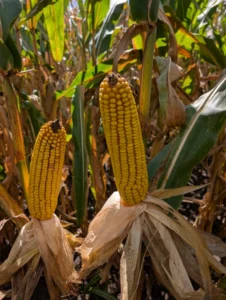
After a wet finish to last week and more systems moving through over the weekend, we have some very wet and saturated soils across northern Illinois. Corn and Soybeans continue to dry down, but that has slowed with the rain and cooler weather moving in. Any field work that would be happening this week will likely be delayed until next week, when fields and plant material dry down.
Corn is firing to varying degrees up the plant, largely depending on planting date after the wet spring delays we have had. I expect in the next week or so, to start to see the first fields being harvested.
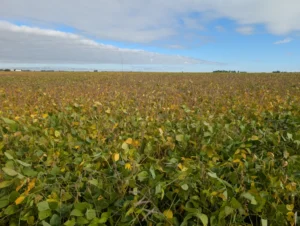
Soybean fields have started to turn as well. Still large amounts of green in the plants, including stems on the further senesced fields. On top of that, the beans themselves will need a bit of extra time to dry out after all the rain this past week.
Disease incidence this season remains low, even after a cool and wet finish to the year. The most concerning note I have is an above average amount of ear rot in fields throughout the north, largely caused by the weather we have seen.
It’s the calm before the storm, and it’s shaping up to be a busy October as always. Stay safe and have a happy harvest!
Russ Higgins – Commercial Agriculture Educator
Grundy County
Soil Conditions: Near Normal
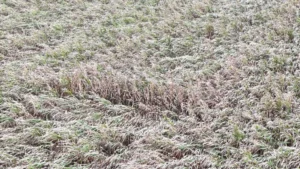
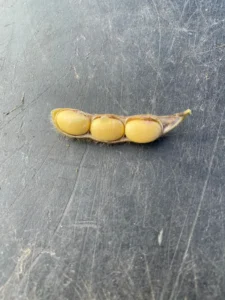
Sporadic harvest had slowly started in this region before rainfall stopped activities. Once field conditions improve, I expect the 2026 harvest to engage on a larger scale. Farmers are encouraged to take advantage of the lull to check fields and hybrids to determine harvest order. We have had reports on wind-blown and leaning and lodged corn. In several instances, it appears to be hybrid specific. Most corn fields visited are at R6 or black layer and are somewhere between the upper teens and upper twenties in moisture content. There is more variation between soy fields, although most are R7 or beginning maturity. At this stage plants show at least one pod exhibiting its normal color. Mature pod color indicates that the seed is finished accumulating dry matter and increasing in weight. As seeds transition from green to yellow, they are about 60% moisture. R8 or full maturity soy is indicated when 95% of the pods have reached their mature color.
Doug Gucker – Local Food Systems and Small Farms Educator
Dewitt, Macon, and Piatt County
Soil Conditions: Mildly Wet (soil is wetter than normal, local vegetation is healthy)
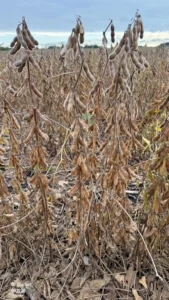
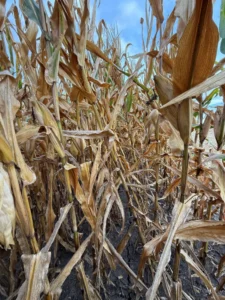
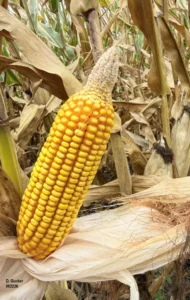
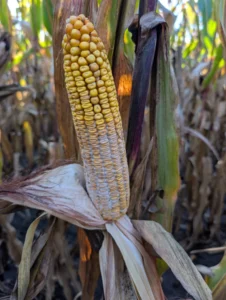
Corn harvest is in full swing, with yields generally good, but not as good as last year’s. Lodging and stalk quality issues are showing up in the May-planted corn fields, adding to this year’s harvest stress. The tip back of the ear’s kernels is very common across the area.
Harvesting of the early-maturity soybeans has begun. Soybean harvest is expected to resume as soon as weather conditions allow.
Talon Becker – Commercial Agronomy Specialist
Vermilion County
Soil Conditions: Mildly Wet (soil is wetter than normal, local vegetation is healthy)
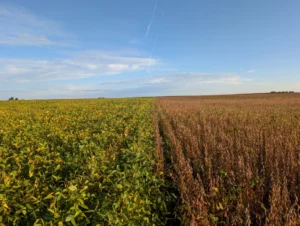
It looks like harvest had just gotten started in northern Vermilion County before the rain put a halt to any field activity. As of Tuesday (9/22) this week, soils were still a bit wet for equipment traffic without risking some rutting and compaction issues. But drier conditions this week have likely allowed some in the region to restart their harvest in the past day or so. Most of the corn fields surveyed are at black layer and ready for harvest. I only found a couple localized areas in the northern half of the county with lodging issues, but stalk rots are still a concern, along with ear rots, which I found with moderate prevalence in a couple fields. A small percentage of the soybean fields have also reached harvestable maturity, although I did not see any soybean fields cut at the time of my survey. Most fields are still holding on to some leaves and are generally somewhere in the middle of beginning and full maturity.
This is our last scheduled crop report of the season. Good luck to all with harvest and stay safe out there.
]]>
Agricultural Markets Synthesis
Throughout the week, agricultural commodity markets were shaped by early harvest progress, surging energy-related transportation surcharges, speculative fund activity, and geopolitical and macroeconomic developments. Early in the week, Frayne Olson (North Dakota State University) emphasized that while crude and diesel spikes do not directly suppress physical grain demand, escalating railroad and barge fuel surcharges alter the flow and timing of grain deliveries, widening basis levels and forcing farmers and end-users to share increased logistics costs. There is more on harvest time basis later in this newsletter. Naomi Blohm (Total Farm Marketing) noted unexpected technical strength in soybeans despite bearish chart reversals left in the wake of the September USDA crop report, as traders weighed an 11-month low in the August soybean crush against potential trade progress with China. Blohm also highlighted updated CONAB data from Brazil indicating sufficient old-crop ending stocks alongside reduced export projections. Midweek, Greg Johnson (Total Grain Marketing) examined price volatility stirred by rumors surrounding Chinese President Xi Jinping’s health at the BRICS summit, which caused a sharp intraday drop in soybean futures. Johnson also discussed CONAB’s projections for a 10.7% increase in Brazil’s 2026–2027 first crop corn and a 3.7% increase in the safrinha corn —driven primarily by domestic ethanol and livestock demand—while noting that speculative funds hold record-long positions in corn and near-record longs in soybeans. Following the Federal Reserve’s unanimous decision to raise interest rates by 25 basis points, Johnson urged producers to “draw a line in the sand” and protect margins given the 14% to 20% rally in grains since mid-summer. Later in the week, Matt Bennett (AgMarket.net) echoed concerns over tight global balances, noting that Ukrainian export logistics continue to face severe obstacles across the Black Sea and inland waterways, while U.S.-Canada tariff friction creates downside risks for U.S. corn ethanol exports.
During the Commodity Week panel, Naomi Blohm (Total Farm Marketing), Mike Zuzolo (Global Commodity Analytics and Consulting), and Greg Johnson (Total Grain Marketing) stressed that soaring diesel prices—surpassing pre-2008 records—have prompted railroads to recover up to 90% of increased fuel costs via surcharges, while truck freight has risen 15% to 20% and barge rates have jumped from 204 to 250 on the AMS index. These elevated freight costs are placing downward pressure on interior cash corn bids, whereas strong processor demand and export inquiries have kept soybean basis comparatively firm. Zuzolo highlighted that macroeconomic headwinds, such as a spiking U.S. dollar, rising bond yields, and rumors of a pre-election U.S. diesel export ban, could introduce sharp downside risk into paper futures, even while physical balances remain structurally tight.
Agricultural Weather Synthesis
Agricultural weather forecasts throughout the week tracked a persistent meteorological divide across the United States, marked by heavy rainfall in the northern Corn Belt, extreme heat in the south, and fluctuating outlooks for domestic winter wheat and international growing regions. Early in the week, Mark Russo (EverStream Analytics) reported that an anomalously warm pattern across the Midwest would be paired with above-normal rainfall over the northern Corn Belt, while the southern Corn Belt and Delta would remain warm and dry, facilitating rapid early harvesting. Furthermore, he linked a strengthening, historically powerful El Niño to an improving precipitation setup across the hard red winter wheat belt from Kansas through the Texas Panhandle. Drew Lerner (World Weather, Inc.) reinforced this assessment, stating that northern harvest operations would face prolonged slowdowns from saturated soils. Internationally, Lerner highlighted severe moisture deficits across Europe; west-central France received only 25% of normal rainfall since mid-March, causing water levels on the Rhine and Danube rivers to fall so drastically that commercial barge traffic was severely disrupted. Mike Tannura (Tstorm Weather), Thursday, warned that repeated heavy rains across southern Brazil threatened wheat crop quality, though early rains in Mato Grosso provided an acceptable baseline for soybean planting. Friday, Eric Snodgrass (Nutrien Ag Solutions) concluded the week by expressing skepticism regarding weather models projecting rapid October cooling under the “Super El Niño,” warning that persistent warmth and an active storm track could narrow fall harvest windows across the Midwest.
The Week’s News and Other Items
Cash Rent Projections for 2027: Agricultural economists from the University of Illinois addressed cash rent benchmarks and projections for the 2027 crop year. Gary Schnitkey, Nick Paulson, and Juo-Han Tsay (U of IL TIAA Center for Farmland Research) released county-level cash rent data and hosted an informational webinar reviewing USDA-NASS and Illinois Society of Professional Farm Managers and Rural Appraisers surveys. The data indicated that average Illinois cash rents softened slightly to $261 per acre in 2026, down from the 2024 peak. Tsay noted during our WILLAg.org interview that while summer surveys initially pointed to a $3 to $5 per acre decrease for 2027, recent rallies in grain prices may temper that drop. However, because surging diesel and general input expenses continue to compress net farm operating margins below historical long-term averages, farmland rental rates are projected to remain largely steady to slightly softening into 2027.
The Size and Timing of the Harvest Low in Corn Basis: Based on seasonal data from 2010 to 2025 across 136 elevators in 12 US Corn Belt states, the farmdoc study finds that the regional average basis typically bottoms out in mid-October. This timing directly aligns with the midway point of the harvest season when supply pressure peaks. During this broad trough, which lasts for roughly five weeks, the Corn Belt average basis dips 11 cents per bushel below its end-of-November baseline. However, this regional average smooths out steeper localized declines; the median drop is 16 cents overall and reaches 19 cents per bushel in Illinois. The most severe basis depressions are geographically concentrated in the central Corn Belt, particularly at locations that accumulate supply from expansive areas, such as river transport hubs. Ultimately, the historical data confirms a synchronized relationship between the acceleration of harvest progress and the temporary weakening of local corn basis levels.
Diesel Fuel Prices Spike: The agricultural energy complex experienced severe supply pressures and price escalations throughout the week. Dave Chatterton (Strategic Farm Marketing) reported that U.S. distillate fuel inventories dropped to 13% to 14% below five-year averages as ongoing conflicts in the Black Sea and Middle East constrained global supplies, pushing national retail diesel prices past $6 per gallon and farm-level transport loads to between $40,000 and $45,000. Patrick DeHaan (GasBuddy.com) explained that Ukrainian drone strikes on Russian refining facilities have paralyzed roughly one-ninth of global diesel refining capacity, while Houthi attacks in the Red Sea and drone strikes on the Saudi East-West pipeline have heightened crude delivery risks. DeHaan added that domestic refineries are operating above 98% capacity with zero operational margin, projecting that diesel could reach $6.50 to $7.00 per gallon. In response to rising farm fuel burdens, Senate Majority Leader John Thune expressed openness to considering a federal ban on U.S. diesel exports, a proposal that faced skepticism from Interior Secretary Doug Burgum. Concurrently, Energy Information Administration data analyzed by the Renewable Fuels Association revealed that domestic ethanol production held steady at 1.1 million barrels per day (46.16 million gallons daily), representing a 4.2% increase year-over-year and 11.9% above the five-year average.
Conab Projects Brazil’s 2027 Corn and Soybean Production: Brazil’s National Supply Company (Conab) confirmed that major agricultural commodities are reaching historic heights, projecting a record 148 million metric tons of corn (a 2.8% annual increase) and 181.6 million metric tons of soybeans (a 0.7% increase) will be produced in 2027. While total grain acreage is expanding, the underlying dynamics diverge heavily; corn is benefiting from aggressive area expansion driven by thriving domestic industries, whereas soybean acreage growth has slowed to just 1.4%—marking its slowest expansion rate in 20 years. On the demand front, a substantial chunk of the expanding corn crop is being structurally absorbed within Brazil by surging livestock feed needs and corn-based ethanol plants, lifting domestic corn consumption by 6.7%. Even with this domestic consumption boom, Brazil will remain an exporter, with projected shipments of 46 million tons of corn and an all-time high 118 million tons of soybeans largely bound for China. Check out the current marketing year (2025/26) Conab numbers converted to bushels on the WILLAg.org website under the USDA tab.
Data Centers and Electric Cooperatives: Rapid expansion of large-scale artificial intelligence data centers has introduced substantial power supply hurdles for rural utilities. Jim Matheson, CEO of the National Rural Electric Cooperative Association (NRECA), reported that individual data centers demanding up to 800 megawatts can instantly triple the entire baseline electricity load of a rural electric cooperative. Matheson stressed that electric co-ops must carefully balance this sudden step-function demand to preserve grid reliability and prevent cost-shifting or rate hikes onto existing farm and rural residential consumers. He also called for comprehensive federal permitting reforms to establish predictable timelines for transmission and generation infrastructure, while maintaining local utility authority over project integration.
Farm and Rural Legislation Update: On the federal legislative front, key agricultural and rural bills advanced through Congress. Republican Senator Mitch McConnell returned from a three-month health absence to cast the deciding 12th Republican vote on the Senate Agriculture Committee, advancing the Senate Farm Bill to the floor after it had been stalled by committee Democrats since August. The committee’s approval marked a victory for Chair John Boozman, overcoming disputes surrounding livestock production amendments linked to California’s Proposition 12, leaving Majority Leader John Thune to determine floor scheduling ahead of the November elections. Additionally, the U.S. House of Representatives approved the bipartisan AM Radio for Every Vehicle Act via voice vote, sending the measure to the Senate to mandate AM radio access in all new commercial vehicles.
That is a comprehensive look at the markets, the weather, and the news driving agriculture this week. You can find all of these segments, plus daily market updates from our farmdoc team, online anytime on demand at WILLAg.org.
Editor’s note: This article was adapted from the week’s WILLAg.org radio broadcast transcripts, formatted for print with the assistance of Google’s generative AI tool, Gemini, and reviewed by Todd Gleason.
—
September
26 – Crop Sciences Harvest Open House
30 – University of Illinois Homecoming
October
06 – PCM Webinar | 2026 PCM Fall Webinar Series Continues
22 – farmdoc Webinar | First Look at the ARC/PLC Decision for 2026
26-29 – 1st International Miscanthus Summit
28 – Celebrating 150 Years of the Morrow Plots
December
01 – PCM Webinar | 2026 PCM Fall Webinar Series Continues
03 – Illinois NLRS Partnership Conference
14 – Illinois Farm Economic Summit, Mt. Vernon
15 – Illinois Farm Economic Summit, Sherman
16 – Illinois Farm Economic Summit, Peoriaf
17 – Illinois Farm Economic Summit, DeKalb
January
19 – Illinois Fertilizer and Chemical Association Winter Convention
—
Commodity Week can be heard in the 2 o’clock hour central time on WILL AM580 or you may subscribe to it using the links in the player below. This week the panelists include Naomi Blohm from Total Farm Marketing, Greg Johnso of Total Grain Marketing, and Mike Zuzolo at Global Commodity Analytics and Consulting.
The Closing Market Report airs at 2:06 p.m. central daily on WILL AM580. It, too, is a podcast. Subscribe using the link in the player.
]]>Grundy County
Soil Conditions: Mildly Dry (soil is drier than normal, plant growth may have slowed)
Rain is expected for Northeast Illinois this week, if it materializes it will provide needed moisture. Its benefit to most crops at this stage is uncertain, but we will decrease the fire risk associated with starting harvest when crops are tinder dry. It’s becoming a challenge to share information on the 2026 crop; we are so close to harvest most are in a wait and see attitude. Several late season observations include a very rapid dry down for the corn crop. Moisture levels for hand shelled samples for 105-day (2550 GDU’s) and 108-day (2580 GDU’s) hybrids were 24.8% and 18.8% respectively. As mentioned in previous reports, the loss of color and drydown of the corn crops in this region has been dramatic. When hand shelling corn kernels that did not fill (aborted) on the ear were noticeable. Kernel abortion is when a kernel is successfully pollinated, starts to form but stops developing and shrivels because the plant cannot supply needed photosynthate during early grain fill. This is often due to environmental stress. Of note, in some soy fields is the variation of plants reaching maturity. This too can likely be attributed to environmental stress during the growing season. An example is areas that were temporarily ponded or saturated are lagging behind other parts of the field.
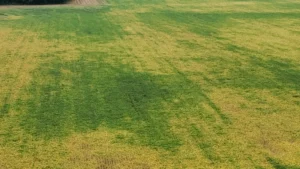
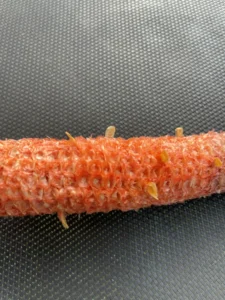
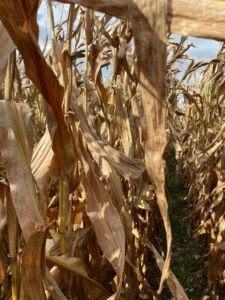
Talon Becker – Commercial Agriculture Specialist
Douglas County
Soil Conditions: Mildly Dry (soil is drier than normal, plant growth may have slowed)
Harvest is underway in Douglas County. During my survey Tuesday (9/15) morning, I saw both corn and soybean fields being harvested as well as a handful of others that had recently been harvested, or at least “opened up”. Most corn fields visited were at black layer (R6) or close to it, with the exception of a couple of fields that were presumably planted late due to early season wet conditions. Soybean growth stage across the county showed a bit more of a range, with the majority of fields at beginning maturity (R7) or beyond, but a fair number still mostly green across the canopy. Those soybeans that are still holding on to some green leaves are turning quickly as soil moisture continues to decrease in the area with warm temps and minimal rainfall. As I write this on Wednesday (9/16), we did catch some rain in the area from the south edge of a storm system that moved through this morning. Available reports from Douglas County show a range of ~0.1-0.8″ in accumulation from that storm, so probably not enough to keep people out of the fields too long, depending on how the scattered storms in the forecast for the rest of the week play out.
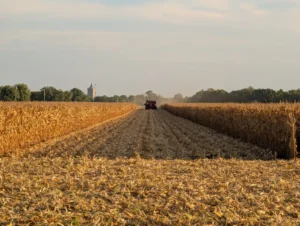
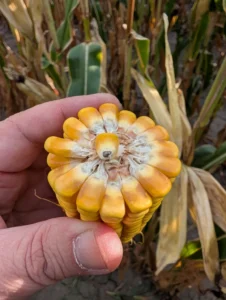
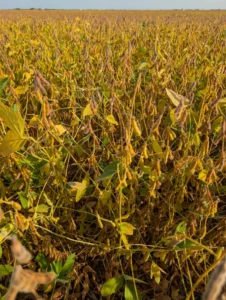
]]>
Agricultural Markets Synthesis
Early in the week, Naomi Blohm (Total Farm Marketing) noted quiet post-holiday trade for corn and soybeans, observing that corn closed below key moving averages and required fresh bullish news to avoid a pullback. Wheat saw double-digit gains driven by ongoing geopolitical concerns in the Black Sea region. Ed Usset (University of Minnesota) provided historical context for the recent August grain rally, comparing it to surge years like 2003, 2011, and 2022. He advised producers not to hold out for significantly higher prices, as these late-summer spikes often settle back down as harvest progresses. Pre-report estimates indicated lower corn and soybean yields, leaving traders to debate whether this was already priced into the market. Greg Johnson (Total Grain Marketing) confirmed expectations of lower corn yields, particularly in the hot and dry northern Midwest, while noting that unfulfilled Chinese soybean and corn purchases remained a wildcard. Matt Bennett (AgMarket.net) highlighted tight global soybean stocks had pushed prices to near three-year highs, advising producers to use the rally to hedge risk and secure profitable margins. In the Commodity Week broadcast, Matt Darragh (Kpler) provided international context, explaining that escalating conflict between Russia and Ukraine had restricted nearly a third of global wheat export capacity, driving up war-risk premiums and forcing buyers to look to alternative suppliers like Argentina and Australia. Garrett Toay (AgTraderTalk.com) analyzed the USDA’s reported 15.8 billion bushel corn crop and slightly increased 4.535 billion bushel soybean crop, cautioning that a historically wide November soybean-December corn spread would likely face a seasonal correction as harvest pressure builds. Ellen Dearden (Ag Review) added that U.S. corn harvested acres unexpectedly dropped by 100,000, while severe drought in the European Union would force the EU to import corn, keeping global balances tight. Finally, Mike Zuzolo (GlobalCommResearch.com) observed surging crude oil prices tied to Middle Eastern tensions were propping up grain markets, though he warned that technical thresholds and fund positioning could trigger a breakdown if support levels like $12.95 for November soybeans were breached.
Agricultural Weather Synthesis
Don Day (DayWeather) began the week predicting modest temperature relief and the arrival of subtropical moisture, which would trigger scattered showers and thunderstorms across the parched southern U.S. and Corn Belt. Drew Lerner (World Weather Incorporated) elaborated on these patterns, noting that heavy, harvest-delaying rains were hitting Iowa and expanding across the Midwest, while the drought-stricken southwestern plains remained dangerously hot, evaporating moisture almost as quickly as it fell. Internationally, Lerner warned that erratic early-season showers in central Brazil and excessively wet conditions in southern Brazil could disrupt early planting. Mike Tannura (Tstorm Weather) confirmed this transition to a cooler, wetter central U.S. pattern, which he expected to significantly improve soil moisture for impending winter wheat planting. Tannura also emphasized that southern Brazil was experiencing unusually heavy September rainfall, driven by the rapid development of a historically strong El Niño that could profoundly impact the entire South American growing season. By the end of the week, Eric Snodgrass (Nutrien Ag Solutions) contrasted a hyperactive, El Niño-fueled Pacific hurricane season with an abnormally quiet Atlantic basin suppressed by wind shear. Snodgrass warned that while upcoming Midwest rains would stall harvest progress, the overarching El Niño pattern tilted the odds toward a persistently wetter U.S. fall, further compressing application and harvest windows.
The Week’s News and Other Items
Where’s the Beef: The beef industry faced significant producer frustration this week over the Trump administration’s 90-day suspension of tariffs on imported South American beef. Nebraska rancher John O’Dea criticized the move, arguing that intentionally driving down consumer prices destroys producer margins and discourages herd expansion. Travis Meteer (University of Illinois) provided broader context, explaining that the U.S. cattle cycle is currently at a low herd inventory point, which has led to packing plant closures and forced feedlots to raise cattle to all-time heavy weights to compensate. Meteer noted that government interventions like the tariff suspension undermine market profitability signals just as the cow-calf sector was poised to rebuild the herd.
Black Sea Conflict from Kpler’s Perspective: Following the mid-July escalation of the Russia-Ukraine conflict, severe disruptions have paralyzed the Black Sea grain trade and constrained nearly a third of the global wheat supply noted Matt Darragh from the global shipping logistics company Kpler during Commodity Week. Ukrainian drone strikes in the Sea of Azov prompted Russian retaliations that significantly damaged export infrastructure on both sides he said. This conflict paralyzed Ukraine’s three primary deepwater ports—Chornomorsk, Odesa, and Yuzhny—which historically handled over 90% of the country’s grain exports. Operations at crucial Russian ports, including Novorossiysk, Tuapse, and Taman, were similarly curtailed. Because Russia and Ukraine typically account for 25% and 10% of global wheat trade respectively, the loss of these logistical hubs has effectively frozen international shipments during the historically busy third quarter. Despite international efforts by Turkey and the United States to broker a ceasefire for commercial vessels and lower war-risk insurance premiums, negotiations remain stalled, says Darrah, over territorial disputes while infrastructure strikes continue. Both nations are struggling to find alternative export routes. Russia is attempting to redirect grain through Baltic Sea ports, and Ukraine is utilizing Danube River barges toward Romania, but these workarounds lack the capacity to replace the lost deepwater terminals. Consequently, Black Sea export volumes plummeted throughout August and September. Major wheat importers, such as Saudi Arabia and Pakistan, have left import tenders unfilled rather than paying the inflated war-risk premiums, while other nations like Indonesia are pivoting to Argentine and Australian wheat. Russian and Ukrainian farmers are now forced to use silo bags to store their harvest for up to 12 months, creating a significant supply overhang and depressing local ex-farm values. While taking a bullish market position remains risky amid these constraints, any sudden peace agreement could release a massive, delayed flush of Black Sea grain into the global market thinks Darragh.
Fall Fertilizer Application Recommendations: As farmers prepare for fall fertilizer applications, high nutrient costs are making precise application strategies more critical for maintaining profitability. According to University of Illinois Soil Scientist John Jones, utilizing up-to-date soil tests offers a high return on investment, particularly with phosphorus products reaching $900 per ton. Jones advises growers to utilize two-and-a-half-acre grid sampling or carefully mapped zone sampling to avoid applying nutrients where they will not yield a crop response. Ongoing university research indicates a low probability of crop response when soil test values exceed 17 to 25 parts per million for phosphorus on a Bray-1 test, and 160 to 200 parts per million for potassium. In fields testing above these thresholds, farmers can allow nutrient levels to naturally draw down without incurring application expenses. For fall anhydrous ammonia applications, primarily utilized north of Interstate 70, Jones emphasizes patience regarding soil conditions. Applications should only begin when soil temperatures fall below 50 degrees Fahrenheit at a four-inch depth and demonstrate a consistent decreasing trend. This temperature threshold restricts the soil biological activity that converts stable ammonium into nitrate, which is highly susceptible to environmental loss. To determine the most profitable nitrogen application rates, Jones recommends utilizing the online Corn Nitrogen Rate Calculator (cornNratecalc.org), which utilizes data from hundreds of on-farm trials to identify the maximum economic return to nitrogen. When building a nitrogen management plan for the 2027 crop, he cautions that producers must calculate the total applied nitrogen across the entire system. This means factoring in all nitrogen sources, including the nitrogen content found in fall phosphorus fertilizers and spring broadcast herbicide applications, rather than solely calculating the anhydrous ammonia application rate.
Wheat Double-Crop Soybean Profitability: Current projections suggest a wheat and double-crop soybean rotation will be the most profitable option for southern Illinois farmers in 2027, continuing a recent trend of outperforming both standalone corn and soybeans. According to University of Illinois agricultural economists Gary Schnitkey and Nick Paulson, the combination is expected to generate an operator and land return of $309 per acre next year, beating projected returns for standalone corn by $174 and standalone soybeans by $105. While wheat acreage in the state remains below its 2008 peak, this two-crop system already generated the highest returns among the three alternatives in 2022 and 2023, and it is on track to do so again for 2026. The economists note that from 2021 through 2025, the wheat and double-crop soybean system yielded an average return of $363 per acre—$70 higher than corn and $89 higher than standalone soybeans.
Higher Corn Prices and Swine Finishing Feed Costs: Swine finishing enterprises can expect feed costs to jump nearly 10 percent in 2027, driven largely by elevated corn futures. According to Purdue University agricultural economist Michael Langemeier, feed expenses remain highly sensitive to fluctuations in both corn and soybean meal markets. Langemeier notes that every 10-cent increase in the per-bushel price of corn adds 43 cents per hundredweight to finishing feed costs, while a $10 per ton increase in soybean meal adds 37 cents per hundredweight. With current feed costs sitting near $36.50 per hundredweight, pricing volatility next spring and summer could push those expenses anywhere from $35 to $43 per hundredweight depending on the final commodity baseline.
That is a comprehensive look at the markets, the weather, and the news driving agriculture this week. You can find all of these segments, plus daily market updates from our farmdoc team, online anytime on demand at WILLAg.org.
Editor’s note: This article was adapted from the week’s WILLAg.org radio broadcast transcripts, formatted for print with the assistance of Google’s generative AI tool, Gemini, and reviewed by Todd Gleason.
—
September
17 – farmdoc Webinar | Farmland Values and Rental Agreements in Illinois for 2027
19 – Celebrate Food and Ag Tailgate – ILLINOIS vs SIU
26 – Crop Sciences Harvest Open House
30 – University of Illinois Homecoming
https://homecoming.illinois.edu
October
06 – PCM Webinar | 2026 PCM Fall Webinar Series Continues
26-29 – 1st International Miscanthus Summit
28 – Celebrating 150 Years of the Morrow Plots
December
01 – PCM Webinar | 2026 PCM Fall Webinar Series Continues
03 – Illinois NLRS Partnership Conference
14 – Illinois Farm Economic Summit, Mt. Vernon
15 – Illinois Farm Economic Summit, Sherman
16 – Illinois Farm Economic Summit, Peoria
17 – Illinois Farm Economic Summit, DeKalb
January
19 – Illinois Fertilizer and Chemical Association Winter Convention
—
Commodity Week can be heard in the 2 o’clock hour central time on WILL AM580 or you may subscribe to it using the links in the player below. This week the panelists include Matt Darragh from Kpler, Ellen Dearden of Ag Review, Garrett Toay with AgTraderTalk.com.
The Closing Market Report airs at 2:06 p.m. central daily on WILL AM580. It, too, is a podcast. Subscribe using the link in the player.
]]>DeKalb County
Soil Conditions: Near Normal
Cooler and wet conditions have moved in across northern Illinois. Light rain and heavy morning dews have propagated some late season disease in both corn and soybeans as we start to enter wide-scale senescence and harvest.
Soybeans in McHenry and DeKalb counties are producing large amounts of pods, as well as filling those pods very well. I expect many soybean fields to have high yields. I have seen mostly foliar late season diseases such as SDS and Septoria leaf spot, but nothing of major concern that will slow down soybean pod fill. Fields with earlier maturities are well into senescence as well.
Corn is finally starting to show some disease with the prolonged leaf tissue wetness, and lower temperatures that we have seen in September. Tar spot, northern corn leaf blight, and even some late season southern rust are being found in fields. Many corn fields are starting to fire and die down, as well as hitting black layer, or physiological plant death. Disease at this point will mostly go on to determine inoculum load for next season, as well as assist in drying down plant material for harvest.
Overall, we are steadily marching towards harvest, and hoping for some great drying and harvest weather to finish out the season


Russ Higgins – Commercial Agriculture Educator
Grundy County
Soil Conditions: Mildly Dry (soil is drier than normal, plant growth may have slowed)
For many Labor Day weekend is considered the unofficial end of summer. For the ag community in Northeast Illinois the end of summer is the Sandwich Fair, held annually the week following Labor Day. Yesterday I had the opportunity to judge commercial corn entries at the Horticulture and Crops barn at the fair, Using the size and kernel number of ears as an indicator, it has been a good growing season. In the field, both corn and soy are nearing maturity, in most fields I observed it appears corn is winning the race. Most in this region will likely start the 2026 harvest in corn before soy. As farmers prepare for the harvest this is an ideal time to check corn fields for any standability issues. This can be accomplished by walking the field or by use of a drone. With this knowledge, field harvest order can be adjusted accordingly. With the variability we have seen within fields this year it will be important to check combine settings often during crop harvest.


Talon Becker – Commercial Agriculture Specialist
Champaign County
Soil Conditions:Mildly Dry (soil is drier than normal, plant growth may have slowed)
Harvest has begun in northern Champaign County, albeit on very limited acreage, primarily seed corn fields at this point. Another week of dry weather along with high temps in the 90s have dried up any standing water that remained in fields in that part of the county and has moved the corn crop, in particular, much closer to harvest. Most corn fields I visited still have not quite hit full physiological maturity (R6), but with the milk line all but disappeared on most ears, they don’t have far to go. Ear size and grain fill was once again variable. Foliar diseases in corn are “helping” to turn fields from green to brown quickly at this time of year, and I’ve seen a bit more lodging in corn fields as the weeks progress. In fields surveyed with lodging issues, the main culprit appeared to be Diplodia stalk rot. But other stalk and crown rots could be contributing to this issue as well. I’ll reiterate my message from last week encouraging the use of recent drone or satellite imagery to asses lodging severity in fields to aid in harvest decision making. Soybeans are also progressing towards maturity, but many fields remain with plenty of green in the canopy, still somewhere between full seed (R6) and beginning maturity (R7) growth stages.


Dane Hunter – Commercial Agricultural Specialist
Marion County
Soil Conditions: Moderately Dry (soil is dry, plants may be browning or stressed, water bodies are low)
I haven’t made a report for several weeks as I’ve been on paternity leave and up to my elbows in diapers and bottles for my twin infants. Until this last week my windshield surveys had me thinking that the crop was still doing pretty well despite the hot dry weather over the last two months. I had seen a few patches of stressed plants in pockets of fields with thinner soils, or regions that missed a rain, but overall, the crop didn’t seem too visibly stressed. In the last week (prior to the rains that came through on 9/10/26) I started noticing more and larger areas of visible stress. When I walked out in some late planted and double crop beans that from the road, looked healthy; I was surprised at how many pods contain only one or two developing beans. Clearly the hot dry weather was impacting fertilization and seed set more than I realized. A lot of these later planted fields do have a number of very small pods that may still set. Hopefully the rains this week help prevent them from aborting and at least fill the pods we do have out there.
I saw my first combine shelling corn in Marion County on August 27th. I still have only seen that one farm shelling and drying corn, everyone else seems to be letting the triple index heat dry their corn down for now. The hot, dry weather has had all corn in the area at black layer and drying for a while, regardless of how late it was planted. From what I’ve seen, it looks like corn planted from April to mid-May had decent fill before being forced into senescence. Ear size may not be anything to write home about, but it seems there’s more grain out there than 2025 in this area (which is a low bar). Fingers crossed as combines start to get rolling.


]]>
Agricultural Markets Synthesis
Throughout the week, agricultural markets experienced multi-year highs driven by strong demand, geopolitical friction, and weather-related supply concerns, before softening ahead of the holiday weekend. Naomi Blohm (Total Farm Marketing) noted that soybean futures rallied above $13 resistance due to robust domestic demand, Chinese export sales, and biofuel requirements. Greg Johnson (Total Grain Marketing) observed that the multi-year highs made farmers hesitant to sell, despite a rapidly accelerating early harvest caused by intense late-summer heat. Matt Bennett (AgMarket.net) highlighted volatile, two-sided trade as speculative buying met profit-taking, noting that heat is advancing drydown without severely damaging early-planted corn. During the Commodity Week broadcast, panelists Matt Bennett, Shane Holtorf (Logic Ag Marketing), and Sherman Newlin (Zaner Ag Hedge) discussed expectations that upcoming USDA yield estimates will fall due to variable weather damage. The panel highlighted global drivers, including strong Chinese demand, Black Sea export disruptions, and potential Brazilian production impacts from a Super El Niño, advising producers to lock in profitable prices with incremental sales while maintaining call options. By week’s end, Mike Zuzolo (Global Commodity Analytics) reported softer corn, soybean, and wheat trade, reflecting harvest pressure and weak chart signals in the wheat and crude oil sectors.
Agricultural Weather Synthesis
Forecasts throughout the week tracked a historic and persistent late-summer heatwave across the United States, alongside significant global anomalies tied to a strong El Niño pattern. Don Day (Day Weather) reported that above-average heat would dominate the Corn Belt for 7 to 10 days, with the most intense heat and dryness centered in the Western Corn Belt. Drew Lerner (World Weather Inc.) noted this high-pressure ridge was blocking moisture from the central and eastern Midwest, exacerbating drought conditions across the hard red winter wheat belt from Kansas to Texas. Mike Tannura (Tstorm Weather) emphasized the severity of the heat, indicating temperatures running 8 to 10 degrees above normal, marking some of the warmest 14-day stretches on record for U.S. corn and soybeans. Eric Snodgrass (Nutrien Ag Solutions) added that the persistent heat is compounding severe drought stress in the Western U.S. and Southern Plains, while the El Niño pattern has caused a sluggish Atlantic hurricane season. Internationally, meteorologists closely monitored South America; Day and Tannura noted unseasonable early rains in Brazil’s Center-West that could prompt premature soybean planting. However, Snodgrass and Lerner warned that irregular precipitation patterns might force replanting efforts later in the season. Tannura also highlighted heavy rains soaking southern South American grain belts, while Lerner pointed to severe drought and wildfires in Indonesia contrasted with drenching rains in the Philippines.
The Week’s News and Other Items
Trump Admin’s EPA SRE Announcement a Reallocation: The EPA’s decision to grant roughly 1.8 billion gallons in small refinery exemptions (SREs) for 2025 initially sparked demand concerns, but agricultural economist Scott Irwin describes the move as unvarnished good news for agriculture and biofuels. The agency announced a supplemental rulemaking to fully reallocate 100 percent of those waived volumes into the 2026 and 2027 renewable fuel mandates, a move that surprised Irwin, who had only anticipated a 70 percent reallocation. While this decision is largely neutral for corn and ethanol, Irwin emphasizes that restoring the lost volumes provides a significant boost and establishes a positive trend for biodiesel, renewable diesel, and soybean oil markets.
farmdoc 2027 Corn and Soybean Returns: Agricultural economist Nick Paulson reports that rising commodity prices have improved the revenue outlook for Illinois farmers in 2026 and 2027, projecting positive returns for corn and soybeans across most of the state for the first time since before 2023. However, escalating production costs—particularly for fertilizer and fuel tied to Middle Eastern geopolitical conflicts—continue to tighten overall margins, keeping net returns below the long-term average of $100 per acre. To navigate these elevated costs, Paulson advises producers to prioritize profitability over maximum yield by optimizing fertilizer application rates based on university recommendations and carefully evaluating major capital investments in machinery and land. Paulson was joined by farmdoc colleague Gary Schnitkey for a webinar detailing the budgets (also released as farmdoc article). The powerpoints and an archive of the webinar are available on the farmdoc Daily website.
Sulfur and Increasing Phosphate Fertilizer Prices: Phosphate fertilizer prices, including DAP and MAP, have steadily climbed over the past two years, largely driven by surging costs for sulfur, an essential byproduct of petroleum processing. Agricultural economist Nick Paulson explains that global sulfur prices have spiked from under $100 per ton in early 2024 to over $1,000 per ton, fueled by high energy costs and severe infrastructure damage from the war in Iran. Because these supply shocks and infrastructure issues are expected to persist for years, Paulson advises farmers to utilize soil testing results to apply only necessary nutrients, managing high input costs while maintaining proper soil fertility. You may read more on the farmdoc Daily website.
Sabbatical Insights from Columbia and the Grain Trade: University of Illinois agricultural economist Joe Janzen is spending his sabbatical year in Bogotá, Colombia, to study international grain demand and the growth of U.S. agricultural exports. He explains that a 2010 free trade agreement, which took twelve years to fully phase in, has successfully made Colombia a top destination for U.S. corn and soybean meal, primarily supporting its domestic poultry and livestock sectors. Janzen is researching how these importers react to rising grain prices and the complex motives driving global trade.
Data Centers, Civic Engagement, and University Educations: University of Illinois natural resources and environmental sciences student Bruce Beem and a grassroots coalition are actively engaging with the Champaign County Board to shape a proposed ordinance regulating new hyperscale data centers. Beem highlights significant gaps in the proposal, specifically the lack of long-term site remediation plans and the failure to account for the impact of artificial light and noise pollution on local wildlife. He warns that the facilities’ continuous hum and expanded light footprint could severely disrupt the foraging and migration patterns of birds, such as whippoorwills, which rely heavily on the area. By advocating for an extended moratorium to allow for further research and stronger safeguards, Beem demonstrates how civic engagement translates academic ecological knowledge into real-world environmental policy alongside experienced community members.
Labor Day (First Monday in September): The history of Labor Day in the United States is deeply connected to Peter McGuire, an Irish immigrant who began working as a child in New York City to support his impoverished family during the Civil War era. Experiencing firsthand the grueling hours, low pay, and dangerous working conditions of the nineteenth century, McGuire became a passionate advocate for workers’ rights and organized labor. Despite facing government resistance and personal unemployment, he successfully united workers across various trades and founded the United Brotherhood of Carpenters and Joiners of America. His relentless campaigning for an eight-hour workday and secure jobs ultimately led to the creation of a holiday dedicated to laborers, with the first Labor Day parade taking place in New York City on September 5, 1882.
That is a comprehensive look at the markets, the weather, and the news driving agriculture this week. You can find all of these segments, plus daily market updates from our farmdoc team, online anytime on demand at WILLAg.org.
Editor’s note: This article was adapted from the week’s WILLAg.org radio broadcast transcripts, formatted for print with the assistance of Google’s generative AI tool, Gemini, and reviewed by Todd Gleason.
—
WILLAg.org Calendar
September
10 – Illinois Crop Management Field Day
17 – farmdoc Webinar | Farmland Values and Rental Agreements in Illinois for 2027
19 – Celebrate Food and Ag Tailgate – ILLINOIS vs SIU
26 – Crop Sciences Harvest Open House
30 – University of Illinois Homecoming
October
06 – PCM Webinar | 2026 PCM Fall Webinar Series Continues
26-29 – 1st International Miscanthus Summit
28 – Celebrating 150 Years of the Morrow Plots
December
01 – PCM Webinar | 2026 PCM Fall Webinar Series Continues
03 – Illinois NLRS Partnership Conference
14 – Illinois Farm Economic Summit, Mt. Vernon
15 – Illinois Farm Economic Summit, Sherman
16 – Illinois Farm Economic Summit, Peoria
17 – Illinois Farm Economic Summit, DeKalb
January
19 – Illinois Fertilizer and Chemical Association Winter Convention
—
Commodity Week can be heard in the 2 o’clock hour central time on WILL AM580 or you may subscribe to it using the links in the player below. This week the panelists include Matt Bennett with AgMarket.net, Shane Holtorf of Logic Ag Marketing, and Sherman Newlin from Zaner Ag Hedge.
The Closing Market Report airs at 2:06 p.m. central daily on WILL AM580. It, too, is a podcast. Subscribe using the link in the player.
]]>Grundy County
Soil Conditions: Near Normal
Entering September an intense shift in weather as a “heat dome” became established in Northeast Illinois. While fields near the Wisconsin state line received precipitation, most areas did not. The ninety degrees plus days provided ample Growing Degree Days (GDDs) for crops finishing grain fill. On lighter soils the temperatures are causing a water deficit reflected by the wilting/yellowing plants. As mentioned in previous reports, there is very good corn, and not as good, depending on where you collect samples. This week I collected from fields that should be very high yielding. Few things are left to surprise me in this growing season, but a sunflower field in Kendall County did just that! Not sure when the field was planted and harvest plans for the crop, but an interesting rotation option. Several winter wheat fields that had been harvested earlier in the season are now supporting a robust weed population, farmers should consider mowing, tillage or a chemical option to prevent these weeds from adding to the weed seed bank. For those considering a third or fourth cutting of alfalfa an oft asked question is when? Adequate time is needed for regrowth of alfalfa to replenish root carbohydrates to increase overwintering ability of the perennial crop. Our general answer has been four to six weeks before a killing frost for the hay crop. Newer recommendations encourage farmers to look at GDDs, with a minimum of 500 GDDs between last cutting and a killing frost.
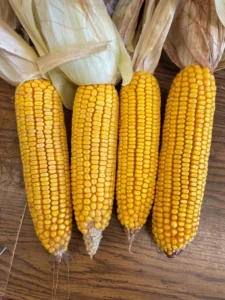
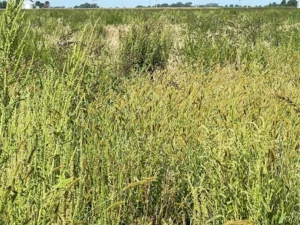
Doug Gucker – Local Food Systems and Small Farms Educator
Dewitt, Macon, and Piatt County
Soil Conditions: Mildly Dry (soil is drier than normal, plant growth may have slowed)
Early-maturity soybean fields are turning yellow and shedding leaves as they approach the R8 (Full Maturity) stage. Most soybean fields are just beginning to show a little yellow.
Corn harvest has just started, with a few farmers taking out end rows and taking advantage of local elevators offering reduced drying charges for corn at moisture levels under 30%. Corn root and lower stalk samples from fields with lodging issues were submitted to the U of I Plant Clinic and were diagnosed with both Rhizoctonia crown and stem rot, and Pythium crown and/or root rot. Corn ears are varying quite a bit in size within fields.
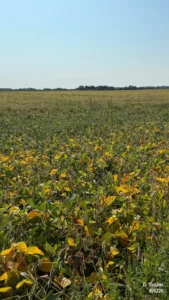
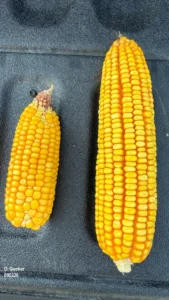
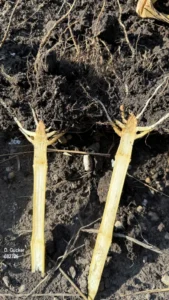
Talon Becker – Commercial Agriculture Specialist
Vermilion County
Soil Conditions: Near Normal
After a week of some welcomed dryer weather, and perhaps less welcome heat, the crop in southern Vermilion County is progressing quickly towards maturity.
Most soybean fields in that part of the county were somewhere in the full seed (R6) growth stage, with a couple fields starting to drop leaves and close in on beginning maturity (R7). Some pockets with disease issues could be found and are relatively easy to spot at this point in the season, as they tend to be a bit stunted and yellowing/dropping leaves faster than surrounding areas. But for the most part, most fields are relatively clean of disease as they near maturity.
Most corn fields are somewhere in the dent (R5) stage. I did not find any kernels at black layer in the fields I surveyed, but there were at least a couple fields that were very close. As these fields senesce, more foliar disease can be seen in the canopy as well. Even if it won’t impact this year’s management decisions, now is a good time to scout your fields to determine how well your disease management plan worked this year. Over time, these observations can help you determine which diseases may be more prevalent in certain fields as well as help you determine the influence of genetic resistance in your chosen hybrids to different diseases. Another reason to scout now is to asses the levels of stalk rot and lodging in your fields. I found a couple fields during my survey with some localized lodging due to crown and stalk rots. The use of drones or recent satellite imagery, if you have access, may help to assess extent and severity of lodging and help with prioritization of harvest activities.
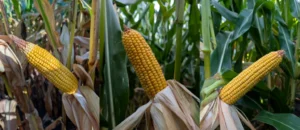
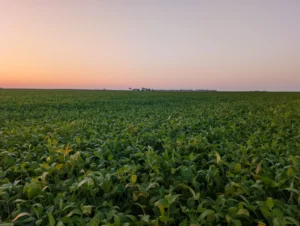
]]>
Agricultural Markets Synthesis
Agricultural markets experienced a significant late-summer rally driven by supply-side reductions, escalating geopolitical tensions, and robust global demand. Wheat led the broader grain complex higher—surging as much as 45 cents in a limit move—due to intensifying military conflicts and export infrastructure disruptions in the Russia-Ukraine Black Sea corridor. Soybean markets showed relative strength, underpinned by a continued wave of Chinese export demand and robust domestic crushing activity driven by Renewable Fuel Standard (RFS) biomass-based diesel mandates, though upside momentum faced friction from rumors of potential Small Refinery Exemptions (SREs) for 2025. Market analysts and program guests—including Sherman Newlin of Zaner Ag Hedge, Greg Johnson of Total Grain Marketing, Naomi Blohm of Total Farm Marketing, Matt Bennett of AgMarket.net, Scott Irwin of the University of Illinois, Mike Zuzolo of Global Commodity Analytics, and *Commodity Week* panelists Mike Castle of StoneX, Logan Kimmel of Roach Ag, and Chip Nellinger of Blue Reef Agri-Marketing—advised producers to capitalize on these unexpected profitable margin opportunities through incremental risk management, such as the “sell-and-defend” marketing model, locking in cash sales for space and cash flow while utilizing options to retain upside participation against potential winter rallies or South American weather threats.
Agricultural Weather Synthesis
Weather forecasts tracked a transition from a cool, wet August toward an unusually warm and increasingly dry pattern across the central United States heading into September. Early-summer precipitation left soils adequately recharged but caused localized saturation and nitrogen leaching concerns in portions of the central Corn Belt. Meteorologists and agronomic specialists—including Mike Tannura of Tstorm Weather, Drew Lerner of World Weather Inc., Eric Snodgrass of Nutrien Ag Solutions, Mark Russo of EverStream Analytics, and Don Day of Day Weather—projected a persistent high-pressure ridge shifting into the central and southern Plains, bringing a historic string of days with temperatures in the 90s. Concurrently, an intensifying “super” El Niño pattern across the Pacific continued to suppress Atlantic tropical storm development via increased wind shear while shifting soil moisture dynamics toward drier biases in the western Corn Belt and posing mixed planting and harvesting implications across South American growing regions.
The Week’s News and Other Items
Farmland Values and Cash Rents Survey: University of Illinois agricultural economists Thursday hosted a webinar presenting results from a mid-year survey analyzing the outlook for 2027 farmland prices, cash rents, and the proliferation of wind, solar, and data center leases. You may watch the full webinar online.
WATCH the Farmland Values and Cash Rents Survey webinar
Updated Crop Budgets and 2027 Corn & Soybean Returns: This coming Thursday (September 3 at 11am central) members of the U of I’s farmdoc Team will present the 2027 corn and soybean budgets as released on farmdoc. The webinar will review projected revenues, costs, and returns for corn and soybeans, placing current estimates in historical context. The presenters will also discuss key management considerations and offer perspective on decisions facing farmers, agribusiness, and landowners.
REGISTER for the Thursday, September 3 farmdoc webinar
Yield Prospects for the Illinois Corn Crop: University of Illinois extension agronomist Giovani Preza Fontes discusses field observations concerning tip back, ear populations, and kernel development. Despite reports from crop scouts across the eastern Corn Belt finding less productive crops, Preza Fontes remains confident that favorable moisture and anticipated late-season warmth will support strong grain fill.
Corn Uses N Stored in the Plant for Grain Fill: University of Illinois extension soil fertility specialist John Jones addressed the impact of heavy June rains and subsequent nitrogen variability across central and northern Illinois in this Closing Market Report conversation. Jones explains that while saturated soils caused early lower-canopy firing and lower-than-expected soil nitrate levels in research trials, a widespread yield cut (a 10% drop) is not anticipated for the state’s broader crop. As plants transition into the grain fill stage, they increasingly rely on remobilizing nitrogen already stored within the plant tissue, making robust canopy health critical for maintaining kernel weight.
The SRE Scare in D.C. is about Soybeans: University of Illinois agricultural economist Scott Irwin breaks down the brewing political debate in Washington, D.C., surrounding small refinery exemptions under the Renewable Fuel Standard in this conversation. In it, Irwin explains that while potential rule changes would offer minimal relief at the gasoline or diesel fuel pump, a sudden surge in small refinery exemptions could slash biomass-based fuel production under the RFS. Because soybean oil heavily feeds this sector and drives a substantial portion of a bushel’s crush value, these regulatory shifts pose billions of dollars in potential revenue risks for soybean producers and processors.
Sulfur and Increasing Phosphate Fertilizer Prices: While the U.S. is a major producer of sulfur given our large domestic oil and gas industry, fertilizers and energy products are global commodities, thus exposing U.S. farmers to global supply disruptions and resulting price increases. Recent sulfur spot prices have exceeded $1,000 per ton, an increase of more than 130% since the beginning of 2026 and more than 300% since August of 2025. This, combined with increases in anhydrous ammonia prices, have put pressure on phosphate fertilizer prices. DAP prices in the Corn Belt region have risen to nearly $850 per ton in recent weeks, up more than 20% than earlier in 2026.
Farm Machinery Demand Remains Weak as Manufacturers Manage Production: Gerald Mashange reviews the ongoing downturn in the U.S. farm machinery and equipment market, noting that year-to-date retail sales for tractors and combines continue to lag behind previous levels. While manufacturers have successfully reined in production and reduced factory inventories from their 2022 peaks, machinery prices remain elevated. Coupled with lower forecasted net farm incomes following earlier peak years, producers continue to face high replacement costs and restrained capital investment.
Cattle and Crops Create Synergy: Travis Meteer explores the mutual benefits and economic advantages of combining livestock production with row-crop farming. The article highlights how integrating cattle allows farms to utilize manure for fertilizer, graze cover crops and crop residues, feed co-products, and share equipment overhead costs. Emerging technologies like virtual fencing and animal monitoring continue to reduce hurdles, offering profitable opportunities to expand operations and help young producers return to the farm with lower capital investments.
Dolly Parton’s Imagination Library and a Farmer’s Family: Illinois farmer and commodity broker Garrett Toay shares how Dolly Parton’s cultural contributions extend beyond music to profound community enrichment through her Imagination Library program. Toay recounts how his family benefited from receiving free monthly books for their children from birth until starting school. Inspired by her father’s inability to read, Parton’s initiative has gifted hundreds of millions of books globally, helping families establish early childhood reading as a vital household priority.
Practical Cover Crop Management Advice: The Nutrient Loss Reduction podcast featured practical management advice from Illinois farmers Adam Dahmer, Brent Fowler, and Greg Thoren, who discussed effective no-till transitions, equipment adjustments, and targeting cover crops for erosion control.
That is a comprehensive look at the markets, the weather, and the news driving agriculture this week. You can find all of these segments, plus daily market updates from our farmdoc team, online anytime on demand at WILLAg.org.
Editor’s note: This article was adapted from the week’s WILLAg.org radio broadcast transcripts, formatted for print with the assistance of Google’s generative AI tool, Gemini, and reviewed by Todd Gleason.
—
WILLAg.org Calendar
September
02 – Orr Beef Research Center Field Day
03 – farmdoc Webinar | Projected 2027 Corn and Soybean Returns
10 – Illinois Crop Management Field Day
17 – farmdoc Webinar | Farmland Values and Rental Agreements in Illinois for 2027
19 – Celebrate Food and Ag Tailgate – ILLINOIS vs SIU
30 – University of Illinois Homecoming
October
06 – PCM Webinar | 2026 PCM Fall Webinar Series Continues
26-29 – 1st International Miscanthus Summit
28 – Celebrating 150 Years of the Morrow Plots
December
01 – PCM Webinar | 2026 PCM Fall Webinar Series Continues
03 – Illinois NLRS Conference
14 – Illinois Farm Economic Summit, Mt. Vernon
15 – Illinois Farm Economic Summit, Sherman
16 – Illinois Farm Economic Summit, Peoria
17 – Illinois Farm Economic Summit, DeKalb
January
19 – Illinois Fertilizer and Chemical Association Winter Convention
—
Commodity Week can be heard in the 2 o’clock hour central time on WILL AM580 or you may subscribe to it using the links in the player below. This week the panelists include Mike Castle from StoneX, Chip Nellinger of Blue Reef Agri-Marketing, and Logan Kimmel at Roach Ag.
The Closing Market Report airs at 2:06 p.m. central daily on WILL AM580. It, too, is a podcast. Subscribe using the link in the player.
]]>DeKalb County
Soil Conditions: Mildly Dry (soil is drier than normal, plant growth may have slowed)
We have caught a very nice break from severe weather and storms, with some pleasant temperatures to boot, as we begin to enter the home stretch of the growing season. Corn fields across northern Illinois are starting to fire, while soybean fields continue to stay green and produce large pods and seeds.
Disease is starting to show up in soybeans. Sudden death syndrome (SDS) as well as Septoria leaf spot are the two main diseases I have seen. I have not seen white mold and have only heard of a few fields so far with red crown rot (a disease that has nearly identical foliar symptoms to SDS). The fields affected by the listed diseases will defoliate quickly, and cap podfill overall. Soybean fields as a whole have looked great this year, and high yields should be expected if what I have scouted is any indicator.
Corn continues to move towards black layer and physiological maturity. Disease instances remain low even as we approach September. Tip back is something to be monitored closely, as many fields were going through pollination during a heat dome, dealt with wildfire smoke, and week-long overcast conditions. A dry and hot September may accelerate dry down as well. More updates to come next week!
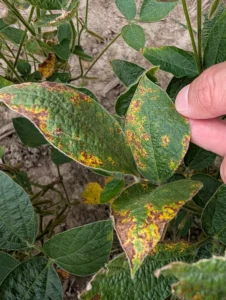
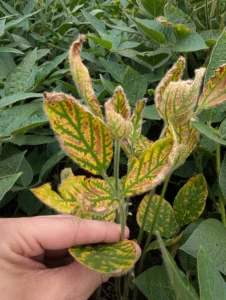
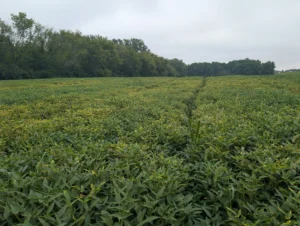
Russ Higgins – Commercial Agriculture Educator
Grundy County
Soil Conditions: Near Normal
Black layer is near for some corn fields in the Northeast region. Utilizing the U2U Decision Support Tool – Corn GDD suggests a 108-day hybrid planted April 25th in Grundy County will reach black layer between September 1st and the 6th. In corn fields scouted, especially those that did not receive a fungicide application, foliar leaf diseases continue to hasten leaf area necrosis and yellowing of plants. This is going to be a challenging year for accurate corn yield prediction from the perspective of in-field variation. Growers are encouraged to sample multiple locations within the field, accounting for pollination differences in ears to more accurately assess predicted yield. Some soy fields are starting to show very limited disease symptoms including Sudden Death Syndrome. This fungal pathogen can survive the winter in both corn and soy residue. Infection takes place early in the growing season, enhanced by cool and wet soil conditions. The visible symptoms we see are the result of a toxin produced by the disease that is translocated to upper canopy leaves. There are several other diseases including Red Crown Rot and Brown Stem Rot that exhibit similar leaf symptoms.
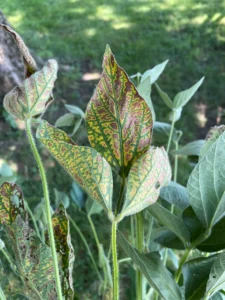
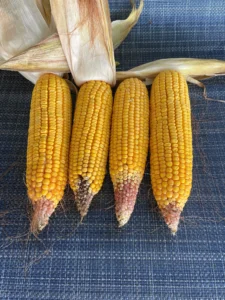
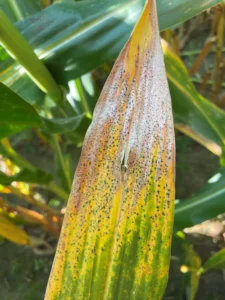
Talon Becker – Commercial Agriculture Specialist
Ford County
Soil Conditions: Moderately Wet (soil is damp, standing water may be present in low areas, water bodies are full)
I visited Ford County this week, and like Champaign County, flooded conditions have returned to areas affected earlier this growing season. The flooding seemed to be a bit worse in the southern part of the county and improved as I traveled north, which is consistent with total precipitation estimates from MRCC and rain gauge data from ISWS and CoCoRaHS from the past couple of weeks. To some extent, the flooded areas are already absent of a crop due to early-season flooding. But in a number of fields I stopped at, the current flooding extended into previously healthy crop. That crop is now either dead or has signs of stress, disease, and early senescence, leading to incomplete grain fill, low seed weights, and potential grain quality issues.
In fields or areas not affected by the flooding, soybeans are at or near full seed (R6). Soybean canopies, for the most part, were still relatively clean of disease, but a minority of fields do have some disease symptoms starting to show in patches. Disease symptoms were a bit more prevalent in corn fields visited, primarily gray leaf spot and northern corn leaf blight, but severity was still relatively low, overall. Corn was generally somewhere in the dent (R5) growth stage, getting close to black layer in a handful of fields.
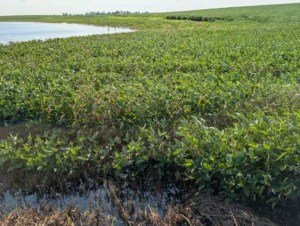
Doug Gucker – Local Food Systems and Small Farms Educator
Dewitt, Macon, and Piatt County
Soil Conditions: Near Normal
Earlier-planted soybean fields are beginning to turn color, signaling the Beginning Maturity (R7) stage. Other soybean fields are mostly in the Full Seed, R6 stage, and no longer blooming.
Earlier-planted corn fields are looking ugly with areas of the fields showing severe N-deficiency symptoms and dead plants, which is indicative of a root or stalk disease issue. Corn crown rot is suspected to be the cause in some of the fields. I currently have several corn plant roots and lower stalks being analyzed at the U of I Plant Clinic in the hope of determining the cause or causes. Local farmers are preparing for a challenging beginning to their corn harvest in the area.
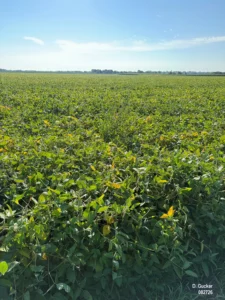
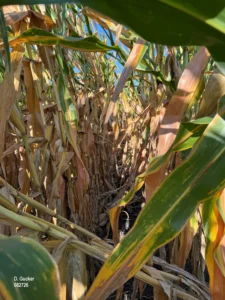
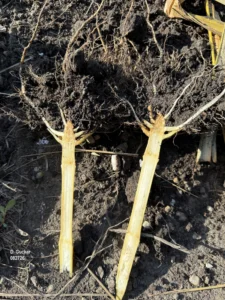
]]>
by Trent Ford, State Climatologist
ISWS PRI University of Illinois
We had a lovely weather week, seemingly rare for this year. Average temperatures this week ranged from the mid-60s in northern Illinois to high 70s in southern Illinois, between 1 and 4 degrees below average. Lower humidity allowed for some very comfortable overnight temperatures, and even a few – dare I say – nippy early mornings. Some of the more impressive nighttime low temperatures this week included 49 in Elgin and 51 in Danville. Still, August has been right around 1 degree warmer than average statewide, with only a few days of summer left.
We also had a relatively quiet weather week, which was much welcome. Isolated thunderstorms dropped some impressive totals in pockets of southern and eastern Illinois, but most of the state had less than 1 inch of total rainfall this week. August to date is within 1 inch of normal for most of the state except for the area between Interstates 80 and 74, which has been 4 to 8 inches wetter than average this month. Summer 2026 will likely end much wetter than average in north-central and far southern Illinois, near normal in south-central Illinois, and somewhat drier than average in northwest and parts of southern Illinois.
Looking ahead, I hope everyone enjoyed the early taste of fall weather, because it’s about to get hot. Temperatures will quickly increase this weekend and into next week as the ridge over Texas opens and releases some very warm and humid air. Highs next week and into next weekend will regularly reach the upper 80s and low to mid 90s, while heat index values could spike over 100 degrees for several consecutive days. Forecasted temperatures for next week approach all-time records for early September. Meanwhile, the high humidity could fuel some isolated thunderstorms, but most of the state will stay pretty dry next week. So buckle up, summer is not done with us yet.
]]>Agricultural Markets Synthesis
Throughout the week, agricultural commodity markets experienced a counter-seasonal rally supported by evidence of potentially lower corn yields relative to earlier USDA forecasts, but primarily driven by late-season demand for U.S. crops. A major theme was the drag on corn yield potential resulting from early-season moisture and heavy June rainfall. This was identified by Pro Farmer Crop Tour scouts in the eastern Corn Belt. As analyzed by Matt Bennett (AgMarket.net) and Mike Zuzolo (GlobalCommResearch.com), this potential agronomic damage, if confirmed by USDA objective yields to be taken in September, could continue to drive a supplyside dominated corn market. Pro Farmer on Friday afternoon reduced its estimate of the the U.S. corn yield to 173.2 bushels per acre—a sharp drop from the USDA’s August 180.7 projection. Generally, the trade follows the Pro Farmer crop tour numbers closely, but does not react to its national yield estimate. It will be interesting to see how the corn futures open Sunday evening in light of the surprisingly low corn projection. It is important to remember the U.S. corn crop is in the midst of grain fill. The recent rains, while damaging in some areas, could make it a good end-of-season run. There is a link to a new article on this subject from the University of Illinois further down in this letter.
Beyond the in field projections, critical market drivers and input dynamics extended to global weather, trade, and geopolitics. Matt Maltzbarger (University of Missouri/FAPRI) highlighted that elevated nitrogen fertilizer prices—spurred by the U.S.-Iran war—and a favorable soybean-to-corn price ratio may cause farmers to consider shifting 2027 acreage away from corn. Furthermore, grain markets remained sensitive to Chinese purchasing commitments ahead of a late-September summit between President Trump and President Xi. The war between Ukraine and Russia continues to expand into the Black Sea shipping lanes. This disruption coupled with a drought stricken western European corn crop has pushed regional corn futures at the Paris exchange even higher with spillover effects on global trade. Finally, adding pressure to the livestock sector, Mike Zuzolo (Global Commodity Analytics and Consulting) reported severe headwinds for cattle futures following a federal initiative to import 300,000 metric tons of discounted beef to suppress consumer food prices.
Agricultural Weather Synthesis
Midwest weather throughout the week progressed from widespread, severe storm clusters and excessive moisture toward a much-needed drying and moderating pattern. Early in the week, Mark Russo of EverStream Analytics detailed that heavy weekend storms dumped 1 to 5 inches of localized rainfall across Ohio and Indiana, bringing total precipitation along the I-80 to I-70 corridor from southeast Iowa to Columbus, Ohio, to 3 to 11 inches. He forecasted a weakening storm pattern over the ensuing two weeks, offering relief to flooded fields, while projecting a shift toward cooler, wetter conditions across Western Europe that would aid river transport and winter crop planting. Don Day of Day Weather tracked the persistent thunderstorm factory generated by moisture streaming from the Gulf and Mexico around a southern high-pressure system, noting that frequent 1-to-3-inch rain pockets saturated soils across Nebraska and the central Corn Belt before storm intensity began scaling back.
Midweek, Drew Lerner of World Weather Inc. highlighted global meteorological extremes, including severe flooding on Luzon Island in the Philippines, persistent El Niño-driven dryness and wildfire risks across Indonesia and southern Asia, and historic drought in France with critically low river levels. For the U.S. Corn Belt, Lerner emphasized that saturated fields and cooler temperatures in the 70s and low 80s were suppressing heat units, creating an urgent need for dry, warm conditions to finish soybean crops. Mike Tannura of Tstorm.net reported that despite 15% of the Corn Belt experiencing excessive rain over a 10-to-20-day window, a broader drying trend heading into late August and September would normalize the 60-day moisture balance with temperatures remaining mostly seasonal. Concluding the weekly outlook, Eric Snodgrass of Nutrien Ag Solutions confirmed that the wet pattern had broken, forecasting sustained sunshine and climbing temperatures that would provide the necessary growing degree days to mature the crop, while pointing to potential dry planting delays in northern South America as an emerging focal point.
The Week’s News and Other Items
In agricultural industry and policy developments, Tyson Foods announced the permanent closure of its beef packing plant in Joslin, Illinois, resulting in roughly 2,500 lost jobs. Darrell Peel of Oklahoma State University explained that the closure, along with the potential sale of Tyson’s Pasco, Washington facility, reflects persistent excess slaughter capacity relative to tight domestic cattle supplies, which will increase transportation costs for regional cattle producers.
In Washington, D.C., Senate Agriculture Committee Chairman John Boozman maintained a firm stance on farm bill negotiations, offering a final one-year delay on SNAP penalty provisions and noting that the return of Senator Mitch McConnell from medical rehabilitation could provide the decisive vote needed to advance the bill despite Democratic opposition.
In energy markets, Dave Chatterton of Strategic Farm Marketing evaluated the expiration of the US-Iran ceasefire memorandum, warning that the effective closure of the Strait of Hormuz, “dark fleet” oil shipping, and a 2.4-million-barrel-per-day drawdown in global petroleum stocks have pushed distillate inventories to three-decade lows ahead of harvest, creating upside price exposure for farm diesel. Mike Zuzolo of GlobalCommResearch.com also noted livestock market pressure following the administration’s announcement of plans to import 300,000 metric tons of African beef at discounted prices.
Throughout the week, scouts on the Pro Farmer Crop Tour documented stark agronomic variability across the Midwest. Sherman Newlin of Zaner Ag Hedge reported severe drought stress, low pod counts, and sub-par ear development across South Dakota and western Iowa, alongside mud and wet field conditions in Nebraska and better corn yields averaging 201 bushels per acre in southwest Minnesota. Oliver Sloup of Blue Line Ag Futures observed standing water, reduced plant populations, and disease pressure across Ohio, Indiana, and Illinois, before finding stronger corn averaging 215 to 220 bushels per acre in north-central Iowa’s “garden spot”. Concluding the tour, Pro Farmer economist Lane Akre announced the final national yield projections: a reduced corn yield of 173.2 bushels per acre (15.344 billion bushels total) resulting from extensive eastern nutrient leaching and low ear counts, contrasted against a record soybean yield of 53.3 bushels per acre (4.572 billion bushels total) supported by ample late-season pod fill moisture.
The 2026 Illinois corn crop presents a complex yield scenario shaped heavily by mid-summer weather variations impacting kernel development. While early July brought temperatures 2 to 4 degrees warmer than normal, these high maximums coupled with drying soils led to instances of ear tip-back, where kernels at the ear’s tip failed to fertilize or aborted shortly after. However, University of Illinois researchers note in a cropCENTRAL article
that the yield impact of this tip-back can be mitigated by robust ear counts and sustained canopy health throughout the grain-fill period. If kernels fill out larger than average—requiring roughly 70,000 to 75,000 kernels per bushel—yields could push well above the USDA’s August projection of 212 bushels per acre. The crop’s final performance will hinge on conditions during the ongoing grain-fill stage, as warm nights have accelerated development, leaving some early-planted fields nearing black layer and overall statewide progress slightly ahead of schedule.
That is a comprehensive look at the markets, the weather, and the news driving agriculture this week. You can find all of these segments, plus daily market updates from our farmdoc team, online anytime on demand at WILLAg.org.
Editor’s note: This article was adapted from the week’s WILLAg.org radio broadcast transcripts, formatted for print with the assistance of Google’s generative AI tool, Gemini, and reviewed by Todd Gleason.
—
University of Illinois Extension and Crop Sciences Agronomy Days
August
25 – Focus on the Future: Sustaining Farm Legacy | Mt. Vernon
27 – WEBINAR | Rents and Prices Outlook: Results from a Mid-Year Survey
September
02 – Orr Beef Research Center Field Day
10 – Illinois Crop Management Field Day
19 – Celebrate Food and Ag Tailgate – ILLINOIS vs SIU
October
26-29 – 1st International Miscanthus Summit
28 – Celebrating 150 Years of the Morrow Plots
December
03 – Illinois NLRS Conference
14 – Illinois Farm Economic Summit, Mt. Vernon
15 – Illinois Farm Economic Summit, Sherman
16 – Illinois Farm Economic Summit, Peoria
17 – Illinois Farm Economic Summit, DeKalb
January
19 – Illinois Fertilizer and Chemical Association Winter Convention
https://www.ifca.com/convention
—
Commodity Week can be heard in the 2 o’clock hour central time on WILL AM580 or you may subscribe to it using the links in the player below. This week the panelists include Dave Chatterton of Strategic Farm Marketing, Greg Johnson with TGM, and Brian Stark at The Andersons.
The Closing Market Report airs at 2:06 p.m. central daily on WILL AM580. It, too, is a podcast. Subscribe using the link in the player.
]]>You can also read the article in Portuguese and Spanish
Weather and crop condition
Planting and emergence of the 2026 Illinois corn crop began a little earlier than normal, and overall average temperatures this summer have kept crop development near a normal pace (Figure 1). Rainfall and temperature fluctuations in late April and early May resulted in uneven emergence and stands in some fields, while repeated rainfall events during June caused flooding and prolonged periods of saturated soils across much of the state.
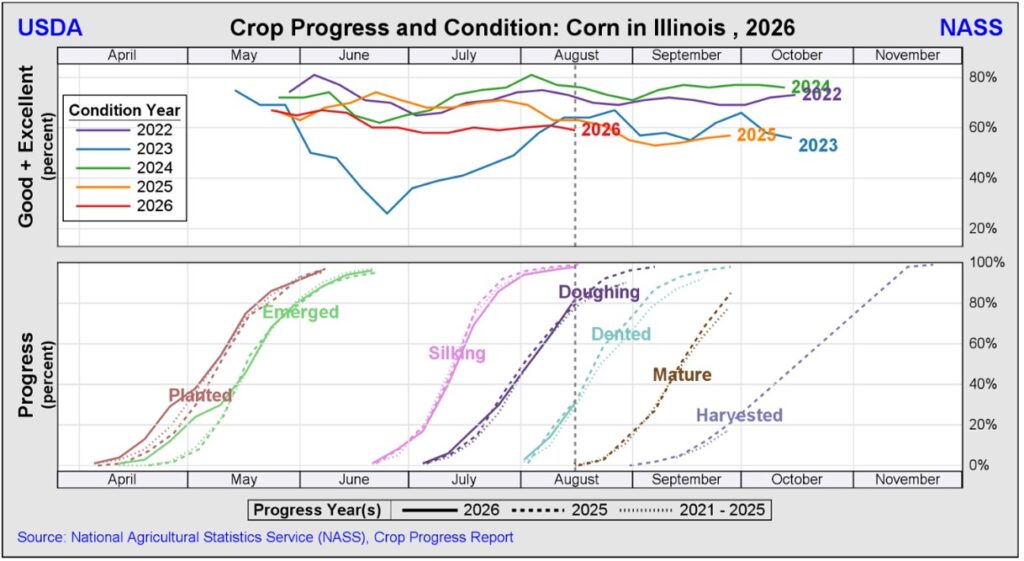
The effects of June flooding were reflected in the USDA-NASS crop condition ratings, which declined during June and have remained mediocre – around 60% good + excellent – since then (Figure 1). Ratings in 2025 were higher through much of June and July before declining in August as drought intensified. Data from the website Crop-CASMA show that statewide NDVI values during the first week of August were similar to those at the same time in 2025; despite very different weather patterns, crop canopies were very good in both years.
The big story of the 2026 growing season has the abundance of rainfall across much of the state, especially in May and June and recently in mid-August. July was relatively dry in parts of the state, which we think helped the roots get established after early wetness. Parts of northern and central Illinois got up to 12 inches of rain during the second week of August, which is a lot more than needed; only about 6% of the state is abnormally dry according to the August 18 Drought Monitor map. With few exceptions, soil moisture will be more than adequate to get the crop to maturity without stress.
Pollination and kernel set
Early-planted corn began silking by June 21, and the 50% silking date was July 14, only about two days later than the 5-year average of 2021-2025 (Figure 1). The first half of July was 2 to 4ºF warmer than normal, maximum temperatures in the low to upper 90s in places. This, coupled with drying soils, resulted in some ear tip-back, where kernels at the tip of the ear either failed to fertilize or were aborted shortly after fertilization. Rain in July may have helped kernel set in some of the fields planted a little later.
Figure 2 shows an example of tip-back from corn plots that silked around July 20 at the University of Illinois research farm in Urbana. Pictures were taken on August 11, and the corn was at the R4 stage. In this case, reduced kernel set resulted from the combination of pollination failure and kernel abortion. While tip-back can reduce yield potential, its effects can be partially offset if fields still have good ear counts and the canopy remains intact with good color through grain fill. For instance, at 34,000 ears per acre and 80,000 kernels per bushel, it takes 500 kernels per ear (or 17 million kernels per acre) to produce 212 bushels per acre. If kernels end up larger than normal and 75,000 kernels make a bushel, the same field would produce 226 bushels per acre; at 70,000 kernels per bushel, yield would be 242 bushels per acre. Nevertheless, consistently high yields are more often associated with high kernel numbers than with unusually large kernels, and exceptional yields may often come when there are 20 million or more kernels per acre.
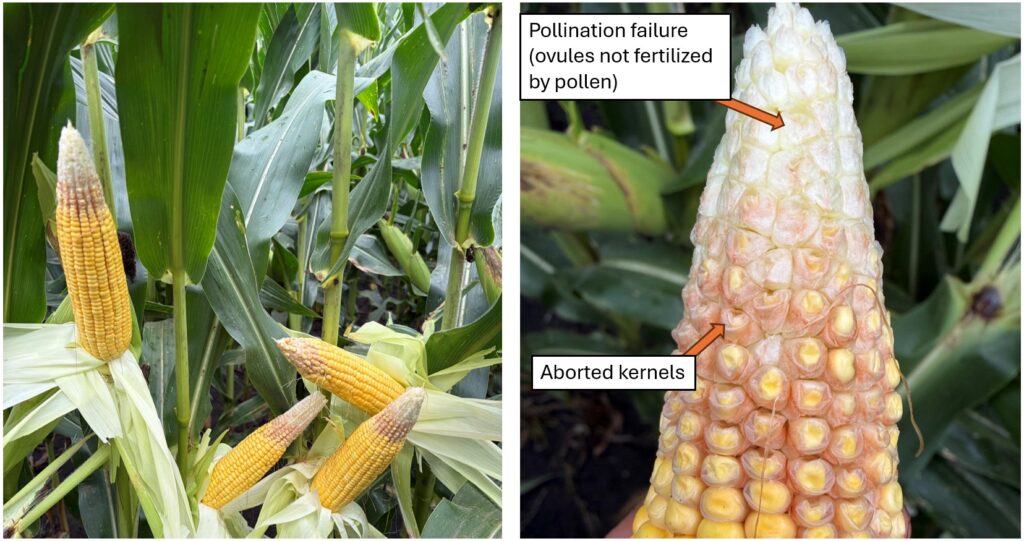
USDA yield prospects
The USDA-NASS August 1 estimate (released on August 12) pegged Illinois corn yield at 212 bushels per acre, down 2 bushels from final yield in 2025. The 2026 trendline yield based on the yields trend since 1990 matched the 2026 estimate of 212. Estimating yields in August is somewhat difficult because, while we may have an accurate estimate of kernel number, kernel weight remains uncertain before maturity.
We’ve seen examples of August estimates both overestimating and underestimating final yields. Yield in Illinois exceeded the August estimate by 11 bushels per acre in 2022, increasing from 205 (due to severe dryness lasting into July) to 214: kernels were heavier than usual in many fields, with some fields nearing 60,000 kernels per bushel (Nafziger, 2022). In contrast, yield in 2025 ended up 7 bushels per acre below the August estimate. Kernel numbers were average that year, but the very dry August-September period limited grain-fill rates and resulted in lighter kernels than normal. Leaf diseases contributed to this in parts of northern and western Illinois, where southern rust came in unexpectedly and tar spot developed later in the season.
Whether the 2026 estimate holds true will depend largely on how the crop finishes during the remainder of the grain-filling period and on the how much effect drowned-out areas might have on field-average yields. Plants in the flooded and waterlogged portions of fields have shown limited recovery in most fields and will reduce field-average yields, although the magnitude of that reduction is difficult to quantify before harvest. In fields where low areas are again flooded in August, grainfill before the deluge may result in some production in these areas.
Finishing the season
Statewide temperatures averaged 1 to 5 degrees above normal in July, with very high growing degree day (GDD) accumulations due mostly to warm nights. As of August 16, NASS reported Illinois corn slightly ahead of schedule, at 82% dough, 31% dented, and 1% mature. The Corn Growing Degree Day (GDD) tool shows that a 112-day RM hybrid (estimated to need ~2,700 GDD from planting to maturity) planted in Champaign County on April 20 or May 10 is projected to reach maturity on August 31 and September 9, respectively.
Figure 3 shows differences in maturity from a planting date study at the Orr Agricultural Research Center in Pike County, using an 115-day RM hybrid. About 250 GDD were accumulated between April 14 and May 7 planting dates, and both crops were at the dent stage as of August 17. Corn planted on April 14 had kernels with the milk line a little more than halfway down, with >90% of kernel dry matter accumulated. The milk line in the corn planted on May 7 was about ¼ down, with about 65% of kernel dry matter accumulated. With warm weather in the forecast, the April-planted crop should reach black layer within about 8-9 days, while the May-planted crop should reach maturity in about three weeks. Ears in both crops have 16 rows of kernels with 32-35 kernels per row, and with very little tip-back, we should expect good yields.
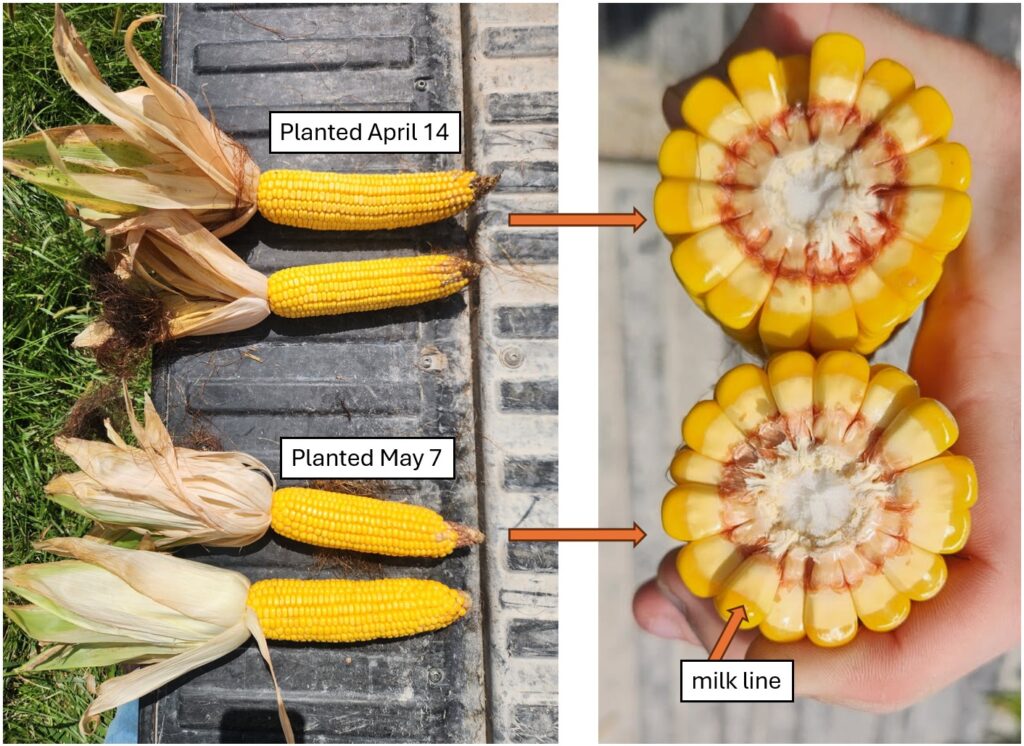
DeKalb County
Soil Conditions: Mildly Wet (soil is wetter than normal, local vegetation is healthy)
The heavy storms and even a derecho have passed, and we have been left with some gorgeous weather to end the week before some more rain chances next week. Not too many updates agronomically from my last update. Corn has moved into R5 dent across northern Illinois, with many fields at the early stages of senescence. I did find a good amount of tip back in corn in the fields I visited, and I attribute that to the heat dome we experienced coinciding with the end of pollination. The extreme heat and low winds we saw will kill pollen, and lead to lower movement of the pollen that did survive. There will be yield reductions in the fields I saw today, but the severity of the tip back you may see in your fields will align with planting date, and where your fields pollination lined up with the severe heat events we have seen this summer.
Soybeans are looking healthy with little disease. I did not see pockets of SDS as I was expecting, but that may still develop in the coming weeks. Soybeans are moving through pod fill in R5, and were very tall and robust in the fields I saw today.
Overall I’ve found very little disease in the DeKalb sector, with little to no tar spot, and very little disease in soybeans. Cooler temperatures next week may change that, but I feel like I’ve been saying that for weeks now. Tip back and lack of kernel fill is the major concern seen today.
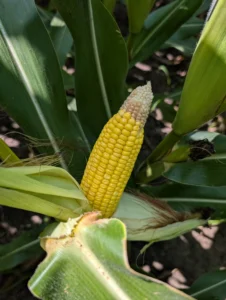
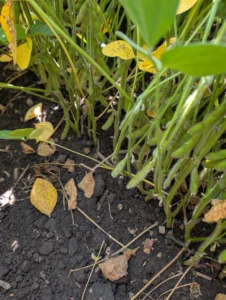
Russ Higgins – Commercial Agriculture Educator
Grundy County
Soil Conditions: Mildly Wet (soil is wetter than normal, local vegetation is healthy)
Additional rainfall this week has brought weeds through the soy canopy in some fields, especially in areas where the population was thinned by earlier flooding or saturation. The soy fields I have scouted continue to be mostly disease free. That statement does not hold up for the corn crop. I have been scouting a 108-day hybrid that was planted on April 24th, this corn has reached R5 or the dent stage. At this stage within the kernel, starch begins to harden at the top and works its way down to the kernel tip attached to the cob. There is variation between maturities and hybrids, but corn plants are generally in R5 for 30 days before reaching R6 or physiological maturity. At the beginning of R5 the kernel dry matter content is estimated at 45% of the potential final accumulation. Unlike the soy crop, and not surprising with August environmental conditions, foliar diseases have increased markedly in the recent week in corn fields. Southern rust, tar spot and gray leaf spot are all currently present in fields scouted that did not receive fungicide treatment. Another interesting anomaly noted on hybrids with shortened husk, is frequent damage to the exposed ear tip, presumably by birds or insects.
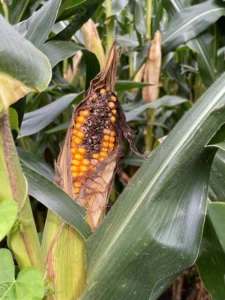
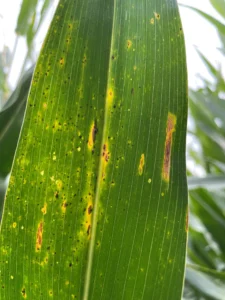
Doug Gucker – Local Food Systems and Small Farms Educator
Dewitt, Macon, and Piatt County
Soil Conditions: Moderately Wet (soil is damp, standing water may be present in low areas, water bodies are full)
Generally, the corn and soybean fields look very good. The exceptions are fields that have been damaged by severe weather, or flooding.
Over the past week, symptoms of Corn Crown Rot have become visible in areas of some fields. What I am seeing is these affected areas are patches of dead, lodging corn plants. Dr. Boris Camiletti, Extension Plant Pathologist, said the photo above appeared to be Corn Crown Rot. A sample is being sent to the U of I Plant Clinic for a diagnosis. Corn crown rot disease infects corn plants in the early portion of the growing season, and the disease is more prevalent in wet, compacted soils.
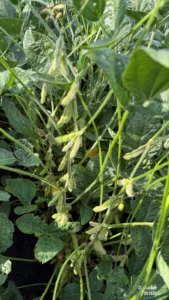
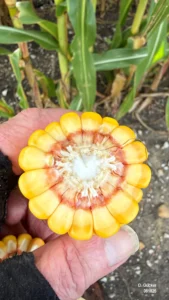
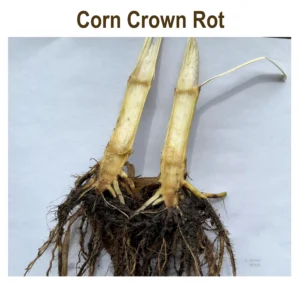
Talon Becker – Commercial Agriculture Specialist
Champaign County
Soil Conditions: Moderately Wet (soil is damp, standing water may be present in low areas, water bodies are full)
Wet conditions have returned to much of central IL. Following a bit of a dry spell in late July and early August, the Illinois Soil and Water Survey’s weather station in Champaign has registered more than 8 inches of rain over the past 9 days. The recent storms also brought high winds and a tornado in the southwestern portion of Champaign County, near Giblin, leaving pockets of crop damage (mostly corn) in that area. Standing water is also back in low areas of some fields. Many of these areas were already absent of crop due to the same issues earlier in the growing season, but standing water could also be seen in some areas where the crop had survived that early-season stress.
Wind damage appeared to decrease as I continued toward Sadorus and Tolono during my survey of southern Champaign County, although the flooding in low-lying areas persisted. Corn conditions were a bit variable. Many fields still look healthy and green, but some corn fields are starting to “fire”, or lose color in their lower canopy, indicating remobilization of nutrients from those tissues to the developing ear. Most fields range from the late dough (R4) to dent (R5) growth stages; I didn’t find any fields at black layer, or full maturity (R6), quite yet. Some fields are starting to show more symptoms of foliar disease, primarily gray leaf spot, but also some northern corn leaf blight. But with those fields generally at early dent (R5) or later, the level of disease observed is unlikely to have a large impact on yield.
Soybean conditions are also starting to look more variable in the area. Again, many fields are looking healthy with a dense, green canopy and full pods, at or nearing the full seed (R6) growth stage. But some fields are starting to show areas with yellowing leaves, potentially indicating some kind of disease issue. In a couple of those fields, I collected plants and split stems to identify pith symptoms characteristic of brown stem rot. This may also be the issue in other fields I observed with similar foliar symptoms, but there are a number of diseases that often present similar foliar symptoms that may be difficult to differentiate and properly diagnose in the field. Resources are available from the Crop Protection Network to help with identifying these diseases (https://cropprotectionnetwork.org/publications/scouting-for-soybean-stem-diseases), and samples can always be submitted to The Plant Clinic (https://extension.illinois.edu/plant-clinic) to get a lab diagnosis. Having an accurate diagnosis is essential for selecting resistant varieties and developing a successful integrated pest management plan for future growing seasons.
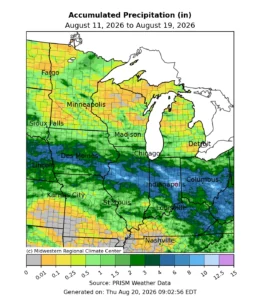
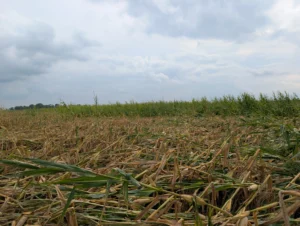
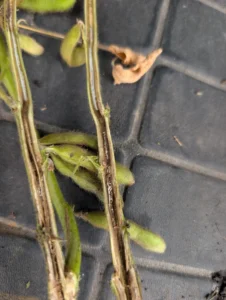
]]>
Agricultural Markets Synthesis
Throughout the week, agricultural commodity markets were primarily driven by the release of USDA’s August Crop Production and WASDE reports, escalating geopolitical turmoil in the Black Sea and Middle East, and the strong interconnectedness between energy and grain prices. Early in the week, Frayne Olson (North Dakota State University Extension) noted that grain volatility was heavily influenced by investment fund managers rebalancing portfolios between equities and energy indexes like Goldman Sachs, automatically driving capital into grains and meats. Ahead of the USDA report, Naomi Blohm (Total Farm Marketing) observed the market holding technical support levels with private yield expectations hovering near trendline, while warning that ongoing European drought and outside macroeconomic forces could set seasonal harvest lows.
The midweek release of the August Crop Production and WASDE reports served as a major market catalyst, causing sharp initial double-digit rallies in corn and wheat before prices consolidated later in the week. As detailed by Greg Johnson (Total Grain Marketing), the USDA surprised trade participants by raising planted corn and soybean acreage by 1.4 million acres each—reaching a combined 183.5 million acres—yet countered this supply expansion by aggressively cutting projected corn yields from 183 to 180.7 bushels per acre, keeping total corn production near 16 billion bushels and tightening ending stocks to 1.65 billion bushels (a 10.12% stocks-to-use ratio). Soybean yields were trimmed slightly to 52.7 bushels per acre, leaving ending stocks at 320 million bushels and keeping attention focused on Chinese import commitments.
On the Commodity Week panel, Mike Zuzolo (GlobalCommResearch.com), Jim McCormick (AgMarket.net), and Ted Seifried (ZanerAgHedge.com) evaluated these balance sheet adjustments alongside severe geopolitical and climate risks. The panel highlighted that USDA’s early 75-million-bushel increase in new-crop corn export projections signaled strong demand fundamentals. However, the escalation of port attacks and infrastructure strikes in the Russia-Ukraine conflict, coupled with potential fertilizer and shipping chokepoints in the Strait of Hormuz, continues to inject risk premiums into freight, insurance, and energy. Zuzolo emphasized wheat and crude oil remain the upside leaders of the broader commodity complex, though lower cash export prices from the Black Sea temporarily act as a drag on corn. Seifried and McCormick noted that while soybean upside is restrained by expanded domestic acreage and potential late-season yield expansion, long-term corn fundamentals remain friendly to bullish due to tightening global stocks and developing weather risks for upcoming South American planting.
Concluding the week, Dave Chatterton (Strategic Farm Marketing) and Mike Zuzolo analyzed post-report price retracements, attributing market pullbacks to competitive Argentine corn FOB offers, sluggish immediate export paces, and farmer hedging. Both analysts, along with the Commodity Week panel, advised producers to utilize futures rallies to hedge on paper while retaining physical grain ownership where possible, as tight carryout margins and strong cash premiums are expected to provide post-harvest pricing opportunities.
Agricultural Weather Synthesis
Agricultural weather discussions across the week focused on an active, shifting weather pattern across the Corn Belt, highlighted by a dominant ridge of high pressure in the South that steered repeated severe storm complexes along its northern periphery, alongside persistent heat stress and an emerging El Niño. Early in the week, Mark Russo (Everstream Analytics) tracked high dew points and heat across the central Corn Belt, noting isolated dry pockets across southeast North Dakota and the Sioux Falls/Sioux City areas, while confirming that the Atlantic hurricane basin remained quiet and Western Pacific tropical cyclones (such as Doksuri) were primarily disrupting Chinese port logistics at Ningbo rather than key grain belts.
Midweek, Don Day (Day Weather) detailed a classic late-summer “ring of fire” upper-level pattern anchored by hot high pressure over the southern Plains. This system channeled atmospheric moisture in a clockwise arc, triggering recurring severe thunderstorms, high winds, and heavy rainfall across Iowa, northern Illinois, Wisconsin, Minnesota, and into Ohio, while leaving the Mid-South, Texas, and southern Plains under severe heat and dryness. Drew Lerner (World Weather Inc.) confirmed the aftermath of a derecho across the Midwest and tracked follow-on storm systems that alleviated dryness in the northwestern Corn Belt, though at the expense of localized crop lodging and wind/hail damage. Internationally, Lerner reported that Western Europe (France, the UK, Germany) would receive only modest relief from prolonged drought, while favorable conditions in China’s northeastern grain areas and adequate finish conditions across the Black Sea supported stable overseas production.
Later in the week, agrometeorological analysis shifted toward the compounding effects of elevated nighttime temperatures and localized excess moisture. Mike Tannura (T-Storm Weather / Tstorm.net) indicated that the 14-day outlook projected the warmest conditions since 2003, emphasizing that nighttime lows remaining persistently in the mid–70s to low–80s across the Corn Belt were increasing plant respiration and hindering grain fill efficiency despite adequate rainfall. Concurrently, Eric Snodgrass (Nutrien Ag Solutions) documented severe flash flooding and wind damage in parts of Illinois and Indiana from repeated storm clusters. Looking ahead, both Day and Snodgrass warned that a rapidly intensifying El Niño is likely to direct an energized subtropical jet stream into the United States, creating a high probability of a wet, delayed fall harvest domestically, while threatening planting delays and dryness in central-west Brazil (Mato Grosso) alongside flooding in southern Brazil.
The Week’s News and Other Items
In regional academic and agricultural extension news, the University of Illinois highlighted both historical and forward-looking agronomic research. Dr. Adam Davis (Department Head of Crop Sciences, University of Illinois College of ACES) and Crop Scientist Andrew Margenot inaugurated the new Alma Mater Plots on South First Street, unveiling long-term research infrastructure focused on tile water monitoring, nitrogen inhibitors, tillage runoff, and cover crop trials. Davis also highlighted the upcoming 150th anniversary of the historic Morrow Plots on October 28, reviewing 150 years of soil management, crop rotation, and hybrid crop data while noting recent site revitalizations, including replacing perimeter hedges with open fencing to deter pests and enhance public visibility. In pest management, Extension Entomologist Nick Seiter previewed a plot tour on campus addressing the latest field crop insect management strategies.
On the conservation engineering front, Todd Gleason covered an Edge of Field Conservation Practices Field Day in Cisco, Illinois, featuring Dr. Rabin Bhattarai (University of Illinois Agricultural and Biological Engineering). Bhattarai outlined the operational mechanics and advantages of denitrifying woodchip bioreactors—which route drainage tile effluent through carbon beds to reduce nitrate loads by 30% to 90%—and drainage water management systems, which use adjustable gates to retain water and nutrients in low-gradient fields, decreasing nutrient runoff by 20% to 40% and increasing crop yields by up to 20% in dry periods.
Agronomic evaluations from Giovani Preza Fontes (University of Illinois Extension Field Crops Agronomist) focused on corn grain fill dynamics, noting that while 14% of early-planted Illinois corn had reached the R5 dent stage, over 50% of total kernel dry matter is accumulated during this phase, requiring a balance of sufficient soil moisture and clear, sunny days rather than cloud cover and extreme night heat to achieve strong yields.
In agricultural safety and policy, farm safety specialist Bill Field (Purdue University) addressed the persistence of grain bin entrapments, noting 48 entrapment cases and 22 suffocation fatalities nationwide in the previous year; Field stressed that proper grain quality management and zero-entry protocols are far more effective at saving lives than post-incident rescue training and equipment. Finally, on Capitol Hill, the Senate Farm Bill remained stalled prior to the recess after a 10-to–11 committee vote, with Ag Committee Chairman John Boozman, Senator Jerry Moran, and Senator Dick Durbin debating disagreements over SNAP funding timelines, state penalty waivers, and election-year political dynamics, leaving comprehensive legislation and year-round E15 provisions temporarily on hold.
That is a comprehensive look at the markets, the weather, and the news driving agriculture this week. You can find all of these segments, plus daily market updates from our farmdoc team, online anytime on demand at WILLAg.org.
Editor’s note: This article was adapted from the week’s WILLAg.org radio broadcast transcripts, formatted for print with the assistance of Google’s generative AI tool, Gemini, and reviewed by Todd Gleason.
—
University of Illinois Extension and College of ACES Calendar
August
19 – Illinois State Fair Sale of Champions
25 – Focus on the Future: Sustaining Farm Legacy | Mt. Vernon
September
02 – Orr Beef Research Center Field Day
10 – Illinois Crop Management Field Day
19 – Celebrate Food and Ag Tailgate – ILLINOIS vs SIU
30 – University of Illinois Homecoming
October
26-29 – 1st International Miscanthus Summit
28 – Celebrating 150 Years of the Morrow Plots
December
03 – Illinois NLRS Conference
14 – Illinois Farm Economic Summit, Mt. Vernon
15 – Illinois Farm Economic Summit, Sherman
16 – Illinois Farm Economic Summit, Peoria
17 – Illinois Farm Economic Summit, DeKalb
January
19 – Illinois Fertilizer and Chemical Association Winter Convention
—
Commodity Week can be heard in the 2 o’clock hour central time on WILL AM580 or you may subscribe to it using the links in the player below. This week the panelists include Jim McCormick from AgMarket.net, Ted Seifried of ZanerAgHedge.com, and Mike Zuzolo with GlobalCommResearch.com.
The Closing Market Report airs at 2:06 p.m. central daily on WILL AM580. It, too, is a podcast. Subscribe using the link in the player.
]]>Grundy County
Soil Conditions: Moderately Wet (soil is damp, standing water may be present in low areas, water bodies are full)
A very active weather pattern across northeast Illinois that spawned tornados, a derecho, and significant rainfall and flooding across the region. In corn fields, foliar leaf diseases are now more easily detected, including Southern rust. A Southern rust report was received by Dr. Boris Cameletti, University of Illinois Plant Pathologist on July 23rd in Williamson County in southern Illinois. While the presence of the disease in not good news for northeast Illinois cornfields, the fact that it has appeared later in the season when compared to recent years is good news. With much of the corn crop now at R4 or dough stage, the benefit of a fungicide application, unless exhibiting severe pressure, is low. By comparison, in Grundy County Southern rust made it appearance by mid-July in 2024 and 2025. R4 is one of the shortest reproductive stages in corn plant development before reaching R5 or Dent stage. In fields where scouting has included the pulling of ears, we are finding along with neighboring states, incomplete or scattered kernel set on some ears. Suggested causes include temperature and moisture extremes during pollination, lack of wind during pollen shed, and hybrid characteristics. We are encouraging growers to check variations or responses between hybrids. Yesterday Dr. Conner Sible and Steve Brand from the University of Illinois visited with local producers as guests of the Kendall-Grundy Farm Bureau and local Illinois Extension offices in Kendall County and shared their growing season observations along with nutrient use and crop genetic (root structure) interactions.
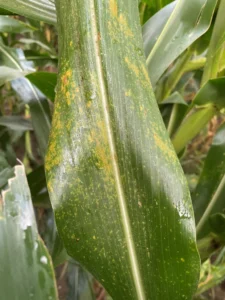
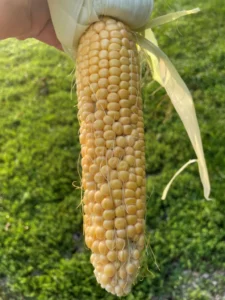
Talon Becker – Commercial Agriculture Specialist
McLean County
Soil Conditions: Mildly Wet (soil is wetter than normal, local vegetation is healthy)
As of Wednesday (8/12) afternoon, the crop in southern McLean County was still standing and, for the most part, looking healthy following the storm system that moved through a couple hours prior to my survey. As I write this the following day, another strong storm system is moving through the region bringing more heavy rain and high winds, so I am uncertain if that has changed the crop conditions in that part of the county.
Soybeans in southern McLean County are primarily in the beginning seed (R5) growth stage, ranging from full pod (R4) to early full seed (R6), and are still relatively free of disease or insect issues. Corn is reaching late dough (R4) and early dent growth stages (R5). Remobilization of nutrients from lower leaves is starting to pick up pace in some corn fields that are a bit closer to maturity or in areas of fields affected by early-season wet conditions. Diseases, such as gray leaf spot and Physoderma brown spot, were present in a few of the fields visited, but still no sign of tar spot or southern rust in the fields surveyed. Both have been identified in neighboring counties, Livingston for tar spot and Champaign for southern rust. So, it is possible that those diseases are in the McLean County, but still at low levels. Counties where tar spot and southern rust have been identified can be seen on Crop Lookout from the Crop Protection Network. Links to that resource as well as more information about managing these diseases can be found in the following articles from Extension Field Crop Pathologist, Dr. Boris Camiletti.
Southern rust – https://farmdoc.illinois.edu/field-crop-production/first-southern-rust-report-of-2026-in-illinois-what-corn-growers-should-know.html
To report either of these diseases in your area, email photos directly to Dr. Camiletti at bxc@illinois.edu and/or submit samples to the Plant Clinic (https://extension.illinois.edu/plant-clinic).
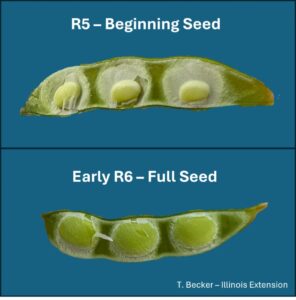
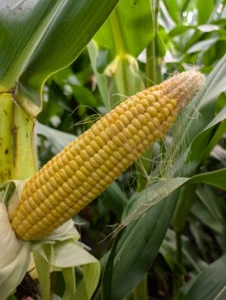
Doug Gucker – Commercial Agriculture Educator
Dewitt, Macon, and Piatt County
Soil Conditions: Mildly Dry (soil is drier than normal, plant growth may have slowed)
The majority of the corn and soybean fields are in good to excellent shape. The exceptions are those fields that have suffered some type of weather issue – flooding, storm, or wind damage.
Soybean fields are mostly at the R5 stage, with some at the R6 (full seed) stage. I am noticing Japanese beetle feeding, but at levels below treatment thresholds. Also beginning to see bean leaf beetles showing up in the fields.
Corn fields are mostly in the R4 or R5 stage, dough to dent, but do see the occasional corn field in the R1, Silk stage. Corn leaves are showing minor leaf diseases currently, mostly a little gray leaf spot.
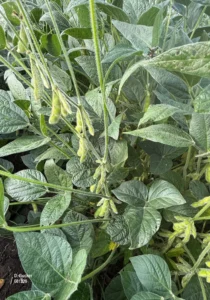
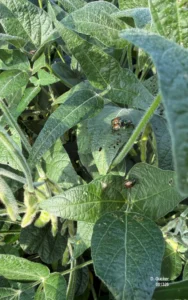
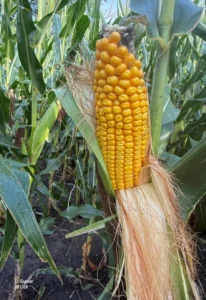
]]>
Agricultural Markets Synthesis
Throughout the week, agricultural commodity markets exhibited a shifting dynamic from early technical bounces to cautious, sideways-to-lower trading driven by weather relief and pre-report positioning. Early in the week, Jerry Gulke (Gulke Group) noted that corn and soybeans experienced a key technical reversal upward. He emphasized that fund money flows and technical support levels were key drivers, advising producers to manage risk by recognizing critical chart floors. By Tuesday, incoming Midwest rainfall removed immediate weather premiums, causing futures to pull back. Naomi Blohm (Total Farm Marketing) explained that market movements were heavily dictated by technical chart patterns, with corn and soybeans testing key 50% and 61% Fibonacci retracement levels. She noted that while old-crop corn still offered cash sales opportunities, new-crop sales should be paused as global balance sheets tighten due to European drought conditions. Ed Usset (University of Minnesota Extension) highlighted that while national crop prospects represent a mixed bag, Minnesota is tracking toward potential record yields in corn, soybeans, and wheat. He noted that summer highs in soybeans were likely set if normal August weather prevails. Usset said while harvest pressure might push corn prices 20 to 30 cents lower, strong market carry offers solid opportunities to capture basis and board gains post-harvest.
As the week progressed toward the release of the USDA Crop Production and WASDE reports (due this coming Wednesday), technical chart defense became the primary theme. On the *Commodity Week* broadcast, panelists Ellen Dearden (Ag Review) and Naomi Blohm (Total Farm Marketing) discussed market expectations, agreeing that USDA would likely keep corn yields near trendline levels of 183 bushels per acre and soybean yields around 53 bushels per acre. Dearden noted USDA satellite-based yield modeling might shave planted acres, while Blohm underscored the need to closely monitor global line items—specifically shrinking European corn/wheat production, Chinese import demand, and South American crop setup. Jim McCormick (AgMarket.net) detailed how December corn was actively defending its 50-day moving average near $4.57–$4.62, warning that a technical breakdown could trigger a head-and-shoulders pattern projecting down to $4.25. Similarly, November soybeans were defending their 100-day moving average near $11.70–$11.75, with downside risks toward $11.35 if support fails. McCormick highlighted long-term bullish drivers, too, including prospective trade tariff agreements with China, severe Black Sea export reductions from Ukraine, and El Niño climate threats across global production zones. Closing out the week, Mike Zuzolo (GlobalCommResearch.com) pointed to broader macroeconomic drivers, including a surge in gold/silver, a 5.5% drop in the Russian ruble, proposed U.S. sanctions targeting Russian and Iranian oil importers like China, and Asian central bank currency interventions. His modeling pointed to a corn yield near 180 bushels per acre and soybean yields around 51 to 51.5 bushels per acre, while emphasizing severe global corn export price disparities.
Agricultural Weather Synthesis
Agricultural weather forecasts over the week tracked a shifting summer pattern across the U.S. Corn Belt alongside severe, persistent climate anomalies globally. At the start of the week, Mark Russo (EverStream Analytics) reported that widespread weekend rainfall covered approximately two-thirds of Midwest corn and soybean acreage, shrinking dry pockets across the region, though areas in northwest Iowa and the Dakotas missed out. He highlighted a severe, crop-disaster drought across Western Europe (particularly France), expanding dryness in Southeast Asian palm regions, and a strengthening super El Niño (Niño 3.4 sea surface temperatures exceeding +2.0°C) that increases the risk of a wet U.S. harvest in October. Don Day (Day Weather) noted that August would see a shift from July’s western heat toward a more normal pattern as the northern jet stream and subtropical moisture (“ring of fire”) bring rain opportunities across the Corn Belt, while isolating heat and dryness to Texas, Oklahoma, Arkansas, and southern Missouri.
By midweek, Drew Lerner (World Weather Inc.) explained that global weather remained in a stagnant rut driven by the El Niño and Madden-Julian Oscillation. He noted that while a Canadian cold snap brought temporary relief to dry pockets in the U.S. Northern Plains, main Midwest growing regions continued to receive timely showers. Internationally, Lerner cited typhoon-driven flooding in eastern China, an impending dry bias in India, and subsoil moisture depletion affecting short-rooted crops and deep-rooted tree crops (oil palm) in Indonesia. Mike Tannura (T-Storm Weather) detailed the atmospheric mechanism behind Midwest rains, explaining that cool fronts passing to the north clashing with southern heat created an active storm track that mixed thunderstorm clusters across different areas. He characterized this setup as ideal for soybean pod filling while keeping corn temperatures near or slightly below normal, whereas Western Europe’s 1988-style drought showed no signs of breaking. Wrapping up the week, Eric Snodgrass (Nutrien Ag Solutions) discussed the hyper-local nature of summer convective rainfall, noting that 70% of the U.S. remains under some stage of drought. However, he emphasized that cooler August temperatures across the Eastern Corn Belt prevent flash droughts and help maintain strong national yield potential. Snodgrass also shared insights from visiting Brazilian farm groups, who confirmed that total acreage expansion is halting and expressed concern over El Niño climate patterns causing excessive wetness in southern Brazil and dryness in northern growing regions.
Week’s News and Other Items
Profit-Driven Fall Fertilizer Strategy: As Illinois farmers prepare for fall 2026 fertilizer applications following a season of significant nitrogen loss, soil fertility specialist John Jones (University of Illinois Extension) advises prioritizing profit margins over maximum yield. While statewide corn yields remain competitive, he says wet June conditions caused notable nitrogen losses. Looking forward, data from 800 Illinois trials indicates fertilizing for optimal profit rather than maximum bushels (using the online Corn Nitrogen Rate Calculator) results in a negligible yield sacrifice of just 1.5 to 2 bushels per acre. New research to be posted soon to the cropCentral website shows optimum rates for fall-applied anhydrous run 16 to 20 pounds higher than spring applications. Applications should be delayed until soil temperatures at a four-inch depth are 50 degrees and cooling, with operators ensuring proper slit closure to prevent physical nitrogen loss.
High input costs, John Jones told WILLAg.org, are also forcing a reevaluation of phosphorus management. With diammonium phosphate (DAP) prices exceeding $900 per ton, there is no annual return on investment for corn or soybeans if soil phosphorus levels already test at 17 to 18 parts per million. The probability of a crop response to additional phosphorus drops to zero once soil levels reach 20 to 30 parts per million. Consequently, producers can safely draw down soil phosphorus levels in high-testing zones for one to two years. Jones stresses the immediate value of updated grid and zone soil sampling. Investing seven to eight dollars per acre in a soil testing program allows producers to precisely identify non-responsive field zones, avoiding the unnecessary expense of applying 40 to 60 pounds of phosphorus per acre.
Crop Physiology Field Day & Root Architecture: Connor Sible and Jared Fender (University of Illinois) presented new research findings at the 5th annual Crop Physiology Field Day. Fender detailed research on matching specific corn hybrid root architectures with tillage and fertilizer placement strategies. He explained, as an example, that smaller-rooted hybrids benefit significantly from shallow or placed fertilizer (such as in strip-till or no-till systems) because their root mass lacks the reach to find deep nutrients, thereby improving fertilizer use efficiency and yield.
Economics of Agrivoltaics: Madhu Khanna (Institute for Sustainability, Energy, and Environment at the University of Illinois) summarized five years of research from the USDA-funded SCAPES project. The study found that while shade-tolerant specialty crops (such as leafy greens and herbs) thrive in agrivoltaics systems in arid regions like Arizona, full-sun row crops like corn, soybeans, and sorghum experience yield reductions even under wider spaced solar panels. While solar generation is highly land-efficient—requiring less than 2% of all U.S. cropland to meet 40% of U.S. electricity needs by 2050—co-locating row crops with panels presents equipment spacing and profitability challenges in the Midwest.
Higher Renewable Volume Obligations Fuel Industry Growth: Paul Winters (Clean Fuels Alliance America) reported that the EPA’s finalized Renewable Fuel Standard volumes increased biomass-based diesel obligations to 5.4 billion gallons (up from 3.35 billion in 2025). This regulatory increase has enabled idled biodiesel plants to reopen—bringing industry operating capacity to 86%—and incentivized oilseed processors to invest over $6 billion to expand crush capacity from 2 billion to 2.6–2.75 billion bushels of soybeans annually.
ADM Investing in Crush Capacity: Driven by biofuel policy demand, ADM announced targeted infrastructure enhancements across four North American production facilities in Frankfort, Indiana; Deerfield, Missouri; Lincoln, Nebraska; and Spiritwood, North Dakota. These debottlenecking and storage upgrades will add 700,000 metric tons of annual crush capacity, creating new demand for over 25 million bushels of crops upon completion between mid-2028 and early 2029.
Ethanol Plant Profits and 45z: Dan O’Brien (Kansas State University Extension) reviewed bioenergy industry profitability, noting that ethanol plants are operating at favorable margins of 20 to 40 cents per gallon above break-even costs ($1.58 break-even versus $1.78 market price). Analyzing the 45Z tax regulations, O’Brien identified low-carbon ethanol plants and renewable diesel as clear winners, while traditional biodiesel faces feedstock cost sensitivity and Sustainable Aviation Fuel (SAF) plants await further regulatory signals.
Senate Fails to Pass a Farm Bill & a note on Tariffs: In policy news, the U.S. Senate recessed without passing Farm Bill 2.0, putting agricultural legislation behind schedule. On economic policy, Michael Waugh (Minneapolis Federal Reserve) reported that U.S. effective tariff rates have stabilized around 7% following Supreme Court rulings and Section 301 updates. Recent data indicates that these tariffs are beginning to exert a subtle inflationary impulse, accounting for approximately 50 basis points of current inflation.
That is a comprehensive look at the markets, the weather, and the news driving agriculture this week. You can find all of these segments, plus daily market updates from our farmdoc team, online anytime on demand at WILLAg.org.
Editor’s note: This article was adapted from the week’s WILLAg.org radio broadcast transcripts, formatted for print with the assistance of Google’s generative AI tool, Gemini, and reviewed by Todd Gleason.
—
University of Illinois Extension and Crop Sciences Agronomy Days
August
11 – Alma Mater Plots Agronomy Day
12 – Insect Management and Field Plot Tour
13 – Edge of Field Practices Field Day
14 – Illinois State Fair Ag Day
19 – Illinois State Fair Sale of Champions
October
26-29 – 1st International Miscanthus Summit
September
19 – Celebrate Food and Ag Tailgate – ILLINOIS vs SIU
30 – University of Illinois Homecoming
October
28 – Morrow Plots 150th Celebration
November
03 – Illinois NLRS Conference
December
14 – Illinois Farm Economic Summit, Mt. Vernon
15 – Illinois Farm Economic Summit, Sherman
16 – Illinois Farm Economic Summit, Peoria
17 – Illinois Farm Economic Summit, DeKalb
January
19 – Illinois Fertilizer and Chemical Association Winter Convention
—
Commodity Week can be heard in the 2 o’clock hour central time on WILL AM580 or you may subscribe to it using the links in the player below. This week the panelists include Naomi Blohm from Total Farm Marketing and Ellen Dearden of AgReview.
The Closing Market Report airs at 2:06 p.m. central daily on WILL AM580. It, too, is a podcast. Subscribe using the link in the player.
]]>
by Trent Ford, State Climatologist
ISWS PRI University of Illinois
The first full week of August is in the books. The last month of summer has started a bit cooler and wetter. Average temperatures this week ranged from the low 70s in northern Illinois to mid-70s in southern Illinois, between 1 and 4 degrees below normal. High humidity limited how far nighttime temperatures could drop, but it also kept daytime temperature moderate. A few places had daytime highs in the 60s last week, including 69 in Rockford and Ottawa.
We were in a bit of a disturbed weather pattern this week, with multiple rounds of scattered storms that produced some big gradients in rainfall. 7-day totals ranged from around three quarters of an inch in west-central Illinois to nearly 5 inches in the Chicagoland area. Even with the wetter weather this week, most of the state has been 1 to 2 inches drier than average going back to the start of July, with the strong exceptions of Chicagoland, the St. Louis Metro East area, and far southern Illinois, which have been abundantly wet. Speaking of the Chicago area, the National Weather Service wrapped up its summary of the very strong storms that moved through northern Illinois on July 27th. The storms produced 7 tornadoes stretching from Glen Ellyn to Romeoville. Most impressive from that system was the non-tornadic straight-line winds, which exceeded 100 mph in some areas. This included a 104 mph wind gust measured in Monee, among the strongest wind gusts recorded in state history.
Looking ahead, a bit more summer-like heat will build in this weekend and early next week with highs in the upper 80s to low 90s, before a cold front moves through the middle of next week. Scatter storms will mill about the state this weekend, but likely not producing much total rainfall. However, more widespread storms and rainfall will accompany the mid-week cold front, bringing up to 1 – 4 inches of additional rain over the next 7-days. The highest totals are expected in northern and central Illinois, but virtually the entire state is expected to get at least 1 inch next week. The rain will be a good way to help finish out any late planted corn and give beans a last push of moisture as we head toward fall. Farther out, the outlooks continue to show mixed temperature patterns swinging between cooler and warmer than normal conditions in mid-August, but a wetter than average pattern at least through the third week of the month.
]]>DeKalb County
Soil Conditions: Mildly Wet (soil is wetter than normal, local vegetation is healthy)
Quick synopsis of conditions that will appear in the main feed
After yet another heat wave, we finally received some reprieve with some consistent rain and cooler temperatures. We were briefly entering a drought across most of the region but have come back to normal after this past weekend’s rain.
Most corn fields I saw are between R3 (Milk) and R4 (Dough). While disease levels are low, I did find some fields with ear rot, small amounts of tar spot on a lower leaf hear and there, as well as some gray leaf spot. Nothing to write home about but the disease is present, and with the current weather conditions, could reproduce and spread rapidly. Overall, if a fungicide was applied, the corn should be fine and protected through end of season. If you have fields with hot spots or disease breakouts entering the R4 corridor, reach out to your agronomist or extension professional to see about options and how to handle those late spray season options.
Soybeans continue to look relatively disease free as they are averaging R5 to R6 and begin podfill. Pods are decent size and plentiful on the plants I scouted. The heatwave and dry conditions through flowering have tamped down the whitemold risk quite a bit this year. With the current humid and cooler conditions, I do expect frogeye leafspot and SDS to start to show up in fields, and that would be something to monitor as we finish the season. I have not seen any red crown rot so far this season, but it is moving north throughout the state, so that could be a potential disease to look out for as well.
Until next week, stay safe and have a great growing season.
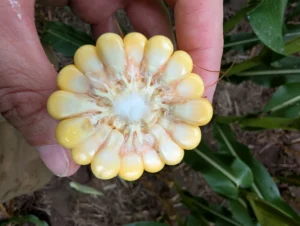
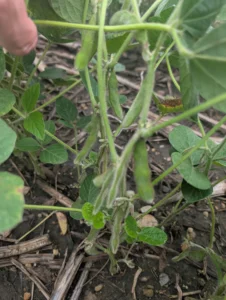
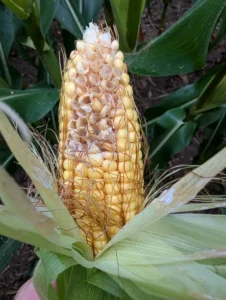
Russ Higgins – Commercial Agriculture Educator
Grundy County
Soil Conditions: Near Normal
As we progress through the second half of the growing season for corn and soy, conditions have been mostly favorable for grain fill in the Northeast region. Most soy is at or near R5, also known as the beginning seed or beginning bean stage. As rapid seed fill begins later in this stage, the soy plant starts to remobilize nutrients from leaves and stems to meet the demand of pod fill. In fields visited, disease and insect pressure in the soy crop has remained very low. I have not come across red crown rot (RCR) in soy fields visited, but reports have this emerging disease spreading in Illinois. It was announced this week that Illinois farmers can receive free RCR testing thanks to the United Soybean Board and the Illinois Soybean Checkoff, in partnership with the University of Illinois. If you suspect that you have RCR in your fields and would like confirmation, please consider sending diseased samples to the University of Illinois Plant Clinic in Urbana. While scouting R3, or milk stage, corn, I noted white frass on a developing ear, almost always an indication of feeding by the corn earworm. The corn earworm is also known as the cotton bollworm and is a pest of several crops in addition to corn and cotton. The adult female corn earworm moth prefers to lay eggs on fresh silk. The hatched larvae follow the silk to the tip of the ear where they feed and produce excrement or “frass”. Larva inside the ear do not have effective insecticide control. While this pest is a challenging insect to control in sweet corn operations, it usually is a minor concern in yellow dent corn. As we diligently continue our foliar corn disease scouting, a slight uptick in gray leaf spot was noted, but fields I have visited are remarkably disease free at this stage compared to recent years.
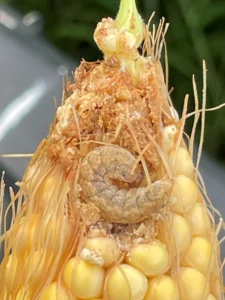
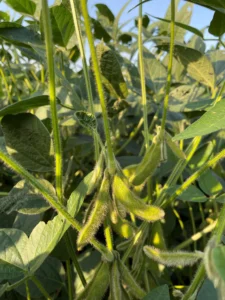
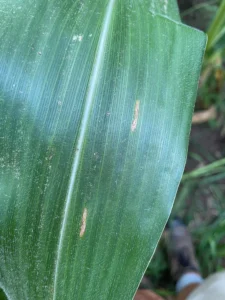
Doug Gucker – Local Food Systems and Small Farms Educator
Dewitt, Macon, and Piatt County
Soil Conditions: Near Normal
Corn and soybean crops are generally looking good, with the only exceptions being areas of fields that experienced flooding or waterlogged soils earlier in the season. Leaf disease pressure is low in fields except those fields where plants experienced stress from waterlogged soils.
Last week’s timely rains had a noticeable impact on fields with low soil moisture and plant vigor. Soybeans are midway through the R5, Beginning Pod stage, and corn is in the R4, Dough stage, with kernels beginning to dent.
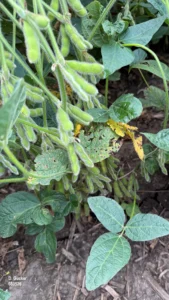
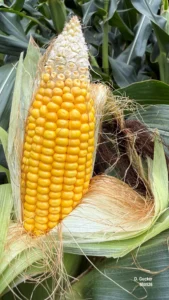
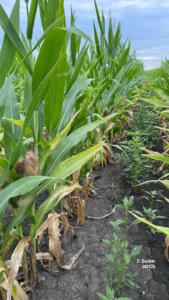
Talon Becker – Commercial Agriculture Specialist
Douglas County
Soil Conditions: Near Normal
With much of the east central IL region receiving at least 0.5″ of rain over the past week, soil moisture has rebounded back to optimal or ‘near normal’ levels in most fields, following a bit of a dry spell. In Douglas County, like much of the region, remnants of spring storms are still visible, but the remaining crop is overall healthy and progressing well. Disease and insect pressure continued to be low in the soybean fields I visited. Full season soybean fields are reaching R5, or beginning seed, on the most advanced end, and double crop soybeans are beginning to flower (R1-R2). Corn fields visited ranged from R2 (blister) to late R4 (dough), with most closer to the more advanced end of that range. Aphids were present in a couple fields visited, although they seemed to be in isolated pockets within those fields. Similarly, isolated areas with leaf and stalk symptoms consistent with Physoderma brown spot/stalk rot could also be found in a couple of the fields surveyed.
I went south this week specifically on the lookout for any southern rust that might have made its way this far north, but I did not spot any pustules at this time. Once corn is past R4 (dough) growth stage, the available research shows a low likelihood of a fungicide application providing a positive economic return (https://farmdoc.illinois.edu/field-crop-production/first-southern-rust-report-of-2026-in-illinois-what-corn-growers-should-know.html).
So, at this point in the season, most fields are past the point of concern, and late planted fields or late maturing hybrids should be the focus of scouting efforts.
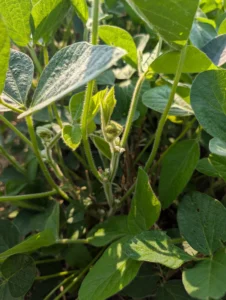
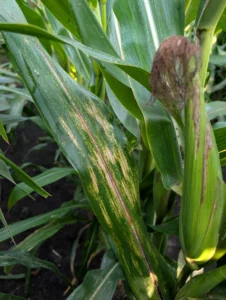
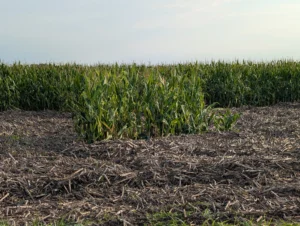
]]>
Agricultural Markets Synthesis
Agricultural commodity markets experienced high volatility and a sharp downward move during the week, driven by shifting weather models, geopolitical headlines, and macroeconomic pressures. Analysts and economists participating in the broadcasts included Curt Kimmel (AgMarket.net), Chad Hart (Iowa State University), Greg Johnson (Total Grain Marketing), Matt Bennett (AgMarket.net), Chip Nellinger (Blue Reef Agri-Marketing), Jason Winter (Columbia Grain International), and Mike Zuzolo (GlobalCommResearch.com).
The trading week opened on Monday with steep losses across the grain complex, as September and December corn fell over 12 to 13 cents, November soybeans dropped nearly 40 cents, and wheat lost 18 cents. Curt Kimmel attributed early pressure to reports that China was attempting to broker peace discussions between the U.S. and Iran, which raised prospects for restored trade flows through the Black Sea and Strait of Hormuz. Chad Hart emphasized that global military conflicts have created extreme price swings—“taking the elevator everywhere”—and advised producers to price crops when market opportunities cover production costs rather than waiting for hypothetical $6.00 corn, given the large domestic supplies from the previous year’s harvest. Greg Johnson noted that market volatility was further amplified by uncertainty over whether China would fulfill its commitment to purchase 25 million metric tons of U.S. soybeans, potential retaliatory tariffs tied to proposed Section 301 policies, and wide-ranging private yield estimates for corn (179 to 186 bushels per acre) compared to the USDA’s 183 average benchmark.
During the Commodity Week panel discussion, Matt Bennett, Chip Nellinger, and Jason Winter evaluated structural shifts in regional demand. Winter reported that North Dakota has seen a long-term transition from wheat to row crops, supported by strong corn export demand to the Pacific Northwest (PNW) and new domestic soybean crushing capacity (such as plants in Casselton and Jamestown) competing heavily for crush bushels. The panel agreed that while short-term futures prices were being suppressed by impending rainfall forecasts, shrinking long-term global grain stocks, tight U.S. carryout, and potential El Niño disruptions in South America provide underlying support. They recommended that farmers utilize on-farm storage to maintain long-term ownership while pragmatically pricing uncommitted harvest bushels. By the end of the week, November soybeans had dropped nearly 70 cents from the previous Friday’s high of $12.56 1/2 down to $11.88 1/2, while Friday’s session closed with corn down four and a half cents, soybeans down a penny and a quarter, and wheat falling 24 cents. Mike Zuzolo highlighted broader macroeconomic headwind risks, including rising 10-year Treasury bond yields, shifting asset allocations between equities and commodities, severe drought in Europe, and elevated energy costs linked to ongoing Middle Eastern tensions.
Agricultural Weather Synthesis
The week’s weather coverage tracked the impact of extreme July heat across the Northern Plains and Western Corn Belt, followed by the arrival of a significant late-week cooling and precipitation system. Meteorologists presenting forecasts included Mark Russo (EverStream Analytics), Drew Lerner (World Weather Inc.), Mike Tannura (Tstorm Weather), and Eric Snodgrass (Nutrien Ag Solutions and Agrible).
Early in the week, Mark Russo reported severe supercell thunderstorms across the Chicago region and noted a fundamental pattern shift as a dominant high-pressure ridge over the Plains weakened and retrograded toward the Rockies. This movement allowed cold fronts to drop southward across the Midwest, ushering in near-normal rainfall totals (1.00 to 1.25 inches per week) and cooler temperatures. Drew Lerner evaluated the severe thermal stress in the northwestern Corn Belt, where temperatures reached 114°F to 115°F in parts of South Dakota and Montana. Lerner clarified that while topsoils dried out rapidly during late July and stressed approximately 25% of the regional crop, subsoil moisture reserves prevented catastrophic widespread yield destruction prior to incoming rains.
Mike Tannura highlighted that 80% of U.S. corn and soybean acreage experienced drier-than-normal conditions over the prior 15 days, resulting in national crop condition rating drops of 4 points for corn and 3 points for soybeans. However, Tannura identified an unusually strong late-July low-pressure system originating in South Dakota that generated widespread rainfall of 1 to 3 inches across the Midwest, effectively stabilizing crop conditions and restoring soil moisture heading into August. Concluding the weekly outlook, Eric Snodgrass noted that despite recent rains, areas in the Western Corn Belt, Red River Valley, and Dakotas accumulated over 140 stress degree days during July, resulting in permanent yield loss in those specific pockets. Looking ahead to late summer and autumn, Snodgrass anticipated moderate temperatures for the central Corn Belt but warned that an emerging, historic El Niño pattern threatens to delay South American planting in northern Brazil (Mato Grosso) due to dryness, while causing excessive rainfall in southern Brazil and Argentina.
Week’s News and Other Items
Farm Economy & Financial Outlook: University of Illinois agricultural economist Gary Schnitkey presented an economic analysis highlighting an ongoing cost-price squeeze affecting Midwestern row crop producers. Commodity prices have returned to long-run historical plateaus—averaging approximately $4.40 per bushel for corn and $10.60 for soybeans—while crop production inputs remain near their post–2022 peak levels. For the 2026 crop year, northern Illinois cash-rented corn and soybean operations face projected negative returns of -$20 per acre. Ad hoc government payments (such as $38 per acre from the Farmer Bridge Assistance Program and $40 in projected ad hoc disaster support) continue to buffer overall farm balance sheets. However, Schnitkey warned that these federal payments artificially support elevated cash land rents. Looking into 2027, the Iran conflict is projected to significantly drive up input expenditures, pushing fall anhydrous ammonia prices above $1,000 per ton and tightening MAP and DAP fertilizer availability due to Middle Eastern crude oil sulfur constraints.
ADM Investing in Crush Capacity: ADM has announced a strategic series of investments aimed at expanding its North American oilseed crush capacity to meet the rising demand for renewable fuels and vegetable oils. Driven largely by U.S. biofuels policies, the initiative relies on making targeted infrastructure and throughput enhancements to existing operations rather than constructing entirely new plants. These localized facility upgrades will collectively unlock approximately 700,000 metric tons of additional annual crush capacity, generating new demand for over 25 million bushels of crops from American agricultural producers. The initial expansion efforts will focus on four specific U.S. production facilities located in Frankfort, Indiana; Deerfield, Missouri; Lincoln, Nebraska; and Spiritwood, North Dakota. Planned enhancements range from storage and equipment upgrades to comprehensive debottlenecking and operational optimization, with project completion dates scheduled between mid-2028 and early 2029.
Meat Snack Industry Trends: CoBank livestock economist Abby Groves reviewed a report detailing rapid expansion in the meat snack sector, which has grown 45% over the past four to five years to reach $4.4 billion in annual sales. Drivers behind this demand include younger demographic trends, consumer preference for clean-label proteins, and increased snack consumption among individuals taking GLP–1 weight-loss medications. To keep pace with demand, food manufacturers have directed roughly $1 billion of the $8 billion invested in total animal protein processing facilities over the past six years specifically toward meat snack production infrastructure.
Rural Health Disparities: A collaborative report from the University of Illinois and the USDA revealed growing health disparities between rural and urban populations. Adults aged 25 to 54 in rural American communities are dying from natural causes—including heart disease, cancer, and circulatory illnesses—at significantly higher rates than urban counterparts. Researchers noted that these health trends pose long-term economic risks by diminishing the local labor supply required to sustain rural businesses.
Phosphate Fertilizer Supply: StoneX fertilizer analyst Josh Linville warned of severe global supply constraints in the phosphate market. Although an estimated 50% reduction in farmer application rates—driven by tight profit margins and high soil test baselines—is expected to cushion the initial supply deficit, Linville cautioned that any unexpected last-minute surge in autumn demand could trigger sharp localized price spikes and product shortages.
That is a comprehensive look at the markets, the weather, and the news driving agriculture this week. You can find all of these segments, plus daily market updates from our farmdoc team, online anytime on demand at WILLAg.org.
*Editor’s note: This article was adapted from the week’s WILLAg.org radio broadcast transcripts, formatted for print with the assistance of Google’s generative AI tool, Gemini, and reviewed by Todd Gleason.*
—
University of Illinois Extension and Crop Sciences Agronomy Days
August
05 – Agrivoltaics Field Day
06 – Crop Physiology Field Day
11 – Alma Mater Plots Agronomy Day
12 – Insect Management and Field Plot Tour
13 – Edge of Field Practices Field Day
14 – Illinois State Fair Ag Day
19 – Illinois State Fair Sale of Champions
October
26-29 – 1st International Miscanthus Summit
September
19 – Celebrate Food and Ag Tailgate – ILLINOIS vs SIU
30 – University of Illinois Homecoming
October
28 – Morrow Plots 150th Celebration
November
03 – Illinois NLRS Conference
December
14 – Illinois Farm Economic Summit, Mt. Vernon
15 – Illinois Farm Economic Summit, Sherman
16 – Illinois Farm Economic Summit, Peoria
17 – Illinois Farm Economic Summit, DeKalb
—
Commodity Week can be heard in the 2 o’clock hour central time on WILL AM580 or you may subscribe to it using the links in the player below. This week the panelists include Matt Bennett from AgMarket.net, Chip Nellinger of Blue Reef Agri-Marketing, and Jason Winter with Columbia Grain International.
The Closing Market Report airs at 2:06 p.m. central daily on WILL AM580. It, too, is a podcast. Subscribe using the link in the player.
]]>Grundy County
Soil Conditions: Near Normal
This past week saw hail, substantial rain, and missed opportunities for needed precipitation in varying fields across the northeast region of Illinois. Corn has reached R3 or the milk stage in the field I have been scouting this summer. At this stage the kernel no longer adds new cells to the kernel endosperm but fills the existing cells with liquid starch. If punctured the liquid, or “milk”, will spray or shoot out of the kernel. Foliar disease pressure in this field continues to be low, but I have noted very sporadic purplish lesions in leaf midribs and on corn stalks. This is symptomatic of the fungal disease Physoderma brown spot. Especially on lighter soils or areas where significant nitrogen loss occurred, likely due in part to extreme rainfall, considerable remobilization of carbohydrates is taking place as corn plants cannibalize lower leaves to meet their nutritional needs of ear development. Soy has reached R4 or full pod stage, the beginning of a critical stress response period for the soy plant. New flower growth slows and plants lose their ability to remake new flowers and pods. Similar to the corn crop, disease and insect pressure currently are low in the 2026 soy fields I have visited.
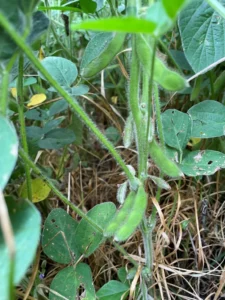
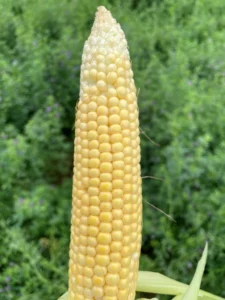
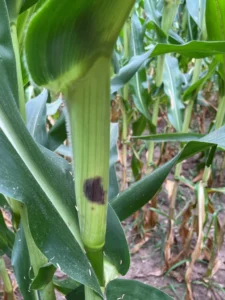
Doug Gucker – Local Food Systems and Small Farms Educator
Dewitt, Macon, and Piatt County
Soil Conditions: Mildly Dry (soil is drier than normal, plant growth may have slowed)
Crops are looking good. Soybean fields are not showing any signs of disease symptoms in the upper soybean canopy. Corn is advancing to the dough stage in early-planted fields. The majority of central and eastern portions of Illinois have had below normal rainfall for the first 29 days of July, as evidenced by the brown grass in pastures, lawns, and roadsides.
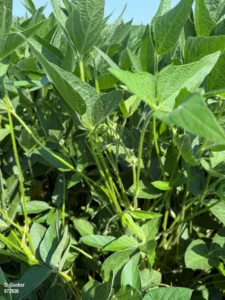
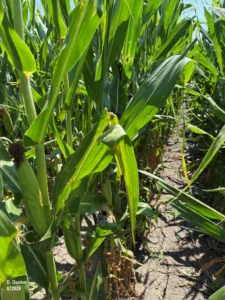
Talon Becker – Commercial Agriculture Specialist
Vermilion County
Soil Conditions: Mildly Dry (soil is drier than normal, plant growth may have slowed)
Corn and soybeans are progressing well in northern Vermilion County, as full-season crops are entering key grain fill stages. Impacts from wet weather early in the season can still be seen in low-lying fields, with uneven growth stage and canopy where the crop survived. Conditions have been a bit dryer in the region over the past several weeks, and surface soils are starting to crack. That said, crops do not appear to be experiencing much stress at this point, as they are likely able to access moisture deeper in the soil profile.
Most full-season soybean fields were somewhere in the pod development stages (R3-R4), and the few double-crop soybean fields I found were in the V2-V3 range. Disease and insect pressure still appeared to be low in most soybeans, but weeds, primarily waterhemp, were a different story in a handful of fields. Corn generally ranged from R1 (silking) to R3 (milk). I found a couple fields with some mild aphid pressure, and foliar symptoms of nitrogen deficiency could be found in the lower canopy in those areas affected by the early-season moisture and subsequent soil conditions. Foliar disease symptoms can also be found in these areas where plants are stressed, but healthy corn still looks relatively clean of foliar diseases.
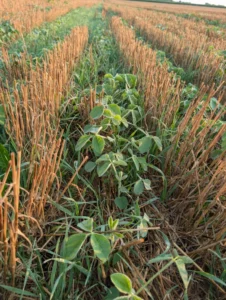
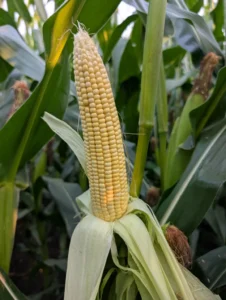
]]>
Agricultural Markets Synthesis
The agricultural commodity markets experienced strong upward momentum and heightened volatility throughout the week, with November soybean futures making new contract highs above $12.50 and December corn approaching the $4.90 to $5.00 resistance levels. Analysts attribute this bullish trend to a confluence of global supply disruptions, expanding domestic demand, and geopolitical conflicts. Escalating military actions in the Black Sea—including missile and drone strikes on grain port infrastructure in Ukraine and Russia—severely restricted Black Sea export shipments. Concurrently, heightened tensions in the Strait of Hormuz and Red Sea shipping corridors added risk premiums across both grain and energy sectors.
Severe drought and extreme heatwaves across Western Europe drastically reduced European wheat and corn yields. Dan Basse highlights that he believes Western European crop damages will transform the European Union into the world’s largest corn importer—taking 27 to 29 million metric tons. In domestic oilseed markets, soybean prices led the complex higher, driven by record domestic crush margins exceeding $3.00 per bushel due to expanded renewable diesel production requirements. Ben Brown and Curt Kimmel noted an economic anomaly: despite U.S. soybeans and corn trading at significant price premiums over South American origins, China executed daily flash purchases of U.S. new-crop soybeans. Dave Chatterton and Ben Brown explained these purchases align with trade commitments and political maneuvering ahead of diplomatic summits, alongside hedging against potential South American production risks.
Market analysts—including Naomi Blohm, Matt Bennett, Greg Johnson, and Curt Kimmel—emphasized that while supply uncertainties exist, producers should focus on locking in profitability through scale-up sales or establishing price floors via options to protect gains while maintaining upside potential.
Agricultural Weather Synthesis
Weather developments across the U.S. Corn Belt displayed a stark regional contrast this week, as favorable conditions in the central and eastern regions stood in sharp opposition to severe heat and drought stress worsening across the western and northern growing areas. Mark Russo and Drew Lerner reported that core eastern production areas—including Illinois, Indiana, Ohio, and eastern Iowa—benefited from near-normal rainfall and a timely influx of moderate, cooler air during critical corn pollination windows, preserving soil moisture and mitigating crop stress.
Conversely, weather conditions degraded significantly across South Dakota, North Dakota, Minnesota, Nebraska, and western Iowa. Don Day outlined a persistent high-pressure ridge shifting across the northern and western Corn Belt, blocking subtropical moisture and driving temperatures well above 100°F. Eric Snodgrass noted that far western fields exceeded 140 stress degree days, causing severe heat stress during pollination and preventing crop recovery overnight. Mike Tannura highlighted that while 30-day rainfall totals appeared near average, the preceding 15 days ranked as the seventh driest since 1979.
Predictive weather models project the upcoming 14-day period to be among the driest on record, compounded by an intense heat dome bringing 100°F to 108°F temperatures across the Plains and Dakotas. Drew Lerner added that persistent heat will severely impact livestock weight gain and stress Canadian prairie canola and spring wheat crops. Looking further ahead, Eric Snodgrass warned of a rapidly developing, historic “super El Niño” in the equatorial Pacific (+2.5°C anomaly), which historically shifts Midwest autumn weather toward significantly wetter conditions, raising concerns over narrow harvest windows, mud, and elevated crop disease risks.
Week’s News and Other Items
Crop Protection Network Update: Disease tracking from the Crop Protection Network identified localized tar spot hot spots in central Indiana, Vermillion County in Illinois, LaSalle, Kendall, Grundy, and Knox counties in Illinois, eastern Nebraska, and 16 counties in Iowa, while soybean disease pressure remained minimal.
Southern rust of corn, caused by the fungus Puccinia polysora, has now been confirmed in Illinois for the 2026 growing season. The first report was received on July 23 from Williamson County in southern Illinois. This confirmation indicates that southern rust spores have reached the state and that corn growers and agronomists should begin scouting, particularly in fields with susceptible hybrids that have not yet reached the later reproductive stages. The disease can develop rapidly under warm, humid conditions, so early detection is important when evaluating whether a fungicide application may protect yield. You may read more about detecting and treating for southern rust of corn on the Univeristy of Illinois cropCentral website.
First Southern Rust Report of 2026 in Illinois: What Corn Growers Should Know
About the Crop Insurance Harvest Price Option: The Harvest Price Option (HPO) in US crop insurance is overwhelmingly popular with farmers but acts contrary to a traditional safety net by making its largest payouts during highly profitable years. Since 2007, crop insurance has paid farmers an average of $2.2 billion more during years with double-digit market profits than in years with market losses. While lucrative for individual producers, this dynamic artificially inflates agricultural production costs across the sector and increases future reliance on government aid. The farmdoc team in a University of Illinois article proposes eliminating taxpayer-funded premium subsidies for HPO to curb these market distortions.
Harvest Price Option (HPO) Is Extremely Popular With Farmers but Is It Good Policy?
USDA Cuts Hit Illinois NRCS Hard: In 2025, the Trump administration reduced the Natural Resources Conservation Service (NRCS) workforce by 22% nationally. Consequently, nearly half of Illinois counties experienced a decline in local conservation staff, with seven counties losing their entire NRCS workforce. The reduction in personnel deprives farmers of crucial, highly localized expertise regarding soil history and river flooding patterns reports Illinois Public Media’s Abigail Bottar. Staffing shortages and decreased funding for conservation initiatives threaten the effectiveness of agricultural conservation programs.
USDA cuts remove local conservation experts from nearly half of Illinois counties
That is a comprehensive look at the markets, the weather, and the news driving agriculture this week. You can find all of these segments, plus daily market updates from our farmdoc team, online anytime on demand at WILLAg.org.
Editor’s note: This article was adapted from the week’s WILLAg.org radio broadcast transcripts, formatted for print with the assistance of Google’s generative AI tool, Gemini, and reviewed by Todd Gleason.
—
University of Illinois Extension and Crop Sciences Agronomy Days
July
30 – Resources, Services, and Tools for Farmers with Disabilities
August
06 – Crop Physiology Field Day
12 – Insect Management and Field Plot Tour
September
16 – Alma Mater Plots Agronomy Day
October
26-29 – 1st International Miscanthus Summit
—
Commodity Week can be heard in the 2 o’clock hour central time on WILL AM580 or you may subscribe to it using the links in the player below. This week the panelists include Dave Chatterton of Strategic Farm Marketing, Greg Johnson with TGM, and Curt Kimmel from AgMarket.net.
The Closing Market Report airs at 2:06 p.m. central daily on WILL AM580. It, too, is a podcast. Subscribe using the link in the player.
]]>This confirmation indicates that southern rust spores have reached the state and that corn growers and agronomists should begin scouting, particularly in fields with susceptible hybrids that have not yet reached the later reproductive stages. The disease can develop rapidly under warm, humid conditions, so early detection is important when evaluating whether a fungicide application may protect yield.
Recognizing Southern Rust
Southern rust produces small, orange to light-brown pustules typically found on the upper surface of corn leaves. These pustules are powdery and can appear in dense clusters, especially during warm and humid conditions (Figure 1).
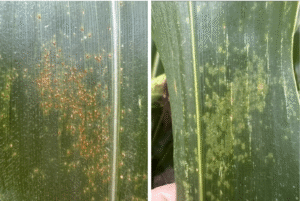
Figure 1. Southern rust symptoms on the upper and lower surfaces of a corn leaf collected in Williamson County, Illinois, on July 23, 2026. Numerous small, orange pustules are concentrated on the upper leaf surface (left), while few to no pustules are visible on the corresponding lower surface (right), a characteristic useful for distinguishing southern rust from common rust.
Do Not Confuse Southern Rust with Common Rust
Southern rust can be confused with common rust, which is frequently observed in Illinois cornfields. Common rust, caused by Puccinia sorghi, generally produces larger, elongated, reddish-brown pustules on both the upper and lower leaf surfaces. The pustules also tend to be more scattered.
Southern rust pustules are typically smaller, lighter orange, more densely clustered, and concentrated primarily on the upper leaf surface. However, visual identification can be difficult, particularly when symptoms are beginning to develop. Suspected samples should therefore be sent to the University of Illinois Plant Clinic for confirmation.
Common rust is widespread in Illinois but rarely causes economically important yield loss and generally does not require fungicide management. Southern rust is less common because the pathogen does not overwinter in Illinois and must be carried northward each season by windborne spores.
Southern rust can be considerably more damaging than common rust when it arrives early enough to affect grain fill. The pathogen uses nutrients from living leaf tissue, reduces the plant’s photosynthetic capacity, and may cause premature leaf death when disease pressure is high.
Submitting Samples to Confirm Diagnosis
Because southern rust and common rust can look similar, especially in early stages, identifying the correct disease in the field can be challenging. If you suspect southern rust in your corn, submitting a sample to the University of Illinois Plant Clinic is the best way to confirm the diagnosis.
Submission details and form: https://extension.illinois.edu/plant-clinic
Tracking the Spread
To keep up with real-time disease reports, use the Crop Lookout tool from the Crop Protection Network. This tool maps confirmed cases of southern rust (Figure 2) and other crop diseases across the U.S. and Canada.
Access it here: https://cropprotectionnetwork.org/crop-lookout
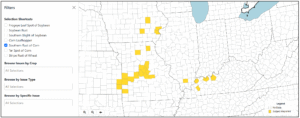
Figure 2. Counties with confirmed reports of southern rust of corn as of July 24, 2026, according to Crop Lookout.
Management with Fungicides
Timely application of fungicides with multiple modes of action between the VT and R3 stages has been shown to reduce disease severity and protect yield. If southern rust is not observed until R3, the application can be delayed until then, and a second spray is typically not needed (Table 1). For information on the efficacy of specific fungicides against southern and other foliar diseases, farmers can consult the Fungicide Efficacy for Control of Corn Foliar Diseases table available through the Crop Protection Network.
Table 1. Guidance on potential benefits of fungicide applications when southern rust is first detected at different corn growth stages.
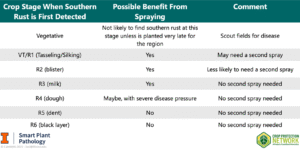
DeKalb County
Soil Conditions: Mildly Dry (soil is drier than normal, plant growth may have slowed)
After a busy July, I am back with another crop report. We are coming out of a very significant heat wave. Northern Illinois is entering a mild drought with little to no rain in the foreseeable future, and the Canadian wildfires smoked most of us in Northern Illinois out for the tail end of the week and well into the weekend. I am very thankful all of that has passed, and look forward to some milder temperatures and lower humidity days in the coming weeks.
Corn continues to progress through growth stages as we exit the past week’s heatwave. Most fields I saw were in the R2 blister stage, some fields are R3 milk, and I did not see any R4 dough stage fields but early plantings could certainly be approaching this. Disease continues to be very low in fields. Small amounts of gray leaf spot was found, and I did confirm the first case of tar spot in a field in DeKalb, Illinois today. It was literally one spot on the lowest leaf of an R2 corn plant, but it is present in fields, and something to be aware of. I urge to continue to scout fields as we enter the most critical growth stages for ear and kernel development. If the disease is not present past R4 dough stage, rarely if ever will a fungicide spray be economically viable.
Soybeans continue to look great across northern Illinois. Beans are averaging R3 first pod development, with nearly all fields beyond R1 flowering. I’ve seen very little to no disease, and the only thing that is holding back bean fields at this point was early season flooding. Overall not a lot to report on the soybean side as many fields are looking very healthy and robust.
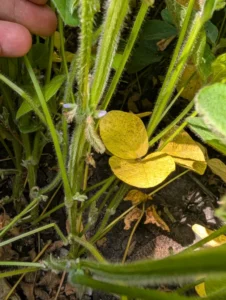
Reagen Tibbs – Commercial Agriculture Educator
Logan County
Soil Conditions: Near Normal
While the temperatures have been sweltering and not much rain has fallen over the last week, crops do not seem to be showing any signs of stress or slowing down. Nearly all of the corn across Logan County has made it at least R1 or R2, with some of the earlier-planted corn already in the R3 stage. The bag is a little more mixed for soybeans. The fields that got planted later or had standing water for much of June are not quite to the reproductive stages yet, but are not far behind. At the Hartsburg Research Plot, a majority of the plants are in the R1 or R2 stage, with some parts of the field not far behind.
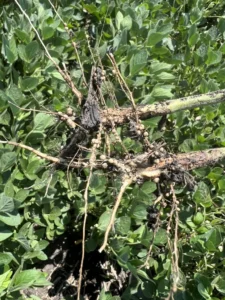
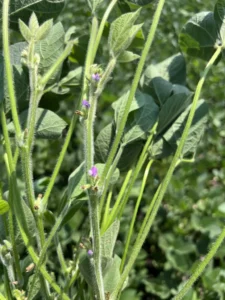
Doug Gucker – Local Food Systems and Small Farms Educator
Dewitt, Macon, and Piatt County
Soil Conditions: Near Normal
Crops are generally looking good. The exceptions are fields that suffered earlier issues of waterlogged soils or storm damage. Amaranth weed control has been a problem for non-GMO soybean producers relying on Group 14 herbicides, with insufficient early-season herbicide control of these plants. Dr. Aaron Hager’s research shows improved amaranth control in non-GMO soybeans when metribuzin is applied at appropriate rates either PPI or at planting. Soybean fields vary from the R1 to R4 growth stages.
No-till double-crop soybeans are growing very well, reaching the V3 stage.
Corn fields vary from almost VT to R3 stage. Nitrogen deficiency is apparent in fields where there were waterlogged soils. Corn leaf diseases are beginning to appear – gray leaf spot and Physoderma brown spot can be seen in a few isolated fields in the low areas where water stood earlier in the season.
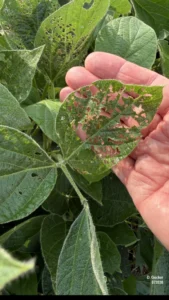
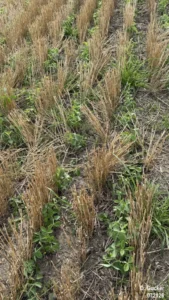
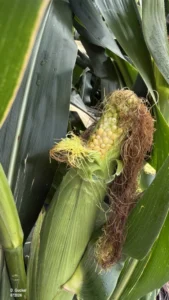
Talon Becker – Commercial Agriculture Specialist
Effingham County
Soil Conditions: Near Normal
Although the soil moisture conditions are more in the normal range now, the impacts of early-season excessive rains can still be seen in Effingham County. Crop maturity across the county is extremely variable, with some soybean fields containing no apparent wheat stubble still being in early vegetative growth. It was unclear if these fields were subject to full replants or just severely delayed plantings, but they are at a similar growth stage as double-crop soybeans, between VC and V3. The more advanced soybean fields are reaching beginning to full pod (R3-R4). Corn growth stage is also variable, but not quite as much as soybeans. While most corn observed in the area had flowered and is well into seed fill, there are still plenty of fields that can be found in late vegetative or early reproductive growth stages. The most advanced corn I found was well into the kernel “dough” stage (R4). I didn’t find any major disease issues during my survey. Timely weed control was definitely an issue for some fields, leading to incomplete control and waterhemp poking through soybean canopies.
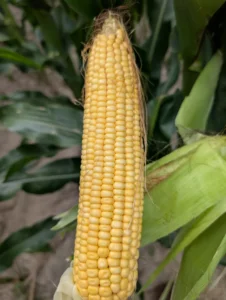
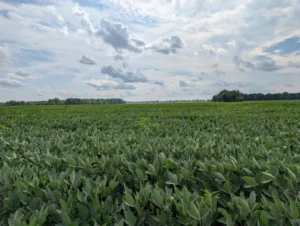
]]>
Agricultural Markets Synthesis
Geopolitical disruptions in the Black Sea region and escalating conflicts in the Middle East emerged as the dominant market drivers, introducing a notable risk premium that overshadowed traditional domestic weather factors. Market analysts Greg Johnson (Total Grain Marketing), Naomi Blohm (Total Farm Marketing), Matt Bennett (AgMarket.net), Curt Kimmel (AgMarket.net), Mike Zuzolo (Global Commodity Analytics and Consulting), and Arlan Suderman (StoneX) collectively detailed a complex macroeconomic environment where global tensions directly influenced commodity values. Russian military attacks on Ukrainian port infrastructure in Odesa and drone-driven conflict near the Sea of Azov severely restricted regional grain and fertilizer flows, triggering upward movements in Chicago wheat futures. This volatility directly spilled over into the domestic corn and soybean markets. Macroeconomically, analysts drew parallels to the 1980s, highlighting volatile international energy markets, currency fluctuations, and the possible implementation of U.S. military escorts for vessels transiting the Strait of Hormuz, which surged crude oil futures higher and threatens to drive up diesel and fertilizer prices.
Despite these outside geopolitical influences, domestic crop fundamentals remained steady. The market observed a unique positioning from investment funds, which held an unseasonably large long position in soybeans while shifting from an extremely short position in corn to a neutral-to-slight long stance just as the crop entered critical pollination and grain-fill stages. On the demand side, localized processing demand remained robust, bolstered by intermittent Chinese purchases of U.S. soybeans. However, structural constraints within the domestic biofuels sector tempered long-term optimism. While soybean crushing operated at maximum capacity, biomass-based diesel production faced significant operational headwinds. Older production plants grappled with severe cash flow limitations and maintenance backlogs stemming from delayed regulatory guidelines for the EPA’s Renewable Volume Obligations (RVO) and the upcoming 45Z tax credit. As the marketing window for old-crop supplies closes, analysts advise producers to secure downside price protection, monitor fluctuating local cash basis levels, and implement scale-up sales to manage impending harvest-time volatility.
Agricultural Weather Synthesis
Agricultural weather forecasts tracked a distinct atmospheric divide, characterized by localized heat stress across the northern and western Corn Belt contrasting with favorable growing conditions in the central and eastern regions. Meteorologists Drew Lerner (World Weather Inc.), Don Day (Day Weather), and Mark Russo (EverStream Analytics) documented the progression of a stubborn high-pressure ridge that anchored well-above-average temperatures across the northern tier of the United States. Initial forecasts recorded extreme, triple-digit heat waves exceeding 100°F across eastern Montana, the western Dakotas, and the upper Missouri River Basin, which caused a steady decline in spring wheat crop ratings. Corn and soybean crops across the northern Corn Belt experienced stressful conditions as daytime temperatures reached the 90s, compounded by elevated nighttime lows staying above 75°F during the critical pollination phase. However, the meteorologists noted the heat was manageable and stopped short of historic extremes. Major production zones like the Red River Valley and sections of Minnesota remained insulated from severe yield degradation due to significant, pre-existing soil moisture reserves and a two-to-five-inch rainfall event that occurred right before the heat wave arrived.
As the coming week progresses, the stubborn high-pressure ridge is expect to retrogress westward over the Rocky Mountains, initiating a temporary reprieve. A series of cool fronts should successfully drop temperatures down into the 80s for daytime highs and 60s for overnight lows across much of the Midwest, providing plants with crucial nocturnal resting time to mitigate prior heat stress. Despite the cooler temperatures, the resulting northwest flow jet stream pattern will also suppress rainfall, causing rapid drying across Iowa, Nebraska, Minnesota, Kansas, and the western Corn Belt. While ample early-season moisture will allow crops to ride out the dry spell through July, meteorologists warned that a continuation of this dry pattern into early August would pose an immediate threat to soybeans entering the pod-development stage. Forecasters anticipated that an early startup of the southwest monsoon could pull quasi-tropical moisture into the Central Plains by early August to alleviate the deficit.
Week’s News and Other Items
Soil Management and Sulfur Fertilizers: During Agronomy Day at the Orr Research Center in western Illinois, researchers addressed sulfur fertilizer. Historically, Midwestern soils received adequate sulfur via atmospheric deposition from coal-fired power plants. As clean air regulations successfully reduced this free atmospheric supply, soil deficiencies expanded. A recent 2025 soil test survey revealed over 50% of routine soil samples processed across Illinois dropped below seven parts per million, placing them squarely in the “very low” category according to the Agronomy Handbook.
Wildfire Smoke Atmospheric Impacts: Meteorologists analyzed the compounding environmental effects of seasonal wildfire smoke actively sweeping across the Corn Belt, noting it has become an annual atmospheric fixture over the past decade. Dense, localized layers of wildfire smoke act analogously to light fog, filtering out direct sunshine and preventing full solar radiation from heating the ground. This phenomenon successfully holds down peak daytime temperatures while leaving overnight minimums largely unaffected. The smoke filters out visible sunshine, reducing the raw units of sun available to the crop for photosynthesis. Historical yield data indicates that the ultimate impact of this solar filtering on final crop yields remains minor and within normal parameters.
That is a comprehensive look at the markets, the weather, and the news driving agriculture this week. You may find all of these segments, plus daily market updates from University of Illinois ag economist, crop scientists and animal scientists online anytime on demand at WILLAg.org.
Editor’s note: This article was adapted from the week’s WILLAg.org radio broadcast transcripts, formatted for print with the assistance of Google’s generative AI tool, Gemini, and reviewed by Todd Gleason.
—
University of Illinois Extension and Crop Sciences Agronomy Days
July
22 – Monmouth Field Day
23 – Ewing Agronomy Field Day
30 – Resources, Services, and Tools for Farmers with Disabilities
August
06 – Crop Physiology Field Day
12 – Insect Management and Field Plot Tour
September
16 – Alma Mater Plots Agronomy Day
October
26-29 – 1st International Miscanthus Summit
—
Commodity Week can be heard in the 2 o’clock hour central time on WILL AM580 or you may subscribe to it using the links in the player below. This week the panelists include Mike Zuzolo with GlobalCommResearch.com and Arlan Suderman of StoneX.com.
The Closing Market Report airs at 2:06 p.m. central daily on WILL AM580. It, too, is a podcast. Subscribe using the link in the player.
]]>by Trent Ford, State Climatologist
ISWS PRI University of Illinois
Temperatures moderated a little this week as wind patterns shifted. Average temperatures were in the mid-70s statewide, 2 to 4 degrees above average in northern Illinois, and right at the average in southern Illinois. High temperatures regularly reached into the upper 80s and low 90s, with a few places pushing over the 95-degree mark including 96 in Chicago and Quincy. The first half of July was 2 to 4 degrees warmer than average statewide, with the largest departures in Chicagoland.
While the northern half of the state dried out under a strong ridge, several rounds of storms sneaked past the southern half of the state, in some cases bringing torrential rains and significant flooding. 7-day precipitation totals ranged from virtually nothing in north-central Illinois to over 8 inches in some parts of Jackson and Johnson Counties in southern Illinois. Carbondale picked up just over 9 inches of rain in the past 7 days, making it the wettest week there since May of 2017.
While the southern Midwest has received an abundance of precipitation lately, the upper Midwest has stayed very dry, which has intensified wildfires burning in northern Minnesota and southern Ontario. Northwesterly winds blew in wildfire smoke and created very poor air quality issues from Minnesota to Maine this week. Air quality monitors in Chicago reached an Air Quality Index value of over 700, which is more than twice the threshold for what the EPA considers hazardous. Most of the wildfire smoke and air quality issues stayed in northern Illinois; however, folks statewide should regularly check the air quality conditions over the next few weeks to keep themselves safe from some very poor air quality.
Looking ahead, the ridge in the central U.S. will keep rainfall to a minimum, as most of the state is expected to get less than a quarter of an inch. High temperatures will keep pushing into the 90s this weekend and into early next week, but we will likely see a little break on the back of a weak cold front sometime late next week. We’ll need to watch the wildfire smoke potential brought in by the northerly winds expected behind the cold front next week, as fires continue to burn in Canada.
]]>Grundy County
Soil Conditions: Near Normal
A favorable week for crop growth in the northeast region of Illinois. Corn is pollinating, despite predicted 90 degrees plus highs this week, most fields have adequate moisture and should not suffer despite elevated temperatures at this critical stage for the corn crop. I enjoy my early morning coffee looking across several corn and soy fields. This past week I noted most mornings start with a mist or fog. The mist does not come directly from the corn and soy crops, even though both put water vapor in the air through the process of transpiration. The morning mist is the result of the cooling of the moist air. As the air cools overnight, it reaches its “dew point” and can no longer hold water as a gas, causing water vapor in the air to turn into liquid droplets. Of significance to those scouting for crop diseases, the morning mist extends periods of leaf wetness, a favorable requirement to several fungal leaf diseases. This week, with the appearance of brace roots in the corn crop, the question of underground root expansion was raised. There are many limiting factors to root growth, too much or limited moisture, soil compaction or other natural barriers. However, the general suggestion is that root expansion in the corn crop continues through pollination. At this point the crop redirects energy toward grain fill. By this time with favorable soil structure, it is not uncommon for corn roots to extend to six feet in depth. Our soy plants tend to generate roots further into the vegetative stages, to R5 and R6, beginning and full seed.
The corn crop is R1 with kernel fertilization underway. Soy is between R2, full flower and R3, or beginning pod. Despite favorable conditions for leaf diseases, I have yet to see an outbreak of Tar Spot or corn or soy leaf disease in fields I have scouted. Growers are encouraged to remain diligent with both field visits and local reports.
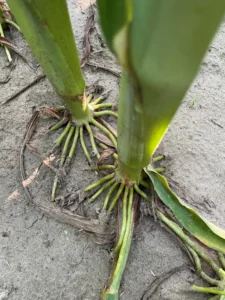

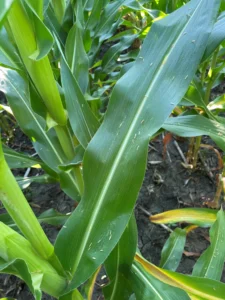
Talon Becker – Commercial Agriculture Specialist
Douglas County
Soil Conditions: Near Normal
Most corn and soybeans in Douglas County have progressed into flowering stages. The primary exceptions to this are areas of fields where early season inundation led to crop stunting as well as a handful of fields where planting was delayed due to wet conditions, which now contain soybeans. These fields, as well as the few wheat/double-crop soybean fields I found, have soybeans ranging from late VC to early V4. Corn that has entered reproductive growth is still in the early stages, generally R1 (silking) to early R2 (blister). Developing pods can be found in the lower canopy of many soybean fields (R3). Foliar disease issues appear to be minimal in the county. Low spots in soybean fields still have a visibly lighter color as they try to recover from saturated soil conditions and possible soil-borne pathogen pressure. In corn, I found a couple fields with some Physoderma brown spot/stalk rot symptoms starting to show. This pathogen doesn’t generally cause economic losses, but it may be taken into consideration when prioritizing fields for harvest to minimize loss potential from lodging (https://cropprotectionnetwork.org/encyclopedia/physoderma-stalk-rot-of-corn).
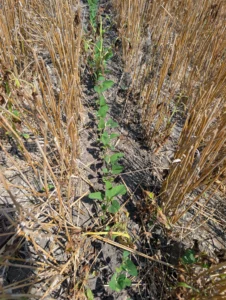
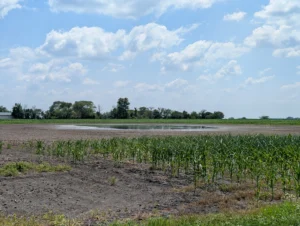
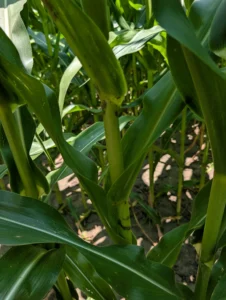
]]>
Agricultural Markets Synthesis
The agricultural commodity markets experienced a post-holiday upward surge early in the week, driven out of contract lows by deteriorating international crop conditions, technical buying, and an adverse domestic weather outlook. Curt Kimmel highlighted an initial rally sparked by rumors and subsequent confirmation of China purchasing multiple soybean cargoes off both the Pacific Northwest and the Gulf Coast. Kimmel stressed the logistical importance of these early sales clearing out before global shipping transitions to the Southern Hemisphere in the spring, advising producers to utilize the $12 soybean and $4.80 December corn benchmarks to implement flexible price floors. Univeristy of Minnesto ag economist Ed Usset characterized the early-week action as a classic weather market driven by dry domestic forecasts and extreme heat hitting major crops in France. Usset urged producers to treat this unexpected rally as a valuable “second chance” to clean out remaining old crop inventories and execute scale-up sales on new crop corn and soybeans before defensive seasonal trends could resume.
As the week progressed, the market encountered strong technical resistance and shifted toward two-sided trade and profit-taking ahead of the Friday USDA WASDE report. Naomi Blohm reported that an overnight technical buying surge pushed November soybeans through key moving averages, but noted that the rally placed U.S. supplies at a price disadvantage on the world market. Blohm cautioned that historical data over the past 20 years shows December corn rarely maintains upward momentum past the July WASDE report, reinforcing the need for defensive risk management. Greg Johnson noted a brief mid-week market retrenchment triggered by renewed geopolitical tensions in the Middle East, which pressured commodities while driving crude oil up. Johnson explained that corn had achieved a 50% technical retracement from its May highs, indicating a prime area for scaling in sales given that local crop conditions in Illinois showed ponding issues but remained viable overall. Matt Bennett concluded the week’s market assessment by attributing late-week losses to profit-taking and technical squaring before the government report. Bennett observed that while early-week strength in corn was primarily weather-driven, producers should incrementally reward the market while maintaining minor flexibility in case automated weather revisions or unexpected Chinese corn demand alter the baseline fundamentals.
Reviewing USDA’s July WASDE
Wheat: U.S. new-crop wheat supplies for the 2026/27 marketing year are tightening. The July WASDE pegs total U.S. new-crop wheat production at 1.536 billion bushels, a 7-million-bushel reduction from last month. This marks the lowest U.S. production since the 1970/71 marketing year. The new-crop winter wheat forecast is 990 million bushels, representing the smallest crop since 1963. New-crop Hard Red Winter wheat takes the brunt of this pressure, dropping to 471 million bushels, its lowest level since 1957. The new-crop all-wheat yield is 47.9 bushels per acre. These reductions lower U.S. new-crop ending stocks by 22 million bushels to 722 million.
Corn: Domestic old-crop corn ending stocks fell by 125 million bushels to 2.0 billion. This adjustment reflects a 150-million-bushel increase in old-crop feed and residual use, which outweighed a 25-million-bushel reduction in old-crop ethanol use. For the 2026/27 new crop, U.S. production remains relatively flat from June with a yield of 183.0 bushels per acre, but robust international demand pushed new-crop export projections up by 50 million bushels. This combination drives U.S. new-crop ending stocks down by 170 million bushels to 1.8 billion. On the global front, old-crop production was raised by 2 million tons, bolstered by favorable mid-harvest yields in Argentina. However, global new-crop coarse grain production is forecast 2.5 million tons lower. The European Union saw a sharp 3.7-million-ton cut to its new crop, heavily impacted by a 24% reduction in the French forecast. Severe heatwaves and drought have pushed the French new crop to its lowest expected output since 1990.
Soybean: The soybean balance sheet shows active movement across both marketing years. U.S. old-crop exports for 2025/26 were raised by 10 million bushels, accompanied by increased old-crop soybean meal exports. For the 2026/27 new crop, U.S. production is projected at 4.475 billion bushels, adding 40 million bushels driven by the June acreage data. The national new-crop yield holds at 53.0 bushels per acre. Total U.S. new-crop supplies grew by 30 million bushels, but a matching 30-million-bushel increase in new-crop export projections left net U.S. new-crop ending stocks unchanged at 310 million bushels. Globally, soybean crush estimates rose across both old-crop and new-crop marketing years, driven by strong import demand for feed in China and Algeria. Global new-crop trade expanded by 1.2 million tons due to higher shipments from the United States and Brazil, offsetting lower Russian new-crop exports.
Despite the localized crop shortfalls, adjustments to usage, and shifts in ending stocks, none of these revisions altered the USDA’s projected direction for cash prices. The July report leaves the projected new-crop season-average farm prices completely unchanged from the previous month for all three commodities:
New-crop Wheat: The projected season-average farm price remains unchanged at $6.00 per bushel (compared to the old-crop final price of $5.06).
New-crop Corn: The projected season-average farm price remains unchanged at $4.40 per bushel.
New-crop Soybeans: The projected season-average farm price remains unchanged at $11.40 per bushel, with soybean meal and oil also holding flat at $310 per short ton and 70 cents per pound, respectively.
While the balance sheet adjustments confirm tighter near-term fundamentals for corn and wheat and slightly larger supplies for soybeans, the steady price forecasts indicate that these shifts were already largely anticipated or neutralized by offsetting global factors, leaving the broader price outlook baseline intact.
Weekly Agricultural Weather Synthesis
Global and domestic weather patterns introduced significant volatility into agricultural forecasts, highlighting a stark contrast between localized crop stress and broader regional stability. Mark Russo initiated the week’s tracking by identifying a highly intense ridge of high pressure expanding eastward from the Rockies. Russo noted that while the core U.S. Corn Belt remained relatively secure from extreme heat, next-week forecasts indicated severe crop-stressing temperatures climbing into the upper 90s and triple digits across western Plains states like Nebraska, Kansas, and South Dakota during critical pollination stages. Internationally, Russo reported a disastrous third seasonal heat wave accelerating severe corn deterioration across France and Eastern Europe, alongside anomalous winter rainfall slowing the safrinha corn harvest in southern Brazil. Don Day extended this forecast by warning of a massive, unseasonable “heat dome” migrating over the northern Corn Belt, centered primarily over Iowa, Wisconsin, and northern Illinois. Day detailed a unique meteorological setup where a central “island” of triple-digit heat and dry conditions would be completely encircled by a clockwise-circulating “Ring of Fire” moisture pattern, drawing deep rain into the Southeast and the drought-stricken West.
By mid-week, the progression of weather models intensified concerns for specific growing pockets while offering relief to others. Drew Lerner verified that extreme heat approaching 110°F would hammer the northern Plains and northwestern Corn Belt for several days, rapidly depleting subsoil moisture reserves despite isolated heavy downpours. Lerner anticipated that a late-week Canadian low-pressure trough would successfully push the ridge back into the Rocky Mountains, allowing normal temperatures and scattered showers to return to the central and eastern Midwest. Lerner also confirmed that the extreme drought in France remained critical, with the region receiving less than half its normal precipitation since March. Mike Tannura concluded the weekly outlook by highlighting the extreme volatility of 10-to-14-day computer models, which flashed conflicting runs of intense heat waves and sudden 10-to-30-degree cooling trends due to the sharp boundary between the Plains heat dome and cool Canadian air. Ultimately, Tannura noted that a rapidly developing, unseasonably strong La Niña signal historically correlates with a lack of late-summer Midwestern heat waves. Furthermore, he emphasized that current soil moisture across the Midwest remains exceptionally strong, with only 11% of the U.S. corn crop tracking drier than normal over the past 30 days, providing an adequate buffer for pollination.
Week’s News and Other Items
Advanced Soybean Genetics: Eliana Monteverde detailed (LISTEN) how the University of Illinois utilizes the USDA germplasm bank to isolate ancestral genes from public introductions. These traits are used to stack multi-genic resistance against soybean cyst nematodes (SCN) and aphids, modify fatty acid profiles for high-oleic commercial lines, and map amino acid composition variations across diverse environments. Monteverde will be a featured speaker Thursday at an Illinois Soybean Association Field Day near Heyworth.
Farmland Investment Dynamics: Agricultural economist Bruce Sherrick provided a comprehensive analysis of agricultural real estate (LISTEN), noting a profound global mismatch where nearly 90% of the population resides north of the equator on only 68% of the land mass. Sherrick highlighted that U.S. farmland remains an exceptional long-term inflation hedge, characterized by remarkably low sector leverage (13% debt-to-value ratio) and unique tax efficiencies like Opportunity Zones and 721 operational partnerships. He also critiqued structural inequities in federal crop insurance subsidies that disproportionately favor southern crops over the Midwest.
Glyphosate Import Protections: Major commodity organizations, including the National Corn Growers Association, aggressively pushed back against a formal request by Bayer to impose federal anti-dumping and countervailing duties on Chinese glyphosate imports, citing severe concerns over expanding input costs and narrowing producer margins.
Farm Bill Food Aid Restructuring: Senate Agriculture Chair John Boozman announced legislative efforts to transition jurisdiction over vital foreign food aid initiatives, including Food for Peace and the McGovern-Dole program, back to USDA. The programs were largely shifted under the State Department following the Trump administration’s dismantiling of USAID.
Disease Monitoring: Detections, Monday, handled by the Crop Protection Network revealed minimal immediate disease pressure, identifying highly isolated instances of Tar Spot across individual counties in Illinois, Indiana, Iowa, Nebraska, and Kansas, alongside rare occurrences of Red Crown Rot in two Illinois counties. Visit the CropProtectionNetwork.org to see the up-to-date disease detection maps for the nation’s primary crops.
Summer Extension Field Days: The University of Illinois announced a robust late-July extension calendar, featuring targeted agricultural field days at the Orr Center on July 15, the Illinois Soybean Association’s “Focus on the Farm” day in Heyworth on July 16, the Monmouth Field Day on July 22, and the annual Beef Field Day at Dixon Springs on July 23. Scroll down for more details and links to each of these in the calendar.
Wildlife Medical Clinic Rescue: Todd Gleason shared a detailed account (LISTEN) of an unexpected short-notice absence caused by a neighborhood wildlife emergency. Gleason coordinated local efforts with arborist Phil Smith, utility provider Ameren, fiber internet provider Volo, and the University of Illinois Veterinary Medicine Wildlife Medical Clinic to safely return a displaced baby Cooper’s Hawk back into its 65-foot-high tree nest.
That is a comprehensive look at the markets, the weather, and the news driving agriculture this week. You can find all of these segments, plus daily market updates from our farmdoc team, online anytime on demand at WILLAg.org.
Editor’s note: This article was adapted from the week’s WILLAg.org radio broadcast transcripts, formatted for print with the assistance of Google’s generative AI tool, Gemini, and reviewed by Todd Gleason.
—
University of Illinois Extension and Crop Sciences Agronomy Days
July
15 – Orr Agricultural Research and Demonstration Center Field Day
16 – Illinois Soybean Association Field Day
22 – Monmouth Field Day
23 – Ewing Agronomy Field Day
30 – Resources, Services, and Tools for Farmers with Disabilities
August
06 – Crop Physiology Field Day
12 – Insect Management and Field Plot Tour
September
16 – Alma Mater Plots Agronomy Day
October
26-29 – 1st International Miscanthus Summit
—
The Closing Market Report airs at 2:06 p.m. central daily on WILL AM580. It, too, is a podcast. Subscribe using the link in the player.
]]>Winnebago County
Soil Conditions: Mildly Wet (soil is wetter than normal, local vegetation is healthy)
With the ample rainfall received over the past month, some fields in the area with low spots still have standing water and areas where the crop will not recover. It is advised to be diligent about scouting as fungicide application decisions are being made. As has been shared in other reports, the Crop Protection Network has useful resources that can aid in that decision making process. These include disease maps, the crop risk tool, and a fungicide ROI calculator: https://cropprotectionnetwork.org/
The corn in this field is exhibiting some potassium flashing on older leaves, which is a common occurrence in this field and tends not to have a negative effect on yield for this particular field. Little to no disease presence was noted, as only one northern corn leaf blight lesion was found.
The soybeans in this field (R2 growth stage) are exhibiting cupping on the upper canopy, and the cupping is widespread across the entire field. These are Enlist soybeans that were sprayed with Enlist + Liberty ten days prior to this field visit. There are other soybean fields within a roughly three-mile radius that are also exhibiting widespread cupping, along with fields that are not exhibiting any cupping. This could potentially be due to off-target dicamba movement.
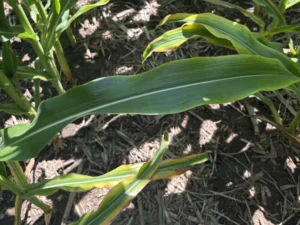
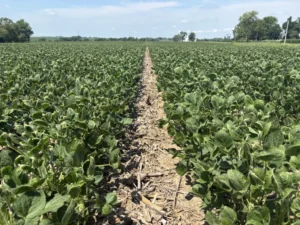
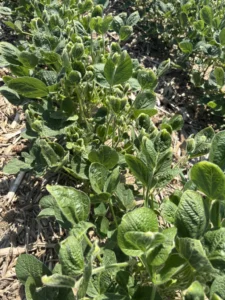
Russ Higgins – Commercial Agriculture Educator
Grundy County
Soil Conditions: Near Normal
This week farmland in the northeast region received additional precipitation and winds over the July 4th weekend. Rainfall totals reported ranged from 1+ inches to isolated fields that received 9+ inches. When sharing an update, the challenge is whether to report on the part of the field that has been unaffected (or even enhanced) by the rainfall, or the parts of the field that have been killed or damaged by ponding or saturated soils. Depending upon where you look, there are outstanding portions of fields, but if you evaluate the field as a whole and note the unevenness and drowned out areas the field, overall rating diminishes. Soybean are at R2 or full flower, at this stage the plants begin a period of rapid dry matter and nutrient accumulation. This week shorter season or earlier planted corn hybrids have reached R1 or pollination and scouting for foliar leaf diseases has intensified. This job will soon be less pleasant when pollen shed increases. In corn fields scouted, I have yet to find symptoms of tar spot. I have noted black specks on corn leaves, but the tar spot stromata (lesions) cannot be brushed off. What I have found are either wind deposited dirt or possibly insect frass or excrement. If you can wipe off the black spot on a leaf it is not tar spot. Follow our weekly reports for updates on gray leaf spot, tar spot, southern rust and other diseases found in both corn and soy across the state.
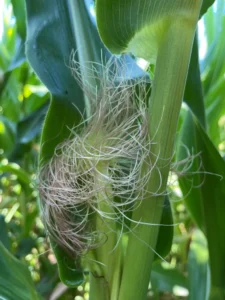
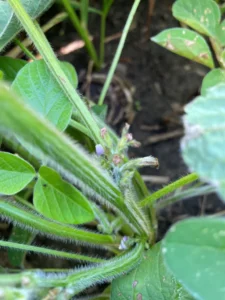
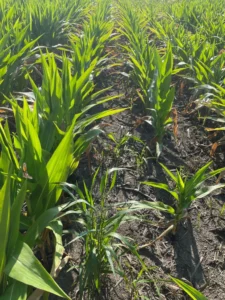
Reagen Tibbs – Commercial Agriculture Educator
Logan County
Soil Conditions: Near Normal
The warm temperatures across the County over the last few days appear not to have slowed down crop progress at all. At the Hartsburg Research Plot in northern Logan County, soybean growth is mixed throughout the field. In the parts where there was standing water, plants are in the V5 stage, while the rest of the field is at V10. In the parts of the field that had standing water, there are many empty spaces where plants have not developed or failed to emerge. Volunteer corn is the most-present weed at the Hartsburg Research Plot this year, given the late planting date. Other weeds such as Palmer amaranth, Redroot pigweed, and Common waterhemp are also starting to show themselves. While there are Japanese beetles in the field too, they do not appear to be causing significant damage to the leaves, with only a small handful of plants and leaves showing major signs of damage.
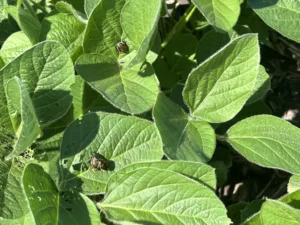
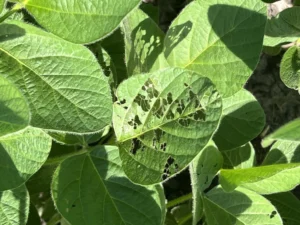
Talon Becker – Commercial Agriculture Specialist
Champaign County
Soil Conditions: Near Normal
After a very warm week last week, temperatures have been much closer to normal following the storm system that moved through the area on July 4th. The heat did help dry out many of the fields that had been waterlogged for several weeks. As I drove through southern Champaign County on Tuesday (7/7) afternoon, only a couple fields I passed had water standing or visibly saturated soils. Some of the drowned-out areas of soybean fields have been replanted, with seedlings just starting to break through the surface. The few wheat fields I saw during my survey had been harvested. Double-crop soybean planting and late post sprays on acres that were likely too wet a couple weeks ago are ongoing. Most soybean fields I visited were somewhere in the flowering to beginning pod stages (R1-R3), with the exception of those that were stunted or delayed by the wet start to the season. Early planted corn fields are starting to flower in near ideal growing conditions, with adequate soil moisture and more moderate temperatures. With these conditions, the remaining corn in the area still in vegetative growth will progress rapidly and likely reach flowering in the next week or so. I did not find any fields with major foliar disease issues, despite the wet start to the season. However, I did find a couple soybean fields with Japanese beetles actively feeding, but damage was still isolated and appeared to be below the recommended 20% defoliation threshold for control in flowering soybeans.
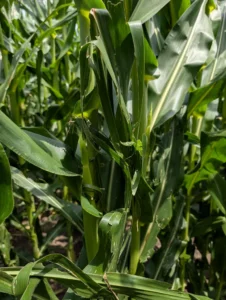
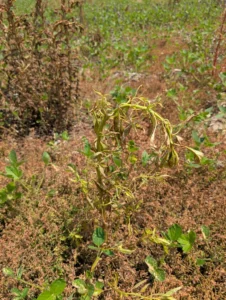
Dane Hunter – Commercial Agricultural Specialist
Marion County
Soil Conditions: Mildly Wet (soil is wetter than normal, local vegetation is healthy)
From late April to late June we were about the wettest area of the state according to Trent Ford. Crops that got in the early window in April look great. Later planted crops had much more difficulty emerging between heavy rains. Lots of delays and replant decisions have been made through this region between I-70 and Rte 50. The precipitation also stymied the harvest of what was otherwise a relatively early maturing crop. Heavy winds and hard rains battered kernels from heads even if the wheat avoided lodging. Subsequently, planting of doublecrop and even some first crop soybeans stretched into the first week of July. I saw a drill still running on July 7th, planting first crop beans, not replants. Folks had to decide whether to mud in double crop soybeans or wait for rutted fields to dry. Thankfully the moisture persisted long enough that those mudded in plantings didn’t turn to concrete before emergence. I’ve seen more tilled double crop fields this year than I can ever remember, a testament to the wet conditions during harvest.
The good news is our subsoil moisture is fully recharged after a dry winter. Corn that got planted in our early window is at VT or even on the verge of R2. Despite the recent hot temperatures, it has established a good root system and does not seem to be showing signs of heat stress. Late planted corn (Late May to June) didn’t have as much time to establish a strong roots and shows some signs of heat stress, sometimes just in patches of thin soil and some entire fields.
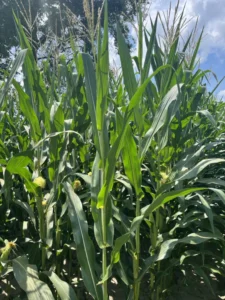
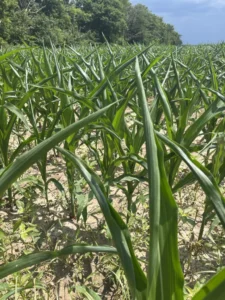
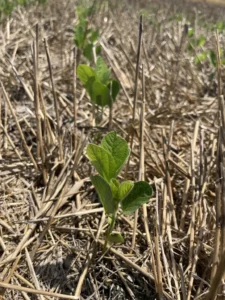
The main question now is how much yield potential was lost under these conditions. Unfortunately, that is difficult to answer with precision. Excess water has certainly caused damage in some fields, particularly in low-lying areas where standing water persisted for a week or more. In those situations, root systems may be damaged to the point that recovery and yield prospects are limited. However, the extent of damage varies greatly depending on the timing and duration of waterlogged conditions.
Research consistently shows that the greatest yield losses occur when flooding or saturated soils affect corn during early vegetative growth stages (before V5-V6, when the growing point is still below ground) and flooding persists for longer periods. In a nutshell, waterlogging reduces root function and oxygen availability, limiting nutrient uptake and plant growth. Yield reductions are often associated with decreases in canopy height, biomass production, and photosynthetic efficiency resulting from damage to leaf chloroplasts. More recently, researchers in Ohio used multiple waterlogging durations (0, 2, 4, and 6 days) and observed yield losses of up to 14 bushels per acre for each additional day of waterlogging when corn was between V4 and V6. Similarly, another study in Missouri with waterlogging of 1, 3, and 7 days reported yield reductions ranging from 6.7 to 11.5 bushels per acre for every additional day of flooding imposed on V6 corn. Yield losses in Illinois this year will depend on how quickly fields drained, how long soils remained saturated, and how well root systems recover in the coming weeks.
It is not easy to predict how wet weather will affect the corn crop, but crop development over the next several weeks should provide us with some clues. While crop growth slows considerably during periods of flooding, one encouraging aspect is that corn often exhibits rapid growth once flooded soils dry and oxygen returns to the root zone. Still, recovery may not always be immediate, especially in younger corn plants with less-developed root systems. In our planting date trial in Urbana, corn planted on April 12 had accumulated ~1,200 growing degree days (GDD) by June 24 and was at the V13-V14 growth stage, behind what might be expected under normal conditions (Figure 1). However, by July 1 (~1370 GDD), plant height had reached approximately 6.5 to 7 feet with good canopy color, and the crop had advanced to the point where the collar of the second-to-last leaf was visible (tassels were visible over the weekend). Corn planted on May 4, May 21, and June 5 each advanced about two leaf stages over that week; also showing good canopy color. Daily high temperature exceeded 90 degrees during the last week of June, nighttime temperatures were 2 to 6 degrees above normal, and plenty of moisture and sunshine promoted good growth rates.
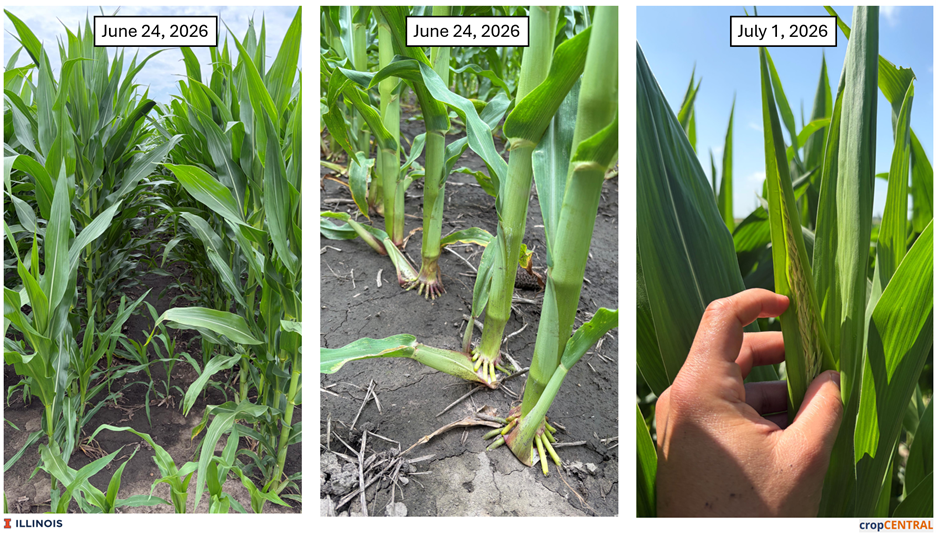
According to the July 6 USDA-NASS crop progress report, corn silking reached 17% statewide, 2% behind this time last year and the five-year average (2021-2025). For fields planted late and affected by prolonged saturation or flooding, however, root recovery remains an important unknown, and it may take a week or so after soils dry and re-aerate before the full extent of root damage becomes apparent. Our hope is that many acres will return to green once soils dry out, since the deep green color of the corn crop indicates that plants are generally well supplied with nitrogen. If crops regain normal color and growth rates as soils dry, that will be a good indication that root recovery is underway. Even so, some yield potential has likely already been lost in flooded areas, especially where plants were larger when flooding began or where saturated conditions persisted for several days.
Another, more immediate question is whether the pale green or yellow spots in fields need additional N applied to prevent serious yield loss. The corn crop takes up as much as 6-7 lb of N per acre per day during the rapid growth and N uptake period, from about V9 through tasseling. As a result, canopy color loss can develop quickly when roots are unable to take up enough N. Figure 3 shows the crop canopy from an N rate and timing experiment near Urbana taken on July 6. This poorly drained site has received considerably more rain since planting – evidenced by the severe N deficiencies where low at plant N rates were applied. In many cases, though, the rapid loss of color following flooding is more a result of reduced root activity than the lack of N in the soil. Saturated soils restrict oxygen supply to roots, limiting their ability to take up water and nutrients. We know this because well-drained areas of the same fields are not showing deficiency.
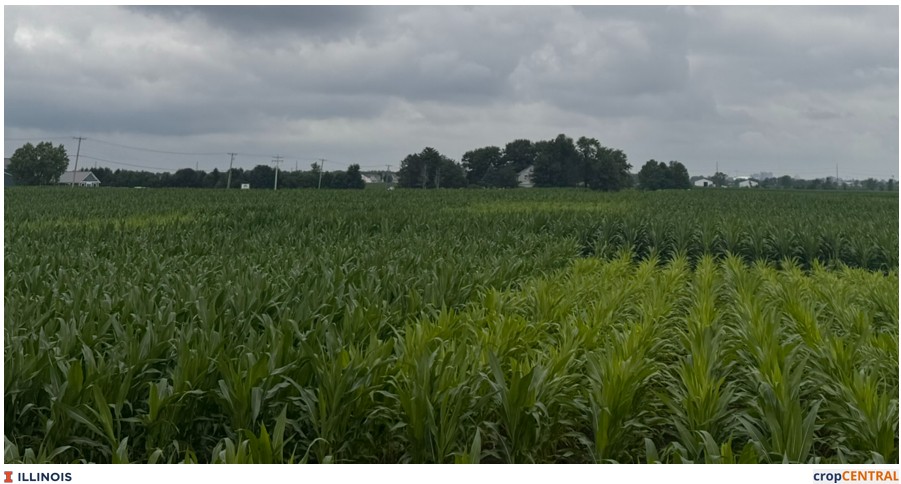
Results from a 2015 N timing study at DeKalb and Urbana illustrate how variable crop response to N timing can be following a wet June. In that year, June rainfall totaled 6.7 inches at DeKalb and about 9 inches at Urbana. At DeKalb, where rainfall returned to near normal in July and August remained relatively dry, applying the full 150 N/acre as UAN at planting produced the same yield (198 bushels per acre) as splitting N applications between planting and either V6 or V9, but delaying N application until VT reduced yields by 13%. In Urbana, where July and August rainfall was closer to normal, the full N rate at planting and a split application between planting and V6 produced similar yields (227-228 bushels per acre), and splitting N between planting and V9 and VT increased yields by 1.5% and 5.1%, respectively.
Reflecting on past crop responses to wet early-growing-season conditions, 2015 showed patterns similar to those observed so far in 2026 (Figure 4). Cumulative precipitation data for Monmouth, Urbana, and Effingham indicate that many locations in central and south-central Illinois experienced rapid rainfall accumulation during June, more closely resembling conditions observed in 2015 than in the dry 2025 growing season. This raises the question of whether crop N requirements in 2026 may ultimately resemble those observed in 2015. Table 1 presents data from the current Corn N Rate Calculator and the observed optimum N rates for last year and 2015. In total, many sites showed an increase in fertilizer N requirements in 2015 compared with other years over the past decade. We see that 2015, in contrast to the dry 2025 growing season, had generally higher optimum N rates. Combinations of saturated low-lying areas of fields coupled with N loss events have limited growth and N availability for portions of fields. In these fields, we expect yield increases with high N rates due to the loss of both mineralized organic N and previously applied fertilizer N. Farmers considering rescue N applications should consider that the crop will still respond to N (if deficiencies are pressing and soils are no longer saturated) up to VT, but rarely after.
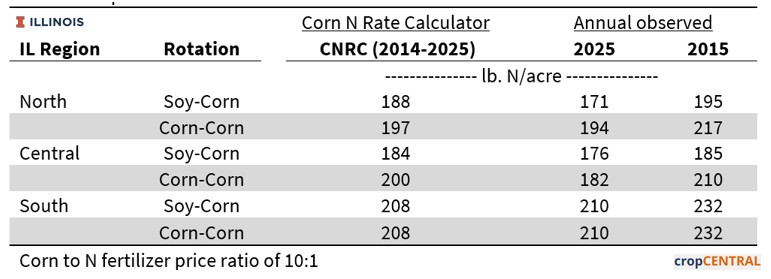
Weekly Agricultural Markets Synthesis
The agricultural markets during this period were characterized by a transition from technical liquidation to a highly sensitive weather- and policy-driven environment. Prior to the release of the June 30 USDA reports, market analysts including Sue Martin observed a broad downward trend in corn, soybean, and wheat futures, driven by fund liquidation and expectations that old crop crop condition ratings would remain steady. Once the USDA grain stocks and acreage numbers were released, Naomi Blohm and Greg Johnson reported that while the surface figures were fundamentally neutral to bearish—with corn acres steady at 95.3 million, soybean acres up to 85.4 million, and old crop corn stocks remaining near an eight-year high—the market experienced a short-term recovery bounce. Both Johnson and Matt Bennett attributed this positive price reaction to short-covering and profit-taking by funds that held massive short positions heading into the new quarter, rather than a shift in core supply metrics. The notable exception to the neutral data was wheat; Blohm highlighted that the USDA acknowledged a severe drop in winter wheat harvested acres to 21.2 million due to rampant drought in the Plains, providing sustained support to the wheat complex despite comfortable global supplies. By the end of the week, daily settlements showed mixed commodity movements, with corn and wheat finding modest gains while livestock futures like live cattle and feeder cattle faced downward pressure.
The critical drivers dominating the marketplace include regional basis shifts, seasonal producer behavior, and looming geopolitical trade changes. Panelists Shane Holtorf, Naomi Blohm, and Matt Bennett emphasized a significant disparity in old crop corn basis, which remained wide and depressed in high-supply western regions like the Dakotas but reached substantial premiums in corn-deficit eastern regions. Holtorf noted that western producers are facing intense competition with themselves to clear out substantial unpriced on-farm storage before harvest, even as local ethanol plant demand remains highly profitable. According to Johnson, overall grain movement has slowed to a halt because producers are highly reluctant to sell at current low futures levels, forcing local elevators to step up and improve basis bids to stimulate movement. Looking ahead, the panel agreed that without immediate, large-scale new crop purchases from China, soybeans face technical breakdown risks toward their January lows. Furthermore, market sentiment is heavily clouded by the Trump administration’s refusal to automatically renew the U.S.-Mexico-Canada Agreement (USMCA). Bennett and Blohm warned that forcing the agreement into a mandatory annual review process creates severe long-term demand uncertainty, risking vital corn rail networks to Mexico and critical ethanol export channels to Canada.
Weekly Agricultural Weather Synthesis
The progression of agricultural weather forecasts highlighted an abrupt shift from an intense, localized heat wave to a more moderated, active weather pattern across the domestic growing regions. Mark Russo and Trent Ford documented the arrival of a massive high-pressure ridge that blanketed the Corn Belt, Central, and Eastern United States, bringing extreme heat, high dew points, and stifling nighttime temperatures. This sudden weather pattern caused immediate environmental stress across multiple livestock sectors—including Plains beef cattle, Midwestern swine and poultry operations, and East Coast dairy facilities—though Russo and Ed Kieser noted that high winds and shifting clouds tempered the worst impacts. This hot dome suppressed rainfall across the central Corn Belt but triggered severe, “ridge-riding” mesoscale convective complexes that dropped several inches of rain along its northern periphery in northern Iowa, Minnesota, and Wisconsin. As the week progressed, meteorologists Mike Tannura, Drew Lerner, and Ed Kieser tracked the eastward migration and subsequent reassembly of this ridge over the Rockies. This structural shift allowed a cooler northwesterly flow and a trailing cool front to drop temperatures below 93 degrees across Illinois and the southeastern Corn Belt, establishing a highly beneficial “jungle” environment of moderate heat combined with widespread, frequent shower chances perfectly timed for early corn pollination.
Looking further into mid-July, the domestic forecast faces a critical divergence that could heavily impact crop yields. Mike Tannura outlined two competing atmospheric models for the July 12–17 pollination window: a 40% probability scenario where the western heat dome re-expands to envelope the central U.S. in prolonged heat, and a 60% probability scenario where a weaker ridge allows cool fronts to maintain normal to below-normal temperatures. Tannura noted that historical data from five strong El Niño cycles over the last 55 years strongly support the cooler outcome, as none featured persistent July heat. On a global scale, weather disruptions have severely damaged international crop potential. Drew Lerner reported that the Canadian prairies are battling catastrophic moisture surpluses, with parts of Alberta receiving an unprecedented 17 inches of rain in June, which is driving widespread spring wheat acreage abandonment across Saskatchewan and Manitoba. Simultaneously, Europe has been the epicenter of a phenomenal multi-wave heat wave. Russo and Lerner detailed that all-time high temperature records were shattered over the weekend in Germany and Poland, severely compounding a prolonged agricultural drought in France where rainfall has trended below 50% of normal since March, threatening catastrophic yield losses for European summer corn if soaking rains fail to materialize by late July.
Week’s News and Other Items
Rethinking Phosphorus and Potassium Soil Testing: A pair of University of Illinois Crop Scientist have been reevaluating how tow primary nutrients are measured. Luke Bergschneider and Andrew Margenot posted an article to the farmdoc Daily website. Here is their summary of the work, “Soil tests are operational tools meant to predict the likelihood or probability of a crop response to a P or K application. Soil tests do not represent a literal amount (lb/ac) of crop-available nutrients, and mask complexity in how the actual available pool is replenished by soil chemical and biological processes. That’s ok; operational tools are useful. Soil testing unleashed a step up in precision for P and K management in the second half of the 20th century and stands to be further refined. However, to increase precision – and profitability – of P and K management, evidence is growing that soil testing may not be able to take us where we want. For this, we will next explore an overlooked opportunity for making more accurate and precise decisions on P and K based on testing of grain, not soils”.
New Illinois Nutrient Loss Reduction Podcast Episode Drops: This week the first in a three part series titled Cover Crop Conversations was released by University of Illinois Extension. It details the cultural and mindset shifts farmers face when adopting new production methods.
During a recent panel, three Illinois farmers shared their distinct journeys toward embracing these conservation methods. Brent Fowler highlighted the challenge of overcoming institutional family resistance, explaining how an accidental equipment mix-up led to successful no-till testing that ultimately proved profitable and effective at preventing soil erosion. Adam Dahmer emphasized that while accessing information and equipment was difficult in the past, a farmer’s rigid mindset remains the biggest barrier today, stressing the need for adaptable management and open-minded approaches to seeding methods like drills and drones. Finally, Greg Thoren expanded on the broader environmental impacts, noting that transitioning from single-species cover crops to a holistic, multi-species management system not only improves soil health but also supports natural ecosystems by promoting cleaner water and air.
Corn Leaf Aphid Scouting: University of Illinois Extension Field Crops Entomologist Nick Seiter advised producers to actively scout fields as corn enters late vegetative and early reproductive tasseling stages, which are highly conducive to aphid reproduction. Seiter noted that severe corn leaf aphid outbreaks require a rare convergence of heavy southern insect flights, sensitive corn hybrids, and specific late-season weather patterns, making the pest historically uncommon. Fields planted later in the season or utilizing specific hybrids that suffered damage during the notable 2024 outbreak remain at the highest risk for yield reductions and require vigilant monitoring.
Non-GMO Soybeans Profitability: Non-GMO fields in central Illinois within PCM do not have lower yields than GMO fields. Given a $1.30 to $2.30 per bushel premium, non-GMO fields will be more profitable despite the additional $15 per acre in costs. The $85 to $168 in additional revenue from non-GMO premiums will cover those costs and provide an additional profit margin. Non-GMO production will require changes in production practices, including, and prominently, the chemical program. Often, non-GMO production will require on-farm grain storage. If a farmer lacks suitable grain storage, non-GMO production may not be a viable option. Moreover, the delivery of non-GMO grain may require coordination with the purchaser and a longer hauling distance than GMO soybeans. Read more on the farmdoc Daily website.
Regenerative Biofuel Rules: USDA finalized its voluntary regenerative feedstock rule, aligning with an executive order to establish standardized pathways for documenting qualified production practices for corn, soybeans, sorghum, and canola. This newly established regulatory framework is designed to help domestic growers qualify for emerging low-carbon fuel markets and capture additional value through the federal 45Z Clean Fuel Production Credit.
Rural AI Data Center Concerns: Data centers, the foundational infrastructure for artificial intelligence and cloud computing, are increasingly expanding into rural areas, prompting significant resource and economic concerns among residents. While these capital-intensive facilities can generate local property tax revenues, they require massive resource inputs, often consuming 500 to 800 acres of agricultural land while demanding substantial electricity and water for cooling systems. According to a February 2026 Gardner Food and Agricultural Policy Survey of 1,000 U.S. adults, rural residents exhibit higher apprehension regarding data centers compared to urban and suburban populations. The survey identified three primary anxieties: escalating electricity costs (rated 5.41 out of 7 by rural respondents), water overuse, and the conversion of farmland. The potential for increased utility bills—a direct threat to personal finances—proved the most pronounced worry, especially as regional energy requirements for data centers are projected to double or triple in several Midwestern states by 2030. To navigate these structural shifts, researchers urge rural communities to conduct rigorous due diligence on prospective developers, carefully evaluating zoning, resource consumption, and actual economic trade-offs prior to project approval.
Screwworm Mitigation Legislation: A bipartisan group of federal lawmakers introduced a bill authorizing cooperative extension agents to act as livestock inspectors and train local producers to detect, report, and contain the rising threat of the New World screwworm parasite.
Prop 12 Political Friction: Senate Ag Chair John Boozman defended his farm bill draft’s omission of restrictions on California’s Prop 12 animal confinement standards, stating that a party-line vote achieves nothing and that pork producers lack the necessary Democratic floor votes to override the state rule.
Supply Chain Labor Risks: A recent Supreme Court ruling granting the administration power to terminate Temporary Protected Status (TPS) for over a million immigrants sparked industry concern regarding potential labor shortages for domestic meatpackers and food processors.
That is a comprehensive look at the markets, the weather, and the news driving agriculture this week. You can find all of these segments, plus daily market updates from our farmdoc team, online anytime on demand at WILLAg.org.
Editor’s note: This article was adapted from the week’s WILLAg.org radio broadcast transcripts, formatted for print with the assistance of Google’s generative AI tool, Gemini, and reviewed by Todd Gleason.
—
University of Illinois Extension and Crop Sciences Agronomy Days
July
15 – Orr Agricultural Research and Demonstration Center Field Day
22 – Monmouth Field Day
23 – Ewing Agronomy Field Day
30 – Resources, Services, and Tools for Farmers with Disabilities
https://forms.illinois.edu/sec/1985347851
August
06 – Crop Physiology Field Day
12 – Insect Management and Field Plot Tour
26-29 – 1st International Miscanthus Summit
September
16 – Alma Mater Plots Agronomy Day
—
Commodity Week can be heard in the 2 o’clock hour central time on WILL AM580 or you may subscribe to it using the links in the player below. This week the panelists include Matt Bennett of AgMarket.net, Naomi Blohm from Total Farm Marketing, and Shane Holtorf with Logic Ag Marketing.
The Closing Market Report airs at 2:06 p.m. central daily on WILL AM580. It, too, is a podcast. Subscribe using the link in the player.
]]>by Trent Ford, State Climatologist
ISWS PRI University of Illinois
Temperatures this week packed a punch, ranging from the high 70s in northern Illinois to the low 80s in southern Illinois, between 1 and 4 degrees above average. This week featured our first real summer heat wave across the state, as high temperatures reached into the mid 90s, with very high humidity pushing peak heat index values well over 100. However, that persistent humidity and very warm nights were the truly remarkable feature of this heat wave. Chicago saw more than 60 consecutive hours with heat index values over 80 degrees, creating some stifling nighttime weather.
The ridge that brought us the heat also mostly kept rainfall away this week. 7-day totals ranged from virtually northing in the Quad Cities to just under 4 inches in southeast Illinois. The relatively dry end to June was quite a contrast to the month, which ended up being a top 5 wettest June on record statewide, and the 3rd wettest on record in both Bloomington-Normal and Galesburg. The calmer, albeit hot weather also brought us a 5 day stretch without any storm reports in Illinois, which was the longest such stretch in the state since May.
Looking ahead, the heat, and likely that storm report streak, will both come to an end as we move into the weekend. The ridge will move east and behind it will come a more disturbed pattern with highs in the 80s and more frequent chances of thunderstorms and showers. The latest 7-day forecast from
National Weather Service has the northern half of the state picking up between a half inch and 2 inches, while southern Illinois will likely see mostly less than half an inch this upcoming week. Farther out, the outlooks for mid-July show slightly higher chances of warmer weather coming back, with best odds of wetter than normal weather, too. Look for that disturbed, warmer and stormy weather to appear off and on throughout this, the climatological hottest month of the year in Illinois.
]]>Dekalb County
Soil Conditions: Mildly Wet (soil is wetter than normal, local vegetation is healthy)
The heat wave is upon us this week bringing 90+ degree temperatures with very high humidity. After a few weeks of cooler weather and lots of precipitation, the corn and soybeans that were not waterlogged are thriving, and have jumped multiple growth stages since last week. I scouted corn fields anywhere between V5/V6 up to V10 with rapid growth from all the heat units being added into the environment. Soybeans are a bit more spaced out depending on planting date, with some fields as far along as R2 upper node flowering.
Water damage from previous storms is becoming increasingly evident where it was sitting for multiple days, drowning out both corn and soybeans, with many fields showing bare ground from a low spot leading to islands of complete crop loss. Much of this was heavily dependent on who received heavy and damaging rain and winds.
I would advise to be vigilant about your scouting for disease. I have not seen tar spot or Northern Corn Leaf Blight (NCLB) yet, but a colleague in Morris, Illinois has found large NCLB lesions in fields. After 2 weeks of ideal tar spot weather, despite not seeing any today, I have concerns we may see early outbreaks this season, especially compared to last season and the early drought we experienced in northern Illinois.
That’s all for this week, I’ll be back next week with another update!
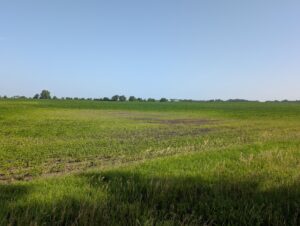
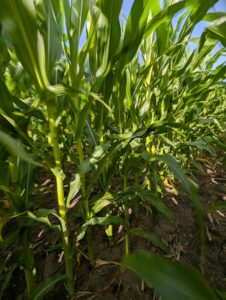
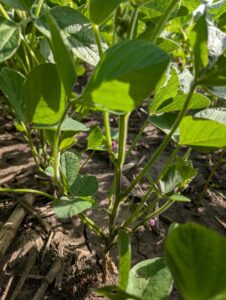
Russ Higgins – Commercial Agriculture Educator
Grundy County
Soil Conditions: Near Normal
In a recent report I stated that warmer weather would benefit the 2026 crop, perhaps in the future I should qualify my term of “warmer weather”. A week of 90 degree plus days in Northeastern Illinois has allowed farmers and agribusiness the opportunity to play catch-up applying post herbicides. Last week you could not travel a rural road without meeting a sprayer. Most fields have weed populations that have easily exceeded weed size management recommendations, and most have drowned out areas that will likely germinate later season weeds. Fields this year are unlikely to have “perfect” weed control. Growers are encouraged to evaluate post herbicide applications and start scouting for leaf diseases in corn. Tar spot symptoms have been reported in the state; one tool that can be utilized to see if a crop disease has been reported in your area is visiting the Crop Lookout website. Crop Lookout is a real-time, interactive map that highlights emerging field crop issues across the United States and Canada. Updated throughout the growing season by university Extension specialists and research partners, the tool visualizes reports of diseases, pests, and other agronomic challenges as they develop. Northern corn leaf blight lesions have been found in Grundy County as the crop is near the tassel (VT) stage.
To report suspected tar spot or other crop diseases in Illinois, send an email with photos to our Field Crop Pathologist, Boris Camiletti (bxc@illinois.edu).
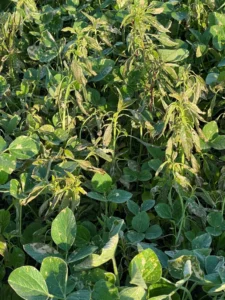
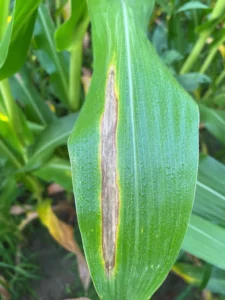
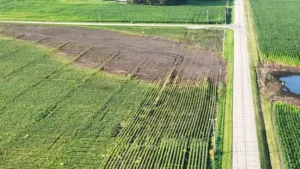
Doug Gucker – Local Food Systems and Small Farms Educator
Dewitt, Macon, and Piatt County
Soil Conditions: Mildly Wet (soil is wetter than normal, local vegetation is healthy)
Crops are growing well with soybeans in the R2 to R3 stages, and corn is in VT to R1 stages. So far, not seeing any leaf diseases in corn or soybeans. Japanese beetles are being seen feeding on tender vegetation, but are not yet evident in fields. I have not found any root feeding in corn, and root systems in fields planted under good conditions are looking healthy and strong.
The wheat harvest is quickly wrapping up in the wetter areas of the region, with double-crop planting following soon after.
Post-emergent soybean herbicide applications delayed by wet field conditions are wrapping up, with the target weed species larger than desired.
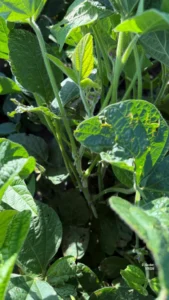
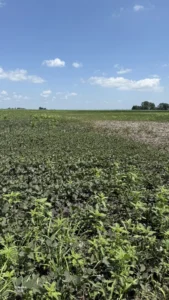
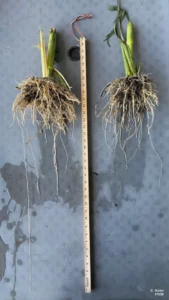
Talon Becker – Commercial Agriculture Specialist
Vermilion County
Soil Conditions: Moderately Wet (soil is damp, standing water may be present in low areas, water bodies are full)
Some hot summer weather this week and a break from the rain has helped dry many fields enough for spraying and other field work to resume in southern Vermilion County. While there were still some low lying or poorly drained areas of fields with standing water as of my survey on Tuesday morning, most of the water had receded. Time will tell over the next few weeks how well the crop that remains will recover. Much of the corn in that part of the county is still in vegetative growth stages, generally ranging from V8-V14. I did find a couple fields that had started to show tassels, although no silk emergence or anther exsertion quite yet. Most soybean fields visited had reached early flowering (R1), at least in parts of the field. The most advanced soybeans I found were beginning to form pods, entering early R3. Wheat harvest has started in that part of the county, but most wheat fields were still standing as of Tuesday morning.
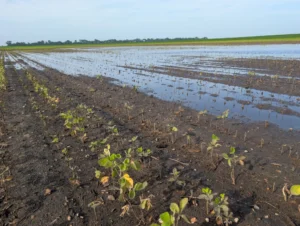
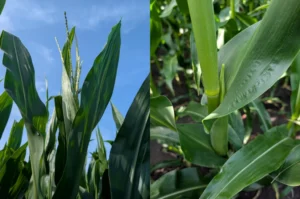
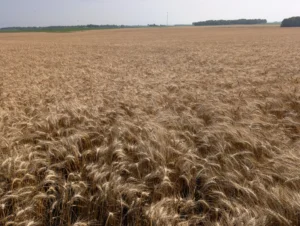
]]>
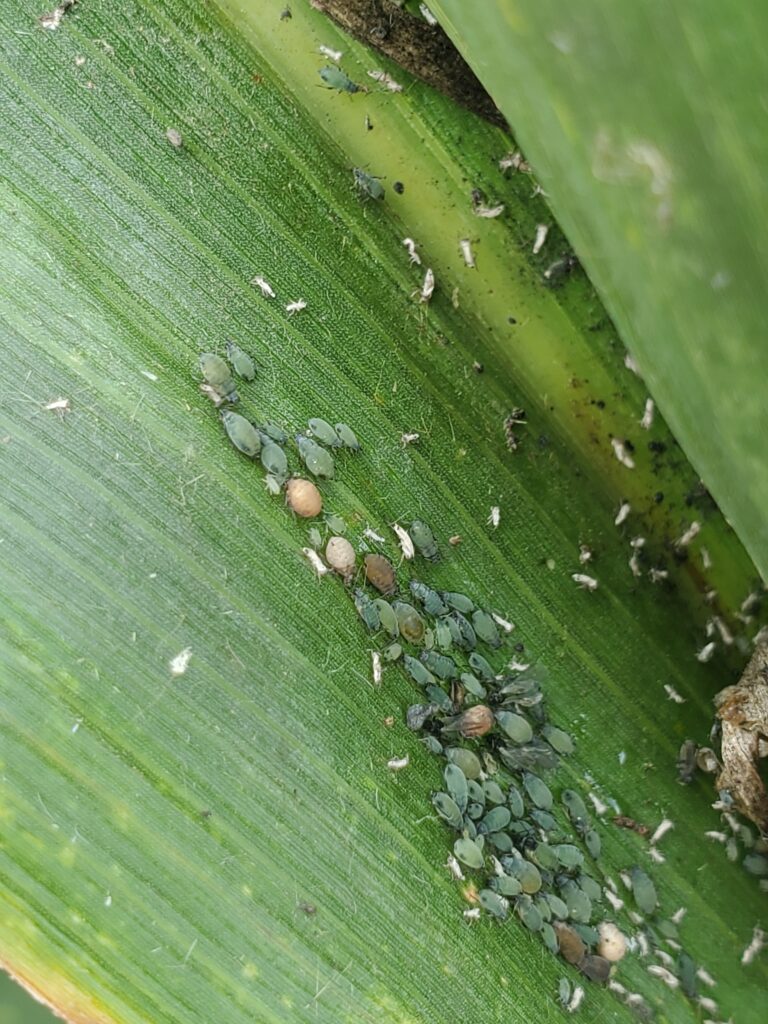
Corn leaf aphids develop and reproduce quickly on corn in the late vegetative and early reproductive stages, where much of the crop in Illinois currently stands. Severe infestations can interfere with kernel formation and, in some cases, have dramatic effects on yield. While the cost of missing an infestation can be high, the good news is that relatively few fields are likely to be affected. In addition to hybrid sensitivity, later planted fields tend to be more vulnerable. In a normal year, most of our corn tassels before the aphids really get going in corn; when that happens, isolated colonies are quickly subdued by lady beetles, fungal pathogens, parasitoid wasps, and other natural enemies. (I should note, this article is intended only as a scouting alert – I have not received a single report of corn leaf aphids yet in 2026. At this point, I have no reason to think this will be anything other than a “normal” year where few if any fields are seriously affected).
If colony formation (dime-sized or larger groups of wingless aphids) is evident on around half of the plants from the late vegetative stages through tassel, an insecticide application is warranted. Good coverage can be difficult to achieve in canopied corn, but is essential for the contact insecticides that we are most likely to use. The good news is that the vast majority of fields will not need an insecticide application for this occasional, sporadic pest.
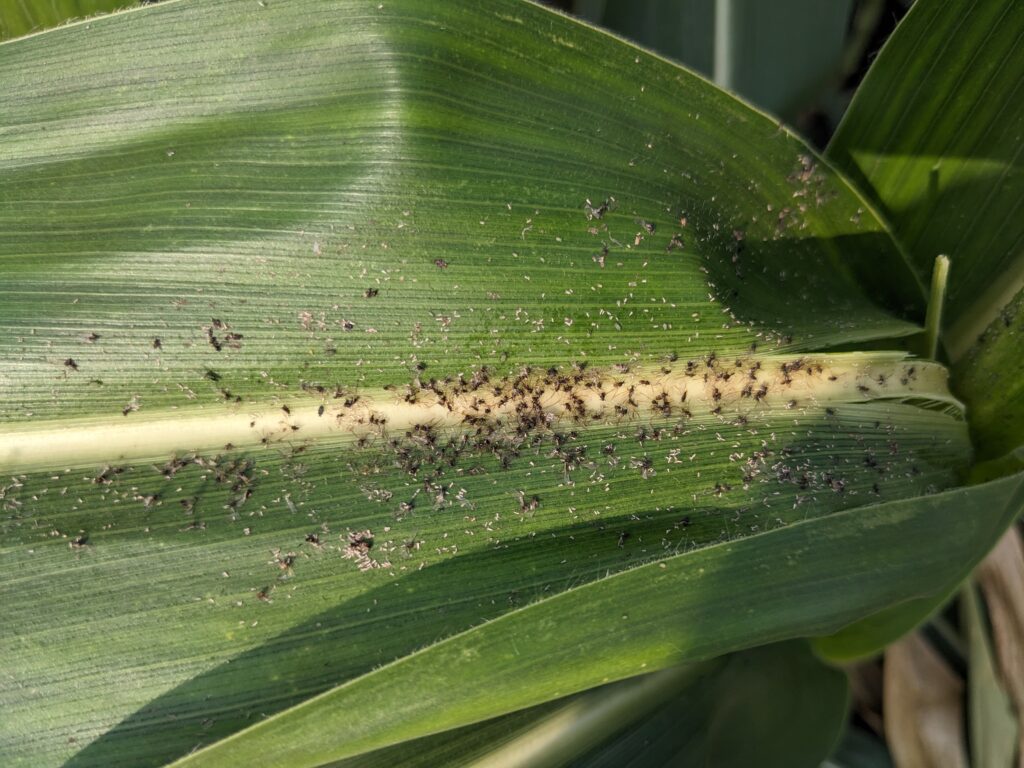
Nick Seiter, Field Crop Entomologist | nseiter@illinois.edu | 812-593-4317
]]>Agricultural Markets Synthesis
The agricultural commodity markets throughout the week of June 22, 2026, experienced a distinct seasonal downtime, driven heavily by investment funds liquidating long positions of over three billion bushels across corn, soybeans, and wheat. This heavy fund sell-off depressed flat prices and caused producer selling to dry up, leaving market participants waiting for upcoming USDA Acreage and quarterly stocks reports to establish clear directions. Analysts Curt Kimmel, Chad Hart, Naomi Blohm, Dan O’Brien, Greg Johnson, Arlan Suderman, Matt Bennett, and Mike Zuzolo evaluated these dynamics, noting that late-week price rallies primarily reflected short covering and evening-up by funds ahead of the June 30 reports. Market drivers shifted significantly toward macroeconomic factors, with Mike Zuzolo emphasizing that a strong U.S. dollar at a 13-month high, crude oil inventory shifts, and currency devaluations in Russia and Japan exerted greater influence over grain values than localized supply-and-demand metrics.
Specific commodity movements revealed robust domestic usage and strong export paces for corn, which helped improve local basis levels despite lower flat prices. Conversely, the dairy sector faced bearish pressure; Naomi Blohm reported that May milk production rose 2.3% year-over-year alongside an expansion of the domestic dairy herd by 99,000 head over five months, forcing Class III milk prices below $16 despite healthy overall demand. Unresolved international demand variables further complicated balance sheet projections. These included uncertainty over whether China would meet its stated targets by the end of the calendar year, alongside a proposed geopolitical arrangement utilizing frozen assets for Iranian agricultural purchases. Elevator operators expressed concern that if these export channels fail to clear sufficient volume before the fall harvest, severe storage constraints could weaken crop basis levels across the Corn Belt.
Agricultural Weather Synthesis
Global agricultural weather tracking revealed stark contrasts between highly active domestic conditions and severe climate disruptions abroad, as monitored by meteorologists and analysts Mark Russo, Don Day, Drew Lerner, Mike Tannura, and Eric Snodgrass. Early in the week, the U.S. Corn Belt and southern growing regions maintained highly favorable baseline soil moisture. However, consecutive weeks of heavy June rainfall and severe storms throughout Illinois resulted in localized field flooding—triggering an anticipated 1% to 3% downgrade in regional crop condition reports. Eric Snodgrass highlighted that Illinois led the nation with nearly 200 reported tornadoes, an active pattern that successfully eliminated long-term drought conditions but drastically increased crop vulnerability to late-summer disease and fungal pressures. In the western Corn Belt, Dan O’Brien characterized the Kansas wheat harvest as exceptionally poor, reporting near-record-low harvested-to-planted acreage ratios caused by severe storm and derecho damage.
A major atmospheric pattern change developed late in the week as a large, stationary high-pressure ridge—described by Eric Snodgrass as a Rossby standing wave—began building over the Central United States. Forecasters indicated this ridge would introduce a sustained heat wave extending into mid-July, driving daytime temperatures well into the 90s and keeping critical overnight lows elevated in the 70s. While ample soil moisture is expected to trigger hyper-local, cooling ridge-rider thunderstorms that mitigate heat stress for portions of the eastern Corn Belt, meteorologists warned that the stationary nature of the ridge presents an immediate, severe drought risk for states closer to its epicenter, specifically targeting Missouri, Kansas, South Dakota, Iowa, Nebraska, and Minnesota. International tracking focused heavily on Europe, where France endured a record-breaking heat wave reaching 110 to 116°F, inducing severe moisture stress on vegetative summer corn and sunflowers. Concurrently, Drew Lerner reported that India finished June far below normal precipitation, elevating the probability of a national drought driven by an underperforming El Niño pattern.
Week’s News and Other Items
The Land Grant Weed Science Mission: University of Illinois crop scientist Aaron Hager detailed research from the campus Weed Science Field Day. The program focused heavily on evaluating residual herbicides and active ingredients to manage resistant weed species. Notably, researchers highlighted a multi-state evaluation of Metribuzin applications, demonstrating its ongoing efficacy in controlling pre-emergence waterhemp populations affected by metabolic triazine resistance.
Proposed Iran Soy, Corn, and Wheat Deal: Vice President J.D. Vance announced a proposed structural agreement negotiated in Switzerland regarding frozen Iranian financial assets. Under the plan, any unfreezing of these funds would require joint U.S. and Qatari oversight, with the capital strictly earmarked for purchasing American soy, corn, and wheat to support domestic farmers and provide food aid to the Iranian people.
The Evolving U.S. Southern Crop Problem: Agricultural economist Carl Zulauf published an analysis detailing a long-term structural decline in Southern U.S. agriculture, which has lost 32 million harvested acres—a 38% drop—over the past century. The research questioned whether current federal safety nets, which disproportionately subsidize a narrow set of traditional crops like cotton, peanuts, and rice, are inadvertently hindering regional innovation and crop diversification.
High N-Rates and More Tillage Do Not Pay: University of Illinois Extension agricultural economist Gary Schnitkey presented an 11-year review of on farm data demonstrating that chasing maximum corn yields often reduces net income. The study verified that applying nitrogen above the Maximum Return To Nitrogen (MRTN) baseline or adding extra tillage passes occasionally boosts yields but consistently fails to improve overall profitability due to elevated input costs.
USMCA Mandatory Review Horizon: The United States, Mexico, and Canada Agreement (USMCA) faces a mandatory six-year review beginning July 1. While Mexico and Canada have expressed a desire to maintain the pact, U.S. President Donald Trump indicated a preference for termination or immediate expiration. In response to this policy uncertainty, Mexican President Claudia Sheinbaum noted that Mexico and Canada are actively expanding bilateral maritime trade routes to bypass U.S. infrastructure.
Year-Round E15 and Economic Farm Aid: Provisions for nationwide, year-round E15 sales and billions in emergency agricultural assistance were attached to an Iran war national security supplemental request. The request allocates $10 billion in temporary economic aid for current-year row and specialty crops, alongside over $1 billion dedicated to agricultural storm losses in Florida.
Corn Rootworm Trap Volunteers: University of Illinois field crop entomologist Nick Seiter issued a call for agricultural producers to volunteer for the regional corn rootworm beetle trapping network. Participating growers will be provided sticky traps to monitor local fields, helping researchers track changing rootworm populations and map the prevalence of variant western and northern corn rootworm strains. Email Nick Seiter for more information at nseiter@illinois.edu.
A Century of USDA Radio: Rod Bain presented a historical segment commemorating 100 years of USDA Radio broadcasting. Former producers and historians chronicled the agency’s technological transition from mailing printed “Aunt Sammy” scripts to local stations in 1926, through the eras of reel-to-reel tapes and cassette syndication, to modern digital distribution and smartphone-based field reporting.
That is a comprehensive look at the markets, the weather, and the news driving agriculture this week. You can find all of these segments, plus daily market updates from our farmdoc team, online anytime on demand at WILLAg.org.
Editor’s note: This article was adapted from the week’s WILLAg.org radio broadcast transcripts, formatted for print with the assistance of Google’s generative AI tool, Gemini, and reviewed by Todd Gleason.
—
University of Illinois Extension and Crop Sciences Agronomy Days
June
30 – Focus on the Future: Sustaining Farm Legacy
https://registration.extension.illinois.edu/start/focus-on-the-future-sustaining-farm-legacy-sycamore
July
15 – Orr Agricultural Research and Demonstration Center Field Day
22 – Monmouth Field Day
23 – Ewing Agronomy Field Day
August
06 – Crop Physiology Field Day
12 – Insect Management and Field Plot Tour
26-29 – 1st International Miscanthus Summit
September
16 – Alma Mater Plots Agronomy Day
—
Commodity Week can be heard in the 2 o’clock hour central time on WILL AM580 or you may subscribe to it using the links in the player below. This week the panelists include Greg Johnson with TGM, Arlan Suderman of StoneX, and Curt Kimmel of AgMarket.net.
The Closing Market Report airs at 2:06 p.m. central daily on WILL AM580. It, too, is a podcast. Subscribe using the link in the player.
]]>
by Trent Ford, State Climatologist
ISWS PRI University of Illinois
We wrap up another week of wild weather in the prairie state. Average temperatures this week ranged from the mid-60s in northern Illinois to the mid-70s in southern Illinois, between 1 and 8 degrees below average. This week brought more beautiful evening and morning temperatures, and a few hours of chillier conditions including nighttime lows of 48 degrees in Rock Island and 52 in Champaign. The cooler weather mid-month combined with a warmer start to June has meant that month to date temperatures are right at the 30-year normal across the state, as are growing degree days stretching back to early May.
Once again, the week’s summary is dominated by discussion of another round of severe weather, this time unfortunately with fatalities. A series of storms moved through central and southern Illinois on Sunday, producing nearly 20 tornadoes in south-central and southeast Illinois, including an EF-3 in Jefferson County that claimed two lives. As of this morning, Illinois has had 173 tornadoes this year, smashing our previous record of 142 in 2024. The storms also brought substantially rainfall to central Illinois, with 7-day precipitation totals exceeding 3 inches across much of the I-74 corridor from the Quad Cities to Indiana. To date, this month has been the top 5 wettest on record in many places including Peoria, Bloomington-Normal, and Quincy. In fact, Gem City is already having its wettest start to the year since 2013 and the seventh wettest on record. Champaign-Urbana is only 2 inches away from its entire precipitation total from 2025.
Looking ahead, storms will move through the state this weekend but will mostly stay sub-severe. Unfortunately those storms will usher in some extreme heat, including multiple days with heat index values well over 100 degrees. This will be our first real taste of hazardous heat this summer, so please take precaution next week as you’re working outside. Farther out, the outlooks for the second week of July show a warmer and drier pattern in the Midwest. It looks like summer will visit us after all. Enjoy the July 4th holiday and stay weather aware.
]]>DeKalb County
Soil Conditions: Severely Wet (ground is saturated, standing water is abundant, flooding may be present)
What a turn of events over the last couple of weeks from the start of the season. Heavy rains, hail, strong winds, and even tornadoes have brought us out of the early drought and well past into extremely saturated soils. Areas hit hard by storms have significant standing water, and established crops have begun to show signs of stress and are being drowned out in low areas with long standing water. Those who avoided the flooding are enjoying great moisture, and we are seeing significant growth across both corn and soybeans.
Early in the season there was staggered emergence, and lots of variability within fields and that largely faded out as crops even out with ample water. Field to field si still showing high variability and that is mostly due to staggered planting with rain events in April and early May. I’ve seen soybean fields anywhere from V2, with some fields approaching R1 flowering in the next week or so. Fields look healthy as far as the crops are concerned (outside of aforementioned flooding and water logging damage). With delayed emergence and plenty of water recently, missed post applications could become a problem quickly as weed pressure is taking off. I have not seen much if any disease in soybeans yet. The dry conditions early on prevented a lot of soil borne diseases from taking hold such as pythium or phytophthora. Once soybeans start to canopy, we will need to remain vigilant for late season disease such as white mold and SDS. Overall soybeans look good all things considered.
Corn has started to jump growth stages quickly. Other than low spots and fields with extreme flooding, much like soybeans corns is looking great. Most fields I visited were in the V5 growth stage, with some a little further west near Amboy at V6 and growing quickly. One thing to really look out for in corn will be disease in the coming weeks. Many foliar fungal diseases (Tarspot, Gray Leaf Spot, and Northern Corn Leaf Spot) thrive in cooler, wet conditions with extended leaf wetness. These are the exact conditions we are seeing currently before an end of week warm up. Many of these diseases can infect plants but won’t show symptoms until 10-14 days after the initial infection. I would highly recommend scouting vigilantly starting next week to catch any early signs of disease so you can act accordingly. Early infections of tarspot can wipe out fields of corn. So, it’s very important to be on top of.
Ill touch on wheat quickly. Fields are drying down nicely, many fields are close to being ready to harvest, and appear healthy and disease-free from what I have scouted. If we catch some breaks from the rain, early July could be in play for harvest.
For help identifying windows when weather conditions are optimal for diseases to replicate, using the Crop Protection Network crop risk tool can be very helpful. This site has a multitude of helpful tools, and I will link it below.
https://cropprotectionnetwork.org/tools
I’ll be back next week with another update.
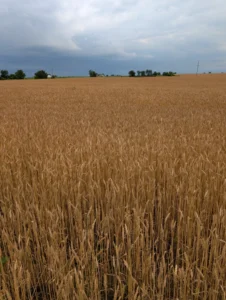
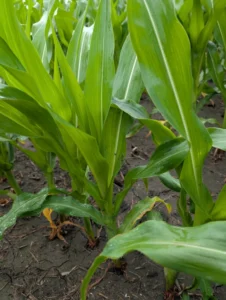
Russ Higgins – Commercial Agriculture Educator
Grundy County
Soil Conditions: Moderately Wet (soil is damp, standing water may be present in low areas, water bodies are full)
Another week with precipitation, in many areas ground sprayers have been unable to operate since June 7th. Many fields that are inherently poorly drained are ponded, and both corn and soy are suffering. Farmers are facing the challenge of post applications of herbicide for corn and soy, and in some cases nitrogen for the corn crop. Warmer and dryer weather is desperately needed for the crops in the area. Most soy in the area not stressed by saturated soil has reached R2 (full flower), corn has reached V11. Waterhemp has reached 18 to 24 inches in untreated fields. Area alfalfa fields are flowering and Japanese Beetle have emerged in Northeast Illinois.
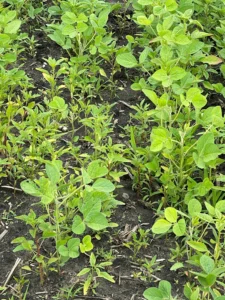

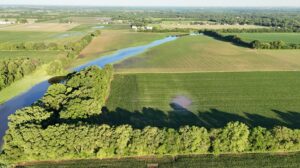
Meagan Diss – Commercial Agronomy Specialist
Peoria County
Soil Conditions: Moderately Wet (soil is damp, standing water may be present in low areas, water bodies are full)
Peoria County has received around 4.5 inches of rain over the past two weeks, with limited opportunities for soils to dry between events. Fields with good drainage are doing well overall, but poorly drained areas are showing ponding. This week has provided a needed window for some dry down, and I haven’t seen any widespread crop damage from wind. Looking ahead, another chance of moisture followed by higher temperatures should support crop growth but may increase disease concerns.
Reagen Tibbs – Commercial Agriculture Educator
Logan County
Soil Conditions: Moderately Wet (soil is damp, standing water may be present in low areas, water bodies are full)
Last week brought another 3 to 4 inches of rain across Logan County. This has helped alleviate concerns about drought or dry conditions in the short term. Despite the high winds from some of the storm systems last week, there appear to be very few signs of wind damage to crops. Nearly all of the corn is at knee-height or higher, with some of the earliest-planted corn at V9-V10. Soybeans across the county also look healthy, with the earliest-planted fields in the V5 stage.
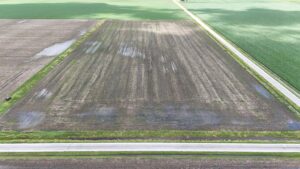
Doug Gucker – Local Food Systems and Small Farms Educator
Dewitt, Macon, and Piatt County
Soil Conditions: Moderately Wet (soil is damp, standing water may be present in low areas, water bodies are full)
Crops are generally doing quite well, although severe storms on June 17 did bring high winds and hail to portions of the 3-county area. The majority of the corn is in the V8 to V12 stage, and soybean fields are in the R1 stage. Presently, seeing only minor Gray Leaf Spot lesions in a few fields, and no Tar Spot so far. Japanese beetles are emerging. Low areas in fields are showing ponding and water-damaged plants. There will be cornfields tasseling by July 4.
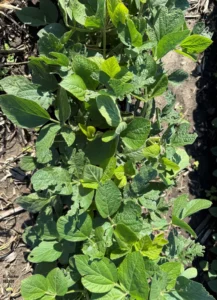
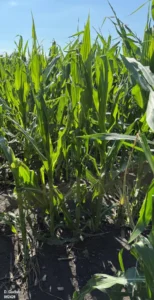
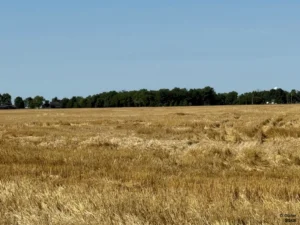
Talon Becker – Commercial Agronomy Specialist
Champaign County
Soil Conditions: Moderately Wet (soil is damp, standing water may be present in low areas, water bodies are full)
Field conditions are still wet in northern Champaign County, with 2.5-3 inches of rain falling across most of that half of the county since June 17. A large proportion of fields I saw during my survey on Wednesday (6/24) morning had at least some low-lying and/or poorly drained areas with stunted, dying, or dead crop from the inundation those plants have experienced over the past couple of weeks. For the most part, these areas were relatively isolated in fields, and standing water is no longer present. However, I did see several fields with large areas of dead or stunted crop, some still with standing water. Relief from the wet conditions may still be a few days away, with more rain in the forecast for the remainder of this week. But drier conditions and warmer temperatures in next week’s forecast offer some hope.
Because of the generally wet conditions we had in this part of the state so far this season, crop progress is variable both across the area and across the field, in many cases. Healthy areas of corn fields are generally somewhere around V8, with some fields getting closer to the V10-V11 growth stages. Most soybean fields are still in vegetative growth stages, but I did find a handful of fields that have started to flower (R1) and a couple fields getting closer to full flower (R2). Wheat fields I checked were nearing full senescence with grain in the ‘ripening’ stage (Feekes 11.3) and could likely be harvested next week if the hot and dry forecast holds. As can be expected, weed control was variable across the area, with some fields presumably missing their timely post-emergence application windows due to the wet conditions. That said, I saw several sprayers on the roads while doing my survey, so at least some of those acres may get covered today or tomorrow, if the rain holds off long enough.
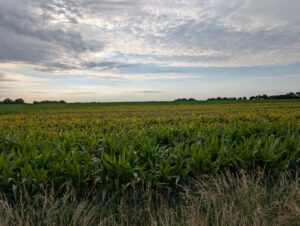
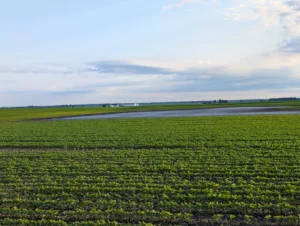
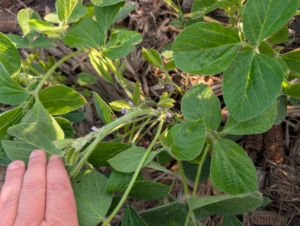
]]>

For the last several years, we have participated in a regional corn rootworm beetle trapping network. Our goal is to understand, on a regional basis, how rootworm populations are changing, including the prevalence of northern corn rootworms, risk to first-year corn from the variant western corn rootworm, and simply identifying areas where the rootworm population might be growing. If you are interested in participating, we will provide sticky traps for as many fields as you wish to monitor. Simply send me an email with your name, mailing address, and the number of corn and/or soybean fields you would like to monitor, and we will send you the protocol and the traps. A few highlights from the protocol so you know what you are getting yourself into:
- We are asking for a single transect of 4 traps, replaced weekly for 4 weeks
- You can enter the data yourself through an online portal, or simply send the data back to me and we will enter it
- Annual reports going back to 2021 can be found at www.rootwormipm.org (go to “Adult Trapping Network” on the top bar). The site also describes the basics of identification, biology, and management for the curious.
If you are interested in participating, please send me an email at your earliest convenience: nseiter@illinois.edu.
Nick Seiter, Field Crop Entomologist | nseiter@illinois.edu | 812.593.4317
]]>The weed science program at the University of Illinois invites all weed management practitioners to our annual weed science field tour on Wednesday, June 24, at the Department of Crop Sciences field research location known as the Clem Farm, located at 1114 County Road 1200 East, Champaign. Registration begins at 8:00 a.m. and the tour will start at 9:00 a.m. Preregistration is not required, but please let us know in advance if you will be bringing a large group of participants so we can plan accordingly for meals.
The tour will provide ample opportunity to look at research plots and interact with weed science faculty, staff, and graduate students. Participants can compare their favorite corn and soybean herbicide programs to other commercial programs and get an early look at a few new products that soon will be on the market. The tour will conclude around noon with a box lunch.
Cost for the weed science tour is $10, which will help defray the cost of the field tour book, refreshments and box lunch. We will apply for 2 hours of CCA credit under the IPM category. If you have any questions about the weed science tour, please feel free to contact Caleb Wepprecht (815-671-1050, calebbw@illinois.edu), Logan Miller (815-419-8847, loganrm2@illinois.edu), or Aaron Hager (217-621-8963, hager@illinois.edu).
University of Illinois Extension and Crop Sciences Agronomy Days
June
11 – Summer Horticulture Field Day
17 – Dudley Smith Farm Field Day
24 – Weed Science Field Research Tour
July
15 – Orr Agricultural Research and Demonstration Center Field Day
22 – Monmouth Field Day
23 – Ewing Agronomy Field Day
August
06 – Crop Physiology Field Day
11 – Alma Mater Plots, the next era of long-term university research
26-29 – 1st International Miscanthus Summit
Agricultural Markets Synthesis
The weekly market data shows a period of technical stabilization and cautious retracement across major agricultural commodities following a prolonged multi-week downturn. Analysts Susan Stroud, Curt Kimmel, and Greg Johnson highlighted that corn and soybean markets attempted to form a baseline floor after absorbing a sharp 70-cent break in corn and a $1.20 drop in soybeans. The primary bearish driver across the complex was the announcement of a geopolitical memorandum of understanding (MOU) and tentative settlement regarding the war in Iran. This development extracted significant war risk premiums from the energy sector, causing crude oil prices to break sharply, which subsequently dragged down soybean oil and pressured corn-based ethanol values.
Conversely, the dominant supportive driver for the grain markets was consistent speculation—and eventual confirmation—of renewed Chinese buying interest. Flash sales of U.S. soybeans to China and unknown destinations provided a mid-week lift, pulling contracts off their session lows, though the long-term execution of China’s broader 25-million-metric-ton purchasing commitment remains constrained by unresolved tariff structures. Market movements were further influenced by strong domestic soybean crush margins, which provided a resilient structural demand floor. However, significant upside rallies were capped by improving domestic crop progress reports—showing national good-to-excellent ratings rising to 68% for corn and 66% for soybeans—leaving producers hesitant to sell at depressed board prices and prompting traders to neutralize positions ahead of the long Juneteenth holiday weekend.
Agricultural Weather Synthesis
The progression of weather forecasts throughout the week tracked highly active, convective setups characterized by strong jet stream energy and deep moisture profiles. Meteorologists Don Day, Mark Russo, Mike Tannura, and Drew Lerner documented the collision of potent Canadian cold fronts with high-humidity tropical air moving northward from the Gulf Coast. This dynamic system triggered severe weather outbreaks across the central United States, delivering high winds, damaging hail, localized tornadoes, and widespread rainfall totals of one to three inches, with severe pockets in central and northern Illinois registering up to five to seven inches. While the intense precipitation caused localized flooding, drowned-out lowlands, and temporary crop yellowing due to excessive wetness, it successfully eliminated the lingering drought conditions that had plagued the Plains and Western Corn Belt, returning regional soil moisture to near-ideal levels. Domestically, the jet stream was projected to remain anchored over the midsection of the country, indicating a cooler and wetter-than-average conclusion to June.
On the international stage, weather patterns presented severe environmental stress in contrasting global growing regions. Western Europe, and France in particular, experienced a prolonged, intensifying heatwave coupled with extreme seasonal dryness; France received less than half of its normal rainfall since mid-March, severely threatening spring crops and parching soil profiles. In Asia, meteorologists tracked a strengthening El Niño pattern forecast to bring severe late-year dryness to major palm oil and rice-producing countries in Southeast Asia, including Indonesia, Malaysia, and the Philippines. Concurrently, this El Niño system was driving excessive, crop-damaging rainfall across the rice and sugarcane belts of southern China, contrasting with highly favorable, well-watered growing conditions for corn and soybeans in northeastern China.
Commodity Week Panel Analysis
Panelists Jim McCormick, Garrett Toay, and Mike Zuzolo debated the structural shifting of international demand, noting that deep financial losses and negative crush margins within China indicate their recent soybean purchases may be politically or ceremonially driven rather than backed by actual livestock feed expansion. The panel reviewed the latest USDA Cattle on Feed report, which indicated a 102% year-over-year inventory on feed, though historically low marketings and record-heavy cattle weights continue to complicate forward beef production models. In fields across the Midwest, a stark developmental bifurcation was noted between early-planted corn approaching tassel in parts of central Kansas and late-planted crops struggling out of wet mud. Finally, the panel highlighted that the Federal Reserve’s new leadership under Chairman Warsh will enforce a strictly data-driven policy approach; by reducing speculative central bank commentary, the Fed aims to increase near-term volatility while checking the influence of purely algorithmic commodity trading.
Week’s News and Other Items
U.S. and Brazilian Corn Production Costs Compared: An economic analysis by Joana Colussi demonstrated that while both U.S. and Brazilian corn farmers suffered financial losses during the 2023 and 2024 seasons, they operated under entirely different cost pressures. Deficits for typical Iowa farms were driven by sticky, slow-to-adjust overhead costs such as cash rents and appreciating land values. In contrast, Brazilian operations in regions like Mato Grosso were highly sensitive to volatile direct operating inputs, specifically imported nitrogen fertilizer. Brazil continues to bolster its competitive export window by utilizing its safrinha second-crop system to plant corn immediately after soybeans, thereby spreading fixed land and machinery costs across two crops in a single year, though the U.S. retains a twofold advantage in average crop yields.
Ag Energies and Fertilizer Dynamics: Dave Chatterton reported that the tentative Iranian settlement triggered immediate downward movement in the cash fertilizer and crude oil markets. While crude oil quickly retraced close to its pre-war levels, refined products like diesel fuel and wholesale gasoline retained a longer price tail. Diesel fuel remained constrained by high export volumes and tight domestic inventories, and experts predicted a full return to normalized fuel flows and pre-war pricing benchmarks would take until at least late August.
RMA 2025 Yields Trigger Insurance Payouts: The Risk Management Agency (RMA) released its finalized 2025 crop year county yields. The release immediately triggered unexpected Enhanced Coverage Option (ECO) and Supplemental Coverage Option (SCO) crop insurance indemnity payouts, providing an immediate cash injection for some producers during a capital-lean period of the year.
WASDE Fundamentals and Macroeconomic Trade Risks: Ben Brown analyzed the global supply fundamentals from the June WASDE report, pointing out a bearish headline addition of 14 million metric tons of global corn supply, which was primarily driven by expanding domestic production in India. On the wheat side, tightening domestic supplies of hard red winter wheat due to poor quality in the Southern Plains were entirely overshadowed by production increases in Russia, Ukraine, and Turkey. Brown also highlighted a powerful 65% statistical correlation linking corn and soybean prices directly to crude oil movements, and issued a warning that a failure to extend the USMCA trade agreement would severely disrupt deeply intertwined agricultural markets with Canada and Mexico.
Premium Opportunities for Row Crop Markets: Kelsey Graber detailed the financial benefits of contracting premium row crops, such as food-grade white corn, non-GMO varieties, and specialized identity-preserved soybeans destined for tofu and soy milk production in Japan and Southeast Asia. While these specialty crops offer substantial premiums over conventional yellow corn and soybeans, they require rigid identity segregation and early contract management, with commercial grower programs regularly filling up between September and December ahead of the next crop year.
Agricultural Policy, Outbreaks, and Global Credit Stress: In legislative news, Chuck Grassley led a Senate push to find a permanent statutory pathway to lift summertime marketing restrictions on E–15 ethanol blends. In livestock health, Texas state animal authorities expanded containment operations following 11 confirmed regional cases of the New World screwworm fly larvae in cattle, sparking fears of northward transmission toward major commercial feeding zones. On the financial front, the U.S. Farm Credit System reported robust capital reserves of $86.4 billion and stable earnings despite domestic inflationary headwinds. This stability stood in sharp contrast to Brazil’s agricultural sector, where a combination of multi-year crop losses, low global grain prices, and high domestic interest rates triggered an unprecedented surge in farm bankruptcies, loan defaults, and creditor-seized land auctions.
Weed Science Field Research Tour June 24: The University of Illinois will host the 2026 Weed Science Field Research Tour on June 24th at the Clem Farm in Champaign. The tour will cover herbicide programs, research plots, and new agricultural products. A ten-dollar fee covers the field tour book, refreshments, and a box lunch. Preregistration is not required, but large groups should notify organizers in advance for meal planning. Search “Illinois Weed Science Field Research Day” for more information or contact Aaron Hager at hager@illinois.edu.
Focus on the Future: Sustaining Farm Legacy June 30: The “Focus on the Future: Sustaining Farm Legacy” series, hosted by University of Illinois Extension and Illinois Farm Bureau, helps farmers manage their operations. The next event is June 30th in Sycamore at the DeKalb County Farm Bureau building. Attendees will hear practical updates on succession planning, farm economics, the Farm Bill, and market conditions. Register today go.illinois.edu/farmlegacy.
That is a comprehensive look at the markets, the weather, and the news driving agriculture this week. You can find all of these segments, plus daily market updates from our farmdoc team, online anytime on demand at WILLAg.org.
Editor’s note: This article was adapted from the week’s WILLAg.org radio broadcast transcripts, formatted for print with the assistance of Google’s generative AI tool, Gemini, and reviewed by Todd Gleason.
—
University of Illinois Extension and Crop Sciences Agronomy Days
June
24 – Weed Science Field Research Tour
30 – Focus on the Future: Sustaining Farm Legacy
July
15 – Orr Agricultural Research and Demonstration Center Field Day
22 – Monmouth Field Day
23 – Ewing Agronomy Field Day
August
06 – Crop Physiology Field Day
12 – Insect Management and Field Plot Tour
26-29 – 1st International Miscanthus Summit
September
16 – Alma Mater Plots Agronomy Day
—
Commodity Week can be heard in the 2 o’clock hour central time on WILL AM580 or you may subscribe to it using the links in the player below. This week the panelists include Jim McCormick of AgMarket.net, Garrett Toay from AgTraderTalk.com, and Mike Zuzolo at GlobalCommResearch.com.
The Closing Market Report airs at 2:06 p.m. central daily on WILL AM580. It, too, is a podcast. Subscribe using the link in the player.
]]>by Trent Ford, State Climatologist
ISWS PRI University of Illinois
Our record breaking severe weather year rolled on this week. Temperatures were mild for mid-June, ranging from the mid-60s in northern Illinois to the mid-70s in southern Illinois, between 1 and 3 degrees below normal. A couple of the more impressive nighttime low temperatures this week included 45 degrees in Danville and 47 in Lisle. Despite the recent cooldown, June to date has been 1 to 3 degrees warmer than normal so far.
The big weather story yet again this week was severe weather in all forms. Multiple rounds of strong storms moved through the state mid-week, bringing multiple strong tornadoes, very strong winds, and some isolated pockets of hail. Among the more significant severe weather was an EF2 rated tornado that caused widespread damage to homes, businesses and uprooted trees and utility poles in Charleston and surrounding communities. Another, yet unrated tornado moved through the northern edge of Effingham, causing significant damage to homes and businesses. These tornadoes added to a remarkable string of frequent severe weather. Ahead of Wednesday’s storms, Illinois already had 138 tornadoes in 2026, only 4 away from the record high year of 2024. This isn’t really a record we like to break, especially twice in three years. Meanwhile, heavy rain pummeled parts of central Illinois, pushing several streams over flood stage. As of Friday morning, most stretches of the Illinois River were above flood stage, including moderate flood at Havana, with an expected crest early next week. Precipitation totals this week ranged from less than a quarter of an inch in south-central Illinois to nearly 6 inches in parts of western Illinois. June to date has been 2 to 5 inches wetter than normal in much of the state north of Interstate 72, and 1 to 2 inches drier than normal in much of southern Illinois. This month is already a top 10 wettest on record in Galesburg.
Looking ahead, there’s more good news and bad news. The good news is that temperatures next week will remain mild, with highs in the high 70s and low 80s. The latest outlooks from the Climate Prediction Center also show best chances of below average temperatures for the rest of the month and the entire month of July. Next week looks to continue our very wet streak, with 7-day precipitation totals forecasted to breach 1.5 inches across the entire state with pockets of potentially up to 3 inches. This additional rain will not be welcome in central Illinois, but will help with some drier conditions in parts of southern Illinois. We could see some severe weather on Sunday, but still a lot is uncertain about timing and location. So, once again please stay weather aware this weekend.
]]>LaSalle County
Soil Conditions: Severely Wet (ground is saturated, standing water is abundant, flooding may be present)
After the multiple severe storms over the past week in LaSalle County, field conditions are severely wet. There is a wide range of conditions, with well-drained fields looking fantastic and healthy. These are the exception, though. There are far more fields with large areas of standing water that have been present for over a week. These areas with significant ponding are a near total loss. Some fields that are slightly better drained have significantly stunted plants, with soy looking much worse than corn of similar growth stages. There is more rain in the forecast for this weekend and next week, so I do not anticipate these fields having much chance to dry out. Additionally, there are areas of LaSalle County where crops have been damaged by the strong winds from recent storms, with corn fields taking the brunt of this with many plants leveled and under water. Areas around Streator have suffered significant damage after an EF-3 tornado touched down last week as well. Overall, crop conditions are far from ideal in LaSalle County right now.
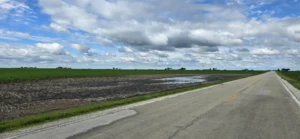
Russ Higgins – Commercial Agriculture Educator
Grundy County
Soil Conditions: Moderately Wet (soil is damp, standing water may be present in low areas, water bodies are full)
When I left Illinois for a brief vacation in the first week of June, the Northeast Region was dealing with impending drought concerns (note wrapped corn from June 4th). Twelve days and 5+ inches of precipitation for many acres, an entirely new set of concerns for the 2026 crop. New concerns relate to saturated soils, erosion and crop damage caused by moving surface water and wind, and the lack of opportunity to apply post herbicides while weeds are in the optimum treatment window. Even when standing water dissipates, a saturated soil very quickly limits oxygen availability to a growing crop. An oversimplified way of describing the effects of a saturated soil is that the lack of soil oxygen available to the roots can reduce or stop plant functions. This can include transpiration, nutrient uptake, and water uptake. Extended saturated soil can cause visible stunting and even plant death, resulting in varying degrees of reduced final yield. In addition to struggling crops, persistent precipitation has prevented many post-herbicide applications from taking place. A few weeds, especially Waterhemp, easily have exceeded the recommended maximum weed size for control of most herbicide. Soy on well drained soils are starting to enter their reproductive stage (flowering). We are near halfway through the growing season and have experienced the environmental conditions of excessively cool, hot, dry, and wet; What’s next?
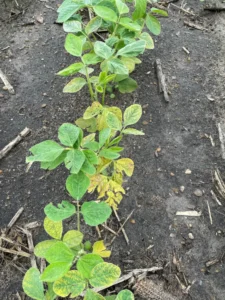
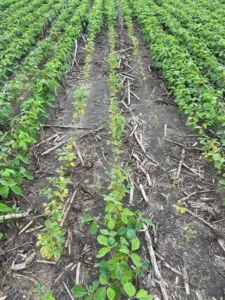
Talon Becker – Commercial Agriculture Specialist
Iroquois County
Soil Conditions: Moderately Wet (soil is damp, standing water may be present in low areas, water bodies are full)
Although June started dry, the past 10 days have brought several inches of rain to most of the east central Illinois region. Soil conditions in Iroquois County as I conducted my survey on Tuesday (6/16) morning were already on the wet side, with standing water prevalent, particularly in the southwest portion of the county. And since then, over the past couple days the latest round of storms has brought another inch of rain or more. Most fields on higher ground with good drainage still looked healthy at the time of my survey, but unfortunately, there were some fields with areas where crop will be lost, either from lack of oxygen to the root or subsequent disease issues, and timely weed control operations will be difficult. Most soybeans in the county appeared to be in the V3-V5 range, but I didn’t see any flowers poking out quite yet. Corn fields were generally somewhere near V5-V7, with some early-planted fields starting to grow more rapidly as they approach V10. The few wheat fields I visited were somewhere in the late milk to early dough stages (Feekes 11.1-11.2).
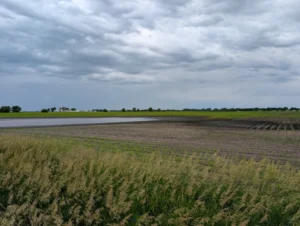
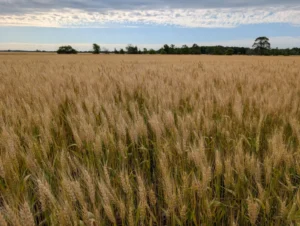
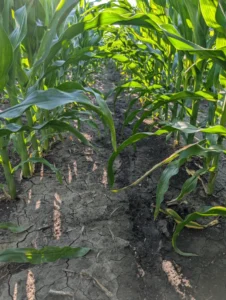
Reagen Tibbs – Commercial Agriculture Educator
Logan County
Soil Conditions: Moderately Wet (soil is damp, standing water may be present in low areas, water bodies are full)
Another week, and yet another round of storms and rain across Logan County. Storms on June 17 brought anywhere from 2 to 3 inches of rain. While ditches and low-lying areas are full of water, there does not appear to be any significant crop damage from the high winds that accompanied the rain. This latest round, combined with roughly half an inch over the weekend, will surely add some extra “gas” in the tank for crop growth as temperatures and conditions appear to remain favorable over the coming days.
Doug Gucker – Local Food Systems and Small Farms Educator
Dewitt, Macon, and Piatt County
Soil Conditions: Moderately Wet (soil is damp, standing water may be present in low areas, water bodies are full)
Crops are growing well. Soybeans vary from growth stages V3 to R1. Corn fields vary from V4 to V12. Earlier in the week, farmers and custom applicators were trying to finish up post-emergent herbicide applications ahead of the forecasted rains and storms. Unfortunately, still seeing a few farmers attempting to control tall waterhemp that exceeds the 4-inch recommended height limit for effective control.
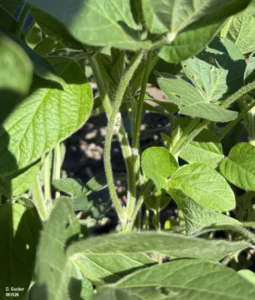
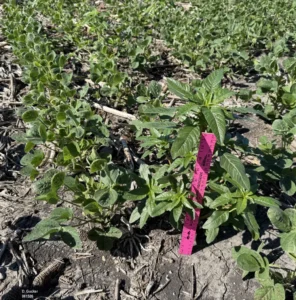
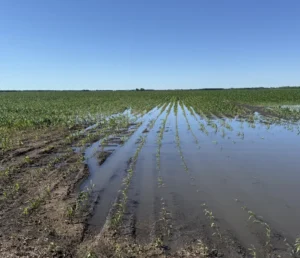
Nick Seiter – Extension Field Crops Entomologist
It has been unusually quiet so far this year for insect reports. Late last week, I received a report of spider mite activity in soybean in south-central Illinois near Macedonia. Most of the state received a healthy (or even unhealthy) dose of rain at least once or twice in the last week – that will do more to eliminate spider mites as a threat than even the best miticides available. Cooler temperatures will also help. If you are in an area that remains hot and dry and have spider mites, evaluate the potential for continued growth in the population based on the weather forecast and the extent of current injury to make a control decision.
I’ve also received a report that grape colaspis are active again in at least a limited area near Mt. Auburn where they have been a problem in the past. Affected plants will exhibit nutrient deficiency symptoms, especially purpling of the lower leaves and often concentrated on higher/better drained portions of the fields. Digging up the plants will reveal the larvae, which resemble tiny white grubs. By this point, affected plants will be noticeably stunted relative to surrounding, healthy plants, and the larvae may be close to finishing their development and emerging as adults. There is no effective rescue treatment for this pest in corn.
We will again be distributing yellow sticky traps to anyone who wishes to participate in our regional corn rootworm monitoring network. If that applies to you, send me an email (nseiter@illinois.edu) with “rootworm monitoring” in the subject heading.
Giovani Preza Fontes – Extension Field Crops Specialist
Edgar County
Soil Conditions: Severely Wet (ground is saturated, standing water is abundant, flooding may be present)
June has been wetter than normal across Edgar County, with 5-6 inches of rain so far, including the 1.5-2.3 inches that fell yesterday. As expected, soils were saturated, and several fields in the northern half of the county had standing water as of my survey on Thursday morning. In some cases, water was limited to small, low-lying areas or field edges in some fields, but in other fields showed large areas of standing water.
I also saw a wide range in terms of crop growth and development. Most advanced fields had corn at the V10-V12 stage (nearly chest high) and soybean beginning to bloom with 5-6 trifoliolates. Roughly 20% of the fields were likely planted in late May or early June, with corn at V2-V4 and soybean at V1-V2. Fields in between these groups generally had corn at V6-V7 and soybean at V3-V5.
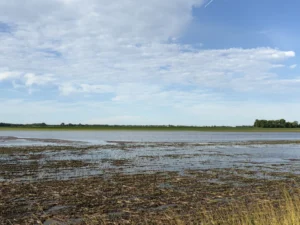
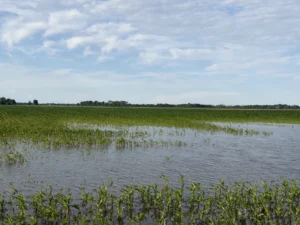
Dane Hunter – Commercial Agricultural Specialist
Marion County
Soil Conditions: Mildly Wet (soil is wetter than normal, local vegetation is healthy)
There is a pocket south of Interstate 70, mostly through Clinton, Marion, and Fayette counties that has received several more inches of rain over the last 60 days which has impeded planting compared to the rest of the state.
Corn planted in early April looks good and is about head height and around V10. Some of the latest corn plantings/replants are just about V2. Growers that didn’t hit that first window have had to struggle with replant decisions.
Some beans also got planted in the first half of April and are nearing canopy close if drilled. However, many beans were not planted until late May/early June with some fields planted in the last week or that have yet to be planted.
Wheat matured a little early this season, and harvesting could have begun the second week of June if rain and replants had allowed. As of the Illinois Wheat Association’s annual wheat tour in May, little lodging was reported, but the repeated storms of the last few weeks have caused lodging in some fields. The repeated rains on otherwise mature wheat have also raised concerns of quality degradation.
Last weekend a few combines got rolling but were stopped by showers on Tuesday 6/16, and forecasts show more rain due this week. I saw a few planters trying to squeeze in double crop beans on 6/17 before the next round of rain, hoping either that the straw isn’t too wet to cut through or their row cleaners can clear a path. Hopefully the can get back to cutting by the Juneteenth weekend.
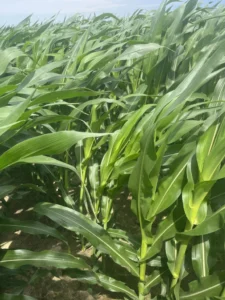
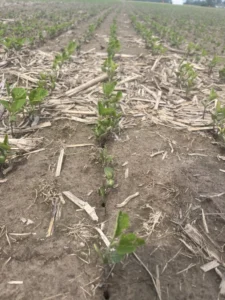
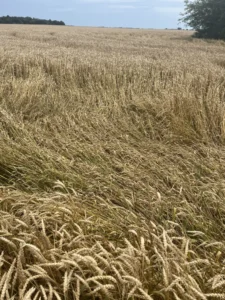
]]>
Weekly Agricultural Markets Synthesis
The agricultural commodity markets experienced a pronounced downswing during the first half of June, pulling corn, soybean, and wheat prices back down to their January lows. Market analysts and economists, including Curt Kimmel, Frayne Olson, Susan Stroud, Naomi Blohm, Ted Seifried, Jim McCormick, and Mike Zuzolo, attributed this aggressive slide primarily to money flow dynamics, noting that investment index funds heavily liquidated historic long positions after losing interest in geopolitical and alternative energy narratives. The release of the June USDA WASDE report added bearish pressure to global balance sheets by unexpectedly raising corn production estimates for Brazil and Argentina by a combined 5 million metric tons, intensifying long-term export competition for the United States. Domestically, new crop corn futures broke through key technical support levels making new contract lows, though old crop demand and steady domestic ethanol blending margins offered some late-week stabilization allowing it to post an outside up week. Soybeans faced similar headwinds from the near-term absence of Chinese export commitments and record-setting South American volumes, though structural demand was insulated by strong domestic processing crush margins and favorable 45Z biofuel tax credit changes. Meanwhile, the USDA slashed the season’s average cash price for wheat by 50 cents to $6.00 due to a plentiful global supply cushion and fierce export competition out of the Black Sea region, as detailed by global trade analyst Matt Darragh (Kpler). In the livestock sector, Ellen Dearden (AgReview) highlighted that a regional screwworm outbreak triggered notable market volatility, introducing tight availability concerns tied directly to domestic livestock transportation corridors rather than simple insect migration.
Weekly Agricultural Weather Synthesis
The progression of agricultural weather forecasts throughout the week shifted from early-season optimism to severe localized storm volatility and unexpected international risks, as tracked by meteorologists Mark Russo, Drew Lerner, Don Day, Mike Tannura, and Eric Snodgrass. Initially, early June delivered beneficial rains and temperatures ranging from 5 to 11 degrees above average across the US Corn Belt, which accelerated early crop development without presenting immediate yield threats. This system rapidly evolved into a highly robust cold front and a series of severe convective thunderstorm clusters that swept across the northern plains, the upper Midwest, and the Great Lakes, dumping heavy localized rainfall of 1 to 3 inches, with extreme pockets in Missouri recording up to 7 inches. This intense moisture successfully replenished critical topsoil and subsoil reserves across the corn and spring wheat belts, heavily reducing the probability of yield-robbing extreme heat during the critical July pollination phase. However, the high frequency of rainfall combined with a subsequent transition to cooler-than-normal Canadian air masses raised significant crop quality concerns, triggering localized acreage flooding in central Missouri and threatening to cause sprouting damage in mature soft and hard red winter wheat crops across the Plains and Delta regions. Globally, unseasonal heavy rainfall disrupted ongoing safrinha corn, cotton, coffee, and sugarcane harvests across Brazil’s core growing regions, while Western Europe braced for a returning historic heatwave and severe dry patterns that threatened summer crop yields in France, Spain, and Italy. Concurrently, NOAA officially confirmed a 100% probability of a strong El Niño pattern persisting through the winter, signaling a milder, wetter autumn that could severely tighten upcoming regional harvest and fieldwork windows.
Weekly News and Other Items
Senator Thune Says E15 Bill in the Works: Senate Majority Leader John Thune announced that meetings are underway to draft a new standalone E15 bill to permit the year-round sale of the higher ethanol blend. This follows a narrow 218–203 victory for a similar measure in the House, which seeks to revamp the federal Renewable Fuel Standard by reducing the number of biofuel blending exemptions granted to small oil refineries.
Maersk Successfully Tests 100% Ethanol Fuel: Maritime shipping giant Maersk completed successful large-scale trials in Rotterdam utilizing 100% ethanol as a bunker fuel aboard the Laura Maersk containership. The realistic evaluation verified operational handling procedures and supply chain readiness as part of the company’s broader effort to diversify its low-emissions fuel portfolio.
Strategic Petroleum Reserve Flirts with Historic Lows: The US Strategic Petroleum Reserve is projected to drop to 243 million barrels later this year, its lowest volume since it was initially filled in the 1980s. The drop stems from emergency drawdowns authorized to mitigate crude oil supply disruptions tied to the ongoing conflict in the Strait of Hormuz.
Wisconsin Farmland Sells for $22,000 per Acre: A recent farmland auction south of Madison, Wisconsin, underscored robust agricultural land values when a 208-acre tract sold for nearly $22,000 per acre. A local dairy farmer ultimately outbid approximately 50 registered participants to secure all five individual tracts.
Lawmakers Rush to Regulate Data Center Development: A rapid expansion of large-scale AI data centers across the Midwest sparked an intense popular backlash regarding massive electricity and water usage. In response, Champaign and Logan Counties in Illinois have each passed one-year development moratoriums, while governors and legislators in over 20 states are debating guardrails, including tax incentive pauses in Illinois and full statutory incentive repeals in Michigan.
The Crop Protection Network: University of Illinois plant pathologist Boris Camiletti highlighted the Crop Protection Network, a multi-state collaborative platform providing farmers with real-time disease tracking via the “Crop Lookout” interface. The site features weather-driven predictive risk assessment software alongside financial return-on-investment calculators to optimize fungicide application timing for corn, soybeans, and wheat.
farmdoc Webinar Explores Tillage & Nitrogen Practices: Agricultural economist Gary Schnitkey presented 11 years of Precision Conservation Management data showing that no-till and one-pass light tillage systems consistently generate higher economic returns than heavy tillage due to lower equipment operational costs. The data also revealed that capping seasonal nitrogen applications close to the Maximum Return to Nitrogen limit optimizes profitability over chasing raw yields. Click the headline above to watch the webinar or this link to listen to the radio interview with Gary Schnitkey.
USDA Offers Disaster Assistance to Illinois Farmers: Following severe convective storms and destructive tornadoes, the USDA issued an emergency bulletin outlining recovery resources for affected Illinois agricultural producers. Farmers were advised to document all physical property damage, retain cleanup receipts, and consult local service centers regarding emergency loans, crop insurance claims, and farmland rehabilitation programs via farmers.gov.
Rural King Breaks Ground on New Headquarters in Mattoon: Farm supply retailer Rural King broke ground on a $75 million corporate store support center and flagship campus in its hometown of Mattoon, Illinois. Supported by state EDGE tax credits and infrastructure grants, the project is projected to create 100 local jobs and will feature an integrated community event center.
June University of Illinois Field Days and Conferences
Weed Science Field Research Tour June 24: The University of Illinois will host the 2026 Weed Science Field Research Tour on June 24th at the Clem Farm in Champaign. The tour will cover herbicide programs, research plots, and new agricultural products. A ten-dollar fee covers the field tour book, refreshments, and a box lunch. Preregistration is not required, but large groups should notify organizers in advance for meal planning. Search “Illinois Weed Science Field Research Day” for more information or contact Aaron Hager at hager@illinois.edu.
Focus on the Future: Sustaining Farm Legacy June 30: The “Focus on the Future: Sustaining Farm Legacy” series, hosted by University of Illinois Extension and Illinois Farm Bureau, helps farmers manage their operations. The next event is June 30th in Sycamore at the DeKalb County Farm Bureau building. Attendees will hear practical updates on succession planning, farm economics, the Farm Bill, and market conditions. Register today go.illinois.edu/farmlegacy.
That is a comprehensive look at the markets, the weather, and the news driving agriculture this week. You can find all of these segments, plus daily market updates from our farmdoc team, online anytime on demand at WILLAg.org.
Editor’s note: This article was adapted from the week’s WILLAg.org radio broadcast transcripts, formatted for print with the assistance of Google’s generative AI tool, Gemini, and reviewed by Todd Gleason.
—
University of Illinois Extension and Crop Sciences Agronomy Days
June
17 – Dudley Smith Farm Field Day
24 – Weed Science Field Research Tour
30 – Focus on the Future: Sustaining Farm Legacy
July
15 – Orr Agricultural Research and Demonstration Center Field Day
22 – Monmouth Field Day
23 – Ewing Agronomy Field Day
August
06 – Crop Physiology Field Day
11 – Alma Mater Plots, the next era of long-term university research
26-29 – 1st International Miscanthus Summit
—
Commodity Week can be heard in the 2 o’clock hour central time on WILL AM580 or you may subscribe to it using the links in the player below. This week the panelists include Matt Darragh from Kpler, Ellen Dearden of AgReview, and Ted Seifried with Zaner Ag Hedge.
The Closing Market Report airs at 2:06 p.m. central daily on WILL AM580. It, too, is a podcast. Subscribe using the link in the player.
]]>
by Trent Ford, State Climatologist
ISWS PRI University of Illinois
We had a major swing in our weather this week, from warm and dry to hot and stormy. Average temperatures over the past 7 days ranged from the high 60s in northern Illinois to the high 70s in southern Illinois, between 3 and 10 degrees above average. However, the humidity was the noteworthy change this week, with dewpoints regularly reaching into the 60s and 70s, compared with the 40s in the first week of June. That humidity limited how much we could cool at night, resulting in several nights with low temperatures remaining in the 70s, including lows of 78 degrees in Carbondale and 76 in Charleston.
All that humidity fueled many rounds of storms and heavy precipitation, producing one of the more active weather weeks we’ve seen in some time in Illinois. 7-day rainfall totals ranged from less than half an inch in parts of southern Illinois to nearly 10 inches in some isolated parts of east-central and northern Illinois. Champaign-Urbana picked up nearly 3.5 inches this week, making it the wettest week here since November 2024. Unfortunately, the rain came with a lot of severe weather, including multiple large tornadoes, very strong straight line winds, and some hail. The NOAA Storm Prediction Center noted 12 tornado reports, 5 hail reports, and 160 severe wind reports in Illinois this week. Some of the notable storms included a very large and violent tornado that moved through parts of north-central Illinois, affecting multiple communities including Streator and Dwight. Strong wind was the primary hazard from this week’s storms, though, with many reports of wind gusts exceeding 70 mph, including 75 mph in Mason County, 78 mph in McLean County, and 82 mph in Iroquois County. As expected, the strong winds tore down trees, buildings, and power lines across northern and central Illinois. As of Friday morning, over 150,000 customers in northern Illinois and over 50,000 customers in central Illinois remained without power. Many of us will likely be greeted with the chorus of chain saws over the next few days as folks in Illinois start to clean up.
Looking ahead, I have mixed news. The not so great news is that we aren’t completely out of the severe weather yet. Saturday may bring another round of storms, with the highest risk of strong winds and isolated tornadoes especially in the western and southern parts of the state. However, once we get past Saturday night, our weather outlook turns much nicer. High temperatures will struggle to make it above 75 degrees statewide on Sunday and early next week, with much lower humidity. There may even be some isolated pockets of low temperatures in the upper 40s in northern Illinois on Monday morning.
Temperatures will increase a bit as we move into next weekend, but the week 2 outlooks from the Climate Prediction Center still show best chances of near to below normal temperatures. Despite the cooldown, next week we still be fairly wet. The 7-day precipitation forecast shows 1 to 2 inches for northern Illinois and up to 3 inches in southern Illinois.
]]>Stephenson County
Soil Conditions: Mildly Wet (soil is wetter than normal, local vegetation is healthy)
Although the entire month of May saw just under an inch of rain in total, the beginning of June has brought some relief with over two inches of rain deposited thus far with more on the way (based on data from the Water and Atmospheric Resources Monitoring Program Freeport station – your mileage may vary!).
Stephenson County is the home of the first reported population of Asian copperleaf in Illinois (https://extension.illinois.edu/news-releases/novel-illinois-weed-species-asian-copperleaf-identified-northern-illinois). Although originally thought to be a late emerging weed typically not noticed until after harvest, seedlings have already been emerging over the last couple of weeks. When scouting prior to making post emergence herbicide applications, keep an eye out for Asian copperleaf. For help with identification, see the attached photos as well as the Asian copperleaf fact sheet from Illinois Extension.
If you suspect you have Asian copperleaf, please contact Kathryn Seebruck at 815-986-4357 or seebruck@illinois.edu. Reports can also be made at https://www.eddmaps.org/.
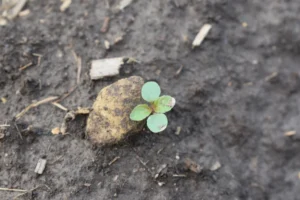
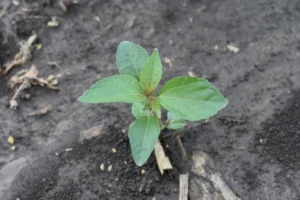
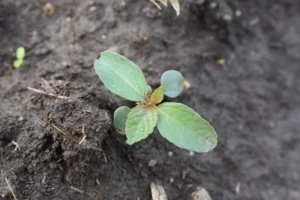
Reagan Tibbs – Commercial Agriculture Educator
Logan County
Soil Conditions: Moderately Wet (soil is damp, standing water may be present in low areas, water bodies are full)
After a week of high temperatures and little rainfall, Wednesday (6/10) storms brought over an inch of rain to many parts of the County. This will be followed by another round of storms on 6/11. Despite the heavy winds and tornado reports from the 6/10 storms, there does not appear to be much wind damage to crops in much of the County.
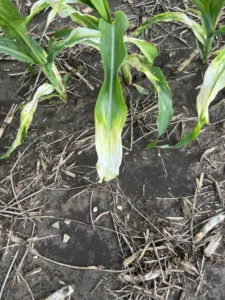
Talon Becker – Commercial Agriculture Specialist
Vermilion County
Soil Conditions: Moderately Wet (soil is damp, standing water may be present in low areas, water bodies are full)
After a wet past four days in east central IL (2-3 inches so far in most areas), many fields in northern Vermilion County have standing water as of my survey on Thursday morning. For most fields, this is isolated to small, low-lying areas and field edges. But in pockets of that part of the county, there are fields with relatively large areas underwater, at times with the young crop fully submerged. With more rain in the forecast over the next few days, it may be some time before those areas fully drain. As for crop progress, most corn was somewhere in the V4-V8 range, and most soybeans were V1-V3. The five wheat fields I found were all in the dough stage of kernel development (Feekes 11.2), and some minimal lodging could be seen along field edges and in low areas in a couple of those fields.
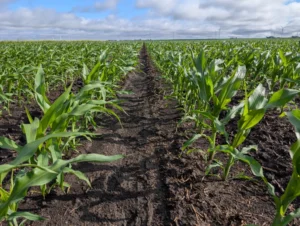
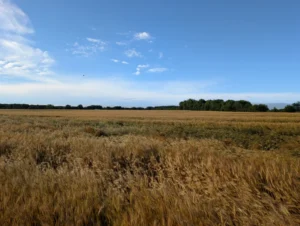
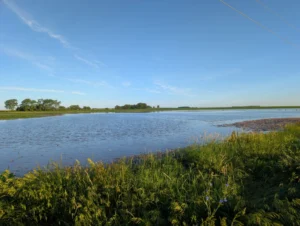
]]>
You can also read the article in Portuguese and Spanish
Despite some wet and cold periods in April and May across parts of Illinois, the 2026 corn and soybean crops were planted at a near-normal pace. Soybean planting began early and remained ahead of corn planting throughout the season, with 7% of the soybean crop planted by April 7 (5% above the five-year average for 2021-2025) and 50% planted by May 5. The first NASS report for corn indicated 1% planted by April 5 and 50% planted by May 10.
Average temperatures during the first half of May ranged from 3 to 8°F below normal, while in the second half of the month, temperatures were 1 and 4°F above normal; this pattern continued into June, with temperatures ranging from 1 to 8°F above normal. Much of the rain over the past month has come from thunderstorms rather than widespread frontal systems, resulting in highly uneven distribution across the state. Aside from an area of normal to 50% above-normal rainfall in central Illinois, May rainfall ranged from less than 25% of normal in parts of northern Illinois to 75% of normal in parts of southern Illinois (Figure 1). Several systems that moved through central and northern Illinois on June 7–10 brought 0.7 to more than 5 inches of rain in some places, which should help alleviate emerging drought concerns as crop water demand increases in June. The most recent U.S. Drought Monitor map (June 9) indicated that approximately 42% of the state was classified as D0 (abnormally dry), with an additional 20% in D1 (moderate drought). We should expect a decrease in drought-affected areas in the next update (June 18).
Looking ahead, forecasted rainfall totals for next week between 1 and 2 inches for northern Illinois and up to 3 inches in southern Illinois. Longer-range outlooks for mid-June suggest that warmer and wetter conditions are likely to persist, which could further replenish soil moisture and promote good crop growth and development moving forward.
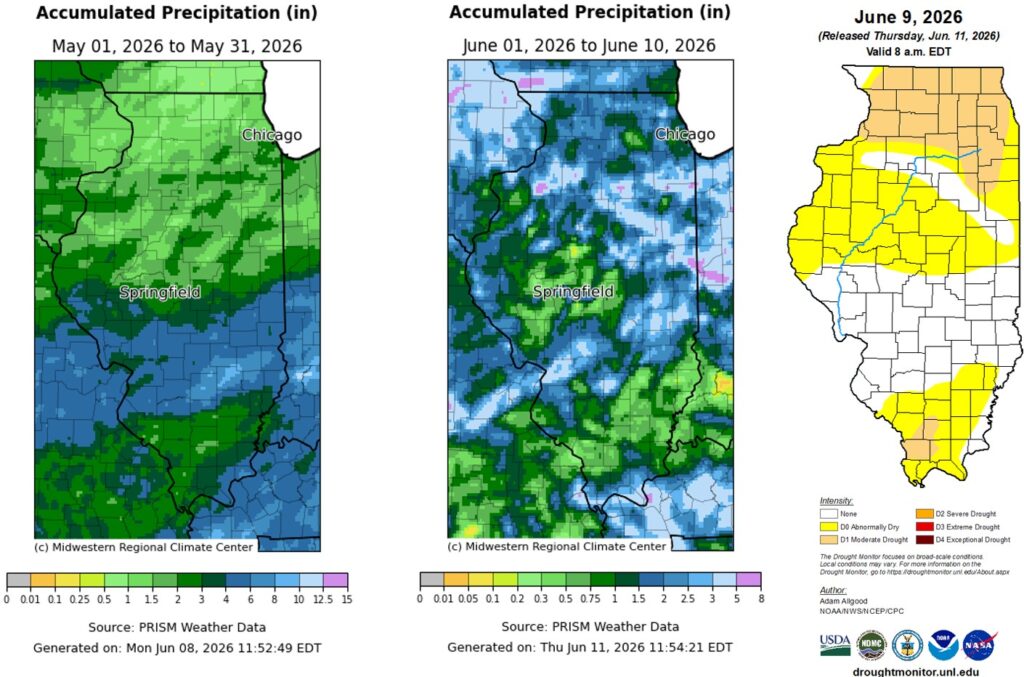
Corn
Corn crop condition ratings as of June 7 were 67% good + excellent (G+E), which is more or less normal at this point in the season. This likely reflects, in part, variability in crop establishment in areas that received heavy rainfall shortly after planting. For comparison, current ratings are slightly below the 69% G+E reported at the same time last year and lower than the 74–77% reported in 2022 and 2024. It may be worth noting that although ratings were high early in those years, they declined into the mid-60s by late June as drought conditions developed. One of the highest early-season ratings in recent years occurred in 2018, when 83% of the corn was rated G+E following a very warm and relatively dry May. In contrast, above-normal rainfall can negatively impact crop establishment by causing poor stands, drowning of plants in low spots, increased seedling disease pressure, restricted root growth due to low soil oxygen, and movement of mobile nutrients (primarily nitrogen) below the rooting zone, along with N losses from denitrification in saturated soils. The symptoms of afternoon stress from dryness might lower ratings, but in June, we’d much rather see such stress than have inches of rainfall and water standing in fields.
Stands are good in most fields, and the warmer temperatures in recent weeks have increased growth rates and improved uniformity in plant size. From April 1 through June 10, the accumulation of growing degree days (GDD) was about 845 (155 above normal) in northern Illinois, 1005 (155 above normal) in central Illinois, and 1,150 (180 above normal) in southern Illinois. Totals since May 1 are closer to normal, at about 605 (85 above normal) in northern, 670 (50 above normal) in central, and 725 (25 above normal) in southern Illinois.
At a planting date trial in Urbana (Figure 2), corn planted on April 12 reached the V9 stage by June 8, having accumulated 887 GDD. Corn planted on May 4 was at V6, with 617 GDD, while corn planted on May 21 was at V4 with 404 GDD accumulated. Corn planted on June 5 had not yet emerged, with 105 GDD accumulated. With daily accumulations of about 23-25 GDD, the corn crop planted in mid-April should be showing tassels and silks by the end of June and the first days of July. Warmer conditions in the forecast are expected to further accelerate crop growth. As plants approach V10-V12 stages, canopy development increases rapidly, and sunlight interception is expected to reach about 90% by around V12 (approximately chest-high). This is another critical stage for corn, as growth rates are high and so is the demand for water and nutrients. From a management perspective, a key goal is to achieve a uniform stand with a good canopy by late June, which helps maximize potential kernel numbers and sets the crop up in good condition to fill those kernels later in the season.
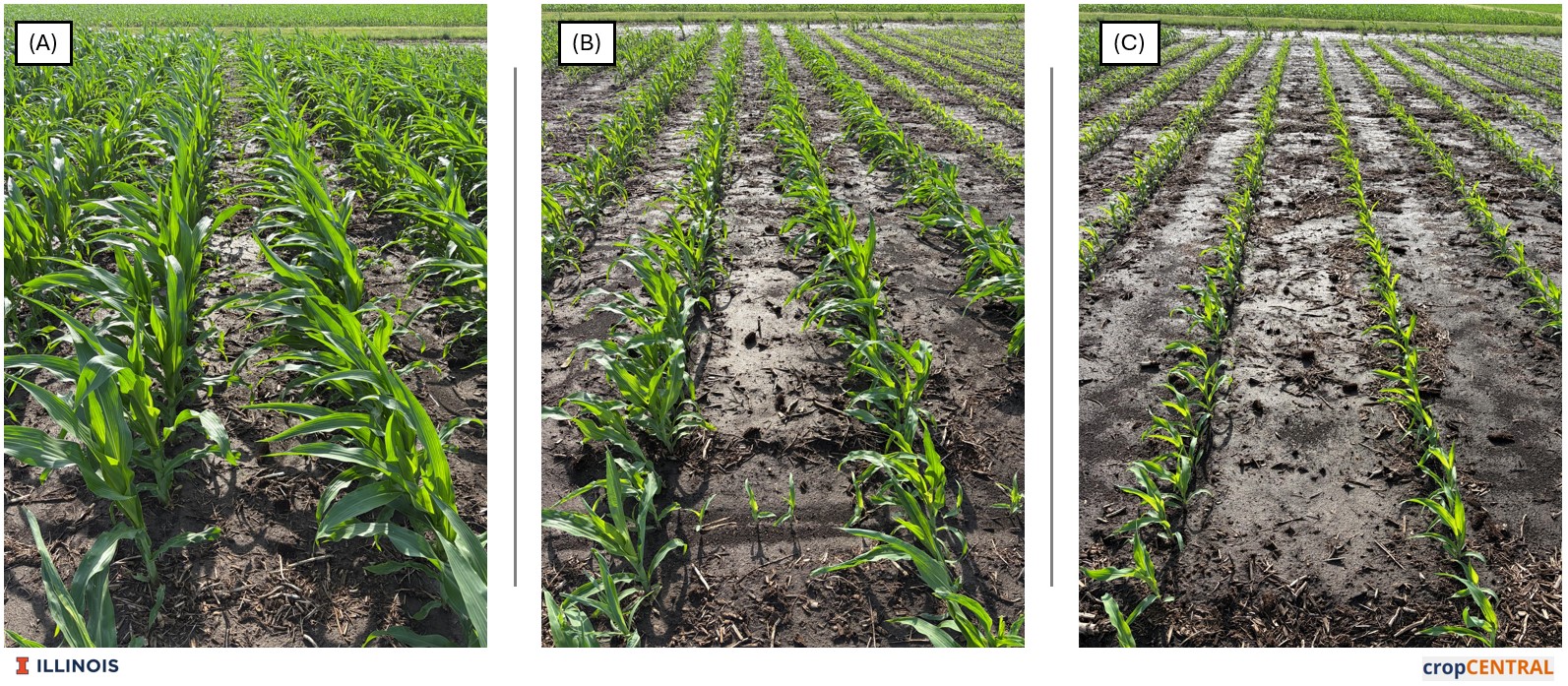
Soybean
Early-season condition ratings for the soybean crop have been about average as well, with 64% of the crop rated G+E. Soybean stands are also generally good in most fields; however, crops planted from late April through early May have shown slower-than-usual growth. This is largely due to cool soil temperatures combined with wet periods, which restricted root growth and delayed root expansion into the bulk soil. This is evident in our planting date trial in Urbana. Soybean planted on April 12 had reached the V6 stage (sixth trifoliolate) by June 8, while soybeans planted on May 4 were at V2 (second trifoliolate) and approximately 5–6 inches tall after five weeks of growth (Figure 3). In contrast, soybeans planted on May 21 were at the V1 stage (first trifoliolate).
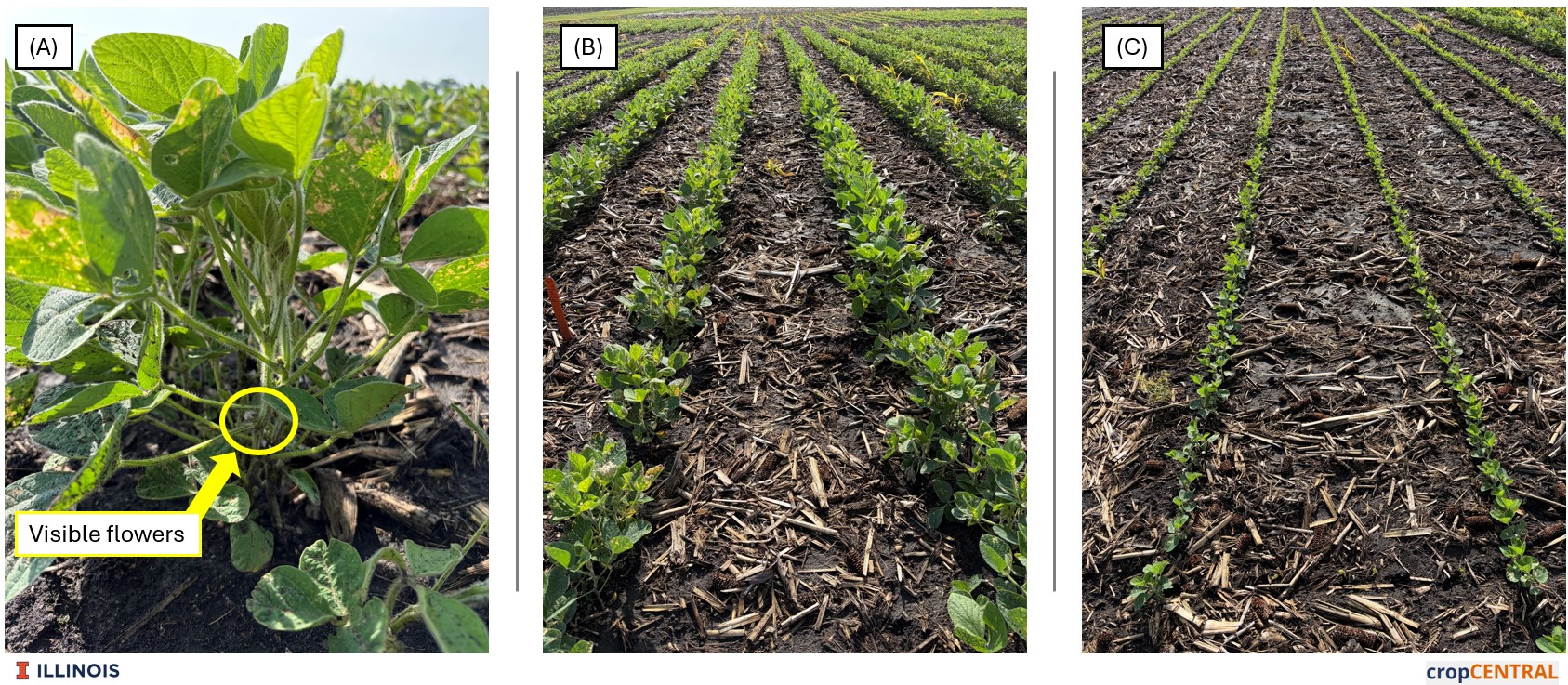
The trial includes three maturity groups at each planting date; an early (MG 2.4), medium (MG 3.4), and late (MG 4.0) variety adapted for central Illinois. Across all three maturities on the earliest planting date, flowers were visible on about one-third of the plants on June 8. Flowering in soybean is primarily driven by photoperiod, but warm temperatures will also speed it up, and plants need to reach the V3 stage before they’re capable of flowering. Once it starts, flowering progresses both upward and downward along the plant. As we approach the summer solstice (June 21), and if it stays warm (with daily highs above 80ºF), it wouldn’t be surprising to see at least some flowering in soybeans planted in mid-May. Conversely, flowering could be delayed if temperatures cool, which remains a less likely scenario based on current forecasts.
It is not yet clear how the slower early growth may influence yield potential for soybean planted in early May. Impact will likely be minimal if warm and wet conditions persist, allowing growth rates to accelerate and plants to continue adding nodes. Flowering typically marks the beginning of a period of rapid growth and nutrient accumulation. Most of the biomass accumulation at this stage is still allocated to vegetative growth, as plants continue to add nodes and leaf area until the beginning of seed fill, typically 4-6 weeks later, depending on growing conditions. Ultimately, as long as canopy development is rapid and the canopy closes about the time seed fill begins, with adequate pod set, the crop should be well positioned to achieve high yield potential if conditions remain favorable during pod filling. Last year, for instance, June was warmer and drier than normal, and dry soils slowed crop growth some, but ample rainfall in July supported rapid growth. Data from trials conducted at the UI Research Centers in Monmouth and Urbana showed that soybean planted the first week of May yielded within 2 bushels of those planted by mid-April (Table 1).
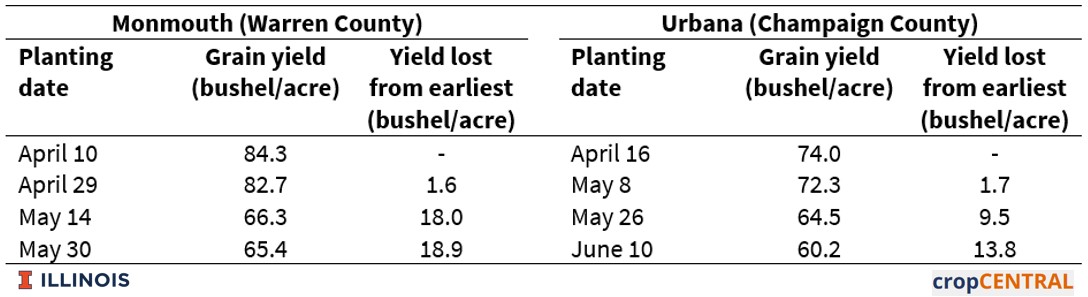
Final thoughts
If no major problems (such as widespread flooding) occur, we expect that crop condition ratings will improve in Illinois in the coming weeks. Previous seasons remind us how dynamic (and, well, useless in predicting final yields) these ratings are. In 2023, for example, ratings for both crops plummeted in Illinois as drought intensified in June, then they rebounded to near-normal levels (although more for soybeans than corn) by August, and yields were good for both crops. While we don’t want soils to dry out too much in June, not having standing water over the next few weeks will help maximize crop potential. Reaching that potential, as always, will require that rain adds enough water to the soil to keep the crop supplied through the rest of the season.
]]>Agricultural Markets Synthesis
The agricultural grain markets experienced a severe downturn, characterized by corn and soybeans breaking through critical moving averages due to persistent fund liquidations, mounting Argentine crop estimates, and rumors of delayed Chinese purchasing programs until September. In discussions with host Todd Gleason, market analyst Matt Bennett (AgMarket.net) noted that while producers have priced approximately 20% to 30% of their new crop—outpacing the previous year’s sales pace—they remain well underneath the 50% to 60% targets recommended by some advisory firms. The lack of commercial and fund buyers intensified the downward price momentum, leaving future market rallies heavily dependent on whether the excessively dry northern regions of the Corn Belt receive forecasted rainfall.
In the livestock and energy sectors, market analyst Mike Zuzolo (GlobalCommResearch.com) highlighted significant structural shifts and geopolitical supply concerns. Commenting on the confirmed New World screwworm outbreak along the South Texas border, Zuzolo reported that the Mexican beef industry has been adapting its supply chain over recent months, retooling to finish animals there rather than shipping live feeder cattle into the United States. This operational adjustment mitigated immediate border transport issues related to the New World Screwworm. Furthermore, due to the ongoing closure of the Strait of Hormuz drawing down global petroleum inventories, Zuzolo strongly advised producers to aggressively secure their fall diesel needs, warning of heightened energy market vulnerability as the season progresses.
Commodity Week Review: Panelists Logan Kimmel, Sherman Newlin, and Shane Holtorf reviewed risk management frameworks following consecutive double-digit declines in grain futures. The panel identified a continuous 12-day liquidation trend in wheat futures, tied closely to crude oil market corrections, as the primary catalyst pulling down corn and soybean prices. While domestic crush margins maintain a baseline floor for soybeans, the analysts emphasized that a sustained price recovery requires a revival of export demand from China. Producers were strongly cautioned against panic-liquidating remaining old crop grain or ignoring new crop targets at seasonal lows; instead, they were urged to maintain active working orders at calculated, profitable target ranges to automatically capture short-term technical bounces.
Agricultural Weather Synthesis
Weather analysis across global and domestic growing regions revealed stark geographical delineations and emerging seasonal risks. Meteorologist Mike Tannura (Tstorm.net) outlined an unusually dry start to the season across the northeast half of the Corn Belt—encompassing parts of Iowa, Minnesota, Wisconsin, northern Illinois, northern Indiana, and southern Michigan—driven by an upper-level high-pressure system blocking major rain events and keeping daytime temperatures elevated in the 80s and 90s. Concurrently, Tannura noted that North American spring wheat is showing its third-lowest condition rating since 1986 following a historically dry April and May, though recent rains have initiated a baseline recovery. In contrast, growing regions across the European Union, Ukraine, and Russia continue to benefit from highly favorable jet stream patterns delivering consistent moisture to wheat, corn, and rapeseed crops.
Tracking the immediate progression of these systems, meteorologist Eric Snodgrass (NutrienAgSolutions.com) confirmed recent heat units successfully stimulated vegetative crop growth, reversing an early May thermal deficit. Snodgrass identified Interstate 72 in Illinois as a dividing line, with areas to the south maintaining adequate moisture while the northern half remains dry. While short-term storm systems exiting Iowa provide critical near-term relief for vegetative crops, Snodgrass says late-June soil moisture levels across the Midwest and Delta, alongside North Pacific ocean temperatures in the Gulf of Alaska, serve as the primary predictive variables for mid-summer pollination heat risks. Finally, he dismissed a newly released European long-range seasonal model predicting a severe late-summer drought across the Corn Belt, citing its historical trend of extreme algorithmic inaccuracies under similar conditions.
The Week’s News and Other Items
Soil Microbiome and Agronomic Conservation: An interview with Lizzie French of Waypoint Analytical during the Monday Closing Market Report , and taken from the latest edition of the Illinois Nutrient Loss Reduction podcast, examined how the soil microbiome handles nutrient cycling, residue processing, and structural formation. Waypoint utilizes advanced DNA analysis to map the specific functional traits of soil microbes, identifying capabilities such as nitrogen fixation and phosphorus solubilization. French emphasized that targeted conservation practices—including cover crops, reduced tillage, and managed tile drainage—are vital to sustaining microbial biomass and preventing nutrient runoff. While robust biological activity allows producers to optimize fertilizer efficiency and potentially lower nitrogen application rates, maintaining proper soil pH remains the foundational prerequisite for all biological soil health.
U.S. Agricultural and Fertilizer Industry Consolidation: An investigation into structural consolidation by researchers Henrique Monaco (University of Illinois) and Jim MacDonald (University of Maryland) revealed long-term concentration trends from input manufacturing down to production agriculture. Monaco detailed that the top four firms now control 70% of domestic ammonia production capacity, explaining this concentration is the natural, expected outcome of cost-based competition in a mature commodity market rather than a reaction to recent geopolitical friction in the Strait of Hormuz. Mirroring this trend, MacDonald reported large-scale farming operations operating, defined as above a 2,000-acre threshold, expanded their collective share of total U.S. cropland from 15% in 1987 to 41% by 2017, driven by identical economic pressures to capture economies of scale and optimize cost efficiencies.
The May 4, 2026 Central Illinois Dust Storm: Maddie Stover and Illinois State Climatologist Trent Ford analyzed the atmospheric and environmental mechanisms behind the severe blowing dust warning issued in Champaign County. Strong straight-line winds and thunderstorm outflows combined with recently tilled, bare soils to generate thick plumes of dust, resulting in near-zero visibility and hazardous transit conditions across three major Illinois interstates. Ford explained that despite recent rainfall, spring tilling operations loosen fine-grained topsoil enough to make it highly erodible under April and May wind patterns. To mitigate this continuous loss of valuable topsoil, Ford advocated for expanded field cover solutions, noting that continuous no-till practices or leaving crop residue in place drastically reduces windborne soil erosion compared to conventional management.
New World Screwworm Quarantine in Texas: U.S. Secretary of Agriculture Brooke Rollins issued an alert following the confirmed detection of the New World screwworm in La Pryor, Texas, marking its movement across the Mexican border. In response, the agency established a strict 20-kilometer quarantine zone, instituted animal movement controls, and expedited the targeted deployment of millions of sterile screwworm flies to halt reproduction. University of Illinois Beef cattle specialist Teresa Steckler clarified that because the pest is transmitted almost exclusively via animal transportation rather than natural flight, Midwest herds face no immediate threat provided cattle are not moved from the southern border zone into the state.
Specialty and Premium Crop Market Opportunities: Kelsey Graber of Clarkson Grain (ClarksonGrain.com) outlined the financial and operational parameters of specialty crop markets, including non-GMO, organic, white corn, and hybrid-specific varieties. Accessing these premium values requires meticulous on-farm segregation during harvest, storage, and transport to eliminate cross-contamination risks. Graber noted that premium soybeans are exported to East Asian markets for specific food-grade applications like tofu and soy milk. Because specialized buyer-call programs frequently reach full capacity months before the growing season, producers must initiate contract planning and secure restricted seed supplies between September and December of the preceding year. Graber appeared on both the Thursday Closing Market Report and a farmdoc webinar.
June University of Illinois Field Days and Conferences
Weed Science Field Research Tour June 24: The University of Illinois will host the 2026 Weed Science Field Research Tour on June 24th at the Clem Farm in Champaign. The tour will cover herbicide programs, research plots, and new agricultural products. A ten-dollar fee covers the field tour book, refreshments, and a box lunch. Preregistration is not required, but large groups should notify organizers in advance for meal planning. Search “Illinois Weed Science Field Research Day” for more information or contact Aaron Hager at hager@illinois.edu.
Focus on the Future: Sustaining Farm Legacy June 30: The “Focus on the Future: Sustaining Farm Legacy” series, hosted by University of Illinois Extension and Illinois Farm Bureau, helps farmers manage their operations. The next event is June 30th in Sycamore at the DeKalb County Farm Bureau building. Attendees will hear practical updates on succession planning, farm economics, the Farm Bill, and market conditions. Register today go.illinois.edu/farmlegacy.
That is a comprehensive look at the markets, the weather, and the news driving agriculture this week. You can find all of these segments, plus daily market updates from our farmdoc team, online anytime on demand at WILLAg.org.
Editor’s note: This article was adapted from the week’s WILLAg.org radio broadcast transcripts, formatted for print with the assistance of Google’s generative AI tool, Gemini, and reviewed by Todd Gleason.
—
Commodity Week can be heard in the 2 o’clock hour central time on WILL AM580 or you may subscribe to it using the links in the player below. This week the panelists include Logan Kimmel from Roach Ag, Shane Holtorf of Logic Ag, and Sherman Newlin with Zaner Ag Hedge.
The Closing Market Report airs at 2:06 p.m. central daily on WILL AM580. It, too, is a podcast. Subscribe using the link in the player.
]]>We wrapped up spring and started meteorological summer with some lovely, if a bit drier, weather. Average temperatures this week ranged from the low 60s in northern Illinois to the mid-70s in southern Illinois, between 1 and 4 degrees above average. Low humidity allowed daytime temperatures to regularly reach into the upper 80s, while nighttime temperatures cooled well into the 50s. Some of the more impressive nighttime lows this week included 44 in Waukegan and 45 in Normal. It’s not often that we have dewpoint temperatures in the 30s and 40s, making for some very comfortable evening weather.
The downside to lower humidity is a lack of precipitation, and this week largely continued our dry stretch across much of the state. Rain totals from this week ranged from a big goose egg in most of northern Illinois to just under 3 inches in southwest Illinois. Following a very wet start to spring, the last 30 days have been exceptionally dry north of Interstate 70, with some parts of northern Illinois having less than 25% of normal rainfall since early May. Soil moisture and streamflow have declined rapidly in much of northern and central Illinois, resulting in moderate drought in this week’s U.S Drought Monitor.
Looking ahead, our weather will stay warm but the summer humidity is going to move in. High temperatures will be in the 80s this weekend and early next week before climbing well into the 90s by week’s end. Dewpoint temperatures will be in the 60s and 70s, making it feel much more like a typical Illinois summer. The higher humidity also comes with a more disturbed pattern, with moderate chances of showers and thunderstorms almost every day next week. Forecasted 7-day rain totals are over an inch for the entire state. Further out, outlooks for the middle part of June show warmer and wetter weather will stick around.
]]>
DeKalb County
Soil Conditions: Moderately Dry (soil is dry, plants may be browning or stressed, water bodies are low)
Another week, more beautiful and perfect weather for outdoor activities. More notably, another week of little to no rain as we continue to progress into an early summer drought. Most of northern Illinois would be considered to be in a D1 moderate drought as of now. The forecast is promising, with chances this weekend, and most of next week to remedy how dry it has been. With moisture in the forecast, disease monitoring, and keeping an eye on weed pressure should come back into focus. Between corn, soybeans, and wheat I have seen little to no disease to this point in the season which is a great start with how wet April was.
If I could describe the growing season in one word, it would be variable. Varying planting dates, emergence dates, growth stages within the same fields of corn and soybeans. We are seeing ranges of anywhere from struggling to emerge, to 3rd trifoliate in soybean or V3 in corn within many fields across the area. Hopefully the rain will even these patches across the fields over time, but some significant differences are being seen across corn and soybeans.
Wheat is in early Feekes 11 or ripening stage. Fields look healthy with little disease, and the weather has progressed the crop nicely as they begin to enter senescence.
That’s all for this week, and we shall see what sort of rain we get in the next week!
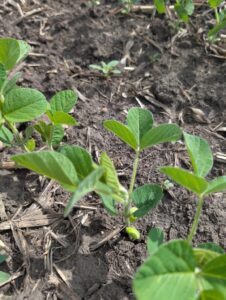
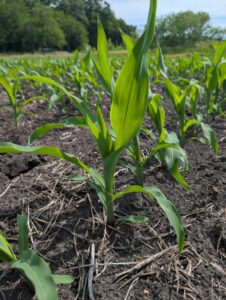
Russ Higgins – Commercial Agriculture Educator
Grundy County
Soil Conditions: Mildly Dry (soil is drier than normal, plant growth may have slowed)
A dry week in the Northeast region, corn picked up one additional leaf (V6) and soy pushed out another trifoliate (now V2) in the fields that I am observing on a weekly basis. Hay harvest, nitrogen sidedressing, and post herbicide applications are all taking place. With the comparatively quick onset of dry conditions and stress on both crops and weeds, farmers are encouraged to evaluate post herbicide applications at least a week after application. Environmental stress, including drought, can slow active growth and herbicide solution absorption in plants, decreasing herbicide effectiveness on targeted weeds.
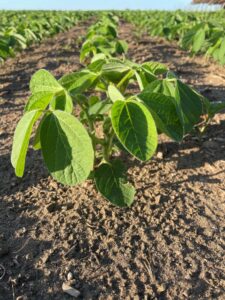
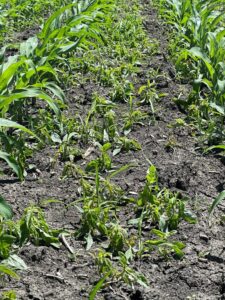
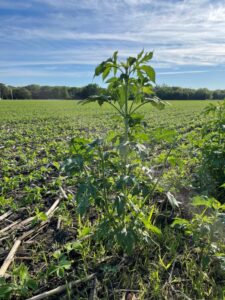
Reagan Tibbs – Commercial Agriculture Educator
Logan County
Soil Conditions: Mildly Dry (soil is drier than normal, plant growth may have slowed)
While crops across Logan County continue to look healthy, the lack of rainfall over the last week is starting to show some signs of stress, particularly in later-planted fields. The fields that were planted earlier in the season are in the V4-6 stage for corn and soybeans, with later-planted fields in the V2 stage. The first cutting of hay fields has also wrapped up across the county, with the hope of timely rains providing a good jumpstart for regrowth.
Doug Gucker – Local Food Systems and Small Farms Educator
Dewitt, Macon, and Piatt County
Soil Conditions: Moderately Dry (soil is dry, plants may be browning or stressed, water bodies are low)
Soybeans vary from V2 to V5 in general, with some fields showing the effects of early crusted soils and reduced emergence in those areas. Tall waterhemp has reached the 4-inch stage by the middle of the week. Corn varies from V2 to V7. all the crops have good color in spite of it being dry for the past 14 days. NOAA shows that the 3-county area is 2 to 3 inches below average rainfall over the past 2 weeks. Grass is browning in the lawns.
First cutting hay is being made. Sidedressing of corn is wrapping up, and post-emergent herbicide applications are in full swing.
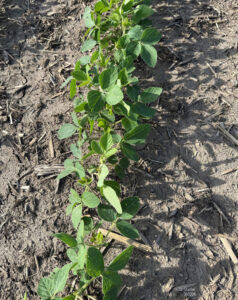
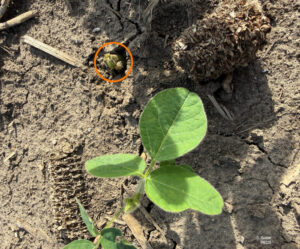
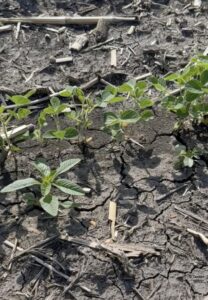
Talon Becker – Commercial Agronomy Specialist
Douglas County
Soil Conditions: Near Normal
During my survey of Douglas County on Wednesday afternoon, I saw just a handful of fields yet to be planted, with planters rolling in a couple of them. Others were busy filling in some low spots of fields that failed to survive the wet conditions we experienced in the region in late April and early May. Timely post-emergence herbicide applications were also being made, with most waterhemp seedlings in the area still small enough to effectively control. While most fields were planted, somewhere around 10% of fields did not yet have emerged crop. Soybean fields were generally in the V1-V2 range, with active nodules starting to form. Several fields were showing some damage on early leaves, likely related to the cool, moist conditions experienced during emergence and possibly compounded by increased duration of contact between those tissues and soil-applied pre-emergence or carryover herbicides. However, new growth looked healthy in most fields. Most corn was in the V3-V4 range, with some early-planted fields getting up to V8. Signs of side-dress nitrogen could be seen in several of those early-planted fields, with most of the more mature corn fields showing a nice dark green canopy. However, some of the corn fields in the V3-V5 range were showing uneven canopy color, possibly still waiting on some side-dress nitrogen.
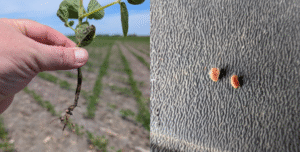
]]>
Agricultural Markets Synthesis
Throughout the week, the agricultural commodity markets faced volatility driven by geopolitical developments, fluctuating energy prices, and domestic planting progress. Analysts Naomi Blohm, Arlan Suderman, Curt Kimmel, Greg Johnson, and Mike Zuzolo highlighted that December corn and November soybeans tested critical technical support lines. Early in the week, easing tensions in the Middle East and dropping crude oil prices placed downward pressure on grain markets, which was further compounded by rapid US planting progress and warm weather drying out fields. However, the markets eventually rebounded off these support levels, spurred by hopes of a peace agreement and potential Chinese goodwill purchases that could remove agricultural import tariffs. While poor weekly export sales weighed negatively on wheat, cattle, and corn, soybean oil remained a bright spot, posting massive year-to-date gains due to strong crush margins and fighting off weakness in the crude oil sector. Looking ahead to the 2027 crop year, Suderman and Blohm warned that the closure of the Strait of Hormuz poses a significant risk to future fertilizer availability and input costs. The analysts urged farmers to utilize the current sideways-to-lower market environment to create written marketing plans and execute cash sales, removing emotion from their decision-making during seasonal market highs.
Agricultural Weather Synthesis
On the weather front, meteorologists Don Day, Drew Lerner, Mike Tannura, and Eric Snodgrass tracked a shifting pattern across global growing regions. In the United States, critical drought relief arrived in the Southeast and Delta, while the hard red winter wheat regions of the plains received scattered showers. Conversely, the northern plains and Canadian prairies are enduring historically dry conditions and heat, posing a severe threat to spring wheat that upcoming minor rain systems are unlikely to alleviate. For the Corn Belt, fluctuating spring temperatures initially caused atypical early corn root development, but the region has since transitioned into a warmer period. Tannura, Snodgrass, and Day forecast an unusually dry pattern to dominate early June, which will help crops accumulate necessary Growing Degree Days and firm up soils. While Tannura cautioned that prolonged June dryness could pose severe yield risks if it persists into mid-summer, Snodgrass remains optimistic that a developing El Niño and a warm Northeast Pacific will usher in a stormy, wetter July. Globally, Lerner noted that El Niño is already bringing drier conditions to India and Indonesia, while a massive high-pressure ridge is rapidly drying down crops and topsoil in Western Europe.
The Week’s News and Other Items
Memorial Day: A special Memorial Day broadcast traced the origins of the holiday to 1868, honored fallen soldiers with a story on the nightly Menin Gate “Last Post” ceremony in Belgium, and highlighted the preservation of the 1904 J.H. Hawes Grain Elevator in Atlanta, Illinois.
U.S Trade Policy: U.S. Trade Representative Jamieson Greer stated that the Trump administration will maintain tariffs, including Section 301 and 232 tariffs, due to the trade deficit. While negotiating with Mexico on a bilateral basis, Greer acknowledged trade challenges with Canada, particularly regarding dairy tariffs, and emphasized the need to address these issues. Greer says only two countries, Canada and China, have retaliated against the U.S. over its reciprocal tariffs. He claims some trade with Canada in fertilizer and energy will be fine despite ongoing USMCA negotiations, which Greer must extend, cancel, or renegotiate after July 1st.
45Z Tax Credit Guidelines Under Review: The National Corn Growers Association is actively pressing the Treasury Department and the IRS for predictable regulatory guidelines on the Section 45Z Clean Fuel Production Credit. NCGA First Vice President Matt Frostic emphasized that for aviation fuel to become a legitimate long-term demand driver, the scientific framework must verify and reward established on-farm conservation practices like no-till and cover cropping.
Global Biofuel Demand Shifts Trade Dominance: In a historic shift, Brazil has officially overtaken Argentina as the world’s number one exporter of soybean meal during the first four months of this year. The transition is driven by rapid structural expansions in biomass-based diesel production within Brazil and the United States, alongside aggressive tax policies in Argentina that have severely limited domestic production. In response, Argentina announced plans to gradually scale back its 24% soybean export tax down to 15% by 2028.
farmdoc Explores Fertilizer Industry Consolidation: With input costs remaining a top anxiety for producers, a new study from the University of Illinois farmdoc team explores global consolidation trends. Researcher Henrique Monaco points out that while the United States maintains a robust domestic production capacity for nitrogen (94% of domestic usage) and phosphate (87% of domestic usage), the nation remains almost entirely reliant on Canadian imports for its potassium needs. Read more on the farmdoc Daily website.
Kansas Wheat Crop Abandonment: Kansas State University Extension’s Dan O’Brien reported during Tuesday’s Closing Market Report that there are expectation Kansas wheat abandonment could reach up to 25% due to drought. O’Brien says conditions remained mixed and spotty, with a fair amount of abandonment, particularly in the central part of the state. USDA projects a yield of 37 bushels per acre in Kansas, the Kansas wheat tour estimated a yield of 38.7 bushels per acre.
How Farmers Respond to Climate-Related Risk: A study by the University of Illinois and Michigan State found that farmers are risk-averse, particularly in agriculture-specific areas, and their attitudes toward uncertainty vary widely. This research could provide valuable insights for policymakers. Natalie Loduca says she and her Michigan State colleague worked to better understand how farmers perceive uncertainty under changing climate conditions. Loduca and Scott Swinton found farmers are risk-averse in both general and agriculture-specific areas. Attitudes toward uncertainty varied much more widely in the agricultural scenarios than in the general financial areas. You may read more online.
John Deere Enters $99 Million Right-to-Repair Settlement: John Deere has agreed to a massive $99 million class-action antitrust settlement. The agreement resolves allegations that the manufacturer restricted farmers’ access to essential diagnostic software. Class members will receive financial compensation and are guaranteed ten years of unrestricted access to the necessary digital tools to perform independent equipment repairs.
June University of Illinois Field Days and Conferences
Small Grains Field Day June 4: Join the University of Illinois for the Small Grains Field Day on June 4th at 8:30 AM. The event includes a guided tour of research fields, a barbecue, and learning opportunities about wheat and oat research. Search “Illinois Small Grains Field Day” to register.
Weed Science Field Research Tour June 24: The University of Illinois will host the 2026 Weed Science Field Research Tour on June 24th at the Clem Farm in Champaign. The tour will cover herbicide programs, research plots, and new agricultural products. A ten-dollar fee covers the field tour book, refreshments, and a box lunch. Preregistration is not required, but large groups should notify organizers in advance for meal planning. Search “Illinois Weed Science Field Research Day” for more information or contact Aaron Hager at hager@illinois.edu.
Focus on the Future: Sustaining Farm Legacy June 30: The “Focus on the Future: Sustaining Farm Legacy” series, hosted by University of Illinois Extension and Illinois Farm Bureau, helps farmers manage their operations. The next event is June 30th in Sycamore at the DeKalb County Farm Bureau building. Attendees will hear practical updates on succession planning, farm economics, the Farm Bill, and market conditions. Register today go.illinois.edu/farmlegacy.
That is a comprehensive look at the markets, the weather, and the news driving agriculture this week. You can find all of these segments, plus daily market updates from our farmdoc team, online anytime on demand at WILLAg.org.
Editor’s note: This article was adapted from the week’s WILLAg.org radio broadcast transcripts, formatted for print with the assistance of Google’s generative AI tool, Gemini, and reviewed by Todd Gleason.
—
Commodity Week can be heard in the 2 o’clock hour central time on WILL AM580 or you may subscribe to it using the links in the player below. This week the panelists include Dave Chatterton with SFarmMarketing.com, Curt Kimmel of AgMarket.net and Collin Watters from the ILCorn.org.
The Closing Market Report airs at 2:06 p.m. central daily on WILL AM580. It, too, is a podcast. Subscribe using the link in the player.
]]>DeKalb County
Soil Conditions: Mildly Dry (soil is drier than normal, plant growth may have slowed)
This will be a quick report as there is not too much to report since last week. Most fields have emerged in both corn and soy. I’ve seen fields for corn varying from about to emerge to V2 pushing V3. Soybeans are in a similar boat between emerging in fields to 2nd trifoliate. One thing with soybeans is some fields, we are seeing staggered and uneven emergence and I’m attesting that to the dry conditions we are seeing. The beans should go out of this, especially if we can get a timely rain in the near future.
Speaking of dry conditions, we are continuing to see dry and sunny weather. Not much rain in the forecast but the uptick in temperature has been nice considering the cool April and May we have experienced up until last week. Crops should start making some major stage jumps with the heat units being put into the dirt.
One last note I saw across multiple fields was early weed pressure. We are seeing some early breakthroughs with our delays in planting. This should be something to monitor and keep in mind for when early post emergence herbicides go out, as they will have some significant growth by then.
Thanks all until next week, look forward to seeing you all then!


Russ Higgins – Commercial Agriculture Educator
Grundy County
Soil Conditions: Near Normal
A warm and mostly dry week for growing crops (and weeds). Several mid to high eighty degree days pushed corn from V3 last week to V5. At V5, all of the embryonic leaves and ears have been initiated in the corn plant, and its growing point (meristem) will soon be above ground. The warm weather also pushed the soy crop, last week a no-till soy field at VE has reached nearly V1 with the first set of trifoliates unfurling. I would be remiss if I did not share that the great growing weather also benefitted weeds as well. Several species, especially Waterhemp are matching the crops quickened growth. In the region most planting has finished and farmers are taking advantage of the rain free forecast to harvest the first hay cutting.
Over the years I have made numerous trips from Grundy County to the University of Illinois campus, my most frequent route includes a stretch of Route 47 straight south to Interstate 74. Yesterday I made the trip and wanted to share my windshield observations. I noted several agronomy practices that seem to be picking up in frequency, they include sidedressing corn with liquid nitrogen, no-tilling soy into a standing cereal rye cover crop, and a growing number of winter wheat acres in rotation. It will be interesting to follow these fields and practices as the growing season progresses.


Talon Becker – Commercial Agriculture Specialist
Champaign County
Soil Conditions: Near Normal
The southern half of Champaign County has received more rain in the past month than the north half of the county and is therefore just a bit behind in overall crop progress. As I conducted my survey on Tuesday afternoon, the majority of fields had emerged crop, but most were still in early growth stages with few fields beyond V4 for either corn or soybean. The few wheat fields I saw were in the later stages of flowering (Feekes 10.5.2 – 10.5.4) or just moving into ripening (Feekes 11.1). Dryer conditions this past week have allowed for planting to continue and near completion in that part of the county. I saw several areas of fields that were drowned out and have been replanted or will soon need a replant, particularly in the southeast part of the county, but these areas were generally small and not too widespread. So far, the forecast for next week is looking dry and a bit warmer, which should help most farmers finish up planting and POST herbicide applications on early planted fields.


]]>
Agricultural Markets Synthesis
The agricultural markets experienced a volatile week marked by risk-on and risk-off trading, heavily influenced by geopolitical news and macroeconomic factors. Curt Kimmel (AgMarket.net) , Dave Chatterton (Strategic Farm Marketing) , and Collin Watters (ILCorn.org) noted that the dominant driver early in the week was optimism surrounding potential US-China trade deliverables, specifically talk of an additional $17 billion in agricultural purchases beyond existing soybean commitments. Naomi Blohm (TotalFarmMarketing.com) pointed out that the initial rally pulled back as traders waited for specific details and flash sales confirmations. Midweek, Greg Johnson (Total Grain Marketing) observed profit-taking pressured by a $5 drop in crude oil prices. Despite this, Matt Bennett (AgMarket.net) highlighted that the corn market maintained its uptrend, supported by exceptionally strong export demand. Approaching the long holiday weekend, Mike Zuzolo (GlobalCommResearch.com) emphasized the impact of macroeconomic factors, explaining that rising bond yields and inflation concerns stemming from the prolonged closure of the Strait of Hormuz are altering risk traders’ abilities and setting up the energy markets to potentially lead other commodities higher. Additionally, analysts monitored the divergence between cash and futures in the feeder cattle market ahead of a critical Cattle on Feed report.
Agricultural Weather Synthesis
Weather across the agricultural belts presented a complex mix of temperature swings and inconsistent moisture throughout the week. Mark Russo (EverStream.ai) reported mostly dry, favorable planting conditions early on for the summer crop belts, though hard red winter wheat areas continued to suffer from long-term dryness. Don Day (DayWeather.com) noted extreme variations, including 12 to 30 inches of late snow in Wyoming and severe weather with beneficial rains in parts of Nebraska and Iowa. As the week progressed, Drew Lerner (World Weather, Inc.) highlighted the frustration of wild temperature swings in the Plains, where crops endured both freezing lows and extreme heat. Mike Tannura (Tstorm.net) warned that a complex storm setup bringing scattered showers could slow down late corn planting across the Central US. Looking ahead, Eric Snodgrass (Nutrien Ag Solutions) forecasted a shift toward routinely warmer temperatures for the end of May and into June, noting that while northern Illinois is becoming abnormally dry, a wet lower Mississippi River Valley reduces the risk of a broader drought developing early in the summer.
The Week’s News and Other Items
farmdoc 2026 Crop Budget Updates: University of Illinois Extension’s Todd Gleason interviewed agricultural economist Nick Paulson regarding updated 2026 crop budgets published by the farmdoc team. Despite rising fuel and fertilizer costs stemming from recent geopolitical conflict, projected returns for 2026 have improved since January due to higher corn and soybean price prospects. While diesel costs are significantly higher, the impact on 2026 averages remains manageable; however, sustained elevated input prices pose a substantial threat to 2027 profitability. Current projections for 2026 indicate slightly positive returns on a 50/50 corn-soybean rotation, though these figures remain well below historical averages and rely heavily on government ARC and PLC payments. Paulson noted that crop insurance is unlikely to provide additional support under trend yields, as significant price declines would be required to trigger payments, effectively offsetting any potential revenue losses. Looking ahead, the team anticipates that 2027 will likely yield negative return projections, exacerbated by the structural design of government support programs that will reflect lower rolling averages for revenue guarantees.
US-China Ag Deliverables: Discussions focused on the formation of a Board of Trade to manage bilateral relations and the potential $17 billion in agricultural product commitments. The Commodity Week panel characterized the current agricultural trade relationship between the United States and China as “managed trade” rather than “free trade”. The discussion highlighted that this trade approach is being driven heavily by politics and global power dynamics—including considerations involving Taiwan, Iran, and Russia—rather than strictly economic market forces. Collin Watters expressed the view that such managed trade ultimately distorts market dynamics, while Dave Chatterton noted that while economists have a role, the current situation involves two global leaders attempting to balance cooperation with the promotion of their individual geopolitical agendas. The panelists further observed that China’s purchasing decisions often appear motivated by political strategy—such as seeking tariff cuts—even when those purchases do not align with their internal economic needs.
Comparing Corn Production Costs: Purdue University agricultural economist Joana Colussi’s recent analysis, utilizing data from the agri benchmark network, highlights fundamental differences in how Iowa and Mato Grosso producers manage corn production costs. In Brazil, production is driven by direct input expenses—specifically a heavy reliance on imported nitrogen—which account for more than half of the total cost structure. Conversely, U.S. corn production in Iowa is largely defined by high overhead costs, including land values, machinery, and labor. While Iowa maintains a massive advantage in yield—producing double that of Brazil—and scale, the Brazilian model remains highly competitive by utilizing the safrinha (second-crop) system. This strategy allows Brazilian farmers to distribute fixed land and equipment costs across two crops per year, keeping their total production costs lower than their U.S. counterparts. Ultimately, while the United States remains more efficient in terms of yield and scale, its competitive position is most vulnerable when global fertilizer prices inflate direct input costs, whereas Brazil’s corn growth remains constrained by its dependence on specific rainfall patterns and narrow planting windows following the soybean harvest.
Deere Right to Repair Settlement: John Deere received preliminary approval for a $19.9 million settlement regarding a class action right-to-repair lawsuit initiated by farmers.
USDA Considers Moving Seedbanks: The USDA proposed relocating the public soybean seed bank and the Maize Genetics Cooperation Stock Center away from the University of Illinois, drawing concern from local experts.
IL General Assembly Pipeline Action: The Illinois legislature considers a bill that would ban companies from using eminent domain to seize land for CO2 pipelines.
Year-Round E15 and EV Taxes: Nationwide year-round E15 legislation faces an uphill battle in the US Senate due to infrastructure hurdles and small refinery exemptions. Separately, proposed surface transportation funding legislation may impose a new annual tax of up to $150 on electric vehicles.
Ag Energies and the Strait of Hormuz: The ongoing closure of the Strait of Hormuz dominated energy discussions, with analysts Patrick De Haan and Dave Chatterton projecting that full recovery of global oil inventories could stretch into late 2027, heavily impacting agricultural fuel costs.
Logan County Data Center Moratorium: The Logan County Board successfully passed a 12-month moratorium halting the consideration of a proposed data center near Latham.
Editor’s note: This article was adapted from the week’s WILLAg.org radio broadcast transcripts, formatted for print with the assistance of Google’s generative AI tool, Gemini, and reviewed by Todd Gleason.
—
Commodity Week can be heard in the 2 o’clock hour central time on WILL AM580 or you may subscribe to it using the links in the player below. This week the panelists include Dave Chatterton with SFarmMarketing.com, Curt Kimmel of AgMarket.net and Collin Watters from the ILCorn.org.
The Closing Market Report airs at 2:06 p.m. central daily on WILL AM580. It, too, is a podcast. Subscribe using the link in the player.
]]>We had milder weather as we turned the corner in May. Average temperatures this week ranged from the low 60s in northern Illinois to the low 70s in southern Illinois, between 2 and 4 degrees above normal. Despite a bit more warmth this week, low humidity allowed nighttime temperatures to regularly drop into the 40s, including lows of 38 degrees in Decatur and 39 in Barrington. May temperatures to date have been 1 to 3 degrees below average statewide.
by Trent Ford, State Climatologist
ISWS PRI University of Illinois
Precipitation continued to be elusive in northern and far southern Illinois this week, while the Interstate 70 corridor continued to get rain they really didn’t need. 7-day totals ranged from less than a quarter of an inch in northeast Illinois to nearly 6 inches in south-central Illinois. Heavy rain from training thunderstorms caused isolated flash flooding in parts of Fayette and Marion Counties last week. May has been somewhat to very dry in much of the state, following a very wet April. Most of the northern half of the state and far southern parts of the state have had less than 50% of average May precipitation to date, and parts of northeast Illinois have had less than 25% of normal May precipitation. In fact, Rockford is on pace to have its driest May on record, following its second wettest April on record.
Looking ahead, I have good news for folks who are tired of cooler weather. Temperatures will quickly climb into the mid to upper 80s next week, providing a seamless transition to meteorological summer. On-again off-again showers and storms pepper the 7-day forecast, with expected totals ranging from 1.5 inches in far southern Illinois to less than a half an inch in northern Illinois. Farther out, the final summer weather outlooks from the Climate Prediction Center dropped this week, showing decidedly nothing for Illinois. That is, equal chance of warmer, cooler, wetter, and drier than normal summer weather. So, you can take that to the bank.
]]>DeKalb County
Soil Conditions: Mildly Dry (soil is drier than normal, plant growth may have slowed)
Overall, planting is close to finished across more of northern Illinois. Field work over the last 2 weeks has been non-stop, and most fields I saw were either planted or just beginning to emerge, whether that was corn or soybeans. After a wild and wet April, May has been very dry and unusually cool, with a few late spring overnight frosts. Some of the early plantings of corn and soybeans were showing some slight damage, but nothing that they wouldn’t grow out of.
As I mentioned, May has been very dry so far, with many of the major storms going south and hitting central and southern Illinois. Parts of northern Illinois have slipped back into a very mild drought, and we should continue to monitor that as we finish with May and enter the summer months. With planting being delayed and most crops just emerging, the season is a bit behind last year. Some concerns to watch will be pressure from weeds depending on when pre-emergent herbicides were applied, but otherwise we are off and running on another season.
The coming weeks will be more eventful as crops begin to take off, and it will hopefully be a smooth and productive season!
Russ Higgins – Commercial Agriculture Educator
Grundy County
Soil Conditions: Near Normal
Another good week for field work in the region. Substantial progress was made in both corn and soy planting. Several eighty-degree days helped spur growth in planted crops, however I noted no-till soy fields, especially soy planted into heavy corn residue, were lagging in emergence and development, likely due to cooler soils. It is generally suggested with soybeans that cotyledons provide the needs of the plant during emergence to almost V1 (first trifoliate) stage. After V1 the photosynthesis of the vegetative plant will sustain itself. Early planted corn in the region has reached V4. Underground, the seminal root system has been joined by the nodal root system. The nodal root system of the corn plant is initiated at VE and becomes the major supplier of nutrients and water to the plant by V6.
Scouting fields at emergence and early vegetative stages is helpful in evaluating planter (and operator) performance by observing uniformity of plant stands, spacing and overall emergence. Additional notes can be taken on early season diseases, compaction or poorly drained areas in a field, and early season performance of soil-applied herbicides.
Soft red winter wheat has reached anthesis, or flowering. For those considering a fungicide application to control head scab (Fusarium head blight) this is a recommended window of application. In forage crops, alfalfa has started to flower, an indicator for harvest consideration (depending upon your goal of quality or quantity) when a favorable weather window permits.
Meagan Diss – Commercial Agronomy Specialist
Warren County
Soil Conditions: Mildly Wet (soil is wetter than normal, local vegetation is healthy)
We are seeing a variety of growth throughout the county due to the scattered planting dates. We still have some fields left to plant but are seeing quite a few more fields emerging this week. For us it’s been a rather wet week with three days of rain in the past week and cooler temperatures swinging in the later part of this week. Pastures are looking healthy throughout the county as well.
Talon Becker – Commercial Agronomy Specialist
Ford County
Soil Conditions: Near Normal
Much of the crop in Ford County is in the ground, and the remaining fields should get planted sometime this week or early next. As I drove through the county for my survey on Wednesday morning, conditions were starting to dry up just enough for traffic in many fields, although some fields in the southern part of the county were still a bit on the wet side. About half of the fields I drove by and visited had emerged crop, with many of those still in that VE stage. I found a few fields of early planted corn around V4-V5 and soybeans around V2-V3. The more advanced corn was showing some striping (interveinal chlorosis) in parts of a couple fields, potentially from nutrient deficiencies caused by cool temps and the subsequent lack of root growth and slow mineralization soil organic matter. As conditions warm and root systems continue to develop, previous years have shown these symptoms subside with sufficient sulfur supplied by soils. Warmer temps and relatively dry conditions in the short-term forecast are welcomed and will help the crop catch up a bit from the cool May we’ve had so far.
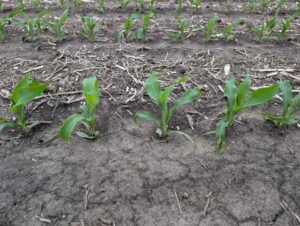
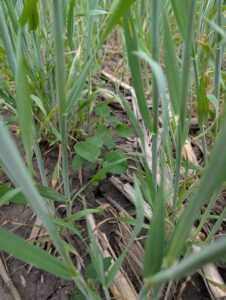
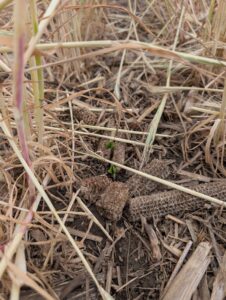
Doug Gucker – Local Food Systems and Small Farms Educator
Dewitt, Macon, and Piatt County
Soil Conditions: Mildly Wet (soil is wetter than normal, local vegetation is healthy)
Planting is over 90% completed in my 3-county area. The rains of the past week brought anywhere from nearly 3″ of rain in the southern portions to just over 1/2″ in the NE portion. Generally, the emerged crops look good, but areas of some fields are showing uneven emergence due to soil crusting. In an effort to get fields planted ahead of the May 15 rains, some fields were tilled when the soil was too wet, and they are now experiencing weed control problems due to incomplete control of emerged weeds.
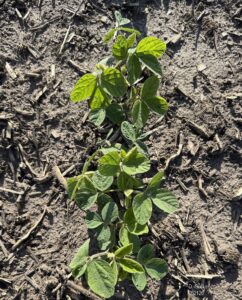
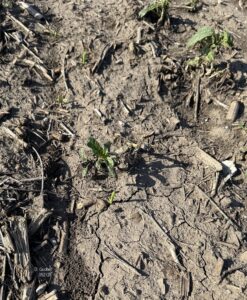
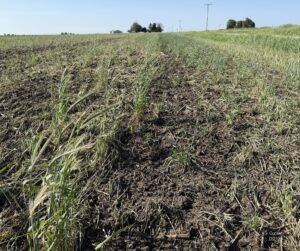
]]>
Agricultural Markets Weekly Synthesis
Throughout the week, the agricultural markets were heavily influenced by the USDA WASDE report, macroeconomic indicators, geopolitical trade developments, and the shifting positions of commodity funds. Early in the week, Curt Kimmel emphasized the significant influence of commodity funds, which held massive net-long positions, and noted that robust global demand was required to push new crop corn above $5 and soybeans above $12. The subsequent WASDE release yielded mixed reactions; Naomi Blohm observed that the corn data was largely unimpressive due to a nearly 2 billion bushel carryout, whereas soybean estimates unexpectedly reflected increased export and crush demand, dropping projected new crop ending stocks to roughly 310 million bushels. Greg Johnson highlighted a major mid-week rally in the wheat market, triggered by the USDA significantly lowering hard red winter wheat yields and accounting for substantial abandoned acres in western states. However, sentiment turned bearish late in the week following the Trump-Xi summit, which concluded without a new trade deal for soybeans. Matt Bennett noted this lack of a deal, combined with increased Brazilian production estimates from Conab, triggered a sharp sell-off across corn, wheat, and soybeans. Closing out the week, Mike Zuzolo framed the late-week downturn as a broad profit-taking correction by funds, warning that surging crude oil prices could pressure the Federal Reserve to raise interest rates and halt further commodity rallies, though he noted a positive takeaway from China renewing U.S. beef export licenses.
Agricultural Weather Weekly Synthesis
Meteorological reports this week tracked a transition from unseasonably cool conditions across North America to a warmer, highly volatile pattern marked by severe dryness and incoming storms. Early forecasts from Don Day indicated that lingering cold air over Canada would finally be displaced by warmer western air over the weekend, though he noted high uncertainty in the extended outlook due to atmospheric responses from a rapidly developing El Niño. Drew Lerner confirmed the impending heat wave, projecting temperatures in the 80s and 90s for the western Corn Belt, but cautioned that this heat, paired with high winds and low humidity, would accelerate desiccation in the already drought-stressed hard red winter wheat regions of the High Plains. The severity of the dryness was quantified mid-week by Mike Tannura, who reported near-record dry conditions for spring wheat in the Dakotas and Montana, while also forecasting a major cold front expected to deliver 1 to 2 inches of rain across a newly dried-out Corn Belt. By Friday, Eric Snodgrass illustrated the extreme impacts of the northwestern drought, detailing a massive dust storm in North Dakota where blowing dirt piled up like snowdrifts. He concluded by warning of severe weekend storms bringing over an inch of moisture eastward across the Midwest, even as 90% of Nebraska remained locked in severe to extreme drought conditions.
The Week’s News and Other Items
International Year of the Woman Farmer Commentary: Todd Gleason noted that 2026 was declared the International Year of the Woman Farmer by the United Nations. He questioned the Trump administration’s unexplained decision to deny the appointment of four women to the check-off funded United Soybean Board.
Phosphorus Loads & Streambanks: Soil scientist Andrew Margenot detailed research showing that natural streambank erosion accounts for roughly 30% of non-point phosphorus loading into waterways. He explained that tile drainage can either decrease or increase this stream flashiness and subsequent erosion, depending on the soil’s natural infiltration capacity.
Ragged Corn but a Good Start for IL Crops: Agronomist Giovani Preza Fontes reported that soybean and corn planting in Illinois progressed well ahead of the five-year average. However, he noted that extreme temperature fluctuations in April led to highly variable growing degree day accumulations, resulting in “ragged” or uneven emergence times across Illinois fields.
The Farm Bill, Beef Imports, Trump and Xi, E15 and SREs: Senator Charles Grassley expressed skepticism about passing a bipartisan farm bill in the Senate due to disagreements over SNAP anti-fraud reforms. Meanwhile, Senator Jerry Moran reported from Beijing that agricultural exports were a central focus ahead of the Trump-Xi meeting, while domestic federal officials advanced temporary measures to increase beef imports to stabilize consumer prices amid low U.S. cattle inventories. Additionally, a union survey revealed that 76% of USDA researchers affected by agency relocations to Kansas City indicated they would refuse to move.
A bipartisan group of lawmakers, including Representative Nikki Budzinski, held a press conference to advocate for permanent, year-round E15 fuel sales to replace the current reliance on temporary EPA waivers. The House subsequently passed the E15 legislation by a narrow 218 to 203 margin. The bill now moves to the Senate, where its passage is uncertain after being separated from the stalled farm bill.
farmdoc Projects October ARC/PLC Payments: University of Illinois agricultural economists projected the upcoming October ARC and PLC payments based on newly released county yields. They estimated national average payments of $58 per acre for corn, $29 per acre for soybeans, and $47 per acre for wheat.
USTR Posts the Board of Trade will facilitate trade with China: The Office of the U.S. Trade Representative is developing a government-to-government “Board of Trade” to manage bilateral commerce in non-sensitive goods, including agricultural products. The initiative is designed to facilitate a $30 billion managed trade agreement with China without demanding changes to Beijing’s state-directed economic model.
Trump Supports Chinese Farm Ownership and Thom Tillis Doesn’t: Senator Thom Tillis raised concerns regarding Chinese investments in U.S. farmland and meat processing facilities. He also noted that agriculture typically suffers immediate and disproportionate negative impacts during international trade skirmishes.
President Donald Trump voiced support for allowing Chinese nationals to purchase U.S. farmland, arguing that restricting it would cause farm prices to drop and hurt farmers. He also defended the presence of Chinese students in U.S. universities, stating that removing them would devastate the university system.
Editor’s note: This article was adapted from the week’s WILLAg.org radio broadcast transcripts, formatted for print with the assistance of Google’s generative AI tool, Gemini, and reviewed by Todd Gleason.
Commodity Week can be heard in the 2 o’clock hour central time on WILL AM580 or you may subscribe to it using the links in the player below. This week the panelists include Greg Johnson of TGM, Chip Nellinger from Blue Reef Agri-Marketing, and Brian Stark with The Andersons.
The Closing Market Report airs at 2:06 p.m. central daily on WILL AM580. It, too, is a podcast. Subscribe using the link in the player.
]]>by Trent Ford, State Climatologist
ISWS PRI University of Illinois
Spring weather extended yet another week with average temperatures from the low 50s in northern Illinois to low 60s in southern Illinois, between 3 and 8 degrees below normal. While most places stayed above freezing overnight this week, we did wake up to temperatures in the 30s and heavy frost, including lows of 33 degrees in Dixon and in Rockford. The cooler start to May is quite a contrast to what ended up being the warmest April on record statewide last month.
Before Friday morning, precipitation was a bit harder to come by this week. 7-day totals ending Friday morning ranged from virtually nothing in northeast Illinois to just over 1.5 inches along the I-70 corridor. Following an exceptionally wet April, the last few weeks have been quite a bit drier in much of the state. Much of northern Illinois has had a top 5 driest first half of May on record, including the driest start to May since 1958 in Rockford. The cooler, drier weather has helped dry out some fields and allowed planting progress to resume after very wet conditions in April.
Looking ahead, this upcoming weekend is not one to plan a lot of outdoor activities, at least those in which one prefers to stay dry. High temperatures will reach into the 80s and even low 90s in a few places in southern Illinois this weekend and early next week, before a cold front drops us back into the 60s and 70s by week’s end. Rain and thunderstorms are expected to be off and on the entire weekend, so if you plan on watching the Sox sweep the Cubs on the South Side, make sure to bring umbrellas and ponchos. 7-day precipitation forecasts show between 1 and 2 inches for the entire state, marking at least a temporary end to our dry stretch.
]]>Grundy County
Soil Conditions: Near Normal
A favorable week for field work in the region. Many corn and soy fields were planted, and operations continue in the area. Earlier planted corn appears to be emerging with a slight advantage to soy. This week we will be starting the aphid suction collection trap in Morris, part of the Suction Trap Network that will be monitored through October. This trapping program is led by Dr Doris Lagos-Kutz, Illinois Natural History Survey-Prairie Research Institute, generates data on aphids and other beneficial and pest insects across multiple states. (https://suctiontrapnetwork.org/ )
While corn and soy crops are waiting for consistently warm weather to expedite growth, several weed species that have flowered or grown rapidly are found in untreated or unworked fields. They include the yellow flowered winter annual Butterweed, and the early emerging summer annual giant ragweed.


Reagan Tibbs – Commercial Agriculture Educator
Logan County
Soil Conditions: Near Normal
Conditions have been mixed for fieldwork in Logan County over the last week. Sporadic rain showers have limited some field operations, but there are no signs of delay for most producers. There are still a good number of fields that need to be planted, with warmer temperatures over the coming days surely to provide the right conditions to get seeds in the ground. Corn and soybeans that have emerged appear healthy, with no obvious signs of frost or heavy rainfall damage.
Talon Becker – Commercial Agriculture Specialist
Vermillion County
Soil Conditions: Near Normal
Cooler than average temperatures have remained in the east central Illinois region. That, combined with the 4-6″ of rain much of the region has received over the past 30 days, continues to slow planting progress and early crop growth. In southern Vermilion County this week, soils were just drying up enough for field work and planting to resume. I saw a number of fields that had been tilled and/or planted in the past couple days, as well as several planters rolling down the roads and in fields during my Wednesday morning survey. About 10% of fields had emerged crop, with the most advanced fields of corn at V3-V4 and soybeans at VC-V1. In those fields, damage from the recent storms was visible on early-emerged leaves, but new growth is intact and looking healthy.


]]>
You can also read the article in Portuguese and Spanish
April ended with temperatures averaging 4 to 8 degrees above normal in Illinois, and despite several rainfall events across the state, planting progress continued to advance. Conditions have generally allowed for steady fieldwork, with USDA-NASS reporting 3.5 to 4.8 days suitable for fieldwork during each of the last four weeks, which has been enough to get a lot of planting done.
The first week of May, however, brought a shift toward cooler and wetter conditions. Temperatures ranged from 3 to 8 degrees below normal, with nighttime lows dropping into the 30s across parts of central and northern Illinois, including 27°F in Rockford and 32°F in Charleston. Rainfall varied across the state, from less than 0.1 inches in northwest Illinois to more than 2.5 inches in east-central regions, leaving standing water in some fields, including in parts of Champaign County.
Even with this recent slowdown, Illinois soybean is ahead of most of the Corn Belt, with 57% of the soybean crop planted by May 10, up 11 percentage points from the previous week. This is also well ahead of both last year (48%) and the five-year average (47% for 2021-2025). Corn planting has also progressed at a near-normal pace, with 54% planted by May 10, up 16 percentage points from last week.
As a result of early planting, soybean emergence reached 31% by May 10, compared to 18% for the five-year average, while corn emergence reached 30%, compared to the 23% for the five-year average. Temperatures have fluctuated considerably in recent weeks, however, with daytime highs ranging from the 40s to the 80s and nighttime lows from the 20s to the 50s. This variability meant uneven accumulation of growing degree days (GDD), which in turn resulted in a wide range in emergence timing, both within and across fields, from about one week to more than two weeks in some cases (Figure 1). Such variation is common under cool conditions, and is not necessarily a cause for concern, as long as the final emergence percentage is adequate and reasonably uniform. Under cooler temperatures, the emergence process simply takes longer, and that greatly increases the variation in emergence time; it may take four or five days from the first plants emerging to the last ones within a field. In contrast, when conditions are warm, and 15 or 20 GDDs accumulate per day, emergence may be completed within 24 to 48 hours. When GDD accumulation is in single digits, however, emergence can easily take 3 to 4 days. In other words, when temperatures are lower than normal, we can’t trust the emerge-within-48-hours-or-become-a-weed “rule” that some like to promote.
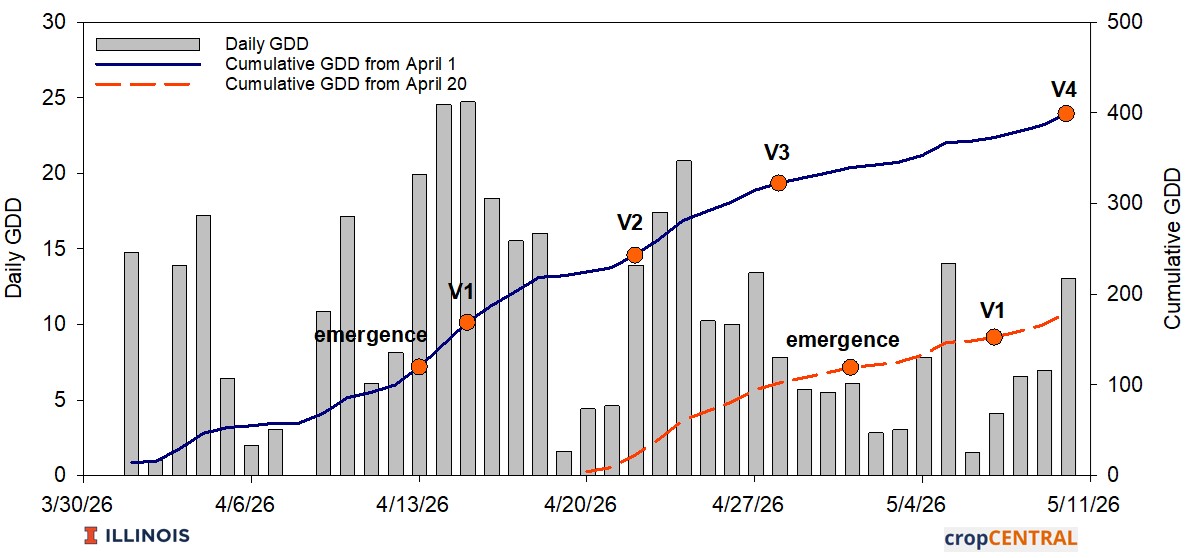
Corn plants that emerge later tend to remain behind their neighbors and contribute less to yield, largely because they are less competitive for light, water, and nutrients. These later-emerging plants do not normally end up as “weeds” as they will not reduce the yield of the surrounding plants; in fact, when conditions are favorable, the earlier-emerging (bigger) plants can partially compensate by producing larger ears. We also need to consider the cause of uneven emergence: if it is caused by factors such as seedling disease, soil crusting, waterlogging, or low seed vigor, the effects can last throughout the season and result in yield loss.
As planting continues, it’s worth keeping one key point in mind: planting date matters, but planting conditions matter just as much. We often talk about the benefits of early planting for maximizing yield, but those benefits depend on getting the crop established well. Planting into soils that are too wet or otherwise marginal can reduce stand, slow early growth, and limit yield potential. In many cases, waiting a few days for soils to become fit can lead to better results than planting earlier into less favorable conditions. Wet soils can lead to sidewall compaction, poor seed-to-soil contact, and restricted rooting, all of which can affect crop establishment. That’s why “fit soil conditions” should remain the priority, even as the calendar advances.
In the unlikely event that May turns out to be warmer and drier than normal (more like a typical June), this could set up a season with record planting and crop emergencies. While yield potential does begin to decline as planting moves later into May, we should be optimistic, and chances for a good crop remain high as long as planting can continue at a steady pace and is followed by more typical weather patterns. As we discussed in a previous article, both corn and soybean crops have benefited from a warm, relatively dry June over the past four years, which allowed for good root development, canopy growth, and stand establishment, followed by timely rainfall later in the season.
We’ve been running planting date studies at multiple sites in Illinois since 2007; a total of 45 trials between 2007 and 2025. One lesson we can take from this long-term dataset is that delayed planting into mid-May does not mean “game over” in terms of yield potential. Our data shows that corn planted by the end of April typically maximizes yield potential (Figure 2). By May 15, yields are reduced by about 7% (or 15 bushes/acre), and losses increase to about 12% (or 26 bushels/acre) by May 31. Yield losses become larger beyond that point, reaching 21% by June 8.
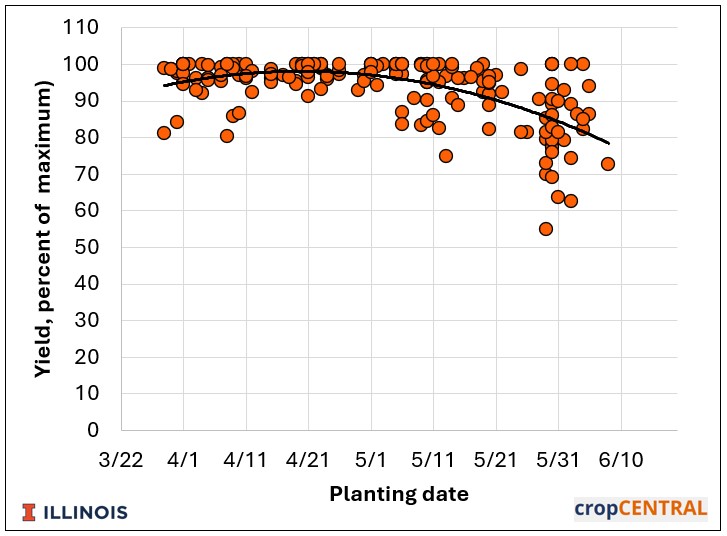
Overall, the 2026 planting season in Illinois is off to a strong start, with good progress and generally good early establishment. There have, however, been some reports of frost injury in early-planted fields. This included our planting date trial this year in Monmouth, where soybean planted on March 25 was at the VE stage when a freeze event occurred around April 20. In some other fields, this resulted in visible injury damage, particularly in low-lying areas. Since then, some stands have recovered, and there does not appear to have been very much replanting.
Our hope is that warmer temperatures in May will help both dry soils between rainfall events and promote rapid crop growth after emergence. As usual, weather conditions later in the season (especially rainfall during pollination) will play a major role in determining final yields in 2026.
]]>
Agricultural Markets Weekly Synthesis
Throughout the week, agricultural markets experienced significant volatility driven by fluctuating crude oil prices, geopolitical tensions, and the anticipation of upcoming governmental reports and international summits. Early in the week, Curt Kimmel reported that commodity funds aggressively bought contracts, pushing soybeans higher due to a risk premium returning to crude oil amidst Middle East tensions. This bullish momentum was echoed by Naomi Blohm, who highlighted that December corn reached a two-and-a-half-year high by closing above $5.00, while November soybeans hit major resistance at $12.00, prompting a surge in producer hedging and cash sales. By midweek, the trend briefly reversed; Greg Johnson noted a substantial $7 to $8 per barrel drop in crude oil prices—spurred by rumors of a US-Iran agreement—which subsequently pressured corn and beans lower. Despite the pullback, Johnson stressed that prices remained historically advantageous. Moving into the latter half of the week, Matt Bennett observed a stabilization as crude oil recovered off its lows and corn and soybean futures successfully tested and settled above their 50-day moving averages. Meanwhile, wheat futures traded lower due to improving European weather and less severe freeze damage than anticipated in the US. Wrapping up the week, Mike Zuzolo emphasized that dashed expectations for an immediate US-Iran peace deal reinvigorated the energy markets and heavily supported soybean oil. Across the board, all analysts closely monitored the upcoming mid-May summit between President Trump and President Xi, with traders heavily pricing in the expectation of significant Chinese agricultural purchases.
Agricultural Weather Weekly Synthesis
The weekly weather progression shifted from unseasonable cold and regional precipitation to forecasts of a widespread, much-needed warming trend. Early in the week, Mark Russo and Don Day detailed cold temperatures and a significant early-May snowstorm that brought highly beneficial, though localized, moisture to drought-stricken areas of eastern Colorado and western Kansas. Despite this storm, Day and Mike Tannura confirmed that severe, prolonged drought conditions persisted across the broader Plains, threatening the hard red winter wheat crop. Midweek forecasts brought concerns of winter kill; Drew Lerner warned of temperatures dropping into the 20s for headed wheat in Kansas and Colorado. Ultimately, Tannura reported that the coldest temperatures were largely confined to Colorado, sparing the majority of the crop in Kansas and Oklahoma from severe, widespread damage. Across the Corn Belt, Eric Snodgrass and Tannura highlighted a geographic divide: northwestern areas remained dry, allowing for rapid planting progress, while eastern and central regions, particularly Illinois, battled saturated soils, recurrent frost, and high winds that triggered dust storms. However, all meteorologists agreed that a major pattern shift was imminent, with Snodgrass and Tannura forecasting a strong resurgence of warm, dry air arriving by the weekend to elevate soil temperatures and accelerate remaining fieldwork across the Midwest and Plains. Internationally, Russo and Tannura tracked a beneficial stormy pattern improving soil moisture across Europe, Ukraine, and Russia , which stood in stark contrast to Brazil, where Lerner and Tannura noted the onset of a detrimental dry season stressing the critical northern Safrinha corn crop.
The Week’s News and Other Items from the Closing Market Report
Pesticide Resistant Alfalfa Weevils and Applied Research Results
Nick Seiter, University of Illinois Field Crops Entomologist discussed an increase in field failures when using pyrethroids to control alfalfa weevils. Because there are limited insecticide options for alfalfa, Seiter promoted a regional survey aimed at understanding application frequencies and resistance levels among Midwestern farmers. You may learn more and find a link to the survey in his article posted to the cropCentral website.
Expanding on the mention of the cropCentral report, Nick Seiter highlighted that the 2025 applied research results guide provides farmers with third-party evaluations of commercial products. A notable inclusion this year is a study on the extended diapause trait in northern corn rootworms, the first research of its kind in Illinois in several decades.
You will find more on field crop diseases and insect management in the University of Illinois 2025 Applied Research Results report which is available as a [PDF download](https://extension.illinois.edu/media/9106/download?inline) through the Crop Central newsletter.
Power, Politics, and Pushback on Data Centers
During the Tuesday, Wednesday, and Friday Closing Market Reports issues related to the siting of data-centers were taken up from the perspective of Google, County Boards, and residents.
The rapid expansion of hyperscale data centers has ignited a multifaceted debate encompassing economic utility, agricultural preservation, and community quality of life. Industry representatives defend the continued growth, arguing that these facilities provide systemic infrastructure benefits. Liz Schwab from Google’s data center team contends that large energy users distribute fixed grid costs, which can apply downward pressure on residential utility rates. Addressing environmental concerns, Schwab notes that Google utilizes treated water for cooling, adheres to strict noise ordinances, and has committed to replenishing 120% of its water consumption.
However, critics argue the current approach to siting these massive facilities relies on an inherently flawed and localized regulatory process. Jonathan Coppess characterizes the pressure placed on local county boards to zone large-scale data centers as an unfair burden. He points out that situating these immense facilities on agricultural land causes permanent soil degradation, and he advocates for state or federal intervention to regulate the unchecked consumption of land, water, and electricity.
This systemic tension is highly visible at the community level, where residents prioritize local stability over industrial expansion. In Logan County, Illinois, resident Allison Isley has voiced strong opposition to a proposed 500-megawatt Hut 8 data center near Latham. Framing the dispute as a fundamental quality of life issue, Isley cites severe concerns regarding the facility’s immense power demands, the anticipated noise from generators, and the untested long-term environmental impacts. Furthermore, she highlights the social friction inherent in these developments, pointing to perceived condescension from project developers toward the local community and its desire to maintain a quieter, rural lifestyle.
Pope Leo’s Food Waste Petition and Prayer
Closing Market Report host Todd Gleason reflected on a petition from Pope Leo XIV praying for large producers and small consumers to commit to avoiding food waste while millions suffer from hunger. Gleason connected the pontiff’s message to the ADM Institute for the Prevention of Post-Harvest Loss at the University of Illinois, which seeks to reduce the 20% global waste of grain and oilseed production.
USDA, the United Soybean Board, Women, and SNAP
The Trump administration dismissed four women and one man from the United Soybean Board without providing an explanation, overriding the appeals of state-level soybean boards. Additionally, the USDA published a final rule for the SNAP program that more than doubles the stocking requirements for authorized retailers, forcing them to carry a wider variety of perishable and whole foods to close loopholes previously used to stock snack foods.
Editor’s note: This article was adapted from the week’s WILLAg.org radio broadcast transcripts, formatted for print with the assistance of Google’s generative AI tool, Gemini, and reviewed by Todd Gleason.
Commodity Week can be heard in the 2 o’clock hour central time on WILL AM580 or you may subscribe to it using the links in the player below. This week the panelists include Garrett Toay of AgTraderTalk.com and Mike Zuzolo at GlobalCommResearch.com.
The Closing Market Report airs at 2:06 p.m. central daily on WILL AM580. It, too, is a podcast. Subscribe using the link in the player.
]]>The tour will provide ample opportunity to look at research plots and interact with weed science faculty, staff, and graduate students. Participants can compare their favorite corn and soybean herbicide programs to other commercial programs and get an early look at a few new products that soon will be on the market. The tour will conclude around noon with a box lunch.
Cost for the weed science tour is $10, which will help defray the cost of the field tour book, refreshments and box lunch. We will apply for 2 hours of CCA credit under the IPM category. If you have any questions about the weed science tour, please feel free to contact Caleb Wepprecht (815-671-1050, calebbw@illinois.edu), Logan Miller (815-419-8847, loganrm2@illinois.edu), or Aaron Hager (217-621-8963, hager@illinois.edu).
]]>by Trent Ford, State Climatologist
ISWS PRI University of Illinois
Average temperatures in this first full week of May were actually a little cool, ranging from the high 40s in northern Illinois to the mid-50s in southern Illinois, between 3 and 8 degrees below normal. This followed an April that was a top five warmest on record statewide and felt like a bit of a bait and switch after a taste of summer-like weather last month. Nighttime temperatures regularly dipped into the 30s, and dropped below freezing in parts of northern and central Illinois, including 27 degrees in Rockford and 32 in Charleston.
We had a bit of a quieter weather week, though, with 7-day precipitation totals ranging from less than a tenth of an inch in northwest Illinois to just over 2.5 inches in east-central Illinois. The heavier rain along and just north of the I-70 corridor continued a wetter streak that has kept soils quite wet. Standing water can be seen in many fields from Champaign to Effingham, while soil temperatures have regressed a bit into the 50s and 60s due to the recent cool down.
Despite the wetter topsoils, very strong winds created dangerous blowing dust conditions in parts of central Illinois earlier this week. The National Weather Service issued dust storm warnings for a fourth consecutive year as recently worked soils were picked up by strong winds ahead of thunderstorms.
Looking ahead, temperatures will bounce around the 60s and 70s next week, ahead of what looks like a potential warm up in mid-May. The week 2 outlooks from the Climate Prediction Center show increasing chances of above average temperatures for the third full week of May, and outlooks hang on to that warmer trend through the last week of the month, too. Forecasted precipitation totals are mostly less than a half an inch for this next week, with no strong signals of drier or wetter patterns for the latter half of May. So, even though the first part of the month hasn’t been ideal for planting or strong emergence in many places, there may be better fieldwork weather on the horizon.
]]>Stephenson County
Soil Conditions: Mildly Wet (soil is wetter than normal, local vegetation is healthy)
Field work and planting have been ongoing once fields dried enough following the significant rainfall events experienced in the area in mid-April. Although two weeks ago we experienced a number of uncharacteristically warm days, the weather this week continues to vary as some days have been relatively warm, but many nights have been relatively cool, with some even falling below freezing. Those that have recently planted may see slower emergence due to the consistently colder nighttime temperatures. However, the next week should bring temperate weather to facilitate further planting progress and good conditions for crop emergence across the area.
Steve Brand– Commercial Agriculture Specialist
DeKalb County
Soil Condition: Moderately Wet (soil is damp, standing water may be present in low areas, water bodies are full)
Hello and welcome back to another year of crop scouting reports! For those who don’t know me, I am Steve Brand, a commercial agronomy specialist covering the northern region of Illinois through university of Illinois Extension. To start our crop scouting journey this year, we have had quite a difference from the start of 2025 in that we are not currently in a drought! The problem with that is to get this this point we have had excessive rain across all of northern Illinois through March and April, with some cooler temperatures to boot. Fields are currently still wet, with little corn and soybeans in the ground for the end of the first week in May.
Driving through Lake, McHenry and Dekalb counties this week showed little field activity, with few fields planted overall. Recent storms followed by cool and frosty nights have led to very poor drying conditions. As we enter the weekend and into next week, I expect fields to dry out and for the big planting push for corn and beans. A bit further south along the I-80 corridor, I saw fields being active field tillage, pre-emergent herbicide applications, and general field maintenance in preparation for planting, so they are a bit further ahead of the far northern reaches of the state.
With the large amount of rain accumulated in April, we also saw plenty of localized flooding along the Fox and Rock rivers, with areas seeing 2-3 foot water level increases. Those levels are close to returning to normal as I write this. April obviously brought plenty of severe weather to induce the flooding. Illinois from January 1st through April 30th has experienced 119 tornadoes across the state, which is more than double the number of the next closest state. I for one, am hopeful these weather patterns have past and we can move forward into the summer with some calmer weather.
I’ll see you all next week with another report and I am excited to see fields planted through the weekend and really get this season underway.
Russ Higgins – Commercial Agriculture Educator
Grundy County
Soil Conditions: Mildly Wet (soil is wetter than normal, local vegetation is healthy)
I’m looking forward to another growing season and crop reporting in Northeast Illinois. April and May precipitation has slowed planting progress in comparison to other regions of Illinois. I’m estimating almost as much seed is still in the bag when compared to seed in the ground. On suitable days for planting, reports received suggest local farmers actively planted both soy and corn. The practice of planting soy ahead of corn acres has been adopted by many. Whether corn or soy, I was impressed by the acreage planted in a limited time frame. Despite planting date, low accumulations of GDD’s have slowed crop emergence. With limited emerged crops we will highlight insect pests found in alfalfa. While sweeping alfalfa we netted alfalfa weevil larvae, aphids and bean leaf beetle. We will continue to monitor leaf feeding in the alfalfa crop to determine if a management threshold is reached.
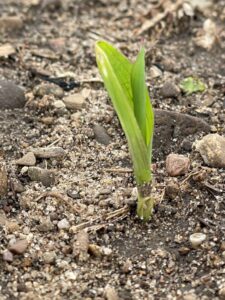
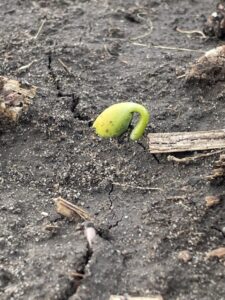
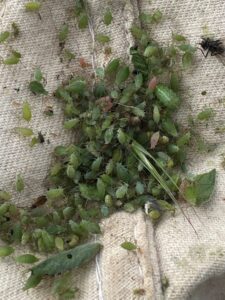
Reagan Tibbs – Commercial Agriculture Educator
Logan County
Soil Conditions: Mildly Wet (soil is wetter than normal, local vegetation is healthy)
Crop growth across Logan County remains steady, despite heavy rains and cold nighttime temperatures. Most fields that have been planted have begun to emerge, with a few fields still yet to be planted. There do not seem to be many spots that will require replanting due to washouts from heavy rains in late April.
Doug Gucker – Local Food Systems and Small Farms Educator
Dewitt, Macon, and Piatt County
Soil Conditions: Mildly Wet (soil is wetter than normal, local vegetation is healthy)
In my three county area, we are over two thirds planted but that varies from area to area depending on rainfall amounts and field drainage. All plants are showing leaf damage from one or a combination of high winds, blowing soil and severe storms. This leaf damage can be seen in the photos. With the high winds, we have experienced dust storms in select locations across the three counties.
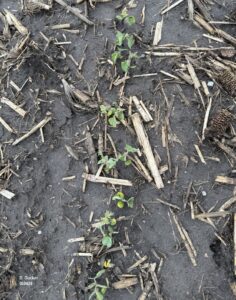
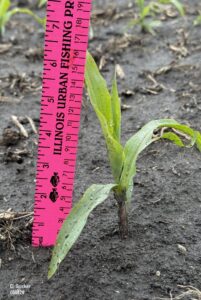
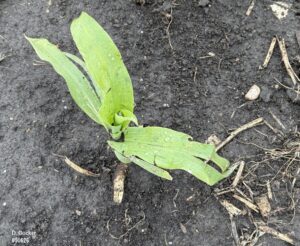
Talon Becker – Commercial Agriculture Specialist
Champaign County
Soil Conditions: Mildly Wet (soil is wetter than normal, local vegetation is healthy)
Planters were rolling over the weekend in parts of Champaign County, but rain on Monday into Tuesday has kept everyone out of the field since. Most fields I passed during my survey of the northern half of the county had been planted, but maybe only 10-15% had crop emerged. Cooler weather and relatively wet soils over the past couple weeks have made the crop slow to emerge (>2 weeks after planting) in many fields. Most soybeans are just starting to get out of the ground, while a few corn fields I saw were a bit further along, near the V2 stage. The one wheat field I found was still in the stem elongation phase, with the flag leaf visible on some of the further along plants.
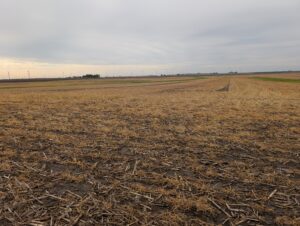
Dane Hunter – Commercial Agricultural Specialist
Marion County
Soil Conditions: Near Normal
We are wet now due to recent storms but had been pretty dry and just now getting back closer to normal soil moisture and water tables.
Early to mid April saw a lot of fieldwork and the earliest corn already ankle high. Overall, still less than 25% of the crop in the ground but that’s still a lot more progress than we saw a year ago. Now the forecast looks like we are going to be wet for the next couple of weeks but at least most of the early planted crop has emerged despite the cold soils.
The wheat is done flowering and looking good after the dry winter and spring.
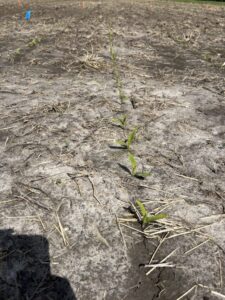
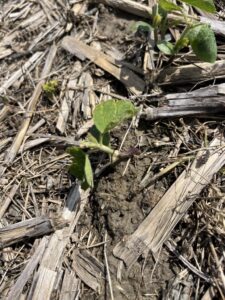
]]>

Each year, we conduct field evaluations, surveys, and other projects that have direct implications for pest management decisions made by Illinois farmers. For example, we conduct third-party evaluations of many of the insecticides and biotech traits available for corn rootworm control every season. Our annual report summarizes these findings for farmers, crop advisors, and others who have a stake in control decision-making. The 2025 report (along with previous reports dating back to 2018) can be found at the following link: https://go.illinois.edu/pestmanagementresearchreport. Within the 2025 report, you can find the following:
- Results of the statewide insect pest survey in corn and soybean, conducted annually since 2013 in July and August throughout the nine Illinois Crop Reporting Districts
- A summary of agronomic crop samples submitted to the University of Illinois Plant Clinic
- Small-plot evaluations of fungicide and insecticide efficacy for controlling tar spot, northern corn leaf blight, southern rust, red crown rot, and corn rootworm
- The first published report of the frequency of extended diapause in Illinois populations of northern corn rootworm in decades
- Results of bioassays documenting the ongoing development of resistance to Bt traits in western corn rootworm populations
- Small-plot and on-farm trials evaluating the impact of seed- and foliar-applied insecticides in soybean on pest populations and yield
Consider thumbing through this report as your schedule permits for valuable insights on control performance and insect and disease management in Illinois. Please do not hesitate to reach out if you have any questions about our results.
Nick Seiter – Field Crop Entomologist | nseiter@illinois.edu
]]>Global Tensions, Speculative Buying, and Weather Concerns Drive Ag Markets
The agricultural commodity markets were heavily influenced by geopolitical tensions, speculative fund buying, and domestic weather concerns. The ongoing conflict in the Middle East and its impact on energy prices and fertilizer availability provided underlying support for feed grains. Crude oil prices climbing over $100 a barrel made ethanol more attractive, further supporting corn, while markets also monitored the potential for an upcoming meeting between the US and Chinese presidents that could impact agricultural trade. In South America, a historic drought in Brazil’s Center-West region raised concerns over the safrinha corn crop, adding a bullish driver. Consequently, corn futures climbed a “wall of worry,” stringing together eight consecutive higher sessions to push the December contract toward the $5.00 mark, which Greg Johnson noted sparked some new crop sales from farmers, though many are holding out for even higher prices. Both Matt Bennett and Mike Zuzolo pointed to slow planting progress and energy market strength as key factors keeping corn prices supported.
Meanwhile, soybean futures largely consolidated in a sideways, range-bound pattern near contract highs around $11.70 to $11.80. Curt Kimmel highlighted an early-week rally triggered by the European Union rejecting Argentine soybean meal cargoes due to the presence of the HB4 drought-resistant gene, which caused an unwinding of the meal-oil spread and boosted the US soybean complex . Naomi Blohm observed that rapid US planting progress initially kept prices somewhat contained, though cash sales have been active. Conversely, wheat futures experienced a rally to two-year highs, driven by severe drought and irreversible damage in the hard red winter wheat belt, with the national crop rated just 30% good to excellent. Mike Zuzolo warned that the hard red winter wheat crop might face a 2012-type scenario, with abandonment potentially reaching 10% to 20% in the driest areas of Kansas and Colorado. However, Naomi Blohm cautioned that US wheat is pricing itself out of the global market, carrying a $1.60 premium at the Gulf compared to European and Russian supplies.
Global Agricultural Weather: Severe Storms and Shifting Patterns in the US Alongside South American Dryness
The week’s agricultural weather began with a potent storm system crossing the Corn Belt, bringing heavy rain, high winds, hail, and tornadoes, particularly in Illinois . Following this, Mark Russo and Mike Tannura noted a subsequent transition toward a somewhat normal, though cooler, spring pattern for the Midwest. Drew Lerner and Eric Snodgrass highlighted a massive atmospheric ridge in the West that pushed a trough over the Great Lakes, bringing multiple chances for unseasonably cold air and frost risks to regions north, east, and west of Illinois into early May . Don Day indicated a pattern shift that will eventually bring much-needed moisture to the Delta and Southeast while drying out the upper Midwest, with warmer conditions expected to return consistently after Mother’s Day.
In terms of crop impact, the cooler, wetter conditions in the southeastern Corn Belt stalled planting progress and slowed crop emergence, whereas the incoming dry weather across the northwestern Corn Belt is expected to vastly improve planting conditions. In the US Plains, the hard red winter wheat crop remains in critical condition due to severe, prolonged drought; while some light rain reached parts of Colorado and Kansas, meteorologists agreed it was insufficient to reverse the yield damage already inflicted during the crop’s crucial growth window . Mike Tannura added that dryness is also becoming a major concern for the northern wheat crop in South Dakota and Montana. In South America, the monsoon season has ended early in Brazil’s Cerrado, leaving the safrinha (second-crop) corn to finish under increasingly dry conditions. While topsoil moisture is severely depleted in states like Paraná and Mato Grosso, Drew Lerner and Mike Tannura noted that this dry down is somewhat typical for May, though the lack of late-season rain could still threaten overall yields and test weights .
Industry Developments: Surging Input Costs, Biofuel Mandates, Legislative Updates, and Farm Financials
Beyond market and weather movements, several critical news items impacted the agricultural sector. Geopolitical conflicts in the Middle East have prevented nitrogen prices from easing, adding $30 to $55 an acre in costs for the 2026 corn crop as urea prices surged 41% and anhydrous ammonia jumped more than 30% from pre-conflict levels. In the biofuels sector, federal rules regarding Renewable Volume Obligations (RVOs) are expected to push US biomass-based diesel capacity to its absolute limit; Todd Hubbs explained that the mandate requires massive generation of D4 RINs to backfill a persistent shortfall in D6 (corn ethanol) RIN generation, which is bullish for soybean oil and other feedstock usage. In Kansas, Dan O’Brien reported that some central wheat fields are actively being killed to make way for spring-seeded crops, though he estimated the final abandonment rate may be lower than the market’s 23% expectation due to higher prices making low-yielding harvests slightly more tenable .
On the policy front, the US House of Representatives passed a new farm bill that bolsters export markets but dropped legal protections for pesticide companies and year-round E15 provisions, which Jonathan Coppess noted faces an uphill battle in the Senate. Looking at farm financials, Brad Zwilling reported that the average debt-to-asset ratio for Illinois farms remains stable at 18%, but farm debt per acre has soared to nearly $900, driving interest expenses up to $50 an acre, forcing many farms to rely on off-farm income to cover family living expenses and taxes.
Finally, during the Commodity Week panel, Arlan Suderman, Ellen Dearden, and Logan Kimmel highlighted that investment funds are maintaining massive long positions in the grain markets, and they advised producers to take advantage of the current seasonal market rally to execute new crop pricing, particularly given the elevated floor provided by inflation and global supply chain disruptions.
Editor’s note: This article was adapted from the week’s WILLAg.org radio broadcast transcripts, formatted for print with the assistance of Google’s generative AI tool, Gemini, and reviewed by Todd Gleason.
—
Commodity Week can be heard in the 2 o’clock hour central time on WILL AM580 or you may subscribe to it using the links in the player below. This week the panelists include Ellen Dearden of AgReview, Logan Kimmel from Roach Ag, and Arlan Suderman with StoneX.
The Closing Market Report airs at 2:06 p.m. central daily on WILL AM580. It, too, is a podcast. Subscribe using the link in the player.
]]>by Trent Ford, State Climatologist
ISWS PRI University of Illinois
Well, the last week of April was much like the month as a whole. Average temperature ranged from the mid-50s in northern Illinois to high 60s in southern Illinois, between 5 and 10 degrees above average. The month as a whole ended between 4 and 8 degrees above average, likely making April a top 5 warmest on record statewide. With that said, clear skies on a few nights allowed early morning temperatures to regularly dip into the 30s this week, including lows of 31 in Waukegan and 34 in Normal.
We also had yet another active severe weather week, with several tornadoes, hail events, and widespread strong winds. Folks in Champaign-Urbana were greeted with tornado warnings on Monday morning and Monday night, with significant tornado and wind damage in parts of Macon, DeWitt, Piatt, and Champaign Counties this week. The official state tornado count isn’t updated with this week’s events; however, Illinois has already had well over 100 tornadoes. For perspective, the state has averaged around 60 tornadoes per year over the past 60 years. Unsurprisingly, Illinois leads the nation in tornado reports this year with 119. The next closest state is Mississippi with 53, so yeah, it’s been a minute.
The storms brought significant rainfall across the state again. 7-day totals ranged from around a half an inch in far northern Illinois to over 4 inches in south-central Illinois. April was 1 to 8 inches wetter than average in most places north of Interstate 70, and 1 to 4 inches drier than average in far southern Illinois. Last month was likely a top 10 wettest April on record statewide, and the wettest since 2013.
Looking ahead, the first week of May will actually be a bit milder, if not cooler. High temperatures will struggle to make it out of the 60s statewide next week, with nighttime lows in the 30s and 40s. The 7-day rainfall forecast would give us what we need, with mostly less than a quarter of an inch in water-logged northern Illinois, and around an inch to 1.5 inches in southern Illinois, where rain is needed to really jumpstart beans and pasture.
]]>Geopolitical Tensions and High Input Costs Dictate Choppy Grain Markets
The agricultural commodity markets experienced sideways, choppy trading heavily dictated by Middle East geopolitical tensions. Market analysts Mike Zuzolo, Matt Bennett, Curt Kimmel, Naomi Blohm, and Greg Johnson noted that fluctuating war premiums drove crude oil prices higher, which subsequently pulled biofuels and soybean oil to new highs while providing underlying support to the broader grain complex. While rapid U.S. corn and soybean planting progress kept domestic fundamentals somewhat bearish, wheat futures saw firmness due to severe drought conditions threatening the hard red winter wheat crop in the western belt. Across the board, analysts expressed concern that high energy prices and global supply chain disruptions through the Strait of Hormuz could keep fertilizer inputs expensive, potentially prompting an increase in U.S. soybean acres and threatening future crop profitability.
Weather Extremes Shift from Rapid Planting to Cold Surges and Deep Droughts
The week’s agricultural weather forecasts tracked a distinct shift from highly favorable, warm planting conditions to a much cooler, active, and disruptive pattern across the Corn Belt. Meteorologists Eric Snodgrass, Mike Tannura, Drew Lerner, Don Day, and Mark Russo reported that a deep storm system and a building cold surge from Canada will bring significant drops in temperatures, multiple rain shields, and severe thunderstorms to the nation’s midsection by late April and early May. This incoming weather is expected to slow down the previously rapid field progress. Meteorologists highlighted ongoing severe weather and tornado activity in Illinois and Missouri, alongside a severe persistent drought in the Southeast that requires 15 to 25 inches of rain to break. In South America, an early end to the monsoon season in Brazil’s Cerrado threatens the finish of their late-planted safrinha corn.
Local and National Agricultural Policy Developments
Beyond market and weather dynamics, significant developments occurred in local land-use and national agricultural policy. At the county level, officials in Champaign and Logan counties grappled with the rapid influx of massive data center proposals. The Champaign County Board approved a 12-month moratorium on new data centers to evaluate local aquifer demands and establish comprehensive zoning standards, mirroring debates in Logan County over a proposed facility near Latham. Nationally, congressional leaders signaled renewed momentum on the delayed Farm Bill, with lawmakers prioritizing agricultural labor reform to address specialty crop worker shortages. A review of USDA’s TOTAL agricultural land survey, indicates 340 million acres of U.S. agricultural land are rented out, and highlights a high concentration of absentee landlords in the Midwest. Other national updates included Senator Rand Paul’s legislative push to allow states to set their own industrial hemp rules to protect growers, intensifying debates over year-round E15 biofuel access, and the USDA’s updated Plant Hardiness Zone Map showing warming trends across the country.
Editor’s note: This article was adapted from the week’s WILLAg.org radio broadcast transcripts, formatted for print with the assistance of Google’s generative AI tool, Gemini, and reviewed by Todd Gleason.
Commodity Week can be heard in the 2 o’clock hour central time on WILL AM580 or you may subscribe to it using the links in the player below. This week the panelists include Greg Johnson from TGM, Dave Chatterton of Strategic Farm Marketing, and Curt Kimmel of AgMarket.net.
The Closing Market Report airs at 2:06 p.m. central daily on WILL AM580. It, too, is a podcast. Subscribe using the link in the player.
]]>by Trent Ford, State Climatologist
ISWS PRI University of Illinois
Another very spring-like week across the state, with average temperatures ranging from the mid-50s in northern Illinois to the low 60s in southern Illinois, between 2 and 5 degrees above average. April to date has been 5 to 8 degrees warmer than average, and a top 10 warmest April on record statewide. Despite the warmth, nighttime temperatures did dip below freezing in northern and central Illinois a couple of times this week, including lows of 24 degrees in Elgin and 25 in Rockford. For context, the average last spring freeze date is early
April in southern Illinois, mid-April in central Illinois, and right about now in northern Illinois. So, that means that half of the years in the last few decades have had a freeze after this date in places north of I-80.
We had another very active weather week, with multiple rounds of storms and heavy rain. 7-day precipitation totals ranged from less than a quarter of an inch in southeast Illinois to just over 3 inches in parts of northern and western Illinois. Much of northern Illinois and southern Wisconsin has received more than 10 inches of precipitation since the start of March, making it the wettest start to spring on record throughout that region. The result has been widespread significant flooding on mainstream rivers including the Fox and Des Plaines. The Fox River at Algonquin is expected to crest on Friday or Saturday at major flood stage, the highest crest since the historic floods of 2017. While flooding has been less of an issue in central Illinois, severe weather made its imprint this week. A major tornado outbreak across the state last Friday night produced dozens of twisters, including two damaging tornadoes in the Bloomington-Normal metro area. Illinois’ preliminary tornado count for this year is already around 100, making 2026 the third consecutive year toping the century mark for tornadoes. Prior to 2024, only one year on record had 100 tornadoes, making this an unprecedented period of severe weather activity.
Looking ahead, we will have another very active weather week. Multiple rounds of storms are expected, including significant risk of severe weather on Monday, especially for southern and central Illinois. 7-day precipitation totals range from over 2 inches in far southern Illinois to around 1 inch in northern Illinois. The rain could be beneficial to parts of southern Illinois that have gone too long without substantial rain; however, most folks in northern Illinois would prefer not to see rain again until after Memorial Day. Interestingly, outlooks for the first week of May show best chances of below average temperatures statewide. So, again, be careful planting vulnerable plants and keep your eye on the forecasted lows in case we approach that freeze mark again.
]]>Agricultural markets this week experienced significant volatility driven by geopolitical tensions in the Middle East, high input costs, and shifting weather patterns. A primary concern discussed throughout the week is the likelihood of farmers shifting acres from corn to soybeans due to the high costs and uncertain availability of nitrogen fertilizers. Early in the week,…]]>
Geopolitical Shocks and the Nitrogen Price Squeeze
Agricultural markets this week experienced significant volatility driven by geopolitical tensions in the Middle East, high input costs, and shifting weather patterns. A primary concern discussed throughout the week is the likelihood of farmers shifting acres from corn to soybeans due to the high costs and uncertain availability of nitrogen fertilizers. Early in the week, Curt Kimmel observed that unconfirmed rumors about U.S. and Iran blockades impacted the markets, causing a downside price reversal in soybeans while corn and wheat moved higher on spread unwinding. Naomi Blohm added Tuesday that U.S. soybean planting is outpacing corn in some regions, a trend potentially linked to these elevated fertilizer costs. She also noted that a temporary removal of war premiums—following news of potential U.S.-Iran talks—caused crude oil prices to drop, which in turn weighed on corn and soybean futures. Greg Johnson pointed out that although corn broke a four-week losing streak, prices remain stuck in the middle of their trading range, prompting farmers to hold onto old crop inventories. He also emphasized that while domestic soybean crush is strong, export demand must increase to maintain market balance. Later in the week, Matt Bennett warned that the corn market is consolidating as farmers focus on planting, but extreme fertilizer prices—with anhydrous ammonia running between $1,100 and $1,200—combined with persistent wet weather in the north, could lead to a substantial loss of corn acres by June. Finally, Mike Zuzolo highlighted pressures in the livestock sector, explaining that falling energy prices and high retail beef costs pose a significant threat to summer grilling demand ahead of the Cattle on Feed report (released 3pm central Friday). However, Zuzolo remains optimistic that grains are building a solid base, supported by weather threats and a weakening U.S. dollar.
Hydrologic Whiplash: The Wet East and Dry West Divide
The dominant meteorological narrative this week is a stalled “wet east, dry west” pattern that is simultaneously stressing winter wheat crops and delaying Corn Belt planting. Mark Russo established early on that the western Hard Red Winter Wheat regions—including Kansas, Colorado, Texas, and Oklahoma—have missed out on meaningful precipitation, while the northern Midwest has faced wet conditions that threaten to slow fieldwork. Russo also reported that rain is slowing Argentina’s harvest, whereas Brazil’s safrinha corn areas are turning drier. Don Day confirmed that a stuck pipeline of moisture from Texas to the Great Lakes is bringing significant rain to Iowa, Wisconsin, Michigan, Illinois, Indiana, and Ohio. He urged patience for the High Plains, noting that their primary wet season traditionally does not arrive until late May and June. Drew Lerner highlighted extreme hydrologic whiplash in these High Plains, where the winter wheat crop endured temperatures in the 80s and 90s before facing an impending hard freeze with temperatures expected to drop into the 20s. Lerner also noted that Europe and the Black Sea region are currently experiencing favorable spring planting conditions. Mike Tannura quantified the severity of the western drought, stating that 41% of the Hard Red Winter Wheat crop received less than a quarter of its normal rainfall over the past 30 days. Tannura additionally pointed out a sharp divide in the Soft Red Winter Wheat belt, contrasting historic wetness in Michigan with drought conditions in the Mid-South and Southeast. Closing out the week, Eric Snodgrass attributed the Midwest’s severe weather and anomalous precipitation patterns to an expanding Bermuda High and a developing El Niño. Snodgrass warned of an incoming cold front that will bring frost risks to the Midwest. Looking forward, he noted that while summer weather models remain mixed, historical analogs for strong El Niño years have not always resulted in disastrous crop yields for the region.
Biofuel Policy Push: SAF and the Drive for Year-Round E15
This week’s agricultural news highlighted significant policy and market development efforts surrounding biofuels. Lorrie Boyer reported on the Sustainable Aviation Fuel (SAF) Coalition, which is focusing on federal advocacy to promote American feedstocks. Alison Graab and Tom Michels emphasized that these efforts aim to secure the U.S. position as a leader in SAF production, building a resilient market that utilizes existing infrastructure. Additionally, there is a renewed political push for year-round E15 gasoline. Senate Majority Leader John Thune and Senator Charles Grassley are framing the approval of E15 as a national security issue, linking the need for domestic fuel directly to the ongoing Iran war and the rising costs of inputs like urea and diesel. Troy Braydencamp of the Renewable Fuels Association argued that approving E15 would immediately alleviate inflation at the pump for motorists while providing critical new income streams for farmers who are facing another year of negative margins.
*Editor’s note: This article was adapted from the WILLAg.org radio broadcast transcripts for the week and formatted for print with the assistance of Google’s generative AI tool Gemini and has been reviewed by Todd Gleason.*
Commodity Week can be heard in the 2 o’clock hour central time on WILL AM580 or you may subscribe to it using the links in the player below. This week the panelists include Naomi Blohm with TotalFarmMarketing.com, Greg Johnson of TotalGrainMarketing.com, and AgMarket.net’s Jim McCormick.
The Closing Market Report airs at 2:06 p.m. central daily on WILL AM580. It, too, is a podcast. Subscribe using the link in the player.
]]>by Trent Ford, State Climatologist
ISWS PRI University of Illinois
Our warm spring continued this week, as average temperatures ranged from the high 50s in northern Illinois to the mid-60s in southern Illinois, 10 to 15 degrees above normal. The first half of April has been extremely warm, in fact the second warmest start to April on record in Peoria, Springfield, and St. Louis. Our recent warmth has continued a longer trend from March, making this year the warmest start to spring since 2012 statewide. However, as warm as this season has been so far, it is still a full 4 degrees cooler than March and April 2012, illustrating just how warm that year was.
Precipitation this week was again mostly contained to the northern half of the state. 7-day totals ranged from virtually nothing in south-central Illinois to nearly 5 inches in far northern Illinois. The continued wet pattern in the northern part of the state, along with extremely heavy rain on snow in Wisconsin caused several streams to rise above flood stage, including moderate flooding on the Fox and Des Plaines Rivers. The first half of spring has been the wettest on record in Chicago with over 10 inches of precipitation since March 1st. For context, the state’s largest city typically gets around 10 inches of precipitation for the entire spring season. In contrast, southern Illinois remained dry for yet another week, adding to significant rainfall deficits this season. Most of the southern half of the state has been 2 to 5 inches drier than normal since mid-March, which has made for good topsoil conditions for planting, but less so for good flow in streams. The unusual heat in recent weeks has further taxed soil moisture, which could become a concern if the area doesn’t get wetter before the start of real summer.
Looking ahead, temperatures will drop following a cold front early this weekend, and stick around in the 50s and 60s this weekend before steadily increasing next week. Most of the state is expected to pick up at least around an inch of rain over the next few days, with drier conditions toward the end of next week. Farther out, there is increasing confidence on a bit of a cooldown in the final week of April. While that may bring a risk of frost, it remains unlikely we’ll see temperatures approach or dip below freezing. Still, it’s a good idea to hold off on the sensitive garden plants until we get into May.
]]>You can also read the article in Portuguese and Spanish
March was wetter than normal across much of Illinois, with statewide precipitation averaging 4.85 inches, 1.91 inches above normal. The wet trend continued into the first two weeks of April, particularly in northern Illinois, which has received between 3 and 5 inches of rainfall since April 1. As a result, field activity has been somewhat limited, with NASS reporting 2.1 and 4.2 days suitable for fieldwork for the weeks ending April 5 and April 12, respectively.
March also ended up about 6°F warmer than normal statewide, and above-normal temperatures continued through the first half of April. Despite recent rainfall providing some drought relief, approximately 60% of Illinois remains classified as abnormally dry according to the latest U.S. Drought Monitor map (April 7). Looking ahead, the short-term forecast continues to favor warm conditions but also calls for frequent rainfall, so we expect planting progress to slow down in the coming days.
Have a plan for timely cover crop termination
Above-normal temperatures in February promoted early greenup of wheat and cover crops, and cereal rye grown has been greater than in the past couple of years, especially in fields planted between late September and early October. Figure 1 shows cereal rye and triticale stands from different fields across the state. The cereal rye shown from Champaign was planted into corn stalks on October 24, 2024, at a seeding rate of 45 lb/acre, and most plants are currently about 8-10 inches tall. Cereal rye is a cool-season crop and will grow rapidly under the warm conditions forecast for this week. As a result, some consideration should be given to the timing of termination before the cover crop becomes excessively tall, particularly if wet conditions persist into next week, which could delay termination. Terminating the cereal rye at 6 to 12 inches tall generally provides enough biomass for erosion control, weed suppression, and keeping nutrients (especially N) in the field. Many growers can successfully plant soybean into terminated cereal rye taller than 12 inches, mainly if weed control is a primary purpose, but new cover crop users should terminate when the cereal rye is smaller and easier to manage.
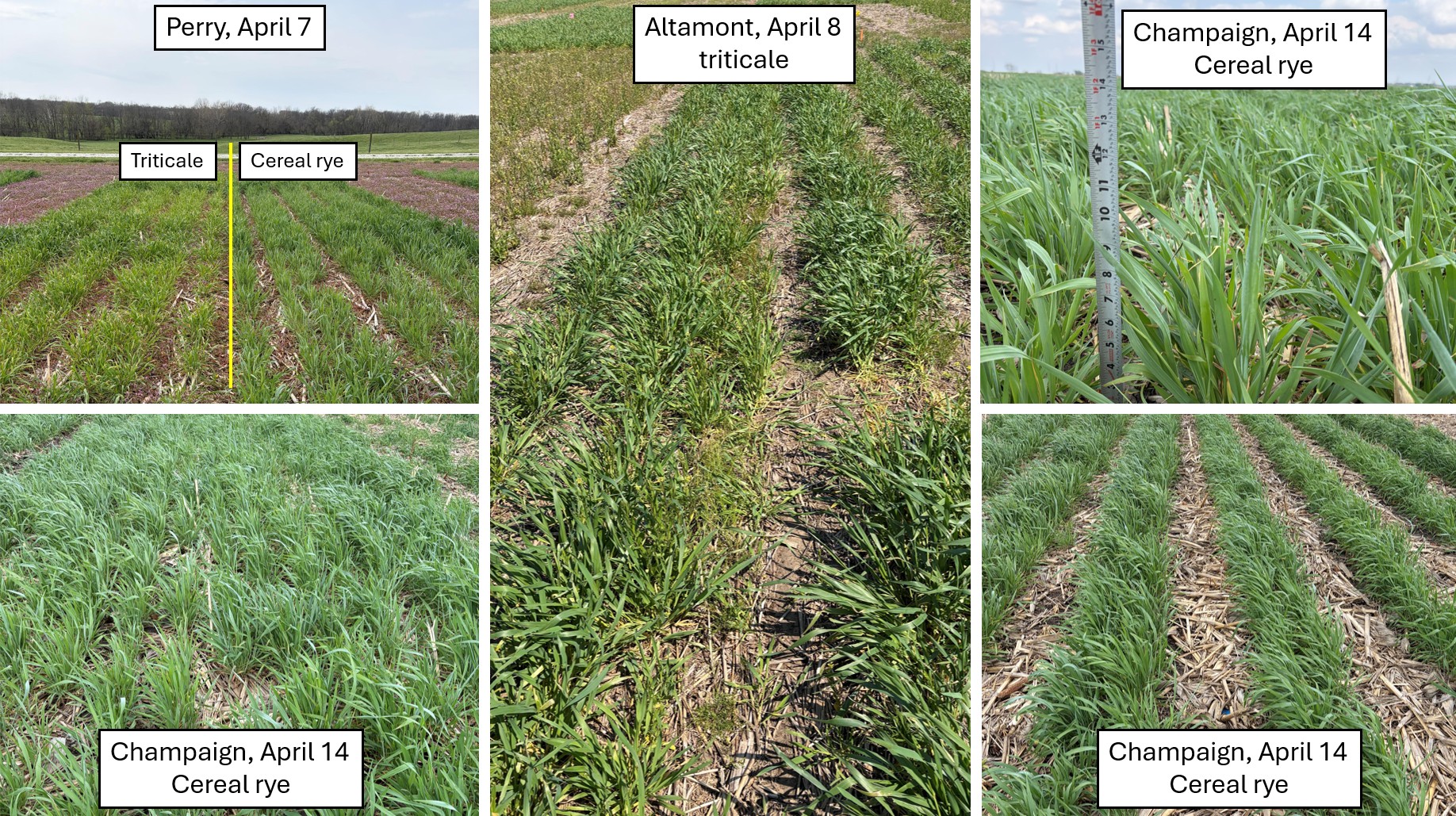
Planting date window for Illinois
Soils were dry enough in some areas to allow fieldwork and planting to begin in late March. Corn planting has progressed at a near-normal pace, with NASS reporting 1% and 4% planted for the weeks ending April 5 and April 12, respectively; the five-year average (2021-2025) is 3% planted by April 12. Soybean planting started ahead of normal, reaching 7% by April 12, compared to the five-year average of 2%. If we use this data to answer the never-ending question, “Should we plant soybean or corn first?” the answer is a solid YES.
We have heard reports of more planting occurring this week, as many growers are trying to plant as much as possible ahead of incoming rainfall. In some locations, rain was forecast to begin Monday night, but amounts have been small so far. For example, Champaign received only 0.1 inches of rain on Tuesday morning, and several fields were planted later that afternoon. Warm and windy conditions have helped dry soils more rapidly, and if additional rainfall misses parts of the state this week, we would expect to see a continued increase in planted acres in the next NASS report.
Heavy rainfall following planting is the single greatest risk associated with early soybean planting. While warm temperatures accelerate the germination process, germinating seeds or seedlings in saturated soil die faster when the soil is warm because they run out of oxygen sooner. While temperatures are expected to drop early next week, they won’t stay low for long, and the threat of cold, wet soils does not appear to be very high.
Soybean (or corn) that was planted on April 1 this year has accumulated around 195 and 135 growing degree days (GDDs) in southern and central Illinois by April 14, which should be enough to get the crop to emerge when planted at normal depths. In contrast, northern Illinois has accumulated around 75-80 GDDs since April 1. We generally estimate that about 110-120 GDD needs to accumulate after planting for crop emergence to occur, so early-April plantings in northern Illinois would not yet be emerged. We’ve seen in recent years, though, that early planting followed by low night temperatures may take more GDD. Taking 50ºF as the threshold temperature means that low temperatures of 30ºF and 50ºF register the same for GDD calculations, but low night temperatures mean that the soil stays cool longer, which in turn slows emergence. In a new project evaluating soybean replanting decisions, funded by the Multi-Regional Soybean Checkoff, we planted soybeans on March 25 at the UI Research Center near Monmouth (Warren County). About 161 GDD have accumulated since March 26, and the soybeans in this site have just began to emerge (Figure 2). Minimum air temperatures dropped to 33ºF two days after planting, followed by lows of 22ºF and 25ºF over the next two nights, before increasing to >40ºF thereafter.
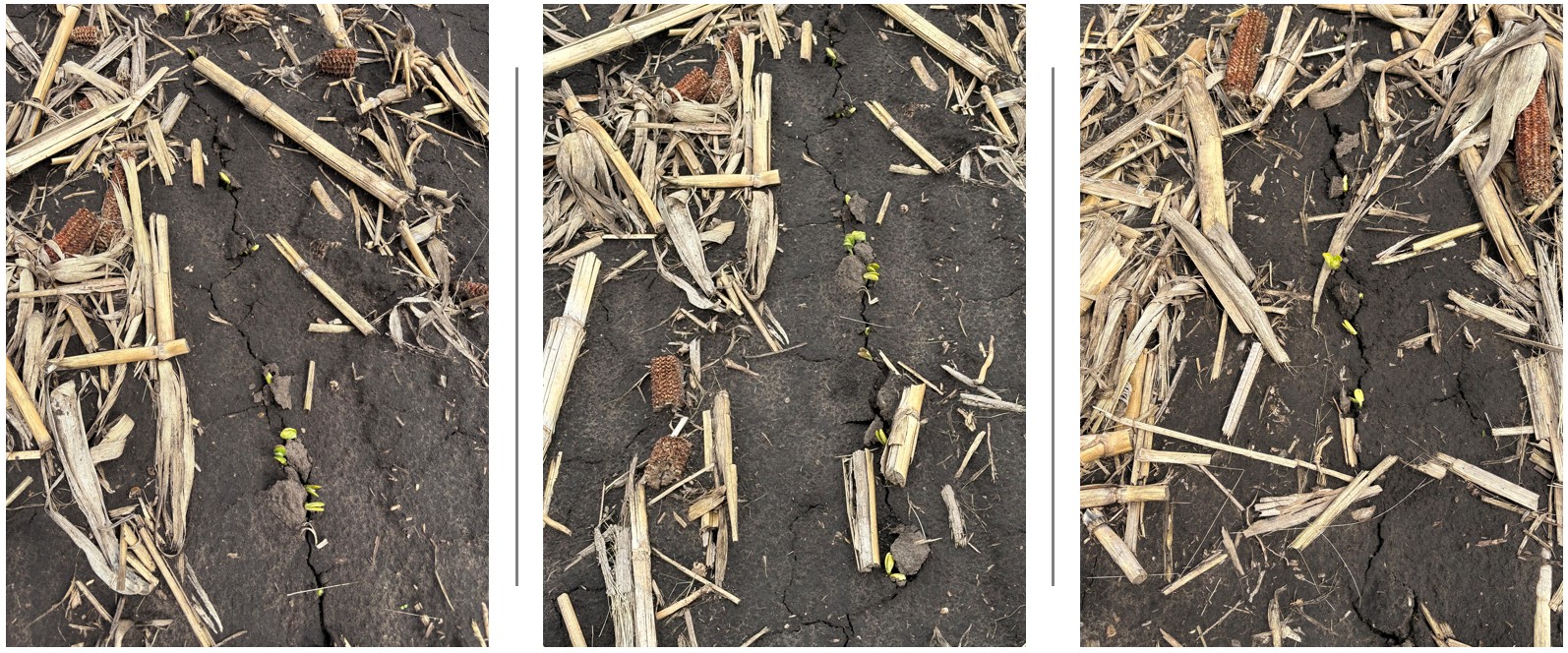
University of Illinois research shows that planting soybeans anytime between April 10 and April 30 is likely to maximize yields. Yield losses begin to pick up as planting is delayed into May, declining to about 95% of the maximum yield by May 15, 88% May 31, 79% by June 15, and 76% by June 20. The maximum average yield was 70 bushels/acre, so each 1% change in yield is 0.7 bushels/acre. Of 38 trials conducted between 2010 and 2025, five had the first planting before April 10, but yields were no higher than those when planting was between April 10 and the end of April. While there may be exceptions, our data indicate that the “early planting” advantage was generally maximized if planting was done by the end of April.
Seeding rate
Soybean seed accounts for roughly 35% of direct production costs in Illinois, so it pays to spend some time refining seeding rates in years with low commodity prices, as growers look for ways to cut input costs. However, seeding rates should not be reduced below the amount needed to maximize profits, as yield losses associated with inadequate stands often outweigh any savings on seed. While responses to plant stand do vary across trials, our research shows that final stands of 105,000 to 115,000 plants (not seeds) per acre at harvest often produce the highest dollar return on the seed investment in most cases. Using 85% as the default for stand establishment is often reasonable. Good soil conditions and lack of heavy rain in the forecast should mean good emergence overall. When heavy rainfall is forecast shortly after planting, increasing seeding rates to offset anticipated stand loss is often less effective than delaying planting until the risk of excessive rainfall has passed.
]]>The week in commodity markets was heavily influenced by geopolitical events and energy prices, particularly the ongoing conflict with Iran. Earlier in the week, traders squared positions and moved to the sidelines ahead of a deadline with Iran, while keeping a close watch on crude oil resistance levels. Later, a temporary truce caused crude oil prices to plunge,…]]>
Commodity Markets and Geopolitical Influences
The week in commodity markets was heavily influenced by geopolitical events and energy prices, particularly the ongoing conflict with Iran. Earlier in the week, traders squared positions and moved to the sidelines ahead of a deadline with Iran, while keeping a close watch on crude oil resistance levels. Later, a temporary truce caused crude oil prices to plunge, though grain markets showed resilience and decoupled slightly from the energy sell-off. Furthermore, the April WASDE report provided little fresh news, leaving domestic corn and soybean ending stocks largely unchanged and reflecting ample supplies. Market watchers are also monitoring South American production, with analysts pointing to a massive Brazilian soybean crop and potentially larger-than-expected Argentine corn yields that could loosen global balance sheets.
Weather Patterns and Crop Conditions
Across the United States, weather patterns presented a sharp divide. In the Corn Belt, widespread moderate to heavy weekend rainfall boosted subsoil moisture just as planting season approaches. However, forecasters warn a highly active and warm weather pattern could bring frequent thunderstorms, potentially turning planting conditions overly wet across a wide area by mid-April.
Conversely, the western Plains continued to suffer from a persistent, historic drought affecting the hard red winter wheat crop. Forecasters noted that while the eastern portions of the Plains would receive beneficial soaking rains, the higher-elevation western areas would largely miss out, offering only partial and temporary recovery for the struggling wheat. In South America, conditions remained favorable, with Brazil’s lingering monsoon season benefiting the safrinha corn crop and Argentina receiving a timely break from excessive rains to aid harvest progress.
Input Costs and Farmer Sentiment
The geopolitical conflict has significantly impacted agricultural input costs, creating what agricultural economist Gerald Mashange described as an “escalation trap”. The conflict has disrupted the flow of natural gas, oil, and fertilizers, with the damage to LNG facilities threatening global urea and nitrogen supplies. Consequently, University of Illinois ag econ models project anhydrous ammonia prices to remain high, conservatively estimated at $860 per ton into the fall. Surprisingly, despite these rising costs and tightening margins, the Purdue University CME Group Ag Economy Barometer showed that U.S. farmer sentiment actually improved in March. Economists attributed this unexpected optimism to recent government Bridge payments and a slight uptick in corn prices that temporarily offset the negativity surrounding expensive inputs.
Agronomy and Weed Resistance
In the field, weed resistance continues to force producers to reevaluate their chemistry strategies. University of Illinois weed scientist Aaron Hager highlighted growing concerns over waterhemp populations developing resistance to Group 15 soil-applied herbicides. Greenhouse tests on samples collected from across Illinois suggested a much higher frequency of resistance than initially anticipated. To combat this, Hager suggested producers consider utilizing metribuzin, an asymmetrical triazine that exploits a weakness in the metabolic resistance profile of waterhemp, providing a potentially cheaper and effective residual option.
Farmland Value and Equipment Maintenance
Looking at long-term assets, the value of farmland remains historically strong and incredibly stable. According to U of Illinois agricultural economist Bruce Sherrick, farmland has proven to be a highly tax-efficient investment that correlates well with inflation and rarely experiences massive value drawdowns. The market is characterized by an extremely low turnover rate, with the average farm being held for over 65 years, meaning that commercial-grade land remains in high demand whenever it does become available. You may hear more in the Friday Closing Market Report (see player below after 2pm Friday).
Finally, on the equipment front, John Deere announced software updates to its new and existing machines to comply with recent EPA repair guidance. This change allows farmers to utilize the John Deere Operation Center Pro Service to temporarily override certain emission control systems and diesel exhaust fluid (DEF) issues. This flexibility is designed to keep farmers running in the field during critical planting and harvesting windows before a machine derates.
Editor’s note: This article was adapted from the WILLAg.org radio broadcast transcripts for the week and formatted for print with the assistance of Google’s generative AI tool Gemini and has been reviewed by Todd Gleason.
Commodity Week can be heard in the 2 o’clock hour central time on WILL AM580 or you may subscribe to it using the links in the player below. This week the panelists include Shane Holtorf with Logic Ag Marketing, Chuck Shelby of RMC Zaner, and Ted Seifried from Zaner Ag Hedge.
The Closing Market Report airs at 2:06 p.m. central daily on WILL AM580. It, too, is a podcast. Subscribe using the link in the player.
Climate Review and Weather Forecast
by Trent Ford, State Climatologist
ISWS PRI University of Illinois
The first full week of April was very April-like, with temperature swings and multiple forms of precipitation. Average temperatures this week ranged from low 40s in northern Illinois to the low 60s in southern Illinois. Most parts of the state north of I-80 were 1 to 3 degrees cooler than normal, while the rest of the state was 1 to 5 degrees warmer than normal. The official numbers for March came in this week, and last month was the 5th warmest March on record statewide and the 16th wettest March on record statewide. With a statewide precipitation total of 4.60 inches, Illinois hasn’t had a wetter March since 1985.
This week continued that wetter trend for northern Illinois. Precipitation totals this week ranged from less than a quarter of an inch in parts of west-central Illinois to over 4 inches in northeast Illinois. A few places in western and northern Illinois even caught a little of the white stuff this week, although soil temperatures in the 50s and 60s minimized any accumulation. The month of April to date has been 1 to 3 inches wetter than normal across the northern half of the state, and near to slightly drier than normal in southern Illinois. The continued wetness from March has greatly improved drought conditions in central Illinois. The state is now absent severe drought in the US Drought Monitor for the first time since late August last year. We still see some legacy of the drought in low flow on some streams and a lack of soil moisture below the root zone. However, topsoil and root zone soil conditions are much improved as we head into spring fieldwork season.
Looking ahead, temperatures will remain seasonable with highs in the 50s and 60s through this weekend, before climbing into the 70s and 80s next week. We’ll have multiple chances at additional rain across the state late this weekend and throughout next week. 7-day forecasted totals range from around half an inch in southeast Illinois to the potential of over 3 inches in northeast Illinois. The combination of mild temperatures and wet weather will probably keep many folks out of fields in northern Illinois, but those in southern Illinois will likely see more windows of opportunity to start or continue fieldwork.
]]>Urbana, Illinois – In Chariton Valley, Iowa, switchgrass activities are expanding yet again. Nearly twenty years after the Chariton Valley Biomass Project demonstrated how farmers could stabilize their soil and their income using switchgrass to complement coal in power stations, new activities focused on bioproducts are now underway.
In this webinar, Bill Belden, a pivotal player in the initial and ongoing initiatives, lays out the history and future of switchgrass for energy and bioproducts. I
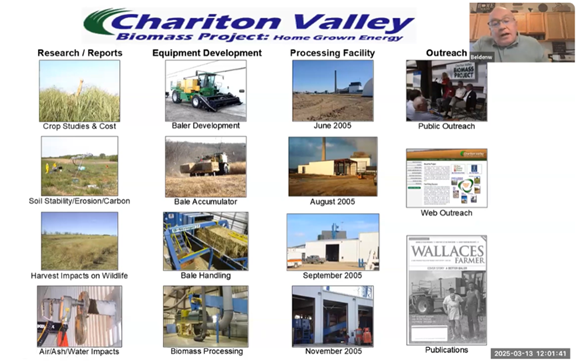
Pioneering switchgrass as a conservation crop on working lands
Bill was part of the original Chariton Valley Biomass Project was started in 1996 with the goal of co-firing switchgrass and coal at a 726 MW power plant. The project was permitted to grow and harvest switchgrass from Conservation Reserve Program (CRP) lands for several years to understand if set-aside farmland could be managed with conservation cropping systems that provided return to farmers while also protecting soil and water resources.
The project successfully established a farmer network with specialized equipment and two processing facilities were constructed that were used to supply switchgrass that generated heat and power at the Chariton Valley power plant. However, as natural gas and fracking changed the heat and power industry, the combination of low coal prices and a lack of regulatory incentives meant that by 2006, the project had been put on hold.
Although the project demonstrated that co-firing biomass could be successful, Belden pointed out that the market and policy environment of the early 2000s was not prepared for it.
Targeting switchgrass to bolster farm profit
Rather than walking away, Belden and partners turned lessons learned into actionable innovation. They developed new harvesting equipment, participated in U.S. Department of Energy (DOE) supply chain projects, and identified a surprising opportunity: 20% of Iowa farmland with low return on investment (ROI) could be ideal for perennial biomass crops like switchgrass.
Rather than targeting federal CRP acres, Beldenand colleagues began collaborating with the Iowa Dept. of Ag and Land Stewardship (IDALS) alongside county Soil and Water Conservation Districts to target conservation funding to high-risk corn/soy acres. Belden worked as part of a team that now includes FDC Enterprises, USDA/NRCS, IDALS, the USDA, Restoration Bioproducts, Stark Technologies, and Prairie Lands Bio-Products to develop switchgrass as a more stable, profitable option for those underperforming corn/soy acres.
Climate Smart Switchgrass takes root
The team was awarded $5M from USDA’s Regional Conservation Partnership Program (RCPP), in a project led by FDC Enterprises and used it to start the Climate Smart Switchgrass Initiative in 2023. They have been planting an additional 5,000 acres of switchgrass in Virginia and Iowa while providing growers with direct financial support during the establishment phase. The harvested biomass can then be sold through FDC Enterprises for erosion control products to provide farmer income beyond the life of the grant. A similar $9.8 M project is underway in Decatur, IL with some of the same team.
Depending on the funding source, farmers can sign up for 5 or 10-year contracts with full establishment cost coverage. Following the first two establishment years, a commercial contract will be offered to the landowners with guaranteed payments of $50 per ton of biomass from members of the project team and will go into biomass products developed by the project team.
More than biomass: water quality and soil health
There is more to this new initiative than energy. Reduced soil erosion, better water quality, and regenerative soil health are foundational environmental co-benefits of incorporating switchgrass into row-cropped landscapes. Additionally, there is a strong push to replace conventional wood-based materials with switchgrass in erosion control products like conservation socks. Biochar production is also anticipated from this initiative.
With assistance from scientists at Argonne National Lab and the University of Iowa, the project team is attempting to verify climate-smart claims; carbon intensity scoring is being developed using techniques from Lisa Schulte Moore’s team at the Iowa State University Bioeconomy Institute.
Hurdles and Hope
There are still obstacles in spite of the momentum. To enable a broader use of switchgrass-based materials in infrastructure, regulatory changes are required, particularly at the Department of Transportation to allow greater use of switchgrass erosion control products in highway construction projects. Belden acknowledged the fine balance between innovation and policy readiness and underlined the continuous effort to “build the market while building the product.”
Nonetheless, a solid basis is provided by Iowa’s state leadership and agency assistance. The objective is clear: to turn low-productivity land into a high-impact solution as switchgrass develops from an experimental fuel source to a climate-smart commodity.
Are you interested in joining future webinars like this one in the future? Register here to join us as we learn and grow together!
Link to webinar
Bill Belden – What’s Happening With Switchgrass in Iowa?
References
https://www.iowaswitchgrass.com/.
https://www.nrcs.usda.gov/programs-initiatives/regional-conservation-partnership-program.
https://ia-switchgrass-rcpp.com/.
https://www.restorationbio.com/.
]]>Urbana, Illinois — In January 2025 we kicked off the Biomass Webinar Series, bringing together researchers, industry leaders, policymakers, and growers across the Midwest and beyond to foster collaboration and share knowledge in the expanding biomass industry. Sessions described cutting-edge science, practical applications, and real-world operations that demonstrate how biomass crops like miscanthus and switchgrass are driving economic opportunity and environmental resilience. Featuring experts crop production, policy, markets, genetics, and supply-chain innovation, the series provides access to industry and research leaders sharing big ideas on perennials for the bioeconomy. We hope these webinars are a platform for learning, connection, and momentum toward a healthier and wealthier Corn Belt.
Dr. Matt Langholtz of Oak Ridge National Laboratory and Damon Hartley of Idaho National Laboratory provided a succinct overview of federal targets for biomass fuel and the findings of the 2023 Billion-Ton Report (BT23), produced by the U.S. Department of Energy (DOE) and U.S Department of Agriculture (USDA). Their discussion centered on how many tons of herbaceous energy crops such as miscanthus and switchgrass, can be available to meet the nation’s increasing demand for renewable fuels.
A Billion-Ton Consensus – the U. S. can grow enough biomass for transportation and more
This is the 4th BT assessment, and each analysis has indicated the U.S. can reasonably produce 1 billion tons of biomass without affecting grain and wood production, provided there is market pull for biomass. Even meeting the ambitious Aviation Grand Challenge of producing 35 billion gallons of sustainable aviation fuel (SAF) would only require about 640 million tons of this biomass (assuming 55 g SAF/ton). Of this approximately half, or 345 million tons, is expected to come from herbaceous energy crops under mature market conditions.
According to the report, which was created by 54 experts from 11 organizations, bringing on new biomass resources like algae would make 1.3 billion tons per year conservatively achievable (Fig. 1). This would be enough to produce 70 billion gallons of transportation fuel, making it feasible to support other hard-to-electrify transportation sectors like marine fuel.
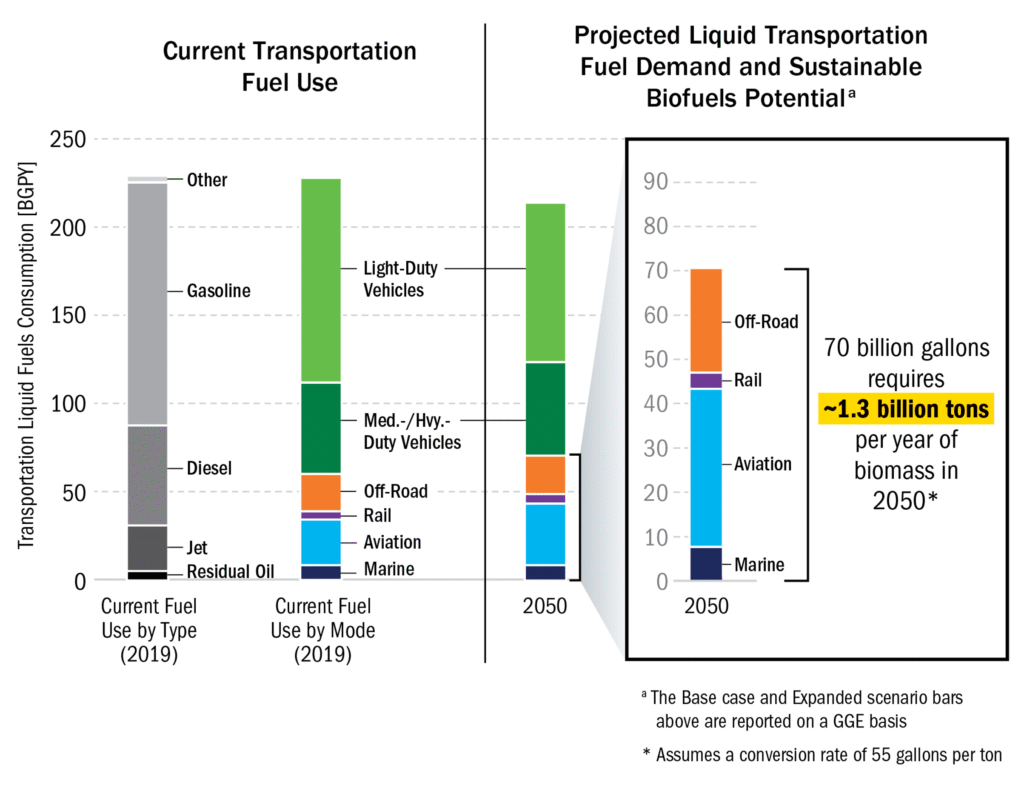
Economic Promise Being Realized
Assuming a farm gate price of $70-130 per ton (prices being paid today), biomass crops could produce up to $20 billion in additional farm income and 500,000 new jobs, according to economic modeling presented during the session. However, yield, location, and transportation expenses all have a significant impact on profitability.
During the webinar, common misconceptions about the usage of “marginal land” were also challenged. The most widely held notion is that biomass crops thrive on economically marginal land. While biomass crops are often more cost-effective than traditional annual crops planted on marginal land, they yield even more on better farmland. As more domestic manufacturing develops for U.S. biofuels and bioproducts, biomass crops are seen as stable profit generators that complement annual grain crops.
New Regional Hubs and Policy Coordination
DOE’s plan to create regional hubs for biomass resources was presented by Damon Hartley. Through data sharing and concerted efforts, these hubs seek to lower risk, promote industry growth, and link producers with end users.
Sub-county land analysis, ecosystem service payments, and integrated landscape management will all be investigated in future studies to better match biomass production with both economic and environmental objectives.
Looking Ahead
The session concluded with a call for continued collaboration among researchers, farmers, and policymakers. As the U.S. moves toward a low-carbon future, the BT23 report and the insights shared in this session provide a roadmap for integrating biomass into the national energy strategy. The path forward will require innovation, investment, and a deep understanding of both the science and the people behind the land.
See the webinar on Youtube Matt Langholtz – Billion Ton Study Overview
References
]]>Wheat acreage in Illinois has trended downward for much of the past 50 years, declining from about 1.5 million acres in the 1970s to an average of approximately 570,000 acres between 2015 and 2022. Acreage rebounded in more recent years, averaging nearly 750,000 acres over the past five years, with 2026 acreage estimated at 720,000. This recent increase began with increases in wheat prices following the Russian invasion of Ukraine and has been sustained by outstanding yields. The average Illinois wheat yield from 2021 to 2025 was 83.8 bushels per acre, with a state‑record yield of 88 bushels per acre in 2025. Yields in recent years have come from improved genetics and management, with a very strong boost from dry weather in May and June each year.
Wheat planting was completed more or less on time last fall, although emergence was delayed in some areas. Crop ratings in late November 2025 were 56% good + excellent, which is neither particularly high nor historically a reliable predictor of crop performance. Snowfall during winter helped protect the crop during cold periods, and wheat stands did not show widespread winter injury, although much of the state remained drier than normal into late winter. Above-normal temperatures in February promoted early greenup. March ended 6°F warmer than normal statewide and brought multiple precipitation events that improved soil moisture and supported vegetative growth and tiller development heading into April (Figure 1). The USDA-NASS crop progress report released today (April 6) rated Illinois winter wheat condition ratings at 72% good + excellent, 24% fair, and 4% poor or very poor. These ratings are slightly better than those reported at the same time last year, when the April 6, 2025, report showed 63% good + excellent and 35% fair. Overall, current ratings indicate that the 2026 wheat crop has come through the winter in reasonably good shape.
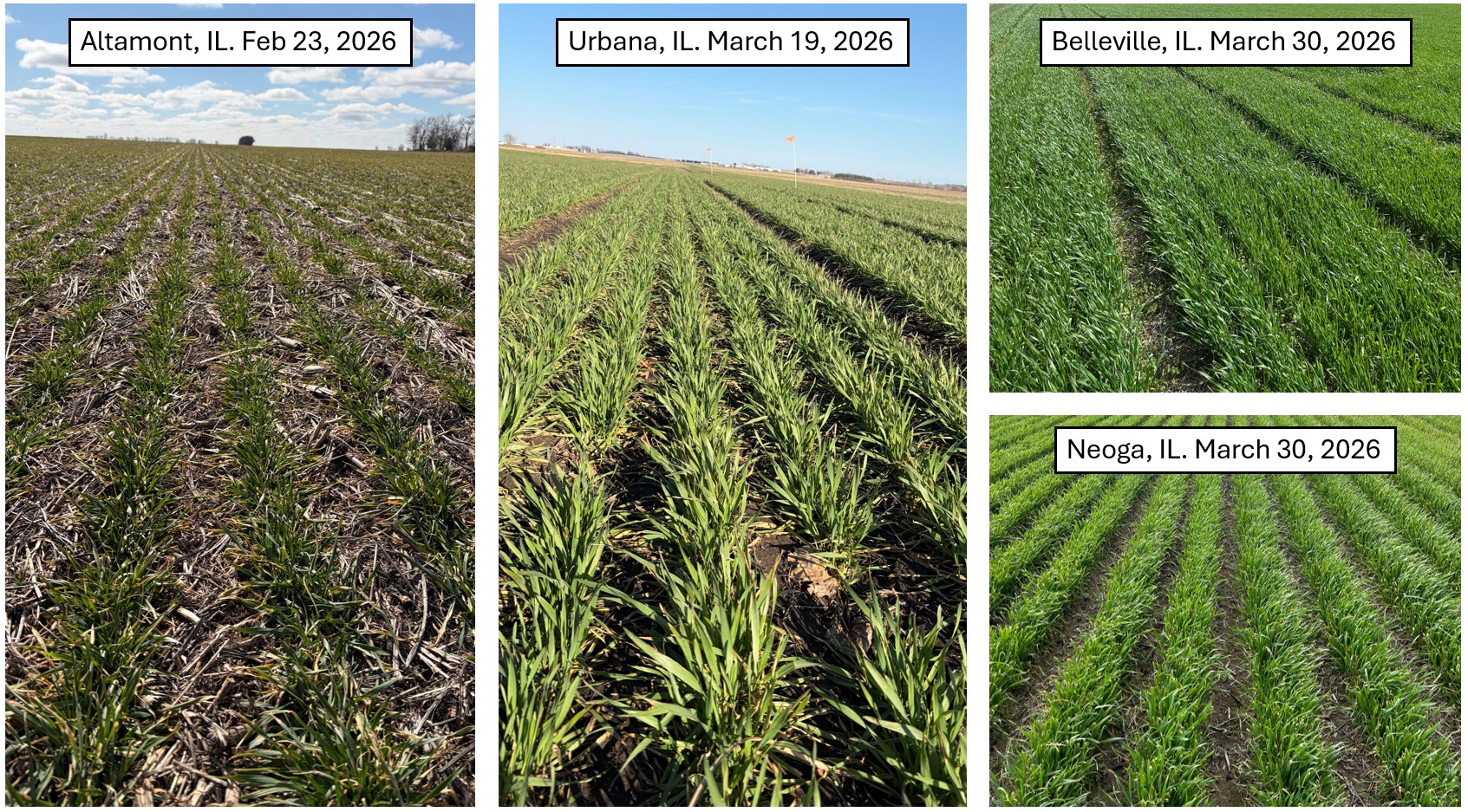
Nitrogen & Sulfur
Spring topdress applications of nitrogen (N) have now been made in nearly all of Illinois by now. While yield potential has not yet been fully determined at this point, the timing of N availability becomes increasingly important as the crop enters stem elongation. This is particularly important for fields that have not yet received N or are intended to receive a second application. Research shows that the majority of N uptake in wheat occurs between Feekes 6 and heading (Figure 3)—a period that typically lasts three to four weeks in Illinois. This narrow window makes timely N availability critical, and any N deficiencies that develop after Feekes 6 must be corrected quickly to have a meaningful impact on yield. Although there is limited evidence that very early applications during dormancy provide agronomic benefit, applications made closer to greenup or during early stem elongation generally align better with crop N demand. Where wet conditions have occurred, nitrogen losses may have increased the likelihood of mid‑season deficiencies, reinforcing the importance of scouting and, in some cases, supplemental applications.
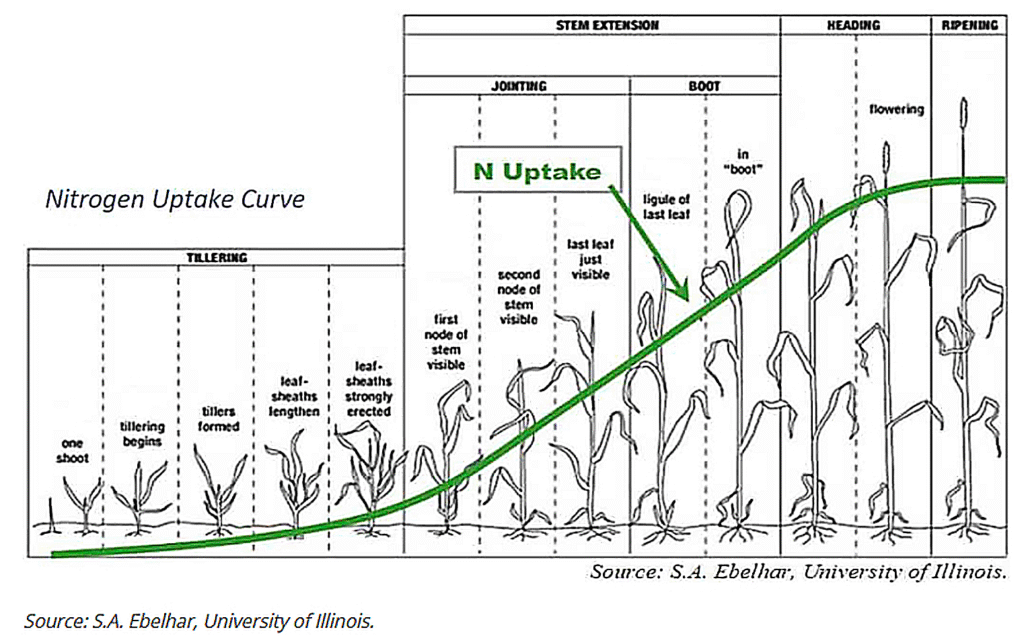
Most N is now applied as urea or UAN with streamer bars, which provide uniform coverage with minimal leaf injury. Regional differences in soil organic matter and crop N uptake patterns support higher N rates in southern Illinois than in central and northern regions. Nitrogen rates are best adjusted based on the wheat-to-N price ratio (i.e., $/bushel per $/lb-N). Table 1 provides guidelines for total spring N rates across soil categories and price scenarios, assuming no more than 30 lb N/acre was applied in the fall.
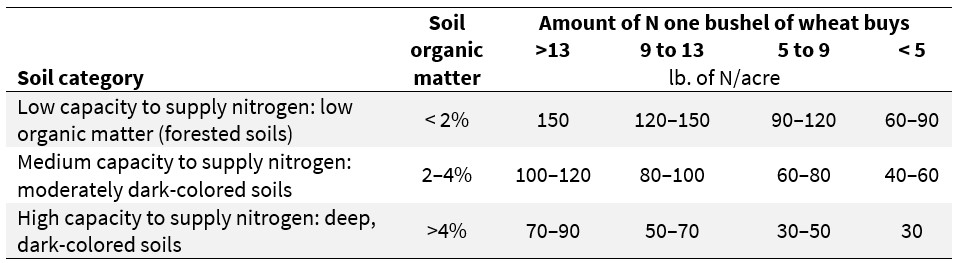
Split applications of N may alleviate the effects of N lost from earlier applications, though a second pass across the field does not always ensure higher yields compared to single applications at greenup. Nitrogen application at stem elongation (Feekes 6 to 9) is also an opportunity to apply sulfur. In 2024-2025 trials in Illinois, wheat response to sulfur ranged from 1 to 5 bushels on soils with 2-4% soil organic matter. We found no yield difference between the sulfur rates of 15, 30, and 45 lb S/acre. Figure 3 shows wheat yield response to N at four sites in the 2024-2025 growing season on high and medium N-supplying soils. Optimum N rates in Figure 3 were calculated using $6/bushel wheat and $.85/lb N prices, corresponding to a bushel of wheat buying 7.1 pounds of N (5 to 9 ratio range in Table 1). Higher recently observed optimum N rates may be explained by greater yields in these recent trials (108 to 121 bu/a at the optimum N rates) compared to supporting research which produced Table 1. Current statewide research funded by the Illinois Nutrient Research and Education Council is examining wheat response to nitrogen rate and timing, phosphorus sources, and sulfur rates across Illinois, with results to be used to sharpen Illinois Agronomy Handbook guidelines. Current sites this season are in DeWitt, Effingham, Monroe, Piatt, Pike, St. Clair, Warren, and Washington counties; the number of sites is set to increase in 2026-2027. Please reach out to John Jones (jones86@illinois.edu) if you are interested in hosting a site.
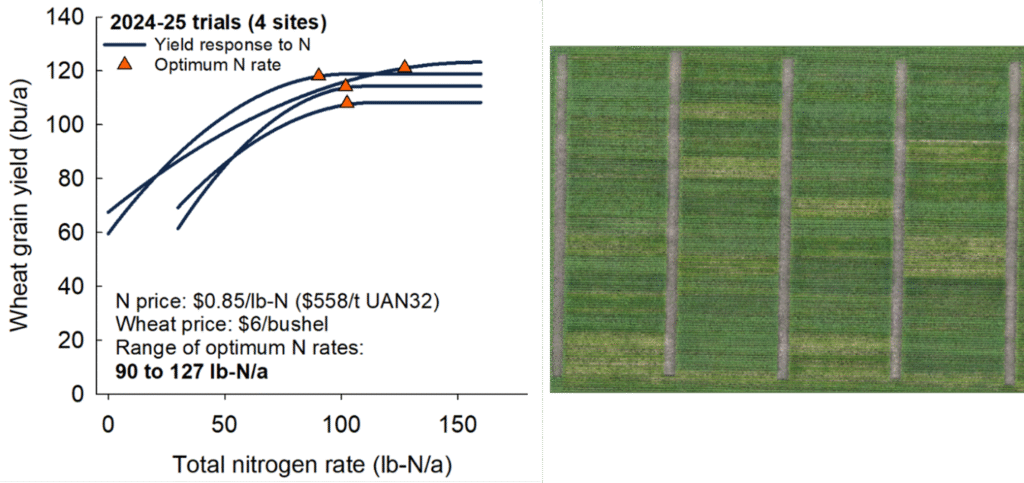
Spring growth and yield outlook
Tiller initiation slows to a stop before wheat plants enter the stem elongation stage (Feekes 6) when upright growth accelerates, and the first node is palpable above ground level. Fall-formed tillers tend to contribute more to yield than spring-formed tillers, but those that form in the spring can help compensate for lower plant stands. Wheat typically produces more tillers than heads, so inadequate tiller number is usually not a major concern in Illinois. Fields with complete or nearly complete ground cover as soon as growth begins after greenup should have sufficient tiller and (potential) head numbers. Forecasts call for warmer-than-normal temperatures over the next couple of weeks, which would keep crop development ahead of normal. Early-planted wheat should be at or reaching the Feekes 6 stage this week in southern Illinois, and by mid-April in central Illinois.
As we continue to monitor the Illinois wheat crop over the coming month, it is important to remember that yield prospects depend more on weather conditions in May and early June than on crop appearance in April. Although rapid canopy development is desirable, the grain-filling period is relatively short and highly sensitive to weather conditions following flowering. Dry conditions with adequate sunlight and moderate temperatures generally favor grain fill and yield, while extended wet periods can increase foliar disease pressure, complicate fungicide applications, and limit daily sunshine amounts to lower yields and grain quality. Flowering typically begins in late April in southern Illinois, the second week of May in central Illinois, and the third or fourth week of May in northern Illinois. Averaged over the past five years (2020-2024), Illinois wheat reached 50% headed by May 10.
June weather also plays a critical role in determining final yield. Yields are generally good if we have about three weeks of favorable conditions (limited rainfall producing high sunlight amounts and low humidity levels) during grain filling, and when leaf area remains green and healthy during this period. Once grain filling is complete, wheat dries down rapidly, with kernel moisture declining from about 30% at hard dough (Feekes 11.3) to 15% during ripening. Under very warm, dry, and sunny conditions in mid- to late June, it is not unusual for kernel moisture to decline by as much as 10 percentage points in a single day.
]]>
For decades, agriculture has relied on visual cues and simple calculations to gauge plant health. The widely used Normalized Difference Vegetation Index (NDVI), for example, uses just two bands of light reflectance to mathematically determine the greenness of a field. Now, an interdisciplinary team is pushing beyond these traditional boundaries.
Mohammed El-Kebir, an Associate Professor at the University of Illinois, and his research team have created a novel AI tool that processes high-throughput phenotyping data—such as hyperspectral light reflectance—to identify what the researchers call “synthetic traits”.
“We wanted find new indices beyond NDVI, beyond other vegetation indices that have been studied before,” El-Kebir said. “We actually wanted to use heritability as a guide. So we wanted to find new indices, what we call synthetic traits, that have high heritability.”.
To handle the overwhelming scale of high-throughput phenotyping data, the team built a new AI method from the ground up, dubbed H2-opt (Heritability Optimization).
“We needed to come up with new mathematics to do that,” El-Kebir explained. The H2-opt system utilizes differentiable function classes, such as linear models or neural networks, to ensure complex heritability computations can be seamlessly optimized. By selecting synthetic traits based purely on co-heritability estimations, the AI can significantly boost the overall accuracy of genomic prediction models for target traits without needing to immediately define the biological function of the new trait.
The team validated the H2-opt method using a robust dataset of 869 different sorghum lines. The AI successfully discovered completely new, hidden traits that traditional manual phenotyping missed. To confirm the accuracy of these discoveries, researchers cross-referenced the new traits with single nucleotide polymorphism (SNP) genotyping data.
“We actually went back to the SNP genotyping data, and we tried to find associations between SNPs and our new traits,” El-Kebir noted. “We did indeed find some hits. It does show that there is genetic basis, that our traits are indeed genetically driven”.
While early testing has focused on a relatively small number of plants, the research team plans to scale up operations. By flying drones over larger fields, they aim to further decode these synthetic traits and understand their biological functions. Ultimately, this AI-driven approach could serve as a powerful shortcut for crop breeders, rapidly accelerating the development of stronger, higher-yielding, and more resilient crops.
Editor’s note: This article was adapted from a radio broadcast script and formatted for print with the assistance of Google’s generative AI tool, Gemini and has been reviewed by the primary source.
]]>We had a warm and wet end to March and start to April across the prairie state. Average temperatures this week ranged from the high 40s in northern Illinois to the high 50s in southern Illinois, between 4 and 10 degrees above normal.
by Trent Ford, State Climatologist
ISWS PRI University of Illinois
Some of the more impressive high temperatures this week included 93 degrees in Jacksonville and 88 in Champaign. March ended around 6 degrees warmer than normal statewide, and was the warmest March since 2012. However, last month was still a full 6 degrees cooler than the average temperature in 2012, which illustrates just how extreme March 2012 was.
We had another very wet week across central and parts of northern Illinois. 7-day totals ranged from around half an inch in northwest Illinois to isolated pockets of over 5 inches in central Illinois. The recent wetter weather has substantially improved drought conditions across central Illinois, and we saw the US Drought Monitor remove extreme drought in this week’s map, the first time east-central Illinois has been without extreme drought since early October. That same Drought Monitor map, though, did expand some moderate drought in southern Illinois due to drier conditions over the last two weeks. The drought whack-a-mole continues in Illinois.
Looking ahead, temperatures will moderate a bit this weekend, with highs only stretching into the 50s statewide. Jackets are recommended for all of those egghunts on Saturday and Sunday. Meanwhile, we will see some additional rainfall across the state on Friday and Saturday before clearer conditions emerge early next week. 7-day rainfall totals are between 1 and 2 inches statewide. The newest outlooks for mid to late April still show a warmer and wetter tilt across the state, indicating a continuation of much of what we saw in late March.
—
WILLAg.org radio programming and review for the work week ending April 3, 2026
by Todd E. Gleason, Extension Farm Broadcaster
University of Illinois
Commodity Week can be heard in the 2 o’clock hour central time on WILL AM580 or you may subscribe to it using the links in the player below. This week the panelists include Curt Kimmel from AgMarket.net, Dave Chatterton with Strategic Farm Marketing, and Greg Johnson of TGM, Total Grain Marketing.
The Closing Market Report airs at 2:06 p.m. central daily on WILL AM580. It, too, is a podcast. Subscribe using the link in the player.
Market Volatility and USDA Reports
The release of the March 31 USDA Prospective Plantings and Grain Stocks reports provided the primary fundamental direction for the week. The agency reported intended corn acreage at 95.3 million acres, a 3% decrease from the previous year, while soybean acreage is expected to rise 4% to 84.7 million acres. Market reaction to the figures was largely neutral for corn and slightly friendly for soybeans, failing to ignite a significant rally . Analysts noted that December corn struggled to break the $5.00 mark due to heavy old crop hedge pressure , while a massive South American crop continues to limit upward momentum for soybeans. Despite the lack of bullish news, investment funds have transitioned from heavily short positions earlier in the year to near-record lengths in soybeans .
Geopolitics, Energy, and RVOs
Geopolitical tensions, particularly the conflict involving Iran, heavily influenced macro markets and raised concerns over long-term inflation and input costs . Damage to infrastructure in the Strait of Hormuz is expected to keep diesel prices elevated, directly impacting transportation and agricultural input costs . Domestically, the EPA finalized record-high Renewable Volume Obligations (RVOs) for 2026 and 2027. This mandate is projected to require roughly half of the global supply of eligible fats and oils by 2027, pushing U.S. soybean crush capacity to its absolute limits, although the soybean market initially reacted with a “buy the rumor, sell the fact” sell-off .
Extreme Weather in the Plains
The hard red winter wheat crop in the Central and Southern Plains is facing critical conditions due to severe drought and unseasonable heat . The seven-month period from September through March ranks as the warmest in more than 130 years for Kansas, Nebraska, and Oklahoma. Approximately 30% of the wheat crop in this region has received no spring rainfall . Meteorologists warn that the crop is running out of time and desperately requires a direct hit of heavy rain within one to two weeks to survive .
Planting Conditions and Agronomy
In contrast to the Plains, the Midwest and Mid-South are entering an active, wet weather pattern with forecasted rainfall totals of two to four inches . While these systems will delay early fieldwork and lower soil temperatures, the moisture is largely viewed as beneficial for replenishing soil profiles, and the lengthy planting window minimizes immediate concerns . Internationally, heavy late-season rains in Argentina have overly saturated fields, posing quality risks to the unharvested sunseed crop .
Agronomically, Precision Conservation Management (PCM) data indicates that farmers exhibit high consistency in their practices year-over-year; they are generally reluctant to alter nitrogen management on a single-field trial basis, though they show more willingness to experiment with cover crops .
Livestock and Agricultural Technology
The livestock sector is navigating localized supply chain disruptions, notably a worker strike at the JBS packing plant in Greeley, Colorado, which has forced fat cattle to be reallocated to facilities in Texas and Nebraska . Despite this, cattle futures posted consecutive gains, supported by lower feed costs and anticipation of the summer cookout season .
The USDA’s Hogs and Pigs report showed a slight year-over-year inventory increase, alongside a record 11.9 pigs per litter, indicating high herd productivity .
In agricultural technology, artificial intelligence is streamlining farm loan underwriting, reducing costs and accelerating the application process for producers . Additionally, the EPA granted a waiver for faulty Diesel Exhaust Fluid (DEF) sensors, preventing costly equipment downtime during the critical spring planting season .
]]>Under the direction of Extension Weed Scientist Aaron Hager, U of I Research Specialist Logan Miller has been investigating potential issues with herbicide premixes and pre-plant herbicides used on early-planted soybeans. The study evaluated soybeans planted at early dates, between April 15 and April 18, compared to conventional dates around May 15 to May 18. For plots in western Illinois last spring (2025), the early planting date was pushed to March 26.
The research addressed concerns that longer emergence times in early-planted, stressful environments could increase seedling exposure to herbicides, potentially leading to higher injury and stand loss. Miller noted that weather is a primary limiting factor, as excessive rainfall can put additional stress on the crop early in the season.
Key findings from the herbicide evaluation include:
- * PPO-based premixes (Group 14 herbicides) are the most likely to cause noticeable crop injury.
- * Authority-based products, Fierce-based products, and Zidua Pro resulted in the greatest amount of early-season crop injury and stunting.
- * Some PPO herbicides performed better than others; Prefix and Preview showed hardly any injury relative to the non-treated control.
- * Trials evaluating dry metribuzin at robust rates of 10.5 to 12 ounces showed no crop response or damage.
The study also evaluated Ilevo seed treatments, which yielded inconsistent effects on stand loss and yield across the different years of the study.
Despite the varying levels of early-season crop injury and some stand reduction from PPO herbicides, the final yield data did not show a negative effect. Miller concluded that as long as a uniform stand of 80,000 to 100,000 seeds per acre is maintained, there is little evidence of a yield impact.
This research is funded by the Illinois Soybean Checkoff. To learn more about this study, a webinar and podcast titled “Which PRE Herbicides Increase Injury Risk in Early-Planted Soybeans” are available at the ISA’s FieldAdvisor.org website.
Editor’s note: This article was adapted from a radio broadcast script and formatted for print with the assistance of Google’s generative AI tool, Gemini and has been reviewed by the primary source.
]]>The panel discusses the immediate effects on the 2026 crop year, the critical differences between this market shock and the 2022 Russia-Ukraine conflict, and what decreased input affordability means for farmer profitability heading into 2027.
Featured Speakers:
• Todd Gleason, Illinois Extension | WILLAg.org
• Nick Paulson, farmdoc / University of Illinois
• Gary Schnitkey, farmdoc / University of Illinois
• Chuck Spencer, GROWMARK and the FS Cooperatives
• Gretchen Kuck, National Corn Growers Association (NCGA)
• Jim Raftis, Illinois Department of Agriculture
 view the slides
This week was quintessential spring in Illinois. Average temperatures ranged from the mid-40s in northern Illinois to the high 50s in southern Illinois, between 6 and 12 degrees above normal.
by Trent Ford, State Climatologist
ISWS PRI University of Illinois
Some of the more impressive daytime high temperatures this week included 92 degrees in Springfield and 89 in Bloomington-Normal. Springfield’s 90 degree day this week was the earliest in the year since 1907, and only the second time on record where the capital hit 90 in March. With only a few days left, March temperatures have been 4 to 8 degrees above normal. This month has been a top 10 warmest on record in Champaign-Urbana, and the warmest March since 2012.
We had a little bit of a quieter weather week, with precipitation and storms mainly contained to east-central Illinois. 7-day precipitation totals ranged from virtually nothing in far southern Illinois to just over 3 inches in east-central Illinois. This week also brought another round of severe weather to central Illinois, including over a dozen reports of smaller hail on Thursday evening. March precipitation to date has ranged from around 1.5 inches in northwest Illinois to nearly 7 inches in central Illinois. In fact, this month is already the third wettest march on record in Springfield, and the wet start to spring has made quite a dent in our drought.
Looking ahead, our temperature roller coaster ride continues this week, with temperatures gradually increasing into the 70s and 80s by Wednesday, followed by a drop back into the 50s and 60s by next weekend. We keep the wet weather rolling, too, as 7-day precipitation forecasts show between 1 and 2 inches expected across the entire state next week.
—
WILLAg.org radio programming for the work week ending March 27, 2026
Commodity Week can be heard in the 2 o’clock hour central time on WILL AM580 or you may subscribe to it using the links in the player below. This week the panelists include Curt Kimmel from AgMarket.net, Dave Chatterton with Strategic Farm Marketing, and Greg Johnson of TGM, Total Grain Marketing.
The Closing Market Report airs at 2:06 p.m. central daily on WILL AM580. It, too, is a podcast. Subscribe using the link in the player.
]]>During the middle of March, Iranian forces launched attacks against a Saudi Arabian oil facility on the Red Sea and oil facilities in the United Arab Emirates. In a separate, direct retaliation for an earlier Israeli raid on the South Pars gas field, Iran also attacked a critical natural gas complex in Qatar. The South Pars field—operated jointly by Qatar and Iran—is vital to Tehran, supplying 90% of Iran’s domestic electricity as well as crucial heating and cooking gas.
The broader Iranian strikes were aimed at nations in the Gulf Cooperation Council (GCC). According to Susan Ziadeh, a former U.S. Ambassador to Qatar and current Senior Advisor at the Center for Strategic and International Studies in Washington, D.C., the targets in Saudi Arabia and the UAE were highly strategic.
Among the facilities hit was SAMREF, a Saudi Aramco refinery jointly owned with ExxonMobil located in Yanbu on the Red Sea, as well as port facilities in Fujairah in the UAE.
“Yanbu is on the Red Sea, and that’s at the end of the East-West pipeline, which was designed to get around the problems of the Strait of Hormuz and shipping out of the Strait of Hormuz,” Ziadeh explained in a recent interview with PBS NewsHour. “So, in essence, the Iranians have hit ‘Plan B’ by hitting Yanbu.” Tankers have subsequently been unable to fill up at the port of Fujairah due to the strikes.
The Qatari “Lifeline” and the Global Fertilizer Chokepoint
Perhaps the most economically devastating blow was the retaliatory Iranian strike on Ras Laffan in Qatar. The $26 billion complex features 14 production facilities and is considered the economic lifeline of the country. Roughly 20% of the world’s liquefied natural gas (LNG) exits the Strait of Hormuz from Qatar, drawing from the highly productive Qatari side of the South Pars field.
The raid reduced Qatar’s LNG export capacity by an estimated 17% and damaged the world’s largest gas-to-liquid (GTL) facility, operated by Shell. Shell has since halted production of diesel, jet, and marine fuels at the site. Experts estimate it will take three to five years to rebuild the damaged LNG infrastructure.
Beyond fuel, the disruption at Ras Laffan has triggered an immediate crisis in global agriculture and technology. The LNG produced there is a critical component in manufacturing helium—used in medical imaging and semiconductors—and nitrogen-based fertilizers like ammonia and urea. Following the attacks, Qatar Energy was forced to shut down the world’s largest urea plant.
The American Farm Bureau Federation (AFBF) notes that the Persian Gulf region accounts for nearly 49% of global urea exports and roughly 30% of global ammonia exports. Qatar alone is the world’s fourth-largest exporter of nitrogen fertilizers.
The Agricultural Ripple Effect
The economic reaction to the shutdowns has been severe. Urea export prices in the Middle East surged by roughly 40% almost immediately, jumping from under $500 to over $700 per metric ton.
While the United States produces more than 80% of its own nitrogen, the AFBF notes that the U.S. still imports 18% of its nitrogen, alongside 97% of its potassium and 13% of its phosphate. Because agriculture operates on a highly interconnected global network, U.S. fertilizer prices have already spiked.
Furthermore, countries heavily reliant on Qatari LNG, such as India, have been forced to cut output at their own domestic urea plants due to the sudden lack of gas supply. Analysts warn that if the conflict drags on, nitrogen fertilizer prices could double, inevitably translating into higher global food costs.
The timing of this disruption is critical, as it coincides directly with the spring planting season in the Northern Hemisphere.
“This conflict obviously is having an immediate impact on fuel and fertilizer prices,” said Gary Schnitkey, an Agricultural Economist at the University of Illinois. “We now see anhydrous ammonia over $900 a ton. Anhydrous ammonia and all the fertilizers were going up before this, but the conflict has increased that increase.”
Updated 3pm March 22 to more accurately reflect China’s current export bans.
Complicating matters is a move, as reported by Josh Linville VP Fertilizer at StoneX, by China which has already banned the export of urea, MAP, and DAP through August of 2026. China is one of the world’s largest fertilizer exporters. It also recently ban the export of lesser fertilizers to protect its domestic supplies.
Upcoming Webinar on Market Impacts To help farmers and agricultural professionals navigate the fallout, the farmdoc team at the University of Illinois will host a free webinar on Thursday, March 26 at 11:00 a.m. CT.
University of Illinois Agricultural Economists Gary Schnitkey and Nick Paulson will be joined by Gretchen Koch of the National Corn Growers Association, who will provide insight into the geopolitics of the crisis, and Chuck Spencer from Growmark.
“It will be a good discussion,” Schnitkey noted. “I don’t know if we will resolve anything at that point in time, but it will be a good discussion.”
Participants can join the discussion live or watch the recording afterward by visiting farmdocDaily.illinois.edu and navigating to the “Events and Webinars” tab.
Editor’s note: This article was adapted from a radio broadcast script and formatted for print with the assistance of Google’s generative AI tool, Gemini.
]]>In a recent webinar hosted by the Illinois Soybean Association, University of Illinois Crop Scientist Connor Sible detailed multi-layered strategies for breaking down crop residue, ensuring that fields are clean, healthy, and ready for spring planting.
Speaking with University of Illinois Extension’s Todd Gleason, Sible emphasized that residue management is a critical issue across all farming systems, from conventional tillage to strict no-till and cover-cropping operations.
“My favorite fun fact these days is every bushel of corn you produce sends 44 pounds of dry matter out the back end of the combine,” Sible explained. “If the yields in the last decade on your farm are up 20 bushels, you’re talking almost 1,000 pounds of residue per acre, and have we thought about managing it differently?”
Key Strategies for Breaking Down Residue
To help producers manage this heavy accumulation—which can interfere with planters and harbor overwintering diseases—Sible outlined three primary approaches:
- Mechanical (Tillage): While tillage remains one of the best ways to integrate residue into the soil where microbes live, modern corn yields topping 250 bushels per acre mean that even conventional tillage often leaves significant debris on the surface.
- Nutritional (Chemical Seasoning): To help soil microbes digest tough corn stalks, Sible recommends a fall application of ammonium sulfate. Applying just 75 to 100 pounds per acre lowers the high carbon-to-nitrogen and carbon-to-sulfur ratios of the stalks. This effectively “fertilizes the microbes,” allowing them to break down the residue more easily. Sible notes this practice has consistently shown a break-even to positive economic return in his and Dr. Fred Below’s research trials.
- Biologicals: Living microbial products designed to be sprayed directly onto residue are seeing a massive surge in popularity, especially in no-till systems where residue sits entirely on the surface. However, Sible advises that biologicals perform best when used as a secondary step alongside mechanical sizing or a nutritional application, rather than as a complete replacement for basic agronomic management.
Adapting to Colder Weather
A common concern with fall applications is dropping temperatures. Sible noted that while microbial activity slows down when the ground freezes, the applied nitrogen and sulfur as ammonium sulfate do not readily leach out of the soil as much as one may think. Instead, they stick around through the winter, ready to fuel microbial breakdown as soon as temperatures warm up in the spring.
Producers interested in the full data, including the nutritional value tied up in corn stover and cover crops, can view Sible’s complete presentation via the Illinois Soybean Association’s Field Advisor forum website and YouTube channel.
]]>We had a very warm and active weather week that reminded us that we are in spring. Average temperatures this week ranged from the mid-40s in northern Illinois to the low 60s in southern Illinois, between 8 and 16 degrees above normal. Some of the more impressive daytime high temperatures this week included 86 degrees in Jacksonville, which was the warmest March temperature on record there since 1986. Peoria hit 83 degrees this week, which is the earliest 80 degree high on record there.
by Trent Ford, State Climatologist
ISWS PRI University of Illinois
The big weather story this week was the severe weather that tore across north-central and northeast Illinois on Tuesday. A handful of supercells produced multiple, large tornadoes and some gargantuan hail across parts of Livingston and Kankakee County, and into northwest Indiana. There are two confirmed deaths in Indiana, and one reported death in Kankakee County. Among the dozens of hail reports, there were several hailstones with reported sizes of 4.5 to 5.5 inches, and a few nearly or just over 6 inches. The National Weather Service, U of I, and Northern Illinois University are currently reviewing these reports to determine if any of these stones officially broke the current state hailstone record of 4.75 inches, which fell in 2015 near Minooka. These and other storms this week produced quite a bit of rain. 7-day totals ranged from around 1 inch in northwest Illinois to isolated pockets of 6 inches in southern Illinois. Some areas of the central and southern Illinois received more rain this week than for the entire winter season, and the wetter weather was greatly beneficial to easing drought across the state.
Looking ahead, we’re heading out on a temperature roller coaster. After a mild weekend, temperatures will plummet across the state on Monday and Monday night. Forecasted low temperatures could dip into the single digits in northern and central Illinois, and low teens in southern Illinois, approaching March records in some places. The very late season cold could damage sensitive plants, including peach trees that are already showing signs of breaking dormancy. We will quickly warm up late next week and push back into the 60s by next weekend. More rain, and possibly some snow, is expected across the state next week, with 7-day totals ranging from around a half inch in southwest Illinois to possibly over 2 inches in far northern Illinois.
—
WILLAg.org radio programming for the work week ending March 13, 2026
Commodity Week can be heard in the 2 o’clock hour central time on WILL AM580 or you may subscribe to it using the links in the player below. This week the panelists include Matt Bennett and Curt Kimmel from AgMarket.net, along with Brian Stark of the Andersons and Mike Zuzolo from Global Commodity Analytics and Consulting.
The Closing Market Report airs at 2:06 p.m. central daily on WILL AM580. It, too, is a podcast. Subscribe using the link in the player.
]]> Funded by the Illinois Soybean Checkoff Board
Speakers:
Dr. Connor Sible – Research Assistant Professor in the Department of Crop Sciences at the University of Illinois Urbana-Champaign
Ava Isaacs – Master’s Student in the Crop Physiology Lab at the University of Illinois Urbana-Champaign Whether you no-till, cover crop, double crop, or simply have higher yields today than a decade ago, you’ve got residue in your field.…]]>
Funded by the Illinois Soybean Checkoff Board
Speakers:
Dr. Connor Sible – Research Assistant Professor in the Department of Crop Sciences at the University of Illinois Urbana-Champaign
Ava Isaacs – Master’s Student in the Crop Physiology Lab at the University of Illinois Urbana-Champaign
Whether you no-till, cover crop, double crop, or simply have higher yields today than a decade ago, you’ve got residue in your field. Sometimes we call that residue “trash” because it can create challenges come planting time. However, we cannot discredit the nutritional value that residue contains to help feed next year’s crop and sustain a healthy soil, and suddenly is that “trash” actually “treasure?” The hard part about treasure is that it usually is tough to get to, as can be residue management of our cropping systems. In this webinar, Dr. Connor Sible and Ava Isaacs will review exactly what residue is, how much we’re likely to encounter year over year, and summarize recent trial work on residue management conducted by the Crop Physiology Lab at the University of Illinois.
]]>by Trent Ford, State Climatologist
ISWS PRI University of Illinois
A much more active storm track set up over the southern Midwest this week, bringing multiple rounds of rain to the southern half of Illinois, including some very heavy rainfall. 7-day rainfall totals ranged from virtually nothing in northwest Illinois to some isolated pockets of 6+ inches in far southern Illinois. The first couple of inches of rain on drought-stricken parts of the state was greatly beneficial to recharge soils and streams, especially in central and south-central Illinois. As is often the case, though, a few places picked up a little too much rain, causing flooding issues in parts of southern Illinois. The Embarras River at Sainte Marie Illinois in Jasper County jumped up 2 feet in less than 48 hours as the southern part of the state was soaked. Meanwhile, much of northern Illinois remained dry this week, and continued to worsen drought conditions, including around the Quad Cities. Moline picked up a whopping 2 hundredths of an inch of rain on Wednesday, ending a 38 day streak of completely dry days, the 3rd longest such streak on record there.
Looking ahead, milder temperatures will remain this weekend and into next week, with repeat highs in the 60s and 70s statewide. A few places may get their first taste of the 80s this week, reminding us that spring is here. But, because it’s still March, the outlooks for mid-month show a regression to colder weather, so don’t pull out the swim suit just yet. On the precipitation side, more rain is expected across the state next week, with 7-day totals ranging from another possible 3 inches in far southern Illinois to around 1.5 in western Illinois. Right now, the forecasts are more bullish for significant rain in northern Illinois this week, too, which would be great news for the areas that missed on the wet stuff last week.
—
WILLAg.org radio programming for the work week ending March 06, 2026
Commodity Week can be heard in the 2 o’clock hour central time on WILL AM580 or you may subscribe to it using the links in the player below. This week the panelists include Ellen Dearden of AgReview, Greg Johnson from Total Grain Marketing, and Chip Nellinger with Blue Reef Agri-Marketing.
The Closing Market Report airs at 2:06 p.m. central daily on WILL AM580. It, too, is a podcast. Subscribe using the link in the player.
]]>Temperatures were all over the place this week, as is common for late February. Overall, average temperatures were 1 to 3 degrees warmer than average in northeast Illinois, and within 1 degree of average everywhere else. Some of the more impressive daytime high temperatures this week included 74 in Flora and 72 in Carbondale, while nighttime low temperatures dipped as far as 10 degrees in Galesburg and Quincy. February will likely end 2 to 3 degrees warmer than normal statewide in Illinois, although meteorological winter will likely end 1 to 2 degree colder than normal statewide, when all is said and done..
by Trent Ford, State Climatologist
ISWS PRI University of Illinois
Temperatures were all over the place this week, as is common for late February. Overall, average temperatures were 1 to 3 degrees warmer than average in northeast Illinois, and within 1 degree of average everywhere else. Some of the more impressive daytime high temperatures this week included 74 in Flora and 72 in Carbondale, while nighttime low temperatures dipped as far as 10 degrees in Galesburg and Quincy. February will likely end 2 to 3 degrees warmer than normal statewide in Illinois, although meteorological winter will likely end 1 to 2 degree colder than normal statewide, when all is said and done.
We had another middling week of precipitation, with 7-day totals mostly less than half an inch in most places. A narrow band along Interstate 74 from Peoria to Bloomington-Normal picked up 1 to 3 inches of snow early Thursday morning, which melted quickly as temperatures quickly reached into the 40s. February has been 1 to 4 inches drier than normal across the state, and only a very narrow band around I-70 will end the month slightly wetter than normal. February adds to growing precipitation deficits from fall and this winter, and some places in east-central Illinois have had 11 to 12 inches less than average precipitation dating back to September. In fact, the last 6 months has been the driest 6 month period on record in Bloomington-Normal, reflecting how extreme our drought has become. The most recent U.S. Drought Monitor shows extreme drought across east-central Illinois and severe drought in most of central and parts of southern Illinois.
After a brief warm up early this weekend, Sunday will bring much colder weather and some snow and rain across the state. Next week, we can expect seasonable temperatures in the 40s and 50s, but with multiple chances of rain across the state. The latest 7-day precipitation forecasts from National Weather Service show the entire state picking up at least 1 inch of precipitation next week, with totals exceeding 2 to 4 inches in central and south-central Illinois. Although that kind of rain is not a drought buster, it would be a great start to improve our current conditions.
—
WILLAg.org radio programming for the work week ending February 27, 2026
Commodity Week can be heard in the 2 o’clock hour central time on WILL AM580 or you may subscribe to it using the links in the player below. This week the panelists include Curt Kimmel from AgMarket.net and Dave Chatterton at SFarmMarketing.com.
The Closing Market Report airs at 2:06 p.m. central daily on WILL AM580. It, too, is a podcast. Subscribe using the link in the player.
]]>A tale of two springs
March was 4-5 degrees warmer and 2-3 inches drier than normal statewide, bringing optimism for an early start to the planting season. The northern two-thirds of Illinois stayed dry early in the season, allowing widespread mid-April planting across the region. Stand establishments were reported as good to very good, thanks to minimal flooding and soil crusting after planting. By April 13, NASS estimated 1% of corn and 2% of soybeans had been planted; by May 11th, about half of the acreage of both crops was in the ground.
Conditions were the opposite farther south. Spring opened with unusually heavy rainfall across southern Illinois, leading to saturated soils and planting delays in many fields. Many areas received between 6 and 16 inches of rain in April (exceeding 300% of normal in some areas), followed by another 3.5 to 8 inches of rain in May. Despite the delayed start in the south, statewide planting wrapped up near normal, with the last fields planted by the second week of June.
Summer weather and crop conditions
For the fourth year in a row, both crops benefited from a warm, relatively dry June. Without heavy rainfall or saturated soils after planting, stands were generally good in most fields, with good root development, canopy color, and leaf area. Moderate drought conditions developed across northern Illinois by late June, but several rainfall events in July helped relieve it, especially in western, central, and south-central Illinois, where totals reached 200% of normal (more than 8 inches of rain in some areas) (Figure 1). July temperatures also averaged 2 to 6 degrees above normal, and statewide crop condition ratings increased to the typical 65-70% good + excellent by the end of the month.
The warm early-summer weather kept crop development ahead of schedule. Early-planted corn began to pollinate and soybean plants started to flower around June 22. Pollination went well in most fields, although areas that missed some of the July rains (such as Champaign County) showed varying degrees of ear “tip-back”, with kernels at the tip of the cob either not fertilized or aborting after fertilization. Firing—loss of corn leaf area beginning on the lower leaves—began to appear in the driest areas.
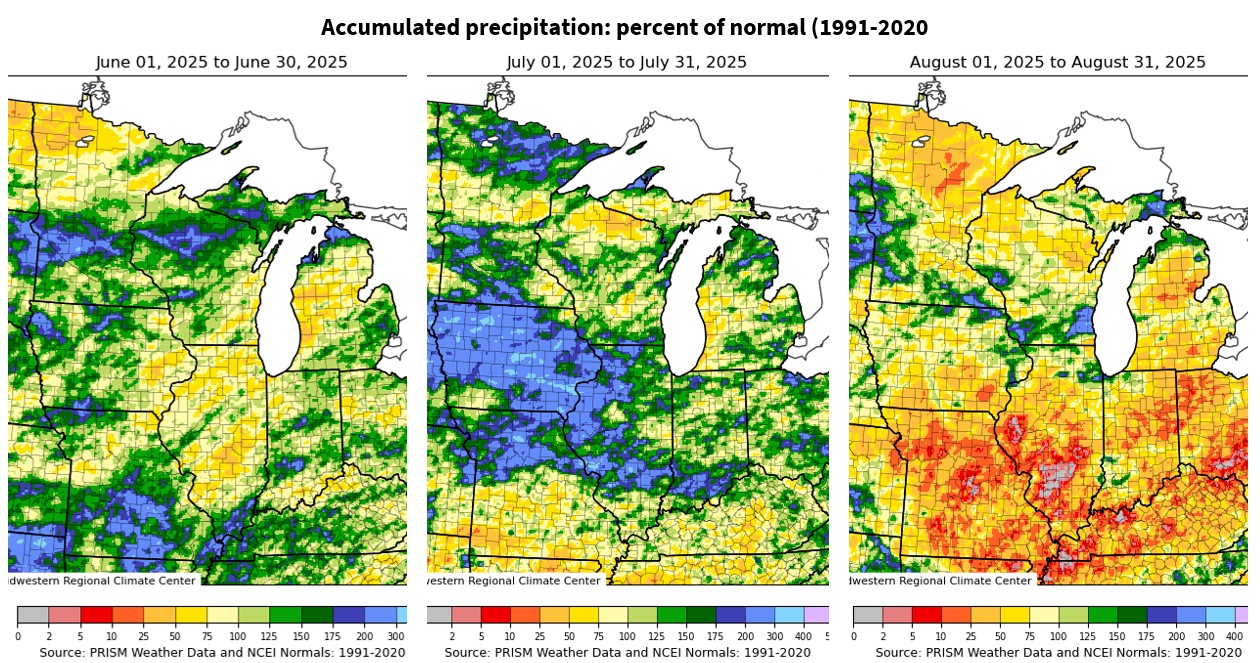
Enough soil moisture to carry the crops?
The rainfall tap pretty much closed off over most of the state in August. Parts of southern and south‑central Illinois received little or no rain in August (Figure 1). Parts of east-central Illinois, including Champaign, recorded their driest August since 2013. Drought conditions worsened across central and southern Illinois through September, with only 3.1 inches of statewide rainfall combined in August and September (Figure 2). Crop condition ratings fell to about 55% good + excellent by the end of September, well below any year since 2021.
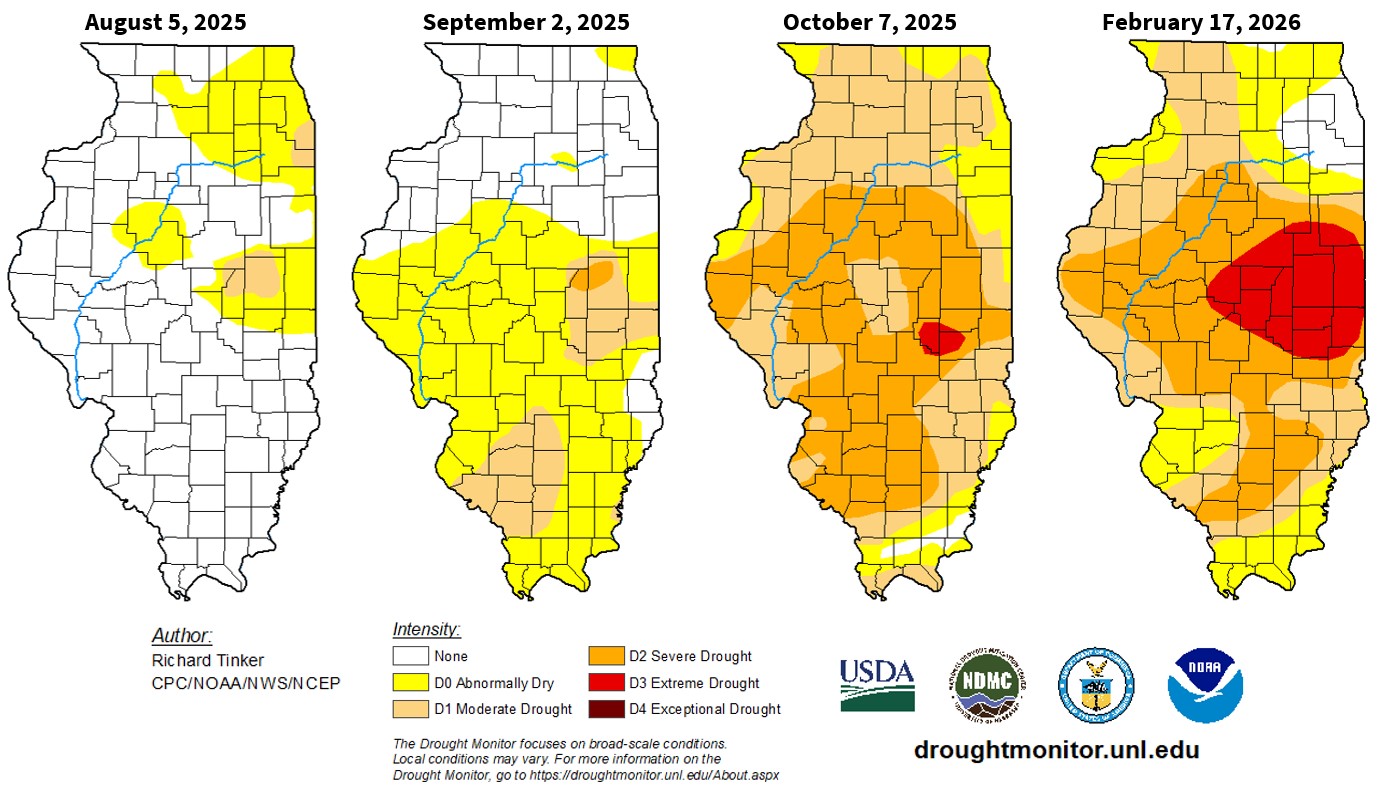
In each of the last four years, the early August to early September period has been dry or very dry over much of Illinois. Yet yields have been mostly good to very good, including new state records for corn in 2022 (214 bushels per acre) and 2024 (217 bushels per acre). The lesson seems to be that a good first half of the season, with enough dry weather to help establish good root systems, good seed numbers, and good canopy color by mid-July, enables crops to maintain water and nutrient uptake to complete grain fill. Corn fields in dry areas where drought symptoms (especially firing) began to appear during mid-July were unable to maintain productivity, and yields were 20 to 50 bushels lower than expected in such fields.
Early-planted corn began entering R5 (kernel dent stage) in early August, and by August 24, approximately 60% of the corn was dented. Corn typically spends 25 days in the R5 stage (with some variation related to weather and hybrid maturity), needing about 5-6 more inches of water (as much as a quarter inch per day) to reach physiological maturity (black layer). In fields where July rainfall recharged soil moisture, high yields showed that our soils can hold more water than we might expect. Cooler temperatures during the last week of August and into September (2 to 8°F below normal) also reduced crop water use and likely helped stretch soil moisture a little longer. This may not have lowered total water use, but it lowered the daily demand, which helped the roots extract a little more water than if it had been warmer.
Why the high August estimates but lower final yields?
Illinois growers harvested roughly 2.35 billion bushels of corn across 11 million acres in 2025, averaging 214 bushels per acre. Canopy color and leaf area looked excellent heading into seed-filling in August; the August 1 estimates were of 225 bushels per acre for corn and 65 bushels per acre for soybean. Final (January 2026) estimates were 214 bushels per acre for corn (3 bushels less than in 2024) and 62.5 bushels per acre for soybeans (1.5 bushels less than in 2024). Although the federal government shutdown during October and part of November canceled the October 1 yield estimates, the November 1 estimates were for 221 bushels and 65 bushels. Such large drops in estimated yields have typically come as harvest gets underway, not after harvest is nearly complete.
NASS reported a slightly lower number of ears per acre in 2025 than in 2024 (31,400 vs. 31,850), but the bigger factor was likely kernel weight. The very dry August-September period limited the crop’s ability to maintain grain-fill rates, resulting in lighter kernels than normal. Leaf diseases may have contributed to this in parts of northern and western Illinois, where southern rust came in unexpectedly, and where tar spot developed, in some cases long enough after a fungicide application at pollination to limit control.
Data from a field trial conducted at the UI Research Center near Monmouth (Warren County) can help illustrate the role of kernel weight. Table 1 shows the estimated kernel weight from two 112-day hybrids grown across a range of plant populations. As expected, kernel weight (mg/kernel) decreased as plant population increased due to greater competition for resources. Both hybrids had the highest yield at 36,000 plants/acre, with estimated kernel counts ranging roughly from 85,000 to 90,000 per bushel. It was a different story than in 2022 and 2024. In those years, drought stress reduced kernel number during pollination in most fields, but good conditions during grain-filling helped the kernels to fill to as much as 70,000–75,000 kernels per bushel in some fields. The opposite occurred in 2025: good kernel numbers per ear but stressful grain-fill conditions that limited kernel weight and maximum yield. Still, 2025 yields matched 2022 yields, and were 3 bushels less than the 2024 record. As a reference, we normally use 80,000 kernels per bushel as the default number when estimating yields during the season. At 80,000 kernels per bushel, 20 million kernels per acre calculates to 250 bushels per acre. That same 20 million kernels would be 286 bushels at 70,000 kernels per bushel, and 222 bushels at 90,000 kernels/bushel.
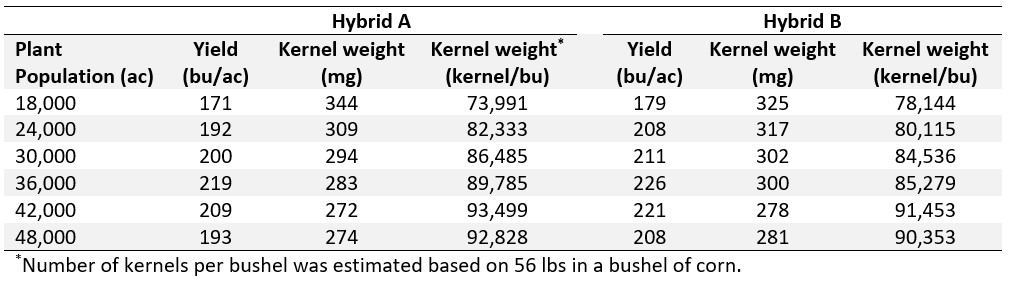
Illinois growers produced 639.3 million bushels of soybeans from 10.23 million acres in 2025, with an average yield of 62.5 bushels/acre. Approximately 11% of Illinois soybean acres were planted following the harvest of another crop (likely wheat), and double-crop soybean yields may have been lowered by dry conditions in some areas. That likely contributed some to the lowering of the final yield estimate.
The 2025 soybean story adds some nuance to the familiar saying that “August weather makes the soybean yield”. We need to remember that it was the conditions during the first half of the season, especially July rainfall, that set the yield potential. Warm temperatures in June and July helped, bringing on early flowering (in early-planted fields) and prolonging the podsetting process. With good pod set but limited moisture during seed fill, the soybean crop, like the corn crop, couldn’t pack as much weight into each seed. Data from UI trials in DeKalb, Urbana, and Belleville (Table 2) help illustrate this. Seed size was small across all sites, with counts ranging from about 3,000 to 3,6000 seeds per pound. For context, soybean seed counts usually fall between 2,100 and 3,500 seeds per pound.

What about 2026?
Statewide, total precipitation from October 2025 through January 2026 was less than 7 inches, about 4 inches below normal. Here in Champaign, that total plus the first three weeks of February is less than 4 inches. According to the U.S. Drought Monitor map from last week, nearly 95% of Illinois is currently in some state of dryness: 21% is at D1 – Abnormally Dry; 28% is at D2 – Moderate Drought; 33% is at D3 – Severe Drought; and 13% is at D4 – Extreme Drought (Figure 2). The area designated D4 is an area of drought centered on Champaign County that appeared in early July 2025, increased in severity into last fall, and has expanded in the months since. If the current soil moisture picture stays the same over the next month, we’ll be back to discuss this issue in more detail.
]]>USDA expects a slight decline in total acreage across wheat, corn, and soybean to 224 million (down ~1%). This number assumes a normal level of prevent plant acres and a modest expansion in the Conservation Reserve Program. The Season-average farm prices received by producers for corn, soybeans, and wheat are all forecast to rise slightly for the 2026/27 marketing year.
- WHEAT – 45 mln ac, 50.8 bpa, 1.86 bln bu prod, $5.00
- CORN – 94 mln ac, 183.0 bpa, 15.76 bln bu prod, $4.20
- SOYBEAN – 85 mln ac, 53.0 bpa, 4.45 bln bu prod, $10.30
-see the full 2026 USDA projections here.
Later today these numbers will be discussed during the WILLAg.org Closing Market Report and our Commodity Week programs. The following players will update automatically once those programs are released (2 p.m. for CMR and after 6 p.m. for CW). Watch for the dates to change to February 19.
We will also take these numbers up, along with the end of March Prospective Plantings report during the annual All Day Ag Outlook Conference. It is hands-down the best value for your money given the $40 per ticket price tag and the stellar line up.
ALL DAY AG OUTLOOK CONFERENCE
WILLAg.org, farmdoc, Illinois Extension
Tuesday, March 3, 2026
Beef House Restaurant
Covington, Indiana
Attendees will join WILLAg analysts and the farmdoc team for a full day covering agricultural basics, including markets, weather, trade, competition, land values, and crop insurance decisions.
Program Highlights:
- -Weather Outlook: Eric Snodgrass, Nutrien Ag Solutions
- -Grain Market Fundamentals: Joe Janzen, University of Illinois
- -The South American Competition: Joana Colussi, University of Illinois
- -Farmland Outlook: Center for Farmland Research, University of Illinois
- -Production & Budgeting: Sessions on trimming crop budgets with Nick Paulson and crop insurance decisions with Gary Schnitkey
- -Expert Panels: The WILLAg Soybean Panel featuring Ellen Dearden, Greg Johnson, and Chip Nellinger, and the Corn Panel with Curt Kimmel, Matt Bennett, Brian Stark, and Mike Zuzolo
Doors open at 7:30 a.m. central (8:30 a.m. eastern). The event includes morning coffee and Beef House cinnamon rolls, as well as a Beef House lunch. The program is expected to conclude at approximately 2:30 p.m. central (3:30 p.m. eastern).
Registration Information: Registration is $40 per person if purchased by February 27, and $60 thereafter. Media and Extension personnel may register for free. Purchases are non-refundable.
]]> The 36th annual All Day Ag Outlook will be held Tuesday, March 3, at the Beef House in Covington, Indiana. Join the WILLAg analysts and the farmdoc team for the day. We’ll cover the basics this year, including the markets, weather, weeds, trade, competition, land values, and crop insurance decisions. Click the registration link for complete details.
Doors open at 7:30 a.m. central / 8:30 a.m. eastern and include both coffee and rolls in the morning and a Beef House lunch.…]]>
The 36th annual All Day Ag Outlook will be held Tuesday, March 3, at the Beef House in Covington, Indiana. Join the WILLAg analysts and the farmdoc team for the day. We’ll cover the basics this year, including the markets, weather, weeds, trade, competition, land values, and crop insurance decisions. Click the registration link for complete details.
Doors open at 7:30 a.m. central / 8:30 a.m. eastern and include both coffee and rolls in the morning and a Beef House lunch. Registration for 2026 is $40 per person by February 27 and $60 there after. Media may register for free.
CLICK TO REGISTER
ALL DAY AG OUTLOOK
Tuesday, March 3, 2026
Beef House Restaurant
Covington, Indiana
– Weather Outlook with Eric Snodgrass, Nutrien Ag Solutions
– Grain Market Fundamentals with Joe Janzen, U of Illinois
– South American Competition with Joana Colussi, Purdue University
– WILLAg Soybean Panel with Ellen Dearden, Greg Johnson, Chip Nellinger
– WILLAg Corn Panel with Curt Kimmel, Matt Bennett, Brian Stark, Mike Zuzolo
– Weeds with Aaron Hager, U of Illinois
– The Value of Farm Land with Bruce Sherrick, U of Illinois
– Where to Trim Crop Budgets with Nick Paulson, U of Illinois
– Crop Insurance Decisions with Gary Schnitkey, U of Illinois
We had another cold and mostly dry week across the state. Average temperatures this week ranged from the low teens in northern Illinois to the high 20s in southern Illinois, between 8 and 18 degrees below average. A healthy snowpack in the southern half of the state helped push nighttime low temperatures well below 0, including lows of 7 below in Taylorville and 4 below in Jerseyville. The cold end to January pushed the month as a whole to be around 2 degrees below normal statewide.
by Trent Ford, State Climatologist
ISWS PRI University of Illinois
Precipitation was hard to come by once again this week, with most places receiving less than a tenth of an inch of light powdery snow. January ended around 2 inches drier than normal statewide, and only parts of Cook and Will Counties were wetter than normal last month. The eye-popping snow totals in parts of southern Illinois were underwhelming in terms of liquid water equivalent. For example, Du Quoin had nearly 20 inches of snow last month, over 500% of normal for January. And yet all that snow yielded less than 1 inch of liquid water, which left Du Quoin 2 inches drier than average last month. Therein lies the problem with light snow and the lack of drought relief, especially in central and southern Illinois where soils remain very dry and streams very low. Once the snow melts this week, spoiler alert, we will get a better understanding of how much or, in reality, how little the snow has helped improve drought.
Looking ahead, temperatures climb out of the teens and 20s over the weekend and will peak in the 40s and maybe 50s next week. Unfortunately, the warmer air does not bring a lot of humidity with it, so most places will get less than a tenth of an inch of precipitation next week. Farther out, the third week of the month is leaning warmer and wetter than average as a more active jet stream builds into the Midwest. Active weather is what the doctor ordered as we barrel toward spring.
Why You Should Use the N-Rate Calculator
– John Jones, Soil Scientist – University of Illinois
– Gary Schnitkey, Agricultural Economist – University of Illinois
– Laura Gentry, Water Quality Specialist – Illinois Corn Growers Association
During the December Illinois Extension conference we were joined by a panel of experts: John Jones, a soil fertility specialist from the University of Illinois; Gary Schnitkey, an agricultural economist also from the U of I; and Laura Gentry, of the Illinois Corn Growers Association’s. In an era of fluctuating input costs, these three believe corn production is about maximizing profits rather than yields. Today you’ll listen to them break down how the N-Rate Calculator and the Precision Conservation Management program are helping farmers protect both the local watershed and their bottom line by finding the ‘sweet spot’ for nitrogen applications.
WILLAg.org radio programming for the work week ending February 06, 2026
Commodity Week can be heard in the 2 o’clock hour central time on WILL AM580 or you may subscribe to it using the links in the player below. This week the panelists include Matt Bennett with AgMarket.net, Greg Johnson from TGM, and Risk Management Commodities’ Sherman Newlin.
The Closing Market Report airs at 2:06 p.m. central daily on WILL AM580. It, too, is a podcast. Subscribe using the link in the player.
]]>You can also read the article in Portuguese and Spanish
Introduction
Recent dust storm events in central Illinois and across the Midwest have renewed attention on soil conservation, especially after the tragic May 2023 event near Springfield that caused an 80-vehicle pileup, eight fatalities, and dozens of injuries. These incidents highlight that soil loss is not only an agronomic issue but also a public safety and environmental concern. Reduced tillage and cover crops are well-established practices to reduce wind and water erosion, and many Illinois growers are considering them. Yet, these systems are often associated with potential yield penalties.
Soybean establishment in high-residue systems, particularly after high-yielding corn or cereal rye cover crop, can be challenging. Heavy residue can slow soil warming and drying in the spring and around planting time. These cooler, wetter conditions slow the mineralization of organic matter, which in turn can limit early-season N and S availability. This situation can be exacerbated in no-till and cereal rye cover crop systems because the residue can immobilize some of the soil N that would otherwise be available to support early soybean development.
This project began in direct response to these challenges and was made possible through funding from the Illinois Soybean Association. Our primary goal was to evaluate whether growers can maintain productivity and profitability while using reduced tillage and cover crops, systems that protect soil but are often perceived as risky. A second objective was to understand whether starter fertilizer (nitrogen + sulfur) could offset early-season challenges in these systems, such as cool soils, heavy residue, and slower early growth.
Methodology
In 2024 and 2025, we conducted field trials at six sites across central Illinois and north-central Iowa (Figure 1A). All sites were located on productive soils with 3.7–4.2% organic matter. Grain yield was measured at the Iowa sites, while the Illinois sites also included detailed plant and soil measurements to better understand treatment effects during the growing season. The study evaluated four management systems: conventional tillage (CT; fall chisel plus spring field cultivation), fall strip-tillage (ST), no-tillage (NT), and no-tillage with a cereal rye cover crop (NT+CR). Each system was paired with three starter fertilizer strategies: an unfertilized control (UTC, no starter), 15 lb N/ac, and 15 lb N/ac + 10 lb S/ac.
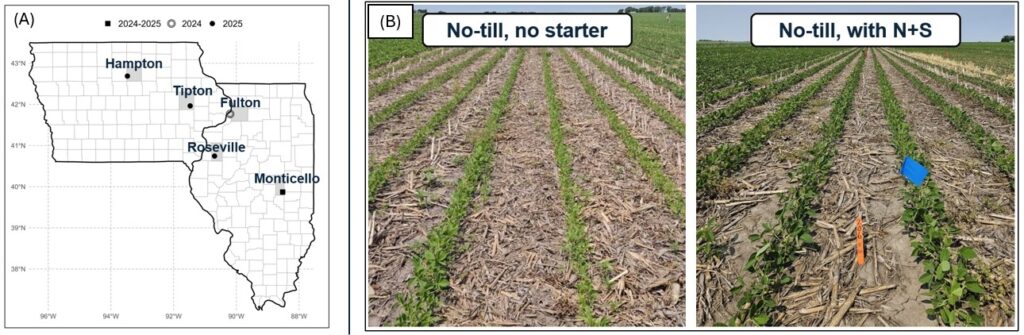
Cereal rye was drilled after corn harvest in 7.5-inch rows at 40-50 lbs/acre and terminated at about two weeks before soybean planting; targeting 1,000 to 1,200 lbs/acre of dry biomass at termination. Soybeans were planted in 30-inch rows at 140,000-150,000 seeds/acre. The starter fertilizer was applied at planting in a 2×2 band. The N was applied as UAN (32%), and the N+S treatment used a blend of UAN and ATS (12-0-0-26S). Soybean biomass (V4) and leaf tissue (R2) were collected to assess nutrient status and treatment effects across the growing season.
Results
Across our Illinois locations, soybeans generally showed an early-season response to starter fertilizer. Plants that received either N or N+S tended to have a greener canopy and produced greater early leaf area compared to the unfertilized control (Figure 1B). When averaged across the Illinois sites, starter fertilizer increased V4 soybean biomass by approximately 12% (data not shown). These early differences, however, did not persist as the season progressed. By the R2 growth stage, leaf tissue analysis showed that N and S concentrations were not statistically different among all treatments, and most values exceeded established sufficiency levels in the literature (4.3% for N; 0.265% for S) (Figure 2). These results indicate that soybeans were able to meet their nutrient needs through biological nitrogen fixation and soil organic matter mineralization, even in the absence of starter fertilizer.
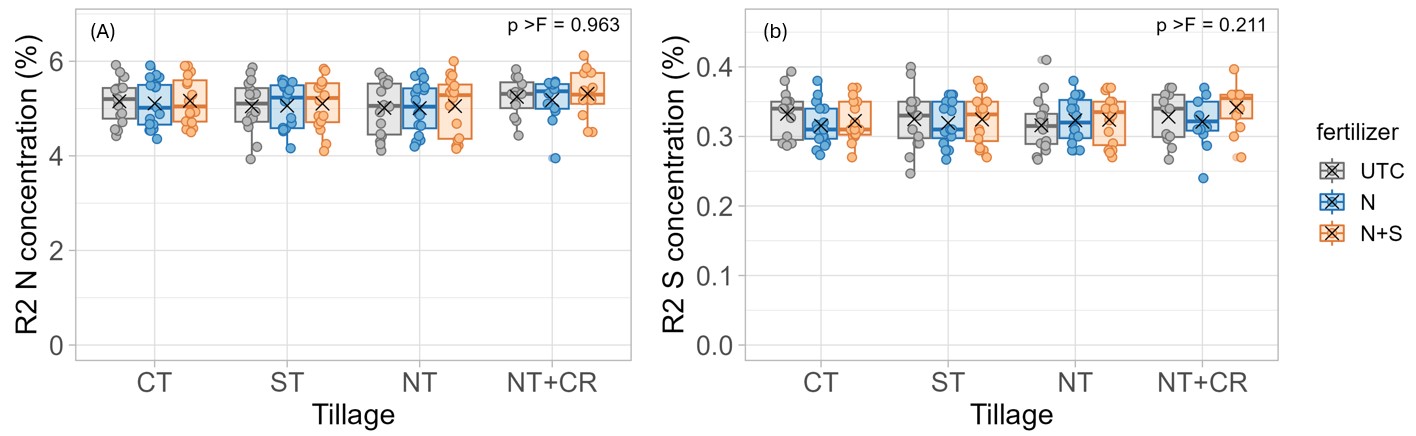
Soybean grain yield ranged from roughly 60 to 95 bushels per acre across the six locations and two study years (Figure 4). Despite the early biomass increase, starter fertilizer did not significantly increase seed yield across any of the tillage or cover crop systems. While a few sites showed a non-significant 2-5 bushel/acre increase with starter fertilizer in NT +CR, these responses were not consistent across locations or years (data not shown).
Yield differences among tillage systems were also relatively small. When averaged across the six site-years, CT and ST produced about 78.4 bushels/acre. No-till averaged slightly lower at 77.6, and NT+CR averaged 76.2 bushels/acre. In practice, our results show that soybeans grown under reduced tillage and cereal rye systems performed similarly to soybeans grown under CT.
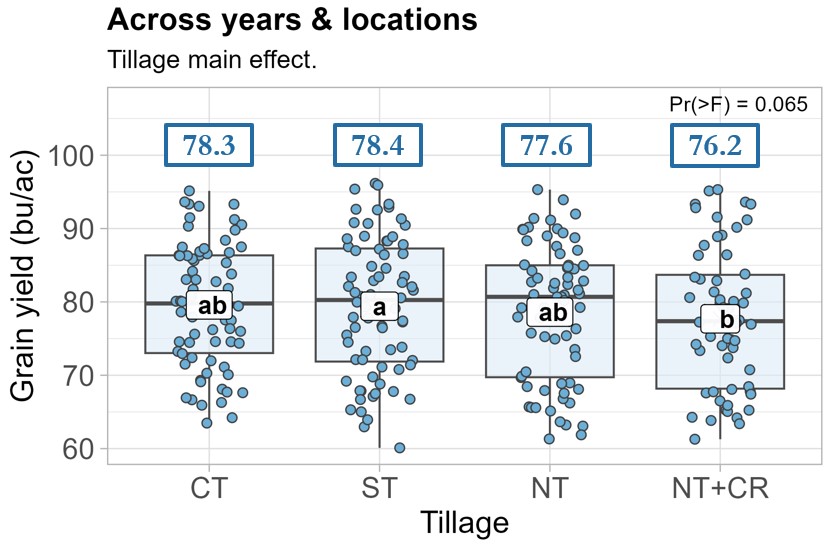
When economic considerations are included, differences in partial net return became more pronounced due to the costs associated with each tillage system (Table 1). Based on estimated field operational costs and assuming a soybean price of $11/bushel, the NT returned the highest partial net profit, followed by ST and CT. The NT+CR had the lowest partial net return due to the higher cost of cover crop management, estimated at $55/acre. It is important to note that cover crop expenses can be substantially offset by available state and federal cost-share programs, and reduced tillage may offer profitability advantages in years with low commodity prices.
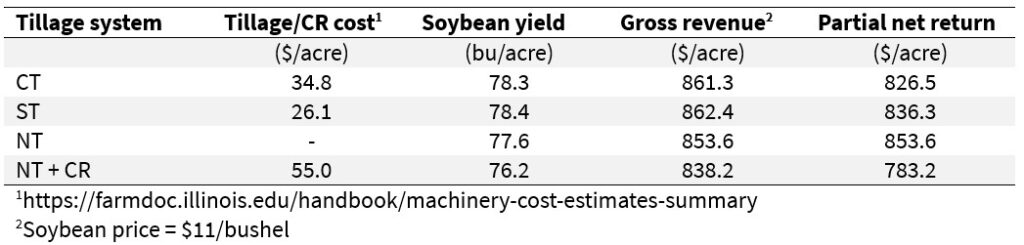
Looking ahead
This project will continue into its third year (2026). The experiments near Monticello in Piatt County, initiated in the fall of 2023, remain in place to allow us to track medium-term responses as the soil, residue levels, and nutrient dynamics change under reduced tillage and cereal rye cover crop. These medium- to long-term data will provide valuable insights into how soybean performance and nutrient dynamics shift over time in conservation systems; information that will help growers committed to improving conservation without sacrificing yield potential.
These findings should be considered preliminary. More data will be released once the trial is completed.
]]>Winter has come back with a vengeance after a temporary pause. Average temperatures this week ranged from the low teens in northern Illinois to the mid-20s in southern Illinois, between 4 and 8 degrees below normal statewide. Nighttime low temperatures this week regularly dipped into the single digits, if not below zero, including -5 degrees in Rockford and -2 in Aurora. The wind was also a factor, pushing wind chill values close to -20 on a few days.
by Trent Ford, State Climatologist
ISWS PRI University of Illinois
We had another mostly dry week along with the cold. 7-day totals ranged from around half an inch in northeast Illinois to virtually nothing in southwest Illinois. January to date has been somewhat to very dry across the state, adding to what has already been a very dry start to 2026. In fact, the first two thirds of January has been the 4th driest on record in Carbondale and the 10th driest in Charleston, both of which having less than half an inch of total precipitation so far.
Looking ahead, the cold will stick around for at least another week. Temperatures will struggle to make it out of the single digits through most of the weekend, and it’s likely most of the northern half of the state will spend the rest of the month below freezing. Meanwhile, a very strong winter storm is swinging through the mid-south this weekend, bringing significant precipitation to southern Illinois. At this point, almost all of the precipitation looks to come in the form of wet snow for southern Illinois, although folks should be very weather aware this weekend as forecasts can change very quickly.
Expected snowfall totals through Monday increase as you go south, with most of central Illinois expected to pick up around 3-4 inches while areas south of Interestate 64 could see between 8 and 12 inches, with some isolated pockets of heavier snow. It will be a very good weekend to stay home and catch up on shows and some good football, unfortunately without the Bears.
—
WILLAg.org radio programming for the work week ending January 16, 2026
Commodity Week can be heard in the 2 o’clock hour central time on WILL AM580 or you may subscribe to it using the links in the player below. This week the panelists include Chip Nellinger of Blue Reef Agri-Marketing, Brian Stark from The Andersons, and Arlan Suderman with StoneX.
The Closing Market Report airs at 2:06 p.m. central daily on WILL AM580. It, too, is a podcast. Subscribe using the link in the player.
]]>by Trent Ford, State Climatologist
ISWS PRI University of Illinois
Despite the warmer weather, we didn’t have much in the way of precipitation this week. 7-day totals ranged from around a tenth of an inch in southeast Illinois to three quarters of an inch in parts of central Illinois. January to date has been around half an inch to 1 inch drier than normal in most of the state, except for a narrow area between Peoria and Chicago, which caught 1 to 3 inches of rain last week. This winter season so far has been slightly wetter than normal in northeast Illinois, slightly drier than normal in most of central and western Illinois, and much drier than normal in southern Illinois. In fact, this winter season so far has been a top 5 driest on record in most places south of Interstate 70, including the 3rd driest in Salem, and 4th driest in Paducah.
Looking ahead, our milder weather will come to a cold end this weekend, as much cooler air moves into the Midwest. Highs will struggle to make it above 20 in northern Illinois and above freezing in southern Illinois this weekend, and will be in the single digits on Monday. Unfortunately, the cold air will not bring much in the way of precipitation, with 7-day forecasted totals mostly less than a quarter of an inch. Virtually all of this will fall as on again off again light snow through the weekend and into next week. Colder weather looks to stick around as the week 2 and week 3 outlooks both show best chances of below normal temperatures through the first week of February. Most of the region is expected to get better chances of precipitation, though, in the final week of January.
—
WILLAg.org radio programming for the work week ending January 16, 2026
Commodity Week can be heard in the 2 o’clock hour central time on WILL AM580 or you may subscribe to it using the links in the player below. This week the panelists include Logan Kimmel from Roach Ag, Jim McCormick at AgMarket.net, and Mike Zuzolo with Global Commodity Analytics and Consulting.
The Closing Market Report airs at 2:06 p.m. central daily on WILL AM580. It, too, is a podcast. Subscribe using the link in the player.
]]>You can also read the article in Portuguese and Spanish
Introduction
There is a growing interest in wheat/soybean double-cropping systems in Illinois, extending into parts of central Illinois where wheat acreage has been limited in recent decades. USDA-NASS survey estimates that 60-80% of Illinois wheat acres are double-cropped with soybeans. Implementing this system in central and northern Illinois has been constrained primarily by low wheat acreage and by later wheat harvest, which often delays soybean planting until early to mid-July. Such late planting generally results in shorter soybean plants with fewer lateral branches and nodes, which lowers soybean yield potential per plant.
Two agronomic factors that may improve the productivity and profitability of double-crop soybeans are maturity group (MG) selection and seeding rate. Selecting a variety that is 0.5 to 1.0 MG earlier than a full-season cultivar may lower the risk of fall frost damage. There is some evidence that current earlier-maturing varieties may not have much lower yield potential than mid-maturing varieties when both are planted early, but we do not know if this is the case when planting is delayed in the double-crop system. Increasing the seeding rate is also recommended in some states for late-planted/double-crop soybeans, to promote faster canopy closure and maximize light interception. In Kentucky and Ohio, Extension agronomists recommend harvest plant populations between 130,000 and 150,000 plants/acre for double-crop soybean.
In addition, wheat can remove substantial soil nitrogen (N) with grain harvest; a 100-bushel wheat crop removes approximately 190 lb N/acre. Although soybean typically meets most of its N requirement through biological N fixation, it is unclear whether supplemental N (particularly as a starter fertilizer) may benefit double-crop soybean following wheat.
Methodology
Field trials were conducted near Hammond in Piatt County during two growing seasons to evaluate the effects of seeding rate, MG, and starter fertilizer on double-crop soybean grain yield (Table 1). Trials were on silt loam and silty clay loam Mollisols with 3.7% organic matter. Treatments consisted of a 3-way factorial combination of: four seeding rates (140,000 to 260,000 seeds/acre, in increments of 40,000); two varieties with MG ratings of 3.0-3.2 and 3.6-3.8; and two fertility levels (none vs. N+S), for a total of 16 treatments. The latter (3.6-3.8 MG) varieties are commonly-grown, locally-adapted varieties, and hereafter referred to as ‘full-season’; and the 3.0-3.2 MG are referred to as ‘early-season’. Treatments were replicated four times. Plots were 20 ft wide by 500 ft long.
Double-crop soybeans were no-till planted in 15-inch rows soon after wheat harvest. Starter fertilizer was applied at planting in a 2×2 band, supplying 26 lb of N and 11 lb of sulfur (S) using a blend of UAN (32-0-0) and ATS (12-0-0-26S). Weeds were controlled with pre- and post-emergence herbicide applications. Seed yield was measured from the center of each plot using a field-scale combine with a calibrated yield monitor and GPS tracking system. All yields were adjusted to 13% moisture.

Results
Double-crop soybean yield averaged 55.7 and 47.8 bushels/acre in 2024 and 2025, respectively. Maturity group had a small but consistent impact on double-crop soybean yield (Table 2). Full-season varieties (MG 3.6-3.8) yielded about 4% (2.1 bushels/acre) more than early-maturing varieties (MG 3.0-3.2), averaged across seeding rate and fertility treatments. The yield advantage of full-season varieties was likely associated with a longer reproductive period, as no fall frost injury was observed during either year of the study. These results are consistent with previous research indicating that, when frost risk is minimal, the longest adapted MG for the region often maximizes yield potential in double-crop soybean systems.
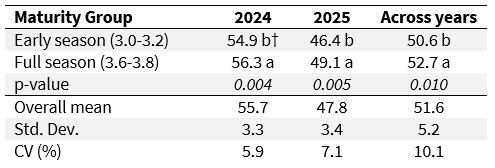
Seeding rate response by maturity group
Across years and fertility treatments, double‑crop soybean yield response to seeding rate differed by soybean maturity (Figure 1). Yield of early‑maturing varieties increased across the entire range of seeding rates, reaching a maximum (52.3 bushels/acre) at about 252,000 seeds/acre, just below the maximum seeding rate used. In contrast, yield response to seeding rate for full‑season varieties increased at lower seeding rates, but reached a maximum at about 207,000 seeds/acre, with no additional yield increase from further increases in seeding rate. Maximum yield for full‑season varieties was estimated at 53.4 bushels/acre. These results indicate that early-maturing varieties may require higher seeding rates to achieve yields similar to those of full-season varieties. It is also clear that seeding rates may need to be at or above 200,000 for double-cropped soybeans.

Effect of starter fertilizer
Starter fertilizer application (N+S) increased double-crop soybean yield in 2024 but not in 2025 or when averaged across years. The yield response observed in 2024 was only 1.4 bushels/acre (2.6%), on average, and was unlikely to offset the additional input cost. Although wheat removes substantial amounts of N with grain harvest, wheat N uptake typically concludes by early June before ripening. As a result, a considerable portion of soil N mineralization may have occurred between wheat harvest and double-crop soybean planting, increasing soil N availability to the subsequent soybean crop. In addition to biological N fixation, mineralized soil N supplies substantial amounts of N to soybeans. Overall, these results suggest that starter N and S fertilization was not a consistent yield-enhancing practice for double-crop soybean in central Illinois.
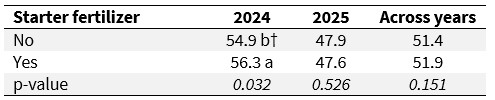
This was supported by, and in collaboration with, the Illinois Agricultural Experiment Station, the Illinois Fertilizer & Chemical Association (Dan Schaefer), and Eric Miller (producer and landowner in Piatt County).
These findings should be considered preliminary. Similar trials across years and locations are ongoing to strengthen regional recommendations.
]]>
Resistance to glufosinate was confirmed in three Illinois populations through greenhouse dose-response experiments and further supplemented with field research data for a northern Illinois population. Greenhouse dose-response experiments indicated the populations were between 2.2 – 3.4 fold resistant relative to a susceptible population based on plant survival, and 1.3 – 2.8 fold resistant based on dry biomass. These resistance ratios are relatively low compared with resistances to other herbicides but high enough to result in incomplete control. Twenty percent of treated plants survived the 1x glufosinate rate applied in the field experiment.
Additional research has suggested that glufosinate resistance in not mediated by a change in herbicide target site, but rather by enhanced glufosinate metabolism. Preliminary growth chamber research suggests resistance is “enhanced” under warmer air temperatures, possibly due to increased herbicide metabolism in warmer environments.
We do not know how extensive glufosinate resistance is in Illinois waterhemp populations, but we have no evidence to assume these are the only populations. Efficacy of glufosinate can be influenced by environmental conditions such as humidity, air temperature, solar radiation, etc., and previous research has demonstrated efficacy can be reduced when these and other environmental conditions are less than optimal. Not every instance of incomplete waterhemp control following glufosinate application is attributable to resistance, but applicators should be aware resistance has evolved and can be the primary (or contributing) factor of poor waterhemp control.
Applicators should do everything possible to ensure glufosinate efficacy remains high, including selecting the appropriate application rate, carrier volume, spray additive, and herbicide tankmix partner(s). Previous research has demonstrated improved waterhemp control when glufosinate is combined with 2,4-D choline on Enlist crops compared with either herbicide applied alone. There are NO new postemergence herbicides that will be commercially available within the next few growing seasons that provide effective waterhemp control. Weed management practitioners should strive to preserve glufosinate and 2,4-D choline as viable options for waterhemp control. Reducing or eliminating waterhemp seed production is the only effective method to ensure no change in resistance frequency occurs over time.
Dr. Patrick Tranel, molecular weed scientist at the University of Illinois, recently presented a podcast sponsored by the Illinois Soybean Association that addressed inconsistent performance of glufosinate for waterhemp control; the podcast is available here: https://fieldadvisor.org/understanding-inconsistent-performance-of-glufosinate-for-waterhemp-control/
A Few Final Thoughts
Three quotes from Dr. Tranel that bring clarity and urgency to the confirmation of glufosinate resistance are reproduced from a recent article written by Rhonda Brooks for AgWeb:
“You can’t manage chemical resistance with chemicals,” Tranel says. “We cannot exclusively rely on herbicides like we have been able to do in past decades.”
“At the end of the growing season, if you don’t have a weed going to seed, you’re not going to get evolution of resistance,” Tranel says. Achieving this goal, which requires ongoing effort, will reduce pressure on your herbicide program, he adds.
Tranel says he often ponders where the farming community would be today with regard to weeds if glyphosate had been stewarded better. It’s a lesson he hopes row crop growers take to heart. “Glufosinate might be the best thing we have for the next 10 years. How can we make sure we can keep using it for the next 10 years?” Tranel says.
You can read the entire article at: https://www.agweb.com/news/crops/crop-production/end-era-glufosinates-tight-grip-waterhemp-finally-breaks
]]>
Happy new year! For the first summary of 2026, we’ll take a quick look back at December and the weather year of 2025, and then look forward to the rest of winter and a bit of spring.
December was around 2.5 degrees colder than normal statewide, which was quite a contrast to a very warm fall season. However, the average temperature in December doesn’t tell the story of its huge temperature swings. Much of the state had temperatures that were 20 to 30 degrees below normal in the middle of the month, followed by temperatures that were 15 to 25 degrees above normal around Christmas. Despite the cooler end to the year, warmer weather in 2025 dominated, and the year ended around 1 degree warmer than normal statewide.
December gave us a mixed bag for precipitation. Much of central and northern Illinois were very snowy last month, including parts of central Illinois that had 400% of normal December snowfall. However, the snow did not contain a lot of liquid water, so parts of the state that had nearly 20 inches of snow still ended the month slightly drier than normal. Overall, northern and western Illinois were 1 to 2 inches wetter than normal last month, while eastern and southern Illinois were between 1 and 4 inches drier than normal. Last month was actually the 2nd driest December on record in Carbondale, with only six tenths of an inch. 2025 was also quite a dry year statewide, with only April and July having above normal precipitation. Of course, this varied across the state, as southeast Illinois had 2 to 5 inches above average precipitation last year, while east-central Illinois was 10 to 15 inches drier than normal. 2025 was the second driest year on record in Champaign-Urbana with only 24.5 inches, and the driest year since 1894.
Looking ahead, outlooks show a temperature roller coaster for the rest of January and into February. There are increasing signs of some serious cold coming in the last week of January, along with multiple clipper systems that could bring more snow to the state. As winter transitions to spring, forecasts indicate better chances of our La Nina conditions weakening and likely dying before we get too far into March. The most recent outlooks for early spring still show a strong La Nina signal for Illinois, with wetter weather, but that confidence really drops off between March and May as La Nina fades. Interestingly, models are increasingly bullish for a transition from La Nina to possible El Nino conditions by fall.
—
WILLAg.org radio programming for the work week ending January 9, 2026
Commodity Week can be heard in the 2 o’clock hour central time on WILL AM580 or you may subscribe to it using the links in the player below. This week the panelists include Naomi Blohm of Total Farm Marketing, Ellen Dearden at AgReview, and Chuck Shelby with Risk Management Commodities.
The Closing Market Report airs at 2:06 p.m. central daily on WILL AM580. It, too, is a podcast. Subscribe using the link in the player.
]]>