The theme of Danube Dialogues 2026: Rituals and Rhythms focuses on contemporary art of the Danube region, based on the premise that this area has historically been shaped by multiple cultural, political, and spiritual influences, and has thus served as an axis of encounters and conflicts: from the Roman Empire and its borders (the limes), through medieval kingdoms, the Ottoman Empire, and the Habsburg Monarchy, to Yugoslavia and the subsequent postsocialist transformations. These complex historical processes have left a legacy of hybrid identities, multilayered cultural matrices, and specific forms of collective memory.
Reflecting on a fundamental idea that has permeated all previous editions of this manifestation – the human being and the humanistic dimension of art – I arrived at this theme, which sets the perspective from the inside out. We ask ourselves what within us is uniquely human, what defines our specific nature, and how we can shape reality by relying not only on intellect and skill, but also on our ability to bridge dimensions through which beliefs are formed and enacted. This opens complex psychological and spiritual questions that lead us toward deeper introspection and collective understanding.
In this context, rituals can be seen as a common denominator – gestures and practices that have, throughout centuries, both united and divided people. The notion of ritual here is understood not only through religion and tradition but also as a universal language of repetition, communion, and inner transformation. Like the rhythms of breathing or the cycles of nature, rituals signify both continuity and change – a space in which a community affirms and simultaneously questions itself.
In art, such concepts have been explored through performance, action, and participatory practices. Artists such as Joseph Beuys, the Viennese Actionists, Marina Abramović, Allan Kaprow, and Yoko Ono have used ritual and collective engagement to probe the boundaries of the body, consciousness, and social responsibility. Like all natural and social processes, art unfolds in rhythms – in repetition and variation, in the constant attempt to keep pace with the time that shapes our existence.
Today, we are confronted with questions concerning the very purpose of our existence. Technological progress has shifted our perception of aging and death, while space exploration has opened new perspectives and possibilities. Questions of the common good and ethical boundaries have become particularly urgent in light of unrestrained liberal capitalism and the development of artificial intelligence – a technology that has yet to choose its “side,” but which already sparks a kind of spiritual revolution, especially among younger generations seeking deeper spirituality and re-examining dominant religious and philosophical paradigms. This process is also visible within institutional religions, which show a tendency to adapt to the new rhythm in which humanity strives to attune itself to complex changes and global challenges. Yet this rhythm often passes through serious dissonance, calling for a new form of both collective and individual reflection.
Art thus assumes an evolutionary role – to awaken the deepest layers of the human being, to open spaces for introspective dialogue and collective awareness. Rituals and Rhythms are therefore not only the thematic framework of the exhibition but also a metaphor for the artistic processes of this region: the ways in which artists seek answers to the fears and unrests of contemporary life, how they imagine community, and how they shape visions of harmony, solidarity, and love.
]]>Gallery of the Belgrade City Museum, August 22 – September 8, 2025
The exhibition Between the Shores: Danube Dialogues 2013–2024 is on view until September 8, 2025 at the Salon of the Belgrade City Museum (Bulevar kralja Aleksandra 30, Belgrade).
The curator of the exhibition is art historian Ksenija Marinković.
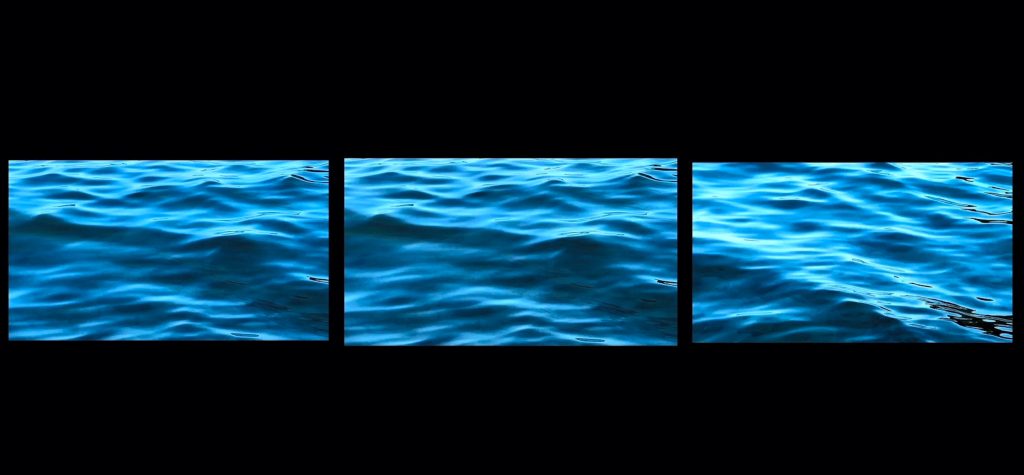
The exhibition Between the Shores brings together a selection of works by artists who have shaped the identity of Danube Dialogues — an international contemporary art festival held in Novi Sad over the past ten years, dedicated to connecting countries of the Danube macro-region: Germany, Austria, Slovakia, Hungary, Croatia, Serbia, Romania, Bulgaria, Moldova, Ukraine, Bosnia and Herzegovina, Slovenia, and Montenegro. In the spirit of openness and intercultural dialogue, the festival has also occasionally welcomed countries beyond the region, such as China and Japan, further expanding the network of artistic exchange and perspectives.
The exhibition features selected works by the following artists: Ulrike Kessl (Germany), Claudia Chaseling (Germany), Fritz Ruprechter (Austria), Franz Riedl (Austria), Eva Petrič (Austria/Slovenia), Christa Sommerer & Laurent Mignonneau (Austria), Rudolf Sikora (Slovakia), drMáriás (Hungary), Rokko Juhász (Hungary), Zlatan Vehabović (Croatia), Vladimir Frelih & Dragan Matić (Croatia and Serbia), Goran Despotovski (Serbia), Nataša Teofilović (Serbia), Čedomir Vasić (Serbia), Andrea Ivanović Jakšić (Serbia), Milorad Mića Stajčić (Serbia), Stevan Kojić (Serbia), Mira Brtka (Serbia), Ana Adam (Romania), Lea Rasovszky (Romania), Iglika Christova (Bulgaria), Ghenadie Popescu (Moldova), Milena Jovićević (Montenegro), Tina Dobrajc (Slovenia), Nela Hasanbegović (Bosnia and Herzegovina), Mladen Miljanović (Bosnia and Herzegovina), Sam Durant (USA).
Between the Shores is not only a spatial marker referring to rivers connecting the Danube countries, but also a liminal space — a place between the known and the unknown, the earthly and the spiritual, art and everyday life. In many mythologies, the river symbolizes a passage: in ancient Greek tradition, it is the Styx, the water that separates the world of the living from the dead, yet also connects them as a site of transformation, initiation, and inner change.
In that spirit, this exhibition opens a space for contemplation, remembrance, and new dialogue — in the moment as we remember and pay tribute to Sava Stepanov (1951–2024), a long-time artistic director whose work shaped the festival’s mission.
“Danube Dialogues, a festival of contemporary art, was initiated at a time when the turbulent, and sometimes even revolutionary, changes had subsided in many Danube countries. It is important to note that art in most of these countries today unfolds within democratic societies. The current state of democracy in the Danube region is better than ever before, despite the challenges imposed by economic crises and the painful transition processes in post-socialist nations. Contemporary art, through its own transformation, has become a kind of agent of authentic life information, encouraging and demanding dialogue and direct communication that can lead us to new knowledge and insights, toward a renewed sense of morality and ethics. Because, ‘ethics necessarily arise as a moral need’, as stated by Edgar Morin”, those were the words written in 2013 by Sava Stepanov.
Each festival cycle has been carefully curated with a clear thematic and critical backbone, grounded in both reality and Stepanov’s vision. His final contribution — On Self-Destruction and Against It (2024) — now resonates as a powerful closing note in an ongoing artistic and social reflection, especially in light of the war in Ukraine, which has dramatically reshaped the spiritual landscape of the region.
Recalling his final thematic impulse, the title Between the Shores becomes a metaphor for both life and artistic transition — a call to continue the dialogue, just like the rivers that connect us, even when physical presence fades.
]]>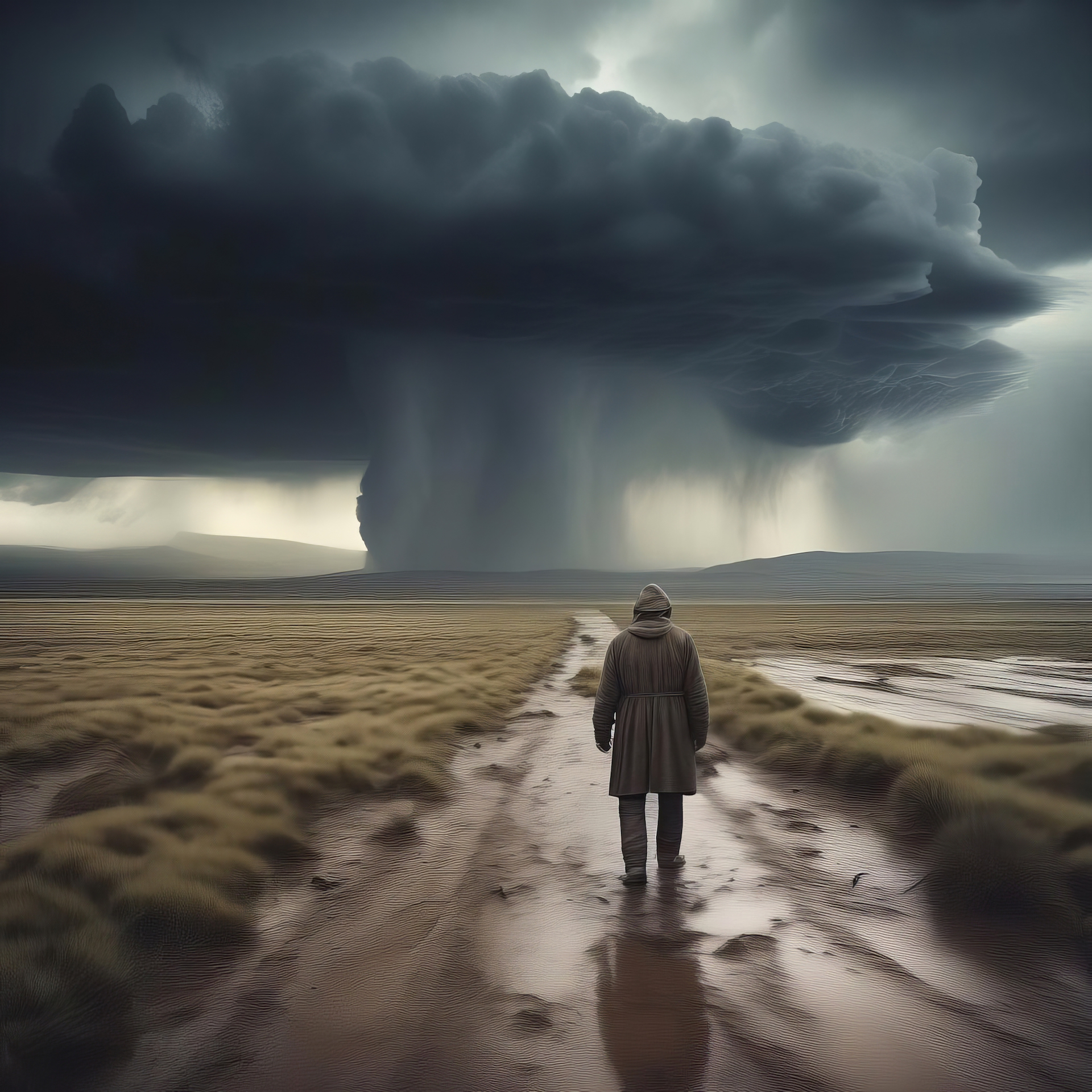
The homocentric focus is blurred in politics, society, economy, science, ecology and morality. The Forbes Institute announced that 300 people hold more capital than the rest of the world, epitomising the state of human society. As much as this may be a layperson’s conclusion, it is undeniable that today’s capitalism, in its present manifestation, is the fundamental cause of the global crisis and current tensions. In the constant effort to increase their capital, the economic forces bring society to a place of (self)destruction. In his disregard for nature and its demands, man has imposed upon himself the burden of ecological upheaval, which has placed him in a position of vulnerability; just as he broke fundamental moral doctrines by brutally exploiting “human resources”.
The paradox of today’s world is that society has fallen into a deep crisis at the time of the highest achievements of the human mind. Thanks to corrupt politics and big capital, instead of development and construction, the interests of the ubiquitous “philosophy of profit” were applied to the world’s resources. This is how an enduring global crisis is generated, destroying fundamental human values, dignity and identity. Whatever the case, self-destruction is on the scene, and man is the sole cause of all the world’s crises.
In such a constellation, the individual becomes more and more powerless every day in managing his own destiny. Unregulated capitalism strives to separate humans from themselves and turn them into a resource for profit. Overwhelmed with work, they are alienated from their uniqueness – their personality is extinguished and destroyed.
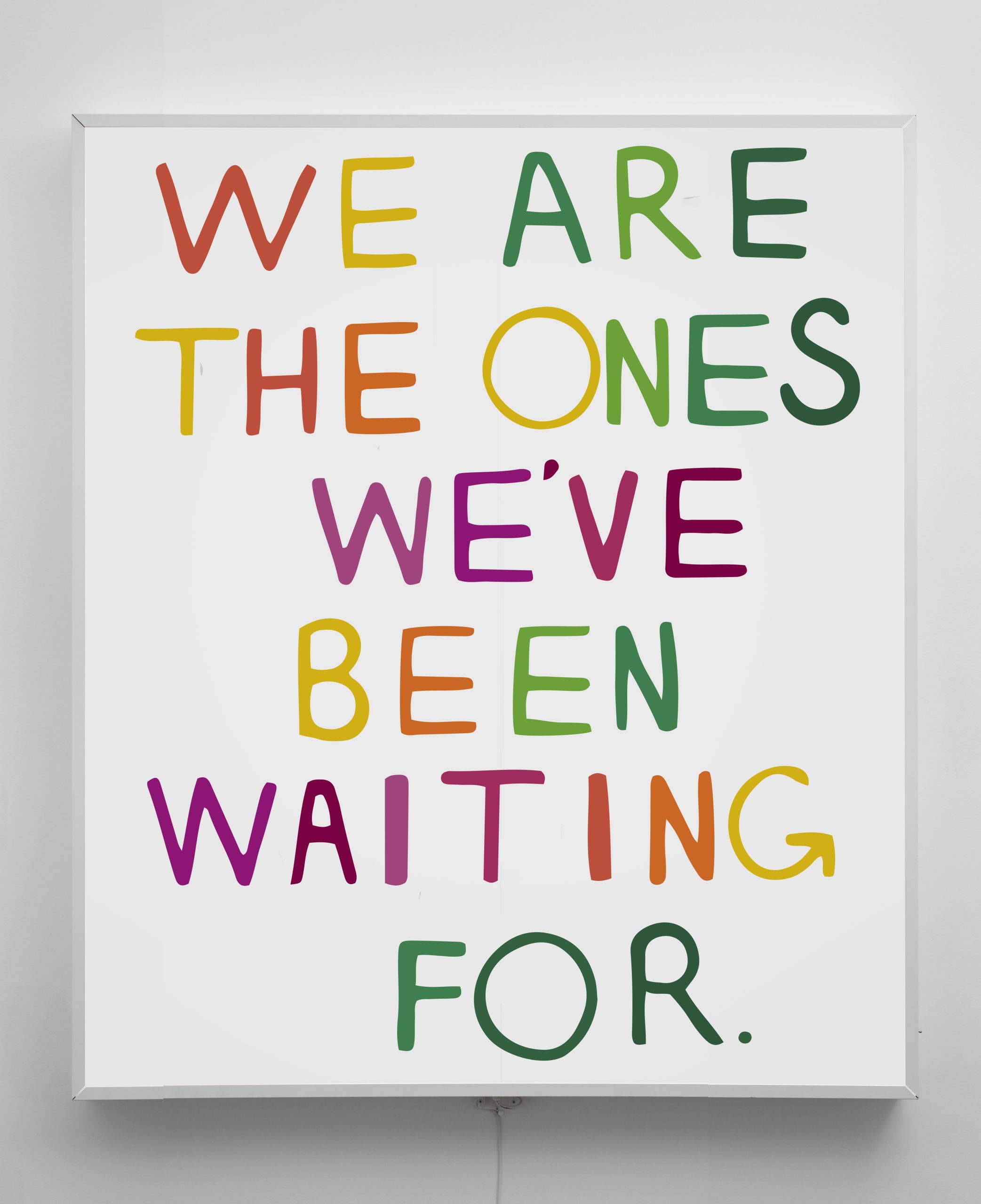
People of today live a selective life, a life determined by the imperatives of the market and politics. In such a world, philosophy and art experience become redundant. Life has broken away from them, or they have fallen behind life, so they seem almost unnecessary… With this in mind, the Macedonian director Slobodan Unkovski asks, “Not only what does art serve today – but for whom”? Nonetheless, in the crisis of the modern world, art has a vital role: in the general dystopia, it, in a certain sense, holds to certain tenets of Hegel’s “Phenomenology of the Spirit”, that sanctified thought allows a person to understand the essence of things, i.e., to recognize the true character of the world and time in which we live. Currently, in a world of drastically disrupted morality, the artist’s intentions are directed towards restoring the importance of aesthetic design in which the goal is by no means the classic ideal of beauty but an alternative ideal of vitality. Art is always there “not to stand out, but to be a model for other knowledge and practices” (Filiberto Menna). With its aesthetic system, its plastic thinking, its appropriation of new media possibilities as means of expression, its expressive or rationalistic reactions, its ethics, its humanistic potentials, art extends a genuine compassion for existing human suffering and the destiny that must be recognized and overcome.
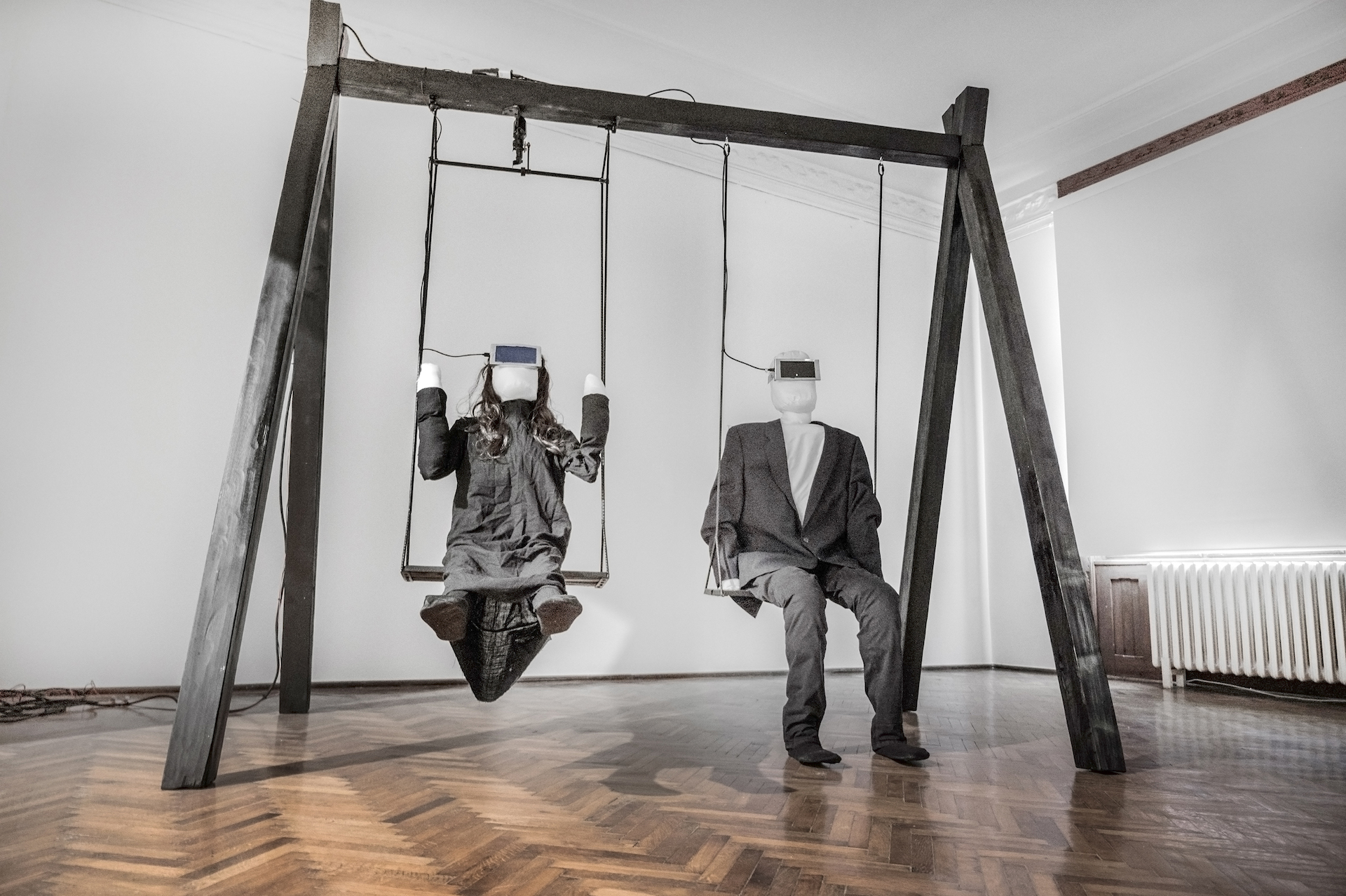
This is why exhibitors at “On (self)Destruction and Against It” are expected to have a homocentric view when looking at the current world. The politics of today deserve a critical attitude – not to criticise the guilty, but to raise awareness and hearten the vulnerable. The topic is globally present and significant, which is why it is necessary to study the works of artists from countries from all continents. The conceptual narrative is dedicated to the most topical issues, and an effort will be made to present works at the exhibition, which, in addition to painting and sculpture, are close to contemporary media expressions (photography, video, computer art and other innovative technologies). The central exhibition “On (self)Destruction and Against It” was conceived as a presentation of the works of fifteen artists from around the world (America, China, Kenya, Brazil, European countries, Serbia). In this way, the exhibition will fulfil its aesthetic, ethical, cultural, sociological and humanistic mission.
Sava Stepanov
]]>
The tenth anniversary of the Danube Dialogues contemporary art festival had the good fortune to coincide in 2022 with Novi Sad’s year as European Capital of Culture. This year, the city can be said to have conscientiously and very successfully carried off Europe’s largest cultural project. The Danube, which gives Novi Sad its important geographical, historical and cultural position was one of the pillars of the application which brought the city this prestigious title through one of the “arches” of the programme: Danube Sea. Altogether, it added extra energy and swing to the festival, putting wind in the sails of the entire team with their local and foreign guests. The atmosphere throughout the festival, which extended throughout the summer from July to October, was encouraging and motivating. Artistic director Sava Stepanov’s assignment for guest curators and artists, Quo Vadis Mundi, floated like an open umbrella over all segments of the programme, in keeping with contemporary arts’s mission to ponder and explore mankind’s place and role in the modern world and point out the deficiencies of our age.
The atmosphere we live in is alarming: locally, globally, a rampant and greedy capitalism relentlessly takes and expends human strength without offering anything worthwhile in exchange. Man is the universal victim. The individual’s working and living functions are separated from him because Big Capital has no need for autonomous personalities, aware of their own economic, political, social and cultural requirements. The danger to the individual in the course of global events had reached a crux. We clutch at straws in the face of growing alienation, loss of identity and the widespread deformation of the way we were accustomed to live. Covid 19, ecological catastrophe and the war in Ukraine have only added to the urgency of the situation and the helplessness of modern man.
In these circumstances art can and should have a special role: in the middle of this chaotic nemesis, today’s man has real need of art. As Dostoevsky once wrote, it is an old truth that ‘art cannot change the world, but it can make it better and more bearable’. Today, the famous conceptual artist Yoko Ono advises us: ‘Improve yourself carefully but think too about improving the world at the same time.’ That is why it is so important to establish art that is systematic and functioning, to enable it by its very character to be really contemporary, even modernist and avantgarde in order to be a fit model for society, an example to other knowledges and practices, to offer an alternative. Surrounded as we are by global insecurity, new concepts are needed, new systems. In that sense we should consider the need for today’s artists to ‘come out’ into the arena of new media, if we are not to be swallowed up by globally developed, interconnected digital systems or led into even more drastic alienation, more complex dependence and hopelessness (Sava Stepanov).
So far, each Danube Dialogues exhibition has had a theme focused on the current issues facing mankind (Art and Crisis, Art in the Age of (non-)Emotion, Art and Global Insecurity, The Use of Man, Quo Vadis Homo?) This year’s ambitious title Quo Vadis Mundi? was an attempt to show the reaction of artists to the present state of the world after the Covid 19 pandemic with its on-going consequences and the many questions it has raised.
This year’s festival opened with the exhibition Artistic Dialogue: Novi Sad – Timişoara 3E: Ecology, Ethics, Esthetics in the Rajko Mamuzić Gallery in Novi Sad. Many of the problems we encounter today were laid bare by the pandemic. Many of us experienced the crisis as a metaphoric and practical response by nature to mankind who, enveloped in the ideology and practice of runaway liberal capitalism and guided by the philosophy of profit, has artificially disturbed the course of the natural order. In these circumstances, contemporary art reacts with its own ethical and aesthetic criteria. Its response is to try to find a basis for a “new normalisation” in the precarious society of today.
The Artistic Dialogue: Novi-Sad – Timişoara has been part of the Danube Dialogues since 2016, when these two cities, geographically and culturally close, were declared European capitals of culture for 2021. Thanks to exceptional collaboration between Bel Art Gallery, Novi Sad, and the Jeca Gallery and Triade Foundation, Timişoara, this dialogue of artists and their work takes place every year in the spirit of the festival’s basic idea. The curators’ intention is to identify points of coincidence, convergence or opposition in the sensitivity and language of the individual artists. These “artistic dialogues” require expanded action, the discovery of new approaches and contexts for art works in everyday reality. Two curators: distinguished art historian and independent curator, Alina Şerbaia (Romania), and the festival’s artistic director, critic Sava Stepanov (Serbia), were joint selectors for this year. Works by Cristian Răduță, Nona Inescu, Lea Rasovszky, Happy Trash Production, Adrienn Ujhazi, Nemanja Milenković, Vesna Tokin and Radomir Knežević illustrated their views on the complex question of where the world is heading at the moment. The finishing touch to successful collaboration came in Paris in October when curators Ami Barak (Paris) and Sava Stepanov (Novi Sad) got together to exhibit Statements of Pure Consciousness at the Serbian Cultural Centre. Meanwhile, the Romanian Cultural Centre introduced the public to the Danube Dialogues Contemporary Art Festival, representing ten years of fruitful collaboration between Novi Sad and Timişoara.
Leading tenor of the Novi Sad Opera Saša Petrović sang at the traditional opening of the festival, accompanied by his sons, budding musicians Vuk and Luka Petrović.
This year, the central exhibition of the festival, Off-Centre: artistic dialogues and interlacing,moved out of the city to some of the smaller towns along the Danube (area code 021): Irig, Sremski Karlovci, Sremska Kamenica and Čerević, thus bringing reputable art to local communities and affirming their place in this same world. Locations selected were buildings of cultural heritage: the Karacsonyi House in Sremska Kamenica, the Homeland Museum in Čerević, the Mihiz House in Irig and the secondary school (Gymnasium) in Sremski Karlovci. Distinguished personalities in contemporary art in the Danube region were represented: Germany, Austria, Slovakia, Hungary and Serbia. Selectors for the four exhibitions were Serbian artists Dejan Kaludjerović, who lives in Vienna, Bálint Szombathy from Budapest, Olja Triaška Stefanović from Bratislava and Milovan Destil Marković from Berlin. These were chosen by artists from the national minorities living there or the “guest worker” communities in the Danube countries, thus linking up the different cultures of the region. Off-Centre illustrates the wealth of diversity shared with Europe, the Danube region and Vojvodina, a universal value which needs to be nurtured at this time. The dialogues were held in places inhabited by members of various national minorities (in addition to Serbs). Artists taking part were Bálint Szombathy, Laszlo Kerekes, Rokko Juhasz (Hungary), Dejan Kaludjerović, Thomas Geiger, Belinda Kazeem-Kamiński (Austria), Milovan Destil Marković, Claudia Chaseling, Inna Artemova (Germany), Olja Triaška Stefanović, Jana Hojstričová, Jan Triaška and Hoa Nguyen Thi (Slovakia).
This year’s special guest for the anniversary celebration was Japan with an intriguing exhibition at the Vojvodina Museum of Contemporary Art by the curator duo Tomohiro Okada (Japan) and Ksenija Marinković (Serbia): Small Reboots by Japanese Artists. Five distinguished artists of the middle generation: Hiroko Okada, Ai Hasegawa, Sachiko Kodama Takanori Ishizuka and Tomohiko Hayashi took part. Their practice focuses on interaction between people and hybrids, explored through various media. Among the issues raised were human reproduction, regenerative medicine, experiences of expanded reality and the permanence or impermanence of the material world. The artists have appeared at New York’s MOMA, the Louis Vuitton Foundation, Paris, the Ars Electronica Festival, Linz, among others. The exhibition took place in collaboration between Bel Art Gallery and the Belgrade X Vitamin Gallery, both of whom are strategically interested in working with Japanese artists and galleries and have already set up a number of notable projects. Small Reboots was included in the official programme marking 130 years of Serbian-Japanese friendship and had the honour of being opened by the Japanese ambassador to Serbia, H.E. Takahiko Katsumata.
DANUBE+ Slovenia in focus was the brainchild of the distinguished Slovenian curator Peter Tomaž Dobrila, who introduced the Slovenian contemporary artistic scene under the umbrella title The Nature of Art,recalling 2012 when Maribor was European capital of culture. Four exhibitions took place at various locations in Novi Sad – the SULUV Gallery, the Small Art Salon, Bel Art Gallery and the gallery of the Art Academy. Artists selected were Petar Varl, Jože Šubic, One Dollar Bill (Marko Jakše, Bojan Šumonja, Pierre Tol), Rok Predin, Matej Čepin, Staš Kleindienst, Marko A. Kovačič, Bojana Križanec, Zoran Poznič, Tanja Vujinović, Metka Golec – Toni Soprano, Vlado Repnik and Bogdan Čobal.
Through the NOVI SAD+ programme, Bel ArtGallery introduces and promotes local art. This year’s chosen project was Impulses of the Danube by Tijana Jevrić. This young Novi Sad artist presented the results of many years of research in three segments: interactive digital work, workshops with pupils and users of the Dr. Milan Petrović School of Special Education and an exhibition under the same name. By including children from the School, the artist highlighted the importance of art in rehabilitation, education and training for people with special needs and the disabled.
Artistic flags exhibition Quo vadis mundi ? – Flags in the new art space Flagpole Square at Novi Sad’s Limanski Park, brought together artists from the Danube countries with whom the Bel Art Gallery and curator Sava Stepanov have successfully collaborated for years. Artists invited to exhibit were Nikolaie Velchov (RO), Istvan Balind (HU), Đanino Božić (HR), Nenad Šoškić (ME), Milan Jakšić (RS), Bosiljka Zirojević Lečić (RS) i Rastislav Škulec (RS), whose practice has always sought a rational harmony of esthetic and ethical principles, with a Mondrian-like view on the need for “order, accord and harmony” and a modernist argument for an “aesthetic society” with standards that are so necessary in today’s world ,which appears to have forgotten the basic moral principles , this world that lives in chaos and finds itself, as Edgar Morin observes, “in a permanent crisis of mankind which does not succeed in being human”.
Expanded Cooperation
Years of rewarding collaboration with the Dortmund Group were in evidence during the festival in Alexandr Pohl’s solo exhibition “Signs – Symbols – Colours” at the Art Salon of the Novi Sad Cultural Centre. Parallel to this event, the Youth Forum Club opened an exhibition by 23 members of the Dortmund Group titled “Big Banner Festival”, conceived in 2021 as a reaction to the closing of museums and galleries due to the pandemic. The artists concerned sought out unusual open-air locations in Dortmund to make their presence felt by exhibiting at a time of isolation and social distancing.
Contact with the Ars Electronica festival continued in Linz with the presentation of young Novi Sad artist Miloš Fath in the “Garden Novi Sad” segment. His multimedia installation Mirror Terrain responded to the festival theme “WELCOME TO PLANET B – a different life is possible, but how?” Here Fath created a mnemonic interactive environment whose message is that if we want to build a different and better future, we must go forward through time, but also look backward to the past.
The Danube Dialogues’ tenth birthday was also celebrated in Budapest with BRIDGE SERBIA at Artmarket Budapest, a leading regional art fair. With eight galleries exhibiting, it provided a view of the vibrant Serbian scene, accompanied by a conference, seminar and performance. Other exhibitions were held at separate locations: The World of Mira Brtka at the Q Contemporary Museum, Art Without Borders featuring selected artists from Vojvodina living in Budapest was held at the Magyar Mühely Gallery, and Collecting Serbia – Collecting as a Public Hobby at the Miklos Szoke Studio.
Finally, we should point out that a programme of such variety could not have taken place at home and abroad without support. Our heartfelt thanks go to all our associates and friends, particularly the Serbian Ministry for Culture and Information, the City of Novi Sad, the Provincial Secretary for Culture, Information and Relations with Religious Communities, the Novi Sad Foundation – European Capital of Culture, the EU Delegation in Serbia, EU Japan Fest, the Austrian Cultural Forum, the Japanese Embassy in Serbia, and the Furuna Crafts company.
]]>
3E: Ekologija, Etika, Estetika // 3E: Ecology, Etics, aEsthetics
Otvaranje / Opening: 22.07.
Trajanje / Duration: 22.07. – 07.08.
Lokacija / Location: Galerija likovne umetnosti poklon zbirka Rajka Mamuzića / Fine Art Gallery Gift Collection of Rajko Mamuzić
Kustosi / Curators: Sava Stepanov (RS), Alina Şerban (RO)
Umetnici/e / Artists: Cristian Răduță, Nona Inescu, Lea Rasovszky, Happy Trash Production, Adrienn Ujhazi, Nemanja Milenković, Vesna Tokin, Radomir Knežević
*festival otvara Saša Petrović, prvak Opere Srpskog narodnog pozorišta/ Festival will be opened by Saša Petrović, principal opera artist of the Serbian National Theatre
SMALL REBOOTS by Japanese artists
Otvaranje / Opening: 12.08.
Trajanje / Duration: 12 – 28.08.
Lokacija / Location: Muzej savremene umetnosti Vojvodine / Museum of Contemporay Art of Vojvodina
Kustosi / Curators: Ksenija Marinković (RS), Tomohiro Okada (JP)
Umetnici/e / Artists: Ai Hasegawa, Sachiko Kodama, Okada Hiroko, Takanori Ishizuka, Tomohiko Hayashi
IZVAN CENTRA // OFF-CENTRA
A. DVORAC KARAČONJI / KARACSONYI CASTLE, Sremska Kamenica // Selektor / Selector: Bálint Szombathy
Otvaranje / Opening: 13.08.
Trajanje / Duration: 13 – 21.08
Umetnici/e / Artists: Bálint Szombathy, Kerekes László, Rokko Juhász
B. ZAVIČAJNI MUZEJ ČEREVIĆ / HOMELAND MUSEUM OF CEREVIC // Selektor / Selector: Dejan Kaluđerović
Otvaranje / Opening: 13.08.
Trajanje / Duration: 13 – 21.08
Umetnici / Artists: Dejan Kaludjerović, Thomas Geiger, Belinda Kazeem-Kamiński.
MIHIZOVA KUĆA/ MIHIZ’S HOUSE, Irig // Selektorka / Selector: Olja Stefanović Triaška
Otvaranje / Opening: 19.08.
Trajanje / Duration: 19 – 28.08
Umetnici/e / Artists: Olja Triaška Stefanović, Jana Hojstričová / Palo Macho, Hoa Nguyen Thi, Jan Triaška
C. KARLOVAČKA GIMNAZIJA/KARLOVCI GYMNASIUM, Sremski Karlovci // selektor / Selector: Milovan Destil Marković
Otvaranje / Opening: 19.08.
Trajanje / Duration: 19 .08. – 10.09.
Umetnici/e / Artists: Milovan Destil Marković, Claudia Chaseling, Inna Artemova
D. PETROVARADIN
Događaj / Event: 20.08.
Umetnici/e / Artists:
- Ples / Dance: Frosina Dimovska i Jelena Alempijević, Plato ispred sata Petrovardinske tvrđave / Clock tower plateau at Petrovaradin Fortresss
- Performans / Performance: Marija Iva Gocić i Kovina Andrić, Petrovaradinska tvrđava / Petrovaradin Fortress
- Muzika / music: Gudački kvartet TAJJ, Trg Prote Mihaldžića / Prote Mihaldžića Square
QUO VADIS MUNDI? Izložba umetničkih zastava / Art flags exhibition
Otvaranje / Opening: 01.09.
Trajanje / Duration: 01. 09 – 31.12.
Lokacija / Location: Trg Jarbola, Limanski park / Mast Square, Liman park
Kustos / Curator: Sava Stepanov
DUNAV + SLOVENIJA Priroda umetnosti / Nature of Art
Otvaranje / Opening: 01.09.
Trajanje / Duration: 01 – 16. 09.
Lokacija / Location: SULUV, Mali likovni salon, Galerija BEL ART, galerija Akademije umetnosti
Kustos / Curator: Peter Tomaž Dobrila
Umetnici/e / Artists: Petra Varl, Jože Šubic, One Dollar Bill (Marko Jakše, Bojan Šumonja, Pierre Tol), Rok Predin, Matej Čepin, Staš Kleindienst, Marko A. Kovačič, Bojana Križanec, Zoran Poznič, Tanja Vujinović, Metka Golec – Toni Soprano, Vlado Repnik, Bogdan Čobal
NOVI SAD + Impulsi Dunava/ Impulses of the Danube
Otvaranje / Opening: 01.09.
Trajanje / Duration: 01 – 16. 09.
Lokacija / Location: Kulturni centar Novog Sada / Novi Sad Cultural Center
Kustos / Curator: Sava Stepanov
Umetnica / Artist: Tijana Jevrić
]]>
We live in unsettling times: ravening capitalism at home and throughout the world ruthlessly preys on human strength without offering anything acceptable in return. Man is victim of the system. The individual is divided from his or her work and life functions, since big capital has no use for autonomous beings aware of their own economic, political, social and cultural needs. Danger to the individual has reached a global apex. We grasp at straws to save us from growing alienation and the loss of identity brought on by the universal deformation of the lives we lived hitherto. In the midst of today’s chaos the human need for art is ever more pressing and art must play its special part. As Dostoevsky once wrote, it is a well-worn truth that ”art cannot change the world, but it can make it better and more tolerable. ”Conceptual artist Yoko Ono warns us to ”take care to make yourself a better person, but at the same time think of making a better world.” It is vital to establish a systemic functioning of art whose very character would contribute to its becoming contemporary, modernist and avant garde, injecting itself into society as an example to other kinds of knowledge and other practices, and thus providing an alternative. In the midst of global insecurity we need new concepts, new systems. Therefore we need to see today’s artists “come out” into the broad expanse of the new media, if the world-wide digital network is not to swallow us up, leading us into automatism and even more drastic alienation, more convoluted dependence and despair.

The organisers of the exhibition, ambitiously titled Quo vadis mundi?, wanted to see how artists react to the present state of the world. A merciless liberal capitalism, originating in the most developed democracies, has divided populations into two groups: the first a minuscule number of mega-rich capitalists (a mere 300 of whom own over 50% of the world’s capital), while the second group is made up of the remaining billions of inhabitants, now turned into an expendable resource. The main means by which this minority achieves domination over the rest of the world is through the power of technology. Shoshana Zuboff speaks of a concept she calls ”surveillance capitalism”, based on the legacy of the technological revolution, where the goods most highly priced are Shoshana Zuboff data. She speaks of the abuse of data as money-making machinery on the one hand and an important psychological process on the other, enabling not only penetration into the thoughts of others, but having the power to transform them.[1]
Zuboff also points to the astonishing influence of technological progress on economics, politics and human psychology. The Age of Surveillance Capitalism emphasises the fact that the users of technology are no longer clients but have themselves become the raw material of a revolutionised industrial system. In this way, personal freedom has become a good. General psychosis, depression and alienation have become the hallmarks of human consciousness in our age. In Slavoj Žižek’s opinion, mankind has arrived at this pass due to rushed attempts to change the world in the 20th century, which led to the formation of giant corporations closely allied to government agencies, economies and the secret services. This led to ”neofeudal capitalism”, a system given to the open exploitation of humans, the degradation of personal dignity and billions of lives, while threatening our essential humanity.

The crisis facing today’s world is multi-dimensional. Clearly, we are in need of radical ethical change, a new global ethic where art should act as a corrective. Can present-day artistic practice produce such a thing? Novi Sad art historian and theorist in contemporary artistic practice and new media, Dr Sanja Kojić Mladenov, in her introductory paragraph to A European Excursus: Peripheries and Places of Diversity, sounds a note of hope: “In these circumstances of fluctuating value systems, of re-examination of borders, formal, media and space frameworks, and of emphasised hybridity in art, the multi-layered nature of contemporary art practice develops in the crossbreeding process of its different components through mutual communication and networking rather than the separate functioning of each. The seemingly infinite and elusive European art scene focuses on the many diverse existential conditions of the multicultural world, in which critical questioning of the current status quo, of multiple different standpoints, systems and power relations is important and challenging, especially by raising issues of (self)sustainability, utopia and realities.”
So far, all Danube Dialogues exhibitionshave mooted themes that occupy the contemporary mind: Art in the Age of (Un)emotionality, Art in the Age of Global Insecurity, The Use of Man, Quo Vadis Homo? and so on. This objective was fulfilled by the artists, who consistently respected the aesthetic dignity of works that suggested the importance of an ethic inherent in their individual systems, and visualised in a way that was clear and legible. The multi-disciplinary communicativeness, contextualisation or medialisation of their expression direct us towards a spiritual solution of the biological threat to man and nature (human and natural resources), while accentuating the moral and ethical slippage occurring before our very eyes in the early decades of the 21st century. This ability to observe with a thinking artistry raises awareness in situations where we need to become involved.
After all, is that not the whole point of art?
Sava Stepanov, Artistic Director
[1] In 2020, billionaire Elon Musk, CEO of Tesla Motors and SpaceX, announced the merging of the human brain with machines, creating cyborgs that would enhance human efficiency: ”Over time I think we will probably see a closer merger of biological intelligence and digital intelligence. It’s mostly about the bandwidth, the speed of the connection between your brain and the digital version of yourself, particularly output.” This is necessary”, Musk explains, ”because computers can communicate at a speed of a billion bytes per second, while people whose main means of communication is tapping on a mobile device, can communicate at only 10 bytes per second”.
]]>
At this year’s Danube Dialogues exhibition, you will be an active participant in the ”Out of the centre” project as a selector and artist. You shall take over the role of one of guest artists born in Serbia who is currently working in Budapest alongside with Dejan Kaluđerović from Vienna, Olja Stefanović Trijaška from Bratislava and Milovan Destil Marković from Berlin. The guiding idea behind this concept is to inspire your selection that shall as such point out the international intertwining that exists through, because the project does not only revolve around domicile artists but also around “art-gastaerbeiter”, about artistic immigrants, about migrations, about dissident point of views, about artists who sought adequate spiritual refuge… We are interested in how much, in your opinion, the narrative about the fate of Eastern European artists ”fits” into these and such contextual situations?
My novel whose protagonist ventures out in the world from a small community, namely from a village that could be my birthplace, was published in Budapest eleven years ago. He travelled to Paris set in the timeframe around 1920s and, by coincidence, soon becomes an active participant of artistic events of that time, above all the relentless competition between Dadaists and Surrealists, that is, Tristan Tzara and André Breton. A better destiny cannot be imagined because it is a school of art and life that cannot be paid for with money. In the end, he returns disappointed and depressed because he recognizes the same archetypes in the personalities of the world’s elite of intellectuals and creators of that time that he met in his province and from which he fled: petty lives, careerists, adventurers, and people of evil intentions…
The eternal question of “choosing to leave or stay” has never been more relevant than in today’s era of global world. Some of our people returned, for example Šumanović and Konjović – in Hungarian art Kassák, while some choose not to return. One of them is László Kerekes, my first choice at the ”Out of the centre” exhibition. He immigrated to West Berlin in 1986, where he died in 2011, and returned to Novi Sad on two occasions for a short while, at least as far as I know. Although the trace and presence of the “spiritual homeland” in his work in exile was profound and constantly present, to the point of obsession. He suffered abroad, but still decided to spend his days in exile. He drew entire series of works dealing with the fate of nomadic peoples, such as the Avars. Already while living in Novi Sad’s Ribnjak, he dedicated a large number of paintings to the Danube River, the great road of Europe in the style of new expressionism and new wild ones.
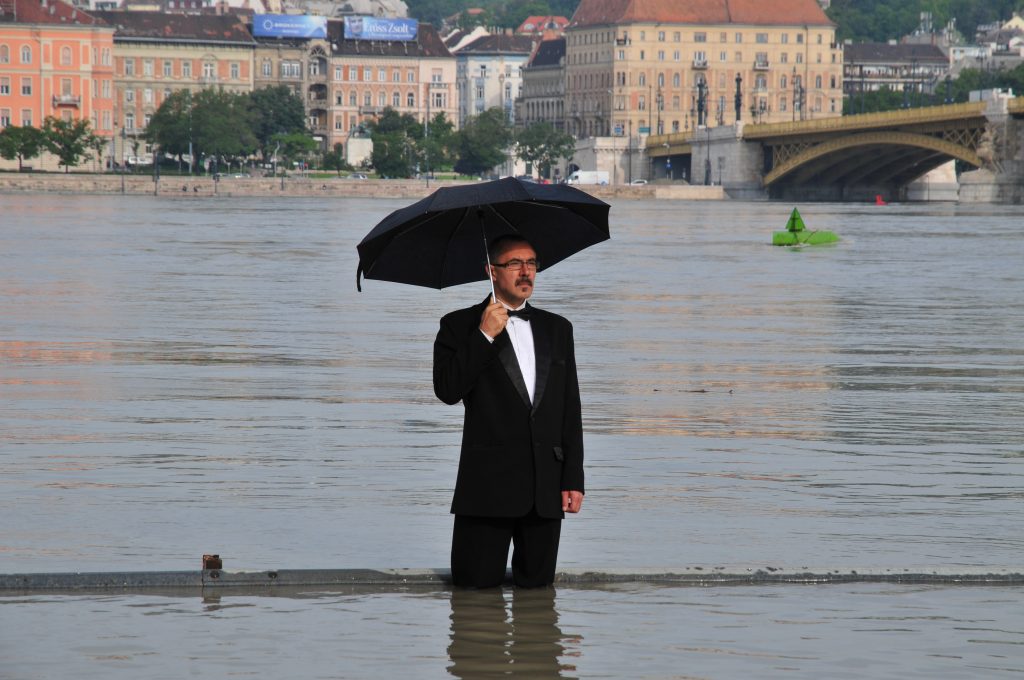
My second choice is József R. Juhász, a Hungarian artist from Slovakia. It is worth knowing that in the late 80’s he started an international multimedia festival in the town of Nové Zámky, which became the most important gathering place for artists of action and performance in Central and Eastern Europe. Juhász himself grew into an international figure of these types of arts, embodying a contemporary nomadic artist who is everywhere in the world but not at home. In fact, the notion of ”house” has become completely irrelevant in his case – his house is the whole world. Just these days, he returned from Mexico, where he stayed for nine months, performing and organizing art workshops. The artist will be presented in Novi Sad with an Art of Action in the flooded Danube near Budapest.
Although you have been living outside your domicile environment for more than two decades, you are visibly present at exhibitions depicting retrospective settings, solo exhibitions and presentations of current art. As an artist, does this dual situation suit you?
Everything suits me that allows me to express myself, to ”actualize myself”. I have been on the road since the beginning of the 70’s, but I like to have a constant base of operations. Nowadays, the base is set up in Budapest, but I am still open to another solution. The mobility does not present an obstacle for me yet.
You probably remember the video work in which I pee over the Serbian-Hungarian border. However, the history is cruel and has once again shown that things do not go as I think but as others think. The same border was reinforced with a metal fence.
In 2019, at the Subotica City Museum, I performed “On the Line”, which touches upon this dual situation of consciousness. While I lived in Subotica, that awareness, due to the physical proximity of the border, was present in my everyday life: the meeting of two cultures and the conflict of two cultures. The both cultures meant a lot to me. I would not be the same person I am without South Slavic culture.
Your art has always had a clear activist and engaged attitude towards the world in which we live. It is obvious that today’s world is going through a period of expressed crisis. Whether and how the current crisis is projected in your recent works. In fact, “What do we do now?” as the singer and performer Konstrakta asks at the end of her song in the current music hit “In Corpore Sano”, which will represent Serbia at this year’s Eurovision.
I have relatively recent works from the period 2019– 2022 that have not yet been shown. There is a cycle on the topic of Covid composed of mixed media. I have prepared the works, partly in collaboration with Edita Kadirić, for the upcoming exhibition ”Silent Recovery” whose idea comes from the curator originating from Subotica Nela Tonković and includes eight contemporary artists from Vojvodina.
On May 1st exactly on the 50th anniversary of my work “Lenin in Budapest”, I realized a cycle of analogue photographs called “Putin in Budapest” next to the monument to the anti-Soviet revolution of 1956. The work is so fresh that the developed film negative is just coming out of the laboratory.
It’s been 50 years and it’s as if nothing has changed…
Budapest, May 4th, 2022
]]>
Would you be so kind to explain to us how Happy Trash Production works; how do you manage to maintain the continuity of the conceptual process; How do you manage to preserve the coherence of your own reactions and conclusions in your exhibitions − given that as authors you do not act in parallel with each other but are rather separated by different contextual circumstances since the group members live and work in different countries (Italy, Slovakia and Serbia)?
In our work we use different languages and manners of expression, ranging from painting, through installation, audio-visual works and performances up to the use of marginal languages and procedures in which we try to completely abandon the occupied and overcrowded spaces in contemporary art. In the process of work, we decide less on the principles that we would firmly adhere to, and follow the changed and imposed external influences and circumstances to a greater extent instead. Accordingly, in recent years, the focus of our work has shifted from ”creating” to ”redirecting” filtered content. This openness, incompleteness and communicativeness of the system we are trying to establish is in the function of the search and the need for authenticity, freshness in work and absence of manners.
In recent years, our work has become consciously less and less intentional, ambitious and self-branding, and it is becoming more and more simplified and self-marginalizing, moving along meanders and edges. Without a trace of wisdom or bitterness, our work turns to ”bad” art and non-art, ”thin”, ”slow”, ”superficial”, ”irrelevant”, ”soft” and ”bendable”, joyful alloys of ”ephemeral”, “accidental”, ”small” and ”foolish”. Hell and landfill (the idea, things, technology, feelings, desires, art …) of one man are a paradise for another.
The type of art that interests us and that we deal with (certainly at least us) points to the broader context of the culture in which that art is located. The cultural context points to an even broader context of the value system of the society to which that culture belongs. In our work, we try to modestly and wittily testify to the ways in which the criteria for forming an aesthetic and artistic ”experience” produce and destroy meanings in a cultural environment. Along the way, we are also trying to find our ”exit strategies”, namely, the possibility of accepting reality without rattle or elitism, as well as the inevitability of its change in the emptiness of a non-existent (or wrongly fused) wider system of culture.
All these attitudes are deeply rooted among the HTP members, so that the contextual circumstances of the different countries in which we live do not call into question the coherence of our reactions and conclusions.
How compatible is the theme of the exhibition 3E – Ecology, Ethics, Esthetics with your artistic interests and aesthetic-ethical views?
HTP’s artistic activity largely refers to complex phenomena in contemporary (not only) Serbian society, which we characterize as ecologically unscrupulous, illiterate when it comes to awareness about recycling, socially irresponsible, emotionally neglected, emphatically and esthetically crippled. Through the discourse of collecting and responsible attitude, we re-examine and revalue artistic and life value systems through research into the relationship between local and universal, meaningless and meaningful, beautiful and ugly, garbage and treasure, and develop a dialogical principle that recognizes everyone’s need to be happy.
]]>programme DD2022
3E: Ekologija, Etika, Estetika// 3E. Ecology, Etics, Esthetics
Trajanje / duration: 22.07 – 07.08.
Lokacija / location: Galerija likovne umetnosti poklon zbirka Rajka Mamuzića
Kustosi / Curators: Sava Stepanov (RS), Alina Şerban (RO)
Umetnici/e / Artists: Happy Trash, Adrienn Ujhazi, Nemanja Milenković, Vesna Tokin, Radomir Knežević:Cristian Răduță: Nona Inescu:Lea Rasovszky
SMALL REBOOTS by Japanese artists
Trajanje / duration: 12 – 28.08.
Lokacija / location: Muzej savremene umetnosti Vojvodine
Kustosi / Curators: Ksenija Marinković (RS), Tomohiro Okada (JP)
Umetnici/e / Artists: Ai Hasegawa, Sachiko Kodama, Ryota Kuwakubo, Okada Hiroko, Watanabe Atsushi
IZVAN CENTRA // OFF-CENTREa. DVORAC KARAČONJI, Sremska Kamenica // selektor: Bálint Szombathy
Otvaranje / opening: 13.08.
Umetnici/e / Artists: Bálint Szombathy, Laszlo Kerekes,Rokko Juhaszb. ZAVIČAJNI MUZEJ, Čerević // selektor: Dejan Kaludjerović
Otvaranje / opening: 13.08.
Umetnici/e / Artists: Dejan Kaludjerović, Thomas Geiger, Belinda Kazeem-Kamiński.c. KARLOVAČKA GIMNAZIJA, Sremski Karlovci // selektor: Milovan Destil Marković
Otvaranje / opening: 19.08.
Umetnici/e / Artists: Milovan Destil Marković, Claudia Chaseling, Kristian Dubbick, Bernd Jansen, Eva Sjödahl Essénd. MIHIZOVA KUĆA, Irig // selektorka: Olja Stefanović Triaška
Otvaranje / opening: 19.08.
Umetnici/e / Artists: Olja Triaška Stefanović, Jana Hojstričová / Palo Macho, Hoa Nguyen Thi
QUO VADIS MUNDI? Izložba umetničkih zastava/Art flags exhibition
Trajanje / Duration: 01. 09 – 31.12.
Lokacija / location: Trg Jarbola, Limanski park
Kustos / Curator: Sava Stepanov
DUNAV + SLOVENIJA// DANUBE + SLOVENIA Priroda umetnosti/Nature of Art
Trajanje / Duration: 01 – 16. 09.
Lokacija / location: SULUV, Mali likovni salon, Galerija BEL ART, galerija Akademije umetnosti
Kustos / Curator: Peter Tomaž Dobrila
Umetnici/e / Artists: Petra Varl, Jože Šubic, One Dollar Bill:, Marko Jakše, Bojan Šumonja, Pierre Tol, Rok Predin, Matej Čepin, Tadej Drolj,Marko A. Kovačič, Bojana Križanec, Zoran Poznič, Tanja Vujjinović, Toni Soprano
NOVI SAD + Impulsi Dunava/ Impulses of the Danube
Trajanje / Duration: 01 – 16. 09.
Lokacija / Location: Kulturni centar Novog Sada
Kustos / Curator: Sava Stepanov
Umetnica/ Artist: Tijana Jevrić
]]>DD 2021 / After movie
This year’s theme for the Danube Dialogues, “Art and society in a forced reality” is an excellent diagnosis of the situation in which we find ourselves today according to both experts and public opinion. Next to great organization, an up-to-date and carefully chosen topic assured the festival’s success despite the problems caused by the pandemic. As always, its character isn’t static, quite the opposite in fact, based as it is on visiting various places and going from one art exhibit to another, which makes it a unique event. Everyone we spoke to expressed satisfaction that we had managed to hold a successful event during a pandemic for the second year in a row.
The first exhibition, “Novi Sad+ by Serbian artist Karolina Mudrinski, was curated by Svetlana Mladenov. The author presented a segment of her doctoral dissertation, showing an innovative combination of art and science. Although her work is based on mathematical theory, both author and curator say that a deep grasp of the science isn’t necessary in order to understand the entire exhibition and that it certainly leaves a strong visual impression on viewers.
At the next destination the audience had the opportunity to see three different exhibits in the Serbian – Bulgarian art dialogues. The first was the work of Bulgarian artist Sasho Stoitzov and Serbian art duo diSTRUKTURA composed of artists Milica Milićević and Milan Bosnić. Associates in the second Serbia – Bulgaria dialogue were Ludmil Lazarov and Ana Vrtačnik, with Javor Kostadinov and Monika Sigeti in the third. According to the curators of these dialogues, Slavica Popov and Nadezdha Dzhakova, all artists had taken an original approach to the pandemic, offering personal insights and answers to the situation through their work. An important part of this exhibit was the attendance of Bulgarian Ambassador to Serbia, Petko Dojkov. The exhibit enhances collaboration between Serbia and Bulgaria while giving viewers a clearer picture of how this works.
DD 2021 / Society and Art in a Forced Reality / Guided tour
Day One concluded with the main exhibition, which shares its name with the festival – Art and Society in a Forced Reality. Artists presenting were Antoni Rayzhekov, Venelin Shurelov, Stevan Kojić, Anna Vasof and Ana Prvački, with Venelin Shurelov and Sava Stepanov curating. This was the most direct response to the theme, illustrating the “new normal” to the audience in an innovative and highly individual manner. Each artist presented their work separately, but the combination achieved an entirely new perspective. This way every artist left his or her own mark on the exhibition and raised it to a whole new level. Audience satisfaction was easy to see, while in conversation with curators, there was constant emphasis on their satisfaction with the exhibition itself and about working with the artists.
The second day began with an international conference “Art and Society in a Forced Reality”, broadcast to all continents thanks to the Ars Electronica festival team. There were two panels, one of which was reserved for curators, while in the second half we heard artists from Japan, Singapore and South Africa. Apart from several interesting presentations, Serbian Minister of Culture Maja Gojković joined the conference via an online platform. The conference conclusion was that there is no hope of a healthy art scene without the presence of this kind of festival. The fact that the festival from Linz, Ars Electronica, was associated with this year’s event is proof positive that the Danube Dialogues have reached an entirely new level. Festival director Vesna Latinović also stated that she was very pleased with this year’s cooperation and hoped it will be enduring and successful.
The rest of the day’s programme focused on the Novi Sad – Timisoara dialogue, divided into three parts, all curated by Sanja Kojić Mladenov and Diana Marincu. Exhibitions were available to visitors at several locations throughout the Fortress and town of Petrovaradin. The first of these, by artists Oana Paula Veiner and Anica Vučetić was in the underground military galleries, part of the Novi Sad City Museum. The second (Andrea Medar and Danica Bićanić) was in the catacombes inside the Fortress, while the third by Dragan Vojvodić and Liliana Merciou Popa was held at Prote Mihaldžić Square in Petrovaradin. In conversation with artists and curators, a frequent assertion was that festivals of this sort are crucial for the art scenes of both countries and their cities. Romanian curator Diana Marincu voiced a hope that Novi Sad -Timisoara cooperation will evolve to something bigger, such as a Serbia – Romania dialogue.
After the final exhibition, multi-media artist Vladimir Kopicl officially opened the Danube Dialogues 2021 festival. In his speech he referred to several crucial topics affecting our society. Having analyzed the influence of “forced reality” on the sociological structure of humans, he touched on other issues troubling artists today. Vladimir says that festivals of this kind of reflect the current state of art, but that we should not see them as rivals of other events whose character is merely entertainment.
DD 2021 / Guided tour / Dialogue Timisoara – Novi Sad
]]>