Amazon Kindle
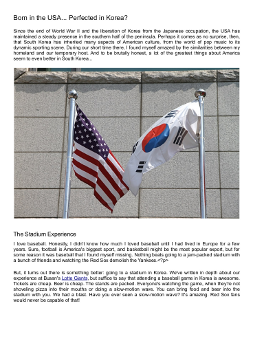
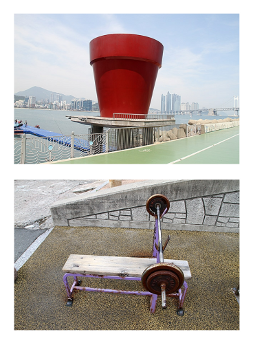
For just a few bucks, you can download your own copy of the book for use on your e-reader or computer, giving you access to our blog posts wherever you are, without having to connect to the internet. And, buying the e-book is a great way to support our project… take a look at some sample pages from the PDF.
 |  |
 |  |

Usually, by the end of three months in a new city, we feel as though we truly understand what makes it tick. Maybe we’re not experts, but just by spending so much time around the people, their food, history, music and nightlife, we have a good idea of what it’s about. That sense of familiarity, though, is not so strong after three months in Busan. I have a feeling we could spend three years here, and still not fully “get” the culture.
And that’s despite the fact that there are a lot of things about life in Korea that we’re instantly comfortable with. Baseball. Gadgets. Fast food. Pop music. Hiking and beaches (the things for which Busan is particularly well-known) require no special introduction. But as familiar as some things are, we’re never able to ignore how different the culture truly is. Like: we’d be at a baseball game but, instead of hot dogs, the family in front of us is munching silk worm larvae.
And strangely, Busan will endure in our memories as the place where we were treated the least like tourists. I don’t mean that we blend in at all — certainly not. But there’s a prominent population of foreigners who live here: English teachers, who number in the hundreds. And there’s no tourism to speak of. So when you see a white guy walking down the street, you can be 98% certain that he’s a local. Almost daily, someone would ask me which school I taught in. As soon as we arrived, we belonged to this “community”, even though we had absolutely nothing to do with it.
So, there’s a weird dynamic here. We’re visitors, but treated as locals. We’re familiar with some aspects of the culture, but mystified by others. We’re welcomed as guests by the community at large, but could we ever really be fully accepted into Korean society? Doubtful.
On the whole, we’re ready to get moving. We’ve had some unforgettable experiences in Busan, and made some wonderful friends. And we’ve fallen in love with the food! Bibimbap, kimchi, galbi, patbingsu, 물밀면. Yum. Oh, and that last food-item? We’re not just showing off there. It’s pronounced “Mulmilmyeon”, which is so ridiculous that it’s easier for us to recognize its characters and point, than dare pronounce it. Turns out that written Hangul isn’t all that hard to master, and we’ve had a lot of fun familiarizing ourselves with the language.
Somehow, I doubt my skills in Hangul are going to help much in our new temporary home: Idaho, in the great American West. It’s a state twice the size of South Korea, with 30 times fewer people. Nature, parks, rivers, cowboys, Indians and wide open spaces await us… it’s going to be a radically different experience to living in an Asian metropolis like Busan. If you’d like to follow us on this new adventure, make sure to keep your eye on our Twitter and Facebook accounts, or subscribe to our RSS Feed.
]]>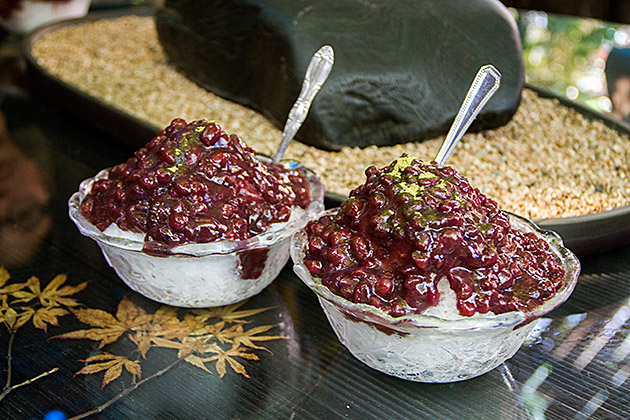
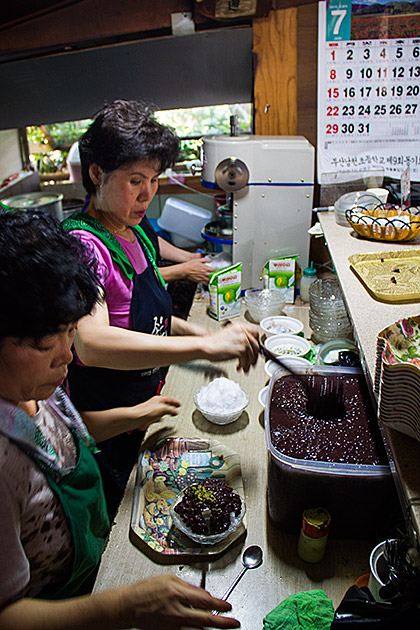
Although it’s in our neighborhood, we would have never found this incredible patbingsu shop if our friends hadn’t taken us there after hiking at Hoedong Lake. A definite “hidden gem” in Namcheon. There was a line out the door, and all the people at tables in the shaded, cool interior were eating one thing — patbingsu. There were no variations, no other menu items.
When ours arrived, I was skeptical. The big red pile didn’t look at all appetizing, and was way too large a portion. But not wanting to be rude, I dug in, mixing a bit of the red bean sauce into the ice and eating it. And was it good? Umm… another bite! Oh, it was quite good. Another, bigger bite! There’s milk at the bottom. More bites!! Now it’s begun to melt a bit, and my bites have become slurpy! No matter, bite and slurp and bite and … it’s gone. I had devoured the entire bowl without a thought.
There are an unlimited number of places to try out this treat throughout Busan — even fast food chains like McDonald’s and Lotteria offer it. But, I doubt there’s a cooler patbingsu shop than the one we visited in Namcheon. Check it out. There’s nothing better on a hot summer day.
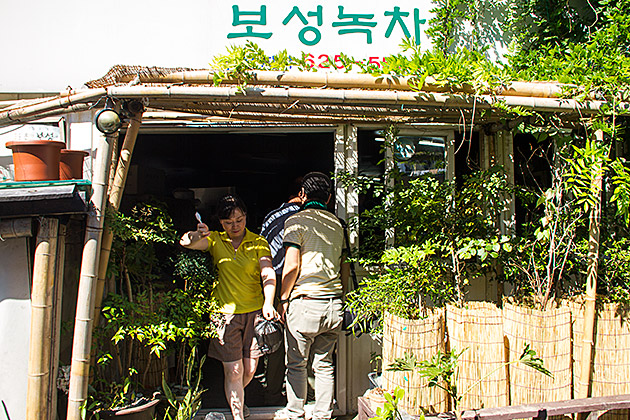

When our friend Seong Yeop invited us to check out the Hoedong Lake with his father, we immediately said “yes”. But within seconds of beginning the hike, I knew we were in trouble. This wasn’t going to be the lackadaisical, relaxed stroll we normally indulge in, frequently interrupted by photo stops and water breaks. Nope, Sean’s dad had darted out in front, and was setting an insane pace which Jürgen and I had a hard time matching. He was completely geared up and taking no prisoners.
Through the woods we marched, and along the beautiful lake. Used for drinking water, it’s off limits to swimmers and fishermen, and colored a dark green which reflects the woods. Halfway through the hike, we came upon a small restaurant and sat down for a break. Plates of pajeon and dotori muk muchim (acorn jelly salad) were set in front of us, along with two bottles of makgeolli. After the strenuous hiking, the makgeolli hit hard, and I was visibly wobbly when I stood up, much to the amusement of Mr. Lee.
But we felt replenished after the break and, as Seong Yeop promised, the makgeolli buzz wore off quickly. Soon enough we were hiking up a seemingly endless hill for a view over the lake. Gorgeous, and by this point I was starting to get into the rhythm of the speed-walking. The rest of the trip went by in a flash, but I think we must have done about ten kilometers, all told.
After getting back into the car, we drove to a restaurant where we were treated to ginseng wine out of little cups the size of thimbles, and delicious bowls of chicken soup. The chicken was incredibly tender and fell off the bone at the slightest touch from our chopsticks. Wonderfully nourishing and strangely refreshing on a hot summer day, this is apparently a popular thing to eat after a day of hiking. I was completely full upon finishing, but had to make room for dessert at the final stop of the day: an awesome cafe specializing in patbingsu, or ice shavings topped with red beans.
Our day out with Seong Yeop and his dad was one of the highlights of our entire three months in Busan. I guess you haven’t gone hiking in Korea until you’ve gone hiking with Koreans! We had a blast, and it’s a perfect final memory from our time in the city. Thanks guys!


We published over 2000 photos during our three months in Busan. That’s a record for our site, and a testament to what an amazing city this is. As you’ll see in our final batch of photos, Busan is strangely compelling and offers a little bit of everything, from the beautiful to the amusing, to the downright bizarre. Taking pictures here was always a blast… we’re going to miss it.


In 1950, when South Korea was swiftly overwhelmed by the North’s surprise attack, Busan became the country’s provisional capital — not that there was any choice; it was the only city of any size to withstand the communist onslaught. As the war ground on, the city became the de facto place of refuge, where South Koreans fled to escape the brutal fighting ravaging the rest of the country.
During the war, hundreds of thousands of refugees crammed into Busan, especially in the areas of Yongdusan Hill and the port. Among such a desperate crush of humanity, many families found themselves separated, lost among the crowds disembarking the overly-packed trains and ships.
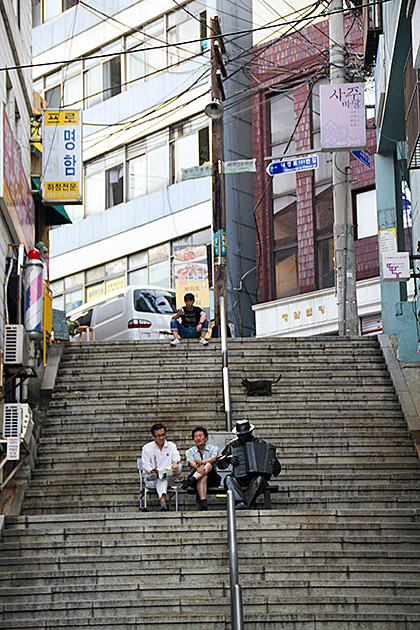
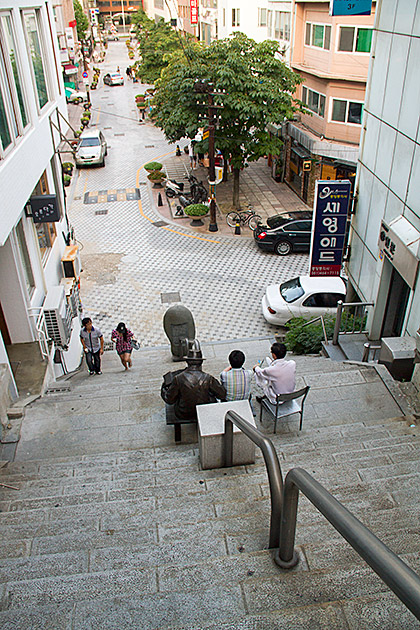
Getting separated from your family in war-time Korea wasn’t the minor inconvenience it would be today. There were no phones, no possibility of communication. You lose your mommy, and she’s going to stay lost. But among the newcomers, word spread of a spot in Busan where families could reunite. Anyone looking for a missing child or wife should head to the 40 Steps. This is where people could find each other again.
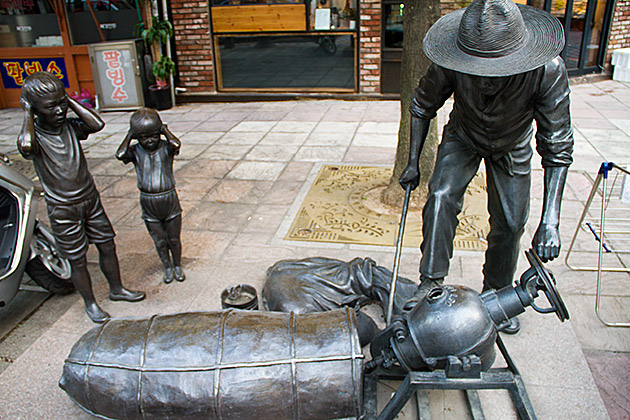
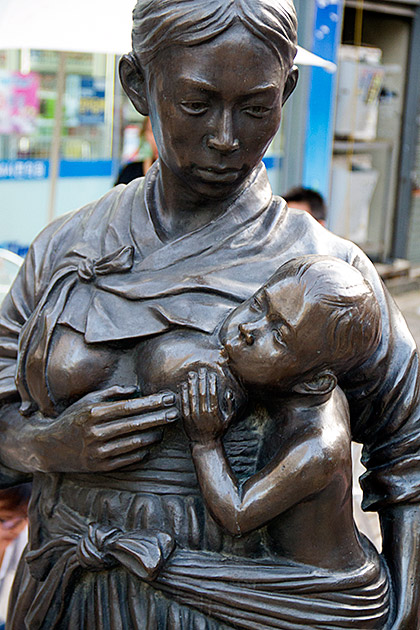
This small section of town, which meant so much to so many families, has today been memorialized with statues and a cultural center. Even without its history, it’s a cool area, with nice cafes and a lack of traffic. The statues hearken back to the 1950s, when accordion players would entertain the lost families, and children would wait for the popcorn cannon to produce their treat. It’s one of the most atmospheric corners in Busan, and definitely worth a look.
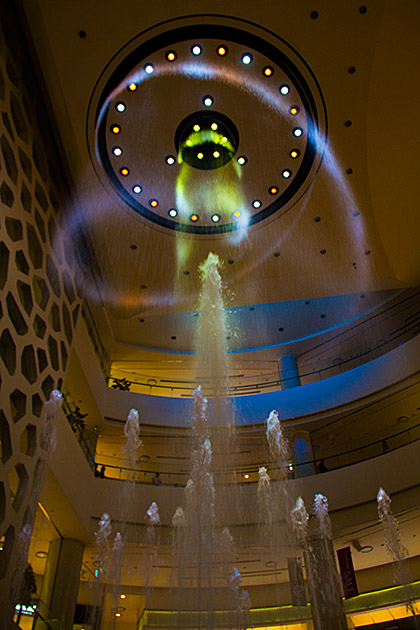
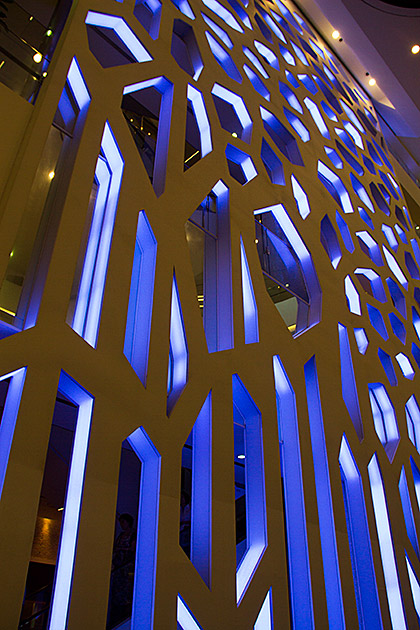
The show kicks off every hour and is quite impressive. Unlike most fountains, this one showers down from nozzles in the ceiling five stories above. The precision is amazing, with the layers of water sprayed in time with the music and, at the show’s end, even spelling out “Busan” and “Lotte“.
Should you get restless during the ten-minute show, you can always amuse yourself with shopping. I picked up a shirt on the sale rack set up near the fountain, completing the transaction and returning to Jürgen’s side while the show was still going on. Juergen was so absorbed in videotaping that he didn’t even notice I had sneaked off.
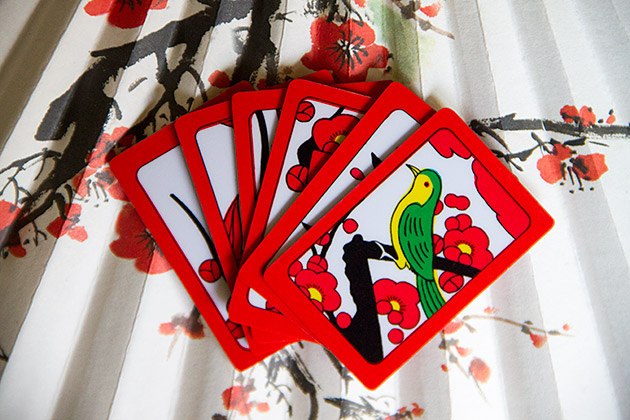
Go-Stop is a Korean game which uses Japanese flower cards (called Hwatu in Korean), which are made of hard plastic and represent the seasons of the year. Four cards for each month, for 48 cards total. You can pick up a deck of flower cards at any convenience store for a couple bucks; they’re just as ubiquitous here as western-style decks are in the US or Europe.
The game is easy to learn, and we quickly became addicted to it (if you’re interested, a set of rules can be found on Pagat.com). Go-Stop is a fishing and matching game played between two or three people — you slap down a January card on another January card and collect the points. And I do mean “slap down”. It’s standard practice to hold the card you’re playing high above your head, then slam it down onto the table, to produce a satisfying smacking sound.
We’ve become pretty adept at the game — once you learn which cards belong to which month, it’s easy. Recently, we even dared to pull out the cards at a bar. Within minutes, we had attracted a set of on-lookers: our waiter and the couple at the neighboring table, apparently amused by the waeguks playing Go-Stop. All were very generous with advice, and though the waiter didn’t approve of my slapping style (apparently, not forceful enough) I think we acquitted ourselves rather well.
]]>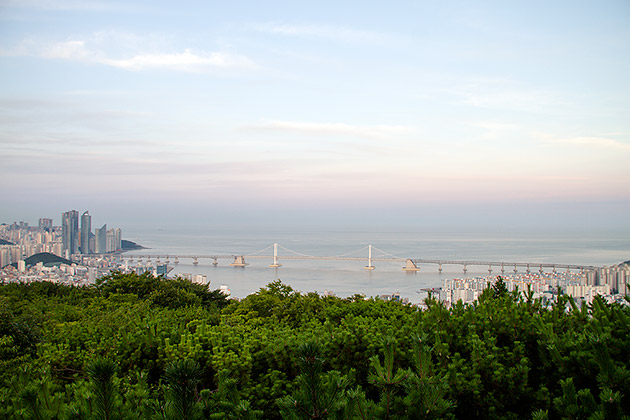
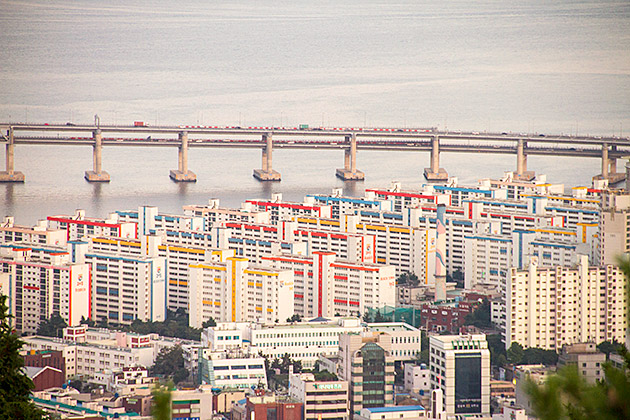
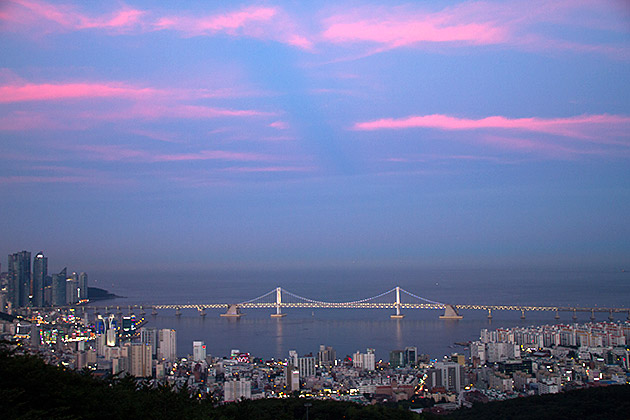
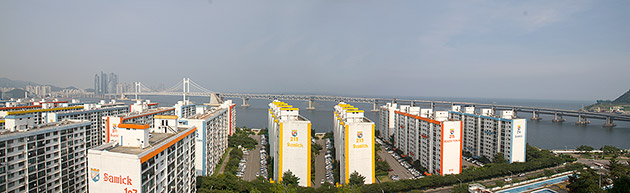
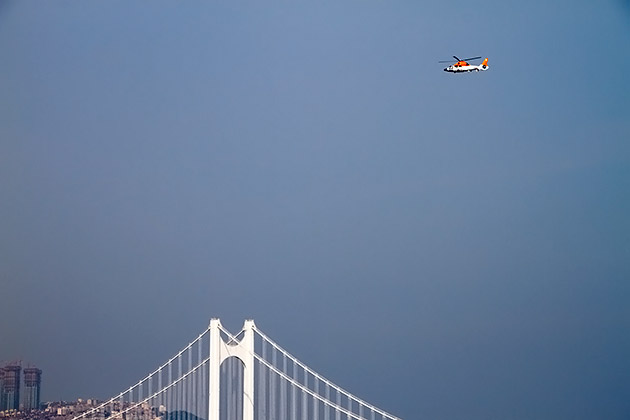
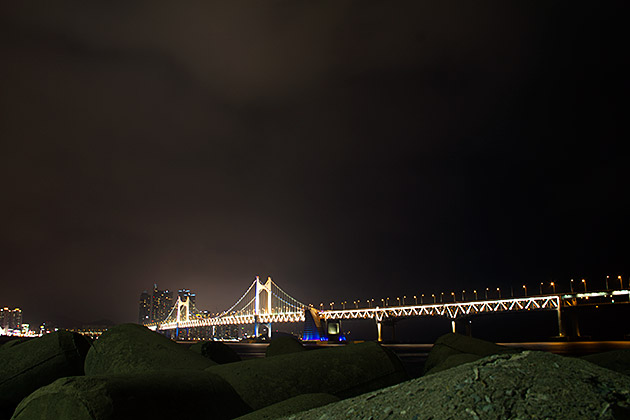
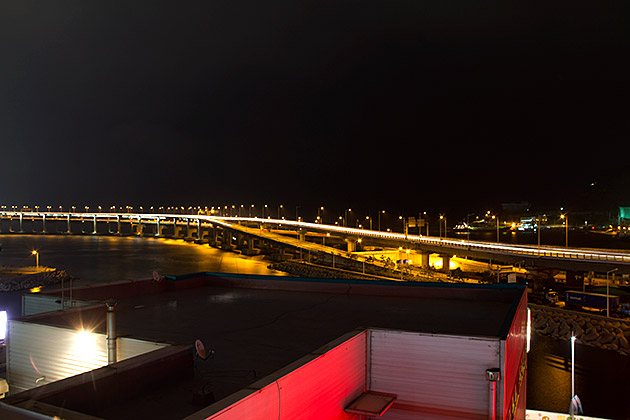
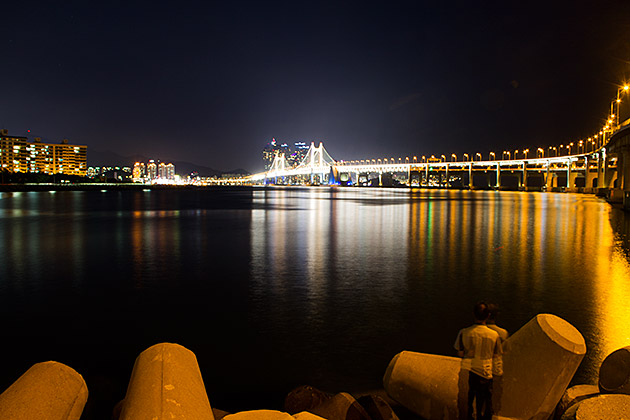
After a night on the town, it’s something of a tradition of ours to grab an ice cream and sit on Gwangalli Beach, to look at Korea’s second-longest suspension bridge. Sounds kind of lame, bridge-watching, but somehow it never gets old. The lights of the bridge change color and reflect beautifully in the water. When the night is pleasantly cool and you’ve just put another busy day behind you, there’s no better way to wind down.
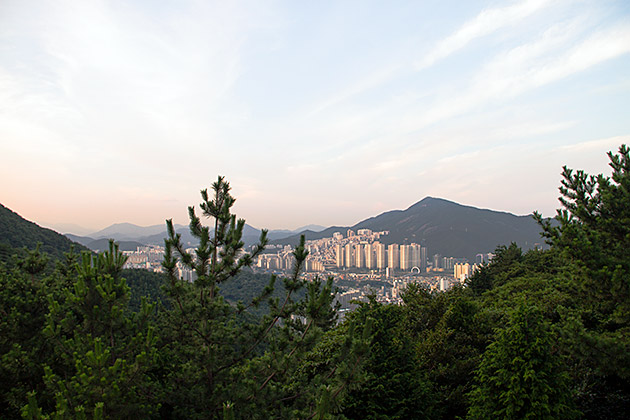
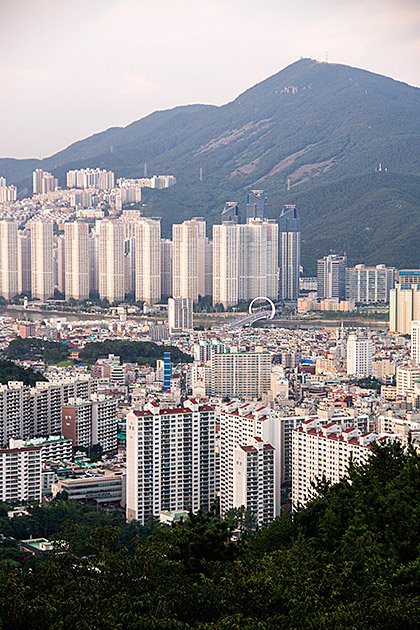
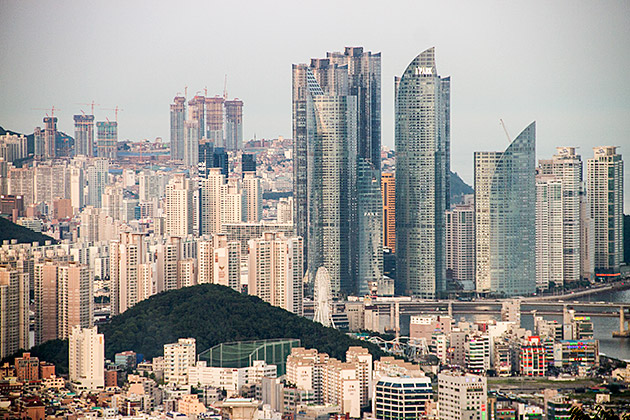
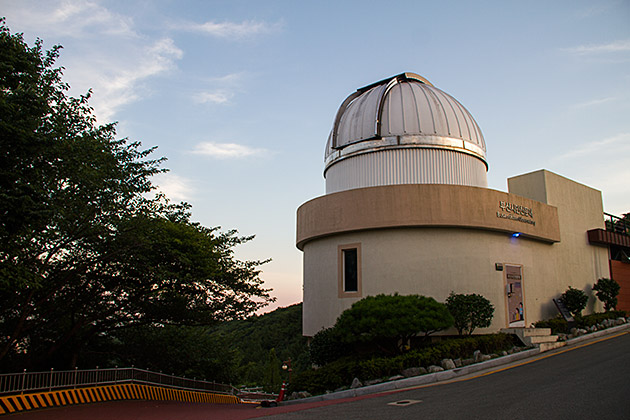
Apart from the beach, the best spot to appreciate the bridge is from the astronomical observatory on Geumnyeonsan Mountain. A cheap taxi ride from the Geumnyeonsan Metro station will take you there, and the views from the observatory over Gwangalli Beach and Suyeong are unparalleled. It’s also a good area for hiking during the day.
I suspect that, years from now, when I think back on our time in Busan, the Diamond Bridge will be the first image that pops into my mind.
Location of the Mt. Geumnyeonsan Observatory


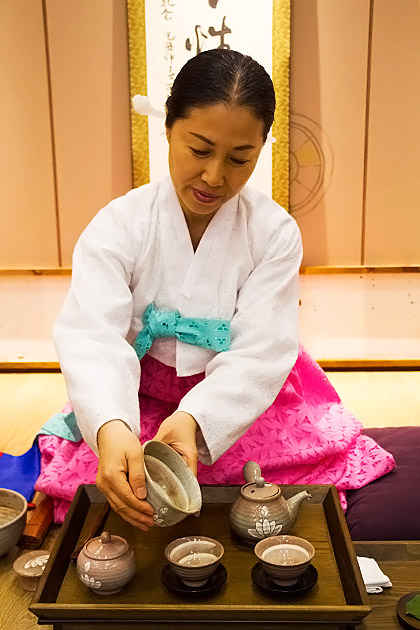
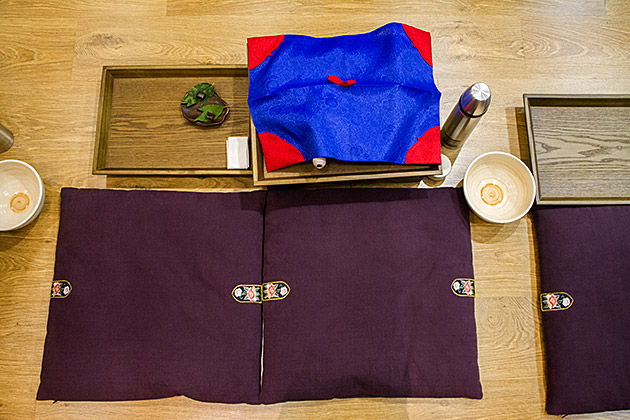
The Tea Ceremony Experience is offered for free, three times a day (except Fridays and Mondays), in the Busan Museum’s Cultural Center. Our instructor, who was geared up in a hanbok (a traditional Korean dress), motioned for us to take seats in front of trays on the ground. Sitting Indian-style doesn’t present a problem for me, but Jürgen’s 6’6″ frame and lanky legs always require a couple minutes of painful twisting. The instructor looked on patiently while he arranged his body into the correct position. “Clearly”, she must have been thinking, “this lesson will present more of a challenge than usual”.
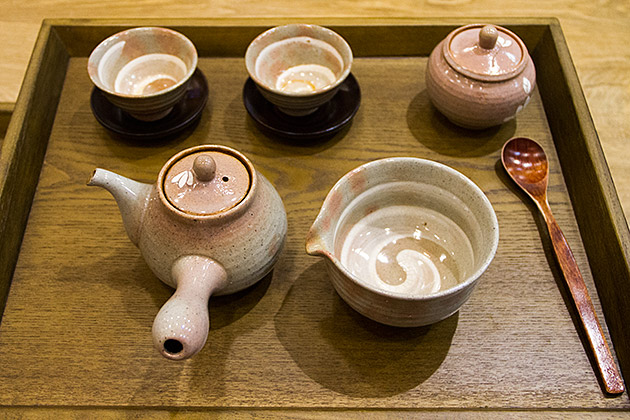
For the next twenty minutes we learned the procedure of a traditional Korean tea ceremony. Every movement is completed very particularly, from raising the napkin off the tea set and folding it, to pouring the water into the teapot. We were expected to be very calm, very exact; our instructor told us that the whole process is a form of meditation. While pouring and drinking the tea, you remain silent and still, concentrating on nothing but the simple tasks at hand, trying to complete them as perfectly as possible.
After three rounds, we were almost able to complete the ceremony without a mistake: grabbing the cup with the wrong hand, pouring out too much water, or laying the napkin on the floor upside-down. Our instructor was pleased enough, and after the torturous spectacle of watching Jürgen disentangle his legs and stand up, we said our goodbyes. I doubt I’ll be working a tea ritual into my daily schedule, but I can certainly appreciate the moment of collected quiet that it provides. And the tea wasn’t bad, either.