The letter coincides with the UN international day in Support of Victims of Torture.
UK Foreign Office urged to secure safety of three human rights activists https://t.co/6gN2NWxq0j
— The Guardian (@guardian) June 26, 2020
The letter was signed by ten MPs, including Brendan O’Hara, Sir Peter Bottomely, Father of the House, Caroline Lucas, and Andy Slaughter among others. The letter calls for the immediate release of all political prisoners, including award-winning activists Loujain Al-Hathloul, Ahmed Mansoor, and Dr Abduljalil Al-Singace.
On #TortureVictimsDay, as Chair of the APPG on Democracy and Human Rights in the Gulf, I co-signed a letter to @foreignoffice asking them to help secure release of political prisoners from across the Gulf, currently at risk from Covid-19 @BirdBahrain_ https://t.co/QN09M2qv8k pic.twitter.com/x3a99aDW0x
— Brendan O'Hara MP (@BrendanOHaraMP) June 26, 2020
Brendan O’Hara MP, Chair of the APPG on Human Rights and Democracy in the Gulf, commented: “With Brexit fast approaching, it is paramount that human rights are at the centre of UK foreign policy. The government has too often turned a blind eye to the plight of imprisoned human rights defenders in the Gulf and with COVID-19 now posing an unprecedented imminent threat to their lives, it is time to take a stand and call for their immediate release”
Caroline Lucas MP, commented: “By refusing to speak out about the ongoing abuse of these brave individuals, the Government is once again putting its pursuit of preferential trade deals ahead of human rights. Its vision of a “Global Britain” is looking like one where moral values are tossed aside in the name of political expediency.”
Sayed Ahmed Alwadaei, Director of Advocacy at the Bahrain Institute for Rights & Democracy, commented: “When it comes to their allies in the Gulf, the UK government’s claim to support the plight of human rights defenders is simply not credible. At a time when COVID-19 poses a serious threat to the lives of jailed activists across the region, this landmark intervention by parliamentarians must compel the government to end the double standard and call for these brave individuals to be released.”
Featured image courtesy of Flickr via POMED
]]>Saudi Arabia was among the four countries in which 87% of the world’s executions took place in 2016. For many of these death sentences, proceedings did not meet international fair trial standards and often used torture or other ill-treatment to extract “confessions”. Saudi Arabia executed at least 154 people last year, maintaining the high level (157) set in 2015 which was the most recorded for the country since 1995. This month Saudi Arabia carried out its 100th execution of 2017, marking five executions on average each week according to Amnesty International.
In Bahrain, authorities executed three citizens in January 2017, the first death sentences to be carried out in Bahrain since 2010. There are currently 16 people on death row in Bahrain, the highest number in years. Of them, 13 are Bahrainis sentenced in political cases, eight of them sentenced in 2017 alone. At least two individuals were sentenced in absentia. With a total of nine death sentences, 2017 holds the dubious distinction of being the year in which the most death sentences were handed down since 2011. Among those on death row are Mohammed Ramadan and Husain Moosa, two Bahrainis who were arrested, brutally tortured and sentenced to death in unfair trials. They have exhausted all legal appeals and face imminent execution.
The death penalty cases have exposed the inadequacy and lack of impartiality in the Bahraini government rights mechanisms. The Police Ombudsman failed to investigate the torture of Mohammed Ramadan for two years, paving the way for his sentence based on a coerced confession. Despite reopening his case for investigation following and passing on investigations to the state’s Special Investigation Unit last last year, Ramadan and his lawyers have been given no information on the outcome of investigations. Meanwhile, the government’s National Institute for Human Rights praised the January 2017 executions as in line with international standards, a claim contradicted by the UN’s own condemnation.
Bahrain: Ali Al-Singace, Abbas Al-Samea, Sami Mushaima
Ali Al-Singace, 21, Abbas Al-Samea, 27, and Sami Mushaima, 42, were executed unlawfully on 15 January 2017. They were torture victims convicted based on coerced confessions and denied fair trials. The Office of the High Commissioner for Human Rights called the execution appalling, and the UN Special Rapporteur on extrajudicial killings named the execution illegal.
Ali, Abbas and Sami were convicted of planning a bombing which killed police officers in 2014. They were arrested, brutally tortured into confessing, and denied access to lawyers. The criminal and appeals courts dismissed their defence, relying entirely on the coerced confessions. The UN Committee Against Torture has expressed grave concerns that the executions “were based on confessions obtained under torture, and the fact that the reports were not properly investigated by the competent authorities”
Continue reading about their unfair trial and illegal execution.
Bahrain: Mohammed Ramadan and Husain Moosa
Mohammed Ramadan and Husain Moosa were arrested in 2014 and sentenced to death for alleged roles in a February 2014 bombing incident which killed police officer. Husain, who was arrested first, was tortured into signing a confession which named Mohammed as a co-conspirator. Mohammed was subsequently arrested, tortured, and coerced to confess to the same charges. They were sentenced to death in December 2014, and the Court of Cassation – Bahrain’s highest court of appeals – upheld their sentenced in 2015.
Mohammed’s torture was documented by NGOs, who submitted a complaint to the Police Ombudsman in 2014, prior to their sentence. The Ombudsman ignored the complaint for two years, not opening an investigation until 2016, by which point Mohammed and Husain had exhausted all legal appeals. In doing so, the Ombudsman wholly failed to protect these victims of torture. In February 2017, the European Parliament condemned the death penalty in Bahrain and calls for a halt on the executions. The UN Committee Against Torture has called for a retrial of Mohammed and Husain in light of their torture.
Continue reading about the case.
Saudi Arabia: Ali Al-Nimr – On Death Row Since Aged 17
One of Saudi Arabia’s most infamous mass executions took place in January 2016, when 47 people were put to death on a single day by beheading and firing squad. Among those killed was a prominent pro-democracy critic, Sheikh Nimr al-Nimr. The reformist cleric’s nephew, Ali al-Nimr, has been on death row since the age of 17.
Ali, now in his early 20s, faces beheading and crucifixion for having protested in the Arab Spring as a teenager. His charges include explaining how to give first aid to protesters and inviting people to the anti-government demonstrations. According to Reprieve, Ali was arrested in 2012 without a warrant, then held in pretrial detention for two years – unable to contact his lawyer. A confession extracted under torture was the only evidence against him and his final appeal was held in secret, unknown to him.
Saudi Arabia: 14 Men to Be Beheaded for Protests
Another 14 men are also facing imminent beheading for involvement in anti-government protests. As in Ali’s case, the individuals were subjected to prolonged pre-trial detention and torture during their interrogation to extract their ‘confessions’. The detainees, who include a student and a disabled man, were sentenced to death in June 2016 after a hugely unfair mass trial.
The student, Um Mujtaba, was 17 when he took part in Arab Spring protests and was arrested when he was about to board a flight to begin university in the US. The teenager was accused of ‘supervising’ a Facebook group and ‘photographing the demonstrations’. Amnesty has a petition to call on the Saudi authorities to release all 14 prisoners.
]]>In his comments, HC Zeid called attention to Bahrain’s deeply troubling executions earlier this year. The High Commissioner expressed his deep regret towards these regressive trends in Bahrain, among others, to “retreat from formal or informal commitments to moratoria on the death penalty.” In January 2017, Bahrain unlawfully executed Sami Mushaima, Ali Al-Singace, and Abbas Al-Samea. All three men alleged that Bahraini authorities tortured them into providing the confessions that then served as evidence against them in court. The Government, the courts, and Bahrain’s national human rights mechanisms, utterly failed to consider and investigate these allegations.
The High Commissioner devoted specific attention to recent acts by the government to impose ”increasing restrictions on civil society and politics since June 2016, including intimidation, arrest, interrogations, travel bans and closure orders.”
Earlier this week, the Government of Bahrain began efforts to dissolve the country’s leading secular opposition society, Wa’ad. Targeting Wa’ad is only the government’s latest move to smother the already shrinking political space inside the country. In June 2016, Bahraini authorities also shut down al-Wefaq, the largest opposition political society in the kingdom.
In addition to closing political space, Bahraini authorities continue to target human rights defenders and civil society for reprisals. Such reprisals have been conducted through the use of travel bans, which the government places on Bahraini activists to prevent them from engaging in legitimate human rights work with international bodies like the UN Human Rights Council. Leading civil society members, like human rights defender Nabeel Rajab, are among those targeted in the recent targeted restriction highlighted by the High Commissioner. Bahraini authorities have detained Rajab since June 2016. He faces up to 18 years in prison on charges related to tweets about Saudi-led coalition airstrikes in Yemen and exposing torture in Bahrain’s Jau Prison, and for giving interviews to journalists.
HC Zeid expressed his deep concern over the rising human rights violations in the kingdom, and condemned the government’s repression. Just this year, the government expanded the arrest powers of the National Security Agency (NSA) and approved a measure allowing civilians to be tried in military courts. The NSA was involved in the torture of peaceful protesters during 2011 and the death of at least one detainee, and the withdrawal of its arrest powers was one of the few BICI recommendations that the Government of Bahrain fully implemented. Reinstating these powers is therefore an extremely disappointing reversal on a shamefully weak effort at genuine reform. In another move that recalls the 2011 protests and subsequent government crackdown, Bahrain’s legislature this week approved a constitutional amendment that would allow military courts to try civilians.
Finally, the High Commissioner called on the government to undertake confidence building measures to address these troubling trends, stating, “I call on the Government of Bahrain to undertake concrete confidence building measures, including allowing my Office and Special Procedures mandate holders to swiftly conduct visits.” Bahrain has continually denied access to special procedure requests for country visits. While no special procedures have visited the kingdom since 2006, the mandate holders have continuously been engaged on cases of human rights in Bahrain. Most recently, the special procedures released reports regarding reprisals against human rights activists, dissolving al-Wefaq, the persecution of Bahrain’s Shias, and the arbitrary detention of Nabeel Rajab.
This strong criticism of Bahrain’s human rights record offered by the UN High Commissioner follows up on similarly strong comments he has made at previous sessions of the UN Human Rights Council. We, the undersigned, welcome and support the High Commissioner’s public criticism of Bahrain’s actively deteriorating human rights record.
Americans for Democracy & Human Rights in Bahrain
Bahrain Center for Human Rights
Bahrain Institute for Rights and Democracy
European Centre for Democracy and Human Rights
]]>
Ali, Abbas and Sami were executed on Sunday 15 January 2017, less than a week after the Court of Cassation, Bahrain’s highest court of appeals, upheld their death sentences. All three allege torture during interrogation. We, the undersigned, also documented the torture of Abbas Al-Samea in prison in 2015. The defendants were denied basic fair trial guarantees and their torture complaints were dismissed by the Special Investigations Unit, a body which is not independent from the Bahraini government and mandated to investigate torture. Ali Al-Singace was sentenced in absentia and had no access to legal defense after he was arrested in 2015 which resulted in no representation for him at court of cassation. Their executions were declared extrajudicial by the UN Special Rapporteur on Extrajudicial Killings.
Despite these violations to Ali, Abbas and Sami’s fundamental rights, the NIHR judged the executions as being “in accordance with recognized international standards.” The NIHR commended law enforcement agencies for following the Code of Criminal Procedures and congratulated the Kingdom of Bahrain’s implementation of UN Security Council Resolution 1373/2001 on the elimination of terrorism. The NIHR’s findings are wholly contrary to the UN human rights expert’s assessment, as well as those of local and international human rights groups.
Following the executions, the UN Office of the High Commissioner for Human Rights released a statement, expressing alarm: “We are appalled at the execution by firing squad of three men in Bahrain on Sunday. The men had been convicted of a bombing in Manama in 2014 that killed three police officers. They were found guilty after being allegedly tortured into making false confessions and their lawyers were not given access to all the evidence against them nor allowed to cross-examine prosecution witnesses during court hearings.” In a tweet, the UN Special Rapporteur on Extrajudicial Killings further condemned the act, claiming “torture, unfair trial and flimsy evidence” all constituted “an extrajudicial killing” carried out by the Government.
Husain Abdulla, Executive Director, ADHRB: “For a National Human Rights Institution to welcome an act that, regardless of the trial circumstances, violates the most basic human right to life as guaranteed by the ICCPR, clearly indicates that the NIHR is merely an extension of the Government—not an impartial and independent national institution dedicated to the promotion and protection of human rights. This assessment was confirmed by the International Coordinating Committee of National Human Rights Institutions, when Bahrain failed to attain accreditation in compliance with the Paris Principles, instead achieving a ‘B’ status.”
The NIHR’s statement also lauds Bahrain’s highly problematic Anti-Terror Law on the Protection of Society against terrorism acts and its amendments. This law widely criminalizes many forms of dissent, and recently enabled the Bahraini government to arbitrarily strip up to 26 individuals of their citizenship, rendering them stateless. Human rights defenders, political activists, journalists and protesters are among those who have been convicted under the Anti-Terror Law, which has a broad definition of terrorism, and criminalizes the exercise of free expression, opinion, peaceful assembly and association.
Sayed Ahmed Alwadaei, Director of Advocacy, BIRD: “Bahrain’s Anti-Terror Law allows authorities to hold individuals without trial for up to six months. This contravenes Article 9 of the ICCPR which requires that anyone arrested or detained on a criminal charge should be brought promptly before a judge and should be entitled to a trial or to release ‘within reasonable time’.”
It is not the first time the NIHR and its members have shown a disregard for the right to life. A senior commissioner of the NIHR and member of Bahrain’s National Assembly, Khaled Al-Shaer, has publically called for the death penalty against persons exercising their free speech. In April 2016 he tweeted: “Who accuses his majesty the king, god protect him, of involvement in crimes against the nation, I think they have committed a great treason against the nation and deserve the death penalty. Soon after they would retract their words.” Al-Shaer remains a commissioner of the NIHR to date and is a member of the NIHR’s Civil and Political Rights Committee.
We, the undersigned, maintain that the NIHR fundamentally lacks independence from the Government of Bahrain. In a July 2014 report, ADHRB and BIRD found that “Neither the Office of the Ombudsman of the Ministry of the Interior nor the Bahrain National Institute for Human Rights has shown independence from the government or a willingness to take a stand against problematic government policy or action.” In June 2016 report, BIRD called on the Government of Bahrain to “amend Decree 26/2014 establishing the National Institute for Human Rights, in particular article 5(a), to remove all government involvement in the commissioner appointment process, and to restrict membership of the NIHR from members of governmental bodies, including the National Assembly, Shura Council, state bureaucracy and Gulf Cooperation Council bodies, in order to ensure total independence.”
We therefore call on the National Institution for Human Rights (NIHR) to redact its statement and to condemn the unlawful executions that took place on 15 January 2017. We also call on the Government of Bahrain to commute all death sentences and establish a moratorium on the use of the death penalty and reiterate our calls that the NIHR be made independent of the state.
Signed,
Americans for Democracy & Human Rights in Bahrain
Bahrain Institute for Rights and Democracy
Bahrain Center for Human Rights
European Centre for Democracy and Human Rights
]]>
Events began yesterday, 14 January, when reports indicated that the security forces were preparing to carry out the death sentences. Authorities in the legal department at the Central Jau Prison, where the three are held, called their families on the morning to schedule mandatory visits for later that day. This directive is in accordance with Article 330 of Bahrain’s Criminal Procedure Code, which states that relatives of persons scheduled for execution will be permitted a final visit before the sentence is carried out.
Contrary to standard visitation practice, when the families arrived at the prison they were taken in police cars to a second location and very heavily searched. The families described being surrounded by over fifty police officers. Al-Samea, Al-Singace and Mushaima had not been informed of these procedures and were surprised by the events. Prior to the announcement of the executions, the families told NGOs that they believed the procedures were implemented as preparations before carrying out the death sentences.
Sami Mushaima, Ali Al-Singace and Abbas Al-Samea are all torture victims rendered stateless and condemned to death following unfair trials (see more below). Their executions have sparked widespread protests across the country. Activists stated yesterday that some 200 family visits to Jau Prison previously scheduled for today had been cancelled.
Husain Abdulla, Executive Director, Americans for Democracy & Human Rights in Bahrain: “The death sentences were authorised by King Hamad himself. He condemned to death victims of senseless torture, and their blood is on his hands. The international community must show solidarity with the families of Abbas, Ali and Sami and condemn this execution. The United States in particular should re-impose its arms ban.”
Sayed Ahmed Alwadaei, Director of Advocacy, Bahrain Institute for Rights and Democracy: “This is a black day in Bahrain’s history. It is the most heinous crime committed by the Government of Bahrain and a shame upon its rulers, which knew about the torture of the three. It has been the subject of complaints and was raised by the defence in their trials, and been utterly ignored. King Hamad’s decision to have them killed shows a new contempt to the victims of Bahrain’s abuses. This act is a security threat to Bahrain and the entire region. The United Kingdom has repeatedly failed to condemn violations and allowed itself to be complicit in these events.”
On 14 January, BIRD, ADHRB and the European Centre for Democracy and Human Rights (ECDHR) wrote to the government of the United Kingdom urging for immediate action to be taken. Alongside Reprieve, they also wrote to the United States and European External Action Service. The UN Special Rapporteur on Extrajudicial, Summary or Arbitrary Executions called on Bahrain to stop the execution.
Lead up to the Executions: Torture and an Unfair Trial
The Court of Cassation, the highest court of appeals, upheld the death sentences of Sami Mushaima, Abbas Al-Samea, and Ali Abdulshaheed Al-Singace on Monday 9 January 2017. The court papers, which BIRD has analysed, show that the Court rejected and ignored the allegations of torture brought by the defence without proper investigation.
The three, alongside seven other defendants sentenced to prison terms, were arrested nearly three years ago, on and after 3 March 2014. Security forces arrested them in house raids on charges of allegedly using improvised explosive devices which led to the death of three police officers, one of them an Emirati citizen. State-sponsored media quickly published photos of the defendants accusing them of murder before the investigation was completed. On 26 February 2015, the High Criminal Court convicted them of all charges and handed down the defendants’ sentences, including stripping them of their citizenship. We, the undersigned, have previously condemned the sentence for unfair trial procedures and the use of evidence extracted under conditions of torture.
In October 2016, the government ordered a retrial for the eight defendants, and last month, an appeals court upheld the death sentence against al-Samea, al-Singace, and Mushaima. After just one month, the Court of Cassation convened to uphold the sentence a final time. The three individuals were facing imminent execution after exhausting all legal remedies.
We have previously recorded the torture allegations of Abbas Al-Samea and Sami Mushaima, two of the three sentenced to death. Al-Samea, a teacher, was at school at the time of the bombing incident. Sami Mushaima is illiterate. Bahraini authorities subjected them to torture and convicted them of plotting and carrying out the attack. The Court of Cassation claimed that “there was no evidence of coercion in the case documents.” No investigation into the torture allegations was conducted during any of the several trial stages.
Abbas al-Samea was arrested on 3 March 2014, three hours after the bombing incident that sparked the arrests. Security forces repeatedly kicked him in the head and body and hit him in the face with a gun. After arriving at the General Directorate of Criminal Investigations (CID), security forces took al-Samea into a series of rooms, subjecting him to different kinds of torture in each one. In one room security forces handcuffed and stripped al-Samea naked before kicking him repeatedly in his genitals. In another room, five officers stood on al-Samea’s chest. Security forces also subjected al-Samea to electric shocks in private and sensitive areas, including his genitals. Security forces beat al-Samea while he was suspended from the ceiling and denied him access to food and water for three days. Al-Samea has also reported that the Public Prosecutor threatened him with additional torture if he did not confess to being culpable in the explosion.
Forces also arrested Sami Mushaima in March 2014 and held them incommunicado for at least 11 days. Security officials subjected Mushaima to beatings, electrocution, and sexual assault. His front teeth were severely damaged. Mushaima’s family believes he was coerced into falsely confessing through the use of torture.
Additionally, during their detention at Jau Prison, a riot took place at the facility on 10 March 2015 in protest of overcrowding and the abusive treatment of inmates. The riot, in which only a minority of inmates participated, was met with excessive force. Officer collectively punished hundreds of prisoners, which included beatings and humiliation. A small number of prisoners, Al-Samea among them, were selected for transfer to “Building 10,” where reports allege authorities subject detainees to severe torture. Al-Samea’s nose was broken and his teeth were knocked out.
Two other persons facing imminent execution in Bahrain. In addition to today’s victims, in 2015 the Court of Cassation upheld the sentences of Mohammad Ramadan and Husain Moosa, sentenced to death in 2014 for their alleged role in the death of a policeman. They now face imminent execution. Both allege that they were tortured. Ramadan maintains that someone from the government has told him they knew he was innocent, but that he was a traitor deserving of these violations.
We, the undersigned, condemn today’s executions, which violated Sami Mushaima, Abbas Al-Samea and Ali Al-Singace’s right to life. We call on the Government of Bahrain to:
- Instate a moratorium on the death penalty.
- Investigate the torture of Sami Mushaima, Abbas Al-Samea and Ali Al-Singace, prosecute their torturers and compensate their families for their torture and deaths.
- Allow immediate the entry of the UN Special Rapporteur on Torture and UN Special Rapporteur on Extrajudicial, Summary or Arbitrary Executions.
- Ratify and accede to the Optional Protocol to the UN Convention Against Torture (OP-CAT)
We call on the governments of the United Kingdom and United States to:
- Publicly and unequivocally condemn today’s executions
- Instate a complete arms ban against the Bahraini government until the abovementioned recommendations and promised human rights reforms have all been implemented
Signed,
Americans for Democracy & Human Rights in Bahrain
Bahrain Center for Human Rights
Bahrain Institute for Rights and Democracy
European Centre for Democracy and Human Rights
]]>
9 January 2017 – The Court of Cassation in Bahrain today upheld the death sentence against three defendants, life imprisonment against seven other defendants, and revocation of citizenship for eight of these ten defendants. They were convicted of killing three policemen in a bombing incident on 3 March 2014. We, the undersigned, condemn this sentence where authorities extracted coerced confessions using torture and did not guarantee fair trial procedures.
The Court of Cassation upheld upheld the death sentences of three individuals – Sami Mushaima, Abbas Al-Samea, and Ali Abdulshaheed Al-Singace; and life sentences for seven others – Ahmed Jaffar, Ali Jameel Al-Samea, Taher Al-Samea, Husain Ahmed, Hasan Sabah, Ahmed Matooq and Redha Mushaima. The government also revoked the citizenship of the defendants. The ten were arrested nearly three years ago, on and after 3 March 2014. Security forces arrested them in house raids on charges of allegedly using improvised explosive devices which led to the death of three police officers, one of them an Emirati citizen. State-sponsored media quickly published photos of the defendants accusing them of murder before the investigation was completed. On 26 February 2015, the High Criminal Court convicted them of all charges and handed down the defendants’ sentences, including stripping them of their citizenship. We, the undersigned, have previously condemned the sentence for unfair trial procedures and the use of evidence extracted under conditions of torture.
In October 2016, the government ordered a retrial for the eight defendants, and last month, an appeals court upheld the death sentence against al-Samea, al-Singace, and Mushaima. After just one month, the Court of Cassation convened to uphold the sentence a final time. The three individuals are now facing imminent execution after exhausting all legal remedies. Following today’s decision, their only recourse is a royal pardon from the king.
We have previously recorded the torture allegations of Abbas Al-Samea and Sami Mushaima, two of the three sentenced to death. Al-Samea, a teacher, was at school at the time of the bombing incident. Sami Mushaima is illiterate. Bahraini authorities subjected them to torture and convicted them of plotting and carrying out the attack. The Court of Cassation claimed that “there was no evidence of coercion in the case documents.” No investigation into the torture allegations was conducted during any of the several trial stages.
Husain Abdulla, Executive Director of Americans for Democracy & Human Rights in Bahrain (ADHRB): “Bahrain shows every indication that it will not change its long-standing course of violating judicial rights and procedures. This recent sentencing of torture victims based on coerced confessions is just the latest example. There must be strong international condemnation to these judicial practices, including a US arms ban until the Bahraini government can prove that it will commit to human rights reforms.”
Abbas al-Samea was arrested on 3 March 2014, three hours after the bombing incident that sparked the arrests. Security forces repeatedly kicked him in the head and body and hit him in the face with a gun. After arriving at the General Directorate of Criminal Investigations (CID), security forces took al-Samea into a series of rooms, subjecting him to different kinds of torture in each one. In one room security forces handcuffed and stripped al-Samea naked before kicking him repeatedly in his genitals. In another room, five officers stood on al-Samea’s chest. Security forces also subjected al-Samea to electric shocks in private and sensitive areas, including his genitals. Security forces beat al-Samea while he was suspended from the ceiling and denied him access to food and water for three days. Al-Samea has also reported that the Public Prosecutor threatened him with additional torture if he did not confess to being culpable in the explosion.
Forces also arrested Sami Mushaima in March 2014 and held them incommunicado for at least 11 days. Security officials subjected Mushaima to beatings, electrocution, and sexual assault. His front teeth were severely damaged. Mushaima’s family believes he was coerced into falsely confessing through the use of torture.
Additionally, during their detention at Jau Prison, a riot took place at the facility on 10 March 2015 in protest of overcrowding and the abusive treatment of inmates. The riot, in which only a minority of inmates participated, was met with excessive force. Officer collectively punished hundreds of prisoners, which included beatings and humiliation. A small number of prisoners, Al-Samea among them, were selected for transfer to “Building 10,” where reports allege authorities subject detainees to severe torture. Al-Samea’s nose was broken and his teeth were knocked out.
There are now five persons facing imminent execution in Bahrain. All of them have suffered a combination of mistreatment, torture, and unfair trials. In addition to today’s victims, in 2015 the Court of Cassation upheld the sentences of Mohammad Ramadan and Husain Moosa, sentenced to death in 2014 for their alleged role in the death of a policeman. They now face imminent execution. Both allege that they were tortured. Ramadan maintains that someone from the government has told him they knew he was innocent, but that he was a traitor deserving of these violations.
Sayed Ahmed Alwadaei, Director of Advocacy at BIRD “Today’s decision increased the torture victims on death row to five. They are facing imminent execution. Bahrain’s allies must condemn this blatant disregard of life. Given the lack of due process and the inclusion of confessions obtained under torture, these sentences are a mockery of justice. Three stateless men sit on death row. If they are executed they will die as no one.”
By upholding the death sentence of Abbas al-Samea, Sami Mushaima, and Ali al-Singace, the Government of Bahrain has violated their rights to life. Bahraini authorities have additionally violated all ten individuals’ rights to fair trial proceedings in their use of torture to extract coerced confessions. The stripping of citizenship likely renders the victims stateless and must be immediately reversed.
We, the undersigned, condemn the violations of the ten defendants’ rights, in particular the death sentences of Abbas al-Samea, Sami Mushaima, and Ali al-Singace. We call on the Government of Bahrain to:
- Release all those currently sentenced to death and drop all charges against them, including Abbas al-Samea, Sami Mushaima, and Ali al-Singace due to Bahraini government’s use of torture to extract confessions and unfair trial procedures;
- Reinstate all citizenships stripped;
- Investigate and prosecute the use of torture.
Americans for Democracy & Human Rights in Bahrain
Bahrain Institute for Rights and Democracy
Bahrain Center for Human Rights
European Centre for Democracy and Human Rights
]]>
These attacks on Bahrain’s civil society are unprecedented in scope and scale and have not been seen since the March-June 2011 period of martial law. The Government of Bahrain is purposely closing the door on political and human rights reform by silencing its critics and imprisoning the leading politicians and human rights defenders. We, the undersigned, unequivocally condemn the repression of civil society.
Death Penalty

There are currently 10 individuals on death row in Bahrain. Eight are considered prisoners of conscience, and two have exhausted all legal appeals. In the current context of civil society repression, the risk of death row inmates being executed has increased.
On 31 May 2016, an appeals court in Bahrain upheld the death sentences of three individuals – Sami Mushaima, Abbas Al-Samea, and Ali Abdulshaheed Al-Singace – and the life sentences of six others. It upheld the stripping of citizenship of eight of them. The death sentences continue to be upheld despite documented coercion, torture and ill-treatment against the defendants.
The defendants were arrested over two years ago, on 3 March 2014, by security forces in house raids, on charges of allegedly using improvised explosive devices which led to the killing of three police officers, one of them an Emirati citizen. On 26 February 2015, the High Criminal Court convicted them of all charges and issued their sentences. All defendants denied the charges against them, and pleaded innocent.
According to reports, security forces subjected the detainees to more than a week of enforced disappearance, during which they were allegedly tortured. Sami Mushaima, who is one of three individuals sentenced to death for his alleged planning of the bombing, has claimed that the security forces tortured him to force his confessions by beating him in his genital area, and keeping him handcuffed at all times, even in his prison cell. They also forced him to stand for hours and limited his access to a toilet. Abbas al-Samea also alleged he was subjected to various forms of torture, including electric shocks, sleep deprivation and sexual assault. Other defendants in the case have reported being subjected to the same forms of torture.
Human Rights Defenders and Civil Society
Nabeel Rajab

On 13 June 2016, Bahraini authorities arrested President of the Bahrain Center for Human Rights Nabeel Rajab at his home in Bani Jamra. The prosecution charged him with “spreading false news.” He was kept in solitary confinement for 15 days – an act which may amount to torture – and was urgently transferred to the Bahrain Defence Force Hospital after developing heart problems in detention. His family states these health issues are unprecedented for Rajab.
This recent round of reprisals against Nabeel Rajab dates back to 2014. After spending two years in prison between 2012 and 2014, Rajab took an advocacy tour, visiting the European Parliament, several European capitals, and participating in the September 2014 UN Human Rights Council session. Upon his return to Bahrain in October 2014, police arrested him at the airport and charged him with “insulting statutory institutions.” Rajab received a travel ban in November 2014, and in January 2015 a criminal court sentenced him to six months in prison.
Rajab posted bail and remained out of detention until his re-arrest on 2 April 2015. The prosecution charged him with “spreading rumours in war time” and “insulting a statutory body”. The charges were used to hold Rajab for an extended detention period, but were never tried in court. In July 2015, Rajab received a pardon clearing him of the charges lobbied against him in January 2015, however those issued in April and his travel ban remain in place. The threat of re-arrest stifled his ability to work.
On 26 June 2016, Rajab’s lawyers received notification that he is scheduled to appear in court on 12 July 2016 in connection with the charges issued in April. The more recent charge of “spreading false news” continues to be investigated. Rajab was held first at the East Riffa Police Station and was recently transferred to the West Riffa Police Station. His detention conditions have been poor, and his health has deteriorated as a result.
Further information can be found here.
Zainab Al-Khawaja
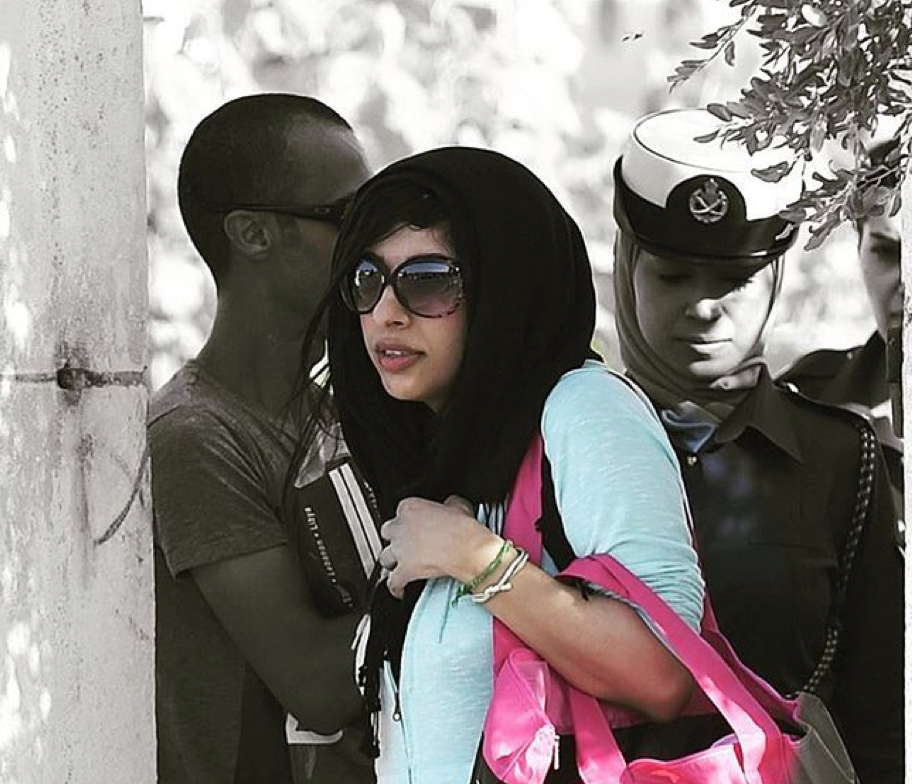
Human rights defender Zainab Al-Khawaja was forced into exile on 7 June 2016, after the Danish Consulate in Bahrain informed her of threats they had received from a high-level government official that she would be re-arrested and held indefinitely if she remained in the country. Al-Khawaja and her family have fled to Denmark.
Zainab Al-Khawaja and her infant son were released from prison a week earlier after serving two months of her 37-month sentence. Al-Khawaja was sentenced to a total of three years and one month in prison and a fine of 3,000 BHD on several charges related to her exercise of freedom of expression and her peaceful dissent against the Bahraini government. On 2 February 2016, the court of appeal upheld a 9-month prison sentence against Zainab for trying to visit her father, human rights defender Abdulhadi al-Khawaja, in Jau Prison when he was on a hunger strike in August 2014. In December 2015, the court amended a prison sentence against Al-Khawaja to one year and four months instead of three years and three months on charges related to tearing up a picture of the king and allegedly insulting a public officer during a peaceful protest in Bahrain. In October 2015, the court reduced her sentence to one year in prison instead of three years over the same charge of insulting the king.
In an open letter Al-Khawaja wrote and smuggled out of prison, she wrote “My cause is the cause of my people. If nothing changes for the people of Bahrain, then my staying in jail or release is not of great consequence.”
Travel Bans

Three human rights defenders and the parents of an extra-judicially killed protester were denied travel to Switzerland on 12 June 2016, in violation of their right to free movement as protected under article 12 of the International Covenant on Civil and Political Rights. The activists were travelling to participate in the 32nd Session of the UN Human Rights Council. The government had placed the activists on travel ban only days earlier.
Two of the human rights defenders, Ebtisam Al-Saegh and Hussain Radhi, were participants in UN human rights workshops recently held in Bahrain. Another activist, Dr Taha Al-Durazi, was barred from travelling to the United Kingdom on 10 June.
On 29 June, journalist Nazeeha Saeed was banned from boarding a flight, without reasons presented. According to Saeed, the Ministry of Interior, Public Prosecution and Immigration Offices all confirmed that she had no travel ban, but she was turned away again when trying to cross the Bahrain-Saudi Arabia causeway.
The Government of Bahrain frequently employs two types of travel bans. The first travel ban type is imposed during the criminal investigation procedure. This type of travel ban was placed on Nabeel Rajab in November 2014, during his investigation on charges of ‘insulting statutory bodies’, for which he received 6 months. The ban was never listed.
The second type, seen regularly in the past month, is the secret travel ban. These can only be discovered by the traveller when attempting to exit the country. As in Nazeeha Saeed’s case, government authorities sometimes deny that the person is banned from travel if asked, despite the reality of being denied movement.
Political Societies
Sheikh Ali Salman

On 30 May 2016, an appeals court increased the prison sentence of Sheikh Ali Salman, the General Secretary of the Al Wefaq political society, from four years to nine. The appeal was launched by the Public Prosecution, challenging the criminal court’s decision to acquit Sheikh Ali Salman on charges of ‘attempted overthrow of the regime.’ Sheikh Ali Salman was initially sentenced on the lesser charges of inciting hatred in June 2015.
The increased sentence is the latest reprisal against the leader of the country’s largest opposition society. In January 2015, Human Rights Watch reviewed Sheikh Ali Salman’s speeches and found there was no basis for the severe charges. The government’s prosecution of Sheikh Salman violates his right to the freedoms of expression, association, and assembly. The case underscores the authorities’ repeated efforts to conflate peaceful criticism with a threat to national security, and thereby justify the use of harsh punishments for opposition activists.
On 28 December 2014, Bahraini security forces arrested Sheikh Ali Salman – just two days after his re-election as the society’s Secretary General – when he delivered a speech calling for reform of the country’s political system.
Six months later, on 16 June 2015, the Criminal Court sentenced Sheikh Ali Salman to four years in prison for “publicly inciting hatred, inciting civil disobedience of the law, and insulting public institutions” in his speeches and acquitted him of “attempting to overthrow the regime”. Although the main evidence on which the court based the conviction was Sheikh Ali Salman’s speeches, the judge refused the defense team’s request to present supporting evidence, including the recordings of the very speeches for which he was being prosecuted.
In September 2015, the United Nations Working Group on Arbitrary Detention (WGAD) declared that Sheikh Ali Salman had been arbitrarily detained by the Government of Bahrain. The decision, which cites both free expression and due process concerns, requests that the Bahraini government release Sheikh Salman immediately, and provide him with an enforceable right to compensation against the government.
Al Wefaq’s Dissolution
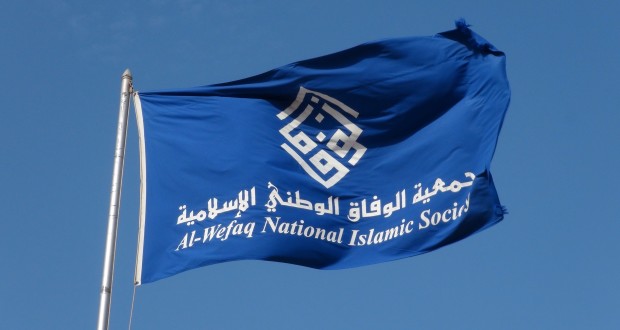
On 14 June 2016, the Ministry of Justice and Islamic Affairs shut down Al Wefaq, the largest political society in the country and the leading opposition group. Following the ministry’s request, a court ordered the expedited closure of Al Wefaq, the freezing of their assets, and the suspension of all activities. The court also placed Al Wefaq’s headquarters under the control of the Justice Ministry.
The Bahraini government rationalized its decision by asserting that al-Wefaq supported a sectarian political platform that countered national unity, owed allegiance to “foreign religious and political” entities, supported terrorism and extremism that threaten the state, and called for foreign intervention. The court arrived at its decision without allowing al-Wefaq’s attorneys to present their defence.
The Government is now in the process of fully dissolving the political society through expedited court proceedings. An initial September court date was moved forward to 28 June, with a second court hearing on 4 July. Al Wefaq’s lawyers state they have not been granted adequate time to prepare and withdrew from the legal proceedings in protest.
Read more here.
Stripping of Citizenship
Sheikh Isa Qassim

On 20 June, the Ministry of Interior stripped Sheikh Isa Qassim of his citizenship. The religious cleric, who has the rank of Ayatollah, is the spiritual leader of the majority Shia citizen population of the country. A statement from the Ministry of Interior said, “he exploited the religious pulpit for political purposes” and aimed to incite violence.
Sheikh Isa is not only a highly regarded cleric, he has also been a vocal critic of the Government of Bahrain. He was an integral opposition figure during the 2011 protests. The cleric has also long served as a leader in the subsequent pro-democracy movement.
Other Cases
Between 30 May and 30 June, the government has issued nine separate denaturalization orders, leading to 61 individuals stripped of citizenship, including that of Sheikh Isa Qassim, above. The majority are likely to have been rendered stateless.
Of these nine cases, six were related to protests and tried in court under counter-terrorism laws. Due to the excessive powers granted to them under the terrorism laws and a systematic reliance on coerced confessions, Bahraini courts regularly violate due process and fair trial procedures.
In one incident, a Royal Decree signed by the King of Bahrain stripped the citizenship of three officers in the Bahrain Defence Force. Additionally, a court stripped 13 persons affiliated with the terrorist group ISIS of citizenship under the counter terrorism law.
Recommendations
We, the undersigned, therefore call on the Government of Bahrain to:
- Immediately release Nabeel Rajab from detention, drop all charges and lift his travel ban.
- Commute all sentences against Zainab Al-Khawaja.
- Lift travel bans from all activists.
- Commute the sentence of Sheikh Ali Salman, free him, and release all prisoners of conscience,
- Reverse the dissolution of Al Wefaq and allow all political societies to exercise their freedoms of association, assembly, and expression.
- Reinstate the citizenship of Sheikh Isa Qassim.
- Reinstate the citizenship of all persons unfairly stripped of citizenship, especially those made stateless.
Signed:
- Bahrain Institute for Rights and Democracy
- Americans for Democracy & Human Rights in Bahrain
- European Center for Democracy and Human Rights
- Justice Human Rights Organization
On 31 May 2016, an appeals court in Bahrain upheld the death sentences of three individuals – Sami Mushaima, Abbas Al-Samea, and Ali Abdulshaheed Al-Singace; and life sentences for six others – Ali Jameel Al-Samea, Taher Al-Samea, Husain Ahmed, Hasan Sabah, Ahmed Matooq and Redha Mushaima; and revoked the citizenship of eight of them. The detainees were arrested over two years ago, on 3 March 2014, by security forces in house raids, on charges of allegedly using improvised explosive devices which led to the killing of three police officers, one of them being an Emirati citizen. The state-sponsored media quickly published photos of the defendants accusing them of murder, before the investigation was even completed. On 26 February 2015, the High Criminal Court convicted them of all charges and passed sentence.
We have been closely monitoring these cases, raising the alarm on more than one occasion on questionable interrogation practices and ill-treatment of these detainees, who were refused access to their families and lawyers. They said that they were subjected to torture during interrogation to force them to confess. Despite being presented with evidence to prove their innocence, the court convicted and sentenced them to the harshest of punishments. All defendants denied the charges against them, and pleaded innocent.
According to reports, security forces subjected detainees to more than a week of enforced disappearance, during which they were allegedly tortured. Sami Mushaima, who is one of three individuals sentenced to death for his alleged planning of the bombing event, has claimed that the security forces tortured him to force his confessions by beating him in his genital area, and keeping him handcuffed at all times, even in his prison cell. They also forced him to stand for hours and limited his access to toilet. Abbas al Samea also alleged he was subjected to various form of torture, including electric shocks, sleep deprivation and sexual assault. Other detainees in the case have reported being subjected to the same forms of torture.
Additionally, the defendants’ lawyers were prevented from accessing the case files during trials, and from cross-examining the public prosecution’s witnesses. As such, the prisoners’ legal representatives boycotted the hearings and protested the unjust and biased investigation and trial. This is a clear violation of their legal right to due process. Consequently, the case document that was submitted by the public prosecutor relied entirely on a confession obtained through torture.
We continue to note the escalation of harsh sentences issued by Bahraini courts in absence of due process and over politically motivated charges. In May 2016 alone, BCHR registered a total of 1,718 years’ worth of prison sentences, across more than 44 cases all related to the political unrest in Bahrain. 182 persons were subject to these sentences, where some of them have to pay a total of BHD 218,960 in fines (the equivalent of USD$1,093,959.20). Moreover, 36 individuals had their citizenship revoked through court orders.
According to article 6 of the International Covenant on Civil and Political Rights (ICCPR), every individual has the right to life, and no one shall be arbitrarily deprived of his right. Article 6(2) mentions that countries which have not abolished the death penalty may not impose a death sentence against individuals if they cannot be guaranteed the right to a fair trial and where other ICCPR rights have been violated. This right to a fair trial will include the presumption of innocence and the right to examine witnesses. According to the interpretation by the UN Human Rights Committee, all ICCPR provisions must be upheld throughout proceedings. This includes the absolute rights under article 7 not to be subjected to torture or to cruel, inhuman or degrading treatment or punishment, for any purpose.
We therefore call upon the government of Bahrain to:
- Annul the death penalty convictions and life imprisonment sentences levelled against the 10 defendants;
- Immediately launch an investigation into the allegation of torture and prosecute all individuals found responsible for the crimes of torture and or/cruel, degrading and inhuman treatment;
- Immediately and unconditionally release all political detainees who have been arbitrarily arrested for politically motivated charges due to the popular movement for freedom and democracy; and
- Guarantee the right to a fair and impartial trial, as well as the right to legal counsel for all political prisoners in the Bahraini detention system.
Bahrain Center for Human Rights (BCHR)
Americans for Democracy & Human Rights in Bahrain (ADHRB)
Bahrain Institute for Rights and Democracy (BIRD)
European Centre for Democracy and Human Rights (ECDHR)
Justice Human Rights Organization (JHRO)
]]>
In Bahrain, political dissidence can be punishable by death. The Government of Bahrain employ the threat of capital punishment as a means of political intimidation. Between 2011 and 2014, Bahraini courts have handed down 11 death sentences; in the last six months, they have handed down at least four more. Disproportionately, these sentences have been based on false confessions, extracted from detainees under severe duress. Though Bahrain has not carried out an execution since 2010, the threat of one remains very real. To demonstrate the human consequences of a capital punishment mechanism so dependent on torture and coercion, this month’s Champions for Justice features eight of Bahrain’s current death row inmates. Their stories highlight a growing culture of violence, political prejudice, and criminal disregard for due process within Bahrain’s legal system.
 Mohamed Ramadan ‘Issa ‘Ali is a 32-year-old airport security guard in Bahrain. On 20 March 2013, Bahraini authorities arrested Ramadan for his alleged involvement in a bomb explosion that killed a police officer on 14 February 2013. Without a warrant, and without informing his family, security forces detained Ramadan for at least four days. During this time, Interior Ministry officials subjected Ramadan to severe torture. Ramadan eventually signed a confession in order to stop the abuse, but when he attempted to explain this to a judge the authorities tortured him for another 10 to 13 days. According to Ramadan, he was told the government knew he was innocent, but his involvement in the pro-democracy movement made him a traitor who deserved the death sentence.
On 29 December 2014, Ramadan was convicted of murder and sentence to death based on his false confession and the coerced testimony of other defendants. On 26 May 2015, an appeals court upheld the ruling. He is currently detained at Jau Prison, awaiting execution.

Hussain ‘Ali Moosa Hussain, 28, was tried along with Mohammad Ramadan for his alleged assistance in the 14 February 2013 bombing attack. The authorities arrested Moosa on 21 February 2013 and took him to a security facility. For three days, security officials hung Moosa from the ceiling while they beat him with batons and threatened to harm his family, specifically his sisters. Like Ramadan, Moosa eventually signed a false confession in exchange for an end to his torture. Also like Ramadan, when Moosa recanted his confession, he was subjected to further torture. This period of abuse reportedly lasted three months.
During his trial, Moosa was denied consistent access to legal counsel. When Moosa did have access to an attorney, the judge prevented the defense from properly preparing and refused to provide appropriate documentation. Furthermore, the prosecution used Moosa’s coerced confession to not only convict him, but to falsely incriminate Ramadan as well. Moosa and Ramadan were sentenced to death on the same day, 29 December 2014. Moosa is also being held at Jau Prison, awaiting execution.

Sami Mushaima was arrested on 3 March 2014, when Bahraini security forces raided the home of the prominent Mushaima family. Due to the family’s association with the pro-democracy movement, the home had been previously raided at least 23 separate times. On this occasion, approximately 15 security officials came to arrest Sami Mushaima for his alleged involvement in a bomb explosion that killed three police officers only a few hours earlier. Though he did not resist arrest, the security forces violently subdued Mushaima and transported him to a detention facility. Over the next several weeks, he was subjected to extreme torture. Security officials routinely beat, electrocuted, and sexually assaulted him, among other severe forms of mental and physical abuse. Mushaima’s family believes he was coerced into falsely confessing through the use of torture. Mushaima’s family claims that he is illiterate and lacks the skill necessary to assemble a remote-controlled explosive device. Nonetheless, on 26 February 2015, Mushaima was sentenced to death. He is currently waiting on an appeal.

Abbas al-Samea is a 25-year-old teacher who was arrested on 3 March 2014, the same day as Sami Mushaima, for his alleged participation in the same bomb explosion. Despite credible evidence that al-Samea was in school at the time of the bombing, a judge sentenced him to death on 26 February 2015. Al-Samea was also featured in a previous Champion of Justice installment that highlighted victims of severe abuse at Bahrain’s Jau Prison, where many death row inmates are held. Read more about him and other detainees here.

On 19 February 2014, the Bahraini government sentenced Maher al-Khabaz to death for his alleged use of a flare gun to kill a police officer on 14 February 2013. Three days after the alleged attack, plainclothes officers arrested al-Khabaz at his place of business and disappeared him to a local security facility. There, the officers subjected al-Khabaz to severe physical torture including electrocution and falaka, a specialized whipping of the most sensitive areas of the feet and hands. After a week, the authorities extracted a signed confession from al-Khabaz – despite him being illiterate and blindfolded. The ensuing trial was based on this false confession, the false confessions of alleged compatriots, and the testimony of the involved police officers. Throughout the proceedings, al-Khabaz was denied consistent access to an attorney and threatened with continued torture. The Court of Appeals upheld al-Khabaz’ death sentence on 31 August 2014. He is currently detained at Jau Prison, where he awaits execution by firing squad.
Ali Abdulshaheed was arrested by security forces around the same time as Sami Mushaima and Abbas al-Samea, accusing him of having participated in the same bomb explosion. Like Mushaima and al-Samea, Abdulshaheed was sentenced to death on 26 February 2015 after an unfair trial.
Salman Isa , 30, was sentenced to death by the High Criminal Court on 29 April 2015 for his alleged involvement in a bomb attack that killed a police officer a year prior. Along with Isa, the court sentenced 11 other defendants to prison terms ranging from 10 years to life. It is suspected that the authorities subjected all 12 defendants to torture or other forms of coercion in order to extract false confessions.
We call on the Government of Bahrain to take substantive measures to protect the rights of suspects and detainees, as reports of torture and abuse in pre-trial detention and in Bahrain’s prisons continue to proliferate. To this end, we urge the government to allow UN Special Rapporteur on Torture to visit the country to investigate allegations regarding the systemic use of torture and coercion within its criminal justice system. Ultimately, we call on the government to thoroughly reevaluate all cases based on false confessions and/or testimony elicited using torture, and to commute the sentences of all death row inmates, hold accountable any officials responsible for their abuse, and – pending the proper investigations – ensure their release.
]]>