The post Why Are Young People Bored With Religion? 4 Reasons appeared first on About Islam.
]]>Prayers are skipped by the family during the subsequent birth celebrations. Tahneek by a righteous person is a sunnah unheard of in their home. The aqeeqah gets postponed as well, with a casual “Oh, we’ll get it done later by any Islamic organization”.
10 years later:
The parents sporadically advise the child to start praying, although neither of them pray regularly, nor do they even know the correct method of ablution.
On Fridays, the reluctant child is forced to pray Jumuah. For learning Quran, the child has hopped from one tutor to the next. Quran lessons are rushed, terse and short; hastily done with, and culminated altogether at age 12.
When the child asks the parents questions about creation, life, birth, death, and other philosophical matters, the parents brush off these questions with curt, whimsical replies.
Discussions about “God” are not encouraged. The child knows that a man named “Muhammad” is respected and revered in the home, because he brought a holy book called the Quran that they are encouraged to “read” (without understanding a word). Once a year, the child is made to fast from dawn to dusk for a month, because the holy book says so.
Academics and school work, however, is given top priority in the house.
20 years later:
The “child” is now sharing a dorm room with an atheist at a secular university. All across campus, dating, one-night-stands, drinking, partying, nightclub-hopping, and watching porn is the norm among students, especially on weekends and after exams. Couples openly make out in quiet corners. Fasting Ramadan, eating only halal food, and skipping classes to pray Jumuah, are all becoming a burden for this “child”, who was raised more as a cultural Muslim than a believing one.
Struggling to remain celibate and sober, after a few heated discussions about religion with their roommate, this “Muslim child” is now having serious doubts about their faith. The temptations are too many; the sacrifices to adhere to a religious belief that they hardly know, too great.
The truth is: he or she wants to leave Islam in order to be ‘free’ to live a carefree life full of fun, just like their college mates.
The above story might be a fictionally generalized one, but it does depict a growing reality. This is happening to more and more Muslim youth across the world, be they dwelling in the chaotic, corruption-wrought, developing Muslim-majority countries, or the more developed, secular, and ‘progressive’ non-Muslim-majority ones.
For the first time in the history of mankind, media and ease of travel are making cultures converge across the globe. This has caused an information overload to trickle into every aspect of our lives, 24/7.
Now, be it an age-old traditional food recipe, or a centuries-old religious doctrine, ― everything is under pressure and under scrutiny to “diversify” and change, in order to “adapt” to the times.
There are a few basic reasons why Muslim youth move away from religion and its practice today. Below, I have attempted to highlight them broadly, in chronological order:
“Laissez Faire” Childhoods: Grassroots Negligence
The first most important reason why Muslim youth relinquish religion, is because the roots of their faith were not properly and deeply planted into their hearts, when the time was right to sow them.
That is, as a fetus in the womb, and during the first 10 years of life after birth, they should have been connected to Allah through the Quran. All their innocent questions about the life of this world should have been answered by referencing the Quran as a source of guidance.
Furthermore, they should have been thoroughly indoctrinated with the 6 articles of the Islamic faith, which form the basis of the creed ― i.e. belief in one God, His angels, His scriptures, His messengers, the Hereafter, and the Divine decree.
 Too Much Emphasis on Worldly Education
After the age of 10, most children from educated families are permanently shackled into an orbit that revolves incessantly around school.
Never mind that half (if not more) of their school curriculum has little to do with their interests, or with practical adult life. Yet, most Muslim parents’ top priority for their child is getting good grades in school.
While there is nothing wrong with giving a child a good education, it is wrong if this worldly education comes at the price of undermining that child’s religious beliefs, moral training, and character-building.
During youth, imparting authentic Islamic knowledge and a deep understanding of the Quran to a Muslim child should not be an after-thought, or a weekend activity.
It should top the child’s list of academics.
Peer Pressure
Young people absorb influences of all kinds very quickly. School and college life come with the added curse of peer pressure and all-too-influential friendships. Being popular and admired by one’s peers and clique at school/college, and to be accepted by them, is usually a top priority for youngsters. What’s more, successful networking with peers during university years goes on to impact their careers as well.
If a youngster’s belief in and adherence to Islam becomes an obstacle in establishing amicable relationships with peers, they can easily become disillusioned. This can lead to undermining their religious practice in order to just blend into the crowd, have fun, and achieve material success in life.
If their peers are all heading gung-ho towards getting the right job, house, family, and car, they want to do so too.
Admiration of Worldly Progress
Lastly, it is sad but true that practicing Muslims are no longer the majority front-runners in the high-achieving, educated and progressive world. In any field of progress, be it medicine, literature, science, sports, finance, business, education, or technology, non-Muslim bigwig names dominate the fore of achievers and award-winners, whereas Muslims trail behind.
For the young Muslim, the question pops up: “If Islam was the only true religion, why do Muslims not have success, progress, honor, and peace in this world?”
Since they desire material success & wealth, they equate leaving the Islamic religion (or its outward practice) with having more chances of achieving worldly success.
Conclusion: It is All a Trial
If the reason for our youth moving away from Islam could be summarized in a nutshell, it would be: love of the world over the Hereafter, due to weakness of faith.
In order to prevent this, we ― their parents, teachers, and mentors ― need to change our priorities first, and completely overhaul our current early childhood education system.
The reason our youth get bored with the religion, is because we brought them up to give more importance to this world than the Hereafter.
And Allah knows best.
May Allah grant us all high ranks of faith and righteousness. Ameen.
(This article is from Reading Islam’s archive and was originally published at an earlier date.)
The post Why Are Young People Bored With Religion? 4 Reasons appeared first on About Islam.
]]>The post ‘Maybe It’s Divorce We’re Taking Lightly’ appeared first on About Islam.
]]>“This is really a shame,” the woman said. “The divorce rate of Muslims is so high. Why are Muslims taking marriage so lightly?”
It’s a question we’ve likely all heard or uttered by our own tongues. But the more I live, the more I’m developing a different perspective…
Anisa’s Story
Anisa was twenty-two when she got married, but she was sixteen when she met eighteen-year-old Samir.
They met in Honor Society and were drawn to each other, the only practicing Muslims at school.
Anisa wore hijab, and Samir spoke openly about Islam.
Though they shared no classes, they saw each other during the club’s weekly meetings after school.
Neither Anisa nor Samir thought much of their frequent talking.
But there was so much to discuss and so much that drew them together.
They shared the same goals in life, and they both dreamed of teaching Islam on a large scale.

It was a year before Anisa and Samir got back in touch.
Anisa was browsing a friend’s Facebook page when she saw Samir’s profile.
Her heart pounded in excitement, and her hand trembled nervously as she sent him a friend request.
Less than an hour later, he accepted, and it was clear that Samir was excited to hear from her.
When Samir graduated, Anisa couldn’t escape the sense of sadness that overwhelmed her, but she tried to focus on school.
She kept telling herself it was just loneliness. But, something deep inside said it was something more…
They talked online almost every day after that. But they still didn’t admit to themselves what was happening.
But when Anisa gave Samir her phone number and told him the times to call (when her parents weren’t home), she started to feel a little guilty.
But they talked mostly about Islam and what they envisioned for themselves in the future…and in marriage.
Anisa was eighteen and months away from graduation when Samir surprised her by visiting the school.
It was time for Honor Society, but when she saw Samir, she couldn’t bring herself to go inside.
“I had to see you,” he said as they walked down the hall.
They both kept their hands tucked deep into their pockets, but they couldn’t avoid the furtive glance. “I miss you, Anisa.”

The words sent Anisa’s heart fluttering, and she barely found her voice. “Me too.”
When she realized that her response made no sense, they both laughed awkwardly.
They were sitting on the bleachers outside when Samir said, “I know it’s wrong to have these feelings…” Anisa averted her gaze, her face growing warm in embarrassment. “But I can’t take this anymore. I need to be with you…properly, you know?”
“No,” Anisa’s mother said later that night when Anisa confided in her about Samir.
“You are too young. Besides, he’s not from our country. It can never work. I’ll mention none of this nonsense to your father. Stupid girl, don’t go and ruin your life for some boy.”
“I’m not giving up,” Samir said on the phone the next day, but his voice betrayed how heartbroken he was. “I’m talking to your father.”
“Stay away from my daughter!” A week later, Anisa shuddered as her father’s voice carried to the solitude of her room.
She heard the front door slam, and she rushed to the window, her heart dropping as she saw Samir walking to his car, shoulders slouched.
“I’m not giving up,” Anisa told Samir on the phone the next day.
“I wish we could run away together,” Samir said, a hint of humor in his sad tone. They both laughed, but when Anisa hung up the phone, tears stung her eyes…

When Anisa was twenty-one years old and in her third year in university, her parents said they had found a “good boy” for her.
“You will not refuse Abdullah,” her mother said the night before Anisa was to meet him.
“Your father worked very hard to find the right match for you.
Abdullah finished medical school and comes from a good family. Do not disappoint us.”
Samir met Anisa on campus after she told him the news.
Anisa cried unabashedly as Samir fought back tears, but he couldn’t keep himself from pulling Anisa close to him.
Islamic limits blurred at that moment and neither cared.
They just wanted this moment, which they would never have again…
Naturally, Anisa’s marriage to Abdullah was strained from the start.
Her heart was attached to Samir, and no matter how hard she tried, she could not loosen the hold Samir had on her heart.
But she convinced herself that her mother was right.
A good Muslim girl did what her parents wanted, even if it wasn’t what she wanted for herself.
“We are good Muslims, Anisa,” her mother had said after Anisa and Abdullah met.
“We are not forcing you. Allah forbids this. But if you do not marry Abdullah, know you are breaking your parents’ hearts, and I will never forgive you for that.”
The post ‘Maybe It’s Divorce We’re Taking Lightly’ appeared first on About Islam.
]]>The post Your Road Is Rough? Stay Calm and Be Like People of Cave! (2/2) appeared first on About Islam.
]]>Stay Calm and Be Like People of Cave: Finding Hope in Allah
Your only resort for survival, or a tiny rope for you to cling on for safety, may lie in a cave. Yes, your own cave, with less certainty or guarantee that you would make it, but a glimmer of hope may put you through, and provide you with a key to enter the gate of salvation, i.e., the abode of Allah’s mercy and blessing galore.
Look at how this transpired miraculously for these young lads:
{(The youths said to one another), “And when you have withdrawn from them and that which they worship other than Allah, retreat to the cave. Your Lord will spread out for you of His mercy and will prepare for you from your affair facility”} (Al-Kahf 18:16)
This conversation might sound strange to any ordinary person, and one might truly wonder: how can people, fleeing persecution, resort to a cave, with all its darkness and dreadful atmosphere, without any preplanned strategy or plan of survival, adding to that the treachery and wickedness of the persecuting king who had resolved to bring them down, no matter how!
How Did Allah Protect the People of the Cave?
But look at the wondrous power of God. When they entered the cave they fell asleep, with the might of their Creator, and so was also their dog, which accompanied them to the cave and was made to act as if it was their guardian, no doubt this would terrify anyone passing by the cave. And truly Allah said:
{Had you looked at them, you would certainly have turned back from them in flight, and would certainly have been filled with awe of them.} (Al-Kahf 18:18)
Wonderful! What is it that would make one get terrified by the sight of people lying in a cave?
It appears, according to the Qur’anic narration, that this is not just only a simple resting posture. But Allah the Almighty did make it look terrifying with a goal of protecting the youths, and the fact that He made the dog taking a guard position at the gate is also an important symbolic gesture, i.e. the people inside the cave are not “just ordinary people lying down for rest’. In fact, they had already gone, falling into a dead sleep, subhanallah!
How Does Allah’s Mercy Give Believers Hope?
And for us to grasp this message clear, the Qur’an also explains how their physical shape was perfectly designed to meet up with the goal of blanketing them with a divine protection and security. Yes, they went into a very unusual long period sleep, but at the same time, this period, more than three centuries, did not result in producing any biological changes or metamorphosis on the youths, as would happen to any ordinary body, even in a very short time frame. They rose up from their long sleep with the same shape of the body they entered the cave with.
To me, all this, in addition to other wondrous signs, reflect the fact that everything that happened to these youths was moving towards the direction of Allah’s fulfilling of their hope expressed in the above-mentioned verse, {Your Lord will spread out for you of His mercy and will prepare for you from your affair facility}, which also applies to whoever believes in Him, He comes to his aide, and, as He delivered these youths from the torture and persecution that drove them out of the city, He always stays beside any person who puts his trust in Him.
So what are you waiting for, my friend? Put your trust in your Lord today, and salvation will be yours for the rest of your life.
Thus in any story the Qur’an narrates to us, it does not serve us any good to pay attention only to side issues, rather than trying to draw wisdom and get the point Allah wants us to get. For example, in this story of the Youths of the Cave, It doesn’t matter much to know about their identity, nor even their number, that is not the main point Allah wants us to grasp from the story. That is why He said:
{They will say there were three, the fourth of them being their dog; and they will say there were five, the sixth of them being their dog – guessing at the unseen; and they will say there were seven, and the eighth of them was their dog. Say, [O Muhammad], “My Lord is most knowing of their number. None knows them except a few. So do not argue about them except with an obvious argument and do not inquire about them among [the speculators] from anyone.”} (Al-Kahf 18:22)
There are many other aspects of wisdom in this story, but the one that stands glaring and appealing to my mind is the power of belief which God wants to show us that a way to salvation for Muslim is to keep his feet firm on the straight path. But that journey will not be complete until one has opened up his heart to allow belief to sink in.
This is the key for your heart to gain power and strengthen the soul, making you well-equipped for the great tasks lying ahead. Definitely this will not be easy, my friend, and may your road be rough. But there is only one thing that will help you sail through successfully, i.e. steadfastness (which reflects courage, strong belief and trust in Allah).
The post Your Road Is Rough? Stay Calm and Be Like People of Cave! (2/2) appeared first on About Islam.
]]>The post Do Not Neglect Your Time appeared first on About Islam.
]]>A lot of people overlook the value of time and fail to recognise the significance of every breath they take. Once those breaths are gone, they can’t be reclaimed, thereby underscoring the importance of using our time wisely.
The post Do Not Neglect Your Time appeared first on About Islam.
]]>The post He Dies While Raising Charity, Community Raises Over £76,000 in His Memory appeared first on About Islam.
]]>The GoFundMe campaign was launched following the sudden passing of Idris, who leaves behind his wife and two-month-old daughter. The funds will contribute towards his Sadaqah Jariyah and support his beloved family.

Idris was described as someone deeply loved by his family, friends and wider community. He was heavily involved in youth projects and had recently embarked on “The 22nd Century Project” with friends to support and strengthen the Muslim community in West London.
The fundraising campaign described him as a devout Muslim and a community leader who dedicated his life to bringing others closer to the masjid and Islam.
“Idris was loved dearly by not only his wife & 2-month-old baby daughter, but also his beloved family, friends and community.”
The campaign added: “Idris was a devout Muslim, a leader within his community, and someone who dedicated his life to bringing others closer to the masjid and to Islam. He was heavily involved in youth projects and had recently embarked on a new initiative (‘The 22nd Century Project’) with his friends to support and strengthen the Muslim community in West London.”
The appeal encouraged donations to support Idris’s family and contribute towards his Sadaqah Jariyah.
The post He Dies While Raising Charity, Community Raises Over £76,000 in His Memory appeared first on About Islam.
]]>The post Who Taught Prophet Muhammad (PBUH)? appeared first on About Islam.
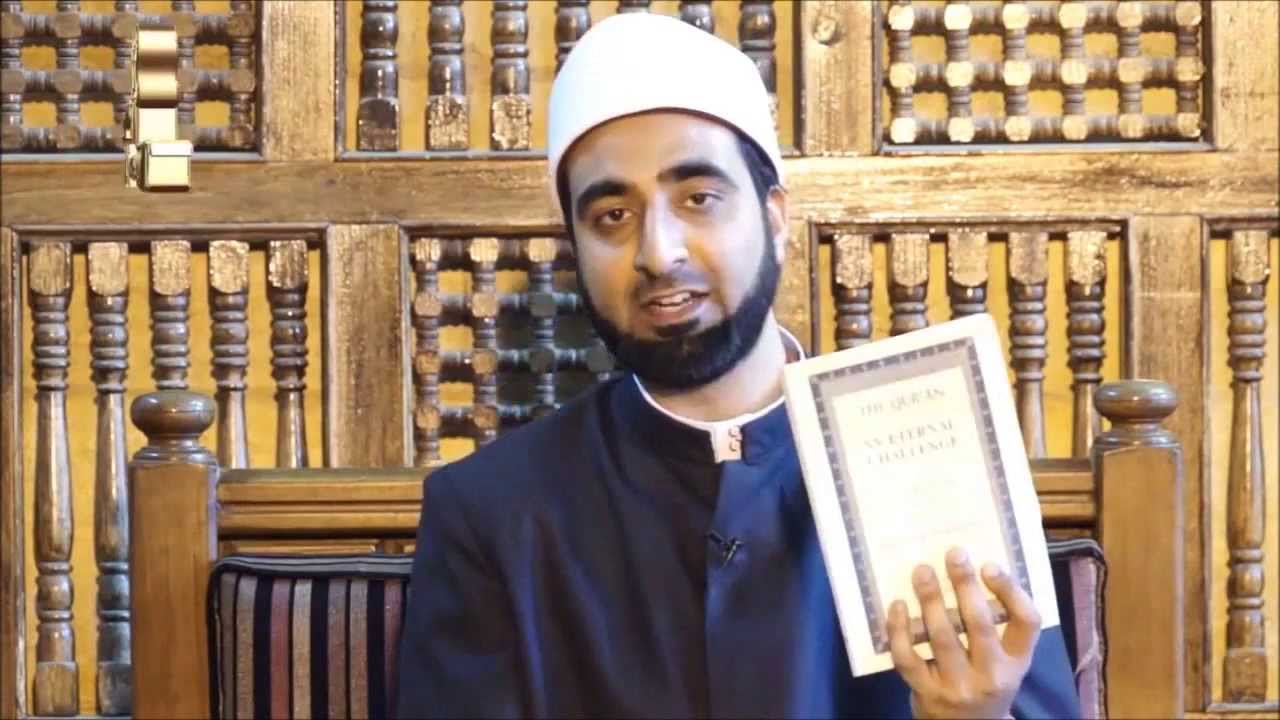
]]>This is the question that Sheikh Sohaib Saeed addresses in this episode of the Eternal Challenge series. He refutes allegations that some clergymen taught the Prophet or that he quoted from previous scriptures.
The video also discusses prophecies in the Quran. Prophecy is foretold news about any future event. It is quite distinct from an educated and wise guess. It is one of the vital proofs for the truthfulness or otherwise of prophets.
More from Sheikh Sohaib Saeed:
The post Who Taught Prophet Muhammad (PBUH)? appeared first on About Islam.
]]>The post 5 Most Common Questions Non-Muslims Ask appeared first on About Islam.
]]>From my experience, there are two different classes of questioners – those who only know about Islam through the media and those who think they know Islam through Islamophobic propaganda.
The media watchers, for the most part, are easy to talk to and even enjoy to answer questions for. They simply lack knowledge.
They don’t wish to offend and are open to understanding so that we can all be better neighbors and build better communities.
Then, there are those who listen to hatemongers. This kind of questioner is frustrating to talk to. They have closed off their minds, thinking they know everything they need to about Islam; when in fact all they know are myths, propaganda, texts taken out of context, and straight up lies.
The following is a list of the top five questions I receive from non-Muslims about Islam and my Muslim identity. See if you can figure out which questions are from media watchers and Islamophobe listeners:
1- Can You Be an American and Be Muslim?

This question is tricky because people mean different things by the term American (here the term “American” can be swapped for any Western national identity-the sentiment is almost universal).
Some questioners actually mean, ‘can you be Muslim and a white person?’ I honestly hate it when people mean this because America is not an identity reserved for white people.
This kind of understanding comes from a bigoted political view of the world that has wreaked havoc on global politics for centuries.
Answer
Like my mama always taught me- if you can’t say anything nice, say something sarcastic. So, my answer to this kind of question is a barrage of more questions:
What do you mean by American? Can a “true” American be anything other than Christian to your mind? Can an Arab be Christian? What color skin should I have in order to worship God?
Are religious identity and cultural identity and ethnic identity and national identity all the same thing to you? Do you think “the man” will take away my American passport if I tell him I’m Muslim?
Once the questioner has attempted an answer, I take pity on the less informed and reply, yes! An American can be Muslim. It is a right protected by the first amendment to the Constitution.
And if a religion were to be true and just, as Islam is, there would be no racial, national, cultural, or ethnic prerequisite to enter into its fold.
2- What is That Thing on Your Head?

Hijab. It’s always about hijab. I am so sick of this question. To be clear, hijab is not just a piece of cloth covering a woman’s hair. It is a standard of modesty.
I wonder when the Western world (and the Eastern world too for that matter) will finally realize the only reason we are obsessed with the hijab is because we are obsessed with how a woman looks.
A woman’s appearance is how we childishly assign worth to her. For a woman in any given society, if she meets certain arbitrary, cultural “requirements” of beauty, then she is valued by society.
Hijab obscures the view of a woman, making it difficult to erroneously sign value to her based on her appearance. And that’s (part of) the point. Islam defines woman’s worth based on the content of her character, not her looks.
Answer
Those are glasses. I am near sighted. Just joking. I know you are talking about my scarf. I wear this to have control over who can view what parts of me.
I reserve the right to give consent to who consumes my body even if that consumption is “only” visual. I would rather not be judged based on the size and shape of my parts because the human being is greater than the sum of her parts (disclaimer: I am not really this eloquent in real life, but you get the picture).
3- Can You Be a Muslim and Be American?
This question sounds a lot like the first question. But a deeper look into the intent reveals that it is an entirely different animal.
What the questioner means is, ‘is it allowed in Islam to be an American (again, the nationality can be swapped for any Western nation)?’
This question stems from the false assumption that Muslims hate America (and the West as a whole) and somehow the two identities are mutually exclusive. This simply isn’t true.
Answer
Yes, a Muslim can absolutely be an American. In fact, the first country to recognize America’s independence from Britain was a Muslim country- Morocco.
The human and civil rights the American government establishes for its citizens are compatible with Islamic law.
In fact, Islam is clear in its directive that one must obey the law of the land in which they live, any land of Muslim majority or otherwise.
4- Are You a Terrorist?

Assuming the worst stereotype is true about someone is extremely rude. But this kind of question happens. While I used to be nice about this kind of thing and give people a pass, I have come to realize that this kind of aggressive rudeness is unacceptable, and I have every right as a human being worthy of dignity, to school the questioner.
Answer
NO! Are you? According to the FBI, the majority of terrorist attacks that take place on American soil are perpetrated by non-Muslims. So, it is more likely that you, as a non-Muslim, are a terrorist. So, are you a terrorist? And if not, then why don’t you apologize for the terror attacks that your people have perpetrate in my country?
5- But Doesn’t Islam Oppress Women?
Many might not realize how this “women in Islam are oppressed” myth has come about (it has a lot to do with false pretenses for war and Islamophobia as a whole). But all it takes to dispel is to talk to an actual Muslim woman about her faith, and not those who imagine themselves as “saviors” of Muslim women.
Answer
Islam in no way oppresses women. Islam gives every woman the freedom to choose her religion, to get an education, to earn a living and spend money as she sees fit, to inherit property, to say who and even if she marries, and ultimately to have agency in her own life.
Some Muslims certainly do oppress women and even claim Islam as an authority to do so. But just because someone usurps power in the name of religion doesn’t mean that is actually from the religion.
Many people have twisted religion and used it as a tool of oppression. Sometimes Muslim behavior is not an indicator of Islamic values.
(From Discovering Islam archive)
The post 5 Most Common Questions Non-Muslims Ask appeared first on About Islam.
]]>The post Whoever Works Hard Will Reap Fruits of Their Labor appeared first on About Islam.
]]>In this video, Sheikh Mufti Menk advises Muslims to work hard in whatever they are doing. He said, whoever works hard will reap the fruits of their work. It is not befitting for a Muslim to just leave things to Allah. He has to work hard to gain achievements and leave the rest to Allah!
 Read Also: Work Hard Till Your Last Breath
The post Whoever Works Hard Will Reap Fruits of Their Labor appeared first on About Islam.
]]>The post The Highest Paradise and You! appeared first on About Islam.
]]>The Prophet Muhammad (peace and blessings be upon him) said:
The Paradise has bricks of gold and silver, and mortar of fragrant musk, pebbles of pearl and sapphire, and soil of saffron. Whoever enters it is filled with joy and will never feel miserable; he will live there forever and never die; their clothes will never wear out and their youth will never fade. (Ahmad)
He also gave us a clear advice, many make themselves miss out on:
If you ask Allah for Paradise, then ask Him for Al-Firdaws al-A‘laa…

How real is the Highest Paradise in your daily life? Without knowing, do you have a defeating mindset, and are you thinking deep down: ‘I’ll never reach that level, I’d be happy if I reach Paradise altogether?’
Let’s find out how to change your attitude and learn five specific deeds that lead you to Jannatul Firdaws, by Allah’s Will!
Paradise is One
Even though Paradise is sometimes mentioned in plural in the Sunnah (jannaat), this does not mean that there are several types of Paradise; there’s only one Paradise and this rather indicates its greatness, its degrees and levels.
Umm al-Rubayyi’ bint al-Bara’, who was the mother of Haarithah ibn Suraaqah, came to the Prophet (peace and blessings of Allah be upon him) and said:
“O Prophet of Allah, will you not tell me about Haarithah?” – who had been killed at the battle of Badr by a stray arrow. “If he is in Paradise I will bear it with patience but if it is otherwise then I shall weep long and hard for him.”
He said:
O Umm Haarithah, there are gardens in Paradise – according to another report: many gardens – and your son has attained the highest Firdaws. (Al-Bukhari)
Let this motivate you to supplicate for your children and loved ones to attain nothing but the Highest Paradise!
Being Near the Throne: Its Location
The highest of the degrees of Paradise is Al-Firdaws; the Prophet Muhammad said:
…When you ask of Allah, ask Him for Al-Firdaws, for it is in the middle of Paradise and is the highest part of Paradise, and above it is the Throne of the Most Merciful, and from it spring forth the rivers of Paradise. (Al-Bukhari, Muslim)
Ibn al-Qayyim said:

“The purest of all created things, and the most sublime, luminous, noblest and highest in both literal and metaphorical terms is the Throne of the Most Gracious, may He be glorified and exalted. Hence it was fit for Him to rise above it.
Therefore the closer anything is to the Throne, the more luminous, pure and noble it is than that which is further away from it. Hence Jannatul Firdaws is the highest, noblest, most luminous and best part of Paradise; because it is close to the Throne, for the Throne is its roof, and the further away anything is from it, the darker and more constricted it is…” (Al-Fawaa’id, 27)
Change Your Mindset, Enter the Race!
Who are the people of the highest Paradise, Al-Firdaws? They are the ones who hasten to do good as they are commanded. It all starts with your attitude!
Without realizing, many of us don’t feel worthy or even dare to aim for the best of destinations, which many feel is only ‘reserved’ for the Prophets, salaf and other righteous predecessors.
Wrong- you CAN be part of it all; decide today to change your mindset and consciously enter the daily race from now on!
And those foremost ((in Islamic Faith of Monotheism and in performing righteous deeds) in the life of this world on the very first call for to embrace Islam,) will be foremost (in Paradise).These will be those nearest to Allah.In the Gardens of delight (Paradise). (56:10-12)
As-Sa‘di said:
“Those who are nearest to Allah are the elite of mankind.”
Ibn Kathir said:
“Whoever competes in doing righteous deeds in this world and wins the contest, in the hereafter he will be among the first to attain reward and honor.”
Whenever it’s time to pray, rush to it, whenever there’s a chance to give charity, grab it!

Action Point:
Beg Allah to be of the saabiqoon, the first and foremost in doing good deeds, because it means becoming the inhabitants of Al-Firdaws.
5 Specific Deeds that Lead to Al-Firdaws
Here are five deeds directly linked to the Highest Paradise; start with begging Allah, the Most High, to give you ability (tawfeeq) to fulfill them.
1- True belief in Allah and in His Messengers
Verily! Those who believe (in the Oneness of Allah Islamic Monotheism) and do righteous deeds, shall have the Gardens of Al-Firdaws (the Paradise) for their entertainment. (Quran 18:107)
The Prophet Muhammad said:
The people of Paradise will see the people of the chambers above them as they see a brilliant star far away on the horizon in the east or in the west, because of the difference in status between them.
They said:
“O Messenger of Allah, will those be the chambers of the Prophets that will be attained by no one else?”
He said:
No, by the One in Whose hand is my soul; they will be men who believed in Allah and believed in the Messengers.
Action Point:

Daily ask Allah to make you live and die upon belief and feel it each time you say ‘ihdinas siraatal mustaqeem’ (Guide us on the Straight Path) in prayer!
2- Increase your Prostrations
Muslim narrated that Rabee‘ah ibn Ka‘b al-Aslami (may Allah be pleased with him) said:
“I used to stay overnight with the Messenger of Allah (blessings and peace of Allah be upon him) and bring him water for wudu’ and whatever he needed. He said to me:
Ask.
I said:
“I ask to be with you in Paradise.”
He said:
Is there anything else?
I said:
“That is all.”
He said:
Help me to do that for you by prostrating a great deal.
Action Point:
Revive the Sunnah of Sajdah Ash Shukr, prostrating when being thankful for a certain blessing.
3- Look after an Orphan
Prophet Muhammad (blessings and peace of Allah be upon him) said:
The one who sponsors an orphan, whether it is a relative of his or not, he and I will be like these two in Paradise, and Maalik pointed with his forefinger and middle finger. (Muslim)
All the deeds that have as reward to be together with the Prophet, mean earning the Highest Paradise!
Action Point:
Ask Allah to help you sponsor an orphan(s) throughout your life. Set up a monthly sponsorship, seek out orphans in your community and inspire others to.
4. Memorize the Quran
The Prophet (peace and blessings of Allah be upon him) said:
It will be said to the companion of the Quran: ‘Recite and rise in status as you used to recite in the world, and your position will be at the last verse you recite.’ (Abu Dawud, At-Tirmidhi)

The more you memorize the higher you rise towards Al-Firdaws!
Action Point:
Make the sincere intention to memorize one verse a day and become a hafidh. Even if you die, not having completed memorization, you’ll be rewarded for your intention and rise, by Allah’s will!
5. Have Paradise Supplicate for you
Paradise and Hellfire are a reality, and each one of us will meet our destiny in one or the other. Firstly; don’t be satisfied with just asking for Paradise, from now on always ask Allah Al-Aliyy, the Most High, for Jannatul Firdaws bi ghayri hisaab (without having to go through the Reckoning)!
Now, there’s an amazingly simple, five second deed, by which you can have Paradise (and Hell) supplicate for you. The Messenger of Allah said:
Whoever asks Allah for Paradise three times then Paradise will say: ‘Oh Allah! Enter him into Paradise!’ And whoever seeks protection with Allah from the Fire three times , the Fire will say: ‘Oh Allah! Protect him from the Fire! (At-Tirmidhi, Ibn Majah)
Make it a habit to ask Allah the Exalted for Paradise and to protect you from the Fire three times each day, use a reminder in the house or on your smart device) and teach others.
You can say: Allahumma innee as’aluka Jannatul Firdaws ul ‘Alaa bi ghayri hisaab (O Allah, verily I ask of You the Highest Paradise, Al-Firdaws without Reckoning) wa qinaa ‘adhaaban-Naar (and protect us from the punishment of the Fire).
If we truly understood the reality of Paradise and Hellfire, we would make these supplications multiple times a day. We ask Allah to help us to wholeheartedly hold onto this Sunnah habit until our last day and enter us into His Firdaws.
(From Discovering Islam’s archive)
The post The Highest Paradise and You! appeared first on About Islam.
]]>The post 9 Big Things College Students Worry About appeared first on About Islam.
]]>Other parents who have never been to university can’t relate either.
Starting college is a huge deal, and new students have many, many fears.

Some are valid, some are avoidable, and some are just a drain of good energy.
These are nine of the biggest things college students worry about, but alhumdulillah can work through.
1 – Fear of All the Newness
If you are now living on campus, this is a huge change and a valid source of discomfort.

But even if you are just commuting to school, it’s a lot to adjust to.
This part is really going to get better as you learn all the ins and outs of your new school.
It just takes time, so give yourself extra time to do things like commute to school, communicate with teachers via email, and so on.
Familiarize yourself with the school’s resources and use them. That’s what they are there for – for you.
2 – College Expense and Debt
Even if you go to a free school, there are plenty of expenses that come along with going to college. This is inevitable.

If you don’t already, learn how to budget now. Use an app, get a yearly planner – by any means necessary, now is the time to really understand how to work with what you have and keep your debt to a minimum.
Again, use all the resources available to you, including applying for scholarships -there are a lot out there- and let extended family know that you appreciate any help in this area.
3 – How to Do It All
Oh the things you will learn in college…
School assignments, community service, extra-curricular activities, preparing for exams, increasing worship, spending quality time with friends and family, and working on a part-time basis.
You want it all, so be sure to learn to manage your time.

Start by identifying your musts versus your wants. You must get your assignments done, so schedule time for that.
You want to have fun, so see when is the best time for that. You can learn to do this too.
4 – Friends
Having None or Having Bad Ones
Either way, you worry. And it’s a good thing to worry about your companions because you know the wrong crowd will not help you succeed in this life or the next.
Check if your school has a Muslim Student Association and join it!

Stay in regular touch with the good friends you already have; don’t take them for granted. And don’t give too much time to new people.
No worries, the hearts are already attached and you will find your good friends when the time is right.
The post 9 Big Things College Students Worry About appeared first on About Islam.
]]>