The post computer science integration ideas appeared first on CEFS Blog.
]]>Here is the link to your computer science integration ideas.
Dr. Piccolo
The post computer science integration ideas appeared first on CEFS Blog.
]]>The post Serving and supporting Missouri’s rural schools appeared first on CEFS Blog.
]]>Missouri State University will open its new Center for Rural Education June 9. Housed in the College of Education, the center will serve as a hub to organize and promote rural school outreach and partnerships.
Dr. Diana Piccolo and Dr. Rhonda Bishop will lead the center as co-directors. Piccolo and Bishop work in the department of childhood education and family studies at MSU as professor and clinical assistant professor, respectively.
“The Center for Rural Education is the first center of its kind in Missouri. It will focus on establishing partnerships and programming to identify, prepare and support quality school professionals for all rural students and school districts across the state,” Piccolo said.
The center’s goals
The center has four goals:
- Develop and sustain school and community partnerships.
- Establish a teacher pipeline.
- Retain and support rural teachers.
- Seek and secure external funding to promote research and advocacy.
For the first year, a few of the center’s possible activities include:
- Establish a consortium of rural schools.
- Identify and apply for relevant grants.
- Research and share ideas for effective “grow your own” programs.
- Promote dual credit opportunities for general education and teacher preparation courses.
Attend the grand opening
Open to the public, a grand opening and reception for the center will take place at 9 a.m. June 9 in Hill Hall 230. To attend, RSVP to Rose Lee, RoseLee@MissouriState.edu.
The post Serving and supporting Missouri’s rural schools appeared first on CEFS Blog.
]]>The post Outreach student prepares to graduate appeared first on CEFS Blog.
]]>She started as a biology major and transitioned to education as she learned more about her interests.
Tourtillott is set to graduate this spring with a bachelor’s degree in elementary education through MSU’s Outreach program.
She provided some insight into her experience at Missouri State and shared advice for future education students.
Q&A with Tourtillott
What is your program and why did you choose it?
My major is elementary education (grades 1-6). When I first attended MSU, I was a biology major, though I had no idea what I wanted to do. I continued taking various classes trying to decide where I belonged, changing my major a few times along the way.
COVID hit during the spring semester of my second year. I decided to move home and continue my education online. While living at home, I had the opportunity to be a substitute teacher at my local elementary school. From the moment I stepped foot in the classroom, I knew I had discovered my purpose.
I began researching the programs available for this career path. It was then that I discovered the elementary education Outreach program at Missouri State. I was able to continue my education at MSU while taking all of my classes at the local community college in Nevada. This allowed me to continue working in the classroom while earning my degree.
Do you have any favorite memories or aspects about your program or MSU?
I’ve made several memories during my time on the main campus and through the Outreach program. However, I think my favorite memories have come from student teaching.
Throughout this semester, I’ve been able to watch myself grow with my students. I’ve felt my confidence increase with every lesson I taught. I’ve built connections with my students that have had positive effects on both them and me.
Some of my favorite memories come from watching students have those “aha” moments when a concept they’ve been struggling with finally begins to make sense to them.
My ultimate goal as a teacher is to have a positive effect on my students. Being a student teacher has allowed me the opportunity to experience how rewarding that feels.
What are your plans once you graduate?
After graduation, I plan to begin my career. I’ve accepted a position to teach first grade at an elementary school near my hometown. Right now, the plan is just to build my experience in the classroom.
However, I know eventually, I would like to further my education. I’ve not decided on a specific graduate program, but right now, I’m interested in education policy and educational leadership.
Do you feel your program prepared you to succeed in your future career and/or personal life?
I feel very prepared to succeed in both my future career and my personal life thanks to my program. I believe my classes gave me the basic knowledge I need to succeed in the classroom.
I’ve found most of my learning has come from my time in the elementary classrooms, as there are some scenarios you just can’t plan for. Missouri State accounts for this and begins incorporating time in the classroom early in the program.
Do you have any advice for future Bears?
My advice to future Bears is to not stress and enjoy your time at Missouri State. If you are the least bit interested in a career, find a position that allows you to gain experience. Get involved, whether that’s with campus life, your program or other organizations. Your time in college will fly by faster than you think, so make the best of it.
The post Outreach student prepares to graduate appeared first on CEFS Blog.
]]>The post Expanding child life beyond health care appeared first on CEFS Blog.
]]>The book’s editors are Dr. Lindsey Murphy, assistant professor and graduate child life studies program director at Missouri State University, Cara Smith, child life clinical instructor at Missouri State and Prof. Genevieve Lowry from Bank Street College of Education.
The book serves as an innovative guide for those interested in pursuing child life in diverse settings. It’s also a catalyst to push the profession beyond its current health care boundaries.
In recognition of Child Life Month, Murphy and Smith share more about the child life field and their book.
New book on the child life profession
Check out “The Role of Child Life Specialists in Community Settings”
The post Expanding child life beyond health care appeared first on CEFS Blog.
]]>The post Grow your own program works to add teachers to SPS classrooms appeared first on CEFS Blog.
]]>“Grow your own programs are popping up around the country to draw more folks into the teaching profession,” said Dr. Chloe Bolyard, assistant professor in the College of Education at Missouri State.
“One of the challenges that we are facing nationwide is our student population is diversifying far faster than our teaching workforce, and so this partnership between SPS and MSU hopes to increase the diversity of our teachers so that students have teachers who look like them.”
Future Educators program grows their own
One of the tools to assist with recruitment in this program is the financial incentive, Bolyard explained.
- For the high school to educator pathway: Students would receive $2,000 per academic year through an access scholarship from MSU. Additionally, they would receive a $3,000 per year from Springfield Public Schools.
- For our college to educator pathway: Current college students would receive $2,000 per academic year through an access scholarship from MSU. They would also receive a $5,000 per year incentive from Springfield Public Schools.
“Once they are here at Missouri State University, we provide resources for passing their teacher certification exams, resume prep, interview prep, and support them with a mentor in Springfield Public Schools,” Bolyard said. “They would meet with that mentor, who’s a current classroom teacher, once a month and develop a relationship with them.
Apply to the Future Educators program
“We also provide them with four professional learning opportunities for each year that they are in the program and focus on culturally responsive teaching, financial literacy, test preparation and community engagement.”
The post Grow your own program works to add teachers to SPS classrooms appeared first on CEFS Blog.
]]>The post More teachers than ever are leaving the profession appeared first on CEFS Blog.
]]>According to a 2022 Gallup poll, K-12 teachers report the highest burnout rate of all U.S. professions. More than four out of every 10 teachers said they feel burned out “always” or “very often” at work.
Dr. Stefanie Livers, associate professor in the department of childhood education and family studies at Missouri State University, gives reasons for why teachers are fleeing and provides advice for current teachers and teacher educators.
The challenges
Teaching is historically undervalued, according to Livers. She said, “Teachers are underpaid, benefits are always unstable and the workload keeps increasing.”
The pandemic has increased the stress levels for teachers because they had to introduce virtual learning in their classes.
In addition to the systemic challenges of teaching, teachers face social and emotional challenges.
People often direct their frustrations about political, societal and curriculum issues onto teachers. Some even attack teachers on a personal level.
“If you’re under attack, it’s a hard place to be,” Livers said.
The teaching profession is becoming deprofessionalized. Schools are starting to require teachers to follow hyper-specific guidelines for teaching, limiting teacher autonomy.
Teachers go through rigorous programs to become experts in their field. To become teachers, candidates must apply to and get accepted into the program. Then they must complete programmatic coursework, student teach and pass numerous assessments.
Teachers need the ability to use their expertise to build their instructional practice based on the students’ needs, but deprofessionalization restricts that ability.
“We need to provide teachers with the professional courtesy to do their job with integrity,” Livers said.
The current climate of the teaching profession is problematic. For the future of education, Livers said, “Something needs to change, and something needs to change quickly.”
Know your value
For teachers seeking jobs, Livers recommends they look for supportive administrations that make their teachers feel valued.
Feeling valued at work leads to better mental and physical health, and higher job satisfaction, according to a survey from the American Psychology Association.
“Your administrator matters,” Livers said. “With the teacher shortage, teachers can be more intentional in their job search and look for schools with support systems for teachers.”
For example, some schools partner with restaurants to make food delivery and dry-cleaning services more accessible for teachers.
Livers said, “Recognition like that says, ‘The work you do matters. We see you’. Those things make a big difference.”
If teachers feel that the conditions of their jobs do not meet their needs, they should use their voices to advocate for change. Teachers should feel empowered to ask for improvements and support.
Teachers can vote on issues like salary, benefits and curriculum. Public educators should reach out to their representatives to provide them with real stories from the classroom to help build a case for change.
Update teacher preparation programs
Teacher educators need to adapt and evolve their teacher preparation programs to accommodate the current climate of the teaching profession.
If future teachers enjoy their time in the classroom from the start of their teaching program, they are more likely to feel satisfied and prepared for their profession.
Teachers may enjoy teaching more when their preparation includes active learning activities, like teaching small groups and providing one-on-one support to students.
Less time on campus and more time in schools could prove to be more meaningful for future teachers.
“Students should be able to develop their learning through hands-on experiences,” Livers said. “Teacher educators should act more like mentors on the ground in local schools and play an active role in helping future teachers learn how to teach within local classrooms.”
“Creating a network of ideas is important,” Livers said. “We could use more out-of-box experiences within teacher preparation that allow future teachers to use their expertise and develop their teaching practice in creative ways that would also help our local community.”
The bottom line
The teaching profession has challenges, but overall, it is a rewarding career.
On the most difficult days, Livers recommends that teachers try to remember why they became teachers.
“I know teaching can be challenging but remember why it matters,” Livers said.
“Teachers matter, and I hope that we can collectively improve the profession so that teachers can always feel supported and valued.”
The post More teachers than ever are leaving the profession appeared first on CEFS Blog.
]]>The post Supporting children in times of uncertainty appeared first on CEFS Blog.
]]>Dr. Lindsey Murphy, associate professor in Missouri State University’s department of childhood education and family studies, has worked with children in crisis situations.
“In general, caregivers have been more stressed during the pandemic, balancing work, home life and health,” Murphy said.
“If caregivers stretch themselves too thin, there may be fewer quality interactions and less structure in the home. That can all have a significant impact on child development.”
But there is good news. Murphy notes that children can bounce back from difficulty easier than adults. Because children are still developing, they can be quite resilient.
Children feeling the effects
Distance learning, working from home and shelter in place can affect child development.
“The pandemic disrupted a lot of family routines,” Murphy said. “Most often, families are trying to get through the next hour or the next day.”
On the positive side, Murphy shares some families may have experienced more quality time together due to the pandemic.
“Some families are working from home and not commuting to and from work. This means they can have a longer family dinner together,” Murphy said. “There’s no universal impact in this situation.”
What we can do to help
While the chaos of pandemic life may seem inescapable, all is not lost. Adults can help children through these trying times.
Murphy explains five things children need in stressful situations:
- Safety – create predictability and limit media exposure. Respond to questions when asked with simple, age-appropriate honesty.
- Regulation – give tight pressure hugs, rock in a rocking chair, massage or sing a song to help regulate the body with rhythm.
- Connection – be present and make time to bond through a dance party, reading a book or having a family game night.
- Efficacy – give opportunities for children to make others feel better. Encourage them to make a card for someone or help a neighbor in need.
- Hope – make plans for the future and help children believe that things will get better.
When parents help children establish these basic coping skills, they have the tools to process the situation on their own terms. This helps children to develop resilience.
“Resilience is growing in the face of challenge and becoming a stronger, healthier version of yourself,” Murphy explained.
“A lot of times I see resilience in play settings. When children become playmakers, they can manipulate the experience. This allows them to gain control over something that could have felt overpowering at one point.”
It’s never too late to start early
Because crisis events are unpredictable, it is important to practice with children, so they have a set of skills to pull from during a crisis.
“It’s really hard to learn coping skills when you’re already under stress,” Murphy said.
“The sooner we start establishing the basics, the better children will be able to use these skills in the midst of crisis, and therefore the more effective they will be.”
Explore degrees in early childhood development
The post Supporting children in times of uncertainty appeared first on CEFS Blog.
]]>The post What to know about the Teacher Pathways program appeared first on CEFS Blog.
]]>Missouri State University’s College of Education (COE) and Springfield Public Schools (SPS) recently partnered to give high school students college credit for classes and experiences to prepare them to be teachers.
“Students are able to explore the field of education through the regular classroom setting, guest speakers, field trips and practicum placements,” said Katie Kensinger, coordinator of college and career readiness at SPS.
“The Teacher Pathways program allows high school students to understand much more about the profession. This is essential for them to truly know if teaching is what they want to pursue after graduation.”
In the classroom
Students enrolled in dual credit courses take the classes at their high school.
The high school teachers offering the courses work with Dr. Denise Cunningham, head of the childhood education and family studies department, and the dual credit office to make sure their syllabi align with MSU course requirements.
“I worked on aligning the coursework that they are offering with the standards required by the Missouri Department of Elementary and Secondary Education (DESE),” Cunningham noted.
“Now, each program has its own introductory course – early childhood, elementary, and combined middle and secondary.”
High school students can take up to two courses in education at a reduced fee per credit hour. Students who qualify for free and reduced lunches can earn dual credit free of charge. All credits transfer into an MSU education program.
“Partnering with MSU strengthens our SPS curriculum and ensures it is more relevant,” Kensinger remarked.
“Beginning college with a clear vision and applicable credits may help some students graduate within four years.”
The future of teaching
Teacher Pathways can help high school students finalize their decision about wanting to pursue teaching as a career.
“I’ve learned how to write a proper lesson plan and introduce lessons to students in an engaging way,” said Michelle Dobre, a senior at Hillcrest High School. “The practicum gave me an opportunity to see what it’s actually like being a teacher.”
Cunningham explained that an early practicum gives high school students a peek into a profession that has so many rewarding qualities, even when there are tough times.
“We need our best and brightest to become teachers. They’re the ones who can inspire the lives of everyone else.”
The post What to know about the Teacher Pathways program appeared first on CEFS Blog.
]]>The post Helping students SHINE appeared first on CEFS Blog.
]]>To resolve this struggle, Springfield Public Schools (SPS) joined local organizations to provide quality before and after school care through the SHINE program.
Students pursuing a degree in elementary education at Missouri State University can complete a 30-hour practicum (that is required in the early stages of their degree program) while working at the YMCA.
“Many of our students work to support themselves through school. Their schedules are very tight, so this opportunity is a win-win,” said Rhonda Bishop, clinical instructor in the department of childhood education and family studies.
“It provides the necessary workforce for SHINE, and our students are getting paid while they satisfy a requirement for their class.”
Working in after-school care
Most early practicum experiences involve observing a certified teacher and taking on a few lessons or tasks in the classroom.
In the SHINE program, students are immersed in classroom skills from the start – planning activities, working with students in small groups and managing the after-school schedule.
“Each day, we do a math activity and a literacy activity,” said Sophia Crabtree, an MSU elementary education major and YMCA employee.
“You have to plan ahead, and you learn classroom management skills when you’re working with the kids.”
Having experience working with children is an important part of building your resume as an education major.
“It’s always helpful on your resume if you can show experience working with children,” Bishop said. “I encourage my students to start gaining that experience as soon as possible, and the SHINE program provides that for them.”
Closing the gap
The recent pandemic conditions caused some students to return to school in-person with some additional needs.
“Teachers are realizing that there are some educational gaps for their students,” Bishop said. “So, schools are implementing strategies to lessen that gap. After school care is one of the ways kids can get extra support outside of the typical school day.”
Employees working in the SHINE program can build relationships with students and address needs that may not be met in the classroom that day.
“I can connect with students and give them the attention they need when they have something they want to talk about,” Crabtree said.
“It’s rewarding seeing them progress throughout the year and maybe even handling situations differently because you talked with them about it.”
Explore a degree in elementary education
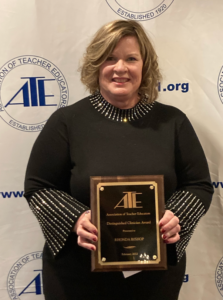 Distinguished clinician award
Bishop was recently awarded the Distinguished Clinician in Teacher Education Award from the Association of Teacher
This award was granted in recognition of her support of students in and out of the classroom.
Bishop’s work to find creative solutions for students to complete their programs, such as the SHINE program, is a valuable part of her contribution as an educator.
Congratulations, Dr. Bishop!
The post Helping students SHINE appeared first on CEFS Blog.
]]>The post What can parents do to help their children thrive and excel in school? appeared first on CEFS Blog.
]]>Dr. Sarah Jean Baker, assistant professor in the department of childhood education and family studies at Missouri State University, shares five things with Authority Magazine.
The post What can parents do to help their children thrive and excel in school? appeared first on CEFS Blog.
]]>