The post Why Most Churches Say Discipleship Matters—But Rarely See It Multiply appeared first on Dare to Multiply - Previously DMMs Frontier Missions.
]]>Summary
Most churches say discipleship matters.
So why do we so rarely see it multiply?
In this episode of Dare to Multiply, Cynthia Anderson explores a tension many pastors, practitioners, and Christian leaders feel—but don’t always name: discipleship is often emphasized, taught, and programmed… yet reproduction rarely follows.
This conversation isn’t about blame or better techniques. It’s about re‑examining what Jesus actually did—and what happens when discipleship shifts from information transfer to obedience‑based, life‑on‑life formation.
Watch the Episode
In this episode, you’ll hear:
- Why many churches are organized for care, not multiplication
- Why discipleship that depends on professionals rarely reproduces
- How obedience—not expertise—becomes the engine of multiplication
- A word for frontier and cross‑cultural practitioners navigating dependency and release
- Practical invitations for pastors and leaders who want to simplify and realign discipleship
This episode speaks directly to:
- Pastors and church leaders in Western contexts
- Missionaries and practitioners in pioneer or frontier settings
- Anyone longing to see disciples who make other disciples
Take Aways:
Multiplication isn’t optional among the unreached and in the frontiers.
We can unintentionally disciple people to depend on us.
Many churches are organized for care, not designed for multiplication.
My invitation:
1. Simplify—and then simplify again—discipleship.
Ask: Can the newest believer imitate this?
2. Shift from teaching to training and expect application.
3. Release earlier than feels responsible.
 Join the conversation in the comments:1⃣ Finish this sentence:
“In my church, discipleship usually looks like ______.”
 I read the comments and often respond. Your reflection may encourage someone else.
 Dare to Multiply exists to help ordinary believers and leaders follow Jesus faithfully—and trust Him with the fruit.
 Reflection Question
- What’s one thing you sense God may be asking you to simplify or release so discipleship can multiply where you are?
Read further articles: https://daretomultiply.com/dtmhome
Join our Membership for more great content: https://daretomultiply.com/dtmmemberships
Order Cynthia’s Book: https://multipliersmindset.com/courses
Connect with Cynthia Anderson
The post Why Most Churches Say Discipleship Matters—But Rarely See It Multiply appeared first on Dare to Multiply - Previously DMMs Frontier Missions.
]]>The post Step Into That Passion — How I Started a Ministry Among the Least of These appeared first on Dare to Multiply - Previously DMMs Frontier Missions.
]]>I had grown up in Africa, surrounded by poverty and beggars from an early age. And somewhere along the way, without fully realizing it, I had built a wall. I learned to look past the outstretched hands, to keep walking, to protect my heart from what I didn’t know how to carry, especially as a child. It felt like self-preservation. But God had another name for it.
Beggars Who Bothered Me
When my husband and I moved to India, God began to chip away at that wall. He kept bringing me face to face with the beggars and the poor around me — the sick, the forgotten, the least of these. And He kept asking me the same quiet question: What are you going to do with what you see?
The conviction was increasingly uncomfortable. And though it took a few months, my eventual repentance was real. What followed changed the trajectory of my ministry among the poor forever.

Stepping Out — Ministry in the Slums of India
I eventually stepped out of my comfort zone and began pioneering a ministry in the slums of our city. What started as simple obedience became one of the most profound disciple-making experiences of my life. We fed malnourished babies whose little bodies were wasting away. We sat with widows who had no one and barely survived with just a plateful of rice with a bit of salt. We made disciples among the least of the least — the people that most of the world, and frankly most of the Church, walks past without stopping.
Jesus had something very specific to say about that.
What Matthew 25 Taught Me About the Least of These
In Matthew 25, Jesus told his disciples: “For I was hungry and you gave me food, I was thirsty, and you gave me drink, I was a stranger, and you welcomed me… Truly, I say to you, as you did it to one of the least of these my brothers, you did it to me.” (Matthew 25:35, 40)
I used to read that passage as a beautiful idea. But standing in those slums, holding a malnourished child, sitting across from a widow with nothing — I began to understand it as a literal, present-tense truth. Jesus was there. In their faces. In their need. Every time I showed up, I was showing up for Him.
This is the heartbeat of Disciple-making Movements among the poor: not charity at arm’s length, but incarnational presence — going to where people are, staying long enough to know and be known, and making indigenous disciples right there in the middle of their real and sometimes horrendous lives.

Conviction Is Often Where Passion Begins
Here’s what I’ve discovered after decades of ministry among the poor and forgotten — passion doesn’t always arrive first. Sometimes it starts with a nagging conviction. Something that bothers you deep inside and then leads to repentance. Sometimes it starts with simply being willing to feel uncomfortable. Then, taking that step forward anyway.
The ministry God called me into in India wasn’t glamorous. It wasn’t the result of a strategic plan or a ministry launch. It was simply obedience — one step at a time into places most people avoid. And it was there, among the least of these, caring for the poor and making disciples in the slums, that I found Jesus already waiting.
Whatever passion God has been stirring in you — for the poor, for the forgotten, for those on the margins — step into it. He is already there.
Whatever God is calling you toward, the first step is simply obedience.
Are you sensing a call to reach the poor and forgotten in your community or across the world? I’d love to hear your story in the comments below. And if this encouraged you, share it with a leader who needs it today.
The post Step Into That Passion — How I Started a Ministry Among the Least of These appeared first on Dare to Multiply - Previously DMMs Frontier Missions.
]]>The post Amazing Multiplication in America’s Prisons and the Hope It Gives appeared first on Dare to Multiply - Previously DMMs Frontier Missions.
]]>Summary
In today’s episode, Cynthia sits down with three seasoned multipliers who have witnessed extraordinary transformation inside America’s prisons. What began with simple obedience has led to inmates coming to faith in Christ, being baptized, forming churches behind bars—and continuing to multiply disciples even after release.
These practitioners share the key paradigm shifts that allowed multiplication to emerge in a context often approached with addition‑focused ministry. They reflect honestly on what had to change in mindset, leadership, and practice in order to see sustainable, Spirit‑led fruit.
This conversation offers rare, practical insight for anyone involved in prison ministry, disciple‑making, or movement leadership. You’ll hear powerful stories and hard‑won wisdom from those working on the front lines of what may be one of the most overlooked—and significant—moves of God in the United States today.
If you’ve ever wondered what disciple‑making looks like in places of confinement—or how multiplication can flourish where hope seems scarce—this episode will both challenge and encourage you.
Watch the Episode
Key Points From This Episode:
- People are hungry for God. Work with the hungry.
- God wrecked our Bible Study and began to multiply more groups through it.
- Prison is a mission field. We want to see no prison left without a gospel movement happening in it.
- We must equip the priesthood of all believers, everywhere, including within prison systems.
- It’s all about building deep relationships. People know when you truly love and care for them and that is where discipleship happens.
- The insider/outsider mindset shift was key. Our job is to equip insiders, then let them solve their own problems, come up with their own solutions and apply the principles in their own contexts.
- Trust the Holy Spirit and release people to do the work!
- Teach them who they are, their identity as royal priests and Christ’s ambassadors. When they understand sonship and who they are, they will multiply.
- Get the Father’s heart. Once you get His heart and start applying these biblical principles, things start to grow.
Key Question
- What were the keys that allowed such dramatic growth of disciples in such a hopeless environment as a prison?
Read further articles: https://daretomultiply.com/dtmhome
Join our Membership for more great content: https://daretomultiply.com/dtmmemberships
Order Cynthia’s Book: https://multipliersmindset.com/courses
Connect with Cynthia Anderson
The post Amazing Multiplication in America’s Prisons and the Hope It Gives appeared first on Dare to Multiply - Previously DMMs Frontier Missions.
]]>The post Walking With Survivors Toward Healing & Discipleship appeared first on Dare to Multiply - Previously DMMs Frontier Missions.
]]>Summary
What does trauma‑aware disciple making actually look like in practice—and why does it matter for multiplication? In today’s episode of Dare to Multiply, Cynthia Anderson sits down with a practitioner who not only walks closely with trauma survivors, but has also seen disciple making multiply among them. This conversation explores what discipleship looks like when safety, healing, and the pace of the human nervous system are taken seriously—and what that teaches us about Jesus, obedience, and restoration. Many well‑meaning leaders rush people toward Scripture or the gospel without realizing that trauma can prevent new information from being processed. This episode invites leaders to slow down, listen deeply, and trust the long‑term work God is doing—often through people who are healing as they go.
Watch the Episode
In this conversation, you’ll learn:
- In this conversation, you’ll learn:
- Why trauma shifts the brain into survival mode, making it difficult to receive new information
- Why listening, story, lament, breathing, and presence often come before Scripture
- What happens when discipleship moves too fast for those experiencing trauma or loss
- Why anger, denial, grief, and hopelessness are not obstacles to faith—but part of the healing journey
- How people who are broken or grieving can still obey Jesus and share what they are learning right away
- Why healing and disciple making often grow together
- How trauma‑aware groups can still multiply—and even lead to movements
- What it means to commit to the long haul when walking with wounded people
This episode is especially relevant for:
- Pastors and church leaders walking with hurting people
- Missionaries and practitioners in trauma‑affected contexts
- Disciple makers who want to be faithful and safe
- Leaders seeking to integrate healing, obedience, and multiplication
Key Points From This Episode:
- When people have experienced trauma, new information is prevented from entering the brain because it is seeking safety.
- Some of the elements of healing conversations are listening, stories, lament, breathing. All of these happen before moving to Scripture.
- If you rush the process they can’t really hear what you are saying as you talk about Scripture or the gospel.
- Be patient. Be willing to move slowly with people experiencing trauma or loss.
- First they need to go through anger and denial stage, then a period of no hope, until they can move to a new beginning.
- Broken people and those in grief can be used of God and share what they are learning right away. In fact, this is a key part of their healing process.
- Be careful about not listening to their story and jumping straight to a gospel conversation.
- Be ready to be there for the long haul.
- These groups can multiply and lead to movements. God uses people who have been healed and transformed to start movements but the foundational work needs to be done in their lives.
Key Question
- What has this conversation challenged, affirmed, or clarified for you as a leader or disciple maker?
Links Mentioned in This Episode:
Learn more about trauma‑aware disciple making: https://multiplyinghope.org
 To contact Hallie, email: hello@daretomultiply.com
(We’ll gladly forward your message to her.)
Read further articles: https://daretomultiply.com/dtmhome
Join our Membership for more great content: https://daretomultiply.com/dtmmemberships
Order Cynthia’s Book: https://multipliersmindset.com/courses
Connect with Cynthia Anderson
The post Walking With Survivors Toward Healing & Discipleship appeared first on Dare to Multiply - Previously DMMs Frontier Missions.
]]>The post God Uses the Broken First: Why Healing Often Follows Obedience in Disciple-Making appeared first on Dare to Multiply - Previously DMMs Frontier Missions.
]]>I understand the instinct. It sounds compassionate. It sounds wise.
But it is not how Jesus worked.
God Does Not Wait for Wholeness Before He Invites People In
In Scripture, God repeatedly chooses people in the middle of their brokenness — not at the end of their recovery. He does not wait for stability, polish, or complete emotional wholeness before inviting them to share what He is doing with others. In fact, participation in His purposes, and seeing God use us in the midst of our weakness and brokenness, is often one of the primary means for confidence and healing to grow.
Jesus modeled this clearly. He did not say to the Samaritan woman, “Come back after a season of counseling and then you will be ready to go tell your neighbors about me.” She shared her good news immediately — and became one of the first everyday missionaries in the Gospels. He did not sideline the demonized man in the Decapolis until he was fully integrated back into society and emotionally stable. He sent him home to testify. Through that obedience, his restoration was solidified even more.
Hot-headed fishermen. A corrupt tax collector. A woman with a shameful past. Jesus invited them onto His team as full members — not as people who had to pass a process of testing and proving themselves before they qualified. This was not an accident of circumstance. It was His way, His method, of making disciples.
Why This Matters for How We Disciple Today
Many people who have experienced abuse carry a sense of shame, powerlessness, and disconnection. Waiting for them to feel “ready” before involving them in God’s mission can unintentionally reinforce the very lies that abuse planted:
You are a problem. You have nothing to offer. You must be fixed before you belong.
A multiplying approach to discipleship tells a different story.
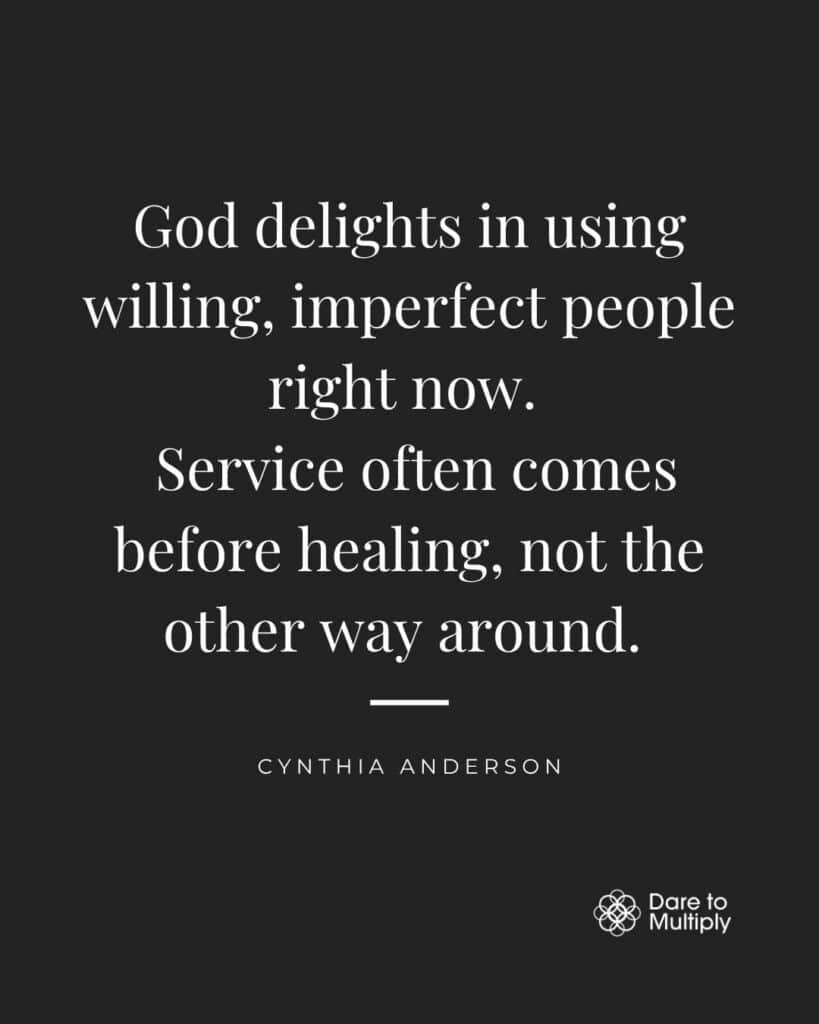
It says: God delights in using willing, imperfect people right now. It says: service often comes before healing, not the other way around. It says: you have dignity and value in Christ immediately, not eventually.
When broken people are trusted with meaningful obedience — praying for others, sharing their story, listening to God together, even leading a group of peers through a Discovery Bible Study — something profound happens. They are no longer defined primarily by what was done to them. They begin to experience themselves as carriers of God’s presence. Identity starts to shift. Shame loosens its grip. Hope grows.
This is not reckless ministry. It is deeply biblical ministry – Jesus style.
The Salad That Said Everything
The other day, I was preparing a meal with a group of men who have had traumatic backgrounds. One of them had lived on the streets and been rejected by his family. While I was getting everything ready, I asked him to help me make the salad. It was a simple task. I gave him a few instructions and went on to do something else.
About ten minutes later, he said something that stopped me.
“Thank you for letting me make the salad. It really meant a lot to me.”

Why would making a salad mean that much? Because he felt trusted. He felt useful. It made him feel like part of the family — a contributing member, not someone who had to be waited on or watched over.
That moment clarified something for me about our groups. When we ask someone who has been through trauma to lead the questions at the end of a Discovery Bible Study, or trust them to start their own group, we are saying something that counseling can rarely say to us in the same way: you are valuable. You are useful in God’s Kingdom. I believe in you.
Having people in our lives who trust and value us is a profound part of finding wholeness. It is what Jesus did for everyone He invited to follow Him.
Obedience Happens in Safe, Relational Community — Not Isolation
Healing does not require removing people from responsibility. It requires giving them appropriate opportunities to obey within a safe, relational community. God heals people not by sidelining them from His purposes, but by inviting them into their destiny.
For pastors and leaders, this requires a real mindset shift. Instead of asking, “Is this person ready?” we ask, “What simple step of obedience would restore confidence and faith right now?” Instead of reserving mission for the emotionally strong, we must make disciple-making opportunities accessible to all who are humble, dependent, and willing.
Will they struggle? Will there be setbacks? Of course. Does that mean we made a mistake in trusting them? Not at all. It means we disciple into that situation — we walk alongside, help them repent, receive forgiveness, and try again. That is exactly what Jesus did with His own disciples.
And here is the truth that continues to surprise, even me: people who have been hurt deeply often multiply disciples with unusual power. Their dependence on God is real. Their compassion runs deep. Their testimony carries weight that polished, stable, program-trained leaders cannot replicate. They are still connected to others who are broken and desperately need God. And as Jesus works through them to reach those people, their healing does come — not always instantly, but truly and meaningfully — because they are living as participants, not patients.
We Are All Broken. That Is the Point.
Ultimately, we are all broken. Some of us wear our brokenness and shame more publicly than others. But changing our mindset — from one that says brokenness must be fixed before it can be used, to one that says brokenness can be a bridge to healing for us and others now — is key to multiplying disciples among people who feel broken, maybe in different ways, but broken nonetheless.
We all share that need to be believed in, trusted, and valued beyond what our circumstances deserve.
God’s kingdom has always advanced through cracked vessels. The mistake is not that broken people are involved in ministry too early. The mistake is waiting so long to trust them that they never discover how profoundly God longs to, and can, work through them. Or trusting them, but not making the time to walk alongside and disciple them when they fail.
The question is not whether broken people are ready. The question is whether we are willing to be the kind of community that believes God can work through them.
| Reflection Questions for Pastors and Leaders |
| Where might you be unintentionally communicating that people need to be “healed first” before they can participate in God’s mission? |
| How could simple, immediate obedience restore dignity and faith for wounded people in your church or discipleship group? |
| What would change if you measured readiness for disciple-making by willingness, not wholeness? |
Share your thoughts in the comments, or bring this conversation into the free Dare to Multiply community where practitioners around the world are wrestling with exactly these questions together.
Frequently Asked Questions
Can people with trauma and abuse in their past make disciples effectively?
Yes — and often with unusual power. People who have experienced deep pain tend to carry genuine dependence on God, great compassion, and a testimony that carries real weight. They are also still connected to others who are broken and searching. Scripture consistently shows God choosing people in the middle of their brokenness, not at the end of their recovery. The Samaritan woman and the demonized man in the Decapolis are two clear examples.
Do broken people need to be healed before they can make disciples?
Not according to Scripture or the experience of Disciple-making Movements globally. Participation in obedience is often how healing comes — not a reward that comes after healing is complete. Waiting for people to be “ready” can reinforce the lies that abuse planted: that they are a problem, that they have nothing to offer, that they must be fixed before they belong. A multiplying approach says something different.
What is a safe way to involve trauma survivors in disciple-making?
Start with simple, appropriate steps of obedience within a safe, relational community. Asking someone to lead the questions in a Discovery Bible Study, to pray for another person, or to share what God is teaching them are all low-barrier, dignity-restoring invitations. The goal is not to push people into leadership before they are ready — it is to avoid unnecessary gatekeeping that communicates they have nothing to offer.
How does obedience lead to healing in Disciple Making movements?
In Disciple Making Movements, healing and mission are not sequential — they happen together. When broken people are trusted with meaningful obedience, their identity begins to shift. They are no longer defined by what was done to them. They begin to experience themselves as carriers of God’s presence. Shame loosens its grip. This is the pattern Jesus modeled — inviting people into His purposes as the means of their transformation, not after it.
What should a pastor do when a trauma survivor they trust in ministry has a setback?
Walk alongside them — do not pull back the trust. Setbacks are part of discipleship for everyone, not a sign that trusting a broken person was a mistake. Disciple them through it: help them repent, receive forgiveness, and try again. This is what Jesus did with His own disciples, including Peter after his denial. The goal is not a perfect track record — it is a community where people are discipled through failure, not disqualified by it.
About the Author: Cynthia Anderson is the founder of Dare to Multiply and the author of The Multiplier’s Mindset: Thinking Differently About Discipleship. She has spent decades equipping families, practitioners, and church leaders in Disciple Making Movement principles across every region of the world.
The post God Uses the Broken First: Why Healing Often Follows Obedience in Disciple-Making appeared first on Dare to Multiply - Previously DMMs Frontier Missions.
]]>The post Is Teaching About Jesus the Same As Training Them to Follow Him? appeared first on Dare to Multiply - Previously DMMs Frontier Missions.
]]>Jesus did not say, “Go and teach people about me.” He said, “Go and make disciples of all nations.” How do we define a disciple? A churchgoer? Someone who calls themselves a Christian? No. A disciple is someone who obeys Jesus and helps others learn to do the same.
There is a part of the Great Commission we often overlook. It matters greatly. Jesus said,
“Teaching them to obey all that I have commanded you” (Matthew 28:20- NIV).
Some translations use the word observe, others use obey. Either way, this is not about awareness or agreement—it’s about practical obedience.
There are a few reasons why the Church has gotten confused about the importance of this. One is that we misunderstand what the word observe means. A second reason is the influence of the Enlightenment on Christianity today. The third is that we lack key principles and skills in applying this.
Let’s start with the first and clear that up.
What Jesus Meant by “Observe”
The Greek word used in Matthew 28:20 is τηρέω (tēreō). It means to keep, guard, watch over, or hold onto carefully. This is not a cognitive word like “know” or “remember.” It’s a relational and obedience-oriented word.
Jesus did not say:
- Teach them to understand what I commanded
- Teach them to agree with what I commanded
He said:
- Teach them to keep it
- Teach them to live it
- Teach them to obey it
In other words, disciple‑making is not complete until there is practical obedience.

Why We Default to Teaching for Knowledge vs. Training Disciples to Follow Jesus
Scripture affirms knowledge. “An intelligent heart acquires knowledge” (Proverbs 18:15). But the Bible is clear that knowledge alone does not produce transformation.
James warns us plainly: “Be doers of the word, and not hearers only, deceiving yourselves” (James 1:22). Jesus asks an even sharper question: “Why do you call me ‘Lord, Lord,’ and not do what I tell you?” (Luke 6:46).
The problem isn’t learning—it’s how we separate learning from obedience.
Since the Enlightenment or Age of Reason, Western culture has treated knowledge as the highest good. Over time, the church too absorbed this mindset. We began to assume that if people knew more, they would naturally live differently.
That assumption has failed us and proven false. Knowledge does not automatically lead to obedience.
3 Shifts We Need to Make
Change how we evaluate success.
What if we evaluated our effectiveness not on whether the hearers enjoyed it and were entertained, but instead asked ourselves whether they actually did something in response?
Teach toward action, not insight.
We tell people they should make disciples or share their faith—but rarely show them how, practice it with them, or follow up.
Build obedience and accountability loops.
Every teaching moment should include a clear next step and a gracious follow‑up. Not pressure. Not shame. Just loving accountability that you yourself also model.
The Bottom Line
When we train people primarily to know rather than to obey, transformation slows and multiplication disappears. Teaching about Jesus is important—but Jesus commanded us to train people to follow Him.
The question for all of us is simple:
Is our church or small group creating informed listeners—or obedient disciples?
Let’s Discuss:
- If God’s Word is not transforming your group or church members, how could the above help things change?
- In what ways have we gotten lazy or nervous about asking people to obey or put what we teach into practice?
- Are there key skills our members are missing that we need to equip them in? Model and practice? Until they become confident that they can do them?
We’d love to hear your answers in the comments below or on our free Dare to Multiply Community.
The post Is Teaching About Jesus the Same As Training Them to Follow Him? appeared first on Dare to Multiply - Previously DMMs Frontier Missions.
]]>The post The Difference Between Teaching People About Jesus and Training Them to Follow Him appeared first on Dare to Multiply - Previously DMMs Frontier Missions.
]]>Summary
Are we teaching people about Jesus—or training them to actually follow Him?
In this episode, we explore a critical but often overlooked difference at the heart of disciple‑making. Jesus didn’t command us to simply transfer information. In the Great Commission, He tells us to teach people to obey everything He commanded—not just to know it.
Using Matthew 28:20, a key Greek word study, and practical disciple‑making insight, we unpack why information‑based teaching often fails to produce transformation—and what it looks like to train people for obedience, practice, and replication.
This conversation is especially for pastors, leaders, missionaries, and disciple‑makers who sense that content alone isn’t producing the fruit we long to see.
Watch the Episode
In this episode, we discuss:
- The difference between teaching about Jesus and training people to follow Him
- What Jesus meant by “teach them to observe” (τηρέω) in the Great Commission
- Why knowledge alone doesn’t produce transformation
- How Enlightenment thinking shaped modern discipleship models
- Three practical shifts that help move from teaching to training
- How obedience, practice, and accountability lead to multiplication
Whether you’re preaching, coaching leaders, or discipling others one‑to‑one, this episode will help you re‑center your approach around obedience, not just understanding.
Key Points From This Episode:
- Jesus calls us to form obedient disciples, not informed listeners. The Great Commission emphasizes obedience, not just understanding. Disciples live out what Jesus taught.
- Knowledge alone doesn’t transform—obedience does. Scripture affirms learning, but real change comes when truth is practiced, not just known.
- Disciple‑making must train people to act, practice, and follow through. Teaching should lead to clear next steps, lived obedience, and simple accountability.
Key Question
- Are we forming informed listeners—or obedient disciples?
Links Mentioned in This Episode:
Read further articles: https://daretomultiply.com/dtmhome
Join our Membership for more great content: https://daretomultiply.com/dtmmemberships
Order Cynthia’s Book: https://multipliersmindset.com/courses
Connect with Cynthia Anderson
The post The Difference Between Teaching People About Jesus and Training Them to Follow Him appeared first on Dare to Multiply - Previously DMMs Frontier Missions.
]]>The post Protected: Why Movement Multipliers Must Continually Return to the Book of Acts for Guidance appeared first on Dare to Multiply - Previously DMMs Frontier Missions.
]]>This content is password-protected. To view it, please enter the password below.
The post Protected: Why Movement Multipliers Must Continually Return to the Book of Acts for Guidance appeared first on Dare to Multiply - Previously DMMs Frontier Missions.
]]>The post Before There Were Buildings: What Actually Made the Early Church Grow appeared first on Dare to Multiply - Previously DMMs Frontier Missions.
]]>Summary
What made the early church grow before there were buildings and programs? This episode explores Acts‑based insights on relational growth, obedience‑driven discipleship, and dependence on the Holy Spirit—and what that means for church leaders and movement practitioners today.
Watch the Episode
Key Points From This Episode:
- The early church grew rapidly without buildings, programs, or professional clergy.
- Its fruitfulness challenges many of our modern assumptions about what is necessary for growth.
- Growth in the book of Acts was relational, not structural.
- The gospel spread through households, everyday relationships, and lived faith.
- People didn’t attend church—they embodied it.
- Faith was practiced in ordinary life, not confined to religious spaces.
- Visible life change gave the gospel credibility.
- Transformed lives, restored relationships, generosity, and courage under pressure attracted people to Jesus.
- Obedience preceded knowledge in early discipleship.
- The early believers learned while obeying, not by waiting until they “knew enough.”
- Modern discipleship often confuses information with maturity.
- Knowing more does not equal following Jesus more faithfully.
- When obedience slows, multiplication slows.
- Movements stagnate not primarily from lack of teaching, but from lack of practice.
- The early church depended on the Holy Spirit because it lacked control. Prayer, listening, and obedience replaced strategic certainty.
- Over‑engineering faith can reduce dependence on God.
- Control creates comfort, but dependence creates spiritual power.
- Movements often plateau when stability replaces simplicity.
- Well‑intended structures can quietly crowd out lay participation and reproduction.
Questions to Reflect On:
- Where in our context have we subtly measured Christian maturity by what people know rather than how they obey?
- If all our buildings, programs, and systems disappeared tomorrow, what form of discipleship would remain?
- Are we protecting the practices that make multiplication possible—or slowly replacing them with structures that feel safer?
Links Mentioned in This Episode:
Read further articles: https://daretomultiply.com/dtmhome
Join our Membership for more great content: https://daretomultiply.com/dtmmemberships
Order Cynthia’s Book: https://multipliersmindset.com/courses
Connect with Cynthia Anderson
The post Before There Were Buildings: What Actually Made the Early Church Grow appeared first on Dare to Multiply - Previously DMMs Frontier Missions.
]]>The post What the Early Church Can Teach Us About Disciple-making Today appeared first on Dare to Multiply - Previously DMMs Frontier Missions.
]]>Let’s turn to one of the most helpful snapshots of early church life: Acts 2:41–47. In this passage, we catch a glimpse of what the first disciples in Jerusalem did regularly. Understanding their rhythms helps us evaluate our own practices and align ourselves more closely with the New Testament pattern.
Rather than reading this passage through our modern church lenses, let’s try to see it as the early disciples would have experienced it.
What Was the Early Church Like?
Acts tells us that about three thousand people responded to Peter’s message on the day of Pentecost. This new community immediately began living out seven core practices. Many of these happened daily, not weekly.
1. New Believers Were Baptized Immediately (Acts 2:41)
Those who accepted the gospel were baptized right away—often the same day. Baptism was not delayed by long processes or classes. Instead, it was a natural first step of obedience. This challenges us to ask: Do we baptize quickly and simply, or do we add unnecessary barriers?
2. Disciples Devoted Themselves to the Apostles’ Teaching (Acts 2:42)
Their learning was ongoing and daily. The apostles taught in Solomon’s Colonnade, the same place Jesus had often taught. They used publicly available spaces to talk about Jesus with whoever would gather. As modern disciples, there are many ways we can devote ourselves to growing in our faith through daily learning and time in God’s word.
3. Fellowship was Deep and Generous (Acts 2:42, 44–45)
New Testament fellowship went far beyond attending meetings. The believers shared life deeply—emotionally, spiritually, and materially. Those with resources helped those in need. The community functioned like an extended spiritual family. Today, we often focus on building buildings more than on building intimate, loving, authentic communities.

4. They Broke Bread Daily in Their Homes (Acts 2:42, 46)
Communion wasn’t a monthly ritual officiated by a pastor or priest; it was woven into daily life. Breaking bread reminded them continually of the cross. It called them to forgiveness and unity. Homes—not special church buildings—were the central gathering places for disciples. If we want to multiply disciples today, our homes must once again become open places of spiritual conversation, ministry, and church life.
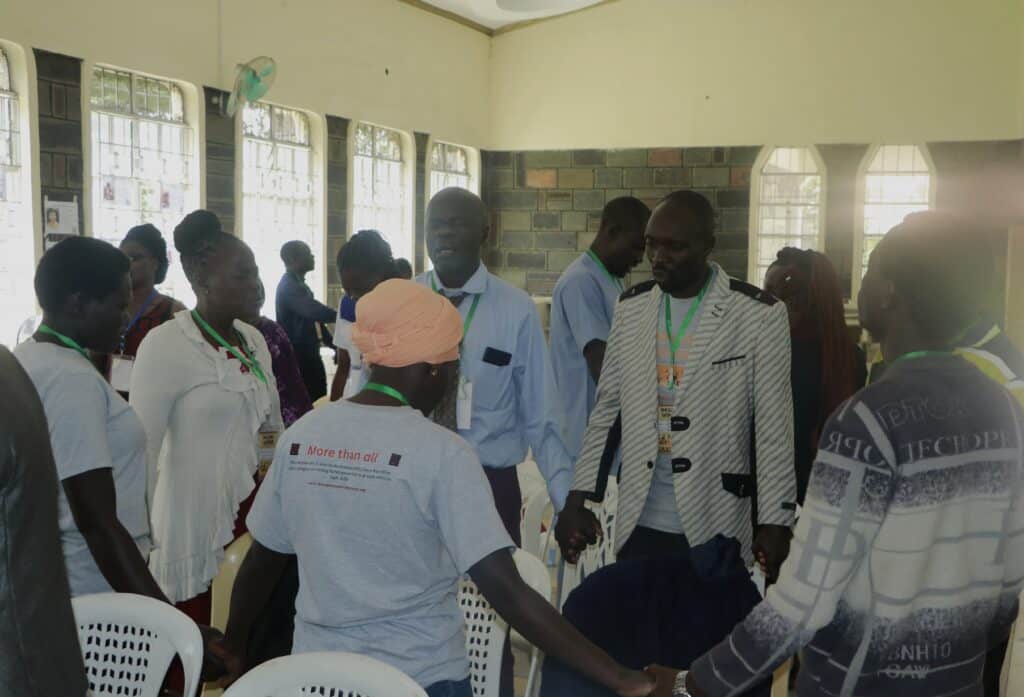
5. Disciples Were Committed to Prayer (Acts 2:42, 47)
Prayer shaped their days. They prayed in the temple and in their homes. Praise was the natural overflow of all God was doing among them. When crisis came, like Peter’s imprisonment, the believers gathered for focused, persistent prayer. It’s worth asking: How central is prayer, in our communities of faith?
6. Wonders and Signs Confirmed the Message (Acts 2:43)
God moved powerfully through the apostles, opening doors for the gospel through demonstrations of His power. After such signs, many more believed. Do we still trust God to work supernaturally as we share the good news? If not, why?
7. New Believers Were Added Daily (Acts 2:47)
Growth was not the result of clever marketing—it was the Lord’s work through His people. The disciples, filled with His Spirit, created an environment where God’s Kingdom could multiply rapidly. Their faithful and constant witness resulted in new disciples being added every day. What would it take for this to become a norm in the modern church? What might be hindering this?
Let’s Compare: Then and Now
When we look at this biblical snapshot, similarities and differences are easy to see. In most cases, our modern structures look very different from the simple, powerful practices of the early church.
If we want to see movements—rapid multiplication of obedient disciples—we must be willing to realign ourselves with the patterns Jesus and the apostles laid out. The question is not merely what they did, but what changes we are willing to make today.
What comes to mind as you reflect on these seven aspects of the New Testament Church?
I’d love to hear your thoughts in the comments below, or in the Dare to Multiply Community.
The post What the Early Church Can Teach Us About Disciple-making Today appeared first on Dare to Multiply - Previously DMMs Frontier Missions.
]]>