But some wildlife groups were concerned about whether sport fishing for hatchery steelhead posed a danger to the species’ wild populations in Idaho. If wild steelhead—listed as threatened under the Endangered Species Act—were being seriously impacted, it could mean litigation or even fishery closures. The state needed answers.
Fortunately, scientists at the Idaho Cooperative Fish and Wildlife Research Unit are finding those answers. Led by the U.S. Geological Survey, Cooperative Research Units (or CRUs) bring together federal experts, university researchers, and state wildlife managers to provide decision-makers the information they need to address states’ most complicated natural resource questions.
The Idaho CRU worked with Idaho Fish and Game on research that found less than 1% of all the wild steelhead died as a result of the recreational fishery. As the Wildlife Management Institute noted, these sport fisheries are only legally possible when effective science can guide decision-making.
Unfortunately, CRUs across the country are under threat amidst an increasingly uncertain landscape for federal science funding. To understand why that matters, we need to talk about how CRUs work and what they do.
What is a Cooperative Research Unit?
Each CRU is a partnership among the U.S. Geological Survey, a host university, one or more state agencies, the Wildlife Management Institute, and the U.S. Fish and Wildlife Service. Doctoral, graduate, and undergraduate students join university faculty and other experts to conduct CRU research.
Today, there are 43 CRUs in 41 states, supporting over 1,000 natural resource and technical jobs in rural and urban communities. Pioneered by NWF founder Ding Darling, the CRU system was established in 1935 and codified by Congress in 1960.
What Do CRUs Do?
CRUs play several critical roles in U.S. wildlife management. They conduct cutting-edge research that state wildlife agencies rely on; they facilitate partnerships that allow limited resources to go further; and they provide crucial training for new natural resource managers.
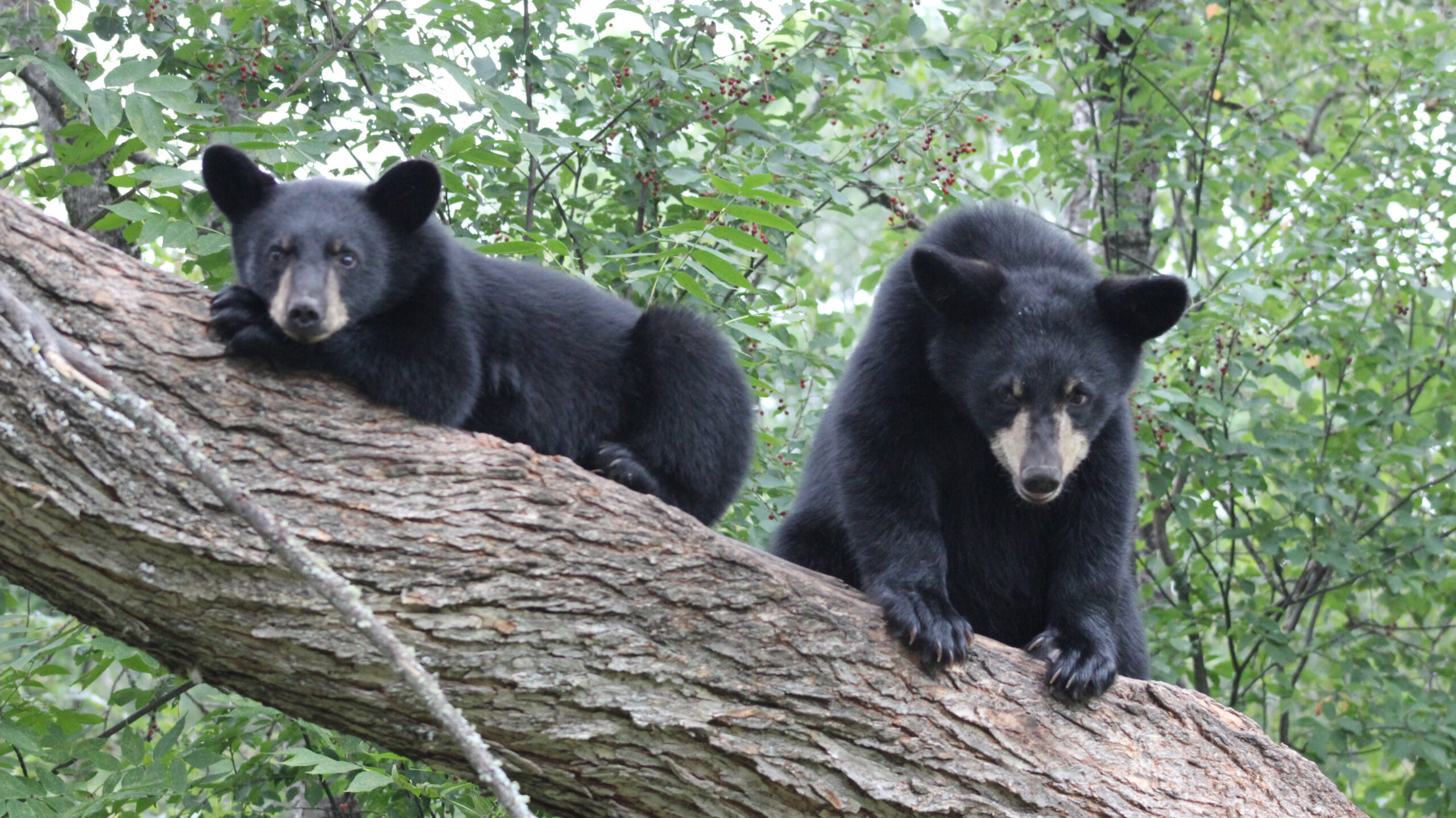
For example: one recent project supported by the University of Florida’s CRU focused on black bear populations in the state. Information about the species is critical for state policymakers—Florida held a controversial black bear hunt for the first time in a decade in 2025.
Spearheading the research was a University of Florida PhD student, working alongside other researchers from the USGS and the Florida Fish and Wildlife Conservation Commission, which funded the study. The CRU provides a structure for different partners to combine forces, pooling resources and expertise.
Meanwhile, students connect with mentors in natural resource management careers while contributing to research with real-world applications. As wildlife populations face increasing challenges across the U.S., training young conservation professionals is more important than ever.
Why We Need to Talk About This Now
Funding that the federal government had agreed to pay for CRUs in 2025 still has not reached host universities. The delay has left CRU researchers unpaid for completed work, and threatens the jobs and scientific capacity that CRUs support across the country.
To put a more human face on the problem—the University of Florida PhD student researching black bears, Darcy Doran-Myers, had her funding frozen. “The federal government would not honor its contract with the University of Florida to pay me,” she said, per a blog for The Wildlife Society.
The money had already been allocated by Congress and was previously approved by the agencies. It’s currently unclear how long the delay will last. Universities, natural resource managers, and other stakeholders involved in the CRUs have few options for carrying out critical research to recover wildlife when so much is up in the air.
What We Can Do About It
Your state likely has a CRU—and their work to better understand local wildlife helps protect your community’s water, air, and health. Take a look at your local CRU’s website and see what the team is working on. Get in touch with your members of Congress and tell them the U.S. Geological Survey’s CRUs deserve their support and attention.
CRUs are a win-win, providing additional support for state agencies, advancing our understanding of the natural world, delivering science-based solutions for balancing human impacts and managing wildlife, and fostering careers for aspiring scientists and natural resource managers.
When they’re functioning as they should, CRUs fly under the radar. But if we lose them, more species’ populations—from steelhead to black bears—will start to fall through the cracks, and there will be far fewer wildlife experts trained in how to pick up the pieces.
]]>Growing up in Buffalo, New York, Larry was an avid hiker and Eagle Scout. Those experiences formed the foundation for his love of America’s rich public lands. Larry recognized the value of his own experiences and stepped up personally and with the assistance of his company, eDemocracy.us, to provide resources to protect public lands.
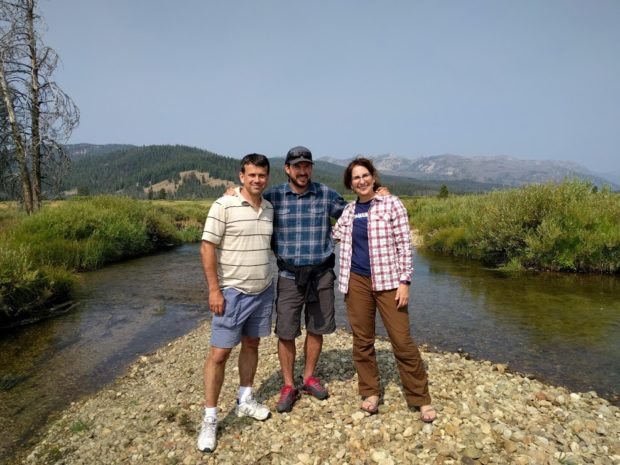
He was first introduced to the Federation’s programs in 2017 by his mother when she told him about the Adopt-A-Wildlife Acre program. Established in 2002, the program aids in negotiations between federal land managers and ranchers to retire livestock grazing allotments on public lands. Ranchers receive compensation for waiving their grazing permits allowing land managers to permanently retire the allotments — a win-win for everyone involved. The program also ensures long-term future for traditional western livestock ranching by shifting grazing practices to landscapes where it is more compatible, giving wildlife such as grizzly bears, bison, and bighorn sheep an opportunity to thrive in a conflict-free habitat.

Just a few days after hearing about the program for the first time, Larry, who had never supported the Federation before, joined the Federation to help close a huge deal on the Cape Horn Grazing retirement in the Idaho Sawtooth Wilderness. The Cape Horn allotment hosts one of the largest populations of bighorn sheep in Idaho — spanning more than 85,000 acres that includes critical spawning habitats for steelhead, threatened Chinook salmon, and bull trout. Because of the incredible efforts of Larry and supporters like you, this area is now protected for generations to come.
This past spring, Larry took his commitment even further when his company, eDemocracy.us, provided a significant matching gift in our first ever grazing retirement in Capitol Reef National Park, a treasured red-rock landscape in Southern Utah. He shares,
“Populations of wildlife are decreasing throughout the United States, and I believe that everyone who spends time outdoors should be doing what they can to protect these populations. The American landscape is gorgeous, and I want to make sure my children can enjoy it fully.”
In addition to his partnership with the Federation, Larry’s also passing his passion to the future generations of his own family. Larry’s son partnered with the Federation’s Garden for Wildlife program by planting trees in Buffalo Park in New York as part of his Eagle Scout project.
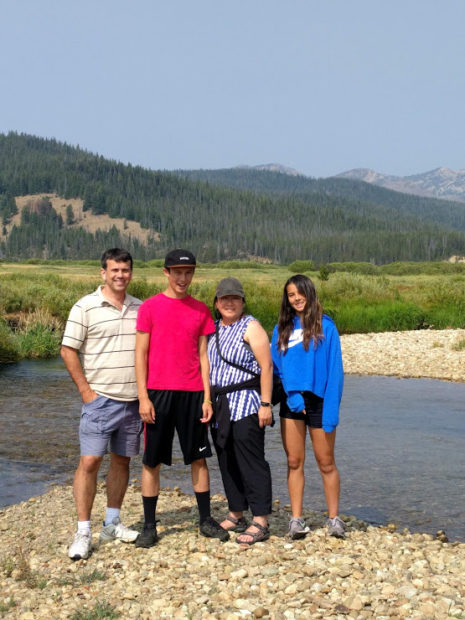
Thank you to Larry Piegza, eDemocracy.us, and all of the supporters who continue to make this valuable program possible for wildlife and future generations to come so they may embark on their own adventures across America’s majestic public lands.
To learn more about our Adopt-A-Wildlife Acre program, please contact Sharon London, Regional Philanthropy Officer for the Northern Rockies, Prairies and Pacific Region at londons@nwf.org or 206-577-7173.
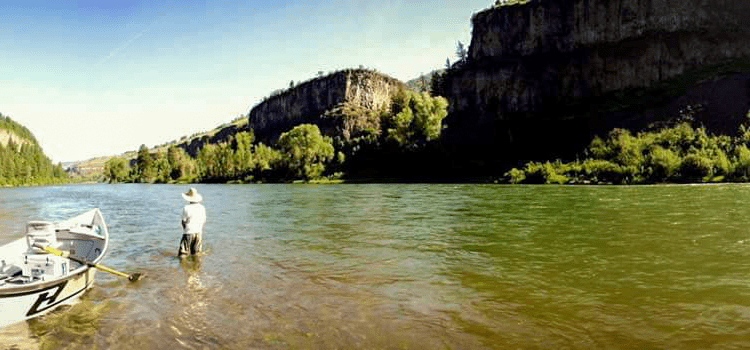
The length and passion of the fight has obscured important changes occurring in region. It’s increasingly clear that the Northwest can restore abundant runs of wild salmon and still have a robust power system and the benefits that flow from it. Because of their cultural, commercial and recreational importance, the restoration of wild salmon can unite the people of Idaho, Washington and Oregon like no other cause.
A Failed Fish Strategy
Twenty five years ago, when the government added decimated runs of wild salmon and steelhead to the list of species protected under the Endangered Species Act, biologists hoped an array of actions, including habitat enhancement, dam operation modifications and even barging juvenile fish downstream, would restore wild fish. For those 25 years, the Northwest’s hydroelectric dams were the central components of the region’s energy system and changing dam operations to restore fish was a subject of much dispute.
In 2018, we know the fish strategy, despite spending $2 billion, has failed. We know this because the fish populations in every run continue to nosedive, year over year. In 2018, because of renewable energy and energy conservation, we also know that dams are much less important to the region’s energy system. Given these facts, we have the opportunity to rethink our answers to both the strategy for restoring wild salmon and how we manage our hydroelectric system.
Unfortunately, our political leaders have yet to acknowledge reality – that salmon recovery isn’t working and that new and better energy sources have emerged. There is no better example of political disconnect than a recent bill from Washington’s Rep. Cathy McMorris Rodgers seeking to freeze the existing management and salmon recovery efforts of the Snake River dams even as fish numbers continue to fall.
There is a Positive Path Forward for Wild Salmon and Powering the Pacific Northwest
An evolving energy system creates opportunities to take a different path forward. Because of energy conservation, electricity demand is flat. As clean and efficient renewable energy supply has grown, the relative importance of the dams has dramatically decreased. In fact, the four dams on the lower Snake River, which block migrating fish from the best spawning habitats in Idaho, now provide less than 5 percent of the region’s electricity capacity. The future can look different but no less reliable or affordable for energy generation even if dam operations are modified.
If we don’t choose this brighter energy future within our grasp, the forecast for salmon goes dark. Over the past 25 years, the federal salmon recovery efforts, despite their great cost, have achieved nothing by way of increased numbers of wild fish. In 2017, spring and summer Chinook runs were less than 10 percent of their recovery goals. Sockeye salmon are perhaps functionally extinct (11 sockeye returned to Idaho’s Stanley Basin last year). And steelhead had the worst return ever recorded. While the region’s hatcheries are still producing catchable numbers of fish, hatchery-reared fish are no substitute for saving an irreplaceable salmon gene pool and rebuilding the once-fantastic runs of wild fish that sustained generations of anglers and tied together the peoples of the Pacific Northwest.
As we stand witness to these perilous declines, and federal and state agencies fail to reverse the trend, we need our political leaders to recognize the folly of continuing to squander money on fish recovery measures that have not worked. The legislation introduced by Congresswoman McMorris is built on incorrect assumptions about the region’s reliance on dams to power our communities and forfeits some of our greatest natural resources to an expensive, failed fish program that will not recover wild salmon.
This ongoing crisis for wild fish and the expanding regional energy options tell us it is time for the political leadership of the Northwest to come together and reach a new solution.
After years of fighting over the false choice between power and fish, people in the Northwest are ready for a new approach. We need leaders to look at our region’s priceless and irreplaceable natural and historic legacy, at the available facts, and walk us together toward a solution that honors us all, and protects the wild fish runs for our children and grandchildren.
Saving the salmon should unite us and inspire our political leaders to work with us toward their ultimate survival.
Please take action for wild salmon in the Northwest by liking and retweeting the following tweet:
The forecast for wild #salmon in the Pacific Northwest is going dark.
This ongoing crisis for #wildfish + expanding regional energy options tell us it's time for #WA #OR and #Idaho elected leaders to come together for a new solution before it’s too late. https://t.co/kUguoZT6cS pic.twitter.com/hndtPXT4hU
— National Wildlife Federation Action Fund (@wildlifeaction) August 27, 2018
Our runs of salmon and steelhead are sliding in the wrong direction. While year-to-year returns will always fluctuate up and down, in aggregate they are far from rebounding. Certainly, if we do not step in and lessen the impact we are having on our ecosystem, these fish and our sport will disappear.
Fortunately, action is where the Northwest Steelheaders has shined, since the 1960s, fighting to preserve cold-water fisheries here in the Pacific Northwest. From fighting to remove commercial harvest of steelhead on the Columbia, to successfully getting gillnets off the main stem of the Columbia this spring and summer, to ensuring gas and oil terminals that endanger the Columbia do not gain a foothold, the Steelheaders have fought for fish. So it’s natural that people who learn to love fishing, and are interested in a responsible and sustainable harvest over robust and plentiful fish runs, would align their efforts to protect and enhance the water, forests, and ecosystems that support these fish. One of the primary goals the Northwest Steelheaders is to generate and cultivate the love of sport angling, and as people become aware of the issues, motivate them to participate and contribute to efforts to save our salmon and steelhead.
At the same time, the number of Oregon hunting and fishing license purchases are also sliding in the wrong direction. The best tips I have received at chapter meetings came from members who have been fishing for decades. But that base of anglers who will care about conservation issues is shrinking.
This topic is a well-worn stone. Most realize the more anglers there are, the more Steelheaders there will be, and the better equipped we are to support our goals. The many clinics, fish-along, and events like Family Fish Camp are investments in future anglers.
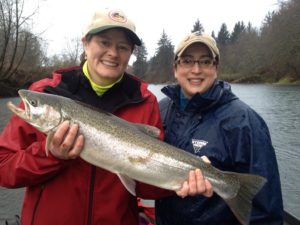
Over the upcoming year, we will be doubling-down on attending, sponsoring, and hosting events that open the door to more women, more people of color, and more members of the LGBTQ community. These events may not be traditional Steelheader events, but our goal is to attract more individuals who might be interested in learning to fish and enjoy the outdoors, interested in protecting watersheds, and who might not otherwise have heard of the long-standing work of which the Steelheaders have been a part.
We will also continue to search for grants and offer scholarships to families and individuals who are impacted financially, giving them chances they wouldn’t otherwise have. We will partner with other outdoor groups, and other non-profits who assist inner-city youth, low-income families, and marginalized groups to become interested in angling, and become educated in the environment around them and the impacts we have on it, and participate in enhancing and protecting them. Each voice, no matter how small it starts, can grow into a loud shout, and the issues Steelheaders will be tackling will need loud and educated voices.
So what about Inclusion?
When you see new faces coming to chapter meetings and events, what can you do? You can do the same that was done for me when I started attending: welcome them in and teach them. Show them techniques that have worked for you, draw them diagrams of fishing setups, invite them onto your boats, encourage them to educate themselves on sport-angling and conservation issues. As a warm heart in the Tualatin Valley Chapter once told me, “Steelheaders are Family.”
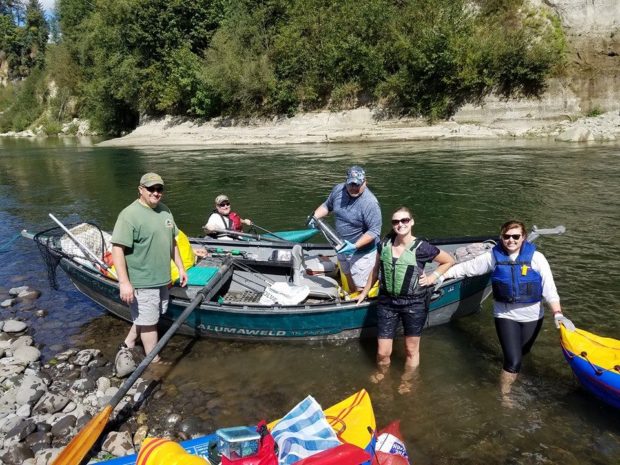
Inclusion in this era of division and hate has also never been more needed. It can be frightening to enter a meeting about a topic you know very little, and not see anyone who looks like you or has your background. If a neutral reception is given, or worse you have a negative experience, then you are unlikely to return. If we don’t welcome and include the new individuals we attract, they won’t tell their friends what a great time they had fishing, the story of their amazing first or latest catch, and the joy of experiencing people who have backgrounds just as diverse as them.
Additionally, their financial support, their advocacy voice, and their extended networks will go with them as well. Inclusion is about retaining those people new to our ranks so they stay and fight alongside us for the long term. Diversity is a Conservation Issue. Diversity means growth, Inclusion means retention, and more resources and more voices will help us bring more fish into our river systems for us to enjoy.
So perhaps I might take some liberties with the opening quote to better address our Steelheader community: Diversity is being invited to a Chapter Meeting. Inclusion is being asked to go fishing.
Learn More about The National Wildlife Federation’s Pacific offices here.
Subscribe for our Quarterly Regional Newsletter!
About the Author:
Aaron Bento serves as a Board Member for the National Wildlife Federations’s Oregon state affiliate, the Association of Northwest Steelheaders, as its Diversity and Inclusion Director working to bring conservation and the joy of fishing to underrepresented groups.
Share your wildlife personality with us in the comments below!
[playbuzz-game game="http://www.playbuzz.com/danit/which-type-of-nwf-supporter-are-you"]
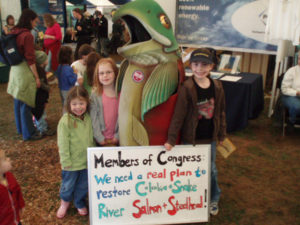
Please add your support today with a message to decision-makers. Tell the Administration to Act Now to Save Columbia-Snake River Salmon!
With thirteen salmon and steelhead populations—and thousands of salmon-related jobs—at risk, twenty years of litigation over failed federal salmon plans, and more than $10 billion spent, the governor is proposing a different path forward. He is advocating a stakeholder-driven process to develop a plan that restores salmon and steelhead, creates jobs, invests in regional communities, and reduces the persistent uncertainty facing many businesses in Oregon and the Pacific Northwest.
A Stakeholder-Driven Process Might be Salmon’s Best Hope
Governor Kitzhaber thinks that the establishment of an inclusive stakeholder process may be the best way to craft a comprehensive, long-term salmon plan that works for both salmon and people. And he is asking other elected leaders in the Northwest and in Washington, D.C., to join him in making it a reality.
The governor published an op-ed on Sept 22nd in which he said, “By gathering the parties around a table, and working in good faith to reach common ground on a fisheries plan that is supported by sound science, we can come to the 2014 [court-ordered] deadline with a historic agreement that ends the 20-year chapter of salmon wars in the Columbia basin, an agreement that protects fish while maintaining our supply of clean and affordable energy.
While Governor Kitzhaber’s recent push is highly visible, he is not alone in seeking a new path forward. Tens of thousands of citizens, more than a thousand businesses, and scores of state and federal lawmakers have expressed similar support for a new approach that brings together the affected interests in the region to work together on an effective, science-based plan that restores Columbia Basin salmon and invests in Northwest communities and the economy.
Learn more about this “solutions table” for Columbia-Snake salmon.
Restoration Plans Mired in the Political Muck
For many years, efforts to restore salmon to this important watershed have proven both elusive and contentious. National Wildlife Federation initiated litigation in the early 1990s, following the listing of Snake River sockeye salmon under the Endangered Species Act (ESA). Since then, twelve additional stocks of salmon and steelhead in the Columbia Basin have been listed as threatened or endangered, and four of five federal plans developed by the federal government have been rejected as inadequate by the courts, most recently in 2011.
Commercial, sport, and tribal fishing communities and outdoor retail companies have been hit particularly hard by constrained fisheries and limited recreational opportunities and the loss of jobs and income caused by salmon population declines. Recovering salmon and steelhead to healthy, harvestable populations will restore thousands of jobs in the region’s salmon economy that have been lost in the last several decades. The development of an effective, science-based plan that has the support of the region’s leaders and stakeholders will increase certainty and help Northwest businesses and communities plan successfully for the future.
The question of whether to remove the lower Snake River dams in order to protect an irreplaceable Northwest icon has long been at the center of the debate on restoring salmon. Hundreds of fisheries biologists, including the Western Division of the American Fisheries Society (AFS), and dozens of studies have concluded that the removal of the lower Snake River dams in eastern Washington must be part of any effective Columbia Basin restoration plan. Today, all remaining stocks in the Snake River—sockeye, steelhead, fall Chinook, and spring-summer Chinook—are listed under the ESA.
The Impacts of Climate Change also Hamper Recovery
Steadily rising water temperatures in the Columbia and Snake Rivers as a result of a warming climate and dam-restricted flow are increasing the scrutiny of these dams. Water temperatures in the lower Snake and lower Columbia exceeded 70 degrees for much of this summer—frequently violating Clean Water Act standards and harming salmon and steelhead migrating to and from the ocean.
A free-flowing lower Snake River would significantly lower water temperatures in both the Snake and Columbia rivers, and reconnect Snake River fish to pristine habitat in the mountains of central Idaho, in places like the Salmon River and Redfish Lake. Many of these high elevation refuges—though largely inaccessible for salmon today—are being called the Noah’s Ark for salmon in a world of climate change. Many of these areas remain cold and snowy for much of the year, and thus provide salmon the cold, clear water that they depend upon.
Restoring wild salmon and steelhead in the Columbia and Snake Rivers remains an essential job and shared goal for the people of the Northwest and the nation. These fish represent critical threads in the Northwest’s economic, ecological, and cultural fabric: feeding ecosystems and people, sustaining jobs and ways of life.
With so much at stake, salmon and fishing advocates enthusiastically welcome Governor Kitzhaber’s call for a new approach, for a coming together of both allies and adversaries, to begin repairing what is broken in the Columbia Basin, in a manner that works for both salmon and people.
You can add your voice by taking action today: Tell the Administration to Act Now to Save Columbia-Snake River Salmon!
A little background: as the U.S. coal market shrinks due to declining domestic demand, the American coal industry wants to expand its rail lines to export more of its polluting product—a hundred and fifty million tons annually—beyond our borders. The coal would come from Montana and Wyoming and be shipped via Northwest ports to China and other countries with much weaker controls on emissions, mining and waste management.

Extracting coal—especially on the scale practiced in the Powder River Basin—also destroys important habitat. Blasting and strip mining in Montana and Wyoming have already wrecked hundreds of thousands of acres of prairie, streams, and other habitat that was once home to abundant wildlife, while the coal companies have utterly ignored their responsibility to restore the landscape, despite being required to do so by law. The government, for its part, has turned a blind eye. And let’s not forget that climate change, caused by burning fossil fuels like coal, threatens wildlife because it is altering the landscape so rapidly that some species may not be able to adapt.
A fight has begun over the future of the Pacific Northwest’s air, water and wildlife protections. Decisions regarding the future of the region are going to be made over the next few months and years and we need your help. You need to make your voice heard on this issue, and if you live in Oregon or Washington you’re going to get your chance soon: there will be hearings and other opportunities to speak out against these destructive projects. In the meantime, visit Power Past Coal to find out how to make a difference, and send a message to your member of Congress to protect endangered Orcas and other Northwest wildlife.
Please stay tuned for a comprehensive report NWF will be publishing at the end of the month on how Big Coal’s export plans threaten salmon and other crucial species in the Pacific Northwest. I will post more details on my blog as we get closer to the release date.
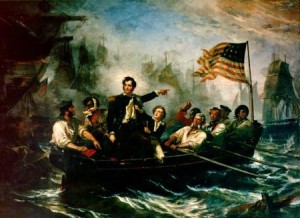
Some 200 years later – the new front for the battle of Lake Erie is now in the Ohio General Assembly.
Yesterday, the Ohio House passed a bill House Bill 473 that leaves Lake Erie and its tributaries unprotected and blocks the rights of Ohio’s hunters and anglers to use Lake Erie
HB 473 is legislation to implement the Great Lakes Compact.
Lake Erie is Worth Fighting For
Just like in 1812 – Ohio is blessed to have Lake Erie. It supplies the state with more than $10 billion in economic revenue each year and more than a quarter of a million jobs resulting from recreational and commercial fishing, hunting, wildlife watching, tourism and travel.
Its tributaries, such as the Grand, Vermillion and the Chagrin, provide world class steelhead fishing opportunities and is commonly referred to as ‘steelhead alley’. Other tributaries, such as the Maumee River, are also the spawning grounds for walleye and smallmouth bass. It also supplies drinking water to 11 million people across the area, 3 million of whom live in Ohio.
In other words, Lake Erie and its tributaries truly make Ohio special – and deserve protection.
House Bill 473 is the second attempt to pass legislation to implement the Great Lakes
Lake Erie Tributaries Left Unprotected
HB 473 restricts the Ohio Department of Natural Resources to only assess the impact of water withdrawals on Lake Erie – not the source of the withdrawal. Not only does this conflict with the Great Lakes Compact – which includes a preference for direct tributaries – it defies science and common sense. How are we to know the real impact of a water withdrawal if you don’t analyze its impact to the source of the withdrawal?
No doubt this will have dramatic impacts on ‘steelhead alley’ and potentially add to the growing problem of algal blooms in the western basin of Lake Erie.
Blocks Hunters and Anglers Rights to Lake Erie
The Great Lakes Compact states that any “Person aggrieved by a Party action shall be entitled to a hearing” in accordance with each state’s administrative procedures and laws. It further provides that, “after exhaustion of such administration remedies…any aggrieved Person shall have the right to judicial review of a Party’s action in the relevant Party’s court of competent jurisdiction.”
Yet, House Bill 473 changes the definition of ‘aggrieved persons’ by limiting it to those who were issued a permit, or those who have a direct economic or property interest impacted by a withdrawal. This narrow definition of aggrieved person would take a step backward and essentially eliminate Ohio’s citizen’s rights to enjoy and recreate in Ohio’s Lake Erie Basin.
“Dont Give Up the Ship!”
Back in 1812, America and the people of Ohio recognized Lake Erie was certainly worth fighting for. We must not forget the famous dying command of American Naval Officer, Captain James Lawrence, during the War of 1812, “don’t give up the ship!”
Today, we must remain vigilant and continue to fight for Lake Erie. As this bill moves forward, it is our hope the Ohio Senate and Governor Kasich will remember the rally cry of Captain Lawrence and honestly evaluate whether or not this bill is consistent with the Great Lakes Compact and protects Lake Erie.
The current Battle for Lake Erie is vital to the health of Ohio’s wildlife and economy.
Washington east of the Cascade Mountains is dry – parts of it have only 7 inches of rain a year, making all but desert. Yet that is some of Washington’s richest farm land, growing most of the nation’s hops, and an awful lot of cherries, apples and pears, not to mention dairy and increasingly respected wine. Water for those crops comes from the Cascades, where snowfall in the winter feeds rivers and farms in the summer. Salmon too rely on that melting snow to provide river flow and cold water needed for spawning.
Climate models suggest that the snowpack is going to largely disappear. Not that there will be much less precipitation, just that it will more and more fall as rain, running off rapidly, rather than as snow, melting into summer. This research about Mt Adam’s glaciers directly feeds into that story.
Pacific Northwest agriculture is not the only area impacted by the melting glaciers from climate change. Water supplies dependent upon the Andean and Himalayan glaciers are also threatened. In the Himilayas the Food and Agriculture Organization predicts that water for agriculture in Asia is expected to decline by 20% by 2030. This causes local and global leaders to worry about the future of food production.
Even Yakima agriculture is starting to worry. This is the political “red” country – deeply Republican. It is represented by Rep. “Doc” Hastings, Chairman of the House Committee on Natural Resources, a Republican a dismal record on the environment (League of Conservation Voters scores of 0% for the 106th through 109th Congress, rising to a whopping 3% in the 110th and 4% in the 111th Congress) . Yet in his district, people in agriculture are starting to ask questions like “what are we going to do about this climate change stuff and our water supplies?” Guys in coveralls know that their livelihood depends on snow.
So what are we going to do? Conserve water – use it more efficiently and maybe switch away from water intensive industry like dairy? Yep – everybody agrees that has got to be on high on the agenda. But there is also a need to restore salmon to the Yakima River. When federal dams were built and the river engineered, the 800,000 to a million salmon dwindled to a few thousand. The Yakama Nation, a salmon tribe, had its treaty rights to fish made meaningless, once there were no fish. Restoring salmon is a tough sell in that Congressional district.
NWF and our allies are working towards a comprehensive approach – using the need for change that climate disruption is causing. After more than 2 years of discussion, every major interest in the Yakima basin has agreed on a plan that will help fish, farms and families. It involves a mix of ambitious salmon restoration, protection about 200,000 acres of private and public lands to support a healthy watershed, better use of existing water supplies and infrastructure and expanding water storage.
Look for more on the Yakima in the coming months – its an exciting and innovative project.
You can learn more about our work at the National Wildlife Federation Pacific Regional Center by going to our website and following us on facebook and twitter – @nwfpacific!
The Seattle Times reports:
“The veteran fishery biologist for the Washington Department of Fish and Wildlife was reviewing the daily count of steelhead passing Bonneville Dam. Tuesday’s figure didn’t seem right: 18,671.
Because that was a full 10,000 more than the day before, Hymer figured someone must have inadvertently punched in an extra digit on the calculator. He had good reason to believe so. In the 71 years since fish counting began at Bonneville, the previous record for the daily steelhead count amounted to 14,432. Then came Wednesday’s count: 28,314. On Thursday, the number spiked at 34,054.
The incredible steelhead counts weren’t typos. At the dam, fish counters recorded as many as 1,700 silvery flashes zipping past in a single hour on Thursday a rate that equates to a new fish every couple of seconds. … Biologists attribute this week’s bulging daily counts at Bonneville largely to the searing heat wave two weeks ago. Several days of triple-digit heat warmed the river to as high as 75 degrees at Bonneville, well above the comfort level for cold-water fish.
‘When you get up to 74, 75 degrees, fish just don’t move,’ Hymer said. ‘In sport fisheries below Bonneville, we saw steelhead duck into tributaries like the Cowlitz, Lewis, even to some degree the Kalama. Fish are trying to cool off as much as possible.'” See full article.