As the Aberdeen Health Foundation celebrates 40 years of supporting local healthcare, the Learning Centre exemplifies how donor support strengthens immediate services while building tomorrow’s workforce.
For Dr. Aaron Smith, Medical Executive Director with Nova Scotia Health, the centre reflects a broader evolution in service delivery. “Primary healthcare has been on a journey of transformation,” he said. “A health home brings together healthcare providers who work collaboratively to meet most of a person’s healthcare needs. Patients receive care from the right provider at the right time, while every member of the team is supported to work to the full scope of their practice.”
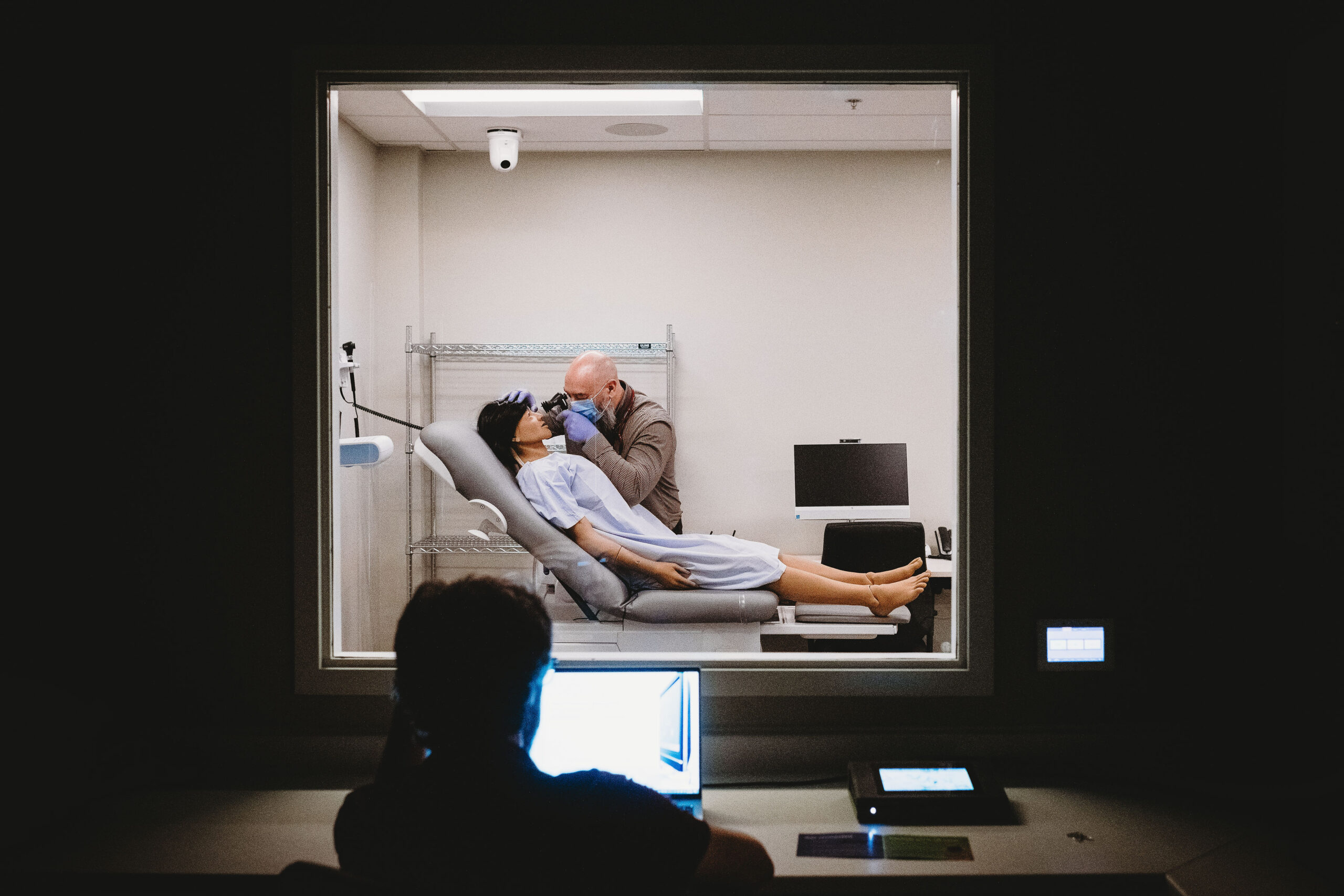
A simulation specialist monitors a training scenario from a control room at the Highland Health Home and Learning Centre. Using lifelike patient simulators funded by the Aberdeen Health Foundation, health care teams can practice responding to realistic medical situations while the specialist controls the simulators’ responses. After each scenario, the team reviews what went well and what could be improved.
Dr. Smith noted that the Aberdeen Health Foundation embraced this collaborative vision from the earliest planning stages. “From the time we opened the door, it felt like a partnership. We had a shared purpose, and the conversations quickly became about how we could create a space that supports both patients and learners.”
As a teaching clinic, the facility welcomes medical students, family medicine residents, nurse practitioner learners, and other health professionals to build clinical skills within an interdisciplinary environment.
Supported by a $1.2 million investment from the Aberdeen Health Foundation spread over two years, community funding provided specialized equipment for the simulation lab. Life-sized patient simulators that can breathe, bleed, sweat, and respond to treatment in real time, alongside task trainers for procedures like wound care, injections, assessments, and suturing allow the entire team to practice in a realistic setting before treating patients.
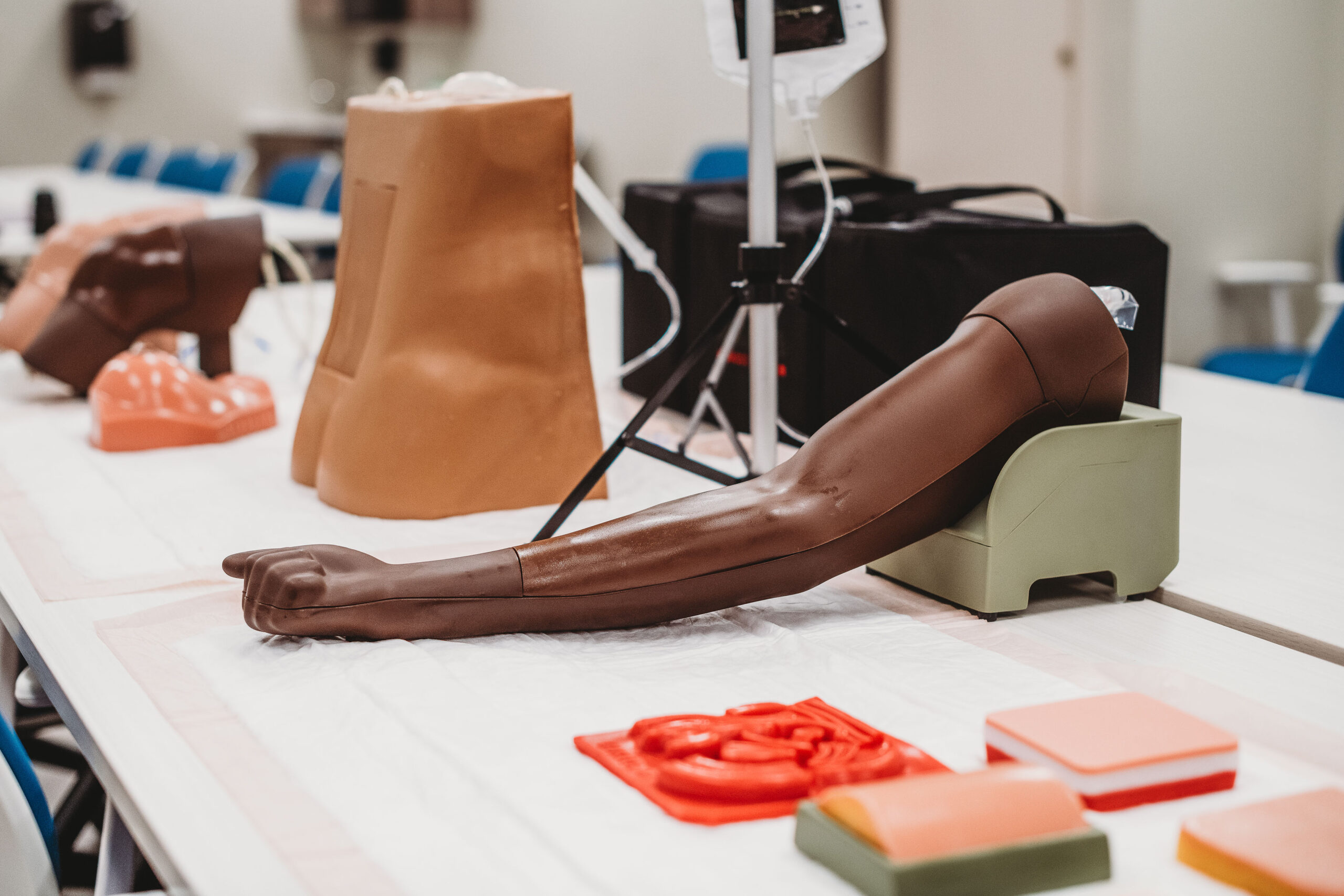
Specialized training equipment allows teams to practice clinical skills such as injections, wound care, and suturing in a safe, realistic setting.
“We’re giving learners the opportunity to train in the same environment where they’ll practice,” said Dr. Smith. “They’re developing clinical skills while also learning how to work as part of an interdisciplinary team, because the future of primary healthcare is collaborative.”
“Donor support helped create a space where healthcare providers can continue learning throughout their careers while giving students and residents an exceptional place to train,” said Michelle Ferris, Executive Director of the Aberdeen Health Foundation. “By investing in education alongside patient care, our donors are helping strengthen primary healthcare today while supporting the next generation of healthcare providers who will care for our community in the future.”
Reflecting on the Foundation’s 40th anniversary, Dr. Smith emphasized that its impact extends far beyond equipment and programming. “This community cares very deeply about its people, and the Foundation is the connection between that generosity and direct impact. It’s helping meet people’s healthcare needs today while also investing in the future of health in our community.”
The Highland Health Home and Learning Centre’s primary healthcare simulation lab was featured by CBC News following its opening. Watch the story to see how the space is helping train current and future healthcare providers: https://www.cbc.ca/player/play/video/9.7220531
The Aberdeen Health Foundation is the leading charity for enhancing health care in Pictou County. In 2025, the Foundation invested over $3 million to fund medical equipment and enhance health programs at the Aberdeen Hospital and in the community. Your contribution can be the catalyst for even greater change — find out how you can make an impact here.
]]>New Glasgow, Nova Scotia, Friday, October 9, 2026, …. The Sandbar Mental Health Endowment takes its name from the Point 44 sandbar in Little Harbour, a place that held special meaning for four generations of the Bennett family.
“Although only a few hundred yards offshore, the beauty and peacefulness made it seem as if one’s troubles were miles away,” wrote Richard Bennett about the Point 44 sandbar. “That picture, I’m sure, relates to the wishes of many people struggling with mental illness.”
When Richard and Nancy Bennett established the Sandbar Mental Health Endowment through the Aberdeen Health Foundation in 2006, they chose its name in the hope it would represent a place of peace and support for people living with mental illness in Pictou County. Twenty years later, the endowment continues to do just that.
Now, a new generation is stepping forward to help. This fall, 10-year-old entrepreneur and hockey goalie Kit Leil has chosen the endowment as the community donation partner for Save Nation Hockey’s 2026 fall collection. A portion of proceeds from Kit’s sales will support mental health programs here in Pictou County.
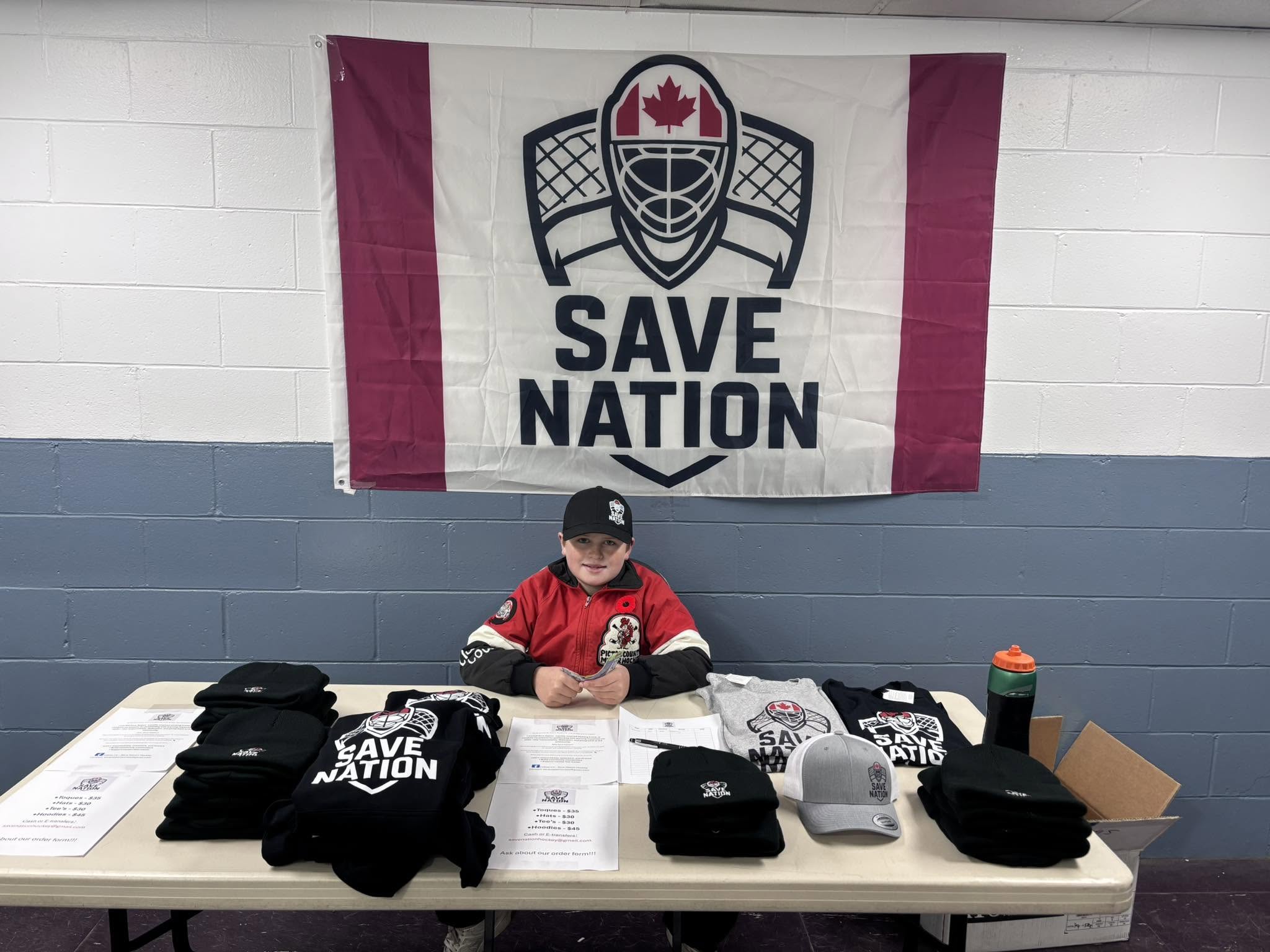
Ten-year-old Kit Leil started his clothing brand, Save Nation, to support his love for hockey and give back to his community. This fall, a portion of Save Nation proceeds will support the Aberdeen Health Foundation’s Sandbar Mental Health Endowment. Kit is pictured here selling Save Nation merchandise at Trenton Rink in 2025.
Save Nation Hockey began as a way to help Kit participate in hockey training camps and tournament opportunities. As he built something of his own, he discovered it could also be an opportunity to give back to others. After reaching out to Aberdeen Health Foundation and exploring opportunities to support local health care, Kit chose Sandbar.
“I started Save Nation because I love hockey and wanted to make my own hockey brand,” explained Kit. “I’ve learned that it takes a lot of work to make something, and it feels really good that we can also use it to help other people.”
Kit’s support adds a new chapter to something the Bennett family started over two decades ago. Richard’s son, Peter Bennett, who later served on the Aberdeen Health Foundation’s Board of Directors, says the creation of the fund was shaped by personal experience. “My family had experience with mental health. We started to feel that there didn’t seem to be enough support at that time.”
In the early 2000s, much of the Foundation’s health care philanthropy was focused on equipment, but the Bennett family believed mental health required something different. “We didn’t want to focus on more of the same,” Peter explained. “We felt it was a matter of therapies, access to care, and support. We decided to form an endowment which would specifically support mental health initiatives in Pictou County.
“We asked local mental health providers what would make the biggest difference and they said one of the biggest struggles was getting clients to come in and get the services that they needed,” Peter recalled.
In response, the Bennett family’s company at the time, Stright-MacKay Ltd., donated a passenger van so clients could attend appointments and programs. “After we bought the van, attendance went way, way up, and everyone was just as happy as could be.”
More than a decade later, when it came time to replace the van, clients offered another valuable perspective. Rather than displaying the company’s name, they suggested leaving the program name off the vehicle so that clients’ participation in the program wouldn’t be made visible to the community. The company agreed, with the Bennetts choosing to prioritize the comfort and dignity of clients over public recognition.
Since its creation, the Sandbar Endowment has helped make possible a wide range of mental health initiatives throughout Pictou County. It has funded community education that challenged stigma and encouraged understanding, including presentations about living with psychosis that reached more than 1,000 local students. It has supported Mental Health First Aid training for teachers and school staff, equipping them with the knowledge and confidence to recognize when someone may be experiencing a mental health challenge and connect students with appropriate support.
The endowment has also been a long-time supporter of New Hope, Nova Scotia Health’s psychosocial rehabilitation program for people living with mental illness. The program helps participants build life skills, confidence, independence and social connections in a safe and supportive environment. Programming includes art, nutrition and kitchen skills, physical activity, mindfulness, games and music therapy, along with opportunities to practice skills in the community.
Melissa Yantzi, who manages Nova Scotia Health’s Community Supports for Adults teams across the Northern Zone, says Sandbar’s support has been especially important for taking that work out of traditional clinical settings and into the community. Clients can participate in outings and experiences they may otherwise have difficulty accessing, from trips to the beach to visits to the Art Gallery of Nova Scotia. This gives participants opportunities to practice skills developed through New Hope, including planning, problem solving, time management, social skills and relationship-building.
“We can bring people into the community who may be experiencing isolation or have difficulty accessing different programs,” Melissa said. “It allows clinicians to give them that experience and exposure to different things that are happening. We wouldn’t be able to do the programming that we do without the Foundation. It’s a really wonderful partnership. The clients really appreciate it and so do the staff.”
Looking back over four decades of the Aberdeen Health Foundation, Peter believes one of its greatest strengths has been its ability to respond to the changing needs of the community.
“Knowing what I know, I have to believe that the Aberdeen Health Foundation is the envy of an awful lot of places with higher populations than our community,” he said. “Your average person on the street probably isn’t aware of the equipment upgrades they have access to, and the difference in the care they receive, because of what the Foundation does.”
“The Bennett family’s generosity has touched countless lives over the past two decades, often in ways people never see,” said Michelle Ferris, Executive Director of the Aberdeen Health Foundation. “They recognized early on that health care extends far beyond medical equipment. Over the past two decades, the endowment has evolved alongside the community’s mental health needs, providing flexible funding for innovative programs that may not otherwise have been possible. Their vision has helped people build connections, access care, reduce isolation and find hope.
“To now see Kit, a young person in our community, pick up the torch and choose Sandbar as a cause he’d like to support has been a full-circle moment for us as we reflect on our history. The Bennett family was ahead of its time in recognizing the importance of investing in mental health, and 20 years later, their example continues to inspire others to care about and invest in the wellbeing of our community.
“We are deeply grateful for the Bennett family’s early leadership and extraordinary commitment to mental health in Pictou County, and to Kit and the Leil family for choosing to carry that spirit of giving forward.”
Shop Save Nation’s fall collection on their Facebook page here.
——————————————
The Aberdeen Health Foundation is the leading charity for enhancing health care in Pictou County. In 2025, the Foundation invested over $3 million to fund medical equipment and enhance health programs at the Aberdeen Hospital and in the community. Your contribution can be the catalyst for even greater change — find out how you can make an impact here.
]]>Thanks to funding from the Aberdeen Health Foundation, nurses at Aberdeen Hospital’s oncology department now have access to ultrasound guided IV technology that helps make IV placement more accurate while reducing pain and stress for patients.
“Patients often have more fragile veins over the course of their treatment,” said Registered Nurse Jessica Veenhuis. “Things like dehydration and medications can make the veins smaller and harder to access, so we’re often trying to find deeper veins that are difficult to see or feel.”

Photo Caption: A Registered Nurse uses the new ultrasound technology funded by Aberdeen Health Foundation to place an IV for an oncology patient. The new equipment is making it easier for staff to locate and access veins impacted by repeated cancer treatments, reducing the number of needle pokes and increasing patient comfort.
The new equipment uses ultrasound imaging to allow nurses to see veins beneath the surface of the skin while inserting an IV. Rather than relying solely on sight and touch, nurses can watch the needle enter the vein on a screen in real time, improving accuracy and patient comfort. Reducing the number of needle pokes also helps to preserve veins for future treatments.
“The people coming here are often going through one of the hardest parts of their lives. We want to cause as little pain as possible,” said Veenhuis. “Before we had ultrasound guided IVs, I’d seen patients go through seven to nine attempts to start a single IV. Every time we’re poking, that’s a little more trauma to those veins. Now, when we know someone has difficult-to-access veins, one of our first thoughts is to use the ultrasound guided IV.”

Photo Caption: Registered Nurse Jessica Veenhuis (centre) demonstrates the new ultrasound guided IV technology for Dr. Patricia Craig (right) and Bob Sharkey (left) in the oncology unit at Aberdeen Hospital.
The technology is still relatively new and staff continue to build confidence using it. Oncology nurses completed hands-on training before introducing the equipment into regular practice.
“There was definitely a learning curve,” said Veenhuis. “But the more we’ve been using it, the easier it has become, and the quicker we are to say, ‘okay let’s go right to the ultrasound guided IV.’”
Veenhuis is grateful for community support through the Aberdeen Health Foundation. “To be able to reassure our patients that we have the best technology available to help minimize the number of needle pokes and the amount of pain they’re experiencing, that’s just wonderful,” she said.
As the Foundation celebrates its 40th anniversary, this is exactly the kind of investment it was created to make, added Heather MacDonald, Board Chair.
“Investments like this help improve the experience of care for people who are already going through an incredibly difficult time. Our founders recognized that essential items were the responsibility of the health care system, while donor support through the Foundation could provide the extras that enhance patient care. This technology is a perfect example of that vision. It brings equipment to our community that wouldn’t otherwise be available, improving the treatment experience for patients and the health care professionals who care for them every day.”
——————————————
The Aberdeen Health Foundation is the leading charity for enhancing health care in Pictou County. In 2025, the Foundation invested over $3 million to fund medical equipment and enhance health programs at the Aberdeen Hospital and in the community. Your contribution can be the catalyst for even greater change — find out how you can make an impact here.
]]>Trauma Nova Scotia is operated under Nova Scotia Health. The organization provides education and simulation training across the province to help health care professionals strengthen trauma care skills, critical thinking and teamwork in high-pressure situations. The one-day course at Aberdeen Hospital was based on the Rural Trauma Team Development program and focused on a team-based approach to trauma resuscitation and care.

A Trauma Nova Scotia instructor leads participants through the Provincial Trauma Course at Aberdeen Hospital. Funded by the Aberdeen Health Foundation, the training helps health care teams strengthen trauma care skills, communication, and coordinated responses in high-pressure situations.
“It promotes a team-based approach to trauma resuscitation and trauma patients,” explained Matthew Vaughan, assistant health services manager in the emergency department.
Participants worked through simulations in small groups and practiced procedures like chest tube insertion, decompression, and emergency airway management using life-like mannequins.
One of the most memorable parts of the training arrived on wheels – Trauma Nova Scotia brought a specialized simulation truck to the site, with a realistic ambulance environment on one side and a trauma room set up on the other.

Trauma Nova Scotia’s mobile simulation unit brings realistic training directly to communities across the province. The specialized vehicle features both an ambulance environment and a trauma room, allowing participants to practice responding to emergencies in settings that mirror real-world conditions.
The course combined classroom learning in the hospital’s boardroom with simulation exercises inside the truck and in other spaces throughout the hospital.
The training brought together emergency physicians, paramedics, registered nurses, licensed practical nurses, respiratory therapists, and critical care staff from across the hospital.
According to Vaughan, one of the biggest benefits of the course was the opportunity for rural health care teams to learn directly from clinicians who regularly work in higher-volume trauma centres. “It brings clinicians from areas where there are higher volumes of trauma, from the tertiary trauma centre in Halifax, to regional and rural sites across the province.”
The simulations included scenarios involving multi-trauma patients, blunt force trauma, penetrating trauma, and airway emergencies, giving teams the opportunity to practice responding together in a controlled environment.

Participants work through a trauma simulation using a life-like training mannequin. The course helps health care providers like physicians, nurses, paramedics, and respiratory therapists practice the teamwork and communication skills needed during real-life emergencies.
The response from staff was overwhelmingly positive. “We had a full classroom session for it,” said Vaughan. “Those who attended the course could then go back and talk to their colleagues that they work with every day and discuss what they learned. That learning gets passed on and communicated to other colleagues.”
He said programs like this ultimately help strengthen care for patients across the region, and training opportunities like this would not be possible without community support. “The Foundation plays a huge role in being able to offer programs like this.”
Board chair of the Aberdeen Health Foundation Heather MacDonald said supporting continuing education is an important part of strengthening health care in Pictou County.
“Ensuring local health care teams have access to the latest training not only benefits patients but helps staff build confidence and strengthen skills. We’re proud to support opportunities that help our health care teams continue to learn and grow, and we’re always inspired by the number of health care professionals who choose to advance their training each year. Their commitment to ongoing learning ultimately translates into stronger care for patients across our community.”
——————————————
The Aberdeen Health Foundation is the leading charity for enhancing health care in Pictou County. In 2025, the Foundation invested over $3 million to fund medical equipment and enhance health programs at the Aberdeen Hospital and in the community. Your contribution can be the catalyst for even greater change — find out how you can make an impact here.
]]>During cancer surgery, surgeons must identify the lymph nodes most likely to contain cancer cells if the disease has begun to spread. This information plays a critical role in treatment decisions, particularly in breast cancer care. In the past, this work relied heavily on a radioactive tracer known as Technetium 99. In recent years, however, access to that tracer has not always been reliable.

Dr. Colleen O’Sullivan (right), general surgeon at Aberdeen Hospital, demonstrates the SPY Portable Handheld Imaging (SPY-PHI) system. Funded by the Aberdeen Health Foundation through the Jim Gogan Medical Equipment Endowment, the technology helps surgeons identify impacted lymph nodes during cancer surgery and provides a reliable alternative when access to radioactive tracers is limited.
“Since COVID, there have been many shortages of medical supplies,” says Dr. Colleen O’Sullivan, general surgeon at Aberdeen Hospital. “This has intermittently included the radioactive tracer we use to identify the lymph nodes most likely to have absorbed any loose cancer cells. Given how important this information is, these shortages are critical and therefore it was essential to have a second, equally accurate option.”
SPY-PHI provides that second option. “The SPY-PHI was found to have the same accuracy as the Technetium 99, without the supply chain issues,” Dr. O’Sullivan explains.
While the technology differs, the process remains the same. With SPY-PHI, a small amount of fluorescent dye is injected into the patient and travels through the lymphatic system. When the handheld device shines a light on the surgical area, the dye lights up, allowing surgeons to see lymphatic pathways and identify nearby lymph nodes immediately on screen. Technetium 99 works in a similar way, using a radioactive tracer that is injected and then detected with a gamma probe.
“Before now, there was one SPY-PHI to share throughout the zone,” Dr. O’Sullivan says. While it provided back-up, it didn’t mean the surgeries were unaffected. “This impacted getting patients in as fast as possible and meant this valuable equipment was being moved often around the zone.” With funding from the Jim Gogan Medical Equipment Endowment, the Aberdeen Hospital now has its own dedicated SPY-PHI equipment, easing scheduling burdens and reducing surgical delays.
The technology also supports best practice in care. “The standard of care currently is to use two tracers,” Dr. O’Sullivan adds. “Having two equally accurate tracer techniques means our patients are getting the best care that can be offered.”

Dr. Colleen O’Sullivan (left) and registered nurse Belinda Hicken (right) stand with Aberdeen Hospital’s dedicated SPY-PHI unit. The addition of this specialized equipment at Aberdeen Hospital helps reduce delays in cancer surgery and supports patients across Pictou County and the Northern Zone.
Although the SPY-PHI unit is located at Aberdeen Hospital, the benefits reach beyond Pictou County. “The gift of the SPY-PHI not only helps patients at our hospital, but also those throughout Northern Zone,” says Dr. O’Sullivan. “Having a SPY-PHI dedicated where the majority of breast cancers are done in the zone frees up the other unit for use at the other major hospitals. This helps ensure that no matter where patients live, they have access to the best possible care. Investments like this help us keep pace with the leading technology and continue providing high-quality care to our rural patients.”
When asked about the addition of the SPY-PHI to operating rooms at Aberdeen Hospital, Foundation Board Chair Heather MacDonald said, “This is such a great example of how community support can enhance care as new needs emerge. We were able to respond to changing circumstances with a solution that helps patients in Pictou County and right across the Northern Zone access timely cancer surgery, with less stress and uncertainty. We’re proud to support this improvement.”
——————————————
The Aberdeen Health Foundation is the leading charity for enhancing health care in Pictou County. In 2025, the Foundation invested over $3 million to fund medical equipment and enhance health programs at the Aberdeen Hospital and in the community. Your contribution can be the catalyst for even greater change — find out how you can make an impact here.
]]>
Members of the Ladies Auxiliary to the Aberdeen Hospital are pictured at the Martha Washington Tea in 1897. Front row, from left: Rachel Torry, Nellie Connelly, Annie Graham, Lillie Wright and Margaret Smith. Second row, from left: Annie MacCall, Mrs. Wright, Ella Stewart and Nan Carmichael. Back row, from left: Annie MacKay, Susan MacGregor, Mame Ross, Isabell McKay, Junie Jarvis and Lottie McGregor.
New Glasgow, Nova Scotia, Friday, June 12, 2026, …. As the Aberdeen Health Foundation celebrates its own 40th anniversary this year, the organization would also like to recognize another milestone in local health care: the 130th anniversary of the Aberdeen Hospital Auxiliary. Generations of volunteer service through the Auxiliary have helped shape care at Aberdeen Hospital since before the hospital officially opened its doors.
Long before modern fundraising campaigns and large-scale capital projects, Auxiliary members were organizing bake sales, selling jams and jellies, and finding creative ways to support patients and staff.
Founded in 1896, the Auxiliary is believed to be the oldest hospital auxiliary in Nova Scotia. Early members raised money for the hospital through community events, homemade goods and local fundraising efforts, helping furnish and support the new hospital from its earliest days.
For Anna Svendsen, current president of the Auxiliary, the organization’s legacy feels personal. A former nurse who trained at the Aberdeen Hospital, Anna became involved with the Auxiliary in 2015 after retiring and returning to Pictou County in 2008. “It felt full circle. I knew I wanted to volunteer, and health care was always important to me, so volunteering with the Auxiliary made sense.”
Today, the Auxiliary has 30 members, including several volunteers in their 80s and 90s who actively support fundraising efforts and work in the Aberdeen Hospital gift shop.

Members of the Aberdeen Hospital Auxiliary today, in the Auxiliary’s 130th anniversary year. Front, from left: Isabelle Dort, John Marshall, Ellie Hundscheid, Jane Marshall and Nancy Russell. Middle row, from left: Mary Fanning, Trudy Vince, Chrissie Cormier, Dona Ripoli, Virginia MacLeod and Linda Priske. Back row, from left: Janet Wallace, Sylvia Campbell, Charlotte MacDonald, Anna Svendsen, Beth Clarke and Sandra Grant.
“Our funds all go back into patient care,” said Anna. “Sometimes it’s large projects, but more often it’s the little things that make a big difference, like providing personal care items for patients unexpectedly admitted to hospital, helping cover transportation costs for treatments, or purchasing equipment for hospital units.”
The organization helped fund the hospital’s maternity ward after years of advocacy by Auxiliary members. Beginning in 1918, the group repeatedly pushed for the creation of a maternity department at a time when most births still took place at home. After years of public pressure and campaigning, the Aberdeen Hospital’s first maternity department officially opened in 1922.
The Auxiliary also helped fund fire escapes after a major hospital fire in 1921 and supported the hospital’s first dietitian position in the late 1920s, recognizing the growing importance of nutrition in patient care.
More recently, the Auxiliary partnered with the Aberdeen Health Foundation to help fund the Minimally Invasive Surgical (MIS) suite and supported the introduction of music therapy services at the hospital.
“One of the things we’re most proud of is the music therapist program,” says Anna. “We heard about the idea at a conference and brought it back here. The Auxiliary funded most of the salary for the first three years until government support came on board.”
Today, Auxiliary fundraising efforts include popular “Toonie Treat Carts” filled with homemade baked goods, handcrafted Christmas wreaths, floral arrangements, raffle projects and hospital gift shop fundraisers. Their work also supports initiatives like the Amber Kirwin nursing bursary and Ryan’s Smiles pillowcase project for pediatric patients. In 2025 alone, Auxiliary members donated more than 4,500 volunteer hours toward hospital and community initiatives.
Anna says the Auxiliary’s continued success can be attributed to the way members continue to work together and support each other year after year. “We have a very cohesive group. People have worked together for so long, and everybody just steps in where they’re needed.”
That commitment has carried the organization through generations of change, including World Wars, economic downturns, and the COVID-19 pandemic. Even as health care and fundraising continue to evolve, the Auxiliary has remained focused on supporting patients, staff and the hospital community.
To mark the milestone, the Auxiliary will host a special anniversary Annual General Meeting on June 22, with local leaders and supporters invited to help celebrate the organization’s 130 years of service. The Auxiliary’s official anniversary date is June 26, and additional celebrations are planned at the hospital that week, including events for staff.
Michelle Ferris, Executive Director at Aberdeen Health Foundation, says she is proud to celebrate this anniversary alongside the Auxiliary. “Today’s members continue a long tradition of service that can be felt throughout the hospital – from the gardens and flower baskets that welcome families, to Martha’s Place Gift Shop and the volunteers who greet visitors every day. Members continue to step forward wherever there is a need, supporting new advancements in care while also helping to provide the small comforts that make a difference for patients and their families. While the Foundation is proud to be celebrating 40 years this year, it’s inspiring to share this milestone year with an organization that has spent 130 years giving back to the community.”
The milestones serve as a reminder that community support for local health care in Pictou County has spanned generations, led by volunteers committed to supporting the hospital and community year after year.
——————————————
The Aberdeen Health Foundation is the leading charity for enhancing health care in Pictou County. In 2025, the Foundation invested over $3 million to fund medical equipment and enhance health programs at the Aberdeen Hospital and in the community. Your contribution can be the catalyst for even greater change — find out how you can make an impact here.
]]>
Upgraded Optical Coherence Tomography (OCT) equipment at Aberdeen Hospital was made possible by a gift from J. Doreen Bennett, in memory of her father, Roy J. Bennett, Mayor of New Glasgow at the time of the hospital’s opening. From left to right: Tanya MacDonald, health services manager; Liz Sheppard, clinic clerk; Marilyn Adams, orthoptist; Kirsten Snow, orthoptist.
While the hospital does not have ophthalmologists on site, diagnostic eye testing remains an essential part of care for people living with chronic or progressive eye conditions. Patients often need to travel to Antigonish, Truro, or further for these specialist visits. “Most patients need to make one trip for testing and another to see the physician,” explains Marilyn Adams, Orthoptist at Aberdeen Hospital. “Having this equipment closer to home saves patients in Pictou County from travelling out of the county for testing.”
For patients requiring eye testing, travel can be difficult. “A trip to the ophthalmologist often means the patient’s family would need to drive them,” Marilyn says. “The OCT helps reduce the economic impact on the individuals, especially if a family member has to take time off from work to assist, as well as the cost of the extra trip itself. At some sites, there is also a patient fee for OCT testing which adds to that financial burden.”
Marilyn says access to local testing can reduce travel even further in some cases. “The doctor may be able to perform a phone consultation based on the test results and eliminate the need for the in-person visit altogether.”

Marilyn Adams, orthoptist, with the upgraded fundus camera used to document retinal changes and support improved patient follow-up.
The upgraded OCT equipment replaces a long-serving machine that had supported patient care at the site for more than 20 years. As with many technologies of its age, image capture had become less efficient over time, which could make it more challenging to obtain test data quickly and comfortably for some patients.
“Advances in the new system have made a noticeable difference in both image quality and workflow,” Marilyn says. “Testing is now smoother and more efficient, which helps reduce the amount of time patients need to remain still during the procedure, which is difficult for some folks.”
The improved image stability and clarity of the new equipment means orthoptists can obtain more reliable data in a shorter period of time, improving comfort for patients and confidence in the results shared with ophthalmologists.
“We can now obtain data that aids the ophthalmologist in the proper diagnosis and treatment of a variety of eye conditions, including glaucoma, macular degeneration, and diabetic eye disease,” Marilyn says. “It allows them to follow the patient with a series of images and establish if there has been change in the eyes over time.”
When asked about the overall impact of this investment, Marilyn explains what it means for patients and families. “The support of the Foundation allows people from this area to have their testing closer to home, in more familiar surroundings, and often in a more timely manner. It helps alleviate some of the financial strain of illness, and that makes a real difference.”
——————————————
The Aberdeen Health Foundation is the leading charity for enhancing health care in Pictou County. In 2025, the Foundation invested over $3 million to fund medical equipment and enhance health programs at the Aberdeen Hospital and in the community. Your contribution can be the catalyst for even greater change — find out how you can make an impact here.
]]>An echocardiogram is a test to measure the size, shape, movement and flow of blood through the heart. The safe and painless test uses soundwaves (ultrasound) to get a picture of the heart that specialists can then use to detect or rule our certain heart diseases.
Lindsey Patterson, now Operations Lead at Aberdeen Hospital, helped identify the need when managing the ICU and Non-Invasive Cardiac Investigation. “We had one full-time sonographer and ultrasound machine, and were challenged to keep up with the need,” she remembers. “You feel really terrible having to tell someone it’s going to be a year and a half before they get this test completed to receive a diagnosis.”
Knowing something had to change, Lindsey brought forward a request to the Foundation for funding. With the new machine in place and an additional technologist hired, the impact was immediate. “Within six months, the wait dropped from 18 months to weeks,” says Miranda Thomson, Manager of Diagnostic Imaging and Non-Invasive Cardiac Investigation.

Photo caption: Thanks to an echocardiography machine funded by the Aberdeen Health Foundation, wait times at Aberdeen Hospital have been reduced from up to 18 months to just weeks. Left to right: Robyn Wilson, Cardiac Sonographer; Lindsey Patterson, Health Services Manager and Operations Lead; Marsha Sobey, Acquisitions Co-Chair, Aberdeen Health Foundation; Nicole Kirkendall, Cardiac Sonographer; Miranda Thomson, Manager Diagnostic Imaging and Non-Invasive Cardiac Investigation.
The difference has been felt across the hospital. Urgent cases are happening sooner, inpatient discharges happen more quickly, and staff have the backup they need. “Before, if our only sonographer was away, there were times we had no echo services at all,” Miranda explains. “Now, she has that support and patients continue to receive the care they need.”
For families, the impact is hard to put into words. Margie Walsh remembers what it felt like when her mother, Marion Nicholson, needed diagnostic testing. “She was having a lot of issues and didn’t know what was going on,” Margie recalls. “Heart disease runs in our family, so she was very scared…when they told her it would be an eight-month wait for the heart scan, honestly, I thought that was going to be the end of her. She was so scared, so upset and so nervous.”
The second echocardiography machine was introduced shortly after, and Marion was able to get an appointment right away. The scan revealed that her heart was healthy, allowing doctors to look elsewhere for answers. That search led to the discovery of a bowel issue that required emergency surgery. “That earlier scan was life-saving for her, really,” Margie says. “And also for her mental health, just knowing she was being attended to faster than an eight-month wait.”
Stories like Marion’s show how much can change when a community invests in local care. “Having Foundation support for the equipment we use every day is vital to keeping rural hospitals like ours going,” adds Miranda.
As the Aberdeen Health Foundation marks its 40th anniversary, Board Chair Heather MacDonald says this project perfectly reflects the Foundation’s values. “One of our main goals is to support projects that make care easier to reach,” she says. “We also look for ways to make the most of donor support by investing in projects where every dollar goes as far as possible. When Lindsey identified a need that could make an immediate difference for patients, we knew it was the right fit. It’s an example of how hospital staff, the Foundation, and system partners can work together to make a real difference in patients’ lives.”
For Lindsey, seeing these kinds of outcomes has been especially meaningful. “When I think of my career as a manager, this stands out as a real success story,” she says. “It was a huge win for the Aberdeen.”
——————————————
The Aberdeen Health Foundation is the leading charity for enhancing health care in Pictou County. In 2025, the Foundation invested over $3 million to fund medical equipment and enhance health programs at the Aberdeen Hospital and in the community. Your contribution can be the catalyst for even greater change — find out how you can make an impact here.
]]>
Photo Caption: Doris and Ray Hiltz. In 2025, Doris’s estate left a $2.4 million unrestricted gift to the Aberdeen Health Foundation, the largest bequest in the Foundation’s 40-year history.
Doris Hiltz was a chemist by profession and a musician at heart. Music was not only a personal interest, but something she shared generously. She played violin with the Pictou County Orchestra, served as its treasurer, and continued performing well into later life, including playing with a small group of seniors at community and church events until she was nearly 90. She was also a long-time supporter and director of the Pictou County Music Festival. For Doris, music brought people together and created moments of connection.
Doris’s gift also honours her late husband, Ray Hiltz. Ray worked at the Bedford Institute of Oceanography and was active in the Masonic Lodge and Shriners. He was known for his meticulous workmanship, spending countless hours in his workshop building model boats and completing projects for their home and gardens. Together, Doris and Ray lived modestly and thoughtfully, while giving generously to many organizations throughout their lives.
In consultation with the estate’s executor, the Foundation developed an approach that aligns with Doris and Ray’s values. Their gift fuels a focus on preventative population health through therapeutic music and arts initiatives, both in hospital settings and in the community. These initiatives will be recognized as being funded by the Doris & Ray Hiltz Aberdeen Healing Arts (AHA!) Funding.
“We’ve admired the work of Arts & Health Antigonish (AHA!) and how they build community health through creativity,” explains Aberdeen Health Foundation Executive Director Michelle Ferris. “They were the inspiration behind our own ‘AHA!’ acronym. We wanted to build a coordinated approach to music and arts in healing for some time, and this gift allows us to finally bridge that gap. By integrating creative arts initiatives into our care models, we are embracing a proven, evidence-based approach to improving health outcomes and enhancing the well-being of our entire community.”
One example of this type of initiative is the music therapy program at Aberdeen Hospital. “It started as part of the Palliative Care program,” explains former Palliative Care Physician Dr. Anne Kwasnik. “It evolved into a hospital-wide program as people started to recognize the impact. Music is lovely, but music therapy is therapy, and there’s a big difference. People come away feeling more in tune with themselves and better able to understand, at a gut level, what is important to them.”
While music therapy has been available for several years now at Aberdeen Hospital, the opportunities for enhancing and expanding this approach thanks to this gift are truly exciting, with the opportunity to draw on the incredible creative talent that makes Pictou County such a special place.
The AHA! Funding will honour Doris’s appreciation for both science and the arts by supporting approaches to health that consider the whole person.
——————————————
The Aberdeen Health Foundation is the leading charity for enhancing health care in Pictou County. In 2025, the Foundation invested over $3 million to fund medical equipment and enhance health programs at the Aberdeen Hospital and in the community. Your contribution can be the catalyst for even greater change — find out how you can make an impact here.
]]>
“I remember thinking in that moment, that’s exactly what I’m going to do.”
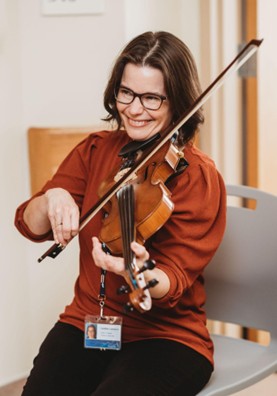
Photo Caption: Music therapist Heather Cameron leads a group session at Aberdeen Hospital. The music therapy program is funded by Aberdeen Health Foundation, supporting patients and families as part of whole-person care.
Today, Heather provides music therapy both at Aberdeen Hospital and in the community. Her visits may involve a one-on-one session with a single patient, or a gathering of family members sharing music together in a hospital room or living room. Each session is shaped around the individual.
“It’s never just a song,” explains Heather. “It’s about the relationship between the therapist, the person, and the music. Music can connect to so many parts of being human: emotional, spiritual, cognitive, social, and physical. It meets people where they are.”
The music therapy program at Aberdeen Hospital began as part of the palliative care program, supported by the Aberdeen Health Foundation. It was originally launched as a three-year pilot project funded by several community partners, including the Aberdeen Hospital Auxiliary, Aberdeen Palliative Care Society, the Pictou County Prostate Cancer Support Association, and the Aberdeen Health Foundation. After the pilot demonstrated strong impacts for patients and families, Nova Scotia Health made the music therapist position permanent. Former palliative care physician Dr. Anne Kwasnik remembers how quickly people began to recognize its value.
“It started as part of the palliative care program and then evolved into a hospital-wide program because people recognized the effectiveness,” she says. “Music therapy can sometimes do more in a short session than months of traditional therapy.”
The program became especially important during the isolation of the COVID-19 pandemic.
“It was a crazy time. People were often alone,” says Dr. Kwasnik. “The music therapist could bridge that gap somehow. Music helped people communicate, be comforted, and even leave something meaningful behind.”
One way this happens is through something Heather calls a ‘Heart Song’. Using a specially adapted stethoscope recorder, she can capture a patient’s heartbeat and weave it into a piece of music for families to keep.
“You managed to pivot to the needs of the day, bringing joy and a vehicle for expression through music,” one family member wrote in a thank you note. “You thoughtfully and intentionally built an experience which became a highlight of each week in her illness… to transport all of us into that temporary world where illness wasn’t uppermost gave relief.”
Heather’s connection to Aberdeen Hospital goes further than her work today. Her mother was a nurse at the hospital for more than 40 years.
“There’s a photo of my mother and me when I was young, taken while she was working at the hospital,” Heather says. “That photo is grounding for me. It reminds me how connected my life has been to this hospital and to this community.”
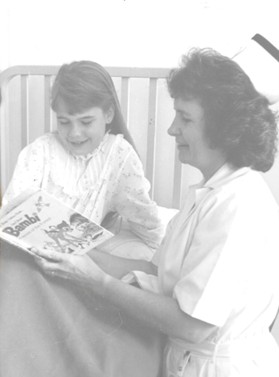
Photo Caption: Heather (left) is shown modeling a new crib purchased for the Women and Children’s unit, an investment made possible through community support of the hospital in the earliest days of the Aberdeen Health Foundation. Heather’s mother, Dorothy Cameron (right), was a nurse at Aberdeen Hospital for more than 40 years.
That connection feels especially fitting in 2026, as the Aberdeen Health Foundation marks its 40th anniversary supporting health care in Pictou County. Programs like music therapy exist because of that community support. Today, the Foundation continues to support the program by funding specialized equipment and supplies that help the music therapist deliver sessions for patients and families.
“As a profession, music therapy is still relatively new,” Heather explains. “There are only about a dozen certified music therapists practicing in Nova Scotia Health right now. Having this role funded and supported means everything. It allows this kind of care to exist and grow.”
Looking ahead, Heather hopes to see the role of creative arts in health care continue to expand.
“My hope is that someday we’ll have a full creative arts therapy department. Music, art, drama, movement – all working together to support patients.”
——————————————
The Aberdeen Health Foundation is the leading charity for enhancing health care in Pictou County. In 2025, the Foundation invested over $3 million to fund medical equipment and enhance health programs at the Aberdeen Hospital and in the community. Your contribution can be the catalyst for even greater change — find out how you can make an impact here.
]]>