The post Cataract in Elderly Parents: How to Spot It, Talk About It and Support Them Through Surgery first appeared on Anand Eye Institute.
]]>Cataract in Elderly Parents:
How to Spot It, Talk About It and Support Them Through Surgery

If you are an adult living a busy city life, it is easy to miss changes in your parent’s eyesight. Parents rarely complain about it. They adjust quietly, and by the time you notice, the cataract may already be affecting their safety and independence.
This guide is for families. It covers how to tell if your parent may have a cataract, how to talk to a parent who is reluctant, how to help them prepare, and how to support them at home afterwards.
01. WHAT TO LOOK FOR
How Can You Tell If Your Parent Has a Cataract?
Your parent may not say “my vision is blurry.” Instead, you may notice changes in their behaviour. Look for these everyday signs:
Avoiding going out after dark, or refusing to travel at night because of glare from headlights.
Spilling, dropping or missing things while eating, pouring or cooking.
Holding books, phones or the newspaper very close, or giving up reading and TV.
Not recognising faces from a distance, or greeting people late.
Hesitating on steps, kerbs and uneven roads, or holding the rail more than before.
Wearing sunglasses indoors, or complaining that lights are too bright.
Mixing up medicine strips or being unable to read labels.
Changing glasses often without feeling any better.
Saying “everything looks dull” or “the colours have faded.”
These signs can also come from other eye problems, so don’t assume. They are a reason to book an eye check-up, not a diagnosis.
Click here to know more about Cataract.
02. UNDERSTANDING CONCERNS
Why Do Parents Delay Cataract Treatment?
Understanding the reasons makes the conversation easier. Common ones include:
Because cataracts develop slowly, parents adapt without realising how much they have lost.
Many are worried about pain, or about “something going wrong with the eye.”
Some believe surgery is only for younger people.
They may worry about the cost or about taking your time.
A neighbour’s or relative’s bad experience can stay in their mind for years.
Many people think poor vision is simply part of getting old.
03. STARTING THE CONVERSATION
How Do You Convince a Parent to Get Cataract Surgery?
Pushing rarely works. These steps usually help:

Start with their daily life, not the diagnosis
Ask, “What have you stopped doing?” rather than “You need surgery.”
Suggest a check-up, not an operation
A consultation is only a conversation and an examination. It commits them to nothing.
Go with them
Having a family member in the room makes a big difference.
Let them hear it from the doctor
Many parents trust a doctor’s explanation more than a child’s persuasion.
Ask them to write down their fears
Take the list to the consultation so they get direct answers.
Give them time
Cataract surgery is rarely an emergency. A parent who feels heard is more likely to agree.
Talk about what they will gain
Reading again, recognising faces, cooking safely, walking without worry.

04. EVERYDAY WELLBEING
Why Poor Vision Matters More in Older Adults
Vision problems do more than blur the picture. In older adults, poor eyesight can contribute to:
especially on stairs, in bathrooms and in dim rooms.
such as needing help with things they once did alone.
from not being able to read labels or tell tablets apart.
such as skipping functions or avoiding visitors.
something else. Poor vision can sometimes be mistaken for forgetfulness.
This is why delayed cataract treatment is not only an eye problem. It affects the whole household.
05. INDIVIDUAL ASSESSMENT
Is Cataract Surgery Safe for Frail People?
Cataract surgery is done on people in their seventies, eighties and beyond. Age on its own is not the deciding factor. What matters is your parent’s overall health and how well their other conditions are controlled. The care team checks this before surgery.
Tell the doctor about:
Diabetes, high blood pressure, heart or kidney problems
All medicines they take, including blood thinners
Difficulty lying flat or lying still for a short time
Tremors, a persistent cough or breathing problems
Hearing difficulty or memory problems
Previous eye conditions or eye surgeries
With this information, the team can adjust the plan, for example by choosing a suitable form of numbing, and decide whether any health clearances are needed first.
06. ON THE DAY
Who Should Go With Your Parent to the Hospital?
Plan for at least one adult to be with your parent on the day. This person should be able to:
Carry the documents such as photo ID, old eye prescriptions, medicine list and insurance or scheme card, if used.
Listen to the instructions and note them down.
Take your parent home safely.
Stay with them for the first day.
Try to keep the same person involved throughout. Instructions are easier to follow when one person hears them first-hand.
What to Keep Ready Before the Day
A written list of your parent’s medicines, with doses and timings.
Easy-to-wear clothes that open at the front.
A plan for meals and rest after returning home.
If You Work Long Hours or Live in Another City
You don’t have to take unlimited leave. Plan the key dates: the consultation, the surgery day and the follow-up visit the next day. If you live elsewhere, arrange a family member to be present in person and join the doctor’s explanation by video call.
Ask our team about evening appointment options if working hours are a problem.
07. HOME SETUP
How to Prepare Your Parent’s Home Before Surgery
A few simple changes make the weeks after surgery easier and safer:
especially in corridors, the bathroom and near the bed.
by removing loose rugs, wires and clutter.
and non-slip mats in the bathroom.
a clean, well-lit spot with the drops, tissues and a written schedule.
by the door for trips outdoors.
in large print, so nothing is mixed up while their vision is settling.
so your parent doesn’t have to bend over a hot stove.
08. AFTER SURGERY
How to Help With Eye Drops After Cataract Surgery
Eye drops are the part families most often get wrong. Your parent may be given more than one type, each on its own schedule, for several weeks.
Make a chart listing each drop, the times and the number of days. Tick it off after every dose.
Set phone alarms so no dose is missed.
Wash hands before every dose, for both you and your parent.
Don’t let the bottle tip touch the eye, the lashes or your fingers.
Ask the team how long to wait between two different drops.
Keep bottles separate and clearly marked, and don’t share them.
Continue the drops until the doctor says to stop, even if the eye feels completely fine.
If your parent has trembling hands or finds it hard to put drops in, learn to do it for them, and ask the team to show you the correct way.
09. INITIAL PHASE
How to Care for Your Parent in the First Few Weeks
Watch for rubbing. Older adults can rub the eye without realising, especially during sleep. Make sure the protective eye shield goes on at night.
Stay close for the first day, especially on stairs and in the bathroom.
Don’t allow driving until the doctor gives permission.
Encourage rest, but also gentle walking at home.
Keep follow-up visits. They can feel unnecessary once vision improves, but they are how complications are caught early.
Be patient for the first few days. Vision may fluctuate, and mild scratchiness or watering is common.
Keep dust, smoke and water away from the eye.
When Should You Call the Doctor?
Don’t wait for the next appointment if your parent has increasing pain, worsening redness or discharge, a sudden drop in vision, or new flashes of light.
Save our contact number on your phone before the surgery day.
10. SETTING EXPECTATIONS
What Changes Do Families Notice After Cataract Surgery?
Many families notice that their parents become more confident after surgery. They may start:
Reading again
Recognising faces
Moving around freely
Taking part in family life
Results vary from person to person and depend on the health of the rest of the eye.
It helps to set realistic expectations. Your parent may still need glasses for some tasks, and the second eye may need treatment too. The surgeon will explain what to expect for your parent’s eyes.
11. PLANNING AHEAD
Who Pays, and What Can Families Check in Advance?
Talk about costs early, so money never becomes a reason to delay.
- Ask for the estimate before the surgery date, not on the day.
- Check whether your parent is covered. If you or a family member is a government employee or retiree, your parent may be covered under EHS (Telangana and Andhra Pradesh), and some other schemes cover dependants too. Our team can help confirm eligibility.
- Check health insurance and employer cover, including whether cashless treatment is available.
- Keep the cards and ID ready on the day.
Our Insurance and Schemes page has the full list.

Dr. Pasyanthi Balijepalli MS, FLVPEI, FAICO (Glaucoma)
SPECIALITY
Glaucoma & Cataract Services
REGN
TSMC 64647
This article is for general information only and is not a substitute for medical advice. Please consult an eye specialist about your parent’s eyes.
Questions Families Often Ask
How often should your elderly parents get their eyes checked?
Yearly check-ups are advised after the age of 40 and are especially important for people with diabetes or a family history of eye disease.
My parent says they can see fine with glasses. Do we still need a check-up?
Yes. Glasses can hide how much vision has been lost, and some eye conditions cause no symptoms early on. A check-up is the only way to know.
Will my parent be scared in the operating room?
Most people feel nervous beforehand, and that is normal. The team explains each step as it happens, and a family member can be with them up to the time of surgery.
My parent has dementia or memory problems. Can surgery still be done?
It depends on how well they can lie still and follow instructions. Speak to the doctor in advance so the plan can be adjusted.
Should we operate on both eyes together?
This is decided by the surgeon after examining your parent. Ask at the consultation.
What if my parent refuses?
Respect their pace. Offer the check-up first and revisit the conversation after they have heard from the doctor. If vision changes suddenly or your parent has a fall, don’t wait.

Ready to Take Care of Your Parent’s Eye Health?
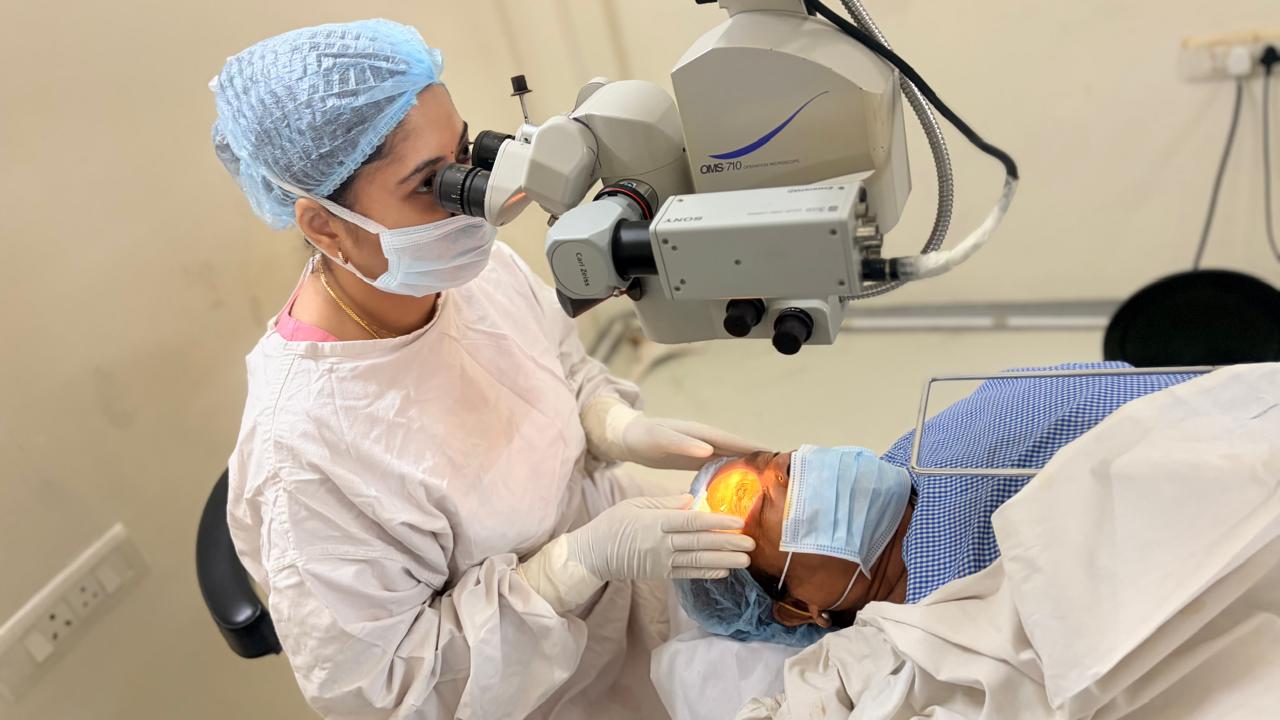
Book a consultation at our Habsiguda or Chanda Nagar centre. Our specialists will assess their eye health, explain the available options and help your family understand the next steps.
The post Cataract in Elderly Parents: How to Spot It, Talk About It and Support Them Through Surgery first appeared on Anand Eye Institute.
]]>