The post 1959 Ford Fairlane Interior Reupholstery: A Masterclass in Classic Car Restoration appeared first on Alex Upholstery Shop.
]]>When a client brings us a project of this caliber, we understand that they aren’t just looking for new fabric—they are looking to recapture the feel of the 1950s showroom floor. This project involved a complete teardown and rebuild, using high-quality marine-grade vinyl to ensure the seat lasts another 60 years.
The Significance of the 1959 Ford Fairlane Interior Reupholstery
The 1959 model year was a pivot point for Ford. It was the year the “Galaxie” series was introduced mid-year, often carrying the Fairlane 500 branding. The interiors of these cars were famous for their “Luxury Lounge” interiors. Our goal with this 1959 Ford Fairlane interior reupholstery was to honor that original “tuck and roll” aesthetic while upgrading the internal components for modern comfort.
Step-by-Step: The 1959 Ford Fairlane Interior Reupholstery Process
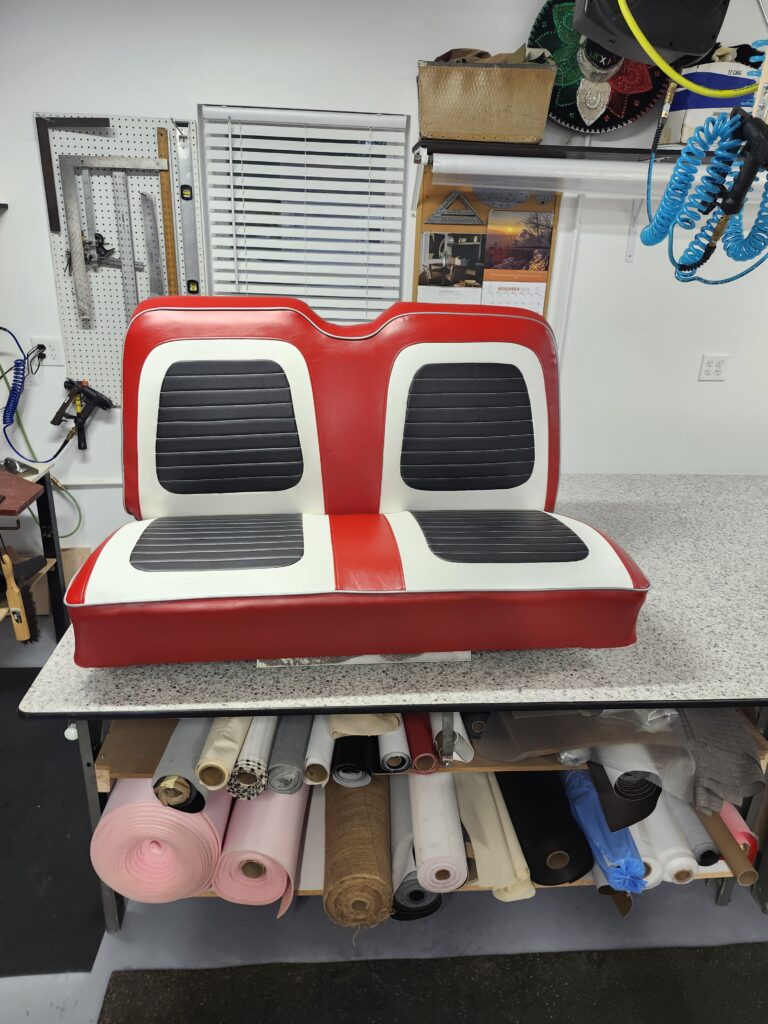
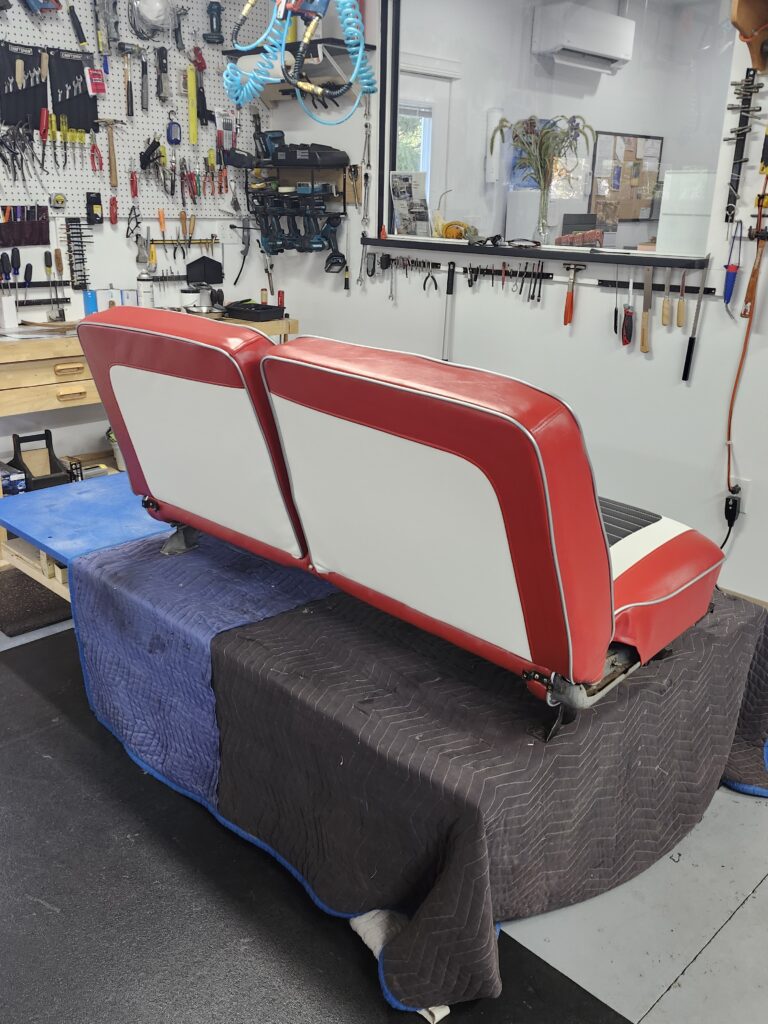
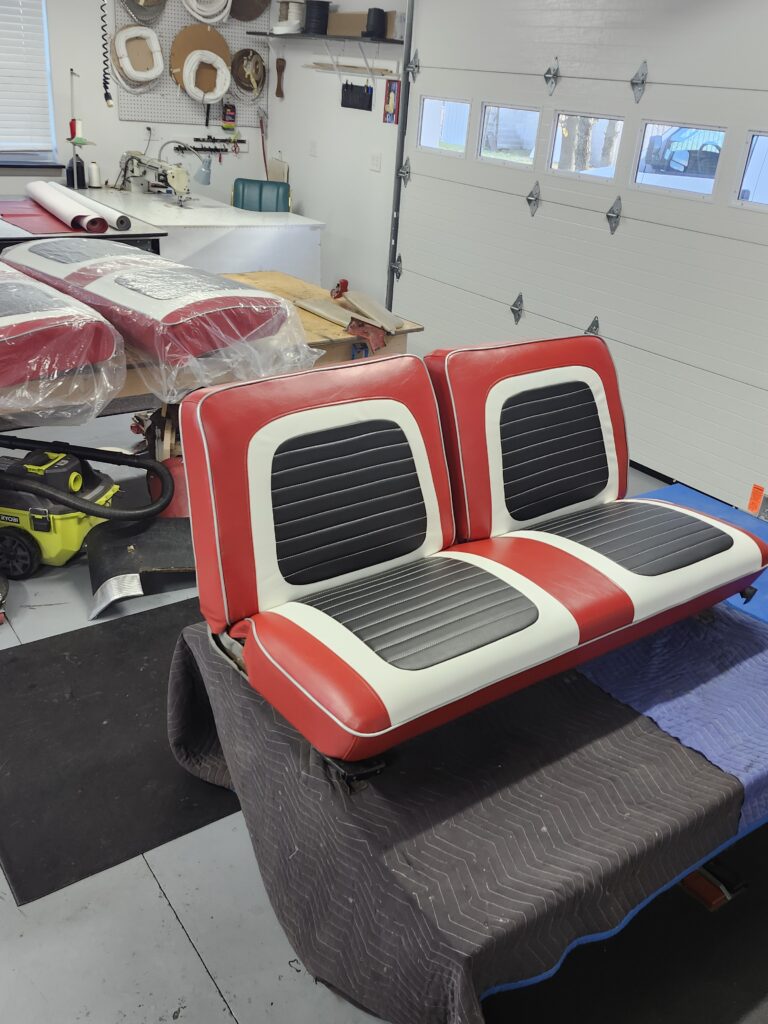
Restoring a classic seat requires a blend of mechanical engineering and artistic tailoring. Here is how we handled this specific 1959 Ford Fairlane interior reupholstery project.
1. Stripping and Frame Inspection
Every project begins with a complete strip-down. We remove the decades-old fabric and cotton batting to expose the “skeleton” of the seat.
- Spring Repair: We inspect the zig-zag (S-wire) springs for any breaks.
- Sandblasting: If the frame shows rust, it is cleaned and painted with a rust-inhibitor.
- Structural Integrity: We ensure the tilting mechanism for the split-back seat operates smoothly.
2. Modernizing the Comfort Layer
Original 1950s seats used burlap and cotton, which tend to pack down and become uncomfortable over time. For this 1959 Ford Fairlane interior reupholstery, we replaced those materials with modern, high-resiliency foam. This provides the “firm but soft” feel that makes long cruises enjoyable.
3. Patterning and Custom Sewing
The 1959 Fairlane design is iconic for its tri-tone color scheme. To achieve this:
- Red Bolsters: We used a vibrant red vinyl for the outer edges to frame the seat.
- White Transitions: The white vinyl acts as a visual break, highlighting the contours of the seat.
- Black Pleated Inserts: The center sections feature horizontal pleats, a hallmark of 1950s custom car culture.
We utilize heavy-duty Consew industrial sewing machines (External Link) to ensure every stitch is perfectly aligned and capable of withstanding the tension of the upholstery pull.
Why Choose Alex Upholstery Shop for Your 1959 Ford Fairlane Interior Reupholstery?
We pride ourselves on being the premier destination for 1959 Ford Fairlane interior reupholstery in the Pennsylvania region. Whether you are in Myerstown, Lebanon, or Philadelphia, our shop offers the specialized tools and decade-spanning experience required for classic car work.
Customization vs. Restoration
Some owners want a 100% factory-correct restoration. Others want a custom “Restomod” look. During this 1959 Ford Fairlane interior reupholstery, we balanced both. While the colors and patterns reflect the spirit of 1959, the materials are vastly superior to the original factory plastics, offering better UV resistance and durability.
Expert Tip: When choosing vinyl for your classic car, always ask for “Automotive Grade.” Unlike standard furniture vinyl, automotive grade is treated to withstand the extreme temperature fluctuations found inside a closed car during summer and winter.
Maintaining Your New 1959 Ford Fairlane Interior Reupholstery
Once your 1959 Ford Fairlane interior reupholstery is complete, proper maintenance is key to keeping it looking like new.
- Avoid Harsh Chemicals: Use a mild soap and water solution for cleaning.
- UV Protection: Use a sunshade or high-quality vinyl protectant like 303 Aerospace Protectant (External Link) to prevent the red and white colors from fading.
- Condition the Welting: The silver piping (welting) is often the first place to show wear; keep it clean of dust and grit.
Conclusion
The 1959 Ford Fairlane is a masterpiece of American design. It deserves an interior that matches its exterior beauty. Our team at Alex Upholstery Shop is dedicated to providing the highest quality 1959 Ford Fairlane interior reupholstery available today.
From the first stitch to the final installation, we treat your car like a piece of art. If you are ready to transform your classic’s interior, contact us today for a free estimate.
The post 1959 Ford Fairlane Interior Reupholstery: A Masterclass in Classic Car Restoration appeared first on Alex Upholstery Shop.
]]>The post Dining Chairs in a Pastel Room: An Upholsterer’s Guide to Getting It Right appeared first on Alex Upholstery Shop.
]]>The fabric matters more than the paint chip
Nobody at the paint counter will tell you this, but the same dusty pink reads three different ways depending on what it is woven into. On a short-pile velvet it looks rich and a little moody. On a flat cotton weave it looks fresh and true to the swatch. On a glossy vinyl it can read like a 1950s diner stool, which is wonderful if that is the plan and jarring if it is not.
So pick your texture before you pick your color. Pastel rooms need texture badly, because soft colors give the eye very little contrast to work with. A velour seat against a painted frame, or a nubby weave against smooth oak, keeps the whole room from going flat.
Fabrics that carry soft colors well
After decades of stapling fabric to dining chairs, these are the ones we reach for when a customer walks in holding a pastel paint chip:
- Cotton and linen blends. They show the truest, most honest color and give that relaxed farmhouse feel. The trade-off is that they drink up stains, so save them for chairs that see polite company.
- Velour and short-pile velvet. Pastels on velvet look intentional instead of nursery-sweet. The pile deepens the color and hides minor wear between cleanings.
- Performance weaves. Solution-dyed synthetics are colored all the way through the fiber, not printed on the surface, so a blush or powder blue stays put through repeated scrubbing.
- Sunbrella and similar acrylics. Originally made for boats, now woven in dozens of soft colorways. They shrug off sun fade, and most spills clean up with soap and water.
- Matte vinyl. Modern vinyls come in lovely muted tones with a soft hand, nothing like the sticky kitchen chairs of your childhood. For households with toddlers, this is the honest answer.
Light colors with kids and pets: a straight answer
Can a pale seat survive a real family? Yes, if you choose with your eyes open. Start with the rub count on the fabric tag. For dining chairs we like at least 15,000 double rubs, and the good performance lines run several times that number.
Next, choose dusty versions of your pastels. Sage, powder blue with some gray in it, and muddy blush hide crumbs and shadowing far better than sugar-almond pink and mint. A heathered or subtle two-tone weave hides even more.
Pets change the math again. Cats treat loop weaves like boucle as a personal gift, so pick a tight flat weave or a velvet instead. Dog owners should remember that paw season in Central PA runs from March through May, and a bleach-cleanable acrylic or a good vinyl will forgive what a linen blend never will.
Paint the frames, recover the seats, or both?
If the frames are sturdy but the finish fights your palette, paint is a fair tool. A soft white or putty-colored frame under a pastel seat is a classic pairing, and it costs mostly patience and sandpaper.
But do not paint good hardwood out of habit. A warm oak or walnut frame grounds a pastel room and keeps it from floating away into cotton candy. Often the smarter move is leaving the wood alone and letting a new seat do the talking.
Recovering a drop-in dining seat is one of the smallest jobs in upholstery. The seat unscrews from underneath, the old fabric comes off, new foam and fabric go on. If you are handy, we wrote a complete step-by-step guide on how to completely recover a dining chair. And while the seat is off, replace the foam. Twenty-year-old foam is the reason the chair feels like a church pew.
When to call a pro
Some chairs are more than a weekend project. If the seat does not unscrew and the fabric wraps the frame with welt cord and hidden tacks, or if you press down and feel springs push back, the job crosses into skilled territory fast. The same goes for older chairs stuffed with horsehair, which deserve proper antique restoration rather than a staple gun.
Matching a set is the other quiet challenge. Getting the pattern placement and the tension identical across six or eight chairs is what separates a set that looks reupholstered from a set that looks new. That is everyday work in our furniture upholstery shop. Call 717-383-6917 and we will tell you honestly which kind of job you own. Costs depend on fabric and chair style, and every piece is different, so call for an exact estimate.
FAQ
Will pastel fabric fade in a sunny dining room?
Printed cottons and linens will soften after a few years of direct sun, though light colors show fading less than dark ones. If your dining room faces south, a solution-dyed acrylic like Sunbrella holds its color for many years. It is the same reason that fabric survives on boat decks.
How much fabric do I need for one dining chair seat?
A standard drop-in seat takes about three quarters of a yard of 54-inch fabric. Patterns with a large repeat need more, so every seat centers the same way. Always buy a little extra, because a spare half yard today is much cheaper than hunting a discontinued fabric next year.
Can you match a fabric to my paint color?
Yes, and please bring the actual paint chip, not a phone photo. We keep supplier books with hundreds of colorways in weave, velvet and vinyl, and we can order free samples so you can check them in your own light before committing to a whole set.
If your chairs are ready for a softer look, send us a few photos through our free online estimate page or call 717-383-6917. We are a family shop in Myerstown, and we have been helping Lebanon Valley and Lancaster County dining rooms change their clothes for decades.
The post Dining Chairs in a Pastel Room: An Upholsterer’s Guide to Getting It Right appeared first on Alex Upholstery Shop.
]]>The post How to Completely Recover a Dining Chair appeared first on Alex Upholstery Shop.
]]>In this blog, we will guide you through exactly how to completely recover your dining chairs from start to finish. We’ll review the materials needed and step-by-step how to do it yourself – or when it’s best to leave it to the professionals for handcrafted perfection!
From preparation before reupholstering, through selecting fabric and finally attaching new upholstery – we have the details so your recovered chairs will look like they were always meant to be that way!
- Preparation before reupholstering
- Selecting fabric
- Attaching new upholstery
Dining Chair Upholstery Shop
In Lebanon County Pennsylvania, Alex Upholstery Shop specializes in restoring furniture and making them look like new. With the skilled hands of the professionals at Alex Upholstery Shop, you can expect a dining chair to be completely recovered to the point of looking brand new. From fabric choose to color coordination, the professional team at Alex Upholstery Shop can provide you with the best dining chair upholstery services.
Let’s take a look at how they are able to completely recover dining chairs:
Overview
If you’re looking to completely recover dining chairs in your home, Alex Upholstery Shop in Lebanon County, Pennsylvania offers a great solution. Our experienced team can help you select the right materials and design aesthetic for your chairs to make them feel custom-made, with the perfect fit for your lifestyle and décor needs.
At Alex Upholstery Shop, we pride ourselves on providing high-quality upholstery services that look great and last. We are knowledgeable about all types of fabrics, such as vinyls, linens, and polyesters as well as leathers from top leather artisans and renowned mills. We take careful measurements of your existing chair frames to ensure proper fit when refitting them with new upholstered fabric. The upholstering process is meticulous; every detail is considered to create beautiful furniture with expert precision and craftsmanship.
With decades of experience refinishing dining chairs and other furniture pieces, you can trust our team at Alex Upholstery Shop in Lebanon County Pennsylvania to take care of all your custom upholstery needs! For more information or to book an appointment today, please contact us!
Services
At Alex Upholstery shop in Lebanon County Pennsylvania, we offer complete reupholstery services for dining chairs in the area. This includes:
- Fabric selection
- Disassembly and demolition of the existing chair
- Repair or replacement of all furniture cushions
- New foam or down cushion insert
- Repair on any springs and frame issues as needed
- Design and construction for custom pieces and finishes
We offer a wide variety of designer fabrics for dining chairs to give you customized options that match any décor in your home.
Our team of experienced craftsmen understand that every piece has its own personality which is why we take special care to provide quality upholstery services which will preserve the beauty and functionality of your furniture collection. We’ll make sure that your dining chairs look like new with custom fabric selection and precision construction methods tailored to each piece for a perfect result every time. Your satisfaction is our top priority so our experienced upholsters can work with you one-on-one to ensure that you get the best custom fit with your selection using high quality materials backed by our money-back guarantee.
We take pride in our craftsmanship because it reflects both us and our customer’s eye for classic retouches on traditional furniture styles ranging from tufting to modern contemporary patterns such as nailing/accent pieces along with customized colors as requested by you! When it comes to your dining chair service needs please visit Alex Upholstery; let us help create a beautiful piece lasting generations!
Materials
When recovering your dining chairs, there is a wide variety of beautiful fabrics to choose from. It is important to consider factors such as durability, comfort and color when selecting upholstery fabric. A skilled upholsterer will be able to advise you on the types of fabrics that are suitable for redoing your dining chairs, depending on the style and condition of your chairs.
Below are some of the most commonly used materials when recovering dining chairs:
- Natural Fibers: These include cotton, linen, silk and wool. Natural fibers are a popular choice due to their durability and unique texture, but they can be costly.
- Polyesters: This synthetically produced material is mostly used in combination with other fabrics for extra protection against wear and tear from daily use. They come in many colors and patterns that suit any décor style.
- Vinyls: This hard-wearing material provides a smooth finish. It’s available in various colors and textures which can complement any décor or furniture style. Vinyl works especially well for outdoor chairs since it’s resistant to water damage or UV exposure.
- Microfiber: This lightweight fabric is easy to clean due to its low-pile construction which also makes it highly durable against stains and wear-and-tear from daily use. Microfiber comes in many unique textures that offer aesthetically pleasing options without compromising on comfort or quality.
If you’re unsure about what type of fabric would be best suited for your dining chair recovery project, consult with an experienced upholsterer at Alex Upholstery Shop in Lebanon County Pennsylvania who can guide you through the complete process!
Recovering Dining Chairs
Dining chairs are a valuable piece of furniture in your home, and if they become damaged or dated then a recovery job is the perfect way to bring them back to life. Recovering dining chairs can be a relatively simple process, but it requires careful attention to detail and patience to get the job done properly.
By following these steps and using the right techniques, your dining chairs can look brand new and be the centerpiece of your dining area:
Removing the Old Upholstery
Before beginning the recovering process, the existing upholstery and cushion will need to be removed. The tools you will need include a pair of scissors, a seam ripper, a screwdriver, and pliers.
It’s important to begin by carefully cutting away the seams of the existing fabric with scissors. Doing this safely without damaging the frame is essential as it may be reused or even refinished if needed.
Once all of the fabrics have been cut away from the frame, it is time to remove staples or tacks from every part of the chair that was covered with fabric. A flathead screwdriver can come in handy here for removing stubborn staples and utilizing pliers may be necessary for small tacks or nails that were used to secure fabric edges. The arms and any other parts of the chair that were upholstered should now be completely free of fabric and ready for recovering with new fabrics!
Cleaning and Preparing the Frame
Before you being the upholstery process, it is important to prepare the frame of your chair. The first step is to ensure that the frame is free from dirt, cobwebs and other forms of surface contaminants. This can be done by simply wiping down with a damp cloth. It is best to use a mild detergent solution so as not to damage upholstery-grade fabrics or finishes.
Once the frame has been adequately cleaned, inspect it for any flaws, warping or rotting components that may need repair or replacement. Visibly damaged areas such as seat rails, arms and back supports should be completely replaced if you wish for long-term functionality and reliability of your chairs to remain strong. Make sure to use replacements made from similar hardwood material that adheres to the same thickness and width specifications as the original manufacturer did in order to provide proper support when upholstering your chairs later on in the process.
It is also important at this stage of preparation to identify any loosened joints in frames or legs. Make sure they are tightened before moving onto upholstery so that they won’t require constant re-tightening later on after completion of covers installation as guests will be using these chairs often upon completion! If screws have been used in construction do not hesitate loosen them slightly before tightening again after testing for strength once more; over tightening screws can often lead weakening of frames over time due their susceptibility alloying itself into decrease integrity during this time period!
Choosing the Fabric
Choosing the fabric for your dining chairs is an important decision, as it can make or break the look of your space. When selecting a fabric, consider the feel of the fabric, its durability and its stains-resistance properties. Natural fibers like cotton and wool tend to be more durable but they may require more maintenance if they become stained. Silk and synthetic blends are great options for their sheen and softness, but may not hold up as well over time. Evaluate your lifestyle needs before you choose, as the fabric should reflect how often the chairs will be in use.
Colorful hues, bold prints and charming patterns will bring vibrancy to any room – just make sure to consider other elements in your space first so that you get a unified look. Consider whether self-patterned fabrics or solid-colored options will suit your needs best, as both can add visual interest while creating different effects on a room’s atmosphere. Consider coordinating patterns with tablecloths, placemats and other elements in a shared space to truly achieve a cohesive look. Keep in mind that lighter fabrics may show dirt more easily; however darker fabrics may appear heavier or dated depending on their design.
Once you have decided on the style of your chairs’ upholstery fabric, remember that you can always upgrade with other pieces such as pillows or slipcovers later down the road!
Applying the New Upholstery
Once you have cut the fabric for each of your dining chair components, it is time to start the upholstery process. Before you begin to apply the new fabric, make sure that you have removed all of the original furniture pieces such as tacks or nails and any other materials used in upholstering furniture. This step is critical to ensure that all of your old furniture is off and out of sight prior to applying the new upholstery.
Once all of the old material has been removed, place a strip of batting along each side where you plan to attach your fabric. This will help fill any gaps between your frame and armrests for a professional look. Once the batting is in place, start applying your fabric starting with a seat cushion and working back towards the frame using a light spray adhesive for a secure hold. Make sure that each step is applied evenly without causing any rips or tears in your chosen material.
For some more complicated dining chairs such as chairs with more intricate carvings or shapes, use scissors or an Exacto knife to custom fit your chosen fabric around these spaces. This can be done by simply cutting along shapes already cut in your framework – make sure not to cut away too much! Keep in mind that any imperfections can be hidden behind decorative trim if desired – think fringe!
Once each piece has been applied and trimmed where needed, it’s time to attach some decorative trim around edges of arms, back panels and chair bases as desired. For this process necking trim is most common, but braid trim can also be used which adds extra texture around complex shapes found on some chairs designs. Ensure that all activity done on these beds will not compromise joints using both staples and screws for added security where needed on chairs with layers fabrics underneath resting on wooden frames. Finally it’s time enjoy a job well done – now all that’s left is to sit down and bask in satisfaction from breathing new life into old furniture!
Finishing the Chair
Once the new foam has been secured, the final step of recovering a dining chair is to attach the new material. Pin up the fabric around each side of the seat cushion and then staple it from the underside using a strong staple gun. Stretch any excess fabric around to the back of the chair frame and wrap it carefully so that it shows no signs of puckers or wrinkles. To make sure the material is securely fastened, fold any edges over by at least half an inch before stapling them up.
Afterwards, pull across any excess fabric on top or in between cushions and staple again but use much shorter staples to ensure a neat finish. Finally, complete any remaining details such as trim or buttons with an upholstery nailer or hand stitching as desired. Once these steps have been successfully completed, your recovery project is complete – enjoy!
Conclusion
In conclusion, Alex Upholstery Shop in Lebanon County Pennsylvania has provided the insight and services for restoring and completely recovering dining chairs. Their ability to use high-quality materials and services alongside their experienced craftsmanship have enabled them to provide a wide range of furniture restoration options.
They have also taken the time to explain the process with their customers in order to ensure that their customers receive the best possible results for their furniture.
Benefits of Recovering Dining Chairs
Recovering dining chairs is a great way to give them a new lease of life and make your dining area look more attractive. Recovering your old dining chairs offers a range of benefits, allowing you to customize the look and feel of your home to suit your tastes. With a range of fabrics and styles available, you can select the perfect combination that suits your needs and matches the décor in other areas of your home.
Recovering also adds an extra layer of comfort, making it easier for you to relax in this important part of your house. You can choose from materials such as cotton, linen, velvet or leather to ensure the best possible seating experience for all guests who come into contact with it. Alternatively, if you prefer a more traditional look that is aesthetically pleasing you may want to consider many different types of upholstery material including faux leathers, imitation suedes and cotton blends that are designed to add character to any room in which they’re used.
Recovering old chairs also provides practical benefits such as being a cost-effective option when compared with buying brand new seating furniture – especially if money is tight. Whilst investing in recovering an existing chair may initially be more expensive than buying something completely new outright on the long term it should pay off significantly if careful consideration is given prior to their purchase or repair – avoiding any surprises further down the line with hidden bills due remaining uncovered by warranties or accidental damage cover insurance policies etc.
Moreover, recovering old chairs has potential profitability potential too; providing additionally retouch services on chairs bought at discount prices before reselling again through marketplaces or specialized stores as higher quality seating furniture can often provide owners or businesses with high quality merchandise at an affordable price point – all while preserving our planet’s resources by recycling furniture without having them manufactured from scratch solely for these purposes!
Tips for Choosing a Professional Upholstery Shop
A professional upholstery shop can help you improve the look of your furniture for years to come, no matter what type of piece it is. Whether it’s a sofa, chair, loveseat, bench, or any other piece of furniture, you’re going to want a quality upholstery job in order to get the best results. Here are some tips for finding and choosing a professional upholstery shop:
- Research – Start your search by researching local and national businesses that specialize in upholstering furniture and ask your friends or family members if they know someone who has had an upholstery job before. You also want to read reviews on Google and Yelp in order to give you an idea of their quality of work.
- Consultations – After doing some research, set up consultations with several different professionals so that you can get quotes on the price and process on how they will recover the piece. Visit the shop in person so that you can choose those with an eye for detail and have experience in exactly what kind of work you need from them.
- Guarantees – Ask each professional if they offer guarantees for certain materials or if there is any warranty for specific services that are covered by them. Additionally, check to see who is responsible for cleaning if there is dust created during the job and whether repairs or minor modifications are included in the cost estimate. Knowing this will help protect your investments over time.
The post How to Completely Recover a Dining Chair appeared first on Alex Upholstery Shop.
]]>The post Can the Flood Damaged Furniture Be Restored? appeared first on Alex Upholstery Shop.
]]>At Alex Upholstery Shop, we have experience with flooding restoration projects in Lebanon County Pennsylvania. We understand the unique needs of this type of repair job, including using specialized cleaners and sanitizing products on fabrics and leather materials that have been affected by water. We can help you assess the damage, determine the best route for restoring your furniture, and provide an estimate for cost and timeline.
In this blog post, we will discuss:
- How to identify furniture damaged by a flood.
- Explain how flood damaged furniture is restored.
- Detail some specialty products used in this process.
- Show some before-and-after photos of our flood restoration projects.
What Causes Furniture Damage
Furniture damage can occur for a variety of reasons, and it doesn’t necessarily have to be floods that cause it. Things like direct sunlight and high humidity can cause problems in the long run. In addition, poor construction and materials can also contribute to furniture damage.
In this blog, we’ll discuss the main causes of furniture damage:
- Direct sunlight
- High humidity
- Poor construction
- Poor materials
Flooding
Floods can cause irreparable damage to furniture unless some restorative steps are considered and executed in a timely manner. Furniture that has been exposed to floodwaters may show visible signs of damage such as swelling, warping, mold, mildew and discoloration. But sometimes the signs of water damage can be difficult to detect.
The first step is to determine the severity of the water damage by inspecting the flooded items carefully. Furniture exposed to contaminated blackwater or greywater (e.g., caused by sewage backflow) must be disposed of properly for health and safety reasons regardless of whether structural or unsalvageable furniture appears clean and dry on the outside.
Once you have determined that your furniture can be saved, it’s important to act quickly. You will need to dry out all wood components as soon as possible and monitor for water saturation levels at least every 12-24 hours; otherwise your furniture will become permanently warped and unusable. If the flood was caused by clean water, these upholstery materials are generally salvaged: foam cushions, cotton batting fibers inside cushions, leather hides, fabric upholstery shots webbing tapes and trim materials (such as buttons).
If necessary you may need professional help from a restoration company that specializes is treating mold/mildew-exposed furniture with specialized products such as anti-mold sprays/wipes or anti-stain treatments. Using advanced drying equipment such as dehumidifiers will help speed up the process along with air movement throughout affected rooms; however you will still need to factor in time for thorough air circulation along with routine tests for moisture content daily or weekly until levels have returned back to normal.
Fire
Furniture can be damaged by fire due to exposure to direct flame or heat. The intensity of a fire may be such that the outer surfaces of the furniture including the fabrics, foam and other materials may be burned away. The resulting damage from fire can vary from slight discoloration and smell issues to serious charring or melting of components.
The effects of a house fire on furniture can vary depending on its proximity to the source of heat and flame. Melting, burning and discoloration are common impacts caused by intense levels of heat. In cases where a piece was close enough to the source of the flames, they may have been consumed by it entirely, leaving nothing but ash behind. The degree of damage caused by smoke inhalation is also dependent on how close it was situated to the centre point where heat generated was intense.
If your valuable furnishings have been exposed to fire and sustained damage, it’s important that you get professional help as soon as possible in order to determine what restoration is possible if any. Alex Upholstery Shop works hard at providing quality repairs for furniture that has suffered from fire damage no matter how severe it might seem at first glance. Our technicians use advanced techniques for reviving upholstery fabrics which have been blemished due to extreme temperatures in an effort to restore them back closer toward their originals look, smell and feel. Contact us today if your furniture has been impacted by a house fire and we’ll work with you in attempting to bring it back life again!
Mold
Mold is well known to cause problems in a home. It can damage furniture and other items, and cause health problems. High humidity or flooding can contribute to mold growth in a home. Furniture can be particularly vulnerable if it is made of porous material or contains fabric cushioning with moisture-holding fibers like cotton or wool. These materials offer an ideal environment for the growth of mold because are naturally absorbent and nonporous materials like metal are not susceptible.
In situations where furniture has been exposed to high humidity, flooding, or has been otherwise dampened, it is important to take precautions to prevent the growth of mold. Initially, you should avoid using fans that blow air outwards as this will spread mold spores throughout your home. Instead, use fans that move air from the inside outwards as these will pull moisture away from the furniture and prevent further damage from occurring.
It is also important that any rugs, carpets or fabrics are thoroughly dried within 24 hours of being wet – dampness encourages the spread of mold and could result in further damage to your furniture pieces. Any rusty metal frames should be treated with rust remover products as quickly as possible in order to avoid permanent staining or discoloration due to corrosion.
Finally, if you believe that any items have become unsalvageable due to significant moisture damage or excessive rot caused by molding fungus, seek professional advice on how you should dispose them safely and effectively without causing risk of contamination elsewhere in your home environment.
Types of Furniture Damage
Furniture can be affected by a wide range of elements, from flooding to everyday wear and tear. Damage sustained to furniture from flooding can range from physical to structural, with each requiring a unique treatment and approach.
In this blog, we will explore different types of furniture damage and provide some tips on how to restore them. So let’s get started:
Water Damage
Water damage is one of the most common types of furniture damage. When exposed to water for an extended period, wood and fabrics may swell, warp, and discolor. While many water-damaged pieces can be restored with cleaning, minor repairs, and refinishing, heavily damaged pieces may require replacement.
When assessing a piece for water damage, it’s important to look for signs of discoloration or staining on the wood or fabric surface. Additionally, inspect the furniture for signs of swelling or bulging due to moisture retention. If the piece is made from particle board or veneer construction, a close examination should take place as these materials are prone to warping and separation in severe cases of water exposure.
In order to restore a piece that has been affected by water damage, it’s important first to repair any swollen or warped areas with appropriate fillers. Depending on the type of finishes used on the piece – such as stains, glazes, lacquers and varnishes – sanding may be needed along with patching in order to achieve uniformity when applying new finishes. The use of appropriate cleaners depending on the type of substrate (wood/fabric) will be critical in deciding how effective restoration will be in returning it back its preexisting state prior to flooding.
Fire Damage
Furniture affected by fire damage is identified by its discoloration, charring, and burning of the material. The heat from the flames will cause a lot of smoke damage leading to a bad odor that embeds into furniture fabrics. Fire can also damage a piece of furniture structurally, weakening joints and damaging veneered surfaces.
Most fire-damaged furniture can be restored if:
- The surface material of the furniture is not charred or melted too much beyond repair.
- There is no water damage which would contribute to further deterioration that could not be reversed from the restoration process.
- The joints are intact enough to hold together during structural repairs or upholstery work.
- The smoke odor was successfully removed from all fabrics and surfaces with the appropriate deodorizing chemicals.
When assessing whether a damaged piece can be saved, an experienced technician should inspect it for potential repairable factors and identify any obscured structural issues or irreparable materials for parts replacements that could compromise the stability or aesthetics of your beloved furniture.
Mold Damage
Mold damage is one of the most common types of furniture damage caused by flooding. Mold spreads quickly and can grow on any fabric, including carpeting, upholstery and mattresses. Visible mold spores are usually green, black or white with a distinct musty odor. The longer mold remains in an area, the more serious the damage becomes.
The most important thing to do when dealing with moldy furniture is to decrease the level of moisture in your home as quickly as possible. This could involve using fans and dehumidifiers if the environment is excessively wet, or replacing carpets and flooring that have become completely saturated.
Furniture that has been exposed to floodwaters may also display signs of corrosion, rust or other discoloration due to contact with water-damaged metal parts or components. To prevent further deterioration and possible health risks from airborne contaminants, such items should be cleaned thoroughly beforehand.
In general, pieces of furniture that have sustained minor mold damage – such as only white spots on removable surfaces like pillows – may be salvaged by cleaning with lukewarm soapy water followed by a vinegar solution before drying in sunlight or using a fan. However, certain items like mattresses must always be professionally cleaned in order to be safe for reuse. It is also advisable to seek professional advice on restorative work if you are unsure how else to proceed.
Assessing the Damage
Flood damage to furniture can range in severity, and it is important to assess the amount of damage before attempting to restore it. Depending on the severity of the damage, the restoration process can be more or less complicated.
This blog post will cover the assessment process of determining the damage to your flooded furniture:
Checking for Structural Damage
When assessing the damage done to furniture pieces, you first need to check for structural damage. This includes looking for broken legs or frames and getting rid of any jagged ends from sticking out corners. Any breaks in the wood or exposed metal framework must be mended either with glues and nails or through reassessing the broken pieces back together. It’s important to take care of this step before focusing on more cosmetic treatments as it will create a more stable base to build upon when fixing other broken parts. In addition, it is important to sand down any rough areas as they can snag clothing and reduce comfort while sitting on it.
After structural damage is addressed, inspect all upholstered portions of the piece. Emphasis should be placed around rips, tears, soiling, areas of mold/mildew growth and water staining which could have occurred during flooding conditions. It’s important to take into account if any filling material has settled over time causing sagging cushions as this can lead to an uncomfortable sitting position. Repairs should also be taken into consideration due to necessary cleaning operations that may need executing in order for a thorough overhaul for better looks in addition to repair work related objectives.
Once all these steps are completed it is essential that protective covers be added over foam material stuffing or padding whether brand new ones or recovered ones from existing designs in order maintain excellent condition of your beloved furniture pieces for many years onward since you made sure no corner had been overlooked but efficiently researched and addressed!
Checking for Cosmetic Damage
Before beginning the restoration process, you must assess the damage done to your furniture. This includes checking for cosmetic damage, structural damage, and any odors that may be present due to water exposure.
- Check for any warping in the wood frame and determine if it is repairable or if it needs to be replaced altogether.
- Any tears or damages in the upholstery should also be noted as these will need repair or replacement.
- Make sure you check within any padding and crevices of your furniture as moisture can seep into places you might not notice at first glance.
If the fabric on your furniture was exposed to water, look out for discoloration or fading, mold growth, and a potential increase in static electricity due to increased porosity of your upholstery’s material. The odors are particularly hard to assess until you wait for furniture to dry out completely; however, damp fabric tends to bring about a musty smell which could indicate a potential mold problem down the line.
It is important that you examine all aspects of the furniture carefully before starting on any restoration process as this will help you determine what is needed for a successful completion of flooding mitigation.
Restoring Furniture
Whether you’ve been hit by a flood or not, restoring furniture can be a daunting task. At Alex Upholstery Shop, we have the experience and skill to help bring your furniture back to life. We have a variety of methods to restore flood damaged furniture and other pieces that have been damaged due to wear and tear.
In this blog, we will discuss the different restoration techniques used to restore furniture:
Cleaning
Cleaning is essential for successfully restoring furniture damaged by the flood. To clean upholstered furniture, remove fabric dust, dirt and debris with a vacuum cleaner. Use an upholstery brush attachment to gently remove dirt particles that have become embedded deeper in the fabric.
For wooden pieces you will want to use a soft bristle brush and hardwood cleaner to gently remove dirt, residue and water stains from the surface as best you can. Some furniture may require special care such as steam cleaning or specialty cleaners. Be sure to test any cleaning solution on a hidden area of the piece of furniture before beginning any treatment.
Sanding
Sanding is one of the most important steps of the furniture restoration process. The idea behind sanding is to remove the old and damaged finish, while also making sure that all bumps, dings and blemishes are removed. It’s highly recommended to use a power sander, since it will create a smooth and even surface that can be further refined if needed.
Begin sanding with a coarse grit paper, such as 80 grit, then switch to an even finer grade such as 120 or even 180 grit for an incredibly smooth surface. As you’re sanding, make sure not to press too hard into the wood – this could create dents and depressions in the wood. Continue until you get a uniform grain and finish across the piece of furniture. Use caution when near corners or crevices – take them slow and steady to ensure no damage happens here.
When finished with sanding, clean up any remaining dust or dirt particles before continuing on to other aspects of restoring your furniture.
Staining
Staining is an important and popular finishing touch for furniture. Staining, or coloring the wood, helps to restore the piece to its desired condition, as well as provide attractive colors that complement other pieces in the room and existing interior design.
When it comes to staining a furniture piece that has been damaged by flooding or water, homeowners should first be aware of any permanent drying damage done to the wood before embarking on their project.
When deciding on a stain color choice for flooded furniture, bear in mind what type of sealant you plan on using – oil-based and semi-transparent stains work better with clear sealants like PU lacquer, while solvent-based stains are better for urethanes. Depending on your goal for refinishing—whether it be restoring an antique table with its original look or giving a new paint job—some sort of chemical conditioning may be necessary prior to staining. This step helps to prepare flooded woods so they can receive proper stain absorption and even out color variations from water damage.
Chemically conditioning your table (if necessary) will require applying an appropriate cleaning chemical such as trisodium phosphate (TSP) followed by 120 grit sandpaper nail sanding to remove all wood surface stains that were sustained while under water. A chemical conditioner should also be applied prior to actual staining in order to ensure good stain absorption into wet woods.
Once these steps have been completed stain can then be applied following manufacturer’s directions. No matter which product you decide upon, it is recommended that multiple layers of topcoat are applied including three coats of Polyurethane varnish over two layers of stain sealer once finished with the hardwood floor paint in order to add long lasting protection against further water damage.
Sealing
Sealing is the first step to any furniture restoration job. It prevents re-absorption of new stains and reduces the rate of wear-and-tear. It involves using a sealant such as oil, water sealant, or lacquer to protect the newly applied finish and keep dirt out of the pores in wooden furniture. This can also prevent water-soluble tannins from leaching out of old finishes over time.
Sealing is important when restoring flood damaged furniture in order to maintain it’s original finish, which helps avoid further damage over time. Additionally, sealing ensures that any newly applied finishes last longer, protecting against chipping or cracking due to moisture or age.
When preparing for a sealant project, select the appropriate type for your job and make sure you have everything you’ll need including sandpaper, detergents, rags, sanding blocks (for power or manual sanders), wood filler and/or hardwood plugs if needed for larger projects. Sealants are sold in spray cans and come ready to use with some requiring a few coats; however brush-on polyurethane sealants are often more durable when used in furniture restoration jobs due to their potentially better adhesion when compared that with aerosol products. If using a brush-on polyurethane sealant opt for an oil based one as this will give your furniture a much richer look than latex based products tend to do.
To apply your chosen sealant make sure the surface you intend on working on has been properly prepared; this includes thoroughly cleaning it and removing any loose materials from it before sealing – regardless of any existing finishes previously being used – see steps below:
- Clean wood with mild detergent solution and scrub brush
- Sand down smooth with medium & fine sandpaper/sanding blocks
- Fill holes & cracks as needed (ease off transitions)
- Wipe away all debris created during prep process using tack cloth
- Apply sealant according to instructions given on product label
Conclusion
In conclusion, flood-damaged furniture can be restored, but it is important to make sure that proper safety precautions and cleaning protocols are followed. It is also important to note that restoring flood-damaged furniture can be a delicate and difficult process which requires the skill of an experienced professional. It is highly recommended to contact an expert if you need assistance in restoring any type of furniture that has suffered from flood damage.
Upholstery specialists at Alex Upholstery Shop in Lebanon County Pennsylvania have the experience and expertise necessary to help you restore your most cherished items. Contact us today and let us help bring your furniture back to life!
The post Can the Flood Damaged Furniture Be Restored? appeared first on Alex Upholstery Shop.
]]>The post How Are the Heritage Furniture Restored Maintaining Quality? appeared first on Alex Upholstery Shop.
]]>In this blog post, we’ll be introducing readers to our restoration processes, and how we work hard to maintain quality results for each and every piece.
Overview of Heritage Furniture
Heritage furniture is considered a timeless classic and often serves as an heirloom between generations. It is a type of furniture that has the capability to imbue interiors with class and elegance, thanks to its traditional designs, sturdy build, and luxurious materials such as hand-carved hardwood.
Being a part of homes for decades or even centuries, however, often means that these pieces need to be recreated or restored by professionals in order to retain their original look and make them relevant in this age without compromising on the aesthetics of heritage furnishings. This is why Alex Upholstery Shop focuses on providing expert restoration service for heritage furniture pieces to ensure that their customers can enjoy the wonderful characteristics of these traditional fixtures.
From assessing the condition of the furniture piece to recreate its authentic design by hand-stitching fabrics, this local upholstery shop guarantees to bring back a sense of prestige for your beloved vintage items. With meticulous attention given not only on maintaining the look but also reviving the functionality of those priceless antiques at Alex Upholstery Shop, you can rest assured that your heritage pieces will last you through many more years without losing any value along with its beauty.
Alex Upholstery Shop in Lebanon County Pennsylvania
At Alex Upholstery Shop, we offer the highest quality furniture upholstery restoration services and ensure that our clients get their desired results. We not only offer quality repairs but also complete restorations in order to make sure that the furniture looks exactly as it did when it was new. We specialize in repairing, cleaning, and restoring heritage furniture from different countries and backgrounds from around the world. Our shop has an extensive history of excellent workmanship and attention to detail which ensures that each piece is returned to its rightful former glory.
Our team at Alex Upholstery Shop are highly experienced and knowledgeable in the art of restoring furniture upholstery. As experienced professionals, we pride ourselves on taking the utmost care with each piece while ensuring that all restoration processes meet our high expectations for quality. From traditional hand stitching techniques to using modern machinery, our craftsmen are able to repair pieces using a variety of methods while maintaining their integrity and beauty. Regardless of its age or condition, our technicians have what it takes to bring your beloved heritage furniture back to life once again.
We understand that restoring furniture requires more than simply a hammer and some glue; Our passionate team will work with you every step of the way so you can revel in your restored piece for years to come! Visit us at Alex Upholstery Shop for more information about how we can help bring your cherished heritage furnishings back into the limelight!
Restoring Heritage Furniture
The restoration of heritage furniture can be an incredibly rewarding experience. Restoring an old piece of furniture can bring back its former glory, preserving a part of history for generations to come. The craftsmanship of a skilled upholstery shop can bring these items back to life, maintaining quality standards while breathing new life into these iconic pieces.
In this blog, we will look into the restoration process employed by the Alex Upholstery shop in Lebanon County, Pennsylvania.
Identifying the furniture type
When it comes to restoring heritage furniture, the first step is to accurately identify what type of furniture you are dealing with. In most cases, you can determine the type of furniture and its estimated age based on the construction style and materials used, as well as any available labels or other information about its makers or previous owners. For example, identifying if a piece is from the Colonial period by comparing it to established American furniture styles from that era can help narrow down the age range and offer valuable clues during restoration.
The most important rule when restoring heritage furniture is to never make any permanent changes that could damage the original look and structure of the piece. Working with a professional restorer or upholsterer who is familiar with historical restoration techniques can ensure that important details such as wood grain and construction style will be preserved for years to come. Restorers should always strive for authenticity when refurbishing these timeless artifacts – replacing only those parts essential for practical use – in order to keep them looking their best while still maintaining their cultural significance.
Cleaning and repairing the furniture
When furniture has earned the title of “heritage,” it is usually quite old and in need of a careful cleaning and repair routine in order to maintain its original quality. Cleaning and repairing heritage furniture involves identifying the type of material used for the associated components, understanding age-appropriate techniques for care, and considering the best procedures for minimizing any further damage.
At Alex Upholstery Shop in Lebanon County, Pennsylvania, we strive to clean, restore, and protect heritage furniture items with utmost precision. Depending on the item being restored—whether it is a chair or an old loveseat—we methodically use our best guidelines to keep each piece looking as close to its original condition as possible. We carefully inspect each item before doing restorative work so that all necessary steps can be taken towards making safe repairs or replacements when necessary. This could include splinting any loose parts back together or restringing upholstery where needed; however, this is approached differently with every piece as every one is unique.
Before beginning any work on your heritage piece of furniture we first use powerful vacuums to dry clean fabrics and surfaces while being aware of fabric fragility. After getting the surface dust-free from particles stuck deep into nooks and crannies (often common on older pieces of furniture), we then conduct deeper cleaning tasks such as shampooing fabrics with special cleaners made for antique materials; this helps keep texture and color true to life without causing any irreversible damage. If pores have been blocked by dirt accumulation over time due to skin oils or liquids spilled on fabric areas (chair arms/backs) needs to be sanded down before our cleaning process begins so breathing life back into couches again won’t be hindered by a clogged pore unintentionally. Although tedious in nature, preserving antiques are what we specialize in so all procedures are applied carefully—every step during their restoration process makes sure aged materials lose none of their precious value while at our workshop getting refinished or revived!
Refinishing and polishing
Refinishing and polishing is one of the main methods for restoring heritage furniture pieces that have seen plenty of wear-and-tear over time. The goal of this stage is to make the piece look like new. Refinishing can involve stripping, sanding and staining an old piece of furniture, in addition to repairs or replacement of broken or missing parts. Polishing is a final step in which a special wax is applied to the wood surface to add shine, protection, and classic beauty.
The objective of any refinishing job is both aesthetic – after the work is done, it should look brand new – and structural: all joints must be solid, all nails tight, etc., so that the structure will stand up to regular use. The right combination of hand tools, chemical strippers and abrasives achieves this goal without damaging the original quality or integrity any more than necessary.
Moreover when it comes to refinishing heritage furniture pieces, at Alex Upholstery Shop we rely on our 30 years experiences as furniture makers and have encountered a wide spectrum of problems fixing faulty construction and lost elements using creative problem solving skills for a perfect looking result with minimum damage coming from age related leftovers such as discoloration and molding around upper surfaces where food was previously served down through generations.
Maintaining Quality
When restoring heritage furniture, it is important to maintain the highest possible quality. The process of restoring furniture to its original condition or to make it look like a valued antique can be complex and requires expertise. Alex Upholstery Shop in Lebanon County Pennsylvania has years of knowledge and experience in restoring furniture to its original condition and ensuring that quality is maintained throughout the process.
Let’s take a look at how Alex Upholstery Shop goes about maintaining quality when restoring heritage furniture:
Quality materials
Finding the right materials is essential for maintaining quality in the restoration of heritage furniture. The upholstery material should be durable, but also soft and comfortable to touch, as well as resistant to stains and spills. Leather is often used because it’s strong and can be easily cleaned; however, it can also be expensive. Synthetic fabrics are much less expensive than leather, but they won’t have the longevity of genuine leather.
When it comes to finding the best possible replacement parts for heritage furniture, Alex Upholstery Shop in Lebanon County Pennsylvania is committed to using only high-quality materials with a vintage appearance. Vintage fabrics are usually made from natural fibers like cotton or wool and are blended with man-made fibers like rayon or nylon for strength. These fabrics may come in bright colors which will help bring out details on the antiques’ carvings or intricate designs that would be lost when using modern fabric with a solid color pattern or design.
Alex Upholstery Shop also uses only top quality wood frames so that restored antique furniture conserves its integrity without compromising its vintage beauty. Furniture components are either purchased new from manufacturers who use old-fashioned techniques and traditional construction methods, or salvaged from older pieces of furniture that have fallen into disrepair over time due to age and lack of maintenance. Each piece of antique furniture requires individual attention when it comes to assessing any damage before deciding what must be replaced outright versus repaired or reinforced through creative reuse of existing hardware and components whenever possible.
Expert craftsmanship
At Alex Upholstery & Refinishing Shop in Lebanon County, Pennsylvania, expert craftsmanship is the key to maintaining the highest-quality Heritage Furniture Restoration. Each piece of furniture is carefully considered for its condition and the type of restoration that would best preserve its character. Experienced craftsmen clean, inspect and restore each item to its original beauty.
Highly-skilled mechanics and woodworkers disassemble pieces prior to restoring them. They start by removing excess dirt and other material using methods such as dry cleaning, vacuuming, hot steam procedures, or chemicals. Meticulous sanding prepares the surface for refinishing with a brand new top coat or stain. The furniture is then stabilized before additional repairs are made as necessary. The proper finishes are carefully applied according to manufacturer specifications in order to maintain a consistent level of quality throughout every piece that leaves our shop.
The process of Heritage Furniture Restoration does not stop at repairs and refinishing – it also includes reupholstering antiques with fabric selected by designers who understand traditional techniques needed to bring comfort as well as charm to a classic design or modern silhouette. New foam cushions or stuffing can be added if desired while springs are recovered and rust must be removed from metal structures like frames on side chairs or couches using tints to achieve an even tone.
At Alex Upholstery & Refinishing Shop we specialize in vintage furniture restoration that enables customers across Lebanon County and beyond maintain generations-old family heirlooms while remaining true to their original aesthetic beauty and antique appeal.
Professional advice
When considering how to maintain the high quality of your coffee beans, your best source of information is from a qualified industry professional. Whether that’s a consultant, importer, supplier or roaster, professional advice can provide you with an unbiased and evidence-based opinion on what products best suit your needs.
Your research should include industry experience as well as personal preference. Take time to sample different varieties and flavor profiles you may not have previously tried, and look for advice tailored to you. Consider the origin location of the beans in terms of proximity to where they will be consumed; different climates necessitate different production styles or bean types to bring out the most flavorful cup. Investments such as specialized storage equipment and quality analysis devices can help ensure optimum freshness while avoiding over-roasting or under-sourcing of beans.
Finally, don’t overlook other supporting processes involved in maintaining quality:
- Regular cleaning and maintenance protocols for storage containers.
- Periodic cupping assessments.
- Expert roasting techniques.
- Support staff who are knowledgeable about green coffee specifications.
With a combination of investment in technology and well-trained professionals throughout the entire process – from farm to cup – you can guarantee that every batch meets your expectations for quality.
Conclusion
After discussing the different steps involved in the restoration of heritage furniture, we can conclude that restoration of heritage furniture requires a great deal of care and attention. Not only is it important to maintain the quality of the furniture, but it’s also necessary to ensure that the restoration process is done in such a way as to preserve the historic value of the furniture.
At Alex Upholstery Shop in Lebanon County Pennsylvania, the team of experts understands the importance of making sure that each item is carefully restored. As a result, customers can have peace of mind that their furniture pieces have been given the best possible restoration job.
Summary of the restoration process
The restoration process requires skill, patience, and attention to detail. No two pieces of furniture are alike, meaning each one is unique and necessitates an individualized approach. The experts at Alex Upholstery Shop in Lebanon County Pennsylvania artfully craft each project, using the finest materials along with their knowledge and expertise.
With experience ranging from fabric weaving to frame repairs to re-upholstery techniques, the team has developed their restorations to deliver museum-quality results while maintaining an individualized approach with every piece they work on. Their master craftsmen have worked on furniture from a variety of centuries – 18th century chairs all the way up to mid-century contemporary pieces.
From beginning to end, the restoration process includes:
- Examination of pre-existing conditions before deciding on a solution;
- Cleaning of frames;
- Repairing any issues before proceeding with further solution or repair ideas;
- Evaluating fabric options that replicate or match original aesthetics;
- Tearing down existing fabric work if needed;
- Handcrafting frames for exact replication of historic models;
- Applying cushioning and stuffing of frames for maximum comfort and longevity;
- Constructing fabrics for tailored furniture pieces utilizing patterning procedures unique to each material used;
- Wrapping fabrics around fabrication elements in multiple layers requiring Upholsterers extreme craftsmanship in order complete this task accurately;
- Finally, assembling all components into finished product using best techniques available in today’s upholstering industry as well as industry standards where possible.
Through decades-long practice honed through various techniques and approaches, the experienced specialists at Alex Upholstery Shop can rest assured that they are producing museum quality works that meet their stringent standards while still preserving the original aesthetics desired by the customer.
Benefits of restoring heritage furniture
Restoring or repurposing old furniture doesn’t just have aesthetic benefits, but can also provide significant environmental and economic advantages. Not only does restoring furniture help to extend the life of existing pieces, but it also reduces consumption of new materials, which reduces waste and minimizes strain on natural resources. Additionally, it may be possible to reuse building materials such as wood or metal in the restoration process. Restoring furniture can also be financially beneficial as well because it is often much more affordable than buying new. Furthermore, restoring your own furniture can be a fun and creative activity that allows you to develop new skills while preserving the beauty of an older piece.
Restoring heritage furniture can also provide a connection to your past and help you learn more about history and craftsmanship that were used years ago. Not only this, but preserving older pieces helps to ensure they are kept out of landfills and other disposal sites where they would likely become un recyclable and further compound our waste problem. As such, restoring heritage furniture should be considered both a viable way to reduce overall consumption of newly manufactured products as well as an activity through which valuable skillsets may be developed or honed.
The post How Are the Heritage Furniture Restored Maintaining Quality? appeared first on Alex Upholstery Shop.
]]>The post Vital Tips to Maintain Dining Upholstery Furniture appeared first on Alex Upholstery Shop.
]]>Keeping your upholstery furniture looking new can be achieved with regular cleaning. Upholstery furniture can quickly attract dirt and dust which can reduce its overall quality and affects its longevity. In this article, we’ll discuss the best techniques for cleaning your upholstery furniture and how to keep it looking its best.
Vacuum the furniture
Vacuuming your upholstery furniture regularly is one of the easiest and most efficient ways to maintain its cleanliness. Use a brush attachment on your vacuum cleaner to gently loosen dirt, dust and debris from the crevices and folds of the fabric, then use the suction tool to suck it up. Pay particular attention to seams and button slipcovers — those areas are prone to accumulating dirt and food particles. You should also vacuum behind or underneath your chair or couch cushions, depending on the piece of furniture you’re cleaning. Vacuuming will help keep dirt from grinding into surfaces, as well as help avoid staining or discoloration.
Spot clean with a mild detergent
Spot cleaning is the only way to maintain both the appearance and quality of upholstered furniture over time. If a spill happens, blot it up as quickly as possible using a dry white paper towel or cloth. Blotting can help absorb a lot of the stain before it has a chance to set in deeply.
If more than just blotting is necessary to remove the stain, mix equal parts mild detergent with warm water and test on an inconspicuous part of the fabric first. After ensuring that this will not cause discoloration or fading, apply with a soft-bristled brush in small circles rather than scrubbing for maximum effectiveness. Use clean towels or very low suction vacuum cleaner to remove moist residue and allow to air dry completely before returning furniture to use. It’s important not to rub stains too hard, as this can damage certain fabrics more than others. If in doubt contact your upholstery supplier for expert advice on how best to take care of their product safely without damaging the material or creating an environment where mold could form in hidden crevasses of your dining furniture’s cushion.
Use a steam cleaner for deep cleaning
Using a steam cleaner is a great way to perform a deep clean on upholstered furniture, removing ground-in dirt and bacteria. When using a steam cleaner, use an appropriate cleaning solution that is recommended and safe for the particular fabric you are attempting to clean. If an appropriate cleaning solution is not available, you can use 1/2 cup white distilled vinegar and 2 cups of water in the steam cleaner. Always start with a light mist setting to avoid excess moisture that could damage the fabric and start with a small area when testing/determining settings so as to not cause extensive damage. Prior to running the machine over larger areas of material, test it in inconspicuous spots first for best results.
Protecting Upholstery
Protecting your dining upholstery furniture is essential to keeping it in good condition for years to come. Upholstery requires regular care and maintenance to look its best. There are several tips you can follow to help you maintain your upholstery furniture and extend its life. From cleaning to protecting upholstery, these tips will help you keep your furnishings looking great.
Use furniture covers
Furniture covers can be useful in protecting upholstered furniture from dirt and dust. Furniture covers are usually made from fabrics such as velvet, chintz, plain cloth, and corduroy. They come in a variety of sizes and colors to match any décor. Covers provide the furniture protection from dirt, liquid spills, food crumbs, pet hair, stains and other debris which can cause permanent damage to the fabric or stuffing underneath. The fabric used to make these covers is easily washable. When selecting furniture covers it is important to select one which fits snugly on the seating area as this will ensure that no particles enter between the cover and the cushion itself during use. If possible, look for furniture covers with an anti-static finish which prevents dust or lint particles adhering themselves to the surface of the cover during use.
Place furniture away from direct sunlight
Furniture that is exposed to direct sunlight can fade over time and leave permanent damage. To prevent discoloration, it is important to keep upholstery furniture away from direct sunlight in your dining room. Keep curtains and blinds jumped at all times during the day, and pick spots where the sun isn’t streaming through windows or doorways. If unavoidable, opt for light colors which fade less easily than dark colors. Additionally, upholstery protection sprays with SPF ratings help protect against colors fading in direct light and also reduce staining.
Use a protective coating
Maintaining the freshness of your upholstered dining room furniture can be easy. Applying a protective coating, such as a stain-resistant fabric protector from an upholstery store, home improvement store, or online vendor is an effective way to increase its longevity and maintain its color and brightness. Before applying this coating, make sure the fabric has been thoroughly cleaned before applying any sort of protective layer so that there is no risk of damage later. Additionally, follow the instructions on the label for best results.
It is also essential to vacuum upholstered cushions regularly to reduce dirt accumulation deep within crevices in the fibers. This will keep it looking clean and smelling pleasant longer than if not done consistently. Suction cleaning can help reveal hidden dirt and filth in furniture which can attract dust mites or cause allergies – using a vacuum cleaner alone cannot always accomplish this type of deep cleaning completely. Additionally, spot-clean any spills or messes with either a damp cloth or mild soap solution as soon as they happen – once again following the manufacturer’s instructions – so that dirt does not become entrenched in stubborn spots long-term.
Repairing Upholstery
Repairing upholstered furniture is an important part of maintaining it in good condition. Upholstered furniture, such as dining room chairs, can get worn down over time due to daily use and exposure to dust and dirt. Taking the time to repair it can help extend its life and keep it looking like new. Here are some of the most important tips to consider when repairing upholstery.
Patch any holes or tears
Before you can repair any holes or tears in upholstered furniture, you first need to locate them. This will require inspecting the surface of your furniture from top to bottom, paying special attention to the fabric and creases where dirt tends to accumulate over time. Remember to look for any signs of damage such as rips, tears, worn-out fabrics, faded colors and more.
Once you have identified any areas that need patching, it is important to determine where the problems lie and what size patches would be needed for satisfactory performance. Decide which filler material is best suited for your job — common choices include polyester padding or denim reinforcements through an iron-on patch. After choosing which filler is right for the job, cut it into a size large enough to cover the hole or tear with at least an extra inch of fabric around it.
Next, you will need some heavy-duty upholstery adhesive. Use a sponge brush or a roller applicator with controlled pressure when spreading adhesive onto both raw edges of the patch and onto the area surrounding the hole. Make sure that there is an even distribution across each area before applying light pressure against each side of the patch until secured in place. Finally, with both edges extended slightly over each side of the hole, re-staple this newly adhered fabric into place and leave overnight before use in order to ensure maximum strength adhesion.
Replace worn or damaged fabric
When furniture upholstery is exposed to consistent use, it will eventually become worn or damaged. Replace the fabric as needed to ensure your upholstered furniture pieces stay in optimal shape. There are a few ways to replace upholstery fabric without drastically altering the appearance of your furniture.
If you have a dining chair that has an exposed wood frame and you don’t mind changing its look, re-covering is possible with a few supplies and some know-how. Start by removing the old fabric from the frame, then measure the dimensions you’ll need for replacement fabric. Add extra if necessary for turning (the folded over edging). Staple or tack the new fabric onto the frame and secure it with flat-head screws.
For intricate and older styles of dining chairs, you may want to take your piece to an upholsterer who specializes in antique furniture. They will be able to repair it properly without stripping away any of its vintage charm. By taking this step, you will be able to preserve its original look and boost its value as either an antique or refurbished item for future sale purposes.
If your piece is structured enough for rotating around gradually, you can start in one corner at a time and re-wrap the entire chair yourself this way—just make sure all edges line up neatly before tacking them together!
Re-stretch fabric to reduce sagging
Re-stretching the fabric is necessary to reduce the sagging that accompanies time and use. It is essential to re-stretch fabric when recovering the chair or sofa. Re-stretching ensures that fabric lays correctly and seams are evenly distributed, thus keeping sagging at bay. To accomplish this, use staples to attach the fabric around the frame of furniture and then use a staple puller/stretcher bar and a hammer to adjust tension as needed. Make sure to pull relatively hard so that the fabric remains taught and does not sag. Re-stretching can make furniture look almost new again and it does not take too much effort or time, making it one of the key tricks in maintaining upholstery furniture like dining chairs and sectional sofas. Start with small sections so as not to overwork or overly tighten your fabric, successively going around each piece of furniture until all sections have been re-stretched properly.
Maintaining Upholstery
Whether it is a dining table chair, a barstool or a couch, upholstered furniture can be a great addition to any room. Upholstered furniture adds style and comfort to any area and can be easily maintained with proper care. In this article, we will discuss some simple tips for keeping your upholstered furniture looking great. We will look at ways to clean, protect, and repair your upholstered furniture.
Rotate the cushions regularly
Regularly rotating the upholstery furniture cushions will help prevent them from losing their shape and increase their lifecycle. Prolonged use in one part of a cushion or chair can cause indentations and the addition of padding in certain areas can make the furniture uncomfortable. Rotating the cushions once a month and flipping them over periodically helps to spread out the wear and tear evenly. Additionally, regular cleaning and vacuuming can also effectively reduce dirt which could accumulate over time, leading to a diminished look for cushions as well as other furniture components such as pillows or backrests. Regularly rotating and cleaning your upholstery furniture helps it reach its maximum lifespan!
Fluff the cushions for even wear
Fluffing your dining upholstered furniture cushions is important in order to prevent uneven wear and tear. This should be done on a regular basis, especially during peak usage seasons. To fluff, simply lift and drop the cushions at least once a day or every other day. Using your hands to plump the fabrics helps restore their natural shape. You may wish to reposition the seat covers so they can wear evenly as well. It’s also important to take care while cleaning dining upholstery furniture and avoid excess water exposure such as spilling a liquid on the fabric or leaving it exposed to rain or sun. Remember that some fabrics – including fabric blends and faux leathers – may be damaged by cleaning products, so it’s best to forgo using any cleaners and spot clean instead with a mild detergent if needed.
Use a fabric protector to prevent staining
Upholstered furniture will appear better and last longer if it is regularly maintained and kept clean. Applying a fabric protective product such as Scotchgard or Fabric Protector helps protect your furnishings against water-based stains, oils, greases, and other liquid spills. It can also reduce the impact of regular loose dirt and dust particles by repelling them instead of allowing them to embed into the fibers where they can cause damage over time. Be sure to observe the manufacturer’s recommendations for use when applying a fabric protector. Additionally, use caution with light-colored fabrics that may be bleached by harsh cleaners or by overspray from cleaning products. Regularly vacuuming your upholstery will help remove ingrained dirt and help prevent premature wear on fabrics not treated with a fabric protector.
The post Vital Tips to Maintain Dining Upholstery Furniture appeared first on Alex Upholstery Shop.
]]>The post Why antique furniture restoration is needed appeared first on Alex Upholstery Shop.
]]>Definition of antique furniture
Antique furniture is a broad term that generally refers to furniture manufactured before the 1920s or 1930s. It may range in style from Baroque and Art Deco to Danish modern, rustic and mission furniture. It is often crafted of long-lasting hardwoods, like walnut, oak and mahogany, with classic features such as beveled glass panes, carved wooden ornamentation and decorative accents.
Since antique furnishings are held to a higher standard due to their age and special place in history – each piece should be viewed as unique in design, construction and provenance. Because of their age, however, these pieces can suffer from damage due to wear-and-tear over time or improper care by earlier owners. This is why antique furniture restoration can be necessary – in order to carefully restore these heirlooms to their former glory.
Benefits of antique furniture restoration
With proper restoration and repairs, antique furniture can enhance the beauty of any room in your home for many years to come. Here are some of the many benefits of antique furniture restoration:
• Restoring antique furniture can bring it back to its original appearance. Antique pieces were designed and built with precision, attention to detail, and quality craftsmanship. Restoring an item can help to highlight these qualities once again.
• Restoration often brings a renewed appreciation for the age and craftsmanship of an item. Knowing that a professional has updated it with care, preserving all the integrity that is associated with a vintage heirloom, is often thought-provoking.
• Restoring antiques is a great way to save them from further damage or depreciation. It helps preserve the unique character and charm that comes along with these items and can help increase their values significantly if they are taken care of properly throughout the restoration process.
• With renovations such as fabric replacement, replacement handles, and stripping away old finishes or re-finishing steps have been taken, antique furniture can be transformed into modern luxury pieces while still holding onto their classic charm and innate value as vintage items.
Restoration services also provide peace of mind that your pieces are being cared for properly in order to ensure ongoing durability over time so you can continue to enjoy them for many years-to come!
Reasons for antique furniture restoration
Restoring antique furniture can bring back its original beauty and functionality. Not only it can help to keep the originality of the furniture intact, but it can also increase its value and add a touch of creativity to the piece. In addition, antique furniture restoration can also prevent further damage or devaluation of the furniture. This article will explore the reasons why antique furniture restoration is important and beneficial.
To preserve the original beauty of the furniture
Restoring antique furniture helps preserve its original beauty and bring back its former value. It gives an aged furniture piece a new look and feel, which makes it desirable to a new generation of admirers. Antiques can be difficult to identify without being examined closely, and restoring them helps you to clearly identify the pieces so that you can find out more about their age and history.
Restoring antique furniture also preserves pieces of history that might otherwise be lost as more modern furniture becomes more popular. Because antiques are not often mass produced, every piece is interesting in its own way and restoring them helps people to appreciate the piece more fully. Additionally, each restoration project has the potential to create a “new” piece of furniture with the same old-world character retained. Restoring antique furniture also creates the opportunity for useful practical items (such as tables) which have been made before but cannot be manufactured anymore in the same way or with such quality and craftsmanship.
The final benefit of restoring antique furniture is that it often increases both its aesthetic appeal, as well as its monetary value. Restored antiques can fetch considerably higher prices than those that haven’t been properly cared for or restored – adding both economic benefit (in increased retail sale values) and artistic merit (due to improved visual presentation).
To maintain the original value of the furniture
Antique furniture restoration is an important step in preserving the value of cherished items. Whether these pieces were passed down from generation to generation, acquired through auction or simply bought because of their beauty, restoring them to their original condition ensures that their value is maintained for future generations.
In addition to aesthetics, antique furniture typically requires specialized skills and techniques not usually found in modern furniture construction. It’s important to understand the type of restoration which is most suitable for a particular piece of antique furniture in order to preserve its authentic age and condition.
The process of restoring antique furniture generally includes stripping off old finishes, assessing deterioration damage, minor wood repair and/or replacement parts, color matching new parts with existing components and refinishing pieces according to manufacturer’s specifications. In some cases, specific pieces may require unique or non-traditional methods such as nerve shrinking or steam pressure, while other methods such as water staining come with a certain degree of risk if done incorrectly.
The goal of any restoration project should be to bring the original item back as close as possible to its natural state without compromising its original value or detracting from its intrinsic beauty. As such, it’s vital that you find a skilled technician who understands how best to assess the condition and authenticity of fine antique pieces before beginning any repairs or treatments on them.
To keep the furniture in its original condition
Antique furniture restoration is a delicate process that requires an experienced and knowledgeable professional to do properly. It is important to restore any pieces of furniture that are antiques in order to protect, maintain and preserve their original condition, as well as their historical value for many years to come.
Restoring antique furniture helps keep it looking and functioning just as it did when it was first created. Time will take its toll on wood and fabric, so restoring the furniture can bring it back to its original luster. Antique furniture restoration technicians have the knowledge and skills necessary to restore wood, remove old stains, repair hardware, repair frames, polish metal hardware pieces and hunt down any missing parts of the piece in question.
In addition to restoring antiques for sentimental reasons or simply for aesthetics, many people choose to restore their antiques because they appreciate their true value as historical artifacts. Furniture that is produced today can’t match the solid craftsmanship of antiques; these pieces exemplify superior quality workmanship and design that are often unseen in modern-made items. Restoring an antique can help improve its condition while preserving its historical significance so that future generations may have a chance to experience it too.
Techniques for antique furniture restoration
Antique furniture restoration is an important process for preserving and maintaining quality vintage furniture. Restoring a piece of antique furniture can help keep it in good condition, or even restore it to its original condition. The restoration process can involve various techniques, such as cleaning, polishing, re-upholstering, and repainting. Let’s take a look at some of these techniques for antique furniture restoration.
Cleaning and polishing
Cleaning and polishing is an essential step in furniture restoration. Antiques need to be cleaned in order to restore their original beauty, and any dirt, dust, or other grime must be removed. The method you use for cleaning depends on the type of wood and the size of the piece.
For smaller pieces, a wood cleaner such as Murphy’s Oil Soap should be used. This product is designed specifically for antique woods, so it won’t strip away the finish or damage delicate areas. Use a soft bristle brush or an old toothbrush to scrub away dirt and grime, followed by wiping down with a damp cloth to remove all residue.
For larger pieces, it’s best to start with a vacuum cleaner attachment on its lowest setting. Over time these pieces can accumulate layers of dust or dirt that built up over time and can become embedded deep inside crevices that cleaning fluids may not be able to reach. Lightly brushing over the furniture with a soft brush accomplishes this as well as allows dust particles underneath waxes and builds up on veneers created by French Polish finishes which have accrued over time; this allows for better penetration when you apply your polishing agents directly to it later on.
Once the wood has been cleaned of any surface dirt and debris, it’s a good idea to add some polish afterwards — this will help prevent further wear from occurring over time and give extra sheen if necessary. Depending on the type of wood used in an antique piece varies from waxes (beeswax being recommended **ONLY** for non-lacquered surfaces), paste waxes incorporating Carnauba Wax for lacquered surfaces (to avoid yellowing affect), revitalisers/conditioners formulated especially for antiques as well as silicone-free polishes are often available at hardware stores that specialise in furniture maintenance products
Repairing and replacing broken parts
Furniture restoration often involves repairing or replacing broken components. Wood joinery, such as dovetails and mortise and tenon joints, show evidence of years of wear and tear that can cause the furniture to be unstable and unsafe. Before beginning any repairs, it is important to assess the pieces for structural soundness. Even if a broken piece appears insignificant, it may be part of the core support structure of the furniture. If necessary, calling in a trained professional is recommended to ensure all repairs are done safely and securely.
Sometimes a part or component is too far gone to repair or there are missing or missing pieces that must be replaced. Cutting out new wood replacements to match existing parts, machining new components on a lathe, or casting an exact replacement from a special mold can help replicate the existing parts without adversely affecting the original design. In these cases finding materials with compatibility in color, texture and grain match becomes important in maintaining the look of an older piece. Care must be taken when using modern glues in order to prevent damaging pieces with left behind residue after curing. Utilizing traditional techniques for joining wood as used during manufacturing may also be suggested by experts in your area as an alternative choice for joining components together again since some woods react differently over time when exposed to everyday environmental changes affecting glues’ effectiveness over time.
Refinishing and repainting
If your antique furniture is looking a little worn and tired it may need some refinishing or painting to bring it back to life. Refinishing will require special techniques and products depending on the type of wood and age of the furniture.
An experienced furnishings restorer will know how to remove existing finish, fill any dents or scratches, and can match colors closely so that the original effect is remembered but still looks fresh. Any structural issues such as loose joints can be fixed at this time too.
When repainting an item, careful preparation is important to ensure a successful job. This includes stripping away old paint and cleaning the piece thoroughly with a damp cloth before sanding down imperfections with fine-grit sand paper which should be followed by dusting off the dust created. A high quailty primer should be used before eventually painting in layers until the desired effect is achieved – this may take several attempts at each step for a professional finish.
Once complete, waxing can help protect the restored finish from wear, tear and damage over time.
Benefits of antique furniture restoration
Whether it has sentimental value or is simply a valuable antique piece, furniture restoration is often necessary in order to preserve or increase its value over time. Restoration protects aging furniture from further damage and can preserve a piece’s important historical or sentimental value. This article will discuss the various benefits of antique furniture restoration.
Increase the value of the furniture
Antique furniture restoration is important for preserving and protecting historical pieces of furniture in order to increase their value and also make them usable as decorative pieces. The restoration process involves a variety of techniques, including minor repairs, cleaning and polishing, restoring the finish, and reupholstering or replacing broken parts.
Restoration of antique pieces doesn’t just improve their aesthetic value; it also helps to ensure that they remain functional components of a well-organized home or workspace. Properly restoring an antique piece can give it a dramatic new look while maintaining its original qualities and details.
Restoring an antique piece is also important for making sure that the piece will maintain its value over time. Without proper restoration, antique furniture can wear down or deteriorate due to age and lack of use. This can diminish its worth both financially and aesthetically. Antique furniture restoration helps to revive the piece’s original look and make sure it holds up over time, so it will have increased desirability both as a functional piece of correspondence to its style as well as financially due to its added value from being kept in good condition.
Improve the aesthetic appeal of the furniture
Restoring antique furniture can give it a new lease of life, improving its aesthetic appeal. Over time, antique furniture develops a unique character and charm that no new furniture can replicate. Antique furniture is generally built to last, meaning it can survive for decades (or even centuries) with the proper care and maintenance. Restoring your antique furniture helps to preserve its original beauty, meaning it will be around for you and future generations to enjoy.
When restoring antique furniture, attention is paid to the details to ensure they remain true to the original piece. This means that elements such as rosettes or handles are restored or salvaged as close as possible to their original shape. In this way, you can be sure that your piece retains its authentic look and feel while also gaining a spark of new life through the restoration process.
In addition, refinishing will help protect your furniture from damage due to wear and tear and regular use such as scratches or dents in wood finishes. Refinishing will also seal and protect the surface from dust accumulation, dirt buildup and other grime that can destroy the beauty and longevity of an antique piece over time. The result is a custom look that only yields an improved aesthetic appearance of the piece while maintaining its historical value at the same time!
Enhance the longevity of the furniture
The benefits of antique furniture restoration are numerous, and include increased value, enhanced longevity, greater aesthetic appeal, and decreased environmental footprint.
Furniture made from recycled materials is not only less expensive to purchase than new furniture, but it also offers an abundant selection of unique styles and craftsmanship. Because these pieces were made with quality materials from a bygone era and crafted according to traditional methods of joinery and assembly, they are highly durable and able to withstand the passage of time. When properly maintained through antique furniture restoration, these pieces can last for generations.
In addition to its superior construction quality, antique furniture also has a singular style that’s difficult to replicate through the mass production of modern factories. Restoring these pieces not only preserves their beauty but also helps maintain their original character and charm that has been cultivated over years of use.
Finally, by preserving historical artifacts in their original condition rather than throwing them away or disposing them to landfill sites as modern-day waste materials, we can help conserve our planet’s natural resources while at the same time pay tribute to history-rich designs that are significantly different from modern furniture available today. Antique furniture restoration allows us to take care of these aspects while preserving functionality at the same time.
Conclusion
In conclusion, antique furniture restoration is often necessary to help keep pieces of furniture from the past in good condition. With modern restoration techniques such as repair and refinishing, these pieces are transformed into beautiful works of art that are perfect for any home or office. Restoring antique furniture can also provide an insight into history and aid in the preservation of these valuable pieces. Whether one has a passion collecting antiques or just wants to create a unique piece for their home, antique furniture restoration is a great way to bring those forgotten items back to life.
The post Why antique furniture restoration is needed appeared first on Alex Upholstery Shop.
]]>The post What Kind of Furniture Restoration Do You Need? A Tour of Our Shop appeared first on Alex Upholstery Shop.
]]>Frame repair and regluing: the bones
Everything else sits on the frame, so this is where every serious restoration starts. Over the years glue dries out, joints loosen, and a chair that once felt like a rock starts to sway like a porch swing.
Frame work means taking loose joints apart, cleaning out the failed glue, regluing and clamping them properly, and replacing any cracked rails or corner blocks. Done right, the piece feels solid in a way it may not have for twenty years.
Signs you need it: the chair rocks or twists when you shift your weight, an arm moves when you lean on it, or you hear creaks and pops from somewhere inside. Do not wait on this one. A loose joint wallows itself bigger every week it gets used.
Spring retying: the part you feel but never see
Under the seat of a traditionally built chair or sofa sits a set of coil springs, each one tied to its neighbors with twine in a pattern called eight-way hand-tying. When those ties wear through, or the webbing beneath them stretches, the seat drops and you sink into a hole even though the cushion looks fine.
Retying means opening the bottom of the piece, replacing the webbing, and tying every spring back into position by hand. It is slow, honest work, and it completely transforms how a piece sits.
Signs you need it: you sit noticeably lower than you used to, the seat clunks or twangs, or you can see springs hanging low when you tip the piece over.
Foam and padding rebuilds
Foam is a wear item, like tires. Even good high-resilience foam softens eventually, and the bargain foam in newer furniture can collapse in just a few years. Central PA summers do not help, since humidity speeds up the breakdown.
A padding rebuild replaces the foam cores in seats and backs with new foam in the right density and firmness for the job, wrapped in polyester batting so cushions look full and keep a clean edge. Often we can do this without touching the outer fabric at all.
Signs you need it: cushions that stay dented after you stand up, a front edge that has collapsed, or feeling the frame through the seat.
Full reupholstery and leather work
When the cover itself is done, worn through, sun-faded, or shredded by a cat with opinions, that is furniture reupholstery. We strip the piece to the frame, fix anything wrong underneath, then pattern, cut and sew a new cover on our walking-foot Consew machines. You choose the material, from hard-wearing family-proof fabrics to velour to commercial-grade vinyl.
Leather gets its own bench. Top-grain leather that is dry, scuffed or faded can often be cleaned, conditioned and re-dyed rather than replaced. Deeper damage, like a torn panel, we cut out and replace with matched hide so the repair disappears into the piece.
Signs you need it: tears, thin spots, fading, stains that will not lift, or leather that feels stiff and shows surface cracking.
Wood touch-up and caning
Show wood, meaning the exposed arms, legs and trim, takes its own beating. As part of a restoration we clean it, touch up scratches, and refresh the finish so the wood does not look tired next to fresh fabric. Careful work on older finishes falls under our antique restoration service, where keeping the original character matters as much as the repair.
Caning is the specialty most people struggle to find locally. Those woven cane seats and backs on older chairs sag and snap with age, and there are two kinds: hand caning, woven strand by strand through drilled holes, and pressed cane, where a machine-woven sheet sets into a groove. They are not interchangeable, and matching the original method matters on an old piece.
Signs you need it: a cane seat that pouches downward, broken strands, or a whole sheet of cane pulling loose from its groove.
When to call a pro
Plenty of folks around Lebanon and Lancaster County are handy, so here is our honest line. Tightening screws, waxing wood, rotating cushions: have at it. But regluing frames without full disassembly, retying springs, and re-dyeing leather are jobs where amateur work usually costs more to undo than it would have cost to do right the first time.
The good news is you do not have to diagnose it yourself. Describe what the piece is doing, or send photos, and we will tell you which bench it needs, from a simple cushion rebuild to a full frame-up restoration. Call 717-383-6917 and ask for Alex.
FAQ
Can you do just one repair, or is it all or nothing?
Just one is fine. We retie springs under original fabric, rebuild cushion foam without recovering, and reglue frames as standalone jobs all the time. That said, if the piece is already open, adding a second repair is usually cheaper than coming back for it later.
How do I know if my piece has hand-tied springs?
Tip it over and look through the dust cover, or press up gently from below. Rows of round coils mean traditional coil springs. Flat S-shaped wires running front to back are sinuous springs, common on newer pieces. Both can be repaired, but coils are the ones that need hand-tying.
What does furniture restoration cost?
It ranges widely, because restoration covers everything from one reglued joint to a complete rebuild with a new cover. A single repair can be quite modest, while a full restoration is a bigger investment that still beats replacing quality furniture. Every piece is different, so call for an exact estimate on yours.
Not sure what your piece needs? Send photos through our free online estimate form or call 717-383-6917. We will point you to the right repair and give you a real number, no guessing required.
The post What Kind of Furniture Restoration Do You Need? A Tour of Our Shop appeared first on Alex Upholstery Shop.
]]>The post Consider these things before restoring upholstered furniture appeared first on Alex Upholstery Shop.
]]>Before you dive into restoring upholstered furniture, it’s important to assess the damage and make sure it is feasible to repair. Take a close look at the fabric to determine if there are any rips, holes, or tears. Also, inspect the foam and stuffing to see if it is still in good condition or if it needs to be replaced. It is helpful to take pictures of the damage before you get started so you can assess the progress as you make repairs.
Check for structural damage
Before you start restoring upholstered furniture, it’s important to check for any underlying structural damage. This should be a thorough inspection that looks at the frame and all of the fastenings; not just the fabric, stuffing and springs.
Check all of the joints, making sure they are tight and secure. Also, make sure that all of the screws are firm in place, or have been replaced with new ones. Inspect outwardly for any splits or cracks in either wood or metal sections; these need to be fixed before treating stains and replacing fabric.
As well as this visual inspection, it’s advisable to feel along the frame for any weak spots which may bend or have compromised areas that could be easily injured if too much pressure is put on them. Any necessary repairs should be made before reupholstering commences as part of a long-term restoration strategy for your furniture piece.
Examine the fabric
Examining the fabric of your upholstered furniture is the first step in assessing the damage. Start by inspecting the material for any visible wear and tear, such as rips, tears, fading or discoloration. Pay attention to any area that may need special cleaning due to a spill or stains. Depending on the material of your furniture, you may need to take a few different steps to restore it.
If your furniture is made of natural materials, such as cotton, linen or hemp upholstery fabrics, you can use either chemical cleaning methods or steam cleaning to remove surface dirt and debris. Be sure not to use too much water when cleaning this type of fabric as it can cause staining and discoloration. For synthetic materials like microfiber or velvet, hot water extraction is often recommended for the best results; check with an upholstery professional if you’re not sure which method would be best for your material.
You should also inspect your furniture for signs of insects or larvae — especially if it has been stored in a damp area — as this could affect how it looks and feels over time. If you discover any holes in the fabric or patches missing from it due to wear and tear, speak with an upholstery expert about restoring your piece using patchwork techniques. Professional repair services may also offer additional treatments like deep cleaning and stain-resistant protection to help extend the life of your furniture.
Check for any odors
Before attempting to restore upholstered furniture, it’s important to assess the damage. First, check for any odors. Upholstered furniture can absorb odors from smoke, pets and other sources that can be difficult to remove by cleaning or deodorizing. If an odor persists after vacuuming and treating with appropriate cleaning products, try a home remedy such as an enzyme-based detergent or natural ingredients like baking soda or white vinegar in order to eliminate the odor and refresh the fabric. If odor removal is unsuccessful after multiple attempts, you may need to replace the piece of furniture altogether.
Choose the Right Cleaning Method
When you’re restoring upholstered furniture, you need to keep a few things in mind in order to make sure you don’t damage the fabric. The cleaning method you choose can have a huge impact on the end result, so it’s important to choose the right one. We’ll discuss the different cleaning methods you can use and which ones work best for different types of furniture.
Vacuum the furniture
Vacuuming is an important first step for any upholstered furniture. This method can be used to remove small pieces of debris and surface dirt, along with crumbs, which are often hard to spot until it’s too late. To ensure the most thorough clean possible, use an upholstery attachment on your vacuum and move the nozzle in all directions. In addition to vacuuming the cushioned parts of the furniture, also pay attention to all of the crevices and around buttons or tufts if your piece is finished similarly. That way, you can remove any dirt, dust or allergens that may have collected over time. Additionally, pass a lint roller over your furniture once you’ve vacuumed it to make sure that everything has been removed properly and thoroughly.
Spot clean with a mild detergent
Spot cleaning with a mild detergent is generally the safest and most effective way to address small marks, smudges and dirt on upholstered furniture. This method requires only a few ingredients — a bowl of warm water, mild detergent and a soft cloth. Fill the bowl with warm water and add the detergent, creating enough suds to dampen your cloth. Gently rub the affected area in a circular motion until the mark dissipates. If marks remain, continue rubbing gently but increase pressure as needed. Be sure to check the fabric manufacturer’s instructions before attempting any sort of spot cleaning as not all fabrics are compatible with this method and may be easily damaged by aggressive scrubbing or harsh chemicals. After spot cleaning, it’s important to test hidden areas for any signs of discoloration or increased wrinkling before applying large amounts of cleaner or cleaner combination to the entire surface — it may be necessary to use upholstery shampoo in this instance, but this should only be employed as a last resort when spot cleaning fails to eliminate stubborn stains or dirt buildup effectively.
Consider professional cleaning
When considering a do-it-yourself approach to cleaning upholstered furniture, it’s important to remember that certain fabrics, such as silk or chenille, are more easily damaged. Professional upholstery cleaning services might be the best choice for these delicate materials. Generally, professional cleaners know the exact piece of fabric you have and can make the best cleaning recommendation for your renovation project.
Many professional services specialize in a variety of upholstery cleaning procedures. Dry Cleaning (also known as “encapsulation”) is a low moisture process that utilizes special dry compounds to lightly agitate dirt and debris from the fabric surface and leave no soapy residue behind. Hot Water Extraction (known as “steam” or “shampoo”) is a deep seated process that uses water to dissolve tough dirt and stains while carefully flushing them away with powerful extraction tools connected to truck mounted power units. Whichever cleanser you choose, be sure they are qualified and certified by an independent testing company such as The Carpet & Rug Institute (CRI). They will guarantee your results meet industry standards so you get the most out of your cleaning purchase!
Consider Reupholstering
Reupholstering furniture is an effective and cost-efficient way to refresh an old chair or sofa. However, before you begin the process, there are a few things that you should consider. We will go through the various factors you should consider before you decide to reupholster your furniture.
Choose the right fabric
When deciding to reupholster, choosing the correct fabric for your furniture is essential. Not only does the fabric play a role in the overall look of your piece, but also its durability and lifespan. Different fabrics have different properties that affect how to clean them and how long they hold up over time.
Before deciding on a fabric, consider where the furniture is located in your home, as this will greatly influence how long it will last. If the furniture is in an area with high foot traffic or exposed to direct sunlight for many hours per day, choose a fabric that can take a higher activity level or more exposure than one used in low use areas. Additionally, consider any potential spills or stains when selecting which material to use – synthetic fabrics like polyester are better at repelling liquids than natural fibers like cotton and linen. Some fabrics may also require more frequent spot cleaning and vacuuming.
Consider visual elements related to longevity when selecting fabric color and pattern as well – dark colors can help hide changes such as fading over time while larger-scale prints help disguise wear spots better than small designs or solids. Ultimately when deciding on a fabric it’s important to prioritize practicality above all else — taking into account both form and function is essential for ensuring your newly restored piece looks fantastic for years down the line!
Consider the cost of reupholstering
Before deciding to restore upholstered furniture, cost is an important factor to consider. Reupholstering is typically more expensive than replacing a piece of furniture, as it requires new fabric and materials as well as additional labor/craftsmanship. The final costs can also vary depending on the type of fabric selected and the complexity of the job. It is best to obtain a clear-cut estimate of how much it will cost to reupholster a piece before committing to the work. Additionally, some fabrics can be more delicate and difficult to use, which may result in higher labor costs associated with the job.
In addition to material costs and labor rates, there may be additional fees related to reupholstering such as assessment fees or pick-up/delivery charges. Make sure you discuss all related costs with your upholstery professional prior to beginning any restoration project in order to avoid any unexpected expenses at the end of a project. Finally, carefully compare prices between different upholstery businesses before selecting one for your restoration needs.
Consider the time required
If you love the style, shape and functionality of a piece of furniture and it is structurally sound but starting to look worn, then upholstery can be a great way to restore the item and change its color or fabric. Upholstering can be a lengthy process that requires removal of all existing fabric, repairing broken springs or replacing padding, covering with new fabric and adding trimmings like welting or buttons.
Before making the decision to restore upholstered furniture, consider the time commitment it will take for you to complete this project. If you are unfamiliar with upholstering techniques, be sure to draw on the expertise of professionals who can guide you with supplies and tips for making sure your reupholstery project is successful. Even if you purchase new materials from an independent store like a craft shop, remember that it’s essential to measure twice before cutting into the fabric so that there is enough left over for finishing touches such as welting. In addition, pay close attention when choosing fabrics — keep in mind not just aesthetics but also factors like durability and stain-resistance as well as how easily they’ll be able to fit around curves when sewing them into place on your furniture.
Consider Professional Restoration
Professional restoration is the best option when it comes to restoring upholstered furniture. Professional restoration can ensure that the furniture is restored back to its original condition. The professionals will use the right products and techniques to ensure that the furniture looks as good as new. It is also very important to consider the cost of professional restoration when deciding if it’s the right option for you. Let’s look at some other things that should be taken into account when restoring furniture.
Research local upholstery services
When considering professional upholstery restoration for a cherished piece of furniture, it can be important to research local upholstery services ahead of time to ensure that the right service is chosen. While many shops specialize in different types of furniture and fabrics, they may also offer different ranges of services and quality that may be important to consider when selecting a provider.
In addition, researching a few shops beforehand can help you understand the pricing structure of upholstering services. Actual costs can vary based on the service offered, such as fabric restoration or foam repair. Knowing the price range upfront could save money (and headaches) on refinishing projects in the future.
It is particularly important to read reviews when selecting an upholsterer for a project. Reputable online sources such as Google or Yelp can provide information about customer experiences with particular shops related to quality, ease of use, cost-effectiveness, and timeliness – all factors considered when choosing an appropriate provider for a refinishing job. Checking these reviews before making any commitments could save both time and money in the long run.
Check reviews and ratings
Before you commit to hiring a professional upholsterer for furniture restoration services, it is important to do your research and check reviews and ratings. Ask around both family members, friends and colleagues for recommendations if you can. Reputable upholstery companies should have testimonials from their customers available on their website. Alternatively, you could use the internet to search for customer reviews about the company or individual of interest and get a better sense of what clients had to say about their work and customer service.
It is wise to look out for ratings or comments on aspects such as punctuality in delivery, quality of service and expertise demonstrated by the professionals during the restoration process. It is also a good idea to double check if they have terms like warranties or money back guarantees as reassurance that they stand behind their work. Choosing the right professionals will allow you to enjoy quality workmanship with confidence at a reasonable cost.
Get a quote
When considering professional restoration, it’s important to check what’s included in the quote and whether the restoration company offers a guarantee on their work. Do they offer a pickup and delivery service? Will the existing fabric be reused during the restoration process? What type of materials are used for the upholstery restore, and will this improve the appearance of your furniture?
It’s also important to read customer reviews or talk to people who have used their services before. This can provide invaluable insight into how reliable, efficient, and helpful a furniture-restoration team is.
When getting a quote from a professional restorer, make sure you know what parts are needed for repairs and replacements — such as seat cushions, armrest covers, springs, fabrics — as well as any additional materials that might be required to complete the job. Consider questions such as: How long will it take to complete my restoration project? Will any parts need to be special-ordered or sourced elsewhere? Are there additional costs or fees associated with the repair process?
With all these factors in mind, you should have a clear idea of what you need before selecting a professional upholstery restorer. It’s important to assess each job with care so that you get exactly what you need at an affordable price.
Maintenance Tips
Restoring upholstered furniture can be a rewarding task, but it is also important to consider a few things before beginning. To achieve the best result, it is vital to plan in advance and assess the piece of furniture thoroughly. This article will provide some maintenance tips that should be taken into consideration before restoring upholstered furniture.
Vacuum regularly
Maintaining upholstered furniture—whether a sofa, armchair, or love seat—involves more than just the occasional cleaning session. It is the regular maintenance performed between cleanings that can make all the difference in preventing dirt and grime from becoming embedded in the fabric. Vacuuming regularly is one of several tasks that should become part of your regular maintenance routine.
Vacuuming your upholstered furniture on a weekly basis will help to remove dirt and dust particles before they have a chance to sink deep into the fibers of your fabric. If you allow these particles to accumulate, they become like sandpaper when someone sits down on it, causing damage and wear over time. Vacuuming also helps keep lint and pet hair at bay if you have shedders in your home.
Be sure not to use attachments with metal bristle brushes or abrasive pads-both can cause pilling which is basically tiny pills of fabric caused by 3D surface abrasion. The best tool for vacuuming upholstery is an upholstery attachment with soft bristles, much like a brush used for grooming pets or dusting around picture frames and mini-blinds. Vacuum slowly back and forth over the furniture as much as possible, as opposed to moving quickly just once across it— this will help ensure that any dirt and debris are removed from both the surface layer of fabric as well as deeper down into its crevices where dirt tends to hide. When vacuuming furniture accents made from leather or vinyl use nothing other than an attachment specifically designed for those materials-brushing softly with a dry cloth may be ok if not using an appropriate attachment
Move furniture away from direct sunlight
When restoring or touching up any piece of upholstered furniture, the first important step to take is to move the furniture away from direct sunlight. Keeping your upholstered furniture out of direct sunlight will slow down the fading process and help maintain its original color. You should also avoid placing the furniture next to heat vents, cooling systems, and radiators. Combined with extended exposure to direct sunlight, this type of placement can cause severe damage over time. In order to preserve the life of your upholstery, it’s best to arrange it away from any excessive airflows or humidity changes in order to avoid any fluctuations in moisture levels.
You should clean fabric surfaces frequently and spot clean spills when they occur. Also regularly vacuum or brush away crumbs and dirt that can embed into fabrics over time if left unattended. Vacuuming often will help retain colors by preventing ingrained soils from building up on fabric fibers. If you cannot move the furniture out of natural lighting, make sure to use window treatments and blinds that are specifically designed for blocking UV rays from entering into your home through windows and doors.
Use fabric protectants
Using fabric protectants can help to guard upholstered furniture against spills, further staining or soiling and reduce the frequency of cleaning. Fabric protectors create an invisible shield around the fabric, which helps keep it cleaner for a longer period of time. This can be especially helpful if the furniture is being used by small children or pets. Most fabric protection products offer protection against most liquids, foods and other common household spills or soils. Applied according to the manufacturer’s instructions, these products can help reduce permanent soiling and staining on upholstered furniture and make stains easier to remove when regular cleaning is necessary. Be sure to read all warnings before applying protectants as some materials may not be compatible with their use.
The post Consider these things before restoring upholstered furniture appeared first on Alex Upholstery Shop.
]]>The post Restore or Replace? The Honest Case for Fixing Good Furniture appeared first on Alex Upholstery Shop.
]]>The math the furniture store will not show you
Start with what is inside. A sofa or armchair built a few decades ago almost always has a kiln-dried hardwood frame. Oak, maple, sometimes ash, joined with dowels, screws and corner blocks. That frame was made to be stripped and recovered several times over its life, which is exactly why it survived long enough to sag.
Now peek inside a typical mid-priced sofa made today. Particleboard and thin plywood, stapled and hot-glued, wrapped around foam that starts going soft within a few years. When that frame cracks, there is nothing to fix. Staples do not hold in dust.
So the real comparison is not this old sofa versus that new sofa. It is a hardwood frame that can serve another thirty years versus a piece with a countdown timer inside. A full restoration often costs about what a decent new sofa does, sometimes less, though every piece is different and we would rather quote yours than guess. The difference is you pay it once in a generation instead of every five to seven years.
Some pieces cannot be bought again
Then there are the jobs where the math is beside the point. The rocker your grandmother used on a Lebanon County porch for fifty summers. The wingback your dad claimed every Sunday with the paper. The cedar chest that survived four moves and still smells faintly of 1962.
You cannot order those from anywhere. When one comes into the shop, our goal is not to make it look like it rolled off a factory line last week. It is to make the piece sound, comfortable and safe to use again while keeping the character that makes it hers, or his, or yours. A little honest patina is not a flaw. It is the whole point.
The landfill part, kept short
We promise not to lecture. But it is worth one paragraph: a sofa is among the bulkiest things a household ever throws out, and almost none of it gets recycled. Frame, foam, fabric and springs all ride to the landfill in a single trip, and then the replacement makes the same trip a few years later.
Restoration keeps the heaviest and best part of the piece, the frame, in service. New foam and fabric go only where they are needed. That is not activism, it is just how a workshop thinks. Fix what is good, replace what is worn, waste as little as possible.
What restoration includes at our shop
People hear restoration and picture a museum laboratory. In practice it is a menu of repairs, and you only pay for the ones your piece actually needs:
- Frame work. Regluing loose joints, replacing cracked rails and corner blocks, tightening the whole skeleton so nothing creaks.
- Springs and webbing. Retying coil springs by hand and replacing stretched webbing so the seat supports you the way it was designed to.
- Foam and padding. New foam in the correct density for seats, backs and arms, wrapped and shaped so cushions hold a crisp edge.
- New covers. Full reupholstery in commercial-grade fabric, vinyl or top-grain leather, cut and sewn in-house on our walking-foot machines.
- Wood touch-up. Cleaning and refreshing exposed arms, legs and trim so the wood matches the fresh upholstery instead of arguing with it.
On antiques we slow down further and use methods that respect the original construction, like hand-tied springs and traditional padding. And the damage does not have to be ordinary wear. We have brought flood-damaged furniture back from the brink, which surprises people every single time.
When restoring is the right call, and when it is not
Some plain talk from the bench. Restoration usually makes sense when:
- The frame is hardwood and basically sound, even if it wobbles or creaks.
- The piece has a shape or scale you cannot find in stores anymore.
- It belonged to somebody who matters to you.
- It was well made and expensive to begin with, and only the soft parts are worn.
And here is when we will tell you to save your money: flat-pack and particleboard pieces, budget furniture where the frame itself has failed, or anything you never liked in the first place. Reupholstering a sofa you hate just gets you a hateful sofa in nicer fabric.
If your piece is older or carries family history, start with our antique restoration page to see how we handle that kind of work. Then send a few photos or call 717-383-6917 and we will give it to you straight, even when the answer is go buy new.
FAQ
How can I tell if my furniture has a hardwood frame?
Lift one end. Quality hardwood pieces are heavy for their size. Look underneath for solid wood rails rather than particleboard, and check whether the legs are part of the frame instead of screwed-on stubs. Age helps too, since most furniture built before the 1980s used hardwood by default.
Is restoring furniture cheaper than buying new?
Compared with genuinely comparable quality, yes, usually by a wide margin, because new hardwood-frame furniture is expensive. Compared with a budget sofa, restoration can cost more up front but wins over time because you are not replacing the piece every few years. Every job is different, so call for an exact estimate.
Will restoration hurt the value of an antique?
Done carelessly, it can. That is why we keep original frames, use reversible methods where practical, and match period-appropriate materials on collectible pieces. On everyday antiques, the kind you actually sit on, sound honest repair almost always helps value rather than hurting it.
Curious what your piece would cost to bring back? Send us photos through our free online estimate form or call 717-383-6917. We will look it over, tell you what it needs, and let you decide with real numbers in hand.
The post Restore or Replace? The Honest Case for Fixing Good Furniture appeared first on Alex Upholstery Shop.
]]>